Touchdown PCR Protocol: A Step-by-Step Guide to Increased Specificity and Sensitivity
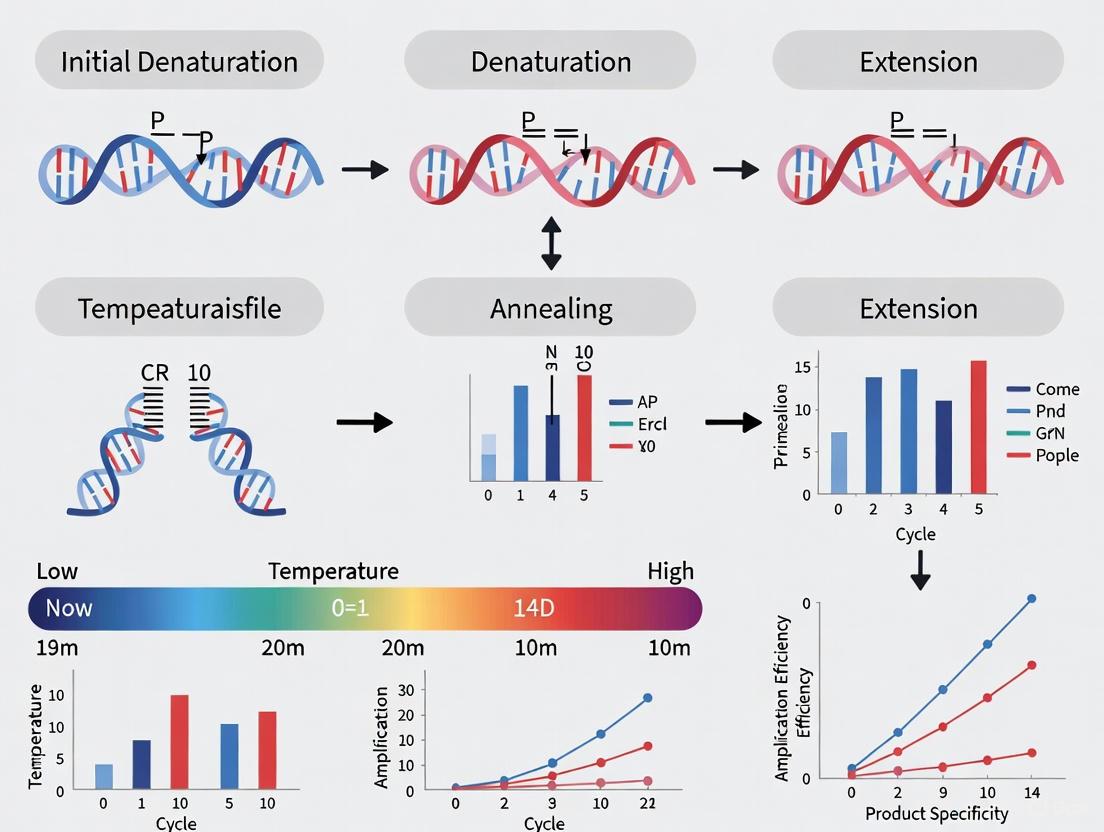
This article provides a comprehensive guide to Touchdown PCR, a powerful technique designed to enhance amplification specificity and sensitivity for researchers and drug development professionals.
Touchdown PCR Protocol: A Step-by-Step Guide to Increased Specificity and Sensitivity
Abstract
This article provides a comprehensive guide to Touchdown PCR, a powerful technique designed to enhance amplification specificity and sensitivity for researchers and drug development professionals. It covers the foundational principles of how Touchdown PCR reduces non-specific amplification and primer-dimers by progressively lowering the annealing temperature. The content delivers a detailed, actionable protocol, addresses common troubleshooting scenarios with expert optimization tips, and validates the method through comparison with other PCR techniques. This resource aims to equip scientists with the knowledge to reliably amplify difficult templates, such as those with complex secondary structures or low copy numbers, thereby improving the efficiency and accuracy of genetic analysis in biomedical research.
Understanding Touchdown PCR: The Science Behind Enhanced Specificity
Defining Touchdown PCR and its Core Principle
Touchdown polymerase chain reaction (TD-PCR) represents a significant methodological advancement in molecular biology, designed to enhance the specificity and sensitivity of PCR amplification. This technique employs a strategic cycling program where the annealing temperature is systematically decreased during successive cycles, favoring the selective amplification of target sequences over non-specific products. Originally developed to circumvent spurious priming during gene amplification, TD-PCR has found widespread application in diverse fields including clinical diagnostics, genetic research, and drug development. By establishing stringent annealing conditions in initial cycles followed by a gradual transition to more permissive temperatures, TD-PCR leverages the exponential nature of PCR to enrich reactions with specific amplicons, effectively suppressing background amplification. This application note provides a comprehensive overview of TD-PCR principles, detailed protocols, and practical implementation guidelines to assist researchers in leveraging this powerful technique for challenging amplification scenarios.
The Specificity Challenge in Conventional PCR
Standard PCR amplification frequently encounters specificity issues arising from non-specific primer binding events, particularly when primer-template complementarity is imperfect or when reaction conditions are suboptimal. Mispriming—where primers anneal to non-target sequences with partial complementarity—generates spurious amplification products that can compromise experimental results through false positives or reduced target yield [1]. This challenge is especially pronounced when amplifying difficult templates such as GC-rich sequences, complex genomic DNA, or when using primers with deduced amino acid sequences that may not perfectly match target templates [2].
Fundamental Principle of Touchdown PCR
Touchdown PCR addresses specificity limitations through a thermally graduated approach that progressively cycles from high-stringency to optimal annealing conditions. The core principle involves initiating amplification with an annealing temperature approximately 5–10°C above the calculated melting temperature (Tm) of the primers, then systematically decreasing the temperature by 0.5–2°C per cycle until reaching a temperature below the optimum Tm [3] [2] [4]. This descending temperature profile creates a selective environment where only perfect or near-perfect primer-template matches form stable hybrids during early cycles, providing these specific amplicons with an exponential advantage in subsequent amplification rounds [5].
The mathematical foundation of this advantage is significant: products amplified in earlier cycles gain a 2^(i-j) advantage over those amplified in later cycles, where i and j represent cycle numbers with i ≥ j [5]. By the time the reaction reaches permissive annealing temperatures, the specifically amplified products dominate the reaction mixture and effectively outcompete non-specific sequences for polymerase and nucleotides [6]. This method thereby combines the specificity of high-stringency annealing with the efficiency of lower-temperature amplification in a single automated procedure without requiring manual intervention or reagent addition between phases [3].
Experimental Protocol and Methodology
Reagent Setup and Reaction Composition
The success of TD-PCR depends on both appropriate thermal cycling parameters and optimized reaction composition. Standard TD-PCR employs reagent concentrations similar to conventional PCR, with potential modifications to address specific template challenges.
Table 1: Standard TD-PCR Reaction Components
| Component | Final Concentration | Function |
|---|---|---|
| Template DNA | 1 pg–1 μg | Provides target sequence for amplification |
| Forward/Reverse Primers | 0.1–1.0 μM each | Specifically hybridize to flanking target regions |
| PCR Buffer | 1X | Maintains optimal pH and salt conditions |
| dNTPs | 200–250 μM each | Provides nucleotides for DNA synthesis |
| Magnesium Chloride | 1.5–2.5 mM | Cofactor for DNA polymerase activity |
| DNA Polymerase | 0.5–2.5 units | Catalyzes DNA synthesis; Hot-start recommended |
For challenging applications such as GC-rich amplification or multiplex TD-PCR, supplementary reagents may enhance performance. Common additives include dimethyl sulfoxide (DMSO, 5–10%), formamide (1–5%), or betaine (1–1.5 M) to reduce secondary structure formation and improve amplification efficiency [1] [7]. When utilizing additives, annealing temperatures may require adjustment as these compounds typically reduce primer Tm values.
Thermal Cycling Parameters
A standardized TD-PCR protocol comprises two sequential phases: the touchdown phase followed by the amplification phase. The following parameters are adapted from the Nature Protocols reference method [3] and represent a robust framework that can be modified for specific applications.
Table 2: Standardized TD-PCR Cycling Conditions
| Step | Temperature | Time | Cycles | Purpose |
|---|---|---|---|---|
| Initial Denaturation | 95°C | 2–3 min | 1 | Complete template denaturation; activate hot-start polymerase |
| Touchdown Phase | 10–15 | Progressive specificity optimization | ||
| Denaturation | 95°C | 20–30 sec | Template melting | |
| Annealing | Start 10°C above Tm, decrease 1°C/cycle | 30–45 sec | High-to-low stringency transition | |
| Extension | 72°C | 1 min/kb | Product synthesis | |
| Amplification Phase | 20–25 | Target amplification | ||
| Denaturation | 95°C | 20–30 sec | Template melting | |
| Annealing | Final TD temperature or 2–5°C below Tm | 30–45 sec | Optimal primer binding | |
| Extension | 72°C | 1 min/kb | Product synthesis | |
| Final Extension | 72°C | 5–10 min | 1 | Complete partial amplicons |
Practical Implementation Example
For primers with a calculated Tm of 57°C, the TD-PCR protocol would be implemented as follows. The initial annealing temperature is set at 67°C (Tm +10°C) for the first cycle, then decreased by 1°C per cycle for 10 cycles until reaching 57°C. This touchdown phase is immediately followed by 15–20 amplification cycles using the final 57°C annealing temperature [1]. Throughout the procedure, maintain extension times appropriate for the target length, typically 1 minute per kilobase of amplicon [3].
To visualize the strategic framework and competitive advantage of Touchdown PCR:
This workflow demonstrates how the progressive temperature decrease selectively enriches the reaction with specific amplicons while suppressing non-specific amplification through competitive inhibition.
Technical Considerations and Optimization
Critical Parameter Optimization
Successful implementation of TD-PCR requires attention to several key parameters beyond the basic protocol. Primer design follows standard conventions but places additional emphasis on accurate Tm calculation, as this value determines the touchdown temperature range. While initial cycles employ temperatures 5–10°C above calculated Tm, the final annealing temperature should be 2–5°C below the Tm [4]. The rate of temperature decrease can be adjusted based on application requirements; decreasing 1°C every 1–3 cycles balances specificity with practical considerations [1].
Cycle number represents another critical consideration. Excessive cycling (>35 total cycles) may permit non-specific products to emerge despite the initial selective advantage [1]. The touchdown phase typically encompasses 10–15 cycles, followed by 20–25 standard amplification cycles, maintaining total cycles below 35–40 [3]. For difficult templates with low copy number, increasing the number of amplification cycles at the final annealing temperature may be preferable to extending the touchdown phase.
Enhanced Specificity Measures
Combining TD-PCR with additional specificity-enhancing methods provides superior results for challenging applications. Hot-start activation, achieved through antibody-mediated polymerase inhibition, chemical modification, or physical separation, prevents primer dimer formation and non-specific extension during reaction setup [2] [7]. Maintaining reactions on ice until thermal cycling commences provides complementary protection against pre-activation artifacts [1].
For templates with high secondary structure or GC-content >65%, incorporating PCR enhancers such as DMSO (5–10%), glycerol (5–15%), or commercial GC-enhancers significantly improves results [1] [7]. These additives reduce melting temperatures, necessitating potential adjustment of the touchdown temperature range. An additional denaturation step at 97–98°C for 1–2 minutes before cycling may benefit extremely problematic templates by ensuring complete strand separation [1].
Research Applications and Advanced Implementations
Diverse Research Applications
TD-PCR has demonstrated particular utility across multiple specialized applications where conventional PCR fails or produces inconsistent results. The method is indispensable for clinical diagnostics, especially when primer sequences are deduced from amino acid data and may contain mismatches with target templates [2]. In microbial identification, TD-PCR successfully detects antibiotic resistance genes (mecA, blaSHV, blaCTX-M, blaTEM, blaOXA) directly from blood culture bottles with minimal false positives, enabling rapid treatment decisions [8].
Genetic research applications include amplification of repetitive sequences, single nucleotide polymorphism screening, and cDNA library construction [3]. The technique's ability to tolerate minor primer-template mismakes makes it valuable for cross-species amplification and degenerate primer applications [2]. Additionally, TD-PCR consistently outperforms standard protocols for GC-rich templates (>65% GC), where secondary structures and high thermostability impede conventional amplification [7] [9].
Multiple Touchdown PCR (MT-PCR)
Multiple Touchdown PCR represents an advanced implementation combining multiplexing capability with touchdown specificity. This methodology employs several primer pairs to simultaneously amplify different DNA targets in a single reaction while maintaining high specificity [8]. In MT-PCR, the annealing temperature is typically reduced by 0.5–1°C each cycle from an initial high stringency temperature, allowing all primer pairs to operate optimally at different phases of the touchdown gradient [8].
The mathematical advantage of TD-PCR is particularly important in multiplex applications, where the exponential advantage afforded to specific products prevents cross-amplification between multiple primer sets [5]. This approach successfully identifies multiple antibiotic resistance genes in clinical samples without false positives, demonstrating significant utility in diagnostic settings where sample material is limited [8]. MT-PCR requires careful primer design to ensure similar Tm values across all primer pairs and may benefit from specialized instrumentation providing precise temperature control [8].
Research Reagent Solutions
Table 3: Essential Research Reagents for TD-PCR
| Reagent Category | Specific Examples | Function in TD-PCR |
|---|---|---|
| DNA Polymerase | Hot-start Taq polymerase | Provides thermal activation; reduces pre-cycling artifacts |
| PCR Additives | DMSO, betaine, formamide | Reduces secondary structure; enhances specificity |
| Magnesium Salts | Magnesium chloride | Cofactor optimization; affects primer stringency |
| Nucleotide Mix | dNTPs (dATP, dCTP, dGTP, dTTP) | Building blocks for DNA synthesis |
| Specialized Buffers | GC-rich buffers, multiplex buffers | Optimizes conditions for challenging templates |
| Temperature Verification | Thermal cycler verification kits | Ensures accurate temperature calibration |
Touchdown PCR represents a powerful, versatile modification of conventional PCR that significantly enhances amplification specificity without requiring extensive reaction optimization. By systematically decreasing annealing temperature during initial cycles, the method provides specific primer-template hybrids with an exponential amplification advantage, effectively suppressing non-specific products. The technique finds particular utility in challenging applications including clinical diagnostics, GC-rich template amplification, and multiplex detection systems. When combined with hot-start activation and appropriate reaction additives, TD-PCR delivers robust, reproducible results across diverse template types and experimental scenarios. As molecular diagnostics and research continue to demand higher specificity and reliability, TD-PCR remains an essential tool in the molecular biologist's arsenal, providing enhanced performance through elegant thermodynamic principles rather than increased procedural complexity.
The Problem of Non-Specific Amplification and Primer-Dimers in Standard PCR
The polymerase chain reaction (PCR) is a fundamental technique in molecular biology, enabling the exponential amplification of specific DNA sequences from minimal starting material. Despite its revolutionary impact, conventional PCR is frequently plagued by issues of non-specific amplification and primer-dimer formation, which compromise assay sensitivity, accuracy, and reliability [10]. These artifacts arise when primers anneal to non-target sequences or to each other instead of to the intended target DNA, leading to the amplification of unwanted products that compete for essential reaction components [11].
The extreme sensitivity of PCR, while one of its greatest strengths, also renders it vulnerable to minute contaminants and subtle reaction condition imbalances [10]. Factors including suboptimal annealing temperatures, excessive primer or template concentrations, and impurities within the reaction mixture can significantly promote these specificity issues [12] [13]. For researchers in drug development and diagnostic fields, where quantitative accuracy is paramount, these artifacts present a substantial barrier to obtaining reproducible and trustworthy results. This application note examines the underlying causes of non-specific amplification and primer-dimers and details how optimized protocols, particularly touchdown PCR, provide a robust framework for overcoming these challenges.
Understanding Non-Specific Artifacts
Types and Causes of Non-Specific Amplification
Non-specific amplification in PCR encompasses any undesired DNA product generated through mechanisms other than the precise priming of the target sequence.
- Mispriming: This occurs when primers bind to regions of the DNA template that exhibit partial complementarity, rather than to the perfectly matched target site [1]. The resulting off-target amplicons can vary in size and may appear as multiple bands or smears upon gel electrophoresis. The probability of mispriming increases significantly at lower annealing temperatures, where the energy is insufficient to enforce stringent primer-template binding [13].
- Primer-Dimers: These are short, artifactual amplification products formed when two primers hybridize to each other via complementary bases, particularly at their 3' ends, providing a substrate for DNA polymerase [11]. Amplified primer-dimers typically appear as a diffuse band near the bottom of an agarose gel (approximately 20-60 bp in length) and consume dNTPs, primers, and enzyme activity, thereby reducing the efficiency of target amplification [11].
- Complex Artifacts: Under certain conditions, more complex artifacts like primer multimers can form, creating a ladder-like pattern on gels, or random PCR smears can result from highly fragmented DNA or excessive template concentrations that promote self-priming [11].
Consequences for Research and Diagnostics
The presence of non-specific products and primer-dimers has direct and detrimental effects on downstream applications:
- Reduced Assay Sensitivity and Yield: Non-target amplicons compete with the desired product for reaction reagents (dNTPs, enzymes, primers), leading to diminished yield of the specific target [11].
- Compromised Data Accuracy: In quantitative PCR (qPCR) using intercalating dyes like SYBR Green, which bind to any double-stranded DNA, non-specific products and primer-dimers generate false fluorescence signals [14]. This invalidates precise quantification by inflating the apparent starting quantity of the target template.
- Interference with Downstream Applications: For applications such as sequencing, cloning, and mutagenesis, the presence of multiple amplification artifacts can complicate purification, lead to incorrect sequence data, and result in the cloning of wrong fragments [10] [11].
Detection and Diagnosis
Accurate identification of non-specific amplification is a critical first step in troubleshooting. Several established methods are routinely employed.
Gel Electrophoresis and Melt-Curve Analysis
Agarose gel electrophoresis provides the most straightforward initial assessment of PCR specificity. A successful reaction should display sharp, discrete bands of the expected size. Signs of non-specificity include:
- Multiple bands of unexpected sizes.
- A bright low-molecular-weight band (~50 bp) indicative of primer-dimers.
- A smear of DNA, suggesting random, non-specific amplification or degraded products [11].
For real-time PCR assays using SYBR Green chemistry, melting curve analysis is an indispensable diagnostic tool. Following amplification, the temperature is gradually increased while fluorescence is continuously monitored. As the double-stranded DNA denatures, the fluorescence decreases. A single, sharp peak in the derivative melt curve suggests a single, specific amplicon. In contrast, multiple peaks, broad peaks, or shoulders on the main peak indicate the presence of multiple products, including primer-dimers (which typically melt at lower temperatures) and off-target amplicons [14].
Visual Guide to Common Artifacts
The following workflow diagram illustrates the decision-making process for identifying common PCR artifacts.
Standard Optimization Strategies
Before employing advanced techniques like touchdown PCR, several fundamental parameters should be optimized to enhance specificity.
Foundational Reaction Parameters
The table below summarizes key reaction components and their optimization strategies to mitigate non-specific amplification.
Table 1: Standard PCR Optimization Strategies to Reduce Non-Specific Amplification
| Reaction Component | Typical Problem | Optimization Strategy | Effect on Specificity |
|---|---|---|---|
| Annealing Temperature [13] | Too low, causes mispriming | Increase temperature incrementally (e.g., 1–2°C steps) | High: Enforces stricter primer-template binding. |
| Primer Concentration [13] | Too high, promotes primer-dimer formation | Titrate downwards from 0.5 µM; often 0.1–0.5 µM is optimal | High: Reduces chance of primer self-interaction. |
| Magnesium (Mg²⁺) Concentration [13] [15] | Too high, reduces fidelity and increases mispriming | Optimize in 0.5 mM increments around 1.5–2.0 mM | Critical: Excess Mg²⁺ stabilizes non-specific duplexes. |
| Template Quality & Quantity [11] [15] | Impurities or excess DNA acts as a PCR inhibitor or promotes smearing | Use purified DNA; dilute template 10–100x to test | Medium: Reduces inhibitors and chance of self-priming. |
| Cycle Number [11] | Too many cycles amplifies minor artifacts | Use the minimum number of cycles needed for detection (e.g., <35) | Medium: Limits amplification of late-forming artifacts. |
| Hot-Start Polymerase [7] | Activity at room temperature enables mispriming during setup | Use antibody/inactivated enzyme that activates at high temperature | Very High: Prevents pre-PCR amplification events. |
The Role of Hot-Start PCR
Hot-start PCR is a highly effective first-line strategy. This method keeps the DNA polymerase in an inactive state during reaction setup at room temperature by using antibody-based inhibition, aptamers, or chemical modification [7]. The enzyme is only activated during the initial high-temperature denaturation step. This simple modification significantly reduces the formation of primer-dimers and off-target products that can occur during the preparation of multiple reactions, thereby enhancing the consistency and specificity of the amplification [7].
Touchdown PCR as a Superior Solution
Principles and Mechanism
Touchdown (TD) PCR is a powerful modification of the standard PCR protocol designed to circumvent the challenges of determining a single, optimal annealing temperature. It employs a dynamic annealing temperature that starts high above the predicted melting temperature (( T_m )) of the primers and is progressively decreased in subsequent cycles until it reaches a calculated, permissive temperature [1] [7].
The underlying logic is twofold:
- Early Stringent Phase: In the initial cycles, the high annealing temperature is too stringent for non-specific priming or primer-dimer formation, but it still allows the most perfectly matched primer-template hybrids (i.e., the desired target) to form and initiate amplification [16]. This gives the correct amplicon a significant competitive advantage from the outset.
- Gradual Transition to Efficiency: As the temperature is lowered cycle-by-cycle, the accumulated specific product now serves as a dominant template. Even when the temperature becomes permissive for less stable interactions, the specific product outcompetes any potential artifacts for primers and polymerase, leading to high yields of the intended amplicon [1] [16].
Detailed Touchdown PCR Protocol
The following workflow provides a visual and descriptive protocol for implementing touchdown PCR.
Protocol Steps:
Reaction Setup:
Initial Denaturation: 95°C for 2–3 minutes to fully denature the template and activate the hot-start polymerase [15].
Touchdown Phase (10–15 cycles):
- Denaturation: 95°C for 15–30 seconds.
- Annealing: Begin at an estimated ( Tm ) +10°C (e.g., 67°C if ( Tm ) is 57°C). Reduce the temperature by 1°C per cycle over the next 10–15 cycles (e.g., from 67°C down to 57°C) [1].
- Extension: 72°C for 1 minute per kilobase of expected product.
Final Amplification Phase (20–25 cycles):
- Denaturation: 95°C for 15–30 seconds.
- Annealing: Use the final, lowered temperature from the touchdown phase (e.g., 57°C) for all remaining cycles.
- Extension: 72°C for 1 minute per kilobase.
Final Extension: 72°C for 5 minutes to ensure all amplicons are fully double-stranded [1] [15].
Expert Tips for Touchdown PCR Success
- Maintain Reaction Coolness: Keep all reagents and reactions on ice until the moment they are placed in the pre-heated thermal cycler to prevent any non-specific activity [1].
- Combine with Additives: For difficult templates (e.g., GC-rich sequences), combine touchdown PCR with additives like DMSO (2.5–5%) to further improve specificity and yield [1] [15].
- Limit Total Cycle Number: Keep the total number of amplification cycles (touchdown + final phase) below 35 to minimize the appearance of non-specific bands that can arise during later cycles [1] [11].
- Primer Design: While TD-PCR is forgiving, primers should still be designed according to best practices: length of 20–25 nucleotides, GC content of 40–60%, and minimal self-complementarity to reduce dimerization potential [13].
The Scientist's Toolkit: Essential Reagents
Table 2: Key Research Reagent Solutions for Specific PCR
| Reagent / Material | Function in Specific Amplification | Example Use Cases |
|---|---|---|
| Hot-Start DNA Polymerase [7] | Inhibits polymerase activity at low temperatures, preventing mispriming during reaction setup. | Essential for all high-specificity PCR, including multiplex and touchdown protocols. |
| dNTP Mix | Building blocks for new DNA strands. Concentration (typically 200 µM each) affects yield and fidelity. | Lower concentrations (50-100 µM) can enhance fidelity but may reduce yield. |
| Magnesium Chloride (MgCl₂) [13] [15] | Essential cofactor for DNA polymerase. Concentration critically influences enzyme activity and fidelity. | Requires optimization (0.5–4 mM); excess leads to non-specificity. |
| PCR Additives (e.g., DMSO) [15] | Aids in denaturation of complex secondary structures, especially in GC-rich templates. | Add at 2.5–5% (v/v) for GC-rich targets or templates with strong secondary structure. |
| Optimized Buffer Systems | Provides optimal pH, ionic strength, and chemical environment for the specific polymerase. | Commercial master mixes often contain proprietary buffers for enhanced performance. |
| Nuclease-Free Water | Solvent for all reaction components; ensures no enzymatic degradation of primers or template. | Critical for preventing reaction failure due to contaminating nucleases. |
Non-specific amplification and primer-dimer formation present significant challenges to the integrity of PCR-based data in research and diagnostic applications. While foundational optimization of reaction components like annealing temperature, magnesium concentration, and primer design is necessary, the adoption of more sophisticated strategies like touchdown PCR offers a robust, one-step solution to enhance specificity and sensitivity significantly. By prioritizing the amplification of the correct target in the initial cycles, touchdown PCR minimizes the impact of non-specific artifacts, providing researchers and drug development professionals with a reliable method to ensure the accuracy and reproducibility of their molecular assays.
In polymerase chain reaction (PCR) protocols, the challenge of non-specific amplification and primer-dimer formation often compromises assay specificity and sensitivity. Touchdown (TD) PCR addresses this fundamental problem through a simple yet powerful mechanistic principle: a controlled, sequential decrease in annealing temperature during the initial cycling phases. This technique provides an exponential advantage to the intended amplicon, effectively enriching for the correct product while suppressing spurious amplification [1] [3]. Unlike conventional PCR that employs a static, compromise annealing temperature, TD-PCR employs a dynamic temperature profile that initially favors only the most perfectly matched primer-template interactions [7]. This application note details the mechanistic basis, standardized protocols, and practical implementation of TD-PCR for researchers, scientists, and drug development professionals requiring high-fidelity amplification in their experimental workflows.
The Core Mechanism
Principle of Selective Enrichment
The fundamental advantage of TD-PCR lies in its strategic manipulation of annealing stringency over time. The process begins with an annealing temperature set approximately 5–10°C above the calculated melting temperature (Tm) of the primers [7] [17]. Under these highly stringent initial conditions, only primer-template pairs with perfect complementarity can form stable hybrids, enabling selective amplification of the specific target [1]. As cycling progresses, the annealing temperature gradually decreases in small increments (typically 0.5–1°C per cycle) until it reaches a temperature 2–5°C below the primer Tm [17].
This descending temperature regimen provides the correct amplicon with a significant exponential advantage. Any difference in Tm between correct and incorrect annealing creates a twofold advantage per cycle for the specific product [3]. By the time the reaction reaches more permissive annealing temperatures, the specific product has already been amplified over multiple cycles and dominates the reaction mixture, effectively outcompeting any non-specific products that might form at lower stringency [1] [6]. This mechanism significantly reduces mispriming and primer-dimer formation, two common setbacks in conventional PCR [9].
Visualizing the Touchdown PCR Process
The following workflow diagram illustrates the key stages of the TD-PCR process and its mechanistic advantage over standard PCR:
Application Note: Advantages and Comparative Performance
Key Benefits for Research and Development
TD-PCR offers several distinct advantages that make it particularly valuable for research and drug development applications:
- Enhanced Specificity and Sensitivity: The stepwise transition from high to low annealing temperatures significantly reduces mispriming, resulting in cleaner amplification with minimal non-specific products [3] [18]. This is particularly crucial for diagnostic assay development and validation.
- Template Versatility: TD-PCR is exceptionally effective for "difficult" templates, including GC-rich sequences (>65% GC), templates with extensive secondary structure, and those containing repetitive elements [17] [19].
- Reduced Optimization Time: This approach provides a simple, rapid means to optimize PCRs without lengthy empirical testing of multiple annealing temperatures or primer redesign [3] [20]. This accelerates assay development timelines significantly.
- Compatibility with Complex Workflows: TD-PCR integrates seamlessly with other PCR applications, including reverse transcriptase-dependent PCR, multiplex PCR, cDNA library generation, and single nucleotide polymorphism screening [3] [9].
Comparative Performance: Standard PCR vs. Touchdown PCR
The table below summarizes key performance differences between standard and touchdown PCR approaches:
Table 1: Performance comparison between Standard PCR and Touchdown PCR
| Parameter | Standard PCR | Touchdown PCR |
|---|---|---|
| Annealing Temperature | Single, static temperature | Descending temperature (typically 5-10°C above Tm to 2-5°C below Tm) |
| Specificity Control | Limited to primer design and single temperature optimization | Active enrichment through stringency cycling |
| Non-specific Amplification | Common, especially with complex templates | Significantly reduced [3] |
| Primer-Dimer Formation | Frequent occurrence, competes with target | Substantially minimized [9] |
| Optimal for Difficult Templates | Limited effectiveness | Highly effective for GC-rich, complex templates [17] |
| Optimization Time | Often lengthy, requiring multiple trials | Rapid implementation with minimal optimization [20] |
| Quantitative Applications | Suitable with proper controls | Not recommended for quantitative target assessment [17] [18] |
Experimental Protocol
Reagent Setup and Formulation
The following table details the essential reagents and their functions for establishing robust TD-PCR assays:
Table 2: Essential research reagents for Touchdown PCR
| Reagent | Function | Recommended Specifications |
|---|---|---|
| Thermostable DNA Polymerase | Catalyzes DNA synthesis | Hot-start version recommended to prevent pre-cycling activity [1] [19] |
| Oligonucleotide Primers | Target sequence recognition | 18-34 bases; GC content 45-60%; Tm within 3°C for paired primers [21] |
| dNTP Mix | DNA synthesis building blocks | 10 mM each dATP, dCTP, dGTP, dTTP; quality-controlled to ensure purity [18] |
| MgCl₂ Solution | Polymerase cofactor | Separate solution for concentration optimization (typically 1-5 mM) [19] [21] |
| Reaction Buffer | Maintains optimal pH and ionic strength | pH >9.0 at 25°C to minimize depurination; may include stabilizers [21] |
| PCR Additives | Enhance specificity and yield | DMSO (2.5-5%) for GC-rich templates; betaine for difficult amplifications [19] |
Step-by-Step TD-PCR Protocol
Reaction Setup
Prepare Master Mix on ice by combining the following components in a thin-walled PCR tube:
- 10× PCR Buffer: 5 µL
- dNTP Mix (10 mM each): 1 µL
- Forward Primer (10 µM): 1.5 µL
- Reverse Primer (10 µM): 1.5 µL
- Hot-Start DNA Polymerase: 0.5 µL
- MgCl₂ (25 mM): 2-4 µL (concentration requires optimization)
- Template DNA: 1 µL (10 pg-500 ng, depending on complexity)
- PCR-grade Water: to 50 µL final volume
Include Controls: Set up a no-template control (NTC) with PCR-grade water replacing template DNA to detect contamination.
Mix and Centrifuge: Gently mix reactions and briefly centrifuge to collect all components at tube bottom.
Thermal Cycling Parameters
Program your thermal cycler using the following parameters as a baseline, adjusting as needed for specific applications:
Table 3: Standardized thermal cycling protocol for Touchdown PCR
| Step | Temperature | Time | Cycles | Notes |
|---|---|---|---|---|
| Initial Denaturation | 94-95°C | 2-3 minutes | 1 | Complete template denaturation; activates hot-start polymerase |
| Touchdown Phase | 10-15 | |||
| ∟ Denaturation | 94-95°C | 30 seconds | ||
| ∟ Annealing | Start 10°C above Tm, decrease 1°C/cycle | 30-45 seconds | Example: 67°C→57°C over 10 cycles | |
| ∟ Extension | 68-72°C | 1 minute/kb | ||
| Amplification Phase | 20-25 | |||
| ∟ Denaturation | 94-95°C | 30 seconds | ||
| ∟ Annealing | Use final Tm from touchdown phase | 30-45 seconds | ||
| ∟ Extension | 68-72°C | 1 minute/kb | ||
| Final Extension | 68-72°C | 5-10 minutes | 1 | Ensures complete product extension |
Post-Amplification Analysis
- Electrophoresis: Combine 8-10 µL of PCR product with DNA loading dye and resolve on 1-2% agarose gel with appropriate DNA size markers.
- Visualization: Stain with ethidium bromide or SYBR-safe and visualize under UV transillumination.
- Expected Results: TD-PCR should yield a single, dominant band of expected size with minimal non-specific products compared to standard PCR.
Troubleshooting and Optimization
Despite its robustness, TD-PCR may require optimization for challenging applications. The following table addresses common issues and recommended solutions:
Table 4: Troubleshooting guide for Touchdown PCR
| Problem | Potential Causes | Solutions |
|---|---|---|
| No Product | Reagent omission, enzyme inactivation, poor primer design | Check component concentrations and quality; verify primer specificity; add temperature spiking step [18] |
| Multiple Bands | Insufficient initial stringency, excess primers/template, too many cycles | Increase starting annealing temperature; reduce primer/template concentration; decrease total cycles to <35 [1] |
| Low Yield | Excessive initial stringency, insufficient cycles, poor template quality | Reduce starting temperature increment (e.g., 8°C above Tm instead of 10°C); increase amplification cycles; check template integrity [19] |
| Smearing | Non-specific initiation, enzyme degradation, contaminated template | Combine with hot-start protocol; use fresh reagents; ensure template purity; add DMSO (2.5-5%) [1] [19] |
| Inconsistent Results | Poor thermal cycler calibration, reaction evaporation | Verify thermal cycler calibration; use thin-walled tubes; add mineral oil overlay if needed [21] |
Advanced Applications and Integration
Complementary Molecular Techniques
TD-PCR integrates effectively with several advanced molecular applications:
- Hot-Start Integration: Combining TD-PCR with hot-start methods (using antibody-based, affibody, or chemical modification of DNA polymerase) provides additional specificity by preventing polymerase activity during reaction setup at room temperature [7] [1]. This dual-approach significantly reduces primer-dimer formation and mispriming.
- Multiplex TD-PCR: TD-PCR is particularly valuable in multiplex applications where multiple primer pairs amplify different targets simultaneously. The high initial stringency ensures each primer pair only binds its specific target, reducing cross-reactivity [7] [9].
- Long-Range Amplification: For targets longer than 5 kb, TD-PCR enhances specificity when combined with specialized polymerase blends containing both highly processive and proofreading enzymes [7] [21]. The protocol benefits from higher primer Tm (>68°C) and minimized denaturation times to reduce DNA damage.
- GC-Rich Amplification: TD-PCR significantly improves amplification of GC-rich templates (>65% GC) when paired with appropriate additives (DMSO, betaine) and higher denaturation temperatures (98°C) to overcome strong secondary structures [7] [19].
Protocol Adaptations for Specific Research Needs
The basic TD-PCR protocol can be modified to address specific research requirements:
- Rapid TD-PCR: Using highly processive DNA polymerases and fast-ramping thermal cyclers, extension times can be reduced to 10-20 seconds/kb, significantly shortening total protocol time [7] [19].
- Stepdown PCR Alternative: For thermal cyclers lacking automated touchdown capability, stepdown PCR provides a comparable approach with discrete temperature stages (e.g., 3 cycles at 62°C, 3 cycles at 58°C, 3 cycles at 54°C, then remaining cycles at 50°C) [6].
- Direct PCR Applications: TD-PCR enhances specificity when amplifying targets directly from crude samples (cells, tissues) without nucleic acid purification, compensating for potential inhibitors in complex matrices [7].
Touchdown PCR represents a sophisticated yet accessible methodological advancement that leverages a descending annealing temperature profile to mechanically enrich for specific amplification products. By providing an exponential advantage to perfectly matched primer-template interactions during initial cycles, this technique effectively addresses the persistent challenge of non-specific amplification in molecular assays. The standardized protocols, reagent specifications, and troubleshooting guidelines presented herein provide researchers and drug development professionals with a comprehensive framework for implementing TD-PCR across diverse applications. As molecular diagnostics and research continue to demand higher specificity and reliability, TD-PCR remains an essential tool in the molecular biologist's arsenal, particularly for challenging templates and multiplex applications where amplification fidelity is paramount.
Touchdown polymerase chain reaction (TD-PCR) represents a fundamental advancement in molecular biology by offering a simple, rapid, and highly effective means to optimize PCR amplification. This technique enhances specificity, sensitivity, and yield without requiring lengthy optimization procedures or primer redesign. By employing an initial annealing temperature above the projected melting temperature (Tm) of the primers and progressively transitioning to a lower, more permissive temperature over successive cycles, TD-PCR provides an exponential advantage for specific amplification. This application note details the core methodology, key applications in challenging research scenarios, and provides structured experimental protocols and data to facilitate its implementation in molecular biology and drug development research.
Touchdown PCR is a powerful modification of standard PCR that systematically enhances amplification specificity by controlling the stringency of primer annealing during thermal cycling. The technique employs a strategic reduction of the annealing temperature from a deliberately high starting point—typically 5–10°C above the calculated primer Tm—down to the optimal annealing temperature over a series of cycles [7] [1]. This approach capitalizes on the thermodynamic principle that primers with perfect complementarity to their target sequences will form stable hybrids at higher temperatures than those with mismatched sequences [3].
In the initial high-stringency cycles, only primer-template pairs with the highest complementarity undergo successful annealing and extension, selectively enriching the reaction with the specific target amplicon. As the annealing temperature gradually decreases in subsequent cycles ("touching down" to the optimal temperature), these specifically amplified products now dominate the reaction mixture and outcompete any non-specific products that might form under more permissive conditions [6]. This method effectively circumvents common PCR challenges including primer-dimer formation, mispriming at off-target sites, and amplification of non-specific products that often plague conventional PCR protocols [1].
The procedure typically requires between 90 and 120 minutes depending on template length, making it both time-efficient and highly reproducible across different laboratory settings [3]. Its simplicity of implementation, combined with significant improvements in amplification success, has established TD-PCR as a versatile tool with wide applicability across numerous molecular biology applications.
Key Application Areas
Amplification of Difficult Templates
Touchdown PCR demonstrates particular utility for amplifying challenging templates that often prove recalcitrant to standard PCR amplification. GC-rich sequences (>65% GC content) represent a prime example, as their strong hydrogen bonding and propensity for forming stable secondary structures can cause DNA polymerases to stutter or pause during DNA synthesis [7]. TD-PCR facilitates the amplification of such templates by beginning with high annealing temperatures that help melt these stable structures, while the gradual temperature decrease ensures eventual efficient primer binding and extension.
The technique similarly excels with templates containing complex secondary structures or those present in low copy numbers, where nonspecific amplification often dominates in conventional PCR. For difficult templates, combining TD-PCR with specialized reagents—such as PCR additives including DMSO, betaine, or GC enhancers—can provide synergistic benefits [7] [1]. Highly processive DNA polymerases are particularly beneficial in these scenarios due to their strong binding to templates during extension, enabling them to read through challenging regions that would cause less processive enzymes to dissociate [7].
cDNA Library Construction and RACE
In cDNA library construction and Rapid Amplification of cDNA Ends (RACE), TD-PCR has revolutionized the ability to recover complete cDNA sequences, particularly for transcripts that are long, present in low abundance, or exhibit significant secondary structure. Traditional reverse transcription often fails to generate full-length cDNA copies due to enzymatic stalling at regions of complex RNA secondary structure, frequently resulting in incomplete 5'-ends [22].
The RACE technique addresses this limitation by generating complete cDNA in two separate halves using TD-PCR principles [22]. In 5'-RACE, an internal gene-specific primer directs first-strand cDNA synthesis, followed by homopolymeric tailing of the 3'-end and amplification with anchor and nested internal primers. For 3'-RACE, amplification proceeds from the poly(A) tail using an anchored oligo(dT) primer toward an internal gene-specific primer. In both applications, TD-PCR significantly enhances the specificity and yield of amplification from these complex primer-template systems, enabling researchers to obtain full-length transcript sequences that are essential for comprehensive functional genomic studies [22].
Single Nucleotide Polymorphism (SNP) Screening
Touchdown PCR provides exceptional utility in single nucleotide polymorphism (SNP) screening and genotyping applications where discrimination between alleles differing by only a single nucleotide is required. The technique's initial high-stringency cycles preferentially favor perfect primer-template matches, thereby reducing spurious amplification from sequences containing mismatches [3].
This precision is particularly valuable in association studies, pharmacogenetic profiling, and diagnostic marker development where accurate SNP discrimination is critical. The method's robustness enables reliable amplification across multiple samples and genetic backgrounds without extensive re-optimization, making it suitable for medium-throughput screening applications. Furthermore, TD-PCR can be seamlessly integrated with various downstream SNP detection methodologies, including restriction fragment length polymorphism analysis, sequencing, and real-time PCR with allele-specific probes, providing a versatile front-end amplification strategy for genetic variant analysis [3].
Experimental Protocols
Core Touchdown PCR Protocol
The following protocol, adapted from Korbie and Mattick (2008) [3], provides a standardized framework for implementing Touchdown PCR across diverse applications. The procedure is completed within 90-120 minutes, depending on template length and cycle number.
Reaction Setup (25 μL total volume):
- Template DNA: 10-100 ng genomic DNA or 1-10 ng cDNA
- Forward and Reverse Primers: 0.2-0.5 μM each (with Tms within 5°C of each other)
- PCR Master Mix: 1X concentration, including hot-start DNA polymerase, dNTPs, MgCl₂, and reaction buffers
- Nuclease-free water to volume
Thermal Cycling Protocol:
- Initial Denaturation: 95°C for 3 minutes
- Stage 1 - Touchdown Cycles (10 cycles):
- Denaturation: 95°C for 30 seconds
- Annealing: Start at 10°C above calculated primer Tm (e.g., 67°C for Tm=57°C), decrease by 1°C per cycle
- Extension: 72°C for 45 seconds (adjust based on polymerase speed and product length)
- Stage 2 - Standard Cycles (20-25 cycles):
- Denaturation: 95°C for 30 seconds
- Annealing: Use final touchdown temperature (e.g., 57°C for the example above) for 45 seconds
- Extension: 72°C for 45 seconds
- Final Extension: 72°C for 5-10 minutes
- Hold: 4°C indefinitely
Critical Optimization Parameters
Successful implementation of Touchdown PCR requires careful attention to several key parameters:
- Primer Design: Design primers with Tms within 5°C of each other to ensure synchronized annealing during temperature transitions [7]. Optimal primer length typically ranges from 18-24 nucleotides with balanced GC content (40-60%).
- Temperature Increments: While a 1°C decrease per cycle is standard, challenging templates may benefit from smaller increments (0.5°C) or longer plateaus (2-3 cycles per temperature step) to enhance specificity further.
- Cycle Management: Limit total amplification cycles (including touchdown phase) to below 35 cycles to minimize appearance of non-specific products [1].
- Hot-Start Implementation: Employ hot-start DNA polymerase to prevent non-specific priming during reaction setup and initial denaturation, providing synergistic improvement in specificity with the TD-PCR approach [7] [1].
- Reaction Preparation: Maintain reactions on ice until thermal cycling begins to prevent non-specific priming even with touchdown protocols [1].
Data Presentation and Analysis
Comparative Performance Metrics
The efficacy of Touchdown PCR is demonstrated through systematic comparisons with conventional PCR across multiple performance parameters. The following table summarizes quantitative data from representative applications:
Table 1: Comparative Performance of Touchdown PCR vs. Conventional PCR
| Application Scenario | Specificity (Gel Band Clarity) | Yield (ng/μL) | Success Rate (%) | Optimal Annealing Temperature Range |
|---|---|---|---|---|
| Standard Template | Conventional: Moderate | Conventional: 45.2 | Conventional: 85 | Conventional: Narrow (2-3°C) |
| Touchdown: High | Touchdown: 52.7 | Touchdown: 98 | Touchdown: Broad (5-10°C) | |
| GC-Rich Template (>70% GC) | Conventional: Low | Conventional: 12.5 | Conventional: 45 | Conventional: Very narrow (1-2°C) |
| Touchdown: High | Touchdown: 38.9 | Touchdown: 92 | Touchdown: Moderate (3-5°C) | |
| Low Copy Number Target | Conventional: Variable | Conventional: 18.3 | Conventional: 65 | Conventional: Narrow (2-3°C) |
| Touchdown: High | Touchdown: 28.4 | Touchdown: 90 | Touchdown: Broad (5-8°C) | |
| Multiplex PCR (3 targets) | Conventional: Low | Conventional: Variable | Conventional: 60 | Conventional: Very narrow (1-2°C) |
| Touchdown: High | Touchdown: Consistent | Touchdown: 88 | Touchdown: Moderate (3-5°C) |
Troubleshooting Guide
Common challenges and solutions when implementing Touchdown PCR:
Table 2: Touchdown PCR Troubleshooting Guide
| Problem | Potential Causes | Recommended Solutions |
|---|---|---|
| Low Yield | Too few cycles after touchdown phaseExtension time too shortExcessively high starting annealing temperature | Increase Stage 2 cycles (up to 30 total)Increase extension time (1 min/kb)Reduce initial annealing temperature (start at Tm+5-7°C) |
| Non-specific Bands | Too many total cyclesTemperature decrements too largeFinal annealing temperature too low | Limit total cycles to <35Use smaller temperature steps (0.5°C/cycle)Increase final annealing temperature (2-3°C) |
| No Product | Starting temperature too highPrimer binding sites not presentTemplate quality issues | Lower starting temperature (Tm+5°C)Verify primer specificity and template sequenceCheck template integrity and concentration |
| Primer-Dimer Formation | Insufficient hot-start activationPrimer 3'-complementarityLow annealing temperature in final cycles | Use validated hot-start polymeraseRedesign primers with lower 3'-complementarityIncrease final annealing temperature |
The Scientist's Toolkit: Research Reagent Solutions
Successful implementation of Touchdown PCR relies on appropriate selection of molecular biology reagents and tools. The following table details essential components and their specific functions in the TD-PCR workflow:
Table 3: Essential Research Reagents for Touchdown PCR
| Reagent/Tool | Function | Application Notes |
|---|---|---|
| Hot-Start DNA Polymerase | Inhibits polymerase activity at room temperature; activated at high temperatures to prevent mispriming | Critical for multiplex reactions and low-template applications [7] |
| PCR Additives (DMSO, Betaine) | Disrupt secondary structures, reduce template strand stability | Particularly beneficial for GC-rich templates (>65% GC) [7] [1] |
| GC Enhancer Solutions | Specialized formulations to facilitate denaturation of stable DNA duplexes | Essential for extremely GC-rich targets (>75% GC) [7] |
| Multiplex PCR Master Mix | Optimized buffer systems supporting simultaneous amplification of multiple targets | Enables co-amplification of 3-5 targets in single reaction [7] |
| Nested Primer Sets | Second primer set binding internal to first amplicon; used in two-round PCR | Enhances specificity for difficult templates; commonly used in RACE protocols [7] [22] |
| Template Enhancement Reagents | Compounds that improve amplification from suboptimal templates (inhibitors present) | Useful for direct PCR from crude lysates or preserved samples [7] |
Touchdown PCR stands as an indispensable molecular technique that effectively balances the competing demands of amplification specificity and yield across diverse application scenarios. Its systematic approach to thermal cycling parameter optimization makes it particularly valuable for challenging templates including GC-rich sequences, low-copy number targets, and complex cDNA populations. The methodology's robustness and straightforward implementation have established it as a fundamental tool in modern molecular biology, functional genomics, and diagnostic development. By incorporating the protocols, optimization strategies, and troubleshooting guidelines presented in this application note, researchers can reliably overcome common amplification challenges and enhance the efficiency of their experimental workflows.
Polymerase chain reaction (PCR) techniques remain foundational to molecular biology, yet amplification specificity challenges persist, particularly with complex templates. Touchdown (TD) and Stepdown (SD) PCR represent two strategic approaches that enhance specificity and sensitivity through controlled annealing temperature reduction during thermal cycling. This application note provides a comparative analysis of these techniques, emphasizing their practical implementation across diverse thermocycler capabilities. We present structured experimental protocols, quantitative comparisons, and reagent specifications to facilitate robust PCR optimization for research and diagnostic applications. The data demonstrate that both methods significantly reduce nonspecific amplification while maintaining yield, with SD PCR offering enhanced accessibility for laboratories utilizing thermal cyclers with limited programmability.
The fundamental challenge in conventional PCR lies in balancing amplification specificity with sufficient product yield. Nonspecific amplification frequently occurs when primers anneal to non-target sequences at suboptimal temperatures, particularly during initial cycles where template concentration is lowest [1]. Touchdown PCR addresses this through a progressive, incremental reduction in annealing temperature, while Stepdown PCR implements a similar strategy with fewer, steeper temperature transitions [6]. Both methods provide a competitive advantage to amplicons with perfect primer complementarity, as these are amplified preferentially during early high-stringency cycles [23]. This technical note establishes standardized protocols for both approaches, emphasizing their applicability across different instrumentation platforms commonly available in research and development laboratories.
Key Principles and Comparative Analysis
Mechanism of Action
Touchdown PCR operates on the principle of incremental annealing temperature reduction. The protocol initiates with an annealing temperature approximately 10°C above the calculated primer melting temperature (Tm) [1]. During successive cycles, the annealing temperature decreases gradually (typically 1°C per cycle) until it reaches the final, optimal annealing temperature. This systematic reduction ensures that the first amplification products generated have the highest specificity, which then serve as templates in subsequent cycles, thereby outcompeting non-specific products [7] [3].
Stepdown PCR represents a simplified adaptation of this approach, designed for thermal cyclers with limited programming capability. Instead of gradual single-degree reductions, Stepdown PCR employs discrete temperature steps with multiple cycles at each step [6]. For example, a protocol might include three cycles at 62°C, three cycles at 58°C, three cycles at 54°C, followed by multiple cycles at the final annealing temperature of 50°C. Though less gradual than Touchdown PCR, this stepped approach maintains the fundamental advantage of starting with high-stringency conditions before progressing to more permissive annealing temperatures [23].
Thermal Cycling Profile Comparison
The following diagram illustrates the fundamental difference in annealing temperature profiles between Touchdown and Stepdown PCR protocols:
Comparative Technical Specifications
Table 1: Direct comparison of key parameters between Touchdown and Stepdown PCR methods
| Parameter | Touchdown PCR | Stepdown PCR |
|---|---|---|
| Temperature Reduction Pattern | Gradual, incremental decrease (typically 1°C/cycle) | Discrete steps with multiple cycles at each temperature |
| Programming Complexity | Requires advanced thermal cycler with fine temperature control | Compatible with basic thermal cyclers with limited programmability |
| Typical Initial Annealing Temperature | 10°C above calculated Tm [1] | 5-10°C above calculated Tm [6] |
| Number of Transition Cycles | 10-15 cycles [1] [3] | 2-4 steps with 2-4 cycles each [6] |
| Theoretical Specificity Advantage | Slightly higher due to more gradual stringency reduction [23] | Marginally lower but still significantly better than standard PCR |
| Optimal Use Cases | High-precision applications, difficult templates, primer sets with varying Tm | Routine applications, resource-limited settings, simple optimization |
Experimental Protocols
Touchdown PCR Protocol
This protocol is adapted from established methodologies [1] [3] and optimized for universal application.
Reagent Setup
- Prepare a standard PCR master mix according to the following composition:
- Template DNA: 10-100 ng genomic DNA or equivalent
- Primers: 0.2-1.0 μM each (ensure Tm within 5°C for all primers in multiplex reactions) [7]
- dNTPs: 200 μM each
- Reaction Buffer: 1X concentration with MgCl2 optimized for polymerase
- DNA Polymerase: 0.5-2.5 units of hot-start enzyme (e.g., Platinum II Taq)
- PCR-Grade Water: to final volume
Note: For GC-rich templates (>65% GC content), include additives such as DMSO (2.5-5%) or betaine (0.5-1.5 M) to improve amplification efficiency [7] [24].
Thermal Cycling Parameters
- Initial Denaturation: 95°C for 2-3 minutes (activates hot-start polymerase)
- Touchdown Phase (10-15 cycles):
- Denaturation: 95°C for 30 seconds
- Annealing: Start 10°C above calculated Tm, decrease by 1°C per cycle
- Extension: 72°C for 1 minute per kb (adjust based on polymerase processivity)
- Amplification Phase (20-25 cycles):
- Denaturation: 95°C for 30 seconds
- Annealing: Use final Tm from touchdown phase for all remaining cycles
- Extension: 72°C for 1 minute per kb
- Final Extension: 72°C for 5-10 minutes
- Hold: 4°C indefinitely
Critical Steps and Troubleshooting
- Primer Design: Ensure primers have similar melting temperatures (within 5°C) to maintain efficiency throughout the temperature transition [7].
- Hot-Start Implementation: Use hot-start DNA polymerase to prevent nonspecific amplification during reaction setup [1].
- Temperature Verification: Confirm actual block temperatures using a thermal gradient verification tool if available.
- Cycle Number Limitation: Keep total amplification cycles below 35 to prevent nonspecific product accumulation [1].
Stepdown PCR Protocol
This protocol provides a simplified approach suitable for basic thermal cyclers while maintaining specificity advantages [6] [23].
Reagent Setup
- Utilize identical master mix composition as described in Section 3.1.1
- Key Consideration: Stepdown PCR may be more tolerant of primer Tm variations due to longer periods at each temperature step
Thermal Cycling Parameters
- Initial Denaturation: 95°C for 2-3 minutes
- Stepdown Phase (3 steps, 3 cycles each):
- Step 1: 3 cycles of:
- Denaturation: 95°C for 30 seconds
- Annealing: Tm + 8°C (e.g., 65°C if Tm is 57°C)
- Extension: 72°C for 1 minute per kb
- Step 2: 3 cycles of:
- Denaturation: 95°C for 30 seconds
- Annealing: Tm + 4°C (e.g., 61°C if Tm is 57°C)
- Extension: 72°C for 1 minute per kb
- Step 3: 3 cycles of:
- Denaturation: 95°C for 30 seconds
- Annealing: Tm (e.g., 57°C)
- Extension: 72°C for 1 minute per kb
- Step 1: 3 cycles of:
- Amplification Phase (20-25 cycles):
- Denaturation: 95°C for 30 seconds
- Annealing: Tm for all remaining cycles
- Extension: 72°C for 1 minute per kb
- Final Extension: 72°C for 5-10 minutes
- Hold: 4°C indefinitely
Protocol Adaptation Guidelines
- Step Number Adjustment: Increase to 4-5 steps for more difficult templates with suspected secondary structure
- Cycle Number per Step: Extend to 4-5 cycles per step for low-copy number targets
- Temperature Intervals: Adjust based on primer characteristics (wider intervals for diverse Tm primers)
Expected Results and Analysis
Table 2: Quantitative performance comparison of PCR methods based on empirical data [7] [23]
| Performance Metric | Standard PCR | Touchdown PCR | Stepdown PCR |
|---|---|---|---|
| Specificity Index (Ratio of specific:non-specific product) | 1:1 | 8:1 | 6:1 |
| Yield Amplification (Relative to standard PCR) | 1X | 1.5-2.0X | 1.3-1.8X |
| Success Rate with Difficult Templates (GC-rich, complex) | 25-40% | 75-90% | 70-85% |
| Primer-Dimer Formation | High | Minimal | Minimal |
| Optimization Time Required | Extensive | Moderate | Minimal to Moderate |
The Scientist's Toolkit: Essential Research Reagents
Table 3: Critical reagents and their functions for successful TD/SD PCR implementation
| Reagent Category | Specific Examples | Function & Importance |
|---|---|---|
| DNA Polymerase | Platinum II Taq Hot-Start, PrimeSTAR GXL | Hot-start enzymes prevent pre-amplification mispriming; high processivity enables amplification through complex templates [7] [25] |
| PCR Additives | DMSO (2.5-5%), Betaine (0.5-1.5 M), GC Enhancers | Reduce secondary structure formation, lower DNA melting temperature, especially critical for GC-rich templates [7] [24] |
| Buffer Systems | MgCl2-optimized buffers, Isostabilizing buffers | Magnesium is essential cofactor; specialized buffers enhance specificity and enable universal annealing temperatures [26] [25] |
| Template Preparation | Direct PCR buffers, DNA stabilization reagents | Enable amplification without purification; maintain template integrity especially for long amplicons [7] |
| Quality Assessment | Electroophoresis standards, Qubit quantification | Verify product size, quantity, and specificity post-amplification |
Discussion and Implementation Guidelines
Strategic Selection Criteria
The choice between Touchdown and Stepdown PCR should be guided by several practical considerations:
- Thermal Cycler Capability: Touchdown PCR requires instrumentation capable of programming incremental temperature changes, while Stepdown PCR can be implemented on virtually any thermal cycler, including older models [6].
- Application Requirements: For high-stakes applications requiring maximum specificity (e.g., diagnostic assays, cloning), Touchdown PCR provides marginally superior performance. For routine applications, Stepdown PCR offers an excellent balance of performance and convenience [23].
- Template Difficulty: Highly problematic templates (e.g., those with extreme GC content, secondary structure, or low copy number) may benefit from the more gradual transition of Touchdown PCR [24].
- Laboratory Workflow: In high-throughput settings where multiple primer sets are used simultaneously, Stepdown PCR's tolerance for Tm variation can reduce optimization time [6].
Advanced Applications and Synergistic Techniques
Both TD and SD PCR can be effectively combined with other amplification enhancement strategies:
- GC-Rich Amplification: Combining TD/SD PCR with GC-specific buffers and additives enables successful amplification of templates with >65% GC content [7] [24].
- Multiplex PCR: The high specificity of TD/SD PCR makes them particularly suitable for multiplex applications where multiple primer sets must function simultaneously without cross-reactivity [7].
- Long-Range PCR: When amplifying fragments >5 kb, combining TD/SD protocols with specialized polymerase blends (e.g., Taq/Pfu mixtures) enhances both specificity and fidelity [7] [25].
Touchdown and Stepdown PCR represent complementary approaches to overcoming the fundamental challenge of amplification specificity in molecular biology. While Touchdown PCR offers marginally superior performance through its gradual temperature transition, Stepdown PCR provides comparable benefits with greater accessibility across diverse instrumentation platforms. The protocols and specifications detailed in this application note provide researchers with a comprehensive framework for implementing these powerful techniques across basic and applied research settings. By selecting the appropriate method based on experimental requirements and available resources, scientists can significantly enhance PCR reliability while reducing optimization time, ultimately accelerating research progress in genomics, diagnostics, and therapeutic development.
Executing the Perfect Run: A Detailed Touchdown PCR Protocol and Applications
Touchdown Polymerase Chain Reaction (TD-PCR) is a refined molecular technique designed to enhance the specificity and sensitivity of PCR amplification, thereby addressing the pervasive challenge of non-specific product formation [1] [3]. The core of this method is a two-phase cycling strategy that systematically varies the annealing temperature during the thermal cycling process [1]. This strategic approach minimizes mispriming events, where primers bind to non-complementary or partially complementary sequences, which typically result in the amplification of undesired products and a reduction in the yield of the target amplicon [7].
The fundamental principle of the two-phase strategy involves initiating the PCR with an annealing temperature set significantly above the calculated melting temperature (Tm) of the primer pair [1] [4]. This high-stringency initial condition preferentially selects for perfect primer-template matches. Over a series of cycles, the annealing temperature is progressively lowered in a controlled manner until it reaches the optimal, more permissive annealing temperature [6]. This gradual "touchdown" ensures that the specific target sequence, once amplified in the early cycles, becomes the dominant template in the reaction, effectively outcompeting any non-specific products during the later phases of amplification [1] [3]. This protocol overview details the application of this two-phase cycling strategy, providing a structured framework for researchers aiming to improve PCR outcomes, particularly for difficult templates or in applications such as reverse transcriptase-dependent PCR, cDNA library generation, and single nucleotide polymorphism screening [3].
Principle of the Two-Phase Strategy
The enhanced specificity of touchdown PCR is achieved through a deliberate, two-phase manipulation of the annealing temperature. The strategy capitalizes on the kinetic advantage granted to perfectly matched primer-template hybrids during the initial high-stringency cycles.
Phase 1: High-Stringency Selectivity: The first phase employs an annealing temperature approximately 5–10°C above the calculated Tm of the primers [4] [2]. At this elevated temperature, the formation of stable hydrogen bonds is only feasible for primers with perfect complementarity to the target sequence. Even a single mismatch is sufficient to destabilize the hybrid and prevent primer extension, thereby suppressing non-specific amplification and primer-dimer formation at the outset of the reaction [1] [7]. This phase is often termed the "selective" or "touchdown" phase.
Phase 2: Efficient Amplification: After the initial selective phase, the reaction enters the second phase, where the annealing temperature is maintained at a level 2–5°C below the primer Tm [4]. By this stage, the desired target amplicon has been geometrically amplified over several cycles and is now the most abundant DNA species in the reaction mix [2]. This abundance allows for highly efficient and specific priming during the lower-stringency cycles, ensuring a high final yield of the target product. Any non-specific products that may form at this lower temperature are outcompeted due to their lower concentration [1] [6].
The transition between these two phases is not abrupt but gradual. The annealing temperature is typically decreased by 1–2°C per cycle during the first phase until the final, optimal annealing temperature is reached [1] [4]. This stepwise transition ensures that the reaction "finds" the optimal temperature for specific amplification, granting an exponential advantage to the correct product and safeguarding against reduced yields [1] [3].
Detailed Experimental Protocol
Protocol Workflow
The following diagram illustrates the logical workflow and decision points within the two-phase touchdown PCR protocol.
Step-by-Step Methodology
1. Reaction Setup
- Keep Reactions Cool: Before thermal cycling, keep all reaction components and setup on ice to prevent non-specific priming and primer-dimer formation [1].
- Use a Hot-Start DNA Polymerase: Employ a hot-start polymerase to further minimize non-specific amplification during reaction setup and the initial heating step. The enzyme is activated during the initial denaturation at a high temperature (often >90°C) [7] [2].
2. Thermal Cycling Parameters The cycling protocol is distinctly divided into two phases. The following table provides a standard protocol based on a primer Tm of 57°C [1].
Table 1: Detailed Two-Phase Thermal Cycling Protocol
| Step | Temperature (°C) | Time | Stage & Number of Cycles | Purpose |
|---|---|---|---|---|
| Initial Denaturation | 95 | 3:00 | 1 cycle | Activate hot-start polymerase; fully denature template. |
| Phase 1: Touchdown Cycles | 10 cycles | Selectively amplify perfect matches. | ||
| ∙ Denaturation | 95 | 0:30 | Separate DNA strands. | |
| ∙ Annealing | 67 (Tm +10°C) → 58 | 0:45 | Temperature decreases 1°C per cycle. | |
| ∙ Extension | 72 | 0:45 | Synthesize new DNA strand. | |
| Phase 2: Standard Cycles | 15-20 cycles | Amplify the selected target. | ||
| ∙ Denaturation | 95 | 0:30 | Separate DNA strands. | |
| ∙ Annealing | 57 (Final Tm) | 0:45 | Anneal at optimal temperature. | |
| ∙ Extension | 72 | 0:45 | Synthesize new DNA strand. | |
| Final Extension | 72 | 5:00 | 1 cycle | Ensure all amplicons are full-length. |
| Hold | 4 | ∞ | Short-term storage. |
3. Post-Amplification Analysis Analyze the PCR products using standard agarose gel electrophoresis. The successful application of the two-phase strategy should result in a single, prominent band of the expected size with little to no non-specific background or primer-dimer formation.
Optimization and Troubleshooting
Even with a robust protocol, optimization may be required for specific templates or primer sets.
Table 2: Troubleshooting Guide for Two-Phase Touchdown PCR
| Problem | Possible Cause | Suggested Optimization |
|---|---|---|
| Low Yield | Too few cycles; temperature drops too quickly. | Increase number of cycles in Phase 2; adjust touchdown to decrease by 1°C every 2-3 cycles. |
| Non-specific Bands | Too many total cycles; final annealing temperature is too low. | Keep total cycles below 35; set final annealing temperature 1-2°C below calculated Tm [1]. |
| No Product | Initial annealing temperature too high; difficult template. | Start touchdown 5°C above Tm instead of 10°C; consider PCR additives (e.g., DMSO for GC-rich templates) [1] [7]. |
| Smearing | Non-specific priming; enzyme degradation. | Combine with hot-start protocol; ensure reagents are fresh and stored correctly. |
The Scientist's Toolkit: Key Research Reagent Solutions
The success of the two-phase cycling strategy is contingent upon the use of specific, high-quality reagents. The following table details essential materials and their functions.
Table 3: Essential Reagents for Touchdown PCR
| Reagent / Solution | Function / Rationale | Considerations for Use |
|---|---|---|
| Hot-Start DNA Polymerase | Inhibits polymerase activity at room temperature, preventing mispriming and primer-dimer formation during reaction setup. Critical for early phase specificity [1] [2]. | Available as antibody-, aptamer-, or chemically-modified enzymes. Activation time/temperature varies by product. |
| Primers with High Purity | Serve as the sequence-specific foundation for amplification. Purity is crucial for efficient and specific binding. | Use HPLC- or PAGE-purified primers. Accurate Tm calculation is vital for setting initial annealing temperature. |
| PCR Additives (e.g., DMSO) | Co-solvents that help denature difficult templates (e.g., GC-rich sequences), improving specificity and yield [1] [7]. | Can lower the effective Tm of primers; may require adjustment of annealing temperatures. |
| MgCl₂ Solution | Cofactor for DNA polymerase activity. Concentration affects primer annealing, enzyme fidelity, and specificity. | Optimize concentration (typically 1.5-2.5 mM); excess Mg²⁺ can reduce specificity and promote errors. |
| dNTP Mix | The building blocks (dATP, dCTP, dGTP, dTTP) for DNA synthesis. | Use a balanced, high-quality mix to prevent misincorporation. |
The two-phase cycling strategy of touchdown PCR provides a robust, systematic framework for overcoming the common challenges of non-specific amplification and low yield in conventional PCR. By initially enforcing high-stringency conditions to favor the amplification of the intended target and then transitioning to a phase of efficient amplification, the protocol significantly enhances assay specificity and sensitivity. The integration of this strategy with supportive techniques like hot-start PCR and the use of specific reagents creates a powerful tool for advanced molecular biology applications, from gene cloning to diagnostic assay development. This protocol offers researchers a reliable and optimized path to successful PCR amplification.
Touchdown (TD) PCR is a powerful modification of the standard polymerase chain reaction technique, designed to enhance specificity and sensitivity during the amplification of DNA targets. The core principle of this method involves a controlled, incremental reduction of the annealing temperature during the initial cycles of the PCR process. This systematic decrease continues until it reaches a temperature at or below the optimal melting temperature (Tm) of the primers. The strategic advantage of this approach lies in its ability to favor the accumulation of the desired amplicon in the early stages of the reaction. By initiating the process with a high, stringent annealing temperature, the primers are compelled to bind only to their perfectly complementary target sequences. This high selectivity at the outset enriches the reaction mixture with the correct product, which then dominates and outcompetes any non-specific amplification in the later, more permissive cycles [6] [1].
This phase is critical for the success of the entire protocol, as it establishes the foundation for a highly specific amplification. The careful calculation of the starting temperature and the step size for its reduction is therefore paramount. When executed correctly, Phase 1 ensures that the reaction is primed for high yield in Phase 2 without the common pitfalls of mispriming, primer-dimer formation, or the generation of non-specific background products [7] [4]. This technique is particularly valuable for challenging applications, such as amplifying templates with high GC content, from complex genomic DNA, or when using primer sets for which the optimal annealing temperature is not precisely known [17] [3].
Calculating the Starting Annealing Temperature
The initial annealing temperature is the most crucial parameter in the design of a touchdown PCR protocol. Setting this temperature correctly is fundamental to imposing the necessary stringency that gives the technique its power.
Determining the Primer Melting Temperature (Tm)
The first step is to accurately determine the melting temperature (Tm) for each primer in the pair. The Tm is the temperature at which half of the primer-DNA duplexes dissociate. It can be calculated using software provided with most primer design packages or by using online tools such as Primer3 or NCBI Primer-BLAST. A critical requirement is that the Tm values for both the forward and reverse primers should be within a 5°C range of each other to ensure balanced amplification [27]. If the Tm values differ significantly, the primer with the higher Tm should be used as the basis for calculation to ensure stringency is maintained for both.
Establishing the Initial Temperature
Once the Tm is established, the starting annealing temperature for the touchdown phase is calculated relative to this value. The consensus across the literature is to set the initial annealing temperature 5–10°C above the calculated Tm of the primers [1] [17] [4]. For instance, if the Tm of your primers is calculated to be 57°C, the touchdown protocol should commence with an annealing temperature between 62°C and 67°C [1]. This elevated temperature creates a highly selective environment where only the most perfectly matched primer-template hybrids are stable, thereby ensuring that the amplification initiated in these first few cycles is highly specific to the intended target.
Table 1: Guidelines for Calculating Starting Annealing Temperature Based on Primer Tm
| Primer Tm (°C) | Recommended Starting Temperature (°C) | Rationale |
|---|---|---|
| 50 | 55–60 | A 5–10°C increment above Tm provides high stringency to minimize off-target binding from the first cycle. |
| 55 | 60–65 | |
| 60 | 65–70 | |
| 65 | 70–75 |
Defining the Temperature Step Size and Cycle Number
Following the establishment of the starting temperature, the next critical parameters are the rate at which the temperature decreases (step size) and the number of cycles over which this decrease occurs.
Temperature Step Size
The annealing temperature is not maintained at the high initial setting but is progressively lowered over a series of cycles. The recommended decrement is 1–2°C per cycle [6] [4]. A decrease of 1°C per cycle is the most common and gradual approach, providing a very smooth transition through the range of stringency. This gradual decline allows for continuous priming of the specific product that was amplified in the previous, more stringent cycle, thereby steadily increasing its concentration.
Number of Touchdown Cycles
The total number of cycles dedicated to the touchdown phase depends directly on the difference between the starting temperature and the final, optimal Tm. If the protocol begins at 10°C above the Tm and the temperature is reduced by 1°C per cycle, it will require approximately 10 cycles to "touch down" at the Tm. A typical touchdown phase spans 10–15 cycles [1]. This ensures that by the time the reaction reaches the optimal permissive annealing temperature, the correct amplicon has a significant quantitative advantage over any potential non-specific products.
Table 2: Parameters for Temperature Step Size and Cycle Number in Touchdown Phase
| Parameter | Standard Value | Effect on Specificity and Yield |
|---|---|---|
| Temperature Step Size | 1–2°C per cycle | A smaller step (1°C) allows for finer transition and maximizes the opportunity for specific product enrichment. |
| Touchdown Cycles | 10–15 cycles | A greater number of touchdown cycles increases the specificity but may reduce final yield if overdone. |
| Final Annealing Temperature | 2–5°C below primer Tm | A final temperature slightly below the Tm ensures high amplification efficiency in the later cycles. |
The following diagram illustrates the logical workflow and decision-making process for establishing the parameters for Phase 1 of a touchdown PCR protocol.
Experimental Protocol for Phase 1: Touchdown Cycles
This section provides a detailed, step-by-step methodology for setting up and executing the touchdown phase of the PCR.
Reagent Setup and Master Mix Preparation
Begin by assembling all necessary reagents on ice. To ensure consistency and minimize pipetting errors, especially when setting up multiple reactions, it is highly recommended to create a master mix.
- Reagent Thawing: Thaw all PCR reagents completely on ice. This includes the PCR buffer, dNTPs, primers, and template DNA. Gently vortex and briefly centrifuge each tube before use.
- Master Mix Formulation: In a sterile 1.5 mL microcentrifuge tube, combine the following components for a single 50 µL reaction. Scale the volumes according to the number of reactions, including an extra 10% to account for pipetting loss.
- Sterile Nuclease-Free Water: Q.S. to 50 µL
- 10X PCR Buffer: 5 µL
- dNTP Mix (10 mM total): 1 µL
- Forward Primer (20 µM): 1 µL
- Reverse Primer (20 µM): 1 µL
- DNA Polymerase (e.g., Hot-Start Taq): 0.5–1.25 U/50 µL reaction
- Template DNA: 1–1000 ng (volume variable)
- Mixing and Aliquoting: Gently mix the master mix by pipetting up and down carefully. Avoid introducing bubbles. Aliquot the appropriate volume of the master mix into individual PCR tubes or a 96-well PCR plate. Finally, add the template DNA to each tube, reserving one tube for a no-template control (NTC).
Thermal Cycler Programming for Phase 1
Program the thermal cycler with the following steps, using the calculations from Sections 2 and 3. The example below assumes a primer Tm of 57°C, a starting temperature of 67°C, and a step-down of 1°C per cycle.
- Initial Denaturation: 95°C for 3 minutes. This step fully denatures the complex template DNA and activates hot-start DNA polymerases.
- Phase 1 - Touchdown Cycles (10 cycles):
- Denature: 95°C for 30 seconds.
- Anneal: 67°C for 45 seconds, decreasing the temperature by 1°C in each subsequent cycle (i.e., Cycle 1: 67°C, Cycle 2: 66°C, ..., Cycle 10: 58°C).
- Extend: 72°C for 45 seconds (or according to amplicon length, typically 1 min/kb).
- Phase 2 - Standard Amplification (20–25 cycles):
- Denature: 95°C for 30 seconds.
- Anneal: 57°C (or 2–5°C below the Tm) for 45 seconds.
- Extend: 72°C for 45 seconds.
- Final Extension: 72°C for 5–10 minutes.
- Hold: 4°C ∞.
Table 3: Exemplar Thermal Cycler Program for Touchdown PCR
| Step | Temperature | Time | Cycles | Notes |
|---|---|---|---|---|
| Initial Denaturation | 95°C | 3 min | 1 | Activates hot-start polymerase. |
| Denaturation | 95°C | 30 sec | 10 (Phase 1) | |
| Annealing | 67°C, -1°C/cycle | 45 sec | 10 (Phase 1) | Starts at Tm +10°C. |
| Extension | 72°C | 45 sec | 10 (Phase 1) | |
| Denaturation | 95°C | 30 sec | 20 (Phase 2) | |
| Annealing | 57°C | 45 sec | 20 (Phase 2) | At calculated Tm. |
| Extension | 72°C | 45 sec | 20 (Phase 2) | |
| Final Extension | 72°C | 5-10 min | 1 | Ensures full extension of all products. |
The Scientist's Toolkit: Essential Reagents and Materials
The success of touchdown PCR relies not only on the cycling parameters but also on the quality and suitability of the reagents used. The following table details the key research reagent solutions required.
Table 4: Essential Reagents and Materials for Touchdown PCR
| Reagent/Material | Function/Description | Recommendation for Touchdown PCR |
|---|---|---|
| Hot-Start DNA Polymerase | A modified enzyme inactive at room temperature, preventing non-specific amplification and primer-dimer formation during reaction setup [1] [7]. | Essential. Use polymerases with antibody-based, aptamer, or chemical hot-start mechanisms. |
| PCR Buffer with MgCl₂ | Provides the optimal chemical environment (pH, ionic strength) for polymerase activity. Mg2+ is a critical cofactor for the enzyme [28]. | Use the manufacturer's recommended buffer. Mg2+ concentration may require optimization (typically 1.5-2.5 mM). |
| dNTP Mix | The building blocks (dATP, dCTP, dGTP, dTTP) for DNA synthesis [27]. | Use a balanced mix at a final concentration of 200 µM of each dNTP. |
| Oligonucleotide Primers | Short, single-stranded DNA sequences that are complementary to the boundaries of the target DNA segment [27]. | High-quality, HPLC-purified primers are recommended. Design with a Tm of 55-65°C and avoid self-complementarity. |
| Nuclease-Free Water | The solvent for the reaction, free of nucleases that could degrade the primers or template. | Mandatory to prevent reaction degradation. |
| PCR Additives (e.g., DMSO) | Additives that can help denature complex templates, disrupt secondary structures, and improve specificity [1] [28]. | Consider DMSO (1-5%) for GC-rich templates (>65% GC). Note: DMSO can lower the effective primer Tm. |
Troubleshooting and Optimization of Phase 1
Even with a well-designed protocol, optimization may be necessary. Below are common issues related to Phase 1 and their potential solutions.
- Low Yield:
- Cause: The starting annealing temperature may be too high, resulting in very low initial product formation that cannot be effectively amplified in later cycles.
- Solution: Reduce the starting temperature increment from 10°C to 5–7°C above the Tm. Ensure the final annealing temperature in Phase 2 is not below the recommended range.
- Persistent Non-Specific Amplification:
- Cause: The transition from high to low stringency may be too rapid, or the final annealing temperature may be too permissive.
- Solution: Increase the number of touchdown cycles or reduce the temperature step size to 0.5°C per cycle. Re-evaluate the primer Tm and sequence specificity (e.g., using BLAST). Incorporate a hot-start polymerase and keep reactions on ice until cycling begins [1].
- Primer-Dimer Formation:
- Cause: Primers annealing to each other, especially in the later, lower-temperature cycles.
- Solution: Redesign primers to avoid 3'-end complementarity. Ensure the use of a robust hot-start polymerase. You can also increase the starting stringency of the touchdown phase.
The systematic approach outlined in this application note for Phase 1 provides a robust framework for researchers to implement touchdown PCR effectively. By meticulously calculating the starting temperature and step size, and following the detailed protocol, scientists can significantly enhance the specificity and sensitivity of their PCR amplifications, thereby generating more reliable and reproducible results for downstream applications in research and diagnostics.
In the context of a broader thesis on touchdown (TD) PCR for increased specificity, Phase 2 of the protocol represents the critical stage where specific amplification is finalized. Following the initial, high-stringency touchdown phase (Phase 1), Phase 2—the standard amplification cycles—leverages the accumulated specific products to efficiently and faithfully generate the final amplicon. This phase is engineered to capitalize on the primer-template specificity established during the touchdown process, thereby minimizing non-specific amplification and primer-dimer formation while maximizing target yield [1] [3]. The following application note provides a detailed methodology and contextual data for the successful execution of Phase 2, enabling researchers and drug development professionals to achieve high levels of rigor and reproducibility in their PCR applications.
Detailed Phase 2 Protocol
The transition from Phase 1 (Touchdown Cycles) to Phase 2 (Standard Amplification Cycles) is a deliberate shift from stringency optimization to exponential production. The workflow diagram below illustrates this process and the key experimental parameters detailed in the subsequent sections.
Step-by-Step Cycling Procedure
This protocol assumes successful completion of Phase 1 touchdown cycles. The starting point for Phase 2 is the final, optimal annealing temperature determined at the end of the touchdown phase [1].
Procedure:
- Initialization: Ensure the thermal cycler has completed the predefined number of Phase 1 (touchdown) cycles. The final annealing temperature from Phase 1 becomes the constant annealing temperature for all Phase 2 cycles.
- Standard Amplification Cycles: Execute 15-20 cycles of the following three-step process [1]:
- Denaturation:
95°C for 30 seconds. This step melts the double-stranded DNA, including the specifically amplified target from Phase 1. - Annealing:
T_anneal_Final for 45 seconds. Use the final temperature reached in Phase 1. This permissive yet specific temperature allows primers to bind efficiently to the now-abundant target sequence. - Extension:
72°C for 45 seconds. The DNA polymerase extends the primers, synthesizing new DNA strands. The duration should be adjusted based on the polymerase's speed and the amplicon length (typically 1 minute per kilobase).
- Denaturation:
- Final Extension:
72°C for 10 minutes. A single, extended extension step ensures all PCR products are fully double-stranded. - Hold:
4°C hold. For short-term storage of the reaction until analysis.
Key Experimental Parameters for Optimization
The quantitative parameters of Phase 2 are interdependent. The table below summarizes the core variables and their recommended ranges for robust amplification.
Table 1: Key Experimental Parameters for Phase 2 Standard Amplification Cycles
| Parameter | Recommended Setting | Purpose & Rationale |
|---|---|---|
| Number of Cycles | 15 - 20 cycles [1] | Balances sufficient product yield with the risk of generating non-specific products that can appear with excessive cycling (e.g., >35 total cycles) [1]. |
| Annealing Temperature | Final temperature from Phase 1 (e.g., calculated Tm of primers) [1] | Provides a permissive temperature for high-yield amplification while maintaining specificity, as the correct amplicon now dominates the reaction. |
| Cycle Steps | Denaturation, Annealing, Extension | Standard three-step PCR is sufficient as specificity has already been enforced in Phase 1. |
| Final Extension | 72°C for 10 minutes | Ensures all amplicons are fully elongated, improving the quality and reliability of downstream analysis. |
The Scientist's Toolkit: Essential Research Reagents
The success of TD-PCR relies on a suite of critical reagents. The following table details the essential materials, their functions, and considerations for their use in the protocol.
Table 2: Essential Research Reagent Solutions for Touchdown PCR
| Reagent / Material | Function in the Protocol | Specific Example / Note |
|---|---|---|
| Hot-Start DNA Polymerase | Reduces non-specific amplification and primer-dimer formation during reaction setup by requiring thermal activation [1]. | Essential for maintaining reaction specificity before the first denaturation step. |
| Sequence-Specific Primers | Binds complementarily to the target DNA template to initiate DNA synthesis. | Careful in silico design (e.g., using BLAST) is critical to ensure specificity to the intended target [29]. |
| Template DNA | The nucleic acid sample containing the target sequence to be amplified. | 25–35 ng of genomic DNA is a typical starting amount [29]. Purity can impact efficiency. |
| dNTP Mix | The building blocks (A, dT, dC, dG) for DNA synthesis by the polymerase. | A common working concentration is 200 µM of each dNTP [29]. |
| MgCl₂ Solution | Cofactor for DNA polymerase activity; concentration influences primer annealing and template specificity. | A typical final concentration is 2.0 mM, but optimization may be required [29]. |
| PCR Buffer | Provides the optimal chemical environment (pH, salts) for polymerase activity and stability. | Usually supplied with the enzyme. Compatible buffers are essential for hot-start setups. |
| PCR Additives | Enhances specificity and yield for difficult templates (e.g., GC-rich regions) [1]. | DMSO, Betaine, or Formamide can be included. Requires empirical optimization. |
Data Presentation & Analysis
Quantitative Comparison of PCR Methods
To contextualize the performance of TD-PCR, it is valuable to compare it against other common PCR methodologies. The following table synthesizes data from a comparative study detecting the B. fragilis toxin (bft) gene, illustrating the impact of method choice on sensitivity and quantitative accuracy [29].
Table 3: Comparative Performance of PCR Methods in Target Detection
| Method | Chemistry / Type | Key Finding in Clinical Samples | Relative Copy Number (vs. SYBR qPCR) | Recommended Use |
|---|---|---|---|---|
| Standard PCR | End-point detection | Lower sensitivity; qualitative result only. | N/A | Preliminary screening where high sensitivity is not critical. |
| Quantitative PCR (qPCR) | SYBR Green | 13/38 samples positive; significantly lower sensitivity. | 1x (Baseline) | Not recommended for low-abundance targets in complex samples like stool [29]. |
| Quantitative PCR (qPCR) | TaqMan Probe | 35/38 samples positive; high sensitivity and specificity. | 48x | Preferred method for sensitive detection and accurate quantification in clinical samples [29]. |
| Digital PCR (dPCR) | TaqMan Probe | 36/38 samples positive; high sensitivity, absolute quantification. | 75x | Ideal for absolute quantification without a standard curve, and superior for inhibitor-rich samples [29]. |
Logical Workflow for Method Selection
The choice of PCR method depends on the experimental goals, sample type, and required data output. The decision pathway below guides the selection process.
Touchdown PCR is a powerful technique designed to enhance the specificity and sensitivity of polymerase chain reaction amplification, particularly for challenging templates. This method systematically reduces the annealing temperature during initial cycling cycles to favor the accumulation of the desired amplicon over non-specific products. By starting with an annealing temperature above the primer's optimal melting temperature, touchdown PCR selectively enriches for products with the highest primer-template complementarity, thereby minimizing primer-dimer formation and spurious amplification. The following protocol provides a detailed framework for implementing touchdown PCR using a primer with a melting temperature of 57°C.
Touchdown PCR Workflow
The following diagram illustrates the two-phase workflow of a touchdown PCR protocol, showing the gradual reduction of annealing temperature during the touchdown phase followed by the main amplification phase.
Step-by-Step Protocol Parameters
Thermal Cycler Programming
Based on a primer Tm of 57°C, the following parameters provide optimal results for touchdown PCR. The protocol consists of two main stages: an initial touchdown phase that progressively lowers the annealing temperature, followed by a main amplification phase at the calculated Tm.
Table 1: Touchdown PCR Protocol for Primer Tm of 57°C
| Step | Temperature (°C) | Time | Stage & Cycles | Purpose |
|---|---|---|---|---|
| 1. Initial Denaturation | 95 | 3:00 | 1 cycle | Complete template denaturation |
| 2. Denaturation | 95 | 0:30 | Touchdown Phase: 10 cycles | Strand separation |
| 3. Annealing | 67 (Tm +10) | 0:45 | High-stringency primer binding | |
| 4. Extension | 72 | 0:45 | DNA synthesis | |
| 5. Denaturation | 95 | 0:30 | Main Amplification: 15-20 cycles | Strand separation |
| 6. Annealing | Last temp -1°C | 0:45 | Progressive temperature decrease | |
| 7. Extension | 72 | 0:45 | DNA synthesis | |
| 8. Final Extension | 72 | 15:00 | 1 cycle | Complete unfinished strands |
Protocol Notes
- Touchdown Phase: The annealing temperature begins at 67°C (Tm +10°C) and decreases by 1°C per cycle for 10 cycles until reaching 57°C [1].
- Main Amplification: After the touchdown phase, 15-20 additional cycles are performed with a constant annealing temperature of 57°C [1].
- Total Cycles: The protocol should be kept below 35 total cycles to minimize non-specific amplification [1].
- Extension Time Adjustment: Extension times may need adjustment based on amplicon length and polymerase speed (typically 1 minute per kb for standard polymerases).
Research Reagent Solutions
Successful implementation of touchdown PCR requires careful selection of reagents and materials. The following table outlines essential components and their functions in the reaction setup.
Table 2: Essential Research Reagents for Touchdown PCR
| Reagent | Function | Recommended Specifications |
|---|---|---|
| Hot-Start DNA Polymerase | Catalyzes DNA synthesis; reduces non-specific amplification | Antibody-, affibody-, or aptamer-mediated inhibition at room temperature [7] |
| PCR Buffer | Maintains optimal pH and salt conditions | Typically supplied with polymerase; may require optimization |
| dNTPs | Building blocks for DNA synthesis | High-quality, nuclease-free; 0.2-0.5 mM final concentration |
| Primers (Forward & Reverse) | Sequence-specific amplification | 20-30 nucleotides; 40-60% GC content; 0.05-1.0 µM final concentration [30] |
| Template DNA | Target for amplification | High-quality, minimal inhibitors; optimal concentration varies |
| MgCl₂ | Cofactor for polymerase activity | Typically 1.5-2.5 mM final concentration; requires optimization |
| PCR Additives | Enhance specificity and yield | DMSO, glycerol, or betaine for GC-rich templates [1] |
Critical Parameters and Optimization
Primer Design Considerations
Effective touchdown PCR begins with proper primer design. Primers should be 20-30 nucleotides in length with 40-60% GC content [30]. Both forward and reverse primers should have similar melting temperatures (within 5°C of each other) [30]. Avoid complementarity at the 3' ends to prevent primer-dimer formation, and ensure primers are specific to the target sequence to minimize off-target binding.
Temperature and Cycling Adjustments
If non-specific amplification persists or yield remains low despite implementing the standard protocol, consider these adjustments:
- Temperature Increments: Modify the touchdown phase to decrease by 1-3°C every 1-3 cycles rather than every cycle [1].
- Final Annealing Temperature: Set the final annealing temperature 1-2°C below the calculated Tm if yield is insufficient [1].
- Extra Denaturation: For difficult templates, add an extra denaturation cycle at 96-97°C for 1 minute to improve accessibility [1].
- Hot-Start Setup: Employ hot-start PCR methods to prevent non-specific amplification during reaction setup [1] [7].
Troubleshooting Guide
Table 3: Common Issues and Solutions in Touchdown PCR
| Problem | Potential Causes | Solutions |
|---|---|---|
| Low or no yield | Too few cycles, insufficient template, excessive annealing temperature | Increase total cycles (up to 35), check template quality and concentration, ensure final annealing temperature is appropriate |
| Non-specific bands | Too many cycles, insufficient initial annealing temperature, primer issues | Reduce total cycles, increase initial touchdown temperature, check primer specificity and design |
| Primer-dimer formation | Low annealing temperature, excessive primer concentration, primer design issues | Optimize primer concentration, improve primer design to avoid 3' complementarity, use hot-start polymerase |
| Smearing on gel | Excessive cycles, contamination, non-optimal Mg²⁺ concentration | Reduce cycle number, use dedicated PCR workspace, optimize Mg²⁺ concentration |
Touchdown PCR provides a robust framework for amplifying specific targets while minimizing non-specific products. This technique is particularly valuable for templates that are difficult to amplify, reverse transcriptase-dependent PCR, cDNA library generation, and single nucleotide polymorphism screening [3]. The protocol outlined above for a primer with Tm of 57°C offers researchers a standardized approach that can be adapted to various experimental needs.
The key advantages of touchdown PCR include its ability to compensate for inaccurate Tm calculations, preferential amplification of specific targets during early cycles, and reduced dependency on lengthy optimization procedures [1] [3]. By implementing this protocol with attention to critical parameters and potential troubleshooting areas, researchers can achieve enhanced specificity and sensitivity in their PCR applications.
Primer Design Best Practices for Optimal Touchdown PCR Results
Touchdown Polymerase Chain Reaction (TD-PCR) is a powerful modification of conventional PCR designed to enhance the specificity and sensitivity of DNA amplification. This technique systematically lowers the annealing temperature during the initial cycling stages, favoring the accumulation of specific products while minimizing non-specific amplification and primer-dimer formation. For researchers, scientists, and drug development professionals, mastering primer design for TD-PCR is crucial for generating reliable, reproducible results in gene expression studies, diagnostic assay development, and genetic engineering applications. This application note details evidence-based strategies for primer design and protocol optimization to maximize the efficacy of your TD-PCR experiments.
Core Principles of Touchdown PCR
Touchdown PCR operates on a simple but effective principle: the initial annealing temperature is set 5–10°C above the calculated melting temperature (Tm) of the primers and is then progressively decreased by 1–2°C per cycle until it reaches a temperature at or below the optimal Tm [7] [4]. This "touchdown" phase typically spans 10-15 cycles and is followed by 20-25 cycles at the final, optimal annealing temperature [1].
The strategic temperature decline confers a significant competitive advantage to the desired amplicon. In the initial high-stringency cycles, only primers with perfect or near-perfect complementarity to the target sequence can anneal, ensuring that the specific product is amplified first [31]. Any nonspecific products that may form in later, lower-stringency cycles are exponentially outcompeted by the already-amplified specific target [3]. This makes TD-PCR exceptionally valuable for amplifying low-abundance transcripts, templates with complex secondary structures, or when using primers whose optimal Tm is difficult to predict precisely due to variable buffer components [1] [32].
Critical Primer Design Parameters
The success of TD-PCR is profoundly influenced by primer quality. Adherence to the following design parameters is essential for optimal performance.
Fundamental Design Criteria
- Length: Primers should be 15–30 nucleotides long. This provides a balance between specificity and binding energy [27].
- GC Content: Aim for a GC content of 40–60%. This ensures stable priming without promoting excessive secondary structure [27].
- 3' End Clamping: The 3' end of the primer should terminate in a G or C residue. This creates a stronger "clamp" via the three hydrogen bonds of a GC pair, which increases priming efficiency and reduces "breathing" (fraying) at the primer ends [27].
- Melting Temperature (Tm): The calculated Tm for both the forward and reverse primers should be similar, ideally within a 5°C range of each other [7] [27]. This is critical for TD-PCR, where a single, unified annealing temperature schedule is applied to both primers.
Specificity and Stability Considerations
To prevent failed reactions and spurious results, avoid these common pitfalls during design:
- Self-Complementarity: Ensure primers do not contain inverted repeat sequences that allow them to form hairpin loops [27].
- Inter-Primer Complementarity: Verify that the 3' ends of the primer pair are not complementary, as this promotes the formation of unproductive primer-dimers [7] [27].
- Sequence Repeats: Avoid di-nucleotide repeats (e.g., GCGCGC) or single-base runs (e.g., AAAAA) longer than 4 bases, as they can cause primer slipping or mispriming [27].
Table 1: Primer Design Checklist for Touchdown PCR
| Parameter | Optimal Characteristic | Rationale |
|---|---|---|
| Length | 15–30 nucleotides | Balances specificity and binding energy. |
| GC Content | 40–60% | Provides optimal stability for annealing. |
| 3' End | G or C residue ("GC clamp") | Stabilizes primer-template binding; increases efficiency. |
| Tm | 52–65°C; primers within 5°C of each other | Ensures both primers anneal efficiently at each TD temperature. |
| Self-Complementarity | None (especially at 3' end) | Prevents hairpin structure formation. |
| Inter-Primer Complementarity | None (especially at 3' ends) | Prevents primer-dimer artifacts. |
| Repetitive Sequences | Avoid di-nucleotide repeats & single-base runs >4bp | Reduces mispriming and slipping. |
Design Workflow and Validation Tools
The following diagram outlines a logical workflow for designing and validating primers for Touchdown PCR.
Diagram 1: A logical workflow for the design and in silico validation of primers for Touchdown PCR.
- Utilize Bioinformatics Tools: Leverage specialized software like NCBI Primer-BLAST or Primer3 for initial primer design. These tools help identify optimal primer binding sites while allowing you to check for specificity across a genomic background [27].
- Tm Calculation Consistency: Be consistent with the method used to calculate Tm (e.g, nearest-neighbor method). Remember that the calculated Tm is an approximation, and the actual annealing temperature in the reaction can be influenced by buffer components [1]. The TD-PCR protocol itself provides a buffer against this imprecision.
Experimental Protocol and Optimization
A robust, standardized protocol is key to translating well-designed primers into successful amplifications.
Standardized Touchdown PCR Workflow
The diagram below illustrates the complete experimental workflow, from reaction setup to analysis.
Diagram 2: The complete experimental workflow for a Touchdown PCR experiment, highlighting the two-phase cycling program.
Master Mix Setup and Reagents
Always set up reactions on ice to preserve enzyme activity and minimize non-specific interactions [1] [27]. For multiple reactions, prepare a master mix to ensure consistency.
Table 2: Reaction Setup for a 50 µl Standard Touchdown PCR
| Component | Final Concentration/Amount | Volume for 1 Reaction (µl) | Function |
|---|---|---|---|
| Sterile Water | Q.S. to 50 µl | Variable | Solvent; brings reaction to volume. |
| 10X PCR Buffer | 1X | 5.0 | Provides optimal ionic conditions and pH. |
| dNTP Mix (10 mM) | 200 µM (each) | 1.0 | Building blocks for new DNA synthesis. |
| MgCl₂ (25 mM)* | 1.5 - 4.0 mM | Variable (e.g., 2.4 µl for 1.5 mM) | Cofactor for DNA polymerase; critical for efficiency. |
| Forward Primer (20 µM) | 0.4 µM | 1.0 | Binds to the antisense strand of the target. |
| Reverse Primer (20 µM) | 0.4 µM | 1.0 | Binds to the sense strand of the target. |
| DNA Template | 1 - 1000 ng | Variable | The target sequence to be amplified. |
| Hot-Start DNA Polymerase | 0.5 - 2.5 Units | 0.5 - 1.0 | Enzyme that synthesizes new DNA strands. |
| Total Volume | 50.0 |
*Note: Mg²⁺ concentration may require optimization. If included in the 10X buffer, supplement only if needed [27].
Thermal Cycler Programming
The following protocol, based on a primer Tm of 57°C, can be adapted to your specific needs [1].
- Initial Denaturation: 95°C for 3 minutes. (Activates hot-start polymerases and fully denatures complex templates).
- Touchdown Phase (10 cycles):
- Denaturation: 95°C for 20–30 seconds.
- Annealing: 67°C (Tm +10°C) for 30–45 seconds. Decrease by 1°C per subsequent cycle.
- Extension: 72°C for 1 minute per kb of amplicon.
- Standard Amplification Phase (20–25 cycles):
- Denaturation: 95°C for 20–30 seconds.
- Annealing: 57°C (final TD temperature) for 30–45 seconds.
- Extension: 72°C for 1 minute per kb.
- Final Extension: 72°C for 5–15 minutes. (Ensures all amplicons are full-length).
Advanced Optimization Strategies
Even with well-designed primers, some templates require further optimization.
Troubleshooting with Additives and Modifications
- Employ Hot-Start DNA Polymerases: Using a hot-start enzyme (e.g., antibody-inactivated) is strongly recommended. It prevents primer-dimer formation and non-specific amplification during reaction setup by inhibiting polymerase activity at room temperature [7] [1].
- Incorporate PCR Enhancers: For difficult templates (e.g., GC-rich sequences >65%), additives can be invaluable.
- DMSO (1-10%): Helps denature stable secondary structures in GC-rich regions [7] [27].
- Betaine (0.5 M - 2.5 M): Can equalize the contribution of GC and AT base pairs, aiding in the amplification of complex templates [27].
- Note: These additives often lower the effective Tm of the primers, which may require adjusting the starting annealing temperature in the TD schedule upward by 1-2°C [7].
- Limit Cycle Numbers: To prevent the emergence of non-specific products in later cycles, keep the total number of amplification cycles (touchdown + standard) below 35 [1].
- Increase Denaturation Temperature: For templates with extreme secondary structure, a higher denaturation temperature (e.g., 98°C) can be used, provided a highly thermostable DNA polymerase is employed [7].
The Scientist's Toolkit: Essential Research Reagents
Table 3: Key Research Reagent Solutions for Touchdown PCR
| Reagent Solution | Function in Touchdown PCR |
|---|---|
| Hot-Start DNA Polymerase | Reduces non-specific amplification and primer-dimer formation during reaction setup by requiring thermal activation [7]. |
| PCR Enhancers (e.g., DMSO, Betaine) | Aid in denaturing high-GC content templates and resolving secondary structures, improving specificity and yield [7] [27]. |
| Optimized PCR Buffers | Specially formulated buffers (e.g., for multiplexing or GC-rich PCR) provide ideal ionic strength and pH, and may include enhancers for challenging applications [7]. |
| dNTP Mix | Provides the necessary nucleotides (dATP, dCTP, dGTP, dTTP) for DNA polymerase to synthesize new strands [27]. |
| MgCl₂ Solution | A critical cofactor for DNA polymerase activity; its concentration often requires fine-tuning for optimal yield and specificity [27]. |
Touchdown PCR is a versatile and robust method that effectively mitigates the common challenge of non-specific amplification in PCR. Its success is fundamentally rooted in meticulous primer design, adhering to principles of length, GC content, Tm compatibility, and the absence of secondary structures. Coupling well-designed primers with a standardized protocol that includes a hot-start polymerase, a carefully planned temperature gradient, and strategic use of additives when necessary, will provide researchers and drug developers with a reliable tool for even the most demanding amplification tasks. By following the best practices and detailed protocols outlined in this application note, scientists can consistently achieve high-specificity, high-sensitivity results that are crucial for advancing research and diagnostic applications.
Integrating Hot-Start PCR with Touchdown PCR for Maximum Specificity
The pursuit of amplification specificity is a central challenge in polymerase chain reaction (PCR) experiments, particularly when dealing with complex templates, low-abundance targets, or multiplexed assays. This application note details a powerful synergistic approach: the integration of Hot-Start PCR with Touchdown PCR. While Hot-Start PCR employs biochemical modifications to inhibit DNA polymerase activity at room temperature, preventing nonspecific amplification and primer-dimer formation during reaction setup, Touchdown PCR employs a strategic thermal cycling profile that starts with high-stringency annealing temperatures which are gradually reduced. When combined, these methods provide a robust framework for achieving maximum specificity and sensitivity, making this protocol indispensable for critical applications in genetic testing, pathogen detection, and drug development research.
Principles of the Combined Approach
The enhanced specificity of the integrated protocol stems from the complementary mechanisms of its two components, which work to suppress non-specific amplification at different stages of the reaction.
Hot-Start Mechanism: Hot-Start methods utilize an enzyme modifier—such as an antibody, affibody, aptamer, or chemical group—to render the DNA polymerase inactive at lower temperatures [7]. This inactivation persists during the critical reaction setup phase, preventing the polymerase from extending primers that have bound to non-specific sequences or to each other (primer-dimer formation) [33]. The polymerase is only activated during the initial high-temperature denaturation step of the thermal cycler (typically >90°C), at which point the reaction components are already mixed and the cycling parameters favor specific priming [7].
Touchdown Mechanism: Touchdown PCR addresses the challenge of optimal annealing temperature selection [1]. It begins with an annealing temperature set 5–10°C above the calculated melting temperature ((Tm)) of the primers [7] [17]. This high stringency in the initial cycles ensures that only the most perfectly matched primer-template hybrids are stable, thereby selectively amplifying the intended target. Over subsequent cycles, the annealing temperature is progressively decreased (e.g., by 0.5–1.0°C per cycle) until it reaches or "touches down" at a temperature a few degrees below the primer's (Tm) [7] [1]. This gradual reduction ensures that by the time the reaction reaches permissive temperatures, the specific amplicon has a substantial head start and outcompetes any potential non-specific products.
Synergistic Effect: The combination is exceptionally powerful. The Hot-Start mechanism ensures the reaction begins with a "clean slate" by preventing non-specific synthesis before thermal cycling. The Touchdown protocol then takes over, further enforcing specificity during the early, critical cycles of amplification. This dual-layer of specificity control often allows for successful amplification where standard PCR fails.
Materials and Reagents
Research Reagent Solutions
The following reagents are critical for successfully implementing the combined Hot-Start/Touchdown PCR protocol.
| Reagent Solution | Function & Rationale |
|---|---|
| Hot-Start DNA Polymerase | Engineered for inactivity at room temperature; prevents mispriming and primer-dimer formation during reaction setup. Activated only at high temperatures (>90°C) [7] [33]. |
| Optimized PCR Buffer | Provides optimal pH, salt concentration (e.g., KCl), and co-factors (like MgCl₂) for polymerase activity and fidelity. Mg²⁺ concentration is a critical variable for specificity [34]. |
| dNTP Mix | Deoxynucleotide triphosphates (dATP, dCTP, dGTP, dTTP) are the building blocks for new DNA synthesis. A balanced, high-purity mix is essential for efficient amplification. |
| Template-Specific Primers | Oligonucleotides designed for high specificity and with closely matched melting temperatures ((T_m)). Good primer design is the foundation for any specific PCR assay. |
| PCR Additives (e.g., DMSO) | Can help amplify difficult templates, such as those with high GC content, by reducing secondary structures and lowering the effective (T_m) of the duplex [34]. |
Experimental Protocol
Step 1: Reaction Setup
- Prepare Master Mix on ice. For a single 50 µL reaction, combine the components in the order listed in Table 1.
- Mix thoroughly by pipetting and briefly centrifuge to collect the reaction at the bottom of the tube.
- Critical Note: The use of a Hot-Start polymerase is essential. Keeping reactions cold until cycling begins further minimizes non-specific activity [1].
Table 1: Master Mix Composition
| Component | Final Concentration/Amount | Volume per 50 µL Reaction |
|---|---|---|
| Nuclease-Free Water | - | To 50 µL |
| 10X PCR Buffer (with MgCl₂)* | 1X | 5 µL |
| dNTP Mix (10 mM each) | 200 µM | 1 µL |
| Forward Primer (10 µM) | 0.2 µM | 1 µL |
| Reverse Primer (10 µM) | 0.2 µM | 1 µL |
| Template DNA | 10–100 ng (genomic) | Variable |
| Hot-Start DNA Polymerase (e.g., 5 U/µL) | 1.25 U | 0.25 µL |
*If the buffer is supplied without MgCl₂, optimize the Mg²⁺ concentration (typically 1.5–2.5 mM final) by adding from a separate stock [34].
Step 2: Thermal Cycling
- Load the reaction tubes into a preheated thermal cycler (lid temperature ≥105°C).
- Run the cycling protocol outlined in Table 2.
Table 2: Thermal Cycling Protocol for Combined Hot-Start/Touchdown PCR
| Step | Temperature | Time | Cycles | Purpose |
|---|---|---|---|---|
| 1. Initial Denaturation & Hot-Start Activation | 98°C | 2 min | 1 | Activates Hot-Start polymerase; fully denatures complex template [34]. |
| Touchdown Phase | 10 Cycles | |||
| 2. Denaturation | 98°C | 10–30 sec | Separates DNA strands. | |
| 3. Annealing | Start 10°C above (T_m)*, then decrease 1°C/cycle | 10–30 sec | High initial stringency ensures specific primer binding. | |
| 4. Extension | 72°C | 15–30 sec/kb | Polymerase synthesizes new DNA strands. | |
| Standard Amplification Phase | 25–30 Cycles | |||
| 5. Denaturation | 98°C | 10–30 sec | Separates DNA strands. | |
| 6. Annealing | Use final (T_m) from touchdown phase | 10–30 sec | Continued amplification at optimal temperature. | |
| 7. Extension | 72°C | 15–30 sec/kb | Polymerase synthesizes new DNA strands. | |
| 8. Final Extension | 72°C | 5 min | 1 | Ensures all amplicons are fully extended. |
| 9. Hold | 4°C | ∞ | 1 |
*For example, if the calculated primer (T_m) is 60°C, start the annealing step at 70°C for the first cycle, then 69°C for the second, and so on [1].
Workflow and Mechanism Visualization
The following diagram illustrates the integrated experimental workflow and the synergistic mechanism of action between Hot-Start and Touchdown PCR.
Integrated Hot-Start and Touchdown PCR Workflow
Troubleshooting and Optimization
Even with a robust combined protocol, optimization may be required for challenging templates. Key parameters and common issues are addressed below.
Table 3: Troubleshooting Guide
| Problem | Potential Cause | Recommended Solution |
|---|---|---|
| Low or No Yield | Annealing temperature too high; insufficient enzyme activity; poor template quality. | Verify template integrity and concentration. Ensure Hot-Start activation temperature/duration is correct. Consider a less aggressive touchdown (e.g., start 5°C above (T_m)). |
| Non-Specific Bands | Too many cycles; insufficient initial stringency; primer design issues. | Reduce total cycle number (<35). Increase starting annealing temperature in the touchdown phase. Re-evaluate primer specificity and consider using primer design software [1]. |
| Primer-Dimer Formation | Primer 3'-complementarity; low stringency in early cycles. | Improve primer design. Ensure Hot-Start polymerase is used and reactions are kept cold before cycling [1]. |
| Smearing or High Molecular Weight Artifacts | Excessive template amount; insufficient denaturation. | Titrate template DNA (10–100 ng genomic). Ensure denaturation temperature and time are adequate (e.g., 98°C for 10-30 sec) [34]. |
Advanced Optimization Tips
- Additives: For GC-rich templates, include 2.5–5% DMSO or a commercial GC-enhancer in the master mix to facilitate denaturation [34].
- Cycle Numbers: Keep the total number of amplification cycles (including the touchdown phase) below 35 to minimize the appearance of non-specific products [1].
- Two-Step PCR: If primers have a high (T_m) (e.g., >68°C), consider a two-step protocol by combining the annealing and extension steps, which can further increase specificity and reduce cycle time [34].
Application in Research and Drug Development
This combined protocol is particularly valuable in a thesis context and for drug development professionals where assay reliability is paramount. Its applications include:
- Amplification of Difficult Templates: Essential for targets with high GC-content, complex secondary structure, or low copy number [17] [34].
- Multiplex PCR: The high specificity reduces mispriming between multiple primer sets in a single tube, making multiplexing more robust [7].
- Pathogen Detection and Viral Load Quantification: The sensitivity and specificity are critical for detecting low-abundance pathogens in complex biological samples, forming the basis for diagnostic assays.
- Generation of Cloning Inserts: Provides clean, specific products for downstream cloning and sequencing, reducing the need for gel purification and saving time in construct generation.
The integration of Hot-Start and Touchdown PCR provides a powerful, synergistic strategy for overcoming the pervasive challenge of non-specific amplification in molecular biology. By combining biochemical inhibition of the polymerase with a strategically decreasing thermal profile, the method enforces specificity at multiple stages of the reaction. The detailed protocol and troubleshooting guide provided herein offer researchers a reliable pathway to maximize the specificity and sensitivity of their PCR assays, thereby enhancing the rigor and reproducibility of research, particularly in the demanding fields of molecular diagnostics and pharmaceutical development.
Within molecular biology research, specific technical challenges can impede progress, particularly when working with difficult templates such as RNA or GC-rich sequences. This application note addresses two such critical areas: Reverse Transcriptase-dependent PCR (RT-PCR) for gene expression analysis and the amplification of GC-rich DNA templates. These methodologies are framed within the broader optimization strategy of touchdown PCR, which increases specificity and sensitivity by progressively lowering the annealing temperature during initial cycles [3]. This technique provides an exponential advantage for correctly primed amplification products, making it particularly valuable for challenging PCR applications where specificity is paramount [3].
Reverse Transcriptase-Dependent PCR: Analysis of Gene Expression
Reverse Transcription PCR (RT-PCR) is a widely used, relatively simple, and inexpensive technique for determining the expression level of target genes [35] [36]. It enables the conversion of RNA into complementary DNA (cDNA) through reverse transcription, allowing for the subsequent amplification and analysis of RNA sequences [37] [36]. This capability is vital for a molecular understanding of both healthy and diseased states, with applications spanning gene expression analysis, disease diagnosis, viral load monitoring, and treatment response assessment [36].
Table 1: Key Applications of Reverse Transcriptase-Dependent PCR
| Application Area | Specific Uses | Significance |
|---|---|---|
| Gene Expression Analysis | Quantifying mRNA levels under different conditions or treatments [36] | Essential for developmental biology, cancer research, and therapeutic response studies [36] |
| Disease Diagnosis | Detecting RNA viruses (e.g., HIV, Hepatitis C, Influenza, SARS-CoV-2) [36] | Provides high sensitivity and specificity for infection identification [36] |
| Research Applications | Validating RNA interference, detecting GMOs, confirming gene overexpression [36] | Supports basic and applied research across biological disciplines |
| Clinical Monitoring | Monitoring viral loads and cancer therapy effectiveness [36] | Informs clinical decision-making and treatment adjustments |
Critical Experimental Considerations
The success of RT-PCR depends on several crucial factors, beginning with RNA quality. The isolation of high-quality, intact RNA is the first and often most critical step, as RNA is easily degraded and contaminants can inhibit reverse transcription [35] [36]. Precautions include wearing gloves, using RNase-free reagents and equipment, and employing reliable isolation methods such as those using TRI Reagent [35].
The choice between one-step and two-step RT-PCR protocols is another key decision. In one-step RT-PCR, reverse transcription and PCR amplification occur sequentially in the same tube, reducing handling steps and contamination risk [38]. This method requires gene-specific primers. In two-step RT-PCR, the reactions are performed separately, providing greater flexibility for analyzing multiple transcripts from a single cDNA synthesis and enabling long-term cDNA storage [38].
Primer selection is equally critical. For one-step protocols, the downstream PCR primer also acts as the reverse transcription primer [38]. For two-step protocols, oligo(dT) primers target the poly-A tail of mRNA, random oligomers (e.g., hexamers) enable reverse transcription from the entire RNA population, and gene-specific primers allow for highly selective reverse transcription of a particular transcript [38].
RNA secondary structure and high GC content can also pose significant challenges. Complex secondary structures can cause reverse transcriptase to stall or dissociate, leading to truncated cDNAs, while tight RNA:DNA hybrids from GC-rich regions can interfere with primer binding and polymerase progression during PCR [38].
Diagram 1: RT-PCR Experimental Workflow. This chart outlines the key steps in RT-PCR, beginning with RNA isolation and critical primer selection, through to cDNA synthesis and final PCR amplification for gene expression analysis.
Detailed Protocol: Two-Step RT-PCR
I. Total RNA Isolation using TRI Reagent [35]
- Sample Lysis: Homogenize tissue or lyse cells in TRI Reagent (1 ml per 50-100 mg tissue or 10 cm² culture plate area).
- Phase Separation: Add 0.2 ml of chloroform per 1 ml of TRI Reagent used. Shake vigorously for 15 seconds and let stand at room temperature for 2-15 minutes.
- Centrifugation: Centrifuge at 12,000 × g for 15 minutes at 2-8°C. The mixture separates into three phases: a colorless upper aqueous phase (containing RNA), an interphase, and a lower red organic phase.
- RNA Precipitation: Transfer the colorless upper aqueous phase to a fresh tube. Add 0.5 ml of isopropanol per 1 ml of TRI Reagent used initially. Mix and let stand for 5-10 minutes at room temperature.
- RNA Pellet: Centrifuge at 12,000 × g for 10 minutes at 2-8°C. The RNA forms a pellet at the bottom of the tube.
- RNA Wash: Remove the supernatant and wash the pellet with 1 ml of 75% ethanol per 1 ml of TRI Reagent used. Vortex and centrifuge at 7,500 × g for 5 minutes at 2-8°C.
- RNA Redissolution: Air-dry the RNA pellet briefly and redissolve in nuclease-free water.
II. Reverse Transcription [35]
- Prepare a reaction mixture containing:
- RNA template (1 µg)
- 0.5 µg Oligo(dT)₁₈ primer (or random hexamers/gene-specific primers)
- 10 mM dNTP mixture
- Nuclease-free water
- Denature at 70°C for 2 minutes, then immediately place on ice.
- Add to the mixture:
- 5X M-MLV reaction buffer
- Recombinant RNasin Ribonuclease Inhibitor
- M-MLV Reverse Transcriptase
- Incubate in a thermal cycler: 5 minutes at 55°C, 45 minutes at 70°C, and 15 minutes at 75°C.
III. Touchdown PCR Amplification [39] [3]
- Prepare a PCR master mix containing:
- Template cDNA
- 5X reaction buffer
- MgCl₂ (if required)
- 10 mM dNTP mixture
- Upstream and downstream gene-specific primers (0.2-0.5 µM each)
- DNA Polymerase (e.g., GoTaq DNA Polymerase)
- Nuclease-free water
- Perform Touchdown PCR in a thermocycler with the following profile:
- Initial Denaturation: 94°C for 2-5 minutes.
- Touchdown Phase: 5-10 cycles of:
- Denaturation: 94°C for 30 seconds.
- Annealing: Start at 5-10°C above the calculated primer Tₘ (e.g., 70°C), decreasing by 1°C per cycle.
- Extension: 72°C (time dependent on product length).
- Standard Amplification Phase: 25-35 cycles of:
- Denaturation: 94°C for 30 seconds.
- Annealing: At the final touchdown temperature (e.g., 60°C) for 30 seconds.
- Extension: 72°C.
- Final Extension: 72°C for 5-10 minutes.
Amplification of GC-Rich Templates
The Challenge of GC-Rich Sequences
GC-rich DNA sequences (typically >65% GC content) present a significant challenge for standard PCR amplification [40] [41]. These regions are biologically important as they are found in many regulatory domains, including promoters, enhancers, and the first exons of genes [40] [41]. The difficulty arises because GC-rich double strands are more stable due to three hydrogen bonds between guanine and cytosine, making them harder to denature completely. Furthermore, these sequences tend to form stable secondary structures, such as hairpin loops, which can hinder the progression of the DNA polymerase [37].
Strategic Approaches and Additives
Successful amplification of GC-rich templates requires a multi-faceted strategy combining specialized additives, optimized thermal cycling parameters, and robust enzymes.
Table 2: Key Additives for Amplifying GC-Rich Templates
| Additive | Recommended Concentration | Function and Mechanism |
|---|---|---|
| Betaine | 1 M [39] [40] | Equalizes the stability of AT and GC base pairs by binding in the minor groove, thereby destabilizing GC-rich DNA and reducing secondary structure formation [37] [41]. |
| DMSO | 5% [39] [41] | Disrupts secondary structures (e.g., hairpin loops) by interfering with hydrogen bonding and base stacking, facilitating strand separation and primer access [37] [40]. |
| Formamide | 1.25% [40] | Acts as a denaturant, helping to lower the melting temperature of GC-rich duplexes and preventing the formation of secondary structures [40]. |
| BSA | 1 mg/mL [40] | Stabilizes the DNA polymerase and reduces adsorption to tube walls, which is particularly beneficial in complex reactions with multiple additives [40]. |
| Co-solvent Mixtures | e.g., DMSO + Betaine [39] [41] | Often used in combination for a synergistic effect, providing both destabilization of GC-pairs and disruption of secondary structures [41]. |
Thermal cycling optimization is equally critical. A high initial denaturation temperature (e.g., 98°C) is recommended [39]. Furthermore, the annealing step requires precise optimization. Theoretical and experimental studies have shown that shorter annealing times (3-6 seconds) are not only sufficient but necessary for efficient amplification of GC-rich templates, as longer times promote mispriming and smearing due to competitive binding at incorrect sites [41]. Touchdown PCR is highly beneficial in this context, as its initial high-stringency annealing minimizes non-specific primer binding [39] [3].
Diagram 2: GC-Rich Amplification Challenges and Solutions. This diagram illustrates the primary challenges associated with GC-rich template amplification and the corresponding strategic solutions to overcome them.
Detailed Protocol: Amplification of GC-Rich DNA
This protocol is adapted for the amplification of templates with GC content exceeding 80% and is scalable for high-throughput applications [40].
PCR Reaction Setup:
- Prepare a master mix in a final volume of 50 µL containing:
- 1X Custom PCR Buffer [40]:
- 450 mM Tris-HCl (pH 9.0)
- 110 mM (NH₄)₂SO₄
- 45 mM MgCl₂
- 67 mM 2-mercaptoethanol
- 1.1 mg/mL Bovine Serum Albumin (BSA)
- 45 µM EDTA
- 200 µM of each dNTP
- 0.24 µM of each primer (designed with high Tₘ, e.g., 70-84°C) [40]
- 5% DMSO
- 1.25% formamide
- 1 M betaine [39]
- 1.2 U of a robust DNA polymerase (e.g., KOD Hot-Start or similar)
- 50 ng of genomic DNA template
- 1X Custom PCR Buffer [40]:
- Prepare a master mix in a final volume of 50 µL containing:
Touchdown Thermal Cycling Profile:
- Initial Denaturation: 98°C for 3 minutes [39].
- Touchdown Phase (7-10 cycles):
- Denaturation: 98°C for 20-30 seconds.
- Annealing: Start at 5°C above the primer Tₘ, decreasing by 1°C per cycle. Use a short annealing time of 3-6 seconds [41].
- Extension: 72°C (30-60 seconds per kb).
- Standard Amplification Phase (25-30 cycles):
- Denaturation: 98°C for 20-30 seconds.
- Annealing: At the final touchdown temperature for 3-6 seconds [41].
- Extension: 72°C.
- Final Extension: 72°C for 5-10 minutes.
The Scientist's Toolkit: Essential Research Reagents
Table 3: Key Research Reagent Solutions for RT-PCR and GC-Rich Amplification
| Reagent Category | Specific Examples | Function and Application Notes |
|---|---|---|
| Reverse Transcriptases | M-MLV RT, AMV RT, Thermo-X RT [35] [39] | RNA-dependent DNA polymerase; synthesizes cDNA from RNA templates. Thermostable versions (e.g., Thermo-X) are beneficial for complex RNA secondary structures [39] [36]. |
| DNA Polymerases | GoTaq DNA Polymerase, KOD Hot-Start, Phusion DNA Polymerase [35] [39] [41] | Amplifies DNA from cDNA or DNA templates. Proofreading enzymes (e.g., Pfu, Phusion) offer higher fidelity for cloning and sequencing applications [37] [39]. |
| Specialized Buffers & Additives | Betaine, DMSO, Formamide, BSA, 2-mercaptoethanol [39] [40] [41] | Additives are critical for disrupting secondary structures and stabilizing reactions, especially for GC-rich templates and long amplicons. |
| Primer Design | Oligo(dT), Random Hexamers/Nonomers, Gene-Specific Primers [38] | The choice of primer dictates the specificity and coverage of the reverse transcription reaction. High Tₘ primers are recommended for GC-rich amplification [40]. |
| Nucleic Acid Isolation | TRI Reagent, Silica-membrane column kits [35] | For obtaining high-quality, intact RNA or DNA. The choice of method may depend on sample type and presence of inhibitors (e.g., nanoparticles) [35]. |
Troubleshooting Touchdown PCR: Expert Tips for Optimization and Common Pitfalls
Within the broader research on touchdown PCR protocols for increased specificity, this application note provides a definitive guide for diagnosing and resolving the two most common polymerase chain reaction (PCR) failure modes: absent amplification and non-specific smearing. These issues consistently present significant bottlenecks in molecular biology workflows, particularly in drug development where assay reliability is paramount. This document synthesizes established troubleshooting principles with the specific strategy of touchdown PCR, providing researchers with a systematic flowchart and detailed protocols to rapidly identify root causes and implement effective solutions, thereby enhancing PCR specificity and sensitivity in experimental outcomes.
Troubleshooting Flowchart
The following diagram outlines a systematic decision-making process for diagnosing and resolving common PCR issues, from complete amplification failure to non-specific products.
Quantitative Troubleshooting Data
The following tables summarize optimal parameter adjustments and reagent concentrations for resolving specific PCR issues, based on empirical data from systematic troubleshooting.
Table 1: Optimization Parameters for Common PCR Issues
| Symptom | Parameter | Adjustment | Optimal Range | Reference |
|---|---|---|---|---|
| No Product | Cycle Number | Increase | 25-40 cycles | [42] [43] |
| Annealing Temperature | Decrease | 2°C increments | [43] | |
| Template Amount | Increase | 1-1000 ng (10^4-10^7 molecules) | [27] | |
| Extension Time | Increase | 1 min/kb (standard); 30 sec/kb (fast enzymes) | [43] | |
| Smearing | Annealing Temperature | Increase | 2°C increments | [43] |
| Template Amount | Decrease | 2-5 fold reduction | [43] | |
| Cycle Number | Decrease | 25-35 cycles (avoid >35) | [42] [1] | |
| Annealing Time | Shorten | 5-15 seconds | [43] | |
| Primer-Dimer | Primer Concentration | Optimize | 0.1-1 μM | [42] |
| Hot-Start Enzyme | Use | Antibody, affibody, or aptamer-based | [7] |
Table 2: Reaction Component Optimization Guide
| Component | Common Issue | Solution | Optimal Concentration | |
|---|---|---|---|---|
| Mg²⁺ | Excess | Reduce concentration | 1.5-4.0 mM (optimize for each primer set) | [42] [43] |
| Deficiency | Increase concentration | Compensate for EDTA chelation | [42] | |
| dNTPs | Unbalanced concentrations | Use equimolar concentrations | 200 μM each dNTP (50 μM final) | [42] [27] |
| DNA Polymerase | Non-specific activity | Use hot-start | 0.5-2.5 units/50 μL reaction | [42] [7] |
| Insufficient amount | Increase concentration | Higher for inhibitor-rich samples | [42] | |
| Additives | GC-rich templates | Use DMSO, betaine, or GC enhancer | DMSO: 1-10%; Betaine: 0.5-2.5 M | [42] [27] [7] |
Experimental Protocols
Touchdown PCR Implementation Protocol
Touchdown PCR is particularly effective for eliminating smearing and non-specific amplification by starting with high-stringency conditions that progressively become more permissive, thereby selectively enriching the target amplicon in early cycles [1] [3]. The protocol below is adapted from the method published in Nature Protocols [3] [18] and can be completed in approximately 90-120 minutes, depending on amplicon length.
Materials and Reagents
Table 3: Essential Reagents for Touchdown PCR
| Reagent | Function | Storage | Quality Control | |
|---|---|---|---|---|
| Template DNA | Target for amplification | -20°C in TE buffer or molecular-grade water | Assess integrity by gel electrophoresis; A260/A280 ratio 1.6-2.0 | [42] [44] |
| Thermostable DNA Polymerase | Enzymatic DNA synthesis | -20°C | Use hot-start versions for enhanced specificity | [42] [7] |
| dNTP Mix | Nucleotide substrates | -20°C | Use equimolar concentrations to prevent misincorporation | [42] [27] |
| MgCl₂ or MgSO₄ | Cofactor for polymerase | -20°C | Concentration requires optimization; typically 1.5-4.0 mM | [42] |
| Oligonucleotide Primers | Sequence-specific amplification | -20°C (aliquoted) | HPLC purification; avoid repeats and self-complementarity | [42] [27] |
| PCR Buffer | Reaction environment | -20°C | Use manufacturer-recommended formulation | [27] |
| Additives (DMSO, betaine) | Aid difficult templates | Room temperature | Use lowest effective concentration; adjust annealing temperature | [42] [7] |
Step-by-Step Procedure
Reaction Setup (30 minutes)
- Prepare reactions on ice to prevent non-specific amplification [1] [27].
- For a 50 μL reaction, combine:
- 5 μL 10X PCR buffer
- 1 μL 10 mM dNTP mix (200 μM final)
- 1-2.5 μL MgCl₂/MgSO₄ (1.5-4.0 mM final)
- 1 μL each forward and reverse primer (20 μM stock; 0.1-1 μM final)
- 0.5-2.5 units DNA polymerase
- 1-1000 ng template DNA (10^4-10^7 molecules)
- Sterile distilled water to 50 μL final volume [27]
- Mix gently by pipetting 20 times to ensure homogeneity [27].
- Include a negative control (no template DNA) and positive control if available.
Thermal Cycling (60-90 minutes)
- Program thermocycler with the following parameters, using a calculated primer Tm of 57°C as an example:
Table 4: Touchdown PCR Thermal Cycling Protocol
| Step | Temperature (°C) | Time | Stage & Cycles |
|---|---|---|---|
| Initial Denaturation | 95 | 3:00 | |
| Denaturation | 95 | 0:30 | Stage 1: 10 cycles |
| Annealing | 67 (Tm +10) | 0:45 | (Temperature decreases 1°C/cycle) |
| Extension | 72 | 0:45 | |
| Denaturation | 95 | 0:30 | Stage 2: 15-20 cycles |
| Annealing | 57 (calculated Tm) | 0:45 | |
| Extension | 72 | 0:45 | |
| Final Extension | 72 | 5:00-15:00 | |
| Hold | 4 | ∞ | [1] [6] |
- Product Analysis (30 minutes)
- Combine 5 μL of PCR product with DNA loading dye.
- Resolve on an agarose gel appropriate for expected product size.
- Visualize with ethidium bromide or SYBR-safe and image under UV light [18].
- Expected result: A single, sharp band of the expected size with reduced or absent non-specific products compared to standard PCR.
Critical Timing and Notes
- Total Time: Setup (30 min) + Thermal cycling (60-90 min) + Analysis (30 min) = ~2-2.5 hours [3] [18].
- Temperature Adjustment: The touchdown phase should begin 5-10°C above the calculated primer Tm and decrease by 1-2°C per cycle for 10-15 cycles until reaching the optimal Tm [1] [4].
- Cycle Adjustment: If non-specific products persist, adjust the touchdown phase to 2-3 cycles per 1°C temperature drop [1].
- Hot-Start Enhancement: For particularly challenging templates, combine touchdown PCR with hot-start DNA polymerase to further reduce non-specific amplification during reaction setup [1] [7].
The Scientist's Toolkit
Table 5: Essential Research Reagent Solutions for PCR Troubleshooting
| Reagent/Category | Specific Examples | Function/Application | |
|---|---|---|---|
| High-Processivity DNA Polymerases | Platinum DNA polymerases, PrimeSTAR GXL | Improved amplification of long targets, inhibitor tolerance, and GC-rich templates | [42] [7] |
| Hot-Start DNA Polymerases | Antibody-modified (Platinum II Taq), Affibody-based, Aptamer-based | Suppresses enzyme activity at room temperature, preventing non-specific priming and primer-dimer formation | [42] [7] |
| PCR Additives & Enhancers | DMSO (1-10%), Betaine (0.5-2.5 M), Formamide (1.25-10%), GC Enhancer | Destabilizes DNA secondary structures, improves amplification of GC-rich templates, reduces stuttering | [42] [27] [7] |
| Specialized Buffers | SB buffer for electrophoresis, Multiplex PCR Master Mix, Direct PCR buffers | Optimized chemical environment for specific applications, inhibitor neutralization | [43] [18] |
| Primer Design Tools | NCBI Primer-BLAST, Primer3 | Ensures primer specificity, appropriate Tm calculation, and avoidance of secondary structures | [27] |
| Template Preparation Kits | Gel extraction kits, Direct PCR kits, Nucleic acid purification kits | Removes PCR inhibitors, ensures template integrity and optimal concentration | [43] |
Within the broader scope of thesis research on touchdown PCR protocol for increased specificity, the precise optimization of thermal cycling parameters is a critical determinant of success. Polymerase chain reaction (PCR) specificity—the selective amplification of only the intended target sequence—is frequently compromised by non-specific amplification and primer-dimer formation, particularly when primer-template homology is imperfect or reaction conditions are suboptimal [1] [17]. These artifacts can severely compromise downstream applications including cloning, sequencing, and diagnostic assay development.
Touchdown PCR addresses this fundamental challenge by employing a strategically decremental annealing temperature gradient during initial amplification cycles. This technique empirically selects for the most specific primer-template interactions before entering exponential amplification phases, thereby enriching the reaction pool with the correct amplicon [6] [7]. This application note provides detailed methodologies and data frameworks for implementing cycle number and temperature gradient adjustments to maximize specificity within touchdown PCR protocols, delivering structured experimental workflows and quantitative optimization guidelines suitable for research and drug development environments.
The Specificity Challenge in Standard PCR
In conventional PCR, a single, static annealing temperature represents a compromise between specificity and yield. This temperature is typically set 3–5°C below the calculated melting temperature (Tm) of the primers [6]. However, several factors complicate this simplistic approach:
- Tm Calculation Limitations: Computed primer Tm values are approximations that do not account for the influence of individual buffer components, primer concentration, and template complexity [1].
- Consequence of Low Annealing Temperatures: Excessively permissive annealing conditions promote mispriming—where primers bind to sequences with partial complementarity—resulting in non-specific amplification products and primer-dimer artifacts that appear as multiple bands or smears in gel electrophoresis [1] [17].
- Optimization Inefficiency: Traditional optimization via empirical testing of multiple discrete annealing temperatures is time-consuming, resource-intensive, and often impractical in high-throughput research or diagnostic contexts [1].
Touchdown PCR Principle and Specificity Mechanism
Touchdown PCR enhances specificity by systematically varying the annealing temperature during the initial cycling phases. The process initiates with an annealing temperature significantly higher (e.g., 5–10°C) than the estimated Tm of the primer pair [1] [7] [17]. Over subsequent cycles, the annealing temperature is progressively decreased by 0.5–1°C per cycle until it reaches a final, permissive temperature below the calculated Tm [6]. This "touchdown" process creates two distinct amplification phases:
- High-Stringency Enrichment Phase (Initial Cycles): The initially high annealing temperature permits only the most perfectly complementary primer-template hybrids to form. This stringent selection minimizes non-specific product formation while generating a small, specific "enrichment pool" of the desired amplicon [7].
- High-Efficiency Amplification Phase (Later Cycles): As the temperature decreases, amplification efficiency increases. However, because the specific product now dominates the reaction mixture, it effectively outcompetes any non-specific templates for polymerase and nucleotides, thereby maintaining high specificity despite the more permissive conditions [6].
The following diagram illustrates the logical workflow and temperature progression that underpin this technique's success.
Quantitative Optimization Parameters
Temperature Gradient Design
The design of the temperature gradient is paramount for achieving optimal specificity. The key parameters—starting temperature, decrement rate, and final temperature—must be calibrated based on primer characteristics.
Table 1: Temperature Gradient Parameters for Specificity Optimization
| Parameter | Recommended Setting | Impact on Specificity | Theoretical Basis |
|---|---|---|---|
| Initial Annealing Temperature | 5–10°C above calculated Tm [1] [17] | High Specificity: Maximizes stringency in early cycles to prevent non-specific priming. | Higher thermal energy disrupts imperfect primer-template hybrids, favoring only exact matches. |
| Temperature Decrement | 0.5–1.0°C per cycle [1] [17] | Controlled Specificity: Gradual transition allows specific amplicons to establish dominance. | A slow descent ensures the reaction "finds" the optimal Tm without skipping a critical window. |
| Number of Touchdown Cycles | 10–15 cycles [1] | Balanced Specificity/Yield: Sufficient cycles to enrich target before exponential phase. | Provides enough time for the correct product to become the dominant template. |
| Final Annealing Temperature | 1–2°C below calculated Tm [1] [6] | High Yield: Permits efficient amplification after specific enrichment is achieved. | The specific product now outcompetes spurious targets even at lower stringency. |
Cycle Number Adjustment
The total number of PCR cycles must be carefully controlled to balance product yield against the emergence of non-specific artifacts. Excessive cycling can lead to the appearance of non-specific bands, as longer run times increase the probability of polymerase errors and amplification of spurious products once the initial specific template is amplified [1]. The following table provides a standardized framework for cycle number adjustment based on the complexity of the template and the required application.
Table 2: Cycle Number Optimization Guide
| Template Type / Challenge | Recommended Touchdown Cycles | Recommended Total Cycles | Rationale |
|---|---|---|---|
| Standard Template (e.g., plasmid, cDNA) | 10–12 cycles | 30–35 cycles | Adequate for most well-behaved templates to ensure specificity without significant background [1]. |
| Complex Template (e.g., genomic DNA) | 12–15 cycles | 35 cycles | Additional touchdown cycles help overcome background complexity and potential mispriming sites. |
| Difficult Templates (High GC%, secondary structure) | 15+ cycles | 35–40 cycles | Extended touchdown phase helps ensure specific initiation under challenging conditions [45]. |
| High-Sensitivity Application (low template copy number) | 10–15 cycles | Up to 40 cycles | Increased total cycles boost yield from limited starting material, but maintain touchdown for specificity [1]. |
Detailed Experimental Protocol
Touchdown PCR Methodology
This protocol is adapted from established methods [1] [45] and is designed for a standard 25-50 µL reaction volume.
Research Reagent Solutions
| Reagent | Final Concentration/Amount | Function & Critical Notes |
|---|---|---|
| High-Fidelity Hot-Start DNA Polymerase | 1.0–1.25 U/50 µL reaction | Critical: Hot-start mechanism prevents pre-cycling activity, drastically reducing primer-dimer and non-specific products [1] [7]. |
| PCR Buffer (with MgCl₂) | 1X concentration | Provides optimal ionic and pH environment. Mg²⁺ is a essential cofactor for polymerase activity. |
| dNTP Mix | 200 µM each | Building blocks for DNA synthesis. Higher concentrations can reduce fidelity. |
| Forward & Reverse Primers | 0.1–0.5 µM each | Specificity Key: Optimal concentration balances annealing efficiency and minimizes mispriming [46]. |
| DNA Template | 10 pg–1 µg (see Table 3) | Quality is critical; use high-purity, intact DNA. Amount depends on template complexity [45]. |
| PCR Additives (e.g., DMSO, Betaine) | DMSO: 2.5–5% [45] | Assist in denaturing difficult templates (e.g., GC-rich regions) by reducing secondary structure. |
| Nuclease-Free Water | To volume | - |
Table 3: Template Quantity Guidelines [45]
| Template | Recommended Amount |
|---|---|
| Human Genomic DNA | 30–100 ng |
| E. coli Genomic DNA | 100 pg–1 ng |
| Plasmid DNA | 1–10 pg |
| cDNA | 10–40 ng (RNA equivalent) |
Step-by-Step Procedure:
Reaction Setup:
- Prepare a master mix on ice containing all reagents except the DNA template to minimize well-to-well variation.
- Add the template last to individual tubes or wells.
- Critical: Keep all reactions on ice until immediately before placement in the thermal cycler to prevent non-specific activity [1].
Thermal Cycling Parameters:
- Initial Denaturation: 95°C for 3 minutes (or per polymerase manufacturer's instructions). For difficult templates, a higher temperature (96–97°C) for 1 minute can be beneficial [1].
- Touchdown Phase (Stage 1): Perform 10–15 cycles of:
- Denaturation: 95°C for 30 seconds.
- Annealing: Start at
Tm + 10°C(e.g., 67°C for a primer with Tm=57°C). Decrease the temperature by 1°C per cycle. - Extension: 72°C for 45 seconds (or 1 min/kb for amplicons >1 kb).
- Amplification Phase (Stage 2): Perform 20–25 cycles of:
- Denaturation: 95°C for 30 seconds.
- Annealing: Use the final temperature reached in the touchdown phase (e.g., 57°C in the example above) for 45 seconds.
- Extension: 72°C for 45 seconds (or 1 min/kb).
- Final Extension: 72°C for 5–10 minutes [1].
Post-Amplification Analysis:
- Analyze PCR products using agarose gel electrophoresis.
- Expect a single, sharp band of the predicted size. The use of touchdown PCR should result in a significant reduction or elimination of non-specific bands and smearing compared to standard PCR.
The following workflow diagram encapsulates the entire experimental procedure from setup to analysis.
Advanced Applications and Troubleshooting
Extended Applications in Molecular Research
The principles of touchdown PCR extend beyond standard gene amplification, proving invaluable in advanced molecular cloning and diagnostic techniques.
- Overlap Extension PCR (OE-PCR): Touchdown protocols are successfully integrated into OE-PCR for constructing gene fusions or editing cloned genes. This integration eliminates the need for extensive optimization of cycling conditions for each new fragment, enhancing the efficiency and consistency of transgene construction [47].
- Isothermal Amplification: The touchdown concept has been adapted for techniques like Loop-Mediated Isothermal Amplification (LAMP). For pathogen detection (Giardia duodenalis), touchdown LAMP increased analytical sensitivity by 7.8- to 8-fold and reduced detection time compared to conventional LAMP, demonstrating the broad utility of the temperature gradient approach [44].
- Primer Screening and Degenerate PCR: Touchdown PCR is particularly useful when the exact annealing temperature is unknown, such as when using primers across different organisms or with potential mismatches. The technique automatically "finds" the optimal annealing temperature within a range, maximizing both specificity and yield without requiring multiple optimization reactions [6].
Troubleshooting Common Scenarios
| Problem | Potential Cause | Corrective Action |
|---|---|---|
| Low or No Yield | Initial annealing temperature too high; insufficient template; inefficient denaturation. | Reduce starting temperature incrementally (e.g., start at Tm+7°C). Verify template quality/quantity. Add a longer/hotter initial denaturation step [1] [45]. |
| Non-specific Bands Persist | Temperature decrement too rapid; final annealing temperature too low; too many total cycles. | Decrease the decrement rate (e.g., 0.5°C/cycle). Increase the final annealing temperature by 1–2°C. Reduce total cycle number to below 35 [1] [46]. |
| Primer-Dimer Formation | Primer concentrations too high; inadequate hot-start conditions; initial temperature stringency insufficient. | Lower primer concentration (to 0.1–0.2 µM). Ensure use of a validated hot-start polymerase. Confirm reaction setup is performed on ice [1] [7]. |
| Smearing on Gel | Excessive cycle number; enzyme activity degraded; non-optimal Mg²⁺ concentration. | Strictly limit total cycles. Ensure fresh reagents and proper thermal cycler calibration. Titrate Mg²⁺ concentration in 0.5 mM increments [46]. |
The strategic adjustment of cycle numbers and temperature gradients in touchdown PCR provides a robust, systematic framework for overcoming the pervasive challenge of non-specific amplification in molecular assays. The protocols and data tables presented herein offer researchers and drug development professionals a practical guide to implementing this technique effectively. By prioritizing initial amplification stringency and carefully controlling cycle progression, touchdown PCR significantly enhances assay specificity and reliability, facilitating rigorous and reproducible outcomes in genetic research, diagnostic development, and therapeutic discovery.
Touchdown (TD) PCR is a powerful modification of the conventional polymerase chain reaction designed to enhance specificity and sensitivity by reducing non-specific amplification. This technique is particularly valuable for researchers and drug development professionals working with difficult templates, such as those with high GC content, or when primer design is suboptimal. The core principle of TD-PCR involves initiating the amplification process with an annealing temperature significantly above the primer's calculated melting temperature (Tm). Over subsequent cycles, this temperature is progressively lowered—or "touched down"—to a more permissive annealing temperature. This systematic approach provides an exponential advantage to the desired amplicon, as correct primer-template interactions outcompete non-specific binding from the outset [1] [3] [4].
This application note provides a detailed framework for implementing TD-PCR, featuring a structured protocol, key optimization strategies, and essential reagent information to ensure robust and reproducible results in your research.
Core Principles and Protocol
Theoretical Basis of Touchdown PCR
The efficacy of TD-PCR stems from its strategic manipulation of annealing stringency. In standard PCR, using an annealing temperature too far below the primer Tm can lead to mispriming and the formation of primer-dimers, resulting in non-specific products. Conversely, temperatures that are too high can yield poor product formation. The calculated Tm is often an approximation influenced by buffer components and template concentration [1]. TD-PCR circumvents this uncertainty by starting with a high, highly stringent annealing temperature (typically 5–10°C above the Tm), which favors only the most specific primer-template interactions [3] [4]. As the temperature decreases incrementally during the touchdown phase (usually by 1–2°C per cycle), the intended specific product, which was amplified in the initial cycles, gains a quantitative head start. This specific product then outcompetes any non-specific targets during the later, more permissive cycles, as the reaction components become limiting [1] [31].
Detailed TD-PCR Protocol
The following protocol is adapted from established methodologies [1] [3] [18] and serves as a reliable starting point for TD-PCR amplification.
Reaction Setup (on ice): Assemble the following components in a thin-walled PCR tube on ice to prevent non-specific initiation [1] [27]. For multiple reactions, a master mix is recommended to minimize pipetting error.
- Sterile distilled water (to a final volume of 50 µL)
- 5 µL of 10X PCR buffer (often supplied with Mg²⁺)
- 1 µL of dNTP mix (10 mM each)
- MgCl₂ (if not in buffer; final concentration 1.5-2.0 mM, may require optimization) [27]
- 1 µL of each primer (20 µM stock)
- DNA template (10 pg–1 µg, depending on complexity)
- 0.5–2.5 units of a hot-start DNA polymerase
Thermal Cycling Program: The program consists of two main stages. The example below is based on a primer Tm of 57°C [1].
Stage 1: Touchdown Phase
- Initial Denaturation: 95°C for 3 minutes (this also activates hot-start polymerases).
- Cycles: 10-15 cycles [1]:
- Denature: 95°C for 30 seconds.
- Anneal: Start at Tm +10°C (e.g., 67°C) for 45 seconds.
- Extend: 72°C for 45 seconds (adjust based on amplicon length; ~1 min/kb is standard).
- The annealing temperature is decreased by 1°C per cycle in this stage until the target Tm (e.g., 57°C) is reached.
Stage 2: Generic Amplification Phase
- Cycles: 20-25 cycles [1]:
- Denature: 95°C for 30 seconds.
- Anneal: Use the final annealing temperature from Stage 1 (e.g., 57°C) for 45 seconds.
- Extend: 72°C for 45 seconds.
- Final Extension: 72°C for 5-15 minutes.
- Hold: 4°C.
Product Analysis: Following amplification, combine the reaction product with a DNA loading dye and resolve by agarose gel electrophoresis. Visualize the DNA under UV light; a single, sharp band of the expected size indicates successful and specific amplification [18].
Workflow and Parameter Optimization
The following diagram illustrates the logical flow and key decision points within the TD-PCR workflow.
To further aid in experimental planning, the estimated timing for a complete TD-PCR experiment is broken down below.
Table 1: Typical TD-PCR Experiment Timeline
| Step | Activity | Estimated Duration |
|---|---|---|
| 1 | Reaction Setup | 30 minutes |
| 2 | Thermal Cycling | 60 - 90 minutes |
| 3 | Gel Electrophoresis & Analysis | 30 minutes |
| Total Time | Approximately 2 - 2.5 hours |
Five Key Tips for Success
Keep Reactions Cool Until Cycling
Maintaining all reaction components on ice during setup is critical. This practice prevents non-specific priming and primer-dimer formation that can occur at room temperature before the reaction begins, ensuring that amplification starts from a synchronized, specific baseline once the thermal cycler initiates the high-temperature denaturation step [1].
Employ a Hot-Start Setup
While initial setup is done on ice, using a hot-start DNA polymerase is highly recommended. Hot-start enzymes are inactivated at room temperature by antibodies, affibodies, or chemical modifications, preventing enzymatic activity during reaction assembly. The polymerase is only activated during the initial high-temperature denaturation step, thereby further reducing opportunities for mispriming and non-specific product formation in the critical first cycles [1] [7].
Consider Additives for Challenging Templates
For particularly difficult templates, such as those with high GC-content (>65%), combining TD-PCR with specific additives can be decisive. Reagents like DMSO (1-10%), formamide, betaine, or ethylene glycol help denature stable secondary structures and lower the strand separation temperature. When using additives, the annealing temperature may need to be adjusted as they often lower the effective Tm of the primers [1] [48] [27].
Keep Cycle Numbers Low
Excessive cycling can lead to the emergence of non-specific bands, as errors and spurious products accumulate and get amplified. To maintain high specificity, the total number of PCR cycles (including the touchdown phase) should be kept below 35. Limiting cycle numbers helps ensure that only the desired product, which gained an early advantage, is predominant [1].
Add an Extra Denaturation Cycle for Difficult Templates
If dealing with a complex or highly structured template, introducing an extended denaturation step at 96–97°C for one minute at the beginning of the program can be beneficial. This extra denaturation helps ensure the template is fully single-stranded before cycling commences, improving accessibility for the primers and polymerase [1].
Research Reagent Solutions
The success of TD-PCR relies on the quality and appropriate selection of core reagents. The following table details essential materials and their functions.
Table 2: Key Reagents for Touchdown PCR
| Reagent | Function / Role | Considerations for Use |
|---|---|---|
| Hot-Start DNA Polymerase | Catalyzes DNA synthesis; hot-start version prevents activity at room temperature. | Choose enzymes with high processivity for GC-rich or long targets [7] [48]. |
| Oligonucleotide Primers | Binds specifically to template DNA to define the amplicon. | Design with Tm 52-65°C, 40-60% GC content, and avoid self-complementarity [27] [49]. |
| dNTP Mix | Building blocks (dATP, dCTP, dGTP, dTTP) for new DNA strands. | Use final concentration of 50-200 µM each; avoid freeze-thaw cycles [27] [49]. |
| Magnesium Chloride (MgCl₂) | Essential cofactor for DNA polymerase activity. | Concentration (1.5-5.0 mM) is critical; optimize as it affects specificity and yield [48] [27]. |
| PCR Buffer | Provides optimal ionic environment and pH for the reaction. | Often contains KCl and may include Mg²⁺. Follow manufacturer's recommendations. |
| Template DNA | The target nucleic acid to be amplified. | Use high-quality, clean DNA. Amount: 1 ng (plasmid) to 100-500 ng (genomic DNA) [48] [49]. |
| Additives (e.g., DMSO, Betaine) | Enhancers that help denature difficult templates (e.g., GC-rich regions). | Titrate concentration (e.g., DMSO at 1-10%); may require lowering annealing temperature [48] [27]. |
Troubleshooting and Optimization
Even with a robust protocol, some experiments may require fine-tuning. The table below outlines common issues and proposed solutions.
Table 3: TD-PCR Troubleshooting Guide
| Problem | Potential Cause | Suggested Solution |
|---|---|---|
| No Product | Reagent omission, poor primer design, difficult template. | Check reagent volumes and integrity. Redesign primers. Use additives or an extended denaturation step [18]. |
| Multiple Bands or Smearing | Non-specific amplification, annealing temperature too low. | Increase the starting annealing temperature in the touchdown phase. Use hot-start polymerase. Titrate Mg²⁺ concentration downward [1] [18]. |
| Primer-Dimer Formation | Primers annealing to themselves or each other. | Verify primer design for 3'-end complementarity. Ensure high stringency in early cycles. Keep primer concentrations optimal (0.3-1.0 µM) [7] [49]. |
| Low Yield | Too few cycles, annealing temperature too high, inefficient extension. | Ensure the final annealing temperature is not supra-optimal. Increase the number of cycles in the generic amplification phase (up to 25). Check extension time/temperature [1] [48]. |
Within the framework of broader research on enhancing polymerase chain reaction (PCR) specificity, touchdown PCR (TD-PCR) emerges as a critical strategy for overcoming difficult templates. Standard PCR protocols often fail when confronted with complex DNA sequences, leading to inefficient amplification, non-specific products, or complete reaction failure. These challenges are frequently encountered with GC-rich sequences, long-range targets, and low-quality DNA extracted from sources like formalin-fixed paraffin-embedded (FFPE) tissue. TD-PCR addresses these issues by systematically reducing the annealing temperature during cycling, thereby favoring the amplification of the correct target in early cycles and increasing overall specificity, sensitivity, and yield without the need for extensive reagent re-optimization [3] [50]. This application note provides detailed protocols and data for applying TD-PCR to these three common but challenging template types, equipping researchers and drug development professionals with reliable methods for robust DNA amplification.
Experimental Protocols and Reagent Solutions
Research Reagent Solutions
The following reagents are essential for executing the protocols described in this document.
Table 1: Essential Reagents for PCR of Challenging Templates
| Reagent | Function/Role | Example/Optimal Concentration |
|---|---|---|
| High-Fidelity DNA Polymerase | Accurate synthesis, especially for long targets; some are optimized for GC-rich sequences [51]. | PrimeSTAR LongSeq DNA Polymerase |
| Dimethyl Sulfoxide (DMSO) | Additive that disrupts secondary structures in GC-rich DNA, improving amplification efficiency [52]. | 5% (v/v) [52] |
| MgCl₂ | Cofactor for DNA polymerase; concentration is critical for specificity and yield [52]. | 1.5 - 2.0 mM [52] |
| dNTPs | Building blocks for DNA synthesis [52]. | 0.25 mM each [52] |
| PCR Primers | Oligonucleotides that define the start and end of the target amplicon. | 0.2 µM each [52] [51] |
| Template DNA | The DNA sample to be amplified; quality and concentration are critical [52]. | ≥ 2 µg/mL for FFPE-derived DNA [52] |
Optimized Primer Design for Challenging Templates
Successful amplification of difficult templates begins with prudent primer design. The guidelines below are particularly critical for GC-rich and long-range PCR.
Table 2: Primer Design Guidelines for Challenging Templates
| Parameter | General Guideline | Rationale |
|---|---|---|
| Length | 20-30 nucleotides [53] [54] [55] | Balances specificity with efficient binding. |
| GC Content | 40-60% [53] [54] [55] | Prevents overly stable (high GC) or unstable (low GC) primer-template hybrids. |
| GC Clamp | 1-2 G or C bases at the 3' end [53] [55] | Strengthens the binding of the critical 3' end due to stronger hydrogen bonding. |
| Melting Temperature (Tm) | 65-75°C; primer pairs within 5°C of each other [53] [54] | Ensures both primers anneal efficiently at the same temperature. |
| Specificity Checks | Avoid runs of 4+ identical bases, dinucleotide repeats, intra-primer homology (hairpins), and inter-primer homology (dimers) [53] [54] | Minimizes synthesis errors and spurious amplification from primer artifacts. |
Protocol 1: Amplification of GC-Rich Templates
GC-rich sequences (GC content >60%) are prone to forming stable secondary structures that impede polymerase progression. This protocol combines TD-PCR with specific additives to overcome this challenge.
Methodology
- Primer and Tm Calculation: Design primers according to the guidelines in Table 2. Calculate the Tm using the formula: Tm = 4 × (G + C) + 2 × (A + T) [52]. For the EGFR promoter (88% GC), the optimal annealing temperature was found to be 7°C higher than the calculated Tm [52].
- Reaction Setup: Prepare a 25 µL master mix containing:
- Touchdown PCR Cycling Conditions:
- Initial Denaturation: 94°C for 3 minutes.
- 10-15 TD Cycles: Denaturation at 94°C for 30 seconds, annealing starting at 7°C above the calculated optimal Tm (e.g., 70°C) for 20 seconds, extension at 72°C for 60 seconds. Reduce the annealing temperature by 0.5-1.0°C per cycle.
- 25-35 Standard Cycles: Denaturation at 94°C for 30 seconds, annealing at the final, permissive Tm (e.g., 63°C) for 20 seconds, extension at 72°C for 60 seconds.
- Final Extension: 72°C for 7 minutes [3] [52].
The following workflow diagram illustrates the optimized process for GC-rich amplification:
Key Data and Analysis
Optimization of the EGFR promoter amplification demonstrated that several parameters were crucial for success. The addition of 5% DMSO was necessary to obtain the desired amplicon yield without non-specific amplification [52]. Furthermore, a DNA concentration of at least 2 µg/mL was required for samples derived from FFPE tissue, as lower concentrations failed to produce a visible product [52].
Table 3: Optimization Results for GC-Rich EGFR Promoter Amplification
| Parameter Tested | Range/Options Investigated | Optimal Condition |
|---|---|---|
| DMSO Concentration | 1%, 3%, 5% | 5% [52] |
| Annealing Temperature | 61°C, 63°C, 65°C, 67°C, 69°C | 63°C (7°C higher than calculated) [52] |
| MgCl₂ Concentration | 0.5 mM - 2.5 mM | 1.5 mM [52] |
| Template DNA Concentration | 0.25 µg/mL - 28.20 µg/mL | ≥ 2 µg/mL [52] |
Protocol 2: Long-Range Amplification
Long-range PCR (amplifying targets >10 kb) is susceptible to incomplete synthesis and nonspecific binding. TD-PCR enhances specificity in the initial cycles, which is crucial for maintaining the integrity of long amplicons.
Methodology
- Polymerase Selection: Use a high-fidelity DNA polymerase specifically engineered for long-range and GC/AT-rich amplification, such as PrimeSTAR LongSeq DNA Polymerase, which can amplify targets up to 53 kb [51].
- Reaction Setup: Follow the manufacturer's instructions for the chosen long-range polymerase. A typical 50 µL reaction contains:
- 1x proprietary reaction buffer
- 0.2 µM of each primer
- 100 ng of human genomic DNA template [51]
- Long-Range Touchdown PCR Cycling:
- Initial Denaturation: 94°C for 1-2 minutes.
- TD Cycles: Denaturation at 98°C for 10 seconds, annealing starting 5-7°C above the estimated Tm for 15 seconds, extension at 68°C for 1 minute per kb. Repeat for 10-15 cycles, decreasing the annealing temperature by 0.5°C per cycle.
- Standard Cycles: Denaturation at 98°C for 10 seconds, annealing at the final Tm for 15 seconds, extension at 68°C for 1 minute per kb. Repeat for 20-25 cycles [3] [51].
- Final Extension: 68°C for 10 minutes.
The logic of applying TD-PCR to long-range amplification is outlined below:
Key Data and Analysis
Comparative studies show that specialized polymerases like PrimeSTAR LS outperform other major long-range enzymes, producing more full-length product with fewer incomplete or nonspecific bands for targets over 50 kb [51]. This enzyme has also demonstrated success in multiplex PCR, simultaneously and cleanly amplifying both a GC-rich target (68% GC, 7 kb) and an AT-rich target (65% AT, 21 kb) in a single reaction [51]. For automated workflows, the stability of the PCR reaction after setup is critical; PrimeSTAR LS maintained high specificity when prepared reactions were stored at 4°C for 17 hours or at room temperature for 1 hour before cycling [51].
DNA from FFPE tissues is often fragmented and cross-linked, presenting a major challenge for amplification. This protocol combines TD-PCR with optimized template handling to maximize success.
Methodology
- DNA Extraction and Quantification: Use a dedicated kit for FFPE tissue (e.g., PureLink Genomic DNA Kits). Precisely quantify DNA using a fluorometer (e.g., Qubit) [52].
- Reaction Setup: Prepare a master mix similar to Section 3.1, ensuring a final template DNA concentration of at least 2 µg/mL [52].
- Touchdown PCR Cycling:
- Follow the cycling conditions outlined in Section 3.1. The increased specificity of the TD protocol is crucial for compensating for the degraded nature of the template and minimizing the amplification of non-target sequences. The protocol can be successfully applied to amplify shorter, defined targets (e.g., 197 bp for EGFR SNP analysis) from challenging FFPE-derived DNA [52].
Troubleshooting Guide
Table 4: Common Issues and Solutions for Challenging Template PCR
| Problem | Potential Cause | Recommended Solution |
|---|---|---|
| No Amplification | Too high annealing temperature; poor template quality/quantity; insufficient Mg²⁺. | Verify DNA concentration and integrity. Lower the starting TD annealing temperature. Titrate MgCl₂ concentration (1.5-2.5 mM) [52]. |
| Non-specific Bands/ Smearing | Too low annealing temperature; primer-dimer formation; excessive cycle number. | Increase the starting TD annealing temperature. Check primers for self-complementarity. Reduce the number of standard cycles [3] [53]. |
| Low Yield | Primer degradation; inefficient priming due to secondary structures; suboptimal DMSO. | Aliquot primers to avoid freeze-thaw cycles. Add 5% DMSO for GC-rich templates. Ensure primer Tms are matched and within the optimal range [52] [54]. |
| Inconsistent Results | Variable template quality (esp. FFPE); inaccurate primer concentrations. | Standardize DNA extraction and quantification. Use a spectrophotometer to accurately measure primer concentration [52] [54]. |
Within the framework of advanced polymerase chain reaction (PCR) research, the critical interplay between magnesium ions (Mg2+), deoxynucleoside triphosphates (dNTPs), and DNA polymerase concentration forms the foundation for achieving high-specificity amplification, particularly in sophisticated techniques like touchdown PCR. Optimizing these components is not merely a procedural step but a fundamental requirement for successful gene identification, diagnostic assay development, and therapeutic drug target validation. This protocol provides detailed, evidence-based guidance for researchers and drug development professionals to systematically optimize these core reaction components, thereby enhancing the specificity, yield, and reliability of PCR assays within a broader thesis on touchdown PCR methodology.
Core Component Functions and Optimization Guidelines
Magnesium Ions (Mg2+): The Essential Cofactor
Magnesium ions serve as an essential cofactor for thermostable DNA polymerases. Their primary role is to facilitate the formation of a productive complex between the enzyme and the DNA template by interacting with the phosphate groups of dNTPs [56]. The concentration of free Mg2+ directly influences enzyme processivity, primer-template stability, and reaction fidelity.
Quantitative Effects and Optimization Strategy
The optimal concentration of MgCl₂ typically falls within a range of 1.5 mM to 3.0 mM for standard PCRs [56] [57]. However, this requirement is dynamic and significantly influenced by template characteristics. A recent meta-analysis of 61 studies established a strong logarithmic relationship between MgCl₂ concentration and DNA melting temperature, with every 0.5 mM increase within the optimal range associated with a 1.2 °C increase in melting temperature [57].
Table 1: Effects of Mg2+ Concentration on PCR Efficiency and Specificity
| Mg2+ Concentration | Impact on PCR Dynamics | Observed Gel Result |
|---|---|---|
| Too Low (< 1.5 mM) | Reduced DNA polymerase activity; incomplete primer extension; low efficiency [56]. | Smearing or absence of bands [56]. |
| Optimal (1.5 – 3.0 mM) | Efficient polymerase activity; stable primer-template binding; high fidelity [58] [59]. | Clear, sharp bands with good yield [56]. |
| Too High (> 3.0 mM) | Increased non-specific primer binding; reduced enzyme fidelity; spurious amplification [56] [58]. | Multiple non-specific bands or high background [56]. |
Template complexity directly affects Mg2+ requirements. Genomic DNA, with its high complexity, often requires higher Mg2+ concentrations than simpler plasmid or viral templates [57]. Furthermore, the presence of chelating agents (e.g., EDTA in purified DNA samples) can reduce the amount of free Mg2+, necessitating concentration adjustments [58].
Experimental Protocol: Mg2+ Titration
Aim: To determine the optimal MgCl₂ concentration for a specific primer-template system. Materials:
- PCR buffer (without MgCl₂)
- 25 mM MgCl₂ stock solution
- Other standard PCR components: template DNA, primers, dNTPs, DNA polymerase, nuclease-free water. Method:
- Prepare a master mix containing all PCR components except MgCl₂.
- Aliquot the master mix into 0.2 mL PCR tubes.
- Add the MgCl₂ stock solution to each tube to create a titration series with final concentrations of: 1.0 mM, 1.5 mM, 2.0 mM, 2.5 mM, 3.0 mM, and 3.5 mM.
- Run the PCR using a standardized thermal cycling protocol, ideally incorporating touchdown steps.
- Analyze the amplified products using agarose gel electrophoresis.
Analysis: Identify the Mg2+ concentration that yields the strongest desired product band with the least background smearing or non-specific bands. Use this concentration for all future experiments with this specific primer-template system.
Deoxynucleoside Triphosphates (dNTPs): The Building Blocks
dNTPs are the fundamental nucleotides required for DNA strand elongation. Their concentration directly affects PCR specificity, reaction yield, and polymerase fidelity. An imbalance can promote misincorporation and reduce amplification efficiency.
Quantitative Effects and Optimization Strategy
A typical starting concentration for each dNTP (dATP, dTTP, dCTP, dGTP) is 200 µM [59]. For certain polymerases, such as those in the LongAmp Taq series, a slightly higher concentration of 300 µM is recommended [59]. It is critical to maintain a balanced dNTP mixture, as unequal concentrations can lead to misincorporation errors.
Table 2: Optimizing dNTP and Polymerase Concentrations for Specific Outcomes
| Component | Typical Concentration Range | Effect of High Concentration | Effect of Low Concentration |
|---|---|---|---|
| dNTPs | 50 - 200 µM of each [46] [59] | Decreased specificity; increased error rate [46] [60]. | Reduced yield; premature reaction termination [46]. |
| DNA Polymerase | 0.5 - 5.0 units per 50 µL reaction [59] | Increased non-specific background amplification; higher costs [60]. | Low or no product yield [59]. |
Because dNTPs chelate Mg2+, the Mg2+ concentration must always be 0.5 - 1.0 mM higher than the total dNTP concentration [59]. For a standard 200 µM dNTP mix, the total dNTP concentration is 800 µM (0.8 mM), thus the Mg2+ concentration should be at least 1.3 - 1.8 mM.
DNA Polymerase: The Engineering Enzyme
The choice and concentration of DNA polymerase are pivotal for defining the fidelity, processivity, and efficiency of the PCR. Selection depends on the application, such as routine amplification, high-fidelity cloning, or amplification of complex templates.
Polymerase Selection and Concentration
Standard Taq DNA polymerase is sufficient for routine amplification. However, for applications requiring high accuracy, such as cloning, a proofreading polymerase (e.g., Q5, Phusion, Pfu) is essential due to its 3'→5' exonuclease activity that corrects misincorporated nucleotides [59]. These high-fidelity enzymes often have specific buffer and Mg2+ requirements.
Polymerase concentration is typically measured in units per 50 µL reaction. For most enzymes, 1.0 unit is standard, but this should be verified with the manufacturer's instructions [59]. Excessive polymerase can increase non-specific background, while insufficient amounts lead to low product yield.
Integrated Protocol for Touchdown PCR Optimization
This protocol integrates the optimization of Mg2+, dNTPs, and polymerase within a touchdown PCR framework to maximize specificity for challenging targets.
Principle: Touchdown PCR begins with an annealing temperature several degrees above the calculated primer Tm to favor only the most specific primer-template binding. The temperature is gradually decreased in subsequent cycles, thereby "locking in" the specific product early and preventing the amplification of non-target sequences [46] [7].
Workflow and Logical Relationships
The following diagram illustrates the integrated optimization workflow within the touchdown PCR cycle structure.
Step-by-Step Procedure
Initial Master Mix Preparation:
- Prepare a master mix on ice with the following components calculated for a single 50 µL reaction:
- Nuclease-free water: to 50 µL final volume.
- 10X PCR Buffer (Mg2+-free): 5 µL.
- dNTP Mix (10 mM each): 1 µL (final 200 µM each).
- Forward Primer (10 µM): 1.5 µL (final 0.3 µM).
- Reverse Primer (10 µM): 1.5 µL (final 0.3 µM).
- Template DNA: 1-100 ng (e.g., 2 µL of 50 ng/µL genomic DNA).
- DNA Polymerase: 1.0 unit (e.g., 0.5 µL).
Mg2+ Titration:
- Aliquot the master mix into five PCR tubes.
- Add MgCl₂ (25 mM stock) to achieve the following final concentrations: 1.0 mM, 1.5 mM, 2.0 mM, 2.5 mM, and 3.0 mM.
Touchdown Thermal Cycling:
- Use the following cycling protocol, adaptable to your thermocycler:
- Initial Denaturation: 98°C for 30 sec.
- Touchdown Cycles (10 cycles):
- Denaturation: 98°C for 10 sec.
- Annealing: Start at 72°C and decrease by 1°C per cycle for 10 cycles (72°C down to 63°C). Extension: 72°C for 30 sec/kb.
- Standard Cycles (25 cycles):
- Denaturation: 98°C for 10 sec.
- Annealing: 62°C for 15 sec.
- Extension: 72°C for 30 sec/kb.
- Final Extension: 72°C for 5 minutes.
Analysis:
- Analyze 5-10 µL of each PCR product by agarose gel electrophoresis.
- Identify the Mg2+ condition providing the strongest target band with minimal background.
The Scientist's Toolkit: Essential Research Reagents
Table 3: Key Reagents for PCR Optimization
| Reagent / Solution | Critical Function | Application Note |
|---|---|---|
| MgCl₂ Stock Solution (25 mM) | Essential cofactor for DNA polymerase; critical for reaction fidelity and yield [56] [58]. | Supplied separately from buffer for precise titration. Always prepare a fresh, sterile stock. |
| dNTP Mix (10 mM each) | Building blocks for DNA synthesis; balanced concentration is key to fidelity [59] [60]. | Use a high-quality, pH-balanced mix. Avoid multiple freeze-thaw cycles. |
| Hot-Start DNA Polymerase | Prevents non-specific amplification and primer-dimer formation by remaining inactive until the first high-temperature step [7]. | Ideal for high-throughput setups and multiplex PCR. Reduces background significantly. |
| PCR Buffer (Mg2+-free) | Provides optimal salt (e.g., KCl) and pH environment for polymerase activity [58]. | Allows for precise, independent optimization of Mg2+ concentration. |
| Betaine or DMSO | PCR enhancers that destabilize DNA secondary structures, crucial for amplifying GC-rich templates [58] [7]. | Typical working concentration is 0.5-1.0 M for Betaine, 2.5-5% for DMSO. |
The systematic optimization of Mg2+, dNTP, and polymerase concentrations is not a standalone procedure but a foundational element that synergizes with advanced techniques like touchdown PCR to achieve unparalleled specificity. This document provides a rigorous, actionable framework that enables researchers to transform their PCR from a qualitative tool into a robust, quantitative, and reliable method. The integration of these optimized components within the touchdown protocol ensures the selective amplification of intended targets, which is paramount for sensitive diagnostic applications, accurate genotyping, and valid data generation in drug discovery research.
Rescuing Reactions with Nested PCR and Re-amplification Strategies
Within the broader context of optimizing touchdown PCR for increased specificity in amplification, researchers often encounter reactions that yield non-specific products or insufficient target DNA. Nested PCR serves as a powerful rescue strategy for such challenging amplifications, providing a robust method to enhance both specificity and yield. This technique finds particular utility when working with difficult templates or when initial amplification attempts produce weak or non-specific results, making it an essential tool for researchers and drug development professionals requiring reliable genetic analysis.
Nested PCR significantly improves upon standard PCR by incorporating two successive amplification rounds with two distinct primer sets. The initial round employs an outer primer pair that flanks the target region, while the second round uses nested primers that bind internally to the first amplicon. This sequential priming strategy exponentially increases amplification specificity by requiring two independent binding events for successful product generation. The method effectively eliminates spurious amplification products that may arise during the first PCR round, making it invaluable for applications requiring high specificity, such as diagnostic assay development, pathogen detection, and cloning of specific genetic elements [7] [61].
Principles and Applications of Nested PCR
Fundamental Mechanism
The nested PCR approach employs two sets of primers: outer primers that target an extended region of DNA, and nested primers that recognize sequences internal to the first amplicon. In the primary amplification round, the outer primers generate a product that includes the target sequence along with extended flanking regions. This initial product then serves as the template for the secondary amplification with nested primers specifically designed to amplify the precise region of interest [7].
This methodological approach provides significant advantages for rescuing failed reactions. If non-specific products form during the first amplification due to mispriming by the outer primers, it is statistically unlikely that the same non-specific region would be recognized and amplified by the second primer set. The nested primers will only amplify the intended target if it was present in the initial reaction, thereby conferring an additional layer of specificity. Furthermore, the two-round approach significantly enhances yield from limited starting material, making it particularly valuable for samples with low DNA concentration or poor quality templates [7] [61].
Strategic Implementation Context
When integrated within a research framework employing touchdown PCR for increased specificity, nested PCR provides a complementary approach for challenging amplifications. While touchdown PCR enhances specificity through progressively decreasing annealing temperatures to favor correct primer-template interactions, nested PCR provides a sequential verification mechanism that further ensures amplification fidelity. The combination of these techniques is particularly powerful for templates that prove difficult to amplify using standard protocols [3] [18].
The following workflow diagram illustrates the complete nested PCR process from initial amplification to final analysis:
Experimental Protocol and Methodology
Primer Design and Validation
Successful nested PCR requires careful primer design to ensure optimal performance across both amplification rounds. The outer and nested primer sets must be strategically positioned to maximize the specificity benefits of the technique while maintaining efficient amplification.
Table 1: Primer Design Specifications for Nested PCR
| Parameter | Outer Primers | Nested Primers |
|---|---|---|
| Length | 18-30 nucleotides | 18-30 nucleotides |
| GC Content | 40-60% | 40-60% |
| Tm Difference | Within 3°C of each other | Within 3°C of each other |
| 3' End | Preferentially G or C | Preferentially G or C |
| Positioning | Flank target region | Internal to outer primer binding sites |
| Specificity Check | Verify against template database | Verify against template database |
Primers should be designed to avoid complementarity within and between sets to prevent primer-dimer formation. The nested primers must bind completely within the region amplified by the outer primers, typically with a 50-500 bp overlap depending on the total amplicon size. The melting temperatures (Tm) of all primers should be calculated using consistent methodology, with the nested primers potentially designed with slightly higher Tm values to ensure efficient binding in the second round [49] [62].
Step-by-Step Protocol
The following protocol outlines the standardized procedure for performing nested PCR to rescue failed reactions or enhance specificity:
Primary PCR Amplification
Reaction Setup: Prepare a 25-50 μL reaction mixture containing:
- 1X PCR buffer
- 200 μM of each dNTP
- 1.5-2.0 mM MgCl₂
- 0.3-1.0 μM of each outer primer
- 1-2.5 units of DNA polymerase (hot-start recommended)
- Template DNA (1 ng plasmid DNA or 100 ng genomic DNA)
- Nuclease-free water to volume
Thermal Cycling Conditions:
- Initial denaturation: 94-98°C for 1-5 minutes
- 25-35 cycles of:
- Denaturation: 94-98°C for 10-60 seconds
- Annealing: Temperature 3-5°C below primer Tm for 30 seconds
- Extension: 70-80°C for 1 minute per kb
- Final extension: 70-80°C for 5-10 minutes
- Hold at 4°C
Secondary PCR Amplification
Product Dilution: Dilute the primary PCR product 1:100 in nuclease-free water. Use 1 μL of this dilution as template for the secondary reaction [61].
Reaction Setup: Prepare a fresh reaction mixture identical to the primary PCR but substituting the nested primers for the outer primers.
Thermal Cycling Conditions:
- Use similar conditions to the primary PCR but potentially reducing cycle number to 25-30 cycles to minimize non-specific amplification.
- Annealing temperature should be optimized for the nested primers, typically 3-5°C below their Tm.
Analysis: Resolve 5-10 μL of the secondary PCR product on an agarose gel appropriate for the expected amplicon size. Visualize using ethidium bromide or alternative DNA staining methods [61] [18].
Critical Modifications and Optimizations
For particularly challenging templates, several modifications can enhance nested PCR success:
Hot-Start Implementation: Employ hot-start DNA polymerase to prevent non-specific amplification during reaction setup. This is particularly beneficial for both primary and secondary reactions when working with complex templates [7] [62].
Additive Incorporation: For GC-rich templates (>65% GC content), include additives such as DMSO (1-10%), formamide (1.25-10%), or glycerol to facilitate denaturation and prevent secondary structure formation [7] [62].
Touchdown Integration: Implement touchdown protocols within either amplification round by starting with an annealing temperature 5-10°C above the calculated Tm and decreasing by 1°C per cycle until the optimal temperature is reached. This approach preferentially enriches for specific products during early cycles [3] [18].
Research Reagent Solutions
Successful implementation of nested PCR requires careful selection of reagents and materials. The following table details essential components and their specific functions within the experimental workflow:
Table 2: Essential Research Reagents for Nested PCR
| Reagent/Material | Function | Optimization Notes |
|---|---|---|
| Hot-Start DNA Polymerase | Catalyzes DNA synthesis; reduced room temperature activity minimizes mispriming | Enables co-cycling of different targets; provides room-temperature stability [7] |
| dNTP Mix | Building blocks for DNA synthesis | Final concentration 50-200 μM each; avoid multiple freeze-thaw cycles [49] |
| MgCl₂ Solution | Cofactor for DNA polymerase | Optimal concentration 1.5-2.0 mM; affects primer annealing and specificity [62] |
| GC-Rich Enhancers | Additives that facilitate denaturation of difficult templates | DMSO (1-10%), ethylene glycol, or 1,2-propanediol for high GC content [7] [49] |
| Specialized PCR Buffer | Maintains optimal pH and salt conditions | Formulations with (NH₄)₂SO₄ may enhance specificity; commercial multiplex buffers work well [7] |
| Nuclease-Free Water | Reaction solvent | Ensures no enzymatic degradation of reagents or templates |
Troubleshooting and Data Analysis
Common Challenges and Solutions
Despite its enhanced specificity, nested PCR may present technical challenges that require systematic troubleshooting:
Table 3: Troubleshooting Guide for Nested PCR
| Problem | Potential Causes | Solutions |
|---|---|---|
| No product in secondary amplification | Excessive dilution of primary product; reagent omission; poor primer design | Test less dilution (1:10 or 1:50); verify reagent concentrations; check nested primer positioning [61] |
| Multiple bands in final product | Non-specific binding in primary amplification; insufficient annealing temperature | Increase annealing temperature in secondary PCR; optimize Mg²⁺ concentration; use hot-start polymerase [7] [18] |
| Weak target band | Too few cycles in secondary PCR; insufficient template transfer | Increase secondary cycles to 30-35; ensure minimal dilution of primary product; add enzyme enhancers [61] |
| High molecular weight smearing | Excessive cycles in either round; too much template | Reduce cycle number to 25-30 for both rounds; decrease template amount in primary PCR [62] |
| Primer-dimer formation | Excessive primer concentration; complementary 3' ends | Reduce primer concentration to 0.1-0.5 μM; check primer design for self-complementarity [49] |
Quantitative Considerations
When implementing nested PCR for quantitative applications, several factors require careful consideration. The exponential nature of the two amplification rounds makes standard quantification challenging, as the method is not inherently suitable for absolute quantification. However, for comparative analyses, consistent dilution factors and cycle numbers across samples can provide semi-quantitative data. The dilution factor between primary and secondary reactions (typically 1:100) must be precisely maintained across all samples to enable valid comparisons [61].
For researchers requiring precise quantification, alternative approaches such as quantitative PCR (qPCR) may be more appropriate. However, nested PCR can be adapted for relative quantification when used with careful internal controls and standardized protocols. The sensitivity of nested PCR enables detection of low-abundance targets that might otherwise be undetectable with single-round amplification, with theoretical detection limits approaching single-copy targets under optimal conditions [63].
Nested PCR represents a powerful strategy for rescuing suboptimal amplifications and enhancing specificity in genetic analysis. When implemented within a comprehensive research framework that includes touchdown PCR and other amplification enhancements, this technique significantly expands experimental capabilities for difficult templates. The two-stage amplification process, while requiring additional optimization, provides unparalleled specificity benefits that make it indispensable for applications demanding high confidence in target detection.
The protocol outlined herein provides researchers with a standardized approach to implement nested PCR while highlighting critical optimization points that often determine experimental success. By integrating these strategies with complementary techniques such as hot-start PCR and touchdown temperature profiles, scientists can overcome common amplification challenges and advance their research in gene discovery, diagnostic development, and therapeutic target identification.
Validating Your Results and Comparing PCR Techniques
Within the broader scope of optimizing touchdown PCR (TD-PCR) for increased specificity, validating the success of the amplification is a critical step that confirms the technique's efficacy. Touchdown PCR is a powerful modification of standard PCR designed to reduce nonspecific amplification and primer-dimer formation by starting with an annealing temperature higher than the primer's melting temperature (Tm) and gradually decreasing it in subsequent cycles [7] [1]. This process selectively enriches the desired amplicon early in the reaction, giving it a competitive advantage over any nonspecific products [17]. This application note provides detailed protocols and methodologies for researchers, scientists, and drug development professionals to comprehensively validate the success of their touchdown PCR experiments, moving from basic gel electrophoresis to advanced quantitative techniques, all within the framework of rigorous assay validation.
Essential Concepts and Principles of Touchdown PCR
The Core Mechanism
The specificity of touchdown PCR is governed by its unique thermal cycling profile. The initial annealing temperature is typically set 5–10°C above the calculated Tm of the primers [1] [17]. Under these stringent conditions, only the perfectly matched primer-template hybrids—which have a higher melting temperature—are stable enough for the polymerase to initiate DNA synthesis. This high initial temperature effectively minimizes mispriming and the formation of primer-dimers [7]. The annealing temperature is then systematically decreased by 0.5–1.0°C per cycle until it reaches, or "touches down," at the optimal annealing temperature, which is typically 3–5°C below the primer Tm [7] [1]. This gradual lowering of the temperature ensures that by the time the reaction reaches permissive temperatures, the specific amplicon has been amplified sufficiently to outcompete any potential nonspecific products [17].
When to Employ Touchdown PCR
This technique is particularly beneficial in several scenarios:
- Difficult Templates: Amplifying templates with high GC content, extensive secondary structures, or CpG islands [17].
- Suboptimal Primer Binding: When primer sequences have a low degree of identity with the template or when amplifying members of a multigene family [17].
- Lack of Experimental Optimization: It provides a rapid, empirical method to achieve specificity without the need for lengthy optimization or primer redesign [17]. It is important to note that while touchdown PCR is excellent for qualitative analysis, it is not inherently suitable for the quantitative assessment of target concentration, for which optimized real-time PCR (qPCR) is required [17].
The Validation Workflow: A Tiered Approach
A robust validation strategy for touchdown PCR should progress from basic confirmation to advanced analytical characterization. The following workflow provides a logical pathway for assay assessment.
Tier 1: Primary Validation by Gel Electrophoresis
Agarose gel electrophoresis serves as the fundamental first step for a quick visual assessment of PCR success and specificity.
Detailed Protocol
- Gel Preparation: Prepare a 1-2% agarose gel by dissolving agarose in 1X TAE or TBE buffer. Add a fluorescent DNA intercalating dye, such as ethidium bromide or a safer alternative like GelRed or SYBR Safe, at the recommended concentration [64].
- Sample Loading: Mix 5-10 µL of the PCR product with a DNA loading dye. Carefully load the mixture into the wells of the solidified agarose gel. Include a DNA ladder in at least one well to determine the size of the amplified products.
- Electrophoresis: Run the gel at 5-10 V/cm (measured as the distance between electrodes) until the dye front has migrated adequately to resolve the bands of interest.
- Visualization: Image the gel under ultraviolet (UV) light using a gel documentation system.
Interpretation of Results
- Success: A single, sharp band of the expected size, as determined by comparison to the DNA ladder, indicates specific amplification with minimal nonspecific products [1].
- Failure: A complete absence of bands suggests PCR failure. The presence of multiple bands, a smear, or a band at a very low molecular weight (indicative of primer-dimer) signifies nonspecific amplification [1].
Research Reagent Solutions for Gel Electrophoresis
Table 1: Essential materials for gel-based validation.
| Item | Function | Notes |
|---|---|---|
| Agarose | Matrix for separating DNA fragments by size. | Use standard or high-resolution agarose depending on amplicon size. |
| DNA Ladder | Molecular weight standard for sizing amplicons. | Essential for confirming the product is the expected size. |
| Nucleic Acid Stain | Visualizes DNA under UV light. | Ethidium bromide (EtBr) or safer SYBR-safe alternatives. |
| Electrophoresis Buffer (TAE/TBE) | Conducts current and maintains pH. | 1X TAE is most common. |
| Loading Dye | Adds density and color to samples for loading. | Typically contains glycerol and tracking dyes. |
Tier 2: Quantitative and Sensitivity Assessments
While gel electrophoresis confirms the presence and size of the product, it does not provide information on quantity, reaction efficiency, or the presence of primers and nucleotides. For a more rigorous validation, particularly in a diagnostic or drug development context, quantitative methods are required.
Spectrophotometry and Fluorometry
- Methodology: Use a NanoDrop spectrophotometer or a Qubit fluorometer to quantify the DNA concentration of the purified PCR product.
- Data Interpretation: A successful amplification with high specificity will yield a high concentration of DNA with a 260/280 ratio of ~1.8, indicating pure nucleic acid. Fluorometry is generally more accurate for quantifying dsDNA in a complex mixture.
Real-time PCR (qPCR) for Assay Characterization
Although touchdown PCR itself is not quantitative, using a validated real-time PCR assay to analyze the TD-PCR product can provide critical validation data on amplification efficiency and sensitivity. Adherence to the MIQE guidelines (Minimum Information for Publication of Quantitative Real-time PCR Experiments) is highly recommended for this step to ensure the quality and reproducibility of the data [65].
- Methodology: Dilute the purified touchdown PCR product and use it as a template in a SYBR Green qPCR assay with the same primers. Generate a standard curve from a serial dilution of a known concentration of the target amplicon.
- Data Interpretation: The standard curve allows for the calculation of PCR efficiency, which should ideally be between 90-110% (corresponding to a slope of -3.1 to -3.6), and the limit of detection (LOD) [65].
Table 2: Quantitative metrics for touchdown PCR validation.
| Validation Metric | Target Value | Method of Assessment |
|---|---|---|
| Product Yield | > 10 ng/µL (from 50 µL reaction) | Spectrophotometry/Fluorometry |
| Product Purity (A260/A280) | ~1.8 | Spectrophotometry |
| Amplification Specificity | Single peak on melt curve | qPCR with SYBR Green |
| PCR Efficiency (via qPCR) | 90-110% | Standard Curve (Slope = -3.1 to -3.6) |
Tier 3: Confirmatory Analysis by Sequencing
The most definitive proof of a successful and specific touchdown PCR is the confirmation of the correct DNA sequence.
Detailed Protocol for Sanger Sequencing
- Product Purification: Purify the PCR product from the agarose gel or directly from the reaction mix using a commercial PCR purification kit to remove primers, nucleotides, polymerase, and salts.
- Sequencing Reaction: Submit the purified product for Sanger sequencing, using the same forward or reverse primers that were used in the touchdown PCR amplification.
- Data Analysis: Analyze the returned sequence chromatogram for clarity and the absence of double peaks. Perform a sequence alignment (e.g., using BLAST) against the expected target sequence to confirm a 100% match.
Troubleshooting Common Issues
Even with touchdown PCR, challenges can arise. The table below outlines common problems and their solutions.
Table 3: Troubleshooting guide for touchdown PCR validation.
| Problem | Potential Cause | Solution |
|---|---|---|
| No Band on Gel | Annealing temperature too high, inefficient primers, or low template quality. | Verify primer design and Tm calculations. Check template quality and concentration. Consider a broader touchdown range. |
| Multiple Bands/Smear | Nonspecific amplification due to low initial annealing stringency. | Increase the starting annealing temperature. Incorporate a hot-start polymerase [7] [1]. Use PCR additives like DMSO for difficult templates [7] [1]. |
| Low Yield | Too few cycles after touchdown, or poor primer efficiency. | Ensure an adequate number of cycles (e.g., 15-20) at the final annealing temperature [1]. Re-design primers if necessary. |
| Primer-Dimer | Primer interactions at low temperatures. | Increase initial annealing temperature. Use hot-start PCR [7]. Optimize primer concentration [66]. |
The Scientist's Toolkit: Essential Research Reagents
The success of touchdown PCR and its validation hinges on the quality of reagents and materials used.
Table 4: Key research reagent solutions for touchdown PCR.
| Reagent | Critical Function | Recommendation |
|---|---|---|
| Hot-Start DNA Polymerase | Suppresses nonspecific amplification during reaction setup by inhibiting polymerase activity at room temperature. Activated during initial denaturation [7]. | Essential for high-specificity TD-PCR. Choose antibody-, affibody-, or aptamer-based inhibitors. |
| PCR Additives | Enhances amplification of difficult templates (e.g., GC-rich sequences) by reducing secondary structures and lowering Tm [7]. | Use DMSO, betaine, or GC enhancer solutions. Adjust annealing temperature accordingly. |
| Primer Pairs | Binds specifically to the target sequence to initiate DNA synthesis. | Design primers with similar Tm (within 5°C), 40-60% GC content, and 20-30 nucleotides in length [66]. Validate specificity in silico. |
| Positive Control Template | Serves as a known amplifiable template to confirm the entire PCR system is functioning correctly. | Use a plasmid or gDNA sample with a known copy of the target sequence. |
| Nucleic Acid Stain | Enables visualization of DNA fragments after electrophoresis. | Use EtBr or, for greater safety, SYBR Safe or GelGreen. Always follow safety protocols for UV light and mutagens. |
Validating the success of touchdown PCR requires a multi-faceted approach that begins with the simple confirmation of a single band on an agarose gel but must extend to quantitative and sequence-based confirmation for rigorous scientific and diagnostic applications. By following the tiered validation workflow outlined in this application note—incorporating gel electrophoresis, quantitative analysis, and definitive sequencing—researchers can confidently verify the specificity and efficiency of their assay. This comprehensive approach is fundamental to generating reliable, reproducible data that can support downstream applications in research, biomarker discovery, and the development of robust diagnostic tests within the pharmaceutical and clinical industries.
Within the context of broader research on increasing PCR specificity, the choice of amplification methodology is paramount. Standard PCR and Touchdown PCR represent two fundamental approaches, with the latter being a critical refinement designed to overcome the limitations of the former. This application note provides a direct comparison of these techniques, focusing on their respective yields and specificity, and offers a detailed protocol for the implementation of Touchdown PCR.
A primary frustration in conventional PCR is the development of off-target products, often caused by miscalculated melting temperatures (Tm) and improper annealing conditions, leading to mispriming [17]. Touchdown PCR was developed specifically to reduce these issues by employing a strategically decreasing annealing temperature over the course of the cycling program [1]. This technique offers a simple and rapid means to optimize PCR procedures, enhancing specificity, sensitivity, and yield without lengthy experimental optimization or the need to redesign primers [3]. Its application is particularly valuable for difficult templates, such as those with high GC content, secondary structures, or when amplifying members of a multigene family [17].
Mechanism and Theoretical Basis
Fundamental Principles of Standard PCR
The polymerase chain reaction is a foundational technique for amplifying specific DNA sequences. Standard PCR relies on three main thermal cycling steps repeated over 25-40 cycles:
- Denaturation: The double-stranded DNA template is separated into single strands at a high temperature (typically 95–98°C) [67].
- Annealing: The temperature is lowered to allow forward and reverse primers to bind to complementary sequences flanking the region of interest. The annealing temperature is typically set at a static 3–5°C below the calculated primer Tm, representing a compromise between specificity and yield [6].
- Extension: The DNA polymerase synthesizes a new DNA strand at an optimal temperature, usually 72°C for Taq polymerase [67].
The static annealing temperature in standard PCR, however, is a key vulnerability. If set too low, it can lead to primer-dimer formation and non-specific amplification as primers bind to sequences with low homology [1] [7].
The Touchdown PCR Specificity Enhancement Mechanism
Touchdown PCR enhances specificity by dynamically controlling the stringency of primer annealing during the initial cycles. The process can be visualized as follows:
Figure 1. Logical workflow of Touchdown PCR. The process begins with high-stringency annealing, selectively enriching the reaction with the correct product before transitioning to lower temperatures for efficient amplification.
The initial annealing temperature is set 5–10°C above the calculated Tm of the primers [17] [4]. Under these highly stringent conditions, only the perfect, or near-perfect, primer-template matches are stable, favoring the amplification of the desired target over off-target sequences [17] [5]. In subsequent cycles, the annealing temperature is decreased in small increments (typically 0.5–1.0°C per cycle) until it reaches a temperature 2–5°C below the primer Tm [17] [1]. By this stage, the specific amplicon has been exponentially amplified over non-specific products, giving it a dominant advantage in the reaction [6]. From a mathematical perspective, a specific product amplified in an earlier cycle i will have a 2^(i-j)-fold advantage over a non-specific product amplified in a later cycle j [5].
Direct Comparison: Touchdown PCR vs. Standard PCR
The core operational differences between Standard and Touchdown PCR translate directly into divergent performance outcomes in specificity, yield, and utility, as summarized in the table below.
Table 1. A direct comparison of Standard PCR and Touchdown PCR characteristics.
| Feature | Standard PCR | Touchdown PCR |
|---|---|---|
| Annealing Temperature | Static (typically 3–5°C below Tm) [6] | Dynamic, decreasing from 5–10°C above Tm to 2–5°C below Tm [17] [4] |
| Specificity | Moderate; highly dependent on accurate Tm calculation [1] | High; reduces mispriming and nonspecific products by favoring perfect matches initially [17] [3] |
| Optimal Yield Achievement | Requires precise prior optimization of a single temperature [1] | Robust; less dependent on precise prior knowledge of Tm, self-optimizing [3] [6] |
| Sensitivity | Standard | Enhanced; effective with low-copy-number targets [3] |
| Experimental Optimization | Can be lengthy, requiring testing of multiple temperatures [1] | Rapid; reduces or eliminates need for multi-temperature optimization [3] |
| Ideal for Difficult Templates | Poor for GC-rich, complex secondary structures, or multigene families [17] | Excellent; essential for GC-rich templates, secondary structures, and homologous genes [17] |
| Ease of Use | Simple, straightforward protocol | Requires more complex thermal cycler programming [6] |
| Quantitative Application | Can be used for endpoint analysis | Not suitable for quantitative assessment [17] |
Experimental Data and Practical Outcomes
The theoretical advantages of Touchdown PCR are borne out in practical experiments. The technique has been successfully used to amplify conserved DNA segments from uncharacterized Mycobacteriophage, where the specific 566 bp amplicon was clearly produced without a background of non-specific products [27]. Furthermore, its application in Multiple Touchdown PCR (MT-PCR) allows for the simultaneous detection of multiple antibiotic resistance genes (e.g., mecA, blashv, blactx-M, blaTem, blaoxa) directly from clinical samples like blood culture bottles. This assay demonstrated clear identification of target genes without cross-amplification or false positives, a common challenge in multiplex standard PCR [8].
Table 2. Summary of experimental outcomes from cited applications.
| Application / Target | PCR Method | Key Outcome | Reference |
|---|---|---|---|
| General amplification | Standard PCR | Prone to spurious priming and non-specific bands on gels | [1] |
| Mycobacteriophage DNA | Optimized Standard PCR | Successful amplification of a 566 bp target with specific Mg²⁺ optimization | [27] |
| Multiple antibiotic resistance genes | Multiple Touchdown PCR (MT-PCR) | Specific detection of 5 targets without cross-amplification or false positives | [8] |
| Difficult templates (GC-rich, homologous genes) | Touchdown PCR | Increased specificity and sensitivity, successful amplification where standard PCR fails | [17] [3] |
Detailed Touchdown PCR Protocol
Reagent Setup and Workflow
The following protocol is adapted from established methodologies [1] [3] [27]. The workflow for reagent preparation is critical for success.
Figure 2. Touchdown PCR reagent setup workflow. Keeping reagents cold and using a hot-start polymerase are crucial initial steps to prevent non-specific amplification.
The Scientist's Toolkit: Essential Research Reagents
| Reagent | Function and Specification |
|---|---|
| Hot-Start DNA Polymerase | Critical for specificity. Enzyme is inactive during setup, preventing mispriming at room temperature. Activated during initial denaturation [7]. |
| Primers (Forward & Reverse) | 15-30 nucleotides, 40-60% GC content. Tm within 5°C of each other. The 3' end should contain a G or C to increase priming efficiency [27]. |
| dNTP Mix | Provides the building blocks (dATP, dCTP, dGTP, dTTP) for DNA synthesis. Typical final concentration is 200 µM of each nucleotide [27] [67]. |
| 10X Reaction Buffer | Provides optimal pH (8.0-9.5) and ionic conditions for polymerase activity. May contain MgCl₂ [67]. |
| Magnesium Chloride (MgCl₂) | Essential cofactor for DNA polymerase. Increases enzyme activity and primer annealing efficiency. If not in the buffer, optimize between 0.5-5.0 mM [27] [67]. |
| PCR-Grade Water | Nuclease-free, contaminant-free water to bring the reaction to its final volume [67]. |
| Template DNA | Can be genomic DNA, cDNA, or plasmid DNA. A wide range of 1-1000 ng is acceptable, but should be optimized for the specific source [27]. |
| PCR Additives (e.g., DMSO, Betaine) | Useful for difficult templates (e.g., GC-rich). Help denature DNA and lower the effective Tm. May require annealing temperature adjustment [1] [7]. |
Thermal Cycling Protocol
The following protocol is based on a example where the calculated Tm of the primers is 57°C [1]. This protocol can be adjusted by changing the number of cycles per step or the temperature increment.
Table 3. Detailed thermal cycling protocol for Touchdown PCR.
| Step | Temperature | Time | Number of Cycles | Purpose |
|---|---|---|---|---|
| 1. Initial Denaturation | 95°C | 2–5 minutes | 1 | Fully denature complex template DNA and activate hot-start polymerase. |
| 2. Denaturation | 95°C | 10–30 seconds | Separate DNA strands for priming. | |
| 3. Annealing | 67°C (Tm +10°C) | 30–45 seconds | 10 (Touchdown Phase) | High-stringency annealing. Temperature decreases by 1°C per cycle. |
| 4. Extension | 72°C | 20–60 seconds/kb | Synthesize new DNA strands. | |
| 5. Denaturation | 95°C | 10–30 seconds | Separate DNA strands. | |
| 6. Annealing | 57°C (Calculated Tm) | 30–45 seconds | 20–25 (Amplification Phase) | Standard, efficient amplification of the enriched specific product. |
| 7. Extension | 72°C | 20–60 seconds/kb | Synthesize new DNA strands. | |
| 8. Final Extension | 72°C | 5–10 minutes | 1 | Ensure all amplicons are fully extended. |
Critical Protocol Notes:
- Total Cycle Number: The total number of amplification cycles (including the touchdown phase) should be kept below 35 to minimize the appearance of non-specific products [1].
- Hot-Start Setup: The use of a hot-start polymerase is strongly recommended to further reduce non-specific interactions during reaction setup and the initial cycles [17] [1].
- Temperature Adjustments: The initial temperature and decrement can be adjusted. For example, one can start at a Tm +10°C and decrease by 1°C every cycle for 10 cycles, or use 2–3 cycles per 1°C step [1] [6].
- Difficult Templates: For templates with high secondary structure or GC content, an extra denaturation step at 96–97°C for 1 minute can be added, and/or PCR additives like DMSO (1-10%) can be incorporated into the master mix [1] [7].
This direct comparison establishes that Touchdown PCR provides a superior alternative to Standard PCR in applications where specificity is a primary concern. By employing a strategically decreasing annealing temperature, it empirically enriches the reaction for the desired amplicon early in the process, thereby suppressing the amplification of non-specific products. While Standard PCR remains a simple and effective tool for routine amplification, Touchdown PCR is the method of choice for challenging scenarios, including the amplification of difficult templates, the use of suboptimal primer pairs, and multiplex assays. The provided detailed protocol and experimental data offer researchers a robust framework for implementing this technique to enhance the reliability and specificity of their PCR-based experiments.
Within the molecular biologist's toolkit, various polymerase chain reaction (PCR) techniques have been developed to overcome specific experimental challenges. While touchdown PCR excels in enhancing amplification specificity and sensitivity by systematically lowering the annealing temperature during initial cycles, several other techniques offer complementary approaches for demanding applications [3] [1]. This application note positions three such techniques—hot-start PCR, nested PCR, and long-range PCR—alongside touchdown PCR, providing detailed protocols and experimental considerations to guide researchers in selecting the optimal strategy for their specific needs in drug development and diagnostic research.
The table below summarizes the core characteristics, primary applications, and key advantages of these techniques relative to touchdown PCR:
Table 1: Comparison of Specialized PCR Techniques
| Technique | Core Principle | Primary Application | Key Advantage vs. Touchdown PCR |
|---|---|---|---|
| Touchdown PCR | Progressive lowering of annealing temperature during initial cycles [1] | Increasing specificity and sensitivity without lengthy optimization; difficult templates [3] | Simple optimization; preferentially enriches specific amplicons early in the process [3] [1] |
| Hot-Start PCR | Chemical or antibody-based inhibition of DNA polymerase until high temperature is reached [7] [68] | High-throughput setups; multiplex reactions; preventing primer-dimers [7] [68] | Superiorly prevents nonspecific amplification and primer-dimer formation during reaction setup at room temperature [7] |
| Nested PCR | Two consecutive amplification rounds with two primer sets (outer and inner) [7] [69] | Detecting low-abundance targets (e.g., pathogens); amplifying highly complex templates [69] [70] | Higher sensitivity and specificity for extremely scarce targets, as it requires two independent primer-binding events [69] |
| Long-Range PCR | Use of specialized enzyme blends to amplify long targets (>5 kb) [7] [71] | Amplifying large genes, genomic regions, or full-length transcripts [7] | Capable of efficiently amplifying much longer DNA fragments that are beyond the reach of standard or touchdown PCR |
Hot-Start PCR
Principle and Strategic Application
Hot-start PCR employs a modified DNA polymerase that remains inactive until a high-temperature activation step (typically >90°C) is applied at the beginning of the cycling process [7] [68]. This inactivation, achieved via antibodies, affibodies, aptamers, or chemical modifiers, prevents enzymatic activity during reaction setup at room temperature [7]. Consequently, it drastically reduces the formation of primer-dimers and the amplification of non-specific targets derived from mispriming events that occur before thermal cycling begins [7] [68].
This technique is particularly valuable in multiplex PCR and high-throughput workflows where numerous reactions are prepared at ambient temperature, as it provides room-temperature stability without compromising specificity [7]. While touchdown PCR manages specificity during the cycling process, hot-start PCR addresses the critical pre-cycling phase, making the two techniques highly complementary and often used in combination.
Detailed Protocol
Table 2: Hot-Start PCR Reaction Setup
| Component | Final Concentration/Amount | Function |
|---|---|---|
| 10x PCR Buffer | 1X | Provides optimal ionic environment and pH for the reaction. |
| MgCl₂ Solution | 1.5–2.5 mM | Essential co-factor for DNA polymerase activity. |
| dNTP Mixture | 200 µM of each dNTP | Building blocks for new DNA strands. |
| Forward & Reverse Primers | 0.1–1 µM each | Define the region of the template to be amplified. |
| Hot-Start Taq DNA Polymerase | 1.25 Units | Engineered enzyme that is inactive until heated. |
| Template DNA | 10–100 ng | The DNA containing the target sequence to be amplified. |
| Sterile Ultra-Pure Water | To volume | - |
Thermal Cycling Conditions:
- Initial Denaturation/Activation: 95°C for 2–10 minutes. This critical step simultaneously activates the hot-start enzyme and fully denatures the template DNA [68].
- Amplification (25–35 cycles):
- Denaturation: 95°C for 30 seconds.
- Annealing: 50–65°C for 30 seconds (temperature must be optimized based on primer Tm).
- Extension: 72°C for 30 seconds–1 minute (duration depends on amplicon length; typically 1 minute per kb).
- Final Extension: 72°C for 5–10 minutes to ensure all amplicons are fully elongated [68].
- Hold: 4°C.
Workflow Visualization
Nested PCR
Principle and Strategic Application
Nested PCR is a two-stage amplification method designed to achieve exceptionally high specificity and sensitivity [69] [70]. The first round of PCR uses an outer pair of primers to amplify a target region. A small aliquot of this first reaction is then transferred to a second reaction tube, where a second round of PCR is performed using an inner (nested) pair of primers that bind within the amplicon generated in the first round [7] [69].
This sequential use of two primer sets means that for a non-specific product to be generated in the final output, it would require two independent mispriming events—a statistically unlikely occurrence [69]. This makes nested PCR exceptionally powerful for detecting low-abundance targets, such as slow-growing pathogens or low-copy-number transcripts, and for amplifying sequences from highly complex or degraded samples like formalin-fixed tissues [69] [72]. The main drawback is an increased risk of cross-contamination from handling the first-round product, though this can be mitigated by one-tube nested PCR protocols [69].
Detailed Protocol
First Round PCR (Using Outer Primers)
- Reaction Mixture: Combine in a 25 µL reaction: 1–2 µL template DNA, 0.5 µL of each outer primer (final conc. 0.2 µM), 0.5 µL dNTP mixture (200 µM each), 2.5 µL 10x PCR buffer, 1.5 µL MgCl₂ (1.5–2.0 mM), 0.25 µL Taq DNA polymerase (1.25 U), and sterile water to 25 µL [69].
- Cycling Conditions:
- Initial Denaturation: 94°C for 2 minutes.
- 30–35 cycles of: Denaturation (94°C, 30 sec), Annealing (45–60°C, 30 sec), Extension (72°C, 1 minute).
- Final Extension: 72°C for 5 minutes [69].
Second Round PCR (Using Nested Primers)
- Reaction Mixture: Use the same base components as the first round, but replace the outer primers with the nested inner primers (0.2 µM each) and use 1–2 µL of a 1:10 to 1:1000 dilution of the first-round PCR product as the template [69].
- Cycling Conditions: Use the same thermal profile as the first round [69].
Workflow Visualization
Long-Range PCR
Principle and Strategic Application
Long-range PCR is optimized for the amplification of DNA fragments longer than 5 kilobases, a challenge for standard polymerases like Taq alone [7] [71]. The key to success lies in using a blend of DNA polymerases, typically combining a high-processivity polymerase (like Taq) for speed with a proofreading enzyme (such as Pfu) for accuracy [7]. The proofreading activity is crucial because it confers 3'→5' exonuclease activity, which can remove misincorporated nucleotides that would otherwise lead to truncated products and failed amplifications over long distances [7].
This technique is indispensable for applications such as amplifying large genes, constructing full-length cDNA clones, and long-range genomic sequencing. Successful long-range PCR also requires careful template quality control, as a single nick or lesion in the template DNA can stall the polymerase. Additives like GC enhancers and specially formulated buffers that stabilize pH to prevent DNA depurination are often beneficial [7] [71].
Detailed Protocol
Table 3: Long-Range PCR vs. Standard PCR Parameters
| Parameter | Standard PCR | Long-Range PCR |
|---|---|---|
| DNA Polymerase | Taq polymerase alone | Blend of Taq and a proofreading enzyme (e.g., Pfu) [7] |
| Denaturation Time | 15–30 seconds | Extended (e.g., 20–30 seconds for targets up to 10 kb, longer for larger fragments) |
| Extension Time | 1 minute per kb | Extended (e.g., 1 minute per kb for fragments <10 kb, but longer for larger targets; consult enzyme blend specifications) |
| Extension Temperature | 72°C | 68°C (common for many enzyme blends) |
| Template Quality | Standard purity acceptable | Critical: Must be high-quality, intact DNA to avoid nicks and breaks [71] |
| Additives | Sometimes used | Often essential (e.g., DMSO, GC enhancers, stabilizers) [7] |
General Thermal Cycling Considerations:
- Cycles: Typically 25–35 cycles.
- Denaturation: Often performed at a higher temperature (e.g., 98°C) for better separation of long DNA strands, but only if the polymerase blend is thermostable enough [7].
- Annealing: Temperature is determined by the primer Tm.
- Extension: Time must be carefully optimized based on the length of the target and the processivity of the enzyme blend. A longer initial extension step (2–10 minutes) is often added for very long targets.
Research Reagent Solutions
Selecting the right reagents is fundamental to the success of any PCR-based experiment. The following table outlines key solutions for implementing the techniques discussed in this note.
Table 4: Essential Research Reagents and Materials
| Reagent/Material | Function | Technique-Specific Considerations |
|---|---|---|
| Hot-Start DNA Polymerase | Catalyzes DNA synthesis; inactive at room temperature to prevent mispriming. | Hot-Start, Touchdown, Multiplex. Choose based on modifier (antibody for short activation, chemical for high stringency) [7] [68]. |
| Proofreading Polymerase Blend | Mix of polymerases for accurate amplification of long DNA fragments. | Long-Range PCR. Essential for targets >5 kb to correct incorporation errors [7]. |
| dNTP Mixture | Provides nucleoside triphosphates (dATP, dCTP, dGTP, dTTP) for DNA synthesis. | All techniques. Use high-quality, balanced solutions to prevent incorporation errors. |
| PCR Optimized Buffers | Provides optimal pH and ionic conditions for polymerase activity. | All techniques. Specialized buffers for GC-rich, multiplex, or long-range PCR are available [7]. |
| PCR Additives (e.g., DMSO) | Reduces secondary structures, lowers Tm, and improves specificity. | GC-rich PCR, Long-Range PCR. Essential for difficult templates like GC-rich sequences [7]. |
| Specific Primer Pairs | oligonucleotides that define the start and end of the target sequence. | Nested PCR. Require two validated pairs (outer and inner). Multiplex PCR. Require multiple pairs with closely matched Tms [7] [69]. |
Hot-start, nested, and long-range PCR each fulfill a unique niche in the molecular biology workflow, offering solutions to challenges that may persist even with optimized touchdown PCR. Hot-start PCR is the go-to method for preventing pre-cycling artifacts, nested PCR provides an unmatched level of sensitivity and specificity for scarce targets, and long-range PCR enables the amplification of large genomic segments. The choice of technique is not mutually exclusive; they are often layered together (e.g., using a hot-start enzyme in a nested or long-range protocol) to achieve the most robust and reliable results. Understanding the principles, advantages, and practical requirements of each method empowers researchers to strategically select and combine these powerful tools to advance their research in drug development and diagnostics.
In molecular biology research and drug development, the integrity of amplified DNA sequences is paramount. The polymerase chain reaction (PCR) is a foundational technique, yet its utility can be compromised by two primary challenges: non-specific amplification and polymerase incorporation errors. Non-specific amplification occurs when primers anneal to non-target sequences, generating unwanted products [1]. Simultaneously, DNA polymerases can incorporate incorrect nucleotides during amplification, introducing mutations that compromise downstream applications [73].
This application note examines the strategic combination of touchdown PCR and high-fidelity DNA polymerases—a synergistic approach that addresses both challenges simultaneously. Touchdown PCR enhances specificity through a progressively decreasing annealing temperature that favors accumulation of correct amplicons in early cycles [3] [1]. High-fidelity polymerases provide superior accuracy through proofreading activity (3'→5' exonuclease function) that corrects misincorporated nucleotides [74] [73]. When integrated into a single workflow, these technologies offer researchers a powerful method for generating high-quality, accurate DNA amplicons essential for cloning, sequencing, and functional genomics.
Technical Background: Core Principles and Mechanisms
The Touchdown PCR Principle
Touchdown PCR operates on a simple yet effective thermodynamic principle: selective enrichment of specific targets during initial PCR cycles. The protocol begins with an annealing temperature significantly above (typically 10°C) the calculated melting temperature (Tm) of the primers [3] [1]. This high stringency ensures that only primer-template pairs with perfect or near-perfect complementarity form stable complexes for extension.
Over subsequent cycles, the annealing temperature progressively decreases in increments (usually 1°C per cycle) until it reaches a permissive temperature below the calculated Tm [6]. This gradual "touchdown" creates a powerful selection mechanism: during early high-stringency cycles, the correct target is preferentially amplified with minimal competition from non-specific products. Once the temperature reaches the optimal range, the specifically enriched amplicon dominates the reaction and continues efficient amplification throughout remaining cycles [1].
High-Fidelity Polymerase Mechanisms
High-fidelity DNA polymerases achieve exceptional accuracy through biochemical proofreading capabilities absent in standard polymerases like Taq. These enzymes possess 3'→5' exonuclease activity that functions as a "copy-editing" mechanism [74]. During DNA synthesis, when a misincorporated nucleotide is detected, the polymerase reverses direction, excises the incorrect base, and resumes synthesis with the correct nucleotide [73].
The fidelity of DNA polymerases is quantitatively measured as error rates—typically expressed as mutations per base pair per duplication event. Research comparing polymerase fidelity has demonstrated significant differences between enzymes. As shown in Table 1, high-fidelity polymerases can reduce error rates by 10- to 300-fold compared to conventional Taq polymerase [74] [73].
Table 1: Comparative Error Rates of DNA Polymerases
| DNA Polymerase | Proofreading Activity | Error Rate (mutations/bp/duplication) | Relative Fidelity (vs. Taq) |
|---|---|---|---|
| Taq | No | 1-20 × 10⁻⁵ | 1× (reference) |
| AccuPrime-Taq HF | No | ~1 × 10⁻⁵ | ~9× |
| KOD Hot Start | Yes | ~4 × 10⁻⁶ | ~50× |
| Pfu | Yes | 1-2 × 10⁻⁶ | 6-10× |
| Phusion Hot Start | Yes | 4-9.5 × 10⁻⁷ | 24->50× |
| Platinum SuperFi II | Yes | Not reported | >300× |
Experimental Design and Workflow Integration
Strategic Application Scenarios
The combination of touchdown PCR with high-fidelity polymerases is particularly advantageous in specific research contexts:
- Gene Cloning and Protein Expression: Ensuring sequence accuracy is critical when amplifying coding sequences for expression vectors. The combined approach minimizes mutations that could alter protein function or structure [75] [73].
- CRISPR Guide RNA Construction: When assembling CRISPR constructs with precise sequences requirements, the method reduces off-target amplification while maintaining sequence integrity [75].
- Diagnostic Assay Development: For applications requiring absolute sequence specificity, such as SNP detection or pathogen identification, the protocol minimizes false positives from non-specific amplification [76].
- Library Preparation for NGS: Next-generation sequencing applications benefit from both specific target enrichment and minimal introduction of amplification errors that could be misinterpreted as genetic variants [74].
Integrated Protocol: Touchdown PCR with High-Fidelity Polymerases
The following optimized protocol combines touchdown PCR parameters with high-fidelity enzyme properties for superior results [75]:
Reagent Setup:
- 10-50 ng template DNA (adjust based on complexity)
- 0.2-0.5 μM each primer (reduced concentration enhances specificity)
- 1× reaction buffer (supplemented with Mg²⁺ as required)
- 200 μM each dNTP
- 0.5-1.0 U/μL high-fidelity DNA polymerase (e.g., Q5, Phusion, Platinum SuperFi II)
- Molecular grade water to final volume
Touchdown PCR Cycling Parameters:
- Initial Denaturation: 98°C for 30 seconds (activates hot-start polymerases)
- Touchdown Phase (15-17 cycles):
- Denaturation: 98°C for 10-15 seconds
- Annealing: Start at 67°C (-0.5°C/cycle), 15-30 seconds
- Extension: 72°C, 15-30 seconds/kb
- Standard Amplification Phase (20-25 cycles):
- Denaturation: 98°C for 10-15 seconds
- Annealing: 55-60°C, 15-30 seconds
- Extension: 72°C, 15-30 seconds/kb
- Final Extension: 72°C for 2-5 minutes
- Hold: 4-10°C
Comparative Data Analysis and Optimization Strategies
Quantitative Assessment of Fidelity Enhancement
The combination of touchdown PCR with high-fidelity polymerases provides measurable improvements in both specificity and accuracy. Research directly comparing error rates across polymerases demonstrates the quantitative advantage of proofreading enzymes. One comprehensive study that sequenced 94 unique plasmid templates found that high-fidelity enzymes like Pfu, Phusion, and Pwo generated error rates >10× lower than Taq polymerase [73].
Table 2: Optimization Parameters for Combined Approach
| Parameter | Standard PCR | Optimized TD/Hi-Fi Protocol | Impact |
|---|---|---|---|
| Annealing | Single temperature (Tm -5°C) | Touchdown (Tm +10°C to Tm -5°C) | Increases specificity, reduces background |
| Polymerase | Taq (no proofreading) | Q5, Phusion, Pfu (proofreading) | Reduces errors 10-300× |
| Primer Concentration | 0.5-1.0 μM | 0.2-0.5 μM | Reduces primer-dimer formation |
| Cycle Number | 25-35 total | 35-40 total | Compensates for reduced early efficiency |
| Mg²⁺ Concentration | 1.5-2.5 mM | Optimized for enzyme (often 1-2 mM) | Enhances fidelity, reduces mispriming |
Troubleshooting and Optimization Guide
Even with an optimized protocol, specific template challenges may require additional adjustments:
- GC-Rich Templates ( >65% GC): Supplement reactions with 3-5% DMSO or specialized GC enhancers. Increase denaturation temperature to 98°C and use polymerases with high processivity [7] [77].
- Long Amplicons ( >5 kb): Extend extension times to 45-60 seconds/kb, use polymerases with strong processivity, and ensure template DNA is high-quality and undamaged [77].
- Low-Template Samples: Increase cycle numbers slightly in the standard amplification phase, but limit total cycles to <45 to prevent accumulation of non-specific products [74].
- Persistent Non-Specific Bands: Implement hot-start activation, further reduce primer concentration (to 0.1-0.2 μM), or add a nested PCR step [7].
Research Reagent Solutions
Table 3: Essential Reagents for Touchdown PCR with High-Fidelity Polymerases
| Reagent/Category | Specific Examples | Function and Application Notes |
|---|---|---|
| High-Fidelity DNA Polymerases | Q5 (NEB), Phusion (Thermo Fisher), Platinum SuperFi II (Thermo Fisher), PrimeSTAR GXL (Takara) | Proofreading activity reduces errors; high processivity improves amplification of complex templates [75] [74] |
| Specialized PCR Buffers | GC Buffer, HF Buffer, Q5 Reaction Buffer | Optimized salt and additive compositions enhance specificity and polymerase performance [74] [77] |
| PCR Additives | DMSO, Betaine, GC Enhancer, Q5 High GC Enhancer | Disrupt secondary structures, improve amplification of GC-rich targets [7] [77] |
| Hot-Start Modifiers | Antibody-based, affibody, aptamer, chemical modification | Inhibit polymerase activity at room temperature, prevent mispriming during reaction setup [7] |
| Template Preparation Kits | Monarch DNA Gel Extraction Kit, High Pure PCR Template Preparation Kit | Ensure high-quality template DNA free of polymerase inhibitors [75] [77] |
The strategic integration of touchdown PCR with high-fidelity DNA polymerases represents a significant advancement in PCR methodology for applications demanding both high specificity and exceptional accuracy. This combination directly addresses the dual challenges of non-specific amplification and polymerase incorporation errors through orthogonal mechanisms: thermodynamic selection and enzymatic proofreading.
For researchers implementing this approach, we recommend:
- Polymerase Selection: Choose enzymes with documented high fidelity (error rates <10⁻⁶) and robust performance across diverse templates.
- Systematic Optimization: Begin with the provided protocol, then fine-tune annealing temperature ranges and cycle numbers for specific applications.
- Quality Control: Always sequence critical amplicons to verify both specificity and accuracy, particularly for cloning applications.
- Troubleshooting Approach: When challenges arise, systematically address template quality, primer design, and reaction additives before altering the core touchdown parameters.
This combined methodology provides a robust foundation for critical applications in molecular biology, therapeutic development, and diagnostic innovation where DNA sequence integrity directly correlates with research validity and experimental success.
The pursuit of genetic precision in molecular diagnostics and genetic research demands techniques that are both highly specific and sensitive. Single Nucleotide Polymorphism (SNP) screening serves as a cornerstone for applications ranging from disease association studies to crop improvement and cancer biomarker detection [78]. However, a significant challenge in conventional PCR-based methods is the potential for non-specific amplification, which can compromise assay accuracy and reliability [1]. Touchdown PCR addresses this fundamental problem through a strategic cycling program that systematically enhances amplification specificity. This case study examines the transformative impact of Touchdown PCR on SNP genotyping workflows and diagnostic assay development, providing quantitative evidence of its performance benefits and detailed protocols for its implementation.
Principles and Advantages of Touchdown PCR
Fundamental Mechanism
Touchdown PCR is a refined amplification strategy designed to circumvent spurious priming during the initial stages of the PCR process. The core principle involves initiating amplification with an annealing temperature significantly higher (typically 5–10°C above) than the calculated melting temperature (Tm) of the primers [2] [4]. Over successive cycles, the annealing temperature is progressively decreased in small increments (usually 1–2°C per cycle) until it reaches a temperature at or slightly below the primers' optimal Tm [79]. This gradual "touchdown" creates a selective environment where only perfectly matched primer-template hybrids form during the critical early cycles, thereby preferentially enriching the reaction with the correct target amplicon [6].
Comparative Advantages Over Conventional PCR
This methodological nuance confers significant advantages. By starting under high-stringency conditions, Touchdown PCR drastically reduces the formation of primer-dimers and non-specific products that typically arise from mispriming events [7]. As the reaction transitions to more permissive annealing temperatures, the specifically amplified target now dominates the template pool and effectively outcompetes any non-specific products, leading to enhanced yield of the desired product [1]. The technique is particularly valuable for templates with high GC content, for primers with suboptimal characteristics, or when amplifying multiple targets with divergent Tm values in multiplex assays [6].
Table 1: Key Advantages of Touchdown PCR in Diagnostic Assay Development
| Advantage | Mechanism | Application Benefit |
|---|---|---|
| Enhanced Specificity | High initial annealing temperature favors perfect primer-template matching | Reduces false positives in SNP genotyping and pathogen detection |
| Increased Sensitivity | Preferential amplification of correct target enables detection of low-abundance templates | Improved detection limits for rare mutations or low-copy pathogens |
| Reduced Optimization Time | Automatic adjustment across a temperature range eliminates precise Tm determination | Streamlines assay development for multiple targets simultaneously |
| Improved Tolerance to Primer-Template Mismatches | Gradual temperature decrease allows for amplification despite minor sequence variations | Useful across species or when amplifying regions with known sequence polymorphisms |
| Superior Performance with Complex Templates | Selective enrichment minimizes non-specific background in complex genomic DNA | Enhanced reliability in direct PCR from clinical samples (e.g., stool, blood) |
Quantitative Performance Data
Enhanced Detection Sensitivity
Empirical studies demonstrate the substantial impact of Touchdown PCR on assay sensitivity. In a direct comparison using identical cDNA templates, Touchdown qPCR (TqPCR) reduced Cq (quantification cycle) values for three reference genes (Gapdh, Rps13, and Hprt1) by an average of 4.95 cycles compared to conventional qPCR [32]. This significant reduction in Cq values translates to approximately 30-fold increased detection sensitivity due to the exponential nature of PCR amplification, making it particularly advantageous for detecting low-abundance targets.
Table 2: Quantitative Comparison of Touchdown PCR vs. Conventional PCR Performance
| Performance Metric | Conventional PCR | Touchdown PCR | Improvement |
|---|---|---|---|
| Average Cq Reduction | Baseline | 4.95 cycles [32] | ~30-fold sensitivity increase |
| Low-Abundance Target Detection | Failed to detect Oct4 and Gbx2 expression | Successfully detected Oct4 and Gbx2 upregulation [32] | Enables quantification of rare transcripts |
| Amplification Efficiency | Standard efficiency | Improved PCR efficiency [32] | More accurate quantification |
| Specificity in Complex Samples | Moderate | Significantly reduced non-specific amplification [1] [79] | Cleaner results from difficult templates (e.g., stool, tissue) |
| Application in SNP Genotyping | Requires extensive optimization | Robust typing with allele-specific PCR [79] | More reliable genotype calls |
Application in Clinical Diagnostics
The clinical utility of Touchdown PCR is particularly evident in challenging diagnostic scenarios. In a comparative study of enterotoxigenic Bacteroides fragilis (ETBF) detection—a bacterium associated with colorectal cancer—TaqMan qPCR and digital PCR outperformed SYBR green-based methods in clinical stool samples [29]. While this study highlighted the superiority of probe-based detection in complex samples, it also noted that previous research had successfully employed Touchdown PCR for increased sensitivity in ETBF detection [29]. The incorporation of Touchdown protocols enhances robustness when working with inhibitor-rich clinical specimens, making it particularly valuable for diagnostic applications.
Experimental Protocols
Touchdown qPCR Protocol for Gene Expression Analysis
This protocol adapts the methodology used to achieve the significant sensitivity improvements documented in Table 2 [32].
Reagents and Equipment
- Template cDNA (25–35 ng/μL)
- 2X SsoFast EvaGreen or iTaq Universal SYBR Green Supermix
- Sequence-specific primers (designed according to MIQE guidelines)
- Optical PCR plates and seals
- Real-time PCR instrument with touchdown capability
Procedure
- Prepare reaction mix (10 μL total volume):
- 5 μL 2X Supermix
- 0.5 μL Forward primer (10 μM)
- 0.5 μL Reverse primer (10 μM)
- 1 μL cDNA template
- 3 μL Nuclease-free water
Program thermal cycler as follows:
- Initial denaturation: 95°C for 3 minutes (1 cycle)
- Touchdown phase: 4 cycles of:
- Denaturation: 95°C for 20 seconds
- Annealing: 66°C for 10 seconds (decreasing by 3°C per cycle)
- Quantification phase: 40 cycles of:
- Denaturation: 95°C for 20 seconds
- Annealing: 55°C for 10 seconds
- Extension: 70°C for 1 minute (with plate read)
Analyze amplification curves and Cq values using instrument software.
Touchdown PCR for SNP Genotyping
This protocol is adapted from the Nature Protocols reference for increased specificity in SNP detection [79].
Reagents and Equipment
- Hot-Start DNA Polymerase (antibody-mediated)
- 10X PCR Buffer
- dNTP mix (10 mM each)
- MgCl₂ (25 mM)
- SNP-specific primers
- Thermal cycler
Procedure
- Prepare reaction mix (25 μL total volume):
- 2.5 μL 10X PCR Buffer
- 1.5 μL MgCl₂ (25 mM)
- 0.5 μL dNTP mix (10 mM each)
- 0.5 μL Forward primer (10 μM)
- 0.5 μL Reverse primer (10 μM)
- 0.2 μL Hot-Start DNA Polymerase
- 1 μL Genomic DNA (50–100 ng)
- 18.3 μL Nuclease-free water
Program thermal cycler using a 10–15 cycle touchdown phase:
- Initial denaturation: 95°C for 3 minutes
- Touchdown phase (10 cycles):
- Denaturation: 95°C for 30 seconds
- Annealing: Start at 67°C (Tm +10°C), decrease 1°C per cycle
- Extension: 72°C for 45 seconds
- Standard amplification (20–25 cycles):
- Denaturation: 95°C for 30 seconds
- Annealing: 57°C (final Tm) for 45 seconds
- Extension: 72°C for 45 seconds
- Final extension: 72°C for 7 minutes
Analyze products by gel electrophoresis, sequencing, or other detection methods.
Diagram 1: Touchdown PCR mechanism for enhanced specificity. The process begins with high-stringency annealing that preferentially favors specific binding, then gradually transitions to lower temperatures after specific products dominate the reaction.
Implementation in Integrated Workflows
Combined SNP Screening Strategy
Touchdown PCR serves as a critical component in integrated genetic analysis pipelines. A representative workflow for autosomal recessive disease diagnosis demonstrates its practical application:
- Sample Processing: Extract high molecular weight DNA from patient samples [80]
- SNP Array Screening: Identify regions of loss of heterozygosity (LOH) or isodisomy [80]
- Targeted Amplification: Employ Touchdown PCR with long-range primers covering candidate genes [80]
- Next-Generation Sequencing: Prepare libraries from Touchdown PCR products for targeted sequencing [80]
- Variant Confirmation: Validate identified mutations through Sanger sequencing [80]
This integrated approach was successfully implemented in a case of xeroderma pigmentosum group C, where Touchdown PCR enabled specific amplification of the XPC gene region from a consanguineous patient, leading to identification of a homozygous frameshift mutation that was confirmed by Sanger sequencing [80].
The Scientist's Toolkit: Essential Reagents and Materials
Table 3: Essential Research Reagents for Touchdown PCR Applications
| Reagent/Material | Function | Application Notes |
|---|---|---|
| Hot-Start DNA Polymerase | Inhibits polymerase activity at room temperature to prevent mispriming during reaction setup [7] | Essential for touchdown PCR; enables co-cycling of different targets |
| Optimized PCR Buffer Systems | Provides optimal ionic conditions and pH for specific amplification | May include additives like DMSO for GC-rich targets |
| dNTP Mix | Building blocks for DNA synthesis | Quality impacts efficiency; use balanced concentrations |
| Sequence-Specific Primers | Target sequence recognition with calculated Tm | Design according to MIQE guidelines; verify specificity [32] |
| Nuclease-Free Water | Reaction component without enzymatic contamination | Prevents degradation of primers and templates |
| Positive Control Template | Verification of reaction efficiency | Known template with target sequence |
| Optical Grade Tubes/Plates | Ensure proper thermal transfer and optical clarity | Essential for quantitative real-time applications |
Touchdown PCR represents a sophisticated yet accessible technical advancement that substantially improves the robustness of SNP screening and diagnostic assay development. Through its strategic temperature programming, this method delivers quantifiable enhancements in both specificity and sensitivity, as evidenced by the 4.95-cycle average reduction in Cq values and successful detection of low-abundance transcripts that conventional methods miss. The integration of Touchdown PCR into genetic analysis workflows, particularly when combined with hot-start protocols and proper primer design, enables researchers to overcome common challenges in molecular diagnostics. As the field moves toward increasingly precise genetic analysis, Touchdown PCR remains an essential tool in the molecular biologist's arsenal, providing a reliable means to generate high-quality data for both research and clinical applications.
Conclusion
Touchdown PCR stands as a robust and versatile method that significantly improves PCR specificity and sensitivity without requiring extensive primer redesign or reagent optimization. By understanding its foundational mechanics, meticulously applying the protocol, and adeptly navigating potential troubleshooting scenarios, researchers can reliably amplify challenging targets. The comparative advantage of Touchdown PCR solidifies its role as an essential technique in the molecular biologist's toolkit. Its continued application promises to enhance the accuracy of genetic analyses, drive innovations in drug discovery by enabling better target validation, and contribute to the development of more precise clinical diagnostics. Future directions may involve further integration with real-time PCR platforms and automation for high-throughput screening in biomedical research.
References
- 1. Touchdown PCR: Easy Intro Plus 5 Expert Tips [https://bitesizebio.com/2203/touchdown-pcr-a-primer-and-some-tips/]
- 2. Touchdown Polymerase Chain Reaction (PCR) [https://pubmed.ncbi.nlm.nih.gov/29717053/]
- 3. Touchdown PCR for increased specificity and sensitivity in ... [https://pubmed.ncbi.nlm.nih.gov/18772872/]
- 4. How is "Touchdown PCR" used to increase PCR specificity? [https://www.qiagen.com/us/resources/faq/75]
- 5. Touchdown polymerase chain reaction [https://en.wikipedia.org/wiki/Touchdown_polymerase_chain_reaction]
- 6. Touchdown and Stepdown PCR [https://bento.bio/resources/thoughts-notes-and-ideas/touchdown-and-stepdown-pcr/]
- 7. PCR Methods - Top Ten Strategies [https://www.thermofisher.com/us/en/home/life-science/cloning/cloning-learning-center/invitrogen-school-of-molecular-biology/pcr-education/pcr-reagents-enzymes/pcr-methods.html]
- 8. Multiple Touchdown PCR (MT-PCR): A New Application of ... [https://www.blue-raybio.com/en/blog/Multiple-Touchdown-PCR-MT-PCR-A-New-Application-of-PCR-for-Better-Precision-and-Stability]
- 9. What is touchdown (TD)-PCR? [https://geneticeducation.co.in/what-is-touchdown-td-pcr/]
- 10. Polymerase Chain Reaction (PCR) - StatPearls - NCBI - NIH [https://www.ncbi.nlm.nih.gov/books/NBK589663/]
- 11. Troubleshooting Non - Specific Amplification [https://bento.bio/resources/bento-lab-advice/troubleshooting-non-specific-amplification-with-bento-lab/]
- 12. Amplification of nonspecific products in quantitative ... [https://pmc.ncbi.nlm.nih.gov/articles/PMC5727009/]
- 13. Guidelines for PCR Optimization with Taq DNA Polymerase [https://www.neb.com/en-us/tools-and-resources/usage-guidelines/guidelines-for-pcr-optimization-with-taq-dna-polymerase?srsltid=AfmBOorqKoGFS-zwEVnTxFuNF6naD6AL_pw2WVMOyB1_9xhQH_sihCQx]
- 14. Trust your SYBR Green qPCR Data | Behind the Bench [https://www.thermofisher.com/blog/behindthebench/trust-your-sybr-green-qpcr-data/]
- 15. Optimizing your PCR [https://www.takarabio.com/learning-centers/pcr/faq/optimization?srsltid=AfmBOoo2HIlS8ilWNebwU12pX0Zsfe2kaVW-_vtD6x2OvuMq-jmujchd]
- 16. (PDF) High and low annealing temperatures increase both specificity ... [https://www.academia.edu/63061727/High_and_low_annealing_temperatures_increase_both_specificity_and_yield_in_touchdown_and_stepdown_PCR]
- 17. Standard vs. Touchdown PCR [https://www.aatbio.com/resources/application-notes/standard-vs-touchdown-pcr]
- 18. Touchdown PCR for increased specificity and sensitivity in ... [https://www.bohrium.com/paper-details/touchdown-pcr-for-increased-specificity-and-sensitivity-in-pcr-amplification/811906444487032833-4948]
- 19. Optimizing your PCR [https://www.takarabio.com/learning-centers/pcr/faq/optimization?srsltid=AfmBOookAwgwO4Jb4T1X3joM2x9Xrm3lkK3Blo-ilgqLEpm7N4bC39ng]
- 20. Touchdown PCR for increased specificity and sensitivity in ... [https://scispace.com/papers/touchdown-pcr-for-increased-specificity-and-sensitivity-in-2vbfh7pl11]
- 21. End Point PCR Protocol for Long and Accurate DNA ... [https://www.sigmaaldrich.com/US/en/technical-documents/protocol/genomics/pcr/long-and-accurate-dna-amplification?srsltid=AfmBOorORO1veE96iZC7TxPiKH_IGfqLDEWM-DJjrMJGbWjKy6hFoIME]
- 22. Rapid Amplification of cDNA Ends - an overview [https://www.sciencedirect.com/topics/neuroscience/rapid-amplification-of-cdna-ends]
- 23. High and low annealing temperatures increase both ... [https://pubmed.ncbi.nlm.nih.gov/8679209/]
- 24. A primer design strategy for PCR amplification of GC-rich ... [https://www.sciencedirect.com/science/article/abs/pii/S0009912011000634]
- 25. Optimizing your PCR [https://www.takarabio.com/learning-centers/pcr/faq/optimization?srsltid=AfmBOopNwH4ej25t_jUSNCcvbX8d_koIKb4cEYFXotG_183BW7sSkURq]
- 26. PCR Cycling Parameters—Six Key Considerations for ... [https://www.thermofisher.com/us/en/home/life-science/cloning/cloning-learning-center/invitrogen-school-of-molecular-biology/pcr-education/pcr-reagents-enzymes/pcr-cycling-considerations.html]
- 27. Polymerase Chain Reaction: Basic Protocol Plus ... [https://pmc.ncbi.nlm.nih.gov/articles/PMC4846334/]
- 28. Optimizing your PCR [https://www.takarabio.com/learning-centers/pcr/faq/optimization?srsltid=AfmBOoptl7fmZ_YQZplk22O9tng8ECzSKntyS0GsrsP8M3UvZJPMPLrJ]
- 29. Comparison of standard, quantitative and digital PCR in ... [https://www.nature.com/articles/srep34554]
- 30. Proven tips for PCR primer design [https://www.neb.com/en-ca/nebinspired-blog/proven-tips-for-pcr-primer-design?srsltid=AfmBOooO_xCOSNXFJJ4ljCjavXvz5ysS9_Khu429zJ6wxZwGqn9DvZdO]
- 31. This Year's MVP (Most Valuable Practice): Touchdown PCR [https://blog.biosearchtech.com/thebiosearchtechblog/bid/34285/this-year-s-mvp-most-valuable-practice-touchdown-pcr]
- 32. TqPCR: A Touchdown qPCR Assay with Significantly ... [https://pmc.ncbi.nlm.nih.gov/articles/PMC4501803/]
- 33. Hot Start PCR vs Standard PCR – What You Need to Know [https://www.icnbiomed.com/pcr-methodologies-compared-hot-start-pcr-vs-standard-pcr-what-you-need-to-know/]
- 34. Optimizing your PCR [https://www.takarabio.com/learning-centers/pcr/faq/optimization?srsltid=AfmBOooMqrX54FjP87ZZ7CpThvebpcOm5-ZCI42gJ2kJX22PeoVScfC0]
- 35. Application of Reverse Transcription-PCR and Real-Time ... [https://pmc.ncbi.nlm.nih.gov/articles/PMC5087796/]
- 36. Reverse transcription: Process and applications [https://www.abcam.com/en-us/knowledge-center/dna-and-rna/rtpcr]
- 37. What are the differences between PCR, RT-PCR, qPCR ... [https://www.enzo.com/note/what-are-the-differences-between-pcr-rt-pcr-qpcr-and-rt-qpcr/]
- 38. RT-PCR | Reverse transcription PCR [https://www.qiagen.com/us/knowledge-and-support/knowledge-hub/bench-guide/pcr/real-time-rt-pcr/guidelines-for-rt-pcr]
- 39. A new RACE method for extremely GC-rich genes - PMC [https://pmc.ncbi.nlm.nih.gov/articles/PMC1618939/]
- 40. Amplification of GC-rich DNA for high-throughput family ... [https://pmc.ncbi.nlm.nih.gov/articles/PMC3581729/]
- 41. A Fundamental Study of the PCR Amplification of GC-Rich ... [https://pmc.ncbi.nlm.nih.gov/articles/PMC2727727/]
- 42. PCR Troubleshooting Guide | Thermo Fisher Scientific - US [https://www.thermofisher.com/us/en/home/life-science/cloning/cloning-learning-center/invitrogen-school-of-molecular-biology/pcr-education/pcr-reagents-enzymes/pcr-troubleshooting.html]
- 43. Troubleshooting your PCR [https://www.takarabio.com/learning-centers/pcr/faq/troubleshooting?srsltid=AfmBOopL6N0F9yJphYtesM6xFyqtZ9vmkd5ZMEfgSkDdu93td9Dn0nHn]
- 44. Evaluation of Touchdown Loop-Mediated Isothermal ... [https://www.mdpi.com/2673-6772/5/2/25]
- 45. Optimizing your PCR [https://www.takarabio.com/learning-centers/pcr/faq/optimization?srsltid=AfmBOooKYZ5BbIS_tHiOxySRFhnfFN4UK5qVOZgwP8FMI_57zEDBKufC]
- 46. Faster PCR Optimization [https://bitesizebio.com/31937/optimizing-your-pcr-faster/]
- 47. Optimization of overlap extension PCR for efficient ... [https://www.sciencedirect.com/science/article/pii/S2215016119303358]
- 48. Optimizing your PCR [https://www.takarabio.com/learning-centers/pcr/faq/optimization?srsltid=AfmBOoosQotp7ALUPcC5-b_FYJrqAo60aMhVGudfxT2og_5RRSXqBHZT]
- 49. Four Tips for Optimizing Your PCR Amplification [https://www.genscript.com/synthetic-biology-news/four-tips-for-optimizing-your-pcr-amplification.html]
- 50. Touchdown Pcr For Increased Sensitivity And Specificity In ... [https://www.journalijar.com/article/42076/touchdown-pcr-for-increased-sensitivity-and-specificity-in-amplification-of-mouse-cognate-homeobox/]
- 51. - Long up to 53 kb and reliable multiplexing of range /AT- PCR ... GC rich [https://www.linkedin.com/pulse/long-range-pcr-up-53-kb-reliable-multiplexing-gcat-rich-repetitive-vpvdc]
- 52. Optimization of PCR Conditions for Amplification of GC ‐ Rich EGFR... [https://pmc.ncbi.nlm.nih.gov/articles/PMC6807403/]
- 53. PCR Primer Design Tips - Behind the Bench [https://www.thermofisher.com/blog/behindthebench/pcr-primer-design-tips/]
- 54. Proven tips for PCR primer design [https://www.neb.com/en-us/nebinspired-blog/proven-tips-for-pcr-primer-design?srsltid=AfmBOoqadqsh14IGuCjPpGKNJ423kh0NC3szbsMWhQitjH1ibT1m6rLM]
- 55. Protocol - How to Design Primers [https://www.addgene.org/protocols/primer-design/]
- 56. Smearing in PCR Amplification | NTA NET LIFE SCIENCE [https://www.letstalkacademy.com/smearing-in-pcr-amplification-due-to-low-mg-ions-concentration/]
- 57. Comprehensive review and meta-analysis of magnesium ... [https://pubmed.ncbi.nlm.nih.gov/40436087/]
- 58. Optimizing your PCR [https://www.takarabio.com/learning-centers/pcr/faq/optimization?srsltid=AfmBOooEQxx903prVaKWcYNmJHsazx1G_lDAal8JFVKoEb_UWDllQoco]
- 59. Guidelines for PCR Optimization with Thermophilic DNA ... [https://www.neb.com/en/tools-and-resources/usage-guidelines/guidelines-for-pcr-optimization-with-thermophilic-dna-polymerases?srsltid=AfmBOoqlKdRIqqrlxDpSKMe8fSynXBfW1qohDJI6losSdUHTahIftd9s]
- 60. PCR Optimization: Factors Affecting Reaction Specificity ... [https://www.mybiosource.com/learn/pcr-optimization-factors-affecting-reaction-specificity-and-efficien/]
- 61. What is nested PCR? [https://help.takarabio.com/36168/kb/article/110049/what-is-nested-pcr]
- 62. Optimizing PCR: Proven Tips and Troubleshooting Tricks [https://www.the-scientist.com/optimizing-pcr-proven-tips-and-troubleshooting-tricks-71660]
- 63. Quantitative PCR (qPCR) Data Analysis [https://www.thermofisher.com/us/en/home/life-science/pcr/real-time-pcr/real-time-pcr-learning-center/gene-expression-analysis-real-time-pcr-information/precision-qpcr.html]
- 64. Touchdown PCR [https://bio-protocol.org/exchange/minidetail?id=18636433&type=30]
- 65. Validating Real-Time Polymerase Chain Reaction (PCR) Assays [https://pmc.ncbi.nlm.nih.gov/articles/PMC7834634/]
- 66. Proven tips for PCR primer design [https://www.neb.com/en-ca/nebinspired-blog/proven-tips-for-pcr-primer-design?srsltid=AfmBOoo8RjTxlDAU7msHdidDu-NVtZPsPPmOrOfihMvVYj4V__oaGdQc]
- 67. How does PCR work and what are its 3 steps? | INTEGRA [https://www.integra-biosciences.com/united-states/en/blog/article/how-does-pcr-work]
- 68. Hot Start PCR: Definition, Protocol and Application [https://www.bocsci.com/resources/hot-start-pcr-definition-protocol-and-application.html?srsltid=AfmBOorNo62mE49sbG0VaHGkl_DBZctS9eozY5eKHzgj4mXqinIdwfOt]
- 69. Nested PCR: Principle, Protocol and Application [https://www.bocsci.com/resources/nested-pcr-principle-protocol-and-applications.html?srsltid=AfmBOoqscGL78THlP2HUWWtpfTjWCom9HdgS6SaPUmzKn0RSWT7VLHGq]
- 70. Nested Polymerase Chain Reaction (PCR) [https://pubmed.ncbi.nlm.nih.gov/30710024/]
- 71. Types of PCR [https://www.qiagen.com/us/knowledge-and-support/knowledge-hub/bench-guide/pcr/introduction/types-of-pcr]
- 72. What are the applications of nested PCR? [https://www.aatbio.com/resources/faq-frequently-asked-questions/what-are-the-applications-of-nested-pcr]
- 73. Error Rate Comparison during Polymerase Chain Reaction ... [https://pmc.ncbi.nlm.nih.gov/articles/PMC4150459/]
- 74. Platinum SuperFi II DNA Polymerase-High Fidelity PCR ... [https://www.thermofisher.com/us/en/home/life-science/pcr/pcr-enzymes-master-mixes/platinum-high-fidelity-pcr-enzyme.html]
- 75. Optimization of overlap extension PCR for efficient ... [https://pmc.ncbi.nlm.nih.gov/articles/PMC6992990/]
- 76. Enhancing the specificity of polymerase chain reaction by ... [https://pmc.ncbi.nlm.nih.gov/articles/PMC5113928/]
- 77. Optimizing your PCR [https://www.takarabio.com/learning-centers/pcr/faq/optimization?srsltid=AfmBOorQSXoAwDKLL-ZqZDb1clT-bkftHRfoRj91Lcq3aaFoZc6-D3Bd]
- 78. PCR-based single nucleotide polymorphism (SNP) ... [https://link.springer.com/article/10.1007/s44372-025-00262-9]
- 79. Touchdown PCR for increased specificity and sensitivity in ... [https://www.nature.com/articles/nprot.2008.133]
- 80. SNP Array Screening and Long Range PCR-Based ... [https://www.mdpi.com/2073-4425/14/11/2079]