The Complete Guide to PCR Failure: From Root Causes to Advanced Troubleshooting for Researchers
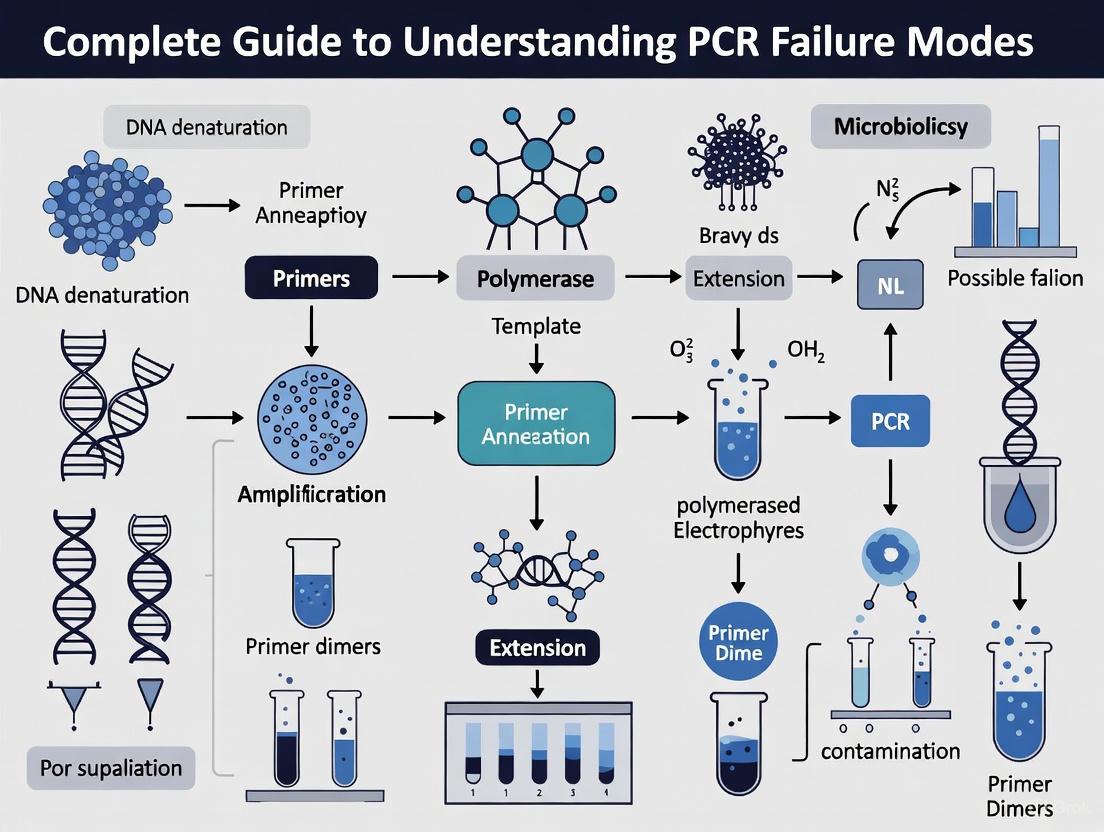
This guide provides a comprehensive framework for researchers and drug development professionals to understand, diagnose, and resolve Polymerase Chain Reaction (PCR) failures.
The Complete Guide to PCR Failure: From Root Causes to Advanced Troubleshooting for Researchers
Abstract
This guide provides a comprehensive framework for researchers and drug development professionals to understand, diagnose, and resolve Polymerase Chain Reaction (PCR) failures. It explores the fundamental causes of amplification issues, details methodological considerations for various PCR applications, offers systematic troubleshooting protocols for common and unexpected problems, and discusses validation techniques to ensure data accuracy and reproducibility. By synthesizing foundational knowledge with practical optimization strategies and comparative technology analyses, this resource aims to enhance experimental success rates in both basic research and clinical diagnostic settings.
Understanding the Core Principles and Common Causes of PCR Failure
The PCR Process and Critical Points of Failure
The Polymerase Chain Reaction (PCR) is a foundational in vitro technique that revolutionized molecular biology by enabling the exponential amplification of specific DNA sequences. Introduced by Kary Mullis in 1985, for which he was later awarded the Nobel Prize in Chemistry, PCR serves as a cornerstone for biomolecular research and clinical diagnostics [1]. This method allows researchers to generate ample quantities of a targeted DNA segment from minimal starting material, facilitating applications ranging from genetic disorder screening and pathogen detection to forensic analysis and basic research [1] [2]. The core principle involves the thermostable Taq polymerase, isolated from Thermus aquaticus, which synthesizes new DNA strands complementary to the target sequence through repeated thermal cycling [1].
The technique's extreme sensitivity, capable of amplifying 10⁶ to 10⁹ DNA copies from just 1 to 100 ng of input DNA, also renders it susceptible to various failure modes [1]. Challenges such as reaction contamination, suboptimal primer design, and inhibitor carryover can compromise amplification efficiency, specificity, and yield. This guide provides an in-depth examination of the PCR process, systematically analyzes critical points of failure, and offers evidence-based troubleshooting protocols to ensure robust and reliable amplification for researchers, scientists, and drug development professionals.
The Core PCR Process
The standard PCR process is an automated, enzymatic reaction that cycles through three fundamental temperature-dependent steps: denaturation, annealing, and extension. These steps are repeated for 25-40 cycles in a thermal cycler, leading to the exponential amplification of the target DNA region [1] [2].
The Three Fundamental Steps
- Denaturation: The reaction mixture is heated to 94–95°C for 20–30 seconds, causing the double-stranded DNA template to separate into single strands by breaking the hydrogen bonds between complementary bases. This provides the necessary single-stranded templates for primer binding [1] [3].
- Annealing: The temperature is lowered to a defined range, typically 55–72°C for 20–40 seconds, allowing the forward and reverse primers to hybridize to their complementary sequences on the single-stranded DNA templates. The optimal annealing temperature is critical for specificity and is usually 3–5°C below the calculated melting temperature (Tm) of the primers [1] [4] [3].
- Extension: The temperature is raised to 72°C, the optimal temperature for Taq polymerase activity. During this step, which lasts ~60 seconds per kilobase of amplicon length, the DNA polymerase synthesizes new DNA strands by adding nucleotides to the 3' ends of the annealed primers, creating double-stranded DNA copies [1] [3].
Reaction Components
A successful PCR requires a precise mixture of several key components, each playing a critical role [3]:
- Template DNA: The source DNA containing the target sequence to be amplified.
- Primers: Short, single-stranded DNA oligonucleotides (typically 18-25 nucleotides) that define the 5' and 3' boundaries of the target sequence.
- Thermostable DNA Polymerase (e.g., Taq): The enzyme that catalyzes the synthesis of new DNA strands.
- Deoxynucleoside Triphosphates (dNTPs): The building blocks (dATP, dCTP, dGTP, dTTP) for new DNA synthesis.
- Reaction Buffer: Provides the optimal chemical environment (pH, ionic strength) for polymerase activity.
- Divalent Cations (Mg²⁺): An essential cofactor for DNA polymerase function, with its concentration often requiring optimization [5] [6].
The following diagram illustrates the logical workflow and component relationships in a standard PCR setup.
Critical Points of Failure and Troubleshooting
PCR failures can manifest as absent or low yield, non-specific amplification, or the formation of primer-dimers. Understanding the root causes is essential for effective troubleshooting.
Common PCR Problems, Causes, and Solutions
The table below summarizes the most common PCR failure modes, their potential causes, and recommended solutions.
Table 1: Comprehensive Guide to PCR Troubleshooting
| Problem Symptom | Root Causes | Recommended Solutions |
|---|---|---|
| No Amplification or Low Yield [5] [6] | • Insufficient template DNA quantity/quality [5]• Poor primer design or degradation [5]• Suboptimal Mg²⁺ concentration [5]• Low polymerase activity or amount [5]• PCR inhibitors present (e.g., phenol, EDTA) [1] [5] | • Verify DNA concentration and purity (A260/A280) [6]• Check primer integrity and redesign if necessary [5]• Optimize Mg²⁺ concentration (0.5-5.0 mM) [5] [3]• Increase amount of DNA polymerase [5]• Re-purify DNA template; use inhibitors-tolerant polymerases [1] [5] |
| Non-Specific Bands/Background [5] [6] | • Annealing temperature too low [5]• Excess primers, enzyme, or Mg²⁺ [5]• Too many thermal cycles [5]• Non-specific primer binding | • Increase annealing temperature incrementally [5]• Use a hot-start DNA polymerase [5] [4]• Optimize reagent concentrations [5]• Reduce cycle number [5]• Employ Touchdown PCR [4] |
| Primer-Dimer Formation [5] [6] [3] | • Primer 3'-end complementarity [3]• Excessively high primer concentration [5]• Overlong annealing time or low temperature [5] | • Redesign primers to avoid 3' complementarity [3]• Lower primer concentration (0.1-1 μM) [5]• Increase annealing temperature; shorten annealing time [5] |
| Smearing or Heterogeneous Products [6] | • Degraded template DNA [5] [6]• Excess template DNA [5]• Contamination from previous PCR products [6]• Too long extension time [6] | • Assess DNA integrity by gel electrophoresis [5]• Reduce input DNA quantity [5]• Use separate pre- and post-PCR work areas [6]• Optimize extension time [5] |
Advanced Methodologies for Challenging Targets
Standard PCR protocols often require modification to address specific experimental challenges.
- Hot-Start PCR: This method uses antibody-based, affibody, or chemically modified DNA polymerases that remain inactive at room temperature. This prevents non-specific amplification and primer-dimer formation during reaction setup, which is especially critical for multiplex PCR. The enzyme is activated during the initial high-temperature denaturation step [5] [4].
- Touchdown PCR: This strategy begins with an annealing temperature several degrees above the primer's Tm to ensure high stringency and prevent non-specific binding in the initial cycles. The annealing temperature is then gradually decreased (e.g., 1°C per cycle) until it reaches the optimal temperature. This enriches the desired specific amplicon early in the process [4].
- GC-Rich PCR: Amplifying GC-rich templates (>65%) is challenging due to strong hydrogen bonding and secondary structures. Using PCR additives like DMSO, formamide, or betaine (0.5 M to 2.5 M) helps denature these stable structures. Highly processive and hyperthermostable DNA polymerases that withstand higher denaturation temperatures (e.g., 98°C) are also beneficial [5] [4] [3].
- Long-Range PCR: For targets longer than 5 kb, specialized DNA polymerase blends are used. These blends combine a polymerase with high processivity for efficient elongation and a proofreading enzyme for accuracy. Additionally, extension times must be prolonged according to the amplicon length [5] [4].
The following workflow provides a systematic approach for diagnosing and resolving the most frequent PCR issues.
Essential Protocols for Robust PCR
Basic PCR Setup Protocol
This protocol is adapted for a standard 50 µL reaction volume and serves as a reliable starting point for most applications [3].
- Preparation: Thaw all PCR reagents (except the polymerase) completely and mix thoroughly. Keep them on ice throughout the setup. Wear gloves to prevent contamination.
- Master Mix Preparation: For multiple reactions, prepare a Master Mix in a sterile 1.5 mL microcentrifuge tube to minimize pipetting errors and ensure consistency. Combine the components in the following order:
- Sterile Nuclease-Free Water (Q.S. to 50 µL)
- 10X PCR Buffer (5 µL)
- 10 mM dNTP Mix (1 µL)
- 25 mM MgCl₂ (volume optimized, typically 1.5-3 µL)
- 20 µM Forward Primer (1 µL)
- 20 µM Reverse Primer (1 µL)
- Template DNA (variable, 1-1000 ng)
- Taq DNA Polymerase (0.5-2.5 Units)
- Mixing and Aliquotting: Gently mix the Master Mix by pipetting up and down at least 20 times. Dispense the appropriate volume into individual 0.2 mL PCR tubes. Add template DNA to each sample tube. For the negative control, add an equivalent volume of water instead of template.
- Thermal Cycling: Place the tubes in a pre-heated thermal cycler and run the following standard program:
- Initial Denaturation: 94–95°C for 2–5 minutes.
- Amplification (25–35 cycles):
- Denaturation: 94–95°C for 20–30 seconds.
- Annealing: 55–72°C (primer-specific) for 20–40 seconds.
- Extension: 72°C for 60 seconds per kilobase.
- Final Extension: 72°C for 5–10 minutes.
- Hold: 4–10°C ∞.
Protocol for Primer Design and Optimization
Proper primer design is the single most critical factor for PCR success [3].
- Length: Primers should be 15–30 nucleotides long.
- GC Content: Aim for 40–60% GC content.
- Melting Temperature (Tm): The Tm for both primers should be within 52–65°C, and the final Tms should not differ by more than 5°C.
- 3' End Specificity: The 3' end must terminate in a G or C (GC clamp) to increase priming efficiency but should not be complementary to the other primer to prevent primer-dimer formation.
- Specificity Checks: Avoid long runs of a single base and di-nucleotide repeats. Verify primer specificity by running a BLAST search against the appropriate genome database to ensure they are unique to the target.
- Tools: Utilize reputable online tools like NCBI Primer-BLAST or Primer3 for design and validation [3].
The Scientist's Toolkit: Key Reagents and Materials
The selection of appropriate reagents is fundamental to overcoming common PCR challenges. The following table details essential solutions and their functions.
Table 2: Key Research Reagent Solutions for PCR
| Reagent / Material | Function / Purpose | Application Notes |
|---|---|---|
| Hot-Start DNA Polymerase [5] [4] | Enzyme inactive at room temperature, activated at high temperature. | Critical for: Reducing nonspecific amplification and primer-dimer formation, especially in multiplex PCR. Enables room-temperature setup. |
| PCR Additives / Co-solvents [5] [4] [3] | Modifies DNA melting temperature and reduces secondary structures. | DMSO (1-10%), Formamide (1.25-10%), Betaine (0.5-2.5 M): Essential for amplifying GC-rich templates. Note: They may lower primer Tm. |
| Bovine Serum Albumin (BSA) [6] [3] | Binds to and neutralizes common PCR inhibitors. | Used at 10–100 μg/ml to overcome inhibition from compounds carried over from blood, plant, or soil samples. |
| MgCl₂ or MgSO₄ Solution [5] [3] | Essential cofactor for DNA polymerase activity. | Concentration (0.5-5.0 mM) is critical and often requires optimization. Excess Mg²⁺ can reduce fidelity and cause nonspecific binding. |
| dNTP Mix [5] [3] | Provides the nucleotides (dATP, dCTP, dGTP, dTTP) for DNA synthesis. | Must be used at equimolar concentrations (typically 200 μM of each dNTP) to prevent misincorporation errors. |
| Nuclease-Free Water [1] [3] | Solvent for the reaction, free of contaminating nucleases. | Prevents degradation of primers, template, and PCR products. Essential for reproducible results. |
A deep understanding of the PCR process—from its core principles of thermal cycling and enzymatic synthesis to the nuanced roles of each reaction component—is fundamental for molecular biologists. As this guide has detailed, the critical points of failure are often predictable and manageable. They range from fundamental issues like template integrity and primer design to more subtle optimization requirements for Mg²⁺ concentration and thermal cycling parameters. By applying systematic troubleshooting workflows, leveraging specialized methods like hot-start and touchdown PCR, and utilizing the appropriate reagents from the scientific toolkit, researchers can reliably overcome these challenges. Mastering these aspects ensures the generation of specific, high-yield amplification products, thereby upholding the integrity and reproducibility of experimental data across diverse applications in research and diagnostics.
The success of Polymerase Chain Reaction (PCR) is fundamentally dependent on the quality of the template DNA. Issues related to the integrity, purity, and quantity of the template are predominant causes of PCR failure, leading to unreliable results, failed experiments, and costly delays in research and diagnostic pipelines [6] [5]. For researchers and drug development professionals, a systematic understanding of these failure modes is not merely beneficial—it is essential for robust experimental design and data integrity. This guide provides an in-depth technical examination of template DNA issues, framed within a broader thesis on PCR failure modes, to equip scientists with the knowledge and methodologies to preemptively address these critical challenges.
The Critical Role of Template DNA in PCR
In PCR, the template DNA serves as the blueprint for amplification. The DNA polymerase enzyme relies on this template to synthesize new strands, using primers to define the specific region of interest. The exponential nature of PCR amplification means that any initial imperfections in the template are also amplified, potentially leading to catastrophic failure or misleading results [7].
The core requirements for template DNA are:
- Integrity: The DNA must be structurally intact, with minimal fragmentation or strand breaks, to allow for the full-length amplification of the target sequence.
- Purity: The template solution must be free of contaminants that inhibit the DNA polymerase or interfere with the reaction chemistry.
- Quantity: An optimal and consistent amount of template DNA must be used to ensure efficient amplification without promoting non-specific products.
Failures in any of these areas disrupt the delicate biochemical balance of the PCR reaction. Understanding the specific mechanisms of failure is the first step toward developing effective mitigation strategies.
DNA Integrity: Degradation and Fragmentation
Mechanisms of DNA Degradation
DNA integrity is compromised through several biochemical pathways that cause strand breaks and base modifications. The primary mechanisms include [8]:
- Oxidation: Reactive oxygen species (ROS) modify nucleotide bases, leading to strand breaks. This process is accelerated by exposure to heat or UV radiation.
- Hydrolysis: Water molecules break the phosphodiester bonds in the DNA backbone. This can cause depurination (loss of purine bases), creating abasic sites that stall DNA polymerases.
- Enzymatic Breakdown: Endogenous nucleases, if not properly inactivated during extraction, can rapidly digest DNA.
- Mechanical Shearing: Overly aggressive physical disruption during DNA extraction can fragment DNA, making it unsuitable for long-range PCR.
Impact on PCR and Quantitative Assessment
Degraded DNA directly compromises PCR success. Sheared DNA templates prevent the amplification of longer fragments, as polymerases cannot traverse across breakpoints. Abasic sites and oxidized bases can cause the polymerase to stall or misincorporate nucleotides, leading to truncated products or sequence errors [8] [5].
Table 1: DNA Degradation Pathways and Their Effects on PCR
| Degradation Pathway | Primary Causes | Impact on PCR | Preventive Measures |
|---|---|---|---|
| Oxidation | Heat, UV radiation, reactive oxygen species | Strand breaks; polymerase stalling; false mutations | Use antioxidants; store at -80°C in oxygen-free environment [8] |
| Hydrolysis | Aqueous environments, acidic conditions | Depurination; DNA fragmentation; abasic sites | Store in stable pH buffers; use frozen or anhydrous storage [8] |
| Enzymatic Breakdown | Cellular nucleases (DNases) | Complete DNA digestion; no amplification | Use chelating agents (EDTA); heat inactivation; nuclease inhibitors [8] |
| Mechanical Shearing | Vigorous pipetting, vortexing, bead-beating | DNA fragmentation; inability to amplify long targets | Use gentle isolation methods; optimize homogenization parameters [8] |
Assessment of DNA integrity is typically performed using gel electrophoresis. Intact genomic DNA appears as a tight, high-molecular-weight band, while degraded DNA manifests as a smear of lower molecular weight fragments. For more precise analysis, fragment analyzers or bioanalyzers provide a detailed size distribution profile, which is particularly crucial for next-generation sequencing applications [8].
DNA Purity: Contamination and Inhibition
Common PCR Inhibitors
PCR inhibitors are substances that co-purify with DNA and disrupt the amplification process. They can originate from the original sample (e.g., blood, plant tissue) or be introduced during the DNA extraction process itself [9].
Inhibitors act through several mechanisms:
- Direct Enzyme Inhibition: Certain compounds bind directly to the DNA polymerase, blocking its active site or causing its degradation.
- Cofactor Interference: Inhibitors like EDTA chelate magnesium ions (Mg²⁺), which are essential cofactors for DNA polymerase activity.
- Template Interaction: Substances like humic acid or melanin can bind to the template DNA, preventing primer annealing or polymerase progression [9].
Table 2: Common PCR Inhibitors and Their Sources
| Inhibitor Category | Specific Examples | Common Sources | Mechanism of Inhibition |
|---|---|---|---|
| Organic Compounds | Hemoglobin, lactoferrin, IgG | Blood, serum, plasma | Bind to DNA polymerase [9] |
| Ionic Substances | Heparin | Anticoagulants | Competes with Mg²⁺ binding [9] |
| Plant Compounds | Polyphenols, polysaccharides | Plant tissues | Mimic DNA structure; interfere with polymerase [9] |
| Laboratory Reagents | Phenol, EDTA, SDS, ethanol | DNA extraction kits | Denature polymerase or chelate Mg²⁺ [5] [9] |
| Environmental Samples | Humic acids, heavy metals | Soil, water | Interact with template and polymerase [9] |
Detection and Elimination of Inhibitors
The presence of inhibitors is often suspected when PCR fails despite seemingly adequate DNA concentration. A simple test involves spiking a known, functional PCR reaction with the suspect DNA sample; a reduction in amplification efficiency confirms inhibition [5].
Strategies to overcome inhibition include:
- Dilution: Diluting the template DNA can reduce inhibitor concentration to a level that no longer affects the reaction. A 10- to 100-fold dilution is often effective [9].
- Purification: Re-purifying the DNA using silica-column based methods, ethanol precipitation, or drop dialysis can effectively remove contaminants [5] [10].
- Polymerase Selection: Some DNA polymerases, such as those designed for forensic or plant applications, have higher tolerance to common inhibitors [5] [9].
- Reaction Additives: Adding bovine serum albumin (BSA, 0.1-0.5 μg/μL) can bind to and neutralize inhibitors like phenolics and humic acids. Betaine (0.5-1.5 M) can help destabilize secondary structures and may mitigate some inhibition effects [6].
DNA Quantity: Optimal Input and Quantification
Consequences of Suboptimal Template Quantity
The amount of template DNA in a PCR reaction must be carefully calibrated. Common issues arise from both insufficient and excessive template [5]:
- Insufficient Template (<1 ng for genomic DNA): Leads to no amplification or low yield, as the probability of primer-template encounters is too low for exponential amplification to initiate effectively.
- Excessive Template (>100 ng for genomic DNA): Can lead to non-specific amplification, as the increased number of non-target sequences raises the chance of off-site primer binding. Excess DNA can also carry proportionally more inhibitors.
Accurate Quantification Methods
Accurate DNA quantification is critical for PCR reproducibility. Common methods include:
- Spectrophotometry (A260/A280): Measures absorbance at 260 nm (nucleic acids) and 280 nm (proteins). A pure DNA sample has an A260/A280 ratio of ~1.8. Ratios significantly lower than this suggest protein contamination, while higher ratios may indicate RNA contamination [11].
- Fluorometry: Uses DNA-binding dyes (e.g., PicoGreen) that fluoresce only when bound to DNA. This method is more specific for double-stranded DNA and less susceptible to contaminants than spectrophotometry [6].
- Gel Electrophoresis: Visual assessment of DNA quantity and quality against a DNA mass standard. This method provides a qualitative check of integrity alongside quantification.
For routine PCR, 10-100 ng of genomic DNA is a standard starting point for a 50 μL reaction. The optimal amount may vary based on template complexity and target abundance [5] [10].
Advanced Protocols for Challenging Samples
The Chloroform-Bead Method for Tough Cell Walls
Mycobacterial species, with their thick, mycolic acid-rich cell walls, present a significant challenge for DNA extraction. A novel Chloroform-Bead (CB) method, validated across 16 laboratories in 2025, demonstrates a universal, high-yield approach [11].
Experimental Workflow:
- Sample Input: A loopful of mycobacterial cells (~10 mg) is transferred to a 2.0 mL screw-cap tube.
- Chemical and Mechanical Lysis: Add 700 μL of 0.1 M NaCl/TE buffer, 500 μL of chloroform, and ~600 mg of 0.2 mm diameter glass beads. Vortex at 2,700 rpm for 7 minutes. Chloroform sterilizes the sample and dissolves lipids, while bead-beating mechanically disrupts the tough cell wall.
- RNase Treatment: Incubate with RNase A for 20 minutes to remove RNA.
- Purification: Perform phenol-chloroform and chloroform extractions using a phase-lock tube for easy separation.
- DNA Precipitation: Precipitate DNA with isopropanol, wash, and resuspend in 100 μL of elution buffer (10 mM Tris-HCl, pH 8.5) [11].
Performance Metrics: This protocol achieved a median DNA yield of 22.2 μg from mycobacteria with high purity (A260/A280 ~1.92), drastically reducing processing time from days to 2 hours while ensuring complete sample sterilization [11].
Optimized Extraction for Degraded or Low-Input Samples
For samples with compromised integrity or limited quantity, such as forensic, ancient DNA, or laser-capture microdissected samples, specialized protocols are required [8].
- Combined Lysis Approaches: Use a combination of chemical agents (e.g., EDTA for demineralization of bone) with controlled mechanical homogenization (e.g., bead beating). This "combo power punch" maximizes recovery while minimizing further damage [8].
- Temperature and pH Control: Maintain digestion temperatures between 55°C to 72°C and carefully control pH throughout extraction to preserve DNA integrity [8].
- Specialized Preservation: For fresh samples, flash-freezing in liquid nitrogen followed by storage at -80°C is the gold standard. When freezing is impossible, use chemical preservatives that stabilize nucleic acids and inhibit nucleases [8].
Diagram: Troubleshooting DNA Extraction for Challenging Samples
The Scientist's Toolkit: Essential Reagents and Materials
Table 3: Key Research Reagent Solutions for Template DNA Issues
| Reagent/Material | Function/Application | Technical Notes |
|---|---|---|
| Bead Ruptor Elite | Mechanical homogenizer for tough samples (bone, bacteria) | Allows precise control of speed, cycle duration, and temperature to minimize DNA shearing [8] |
| Hot-Start DNA Polymerase | Reduces non-specific amplification in PCR | Inactive at room temperature; requires high-temp activation. Prevents primer-dimer formation [6] [5] |
| Bovine Serum Albumin (BSA) | PCR additive to counteract inhibitors | Binds to and neutralizes organic inhibitors like phenolics and humics; typical use: 0.1-0.5 μg/μL [6] |
| Phase-Lock Tubes | Facilitates phenol-chloroform extraction | Easy separation of aqueous and organic phases; improves recovery and reduces hands-on time [11] |
| EDTA (Ethylenediaminetetraacetic acid) | Chelating agent in DNA storage buffers | Inhibits nuclease activity by chelating Mg²⁺; common in TE buffer for long-term DNA storage [8] |
| GC Enhancer / Betaine | Additive for difficult templates (GC-rich) | Destabilizes secondary structures; equalizes Tm for more efficient amplification [5] |
| RNase A | Removes RNA contamination from DNA preps | Essential for accurate quantification and purity; used post-lysis in many protocols [11] |
Template DNA integrity, purity, and quantity are not standalone concerns but interconnected variables that collectively determine PCR success. A systematic approach—incorporating rigorous quality control, appropriate quantification methods, and specialized protocols for challenging samples—is fundamental to reliable molecular diagnostics and research. As PCR continues to be a cornerstone technology in life sciences and drug development, a deep and practical understanding of these template-related failure modes will remain an essential component of the scientist's expertise.
Primer Design Flaws and Binding Site Complications
Polymersse Chain Reaction (PCR) is a foundational technique in molecular biology, yet its success is critically dependent on the meticulous design of oligonucleotide primers. Flawed primer design or complications at the primer binding site represent a predominant cause of PCR failure, leading to issues such as no amplification, non-specific products, or primer-dimer formation [12] [6]. These pitfalls can confound experimental results, waste valuable resources, and impede research and diagnostic progress. This guide provides an in-depth technical examination of common primer design flaws and binding site complications, offering researchers a systematic framework for troubleshooting and optimization. By understanding these failure modes, scientists can enhance the reliability and efficiency of their PCR assays, which is particularly crucial in high-stakes environments like drug development and clinical diagnostics.
Common Primer Design Flaws
The design process is the first and most critical defense against PCR failure. Several specific flaws can compromise primer efficacy.
Thermodynamic Instability and Mismatched Melting Temperatures
A fundamental requirement for efficient amplification is that both primers in a pair bind with similar affinity at a common annealing temperature. This is governed by their melting temperature (Tm), the temperature at which half of the DNA duplex dissociates. A Tm difference of more than 1–5°C between paired primers can result in one primer binding efficiently while the other does not, leading to asymmetric or failed amplification [13] [3]. For quantitative real-time PCR assays, the primer Tm should ideally be between 58–60°C [13]. Furthermore, the 3' end of a primer must be thermally stable to prevent "breathing" (fraying), which can displace the polymerase. Including a G or C base at the 3' end, which forms three hydrogen bonds, effectively "clamps" the end and increases priming efficiency [3] [14].
Table 1: Key Primer Design Parameters and Their Optimal Ranges
| Design Parameter | Optimal Range/Guideline | Consequence of Deviation |
|---|---|---|
| Primer Length | 20–30 nucleotides [3] [14] | Shorter primers reduce specificity; longer primers may have folding issues. |
| Melting Temperature (Tm) | 55–65°C [14]; 52–58°C for conventional PCR [3] | Poor efficiency if too high/low; failed PCR if pair Tm differs >5°C. |
| GC Content | 40–60% [3] [14] | Poor annealing if too low; non-specific binding if too high. |
| 3' End Stability | A G or C base at the 3' end is recommended [3] [14] | "Breathing" or fraying of the ends, reducing polymerase binding. |
| Self-Complementarity | Avoid hairpins and inverted repeats [14] | Primer-dimer formation and self-annealing, reducing target yield. |
Structural Complications: Self-Complementarity and Dimerization
Primers must be specific for the target template and not for themselves or each other. Self-complementarity within a primer can lead to the formation of hairpin loops, which prevents the primer from binding to the template [3]. Similarly, complementarity between the two primers, especially at their 3' ends, facilitates the formation of primer-dimers, where primers anneal to each other and are extended by the polymerase [6]. This consumes reaction reagents and drastically reduces the yield of the desired amplicon. Primer-dimer formation is promoted by high primer concentrations, long annealing times, and low annealing temperatures [6]. Software tools should be used to check for these interactions, and structures with a ΔG (change in free energy) of less than -5 kcal/mol should be avoided [14].
Sequence-Related Pitfalls
Even primers with appropriate Tm and no self-complementarity can fail if their sequence composition is problematic. Runs of a single base (e.g., AAAAA) or di-nucleotide repeats (e.g., GCGCGC) can cause the primer to "slip" along the template during annealing, leading to mispriming and heterogeneous products [3]. Furthermore, primers designed to low-complexity sequence regions may not be unique in the genome, resulting in amplification of non-target sequences [13]. If an alternative region cannot be selected, one strategy is to use longer primers with a higher Tm to increase specificity, though this may require subsequent optimization of thermal cycling conditions [13].
Binding Site Complications and Template Issues
The context in which the primer is designed to bind is as important as the primer itself. Complications at the binding site can thwart even a perfectly designed primer.
Target Secondary Structure
Single-stranded DNA or RNA templates are not linear in solution; they form complex secondary structures such as hairpins and stem-loops through intramolecular base pairing. If a primer binding site is located within such a structure, the energy required to melt the structure may be prohibitive at the assay's annealing temperature, preventing primer binding and causing false negatives [15]. This is a particularly significant challenge in reverse transcription PCR (RT-PCR) where RNA templates are used. Advanced software that uses multi-state thermodynamic models (beyond simple two-state predictions) can solve these coupled equilibria to accurately predict the amount of primer bound to its structured target, thereby improving assay sensitivity [15].
Template Sequence Quality and Inaccuracies
The accuracy of the template sequence used for primer design is paramount. Sequence discrepancies or inaccuracies in public databases can lead to primers that do not match the actual target, resulting in failed assays [13]. This is especially relevant when working with gene families with high homology, or when single nucleotide polymorphisms (SNPs) are present within the primer binding site. A mismatch, particularly at the 3' end of the primer, can severely reduce or prevent polymerase extension. To mitigate this, it is critical to use curated sequences from databases like NCBI and dbSNP and to verify the template sequence through multiple sequencing reactions [13]. If a region with a known SNP must be targeted, one strategy is to increase the primer length without raising the annealing temperature, which allows for more "wobble" or mismatch tolerance [13].
Genomic DNA Contamination and Amplicon Length
When performing RNA PCR or qPCR, a common source of false positives is the amplification of contaminating genomic DNA (gDNA). To prevent this, primers should be designed to span an exon-exon junction (an intron splice site) [13]. This ensures that amplification will only occur from the processed mRNA template, as the amplicon spanning the junction would not exist in the gDNA. For targets without introns (e.g., from bacteria or viruses), rigorous RNA isolation techniques and DNase treatment are necessary [13]. Finally, amplicon length impacts efficiency. Ideally, amplicons should be 50 to 150 bases long for optimal amplification [13]. Designing primers that generate very long amplicons may lead to poor efficiency, requiring optimization of cycling conditions and reaction components.
Diagram 1: A systematic troubleshooting workflow for diagnosing and resolving common PCR failures related to primer design and binding site complications.
Advanced Applications and Emerging Solutions
As PCR technology evolves to meet more complex diagnostic and research needs, the challenges in primer design have become more sophisticated.
Complications in Multiplex PCR
Multiplex PCR, which amplifies multiple targets in a single reaction, is powerful for pathogen detection, target enrichment, and genotyping. However, it introduces unique challenges beyond single-plex PCR. Primer-amplicon interactions are a major cause of false negatives in multiplex panels; a primer intended for one target can cross-hybridize to a different target's amplicon, leading to shortened, non-amplifiable products and depleting reagents [15]. Similarly, the formation of primer-dimers between different primer sets in the reaction is a significant risk, consuming primers and dNTPs and causing reaction failure [15]. A critical, often overlooked, problem is uneven amplification across targets, often caused by varying degrees of target secondary structure, which makes some binding sites inaccessible relative to others [15]. Solving these problems requires sophisticated software that can model all possible intermolecular interactions and the complex folding of all targets and primers simultaneously.
Degenerate Primers and Error Correction
In applications such as amplifying gene families or identifying novel genes from related species, degenerate primers are used. These primers have several possible bases at certain positions, creating a mixture of primer sequences [16]. The degeneracy is the number of unique sequence combinations it contains. While powerful, designing effective degenerate primers is computationally complex, as they must match a maximum number of input sequences without promoting non-specific binding. Programs like HYDEN have been developed to tackle this problem, successfully designing primers with degeneracies as high as 10^10 to amplify novel human olfactory receptor genes [16].
For ultra-sensitive detection of rare alleles, such as circulating tumor DNA in liquid biopsies, errors introduced during PCR itself become a major bottleneck. Methods like SPIDER-seq address this by using a novel bioinformatics approach to track molecular lineages even when barcodes are overwritten during standard PCR cycles [17]. By constructing a peer-to-peer network of barcodes from daughter strands, the method can generate consensus sequences to reduce errors, enabling detection of mutations at frequencies as low as 0.125% [17]. This represents a significant advance over more laborious and costly ligation-based methods.
Experimental Protocols and Validation
Systematic Primer Validation Workflow
A methodical approach to testing and validating primers is essential after in silico design. The following protocol outlines a step-by-step workflow to experimentally confirm primer specificity and efficiency [3].
Reaction Setup: Prepare a master mix for multiple reactions to minimize pipetting error. For a standard 50 µL reaction, combine the following components in order:
- Sterile Nuclease-Free Water (Q.S. to 50 µL)
- 10X PCR Buffer (5 µL)
- 10 mM dNTP Mix (1 µL, final concentration 200 µM of each dNTP)
- 25 mM MgCl₂ (volume varies; start at 1.5-4.0 mM final concentration)
- 20 µM Forward Primer (1 µL, final concentration 0.4 µM)
- 20 µM Reverse Primer (1 µL, final concentration 0.4 µM)
- DNA Template (1-1000 ng, typically 0.5-5 µL)
- DNA Polymerase (0.5-2.5 units, typically 0.5-1 µL) Mix gently by pipetting up and down 20 times after adding the polymerase [3].
Thermal Cycling with Gradient Annealing: Use a thermal cycler with a gradient function. A basic cycling program includes:
- Initial Denaturation: 94–98°C for 30–120 seconds.
- Amplification (25–35 cycles):
- Denature: 94–98°C for 15–30 seconds.
- Anneal: Gradient from 5°C below to 5°C above the calculated average Tm, for 15–60 seconds.
- Extend: 72°C (for Taq polymerase) for 1 minute per 1 kb of amplicon.
- Final Extension: 72°C for 5–10 minutes [12] [3].
Product Analysis via Gel Electrophoresis: Analyze 5–10 µL of the PCR product on a 1–2% agarose gel stained with an intercalating dye. A successful reaction should show a single, sharp band of the expected size under UV light. The presence of multiple bands indicates non-specific amplification, a smear may suggest degraded template or primers, and no band indicates a complete failure [6] [3].
Research Reagent Solutions
Table 2: Key Reagents for Troubleshooting Primer-Related PCR Failure
| Reagent / Material | Function / Application | Troubleshooting Purpose |
|---|---|---|
| Hot-Start DNA Polymerase | Enzyme activated only at high temperatures. | Prevents non-specific priming and primer-dimer formation during reaction setup [6]. |
| dNTP Mix | Nucleotide building blocks for DNA synthesis. | Ensure fresh, high-quality dNTPs; suboptimal concentration causes low yield [6]. |
| MgCl₂ Solution | Cofactor essential for DNA polymerase activity. | Optimize concentration (0.5-5.0 mM) to address no amplification (increase) or non-specific bands (decrease) [12] [3]. |
| PCR Additives (e.g., BSA, Betaine, DMSO) | Modifiers of nucleic acid stability and melting behavior. | DMSO/Betaine: Destabilize secondary structure in high-GC targets [3]. BSA: Binds to inhibitors in the reaction [6]. |
| TaqMan Probes (for qPCR) | Fluorogenic probes for specific detection. | For qPCR, the probe Tm should be ~10°C higher than the primer Tm [13]. |
| Molecular Grade BSA | Inert protein additive. | Mitigates the effects of PCR inhibitors present in the sample or reaction [6]. |
Diagram 2: The mechanism of primer-dimer formation and its negative impact on PCR efficiency, alongside key preventive strategies.
Primer design is a critical step that dictates the success or failure of PCR experiments. Common flaws, including thermodynamic imbalances, self-complementarity, and poor sequence choices, are often preventable with careful in silico design. Complications at the binding site, such as target secondary structure and template inaccuracies, require a combination of sophisticated software prediction and empirical validation. As PCR applications expand into multiplex panels and rare allele detection, the principles of robust primer design become even more crucial. By adhering to the guidelines, troubleshooting workflows, and experimental protocols detailed in this technical guide, researchers can systematically overcome these challenges, thereby enhancing the reliability and impact of their work in molecular biology and drug development.
The Polymerase Chain Reaction (PCR) is a foundational technique in molecular biology, enabling the exponential amplification of specific DNA sequences. While the thermal cycling protocol is often the visible face of the process, the true biochemical engine lies in the carefully balanced reaction components. The efficacy of this engine is governed by the intricate interplay between the enzyme (DNA polymerase), the reaction buffer, and essential cofactors. For researchers and drug development professionals, a deep understanding of these components is not merely academic; it is critical for diagnosing amplification failures, optimizing assays for novel targets, and ensuring the reliability of results in diagnostic and research applications. This guide delves into the core reaction components, framing them within the context of PCR failure modes to provide a practical resource for troubleshooting and optimization.
The Central Catalyst: DNA Polymerase
DNA polymerase is the central workhorse of the PCR, responsible for synthesizing new DNA strands by incorporating nucleotides complementary to the template. Its characteristics directly determine the success, fidelity, and yield of the amplification reaction.
Key Attributes and Selection Criteria
Selecting the appropriate DNA polymerase is the first critical step in assay design. The choice should be guided by four key attributes, as detailed in Table 1 [18].
- Thermostability: The enzyme must withstand the repeated high-temperature denaturation steps (typically 94–98°C). The half-life at 95°C is a key metric; for example, Taq polymerase has a half-life of approximately 40 minutes at 95°C, while enzymes from hyperthermophilic organisms, like Deep Vent polymerase, can last for hours at these temperatures [19] [18].
- Fidelity: Fidelity refers to the accuracy of nucleotide incorporation. Standard Taq polymerase lacks proofreading (3'→5' exonuclease) activity and has an error rate of approximately 1.8 x 10⁻⁴, or about 1 error per 10,000 bases incorporated [18]. For applications like cloning or sequencing, high-fidelity polymerases (e.g., Pfu, Q5) with proofreading capabilities are essential, as they can reduce error rates by 1–2 orders of magnitude [20] [18].
- Processivity: This is the number of nucleotides a polymerase can incorporate per binding event. Higher processivity is beneficial for amplifying long targets (>10 kb) or GC-rich regions that can stall the enzyme. While native Taq incorporates 10–45 nucleotides per second, engineered polymerases like KAPA2G can achieve speeds around 150 nucleotides per second [18].
- Specificity: Specificity minimizes non-specific amplification and primer-dimer formation. Hot-start polymerases are a crucial solution here. They are rendered inactive at room temperature through antibodies or chemical modifications, preventing spurious activity during reaction setup. Activation occurs only after the initial high-temperature denaturation step [6] [5] [18].
Table 1: DNA Polymerase Selection Guide for Common Applications
| Application | Recommended Polymerase Type | Key Rationale |
|---|---|---|
| Routine Screening / Genotyping | Standard Taq | Fast, robust, and cost-effective for simple amplifications [20]. |
| Cloning, Sequencing, Mutagenesis | High-Fidelity (e.g., Pfu, Q5) | Proofreading activity ensures low error rates in the final product [20] [5] [18]. |
| Complex Samples (e.g., blood, soil) | Inhibitor-Tolerant / High-Processivity | Engineered to maintain activity in the presence of common PCR inhibitors [5]. |
| Long-Range PCR (>10 kb) | Long-Range / High-Processivity | High processivity and thermostability enable full-length synthesis of long amplicons [5] [21]. |
| Multiplex PCR | Stringent Hot-Start | Prevents primer-dimer formation and off-target amplification when multiple primer sets are used [22]. |
Experimental Protocol: Determining Optimal Enzyme Concentration
The amount of DNA polymerase used in a reaction is a key variable that requires optimization beyond the manufacturer's general recommendations.
- Prepare a Master Mix: Create a master mix containing all standard reaction components (1X buffer, 0.2 mM each dNTP, 0.5 µM each primer, template DNA) sufficient for multiple reactions.
- Dilution Series: Prepare a dilution series of the DNA polymerase in the appropriate storage buffer. A typical starting range is 0.5 to 2.5 units per 50 µL reaction [3].
- Setup Reactions: Aliquot the master mix into PCR tubes and add the varying amounts of polymerase from your dilution series.
- Run PCR: Perform amplification using your standard thermal cycling protocol.
- Analysis: Analyze the PCR products by agarose gel electrophoresis. The optimal concentration is the lowest amount that produces a strong, specific amplicon with minimal background. Excessive enzyme can lead to nonspecific products, while insufficient amounts result in low yield (Figure 2) [19].
The Biochemical Environment: Buffer Composition and Additives
The reaction buffer provides the optimal chemical environment for the DNA polymerase to function and for the primers to anneal to the template. Its composition is a frequent source of PCR failure if not properly optimized.
Core Buffer Components
- Tris-HCl: Provides a stable pH, typically around 8.3, which is optimal for polymerase activity [23].
- Potassium Chloride (KCl): A salt concentration of 35–100 mM promotes primer annealing by neutralizing the negative charges on the phosphate backbones of DNA, facilitating the formation of stable primer-template hybrids [3] [23].
Essential Cofactor: Magnesium Ions (Mg²⁺)
Magnesium is arguably the most critical cofactor in PCR. It serves a dual role: it is an essential cofactor for DNA polymerase activity, and it stabilizes the primer-template complex by neutralizing charge repulsion [19] [20]. The optimal concentration of Mg²⁺ is highly dependent on the specific primer-template system and must be determined empirically.
- Low Mg²⁺ Concentration (<0.5 mM): Results in significantly reduced polymerase activity and can lead to complete amplification failure due to a lack of the essential cofactor [20] [23].
- High Mg²⁺ Concentration (>5 mM): Decreases reaction stringency, leading to non-specific amplification and smeared bands on a gel. It can also reduce fidelity by promoting misincorporation of nucleotides [20] [5] [23].
Table 2: Quantitative Effects of Key Reaction Components on PCR Outcome
| Component | Typical Concentration Range | Effect of Low Concentration | Effect of High Concentration |
|---|---|---|---|
| Mg²⁺ | 0.5 - 5.0 mM [23] [24] | No or poor yield [20] [23] | Nonspecific products, smearing, lower fidelity [20] [5] |
| dNTPs (each) | 0.01 - 0.2 mM [19] [24] | Reduced yield, early plateau [19] | Inhibition, misincorporation (if unbalanced) [19] [5] |
| Primers (each) | 0.1 - 1.0 µM [19] [5] | Low or no amplification [19] | Primer-dimer formation, nonspecific binding [19] [5] |
| DNA Template | 1 pg - 1 µg (varies by type) [19] | Low or no amplification [6] | Nonspecific amplification, inhibitors carryover [5] |
Experimental Protocol: Mg²⁺ Titration
Titrating Mg²⁺ is one of the most effective steps in troubleshooting a failed PCR.
- Stock Solution: Prepare a MgCl₂ or MgSO₄ stock solution (e.g., 25 mM). The choice of salt may depend on the polymerase; for instance, Pfu DNA polymerase often works better with MgSO₄ [5].
- Master Mix: Prepare a master mix without Mg²⁺. Include all other components: 1X buffer (without Mg²⁺), dNTPs, primers, template, polymerase, and water.
- Reaction Setup: Aliquot the master mix into a series of PCR tubes. Add the Mg²⁺ stock solution to each tube to create a final concentration gradient, for example: 0.5, 1.0, 1.5, 2.0, 2.5, 3.0, 4.0, and 5.0 mM.
- Amplification and Analysis: Run the PCR and analyze the products by gel electrophoresis. Identify the concentration that yields the strongest specific product with the cleanest background [20] [3].
PCR Additives and Enhancers
Additives are co-solvents used to modify the reaction environment to overcome challenges posed by complex templates.
- DMSO (Dimethyl Sulfoxide): Used at 1-10% (v/v), DMSO disrupts base pairing and is particularly effective for denaturing GC-rich templates (>60% GC) by interfering with secondary structure formation. Concentrations above 2% can inhibit some polymerases [20] [23] [21].
- Betaine: Used at 0.5 M to 2.5 M, betaine (N,N,N-trimethylglycine) equalizes the thermodynamic stability of GC and AT base pairs, facilitating the amplification of GC-rich regions and long targets [20] [23].
- BSA (Bovine Serum Albumin): At concentrations of 10-100 µg/mL, BSA acts as a stabilizer and can bind PCR inhibitors commonly found in complex samples like blood, soil, or plant tissues [6] [22] [23].
- Formamide: Like DMSO, formamide (1-10%) destabilizes DNA secondary structures and can increase stringency, but it can also be inhibitory at higher concentrations [23].
Integrated Troubleshooting: Connecting Components to Failure Modes
PCR failures can often be traced back to the suboptimal performance of one or more reaction components. The following diagram and table provide a systematic approach to diagnosing these failures.
Diagram 1: A diagnostic map linking common PCR failure modes to their potential root causes in reaction components and conditions.
Table 3: Troubleshooting Guide for PCR Failure Modes
| Failure Mode | Primary Component Causes | Recommended Solutions |
|---|---|---|
| No/Low Yield | ||
| Non-Specific Bands / Smearing | ||
| Primer-Dimer Formation | ||
| Low Fidelity (Errors in Product) |
The Scientist's Toolkit: Essential Reagents and Materials
The following table catalogues the key reagents required for setting up and optimizing PCR from the perspective of reaction components.
Table 4: Research Reagent Solutions for PCR Setup and Optimization
| Reagent | Function | Key Considerations |
|---|---|---|
| DNA Polymerase | Catalyzes the template-dependent synthesis of new DNA strands. | Select based on fidelity, thermostability, processivity, and specificity (hot-start) for the application [18]. |
| 10X Reaction Buffer | Provides the optimal pH and ionic strength for polymerase activity and primer annealing. | Often supplied with the enzyme; may or may not contain Mg²⁺ [3] [18]. |
| MgCl₂ or MgSO₄ Solution | Essential cofactor for DNA polymerase; stabilizes primer-template binding. | Concentration must be optimized; the type of salt (Cl vs. SO₄) can affect some polymerases [5] [23]. |
| dNTP Mix | Provides the nucleotide building blocks (dATP, dCTP, dGTP, dTTP) for DNA synthesis. | Must be equimolar and free of degradation from multiple freeze-thaw cycles [19] [5]. |
| Oligonucleotide Primers | Short, single-stranded DNA sequences that define the start and end points of amplification. | Must be well-designed (length, Tm, GC%) and used at an optimized concentration (0.1-1 µM) [19] [3]. |
| Nuclease-Free Water | Solvent for the reaction; ensures no enzymatic degradation of components. | Critical for preventing reaction failure due to contaminating nucleases. |
| PCR Additives (e.g., DMSO, Betaine) | Co-solvents that help denature complex secondary structures in the template DNA. | Use at the lowest effective concentration to minimize polymerase inhibition [20] [23]. |
| Template DNA | The target sequence to be amplified. | Quality and quantity are paramount; must be free of inhibitors [19] [21]. |
A meticulous understanding of PCR reaction components—enzymes, buffer conditions, and cofactors—is fundamental to overcoming the failure modes that researchers routinely encounter. The DNA polymerase dictates the speed, accuracy, and scope of the amplification. The buffer system, critically influenced by Mg²⁺ concentration, creates the biochemical environment for specificity and efficiency. By systematically approaching these components, as outlined in the troubleshooting guides and protocols herein, scientists can transform a failing PCR into a robust and reliable assay. This knowledge is indispensable for advancing research and development in fields ranging from fundamental genetics to targeted drug discovery.
Thermal Cycling Parameters and Their Impact on Specificity
In polymerase chain reaction (PCR) optimization, thermal cycling parameters are the adjustable physical conditions that govern the denaturation, annealing, and extension of DNA during amplification. These parameters—temperature, time, and cycle number—exert a profound influence on reaction specificity, which is the ability to amplify only the intended target sequence without generating non-specific products such as primer-dimers or spurious amplicons [25]. For researchers and drug development professionals, mastering these parameters is not merely beneficial but essential for generating reliable, reproducible data in applications ranging from clinical diagnostics to next-generation sequencing library preparation. Failure to optimize thermal cycling is a primary failure mode in PCR, often leading to inconclusive results, failed experiments, and costly delays [25] [26]. This guide provides an in-depth examination of these critical parameters and their practical optimization for ensuring specificity.
Core Thermal Cycling Parameters
The standard PCR cycle consists of three fundamental steps: denaturation, annealing, and extension. Each step's parameters must be carefully controlled to favor specific amplification.
Denaturation Conditions
Denaturation is the process of separating double-stranded DNA into single strands, making the template accessible to primers. This step is typically performed at 94–98°C for 15 seconds to 3 minutes [27] [26].
- Incomplete denaturation results in poor amplification efficiency because primers and polymerase cannot access the template [27].
- Excessive denaturation (prolonged time or excessively high temperature) can degrade the DNA template and reduce polymerase activity, especially for enzymes less thermostable than Taq [27] [26].
For GC-rich templates (>65% GC content), which form more stable duplexes, a higher denaturation temperature (e.g., 98°C) or a longer initial denaturation time (3-5 minutes) is often necessary for complete strand separation [27]. The presence of buffer additives like DMSO or formamide can facilitate denaturation of such challenging templates [27].
Annealing Temperature Optimization
The annealing step is arguably the most critical for specificity. Here, primers bind to their complementary sequences on the template DNA. The annealing temperature (Ta) must be stringently controlled.
- Too low a Ta permits non-specific binding, where primers anneal to partially complementary sites, leading to amplification of unintended products and background "smearing" [20] [27] [26].
- Too high a Ta prevents primer binding altogether, resulting in low or no yield of the desired product [20].
The optimal Ta is intrinsically linked to the primer melting temperature (Tm), the temperature at which 50% of the primer-DNA duplex dissociates [27]. A standard starting point is to set the Ta 3–5°C below the calculated Tm of the primers [27] [28]. Tm can be calculated using several formulas, with the Nearest Neighbor method being the most accurate as it considers sequence context and reagent concentrations [27].
Table 1: Common Formulas for Calculating Primer Tm
| Formula | Calculation | Considerations |
|---|---|---|
| Basic Rule of Thumb [28] | Tm = 4(G + C) + 2(A + T) |
Simple but less accurate; does not account for salt or primer concentration. |
| Salt-Adjusted Formula [27] | Tm = 81.5 + 16.6(log[Na+]) + 0.41(%GC) – 675/primer length |
More accurate as it incorporates salt concentration into the calculation. |
| Nearest Neighbor Method [27] | Uses thermodynamic stability of dinucleotide pairs with salt and primer concentrations. | Most accurate method; typically employed by commercial primer design software. |
Extension Parameters
During extension, the DNA polymerase synthesizes a new DNA strand. The key parameters are temperature and time.
- Temperature: The extension temperature is typically set to the optimum for the polymerase enzyme, often 72°C for Taq polymerase [27] [26].
- Time: Extension time is directly proportional to the length of the amplicon. A general guideline is 1 minute per kilobase (kb) for Taq polymerase [27] [28]. However, "fast" polymerases may require significantly less time [27].
Using an excessively long extension time offers no benefit and can increase opportunities for non-specific amplification [28]. For amplicons shorter than 1 kb, the extension time can be reduced to as little as 15-20 seconds [28].
Cycle Number
The number of PCR cycles (typically 25–40) influences product yield and specificity [27].
- Too few cycles result in insufficient product for detection.
- Too many cycles (>45) promotes the accumulation of non-specific products and primer-dimers as reaction components are depleted and the reaction enters a plateau phase. This is due to the preferential amplification of shorter, non-specific products that outcompete the longer target in later cycles [27].
Table 2: Summary of Core Thermal Cycling Parameters and Their Impact on Specificity
| Parameter | Typical / Optimal Range | Effect of Sub-Optimal Condition on Specificity |
|---|---|---|
| Denaturation | 94–98°C, 15 sec - 3 min [27] [26] | Too low/time too short: Incomplete denaturation lowers efficiency. Too high/time too long: Enzyme/template degradation. |
| Annealing Temperature (Ta) | Tm of primers - (3–5°C) [27] [28] | Too low: High non-specific amplification. Too high: Low/no specific yield. |
| Extension Time | 1 min/kb (Taq polymerase) [27] [26] | Too short: Incomplete products. Too long: Increased non-specific products. |
| Cycle Number | 25–35 cycles [27] | Too few: Low product yield. Too many (>45): High non-specific background and plateau. |
The following diagram illustrates the logical relationship between these thermal cycling parameters and the outcome of a PCR assay, highlighting the path to achieving high specificity.
Advanced Optimization Techniques
Empirical Optimization with Gradient PCR
While calculations provide a starting point, the optimal annealing temperature is often determined empirically. A gradient thermal cycler is an indispensable tool for this process, allowing a single PCR run to test a range of annealing temperatures across different wells of the reaction block [27]. The optimal Ta is identified as the highest temperature that produces a strong, specific amplicon band and the lowest background of non-specific products on a gel [20] [27]. Modern "better-than-gradient" thermal cyclers with separate heating/cooling units for different block sections provide superior temperature precision for this optimization [27].
Touchdown PCR
Touchdown PCR is a powerful technique to enhance specificity, particularly when the optimal Ta is unknown [28]. The protocol begins with an annealing temperature 1–2°C above the estimated Tm and systematically decreases the Ta by 0.5–1.0°C every cycle or every few cycles until it reaches a final, lower "touchdown" temperature [28]. The initial high-temperature cycles are highly stringent, favoring only the most perfectly matched primer-template binding. This ensures that the specific target is preferentially amplified during the early stages of the reaction. Once amplified, this specific product outcompetes non-specific targets in subsequent, less stringent cycles, thereby maximizing the yield of the correct product [28].
The Scientist's Toolkit: Reagents and Materials
Optimization extends beyond thermal parameters to the chemical composition of the reaction mix. The following table details key reagents and their role in managing reaction specificity.
Table 3: Key Research Reagent Solutions for Optimizing PCR Specificity
| Reagent / Material | Function / Rationale | Optimization Consideration |
|---|---|---|
| High-Fidelity Polymerase (e.g., Pfu, Vent) [25] [20] | Possesses 3'→5' proofreading (exonuclease) activity, which corrects misincorporated nucleotides, lowering error rates by 10-fold compared to Taq [20]. | Essential for cloning, sequencing, and any application requiring high sequence accuracy. Typically has a slower extension rate than Taq. |
| Hot-Start Polymerase [20] [26] | Remains inactive until a high-temperature activation step, preventing primer-dimer formation and non-specific extension during reaction setup at lower temperatures [20]. | A critical tool for improving specificity and yield across many PCR applications. |
| Magnesium Chloride (MgCl₂) [25] [20] [28] | Essential cofactor for DNA polymerase activity. Concentration stabilizes primer-template duplex and affects enzyme fidelity [20]. | Too low (e.g., <0.5 mM): Low efficiency/yield. Too high (e.g., >4 mM): Increased non-specific binding and reduced fidelity. Titrate from 1.5–2.0 mM starting point [20] [28]. |
| dNTPs [28] | Building blocks for new DNA strands. | Concentration affects yield and specificity. Too high (>200 µM): Can reduce specificity. Too low (<50 µM): Reduces yield. A common balance is 50–200 µM each dNTP [28]. |
| Primers [25] [28] | Short DNA sequences complementary to the target, defining the start and end of amplification. | Concentration is critical. Too high (>1 µM): Promotes non-specific binding and primer-dimer formation. Optimal range is typically 0.1–0.5 µM [25] [28]. |
| Buffer Additives (DMSO, Betaine, etc.) [20] [27] | Destabilize DNA secondary structures and homogenize the stability of GC- and AT-rich regions, aiding in denaturation and primer annealing. | Particularly useful for GC-rich templates (>65%). DMSO is typically used at 2–10% and Betaine at 1–2 M. Note: Additives lower the effective Tm, requiring Ta adjustment [20] [27]. |
Experimental Protocol: Gradient PCR for Annealing Temperature Optimization
This protocol provides a detailed methodology for empirically determining the optimal annealing temperature using a gradient thermal cycler [20] [27].
Materials
- Purified DNA template (e.g., 10–40 ng genomic DNA or 1 ng plasmid per reaction).
- Target-specific forward and reverse primers (e.g., 10 µM stock each).
- 2X PCR Master Mix (containing buffer, dNTPs, MgCl₂, and hot-start high-fidelity DNA polymerase).
- Nuclease-free water.
- Gradient thermal cycler.
- Gel electrophoresis equipment.
Procedure
- Calculate Tm: Use the Nearest Neighbor method via primer design software to determine the Tm for your primer pair.
- Prepare Reaction Mix: On ice, prepare a master mix for all reactions plus 10% extra to account for pipetting error.
- Nuclease-free water: To a final volume of 25 µL per reaction.
- 2X PCR Master Mix: 12.5 µL per reaction.
- Forward Primer (10 µM): 0.5 µL per reaction (final conc. 0.2 µM).
- Reverse Primer (10 µM): 0.5 µL per reaction (final conc. 0.2 µM).
- Mix thoroughly by pipetting.
- Aliquot and Add Template: Aliquot 23.5 µL of the master mix into each PCR tube. Add 1.5 µL of DNA template to each tube, cap, and mix by brief centrifugation.
- Program Thermal Cycler: Set up the following program in the gradient thermal cycler.
- Initial Denaturation: 98°C for 30 seconds.
- 35 Cycles:
- Denaturation: 98°C for 10 seconds.
- Annealing: Gradient from 55°C to 70°C for 15 seconds. (Set the range to span ~5°C above and below the calculated Tm).
- Extension: 72°C for 30 seconds/kb.
- Final Extension: 72°C for 5 minutes.
- Hold: 4°C.
- Run PCR and Analyze: Start the cycler. After completion, analyze 5–10 µL of each reaction using agarose gel electrophoresis. Include a DNA ladder for size determination.
Expected Results and Analysis
Visualize the gel under UV light. The optimal annealing temperature will be the highest temperature that produces a single, intense band of the expected size. Lower temperatures will typically show multiple bands or smearing (non-specific products), while higher temperatures will show a decline in the intensity of the specific band until it disappears entirely.
Impact of Instrumentation on Thermal Performance
The thermal cycler itself is a critical variable in achieving specificity. Key performance metrics include [29]:
- Temperature Accuracy: How closely the block's actual temperature matches the setpoint.
- Temperature Uniformity: The maximum temperature variance across the entire thermal block. Poor uniformity means reactions in different wells are effectively running under different conditions, compromising reproducibility [29].
- Ramp Rate: The speed at which the block transitions between temperatures. Faster ramp rates reduce overall cycle time and limit the duration reactions spend at non-optimal temperatures, which can improve specificity [29].
Advanced thermoelectric coolers in modern instruments are designed to provide the precise control, fast ramp rates (up to 6–9°C per second), and uniform block temperatures required for highly specific, high-speed PCR [30] [31].
Thermal cycling parameters are fundamental levers for controlling PCR specificity. A methodical approach—starting with well-designed primers, calculating theoretical conditions, and empirically refining the annealing temperature, extension time, and reagent concentrations using tools like gradient PCR—is the most robust strategy for overcoming this common PCR failure mode. By systematically integrating these optimization strategies, researchers and drug development professionals can ensure their PCR assays are specific, efficient, and reliable, forming a solid foundation for downstream applications and analyses.
Statistical Predictors of PCR Failure in Large Genomes
The polymerase chain reaction (PCR) is a foundational technique in molecular biology, yet its application in amplifying specific targets from large, complex genomes is often hampered by unexpected failures. In the context of large genomes, the challenge is not merely biochemical but also statistical, driven by the increased probability of non-specific primer binding and other sequence-related factors. This guide synthesizes current research to present a quantitative framework for predicting PCR failure, framing it within a broader thesis on understanding PCR failure modes. For researchers, scientists, and drug development professionals, the ability to statistically predict amplification success is critical for efficient experimental design, particularly in genomics, diagnostics, and assay development. This document provides an in-depth analysis of the primary statistical predictors, supported by experimental data and practical protocols, to equip professionals with the tools to preemptively identify and mitigate potential PCR failures.
Quantitative Model of PCR Failure
A seminal study developed statistical models to estimate the failure rate of PCR primers using 236 primer sequence-related factors, based on data from over 80,000 PCR experiments involving 1,314 primer pairs [32]. The research concluded that the number of predicted primer-binding sites in the genomic DNA is the most significant factor in determining PCR failure. The most efficient prediction was achieved by the GM1 model, which combines four key factors into a single statistical framework. It is estimated that using the GM1 model can reduce the average failure rate of PCR primers nearly three-fold, from 17% to 6% [32].
Table 1: Key Factors in the GM1 Statistical Model for Predicting PCR Failure
| Factor | Description | Impact on PCR Failure |
|---|---|---|
| Number of Primer-Binding Sites | Quantity of sequences in the genome where the primer is predicted to bind [32]. | The most important predictor; a higher number of binding sites increases the potential for non-specific amplification and reaction failure. |
| Alternative Binding Site Enumeration | Number of binding sites counted using methods that include mismatches (e.g., 1-2 mismatches) [32]. | Improves predictive accuracy by accounting for non-perfect binding, which can still lead to spurious amplification. |
| Thermodynamic Binding Model | Prediction of binding sites using a model that considers binding energy, not just a fixed-length sequence match [32]. | Offers a more biologically realistic assessment of potential off-target binding compared to simple exact-match counting. |
| Primer GC Content | The percentage of guanine and cytosine nucleotides in the primer sequence [32]. | Influences primer melting temperature (Tm) and stability; deviations from an optimal range can hinder specific binding. |
PCR failure can be attributed to two broad categories: errors during the enzymatic amplification process and failures related to primer-template interactions. Understanding these mechanisms is essential for interpreting statistical models and troubleshooting failed reactions.
Enzymatic and Thermal Errors
During amplification, the primary sources of errors are:
- Polymerase Misincorporation: The DNA polymerase can insert an incorrect nucleotide during strand extension. The fidelity varies significantly between enzymes; for instance, Pyrococcus kodakaraensis (KOD) polymerase has an error rate of approximately 1.1 errors per 10^6 base pairs, while Thermus aquaticus (Taq) polymerase lacks 3' editing activity and typically has a higher error rate [33].
- Thermal Damage: Exposure to high temperatures during cycling causes DNA damage. The main types are:
- Depurination (A+G): The loss of purine bases from the DNA backbone, leading to abasic sites that can cause polymerase stalling or misincorporation [33].
- Cytosine Deamination: The conversion of cytosine to uracil, which results in G-C to A-T mutations in subsequent amplification cycles [33].
- Oxidative Damage: For example, the oxidation of guanine to 8-oxoguanine, which can pair with adenine, causing a transversion mutation [33].
The rate of thermal damage is significantly higher in single-stranded DNA, which is exposed during the denaturation steps of PCR [33]. This risk can be mitigated by optimizing thermal cycling protocols to minimize the time DNA spends at elevated temperatures.
Primer and Template-Dependent Failures
In large genomes, the following factors are major contributors to failure:
- Non-Specific Amplification: This occurs when primers bind to non-target sites in the genome. The GM1 model identifies the sheer number of potential primer-binding sites as the paramount predictor of failure [32]. This is a particular challenge in genomes with high sequence redundancy or repetitive elements.
- Primer Design Flaws: Primers with self-complementarity can form hairpins or dimers, and those with inappropriate melting temperatures (Tm) can lead to inefficient annealing or mis-priming [34].
- Template Quality and Purity: Degraded template DNA or RNA, or the presence of inhibitors in the reaction, can drastically reduce efficiency. For RNA templates in RT-PCR, even partial degradation can skew results if the target region is affected [34]. Furthermore, genomic DNA contamination in RNA preparations is a common pitfall in qRT-PCR [34].
Table 2: Research Reagent Solutions for PCR
| Reagent / Material | Function in the PCR Workflow |
|---|---|
| High-Fidelity DNA Polymerase | Enzymes like KOD or Pfu polymerase offer proofreading (3'→5' exonuclease) activity, which corrects misincorporated nucleotides, resulting in significantly lower error rates than non-proofreading enzymes like Taq [33]. |
| dNTP Mix | A solution containing equimolar concentrations of dATP, dCTP, dGTP, and dTTP, which serve as the building blocks for the new DNA strands synthesized by the polymerase [35]. |
| MgCl₂ Buffer | Provides a stable chemical environment and magnesium ions, which are essential cofactors for DNA polymerase activity. The concentration can affect specificity and yield [35]. |
| Nuclease-Free Water | The solvent for the reaction, free of RNases and DNases that would otherwise degrade the template, primers, or products [35]. |
| DMSO | An additive that can help amplify difficult templates, such as those with high GC content, by reducing secondary structure formation and lowering the DNA melting temperature [35]. |
| DNAzap / DNA Decontamination Solution | Used to decontaminate surfaces and equipment to destroy contaminating DNA amplicons, preventing false positives in subsequent PCRs [34]. |
| RNAlater / RNA Stabilization Solution | A reagent used to immediately stabilize and protect RNA in fresh tissue samples, preventing degradation during storage and handling prior to RNA extraction for RT-PCR [34]. |
Experimental Protocols for Validation and Analysis
Protocol for Validating Primer Specificity
This protocol is critical when designing primers for large genomes, as predicted by the GM1 model.
- Primer Design: Using software (e.g., Primer3), design primers with an optimal Tm (e.g., 55-65°C). Ensure the 3' ends lack self-complementarity. For eukaryotic mRNA targets, design primers to span an exon-exon junction to prevent amplification from genomic DNA [34].
- In Silico Analysis: Use the GM1 model or similar tools to pre-screen primers by calculating the number of binding sites in the reference genome and evaluating the GC content [32].
- Reaction Setup: Prepare a standard 50 µL PCR mixture containing:
- Thermal Cycling:
- Product Analysis: Analyze 2-5 µL of the PCR product by agarose gel electrophoresis to confirm a single amplicon of the expected size. For qRT-PCR, perform a dissociation curve analysis to verify the specificity of the amplification [34].
Protocol for Controlling for Contamination
To ensure results are not compromised, these controls are mandatory.
- No Template Control (NTC): Includes all PCR reagents except the template DNA, which is replaced with nuclease-free water. The absence of a product confirms reagents are free of contaminating DNA [34].
- No Amplification Control (NAC) / Minus-Reverse Transcriptase Control: For RT-PCR, this reaction includes all components except the reverse transcriptase. The absence of a product indicates the RNA sample is free of contaminating genomic DNA [34].
Signaling Pathways and Workflow Visualizations
The following diagram illustrates the logical relationship between the sources of PCR failure and the strategies for prediction and mitigation, as informed by the quantitative model and experimental research.
Diagram 1: A logical map of PCR failure modes, their statistical predictors, and corresponding mitigation strategies.
The statistical prediction of PCR failure in large genomes represents a significant advancement in molecular biology experimental design. The GM1 model demonstrates that primer failure is not a random event but a quantifiable outcome driven primarily by the number of primer-binding sites. By integrating this model with a thorough understanding of enzymatic fidelity, thermal degradation, and robust experimental protocols—including stringent controls and optimized reagent systems—researchers can dramatically reduce PCR failure rates. This systematic approach to understanding and mitigating failure modes ensures greater reliability and efficiency in genomic applications, from basic research to drug development.
Selecting Appropriate Methods and Applications for Reliable PCR
The Polymerase Chain Reaction (PCR) is a foundational technique in molecular biology, yet its success is highly dependent on the choice of DNA polymerase. Selecting the wrong enzyme can lead to reaction failure, inaccurate results, and wasted resources. A comprehensive statistical model analyzing over 80,000 PCR experiments identified that the number of predicted primer-binding sites in the genome is the most critical factor in determining PCR failure [37]. This guide provides an in-depth comparison of standard, high-fidelity, and hot-start polymerases, framing the selection within the broader context of PCR failure mode research to empower researchers in making informed decisions for their specific applications.
Understanding why PCR fails is the first step in preventing it. The sources of error are multifaceted and can be broadly categorized as follows:
- Primer-Related Failures: The uniqueness of the primer sequence is paramount. A statistical model developed from 1314 primer pairs found that the number of predicted primer-binding sites is the most important factor in PCR failure. Models that incorporated the number of binding sites, along with primer GC%, could reduce the average failure rate from 17% to 6% [37].
- Polymerase Errors: DNA polymerases can introduce errors during amplification.
- Base Substitution Errors: These are misincorporation of nucleotides during DNA synthesis. For very accurate polymerases, DNA damage introduced during thermocycling can be a more significant contributor to observed mutations than the polymerase's own base substitution error rate [38].
- PCR-Mediated Recombination (Template-Switching): This occurs when a polymerase partially extends a primer, then switches to a different template strand to continue extension, generating chimeric products. Single-molecule sequencing has revealed that this phenomenon occurs as frequently as base substitution errors in reactions with Taq polymerase and is a major concern in multiplex PCR or when amplifying homologous sequences [38].
- PCR Inhibition: This is a common cause of complete reaction failure, even when adequate DNA template is present. Inhibitors can co-purify with DNA from various sample types (e.g., soil, blood, feces) and can affect various components of the PCR. Common inhibitors include humic substances, hemoglobin, collagen, heparin, and ionic detergents [39]. Inhibition can lead to reduced yield, complete amplification failure, or a profile mimicking DNA degradation [39].
- Experimental and Template Challenges: Factors such as suboptimal reagent concentrations, poor primer design, and the presence of secondary structures in the template (e.g., inverted repeats) can also lead to amplification failure or reduced yield [37] [38].
Polymerase Types: Mechanisms and Applications
Standard Polymerases (e.g.,TaqDNA Polymerase)
- Mechanism: Derived from the Thermus aquaticus bacterium, these enzymes are thermostable and lack 3'→5' proofreading exonuclease activity.
- Primary Error Mode: Base substitution errors.
- Applications: Routine PCR for genotyping, colony screening, and any application where ultimate fidelity is not critical but cost and speed are. Ideal for generating products for cloning when a high mutation rate is acceptable or for applications like restriction fragment length polymorphism (RFLP) analysis.
High-Fidelity Polymerases
- Mechanism: These enzymes (e.g., Q5, Pfu) possess a 3'→5' proofreading exonuclease activity that allows them to detect and excise misincorporated nucleotides during DNA synthesis, resulting in significantly lower error rates [40].
- Primary Error Mode: While much more accurate, for the highest-fidelity enzymes, DNA damage from thermocycling can become a dominant source of errors [38].
- Applications: Essential for cloning and sequencing where sequence accuracy is paramount, long-amplicon PCR, and any next-generation sequencing (NGS) library preparation workflows to minimize false-positive variant calls [40].
Hot-Start Polymerases
- Mechanism: These polymerases are engineered to be inactive at room temperature. Activation requires a prolonged high-temperature step (e.g., 95°C for 2-5 minutes). This inactivation can be achieved through antibody binding, chemical modification, or aptamer-based methods [40].
- Primary Application: Preventing non-specific amplification and primer-dimer formation that can occur during reaction setup at lower temperatures. This is crucial for high-sensitivity assays, multiplex PCR, and when amplifying low-copy-number targets [40]. Hot-start capability is often combined with either standard or high-fidelity polymerases.
Table 1: Comparative Analysis of DNA Polymerase Types
| Feature | Standard (e.g., Taq) | High-Fidelity (e.g., Q5, Pfu) | Hot-Start (Various Bases) |
|---|---|---|---|
| 3'→5' Proofreading | No | Yes | Varies (can be yes or no) |
| Error Rate (approx.) | ~1 x 10⁻⁵ errors/bp [38] | ~1 x 10⁻⁶ errors/bp or lower [38] | Matches the base polymerase |
| Primary Error Mode | Base substitutions | DNA damage can dominate [38] | Matches the base polymerase |
| Key Advantage | Cost-effective, fast | High accuracy | Specificity, low background |
| Typical Applications | Routine PCR, gel electrophoresis | Cloning, sequencing, NGS | Low-copy targets, multiplex PCR |
Experimental Protocols for Fidelity and Inhibition Analysis
Protocol: Quantifying PCR Efficiency and Inhibition via qPCR
Real-time quantitative PCR (qPCR) is a powerful method for detecting inhibition and assessing reaction efficiency, which is critical for accurate gene expression analysis [41].
- Sample Preparation: Prepare a series of serial dilutions (e.g., 1/10, 1/100, 1/1000) of your DNA or cDNA template.
- qPCR Run: Run the qPCR assay for all dilution samples, including a no-template control. Ensure at least three technical replicates per dilution.
- Data Analysis:
- Plot the average Ct (Cycle threshold) value for each dilution against the logarithm (base 10) of its dilution factor.
- Perform linear regression to obtain the slope of the trendline.
- Calculate PCR efficiency (%) using the formula:
Efficiency = (10^(-1/slope) - 1) * 100[41].
- Interpretation: An ideal reaction has an efficiency of 100%, but 85-110% is generally acceptable. Efficiency outside this range, or a significant change in the Ct value of a sample compared to a pure control, can indicate the presence of PCR inhibitors [41].
Protocol: Assessing Polymerase Fidelity by Single-Molecule Sequencing
This protocol, derived from Potapov & Ong, uses Pacific Biosciences SMRT sequencing to catalog errors without an intermediary amplification step that could introduce its own artifacts [38].
- Template Amplification: Amplify a target sequence (e.g., a ~2.5 kb lacZ fragment) using the polymerase(s) of interest under standardized conditions.
- Library Preparation and Sequencing: Prepare the PCR products for SMRT sequencing according to the manufacturer's instructions. The key advantage is that individual molecules are sequenced multiple times to generate a highly accurate consensus sequence for each read.
- Error Analysis:
- Map the highly accurate consensus reads to the reference sequence to identify true replication errors.
- Categorize errors as base substitutions, insertions, or deletions.
- Calculate the error rate as the total number of errors divided by the total number of bases sequenced.
- Additionally, analyze reads for larger-scale errors such as PCR-mediated recombinant chimeras and template-switching events, which are visible at the single-molecule level [38].
A Strategic Workflow for Polymerase Selection
The following diagram outlines a logical decision pathway for selecting the most appropriate DNA polymerase based on the primary goal of your experiment.
The Scientist's Toolkit: Essential Reagents and Solutions
Table 2: Key Research Reagents for PCR Optimization and Troubleshooting
| Reagent / Solution | Function / Purpose | Application Context |
|---|---|---|
| Bovine Serum Albumin (BSA) | Binds to and neutralizes a wide range of PCR inhibitors commonly found in biological samples [39]. | Overcoming inhibition from humic acids, hematin, or tannins. |
| GC-Rich Enhancers | Includes additives like DMSO, betaine, or commercial kits that destabilize secondary structures and lower the melting temperature of GC-rich regions [40]. | Amplifying difficult templates with high GC content (>65%). |
| dNTP Mix | The building blocks (dATP, dCTP, dGTP, dTTP) for DNA synthesis. Quality and concentration are critical for high fidelity and yield. | All PCR applications. |
| MgCl₂ Solution | A co-factor for DNA polymerase activity. Optimal concentration is enzyme and assay-specific and must be determined empirically. | All PCR applications; fine-tuning specificity and yield. |
| Internal Control DNA | A known, amplifiable DNA sequence added to the reaction to distinguish between true target amplification failure and general PCR inhibition [39]. | Diagnostic assays and troubleshooting failed reactions. |
The strategic selection of a DNA polymerase is a critical determinant of PCR success. The choice between standard, high-fidelity, and hot-start enzymes must be guided by a clear understanding of the primary failure modes relevant to the specific experimental context—whether the risk is sequence inaccuracy, nonspecific amplification, or reaction inhibition. By integrating robust experimental design, such as qPCR efficiency checks and the use of fidelity-optimized protocols, with a strategic selection workflow, researchers can significantly enhance the reliability, accuracy, and reproducibility of their PCR-based research and diagnostic outcomes.
The polymerase chain reaction (PCR) is a foundational technique in molecular biology, yet the amplification of challenging templates such as GC-rich regions and long amplicons remains a significant hurdle for many researchers. These templates present unique obstacles that standard PCR protocols often cannot overcome, leading to amplification failure, nonspecific products, or truncated amplicons. GC-rich regions (typically >60% GC content) exhibit strong hydrogen bonding and stable secondary structures that impede DNA polymerase progression [42] [43]. Long amplicons (>4 kb) are susceptible to DNA damage and depurination events that prevent complete amplification [44]. This technical guide provides comprehensive, evidence-based strategies to optimize PCR conditions for these difficult templates, framed within the broader context of understanding PCR failure modes.
Understanding GC-Rich Templates
Fundamental Challenges with GC-Rich Regions
GC-rich DNA sequences present multiple challenges for PCR amplification. The increased stability of GC-rich templates stems primarily from base stacking interactions rather than hydrogen bonding alone [45]. This results in several technical difficulties:
- Thermal and Structural Stability: GC-rich sequences have higher melting temperatures due to three hydrogen bonds between G-C base pairs compared to two between A-T pairs. This necessitates higher denaturation temperatures [43] [45].
- Secondary Structure Formation: GC-rich regions readily form stable secondary structures such as hairpin loops that do not melt effectively at standard PCR denaturation temperatures (94-95°C) [45].
- Polymerase Obstruction: These secondary structures physically impede the progress of DNA polymerase, leading to premature termination and truncated products [44].
- Primer-Related Issues: Primers designed for GC-rich targets tend to form self-dimers, cross-dimers, and stem-loop structures that compete with proper template binding [45].
Experimental Evidence of GC-Rich Amplification Challenges
Research on nicotinic acetylcholine receptor subunits from invertebrates demonstrates the practical challenges of amplifying GC-rich targets. Studies targeting Ixodes ricinus (Ir-nAChRb1) and Apis mellifera (Ame-nAChRa1) subunits with GC contents of 65% and 58% respectively required significant protocol optimization despite appropriate primer design [42]. This included testing various DNA polymerases, organic additives, and annealing temperatures to achieve successful amplification, highlighting that standard PCR conditions are frequently insufficient for GC-rich templates.
Optimization Strategies for GC-Rich Templates
Temperature Modifications
Adjusting temperature parameters is a critical first step in optimizing PCR for GC-rich regions:
- Increased Denaturation Temperature: Raise denaturation temperatures to 98°C to improve separation of GC-rich DNA strands [44]. However, limit exposure to high temperatures to prevent polymerase inactivation.
- Higher Annealing Temperatures: Use primers with melting temperatures (Tm) >68°C and correspondingly higher annealing temperatures to improve specificity [44].
- Shortened Annealing Times: Keep annealing times as short as possible (5-15 seconds) to reduce mispriming and nonspecific amplification [44].
- Touchdown PCR: Implement touchdown PCR by starting with higher annealing temperatures and reducing by 1-2°C per cycle for several cycles to increase specificity in early amplification stages [44].
PCR Additives and Reagents
The strategic use of additives can significantly improve amplification of GC-rich templates by destabilizing secondary structures:
Table 1: Additives for GC-Rich PCR Amplification
| Additive | Recommended Concentration | Mechanism of Action | Considerations |
|---|---|---|---|
| DMSO | 2.5-10% | Lowers DNA melting temperature; disrupts secondary structures [44] [46] [45] | Can inhibit polymerase activity at higher concentrations |
| Betaine | 1-1.5 M | Equalizes Tm differences between AT and GC base pairs; stabilizes DNA polymerase [42] | Particularly effective for very high GC content |
| Formamide | 1.25-10% | Weakens base pairing; increases primer annealing specificity [46] | Reduces polymerase activity; requires optimization |
| Glycerol | 5-10% | Lowers melting temperature; stabilizes enzymes | Increases enzyme stability at higher temperatures |
| BSA | 400 ng/μL | Binds inhibitors; stabilizes reaction components | Particularly useful with problematic samples |
| 7-deaza-dGTP | Partial replacement of dGTP | Reduces secondary structure formation by preventing Hoogsteen base pairing | Requires adjustment of dNTP ratios |
Polymerase Selection for GC-Rich Templates
Choosing an appropriate DNA polymerase is crucial for successful amplification of GC-rich regions:
- Specialized GC-Rich Polymerases: Utilize enzymes specifically engineered for GC-rich templates, such as AccuPrime GC-Rich DNA Polymerase (derived from Pyrolobus fumarius) or similar archaeal polymerases that maintain activity at high temperatures [45].
- High Processivity Enzymes: Select polymerases with high processivity (number of nucleotides added per binding event) that can navigate through complex secondary structures [45].
- Proofreading Capabilities: Consider polymerases with 3'-5' exonuclease activity for enhanced fidelity, though note that these may require optimization of magnesium concentrations [46].
- Commercial GC-Rich Systems: Implement specialized buffer systems such as OneTaq GC Buffer (NEB) that can be further enhanced with GC enhancers [45].
Primer Design Considerations
Primer design requires special attention for GC-rich templates:
- Avoid GC Clamps: Excessive GC bases at the 3' end can lead to nonspecific binding and primer-dimer formation [43].
- Increased Primer Length: Longer primers (25-30 nucleotides) can enhance binding specificity in GC-rich regions [43].
- Balanced GC Content: Aim for 40-60% GC content in primers rather than matching the high GC content of the template [46].
- Tm Matching: Ensure forward and reverse primers have similar melting temperatures (within 5°C) [46].
- Secondary Structure Analysis: Utilize software tools to predict and avoid primer self-complementarity and hairpin formation [37].
Understanding Long Amplicon Amplification
Challenges with Long-Range PCR
Amplification of long DNA fragments (>4 kb) presents distinct challenges that differ from those encountered with GC-rich regions:
- DNA Template Integrity: Long templates are more susceptible to damage including strand breakage during isolation and depurination at elevated temperatures and low pH [44].
- Polymerase Processivity: Standard polymerases may dissociate before completing synthesis of long fragments, resulting in truncated products.
- Depurination Events: Extended exposure to high temperatures during denaturation steps causes depurination, leading to chain termination [44].
- Reduced Amplification Efficiency: Longer extension times increase the probability of polymerase dissociation and nonspecific binding.
Experimental Evidence of Long Amplicon Challenges
Research demonstrates that successful amplification of long targets requires meticulous attention to template quality and reaction conditions. Studies show that DNA damage—such as breakage during isolation or depurination at elevated temperatures—results primarily in partial products and decreased overall yield rather than complete amplification failure [44]. This highlights the importance of template integrity and gentle handling procedures for long amplicon PCR.
Optimization Strategies for Long Amplicons
Template Quality and Integrity
Template quality is the most critical factor for successful long-range PCR:
- DNA Isolation Methods: Use gentle extraction methods that minimize mechanical shearing, such as agarose plug embedding or column-based systems designed for high-molecular-weight DNA.
- Storage Conditions: Maintain DNA at pH 7-8 in buffered solutions (e.g., TE buffer) to prevent acid-catalyzed depurination [44].
- Avoid Acidic Conditions: Never resuspend DNA templates in water, which can become acidic and promote depurination [44].
- Quality Assessment: Verify DNA integrity using pulse-field gel electrophoresis or similar techniques capable of resolving large fragments.
Specialized Polymerases for Long Amplicons
The choice of polymerase is crucial for long-range PCR success:
- Polymerase Blends: Utilize specialized enzyme mixtures combining high-processivity polymerases with proofreading enzymes (e.g., Takara LA Taq, PrimeSTAR GXL) [44].
- Proofreading Enzymes: Employ polymerases with 3'-5' exonuclease activity to correct incorporation errors during extended amplification [46].
- Enhanced Processivity: Select engineered polymerases with mutations in DNA-binding domains that increase processivity [46].
Table 2: Polymerase Selection Guide for Challenging Templates
| Template Type | Recommended Polymerase Types | Key Features | Example Applications |
|---|---|---|---|
| GC-Rich (>65% GC) | Archaeal polymerases, specialized GC-rich enzymes | High thermal stability, resistance to inhibitors | Promoter region amplification, methylation studies |
| Long Amplicons (>4 kb) | Polymerase blends with proofreading activity | High processivity, 3'-5' exonuclease activity | Genomic sequencing, gene cloning, mutagenesis |
| High-Fidelity Requirements | Proofreading enzymes | Low error rates, 3'-5' exonuclease activity | Cloning, sequencing, expression constructs |
| Rapid Amplification | Fast polymerases | Rapid extension rates, optimized kinetics | High-throughput screening, diagnostic applications |
Cycling Condition Optimization
Modify thermal cycling parameters to favor long amplicon amplification:
- Minimized Denaturation Time: Keep denaturation times as short as possible (10-30 seconds at 94-98°C) to reduce depurination events [44].
- Extended Extension Times: Increase extension times according to polymerase capability (typically 1-2 minutes per kb for long fragments) [44] [46].
- Lower Extension Temperature: Use 68°C instead of 72°C for extension to reduce depurination rates, dramatically improving yields of longer amplification products [44].
- Two-Step PCR: Implement two-step protocols (combining annealing and extension) when primer Tm is close to extension temperature [44].
- Reduced Cycle Numbers: Limit amplification cycles (25-30 instead of 35-40) to minimize cumulative damage to templates and enzyme activity.
Reaction Composition Adjustments
Optimize reaction components specifically for long amplicon amplification:
- Magnesium Concentration: Titrate Mg2+ concentrations (typically 1-2 mM) as excess magnesium reduces fidelity and increases nonspecific amplification [44].
- dNTP Balance: Maintain balanced dNTP concentrations (20-200 μM each) to prevent misincorporation and premature termination [46].
- Enhanced Buffer Systems: Utilize specialized buffer formulations that stabilize polymerase activity and template integrity during extended cycling.
- Template Amount: Use sufficient template DNA (30-100 ng of genomic DNA) to increase the probability of intact target molecules [44] [46].
Integrated Workflows and Troubleshooting
Comprehensive Optimization Workflow
The following workflow diagrams illustrate systematic approaches to optimizing PCR for challenging templates:
Figure 1: GC-Rich Template Optimization Workflow
Figure 2: Long Amplicon Optimization Workflow
The Scientist's Toolkit: Essential Reagents
Table 3: Essential Research Reagents for Challenging PCR Templates
| Reagent Category | Specific Examples | Function | Application Notes |
|---|---|---|---|
| Specialized Polymerases | PrimeSTAR GXL, LA Taq, AccuPrime GC-Rich | High processivity, thermal stability, GC-rich capability | Match polymerase to template type; consider blends for long amplicons |
| PCR Additives | DMSO, betaine, formamide, BSA | Destabilize secondary structures, enhance specificity | Titrate concentrations; DMSO at 2.5-5% often optimal |
| Enhancement Buffers | GC buffers, high GC enhancers | Optimize reaction conditions for challenging templates | Use manufacturer-recommended concentrations |
| dNTP Formulations | dNTP mixes, 7-deaza-dGTP | Provide balanced nucleotides, reduce secondary structures | 7-deaza-dGTP partially replaces dGTP for problematic GC-rich targets |
| Magnesium Solutions | MgCl₂ (25 mM stock) | Essential polymerase cofactor | Titrate from 0.5-5.0 mM; excess reduces fidelity |
| Template Protection | TE buffer, stabilizers | Maintain template integrity, prevent degradation | Critical for long amplicons; store DNA at pH 7-8 |
Advanced Techniques for Problematic Templates
When standard optimization approaches fail, consider these advanced methodologies:
- Slow-down PCR: Incorporates 7-deaza-2'-deoxyguanosine (a dGTP analog) with lowered ramp rates and additional cycles to gradually amplify problematic GC-rich regions [45].
- Touchdown PCR: Begins with annealing temperatures 5-10°C above calculated Tm and gradually decreases in early cycles to increase specificity while maintaining yield [44].
- Hot-Start PCR: Utilizes heat-activated antibodies or chemical modifications to prevent polymerase activity until initial denaturation, reducing nonspecific amplification [46].
- Gradient PCR: Systematically tests annealing temperatures across a range to identify optimal conditions for specific primer-template combinations.
- Digital PCR (dPCR): Partitions reactions into thousands of nanoreactors to reduce inhibitor effects and enable absolute quantification, particularly useful for problematic templates [47].
Successfully amplifying challenging PCR templates requires a systematic approach that addresses the fundamental molecular obstacles presented by GC-rich regions and long amplicons. Key strategies include selecting specialized polymerases, optimizing thermal cycling parameters, incorporating appropriate additives, and ensuring template integrity. By understanding the failure modes and implementing these evidence-based optimization techniques, researchers can significantly improve PCR success rates for even the most difficult templates. This comprehensive approach to PCR troubleshooting not only enhances experimental outcomes but also contributes to the broader understanding of nucleic acid amplification dynamics, supporting advancements in research, diagnostics, and therapeutic development.
Digital PCR (dPCR) represents the third generation of polymerase chain reaction technology, following conventional PCR and real-time quantitative PCR (qPCR) [47]. This robust technique enables precise and accurate absolute quantitation of target nucleic acid molecules without the need for a standard curve, a significant limitation of qPCR [48] [49]. The core innovation of dPCR lies in its partitioning process, where a PCR mixture supplemented with the sample is divided into a large number of parallel reactions so that each partition contains either 0, 1, or a few nucleic acid targets according to a Poisson distribution [47]. Following PCR amplification, the fraction of positive partitions is counted through end-point measurement, allowing direct computation of the target concentration in the original sample [47] [50].
The historical development of dPCR began with foundational work in the 1990s. In 1992, Morley and Sykes combined limiting dilution PCR with Poisson statistics to isolate, detect, and quantify single nucleic acid molecules [47]. The term "digital PCR" was formally coined in 1999 by Bert Vogelstein and collaborators, who developed a workflow involving limiting dilution distributed on 96-well plates combined with fluorescence readout to detect mutations of the RAS oncogene in colorectal cancer patients [47]. The technology has since evolved significantly with advances in microfluidics, leading to commercial platforms that have made dPCR more accessible and practical for routine laboratory use [47] [50].
Fundamental Principles and Workflow
Core Principles of dPCR
Digital PCR operates on four key principles that distinguish it from other PCR technologies. First, the sample partitioning process physically separates the reaction mixture into thousands to millions of individual compartments [47]. This partitioning creates an artificial enrichment of low-abundance sequences by isolating DNA fragments from each other, thereby enhancing detection sensitivity [50]. Second, the random distribution of target molecules follows Poisson statistics, which dictates that some partitions will contain zero target molecules, others will contain one, and some may contain multiple targets [47]. Third, end-point detection involves measuring fluorescence after amplification is complete, with each partition providing a binary result (positive or negative) [47] [50]. Finally, absolute quantification is achieved by applying Poisson statistics to the ratio of positive to negative partitions, eliminating the need for external references or standard curves [49] [50].
The mathematical foundation of dPCR relies on Poisson distribution statistics to calculate the absolute concentration of target molecules. According to this model, the probability of a partition containing one or more target molecules determines the expected fraction of positive reactions [47] [50]. The formula for calculating the target concentration is: λ = -ln(1 - p), where λ represents the average number of target molecules per partition and p is the proportion of positive partitions [50]. This approach enables precise quantification even at very low target concentrations, making dPCR particularly valuable for applications requiring high sensitivity [49].
dPCR Workflow
The following diagram illustrates the complete digital PCR workflow, from sample preparation to final quantification:
The dPCR workflow consists of four critical steps. First, the PCR mixture preparation involves combining the sample DNA with all necessary PCR reagents, including primers, probes, DNA polymerase, dNTPs, and buffer [47]. Second, sample partitioning occurs through either water-in-oil emulsion (droplet digital PCR or ddPCR) or microfluidic chambers (chip-based dPCR) [48] [47]. Third, end-point PCR amplification is performed on all partitions simultaneously, with amplification occurring only in partitions containing at least one target molecule [47] [50]. Finally, fluorescence detection and analysis involves counting positive and negative partitions and applying Poisson statistics to determine the absolute concentration of the target in the original sample [47] [50].
Key Methodologies and Platform Comparisons
Partitioning Technologies
Digital PCR employs two primary partitioning methodologies, each with distinct advantages and limitations. Droplet-based dPCR (ddPCR) creates thousands to millions of nanoliter-sized water-in-oil emulsion droplets that function as independent reaction chambers [47]. This approach offers high scalability and cost-effectiveness but requires precise emulsification and careful surfactant selection to maintain droplet stability during thermal cycling [47]. Microchamber-based dPCR utilizes chips with predefined nanoliter-sized wells or channels [47]. This method provides higher reproducibility and ease of automation but is limited by a fixed number of partitions and typically higher costs per run [47].
Commercial dPCR platforms have evolved significantly since the first nanofluidic platform was commercialized by Fluidigm in 2006 [47]. Current systems include Bio-Rad's QX200 Droplet Digital PCR system, Qiagen's QIAcuity, Thermo Fisher's QuantStudio Absolute Q, and Roche's Digital LightCycler [47] [49]. These platforms differ in their partitioning mechanisms, partition numbers, multiplexing capabilities, and workflow integration. The selection of an appropriate platform depends on specific application requirements, including required sensitivity, throughput, multiplexing needs, and operational considerations [51].
Comparative Performance of dPCR Platforms
Recent studies have directly compared the performance of different dPCR platforms for various applications. The following table summarizes key findings from platform comparison studies:
Table 1: Performance Comparison of Digital PCR Platforms
| Application Area | Compared Platforms | Key Findings | Reference |
|---|---|---|---|
| DNA Methylation Analysis | QIAcuity (nanoplate-based) vs. QX200 (droplet-based) | Strong correlation (r = 0.954) between methylation levels; comparable specificity and sensitivity | [51] |
| Gene Copy Number Quantification | QIAcuity One vs. QX200 | Similar detection/quantification limits; precision affected by restriction enzyme choice | [52] |
| Respiratory Virus Detection | QIAcuity vs. Real-Time RT-PCR | dPCR demonstrated superior accuracy for high viral loads and greater consistency for intermediate loads | [53] |
| Degraded DNA Analysis | Triplex ddPCR System | High sensitivity and stability for trace degraded DNA; reliably detected samples with as few as two copies | [54] |
These comparative studies demonstrate that while different dPCR platforms may utilize distinct technologies, they generally yield comparable and highly sensitive experimental data [51] [52]. The selection criteria for an optimal digital PCR platform often depend on factors such as workflow time and complexity, instrument requirements, and specific application needs rather than fundamental performance differences [51].
Experimental Protocols
Triplex ddPCR for Degraded DNA Assessment
The analysis of degraded DNA samples presents significant challenges in forensic science and clinical diagnostics. A novel triplex droplet digital PCR method has been developed to precisely assess both the quantity and quality of degraded samples [54]. This protocol enables simultaneous detection of three DNA fragments of different lengths (75 bp, 145 bp, and 235 bp) and introduces the Degradation Ratio (DR) as a new metric for quantitative assessment of DNA degradation levels [54].
Table 2: Key Research Reagent Solutions for Triplex ddPCR Degradation Assessment
| Reagent/Component | Function | Specifications/Notes |
|---|---|---|
| Primer/Probe Sets | Target amplification and detection | Three pairs targeting 75 bp, 145 bp, and 235 bp fragments; FAM, HEX, and Cy5 fluorescent labels |
| ddPCR Supermix | PCR reaction foundation | Provides DNA polymerase, dNTPs, and optimized buffer; must be compatible with droplet generation |
| Degraded DNA Sample | Analytical target | Formalin-fixed paraffin-embedded tissues or aged blood samples recommended for validation |
| Restriction Enzymes | DNA digestion | HaeIII or EcoRI for fragmenting DNA; enzyme choice affects precision |
| Droplet Generation Oil | Partition formation | Creates stable water-in-oil emulsion; surfactant concentration critical for droplet integrity |
The experimental workflow begins with DNA extraction using commercial kits such as the HiPure Universal DNA Kit, followed by quality assessment [54]. The triplex ddPCR reaction is prepared with optimized concentrations of three primer-probe sets targeting different fragment lengths (75 bp, 145 bp, and 235 bp) with distinct fluorescent labels (FAM, HEX, Cy5) [54]. The droplet generation step utilizes a microfluidic droplet generator to create approximately 20,000 droplets per sample. PCR amplification is performed with the following cycling conditions: initial denaturation at 95°C for 10 minutes, followed by 40 cycles of denaturation at 94°C for 30 seconds and a combined annealing/extension at 57°C for 60 seconds [54]. Finally, droplet reading and analysis are conducted using a droplet reader, with data processed through Poisson statistics to calculate absolute copy numbers for each target size [54].
The Degradation Ratio (DR) is calculated based on the absolute quantification of copy numbers for DNA fragments of varying sizes, providing a direct and comprehensive evaluation of DNA degradation severity [54]. This system demonstrates high sensitivity, reliably detecting DNA degradation in samples with as few as two copies, and enables forensic laboratories to rapidly evaluate DNA degradation severity, guide subsequent analytical workflows, and inform optimal processing strategies [54].
dPCR for Blood Pathogen Detection
The detection of bloodstream pathogens represents a critical application where dPCR's sensitivity and quantification capabilities offer significant advantages over traditional culture methods. The following protocol describes a comparative approach between dPCR and blood culture for pathogen detection [55].
Table 3: Essential Materials for dPCR Blood Pathogen Detection
| Reagent/Component | Function | Specifications/Notes |
|---|---|---|
| Blood Collection Tubes | Sample collection | EDTA-containing tubes for plasma separation |
| Nucleic Acid Extraction Kit | DNA isolation | Automated systems (e.g., Auto-Pure10B) recommended for consistency |
| Multiplex dPCR Panel | Pathogen detection | Pre-designed primer-probe sets for multiple pathogens across 6 fluorescence channels |
| dPCR Master Mix | Amplification foundation | Dry powder format containing fluorescent probes and primers for targeted pathogens |
| Droplet Generation Cartridge | Partition formation | Compatible with automated droplet production systems |
The experimental procedure begins with sample collection and preparation using standard aseptic procedures, with whole blood collected in EDTA-containing tubes [55]. Plasma separation is performed by centrifugation at 1,600 × g for 10 minutes, followed by DNA extraction using commercial nucleic acid extraction or purification kits and automated systems [55]. The dPCR reaction setup involves adding 15 μL of extracted DNA to dry powder containing fluorescent probes and primers specific for target pathogens, with vortexing and centrifugation to ensure proper mixing [55]. Droplet production and PCR amplification are performed using automated systems according to manufacturer instructions, typically completing within 4.8 ± 1.3 hours [55]. Finally, multiplex detection occurs through six fluorescence channels (FAM, VIC, ROX, CY5, CY5.5, A425) to identify multiple microorganisms in each panel, with data analysis using proprietary software [55].
This protocol demonstrates that dPCR assay has higher sensitivity, shorter detection time (4.8 ± 1.3 hours versus 94.7 ± 23.5 hours for blood culture), and wider detection range than blood culture in pathogen detection [55]. The method is particularly valuable for identifying polymicrobial infections, with studies reporting cases of double, triple, quadruple, and even quintuple infections that might be missed by conventional methods [55].
Applications in Research and Diagnostics
Oncology and Liquid Biopsy
Digital PCR has found particularly valuable applications in oncology, where its ability to detect rare genetic mutations within a background of wild-type genes has revolutionized tumor heterogeneity analysis and enabled liquid biopsy applications [47]. The first clinically relevant applications of dPCR leveraged its exceptional sensitivity for identifying point mutations of low abundance, paving the way for non-invasive cancer monitoring through detection of circulating tumor DNA [47] [50]. In liquid biopsy applications, dPCR enables monitoring of treatment response by quantifying tumor-derived sequences in blood samples, providing a non-invasive approach for tracking tumor dynamics and treatment resistance [49] [50].
The BEAMing (Beads, Emulsion, Amplification, and Magnetics) technology, developed from dPCR principles, has been used to detect early-stage colorectal cancer by assessing oncogene expression in tissue and stool samples [47]. This approach exemplifies how dPCR methodologies can be adapted for specific clinical applications requiring high sensitivity and precise quantification. Additionally, dPCR has been applied for absolute quantification of BCR-ABL1 transcripts, a critical biomarker in chronic myeloid leukemia, demonstrating its utility in molecular pathology and minimal residual disease monitoring [48].
Infectious Disease Diagnosis
The COVID-19 pandemic emphasized the urgent need for highly sensitive and accurate detection methods for infectious pathogens [47]. Digital PCR has demonstrated superior performance for respiratory virus detection, showing greater consistency and precision than Real-Time RT-PCR, particularly in quantifying intermediate viral levels [53]. During the 2023-2024 "tripledemic" involving influenza A, influenza B, RSV, and SARS-CoV-2, dPCR proved particularly valuable for precise viral load quantification, which provides critical insights into infection dynamics, disease severity, transmissibility, and treatment response [53].
In bloodstream infections, dPCR has shown significantly higher sensitivity compared to traditional blood culture methods, detecting 63 pathogenic strains across 42 positive specimens versus only 6 strains detected by blood culture [55]. The technique also substantially reduces detection time from approximately 95 hours for blood culture to under 5 hours, enabling more rapid clinical intervention [55]. Furthermore, dPCR demonstrates capability for identifying polymicrobial infections, including cases of double, triple, and even quintuple infections, providing a more comprehensive diagnostic picture than conventional methods [55].
Forensic Science and Degraded DNA Analysis
Forensic DNA analysis faces significant challenges when working with degraded samples from crime scenes, ancient remains, or formalin-fixed tissues [54]. Digital PCR offers distinct advantages for degraded DNA analysis through its absolute quantification capabilities, high sensitivity, reproducibility, and stability [54]. The triplex ddPCR system for assessing DNA degradation enables precise quantification of trace DNA in highly degraded samples and introduces a novel degradation rate (DR) indicator based on simultaneous detection of three target fragments of different lengths (75 bp, 145 bp, and 235 bp) [54].
This approach allows forensic laboratories to rapidly evaluate DNA degradation severity and establish a tiered assessment framework classifying degradation as mild-to-moderate, high, or extreme [54]. The system guides subsequent analytical workflows, informs optimal processing strategies, and supports both evidence interpretation and the development of new techniques for evaluating degraded DNA [54]. By accurately determining DNA quality and quantity, forensic scientists can select appropriate detection methods, such as mini-STRs, SNP profiling, or massively parallel sequencing, based on the degree of degradation rather than proceeding with suboptimal approaches [54].
Comparative Analysis with qPCR
Technical Differences Between dPCR and qPCR
The fundamental differences between digital PCR and quantitative PCR stem from their distinct approaches to detection and quantification. While qPCR measures amplification in real-time during the exponential phase and relies on standard curves for quantification, dPCR utilizes end-point detection of partitioned reactions and absolute counting through Poisson statistics [49]. This core distinction leads to several important technical differences that influence their appropriate applications.
qPCR provides relative quantification unless standard curves are implemented, and both relative and absolute quantification in qPCR are contingent on the use of standard curves prepared from known concentrations of target DNA [49]. In contrast, dPCR offers sensitive and precise absolute quantification without standard curves by physically partitioning samples into thousands of individual reactions and counting positive partitions [49]. This makes dPCR particularly valuable when precise absolute quantification is required or when appropriate standards are difficult to obtain or validate.
Performance Comparison and Selection Criteria
The choice between dPCR and qPCR depends on multiple factors, including the specific application, required sensitivity, quantification needs, and practical considerations such as cost and throughput. The following table summarizes key selection criteria:
Table 4: Decision Guide for Selecting Between qPCR and dPCR
| Parameter | Quantitative PCR (qPCR) | Digital PCR (dPCR) |
|---|---|---|
| Quantification Method | Relative (requires standard curve) | Absolute (no standard curve) |
| Ideal Application Scope | High-throughput screening, gene expression analysis | Rare mutation detection, liquid biopsy, viral load quantification |
| Sensitivity | Moderate (sufficient for most applications) | High (detection of rare targets <0.1%) |
| Throughput | High (96-384 well formats) | Moderate (limited by partitioning) |
| Cost Considerations | Lower cost per sample | Higher instrument and consumable costs |
| Resistance to Inhibitors | Moderate | High (through partitional enrichment) |
| Multiplexing Capability | Well-established | Developing, platform-dependent |
qPCR remains the gold standard for many applications including gene expression analysis, pathogen detection with moderate sensitivity requirements, SNP genotyping, and copy number variation analysis where extreme precision is not critical [49]. Its speed, scalability, and versatility make it an indispensable tool in research and clinical settings, particularly for high-throughput applications where cost-effectiveness is important [49] [56].
dPCR excels in applications where precision and sensitivity are critical, including detection of rare mutations in cancer research, quantification of low-abundance targets, liquid biopsy analysis, and absolute quantification of viral loads [49]. It is particularly valuable when working with limited or compromised samples, when precise absolute quantification is required without reference standards, or when detecting minute quantities of target against a high background of non-target nucleic acids [49] [56].
Digital PCR represents a significant advancement in nucleic acid quantification technology, offering unique capabilities for absolute quantification without standard curves and exceptional sensitivity for rare variant detection. Its partitioning approach, combined with Poisson statistical analysis, provides a fundamentally different methodology from traditional qPCR that addresses several limitations of earlier technologies. The applications of dPCR span diverse fields including oncology, infectious disease diagnosis, forensic science, and environmental monitoring, with each area benefiting from the technique's precision, sensitivity, and robustness.
As dPCR technology continues to evolve, future developments will likely focus on increasing multiplexing capabilities, reducing costs, improving throughput, and enhancing accessibility for routine clinical use. The integration of dPCR with emerging technologies such as artificial intelligence and the development of point-of-care applications represent promising directions that may further expand its impact in research and diagnostics. For researchers investigating PCR failure modes, dPCR offers a powerful tool for understanding amplification efficiency, inhibitor effects, and template quality that can contribute to more robust experimental designs and troubleshooting approaches across molecular biology applications.
Methylation-Specific PCR (MSP) is a fundamental laboratory technique used to analyze the DNA methylation status of CpG islands in gene promoter regions. First described by Herman et al. in 1996, MSP revolutionized the field of epigenetic analysis by providing a simple, quick, and cost-effective method to detect DNA methylation patterns at specific genomic loci [57] [58]. This technique enables researchers to study epigenetic regulation of gene expression, which plays critical roles in development, genomic imprinting, X-chromosome inactivation, and the dysregulation observed in various diseases, particularly cancer [59].
The core principle of MSP relies on the ability of sodium bisulfite to differentially modify methylated and unmethylated cytosine residues in DNA. When genomic DNA is treated with sodium bisulfite, unmethylated cytosines are converted to uracil, while methylated cytosines (5-methylcytosine) remain unchanged [60] [58]. Following this conversion, PCR amplification is performed using two sets of sequence-specific primers: one pair designed to amplify the methylated DNA sequence (where CpG cytosines are preserved), and another pair designed to amplify the unmethylated DNA sequence (where CpG cytosines have been converted to thymines) [59] [57]. The resulting amplification products can then be separated and visualized using gel electrophoresis, allowing researchers to determine the methylation status of the target gene [57].
Technical Workflow and Methodologies
Core MSP Protocol
The standard MSP procedure consists of several critical steps that must be carefully optimized for successful results:
DNA Isolation: MSP typically requires 100 ng to 2 μg of high-quality genomic DNA. Spin-column DNA extraction kits are recommended as they yield good quality DNA without requiring post-purification steps [57].
Bisulfite Conversion: DNA is treated with sodium bisulfite for 16 hours at 50°C to convert unmethylated cytosine to uracil. The amount of DNA should not be increased as it can lead to incomplete conversion and false positives. After treatment, DNA becomes single-stranded and highly susceptible to degradation, so it should be stored at -20°C [59].
Primer Design: MSP primers must be specifically designed to recognize bisulfite-modified sequences. Key design considerations include:
- Targeting CpG islands in gene promoter regions, preferably near the Transcriptional Start Site (1000 bp upstream and 500 bp downstream of TSS)
- Primers should be longer than conventional PCR primers (20-32 nucleotides)
- Each primer should contain at least one CpG-rich complementary region at the 3' end
- Both primers should contain the same number of CpG sites
- PCR products should not exceed 300 bp due to DNA fragmentation during bisulfite treatment
- Melting temperature between both primer sets should not differ by more than 5°C [59] [57]
PCR Amplification: The PCR reaction uses standard components but requires optimization of annealing temperature. Beta-mercaptoethanol may be used to amplify GC-rich DNA. The typical number of amplification cycles is around 25, but this must be determined empirically for each MSP reaction [59].
Detection: Conventional MSP detection involves separating amplification products on 2% agarose gel electrophoresis and visualizing under UV transilluminator. Methylated and unmethylated reactions are run side-by-side for comparison [57].
The following diagram illustrates the complete MSP workflow:
Advanced MSP Variations
Several refined MSP approaches have been developed to address specific research needs and overcome limitations of conventional MSP:
Nested MSP: This two-stage approach increases sensitivity for detecting low-level DNA methylation. An initial round of PCR amplifies a larger flanking region of the target CpG site, which is then diluted and used as template for MSP with inner primers. This method improves detection sensitivity but complicates reaction preparation [57].
Multiplex MSP: This high-throughput approach enables simultaneous analysis of methylation patterns in multiple genomic regions or genes in a single reaction. For each target site, a dedicated primer set is designed, allowing comprehensive methylation profiling. However, this method requires significant expertise in design and optimization to avoid false positives and negatives [57].
Quantitative MSP (qMSP): Using real-time PCR technology, qMSP quantifies the amount of methylated DNA present at a specific CpG locus. This approach utilizes either dye-based methods or hybridization probes to measure methylation levels in real-time, providing quantitative data that can be correlated with disease severity. qMSP is highly sensitive, accurate, and suitable for diagnostic applications [57].
Methylation-Specific High-Resolution Melting (MS-HRM): This RT-PCR-based method analyzes the melting properties of amplified templates without requiring post-processing. Methylated and unmethylated amplicons are distinguished by their melting temperature differences, making it suitable for high-throughput DNA methylation analysis [57].
Digital Methylation-Specific PCR: Combining MSP with digital PCR (dPCR) technology dramatically improves quantification accuracy, especially for liquid biopsy applications. This method partitions the sample into thousands of individual reactions, allowing absolute quantification of rare methylated alleles in background unmethylated DNA. Recent applications include lung cancer detection using circulating tumor DNA [61] [62].
Comparative Analysis of MSP Methodologies
Table 1: Performance Comparison of DNA Methylation Analysis Techniques
| Method | Sensitivity | Quantitative Capability | Throughput | Key Applications | Limitations |
|---|---|---|---|---|---|
| Conventional MSP | High (detects 0.1% methylated alleles) | Qualitative/Semi-quantitative | Low | Single gene methylation screening | Limited quantification, gel-based detection [63] [57] |
| Quantitative MSP | Very High | Fully quantitative | Medium | Biomarker validation, liquid biopsy | Requires specialized equipment [57] |
| Digital MSP | Extreme (detects rare alleles) | Fully quantitative, absolute quantification | Medium | Liquid biopsy, minimal residual disease detection | Higher cost, specialized equipment [61] [62] |
| Pyrosequencing | High | Fully quantitative, single-CpG resolution | Medium-High | Biomarker development, clinical diagnostics | Limited multiplexing capability [63] [64] |
| MassARRAY | High | Quantitative, multiple CpG sites | High | Epigenome-wide association studies | Specialized equipment, complex data analysis [63] [64] |
Table 2: MSP Troubleshooting Guide for Common Experimental Challenges
| Problem | Potential Causes | Solutions |
|---|---|---|
| False Positive Results | Incomplete bisulfite conversion, primer non-specificity | Ensure pure DNA for conversion, check primer specificity with methBLAST, optimize annealing temperature [65] [66] |
| Weak or No Amplification | Excessive DNA degradation during bisulfite treatment, suboptimal primer design | Limit bisulfite treatment time, ensure proper primer design with adequate non-CpG cytosines, use fresh bisulfite reagents [59] [65] |
| Inconsistent Results | Variable bisulfite conversion efficiency, low-input DNA | Use consistent conversion protocols, increase DNA input within recommended range, include appropriate controls [65] |
| High Background | Non-specific primer binding, excessive PCR cycles | Redesign primers with stricter criteria, reduce PCR cycle number, optimize MgCl2 concentration [65] [57] |
Applications in Research and Clinical Settings
MSP has diverse applications across biomedical research and clinical diagnostics:
Cancer Biomarker Development: MSP is extensively used to identify and validate DNA methylation biomarkers in various cancers. Aberrant promoter hypermethylation of tumor suppressor genes serves as an valuable biomarker for early cancer detection, prognosis, and monitoring treatment response. For example, hypermethylation of the HOXA9 gene has demonstrated prognostic value in stage III-IV lung cancer patients [62].
Liquid Biopsy Applications: The combination of MSP with digital PCR technologies has enabled non-invasive cancer detection using circulating tumor DNA from blood samples. Recent studies have developed methylation-specific droplet digital PCR multiplex assays for lung cancer detection, showing ctDNA-positive rates of 38.7-46.8% in non-metastatic disease and 70.2-83.0% in metastatic cases [61] [62].
Gene Silencing Studies: MSP helps researchers understand the relationship between promoter hypermethylation and gene silencing. In cancer cells, excessive methylation of CpG dinucleotides in promoter regions represses the expression of tumor suppressor genes, contributing to tumorigenesis [60].
Treatment Response Monitoring: Quantitative MSP approaches can track dynamic changes in DNA methylation patterns during disease progression and treatment, offering potential for personalized medicine applications [62].
The Scientist's Toolkit: Essential Research Reagents
Table 3: Essential Reagents and Resources for Methylation-Specific PCR
| Reagent/Resource | Function | Technical Considerations |
|---|---|---|
| Sodium Bisulfite Kit | Converts unmethylated cytosine to uracil | Critical for creating methylation-dependent sequence differences; requires pure DNA input [59] [65] |
| Methylation-Specific Primers | Amplifies bisulfite-converted methylated/unmethylated sequences | Should be 24-32 nts long, contain 3+ CpG nucleotides in 3' segment, Tm difference <5°C between sets [59] [57] |
| Hot-Start Taq Polymerase | Amplifies bisulfite-converted DNA | Recommended over proof-reading polymerases (cannot read through uracil); Platinum Taq DNA Polymerase is suggested [65] |
| Methylated/Unmethylated Control DNA | Experimental controls | Essential for validating bisulfite conversion and PCR specificity [57] |
| methBLAST | In silico primer specificity tool | Assesses primer specificity against in silico bisulfite-modified genome sequences [66] |
| MethPrimerDB | Public database for methylation assays | Repository of validated PCR-based methylation assays searchable by gene symbol, sequence, or method [66] |
Technical Considerations and Troubleshooting
Addressing Quantitative Limitations
While conventional MSP provides excellent sensitivity, it has limitations in quantitative accuracy. Studies comparing MSP with quantitative methods like MassARRAY and pyrosequencing have demonstrated that MSP tends to overestimate DNA methylation levels and shows less pronounced differences between patient and control groups [63]. Quantitative approaches provide more precise characterization necessary for reliable biomarker use, particularly in primary patient samples [63].
The sequence-context dependent highly variable cut-off values of quantitative DNA methylation levels that serve as discriminators for MSP methylation categories contribute to this limitation. Research has shown that good agreements between quantitative methods and MSP cannot be achieved for all investigated loci, highlighting the importance of method selection based on research objectives [63].
Critical Optimization Parameters
Several technical parameters require careful optimization for successful MSP experiments:
Bisulfite Conversion Quality: The purity of input DNA significantly impacts conversion efficiency. Particulate matter should be removed by centrifugation before conversion, and all liquid should be at the bottom of the reaction tube [65].
Primer Specificity: Primers must be designed to discriminate between methylated and unmethylated templates after bisulfite conversion. The 3' end of primers should not contain mixed bases or end in a residue whose conversion state is unknown [65].
Amplicon Size: Due to DNA fragmentation during bisulfite treatment, amplicons should ideally not exceed 200-300 bp. While larger amplicons can be generated with optimized protocols, shorter targets generally provide more reliable results [65] [57].
Template DNA Quantity: For each PCR reaction, 2-4 μL of eluted bisulfite-converted DNA is recommended, with total template DNA not exceeding 500 ng [65].
The relationships between different MSP variations and their applications can be visualized as follows:
Methylation-Specific PCR remains a cornerstone technique in epigenetic research, providing an accessible and sensitive method for analyzing DNA methylation patterns at specific genomic loci. While conventional MSP offers excellent qualitative detection of methylated alleles, recent technological advancements have expanded its capabilities through quantitative approaches, multiplexing platforms, and digital PCR integration. Understanding the principles, variations, and limitations of MSP methodologies enables researchers to select appropriate strategies for their specific applications, from basic research to clinical biomarker development. As the field of epigenetics continues to evolve, MSP maintains its relevance as a fundamental tool for unraveling the complexities of gene regulation through DNA methylation.
Experimental Design Strategies for Efficient and Reliable qPCR
Quantitative PCR (qPCR) is a powerful molecular biology technique that enables the quantification of specific DNA sequences in real-time, providing critical insights into gene expression levels, genetic variations, and pathogen detection [67]. The precision and efficiency in qPCR are fundamental pillars for obtaining reliable and reproducible results that can withstand scientific scrutiny [68]. In the context of PCR failure modes research, understanding and implementing robust experimental design strategies becomes paramount, as even minor oversights can compromise data integrity, lead to false conclusions, and ultimately undermine research validity.
The critical importance of proper qPCR experimental design extends across various research domains, from basic biological investigations to clinical diagnostics and drug development. Researchers must navigate numerous potential pitfalls, including primer design flaws, amplification inefficiencies, normalization errors, and inhibition issues [69] [70]. This technical guide provides comprehensive strategies to address these challenges systematically, emphasizing methodologies that enhance efficiency, reliability, and reproducibility in qPCR experiments, thereby strengthening the foundation for credible molecular research outcomes.
Core Principles of qPCR Experimental Design
Foundational Concepts for Reliable Quantification
The design of any qPCR experiment should be grounded in several core principles that collectively ensure data validity. Specificity and efficiency stand as the twin pillars of reliable qPCR, requiring meticulous attention to primer design, reaction conditions, and detection chemistry [68] [71]. The principle of adequate replication addresses both technical and biological variability, with technical replicates accounting for experimental noise and biological replicates capturing natural variation within sample populations [67]. Furthermore, appropriate normalization through stable reference genes corrects for sample-to-sample variations in input material and reaction efficiency, while comprehensive controls including no-template controls (NTC) and no-reverse-transcription controls (noRT) identify potential contamination and false amplification events [72] [71].
The dynamic range of the assay system must be established to ensure samples fall within quantifiable limits, as factors unrelated to the instrument, including sample quality and target abundance, can impose dynamic range limitations [67]. Each of these principles interacts synergistically; for instance, proper replication enhances the detection of meaningful biological differences only when coupled with efficient amplification and specific detection. Neglecting any single principle can compromise the entire experimental outcome, leading to inaccurate quantification and questionable conclusions.
Strategic Replication Design
A meticulously planned replication strategy is crucial for distinguishing true biological signals from experimental noise. The table below outlines the types and functions of replicates in qPCR experiments:
Table: Replication Strategy in qPCR Experiments
| Replicate Type | Purpose | Recommended Number | Accounts For |
|---|---|---|---|
| Technical Replicates | Measure system precision and pipetting variation; allow outlier detection | Minimum of 2-3 replicates [67] [73] | Pipetting errors, well-to-well variability, instrument noise |
| Biological Replicates | Capture natural variation within a population or treatment group | Minimum of 3 replicates [73] | Individual organism variation, tissue heterogeneity, biological variability |
| Inter-plate Calibrators | Normalize run-to-run variability in multi-plate studies | 1 common sample per plate [73] | Plate-to-plate variation, different run conditions |
Technical replicates are repetitions of the same sample in multiple wells, using the same template preparation and PCR reagents [67]. They provide an estimate of system precision and improve experimental variation assessment. Biological replicates, in contrast, are different samples belonging to the same group, accounting for the true biological variation in target quantity among samples within that group [67]. The optimal number of replicates represents a balance between statistical power and practical constraints including cost, time, and sample availability.
Primer Design and Optimization Strategies
Fundamental Parameters for Primer Design
Primer design represents a cornerstone of qPCR efficiency, directly influencing amplification specificity, efficiency, and reliability [68]. Well-designed primers bind specifically to the target sequence without adhering to non-target sequences, thereby minimizing non-specific amplification and enhancing quantification accuracy [68]. The table below summarizes the critical parameters for optimal primer design:
Table: Key Parameters for qPCR Primer Design
| Parameter | Optimal Range | Rationale | Special Considerations |
|---|---|---|---|
| Primer Length | 18-25 nucleotides [68] or up to 28 bp [74] | Balances specificity and binding efficiency | Primers shorter than 28 bp may increase primer-dimer formation [74] |
| Melting Temperature (Tm) | 55-65°C [68]; 58-65°C [74] | Ensures synchronized annealing of both primers | For two-step protocols: 58-60°C [74]; keep Tm difference between primers ≤4°C [74] |
| GC Content | 40-60% [68] [74] | Provides stable primer-template binding | Avoid >3 consecutive GC repeats [74]; avoid high GC content at 3' end [68] |
| Amplicon Length | 75-150 bp [73]; 50-200 bp [74] | Shorter fragments amplify more efficiently | Smaller fragments are more tolerant of PCR conditions [74] |
| 3' End Sequence | Avoid >2 G or C in last 5 bases [74] | Prevents mispriming and primer-dimer formation | The 3' end is critical for initiation of polymerization |
When designing primers for eukaryotic targets, they should span exon-exon junctions to prevent amplification of contaminating genomic DNA [68] [72]. Additionally, primer sequences must be checked for secondary structures such as hairpins or self-complementarity, which can interfere with binding and amplification efficiency [68]. Utilizing bioinformatics tools like Primer-BLAST and MFOLD enables in silico validation of these parameters and helps ensure specificity before laboratory testing [73].
Experimental Validation of Primers
After in silico design, experimental validation is essential to confirm primer performance. The reaction efficiency for each primer pair should be determined using a standard curve generated from serial template dilutions [72] [73]. Ideally, efficiency should fall between 90-110%, corresponding to a standard curve slope between -3.6 and -3.1 [72]. Efficiency outside this range indicates suboptimal amplification that requires further optimization.
The annealing temperature can be optimized using a thermal gradient PCR, which tests multiple temperatures simultaneously to identify the conditions yielding the lowest Cq values with highest specificity [73]. Specificity should be confirmed through melting curve analysis for SYBR Green-based assays, where a single sharp peak indicates specific amplification, while multiple peaks suggest primer dimers or non-specific products [72] [71]. For probe-based assays, ensure the probe Tm is approximately 10°C higher than the primer Tm to facilitate probe binding before primer extension [74].
Reaction Optimization and Technical Considerations
Components of qPCR Master Mix
The composition of the qPCR reaction mix significantly influences amplification efficiency and reproducibility. Using a master mix containing all necessary reagents premixed together helps minimize sample-to-sample and well-to-well variation [72]. Several critical components require optimization:
- Magnesium Concentration: MgCl₂ stabilizes the DNA-template complex and acts as a cofactor for Taq polymerase [68]. Its optimal concentration varies depending on the template and primers used, with excess leading to non-specific amplification and deficiency causing reduced yield [68].
- Passive Reference Dyes: Dyes like ROX normalize fluorescence signals between wells, correcting for variations in master mix volume and optical anomalies [67] [71]. The required ROX concentration depends on the qPCR instrument's optical configuration [71].
- Polymerase Selection: Hot-start polymerases prevent non-specific amplification during reaction setup. Antibody-mediated hot-start polymerases may not require extended activation steps, while chemically modified versions often need 10-15 minutes of initialization for activation [74].
When setting up reactions, avoid exceeding 20% of the total reaction volume with sample, as this can cause "optical mixing" that harms precision [67]. Additionally, using white wells with ultra-clear caps or seals improves performance by reducing light distortion from neighboring wells and increasing signal reflection for optimal detection [74].
Thermal Cycling Parameters
Optimizing thermal cycling conditions is crucial for efficient and specific amplification. The following workflow diagram illustrates the optimization process for qPCR thermal cycling parameters:
For the denaturation step, genomic DNA templates typically require 95°C for 30 seconds initially, while cDNA may need lower temperatures [74]. During cycling, short templates (<300 bp) may denature effectively at 95°C for just 5-15 seconds [74]. The annealing temperature should be optimized for each primer set, with higher temperatures generally increasing specificity [71]. Most modern protocols use a two-step PCR combining annealing and extension at approximately 60°C for 1 minute, which is suitable for shorter amplicons and saves time [74]. For longer amplicons (>400 bp) or primers with high Tm, separate annealing and extension steps are recommended [74].
Data Analysis and Normalization Approaches
Establishing Proper Thresholds and Baselines
Accurate data analysis begins with proper setting of the baseline and threshold. The baseline should be set two cycles earlier than the Ct value for the most abundant sample [72]. The threshold must be established during the exponential phase of amplification where product accumulation is most consistent [72]. Modern qPCR instruments often include algorithms that automatically set these parameters, such as the Relative Threshold (CRT) method, which determines Cq based on a predetermined internal reference efficiency level [72].
The precision of qPCR data, measured as the coefficient of variation (CV), directly impacts the ability to discriminate fold changes in gene quantities [67]. Low variation yields more consistent results and enhances statistical power, while high variation may necessitate increased replication to maintain discrimination power [67]. Monitoring CV values across technical replicates provides valuable feedback on system performance and pipetting consistency.
Reference Gene Selection and Validation
Normalization using stable reference genes is essential for correcting sample-to-sample variations in qPCR experiments. The table below outlines characteristics of proper reference gene selection:
Table: Reference Gene Selection for qPCR Normalization
| Aspect | Recommendation | Rationale | Validation Method |
|---|---|---|---|
| Gene Stability | Expression should not vary across experimental conditions [72] | Ensures accurate normalization of biological variation | Test potential reference genes for stability using geNorm [73] |
| Number of Genes | Use multiple reference genes [68] [73] | Geometric mean of multiple genes provides more reliable normalization | geNorm algorithm determines optimal number of reference genes [73] |
| Acceptance Criteria | M value <0.5 (homogeneous samples) <1.0 (heterogeneous samples) [73] | Quantitative measure of expression stability | geNorm analysis implemented in qPCR software packages [73] |
| Common Pitfalls | Avoid assumption that traditional references (GAPDH, β-actin) are always stable [73] | Expression of common references can vary significantly in different systems | Validate references for your specific experimental conditions [69] |
The geNorm method provides a robust approach for assessing reference gene stability by calculating an M value for each candidate gene, with lower M values indicating greater stability [73]. For the most reliable results, researchers should validate potential reference genes under their specific experimental conditions rather than relying on traditional references like GAPDH or β-actin without verification [73]. Using multiple reference genes for normalization typically provides more accurate results than relying on a single gene [68].
Troubleshooting Common qPCR Issues
Addressing Amplification Problems
Even with careful optimization, qPCR experiments can encounter various issues that affect data quality. Poor amplification efficiency evidenced by standard curve slopes outside the ideal range (-3.6 to -3.1) may result from suboptimal primer design, reaction conditions, or inhibitor presence [72]. Inconsistent replicate results with high CV values often stem from pipetting errors, inadequate mixing, or uneven thermal transfer [67]. Unexpected amplification in controls, particularly no-template controls (NTC), indicates contamination requiring thorough decontamination of workspaces and reagents [72].
The presence of qPCR inhibitors represents a significant challenge, particularly when analyzing complex samples like soil [70]. Inhibitors including humic acids, polysaccharides, urea, phenolic compounds, cations, and heavy metals can co-purify with DNA and interfere with enzymatic reactions [70]. Excess Mg²⁺ ions, while necessary as a polymerase cofactor, can inhibit coagulation-based detection at high concentrations [70]. The selection of appropriate DNA extraction methods with comprehensive purification steps is crucial for removing these substances [70].
Reconciliation with Other Molecular Methods
Discrepancies between qPCR results and other quantification methods like Western blot (WB) require systematic investigation. The following diagram outlines common reasons for inconsistencies and recommended troubleshooting approaches:
When qPCR and Western blot results conflict, several biological and technical factors may explain the discrepancies. Temporal differences between transcription and translation can create apparent inconsistencies, as mRNA levels may peak hours before corresponding protein accumulation [69]. Translational regulation mechanisms, including miRNA-mediated repression or stress-induced suppression, can decouple mRNA levels from protein production [69]. Post-translational modifications and protein degradation pathways further complicate direct correlations, as Western blot detects protein presence but not necessarily functional state [69].
From a technical perspective, normalization errors represent a common source of discrepancy, particularly when reference genes or proteins show variable expression under experimental conditions [69]. Sample quality issues including RNA degradation or protein aggregation during extraction can also skew results [69]. To address these challenges, researchers should validate both primer and antibody specificity, use multiple reference genes for normalization, and consider biological context including timing and regulatory mechanisms when interpreting correlated data [69].
The Scientist's Toolkit: Essential Reagents and Materials
Table: Essential Reagents and Materials for Optimized qPCR
| Reagent/Material | Function/Purpose | Selection Criteria | Optimization Tips |
|---|---|---|---|
| qPCR Master Mix | Contains polymerase, dNTPs, buffer, Mg²⁺, reference dye [72] | Select based on ROX requirement for your instrument [71] | Follow manufacturer protocol initially; adjust Mg²⁺ concentration if needed [68] |
| Reverse Transcriptase | Converts RNA to cDNA for gene expression studies | High efficiency and fidelity; minimal RNase H activity | Use same RT reaction for all samples in a study to maintain consistency [72] |
| DNA Extraction Kits | Purify template DNA from various sample types | Select based on sample complexity and inhibitor content [70] | For complex samples (e.g., soil), choose kits with multiple purification steps [70] |
| Quality Assessment Tools | Evaluate nucleic acid quality and quantity | Bioanalyzer for RNA integrity; spectrophotometer for purity | Never skip quality check; degraded RNA limits RT efficiency [74] [72] |
| Validated Primers/Assays | Target-specific amplification | Predesigned assays save optimization time; custom primers offer flexibility | For custom designs, always validate efficiency and specificity [72] [73] |
| Nuclease-free Water | Diluent for reagents and samples | Certified nuclease-free | Use for all reagent preparations and dilutions to prevent degradation |
| qPCR Plates and Seals | Reaction vessels with optical properties | White wells reduce cross-talk; clear seals for signal detection | Centrifuge plates after sealing to eliminate bubbles [74] [67] |
This toolkit represents the fundamental components required for successful qPCR experiments. The selection of appropriate DNA extraction kits is particularly critical when working with complex samples, as different kits vary significantly in their ability to remove inhibitors [70]. Kit selection should be based on sample type, with more challenging samples requiring kits with comprehensive purification steps, including inhibitor removal columns and multiple washing procedures [70]. Similarly, master mix selection should align with instrument requirements, particularly regarding passive reference dyes like ROX, which normalizes fluorescence signals across the detection system [71].
Efficient and reliable qPCR requires a comprehensive approach that addresses all aspects of experimental design, from initial sample collection to final data analysis. By implementing the strategies outlined in this guide—including meticulous primer design, reaction optimization, appropriate replication, validated normalization, and systematic troubleshooting—researchers can significantly enhance the reliability of their qPCR data. The interdependent nature of these components necessitates attention to each element, as weaknesses in any single area can compromise overall experimental outcomes.
A proactive quality assurance framework that incorporates regular validation of reagents, equipment performance checks, and systematic monitoring of QC parameters provides the foundation for reproducible qPCR results. Furthermore, adherence to established guidelines like the MIQE standards ensures that all critical experimental parameters are documented and reported, enhancing transparency and reproducibility [74]. As qPCR continues to evolve with new chemistries, detection methods, and analysis algorithms, the fundamental principles of careful optimization, appropriate controls, and rigorous validation remain essential for generating scientifically valid results that advance our understanding of biological systems and contribute to drug development breakthroughs.
The analysis of formalin-fixed paraffin-embedded (FFPE) tissues and other inhibitor-rich samples presents a significant challenge in molecular diagnostics and research. These sample types are invaluable for retrospective studies and clinical diagnostics but introduce specific obstacles that can compromise PCR reliability and accuracy. FFPE tissues, in particular, suffer from nucleic acid degradation and cross-linking due to the fixation process, while inhibitor-rich samples like wastewater contain substances that directly interfere with polymerase activity [75] [76]. Understanding these challenges is fundamental to developing robust molecular assays that generate reliable, reproducible data, particularly in clinical and environmental settings where false negatives or quantification inaccuracies can have substantial consequences.
The fixation process using formalin creates protein-nucleic acid and protein-protein cross-links that must be broken for efficient nucleic acid extraction. Simultaneously, formalin fixation leads to nucleic acid fragmentation through depurination, resulting in DNA fragments typically below 300 base pairs and even more severely degraded RNA [76] [77]. In environmental samples, inhibitors such as humic acids, polyphenols, metal ions, and complex polysaccharides can co-purify with nucleic acids, inhibiting polymerase activity and leading to false negative results or underestimation of target concentrations [78] [79]. This technical guide addresses these challenges through evidence-based solutions for sample processing, inhibitor removal, and PCR optimization.
Technical Solutions and Methodologies
Optimized Nucleic Acid Extraction from FFPE Tissues
Successful molecular analysis of FFPE specimens begins with optimized extraction protocols designed to address cross-linking and fragmentation.
Deparaffinization and Lysis: While traditional methods use xylene, alternative protocols utilizing nontoxic mineral oil can effectively deparaffinize FFPE sections with enhanced safety [80]. Following deparaffinization, tissue lysis requires proteinase K digestion to break cross-links. Protocols vary significantly in proteinase K concentration (0.2–4 μg/μl), incubation time (16–48 hours), and temperature (37–70°C), with overnight incubation at 56–70°C at concentrations of 1–2 μg/μl proving effective [76].
Decross-linking and Purification: A critical step in FFPE DNA extraction involves reversing formalin-induced modifications. Increasing decross-linking incubation time from 1 hour to 4 hours at 80°C significantly increases the yield of amplifiable DNA [80]. Post-lysis purification methods include:
- Silica-based purification: Provides highly purified nucleic acids compatible with accurate concentration measurement [76]
- Alcohol precipitation: Partially removes peptidic cleavage products but yields less pure extracts
- Organic extraction: Uses phenol-chloroform for crude extracts less suitable for long-term storage
For clinical applications, particularly clonality analysis, silica-based methods are strongly recommended due to better compatibility with complex PCRs and higher standardization potential [76].
PCR Inhibitor Removal Strategies
Multiple approaches exist to mitigate PCR inhibition in complex samples, each with varying efficacy depending on the inhibitor profile.
Table 1: PCR Inhibitor Removal Methods and Their Applications
| Method | Mechanism | Effectiveness | Limitations |
|---|---|---|---|
| Sample Dilution | Dilutes inhibitors below inhibitory concentration | Variable; 10-fold dilution common [78] | Reduces sensitivity; may not eliminate strong inhibition [79] |
| Polymerase Enhancers | Binds inhibitors or stabilizes polymerase | T4 gp32 (0.2 μg/μl) highly effective; BSA also beneficial [78] | Protein additives may interfere with some assays |
| Commercial Inhibitor Removal Kits | Column-based removal of specific inhibitors | Variable efficacy; does not remove all inhibitors [79] | Cost considerations; potential nucleic acid loss |
| Polymeric Adsorbents | Binds humic acids and polyphenols | DAX-8 (5%) shows superior performance [79] | Requires optimization; potential virus adsorption |
| Modified Polymerase Systems | Inhibitor-resistant enzyme formulations | Improves tolerance to complex matrices [78] | May not overcome severe inhibition alone |
Enhanced PCR Formulations: The addition of enhancers directly to PCR reactions provides a straightforward approach to combat inhibition. T4 gene 32 protein (gp32) at a final concentration of 0.2 μg/μl has demonstrated exceptional effectiveness in restoring amplification in inhibited wastewater samples [78]. Bovine Serum Albumin (BSA) also shows significant benefits by binding inhibitors that would otherwise interfere with polymerase activity [78] [79].
Adsorbent-Based Methods: For environmental samples containing humic substances, the polymeric adsorbent Supelite DAX-8 at 5% (w/v) concentration has outperformed other methods in removing PCR inhibitors from water samples [79]. When using adsorbents, potential losses of target nucleic acids must be evaluated through appropriate controls.
PCR Optimization Strategies for Suboptimal Templates
Amplicon Size Design: Given the extensive fragmentation of FFPE-derived nucleic acids, amplicon size critically impacts amplification success. Short amplicons (60-100 bp) amplify significantly more efficiently than longer amplicons (200-300 bp) from FFPE material [77]. One study demonstrated that 79% of short amplicons (≤100 bp) achieved optimal amplification efficiencies (90-110%) compared to only 7% of long amplicons in FFPE tissues [77].
PCR Component Adjustment: PCR inhibition from FFPE-derived DNA can be alleviated by modifying reaction components:
- Increasing DNA polymerase concentration (e.g., from 1 U to 4 U per reaction)
- Elevating dNTP concentrations
- Extending elongation times [81]
These adjustments help overcome the inhibitory effects of fragmented DNA that competes with intact templates while providing more time for polymerase activity on damaged templates.
Verification of Long RNA Targets: For long RNA molecules (mRNA, lncRNA) in FFPE tissues, quantification reliability can be significantly improved by using multiple (e.g., three) non-overlapping short amplicons targeting different regions of the same transcript. This approach accounts for random fragmentation patterns that vary between samples, with studies showing 100% concordance in fold-change trends when at least two amplicons agree [77].
Quality Control and Validation
Rigorous quality control is essential when working with challenging sample types. For FFPE DNA, spectrophotometric quantification is often inaccurate, with Nanodrop measurements demonstrating a median fivefold overestimation compared to fluorometric methods like Qubit [75]. DNA integrity should be assessed using multiplex PCR targeting multiple fragment sizes (100-600 bp), with heavily degraded samples (average fragment size <200 bp) potentially requiring specialized approaches [76].
For inhibition detection, inclusion of an internal amplification control in every reaction is crucial. Inhibition is indicated by reduced amplification efficiency or complete failure of the control reaction. The degree of inhibition can be quantified by comparing results between treated and untreated aliquots [79].
Visual Guide to Workflow Optimization
The following diagram illustrates the integrated approach to addressing challenges in FFPE and inhibitor-rich samples:
Diagram 1: Integrated workflow for challenging samples
The Scientist's Toolkit: Essential Research Reagents
Table 2: Key Reagents for FFPE and Inhibitor-Rich Sample Analysis
| Reagent/Category | Specific Examples | Function and Application |
|---|---|---|
| Deparaffinization Agents | Mineral oil, xylene | Paraffin removal from FFPE sections [80] |
| Digestion Enzymes | Proteinase K (0.2-4 μg/μl) | Breaks protein-nucleic acid cross-links [76] |
| Nucleic Acid Purification | Silica-based columns (QIAamp, ReliaPrep) | Selective nucleic acid binding and purification [80] [76] |
| PCR Enhancers | T4 gene 32 protein (gp32), BSA | Binds inhibitors, stabilizes polymerase [78] |
| Polymeric Adsorbents | Supelite DAX-8, PVP | Removes humic acids and polyphenols [79] |
| Inhibitor-Tolerant Enzymes | Modified DNA polymerases | Resists inhibition from complex matrices [78] |
| Quantitation Standards | Fluorometric dyes (Qubit) | Accurate nucleic acid quantification [75] |
FFPE tissues and inhibitor-rich samples present multifaceted challenges that require comprehensive solutions spanning sample preparation, nucleic acid extraction, and PCR optimization. The key principles for success include: (1) implementing appropriate pre-analytical processing to address sample-specific issues like cross-linking and co-purified inhibitors; (2) designing assays with amplicon size considerations that accommodate nucleic acid fragmentation; (3) applying rigorous quality control measures to assess DNA/RNA quality and detect inhibition; and (4) utilizing specialized reagents and additives to overcome persistent challenges. By adopting this integrated approach, researchers and clinical scientists can significantly improve the reliability of molecular analyses from these valuable but challenging sample types, enabling more accurate biomarker studies and diagnostic assays.
Systematic PCR Troubleshooting: From Simple Fixes to Complex Solutions
In the context of a complete guide to understanding PCR failure modes, diagnosing issues of no amplification or low yield represents a fundamental challenge for researchers, scientists, and drug development professionals. The Polymerase Chain Reaction is a cornerstone technique in molecular biology, but its success relies on the precise interplay of multiple components and conditions [3]. When amplification fails or yields are insufficient for downstream applications, a systematic diagnostic approach is required to identify and correct the underlying cause. This guide provides a structured methodology for troubleshooting these common PCR pitfalls, moving from simple reagent checks to complex condition optimizations, ensuring researchers can efficiently restore reaction efficiency and obtain reliable results for critical research and development workflows.
Initial Diagnostic Steps: Verifying the Fundamentals
Before embarking on complex optimization, begin with fundamental checks of your reaction setup and components. These initial steps often resolve the most common causes of complete amplification failure.
Reaction Setup and Component Integrity
- Verify Reagent Addition: Confirm that all essential PCR components were included in the reaction mixture. Omission of a single reagent, particularly the DNA polymerase, is a frequent cause of no amplification [82].
- Assess Component Viability: Check the expiration dates of all reagents. Biological components, especially enzymes, lose activity over time. Aliquot reagents to avoid multiple freeze-thaw cycles, which can compromise activity [82].
- Confirm Template Quality and Quantity: Evaluate template DNA integrity by gel electrophoresis. For quantity, ensure you are using an appropriate amount: 1 pg–10 ng for plasmid DNA, 1 ng–1 μg for genomic DNA per 50 μL reaction [82]. Degraded or insufficient template is a primary cause of low yield [5].
Instrumentation and Program Verification
- Check Thermal Cycler Calibration: An incorrect block temperature can prevent proper denaturation, annealing, or extension. Perform a heater block calibration to verify temperature accuracy [82].
- Review PCR Program Parameters: Ensure the correct program was selected and has not been inadvertently altered. Verify denaturation, annealing, and extension temperatures and times against established protocols for your specific polymerase [82].
Investigating Reaction Components: A Detailed Analysis
If initial checks do not resolve the issue, conduct a systematic investigation of each reaction component. The following table summarizes key parameters to optimize for each critical component.
Table 1: Optimization Guide for Key PCR Components
| Component | Common Issues | Optimization Strategy | Optimal Range / Solution |
|---|---|---|---|
| DNA Template | Purity inhibitors (phenol, EDTA, heparin, salts) [20] | Dilute template, re-purify, use inhibitor-tolerant polymerases [5] | 1 pg–10 ng (plasmid), 1 ng–1 μg (gDNA) per 50 μL reaction [82] |
| Primers | Poor design, incorrect concentration, degradation [5] | Redesign, check specificity, optimize concentration, use fresh aliquots [83] | 0.1–1 μM final concentration; typically 0.4–0.5 μM [28] [83] |
| Mg²⁺ Concentration | Too low (inactive enzyme) or too high (non-specific binding) [20] | Titrate in 0.5 mM increments [28] | 1.5–2.0 mM for Taq; typically 1.5–5.0 mM range [20] [3] [28] |
| dNTPs | Degraded, unbalanced concentrations [5] | Use fresh, equimolar aliquots | 50–200 μM each dNTP; 200 μM is standard [3] [28] |
| DNA Polymerase | Low-fidelity enzyme, insufficient quantity, not hot-start [5] | Use high-fidelity/hot-start enzymes, optimize amount per mfr. instructions [20] | 0.5–2.5 units per 50 μL reaction [3] |
Primer Design and Usage
The quality of oligonucleotide primers is arguably the most critical determinant of PCR specificity and efficiency [20]. Poorly designed primers lead directly to non-specific products, low yield, or no amplification.
- Design Parameters: Ensure primers are 18–30 bases long with a GC content of 40–60% [20] [3]. The melting temperatures (Tm) of the forward and reverse primers should be closely matched (within 1–2°C), ideally in the 55–65°C range [20].
- Specificity and Secondary Structures: Use software like NCBI Primer-BLAST or Primer3 to verify specificity and avoid secondary structures such as hairpins (intramolecular folding) or primer-dimers (inter-primer annealing) [20] [3]. The 3' end of the primer is critical for extension initiation; it should be rich in G or C bases to enhance stability [20] [83].
Polymerase Selection and Buffer Chemistry
The choice of DNA polymerase should align with the application and template characteristics.
- Enzyme Fidelity and Type: Standard Taq polymerase is fast and robust but lacks proofreading activity (3'→5' exonuclease), resulting in a higher error rate. For applications requiring high accuracy (e.g., cloning, sequencing), use high-fidelity polymerases (e.g., Pfu, KOD) that possess proofreading capabilities [20] [33]. Hot-start polymerases, which require heat activation, prevent non-specific amplification at room temperature and are highly recommended for improving specificity and yield [5].
- Buffer Additives: For difficult templates (e.g., high GC content >65%), additives can be crucial. DMSO (2–10%) helps resolve secondary structures, while betaine (0.5 M–2.5 M) homogenizes the stability of GC- and AT-rich regions [20] [3].
Optimizing Thermal Cycling Conditions
Suboptimal thermal cycling is a major source of low yield. The following workflow outlines a logical sequence for diagnosing and correcting cycling-related failures.
Diagram: A systematic workflow for diagnosing and optimizing thermal cycling parameters to resolve PCR yield issues.
Temperature Optimization
- Annealing Temperature (Ta): This is the most critical thermal parameter for specificity. The optimal Ta is typically 3–5°C below the calculated Tm of the primers [5] [28]. If the Ta is too high, primers cannot anneal efficiently (low yield); if too low, non-specific binding occurs (multiple bands) [20]. The most efficient method for determination is gradient PCR, which tests a range of annealing temperatures simultaneously [20] [84].
- Denaturation Temperature and Time: Inefficient denaturation leads to low yield. Standard denaturation is at 94–95°C for 15–30 seconds. For GC-rich templates or master mixes with high salt content, increase the temperature (up to 98°C) and/or time [5] [84]. Simultaneous optimization of annealing and denaturation using a 2D-gradient function can significantly improve outcomes [84].
Cycle Parameters and Advanced Techniques
- Extension Time and Temperature: A general rule is to allow 60 seconds per 1 kilobase of amplicon [28]. For shorter products, reduce time to avoid accumulating non-specific products. The standard extension temperature for Taq is 72°C.
- Cycle Number: Typically, 25–35 cycles are sufficient. Too few cycles result in low yield, especially with low template concentration. Too many cycles can lead to platform effects and accumulation of non-specific products [83]. If template is scarce, increase to 40 cycles [5].
- Touchdown PCR: This technique starts with an annealing temperature higher than the expected Tm and gradually decreases it in subsequent cycles. The early, high-stringency cycles preferentially amplify the specific target, which then out-competes non-specific products in later cycles, greatly enhancing specificity and yield [28].
Table 2: Troubleshooting Guide for Common PCR Yield Problems
| Symptom | Possible Causes | Recommended Solutions |
|---|---|---|
| No Product | Reagent omission, incorrect program, poor template, inactive enzyme [82] | Check reagent addition, verify thermal cycler program, assess template quality/quantity, use fresh polymerase [82] |
| Faint Bands/Low Yield | Too few cycles, insufficient primer/template, short extension time, suboptimal Ta [82] | Increase cycles (up to 40), optimize primer/template concentration, increase extension time, optimize Ta via gradient [5] [82] |
| Non-specific Bands/Smearing | Low annealing temperature, excess primers/Mg²⁺, too many cycles, primer design issues [20] [5] | Increase Ta, use hot-start polymerase, reduce primer/Mg²⁺ concentrations, reduce cycle number, redesign primers [5] |
| Primer-Dimers | Excess primers, primer 3'-end complementarity, low annealing temperature [3] | Reduce primer concentration, redesign primers to avoid 3' complementarity, increase annealing temperature [5] |
The Scientist's Toolkit: Essential Research Reagents
Successful PCR troubleshooting relies on a set of key reagents and materials. The following table details essential items for diagnosing and resolving amplification and yield issues.
Table 3: Essential Research Reagent Solutions for PCR Troubleshooting
| Reagent / Material | Function / Purpose | Application Notes |
|---|---|---|
| High-Fidelity DNA Polymerase (e.g., Pfu, KOD) | Provides 3'→5' proofreading exonuclease activity for high-accuracy amplification. | Essential for cloning, sequencing, and any downstream application requiring minimal error rates [20] [33]. |
| Hot-Start DNA Polymerase | Remains inactive at room temperature, preventing non-specific priming and primer-dimer formation prior to cycling. | Critical for improving specificity and yield of difficult assays; use for complex templates [5] [83]. |
| dNTP Mix (Equimolar) | Provides the fundamental nucleotides (dATP, dCTP, dGTP, dTTP) for DNA synthesis by the polymerase. | Unbalanced concentrations increase error rates. Use fresh, aliquoted stocks to prevent degradation [5] [82]. |
| MgCl₂ or MgSO₄ Solution | Serves as an essential cofactor for DNA polymerase activity. Concentration critically affects enzyme fidelity and specificity. | Required concentration is polymerase-dependent (e.g., Pfu often uses MgSO₄). Must be titrated for each primer/template set [20] [5]. |
| PCR Additives (DMSO, Betaine, BSA) | Modifies DNA melting behavior and stabilizes enzymes. DMSO aids GC-rich templates; Betaine destabilizes secondary structures. | Use at recommended concentrations (e.g., DMSO at 2-10%). Adjust annealing temperature as additives can lower effective Tm [20] [3]. |
| Gradient Thermal Cycler | Allows testing of multiple annealing or denaturation temperatures in a single run, dramatically speeding up optimization. | Indispensable tool for efficiently determining optimal Ta and Td without laborious single-temperature experiments [84]. |
| Nuclease-Free Water | Serves as the reaction solvent. Guaranteed to be free of nucleases that could degrade primers, template, or products. | Always use certified nuclease-free water. Do not substitute with diethylpyrocarbonate (DEPC)-treated water [3]. |
Diagnosing no amplification or low yield in PCR requires a methodical approach that balances systematic verification of components with intelligent optimization of reaction conditions. By beginning with fundamental checks on reagent integrity and instrument function, then progressing to fine-tuning component concentrations and thermal cycling parameters, researchers can efficiently identify and correct the root cause of amplification failure. The strategies outlined in this guide—from employing gradient thermocyclers and high-fidelity enzymes to utilizing specialized additives for challenging templates—provide a comprehensive framework for troubleshooting. Mastering this diagnostic process not only resolves immediate experimental hurdles but also builds a deeper understanding of PCR dynamics, ultimately leading to more robust, reproducible, and high-yielding amplification essential for advancing research and drug development.
Eliminating Non-Specific Products and Primer-Dimers
The polymerase chain reaction (PCR) is a foundational technique in molecular biology, yet its "endless ability to confound" remains a significant challenge for researchers [85]. Non-specific amplification and primer-dimer formation represent two prevalent failure modes that compromise experimental results, consuming precious reagents and potentially leading to erroneous conclusions in diagnostic, research, and drug development settings [86] [85].
Non-specific amplification occurs when primers anneal to non-target DNA regions and undergo extension, producing unwanted amplicons that compete with the target sequence for reaction resources [86]. This phenomenon is distinct from amplification of contamination and primarily stems from mispriming events. Primer-dimers, a particularly common form of non-specific amplification, are short artifactual products formed when two primers hybridize to each other rather than to the template DNA, creating an amplifiable unit typically 20-60 bp in length [86] [3]. These dimers can further join to form longer primer multimers that appear as ladder-like patterns on electrophoretic gels [86].
Understanding and eliminating these artifacts is crucial for applications requiring high sensitivity and specificity, including SNP detection, multiplex PCR, and next-generation sequencing library preparation [85]. This guide provides a comprehensive technical framework for diagnosing, troubleshooting, and preventing these persistent PCR failure modes.
Recognizing Amplification Artifacts
Accurate identification of non-specific products is the essential first step in troubleshooting. Visualization methods, primarily agarose gel electrophoresis, reveal characteristic patterns associated with different artifact types [86].
Gel Electrophoresis Patterns
The table below summarizes common visual patterns and their interpretations:
Table 1: Identification of Non-Specific Amplification and Primer-Dimers on Agarose Gels
| Visual Pattern | Description | Common Causes |
|---|---|---|
| Discrete unexpected bands | One or more sharp bands at sizes different from the expected amplicon | Non-specific priming at off-target sites with sufficient complementarity [86] |
| Primer-dimer bands | Bright band at 20-60 bp, sometimes with a hazy appearance | Primer self-complementarity, especially at 3' ends; high primer concentration [86] [3] |
| Primer multimers | Ladder-like pattern with regular band increments (e.g., 100 bp, 200 bp) | Joined primer-dimers that become amplifiable complexes [86] |
| Smears | Continuous distribution of DNA fragments of varying sizes | Random DNA amplification from fragmented templates, self-priming, or degraded primers [86] |
| DNA stuck in wells | Material retained in gel wells with minimal migration | Possible malformed wells, carryover of genomic DNA/proteins, or artifactual DNA complexes [86] |
qPCR Amplification Curves
In quantitative PCR, abnormal amplification curves provide additional diagnostic information:
- Exponential amplification in no template control (NTC): Indicates contamination from laboratory sources or reagent manufacture [87]
- Earlier-than-expected Cq values: Suggests genomic DNA contamination, multiple products, or high primer-dimer production with binding dye detection [87]
- Jagged signals throughout amplification: May indicate poor amplification, weak probe signal, or mechanical errors [87]
- Variable technical replicates (Cq differences >0.5 cycles): Often results from pipetting errors, insufficient mixing, or low expression of target transcript [87]
Root Causes and Contributing Factors
Molecular Mechanisms of Primer-Dimer Formation
Primer-dimer artifacts originate from multiple molecular mechanisms. Conventional primers can form duplexes through complementary bases, particularly at their 3' ends, creating structures that DNA polymerases efficiently extend [85]. This consumption of PCR resources becomes particularly problematic when target molecules are scarce, as short primer-dimer products amplify more efficiently than longer target amplicons [85].
The thermodynamic properties of primer interactions play a crucial role. As one research team noted, "High concentrations of primers encourage off-target interactions, amplification of short primer dimers is more efficient than amplification of the desired amplicon, and primer–primer interactions eventually eliminate target amplification entirely" [85].
Template-Dependent Factors
Several template-related characteristics influence non-specific amplification:
- Excess DNA input: Increases probability of self-priming and non-specific binding [5]
- Poor integrity: Fragmented DNA creates more potential initiation sites for non-specific amplification [86] [5]
- Complex sequences: GC-rich regions and secondary structures challenge complete denaturation, promoting mispriming [5]
- Non-unique primer binding sites: Primers with multiple genomic binding sites dramatically increase failure rates [88]
Reaction Component Considerations
Table 2: Reaction Components Contributing to Non-Specific Amplification
| Component | Problem | Effect |
|---|---|---|
| Primers | Problematic design | Direct repeats, self-complementarity, or low specificity increase artifacts [5] [3] |
| Primers | High concentration | Promotes primer-dimer formation [5] |
| DNA polymerase | Non-hot-start versions | Activity at room temperature enables non-specific initiation during setup [5] |
| Magnesium ions | Excess concentration | Reduces primer specificity and increases error rate [5] |
| dNTPs | Unbalanced concentrations | Increases misincorporation potential [5] |
Thermal Cycling Parameters
Suboptimal cycling conditions significantly contribute to non-specific products:
- Low annealing temperature: Reduces stringency, allowing primers to bind to non-target sequences [5]
- Long annealing times: Increase opportunity for non-specific binding [5]
- Insufficient denaturation: Particularly problematic for GC-rich templates with secondary structures [5]
- High cycle numbers: Accumulate non-specific amplicons, especially when target is scarce [86] [5]
Strategic Solutions and Experimental Protocols
Primer Design Strategies
Computational Design Principles Meticulous primer design represents the most effective approach to preventing amplification artifacts. Follow these evidence-based principles [3]:
- Length: 15-30 nucleotides optimal for most applications
- GC content: Maintain 40-60% for appropriate melting temperature
- 3' end stability: Include a G or C residue at the 3' end to prevent "breathing" (fraying)
- Self-complementarity: Avoid complementary sequences, especially at 3' ends, to prevent hairpins and primer-dimers
- Melting temperature: Ensure primers have Tms between 52-58°C with less than 5°C difference between pairs
- Repeat sequences: Eliminate di-nucleotide repeats and single-base runs longer than 4 bases
Advanced Solution: Self-Avoiding Molecular Recognition Systems (SAMRS) For challenging applications requiring high levels of multiplexing or exceptional specificity, SAMRS technology offers a innovative solution. SAMRS incorporates alternative nucleobases (denoted g, a, c, t) that pair with natural bases (C, T, G, A) but not with other SAMRS components [85].
Experimental Protocol: Implementing SAMRS Primers [85]
- Strategic placement: Incorporate 3-6 SAMRS components strategically within primers, focusing on regions with potential for primer-primer interactions
- Synthesis: Synthesize SAMRS-containing oligonucleotides using standard phosphoramidite chemistry with appropriate protecting groups
- Purification: Purify primers by ion-exchange HPLC to >85-90% purity for optimal performance
- PCR optimization: Adjust annealing temperatures slightly downward to account for the weaker SAMRS:standard pairing (approximately 2 hydrogen bonds per pair)
- Validation: Compare performance against standard primers using gel electrophoresis and sequencing
Research demonstrates that "primers holding SAMRS components avoid primer–primer interactions, preventing primer dimers, allowing more sensitive SNP detection, and supporting higher levels of multiplex PCR" [85].
Reaction Optimization Methods
Systematic Component Adjustment Employ this methodological approach to optimize reaction components:
Table 3: Optimization of PCR Components to Reduce Artifacts
| Component | Optimization Strategy | Experimental Range |
|---|---|---|
| Primer concentration | Titrate to minimum effective concentration | 0.1-1 μM (0.5 μM minimum for degenerate primers) [5] |
| Magnesium concentration | Matrix testing with primer pairs | 0.5-5.0 mM in 0.5 mM increments [3] |
| DNA polymerase selection | Use hot-start versions | Follow manufacturer's recommendations for specific polymerase [5] |
| Template quantity | Dilution series to determine optimal input | 1-1000 ng genomic DNA, or 104-107 molecules [3] |
| Enhancers/additives | Include specificity-enhancing reagents | DMSO (1-10%), formamide (1.25-10%), BSA (10-100 μg/ml), Betaine (0.5-2.5 M) [3] |
Thermal Cycling Optimization Protocol
- Apply temperature gradients: Use a gradient thermal cycler to test annealing temperatures in 1-2°C increments [5]
- Implement two-step PCR: For short amplicons (<500 bp), combine annealing and extension at 68-72°C [5]
- Use touchdown PCR: Start 5-10°C above estimated Tm and decrease 1°C per cycle for first 5-10 cycles, then continue at the lower temperature [5]
- Adjust denaturation parameters: Increase temperature (to 98°C) or time (to 30 seconds) for GC-rich templates [5]
- Limit cycle number: Use the minimum cycles necessary for detection (typically 25-35 cycles) [5]
- Employ initial hot start: Ensure complete enzyme activation before cycling begins [5]
The Scientist's Toolkit: Research Reagent Solutions
Table 4: Essential Reagents for Eliminating Non-Specific Products
| Reagent/Tool | Function | Application Notes |
|---|---|---|
| Hot-start DNA polymerases | Enzyme remains inactive until high-temperature activation prevents non-specific extension during reaction setup [5] | Essential for high-sensitivity applications; various activation mechanisms (antibody, chemical, physical) |
| Proofreading polymerases | 3'→5' exonuclease activity corrects misincorporated nucleotides, increasing fidelity [33] | Pfu, KOD, and other high-fidelity enzymes; note that some require optimization for robust amplification |
| DMSO | Reduces secondary structure in DNA, improving primer access to template [3] | Typically 1-10% final concentration; higher concentrations can inhibit polymerization |
| Betaine | Equalizes melting temperatures of AT- and GC-rich regions, improving specificity [3] | Particularly valuable for GC-rich templates and long amplicons |
| Mg²⁺ optimization kits | Systematic determination of optimal Mg²⁺ concentration for specific primer-template systems [5] | Available as concentration gradient tubes or buffer systems |
| qPCR reagents with UNG | Uracil-N-glycosylase prevents carryover contamination by degrading previous PCR products [87] | Standard in diagnostic and clinical applications |
| GC enhancers | Commercial formulations specifically designed to improve amplification of difficult templates [5] | Often proprietary blends; use manufacturer-recommended concentrations |
Quantitative Assessment and Error Analysis
Measuring PCR Error Rates
Advanced applications require quantitative assessment of PCR accuracy. A high-throughput method combining unique molecular identifier (UMI) tagging with sequencing enables precise measurement of polymerase error rates [89].
Experimental Protocol: Quantitative PCR Error Measurement [89]
- Template tagging: Tag each input template molecule with a random 14-mer UMI in a linear amplification procedure
- First PCR amplification: Perform 20-25 cycles with the test polymerase using UMI-tagged templates
- Dilution bottleneck: Perform extreme dilution to ensure sampling of single molecules, eliminating PCR duplicates
- Second PCR amplification: Amplify sampled molecules for 22-29 cycles to generate sufficient material for sequencing
- High-throughput sequencing: Sequence amplified products with sufficient coverage for error detection
- Error correction and analysis: Group reads by UMI, generate consensus sequences to correct errors from second PCR and sequencing, then calculate error rates from first PCR
This approach reveals that "the position in the template sequence and polymerase-specific substitution preferences are among the major factors influencing the observed PCR error rate" [89].
Error Frequency Modeling
Mathematical modeling of PCR errors must account for both enzymatic misincorporation and thermal damage. One quantitative model analyzes error accumulation by dividing the PCR cycle into 10ms segments and calculating thermal damage rates at each temperature [33]. Key findings include:
- Thermal damage significance: Contributes substantially to total errors, with rate constants predicting 0.2-0.3% damage after one hour at 72°C (1 in 300-500 bases) [33]
- Major thermal damage pathways: A+G depurination, oxidative guanine damage to 8-oxoG, and cytosine deamination to uracil [33]
- Minimization strategy: "The combination of a fast thermocycler, in which DNA spends very little time at elevated temperature and kinetically optimized DNA biochemistry, is the optimum strategy" [33]
A Systematic Troubleshooting Workflow
The following diagram outlines a systematic approach to diagnosing and resolving non-specific amplification:
Systematic Troubleshooting Workflow for PCR Artifacts
Eliminating non-specific products and primer-dimers requires a systematic approach addressing primer design, reaction components, and cycling parameters. The most effective strategy combines computational primer design with empirical optimization of reaction conditions. For particularly challenging applications, specialized technologies like SAMRS primers and high-fidelity polymerases provide additional specificity. Implementation of the protocols and troubleshooting workflows outlined in this guide will significantly improve PCR specificity and reliability, enabling more robust results across research, diagnostic, and drug development applications.
Optimizing Magnesium Concentration and Buffer Conditions
Within the framework of investigating Polymerase Chain Reaction (PCR) failure modes, the optimization of magnesium concentration and buffer conditions stands as a critical factor for success. PCR, a cornerstone technique in molecular biology, is both a thermodynamic and enzymatic process whose efficiency and specificity are profoundly influenced by reaction components [90]. Among these, magnesium ions (Mg²⁺) serve as an essential cofactor for DNA polymerase activity, and their precise concentration is a frequent point of optimization [19]. Achieving the correct MgCl₂ concentration is key to a successful reaction, as it directly impacts DNA melting temperature, primer annealing, enzyme fidelity, and ultimately, the specificity and yield of the amplification product [91]. This guide provides an in-depth examination of the role of magnesium and buffer components, offering evidence-based protocols and strategies to troubleshoot and prevent one of the most common causes of PCR failure.
The Fundamental Role of Magnesium Ions in PCR
Magnesium ion (Mg²⁺) is a indispensable cofactor in the PCR reaction, serving multiple crucial functions that sustain the enzymatic activity and overall thermodynamics of the process.
- Cofactor for DNA Polymerase: Mg²⁺ is a required cofactor for all thermostable DNA polymerases. The ion facilitates the formation of phosphodiester bonds during DNA synthesis by enabling the incorporation of deoxynucleoside triphosphates (dNTPs) [19]. The magnesium ions at the enzyme's active site catalyze the nucleophilic attack by the 3'-OH group of the primer on the alpha-phosphate of the incoming dNTP, which is essential for polymerase activity [19].
- Stabilization of DNA Duplexes: Mg²⁺ stabilizes the double-stranded DNA structure by neutralizing the negative charges on the phosphate backbone of DNA. This neutralization offsets the negative charges that would otherwise cause the strands to repel each other, thereby facilitating the annealing of primers to the template DNA [19].
- Influence on Reaction Specificity: The concentration of free Mg²⁺ in the reaction is a critical determinant of specificity. Without adequate free Mg²⁺, PCR polymerases are not active. In contrast, an excess of free Mg²⁺ can reduce enzyme fidelity and increase nonspecific amplification, leading to unwanted products such as primer-dimers and off-target amplicons [92] [19].
Quantitative Guidelines for Magnesium Optimization
Optimal Concentration Ranges
A comprehensive meta-analysis of 61 peer-reviewed studies established clear quantitative guidelines for magnesium chloride (MgCl₂) optimization. The analysis identified a definitive optimal range and characterized the ion's quantitative effect on DNA thermodynamics [91].
Table 1: Summary of Quantitative Effects of MgCl₂ Concentration on PCR
| Parameter | Optimal Range or Effect | Notes |
|---|---|---|
| General Optimal MgCl₂ Range | 1.5 – 3.0 mM | This range supports efficient PCR performance for a wide variety of templates [91]. |
| Effect on DNA Melting Temperature (Tₘ) | Increase of ~1.2°C per 0.5 mM MgCl₂ | This logarithmic relationship is consistent within the 1.5–3.0 mM range [91]. |
| Template-Specific Requirements | Genomic DNA requires higher concentrations than simpler templates (e.g., plasmids). | Template complexity significantly influences optimal Mg²⁺ requirements [91]. |
Interactive Effects with Other Reaction Components
The effective concentration of free Mg²⁺ is not determined in isolation; it is dynamically influenced by the concentrations of other key reaction components, primarily dNTPs and the DNA template itself. Mg²⁺ ions bind to dNTPs to form the Mg-dNTP complex that is the actual substrate for DNA polymerase. Consequently, higher dNTP concentrations chelate more Mg²⁺, reducing the amount of free ions available for the polymerase and for stabilizing nucleic acids. The DNA template can also bind Mg²⁺, with complex templates like genomic DNA sequestering more ions than simple plasmid DNA [91] [92]. This interplay means that the optimal concentration of MgCl₂ must be determined relative to the dNTP concentration. A general recommendation is that the Mg²⁺ concentration should exceed the total dNTP concentration by 0.5–2.5 mM to ensure an adequate level of free ions [92]. Furthermore, the presence of chelating agents like EDTA or citrate in the sample can further reduce free Mg²⁺ availability and must be accounted for during reaction setup [92].
Experimental Protocol for Magnesium Titration
Materials and Reagents
Table 2: Research Reagent Solutions for Magnesium Optimization
| Reagent / Solution | Function in the Experiment |
|---|---|
| MgCl₂ Solution | A separate, concentrated solution (e.g., 25 mM) used to titrate the magnesium concentration across a series of test reactions [93] [92]. |
| PCR Buffer (without MgCl₂) | Provides the core ionic environment (e.g., Tris-HCl, KCl) for the reaction, allowing for the unambiguous adjustment of Mg²⁺ concentration [92]. |
| Hot-Start DNA Polymerase | Enhances reaction specificity by inhibiting polymerase activity at room temperature, preventing mispriming and primer-dimer formation during reaction setup [4]. |
| dNTP Mix | The building blocks for new DNA strands. Their concentration is critical as they chelate Mg²⁺ ions [19]. |
| Template DNA & Primers | The specific DNA to be amplified and the oligonucleotides that define the target region. Their quality and concentration are fixed during the titration. |
Step-by-Step Titration Procedure
- Preparation of Master Mix: Prepare a master mix containing all the common reaction components for the total number of reactions plus a small excess to account for pipetting error. For a 50 µL reaction volume, this includes:
- Aliquoting and Mg²⁺ Addition: Aliquot equal volumes of the master mix into individual PCR tubes. Add MgCl₂ solution to each tube to create a titration series. A typical range would be from 0.5 mM to 4.0 or 5.0 mM in 0.5 mM increments. One reaction should contain no added MgCl₂ as a negative control.
- Thermal Cycling: Place the tubes in a thermal cycler and run the optimized PCR protocol. This usually includes an initial denaturation/hot-start activation (e.g., 98°C for 2 min), followed by 25–35 cycles of denaturation (e.g., 98°C for 10 sec), annealing (temperature primer-specific), and extension (e.g., 68–72°C, duration dependent on amplicon length), with a final extension step [92].
- Product Analysis: Analyze the PCR products using agarose gel electrophoresis. A common method is to load 5 µL of the PCR product mixed with 1 µL of DNA loading buffer on a 1% agarose gel, alongside a DNA molecular weight marker [93] [94]. Visualize the DNA bands under UV light after staining with ethidium bromide or a safer alternative.
- Interpretation of Results: Identify the Mg²⁺ concentration that yields the highest amount of the desired specific product with the absence or minimal presence of nonspecific bands or primer-dimers. This concentration is the optimal starting point for your specific reaction.
The following workflow diagram illustrates the logical process of magnesium optimization and its impact on PCR outcomes:
Advanced Considerations and Buffer Additives
Addressing Challenging Templates
The standard magnesium optimization may require further refinement when dealing with challenging templates. For GC-rich templates (>65% GC content), stronger hydrogen bonds and stable secondary structures can prevent efficient denaturation and primer annealing. In such cases, a combination of a higher denaturation temperature (e.g., 98°C) and the use of PCR enhancers like DMSO (2.5–5%) or betaine is recommended [92] [4]. These additives function as destabilizing agents, lowering the strand separation temperature and helping to denature the template. It is important to note that DMSO can lower the primer Tm, which may necessitate a corresponding adjustment of the annealing temperature [4]. For long-range PCR (amplicons >5 kb), maintaining polymerase processivity is key. Using a specialized enzyme blend and minimizing denaturation time can reduce DNA depurination and strand breakage, with Mg²⁺ acting as a critical stabilizing factor throughout the prolonged extension phase [95] [92].
The Role of Other Buffer Components
While magnesium is the focal point, a PCR buffer is a balanced system of several components that collectively create an optimal environment for amplification.
- Buffering Agents: Tris-HCl is commonly used to maintain a stable pH (typically around 8.0–8.5) throughout the thermal cycling process.
- Monovalent Cations: Potassium chloride (K⁺) is routinely included, often at a final concentration of 50 mM. K⁺ neutralizes the negative charge on the phosphate backbone of DNA, facilitating primer annealing by reducing electrostatic repulsion. The concentration can be tuned; higher salt (70–100 mM) can improve amplification of short fragments (<1 kb), while lower salt appears more effective for longer products [92].
- PCR Enhancers (Additives): A wide range of additives can be incorporated to overcome specific challenges. As mentioned, DMSO and betaine help with GC-rich templates. Other additives like glycerol, formamide, or non-ionic detergents (e.g., Tween 20) can help stabilize the DNA polymerase, mitigate the effects of PCR inhibitors, or prevent secondary structure formation [95]. These enhancers often work through mechanisms distinct from, but complementary to, Mg²⁺. Proprietary enhancer cocktails are also available, which combine multiple additives for maximum effect [95].
Resolving Uneven or Smeared Bands on Gels
In the systematic analysis of Polymerase Chain Reaction (PCR) failure modes, the appearance of uneven or smeared bands during gel electrophoresis represents a critical diagnostic challenge. These anomalies are not merely aesthetic issues; they are symptomatic of underlying inefficiencies in the amplification reaction or the electrophoretic separation process. Smeared bands manifest as diffuse, blurry trails on an agarose gel, while uneven bands appear as poorly resolved, closely stacked clusters that hinder accurate interpretation [96] [86]. Within a research or drug development pipeline, such results compromise the reliability of data, leading to difficulties in quantifying amplification success, validating assays, and preparing products for downstream applications like sequencing or cloning. This guide provides an in-depth, technical framework for diagnosing and resolving these issues, thereby ensuring the integrity of molecular biology workflows.
Diagnosis: Identifying the Type and Source of the Problem
Accurate diagnosis is the first step in effective troubleshooting. The appearance of the gel can pinpoint the likely source of the problem.
Visual Identification of Common Artefacts
- Smeared Bands: Diffuse, blurry trails from the well into the gel, indicating a population of DNA fragments of heterogeneous sizes [96] [86].
- Poorly Separated Bands: Closely stacked bands that are densely arranged and cannot be easily differentiated from one another [96].
- Primer Dimers: A bright band, typically between 20-60 bp, at the very bottom of the gel, resulting from the amplification of primer artefacts [86].
- DNA Stuck in the Well: A significant portion of the product fails to enter the gel, often due to overload, large DNA complexes, or issues with the gel itself [86].
The diagram below outlines a systematic diagnostic workflow to identify the root cause based on visual clues.
Diagram: Diagnostic Workflow for Smeared or Uneven Bands. This chart guides the initial assessment of gel artefacts, categorizing common causes into Gel-Related or PCR-Related issues.
Gel Electrophoresis Troubleshooting
Many sources of smearing and poor resolution originate from the gel itself or the sample loading process.
Gel Preparation and Composition
The physical properties of the gel are foundational to achieving high-resolution separation.
Table 1: Troubleshooting Gel Preparation to Minimize Smearing and Poor Separation
| Possible Cause | Recommended Solution | Technical Rationale |
|---|---|---|
| Thick Gels (>5 mm) | Keep gel thickness to 3–4 mm when casting horizontal agarose gels [96]. | Thicker gels lead to increased band diffusion during electrophoresis. |
| Incorrect Gel Percentage | Use an appropriate gel percentage for the target fragment size. Higher percentages are needed for smaller fragments [96]. | The pore size must be optimized to resolve the specific size range of the amplicons. |
| Poorly Formed Wells | Use a clean comb; do not push it to the bottom of the gel; avoid overfilling the tray; allow sufficient time for polymerization; remove comb carefully [96]. | Damaged or connected wells cause sample leakage and distorted, smeared bands. |
| Incorrect Gel Type | Use denaturing gels for single-stranded nucleic acids (e.g., RNA). Use non-denaturing gels for double-stranded DNA [96]. | The wrong gel type fails to maintain the nucleic acid in the correct state, leading to aberrant migration. |
Electrophoresis Running Conditions
Suboptimal running conditions can degrade even a perfectly prepared gel.
- Voltage and Run Time: Applying very low or very high voltage can create suboptimal resolution [96]. A very long run time generates excessive heat, which can denature samples and cause bands to diffuse [96].
- Running Buffer: Ensure the gel preparation and running buffers are compatible and correctly prepared. For electrophoresis longer than 2 hours, use a buffer with high buffering capacity [96]. For small gels, replace the TAE buffer with every run [97].
- Electrode Connection: Ensure the electrodes are connected correctly to the power supply. The gel wells must be on the same side as the negative (black) electrode [96].
Sample Preparation for Gel Electrophoresis
The composition of the loaded sample is a frequent contributor to problems.
- Sample Overloading: A common cause of smearing is loading too much DNA. The general recommendation is 0.1–0.2 μg of DNA per millimeter of gel well width [96]. Overloaded gels show trailing smears and warped bands.
- High Salt Concentration: Samples in high-salt buffers can cause smearing. Dilute the sample in nuclease-free water before adding the loading buffer, or purify/precipitate the nucleic acid to remove excess salt [96].
- Protein Contamination: Proteins in the sample can interfere with sample mobility. Remove proteins by purifying the sample, or dissociate them by preparing the sample in a loading dye with SDS and heating before loading [96].
PCR Protocol Optimization
When the gel process is confirmed to be optimal, the issue likely lies within the PCR amplification itself.
Template DNA
The quality and quantity of the DNA template are paramount.
- Template Quantity: Too much template is a common cause of smearing and should be reduced [97] [98]. Conversely, faint bands may require an increase in template concentration [5].
- Template Quality: Degraded DNA appears as a smear on a gel. Minimize shearing during isolation and store DNA properly in molecular-grade water or TE buffer (pH 8.0) [96] [5]. Evaluate integrity by gel electrophoresis if necessary.
- Template Purity: The presence of PCR inhibitors (e.g., phenol, EDTA, heparin, polysaccharides) can cause failure or smearing [5] [98]. Re-purify the template, use dilution, or select a DNA polymerase with high tolerance to inhibitors.
Primer Design and Usage
Primers are a common source of non-specific amplification.
- Primer Specificity: Use BLAST or other alignment tools to ensure primers are specific to the target and do not bind to other sites [98]. Avoid complementary sequences at the 3' ends to prevent primer-dimer formation [5].
- Primer Concentration: High primer concentrations promote primer-dimer formation and non-specific binding [5]. Optimize concentrations, typically in the range of 0.1–1 μM [5] [98].
Thermal Cycling Conditions
Fine-tuning the PCR cycle parameters is often the key to achieving clean, specific amplification.
Table 2: Optimizing Thermal Cycling to Prevent Smearing and Non-Specific Bands
| Parameter | Problem | Solution |
|---|---|---|
| Annealing Temperature | Temperature too low | Increase the temperature in 2°C increments. The optimal temperature is typically 3–5°C below the primer Tm [5] [98]. Use a gradient cycler for optimization. |
| Cycle Number | Excessive cycles | Reduce the number of cycles (generally to 25–35) to prevent accumulation of non-specific amplicons and smearing from overcycling [97] [5]. |
| Extension Time | Excessively long | Reduce extension time, especially for proofreading enzymes. Over-extension can cause smearing [98]. |
| Denaturation | Insufficient for complex templates | For GC-rich templates or those with secondary structures, increase denaturation time and/or temperature [5]. |
Advanced Experimental Protocols
Protocol: Troubleshooting with a Systematic Approach
- Run Controls: Always include a negative control (no template) and a positive control (known working template and primers). If the negative control is smeared, there is contamination, and you must replace reagents and decontaminate your workspace [98].
- Check DNA Integrity: Run the isolated template DNA on a gel. A sharp, high-molecular-weight band indicates good quality for genomic DNA. A smear indicates degradation, necessitating re-isolation [5].
- Optimize Annealing Temperature: Set up a gradient PCR with annealing temperatures spanning a 10°C range (e.g., from 5°C below to 5°C above the calculated Tm) to empirically determine the optimal temperature for specificity [5].
- Perform Titration Experiments:
- Utilize Hot-Start PCR: Use a hot-start DNA polymerase, which is inactive until a high-temperature activation step. This prevents non-specific priming and primer-dimer formation during reaction setup [5] [98].
Protocol: Re-amplification from a Smeared Gel
If a specific band is visible within a smear, it can often be rescued.
- Under UV light (use long-wavelength if possible to minimize DNA damage), use a sterile pipette tip to take a small plug of agarose from the region containing the band of interest [98].
- Add the plug to 100-200 µL of nuclease-free water.
- Incubate at 37°C for several hours or overnight to allow the DNA to diffuse out of the gel.
- Use 1-5 µL of this diluted DNA solution as a template for a fresh PCR reaction, ideally with nested primers for maximum specificity [98].
The Scientist's Toolkit: Essential Reagents and Materials
Selecting the right reagents is critical for robust and reproducible PCR results.
Table 3: Key Research Reagent Solutions for Troubleshooting Bands
| Reagent / Material | Function | Technical Application Notes |
|---|---|---|
| Hot-Start DNA Polymerase | Enzyme inactive at room temperature, activated at >90°C. | Prevents non-specific amplification and primer-dimer formation during reaction setup. Essential for improving specificity [5] [98]. |
| High-Fidelity DNA Polymerase | Enzyme with proofreading (3'→5' exonuclease) activity. | Reduces error rate for applications like cloning and sequencing. Use when band smearing is due to misincorporation [5]. |
| PCR Additives (e.g., DMSO, GC Enhancer) | Co-solvents that destabilize DNA secondary structures. | Aid in amplifying difficult templates like GC-rich regions. Use at recommended concentrations to avoid inhibiting the polymerase [5] [98]. |
| Nuclease-Free Water | Solvent for preparing reagents and reactions. | Ensures the absence of contaminating nucleases that can degrade primers and templates, leading to smearing. |
| Molecular Biology Grade Reagents | High-purity chemicals and buffers. | Minimizes the introduction of PCR inhibitors from salts or other contaminants [96]. |
| Agarose for Gel Electrophoresis | Matrix for separating nucleic acids by size. | Use the appropriate grade and percentage for the target fragment size to ensure optimal resolution [96]. |
Resolving uneven or smeared bands on gels requires a methodical approach that interrogates every stage of the process, from primer design to final gel visualization. As outlined in this guide, researchers must systematically exclude potential failure points, beginning with the most common culprits like template quality, primer specificity, and annealing stringency. By integrating the detailed protocols, optimization tables, and reagent guidance provided, scientists and drug development professionals can transform ambiguous gel results into clear, interpretable data. This rigorous troubleshooting discipline not only salvages individual experiments but also fortifies the entire research workflow against a pervasive class of PCR failure modes, thereby enhancing the reliability and efficiency of molecular diagnostics and development.
Batch effects are a source of technical variation introduced into experimental data due to external factors associated with laboratory work [99]. In the context of PCR, these are non-biological factors that influence the measurements and outcomes of your experiments [100]. A "batch" refers to a group of samples processed differently from other samples in the same experiment, which can include differences in reagent lots, personnel, equipment, or processing time [100].
The danger of batch effects is twofold. First, they can introduce unwanted variability that obscures the true biological signal you're trying to detect, making it harder to identify meaningful results [99]. Second, and more seriously, there can be confounding between batch and your variable of interest [99]. In this scenario, the technical variability is so intertwined with your experimental variables that they become inseparable, potentially leading to spurious findings and incorrect conclusions.
The impact can be substantial. For example, in the 1,000 Genomes Project using Solexa sequencing, researchers found that only 17% of sequence variability was associated with biological differences, while 32% could be explained by the date samples were sequenced [99].
Understanding Reagent-Based Batch Effects
Reagent batch effects specifically arise from variations in the composition, quality, or performance of reagents used in PCR experiments. Even subtle changes can significantly impact results.
Table 1: Common Sources of Reagent Batch Effects in PCR
| Source | Impact on PCR | Manifestation in Results |
|---|---|---|
| DNA Polymerase Lots | Variations in enzyme fidelity, processivity, or efficiency | Differences in amplification yield, specificity, or error rates [101] |
| Magnesium Salt (Mg²⁺) Lots | Altered cation concentration affecting enzyme activity and fidelity | Changes in amplification efficiency, primer-dimer formation, or product specificity [3] |
| Primer Syntheses | Variations in synthesis efficiency, purity, or modification | Differences in annealing efficiency, non-specific amplification, or quantification accuracy [3] |
| dNTP Quality | Variations in purity, stability, or relative concentrations | Altered error rates, amplification efficiency, or product yield [3] [101] |
| Buffer Composition | Minor changes in pH, salt concentrations, or stabilizers | Impacts on reaction efficiency, specificity, and reproducibility [3] |
Quantitative Evidence of Reagent Batch Effects
Recent research provides concrete evidence of how reagent-related factors affect PCR outcomes. One critical study demonstrated that PCR amplification itself is a significant source of errors in molecular counting applications, particularly those using Unique Molecular Identifiers (UMIs) [101].
Table 2: Quantitative Impact of PCR Amplification on Data Accuracy
| Experimental Condition | Error Rate (No Correction) | Error Rate (With Homotrimer Correction) | Impact on Data Interpretation |
|---|---|---|---|
| Increasing PCR Cycles | CMI errors increased with cycle number [101] | 96-100% correction of CMI sequences [101] | 25 PCR cycles showed inflated UMI counts vs. 20 cycles [101] |
| Different Sequencing Platforms | Illumina: 26.64% errors; PacBio: 31.92% errors [101] | Illumina: 98.45% corrected; PacBio: 99.64% corrected [101] | Platform-specific error profiles affecting molecular counts |
| Single-Cell Sequencing | >300 differentially regulated transcripts (false positives) [101] | No significant differentially regulated transcripts [101] | Artificial differential expression due to PCR errors rather than biology |
The data demonstrates that PCR errors can directly lead to inaccurate transcript counting and false positives in differential expression analysis. These errors essentially function as a form of batch effect when different samples undergo varying numbers of PCR cycles or use different reagent batches that affect amplification efficiency [101].
Detection and Diagnostic Methodologies
Systematic Approach to Identifying Batch Effects
Implementing a rigorous diagnostic workflow is essential for identifying and characterizing reagent batch effects before they compromise experimental conclusions.
Experimental Protocols for Detection
Protocol 1: Inter-Batch QC Sample Testing
Purpose: To systematically evaluate performance differences between reagent batches. Materials: Positive control DNA template, reference primer set, standardized reaction mix components. Methodology:
- Standardized Reaction Setup: Prepare identical reaction mixtures using the standardized protocol [3]:
- 1X PCR Buffer (from respective batches)
- 200 μM dNTPs
- 1.5 mM Mg²⁺ (if not in buffer)
- 20-50 pmol of each primer
- 10⁴-10⁷ molecules DNA template
- 0.5-2.5 units DNA polymerase
- Amplification Parameters: Use identical thermal cycling conditions across all batches:
- Initial Denaturation: 95°C for 2 minutes
- 35-40 cycles of: 95°C for 15 seconds, Primer-specific annealing for 30 seconds, 72°C for 1 minute/kb
- Final Extension: 72°C for 5 minutes
- Output Analysis: Quantify amplification efficiency, yield, and specificity using electrophoresis or digital PCR [102].
Protocol 2: Limit of Detection (LOD) Assessment
Purpose: To determine if different reagent batches affect assay sensitivity. Methodology:
- Prepare serial dilutions of target template (10-fold dilutions covering 6 orders of magnitude)
- Run identical reactions with each reagent batch using digital PCR for absolute quantification [103] [102]
- Compare the lowest concentration that reliably amplifies across batches
- Digital PCR is particularly suited for this application due to its superior sensitivity and precision compared to qPCR [103] [102]
Computational and Experimental Solutions
Batch Effect Correction Strategies
Both preventive laboratory practices and computational correction methods are essential for managing batch effects.
Advanced Molecular Solutions
Homotrimeric UMI Error Correction
For applications requiring absolute molecular counting, such as single-cell RNA sequencing, implementing error-correcting UMIs can mitigate batch effects introduced by amplification variability [101].
Protocol: Homotrimeric UMI Implementation
- UMI Design: Synthesize UMIs using homotrimeric nucleotide blocks (e.g., NNN-triplet1-NNN-triplet2)
- Library Preparation: Incorporate homotrimeric UMIs during cDNA synthesis or adapter ligation
- Error Correction: Process sequencing data using majority vote approach:
- Compare nucleotide at each position across the three bases in each trimer block
- Adopt the majority nucleotide for the corrected sequence
- This approach corrects both substitution errors and indels
Performance: This method demonstrated correction of 96-100% of errors in common molecular identifiers, significantly improving counting accuracy compared to traditional monomeric UMIs [101].
Table 3: Research Reagent Solutions for Batch Effect Management
| Tool/Resource | Function | Application Context |
|---|---|---|
| Digital PCR (dPCR) | Absolute quantification without standard curves; superior sensitivity and precision [103] [102] | Detecting low-abundance targets; validating batch performance; quantifying minimal residual disease |
| Homotrimeric UMIs | Error-correcting unique molecular identifiers for accurate molecular counting [101] | Single-cell RNA-seq; bulk RNA-seq; any application requiring absolute molecular counts |
| QC Reference Materials | Standardized controls for inter-batch comparison | Monitoring reagent performance over time; validating new lots |
| Computational Tools (Harmony, Seurat) | Batch effect correction algorithms for high-dimensional data [100] | Single-cell genomics; spatial transcriptomics; integrating datasets across batches |
| Anza Restriction Enzyme System | Restriction enzyme for DNA digestion in dPCR applications [103] | Preparing templates for digital PCR; fragmenting genomic DNA |
Unexpected reagent batch effects represent a significant challenge in PCR-based research, with the potential to compromise data integrity and lead to erroneous conclusions. Through systematic detection methodologies, including inter-batch QC testing and computational diagnostics, combined with strategic interventions such as reagent pooling, randomization, and advanced molecular techniques like homotrimeric UMIs, researchers can effectively mitigate these technical variabilities. The implementation of a comprehensive quality framework, utilizing the tools and protocols outlined in this guide, ensures that biological signals remain distinct from technical artifacts, thereby safeguarding the validity of experimental findings in PCR-based assays.
Preventing Contamination and Managing PCR Inhibitors
The exquisite sensitivity of the polymerase chain reaction (PCR), which enables the detection of as few as a single DNA molecule, also represents its most significant vulnerability. This duality makes PCR susceptible to two primary categories of failure: false-positive results caused by contamination with extraneous amplification products, and false-negative results stemming from the presence of substances that inhibit the enzymatic amplification process [104] [1]. In clinical, diagnostic, and research settings, both failure modes can have serious consequences, including erroneous data, misdiagnosis, and retraction of published findings [104].
This guide provides a comprehensive technical framework for researchers and drug development professionals to systematically address these challenges. By implementing robust procedural barriers, chemical sterilization techniques, and evidence-based inhibitor management strategies, laboratories can significantly enhance the reliability and reproducibility of their molecular assays, thereby supporting the integrity of broader scientific research.
Preventing Amplicon Contamination
Contamination occurs when amplification products (amplicons) from previous PCRs are introduced into new reactions. A single PCR tube can contain up to 10^9 copies of the target sequence, and aerosolized droplets created during tube opening can contain as many as 10^6 amplicons, leading to widespread contamination of laboratory surfaces, equipment, and ventilation systems if uncontrolled [104].
Physical and Workflow Barriers
The first line of defense involves establishing strict physical and procedural barriers to prevent the transfer of amplicons into pre-amplification areas.
- Spatial Separation: Laboratories should implement unidirectional workflow from clean to contaminated areas. This ideally includes physically separated, dedicated rooms or spaces for: 1) Reagent preparation, 2) Sample preparation, 3) PCR amplification, and 4) Post-amplification analysis [104] [1]. Traffic must flow strictly in this order, with no backtracking [104].
- Dedicated Equipment and Supplies: Each area must be equipped with its own set of instruments, pipettes, tips, laboratory coats, gloves, and waste containers [104] [105]. All reagents and disposables should be delivered directly to their designated area [104].
- Personal Protective Equipment (PPE) and Technique: Personnel must wear dedicated lab coats and gloves for each area, changing gloves frequently, especially after touching potential contamination sources [105]. PCR product should never be handled in the reagent or sample preparation areas [105].
Chemical Decontamination
Routine decontamination of workspaces and equipment is essential. The most effective and common agent is a 10% sodium hypochlorite (bleach) solution, which causes oxidative damage to nucleic acids, rendering them unamplifiable [104] [105]. All work surfaces, pipettes, centrifuges, and other equipment should be cleaned with bleach, followed by ethanol to remove the bleach residue [104]. For items that must be transferred from a contaminated area to a clean area, overnight soaking in 2%–10% bleach is recommended [104].
Pre- and Post-Amplification Sterilization Techniques
Beyond barriers and cleaning, specific enzymatic and photochemical techniques can sterilize potential contaminants.
Pre-Amplification Sterilization
- Uracil-N-Glycosylase (UNG): This is the most widely used contamination control method and is incorporated into many commercial PCR kits [104]. The protocol involves substituting dUTP for dTTP in the PCR master mix. Any contaminating amplicons from previous reactions will contain uracil. Prior to the thermal cycling of a new reaction, the UNG enzyme is activated at room temperature, hydrolyzing the uracil-containing DNA backbone and preventing its amplification. The UNG is then permanently inactivated during the initial high-temperature denaturation step of the new PCR, allowing the amplification of the native, thymine-containing target DNA to proceed unimpeded [104]. It works best with thymine-rich targets and requires optimization of dUTP and UNG concentrations [104].
- Ultraviolet (UV) Irradiation: UV light (254-300 nm) induces thymidine dimers and other covalent modifications in DNA, rendering it unamplifiable [104]. Exposing the reaction tube—containing all reagents except the template DNA—to UV light for 5-20 minutes can sterilize potential contaminants in the master mix. Its efficacy is reduced for short (<300 nucleotides) or G+C-rich templates, and it can have deleterious effects on Taq polymerase and primers if overused [104]. It is best used for sterilizing pipettes, racks, and other disposable devices stored in a UV light box [104].
Post-Amplification Sterilization
- Psoralen and Isopsoralen: These furocoumarin compounds intercalate between the base pairs of nucleic acids. When activated by UV light (300–400 nm), they form covalent cyclobutane adducts with pyrimidine bases, blocking DNA polymerase during primer extension and preventing re-amplification of the modified products [104]. This modification must be performed before the reaction tube is opened for detection.
The following workflow diagram summarizes the key steps in preventing amplicon contamination.
Managing PCR Inhibition
PCR inhibition occurs when substances co-extracted with the target nucleic acid interfere with the activity of the DNA polymerase, leading to reduced amplification efficiency, false-negative results, or an underestimation of the target's concentration [106] [78]. Inhibitors can originate from the sample itself (e.g., humic acids in soil, hemoglobin in blood, complex polysaccharides in plants) or from reagents used during sample preparation (e.g., phenol, EDTA, proteinase K) [106] [78] [1].
The following table categorizes common PCR inhibitors, their sources, and their known mechanisms of action.
Table 1: Common PCR Inhibitors and Their Mechanisms
| Inhibitor | Common Sources | Mechanism of Interference |
|---|---|---|
| Humic Acids | Soil, wastewater, plants [106] [78] | Inhibit DNA polymerase activity; may interact with templates [78]. |
| Complex Polysaccharides | Plant tissues, biofilms [106] | Impair lysis and interact with nucleic acids [106]. |
| Hemoglobin/Heme | Blood samples [1] | Interferes with DNA polymerase activity [1]. |
| Urea, Bile Salts | Feces, urine [78] | Disrupt enzymatic activity. |
| Phenol, EDTA, Proteinase K | Sample preparation reagents [1] | Inactivate DNA polymerase if not adequately removed [1]. |
| Calcium Ions | Various biological samples | Can chelate necessary co-factors like Mg²⁺. |
| IgG, Lactoferrin | Milk, serum | Bind to DNA polymerase or single-stranded DNA. |
Strategies for Overcoming Inhibition
A multi-pronged approach is often most effective for coping with PCR inhibitors.
- Sample Collection and Preparation: The best strategy is to avoid co-purifying inhibitors. This can involve thoroughly washing plant samples to remove soil, using biopsy samples instead of sputum, or refining collection methods to avoid materials high in polysaccharides [106].
- Robust Nucleic Acid Extraction: The choice of extraction method is critical. Kits incorporating Inhibitor Removal Technology (IRT) or those using paramagnetic beads or a two-stage DNA separation process are highly effective at removing humic acids and other contaminants [106]. Methods based on silica columns can also be effective, though performance varies by kit and sample type.
- Post-Extraction Cleanup and Dilution: If inhibition is suspected after extraction, a simple 10-fold dilution of the DNA extract can often dilute inhibitors below their active threshold, though this also dilutes the target and may reduce sensitivity [106] [78]. Commercial DNA/RNA cleanup kits or paramagnetic beads (e.g., AMPure XP) can also be used for post-extraction purification [106].
- PCR Enhancers and Robust Master Mixes: Adding specific compounds to the PCR reaction can mitigate the effects of residual inhibitors. The table below summarizes key enhancers and their functions.
- Assay Choice: TaqMan probe-based qPCR is generally more tolerant of inhibitors than SYBR Green-based methods because the probe provides an additional layer of specificity [106]. Furthermore, digital PCR (dPCR) has demonstrated superior tolerance to inhibitors compared to qPCR, as the partitioning of the reaction reduces the effective concentration of the inhibitor in positive droplets [78].
Table 2: PCR Enhancers for Overcoming Inhibition
| Enhancer | Reported Final Concentration | Proposed Mechanism of Action | Effectiveness & Notes |
|---|---|---|---|
| Bovine Serum Albumin (BSA) | 0.1 - 1.0 μg/μL [106] [78] | Binds to inhibitors (e.g., humic acids, polyphenols), preventing them from interacting with the polymerase [78]. | Widely used and effective for various inhibitors; a common first choice. |
| T4 Gene 32 Protein (gp32) | 0.2 μg/μL [78] | Binds to single-stranded DNA, stabilizing it and preventing inhibition by humic substances [78]. | In one study, it was the most significant method for removing inhibition in wastewater [78]. |
| Skim Milk | 0.1 - 1.0% | Similar to BSA, proteins bind to inhibitors. | A low-cost alternative to BSA for some applications [106]. |
| Dimethyl Sulfoxide (DMSO) | 1 - 5% | Destabilizes DNA helix, lowers melting temperature, and can prevent secondary structures. | Can enhance specificity but may be inhibitory at higher concentrations [78]. |
| Formamide | 1 - 3% | Lowers DNA melting temperature, similar to DMSO. | Requires concentration optimization [78]. |
| Tween-20 | 0.1 - 1.0% | Non-ionic detergent that can counteract inhibitory effects on Taq polymerase. | Effective in certain contexts, like feces [78]. |
| Glycerol | 1 - 10% | Stabilizes enzymes, protecting them from denaturation. | Can improve efficiency and specificity [78]. |
Troubleshooting and Detecting Inhibition
If PCR performance is suboptimal, a systematic troubleshooting approach is required.
- Run Inhibition Tests: To confirm the presence of inhibitors, use an exogenous internal control. This involves spiking a fixed amount of a non-sample DNA (e.g., a synthetic plasmid or DNA from an organism absent from the sample) into the sample DNA extract and running a corresponding TaqMan assay. If the Ct value for the spike-in is significantly higher in the presence of the sample DNA than when run alone, inhibitors are present [106].
- Assess Nucleic Acid Quality: While not definitive, comparing absorbance ratios (A260/280 and A260/230) from a Nanodrop can provide an initial indication of poor purification, such as carryover of phenol or carbohydrates [106].
- Evaluate Amplification Curves and Efficiency: In qPCR, an abnormal standard curve (slope outside -3.6 to -3.1), low amplification efficiency (<90%), or irregular amplification curves can indicate inhibition [107] [1].
The following diagram illustrates a logical workflow for diagnosing and addressing PCR inhibition.
The Scientist's Toolkit: Essential Reagents and Materials
Successful management of PCR contamination and inhibition relies on the use of specific reagents and materials. The following table serves as a quick-reference guide for key solutions used in the protocols and strategies discussed in this guide.
Table 3: Research Reagent Solutions for Contamination and Inhibition Control
| Reagent/Material | Function/Benefit | Key Considerations |
|---|---|---|
| Uracil-N-Glycosylase (UNG) | Enzymatic pre-amplification sterilization of carryover contamination from uracil-containing amplicons [104]. | Requires substitution of dTTP with dUTP in PCR mix; optimize concentration for each assay [104]. |
| dUTP | Substrate for UNG-based decontamination; incorporated into amplicons making them susceptible to UNG cleavage [104]. | U-containing DNA may not hybridize as efficiently in some detection methods [104]. |
| Sodium Hypochlorite (Bleach, 10%) | Chemical decontamination of surfaces and equipment; causes oxidative damage to nucleic acids [104] [105]. | Must be removed with ethanol or water after use; can be corrosive. Do not use on samples for DNA extraction [104]. |
| Bovine Serum Albumin (BSA) | PCR enhancer; binds to a wide range of inhibitors (e.g., humics, polyphenols) in the reaction mix [106] [78]. | A versatile and commonly used additive; effective at 0.1-1.0 μg/μL final concentration. |
| T4 Gene 32 Protein (gp32) | PCR enhancer; binds single-stranded DNA, stabilizing it and providing strong relief from inhibition in complex matrices [78]. | Particularly effective for wastewater; shown to be highly effective at 0.2 μg/μL [78]. |
| Inhibitor-Tolerant Master Mix | Commercial PCR mixes formulated with specialized polymerases and buffers designed to be resistant to common inhibitors. | Often proprietary formulations; can be more expensive but highly effective (e.g., Environmental Master Mix) [106]. |
| DNA/RNA Cleanup Kits | For post-extraction purification to remove residual salts, enzymes, and inhibitors. | Use kits with "Inhibitor Removal Technology" for samples like soil or stool [106]. |
| Paramagnetic Beads | Used in automated and manual nucleic acid purification; effective at removing PCR inhibitors [106]. | Basis for many modern extraction systems (e.g., AMPure XP beads) [106]. |
| Filter Pipette Tips | Prevent aerosol and liquid carryover into pipette shafts, a common source of cross-contamination. | Essential for all PCR setup, especially in sample and reagent preparation areas [105]. |
Preventing contamination and managing inhibitors are not optional practices but fundamental requirements for generating robust, reliable, and reproducible PCR data. The strategies outlined in this guide—from establishing unidirectional workflow and using UNG to selecting appropriate extraction methods and incorporating PCR enhancers like BSA or T4 gp32—form a comprehensive defense against the primary causes of PCR failure.
As molecular diagnostics and research continue to advance, embracing these systematic approaches will be crucial for scientists and drug development professionals aiming to push the boundaries of sensitivity and accuracy, particularly in challenging applications like liquid biopsy, wastewater surveillance, and low-biomass microbiome studies. By integrating these protocols into standard laboratory practice, researchers can significantly mitigate risk and fortify the foundation of their scientific conclusions.
Ensuring Accuracy: Validation Methods and Technology Comparisons
Measuring PCR Fidelity and Error Rates Across Different Polymerases
In molecular biology, polymerase chain reaction (PCR) fidelity refers to the accuracy with which a DNA polymerase replicates a template sequence during amplification. This parameter is critically important in applications where sequence integrity is paramount, including cloning and sequencing, mutational analysis, and diagnostic assays. The error rate of a DNA polymerase is a key determinant of the proportion of amplified products that contain incorrect nucleotide incorporations. Understanding, measuring, and comparing these error rates across different polymerases enables researchers to select the most appropriate enzyme for their specific application, balancing factors such as speed, yield, and accuracy.
Errors introduced during PCR can manifest as base substitutions, insertions, or deletions. These mistakes originate from two primary sources: enzymatic errors made by the DNA polymerase during catalysis and non-enzymatic DNA damage induced by thermal cycling. The propagation of an early replication error through subsequent amplification cycles can result in a significant fraction of the final product containing that mutation. Consequently, quantifying polymerase fidelity is not merely an academic exercise but an essential practice for ensuring the reliability of experimental results in both research and clinical settings.
Quantitative Comparison of Polymerase Fidelity
The fidelity of DNA polymerases is typically reported as an error rate, representing the frequency of nucleotide misincorporation per base synthesized per duplication event. This rate can also be presented as the percentage of product molecules that contain at least one error after a standard PCR amplification, often following 30 cycles.
The table below, derived from a PCR fidelity calculator, provides a clear comparison of error rates for several common polymerases when amplifying templates of different lengths [108].
Table 1: Error Rates of Different DNA Polymerases After 30 PCR Cycles
| Polymerase | 1 kb Template (% Errorous Molecules) | 3 kb Template (% Errorous Molecules) |
|---|---|---|
| Phusion HF (HF Buffer) | 1.32% | 3.96% |
| Phusion HF (GC Buffer) | 2.85% | 8.55% |
| Pyrococcus furiosus Polymerase | 8.4% | 25.2% |
| Taq DNA Polymerase | 68.4% | 205.2%* |
Note: A value exceeding 100% indicates that, on average, each product molecule contains more than one error.
The data demonstrates the profound impact of polymerase choice on output accuracy. High-fidelity polymerases like Phusion (a Family B polymerase) exhibit dramatically lower error rates compared to standard polymerases like Taq (a Family A polymerase). For a 3 kb template, Phusion in HF buffer produces error-free products for over 96% of molecules, whereas Taq polymerase introduces multiple errors into every molecule on average [108]. Furthermore, reaction conditions, such as the buffer system used, can also influence the observed error rate.
PCR amplification errors are not monolithic; they arise from distinct mechanisms. A comprehensive understanding of these sources is crucial for diagnosing issues and improving protocol fidelity.
Polymerase Misincorporation
The most characterized source of error is the misincorporation of nucleotides by the DNA polymerase during strand synthesis. This occurs when the polymerase incorrectly inserts a nucleotide that does not form a canonical Watson-Crick base pair with the template. The intrinsic replication fidelity varies significantly between polymerase families due to differences in their catalytic sites and the presence of accessory domains [109]. A critical differentiator is the proofreading 3'→5' exonuclease activity present in many high-fidelity polymerases (e.g., Pfu, Q5). This activity recognizes and excises misincorporated nucleotides, thereby lowering the final error rate by orders of magnitude [38] [33].
DNA Thermal Damage
Non-enzymatic, thermally induced DNA damage is a major contributor to errors, particularly for high-fidelity polymerases whose misincorporation rates are very low. The high temperatures (≥94°C) required for denaturation in each PCR cycle can cause several types of lesions [38] [33]:
- Depurination: The hydrolysis of the glycosidic bond, leading to the loss of adenine or guanine and creating an abasic site. This can cause the polymerase to stall or incorporate an incorrect base opposite the lesion.
- Cytosine Deamination: The hydrolytic deamination of cytosine to uracil, which templates the incorporation of adenine during replication, resulting in a C→T transition mutation.
- Oxidative Damage: For example, the oxidation of guanine to 8-oxoguanine, which can pair with adenine, leading to G→T transversions.
These lesions accumulate over multiple thermal cycles, and their impact on the overall error rate can surpass that of polymerase misincorporation for very accurate enzymes like Q5 DNA polymerase [38].
PCR Stochasticity and Template Switching
PCR stochasticity refers to the random fluctuation in the number of offspring molecules produced from each template in early amplification cycles when molecule numbers are small. This randomness can significantly skew the final representation of sequences in a pool of amplified products and is a major force in high-throughput sequencing libraries [110].
Template switching or PCR-mediated recombination occurs when a partially extended primer anneals to a homologous but incorrect template molecule in a subsequent cycle and is further extended, generating a chimeric product. Single-molecule sequencing has revealed that these events can occur as frequently as polymerase base substitution errors and are a relevant concern in multiplex amplification reactions [38].
Experimental Workflows for Measuring Fidelity
Several robust experimental methods have been developed to quantify polymerase error rates. The workflow for two common approaches is summarized in the diagram below.
lacZ-Based Phenotypic Assay (Blue/White Screening)
This classical method utilizes a lacZ gene fragment as the amplification target [38] [109].
- Amplification: The lacZα-complementing fragment is amplified by the test polymerase under standard PCR conditions.
- Cloning: The resulting PCR products are cloned into a suitable plasmid vector and transformed into an appropriate E. coli host strain.
- Screening: Transformed cells are plated on agar containing X-Gal and IPTG. Functional lacZα fragments result in blue colonies, while colonies containing PCR-induced mutations in the critical lacZα region appear white.
- Calculation: The error rate is calculated based on the number of white (mutant) colonies relative to the total number of colonies, the size of the amplified target, and the number of doublings that occurred during PCR.
High-Throughput Sequencing-Based Assays
Next-generation sequencing (NGS) provides a more direct and comprehensive measurement of errors [110] [38].
- Amplification: A defined DNA template (often a pool of unique amplicons) is amplified with the test polymerase.
- Library Preparation: The PCR products are prepared for sequencing. To distinguish true PCR errors from sequencing errors, unique molecular barcodes can be ligated to individual template molecules prior to amplification [110].
- Sequencing: The library is deeply sequenced using a platform such as Illumina or PacBio SMRT sequencing. SMRT sequencing is advantageous as it allows for circular consensus sequencing without a separate amplification step, reducing background noise [38].
- Bioinformatic Analysis: Sequenced reads are aligned to a reference sequence. Mutations are identified, and their frequency is calculated. The raw error frequency is then normalized to the number of doublings to yield the error rate per base per duplication.
The Scientist's Toolkit: Essential Reagents for Fidelity Analysis
Table 2: Key Research Reagents for PCR Fidelity Experiments
| Reagent / Solution | Function / Explanation |
|---|---|
| High-Fidelity DNA Polymerase | Engineered enzymes (e.g., Phusion, Q5) with high intrinsic accuracy and/or 3'→5' proofreading exonuclease activity to minimize misincorporation [108] [38]. |
| Defined DNA Template | A well-characterized DNA sequence (e.g., lacZ, a synthetic amplicon pool) used as the amplification target to provide a reference for identifying mutations [110] [38]. |
| Optimized Reaction Buffer | Provides the optimal chemical environment (pH, salt, co-factors) for polymerase performance. MgCl2 concentration is critical, as it can influence fidelity [35] [33]. |
| Balanced dNTP Mix | Equimolar deoxynucleoside triphosphates (dATP, dCTP, dGTP, dTTP) are essential; imbalanced dNTP pools can increase error rates [33]. |
| Molecular Barcodes (UMIs) | Short, unique DNA sequences ligated to individual template molecules before amplification to tag them, allowing bioinformatic identification of PCR errors versus sequencing errors [110]. |
| Cloning & Transformation Kit | For lacZ assay: reagents to clone PCR products into a vector and transform into E. coli for phenotypic screening [38]. |
| High-Throughput Sequencer | Platform (e.g., Illumina, PacBio) for deep sequencing of PCR products to directly detect and quantify sequence variants at high sensitivity [110] [38]. |
Mathematical Modeling of Error Accumulation
A quantitative model of error accumulation during PCR must account for both enzymatic and non-enzymatic error sources over the course of multiple cycles. The total number of errors in the final product pool depends on when during the process an error is introduced. An error occurring in an early cycle will be amplified exponentially, contributing more significantly to the final error burden than one occurring in a late cycle.
The model can be conceptualized as follows [33]:
Total Errors = (Errors from Polymerase Misincorporation) + (Errors from Thermal Damage)
The polymerase errors are a function of the enzyme's intrinsic error rate (per base per doubling), the length of the template, and the number of doublings. Thermal damage errors depend on the rate constants for depurination and deamination, the time the DNA spends at high temperature in single- and double-stranded forms, and the number of cycles [33]. This relationship highlights why minimizing exposure to high temperatures (e.g., using fast thermocyclers and shorter denaturation times) is a critical strategy for reducing errors, especially when using high-fidelity polymerases where thermal damage may be the dominant error source [38] [33].
Digital PCR (dPCR) represents a significant advancement in nucleic acid quantification, operating on the principle of limiting dilution and Poisson statistics. Unlike quantitative PCR (qPCR), which relies on standard curves for relative quantification, dPCR partitions a sample into thousands of individual reactions, each acting as a discrete amplification event [47]. This partitioning allows for absolute quantification of target sequences without the need for external calibration, providing exceptional precision and sensitivity particularly valuable for detecting rare genetic events and subtle copy number variations [47] [111].
The core principle of dPCR involves dividing the PCR mixture into numerous partitions, each containing zero, one, or a few nucleic acid molecules [47]. Following end-point amplification, each partition is analyzed for fluorescence, and the fraction of positive partitions is used to calculate the absolute target concentration through Poisson distribution statistics [47]. This approach minimizes the effects of PCR inhibitors and amplification efficiency variations, making it exceptionally robust for complex sample matrices [112].
Two primary partitioning methodologies have emerged as dominant in the field: droplet-based systems (ddPCR) that utilize water-in-oil emulsion droplets, and nanoplate-based systems (ndPCR) that employ fixed microchambers embedded in solid chips [47]. While both technologies share the same fundamental principle, their implementation differs significantly, leading to distinct performance characteristics and practical considerations for researchers.
Technology Comparison: Core Mechanisms and Workflows
Droplet Digital PCR (ddPCR) Systems
Droplet digital PCR systems, exemplified by Bio-Rad's QX200, QX600, and the newer QX700 series, employ a water-in-oil emulsion technology to partition samples [52] [113]. These systems generate thousands to millions of nanoliter-sized droplets (typically 20,000 or more) that act as individual reaction chambers [114]. The workflow involves several distinct steps: first, the PCR mixture is loaded alongside droplet generation oil into a microfluidic cartridge; second, the cartridge is placed in a droplet generator that creates a stable water-in-oil emulsion; third, the emulsified samples are transferred to a standard PCR plate for thermal cycling; finally, the droplets are streamed through a droplet reader that uses a laser to detect fluorescence in each droplet [112].
A key characteristic of ddPCR systems is their reliance on precise emulsification and droplet stability throughout the thermal cycling process [47]. The random distribution of DNA molecules follows Poisson statistics, meaning some partitions may contain multiple molecules, which requires statistical correction for accurate quantification [115]. Recent advancements in ddPCR technology have significantly expanded capabilities, with Bio-Rad's newest platforms offering seven-color multiplexing and the capacity to process over 700 samples per day [113].
Nanoplate Digital PCR (ndPCR) Systems
Nanoplate-based dPCR systems, such as QIAGEN's QIAcuity, utilize microfluidic chips containing fixed arrays of nanoscale chambers [52] [116]. Unlike droplet-based systems, ndPCR platforms integrate partitioning, thermal cycling, and imaging into a single instrument, creating a streamlined workflow [116] [117]. The process begins with loading the prepared PCR mixture into specialized nanoplates containing 26,000 or more partitions [112]. The instrument then automatically partitions the sample, performs thermal cycling, and conducts fluorescence imaging of all chambers without requiring user intervention between steps.
This integrated approach significantly reduces hands-on time and minimizes the risk of contamination [114]. The fixed nature of the partitions provides consistent volume distribution, potentially enhancing reproducibility [47]. The QIAcuity system, for instance, completes the entire dPCR process in under two hours, offering researchers a rapid turnaround from sample to results [116] [117]. The system's five-channel optical format enables flexible multiplexing capabilities for simultaneous detection of multiple targets [112].
Performance Comparison: Experimental Data and Validation
Sensitivity, Limits of Detection and Quantification
Recent comparative studies have provided rigorous evaluation of the sensitivity parameters for both platforms. In a 2025 study comparing the QX200 ddPCR system and QIAcuity ndPCR system using synthetic oligonucleotides and ciliate DNA, researchers established that both platforms demonstrated similar detection capabilities but with nuanced differences in their limits of detection (LOD) and quantification (LOQ) [52].
The LOD for ndPCR was approximately 0.39 copies/μL input (equivalent to 15.60 copies per 40μL reaction), while ddPCR showed a slightly lower LOD of approximately 0.17 copies/μL input (3.31 copies per 20μL reaction) [52]. Conversely, when considering the limit of quantification, ndPCR demonstrated an advantage with an LOQ of 1.35 copies/μL input (54 copies/reaction) compared to ddPCR's LOQ of 4.26 copies/μL input (85.2 copies/reaction) [52]. These findings suggest that while ddPCR might offer slightly better detection sensitivity, ndPCR provides more reliable quantification at very low target concentrations.
Precision and Accuracy Metrics
Evaluation of precision using coefficient of variation (CV) measurements revealed that both platforms deliver high precision across most concentration ranges when operated above their LOQ thresholds [52]. For synthetic oligonucleotides, ndPCR demonstrated CV values ranging between 7-11%, while ddPCR showed CV values of 6-13% [52]. The highest precision for ddPCR was achieved at concentrations of approximately 270 copies/μL input, while ndPCR maintained consistent precision (CV ~8%) across a broader concentration range of 31-534 copies/μL input [52].
A critical finding emerged when testing DNA from Paramecium tetraurelia cells, where precision was significantly influenced by restriction enzyme selection [52]. For ddPCR, CV values varied considerably between 2.5% and 62.1% depending on cell numbers when using EcoRI, but improved dramatically to below 5% with HaeIII restriction enzyme [52]. In contrast, ndPCR showed less sensitivity to restriction enzyme choice, with CV values ranging between 0.6-27.7% for EcoRI and 1.6-14.6% for HaeIII [52]. This underscores the importance of assay optimization, particularly for ddPCR applications.
Table 1: Quantitative Performance Metrics of ddPCR vs. ndPCR Platforms
| Performance Parameter | Droplet Digital PCR (ddPCR) | Nanoplate Digital PCR (ndPCR) |
|---|---|---|
| Limit of Detection (LOD) | 0.17 copies/μL input [52] | 0.39 copies/μL input [52] |
| Limit of Quantification (LOQ) | 4.26 copies/μL input [52] | 1.35 copies/μL input [52] |
| Precision Range (CV) | 6-13% [52] | 7-11% [52] |
| Dynamic Range | Up to 3000 copies/μL input [52] | Up to 3000 copies/μL input [52] |
| Partition Number | 20,000+ droplets [114] | 26,000 partitions (26k nanoplate) [112] |
| Reaction Volume | 20μL reaction [52] | 40μL reaction [52] |
| Accuracy (R²) | R²adj = 0.99 [52] | R²adj = 0.98 [52] |
Method Validation in Applied Settings
Independent validation studies in applied settings have further demonstrated the reliability of both platforms. A 2025 study focused on GMO quantification demonstrated that both ddPCR and ndPCR platforms met acceptance criteria for validation performance parameters according to JRC Guidance documents when used for duplex detection of MON-04032-6 and MON89788 soybean events with the lectin reference gene [112]. The methods were found equivalent in performance to singleplex real-time PCR methods and suitable for full collaborative trial validation [112].
In clinical applications, ddPCR has demonstrated remarkable accuracy in copy number variation analysis. A 2025 study comparing ddPCR to pulsed-field gel electrophoresis (PFGE) - considered a gold standard for CNV identification - showed 95% concordance with PFGE results for DEFA1A3 gene copy number typing, with strong Spearman correlation (r = 0.90, p < 0.0001) [111]. This performance establishes ddPCR as a viable high-throughput alternative to labor-intensive gold standard methods.
Practical Implementation Considerations
Workflow Efficiency and Operational Factors
Workflow considerations present significant differentiators between the two platforms. Nanoplate-based systems offer a fully integrated "sample-in, results-out" process that significantly reduces hands-on time and minimizes potential for human error [114]. The QIAcuity system performs partitioning, thermal cycling, and imaging within a single instrument, with total processing time under two hours [116] [117]. This streamlined approach is particularly advantageous for quality control environments and clinical laboratories where reproducibility and efficiency are paramount [114].
In contrast, droplet-based systems typically involve multiple instruments and manual transfer steps [114]. The workflow requires preparation of reaction mixtures, transfer to droplet generation cartridges, droplet generation, transfer to a PCR plate for thermal cycling, and finally droplet reading in a separate instrument [112]. While this multi-step process is more labor-intensive, it offers flexibility in sample processing and is well-established in research laboratory settings [114].
Table 2: Workflow and Operational Comparison
| Operational Factor | Droplet Digital PCR (ddPCR) | Nanoplate Digital PCR (ndPCR) |
|---|---|---|
| Workflow Integration | Multiple instruments required [112] | Fully integrated system [116] |
| Hands-on Time | Higher due to multiple transfer steps [114] | Minimal with walk-away operation [117] |
| Time to Results | Typically 6-8 hours [114] | Under 2 hours [116] |
| Contamination Risk | Moderate due to transfer steps [114] | Lower with closed system [114] |
| Ease of Use | Requires technical expertise [114] | Streamlined, qPCR-like workflow [113] |
| GMP/QC Suitability | Established validation history [114] | Emerging with compliance features [114] |
| Multiplexing Capability | Up to 7 colors (QX700) [113] | Up to 5 colors [112] |
Application-Specific Performance Considerations
The choice between platforms should be guided by specific application requirements. For copy number variation analysis, particularly with challenging genomic regions, restriction enzyme selection significantly impacts data quality, especially for ddPCR [52]. The finding that HaeIII dramatically improved precision for ddPCR compared to EcoRI highlights the importance of enzymatic optimization in experimental design [52].
For environmental monitoring and protist quantification, both platforms demonstrated strong linear correlation with cell numbers, indicating either technology is suitable for absolute quantification of microbial eukaryotes in environmental samples [52]. In regulated environments such as GMO testing, both platforms have demonstrated the ability to meet rigorous validation criteria, though ddPCR has a longer established history in regulatory submissions [114] [112].
In clinical diagnostics, particularly for liquid biopsy applications, sensitivity at low target concentrations is critical. While both platforms offer excellent sensitivity, the slightly lower LOD of ddPCR may provide advantages for detecting rare mutations, while the superior LOQ of ndPCR may benefit quantification of low-abundance targets [52].
Research Reagent Solutions and Experimental Materials
Successful implementation of digital PCR requires careful selection of reagents and optimization of experimental conditions. Based on the methodologies employed in the cited comparative studies, the following key reagents and materials are essential for robust experimental design:
Table 3: Essential Research Reagents and Materials for Digital PCR
| Reagent/Material | Function | Platform Application | Considerations |
|---|---|---|---|
| Restriction Enzymes (HaeIII, EcoRI) | Digest genomic DNA to improve target accessibility [52] | Both, but critical for ddPCR precision [52] | HaeIII demonstrated superior precision for ddPCR [52] |
| Probe-Based Chemistry | Target-specific fluorescence detection [47] | Both platforms | Essential for multiplexing; provides superior specificity |
| EVAGreen/SYBR Green | Intercalating dye for non-specific detection [47] | Both platforms | Cost-effective for single-plex; potential for non-specific signal |
| Digital PCR Master Mix | Optimized buffer system for partitioning efficiency [112] | Platform-specific formulations required | Critical for partition stability and amplification efficiency |
| Synthetic Oligonucleotides | Standard curve generation and validation [52] | Both platforms | Essential for LOD/LOQ determination and assay validation |
| Certified Reference Materials | Method validation and accuracy assessment [112] | Both platforms | Required for regulated applications (GMO testing) [112] |
The comprehensive comparison of nanoplate and droplet-based digital PCR systems reveals a nuanced technological landscape where platform selection should be driven by specific application requirements rather than presumptions of universal superiority. Both technologies demonstrate excellent performance in sensitivity, precision, and accuracy, with recent studies confirming their equivalence for most routine applications [52] [112].
Nanoplate-based systems offer compelling advantages in workflow integration, rapid turnaround time, and operational simplicity, making them particularly suitable for quality control environments, clinical diagnostics, and laboratories with high throughput requirements [114] [117]. The fully automated nature of these systems reduces technical variability and training requirements while minimizing contamination risks.
Droplet-based systems provide established validation histories, extensive application data, and increasingly advanced multiplexing capabilities [113]. Their modular workflow offers flexibility for method development and customization, while their marginally superior detection limits may benefit applications requiring ultimate sensitivity [52]. The recent expansion of ddPCR platforms with enhanced multiplexing (up to 7 colors) and higher throughput capabilities ensures this technology remains competitive [113].
Future developments in digital PCR will likely focus on overcoming fundamental limitations shared by both technologies, including dynamic range constraints and reliance on Poisson statistics [115]. Emerging technologies such as Countable PCR aim to address these limitations by eliminating partitioning altogether and directly imaging single molecules in 3D space [115]. Such innovations may eventually supplant current dPCR technologies, but until then, both nanoplate and droplet-based systems will continue to serve as powerful tools for absolute nucleic acid quantification across research, clinical, and regulatory applications.
Validation Techniques for Diagnostic and Clinical Applications
The polymerase chain reaction (PCR) stands as a cornerstone of modern molecular diagnostics, providing a powerful tool for detecting infectious diseases, genetic mutations, and various biomarkers with exceptional sensitivity and specificity [118] [1]. However, this extreme sensitivity also makes PCR susceptible to various failure modes, including contamination, inhibitor effects, primer-dimer formation, and enzymatic errors [17] [1]. The process of validation establishes that an assay consistently performs according to its intended purpose and meets predefined performance specifications under specified operating conditions [119]. For diagnostic and clinical applications, rigorous validation is not merely good practice but a fundamental requirement to ensure patient safety, accurate diagnosis, and effective treatment monitoring.
The validation process begins with defining the clinical need for the assay, which guides all subsequent decisions regarding assay design, performance criteria, and implementation strategy [119]. Laboratories must choose between using commercially developed tests or creating their own laboratory-developed tests (LDTs). While commercial kits offer rapid implementation with regulatory approval, LDTs provide essential flexibility for responding to novel pathogens and addressing specialized, small-scale testing needs that may not be commercially viable [119]. Regardless of the approach, the validation must comprehensively address multiple performance characteristics through a structured framework.
Core Validation Parameters and Performance Standards
Defining Essential Validation Metrics
A robust PCR validation protocol systematically evaluates multiple interdependent performance characteristics. These parameters collectively ensure the assay's reliability for clinical decision-making.
Analytical Specificity refers to the assay's ability to exclusively detect the intended target without cross-reacting with non-target organisms or sequences. This is typically established by testing against a panel of near-neighbor organisms and potentially interfering substances [119]. For multiplex assays, specificity must be confirmed for all targets simultaneously.
Analytical Sensitivity, often expressed as the limit of detection (LOD), is the lowest concentration of the target that can be reliably detected. The LOD is determined through serial dilution studies of well-characterized reference materials, typically requiring 20 replicates at each concentration level to establish a 95% detection rate [119].
Precision encompasses both repeatability (intra-assay variation) and reproducibility (inter-assay variation), quantifying the consistency of results when the assay is performed multiple times on the same sample under varying conditions [119]. This includes different operators, instruments, and days.
Accuracy represents how close the measured value is to the true value, often established through comparison with a reference method or certified reference materials [119]. For quantitative assays, this includes linearity across the reportable range.
Table 1: Core Validation Parameters for PCR Assays
| Parameter | Definition | Experimental Approach | Acceptance Criteria |
|---|---|---|---|
| Analytical Specificity | Ability to detect only the intended target | Testing against near-neighbor organisms and potentially interfering substances | No cross-reactivity with non-targets [119] |
| Analytical Sensitivity (LOD) | Lowest concentration reliably detected | Serial dilution studies with 20 replicates per concentration | ≥95% detection at the claimed LOD [119] |
| Precision | Consistency of results under varying conditions | Multiple replicates across different operators, days, and instruments | Coefficient of variation <10% for quantitative assays [119] |
| Accuracy | Closeness to true value | Comparison with reference method or materials | Correlation coefficient >0.98 [119] |
| Robustness | Resistance to small, deliberate variations | Modifications to annealing temperature, reaction times, reagent volumes | Consistent performance within acceptable limits [119] |
Establishing Sample and Reagent Requirements
The validation process requires careful consideration of reference materials and sample numbers. For robust statistical analysis, typically 100 samples comprising 50-80 positive and 20-50 negative specimens are recommended [119]. When genuine clinical samples are scarce, especially for novel or rare pathogens, laboratories may need to construct test samples by spiking various concentrations of the analyte into a suitable matrix, though these artificially constructed samples may not fully replicate the properties of genuine clinical samples [119].
Essential reagents must be properly qualified during validation. This includes verifying the performance of enzymes (e.g., Taq DNA polymerase), primers, probes, buffers, and extraction components [120] [119]. The qualification process should assess lot-to-lot consistency and establish stability profiles under defined storage conditions. For Taq DNA polymerase, specific activity is defined as the amount that will incorporate 10 nmol of total deoxynucleoside triphosphates into acid-precipitable DNA in 30 minutes at 74°C [120].
Experimental Protocols for Key Validation Experiments
Determination of Limit of Detection (LOD)
The establishment of a reliable LOD requires a systematic dilution approach with sufficient replication to provide statistical confidence.
Protocol:
- Prepare a stock solution of the target nucleic acid with known concentration, preferably using a certified reference material.
- Create serial dilutions in the appropriate matrix (e.g., negative clinical matrix or buffer) covering a range expected to include the LOD.
- For each dilution level, test a minimum of 20 replicates [119].
- Include appropriate negative controls in each run to monitor for contamination.
- Extract and amplify all samples using the standardized protocol.
- Calculate the detection rate at each concentration.
- The LOD is defined as the lowest concentration at which ≥95% of replicates test positive [119].
- Confirm the LOD in at least three independent experiments to ensure reproducibility.
This protocol must utilize the same extraction and amplification methods intended for routine use, as modifications to any component can affect the final LOD. The matrix used for dilution should mimic clinical samples as closely as possible to account for potential inhibitory substances.
Assessment of Analytical Specificity
Specificity testing verifies that the assay detects only the intended target without cross-reactivity.
Protocol:
- Compile a panel of organisms including:
- Near-neighbor species (phylogenetically related)
- Organisms causing similar clinical presentations
- Commensal flora that might be present in the sample matrix
- Human genomic DNA (for assays targeting pathogens)
- Extract nucleic acids from each organism using the standard method.
- Test each sample in triplicate using the complete assay protocol.
- Include appropriate positive and negative controls.
- For multiplex assays, verify that detection of one target does not interfere with detection of other targets.
- Confirm amplicon identity through sequencing when developing LDTs [119].
Cross-reactivity testing should also include assessment of potential interfering substances that might be present in clinical samples, such as hemoglobin (in hemolyzed blood), lipids, or therapeutic drugs [119].
Precision and Reproducibility Testing
Precision evaluation assesses the assay consistency under varying conditions.
Protocol:
- Select at least two different sample concentrations (low positive and high positive).
- For repeatability (intra-assay precision):
- Run 20 replicates of each sample in a single run.
- Calculate mean, standard deviation, and coefficient of variation (CV).
- For reproducibility (inter-assay precision):
- Test each sample in duplicate across 5-10 separate runs.
- Vary operators, instrument, and reagent lots where possible.
- Perform testing on different days.
- For quantitative assays, CV should generally be <10% [119].
- Document all conditions and operators involved in testing.
This systematic approach to precision testing helps identify major sources of variability before the assay enters routine clinical use.
Visualization of Validation Workflows
PCR Validation Pathway
Critical Control Points in PCR Process
Research Reagent Solutions for PCR Validation
Successful PCR validation requires carefully selected reagents and materials, each serving specific functions in the experimental workflow. The following table details essential components and their roles in establishing robust assay performance.
Table 2: Essential Research Reagents for PCR Validation
| Reagent/Material | Function in Validation | Specification Considerations |
|---|---|---|
| Taq DNA Polymerase | Enzyme for DNA amplification; thermostable for high-temperature steps [120] | 5 units/μL concentration; supplied with optimized 10x reaction buffer; tested for absence of endonuclease/exonuclease activity [120] |
| Primers & Probes | Target-specific sequence recognition and amplification [119] | 20-25 nucleotides length; HPLC-purified; specificity verified by sequencing; designed using tools like MethPrimer or Primer3Plus [51] [119] |
| dNTPs | Building blocks for DNA synthesis | Purified grade; concentration typically 200μM each dNTP in reaction mix; verified for absence of PCR inhibitors |
| Reference Materials | Establishing accuracy and quantification [119] | Certified reference materials; characterized positive controls; clinical samples with known status; used for serial dilutions for LOD determination [119] |
| Buffer Components | Optimal reaction conditions including MgCl₂ concentration [120] | Includes KCl, Tris-HCl, MgCl₂; MgCl₂ concentration typically 1.5-2.5mM; may include stabilizers and enhancers |
| Internal Controls | Monitoring extraction efficiency and inhibition [119] | Non-competitive or competitive designs; distinguishable from target signal; added to each sample during extraction [119] |
Advanced Applications and Emerging Technologies
Digital PCR for Enhanced Sensitivity
Digital PCR (dPCR) represents a significant advancement for applications requiring ultra-sensitive detection and absolute quantification. This technology works by partitioning a sample into thousands of individual reactions, with each partition containing zero or one target molecule [51]. After PCR amplification, counting the positive partitions enables absolute quantification without the need for standard curves [51]. dPCR offers particular advantages for detecting rare mutations, monitoring minimal residual disease, and analyzing DNA methylation patterns [17] [51].
Two main dPCR platforms have emerged: droplet-based digital PCR (ddPCR) systems that generate approximately 20,000 droplets per sample using water-oil emulsion technology [51], and nanoplate-based systems that use integrated microfluidics to create uniform partitions with densities up to 8,500 partitions per well [51]. Comparative studies show strong correlation between these platforms (r = 0.954), with comparable sensitivity and specificity for methylation analysis [51]. Selection criteria often focus on practical considerations such as workflow time and complexity, instrument requirements, and analysis features rather than fundamental performance differences [51].
Real-Time PCR and Reverse Transcription PCR
Real-time PCR (qPCR) has become the workhorse of molecular diagnostics, providing continuous monitoring of amplification throughout the reaction rather than just endpoint detection [118] [1]. This approach eliminates the need for post-PCR processing and provides quantitative data through the quantification cycle (Cq), defined as the fractional cycle number where fluorescence exceeds the detection threshold [1]. Various detection chemistries are available, including DNA intercalating dyes (e.g., SYBR Green I) and sequence-specific probes (e.g., TaqMan, molecular beacons, FRET probes) [118].
Reverse Transcription PCR (RT-PCR) combines reverse transcription of RNA into complementary DNA (cDNA) followed by PCR amplification [1]. This method became particularly crucial during the COVID-19 pandemic as the primary diagnostic method for detecting SARS-CoV-2 RNA [1]. RT-PCR enables qualitative assessment of gene expression and, when combined with qPCR, allows for quantitative comparison of expression levels across multiple samples [1].
Quality Assurance and Ongoing Monitoring
Validation is not a one-time event but rather an ongoing process requiring continuous monitoring and quality assurance. Once validated, assays must be maintained through comprehensive quality control programs including regular testing of internal and external controls [119]. Internal controls should be included in each run to monitor extraction efficiency and detect potential inhibition [119]. External quality assessment (proficiency testing) programs, when available, provide crucial inter-laboratory performance comparison.
Laboratories must establish criteria for assay revalidation, which is required when significant changes occur, such as modifications to instrumentation, reagents, or protocol [119]. Additionally, for pathogen detection, ongoing monitoring of PCR efficiency is essential as microbial mutation may lead to reduced primer/probe binding and potential false-negative results [119]. This monitoring provides early indication when assay components need updating.
Proper laboratory design and workflow are critical for maintaining assay validity. Physical separation of pre-PCR, amplification, and post-PCR areas minimizes contamination risk [1]. Dedicated equipment, reagents, and personal protective equipment for each area, combined with rigorous cleaning protocols, help prevent amplicon contamination that could compromise results [1]. These quality measures ensure that the validated status of the assay is maintained throughout its clinical use.
In molecular biology and drug development, the polymerase chain reaction (PCR) is a cornerstone technique for applications ranging from pathogen detection to gene expression analysis. However, its extreme sensitivity makes it vulnerable to failure modes linked to reagent quality and assay performance [1]. Quality control (QC) procedures for reagent batch testing and assay verification constitute a critical defense against these failures, ensuring the accuracy, sensitivity, and specificity that underpin reliable research and diagnostic outcomes. Within a framework for understanding PCR failure modes, rigorous QC is not merely a supplementary step but a fundamental prerequisite. It directly addresses pre-analytical and analytical variables that can lead to false negatives, false positives, and erroneous quantification, thereby safeguarding data integrity across basic research and clinical applications [119].
Core Principles of PCR QC
Key Definitions and Concepts
A clear understanding of the terminology is essential for implementing effective QC strategies.
- Verification is the process of establishing that the individual components of an assay meet the required analytical performance specifications. It often applies to confirming that a commercial test performs as claimed in your specific laboratory environment [119].
- Validation is the broader process of ensuring that the complete assay conforms to user needs and intended applications under defined operating conditions. This is mandatory for laboratory-developed tests (LDTs) [119].
- Reliance Strategies promote regulatory convergence and shared assessments, optimizing resources and reducing needless testing. This is increasingly important in a global context to ensure consistency and efficiency [121].
The QC Workflow
The journey of a PCR assay from development to routine use involves a continuous process of quality assurance. The following diagram outlines the key stages in the quality control workflow for PCR reagents and assays.
Reagent Batch Testing
Critical Reagents and Their Functions
The performance of PCR is dependent on the quality and consistency of its core reagents. The following table summarizes key reagents, their functions, and common sources of variability that necessitate batch testing.
Table 1: Essential PCR Reagents and Quality Considerations
| Reagent | Core Function | Key QC Parameters & Failure Risks |
|---|---|---|
| DNA Polymerase | Enzymatically synthesizes new DNA strands during extension [1]. | Fidelity (Error Rate): Varies by enzyme; e.g., KOD Pol (~1.1 errors/10^6 bp) vs. Taq (no 3' editing) [33].Processivity: Speed of nucleotide addition (e.g., 80 nt/sec for Taq at 72°C) [33].Inhibitor Sensitivity: Affected by ionic detergents, heparin, hemoglobin [1]. |
| Primers | Bind complementary sequences to define amplification target [1]. | Specificity: Mismatches cause false positives/negatives [1].Secondary Structures: Primer-dimer formation consumes reagents [1] [119].Concentration & Purity: Impacts annealing efficiency and assay consistency. |
| dNTPs | Building blocks for new DNA strand synthesis [33]. | Purity: Contaminants inhibit polymerase activity.Concentration & Balance: Imbalances increase polymerase error rate [33] [89].Stability: Degradation products can inhibit PCR. |
| Buffer Components | Provides optimal chemical environment (pH, ions) for polymerase activity [1]. | Mg²⁺ Concentration: Critical cofactor; affects primer annealing, specificity, and yield.Additives (e.g., BSA, DMSO): Can help overcome inhibitors or amplify difficult templates; require optimization. |
Quantitative Error Analysis in PCR
Understanding the intrinsic error rates of different polymerases is crucial for selecting reagents appropriate for sensitive applications. The following table compares error rates measured via a high-throughput sequencing assay that combines unique molecular identifier (UMI) tagging with sequencing to provide exceptional resolution [89].
Table 2: Polymerase Error Rates and Substitution Preferences
| Polymerase | Per-Base-Per-Cycle Error Rate (x10⁻⁶) | Dominant Substitution Type(s) after 20 Cycles |
|---|---|---|
| Kapa HF | 4.7 | C>T / G>A |
| SNP-detect | 5.7 | C>T / G>A |
| Tersus (Buffer 1) | 8.3 | C>T / G>A |
| TruSeq | 11.7 | C>T / G>A |
| Encyclo | 13.3 | A>G / T>C |
| SD-HS | 18.7 | A>G / T>C |
| Taq-HS | 23.7 | A>G / T>C |
| KTN | 29.3 | A>G / T>C |
| Phusion | 3.0* | Data limited due to low efficiency |
Data derived from two combined experiments using a UMI-based sequencing assay [89]. The error rate reflects the specific experimental conditions and buffer systems used.
Implementing a Reagent Batch Testing Protocol
- Establish a Baseline with a Qualified Batch: When a reagent batch performs successfully in a fully validated assay, designate it as the qualification baseline. Preserve an aliquot of this batch for comparative testing.
- Test New Batches Alongside the Baseline: Conduct parallel testing of new reagent batches against the qualified baseline using standardized protocols. Key experiments include:
- Limit of Detection (LOD) Study: Use a dilution series of the target nucleic acid to ensure the new batch achieves comparable sensitivity [119].
- Efficiency and Dynamic Range Assessment: Generate a standard curve with at least 5 points of a known template. Amplification efficiency should remain between 90–110%, with a correlation coefficient (R²) > 0.99 [122].
- Specificity Challenge: Test against a panel of non-target sequences, including near-neighbors, to confirm absence of false-positive amplification [119].
- Document and Track: Maintain detailed records of all batch numbers, testing dates, and performance data (Cq values, fluorescence, efficiencies) for ongoing trend analysis and audit trails.
Assay Verification and Validation
Distinguishing Verification and Validation
For commercial assays, the laboratory must verify that the manufacturer's claimed performance specifications for accuracy, precision, and reportable range can be reproduced in-house [119]. In contrast, for laboratory-developed tests (LDTs), the laboratory must perform a full validation, establishing all performance characteristics from the ground up [119]. This is particularly critical for responding to new threats, such as the rapid development of LDTs for SARS-CoV-2 at the start of the pandemic [119].
Key Parameters for Assay Validation
A robust validation plan must systematically assess the following parameters, as outlined in guidelines like the MIQE (Minimum Information for Publication of Quantitative Real-Time PCR Experiments) and STARD (Standards for Reporting of Diagnostic Accuracy) [119].
Analytical Specificity: This confirms the assay detects only the intended target.
- Methodology: Test against a panel of nucleic acids from closely related organisms or genetic variants. For CRISPR-based assays, this involves assessing on-target versus off-target activity.
- Acceptance Criterion: No cross-reactivity observed with non-target sequences.
Analytical Sensitivity (Limit of Detection - LOD): This defines the lowest concentration of the target that can be reliably detected.
Precision (Repeatability and Reproducibility): This measures the assay's consistency under varying conditions.
- Methodology: Run multiple replicates of samples with different concentrations (high, medium, low, near LOD) within the same run (repeatability) and across different runs, operators, and instruments (reproducibility).
- Acceptance Criterion: The calculated standard deviation and coefficient of variation (Cv) for Cq values should be within pre-defined limits (e.g., Cv < 5%).
Accuracy/Bias: This determines how close the measured value is to the true value.
- Methodology: Compare results to a reference method or a calibrated standard. For quantitative PCR (qPCR), this involves analyzing a standard curve from known quantities.
- Acceptance Criterion: The mean measured value should be within an acceptable range (e.g., ± 0.5 log) of the expected value.
The Validation Workflow and Error Mechanisms
A comprehensive validation requires careful planning and execution. The process, along with key sources of error that must be controlled, is illustrated below.
The Scientist's Toolkit: Research Reagent Solutions
Successful QC relies on specific reagents and materials. The following table details essential solutions for reagent testing and assay verification.
Table 3: Essential Research Reagent Solutions for PCR QC
| Tool / Reagent | Function in QC | Technical Application Notes |
|---|---|---|
| Reference Standards (Calibrators) | Provides an absolute standard for quantifying target concentration and determining assay LOD, accuracy, and dynamic range [119]. | Use a well-characterized, high-purity material (genomic DNA, plasmid, synthetic oligo). Store in single-use aliquots to avoid freeze-thaw cycles. |
| Internal Control (IC) | Co-amplified control to detect PCR inhibition and monitor extraction efficiency, reducing false negatives [119]. | The IC must be introduced during sample lysis. Choose a non-competitive IC for qualitative tests; a competitive IC is needed for quantitative assays. |
| Blocker Strands (Clamps) | Suppresses primer mishybridization errors by binding to unwanted sequences, both destabilizing mishybridized complexes and creating a kinetic barrier [123]. | A simple and effective method to enhance specificity. Reduces design constraints for primer sequences and extends the viable range of annealing temperatures [123]. |
| Unique Molecular Identifiers (UMIs) | Short random nucleotide tags that uniquely label each template molecule, enabling high-resolution discrimination of true low-frequency variants from PCR/sequencing errors [89]. | Critical for ultra-sensitive applications like liquid biopsy or viral variant detection. Allows bioinformatic error correction by generating a consensus sequence from all reads sharing a UMI [89]. |
| Proficiency Testing Panels | External quality assessment (EQA) materials to verify assay performance and compare inter-laboratory results [119]. | Use panels that challenge specificity and sensitivity. If commercial panels are unavailable for rare targets, collaborate with other labs or providers to create them. |
Robust quality control frameworks for reagent batch testing and assay verification are non-negotiable for mitigating PCR failure modes in research and drug development. This involves a rigorous, continuous process grounded in the systematic verification of reagent performance and comprehensive validation of assay parameters like specificity, sensitivity, and precision. By adopting standardized practices, leveraging advanced tools like UMIs and blocker strands, and maintaining diligent documentation, scientists can ensure the generation of reliable, reproducible, and meaningful data. As the field advances with new technologies and applications, these foundational QC principles will remain paramount in the pursuit of scientific rigor and diagnostic accuracy.
Comparative Analysis of Sensitivity, Specificity, and Precision Across Platforms
In molecular biology, the Polymerase Chain Reaction (PCR) and its quantitative variant (qPCR) represent foundational technologies for nucleic acid amplification and detection. However, the performance of these assays is critically dependent on multiple factors, from initial experimental design to final data analysis. This guide provides a comprehensive technical framework for understanding and evaluating the key performance metrics of sensitivity, specificity, and precision across PCR platforms, enabling researchers to systematically troubleshoot failures and optimize experimental outcomes. Performance benchmarking using these metrics allows scientists to quantify assay reliability, identify failure modes, and implement corrective strategies that ensure data integrity across diverse applications from basic research to drug development.
Core Performance Metrics: Definitions and Calculations
In diagnostic and analytical tool development, performance is quantitatively assessed using a standard set of metrics derived from a confusion matrix, which compares test results against known ground truth [124]. These metrics provide distinct yet complementary views of assay reliability.
- Sensitivity: Also known as the true positive rate or recall, sensitivity measures a test's ability to correctly identify positive results. It is calculated as the proportion of actual positives that are correctly identified: Sensitivity = TP / (TP + FN), where TP represents true positives and FN represents false negatives [124]. In PCR contexts, high sensitivity enables detection of low-abundance targets.
- Specificity: This metric measures a test's ability to correctly identify negative results. It is calculated as the proportion of actual negatives that are correctly identified: Specificity = TN / (TN + FP), where TN represents true negatives and FP represents false positives [124]. For PCR, high specificity indicates minimal non-specific amplification.
- Precision: Also called positive predictive value, precision differs from specificity by measuring the reliability of positive test results. It is calculated as the proportion of positive test results that are true positives: Precision = TP / (TP + FP) [124]. High precision in PCR indicates that amplified products predominantly represent the intended target.
- Accuracy: This represents the overall correctness of the test, calculated as the proportion of all true results among all tests performed: Accuracy = (TP + TN) / (TP + TN + FP + FN) [124].
Table 1: Performance Metric Definitions and Applications
| Metric | Calculation | Optimal Range | Primary Application Context |
|---|---|---|---|
| Sensitivity | TP / (TP + FN) | Close to 1.0 | Detection of low-abundance targets, rare variants |
| Specificity | TN / (TN + FP) | Close to 1.0 | Specific target identification, minimizing false positives |
| Precision | TP / (TP + FP) | Close to 1.0 | Validation of positive results, especially in imbalanced datasets |
| Accuracy | (TP + TN) / Total | Close to 1.0 | Overall assay performance assessment |
Metric Selection Based on Application
The choice between sensitivity-specificity versus precision-recall depends largely on dataset characteristics and research objectives. Sensitivity and specificity are most informative when true positives and negatives are relatively balanced, as both classes are equally considered in these metrics [124]. This balance often occurs in medical diagnostics where both positive and negative findings carry clinical significance.
In contrast, precision and recall become more valuable with imbalanced datasets, where one class significantly outweighs the other [124]. This scenario is common in bioinformatics applications such as variant calling, where true variant sites are vastly outnumbered by non-variant sites in a genome. In such cases, precision specifically addresses the critical question: when the test returns a positive result, how likely is it to be correct?
Experimental Design for Robust PCR Performance
Primer Design Guidelines
Appropriate primer design is arguably the most critical factor in determining PCR sensitivity and specificity. Well-designed primers ensure efficient amplification of the intended target while minimizing non-specific products [3] [125].
Table 2: Comprehensive Primer Design Specifications
| Parameter | Optimal Range | Rationale | Common Pitfalls |
|---|---|---|---|
| Length | 18-30 bases [3] [126] | Balances specificity with adequate binding stability | Short primers cause nonspecificity; long primers reduce hybridization rate |
| GC Content | 40-60% [3] [125] | Provides appropriate duplex stability | Low GC reduces Tm; high GC promotes non-specific binding |
| Melting Temperature (Tm) | 52-65°C [3] [127] | Ensures efficient annealing at standardized temperatures | Large Tm differences between primers cause inefficient amplification |
| 3'-End Stability | Avoid >3 G/C residues [125] | Prevents "breathing" while avoiding mispriming | GC clamps can promote primer-dimer formation |
| Secondary Structures | ΔG > -9 kcal/mol for hairpins and dimers [127] | Minimizes self-annealing and primer-dimer formation | Hairpins reduce primer availability; dimers consume reagents |
Additional design considerations include avoiding di-nucleotide repeats or single-base runs of more than 4 bases, as these can cause slipping or mispriming [3]. The 3' ends of primer pairs should not be complementary to each other, as this promotes primer-dimer formation [3]. Computational tools such as NCBI Primer-BLAST, Primer3, and commercial software packages should be utilized to validate primer specificity and check for cross-homology with non-target sequences [3] [125].
Reaction Components and Optimization
PCR sensitivity and specificity are profoundly influenced by reaction component quality and concentration. Key components include a thermostable DNA polymerase, appropriate buffer system, dNTPs, magnesium ions, and template DNA [3].
Magnesium concentration (typically 0.5-5.0 mM) requires particular attention as it affects enzyme processivity, primer annealing, and product specificity [3] [128]. Imbalanced dNTP concentrations can reduce polymerase fidelity and amplification efficiency [128]. Template quality and quantity must be optimized, with recommendations ranging from 1 pg-10 ng for low-complexity templates (plasmid DNA) to 1 ng-1 μg for high-complexity templates (genomic DNA) per 50 μL reaction [128].
Enhancement additives can improve performance for challenging templates. For GC-rich targets, additives including DMSO (1-10%), formamide (1.25-10%), or betaine (0.5-2.5 M) can help denature secondary structures and facilitate primer annealing [3]. Bovine serum albumin (10-100 μg/mL) can stabilize enzymes and sequester inhibitors [3].
Figure 1: Comprehensive PCR Experimental Workflow with Critical Optimization Points
Platform-Specific Performance Analysis
Conventional PCR Performance Assessment
In conventional PCR, sensitivity and specificity are typically evaluated post-amplification using gel electrophoresis. Specificity is visually assessed by the presence of a single, sharp band of expected size, while multiple bands or smears indicate non-specific amplification [3]. Sensitivity is determined by the minimum template quantity that produces a detectable amplification product.
Common failure modes in conventional PCR include no products, non-specific products, or unexpected product sizes [128]. These issues frequently stem from suboptimal annealing temperatures, poor primer design, improper magnesium concentrations, or template quality issues. A systematic troubleshooting approach should address these parameters sequentially.
qPCR Data Analysis and Metrics
Quantitative PCR introduces additional performance considerations through its fluorescence-based detection system. Proper data analysis in qPCR requires careful attention to baseline setting and threshold positioning to ensure accurate quantification cycle (Cq) values [129].
The baseline should be set using early cycles (typically cycles 5-15) where fluorescence remains relatively stable, avoiding the initial cycles where reaction stabilization artifacts may occur [129]. The threshold should be positioned within the exponential phase of all amplifications, above background fluorescence but below the plateau phase, and where amplification curves display parallel log-linear phases [129]. Incorrect baseline or threshold settings can substantially impact Cq values and subsequent quantitative interpretations.
For relative quantification, the double delta Cq (ΔΔCq) method provides a standardized approach for calculating gene expression changes [130]. This method requires validation of amplification efficiencies between target and reference genes, with differences less than 5% considered acceptable [130]. The Pfaffl method offers an alternative when amplification efficiencies differ but are precisely known [129].
Troubleshooting PCR Failure Modes
Systematic troubleshooting is essential for resolving PCR performance issues. The following table outlines common problems, their potential causes, and evidence-based solutions.
Table 3: Comprehensive PCR Troubleshooting Guide
| Observation | Potential Causes | Recommended Solutions | Primary Metric Affected |
|---|---|---|---|
| No Amplification | Incorrect annealing temperature, poor primer design, missing components, insufficient template [128] | - Gradient PCR to optimize Ta [128] - Verify primer specificity and design [3] - Check reagent concentrations and template quality [128] | Sensitivity |
| Non-Specific Bands/Multiple Peaks | Annealing temperature too low, primer dimers, mispriming, excessive primer [128] | - Increase annealing temperature [128] - Check for primer complementarity [3] - Optimize primer concentration (0.05-1 μM) [128] - Use hot-start polymerase [128] | Specificity, Precision |
| Low Yield/ Efficiency | PCR inhibitors, suboptimal Mg2+, limiting reagents, poor primer design [131] | - Purify template DNA [128] - Optimize Mg2+ concentration (0.2-1 mM increments) [128] - Use reaction enhancers (DMSO, BSA) [3] | Sensitivity |
| Inconsistent Replicates | Pipetting errors, inhibitor contamination, uneven thermal cycling [128] | - Use master mixes [3] - Verify pipette calibration - Check thermal cycler block temperature uniformity [128] | Precision |
| Unexpected Product Size | Mispriming, alternative splicing, template contamination [128] | - BLAST primer specificity [3] - Use touchdown PCR - Check for genomic DNA contamination | Specificity |
Figure 2: Systematic PCR Troubleshooting Decision Tree
Essential Research Reagent Solutions
Successful PCR experimentation requires high-quality reagents specifically formulated to address common failure modes. The following table outlines key solutions and their applications in optimizing PCR performance.
Table 4: Essential PCR Research Reagents and Applications
| Reagent Category | Specific Examples | Primary Function | Performance Benefit |
|---|---|---|---|
| High-Fidelity Polymerases | Q5 High-Fidelity, Phusion DNA Polymerase [128] | Enhanced proofreading activity | Reduces mutation rates in amplified products |
| Hot-Start Enzymes | OneTaq Hot Start DNA Polymerase [128] | Inhibits polymerase activity at room temperature | Minimizes primer-dimer formation and non-specific amplification |
| GC Enhancers | Q5 GC Enhancer, betaine, DMSO [3] [128] | Disrupts secondary structures in GC-rich templates | Improves sensitivity for challenging templates |
| PCR Cleanup Kits | Monarch Spin PCR & DNA Cleanup Kit [128] | Removes enzymes, salts, and unincorporated nucleotides | Enhances downstream application success |
| DNA Repair Mixes | PreCR Repair Mix [128] | Repairs damaged bases in template DNA | Increases amplification efficiency from suboptimal samples |
Case Study: Performance Evaluation in Medical Applications
A recent study evaluating ChatGPT-4o in Kellgren-Lawrence grading of knee osteoarthritis radiographs demonstrates the critical importance of platform-specific performance validation [132]. The AI model demonstrated limited diagnostic performance with low sensitivity across all grades and an overall accuracy of only 0.230 [132]. The area under the curve (AUC) values for receiver operating characteristic curves were near 0.5 for all grades, indicating performance no better than random chance [132].
This case highlights that even advanced technological platforms require thorough benchmarking in specific application contexts. The authors concluded that despite the model's theoretical capabilities, its current limitations precluded use as a reliable diagnostic tool, emphasizing the necessity of empirical performance assessment rather than assuming competence based on theoretical capacity [132].
Comprehensive analysis of sensitivity, specificity, and precision across PCR platforms provides researchers with a systematic framework for assay development, optimization, and troubleshooting. By understanding the theoretical foundations of these metrics, implementing rigorous experimental design principles, and applying systematic troubleshooting protocols, scientists can significantly enhance PCR reliability and data quality. The continuous evaluation of performance metrics remains essential as new platforms and methodologies emerge, ensuring that molecular analyses maintain the rigor required for research and diagnostic applications in drug development and clinical implementation.
Implementing the dMIQE Guidelines for Robust Digital PCR Experiments
Digital PCR (dPCR) represents a significant advancement in molecular quantification by enabling the absolute measurement of nucleic acid targets without the need for standard curves. This third-generation PCR technology operates by partitioning a PCR mixture into thousands of individual reactions, allowing precise counting of target molecules through Poisson statistical analysis [47]. The fundamental principle involves distributing nucleic acid molecules across many partitions so that each contains zero, one, or a few target sequences. After endpoint amplification, the fraction of positive partitions is measured to calculate the absolute target concentration [47] [115].
The Minimum Information for Publication of Quantitative Digital PCR Experiments (dMIQE) guidelines were established to standardize experimental protocols and reporting requirements for dPCR applications [133]. As dPCR technology transitions from research laboratories to clinical diagnostics, adherence to these guidelines ensures experimental reproducibility, maximizes resource utilization, and enhances the impact of this promising technology [133]. The dMIQE framework addresses the unique requirements of dPCR during this early stage of its development and commercial implementation, providing researchers with a structured approach to experimental design, execution, and reporting.
Core Components of Digital PCR Technology
Partitioning Methods and Platform Considerations
Digital PCR employs two primary partitioning methodologies, each with distinct advantages and limitations:
Droplet Digital PCR (ddPCR): This method disperses the sample into thousands of nanoliter-sized water-in-oil droplets using microfluidic technology. The droplets are generated at high speed (1-100 kHz) and require stabilization with surfactants to prevent coalescence during thermal cycling. Readout typically occurs through in-line detection where droplets flow sequentially past a fluorescence detector [47] [115].
Microchamber-based dPCR: This approach utilizes fixed arrays of microscopic wells or chambers embedded in a solid chip. Systems include the QIAcuity (Qiagen), Fluidigm IFC, and Quantstudio 3D. These platforms offer higher reproducibility and ease of automation but are limited by fixed partition numbers and typically higher costs [53] [47].
The choice between partitioning methods depends on experimental requirements. ddPCR offers greater scalability and cost-effectiveness, while microchamber systems provide more consistent partition volumes and simplified workflows [47]. Recent technological advances have led to commercial platforms capable of generating up to 26,000 partitions per run, significantly enhancing quantification precision [53].
Critical Technical Considerations
Successful dPCR implementation requires careful attention to several technical aspects that directly impact data quality:
Partition Volume Consistency: The accuracy of Poisson statistics depends on uniform partition sizes. Manufacturing inconsistencies in consumables or variations in droplet generation can introduce quantification errors [115].
Dynamic Range Limitations: The fixed partition capacity of dPCR systems constrains the measurable concentration range. High-abundance targets can saturate partitions, while low-abundance targets may be undersampled. This often necessitates running qPCR and dPCR side-by-side for applications requiring both sensitivity and broad dynamic range [115].
Dead Volume Effects: Microfluidic systems typically lose 30-50% of sample input volume before partitioning, which is particularly problematic for low-input or precious samples like cell-free DNA or rare tissue biopsies [115].
Multiplexing Challenges: While dPCR offers theoretical advantages for multiplex detection, signal interference and competition between probes require careful assay optimization and validation [115].
The dMIQE Guidelines: Essential Reporting Elements
Experimental Design and Sample Quality Assessment
The dMIQE guidelines emphasize comprehensive documentation of experimental design to enable independent evaluation of results. Key requirements include:
Sample Processing Details: Complete description of sample collection, storage conditions, and nucleic acid extraction methods. Respiratory samples, for instance, contain variable mucus content and cellular debris that can affect extraction efficiency and amplification [53].
Nucleic Acid Quality Assessment: Quantitative and qualitative measurements of nucleic acid integrity using methods such as spectrophotometry, fluorometry, or capillary electrophoresis. The guidelines stress that improper assessment of nucleic acid quality represents a fundamental methodological failure [134].
Inhibition Testing: Evaluation of PCR inhibition through spiking experiments or dilution series. Studies have demonstrated differential susceptibility of PCR reactions to inhibitors, which can significantly impact quantification accuracy [134].
dPCR Experimental Protocol Specifications
Comprehensive reporting of dPCR-specific parameters is essential for experimental reproducibility:
Table 1: Essential dPCR Experimental Details for dMIQE Compliance
| Category | Required Information | Example Values |
|---|---|---|
| Partitioning Method | Technology platform, partition type | Droplet generation, microchamber array |
| Partition Characteristics | Number, volume, uniformity | ~20,000 droplets, 1 nL average volume |
| Thermal Cycling | Protocol, ramp rates, hold times | 40 cycles: 95°C/30s, 60°C/60s |
| Imaging/Acquisition | Method, thresholds, analysis software | Endpoint fluorescence, 2D imaging |
| Data Analysis | Threshold setting method, quality filters | Manual threshold based on negative controls |
Assay Validation and Performance Metrics
Rigorous validation of dPCR assays is fundamental to generating reliable data:
Specificity and Efficiency: Demonstration of assay specificity through sequence verification and evaluation of amplification efficiency using serial dilutions. The assumption of efficiency without empirical validation remains a common methodological failure [134].
Limit of Detection/Quantification: Determination of the lowest target concentration that can be reliably detected and quantified. dPCR demonstrates superior accuracy for high viral loads of influenza A, influenza B, and SARS-CoV-2, and for medium loads of RSV [53].
Precision and Reproducibility: Assessment of intra- and inter-assay variability through replicate measurements. dPCR shows greater consistency and precision than Real-Time RT-PCR, particularly in quantifying intermediate viral levels [53].
Table 2: dPCR Performance Comparison with Other Quantitative Methods
| Parameter | Digital PCR | Quantitative PCR | PFGE |
|---|---|---|---|
| Quantification Type | Absolute | Relative | Absolute measurement |
| Precision at High CNV | 95% concordance with PFGE [111] | 60% concordance with PFGE [111] | Gold standard |
| Dynamic Range | Constrained by partition number | Broad but inaccurate at high copy number | Limited by DNA quality |
| Throughput | High | High | Low |
| Technical Difficulty | Moderate | Low | High |
Implementing dMIQE-Compliant Experimental Workflows
Sample Preparation and Nucleic Acid Extraction
The dMIQE guidelines emphasize that sample handling practices fundamentally impact data quality:
Proper implementation begins with sample collection and continues through nucleic acid extraction. Automated extraction systems such as the KingFisher Flex system with the MagMax Viral/Pathogen kit provide consistent results [53]. The guidelines specifically warn against the common practice of assuming nucleic acid quality without proper assessment, as this represents a fundamental methodological failure that compromises experimental integrity [134].
dPCR Reaction Setup and Partitioning
The dMIQE guidelines provide specific requirements for reporting dPCR reaction conditions:
Reaction Composition: Detailed description of all reaction components including buffer composition, magnesium concentration, primer and probe sequences, and polymerase identity. Commercial master mixes should be specified with lot numbers [133].
Partitioning Process: Documentation of the partitioning method, partition volume consistency, and partition quality metrics. For droplet-based systems, this includes droplet generation rate and stability; for chip-based systems, well occupancy rates should be reported [47] [115].
Thermal Cycling Conditions: Complete thermal profiling including ramp rates, hold times, and temperature verification. The guidelines emphasize that subtle variations in thermal cycling can significantly impact partition positivity rates [133].
Data Acquisition and Analysis
Robust data analysis procedures are essential for accurate quantification:
Critical steps in dPCR data analysis include:
Threshold Determination: Establishment of fluorescence thresholds to distinguish positive and negative partitions. The method for threshold setting (manual vs. automated) must be explicitly documented [115] [133].
Poisson Statistics Application: Accurate application of Poisson correction for multiple target molecules per partition. The guidelines emphasize that dPCR fundamentally relies on Poisson correction rather than direct molecule counting, making consistent partition volume critical [115].
Quality Metrics Evaluation: Assessment of data quality through metrics such as partition number, target occupancy rates, and separation between positive and negative populations [133].
Essential Reagents and Materials for dPCR Experiments
Table 3: Research Reagent Solutions for dMIQE-Compliant dPCR Experiments
| Reagent Category | Specific Examples | Function and Importance |
|---|---|---|
| Nucleic Acid Extraction Kits | MagMax Viral/Pathogen kit, STARMag 96 X 4 Universal Cartridge Kit | Isolate high-quality nucleic acids; critical for reproducible results [53] |
| dPCR Master Mixes | QIAcuity Probe PCR Kit, ddPCR Supermix | Provide optimized buffer, enzymes, dNTPs; lot-to-lot consistency essential [53] |
| Primers and Probes | Target-specific designs (e.g., Influenza A, RSV, SARS-CoV-2) | Define assay specificity; sequences and concentrations must be reported [53] |
| Partitioning Reagents | Droplet generation oil, surfactants, chip consumables | Create stable partitions; significant source of technical variation [47] [115] |
| Quantification Standards | Digital PCR Absolute Standards, reference materials | Validate assay performance; enable cross-platform comparisons [133] |
| Quality Control Materials | Positive controls, negative controls, inhibition standards | Monitor assay performance; detect PCR inhibitors [134] |
Applications and Performance Benchmarks
Respiratory Virus Detection and Quantification
Recent research during the 2023-2024 "tripledemic" demonstrated dPCR's superior performance for respiratory pathogen detection. A comparative study of 123 respiratory samples showed dPCR provided greater accuracy than Real-Time RT-PCR, particularly for high viral loads of influenza A, influenza B, and SARS-CoV-2, and for medium loads of RSV [53]. dPCR also exhibited greater consistency and precision in quantifying intermediate viral levels, highlighting its value for precise pathogen quantification in clinical diagnostics [53].
Copy Number Variation Analysis
dPCR has proven particularly valuable for copy number variation (CNV) analysis, where its absolute quantification capabilities overcome limitations of relative quantification methods. In a study comparing digital droplet PCR (ddPCR) to pulsed field gel electrophoresis (PFGE) for measuring DEFA1A3 copy number, ddPCR showed 95% concordance with PFGE (considered a gold standard) while qPCR achieved only 60% concordance [111]. The precision of ddPCR was maintained across both low and high copy numbers, while qPCR accuracy decreased substantially at higher copy numbers [111].
Oncology and Liquid Biopsy Applications
The first clinically relevant applications of dPCR focused on detecting rare genetic mutations within a background of wild-type sequences, enabling tumor heterogeneity analysis and liquid biopsy applications for monitoring treatment response [47]. dPCR's sensitivity for rare variant detection has made it particularly valuable for monitoring minimal residual disease in oncology patients and detecting emerging resistant clones during targeted therapy [47].
The dMIQE guidelines provide an essential framework for ensuring the reliability and reproducibility of digital PCR experiments across research and diagnostic applications. As dPCR technology continues to evolve and find new applications in areas ranging from infectious disease detection to cancer monitoring, adherence to these reporting standards becomes increasingly critical. The fundamental message reinforced by both dMIQE and the more recent MIQE 2.0 guidelines is clear: without methodological rigor and comprehensive reporting, molecular data cannot be trusted [134].
Successful implementation of dMIQE requires cultural change among researchers, reviewers, and journal editors to prioritize experimental transparency and technical validation. By embracing these guidelines as a practical standard rather than a theoretical ideal, the scientific community can maximize the potential of dPCR to generate robust, reproducible data that advances both basic research and clinical diagnostics.
Conclusion
Successful PCR requires a comprehensive understanding of failure modes spanning template quality, primer design, reagent selection, and cycling conditions. A systematic troubleshooting approach that addresses both common issues and unexpected factors—such as reagent batch variability—is essential for reliable results. The emergence of digital PCR platforms offers enhanced precision for absolute quantification, though platform-specific validation remains critical. Future directions include developing more robust polymerases resistant to common inhibitors, standardizing cross-platform validation protocols, and integrating machine learning for predictive primer design and failure mode identification. By mastering both foundational principles and advanced troubleshooting techniques, researchers can significantly improve experimental reproducibility and data quality in biomedical research and clinical diagnostics.
References
- 1. Polymerase Chain Reaction (PCR) - StatPearls - NCBI - NIH [https://www.ncbi.nlm.nih.gov/books/NBK589663/]
- 2. Polymerase Chain Reaction (PCR) Fact Sheet [https://www.genome.gov/about-genomics/fact-sheets/Polymerase-Chain-Reaction-Fact-Sheet]
- 3. Polymerase Chain Reaction: Basic Protocol Plus ... [https://pmc.ncbi.nlm.nih.gov/articles/PMC4846334/]
- 4. PCR Methods - Top Ten Strategies [https://www.thermofisher.com/us/en/home/life-science/cloning/cloning-learning-center/invitrogen-school-of-molecular-biology/pcr-education/pcr-reagents-enzymes/pcr-methods.html]
- 5. PCR Troubleshooting Guide | Thermo Fisher Scientific - US [https://www.thermofisher.com/us/en/home/life-science/cloning/cloning-learning-center/invitrogen-school-of-molecular-biology/pcr-education/pcr-reagents-enzymes/pcr-troubleshooting.html]
- 6. PCR Troubleshooting: Common Problems and Solutions [https://www.mybiosource.com/learn/pcr-troubleshooting-common-problems-and-solutions/]
- 7. A Comprehensive Guide to Polymerase Chain Reaction (PCR) [https://www.clyte.tech/post/unlocking-the-power-of-dna-a-comprehensive-guide-to-polymerase-chain-reaction-pcr?srsltid=AfmBOorEs0lakOBMP5nPUPEjA9q4orD--rvk08EGKF7GOG-DBGIyYR2a]
- 8. How to Work with Challenging or Limited Genomic ... [https://blog.omni-inc.com/blog/how-to-work-with-challenging-or-limited-genomic-samples-updated-for-2025]
- 9. Troubleshooting your PCR [https://www.takarabio.com/learning-centers/pcr/faq/troubleshooting?srsltid=AfmBOopFUvzc9AutIgRoEFSuhUOsJMKi39atQubCMt4eXmSbgyG0Ws_q]
- 10. PCR Troubleshooting Guide [https://www.neb.com/en-us/tools-and-resources/troubleshooting-guides/pcr-troubleshooting-guide?srsltid=AfmBOopOHh-cFJDanoCLSSCyYdjLoKRhoHSusyu9yjbSgBGCzfrlczf-]
- 11. A universal, high-quality, and high-yield DNA purification ... [https://pmc.ncbi.nlm.nih.gov/articles/PMC12584714/]
- 12. Why Did My PCR Fail? 10 Common Problems and Fixes [https://synapse.patsnap.com/article/why-did-my-pcr-fail-10-common-problems-and-fixes]
- 13. Top Ten Pitfalls in Quantitative Real-time PCR Primer ... [https://www.thermofisher.com/ng/en/home/references/ambion-tech-support/rtpcr-analysis/general-articles/top-ten-pitfalls-in-quantitative-real-time-pcr-primer.html]
- 14. Help:Primers/Design [https://parts.igem.org/Help:Primers/Design]
- 15. The Four Most Common Problems in Multiplex pcr Design [https://www.dnasoftware.com/common-problems-in-multiplex-panel-design/]
- 16. The degenerate primer design problem [https://pubmed.ncbi.nlm.nih.gov/12169545/]
- 17. Correcting errors in PCR-derived libraries for rare allele ... [https://www.nature.com/articles/s42003-025-08537-3]
- 18. Polymerase Chain Reaction [https://www.snapgene.com/guides/polymerase-chain-reaction]
- 19. PCR Setup—Six Critical Components to Consider [https://www.thermofisher.com/us/en/home/life-science/cloning/cloning-learning-center/invitrogen-school-of-molecular-biology/pcr-education/pcr-reagents-enzymes/pcr-component-considerations.html]
- 20. Optimizing PCR Reaction Conditions for High Fidelity and ... [https://www.labx.com/resources/optimizing-pcr-reaction-conditions-for-high-fidelity-and-yield/5579]
- 21. PCR Pitfalls: The Devil is in the Details [https://bitesizebio.com/35976/pcr-pitfalls-details/]
- 22. Challenges and Solutions in PCR Assay Design [https://www.genengnews.com/topics/translational-medicine/challenges-and-solutions-in-pcr-assay-design/]
- 23. PCR Additives & Buffer Selection [https://www.aatbio.com/resources/application-notes/pcr-additives-buffer-selection]
- 24. Some Optimizing Strategies for PCR Amplification Success [https://www.creative-biogene.com/blog/some-optimizing-strategies-for-pcr-amplification-success]
- 25. PCR Optimization: Factors Affecting Reaction Specificity ... [https://www.mybiosource.com/learn/pcr-optimization-factors-affecting-reaction-specificity-and-efficien/]
- 26. Optimising PCR: How Thermal Cycling Conditions ... [https://www.psychreg.org/optimising-pcr-how-thermal-cycling-conditions-influence-pcr-protocol-efficiency/]
- 27. PCR Cycling Parameters—Six Key Considerations for ... [https://www.thermofisher.com/us/en/home/life-science/cloning/cloning-learning-center/invitrogen-school-of-molecular-biology/pcr-education/pcr-reagents-enzymes/pcr-cycling-considerations.html]
- 28. Faster PCR Optimization [https://bitesizebio.com/31937/optimizing-your-pcr-faster/]
- 29. PCR and Thermal Cycler Technology: Fundamentals, ... [https://www.labx.com/resources/pcr-and-thermal-cycler-technology-fundamentals-applications-and-emerging-trends-in-dna/5577]
- 30. Thermoelectric Coolers for Real-Time PCR [https://www.laseroptronic.it/2025/05/09/thermoelectric-coolers-for-real-time-pcr/]
- 31. Thermoelectric Modules Accelerate PCR Thermal Cycling [https://www.medicaldesignandoutsourcing.com/thermoelectric-modules-accelerate-pcr-thermal-cycling/]
- 32. Predicting failure rate of PCR in large genomes [https://www.ovid.com/journals/nucar/abstract/00006178-200836110-00036~predicting-failure-rate-of-pcr-in-large-genomes]
- 33. A QUANTITATIVE MODEL OF ERROR ACCUMULATION ... [https://pmc.ncbi.nlm.nih.gov/articles/PMC1544370/]
- 34. Top Ten Most Common Real-Time qRT-PCR Pitfalls [https://www.thermofisher.com/us/en/home/references/ambion-tech-support/rtpcr-analysis/general-articles/ten-most-common-real-time-qrt-pcr-pitfalls.html]
- 35. What is Polymerase Chain Reaction (PCR) [https://www.addgene.org/protocols/pcr/]
- 36. PCR Protocol - PCR Steps - PCR Design Tool [https://www.genscript.com/pcr-protocol-pcr-steps.html]
- 37. Predicting failure rate of PCR in large genomes - PMC [https://pmc.ncbi.nlm.nih.gov/articles/PMC2441781/]
- 38. Examining Sources of Error in PCR by Single-Molecule ... [https://journals.plos.org/plosone/article?id=10.1371/journal.pone.0169774]
- 39. Forensic implications of PCR inhibition—A review [https://www.sciencedirect.com/science/article/abs/pii/S1872497311001797]
- 40. DNA Polymerases & PCR Enzymes Selection Guide [https://www.canvaxbiotech.com/news/dna-polymerases-selection-guide/?srsltid=AfmBOorQnXo7YpnhFLrjz2si6o73xkUg-sULKwUtnacmbapwVpMHYYcp]
- 41. How To Interpret RT-qPCR Results [https://www.goldbio.com/blogs/articles/how-to-interpret-rt-qpcr-results?srsltid=AfmBOoo2RCTf7DkHFXHGutkfQhR68hckbpIKwSZxlJc_pVIC0qIgWRtA]
- 42. Optimizing PCR amplification of GC-rich nicotinic ... [https://www.sciencedirect.com/science/article/pii/S2405580825001396]
- 43. How to optimize PCR conditions for GC-rich regions? [https://synapse.patsnap.com/article/how-to-optimize-pcr-conditions-for-gc-rich-regions]
- 44. Optimizing your PCR [https://www.takarabio.com/learning-centers/pcr/faq/optimization?srsltid=AfmBOoqs4kyKejlrGWGUtA-rIfISfLVxQx_JyR_IyN08DP0c2HFaAYZF]
- 45. 5 easy tips to address problems amplifying GC-rich regions [https://bitesizebio.com/24002/problems-amplifying-gc-rich-regions-problem-solved/]
- 46. Optimizing PCR: Proven Tips and Troubleshooting Tricks [https://www.the-scientist.com/optimizing-pcr-proven-tips-and-troubleshooting-tricks-71660]
- 47. Digital PCR: from early developments to its future application ... [https://pubs.rsc.org/en/content/articlehtml/2025/lc/d5lc00055f]
- 48. Digital PCR: Principles and Applications [https://pubmed.ncbi.nlm.nih.gov/26843045/]
- 49. Digital PCR (dPCR) vs Real-Time PCR (qPCR) [https://firalismolecularprecision.com/2025/04/09/dpcr-qpcr-differences/]
- 50. Digital PCR Principle, techniques and applications [https://www.stillatechnologies.com/digital-pcr/principle/]
- 51. Comparative Analysis of Two Digital PCR Platforms for ... [https://pmc.ncbi.nlm.nih.gov/articles/PMC12361875/]
- 52. Comparing the precision of two digital PCR applications for ... [https://www.nature.com/articles/s41598-025-13143-8]
- 53. Comparative Performance of Digital PCR and Real-Time RT ... [https://pmc.ncbi.nlm.nih.gov/articles/PMC12474457/]
- 54. A novel Droplet Digital PCR method for assessing ... [https://www.sciencedirect.com/science/article/abs/pii/S0379073825003627]
- 55. Comparative analysis between digital PCR and blood ... [https://www.frontiersin.org/journals/medicine/articles/10.3389/fmed.2025.1615409/full]
- 56. Quantitative or digital PCR? A comparative analysis for ... [https://www.sciencedirect.com/science/article/abs/pii/S0165993624001584]
- 57. Methylation Specific PCR- A Complete Technical Guide [https://geneticeducation.co.in/methylation-specific-pcr/]
- 58. Methylation-specific PCR unraveled [https://pubmed.ncbi.nlm.nih.gov/15623939/]
- 59. What is Methylation-Specific PCR? [https://www.news-medical.net/life-sciences/What-is-Methylation-Specific-PCR.aspx]
- 60. Methylation-specific PCR [https://pubmed.ncbi.nlm.nih.gov/21913069/]
- 61. Digital methylation-specific PCR: New applications for ... [https://pubmed.ncbi.nlm.nih.gov/38345545/]
- 62. Development and validation of a methylation-specific ... [https://www.nature.com/articles/s41598-025-15228-w]
- 63. A systematic comparison of quantitative high-resolution ... [https://pmc.ncbi.nlm.nih.gov/articles/PMC3414395/]
- 64. Quantitative comparison of DNA methylation assays for ... [https://www.nature.com/articles/nbt.3605]
- 65. DNA Methylation Analysis Support—Troubleshooting [https://www.thermofisher.com/us/en/home/technical-resources/technical-reference-library/epigenetics-support-center/dna-methylation-analysis-support/dna-methylation-analysis-support-troubleshooting.html]
- 66. methBLAST and methPrimerDB: web-tools for PCR based ... [https://pmc.ncbi.nlm.nih.gov/articles/PMC1654196/]
- 67. Quantitative PCR (qPCR) Data Analysis [https://www.thermofisher.com/us/en/home/life-science/pcr/real-time-pcr/real-time-pcr-learning-center/gene-expression-analysis-real-time-pcr-information/precision-qpcr.html]
- 68. Improving qPCR : Primer Efficiency and Design Optimization Reaction [https://synapse.patsnap.com/article/improving-qpcr-efficiency-primer-design-and-reaction-optimization]
- 69. Why qPCR and WB results are not consistent 2025- ... [https://www.antibodysystem.com/archive/380.html]
- 70. Discrepancies in qPCR-based gene quantification and their ... [https://pubs.rsc.org/en/content/articlehtml/2025/ra/d5ra02689j]
- 71. qPCR optimization in focus: tips and tricks for excellent ... [https://www.genaxxon.com/shop/en/blog/qpcr-optimization-in-focus-tips-and-tricks-for-excellent-analyses]
- 72. Ten Tips for Successful qPCR - Behind the Bench [https://www.thermofisher.com/blog/behindthebench/ten-tips-for-successful-qpcr/]
- 73. and Performing Reproducible Designing qPCR Experiments [https://www.bioradiations.com/key-steps-to-ensure-optimized-and-reproducible-qpcr-experiments/]
- 74. How to optimize qPCR in 9 steps? [https://westburg.eu/knowledge/pcr_qpcr/hate_optimizing_qpcr]
- 75. Variation in pre-PCR processing of FFPE samples leads to ... [https://pmc.ncbi.nlm.nih.gov/articles/PMC4316935/]
- 76. Considerations for the use of formalin-fixed and paraffin ... [https://link.springer.com/article/10.1007/s12308-012-0138-8]
- 77. Quantitative assessment of short amplicons in FFPE- ... [https://www.nature.com/articles/srep07246]
- 78. Evaluation of PCR-enhancing approaches to reduce ... [https://www.sciencedirect.com/science/article/abs/pii/S0048969724069250]
- 79. Assessment of PCR Inhibitor Removal Methods to Monitor ... [https://link.springer.com/article/10.1007/s11270-023-06821-8]
- 80. The ReliaPrep™ FFPE gDNA Miniprep System [https://www.promega.com/resources/pubhub/overcoming-challenges-of-dna-purification-from-ffpe-samples/]
- 81. Improved PCR Performance Using Template DNA from ... [https://journals.plos.org/plosone/article?id=10.1371/journal.pone.0077771]
- 82. PCR Basic Troubleshooting Guide [https://www.creative-biogene.com/blog/pcr-basic-troubleshooting-guide]
- 83. Free Guide: Top 5 PCR Optimization Tips - Yeasen [https://www.yeasenbio.com/blogs/molecular-biology/free-guide-top-5-pcr-optimization-tips]
- 84. Improve Yield and Specificity of Your PCR Using the 2D- ... [https://www.eppendorf.com/it-en/lab-academy/life-science/molecular-biology/improve-yield-and-specificity-of-your-pcr-using-the-2d-gradient-function/]
- 85. Eliminating primer dimers and improving SNP detection ... [https://pmc.ncbi.nlm.nih.gov/articles/PMC7200914/]
- 86. Troubleshooting Non-Specific Amplification [https://bento.bio/resources/bento-lab-advice/troubleshooting-non-specific-amplification-with-bento-lab/]
- 87. Troubleshooting qPCR: Interpreting Amplification Curves [https://blog.biosearchtech.com/thebiosearchtechblog/bid/63622/qpcr-troubleshooting]
- 88. Predicting failure rate of PCR in large genomes - PMC [https://www.ncbi.nlm.nih.gov/pmc/articles/PMC2441781/]
- 89. A high-throughput assay for quantitative measurement of ... [https://www.nature.com/articles/s41598-017-02727-8]
- 90. Guidelines for Polymerase Chain Reaction (PCR) [https://www.qiagen.com/us/knowledge-and-support/knowledge-hub/bench-guide/pcr/introduction/guidelines-for-pcr]
- 91. Investigating concentration effects on reaction efficiency ... [https://www.sciencedirect.com/science/article/abs/pii/S0003269725001472]
- 92. Optimizing your PCR [https://www.takarabio.com/learning-centers/pcr/faq/optimization?srsltid=AfmBOorExGSQcKEk1KLltezfnb-ZkzhVCaseQgsKHFpoBHCXpC4s-qEx]
- 93. Standard PCR Protocol [https://www.sigmaaldrich.com/US/en/technical-documents/protocol/genomics/pcr/standard-pcr?srsltid=AfmBOopXw8JHa2P85qaScBivOoNVRH6f-fSBfEDVDMlgfpYAKTtF9M22]
- 94. PCR Protocols & Primer Design Guide | Boster Bio [https://www.bosterbio.com/protocol-and-troubleshooting/pcr-protocol?srsltid=AfmBOopkyibJmwTlt4i1OC0dxhRKnMMDdYaKSclwSMu7LvcHvwWaeO1V]
- 95. Types, mechanisms, and applications in long-range PCR [https://www.sciencedirect.com/science/article/abs/pii/S0300908422000499]
- 96. Nucleic Acid Gel Electrophoresis Troubleshooting | Thermo Fisher Scientific - US [https://www.thermofisher.com/us/en/home/life-science/cloning/cloning-learning-center/invitrogen-school-of-molecular-biology/na-electrophoresis-education/na-electrophoresis-troubleshooting.html]
- 97. Weak PCR Band Results or Smearing - What To Do [https://www.goldbio.com/blogs/articles/troubleshooting-pcr-part-three-solutions-for-weak-bands-and-smearing?srsltid=AfmBOoq_caLpnxsz0fQD9iYp5esQjEFb8CsDtC1sJkd53Oo61Tpq6Z8z]
- 98. Troubleshooting your PCR [https://www.takarabio.com/learning-centers/pcr/faq/troubleshooting?srsltid=AfmBOorVcyZ-vV5_ixy-WIdBA4yg2HTRPH_4Yd-mEUtflEuonp3XwvO7]
- 99. Beware The Bane of Batch Effects [https://bitesizebio.com/20998/beware-the-bane-of-batch-effects/]
- 100. Batch Effect Correction [https://www.10xgenomics.com/analysis-guides/introduction-batch-effect-correction]
- 101. Correcting PCR amplification errors in unique molecular ... [https://www.nature.com/articles/s41592-024-02168-y]
- 102. Comparison of quantitative PCR and digital PCR assays ... [https://www.sciencedirect.com/science/article/pii/S0166093423001842]
- 103. Digital PCR outperforms quantitative real-time PCR for the ... [https://pmc.ncbi.nlm.nih.gov/articles/PMC12288185/]
- 104. Preventing PCR Amplification Carryover Contamination in ... [https://www.annclinlabsci.org/content/34/4/389.long]
- 105. Clean Up Your Act! How To Clean Up PCR Contamination [https://bitesizebio.com/20773/clean-up-your-act-how-to-clean-up-pcr-contamination/]
- 106. Tips for coping with PCR inhibitors [https://www.npdn.org/newsletter/2020/12/article/3]
- 107. qPCR and qRT-PCR analysis: Regulatory points to ... [https://pmc.ncbi.nlm.nih.gov/articles/PMC7786041/]
- 108. PCR Fidelity Calculator | Thermo Fisher Scientific - US [https://www.thermofisher.com/us/en/home/brands/thermo-scientific/molecular-biology/molecular-biology-learning-center/molecular-biology-resource-library/thermo-scientific-web-tools/pcr-fidelity-calculator.html]
- 109. The A, B, C, D's of replicative DNA polymerase fidelity [https://pubmed.ncbi.nlm.nih.gov/41273172/?utm_source=FeedFetcher&utm_medium=rss&utm_campaign=None&utm_content=10MSL6XygFtCE0XpaQpog-pEt8342fXkY9lzrR7q6H0wVRyEa2&fc=None&ff=20251123112318&v=2.18.0.post22+67771e2]
- 110. Sources of PCR-induced distortions in high-throughput ... [https://pmc.ncbi.nlm.nih.gov/articles/PMC4666380/]
- 111. Digital droplet PCR is an accurate and precise method to ... [https://www.nature.com/articles/s41598-025-20944-4]
- 112. Comparison of two digital PCR platforms for quantification ... [https://pmc.ncbi.nlm.nih.gov/articles/PMC12622311/]
- 113. Bio-Rad Expands Droplet Digital PCR Offering Through ... [https://www.drugdiscoverynews.com/bio-rad-expands-droplet-digital-pcr-offering-through-strategic-acquisition-and-platform-rollout-16490]
- 114. dPCR vs. ddPCR: Why Precision Matters in Cell and Gene ... [https://www.roslinct.com/insights/dpcr-vs-ddpcr/]
- 115. The hidden limits of digital PCR and what comes next [https://countablelabs.com/blog/the-hidden-limits-of-digital-pcr-and-what-comes-next]
- 116. Digital PCR workflow and products [https://www.qiagen.com/us/applications/digital-pcr/workflow-and-products]
- 117. Digital PCR - Genome Analysis and Technology Core [https://med.virginia.edu/gatc/services/digital-pcr/]
- 118. PCR-based diagnostics for infectious diseases: uses, limitations, and future applications in acute-care settings - PMC [https://pmc.ncbi.nlm.nih.gov/articles/PMC7106425/]
- 119. Validating Real-Time Polymerase Chain Reaction (PCR) Assays - PMC [https://pmc.ncbi.nlm.nih.gov/articles/PMC7834634/]
- 120. Standard PCR Protocol [https://www.sigmaaldrich.com/US/en/technical-documents/protocol/genomics/pcr/standard-pcr?srsltid=AfmBOoqPMEvH76_oojO7lSQDEQp9bBnlrxqOPNtUnjI07hroV7umo5my]
- 121. Global availability of critical reagents for biologicals testing [https://www.sciencedirect.com/science/article/pii/S1045105625000120]
- 122. Introduction to Quantitative PCR (qPCR) Gene Expression ... [https://www.thermofisher.com/us/en/home/life-science/pcr/real-time-pcr/real-time-pcr-learning-center/gene-expression-analysis-real-time-pcr-information/introduction-gene-expression.html]
- 123. Error-suppression mechanism of PCR by blocker strands [https://www.sciencedirect.com/science/article/pii/S0006349523001340]
- 124. Benchmarking performance with sensitivity, specificity, ... [https://epi2me.nanoporetech.com/benchmarking-performance/]
- 125. PCR Primer Design Guidelines [http://www.premierbiosoft.com/tech_notes/PCR_Primer_Design.html]
- 126. Protocol - How to Design Primers [https://www.addgene.org/protocols/primer-design/]
- 127. Rules and Tips for PCR & qPCR Primer Design | IDT [https://www.idtdna.com/page/support-and-education/decoded-plus/how-to-design-primers-and-probes-for-pcr-and-qpcr/]
- 128. PCR Troubleshooting Guide [https://www.neb.com/en-us/tools-and-resources/troubleshooting-guides/pcr-troubleshooting-guide?srsltid=AfmBOooNy46Olvc4Xa-1Zw7b_2PJFfBTmgSSkLqobM2B_Zcz84f15gXd]
- 129. PCR/qPCR Data Analysis [https://www.sigmaaldrich.com/US/en/technical-documents/technical-article/genomics/qpcr/data-analysis?srsltid=AfmBOoo1Kf88t76MoqS0EmblL_TmD4c0KVkeR0mIkS5_BcQrZ9pxO_w8]
- 130. qPCR Double Delta Ct Analysis in 4 Easy Steps [https://bitesizebio.com/24894/4-easy-steps-to-analyze-your-qpcr-data-using-double-delta-ct-analysis/]
- 131. Real-Time PCR Basics Support—Troubleshooting [https://www.thermofisher.com/us/en/home/technical-resources/technical-reference-library/real-time-digital-PCR-applications-support-center/real-time-pcr-basics-support/real-time-pcr-basics-support-troubleshooting.html]
- 132. Sensitivity, specificity, accuracy, and precision of ChatGPT- ... [https://www.sciencedirect.com/science/article/abs/pii/S0968016025000791]
- 133. The digital MIQE guidelines: Minimum Information for ... [https://pubmed.ncbi.nlm.nih.gov/23570709/]
- 134. MIQE 2.0 and the Urgent Need to Rethink qPCR Standards [https://pmc.ncbi.nlm.nih.gov/articles/PMC12154065/]