PCR Troubleshooting Guide: Systematic Approaches to Resolve No Amplification
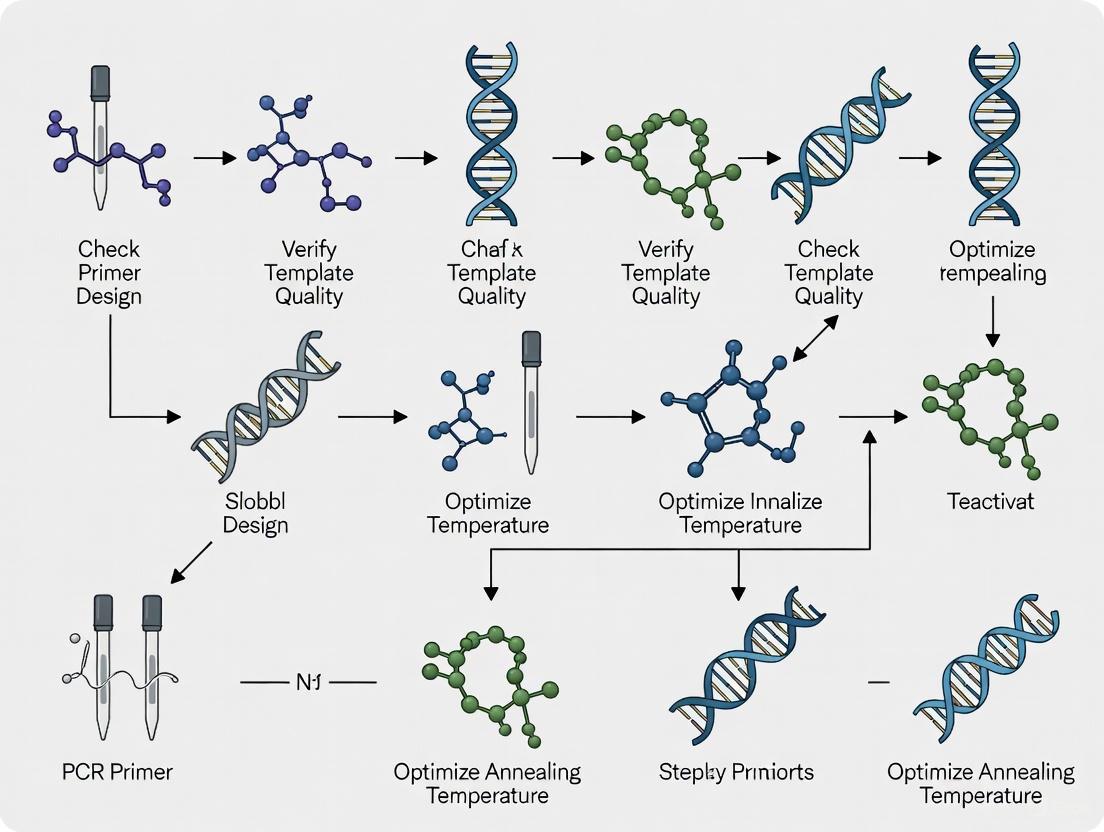
This article provides a comprehensive, systematic guide for researchers and drug development professionals troubleshooting PCR reactions with no amplification.
PCR Troubleshooting Guide: Systematic Approaches to Resolve No Amplification
Abstract
This article provides a comprehensive, systematic guide for researchers and drug development professionals troubleshooting PCR reactions with no amplification. It covers the foundational principles of PCR failure, methodical diagnostic procedures, advanced optimization strategies for complex templates like those in GMO and gene therapy analysis, and validation techniques using modern platforms like dPCR. The content synthesizes current best practices to enable scientists to efficiently identify and correct the root causes of amplification failure, ensuring reliable results in research and regulated environments.
Understanding the Root Causes of PCR Failure
Troubleshooting Guides and FAQs
No Amplification: Where Do I Start?
This is one of the most common issues in PCR. A systematic approach is key to identifying the cause.
Q: I've set up my PCR reaction, but I get no product on my gel. What are the first things I should check?
- A: First, confirm all PCR components were included in the reaction by running a positive control with a known template and primer set [1]. If the positive control fails, your reagents may be compromised. If it works, the issue is specific to your experimental setup. You should also increase the number of PCR cycles by 3-5 cycles at a time, up to 40 cycles, to overcome issues with low-abundance template [1].
Q: What template-related issues could cause complete PCR failure?
- A: The most common template issues are:
- Insufficient Quantity or Quality: The template might be degraded or below the detection limit. Re-isolate template DNA to ensure integrity and use the recommended amount [2] [3].
- PCR Inhibitors: Residual salts, phenol, EDTA, or proteins from the isolation process can inhibit the polymerase. Re-purify the template using a silica-column-based kit or ethanol precipitation [2] [1].
- Complex Targets: GC-rich sequences or templates with secondary structures may require special conditions. Use a polymerase with high processivity and additives like DMSO or betaine to help denature the DNA [2] [4].
- A: The most common template issues are:
Q: How can I troubleshoot problems related to my primers?
- A: Primer problems are a frequent source of failure.
- Design: Verify that your primers are specific to the target, have similar melting temperatures (Tm), and do not form hairpins or primer-dimers. Use online design tools like NCBI Primer-BLAST [4].
- Concentration: Insufficient primer concentration can prevent amplification. Optimize primer concentrations, typically between 0.1–1 μM [2].
- Quality: Old or improperly stored primers can degrade. Use fresh aliquots stored at -20°C [2].
- A: Primer problems are a frequent source of failure.
Q: What enzyme and reaction component issues should I consider?
- A: The DNA polymerase and buffer conditions are critical.
- Enzyme Selection: Standard Taq might not work for all applications. For difficult templates, use specialized enzymes (e.g., high-fidelity, GC-rich, or long-range polymerases) [2] [3].
- Mg²⁺ Concentration: Mg²⁺ is a cofactor for the polymerase. Its concentration is critical; too little can cause failure. Optimize the Mg²⁺ concentration, especially if using a buffer that does not already contain it [2] [4].
- dNTPs: Degraded or unbalanced dNTP concentrations can halt the reaction. Use fresh, equimolar dNTP solutions [3].
- A: The DNA polymerase and buffer conditions are critical.
Q: My thermal cycler program is set up correctly. Could it still be the problem?
- A: Yes. If the denaturation temperature is too low or time is too short, the DNA will not separate. Increase the denaturation temperature or time. An annealing temperature that is too high will prevent primer binding, while one that is too low causes non-specific binding. Use a gradient thermal cycler to find the optimal annealing temperature [2] [3].
A Systematic Workflow for Troubleshooting No Amplification
Follow this logical pathway to diagnose and resolve the issue of no amplification.
Troubleshooting Table: No Amplification
| Component | Potential Cause | Recommended Solution |
|---|---|---|
| DNA Template | Insufficient quantity [2] | Increase template amount; use polymerases with high sensitivity [2] [1]. |
| Low purity / Inhibitors [2] [1] | Re-purify template; use ethanol precipitation; choose inhibitor-tolerant polymerases [2]. | |
| Degraded DNA [2] | Assess integrity by gel electrophoresis; re-isolate template [2] [5]. | |
| Complex (GC-rich) target [2] | Use a PCR additive (DMSO, betaine); increase denaturation temp/time [2] [4]. | |
| Primers | Problematic design [2] | Verify specificity & Tm; avoid secondary structures; use design tools (e.g., Primer-BLAST) [4]. |
| Insufficient concentration [2] | Optimize primer concentration (typically 0.1-1 µM); for long PCR, use ≥0.5 µM [2]. | |
| Poor quality [2] | Use fresh aliquots; ensure proper storage conditions [2]. | |
| Enzyme & Buffer | Inappropriate DNA polymerase [2] | Use hot-start Taq for routine PCR; use high-processivity enzymes for difficult templates [2]. |
| Insufficient Mg²⁺ concentration [2] | Optimize Mg²⁺ concentration (e.g., 1.5-4.0 mM); ensure it exceeds total dNTP concentration [4] [1]. | |
| Inactive or low enzyme amount [2] | Ensure polymerase is added; increase amount if additives are present [2]. | |
| Thermal Cycling | Incorrect annealing temperature [2] | Optimize temperature (often 3-5°C below primer Tm) using a gradient cycler [2] [3]. |
| Insufficient number of cycles [2] | Increase cycles to 25-40; use up to 40 cycles for low copy number templates [2] [1]. | |
| Inefficient denaturation [2] | Increase denaturation temperature or time for GC-rich templates [2]. |
The Scientist's Toolkit: Key Research Reagent Solutions
| Reagent / Material | Function in PCR |
|---|---|
| Hot-Start DNA Polymerase | Reduces non-specific amplification and primer-dimer formation by inhibiting enzyme activity until the first high-temperature denaturation step [2] [6]. |
| dNTP Mix | The building blocks (dATP, dCTP, dGTP, dTTP) for DNA synthesis. Unbalanced concentrations can increase error rates [2] [1]. |
| MgCl₂ or MgSO₄ Solution | An essential cofactor for DNA polymerase activity. Its concentration is a critical optimization parameter [2] [4]. |
| PCR Additives (e.g., DMSO, Betaine, BSA) | Help denature complex DNA (GC-rich), destabilize secondary structures, or bind inhibitors, thereby enhancing amplification efficiency [4] [6]. |
| Nuclease-Free Water | The solvent for the reaction, ensuring no contaminating nucleases degrade the reaction components [4]. |
| Silica-Column Purification Kit | For removing contaminants like salts, proteins, or organic solvents from template DNA or purified PCR products [1]. |
In the context of troubleshooting PCR reactions with no amplification, the quality of the template DNA is a fundamental starting point. Failed amplification, smeared products, or inconsistent results are often directly traceable to issues with the DNA template itself, including its concentration, purity, and structural integrity [7]. Proper assessment of these parameters is therefore not a preliminary step but a core diagnostic activity in resolving PCR failures. This guide provides detailed methodologies and troubleshooting FAQs to help researchers systematically evaluate their template DNA to ensure successful amplification.
DNA Quality Assessment: Core Concepts and Methodologies
Key Parameters and Their Impact on PCR
Three critical characteristics of template DNA must be assessed to ensure PCR success.
- Concentration: Having too little DNA template can result in no amplification or poor yield, as there are insufficient copies of the target sequence for the primers to bind to. Conversely, too much DNA can lead to nonspecific amplification and smeared bands on a gel due to an overabundance of potential binding sites and potential carry-over of inhibitors [8] [2].
- Purity: Co-purified contaminants from the sample or extraction process can inhibit polymerase activity. Common inhibitors include phenol, EDTA, heparin, detergents, and various cellular proteins [2] [7]. These impurities can chelate essential co-factors like Mg²⁺ or directly interfere with the DNA polymerase enzyme.
- Integrity: The DNA must be intact and high molecular weight for most PCR applications. Degraded or sheared DNA, which appears as a smear on an agarose gel, provides a poor template for amplification and can lead to high background noise or complete amplification failure, especially for longer targets [2].
Experimental Workflow for DNA Assessment
The following diagram outlines a logical workflow for comprehensively assessing template DNA prior to PCR.
Detailed Assessment Protocols
Protocol 1: Spectrophotometric Analysis for Purity and Concentration
This is a common method for rapidly determining DNA concentration and assessing purity based on UV absorbance [7].
- Principle: Nucleic acids absorb ultraviolet light at 260 nm. The concentration of DNA can be calculated using the Beer-Lambert law, while the ratio of absorbance at 260 nm and 280 nm provides an estimate of protein contamination.
- Materials:
- Spectrophotometer with UV capability
- Quartz cuvette or microvolume plate
- TE buffer or molecular-grade water (blank solution)
- Template DNA sample
- Procedure:
- Zero the instrument using the blank solution.
- Dilute the DNA sample as necessary (a 1:50 or 1:100 dilution is often required for accurate measurement).
- Measure the absorbance at 260 nm (A260), 280 nm (A280), and often 230 nm (A230).
- Calculate the DNA concentration and purity ratios as shown in the table below.
Table 1: Interpreting Spectrophotometric DNA Measurements
| Measurement | Calculation | Ideal Value | Interpretation |
|---|---|---|---|
| DNA Concentration | A260 × 50 × Dilution Factor (µg/mL) | N/A | Concentration in µg/µL. For PCR, typical inputs range from 1-1000 ng per 50 µL reaction [4]. |
| A260/A280 Ratio | A260 / A280 | ~1.8 | Values significantly lower (~1.5-1.6) suggest protein contamination. Higher values may indicate RNA contamination. |
| A260/A230 Ratio | A260 / A230 | >2.0 | Low values indicate contamination by chaotropic salts, phenol, or other compounds that absorb at 230 nm. |
Protocol 2: Agarose Gel Electrophoresis for Integrity Assessment
This method visually confirms the integrity and approximate size of the DNA template [2] [4].
- Principle: DNA molecules are separated by size in an agarose matrix under an electric field. Intact genomic DNA should appear as a single, tight high-molecular-weight band. Degraded DNA will appear as a smear of lower molecular weight fragments.
- Materials:
- Agarose
- Electrophoresis chamber and power supply
- DNA molecular weight ladder
- Gel loading dye
- Nucleic acid stain (e.g., ethidium bromide, SYBR Safe)
- UV transilluminator or gel imaging system
- Procedure:
- Prepare a 0.8% - 1% agarose gel in an appropriate buffer (e.g., 1x TAE).
- Mix 1-5 µL of DNA sample with loading dye and load into the gel wells alongside a DNA ladder.
- Run the gel at 5-10 V/cm until the dye front has migrated sufficiently.
- Visualize the gel under UV light. A sharp, high-molecular-weight band indicates intact DNA. A smear indicates degradation.
The Scientist's Toolkit: Research Reagent Solutions
Table 2: Essential Reagents for DNA Assessment and PCR Troubleshooting
| Item | Function | Example & Notes |
|---|---|---|
| TE Buffer (pH 8.0) | DNA storage buffer. EDTA chelates Mg²⁺, inhibiting nucleases, while Tris buffers the solution. | Preferred over water for long-term storage to prevent DNA degradation by nucleases [2]. |
| DNase-/RNase-Free Water | Diluent for samples and reagents. | Molecular-grade water ensures no nucleases are introduced that would degrade primers or templates. |
| Silica Column Kits | Purify DNA from contaminants. | Many commercial kits (e.g., from QIAGEN) use silica-membrane technology to bind DNA, allowing impurities to be washed away [7]. |
| Magnetic Bead Systems | Automated nucleic acid purification. | Used in systems from bioMérieux (easyMAG) and Roche (MagNA Pure) for high-throughput, consistent purification [7]. |
| PicoGreen / RiboGreen | Fluorescent dyes for quantitation. | Fluorometric assays are highly specific for double-stranded DNA and are more accurate than spectrophotometry for low-concentration samples [7]. |
Frequently Asked Questions (FAQs)
Q1: My PCR shows no product. My DNA concentration measured by nanodrop is good. What could be wrong? A: A good concentration does not guarantee the DNA is intact or pure. Run an agarose gel to check for degradation (a smear instead of a sharp band). Furthermore, contaminants like phenol or salts can inhibit the polymerase without drastically altering the A260/A280 ratio. Check the A260/A230 ratio; a low value (<1.8) suggests chemical contamination. Consider performing a fluorometric assay for a more accurate concentration or re-purifying the DNA [2] [7].
Q2: My negative control (no template DNA) shows a PCR product or smear. What does this mean? A: This indicates contamination, most likely with amplicons from previous PCRs (carry-over contamination) or with the template DNA itself. To resolve this, you should exchange all reagents, use a dedicated workspace for reaction setup, and always use filter pipette tips to minimize aerosol contamination [8].
Q3: My DNA is degraded. How can I prevent this in future preparations? A: To prevent degradation, minimize physical shearing by avoiding vigorous pipetting or vortexing of high-molecular-weight DNA. Always store DNA in TE buffer (pH 8.0) or a similar nuclease-free buffer at -20°C. Ensure all equipment and solutions are nuclease-free [2].
Q4: After assessing my template DNA, all parameters seem optimal, but I still get no amplification. What should I check next? A: While template DNA is a common failure point, other reaction components are also critical. You should next investigate:
- Primer Quality and Design: Check for primer degradation and ensure the Tm values are appropriate and similar for both primers [8] [4].
- Mg²⁺ Concentration: Optimize the Mg²⁺ concentration, as it is a critical co-factor for Taq polymerase. Test a range from 1.5–5.0 mM [8].
- PCR Enhancers: For difficult templates (e.g., GC-rich), use additives like DMSO, formamide, or Betaine to help denature secondary structures [2] [4].
FAQs: Understanding Secondary Structures and Dimers
What are secondary structures and why are they problematic in PCR?
Secondary structures are stable conformations that oligonucleotides form through intramolecular base pairing. The most common types are hairpins (when a sequence folds back on itself creating a stem-loop), self-dimers (when a single primer binds to itself), and hetero-dimers or primer-dimers (when forward and reverse primers bind to each other) [9]. These structures interfere with PCR because they prevent primers from binding to their intended target sequences. Hairpins at the 3' end are particularly detrimental as they block primer extension by DNA polymerase, while dimers reduce the effective concentration of available primers and can lead to amplification of primer-dimer artifacts instead of your target [9] [6].
How can I detect potential secondary structures in my primers?
You can detect potential secondary structures using free online prediction tools. The typical workflow involves: (1) pasting your primer sequence into a secondary structure predictor, (2) setting the analysis temperature to match your experimental conditions, (3) selecting the structure types to analyze, and (4) reviewing the ΔG (free energy) values for any detected structures [9]. Structures with more negative ΔG values are more stable and therefore more problematic. Most tools use the nearest-neighbor thermodynamic model which considers base pair stacking energies, loop penalties, and salt concentration to calculate stability [9].
What ΔG thresholds indicate problematic structures?
The following table summarizes generally accepted ΔG thresholds for different secondary structures [9]:
| Structure Type | Acceptable (ΔG, kcal/mol) | Moderate Risk (ΔG, kcal/mol) | High Risk (ΔG, kcal/mol) |
|---|---|---|---|
| Hairpins | > -3 (pref. > -2) | -3 to -6 | < -6 |
| Self-Dimers | > -5 (pref. > -3) | -5 to -8 | < -8 |
| Hetero-Dimers | > -5 (pref. > -3) | -5 to -8 | < -8 |
Structures involving 3' ends are particularly problematic for PCR primers. Even moderate ΔG values (< -5 kcal/mol) at 3' ends should trigger redesign [9].
What are the visible effects of secondary structures in PCR results?
When secondary structures cause PCR failure, you might observe [6] [10]:
- No amplification or low yield on gels
- Primer-dimer artifacts - bright bands at 20-60 bp at the bottom of the gel
- Non-specific products - multiple unexpected bands
- PCR smears - diffuse staining across a range of fragment sizes
- Uneven or smeared bands instead of crisp, discrete bands
How can I redesign primers to avoid secondary structures?
To minimize secondary structures [11] [12] [13]:
- Aim for GC content of 40-60% with even distribution
- Ensure primers are 18-30 nucleotides in length
- Maintain melting temperatures of 60-64°C for both primers
- Avoid complementarity, especially at the 3' ends
- Check for and eliminate runs of identical nucleotides
- Use tools like NCBI Primer-BLAST to verify specificity
- Screen designs with tools like OligoAnalyzer for self-dimers and hairpins
Troubleshooting Guide: Solving Secondary Structure Issues
Problem: No Amplification or Low Yield
Possible Causes and Solutions:
Cause: Stable hairpins at primer binding sites preventing annealing
Cause: Primer-dimer formation consuming reagents
Cause: Secondary structures in template DNA
Problem: Non-Specific Bands or Smearing
Possible Causes and Solutions:
Cause: Low annealing temperature allowing primers to bind off-target
Cause: Primer self-dimers or cross-dimers
Cause: High primer concentration promoting mispriming
Problem: Primer-Dimer Formation
Possible Causes and Solutions:
Cause: Complementary 3' ends between forward and reverse primers
Cause: High primer concentration
- Solution: Reduce primer concentration to 0.1-0.5 μM [12]
Cause: Low annealing temperature
- Solution: Increase annealing temperature to improve specificity [2]
Cause: Polymerase activity at room temperature
Experimental Protocol: Detecting Secondary Structures
Methodology for Secondary Structure Analysis
Materials Needed:
- Oligonucleotide sequences
- Secondary structure prediction tool (e.g., OligoAnalyzer, mFold)
- Computer with internet access
Step-by-Step Procedure [9]:
Access Prediction Tool
- Navigate to a secondary structure predictor (e.g., IDT OligoAnalyzer)
- Select "Secondary Structure" analysis type
Input Sequence and Parameters
- Paste your primer sequence(s) into the input field
- Set analysis temperature to match your PCR annealing temperature
- For primer pairs, select both hetero-dimer and self-dimer analysis
- Set salt concentrations to match your PCR buffer conditions
Analyze Results
- Review predicted structures and their ΔG values
- Compare ΔG values to acceptable thresholds
- Pay special attention to structures involving 3' ends
- For any structures with ΔG < -3 kcal/mol (hairpins) or < -5 kcal/mol (dimers), consider redesign
Validation
- Experimentally test problematic primers alongside redesigned versions
- Use gradient PCR to identify optimal annealing temperatures
- Compare amplification efficiency on target templates
Workflow for Secondary Structure Detection and Resolution
The following diagram illustrates the systematic approach to detecting and resolving secondary structure issues in primer design:
Research Reagent Solutions
The following table details essential materials and reagents used for troubleshooting secondary structure issues in PCR:
| Reagent/Tool | Function | Application Notes |
|---|---|---|
| Hot-Start DNA Polymerase | Prevents enzymatic activity during reaction setup, reducing primer-dimer formation | Essential for sensitive applications; choose high-fidelity versions for cloning [6] [14] |
| DMSO (Dimethyl Sulfoxide) | Destabilizes secondary structures, especially in GC-rich templates | Use 1-10% final concentration; higher concentrations may inhibit polymerase [2] [14] |
| Betaine | Equalizes Tm of AT and GC base pairs, reduces secondary structure stability | Effective for GC-rich targets and templates with strong secondary structures [6] |
| GC Enhancer/Additives | Specialized formulations to improve amplification of difficult templates | Commercial formulations often optimized for specific polymerases [2] |
| Online Prediction Tools | In silico analysis of potential secondary structures | IDT OligoAnalyzer, Primer-BLAST; use before experimental validation [9] [11] |
| Gradient Thermal Cycler | Empirical optimization of annealing temperatures | Essential for identifying optimal conditions for problematic primers [2] |
Pro Tips for Avoiding Secondary Structure Issues
Design for Higher Temperatures: Primers with Tms of 60-64°C allow for higher annealing temperatures, which naturally destabilize secondary structures [11] [12].
Check the 3' End: The last 5 nucleotides at the 3' end are most critical. Ensure they lack self-complementarity and avoid GC-rich 3' ends that promote stable dimer formation [9] [13].
Validate Experimentally: Computational prediction provides guidance, but always validate primer performance experimentally using your specific template and conditions [15] [16].
Consider Template Secondary Structures: Not just primers, but template DNA can form secondary structures. For problematic templates, use longer denaturation times or specialized polymerases with high processivity [2] [14].
Aliquot Primers Properly: Primer degradation can create truncated products that form unexpected secondary structures. Aliquot primers to avoid repeated freeze-thaw cycles [12] [2].
The Impact of PCR Inhibitors and Common Contaminants
FAQ: Troubleshooting Guide for PCR Inhibition and Contamination
This guide addresses common questions and issues related to PCR inhibitors and contaminants, providing targeted solutions for researchers encountering amplification failure.
Why is there no amplification in my PCR, even though my template DNA concentration is sufficient?
The complete absence of amplification, where amplification curves are flat and gel analysis shows no bands, is frequently caused by PCR inhibitors or reaction components that critically interfere with the DNA polymerase [17] [6]. The causes and solutions are multifaceted:
- Common Inhibitors: Substances such as humic acids (from soil/plants), hemoglobin (from blood), IgG (from blood), or heparin/EDTA (anticoagulants) can be present in your sample [18] [19] [20]. These can bind directly to the DNA polymerase or degrade it, or interact with the nucleic acid template to prevent amplification [19] [20].
- Reagent-Based Issues: Residual ethanol, phenol, or high salt concentrations from the DNA extraction process are common culprits [2] [19].
- Solutions:
- Purify or Dilute Your DNA: Further purify your DNA extract using silica columns or ethanol precipitation to remove contaminants [18] [21]. Alternatively, dilute the DNA template to dilute out the inhibitors, though this also dilutes the target [18] [19].
- Use an Inhibitor-Tolerant Polymerase: Select a DNA polymerase known for high resistance to inhibitors found in blood, soil, and other complex matrices [18] [2] [19].
- Add Amplification Facilitators: Include Bovine Serum Albumin (BSA) or betaine in your reaction mix. BSA can bind to inhibitory compounds, neutralizing their effect [19] [20] [6].
My negative control shows amplification, suggesting contamination. What should I do?
Amplification in your negative control (a reaction with no template DNA) indicates that your reagents or workspace are contaminated with DNA, most likely PCR amplicons from previous experiments or other foreign DNA [22] [23]. This is a serious issue that can lead to false-positive results.
- Immediate Actions:
- Discard Reagents: Replace all reagents, including water, primers, and master mix components, with fresh aliquots from sterile stock [22] [24].
- Decontaminate Surfaces and Equipment: Thoroughly clean pipettes, workbenches, and equipment with a 10% bleach solution followed by ethanol to remove residual bleach. Bleach causes oxidative damage to DNA, rendering it unamplifiable [22] [23] [24].
- Use UV Sterilization: Expose your work area, pipettes, and tubes to UV light before setting up new reactions to destroy contaminating DNA [23].
- Long-Term Prevention:
- Implement a Unidirectional Workflow: Physically separate your pre-PCR (reagent preparation, sample setup) and post-PCR (product analysis) areas. Use dedicated equipment, lab coats, and supplies for each area [22] [23] [24].
- Use UNG Treatment: Incorporate the enzyme Uracil-N-glycosylase (UNG) and substitute dUTP for dTTP in your PCR. UNG will degrade any uracil-containing carryover amplicons from previous reactions before a new PCR begins, while leaving the natural thymine-containing target DNA intact [23].
My qPCR shows a delayed quantification cycle (Cq) and reduced efficiency. What does this indicate?
A delayed Cq and reduced amplification efficiency are classic signs of partial PCR inhibition [18] [6]. Unlike complete failure, the reaction proceeds but is less efficient, leading to inaccurate quantification, particularly in qPCR.
- Mechanism: Inhibitors are present at a concentration that reduces DNA polymerase activity or primer annealing efficiency but does not completely halt it [18]. This forces the reaction to take more cycles to reach the detection threshold.
- Comparison with dPCR: Digital PCR (dPCR) is generally less affected by this type of inhibition for quantification because it uses end-point analysis and does not rely on amplification kinetics [18].
- Solutions: The strategies are similar to Question #1: further DNA purification, use of robust polymerases, and addition of facilitators like BSA [18] [6].
How can I confirm that my sample contains PCR inhibitors?
You can diagnose inhibition using a spike-in control experiment [20].
- Protocol:
- Prepare two identical PCR reactions with a known, easily amplifiable template (e.g., a control plasmid).
- To one reaction, add a small volume of your suspect DNA extract.
- To the other reaction, add an equivalent volume of nuclease-free water.
- Run both reactions simultaneously and compare the Cq values (for qPCR) or band intensities (for standard PCR).
- Interpretation: A significantly delayed Cq or fainter band in the reaction containing your sample extract indicates the presence of inhibitors that are interfering with the amplification of the control template [20].
Table 1: Common PCR Inhibitors and Their Mechanisms
| Inhibitor Category | Specific Examples | Common Sources | Primary Mechanism of Inhibition |
|---|---|---|---|
| Hemeproducts & Proteins | Hemoglobin, Lactoferrin, IgG [18] [19] | Blood, tissues | Binds to single-stranded DNA or the DNA polymerase, blocking activity [18] [19]. |
| Humic Substances | Humic acid, Fulvic acid [18] [19] | Soil, plants, decaying organic matter | Interacts with both the DNA template and the DNA polymerase, preventing the enzymatic reaction [18] [19]. |
| Ionic Detergents | SDS, Sarkosyl [19] [20] | Lysis buffers, extraction reagents | Denatures and inhibits DNA polymerase [19]. |
| Divalent Cation Chelators | EDTA, Citrate [2] [19] | Anticoagulants, elution buffers | Depletes free Mg²⁺ ions, which are essential cofactors for DNA polymerase [2] [19]. |
| Polysaccharides | Heparin, Dextran sulfate [18] [19] | Blood (anticoagulant), plant tissues | Can mimic DNA structure or create viscous solutions that interfere with polymerization [19]. |
| Organic Solvents | Ethanol, Phenol [19] [20] | DNA purification steps | Can denature the DNA polymerase if not completely removed [2] [19]. |
Table 2: Research Reagent Solutions for Overcoming Inhibition
| Solution / Reagent | Function / Mechanism | Example Use Cases |
|---|---|---|
| Inhibitor-Tolerant DNA Polymerase | Engineered polymerases with higher affinity for DNA or intrinsic resistance to specific inhibitors [18] [19]. | Amplification directly from blood, soil, or plant extracts; direct PCR protocols [18]. |
| Bovine Serum Albumin (BSA) | Nonspecific protein that binds to inhibitory compounds (e.g., phenolics, humic acid, IgG), preventing them from affecting the polymerase [19] [20]. | Reactions with background of humic substances, blood components, or plant polysaccharides [19]. |
| T4 Gene 32 Protein (gp32) | A single-stranded DNA-binding protein that stabilizes DNA and can prevent the action of inhibitors [19]. | Can help alleviate inhibition in complex samples like feces [19]. |
| Betaine (GC-Rich Enhancer) | Reduces the formation of secondary structures, equalizes the melting temperatures of DNA, and can enhance specificity [19] [21]. | Amplification of GC-rich templates; can also help reduce the effects of some inhibitors [19]. |
| Dimethyl Sulfoxide (DMSO) | An organic solvent that influences the thermal stability of DNA, helping to denature complex templates [2] [19]. | Amplification of templates with high secondary structure or high GC-content [2]. |
Experimental Protocols for Contamination Control
Protocol 1: UNG Decontamination to Prevent Amplicon Carryover
This pre-amplification sterilization technique is highly effective for preventing false positives from previous PCR products [23].
- Reaction Setup: Incorporate dUTP (instead of dTTP) and Uracil-N-glycosylase (UNG) into your PCR master mix.
- Incubation: After assembling the reaction with all components (including the new target DNA), incubate the tubes at 25–37°C for 10 minutes.
- UNG Activation: During this step, UNG will recognize and hydrolyze the glycosidic bond of uracil bases in any contaminating amplicons from earlier runs, breaking them into small fragments.
- Enzyme Inactivation & PCR: Heat the reaction to 95°C for 2–5 minutes. This step simultaneously inactivates the UNG (preventing it from degrading new products) and initiates the standard PCR denaturation step. The PCR then proceeds as usual, amplifying the natural (dTTP-containing) target DNA.
Protocol 2: Mechanical and Chemical Barrier Implementation
Creating physical and chemical barriers is fundamental to a contamination-free workflow [22] [23] [24].
- Spatial Separation:
- Establish three distinct, dedicated work areas:
- Reagent Preparation Area: A "clean room" for preparing master mixes. No DNA samples or amplicons should ever enter this space.
- Sample Preparation Area: For adding template DNA to the master mix.
- Amplification/Product Analysis Area: A "post-PCR" area for running gels and handling amplicons.
- Maintain a unidirectional workflow; personnel and materials should move from clean to contaminated areas, never in reverse.
- Establish three distinct, dedicated work areas:
- Decontamination Procedures:
- Surface Decontamination: Regularly clean all work surfaces, tube racks, and equipment with a 10% (v/v) sodium hypochlorite (bleach) solution. Leave on for 10-15 minutes, then wipe down with ethanol or water to remove residue [22] [23].
- Equipment Decontamination: Use bleach or UV irradiation to decontaminate pipettes. Use filter tips or positive displacement tips to prevent aerosol contamination [22] [24].
The following workflow diagram illustrates the key steps in this prevention strategy:
Visualizing the Mechanisms of PCR Inhibition
PCR inhibitors can disrupt the amplification process at several critical points. The following diagram summarizes the key mechanisms and their impact on the PCR workflow.
FAQs: Troubleshooting Thermal Cycler Conditions
Q1: How does suboptimal denaturation lead to PCR failure?
Suboptimal denaturation is a primary cause of PCR failure, particularly with complex templates. When double-stranded DNA templates do not separate completely, the primers and polymerase cannot access the target sequence.
- Insufficient Temperature or Time: If the denaturation temperature is too low or the hold time is too short, the DNA strands, especially GC-rich regions with three hydrogen bonds, may not fully separate [2]. This leads to no amplification or low yield because the replication machinery cannot access the template.
- Excessive Temperature or Time: Conversely, overly high temperatures or prolonged denaturation can denature and inactivate the DNA polymerase enzyme itself, reducing the reaction efficiency and product yield [2].
Troubleshooting Guide for Denaturation Issues:
| Observation | Possible Cause | Recommended Solution |
|---|---|---|
| No amplification or low yield | Insufficient denaturation of GC-rich templates or sequences with secondary structures [2] | Increase denaturation temperature (e.g., to 98°C) and/or time (e.g., up to 5 minutes for low starting DNA) [2] [14]. |
| Low yield; decreased enzyme activity | Excessive denaturation conditions damaging the DNA polymerase [2] | Ensure denaturation temperature does not exceed the polymerase's tolerance (typically 95-98°C). Avoid unnecessarily long denaturation times. |
| Smeared bands or multiple products | Inconsistent block temperature across the thermal cycler well plate [25] | Test the calibration of the heating block and ensure proper contact with PCR tubes using tray/retainer sets [26]. |
Q2: What are the consequences of an incorrect annealing temperature?
The annealing temperature is critical for reaction specificity. This step determines how selectively the primers bind to their intended target sequence on the DNA template.
- Annealing Temperature Too Low: Promotes non-specific binding of primers to partially complementary sites on the template. This results in the amplification of unwanted products, visible as multiple bands or a smear on an agarose gel [2] [25].
- Annealing Temperature Too High: Primers cannot bind to the template efficiently. This leads to little or no amplification because the polymerase has no starting point for DNA synthesis [2] [25].
Troubleshooting Guide for Annealing Issues:
| Observation | Possible Cause | Recommended Solution |
|---|---|---|
| Multiple non-specific products | Annealing temperature is too low [2] [25] | Increase the annealing temperature in 1-2°C increments. Use a gradient thermal cycler to empirically determine the optimal temperature [2]. |
| No amplification or low yield | Annealing temperature is too high [2] [25] | Decrease the annealing temperature. The optimal temperature is typically 3-5°C below the calculated Tm of the primers [2] [4]. |
| Non-specific products | Long annealing time allowing primers to bind to nonspecific sequences [2] | Shorten the annealing time to minimize off-target binding. |
Q3: How can suboptimal extension conditions cause problems?
The extension step is when the DNA polymerase synthesizes the new DNA strand. Errors in this phase affect the yield, specificity, and fidelity of the PCR product.
- Insufficient Extension Time: The polymerase cannot fully copy the target DNA, resulting in shorter, incomplete products and low yield, especially for long amplicons [2] [4].
- Incorrect Extension Temperature: A temperature that is too high may reduce polymerase stability and processivity, while a temperature that is too low can promote non-specific amplification [2].
- Missing Final Extension: A final extension step (5-15 minutes) ensures all PCR products are fully synthesized and double-stranded. Omitting this step can lead to heterogeneous product populations and affect downstream applications [2].
Troubleshooting Guide for Extension Issues:
| Observation | Possible Cause | Recommended Solution |
|---|---|---|
| Shorter than expected products; low yield | Insufficient extension time [2] | Prolong the extension time (general guideline: 1 minute per 1000 base pairs, but consult polymerase specifications) [14]. |
| Low yield for long targets | Extension temperature is too high, reducing enzyme stability [2] | Reduce the extension temperature (e.g., to 68°C) for long amplicons (>10 kb) [2]. |
| Incomplete products | Missing final extension step [2] | Include a final extension step of 5-15 minutes at the end of cycling. |
Experimental Protocol: Optimizing Thermal Cycler Conditions
This protocol provides a systematic methodology to optimize thermal cycler conditions when troubleshooting a PCR reaction with no amplification or nonspecific products [4].
1. Materials and Reagents
- DNA template (e.g., 1-100 ng genomic DNA)
- Forward and reverse primers (optimally 0.1-1 µM each final concentration)
- DNA polymerase (e.g., Taq, high-fidelity, or hot-start)
- 10X PCR buffer (often supplied with Mg²⁺)
- dNTP mix (200 µM each final concentration)
- Magnesium chloride (MgCl₂) or Magnesium sulfate (MgSO₄), if not in buffer
- Sterile, nuclease-free water
- PCR tubes and a verified thermal cycler
2. Step-by-Step Procedure
- Step 1: Primer and Template Quality Control. Verify primer design (length 15-30 nt, GC content 40-60%, Tm within 5°C for each primer) and specificity using tools like NCBI Primer-BLAST [4]. Assess DNA template integrity by gel electrophoresis and quantify its concentration [2] [25].
- Step 2: Master Mix Preparation. Prepare a master mix on ice to minimize non-specific activity. For a 50 µL reaction, combine:
- Sterile Water: Q.S. to 50 µL
- 10X PCR Buffer: 5 µL
- dNTP Mix (10 mM): 1 µL
- Forward Primer (20 µM): 1 µL
- Reverse Primer (20 µM): 1 µL
- DNA Polymerase: 0.5-2.5 U
- Mix gently by pipetting and aliquot into individual PCR tubes.
- Add DNA template to each tube, leaving one tube as a no-template negative control [4].
- Step 3: Thermal Cycling with Gradient Annealing.
- Use the thermal cycler's gradient function for the annealing temperature.
- Program the cycler as follows, setting the annealing temperature to a gradient range (e.g., 5°C below to 5°C above the calculated Tm):
- Step 4: Product Analysis.
- Analyze PCR products using agarose gel electrophoresis.
- Identify the annealing temperature that produces the highest yield of a single, specific band of the expected size.
Thermal Cycler Condition Failure Pathways
The following diagram illustrates the cause-and-effect relationship between suboptimal thermal cycler conditions and specific PCR failure modes.
The Scientist's Toolkit: Essential Research Reagent Solutions
This table details key reagents and materials essential for diagnosing and correcting PCR failures related to thermal cycling conditions.
| Reagent/Material | Function in Troubleshooting |
|---|---|
| Hot-Start DNA Polymerase | Prevents non-specific amplification and primer-dimer formation by remaining inactive until a high-temperature activation step [2] [25] [14]. |
| Gradient Thermal Cycler | Allows empirical determination of the optimal annealing temperature by running a single experiment across a range of temperatures [2] [25]. |
| MgCl₂ or MgSO₄ Solution | Magnesium is an essential cofactor for DNA polymerases. Its concentration must often be optimized (0.5-5.0 mM) to improve yield and specificity [2] [4] [14]. |
| PCR Additives (DMSO, BSA, Betaine) | Help denature GC-rich templates, weaken secondary structures, and neutralize inhibitors in the reaction, thereby enhancing amplification efficiency [2] [4] [14]. |
| High-Fidelity DNA Polymerase | Features 3'→5' exonuclease (proofreading) activity, which corrects base mismatches. Essential for high-fidelity applications like cloning and sequencing [2] [25] [14]. |
A Methodical Diagnostic Workflow for Failed PCR
Why is there no PCR product after my reaction?
No amplification in a Polymerase Chain Reaction (PCR) is a common issue, often stemming from problems in reagent quality or reaction setup. A systematic verification of these components is the critical first step in troubleshooting, as it addresses the most frequent points of failure before investigating more complex causes like cycling conditions or template complexity [6].
Initial Verification and Quick Checks
Before making any changes to your protocol, perform these initial checks:
- Verify Program and Equipment: Confirm that the thermal cycler was programmed correctly, including the lid temperature and hold steps. Ensure the thermal cycler block is calibrated and heating uniformly [27].
- Confirm All Reagents Were Added: Visually inspect that all components were included in the reaction mix. A missing component, such as the DNA polymerase or primers, will result in complete failure [27] [6].
- Check for Contamination: Set up a negative control (nuclease-free water instead of template DNA) to rule out contamination of your reagents with foreign DNA [27].
Systematic Troubleshooting of Reagents and Setup
Use the following table to diagnose and resolve issues related to reagent quality and reaction setup.
| Component | Common Issues | Recommended Verification & Solutions |
|---|---|---|
| Template DNA | Poor Integrity/Purity: Degraded DNA or contaminants (phenol, EDTA, proteins) inhibit polymerase [2] [28].Insufficient/Excessive Quantity: Too little template yields no product; too much can cause nonspecific binding or inhibition [29] [30]. | • Assess integrity by gel electrophoresis (should be a single high-molecular-weight band, not a smear) [2].• Check purity via A260/A280 ratio (ideal is ~1.8) [6].• Repurify DNA via ethanol precipitation or spin-column cleanup to remove inhibitors and salts [2] [27].• Use 10 pg – 100 ng of plasmid DNA or 1 ng – 1 µg of genomic DNA per 50 µL reaction [27] [29] [30]. |
| Primers | Problematic Design: Tm mismatch, self-complementarity (hairpins), or primer-dimer formation [2] [30].Insufficient Quantity or Degradation: Old, improperly stored primers can degrade [2]. | • Verify design: Length of 15-30 nt, GC content 40-60%, Tm of 55-70°C for both primers (within 5°C of each other) [14] [29] [30].• Use online tools to check for secondary structures and specificity.• Aliquot primers for storage; resuspend in TE buffer or nuclease-free water.• Use a final concentration of 0.1 – 1.0 µM each primer; optimize within this range [2] [29] [30]. |
| DNA Polymerase | Incorrect Selection/Quantity: Standard polymerase may fail for complex targets; insufficient units per reaction [2] [30].Loss of Activity: Improper storage or handling; enzymatic inhibition. | • Use 1 – 2 units per 50 µL reaction for Taq polymerase [29] [30].• For complex templates (GC-rich, long), use high-processivity or specialized polymerases [2].• Use hot-start polymerases to prevent nonspecific amplification at low temperatures [2] [27] [6].• Add the enzyme last and assemble reactions on ice [2] [29]. |
| dNTPs | Unbalanced/Depleted Concentration: Incorrect equimolar ratios or degraded dNTPs [2] [27].Inhibition: Carryover of contaminants from previous reactions if using unpurified PCR products as template. | • Use a final concentration of 20 – 200 µM of each dNTP (dATP, dCTP, dGTP, dTTP) [14] [29].• Prepare fresh dNTP mixes from stocks to ensure integrity and equimolarity [27].• Dilute or purify previous PCR products before re-amplification [30]. |
| Mg²⁺ Concentration | Suboptimal Concentration: Mg²⁺ is a crucial cofactor; its availability is affected by dNTPs and EDTA [2] [30]. | • Start with 1.5 – 2.0 mM final concentration for Taq DNA Polymerase [29].• Optimize in 0.2 – 0.5 mM increments (from 0.5 mM up to 4 mM) if no product is observed [27] [29].• Ensure Mg²⁺ is added to the reaction; some buffers are supplied without it [31]. |
| Reaction Assembly | Non-homogeneous Reagents: Frozen reagents can form concentration gradients [2].Incomplete Mixing: Leads to inconsistent results. | • Thoroughly thaw and vortex all stock solutions before use [2].• Prepare a master mix for multiple reactions to minimize pipetting error and ensure consistency [14].• Mix the final reaction mixture gently but thoroughly by pipetting or brief vortexing, followed by a quick spin [2]. |
Advanced Optimization for Challenging Templates
If verification of the core components does not resolve the issue, your template may require specialized conditions.
GC-Rich Templates
Templates with >65% GC content form strong secondary structures that prevent efficient denaturation and primer binding [31].
- PCR Additives: Include additives like DMSO (1-10%), formamide (1.25-10%), or commercial GC enhancers to help denature stable structures [2] [14] [31].
- Specialized Polymerases: Use polymerases engineered for high processivity and affinity for difficult templates [2].
- Modified Cycling Conditions: Increase the denaturation temperature (to 98°C) and use a higher annealing temperature [2] [31].
Long Targets
Amplifying long DNA fragments (>5 kb) is highly dependent on template integrity and polymerase capability.
- Template Quality: Use high-quality, intact DNA. Avoid shearing during isolation and resuspend in TE buffer (pH 8.0) or nuclease-free water to prevent acid-induced depurination [2] [31].
- Polymerase Choice: Use a polymerase mix specifically designed for long-range PCR, which often includes a proofreading enzyme [2] [14] [31].
- Extension Time: Increase the extension time according to the amplicon length (e.g., 1 minute per 1000 bp, longer for fragments >3 kb) [29] [31].
The following diagram summarizes the systematic workflow for troubleshooting no amplification, starting with reagent quality and setup.
Research Reagent Solutions
The following table lists key reagents, their functions, and optimization tips for troubleshooting no amplification.
| Reagent | Function | Critical Optimization Parameters |
|---|---|---|
| High-Quality DNA Template | Provides the target sequence for amplification. | Source & Purity: Isolate using recommended kits; check A260/A280. Avoid chemical carryover [2] [28].Amount: Use 1 pg–10 ng plasmid DNA; 1 ng–1 µg genomic DNA per 50 µL reaction [27] [29]. |
| Specific Primer Pairs | Binds complementarily to flank regions of the target to initiate synthesis. | Design: 15-30 nt; Tm 55-70°C; 40-60% GC; avoid 3' complementarity [14] [30].Concentration: 0.1–1.0 µM final concentration [2] [29]. |
| Thermostable DNA Polymerase | Enzymatically synthesizes new DNA strands. | Type: Use hot-start to prevent pre-cycling activity [2] [27].Amount: 0.5–2.0 units/50 µL reaction [29].Selection: Choose high-processivity enzymes for complex/long targets [2]. |
| dNTPs | The building blocks (A, T, C, G) for new DNA strands. | Concentration: 20–200 µM of each dNTP [14] [29].Quality: Use fresh, equimolar, high-quality stocks to prevent errors [27]. |
| Magnesium Chloride (MgCl₂) | Essential cofactor for DNA polymerase activity. | Optimization: Start at 1.5 mM; titrate in 0.2–0.5 mM increments (0.5–4 mM range). Free Mg²⁺ is critical [27] [29] [30]. |
| Reaction Buffer | Provides optimal pH and ionic conditions for the enzyme. | Composition: Typically supplied as 10X concentrate. May require addition of separate Mg²⁺ solution [31]. |
| PCR Additives | Modifies template stability or polymerase performance. | Usage: DMSO (1-10%) for GC-rich templates; BSA (400 ng/µL) to counteract inhibitors [2] [14] [31]. |
FAQ: DNA Quantity and Quality Control for PCR
1. Why is it important to quantify and qualify my template DNA before PCR? Accurate DNA quantification and quality assessment are critical for PCR success. Using too little DNA can result in no amplification, while too much can cause nonspecific products [2]. Furthermore, contaminants carried over from the DNA isolation process (such as proteins, phenol, or chaotropic salts) can inhibit DNA polymerases, leading to PCR failure [2] [32]. Quality checks help you identify these issues before proceeding with your experiment.
2. My PCR failed despite a "good" DNA concentration from the spectrophotometer. What went wrong? Spectrophotometers like the NanoDrop measure the absorbance of all nucleic acids at 260 nm, including RNA and single-stranded DNA, not just your double-stranded DNA (dsDNA) template [33] [34]. If your sample is contaminated with RNA, the DNA concentration will be overestimated [33]. More importantly, spectrophotometry cannot detect common PCR inhibitors. A fluorometric method, which is specific for dsDNA, often provides a more accurate concentration for PCR setup [35].
3. What do the A260/A280 and A260/A230 ratios indicate? These ratios are key indicators of DNA purity [33] [34].
- A260/A280: This ratio estimates protein contamination. Pure DNA has a ratio of ~1.8. A ratio significantly lower than 1.8 may indicate protein contamination, while a higher ratio may suggest RNA contamination [33] [34].
- A260/A230: This ratio indicates the presence of contaminants such as chaotropic salts, EDTA, or phenol. A ratio of ~2.0 is generally accepted for pure DNA, and a value below 1.5 suggests significant contamination [34].
Important Note: These ratios are influenced by pH. For accurate readings, always measure absorbance in a slightly alkaline, low-salt buffer (e.g., 10 mM Tris·Cl, pH 7.5), not in water [33].
4. When should I use fluorometry instead of spectrophotometry? Fluorometry is the preferred method when:
- You are working with low DNA concentrations (nanogram levels or lower) [33] [34].
- You need to specifically quantify double-stranded DNA in the presence of RNA [33] [35].
- Your DNA sample is precious or limited in volume [35].
- You are quantifying DNA for sensitive downstream applications like next-generation sequencing [34].
DNA Quantification Method Comparison
The table below summarizes the key characteristics of the most common DNA quantification methods to help you select the appropriate one.
| Method | Principle | Optimal Range | dsDNA Specific? | Purity Info (A260/A280) | Key Advantages | Key Limitations |
|---|---|---|---|---|---|---|
| UV Spectrophotometry | Absorbance at 260 nm [33] | ~0.1–1.0 (A260) [33] | No [34] | Yes [34] | Quick, simple, indicates sample purity [34] | Overestimates concentration if RNA is present; less sensitive [33] [35] |
| Fluorometry | Fluorescence upon dye binding to dsDNA [33] | Varies (e.g., 10 pg/µL–100 ng/µL for Qubit HS) [35] | Yes [34] | No | Highly sensitive and specific for dsDNA; accurate for low concentrations [33] [35] | Requires standard curve; does not provide purity information [34] |
| Agarose Gel Electrophoresis | Visual comparison to a DNA ladder of known concentration [33] [34] | ~20–100 ng [33] | Semi-specific | No | Provides information on DNA size and integrity; low equipment cost [34] | Semi-quantitative; more time-consuming; lower sensitivity [33] |
Workflow: Assessing DNA Quality for PCR
This workflow provides a logical pathway for confirming your DNA template is suitable for PCR, based on initial spectrophotometry results.
Experimental Protocol: DNA Quantification via Spectrophotometry
This protocol provides detailed steps for reliably quantifying DNA using a UV spectrophotometer.
Principle: Nucleic acids absorb ultraviolet light at a wavelength of 260 nm. The absorbance measured is directly proportional to the concentration of DNA in the solution [33].
Materials:
- Purified DNA sample
- Low-salt buffer (e.g., 10 mM Tris·Cl, pH 7.5) or molecular-grade water
- UV-transparent cuvettes (e.g., quartz)
- UV spectrophotometer
Procedure:
- Blank the Instrument: Pipette an appropriate volume of the same buffer used to dissolve your DNA (e.g., Tris buffer) into a clean cuvette. Use this to "blank" or zero the spectrophotometer at 260 nm [33].
- Measure the Sample: Replace the blank with your DNA sample diluted in the same buffer and measure the absorbance at 230 nm, 260 nm, and 280 nm.
- Calculate Concentration and Purity:
Troubleshooting Spectrophotometry Readings:
- Low A260/A280 Ratio (<1.7): Suggests protein contamination. Solution: Re-purify the DNA using a precipitation step or a commercial cleanup kit [2] [32].
- Low A260/A230 Ratio (<1.5): Indicates contamination with salts, EDTA, or phenol. Solution: Re-purify the DNA, using a 70% ethanol wash during precipitation to remove residual salts [2] [34].
- Unexpectedly High Concentration/Smeared Gel: May be caused by RNA contamination. Solution: Treat the DNA sample with DNase-free RNase A and re-precipitate [33].
Research Reagent Solutions
The following table lists key reagents and instruments used for DNA quantification and quality control.
| Item | Function |
|---|---|
| 10 mM Tris·Cl Buffer (pH 7.5) | A slightly alkaline, low-salt buffer for diluting and storing DNA to ensure accurate and reproducible spectrophotometric readings [33]. |
| NanoDrop Spectrophotometer | A microvolume spectrophotometer that measures nucleic acid concentration and purity using only 1-2 µL of sample [35]. |
| Qubit Fluorometer & dsDNA HS Assay | A fluorometry system that uses a dsDNA-specific dye for highly accurate quantification of low-concentration samples, unaffected by RNA [34] [35]. |
| PicoGreen / AccuGreen Dye | Fluorescent dyes that selectively bind dsDNA, used in fluorometric quantification methods. They are highly sensitive and specific [33] [35]. |
| Ethidium Bromide / SYBR Safe | DNA intercalating dyes used to visualize DNA bands under UV light during agarose gel electrophoresis, allowing for semi-quantitative analysis [34]. |
| DNase-free RNase A | An enzyme used to degrade contaminating RNA in a DNA sample, which can otherwise lead to overestimation of DNA concentration in spectrophotometry [33]. |
| 70% Ethanol | Used in precipitation and wash steps to remove residual salts and other contaminants from DNA samples, thereby improving purity [2]. |
Why are controls essential for troubleshooting no amplification in PCR?
Including controls in your PCR experiments is a fundamental step in troubleshooting. When you get no amplification, these controls act as diagnostic tools, helping you pinpoint whether the problem lies with your sample, your PCR reagents, your thermal cycler, or your DNA extraction process [36]. Without them, you are left guessing about the cause of failure, which wastes precious time and reagents [37].
What Controls to Use
To effectively isolate the problem of no amplification, you should implement a system of controls that test different parts of your workflow.
| Control Type | Purpose & Composition | What It Tests For |
|---|---|---|
| Negative Control (No-Template Control) [36] [38] | Contains all PCR components (e.g., primers, master mix) but uses PCR-grade water instead of DNA template. | Detects contamination in PCR reagents or workflow. A result here indicates systemic contamination. |
| Positive PCR Control [36] [38] | Contains a known, working DNA template that amplifies reliably with your primers. | Verifies that the PCR reagents and thermal cycling conditions are functioning correctly. |
| Positive DNA Extraction Control [36] | A sample processed through your DNA extraction method that is known to yield good-quality DNA. | Tests for failures or inefficiencies in the DNA extraction process and sample quality. |
| Internal Positive Control (IPC) [38] | A control sequence spiked into the reaction and amplified with a different primer-probe set. | Detects the presence of PCR inhibitors in the sample. Its amplification indicates a successful reaction where the target is truly absent. |
How to Interpret Control Results
The power of controls becomes clear when you interpret the pattern of results across all of them. The table below guides you through this diagnostic process.
| Sample PCR Result | Negative Control | Positive PCR Control | Inference & Next Steps |
|---|---|---|---|
| No amplification | No amplification | Amplification | PCR worked. Samples failed. → Troubleshoot DNA extractions or sample quality. [36] |
| No amplification | No amplification | No amplification | PCR failed completely. → Troubleshoot PCR reagents and thermal cycler settings. [36] |
| No amplification | Amplification | Amplification | PCR worked but is contaminated. Sample PCRs failed. → Decontaminate workflow and troubleshoot DNA extractions. [36] |
| Amplification | Amplification | Amplification | PCR worked. Systemic contamination present. → It is difficult to distinguish true products; decontaminate workflow. [36] |
| Amplification | No amplification | Amplification | Ideal outcome. The PCR worked, is not contaminated, and your samples amplified. [36] |
This flowchart summarizes the diagnostic workflow based on your control results:
The Scientist's Toolkit: Key Reagents for Effective Controls
Having the right materials is crucial for implementing these controls. The table below lists essential reagents and their functions in establishing a reliable control system.
| Reagent / Material | Function in Controls |
|---|---|
| PCR-Grade Water [36] | Used in negative controls to confirm the absence of contaminating nucleic acids. |
| Known Positive DNA Template [36] [39] | A purified genomic DNA, plasmid, or diluted PCR product from a source known to work with your primers; serves as the positive control template. |
| Control Cell Lysates [39] | Ready-to-use extracts from cell lines or tissues that can serve as a source of known, abundant DNA for positive controls. |
| Internal Positive Control (IPC) System [38] | A pre-designed, non-competitive exogenous heterologous control (template with unique primers/probe) to be spiked into reactions to check for inhibition. |
| Hot-Start DNA Polymerase [40] | A enzyme engineered to be inactive at room temperature, reducing the chance of primer-dimer formation and non-specific amplification that can complicate control interpretation. |
Practical Tips for Implementation
- Source Your Positive Control Wisely: Choose a positive control template that is easy to source and abundant. For example, if you are working with fungi, a common button mushroom could be a good control. If you are sexing birds, chicken meat is a convenient source [36]. Ensure the control is something you would not expect to find in your actual samples to avoid confusion.
- Always Run Controls in Parallel: Your negative and positive controls should be included in every PCR run. A control that worked last week does not guarantee your reagents are good today [36] [37].
- Check Thermal Cycler Settings: Before delving into complex troubleshooting, always confirm that the annealing, extension, and denaturation temperatures and times on your thermal cycler match your protocol [40] [37].
- Addressing Contamination: If your negative control shows amplification, you have contamination. You must decontaminate your workspace and reagents. This may include using fresh aliquots of water and master mix, cleaning surfaces and equipment, and using UV irradiation where appropriate [36].
Table of Contents
- FAQs on Mg2+ and Buffer Optimization
- Systematic Mg2+ Titration Protocol
- Workflow: Mg2+ and Buffer Optimization
- Research Reagent Solutions
FAQs on Mg2+ and Buffer Optimization
Why is optimizing Mg2+ concentration critical for PCR success? Magnesium ions (Mg2+) are an essential cofactor for thermostable DNA polymerases. The Mg2+ concentration directly influences enzyme activity and fidelity, primer-template stability, and product specificity. An incorrect concentration is a common cause of PCR failure, leading to no amplification, non-specific products, or smeared bands. It stabilizes the double-stranded DNA structure and is directly involved in the catalytic reaction of the polymerase [2] [14].
What are the typical symptoms of suboptimal Mg2+ concentration?
- No amplification or low yield: Often caused by insufficient Mg2+ concentration, which reduces polymerase activity [41] [2].
- Multiple bands or smeared products: Frequently a result of excessive Mg2+, which decreases reaction stringency and promotes mispriming [41] [2] [42].
- Incorrect product size: Can be caused by mispriming due to improper Mg2+ concentration [41].
How do I determine the starting range for a Mg2+ titration? Begin with the concentration provided in the manufacturer's PCR buffer, which typically ranges from 1.5 to 2.0 mM. A standard titration series should test a range from 0.5 mM to 5.0 mM in increments of 0.2 mM to 1.0 mM [41] [2] [4]. The presence of EDTA or other chelators in your template preparation may require a higher starting concentration.
When should I consider using PCR additives or buffer co-solvents? Additives are particularly beneficial for challenging templates. You should consider them when amplifying:
- GC-rich sequences (>60-65% GC content) [2] [42] [14].
- Templates with strong secondary structures [2].
- Long amplicons [2].
- Complex templates like genomic DNA, where inhibitors might be present [6] [14].
Systematic Mg2+ Titration Protocol
This protocol provides a detailed methodology for optimizing Mg2+ concentration in a 50 µl PCR reaction.
Materials and Reagents
- DNA template
- 10X PCR Buffer (without MgCl₂)
- MgCl₂ or MgSO₄ stock solution (e.g., 25 mM)
- Forward and Reverse Primers
- dNTP Mix
- DNA Polymerase
- Nuclease-free Water
Procedure
- Prepare a Master Mix: Create a master mix for all reactions to minimize pipetting errors and ensure consistency. Calculate the volumes for (N+1) reactions, where N is the number of Mg2+ conditions to be tested.
- Aliquot the Master Mix: Dispense equal volumes of the master mix into individual PCR tubes.
- Add Mg2+: Add the appropriate volume of MgCl₂ stock solution to each tube to create the desired concentration series. Keep one tube as a no-Mg2+ control.
- Initiate Thermal Cycling: Place the tubes in a thermal cycler and run the standard PCR program optimized for your template and primers.
- Analyze Results: Separate the PCR products using agarose gel electrophoresis. Identify the Mg2+ concentration that yields the strongest, most specific band of the expected size with the least background.
Table 1: Example Reagent Setup for a 50 µl Reaction
| Reagent | Final Concentration | Volume per 50 µl Reaction |
|---|---|---|
| 10X PCR Buffer (Mg-free) | 1X | 5 µl |
| dNTP Mix | 200 µM | 1 µl (from 10 mM stock) |
| Forward Primer | 0.2 - 1.0 µM | 0.5 - 2.5 µl (from 20 µM stock) |
| Reverse Primer | 0.2 - 1.0 µM | 0.5 - 2.5 µl (from 20 µM stock) |
| DNA Template | Variable (e.g., 1-100 ng) | X µl |
| DNA Polymerase | 0.5 - 2.5 U | Y µl |
| Nuclease-free Water | - | To 50 µl |
| MgCl₂ Stock (25 mM) | Variable (see table below) | Z µl |
Table 2: Example Mg2+ Titration Series
| Tube | Target [Mg2+] Final (mM) | Volume of 25 mM MgCl₂ Stock (µl) |
|---|---|---|
| 1 | 0.5 | 1.0 |
| 2 | 1.0 | 2.0 |
| 3 | 1.5 | 3.0 |
| 4 | 2.0 | 4.0 |
| 5 | 2.5 | 5.0 |
| 6 | 3.0 | 6.0 |
| 7 | 3.5 | 7.0 |
| 8 | 4.0 | 8.0 |
Workflow: Mg2+ and Buffer Optimization
The following diagram illustrates the logical workflow for systematically troubleshooting PCR with no amplification by optimizing Mg2+ concentration and buffer conditions.
Research Reagent Solutions
The following table details key reagents used in the systematic optimization of PCR conditions.
Table 3: Essential Reagents for PCR Optimization
| Reagent | Function / Role in Optimization | Key Considerations |
|---|---|---|
| Magnesium Salt (MgCl₂/MgSO₄) | Essential cofactor for DNA polymerase; stabilizes primer-template binding and dNTP incorporation [2] [14]. | Concentration is critical; typically tested from 0.5-5.0 mM. The choice of chloride or sulfate can depend on polymerase preference (e.g., Pfu works better with MgSO₄) [2]. |
| Hot-Start DNA Polymerase | Enzyme modified to be inactive at room temperature, preventing non-specific priming and primer-dimer formation during reaction setup [6] [2]. | Crucial for improving specificity and yield. Activation requires initial high-temperature denaturation step. |
| PCR Additives (DMSO, BSA, Betaine) | Modifies DNA melting behavior and polymerase environment. DMSO disrupts base pairing, aiding GC-rich templates. BSA binds inhibitors. Betaine equalizes base stability [2] [14] [4]. | Use at optimized concentrations (e.g., DMSO 1-10%; BSA 10-100 µg/ml). High concentrations can inhibit the reaction [2] [14]. |
| dNTP Mix | Building blocks for new DNA strand synthesis [14]. | Use balanced, equimolar concentrations (typically 20-200 µM each). Unbalanced dNTPs increase error rate and can chelate Mg²⁺, affecting availability [2] [42]. |
| Nuclease-Free Water | Solvent for the reaction, ensuring no enzymatic degradation of primers, template, or products [43]. | A critical quality control measure; always use high-purity, nuclease-free water to avoid reaction failure. |
Non-specific amplification and primer-dimer formation are common challenges in polymerase chain reaction (PCR) that can compromise experimental results, leading to failed reactions, untrustworthy data, or products unsuitable for downstream applications like sequencing [10]. This guide explores the implementation of Hot-Start PCR as a powerful technique to suppress these artifacts, thereby enhancing the specificity, sensitivity, and overall success of your PCR assays, a critical step in troubleshooting PCR reactions with no amplification.
FAQ: Understanding and Troubleshooting Non-Specific Amplification
Q1: What is non-specific amplification and how do I recognize it? Non-specific amplification occurs when PCR primers bind to and amplify non-target regions of the DNA template, or when primers bind to each other (forming primer dimers) [10]. You can recognize it during gel electrophoresis analysis by the presence of:
- Unexpected bands at sizes different from your target amplicon [10].
- Primer dimers, which appear as a bright, smeary band typically between 20-60 bp at the bottom of the gel [10] [44].
- PCR smears, a wide, hazy background caused by the random amplification of DNA fragments of various lengths [10].
- Ladder-like patterns or multiple bands, indicating the formation of primer multimers or amplification from several non-target sites [10].
Q2: Why does non-specific amplification occur? Several factors contribute to non-specific amplification:
- Primer-related issues: Poor primer design (e.g., self-complementarity), excessive primer concentration, or primers binding at overly low temperatures [14] [2].
- Enzyme activity at low temperatures: Conventional DNA polymerases can exhibit residual activity at room temperature during reaction setup, allowing for mispriming and extension before the PCR cycle begins [2] [45].
- Suboptimal cycling conditions: An annealing temperature that is too low is a common cause, as it allows primers to bind to sequences with partial complementarity [2].
Q3: What is Hot-Start PCR and how does it prevent these issues? Hot-Start PCR is a technique where the DNA polymerase is intentionally kept inactive until the first high-temperature denaturation step of the PCR cycle [45]. This is achieved by modifying the enzyme with antibodies, chemicals, or aptamers that inhibit its activity at lower temperatures [14] [45]. By preventing polymerase activity during reaction setup, Hot-Start PCR drastically reduces the opportunity for primers to form dimers or bind to non-target sequences before the controlled cycling begins, thereby enhancing amplification specificity and yield [45].
Q4: My Hot-Start PCR still shows non-specific bands. What should I do? Even with Hot-Start polymerase, optimization is often required. Key troubleshooting steps include:
- Optimize annealing temperature: Increase the annealing temperature in increments of 1-2°C. The optimal temperature is typically 3-5°C below the primer's melting temperature (Tm) [2]. Using a gradient thermal cycler is highly recommended for this.
- Optimize primer concentration: High primer concentrations promote primer-dimer formation. Test concentrations in the range of 0.1–1 μM [14] [2].
- Adjust magnesium concentration: Mg²⁺ is an essential cofactor, but excess concentration can reduce specificity. Optimize the Mg²⁺ concentration for your specific primer-template system [2].
- Use PCR additives: For templates with high GC content or secondary structures, additives like DMSO (1-10%) or formamide (1.25-10%) can help by lowering the Tm and disrupting secondary structures [14].
Q5: What is a no-template control (NTC) and why is it essential? An NTC is a reaction that contains all PCR reagents except the template DNA [44]. It is a critical control because any amplification product observed in the NTC (such as primer dimers) is due to non-specific interactions between the reagents themselves and not from the target template. This helps you correctly identify whether a band in your test reactions is a true target amplicon or an artifact [44].
Experimental Protocols for Optimization
Protocol 1: Establishing a Basic Hot-Start PCR
This protocol provides a starting point for using a commercial Hot-Start DNA polymerase.
- Research Reagent Solutions:
Reagent Function Typical Final Concentration/Amount in 50 μL Reaction Hot-Start DNA Polymerase Enzymatically synthesizes new DNA strands; inactive at room temperature. 1.25 U 10X Reaction Buffer Provides optimal pH and salt conditions for the polymerase. 1X MgCl₂ or MgSO₄ Essential cofactor for DNA polymerase activity. 1.5 mM (requires optimization) dNTP Mix Building blocks (A, T, C, G) for new DNA strands. 200 μM each Forward & Reverse Primers Define the start and end of the target DNA region to be amplified. 0.1–1 μM each Template DNA The sample DNA containing the target sequence. Varies (e.g., 10-100 ng genomic DNA) Nuclease-Free Water Solvent to bring the reaction to the final volume. To volume
Methodology:
- Thaw all PCR reagents on ice and mix gently by vortexing. Briefly centrifuge to collect contents at the bottom of the tube.
- In a sterile PCR tube, assemble the following reaction mix on ice:
- Nuclease-Free Water: to 50 μL final volume
- 10X Reaction Buffer: 5 μL
- MgCl₂ (25 mM): 3 μL (1.5 mM final)
- dNTP Mix (10 mM each): 1 μL (200 μM each final)
- Forward Primer (20 μM): 0.5 - 2.5 μL
- Reverse Primer (20 μM): 0.5 - 2.5 μL
- Template DNA: X μL
- Hot-Start DNA Polymerase (5 U/μL): 0.25 μL Note: For higher throughput and reproducibility, prepare a master mix without the template and dispense into individual tubes.
- Place the tubes in a thermal cycler and run the following standard program:
- Initial Activation/Denaturation: 94–98°C for 1–2 minutes (activates Hot-Start enzyme).
- Amplification (25–35 cycles):
- Denaturation: 94–98°C for 10–30 seconds.
- Annealing: 50–70°C for 15–30 seconds (must be optimized).
- Extension: 68–72°C for 1 minute per 1 kb of amplicon.
- Final Extension: 68–72°C for 5–10 minutes.
- Hold: 4°C forever.
Protocol 2: Optimizing Annealing Temperature Using a Gradient PCR
This protocol is critical for eliminating non-specific amplification.
Methodology:
- Prepare your PCR master mix as described in Protocol 1, using a Hot-Start polymerase.
- Distribute the master mix equally into several PCR tubes.
- In your thermal cycler, set the annealing step to a gradient across the different tubes (e.g., from 55°C to 65°C).
- Run the PCR program. The cycler will automatically assign a different annealing temperature to each tube.
- Analyze all reactions simultaneously on an agarose gel. The lane with the brightest target band and the least non-specific background indicates the optimal annealing temperature for your primer set.
Data Presentation and Analysis
Table 1: Quantitative Comparison of Hot-Start DNA Polymerase Performance
Data adapted from benchmarking studies demonstrates the advantages of an engineered Hot-Start DNA polymerase [45].
| Performance Metric | Platinum II Taq Hot-Start DNA Polymerase | Conventional Taq Polymerase | Other Hot-Start Enzymes (e.g., NEB OneTaq, Qiagen Fast Cycling) |
|---|---|---|---|
| Extension Speed | 15 sec/kb (4x faster than Taq) | 60 sec/kb | ~60 sec/kb |
| Universal Annealing | Yes (at 60°C) | No | No |
| Inhibitor Tolerance | High (to hemin, humic acid, etc.) | Low | Variable |
| Sensitivity | Amplification from ~5 copies of human genomic DNA | Requires higher template input | Requires higher template input |
| Specificity (Reduction in Non-Specific Bands) | High | Low | Moderate to High |
Table 2: Troubleshooting Guide for Non-Specific Amplification and Primer-Dimer Formation
This table summarizes common problems, their causes, and solutions.
| Observed Problem | Potential Cause | Recommended Solution |
|---|---|---|
| Primer dimers | Low annealing temperature; high primer concentration; polymerase activity during setup. | Increase annealing temperature; lower primer concentration (0.1-1 µM); use a Hot-Start polymerase [2] [44]. |
| PCR smears | Degraded template DNA; too much template DNA; low annealing temperature; degraded primers. | Re-extract DNA to ensure integrity; dilute template DNA; increase annealing temperature; use fresh primers [10] [2]. |
| Multiple non-specific bands | Low annealing temperature; excess Mg²⁺; problematic primer design. | Optimize annealing temperature using a gradient; titrate Mg²⁺ concentration; re-design primers for better specificity [2]. |
| No amplification | Annealing temperature too high; insufficient template; inefficient polymerase activation. | Lower annealing temperature; increase template amount/quality; ensure initial denaturation/activation step is at correct temperature and duration [2]. |
Workflow and Mechanism Visualization
The following diagram illustrates the logical workflow for troubleshooting non-specific amplification, centralizing the implementation of Hot-Start PCR.
The mechanism of Hot-Start PCR involves inhibiting the polymerase during reaction setup to prevent low-temperature artifacts. This is visually contrasted with conventional PCR below.
Advanced Strategies for Specific PCR Challenges
The annealing temperature is a pivotal parameter in the Polymerase Chain Reaction (PCR) that directly influences the specificity, efficiency, and success of the amplification. When the annealing temperature is too low, primers can bind non-specifically to sequences with partial complementarity, leading to the generation of non-specific products and primer-dimers. Conversely, an excessively high annealing temperature can prevent primers from binding to the template altogether, resulting in failed amplification or significantly reduced yield. This guide provides detailed troubleshooting and protocols for two powerful methods—Gradient PCR and Touchdown PCR—designed to systematically optimize the annealing temperature, thereby overcoming common amplification challenges such as non-specific bands, smearing, or complete absence of product.
Core Principles and Techniques
Gradient PCR: A Multi-Temperature Empirical Approach
Gradient PCR is an empirical optimization technique that allows for the simultaneous testing of a range of annealing temperatures in a single run. By setting up identical reaction mixtures and subjecting them to a temperature gradient across the thermal cycler block, researchers can quickly identify the optimal annealing temperature that produces the highest yield of the desired specific product with minimal background.
Experimental Protocol for Gradient PCR Setup:
- Reaction Mixture: Prepare a master mix containing all standard PCR components: DNA template, forward and reverse primers, DNA polymerase, dNTPs, MgCl₂, and reaction buffer. Aliquot equal volumes into individual PCR tubes or a multi-well plate.
- Thermal Cycler Programming: Input the standard denaturation and extension steps. For the annealing step, activate the gradient function on your thermal cycler.
- Setting the Gradient: Define the highest and lowest temperatures of your desired range. A span of 10–12°C is often effective (e.g., from 55°C to 65°C). The instrument will then create a linear temperature gradient across the heating block.
- Analysis: After cycling, analyze the PCR products using agarose gel electrophoresis. The optimal annealing temperature is identified as the one that yields the strongest band of the correct size with the least non-specific amplification.
Touchdown PCR: An Automated Stringency Reduction Protocol
Touchdown PCR is a modification that enhances specificity by starting with an annealing temperature higher than the estimated primer Tm and gradually decreasing it in subsequent cycles. This approach favors the accumulation of the desired specific amplicon in the early stages of the reaction. The rationale is that in the initial, high-stringency cycles, only the most perfectly matched primer-template pairs will hybridize. Once amplified, these specific products then outcompete non-specific targets for primers and polymerase in the later, lower-stringency cycles, even if mispriming occurs.
Experimental Protocol for Touchdown PCR [46]:
The protocol consists of two main phases:
- Phase 1: Touchdown Cycles
- Initial Denaturation: 95°C for 3 minutes.
- Touchdown Cycling (10-15 cycles):
- Denature: 95°C for 30 seconds.
- Anneal: Start at 10°C above the calculated Tm of the primers (e.g., 67°C for a Tm of 57°C). Reduce the temperature by 1°C per cycle (e.g., 67°C, 66°C, 65°C...).
- Extend: 72°C for 45 seconds.
- Phase 2: Standard Amplification Cycles
- Standard Cycling (15-20 cycles):
- Denature: 95°C for 30 seconds.
- Anneal: Use the final annealing temperature reached in Phase 1 (e.g., 57°C) for all remaining cycles.
- Extend: 72°C for 45 seconds.
- Final Extension: 72°C for 15 minutes.
- Standard Cycling (15-20 cycles):
The following diagram illustrates the stepwise decrease in annealing temperature during the touchdown phase of the protocol.
Troubleshooting Guide: FAQs and Solutions
FAQ 1: I used a temperature gradient, but I still get non-specific bands at all temperatures. What should I do next?
If a gradient fails to yield a specific product, the issue may extend beyond a single parameter. Consider these solutions:
- Switch to Touchdown PCR: This method is particularly effective at reducing non-specific amplification by favoring the desired product early in the reaction [46] [47].
- Employ a Hot-Start DNA Polymerase: Hot-start enzymes remain inactive until a high-temperature activation step, preventing non-specific primer extension and primer-dimer formation during reaction setup [47] [48].
- Re-evaluate Primer Design: Use bioinformatics tools (e.g., NCBI Primer-BLAST) to check for secondary structures, self-complementarity, and off-target binding sites. Poorly designed primers are a common source of non-specific amplification [49] [48].
- Incorporate PCR Additives: For difficult templates, such as GC-rich sequences, additives like DMSO (1-10%), formamide (1.25-10%), or Betaine (0.5 M to 2.5 M) can help denature secondary structures and improve specificity [50] [4]. Remember that additives can lower the effective primer Tm, so annealing temperature may need adjustment.
- Reduce Cycle Number: Excessive cycling can amplify non-specific products. Keep the total number of cycles, including the touchdown phase, below 35 where possible [46].
FAQ 2: My negative control shows no product, but my test reactions have very low yield, even after optimization. How can I improve the signal?
A clean negative control rules out contamination, pointing to issues with reaction efficiency.
- Optimize Mg²⁺ Concentration: Mg²⁺ is a critical cofactor for DNA polymerase. Test a range of concentrations (e.g., 0.5 mM to 2.5 mM in 0.2-0.5 mM increments) to find the optimum, as this can dramatically affect yield [2] [50] [48].
- Check Template Quality and Quantity: Ensure the DNA template is intact and free of inhibitors (e.g., phenol, EDTA, proteins). For formalin-fixed paraffin-embedded (FFPE) tissue DNA or other challenging samples, a higher DNA input (e.g., at least 2 µg/ml) may be necessary [50]. Re-purify the template if needed.
- Increase Primer Concentration: Optimize primer concentrations, typically within the range of 0.1–1 µM. Insufficient primer can lead to low yield [2] [49].
- Ensure Complete Denaturation: For GC-rich templates or complex secondary structures, increase the denaturation temperature to 98°C or extend the denaturation time to ensure complete strand separation [47] [2].
FAQ 3: When should I choose Gradient PCR over Touchdown PCR, and vice versa?
The choice depends on your starting point and the nature of the problem.
- Use Gradient PCR when: You are performing initial optimization for a new primer set and need to empirically determine the best single annealing temperature. It provides a broad snapshot of performance across a temperature range.
- Use Touchdown PCR when: You are dealing with persistent non-specific amplification, have a primer pair with a poorly defined or suboptimal Tm, or are working with a difficult template (e.g., bisulfite-modified DNA) [46] [51]. It is a robust "set-and-forget" method that often works without precise prior knowledge of the optimal temperature.
Quantitative Data for PCR Optimization
The following tables consolidate key experimental data from optimization studies to guide your protocol development.
Table 1: Optimal Concentrations of Common PCR Additives for Difficult Templates
| Additive | Final Concentration Range | Effect on PCR | Notes |
|---|---|---|---|
| DMSO | 1–10% [4]; 5% found optimal for GC-rich EGFR promoter [50] | Destabilizes DNA secondary structures, lowers primer Tm | Useful for GC-rich targets; requires annealing temperature adjustment |
| Formamide | 1.25–10% [4] | Denatures DNA secondary structures | Can be used in combination with or as an alternative to DMSO |
| Betaine | 0.5 M to 2.5 M [4] | Equalizes the contribution of GC and AT base pairs, reduces secondary structures | Particularly beneficial for amplifying long GC-rich regions |
| BSA | 10–100 µg/ml [4] | Binds to inhibitors, stabilizes polymerase | Helps counteract the effect of PCR inhibitors in the sample |
Table 2: Template-Specific Optimization Parameters from Experimental Data
| Template Type | Key Challenge | Optimized Parameter | Recommended Value / Action |
|---|---|---|---|
| GC-rich DNA (e.g., EGFR promoter, 75-88% GC) [50] | Strong secondary structures, high melting temperature | DMSO | 5% final concentration |
| Annealing Temperature | 7°C higher than calculated Tm (e.g., 63°C vs. 56°C calculated) | ||
| MgCl₂ | 1.5 mM final concentration | ||
| DNA Template Quantity | At least 2 µg/ml | ||
| Bisulfite-Modified DNA [51] | Reduced sequence complexity, difficult amplification | PCR Method | Touchdown PCR or Touch-Up Gradient PCR outperformed conventional PCR |
| General Genomic DNA (High Complexity) [2] [48] | Non-specific binding, presence of inhibitors | DNA Input | 1 ng – 1 µg per 50 µl reaction |
| Primer Concentration | 0.1 – 1 µM |
The Scientist's Toolkit: Essential Research Reagents
Table 3: Key Reagent Solutions for PCR Optimization
| Item | Function in Optimization | Brief Explanation |
|---|---|---|
| Hot-Start DNA Polymerase | Increases specificity | Remains inactive at room temperature, preventing non-specific priming and primer-dimer formation during reaction setup [47] [48]. |
| Gradient Thermal Cycler | Enables empirical temperature optimization | Allows testing of multiple annealing temperatures in a single run, rapidly identifying the optimal condition. |
| PCR Additives (e.g., DMSO, Betaine) | Facilitates amplification of difficult templates | Help denature stable secondary structures in GC-rich regions, improving yield and specificity [50] [4]. |
| dNTP Mix | Provides nucleotide substrates | Unbalanced dNTP concentrations can increase error rates; use a balanced mix at 200 µM of each dNTP for high-fidelity amplification [4] [48]. |
| Magnesium Salt (MgCl₂/MgSO₄) | Serves as essential polymerase cofactor | Concentration must be optimized (typically 1.5-2.5 mM) as it profoundly affects primer annealing, enzyme processivity, and specificity [2] [50] [4]. |
Workflow Diagram: A Strategic Path for PCR Troubleshooting
The following flowchart provides a logical pathway to diagnose and resolve common PCR amplification problems, integrating the techniques and reagents discussed in this guide.
FAQs: Addressing Common Challenges in Amplifying Difficult Templates
1. Why is amplifying GC-rich templates so challenging, and what are the primary solutions? GC-rich sequences (typically >65% GC content) form stable secondary structures and have high melting temperatures, which can block the progression of the DNA polymerase. [50] [52] The primary strategies to overcome this include:
- Using specialized polymerases: Employ high-processivity or GC-rich-specific DNA polymerases (e.g., PrimeSTAR GXL). [2] [53]
- Adding PCR enhancers: Incorporate additives like DMSO or betaine to help denature the stable DNA structures. [6] [50]
- Optimizing thermal cycling: Increase denaturation temperature and time, and optimize the annealing temperature, which often needs to be higher than calculated. [2] [50]
2. What specific issues arise when trying to amplify long amplicons, and how can they be resolved? Long amplicons (e.g., >10 kb) are challenging due to the increased likelihood of polymerase dissociation and the accumulation of synthesis errors. [2] [54] Solutions involve:
- Selecting a suitable enzyme: Use polymerases specifically designed for long-range PCR, which often have proofreading activity and high processivity. [2] [55]
- Adjusting cycling conditions: Extend the extension time according to the amplicon length and sometimes reduce the extension temperature to maintain enzyme stability. [2] [52]
3. My PCR results in a smeared band on the gel. What is the likely cause, and how can I fix it? A smeared band can result from non-specific amplification, degraded DNA template, or contaminants that interact with the primers. [6] To address this:
- Increase stringency: Raise the annealing temperature and ensure you are using a hot-start polymerase to prevent activity at room temperature. [6] [52]
- Check template quality: Run the template DNA on a gel to check for degradation. [2]
- Change primers: If the problem persists, it may be caused by accumulated "amplifiable DNA contaminants" specific to your primer set. Switching to a new set of primers with different sequences can completely resolve the issue. [6]
4. What are the best practices to prevent primer-dimer formation? Primer-dimer occurs when primers anneal to each other due to complementary sequences, especially at their 3' ends. [6] Prevention strategies include:
- Optimizing primer design: Ensure primers have minimal self-complementarity and avoid GC-rich 3' ends. [2] [55]
- Adjusting reaction conditions: Lower primer concentration and increase annealing temperature. [6] [2]
- Using hot-start polymerases: These enzymes remain inactive until the high-temperature denaturation step, preventing primer elongation during reaction setup. [6]
Troubleshooting Guide: Structured Strategies for Common Problems
The following tables summarize systematic approaches to diagnose and resolve issues when amplifying difficult templates.
Table 1: Troubleshooting No Amplification or Low Yield
| Possible Cause | Recommended Solution | Experimental Protocol / Note |
|---|---|---|
| Poor Template Quality | Re-purify DNA; analyze via gel electrophoresis and spectrophotometry (A260/280). | Use gel electrophoresis to check for smearing (degradation). A260/280 ratio should be ~1.8. [2] [56] |
| Insufficient Template | Increase the amount of input DNA. | For human genomic DNA, use at least 100 ng in a 50 µl reaction. For highly complex or damaged templates (e.g., FFPE), a concentration of at least 2 µg/ml may be required. [50] [52] |
| Suboptimal Annealing Temperature | Optimize annealing temperature using a gradient PCR cycler. | The optimal temperature is often 3–5°C below the primer Tm. For GC-rich templates, it may need to be 7°C or more above the calculated Tm. [50] [52] |
| Insufficient Mg²⁺ Concentration | Optimize Mg²⁺ concentration in 0.2–1.0 mM increments. | Standard concentration is often 1.5 mM. Note that EDTA or high dNTPs can chelate Mg²⁺, requiring a higher concentration. [2] [50] |
| PCR Inhibitors | Dilute the template or re-purify via ethanol precipitation or a cleanup kit. | Inhibitors include phenol, heparin, salts, or hematin. Diluting the template 10- to 100-fold can sometimes overcome inhibition. [2] [52] |
Table 2: Troubleshooting Non-Specific Bands/Smearing
| Possible Cause | Recommended Solution | Experimental Protocol / Note |
|---|---|---|
| Low Annealing Temperature | Increase the annealing temperature in 2°C increments. | Use a gradient PCR block to test a range of temperatures simultaneously. Perform a touchdown PCR protocol for enhanced specificity. [2] [52] |
| Excess Primer | Reduce primer concentration; optimal range is typically 0.1–1 µM. | High primer concentrations promote mispriming and primer-dimer formation. [2] [55] |
| Excess Template | Reduce the amount of template DNA by 2–5 fold. | Too much template can lead to non-specific binding and increase background. [52] |
| Long Annealing Time | Shorten the annealing time (e.g., to 5–15 seconds). | Excessively long annealing times can increase opportunities for primers to bind to non-target sequences. [52] |
| Enzyme Activity at Low Temp | Use a hot-start DNA polymerase and set up reactions on ice. | Hot-start enzymes are inactive until a high-temperature activation step, preventing non-specific amplification during setup. [6] [2] |
Experimental Optimization: A Data-Driven Workflow
This section provides detailed methodologies and quantitative data from optimized protocols for difficult templates.
Table 3: Quantitative Optimization for GC-Rich EGFR Promoter Amplification
This table summarizes key data from a study that successfully amplified a GC-rich (75.45%) region of the EGFR promoter. The optimal conditions were determined by systematically testing each parameter. [50]
| Parameter Tested | Tested Range | Identified Optimal Value | Observation |
|---|---|---|---|
| DMSO Concentration | 1%, 3%, 5% | 5% | 5% DMSO yielded the desired amplicon without nonspecific bands; lower concentrations were ineffective. [50] |
| Annealing Temperature | 61°C to 69°C | 63°C | The calculated Tm was 56°C, but the optimal experimental annealing temperature was 7°C higher. [50] |
| MgCl₂ Concentration | 0.5 mM to 2.5 mM | 1.5 mM | A clear optimum was observed at 1.5 mM, with poorer yields at both lower and higher concentrations. [50] |
| DNA Concentration | 0.25 to 28.20 µg/ml | ≥ 1.86 µg/ml | Samples with DNA concentration below 1.86 µg/ml showed no amplification under these optimized conditions. [50] |
Experimental Protocol: Amplification of GC-Rich EGFR Promoter
- Reaction Mix: 25 µl final volume containing 1 µl genomic DNA, 0.2 µM of each primer, 0.25 mM of each dNTP, 0.625 U of Taq DNA polymerase, 1x PCR buffer, 1.5 mM MgCl₂, and 5% DMSO. [50]
- Thermal Cycling:
- Initial Denaturation: 94°C for 3 minutes.
- Amplification (45 cycles):
- Denaturation: 94°C for 30 seconds.
- Annealing: 63°C for 20 seconds.
- Extension: 72°C for 60 seconds.
- Final Extension: 72°C for 7 minutes. [50]
The following workflow diagram outlines the logical steps for troubleshooting a failed PCR reaction, guiding you from initial checks to targeted solutions for difficult templates.
The Scientist's Toolkit: Essential Reagents and Materials
Table 4: Key Research Reagent Solutions for Difficult PCRs
| Item | Function & Application | Brief Explanation |
|---|---|---|
| PrimeSTAR GXL DNA Polymerase | Amplification of GC-rich templates, long amplicons (up to 30 kb), and complex genomic DNA. | A high-fidelity, robust enzyme that often works without optimization or additives, as it contains an elongation factor for exceptional processivity. [53] |
| DMSO (Dimethyl Sulfoxide) | Additive for GC-rich templates. | Destabilizes DNA secondary structures by reducing the melting temperature, facilitating strand separation and polymerase progression. Typical concentration: 3-10%. [54] [50] |
| Betaine | Additive for GC-rich templates. | Equalizes the contribution of GC and AT base pairs to DNA stability, preventing the formation of secondary structures. Often used at a concentration of 1 M. [6] [53] |
| Hot-Start DNA Polymerase | Preventing non-specific amplification and primer-dimer formation in all PCR types. | The enzyme is inactive during reaction setup at room temperature. Activity is restored only after a high-temperature activation step, greatly improving specificity. [6] [2] |
| MgCl₂ / MgSO₄ Solution | Cofactor for DNA polymerase activity. | Its concentration is critical and must be optimized. Too little reduces enzyme activity; too much promotes non-specific binding and increases error rate. [6] [2] |
| dNTP Mix | Building blocks for DNA synthesis. | Must be fresh and at balanced equimolar concentrations. Unbalanced or degraded dNTPs significantly increase the error rate of the PCR. [2] [57] |
Within the broader context of troubleshooting PCR reactions with no amplification, the strategic use of PCR enhancers is a critical step. When standard optimization of annealing temperature and magnesium concentration fails, additives such as Dimethyl Sulfoxide (DMSO), Betaine, and Bovine Serum Albumin (BSA) can be powerful tools to overcome reaction inhibition and complex template challenges. This guide provides specific, actionable protocols for researchers and scientists to effectively employ these enhancers to rescue failed amplification.
FAQ: PCR Enhancers at a Glance
1. What are the primary functions of DMSO, Betaine, and BSA in PCR? These additives address different common PCR problems [58] [59]:
- DMSO: Disrupts secondary structures in the DNA template, which is especially useful for amplifying GC-rich regions (>60% GC content) [14] [59].
- Betaine: Equalizes the stability of AT and GC base pairs, aiding in the uniform melting of GC-rich templates and reducing the formation of secondary structures [58] [59].
- BSA (Bovine Serum Albumin): Acts as a stabilizer that can neutralize PCR inhibitors commonly found in biological samples (e.g., phenolic compounds from plant tissues, humic acids from soil, or ionic detergents), thereby protecting the DNA polymerase [6] [14] [59].
2. When should I consider using these enhancers? Incorporate these enhancers into your troubleshooting workflow when you encounter:
- No amplification or low yield from a complex template [6].
- Suspected presence of inhibitors in your sample preparation [2].
- Known GC-rich template that may form strong secondary structures [2] [14].
- Persistent non-specific amplification after optimizing annealing temperature and magnesium concentration [60].
3. How do I determine the right concentration to use? Success is often empirical, so testing a range of concentrations is recommended. The table below summarizes standard working concentrations for each additive [58] [14] [59]:
Table 1: Standard Working Concentrations for PCR Additives
| Additive | Standard Working Concentration | Key Function | Notes & Precautions |
|---|---|---|---|
| DMSO | 2 - 10% (v/v) [58] [14] | Disrupts DNA secondary structures | Can inhibit Taq polymerase at higher concentrations; test in 2% increments [59]. |
| Betaine | 1.0 - 1.7 M [59] (up to 2.5 M also reported [4]) | Equalizes DNA melting temperatures | Use Betaine or Betaine monohydrate, not Betaine HCl [59]. |
| BSA | 0.1 - 0.8 mg/mL [58] [59] (10-100 μg/mL also common [4]) | Binds and neutralizes inhibitors | Ensure BSA is acetylated or molecular biology grade to avoid nuclease contamination. |
4. Can I use multiple additives together? Yes, combinations are possible, but it is best practice to first test additives individually to understand their effect on your specific reaction. Some commercial PCR master mixes may already contain one or more of these compounds, so check the manufacturer's documentation.
Troubleshooting Guide: Experimental Protocols
The following section provides detailed methodologies for systematically testing these enhancers in your experiments.
Protocol 1: Designing an Additive Test Matrix
This protocol outlines a systematic approach to screen multiple additives and concentrations to quickly identify the optimal condition for your PCR.
1. Materials and Reagents
- Your standard PCR reagents: template DNA, primers, dNTPs, DNA polymerase, and reaction buffer [4].
- Stock solutions of additives:
- 100% DMSO (Molecular biology grade)
- 5M Betaine solution (in sterile water, filter sterilized)
- 10 mg/mL Acetylated BSA (Molecular biology grade)
- Sterile, nuclease-free water.
- PCR tubes and a thermal cycler.
2. Experimental Setup
It is highly recommended to use a master mix for all common components to minimize pipetting error and ensure reaction consistency [4] [14]. Prepare a master mix for n reactions (number of test conditions plus positive and negative controls) containing:
- 1X PCR Buffer
- 200 µM of each dNTP
- Forward and Reverse Primers (at optimized concentration, typically 0.1-1 µM [61])
- DNA Polymerase (as per manufacturer's instructions)
- Template DNA (for all reactions except the negative control)
- Nuclease-free water to volume.
Table 2: Example Additive Test Matrix for a 50 µL Reaction
| Tube | Additive | Volume of Additive Stock | Final Concentration | Master Mix (µL) |
|---|---|---|---|---|
| 1 | None (Positive Control) | - | - | 50.0 |
| 2 | None (Negative Control) | - | - | 50.0 |
| 3 | DMSO | 1.0 µL | 2% | 49.0 |
| 4 | DMSO | 2.5 µL | 5% | 47.5 |
| 5 | Betaine | 5.0 µL | 0.5 M | 45.0 |
| 6 | Betaine | 10.0 µL | 1.0 M | 40.0 |
| 7 | BSA | 0.5 µL | 0.1 mg/mL | 49.5 |
| 8 | BSA | 4.0 µL | 0.8 mg/mL | 46.0 |
3. Procedure
- Aliquot the calculated volume of master mix into each PCR tube.
- Add the corresponding volume of additive or water to each tube as per Table 2.
- Mix the reactions gently by pipetting up and down or brief pulse centrifugation.
- Run the PCR using your standard or optimized cycling conditions.
- Analyze the results using agarose gel electrophoresis.
4. Data Interpretation
- Compare the yield and specificity of the test reactions to the positive control.
- A reaction showing a strong, specific band where the positive control failed indicates a successful enhancement.
- The negative control should show no amplification, confirming the reaction is free from contamination.
Protocol 2: Targeted Troubleshooting with Enhancers
This workflow helps you select the right enhancer based on the specific symptom of your PCR failure. Begin by confirming that all reagents were added correctly and the template DNA is of good quality [6] [2].
The Scientist's Toolkit: Research Reagent Solutions
Table 3: Essential Reagents for PCR Enhancement Experiments
| Reagent / Material | Function / Role | Specification & Quality Control |
|---|---|---|
| DMSO (Dimethyl Sulfoxide) | A polar aprotic solvent that disrupts hydrogen bonding in DNA, reducing secondary structure formation and lowering the template's melting temperature (Tm) [58] [59]. | Use molecular biology grade, sterile-filtered. Aliquot to prevent repeated freeze-thaw cycles and absorption of water. |
| Betaine (Trimethylglycine) | A zwitterionic molecule that accumulates in cells under stress. In PCR, it equalizes the stability of GC and AT base pairs, promoting uniform DNA melting and preventing secondary structure formation in GC-rich regions [58] [59]. | Use Betaine monohydrate. Prepare a 5M stock solution in nuclease-free water and filter sterilize. Do not use Betaine hydrochloride. |
| Acetylated BSA | A bulky protein that binds to inhibitory substances (e.g., phenolics, ionic detergents) in the reaction, preventing them from inactivating the DNA polymerase. It also stabilizes proteins and prevents adhesion to tube walls [58] [59]. | Must be nuclease-free and acetylated. Standard molecular biology grade BSA is acceptable. |
| Hot-Start DNA Polymerase | A modified polymerase that is inactive at room temperature. This prevents non-specific primer binding and primer-dimer formation during reaction setup, which is crucial when using additives that may lower stringency [6] [62]. | Choose from antibody-mediated, aptamer-mediated, or chemically modified hot-start enzymes. |
Key Takeaways
- DMSO and Betaine are your first-line tools for rescuing amplification of complex, GC-rich templates that form stable secondary structures [14] [59].
- BSA is the enhancer of choice when dealing with impure samples where co-purified inhibitors are suspected of degrading or inhibiting the DNA polymerase [6] [2].
- Systematic, empirical testing is essential. Always include positive and negative controls, and test enhancers over a range of concentrations to find the optimal condition for your specific reaction [6].
This guide provides a systematic approach to troubleshooting three of the most common challenges in polymerase chain reaction (PCR): no amplification, low yield, and smeared bands. Effective troubleshooting requires a methodical process of checking potential causes and implementing targeted solutions to achieve specific and efficient DNA amplification [6] [63]. The following decision trees and detailed protocols are designed to help researchers and laboratory professionals quickly identify and resolve these issues.
Decision Trees for Common PCR Problems
The diagrams below outline logical, step-by-step workflows to diagnose and fix specific PCR problems. Follow the paths to identify the most likely causes and solutions for your experiment.
Diagram 1: No Amplification or Low Yield
This flowchart guides the troubleshooting of reactions that produce no product or a faint band.
Diagram 2: Smeared Bands or Non-Specific Products
This flowchart guides the troubleshooting of reactions that produce multiple bands or a smeared appearance on a gel.
Key Research Reagent Solutions
The table below details essential reagents and materials for troubleshooting and optimizing PCR experiments, along with their specific functions.
| Reagent/Material | Function & Role in Troubleshooting |
|---|---|
| Hot-Start DNA Polymerase | Prevents non-specific amplification and primer-dimer formation by remaining inactive at room temperature; activated only at high temperatures [6] [64]. |
| Magnesium Chloride (MgCl₂) | Essential cofactor for DNA polymerase activity; concentration critically affects specificity, efficiency, and fidelity [63] [2]. |
| dNTPs (deoxynucleotides) | Building blocks for new DNA strands; unbalanced concentrations can increase error rates and reduce yield [2] [14]. |
| PCR Additives (DMSO, BSA, Betaine) | DMSO helps denature GC-rich templates; BSA binds inhibitors; betaine homogenizes DNA melting temperatures for complex templates [64] [2]. |
| Template DNA (Quality & Quantity) | The target DNA to be amplified; its purity, integrity, and concentration are fundamental to successful amplification [63] [2]. |
| Primers (Optimized Design) | Short, single-stranded DNA sequences that define the start and end of the amplified region; their design is crucial for specificity [64] [14]. |
Detailed Methodologies for Key Optimization Experiments
Magnesium Ion (Mg²⁺) Concentration Titration
Purpose: To determine the optimal Mg²⁺ concentration for a specific primer-template combination, as it is a critical cofactor for polymerase activity and affects reaction stringency [6] [2].
Protocol:
- Prepare a master mix containing all standard PCR components except Mg²⁺ and the template.
- Aliquot the master mix into multiple PCR tubes.
- Add MgCl₂ or MgSO₄ to each tube to create a final concentration series (e.g., 1.0, 1.5, 2.0, 2.5, 3.0, 3.5, 4.0 mM) [8].
- Add the template DNA to each tube, run the PCR, and analyze the products by gel electrophoresis.
- Identify the concentration that yields the strongest specific product with the least background.
Annealing Temperature Optimization via Gradient PCR
Purpose: To empirically determine the ideal annealing temperature that maximizes specific product yield while minimizing non-specific binding and primer-dimer formation [64] [65].
Protocol:
- Design the thermal cycler program to include an annealing temperature gradient across the block (e.g., from 5°C below to 5°C above the calculated primer Tm).
- Prepare identical PCR reactions and place them in wells corresponding to the different temperatures.
- After amplification, analyze the products by gel electrophoresis.
- The optimal annealing temperature is the highest one that still produces a robust yield of the desired amplicon [64].
Frequently Asked Questions (FAQs)
Q1: What is the most common cause of non-specific amplification (multiple bands)? The most common cause is an annealing temperature that is too low, which reduces the stringency of primer binding and allows primers to anneal to off-target sites [64]. Other frequent causes include excessive Mg²⁺ concentration, too much template DNA, or too many PCR cycles [2] [8].
Q2: Why would my PCR work perfectly for months and then suddenly start producing smeared bands? According to one study, this can be caused by the gradual accumulation of "amplifiable DNA contaminants" in the lab environment that are specific to your primer sequences. The most efficient solution is to switch to a completely new set of primers with different sequences that do not interact with the accumulated contaminants [6].
Q3: When should I use a high-fidelity polymerase instead of standard Taq? Use a high-fidelity polymerase (e.g., Pfu, Q5) for downstream applications like cloning, sequencing, or mutagenesis, as their proofreading (3'→5' exonuclease) activity results in a much lower error rate [64] [14]. Standard Taq is sufficient for routine screening or diagnostic assays where ultimate fidelity is less critical.
Q4: What are the first three things to check if I get no product at all?
- Template Quality & Quantity: Verify the concentration and purity of your DNA template. Re-purify if necessary to remove inhibitors like phenol or EDTA [2].
- Primer Integrity: Check that primers are not degraded and are designed correctly with appropriate Tm and specificity [65] [66].
- Reagent Activity: Ensure all reagents, especially the DNA polymerase, are fresh and active. A positive control reaction is highly recommended [2].
In the field of drug development, the polymerase chain reaction (PCR) is an indispensable tool for applications ranging from biomarker validation to pathogen detection. However, the complex biological samples central to this work—such as blood, tissue lysates, and soil-derived microbiomes—are frequently laden with substances that inhibit DNA polymerization [18] [67]. These inhibitors can co-purify with nucleic acids and lead to false-negative results, reduced sensitivity, and inaccurate quantification, ultimately jeopardizing research validity and decision-making processes [68]. Understanding and overcoming PCR inhibition is therefore not merely a technical exercise but a critical requirement for generating robust, reproducible data in preclinical and clinical research.
This guide provides a structured, troubleshooting-focused approach to identifying, diagnosing, and resolving PCR inhibition specifically within the context of drug development workflows. The strategies outlined herein, from sample preparation to reagent selection, are designed to help researchers ensure the reliability of their genetic analyses when working with challenging but scientifically valuable sample types.
Troubleshooting Guide: Identifying and Solving Inhibition
When PCR fails, a systematic approach to troubleshooting is essential. The following table outlines common symptoms, their potential causes, and recommended solutions tailored to complex samples encountered in drug development.
| Observation | Possible Cause | Solution |
|---|---|---|
| No Product or Low Yield | Presence of PCR inhibitors (e.g., hemoglobin, heparin, humic acids) from complex samples [18] [6] | - Use inhibitor-tolerant DNA polymerases (e.g., Q5 High-Fidelity, OneTaq) [69] [2].- Further purify DNA using column-based clean-up or alcohol precipitation [69] [68].- Dilute the template DNA to reduce inhibitor concentration [68]. |
| Poor template quality or integrity | - Re-purify template DNA, ensuring no residual salts, EDTA, or phenol are present [2].- Analyze DNA integrity via gel electrophoresis [2]. | |
| Suboptimal reaction conditions | - Optimize Mg²⁺ concentration in 0.2-1 mM increments [69] [70].- Test an annealing temperature gradient [69].- Increase the number of PCR cycles for low-copy targets [2]. | |
| Multiple or Non-Specific Products | Primer annealing temperature is too low [69] | - Increase the annealing temperature stepwise in 1-2°C increments [2].- Use a hot-start polymerase to prevent activity at room temperature [69] [2]. |
| Excess primer or Mg²⁺ concentration | - Optimize primer concentrations (typically 0.1-1 µM) [2].- Review and lower Mg²⁺ concentration if it is too high [2]. | |
| Inhibition of Polymerization | Inhibitors directly affect DNA polymerase activity or bind nucleic acids [18] [67] | - Add PCR enhancers like BSA (10-100 µg/ml) or trehalose [68] [4].- Select polymerases with improved inhibitor resistance developed through mutagenesis or fusion strategies [67]. |
| Fluorescence Inhibition (q/dPCR) | Substances (e.g., humic acid, hemoglobin) quench fluorescence [18] [67] | - Use hydrolysis probes (e.g., TaqMan) instead of dsDNA-binding dyes (e.g., SYBR Green) where possible [67].- Ensure adequate purification of DNA extracts to remove fluorescent quenchers [18]. |
FAQs on PCR Inhibition in Complex Samples
Q1: What are the most common sources of PCR inhibitors in samples relevant to drug development? Samples like whole blood, plasma, tissue biopsies, and microbial communities from soil are common sources. Key inhibitors include:
- Hemoglobin and lactoferrin from blood [18] [68].
- Anticoagulants like heparin and EDTA [18] [2].
- Humic and fulvic acids from soil or plant-derived materials [18].
- Polysaccharides from certain tissues or bacterial capsules [68].
- Denatured proteins and lipids from tissue lysates [2].
Q2: How can I quickly diagnose if my PCR reaction is inhibited? For qPCR assays, key indicators include [68]:
- Delayed Cq values: A significant shift to a higher Cq in the test sample compared to a positive control suggests inhibition.
- Poor amplification efficiency: A standard curve slope outside the ideal range of -3.1 to -3.6 (efficiency between 90-110%) indicates potential inhibition.
- Abnormal amplification curves: Flattened curves or a failure to reach the detection threshold are strong signs of interference. The most reliable method is to use an Internal Amplification Control (IAC). Inhibition is confirmed if the Cq of the IAC is also delayed in the test sample [68] [67].
Q3: My template is genomic DNA from a soil microbiome study. What is the most effective strategy to overcome inhibition? A multi-pronged approach is most effective:
- Enhanced Purification: Use silica-column or magnetic bead-based purification kits specifically designed for soil or stool samples. An additional wash step with 70% ethanol can help remove residual salts [2].
- Use Inhibitor-Tolerant Enzymes: Select a DNA polymerase blend known for high tolerance to humic substances, such as OneTaq or Q5 High-Fidelity DNA Polymerase [69].
- Employ PCR Enhancers: Add Bovine Serum Albumin (BSA) at a final concentration of 10-100 µg/ml to your reaction. BSA can bind to and neutralize many inhibitors [4] [6].
- Template Dilution: If the DNA yield is high, dilute the template (e.g., 1:5 or 1:10). This can dilute inhibitors to a sub-critical concentration while retaining enough amplifiable template [69] [68].
Q4: Are digital PCR (dPCR) and MPS assays less susceptible to inhibitors than qPCR? Yes, dPCR has been shown to be less affected by some inhibitors than qPCR [18]. This is because dPCR relies on end-point measurement and partitioning, which can reduce the impact of inhibitors that affect amplification kinetics [18]. However, both techniques are still vulnerable to molecules that directly inhibit the DNA polymerase or quench fluorescence signals [18] [67]. Therefore, the sample preparation and optimization strategies discussed here are also critical for dPCR and Massively Parallel Sequencing (MPS) workflows.
Experimental Protocols for Inhibition Assessment and Mitigation
Protocol 1: Assessing Inhibition Using an Internal Amplification Control (IAC)
Purpose: To determine if a negative PCR result is due to the absence of the target or the presence of inhibitors in the sample [67].
Materials:
- Test DNA sample
- Positive control template (with known concentration)
- IAC (a non-target DNA sequence with its own primer set)
- PCR master mix (including primers for both the target and the IAC)
- Thermal cycler
Method:
- Reaction Setup: Prepare two reactions.
- Tube A (Test Sample): Contains the test DNA sample, primers for the target, and primers for the IAC.
- Tube B (Inhibition Control): Contains the test DNA sample spiked with a known quantity of the positive control template, primers for the target, and primers for the IAC.
- PCR Amplification: Run the PCR using optimized cycling conditions for both amplicons.
- Analysis:
- If the target is absent in Tube A but the IAC amplifies, and the target is detected in Tube B, the sample is negative for the target but not inhibited.
- If the target and IAC both fail to amplify in Tube A, but the target is detected in Tube B, the sample contains PCR inhibitors.
- If the IAC is delayed in Tube A compared to its expected Cq, partial inhibition is occurring [68] [67].
Protocol 2: Optimizing Mg²⁺ Concentration in the Presence of Inhibitors
Purpose: To empirically determine the optimal Mg²⁺ concentration for efficient amplification when inhibitors are suspected, as Mg²⁺ is a critical cofactor for DNA polymerases and its availability can be affected by chelators [70] [63].
Materials:
- DNA template (the inhibited sample)
- PCR master mix (without Mg²⁺)
- 25 mM MgCl₂ solution
- Primers
Method:
- Prepare a Master Mix without MgCl₂, containing all other components (buffer, dNTPs, primers, polymerase, template, and water).
- Aliquot equal volumes of the master mix into 5-8 PCR tubes.
- Add MgCl₂ to each tube to create a concentration gradient. A typical range is 0.5 mM to 5.0 mM. For example:
- Tube 1: 0.5 mM Mg²⁺
- Tube 2: 1.0 mM Mg²⁺
- Tube 3: 1.5 mM Mg²⁺
- Tube 4: 2.0 mM Mg²⁺ (often the standard starting point)
- Tube 5: 3.0 mM Mg²⁺
- Tube 6: 4.0 mM Mg²⁺
- Tube 7: 5.0 mM Mg²⁺
- Run the PCR using standard cycling conditions.
- Analyze the results by agarose gel electrophoresis or qPCR analysis. Identify the Mg²⁺ concentration that yields the strongest specific product with the least background [69] [63].
Workflow Diagram: A Systematic Approach to Overcoming PCR Inhibition
The following diagram illustrates a logical, step-by-step workflow for diagnosing and addressing PCR inhibition in complex samples.
The Scientist's Toolkit: Key Reagent Solutions
The following table lists essential reagents and their functions for overcoming PCR inhibition in complex sample analysis.
| Item | Function & Mechanism | Example Use Cases |
|---|---|---|
| Inhibitor-Tolerant DNA Polymerase | Enzyme blends or engineered polymerases with high resistance to common inhibitors; maintain activity in presence of humic acid, hemoglobin, etc. [69] [67] | Amplification from blood, soil, plant, and forensic samples [69] [68]. |
| Bovine Serum Albumin (BSA) | Additive that binds to and neutralizes inhibitors like phenols and humic acids; stabilizes the polymerase [4] [6]. | Added to PCR at 10-100 µg/ml final concentration for difficult samples [4]. |
| Hot-Start Polymerase | DNA polymerase chemically modified or bound by an antibody to be inactive at room temperature; prevents non-specific priming and primer-dimer formation [2] [6]. | Essential for improving specificity in all PCRs, especially with low-copy targets [2]. |
| PCR Additives (e.g., DMSO, Betaine) | Co-solvents that reduce secondary structure in GC-rich templates and help denature DNA; Betaine can also stabilize polymerase [4] [70]. | DMSO (1-10%) for GC-rich targets; Betaine (0.5 M-2.5 M) for difficult templates [4] [70]. |
| High-Quality Purification Kits | Silica-column or magnetic bead-based kits designed for specific sample types (e.g., soil, blood); remove inhibitors more effectively than basic protocols [68]. | Pre-PCR cleanup of DNA extracted from inhibitory matrices [68]. |
Validation, Quality Control, and Comparative Platform Analysis
Establishing Rigorous In-House Validation for PCR Assays
Frequently Asked Questions (FAQs)
No Amplification (No Bands or Signal)
Q: I have confirmed my template DNA is present, but I get no PCR product. What should I check first?
A: Begin with these fundamental checks and optimizations:
- Reaction Setup: Use a checklist to ensure all master mix components (water, buffer, dNTPs, MgCl₂, primers, polymerase, template) were added [71]. Always include a positive control.
- Template Quality and Quantity: Re-purify template DNA to remove inhibitors like phenol, EDTA, or excess salts [2]. Visually check integrity by gel electrophoresis. If the template amount is low, increase the input amount or the number of PCR cycles (up to 40) [2] [71].
- Magnesium Concentration: Mg²⁺ is a crucial cofactor for polymerase activity. If the concentration is insufficient, amplification may fail. Optimize the Mg²⁺ concentration, especially if your buffer does not contain it or if chelators like EDTA are present [2].
- Inhibitors: Substances carried over from the sample source (e.g., blood, plant tissues) can inhibit the reaction. Consider diluting the template DNA or using a DNA polymerase known for high tolerance to inhibitors [2]. For complex samples like colostrum, diluting the DNA extract can mitigate inhibition [72].
Q: My positive control works, but my test samples do not. What does this indicate?
A: This typically points to an issue specific to the sample, not the reaction mix.
- Sample Inhibition: The test samples likely contain PCR inhibitors. Re-purify the sample DNA or try diluting it before adding it to the reaction [2] [71].
- Low Template Concentration: The target DNA in your samples may be below the detection limit. Increase the amount of template or the number of cycles [2].
- Primer-Template Mismatch: For assays targeting highly variable regions (e.g., viral pathogens), ensure your primers are complementary to the specific sequence in your test samples. You may need to redesign primers if there is genetic divergence [73].
Non-Specific Amplification (Extra Bands or High Background)
Q: I get multiple bands or a smear on the gel instead of a single, clean product. How can I improve specificity?
A: Non-specific amplification is often due to low stringency conditions.
- Increase Annealing Temperature: This is the most effective step. Increase the temperature in 1-2°C increments. The optimal annealing temperature is typically 3-5°C below the primer's Tm [2]. Use a gradient thermal cycler if available.
- Use Hot-Start DNA Polymerases: These enzymes remain inactive until the high-temperature denaturation step, preventing primer-dimer formation and mis-priming during reaction setup [2].
- Optimize Primer and Mg²⁺ Concentrations: High primer concentrations can promote primer-dimer formation and mis-extension. Similarly, excessive Mg²⁺ concentration can reduce fidelity. Optimize both to the minimum required for efficient amplification [2].
- Reduce Cycle Number: A high number of cycles can lead to the accumulation of non-specific products. Reduce the cycle number without drastically affecting the yield of your desired product [2].
Low Yield (Weak Bands or Signal)
Q: My amplification is specific, but the product yield is very low. How can I boost it?
A: To enhance yield, consider the following:
- Increase Template and Enzyme: Ensure you are using an adequate amount of template DNA and DNA polymerase for your specific application [2].
- Use PCR Additives: For difficult templates like GC-rich sequences, additives like DMSO (5-10%) or BSA (up to 0.8 mg/mL) can help denature secondary structures and prevent components from sticking to tube walls [71].
- Check Extension Time: Ensure the extension time is sufficient for the length of your amplicon. As a general rule, allow 1 minute per kilobase [2].
- Verify Primer Quality: Old or degraded primers can lead to inefficient amplification. Use fresh aliquots of primers [2] [71].
Poor Fidelity (Incorrect Sequence)
Q: I am getting sequencing errors in my cloned PCR product. How can I improve accuracy?
A: This is related to the error rate of the PCR process.
- Use High-Fidelity Polymerases: Switch to a proofreading DNA polymerase (e.g., Q5, Phusion) which has 3'→5' exonuclease activity to correct misincorporated nucleotides [2] [74].
- Ensure Balanced dNTPs: Use equimolar concentrations of all four dNTPs. Unbalanced dNTP concentrations increase the error rate of DNA polymerases [2].
- Optimize Mg²⁺: Excessive Mg²⁺ concentration can reduce fidelity. Use the minimum recommended concentration [2].
- Avoid UV Damage: When excising bands from a gel, limit exposure to short-wavelength UV light, which can damage DNA and introduce mutations during sequencing [2].
Diagnostic Assay Validation Data
The following table summarizes key performance metrics from real-world PCR assay validation studies, providing benchmarks for your own validation work.
Table 1: Performance Metrics from Diagnostic PCR Validation Studies
| Assay Target / Purpose | Sensitivity vs. Culture | Specificity vs. Culture | Key Validation Insight | Source |
|---|---|---|---|---|
| Detection of Strep. uberis in Milk | 86.8% | 87.7% (64% in colostrum) | Diluting DNA extracts increased sensitivity. Specificity is highly variable depending on lactation stage. | [72] |
| Detection of Staph. aureus in Milk | 96.4% | 99.7% | Diluting DNA extracts improved sensitivity from 92.9% to 96.4%, likely by reducing PCR inhibitors. | [72] |
| Improved Newcastle Disease Virus (APMV-1) Detection | 100% | 100% | A new multiplex rRT-PCR assay was designed to detect globally circulating genotypes, overcoming lower sensitivity (93%) of the old assay. | [73] |
Experimental Protocols for Key Validation Procedures
Protocol 1: Standard Optimization of Mg²⁺ Concentration and Annealing Temperature
This is a fundamental experiment to establish robust baseline conditions for any new PCR assay [2].
- Prepare a Master Mix: Create a standard master mix containing buffer, dNTPs, primers, template DNA, and water. Omit Mg²⁺ and polymerase.
- Set Up Mg²⁺ Titration: Aliquot the master mix into multiple tubes. Add MgCl₂ or MgSO₄ (as required by your polymerase) to create a concentration series (e.g., 0.5 mM, 1.0 mM, 1.5 mM, 2.0 mM, 2.5 mM, 3.0 mM).
- Add Polymerase: Add the DNA polymerase to each tube.
- Thermal Cycling with Gradient: Run the PCR using a thermal cycler with a gradient function across the block for the annealing temperature step. Set a range that spans at least 5°C below to 5°C above the calculated Tm of your primers.
- Analysis: Analyze the results on an agarose gel. The optimal condition is the combination of Mg²⁺ concentration and annealing temperature that produces the strongest, most specific single band.
Protocol 2: Testing for PCR Inhibition via Sample Dilution
This simple test can quickly confirm if a sample contains PCR inhibitors [72] [71].
- Extract DNA: Purify DNA from your sample using your standard method.
- Prepare Reactions:
- Reaction A: Use undiluted DNA extract.
- Reaction B: Use DNA extract diluted 1:10 in sterile, molecular-grade water.
- Run PCR: Amplify both reactions using your standard PCR protocol.
- Interpretation:
- No product in A, product in B: Strong indication of PCR inhibitors in the original sample. The inhibitors were diluted to a level where amplification could occur.
- No product in A or B: Suggests the target is absent or below the detection limit, or that inhibition is still present.
- Product in A and B: Inhibition is unlikely to be a major issue.
Troubleshooting Workflow for PCR Assays
The following diagram outlines a systematic approach to diagnosing and resolving common PCR problems.
Research Reagent Solutions
Table 2: Essential Reagents for PCR Assay Development and Troubleshooting
| Reagent / Material | Function in PCR | Key Considerations for Validation |
|---|---|---|
| High-Fidelity DNA Polymerase | Amplifies DNA with very low error rate, essential for cloning and sequencing. | Use for applications requiring high accuracy. Often has associated buffer systems [2] [74]. |
| Hot-Start DNA Polymerase | Remains inactive until initial denaturation step, improving specificity by preventing mis-priming. | Critical for complex templates and multiplex PCR to reduce background and primer-dimers [2]. |
| Proofreading DNA Polymerase | Contains 3'→5' exonuclease activity to correct misincorporated nucleotides during synthesis. | Often used in blends with standard Taq for long amplicons. Not compatible with some single-tube cloning methods [2]. |
| PCR Additives (DMSO, BSA) | DMSO helps denature GC-rich secondary structures. BSA binds contaminants and stabilizes the reaction. | Optimize concentration (e.g., DMSO at 5-10%); high amounts can inhibit polymerase [71]. |
| dNTP Mix | Provides the nucleoside triphosphate building blocks for new DNA strands. | Use balanced, equimolar concentrations to maintain polymerase fidelity [2]. |
| Magnesium Salts (MgCl₂/MgSO₄) | Essential cofactor for DNA polymerase activity. Concentration critically affects specificity and yield. | Must be optimized for each primer-template system. Concentration is often varied between 1.5-4.0 mM [2]. |
| Internal Positive Control (IPC) | Distinguishes between true target-negative results and PCR failure due to inhibition. | Can be an exogenous synthetic DNA added to each reaction [73]. Crucial for diagnostic assays. |
In a regulated laboratory environment, troubleshooting a Polymerase Chain Reaction (PCR) experiment extends beyond simply restoring functionality. It is a systematic process that must be documented and controlled to ensure the integrity and traceability of results, in direct alignment with the principles of ISO/IEC 17025 [75] [76]. This international standard specifies the general requirements for the competence, impartiality, and consistent operation of laboratories. When a common issue like "no amplification" occurs in PCR, the path to resolution must uphold these requirements, demonstrating a commitment to quality and technical proficiency. This guide provides a structured, ISO/IEC 17025-framed approach to diagnosing and resolving PCR failure, ensuring your troubleshooting efforts are both effective and compliant.
FAQ: ISO/IEC 17025 and PCR Troubleshooting
What is ISO/IEC 17025 and why is it relevant to my PCR work?
ISO/IEC 17025 is the international standard that sets out requirements for the competence of testing and calibration laboratories [75]. For a researcher performing PCR, this means that the entire process—from sample reception and reagent preparation to the execution of the assay and data analysis—must be performed under a robust quality management system. This ensures the accuracy and reliability of your PCR results, which is crucial for drug development and clinical diagnostics [75] [76]. Adherence fosters trust in your data and facilitates its acceptance between different laboratories and regulatory authorities.
How do ISO/IEC 17025 competency requirements apply to my lab team?
The standard places a heavy emphasis on personnel competency. Clause 6.2.2 requires the laboratory to document the competence requirements for each role that influences the results of laboratory activities, specifying needed education, training, skills, and experience [77]. Furthermore, clause 6.2.5 requires procedures for how personnel are selected, trained, supervised, and their competence monitored on an ongoing basis [77]. For a PCR team, this means that researchers must not only be trained on how to perform the assay but also understand the principles behind it and be authorized to perform the work independently after their competency is confirmed.
What does "method validation" mean for an in-house PCR assay?
Method validation is the documented process of proving that a testing method is fit for its intended purpose [76]. According to ISO/IEC 17025, any laboratory-developed method (or a standard method used outside its intended scope) must be validated [76]. For a quantitative or qualitative PCR assay, this involves characterizing performance parameters such as:
- Specificity: Does the assay only amplify the intended target?
- Sensitivity/Limit of Detection (LOD): What is the lowest quantity of the target that can be reliably detected? [76]
- Dynamic Range: Over what range of concentrations does the assay provide accurate results? [76]
- Precision/Repeatability: How consistent are the results when the test is repeated multiple times? [76]
Troubleshooting Guide: No Amplification in PCR
The following guide addresses the common issue of no amplification or low yield in PCR, integrating ISO/IEC 17025 principles such as documented investigation and procedural adherence.
Problem: No Amplification or Low Yield
You have run your PCR reaction, but the amplification curve is flat (in real-time PCR) or no product band is visible on a gel [17].
Systematic Investigation and Solutions
When troubleshooting, it is critical to follow a logical progression and document all observations and actions taken. The flowchart below outlines a systematic approach to diagnosing the problem.
The table below provides specific corrective actions for the potential causes identified in the diagnostic workflow.
Table 1: Troubleshooting Actions for No Amplification/Low Yield
| Investigation Area | Potential Cause | Corrective Actions & Best Practices |
|---|---|---|
| DNA Template | Poor integrity (degraded) | Minimize shearing during isolation. Evaluate integrity via gel electrophoresis [2]. |
| Low purity (PCR inhibitors) | Re-purify DNA to remove inhibitors like phenol, EDTA, or salts. Use polymerases with high inhibitor tolerance [2]. | |
| Insufficient quantity | Increase the amount of input DNA. Use a more sensitive DNA polymerase. Increase cycle number [2] [6]. | |
| Primers | Problematic design | Redesign primers ensuring specificity to the target. Use reputable primer design tools [2] [6]. |
| Degraded primers | Reconstitute fresh primer aliquots from properly stored stocks [2]. | |
| Insufficient concentration | Optimize primer concentration, typically within the 0.1–1 μM range [2]. | |
| Reaction Components | Inappropriate/insufficient enzyme | Use hot-start polymerases to prevent nonspecific amplification. Ensure adequate enzyme amount is used [2] [6]. |
| Suboptimal Mg²⁺ concentration | Optimize Mg²⁺ concentration; it is critical for polymerase activity [2] [6]. | |
| Non-homogeneous reagents | Mix reagent stocks and prepared reactions thoroughly before use [2]. | |
| Thermal Cycling | Suboptimal annealing temperature | Optimize annealing temperature in 1–2°C increments, typically 3–5°C below the primer Tm [2]. |
| Insufficient denaturation | Increase denaturation temperature or time, especially for GC-rich templates [2]. | |
| Insufficient number of cycles | Increase cycles to 35–40, particularly for low-copy-number targets [2]. |
Experimental Protocol: Validating a Troubleshooting Procedure
In a regulated lab, the process of verifying a fix for PCR failure should be as rigorous as the initial method validation. This following protocol provides a general framework for re-validating a PCR assay after a major component change, such as new primers or a new polymerase.
Objective
To verify that the modified PCR method, implemented to resolve no-amplification issues, meets pre-defined performance criteria for sensitivity and specificity before being released for routine use.
Workflow Diagram
Methodology
Define Acceptance Criteria: Before testing, establish objective criteria. For example:
- Limit of Detection (LOD): The modified method must detect a positive control at X copies/μL with a 95% hit rate [76].
- Specificity: No amplification in no-template control (NTC) and negative control replicates.
- Precision: The coefficient of variation (C.V.) for Cq values between replicates should be < 5%.
Prepare Controls:
- Create a dilution series of a certified reference material or a well-characterized positive control to establish a standard curve and determine LOD [76].
- Include a sufficient number of NTCs.
Execute the Assay:
- Run the modified PCR protocol according to the newly established standard operating procedure (SOP).
- Perform a minimum of three replicates for each dilution level and controls.
Data Analysis:
- Calculate the amplification efficiency from the standard curve using the formula: Efficiency = [10^(-1/slope)] - 1.
- Determine the LOD as the lowest concentration where 95% of the replicates test positive [76].
- Check for any amplification in NTCs.
Documentation and Authorization:
- Record all data, calculations, and conclusions in a verification report.
- The report must be reviewed and the method authorized by the designated Quality Manager or technical supervisor before implementation, as required by ISO/IEC 17025 clauses on personnel authorization [77].
The Scientist's Toolkit: Key Reagent Solutions
Table 2: Essential Reagents for PCR Troubleshooting and ISO/IEC 17025 Compliance
| Reagent / Material | Function in PCR | ISO/IEC 17025 Considerations |
|---|---|---|
| High-Quality DNA Polymerase | Enzyme that synthesizes new DNA strands. | Select enzymes with properties suited to the target (e.g., hot-start for specificity, high-processivity for long targets) [2]. The qualification of a new enzyme lot should be documented. |
| Magnesium Salt (MgCl₂/MgSO₄) | Essential cofactor for DNA polymerase activity. | Concentration must be optimized and documented in the SOP. Unbalanced Mg²⁺ is a common cause of failure [2] [6]. |
| PCR Additives (e.g., BSA, Betaine, DMSO) | Helps amplify difficult targets (e.g., GC-rich) by reducing secondary structures or neutralizing inhibitors [6]. | The type and concentration of any additive must be specified and validated in the method. Using a pre-formulated enhancer provided with a polymerase kit is often preferable [2]. |
| Certified Reference Material | A control sample with a known concentration/identity. | Used for method validation, calibration, and verifying assay performance. Its traceability to a national standard is key for demonstrating measurement accuracy [76]. |
| Nuclease-Free Water | The solvent for the reaction mix. | Prevents degradation of primers, templates, and reagents by nucleases. Using a certified, nuclease-free grade is a basic quality control requirement. |
Digital PCR (dPCR) represents the third generation of PCR technology, providing a powerful approach for the absolute quantification of nucleic acids. This method is particularly valuable for validating experimental results in molecular biology, clinical diagnostics, and drug development research. The core principle of dPCR involves partitioning a PCR reaction mixture into thousands to millions of individual reactions so that each compartment contains either zero, one, or a few nucleic acid molecules [78]. Following end-point amplification, the fraction of positive partitions is counted, and the absolute target concentration is calculated using Poisson statistics, eliminating the need for standard curves [78] [79]. This technical support article explores the specific advantages of dPCR in troubleshooting PCR experiments where conventional methods like quantitative PCR (qPCR) may fail, particularly focusing on its application in scenarios involving absolute quantification requirements and inhibitor-prone samples.
Core Advantages of dPCR for Method Validation
Absolute Quantification Without Standard Curves
Unlike qPCR, which relies on external calibration curves for relative quantification, dPCR provides absolute quantification of target DNA molecules. This feature is particularly valuable for validating experimental methods where reference standards may be unavailable, unstable, or difficult to produce. The partitioning approach allows direct counting of target molecules, making dPCR inherently calibration-free [78] [79]. This capability has proven essential in applications requiring high precision, such as copy number variation analysis [80], viral load monitoring [81], and microbial quantification in complex samples [79].
Enhanced Tolerance to PCR Inhibitors
dPCR demonstrates superior performance compared to qPCR when analyzing samples containing PCR inhibitors. The partitioning process effectively dilutes inhibitor molecules across thousands of reactions, reducing their concentration in individual partitions to sub-inhibitory levels [79]. Additionally, because dPCR uses endpoint detection rather than monitoring amplification efficiency throughout cycles, it is less affected by inhibitors that merely delay amplification rather than prevent it entirely [79] [82]. This advantage is particularly relevant for forensic samples [82], clinical specimens [79], and environmental samples where complete purification of inhibitors is challenging.
Superior Sensitivity and Precision for Low Abundance Targets
dPCR excels at detecting and quantifying rare targets within a high background of non-target sequences. This sensitivity advantage stems from the massive partitioning that effectively concentrates rare targets for detection [78] [79]. Studies have demonstrated that dPCR can detect targets at concentrations where qPCR produces false negatives [79] [81]. The technology also shows lower intra-assay variability (median CV%: 4.5%) compared to qPCR, making it particularly suitable for applications requiring high precision [79].
Table 1: Comparative Performance of dPCR vs. qPCR in Clinical Applications
| Parameter | dPCR Performance | qPCR Performance | Application Context |
|---|---|---|---|
| Sensitivity | Detected 31% of HDV samples that tested negative by qPCR [81] | Higher rate of false negatives at low concentrations [81] | Hepatitis D virus detection in clinical samples |
| Precision | Lower intra-assay variability (median CV%: 4.5%) [79] | Higher variability in replicate measurements [79] | Quantification of periodontal pathobionts |
| Limit of Detection | 0.7 copies/mL for HDV RNA [81] | 14 IU/mL for comparable HDV assay [81] | Viral load monitoring |
| Accuracy at Low Concentration | Accurate quantification at < 3 log10 GEq/mL [79] | 5-fold underestimation of bacterial prevalence at low concentrations [79] | Bacterial quantification in subgingival plaque |
dPCR Experimental Protocol for Validation Studies
Sample Preparation and Partitioning
The following protocol is adapted from validated methodologies for bacterial quantification using nanoplate-based dPCR [79]:
Reaction Mixture Preparation: Prepare 40 μL reaction mixtures containing:
- 10 μL of sample DNA
- 10 μL of 4× Probe PCR Master Mix
- 0.4 μM of each specific primer
- 0.2 μM of each specific probe
- 0.025 U/μL of restriction enzyme (e.g., Anza 52 PvuII)
- Nuclease-free water to volume
Partitioning: Transfer reaction mixtures to a nanoplate (e.g., QIAcuity Nanoplate 26k). The instrument will automatically partition each sample into approximately 26,000 individual reactions [79].
Thermal Cycling: Perform amplification with the following conditions:
- Initial activation: 2 min at 95°C
- 45 cycles of:
- Denaturation: 15 s at 95°C
- Annealing/Extension: 1 min at 58°C [79]
Imaging and Analysis: Acquire images using appropriate channel-specific settings (threshold: 30-40 RFU, exposure time: 400-500 ms). Analyze data using instrument software with Poisson correction applied [79].
Critical Optimization Steps
- Restriction Enzyme Selection: Choice of restriction enzyme can significantly impact precision. Studies show HaeIII provides higher precision compared to EcoRI, particularly for droplet-based systems [80].
- Partition Volume Consideration: Account for actual droplet volume when calculating concentrations, as this varies between systems and affects absolute quantification [83].
- Master Mix Selection: System performance depends on the specific ddPCR master mix used. Validation studies confirm best accuracy with "Supermix for Probes (no dUTP)" [83].
Troubleshooting Common dPCR Experimental Challenges
Table 2: dPCR Troubleshooting Guide for Common Experimental Issues
| Problem | Possible Causes | Recommended Solutions |
|---|---|---|
| Low Precision Between Replicates | Suboptimal restriction enzyme choice | Test different restriction enzymes (HaeIII may provide better precision than EcoRI) [80] |
| Inaccurate Quantification | Incorrect partition volume calculation | Measure actual droplet/partition size and adjust volume calculations in Poisson statistics [83] |
| False Negative Results at Low Concentrations | Overly conservative threshold settings | Optimize fluorescence thresholds for each target; validate with low concentration controls [79] |
| Partition Saturation | Excessive template DNA concentration | Dilute sample (10-100 fold) and re-run analysis; ensure positive partitions remain in linear range [79] |
| Reduced Partition Quality | Inappropriate master mix formulation | Use manufacturer-recommended master mixes; "Supermix for Probes (no dUTP)" shows best accuracy [83] |
Essential Research Reagent Solutions for dPCR
Table 3: Key Reagents for Optimized dPCR Experiments
| Reagent Category | Specific Examples | Function and Importance |
|---|---|---|
| Master Mixes | QIAcuity Probe PCR Kit [79], ddPCR Supermix for Probes (no dUTP) [83] | Provides optimized buffer conditions, polymerase, and nucleotides for efficient partitioning and amplification |
| Restriction Enzymes | Anza 52 PvuII [79], HaeIII, EcoRI [80] | Enhance target accessibility, especially for complex templates; improve precision and accuracy |
| Partitioning Consumables | QIAcuity Nanoplate 26k [79], DG8 Cartridges for QX200 [81] | Create nanoscale reaction chambers; critical for achieving optimal partition numbers and uniformity |
| Nucleic Acid Purification Kits | QIAamp DNA Mini Kit [79], QIAamp Viral RNA Mini Kit [81] | Isolate high-quality nucleic acids while removing PCR inhibitors that could affect partitioning |
dPCR Workflow and Inhibitor Tolerance Mechanism
The following diagram illustrates the fundamental workflow of digital PCR and its inherent advantage in tolerating PCR inhibitors compared to traditional qPCR:
Frequently Asked Questions (FAQs) on dPCR Implementation
Q1: When should I choose dPCR over qPCR for my validation experiments? A: dPCR is particularly advantageous when you require: (1) absolute quantification without reference standards, (2) detection of rare targets in complex backgrounds, (3) highest possible precision with low coefficient of variation (<5%), or (4) analysis of inhibitor-containing samples that may cause qPCR failure [78] [79] [81].
Q2: How does dPCR achieve better inhibitor tolerance compared to qPCR? A: The partitioning process in dPCR physically separates inhibitor molecules from target DNA across thousands of reactions. This effectively dilutes inhibitors to sub-inhibitory concentrations in most partitions. Additionally, dPCR uses endpoint detection rather than efficiency-dependent quantification, making it less vulnerable to amplification delays caused by inhibitors [79] [82].
Q3: What are the key factors affecting accuracy in dPCR measurements? A: Critical factors include: (1) accurate partition volume measurement, (2) appropriate fluorescence threshold setting, (3) avoiding partition saturation by template overloading, (4) selection of optimal restriction enzymes for template digestion, and (5) using validated master mixes specifically designed for dPCR [83] [80].
Q4: How can I improve precision in dPCR experiments? A: To enhance precision: (1) optimize restriction enzyme selection (HaeIII may provide better precision than EcoRI), (2) ensure adequate partition numbers (>10,000), (3) use technical replicates, (4) allow extended cooling of droplets before reading (in droplet-based systems), and (5) validate threshold settings for each target [83] [80].
Q5: Can dPCR be multiplexed effectively for multiple targets? A: Yes, multiplex dPCR is feasible with careful optimization. Studies have successfully demonstrated simultaneous detection and quantification of three periodontal pathobionts in a single reaction using probe-based multiplexing with different fluorescent dyes [79]. However, extensive validation is required to ensure no competitive inhibition between assays.
Comparing qPCR and dPCR Performance in GMO and Cell & Gene Therapy Assays
Quantitative PCR (qPCR) and digital PCR (dPCR) are cornerstone technologies in molecular biology, each with distinct strengths and limitations. While qPCR has been the traditional workhorse for nucleic acid quantification in genetically modified organism (GMO) analysis and cell and gene therapy development, dPCR is increasingly adopted for applications requiring absolute quantification and high precision. This technical support center provides troubleshooting guidance and comparative performance data to help researchers select and optimize the appropriate PCR method for their specific experimental needs in these fields.
FAQs: Key Considerations for Method Selection
What are the primary advantages of dPCR over qPCR?
dPCR offers several key advantages:
- Absolute quantification without requiring standard curves, eliminating variability from calibration samples [84] [85]
- Higher tolerance to PCR inhibitors in complex matrices due to sample partitioning [84] [85]
- Enhanced precision and sensitivity for detecting rare targets and low-abundance nucleic acids [86] [87]
- Improved multiplexing capabilities for simultaneous detection of multiple targets [84]
When should I choose qPCR over dPCR for my experiments?
qPCR remains preferable when:
- High-throughput analysis is required, as qPCR typically offers faster processing of many samples [87]
- Cost-effectiveness is a primary concern, as qPCR reagents and consumables are generally less expensive [87]
- Relative quantification is sufficient for the research objectives [88]
- Establishing dynamic range across multiple orders of magnitude [87]
How do I troubleshoot no amplification results in my GMO detection assays?
For no amplification issues:
- Verify DNA quality and purity using spectrophotometry or fluorometry [84] [89]
- Check for PCR inhibitors by running an inhibition test with serial dilutions [84]
- Confirm primer and probe specificity for the target GMO event [89]
- Optimize template concentration to fall within the dynamic range of your PCR method [89]
- Validate enzyme activity and reaction components using positive controls [89]
What specific parameters should I validate for dPCR assays in cell therapy applications?
For cell therapy dPCR assays, key validation parameters include:
- Specificity and cross-talk between fluorescence channels [84]
- Robustness under varying reaction conditions [84]
- Dynamic range and linearity for target concentrations [84] [86]
- Limit of quantification (LOQ) with appropriate confidence levels [84] [86]
- Accuracy, trueness, and precision across replicate measurements [84]
Comparative Performance Data
Table 1: Comparison of qPCR and dPCR Technical Characteristics
| Parameter | qPCR | dPCR |
|---|---|---|
| Quantification Method | Relative (requires standard curve) | Absolute (direct counting) [88] |
| Sensitivity | High (moderate for rare targets) | Very high (detects single molecules) [87] |
| Precision | Good (dependent on standard curve) | Excellent (low variability) [88] [87] |
| Tolerance to Inhibitors | Moderate | High [84] [85] |
| Multiplexing Capability | Limited | Enhanced [84] |
| Throughput | High | Moderate to high [87] |
| Cost per Reaction | Lower | Higher [87] |
| Dynamic Range | 5-7 logs | 3-4 logs (wider with dilution) [87] |
Table 2: Performance Comparison in GMO Analysis
| Performance Metric | qPCR | dPCR |
|---|---|---|
| Accuracy at 0.1% GMO | Moderate | High [85] |
| Precision (CV%) | 5-15% | 2-10% [85] |
| Limit of Detection | 10-20 copies | 2 copies [85] |
| Inhibitor Tolerance (SDS) | Low | High [85] |
| Inhibitor Tolerance (EDTA) | Asymmetrical inhibition | Symmetrical inhibition [85] |
Table 3: Performance in Cell and Gene Therapy Applications
| Application | qPCR Performance | dPCR Performance |
|---|---|---|
| Vector Copy Number (VCN) | Relative quantification, requires standards | Absolute quantification, higher precision [90] [91] |
| Viral Titer Quantification | Good precision | Superior precision for genome titer [91] |
| Residual DNA Detection | Moderate sensitivity | High sensitivity, precise quantification [91] |
| CAR-T Cellular Kinetics | Standard approach, LOQ: ≤50 copies/μg gDNA [86] | Emerging gold standard, enables copy/μL blood units [86] |
Experimental Protocols
Protocol 1: Duplex dPCR for GMO Quantification
This protocol is adapted from validated methods for GM soybean detection [84]:
DNA Extraction: Extract genomic DNA from reference materials using either:
- RSC PureFood GMO kit with Maxwell RSC Instrument (Promega)
- CTAB-based method according to ISO 21571:2005
DNA Quality Assessment:
- Measure DNA concentration by dPCR using the lectin reference gene
- Perform inhibition test with three serial dilution levels in duplicate
- Ensure dilution factor recovery within 25% of highest concentration
Sample Preparation:
- Prepare GM levels by mixing positive GM material with non-GM material
- Consider absolute copy number of reference gene measured by dPCR
dPCR Reaction Setup:
- Prepare reaction mixtures according to platform specifications
- For Bio-Rad QX200: Use droplet generation cartridge
- For Qiagen QIAcuity: Use Nanoplate 26k (26,000 partitions/well)
Thermocycling and Analysis:
- Perform endpoint PCR amplification
- Read partitions using appropriate reader (droplet or nanoplate)
- Analyze data with platform-specific software (QX Manager or QIAcuity Suite)
Protocol 2: Vector Copy Number (VCN) Determination in CAR-T Cells
This protocol enables robust VCN quantification for engineered T-cell products [90]:
gDNA Extraction:
- Use automated extraction (KingFisher Flex System) with MagMAX DNA Multi-Sample Ultra 2.0 Kit
- Add Proteinase K and RNase A during extraction
- Assess gDNA purity by A260/A280 ratio (target: 1.8-2.0)
ddPCR Reaction Setup:
- Prepare 20μL reaction containing:
- 2× ddPCR supermix for probes (no dUTP)
- 20× primer and probe mix
- 40× restriction enzyme (XbaI, EcoRI-HF)
- 4μL template gDNA
- Generate droplets using QX200 Droplet Generator
- Transfer emulsified samples to 96-well PCR plate
- Prepare 20μL reaction containing:
PCR Amplification:
- Perform thermal cycling with endpoint amplification
- Read droplets using QX200 Droplet Reader
Data Analysis and VCN Calculation:
- Count positive and negative partitions
- Apply Poisson distribution statistics
- Calculate adjusted VCN (VCNadj) accounting for transduction efficiency
- Validate against sorted transgene-positive cell populations
Troubleshooting Guides
Common Issues in GMO Detection assays
Table 4: Troubleshooting GMO Detection PCR assays
| Problem | Potential Causes | Solutions |
|---|---|---|
| No Amplification | DNA degradation, inhibitors, primer issues | Assess DNA quality, run inhibition test, verify primer specificity [17] [89] |
| Inconsistent Results Between Platforms | Platform-specific optimization, partition characteristics | Re-optimize assay conditions for each platform, verify partition uniformity [84] |
| High Variation in Replicates | Pipetting errors, partition quality, template loading | Use calibrated pipettes, check partition quality, optimize template concentration [84] |
| Inaccurate GM Percentage | Reference gene instability, suboptimal duplexing | Validate reference gene stability, optimize primer-probe ratios for duplex assays [84] |
Common Issues in Cell Therapy assays
Table 5: Troubleshooting Cell Therapy PCR assays
| Problem | Potential Causes | Solutions |
|---|---|---|
| Low Sensitivity in VCN Detection | Low template quality, suboptimal probe design | Improve gDNA extraction method, redesign probes, increase template input [90] |
| Inconsistent Cellular Kinetics Data | gDNA recovery variability, normalization issues | Implement automated gDNA extraction, use dual normalization (copy/μg gDNA and copy/μL blood) [86] |
| High Background in Residual DNA Testing | Non-specific amplification, contamination | Optimize annealing temperature, implement strict contamination controls, use uracil-DNA glycosylase [91] |
| Discrepancy Between dPCR and Flow Cytometry | Different detection principles, gDNA content variation | Normalize results to blood volume (copy/μL) for direct comparison [86] |
Technology Selection Workflow
PCR Technology Selection Guide
dPCR Platform Comparison
Table 6: dPCR Platform Characteristics
| Platform | Partitioning Technology | Partitions per Reaction | Key Features | Best Suited Applications |
|---|---|---|---|---|
| Bio-Rad QX200 | Droplet-based (water-oil emulsion) | ~20,000 | Established platform, proven protocols | GMO analysis, viral titer, VCN [84] [86] |
| Qiagen QIAcuity | Nanoplate-based (microfluidic chip) | 26,000-30,000 | Integrated system, simplified workflow | Routine testing, clinical diagnostics [84] |
| Thermo Fisher Absolute Q | Microfluidic array plate (MAP) | >20,000 | Automated workflow, minimal sample loss | High-throughput cell therapy testing [91] |
The Scientist's Toolkit: Essential Research Reagents
Table 7: Key Reagents for PCR-based assays
| Reagent/Category | Function | Example Products |
|---|---|---|
| DNA Extraction Kits | High-quality gDNA isolation from diverse matrices | RSC PureFood GMO Kit (Promega), DNeasy Blood & Tissue Kit (Qiagen), MagMAX DNA Multi-Sample Ultra 2.0 Kit [84] [86] |
| dPCR Master Mixes | Optimized buffers/enzymes for partition-based PCR | ddPCR supermix for probes (Bio-Rad), QIAcuity PCR Master Mix (Qiagen) [86] [91] |
| Reference Materials | Assay validation and quality control | ERM-BF410 series (JRC), AOCS reference materials [84] [85] |
| Validated Assays | Target-specific primers and probes | Absolute Q Viral Titer Assays (Thermo Fisher), EURL-GMFF validated methods [84] [91] |
| Restriction Enzymes | Enhance target accessibility in complex gDNA | XbaI, EcoRI-HF [86] |
| Nuclease-free Water | Diluent without enzymatic contamination | Molecular biology grade water [84] |
Method Validation Framework
PCR Method Validation Workflow
For both GMO and cell therapy applications, method validation should include these critical parameters [84]:
- Specificity: Ensure no cross-reactivity with non-target sequences
- Linearity and Dynamic Range: Verify across expected target concentrations
- Precision: Evaluate repeatability and reproducibility (CV < 10-15%)
- Accuracy/Trueness: Assess recovery of known reference materials
- Limit of Detection (LOD) & Quantification (LOQ): Establish sensitivity thresholds
- Robustness: Test performance under varying reaction conditions
Emerging Trends and Future Directions
The PCR technology landscape continues to evolve with several key trends [92] [87]:
- Automation and integration: Fully automated dPCR systems are reducing hands-on time and improving reproducibility
- Multiplexing advancements: Development of assays capable of simultaneously quantifying multiple targets in single reactions
- Portable systems: Miniaturization of dPCR platforms for point-of-care applications
- AI integration: Implementation of artificial intelligence for data analysis and interpretation
- Standardization: Establishment of consensus protocols for regulatory applications
The global market for fully automatic dPCR systems is projected to reach $1,500 million by 2025, with a CAGR of 18.5% from 2019 to 2033, reflecting the growing adoption of these technologies in research and clinical applications [92].
High-Resolution Melting (HRM) analysis represents a significant advancement in post-PCR analysis techniques, offering a rapid, cost-effective, and closed-tube method for mutation scanning, genotyping, and sequence variation detection. As biomedical research progresses toward more personalized and precise applications, the integration of HRM into automated platforms presents new opportunities for enhancing diagnostic accuracy and research efficiency. This technical support center provides comprehensive troubleshooting guides and FAQs to assist researchers in overcoming common challenges associated with HRM analysis within the broader context of PCR troubleshooting.
FAQs: Addressing Common HRM Challenges
What is HRM analysis and what are its primary applications in biomedical research? HRM analysis is a post-PCR technique that involves amplifying DNA in the presence of a fluorescent double-stranded DNA-binding dye, followed by gradual denaturation of the PCR products. As the temperature increases, the fluorescence decreases as the DNA becomes single-stranded, generating characteristic melt curves. The shape of these high-resolution melt curves varies with different DNA sequences, enabling detection of genetic variations including single nucleotide polymorphisms, insertions, deletions, and inversions [93]. Primary applications include mutation scanning prior to sequencing, genotyping for inherited diseases, oncology-associated mutation detection (such as EGFR mutations), and screening of genome-edited lines in plant and animal models [93] [94] [95].
Why does my HRM analysis show poor discrimination between wild-type and variant samples? Poor curve separation often stems from suboptimal primer design or reaction conditions. Ensure amplicons are appropriately sized (typically 80-250 bp for genomic DNA targets) to maintain sensitivity for subtle variations [93]. Verify that primer pairs have similar melting temperatures (Tm difference <2°C) and avoid runs of identical nucleotides [93]. Additionally, use DNA-binding dyes and master mixes specifically formulated for HRM, such as MeltDoctor HRM reagents, which provide sharper, cleaner melt profiles [93].
How can I reduce variation in replicate HRM curves? Consistent sample quality and quantity is critical for reproducible HRM results. Use similar mass amounts of DNA (recommended 20 ng/reaction with MeltDoctor reagents) in a comparable volume of low-salt buffer for each reaction [93]. Minimize contaminant carryover by using consistent DNA isolation techniques across all samples and controls. Automated liquid handling systems can improve precision and reduce pipetting-induced variations [96].
What are the advantages of HRM over other mutation detection methods? Compared to sequencing, denaturing HPLC (dHPLC), and denaturing gradient gel electrophoresis (DGGE), HRM offers a less time-consuming procedure with significantly less reagent consumption [93]. It demonstrates high reproducibility, requires less optimization and interpretation, and provides better accuracy and sensitivity in some cases [93]. The closed-tube procedure greatly reduces contamination risk from earlier PCR products, and samples remain intact for subsequent sequencing confirmation [93] [94].
How can HRM be integrated into CRISPR-Cas9 genome editing workflows? HRM serves as a rapid, efficient screening tool to distinguish between wild-type and edited lines. Recent applications in Vitis vinifera demonstrate its effectiveness in identifying CRISPR-Cas9-induced indels, even distinguishing different types of mutations [95]. When combined with data elaboration methods like Principal Component Analysis (PCA), HRM can further group lines originating from the same transformation event [95].
Troubleshooting Guides
Poor Curve Separation or Indistinct Melt Profiles
Problem: Inadequate separation between wild-type and variant melt curves, making genotype discrimination difficult.
Possible Causes and Solutions:
- Suboptimal amplicon size: Design amplicons in the 80-250 bp range (120-300 bp including primers) for optimal sensitivity to single-base changes [93].
- Primer design issues: Follow stringent primer design guidelines (Table 1) and test multiple primer pairs empirically to identify the most robust set [93].
- Inadequate sample quality: Use consistent DNA isolation methods to minimize contaminant carryover that can affect melt profiles [93].
- Instrument calibration: Verify that your real-time PCR instrument is properly calibrated for HRM and collects fluorescence data at sufficient temperature resolution [93].
Table 1: HRM PCR Primer Design Guidelines
| Parameter | Recommendation |
|---|---|
| Target Sequence | <250 bp* |
| Primer Length | ~20 nt |
| Primer Melt Temperature (Tm) | 58-62˚C, optimal 60˚C |
| Forward and Reverse Primer Tm Difference | <2˚C |
| GC Content | 30-80% |
| GC Clamp | Maximum of 2 G or C nucleotides in the last 5 nt at 3' end |
| Additional Guidelines | Avoid runs of identical nucleotides; avoid complementarity within or between primers; avoid primers with homology to other targets |
*Genomic DNA target of 80-250 bp amplified using ~20-40 nt primers [93]
High Variation Between Replicates
Problem: Significant differences in melt curves between technical replicates of the same sample.
Possible Causes and Solutions:
- Inconsistent DNA quantification: Use similar mass amounts of DNA per reaction and ensure consistent sample volumes [93].
- Pipetting errors: Implement proper pipetting techniques or utilize automated liquid handling systems to improve consistency [96] [97].
- Instrument temperature gradients: Verify instrument calibration and use consistent plate positioning.
- Reaction master mix inconsistencies: Prepare master mixes to minimize tube-to-tube variation and ensure thorough mixing [97].
Non-Specific Amplification
Problem: Multiple melt peaks or unexpected curve shapes suggesting non-specific amplification.
Possible Causes and Solutions:
- Primer-dimer formation: Redesign primers using specialized software to avoid potential dimers and secondary structures [96] [98].
- Suboptimal annealing temperature: Optimize annealing temperature through temperature gradient experiments.
- Insufficient reaction specificity: Use hot-start-enabled DNA polymerase to minimize nonspecific product formation [93].
- Excessive primer concentration: Optimize primer concentrations, typically 200 nM of each primer recommended for HRM [93].
Experimental Protocols
Standard HRM Mutation Scanning Protocol
Materials and Reagents:
- MeltDoctor HRM Master Mix or equivalent HRM-optimized reagents
- High-quality genomic DNA samples (20 ng/μL recommended)
- Optimized primer pairs (200 nM each final concentration)
- HRM-capable real-time PCR instrument (Applied Biosystems StepOne, StepOnePlus, 7500 Fast, 7900HT Fast, or ViiA 7 Systems)
- Low-profile PCR plates and seals compatible with your instrument
Procedure:
- Primer Design and Validation: Design primers according to guidelines in Table 1. Validate specificity by conventional PCR and gel electrophoresis or low-resolution melt curve analysis [93].
- Reaction Setup: Prepare 20 μL reactions containing 1× MeltDoctor HRM Master Mix, 200 nM of each primer, and 20 ng genomic DNA. Include no-template controls and known-variant controls if available [93].
- PCR Amplification: Amplify for 40 cycles using standard cycling conditions appropriate for your instrument and primer set [93].
- HRM Analysis:
- After amplification, heat to 95°C for 10 seconds to completely denature products.
- Cool to the instrument-specific temperature for heteroduplex formation (typically 5-15°C below the predicted Tm).
- Perform the melt curve by gradually increasing temperature (0.1-0.3°C increments) while continuously monitoring fluorescence [93].
- Data Analysis: Use instrument software to normalize and temperature-shift curves. Analyze difference plots to identify variant samples [93].
HRM-Based Screening for CRISPR-Edited Lines
Application Note: This protocol adapts HRM for efficient screening of genome-edited populations, as demonstrated in Vitis vinifera [95].
Special Considerations:
- Design amplicons spanning the target editing site with similar considerations to standard HRM primer design.
- Include wild-type controls in each run as reference samples.
- For multiplex editing, design amplicons with distinct Tm values to enable simultaneous screening of multiple targets.
Procedure:
- Extract genomic DNA from putative edited lines and wild-type controls.
- Perform HRM analysis as described in the standard protocol.
- Use difference plots and cluster analysis to identify samples with altered melt profiles.
- Confirm editing by sequencing samples with variant melt profiles.
- For large-scale screening, implement principal component analysis (PCA) to group lines with similar editing patterns [95].
Workflow Visualization
Research Reagent Solutions
Table 2: Essential Reagents for HRM Analysis
| Reagent/Equipment | Function | Recommendations |
|---|---|---|
| HRM-Optimized Master Mix | Provides DNA polymerase, buffer, dNTPs, and dsDNA-binding dye specifically formulated for HRM | MeltDoctor HRM Master Mix or equivalent; includes hot-start DNA polymerase and stabilized fluorescent dye [93] |
| Double-Stranded DNA Binding Dye | Fluorescent signal generation during melt process | MeltDoctor HRM dye (stabilized SYTO 9 derivative); provides sharp, clean melt profiles [93] |
| HRM-Capable Real-Time PCR System | Instrumentation for precise temperature control and fluorescence monitoring | Applied Biosystems StepOne, StepOnePlus, 7500 Fast, 7900HT Fast, or ViiA 7 Systems [93] |
| High-Quality DNA Template | Sample input for amplification | 20 ng/reaction recommended; consistent isolation method to minimize contaminants [93] |
| Optimized Primer Pairs | Target-specific amplification | Designed following guidelines in Table 1; empirically tested for specificity [93] |
Advanced Applications and Future Directions
HRM analysis continues to evolve with emerging biomedical research needs. Recent studies demonstrate exceptional diagnostic accuracy for oncology-associated EGFR mutations with sensitivity of 0.95 and specificity of 0.99, making it a valuable pre-screening method before confirmatory testing [94]. The development of Tm prediction algorithms based on nearest-neighbor methods combined with sequence parameters (enthalpy change, entropy change, GC content, and base pair number) enables more efficient experimental design with average prediction errors within 1°C [99].
Integration of HRM with automated liquid handling systems addresses common challenges including pipetting inconsistencies, contamination risks, and throughput limitations [96]. These advancements position HRM as a cornerstone technique in precision medicine, agricultural biotechnology, and diagnostic applications where rapid, cost-effective mutation scanning is required.
As research progresses, HRM's compatibility with downstream sequencing and ability to detect subtle sequence variations ensure its continued relevance in comprehensive genetic analysis workflows. The technique's closed-tube nature, minimal sample requirement, and reproducibility make it ideally suited for the increasing demands of high-throughput biomedical research environments.
Conclusion
Successfully troubleshooting PCR reactions with no amplification requires a systematic approach that begins with verifying fundamental reaction components and progresses to advanced optimization of conditions and stringent validation. The key is to methodically eliminate potential causes, from template quality and primer design to the presence of inhibitors and suboptimal thermal cycling. The adoption of robust validation frameworks and modern technologies like digital PCR is crucial for generating reliable, reproducible data in critical fields like drug development. Future advancements will likely see greater integration of these validated PCR methodologies with novel detection techniques and automated workflows, further enhancing their precision and application in clinical and regulatory science.
References
- 1. Troubleshooting your PCR [https://www.takarabio.com/learning-centers/pcr/faq/troubleshooting?srsltid=AfmBOoqgJq2pXKUF9bNAA-G0RRN7AVojC7o4HPPiTQOoXJ3cTaAa_Xqx]
- 2. PCR Troubleshooting Guide | Thermo Fisher Scientific - US [https://www.thermofisher.com/us/en/home/life-science/cloning/cloning-learning-center/invitrogen-school-of-molecular-biology/pcr-education/pcr-reagents-enzymes/pcr-troubleshooting.html]
- 3. The Essential PCR Troubleshooting Checklist [https://bitesizebio.com/343/the-essential-pcr-troubleshooting-checklist/]
- 4. Polymerase Chain Reaction: Basic Protocol Plus ... [https://pmc.ncbi.nlm.nih.gov/articles/PMC4846334/]
- 5. Weak PCR Band Results or Smearing - What To Do [https://www.goldbio.com/blogs/articles/troubleshooting-pcr-part-three-solutions-for-weak-bands-and-smearing?srsltid=AfmBOorT7e8YkvRZReuYTc5-peZNe6-PO0bFKs95HRcpZrb0QW905XYn]
- 6. PCR Troubleshooting: Common Problems and Solutions [https://www.mybiosource.com/learn/pcr-troubleshooting-common-problems-and-solutions/]
- 7. Assessment of DNA Yield and Purity: an Overlooked Detail ... [https://www.sciencedirect.com/science/article/abs/pii/S0196439911000560]
- 8. Why do I get smeared PCR products? [https://www.qiagen.com/us/resources/faq/87]
- 9. 2025 Guide: Detecting Secondary Structures - OligoPool.com [https://oligopool.com/resources/tutorials/detecting-secondary-structures]
- 10. Troubleshooting Non-Specific Amplification [https://bento.bio/resources/bento-lab-advice/troubleshooting-non-specific-amplification-with-bento-lab/]
- 11. Rules and Tips for PCR & qPCR Primer Design | IDT [https://www.idtdna.com/page/support-and-education/decoded-plus/how-to-design-primers-and-probes-for-pcr-and-qpcr/]
- 12. Proven tips for PCR primer design [https://www.neb.com/en-us/nebinspired-blog/proven-tips-for-pcr-primer-design?srsltid=AfmBOoqVNDq9Zye5kBu-pAPUcnfAwmcPCIA6NztY8-V3X4e7rbuBwpUu]
- 13. How to Design Primers for DNA Sequencing | Practical Lab ... [https://www.cd-genomics.com/resource-how-to-design-primers-for-dna-sequencing.html]
- 14. Optimizing PCR : Proven Tips and Troubleshooting ... | The Scientist [https://www.the-scientist.com/optimizing-pcr-proven-tips-and-troubleshooting-tricks-71660]
- 15. Guidelines in Designing a Universal Primer Mixture to ... [https://pmc.ncbi.nlm.nih.gov/articles/PMC11480001/]
- 16. qPCR primer design revisited [https://www.sciencedirect.com/science/article/pii/S221475351730181X]
- 17. No Amplification | Thermo Fisher Scientific - US [https://www.thermofisher.com/us/en/home/life-science/pcr/real-time-pcr/real-time-pcr-learning-center/real-time-pcr-basics/real-time-pcr-troubleshooting-tool/gene-expression-quantitation-troubleshooting/no-amplification.html]
- 18. PCR inhibition in qPCR, dPCR and MPS—mechanisms and ... [https://pmc.ncbi.nlm.nih.gov/articles/PMC7072044/]
- 19. Inhibit inhibition: PCR inhibition and how to prevent it [https://www.bioecho.com/blog/inhibit-inhibition-pcr-inhibition-and-how-to-prevent-it]
- 20. Polymerase chain reaction inhibitors [https://en.wikipedia.org/wiki/Polymerase_chain_reaction_inhibitors]
- 21. PCR Troubleshooting Guide [https://www.neb.com/en-us/tools-and-resources/troubleshooting-guides/pcr-troubleshooting-guide?srsltid=AfmBOorOJXL2i29KdKwy8ox_l12kl6A4FV95l60UfqHDqSOUUl9-IIWp]
- 22. PCR product contamination and how to deal with it [https://bento.bio/resources/bento-lab-advice/pcr-product-contamination-what-it-is-how-it-occurs-and-how-to-deal-with-it/]
- 23. Preventing PCR Amplification Carryover Contamination in ... [https://www.annclinlabsci.org/content/34/4/389.long]
- 24. Could your PCR be affected by contamination? | IDT [https://www.idtdna.com/page/support-and-education/decoded-plus/could-your-pcr-be-affected-by-contamination/]
- 25. PCR Troubleshooting Guide [https://www.neb.com/en-us/tools-and-resources/troubleshooting-guides/pcr-troubleshooting-guide?srsltid=AfmBOopLXCqIN5MO99CNqRyoAbjAqYHE2x8F2G7swilbKqNakZr44uf4]
- 26. PCR Thermal Cyclers Support - Troubleshooting [https://www.thermofisher.com/us/en/home/technical-resources/technical-reference-library/pcr-cdna-synthesis-support-center/pcr-thermal-cyclers-support/pcr-thermal-cyclers-support-troubleshooting.html]
- 27. PCR Troubleshooting Guide [https://www.neb.com/en-us/tools-and-resources/troubleshooting-guides/pcr-troubleshooting-guide?srsltid=AfmBOopnAxgtJOqtUOEN8gGfXmSVqnMN28kABCz1sULCH75o_xd7KYj5]
- 28. Polymerase Chain Reaction (PCR) - StatPearls - NCBI - NIH [https://www.ncbi.nlm.nih.gov/books/NBK589663/]
- 29. Guidelines for PCR Optimization with Taq DNA Polymerase [https://www.neb.com/en-us/tools-and-resources/usage-guidelines/guidelines-for-pcr-optimization-with-taq-dna-polymerase?srsltid=AfmBOooag65mZvDOYpAje5kUJtgJ3LecbwNPzjbJPtlvs8n2B0TafD1d]
- 30. PCR Setup—Six Critical Components to Consider [https://www.thermofisher.com/us/en/home/life-science/cloning/cloning-learning-center/invitrogen-school-of-molecular-biology/pcr-education/pcr-reagents-enzymes/pcr-component-considerations.html]
- 31. Optimizing your PCR [https://www.takarabio.com/learning-centers/pcr/faq/optimization?srsltid=AfmBOorLm00qQo2sy2NuwzMF2WRlU0OnU15bxWjCDClwzMBEWhGNIX8m]
- 32. PCR Troubleshooting Guide [https://www.neb.com/en-us/tools-and-resources/troubleshooting-guides/pcr-troubleshooting-guide?srsltid=AfmBOoqL-j1csE-Db2HUrcp5gW0MLQQ1m53-iy4EBxs96vmYF6cOjCaw]
- 33. Quantification of DNA [https://www.qiagen.com/us/knowledge-and-support/knowledge-hub/bench-guide/dna/analysing-dna/quantification-of-dna]
- 34. Quantifying DNA? Here are Five DNA Quantification ... [https://blog.addgene.org/five-methods-for-quantifying-dna]
- 35. Performance of Spectrophotometric and Fluorometric DNA ... [https://www.mdpi.com/2673-4532/3/3/25]
- 36. Controls in PCR and PCR assays [https://bento.bio/resources/bento-lab-advice/controls-in-pcr-and-pcr-assays-with-bento-lab/]
- 37. /qPCR PCR Quick Reference Troubleshooting [https://www.linkedin.com/pulse/pcrqpcr-troubleshooting-quick-reference-biopathogenix-kejac?tl=en]
- 38. PCR controls [https://www.qiagen.com/us/knowledge-and-support/knowledge-hub/bench-guide/pcr/reference-genes-and-controls/pcr-controls]
- 39. Positive and Negative Controls [https://www.rockland.com/resources/positive-and-negative-controls/?srsltid=AfmBOoqfMO5KaHNRK09ukdk4AeM4VK2Q0SjhpQdZLJTTepGyxHUMPysF]
- 40. | Thermo Fisher Scientific - IM PCR Troubleshooting Guide [https://www.thermofisher.com/im/en/home/life-science/cloning/cloning-learning-center/invitrogen-school-of-molecular-biology/pcr-education/pcr-reagents-enzymes/pcr-troubleshooting.html]
- 41. PCR Troubleshooting Guide [https://www.neb.com/en/tools-and-resources/troubleshooting-guides/pcr-troubleshooting-guide?srsltid=AfmBOooJjNk4zaMCJ29uuGEZGlZ13zKGxruxl91IkTfzs3H8J6jKMPgm]
- 42. Troubleshooting your PCR [https://www.takarabio.com/learning-centers/pcr/faq/troubleshooting?srsltid=AfmBOoruTn2MG8bmuSXUYRxI8vUG5JKxCxWh3XipxT2VyxfiHCFeAtac]
- 43. A Comprehensive Guide to Polymerase Chain Reaction (PCR) [https://www.clyte.tech/post/unlocking-the-power-of-dna-a-comprehensive-guide-to-polymerase-chain-reaction-pcr?srsltid=AfmBOoqOUDRAUzS4X-DQ-DSA34Sx3PBeCUQm52QfauW3z1cTblI-ijDR]
- 44. Troubleshooting primer dimer in PCR [https://www.minipcr.com/primer-dimer-pcr/]
- 45. Platinum II Taq Hot-Start DNA Polymerase [https://www.thermofisher.com/us/en/home/life-science/pcr/pcr-enzymes-master-mixes/platinum-hot-start-pcr-enzyme.html]
- 46. Touchdown PCR: Easy Intro Plus 5 Expert Tips [https://bitesizebio.com/2203/touchdown-pcr-a-primer-and-some-tips/]
- 47. PCR Methods - Top Ten Strategies [https://www.thermofisher.com/us/en/home/life-science/cloning/cloning-learning-center/invitrogen-school-of-molecular-biology/pcr-education/pcr-reagents-enzymes/pcr-methods.html]
- 48. PCR Troubleshooting Guide [https://www.neb.com/en-us/tools-and-resources/troubleshooting-guides/pcr-troubleshooting-guide?srsltid=AfmBOoryXUnXqlGSsQMng8aIDdK10Z3-wRUepmHtCKfjDfgWyiOf_ruq]
- 49. Troubleshooting your PCR [https://www.takarabio.com/learning-centers/pcr/faq/troubleshooting?srsltid=AfmBOop9uLVSyjp1wv7eRABslURrWlK2m3P_AO-S8kVEiJJgQY7ui5u4]
- 50. Optimization of PCR Conditions for Amplification of GC‐ ... [https://pmc.ncbi.nlm.nih.gov/articles/PMC6807403/]
- 51. TOUCH-UP Gradient Amplification Method - PMC [https://pmc.ncbi.nlm.nih.gov/articles/PMC3313699/]
- 52. Troubleshooting your PCR [https://www.takarabio.com/learning-centers/pcr/faq/troubleshooting?srsltid=AfmBOor6icatlefFcZNDCMskVIkvIPX0PV1Ye5exVnZJ4Ww6GyEJ6FXY]
- 53. Superior amplification of GC - rich with PrimeSTAR GXL... templates [https://www.takarabio.com/learning-centers/pcr/technical-notes/amplifying-gc-rich-templates]
- 54. How to Amplify PCR Substrates | Bitesize Bio Difficult [https://bitesizebio.com/9331/tips-for-amplifying-difficult-pcr-substrates/]
- 55. PCR Troubleshooting Guide [https://www.neb.com/en-us/tools-and-resources/troubleshooting-guides/pcr-troubleshooting-guide?srsltid=AfmBOorHndskGNo-KCl_RwEQOO_WO8wZiwv8wFK1uCuOeIRS1HcLU9NT]
- 56. Why Did My PCR Fail? 10 Common Problems and Fixes [https://synapse.patsnap.com/article/why-did-my-pcr-fail-10-common-problems-and-fixes]
- 57. PCR Basic Troubleshooting Guide [https://www.creative-biogene.com/blog/pcr-basic-troubleshooting-guide]
- 58. PCR Problems? Try an Additive [https://bitesizebio.com/24/pcr-problems-try-an-additive/]
- 59. Just What Do All These Additives Do? [https://bitesizebio.com/19420/just-what-do-all-these-additives-do/]
- 60. PCR Troubleshooting Guide [https://www.neb.com/en-us/tools-and-resources/troubleshooting-guides/pcr-troubleshooting-guide?srsltid=AfmBOor1S6S87Uu9KeWOkw14-iNM1X39LoMvZ3XWv9BLE-1ZDrwUIPno]
- 61. Free Guide: Top 5 PCR Optimization Tips - Yeasen [https://www.yeasenbio.com/blogs/molecular-biology/free-guide-top-5-pcr-optimization-tips]
- 62. Optimizing Your PCR To Avoid Non-specific Amplification [https://aptamergroup.com/optimizing-your-pcr-to-avoid-non-specific-amplification/]
- 63. PCR Optimization: Factors Affecting Reaction Specificity ... [https://www.mybiosource.com/learn/pcr-optimization-factors-affecting-reaction-specificity-and-efficien/]
- 64. Optimizing PCR Reaction Conditions for High Fidelity and ... [https://www.labx.com/resources/optimizing-pcr-reaction-conditions-for-high-fidelity-and-yield/5579]
- 65. PCR Troubleshooting Guide [https://www.neb.com/en-us/tools-and-resources/troubleshooting-guides/pcr-troubleshooting-guide?srsltid=AfmBOoq0OwCCTrwaqRd7NPIqVH6v2PHX83cTzx4ooXnQIghHJe2uvjI2]
- 66. FAQ: Why do I have a low yield of PCR product? [https://www.neb.com/en-us/faqs/2012/01/02/why-do-i-have-a-low-yield-of-pcr-product1?srsltid=AfmBOorU-GytegXcodyFdpuZIYoRYqar_74BJ0kKb6hkUTot173gANZ9]
- 67. Strategies for Overcoming PCR Inhibition in Diagnostic ... [https://www.amerigoscientific.com/resource-strategies-for-overcoming-pcr-inhibition-in-diagnostic-analysis.html?srsltid=AfmBOopi1NozjUgxzSR4hzr9KAlzdmrZgAfK-JXFdPdd9ES4lgq6lmgv]
- 68. Overcoming qPCR Inhibitors: Strategies for Reliable ... [https://www.promegaconnections.com/overcoming-qpcr-inhibitors-strategies-for-reliable-quantification/]
- 69. PCR Troubleshooting Guide [https://www.neb.com/en-us/tools-and-resources/troubleshooting-guides/pcr-troubleshooting-guide?srsltid=AfmBOoo4Z29xZXmn2xRps0PeMta2FgxfIKdzmISNeyTbZ5bS3RXh0AXE]
- 70. Optimizing your PCR [https://www.takarabio.com/learning-centers/pcr/faq/optimization?srsltid=AfmBOoqS7DexdoW2y84LKW0SUt59jAL9FD7gY9KhnHgKKHT_JB55QJHh]
- 71. Getting No Bands in your PCR Result - Tips to Help [https://www.goldbio.com/blogs/articles/troubleshooting-pcr-part-two-what-to-do-when-you-are-not-getting-bands?srsltid=AfmBOorFjnTist-Y92fcDkVDrtUoGy0-AYdui_HExvyhLF_DIQmMfz01]
- 72. Evaluating a commercial PCR assay against bacterial ... [https://www.sciencedirect.com/science/article/pii/S0022030217301595]
- 73. Optimization and Validation of Universal Real-Time RT- ... [https://www.mdpi.com/1999-4915/17/5/670]
- 74. FAQ: My results are not as expected. Where can I find ... [https://www.neb.com/en/faqs/2023/07/24/my-results-are-not-as-expected-where-can-i-find-troubleshooting-help?srsltid=AfmBOor0hiqj-TCDrrFUpweL_KGx1cYjalwAxeEUHTz_uf2THzvkUtU0]
- 75. ISO/IEC 17025:2017 [https://www.iso.org/standard/66912.html]
- 76. An integrated methodological framework for the validation ... [https://pmc.ncbi.nlm.nih.gov/articles/PMC11721250/]
- 77. Explaining ISO/IEC 17025 Competency Requirements [https://a2la.org/explaining-iso-iec-17025-competency-requirements/]
- 78. Digital PCR: from early developments to its future application ... [https://pubs.rsc.org/en/content/articlehtml/2025/lc/d5lc00055f]
- 79. Digital PCR outperforms quantitative real-time PCR for the ... [https://pmc.ncbi.nlm.nih.gov/articles/PMC12288185/]
- 80. Comparing the precision of two digital PCR applications for ... [https://www.nature.com/articles/s41598-025-13143-8]
- 81. Droplet Digital PCR: A Powerful Tool for Accurate ... [https://pmc.ncbi.nlm.nih.gov/articles/PMC12080313/]
- 82. PCR inhibitors and facilitators – Their role in forensic DNA ... [https://www.sciencedirect.com/science/article/abs/pii/S0379073823002232]
- 83. In-house validation of a droplet digital PCR system using a ... [https://www.sciencedirect.com/science/article/pii/S0003267025005665]
- 84. Comparison of two digital PCR platforms for quantification ... [https://pmc.ncbi.nlm.nih.gov/articles/PMC12622311/]
- 85. Droplet digital PCR for routine analysis of genetically ... [https://www.sciencedirect.com/science/article/abs/pii/S0956713516302237]
- 86. Insights on Droplet Digital PCR–Based Cellular Kinetics ... [https://pmc.ncbi.nlm.nih.gov/articles/PMC7925486/]
- 87. Quantitative or digital PCR? A comparative analysis for ... [https://www.sciencedirect.com/science/article/abs/pii/S0165993624001584]
- 88. PCR vs qPCR vs RT-PCR vs RT-qPCR: What's the Difference [https://molsentech.com/post/pcr-vs-qpcr-vs-rt-pcr-vs-rt-qpcr-whats-the-difference/]
- 89. Real-Time PCR Basics Support—Troubleshooting [https://www.thermofisher.com/us/en/home/technical-resources/technical-reference-library/real-time-digital-PCR-applications-support-center/real-time-pcr-basics-support/real-time-pcr-basics-support-troubleshooting.html]
- 90. An adjusted droplet digital PCR assay for quantification of ... [https://www.sciencedirect.com/science/article/pii/S2590018824003289]
- 91. Cell and Gene Therapy Manufacturing Using Digital PCR [https://www.thermofisher.com/us/en/home/life-science/pcr/digital-pcr/cell-gene-therapy-manufacturing.html]
- 92. Fully Automatic Droplet Digital PCR Systems 2025 Trends ... [https://www.archivemarketresearch.com/reports/fully-automatic-droplet-digital-pcr-systems-206536]
- 93. HRM Analysis for Mutation Scanning Prior to Sequencing [https://www.thermofisher.com/us/en/home/life-science/pcr/real-time-pcr/real-time-pcr-learning-center/genotyping-analysis-real-time-pcr-information/high-resolution-melt-analysis-mutation-scanning-sequencing.html]
- 94. Diagnostic accuracy of high-resolution melting curve analysis ... [https://pmc.ncbi.nlm.nih.gov/articles/PMC11816084/]
- 95. High-Resolution Melting (HRM) Analysis for Screening ... [https://www.mdpi.com/2037-0164/16/4/126]
- 96. qPCR Troubleshooting: How to Ensure Successful ... [https://dispendix.com/blog/qpcr-troubleshooting]
- 97. How to be a Better Troubleshooter in Your Laboratory [https://www.goldbio.com/blogs/articles/how-to-be-a-better-troubleshooter?srsltid=AfmBOoqHBuIIXF45ZScH40MFcB2iOFQXIfPdilobv91IXzzLguczzYkW]
- 98. Troubleshooting fine‐tuning procedures for qPCR system ... [https://pmc.ncbi.nlm.nih.gov/articles/PMC6647679/]
- 99. Establishment of a simple prediction method for DNA melting ... [https://journals.plos.org/plosone/article?id=10.1371/journal.pone.0321885]