PCR Troubleshooting Guide: Solving No Amplification and Low Yield Problems
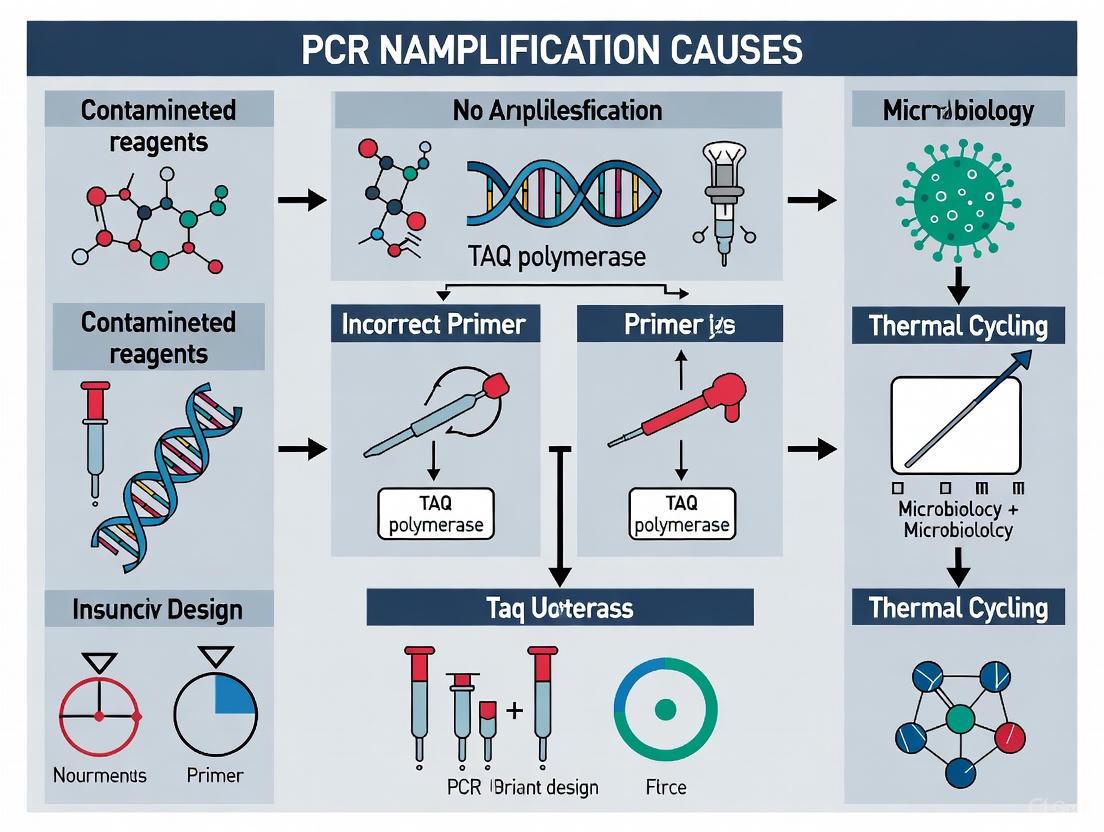
This comprehensive guide addresses the common yet critical challenge of no amplification or low yield in Polymerase Chain Reaction (PCR) for researchers, scientists, and drug development professionals.
PCR Troubleshooting Guide: Solving No Amplification and Low Yield Problems
Abstract
This comprehensive guide addresses the common yet critical challenge of no amplification or low yield in Polymerase Chain Reaction (PCR) for researchers, scientists, and drug development professionals. It systematically explores the foundational causes of PCR failure, from reagent quality and primer design to template integrity. The article provides actionable methodological protocols for reaction setup, advanced optimization strategies including hot-start and touchdown PCR, and a rigorous framework for assay validation to ensure reliability and reproducibility in both research and clinical applications.
Understanding the Root Causes of PCR Failure: A Systematic Exploration
Critical PCR Components and Their Role in Successful Amplification
FAQs: Core Components and Their Functions
Q1: What are the six critical components of a PCR reaction, and what is the primary function of each? A standard Polymerase Chain Reaction requires six core components, each with a specific role essential for successful DNA amplification [1] [2]:
- Template DNA: The target sequence that will be amplified.
- DNA Polymerase: The enzyme that synthesizes new DNA strands.
- Primers: Short, single-stranded DNA sequences that define the start and end of the amplification region.
- Deoxynucleoside Triphosphates (dNTPs): The building blocks (dATP, dCTP, dGTP, dTTP) used by the polymerase to build new DNA strands.
- Magnesium Ions (Mg²⁺): An essential cofactor for DNA polymerase activity.
- Reaction Buffer: Provides the optimal chemical environment (pH, ionic strength) for the reaction.
Q2: Why is Magnesium (Mg²⁺) concentration so critical, and what happens if it is suboptimal? Magnesium is a crucial cofactor for DNA polymerase enzyme activity. It facilitates the binding of the enzyme to the DNA template and catalyzes the formation of phosphodiester bonds between nucleotides [1]. An incorrect concentration is a common source of PCR failure [3]:
- Excess Mg²⁺: Reduces specificity and can lead to mispriming and the accumulation of nonspecific PCR products [3].
- Insufficient Mg²⁺: Results in low yield or no amplification due to reduced polymerase activity [4] [3]. The optimal concentration usually ranges from 0.5 mM to 5.0 mM and must be determined empirically, as it is affected by the concentration of dNTPs, which also bind Mg²⁺ [5] [3].
Q3: How does the choice of DNA polymerase influence PCR outcomes for different applications? Not all DNA polymerases are the same. Selecting the right enzyme is critical for the specific goals of your experiment, such as yield, accuracy, or target length [1] [5].
Table 1: DNA Polymerase Selection Guide
| Polymerase Type | Key Characteristics | Best For | Fidelity (Error Rate) |
|---|---|---|---|
| Standard Taq | Thermostable; no proofreading | Routine PCR, gel detection | Low (2 × 10⁻⁴ to 2 × 10⁻⁵ errors/base) [5] |
| High-Fidelity (e.g., Pfu) | 3'→5' Exonuclease (proofreading) activity | Cloning, sequencing, mutagenesis | High (Lower error rate) [5] |
| Hot-Start Taq | Inactive at room temperature; requires heat activation | Increased specificity; reduces primer-dimer formation [5] [3] | Same as parent enzyme |
| High-Processivity | Stays bound to template longer; resistant to inhibitors | Long targets, difficult templates (e.g., GC-rich), or crude samples [3] | Varies |
Troubleshooting Guide: No or Weak Amplification
The complete absence of a PCR product or a very faint band is a common problem. The following workflow outlines a systematic approach to diagnose and resolve this issue. This process is based on established troubleshooting protocols [4] [3].
Diagram: A systematic diagnostic workflow for troubleshooting failed PCR amplification.
Detailed Causes and Protocols for "No Amplification":
Issue: Problematic Template DNA
- Causes: The most common template-related failures are degradation, the presence of PCR inhibitors (e.g., phenol, EDTA, heparin), or an insufficient starting amount [4] [3]. For genomic DNA, a typical optimal input is 5–50 ng in a 50 µL reaction, while only 0.1–1 ng is needed for pure plasmid DNA [1].
- Protocol for Verification and Solution:
- Quantify and Quality-Check: Measure DNA concentration using a spectrophotometer (A260/A280 ratio ~1.8-2.0) or fluorometer. Run the template on an agarose gel to check for smearing (indicating degradation) [4].
- Purify and Re-test: If degradation or inhibitors are suspected, re-purify the DNA using a silica-column-based kit or ethanol precipitation [3].
- Use a Robust Enzyme: If the sample is inherently complex (e.g., from blood or plant tissue), switch to a high-processivity DNA polymerase engineered for high tolerance to inhibitors [3].
Issue: Suboptimal Primer Design or Usage
- Causes: Primers with low melting temperature (Tm), self-complementarity (leading to hairpins or primer-dimers), or mispriming to non-target sequences will not amplify the desired product [1] [6].
- Protocol for Primer Design and Optimization:
- Follow Design Rules: Design primers that are 15–30 nucleotides long, with a Tm of 55–70°C (within 5°C for the forward/reverse pair), and a GC content of 40–60%. Ensure the 3' end ends in a G or C base ("G/C clamp") for strong binding [1] [5].
- Check for Specificity: Use software tools (e.g., NCBI Primer-BLAST) to verify primer specificity to your target sequence.
- Optimize Concentration: Test primer concentrations in the range of 0.1–1 µM. High concentrations promote primer-dimer formation, while low concentrations result in low yield [1] [7].
Issue: Incorrect Mg²⁺ or dNTP Concentrations
- Causes: Mg²⁺ is a required cofactor, and its availability is affected by dNTP concentration since dNTPs chelate Mg²⁺. An imbalance directly reduces polymerase efficiency [1] [8].
- Protocol for Titration:
- Prepare a Master Mix: Create a master mix containing all standard components except Mg²⁺ and the component being tested.
- Set Up Titration Reactions: Aliquot the master mix into several tubes. Add MgCl₂ or MgSO₄ to each tube to create a series of final concentrations (e.g., 0.5, 1.0, 1.5, 2.0, 3.0, 4.0 mM) [3].
- Run PCR and Analyze: Perform amplification and analyze the products on an agarose gel. The concentration that gives the brightest specific band with the least background is optimal.
The Scientist's Toolkit: Essential Research Reagent Solutions
Table 2: Key Reagents for PCR Setup and Troubleshooting
| Reagent / Kit | Function / Purpose | Example Use-Case |
|---|---|---|
| Hot-Start DNA Polymerase | Remains inactive at room temperature to prevent nonspecific amplification and primer-dimer formation before the initial denaturation [5] [3]. | Essential for high-specificity assays and multiplex PCR. |
| PCR Additives (DMSO, BSA, Betaine) | Modifies nucleic acid melting behavior. DMSO helps denature GC-rich templates; BSA binds inhibitors [5] [4]. | Add 1-10% DMSO for GC-rich targets (>60% GC). Use BSA for contaminated samples. |
| dUTP and UDG (Uracil-DNA Glycosylase) | Contamination control system. dUTP replaces dTTP in reactions; UDG degrades PCR products from previous reactions before amplification, preventing false positives [1]. | Critical for diagnostic and high-throughput applications. |
| Optimized PCR Master Mix | A pre-mixed solution containing buffer, dNTPs, Mg²⁺, and a stable hot-start enzyme. Ensures reaction consistency and saves setup time [7]. | Ideal for routine and high-throughput applications. |
| Gradient Thermal Cycler | Allows a single PCR run to test a range of annealing temperatures for a primer set, drastically speeding up optimization [6]. | First-step optimization for a new primer set. |
FAQs: Advanced Troubleshooting
Q4: My gel shows smeared bands or multiple non-specific products. How can I increase specificity? This is typically caused by mispriming, where primers bind to incorrect sequences. To resolve this [4] [3]:
- Increase Annealing Temperature: Use a gradient thermal cycler to find the highest possible annealing temperature that still yields your product. Start by increasing it in 1-2°C increments.
- Use a Hot-Start Polymerase: This prevents activity at low temperatures during setup, a common time for nonspecific priming [5] [3].
- Reduce Mg²⁺ Concentration: High Mg²⁺ stabilizes DNA duplexes, including those with mismatched primers. Titrate to a lower concentration [3].
- Lower Primer/Cycle Numbers: Ensure primer concentration is not above 1 µM and reduce cycle numbers to ~25 if over-amplification is suspected [1] [3].
Q5: What are primer-dimers, and how can I prevent them? Primer-dimers are short, double-stranded DNA artifacts formed when primers anneal to each other due to complementary sequences, especially at their 3' ends. They compete for reagents and reduce the yield of your target product [4].
- Prevention Strategies:
- Careful Primer Design: Check for 3'-end complementarity between primers. Avoid three or more G or C bases at the 3' end [1].
- Optimize Primer Concentration: Use the lowest effective concentration, typically 0.1–0.5 µM [7].
- Use Hot-Start PCR: Prevents the polymerase from extending primed dimers during reaction setup [4].
Q6: How can I successfully amplify a template with very high GC content? GC-rich sequences (>60%) form stable secondary structures that are difficult to denature, halting the polymerase. A multi-pronged approach is needed [5] [3]:
- Use PCR Additives: Incorporate co-solvents like DMSO (1-10%), formamide (1.25-10%), or commercial GC enhancers to help disrupt secondary structures.
- Adjust Cycling Conditions: Increase the denaturation temperature (e.g., to 98°C) and/or延长denaturation time.
- Select a Specialized Enzyme: Use a polymerase mix specifically designed for high GC content or long/ difficult templates, as they often have enhanced DNA unwinding capabilities [7] [3].
Troubleshooting Guide: Common PCR Problems and Solutions
This guide helps you diagnose and resolve the most frequent issues encountered in PCR experiments, from complete reaction failure to non-specific results.
No Amplification or Low Yield
This problem occurs when there is no visible PCR product or the yield is much lower than expected after gel electrophoresis.
| Causes | Solutions |
|---|---|
| Omitted reagents or inaccurate pipetting | Check that all reaction components were added; re-run the reaction [9]. |
| Poor template DNA quality or quantity | Re-purify the template DNA to remove contaminants; quantify DNA and optimize the amount (typically 1 pg–1 µg per 50 µL reaction) [4] [9] [3]. |
| Incorrect primer design or concentration | Redesign primers to ensure specificity and correct length (18-30 bases); optimize primer concentration (typically 0.1–1 µM) [9] [3]. |
| Suboptimal annealing temperature | Determine primer Tm and use a gradient PCR cycler to find the optimal temperature; it is typically 3–5°C below the primer Tm [4] [3] [10]. |
| Insufficient Mg²⁺ concentration | Optimize Mg²⁺ concentration (usually 1.5–5.0 mM); note that EDTA or high dNTPs can chelate Mg²⁺, requiring higher concentrations [4] [3] [10]. |
| Insufficient enzyme activity or dNTPs | Ensure the DNA polymerase is active and has not been degraded; use fresh dNTP aliquots [4] [9]. |
| Incorrect thermal cycling conditions | Increase cycle number (typically 25–40); ensure denaturation, annealing, and extension times/temperatures are correct [9] [3]. |
Non-Specific Amplification and Primer-Dimers
This issue is characterized by multiple unwanted bands, smears on the gel, or a prominent low molecular weight band indicative of primer-dimer.
| Causes | Solutions |
|---|---|
| Annealing temperature is too low | Increase the annealing temperature stepwise by 1–2°C increments to enhance stringency [4] [3]. |
| Excessively high primer concentration | Lower the primer concentration (within the 0.1–1 µM range) to reduce the chance of primer-dimer formation [4] [3]. |
| Poor primer design | Redesign primers to avoid self-complementarity, hairpins, and long runs of a single nucleotide [9] [10] [11]. |
| Excessive template or enzyme amount | Reduce the amount of input template DNA and ensure the DNA polymerase concentration is not too high [3] [11]. |
| Pre-mature initiation of polymerization | Use a hot-start DNA polymerase to inhibit enzyme activity until the first denaturation step [4] [3]. |
| Contaminated reagents | Use fresh reagents and work in a dedicated, clean area to prevent exogenous DNA contamination [9] [11]. |
Key Research Reagent Solutions
Successful PCR relies on high-quality reagents. The table below details essential materials and their functions.
| Reagent | Function |
|---|---|
| Hot-Start DNA Polymerase | A modified enzyme inactive at room temperature, preventing non-specific amplification and primer-dimer formation during reaction setup [4] [3]. |
| PCR Additives (e.g., BSA, DMSO, Betaine) | Enhancers that help amplify difficult targets (e.g., GC-rich sequences) by reducing secondary structures or neutralizing inhibitors [4] [3] [10]. |
| Molecular-Grade Water | A sterile, nuclease-free solvent used to prepare all reagents and reaction mixes, preventing enzymatic degradation of components [3]. |
| dNTP Mix | The building blocks (dATP, dCTP, dGTP, dTTP) for DNA synthesis; provided as an equimolar mixture to ensure faithful replication [10] [11]. |
| Magnesium Salts (MgCl₂/MgSO₄) | A crucial cofactor for DNA polymerase activity; its concentration must be optimized as it directly affects reaction efficiency and specificity [4] [3] [10]. |
Frequently Asked Questions (FAQs)
Q1: My negative control shows amplification. What is the most likely cause and how do I resolve it?
Amplification in your negative control (no-template control) almost certainly indicates contamination. To resolve this, use fresh, aliquoted reagents; decontaminate your workspace and equipment with DNA decontamination solutions; always use filter pipette tips; and establish separate physical areas for pre-PCR (reaction setup) and post-PCR analysis [11] [12].
Q2: I consistently get smeared bands on my agarose gel. What steps can I take?
PCR smears can result from several factors. The most effective solutions include:
- Increase annealing temperature to improve primer binding specificity [4] [3].
- Check template quality; degraded DNA can cause smearing. Re-purify the template if necessary [4] [3].
- Reduce the number of PCR cycles to prevent the accumulation of non-specific products later in the cycling process [9] [3].
- Use a hot-start polymerase to minimize synthesis of non-specific products during reaction setup [4].
- Systematic primer replacement may be needed if previous primers have accumulated amplifiable contaminants specific to their sequence [4].
Q3: How can I confirm if my DNA polymerase has lost activity?
To test for compromised enzyme activity, run a positive control reaction using a template and primer set that have previously worked well with the enzyme. If the positive control fails, the enzyme is likely degraded. Always aliquot enzymes to avoid repeated freeze-thaw cycles, store them according to the manufacturer's specifications, and check expiration dates [9] [11].
Q4: What is the most critical factor in primer design to avoid failure?
The most critical factor is specificity. Primers must be unique to your target sequence to prevent non-specific binding. Use software tools like NCBI Primer-BLAST to check for specificity against the relevant genome database. Additionally, ensure primers do not form hairpins or dimerize with each other, have a GC content between 40-60%, and possess similar melting temperatures (within 5°C) [10] [11] [12].
Experimental Protocol: Systematic PCR Optimization
Primer Design and Preparation
- Design: Design primers to be 18-30 nucleotides long with a GC content of 40-60%. The 3' end should end with a G or C base to enhance priming efficiency. Avoid regions of self-complementarity or complementarity between the forward and reverse primer [10] [11].
- Validation: Use online tools (e.g., Primer3, NCBI Primer-BLAST) to verify specificity and check for secondary structures [10] [12].
- Resuspension: Resuspend dried primers in sterile, nuclease-free water or TE buffer to create a stable stock solution. Store working aliquots at -20°C to avoid repeated freeze-thaw cycles [3].
Reaction Setup and Master Mix Preparation
- Work on ice: Keep all reagents on ice during setup to maintain stability [10].
- Create a Master Mix: When setting up multiple reactions, prepare a master mix containing water, buffer, dNTPs, and polymerase to minimize pipetting errors and ensure consistency between samples [10].
- Component Addition Order: A typical 50 µL reaction might include: 5 µL of 10X PCR buffer, 1 µL of 10 mM dNTP mix, 1 µL each of 20 µM forward and reverse primers, 0.5–2.5 units of DNA polymerase, template DNA (1 pg–1 µg), and sterile water to 50 µL. MgCl₂ is added if not present in the buffer [10].
- Mix Gently: After adding all components, mix the reaction by pipetting up and down or brief, gentle vortexing to ensure homogeneity without introducing bubbles [11].
Thermal Cycling Condition Optimization
The following workflow outlines a systematic approach to optimizing your PCR thermal cycling conditions. Begin with standard settings, then use a gradient PCR to refine the annealing temperature. If issues persist, systematically adjust other key parameters like Mg²⁺ concentration and cycle number.
Essential Takeaways for Reliable PCR
- Primer Design is Foundational: Careful, specificity-focused primer design is the most critical step in preventing PCR failure and spurious results [10] [12].
- Systematic Troubleshooting is Key: When problems arise, follow a logical sequence: verify reagents and concentrations first, then optimize cycling conditions (starting with annealing temperature and Mg²⁺), and finally re-evaluate template and primer quality [4] [3].
- Contamination Control is Non-Negotiable: Rigorous laboratory practices, including the use of dedicated equipment, workspace, and thorough controls, are essential for obtaining trustworthy results [11] [12].
The quality, quantity, and purity of your template DNA are fundamental to the success of any Polymerase Chain Reaction (PCR) experiment. Template DNA provides the blueprint that primers use to initiate amplification, and any compromises in its integrity can lead to PCR failure, reduced yield, or non-specific products. For researchers and drug development professionals, understanding how to properly assess and prepare template DNA is a critical first step in ensuring reliable, reproducible results in downstream applications like genotyping, sequencing, and pathogen detection. This guide provides comprehensive troubleshooting guidance to address common template-related issues that can cause amplification failure.
Key Assessment Metrics and Methods
Determining DNA Concentration and Purity
Accurately determining the concentration and purity of your DNA sample is the first critical step in troubleshooting PCR amplification issues. The most common technique involves spectrophotometric measurement of absorbance [13].
Absorbance Measurement Protocol:
- Use a spectrophotometer equipped with a UV lamp and UV-transparent cuvettes.
- Dilute the purified DNA sample to ensure absorbance readings fall within the instrument's linear range (generally A260 of 0.1–1.0).
- Measure absorbance at 230nm, 260nm, 280nm, and 320nm.
Calculations:
- DNA Concentration (µg/ml) = (A260 reading – A320 reading) × dilution factor × 50µg/ml
- Total DNA Yield (µg) = DNA concentration × total sample volume (ml)
- DNA Purity (A260/A280) = (A260 reading – A320 reading) ÷ (A280 reading – A320 reading)
- Salt Contamination Indicator (A260/A230) = (A260 reading – A320 reading) ÷ (A230 reading – A320 reading)
Table 1: Interpretation of Spectrophotometric DNA Quality Metrics
| Metric | Ideal Value | Interpretation | Impact on PCR |
|---|---|---|---|
| A260/A280 Ratio | 1.7-2.0 [14] [13] [15] | Pure DNA | Optimal for PCR |
| <1.7 | Protein contamination | May inhibit polymerase [16] | |
| A260/A230 Ratio | >1.5 [13] | Minimal salt/organic compound carryover | Optimal for PCR |
| <1.5 | Residual salts, chaotropic agents, or solvents | May inhibit polymerase [16] | |
| A320 (Turbidity) | Low | Clear solution | Optimal for PCR |
| High | Particulate matter | May interfere with amplification |
Alternative Quantification Methods
While absorbance is widely used, alternative methods provide complementary information:
Fluorescence Methods:
- Use DNA-binding dyes like PicoGreen or QuantiFluor dsDNA dyes [13]
- More sensitive than absorbance methods, particularly for low-concentration samples
- More specific for double-stranded DNA than spectrophotometric methods
- Require instrument-specific standard curves for accurate quantification
Agarose Gel Electrophoresis:
- Provides visual assessment of DNA integrity and approximate concentration [16] [13]
- Compare sample DNA band intensity to DNA quantitation standards of known concentration
- Reveals DNA degradation through smearing versus tight, discrete bands [16]
- Uses staining with intercalating dyes like ethidium bromide or SYBR Green
Optimal Template Quantity and Quality
Recommended Template Quantities
Using the appropriate amount of template DNA is crucial for PCR success. Insufficient template may prevent primers from finding complementary sequences, while excess template can increase mispriming events and non-specific amplification [17].
Table 2: Recommended Template DNA Quantities for PCR
| Template Type | Recommended Amount | Notes |
|---|---|---|
| Plasmid DNA | 1 pg–10 ng [18] or ~1 ng [15] per 50 µL reaction | Low complexity template |
| Genomic DNA | 1 ng–1 µg [18] or ~100 ng [15] per 50 µL reaction | High complexity template |
| General Guideline | 10^4 to 10^7 molecules [10] | Approximately 1-1000 ng |
| Maximum | No more than 1 µg per reaction [17] | Prevents mispriming |
Ensuring Template Quality
Template Integrity Assessment:
- Evaluate DNA integrity by gel electrophoresis before PCR [16] [18]
- Intact genomic DNA should appear as a tight, high-molecular-weight band
- Degraded DNA shows smearing toward lower molecular weights [16]
- Minimize shearing and nicking during DNA isolation [16]
Template Storage:
- Store DNA in molecular-grade water or TE buffer (pH 8.0) to prevent degradation by nucleases [16]
- Avoid repeated freeze-thaw cycles by creating aliquots
Template DNA Troubleshooting Guide
Common Problems and Solutions
Table 3: Template DNA-Related PCR Issues and Solutions
| Observation | Possible Template-Related Cause | Solution |
|---|---|---|
| No amplification | Poor template quality [18] | Repurify template; check integrity by gel electrophoresis [16] [18] |
| Presence of inhibitors [4] [18] | Further purify template by alcohol precipitation or column purification [18] | |
| Insufficient template quantity [4] | Increase amount of template; increase PCR cycles to 40 for low copy numbers [16] | |
| Complex template (e.g., high GC content) [16] | Use additives like DMSO, betaine, or GC enhancer [4] [16] [15] | |
| Non-specific amplification | Excess DNA input [16] | Reduce template quantity to recommended levels |
| Contaminating DNA [18] | Use dedicated work area and aerosol-resistant tips; prepare fresh reagents | |
| Smeared bands | Degraded DNA template [4] [16] | Extract fresh DNA with minimal shearing; assess integrity by gel electrophoresis |
| Too much template DNA [19] | Dilute DNA extract to reduce probability of self-priming | |
| Uneven bands | Suboptimal PCR conditions [4] | Adjust annealing temperature; optimize Mg2+ concentration |
| Contaminants in DNA sample [4] | Repurify template to remove contaminants |
Addressing PCR Inhibition
PCR inhibitors are diverse organic or inorganic compounds that can:
- Directly obstruct DNA polymerase activity [4]
- Bind to cofactors like magnesium ions [4]
- Interact with the nucleic acid template itself [4]
Common inhibitors and sources:
- Phenol, EDTA, proteinase K (from purification protocols) [16]
- Salts or ions (e.g., K+, Na+) [16]
- Hemoglobin, heparin (from blood samples)
- Polysaccharides, polyphenols (from plant tissues)
Strategies to overcome inhibition:
- Repurify template using alcohol precipitation or column-based kits [16] [18]
- Add PCR enhancers like bovine serum albumin (BSA) to reduce inhibitor binding [4]
- Use DNA polymerases with high tolerance to inhibitors [16]
- Dilute the template to reduce inhibitor concentration [18]
The Scientist's Toolkit: Essential Reagents and Equipment
Table 4: Key Research Reagent Solutions for Template DNA Assessment
| Item | Function | Application Notes |
|---|---|---|
| Spectrophotometer | Measures nucleic acid concentration and purity via UV absorbance | NanoDrop for small volumes; check A260/A280 and A260/A230 ratios [14] [13] |
| Fluorometer | Quantifies DNA using fluorescent DNA-binding dyes | More sensitive than absorbance; requires specific dyes and standards [13] |
| Agarose Gel Electrophoresis System | Separates DNA by size; assesses integrity and approximate concentration | Visualizes potential degradation; requires DNA stains [16] [13] |
| PCR Purification Kits | Remove impurities, salts, and inhibitors from DNA samples | Essential for cleaning up contaminated templates [17] [18] |
| BSA (Bovine Serum Albumin) | Additive that binds to inhibitors in PCR reactions | Helps overcome inhibition; use at 10-100 μg/ml [4] [10] |
| DMSO | Additive that destabilizes DNA secondary structure | Helps with GC-rich templates; use at 1-10% [16] [10] [15] |
| Betaine | Additive that equalizes GC and AT base pairing stability | Helps amplify difficult templates; use at 0.5 M to 2.5 M [4] [10] |
| Hot-Start DNA Polymerase | Polymerase inactive at room temperature to prevent mispriming | Reduces non-specific amplification; requires high-temperature activation [4] [16] [15] |
Experimental Workflow for Template DNA Assessment
The following diagram illustrates the complete workflow for assessing template DNA quality, quantity, and purity to achieve optimal PCR results:
Frequently Asked Questions (FAQs)
Q1: My DNA has an A260/A280 ratio of 1.6. Can I still use it for PCR? Yes, DNA with an A260/A280 ratio of 1.6 may still be usable for PCR, but the lower ratio indicates potential protein contamination that could reduce PCR efficiency [13]. For critical applications, consider repurifying the DNA, using a polymerase with high inhibitor tolerance, or adding BSA to the reaction to bind residual contaminants [4] [16].
Q2: How can I improve PCR results with GC-rich templates? GC-rich templates (over 60% GC content) present challenges due to their increased stability and secondary structure formation [16] [15]. Several strategies can help:
- Use PCR additives specifically designed for GC-rich templates, such as DMSO (1-10%), betaine (0.5-2.5M), or ethylene glycol [4] [16] [10]
- Increase denaturation temperature and/or time to ensure complete strand separation [16]
- Select DNA polymerases with high processivity that are better suited for difficult templates [16]
- Utilize specialized GC enhancer solutions supplied with some commercial polymerase kits [16] [18]
Q3: What are the signs of PCR inhibition in my reactions? Signs of PCR inhibition include:
- Complete amplification failure despite adequate template DNA [4] [18]
- Faint or low yield of the expected product [4]
- Inconsistent results across replicates
- Improvement after diluting the template DNA [18]
To confirm inhibition, perform a spike experiment by adding a known amplifiable template to your reaction. If the spike amplifies but your target doesn't, inhibitors are likely present [18].
Q4: How does degraded DNA affect PCR results? Degraded DNA can cause several issues in PCR:
- Reduced amplification efficiency or complete failure if the target region is fragmented [16]
- Smeared bands on agarose gels instead of sharp, discrete bands [4] [16] [19]
- Multiple non-specific products as primers bind to partially degraded sequences [16]
- Inconsistent results between samples
Always check DNA integrity by gel electrophoresis before proceeding with important PCR experiments, especially when working with archival samples or difficult extraction sources [16].
Q5: Why is my PCR producing smeared bands instead of discrete products? Smeared bands can result from several template-related issues:
- Degraded DNA template generating fragments of various sizes [4] [16]
- Too much template DNA, leading to non-specific priming [19]
- Contaminants in the DNA sample that interfere with amplification [4]
- Gradual accumulation of "amplifiable DNA contaminants" specific to your primers [4]
Solutions include repurifying your DNA template, diluting the template, using a new set of primers with different sequences, or implementing hot-start polymerase to reduce early mispriming [4] [16] [19].
FAQs on Primer Specificity and Melting Temperature
1. What is the most critical factor in preventing non-specific amplification? The most critical factor is primer specificity, ensured by designing primers that are unique to your target sequence. This involves using tools like NCBI BLAST to check for off-target binding and selecting a sequence within your template that is distinct [10] [20]. Furthermore, avoiding regions of self-complementarity (which can form hairpins) or inter-primer complementarity (which can form primer-dimers) is essential to prevent the primers from binding to themselves or each other instead of the template [21] [22].
2. How do I calculate the melting temperature (Tm), and why is it important? The melting temperature (Tm) is the temperature at which 50% of the DNA duplex dissociates into single strands [22]. It is crucial for determining the correct annealing temperature (Ta) in your PCR protocol. An annealing temperature that is too low can lead to non-specific binding, while one that is too high can result in no amplification [23] [20]. You can calculate Tm using established formulas that consider the primer's length and base composition, and online tools like the IDT OligoAnalyzer or NEB Tm Calculator can automate this using your specific reaction conditions [10] [20].
3. My PCR failed. How do I know if the problem is my primer design? If your PCR shows no product, multiple bands, or smeared bands, suboptimal primer design is a common cause [4] [10]. The first steps in troubleshooting are to recalculate the Tm of your primers and ensure the annealing temperature in your protocol is set appropriately (typically 5°C below the primer Tm) [23]. You should also verify that your primer sequences do not form strong secondary structures or primer-dimers using analysis tools [20]. Finally, confirm the primer concentration in your reaction is within the recommended range of 0.05–1 µM [23].
Troubleshooting Guide: Common Primer-Related PCR Issues
| Observation | Possible Primer-Related Cause | Recommended Solution |
|---|---|---|
| No Amplification [4] [23] | Poor primer design; Tm too high; secondary structures; incorrect sequence. | Verify primer sequence and specificity; redesign primers to avoid secondary structures; lower annealing temperature. |
| Non-Specific Bands / Multiple Products [4] [23] | Annealing temperature too low; primers binding to unintended sequences; poor primer specificity. | Increase annealing temperature; redesign primers for greater specificity; use a hot-start polymerase. |
| Primer-Dimer Formation [21] [4] | High primer concentration; complementary sequences between primers' 3' ends; long annealing times. | Reduce primer concentration; redesign primers to eliminate 3' complementarity; shorten annealing time. |
Quantitative Guidelines for Primer Design
The following table summarizes the key parameters to follow for designing effective PCR primers.
Table 1: Optimal Design Parameters for PCR Primers
| Parameter | Ideal Range | Rationale & Additional Notes |
|---|---|---|
| Primer Length [21] [10] | 18 - 30 nucleotides | Shorter primers bind more efficiently, but must be long enough for specificity. |
| GC Content [21] [22] | 40% - 60% | Balances primer stability; content >60% can promote non-specific binding. |
| Melting Temperature (Tm) [21] [20] | 60°C - 65°C (Ideal ~62°C) | For a pair, Tm should differ by ≤ 5°C [21] or ideally ≤ 2°C [20]. |
| Annealing Temperature (Ta) [20] | Tm of primer - 5°C | Must be optimized empirically; start 5°C below the lower Tm of the primer pair. |
| 3' End GC Clamp [21] | 1-2 G or C bases in last 5 nucleotides | Promotes specific binding at the 3' end crucial for extension. Avoid >3 G/Cs. |
Experimental Protocol: A Methodical Approach to Primer Design and Validation
This protocol provides a step-by-step methodology for designing and validating primers, a critical component of PCR troubleshooting research.
1. Primer Sequence Selection and In Silico Design
- Identify Template Region: Select the specific DNA sequence to be amplified. When working with mRNA, design primers to span an exon-exon junction to avoid amplification of genomic DNA [24] [20].
- Use Design Tools: Utilize software such as NCBI Primer-BLAST or Primer3. These tools help generate candidate primers based on core parameters like length and Tm while automatically checking for specificity against public databases [24] [10].
- Apply Design Rules: Select a candidate primer pair that fits the criteria in Table 1. Ensure the 3' ends are not complementary to each other to prevent primer-dimer formation [10]. Avoid runs of identical nucleotides (e.g., AAAA or CCCC) [21].
2. Calculating Melting Temperature (Tm) and Annealing Temperature (Ta)
- Method 1 (Nearest-Neighbor): This is the most accurate method and is used by most online calculators. Use tools like the IDT OligoAnalyzer [20]. Input your specific reaction conditions (e.g., 50 mM K+, 3 mM Mg2+) for a precise Tm calculation.
- Method 2 (Basic Formula): For a quick estimate, use the formula: Tm = 4(G + C) + 2(A + T) [22]. This provides a rough approximation but does not account for salt concentrations.
- Set Annealing Temperature: The starting annealing temperature (Ta) for a PCR reaction should be set 5°C below the calculated Tm of the lower-melting primer [20].
3. Verification of Primer Specificity and Secondary Structures
- Run a BLAST Search: Perform a nucleotide BLAST (NCBI) with your primer sequences to ensure they are unique to your intended target and do not bind to other regions in the genome [10] [20].
- Analyze for Secondary Structures: Use tools like the OligoAnalyzer to check for hairpins and self-dimers. The ΔG value for any predicted structure should be weaker (more positive) than -9.0 kcal/mol to minimize the risk of formation during PCR [20].
4. Empirical Validation and Optimization
- Set Up a Temperature Gradient: Run your PCR reaction using a thermal cycler with an annealing temperature gradient, testing a range from 2-5°C below to 2-5°C above the calculated Tm [23].
- Analyze Results: Resolve the PCR products on an agarose gel. The optimal annealing temperature will produce a single, sharp band of the expected size with no smearing or non-specific bands.
- Include Controls: Always run a No-Template Control (NTC) containing all reagents except the DNA template to detect contamination or primer-dimer artifacts [25].
The Scientist's Toolkit: Research Reagent Solutions
Table 2: Essential Reagents for PCR and Primer Troubleshooting
| Reagent / Material | Function / Purpose | Key Considerations |
|---|---|---|
| Hot-Start DNA Polymerase [4] [23] | Reduces non-specific amplification and primer-dimer formation by remaining inactive until high temperatures. | Essential for complex templates; choose based on fidelity and template type (e.g., GC-rich). |
| dNTP Mix [10] [23] | Provides the nucleotide building blocks (dATP, dCTP, dGTP, dTTP) for DNA synthesis. | Use balanced concentrations (e.g., 2.5 mM each); prepare fresh aliquots to prevent degradation. |
| MgCl₂ Solution [10] [23] | Cofactor for DNA polymerase; concentration directly affects enzyme activity and reaction specificity. | Optimize concentration (0.5-5.0 mM); it is a critical variable in troubleshooting. |
| PCR Buffer (10X) [10] | Provides optimal salt and pH conditions (e.g., Tris-HCl, KCl) for polymerase activity and stability. | Buffer composition is enzyme-specific; follow manufacturer recommendations. |
| Molecular Grade H₂O [25] | Solvent for all reaction components; must be nuclease-free to prevent degradation of primers and template. | Use autoclaved, filtered, and dedicated pre-PCR water to avoid contamination. |
| Agarose Gel Electrophoresis System [10] | Standard method for visualizing PCR amplicons to assess specificity, yield, and product size. | Critical for initial validation and troubleshooting of amplification success. |
The Impact of Thermal Cycler Conditions on Amplification Efficiency
Within the broader context of PCR troubleshooting and no-amplification causes research, the thermal cycler is a critical instrument whose conditions directly determine the success and accuracy of polymerase chain reaction (PCR). Amplification efficiency, ideally at 100% (doubling of product every cycle), is highly dependent on the precise control of temperature and time during denaturation, annealing, and extension steps [26]. Suboptimal thermal cycler conditions are a primary cause of experimental failure, leading to issues such as no amplification, non-specific products, and skewed quantitative results, particularly in sensitive applications like multi-template PCR and quantitative PCR (qPCR) [27] [3]. This guide provides detailed troubleshooting and methodologies to identify and correct thermal cycler-related inefficiencies.
Key Thermal Cycler Parameters and Their Effects
The table below summarizes the core thermal cycler parameters, their common optimal settings, and the direct impact of their deviation on amplification efficiency.
Table 1: Key Thermal Cycler Parameters and Impact on Amplification Efficiency
| Parameter | Typical Optimal Setting | Effect of Low/Short Setting | Effect of High/Long Setting |
|---|---|---|---|
| Initial Denaturation | 94–95°C for 1–2 min [28] | Incomplete denaturation of complex templates (e.g., genomic DNA), leading to no or poor amplification [3]. | Polymerase inactivation (especially non-hot-start), DNA damage (depurination) affecting long targets [28] [3]. |
| Denaturation Cycle | 94–98°C for 10–30 sec [28] [29] | Incomplete strand separation, reducing reaction efficiency and yield [3]. | Loss of polymerase activity over multiple cycles; damage to DNA templates [28]. |
| Annealing Temperature (Ta) | 3–5°C below primer Tm [3] [29] | Non-specific primer binding and amplification, resulting in spurious bands or smears [4] [3]. | Reduced primer binding efficiency, leading to low yield or no amplification [3] [30]. |
| Annealing Time | 15–30 sec (Taq); 5–15 sec (high-efficiency enzymes) [28] | Insufficient time for primer-template hybridization, reducing efficiency. | Increased opportunity for mispriming and non-specific amplification [28] [3]. |
| Extension Temperature | 68°C (long targets >4kb) or 72°C (short targets) [28] [29] | Reduced polymerase activity, slower amplification, particularly for long amplicons. | May increase depurination rate for long templates [28]. |
| Extension Time | 1 min/kb (standard); 10–20 sec/kb (fast polymerases) [28] [29] | Incomplete synthesis of full-length product, especially for long amplicons [3]. | Increased chance of generating secondary, non-specific products [4]. |
| Cycle Number | 25–35 cycles [3] [7] | Low yield, especially with low-copy-number templates [7]. | Accumulation of non-specific products and primer-dimers; plateau phase effects [3] [7]. |
Troubleshooting Common Thermal Cycler-Related Problems
No Amplification or Low Yield
This problem occurs when the reaction fails or produces a yield too low to detect.
- Primary Thermal Cycler Causes & Solutions:
- Insufficient Denaturation: Verify the denaturation temperature and time. For GC-rich templates or complex secondary structures, increase the temperature to 98°C or extend the denaturation time [28] [3].
- Annealing Temperature Too High: Calculate the primer melting temperature (Tm) accurately and set the annealing temperature 3–5°C below the lowest Tm. Use a gradient thermal cycler to empirically determine the optimal temperature [3] [30].
- Insufficient Extension Time: Ensure the extension time is appropriate for the amplicon length and the polymerase's speed. For a standard Taq polymerase, use 1 minute per kilobase. For fast polymerases, 10-20 seconds per kilobase may be sufficient [28] [29].
- Too Few Cycles: With a low amount of starting template, increase the cycle number to 35-40 [7].
Non-Specific Amplification (Multiple Bands or Smear)
This is characterized by the appearance of multiple unwanted bands or a smear on a gel after electrophoresis.
- Primary Thermal Cycler Causes & Solutions:
- Annealing Temperature Too Low: This is the most common cause. Increase the annealing temperature in 1–2°C increments to enhance stringency [3] [29].
- Long Annealing Times: Excessively long annealing times can promote mispriming. Use the minimum time required for efficient binding, which can be as short as 5-15 seconds for high-efficiency polymerases [28].
- Excessive Cycle Number: Reduce the number of PCR cycles to prevent the accumulation of non-specific products that become visible in later cycles [3].
- Switch to Touchdown PCR: Start with an annealing temperature 5-10°C above the expected Tm and decrease it by 1-2°C every cycle for the first 10-15 cycles. This ensures that the most specific primer binding will dominate the early amplification [28].
Poor Efficiency in Multi-Template PCR (qPCR or NGS Library Prep)
In reactions designed to amplify many different sequences simultaneously (e.g., in qPCR or NGS library preparation), sequence-specific efficiency differences can cause skewed abundance data [27].
- Primary Thermal Cycler Causes & Solutions:
- Non-Homogeneous Denaturation: Sequences with high GC content or strong secondary structures may not denature completely under standard conditions. Increase denaturation temperature and/or use additives like DMSO (2.5-5%) or GC enhancers to promote uniform denaturation [28] [3].
- Suboptimal Universal Annealing Temperature: A one-size-fits-all annealing temperature may not be optimal for all primer-template pairs in a complex mix. While a fixed condition is often necessary, its value must be carefully optimized using a gradient cycler to find the best compromise for the entire pool [30].
- Mechanism Insight: Recent research using deep learning has shown that specific sequence motifs near priming sites can lead to drastically reduced efficiency, partly through mechanisms like adapter-mediated self-priming, which may be sensitive to thermal conditions [27].
Experimental Protocols for Optimization
Protocol 1: Optimizing Annealing Temperature Using a Gradient Thermal Cycler
This is the most critical step for achieving specificity.
- Primer Design: Ensure primers are well-designed, with a Tm difference of ≤5°C between the forward and reverse primers [29].
- Reaction Setup: Prepare a master mix containing all PCR components (template, polymerase, dNTPs, buffer, primers) and aliquot it equally into several PCR tubes.
- Gradient Programming: On your thermal cycler, set a gradient across the annealing step that covers a range of temperatures (e.g., from 5°C below to 5°C above the calculated Tm).
- Analysis: Run the PCR and analyze the products by gel electrophoresis.
- Interpretation: The optimal annealing temperature is the highest temperature that produces a strong, single band of the expected size. This temperature offers the best specificity [30].
Protocol 2: A Systematic Workflow for Thermal Cycler Optimization
The following diagram outlines a logical decision process for diagnosing and correcting thermal cycler-related issues.
The Scientist's Toolkit: Key Research Reagent Solutions
Selecting the right reagents is fundamental to supporting optimal thermal cycler conditions.
Table 2: Essential Reagents for Optimizing Amplification Efficiency
| Reagent | Function & Importance in Optimization | Considerations for Use |
|---|---|---|
| Hot-Start DNA Polymerase | Prevents non-specific amplification and primer-dimer formation by remaining inactive until the first high-temperature denaturation step. Critical for improving specificity [4] [3]. | Essential for complex templates and multiplex PCR. Choose antibody-mediated or chemically modified versions. |
| Magnesium Chloride (MgCl₂) | A necessary cofactor for DNA polymerase activity. Concentration directly affects enzyme activity, fidelity, and primer annealing [28] [29]. | Optimize concentration (typically 1.5-4.0 mM in 0.5 mM increments). Excess Mg²⁺ reduces specificity; too little causes no amplification [29]. |
| PCR Additives (e.g., DMSO, Betaine) | Assist in denaturing difficult templates by reducing secondary structures and stabilizing polymerase. DMSO (2.5-5%) is particularly useful for GC-rich templates [28] [3]. | High concentrations can inhibit the polymerase. Adjust annealing temperature as additives can lower the effective Tm [3]. |
| Optimized Buffer Systems | Provide the optimal salt (e.g., KCl) and pH environment for the specific polymerase. Salt concentration affects DNA duplex stability [28]. | Use the buffer supplied with the enzyme. For specialized tasks (long-range, high-GC), use the polymerase's companion buffer with enhancers [28]. |
| High-Purity dNTPs | The building blocks for DNA synthesis. Unbalanced concentrations increase misincorporation rates and reduce fidelity [3]. | Use equimolar concentrations of dATP, dCTP, dGTP, and dTTP. Typical final concentration is 200 µM of each [29]. |
Frequently Asked Questions (FAQs)
What is the difference between two-step and three-step PCR, and when should I use each?
A three-step PCR includes separate denaturation, annealing, and extension steps. This is the standard protocol and should be used when the primer Tm is significantly lower (e.g., <68°C) than the extension temperature [28]. A two-step PCR combines the annealing and extension into one step (e.g., 60-68°C) and is preferred when the primer Tm is close to the extension temperature, simplifying and speeding up the cycling process [28].
How can I improve the amplification of a long genomic target (>10 kb)?
Focus on template quality and gentle thermal conditions. Use high-integrity, undegraded DNA. Keep the denaturation time short to minimize depurination. Use a polymerase blend designed for long-range PCR. A lower extension temperature (e.g., 68°C) can help maintain polymerase activity over the longer extension time required [28] [3].
My qPCR efficiency is calculated to be over 100%. Is this possible and what does it mean?
Theoretically, efficiency cannot exceed 100% (doubling per cycle). Observed efficiencies over 110% typically indicate an artifact, most commonly due to the presence of PCR inhibitors in the more concentrated samples of your standard curve. These inhibitors cause a delay in the Cq value, flattening the standard curve slope and leading to an erroneously high efficiency calculation [31]. Diluting the sample or purifying the template can resolve this.
How does the heating rate of my thermal cycler affect my results?
While not frequently discussed in basic protocols, the ramp rate (speed at which the cycler changes temperature) can impact specificity and yield. A slower ramp rate can increase the chance for non-specific primer binding during transitions. Many modern "fast" cyclers use high ramp rates to reduce overall run times, which is generally compatible with fast-cycling polymerases. For critical applications, consistency between instruments is key.
Robust PCR Protocols and Advanced Amplification Techniques
Step-by-Step Guide to Setting Up a Sterile and Optimized Reaction
Polymerase Chain Reaction (PCR) is a powerful technique for amplifying specific DNA sequences, but its success hinges on a sterile setup and optimized reaction conditions. Within the broader context of PCR troubleshooting research, a methodical approach is essential for diagnosing and resolving the common issue of no amplification. This guide provides detailed protocols and troubleshooting strategies to ensure reliable results.
Initial Reaction Setup and Common Pitfalls
A standard PCR requires specific components combined in a sterile environment. The table below outlines the function of each key reagent [10] [32].
Table 1: Essential PCR Reagents and Their Functions
| Reagent | Function | Typical Final Concentration/Amount |
|---|---|---|
| Template DNA | Contains the target sequence to be amplified. | 1–1000 ng (104–107 molecules) [10] [5] |
| Forward & Reverse Primers | Short DNA sequences that define the start and end of the amplification. | 0.1–1 μM each (20–50 pmol per reaction) [10] [3] [15] |
| DNA Polymerase (e.g., Taq) | Enzyme that synthesizes new DNA strands. | 0.5–2.5 units per 50 μL reaction [10] [33] |
| dNTPs | Building blocks (dATP, dCTP, dGTP, dTTP) for new DNA strands. | 50–200 μM of each dNTP [10] [5] [15] |
| Reaction Buffer | Provides optimal pH and salt conditions for the polymerase. | 1X concentration [10] [32] |
| Magnesium Ions (Mg²⁺) | Essential cofactor for DNA polymerase activity. | 1.5–2.0 mM (may require optimization) [10] [3] [15] |
| Sterile Water | Brings the reaction to its final volume. | Quantity sufficient (Q.S.) |
The following workflow outlines a systematic procedure for setting up a sterile and optimized PCR, incorporating key preventative measures [10] [3].
Troubleshooting FAQ: Resolving "No Amplification"
A failed PCR with no visible product is a common challenge. The following questions and answers provide a structured diagnostic approach.
What are the primary causes of no amplification, and how do I diagnose them?
No amplification can stem from problems with the template DNA, reagent quality, or thermal cycling conditions. Begin by verifying your template DNA concentration and purity; a 260/280 nm absorbance ratio of ~1.8 indicates minimal contamination [3] [15]. Ensure all reagents are fresh and active, particularly the DNA polymerase and dNTPs, which can degrade with multiple freeze-thaw cycles [3] [34]. Finally, confirm that the thermal cycler is correctly calibrated and that the denaturation temperature is sufficient to separate the DNA strands [3].
How can I optimize my reaction components to restore amplification?
Systematic optimization of key reaction components often resolves amplification failure.
Table 2: Optimization Strategies for Reaction Components
| Component | Problem | Solution |
|---|---|---|
| Template DNA | Degradation, contamination, or incorrect quantity. | Re-isolate DNA to ensure integrity and purity. Use the recommended amount: 10–100 ng of genomic DNA or 1 ng of plasmid DNA [3] [15] [34]. |
| Primers | Poor design, degradation, or incorrect concentration. | Redesign primers to meet optimal criteria (length 18–30 bp, GC content 40–60%, Tm 52–58°C). Prepare fresh aliquots and use a concentration of 0.1–1 μM [10] [3] [15]. |
| Mg²⁺ Concentration | Concentration is suboptimal for the polymerase. | Titrate MgCl₂ in the range of 0.5–5.0 mM to find the optimal concentration for your specific primer-template system [10] [3]. |
| DNA Polymerase | Enzyme is inactive or insufficient for the reaction. | Use a hot-start polymerase to prevent non-specific activity. Confirm the enzyme is not expired and increase the amount if inhibitors are suspected [3] [35]. |
My reaction components are correct. What thermal cycling conditions should I check?
If reagents are confirmed to be viable, the thermal cycling profile is the next critical area to investigate.
- Annealing Temperature: This is the most common parameter requiring optimization. If the temperature is too high, primers cannot bind; if too low, non-specific binding occurs. Set the initial annealing temperature 3–5°C below the calculated Tm of your primers. If amplification fails, perform a gradient PCR, testing a range of temperatures in 1–2°C increments to find the ideal condition [3] [32].
- Extension Time and Temperature: Ensure the extension time is sufficient for your amplicon length—a common guideline is 1 minute per 1000 base pairs [5] [32]. The extension temperature is typically 68–72°C for Taq polymerase.
- Cycle Number: For low-copy-number templates, increasing the number of cycles from 25–30 to 35–40 can improve the yield [3] [5].
Are there any additives that can help with difficult templates?
Yes, for templates with high GC content or complex secondary structures, additives can be crucial. Dimethyl sulfoxide (DMSO) helps denature stable DNA structures and is typically used at a final concentration of 1–10% [10] [5]. Betaine (0.5 M to 2.5 M) can also help amplify GC-rich regions by equalizing the contribution of GC and AT base pairs [10]. Other useful additives include formamide (1.25–10%) and bovine serum albumin (BSA, 10–100 μg/mL) to counteract the presence of inhibitors [10] [5].
What advanced PCR techniques can I use if basic optimization fails?
If standard troubleshooting fails, consider these advanced methods:
- Hot-Start PCR: This technique uses an inactivated DNA polymerase that is only activated at high temperatures. This prevents non-specific amplification and primer-dimer formation that can occur during reaction setup, thereby conserving reagents for the specific target and improving yield [3] [35].
- Touchdown PCR: This method starts with an annealing temperature higher than the estimated Tm and gradually decreases it in subsequent cycles. This ensures that the first, most efficient amplifications are the most specific ones, which are then preferentially amplified in later cycles [35].
- Nested PCR: This involves two consecutive PCR rounds. The first round uses an outer set of primers, and the second round uses a nested set of primers that bind within the first amplicon. This greatly enhances specificity and is useful when template is scarce or contaminated [35].
Frequently Asked Questions (FAQs)
Q1: What are the primary advantages of using a master mix for PCR? Using a PCR master mix provides several key benefits [36]:
- Consistency and Reproducibility: A premixed solution ensures that all reaction components are at optimized, consistent concentrations across all your tubes, leading to more reliable and reproducible results.
- Reduced Contamination and Error: By minimizing the number of pipetting steps and tube openings, a master mix significantly lowers the risk of sample contamination and pipetting errors [36].
- Efficiency: It saves considerable time and resources during reaction setup, which is especially valuable in high-throughput settings [36] [37].
Q2: How can I prevent contamination when preparing a master mix? Preventing contamination requires a combination of physical and chemical barriers [38]:
- Physical Separation: Perform master mix preparation in a dedicated, clean area separate from where templates, amplified PCR products, or gel analysis are handled. Traffic should flow unidirectionally from clean to contaminated areas [38].
- Dedicated Equipment: Use aerosol-resistant pipette tips and dedicated pipettes, lab coats, and gloves in the clean area [38].
- Decontamination: Routinely clean workstations and equipment with a 10% sodium hypochlorite (bleach) solution, which degrades nucleic acids, followed by ethanol to remove the bleach [38].
Q3: Why should I make a batch master mix with extra volume? It is standard practice to prepare a master mix for more reactions than you are running (e.g., 10% extra volume for 10 reactions) [37]. This accounts for potential volume loss during pipetting and ensures every reaction tube receives the full, correct volume of the master mix, preventing failed reactions due to insufficient volume [37].
Q4: What key components are in a typical master mix? A standard master mix contains the core reagents needed for the DNA amplification reaction [36] [37]:
| Component | Function |
|---|---|
| Thermostable DNA Polymerase | Enzyme that synthesizes new DNA strands. |
| dNTPs (deoxynucleoside triphosphates) | The building blocks (A, T, C, G) for new DNA strands. |
| Magnesium Chloride (MgCl₂) | Essential cofactor for DNA polymerase activity; its concentration is critical for reaction specificity and efficiency [4]. |
| Reaction Buffer | Provides optimal pH and salt conditions for the enzyme to function. |
| Stabilizers & Additives | May include PCR enhancers or loading dyes for gel electrophoresis [37]. |
Q5: Which component should NEVER be added to the batch master mix? The DNA template should always be added individually to each reaction tube after aliquoting the master mix [37]. Adding it to the batch mix risks cross-contaminating all your samples if one template is contaminated.
Troubleshooting Guide
This section addresses common problems related to master mix preparation and usage.
Problem: No Amplification or Low Yield in All Tubes
This occurs when the PCR reaction fails to produce a detectable amount of the desired DNA product.
| Possible Cause | Solution / Investigation |
|---|---|
| Incorrect or Inactive Master Mix | Verify that all components were added to the batch mix. Check the expiration date of the master mix. Test a new batch or different lot of master mix against the old one [39]. |
| Missing Reaction Component | Systematically check that each component (water, master mix, primers) was added in the correct volume to the batch mix [40]. |
| Inhibitors in the Reaction | Ensure all reagents and consumables are PCR-grade. If adding template directly, further purify it to remove potential inhibitors [40]. |
| Incorrect Thermocycler Program | Verify the program's denaturation, annealing, and extension times and temperatures. Ensure the heated lid is on if required [40]. |
Problem: Inconsistent Results Across Replicates
This is characterized by varying amounts of PCR product between identical sample reactions.
| Possible Cause | Solution / Investigation |
|---|---|
| Improper Mixing of Master Mix | After preparing the batch master mix, vortex it thoroughly to ensure all components are homogeneously distributed before aliquoting [39]. |
| Pipetting Errors | Use calibrated pipettes and accurate pipetting technique. Aliquot the master mix first, then add the unique template to each tube [36] [37]. |
| Template Quality Variation | Check the concentration, purity (260/280 ratio), and integrity of each template DNA sample [40]. |
| Inconsistent Thermocycler Block Temperature | Test the calibration of the thermocycler's heating block [40]. |
Problem: Non-Specific Products or Primer-Dimer
This results in multiple unwanted bands or a smeared appearance on a gel instead of a single, sharp band.
| Possible Cause | Solution / Investigation |
|---|---|
| Suboptimal Master Mix Formulation | Use a hot-start polymerase. These enzymes are inactive until a high-temperature step, preventing non-specific amplification and primer-dimer formation during reaction setup [40] [4]. |
| Contaminated Master Mix or Reagents | Use new, sterile reagents. Prepare fresh working stocks. Use dedicated equipment and areas for pre-PCR setup [40]. |
| Excessive Primer Concentration | Titrate the primer concentration in the master mix. A final concentration of 0.1-1 µM is typically effective; lower concentrations can reduce non-specific binding [40] [37]. |
| Accumulated Amplicon Contamination | If a previously reliable primer set starts producing smears, it may be due to buildup of contaminants. The most efficient solution can be to switch to a new set of primers with different sequences [4]. |
Experimental Protocol: Standard Master Mix Preparation and Contamination Control
Objective: To reliably prepare a batch PCR master mix for multiple samples while maximizing consistency and minimizing contamination risk.
Materials Required (The Scientist's Toolkit)
| Reagent / Equipment | Function |
|---|---|
| PCR Master Mix (2x or 5x) | Premixed core reaction components [37]. |
| PCR-Grade Water | Nuclease-free, ultra-pure water to avoid reaction inhibition [37]. |
| Primer Pairs | Forward and reverse primers, resuspended to a working concentration. |
| DNA Templates | Sample DNA to be amplified. |
| Sterile Microcentrifuge Tubes | For preparing the batch mix. |
| PCR Tubes/Strips | For individual reactions. |
| Aerosol-Resistant Pipette Tips | To prevent aerosol contamination [38]. |
| Micropipettes | Calibrated for accurate volume dispensing. |
| Vortex Mixer & Microcentrifuge | For mixing and collecting reagents. |
| 10% Bleach Solution & 70% Ethanol | For decontaminating surfaces [38]. |
Methodology
Laboratory Setup and Decontamination:
- Work in a physically separated pre-PCR area dedicated to reagent preparation [38].
- Before starting, clean the work surface and equipment with a 10% bleach solution, followed by 70% ethanol to remove the bleach residue [38].
- Use dedicated lab coats, gloves, and equipment (pipettes, racks) in this area.
Thawing and Preparing Reagents:
- Thaw the master mix, primers, and water on ice or at room temperature. Vortex each briefly and centrifuge to collect the contents at the bottom of the tube [39].
- Keep all reagents on ice during setup.
Calculating the Batch Mix Volume:
- Calculate the required volumes for your number of samples ( n ).
- Include reactions for a positive control (a known working template) and a negative control (water instead of template) to monitor for contamination.
- Prepare an extra 10% volume to account for pipetting loss. For example, for n reactions, calculate the total volume for (n + 1) x 1.1 [37].
Example Calculation for a 20 µL Reaction (using a 5x Master Mix) for 10 samples:
Component Volume per Rxn (µL) Volume for 10 Rxns (µL) Volume for 10 Rxns + 10% (µL) PCR-Grade Water 13.5 135 148.5 5x Master Mix 4.0 40 44.0 Primer Mix 0.5 5 5.5 Subtotal (Master Mix per tube) 18.0 180 198.0 DNA Template 2.0 20 (added individually) 22 (added individually) Total Volume 20.0 200 220 Preparing the Batch Master Mix:
- In a sterile, labeled microcentrifuge tube, combine the components in the following order, pipetting up and down to mix after each addition:
- PCR-Grade Water
- Primer Mix
- 5x Master Mix [37]
- Once all components are added, vortex the batch mix thoroughly and centrifuge briefly.
- In a sterile, labeled microcentrifuge tube, combine the components in the following order, pipetting up and down to mix after each addition:
Aliquoting and Adding Template:
- Dispense the appropriate volume of the master mix (e.g., 18 µL from the table above) into each PCR tube.
- Finally, add the individual DNA templates (e.g., 2 µL) to their respective tubes. Add PCR-grade water to the negative control tube.
- Cap the tubes securely.
Post-Setup and Amplification:
- Place the tubes in the thermocycler and start the pre-optimized PCR program.
- Decontaminate the work area again with bleach and ethanol after cleanup [38].
The following workflow diagram summarizes the key stages of this protocol, highlighting the critical contamination control measures at each step.
Utilizing Gradient PCR for Empirical Annealing Temperature Optimization
In Polymerase Chain Reaction (PCR) optimization, the annealing temperature (Ta) is a paramount factor controlling the stringency of primer-template binding. An incorrectly set annealing temperature is a primary cause of experimental failure, leading to either no amplification or non-specific products [3] [41]. While in silico calculations of melting temperature (Tm) provide a starting point, the empirical determination of the optimal Ta via gradient PCR is the most reliable method to ensure high yield and specificity, especially for novel assays or complex templates [41]. This guide details the systematic use of gradient PCR to troubleshoot and resolve issues of low or non-specific amplification within a broader PCR troubleshooting framework.
Core Concepts and Key Definitions
Understanding the following terms is essential for effective optimization.
- Annealing Temperature (Ta): The temperature during the PCR cycle at which primers bind to their complementary sequence on the DNA template. This is the key variable being optimized [3] [42].
- Melting Temperature (Tm): The temperature at which half of the DNA duplex dissociates into single strands. The optimal Ta is typically 3–5°C below the calculated Tm of the primer[s] [3] [41].
- Gradient PCR: A specialized thermal cycler function that creates a temperature gradient across the block, allowing a single run to test a range of annealing temperatures simultaneously [41].
- Primer Specificity: The ability of primers to bind exclusively to the intended target sequence. This is maximized at the correct Ta [3].
Logical Workflow for Ta Optimization
The following diagram outlines the systematic decision-making process for optimizing the annealing temperature, from initial setup to final validation.
Experimental Protocol: A Step-by-Step Guide
This protocol provides a detailed methodology for empirically determining the optimal annealing temperature using a gradient thermal cycler.
Step 1: Primer and Template Preparation
- Primer Design: Ensure primers are well-designed, with a length of 18-24 bases, GC content of 40-60%, and closely matched Tm values (within 1-2°C) [41].
- Template Quality: Use high-integrity, pure DNA template. Evaluate integrity by gel electrophoresis if necessary, and store in TE buffer or nuclease-free water to prevent degradation [3].
Step 2: Initial Reaction Setup
- Prepare a master mix for all reactions to minimize pipetting error. A standard 25 µL reaction may contain:
- Aliquot the master mix into PCR tubes.
Step 3: Gradient PCR Cycling Conditions
- Program the thermal cycler with a gradient annealing step. A typical cycling protocol is:
Step 4: Post-Amplification Analysis
- Analyze the PCR products using agarose gel electrophoresis.
- Visualize the DNA bands with an appropriate stain (e.g., ethidium bromide, SYBR Safe).
- Identify the optimal Ta as the highest temperature that produces a single, intense band of the expected size with minimal to no non-specific products or primer-dimers [41].
Troubleshooting FAQs
What are the clear signs of an suboptimal annealing temperature I should look for on the gel?
The gel image below illustrates the outcomes across a temperature gradient, highlighting the results of optimal and suboptimal annealing.
- Answer: A low Ta produces multiple bands or smearing due to non-specific priming. A high Ta results in low or no yield because primers cannot bind stably. The optimal Ta shows a single, strong band of the expected size [3] [41].
My gradient results show a good band at multiple temperatures. How do I choose the best one?
- Answer: Always select the highest temperature that yields a strong, specific product. A higher Ta increases reaction stringency, which enhances specificity and reduces the likelihood of amplifying off-target sequences in future experiments, ensuring greater robustness [3] [41].
I optimized the Ta but still get no amplification. What are other common causes?
- Answer: If amplification fails even after Ta optimization, investigate these other common culprits [3]:
- Mg²⁺ Concentration: This is a critical cofactor. Test a range of 1.5 - 4.0 mM in 0.5 mM increments [3] [41].
- Template Quality/Degradation: Re-assess template integrity by gel electrophoresis. Is the DNA degraded?
- PCR Inhibitors: Re-purify the template DNA to remove contaminants like phenol, EDTA, or heparin [3] [41].
- Primer Quality: Ensure primers are resuspended correctly and are not degraded.
Key Data for Optimization
Common PCR Additives and Their Functions
The following table lists common reagents used to overcome specific PCR challenges, particularly when optimizing difficult targets like GC-rich sequences.
| Additive/Co-solvent | Typical Concentration | Primary Function | Consideration |
|---|---|---|---|
| DMSO | 2–10% | Disrupts base pairing, aids in denaturing GC-rich templates and secondary structures [41]. | Can inhibit polymerase activity; may require increased enzyme amount [3]. |
| Betaine | 1–2 M | Equalizes stability of AT and GC base pairs; improves amplification of GC-rich targets [41]. | |
| GC Enhancer | As supplied | Proprietary formulations (e.g., from Invitrogen) designed to work with specific polymerases for difficult targets [3]. | Use with recommended polymerase system. |
Systematic Optimization of Interacting Factors
For complex troubleshooting, a one-factor-at-a-time (OFAT) approach can be inefficient. Statistical Design of Experiments (DOE) is a powerful alternative that optimizes multiple factors simultaneously with fewer runs [43] [44] [45]. The table below outlines a basic factorial design to resolve persistent issues like low yield or specificity.
| Experiment | Mg²⁺ Concentration | Annealing Temperature (Ta) | Additive | Outcome (Yield/Specificity) |
|---|---|---|---|---|
| 1 | Low (e.g., 1.5 mM) | Low (Tm -7°C) | None | |
| 2 | High (e.g., 3.0 mM) | Low (Tm -7°C) | None | |
| 3 | Low (e.g., 1.5 mM) | High (Tm -2°C) | None | |
| 4 | High (e.g., 3.0 mM) | High (Tm -2°C) | None | |
| 5 | Center Point (e.g., 2.25 mM) | Center Point | 5% DMSO |
The Scientist's Toolkit: Essential Research Reagents
| Reagent / Material | Critical Function in Optimization |
|---|---|
| Gradient Thermal Cycler | Enables empirical testing of a temperature range in a single run, drastically speeding up optimization [41]. |
| Hot-Start DNA Polymerase | Reduces non-specific amplification and primer-dimer formation by inhibiting enzyme activity until the first denaturation step [3] [41]. |
| Universal Annealing Buffer | Specialty buffers (e.g., from Invitrogen Platinum kits) contain isostabilizers that allow a universal annealing temperature of ~60°C, simplifying multiplexing and routine assays [42]. |
| dNTP Mix | Unbalanced concentrations can increase error rates. Use a pre-mixed, high-quality solution at equimolar concentrations [3]. |
| MgCl₂ or MgSO₄ Solution | An essential cofactor for polymerase activity. Its concentration must be optimized as it directly affects enzyme processivity, fidelity, and primer annealing [3] [41]. |
Leveraging Hot-Start PCR to Prevent Non-Specific Amplification and Primer-Dimers
Non-specific amplification and primer-dimer formation are among the most frequent challenges in polymerase chain reaction (PCR), leading to reduced yield, compromised sensitivity, and unreliable results. Hot-Start PCR is a powerful modified technique designed to overcome these issues by inhibiting DNA polymerase activity at lower temperatures, thereby preventing premature amplification before thermal cycling begins. This guide provides detailed troubleshooting and FAQs to help researchers effectively leverage Hot-Start technologies in their experiments.
Troubleshooting Guides
Guide 1: Addressing Non-Specific Amplification
| Observation | Possible Cause | Recommended Solution |
|---|---|---|
| Multiple bands or smearing on gel | Overly low annealing temperature [46] [47] | Increase annealing temperature in 2°C increments [48]. |
| Non-specific primer binding [46] | Redesign primers using tools like Primer-BLAST; ensure 3' ends lack complementarity [10]. | |
| Excessive template amount [48] | Reduce template concentration by 2–5 fold [48]. | |
| Long annealing time [48] | Shorten annealing time to 5–15 seconds [48]. |
Guide 2: Preventing and Resolving Primer-Dimer Formation
| Observation | Possible Cause | Recommended Solution |
|---|---|---|
| Fuzzy band/smear below 100 bp [49] | Primer 3'-end complementarity [49] [10] | Use primer design software to check and minimize self-/cross-dimerization (ΔG ≤ -9 kcal/mol) [50]. |
| High primer concentration [49] [47] | Lower primer concentration (typically 0.05–1 µM) [46]. | |
| Enzyme activity during setup [49] | Use a robust Hot-Start DNA polymerase [49] [51]. | |
| Low annealing temperature [49] | Increase annealing temperature to discourage primer-primer binding [49]. |
Guide 3: Optimizing Hot-Start PCR Reaction Components
The table below summarizes the function and optimal range for key PCR components. Adjustments can help suppress non-specific amplification.
| Component | Function in PCR | Optimal Concentration | Hot-Start Consideration |
|---|---|---|---|
| Hot-Start DNA Polymerase | Enzymatically synthesizes new DNA strands; inactive at room temperature [52] [51]. | 0.5–2.5 units/50 µL reaction [10] | Choose antibody-based for quick activation or chemical modification for high stringency [51]. |
| Primers | Bind flanking regions of the target DNA to initiate amplification [53]. | 0.05–1 µM each primer [46] | Design to have Tm within 5°C of each other and GC content of 40–60% [10] [47]. |
| MgCl₂ | Acts as a essential cofactor for DNA polymerase [52] [10]. | 1.5–5.0 mM [10] | Concentration is critical; optimize in 0.2–1 mM increments. A precipitate can be used for physical hot-start [52] [46]. |
| Template DNA | Provides the target sequence to be amplified. | 1 pg–1 µg, depending on complexity [46] | Overly high concentrations promote non-specific binding. Use high-quality, purified template [48]. |
Experimental Protocols
Protocol 1: Standard Hot-Start PCR Setup
This protocol outlines a standard procedure for setting up a Hot-Start PCR reaction using a commercial Hot-Start polymerase [10].
- Design Primers: Follow primer design rules: length of 18-30 nucleotides, GC content of 40-60%, and Tm values within 5°C of each other. Avoid self-complementary regions and 3'-end complementarity [10] [47].
- Prepare Reaction Mixture (on ice): Assemble the following components in a thin-walled 0.2 mL PCR tube in the order listed to minimize nonspecific activity:
- Sterile distilled water (QS to 50 µL)
- 10X PCR Buffer (5 µL)
- 10 mM dNTP Mix (1 µL) [Final concentration: 200 µM of each dNTP]
- 25 mM MgCl₂ (volume varies) [Final concentration typically 1.5-2.5 mM; optimize if needed]
- 20 µM Forward Primer (1 µL) [Final concentration: 0.4 µM]
- 20 µM Reverse Primer (1 µL) [Final concentration: 0.4 µM]
- Template DNA (variable volume) [e.g., 1-1000 ng for genomic DNA]
- Hot-Start DNA Polymerase (0.5-2.5 units)
- Thermal Cycling: Place the tubes in a thermal cycler and run the following program:
- Initial Denaturation & Polymerase Activation: 95°C for 5 minutes [51]. (This critical step activates the Hot-Start polymerase).
- Amplification (25-35 cycles):
- Final Extension: 72°C for 5-10 minutes.
- Hold: 4°C ∞.
Protocol 2: Optimization Using a Magnesium Gradient
If non-specific products persist, optimizing Mg²⁺ concentration is highly effective [46] [10].
- Prepare Master Mix: Create a master mix containing all reaction components except MgCl₂ and template DNA.
- Aliquot: Distribute equal volumes of the master mix into multiple PCR tubes.
- Add Magnesium: Add a different volume of MgCl₂ stock solution to each tube to create a concentration gradient spanning 0.5 mM to 5.0 mM in 0.2-1.0 mM increments.
- Add Template and Run: Add template DNA to each tube and perform the thermal cycling as described in Protocol 1.
- Analyze: Run the PCR products on an agarose gel. The tube with the strongest specific band and the least non-specific background indicates the optimal Mg²⁺ concentration.
Hot-Start PCR Activation Workflow
The Scientist's Toolkit: Research Reagent Solutions
| Item | Function & Mechanism |
|---|---|
| Antibody-Based Hot-Start Polymerase (e.g., Platinum Taq) [52] [51] | An antibody binds the polymerase's active site, blocking activity. Rapidly inactivated during initial denaturation, restoring full activity. Ideal for standard and fast PCR. |
| Chemically Modified Hot-Start Polymerase (e.g., AmpliTaq Gold) [52] [51] | Polymerase is covalently modified to block activity. Requires longer initial denaturation for activation. Offers high stringency, preventing activity even during bench setup. |
| Hot-Start dNTPs [52] | Deoxynucleotides are chemically modified with a heat-labile protecting group. This prevents incorporation by the polymerase until the protecting group is removed during the initial high-temperature step. |
| Magnetic Bead-Based Purification Kits | Used to purify template DNA or clean up PCR products. Removing contaminants (e.g., salts, inhibitors, or previous PCR products) is crucial for preventing non-specific amplification and false results [48]. |
Frequently Asked Questions (FAQs)
Q1: My no-template control (NTC) shows primer-dimer formation even with Hot-Start PCR. What should I do?
Primer-dimer in an NTC indicates that primers are still annealing to each other and being extended during the cycling steps, not during setup. First, increase the annealing temperature in 2°C increments to discourage this binding [49] [48]. Second, re-analyze your primer design using software to check for heterodimer formation and 3'-complementarity; redesigning the primers may be necessary [10]. Finally, lower the primer concentration in the reaction to reduce the chance of primer-primer interactions [49] [50].
Q2: How does Hot-Start technology actually work on a mechanistic level?
Hot-Start technology works by keeping the DNA polymerase inactive during reaction setup at room temperature. This is achieved through various mechanisms: antibody-based methods use a monoclonal antibody that binds and blocks the polymerase's active site, which is denatured during the initial heat step [52] [51]. Chemically modified polymerases have their active sites covalently blocked by a chemical group that is removed by prolonged heating [51]. Other methods use aptamers (oligonucleotides) or physical barriers like wax beads to separate the polymerase from other reaction components until the first denaturation step [52] [51].
Q3: Can I use a standard PCR protocol with a Hot-Start polymerase?
Generally, yes, but one parameter is critical: the initial denaturation step must be lengthened. This step is required to activate the Hot-Start polymerase (e.g., 5 minutes at 95°C for many antibody-based enzymes) [51]. Without this extended activation time, the polymerase will not be fully functional, leading to low or no yield. Always consult the manufacturer's instructions for the specific polymerase you are using.
Q4: What are the key advantages of using Hot-Start PCR in diagnostic assays?
Hot-Start PCR provides higher specificity and sensitivity, which is paramount for diagnostics [52]. By suppressing non-specific amplification and primer-dimer formation, it reduces background "noise," enabling clearer detection of the true target, especially when it is present at low levels [52] [50]. Furthermore, it allows for room-temperature setup on automated liquid-handling platforms without compromising performance, facilitating high-throughput testing [51].
Troubleshooting Guides
FAQ: GC-Rich PCR Amplification
1. Why are GC-rich templates particularly challenging to amplify by PCR?
GC-rich templates (sequences where ≥60% of bases are guanine or cytosine) present two main challenges [54] [55]:
- Thermal Stability: G-C base pairs are stabilized by three hydrogen bonds, compared to two for A-T pairs. This results in a higher melting temperature (Tm), making DNA denaturation more difficult [54].
- Secondary Structures: GC-rich regions are prone to forming stable, complex secondary structures like hairpin loops. These structures can cause DNA polymerases to stall during amplification, leading to truncated or incomplete products [54] [55].
2. What are the first steps to try when my GC-rich PCR fails?
Initial troubleshooting should focus on two key reaction parameters [54]:
- Optimize Magnesium Concentration: Test a MgCl₂ gradient from 1.0 mM to 4.0 mM in 0.5 mM increments. Magnesium is a crucial cofactor for polymerase activity, but improper concentrations can lead to non-specific binding or reduced activity [54].
- Adjust Annealing Temperature: Use a temperature gradient starting 5°C below the calculated Tm of your primers. A higher annealing temperature can increase primer specificity and help denature secondary structures [54] [56].
3. Which specialized reagents can improve amplification of GC-rich targets?
| Reagent Category | Specific Examples | Function & Application Notes |
|---|---|---|
| Specialized Polymerases | OneTaq DNA Polymerase, Q5 High-Fidelity DNA Polymerase [54] | Engineered for better processivity through difficult templates; often supplied with optimized buffers. |
| GC Enhancers | OneTaq High GC Enhancer, Q5 High GC Enhancer [54] | Proprietary additive mixes that help destabilize secondary structures. |
| Chemical Additives | DMSO, Glycerol, Betaine (0.5 M to 2.5 M) [54] [55] | Reduce secondary structure formation; test concentrations (e.g., DMSO at 1-10%). |
| dGTP Analogs | 7-deaza-2′-deoxyguanosine [54] [55] | Incorporated into DNA to prevent secondary structure; may require optimization and stains poorly with ethidium bromide. |
4. How can I modify the thermal cycling protocol to help with GC-rich templates?
A technique called "Slow-down PCR" can be effective [55]. This involves:
- Using a standardized cycling protocol with slower temperature ramp rates.
- Adding 7-deaza-2′-deoxyguanosine to the PCR mixture.
- Running the PCR for additional cycles compared to a standard protocol.
For the first few cycles, you can also use a higher denaturation temperature (up to 95°C) to better separate the stable GC-rich duplexes, though this should be used cautiously to avoid excessive polymerase denaturation over many cycles [55].
FAQ: Long-Range Amplification
1. What defines "Long-Range PCR" and what are its key challenges?
Long-Range PCR typically refers to the amplification of DNA fragments greater than 5 kilobase pairs (kbp). The primary challenge is that standard polymerases like Taq are prone to dissociating from the template before synthesizing the entire long fragment. Furthermore, the longer the template, the higher the probability of introducing errors or encountering complex secondary structures [56].
2. What is the most critical factor for successful Long-Range PCR?
Polymerase choice is paramount. A common and effective strategy is to use a blend of a high-fidelity, proofreading polymerase (which has 3'→5' exonuclease activity to correct misincorporated bases) with a non-proofreading polymerase that provides strong processivity. For example [56]:
- LongAmp Taq DNA Polymerase is specifically recommended for longer templates.
- Q5 High-Fidelity DNA Polymerase is another excellent option for long or difficult amplicons due to its very high fidelity.
3. How should the standard PCR protocol be modified for long fragments?
| Standard PCR Protocol | Long-Range PCR Modifications |
|---|---|
| Denaturation: 20-30 seconds | Elongate denaturation time (e.g., 15-30 seconds for fragments >10 kbp). |
| Extension: 1 min/kb | Dramatically increase extension time; start with 10-15 minutes for very long products. |
| Number of Cycles: 25-35 | Potentially reduce the number of cycles to minimize error accumulation. |
| Primer Tm: 50-65°C | Ensure primers are well-designed and have high specificity to avoid off-target initiation. |
The Scientist's Toolkit: Research Reagent Solutions
| Item | Function & Rationale |
|---|---|
| High-Fidelity Polymerase Blends | Essential for long-range PCR to ensure accuracy over many replication cycles. Polymerases like Q5 (280x fidelity of Taq) minimize misincorporation [54]. |
| GC-Specific Buffers & Enhancers | Pre-mixed solutions (e.g., OneTaq GC Buffer) contain optimized salt concentrations and additives like DMSO or betaine to destabilize secondary structures in GC-rich DNA [54]. |
| dNTP Mix | Provide the building blocks for DNA synthesis. Use a balanced mixture of dATP, dCTP, dGTP, and dTTP at recommended concentrations (typically 200 μM each) to prevent incorporation errors [10]. |
| MgCl₂ Solution | A critical cofactor for polymerase activity. Its concentration must be optimized for challenging templates, as it affects enzyme processivity, fidelity, and primer annealing [54] [10]. |
| Hot-Start Polymerases | Designed to remain inactive at room temperature, preventing non-specific priming and primer-dimer formation during reaction setup, which is crucial for complex multiplex or long-range assays [56] [4]. |
| Template DNA Repair Mix | Products like PreCR Repair Mix can be used to treat damaged DNA template before PCR, fixing issues like nicks or base modifications that can cause polymerase stalling, especially in long templates [56]. |
Experimental Workflow and Protocol Diagrams
Figure 1: A systematic troubleshooting workflow for challenging PCR templates.
A Step-by-Step Diagnostic and Optimization Framework
Frequently Asked Questions
Q1: I've confirmed all reagents were added, but I'm still getting no amplification. What should I verify next? The most common next steps are to check the quality and concentration of your template DNA and optimize your cycling parameters [4] [3]. Specifically, you should:
- Assess Template DNA: Verify purity using A260/A280 ratios and check for integrity via gel electrophoresis. Degraded DNA or contaminants like phenol or EDTA can inhibit amplification [3] [9]. For genomic DNA, a typical starting amount is 1 ng–1 µg per 50 µL reaction, while for low-complexity templates like plasmid DNA, use 1 pg–10 ng [57].
- Optimize Annealing Temperature: If the annealing temperature is too high, primers cannot bind; if too low, non-specific binding occurs. Use a gradient thermal cycler to test temperatures, starting at 3–5°C below the calculated Tm of your primers [58] [3].
Q2: My positive control amplifies, but my test sample does not. What does this indicate? This typically indicates a problem specific to your test sample, not the PCR reagents or program. The issue is likely with the template DNA itself [3].
- Cause: The most probable causes are poor template quality (degradation) or the presence of PCR inhibitors in the sample [4] [3].
- Solution: Repurify your template DNA. This can be done by alcohol precipitation or using a commercial cleanup kit to remove inhibitors like salts or residual proteins [3] [57].
Q3: What are the first reagents I should check when troubleshooting a failed PCR? Your initial reagent verification should focus on the components most critical to reaction efficiency and most prone to degradation or error.
- Primers: Confirm they were designed correctly, are specific to your target, and are stored properly. Check the concentration; the optimal range is usually 0.1–1 µM [10] [5] [3].
- Template DNA: Check both quantity and quality, as detailed above.
- Magnesium Ion Concentration: Mg²⁺ is a crucial cofactor for DNA polymerase. The optimal concentration is often between 1.5–2.5 mM, but it should be optimized as it can affect specificity and yield [4] [3] [57].
Research Reagent Solutions
The following table details key reagents, their common issues, and verification methodologies.
| Reagent | Common Issues | Verification Method | Optimal Range/Status |
|---|---|---|---|
| Template DNA | Degradation, contaminants (phenol, EDTA), insufficient quantity [3] [9] | Spectrophotometry (A260/A280), gel electrophoresis [4] [3] | A260/A280 ~1.8; intact bands on gel; 1 pg–1 µg/reaction [57] |
| Primers | Poor design, degradation, incorrect concentration [3] [9] | Check specificity with NCBI BLAST; use primer design software; spectrophotometry [10] | 0.1–1 µM each primer; Tm between 52–65°C [10] [5] [3] |
| DNA Polymerase | Inactive due to denaturation or improper storage; insufficient quantity [3] | Use a positive control template and primer set to test enzyme activity. | Follow manufacturer's recommendations for units/reaction; use hot-start for specificity [3] [57] |
| Mg²⁺ | Concentration too low (no yield) or too high (non-specific bands) [4] [57] | Perform a titration series in 0.2–1.0 mM increments [3] [57] | Typically 1.5–2.5 mM final concentration; varies by polymerase and buffer [5] [3] |
| dNTPs | Degraded from freeze-thaw cycles; unbalanced concentrations [9] [57] | Use fresh, aliquoted dNTPs; ensure equimolar mixture [9] | 20–200 µM of each dNTP [5] |
Detailed Experimental Protocols
Protocol 1: Method for Optimizing Magnesium Chloride Concentration Magnesium is an essential cofactor, and its optimal concentration must be determined empirically [4] [3].
- Prepare Master Mix: Create a master mix containing all standard PCR components (water, buffer, primers, dNTPs, polymerase, template) but omit MgCl₂.
- Aliquot: Dispense equal volumes of the master mix into 5-8 PCR tubes.
- Spike with MgCl₂: Add a variable volume of MgCl₂ stock solution (e.g., 25 mM) to each tube to create a final concentration series (e.g., 0.5, 1.0, 1.5, 2.0, 2.5, 3.0, 4.0, 5.0 mM) [4].
- Run PCR: Perform amplification using your standard cycling program.
- Analyze: Evaluate the results by agarose gel electrophoresis. The condition with the brightest, correct-sized band and least background indicates the optimal Mg²⁺ concentration [3].
Protocol 2: Method for Optimizing Annealing Temperature Using a Gradient Using a gradient thermal cycler is the most efficient way to determine the ideal annealing temperature [58].
- Calculate Tm: Determine the melting temperature (Tm) for your primers. A simple formula is:
Tm = 4(G + C) + 2(A + T)[58]. - Set Gradient: Program your thermal cycler's annealing step with a gradient that spans a range, for example, from 5°C below to 5°C above the calculated lower Tm [58] [57].
- Run PCR: Use the same reaction mixture across all tubes in the gradient block.
- Analyze: Identify the well with the strongest specific amplification and no non-specific products. This temperature is your optimal annealing temperature [58].
Diagnostic Workflow Diagram
The diagram below outlines a logical, step-by-step guide for diagnosing a PCR failure starting with reagent and program verification.
PCR Programming Parameters
Optimal thermal cycling conditions are critical for successful amplification. The following table summarizes key parameters to verify.
| Parameter | Typical/Range | Optimization Guidelines |
|---|---|---|
| Initial Denaturation | 94–98°C for 1–3 min [58] | Use longer times (3–5 min) for genomic DNA or GC-rich templates (>65%) [58]. |
| Denaturation | 94–98°C for 10–60 sec [58] [5] | Increase temperature or time if template is not fully denatured, evidenced by failure or low yield. |
| Annealing | 45–65°C for 30–60 sec [10] [58] | Test a gradient starting 3–5°C below primer Tm. Increase temperature to reduce non-specific products [58] [3]. |
| Extension | 68–72°C; 1 min/kb for Taq [58] [5] | Increase time for long targets (>3 kb). For two-step PCR, combine with annealing if within 3°C of extension temp [58]. |
| Cycle Number | 25–35 cycles [58] | Use up to 40 cycles for low-copy targets (<10 copies). Avoid >45 cycles to prevent spurious bands [58]. |
| Final Extension | 72°C for 5–15 min [58] [5] | Ensures all products are fully elongated. Essential for TA cloning if using Taq polymerase [58]. |
FAQ: Mg2+ and dNTP Optimization
1. What is the function of Mg2+ in a PCR reaction? Magnesium ions (Mg2+) are an essential cofactor for DNA polymerase activity. They directly influence the enzyme's efficiency and fidelity and also affect the melting temperature (Tm) of DNA, thereby impacting primer annealing and the overall specificity of the amplification [4] [59] [60].
2. What is the optimal concentration range for MgCl2? A systematic meta-analysis established an optimal MgCl2 concentration range of 1.5 to 3.0 mM for efficient PCR performance [59]. Generally, a concentration between 1.5 and 4.5 mM is considered acceptable, but the exact requirement depends on the specific reaction components and template [60].
3. How does Mg2+ concentration specifically affect PCR outcomes? The concentration of Mg2+ is a critical determinant of PCR success. The table below summarizes its effects:
Table 1: Effects of Mg2+ Concentration on PCR Performance
| Condition | Effect on Specificity | Effect on Yield | Primary Consequence |
|---|---|---|---|
| Too Low (<1.5 mM) | High | Very Low/None | Primer cannot stably anneal to template, leading to weak or failed amplification [60]. |
| Optimal (1.5-3.0 mM) | High | High | Efficient primer binding and DNA polymerase activity, resulting in specific and high-yield amplification [59]. |
| Too High (>4.5 mM) | Very Low | Variable (often high but non-specific) | Non-specific primer binding, increased primer-dimer formation, and higher error rates due to reduced polymerase fidelity [61] [60]. |
4. What is the recommended concentration for dNTPs? The optimal dNTP concentration typically ranges from 0.2 to 0.4 mM (total for all four dNTPs) [62]. Using balanced, equimolar concentrations of dATP, dCTP, dGTP, and dTTP is crucial to maintain replication fidelity [3].
5. How do dNTPs interact with Mg2+ in the reaction? dNTPs chelate Mg2+ ions. Therefore, the concentration of free Mg2+ available for the DNA polymerase is the total Mg2+ minus the amount bound by dNTPs. Unbalanced or excessively high dNTP concentrations can sequester Mg2+, effectively reducing its availability and leading to PCR failure [3]. This interplay makes balancing these two components critical.
6. What are the consequences of incorrect dNTP concentrations?
- Too Low: Leads to insufficient substrates for DNA synthesis, resulting in reduced yield or complete amplification failure [4] [62].
- Too High: Can reduce replication fidelity by increasing the misincorporation rate of nucleotides. It can also promote non-specific amplification and exacerbate Mg2+ chelation issues [61] [62].
Troubleshooting Guide: Common Scenarios and Solutions
Table 2: Troubleshooting Common PCR Problems Related to Mg2+ and dNTPs
| Observation | Potential Cause | Recommended Solution |
|---|---|---|
| No or Low Yield | Insufficient free Mg2+ (often due to high dNTPs) | Optimize Mg2+ concentration in 0.2-1.0 mM increments. Ensure dNTP concentration is not excessive [61] [3]. |
| Unbalanced or degraded dNTPs | Prepare a fresh dNTP mix with equimolar concentrations of all four nucleotides [61] [3]. | |
| Multiple or Non-Specific Bands | Excessive Mg2+ concentration | Reduce Mg2+ concentration in 0.2-1.0 mM increments to increase reaction stringency [61] [60]. |
| High dNTP concentration | Lower the dNTP concentration within the 0.2-0.4 mM range [62]. | |
| Primer-Dimer Formation | High Mg2+ concentration | Decrease Mg2+ concentration to discourage non-specific primer annealing [60]. |
| High primer concentration | Reduce primer concentration to minimize primer-to-primer interactions [4] [3]. | |
| High Error Rate (Low Fidelity) | Excessive Mg2+ concentration | Reduce Mg2+ concentration, as high levels can decrease polymerase fidelity [61]. |
| Unbalanced dNTP concentrations | Use fresh, equimolar dNTP mixes to ensure balanced nucleotide incorporation [61] [3]. |
Experimental Protocol: Systematic Optimization of Mg2+ and dNTPs
For challenging targets or new primer sets, a systematic optimization is recommended. The following workflow and protocol outline this process.
Methodology:
- Prepare a Master Mix: Create a master mix containing all the common reaction components: reaction buffer (without Mg2+), DNA polymerase, primers, template DNA, and sterile water.
- Set Up Mg2+ Gradient: Aliquot the master mix into separate PCR tubes. Add MgCl2 to each tube to create a final concentration gradient, for example: 1.0, 1.5, 2.0, 2.5, 3.0, 3.5, and 4.0 mM [59] [10].
- Run PCR and Analyze: Perform the amplification and analyze the products using agarose gel electrophoresis. Identify the Mg2+ concentration that produces the highest yield of the specific product with minimal background.
- Titrate dNTPs: Using the optimal Mg2+ concentration determined in step 3, set up a second experiment where the dNTP concentration is titrated (e.g., 0.1, 0.2, 0.3, 0.4, and 0.5 mM) [62].
- Final Analysis: Run the PCR and analyze the gels to find the dNTP concentration that provides the best balance of yield and specificity. The combination of the optimal Mg2+ and dNTP concentrations defines your optimized protocol.
The Scientist's Toolkit: Research Reagent Solutions
Table 3: Essential Reagents for PCR Optimization
| Reagent | Function | Key Considerations |
|---|---|---|
| Magnesium Salt (MgCl₂/MgSO₄) | Essential cofactor for DNA polymerase; stabilizes DNA double helix and affects primer Tm [59] [60]. | Concentration is critical. MgCl₂ is most common, but some polymerases (e.g., Pfu) perform better with MgSO₄ [3]. |
| dNTP Mix | Provides the four nucleotide building blocks (dATP, dCTP, dGTP, dTTP) for DNA synthesis [62]. | Use ultra-pure, equimolar mixes to ensure fidelity. Avoid multiple freeze-thaw cycles. Typical final concentration is 0.2-0.4 mM [3] [62]. |
| Hot-Start DNA Polymerase | Enzyme engineered to be inactive at room temperature, preventing non-specific amplification and primer-dimer formation during reaction setup [4] [3]. | Highly recommended for high-specificity applications. Activated by initial high-temperature denaturation step. |
| PCR Additives (e.g., BSA, Betaine, DMSO) | Enhancers that can help amplify difficult templates (e.g., GC-rich regions) by reducing secondary structures or stabilizing enzymes [4] [3]. | Must be optimized, as they can affect primer Tm and polymerase activity. Use the lowest effective concentration. |
| Template DNA | The target DNA containing the sequence to be amplified. | Quality and quantity are vital. Purity (A260/280 ratio ≥1.8) is essential to avoid inhibitors. The amount should be within the optimal range for the template type (e.g., 1 pg–10 ng for plasmid DNA) [61] [47]. |
Within the broader context of research on the causes of PCR failure, optimizing thermal cycling conditions is a critical step. For researchers and drug development professionals, fine-tuning cycle number and step durations is often the key to overcoming poor amplification yield, a common hurdle in experimental workflows. This guide provides targeted, evidence-based strategies to diagnose and resolve these issues, ensuring efficient and specific DNA amplification.
Core Concepts of PCR Cycling
A standard PCR cycle consists of three fundamental steps, each with a specific function in the amplification of the target DNA sequence [58] [5]:
- Denaturation: This high-temperature step (typically 94–98°C) separates the double-stranded DNA template into single strands, making them accessible for primer binding.
- Annealing: The reaction temperature is lowered (typically 50–65°C) to allow the forward and reverse primers to bind (anneal) to their complementary sequences on the single-stranded DNA templates.
- Extension: The temperature is raised to the optimal working temperature of the DNA polymerase (usually 70–72°C for Taq polymerase), enabling the enzyme to synthesize a new DNA strand by extending the primer.
These steps are repeated for a set number of cycles, leading to the exponential amplification of the target DNA region. The relationship between these steps and the overall amplification process can be visualized as follows:
Quantitative PCR Cycling Parameters
Optimal cycling parameters depend on several factors, including the DNA polymerase used, the length of the amplicon, and the complexity of the template DNA. The following tables summarize standard and optimized values for key cycling parameters.
Table 1: Standard PCR Step Durations and Temperatures
| Cycling Step | Standard Temperature Range | Standard Duration | Key Influencing Factors |
|---|---|---|---|
| Initial Denaturation | 94–98°C | 1–3 minutes [58] | Template complexity (genomic DNA requires longer than plasmids) [58], GC-content [58], polymerase activation requirement [63]. |
| Denaturation | 94–98°C | 10–60 seconds [5] / 0.5–2 minutes [58] | DNA length and GC-content; GC-rich templates may need higher temperatures (98°C) or longer times [58] [63]. |
| Annealing | 3–5°C below primer Tm [58] [20] | 0.5–2 minutes [58] / 20–40 seconds [64] | Primer melting temperature (Tm), specificity requirements; can be as short as 5–15 seconds for high-efficiency polymerases [63]. |
| Extension | 70–75°C (polymerase-dependent) | 1–2 minutes per kb (polymerase-dependent) [58] [63] | Amplicon length and polymerase synthesis rate ("fast" enzymes may require 10 sec/kb) [58] [63]. |
| Final Extension | 70–80°C | 5–15 minutes | Amplicon length and composition; ensures full-length product and 3'-dA tailing for cloning [58]. |
Table 2: Optimizing Cycle Number for Different Scenarios
| Scenario | Recommended Cycle Number | Rationale & Considerations |
|---|---|---|
| Standard Amplification | 25–35 cycles [58] [5] | Balances sufficient product yield with minimization of non-specific products and errors [58]. |
| Low Template Copy Number (<10 copies) | Up to 40 cycles [58] | Increases the probability of detecting a low-abundance target. More than 45 cycles is generally not recommended [58]. |
| Prevention of Non-Specific Bands | Use the minimum number that gives adequate yield [3] | Higher cycle numbers lead to accumulation of non-specific products and primer-dimers [58] [3]. |
| Applications Requiring High Fidelity (e.g., cloning) | Lower cycle numbers (e.g., 25-30) [58] | Reduces the chance of introducing mutations during amplification [3]. |
Troubleshooting FAQs: Cycle Number and Duration
1. I have no amplification or a very low yield after 30 cycles. Should I simply increase the cycle number?
While increasing the cycle number to 35-40 can help when the template copy number is very low (e.g., fewer than 10 copies) [58], it should not be the first step in troubleshooting. First, verify other critical parameters:
- Check Template Quality and Quantity: Confirm the presence, integrity, and concentration of your DNA template. For a standard PCR, 30–100 ng of human genomic DNA is typically sufficient [63].
- Optimize Annealing Temperature: If the annealing temperature is too high, primers may not bind efficiently. Try lowering it in increments of 2–3°C [58] [3]. A gradient thermal cycler is ideal for this optimization.
- Verify Reagent Concentrations: Ensure that MgCl₂, dNTPs, and primers are at optimal concentrations. Insufficient Mg2+, a critical polymerase cofactor, is a common cause of failure [4] [3].
2. My PCR produces multiple non-specific bands or a smeared background on the gel. How can cycling adjustments help?
Non-specific amplification often occurs when conditions are not stringent enough, allowing primers to bind to incorrect sequences [4] [19].
- Increase Annealing Temperature: This is the most effective step. Increase the temperature in increments of 2–3°C to enhance specificity [58] [3]. The optimal annealing temperature is typically 3–5°C below the Tm of your primers [58] [20].
- Use a Hot-Start DNA Polymerase: These enzymes are inactive until a high-temperature activation step, preventing non-specific priming and primer-dimer formation during reaction setup [4] [5].
- Reduce Cycle Number: As noted in Table 2, running too many cycles (e.g., >35) can lead to the accumulation of non-specific products. Use the minimum number of cycles that provides a sufficient yield of your target band [58] [3].
- Shorten Annealing Time: Excessively long annealing times can promote mispriming. For some high-efficiency polymerases, an annealing time of 5–15 seconds is sufficient and can improve specificity [63].
3. I am trying to amplify a long or GC-rich target without success. What cycling parameter changes are critical?
Complex templates require specialized conditions [63] [3].
- For Long Targets (>10 kb):
- Increase Extension Time: Use a longer extension time according to the polymerase's synthesis rate (e.g., 2 min/kb for some proofreading enzymes) [58].
- Consider a Two-Step PCR: If the primer Tm is high enough (e.g., >68°C), combine the annealing and extension steps into one at 68°C, which can improve efficiency and yield for long amplicons [63].
- For GC-Rich Templates (>65% GC):
- Increase Denaturation Temperature and/or Time: Use a denaturation temperature of 98°C to ensure complete separation of the stubborn double strands [63] [3].
- Use PCR Additives: Include additives like DMSO (1-10%), formamide, or betaine in your reaction. These help to destabilize secondary structures and lower the effective melting temperature of the DNA [5] [63].
- Utilize Specialized Polymerases: Choose a polymerase specifically engineered for high GC content or long-range PCR [63] [3].
The Scientist's Toolkit: Essential Reagents for Optimization
Table 3: Key Research Reagent Solutions for PCR Optimization
| Reagent | Function in PCR | Optimization Guidance |
|---|---|---|
| Hot-Start DNA Polymerase | Prevents enzymatic activity before the initial denaturation, drastically reducing non-specific amplification and primer-dimer formation [4] [5]. | Essential for improving specificity. Activation often requires the initial denaturation step (e.g., 95°C for 2-5 min) [64]. |
| MgCl₂ / MgSO₄ | A necessary cofactor for DNA polymerase activity. Concentration directly affects enzyme fidelity, yield, and specificity [4] [63]. | A critical optimization parameter. Test a range from 0.5-5.0 mM. Excess Mg2+ can cause non-specific bands, while too little results in low yield [4] [3]. |
| PCR Additives (DMSO, BSA, Betaine) | Modifies nucleic acid melting behavior and stabilizes enzymes. DMSO helps amplify GC-rich regions; BSA can counteract PCR inhibitors [4] [5]. | Use at recommended concentrations (e.g., DMSO at 1-10%). Note that additives can lower the effective annealing temperature [5] [63]. |
| Gradient Thermal Cycler | Allows for the testing of a range of annealing temperatures (or other temperatures) in a single run, dramatically speeding up the optimization process [58]. | The most efficient tool for empirically determining the optimal annealing temperature for any primer-template system [58]. |
Experimental Protocol: Systematic Optimization of Annealing Temperature and Cycle Number
This protocol provides a methodology for empirically determining the optimal cycling conditions for a new primer set or template [58] [10].
1. Reagent Setup:
- Prepare a master mix containing all standard PCR components: nuclease-free water, reaction buffer, dNTPs (200 μM each), forward and reverse primers (0.1-1 μM each), template DNA (10-100 ng genomic DNA), and hot-start DNA polymerase [10] [64].
- Aliquot the master mix into thin-walled PCR tubes.
2. Thermal Cycling Program:
- Initial Denaturation: 94–98°C for 1–3 minutes [58] [63].
- Cycling Phase (for Gradient Block):
- Denaturation: 94–98°C for 20-30 seconds.
- Annealing: Gradient from 50°C to 70°C for 30 seconds. This is the key variable.
- Extension: 72°C for 1 minute per kb of expected product.
- Number of Cycles: Set to 35 cycles.
- Final Extension: 72°C for 5–10 minutes [58] [64].
- Hold at 4°C.
3. Analysis and Iteration:
- Analyze the PCR products by agarose gel electrophoresis.
- Identify the annealing temperature that produces the strongest, single band of the correct size.
- Using this optimal annealing temperature, run a second experiment where you vary the cycle number (e.g., 25, 30, 35, 40). This identifies the minimum number of cycles needed for a robust yield, minimizing non-specific products and errors [58].
Frequently Asked Questions (FAQs)
1. What are PCR inhibitors and why are they a problem? PCR inhibitors are any factors that prevent the amplification of nucleic acids through the polymerase chain reaction. They are the most common cause of amplification failure when sufficient copies of DNA are present. Inhibitors can interfere with the reaction by directly degrading or binding to the DNA polymerase, interacting with the DNA template itself, or depleting essential cofactors like magnesium ions (Mg²⁺), thereby preventing successful DNA amplification [4] [65] [66].
2. Where do PCR inhibitors commonly originate? Inhibitors can be present in the original biological or environmental sample and can also be introduced during sample processing or DNA extraction. Common sources include [65] [66]:
- Clinical samples: Blood, plasma, and feces contain inhibitors like hemoglobin, immunoglobulin G (IgG), lactoferrin, heparin, and bile salts.
- Food and environmental samples: Meat, milk, plants, and soil can contain polysaccharides, polyphenols, humic acids, and fats.
- Laboratory processes: Reagents used during DNA purification, such as phenol, ethanol, isopropanol, or detergents like SDS, can be carried over and inhibit the reaction.
3. How can I detect the presence of PCR inhibitors in my reaction? A standard method to detect inhibition is to use a control reaction. This involves adding a known amount of a control template to your investigated reaction mixture and running a parallel PCR with the same template in a clean, inhibitor-free system. By comparing the amplification results from both reactions, you can infer the extent of inhibition in your sample. Reduced or failed amplification in the sample reaction suggests the presence of inhibitors [65] [66].
4. What are the primary strategies to overcome PCR inhibition? There are several strategic approaches to mitigate the effects of PCR inhibitors [4] [3] [66]:
- Sample Dilution: Diluting the sample extract can reduce the concentration of inhibitors, though this may also dilute the DNA template.
- Improved DNA Purification: Using specialized purification kits or protocols (e.g., column-based chromatography, magnetic beads) designed to remove specific inhibitors.
- Reaction Optimization: Modifying the PCR components, such as increasing the concentration of DNA polymerase or using a polymerase known to be resistant to inhibitors.
- Use of Additives: Adding substances like Bovine Serum Albumin (BSA) or DMSO to the reaction mix can bind to or counteract the effects of certain inhibitors.
Troubleshooting Guide: Common Inhibitors and Solutions
The following table summarizes common PCR inhibitors, their sources, and strategic solutions to overcome their effects.
Table 1: Common PCR Inhibitors and Strategic Solutions
| Inhibitor | Source | Mechanism of Action | Strategic Solutions |
|---|---|---|---|
| Hemoglobin [66] [67] | Blood, muscle tissues | Directly inhibits DNA polymerase activity [66]. | - Use inhibitor-resistant DNA polymerases [3].- Add BSA (e.g., 400 ng/μL) to the reaction [5].- Re-purify DNA, e.g., with ethanol precipitation [3]. |
| Heparin [66] [67] | Blood, plasma (anticoagulant) | Binds to and inhibits DNA polymerase [66]. | - Use DNA purification methods that remove heparin [65].- Select DNA polymerases with high tolerance to inhibitors [3]. |
| Humic Acids [66] | Soil, environmental samples | Inhibits polymerase activity and interacts with DNA [66]. | - Use specialized purification kits (e.g., magnetic bead-based) [66].- Dilute the DNA template [66].- Add BSA or other enhancers to the reaction [4]. |
| Polysaccharides [66] | Plants, stool, feces | Can co-precipitate with DNA, interfering with polymerization [66]. | - Optimize DNA extraction to remove polysaccharides [66].- Use polymerases with high processivity [3]. |
| Urea [67] | Urine, fecal samples | Can cause polymerase degradation [66]. | - Dilute the sample [66].- Ensure thorough DNA purification [65]. |
| Phenol [67] | DNA purification (organic extraction) | Disrupts enzyme activity [66]. | - Ensure all phenol is removed during DNA purification (e.g., by ethanol precipitation) [3].- Use column-based purification methods [66]. |
| Detergents (e.g., SDS) [67] | Sample preparation, lysis buffers | Degrades polymerase and can deplete Mg²⁺ [66]. | - Avoid high concentrations in lysis buffers [66].- Re-purify DNA to remove detergents [3]. |
| Calcium Ions (Ca²⁺) [66] | Milk, various samples | Competes with Magnesium (Mg²⁺) for binding to polymerase [66]. | - Use Chelex resin during purification to remove divalent cations [66].- Ensure adequate Mg²⁺ concentration in the PCR mix [4]. |
Strategic Use of Additives and Reaction Enhancers
When purification alone is insufficient, adding specific compounds to the PCR mix can enhance amplification, especially for difficult samples or templates.
Table 2: Common PCR Additives and Their Functions
| Additive | Recommended Concentration | Function and Application |
|---|---|---|
| Bovine Serum Albumin (BSA) [4] [5] | 10–100 μg/mL [4] or ~400 ng/μL [5] | Binds to and neutralizes inhibitors commonly found in blood, soil, and plant extracts, and can relieve inhibition from organic extracts [4] [5]. |
| Dimethyl Sulfoxide (DMSO) [68] [5] | 1–10% [5]; 5% was optimal in one study [68] | Helps denature GC-rich DNA and prevents secondary structure formation by interfering with base pairing. Lowers the melting temperature of DNA [68] [5]. |
| Betaine [4] [10] | 0.5 M to 2.5 M [10] | Reduces the effects of inhibition and can help amplify GC-rich templates by destabilizing DNA secondary structures [4]. |
| Formamide [5] | 1.25–10% [5] | Similar to DMSO, it weakens base pairing and increases primer annealing specificity, which is useful for GC-rich templates [5]. |
| Non-ionic Detergents (Tween 20, Triton X-100) [5] | 0.1–1% [5] | Stabilize DNA polymerases and can prevent templates from forming secondary structures [5]. |
Experimental Protocol: Systematic Workflow for Addressing Inhibition
The following diagram and protocol outline a systematic approach to diagnosing and overcoming PCR inhibition.
Workflow for Addressing PCR Inhibition
Materials:
- Test DNA Sample: The inhibited DNA sample.
- Control Template: A known, amplifiable DNA template (e.g., a plasmid or previously amplified product).
- PCR Master Mix: Contains buffer, dNTPs, MgCl₂, primers, and DNA polymerase.
- Specialized Purification Kit: For example, silica-based spin columns or magnetic bead kits designed for inhibitor removal [66].
- PCR Additives: Such as BSA, DMSO, or betaine [4] [10] [5].
Methodology:
- Confirm Inhibition: Set up a control experiment where you add a known, amplifiable control template to your test reaction mixture. In a separate tube, add the same amount of control template to a fresh, clean reaction mixture. Run the PCR and compare the amplification. A significant reduction in amplification in the test reaction confirms the presence of inhibitors [65] [66].
- Dilute Template: Prepare a dilution series of your test DNA sample (e.g., 1:5, 1:10, 1:100) in nuclease-free water or TE buffer. Set up PCRs with these diluted templates. Dilution can reduce the concentration of inhibitors below their inhibitory threshold while potentially retaining enough DNA for amplification [66].
- Re-purify DNA: If dilution is ineffective, re-purify the DNA from the original sample or the extracted DNA using a specialized purification kit designed to remove inhibitors. Kits based on magnetic bead technology or column chromatography can be particularly effective for this purpose [66].
- Optimize Reaction Conditions: If inhibition persists, optimize the PCR reaction itself:
- Add Enhancers: Incorporate additives like BSA (final concentration 10-100 μg/mL) or DMSO (1-10%) into the master mix [4] [5].
- Increase Polymerase: Boosting the amount of DNA polymerase can sometimes overcome mild inhibition [65] [3].
- Adjust Mg²⁺ Concentration: Optimize the MgCl₂ concentration, as its availability is crucial and can be affected by chelators [4] [3].
The Scientist's Toolkit: Essential Reagents for Overcoming Inhibition
Table 3: Key Research Reagent Solutions
| Reagent | Function in Addressing Inhibition |
|---|---|
| Inhibitor-Resistant DNA Polymerase | Engineered polymerases that maintain activity in the presence of common inhibitors found in blood, soil, and plant extracts [3] [66]. |
| Bovine Serum Albumin (BSA) | A protein additive that binds to and neutralizes a wide range of inhibitors, such as phenols and humic acids, preventing them from interfering with the polymerase [4] [5]. |
| Magnetic Bead-Based Purification Kits | Kits designed for one-step removal of PCR inhibitors from impure DNA samples. The beads capture inhibitors, allowing pure DNA to remain in solution [66]. |
| PCR Enhancers (DMSO, Betaine) | Chemical additives that help denature complex secondary structures in GC-rich templates and can reduce the inhibitory effects of certain compounds [4] [68] [5]. |
| Hot-Start DNA Polymerase | A modified enzyme that is inactive at room temperature, preventing non-specific amplification and primer-dimer formation during reaction setup, which can improve robustness in challenging reactions [4] [3] [5]. |
Polymerase Chain Reaction (PCR) is a foundational technique in molecular biology, yet experiments can fail for a variety of reasons. This guide provides a systematic approach to diagnosing and resolving common PCR problems, linking observable symptoms to their underlying causes and proven solutions. By following this structured troubleshooting framework, researchers can efficiently restore PCR performance and obtain reliable amplification results.
Troubleshooting Table: Common PCR Problems and Solutions
The following table summarizes the most common PCR failure symptoms, their potential causes, and specific corrective actions.
| Observation | Possible Causes | Recommended Solutions |
|---|---|---|
| No amplification or Low Yield [4] [69] [47] | Poor template DNA quality or quantity [4] [3] | Confirm DNA concentration/purity (260/280 ratio ≥1.8) [47]. Re-purify template to remove inhibitors [3]. Use 1 pg–10 ng (plasmid) or 1 ng–1 µg (genomic DNA) per 50 µL reaction [69]. |
| Suboptimal cycling conditions [4] [3] | Increase number of cycles (e.g., to 25-40) [47] [3]. Optimize annealing temperature (use gradient cycler, start 5°C below primer Tm) [69] [3]. Ensure correct denaturation/extension times and temperatures [3]. | |
| Primer-related issues [47] [10] | Verify primer concentration (0.05-1 µM) and design (length 18-30 bp, GC content 40-60%, Tm 52-58°C) [47] [10]. Check for target sequence in template [47]. | |
| Missing or compromised reagents [69] [47] | Confirm all reaction components were added [47]. Use fresh reagents and avoid multiple freeze-thaw cycles [47]. Check enzyme activity and use hot-start polymerase [3]. | |
| Multiple or Non-Specific Bands [4] [69] [19] | Low reaction stringency [4] [3] | Increase annealing temperature stepwise [69] [3]. Use hot-start polymerase to prevent premature amplification [4] [69]. |
| Poor primer design or high concentration [47] [10] | Verify primer specificity; avoid self-complementarity and 3'-end complementarity [10]. Optimize primer concentration (typically 0.1-1 µM) [3]. | |
| Excessive template or enzyme [3] | Lower template DNA input [3]. Review and decrease DNA polymerase amount if excessive [3]. | |
| Incorrect Mg2+ concentration [4] [69] | Optimize Mg2+ concentration (often 1.5-2.5 mM); high concentrations can reduce specificity [3]. | |
| Primer-Dimer Formation [4] [19] | High primer concentration [4] [3] | Reduce primer concentration within the 0.05-1 µM range [69] [3]. |
| Complementary primer sequences [4] [10] | Re-design primers to minimize 3'-end complementarity [10]. | |
| Low annealing temperature [4] | Increase annealing temperature incrementally [4]. | |
| Smeared Bands [4] [19] | Contamination with non-target DNA [4] | Use new primer sequences to avoid amplified contaminants; separate pre- and post-PCR areas [4]. |
| Too much template DNA [19] | Dilute DNA template 10x to 100x prior to PCR [19]. | |
| Degraded DNA template [4] | Re-extract DNA from the original sample to minimize fragmentation [19]. | |
| Suboptimal PCR conditions [4] | Increase annealing temperature; decrease extension time [4]. |
Experimental Protocol for PCR Optimization
Methodology:
- Design Specifications: Primers should be 18-30 nucleotides long with a GC content of 40-60%. The melting temperatures (Tm) for both primers should be within 5°C of each other, ideally between 52-58°C [10].
- 3'-End Clamping: Include a G or C at the 3' end to increase priming efficiency and prevent DNA "breathing" [10].
- Specificity Checks: Use tools like NCBI Primer-BLAST to verify target specificity and avoid amplification of pseudogenes or homologs. Avoid di-nucleotide repeats, single base runs longer than 4 bases, and self-complementary sequences [10].
- Preparation: Aliquot primers after resuspension to avoid repeated freeze-thaw cycles. Use fresh aliquots if primers are suspected to be degraded [3].
Reagents and Volumes for a 50 µL Reaction:
- 10X PCR Buffer: 5 µL (usually supplied with DNA polymerase)
- dNTPs (10 mM): 1 µL (final concentration 200 µM of each dNTP)
- MgCl₂ (25 mM): 0-8 µL (optimized concentration, typically 1.5-4.0 mM final)
- Forward Primer (20 µM): 1 µL
- Reverse Primer (20 µM): 1 µL
- DNA Template: Variable (1-1000 ng, target 104-107 molecules)
- DNA Polymerase: 0.5-2.5 units (e.g., 0.5 µL of a 0.5 U/µL solution)
- Sterile Water: Q.S. to 50 µL
Procedure:
- Preparation: Thaw all reagents completely and keep them on ice throughout setup [10].
- Master Mix: For multiple reactions, prepare a master mix of all common components to minimize pipetting errors and ensure consistency [10].
- Assembly: Pipette reagents into thin-walled 0.2 mL PCR tubes in the order listed. Gently mix the reaction by pipetting up and down 20 times to ensure homogeneity, especially when using viscous enzyme stocks in glycerol [10].
- Controls: Always include a negative control (no template DNA) and, if available, a positive control with known working primers and template [10].
- Initial Denaturation: 94-95°C for 2-5 minutes.
- Amplification (25-35 cycles):
- Final Extension: 72°C for 5-10 minutes to ensure all amplicons are fully extended [3].
- Hold: 4-10°C.
PCR Troubleshooting Workflow
The following diagram outlines a systematic decision-making process for diagnosing and resolving PCR failures.
The Scientist's Toolkit: Key Research Reagent Solutions
This table details essential reagents and materials used in PCR troubleshooting and their specific functions.
| Reagent/Material | Function/Purpose in PCR Troubleshooting |
|---|---|
| Hot-Start DNA Polymerase [4] [3] | Remains inactive at room temperature to prevent non-specific priming and primer-dimer formation before thermal cycling begins. Enhances specificity and yield [4]. |
| Mg2+ (MgCl₂ or MgSO₄) [4] [3] | Cofactor for DNA polymerase. Its concentration is critical and must be optimized; it affects enzyme activity, fidelity, and primer annealing [4]. |
| PCR Additives (BSA, DMSO, Betaine) [4] [3] [10] | BSA can bind inhibitors. DMSO and Betaine help denature GC-rich templates and resolve secondary structures that hinder amplification [4]. |
| dNTPs [4] [3] | Building blocks for new DNA strands. Must be fresh and at balanced, equimolar concentrations to prevent misincorporation and reduced fidelity [3]. |
| Nuclease-Free Water [10] | Solvent for the reaction. Must be free of nucleases to prevent degradation of primers, template, and PCR products. |
| PCR Clean-Up Kit [69] | Used to purify DNA template contaminated with inhibitors (e.g., from soil or blood) or to purify the final PCR product for downstream applications [69]. |
Successful PCR troubleshooting requires a systematic approach that connects experimental symptoms to their root causes. This guide provides a structured framework for diagnosing common amplification failures, from no yield and non-specific bands to primer-dimer formation and smearing. By methodically checking template quality, optimizing reaction conditions, using appropriate reagents, and validating primer design, researchers can efficiently resolve PCR issues and ensure robust, reliable results for their scientific and drug development applications.
Ensuring Assay Specificity, Sensitivity, and Reproducibility
FAQs on PCR Controls
1. What is the purpose of a negative control in PCR, and what does it tell me?
A negative control, also known as a No Template Control (NTC), is a reaction mixture where no template DNA is added; it is replaced with nuclease-free water [70]. Its primary purpose is to detect contamination in your PCR reagents or workflow [71] [70]. A clean negative control (no amplification) indicates your reagents are free of contaminating DNA, giving you confidence that any amplification in your sample reactions is specific to your target. If amplification occurs in the NTC, it signals that at least one of your reagents is contaminated, and your experimental results are likely unreliable [71].
2. When should I use a positive control, and how do I interpret its results?
A positive control is used to verify that your entire PCR process is functioning correctly [71]. It contains a known, working template DNA that should reliably amplify with your primer set.
Interpretation is straightforward: a successful amplification in the positive control means your primers, polymerase, and cycling conditions are all working as expected [71]. If your positive control fails (no amplification), it indicates a fundamental problem with the PCR setup itself, such as inactive enzyme, incorrect cycling parameters, or faulty reagents [71]. If your sample PCRs fail but the positive control works, the problem likely lies with your sample DNA extractions [71].
3. What is an Internal Control, and why is it particularly important?
An Internal Control (IC), or Internal Amplification Control, is a second set of primers that co-amplifies a non-target DNA sequence within the same reaction tube as your experimental sample [70]. It is crucial for distinguishing between a true negative result (target is absent) and a PCR failure (the reaction did not work at all) [70].
For example, in diagnostic tests, the absence of both the target and internal control bands indicates a failed reaction, whereas the presence of only the internal control band confirms a true negative result [70]. This is especially vital in clinical and regulatory applications to prevent false-negative reports.
4. My negative control shows amplification. What should I do?
Amplification in your negative control confirms contamination. You should immediately:
- Discard the current experiment's results as they are unreliable.
- Prepare fresh reagents, including new aliquots of water, buffer, dNTPs, and primers [70].
- Decontaminate your workspace and equipment used for PCR setup [72].
- Use dedicated pre-PCR and post-PCR areas to prevent amplicon contamination from previous experiments [4].
5. How can I create a reliable positive control for my experiment?
A reliable positive control can be:
- Purified Genomic DNA: From a source known to contain your target sequence (e.g., commercial control DNA) [71].
- A Previously Amplified and Purified PCR Product: Highly diluted for re-amplification [71]. However, this carries a risk of contaminating your lab if not handled with extreme care.
- A Cloned Plasmid: Containing the target insert. When selecting a control material, choose an abundant source that is easy to work with and, if possible, distinct from your samples to easily identify any cross-contamination [71].
Troubleshooting Guide: Interpreting Control Results
The table below helps you diagnose your PCR results based on the outcome of your controls.
| Sample PCR Result | Negative Control Result | Positive Control Result | Interpretation and Next Steps |
|---|---|---|---|
| Amplicons Observed | Not Included | (Any result) | PCR worked but may be contaminated. Repeat with a negative control [71]. |
| Amplicons Observed | Negative (No bands) | (Any result) | PCR worked and is unlikely contaminated. Results are reliable [71]. |
| Amplicons Observed | Positive (Bands present) | Positive (Bands present) | Systemic contamination present. Results are unreliable. Decontaminate workspace and use fresh reagents [71]. |
| No Amplicons Observed | Negative (No bands) | Positive (Bands present) | PCR worked, but your samples failed. Troubleshoot your DNA extractions [71]. |
| No Amplicons Observed | Negative (No bands) | Negative (No bands) | The PCR itself failed. Troubleshoot PCR reagents and cycling conditions [71]. |
| No Amplicons Observed | Positive (Bands present) | Positive (Bands present) | PCR worked, but there is contamination and your sample PCRs failed [71]. |
Experimental Protocol: Setting Up PCR Controls
Detailed Methodology
This protocol describes how to incorporate essential controls into a standard PCR setup.
1. Reagent Preparation
- Gather all reagents on ice: DNA polymerase, 10X reaction buffer, dNTP mix, forward and reverse primers, nuclease-free water, and template DNA [10].
- For the Positive Control, have your known, working template DNA ready.
- Prepare a Master Mix to minimize pipetting errors and ensure consistency across reactions. For a 50 µL reaction, the typical components are [10]:
- Sterile Water: Q.S. to 50 µL
- 10X PCR Buffer: 5 µL
- dNTPs (10 mM): 1 µL
- MgCl₂ (25 mM): 1.5 µL (or as optimized)
- Forward Primer (20 µM): 1 µL
- Reverse Primer (20 µM): 1 µL
- DNA Polymerase (e.g., 0.5 U/µL): 0.5 µL
2. Reaction Setup
- Label three PCR tubes: Sample, Negative Control, and Positive Control.
- Pipette the appropriate volume of Master Mix into each tube.
- Add template DNA to the respective tubes:
- Mix the reagents gently by pipetting up and down to avoid density gradients [3] [10].
3. Thermal Cycling
- Place the tubes in the thermal cycler and run with your optimized protocol. A standard three-step cycling condition may include [10]:
- Initial Denaturation: 95°C for 5 minutes.
- Amplification (25-40 cycles):
- Denaturation: 94°C for 45 seconds.
- Annealing: Temperature specific to your primer set (e.g., 55-65°C) for 45 seconds [10].
- Extension: 72°C for 1 minute per kb of amplicon.
- Final Extension: 72°C for 10 minutes.
- Hold: 4°C.
4. Analysis
- Analyze the PCR products using agarose gel electrophoresis.
- Include a DNA ladder to confirm amplicon sizes.
- Interpret the results using the troubleshooting guide above.
The Scientist's Toolkit: Research Reagent Solutions
The table below lists key reagents essential for implementing robust PCR controls.
| Item | Function in Controls | Brief Explanation |
|---|---|---|
| Nuclease-Free Water | Negative Control | Validates the purity of water and other reagents by replacing template DNA; confirms the absence of contamination [70]. |
| Control Template DNA | Positive Control | Provides a known target to verify all PCR components and cycling conditions are functioning correctly [71]. |
| Hot-Start DNA Polymerase | Increases Specificity | Remains inactive at room temperature, preventing non-specific amplification and primer-dimer formation during reaction setup, which is crucial for clean negative controls [4] [3]. |
| Primers for a Housekeeping Gene | Internal Control | Amplifies a ubiquitous, non-target gene to distinguish between true negative results and reaction failure [70]. |
| dNTP Mix | Core Reaction Component | Building blocks for DNA synthesis; unbalanced concentrations can increase error rates and affect fidelity [3] [72]. |
| MgCl₂ / MgSO₄ | Essential Cofactor | Critical for DNA polymerase activity; concentration must be optimized as it directly affects reaction specificity and yield [41] [3]. |
PCR Control Troubleshooting Workflow
The diagram below outlines a logical workflow for troubleshooting your PCR based on the results of your controls.
Frequently Asked Questions (FAQs)
1. What is in silico PCR validation and why is it critical for my research?
In silico PCR validation is a computational method used to check the specificity of your primers and probes by comparing their sequences against extensive nucleotide databases before you begin wet-lab experiments [73]. This process is a fundamental stage in PCR assay validation because it helps ensure that your primers will amplify only the intended target sequence. Performing this check is crucial for avoiding false positives from non-specific amplification and false negatives from mispriming, thereby saving significant time, resources, and reagents in your diagnostic, genotyping, or gene expression work [73] [74]. With the exponential growth of sequence data from high-throughput sequencing, regularly re-evaluating your existing PCR tests with in silico tools is increasingly important to confirm they remain specific against newly discovered pathogen variants or genetic sequences [73].
2. How does Primer-BLAST ensure primer specificity?
Primer-BLAST (NCBI) ensures specificity by combining primer design with a comprehensive BLAST search [24] [75]. After generating candidate primer pairs or accepting your pre-designed primers, the tool searches the selected sequence database (e.g., RefSeq mRNA, nr) to determine if the primers can generate a PCR product on any targets within that database [24]. It checks for matches based on orientation and distance, aiming to return only primer pairs that do not generate valid amplification products on unintended sequences [24]. You can guide this process by specifying the source organism, which limits the specificity check and speeds up the search, and by setting parameters for the number of mismatches to unintended targets to adjust stringency [24].
3. I have a specific mRNA splice variant to target. How can I design transcript-specific primers?
When you provide Primer-BLAST with a RefSeq mRNA accession number as your PCR template, the program automatically designs primers specific to that particular splice variant [24] [76]. To further ensure specificity at the transcript level, you can use the "Exon junction span" option under advanced parameters. Selecting "Primer must span an exon-exon junction" directs the program to return primer pairs where at least one primer spans a junction between two exons [24]. This strategy is useful for limiting amplification to mRNA (cDNA) and not the corresponding genomic DNA, as the primer will not bind efficiently to genomic DNA where the exons are separated by a large intron [24] [74].
4. What is the difference between designing primers for genomic DNA (gDNA) versus cDNA?
The key difference lies in considering the intron-exon structure of genes in eukaryotes.
- For Genomic DNA (gDNA) amplification: Your primers should be designed to target a single exon or should flank an intron that is small enough to be amplified by your polymerase [74]. You must avoid having a primer overlap an exon-exon junction, as it will not anneal efficiently to the gDNA template where the two exons are not contiguous [74].
- For cDNA amplification (from reverse-transcribed mRNA): To specifically amplify cDNA and avoid any contaminating gDNA, you should design primers that span an exon-exon junction [24] [74]. This ensures the primer will only bind to the spliced mRNA transcript. Designing primers towards the ends of the coding sequence (CDS) can also be useful for amplifying the entire transcript for downstream cloning [74].
5. My in silico results look good, but my wet-lab PCR shows multiple bands or smears. What went wrong?
A successful in silico validation is a strong starting point, but it does not guarantee perfect experimental results. Several wet-lab factors can cause non-specific amplification:
- Suboptimal Annealing Temperature: If the temperature is too low, primers may bind to non-target sequences with partial complementarity [4] [77] [3].
- Excessive Mg²⁺ Concentration: High Mg²⁺ can reduce primer specificity and stabilize non-specific primer-template interactions [77] [3].
- Poor Template Quality: Degraded DNA or the presence of PCR inhibitors in the template preparation can lead to smeared bands [4] [77] [19].
- Primer Dimers or Self-Complementarity: Primers with complementary regions, especially at their 3' ends, can anneal to each other instead of the template, forming dimers visible as low molecular weight bands [4] [19] [10].
Troubleshooting Guide
| Observation | Possible Cause | Recommended Solution |
|---|---|---|
| No amplification | Poor primer design or specificity [77] | Re-design primers using Primer-BLAST, ensuring they are complementary to the target and have minimal self-complementarity [77] [10]. |
| Incorrect annealing temperature [77] [3] | Recalculate primer Tm and test a temperature gradient, starting ~5°C below the lower Tm [77]. Use a hot-start polymerase [4] [77]. | |
| Poor template quality or inhibitors [77] [3] | Re-purify template DNA, assess integrity by gel electrophoresis, and use less template to reduce inhibitors [77] [3]. | |
| Multiple or non-specific bands | Low annealing temperature [77] [3] | Increase annealing temperature in 1-2°C increments [3]. |
| Mispriming due to high primer concentration [77] | Optimize primer concentration, typically between 0.1-1 µM [3]. | |
| Excess Mg²⁺ concentration [77] [3] | Optimize Mg²⁺ concentration, lowering it in 0.2-1 mM increments [77]. | |
| Primer-dimer formation | High primer concentration [4] | Lower primer concentration within the 0.1-1 µM range [3]. |
| Complementary 3' ends on primers [4] [10] | Re-design primers to avoid 3' complementarity. Use software to check for self-complementarity [4] [10]. | |
| Smeared bands | Too many PCR cycles [19] | Reduce the number of cycles (e.g., from 40 to 30) [19] [3]. |
| Contaminated reagents or primers [4] [19] | Use fresh reagents and new primer aliquots. Separate pre- and post-PCR workspaces [4]. |
Experimental Protocols
Protocol 1: Validating Pre-Designed Primers with NCBI Primer-BLAST
This protocol is used to check the specificity of already designed primer pairs.
Materials:
- Primer Sequences: Forward and reverse primer sequences (5' to 3').
- Template Sequence (Optional but recommended): The target sequence in FASTA format or as an NCBI accession number.
- Computer with Internet Access.
Method:
- Navigate to the NCBI Primer-BLAST tool [24] [76].
- In the "Primer Parameters" section, enter your pre-designed forward and reverse primer sequences. Enter only the sequence, with no additional characters [24].
- In the "PCR Template" section, you can optionally enter your target sequence as an accession number or in FASTA format. This provides a reference for the program.
- In the "Primer Pair Specificity Checking Parameters" section:
- Click the "Get Primers" button to submit the search.
- Interpretation: The results will show the expected product(s) from your intended template and list any other potential amplification targets from the database, allowing you to assess specificity [24].
Protocol 2: Designing and Validating New Primers with Primer-BLAST
This protocol guides you through designing new primers and checking their specificity in a single workflow.
Materials:
- Target Sequence: The sequence to be amplified in FASTA format or as an NCBI accession number (a RefSeq mRNA accession is ideal for transcript-specific design) [76].
- Computer with Internet Access.
Method:
- Go to the NCBI Primer-BLAST tool [24] [76].
- In the "PCR Template" section, enter your target sequence accession number or FASTA sequence.
- Optional: Use the "Advanced Parameters" to refine your primer design:
- Under "Exon Junction Span", select
Primer must span an exon-exon junctionfor cDNA-specific amplification [24]. - Adjust
Primer Tmlimits andProduct sizeranges as needed.
- Under "Exon Junction Span", select
- In the "Primer Pair Specificity Checking Parameters" section, specify the Organism and select the appropriate Database [24] [76].
- Click "Get Primers".
- Interpretation: Primer-BLAST will return a list of candidate primer pairs. Each pair will include details on product size, Tm, and a visual and tabular summary of its specificity against the selected database, helping you choose the best pair [24].
Research Reagent Solutions
The following table details key reagents and materials essential for in silico PCR validation and subsequent experimental verification.
| Item | Function / Application |
|---|---|
| Primer-BLAST (NCBI) | A web-based tool that combines primer design with a BLAST search to check primer specificity against nucleotide databases [24] [76]. |
| FastPCR Software | A standalone Java software for in silico PCR, suitable for batch file processing, multiplex PCR, and working with linear/circular templates [75]. |
| Hot-Start DNA Polymerase | A modified polymerase inactive at room temperature, used in wet-lab PCR to prevent non-specific amplification and primer-dimer formation during reaction setup [4] [77] [3]. |
| dNTP Mix | Deoxynucleotide solution (dATP, dCTP, dGTP, dTTP) providing the building blocks for DNA synthesis during PCR. Use balanced, equimolar concentrations for high fidelity [3] [10]. |
| Magnesium Salt (MgCl₂/MgSO₄) | A critical cofactor for DNA polymerase activity. Its concentration must be optimized, as excess can lead to non-specific products [77] [3] [10]. |
| PCRv Software | An automated software tool that performs in silico validation by checking primers against available nucleotide sequences to compute in silico sensitivity and specificity [73]. |
Workflow and Specificity Diagrams
In silico PCR Validation Workflow
Mechanism of Primer Specificity Checking with BLAST
What is Analytical Sensitivity and LOD? Analytical sensitivity, also referred to as the Limit of Detection (LOD), is a fundamental performance characteristic for qualitative molecular diagnostic tests, including PCR assays. It represents the lowest concentration of an analyte that can be reliably distinguished from its absence. In practical terms, it is the minimal amount of target nucleic acid that your test can detect with a stated confidence level [78] [79]. Establishing a precise LOD is crucial for PCR troubleshooting, as it ensures your test can identify pathogens or genetic markers even at very low levels, which is essential for early disease detection and avoiding false-negative results [79].
Why is Determining LOD Critical for Your PCR Assay? For researchers and scientists developing or verifying PCR assays, determining the LOD is not optional—it is a required verification step for laboratory-developed tests (LDTs) and modified FDA-cleared tests [79]. A properly established LOD provides confidence that your assay is sufficiently sensitive for its intended use. If you are troubleshooting "no amplification" issues, the process of LOD determination can help you identify the boundaries of your assay's performance and pinpoint problems related to low template quality, inhibitor carryover, or suboptimal reaction conditions [3].
Theoretical Framework and Calculations
How is LOD Statistically Defined? The LOD is defined with a specific statistical confidence. According to IUPAC, it is the smallest concentration or absolute amount of analyte that produces a signal statistically significantly larger than the signal from a reagent blank. This is typically set at a 99% confidence level [80]. Mathematically, for an instrument signal, the detection limit (( S{dl} )) is calculated as the mean reagent blank signal (( S{reag} )) plus three times its standard deviation (( \sigma_{reag} )) [80]:
[ S{dl} = S{reag} + 3\ \sigma_{reag} ]
For concentration, the LOD is derived from a calibration curve. Given a linear calibration function ( f(x) = ax + b ), where ( a ) is the slope (analytical sensitivity) and ( b ) is the y-intercept, the LOD for the concentration ( x ) can be estimated as [80]:
[ \text{LOD for } x = \frac{(y + 3.2s - b)}{a} ]
Here, ( y ) is the mean of the blank measurements, ( s ) is the standard deviation of the blank, and the factor 3.2 corresponds to the 99% confidence level for a one-sided t-test [80].
What is the Difference Between LOD and LOQ? It is important to distinguish the Limit of Detection (LOD) from the Limit of Quantitation (LOQ). The LOD is the lowest level at which the presence of an analyte can be detected, but not necessarily quantified with acceptable precision. The LOQ, in contrast, is the lowest concentration that can be quantitatively measured with stated precision and accuracy under stated experimental conditions [80]. The relationship between these concepts is illustrated below:
How Do You Calculate Percent Sensitivity for a Qualitative Test? For qualitative tests like conventional PCR that yield binary results (positive/negative), analytical sensitivity is expressed as the percentage of target concentrations detected at a specific dilution. The formula for percent sensitivity at the saturation dilution is given as [78]:
% sensitivity = TPR[isat, isat + 1] × 100
Where:
- TPR = True Positive Rate (positivity)
- isat = the last dilution in a series where 100% sensitivity is observed
- TPR[isat, isat + 1] = (TPisat + TPisat+1) / (nisat + nisat+1)
This calculation provides a practical measure of your test's detection capability at the limits of its performance [78].
Experimental Protocol for LOD Determination
Recommended Workflow for LOD Determination
The following diagram outlines the core experimental workflow for establishing the LOD of your PCR assay:
Step-by-Step Experimental Procedure
Step 1: Prepare Reference Material Begin with a well-characterized reference material of known concentration. This could be:
- Whole organisms (bacteria or viruses) to control for the entire nucleic acid extraction process [79]
- Nucleic acids (genomic DNA or RNA transcripts) with precisely quantified concentrations
- Synthetic oligonucleotides or RNA transcripts for synthetic controls
Step 2: Create a Serial Dilution Series Prepare a dilution series that spans the expected detection limit. It is recommended to use a narrow concentration range around the anticipated LOD to improve resolution. If the positivity rate decreases abruptly from 100% to 0% between dilutions, a second experiment with intermediate dilutions is necessary for better resolution [78].
Step 3: Test Multiple Replicates According to best practices, you should perform a minimum of 20 measurements at, above, and below the likely analytical sensitivity [79]. This provides sufficient data for robust statistical analysis. For each dilution level, test multiple replicates (typically 8-12) to determine the positivity rate at that concentration [78] [79].
Step 4: Analyze Data and Calculate LOD For each dilution level, calculate the percentage of positive results. The LOD is typically defined as the lowest concentration at which:
- ≥95% of replicates test positive [78]
- Alternatively, some guidelines accept the concentration where detection occurs with 95% confidence [80]
Record the results including the concentration, number of replicates, number of positives, and percent positivity as shown in the reporting section below.
Data Presentation and Reporting
Example LOD Determination Results
Table 1: Example Data from an LOD Experiment for a Viral Detection PCR Assay
| Concentration (copies/µL) | Replicates Tested (n) | Positive Results | Percent Positivity |
|---|---|---|---|
| 100 | 12 | 12 | 100% |
| 50 | 12 | 12 | 100% |
| 10 | 12 | 12 | 100% |
| 5 | 20 | 20 | 100% |
| 1 | 20 | 19 | 95% |
| 0.5 | 20 | 10 | 50% |
| 0.1 | 20 | 2 | 10% |
In this example, the LOD would be reported as 1 copy/µL as it is the lowest concentration with ≥95% positivity [78] [79].
How to Report LOD in Publications and Documentation
When reporting LOD in your research, include these essential elements:
- For binary tests: "The test had an LOD of 10 ng/mL DNA (100% positivity, n=12)" [78]
- For tests with numerical values: "The LOD was 1 ng/mL total nucleic acid (91.7% positivity, Ct 27.4 ± 1.53, n=12)" [78]
- Always specify: The analyte concentration, percent positivity (or confidence level), and the total number of replicates (n) tested at that concentration [78]
Troubleshooting Common LOD Determination Issues
FAQ 1: Why does my positivity rate not decrease monotonically with dilution?
Problem: You observe a higher positivity rate at a more dilute concentration than at the previous (more concentrated) dilution [78].
Possible Causes and Solutions:
- Technical Error: Pipetting errors, cross-contamination, or incorrect reagent use can cause this anomaly [78].
- Action: If you identify a clear technical reason, you may remove that data point. Otherwise, repeat the experiment with additional replicates to confirm whether this is a real phenomenon or a technical error [78].
- Insufficient Replicates: With small numbers of replicates, random variation can create this pattern. Increase replicates to 20 per dilution as recommended [79].
FAQ 2: Why is my LOD higher than expected?
Problem: Your assay fails to detect the target at concentrations that should be detectable based on the theoretical sensitivity.
Possible Causes and Solutions:
- Suboptimal DNA Template Quality:
- Inefficient Extraction:
- Suboptimal PCR Conditions:
FAQ 3: How can I improve poor resolution in my dilution series?
Problem: The positivity rate drops abruptly from 100% to 0% from one dilution to the next, making it difficult to pinpoint the exact LOD [78].
Solution: Perform a second experiment with a narrower concentration range between the last dilution with 100% positivity and the first with 0% positivity. This will improve your analytical sensitivity resolution [78].
The Scientist's Toolkit: Essential Research Reagent Solutions
Table 2: Key Research Reagents for LOD Determination Experiments
| Reagent | Function in LOD Studies | Special Considerations |
|---|---|---|
| ACCURUN Molecular Controls [79] | Whole-cell or whole-organism positive controls that appropriately challenge your assay through extraction and detection. | Ideal for verifying the entire testing process, not just amplification. |
| AccuSeries Linearity Panels [79] | Comprehensive panels with predefined concentrations to expedite and simplify assay verification. | Provides out-of-the-box solutions for LOD determination across a concentration range. |
| Hot-Start DNA Polymerases [3] | DNA polymerases activated only at high temperatures to prevent nonspecific amplification and improve sensitivity. | Essential for maximizing specificity and yield in low-template reactions. |
| Standard Reference Materials [78] [79] | Well-characterized controls with known concentrations for creating accurate dilution series. | Required for establishing a calibration curve and determining exact detection limits. |
| PCR Additives (e.g., GC Enhancer) [3] | Co-solvents that help denature GC-rich templates and sequences with secondary structures. | Critical for detecting difficult targets that might otherwise go undetected. |
Advanced Considerations for Robust LOD Determination
How to Handle Different Types of LOD
It is important to distinguish between different detection limits in your experimental planning:
- Instrument Detection Limit (IDL): The detection capability of the analytical instrument itself [80].
- Method Detection Limit (MDL): The detection limit including all sample preparation and pretreatment steps [80].
The MDL is typically higher than the IDL due to additional errors introduced during sample processing. To determine MDL practically, analyze seven samples near the expected LOD and multiply the standard deviation by the t-value for a 99% confidence level (3.14 for 6 degrees of freedom) [80].
Statistical Considerations for Reliable LOD Determination
When determining LOD, consider these statistical guidelines:
- Use sufficient replicates (≥20) to ensure statistical significance [79].
- Account for the standard deviation of the blank in your calculations [80].
- Consider using a one-sided t-test with 99% confidence level for determining significant detection above background [80].
By following these comprehensive guidelines and troubleshooting recommendations, researchers can establish reliable, reproducible Limits of Detection for their PCR assays, ensuring sensitive and accurate detection of target analytes in molecular diagnostics and research applications.
Core Concepts: Defining Specificity in PCR
What is PCR specificity and why is it critical for research and diagnostic assays?
PCR specificity refers to the ability of a polymerase chain reaction (PCR) to amplify only the intended target DNA sequence, without generating any non-target (non-specific) products [19]. In the context of assay validation, this concept branches into two key evaluations:
- Inclusivity: The assay's ability to detect the target sequence across all relevant genetic variants, strains, or subtypes. A highly inclusive assay minimizes false negatives.
- Exclusivity (Cross-Reactivity): The assay's inability to amplify non-target sequences from closely related organisms or background genetic material. A highly exclusive assay minimizes false positives [25].
Achieving high specificity is fundamental. Non-specific amplification can lead to smeared or multiple bands on an agarose gel, incorrect sequencing data, reduced yield of the desired product, and ultimately, unreliable experimental or diagnostic results [4] [19].
Troubleshooting Guide: Resolving Specificity Issues
The following table outlines common symptoms, their potential causes, and recommended solutions for troubleshooting specificity in PCR.
| Observed Problem | Potential Cause | Recommended Solution |
|---|---|---|
| Non-specific bands (multiple bands or bands of incorrect size) [19] | • Annealing temperature too low [4] [3]• Primer concentration too high [3]• Magnesium ion (Mg²⁺) concentration too high [3]• Poor primer design leading to off-target binding [4] [10] | • Increase annealing temperature in 1-2°C increments [3].• Lower primer concentration (optimize between 0.1-1 μM) [3].• Optimize Mg²⁺ concentration; reduce if necessary [3].• Redesign primers to improve specificity and avoid complementarity [10]. |
| Primer-dimer formation [4] | • Primers with complementary 3' ends [3]• High primer concentration [3]• Overlong annealing times [4] | • Use primer design software to check for 3' complementarity [10].• Optimize primer concentration.• Use a hot-start DNA polymerase to prevent activity during setup [4] [3]. |
| Smeared background on agarose gel [4] [19] | • Excess template DNA leading to random priming [19]• Degraded DNA template [4]• Contamination from previous PCR products [4] | • Dilute the DNA template (e.g., 10x to 100x) [19].• Assess template DNA integrity by gel electrophoresis [3].• Decontaminate workspace and use Uracil-N-Glycosylase (UNG) to prevent carryover [25]. |
| Absence of desired product with non-specific amplification | • Primers binding to non-target sequences with high similarity [19]• Reaction conditions not stringent enough [4] | • Perform BLAST analysis to check primer specificity [10].• Increase stringency by increasing annealing temperature or using a specialized buffer [4] [3]. |
Experimental Protocols for Specificity Assessment
Protocol 1: Determining Optimal Annealing Temperature
Purpose: To empirically determine the annealing temperature that provides the highest yield of the specific product and the lowest non-specific amplification [3].
Methodology:
- Prepare a master mix containing all PCR components (template, primers, polymerase, dNTPs, buffer).
- Aliquot the master mix into identical PCR tubes.
- Use a thermal cycler with a gradient function to run the PCR protocol with a range of annealing temperatures. A typical starting range is 3-5°C below the calculated Tm of your primers [3].
- Analyze the results by running the PCR products on an agarose gel. The optimal temperature is the one that produces a single, bright band of the expected size.
Protocol 2: Testing for Cross-Reactivity (Exclusivity)
Purpose: To validate that your PCR assay does not amplify DNA from non-target organisms.
Methodology:
- Select non-target templates: Obtain DNA from a panel of closely related species, strains, or common background organisms that might be present in your sample type.
- Run parallel PCRs: Set up individual PCR reactions using the same primer set and conditions, but with each non-target DNA as the template.
- Include controls: Always include a positive control (the correct target DNA) and a no-template control (NTC) to check for contamination [25].
- Analysis: After gel electrophoresis, a specific assay will show amplification only in the positive control lane. Any amplification in the non-target lanes indicates cross-reactivity.
Visual Workflow: A Strategic Path to a Specific PCR Assay
The following diagram illustrates the logical workflow for developing and troubleshooting a specific PCR assay.
The Scientist's Toolkit: Research Reagent Solutions
This table details key reagents and their functions in achieving and enhancing PCR specificity.
| Reagent / Material | Function in Specificity Enhancement |
|---|---|
| Hot-Start DNA Polymerase [4] [3] | Remains inactive at room temperature, preventing non-specific priming and primer-dimer formation during reaction setup. Activated only at high temperatures, ensuring specificity from the first cycle. |
| PCR Additives (e.g., DMSO, Betaine, BSA) [4] [3] [10] | Help denature complex templates (e.g., GC-rich regions with secondary structures), facilitating specific primer binding. BSA can also bind inhibitors that might affect polymerase fidelity. |
| Magnesium Chloride (MgCl₂) [4] [3] | Cofactor for DNA polymerase. Its concentration directly affects primer annealing and enzyme fidelity. Optimization is critical; excess Mg²⁺ can reduce specificity and increase error rates. |
| High-Fidelity DNA Polymerase [3] | Engineered polymerases with proofreading (3'→5' exonuclease) activity that corrects misincorporated nucleotides, resulting in higher fidelity and fewer mutations in the final product. |
| dNTP Mix [3] | Deoxynucleotide triphosphates (dATP, dCTP, dGTP, dTTP) are the building blocks for new DNA strands. Using high-quality, uncontaminated dNTPs at balanced concentrations is essential for efficient and specific amplification. |
| UNG (Uracil-N-Glycosylase) [25] | Enzyme used to prevent carryover contamination from previous PCR products. It degrades DNA containing uracil (e.g., from dUTP), ensuring only the intended natural template is amplified. |
In the field of molecular biology, particularly in quantitative PCR (qPCR) and diagnostic test development, adherence to established standards is paramount for generating credible and reproducible results. The Minimum Information for Publication of Quantitative Real-Time PCR Experiments (MIQE) guidelines provide a standardized framework for the execution and reporting of qPCR assays, aimed at achieving reproducibility and credibility of experimental results [81] [82]. Concurrently, the Clinical Laboratory Improvement Amendments (CLIA) establish regulatory standards for clinical laboratory testing, categorizing tests based on complexity and specifying quality control requirements [83]. For researchers, scientists, and drug development professionals, understanding and implementing these guidelines is crucial for ensuring data integrity, facilitating publication, and transitioning assays from research to clinical applications.
This technical support center provides troubleshooting guides and FAQs to help you navigate specific challenges encountered during PCR experimentation and assay validation within this rigorous framework.
Understanding the Standards: MIQE and CLIA
The MIQE Guidelines
The MIQE guidelines are a set of standards aimed at improving the quality and transparency of quantitative real-time PCR experiments [81]. These guidelines cover all aspects of qPCR, including experimental design, sample quality, assay validation, and data analysis. By following MIQE, researchers can ensure their experiments are well-documented and that their results can be independently verified by other scientists [81] [82]. This level of rigor is essential for advancing scientific knowledge and maintaining the integrity of research findings.
A primary goal of MIQE is to combat the lack of consensus and insufficient experimental detail that often impedes a reader's ability to evaluate critically the quality of published results or to repeat the experiments [82]. Full disclosure of all reagents, sequences, and analysis methods is necessary to enable other investigators to reproduce results [82].
CLIA Test Complexity and Requirements
CLIA regulations categorize clinical laboratory tests into different complexity levels—waived, moderate, or high—which determine the applicable regulatory requirements [83].
- Waived Tests: Simple tests with a low risk for an incorrect result. Laboratories performing only waived tests must have a CLIA certificate and follow the manufacturer’s instructions but are not subject to other CLIA requirements [83].
- Moderate and High-Complexity Tests: Collectively known as "nonwaived testing." Laboratories performing these tests must be CLIA-certified, inspected, and must meet comprehensive CLIA quality standards, including proficiency testing, quality control, and specific personnel requirements [83].
- Laboratory-Developed Tests (LDTs): Tests developed by a laboratory or modified from the manufacturer’s instructions default to high complexity under CLIA [83]. This places a significant burden of validation on the developing laboratory.
The following table summarizes the key focus and application of each set of standards:
| Standard | Primary Focus | Key Application Context |
|---|---|---|
| MIQE Guidelines [82] | Data reproducibility, transparency, and completeness of reporting. | Publishing qPCR results in scientific literature; academic research. |
| CLIA Regulations [83] | Analytical validity, quality control, and laboratory proficiency. | Diagnostic testing in clinical laboratories; test commercialization. |
For laboratories in the USA intending to use an FDA-cleared test, CLIA requires verification of the manufacturer's performance specifications. If the test is an LDT or an FDA-modified test, the laboratory must also establish analytical sensitivity and specificity [84].
MIQE Compliance: A Practical FAQ
What are the core requirements for MIQE compliance?
MIQE compliance requires comprehensive documentation of every aspect of your qPCR experiment. The guidelines provide a checklist of information that should accompany publications. For a detailed checklist, researchers should consult the original publication [82]. A critical aspect is the disclosure of assay information.
How do I comply with MIQE guidelines on assay sequence disclosure?
For predesigned assays, such as TaqMan assays, publishing the unique Assay ID is typically sufficient and widely accepted, as it is referenced in thousands of peer-reviewed publications [81]. However, to fully comply with MIQE guidelines, you must also provide the probe or amplicon context sequence in addition to the Assay ID [81].
- Amplicon Context Sequence: Contains the full PCR amplicon.
- Probe Context Sequence: A central sequence that contains the full probe sequence.
Manufacturers like Thermo Fisher Scientific provide an Assay Information File (AIF) for each assay that contains this required context sequence. You can also generate these sequences using the TaqMan Assay Search Tool and NCBI database by following a specific workflow [81].
The diagram below illustrates the workflow for generating probe or amplicon context sequences to ensure MIQE compliance:
What is the difference between assay verification and validation?
In the context of assay development, these terms have distinct meanings:
- Verification: The process of establishing whether the individual components of an assay meet the analytical performance requirements established at the start of the development process. It answers the question, "Was the assay built correctly?" [84].
- Validation: The process of ensuring that the completed assay conforms to the users' needs, requirements, and/or specifications under defined operating conditions. It answers the question, "Was the right assay built?" [84].
For LDTs, it is strongly recommended to follow the comprehensive MIQE guidelines throughout the development and validation process [84].
PCR Troubleshooting within a Quality Framework
PCR troubleshooting is an integral part of maintaining assay validity under both MIQE and CLIA standards. The following FAQs address common experimental issues.
No Amplification or Low Yield
Q: My PCR reaction shows no amplification or very low yield. What are the primary causes and solutions?
This is a common problem that requires a systematic approach to troubleshooting [4].
| Possible Cause | Recommended Solution |
|---|---|
| Poor DNA Template Quality/Quantity [4] [3] | Confirm concentration and purity via spectrophotometry/fluorometry. Purify or concentrate template if needed. Evaluate integrity by gel electrophoresis. |
| Suboptimal PCR Conditions [4] [85] | Optimize annealing temperature (use a gradient cycler). Adjust MgCl₂ concentration. Increase the number of cycles (up to 40). |
| Insufficient Reaction Components [4] | Verify all components were added. Increase amount of enzyme or dNTPs. Use fresh reagent aliquots. |
| PCR Inhibitors Present [4] [3] [86] | Further purify template (e.g., ethanol precipitation, cleanup kits). Dilute template to dilute out inhibitors. Use polymerases with high inhibitor tolerance. |
| Complex Template (GC-rich, secondary structures) [3] [86] | Use a polymerase designed for complex templates. Add PCR co-solvents (e.g., GC enhancers, DMSO, betaine). Increase denaturation temperature/time. |
Experimental Protocol for Investigating No Amplification:
- Run a Positive Control: Always include a positive control reaction with a known-working template and primer set to confirm all reaction components are functional [86].
- Check Template Integrity: Run your template DNA on an agarose gel. Sharp, high-molecular-weight bands indicate good integrity; a smear indicates degradation [3].
- Test Primer Functionality: Verify your primers are specific to the target and test them in a SYBR Green I qPCR mix to confirm they yield a product [87].
- Optimize Annealing Temperature: Use a thermal cycler with a gradient function to test a range of annealing temperatures (e.g., 3–5°C below and above the calculated Tm of your primers) [3] [85].
Non-Specific Amplification and Primer-Dimer
Q: I see multiple bands or a smear on my gel instead of a single clean product. How can I improve specificity?
Non-specific amplification occurs when primers bind to unintended regions, amplifying non-target DNA [4] [19].
- Increase Stringency: Raise the annealing temperature in increments of 2°C [3] [86]. Shorten the annealing time to minimize non-specific binding [86].
- Use Hot-Start Polymerases: These enzymes are inactive until a high-temperature activation step, preventing non-specific priming and primer-dimer formation during reaction setup [4] [3].
- Optimize Primer Design: Verify primers are specific to the target with no complementarity to each other (which causes primer-dimer) or to other regions in the template. Use primer design software [4] [3].
- Adjust Reaction Components: Reduce the amount of template, primer, or Mg²⁺ concentration, as excess can promote mispriming [3] [85].
- Employ Touchdown PCR: This technique starts with a high annealing temperature and gradually lowers it in subsequent cycles, favoring the amplification of the specific target in the early cycles [86].
PCR Contamination
Q: My negative controls are positive, indicating contamination. How can I prevent and eliminate it?
Contamination is a critical issue that can invalidate results and is a key concern under CLIA quality standards [86].
- Physical Separation of Work Areas: Establish dedicated "pre-PCR" and "post-PCR" areas. Never bring reagents, equipment, or supplies from the post-PCR area (where amplified DNA is handled) back into the pre-PCR area [86].
- Use Dedicated Equipment and Reagents: Use separate pipettes, tips, lab coats, and reagents for pre- and post-PCR work. Use aerosol-filter pipette tips [86].
- Always Include a Negative Control: A control reaction omitting template DNA is essential to monitor for contamination [86].
- Decontaminate: UV-irradiate workstations and pipettes (to cross-link contaminating DNA), and clean surfaces with 10% bleach [86].
The following troubleshooting guide synthesizes common issues and solutions into a logical workflow:
Essential Research Reagent Solutions
Selecting the right reagents is fundamental to successful PCR and robust assay validation. The following table details key reagents and their functions in overcoming common experimental challenges.
| Reagent / Tool | Function / Purpose | Application Notes |
|---|---|---|
| Hot-Start DNA Polymerase [4] [3] | Prevents enzymatic activity at room temperature, reducing primer-dimer and non-specific amplification. | Essential for improving assay specificity and yield. Choose based on the hot-start mechanism (e.g., antibody-based, chemical modification). |
| PCR Additives & Co-solvents [3] [86] | Helps denature complex DNA templates. Common examples: GC Enhancer, DMSO, betaine, formamide. | Critical for amplifying GC-rich sequences or templates with secondary structures. Concentration must be optimized. |
| Nuclease-Free Water | Serves as a pure solvent for resuspending primers and preparing reaction mixes. | Prevents degradation of primers and nucleic acid templates by environmental nucleases. |
| dNTP Mix | Provides the essential nucleotides (dATP, dCTP, dGTP, dTTP) for DNA synthesis by the polymerase. | Use balanced, equimolar concentrations to minimize polymerase error rate [85]. Prepare fresh aliquots. |
| Primer Design Software | In-silico tool for designing specific primers with optimal melting temperatures (Tm) and minimal self-complementarity. | Vital for the initial assay design phase to ensure specificity and reduce troubleshooting downstream [4] [3]. |
The Assay Validation Workflow: From Concept to Clinical Use
Implementing a rigorous validation process is required for LDTs under CLIA and is considered best practice for any robust assay. The following diagram outlines the key stages, integrating both MIQE and CLIA principles:
This continuous process, adapted from the literature [84], begins with defining the assay's purpose and deciding between a commercial test or an LDT. For LDTs, the analytical verification stage involves establishing key performance characteristics such as:
- Analytical Sensitivity (Limit of Detection, LOD): The lowest quantity of the target that can be reliably detected [84].
- Analytical Specificity: The ability of the assay to detect only the intended target, including assessment against cross-reactive organisms and in the presence of inhibitors [84].
- Precision and Reproducibility: The consistency of results under varying conditions [84].
Once the performance characteristics are met, the validation exercise must continue on a daily basis through continuous monitoring of internal and external quality controls to maintain the validated status of the assay [84].
Adhering to MIQE and CLIA standards is not merely a bureaucratic hurdle but a fundamental component of rigorous scientific practice and clinical diagnostics. By following the MIQE guidelines, researchers ensure their qPCR data is reproducible, transparent, and publication-worthy. Similarly, understanding and implementing CLIA requirements is essential for any assay destined for clinical use. The troubleshooting guides and FAQs provided here offer a practical resource for navigating the technical challenges of PCR within this framework, empowering scientists to produce reliable, high-quality data that advances both knowledge and human health.
Conclusion
Successfully troubleshooting PCR with no amplification requires a methodical approach that integrates foundational knowledge, optimized protocols, systematic diagnostics, and rigorous validation. Mastering these elements transforms PCR from a source of frustration into a reliable and powerful tool. For the biomedical and clinical research community, adhering to these principles is paramount for generating robust, reproducible data, accelerating drug discovery, and ensuring the accuracy of diagnostic assays, thereby directly impacting the advancement of human health.
References
- 1. PCR Setup—Six Critical Components to Consider [https://www.thermofisher.com/ar/en/home/life-science/cloning/cloning-learning-center/invitrogen-school-of-molecular-biology/pcr-education/pcr-reagents-enzymes/pcr-component-considerations.html]
- 2. Polymerase Chain Reaction (PCR) - StatPearls - NCBI - NIH [https://www.ncbi.nlm.nih.gov/books/NBK589663/]
- 3. PCR Troubleshooting Guide | Thermo Fisher Scientific - US [https://www.thermofisher.com/us/en/home/life-science/cloning/cloning-learning-center/invitrogen-school-of-molecular-biology/pcr-education/pcr-reagents-enzymes/pcr-troubleshooting.html]
- 4. PCR Troubleshooting: Common Problems and Solutions [https://www.mybiosource.com/learn/pcr-troubleshooting-common-problems-and-solutions/]
- 5. Optimizing PCR: Proven Tips and Troubleshooting Tricks [https://www.the-scientist.com/optimizing-pcr-proven-tips-and-troubleshooting-tricks-71660]
- 6. 5 Steps to a Better PCR: A Troubleshooting and ... [https://blog.abclonal.com/blog/5-steps-to-a-better-pcr]
- 7. Free Guide: Top 5 PCR Optimization Tips - Yeasen [https://www.yeasenbio.com/blogs/molecular-biology/free-guide-top-5-pcr-optimization-tips]
- 8. PCR Optimization: Factors Affecting Reaction Specificity ... [https://www.mybiosource.com/learn/pcr-optimization-factors-affecting-reaction-specificity-and-efficien/]
- 9. PCR Basic Troubleshooting Guide [https://www.creative-biogene.com/blog/pcr-basic-troubleshooting-guide]
- 10. Polymerase Chain Reaction: Basic Protocol Plus ... [https://pmc.ncbi.nlm.nih.gov/articles/PMC4846334/]
- 11. Common Mistakes in PCR Experiments and How to Avoid Them [https://shop.cgenomix.com/archives/54051/common-mistakes-in-pcr-experiments-and-how-to-avoid-them/?srsltid=AfmBOoqYjC5I1ujPhB-XnLP6Gn1BfkbqPTAQ-RD2lzLk8d1YGPFH-0On]
- 12. PCR Assay Development: Common Pitfalls and How to ... [https://synapse.patsnap.com/article/pcr-assay-development-common-pitfalls-and-how-to-avoid-them]
- 13. How do I determine the concentration, yield and purity of ... [https://www.promega.com/resources/pubhub/enotes/how-do-i-determine-the-concentration-yield-and-purity-of-a-dna-sample/]
- 14. How-to: NGS Quality Control [https://frontlinegenomics.com/how-to-ngs-quality-control/]
- 15. Four Tips for Optimizing Your PCR Amplification [https://www.genscript.com/synthetic-biology-news/four-tips-for-optimizing-your-pcr-amplification.html]
- 16. PCR Troubleshooting Guide | Thermo Fisher Scientific - FR [https://www.thermofisher.com/fr/en/home/life-science/cloning/cloning-learning-center/invitrogen-school-of-molecular-biology/pcr-education/pcr-reagents-enzymes/pcr-troubleshooting.html]
- 17. What should the starting template DNA quality and quantity ... [https://www.qiagen.com/us/resources/faq/74]
- 18. PCR Troubleshooting Guide [https://www.neb.com/en/tools-and-resources/troubleshooting-guides/pcr-troubleshooting-guide?srsltid=AfmBOoob0BkdKGLiQk-xxmY6Im3LKWOE4Gb__HL0tXKP9iPaeDXP7RFN]
- 19. Troubleshooting Non-Specific Amplification [https://bento.bio/resources/bento-lab-advice/troubleshooting-non-specific-amplification-with-bento-lab/]
- 20. Rules and Tips for PCR & qPCR Primer Design | IDT [https://www.idtdna.com/page/support-and-education/decoded-plus/how-to-design-primers-and-probes-for-pcr-and-qpcr/]
- 21. PCR Primer Design Tips - Behind the Bench [https://www.thermofisher.com/blog/behindthebench/pcr-primer-design-tips/]
- 22. Primer design guide - 5 tips for best PCR results [https://the-dna-universe.com/2022/09/05/primer-design-guide-the-top-5-factors-to-consider-for-optimum-performance/]
- 23. PCR Troubleshooting Guide [https://www.neb.com/en-us/tools-and-resources/troubleshooting-guides/pcr-troubleshooting-guide?srsltid=AfmBOoo14Hm3nckjV65nitV_thK15d7cmQggwUR3SpYmHN20SK84fsLP]
- 24. Primer designing tool - NCBI - NIH [https://www.ncbi.nlm.nih.gov/tools/primer-blast/]
- 25. Tips for successful PCR and Troubleshooting PCR-qPCR [https://info.abmgood.com/polymerase-chain-reaction-pcr-qpcr-troubleshooting]
- 26. Analysis of qPCR Data: From PCR Efficiency to Absolute ... [https://www.preprints.org/manuscript/202510.2485]
- 27. Predicting sequence-specific amplification efficiency in ... [https://www.nature.com/articles/s41467-025-64221-4]
- 28. Optimizing your PCR [https://www.takarabio.com/learning-centers/pcr/faq/optimization?srsltid=AfmBOopi8DwYmQJX7aDp26df3JjazSY_vywdPoEzzwabzzTXuvLPzDUn]
- 29. Guidelines for PCR Optimization with Taq DNA Polymerase [https://www.neb.com/en-us/tools-and-resources/usage-guidelines/guidelines-for-pcr-optimization-with-taq-dna-polymerase?srsltid=AfmBOoo8W9vI0Yp4C8qNfuoSFkSMDaYJX1sldIlM1Sz1RKQO371idjTW]
- 30. PCR Assay Optimization and Validation [https://www.sigmaaldrich.com/US/en/technical-documents/technical-article/genomics/pcr/assay-optimization-and-validation?srsltid=AfmBOopu6uXYv1nFNMk8ITwTfIB9kPv9DUbKzj8EjeLlAFIwdslv5M28]
- 31. Understanding qPCR Efficiency and Why It Exceeds 100% [https://biosistemika.com/blog/qpcr-efficiency-over-100/]
- 32. What is Polymerase Chain Reaction (PCR) [https://www.addgene.org/protocols/pcr/]
- 33. Standard PCR Protocol [https://www.sigmaaldrich.com/US/en/technical-documents/protocol/genomics/pcr/standard-pcr?srsltid=AfmBOorOM1ZskB9SIWox3z9Wi5gLRZAASGbgKioCiGLqXPgw_I1DrSeT]
- 34. Weak PCR Band Results or Smearing - What To Do [https://www.goldbio.com/blogs/articles/troubleshooting-pcr-part-three-solutions-for-weak-bands-and-smearing?srsltid=AfmBOoqAeqidUrMDYngmaTgmCNLVG47IUVdI86SoJ-HFyqMTz_7DSTd0]
- 35. PCR Methods - Top Ten Strategies [https://www.thermofisher.com/us/en/home/life-science/cloning/cloning-learning-center/invitrogen-school-of-molecular-biology/pcr-education/pcr-reagents-enzymes/pcr-methods.html]
- 36. How Master Mixes Improve Your PCR [https://www.goldbio.com/blogs/articles/how-pcr-master-mixes-improve-your-pcr?srsltid=AfmBOoqYIJiwK1phxLJFocO7H7HA5lYq4tN-Wf_L6wxq2UdINgGJnaFa]
- 37. Making a Batch PCR Mix: A Beginner's Guide [https://bento.bio/resources/bento-lab-advice/making-a-batch-pcr-mix-a-beginners-guide/]
- 38. Preventing PCR Amplification Carryover Contamination in ... [https://www.annclinlabsci.org/content/34/4/389.long]
- 39. PCR Troubleshooting Tips [https://www.sigmaaldrich.com/US/en/technical-documents/technical-article/genomics/pcr/pcr-troubleshooting-tips?srsltid=AfmBOoo2zRpt8BU4u6QQeJfWC1r0-y83N41YOsfmekfWrmVBEWq_PMT5]
- 40. PCR Troubleshooting Guide [https://www.neb.com/en-us/tools-and-resources/troubleshooting-guides/pcr-troubleshooting-guide?srsltid=AfmBOoqOpwl957a6fNwlYctfub13Kg7sc-Eawk5yv-8iqxrrq8UNryAf]
- 41. Optimizing PCR Reaction Conditions for High Fidelity and ... [https://www.labx.com/resources/optimizing-pcr-reaction-conditions-for-high-fidelity-and-yield/5579]
- 42. How to Simplify PCR Optimization Steps for Primer Annealing [https://www.thermofisher.com/us/en/home/brands/thermo-scientific/molecular-biology/molecular-biology-learning-center/molecular-biology-resource-library/spotlight-articles/pcr-annealing-optimization-universal-annealing.html]
- 43. A simple procedure for optimising the polymerase chain ... [https://pmc.ncbi.nlm.nih.gov/articles/PMC308365/]
- 44. Real-time PCR probe optimization using design of ... [https://www.sciencedirect.com/science/article/pii/S2214753515300139]
- 45. Experimental design: a useful tool for PCR Optimization [https://pubmed.ncbi.nlm.nih.gov/8816248/]
- 46. PCR Troubleshooting Guide [https://www.neb.com/en-us/tools-and-resources/troubleshooting-guides/pcr-troubleshooting-guide?srsltid=AfmBOoogX0KsAjGRUXVUmcyO_FJCtKZfhm1P4-CVZ3KwaTRkL4RsW_s6]
- 47. PCR Troubleshooting Guide [https://www.genscript.com/pcr-troubleshooting-guide.html]
- 48. Troubleshooting your PCR [https://www.takarabio.com/learning-centers/pcr/faq/troubleshooting?srsltid=AfmBOorsaNFed0_J1wRTBM6Yk0gNq3izZ6t0ikNzjE8UBfz-EsNj7Ay3]
- 49. Troubleshooting primer dimer in PCR [https://www.minipcr.com/primer-dimer-pcr/]
- 50. Amplification of nonspecific products in quantitative ... [https://pmc.ncbi.nlm.nih.gov/articles/PMC5727009/]
- 51. How is Hot-Start Technology Beneficial For Your PCR | Thermo Fisher Scientific - US [https://www.thermofisher.com/us/en/home/brands/thermo-scientific/molecular-biology/molecular-biology-learning-center/molecular-biology-resource-library/spotlight-articles/hot-start-technology-benefits-PCR.html]
- 52. Hot start PCR - Wikipedia [https://en.wikipedia.org/wiki/Hot_start_PCR]
- 53. PCR Basics | Thermo Fisher Scientific - US [https://www.thermofisher.com/us/en/home/life-science/cloning/cloning-learning-center/invitrogen-school-of-molecular-biology/pcr-education/pcr-reagents-enzymes/pcr-basics.html]
- 54. Four tips for PCR amplification of GC-rich sequences [https://www.neb.com/en-us/nebinspired-blog/four-tips-for-pcr-amplification-of-gc-rich-sequences?srsltid=AfmBOopnlHDvLApZ6WMPpLCUFeHSUqpqQBOIQD1j0CSNvpj-r5gKxTQ7]
- 55. 5 easy tips to address problems amplifying GC-rich regions [https://bitesizebio.com/24002/problems-amplifying-gc-rich-regions-problem-solved/]
- 56. PCR Troubleshooting Guide [https://www.neb.com/en-us/tools-and-resources/troubleshooting-guides/pcr-troubleshooting-guide?srsltid=AfmBOop5xychHF1pdVDfGMoVqMKH5HSSzPUkYr_dllV-sg_f3zBk4IOg]
- 57. PCR Troubleshooting Guide [https://www.neb.com/en-us/tools-and-resources/troubleshooting-guides/pcr-troubleshooting-guide?srsltid=AfmBOoq612l3DEnPMM6GfiUf6gUOnbhBBjPrAo84GIdaldyv-CkfVC6N]
- 58. PCR Cycling Parameters—Six Key Considerations for ... [https://www.thermofisher.com/us/en/home/life-science/cloning/cloning-learning-center/invitrogen-school-of-molecular-biology/pcr-education/pcr-reagents-enzymes/pcr-cycling-considerations.html]
- 59. Investigating concentration effects on reaction efficiency ... [https://www.sciencedirect.com/science/article/abs/pii/S0003269725001472]
- 60. How does magnesium concentration affect PCR? [https://www.aatbio.com/resources/faq-frequently-asked-questions/how-does-magnesium-concentration-affect-pcr]
- 61. PCR Troubleshooting Guide [https://www.neb.com/en-us/tools-and-resources/troubleshooting-guides/pcr-troubleshooting-guide?srsltid=AfmBOormrEakzj90GIvnSsn25Q8UpPUTemW2KtP7sRnzwEwTR4bSFCpN]
- 62. Optimizing dNTP Concentration in PCR Reactions for Effi... [https://www.sbsgenetech.com/blog/dntp-concentration-in-pcr-reaction?srsltid=AfmBOooaqKMmzA0pk-UaRrWGwzc4qxvZ-fhD9IeqElYAcxXaWC5Bef74]
- 63. Optimizing your PCR [https://www.takarabio.com/learning-centers/pcr/faq/optimization?srsltid=AfmBOoqnqXLenwA42_W3NjzwlpDpgTj6akuT94fqf1XrerTEGRoS9vds]
- 64. A Comprehensive Guide to Polymerase Chain Reaction (PCR) [https://www.clyte.tech/post/unlocking-the-power-of-dna-a-comprehensive-guide-to-polymerase-chain-reaction-pcr?srsltid=AfmBOoqiCw5cynI0thCVyNwZfFlDU8OlLlYpfEmLKrJ179PTqP5wcGoT]
- 65. Polymerase chain reaction inhibitors [https://en.wikipedia.org/wiki/Polymerase_chain_reaction_inhibitors]
- 66. PCR Inhibitors: Effects on PCR Reactions and Removal ... [https://bioclone.net/technology-pcr-inhibitors/?srsltid=AfmBOop9tEw2GsNx-fIGZPtiG2GCjBwE78EkHjBjxttN0CeUSCR7PyIB]
- 67. Have you tested the effect of inhibitors on PCR performance? [https://www.qiagen.com/us/resources/faq/818]
- 68. Optimization of PCR Conditions for Amplification of GC‐ ... [https://pmc.ncbi.nlm.nih.gov/articles/PMC6807403/]
- 69. PCR Troubleshooting Guide [https://www.neb.com/en-us/tools-and-resources/troubleshooting-guides/pcr-troubleshooting-guide?srsltid=AfmBOoqJ_oC79S0m1cUEQN5Zrovyu2Nh-6NdvYA1UibX-_UanpmACZ58]
- 70. Type of PCR Controls- Negative, Positive and Internal ... [https://geneticeducation.co.in/type-of-pcr-controls-negative-positive-and-internal-controls/]
- 71. Controls in PCR and PCR assays [https://bento.bio/resources/bento-lab-advice/controls-in-pcr-and-pcr-assays-with-bento-lab/]
- 72. PCR Troubleshooting Guide [https://www.neb.com/en-us/tools-and-resources/troubleshooting-guides/pcr-troubleshooting-guide?srsltid=AfmBOopUK-lHbJWW61_BgXkyt1VJfkIH-oLozBAhs-2bXeY_WxHsRmJW]
- 73. PCR diagnostics: In silico validation by an automated tool ... [https://pmc.ncbi.nlm.nih.gov/articles/PMC7113775/]
- 74. Check PCR primer specificity using BLAST but without ... [https://sequenceserver.com/blog/check-primer-specificity-with-blast/]
- 75. In silico PCR analysis: a comprehensive bioinformatics tool ... [https://www.frontiersin.org/journals/bioinformatics/articles/10.3389/fbinf.2024.1464197/full]
- 76. Design PCR primers and check them for specificity - NCBI - NIH [https://www.ncbi.nlm.nih.gov/guide/howto/design-pcr-primers]
- 77. PCR Troubleshooting Guide [https://www.neb.com/en-us/tools-and-resources/troubleshooting-guides/pcr-troubleshooting-guide?srsltid=AfmBOoooKysar5tr9iAz8ET3vZKCIctMx3OBW6Q0IpVhgTOzxxJFDJu0]
- 78. Analytical Sensitivity [https://www.apsnet.org/DAVN/Tools/Calculators/Pages/Analytical-Sensitivity.aspx]
- 79. Molecular Diagnostics - Part 5: Analytical Sensitivity and ... [https://blog.seracare.com/molecular-serology-blog/verification-part5]
- 80. Detection limit [https://en.wikipedia.org/wiki/Detection_limit]
- 81. MIQE Guidelines | Thermo Fisher Scientific - US [https://www.thermofisher.com/us/en/home/life-science/pcr/real-time-pcr/real-time-pcr-assays/why-choose-taqman-assays/publish-real-time-pcr-results.html]
- 82. The MIQE guidelines: minimum information for publication ... [https://pubmed.ncbi.nlm.nih.gov/19246619/]
- 83. Test Complexities | Clinical Laboratory Improvement ... [https://www.cdc.gov/clia/php/test-complexities/index.html]
- 84. Validating Real-Time Polymerase Chain Reaction (PCR) Assays [https://pmc.ncbi.nlm.nih.gov/articles/PMC7834634/]
- 85. PCR Troubleshooting Guide [https://www.neb.com/en-us/tools-and-resources/troubleshooting-guides/pcr-troubleshooting-guide?srsltid=AfmBOopYlt0AwiVGAvuEsry_f2qhVxiiA699ITbiD_GRr5RhT67MAU2m]
- 86. Troubleshooting your PCR [https://www.takarabio.com/learning-centers/pcr/faq/troubleshooting?srsltid=AfmBOoqUizKmyqxl2cwrF4jLjIDD34zzuOXndY3zMtn4B-XFDVWNY8Em]
- 87. PCR Troubleshooting Tips [https://www.sigmaaldrich.com/US/en/technical-documents/technical-article/genomics/pcr/pcr-troubleshooting-tips?srsltid=AfmBOorpUK4iTvKvMdXV-06bb-_4pdEvbWfxYKC0f5_z8ARDwYwRhtr1]