PCR Troubleshooting Guide: Solving Inefficient Reactions for Robust and Reproducible Results
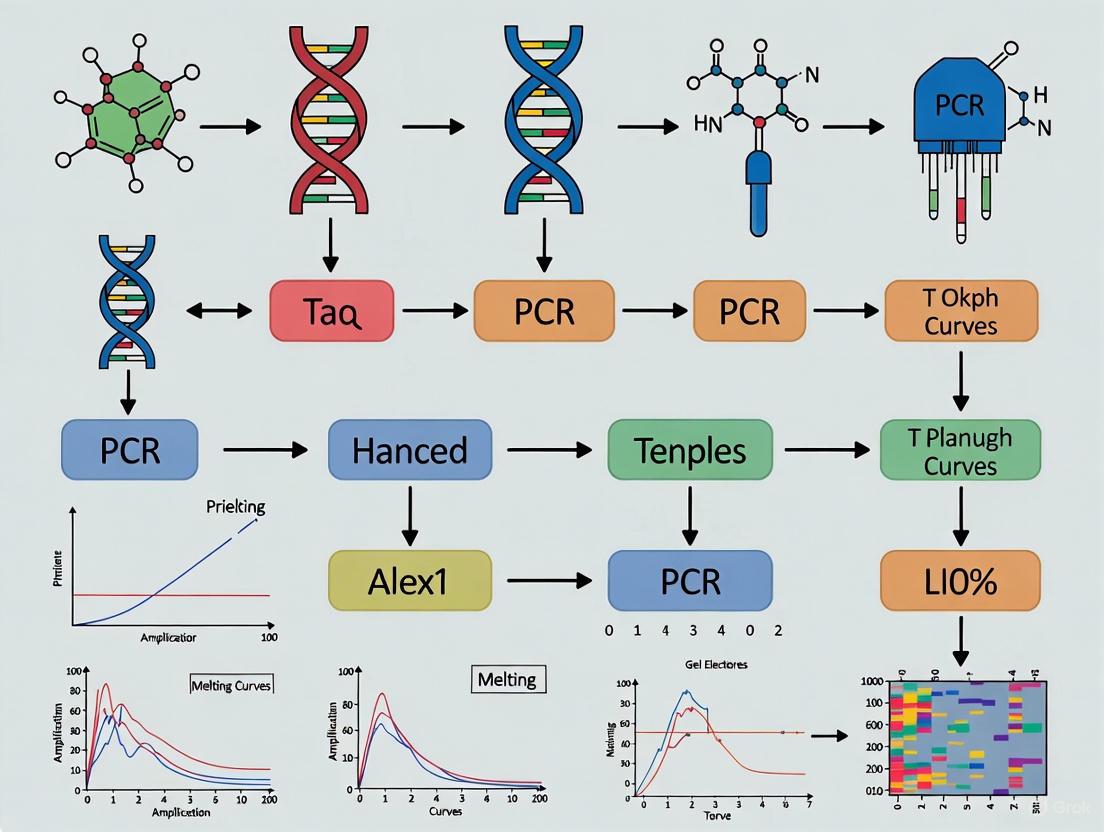
This guide provides a comprehensive framework for researchers and drug development professionals to diagnose and resolve inefficient PCR reactions.
PCR Troubleshooting Guide: Solving Inefficient Reactions for Robust and Reproducible Results
Abstract
This guide provides a comprehensive framework for researchers and drug development professionals to diagnose and resolve inefficient PCR reactions. Covering foundational principles to advanced optimization strategies, it details systematic troubleshooting for common issues like no amplification, non-specific products, and smeared bands. The article also explores specialized PCR methods, reagent validation techniques, and best practices to ensure high yield, specificity, and fidelity for critical biomedical applications.
Understanding PCR Fundamentals: How Reaction Components and Conditions Govern Efficiency
The Polymerase Chain Reaction (PCR) is a foundational technique in molecular biology, enabling researchers to amplify specific DNA sequences from minimal starting material. The core PCR workflow consists of three essential steps—denaturation, annealing, and extension—that are repeated in cycles to achieve exponential amplification [1] [2]. While the process is robust, its efficiency is highly dependent on precise reaction conditions. This guide addresses common troubleshooting issues within the context of this core workflow to help researchers and drug development professionals optimize their experiments and resolve inefficient reactions efficiently.
Frequently Asked Questions (FAQs)
1. What are the temperature and time specifications for the three core PCR steps?
The typical temperature and time ranges for each step in a standard PCR cycle are summarized in the table below. Note that these can vary based on the DNA polymerase used and the specific target [2] [3].
| PCR Step | Typical Temperature Range | Typical Time | Purpose |
|---|---|---|---|
| Denaturation | 94–98°C | 15–30 seconds | Separates double-stranded DNA into single strands [4] [2]. |
| Annealing | 50–65°C | 10–30 seconds | Allows primers to bind to their complementary sequences on the single-stranded DNA templates [4] [5]. |
| Extension | 68–72°C | 1 minute per 1 kb | Enables DNA polymerase to synthesize a new DNA strand by adding nucleotides to the 3' end of the primer [4] [2]. |
2. Why am I getting no PCR product or a very low yield?
A lack of amplification can be attributed to several factors related to the core workflow and reaction components. Please follow the troubleshooting workflow below to diagnose the issue.
3. My gel shows multiple bands or a smear instead of one clean band. How can I improve specificity?
Non-specific amplification is often a direct result of suboptimal conditions during the annealing step or problematic reaction components [6] [7].
- Increase Annealing Temperature: The most common fix is to increase the annealing temperature in increments of 1–2°C. The optimal temperature is typically 3–5°C below the calculated Tm (melting temperature) of the primers [7] [8]. Use a gradient thermal cycler if available.
- Use a Hot-Start DNA Polymerase: These enzymes are inactive until a high-temperature activation step, preventing non-specific priming and primer-dimer formation during reaction setup [6] [7].
- Optimize MgCl₂ Concentration: Excess Mg²⁺ can reduce specificity. Titrate the Mg²⁺ concentration downward in 0.2–1.0 mM increments to find the optimal level [7] [8].
- Check Primer Design and Concentration: Ensure primers are specific and do not have complementary regions, especially at their 3' ends. High primer concentrations can promote mispriming; optimize concentration within the 0.1–1 µM range [7] [5].
- Reduce Cycle Number: An excessive number of cycles can lead to the accumulation of non-specific products. Try reducing the number of cycles [7].
4. How can I prevent primer-dimer formation?
Primer-dimer occurs when primers anneal to each other rather than to the template DNA, resulting in short, unwanted products [6].
- Optimize Primer Design: Carefully design primers to minimize complementarity, especially at the 3' ends. Avoid long runs of a single nucleotide (e.g., GGGG) [5].
- Adjust Reaction Conditions: Increase the annealing temperature and/or reduce the primer concentration [6] [7].
- Use a Hot-Start Polymerase: This prevents the polymerase from extending primers that anneal non-specifically at low temperatures during reaction setup [6].
5. How do I amplify difficult templates like GC-rich regions?
GC-rich sequences can form stable secondary structures that prevent efficient denaturation and primer annealing [7].
- Use PCR Additives or Co-solvents: Additives like DMSO (1-10%), formamide (1.25-10%), or betaine (0.5 M to 2.5 M) can help denature stable GC-rich templates and are included in many commercial enhancer solutions [7] [5].
- Increase Denaturation Temperature and Time: A higher denaturation temperature (e.g., 98°C) or a longer denaturation time may be necessary [7].
- Choose a Specialized DNA Polymerase: Use a polymerase with high processivity, which displays high affinity for DNA templates and is better suited for amplifying difficult targets [7].
The Scientist's Toolkit: Essential PCR Reagents
A successful PCR reaction requires a precise mix of key components. The table below details the function and critical considerations for each essential reagent.
| Reagent | Function | Key Considerations & Troubleshooting |
|---|---|---|
| DNA Template | The target DNA sequence to be amplified. | Purity & Integrity: Contaminants (phenol, EDTA, proteins) or degraded DNA can inhibit PCR. Re-purify if necessary [7] [9].Quantity: Use 1 pg–1 µg depending on template complexity (e.g., plasmid vs. genomic DNA) [8]. |
| Primers | Short, single-stranded DNA sequences that define the start and end of the amplified region. | Design: Length of 15-30 bases; 40-60% GC content; avoid self-complementarity and primer-dimer formation [5].Concentration: Typically 0.1–1 µM each primer. Too high can cause non-specific binding [7]. |
| DNA Polymerase | Enzyme that synthesizes new DNA strands by adding dNTPs to the 3' end of the primers. | Choice: Taq polymerase is common but lacks proofreading. Use high-fidelity enzymes (e.g., Q5, Pfu) for cloning [1] [4].Hot-Start: Recommended to suppress non-specific amplification during setup [6] [7]. |
| dNTPs | Deoxynucleoside triphosphates (dATP, dCTP, dGTP, dTTP); the building blocks for new DNA. | Concentration: Typically 200 µM of each dNTP. Unbalanced concentrations can increase error rate [7] [5].Quality: Use fresh, high-quality stocks to prevent degradation [8]. |
| Reaction Buffer | Provides the optimal chemical environment (pH, salts) for the polymerase to function. | Mg²⁺: A critical cofactor for polymerase activity. The concentration often requires optimization (e.g., 1.5–2.5 mM) [7] [4].Other Components: May include additives like (NH₄)₂SO₄ or KCl to enhance specificity and yield [5]. |
Detailed Experimental Protocol for Conventional PCR
This protocol provides a standardized methodology to set up a 50 µL conventional PCR reaction, which can be scaled as needed [5].
1. Primer Design and Preparation
- Design forward and reverse primers specific to your target sequence using software tools (e.g., NCBI Primer-BLAST).
- Follow best practices: primer length of 15-30 nucleotides, Tm of 55-65°C for both primers (within 5°C of each other), and GC content of 40-60% [5].
- Resuspend primers in sterile, nuclease-free water or TE buffer to create a concentrated stock (e.g., 100 µM). Prepare a working aliquot (e.g., 20 µM) to avoid repeated freeze-thaw cycles.
2. Reaction Setup
- Master Mix: When running multiple samples, prepare a master mix to ensure consistency. Combine the following components in a sterile 1.5 mL microcentrifuge tube on ice. Gently mix by pipetting up and down or brief vortexing followed by a quick spin [5].
| Component | Final Concentration/Amount | Volume for 1x 50 µL Reaction |
|---|---|---|
| Nuclease-free Water | Q.S. to 50 µL | (36 - X) µL |
| 10X PCR Buffer | 1X | 5 µL |
| dNTP Mix (10 mM total) | 200 µM (each) | 1 µL |
| MgCl₂ (25 mM) | 1.5 mM (or as optimized) | 3 µL (variable) |
| Forward Primer (20 µM) | 0.4 µM | 1 µL |
| Reverse Primer (20 µM) | 0.4 µM | 1 µL |
| DNA Template | Variable (e.g., 1-100 ng) | X µL (e.g., 0.5-5 µL) |
| DNA Polymerase (5 U/µL) | 1.25 U | 0.25 µL |
| Total Volume | 50 µL |
- Aliquot and Add Template: Dispense the appropriate volume of master mix into individual PCR tubes. Then, add the required volume of each DNA template to its respective tube. Include a negative control (replace template with nuclease-free water).
3. Thermal Cycling
| Step | Temperature | Time | Cycles |
|---|---|---|---|
| Initial Denaturation | 94–95°C | 2–5 minutes | 1 |
| Denaturation | 94–95°C | 15–30 seconds | |
| Annealing | Tm of primers -5°C* | 15–30 seconds | 25–35 |
| Extension | 68–72°C | 1 minute per 1 kb | |
| Final Extension | 68–72°C | 5–10 minutes | 1 |
| Hold | 4–10°C | ∞ | 1 |
*Note: The annealing temperature must be determined empirically. Start 3–5°C below the lower Tm of your primer pair and optimize using a gradient cycler [7] [5].
4. Product Analysis
- Analyze the PCR products using agarose gel electrophoresis. A successful reaction should show a single, sharp band of the expected size when compared to a DNA ladder.
Core Components and Their Functions
The success of the Polymerase Chain Reaction (PCR) hinges on the precise function and balance of its core components. Understanding the role of each is the first step in effective troubleshooting.
Template DNA
Template DNA is the source material that contains the target sequence to be amplified. Its quality, quantity, and complexity are paramount for successful PCR [10].
- Function: Provides the blueprint that the primers and DNA polymerase use to synthesize new DNA strands.
- Key Considerations: The optimal amount of template DNA depends on its source and complexity [10]. Using too much DNA can lead to nonspecific amplification, while too little can result in low yield or no product [10] [7]. For genomic DNA, 1 ng–1 µg per 50 µL reaction is common, whereas only 0.1–1 ng of plasmid DNA may be sufficient [10] [11]. The template must be of high integrity and free of inhibitors such as phenol, EDTA, or proteases that can co-purify during extraction [7].
Primers
Primers are short, single-stranded DNA oligonucleotides (typically 15–30 bases) that are complementary to the sequences flanking the target region [10]. They are the most common source of PCR failure if not properly designed or used.
- Function: To provide a starting point, or primer, for the DNA polymerase to begin synthesis of the new DNA strand.
- Key Considerations: Primer design is critical for specificity. They should have a melting temperature (Tm) between 55–70°C, with the Tm of each primer in a pair within 5°C of each other [10] [5]. The GC content should be 40–60%, and the 3' end should avoid runs of identical bases and should not be complementary to the other primer to prevent "primer-dimer" formation [10] [5]. In a reaction, primer concentrations of 0.1–1 µM are typical; higher concentrations can promote mispriming and nonspecific amplification [10] [7].
Deoxynucleoside Triphosphates (dNTPs)
dNTPs are the building blocks—dATP, dCTP, dGTP, and dTTP—from which the DNA polymerase synthesizes a new DNA strand [12].
- Function: To provide the necessary nucleotides for the DNA polymerase to incorporate into the newly synthesized DNA strand.
- Key Considerations: The four dNTPs should be added in equimolar concentrations [10] [7]. A typical final concentration for each dNTP is 0.2 mM [10]. Unbalanced dNTP concentrations can increase the error rate of the polymerase [7]. Excessively high dNTP concentrations can be inhibitory, and they can also chelate Mg²⁺, making it unavailable for the polymerase [10].
Buffer and Magnesium Ions (Mg²⁺)
The reaction buffer provides a stable chemical environment, with Mg²⁺ acting as an essential cofactor for DNA polymerase activity [12].
- Function: The buffer stabilizes the reaction pH, while Mg²⁺ facilitates primer binding to the template and catalyzes the phosphodiester bond formation during nucleotide incorporation [10].
- Key Considerations: Mg²⁺ concentration is a critical variable that often requires optimization. The presence of chelators (like EDTA) or high dNTP concentrations can affect the amount of free Mg²⁺ available [7]. A final concentration of 1.5–2.0 mM is a common starting point, but adjusting this in 0.2–1.0 mM increments can resolve issues with specificity and yield [11] [5]. Excessive Mg²⁺ can reduce fidelity and promote nonspecific binding [7].
Troubleshooting Guide: Common PCR Problems
This guide addresses frequent issues, their potential causes, and recommended solutions.
| Observation | Possible Cause | Solution |
|---|---|---|
| No Product [11] [7] | Incorrect annealing temperature | Recalculate primer Tm and test a temperature gradient 5°C below the lower Tm [11]. |
| Poor template quality or quantity | Re-purify template DNA to remove inhibitors; check concentration and integrity by gel electrophoresis [11] [7]. | |
| Missing reaction component | Carefully repeat reaction setup; use a master mix to ensure consistency [11] [12]. | |
| Insufficient number of cycles | Increase cycles to 35–40, especially for low-copy-number templates [7]. | |
| Multiple or Nonspecific Bands [11] [7] | Annealing temperature too low | Increase annealing temperature stepwise by 1–2°C [11] [7]. |
| Excess Mg²⁺, primers, or DNA polymerase | Lower Mg²⁺ concentration; optimize primer concentrations (0.1–1 µM); reduce enzyme amount [10] [11] [7]. | |
| Nonspecific priming | Use a hot-start DNA polymerase; review primer design for specificity and secondary structures [11] [7]. | |
| Too much template DNA | Reduce the amount of input DNA [7]. | |
| Smear of Bands [7] | Degraded template DNA | Assess DNA integrity on a gel; minimize shearing during isolation [7]. |
| Excess PCR cycles | Reduce the number of cycles [7]. | |
| Primer-Dimer Formation [10] [7] | Primer 3' end complementarity | Redesign primers to avoid 3' end complementarity between the forward and reverse primers [10] [5]. |
| Excess primer concentration | Lower the primer concentration in the reaction [10] [7]. | |
| Low annealing temperature | Increase the annealing temperature [7]. | |
| Sequence Errors (Low Fidelity) [11] [7] | Low-fidelity DNA polymerase | Switch to a high-fidelity, proofreading polymerase [11] [7]. |
| Unbalanced dNTP concentrations | Use fresh, equimolar dNTP mixes [11] [7]. | |
| Excess Mg²⁺ | Optimize and potentially lower the Mg²⁺ concentration [11] [7]. |
PCR Component Relationships
Frequently Asked Questions (FAQs)
Q1: My PCR worked but the yield is very low. What can I do to improve it? A: Low yield can be addressed by several methods:
- Template and Enzymes: Ensure sufficient template DNA is being used and consider using a DNA polymerase engineered for high sensitivity and yield [7].
- Cycle Optimization: Increase the number of cycles up to 40, particularly if the starting template copy number is low [7].
- Component Re-optimization: Re-visit the concentration of Mg²⁺, primers, and dNTPs, as suboptimal levels can limit efficiency [10] [11].
- Extension Time: Ensure the extension time is sufficient for the length of your amplicon (typically 1–2 minutes per kilobase) [12].
Q2: How do I troubleshoot a PCR that has no product and where should I start? A: Begin with a systematic approach:
- Controls: Verify your negative control (no template) is clean and your positive control (known working primers/template) works. This determines if the issue is with your reaction or your specific primers/template [5].
- Primer Design: Re-check your primer sequences for specificity, secondary structures, and correct Tm. Use online design tools like Primer-BLAST [11] [5].
- Annealing Temperature: Test an annealing temperature gradient from 5°C below to 5°C above the calculated Tm of your primers [11].
- Template Quality: Re-purify your template DNA to remove potential inhibitors and check its integrity by running it on a gel [11] [7].
Q3: I have a GC-rich template that is difficult to amplify. What are my options? A: GC-rich sequences can form stable secondary structures. To overcome this:
- Specialized Reagents: Use a DNA polymerase with high processivity, designed for difficult templates [7].
- Additives: Include PCR enhancers like DMSO (1–10%), formamide (1.25–10%), or Betaine (0.5 M to 2.5 M) in the reaction to help denature the stable structures [7] [5].
- Cycling Conditions: Increase the denaturation temperature and/or time to ensure full separation of the DNA strands [7].
Q4: How can I prevent primer-dimer formation in my reactions? A: Primer-dimer is often due to complementarity between the 3' ends of your primers.
- Redesign: The most effective long-term solution is to redesign primers to eliminate 3' complementarity [10].
- Optimize Concentrations: Lower the primer concentration in the reaction [10] [7].
- Use Hot-Start: A hot-start DNA polymerase, which is inactive until the initial denaturation step, can prevent primer-dimer formation during reaction setup [7].
- Increase Temperature: A higher annealing temperature can reduce the chance of primers annealing to each other [7].
PCR Troubleshooting Path
The Scientist's Toolkit: Essential Reagents and Materials
A successful PCR experiment relies on high-quality reagents and proper techniques. The following table details key components for your toolkit.
| Item | Function | Key Considerations |
|---|---|---|
| DNA Polymerase | Enzyme that synthesizes new DNA strands. | Choose based on application: standard (Taq), high-fidelity (Q5, Phusion), or for difficult templates (high processivity) [10] [11] [7]. |
| 10X Reaction Buffer | Provides optimal pH, ionic strength, and cofactors. | Often contains KCl and may contain MgCl₂. The composition is typically optimized by the enzyme manufacturer [12]. |
| MgCl₂ / MgSO₄ Solution | Source of Mg²⁺, an essential cofactor for polymerase activity. | Concentration must be optimized; it is a common variable for troubleshooting. MgSO₄ is preferred for some proofreading enzymes [7] [5]. |
| dNTP Mix | A solution containing equimolar amounts of dATP, dCTP, dGTP, and dTTP. | Use a balanced, high-quality stock to prevent incorporation errors. Typical final concentration is 0.2 mM of each dNTP [10] [12]. |
| Oligonucleotide Primers | Short DNA sequences that define the start and end of the amplification. | Must be well-designed, specific, and resuspended at a standardized concentration (e.g., 10 µM stock) [10] [12]. |
| Nuclease-Free Water | Solvent for the reaction. | Must be free of nucleases to prevent degradation of primers and template. |
| PCR Additives (e.g., DMSO, BSA) | Enhancers that help with difficult templates like GC-rich sequences. | Use at recommended concentrations (e.g., DMSO at 1-10%) as they can inhibit the reaction if overused [7] [5]. |
| Template DNA | The DNA source containing the target sequence. | Can be genomic, plasmid, or cDNA. Must be pure, intact, and at an appropriate concentration [10]. |
Core Concepts: Thermostability, Fidelity, and Processivity
Thermostability is a fundamental property of DNA polymerases used in PCR, referring to the enzyme's ability to withstand the high temperatures (typically 90-95°C) required for DNA denaturation without permanent loss of activity. This characteristic is inherent to polymerases isolated from thermophilic organisms. Engineered versions often exhibit enhanced thermostability for better performance during repeated thermal cycling [13] [14].
Fidelity describes the accuracy of DNA synthesis, quantified as the error rate per base incorporated. High-fidelity polymerases incorporate fewer errors during amplification, which is crucial for applications like cloning and sequencing. Fidelity is often expressed relative to Taq polymerase (e.g., 280x higher fidelity for Q5 polymerase) or as an error rate (e.g., 5 × 10⁻⁶ errors per base) [15]. Polymerases with 3'→5' exonuclease ("proofreading") activity typically exhibit higher fidelity by correcting misincorporated nucleotides [15] [14].
Processivity indicates the average number of nucleotides a polymerase adds per binding event. High-processivity enzymes can amplify longer DNA fragments more efficiently and are better suited for complex templates with secondary structures or high GC content. Processivity can be enhanced through protein engineering, such as fusion to DNA-binding domains like Sso7d [15] [16].
DNA Polymerase Troubleshooting FAQs
No or Low Amplification Yield
- Problem: No band or faint band observed on gel after PCR.
- Possible Causes & Solutions:
- Template Quality/Degradation: Verify template integrity by gel electrophoresis. Re-purify if degraded or contaminated with inhibitors [7] [17].
- Suboptimal Reaction Conditions: Optimize Mg²⁺ concentration (typically 0.2-1 mM increments) and annealing temperature (use gradient PCR). Ensure correct primer concentrations (0.1-1 µM) [6] [17].
- Insufficient Enzyme Activity: Increase polymerase amount or switch to a more processive enzyme. Confirm enzyme is added and hasn't been inactivated [7].
- Insufficient Denaturation: Increase denaturation temperature or duration, especially for GC-rich templates [7].
Non-Specific Amplification/Multiple Bands
- Problem: Multiple unexpected bands appear on the gel.
- Possible Causes & Solutions:
- Low Annealing Stringency: Increase annealing temperature incrementally (1-2°C steps). Use hot-start polymerases to prevent primer-dimer formation and non-specific amplification at lower temperatures [6] [7] [17].
- Excess Reaction Components: Reduce primer, Mg²⁺, or polymerase concentrations. High primer concentrations promote mispriming [7] [17].
- Primer Design Issues: Verify primer specificity using design software. Avoid primers with complementary regions or GC-rich 3' ends [7] [17].
- Template Contamination: Use dedicated pre-PCR workspace and reagents. Employ uracil-N-glycosylase (UNG) treatment with dUTP-containing reactions to prevent carryover contamination [17] [16].
High Error Rate in Cloned PCR Products
- Problem: Sequencing reveals unexpected mutations in cloned amplicons.
- Possible Causes & Solutions:
- Low-Fidelity Polymerase: Switch to high-fidelity proofreading enzymes (e.g., Q5, Pfu) with error rates 10-100x lower than Taq [17] [15].
- Unbalanced dNTPs: Use fresh, equimolar dNTP mixtures. Unbalanced concentrations increase misincorporation [7] [17].
- Excessive Cycle Number: Reduce PCR cycles to minimize cumulative errors. Increase initial template amount if possible [7].
- UV Damage: Limit UV exposure during gel extraction; use long-wavelength (360 nm) when possible [7].
DNA Polymerase Selection Guide
Table 1: DNA Polymerase Properties and Applications
| Polymerase | 3'→5' Exonuclease (Proofreading) | Fidelity (Relative to Taq) | Strand Displacement | Primary Applications |
|---|---|---|---|---|
| Taq | No | 1x (Baseline) | No | Routine PCR, genotyping |
| Q5 High-Fidelity | Yes (++++)) | 280x Taq | No | High-fidelity PCR, cloning, NGS |
| Phusion High-Fidelity | Yes (++++)) | 39-50x Taq | No | High-fidelity PCR, cloning |
| OneTaq | Yes (++)) | 2x Taq | No | Routine PCR, colony PCR |
| Bst DNA Polymerase, Large Fragment | No | Not specified | Yes (++++)) | Isothermal amplification (LAMP, SDA) |
| phi29 DNA Polymerase | Yes (++++)) | 5 (Error rate x 10⁻⁶) | Yes (++++)) | Rolling circle amplification, WGA |
| T4 DNA Polymerase | Yes (++++)) | <1 (Error rate x 10⁻⁶) | No | Blunting ends, fill-in reactions |
Table 2: Polymerase Selection by Template Type
| Template Challenge | Recommended Polymerase Type | Key Features | Example Enzymes |
|---|---|---|---|
| GC-Rich Sequences | High-processivity with GC enhancer | Improved strand separation, tolerance to secondary structures | Q5 High-Fidelity, OneTaq with GC Buffer [7] |
| Long Amplicons (>10 kb) | Long-range polymerases | High processivity, robust strand displacement | LongAmp Taq, Q5 High-Fidelity [7] [15] |
| High-Fidelity Requirements | Proofreading polymerases | 3'→5' exonuclease activity, low error rates | Q5, Phusion, Pfu [17] [15] |
| Rapid Diagnostics | Fast polymerases | Rapid extension rates, quick activation | Engineered variants with enhanced speed [16] |
| Isothermal Amplification | Strand-displacing polymerases | Strong strand displacement, works at constant temperature | Bst DNA polymerase large fragment [13] [15] |
| Direct Blood PCR | Inhibitor-tolerant polymerases | Resistance to PCR inhibitors in blood | Hemo KlenTaq, Q5 Blood Direct [15] |
Advanced Applications and Engineering Strategies
Engineered Polymerases for Advanced Applications
Protein engineering has created specialized DNA polymerases with enhanced capabilities:
Reverse Transcriptase Activity: Engineered DNA polymerases like novel Taq and Pfu variants can perform both reverse transcription and DNA amplification in a single enzyme, eliminating the need for separate viral reverse transcriptases in RT-PCR [18] [14]. These engineered polymerases maintain thermostability while gaining the ability to utilize RNA templates effectively under standard PCR conditions.
Enhanced Processivity via Fusion Proteins: Fusion of DNA polymerases with DNA-binding domains like Sso7d from Sulfolobus solfataricus significantly increases processivity. For example, the Neq2X7 polymerase demonstrates approximately 8-fold higher activity and can amplify long, GC-rich templates with dramatically reduced extension times compared to non-fused versions [16].
Uracil Tolerance: Natural polymerases like Neq and engineered variants (e.g., PfuX7, Q5U) can efficiently incorporate dUTP and bypass uracil in templates. This enables applications such as USER cloning and contamination control through UNG treatment [15] [16].
Experimental Protocol: Evaluating DNA Polymerase Performance
Objective: Compare processivity and efficiency of different DNA polymerases using standardized amplification conditions.
Materials:
- Test DNA polymerases (e.g., standard vs. high-processivity variants)
- Control template DNA (e.g., lambda DNA, plasmid with known insert)
- Primer sets for various amplicon sizes (0.5kb, 3kb, 10kb)
- dNTP mix (including dUTP for uracil tolerance testing)
- Appropriate reaction buffers for each polymerase
- Thermal cycler with gradient capability
- Gel electrophoresis equipment and DNA staining
Methodology:
- Reaction Setup: Prepare master mixes for each polymerase according to manufacturer recommendations, maintaining consistent buffer conditions where possible.
- Amplification Protocol:
- Standard conditions: 98°C for 30s; 35 cycles of 98°C for 10s, optimized Tm for 30s, 72°C for varying extension times (15s/kb vs. 1min/kb); 72°C for 5min final extension [16].
- Include GC-rich templates and additives (e.g., DMSO, betaine) for challenging templates.
- Efficiency Analysis:
- Evaluate amplification yield by gel electrophoresis and quantitative methods.
- Compare performance across different template types, lengths, and nucleotide compositions (dTTP vs. dUTP).
- Fidelity Assessment:
- Use established fidelity assays (e.g., magnification via nucleotide imbalance) to determine error rates [16].
- Sequence cloned products to verify mutation frequencies.
Expected Outcomes: High-processivity enzymes (e.g., Sso7d-fused variants) should successfully amplify longer fragments with shorter extension times and maintain activity with challenging templates compared to standard polymerases.
Research Reagent Solutions
Table 3: Essential Reagents for DNA Polymerase Applications
| Reagent/Chemical | Function | Application Context |
|---|---|---|
| Hot-Start Polymerases | Remains inactive at room temperature, activates at high temperatures | Prevents non-specific amplification and primer-dimer formation [6] [19] |
| Proofreading Polymerases | Contains 3'→5' exonuclease activity for error correction | High-fidelity applications like cloning and sequencing [15] [14] |
| Betaine (PCR Enhancer) | Reduces secondary structure in GC-rich templates | Improved amplification of high-GC content regions [7] |
| BSA (Bovine Serum Albumin) | Binds inhibitors and stabilizes enzymes | Counteracts PCR inhibition in difficult samples (e.g., blood, soil) [6] |
| dUTP/dNTP Mixes | Replaces dTTP with dUTP for contamination control | Enables UNG treatment to prevent amplicon carryover [15] [16] |
| Mg²⁺ Solutions (MgCl₂/MgSO₄) | Cofactor essential for polymerase activity | Optimization of reaction conditions for specific templates [7] [17] |
| Sso7d Fusion Domain | Non-specific DNA binding domain | Enhances polymerase processivity when fused to polymerase [16] |
Magnesium chloride (MgCl₂) is a critical component of every Polymerase Chain Reaction (PCR) master mix. It is not a passive ingredient but an essential cofactor that directly enables the enzymatic activity of DNA polymerase [20]. In its absence, the polymerase enzyme remains largely inactive, and DNA amplification fails to occur. The Mg²⁺ ion facilitates the formation of the catalytically active structure of the DNA polymerase enzyme and is directly involved in the chemical reaction of DNA synthesis [20]. Beyond its role as a cofactor, MgCl₂ also critically influences the reaction's stringency and specificity by stabilizing the double-stranded DNA structure and affecting the melting temperature (Tm) of the primers, thereby guiding the specificity of primer annealing [21]. Consequently, the precise concentration of this cofactor is one of the most common and vital parameters requiring optimization to achieve efficient and specific amplification of any target DNA template.
Core Functions and Mechanisms: How MgCl₂ Governs PCR Efficiency
The magnesium ion (Mg²⁺) from MgCl₂ performs two non-redundant, essential functions during the PCR process.
Cofactor for DNA Polymerase: The Mg²⁺ ion is a fundamental part of the DNA polymerase's active site. During the extension phase of PCR, the ion binds to a deoxynucleotidetriphosphate (dNTP) at its alpha phosphate group. This binding event is crucial as it facilitates the removal of the beta and gamma phosphates, allowing the resulting dNMP to form a phosphodiester bond with the 3' hydroxyl group of the growing DNA chain. This catalytic role makes Mg²⁺ indispensable for the DNA synthesis activity of the polymerase enzyme [20].
Modulator of Nucleic Acid Stability: Mg²⁺ influences the physical interaction between the primer and the template DNA. It binds to the negatively charged phosphate backbone of the DNA, effectively reducing the electrostatic repulsion between the two complementary DNA strands. This action increases the stability of the primer-template duplex, which is experimentally observed as an increase in the primer's melting temperature (Tm). A meta-analysis of PCR optimization studies quantified this relationship, showing that within the common working range, every 0.5 mM increase in MgCl₂ concentration raises the DNA melting temperature by approximately 1.2 °C [22] [23]. This dual role makes MgCl₂ a master regulator of PCR success, impacting both enzyme kinetics and hybridization thermodynamics.
Optimization Protocol: A Systematic Approach to Defining MgCl₂ Concentration
Optimizing MgCl₂ concentration is a fundamental step in developing a robust PCR assay. The following protocol provides a detailed methodology for empirically determining the ideal concentration for any specific reaction.
Materials and Reagents
- Template DNA: Purified genomic DNA, plasmid, or cDNA.
- Primers: Forward and reverse primers, resuspended in sterile water or TE buffer.
- PCR Master Mix Components: 10X PCR Buffer (often supplied Mg²⁺-free), dNTP Mix (e.g., 10 mM), MgCl₂ stock solution (e.g., 25 mM or 50 mM), Thermostable DNA Polymerase (e.g., Taq polymerase), Nuclease-free Sterile Water.
- Equipment: Thermal Cycler, Microcentrifuge Tubes and PCR Tubes, Micropipettes and Sterile Tips, Ice Bucket.
Experimental Procedure
This procedure outlines setting up a MgCl₂ titration series to identify the optimal concentration.
Step 1: Prepare a Master Mix To minimize pipetting error and ensure reaction uniformity, create a master mix containing all components except the MgCl₂ and the template DNA. Calculate volumes for one more reaction than needed to account for pipetting loss. The table below outlines the components for a single 50 µL reaction.
Table 1: Master Mix Components for MgCl₂ Optimization
| Component | Final Concentration | Example Volume per 50 µL Reaction |
|---|---|---|
| 10X PCR Buffer (Mg²⁺-free) | 1X | 5 µL |
| dNTP Mix (10 mM total) | 200 µM (each) | 1 µL |
| Forward Primer (20 µM) | 0.2 - 1 µM | 0.5 - 2.5 µL |
| Reverse Primer (20 µM) | 0.2 - 1 µM | 0.5 - 2.5 µL |
| DNA Polymerase (e.g., 5 U/µL) | 0.5 - 2.5 U/50 µL | 0.1 - 0.5 µL |
| Nuclease-free Water | Q.S. to 50 µL | Variable |
| Template DNA | To be added separately | X µL |
Step 2: Set Up the Titration Series Aliquot the master mix into individual PCR tubes. Then, add a different volume of the MgCl₂ stock solution to each tube to create a concentration gradient. A standard range is from 0.5 mM to 5.0 mM. Finally, add the template DNA to each tube. Include a negative control (no template DNA) for one of the MgCl₂ concentrations.
Table 2: Example MgCl₂ Titration Setup for a 50 µL Reaction
| Tube | Master Mix (µL) | MgCl₂ (25 mM Stock) (µL) | Template DNA (µL) | Final [MgCl₂] |
|---|---|---|---|---|
| 1 | 45 - X | 0.0 | X | 0.0 mM |
| 2 | 45 - X | 1.0 | X | 0.5 mM |
| 3 | 45 - X | 2.0 | X | 1.0 mM |
| 4 | 45 - X | 3.0 | X | 1.5 mM |
| 5 | 45 - X | 4.0 | X | 2.0 mM |
| 6 | 45 - X | 5.0 | X | 2.5 mM |
| 7 | 45 - X | 6.0 | X | 3.0 mM |
| 8 | 45 - X | 7.0 | X | 3.5 mM |
| 9 | 45 - X | 8.0 | X | 4.0 mM |
| 10 | 45 - X | 9.0 | X | 4.5 mM |
| 11 | 45 - X | 10.0 | X | 5.0 mM |
Step 3: Execute PCR Amplification Place the tubes in a thermal cycler and run the appropriate PCR protocol. The cycling conditions will be specific to your primer set and template, but a standard three-step protocol is used.
Step 4: Analyze the Results After amplification, analyze the PCR products using agarose gel electrophoresis. The optimal MgCl₂ concentration will be the one that yields a single, intense band of the expected size with minimal to no background smearing or non-specific bands.
Diagram 1: Experimental workflow for MgCl₂ optimization.
Quantitative Data and Troubleshooting Guide
Optimal Concentration Ranges and Effects
The optimal concentration of MgCl₂ is template- and primer-specific, but general ranges and their effects are well-established. The following table synthesizes quantitative data from multiple studies.
Table 3: Effects of MgCl₂ Concentration on PCR Outcomes
| MgCl₂ Status | Typical Concentration Range | Observed Effect on PCR | Gel Electrophoresis Result |
|---|---|---|---|
| Too Low | < 1.0 - 1.5 mM | Primer fails to bind efficiently; low or no DNA yield due to insufficient DNA polymerase activity [20] [21]. | Faint or absent target band. |
| Optimal | 1.5 - 4.0 mM | Specific amplification with high yield. This range suits most templates; a meta-analysis found 1.5-3.0 mM optimal for standard templates [22] [23] [21]. | Single, intense band of expected size. |
| Too High | > 4.0 mM | Non-specific primer binding; increased error rate (lowered fidelity) of DNA polymerase [7] [21]. | Multiple bands, smearing, or primer-dimers. |
Advanced Troubleshooting FAQs
This section addresses specific experimental challenges related to MgCl₂.
FAQ 1: My PCR yield is low or non-existent. Could MgCl₂ be the cause? Yes, insufficient Mg²⁺ is a common cause of PCR failure.
- Possible Cause: The MgCl₂ concentration is too low, or its availability is reduced. Mg²⁺ ions can be sequestered by other reaction components, notably dNTPs and chelating agents like EDTA (often present in DNA template storage buffers) [7] [21].
- Solutions:
- Systematically Increase MgCl₂: Perform a titration experiment as described in Section 3, testing concentrations from 1.0 mM to 5.0 mM in 0.5 mM increments [24].
- Account for Chelators: If your DNA template is in TE buffer (containing EDTA) or your dNTP mix is at an atypically high concentration, you will need to add extra MgCl₂ to compensate for the chelated ions. A major change in dNTP concentration requires a corresponding change in MgCl₂ [7] [21].
- Check Template Purity: Re-purify the template DNA if you suspect carryover of PCR inhibitors that might bind Mg²⁺ [7].
FAQ 2: My reaction produces multiple non-specific bands. How can MgCl₂ help? Excessive MgCl₂ reduces reaction stringency, leading to spurious amplification.
- Possible Cause: The MgCl₂ concentration is too high. This stabilizes even weak, non-specific primer-template interactions, allowing primers to bind to incorrect sites on the DNA template [7] [21].
- Solutions:
- Decrease MgCl₂ Concentration: Titrate down the MgCl₂ concentration in 0.2 - 0.5 mM increments. Lowering Mg²⁺ increases stringency, requiring more perfect base pairing for primer annealing [24] [21].
- Combine with Annealing Temperature Optimization: Simultaneously, try increasing the annealing temperature by 1-2°C increments. Using a thermal cycler with a gradient function is highly recommended for this [7].
- Use Hot-Start Polymerases: Switch to a hot-start DNA polymerase to prevent non-specific priming and primer-dimer formation that can occur during reaction setup, which can be exacerbated by high Mg²⁺ levels [7] [24].
FAQ 3: How do I optimize MgCl₂ for challenging templates like GC-rich sequences? Complex templates have unique requirements.
- Background: Genomic DNA and GC-rich templates (which form stable secondary structures) generally require higher optimal MgCl₂ concentrations than simple plasmids [22] [23]. The increased Mg²⁺ helps destabilize these structures and stabilizes the DNA polymerase on a more difficult template.
- Protocol Adjustment:
- Start Higher: Begin your MgCl₂ titration at a higher baseline, for example, from 2.0 mM to 6.0 mM.
- Use Enhancers: Incorporate PCR enhancers like DMSO (1-10%), formamide (1.25-10%), or betaine (0.5 M to 2.5 M). These additives help denature GC-rich structures. Note that some enhancers can affect primer binding, so you may need to re-optimize the annealing temperature and potentially increase the amount of DNA polymerase [5] [7].
The Scientist's Toolkit: Essential Reagents for PCR and MgCl₂ Optimization
A successful PCR experiment relies on a suite of carefully selected reagents. The following table details key materials and their functions, with a special emphasis on components that interact with MgCl₂.
Table 4: Essential Research Reagent Solutions for PCR Optimization
| Reagent | Typical Final Concentration | Critical Function | Interaction with MgCl₂ |
|---|---|---|---|
| MgCl₂ | 1.5 - 4.0 mM (standard) | Essential cofactor for DNA polymerase; stabilizes nucleic acid duplexes [5] [20]. | The central parameter for optimization. |
| Thermostable DNA Polymerase | 0.5 - 2.5 U/50 µL reaction | Enzyme that synthesizes new DNA strands. | Absolutely requires Mg²⁺ for activity. Fidelity can be reduced by excess Mg²⁺ [7]. |
| dNTPs (dATP, dCTP, dGTP, dTTP) | 40 - 200 µM (each) | The building blocks for new DNA synthesis. | dNTPs chelate Mg²⁺ ions. A major change in dNTP concentration necessitates a proportional adjustment of MgCl₂ [21]. |
| Primers | 0.1 - 1.0 µM (each) | Short oligonucleotides that define the start and end of the target sequence. | Their annealing stability (Tm) is directly increased by Mg²⁺ [22]. |
| PCR Buffer | 1X | Provides optimal pH and salt conditions (e.g., Tris-HCl, KCl). | Often supplied with or without MgCl₂. KCl concentration can influence the effective stringency and may require MgCl₂ re-optimization [5] [21]. |
| Additives (e.g., DMSO, Betaine) | Varies (e.g., DMSO 1-10%) | Assist in denaturing complex DNA secondary structures (GC-rich targets). | Can alter the effective Mg²⁺ requirement. Optimization is often needed when adding them [5] [7]. |
Diagram 2: Key interactions of Mg²⁺ with core PCR components.
Within the context of a broader thesis on PCR troubleshooting, the dynamics of magnesium chloride concentration emerge as a foundational element. Moving beyond a simple "one-size-fits-all" recipe, a deep understanding of Mg²⁺'s dual role as an enzymatic cofactor and a modulator of DNA stability is what separates inefficient reactions from robust, publication-grade assays. The quantitative relationships and systematic protocols provided here offer a clear pathway for researchers to rationally optimize this essential cofactor. By mastering the careful titration of MgCl₂ and understanding its interactions with other reagents, scientists and drug development professionals can effectively overcome a significant majority of PCR-related challenges, ensuring specificity, efficiency, and success in their genetic analyses.
The following table consolidates the key numerical parameters for designing effective PCR primers, as established by leading molecular biology resources.
| Design Parameter | Optimal or Accepted Range | Key Considerations & Rationale |
|---|---|---|
| Primer Length | 18–30 nucleotides (nt) [25] [26] [27] | Shorter primers (18-24 nt) bind more efficiently [28], while longer primers (25-30 nt) increase specificity for complex templates (e.g., genomic DNA) [25]. |
| GC Content | 40–60% [25] [26] [29] | Maintains a balance in duplex stability. Content below 40% may require longer primers for optimal Tm, while >60% increases risk of non-specific binding [25] [28]. |
| Melting Temperature (Tm) | 50–75°C [25] [26]; Optimal: 60–64°C [30] | Primer pairs should have Tms within 2–5°C of each other for simultaneous and efficient annealing [25] [30] [28]. |
| GC Clamp | At least 2 G or C bases in the last 5 bases at the 3' end [26] [31] | The stronger hydrogen bonding of G and C bases stabilizes the primer-template binding at the critical point where DNA polymerase initiates synthesis [26] [28]. Avoid more than 3 G/Cs in this region [29]. |
| Annealing Temperature (Ta) | Typically 3–10°C below the primer Tm [27] [31] | The optimal Ta can be calculated using formulas such as Ta = 0.3 x Tm(primer) + 0.7 Tm(product) – 14.9 [29] [31] and should be determined empirically [32]. |
Experimental Protocol: Primer Design and Validation Workflow
This detailed methodology outlines the key steps for designing and experimentally validating PCR primers.
Step 1: In Silico Primer Design
- Sequence Selection: Identify a unique template sequence for your target amplicon. For qPCR or reverse transcription PCR, design primers to span an exon-exon junction to avoid genomic DNA amplification [27] [30].
- Parameter Application: Using primer design software, apply the quantitative parameters from the table above. Ensure the amplicon length is appropriate for your application (e.g., ~100 bp for qPCR, ~500 bp for standard PCR) [29].
- Specificity Check: Perform an in silico specificity check using a tool like NCBI BLAST to confirm your primers are unique to the intended target and avoid regions of cross-homology [29] [30] [31].
Step 2: Secondary Structure Analysis
Before ordering primers, analyze them using oligonucleotide analysis tools (e.g., OligoAnalyzer Tool) [30] to check for:
- Hairpins: Intramolecular folding. Avoid 3' end hairpins with ΔG < -2 kcal/mol and internal hairpins with ΔG < -3 kcal/mol [29].
- Self-Dimers and Cross-Dimers: Intermolecular binding between identical primers or the forward/reverse pair. The ΔG of any dimer should be weaker (more positive) than -9.0 kcal/mol [30]. Dimers at the 3' ends are particularly detrimental [31].
Step 3: Empirical Validation and Optimization
- Annealing Temperature Gradient: Upon receipt of synthesized primers, perform a PCR using an annealing temperature gradient, starting at approximately 5°C below the calculated Tm of your primers [32]. This is the most effective way to determine the optimal Ta for specificity and yield [31].
- Primer Concentration Titration: If amplification efficiency remains suboptimal, titrate the primer concentration within the recommended range of 0.05–1.0 µM [25] [27]. For many applications, 0.2 µM is sufficient [27].
The logical relationship between design principles, common pitfalls, and experimental outcomes is summarized in the following workflow.
PCR Primer Troubleshooting Guide & FAQs
Q1: My PCR reaction shows no product or a very faint band. What are the primary primer-related causes?
- Annealing Temperature is Too High: If the Ta exceeds the primer Tm, primers cannot bind to the template. Solution: Perform a temperature gradient PCR, starting at 5°C below the calculated Tm of your primers [32] [31].
- Poor Primer Design or Specificity: Primers may not match the target sequence. Solution: Verify primer sequence complementarity to the template. Check for single-base mismatches, especially at the 3' end [32] [27].
- Insufficient Primer Concentration: Typically, a final concentration of 0.1–1.0 µM is used. Solution: Ensure primers are resuspended correctly and use a concentration within, or titrate, this range [25] [32] [27].
Q2: I get multiple bands or the wrong size product. How can I improve specificity?
- Annealing Temperature is Too Low: A low Ta permits primers to bind to non-specific, partially homologous sequences. Solution: Incrementally increase the annealing temperature. Use the highest Ta that gives a robust, specific product [32].
- Primers Have Low Melting Temperature or Poor GC Clamp: This reduces binding specificity. Solution: Redesign primers to have a Tm of at least 60°C and include a GC clamp (G or C at the 3' end) for more stable binding [26] [30] [31].
- Mispriming: Solution: Use software to check for complementary regions within the template and avoid primers with long runs of a single base or dinucleotide repeats [32] [31].
Q3: How can I prevent primer-dimer formation?
- Check for Complementarity: Avoid complementarity, especially in the 2–3 bases at the 3' ends of the primer pairs [27]. Use software tools to screen for self-dimers and cross-dimers [30].
- Optimize Reaction Conditions: Solution: Use hot-start polymerase to prevent premature replication during reaction setup [32]. Ensure primer concentration is not excessively high [25].
The Scientist's Toolkit: Research Reagent Solutions
The following table lists essential materials and their functions for successful PCR setup and troubleshooting.
| Reagent or Material | Function in PCR | Key Considerations |
|---|---|---|
| High-Fidelity DNA Polymerase (e.g., Q5, Phusion) | Catalyzes DNA synthesis with very low error rates. | Essential for cloning or sequencing applications to avoid sequence errors in the final amplicon [32]. |
| Hot-Start DNA Polymerase | Polymerase is inactive at room temperature, preventing non-specific amplification during reaction setup. | Critical for improving specificity and reducing primer-dimer formation, especially in multiplex PCR [32]. |
| GC Enhancer / Additives | Additives that disrupt secondary structures in GC-rich templates. | Required for efficient amplification of GC-rich targets (>60%). Often included in specialized buffer systems [32]. |
| dNTP Mix | The building blocks (A, dT, G, C) for DNA synthesis. | Use balanced concentrations of each dNTP. Unbalanced mixes can reduce polymerase fidelity and amplification efficiency [32]. |
| Template DNA | The target DNA sequence to be amplified. | Quality and quantity are critical. For genomic DNA, use 1 ng–1 µg per 50 µL reaction. Poor quality template is a common cause of PCR failure [32]. |
Advanced PCR Methods and Techniques for Challenging Applications
Conventional polymerase chain reaction (PCR) is a fundamental technique in molecular biology, but it often faces challenges with specificity. A significant issue is that DNA polymerases, including thermostable varieties, retain some enzymatic activity at room temperature [33] [34]. When reaction mixtures are prepared at lower temperatures, this can lead to nonspecific amplification, such as primer-dimers and misprimed sequences, which drastically impact PCR performance by reducing target yield and sensitivity [35].
Hot-Start PCR is a modified technique designed to overcome these limitations by inhibiting DNA polymerase activity during reaction setup. The polymerase is kept inactive until the first high-temperature denaturation step, which prevents the extension of nonspecific primers and primer-dimers that form at lower temperatures [33] [34]. This results in increased specificity, higher yield of the desired product, and more reliable results for downstream applications [35].
How Hot-Start Technology Works
Hot-Start PCR employs various mechanisms to reversibly inactivate the DNA polymerase or separate essential reaction components until a high-temperature activation step is reached. The table below summarizes the common methods and their key characteristics.
Table 1: Comparison of Common Hot-Start Technologies
| Method | Mechanism of Action | Activation Requirement | Key Considerations |
|---|---|---|---|
| Antibody-based [35] [36] | A neutralizing monoclonal antibody binds to the polymerase's active site, blocking activity. | Initial denaturation (e.g., 95°C for 2-5 min) denatures the antibody. | Short activation time; animal-origin components; full enzyme activity restored [35]. |
| Chemical Modification [35] | Polymerase is covalently modified with chemical groups that block activity. | Extended pre-incubation at high temperature (often >10 min). | Stringent inhibition; longer activation time; can affect long amplicons (>3 kb) [35]. |
| Affibody/Aptamer-based [35] | Engineered peptides (Affibody) or oligonucleotides (Aptamer) bind and inhibit the polymerase. | Initial denaturation step. | Short activation time; animal-free; may be less stringent than antibody methods [35]. |
| Physical Separation [34] | A wax barrier physically separates polymerase from other reaction components. | High temperature melts the wax, allowing components to mix. | Requires no enzyme modification; adds a procedural step. |
| Controlled Magnesium [34] | Magnesium (a essential cofactor) is precipitated and unavailable. | High temperature during thermal cycling dissolves the precipitate. | Magnesium becomes available automatically as the reaction heats. |
The following diagram illustrates the core workflow and logic of a typical Hot-Start PCR process, contrasting it with conventional PCR.
Troubleshooting Guide: Resolving Common PCR Issues
This section addresses frequent problems in PCR experiments and how Hot-Start methods and other optimization strategies can provide solutions.
Table 2: Troubleshooting Common PCR Problems
| Problem | Possible Causes | Hot-Start & Optimization Solutions |
|---|---|---|
| No Product or Weak Yield | • Low template quality/quantity [37] [7]• Suboptimal cycling conditions [7]• Insufficient Mg²⁺ [7] | • Use high-quality, intact DNA [37] [7]. For genomic DNA, use 10-1000 ng [5].• Ensure full activation of hot-start polymerase with adequate initial denaturation [33].• Optimize Mg²⁺ concentration (e.g., 0.5-5.0 mM) [5] [37] [7]. |
| Nonspecific Bands/Smearing | • Primer misprinting at low temps [35] [34]• Low annealing temperature [38] [7]• Excess enzyme, primers, or Mg²⁺ [7] | • Use a hot-start DNA polymerase to prevent pre-cycling amplification [35] [33].• Increase annealing temperature [38] [7]. Use a gradient cycler to find the optimum [7].• Optimize primer concentration (typically 0.1-1 μM) [7] and reduce primer concentration if too high [38]. |
| Primer-Dimer Formation [38] | • High 3'-end complementarity between primers• High primer concentration• Polymerase activity during setup | • Use a hot-start DNA polymerase—this is one of the most effective solutions [35] [38].• Redesign primers to minimize 3' complementarity [5] [38].• Lower primer concentration and increase annealing temperature [38]. |
Frequently Asked Questions (FAQs)
Q1: How does Hot-Start PCR specifically prevent primer-dimer formation? Primer-dimers primarily form when primers interact and are extended by the polymerase at the low temperatures present during reaction setup [38]. Hot-Start polymerases are inactive at these temperatures. By the time the enzyme is activated during the initial denaturation step, the reaction temperature is too high for the weak primer-primer interactions to remain stable, thereby preventing their extension [33] [38].
Q2: My Hot-Start PCR still shows nonspecific bands. What should I check first? First, verify that the initial denaturation step was of sufficient duration and temperature to fully activate the enzyme, as per the manufacturer's instructions [33]. Next, optimize the annealing temperature by trying a temperature 3-5°C below the calculated Tm of your primers or using a gradient thermocycler [39] [7]. Also, check that your primer concentrations are not too high (optimize between 0.1-1 μM) [7].
Q3: Can I set up Hot-Start PCR reactions at room temperature? Yes, one of the key benefits of Hot-Start PCR is that it allows for reaction setup at room temperature without compromising specificity, making it suitable for high-throughput automated systems [35]. The inhibitors (antibodies, chemicals, etc.) keep the polymerase inactive until the first heating step [35] [34].
Q4: When is Hot-Start PCR particularly recommended? Hot-Start PCR is highly beneficial in the following scenarios: when amplifying low-copy-number targets, when using complex templates (e.g., genomic DNA), when multiple primer pairs are used in a single reaction (multiplex PCR), and for all diagnostic or quantitative applications where high specificity and sensitivity are critical [35] [34].
Essential Protocols and Methodologies
Protocol 1: Standard Hot-Start PCR Setup
This protocol provides a generalized method for setting up a Hot-Start PCR reaction. Always refer to the specific instructions for your chosen polymerase.
Prepare Reaction Mixture on Ice: Thaw all reagents (except template DNA) and mix them on ice. A typical 50 μL reaction may contain [5]:
- Sterile distilled water (Q.S. to 50 μL)
- 5 μL of 10X PCR buffer
- 1 μL of 10 mM dNTP mix (final 200 μM each)
- 1 μL of each primer (20 μM stock, final 0.4 μM)
- 0.5-2.5 units of Hot-Start DNA Polymerase
- Template DNA (e.g., 1-1000 ng, depending on source [5])
Run Thermal Cycler Program:
- Initial Denaturation/Activation: 95°C for 2-5 minutes (duration depends on hot-start method; see Table 1) [35] [33].
- Amplification (25-35 cycles):
- Denature: 95°C for 15-30 seconds.
- Anneal: 55-65°C for 15-30 seconds (optimize for your primers).
- Extend: 72°C for 60 seconds per 1 kb of amplicon [39].
- Final Extension: 72°C for 5-10 minutes.
- Hold: 4°C ∞.
Protocol 2: Touchdown PCR for Enhanced Specificity
Touchdown PCR is an excellent complementary technique to Hot-Start for increasing specificity, especially with suboptimal primer pairs [39].
- Set up the reaction as in Protocol 1 using your Hot-Start polymerase.
- Program the thermal cycler to start with an annealing temperature (Ta) 5-10°C above the calculated Tm of your primers.
- Over the next 10-15 cycles, decrease the annealing temperature by 1°C per cycle until it reaches the final, calculated Ta.
- Continue with an additional 15-25 cycles at this final Ta.
This method ensures that the first, most specific amplifications occur when the Ta is high, creating a pool of the correct product that out-competes nonspecific targets in later, less stringent cycles [39].
Table 3: Essential Reagents for Hot-Start PCR and Troubleshooting
| Reagent / Tool | Function / Purpose | Optimization Tips |
|---|---|---|
| Hot-Start DNA Polymerase | The core component; prevents nonspecific amplification during reaction setup [35] [33]. | Choose based on need for speed, fidelity, and amplicon length (e.g., antibody-based for quick activation) [35]. |
| Primers | Specifically anneal to the target DNA sequence for amplification. | Design with 40-60% GC content, Tm of 52-65°C, and avoid 3' end complementarity [5]. Use tools like NCBI Primer-BLAST. |
| dNTPs | The building blocks (A, dTTP, dCTP, dGTP) for new DNA synthesis. | Use balanced concentrations (typically 50-200 μM each). Excess reduces specificity; too little reduces yield [7]. |
| Magnesium (Mg²⁺) | An essential cofactor for DNA polymerase activity [34]. | Critical optimization parameter. Start at 1.5 mM and titrate (0.5 mM steps) from 0.5-5.0 mM [5] [37] [7]. |
| PCR Additives/Enhancers | Help amplify difficult templates (e.g., GC-rich regions). | DMSO (1-10%), formamide (1.25-10%), or Betaine (0.5-2.5 M) can help denature secondary structures [5] [37]. |
Integrating Hot-Start PCR into your molecular biology workflow is a powerful strategy for mitigating the pervasive challenges of nonspecific amplification and primer-dimer formation. By understanding the different mechanisms of hot-start technologies and applying the targeted troubleshooting and optimization protocols outlined in this guide, researchers can achieve significantly improved PCR results, with higher yields, greater sensitivity, and enhanced reliability for downstream applications.
Core Concept and Principle of Touchdown PCR
Touchdown (TD) PCR is a modified polymerase chain reaction technique designed to enhance specificity and sensitivity, particularly for challenging targets. It systematically addresses the common problem of non-specific amplification, where primers bind to non-target sequences, leading to unwanted products like primer-dimers or false-positive bands on a gel. [40]
The core principle involves starting with an annealing temperature higher than the calculated melting temperature ((Tm)) of the primer pair. Over successive cycles, this annealing temperature is progressively lowered—like an airplane touching down—until it reaches the optimal, more permissive (Tm). This initial high-stringency phase favors the accumulation of only the most perfectly matched primer-template complexes. The desired amplicons, amplified in these early cycles, then have an exponential advantage and outcompete non-specific products in the later, lower-stringency cycles. [40] [41]
Frequently Asked Questions (FAQs) and Troubleshooting
FAQ 1: When should I use touchdown PCR instead of standard PCR? Use touchdown PCR when you encounter persistent non-specific amplification or smeared bands, when amplifying difficult templates (e.g., those with complex secondary structures), when your primer pair has suboptimal characteristics, or when you need to rapidly optimize a PCR without lengthy temperature gradient tests. [40] [41]
FAQ 2: My touchdown PCR still shows non-specific bands. What can I do? This is a common issue. Please refer to the troubleshooting table below for a systematic guide to resolving this and other problems.
FAQ 3: How do I calculate the starting and ending annealing temperatures? Begin by calculating the (Tm) of your primers. A simple formula is: (Tm = 2(A+T) + 4(G+C)), where A, T, G, and C are the number of each base in the primer. [39] The initial annealing temperature in the touchdown phase should be set approximately 10°C above this calculated (Tm). The temperature is then decreased by 1°C per cycle until the final, target (Tm) is reached. [40] For example, if your primer (T_m) is 55°C, you would start at ~65°C and decrease by 1°C per cycle for 10 cycles until you reach 55°C.
Troubleshooting Guide
Table 1: Common Touchdown PCR Issues and Solutions
| Problem | Possible Causes | Recommended Solutions |
|---|---|---|
| No Product [42] | Overly stringent initial temperature; insufficient cycles; low template quality/quantity. | Verify template integrity and concentration [7] [43]; Increase number of cycles (up to 40) [42]; Ensure final annealing temperature is not too high; Add an extra denaturation cycle for difficult templates [40]. |
| Non-specific Bands or Smearing [40] [42] | Insufficient stringency; too many cycles; high primer concentration. | Increase the initial touchdown temperature [40]; Reduce total cycle number (keep below 35) [40]; Lower primer concentration (0.1-0.5 µM) [43] [39]; Use a hot-start polymerase [40] [7]. |
| Primer-Dimer Formation [44] | Primer 3'-end complementarity; low annealing temperature; excess primers. | Redesign primers to avoid 3'-end complementarity [45]; Optimize primer concentration; Use a hot-start setup to prevent activity at room temperature [40] [45]. |
| Low Yield | Poor primer efficiency; inefficient polymerase; suboptimal Mg²⁺ concentration. | Check primer design (e.g., 40-60% GC content) [45]; Use a high-performance polymerase master mix [43]; Optimize Mg²⁺ concentration (e.g., 1.5-2.0 mM for Taq) [39]. |
Detailed Experimental Protocol
This protocol is adapted from the method described in Nature Protocols by Korbie and Mattick (2008). [40] [41]
Step-by-Step Touchdown PCR Procedure
Reaction Setup
- Assemble all components on ice to prevent non-specific priming. [40]
- Use a hot-start DNA polymerase to further minimize pre-cycling activity. [40] [7]
- A sample 50 µL reaction mixture is suggested below. Always follow the specific manufacturer's instructions for your polymerase.
Table 2: Recommended Reaction Setup
Component Final Concentration Volume (for 50 µL) 2X PCR Master Mix* 1X 25 µL Forward Primer (10 µM) 0.4-0.5 µM 2 µL Reverse Primer (10 µM) 0.4-0.5 µM 2 µL Template DNA Variable x µL Nuclease-free Water - Up to 50 µL *Master Mix typically contains buffer, dNTPs, Mg²⁺, and hot-start polymerase. *Use ~10-40 ng genomic DNA, 1-10 ng plasmid DNA, or 1-5 µL cDNA. [43] [39]*
Thermal Cycling Conditions
- Program your thermocycler using the parameters below. This example is based on a primer (T_m) of 57°C.
Table 3: Example Thermal Cycler Program for Touchdown PCR
Step Temperature Time Cycles Initial Denaturation 95°C 3-5 min 1 Touchdown Phase (Stage 1) 10-15 > Denature 95°C 20-30 sec > Anneal Start: (T_m)+10°C (e.g., 67°C)Decrease: -1°C/cycle 30-45 sec > Extend 72°C 30-60 sec/kb Standard Amplification (Stage 2) 20-25 > Denature 95°C 20-30 sec > Anneal Use final temp from Stage 1 (e.g., 57°C) 30-45 sec > Extend 72°C 30-60 sec/kb Final Extension 72°C 5-10 min 1 Hold 4-10°C ∞ 1
The Scientist's Toolkit: Key Reagents and Materials
The success of touchdown PCR relies on high-quality reagents. The following table lists essential materials and their critical functions.
Table 4: Essential Research Reagent Solutions for Touchdown PCR
| Item | Function & Importance | Recommendations & Considerations |
|---|---|---|
| Hot-Start DNA Polymerase | Critical for specificity. Remains inactive at room temperature, preventing mispriming and primer-dimer formation before cycling begins. [40] [7] | Choose enzymes with high processivity for long or complex targets. For high-fidelity needs (e.g., cloning), use proofreading enzymes like Pfu. [37] [45] |
| Optimized PCR Buffer | Provides the optimal chemical environment (pH, ionic strength) for polymerase activity and stability. | Use the buffer supplied with your polymerase. Be aware that Mg²⁺ concentration (a common buffer component) is crucial and may require optimization between 1.5-2.5 mM. [7] [39] |
| High-Purity Primers | Specifically designed oligonucleotides that define the target sequence. | Aliquot after resuspension to avoid freeze-thaw degradation [7]. Design with 40-60% GC content and avoid 3'-end complementarity to prevent primer-dimers. [45] |
| PCR Additives | Enhances amplification efficiency for difficult templates (e.g., GC-rich sequences). [40] [7] | DMSO, formamide, or betaine can help denature secondary structures. Use at the lowest effective concentration as they can inhibit the polymerase. [7] [37] |
Amplifying long, GC-rich DNA templates presents significant challenges in molecular biology, often leading to reaction failure, non-specific products, or truncated amplicons. These difficult templates are common in promoter regions of housekeeping and tumor suppressor genes, making their reliable amplification crucial for genetic research and drug development. This guide provides targeted troubleshooting strategies and optimized protocols to overcome the unique obstacles posed by complex templates, enabling researchers to achieve specific, efficient amplification of even the most challenging targets.
Understanding the Challenges
Why are GC-rich and long templates problematic? GC-rich DNA sequences (typically ≥60% GC content) exhibit greater thermal stability due to three hydrogen bonds in G-C base pairs versus two in A-T pairs, requiring higher denaturation temperatures [46]. This increased stability promotes formation of stable secondary structures like hairpin loops that block polymerase progression [46] [47]. Additionally, GC-rich regions resist complete denaturation, preventing primer access and causing inefficient amplification [48].
Long-range PCR (amplifying products >5 kb) demands polymerases with high processivity and proofreading capability. Standard Taq polymerase lacks 3'→5' exonuclease activity, resulting in higher error rates and inability to efficiently amplify long fragments [49]. The combination of length and high GC content compounds these difficulties, requiring specialized approaches for successful amplification.
Troubleshooting Guide
FAQ: My PCR results show smearing or multiple bands. What should I do?
This indicates non-specific amplification, commonly caused by insufficient primer annealing stringency [5] [37].
- Increase annealing temperature: Raise temperature by 2-3°C increments to improve specificity [48]
- Optimize Mg²⁺ concentration: Test 0.5 mM increments between 1.0-4.0 mM [48]
- Shorten annealing times: For GC-rich templates, optimal annealing may be as brief as 3-6 seconds [47]
- Use hot-start polymerase: Prevents non-specific priming during reaction setup [49]
FAQ: I get no amplification product with GC-rich templates. How can I improve yield?
This results from incomplete denaturation or polymerase stalling at secondary structures [46].
- Add destabilizing agents: Include DMSO (1-10%), formamide (1.25-10%), or betaine (0.5-2.5 M) to reduce secondary structure formation [5] [49]
- Use specialized polymerases: Select enzymes specifically designed for GC-rich amplification [50] [48]
- Increase denaturation temperature: Raise to 95-98°C, but limit time to prevent polymerase damage [46]
- Incorporate 7-deaza-dGTP: A dGTP analog that improves amplification yield of GC-rich regions [47]
FAQ: How can I improve success with long-range PCR (>10 kb)?
Long amplification requires optimized conditions to maintain polymerase processivity [51].
- Use polymerase mixes: Combine Taq with proofreading enzymes (Pfu, KOD) for fidelity and processivity [49]
- Extend extension times: Calculate based on polymerase speed (e.g., 1-2 minutes per kb for most high-fidelity polymerases)
- Optimize template quality: Ensure high-molecular-weight, pure DNA without inhibitors [37]
- Apply two-step PCR: Combine annealing and extension steps under a single set of conditions [50]
FAQ: How do I calculate the correct annealing temperature?
- Determine primer Tm: Use the formula Tm = 4(G + C) + 2(A + T) or computational tools [5]
- Set initial Ta: Start 3-5°C below the calculated Tm of your primers [48]
- Apply gradient PCR: Test a temperature range (typically 55-72°C) to identify optimal conditions [49]
- Use online calculators: NEB Tm Calculator incorporates enzyme and buffer specifics [48]
Optimization Tables
Polymerase Selection Guide
| Polymerase Type | Key Features | Error Rate | Best Applications |
|---|---|---|---|
| Standard Taq | No proofreading, fast | ~1 x 10⁻⁵ | Routine screening, genotyping |
| High-Fidelity (Pfu, KOD) | 3'→5' exonuclease activity | ~1 x 10⁻⁶ | Cloning, sequencing, complex templates |
| Hybrid Systems | Taq + proofreading enzyme | ~1 x 10⁻⁷ | Long-range, high-GC amplification |
| Specialty GC-Rich | Enhanced secondary structure resolution | Varies | GC-rich promoters, difficult amplicons |
Buffer Additives and Their Functions
| Additive | Recommended Concentration | Mechanism of Action | Considerations |
|---|---|---|---|
| DMSO | 2-10% | Disrupts secondary structures, lowers Tm | Can inhibit polymerase at >10% |
| Betaine | 0.5-2.5 M | Homogenizes DNA thermal stability | Compatible with most polymerases |
| Formamide | 1.25-10% | Increases primer stringency | Optimize concentration carefully |
| 7-deaza-dGTP | Substitute for dGTP | Reduces secondary structure formation | Poor ethidium bromide staining |
| BSA | 10-100 μg/mL | Binds inhibitors, stabilizes enzymes | Helps with inhibitory samples |
Experimental Protocols
Optimized Protocol for GC-Rich Templates
This protocol has been successfully used to amplify a 660 bp fragment of the human ARX gene (78.72% GC content) from genomic DNA [47].
Reaction Setup:
- Template: 100 ng genomic DNA
- Primers: 0.75 μM each (ARX example: forward 5'-CCAAGGCGTCGAAGTCTG-3', reverse 5'-TCATCTTCTTCGTCCTCCAG-3')
- dNTPs: 200 μM each
- MgSO₄: 4 mM (optimize between 1.0-4.0 mM)
- Polymerase: 0.5 units KOD Hot-Start Polymerase
- Buffer: 1X manufacturer's buffer
- Additives: 11% DMSO (v/v), 400 μg/mL non-acetylated BSA
- Total Volume: 25 μL with sterile water [47]
Thermal Cycling Conditions:
- Initial Denaturation: 94°C for 30 seconds
- Amplification (35 cycles):
- Denaturation: 94°C for 2 seconds
- Annealing: 60°C for 3 seconds (critical for specificity)
- Extension: 72°C for 4 seconds
- Final Extension: 72°C for 30 seconds [47]
Key Optimization Notes:
- Annealing times beyond 10 seconds produced smeared products in ARX amplification [47]
- Optimal annealing temperature was precisely 60°C for this template [47]
- Higher denaturation temperatures (95-98°C) may be needed for extremely GC-rich targets [46]
Long-Range PCR Protocol
Reaction Setup:
- Template: 1-1000 ng DNA (high purity, avoid inhibitors)
- Primers: 0.2-1.0 μM each (Tm within 1-2°C)
- dNTPs: 200-250 μM each
- Mg²⁺: 1.5-2.5 mM (optimize for each template)
- Polymerase: Polymerase mix with proofreading capability (e.g., PrimeSTAR GXL)
- Buffer: Manufacturer's recommended buffer with additives
- Additives: Betaine (1-1.5 M) often beneficial [49]
Thermal Cycling Conditions:
- Initial Denaturation: 94°C for 1-2 minutes
- Amplification (30-35 cycles):
- Denaturation: 98°C for 10-20 seconds
- Annealing: 60-65°C for 15-30 seconds
- Extension: 68°C for 1-2 minutes per kb (adjust based on polymerase speed)
- Final Extension: 68-72°C for 5-10 minutes
The Scientist's Toolkit
Essential Research Reagent Solutions
| Reagent Category | Specific Examples | Function | Application Notes |
|---|---|---|---|
| Specialty Polymerases | PrimeSTAR GXL (Takara), Q5 High-Fidelity (NEB), OneTaq GC (NEB) | Optimized for complex templates | PrimeSTAR GXL handles GC-rich targets up to 30 kb [50] |
| GC Enhancers | OneTaq GC Enhancer, Q5 High GC Enhancer | Suppresses secondary structures | Enables amplification up to 80% GC content [48] |
| Additive Kits | DMSO, betaine, formamide, 7-deaza-dGTP | Modifies DNA thermal properties | Test individually and in combination [47] |
| Optimization Tools | Gradient thermal cyclers, Mg²⁺ titration kits | Systematic parameter optimization | Essential for method development |
Systematic Optimization Workflow
The following workflow outlines a logical, step-by-step approach to troubleshooting challenging PCR amplifications:
Key Technical Tips
Primer Design for GC-Rich Templates:
Template Quality Considerations:
Thermal Cycler Adjustments:
Successful amplification of long-range and GC-rich templates requires systematic optimization of multiple parameters. The most critical factors include polymerase selection, annealing time and temperature optimization, Mg²⁺ concentration titration, and strategic use of additives. By following the structured troubleshooting approach outlined in this guide and methodically testing optimization strategies, researchers can overcome the challenges posed by complex templates and achieve reliable, specific amplification for their experimental needs.
Multiplex Polymerase Chain Reaction (PCR) is an advanced molecular technique that enables the simultaneous amplification of multiple distinct DNA targets in a single reaction tube. This powerful methodology offers significant advantages over conventional single-plex PCR, including increased throughput, reduced reagent costs, conservation of precious sample material, and streamlined assay workflows [53]. The technique has found diverse applications across molecular biology, including infectious disease diagnostics, where it allows for the comprehensive detection of multiple pathogens from a single sample [54] [55], gene expression analysis, single nucleotide polymorphism (SNP) genotyping, and copy number variation (CNV) studies [53].
However, the development of a robust multiplex PCR assay presents considerable technical challenges. The simultaneous presence of multiple primer pairs in a single reaction dramatically increases the complexity of reaction dynamics and the potential for undesirable interactions. Researchers often encounter issues such as false negatives, false positives, uneven amplification efficiency across targets, and the formation of primer-dimers [56]. Success hinges on careful experimental design, meticulous optimization of reaction components and cycling conditions, and thorough validation. This guide addresses these challenges by providing detailed troubleshooting advice and optimized protocols to help researchers achieve efficient and reliable multiplex PCR results.
Frequently Asked Questions (FAQs) and Troubleshooting Guides
Q1: I am not getting any amplification for one or more of my targets in the multiplex reaction, even though they work fine in single-plex. What could be causing these false negatives?
False negatives in multiplex PCR can arise from several factors that compromise assay sensitivity [56].
- Cause A: Target Secondary Structure: The formation of stable secondary structures in the DNA template can physically block primer binding sites, preventing primers from annealing and initiating amplification [56].
- Cause B: Primer-Dimer Formation: Primers may anneal to each other due to complementary sequences, particularly at their 3' ends. The polymerase can then extend these hybridized primers, depleting dNTPs and primers, and reducing the resources available for the intended amplification [56] [6].
- Cause C: Primer-Amplicon Interactions: A primer designed for one target might inadvertently bind to and amplify a non-target amplicon from another primer pair in the mix. This can produce shorter, unintended products and deplete reagents [56].
- Cause D: Suboptimal Reaction Conditions: The "one-size-fits-all" conditions from single-plex may not be optimal for the more complex multiplex environment. This includes incorrect annealing temperature, insufficient polymerase, or imbalanced MgCl₂ concentration [6] [57].
Solutions:
- Verify Template Quality and Quantity: Ensure your DNA template is of high quality, free of inhibitors, and used in an appropriate concentration. If inhibitors are suspected, dilute the template or re-purify it [6] [57].
- Optimize Primer Design: Redesign primers to avoid self-complementarity and secondary structures. Use software tools that can solve for coupled equilibria to predict and minimize these interactions [56].
- Re-balance Primer Concentrations: Empirically test different ratios of primer pairs. Some targets may require higher or lower primer concentrations to achieve balanced amplification. For instance, one optimized protocol used a primer ratio of 1:1:1:1.5:1:1 for one Cas subtype [58].
- Optimize PCR Conditions: Systematically adjust the annealing temperature (typically in 2°C increments), increase the number of PCR cycles (e.g., up to 40 cycles), or increase the amount of polymerase and dNTPs [6] [57].
Q2: My multiplex PCR produces unexpected bands or signals not corresponding to my target amplicons. What is causing these false positives and non-specific amplification?
Non-specific amplification occurs when primers bind to unintended regions on the template DNA.
- Cause A: Low Stringency Conditions: An annealing temperature that is too low allows primers to bind to sequences with partial complementarity [6] [57].
- Cause B: Excessive Primer/Template Concentration: Too much primer or template can increase the likelihood of off-target binding events [57].
- Cause C: Primer Complementarity: The primers themselves may have complementary sequences to non-target regions in the sample genome [57].
Solutions:
- Increase Annealing Temperature: Raise the annealing temperature in increments of 2°C to enhance stringency and promote only specific primer binding [57].
- Use a Hot-Start Polymerase: These enzymes remain inactive until a high-temperature activation step, preventing non-specific primer extension during reaction setup [6].
- Reduce Cycle Number: Overcycling can amplify low-level non-specific products. Reduce the number of amplification cycles [57].
- Employ Touchdown PCR: This method starts with a high annealing temperature and gradually decreases it in subsequent cycles, favoring the amplification of the specific target with the best-matched primers [57].
- Check Primer Specificity: Use BLAST or similar tools to ensure your primers are specific to the intended target and do not have significant complementarity to non-target sites [57].
Q3: The amplification efficiency is uneven across my different targets. How can I achieve balanced amplification?
The goal of multiplex PCR is to detect all targets with similar efficiency, but some often amplify better than others.
- Cause A: Varying Primer Efficiencies: Different primer pairs have inherent differences in their annealing efficiency and amplification kinetics [56].
- Cause B: Amplicon Length and Secondary Structure: Longer amplicons or those with high GC content and stable secondary structures may amplify less efficiently than shorter, less structured ones [56].
Solutions:
- Titrate Primer Concentrations: This is the most critical step. Test different relative concentrations of each primer pair to find a ratio that yields balanced amplification. Do not assume that equal molar amounts will work best [58] [53].
- Adjust Extension Time: Ensure the extension time is sufficient for the polymerase to fully amplify the longest target.
- Use PCR Additives: Additives like betaine can help destabilize secondary structures, especially for GC-rich templates, and promote more even amplification [6].
Q4: I see a smeared background on my agarose gel instead of clean, distinct bands. What should I do?
Smearing is often a sign of non-specific amplification, contamination, or overcycling.
- Cause A: Contamination: The reaction may be contaminated with previous PCR products or foreign DNA [57].
- Cause B: Overcycling or Excessive Template: Too many cycles or too much template DNA can lead to the accumulation of non-specific products and smearing [57].
- Cause C: Suboptimal Conditions: The annealing temperature may be too low, or the extension time too long [6] [57].
Solutions:
- Run a Negative Control: Always include a no-template control (NTC) to diagnose contamination. If the NTC is also smeared, the reagents are likely contaminated [57].
- Decontaminate: Replace suspect reagents, decontaminate work surfaces and equipment with UV light or 10% bleach, and ensure physical separation of pre- and post-PCR areas [57].
- Optimize Conditions: Increase the annealing temperature, reduce the number of cycles, or decrease the amount of template DNA [57].
- Redesign Primers: If the problem persists, the primers may be causing the issue, and a new set should be designed [6].
Detailed Experimental Protocols
Protocol: Development of a Multiplex PCR for CRISPR-Cas System Detection
This protocol, adapted from a study on Acinetobacter baumannii, outlines a method for detecting multiple genes of the Type I-F1 and I-F2 Cas clusters [59] [58].
1. Primer Design and Preparation:
- Design primers specific to all target genes (e.g., for I-F1: Cas1, Cas2-3, Csy1, Csy2, Csy3, Cas6; for I-F2: Cas1, Cas2-3, Cas7f2, Cas5f2, Cas6f2).
- Check all primers for specificity and the absence of cross-complementarity.
- Prepare individual primer stocks (e.g., 100 µM) and create a multiplex primer cocktail. The optimal ratio must be determined empirically. The cited study used:
- I-F1 Cocktail: 1:1:1:1.5:1:1 (Cas1:Cas2-3:Csy1:Csy2:Csy3:Cas6)
- I-F2 Cocktail: 1:1:1:1:1.5 (Cas1:Cas2-3:Cas7f2:Cas5f2:Cas6f2)
- The final concentration of each primer in the reaction typically ranges from 0.1 to 0.5 µM.
2. PCR Reaction Setup:
- Assemble the reaction in a total volume of 25 µL:
- 12.5 µL of 2X PCR Master Mix (containing DNA polymerase, dNTPs, MgCl₂, and buffer)
- 2.5 µL of the optimized multiplex primer cocktail (final concentration of each primer as determined)
- 50-100 ng of genomic DNA template
- Nuclease-free water to 25 µL
- Include appropriate positive and negative controls.
3. Thermal Cycling Conditions:
- Use the following optimized cycling protocol:
- Initial Denaturation: 94°C for 2 minutes
- 30-35 Cycles of:
- Denaturation: 94°C for 30 seconds
- Annealing: 55°C for 45 seconds
- Extension: 72°C for 1 minute
- Final Extension: 72°C for 5 minutes
- Hold: 4°C
4. Analysis:
- Analyze the PCR products using agarose gel electrophoresis. The presence of bands at the expected sizes confirms the presence of the target genes.
Protocol: A Fluorescence Melting Curve Analysis (FMCA) Based Multiplex PCR
This protocol is for a multiplex real-time PCR that uses melting curve analysis to differentiate targets, adapted from a respiratory pathogen detection assay [54].
1. Primer and Probe Design:
- Design primers and specific, fluorescently-labeled probes for each target.
- To enhance robustness against sequence variants, probes can be modified with a base-free tetrahydrofuran (THF) residue at variable positions. This acts as an abasic site, minimizing the impact of mismatches on the probe's melting temperature (Tm) [54].
- Use software to ensure all primers and probes are specific and do not interact.
2. Asymmetric PCR Reaction Setup:
- Asymmetric PCR (using an unequal ratio of forward and reverse primers) is employed to favor the production of single-stranded DNA, which facilitates more efficient probe hybridization during the melting curve analysis [54].
- Assemble the 20 µL reaction as follows:
- 5 µL of 5x One-Step U* Mix
- 1 µL of One-Step U* Enzyme Mix
- Limiting and excess primers at optimized concentrations (see Table 2 in the "Data Presentation" section)
- Fluorescently-labeled probes
- 10 µL of extracted RNA/DNA template
3. Thermal Cycling and Melting Curve Analysis:
- Perform amplification on a real-time PCR system:
- Reverse Transcription: 50°C for 5 minutes (if detecting RNA)
- Initial Denaturation: 95°C for 30 seconds
- 45 Cycles of:
- 95°C for 5 seconds
- 60°C for 13 seconds
- Perform Melting Curve Analysis:
- Denaturation: 95°C for 60 seconds
- Hybridization: 40°C for 3 minutes
- Continuous heating from 40°C to 80°C at a slow rate (e.g., 0.06°C per second) while continuously monitoring fluorescence.
4. Analysis:
- Identify the specific pathogens based on the characteristic melting temperatures (Tm) of the probe-target duplexes, which appear as distinct peaks on the melting curve plot.
Data Presentation
Table 1: Common Multiplex PCR Problems and Solutions
| Problem | Potential Causes | Recommended Solutions |
|---|---|---|
| False Negatives | Template secondary structure, Primer-dimer formation, Primer-amplicon interactions, Low enzyme/dNTPs [56] | Re-design primers, Use hot-start polymerase, Titrate primer concentrations, Increase cycle number [56] [57] |
| False Positives / Non-specific Bands | Low annealing temperature, Non-specific primer binding, Excessive template/primer [6] [57] | Increase annealing temperature, Use touchdown PCR, Check primer specificity with BLAST, Reduce cycle number [57] |
| Primer-Dimer Formation | High primer concentration, Long annealing time, Complementarity between primer 3'-ends [6] | Optimize primer concentration, Increase annealing temperature, Re-design primers to minimize 3' complementarity [6] |
| Uneven Amplification | Different primer efficiencies, Varying amplicon length/GC% [56] | Titrate primer pair ratios, Adjust extension time, Use additives like betaine [58] [6] |
| Smeared Bands | PCR contamination, Overcycling, Degraded template, Excessively long extension time [6] [57] | Use separate pre-/post-PCR areas, run NTC, decontaminate, reduce cycles/template, increase annealing temp [57] |
| Pathogen Target | Limiting Primer (nM) | Excess Primer (nM) | Probe (nM) |
|---|---|---|---|
| SARS-CoV-2 | 200 | 600 | 200 |
| Influenza A Virus | 200 | 600 | 200 |
| Influenza B Virus | 200 | 400 | 200 |
| Respiratory Syncytial Virus | 200 | 600 | 200 |
| Human Adenovirus | 200 | 400 | 200 |
| Mycoplasma pneumoniae | 200 | 600 | 200 |
The Scientist's Toolkit: Key Research Reagent Solutions
Table 3: Essential Reagents for Multiplex PCR Optimization
| Reagent / Material | Function in Multiplex PCR | Considerations for Use |
|---|---|---|
| Hot-Start DNA Polymerase | Prevents non-specific amplification and primer-dimer formation by remaining inactive until a high-temperature activation step [6]. | Essential for complex multiplex assays. Available in antibody-mediated or chemically modified forms. |
| dNTP Mix | The building blocks (dATP, dCTP, dGTP, dTTP) for DNA synthesis. | Use a balanced, high-quality mix. Unbalanced dNTP concentrations can promote misincorporation and reduce fidelity [57]. |
| MgCl₂ Solution | A cofactor for DNA polymerase; its concentration critically affects primer annealing, specificity, and enzyme efficiency [6]. | Requires careful optimization (typically 1-5 mM). High concentrations can reduce specificity and fidelity [6] [57]. |
| PCR Buffer | Provides the optimal chemical environment (pH, salts) for polymerase activity and stability. | Many kits offer specialized buffers. Some are formulated for high GC content or multiplexing. |
| PCR Additives (e.g., Betaine, BSA) | Betaine helps denature secondary structures in GC-rich templates. BSA (Bovine Serum Albumin) can bind and neutralize PCR inhibitors present in the sample [6]. | Useful for troubleshooting difficult templates or complex sample types like blood or plant extracts. |
| Primers & Probes | Primers define the specific targets for amplification. Probes (e.g., TaqMan, molecular beacons) allow for specific detection in real-time multiplex PCR [54] [53]. | Design is critical. Must be specific, lack self-complementarity, and have matched Tm values. HPLC purification is recommended. |
Workflow and Troubleshooting Diagrams
Multiplex PCR Optimization Workflow
Logical Troubleshooting Pathway
Troubleshooting Guides
Common Fast PCR Challenges and Solutions
Table 1: Troubleshooting Common Fast PCR Problems
| Problem | Possible Causes | Recommended Solutions |
|---|---|---|
| No or Low Amplification [7] [6] [60] | - Suboptimal annealing temperature- Insufficient template DNA quantity/quality- Inactive or insufficient DNA polymerase- PCR inhibitors present | - Optimize annealing temperature using a gradient cycler [7] [60]- Check DNA concentration/purity; use 104-107 template molecules [5] [61]- Use a highly processive, hot-start DNA polymerase [62] [7]- Re-purify template or use polymerase with high inhibitor tolerance [62] [7] |
| Non-Specific Bands/Background [7] [6] [60] | - Annealing temperature too low- Primer concentration too high- Enzyme activity at room temperature- Excessive cycle number | - Increase annealing temperature in 1-2°C increments [7]- Lower primer concentration (0.1-1 µM typical range) [7] [61]- Use a hot-start DNA polymerase [63]- Reduce number of cycles (25-35 is general guidance) [7] |
| Primer-Dimer Formation [5] [6] | - Primer 3' ends complementary- High primer concentration- Low annealing temperature | - Redesign primers to avoid 3' end complementarity [5] [6]- Optimize primer concentration [7]- Increase annealing temperature [7] |
| Poor Yield of Long Amplicons [7] [63] | - Extension time too short- Enzyme lacks processivity for long targets- Enzyme denaturation at high temperatures | - Ensure extension time is suitable for amplicon length and polymerase speed [7]- Select a highly processive enzyme (e.g., Phire Hot Start II) [62]- For long targets (>5 kb), use a polymerase blend designed for long PCR [63] |
Optimizing Reaction Components for Speed and Efficiency
Table 2: Key Reaction Component Optimization for Fast PCR
| Component | Role in Fast PCR | Optimization Guidelines |
|---|---|---|
| DNA Polymerase | High-processivity enzymes incorporate more nucleotides per binding event, enabling shorter extension times [62] [63]. | Use high-processivity enzymes like Phire Hot Start II DNA Polymerase (extension time of 10-15 sec/kb) [62]. |
| Primers | Well-designed primers are fundamental for specific and efficient amplification [5] [61]. | - Length: 15-30 nucleotides [5] [61]- GC Content: 40-60% [5] [61]- Tm: 52-65°C, with forward/reverse primers within 5°C [5] [45] |
| Mg2+ Concentration | Essential cofactor for DNA polymerase activity; concentration affects specificity and yield [7] [61]. | Optimize concentration between 0.5-5.0 mM (typically 1.5-2.5 mM). Adjust in 0.2-1 mM increments [5] [7] [60]. |
| dNTPs | Building blocks for new DNA strands [61]. | Use balanced dNTP mixtures at 20-200 µM each [5] [61]. Excessive dNTPs can chelate Mg2+ [7]. |
| Template DNA | The target to be amplified [7]. | - Genomic DNA: 1 ng–1 µg per 50 µL reaction [60]- Plasmid DNA: 1 pg–10 ng per 50 µL reaction [60] |
| PCR Additives | Can help denature complex templates (e.g., GC-rich regions) [7] [63]. | - DMSO: Use at 1-10% [7] [61]- Betaine: Use at 0.5 M to 2.5 M [5]- BSA: Use at 10-100 µg/ml [5] |
Frequently Asked Questions (FAQs)
Q1: What exactly is a "high-processivity" enzyme, and why is it critical for fast PCR?
High-processivity refers to the number of nucleotides a DNA polymerase can incorporate per single binding event with the template DNA. Enzymes with high processivity, such as Phire Hot Start II DNA Polymerase, can synthesize long DNA segments without dissociating, which directly enables shorter extension times per cycle. This high processivity results in fast extension rates and shorter overall PCR cycles [62] [63].
Q2: My fast PCR worked with a control template but fails with my sample. What should I check?
This often indicates issues with template quality or the presence of PCR inhibitors. First, verify the quantity and purity of your sample DNA using a spectrophotometer (checking A260/A280 ratio) or gel electrophoresis [7] [6]. If the quality is poor, re-purify the sample. Second, consider that your sample type (e.g., from blood, plant, or soil) may contain inhibitors. Using a DNA polymerase known for high inhibitor tolerance can often resolve this issue without further purification [62] [7].
Q3: Can I simply shorten the extension time in my standard PCR protocol to make it faster?
While shortening the extension time is a key part of fast PCR, it is not the only factor. Simply reducing the time with a standard Taq polymerase often leads to failed amplification or smeared bands because the enzyme cannot complete the synthesis in time. For a successful fast PCR protocol, you must combine shorter times with a high-processivity enzyme, optimized cycling conditions, and potentially a specialized buffer [62] [63].
Q4: I am getting smeared bands or multiple products. How can I improve specificity without drastically increasing cycle time?
The most effective strategy is to use a hot-start DNA polymerase combined with an increased annealing temperature. Hot-start enzymes remain inactive until the initial high-temperature denaturation step, preventing non-specific priming and primer-dimer formation during reaction setup [63] [6]. You can perform a gradient PCR to find the highest possible annealing temperature that still yields your specific product. Additionally, you can try techniques like Touchdown PCR to enhance specificity in the initial cycles [63].
Q5: Are there any special considerations for the thermal cycler when running a fast PCR protocol?
Yes, the thermal cycler itself can be a limiting factor. For the fastest protocols, use a thermal cycler with fast temperature ramping rates and high block uniformity. Furthermore, using thin-walled PCR tubes or plates is critical as they allow for more rapid heat transfer between the block and your reaction mixture, ensuring that the short temperature steps are accurately maintained [63].
Experimental Protocol: Fast Endpoint PCR Using a High-Processivity Enzyme
This protocol is adapted for use with a high-processivity DNA polymerase like Phire Hot Start II and is designed to amplify a 1-2 kb fragment from genomic DNA in under 40 minutes [62].
Materials and Reagent Setup
Research Reagent Solutions
| Item | Function in the Experiment |
|---|---|
| Phire Hot Start II DNA Polymerase (or similar) | High-processivity engine for fast DNA synthesis; affibody-mediated hot start prevents non-specific amplification [62]. |
| 5x Phire Reaction Buffer (Green or Colorless) | Provides optimal pH, salt conditions, and cofactors. The green version includes dyes for direct gel loading [62]. |
| dNTP Mix (10 mM each) | Provides the nucleotide building blocks (dATP, dCTP, dGTP, dTTP) for new DNA strands [5]. |
| Forward and Reverse Primers (20 µM each) | Short, single-stranded DNA sequences that define the start and end points of the DNA segment to be amplified [5]. |
| Template DNA (e.g., human genomic DNA) | The DNA containing the target sequence to be copied. |
| Nuclease-Free Water | Solvent to bring the reaction to its final volume. |
Step-by-Step Procedure
- Reaction Setup on Ice: Thaw all reagents and keep them on ice. For multiple samples, prepare a master mix to ensure consistency.
Master Mix Calculation and Preparation: Calculate the volumes needed for a single 50 µL reaction as detailed in the table below. Multiply the volumes by the number of reactions plus one (to account for pipetting error), then combine all components except the template DNA in a sterile microcentrifuge tube [5]. Mix by pipetting gently up and down. Do not vortex.
Table 3: 50 µL Fast PCR Reaction Setup
Component Final Concentration/Amount Volume per 50 µL Reaction 5x Phire Reaction Buffer 1X 10 µL dNTP Mix (10 mM) 200 µM 1 µL Forward Primer (20 µM) 0.4 µM 1 µL Reverse Primer (20 µM) 0.4 µM 1 µL Template DNA e.g., 100 ng human gDNA Variable Nuclease-Free Water - To 50 µL Phire Hot Start II DNA Polymerase 1.0 Unit 0.5-1.0 µL - Aliquoting and Adding Template: Dispense the appropriate volume of master mix into individual PCR tubes. Then, add the required volume of template DNA to each tube. Cap the tubes securely.
- Thermal Cycling: Place the tubes in a pre-heated thermal cycler and run the following fast cycling program. Note the short extension time of 10-20 seconds per kilobase [62].
- Product Analysis: After cycling, analyze the PCR products using agarose gel electrophoresis. If using the green reaction buffer, the products can be loaded directly onto the gel. Otherwise, add loading dye before loading [62].
Systematic Troubleshooting Workflow for Failed Fast PCR
When results are not as expected, follow this logical decision-making process to identify and correct the problem.
Systematic PCR Troubleshooting: Diagnosing and Fixing Common Problems
FAQ
What are the most common causes of no amplification or low yield in PCR?
The most frequent causes include degraded or insufficient template DNA, the presence of PCR inhibitors, suboptimal reaction component concentrations (especially primers, Mg²⁺, or dNTPs), incorrect thermal cycling conditions, and problematic primer design [7] [6] [64].
How can I quickly check if my reaction setup is correct?
First, confirm that all essential components were added to the reaction, including the DNA polymerase [65] [64]. Always include a positive control (with a known-working template and primer set) and a negative control (no template) to verify the functionality of your reagents and the absence of contamination [66].
My positive control works, but my sample doesn't. What should I do?
This strongly indicates an issue with the sample itself. The most likely causes are degraded template DNA or the presence of PCR inhibitors in the sample [6] [65]. Re-purify your template DNA using a silica column or ethanol precipitation and check its quality by gel electrophoresis and spectrophotometry [7] [6].
Troubleshooting Guide
Step 1: Investigate Template DNA Quality and Quantity
Problems with the template DNA are a primary reason for PCR failure [7] [6].
| Problem | Diagnostic Method | Solution |
|---|---|---|
| Degraded DNA [6] | Gel electrophoresis: smeared band or no high-molecular-weight DNA [7]. | Isolate new template DNA, minimizing shearing. Store DNA in TE buffer (pH 8.0) or nuclease-free water [7]. |
| Low Purity/Inhibitors [7] | Spectrophotometry: 260/280 ratio << 1.8 (for pure DNA) [64]. Positive control fails with your sample [67]. | Re-purify DNA using a clean-up kit or ethanol precipitation [7] [6]. Dilute template to reduce inhibitor concentration [65]. |
| Insufficient Quantity [7] | Spectrophotometry or fluorometry [6]. | Increase the amount of template DNA [7] [65]. For genomic DNA, use 10–500 ng per reaction depending on complexity [68]. |
| Excess Quantity [7] | - | Reduce the amount of template by 2–5 fold. High DNA concentrations can decrease specificity and lead to primer depletion [65] [66]. |
Step 2: Verify Reaction Component Concentrations
Suboptimal concentrations of key reagents are a common source of failure. The table below summarizes optimal ranges and effects of deviations.
| Component | Optimal Range / Concentration | Effect of Low Concentration | Effect of High Concentration |
|---|---|---|---|
| Primers [69] | 0.1–0.5 µM each [7] [69] | Low or no yield [64]. | Non-specific products, primer-dimer formation [7] [66]. |
| Mg²⁺ [49] | 1.5–2.0 mM (Taq polymerase) [69] | Reduced enzyme activity; no product [49] [69]. | Non-specific amplification; reduced fidelity [7] [49]. |
| dNTPs [69] | 200 µM each [69] | No or low yield [6]. | Can increase yield but may reduce fidelity; chelates Mg²⁺ [69]. |
| DNA Polymerase [69] | 0.5–2.0 units/50 µl reaction [69] | Low or no yield [6]. | Non-specific amplification [7]. |
Step 3: Optimize Thermal Cycling Conditions
Incorrect temperatures and times can prevent efficient amplification. The following workflow outlines a systematic approach to optimize your thermal cycling parameters.
Research Reagent Solutions
Selecting the right reagents is critical for successful amplification, especially for challenging templates.
| Reagent | Function | Application Notes |
|---|---|---|
| Hot-Start DNA Polymerase [7] | Remains inactive until high-temperature activation; prevents non-specific amplification at room temperature [7] [6]. | Ideal for standard PCR; improves specificity. Use for setups at room temperature [7]. |
| High-Fidelity Polymerase [49] | Contains proofreading (3'→5' exonuclease) activity; reduces error rate [49]. | Essential for cloning, sequencing, and any downstream application requiring accurate sequence replication [49] [37]. |
| GC-Rich Polymerase [65] | Often blended with additives to denature GC-rich sequences and secondary structures [7] [65]. | Use for templates with >65% GC content [65] [68]. |
| DMSO [49] | Additive that reduces DNA melting temperature; helps denature GC-rich structures [49]. | Use at 2–10% for GC-rich templates or those with strong secondary structures [49] [68]. |
| Betaine [49] | Additive that homogenizes DNA stability; reduces the difference in melting temps between GC- and AT-rich regions [49]. | Use at 1–2 M for GC-rich templates and long-range PCR [49]. |
| BSA (Bovine Serum Albumin) [6] | Binds to inhibitors present in the sample, reducing their interference with the polymerase [6]. | Use when inhibitors are suspected (e.g., in samples from blood, plants, or soil) [6]. |
Experimental Protocol: A Systematic Approach to Rescue a Failed PCR
Follow this detailed methodology to diagnose and correct a PCR yielding no or low product [7] [65].
Confirm Reaction Setup and Controls
- Assemble on ice and add the DNA polymerase last [69].
- Include controls: A positive control with known-good template and primers, and a no-template control (NTC) to detect contamination [66].
Assess Template DNA
- Quantity: Use an appropriate amount (e.g., 10–100 ng genomic DNA, 1–10 ng plasmid DNA) [69] [68].
- Quality: Run ~100 ng on an agarose gel. A sharp, high-molecular-weight band indicates good integrity. A smear suggests degradation [7].
- Purity: Measure the A260/A280 ratio. A ratio of ~1.8 indicates pure DNA. A low ratio suggests contamination [64].
Optimize Primers and Mg²⁺ Concentration
- Primer Concentration Titration: If you suspect primer issues, test a series of concentrations from 0.1 µM to 1 µM [7] [69].
- Mg²⁺ Titration: Set up reactions with Mg²⁺ concentrations from 1.0 mM to 4.0 mM in 0.5 mM increments [69]. This is crucial as Mg²⁺ concentration is template- and primer-specific [49].
Refine Thermal Cycling Parameters
- Annealing Temperature (Ta): Use a gradient PCR cycler. Set the gradient to span at least 5°C below to 5°C above the calculated Tm of your primers [49] [69].
- Extension Time: Ensure the extension time is sufficient for your amplicon length. For a standard Taq polymerase, use 1 minute per kilobase. For fast polymerases, 10–30 seconds per kilobase may be sufficient [65] [68].
- Cycle Number: Increase the number of cycles by 3–5, up to 40 cycles, for low-abundance targets [7] [65].
By systematically working through template quality, reaction components, and cycling conditions, you can successfully identify and resolve the issues causing low or no yield in your PCR experiments.
Frequently Asked Questions (FAQs)
Q1: What are the primary causes of non-specific bands and primer-dimers in PCR? Non-specific bands and primer-dimers are often the result of suboptimal reaction conditions that allow primers to bind to non-target sequences or to each other. The most common causes include an annealing temperature that is too low, which facilitates imperfect primer binding; excessive magnesium ion (Mg²⁺) concentration, which stabilizes nonspecific primer-template interactions; and problematic primer design featuring self-complementary regions or complementary 3' ends [38] [7] [70]. High primer concentration and the use of non-hot-start DNA polymerases that are active during reaction setup at low temperatures also significantly contribute to these issues [71] [70].
Q2: How can I quickly diagnose primer-dimer formation when analyzing my PCR results? Primer-dimers can be identified through gel electrophoresis by their characteristic appearance: they are typically short (below 100 base pairs) and have a fuzzy, smeary look rather than forming a sharp, well-defined band [38]. Running a no-template control (NTC) is a crucial diagnostic step; since primer-dimers do not require a template for formation, their presence as the sole amplification product in the NTC confirms the issue [38] [71].
Q3: What is the strategic relationship between annealing temperature and Mg²⁺ concentration during optimization? Annealing temperature and Mg²⁺ concentration are interdependent parameters that both govern the specificity of primer binding. The optimal approach is a sequential optimization strategy. Begin by determining the optimal annealing temperature through a temperature gradient PCR, which establishes the highest temperature that permits specific primer binding. Subsequently, perform a fine-tuning of Mg²⁺ concentration in small increments (e.g., 0.2 to 1.0 mM) to provide the necessary co-factor for the polymerase without stabilizing nonspecific interactions [7] [70]. This stepwise method is more efficient than adjusting both parameters simultaneously.
Troubleshooting Guide: A Systematic Approach
Problem Diagnosis and Identification
The following table will help you diagnose the likely causes based on the artifacts you observe in your gel.
| Observation | Possible Causes | Recommended Solutions |
|---|---|---|
| No PCR Product | - Annealing temperature too high [70]- Insufficient Mg²⁺ concentration [70]- Poor primer design or specificity [7] | - Decrease annealing temperature in 2-5°C increments [7] [70]- Increase Mg²⁺ concentration in 0.2-1.0 mM steps [70]- Verify primer design and sequence [72] |
| Non-Specific Bands (Multiple bands or smearing) | - Annealing temperature too low [7] [70]- Excess Mg²⁺ concentration [7] [70]- Excessive primer or template concentration [7] | - Increase annealing temperature [38] [7] [70]- Decrease Mg²⁺ concentration [7] [70]- Optimize primer concentration (0.1-1 µM) and template amount [7] |
| Primer-Dimer Formation | - Complementarity in primer 3' ends [5] [28]- Low annealing temperature [38] [7]- High primer concentration [38] [7] [70] | - Redesign primers to avoid 3' complementarity [5] [72]- Increase annealing temperature [38] [7]- Lower primer concentration [38] [7] [70] |
Optimization Strategies and Experimental Protocols
I. Optimizing Annealing Temperature (Tₐ)
The annealing temperature is critical for specificity. The optimal Tₐ is typically 3–5°C below the calculated melting temperature (Tₘ) of the primers [7].
Protocol: Annealing Temperature Gradient
- Calculate Tₘ: Use the formula:
Tₘ = 4(G + C) + 2(A + T), where G, C, A, T represent the number of each nucleotide in the primer [28]. Primer pairs should have Tₘ values within 5°C of each other [5]. - Set Up the Gradient: Using your standard PCR master mix and a thermocycler with a gradient function, set a range of annealing temperatures. A typical gradient spans from 5°C below the lower primer's Tₘ to 5°C above the higher primer's Tₘ [70].
- Analyze Results: Run the products on an agarose gel. The correct temperature yields a single, strong band of the expected size and minimal to no primer-dimer.
The workflow for this systematic optimization is outlined below.
II. Optimizing Mg²⁺ Concentration
Mg²⁺ is a essential cofactor for DNA polymerase, but its concentration must be carefully tuned [5] [70].
Protocol: Mg²⁺ Concentration Titration
- Prepare Master Mix: Prepare a master mix containing all standard PCR components except MgCl₂ or MgSO₄.
- Aliquot and Spike: Aliquot the master mix into separate tubes. Add Mg²⁺ from a stock solution to each tube to create a final concentration series (e.g., 0.5, 1.0, 1.5, 2.0, 2.5, 3.0, 4.0 mM) [5] [70].
- Amplify and Analyze: Perform PCR using the previously determined optimal annealing temperature. Analyze the products by gel electrophoresis to identify the Mg²⁺ concentration that gives the strongest specific product with the least background.
The following table summarizes the roles and optimal ranges of key reagents involved in this optimization.
Research Reagent Solutions for PCR Optimization
| Reagent | Function in PCR | Optimization Consideration |
|---|---|---|
| Primers | Bind to template to define the start of amplification [72]. | Use at 0.1–1 µM final concentration. High concentration promotes primer-dimer [7] [70]. |
| Mg²⁺ (MgCl₂/MgSO₄) | Essential cofactor for DNA polymerase activity [5] [7]. | Optimal range typically 1.5–2.5 mM. Titrate in 0.2–1.0 mM increments [5] [70]. |
| Hot-Start DNA Polymerase | Polymerase inactive until high-temperature activation. | Critical for preventing primer-dimer formation during reaction setup [44] [38] [7]. |
| dNTPs | Building blocks for DNA synthesis. | Use at 50–200 µM each. Excess can chelate Mg²⁺, requiring higher Mg²⁺ concentration [5] [7]. |
| PCR Additives (DMSO, BSA, Betaine) | Assist in denaturing complex templates (GC-rich) [5] [7]. | Use at recommended concentrations (e.g., DMSO 1-10%) and adjust Tₐ as they can weaken primer binding [5] [7]. |
Advanced Techniques and Final Workflow
For persistent problems, consider these advanced strategies:
- Touchdown PCR: Starts with an annealing temperature higher than the calculated Tₘ and gradually decreases it in subsequent cycles. This enriches for the specific target early in the reaction [7].
- Hot-Start PCR: Utilizing a hot-start DNA polymerase is highly recommended to prevent enzymatic activity during reaction setup at room temperature, thereby drastically reducing primer-dimer formation [44] [38] [7].
- Primer Redesign: If optimization fails, the underlying issue may be the primers themselves. Use software tools to ensure primers have no self-complementarity, a GC content of 40–60%, and a GC clamp at the 3' end (but not more than 3 G/C in the last 5 bases) [72] [28].
The complete, integrated troubleshooting pathway is summarized in the following diagram.
What are the common causes of smeared bands in my gel, and how do I fix them?
Smeared bands, which appear as diffused or fuzzy streaks on a gel instead of sharp, distinct bands, are a common issue in molecular biology workflows. The causes can be grouped into problems with the PCR reaction, issues with sample integrity, or mistakes during gel electrophoresis itself.
The table below outlines the primary causes and their solutions.
| Cause Category | Specific Cause | Recommended Solution |
|---|---|---|
| PCR Reaction | Low annealing temperature [6] [49] [7] | Increase annealing temperature in 1-2°C increments; use a gradient cycler. Optimal temperature is typically 3-5°C below the primer Tm [7]. |
| Excessive Mg2+ concentration [49] [7] [73] | Optimize Mg2+ concentration by testing in 0.2-1 mM increments. High Mg2+ promotes non-specific amplification [73]. | |
| Non-hot-start polymerase activity [6] [7] | Use a hot-start DNA polymerase to prevent enzyme activity during reaction setup and reduce non-specific products [7]. | |
| Poor primer design [49] [73] | Redesign primers to avoid self-complementarity, high GC content at 3' end, and ensure specificity to the target [73]. | |
| Sample Integrity | DNA degradation [6] [74] [75] | Use molecular-grade reagents and nuclease-free labware. Wear gloves, and work in a designated, clean area [74]. |
| Sample overloading [74] [76] [75] | Load the recommended amount of DNA (typically 0.1–0.2 μg per millimeter of well width) [74]. | |
| Protein contamination [74] [76] | Purify the DNA sample to remove proteins, or use a loading dye with SDS and heat the sample before loading [74]. | |
| Gel Electrophoresis | Incorrect voltage [74] [75] | Run the gel at a lower voltage (e.g., 1-5 V/cm) for a longer duration to minimize heating and band diffusion [74] [76]. |
| Denatured DNA samples [74] | For double-stranded DNA, avoid loading dyes with denaturants and do not heat the sample before loading [74]. | |
| Poorly formed or damaged wells [74] | Use a clean comb, avoid pushing it to the bottom of the gel tray, and remove it carefully after solidification [74]. |
Systematic Diagnosis of Smeared Bands
Why is my DNA ladder smeared, and what does that mean for my results?
A smeared DNA ladder indicates a problem with the control standard, which can undermine your ability to accurately interpret the sample bands in adjacent lanes. The causes are often related to the handling of the ladder or the gel conditions [76].
- Degradation of the Ladder: If the DNA ladder itself is degraded by nucleases, it will appear smeared. This often looks like a thin band with a short, smeared tail. To prevent this, always use DNase-free pipette tips with a filter and handle the ladder carefully [76].
- Overloading the Ladder: Loading too much DNA ladder can cause the bands to smear, typically presenting as a wider band with a stronger smeared tail. Always follow the manufacturer's recommended volume, which is often 3-5 μL per well [76].
- Protein Contamination: If the ladder is contaminated with proteins, it may run as a high molecular weight smear. In this case, you should use a fresh aliquot of DNA ladder [76].
- Incorrect Gel Running Conditions: Using a very high voltage or an over-run gel can cause the ladder fragments to diffuse and smear. Ensure you use an appropriate voltage (1-5 V/cm) and monitor the run time to prevent the smaller fragments from running off the gel [74] [76].
My PCR product was specific, but I still get smearing on the gel. Why?
When a specific PCR product smears during electrophoresis, the issue is almost certainly related to the sample handling or the gel run, not the amplification itself.
- Sample Degradation Post-PCR: The amplified DNA may be degrading due to nuclease contamination. Ensure your gel running buffer, staining solution, and water are nuclease-free. Using freshly prepared buffers is often a simple fix [75].
- Overloading the Well: Even a specific product will smear if too much mass is loaded into the well. Reduce the amount of PCR product loaded onto the gel [74] [75].
- Incompatible Loading Buffer or Denaturation: For double-stranded DNA PCR products, using a loading dye containing a denaturant or heating the sample can denature the DNA, leading to a smeared appearance. Ensure you are using a standard loading dye and avoid heating dsDNA samples before loading [74].
- High Salt Concentration in Sample: If the PCR product is in a buffer with high salt concentration, it can cause local heating and smearing during electrophoresis. Dilute the sample in nuclease-free water or purify and resuspend the DNA in a low-salt buffer before loading [74].
How can I prevent smearing caused by contamination?
Contamination is a major cause of smearing and can be classified into two types: amplicon contamination and nuclease contamination.
- Amplicon Contamination: This occurs when previous PCR products contaminate your reagents or workspace, leading to non-specific amplification and smearing [6]. A study suggests that over time, labs can accumulate "amplifiable DNA contaminants" specific to the primers in use [6].
- Solution: Physically separate pre-PCR and post-PCR work areas. Use dedicated equipment and reagents for each stage. The most effective long-term solution may be to design a new set of primers with different sequences that do not interact with the accumulated contaminants [6].
- Nuclease Contamination: Nucleases can degrade your DNA template or product, leading to a smear of fragments of various sizes [74] [77].
- Solution: Use molecular biology-grade reagents. Wear gloves at all times and use nuclease-free pipette tips and tubes. Regularly clean workspaces and equipment [74].
What are the optimal gel conditions to achieve sharp, resolved bands?
Suboptimal gel conditions are a frequent source of poor resolution and smearing. The following parameters are critical for success.
| Parameter | Recommendation | Rationale |
|---|---|---|
| Agarose Concentration | Use the appropriate percentage for your DNA fragment size [74] [76]:- 0.5%: 1,000 – 25,000 bp- 1.0%: 500 – 10,000 bp- 1.5%: 200 – 3,000 bp- 2.0%: 50 – 1,500 bp | A gel with pores that are too large will not resolve small fragments, while pores that are too small will impede the migration of large fragments, causing smearing [74] [75]. |
| Voltage | Apply 1-5 V/cm of distance between electrodes [76] [75]. | High voltage generates excessive heat (Joule heating), which can denature DNA fragments and cause band distortion and smearing. Low voltage may lead to band diffusion [74] [75]. |
| Running Buffer | Use fresh, compatible buffer (e.g., TAE or TBE) for both gel preparation and the tank [74] [76]. | A depleted buffer has low buffering capacity, leading to pH shifts and poor conductivity. Using different buffers for the gel and tank can also cause problems [74]. |
| Gel Thickness | Cast horizontal gels with a thickness of 3–4 mm [74]. | Gels thicker than 5 mm are prone to band diffusion during electrophoresis, resulting in fuzzy bands [74]. |
Optimal Gel Running Workflow
The Scientist's Toolkit: Essential Reagents for Preventing Smeared Gels
Having the right reagents is crucial for preventing experimental artifacts like smeared gels. The table below lists key solutions used in PCR and electrophoresis to ensure clean, specific results.
| Reagent | Function in Troubleshooting |
|---|---|
| Hot-Start DNA Polymerase | A modified enzyme inactive at room temperature, preventing non-specific amplification and primer-dimer formation during reaction setup. It is activated by a high-temperature step, improving specificity and yield [6] [7]. |
| MgCl₂ or MgSO₄ Solution | An essential cofactor for DNA polymerase. Its concentration must be optimized (typically 1.5-2.5 mM); incorrect levels are a major cause of either no amplification (low Mg²⁺) or non-specific products/smearing (high Mg²⁺) [49] [7] [73]. |
| Bovine Serum Albumin (BSA) | An additive that binds to and neutralizes common PCR inhibitors that may be present in the DNA template (e.g., phenols, humic acids), thereby improving amplification efficiency [6]. |
| DMSO (Dimethyl Sulfoxide) | An additive (typically 2-10%) that helps denature DNA secondary structures, which is particularly useful for amplifying GC-rich templates (>65% GC) that can cause polymerase stalling and smearing [49] [7]. |
| Betaine | An additive (1-2 M) that homogenizes the melting temperature of DNA, useful for amplifying GC-rich regions and in long-range PCR. It helps prevent secondary structure formation and improves yield [6] [49]. |
| Ready-to-Use DNA Ladder | A pre-mixed molecular weight standard containing a loading dye. It eliminates preparation errors and ensures consistent loading, providing a reliable reference for interpreting sample bands [76]. |
Why GC-Rich Templates Are Problematic in PCR
Amplifying GC-rich templates (typically defined as sequences where 60% or more of the bases are guanine or cytosine) presents unique challenges in PCR. The primary issues stem from the inherent stability of these regions. The three hydrogen bonds in a G-C base pair, compared to two in an A-T pair, create a more stable and thermostable structure. [78] This high stability leads to two main problems:
- Incomplete Denaturation: The DNA double strand may not fully separate at standard denaturation temperatures (e.g., 94-95°C), preventing primers from accessing their binding sites. [78] [46]
- Formation of Stable Secondary Structures: GC-rich single-stranded DNA can form intramolecular structures like hairpins and stem-loops. These structures are exceptionally stable and can cause the DNA polymerase to stall, resulting in truncated PCR products or a complete failure to amplify. [78] [46]
PCR additives are crucial tools for mitigating these issues. They work by altering the physical environment of the PCR reaction to destabilize these strong secondary structures and promote specific primer binding. [79] [80]
Mechanisms of Common PCR Additives
Additives combat the challenges of GC-rich and complex templates through several key mechanisms, summarized in the table below.
Table 1: Mechanism of Action and Key Considerations for PCR Additives
| Additive | Primary Mechanism of Action | Key Considerations |
|---|---|---|
| DMSO | Disrupts base stacking and hydrogen bonding, lowering the DNA melting temperature (Tm) and helping to denature secondary structures. [79] [80] | - Reduces DNA polymerase activity at higher concentrations. [81] [80] - Can influence the error rate of the polymerase. [81] |
| Betaine | Acts as a chemical chaperone. It equalizes the contribution of base pairs to DNA stability, effectively eliminating the higher melting point of GC-rich regions. This reduces the formation of secondary structures. [79] [80] | - Use betaine or betaine monohydrate, not betaine hydrochloride, to avoid affecting reaction pH. [80] |
| BSA | Binds to inhibitors commonly found in sample preparations (e.g., phenolic compounds, humic acids, SDS). It also reduces the adhesion of reaction components to the tube walls. [79] [80] [82] | - Particularly useful for contaminated templates (e.g., from soil, blood, plant extracts).- Its mechanism is primarily protective rather than directly affecting DNA structure. [79] |
The following diagram illustrates how these additives help overcome PCR obstacles at different stages.
Optimized Protocols and Usage Guidelines
Successful use of additives requires careful optimization of their concentration, as effects are highly dependent on the specific template and primer pair. [79] The following table provides standard working concentrations and detailed protocols.
Table 2: Optimized Usage and Protocol for PCR Additives
| Additive | Final Concentration Range | Protocol and Optimization Notes |
|---|---|---|
| DMSO | 2% - 10% (v/v) [81] [79] [5] | - Start with 5% and titrate in 1-2% increments. [81] - Caution: Concentrations >5% can significantly reduce polymerase activity; 10% is often inhibitory. [81] |
| Betaine | 0.5 M - 2.5 M [81] [5] [82] | - A common starting concentration is 1.0 - 1.7 M. [80] - For extremely difficult templates, titrate from 0.5 M to 2.5 M in steps of 0.25 M to find the optimal concentration. [81] |
| BSA | 0.1 - 0.8 mg/mL [79] [5] | - A standard effective concentration is 0.8 µg/µL (0.8 mg/mL). [79] [82] - Use molecular biology-grade, acetylated BSA for best results. |
General Workflow for Testing Additives:
- Prepare a Master Mix: Create a master mix containing all standard PCR components (buffer, dNTPs, primers, polymerase, template) for all your test reactions.
- Aliquot: Dispense equal volumes of the master mix into individual PCR tubes.
- Spike Additives: Add a calculated volume of each additive stock solution to the individual tubes to achieve the desired final concentration. Include a control tube with no additive.
- Thermal Cycling: Run the PCR using your standard cycling program.
- Analyze: Evaluate the results using agarose gel electrophoresis. Compare the yield and specificity of the amplification in the test reactions to the no-additive control.
FAQs and Troubleshooting Guide
Q1: I added 5% DMSO and now see no PCR product at all. What happened? This is a classic sign of over-inhibition. While 5% DMSO is a common starting point, it can already be too high for some polymerases. [81] Solution: Titrate the DMSO concentration downward. Prepare new reactions with 2%, 3%, and 4% DMSO. Also, ensure you have a no-additive control and a positive control to confirm your reaction is set up correctly. [81] [80]
Q2: Can I use multiple additives together in a single reaction? Yes, combining additives is a valid strategy for very challenging templates. For example, a combination of DMSO and betaine is sometimes used. [82] Solution: However, be aware that combined effects can be unpredictable and may increase inhibition. It is best to first optimize each additive individually before testing them in combination. Some commercial "GC Enhancer" solutions are proprietary mixtures of such additives. [78]
Q3: My template is from a plant leaf extract, and I suspect inhibitors. Will BSA alone be sufficient? BSA is excellent for neutralizing a wide range of inhibitors, but it may not be sufficient for heavily contaminated samples. [79] Solution: Employ a multi-pronged approach:
- Further purify your template DNA via ethanol precipitation or column-based clean-up kits. [83] [82]
- Use a robust DNA polymerase engineered for resistance to inhibitors. [78]
- Include BSA (0.8 mg/mL) in your reaction as an additional protective measure. [79]
Q4: I am using a proofreading polymerase (e.g., Q5, Pfu). Are there any special considerations with these additives? Most additives are compatible with high-fidelity polymerases. In fact, many manufacturers supply specialized GC Enhancers specifically formulated for their polymerases. [78] Solution: Always check the manufacturer's instructions for recommended additives and compatible concentrations. Using the supplier's own enhancer is often the most reliable approach.
The Scientist's Toolkit: Essential Research Reagents
Table 3: Key Reagents for Troubleshooting GC-Rich PCR
| Reagent / Solution | Function |
|---|---|
| High-Quality dNTPs | Unbalanced or impure dNTPs can cause mis-incorporation and reduce yield. Use high-purity, equimolar mixes. [82] |
| MgCl₂ Solution | Magnesium is a critical cofactor for polymerase activity. Its concentration directly influences specificity and yield and often requires optimization for GC-rich targets. [78] [82] |
| Hot-Start DNA Polymerase | Reduces non-specific amplification and primer-dimer formation by inhibiting polymerase activity until the first high-temperature denaturation step. [83] [82] |
| Specialized GC Buffers/Enhancers | Commercial solutions (e.g., from NEB, Sigma-Aldrich, ThermoFisher) are often proprietary mixtures of additives like DMSO, betaine, and glycerol, pre-optimized for use with their specific polymerases. [81] [78] |
| Molecular Biology-Grade BSA | A essential reagent for amplifying difficult or contaminated templates without introducing impurities. [79] |
The following troubleshooting flowchart provides a systematic approach to diagnosing and solving PCR problems with GC-rich templates.
FAQs: Troubleshooting Common PCR Cycling Issues
1. I see no PCR product or a very faint band on my gel. What cycling conditions should I adjust first?
The most common causes are an annealing temperature that is too high or an insufficient number of cycles. First, try lowering the annealing temperature in 2–3°C increments, as a temperature that is too high can prevent primers from binding to the template [6] [7]. Ensure you are running an adequate number of cycles (typically 25–35 for routine amplification, and up to 40 for low-copy-number templates) [84] [43]. Also, verify that your denaturation step is sufficient (typically 15–30 seconds at 95°C) to fully separate the DNA strands [84].
2. My gel shows multiple non-specific bands. How can I improve specificity through cycling?
Non-specific amplification is often due to an annealing temperature that is too low, allowing primers to bind to incorrect sites. Increase the annealing temperature in 2–3°C increments to enhance stringency [85] [7]. Consider using a Touchdown PCR protocol, where the initial annealing temperature is set a few degrees above the primer's calculated Tm and is gradually decreased in subsequent cycles. This ensures that the most specific primer-template matches are amplified first [63]. Additionally, you can reduce the number of cycles to prevent the accumulation of non-specific products in later cycles [7].
3. I get primer-dimer formation. How can I prevent this?
Primer-dimer is a frequent issue caused by primers annealing to each other, often promoted by low annealing temperatures, long annealing times, and high primer concentrations [6]. To prevent it, increase the annealing temperature and shorten the annealing time [7] [86]. Using a hot-start DNA polymerase is highly recommended, as it remains inactive at room temperature, preventing spurious primer extension during reaction setup [6] [63].
4. How do I optimize cycling for a GC-rich template?
GC-rich sequences (>65% GC) form strong secondary structures that are difficult to denature. For these templates, use a higher denaturation temperature (e.g., 98°C instead of 95°C) to ensure complete strand separation [84] [86] [63]. You can also incorporate PCR additives like DMSO (1-10%), formamide (1.25-10%), or betaine (0.5 M to 2.5 M) into your master mix. These compounds help denature stable DNA secondary structures [5] [7] [63]. Ensure your primers have a higher Tm (>68°C) so annealing can occur at a higher temperature, improving specificity [86].
5. What is the difference between a two-step and a three-step PCR protocol, and when should I use each?
- Three-step PCR: This is the standard protocol involving separate denaturation, annealing, and extension steps. It is used when the melting temperature (Tm) of your primers is significantly lower than the extension temperature of your polymerase (usually 68-72°C) [86].
- Two-step PCR: This protocol combines the annealing and extension steps into a single step. It is used when the primer Tm is close to or within a few degrees of the extension temperature (e.g., 68°C) [84] [86]. This simplifies and speeds up the cycling process and is often recommended for amplifying long sequences (>10 kb) or GC-rich targets [86].
Optimization Checklist & Reference Tables
Use this practical checklist to systematically optimize your PCR cycling parameters.
Checklist: Step-by-Step Cycling Optimization
- Confirm Primer Design: Ensure primers are 18-30 bases, have 40-60% GC content, and have Tms within 5°C of each other [5] [87].
- Check Template Quality & Quantity: Use 1 pg–10 ng of plasmid DNA or 1 ng–1 µg of genomic DNA per 50 µL reaction [87].
- Optimize Annealing Temperature: Start 3–5°C below the lowest primer Tm, then adjust based on results. Use a gradient thermal cycler if available [84] [85].
- Verify Denaturation: Use an initial denaturation of 95°C for 1-3 minutes, followed by 15-30 seconds per cycle. Increase time/temperature for GC-rich templates [84] [86].
- Set Appropriate Extension Time: Allow 1-2 minutes per kilobase for the polymerase, and include a final extension of 5-15 minutes [87] [84] [86].
- Determine Correct Cycle Number: Typically 25-35 cycles. Increase to 40 for low-template samples; decrease if non-specific products form [84] [7].
- Include Necessary Controls: Always run a no-template control (NTC) to check for contamination [88].
Table 1: Troubleshooting PCR Cycling Problems
| Observation | Possible Cycling-Related Cause | Solution |
|---|---|---|
| No Product / Low Yield | Annealing temperature too high [6] [85] | Lower annealing temperature in 2–3°C increments [7]. |
| Too few cycles [6] | Increase cycle number to 35-40 for low-copy templates [84] [43]. | |
| Inefficient denaturation [7] | Increase denaturation temperature or duration, especially for GC-rich DNA [84] [63]. | |
| Non-Specific Bands / Smearing | Annealing temperature too low [85] [7] | Increase annealing temperature in 2–3°C increments [7]. Use Touchdown PCR [63]. |
| Too many cycles [7] | Reduce the number of cycles (e.g., to 25) [7]. | |
| Long annealing/extension times [7] | Shorten the annealing and extension times [86]. | |
| Primer-Dimer | Low annealing temperature [6] | Increase annealing temperature [7]. |
| Long annealing time [6] | Shorten the annealing time [86]. | |
| Enzyme activity during setup [6] | Use a hot-start DNA polymerase [6] [63]. |
Table 2: Standard PCR Cycling Parameters
| Step | Temperature | Duration | Notes |
|---|---|---|---|
| Initial Denaturation | 94–98°C | 1–3 minutes | Essential for complex templates (e.g., genomic DNA); inactivates contaminants [84]. |
| Denaturation | 94–98°C | 15–30 seconds | Standard per-cycle denaturation. Increase to 98°C for GC-rich templates [84] [86]. |
| Annealing | 5°C below Tm * | 15–60 seconds | Must be optimized. Can be as short as 5-15 sec for high-efficiency polymerases [84] [86]. |
| Extension | 68–72°C | 1 min/kb | Shorter times (e.g., 15-30 sec/kb) can be used with "fast" enzymes [84] [86]. |
| Final Extension | 68–72°C | 5–15 minutes | Ensures all amplicons are fully synthesized; critical for TA cloning [84]. |
| Cycle Number | 25–35 |
The optimal annealing temperature is often determined empirically but is typically 3–5°C below the calculated Tm of the primers [84]. *For amplicons less than 1 kb, 45-60 seconds is often sufficient [87].
Workflow Visualization
The following diagram illustrates the logical decision-making process for optimizing your PCR cycling conditions.
The Scientist's Toolkit: Research Reagent Solutions
This table details key reagents and their roles in optimizing PCR cycling conditions and troubleshooting inefficient reactions.
Table 3: Essential Reagents for PCR Optimization
| Reagent | Function in Optimization | Practical Consideration |
|---|---|---|
| Hot-Start DNA Polymerase | Prevents non-specific amplification and primer-dimer formation by remaining inactive until the initial high-temperature denaturation step [6] [63]. | Essential for multiplex PCR and when setting up reactions at room temperature. Reduces the need for meticulous pre-chilling [63]. |
| MgCl₂ / MgSO₄ Solution | Mg²⁺ is a essential cofactor for DNA polymerase. Its concentration directly affects primer annealing, enzyme fidelity, and specificity [87] [86]. | Requires optimization (typically 1.5-4.0 mM). Too little causes no product; too much promotes non-specific binding. Chelators (e.g., EDTA) in the sample can affect free Mg²⁺ [87] [7]. |
| PCR Additives (DMSO, Betaine) | Assist in amplifying difficult templates. DMSO and formamide help denature GC-rich secondary structures. Betaine homogenizes the base composition stability, aiding in the amplification of GC-rich targets [5] [7] [63]. | These additives generally lower the effective Tm of the primers. The annealing temperature may need to be adjusted downward by several degrees when using them [84] [63]. |
| dNTP Mix | The building blocks for DNA synthesis. Concentration affects yield, fidelity, and Mg²⁺ availability [87]. | Use balanced equimolar concentrations (typically 200 µM of each dNTP). Unbalanced mixes increase error rates. High concentrations can chelate Mg²⁺ [87] [7]. |
| GC Enhancer / Specialized Buffers | Proprietary buffers formulated to improve amplification efficiency of difficult templates like those with high GC content, long amplicons, or complex secondary structures [7] [63]. | Often specific to a polymerase brand. May allow for a universal annealing temperature (e.g., 60°C) for different primer sets, simplifying protocol design [84]. |
Ensuring Reliability: Validation, Controls, and Reagent Comparisons
FAQ: The Role of Controls in PCR
What is the purpose of a No-Template Control (NTC)? An NTC is used to detect contamination in your PCR reagents. It contains all reaction components—master mix, primers, water—except for the DNA template. If amplification occurs in the NTC, it signals that one or more of your reagents are contaminated with nucleic acids, compromising the integrity of your experiment [89] [90].
Why is a Positive Control necessary? A positive control verifies that your entire PCR process is working correctly. It contains a known template that should always amplify. If your sample PCRs fail but the positive control works, it indicates a problem with your sample DNA extractions, not the PCR itself. Conversely, if the positive control fails, the PCR reaction itself is faulty [91].
When should I use a No RT Control? A No Reverse Transcriptase (No RT) control is essential in real-time RT-PCR experiments. This control contains all components for cDNA synthesis but lacks the reverse transcriptase enzyme. Its purpose is to detect the presence of contaminating genomic DNA in your RNA samples, which could lead to false positive results [90].
What is an Internal Positive Control (IPC) and when do I need one? An Internal Positive Control is a control sequence spiked into your reaction to test for the presence of PCR inhibitors. It is amplified in the same tube as your target. If the IPC amplifies but your target does not, it confirms that the amplification reaction was successful and the target is genuinely absent (or below the detection limit). If neither amplifies, inhibitors are likely present [90].
Troubleshooting Guide: Interpreting Control Results
The table below outlines common scenarios and recommended actions based on the results of your positive and negative controls [91].
| Sample PCR Result | Negative Control Result | Positive Control Result | Interpretation & Next Steps |
|---|---|---|---|
| Amplicons observed | Negative | Positive | Ideal Outcome: PCR is working correctly and is contamination-free. |
| Amplicons observed | Positive | Positive | Systemic Contamination: PCR works but is contaminated. Results are unreliable; decontaminate workflow. |
| No amplicons observed | Negative | Positive | Sample PCR Failure: PCR process works, but sample DNA failed to amplify. Troubleshoot DNA extractions [91] [92]. |
| No amplicons observed | Negative | Negative | Total PCR Failure: The PCR reaction itself has failed. Troubleshoot PCR reagents, cycling conditions, and equipment [91] [92]. |
Troubleshooting Amplification in Your No-Template Control (NTC)
Unexpected amplification in your NTC typically points to contamination or primer-related artifacts [89].
- 1. Contamination: This can be either random (from careless handling) or from contaminated reagents.
- Solutions:
- Good Laboratory Practices (GLP): Use separate, dedicated areas for pre-PCR (reaction setup) and post-PCR (product analysis) work. Use filtered pipette tips and clean workspaces [89] [3].
- Enzymatic Prevention: Incorporate uracil-DNA glycosylase (UNG or UDG) into your master mix. This enzyme degrades carryover PCR products from previous reactions, preventing re-amplification [89] [10].
- Solutions:
- 2. Primer Dimer Formation: This is a common issue with SYBR Green chemistry, where primers anneal to themselves, creating short, nonspecific products that can be amplified, often resulting in a CT value below 40 [89].
- Solutions:
- Optimize Primer Concentration: Test different combinations of forward and reverse primer concentrations (e.g., from 100-400 nM each) to find a ratio that minimizes dimer formation [89].
- Check with a Dissociation Curve: Run a melt curve analysis post-amplification. Primer dimers are identified by a distinct peak at a lower melting temperature than your specific product [89].
- Solutions:
Experimental Protocol: Implementing Essential Controls
This protocol details how to incorporate controls into a standard PCR setup.
1. Materials and Reagents
- Template DNA (from samples)
- Known positive control DNA (e.g., from an established cell line, plasmid, or previously confirmed sample) [90] [91]
- PCR-grade water (for NTC)
- Forward and Reverse Primers
- PCR Master Mix (containing DNA polymerase, dNTPs, Mg²⁺, and buffer) [5] [10]
- PCR tubes or plates
- Thermal Cycler
2. Protocol Steps
- Step 1: Prepare Master Mix Thaw all reagents and prepare a master mix on ice. This minimizes pipetting errors and ensures consistency across all reactions [5]. The master mix should contain everything except the template DNA.
- Step 2: Aliquot Master Mix Dispense the appropriate volume of master mix into each PCR tube.
- Step 3: Add Template and Controls
- Step 4: Run PCR
Place tubes in the thermal cycler and start the programmed run. Standard cycling conditions are [3]:
- Initial Denaturation: 95°C for 2-5 minutes.
- Amplification (25-40 cycles):
- Denature: 95°C for 15-30 seconds.
- Anneal: 55-65°C (primer-specific) for 15-30 seconds.
- Extend: 72°C for 1 minute per kb of product.
- Final Extension: 72°C for 5-10 minutes.
- Step 5: Analyze Results Analyze amplification products using agarose gel electrophoresis or real-time PCR analysis software. Interpret the results using the troubleshooting table above [93].
The Scientist's Toolkit: Research Reagent Solutions
The following table lists key reagents and their critical functions in setting up reliable PCR controls [5] [10].
| Reagent | Function & Importance in Controls |
|---|---|
| PCR-Grade Water | Used in the NTC; must be nuclease-free and sterile to ensure any amplification is due to contamination, not the water itself [91]. |
| Control DNA | A known, amplifiable DNA sample used in the positive control to verify the entire PCR process is functional [90] [91]. |
| DNA Polymerase | The enzyme that synthesizes new DNA strands. Use a high-quality, certified enzyme with low residual DNA to minimize false positives in the NTC [10]. |
| dNTPs (dATP, dCTP, dGTP, dTTP) | The building blocks for new DNA strands. Use balanced, equimolar concentrations to prevent incorporation errors [10]. |
| Primers | Short, specific DNA sequences that define the region to be amplified. Well-designed primers are critical for specificity and to prevent primer-dimer artifacts in the NTC [5] [10]. |
| MgCl₂ | A cofactor for DNA polymerase. Its concentration must be optimized, as it affects enzyme activity, primer annealing, and product specificity [10]. |
| Uracil-DNA Glycosylase (UNG/UDG) | An enzyme added to the master mix to degrade carryover contamination from previous PCRs, protecting the NTC from false positives [89] [10]. |
Experimental Workflow for PCR Controls
The diagram below outlines the logical decision-making process for implementing and interpreting PCR controls.
Assessing PCR Fidelity and Error Rates for Downstream Applications
Core Concepts: What is PCR Fidelity?
What does "PCR fidelity" mean?
PCR fidelity refers to the accuracy with which a DNA polymerase replicates a template DNA sequence during the Polymerase Chain Reaction. It is quantified as the error rate, which is the frequency of nucleotide misincorporations, typically expressed as errors per base per duplication event [94]. Maintaining high fidelity is critical for applications where the correct DNA sequence is essential, such as cloning, sequencing, site-directed mutagenesis, and next-generation sequencing library preparation [94] [95].
What mechanisms do DNA polymerases use to ensure high fidelity?
DNA polymerases employ two primary mechanisms to ensure accurate DNA replication:
- *Geometric Selection and Kinetic Proofreading*: The polymerase active site is shaped to optimally accommodate correctly paired nucleotides (Watson-Crick base pairing). An incorrect nucleotide creates a sub-optimal architecture, slowing its incorporation and increasing the chance it will dissociate before being permanently added to the chain [94].
- *3'→5' Exonuclease (Proofreading) Activity*: Many high-fidelity polymerases possess a separate proofreading domain. When a mispaired nucleotide is detected at the 3' end of the growing chain, the polymerase reverses direction, excises the incorrect nucleotide using its exonuclease activity, and then resumes synthesis to incorporate the correct nucleotide [94]. This proofreading activity can improve fidelity by over 100-fold compared to non-proofreading enzymes [94].
Quantitative Data: Comparing Polymerase Fidelity
The fidelity of different DNA polymerases varies by orders of magnitude. The table below summarizes error rates and relative fidelity for common enzymes, as measured by modern sequencing assays.
Table 1: DNA Polymerase Fidelity Comparison via PacBio SMRT Sequencing [94]
| DNA Polymerase | Substitution Rate (errors/base/doubling) | Accuracy (1 error per X bases) | Fidelity Relative to Taq |
|---|---|---|---|
| Q5 High-Fidelity DNA Polymerase | 5.3 × 10⁻⁷ | 1,870,763 | 280X |
| Phusion | 3.9 × 10⁻⁶ | 255,118 | 39X |
| Deep Vent | 4.0 × 10⁻⁶ | 251,129 | 44X |
| Pfu | 5.1 × 10⁻⁶ | 195,275 | 30X |
| PrimeSTAR GXL | 8.4 × 10⁻⁶ | 118,467 | 18X |
| KOD | 1.2 × 10⁻⁵ | 82,303 | 12X |
| Kapa HiFi HotStart ReadyMix | 1.6 × 10⁻⁵ | 63,323 | 9.4X |
| Taq | 1.5 × 10⁻⁴ | 6,456 | 1X |
| Deep Vent (exo-) | 5.0 × 10⁻⁴ | 2,020 | 0.3X |
Table 2: Polymerase Fidelity Measured by Direct Clone Sequencing [96]
| DNA Polymerase | Error Rate (errors/bp/duplication) | Fidelity Relative to Taq |
|---|---|---|
| Phusion | ~4 x 10⁻⁷ | >50x better |
| Pfu | ~1-2 x 10⁻⁶ | 6-10x better |
| Pwo | >10x better than Taq | >10x better |
| KOD | >10x better than Taq | >10x better |
| AccuPrime-Taq HF | ~1 x 10⁻⁵ | 9x better |
| Taq | ~1-20 x 10⁻⁵ | 1X |
Experimental Protocols: Measuring PCR Fidelity
How is polymerase fidelity measured?
Several methods are used to quantify polymerase error rates, each with different throughput and resolution [94] [95].
Table 3: Methods for Measuring DNA Polymerase Fidelity
| Method | Principle | Key Features |
|---|---|---|
| Blue/White Colony Screening (e.g., Kunkel Assay) | Amplification of the lacZα gene; errors cause loss of function, resulting in white instead of blue colonies on X-Gal plates [94] [95]. | - Throughput: High- Resolution: Low; only detects mutations that disrupt gene function, misses silent mutations [95]. |
| Sanger Sequencing of Clones | PCR products are cloned, and individual clones are sequenced to identify all mutations [96]. | - Throughput: Medium- Resolution: High; detects all mutation types in the sequenced region. More accurate than blue/white screening [95]. |
| Next-Generation Sequencing (NGS) | Direct high-throughput sequencing of PCR products to identify errors across a vast number of molecules [94] [97]. | - Throughput: Very High- Resolution: High; can detect very low error rates with statistical significance when combined with UMI tagging [94] [97]. |
High-Throughput Fidelity Assay Using Unique Molecular Identifiers (UMIs)
Modern, highly accurate fidelity assays combine NGS with UMI tagging to overcome sequencing error limitations [97]. The workflow is as follows:
Title: UMI-based fidelity assay workflow
Detailed Protocol [97]:
- Step 1: UMI Tagging and 1st PCR. Tag each input template DNA molecule with a unique random 14-nucleotide tag (UMI) during a linear amplification step. Perform the first round of PCR (e.g., 20 cycles) with the polymerase being tested.
- Step 2: Dilution Bottleneck. Perform a limiting dilution of the first PCR product. This ensures that each molecule carried forward is derived from a unique original template, effectively removing "PCR duplicates."
- Step 3: 2nd PCR. Amplify the diluted samples with a second set of primers for ~25 cycles to generate enough material for sequencing.
- Step 4: High-Throughput Sequencing. Sequence the final libraries.
- Step 5: Error Analysis. Group all sequencing reads by their UMI. For each UMI group, create a consensus sequence. Errors present in this consensus are attributed to the first PCR, as errors from the second PCR and sequencing will be outvoted. The error rate is calculated as:
Error Rate = (Number of errors in consensus sequences) / (Total UMI tags × Template length × Number of cycles in 1st PCR).
Troubleshooting Guide: FAQs for Common Fidelity Issues
Why is my cloned PCR product full of mutations?
- Cause: The most common cause is using a low-fidelity DNA polymerase, especially for applications like cloning that require high accuracy [7].
- Solution: Switch to a high-fidelity, proofreading polymerase (e.g., Q5, Pfu, Phusion). Refer to Table 1 for selection. Using a polymerase with 3'→5' exonuclease (proofreading) activity can reduce error rates by over two orders of magnitude [94] [49].
How can I reduce errors without changing my polymerase?
Even with a high-fidelity enzyme, poor reaction conditions can increase error rates.
- Optimize Mg²⁺ Concentration: Excess Mg²⁺ promotes non-specific amplification and reduces fidelity by decreasing the enzyme's specificity for correct base pairing [7] [49]. Titrate Mg²⁺ concentration to find the optimal level (typically 1.5-2.0 mM).
- Use Balanced dNTPs: Ensure equimolar concentrations of all four dNTPs. Unbalanced dNTP pools significantly increase misincorporation rates [7].
- Reduce Cycle Number: Use the minimum number of PCR cycles necessary. Each additional cycle introduces more potential errors [7]. Increase the amount of input DNA template to avoid needing excessive cycles.
- Avoid UV Damage: When visualizing products on a gel, minimize exposure to short-wavelength UV light (254-312 nm), which can damage DNA and introduce mutations. Use long-wavelength UV (360 nm) and limit exposure time [7].
My PCR yield is low, but I need high fidelity for cloning. What should I do?
- Problem: Some high-fidelity polymerases, particularly proofreading enzymes, can have lower processivity or efficiency than Taq, leading to lower yield [96].
- Solutions:
- Verify Template Quality: Ensure your template DNA is intact and free of inhibitors like phenol, EDTA, or heparins [7].
- Optimize Primers: Redesign primers to have optimal length (18-30 bp), GC content (40-60%), and closely matched melting temperatures (within 1-2°C) [5] [49].
- Use Additives: For difficult templates (e.g., high GC content), use additives like DMSO (2-10%) or betaine (1-2 M) to help denature secondary structures and improve yield and specificity [49].
- Fine-tune Thermal Cycling: Use a gradient thermal cycler to optimize the annealing temperature. A temperature that is too high prevents priming, while one that is too low causes non-specific binding [7] [49].
The Scientist's Toolkit: Essential Reagents for Fidelity Assessment
Table 4: Key Research Reagent Solutions
| Reagent / Material | Function in Fidelity Assessment |
|---|---|
| High-Fidelity DNA Polymerase | Engineered enzyme with high innate accuracy and often 3'→5' proofreading activity to minimize errors during amplification [94] [49]. |
| dNTP Mix (Balanced) | Equimolar mixture of dATP, dCTP, dGTP, and dTTP. Unbalanced dNTP concentrations are a major source of increased error rates [7]. |
| Magnesium Salt (MgCl₂/MgSO₄) | Essential co-factor for DNA polymerase activity. Concentration must be optimized, as excess Mg²⁺ reduces fidelity [7] [49]. |
| Optimized Reaction Buffer | Provides optimal pH, ionic strength, and salt conditions for maximum polymerase fidelity and efficiency. May include stabilizers [5]. |
| UMI-Labeled Primers | Primers containing random nucleotide tags used to label individual template molecules for high-resolution error tracking in NGS-based assays [97]. |
| Cloning Kit (Blunt-End or TA) | For cloning PCR products into plasmids for subsequent Sanger sequencing of individual clones to identify mutations [96] [95]. |
| NGS Library Prep Kit | Prepares PCR products for high-throughput sequencing, enabling comprehensive error detection across millions of molecules [94] [97]. |
Troubleshooting Batch-to-Batch Reagent Variability
FAQ on Reagent Variability
1. What is reagent batch-to-batch variability? Reagent lot-to-lot variation is a change in the analytical performance of a reagent from one production batch to the next. This can sometimes affect both quality control measurements and patient or experimental results, and is frequently reported in sensitive assays like immunoassays [98].
2. How can I identify if my failed PCR is due to reagent variability? Before attributing the issue to reagent variability, systematically rule out more common PCR problems. Check for:
- PCR Inhibitors: Contaminants in your sample (e.g., phenol, ethanol, proteins) can inhibit the reaction [52].
- Suboptimal Primer Design: Primers with poor specificity, self-complementarity, or incorrect melting temperatures (Tm) are a frequent cause of failure [5] [61].
- Incorrect Thermal Cycling Conditions: An annealing temperature that is too low can cause non-specific amplification, while one that is too high can reduce yield [7] [99]. If your PCR was previously working with the same protocol and primers but fails with a new reagent batch, variability is a likely cause.
3. What is a standard method to validate a new reagent lot? The most direct method is to perform a patient or sample comparison. This involves testing a set of samples (5-20) with both the old and new reagent lots and comparing the results against predefined performance criteria [98]. The tested samples should cover the reportable range of your assay, especially concentrations near critical decision points [98].
4. My validation data is acceptable, but I suspect a long-term drift in my results. What can I do? Even successful individual lot-to-lot comparisons can accumulate small shifts over time, leading to significant drift [98]. To monitor this, implement a process of moving averages. This involves continuously tracking the average result for a given analyte from patient data. A steady shift in this average over time can indicate a systematic drift that may be related to cumulative reagent changes [98].
Experimental Protocol: Validating a New Reagent Lot
This protocol provides a detailed methodology to verify the consistency of a new PCR reagent batch against the one currently in use.
1. Establish Performance Criteria
- Define the maximum acceptable percent difference between the old and new lots based on clinical requirements, biological variation, or the analytical capabilities of your system [98].
- For quantitative PCR (qPCR), also define acceptable parameters for efficiency (ideally 90-110%) and the correlation coefficient (R² > 0.99) of the standard curve [52] [100].
2. Select and Prepare Samples
- Select 5-20 patient or sample specimens that encompass the assay's reportable range [98].
- Include samples with concentrations near all key medical or experimental decision limits [98].
- For greater pipetting accuracy, prepare a single stock dilution of your cDNA or DNA template for each sample concentration to be tested [101].
3. Execute the Comparative Experiment
- Test all selected samples with both the old and new reagent lots in the same experiment.
- For qPCR, include a standard curve with a dilution series (e.g., 10-fold dilutions) to calculate PCR efficiency for both reagent lots [52].
- Ensure consistent pipetting and use a master mix to minimize well-to-well variation [100].
4. Analyze Results and Make a Decision
- Calculate the percent difference for each sample between the two reagent lots.
- For qPCR, compare the slope (indicating efficiency) and R² value (indicating precision) of the standard curves [52].
- If the results meet your pre-defined performance criteria, the new lot is acceptable. If not, contact the manufacturer and request an alternative lot [98].
The following diagram illustrates the logical workflow for troubleshooting and validating a new reagent lot:
The table below summarizes key quantitative targets for assessing PCR performance, which are critical when comparing reagent batches.
| Parameter | Optimal or Target Value | Importance in Reagent Validation |
|---|---|---|
| PCR Efficiency [52] [100] | 90–110%(Slope: -3.6 to -3.1) | Indicates the performance of the entire reaction chemistry. A significant shift with a new lot suggests a problem. |
| Standard Curve R² [52] | ≥ 0.99 | Measures the precision and linearity of the assay. A lower value indicates poor reproducibility. |
| QC Shift [98] | < 1 Standard Deviation | A large shift in quality control results can be an initial sign of reagent lot variability. |
| Sample Comparison [98] | Within predefined clinical/analytical goals | The ultimate test; determines if the difference between lots is small enough to not impact result interpretation. |
Research Reagent Solutions
This table lists essential materials and their functions for troubleshooting and mitigating reagent variability in PCR experiments.
| Reagent / Material | Function in Troubleshooting |
|---|---|
| High-Fidelity DNA Polymerase [7] [61] | Reduces error rates and improves amplification of complex templates, offering more consistent performance. |
| Hot-Start DNA Polymerase [7] [99] | Minimizes non-specific amplification and primer-dimer formation at low temperatures, improving assay robustness. |
| PCR Additives (DMSO, BSA) [5] [61] | DMSO helps denature GC-rich templates. BSA can bind inhibitors present in sample prep, making the reaction more tolerant. |
| Master Mix [100] | A pre-mixed solution of core PCR reagents ensures homogeneity, reduces pipetting errors, and improves well-to-well reproducibility. |
| Predesigned Assays (e.g., TaqMan) [52] [100] | Off-the-shelf, optimized primer and probe sets minimize variables associated with in-house primer design and validation. |
The selection of an appropriate DNA polymerase is a critical step in the design of any Polymerase Chain Reaction (PCR) experiment. The enzyme dictates the reaction's specificity, yield, accuracy, and tolerance to complex templates or common inhibitors. Within molecular biology laboratories, Taq DNA polymerase and High-Fidelity DNA polymerases represent the two most prevalent classes of enzymes used for PCR amplification. Taq DNA polymerase, derived from the thermophilic bacterium Thermus aquaticus, was the first enzyme used for PCR and remains widely used for routine applications. In contrast, High-Fidelity DNA polymerases are a diverse group, often engineered or sourced from hyperthermophilic archaea, and are characterized by their superior proofreading activity, which drastically reduces error rates during DNA synthesis. This technical support center provides a comparative analysis, troubleshooting guide, and FAQ to assist researchers in selecting and optimizing their DNA polymerase for efficient and successful PCR experiments.
The performance differences between Taq and High-Fidelity DNA polymerases stem from their intrinsic biochemical properties. Understanding these characteristics allows researchers to make an informed choice based on the requirements of their specific application. The table below summarizes the core features of each enzyme type.
Table 1: Comparative Analysis of Taq and High-Fidelity DNA Polymerase Properties
| Characteristic | Taq DNA Polymerase | High-Fidelity DNA Polymerase |
|---|---|---|
| Proofreading Activity | No (lacks 3'→5' exonuclease activity) [102] | Yes (contains 3'→5' exonuclease activity) [102] |
| Fidelity (Error Rate) | ~1 error per 2-8 x 10⁵ nucleotides (Baseline) [102] | ~10x (e.g., Pfu) to >300x (engineered) higher than Taq [102] |
| Reaction End | Adds a single 'A' overhang (3'-dA tailing) [103] | Blunt-ended product [103] |
| Amplification Speed | Fast [102] | Generally slower due to proofreading [102] |
| Inhibitor Resistance | Moderate; some "direct PCR" variants show high resistance (e.g., KOD FX) [104] | Varies; some engineered versions have high processivity and inhibitor tolerance [102] |
| Common Applications | Routine PCR, colony PCR, genotyping, T/A cloning [103] | Cloning, sequencing, site-directed mutagenesis, long-amplicon PCR [7] [102] |
A fundamental difference lies in fidelity, which is the accuracy of DNA replication. High-Fidelity polymerases possess a 3'→5' exonuclease domain, often called a "proofreading" function. When a mismatched nucleotide is incorporated, the polymerase stalls, excises the incorrect base, and resumes synthesis with the correct nucleotide [102]. This proofreading activity is the primary reason for their lower error rates. Taq polymerase lacks this domain, making it more prone to incorporation errors [102]. Furthermore, the structure of the PCR product differs: Taq polymerase typically adds a single adenosine overhang (3'-dA tailing) to the end of amplified fragments, which is useful for TA cloning, whereas High-Fidelity polymerases generally produce blunt-ended fragments [103].
Troubleshooting Common PCR Problems
PCR failures can be a significant bottleneck. The following section addresses common issues, their potential causes related to the polymerase, and specific solutions.
No Amplification or Low Yield
Observed Problem: No band or a very faint band is visible on the gel after PCR.
Table 2: Troubleshooting No Amplification or Low Yield
| Possible Cause | Recommended Solution |
|---|---|
| PCR Inhibitors in Template | Dilute the template or re-purify it using a clean-up kit. Alternatively, use a polymerase known for high inhibitor resistance, such as KOD FX or other "direct PCR" enzymes [104] [105] [7]. |
| Suboptimal Mg²⁺ Concentration | Optimize Mg²⁺ concentration in 0.5 mM increments. Ensure the concentration is higher than the total dNTP concentration [106] [7]. |
| Insufficient Template Quality/Quantity | Analyze DNA integrity by gel electrophoresis. Increase the amount of template, but avoid excess (typically 1 pg–1 µg per 50 µL reaction) [107] [7]. |
| Denaturation Temperature Too High | Note that Taq DNA polymerase has a half-life of only ~40 minutes at 95°C. For long denaturation times, a more thermostable enzyme (e.g., Pfu, KOD) may be required [102]. |
Nonspecific Amplification (Multiple Bands)
Observed Problem: Multiple bands or a ladder of bands appear on the gel instead of a single, clean product.
Table 3: Troubleshooting Nonspecific Amplification
| Possible Cause | Recommended Solution |
|---|---|
| Low Reaction Stringency | Increase the annealing temperature in 2°C increments. Use a hot-start polymerase to prevent primer extension at low temperatures during reaction setup [105] [7] [102]. |
| Excess Enzyme, Primers, or Template | Reduce the concentration of the DNA polymerase, primers, or template DNA [105] [7]. |
| High Mg²⁺ Concentration | Lower the Mg²⁺ concentration, as excessive Mg²⁺ can reduce specificity and fidelity [105] [7]. |
| Primer Dimer Formation | Optimize primer design to avoid 3'-end complementarity. Use a hot-start polymerase to prevent low-temperature activity that promotes primer-dimer formation [5] [6]. |
Smeared Bands on Gel
Observed Problem: The PCR product appears as a diffuse smear rather than a sharp, distinct band.
Table 4: Troubleshooting Smeared Bands
| Possible Cause | Recommended Solution |
|---|---|
| Contamination with Previous PCR Products | Decontaminate workspaces and equipment with UV light or 10% bleach. Use dedicated pre- and post-PCR areas. Consider new primer sequences that do not interact with accumulated contaminants [105] [6]. |
| Too Many Cycles or Excess Template | Reduce the number of PCR cycles. Lower the amount of input template DNA [105] [7]. |
| Insufficient Annealing Temperature | Increase the annealing temperature to improve specificity [105] [6]. |
| Degraded Template DNA | Check DNA integrity by gel electrophoresis and use a fresh, high-quality sample [7]. |
Frequently Asked Questions (FAQs)
1. When is it absolutely necessary to use a High-Fidelity DNA polymerase? High-Fidelity DNA polymerases are essential for applications where sequence accuracy is paramount. This includes cloning genes for protein expression, where a mutation could alter function; in sequencing; and for site-directed mutagenesis [7] [102]. Their use minimizes the chance that the final DNA construct contains errors introduced during amplification.
2. Can I use Taq polymerase for cloning? Yes, Taq polymerase can be used for cloning, specifically via "T/A cloning" kits that leverage the single 'A' overhang it adds to PCR products. However, because Taq has a higher error rate, it is critical to sequence the entire cloned insert to confirm it does not contain unwanted mutations [102].
3. Why is my High-Fidelity PCR failing, even though the same primers work with Taq? High-Fidelity polymerases often have different buffer compositions and may be more sensitive to suboptimal conditions. The 3'→5' exonuclease activity can also degrade single-stranded primers if they are not perfectly hybridized. Ensure you are using the specific buffer and cycling conditions recommended by the manufacturer. You may need to optimize the Mg²⁺ concentration or annealing temperature [7] [102].
4. What is a "hot-start" polymerase and do I need one? Hot-start polymerases are engineered to be inactive at room temperature. They are activated only after a high-temperature incubation step (e.g., 95°C). This feature prevents nonspecific priming and primer-dimer formation during reaction setup, significantly improving specificity and yield. It is highly recommended for all PCR applications, especially when using complex templates like genomic DNA [102] [6].
5. How do I amplify a GC-rich template? GC-rich sequences are challenging due to their stable secondary structures. Strategies include using a polymerase with high processivity, adding PCR enhancers like DMSO, betaine, or GC enhancer solutions, and increasing the denaturation temperature [7] [102]. Some specialized DNA polymerases are specifically formulated for high-GC content templates [105].
Experimental Protocols for Performance Comparison
Protocol: Testing Inhibitor Resistance
Objective: To compare the tolerance of Taq and High-Fidelity polymerases to PCR inhibitors commonly found in blood samples [104].
Materials:
- Research Reagent Solutions:
- Test DNA Polymerases: Standard Taq (e.g., GoTaq Flexi), Direct PCR-type polymerases (e.g., KOD FX, BIOTAQ, Hemo KlenTaq).
- Inhibitory Blood Components: Dried blood spots on filter paper from healthy donors.
- Elution Buffer: TE buffer (10 mM Tris-HCl, 0.1 mM EDTA, pH 8.0) or PBS-based buffer with 0.05% Tween-20.
- Positive Control Template: Purified genomic DNA (e.g., Plasmodium falciparum DNA for a relevant target).
- PCR Reagents: Primers, dNTPs, respective PCR buffers.
Methodology:
- Prepare Blood Eluent: Punch 2.5-mm disks from dried blood spot filter papers. Elute each disk in 20 µL of elution buffer by heating at 50°C for 15 min, followed by 97°C for 15 min. Centrifuge and collect the supernatant [104].
- Set Up PCR Reactions: Prepare 20 µL PCR reactions according to each polymerase's specifications. Add 1–8 µL of the blood eluent supernatant to achieve final concentrations of 5% to 40% blood eluent in the reaction. Include a positive control (PCR without blood) and a negative control (no template) [104].
- Perform PCR Amplification: Run the PCR using a nested protocol or a standard protocol with 35 cycles. Use the specific cycling conditions recommended for each DNA polymerase [104].
- Analyze Results: Analyze 5 µL of the nested or final PCR product on a 3% agarose gel stained with ethidium bromide. Use densitometry software (e.g., ImageJ) to quantify the intensity of the target band relative to the positive control. An enzyme is considered resistant if it produces >80% of the amplified product compared to the no-inhibitor control [104].
Protocol: Comparing Fidelity and Error Rates
Objective: To empirically determine the error rate of different DNA polymerases using a lacZ-based colony color screening assay [102].
Materials:
- Research Reagent Solutions:
- Test DNA Polymerases: Taq, Pfu, Q5 High-Fidelity, or other enzymes of interest.
- Template Plasmid: Vector containing the lacZα complementation gene.
- Primers: Designed to amplify the entire lacZα insert.
- Cloning Reagents: Restriction enzymes, ligase, competent E. coli cells.
- Agar Plates: LB plates containing IPTG and X-gal for blue/white screening.
Methodology:
- Amplify lacZα Gene: Amplify the lacZα gene fragment from the template plasmid using the polymerases to be tested. Keep the amplicon length and number of PCR cycles consistent across all reactions [102].
- Clone PCR Products: Clone the purified PCR products back into an appropriate vector system and transform into competent E. coli cells [102].
- Screen Colonies: Plate transformed cells on IPTG/X-gal plates and incubate until blue and white colonies appear. The number of white colonies (indicating a mutation in the lacZα gene) divided by the total number of colonies (blue + white) gives the observed mutation frequency [102].
- Calculate Error Rate: Sequence a subset of white colonies to confirm mutations. The error rate can be calculated as (mutated bases / total bases sequenced). The fidelity is then expressed relative to Taq polymerase [102].
Visual Workflows and Diagrams
The following diagram illustrates the core trade-offs and decision-making process when selecting between Taq and High-Fidelity DNA polymerases.
Diagram 1: PCR Enzyme Selection Guide
This troubleshooting workflow provides a systematic approach to diagnosing and resolving the most common PCR failures.
Diagram 2: Systematic PCR Troubleshooting
Validating New Primers and Protocols for Robust Assay Development
FAQ 1: Why is there no PCR product after running my gel?
| Possible Cause | Recommended Solution | Experimental Protocol |
|---|---|---|
| Incorrect Annealing Temperature | Recalculate primer Tm using a reliable calculator. Perform an annealing temperature gradient, starting 5°C below the lower primer Tm [108]. | Set up a series of PCR reactions with annealing temperatures ranging from, for example, 55°C to 70°C. Analyze results by gel electrophoresis to identify the optimal temperature. |
| Poor Primer Design or Quality | Verify primer specificity and check for self-complementarity. Use fresh, high-quality primers (e.g., HPLC purified) and ensure they are stored in aliquots to avoid freeze-thaw degradation [109] [7]. | Resuspend primer pellets in TE buffer or nuclease-free water. Determine concentration via spectrophotometer (A260) and dilute to a standard working concentration (e.g., 10 µM). |
| Insufficient Template Quality/Quantity | Analyze template integrity by gel electrophoresis. For genomic DNA, use 1 ng–1 µg per 50 µL reaction; for plasmid, use 1 pg–10 ng [108]. Repurify template if contaminated with inhibitors [7]. | Run template DNA on an agarose gel to check for a sharp, high-molecular-weight band (for genomic DNA) and absence of smearing. Quantify using a spectrophotometer (e.g., check 260/280 ratio ~1.8). |
| Suboptimal Mg²⁺ Concentration | Optimize Mg²⁺ concentration by testing increments of 0.2–1 mM. Ensure the stock solution is thoroughly mixed before use [108]. | Prepare a master mix without Mg²⁺, then aliquot and supplement with MgCl₂ or MgSO₄ to final concentrations from, for example, 1.0 mM to 3.0 mM. |
| Insufficient Cycle Number | Increase the number of PCR cycles, typically to 35-40, especially for low-copy number targets [108] [61]. | For a test reaction, increase the cycle number from a standard 30 to 40. Be aware that higher cycles can increase nonspecific products. |
FAQ 2: How can I prevent multiple bands or nonspecific products?
| Possible Cause | Recommended Solution | Experimental Protocol |
|---|---|---|
| Primer Annealing Temperature is Too Low | Increase the annealing temperature incrementally by 1-2°C. Use a gradient thermal cycler to fine-tune [108] [7]. | Perform a gradient PCR as described in FAQ 1. A higher temperature promotes stricter primer binding to the intended target. |
| Primer Dimers or Mispriming | Use a hot-start DNA polymerase to inhibit activity at low temperatures. Re-design primers to avoid 3'-end complementarity and intra-primer homology [108] [26] [44]. | Use a commercial hot-start polymerase. Set up reactions on ice and transfer the PCR tube directly to the pre-heated thermocycler block. |
| Excess Primer, Template, or Enzyme | Optimize reagent concentrations. Primer concentration should typically be 0.1–1 µM. Reduce template amount if in excess [108] [7]. | Set up a series of reactions testing primer concentrations from 0.05 µM to 0.5 µM. Follow the manufacturer's recommendations for polymerase units per reaction. |
| High Mg²⁺ Concentration | Lower the Mg²⁺ concentration, as excess Mg²⁺ can reduce fidelity and increase nonspecific amplification [7]. | Follow the optimization protocol in FAQ 1, but focus on the lower end of the Mg²⁺ concentration range (e.g., 1.0 - 1.5 mM). |
FAQ 3: My PCR works, but the yield is low. How can I improve it?
| Possible Cause | Recommended Solution | Experimental Protocol |
|---|---|---|
| Short Extension Time | Increase extension time; a general guideline is 1 minute per 1 kb for standard polymerases [110]. | For a 2 kb product, test extension times of 1 minute, 2 minutes, and 4 minutes to determine if yield improves. |
| Suboptimal Denaturation | Ensure complete denaturation. For complex templates, use a higher denaturation temperature (e.g., 98°C) or a longer initial denaturation step [110]. | For a GC-rich template, change the denaturation temperature from 94°C to 98°C and reduce the time to 10 seconds to protect polymerase activity. |
| Poor Polymerase Processivity | Switch to a high-processivity or high-fidelity polymerase, especially for long (>4 kb) or complex templates [7] [110]. | Compare the yield of your target using a standard Taq polymerase versus a polymerase blend designed for long-range or high-yield PCR. |
| Reagent Degradation | Prepare fresh dNTP mixes and ensure all reagents are stored correctly. Avoid repeated freeze-thaw cycles of primers and enzymes [108] [109]. | Create new aliquots of critical reagents. Use a fresh vial of dNTPs from a -20°C stock. |
Primer Design and Validation Checklist
Successful PCR begins with well-designed primers. The following workflow outlines the key steps for primer validation.
Primer Design Specifications
Adhere to these quantitative parameters during the In-Silico Design Check phase for robust primer performance [109] [26] [28].
| Parameter | Optimal Range | Technical Notes |
|---|---|---|
| Primer Length | 18 - 30 nucleotides [109] [28] | Shorter primers bind more efficiently; longer primers can offer higher specificity for complex templates [109]. |
| Melting Temperature (Tm) | 55 - 65°C; forward and reverse primers within 5°C of each other [109] [26] | Calculate Tm using the same formula for both primers. The annealing temperature (Ta) is typically 3-5°C below the Tm [7]. |
| GC Content | 40 - 60% [109] [26] [28] | Provides a balance between strong binding and avoiding mispriming. |
| GC Clamp | G or C at the 3'-end | Having a G or C base at the 3' end promotes specific binding due to stronger hydrogen bonding. Avoid runs of more than 3 G/Cs at the 3' end [26] [28]. |
| Self-Complementarity | Minimal | Avoid complementarity within a primer (hairpins) or between primers (dimers), especially at the 3' ends, to prevent artifactual amplification [26] [28]. |
The Scientist's Toolkit: Essential Research Reagents
This table details key reagents and their critical functions in PCR optimization and troubleshooting.
| Reagent | Function & Importance in Optimization |
|---|---|
| Hot-Start DNA Polymerase | Enzyme chemically modified or antibody-bound to remain inactive at room temperature, preventing nonspecific amplification and primer-dimer formation during reaction setup [7] [61]. |
| MgCl₂ / MgSO₄ Solution | Essential cofactor for DNA polymerase activity. Concentration must be optimized (typically 1.5-2.5 mM) as it profoundly impacts specificity and yield [108] [110] [61]. |
| PCR Additives (DMSO, BSA) | DMSO: Helps denature GC-rich templates and prevent secondary structures [7] [110]. BSA: Binds to inhibitors commonly found in biological samples, improving robustness [61]. |
| dNTP Mix | Building blocks for new DNA strands. Must be fresh and at equimolar concentrations (e.g., 200 µM each) to maintain polymerase fidelity and prevent misincorporation [108] [7] [61]. |
| Nuclease-Free Water | The solvent for all reactions. Must be certified nuclease-free to prevent degradation of primers, template, and PCR products. |
FAQ 4: How do I amplify difficult templates like GC-rich sequences?
| Challenge | Strategy | Specific Protocol |
|---|---|---|
| GC-Rich Targets | Use a polymerase blend designed for GC-rich templates. Incorporate additives like DMSO, formamide, or GC enhancers. Increase denaturation temperature [7] [110] [61]. | Use a specialized polymerase (e.g., OneTaq or PrimeSTAR GXL). Add DMSO to a final concentration of 2.5-5%. Set denaturation to 98°C for 5-10 seconds [108] [110]. |
| Long Amplicons (>4 kb) | Use a high-fidelity, high-processivity polymerase. Increase extension time and optionally lower the extension temperature to 68°C to reduce depurination [110]. | Use a polymerase mix like Takara LA Taq or Q5 High-Fidelity. Calculate extension time at 1-2 minutes/kb. Ensure template DNA is of high integrity [108] [110]. |
| Low-Copy Number Targets | Increase the number of cycles to 40-45. Use a highly sensitive polymerase and ensure no contaminants are degrading your template [7] [61]. | Increase input template volume if possible, while ensuring it does not introduce inhibitors. Use up to 45 cycles and include a positive control with a known high-copy number gene. |
Template and Thermal Cycling Guidelines
The following table summarizes quantitative recommendations for template amounts and critical thermal cycling parameters.
| Template Type | Recommended Amount (per 50 µL reaction) | Key Thermal Cycling Parameters |
|---|---|---|
| Genomic DNA (Human) | 30 - 100 ng (10 ng for high-copy genes) [110] [61] | Initial Denaturation: 94-98°C for 1-2 min [110].Cycles: 25-35 [7]. |
| Plasmid / Lambda DNA | 1 pg - 10 ng [108] | Annealing Time: 15-30 sec. Shorter times (5-15 sec) can improve specificity with high-efficiency polymerases [110]. |
| cDNA (from RNA) | 10 pg - 100 ng (RNA equivalent) [110] | Extension Time: 1 min/kb for standard polymerases; can be 10-20 sec/kb for high-speed enzymes [110].Final Extension: 5-15 min [7]. |
Conclusion
Successful PCR troubleshooting requires a methodical approach that integrates a solid understanding of reaction fundamentals with practical optimization strategies. By systematically addressing key variables—from primer design and Mg²⁺ concentration to the selection of specialized enzymes and methods—researchers can overcome inefficiencies to achieve robust, reproducible amplification. Embracing rigorous validation practices and preparing for unexpected variables, such as reagent batch effects, is crucial for generating reliable data in drug development and clinical diagnostics. Future advancements will continue to enhance PCR specificity, sensitivity, and throughput, further solidifying its indispensable role in biomedical research.
References
- 1. PCR Basics | Thermo Fisher Scientific - US [https://www.thermofisher.com/us/en/home/life-science/cloning/cloning-learning-center/invitrogen-school-of-molecular-biology/pcr-education/pcr-reagents-enzymes/pcr-basics.html]
- 2. What is PCR? (Polymerase chain reaction) [https://www.yourgenome.org/theme/what-is-pcr-polymerase-chain-reaction/]
- 3. Polymerase Chain Reaction (PCR) - StatPearls - NCBI - NIH [https://www.ncbi.nlm.nih.gov/books/NBK589663/]
- 4. Polymerase Chain Reaction [https://www.snapgene.com/guides/polymerase-chain-reaction]
- 5. Polymerase Chain Reaction: Basic Protocol Plus ... [https://pmc.ncbi.nlm.nih.gov/articles/PMC4846334/]
- 6. PCR Troubleshooting: Common Problems and Solutions [https://www.mybiosource.com/learn/pcr-troubleshooting-common-problems-and-solutions/]
- 7. PCR Troubleshooting Guide | Thermo Fisher Scientific - US [https://www.thermofisher.com/us/en/home/life-science/cloning/cloning-learning-center/invitrogen-school-of-molecular-biology/pcr-education/pcr-reagents-enzymes/pcr-troubleshooting.html]
- 8. PCR Troubleshooting Guide [https://www.neb.com/en-us/tools-and-resources/troubleshooting-guides/pcr-troubleshooting-guide?srsltid=AfmBOorQzSqxoNR2x7sYdJgdm2_Q8ZxetXD0MZgykkRqnQl2B8BhLqBG]
- 9. Why Did My PCR Fail? 10 Common Problems and Fixes [https://synapse.patsnap.com/article/why-did-my-pcr-fail-10-common-problems-and-fixes]
- 10. PCR Setup—Six Critical Components to Consider [https://www.thermofisher.com/us/en/home/life-science/cloning/cloning-learning-center/invitrogen-school-of-molecular-biology/pcr-education/pcr-reagents-enzymes/pcr-component-considerations.html]
- 11. PCR Troubleshooting Guide [https://www.neb.com/en-us/tools-and-resources/troubleshooting-guides/pcr-troubleshooting-guide?srsltid=AfmBOorXn-_2sL_tT2H_1jN-WlKuuxBlnGX41dWbDBL4EVJG7bJuucAz]
- 12. What is Polymerase Chain Reaction (PCR) [https://www.addgene.org/protocols/pcr/]
- 13. Engineering and enhancement of Bst DNA polymerase ... [https://www.sciencedirect.com/science/article/abs/pii/S0141813025092487]
- 14. Engineering a Thermostable Reverse Transcriptase for RT- ... [https://www.mdpi.com/2218-273X/15/11/1507]
- 15. DNA Polymerase Selection Chart [https://www.neb.com/en-us/tools-and-resources/selection-charts/dna-polymerase-selection-chart?srsltid=AfmBOoq-ejfFxcYKuQfMlshXC7nlqW7RnWEAtbGVuzzb2S50OtVdtPvB]
- 16. Neq2X7: a multi-purpose and open-source fusion DNA ... [https://bmcbiotechnol.biomedcentral.com/articles/10.1186/s12896-024-00844-7]
- 17. PCR Troubleshooting Guide [https://www.neb.com/en-us/tools-and-resources/troubleshooting-guides/pcr-troubleshooting-guide?srsltid=AfmBOooGKEUxgBXTzI2IjcV1SUL0C_ytkYKze4nve9pKnJzP3wXNixFd]
- 18. Engineering of novel DNA polymerase variants for single ... [https://www.nature.com/articles/s41598-025-10211-x]
- 19. DNA Polymerases Selection Guide [https://biotech-spain.com/en/articles/dna-polymerases-selection-guide/]
- 20. What Is the Role of MgCl2 in PCR Amplification Reactions? [https://www.excedr.com/resources/what-is-the-role-of-mgcl2-in-pcr]
- 21. PCR Troubleshooting [https://www.caister.com/highveld/pcr/pcr-troubleshooting.html]
- 22. Comprehensive review and meta-analysis of magnesium ... [https://www.sciencedirect.com/science/article/pii/S0003269725001472]
- 23. Comprehensive review and meta-analysis of magnesium ... [https://pubmed.ncbi.nlm.nih.gov/40436087/]
- 24. PCR Troubleshooting Guide [https://www.neb.com/en-us/tools-and-resources/troubleshooting-guides/pcr-troubleshooting-guide?srsltid=AfmBOooyQId1SKxDCAvfF7B9wwTDPCT5nzzXrFgxiZ7WVEyPiLUX8W-3]
- 25. Proven tips for PCR primer design [https://www.neb.com/en-us/nebinspired-blog/proven-tips-for-pcr-primer-design?srsltid=AfmBOopXhDW3IF53dVseb6NezFDDBzr-aw1-E5sfpH9qacQlciPAKoKW]
- 26. PCR Primer Design Tips - Behind the Bench [https://www.thermofisher.com/blog/behindthebench/pcr-primer-design-tips/]
- 27. PCR primer design [https://www.qiagen.com/us/knowledge-and-support/knowledge-hub/bench-guide/pcr/introduction/pcr-primer-design]
- 28. Primer design guide - 5 tips for best PCR results [https://the-dna-universe.com/2022/09/05/primer-design-guide-the-top-5-factors-to-consider-for-optimum-performance/]
- 29. PCR Primer Design Guidelines [http://www.premierbiosoft.com/tech_notes/PCR_Primer_Design.html]
- 30. Rules and Tips for PCR & qPCR Primer Design | IDT [https://www.idtdna.com/page/support-and-education/decoded-plus/how-to-design-primers-and-probes-for-pcr-and-qpcr/]
- 31. Guide to Primer Design for PCR [https://www.benchling.com/primer-design-for-pcr]
- 32. PCR Troubleshooting Guide [https://www.neb.com/en-us/tools-and-resources/troubleshooting-guides/pcr-troubleshooting-guide?srsltid=AfmBOooopEzCRIy_66u843tW1Z2Qvdp_YHPUxYMxpxvJFaTpynVl3aOs]
- 33. How does HotStart PCR help minimize nonspecific ... [https://www.qiagen.com/us/resources/faq/2676]
- 34. Hot start PCR [https://en.wikipedia.org/wiki/Hot_start_PCR]
- 35. How is Hot-Start Technology Beneficial For Your PCR [https://www.thermofisher.com/us/en/home/brands/thermo-scientific/molecular-biology/molecular-biology-learning-center/molecular-biology-resource-library/spotlight-articles/hot-start-technology-benefits-PCR.html]
- 36. TaqStart Antibody: "hot start" PCR facilitated by a ... [https://pubmed.ncbi.nlm.nih.gov/8074881/]
- 37. PCR Optimization: Factors Affecting Reaction Specificity ... [https://www.mybiosource.com/learn/pcr-optimization-factors-affecting-reaction-specificity-and-efficien/]
- 38. Troubleshooting primer dimer in PCR [https://www.minipcr.com/primer-dimer-pcr/]
- 39. Faster PCR Optimization [https://bitesizebio.com/31937/optimizing-your-pcr-faster/]
- 40. Touchdown PCR: Easy Intro Plus 5 Expert Tips [https://bitesizebio.com/2203/touchdown-pcr-a-primer-and-some-tips/]
- 41. Touchdown PCR for increased specificity and sensitivity in ... [https://pubmed.ncbi.nlm.nih.gov/18772872/]
- 42. Troubleshooting your PCR [https://www.takarabio.com/learning-centers/pcr/faq/troubleshooting?srsltid=AfmBOooQ00YFEgNe0T9vEVd87Nn7aHjIN8n1fe_I37bocoy8_ndgLUyn]
- 43. Free Guide: Top 5 PCR Optimization Tips - Yeasen [https://www.yeasenbio.com/blogs/molecular-biology/free-guide-top-5-pcr-optimization-tips]
- 44. PCR Optimization: Strategies To Minimize Primer Dimer [https://genemod.net/blog/pcr-optimization]
- 45. 5 Steps to a Better PCR: A Troubleshooting and ... [https://blog.abclonal.com/blog/5-steps-to-a-better-pcr]
- 46. 5 easy tips to address problems amplifying GC-rich regions [https://bitesizebio.com/24002/problems-amplifying-gc-rich-regions-problem-solved/]
- 47. A Fundamental Study of the PCR Amplification of GC-Rich DNA Templates - PMC [https://pmc.ncbi.nlm.nih.gov/articles/PMC2727727/]
- 48. Four tips for PCR amplification of GC-rich sequences [https://www.neb.com/en-us/nebinspired-blog/four-tips-for-pcr-amplification-of-gc-rich-sequences?srsltid=AfmBOoriqu8UhiWZ2wlVoECxzvFiEsyftPWly-CwHct9g8UVavjAdPKP]
- 49. Optimizing PCR Reaction Conditions for High Fidelity and ... [https://www.labx.com/resources/optimizing-pcr-reaction-conditions-for-high-fidelity-and-yield/5579]
- 50. Master mix for complex templates - PCR [https://www.takarabio.com/products/pcr/pcr-master-mixes/complex-templates]
- 51. Long Range PCR [https://www.neb.com/en-us/applications/dna-amplification-pcr-and-qpcr/specialty-pcr/long-range-pcr?srsltid=AfmBOooIw_QpU7xcJFaaVnqoQjlvaGNzNuBUuvEVWy3-C-aDcrJENh_9]
- 52. Poor PCR Efficiency [https://www.thermofisher.com/us/en/home/life-science/pcr/real-time-pcr/real-time-pcr-learning-center/real-time-pcr-basics/real-time-pcr-troubleshooting-tool/gene-expression-quantitation-troubleshooting/poor-pcr-efficiency.html]
- 53. Multiplex Real-Time PCR [https://www.sigmaaldrich.com/US/en/technical-documents/protocol/genomics/pcr/kapa-multiplex-rtpcr?srsltid=AfmBOoqHLnwH8HoGu0nGUq-SQ09GousSbDM9-2YEvtX-s8Ao5HH5CK4f]
- 54. Development and clinical validation of a novel multiplex ... [https://www.nature.com/articles/s41598-025-16434-2]
- 55. Diagnostic accuracy of multiplex real-time PCR for detecting ... [https://pmc.ncbi.nlm.nih.gov/articles/PMC11906059/]
- 56. The Four Most Common Problems in Multiplex pcr Design [https://www.dnasoftware.com/common-problems-in-multiplex-panel-design/]
- 57. Troubleshooting your PCR [https://www.takarabio.com/learning-centers/pcr/faq/troubleshooting?srsltid=AfmBOoqIZ6Zy61mN75k6oCFTnMEq2SsCY7g67Ye8NVDKBTFO3Roigg2w]
- 58. Development and optimization of multiplex PCR for rapid ... [https://www.sciencedirect.com/science/article/abs/pii/S1045105625000156]
- 59. Development and optimization of multiplex PCR for rapid ... [https://pubmed.ncbi.nlm.nih.gov/40086107/]
- 60. PCR Troubleshooting Guide [https://www.neb.com/en-us/tools-and-resources/troubleshooting-guides/pcr-troubleshooting-guide?srsltid=AfmBOoqK23FQX8xD7zMjtPQ0ZAAwv_CxThOVW-68FNMG1ycqjFX_L1kU]
- 61. Optimizing PCR: Proven Tips and Troubleshooting Tricks [https://www.the-scientist.com/optimizing-pcr-proven-tips-and-troubleshooting-tricks-71660]
- 62. Phire Hot Start II DNA Polymerase for Fast PCR [https://www.thermofisher.com/mx/en/home/brands/thermo-scientific/molecular-biology/thermo-scientific-pcr/fast-cycling-pcr-master-mixes-thermo-scientific.html]
- 63. PCR Methods - Top Ten Strategies [https://www.thermofisher.com/us/en/home/life-science/cloning/cloning-learning-center/invitrogen-school-of-molecular-biology/pcr-education/pcr-reagents-enzymes/pcr-methods.html]
- 64. PCR Troubleshooting Guide [https://www.genscript.com/pcr-troubleshooting-guide.html]
- 65. Troubleshooting your PCR [https://www.takarabio.com/learning-centers/pcr/faq/troubleshooting?srsltid=AfmBOoqv46tNRhmKMOQjDMUBPhf99fKuRpgSBTHiNSgz_SZhgix8_NmN]
- 66. Common Mistakes in PCR Experiments and How to Avoid Them [https://shop.cgenomix.com/archives/54051/common-mistakes-in-pcr-experiments-and-how-to-avoid-them/?srsltid=AfmBOooaUjU3_QxfkqEp6RxSu1P3WuskTuu39viZhznOlZcifyFBm6wA]
- 67. Pitfalls in PCR troubleshooting: Expect the unexpected? [https://pmc.ncbi.nlm.nih.gov/articles/PMC4822207/]
- 68. Optimizing your PCR [https://www.takarabio.com/learning-centers/pcr/faq/optimization?srsltid=AfmBOorZVajxgjPGnl_LiSL5dSpoU34KS2bYgDt0DBXBFo4p9GQpPiud]
- 69. Guidelines for PCR Optimization with Taq DNA Polymerase [https://www.neb.com/en-us/tools-and-resources/usage-guidelines/guidelines-for-pcr-optimization-with-taq-dna-polymerase?srsltid=AfmBOoqDd7X8ENq9bUvuIRf8PZaK47D6y4d5OKM0PER1R3nDy2bTQE8R]
- 70. PCR Troubleshooting Guide [https://www.neb.com/en-us/tools-and-resources/troubleshooting-guides/pcr-troubleshooting-guide?srsltid=AfmBOooHGvH31PUlMfrbx588j5EdRFBvMY8Kpai4qj9lNCey6Wj9iuhW]
- 71. The Pain of Primer Dimer [https://kilobaser.com/post/the-pain-of-primer-dimer]
- 72. How to Design Primers for DNA Sequencing | Practical Lab ... [https://www.cd-genomics.com/resource-how-to-design-primers-for-dna-sequencing.html]
- 73. PCR Troubleshooting Guide [https://www.neb.com/en-us/tools-and-resources/troubleshooting-guides/pcr-troubleshooting-guide?srsltid=AfmBOoq5Z1yS4UQAXDvT-N5bn-liwow_adM_5WKqOLoejBIWZxa_IBoD]
- 74. Nucleic Acid Gel Electrophoresis Troubleshooting [https://www.thermofisher.com/us/en/home/life-science/cloning/cloning-learning-center/invitrogen-school-of-molecular-biology/na-electrophoresis-education/na-electrophoresis-troubleshooting.html]
- 75. Troubleshooting Common Electrophoresis Problems and ... [https://www.labx.com/resources/troubleshooting-common-electrophoresis-problems-and-artifacts/5539]
- 76. Troubleshooting DNA Ladders [https://www.goldbio.com/blogs/articles/troubleshooting-dna-ladders?srsltid=AfmBOooK3mloP36zlIl5IJNmMRsXtMUbe90-JvYzyQKkYaucqdE-5jjV]
- 77. Restriction Enzyme Digestion Problem: DNA Smear on ... [https://www.neb.com/en-us/tools-and-resources/video-library/restriction-enzyme-digestion-problem-dna-smear-on-agarose-gel?srsltid=AfmBOorO0PEo9TM3_ORQegu3-9ZjNVchvNv2QGkaLYS63lwW5tWpJTJ-]
- 78. Four tips for PCR amplification of GC-rich sequences [https://www.neb.com/en-us/nebinspired-blog/four-tips-for-pcr-amplification-of-gc-rich-sequences?srsltid=AfmBOoqmgb06BJdGxRCoc2_ChnrkBYN84m33CzcA2xXP2wVZ3WF2NI3V]
- 79. PCR Problems? Try an Additive [https://bitesizebio.com/24/pcr-problems-try-an-additive/]
- 80. Enhancement of DNA amplification efficiency by using ... [https://www.bocsci.com/blog/enhancement-of-dna-amplification-efficiency-by-using-pcr-additives/?srsltid=AfmBOoryIyCm206Xzr-BLV5qpDBhqQB7uPeqnRIOtf4BpXuGSn0ePwXD]
- 81. GC-RICH PCR System Troubleshooting [https://www.sigmaaldrich.com/US/en/technical-documents/technical-article/genomics/pcr/gc-rich-pcr-system?srsltid=AfmBOopgIQT4LMy52JRd3ADko6dnpiWKGxmyjsBNz5aTPgj2uBfDirNq]
- 82. Endpoint PCR Technical Guide [https://www.biotechrabbit.com/support/technical-support/endpoint-pcr-technical-guide.html]
- 83. PCR Troubleshooting Guide [https://www.neb.com/en-us/tools-and-resources/troubleshooting-guides/pcr-troubleshooting-guide?srsltid=AfmBOooosMPPZ_O46h5z9xnTCAOyZ7jgh62_DnvKJ_nhTq_809iC8rKZ]
- 84. PCR Cycling Parameters—Six Key Considerations for ... [https://www.thermofisher.com/us/en/home/life-science/cloning/cloning-learning-center/invitrogen-school-of-molecular-biology/pcr-education/pcr-reagents-enzymes/pcr-cycling-considerations.html]
- 85. PCR Troubleshooting Guide [https://www.neb.com/en-us/tools-and-resources/troubleshooting-guides/pcr-troubleshooting-guide?srsltid=AfmBOorvetU16UBonUkXDKdWJ99NqoDw4DD4ut52XqStKCPjdjH9dllN]
- 86. Optimizing your PCR [https://www.takarabio.com/learning-centers/pcr/faq/optimization?srsltid=AfmBOopr6y59_v5h7GGE-fjS_ZxbmEME5aB7tXOoWZbZlTRWq3ER11K3]
- 87. Guidelines for PCR Optimization with Taq DNA Polymerase [https://www.neb.com/en-us/tools-and-resources/usage-guidelines/guidelines-for-pcr-optimization-with-taq-dna-polymerase?srsltid=AfmBOoopSK7hOEcPBYqQW3_YjEDtaP3dNk5uhv4pKY4MShCmbW-6HDKh]
- 88. Tips for successful PCR and Troubleshooting PCR-qPCR [https://info.abmgood.com/polymerase-chain-reaction-pcr-qpcr-troubleshooting]
- 89. Amplification of the No Template Control (NTC) [https://www.thermofisher.com/us/en/home/life-science/pcr/real-time-pcr/real-time-pcr-learning-center/real-time-pcr-basics/real-time-pcr-troubleshooting-tool/gene-expression-quantitation-troubleshooting/amplification-no-template-control.html]
- 90. PCR controls [https://www.qiagen.com/us/knowledge-and-support/knowledge-hub/bench-guide/pcr/reference-genes-and-controls/pcr-controls]
- 91. Controls in PCR and PCR assays [https://bento.bio/resources/bento-lab-advice/controls-in-pcr-and-pcr-assays-with-bento-lab/]
- 92. PCR Basic Troubleshooting Guide [https://www.creative-biogene.com/blog/pcr-basic-troubleshooting-guide]
- 93. Research Techniques Made Simple: Polymerase Chain ... [https://pmc.ncbi.nlm.nih.gov/articles/PMC4102308/]
- 94. What does DNA polymerase fidelity mean? [https://www.neb.com/en-us/tools-and-resources/feature-articles/polymerase-fidelity-what-is-it-and-what-does-it-mean-for-your-pcr?srsltid=AfmBOooXsQseYqmmICMS3c2zm6GViEo0MUDMkgs8NALsx-dzkV9m3lCK]
- 95. Working with specific applications and conditions [https://www.takarabio.com/learning-centers/pcr/faq/applications-and-conditions?srsltid=AfmBOoqAuPiqcI21LwgWjFoOZoygXKE7Ra31CZBBEhj80DAtEAfEJ-NO]
- 96. Error Rate Comparison during Polymerase Chain Reaction ... [https://pmc.ncbi.nlm.nih.gov/articles/PMC4150459/]
- 97. A high-throughput assay for quantitative measurement of ... [https://www.nature.com/articles/s41598-017-02727-8]
- 98. Managing Reagent Lot to Lot Variability [https://myadlm.org/science-and-research/clinical-chemistry/clinical-chemistry-trainee-council/pearls-of-laboratory-medicine-in-english/2015/managing-reagent-lot-to-lot-variability]
- 99. PCR Troubleshooting Guide [https://www.neb.com/en-us/tools-and-resources/troubleshooting-guides/pcr-troubleshooting-guide?srsltid=AfmBOopVVEd-06FriSqCjl0cOj40NJY4jEjAjQ5JJUmpL2d9PpAyUK5e]
- 100. Ten Tips for Successful qPCR - Behind the Bench [https://www.thermofisher.com/blog/behindthebench/ten-tips-for-successful-qpcr/]
- 101. Mitigation of the effect of variability in digital PCR assays ... [https://pmc.ncbi.nlm.nih.gov/articles/PMC6424105/]
- 102. DNA Polymerase—Four Key Characteristics for PCR [https://www.thermofisher.com/us/en/home/life-science/cloning/cloning-learning-center/invitrogen-school-of-molecular-biology/pcr-education/pcr-reagents-enzymes/dna-polymerase-characteristics.html]
- 103. A novel high-fidelity DNA polymerase-driven or Taq ... [https://www.sciencedirect.com/science/article/abs/pii/S0925400525013358]
- 104. COMPARISON OF SIX COMMERCIALLY-AVAILABLE DNA ... [https://pmc.ncbi.nlm.nih.gov/articles/PMC4105087/]
- 105. Troubleshooting your PCR [https://www.takarabio.com/learning-centers/pcr/faq/troubleshooting?srsltid=AfmBOoqNJact2pdm2xIBnNQVde2Y9NUa_Ii-RILthYSMNw4B2X-6a732]
- 106. Taq PCR Kit Troubleshooting Guide [https://www.neb.com/en-us/tools-and-resources/troubleshooting-guides/taq-pcr-kit-troubleshooting-guide?srsltid=AfmBOoq8lYwH6kcGw5RuiS_y2265QECPSj0SJNk1564-hM1D3-Ru9XJ0]
- 107. PCR Troubleshooting Guide [https://www.neb.com/en-us/tools-and-resources/troubleshooting-guides/pcr-troubleshooting-guide?srsltid=AfmBOoq_pMg8zkJBpFqGXbeqGQfvkTVV-u4r_gqzbdJocul2UAN11uAt]
- 108. PCR Troubleshooting Guide [https://www.neb.com/en-us/tools-and-resources/troubleshooting-guides/pcr-troubleshooting-guide?srsltid=AfmBOoo-mnSn4F5smRqNCgb5fu5w3ULknytElce6WXDt8UDQEmUWD1t1]
- 109. Proven tips for PCR primer design [https://www.neb.com/en-us/nebinspired-blog/proven-tips-for-pcr-primer-design?srsltid=AfmBOool0WnBzXVZAHPY12LNMmlzCFFE-vyp25McQE6TaKBLffEp56fs]
- 110. Optimizing your PCR [https://www.takarabio.com/learning-centers/pcr/faq/optimization?srsltid=AfmBOoqYzSRO6kDh4AdnRd767icW6FmX136-FSeLIk3ToRhp59x4IHx4]