PCR Troubleshooting for Beginners: A Step-by-Step Guide to Reliable Results
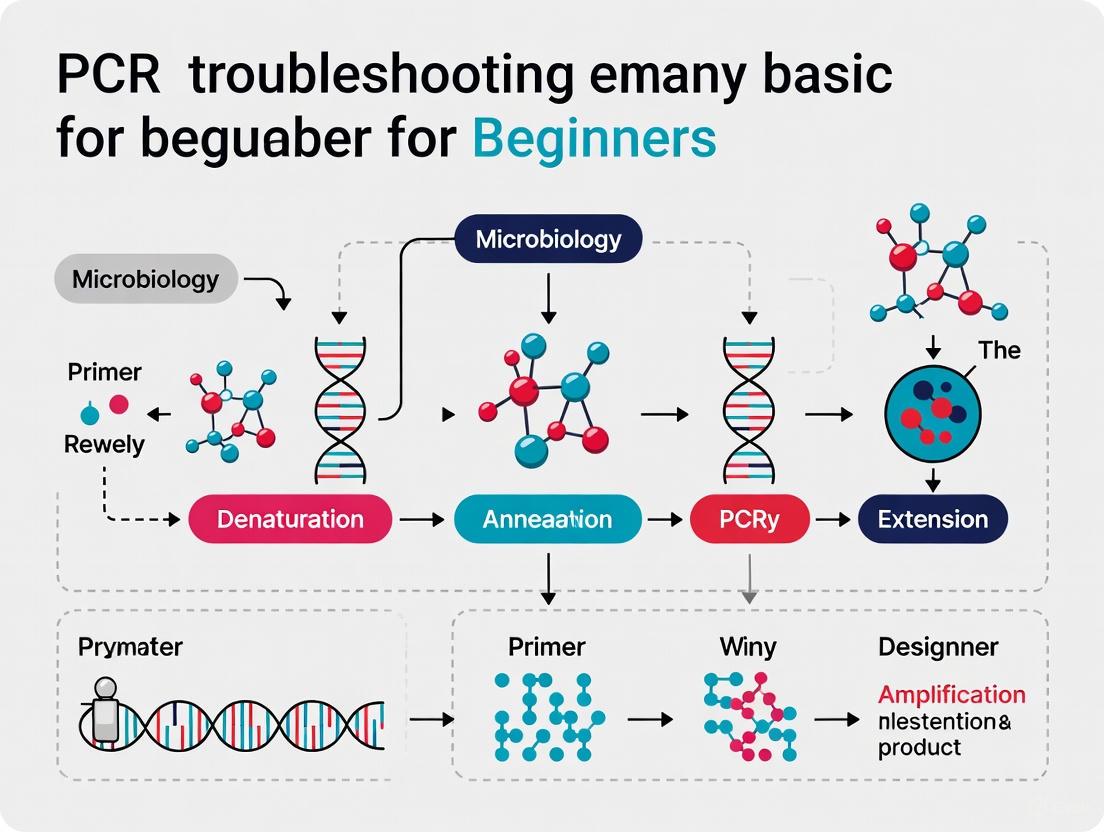
This article provides a comprehensive guide to PCR troubleshooting and optimization, tailored for researchers, scientists, and drug development professionals.
PCR Troubleshooting for Beginners: A Step-by-Step Guide to Reliable Results
Abstract
This article provides a comprehensive guide to PCR troubleshooting and optimization, tailored for researchers, scientists, and drug development professionals. It covers the foundational principles of the polymerase chain reaction, explores various methodological approaches and their applications, delivers a systematic framework for diagnosing and resolving common amplification issues, and discusses the critical principles of assay validation. By synthesizing these four core intents, this guide aims to equip beginners with the practical knowledge to achieve specific, efficient, and reproducible PCR results, thereby accelerating research and development timelines.
Understanding the Core Principles of PCR
The Polymerase Chain Reaction (PCR) is one of the most significant techniques in molecular biology, enabling researchers to amplify specific DNA sequences from minimal starting material with remarkable precision. First developed by Kary Mullis in 1983, PCR has revolutionized biological research, clinical diagnostics, and forensic science [1] [2]. This in vitro technique mimics the natural DNA replication process but achieves exponential amplification through repetitive temperature cycling, generating millions to billions of copies of a target DNA sequence within hours [1] [3]. The fundamental simplicity and power of PCR lie in its three core steps—denaturation, annealing, and extension—which form the foundation for countless molecular biology applications ranging from basic research to advanced drug development [2].
The discovery of thermostable DNA polymerases, particularly Taq polymerase from Thermus aquaticus, represented a critical advancement that transformed PCR from a laborious manual process to an automated technique [1] [4]. Prior to this innovation, DNA polymerase had to be replenished after each denaturation cycle due to heat inactivation. Thermostable enzymes retain their activity despite repeated exposure to high temperatures, enabling workflow automation and significantly improving amplification efficiency, specificity, and yield [1]. This technical guide examines the core principles of the PCR process, with particular emphasis on the denaturation, annealing, and extension steps, to provide researchers with a comprehensive understanding essential for effective experimental design and troubleshooting.
The Three Fundamental Steps of PCR
The PCR process employs repeated cycles of three temperature-dependent steps to achieve exponential amplification of a target DNA sequence. Each cycle theoretically doubles the number of target DNA molecules, resulting in an exponential increase from the original template [3] [5]. A standard PCR reaction typically runs for 25-40 cycles, which can amplify a single DNA molecule into millions or billions of copies [1] [5]. The following diagram illustrates the cyclical nature of this process, showing how each cycle builds upon the products of the previous one.
Denaturation
The denaturation step involves heating the reaction mixture to approximately 94-95°C for 20-30 seconds [2] [3]. At this elevated temperature, the hydrogen bonds between complementary base pairs in the double-stranded DNA molecule are disrupted, causing the DNA to separate into two single strands that serve as templates for subsequent amplification [1] [5]. Complete denaturation is crucial for successful PCR, as incomplete separation of DNA strands significantly reduces amplification efficiency by limiting primer access to target sequences [3].
The initial PCR cycle often begins with an extended denaturation step of 2-5 minutes to ensure complete separation of complex DNA structures and activation of hot-start DNA polymerases [3]. For templates with high GC content or strong secondary structures, increasing the denaturation temperature to 98°C or extending the denaturation time may be necessary to achieve complete strand separation [6]. However, researchers must balance denaturation efficiency with polymerase stability, as excessively long denaturation times at high temperatures can gradually inactivate thermostable enzymes, particularly those less stable than Taq polymerase [1].
Annealing
During the annealing step, the reaction temperature is lowered to 45-65°C for 20-40 seconds, allowing the forward and reverse primers to bind to their complementary sequences on the separated DNA strands [2] [5]. These short, single-stranded oligonucleotides (typically 15-30 nucleotides in length) flank the target region and provide a starting point for DNA synthesis [4] [3]. The annealing temperature is a critical parameter that must be carefully optimized, as it significantly influences reaction specificity and yield [6].
The optimal annealing temperature is typically 3-5°C below the melting temperature (Tₘ) of the primers [6]. The Tₘ represents the temperature at which 50% of primer-template duplexes dissociate and can be estimated using the formula: Tₘ = 4(G + C) + 2(A + T) for primers shorter than 25 nucleotides [3]. Higher annealing temperatures enhance specificity by reducing non-specific primer binding, while lower temperatures may improve yield but increase the risk of spurious amplification [6]. Using a thermal cycler with gradient capabilities allows empirical determination of the optimal annealing temperature for each primer set [4].
Extension
The extension step, also called elongation, occurs at 68-72°C for 20-60 seconds per kilobase of target DNA [1] [3]. During this phase, DNA polymerase synthesizes a new DNA strand complementary to the template by adding nucleotides to the 3' end of each primer [5]. All DNA polymerases require a primer and possess 5'→3' polymerase activity, incorporating nucleotides in the 5' to 3' direction to create complementary copies of the template strands [1].
The extension time must be optimized based on the length of the target amplicon and the processivity of the DNA polymerase [6]. Taq DNA polymerase has an optimal activity temperature of approximately 72°C and can synthesize DNA at a rate of 1,000 nucleotides per minute [3] [5]. Following the final PCR cycle, a final extension step of 5-15 minutes is often included to ensure all amplified fragments are fully extended [6]. For amplification of long targets (>3 kb), extension times must be prolonged accordingly, and using DNA polymerases with high processivity is recommended for robust amplification [6].
Quantitative Parameters for PCR Optimization
Successful PCR amplification requires careful optimization of multiple parameters. The following tables summarize key quantitative data for reaction components and thermal cycling conditions, providing researchers with a practical reference for experimental design.
Table 1: Optimal Concentration Ranges for PCR Reaction Components
| Component | Final Concentration | Function | Optimization Notes |
|---|---|---|---|
| DNA Template | 1-100 ng (genomic DNA)1 pg-10 ng (plasmid DNA) | Provides target sequence for amplification | Excessive DNA can cause nonspecific amplification; too little reduces yield [6] [3] |
| Primers | 0.1-1 μM each(typically 0.2-0.5 μM) | Bind flanking regions of target DNA to initiate synthesis | High concentrations promote primer-dimer formation; low concentrations reduce yield [6] [4] |
| dNTPs | 200 μM each dNTP(dATP, dCTP, dGTP, dTTP) | Building blocks for new DNA strands | Unbalanced concentrations increase error rate; excess dNTPs can chelate Mg²⁺ [6] [3] |
| MgCl₂ | 1.5-2.5 mM(range 1-8 mM) | Cofactor for DNA polymerase activity | Concentration affects enzyme activity, specificity, and fidelity; requires optimization [4] [3] |
| DNA Polymerase | 0.5-2.5 units/50 μL reaction | Enzyme that synthesizes new DNA strands | Follow manufacturer recommendations; excess can cause nonspecific products [6] [4] |
| Buffer | 1X concentration | Provides optimal pH and ionic conditions | Typically supplied with enzyme; may contain MgCl₂ [4] |
Table 2: Standard Thermal Cycling Parameters for Conventional PCR
| Step | Temperature Range | Time | Purpose | Key Considerations |
|---|---|---|---|---|
| Initial Denaturation | 94-95°C(up to 98°C for GC-rich templates) | 2-5 minutes(up to 10 minutes for complex templates) | Completely separate double-stranded DNA templates and activate hot-start enzymes | Duration depends on template complexity and polymerase type [6] [3] |
| Denaturation | 94-95°C | 20-30 seconds(up to 1 minute) | Separate newly synthesized DNA strands for next amplification cycle | Excessive time/temperature reduces polymerase activity [6] [3] |
| Annealing | 45-65°C(Tm of primers - 5°C) | 20-40 seconds | Allow primers to bind specifically to complementary sequences | Most critical parameter for specificity; optimize using gradient cycler [6] [4] |
| Extension | 68-72°C(polymerase-dependent) | 20-60 seconds/kb(minimum 30 seconds) | Synthesize new DNA strands from the 3' end of primers | Time depends on amplicon length and polymerase speed [6] [3] |
| Cycle Number | 25-40 cycles | - | Achieve exponential amplification of target DNA | Higher cycles increase nonspecific products and errors [6] [2] |
| Final Extension | 68-72°C | 5-15 minutes | Ensure complete synthesis of all amplified fragments | Particularly important for long amplicons and cloning applications [6] |
Essential Research Reagents and Materials
Successful PCR experimentation requires high-quality reagents and appropriate laboratory equipment. The following table details essential components for setting up and optimizing PCR reactions in a research setting.
Table 3: Research Reagent Solutions for PCR Experiments
| Reagent/Equipment | Function/Purpose | Technical Specifications |
|---|---|---|
| Thermostable DNA Polymerase | Enzymatically synthesizes new DNA strands during extension step | Taq polymerase (from Thermus aquaticus) is most common; options include hot-start versions for enhanced specificity [1] [3] |
| Oligonucleotide Primers | Provide specific binding sites to initiate DNA synthesis at target sequences | 15-30 nucleotides; 40-60% GC content; Tₘ within 5°C for primer pair; avoid self-complementarity [4] [3] |
| dNTP Mix | Substrates for DNA synthesis; provide necessary nucleotides for new strand formation | 200 μM of each dNTP (dATP, dCTP, dGTP, dTTP) in final reaction; quality and balance affect fidelity [4] [3] |
| Reaction Buffer | Maintains optimal pH and ionic conditions for polymerase activity and primer hybridization | Typically supplied as 10X concentrate; may contain MgCl₂ (usually 1.5 mM); composition varies by polymerase [4] |
| Magnesium Chloride (MgCl₂) | Essential cofactor for DNA polymerase activity; stabilizes primer-template complexes | Usually 1.5-2.5 mM final concentration; requires optimization as it significantly affects reaction specificity and yield [4] [3] |
| Thermal Cycler | Automates temperature transitions and timing for PCR cycles | Precisely controls temperature and duration of denaturation, annealing, and extension steps [1] |
| PCR Tubes/Plates | Contain reaction mixtures during thermal cycling | Thin-walled for rapid temperature changes; compatibility with thermal cycler format [4] |
Troubleshooting Common PCR Problems
Even with optimized protocols, PCR experiments can encounter various issues. The following table addresses common problems, their potential causes, and recommended solutions, with particular emphasis on factors related to the three core PCR steps.
Table 4: Troubleshooting Guide for Common PCR Issues
| Problem | Possible Causes | Recommended Solutions |
|---|---|---|
| No or Low Yield | Insufficient denaturation: DNA strands not fully separated [6]Annealing temperature too high: Primers cannot bind [7]Insufficient extension time: Polymerase cannot complete synthesis [7]Insufficient template quality or quantity [6] | Increase denaturation time/temperature, especially for GC-rich templates [6]Decrease annealing temperature in stepwise increments [6]Increase extension time (1 min/kb) and number of cycles [6] [7]Check template quality (A260/280 ratio) and concentration; repurify if necessary [6] |
| Non-specific Bands or Smearing | Annealing temperature too low: Primers bind non-specifically [6] [7]Excessive primer concentration: Promotes mispriming [6]Excessive Mg²⁺ concentration: Reduces reaction specificity [6]Contaminated template or reagents [7] | Increase annealing temperature incrementally (1-2°C steps) [6]Optimize primer concentration (typically 0.1-1 μM) [6]Titrate Mg²⁺ concentration to optimal level [6] [7]Use clean reagents; prepare reaction mix in dedicated area [7] |
| Primer-Dimer Formation | Primer 3' ends complementary: Allow self-annealing [4]Low annealing temperature: Facilitates primer-primer binding [6]Excessive primer concentration [6] | Redesign primers to eliminate 3' complementarity [4]Increase annealing temperature [6]Optimize primer concentration; use hot-start polymerase [6] |
| High Error Rate | Low-fidelity DNA polymerase: Lacks proofreading capability [1] [6]Unbalanced dNTP concentrations: Increases misincorporation [6]Excessive Mg²⁺ concentration: Reduces fidelity [6] | Use high-fidelity polymerase with proofreading activity [6]Ensure equimolar dNTP concentrations; use fresh aliquots [6]Optimize Mg²⁺ concentration for fidelity [6] |
The three fundamental steps of PCR—denaturation, annealing, and extension—form a cyclical process that enables the exponential amplification of specific DNA sequences. Mastering the technical aspects of each step, including temperature optimization, timing, and reagent composition, is essential for successful experimental outcomes. The quantitative parameters and troubleshooting guidance provided in this technical review offer researchers a solid foundation for both routine applications and challenging amplifications. As PCR continues to evolve with improvements in enzyme technology, reagent formulations, and instrumentation, the fundamental principles of denaturation, annealing, and extension remain the cornerstone of this transformative technique. By understanding these core processes and their optimization, researchers can effectively utilize PCR to advance scientific discovery and diagnostic applications in the field of molecular biology.
The Polymerase Chain Reaction (PCR) is a foundational technique in molecular biology that allows for the exponential amplification of specific DNA sequences. Since its introduction by Kary Mullis in the 1980s, PCR has become an indispensable tool for researchers, scientists, and drug development professionals, enabling advancements in genetic research, diagnostic testing, and biomedical discovery [2] [8]. This technical guide details the four essential components of a PCR reaction—template, primers, enzyme, and buffer—framed within the context of basic troubleshooting principles for beginners. A thorough understanding of the function and optimization of each component is critical for designing robust and reliable PCR experiments, forming the core thesis of effective problem-solving in molecular research.
The Core Components of a PCR Reaction
A standard PCR requires a precise mixture of several core components, each playing a critical role in the amplification process [8]. The table below summarizes these essential elements and their functions.
Table 1: Essential Components of a PCR Reaction
| Component | Description | Function in the Reaction |
|---|---|---|
| Template DNA | The DNA sample containing the target sequence to be amplified [9]. | Serves as the blueprint for replication. The polymerase synthesizes new DNA strands complementary to the template. |
| Primers | Short, single-stranded DNA oligonucleotides (typically 15-30 bases) designed to be complementary to the sequences flanking the target region [4] [9]. | Provide a starting point for DNA synthesis. They bind to the template and define the exact region to be amplified. |
| DNA Polymerase | A thermostable enzyme (e.g., Taq polymerase) that synthesizes new DNA strands [2] [8]. | Catalyzes the addition of nucleotides to the growing DNA chain during the extension phase of PCR. |
| Buffer | A solution that provides a suitable chemical environment for the DNA polymerase [8]. | Typically contains salts (e.g., KCl) and a bivalent cation, Magnesium (Mg²⁺), which is a critical cofactor for polymerase activity [9]. |
| Deoxynucleotides (dNTPs) | The building blocks of DNA: dATP, dCTP, dGTP, and dTTP [8]. | Incorporated by the DNA polymerase to synthesize the new DNA strands. |
The interaction of these components during thermal cycling is the engine of PCR. The process involves repeated cycles of heating and cooling to facilitate DNA denaturation, primer annealing, and DNA extension [8]. The following diagram illustrates this logical workflow and the role of each component within it.
Detailed Analysis of Core Components & Troubleshooting
Template DNA
The DNA template is the foundational starting material from which a specific region is targeted for amplification. Its quality, quantity, and integrity are paramount to PCR success [9].
Table 2: Template DNA Guidelines and Optimization
| Aspect | Recommended Guidelines | Troubleshooting & Optimization |
|---|---|---|
| Type & Source | Genomic DNA (gDNA), complementary DNA (cDNA), plasmid DNA [9]. | Verify that the target sequence is present in the template source [10]. |
| Purity | Free of contaminants like phenol, EDTA, heparin, or proteins [2] [6]. | Check the A260/A280 ratio; a value of ~1.8 indicates pure DNA [10]. Repurify template using ethanol precipitation or commercial kits if contaminated [6]. |
| Quantity | Plasmid DNA: 0.1–10 ng per 50 µL reaction.gDNA: 5–50 ng per 50 µL reaction [9]. | Too much template can cause nonspecific amplification; too little can yield no product [6] [9]. Perform a dilution series to find the optimal amount. |
| Integrity | Intact, high-molecular-weight DNA (for gDNA). | Assess integrity by agarose gel electrophoresis. Degraded DNA appears as a smear and can lead to low yield [6]. Store DNA in TE buffer (pH 8.0) or molecular-grade water to prevent nuclease degradation [6]. |
Primers
Primers are the targeting system of the PCR reaction. Their careful design and precise concentration are the most critical factors for specificity—ensuring only the intended DNA fragment is amplified [4] [9].
Table 3: Primer Design Specifications and Troubleshooting
| Design Parameter | Ideal Specification | Troubleshooting & Optimization |
|---|---|---|
| Length | 15–30 nucleotides (bases) [4] [9]. | Longer primers generally enhance specificity. |
| Melting Temperature (Tₘ) | 55–70°C; Tₘ of primer pair should be within 5°C of each other [4] [9]. | Calculate Tₘ using a reliable formula or online tool. The optimal annealing temperature is typically 3–5°C below the lowest primer Tₘ [6] [4]. |
| GC Content | 40–60% [4] [9]. | Avoid extremes. Uniform distribution of G and C bases is ideal [9]. |
| 3' End Sequence | Terminate with a G or C (GC-clamp) to enhance priming efficiency [4]. | Avoid runs of three or more Gs or Cs at the 3' end, which can promote mispriming [9]. |
| Specificity | Unique to the target sequence. | Use software (e.g., NCBI Primer-BLAST) to check for secondary binding sites [4]. Avoid self-complementarity (hairpins) or complementarity between primers (primer-dimers) [4]. |
| Concentration | 0.1–1.0 µM each primer in the final reaction [6] [9]. | High concentrations cause primer-dimer formation and nonspecific bands; low concentrations yield little to no product [9]. |
DNA Polymerase
DNA polymerase is the engine of the reaction, responsible for synthesizing new DNA strands. The discovery of thermostable polymerases like Taq polymerase was pivotal for automating PCR [2].
Table 4: DNA Polymerase Enzyme Characteristics and Selection
| Characteristic | Description & Consideration | Troubleshooting & Optimization |
|---|---|---|
| Thermostability | Must withstand prolonged high temperatures (~95°C). Taq has a half-life of ~40 minutes at 95°C [9]. | Use fresh enzyme aliquots and avoid multiple freeze-thaw cycles to preserve activity [7]. |
| Processivity | The number of nucleotides incorporated per binding event. High processivity is beneficial for long or complex targets [6]. | For long targets (>5 kb) or GC-rich sequences, choose a polymerase engineered for high processivity [6]. |
| Fidelity | The accuracy of nucleotide incorporation. | For cloning or sequencing, use high-fidelity polymerases (e.g., Pfu) which have proofreading (3'→5' exonuclease) activity [11]. |
| Concentration | Typically 1–2.5 units per 50 µL reaction [4] [9]. | Excessive enzyme can increase nonspecific products; insufficient enzyme leads to low yield [9]. Increase amount if inhibitors are suspected in the sample [6]. |
| Hot-Start | Engineered to be inactive at room temperature, preventing activity before the first denaturation step [6]. | Use hot-start Taq to suppress nonspecific amplification and primer-dimer formation caused by enzyme activity during reaction setup [6] [12]. |
Buffer and Co-Factors
The reaction buffer creates the optimal chemical environment for the DNA polymerase to function, with magnesium ions (Mg²⁺) being the most critical variable component [9] [8].
Table 5: PCR Buffer Composition and Optimization
| Component | Role in the Reaction | Troubleshooting & Optimization |
|---|---|---|
| Magnesium Ions (Mg²⁺) | Essential cofactor for DNA polymerase activity. Stabilizes primer-template binding and the structure of dNTPs [9]. | Critical Optimization Parameter. The final concentration typically ranges from 0.5 to 5.0 mM [4]. Excess Mg²⁺ causes nonspecific binding; insufficient Mg²⁺ reduces yield. Optimize in 0.5 mM increments [6] [12]. |
| Potassium Ions (K⁺) | Provides ionic strength and promotes primer annealing [8]. | Typically included in the 10X buffer at 35–100 mM [4]. |
| Tris-HCl | Maintains a stable pH (usually ~8.0–9.0) during the reaction [8]. | Standard component of most commercial buffers. |
| Additives & Enhancers | Can help amplify difficult templates (e.g., GC-rich regions) [6] [4]. | DMSO, formamide, or betaine can help denature GC-rich templates. Use the lowest effective concentration, as they can inhibit the polymerase at high levels [6] [4]. |
The Scientist's Toolkit: Essential Research Reagent Solutions
A successful PCR experiment relies on high-quality reagents and proper laboratory practices. The following table details key materials and their functions.
Table 6: Essential Research Reagents and Materials for PCR
| Item | Function / Purpose |
|---|---|
| Thermal Cycler | An instrument that automates the precise temperature changes and timing required for PCR cycles [2]. |
| Thin-Walled PCR Tubes | Facilitate rapid heat transfer to and from the reaction mixture, ensuring quick temperature equilibration [8]. |
| Micropipettors & Sterile Tips | For accurate and precise dispensing of small liquid volumes. Use filter tips to prevent aerosol contamination [4] [12]. |
| dNTP Mix | A solution containing equimolar concentrations of dATP, dCTP, dGTP, and dTTP. The standard final concentration is 200 µM of each dNTP [4] [9]. |
| Nuclease-Free Water | The solvent for the reaction; must be free of nucleases that could degrade DNA or primers [4]. |
| Agarose Gel Electrophoresis System | Standard method for analyzing PCR products post-amplification to confirm size, yield, and specificity [2] [4]. |
Mastering the four essential components of a PCR reaction—template, primers, enzyme, and buffer—provides a solid foundation for any researcher beginning their work in molecular biology. A methodical approach to troubleshooting, starting with verifying the quality and concentration of the template DNA and primers, then optimizing the reaction buffer (particularly Mg²⁺ concentration and annealing temperature), will resolve the majority of common PCR problems. By understanding the role and optimal conditions for each component, scientists can systematically diagnose failed experiments, refine their protocols, and ensure the generation of specific, high-yield amplification products essential for reliable research and drug development.
The Polymerase Chain Reaction (PCR) is a foundational in vitro technique that revolutionized molecular biology by enabling the exponential amplification of specific DNA sequences from a complex mixture. Invented by Kary Mullis in the 1980s, this method allows a single or a few copies of a DNA segment to be copied into millions or billions of copies in just a few hours [4] [13]. The core principle of PCR relies on thermal cycling, which involves repeated heating and cooling cycles for DNA melting and enzyme-driven DNA replication. The development of a thermostable DNA polymerase (Taq polymerase) from the bacterium Thermus aquaticus was pivotal for the automation and refinement of this technique, as it withstands the high denaturation temperatures required by the process [4]. PCR's impact spans countless subdisciplines in biology, from basic research and medical diagnostics to forensic science and drug development, making it an indispensable tool for researchers and scientists.
This guide provides an in-depth technical overview of the core types of PCR, with a specific focus on End-point, Quantitative Real-Time (qPCR), and Digital PCR (dPCR). The content is framed within the broader context of basic principles of PCR troubleshooting for beginner researchers, aiming to equip them with the knowledge to select the appropriate PCR method for their experimental goals and to identify and resolve common issues.
Fundamental Principles and Components of PCR
Core Mechanism
The PCR process mimics the natural DNA replication process. It is a cyclic reaction that amplifies a specific DNA region, defined by two short, single-stranded DNA molecules known as primers. Each cycle of PCR consists of three fundamental steps, repeated 25-40 times, leading to the exponential amplification of the target sequence [14] [15].
- Denaturation: The reaction mixture is heated to a high temperature (94–98°C), causing the double-stranded DNA (dsDNA) template to separate into two single strands by breaking the hydrogen bonds between the base pairs [13] [15].
- Annealing: The temperature is rapidly lowered (typically to 50–64°C) to allow the forward and reverse primers to bind (anneal) to their complementary sequences on the separated DNA strands [13] [15].
- Extension/Elongation: The temperature is raised to the optimal temperature for the DNA polymerase (e.g., 72°C for Taq polymerase). Starting from the primers, the DNA polymerase synthesizes new DNA strands by adding free nucleotides (dNTPs) to the 3' end of the primers, creating double-stranded DNA [13] [15].
After the first cycle, the region of interest between the two primers is defined. With each subsequent cycle, this target segment is doubled, leading to an exponential accumulation—2, 4, 8, 16 copies, and so on [16].
Essential Reaction Components
A standard PCR reaction requires several key components, each critical for a successful amplification [4] [15]:
- DNA Polymerase: A thermostable enzyme that synthesizes new DNA strands. Taq polymerase is most common, but other high-fidelity enzymes like Pfu are used when accuracy is critical [15].
- Primers: Short, single-stranded DNA fragments (typically 18-22 nucleotides) that are complementary to the sequences flanking the target region. They define the start and end of the amplification [4] [15].
- Deoxynucleoside Triphosphates (dNTPs): The building blocks of DNA, consisting of solutions of dATP, dCTP, dGTP, and dTTP [15].
- Template DNA: The DNA sample that contains the target sequence to be amplified. This can be genomic DNA, plasmid DNA, or cDNA [15].
- Buffer Solution: Provides the optimal chemical environment (pH, salts) for the DNA polymerase to function. It often contains magnesium ions (Mg²⁺), which are a essential cofactor for the enzyme [4] [15].
Common Types of PCR
End-point PCR
Methodology Description: End-point PCR, also known as conventional or traditional PCR, is the original form of PCR. In this method, a tube containing the PCR mixture undergoes amplification in a thermocycler for a set number of cycles (usually 25-40) [17] [16]. The reaction proceeds until all cycles are completed, and the data is collected only after this final "endpoint." The amplified products, or amplicons, are then typically analyzed using agarose gel electrophoresis. The DNA fragments are separated by size, stained with a dye like ethidium bromide, and visualized under UV light. A successful amplification is confirmed by the presence of a band of the expected size on the gel [17].
Quantitative Capability: End-point PCR is primarily a qualitative or semi-quantitative technique [17] [16]. It answers the question: "Is the target sequence present or absent?" The intensity of the band on the gel can provide a rough estimate of the final product yield, but it is not reliable for precise quantification. This is because the measurement is taken during the reaction's "plateau phase," where reagents become depleted, and the amplification efficiency drops dramatically. At this stage, even samples that started with vastly different initial DNA concentrations can yield similar amounts of final product, masking true quantitative differences [16].
Primary Applications:
- Qualitative detection of a specific gene or pathogen [16].
- Molecular cloning and generation of DNA fragments for downstream applications [13].
- Genotyping and colony screening (e.g., colony PCR) [16] [13].
- A low-cost option for simple presence/absence testing [16].
Real-time Quantitative PCR (qPCR)
Methodology Description: Real-time Quantitative PCR (qPCR), also known as real-time PCR, is a advanced technique that enables the measurement of DNA amplification as it occurs—in "real-time" [17] [14]. This is achieved by incorporating a fluorescent reporter into the PCR reaction. The fluorescence intensity is directly proportional to the amount of amplified DNA and is measured after each cycle using a thermocycler with an integrated fluorometer [17] [16]. There are two primary chemistries for detection:
- DNA-binding dyes (e.g., SYBR Green): These dyes fluoresce brightly when bound to double-stranded DNA. They are cost-effective but non-specific, as they will bind to any dsDNA, including non-specific products and primer-dimers [16].
- Sequence-specific probes (e.g., TaqMan probes): These probes use Fluorescence Resonance Energy Transfer (FRET). A reporter fluorophore is attached to one end of the probe and a quencher to the other. When intact, the quencher suppresses the reporter's fluorescence. During PCR, the DNA polymerase hydrolyzes the probe that is bound to its target, separating the reporter from the quencher and resulting in a fluorescent signal that is specific to the target amplicon [14] [16].
Quantitative Capability: qPCR is a truly quantitative method. It does not rely on the final product amount but instead on the kinetics of product synthesis during the exponential phase of amplification, when reaction efficiency is highest [16]. Quantification is based on the Threshold Cycle (Cq) or Ct value, which is the cycle number at which the fluorescence signal crosses a predefined threshold [17] [16]. There is an inverse logarithmic relationship between the Cq value and the initial amount of target DNA: a sample with a high starting concentration will have a low Cq, while a sample with a low starting concentration will have a high Cq [16]. The initial template concentration in an unknown sample can be determined by comparing its Cq value to a standard curve generated from samples with known concentrations [17].
Primary Applications:
- Gene expression analysis (via reverse transcription qPCR, or RT-qPCR) [17] [13].
- Viral load quantification in clinical diagnostics [16].
- Copy number variation (CNV) analysis [17] [13].
- High-throughput screening and validation [16].
Digital PCR (dPCR)
Methodology Description: Digital PCR (dPCR) is a novel and highly precise method for absolute quantification of nucleic acids. In dPCR, the PCR reaction mixture is partitioned into thousands or millions of separate individual reactions (e.g., using a water-oil emulsion droplet technology) [17] [13]. Each partition acts as an independent PCR microreactor. After endpoint PCR amplification, each partition is analyzed for fluorescence. Partitions that contained at least one copy of the target sequence will be fluorescently positive, while those without a target will be negative [17].
Quantitative Capability: dPCR provides absolute quantification without the need for a standard curve [17] [14]. The ratio of positive to total partitions is used in combination with Poisson statistical analysis to calculate the exact initial concentration of the target DNA molecule in the sample [17]. This method offers high precision and is particularly effective for detecting rare genetic variants (e.g., somatic mutations) and for quantifying small fold-changes, as it is less affected by PCR inhibitors and can enrich for low-abundance targets through partitioning [17].
Primary Applications:
- Absolute quantification of nucleic acids without standards [17] [13].
- Detection of rare allele mutations and sequence variants [17] [14].
- Copy number variation analysis [17].
- AAV vector titration in gene therapy research [13].
Other Notable PCR Types
- Reverse Transcription PCR (RT-PCR): This method uses purified RNA as a starting material. The RNA is first reverse transcribed into complementary DNA (cDNA) using the enzyme reverse transcriptase. This cDNA then serves as the template for a standard PCR amplification. RT-PCR is used to detect and amplify RNA sequences [17] [14].
- RT-qPCR: A combination of RT-PCR and qPCR, this is the standard technique for quantifying levels of RNA expression. The RNA is converted to cDNA and then quantified by qPCR [17] [14].
- Multiplex PCR: This technique allows for the simultaneous amplification of multiple different targets in a single PCR reaction by using multiple primer sets. It saves time, reagents, and sample, and is commonly used in pathogen identification and SNP genotyping [18] [13].
- Hot-Start PCR: This method employs a modified DNA polymerase that is inactive at room temperature. The enzyme is only activated after a high-temperature "hot start" step during the first denaturation cycle. This prevents nonspecific amplification and primer-dimer formation that can occur during reaction setup, thereby enhancing specificity [18] [14].
Comparative Analysis of PCR Types
The table below summarizes the key differences between the three main PCR types to aid in method selection.
Table 1: Comparative overview of End-point PCR, qPCR, and dPCR
| Feature | End-point PCR | Quantitative PCR (qPCR) | Digital PCR (dPCR) |
|---|---|---|---|
| Method Description | Measures final amount of PCR product after all cycles are complete. | Measures fluorescence signal of the bulk reaction after each PCR cycle. | Partitions sample into 1000s of compartments for endpoint PCR and fluorescence measurement of each. |
| Quantification | Qualitative to semi-quantitative [17] [16]. | Quantitative, based on standard curves [17]. | Absolute quantitative, based on Poisson statistics [17]. |
| Detection Method | Agarose gel electrophoresis and staining [17]. | Fluorescent dyes (e.g., SYBR Green) or probes (e.g., TaqMan) [17] [16]. | Fluorescence measurement of positive/negative partitions [17]. |
| Throughput & Speed | Lower throughput due to post-PCR gel analysis [17] [16]. | High throughput and speed; data analyzed in real-time [17]. | Moderate throughput; requires partitioning and post-PCR readout [17]. |
| Precision & Sensitivity | Low precision for quantification; sensitivity is moderate. | High sensitivity and good precision [17]. | Very high precision and sensitivity, ideal for rare target detection [17]. |
| Primary Application | Cloning, genotyping, qualitative detection [16] [13]. | Gene expression, viral load quantification [17] [16]. | Absolute quantification, rare allele detection, copy number variation [17] [13]. |
| Cost | Low (instrument and reagent cost) [17]. | Moderate [17]. | High (instrument cost) [17]. |
Workflow Diagrams
End-point PCR Workflow
qPCR Workflow
dPCR Workflow
The Scientist's Toolkit: Essential Reagents and Materials
Table 2: Key research reagent solutions and their functions in PCR
| Reagent/Material | Function | Technical Notes |
|---|---|---|
| Thermostable DNA Polymerase | Enzyme that synthesizes new DNA strands during the extension step. | Taq: High processivity, lower fidelity. Pfu: Proofreading (3'→5' exonuclease) activity, higher fidelity [14] [15]. |
| Primers | Short, single-stranded DNA sequences that define the start and end of the target region to be amplified. | Should be 18-30 bases, 40-60% GC content, and have similar Tm values (within 5°C). The 3' end should be clamped with a G or C [4]. |
| dNTPs | The building blocks (dATP, dCTP, dGTP, dTTP) used by the DNA polymerase to synthesize new DNA strands. | Use balanced equimolar concentrations. Unbalanced dNTPs increase error rate. Aliquot to avoid repeated freeze-thaw cycles [7] [15]. |
| Reaction Buffer | Provides the optimal chemical environment (pH, ionic strength) for polymerase activity. | Often contains MgCl₂ or MgSO₄, which is a critical cofactor for the polymerase. Concentration may need optimization [4] [6]. |
| Magnesium Salt (Mg²⁺) | Essential cofactor for DNA polymerase activity. Affects primer annealing, enzyme fidelity, and product specificity. | Typically used at 1.5-2.5 mM final concentration. Optimization is often required; excess Mg²⁺ can reduce fidelity and increase non-specific binding [4] [6]. |
| PCR Additives/Enhancers | Compounds that help amplify difficult templates (e.g., GC-rich sequences) or reduce secondary structures. | DMSO, Betaine, BSA, Formamide. Can lower the effective Tm of primers, so annealing temperature may need adjustment [4] [18] [14]. |
| Probes/Dyes (qPCR/dPCR) | For detection and quantification. Dyes bind dsDNA non-specifically; probes bind specific sequences with higher specificity. | SYBR Green (dye), TaqMan (probe). Probe-based chemistries are more specific but require more optimization and are costlier [14] [16]. |
PCR Troubleshooting for Beginners: A Principle-Based Approach
Understanding the type of PCR failure is the first step in troubleshooting. The following table outlines common problems, their potential causes, and solutions, framed within the context of the PCR principles discussed.
Table 3: Common PCR problems and troubleshooting strategies
| Problem | Potential Causes | Troubleshooting Solutions |
|---|---|---|
| No/Low Yield | Poor template quality/quantity [6] [19].Insufficient primers, dNTPs, or enzyme [7] [19].Suboptimal cycling conditions (e.g., annealing T° too high) [6] [7]. | Check DNA purity/quantity (A260/280). Use 1 pg–1 ng plasmid or 1 ng–1 µg genomic DNA per reaction [15].Ensure correct reagent concentrations. Optimize primer concentration (0.1–1 µM) [6].Use a gradient thermocycler to optimize annealing temperature. Ensure extension time is sufficient (~1 min/kb) [6] [15]. |
| Non-Specific Bands/Background | Annealing temperature too low [6] [19].Excess Mg²⁺, primers, or enzyme [6].Non-hot-start polymerase activity during setup [18] [19]. | Increase annealing temperature in 1-2°C increments (optimal is typically 3-5°C below primer Tm) [6].Titrate Mg²⁺ concentration. Lower primer concentration.Use a hot-start DNA polymerase. Set up reactions on ice [18] [6]. |
| Primer-Dimer Formation | Primer 3' ends are complementary [4].Excess primer concentration [6] [19].Low annealing temperature [6]. | Redesign primers to avoid 3' complementarity. Use primer design software [4].Optimize and reduce primer concentration [6].Increase annealing temperature [6]. |
| Poor Amplification of GC-Rich Templates | Strong secondary structures and high Tm prevent complete denaturation and polymerase progression [18]. | Use a PCR additive/enhancer like DMSO, betaine, or GC enhancer [18] [14].Increase denaturation temperature (e.g., to 98°C) and/or use a highly processive polymerase [18]. |
Selecting the appropriate PCR method is fundamental to experimental success in molecular biology and drug development. End-point PCR remains a robust, cost-effective tool for simple qualitative applications like cloning and genotyping. When accurate measurement of nucleic acid quantity is required, qPCR is the established gold standard, offering high throughput and sensitivity for applications such as gene expression analysis and viral load testing. For the utmost precision and absolute quantification, particularly for detecting rare targets or validating qPCR results, dPCR is the emerging technique of choice.
For the beginner researcher, a principle-based understanding of the PCR process and its components is the most powerful troubleshooting tool. Methodical optimization of factors like primer design, annealing temperature, and Mg²⁺ concentration, coupled with the use of quality-controlled reagents, will resolve the majority of common PCR issues. By mastering these core techniques and their applications, scientists can effectively harness the power of PCR to advance their research objectives.
Polymersse Chain Reaction (PCR) is a foundational technique in molecular biology, and its success is profoundly dependent on the careful design of oligonucleotide primers. For researchers and drug development professionals, suboptimal primer design is a frequent cause of experimental failure, leading to wasted resources, inconclusive results, and troubleshooting delays. Within the broader context of PCR troubleshooting, understanding the core principles of primer design is the first and most critical step toward achieving specific, efficient, and reproducible amplification. This technical guide provides an in-depth examination of three pillars of effective primer design: primer length, GC content, and melting temperature (Tm), equipping practitioners with the knowledge to avoid common pitfalls and optimize their assays.
Core Principles of Primer Design
The design of PCR primers involves balancing multiple interdependent parameters to ensure they bind specifically and efficiently to the target sequence. The following core principles form the basis of robust assay development.
Primer Length
Primer length is a primary determinant of specificity and binding efficiency. Excessively short primers may bind to multiple non-target sites, while overly long primers can exhibit slower hybridization rates and reduced efficiency.
- Optimal Range: For standard PCR applications, primers are typically 18–30 nucleotides long [20]. This range provides a strong balance, offering sufficient sequence for specific binding while maintaining efficient annealing.
- Impact on Specificity and Yield: Shorter primers (within the 18-24 nucleotide range) anneal more efficiently to the target sequence, leading to higher amplicon yields with fewer PCR cycles. In contrast, longer primers (>30 bases) have a slower hybridization rate, which can result in inadequate specificity and reduced yield [21].
GC Content
The GC content—the percentage of guanine (G) and cytosine (C) bases in the primer—directly influences the strength of primer-template binding due to the three hydrogen bonds formed in GC base pairs versus the two in AT pairs.
- Optimal Range: The ideal GC content for a primer is between 40% and 60% [20] [21]. This range promotes stable binding without encouraging non-specific interactions.
- GC Clamp: A GC clamp refers to the presence of one or more G or C bases in the last five nucleotides at the 3' end of the primer. This strengthens the binding of the critical 3' end, promoting complete extension [20] [21]. However, more than three G or C bases at the 3' end should be avoided, as this can promote non-specific binding and false-positive results [21].
- Sequence Repeats: Polynucleotide repeats, such as runs of four or more of the same base (e.g., GGGG) or dinucleotide repeats (e.g., ATATAT), should be avoided. These sequences can cause slippage or mispriming and are often difficult to synthesize reliably [20].
Melting Temperature (Tm)
The melting temperature (Tm) is the temperature at which 50% of the primer-DNA duplexes dissociate into single strands. It is a critical parameter for determining the optimal annealing temperature (Ta) of the PCR cycle.
- Calculating Tm: The Tm can be calculated using simple formulas, such as:
Tm = 4(G + C) + 2(A + T)— This is the Wallace Rule, which counts the number of each nucleotide [22].Tm = 81.5 + 16.6(log[Na+]) + 0.41(%GC) – 675/primer length— A more complex equation that accounts for salt concentration and GC content [21]. In practice, online tools like the Thermo Fisher Tm Calculator [23] or the IDT OligoAnalyzer [24] are recommended for more accurate calculations that incorporate advanced thermodynamic parameters.
- Optimal Tm and Annealing Temperature: Primers should have a Tm between 65°C and 75°C [20]. More importantly, the forward and reverse primers in a pair should have Tms within 5°C of each other to ensure synchronized binding during the annealing step [20]. The annealing temperature (Ta) for the PCR protocol is typically set 3–5°C below the lowest Tm of the primer pair [22].
The following table summarizes the key design parameters and their optimal values for easy reference.
Table 1: Summary of Key Primer Design Parameters
| Parameter | Optimal Range/Guideline | Rationale & Consequences of Deviation |
|---|---|---|
| Length | 18–30 nucleotides [20] | Shorter primers: higher efficiency but risk of non-specific binding. Longer primers: higher specificity but slower hybridization and reduced yield [21]. |
| GC Content | 40–60% [20] [21] | Low GC: weak binding. High GC: very strong binding, can promote non-specific products and primer-dimers [21]. |
| Melting Temperature (Tm) | 65–75°C [20] | Primers in a pair should be within 5°C of each other. A low Tm can lead to non-specific binding; a very high Tm can necessitate an impractically high annealing temperature. |
| GC Clamp | 1-3 G/C bases in last 5 bases at 3' end [20] [21] | Stabilizes binding at the site of polymerase extension. More than 3 can cause non-specific binding. |
| Sequence Repeats | Avoid runs of ≥4 identical bases or dinucleotide repeats [20] | Prevents mispriming and synthesis problems, ensuring more reliable primer performance. |
Primer Design and PCR Troubleshooting
Poor primer design is a root cause of many common PCR problems. Understanding the relationship between design flaws and their experimental manifestations is essential for effective troubleshooting.
Common Primer-Related Artifacts
- Primer-Dimers: These are short, unwanted amplification products formed when primers hybridize to each other via complementary sequences, rather than to the template DNA. This occurs due to inter-primer homology (complementarity between forward and reverse primers) or self-complementarity within a single primer [20] [21]. Primer-dimers consume reaction components and can outcompete the target amplification, leading to low or no yield of the desired product.
- Hairpins (Secondary Structures): Hairpins are intramolecular structures formed when a primer folds back on itself if it contains inverted repeat sequences [21]. These secondary structures prevent the primer from annealing to the template DNA. The likelihood of hairpin formation is assessed by the parameter "self 3′-complementarity" in design tools [21].
- Non-Specific Amplification: This results in multiple bands or a smeared gel and occurs when primers bind to unintended, partially complementary sequences on the template. Causes include primers that are too short, have a Tm that is too low, or are used at an annealing temperature that is not stringent enough [22].
The Challenge of GC-Rich Templates
Amplifying GC-rich DNA sequences (GC content >65%) is a well-known challenge in PCR. The high stability of GC base pairs promotes the formation of stable secondary structures and hairpins in both the template and the primers, which can halt polymerase progression [25] [26]. Standard primers often fail under these conditions.
A strategic solution is to design primers with a higher Tm (>79.7°C) and a very low Tm difference between the pair (ΔTm < 1°C). This allows for the use of a higher annealing temperature (>65°C), which helps prevent the formation of secondary structures and favors specific primer binding [26]. Furthermore, codon optimization can be employed; this involves carefully substituting bases at the wobble position of codons to reduce GC content in the primer sequence without altering the encoded amino acid sequence, thereby disrupting problematic secondary structures [25].
The logical relationships between primer design parameters, potential problems, and the resulting PCR outcomes are illustrated below.
Diagram 1: Relationship between primer design parameters and PCR outcomes. Design flaws (center) stem from suboptimal parameters (top) and lead to specific experimental problems (bottom).
Experimental Protocols and Optimization
Theoretical design must be coupled with empirical optimization. The following protocols and techniques are standard for validating and refining PCR assays.
Protocol 1: Determining Optimal Annealing Temperature
A critical step in any PCR setup is determining the ideal annealing temperature (Ta) for a primer pair.
- Calculate Tm: Use a reliable online calculator (e.g., Thermo Fisher Tm Calculator [23]) to determine the Tm for each primer.
- Set Initial Ta: Start with an annealing temperature 3–5°C below the lowest Tm of the primer pair [22].
- Run a Gradient PCR: If available, use a thermocycler with a gradient function to test a range of annealing temperatures (e.g., from 55°C to 65°C) in a single run.
- Analyze Results: Separate the PCR products by agarose gel electrophoresis. The optimal Ta will produce a single, intense band of the expected size with little to no non-specific products or primer-dimers.
Protocol 2: Touchdown PCR for Enhanced Specificity
Touchdown PCR is a highly effective technique for increasing specificity, particularly when the optimal Ta is unknown or when non-specific amplification is a problem [22].
- Program Setup: Begin the PCR cycles with an annealing temperature 1–2°C above the estimated Tm.
- Step-Down Cycling: Decrease the annealing temperature by 1–2°C every one or two cycles over a series of 10-12 cycles until the final, or "touchdown," temperature is reached (typically ~5°C below the estimated Tm).
- Final Amplification: Complete the remaining 25-30 cycles at the lower touchdown temperature.
- Principle: The initial high-stringency cycles selectively amplify only the specific target. This specific product then outcompetes non-specific targets in the later, lower-stringency cycles, leading to a cleaner final product [22].
Optimizing Reaction Components
Beyond thermal cycling conditions, the concentrations of reaction components are vital for success.
- Magnesium Concentration: Mg²⁺ is a cofactor for DNA polymerase. The optimal concentration is typically 1.5–2.0 mM. Excess Mg²⁺ can decrease specificity, while insufficient Mg²⁺ can cause reaction failure. Optimization can be done in 0.5 mM increments if needed [22] [27].
- Primer Concentration: A final concentration of 0.1–0.5 μM for each primer is standard. Higher concentrations (>1 μM) can increase the risk of primer-dimer formation and non-specific amplification [22] [27].
- dNTPs: A concentration of 200 μM of each dNTP is typically ideal. Excess dNTPs can chelate Mg²⁺, inhibiting the polymerase, while too low a concentration can reduce yield [27].
- Template DNA: Use high-quality, pure DNA. Recommended amounts are 1–25 ng of genomic DNA or 0.001–1 ng of plasmid DNA per 50 μL reaction. Too much template can decrease specificity [27].
Successful PCR requires not only well-designed primers but also a suite of reliable reagents and software tools. The following table details key resources for the molecular biologist.
Table 2: Essential Research Reagents and Tools for PCR
| Item | Function / Description | Example / Note |
|---|---|---|
| DNA Polymerase | Enzyme that synthesizes new DNA strands. Choice depends on application. | Taq Polymerase: Standard for routine PCR. Pfu Polymerase: Higher fidelity (lower error rate). GC-Rich Polymerase: Specialized enzymes for high-GC templates [22]. |
| PCR Additives | Chemicals that help amplify difficult templates by modifying DNA stability. | DMSO/Glycerol: Disrupts secondary structure. Betaine: Equalizes the stability of GC and AT base pairs, crucial for GC-rich templates [25]. |
| dNTPs | The building blocks (A, T, G, C) for DNA synthesis. | Provided as a mix. Standard working concentration is 200 μM of each dNTP [27]. |
| Thermocycler with Gradient | Instrument that automates PCR temperature cycles. | Essential for empirically testing a range of annealing temperatures simultaneously during optimization [22]. |
| Tm Calculator | Online tool to calculate primer melting temperature and other properties. | Thermo Fisher Tm Calculator [23] or IDT OligoAnalyzer [24]. More accurate than manual formulas. |
| Primer Design & Analysis Tool | Software to check for secondary structures and homologies. | OligoAnalyzer [24] can predict hairpins, self-dimers, and hetero-dimers, helping to avoid problematic primers before ordering. |
The importance of meticulous primer design cannot be overstated in the context of reliable and efficient PCR. As detailed in this guide, the trifecta of primer length, GC content, and melting temperature forms the foundation upon which successful amplification is built. Adherence to the established guidelines for these parameters—using primers of 18-30 bases, with a GC content of 40-60%, and a matched Tm of 65-75°C—dramatically increases the likelihood of a specific and robust assay. Furthermore, an understanding of how to troubleshoot common artifacts like primer-dimers and non-specific bands, and how to tackle advanced challenges such as GC-rich amplification, is indispensable for the modern researcher. By integrating the principles and protocols outlined herein, scientists and drug development professionals can transform primer design from a potential source of frustration into a controlled and predictable process, thereby ensuring the integrity of their molecular analyses and accelerating the pace of discovery.
Setting Up and Optimizing Your PCR Protocol
Best Practices for Reaction Assembly and Preventing Contamination
In molecular biology, the polymerase chain reaction (PCR) is an indispensable technique for amplifying specific DNA sequences. Its power, derived from exquisite sensitivity, is also its greatest vulnerability; even minute quantities of contaminating DNA can lead to false-positive results, compromising experimental integrity. For researchers in basic science and drug development, mastering robust PCR techniques is foundational. This guide details core principles of reaction assembly and contamination control, framing them within essential PCR troubleshooting for beginner researchers. Adherence to these practices ensures the reliability and reproducibility that underpin credible scientific discovery.
Core Principles of PCR and Contamination
The Double-Edged Sword of Sensitivity
A standard PCR reaction can generate billions of copies of a target DNA sequence from a single template molecule [28]. The primary source of contamination in most labs is aerosolized PCR products created when opening tubes containing amplified DNA [29]. These microscopic droplets can spread throughout the laboratory environment, contaminating benches, equipment, and reagents. If these contaminants enter a new PCR setup, they become efficient templates for amplification, leading to misleading results and wasted resources.
The Critical Role of Controls
Implementing proper controls is non-negotiable for diagnosing contamination.
- Negative Control: This reaction contains all PCR components—polymerase, primers, buffer, nucleotides—but uses nuclease-free water instead of template DNA [29] [28]. A valid negative control should show no amplification. The presence of a band or amplification signal indicates contamination, necessitating immediate investigation before proceeding with experimental data analysis [29] [30].
Assembling a Robust PCR Reaction
Reaction Components and Their Functions
A conventional PCR requires a precise mixture of several key components. Understanding the role of each is the first step in effective troubleshooting.
Table 1: Essential Components of a Standard PCR Reaction
| Component | Final Concentration/Amount | Function | Considerations |
|---|---|---|---|
| Template DNA | 1–1000 ng (genomic DNA) [4] | The target DNA sequence to be amplified. | Quality and quantity are critical. Partially degraded DNA or excessive inhibitors can cause failure. |
| Forward/Reverse Primers | 0.1–0.5 µM each [31] | Short DNA sequences that define the start and end of the amplification region. | Must be specific and have matched melting temperatures (Tm). Avoid self-complementarity [4]. |
| DNA Polymerase (e.g., Taq) | 0.5–2.5 units per 50 µL reaction [4] | Enzyme that synthesizes new DNA strands. | Thermostable enzymes are essential. Follow manufacturer's recommendations for specific activity. |
| dNTPs | 200 µM of each dATP, dCTP, dGTP, dTTP [4] [31] | The building blocks (nucleotides) for new DNA synthesis. | Use a balanced, high-quality mixture to prevent incorporation errors. |
| Reaction Buffer | 1X concentration [4] [31] | Provides optimal chemical conditions (pH, salts) for polymerase activity. | Often contains MgCl₂. Supplied by the polymerase manufacturer. |
| Magnesium Chloride (MgCl₂) | 1.5–4.0 mM [4] | A cofactor essential for DNA polymerase activity. | Concentration is a key optimization variable; affects specificity and yield [4]. |
| Nuclease-Free Water | To final volume (e.g., 50 µL) | Solvent for the reaction. | Must be sterile and free of nucleases to prevent degradation of reagents. |
Master Mix Assembly and Thermal Cycling
A systematic approach to reaction assembly minimizes pipetting errors, reduces tube-to-tube variation, and lowers the risk of contamination.
- Thaw and Centrifuge: Thaw all PCR reagents on ice and briefly centrifuge them to collect the contents at the bottom of the tube [4] [31].
- Prepare a Master Mix: For multiple reactions, calculate the total volume of each component needed for
n + 1reactions (wherenis the number of experimental samples, plus one for the negative control). Combine all common components—water, buffer, dNTPs, MgCl₂, primers, and polymerase—in a single sterile tube. Gently mix by pipetting up and down or by brief vortexing and centrifugation [29] [4]. - Aliquot and Add Template: Dispense the appropriate volume of Master Mix into individual PCR tubes. Finally, add the template DNA to each respective tube. The negative control tube should be set up first, before adding template to any other tubes, to prevent cross-contamination [29].
- Thermal Cycling: Place the tubes in a thermal cycler programmed with the appropriate steps. A standard protocol is outlined below.
Table 2: Standard PCR Thermal Cycling Steps
| Step | Temperature | Time | Cycles | Purpose |
|---|---|---|---|---|
| Initial Denaturation | 94–95 °C | 2–5 minutes | 1 | Complete denaturation of complex template DNA. |
| Denaturation | 94–95 °C | 20–30 seconds | 25–35 | Unravel double-stranded DNA into single strands. |
| Annealing | Tm of primers -5°C | 30–45 seconds | 25–35 | Allow primers to bind to their complementary sequences on the template. |
| Extension | 72 °C | 1 minute per kb | 25–35 | Polymerase synthesizes new DNA strands from the primers. |
| Final Extension | 72 °C | 5–10 minutes | 1 | Ensure any remaining single-stranded DNA is fully extended. |
The following workflow diagram summarizes the key stages of a PCR experiment, from setup to analysis, and integrates critical contamination control checkpoints.
A Comprehensive Strategy to Prevent Contamination
Physical and Workflow Barriers
The most effective contamination strategy is prevention through physical separation and disciplined workflow.
- Dedicated Workspaces: Establish physically separated areas for pre- and post-amplification activities [28] [32]. The pre-PCR area (for reagent preparation and reaction assembly) should be located away from the post-PCR area (where amplified products are analyzed). Ideally, these are separate rooms with dedicated equipment, lab coats, and consumables [29] [28] [30].
- Unidirectional Workflow: Researchers should move from the pre-PCR area to the post-PCR area, but never back again on the same day without extensive decontamination [28] [32]. If you must enter the pre-PCR area after handling amplified products, change your lab coat and gloves thoroughly [29].
- Dedicated Equipment and Supplies: Use separate sets of pipettes, centrifuges, vortexers, and racks for pre- and post-PCR work. All equipment should be clearly labeled. Use aerosol-resistant filter tips exclusively in the pre-PCR area to prevent aerosol contamination of pipette shafts [28] [30].
Laboratory Practices and Reagent Management
Meticulous technique and careful reagent handling are the next line of defense.
- Aliquoting Reagents: Upon receiving new reagents, immediately aliquot them into single-use volumes. This prevents the contamination of an entire stock and reduces the number of freeze-thaw cycles, which can degrade reagent quality [29] [28].
- Proper Pipetting and Tube Handling: Open tubes carefully and one at a time to minimize aerosol generation. Avoid the practice of "flicking" tubes open with one hand [29]. Use a gentle pipetting technique to avoid splashing.
- Personal Protective Equipment (PPE): Always wear a dedicated lab coat and gloves in the pre-PCR area. Change gloves frequently, especially after touching any potentially contaminated surface, such as door handles, phones, or your own hair [29] [28].
Decontamination Procedures
Even with perfect technique, regular decontamination is essential.
- Surface Decontamination: Regularly clean work surfaces, equipment, and pipettes with a 10% bleach (sodium hypochlorite) solution or a commercial DNA decontaminant like DNA-away [29] [28] [32]. Bleach causes oxidative damage to DNA, rendering it unamplifiable. After 10-15 minutes of contact time, wipe the surface with deionized water or ethanol to remove residual bleach [28]. Note: Bleach is unstable, so fresh dilutions should be made regularly.
- Enzymatic Decontamination (UNG): For carryover contamination control, incorporate the enzyme Uracil-N-Glycosylase (UNG) into your PCR protocol. This method involves using dUTP instead of dTTP in all PCR reactions. Subsequent reactions are then treated with UNG, which degrades any uracil-containing contaminating amplicons from previous runs before thermal cycling begins. The UNG is itself inactivated by the high temperatures of the first denaturation step, leaving the new, natural template DNA untouched [28] [32].
The Researcher's Toolkit
Table 3: Essential Research Reagent Solutions for PCR
| Category | Item | Function/Benefit |
|---|---|---|
| Core Reagents | High-Fidelity or Taq DNA Polymerase | Catalyzes DNA synthesis; choice depends on need for fidelity vs. speed. |
| PCR-Grade dNTPs | Purified nucleotide building blocks for accurate DNA amplification. | |
| Nuclease-Free Water | Prevents degradation of sensitive primers and templates. | |
| Contamination Control | Aerosol-Resistant Filter Tips | Creates a physical barrier preventing aerosols from contaminating pipette shafts. |
| 10% Bleach Solution | Effective, inexpensive DNA-degrading agent for surface decontamination. | |
| Uracil-N-Glycosylase (UNG) | Enzymatically destroys carryover contamination from previous PCRs. | |
| Workflow & Analysis | Dedicated Pre-PCR Labware | Pipettes, centrifuges, and coats used only in clean reagent area. |
| Agarose Gel Electrophoresis System | Standard method for visualizing and sizing PCR amplicons. |
Troubleshooting Common PCR Issues
When a PCR fails, a systematic approach to troubleshooting is required. The table below links common symptoms to their potential causes and solutions, with an emphasis on contamination and assembly errors.
The polymerase chain reaction (PCR) is a foundational technique in molecular biology, enabling the exponential amplification of specific DNA sequences from complex templates. The precision and success of this process are critically dependent on the thermal cycler conditions—the carefully orchestrated series of time and temperature steps that drive each reaction [4]. For researchers in drug development and basic science, mastering these parameters is not merely a technical exercise but a essential requirement for generating reliable, reproducible data. This guide provides an in-depth examination of PCR cycling parameters, offering a structured approach to establishing robust protocols and troubleshooting common amplification issues, framed within the broader principles of PCR troubleshooting for beginner researchers.
The Core Steps of PCR Thermal Cycling
A standard PCR cycle consists of three fundamental steps—denaturation, annealing, and extension—which are repeated 25-40 times to amplify the target DNA. These cycles are preceded by an initial denaturation and concluded with a final extension. The following diagram illustrates the workflow and logical progression of a complete PCR run.
Diagram 1: The PCR Thermal Cycling Process. This workflow shows the sequential and repetitive nature of the temperature steps required for DNA amplification.
Initial Denaturation
The initial denaturation is a single, extended step at the beginning of the PCR run designed to fully separate the double-stranded template DNA into single strands, making the target sequences accessible to the primers. This step is typically performed at 94–98°C for 1–3 minutes [33] [34]. The exact conditions depend on the template complexity; for instance, mammalian genomic DNA or templates with high GC content often require longer incubation periods than simpler plasmids or PCR products [33]. This step also serves to activate hot-start DNA polymerases and can help inactivate heat-labile contaminants [33].
Cyclical Steps
The core amplification process involves repeating three key steps 25-40 times.
- Denaturation: In each cycle, a brief denaturation step (94–98°C for 15–60 seconds) re-separates the newly synthesized DNA strands [33] [34] [35]. Incomplete denaturation, a common issue with GC-rich sequences, leads to poor yield and can be mitigated by increasing the temperature or duration slightly [33] [6].
- Annealing: The reaction temperature is lowered to allow primers to bind to their complementary sequences on the template DNA. The optimal annealing temperature is primarily determined by the primers' melting temperature (Tm). A standard starting point is 3–5°C below the calculated Tm of the primers [33] [4]. Typical conditions are 45–65°C for 15–60 seconds [33] [34] [36]. This is the most common parameter requiring optimization to balance specificity and yield.
- Extension: During this step, the DNA polymerase synthesizes a new DNA strand. The temperature is set to the enzyme's optimal activity range, usually 70–75°C [33] [34]. The extension time is proportional to the length of the amplicon and the synthesis rate of the polymerase. A common guideline is 1 minute per kilobase for Taq DNA polymerase, though faster modern enzymes may require less time [33] [37] [36].
Final Extension
A single, final extension step (70–72°C for 5–10 minutes) is performed after the last cycle to ensure any remaining single-stranded DNA is fully extended [33] [37] [36]. This step improves the yield of full-length products and, for enzymes like Taq polymerase that add a single deoxyadenosine (A) overhang, a longer final extension (e.g., 30 minutes) can facilitate subsequent TA cloning [33].
Cycle Number
The number of PCR cycles typically ranges from 25 to 35 [33]. Fewer than 25 cycles may yield insufficient product, while exceeding 45 cycles often leads to increased nonspecific background products due to reagent depletion and accumulation of nonspecific amplicons as the reaction reaches a plateau phase [33] [6]. For very low template copies (fewer than 10), up to 40 cycles may be necessary [33].
Optimizing Thermal Cycler Parameters
Optimization is frequently required to achieve specific and efficient amplification. The key parameters to adjust are the annealing temperature, denaturation conditions, and extension time, often in response to specific template challenges.
Table 1: Troubleshooting Common PCR Problems Through Thermal Cycling Conditions
| Problem | Possible Cause | Thermal Cycling Adjustments |
|---|---|---|
| No/Low Yield | Insufficient denaturation [6] | Increase denaturation temperature or time (e.g., to 98°C or 2-3 minutes) [33] [6]. |
| Annealing temperature too high [6] [7] | Lower annealing temperature in 2-3°C increments [33] [7]. | |
| Too few cycles [6] | Increase cycle number to 35-40, especially for low-copy templates [33] [6]. | |
| Insufficient extension time [6] [7] | Increase extension time (standard is 1 min/kb; 2 min/kb for proofreading enzymes) [33] [7] [38]. | |
| Non-Specific Bands/ Smearing | Annealing temperature too low [6] [7] | Increase annealing temperature in 2-3°C increments [33] [6] [7]. |
| Excessive cycle number [6] | Reduce the number of cycles (e.g., to 25-30) [6]. | |
| Long annealing time [6] | Shorten the annealing time to 15-30 seconds [6]. | |
| Primer-Dimer Formation | Low annealing temperature [19] | Increase annealing temperature [19]. |
| Overlong annealing time [19] | Shorten annealing time [19]. |
Advanced Optimization Strategies
- Annealing Temperature Optimization: The use of a thermal cycler with a gradient function is the most effective way to empirically determine the optimal annealing temperature for a primer set [33] [38]. By testing a range of temperatures (e.g., 45–65°C) across the block in a single run, researchers can quickly identify the temperature that provides the strongest specific yield and minimal non-specific amplification [33] [36].
- Two-Step PCR: For primers with annealing temperatures close to the extension temperature (within 3°C), a two-step PCR protocol can be used. This combines the annealing and extension steps into a single incubation at 68–72°C, shortening the total cycling time [33].
- Addressing Complex Templates: Amplification of GC-rich sequences (>65%) or long targets (>10 kb) often requires parameter adjustments. For GC-rich templates, increasing denaturation temperature and time can help, and using additives like DMSO (1-10%) or formamide (1.25-10%) in the reaction mix can facilitate strand separation [6] [35]. For long PCR, reducing the annealing and extension temperatures by a few degrees can help maintain enzyme processivity, and significantly prolonging the extension time is necessary [6].
Experimental Protocols for Optimization
This section provides detailed methodologies for key optimization experiments.
Protocol: Annealing Temperature Gradient
Purpose: To empirically determine the optimal annealing temperature for a specific primer set and template [33] [36].
Materials:
- Thermal cycler with gradient capability
- Standard PCR reagents: template DNA, primers, dNTPs, reaction buffer, DNA polymerase, sterile water
- Agarose gel electrophoresis equipment
Procedure:
- Prepare a Master Mix: Calculate the total volume needed for all reactions (including an extra 10% for pipetting error). Combine all PCR components except the template and primers in a single tube [37] [4].
- Aliquot and Add Primers/Template: Dispense the master mix into individual PCR tubes. Add the forward and reverse primers and template DNA to each tube [37].
- Set Gradient Parameters: Program the thermal cycler with a denaturation step (e.g., 95°C for 30 sec) and an extension step (e.g., 72°C for 1 min/kb). For the annealing step, set a gradient spanning a relevant temperature range (e.g., 45°C to 65°C) across the different tube positions [36].
- Run PCR and Analyze: Execute the PCR program. Analyze the resulting products using agarose gel electrophoresis. The optimal temperature is the one that produces the most intense, specific band with the least non-specific products or primer-dimer [33].
Protocol: Mg²⁺ Concentration Optimization
Purpose: To optimize the concentration of Mg²⁺, an essential cofactor for DNA polymerase, as its optimal concentration is dependent on the specific primer-template system [6] [34].
Materials:
- Standard PCR reagents
- MgCl₂ or MgSO₄ stock solution (e.g., 25 mM)
Procedure:
- Prepare Reaction Tubes: Set up a series of identical PCR reactions.
- Vary Mg²⁺ Concentration: Add Mg²⁺ to each tube to achieve a final concentration across a range, typically from 1.0 mM to 5.0 mM in 0.5 mM increments [6] [36]. Include a control with no added Mg²⁺ if the buffer contains none.
- Run Standard PCR: Use a standard, non-gradient PCR program with your best-estimate annealing temperature.
- Analyze Results: Resolve the products on an agarose gel. The condition with the brightest specific band and cleanest background indicates the optimal Mg²⁺ concentration [6].
The Scientist's Toolkit: Essential Reagents
Successful PCR relies on a precise mixture of high-quality components. The following table details the key reagents and their functions.
Table 2: Research Reagent Solutions for Standard PCR
| Reagent | Typical Final Concentration/Range | Critical Function |
|---|---|---|
| Template DNA | Genomic: 1 pg–1 μg; Plasmid: 1 pg–10 ng [7] [4] | Provides the target sequence to be amplified. Purity and integrity are critical for success [6]. |
| Primers | 0.1–1.0 μM each [6] [35] | Short, single-stranded DNA oligonucleotides that define the start and end of the target sequence [37]. |
| DNA Polymerase | 0.5–2.5 units per 50 μL reaction [4] [35] | Enzyme that synthesizes new DNA strands. Choice (e.g., Taq, high-fidelity) depends on application [33] [35]. |
| dNTPs | 20–200 μM each [4] [35] | The building blocks (dATP, dCTP, dGTP, dTTP) for DNA synthesis [37]. |
| Mg²⁺ | 1.5–5.0 mM [4] [35] | An essential cofactor for DNA polymerase activity. Optimal concentration requires titration [6] [34]. |
| PCR Buffer | 1X concentration | Provides the optimal pH and salt conditions (e.g., KCl) for polymerase activity and stability [37]. |
| Additives (e.g., DMSO) | DMSO: 1–10% [6] [35] | Helps denature tough (e.g., GC-rich) secondary structures in the template, improving yield and specificity [6] [37]. |
Mastering thermal cycler conditions is a cornerstone of effective PCR. By understanding the role of each time and temperature parameter—from initial denaturation to final extension—researchers can move beyond standardized protocols to troubleshoot failed experiments and optimize for challenging targets. The systematic approach outlined in this guide, leveraging tools like gradient PCR and methodical component titration, empowers scientists to achieve specific, efficient, and reliable amplification. This mastery is not an end in itself but a critical enabling step for downstream applications across genetic research, diagnostics, and drug development.
Polymerase Chain Reaction (PCR) is a foundational technique in molecular biology, enabling the amplification of specific DNA sequences for a wide range of applications from genetic research to clinical diagnostics. However, conventional PCR faces a significant limitation: during reaction setup at room temperature, the DNA polymerase can exhibit enzymatic activity, leading to non-specific amplification and primer-dimer formation. These artifacts occur when primers bind non-specifically to DNA templates or to each other during the initial low-stringency conditions, resulting in reduced target yield and compromised results [39] [40].
Hot-Start PCR represents a refined methodological approach designed to overcome these limitations. This technique employs modified DNA polymerases that remain inactive at lower temperatures encountered during reaction preparation. Activation occurs only after a pre-incubation step at elevated temperatures (typically 94-95°C), thereby preventing enzymatic activity during non-stringent conditions [40] [41]. The implementation of Hot-Start technology significantly enhances amplification specificity, sensitivity, and yield, making it particularly valuable for applications requiring high precision, such as genetic testing, pathogen detection, and next-generation sequencing library preparation [42].
This technical guide explores the mechanisms, methodologies, and applications of Hot-Start PCR, providing researchers with comprehensive protocols and troubleshooting frameworks to optimize this technique for enhanced experimental outcomes in molecular biology research and diagnostic development.
Principles and Mechanisms
The Fundamental Problem in Standard PCR
In standard PCR protocols, all reaction components are mixed at room temperature, creating a permissive environment for non-specific amplification. The core issue stems from the inherent activity of DNA polymerase enzymes at these suboptimal temperatures. During reaction setup and the initial thermal cycler ramp-up phase, several problematic processes can occur:
- Mis-priming: At lower temperatures, primers can bind to regions of the nucleic acid target with partial complementarity, leading to amplification of non-target sequences that compete with the desired amplification [42].
- Primer-dimer formation: The large molar excess of primers facilitates their mutual binding through complementary sequences, creating short artifactual products that can be efficiently amplified throughout PCR cycles, significantly reducing reaction efficiency [42].
- Reduced efficiency: When non-specific amplification occurs, reagents (dNTPs, enzymes, primers) are diverted from the target amplification, resulting in lower yields of the desired product, particularly problematic for low-copy-number targets [39].
These issues are exacerbated in applications requiring high sensitivity, such as detection of single-copy DNA molecules, blood-borne infectious agents, or defective genes in cancer research [42].
Core Principle of Hot-Start PCR
Hot-Start PCR addresses these limitations through a simple yet powerful principle: delaying polymerase activation until stringent hybridization conditions are established. By maintaining the polymerase in an inactive state during reaction setup and initial heating, the technique prevents amplification until the reaction mixture reaches temperatures where primer-binding specificity is maximized [40] [41].
The activation of Hot-Start PCR typically occurs during an extended initial denaturation step at 94-95°C, which serves both to denature the DNA template and to activate the modified polymerase. This single modification to the standard protocol yields substantial improvements in amplification performance, including enhanced specificity, increased target yield, and improved sensitivity for detecting low-abundance templates [40].
Molecular Mechanisms for Hot-Start Activation
Several biochemical approaches have been developed to implement the Hot-Start principle, each employing different mechanisms to temporarily inhibit polymerase activity:
- Antibody-mediated inhibition: Specific antibodies bind to the DNA polymerase active site, blocking enzymatic activity until the antibody is denatured at elevated temperatures (typically above 90°C) [40].
- Chemical modification: Reversible chemical modifiers covalently bound to the polymerase enzyme render it inactive until thermal decomposition removes these modifiers [39].
- Physical separation: Critical reaction components (such as magnesium ions or polymerase) are physically separated from other components until the reaction reaches high temperatures, often through wax barriers or specialized tube designs [42].
- Modified primers: Novel approaches utilize primers with thermolabile modifications (such as 4-oxo-1-pentyl phosphotriester groups) that block extension at lower temperatures. These modifications are thermally cleaved to produce unmodified, extendable primers at elevated temperatures [42].
Each mechanism offers distinct advantages in terms of activation kinetics, ease of use, and compatibility with different PCR applications, providing researchers with multiple options to suit their specific experimental requirements.
Comparative Analysis: Hot-Start vs. Standard PCR
Performance Comparison
The implementation of Hot-Start technology produces measurable improvements in PCR performance across multiple parameters. The following table summarizes the key differences between standard and Hot-Start PCR:
| Performance Characteristic | Standard PCR | Hot-Start PCR |
|---|---|---|
| Activation Temperature | Room Temperature | High Temperature (≥95°C) |
| Reaction Specificity | Moderate | High |
| Target Yield | Variable | Consistent and Higher |
| Primer-Dimer Formation | Common | Significantly Reduced |
| Sensitivity for Low-Abundance Templates | Limited | Enhanced |
| Tolerance to Suboptimal Setup Conditions | Low | High |
| Background Amplification | Often Present | Minimal |
The enhanced specificity of Hot-Start PCR directly results from preventing polymerase activity during the non-stringent conditions of reaction setup, when primers may bind to non-target sequences with partial complementarity [40] [41]. The consistent, higher yields obtained with Hot-Start methods reflect more efficient utilization of reaction components for target amplification rather than non-specific products [39].
Applications and Suitability
The choice between standard and Hot-Start PCR should be guided by experimental requirements:
Standard PCR is sufficient for:
- Routine cloning experiments with high-copy-number templates
- Applications requiring rapid results without extensive optimization
- Educational demonstrations of basic PCR principles
- Situations where cost considerations outweigh specificity requirements
Hot-Start PCR is recommended for:
- Quantitative real-time PCR (qPCR) experiments [40]
- Amplification of low-copy-number templates (e.g., single-copy genes, rare transcripts) [40] [42]
- Pathogen detection with high specificity requirements [40]
- Multiplex PCR reactions with multiple primer pairs [43]
- Applications requiring high sensitivity, such as mutation detection in cancer [42]
- Next-generation sequencing library preparation [42]
- Forensic analysis and biodefense applications where false positives must be minimized [42]
While Hot-Start PCR kits typically involve higher initial costs compared to standard PCR reagents, this investment is frequently justified by reduced troubleshooting time, fewer repeat experiments, and more reliable results, particularly for challenging applications [40].
Technical Protocols and Methodologies
Standard Hot-Start PCR Protocol
The following protocol outlines a generalized procedure for Hot-Start PCR using a commercially available master mix. Specific conditions may require optimization based on template, primers, and the particular Hot-Start enzyme system employed.
Reagent Setup:
- Template DNA: 1 pg - 1 μg (depending on complexity)
- Forward and Reverse Primers: 0.05 - 1 μM each (typical range) [7]
- Hot-Start PCR Master Mix (2X): Includes modified Hot-Start DNA polymerase, dNTPs, MgCl₂, and reaction buffers
- Nuclease-free water: To adjust final volume
Procedure:
- Reaction Assembly: Thaw all reagents and mix gently. Prepare reactions on ice by combining:
- 25 μL 2X Hot-Start PCR Master Mix
- 1-10 μL template DNA
- Forward primer (to final concentration 0.05-1 μM)
- Reverse primer (to final concentration 0.05-1 μM)
- Nuclease-free water to 50 μL final volume
Initial Denaturation/Activation: Place tubes in thermal cycler and incubate at 95°C for 2-5 minutes to activate the Hot-Start polymerase.
Amplification Cycles (repeat 25-40 times):
- Denature: 95°C for 15-30 seconds
- Anneal: Primer-specific temperature (typically 50-65°C) for 15-60 seconds
- Extend: 72°C for 15-60 seconds per kilobase of amplicon
Final Extension: 72°C for 5-10 minutes.
Hold: 4°C indefinitely.
Critical Considerations:
- Always prepare reactions on ice to minimize pre-activation polymerase activity [7].
- Avoid multiple freeze-thaw cycles of biological components to maintain reactivity [7].
- Ensure proper primer design with similar melting temperatures and minimal self-complementarity.
- For GC-rich templates, additives such as DMSO or betaine may be incorporated.
Advanced Hot-Start Method: Heat-Activatable Primers
Recent innovations in Hot-Start technology include primers with thermolabile modifications that provide an additional layer of specificity control. The following protocol adapts methodology from published research on 4-oxo-1-pentyl (OXP) phosphotriester-modified primers [42]:
Specialized Reagents:
- Standard or Hot-Start DNA polymerase
- OXP-modified primers with phosphotriester modifications at 3'-terminal and/or 3'-penultimate internucleotide linkages
- Standard PCR buffer components
Procedure:
- Reaction Assembly: Prepare reactions containing:
- 1X PCR buffer [typically 50 mM KCl, 1.5-2.5 mM MgCl₂, 10 mM Tris-HCl (pH 8.4)]
- 200 μM of each dNTP
- 0.2-0.5 μM OXP-modified forward and reverse primers
- 0.5-2.5 units DNA polymerase
- Template DNA
- Nuclease-free water to final volume
- Thermal Activation and Amplification:
- Initial activation: 95°C for 2-10 minutes to convert OXP-modified primers to unmodified, extendable forms
- Amplification cycles: Standard cycling conditions as described in section 4.1
- The OXP modifications impair DNA polymerase primer extension at lower temperatures but convert to natural phosphodiester linkages at elevated temperatures, providing primer-specific Hot-Start capability [42]
Advantages of OXP-Modified Primers:
- Compatibility with various DNA polymerases
- No requirement for specialized enzyme formulations
- Applicable to conventional PCR, RT-PCR, and real-time PCR formats
- Demonstrated improvement in specificity and efficiency for problematic primer/template systems [42]
Workflow Visualization
The following diagram illustrates the comparative workflows and mechanisms of standard PCR versus Hot-Start PCR:
Research Reagent Solutions
Successful implementation of Hot-Start PCR requires careful selection of appropriate reagents and understanding their functions within the reaction system. The following table details essential components and their roles:
| Reagent | Function | Considerations |
|---|---|---|
| Hot-Start DNA Polymerase | Catalyzes DNA synthesis; inactive at room temperature | Selection depends on fidelity requirements, amplicon length, and template type [39] [42] |
| Primers | Sequence-specific oligonucleotides that define amplification targets | Design with appropriate length (18-25 bp), Tm (55-65°C), and minimal secondary structure; OXP-modified primers enable additional Hot-Start control [42] [7] |
| dNTPs | Deoxynucleoside triphosphates (dATP, dCTP, dGTP, dTTP) as DNA building blocks | Use balanced concentrations (typically 200 μM each); aliquot to avoid degradation from freeze-thaw cycles [7] |
| MgCl₂ | Cofactor for polymerase activity; influences primer annealing and specificity | Concentration typically 1.5-2.5 mM; optimize for specific primer-template system [7] |
| Reaction Buffer | Maintains optimal pH and ionic strength for enzymatic activity | Typically contains Tris-HCl (pH 8.3-8.8), KCl, and sometimes stabilizers [42] |
| Template DNA | Source of target sequence for amplification | Quality and quantity critical; common ranges: plasmid DNA (1 pg-10 ng), genomic DNA (1 ng-1 μg) per 50 μL reaction [7] |
| Specialized Additives | Enhance specificity or amplify difficult templates | DMSO, betaine, or formamide may help with GC-rich templates; BSA may stabilize reactions [7] |
Commercial Hot-Start PCR master mixes provide these components in optimized ratios, offering convenience and reduced inter-reaction variability. Many manufacturers, including Solis BioDyne, Thermo Fisher Scientific, and Bio-Rad, offer pre-formulated Hot-Start master mixes that incorporate proprietary stabilization technologies, such as enhanced room-temperature stability without activity loss [39] [44] [43].
Troubleshooting Guide
Even with Hot-Start PCR, researchers may encounter suboptimal results. The following troubleshooting table addresses common issues and provides evidence-based solutions:
| Problem | Possible Causes | Recommended Solutions |
|---|---|---|
| Low or No Product Yield | Poor primer design | Redesign primers with appropriate length, check specificity, avoid secondary structure [7] |
| Insufficient template quality/quantity | Analyze template quality (A260/280), adjust concentration: plasmid (1 pg-10 ng), gDNA (1 ng-1 μg) per 50 μL reaction [7] | |
| Suboptimal cycling conditions | Increase cycle number; ensure adequate extension time (1 min/kb); verify annealing temperature [7] | |
| Inactive reagents | Check expiration dates; avoid multiple freeze-thaw cycles; prepare fresh aliquots [7] | |
| Non-Specific Bands or Primer-Dimers | Annealing temperature too low | Incrementally increase annealing temperature; use gradient PCR to determine optimum [7] |
| Excessive primer concentration | Titrate primer concentration (0.05-1 μM typical range) [7] | |
| Magnesium concentration too high | Optimize Mg²⁺ concentration (perform titration 1.0-3.0 mM in 0.5 mM increments) [7] | |
| Premature polymerase activity | Prepare reactions on ice; use validated Hot-Start polymerase; preheat thermal cycler [7] | |
| Sequence Errors in Product | Low-fidelity polymerase | Switch to high-fidelity polymerase formulations [7] |
| Excessive cycle number | Determine minimum cycles required for sufficient amplification [7] | |
| Unbalanced dNTP concentrations | Use fresh, quality-controlled dNTPs at equal concentrations [7] | |
| Poor template quality | Prepare fresh template; avoid UV exposure during purification [7] |
For persistent problems, systematic optimization of individual reaction components is recommended. When transitioning from standard PCR to Hot-Start methods, researchers typically find that previously optimized annealing temperatures can be increased by 1-3°C due to the enhanced specificity of Hot-Start systems.
Applications and Market Context
The implementation of Hot-Start PCR technology has expanded significantly across diverse research and diagnostic applications. The global Hot-Start PCR master mix market reflects this growth, projected to reach approximately USD 476 million in 2025 with a compound annual growth rate (CAGR) of 7.3% through 2033 [44]. This expansion is driven by increasing demands for accurate nucleic acid amplification in research, clinical diagnostics, and pharmaceutical development.
Key application areas for Hot-Start PCR include:
- Clinical Diagnostics: Detection of pathogens, genetic mutations, and biomarkers with high specificity and sensitivity requirements, particularly crucial for low-abundance targets in early disease detection [40] [43].
- Genetic Testing and Forensics: Applications requiring exceptional reliability, such as blood screening, forensic analysis, and biodefense, where false positives must be minimized [42].
- Next-Generation Sequencing: Library preparation for sequencing platforms, where specificity of amplification is critical to maintain representation and avoid artifacts [42].
- Gene Expression Analysis: Quantitative reverse transcription PCR (RT-qPCR) for precise measurement of transcript levels, benefiting from reduced primer-dimer formation and non-specific amplification [40] [43].
- Cancer Research: Detection of rare mutations, minimal residual disease, and cancer biomarkers in complex biological samples [42].
The broader PCR technologies market demonstrates robust growth, estimated to increase from $9.1 billion in 2023 to $12.6 billion by 2028, at a CAGR of 6.7% [43]. Within this market, quantitative real-time PCR (qPCR) represents a dominant segment, with fluorescence quantitative PCR master mixes experiencing particularly strong demand driven by applications in personalized medicine, cancer research, and infectious disease diagnostics [44] [43].
Regionally, North America (particularly the United States) maintains the largest market share, supported by robust research infrastructure, high healthcare expenditure, and the presence of key market players. However, the Asia-Pacific region is anticipated to witness the most rapid growth, fueled by increasing investments in biotechnology and expanding research capabilities [44].
Hot-Start PCR represents a significant methodological advancement over standard PCR, offering enhanced specificity, reduced non-specific amplification, and improved reliability for demanding molecular biology applications. By temporarily inhibiting polymerase activity during reaction setup and initial heating phases, this technique prevents the formation of primer-dimers and mis-primed products that commonly plague conventional PCR.
The implementation of Hot-Start methods is particularly valuable for applications requiring high sensitivity and specificity, including clinical diagnostics, low-copy-number target detection, and multiplex amplification. While commercial Hot-Start master mixes provide convenience and reproducibility, advanced approaches such as heat-activatable modified primers offer additional layers of experimental control for challenging applications.
As PCR technologies continue to evolve, with growing adoption of quantitative, digital, and multiplex approaches, the fundamental advantages of Hot-Start methodology ensure its continued relevance in both research and diagnostic settings. The robust market growth projected for Hot-Start PCR products reflects the technique's established value in generating reliable, reproducible amplification results across diverse scientific disciplines.
For researchers incorporating Hot-Start PCR into their experimental workflows, systematic optimization and appropriate troubleshooting approaches will maximize the technology's benefits, ultimately producing higher quality data while reducing time and resources spent on repeat experiments or artifact interpretation.
The Polymerase Chain Reaction (PCR) is a foundational technique in molecular biology, yet amplification of "difficult" DNA templates, particularly those with high GC content, remains a significant challenge for many researchers [45]. GC-rich regions (typically those exceeding 60% GC content) form stable secondary structures due to the three hydrogen bonds between guanine and cytosine, leading to inefficient denaturation and frequent PCR failure [45]. Within the context of basic PCR troubleshooting, the strategic use of enhancers or additives is a critical principle for overcoming these obstacles.
This technical guide focuses on three key additives—Dimethyl Sulfoxide (DMSO), Bovine Serum Albumin (BSA), and Betaine—detailing their mechanisms, optimal use, and integration into robust experimental protocols for amplifying refractory templates.
Mechanisms of Action of Key Additives
PCR additives facilitate the amplification of difficult templates through distinct biochemical mechanisms. Understanding these modes of action is essential for their rational application.
Betaine (also known as trimethylglycine) is a zwitterionic molecule that enhances PCR by reducing the formation of secondary structures in GC-rich DNA. It functions by solvating DNA bases in a non-specific manner, which eliminates the dependence of DNA melting temperature (Tm) on base composition [45] [46]. This results in a more uniform denaturation energy across the DNA template, facilitating the separation of GC-rich strands that would otherwise remain annealed. Furthermore, betaine can stabilize DNA polymerases, thereby improving overall reaction efficiency [47].
Dimethyl Sulfoxide (DMSO) is a polar organic solvent that is thought to interfere with the formation of intrachain and interchain secondary structures by disrupting base pairing [45] [46]. By binding to the major and minor grooves of DNA, DMSO destabilizes the DNA double helix, effectively lowering its melting temperature [46]. This action makes it particularly useful for denaturing GC-rich templates and templates with strong secondary structures. A notable caveat is that DMSO can also inhibit the activity of Taq DNA polymerase; therefore, its concentration must be carefully optimized to balance template accessibility with enzyme activity [46].
Bovine Serum Albumin (BSA) operates through a different mechanism. It is a protein that acts as a stabilizer, protecting the DNA polymerase from inactivation by PCR inhibitors that may be present in the reaction mix [47] [46]. Common inhibitors include phenolic compounds carried over during DNA extraction from complex samples like plant tissues or blood [6] [46]. BSA can also bind to tube walls, preventing the adsorption of reaction components, and generally increase the stability of enzymes under suboptimal conditions [47].
Table 1: Summary of PCR Additive Mechanisms and Optimal Concentrations
| Additive | Primary Mechanism | Recommended Final Concentration | Main Application |
|---|---|---|---|
| Betaine | Equalizes DNA Tm; reduces secondary structure [45] [46] | 0.5 M to 2.5 M [4] [48] | GC-rich templates (>60% GC) [45] |
| DMSO | Destabilizes DNA duplex; lowers Tm [45] [46] | 1% to 10% [4] [48] | GC-rich templates and secondary structures [45] |
| BSA | Binds inhibitors; stabilizes polymerase [47] [46] | 10–100 μg/mL (up to 0.8 mg/mL) [4] [46] | Reactions with inhibitors (e.g., from plant, blood samples) [6] |
Quantitative Data and Experimental Evidence
The efficacy of DMSO, BSA, and betaine is supported by empirical data from various studies focusing on challenging PCR targets.
In a study targeting GC-rich polymorphisms in the Epidermal Growth Factor Receptor (EGFR) gene promoter in non-small-cell lung cancer patients, DMSO (at 7% and 10%), glycerol (10-20%), and betaine (1 M, 1.5 M, and 2 M) each significantly enhanced both the yield and specificity of the PCR reaction when used individually [48]. The study also found that a combination of 10% DMSO with 15% glycerol had positive effects, while other combinations of additives failed to amplify the target, highlighting the importance of empirical testing for synergistic effects [48].
Research published in Scientific Reports comprehensively evaluated molecular enhancers for isothermal amplification, providing insights applicable to PCR. It was found that trehalose could increase amplification yield, while Tetramethylammonium chloride (TMAC), BSA, and Single-Stranded Binding (SSB) proteins increased specificity [47]. BSA, at a concentration of 40 mg/mL, dramatically improved specificity, reducing non-specific amplification in no-template controls by 0.27-fold [47]. This underscores BSA's role in suppressing non-target amplification.
Betaine's performance can be context-dependent. A review of PCR enhancers noted that in some cases, betaine could have an inhibitory effect, and reactions that worked with other additives like ethylene glycol or 1,2-propanediol failed when betaine was added back into the mixture [49]. This reinforces the principle that there is no universal enhancer, and optimization is required for each specific template-primer system [45].
Detailed Experimental Protocols and Workflows
Systematic Optimization of Additives
A methodical approach is crucial for identifying the optimal type and concentration of additive for a specific difficult template. The following workflow provides a general strategy for additive optimization.
Protocol 1: Additive Screening and Titration
Objective: To determine the most effective PCR enhancer and its optimal concentration for amplifying a specific GC-rich target.
Materials:
- Standard PCR reagents: DNA polymerase with recommended buffer, dNTPs, primers, template DNA, sterile water [4].
- Additive stock solutions:
- Betaine: 5M stock (prepared from Betaine monohydrate, not HCl) [46].
- DMSO: Molecular biology grade, 100% stock.
- BSA: Molecular biology grade, 10-20 mg/mL stock.
Method:
- Baseline Reaction: First, set up a control PCR reaction without any additives to confirm amplification failure or inefficiency.
- Initial Screening: Prepare separate master mixes for each additive category. Aliquot these mixes into individual PCR tubes.
- Thermal Cycling: Run the PCR using the standard cycling conditions for your template and primer set. If using an additive that lowers DNA Tm (like DMSO or betaine), consider initially lowering the annealing temperature by 2-5°C [6].
- Analysis: Analyze the PCR products using agarose gel electrophoresis. Identify the additive and concentration that yields the strongest specific product with the least non-specific amplification or primer-dimer.
- Fine-Tuning: If a promising additive is found, perform a finer concentration gradient around the best initial concentration.
- Combination Testing (Optional): If a single additive is insufficient, cautiously test combinations (e.g., Betaine with DMSO). Note that some combinations may be inhibitory [48].
Protocol for GC-Rich Template Amplification
This protocol integrates the use of additives into a complete method tailored for a difficult GC-rich target.
Protocol 2: Amplification of a GC-Rich Template Using Betaine and DMSO
Primer Design Considerations: [4]
- Design primers 15-30 bases long with a GC content of 40-60%.
- The 3' end of the primer should ideally be a G or C to increase priming efficiency.
- Avoid long di-nucleotide repeats (e.g., GCGCGC) or single base runs.
Reaction Setup (50 μL final volume): [4]
- 10X PCR Buffer (supplied with polymerase): 5 μL
- dNTP Mix (10 mM total): 1 μL
- MgCl₂ (25 mM): Optimize concentration (e.g., 1.5-4.0 mM final)
- Forward Primer (20 μM): 1 μL
- Reverse Primer (20 μM): 1 μL
- Template DNA (e.g., 1-1000 ng): variable
- Betaine (5M Stock): 10 μL (for 1.0 M final) [Concentration to be optimized]
- DMSO (100% Stock): 2.5 μL (for 5% v/v final) [Concentration to be optimized]
- DNA Polymerase (e.g., 1 U/μL): 0.5-1 μL
- Sterile Water: to 50 μL
Thermal Cycling Conditions: [45] [6]
- Initial Denaturation: 95°C for 2-5 minutes.
- Cycling (30-35 cycles):
- Denaturation: 95°C for 20-30 seconds. For very difficult templates, increase time or temperature.
- Annealing: 3-5°C below the calculated primer Tm for 20-30 seconds. If using Tm-lowering additives, start with a lower temperature.
- Extension: 72°C for 1 minute per kb of amplicon.
- Final Extension: 72°C for 5-10 minutes.
- Hold: 4°C.
Troubleshooting Notes:
- If non-specific products are observed, incrementally increase the annealing temperature by 1-2°C in subsequent runs [6].
- If no product is formed, consider using a "slowdown PCR" protocol or a commercial polymerase system specifically designed for GC-rich targets [45] [6].
- Always include a negative control (no template) and a positive control (if available) to accurately interpret results.
The Scientist's Toolkit: Essential Research Reagents
Successful troubleshooting of PCR for difficult templates requires a set of key reagents beyond standard components.
Table 2: Essential Reagents for PCR Troubleshooting with Difficult Templates
| Reagent / Solution | Function / Purpose | Notes for Use |
|---|---|---|
| High-Processivity DNA Polymerase | Amplifies difficult templates (GC-rich, long) with high affinity [6] | Choose enzymes marketed for GC-rich or long-range PCR. |
| Betaine (5M Stock) | Reduces secondary structure; equalizes DNA melting temperature [45] [46] | Use Betaine monohydrate. Test final concentrations of 0.5-2.5 M. |
| DMSO (Molecular Biology Grade) | Destabilizes DNA duplex; aids denaturation of GC-rich DNA [45] [46] | Can inhibit polymerase. Test 2-10% (v/v) final concentration. |
| BSA (Nuclease-Free) | Binds inhibitors; stabilizes polymerase in "dirty" samples [47] [46] | Use up to 0.8 mg/mL. Essential for plant or clinical samples. |
| MgCl₂ or MgSO₄ (25 mM Stock) | Cofactor for DNA polymerase; concentration critically affects yield/specificity [6] [46] | Optimize concentration (e.g., 1.0-4.0 mM). Fully vortex before use. |
| dNTP Mix | Building blocks for DNA synthesis [4] | Use balanced equimolar concentrations to prevent misincorporation [6]. |
| Hot-Start Polymerase | Reduces non-specific amplification and primer-dimer formation [6] | Enzyme is activated only at high temperatures, improving specificity. |
The amplification of difficult templates, a common hurdle in molecular biology, can be systematically addressed through the strategic use of PCR additives. DMSO, BSA, and Betaine serve as powerful tools in the researcher's arsenal, each with a unique mechanism to overcome specific amplification barriers, be it stable secondary structures, PCR inhibitors, or non-specific priming.
It is crucial to recognize that there is no universal solution or single recipe for success [45]. The optimal type, concentration, and combination of additives must be determined empirically for each specific template and primer set. By adhering to a structured troubleshooting workflow—beginning with rigorous primer design, followed by systematic additive screening and careful optimization of thermal cycling parameters—researchers can reliably rescue failed PCRs and achieve robust amplification of even the most challenging targets.
Diagnosing and Fixing Common PCR Problems
In the polymerase chain reaction (PCR), the failure to obtain a sufficient amount of the desired DNA amplicon is a frequent obstacle that can stall research progress. For scientists and drug development professionals, this issue translates into delayed experiments, inconclusive data, and inefficient use of resources. Effective troubleshooting is not merely a laboratory chore but a critical application of molecular biology principles. The absence of amplification or a low yield of the target product on an agarose gel can stem from issues across several core components of the reaction: the DNA template, primer design and annealing, reaction components and concentrations, and thermal cycling conditions [6] [19]. A systematic approach to identifying and rectifying the root cause is essential for successful PCR, especially when working with valuable samples or for high-stakes applications like diagnostic assay development or cloning for therapeutic protein expression. This guide provides an in-depth analysis of these causes and offers proven solutions and optimization strategies to restore robust amplification.
Primary Causes and Systematic Solutions
A methodical investigation into PCR failure begins by examining the most fundamental components. The following sections detail the primary categories of causes and their respective solutions.
Template DNA Issues
The quality, quantity, and nature of the DNA template are often the first suspects in a case of failed amplification.
Cause: Poor Template Integrity and Purity. Degraded DNA, which appears as a smear on a gel, provides fragmented templates that cannot be amplified to full length [6]. Furthermore, contaminants carried over from the isolation process, such as phenol, EDTA, or proteinase K, can inhibit DNA polymerases [6]. EDTA, a common component of TE buffer, chelates magnesium ions, an essential cofactor for polymerase activity [50].
Solution: Evaluate template integrity via gel electrophoresis and assess purity by measuring the A260/A280 ratio; a ratio of ~1.8 is ideal for pure DNA [51]. Re-purify the template using a silica-column-based kit or through ethanol precipitation to remove inhibitors like salts, proteins, or organics [6] [19]. For difficult samples like those from blood or plant tissue, consider using DNA polymerases engineered for high tolerance to common PCR inhibitors [6].
Cause: Inappropriate Template Quantity. The optimal amount of template is a delicate balance. Too little template (e.g., fewer than 10 copies) provides too few starting points for amplification, while too much template can lead to nonspecific binding and reaction inhibition [6] [50]. For genomic DNA, a typical starting amount is 30-100 ng, whereas for plasmid DNA, 1 ng is often sufficient [35] [51].
Solution: Perform a template dilution series to determine the optimal concentration. If the template copy number is very low, increase the number of PCR cycles to up to 40 [6] [50].
Cause: Complex Template Sequences. DNA templates with high GC-content (>65%) form stable secondary structures and hairpins that are difficult for the polymerase to denature and read through [6] [50]. Long targets require polymerases with high processivity and sufficient extension time [6].
Solution: For GC-rich templates, use PCR additives like DMSO (1-10%), formamide (1.25-10%), or commercial GC enhancers to help disrupt secondary structures [6] [35] [18]. Consider using a higher denaturation temperature (e.g., 98°C) and a polymerase with high processivity [18]. For long targets, ensure the extension time is prolonged according to the amplicon length and the polymerase's speed [6].
Primer Design and Annealing
The specificity of PCR is fundamentally determined by the primers. Suboptimal primer design or usage is a leading cause of failure.
Cause: Problematic Primer Design. Primers that are prone to forming hairpin loops or primer-dimers (where primers anneal to themselves or each other) will consume reagents and fail to amplify the target [4]. Furthermore, primers with low Tm (melting temperature), high complementarity to non-target regions, or 3'-end instability lead to inefficient or nonspecific annealing [4] [51].
Solution: Adhere to established design rules: primer length of 18-30 nucleotides, GC content of 40-60%, and a Tm between 52-65°C for both primers [35] [4] [51]. The 3' end should ideally terminate with a G or C to strengthen binding due to stronger hydrogen bonding [4] [51]. Utilize software tools like NCBI Primer-BLAST or Primer3 to ensure specificity and check for secondary structures [4].
Cause: Suboptimal Primer Concentration and Annealing Conditions. Excessive primer concentration promotes primer-dimer formation and nonspecific binding, while insufficient concentration limits the reaction's capacity [6] [52]. An annealing temperature that is too low permits nonspecific primer binding, and one that is too high prevents any primer binding at all [6].
Solution: Optimize primer concentration, typically within the range of 0.1-1 μM (or 20-50 pmol per 50 μL reaction) [6] [4]. Determine the optimal annealing temperature empirically. Start by setting the temperature 3-5°C below the calculated Tm of the primers and use a gradient thermal cycler to test a range of temperatures in 1-2°C increments [6] [51]. Techniques like touchdown PCR, which starts with a high, stringent annealing temperature that is gradually lowered, can also enhance specificity [18].
Reaction Components and Concentrations
The precise formulation of the PCR master mix is critical for enzymatic efficiency.
Cause: Inappropriate DNA Polymerase Selection and Quantity. Using a non-hot-start polymerase can lead to nonspecific amplification at room temperature during reaction setup [6] [19]. An insufficient amount of enzyme will fail to synthesize the product efficiently, while an excess can increase background smearing [6] [52].
Solution: Use a hot-start DNA polymerase to prevent activity during setup and improve specificity [6] [18]. Follow the manufacturer's recommendations for enzyme amount, typically 0.5-2.5 units per 50 μL reaction [4]. Increase the amount if additives like DMSO are used or if the template is known to contain inhibitors [6].
Cause: Suboptimal Mg²⁺ Concentration. Magnesium ions are an essential cofactor for DNA polymerase activity. Insufficient Mg²⁺ results in low yield or no product, while excess Mg²⁺ reduces specificity and fidelity, promoting misincorporation and nonspecific products [6] [52].
Solution: Mg²⁺ concentration must be optimized for each primer-template system, usually in the range of 1.5-2.5 mM [51] [52]. Note that dNTPs and EDTA chelate Mg²⁺, so a major change in dNTP concentration requires a corresponding adjustment of Mg²⁺ [6] [52]. Perform a Mg²⁺ titration experiment to find the optimal concentration.
Cause: Unbalanced or Degraded dNTPs. Deoxynucleotide triphosphates (dNTPs) are the building blocks of DNA synthesis. Unbalanced concentrations of dATP, dCTP, dGTP, and dTTP increase the error rate of the polymerase [6]. Furthermore, dNTPs are susceptible to degradation after multiple freeze-thaw cycles, and excessive concentrations can inhibit the reaction [51] [52].
Solution: Use a balanced dNTP mixture where each dNTP is present at an equal concentration, typically 50-200 μM each in the final reaction [35] [4] [51]. Prepare small aliquots to avoid repeated freeze-thaw cycles and use fresh stock if degradation is suspected.
Table 1: Troubleshooting Common PCR Problems
| Problem | Primary Causes | Recommended Solutions |
|---|---|---|
| No Amplification | - Inhibited/Degraded DNA Template- Primers with incorrect Tm or design- Insufficient Mg²⁺ or dNTPs- Too few cycles for low-copy template | - Re-purify template; use inhibitor-tolerant polymerase- Redesign primers; optimize annealing temperature- Titrate Mg²⁺; use fresh, balanced dNTPs- Increase cycle number up to 40 [6] [50] |
| Low Yield | - Too little template or enzyme- Suboptimal cycling conditions (short extension)- Partial primer degradation or inefficient annealing | - Increase template/polymerase amount within optimal range [6]- Increase extension time; ensure denaturation temp is correct [6]- Use fresh primer aliquots; lower annealing temperature in 2°C steps [50] |
| Non-Specific Bands/ Smearing | - Annealing temperature too low- Excess primers, template, or Mg²⁺- Non-hot-start polymerase activity at low temp- Too many cycles | - Increase annealing temperature gradiently [6] [50]- Reduce concentration of offending component [6]- Switch to a hot-start enzyme [19] [18]- Reduce cycle number [6] |
| Primer-Dimer Formation | - Primer 3'-ends complementary- High primer concentration- Long annealing time at permissive temperature | - Redesign primers to avoid 3' complementarity [4]- Lower primer concentration (e.g., to 0.1-0.5 μM) [6] [19]- Increase annealing temperature; shorten annealing time [19] |
Thermal Cycling Conditions
The program running on the thermal cycler must be tailored to the specific reaction components.
Cause: Suboptimal Denaturation and Extension. Incomplete denaturation, especially of GC-rich templates, prevents primer access. An extension time that is too short will not allow the polymerase to complete the synthesis of the full-length product, particularly for long amplicons [6].
Solution: Ensure complete denaturation by using a temperature of 94-98°C for 10-60 seconds [35]. For difficult templates, increase the denaturation temperature and time. Calculate the extension time based on the length of the amplicon and the processivity of the polymerase. A common starting point is 1 minute per 1000 base pairs, but highly processive enzymes may require significantly less time [35] [18].
Cause: Insufficient Number of Cycles. A standard PCR typically runs for 25-35 cycles. If the starting template copy number is very low, this may be insufficient to generate a detectable amount of product [6] [35].
Solution: Increase the number of cycles to 40 for low-copy-number templates (e.g., <10 copies) [6] [50].
The logical relationship between the symptoms of PCR failure, their underlying causes, and the appropriate investigative actions can be visualized in the following troubleshooting workflow.
Advanced Optimization Strategies
When basic troubleshooting is insufficient, advanced techniques can be employed to rescue a stubborn PCR.
Advanced PCR Techniques
Hot-Start PCR: This technique uses a modified DNA polymerase that is inactive at room temperature. The enzyme is only activated after an initial high-temperature denaturation step (e.g., 95°C). This prevents nonspecific amplification and primer-dimer formation that can occur during reaction setup, thereby significantly enhancing specificity and yield [19] [18].
Touchdown PCR: This method involves starting with an annealing temperature higher than the calculated Tm of the primers and progressively decreasing it in subsequent cycles. The initial high stringency ensures that only the most specific primer-template hybrids form, giving them a competitive advantage. As the temperature lowers, these specific products are amplified preferentially over nonspecific ones, leading to a cleaner result [18].
Nested PCR: This is a two-round amplification strategy. The first round uses an outer set of primers to amplify a larger region that contains the target. A small aliquot of this first PCR is then used as the template for a second round with a nested set of primers that bind within the first amplicon. This dramatically increases specificity and yield because it is unlikely that a nonspecific product from the first round would be amplified by the second, inner primer set [18].
The Scientist's Toolkit: Essential Reagents and Materials
A successful PCR experiment relies on a suite of carefully selected and quality-controlled reagents. The following table details key research reagent solutions and their critical functions in the reaction.
Table 2: Research Reagent Solutions for PCR
| Reagent | Function & Importance in PCR | Optimal Concentration Range |
|---|---|---|
| Hot-Start DNA Polymerase | Enzyme that synthesizes new DNA strands; hot-start versions remain inactive until high temp is reached, preventing non-specific amplification during setup [19] [18]. | 0.5 - 2.5 U/50 μL reaction [4] |
| dNTP Mix | The building blocks (dATP, dCTP, dGTP, dTTP) for DNA synthesis. Unbalanced concentrations increase error rate [6] [52]. | 50 - 200 μM of each dNTP [35] [51] |
| Primers (Forward & Reverse) | Short, single-stranded DNA sequences that define the start and end of the amplified region. Design is critical for specificity [4]. | 0.1 - 1.0 μM each [6] [51] |
| Magnesium Chloride (MgCl₂) | Essential cofactor for DNA polymerase activity. Concentration is a key determinant of reaction specificity and efficiency [6] [52]. | 1.5 - 2.5 mM (requires optimization) [51] [52] |
| PCR Buffer | Provides the optimal ionic environment (e.g., KCl, Tris-HCl) and pH for polymerase activity. Often contains Mg²⁺ [35] [4]. | 1X concentration |
| PCR Additives (e.g., DMSO, BSA) | DMSO: Disrupts secondary structures in GC-rich templates [35] [18]. BSA: Binds to inhibitors in the reaction, improving robustness [35] [19]. | DMSO: 1-10%BSA: 10-100 μg/mL [35] [4] |
Resolving the issue of no amplification or low yield in PCR demands a rigorous, systematic approach grounded in the core principles of molecular biology. As detailed in this guide, successful troubleshooting requires a meticulous investigation of the template DNA, primer design, reaction component concentrations, and thermal cycling parameters. By adhering to best practices in experimental design—such as using high-quality, pure reagents, incorporating appropriate controls, and methodically optimizing one variable at a time—researchers can efficiently diagnose and correct PCR failures. Mastering these troubleshooting protocols is not merely about salvaging a single reaction; it is about building a foundation of reliability and reproducibility that is essential for all downstream research and drug development processes.
Polymersse Chain Reaction (PCR) is a foundational technique in molecular biology, yet its success is often compromised by two prevalent artifacts: non-specific bands and primer-dimer formation. These artifacts represent the amplification of unintended DNA sequences, competing with the target amplicon for reaction components and potentially leading to failed experiments, untrustworthy results, or products unsuitable for downstream applications such as sequencing [53]. For researchers in drug development and basic research, understanding these artifacts is crucial for generating reliable, reproducible data. Non-specific amplification occurs when primers bind to non-target DNA regions or when DNA fragments form self-priming structures, while primer-dimers are short, unintended DNA fragments formed when primers anneal to each other rather than the template DNA [53] [54]. This guide provides a comprehensive framework for recognizing, troubleshooting, and preventing these common PCR complications, framed within the broader context of basic PCR troubleshooting principles for beginner researchers.
Recognizing Non-Specific Amplification
Accurate identification of amplification artifacts is the first step in effective troubleshooting. Visualization by agarose gel electrophoresis reveals distinct patterns for different types of artifacts compared to the bright, discrete bands of a successful PCR [53].
Primer-dimers typically appear as a bright, fuzzy band or smear at the very bottom of the gel, below 100 bp in size, due to their small length (20-60 bp) [53] [54]. They can sometimes form larger primer multimers that create a ladder-like pattern of bands at 100 bp, 200 bp, or larger intervals [53].
Non-specific bands appear as one or multiple discrete bands of unexpected sizes, either smaller or larger than the target amplicon [53]. These occur when primers partially bind to non-target genomic sequences.
PCR smears manifest as a continuous, hazy spread of DNA fragments of varying lengths, often obscuring the entire lane [53]. Smears indicate random, widespread DNA amplification and are particularly problematic as they can obscure target bands and make amplicons impossible to sequence.
A critical diagnostic tool is the no-template control (NTC), which contains all PCR reagents except the DNA template. If primer-dimers appear in the NTC, it confirms they form independently of the template DNA and indicates issues with primer design or reaction conditions [54].
Fundamental Causes and Prevention Strategies
Primer Design Principles
Optimal primer design is the most effective strategy for preventing amplification artifacts.
- Length and Sequence: Primers should be 15-30 nucleotides long with a GC content between 40-60% [4]. The 3' ends should contain a G or C residue to increase priming efficiency and prevent "breathing" (fraying of ends), but should not be complementary to each other to avoid primer-dimer formation [4].
- Secondary Structures: Avoid self-complementary regions within a single primer that can form hairpin loops, and complementarity between primers that promotes dimerization [4]. Di-nucleotide repeats (e.g., GCGCGC) or single base runs (e.g., AAAAA) should also be avoided as they can cause slipping during priming [4].
- Melting Temperature (Tm): Both primers in a pair should have similar Tm values, ideally between 52-58°C, and not differing by more than 5°C [4].
- Specificity Verification: Always check primer specificity using tools like NCBI Primer-BLAST against relevant sequence databases to ensure they do not bind to non-target sequences, especially when working with gene families or closely related species [55] [4].
Optimization of Reaction Components
Careful adjustment of reaction components can significantly reduce artifacts.
- Template DNA Quality and Quantity: Impure, degraded, or excessively concentrated template DNA can cause smearing and non-specific amplification [53] [56] [57]. The optimal amount is typically 1-1000 ng (10⁴-10⁷ molecules) per 50 µL reaction [4]. Reduce template concentration if smearing occurs, or increase it if bands are weak [56] [57].
- Primer Concentration: High primer concentrations increase the likelihood of primer-dimer formation [53] [54]. If dimers are present, try reducing primer concentration while maintaining a final concentration typically between 20-50 pmol per reaction [4].
- Magnesium Concentration: Mg²⁺ is a essential cofactor for DNA polymerase, but excessive concentrations can reduce fidelity and promote non-specific amplification [4] [57]. The optimal Mg²⁺ concentration typically ranges from 1.5-5.0 mM and should always exceed the total dNTP concentration [4] [57].
- Polymerase Selection: Hot-start DNA polymerases are highly recommended as they remain inactive until the initial denaturation step, preventing non-specific priming and primer-dimer formation that can occur during reaction setup at lower temperatures [54] [57]. For templates with high GC content (>65%), use polymerases specifically formulated for such challenging templates [57].
Thermal Cycling Parameters
Thermal cycling conditions profoundly influence amplification specificity.
- Annealing Temperature: The annealing temperature is one of the most critical parameters. If non-specific bands appear, increase the temperature in increments of 2°C to increase stringency [57]. If no product forms, gradually decrease the temperature. The optimal temperature is usually 3-5°C below the primer Tm [4].
- Cycle Number: Excessive cycling (beyond 35-40 cycles) can lead to smearing and accumulation of artifacts as reagents become depleted and non-specific products begin to amplify [53] [57]. For weak results, increase cycles gradually (3-5 at a time), but prefer optimizing other parameters first [57].
- Extension Time: Overlong extension times can cause smearing [57]. Typical extension times are 1 minute per kilobase for standard polymerases, though some high-speed enzymes require only 10-20 seconds per kilobase [57].
- Specialized Protocols: Touchdown PCR, which starts with a high annealing temperature and gradually decreases it in subsequent cycles, can greatly improve specificity by favoring amplification of the correct target in early cycles [57]. Two-step PCR (combining annealing and extension into one step) can also be beneficial when optimized [57].
Table 1: Troubleshooting Guide for Common PCR Artifacts
| Problem | Possible Causes | Solutions |
|---|---|---|
| Primer-dimer | Low annealing temperature, high primer concentration, primers with complementary 3' ends, non-hot-start polymerase | Increase annealing temperature [54] [57], decrease primer concentration [53] [54], use hot-start polymerase [54], redesign primers [4] |
| Non-specific bands | Low annealing temperature, excessive cycle number, high Mg²⁺ concentration, poor primer design | Increase annealing temperature [57], reduce cycle number [57], optimize Mg²⁺ concentration [4], check primer specificity and redesign if needed [57] |
| Smearing | Too much template DNA [56], excessive cycling [57], long extension times [57], degraded DNA [56], primer degradation [53] | Reduce template amount [56] [57], reduce cycle number [56] [57], shorten extension time [57], check DNA/primers quality and replace if needed [56] |
| Weak or no product | Low template concentration/quality, high annealing temperature, insufficient primers, insufficient cycles | Increase template amount (check quality) [56] [57], lower annealing temperature [57], increase primer concentration [56] [57], increase cycle number (up to 40) [57] |
Advanced Optimization and Experimental Design
PCR Additives and Enhancers
Certain additives can help optimize difficult PCRs by altering the reaction environment. These should be used systematically, one at a time, to assess their effect.
- Dimethylsulfoxide (DMSO): Added at 1-10% final concentration, DMSO can help by disrupting secondary structures in GC-rich templates [4].
- Betaine: Used at 0.5 M to 2.5 M, betaine can equalize the contribution of GC and AT base pairs, aiding in the amplification of GC-rich regions [4].
- Formamide and BSA: Formamide (1.25-10%) can help reduce secondary structures, while Bovine Serum Albumin (BSA; 10-100 µg/mL) can bind inhibitors that might be present in the template preparation [4].
Table 2: PCR Additives and Their Functions
| Additive | Recommended Final Concentration | Primary Function |
|---|---|---|
| DMSO | 1 - 10% | Disrupts secondary structures in GC-rich templates [4] |
| Betaine | 0.5 - 2.5 M | Equalizes base-pair stability; useful for GC-rich templates [4] |
| Formamide | 1.25 - 10% | Denaturant that helps reduce DNA secondary structures [4] |
| BSA | 10 - 100 µg/mL | Binds to inhibitors (e.g., polyphenols, salts) in the reaction [4] |
Contamination Prevention
Contamination is a major source of non-specific amplification and false positives. A strict contamination control protocol is essential, especially in diagnostic and drug development settings.
- Physical Separation: Establish physically separated pre-PCR and post-PCR areas with dedicated equipment, lab coats, and consumables [57]. Never bring post-PCR materials into the pre-PCR area [57].
- Aseptic Technique: Use aerosol-filter pipette tips and aliquote reagents to minimize cross-contamination [57].
- Decontamination: Regularly clean workstations and equipment with 10% bleach or UV irradiation to degrade contaminating DNA [57].
- Controls: Always include a no-template control (NTC) to detect reagent contamination and a positive control to confirm reaction efficiency [54] [57].
The Scientist's Toolkit: Essential Research Reagents
Table 3: Key Reagent Solutions for PCR Troubleshooting
| Reagent / Material | Function / Application | Considerations for Use |
|---|---|---|
| Hot-Start DNA Polymerase | Reduces non-specific amplification & primer-dimer by remaining inactive until initial denaturation [54] | Essential for complex templates & multiplex PCR; choose based on fidelity, speed, and template type [57] |
| dNTP Mix | Provides nucleotide building blocks (dATP, dCTP, dGTP, dTTP) for DNA synthesis [4] | Standard final concentration is 200 µM of each dNTP; unbalanced concentrations can increase errors [57] |
| MgCl₂ Solution | Essential cofactor for DNA polymerase activity [4] | Concentration is critical (typically 1.5-5.0 mM); optimize for each primer/template set [4] |
| PCR Additives (e.g., DMSO, Betaine) | Modifies DNA melting behavior & reaction stringency to improve specificity and yield [4] | Use systematically; test one additive at a time at recommended concentrations [4] |
| Nuclease-Free Water | Solvent for preparing reaction mixes; ensures no enzymatic degradation of primers/template [4] | Use high-quality water; a common source of contamination if not properly stored [57] |
| Agarose & Electrophoresis Buffers | For visualization and size verification of PCR products [53] | Use fresh TAE/TBE for each run; old buffer can cause smearing and poor resolution [56] |
Mastering the prevention of non-specific bands and primer-dimer formation is a cornerstone of reliable molecular biology research. This guide has outlined a systematic approach grounded in the basic principles of PCR troubleshooting, progressing from accurate problem recognition through fundamental primer design, reaction component optimization, and advanced experimental strategies. The consistent application of rigorous primer design standards, the strategic use of hot-start enzymes and optimized protocols, and an unwavering commitment to contamination control collectively form the most robust defense against these common artifacts. For researchers in drug development and basic science, adopting these practices ensures the generation of high-quality, interpretable data, thereby accelerating discovery and validation processes. When troubleshooting, a methodical, one-variable-at-a-time approach remains the most efficient path to successful PCR amplification.
Experimental Workflows and Visualization
The following diagrams summarize key optimization and troubleshooting workflows.
Diagram 1: A decision tree for troubleshooting common PCR artifacts, guiding users from problem identification to potential solutions.
Diagram 2: A sequential workflow for the systematic optimization of a new PCR assay, from initial primer design to final validation.
Addressing Smeared Gels and Inhibition Issues
The polymerase chain reaction (PCR) is a cornerstone technique in molecular biology, enabling the amplification of specific DNA sequences for a wide range of applications from basic research to clinical diagnostics [2]. However, its effectiveness can be compromised by common technical challenges, including the appearance of smeared bands on agarose gels and the presence of reaction inhibitors. For researchers in drug development and scientific research, these issues can lead to inconclusive results, wasted resources, and significant project delays. This guide addresses these problems within a broader thesis on basic PCR troubleshooting principles, providing beginners with a systematic approach to identifying, resolving, and preventing smeared gels and inhibition issues. Understanding these fundamental challenges is critical for generating robust, reproducible data essential for scientific advancement and therapeutic development.
Understanding PCR Inhibition
PCR inhibition occurs when substances present in the reaction mixture interfere with the activity of the DNA polymerase enzyme or other critical components, leading to reduced yield or complete amplification failure [2]. These inhibitors can originate from the original biological sample or be introduced during nucleic acid purification. Key inhibitors include:
- Phenolic compounds: Often co-purified with DNA from plant or tissue samples using phenol-chloroform extraction methods.
- Hemoglobin and heme: Common inhibitors in blood and tissue samples.
- Heparin and EDTA: Anticoagulants used in blood collection that can chelate magnesium ions essential for polymerase activity.
- Ionic detergents: Such as SDS, which can denature enzymes.
- Urea and other denaturants: Frequently found in samples from urinary tracts.
- Polyaccharides and polyphenols: Common in plant materials and forensic samples.
- Proteinase K: If not properly inactivated after cell lysis, it can degrade the DNA polymerase [2] [6].
Mechanisms of Inhibition
Inhibitors interfere with PCR through several distinct mechanisms:
- Enzyme inactivation: Direct binding or denaturation of the DNA polymerase.
- Mg²⁺ chelation: Depletion of free magnesium ions, which are essential cofactors for polymerase activity.
- Nucleic acid degradation: Through residual nucleases or facilitation of degradation.
- Template damage: Binding to nucleic acids making them inaccessible for amplification.
Troubleshooting Smeared Gels
Primary Causes of Smeared Gels
Electrophoretic smearing manifests as a continuous streak of DNA rather than discrete bands and indicates non-specific amplification or DNA degradation. The major causes include:
- Nonspecific amplification: Occurs when primers anneal to non-target sequences, generating multiple amplification products of varying sizes.
- Excessive template DNA: High template concentrations increase the likelihood of non-specific priming.
- Insufficient primer annealing specificity: Low annealing temperatures or poorly designed primers permit binding to partially complementary sites.
- Primer-dimer formation: Self-annealing of primers creates short products that can be amplified efficiently, consuming reagents.
- DNA template degradation: Partially degraded template generates fragments of random lengths that appear as a smear.
- Impure DNA template: Residual contaminants from the isolation process can inhibit polymerase processivity.
- Suboptimal Mg²⁺ concentration: Excessive magnesium can reduce fidelity and promote non-specific binding [6].
Experimental Protocols for Resolution
Protocol 1: Optimization of Annealing Temperature
- Set up a series of identical PCR reactions with varying annealing temperatures.
- Use a thermal cycler with gradient functionality if available.
- Test a range of 3-5°C above and below the calculated primer Tm.
- Analyze products by agarose gel electrophoresis.
- Select the temperature that produces the sharpest, most intense target band with minimal background.
Protocol 2: Mg²⁺ Concentration Titration
- Prepare a master mix containing all components except Mg²⁺.
- Aliquot the master mix into separate tubes.
- Add MgCl₂ or MgSO₄ to achieve final concentrations of 1.0, 1.5, 2.0, 2.5, 3.0, 3.5, and 4.0 mM.
- Amplify using otherwise identical conditions.
- Analyze by gel electrophoresis to determine the optimal concentration [6].
Protocol 3: Template Quality Assessment
- Run 100-200 ng of template DNA on a 0.8-1.0% agarose gel alongside intact genomic DNA or a molecular weight marker.
- Look for a tight, high molecular weight band (for genomic DNA) or distinct band (for plasmid DNA).
- If degradation is evident (smearing instead of discrete bands), repurify the template or prepare fresh template DNA.
- Minimize freeze-thaw cycles and nuclease contamination during isolation [6].
Table 1: Troubleshooting Smeared Gels: Causes and Solutions
| Cause | Specific Indicators | Recommended Solutions |
|---|---|---|
| Nonspecific amplification | Multiple bands, primer-dimers | Increase annealing temperature; use hot-start polymerase; optimize Mg²⁺ concentration [6] [18] |
| Excess template DNA | High molecular weight smear, multiple bands | Titrate template amount (try 0.1-100 ng); use minimum necessary quantity [6] |
| Primer issues | Primer-dimer formations, low yield | Redesign primers; check for self-complementarity; optimize concentration (0.1-1 μM) [6] |
| Template degradation | Smear across all lanes, no distinct bands | Assess template integrity on gel; repurify template; use fresh samples [6] |
| Impure template | Complete failure or weak amplification | Repurify template (ethanol precipitation, column purification); add purification steps [2] [6] |
| Excessive cycle number | Smearing that increases with cycle number | Reduce cycles to 25-35; increase initial template concentration [6] |
Addressing PCR Inhibition
Identification of Inhibition
Detection of inhibition can be performed through:
- Spike-in experiments: Add a known, amplifiable control template to the reaction. Reduction in amplification efficiency indicates presence of inhibitors.
- Internal controls: Include control amplifications that should always work regardless of the target.
- Dilution series: Serial dilution of template. If amplification improves with dilution, inhibitors are likely present.
Strategic Approaches to Overcome Inhibition
Template Purification Methods:
- Ethanol precipitation: Effective for removing salts and small molecules.
- Phenol-chloroform extraction: Removes proteins and lipids.
- Solid-phase chromatography: Silica-based columns efficiently purify nucleic acids from contaminants.
- Magnetic bead-based purification: Efficient for high-throughput applications.
Reaction Modification Strategies:
- Use of high-processivity polymerases: Enzymes with stronger template binding capabilities can better tolerate inhibitors [6].
- Addition of enhancers: Bovine serum albumin (BSA) can bind to and neutralize phenolic compounds.
- Dilution of template: Reduces inhibitor concentration while maintaining amplifiable DNA.
- Increase in polymerase concentration: Compensates for partial enzyme inhibition [6].
Table 2: Common PCR Inhibitors and Resolution Strategies
| Inhibitor Source | Common Inhibitors | Remediation Strategies |
|---|---|---|
| Blood samples | Hemoglobin, heparin, IgG | Use chelating resin columns; add BSA (0.1-0.5 μg/μL); use polymerase tolerant to inhibitors [6] |
| Plant tissues | Polysaccharides, polyphenols | Use CTAB purification method; add PVP-40 to extraction buffer; perform additional purification [6] |
| Microbial cultures | Polysaccharides, proteins | Additional purification steps; increase initial washing; use specialized purification kits |
| Soil/Environmental | Humic acids, heavy metals | Gel filtration chromatography; use polymerases with high inhibitor tolerance [6] |
| Purification reagents | Phenol, EDTA, proteinase K, ionic detergents | Ensure complete removal during purification; ethanol precipitation with 70% wash; verify pH and conductivity [2] [6] |
Advanced Methodologies for Challenging Templates
Specialized PCR Techniques
Hot-Start PCR This method employs modified DNA polymerases that remain inactive until a high-temperature activation step, preventing non-specific amplification during reaction setup. Hot-start polymerases are typically inhibited by antibodies, affibodies, aptamers, or chemical modifications that are released during the initial denaturation step [18]. This approach is particularly valuable for:
- Multiplex PCR with multiple primer pairs
- Reactions with high primer concentrations
- Applications requiring maximum specificity
Touchdown PCR This protocol begins with an annealing temperature higher than the primer Tm and gradually decreases it in subsequent cycles. Early high-temperature cycles favor specific primer-template interactions, while later cycles allow efficient amplification of the enriched specific product [18].
Additives and Enhancers Various additives can improve amplification of difficult templates:
- DMSO (1-10%): Disrupts secondary structures in GC-rich templates.
- Betaine (0.5-1.5 M): Equalizes GC and AT base pairing stability.
- Formamide (1-5%): Reduces melting temperature for difficult templates.
- GC Enhancer solutions: Commercial formulations optimized for challenging templates [18].
Experimental Workflows and Visualization
Systematic PCR Troubleshooting Workflow
The following diagram illustrates a logical decision-making process for addressing smeared gels and inhibition issues:
Optimization Pathways for Problem Resolution
This diagram outlines specific optimization strategies based on identified problems:
The Scientist's Toolkit: Essential Research Reagents
Table 3: Key Research Reagent Solutions for PCR Troubleshooting
| Reagent/Category | Specific Function | Application Notes |
|---|---|---|
| Hot-Start DNA Polymerase | Remains inactive until high-temperature activation; prevents nonspecific amplification during reaction setup [18] | Essential for multiplex PCR; improves specificity; reduces primer-dimer formation |
| High-Processivity DNA Polymerase | Stronger binding to DNA template; incorporates more nucleotides per binding event [6] | Tolerates common inhibitors; better for long targets and direct PCR from crude samples |
| MgCl₂/MgSO₄ Solution | Essential cofactor for DNA polymerase activity; concentration affects specificity and yield [6] | Concentration typically 1.5-2.5 mM; requires optimization for each primer-template system |
| PCR Additives (DMSO, BSA, Betaine) | DMSO disrupts secondary structures; BSA neutralizes inhibitors; betaine equalizes base stability [18] | Use at optimal concentrations (DMSO: 1-10%; BSA: 0.1-0.5 μg/μL); may require annealing temperature adjustment |
| dNTP Mix | Building blocks for DNA synthesis; unbalanced concentrations increase error rate [6] | Use equimolar mixture; typical concentration 200-250 μM each dNTP; avoid multiple freeze-thaw cycles |
| Template Purification Kits | Silica-membrane columns for efficient removal of PCR inhibitors from various sample types | Select kits specific to sample type (blood, tissue, plants); includes necessary buffers and proteínase K |
| GC-Rich Enhancer Solutions | Commercial formulations specifically designed to facilitate amplification of GC-rich templates [18] | Often proprietary mixtures; used with specialized buffers; improves amplification of difficult targets |
Smeared gels and inhibition issues represent significant but surmountable challenges in PCR optimization. Through systematic troubleshooting and implementation of the strategies outlined in this guide—including template quality assessment, reaction component optimization, and selection of appropriate enzymatic systems—researchers can overcome these common obstacles. The fundamental principles of understanding reaction components, methodically testing variables, and applying specialized techniques when needed form the foundation of successful PCR troubleshooting. Mastery of these skills enables researchers and drug development professionals to generate reliable, reproducible amplification results critical for advancing scientific knowledge and developing novel therapeutics.
The Polymerase Chain Reaction (PCR) is a foundational technique in molecular biology, providing an powerful means to amplify specific DNA sequences. However, even experienced researchers can encounter reactions that fail or produce suboptimal results. A systematic approach to troubleshooting is therefore a critical skill, transforming a frustrating process of trial and error into an efficient, logical diagnostic procedure. This guide provides a step-by-step checklist for identifying and resolving common PCR problems, framed within the core principle that successful troubleshooting requires methodically examining each reaction component and condition [4].
Even with theoretically perfect conditions, PCR can fail for unexpected reasons. Even standardized, ready-to-use reagent kits from reputable manufacturers can exhibit batch-to-batch variability that affects specific assays, underscoring the need for a rigorous and systematic approach [58]. This guide will walk you through a logical sequence of checks and optimizations, from verifying the most common failure points to implementing advanced solutions for challenging targets.
The PCR Troubleshooting Workflow
The following diagram outlines a systematic workflow for diagnosing and correcting failed PCR experiments. Begin at the top and follow the path based on your specific symptoms and observations.
Step-by-Step Troubleshooting Checklist
Step 1: Preliminary Verification and Controls
Before altering your protocol, always verify these fundamental steps.
- Confirm reagent integrity and pipetting accuracy: Ensure all reagents are fresh, properly stored, and thoroughly mixed. Calibrate pipettes and use proper pipetting technique to avoid volumetric errors [58] [59].
- Run appropriate controls: Always include a negative control (no template DNA) to check for contamination and a positive control (template and primers known to work) to verify the entire reaction system [4]. If the positive control fails, the problem lies with your core reagents or cycling conditions.
- Verify template DNA quality and quantity: Assess DNA integrity by gel electrophoresis. Quantify DNA using spectrophotometry or fluorometry to ensure input is within the optimal range (typically 1-1000 ng for genomic DNA) [6] [19]. Low purity (indicated by A260/A280 ratio outside 1.8-2.0) can inhibit PCR [6].
Step 2: Symptom-Based Diagnosis and Resolution
Once the basics are confirmed, use the specific symptom of your failed PCR to guide your investigation.
No Amplification or Low Yield
If you observe no product or a faint band on the gel, investigate the following areas.
- DNA Template Issues:
- Cause: Degraded or impure template DNA; insufficient template quantity; presence of PCR inhibitors (e.g., phenol, EDTA, heparin) [6] [19].
- Solution: Repurify template DNA using ethanol precipitation or silica-column kits. Serial dilute the template to overcome inhibition or use a DNA polymerase with high inhibitor tolerance [6].
- Primer-Related Issues:
- Thermal Cycling Conditions:
- Cause: Incorrect denaturation, annealing, or extension temperatures/times; insufficient number of cycles [6].
- Solution: Increase denaturation temperature/time for GC-rich templates. Optimize annealing temperature in 1-2°C increments. Ensure extension time is sufficient for amplicon length (e.g., 1 min/kb) [6]. For low-copy targets, increase cycles up to 40 [4].
Non-Specific Bands or Smearing
If you observe multiple unexpected bands or a smear on the gel, focus on increasing reaction specificity.
- Low Reaction Stringency:
- Cause: Annealing temperature is too low; Mg2+ concentration is too high; primer concentration is too high [6] [19].
- Solution: Increase the annealing temperature stepwise. Optimize Mg2+ concentration, as excess Mg2+ can reduce fidelity and promote non-specific binding [6]. Reduce primer concentration.
- Enzyme and Buffer Issues:
- Contamination:
Primer-Dimer Formation
If you observe a very fast-migrating band (~50 bp) on the gel, primer-dimer is the likely cause.
- Cause: The 3' ends of the primers are complementary, allowing them to hybridize to each other and be extended by the polymerase. This is favored by high primer concentrations, low annealing temperatures, and long annealing times [4] [19].
- Solutions:
Experimental Protocols for Optimization
Primer Design and Evaluation
Proper primer design is the most critical factor for PCR success [4].
- Methodology:
- Length: Design primers 15-30 nucleotides long.
- Melting Temperature (Tm): Ensure primers have a Tm between 52-58°C, with the Tm for each primer in a pair within 5°C of each other.
- GC Content: Aim for 40-60% GC content.
- 3' End Clamp: The 3' end should terminate in a G or C residue to increase priming efficiency.
- Specificity Checks: Avoid self-complementarity (hairpins), complementarity to the other primer (primer-dimer), and long runs of a single nucleotide. Use tools like NCBI Primer-BLAST to verify specificity to the target sequence [4].
- Troubleshooting: If a well-designed primer pair fails, check for secondary structures in the template DNA. Use PCR additives like DMSO (1-10%) or betaine (0.5-2.5 M) to help denature GC-rich templates and resolve secondary structures [6] [4].
Mg2+ Concentration Optimization
Mg2+ is a critical cofactor for DNA polymerase, and its concentration must be optimized for each primer-template system [6].
- Protocol:
- Prepare a master mix containing all reaction components except Mg2+.
- Aliquot the master mix into several tubes.
- Add MgCl2 or MgSO4 to each tube to create a series of final concentrations, typically from 0.5 mM to 5.0 mM in 0.5 mM increments.
- Run the PCR reactions and analyze the products by agarose gel electrophoresis.
- Select the Mg2+ concentration that yields the strongest, most specific product [6] [4].
- Considerations: Note that dNTPs chelate Mg2+. The presence of EDTA (a potent chelator) in the template solution will also affect free Mg2+ levels and may require a higher concentration of Mg2+ in the reaction [6].
The Scientist's Toolkit: Key Research Reagent Solutions
The following table details essential reagents, their functions, and troubleshooting considerations.
Table 1: Essential PCR Reagents and Their Functions
| Reagent | Function | Troubleshooting Considerations |
|---|---|---|
| DNA Polymerase | Enzymatically synthesizes new DNA strands. | Hot-start versions reduce non-specific amplification [6] [19]. High-fidelity enzymes reduce error rates for cloning [6]. High-processivity enzymes are better for long or difficult templates [6]. |
| Mg2+ (MgCl₂/MgSO₄) | Essential cofactor for DNA polymerase activity. | Concentration is critical; too little causes no yield, too much promotes non-specific binding and errors [6] [4]. Must be optimized for each assay. |
| dNTPs | The building blocks (dATP, dCTP, dGTP, dTTP) for DNA synthesis. | Use balanced equimolar concentrations to minimize misincorporation [6]. Unbalanced dNTPs increase error rate and can be inhibitory. |
| Reaction Buffer | Provides optimal pH and salt conditions for the enzyme. | Often contains KCl and Tris-HCl. Supplied with the polymerase. Batch-to-batch variability can occur; test new batches [58]. |
| PCR Additives | Assist in amplifying difficult templates. | DMSO (1-10%): Helps denature GC-rich DNA [4]. Betaine: Destabilizes secondary structures [4]. BSA (10-100 μg/ml): Binds inhibitors in the sample [4] [19]. |
Advanced qPCR Troubleshooting
For quantitative PCR (qPCR), the amplification curve itself is a primary diagnostic tool. Abnormal curve shapes can indicate specific problems [59].
Table 2: Common qPCR Amplification Curve Anomalies and Solutions
| Observation | Potential Causes | Corrective Steps |
|---|---|---|
| Amplification in NTC | Contamination from lab environment or reagents. | Decontaminate workspaces with 10% bleach; use UV irradiation; prepare fresh reagents [59]. |
| Low Plateau Phase | Limiting reagents; degraded dNTPs or master mix; inefficient reaction. | Check master mix calculations; use fresh stock solutions; optimize primer/probe concentrations [59]. |
| Jagged Signal | Poor amplification; mechanical error; bubble in well. | Ensure sufficient probe concentration; mix solutions thoroughly; centrifuge plate to remove bubbles [59]. |
| High Replicate Variability (Cq >0.5 cycles) | Pipetting error; insufficient mixing; low template. | Calibrate pipettes; mix all solutions thoroughly; use positive-displacement pipettes and filtered tips [59]. |
| Unexpected Early Cq | Genomic DNA contamination in RNA; high primer-dimer; multi-copy gene. | DNAse-treat RNA; redesign primers for specificity; optimize primer concentration and annealing temperature [59]. |
Ensuring Accuracy and Reliability in Your Assays
In the realm of molecular biology, the Polymerase Chain Reaction (PCR) stands as a foundational technique, enabling the amplification of specific DNA sequences from minimal starting material. However, the power and sensitivity of PCR are also its greatest vulnerabilities, making the technique susceptible to contamination and spurious results. For researchers, scientists, and drug development professionals, robust troubleshooting is not merely a corrective measure but a fundamental principle of reliable experimental science. Central to this process is the systematic use of experimental controls. This guide provides an in-depth examination of the three core controls in PCR—positive, negative, and no-template controls—framing them within a broader thesis on basic PCR troubleshooting. By understanding and implementing these controls, beginners and seasoned researchers alike can diagnose problems, validate their results, and ensure the integrity of their data.
The Critical Controls in PCR Experimentation
Controls are experiments run in parallel with the test samples that are designed to validate the outcome of the PCR. They are essential for interpreting results correctly and are the first line of defense in troubleshooting. The three primary controls form a system of checks and balances.
- Positive Control: A positive control is a PCR reaction that contains all the components of the test reaction, plus a template that is known to amplify successfully with the primers being used [60]. Its primary purpose is to verify that all the reagents and the thermal cycler are functioning correctly. If the positive control fails to yield the expected amplification product, the entire experiment is invalid, indicating a problem with the reaction setup, reagent integrity, or equipment.
- Negative Control: A negative control contains the complete reaction mixture, including the DNA template from the test sample, but omits a critical component required for amplification, most commonly the DNA polymerase [4]. This control tests for the presence of contaminants in the DNA template preparation itself. Amplification in the negative control suggests that the template sample is contaminated with exogenous DNA or previously amplified PCR products.
- No-Template Control (NTC): The no-template control (NTC) is perhaps the most crucial control for diagnosing contamination [61]. It contains all the PCR reagents—water, buffer, dNTPs, primers, and polymerase—but deliberately omits the DNA template, which is replaced by an equivalent volume of sterile water [60]. A successful NTC should show no amplification. The observation of an amplification product in the NTC indicates that one or more of the reagents have been contaminated with template DNA, most commonly from previous PCR amplifications (carryover contamination) or from the laboratory environment [62] [61].
Table 1: Summary of Essential PCR Controls
| Control Type | Purpose | Expected Result | Interpretation of a Failed Result |
|---|---|---|---|
| Positive Control | Verify reagent activity and cycling conditions | Successful amplification of a known target | Failure indicates a problem with reagents, protocol, or equipment. |
| Negative Control | Check for contamination within the template sample | No amplification | Amplification suggests the template sample itself is contaminated. |
| No-Template Control (NTC) | Check for contamination in the PCR reagents/process | No amplification | Amplification indicates contamination in reagents, primers, water, or polymerase [61]. |
Experimental Protocols and Methodologies
Standard PCR Protocol with Controls
A reliable PCR protocol begins with meticulous preparation. Always wear gloves to avoid contamination, and pre-thaw all reagents completely on ice before setting up the reaction [4] [60].
Reagents and Setup [4] [31] [60]: For a standard 50 µL reaction, assemble the components in thin-walled 0.2 mL PCR tubes in the following order:
- Sterile water (QS to 50 µL)
- 10X PCR Buffer (5 µL)
- dNTP Mix (200 µM final concentration, typically 1 µL of a 10 mM stock)
- MgCl₂ (if not in buffer; 1.5 mM final concentration is a common start)
- Forward Primer (20-50 pmol, typically 1 µL of a 20 µM stock)
- Reverse Primer (20-50 pmol, typically 1 µL of a 20 µM stock)
- DNA Template (1-1000 ng, volume variable)
- DNA Polymerase (0.5-2.5 units, typically 0.5-1 µL)
- For the Positive Control: Use a known, valid template and primer set.
- For the No-Template Control (NTC): Replace the DNA template with an equivalent volume of sterile, nuclease-free water.
- For the Negative Control: Omit the DNA polymerase and increase the water volume to compensate.
After adding reagents, mix gently by tapping the tube or pipetting up and down, then briefly centrifuge to collect the contents at the bottom of the tube [31] [60].
Thermal Cycling Parameters [31]: Program your thermal cycler with the following steps:
- Initial Denaturation: 94-98°C for 3-5 minutes. (1 cycle)
- Amplification Cycle (25-35 cycles):
- Denaturation: 94-98°C for 30 seconds.
- Annealing: 45-65°C (Tm of primers -5°C) for 45 seconds.
- Extension: 72°C for 1 minute per kilobase of amplicon.
- Final Extension: 72°C for 5-10 minutes. (1 cycle)
- Hold: 4°C indefinitely.
Analysis: Analyze the PCR products using agarose gel electrophoresis. A DNA marker should be run alongside the samples to confirm the size of the amplification products [60].
Troubleshooting Control Failures: A Methodological Approach
When controls fail, a systematic investigation is required.
1. Investigating NTC Amplification: Amplification in the NTC signifies contamination. The first step is to determine the source.
- Step 1: Determine Pattern. Observe if the NTC amplification is consistent across all replicates or random. Consistent amplification suggests reagent contamination, while random amplification points to sporadic contamination during plate loading [61].
- Step 2: Identify Source.
- Reagent Contamination: If one or more reagents are contaminated, all NTC replicates will show similar amplification curves [61]. To identify the culprit, replace reagents one by one with new aliquots until the contamination disappears.
- Primer Dimer (SYBR Green assays): In qPCR using intercalating dyes, primer dimers can cause amplification in the NTC. This is identified by generating a dissociation (melting) curve; primer dimers typically produce a peak at a lower melting temperature than the specific product [61]. Solution: Optimize primer concentrations using a matrix of different forward and reverse primer concentrations (e.g., 100, 200, 400 nM each) [61].
- Step 3: Decontaminate.
- Workstation: Decontaminate pipettes and workstations by UV irradiation overnight or by wiping with 10% bleach [62].
- Reagents: Discard contaminated reagent aliquots. Always prepare and store small aliquots of reagents separately for pre-PCR and post-PCR applications [62].
- Practice: Incorporate Uracil N-Glycosylase (UNG) into the protocol to degrade PCR products from previous reactions [61].
2. Investigating Positive Control Failure: If the positive control fails, the problem lies with the core PCR components or process.
- Step 1: Check Reagents. Ensure all reagents were added and are not expired. Prepare a fresh master mix.
- Step 2: Verify Thermal Cycler. Confirm the thermal cycler block is calibrated and reaching the correct temperatures.
- Step 3: Review Protocol Parameters. Re-check the cycling parameters, especially the annealing temperature and extension times. The annealing temperature may be too high, or the extension time too short for the amplicon size [62].
The following workflow diagram outlines the logical decision process for troubleshooting based on control results:
The Scientist's Toolkit: Essential Reagents and Materials
A successful PCR experiment relies on high-quality reagents and conscientious laboratory practices. The following table details key materials and their functions.
Table 2: Essential Research Reagent Solutions for PCR
| Reagent/Material | Function | Key Considerations |
|---|---|---|
| DNA Polymerase | Enzyme that synthesizes new DNA strands. | Choice is critical (e.g., Taq for routine PCR, high-fidelity enzymes for cloning). Must be heat-stable [63]. |
| Primers | Short, single-stranded DNA sequences that define the start and end points of amplification. | Must be well-designed (18-30 bp, 40-60% GC, no self-complementarity) and specific to the target [4] [60]. |
| dNTPs | Deoxynucleoside triphosphates (dATP, dCTP, dGTP, dTTP); the building blocks for new DNA. | Used at 200 µM final concentration for each dNTP. Unbalanced concentrations can cause errors [62] [4]. |
| Reaction Buffer | Provides optimal chemical environment (pH, salts) for polymerase activity. | Often contains MgCl₂, a co-factor essential for polymerase activity. Concentration may need optimization [62] [4]. |
| MgCl₂ | Divalent cation essential for DNA polymerase activity. | Final concentration (typically 1.5-5.0 mM) is a key optimization parameter. Too much can reduce fidelity [62] [4]. |
| Template DNA | The DNA sample containing the target sequence to be amplified. | Quality and quantity are vital. Can be genomic DNA, cDNA, or plasmid. Common range is 1-1000 ng per 50 µL reaction [4] [60]. |
| Nuclease-Free Water | Solvent for the reaction; must be free of nucleases and contaminants. | Used to bring the reaction to final volume and for the NTC. Contamination here will cause NTC failure [60] [61]. |
Establishing a Contamination-Free Workflow
Preventing contamination is far more effective than eliminating it. The most critical strategy is physical separation of laboratory workspaces. The following diagram illustrates a recommended laboratory setup to minimize the risk of contamination.
This physical separation must be reinforced by strict laboratory practices [62]:
- Dedicated Equipment: Use separate sets of pipettes, pipette tips with aerosol filters, lab coats, and waste containers for the pre-PCR and post-PCR areas.
- Aliquoting Reagents: Prepare and store small aliquots of all reagents separately for pre-PCR use only.
- Control Reactions: Always include an NTC to continuously monitor the cleanliness of the pre-PCR area and reagents.
The integration of positive, negative, and no-template controls is not an optional step but a fundamental requirement for any rigorous PCR experiment. These controls provide the diagnostic power to distinguish between a successful amplification, a technical failure, and a contaminated assay. For researchers embarking on a journey in molecular biology or drug development, mastering the use of these controls is the cornerstone of effective PCR troubleshooting. By adhering to detailed protocols, maintaining a contamination-free workflow through physical separation of pre- and post-PCR activities, and systematically investigating control failures, scientists can ensure the generation of reliable, reproducible, and interpretable data. This disciplined approach transforms PCR from a simple technical procedure into a robust and trustworthy scientific method.
In the world of bioanalytical PCR testing, validation is more than a regulatory checkbox—it's the foundation of data integrity and reliable experimental results [64]. For researchers engaged in PCR troubleshooting, understanding validation principles is crucial for distinguishing between assay performance issues and fundamental methodological flaws. Two distinct approaches—core validation and full process validation—offer different pathways to ensure assay performance, each tailored to various stages of research and development [64].
Within pharmaceutical development and clinical diagnostics, validation confirms that analytical methods produce reliable, reproducible data supporting consistent product quality, efficacy, and patient safety [65]. This is especially critical for methods used in regulatory submissions or Good Manufacturing Practice (GMP) environments where results directly impact health decisions [64] [65].
Core Validation vs. Full Process Validation: Key Concepts
Core Validation
Core validation focuses on the essential analytical components of the PCR assay itself [64]. It evaluates the assay's fundamental ability to detect and quantify the target under controlled conditions, ensuring basic parameters like specificity, sensitivity, and precision are met [64]. This approach is typically leaner and more focused, with faster turnaround times and lower resource requirements, making it ideal for specific research phases where comprehensive regulatory compliance isn't yet necessary [64].
Full Process Validation
Full process validation encompasses the entire workflow from sample extraction and preparation to data analysis [64]. This approach ensures every step meets rigorous quality and regulatory standards, providing comprehensive quality assurance and end-to-end validation of sample handling, equipment, and operator performance [64]. It's substantially more comprehensive and is required when results will inform clinical or diagnostic decisions or be submitted to regulatory agencies [64].
Comparative Analysis: Core vs. Full Validation
The table below summarizes the key differences between these two validation approaches:
Table 1: Comparative Analysis of Core vs. Full Process Validation
| Parameter | Core Validation | Full Process Validation |
|---|---|---|
| Scope | Essential analytical components only [64] | Entire workflow from sample to analysis [64] |
| Regulatory Status | Research Use Only (RUO); internal decision-making [64] | Regulatory submission ready (CLIA, GCP, etc.) [64] |
| Resource Requirements | Lower; faster turnaround [64] | Higher; comprehensive documentation [64] |
| Best For | Assay development, early-stage research, exploratory studies [64] | Clinical diagnostics, treatment decisions, regulatory submissions [64] |
| Key Parameters | LOD, linearity, specificity [64] | All core parameters plus robustness, reproducibility, stability [64] [65] |
Method Validation vs. Verification: A Critical Distinction
In laboratory quality systems, it's crucial to distinguish between method validation and method verification, as these terms are often confused but serve different purposes:
Method Validation is a comprehensive, documented process that proves an analytical method is acceptable for its intended use [66]. It involves rigorous testing and statistical evaluation of parameters like accuracy, precision, specificity, detection limit, quantitation limit, linearity, and robustness [66] [65]. Validation is required when developing new methods or significantly modifying existing ones [66].
Method Verification confirms that a previously validated method performs as expected in a specific laboratory setting [66] [65]. It involves limited testing—focusing on critical parameters like accuracy, precision, and detection limits—to ensure the method performs within predefined acceptance criteria in your lab environment [66]. Verification is used when adopting standard methods already validated by another authority [66].
This distinction is particularly relevant for PCR assays, where a method may be fully validated by a commercial provider but requires verification in your specific laboratory with your instrumentation and personnel [66] [65].
Experimental Protocols for Validation
Core Validation Protocol for PCR Assays
For researchers performing core validation of a new PCR assay, the following methodology provides a structured approach:
Define Validation Parameters: Establish target values for key parameters including:
- Specificity: Ability to detect intended target without cross-reactivity [65]
- Sensitivity/Limit of Detection (LOD): Lowest concentration reliably detected [65]
- Linearity: Range of concentrations where response is proportional to analyte [65]
- Precision: Consistency across replicates, runs, and days [65]
Reagent Preparation:
Experimental Setup:
- For LOD determination: Prepare serial dilutions of template across expected detection range
- For precision: Run multiple replicates (intra-assay and inter-assay)
- For specificity: Test against near-neighbor species or common contaminants
- Use thin-walled PCR tubes and ensure complete mixing of reagents [4]
Thermal Cycling Conditions:
- Initial denaturation: 95°C for 2-5 minutes
- 35-40 cycles of: Denaturation (95°C for 15-30s), Annealing (Tm-5°C for 15-30s), Extension (72°C for 15-60s/kb) [4]
- Final extension: 72°C for 5-10 minutes
Data Analysis:
- Calculate LOD using statistical methods (e.g., probit analysis)
- Determine linear range and correlation coefficient (R²) from standard curve
- Compute coefficient of variation (CV%) for precision measurements
Full Process Validation Protocol
Full process validation expands on core validation to include the entire testing workflow:
Pre-Analytical Phase Validation:
- Sample collection and storage conditions
- Nucleic acid extraction efficiency and purity
- Sample stability under various storage conditions
Analytical Phase Validation:
- All core validation parameters plus:
- Robustness: Testing method performance under deliberate variations [65]
- Reproducibility: Testing across multiple operators, instruments, and days
- Carryover contamination: Testing for amplicon contamination between runs
Post-Analytical Phase Validation:
- Data analysis procedures
- Result interpretation criteria
- Report generation and review processes
Documentation:
- Comprehensive protocol development
- Formal report with acceptance criteria
- Deviation handling procedures
The following diagram illustrates the decision-making workflow for determining the appropriate validation pathway:
The Scientist's Toolkit: Essential Research Reagent Solutions
Successful PCR validation requires careful selection and preparation of reagents. The following table outlines essential components and their functions:
Table 2: Essential PCR Reagents for Validation Studies
| Reagent | Function | Validation Considerations |
|---|---|---|
| DNA Polymerase | Enzymatic amplification of target sequence [4] | Hot-start for specificity; proofreading for fidelity; tolerance to inhibitors [6] |
| Primers | Sequence-specific binding for amplification [4] | Design (18-30 bp, 40-60% GC); specificity verification; concentration optimization [4] |
| dNTPs | Nucleotide substrates for DNA synthesis [4] | Quality control; equimolar concentrations; avoidance of multiple freeze-thaw cycles [6] |
| Mg²⁺ | Cofactor for polymerase activity [4] | Concentration optimization (0.5-5.0 mM); critical for specificity and yield [4] [6] |
| Buffer Components | Optimal reaction environment [4] | pH stability; ionic strength; potential need for additives [4] |
| Template DNA | Target sequence for amplification [4] | Quality (A260/280 ≥1.8); quantity; freedom from inhibitors [6] [10] |
| PCR Additives | Enhance specificity or yield [4] | DMSO, BSA, betaine, formamide for difficult templates [4] [6] |
Connecting Validation Principles to PCR Troubleshooting
Understanding validation parameters provides a systematic framework for PCR troubleshooting. The following diagram illustrates how common PCR problems relate to specific validation parameters, creating a diagnostic pathway:
Troubleshooting Common PCR Problems Through a Validation Lens
No or Low Amplification: This fundamentally challenges the sensitivity and LOD validation parameters. Check template quality and quantity, Mg²⁺ concentration, enzyme activity, and primer binding efficiency [19] [10]. Remember that degraded template or PCR inhibitors can invalidate previously established sensitivity claims [6].
Non-Specific Bands: This indicates specificity validation failure. Increase annealing temperature incrementally, use hot-start polymerase to prevent nonspecific amplification during setup, verify primer specificity using BLAST, or optimize Mg²⁺ concentration [6] [19].
Primer-Dimer Formation: This represents a primer design validation issue. Reduce primer concentration, redesign primers to avoid 3'-end complementarity, increase annealing temperature, or use specialized polymerase formulations that minimize primer-dimer artifacts [6] [10].
Inconsistent Results Between Runs: This challenges precision and robustness validation. Standardize protocols, control environmental conditions, use fresh reagents, avoid multiple freeze-thaw cycles, and ensure consistent thermal cycler calibration [6].
Choosing between core and full process validation depends primarily on the intended use of the PCR assay and the stage of research or development [64]. For early assay development, basic research, or exploratory studies where results do not directly impact clinical decisions, core validation provides a resource-efficient approach that focuses on fundamental assay performance characteristics [64].
When results will inform clinical or diagnostic decisions, be submitted to regulatory agencies, or must meet CLIA or other regulatory standards, full process validation becomes essential [64]. This comprehensive approach provides the rigorous quality assurance needed for patient-impacting applications and offers full regulatory readiness [64].
By understanding these validation principles and their connection to PCR troubleshooting, researchers can implement appropriate validation strategies that balance speed, cost, and compliance while ensuring reliable, reproducible results throughout their experimental workflows.
This case study details the comprehensive validation of a laboratory-developed real-time PCR (qPCR) assay for detecting a specific pathogen, following established scientific guidelines. The process demonstrates the critical steps required to ensure an assay is reliable, sensitive, and specific enough for use in a research or clinical setting. The validation framework, grounded in the MIQE guidelines, emphasizes the importance of rigorous testing for inclusivity, exclusivity, dynamic range, and limits of detection, providing a model for robust assay development [67] [68]. The case study also situates this validation within the broader context of basic PCR troubleshooting, highlighting how systematic validation preemptively addresses common amplification issues such as non-specific products and false negatives.
The polymerase chain reaction (PCR) is a foundational technique in molecular biology, enabling the exponential amplification of specific DNA sequences. While commercial PCR kits are available, there is a persistent need for laboratory-developed tests (LDTs), particularly for novel pathogens, rare infectious agents, or specialized research applications [67]. The development of a qPCR assay for the emerging pathogen in this case study exemplifies this need. However, the powerful amplification potential of PCR also makes it susceptible to errors, as even minor contamination or suboptimal conditions can lead to misleading results [68]. Therefore, a rigorously validated method is paramount for generating trustworthy data.
For beginners in research, understanding that PCR troubleshooting should not begin after a failed experiment is crucial. Instead, proactive validation constitutes the most comprehensive form of troubleshooting. It systematically identifies and rectifies potential issues with template quality, primer design, reagent integrity, and amplification efficiency before precious samples are processed [4] [69]. This case study aligns with a thesis on basic PCR principles by illustrating how a structured validation protocol serves as a preventative measure against the common pitfalls outlined in generic troubleshooting guides [6] [7].
Validation Framework and Principles
The validation of qPCR assays is guided by community-established principles to ensure consistency and reliability across laboratories. The foremost of these are the MIQE guidelines, which provide a checklist of the minimum information required for publishing qPCR experiments, thereby promoting experimental transparency and reproducibility [67] [68]. Furthermore, regulatory frameworks like the Clinical Laboratory Improvement Amendments (CLIA) in the USA stipulate that laboratories must verify manufacturer's performance specifications for FDA-cleared tests and must establish analytical sensitivity and specificity for LDTs [67].
A key distinction in this process is between verification and validation. Verification confirms that individual components of an assay, such as the primer annealing temperature or the efficiency of the DNA polymerase, meet predefined performance criteria. Validation, however, is a holistic process ensuring that the complete assay consistently conforms to the user's needs and intended application under defined operating conditions [67]. The entire validation process is not a one-time event but a continuous cycle that extends throughout the assay's lifetime, requiring ongoing monitoring of control results and potential reagent changes [67].
Experimental Design and Methodology
Primer and Probe Design
The initial step involved designing specific primers and a probe for the target pathogen.
- In Silico Design: Primers and a TaqMan hydrolysis probe were designed to target a unique genomic sequence of the pathogen. The primers were 20-24 nucleotides long with a GC content of 40-60% and a melting temperature (Tm) of 52-58°C. The 3' ends were designed to avoid complementarity to prevent primer-dimer formation [4].
- Specificity Check: The designed sequences were analyzed using BLAST against public databases to ensure they would not anneal to human DNA or genetically similar non-target microorganisms [4] [68].
- Preparation: Lyophilized primers and probe were reconstituted in sterile TE buffer to create a 100 µM stock solution, aliquoted to avoid repeated freeze-thaw cycles, and stored at -20°C [69].
Sample Collection and DNA Extraction
- Sample Source: For validation, well-characterized positive samples from a collaborating reference laboratory and negative controls were used. Given the novel nature of the pathogen, some test samples were created by spiking synthetic pathogen DNA into a negative clinical matrix (e.g., saline or negative sputum samples) [67].
- Extraction Method: A commercial nucleic acid extraction kit was used. The validation plan specified that the extraction process itself must be verified, as inhibitors carried over from the sample can profoundly affect PCR efficiency [67] [6].
qPCR Reaction Setup and Thermal Cycling
Reactions were set up as a master mix to minimize pipetting variability. The following table details the core reagents.
Table 1: Research Reagent Solutions for qPCR Master Mix
| Reagent | Final Concentration/Amount | Function | Notes/Optimization |
|---|---|---|---|
| Hot-Start DNA Polymerase | 1.25 U per 25 µL reaction | Catalyzes DNA synthesis; hot-start prevents non-specific amplification prior to cycling. | Essential for specificity [6] [70]. |
| PCR Buffer | 1X | Provides optimal pH and salt conditions for polymerase activity. | Often supplied with MgCl₂. |
| MgCl₂ | 1.5 - 4.0 mM | Cofactor for DNA polymerase; concentration critically affects efficiency and specificity [6] [7]. | Requires optimization (e.g., 0.2-1 mM increments) [70]. |
| dNTPs | 200 µM each | Building blocks for new DNA strands. | Use balanced concentrations to minimize polymerase errors [6] [7]. |
| Forward/Reverse Primers | 0.2 - 0.5 µM each | Binds specifically to target sequence to define amplicon. | Concentration must be optimized to avoid primer-dimers [6] [4]. |
| TaqMan Probe | 0.1 - 0.2 µM | Binds within amplicon and fluoresces upon cleavage, enabling detection. | Must be labeled with a reporter/quencher dye pair. |
| Template DNA | 1 - 100 ng | The target nucleic acid to be amplified. | Quantity and quality are critical; assess via A260/280 ratio [4]. |
| Water | To volume | Nuclease-free water to make up the final reaction volume. |
The thermal cycling conditions were as follows:
- Initial Denaturation: 95°C for 2 minutes (activates hot-start polymerase).
- Amplification (40 cycles):
- Denaturation: 95°C for 15 seconds.
- Annealing/Extension: 60°C for 1 minute (data acquisition).
- All samples were run in triplicate to assess technical variability.
Validation Parameters and Results
The core of the validation involved testing the assay against a set of predefined performance parameters. The results are summarized in the table below.
Table 2: Summary of qPCR Assay Validation Parameters and Results
| Validation Parameter | Experimental Methodology | Acceptance Criterion | Case Study Result |
|---|---|---|---|
| Inclusivity | Tested against a panel of 50 different certified strains of the target pathogen [68]. | Detects ≥ 95% of target strains. | 49/50 strains detected (98%). |
| Exclusivity (Cross-reactivity) | Tested against 20 genetically related non-target pathogens and human genomic DNA [68]. | No amplification in non-target samples. | No false positives observed. |
| Linear Dynamic Range | Seven 10-fold dilutions of a standard (from 10^7 to 10^1 copies/µL) run in triplicate [68]. | R² ≥ 0.980 [68]. | R² = 0.998. |
| Amplification Efficiency | Calculated from the slope of the standard curve in the linear dynamic range (Efficiency = [10^(-1/slope)] - 1) [71]. | 90% - 110% [68]. | 98.5%. |
| Limit of Detection (LOD) | Probit analysis on 24 replicates of a low-concentration sample [68]. | LOD at 95% hit rate. | 10 copies/reaction. |
| Precision (Repeatability) | Within-run testing of 3 different concentrations (high, medium, low) with 10 replicates each. | Coefficient of Variation (CV) of Ct < 5%. | CV ranged from 1.2% to 3.8%. |
Data and Statistical Analysis
For relative quantification, the comparative CT method (2–ΔΔCT) was used [72]. This method relies on the assumption that the amplification efficiencies of the target and reference genes are approximately equal and close to 100%. The CT values from the triplicate runs were averaged. Statistical analysis, including the calculation of confidence intervals and coefficients of variation, was performed using specialized software to ensure robust interpretation and avoid false positive conclusions [71].
The following workflow diagram illustrates the complete validation journey from design to implementation.
Troubleshooting and Optimization Insights
This validation process inherently involved troubleshooting and optimization, reinforcing core PCR principles for beginners.
Problem: Non-specific Amplification. During initial optimization, multiple products were observed in the melt curve or gel electrophoresis.
- Root Cause & Solution: The annealing temperature was too low, or magnesium concentration was too high [6] [70]. Using a hot-start polymerase was critical to prevent mis-priming during reaction setup [6] [7]. The annealing temperature was optimized using a gradient cycler, increasing it incrementally by 1-2°C until specificity was achieved [6].
Problem: Low Amplification Efficiency (<90%).
- Root Cause & Solution: Common causes include poor primer design, degraded reagents, or the presence of PCR inhibitors in the sample [6] [71]. Primers were re-designed to avoid secondary structures. Template DNA was re-purified to remove potential inhibitors. The integrity of dNTPs and primers was confirmed [7].
Problem: High Inter-Replicate Variability (Poor Precision).
The following diagram maps common PCR problems to their potential causes and solutions, integrating the validation parameters as preventative measures.
This case study successfully demonstrates the validation of a robust and reliable real-time PCR assay for pathogen detection. The process underscores that a methodical approach to validation, guided by the MIQE guidelines and a clear understanding of the assay's intended purpose, is indispensable. For researchers, especially those new to PCR, this exercise illustrates that thorough validation is not merely a regulatory hurdle but the most effective form of proactive troubleshooting. By investing in comprehensive initial characterization of inclusivity, exclusivity, sensitivity, and precision, laboratories can prevent the common—and often costly—experimental failures detailed in basic troubleshooting guides, thereby ensuring the generation of high-quality, dependable data for scientific research.
The Polymerase Chain Reaction (PCR) is a foundational technique in molecular biology that allows for the exponential amplification of specific DNA sequences. Since its development in 1983 by Kary Mullis, PCR has become an indispensable tool in research, clinical diagnostics, and biotechnology [73]. This in-depth technical guide examines the strengths and limitations of PCR in comparison to other prominent detection methodologies, providing researchers with a framework for selecting appropriate methods for specific applications. Understanding these comparative advantages is crucial for effective experimental design and troubleshooting, particularly for beginners navigating the complexities of molecular detection technologies.
PCR operates through a series of temperature cycles that enable DNA replication, with each cycle consisting of three core steps: denaturation (separation of DNA strands), annealing (primer binding to flanking regions), and extension (DNA synthesis by polymerase) [73]. These steps are typically repeated 25-35 times, generating millions of copies of the target DNA sequence. Over the years, numerous PCR variants have been developed, including real-time PCR (qPCR), reverse transcription PCR (RT-PCR), and digital PCR (dPCR), each with distinct applications and performance characteristics.
PCR Methodology and Core Principles
Fundamental PCR Process
The polymerase chain reaction employs a biochemical process capable of amplifying a single DNA molecule into millions of copies in a short time. The technique relies on the repetitive cycling of three fundamental steps: denaturation, annealing, and extension. During denaturation, double-stranded DNA templates are heated to typically 94-98°C to separate the strands. In the annealing step, short DNA molecules called primers bind to flanking regions of the target DNA at temperatures typically 50-65°C. Finally, in the extension phase, DNA polymerase extends the 3′ end of each primer along the template strands at 72°C [73]. These cycles are repeated exponentially to produce exact copies of the target DNA.
Critical to PCR's success is the use of thermostable DNA polymerases, with Taq DNA polymerase from Thermus aquaticus being the most well-known. This enzyme retains activity above 75°C, enabling automated thermal cycling without manual addition of fresh enzyme after each denaturation step [73]. Modern PCR enzymes have been further optimized to address limitations such as relatively low stability above 90°C and lack of proofreading activity in early polymerases.
Essential Experimental Components
Table 1: Key Research Reagent Solutions for PCR
| Reagent/Component | Function | Technical Considerations |
|---|---|---|
| Thermostable DNA Polymerase | Enzymatic DNA synthesis | Taq polymerase lacks proofreading activity; high-fidelity alternatives available for sequencing applications |
| Primers | Target sequence recognition | 18-30 bases; Tm 60-64°C; avoid self-complementarity and secondary structures |
| dNTPs | Nucleotide substrates | Typically used at 0.2-0.8 mM concentration; quality affects error rate |
| Reaction Buffer | Optimal enzymatic conditions | Contains Tris-HCl, KCl, MgCl₂; Mg²⁺ concentration critically impacts efficiency |
| Template DNA | Target amplification | Quality and purity significantly impact amplification success; avoid inhibitors |
| Fluorescent Probes (qPCR) | Real-time detection | Require 5-10°C higher Tm than primers; design to avoid primer overlap |
Proper primer and probe design represents one of the most critical aspects of successful PCR experimentation. For PCR primer design, researchers should aim for primers between 18 and 30 bases with an optimal melting temperature of 60-64°C, ideally 62°C [74]. The melting temperatures of forward and reverse primers should not differ by more than 2°C to ensure both primers bind simultaneously and efficiently amplify the product. GC content should be maintained between 35-65%, with an ideal content of 50%, while avoiding regions of 4 or more consecutive G residues [74].
For qPCR applications, probe design requires additional considerations. Double-quenched probes provide consistently lower background compared to single-quenched probes, resulting in higher signal-to-noise ratios [74]. Probes should have a Tm 5-10°C higher than the accompanying primers and should be positioned in close proximity to but not overlapping with primer-binding sites. All oligonucleotide designs should be screened for self-dimers, heterodimers, and hairpins, with the ΔG value of any secondary structures weaker than -9.0 kcal/mol [74].
Comparative Analysis of Detection Methods
PCR Versus Alternative Molecular Detection Platforms
Table 2: Performance Comparison of PCR with Other Detection Methods
| Method | Sensitivity | Specificity | Turnaround Time | Key Applications | Limitations |
|---|---|---|---|---|---|
| RT-PCR | High (30 virions/assay) [75] | High (gold standard) [75] | 2-4 hours (plus sample prep) [75] | SARS-CoV-2 detection, gene expression | Requires specialized equipment and personnel [75] |
| Digital PCR | Very High (absolute quantification) [76] | High (resistant to inhibitors) [76] | 3-6 hours [76] | Low abundance targets, liquid biopsy | Higher cost, limited throughput [76] |
| Rapid Antigen Test (GICA) | Moderate (higher false negatives) [75] | High (strong correlation with PCR) [75] | 20 minutes [75] | Point-of-care testing, mass screening | Lower sensitivity, especially with low viral loads [75] |
| Blood Culture | Low (6/149 positive) [76] | High (gold standard for infections) [76] | 94.7±23.5 hours [76] | Bloodstream infections | Lengthy process, affected by antibiotics [76] |
| Conventional Culture | Moderate | High | 49.68-104.4 hours [77] | Urinary tract infections, antibiotic sensitivity | Slow results delay targeted therapy [77] |
The comparative analysis reveals distinct performance profiles across detection platforms. RT-PCR demonstrates high sensitivity and specificity, establishing it as the gold standard for many applications including SARS-CoV-2 detection, where it can detect as few as 30 virions per assay [75]. However, this method requires specialized laboratory equipment, highly trained personnel, and extended processing times, limiting its feasibility for point-of-care applications [75].
Digital PCR represents a significant advancement, offering absolute quantification without standard curves and demonstrating superior sensitivity in direct comparisons. In blood pathogen detection, dPCR identified 42 positive specimens with 63 pathogenic strains compared to only 6 positive specimens detected by blood culture [76]. This enhanced sensitivity comes with a significantly reduced detection time (4.8±1.3 hours versus 94.7±23.5 hours for blood culture) [76].
Rapid antigen tests, such as the colloidal gold immunochromatographic assay (GICA), provide substantially faster results (within 20 minutes) and offer a practical alternative in resource-limited settings [75]. While GICA demonstrates strong correlation with RT-PCR results, it generally exhibits lower sensitivity, potentially leading to higher false-negative rates, especially in cases with low viral loads [75].
PCR in Clinical Diagnostic Applications
The clinical utility of PCR-based methods is particularly evident in comparative studies with conventional techniques. In the management of complicated urinary tract infections (cUTIs), PCR-guided treatment provided significantly better clinical outcomes compared to treatments guided by conventional culture and sensitivity (88.08% vs. 78.11%, p = 0.011) [77]. Additionally, PCR demonstrated a significantly shorter mean turnaround time (49.68 hours vs. 104.4 hours, p < 0.001), enabling more timely therapeutic interventions [77].
Similar advantages are observed in bloodstream infection detection. Blood culture, while considered the gold standard, has low clinical sensitivity and is particularly compromised by prior antibiotic use [76]. Digital PCR overcomes these limitations by directly detecting pathogen DNA, demonstrating capability to identify multiple pathogens in polymicrobial infections, including cases of double, triple, quadruple, and even quintuple infections [76].
For brucellosis diagnosis, a systematic review and meta-analysis revealed that PCR demonstrates strong diagnostic accuracy, though performance varies by methodology and sample type. Real-time PCR showed superior sensitivity in serum samples, while conventional PCR demonstrated higher sensitivity in blood and aborted fetal tissues [78]. The most frequently targeted gene, BCSP31, consistently showed high diagnostic accuracy across studies [78].
Technical Considerations and Limitations
PCR Efficiency and Amplification Biases
Despite its widespread utility, PCR exhibits several technical limitations that researchers must consider during experimental design. In multi-template PCR applications, non-homogeneous amplification due to sequence-specific amplification efficiencies often results in skewed abundance data, compromising accuracy and sensitivity [79]. This imbalance is caused by small differences in amplification efficiency between templates, which leads to drastic reductions in product-to-template ratios for disadvantaged sequences due to PCR's exponential nature [79].
Recent research has employed deep learning approaches to predict sequence-specific amplification efficiencies based on sequence information alone. These studies have identified that specific motifs adjacent to adapter priming sites are closely associated with poor amplification, challenging long-standing PCR design assumptions [79]. This amplification bias is particularly problematic in quantitative applications where accurate representation of template abundance is essential.
Methodological Comparisons and Platform Variations
Significant performance variations can occur even between different PCR platforms. A comparative analysis between the fully automated Roche Cobas 6800 system and laboratory-designed rRT-PCR tests demonstrated an overall agreement of 88-99%, with kappa values ranging from 0.76 to 0.98 [80]. The observed discrepancies were attributed to differences in limits of detection, variations in primer design sequences, and other analytical factors [80].
These findings highlight the importance of platform validation and the need for standardized protocols to ensure consistent clinical application. The analytical specificity across all PCR methods is typically high, with real-time PCR demonstrating lower limits of detection, making it particularly suitable for identifying pathogens in clinical samples [78].
Figure 1: PCR Troubleshooting Workflow for Beginners - A systematic approach to identifying and resolving common PCR amplification issues
Advanced PCR Applications and Innovations
Enhanced Multiplexing Capabilities
Traditional PCR-based detection schemes have been limited in multiplexing capacity by technical challenges associated with nonspecific interactions and spectral bandwidth limitations of fluorescent probes [81]. Innovations such as Ligation-eNabled fluorescence-Coding PCR (LiNC PCR) have exponentially enhanced the multiplexing capability of standard fluorescence-based PCR assays.
The LiNC PCR technique employs a preliminary ligation reaction in which target DNA sequences are converted to PCR template molecules with distinct end-point fluorescence signatures [81]. This approach uses universal TaqMan probes to create target-specific multi-color fluorescence signals that can be readily decoded to identify amplified targets. This method has been demonstrated to detect 10 ovarian cancer epigenetic biomarkers using only two universal TaqMan probes, with analytical sensitivities as low as 60 template molecules and no detectable target crosstalk [81].
Emerging Methodologies and Future Directions
Deep learning approaches are increasingly being applied to optimize PCR experimental design. Recent research has utilized one-dimensional convolutional neural networks (1D-CNNs) to predict sequence-specific amplification efficiencies based on sequence information alone [79]. These models, trained on reliably annotated datasets derived from synthetic DNA pools, achieve high predictive performance (AUROC: 0.88, AUPRC: 0.44), enabling the design of inherently homogeneous amplicon libraries [79].
The interpretation framework CluMo (Motif Discovery via Attribution and Clustering) has identified specific motifs adjacent to adapter priming sites as closely associated with poor amplification, challenging conventional PCR design assumptions [79]. This approach reduces the required sequencing depth to recover 99% of amplicon sequences fourfold, opening new avenues to improve DNA amplification efficiency in genomics, diagnostics, and synthetic biology [79].
PCR remains a cornerstone molecular detection method with demonstrated strengths in sensitivity, specificity, and versatility across diverse applications. The comparative analysis presented in this technical guide illustrates that while newer methodologies such as digital PCR and rapid antigen testing offer distinct advantages for specific use cases, PCR-based methods maintain particular utility in contexts requiring high sensitivity and quantitative accuracy.
For researchers beginning PCR-based investigations, successful implementation requires careful attention to primer design, reaction optimization, and awareness of technical limitations including amplification biases and platform-specific variations. The ongoing innovation in PCR technologies, including enhanced multiplexing capabilities and deep learning-assisted design, promises to further expand the utility of this fundamental technique in both basic research and clinical applications.
As molecular diagnostics continue to evolve, the strategic selection of detection methodologies should be guided by specific experimental requirements, resource constraints, and intended applications. PCR maintains a central position in the molecular biology toolkit, with its established protocols, robust performance characteristics, and continuous technological advancements ensuring its ongoing relevance in scientific research and clinical practice.
Conclusion
Mastering PCR troubleshooting is fundamental for obtaining reliable and meaningful data in biomedical research and drug development. By building a strong foundational knowledge, methodically applying optimized protocols, systematically diagnosing failures, and rigorously validating assays, researchers can transform PCR from a source of frustration into a powerful, dependable tool. These practices not only save valuable time and resources but also pave the way for advanced applications in clinical diagnostics, therapeutic monitoring, and next-generation sequencing, ultimately contributing to more robust and reproducible scientific outcomes.
References
- 1. PCR Basics | Thermo Fisher Scientific - BR [https://www.thermofisher.com/br/en/home/life-science/cloning/cloning-learning-center/invitrogen-school-of-molecular-biology/pcr-education/pcr-reagents-enzymes/pcr-basics.html]
- 2. Polymerase Chain Reaction (PCR) - StatPearls - NCBI - NIH [https://www.ncbi.nlm.nih.gov/books/NBK589663/]
- 3. Polymerase Chain Reaction [https://www.sigmaaldrich.com/BR/en/technical-documents/technical-article/genomics/pcr/polymerase-chain-reaction?srsltid=AfmBOorH_2Rw8UbeqzrNcUl5M8acQ1SBItFb2zwZMskNDe57sivkDIJB]
- 4. Polymerase Chain Reaction: Basic Protocol Plus ... [https://pmc.ncbi.nlm.nih.gov/articles/PMC4846334/]
- 5. Module 4.2: Denaturation, Annealing, and Primer Extension [https://pressbooks.umn.edu/cvdl/chapter/module-4-4-denaturation-annealing-and-primer-extension/]
- 6. PCR Troubleshooting Guide | Thermo Fisher Scientific - US [https://www.thermofisher.com/us/en/home/life-science/cloning/cloning-learning-center/invitrogen-school-of-molecular-biology/pcr-education/pcr-reagents-enzymes/pcr-troubleshooting.html]
- 7. PCR Basic Troubleshooting Guide [https://www.creative-biogene.com/blog/pcr-basic-troubleshooting-guide]
- 8. Polymerase chain reaction [https://en.wikipedia.org/wiki/Polymerase_chain_reaction]
- 9. PCR Setup—Six Critical Components to Consider [https://www.thermofisher.com/us/en/home/life-science/cloning/cloning-learning-center/invitrogen-school-of-molecular-biology/pcr-education/pcr-reagents-enzymes/pcr-component-considerations.html]
- 10. PCR Troubleshooting Guide [https://www.genscript.com/pcr-troubleshooting-guide.html]
- 11. Polymerase Chain Reaction (PCR) - NCBI - NIH [https://www.ncbi.nlm.nih.gov/probe/docs/techpcr/]
- 12. Taq PCR Kit Troubleshooting Guide [https://www.neb.com/en-us/tools-and-resources/troubleshooting-guides/taq-pcr-kit-troubleshooting-guide?srsltid=AfmBOoqS-ozwU7Fi5X_nvxgY2DvThWprdZKEHiFDDThWAwW1wPwVWLIg]
- 13. Polymerase Chain Reaction Overview and Applications [https://blog.addgene.org/polymerase-chain-reaction-overview-and-applications]
- 14. What are the differences between PCR, RT-PCR, qPCR ... [https://www.enzo.com/note/what-are-the-differences-between-pcr-rt-pcr-qpcr-and-rt-qpcr/]
- 15. Get Started with PCR: A Practical Guide to Perfect PCRs [https://bitesizebio.com/19132/pcr-basics-what-is-pcr/]
- 16. Real-Time vs. Endpoint PCR: Choosing the Right Method ... [https://www.labx.com/resources/real-time-vs-endpoint-pcr-choosing-the-right-method-for-your-experiment/5578]
- 17. dPCR vs qPCR vs end-point PCR [https://www.qiagen.com/us/knowledge-and-support/knowledge-hub/bench-guide/pcr/digital-pcr/digital-pcr-vs-quantitative-pcr-vs-end-point-pcr]
- 18. PCR Methods - Top Ten Strategies [https://www.thermofisher.com/us/en/home/life-science/cloning/cloning-learning-center/invitrogen-school-of-molecular-biology/pcr-education/pcr-reagents-enzymes/pcr-methods.html]
- 19. PCR Troubleshooting: Common Problems and Solutions [https://www.mybiosource.com/learn/pcr-troubleshooting-common-problems-and-solutions/]
- 20. PCR Primer Design Tips - Behind the Bench [https://www.thermofisher.com/blog/behindthebench/pcr-primer-design-tips/]
- 21. Primer design guide - 5 tips for best PCR results [https://the-dna-universe.com/2022/09/05/primer-design-guide-the-top-5-factors-to-consider-for-optimum-performance/]
- 22. Faster PCR Optimization [https://bitesizebio.com/31937/optimizing-your-pcr-faster/]
- 23. Tm Calculator for Primers [https://www.thermofisher.com/us/en/home/brands/thermo-scientific/molecular-biology/molecular-biology-learning-center/molecular-biology-resource-library/thermo-scientific-web-tools/tm-calculator.html]
- 24. Primer Analysis Tool and Tm Calculator [https://eu.idtdna.com/pages/tools/oligoanalyzer]
- 25. Primer Based Approach for PCR Amplification of High GC ... [https://pmc.ncbi.nlm.nih.gov/articles/PMC3982478/]
- 26. A primer design strategy for PCR amplification of GC-rich ... [https://www.sciencedirect.com/science/article/abs/pii/S0009912011000634]
- 27. General Guidelines for PCR Optimization [https://primerdigital.com/pcr.html]
- 28. Avoiding Contamination | Thermo Fisher Scientific - ES [https://www.thermofisher.com/us/en/home/life-science/pcr/real-time-pcr/real-time-pcr-learning-center/real-time-pcr-basics/good-laboratory-practice-avoid-contamination-qpcr-experiments.html]
- 29. Clean Up Your Act! How To Clean Up PCR Contamination [https://bitesizebio.com/20773/clean-up-your-act-how-to-clean-up-pcr-contamination/]
- 30. How to prevent PCR contamination [https://www.minipcr.com/how-to-prevent-pcr-contamination/]
- 31. PCR Protocol - PCR Steps - PCR Design Tool [https://www.genscript.com/pcr-protocol-pcr-steps.html]
- 32. Preventing PCR Amplification Carryover Contamination in ... [https://www.annclinlabsci.org/content/34/4/389.long]
- 33. PCR Cycling Parameters—Six Key Considerations for ... [https://www.thermofisher.com/us/en/home/life-science/cloning/cloning-learning-center/invitrogen-school-of-molecular-biology/pcr-education/pcr-reagents-enzymes/pcr-cycling-considerations.html]
- 34. Polymerase Chain Reaction [https://www.sigmaaldrich.com/US/en/technical-documents/technical-article/genomics/pcr/polymerase-chain-reaction?srsltid=AfmBOoqVz8hXfOSy9M_dlxunl8vyzUekha_Eu8fWv2fM0hnz9ONhqy4r]
- 35. Optimizing PCR: Proven Tips and Troubleshooting Tricks [https://www.the-scientist.com/optimizing-pcr-proven-tips-and-troubleshooting-tricks-71660]
- 36. Standard PCR Conditions | Herman Lab | Nebraska [https://hermanlab.unl.edu/standard-pcr-conditions/]
- 37. What is Polymerase Chain Reaction (PCR) [https://www.addgene.org/protocols/pcr/]
- 38. 5 Steps to a Better PCR: A Troubleshooting and ... [https://blog.abclonal.com/blog/5-steps-to-a-better-pcr]
- 39. Why hot start is so hot? [https://solisbiodyne.com/EN/why-hot-start-is-so-hot/]
- 40. Hot Start PCR vs Standard PCR – What You Need to Know [https://www.icnbiomed.com/pcr-methodologies-compared-hot-start-pcr-vs-standard-pcr-what-you-need-to-know/]
- 41. What Is Hot Start PCR and Why Is It Used? - Let's Talk Academy [https://www.letstalkacademy.com/slug-hot-start-pcr-purpose/]
- 42. Hot Start PCR with heat-activatable primers [https://pmc.ncbi.nlm.nih.gov/articles/PMC2582603/]
- 43. PCR Technologies Market Poised for Steady Growth ... [https://www.bccresearch.com/pressroom/bio/pcr-technologies-market-poised-for-steady-growth-reaching-126-billion-by-2028?srsltid=AfmBOopJniZMD5jKiayC2xfrUc5ALHeh1q4-_XYGL5m92LwampYAJTfc]
- 44. Exploring Hot-start PCR Master Mix Trends 2025-2033 [https://www.datainsightsmarket.com/reports/hot-start-pcr-master-mix-299559]
- 45. PCR enhancers. IV. Amplification of GC-rich templates - Biomics [https://biomicsj.ru/en/archive-of-issues/2025/volume-17,-no-2/articles/932.html]
- 46. Just What Do All These Additives Do? [https://bitesizebio.com/19420/just-what-do-all-these-additives-do/]
- 47. Comprehensive evaluation of molecular enhancers of the ... [https://www.nature.com/articles/srep37837]
- 48. Effects of DMSO, glycerol, betaine and their combinations ... [https://www.sciencedirect.com/science/article/abs/pii/S0731708516302473]
- 49. Better Than Betaine: PCR Additives That Actually Work [https://bitesizebio.com/2592/better-than-betaine-pcr-additives-that-actually-work/]
- 50. Troubleshooting your PCR [https://www.takarabio.com/learning-centers/pcr/faq/troubleshooting]
- 51. Four Tips for Optimizing Your PCR Amplification [https://www.genscript.com/synthetic-biology-news/four-tips-for-optimizing-your-pcr-amplification.html]
- 52. PCR Troubleshooting [https://www.caister.com/highveld/pcr/pcr-troubleshooting.html]
- 53. Troubleshooting Non-Specific Amplification [https://bento.bio/resources/bento-lab-advice/troubleshooting-non-specific-amplification-with-bento-lab/]
- 54. Troubleshooting primer dimer in PCR [https://www.minipcr.com/primer-dimer-pcr/]
- 55. Introduction to Quantitative PCR (qPCR) Gene Expression ... [https://www.thermofisher.com/us/en/home/life-science/pcr/real-time-pcr/real-time-pcr-learning-center/gene-expression-analysis-real-time-pcr-information/introduction-gene-expression.html]
- 56. Weak PCR Band Results or Smearing - What To Do [https://www.goldbio.com/blogs/articles/troubleshooting-pcr-part-three-solutions-for-weak-bands-and-smearing?srsltid=AfmBOoq1fnmDlEb84OW6Z7lM-_MOd3WfrQO437FE1mG2iimoAgjxbqiG]
- 57. Troubleshooting your PCR [https://www.takarabio.com/learning-centers/pcr/faq/troubleshooting?srsltid=AfmBOoreFg1WQxNDFxo7Bp-T_28D2vfERUzNcH1m3JGeanudlKhU-7-m]
- 58. Pitfalls in PCR troubleshooting: Expect the unexpected? [https://pmc.ncbi.nlm.nih.gov/articles/PMC4822207/]
- 59. Troubleshooting qPCR: Interpreting Amplification Curves [https://blog.biosearchtech.com/thebiosearchtechblog/bid/63622/qpcr-troubleshooting]
- 60. PCR Protocols & Primer Design Guide | Boster Bio [https://www.bosterbio.com/protocol-and-troubleshooting/pcr-protocol?srsltid=AfmBOooi3aoMy7qVPxy_vpdRpriUcY5iU4KDjnug7u2hZZzweHmTCH5J]
- 61. Amplification of the No Template Control (NTC) [https://www.thermofisher.com/us/en/home/life-science/pcr/real-time-pcr/real-time-pcr-learning-center/real-time-pcr-basics/real-time-pcr-troubleshooting-tool/gene-expression-quantitation-troubleshooting/amplification-no-template-control.html]
- 62. Troubleshooting your PCR [https://www.takarabio.com/learning-centers/pcr/faq/troubleshooting?srsltid=AfmBOoomFv4VPNj2iIF8EG87RrGXghDEADIFXd-QlucfUxZU96JsDbZN]
- 63. Standard PCR Protocol [https://www.sigmaaldrich.com/US/en/technical-documents/protocol/genomics/pcr/standard-pcr?srsltid=AfmBOopxQ2i0MkxnqFf2KXj9AAaZ_qoOMVWBqVx04-TBVlfZQ6StjfjC]
- 64. Core vs. Full Process Validation: Choosing the Right Path ... [https://www.eurofins-viracorbiopharma.com/resource-library/posts/2025/august/blog-core-vs-full-process-validation-choosing-the-right-path-for-pcr-assay-confidence/]
- 65. How Analytical Method Validation Ensures Product Quality [https://www.pharmsky.com.au/how-analytical-method-validation-ensures-product-quality/]
- 66. Method Validation vs Method Verification: Which is Better ... [https://www.labmanager.com/method-validation-vs-method-verification-which-is-better-for-use-in-laboratories-33982]
- 67. Validating Real-Time Polymerase Chain Reaction (PCR) Assays [https://pmc.ncbi.nlm.nih.gov/articles/PMC7834634/]
- 68. Quantitative PCR validation for research scientists: Part 1 of 2 [https://virologyresearchservices.com/2023/01/13/quantitative-pcr-validation-part-1-of-2/]
- 69. PCR Troubleshooting Tips [https://www.sigmaaldrich.com/US/en/technical-documents/technical-article/genomics/pcr/pcr-troubleshooting-tips?srsltid=AfmBOopRy6z158BZHn-asJCdUOiqc5l2H0VJTvOo86k4mzMKnIVVJ246]
- 70. PCR Troubleshooting Guide [https://www.neb.com/en-us/tools-and-resources/troubleshooting-guides/pcr-troubleshooting-guide?srsltid=AfmBOopkmALAgbjWuB2nJvMoWOd7JoI0cujn8IsS0dFkKlJvEMrhqV13]
- 71. Statistical analysis of real-time PCR data - BMC Bioinformatics [https://bmcbioinformatics.biomedcentral.com/articles/10.1186/1471-2105-7-85]
- 72. Analyzing real-time PCR data by the comparative CT method [https://www.nature.com/articles/nprot.2008.73]
- 73. PCR Basics | Thermo Fisher Scientific - HT [https://www.thermofisher.com/sa/en/home/life-science/cloning/cloning-learning-center/invitrogen-school-of-molecular-biology/pcr-education/pcr-reagents-enzymes/pcr-basics.html]
- 74. Rules and Tips for PCR & qPCR Primer Design | IDT [https://www.idtdna.com/page/support-and-education/decoded-plus/how-to-design-primers-and-probes-for-pcr-and-qpcr/]
- 75. Comparative Analysis of RT-PCR and a Colloidal Gold ... [https://pmc.ncbi.nlm.nih.gov/articles/PMC12154499/]
- 76. Comparative analysis between digital PCR and blood ... [https://www.frontiersin.org/journals/medicine/articles/10.3389/fmed.2025.1615409/full]
- 77. Clinical utility of PCR compared to conventional culture ... [https://www.sciencedirect.com/science/article/pii/S0732889324004255]
- 78. A systematic review and meta-analysis study to evaluate ... [https://www.sciencedirect.com/science/article/pii/S2405844025011090]
- 79. Predicting sequence-specific amplification efficiency in ... [https://www.nature.com/articles/s41467-025-64221-4]
- 80. Comparative analysis of specificity and sensitivity between ... [https://link.springer.com/article/10.1007/s00203-022-03118-y]
- 81. Ligation-enabled fluorescence-coding PCR for high ... [https://pmc.ncbi.nlm.nih.gov/articles/PMC8574133/]