PCR Mastery: A Scientist's Guide to Fundamentals, Optimization, and Advanced Applications
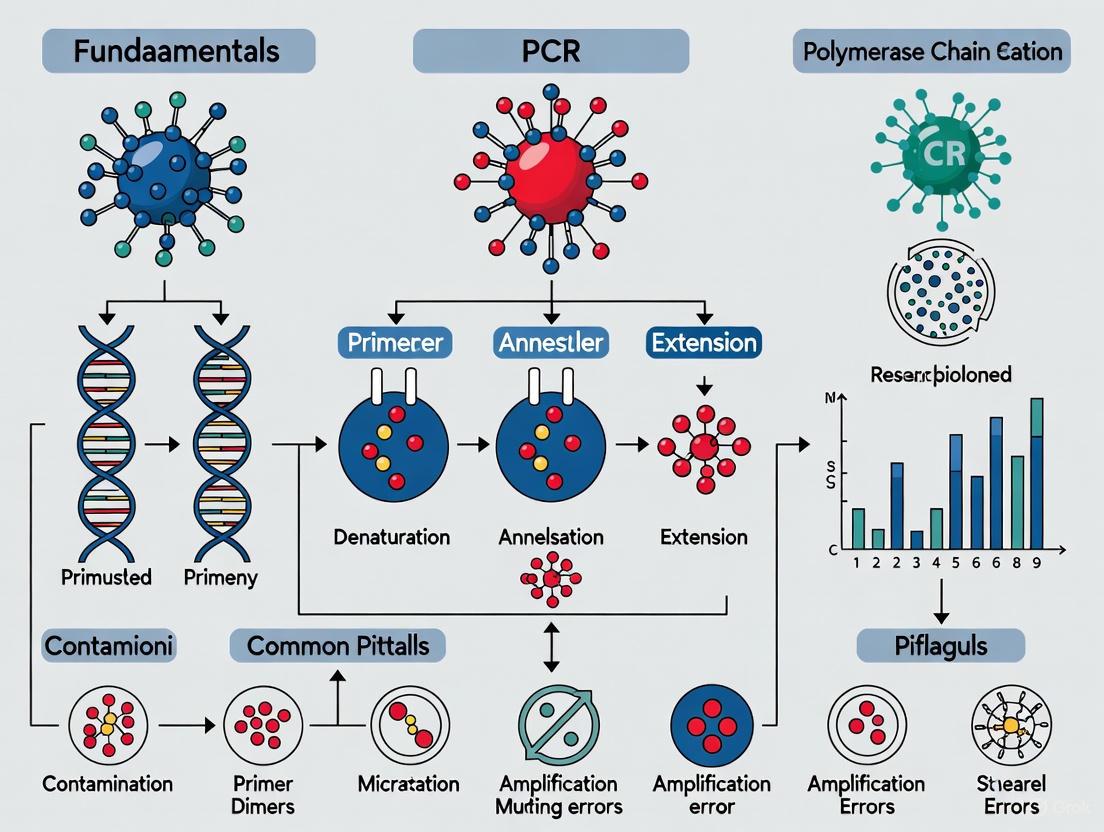
This comprehensive guide provides researchers, scientists, and drug development professionals with an in-depth exploration of Polymerase Chain Reaction (PCR).
PCR Mastery: A Scientist's Guide to Fundamentals, Optimization, and Advanced Applications
Abstract
This comprehensive guide provides researchers, scientists, and drug development professionals with an in-depth exploration of Polymerase Chain Reaction (PCR). It covers core principles from reaction components to thermocycling, details methodological considerations for diverse PCR types including qPCR and dPCR, and offers systematic troubleshooting for common pitfalls like contamination and non-specific amplification. The article further validates techniques through comparative analysis of emerging methods, equipping professionals with the knowledge to ensure robust, reproducible, and high-fidelity results in both research and clinical diagnostics.
The Building Blocks of PCR: Core Principles and Reaction Components
The Polymerase Chain Reaction (PCR) is a cornerstone technique of modern molecular biology, enabling the exponential amplification of specific DNA fragments from minute starting quantities. [1] Since its introduction by Kary Mullis in 1985, PCR has revolutionized fields from clinical diagnostics to basic research. [1] [2] Its success, however, hinges on the precise interplay of five essential components: the template DNA, primers, DNA polymerase, deoxynucleoside triphosphates (dNTPs), and magnesium ions (Mg²⁺). [3] A thorough understanding of the role, optimal concentration, and common pitfalls associated with each component is fundamental for developing robust and reliable PCR-based assays in research and drug development. This guide provides an in-depth technical examination of these core elements, framing them within the context of PCR fundamentals and common experimental challenges.
The Five Essential Components
Template DNA
Role: The template DNA is the target sequence that will be amplified. It provides the architectural blueprint that the primers and DNA polymerase use to synthesize new DNA strands. [3]
Key Considerations: The source, quality, and quantity of template DNA are critical for amplification success. Template DNA can originate from various sources, including genomic DNA (gDNA), complementary DNA (cDNA), or plasmid DNA. [4] The optimal input amount depends on the template's complexity; for instance, 0.1–1 ng of plasmid DNA is often sufficient, while 5–50 ng may be required for gDNA in a 50 µL reaction. [4] [5] Using too much DNA can lead to non-specific amplification and reagent depletion, whereas too little can result in weak or no amplification. [5] The template must also be of high purity, as contaminants like salts, solvents, or proteins can inhibit DNA polymerase. [1] [6] [5] In some applications, direct PCR is performed from crude samples (e.g., cells or tissue lysates), which requires DNA polymerases with high resistance to inhibitors. [7]
Primers
Role: Primers are short, single-stranded DNA oligonucleotides (typically 15–30 bases long) that are designed to be complementary to the sequences flanking the target region. [4] They provide the free 3'-hydroxyl group necessary for DNA polymerase to initiate DNA synthesis. [1]
Key Considerations: Meticulous primer design is arguably the most critical factor for PCR specificity. Poorly designed primers are a common source of PCR failure, leading to issues like primer-dimer formation or amplification of non-target sequences. [5] Table 1 summarizes the fundamental principles of effective primer design. Primers should be checked for self-complementarity (which can cause hairpin loops) and complementarity to each other (which leads to primer-dimer formation). [2] The two primers in a pair should have similar melting temperatures (Tm) to ensure both bind to their respective targets with similar efficiency during the annealing step. [2] [4] Primer concentration is also crucial; high concentrations promote mispriming, while low concentrations yield little product. [4] A range of 0.1–1 µM is generally recommended. [4]
Table 1: Key Guidelines for Primer Design
| Parameter | Recommended Guideline | Rationale |
|---|---|---|
| Length | 15–30 nucleotides | Balances specificity and binding efficiency. [4] |
| GC Content | 40–60% | Ensates stable binding; too high can cause non-specific binding. [2] [4] |
| Melting Temp (Tm) | 55–70°C; primers within 5°C of each other | Allows a single annealing temperature for both primers. [2] [4] |
| 3' End | End with a G or C; avoid >3 G/C in last 5 bases | "Clamps" the end for efficient extension while minimizing mispriming. [2] [4] |
| Specificity | Avoid self-complementarity, direct repeats, and complementarity between primers | Prevents secondary structures (hairpins) and primer-dimer artifacts. [2] [4] |
DNA Polymerase
Role: DNA polymerase is the enzyme that catalyzes the template-directed synthesis of new DNA strands. It adds nucleotides to the 3' end of the annealed primer, extending the complementary strand in the 5' to 3' direction. [1] [3]
Key Considerations: The discovery of thermostable DNA polymerases, like Taq polymerase from Thermus aquaticus, was pivotal for automating PCR. [1] [3] Taq polymerase has a half-life of approximately 40 minutes at 95°C, allowing it to withstand the repeated high-temperature denaturation steps. [4] In a standard 50 µL reaction, 1–2.5 units of enzyme are typically used. [8] [4] However, Taq polymerase lacks proofreading (3'→5' exonuclease) activity, leading to a relatively high error rate, which can be a significant drawback for applications like cloning or sequencing. [3] For such applications, high-fidelity polymerases (e.g., Pfu, Q5) are preferred. [5] Furthermore, hot-start polymerases (inactivated by antibodies or chemical modifications until the initial denaturation step) are widely used to prevent non-specific amplification and primer-dimer formation that can occur during reaction setup at lower temperatures. [6] [7]
Deoxynucleoside Triphosphates (dNTPs)
Role: dNTPs (dATP, dCTP, dGTP, and dTTP) are the essential building blocks from which DNA polymerase synthesizes the new DNA strands. [3]
Key Considerations: The four dNTPs must be provided in equimolar concentrations to ensure faithful and efficient DNA synthesis. [4] [3] A final concentration of 0.2 mM for each dNTP is commonly used and is generally suitable for amplifying a wide range of targets. [4] [3] The concentration of dNTPs is intrinsically linked to the Mg²⁺ concentration, as Mg²+ binds to dNTPs in the reaction. [4] Excessively high dNTP concentrations can chelate all available Mg²⁺, inhibiting the polymerase, while concentrations that are too low will limit the yield of the PCR product. [4] For some high-fidelity applications, lower dNTP concentrations (0.01–0.05 mM) can be used to improve fidelity. [4] [3] dNTPs are labile and should be stored at -20°C in neutral pH buffers to prevent degradation. [3]
Magnesium Ions (Mg²⁺)
Role: Magnesium ions act as an essential cofactor for DNA polymerase activity. [3] They facilitate the binding of the dNTPs to the enzyme's active site and are directly involved in the catalytic reaction for phosphodiester bond formation. [4] Additionally, Mg²⁺ helps stabilize the double-stranded structure of DNA and the primer-template complex. [4] [3]
Key Considerations: The concentration of Mg²⁺ is one of the most variable parameters in PCR optimization and has a profound impact on reaction efficiency and specificity. It is typically supplied as MgCl₂ in the reaction buffer. [2] A final concentration in the range of 1.5 to 2.5 mM is a common starting point, but optimal concentration must be determined empirically for each primer-template system. [2] [4] Table 2 outlines the effects of incorrect Mg²⁺ concentration. Too little Mg²⁺ results in low enzyme activity and low product yield, while too much Mg²⁺ can stabilize non-specific primer-template interactions, leading to spurious amplification, and can also increase the error rate of non-proofreading polymerases. [4]
Table 2: Effects of Mg²⁺ Concentration on PCR
| Mg²⁺ Level | Impact on PCR Reaction |
|---|---|
| Too Low | Reduced DNA polymerase activity; low or no yield of the desired product. [4] |
| Optimal | High specificity and yield; efficient primer annealing and strand elongation. [2] |
| Too High | Increased non-specific amplification; higher error rate in nucleotide incorporation. [4] |
The PCR Workflow and Component Interaction
A standard PCR involves a cyclical three-step process: denaturation, annealing, and extension. The interaction of the five core components throughout these steps is illustrated in the workflow below.
Advanced PCR Strategies and Troubleshooting
Common Pitfalls and Research-Ready Solutions
Even with a sound theoretical understanding, PCR experiments can fail. The table below links common problems directly to their underlying causes and provides actionable solutions for researchers.
Table 3: Common PCR Problems and Research Solutions
| Problem | Potential Causes | Proven Solutions & Reagents |
|---|---|---|
| No/Low Yield | Degraded template, inefficient polymerase, low [dNTPs/Mg²⁺], incorrect Tm. [6] | Quantify DNA (spectro/fluorometry); use high-processivity enzymes; titrate Mg²⁺ and dNTPs; optimize with gradient PCR. [6] [5] |
| Non-Specific Bands/Smearing | Low annealing temperature, excess enzyme/primers/Mg²⁺, contaminated primers. [6] | Increase annealing T; use hot-start polymerase; titrate primers/enzyme/Mg²⁺; design new primers; use additives like DMSO or BSA. [6] [4] [7] |
| Primer-Dimer | Primer 3'-end complementarity, overlong annealing, high primer concentration. [6] | Redesign primers; increase annealing T; use hot-start polymerase; reduce primer concentration. [6] [2] [4] |
Advanced Strategies for Challenging Applications
For demanding research applications, standard PCR conditions are often insufficient. Advanced strategies have been developed to overcome these challenges:
- Hot-Start PCR: This method employs an inactivated DNA polymerase (via antibodies, aptamers, or chemical modification) that is only activated at high temperatures. This prevents non-specific amplification and primer-dimer formation during reaction setup, significantly enhancing specificity. [7]
- Touchdown PCR: This cycling strategy starts with an annealing temperature higher than the primers' Tm and gradually decreases it in subsequent cycles. This ensures that the first, most critical amplifications are highly specific, favoring the desired target over non-specific products. [7]
- GC-Rich PCR: Amplifying GC-rich templates (>65%) is difficult due to stable secondary structures. The use of additives like DMSO, formamide, or betaine helps destabilize these structures. Combining these with highly processive polymerases and higher denaturation temperatures (e.g., 98°C) can enable successful amplification. [2] [7]
The Scientist's Toolkit: Essential Research Reagents
Table 4: Essential Reagents for PCR Setup and Analysis
| Reagent / Kit | Function / Application |
|---|---|
| Hot-Start DNA Polymerase | Increases specificity by preventing activity until initial denaturation. Essential for multiplex and high-sensitivity PCR. [7] |
| dNTP Mix (Neutral pH) | Provides balanced, high-purity nucleotides for efficient and accurate DNA synthesis. [3] |
| MgCl₂ Solution | A separate, titratable source of Mg²⁺ for fine-tuning reaction stringency and yield. [2] [4] |
| PCR Additives (DMSO, BSA, Betaine) | Co-solvents and stabilizers to overcome challenges like high GC-content, secondary structures, or the presence of inhibitors. [2] [7] |
| Nucleic Acid Gel Electrophoresis System | Standard method for analyzing PCR amplicon size, quantity, and specificity post-amplification. [1] [8] |
The robust and reproducible amplification of DNA via PCR is a fundamental skill in the molecular scientist's arsenal. Success is not merely a function of following a protocol but hinges on a deep, mechanistic understanding of the five essential components—template DNA, primers, DNA polymerase, dNTPs, and Mg²⁺—and their dynamic interplay. By applying the principles of optimal primer design, meticulous reagent quantification, and strategic optimization outlined in this guide, researchers and drug development professionals can effectively troubleshoot failed experiments, adapt methods for specialized applications, and ensure the generation of high-quality, reliable data that underpins scientific discovery.
The Polymerase Chain Reaction (PCR) is one of the most pivotal techniques in modern molecular biology, enabling the exponential amplification of specific DNA sequences from minimal starting material. Since its development by Kary Mullis in 1983, PCR has become an indispensable tool across diverse fields including basic research, clinical diagnostics, and pharmaceutical development [9]. At the heart of this method lies the thermal cycler, an instrument that automates the precise temperature cycling required for DNA amplification. This technical guide provides a comprehensive examination of the PCR process through the lens of thermal cycler operation, offering laboratory professionals an in-depth understanding of the instrumentation, biochemical processes, and optimization strategies essential for experimental success.
The Core Mechanism of PCR: Three Essential Stages
The PCR process employs repeated cycles of three fundamental temperature-dependent steps to achieve exponential amplification of a target DNA sequence. Each stage performs a distinct biochemical function facilitated by the precise temperature control of the thermal cycler [9] [10].
Denaturation
The initial step of each PCR cycle involves denaturation, where the reaction mixture is heated to a high temperature, typically between 94-98°C [10]. At this elevated temperature, the hydrogen bonds between complementary base pairs in the double-stranded DNA template are broken, resulting in the separation of the DNA into two single strands. This process provides the necessary single-stranded templates for the subsequent priming and extension steps. Incomplete denaturation, often resulting from insufficient temperature or time at the denaturation temperature, can lead to poor amplification efficiency and yield [10].
Primer Annealing
Following denaturation, the temperature is rapidly lowered to the annealing temperature, typically within the range of 50-65°C [10]. During this stage, short, single-stranded DNA primers bind to their complementary sequences on the flanking regions of the target DNA segment. The specificity of this annealing process is critical for successful amplification, as it determines which DNA sequence will be amplified. The optimal annealing temperature is primer-specific and must be carefully optimized—too high a temperature prevents primer binding and reduces yield, while too low a temperature permits non-specific binding and amplification of unintended products [11] [10].
Extension
The final step involves extension or elongation, where the temperature is raised to the optimal working temperature for the DNA polymerase, typically 72°C for Taq polymerase [9] [10]. During this phase, the DNA polymerase binds to the primer-template complexes and synthesizes new complementary DNA strands by adding nucleotides to the 3' ends of the primers in the 5'→3' direction. The duration of the extension step is proportional to the length of the target DNA fragment, with common extension times of 1 minute per kilobase for standard polymerases [11].
These three steps constitute one PCR cycle, and the process is typically repeated for 25-35 cycles, potentially generating millions of copies of the target DNA sequence [9].
Figure 1: The Three Fundamental Stages of PCR Amplification. This cyclic process of denaturation, annealing, and extension enables exponential amplification of target DNA sequences over 25-35 cycles.
Thermal Cycler Technology: Instrumentation and Performance Metrics
The thermal cycler is far more than a simple programmable heating block; it is a sophisticated instrument that guarantees the precision, reproducibility, and efficiency of the PCR process. Understanding its components and performance characteristics is essential for optimal experimental design and execution [10].
Critical Instrument Components
- Peltier Elements: Solid-state heat pumps responsible for the rapid and precise heating and cooling of the reaction block, with performance measured by ramp rate (°C/second) [10].
- Thermal Block: The metal block (typically aluminum) that holds the reaction vessels. Its critical performance indicator is temperature uniformity across all wells, ideally within ±0.5°C [10].
- Heated Lid: Maintains temperature (usually 105°C) above the reaction liquids to prevent evaporation and condensation, ensuring reaction volume consistency [10].
- Interface/Software: Enables programming of complex protocols, including gradient functionality for rapid annealing temperature optimization [10].
Key Performance Metrics for Laboratory Applications
When selecting a thermal cycler for research applications, several critical performance metrics must be considered [10]:
Table 1: Essential Performance Metrics for Thermal Cyclers in Research Applications
| Performance Metric | Technical Specification | Impact on PCR Results |
|---|---|---|
| Temperature Accuracy | Typically within ±0.25°C of setpoint | Ensures each reaction step occurs at optimal temperature for enzyme activity and specificity |
| Temperature Uniformity | ±0.5°C across entire block | Prevents well-to-well variation in amplification efficiency and yield |
| Ramp Rate | Up to 6°C/second in advanced systems | Reduces overall run time and limits duration at suboptimal temperatures |
| Block Capacity and Flexibility | 96-well standard, with options for 384-well and dual blocks | Accommodates varying throughput needs and experimental scales |
| Calibration Requirements | Regular calibration with certified temperature probes | Maintains long-term accuracy and reproducibility for regulated environments |
The Scientist's Toolkit: Essential PCR Reagents and Their Functions
Successful PCR amplification requires careful formulation of reaction components, each serving specific functions in the amplification process [9] [11] [12].
Table 2: Essential Components of a PCR Reaction Master Mix
| Reagent Component | Typical Concentration | Critical Function | Optimization Notes |
|---|---|---|---|
| DNA Polymerase | 0.5-2.5 units/50μL reaction | Enzyme that synthesizes new DNA strands; thermostability essential | Choice depends on application: Taq for routine PCR, high-fidelity enzymes for cloning [11] |
| Primers (Forward & Reverse) | 0.1-0.5 μM each | Sequence-specific oligonucleotides that define amplification targets | Design critical: 18-25 bases, 40-60% GC content; avoid dimers and secondary structures [11] |
| dNTPs | 200 μM each | Nucleotide building blocks (dATP, dCTP, dGTP, dTTP) for DNA synthesis | Balanced concentrations essential to prevent misincorporation errors [12] |
| Magnesium Chloride (MgCl₂) | 1.5-2.5 mM | Cofactor for DNA polymerase; significantly impacts enzyme activity and fidelity | Concentration requires optimization; affects primer annealing and product specificity [12] |
| Reaction Buffer | 1X concentration | Provides optimal pH and ionic conditions for polymerase activity | Often includes additives like DMSO or betaine for challenging templates [12] |
| Template DNA | 1-100 ng (genomic DNA) | Source of target sequence to be amplified | Quality critical: assess via spectrophotometry (A260/280 >1.8); avoid contaminants [11] [12] |
Advanced PCR Applications and Corresponding Thermal Cycler Requirements
The fundamental PCR process has been adapted for specialized applications, each with distinct thermal cycling requirements and instrumental considerations [10].
Quantitative PCR (qPCR)
qPCR incorporates fluorescent reporters to monitor amplification in real-time, enabling precise quantification of initial target concentration. This method requires thermal cyclers with integrated optical systems, including excitation light sources and fluorescence detectors. The instruments must provide exceptional temperature stability and uniformity to ensure consistent fluorescence measurements at each cycle [10]. Data analysis involves determining the cycle threshold (Ct), the cycle number at which fluorescence exceeds a defined threshold, which correlates with the initial target concentration [10] [13].
Reverse Transcription PCR (RT-PCR)
Designed for RNA analysis, RT-PCR begins with a reverse transcription step where reverse transcriptase synthesizes complementary DNA (cDNA) from RNA templates. Thermal cyclers for this application must accommodate an extended initial incubation at lower temperatures (typically 37-50°C) for cDNA synthesis before transitioning to standard PCR cycling [10].
Digital PCR (dPCR)
dPCR represents an advanced approach for absolute nucleic acid quantification without standard curves. The method works by partitioning samples into thousands of individual reactions, with thermal cyclers specifically designed for endpoint detection and analysis. Systems like the Bio-Rad QX200 Droplet Digital system and Qiagen QIAcuity employ different partitioning technologies (water-oil emulsions vs. nanoplate partitions) but both require precise thermal control for accurate absolute quantification [14].
Optimization Strategies and Troubleshooting Common PCR Issues
Even experienced researchers encounter PCR failures, often stemming from subtle deviations in protocol or reaction components. Systematic optimization and troubleshooting are essential for reliable results [11] [12].
Annealing Temperature Optimization
The annealing temperature is one of the most critical variables requiring optimization. Using an annealing temperature gradient function, available on many modern thermal cyclers, represents the most efficient approach to establish ideal conditions. The recommended starting point is 5°C below the primer melting temperature (Tm), with empirical testing across a range to identify the temperature providing maximum specificity and yield [11] [12].
Addressing Amplification Challenges
- GC-Rich Templates: Stable secondary structures in GC-rich regions (>60% GC content) can hinder amplification. Additives including DMSO (5-20%), formamide (5-20%), or betaine (1-3 M) can help melt these structures and improve results [12].
- AT-Rich Templates: For AT-rich sequences, use longer primers (>22 bp) and consider two-step PCR (combining annealing and extension). Additional MgCl₂ (up to 10 mM) may also enhance amplification [12].
- Long Amplicons: Amplification of fragments >5 kb requires polymerases with proofreading activity and longer extension times. Specialized enzyme blends like TAKARA LA Taq are specifically designed for long-range PCR [12].
Common PCR Pitfalls and Solutions
- Contamination Issues: Use dedicated equipment, filter tips, and separate work areas for PCR setup. Include negative controls (no-template controls) to detect contamination [11].
- Non-specific Amplification: Optimize annealing temperature, reduce template concentration, use hot-start polymerases, or adjust magnesium concentration [11] [12].
- Poor Yield: Check reagent integrity, ensure sufficient cycle numbers, verify primer quality, and optimize template quality and concentration [11].
- No Amplification: Verify polymerase activity, check primer design and specificity, ensure adequate template quality and concentration, and confirm thermal cycler calibration [11] [12].
The thermal cycler stands as a cornerstone technology in molecular biology, transforming the theoretical process of DNA amplification into a robust, reproducible, and automated laboratory technique. Its precision in orchestrating the delicate temperature transitions between denaturation, annealing, and extension directly determines the specificity, efficiency, and yield of PCR amplification. For research and drug development professionals, a comprehensive understanding of thermal cycler operation, performance metrics, and optimization strategies is not merely technical detail but fundamental knowledge required for experimental success. As PCR methodologies continue to evolve with emerging technologies including digital PCR, microfluidics, and rapid cycling systems, the underlying principles of precise thermal control remain constant. Mastery of these principles enables researchers to troubleshoot experimental challenges, validate methodological approaches, and generate reliable, reproducible data that advances scientific discovery and therapeutic development.
In the Polymerase Chain Reaction (PCR), the DNA polymerase enzyme serves as the core engine, catalyzing the synthesis of new DNA strands. The selection of an appropriate DNA polymerase is a critical decision that directly determines the success, accuracy, and efficiency of amplification. All polymerases are not created equal; they possess distinct characteristics tailored for different applications. For researchers, scientists, and drug development professionals, understanding these differences—particularly in fidelity, thermostability, and specificity—is fundamental to experimental design. This guide provides an in-depth technical examination of DNA polymerases, focusing on the key differentiators between common enzymes like Taq, Pfu, and Hot-Start variants, and their impact on overcoming common PCR pitfalls. Selecting the wrong polymerase can lead to a cascade of problems, from misincorporated mutations in cloned sequences to complete amplification failure, underscoring the necessity of an informed choice [15] [16].
Core Characteristics of DNA Polymerases
The performance of a DNA polymerase in PCR is defined by four key properties: fidelity, thermostability, specificity, and processivity. A thorough understanding of these characteristics is a prerequisite for optimal enzyme selection.
- Fidelity: Fidelity refers to the accuracy of DNA synthesis, quantified as the error rate (number of misincorporated nucleotides per base synthesized per duplication event). DNA polymerases with proofreading activity (3'→5' exonuclease activity) can recognize and excise misincorporated nucleotides, resulting in significantly higher fidelity. Error rates are typically expressed in scientific notation (e.g., 10⁻⁵), where a smaller exponent indicates higher accuracy [16].
- Thermostability: This is the ability of the enzyme to retain activity after prolonged exposure to the high temperatures required for PCR denaturation steps (typically ~95°C). Enzymes derived from hyperthermophilic organisms, such as Pyrococcus furiosus, exhibit superior thermostability compared to those from Thermus aquaticus [16].
- Specificity: Specificity describes the enzyme's ability to amplify only the intended target sequence, minimizing non-specific products and primer-dimers. Hot-Start polymerases are engineered for enhanced specificity by remaining inactive until a high-temperature activation step, preventing spurious amplification during reaction setup [16] [17].
- Processivity: Processivity is the number of nucleotides a polymerase can incorporate per single binding event. A highly processive enzyme can more efficiently amplify long targets, GC-rich sequences, and templates with complex secondary structures [16].
Table 1: Defining Core Characteristics of DNA Polymerases
| Characteristic | Definition | Impact on PCR | Enzyme Example |
|---|---|---|---|
| Fidelity | Accuracy of nucleotide incorporation during DNA synthesis. | Critical for cloning, sequencing, and mutagenesis; low fidelity introduces mutations. | Pfu, Q5, Phusion [18] [16] |
| Thermostability | Resistance to irreversible inactivation at high temperatures (e.g., 95°C). | Essential for PCR; higher thermostability allows for more cycles and robust amplification. | Pfu (hyperthermostable) [16] |
| Specificity | Ability to amplify only the intended target sequence. | Reduces background and non-specific amplification, leading to cleaner results. | Hot-Start Taq [16] [17] |
| Processivity | Number of nucleotides added per enzyme-binding event. | Important for amplifying long fragments and difficult templates (e.g., high GC%). | Engineered polymerases [16] |
Quantitative Fidelity Comparison of Common DNA Polymerases
Fidelity is often the primary criterion for enzyme selection in applications requiring high accuracy. The error rates of different polymerases can vary by orders of magnitude. The following table synthesizes quantitative fidelity data from direct sequencing and manufacturer specifications, providing a clear comparison for researchers.
Table 2: Error Rate and Fidelity of Common DNA Polymerases
| DNA Polymerase | Proofreading (3'→5' Exo) | Published Error Rate (Errors/bp/duplication) | Fidelity Relative to Taq | Resulting Ends |
|---|---|---|---|---|
| Taq | No | 1.3 - 20 x 10⁻⁵ [18] | 1x [15] | 3'A Overhang |
| AccuPrime Taq (HF) | No | Not Available | ~9x better [15] | 3'A Overhang |
| OneTaq | Yes (Low) | Not Available | ~2x better [18] | 3'A/Blunt |
| Pfu | Yes | 1 - 2 x 10⁻⁶ [15] | ~6-10x better [15] | Blunt |
| Phusion | Yes | 4 x 10⁻⁷ (HF Buffer) [15] | ~50x better [15] [18] | Blunt |
| Q5 | Yes | Not Available | ~280x better [18] | Blunt |
The data demonstrates a stark contrast between non-proofreading and proofreading enzymes. While standard Taq polymerase has an error rate in the range of 10⁻⁵, high-fidelity enzymes like Pfu, Phusion, and Q5 exhibit error rates in the 10⁻⁶ to 10⁻⁷ range, making them over 10 to 200 times more accurate than Taq [15] [18]. This translates to a significantly lower probability of introducing mutations during amplification, which is indispensable for downstream applications like cloning and functional analysis.
Experimental Protocols for Determining Fidelity
The fidelity values cited in manufacturer documentation and research papers are derived from rigorous experimental assays. Understanding these methodologies is crucial for critically evaluating the reported data.
LacZ-Based Forward Mutation Assay
This classical method involves amplifying a region of the lacZ gene (which encodes β-galactosidase) and cloning the products into a vector. The plasmid is then transformed into E. coli, and colonies are screened using a colorimetric assay.
- Functional lacZ: Forms blue colonies.
- Mutated lacZ: Loses function and forms white colonies. The error rate is calculated based on the number of white colonies, and the mutated sequences are often analyzed to determine the types of mutations (mutational spectrum) the polymerase tends to make [15] [16].
Direct Sequencing of Cloned PCR Products
With the reduced cost of DNA sequencing, direct sequencing has become a powerful and straightforward method for fidelity determination.
- Methodology: A target sequence (or multiple diverse targets) is amplified by PCR. The products are cloned, and multiple individual clones are Sanger sequenced. The sequences are then aligned and compared to the known original template sequence to identify any mutations introduced during PCR [15].
- Advantage: This method allows for the interrogation of a vast DNA sequence space, as it is not limited to a single reporter gene and can reveal how sequence context influences error rate [15].
Next-Generation Sequencing (NGS)
NGS offers the most comprehensive approach for fidelity measurement.
- Workflow: PCR amplicons are prepared and directly subjected to NGS, generating millions of sequence reads. Bioinformatic analysis compares these reads to the reference template, providing a highly accurate and detailed profile of the polymerase's error rate and mutational spectrum across the entire amplicon [16].
The following diagram illustrates the logical workflow for selecting a fidelity assay based on experimental goals and resources.
A Practical Guide to DNA Polymerase Selection
Choosing the correct polymerase requires matching the enzyme's properties to the experimental application. The following table provides a consolidated guide to streamline this decision-making process.
Table 3: Polymerase Selection Guide by Application
| Application | Recommended Polymerase Type | Key Rationale | Specific Examples |
|---|---|---|---|
| Routine PCR/Genotyping | Standard or Hot-Start Taq | Cost-effective, robust for simple amplicons; Hot-Start improves specificity. | GoTaq G2, Hot Start Taq [17] |
| Cloning & Site-Directed Mutagenesis | High-Fidelity Proofreading | Low error rate is critical to avoid introducing mutations into the cloned insert. | Q5, Phusion, Pfu [18] [16] [17] |
| Long-Range PCR (>5 kb) | High-Processivity Blends | Engineered for high processivity and stability to synthesize long fragments. | LongAmp Taq, GoTaq Long PCR Master Mix [18] [17] |
| Rapid Colony PCR | Master Mix Formulations | Pre-mixed, convenient, and often contain dyes for direct gel loading. | Various Taq Master Mixes [17] |
| Amplification from Difficult Templates (GC-rich, inhibitors) | High-Processivity / Specialty | High affinity for templates; some are formulated with enhancers to overcome inhibitors. | Platinum II Taq, GC-rich specific kits [16] [19] |
The Hot-Start Advantage
Hot-Start technology is a modification that inhibits the polymerase's activity at room temperature. This is typically achieved through antibody-based inhibition or chemical modification. By preventing activity during reaction setup, Hot-Start polymerases drastically reduce the amplification of non-specific targets and primer-dimers that form at lower temperatures, thereby increasing the yield of the desired product and simplifying troubleshooting [16] [17]. This makes them a superior choice for most applications, especially multiplex PCR and high-throughput setups.
Troubleshooting Common PCR Issues Related to Polymerase Selection
Many common PCR problems can be traced back to a suboptimal choice of DNA polymerase or reaction conditions. The table below outlines key issues, their polymerase-related causes, and evidence-based solutions.
Table 4: Troubleshooting PCR Problems via Polymerase Selection and Optimization
| Observation | Possible Polymerase-Related Cause | Recommended Solution |
|---|---|---|
| No Amplification | Enzyme inhibited by sample contaminants; poor thermostability. | Use a polymerase with high processivity and inhibitor tolerance; verify enzyme thermostability [16] [19]. |
| Non-Specific Bands/High Background | Non-Hot-Start polymerase activity during setup; annealing temperature too low. | Switch to a Hot-Start polymerase; increase annealing temperature [16] [19] [20]. |
| Low Fidelity/Sequence Errors | Use of a low-fidelity polymerase (e.g., Taq); excessive Mg²⁺; too many cycles. | Use a high-fidelity polymerase (e.g., Q5, Pfu); optimize Mg²⁺ concentration; reduce cycle number [19] [20]. |
| Failure to Amplify Long Templates | Low-processivity enzyme; insufficient extension time. | Use a long-range PCR enzyme blend; increase extension time [19] [17]. |
| Primer-Dimer Formation | Non-Hot-Start polymerase extends complementary 3' primer ends during setup. | Switch to a Hot-Start polymerase; optimize primer design and concentration [6] [19]. |
The Scientist's Toolkit: Essential Reagents for PCR and Fidelity Analysis
- High-Fidelity DNA Polymerase (e.g., Q5, Phusion): An engineered enzyme with high intrinsic fidelity and proofreading activity, essential for applications where sequence accuracy is paramount [18] [16].
- Hot-Start DNA Polymerase (e.g., Hot Start Taq, Platinum II Taq): A modified enzyme that remains inactive until a high-temperature step, used to suppress non-specific amplification and primer-dimer formation [16] [17].
- dNTP Mix: A solution containing equimolar concentrations of dATP, dCTP, dGTP, and dTTP. Unbalanced dNTP concentrations can increase the error rate of the polymerase [19] [20].
- Mg²⁺ Solution (MgCl₂ or MgSO₄): A critical cofactor for DNA polymerase activity. Its concentration must be optimized, as excess Mg²⁺ can reduce fidelity and promote non-specific binding [2] [19] [20].
- PCR Enhancers/Additives (e.g., DMSO, Betaine, BSA): Reagents used to improve amplification efficiency of difficult templates (e.g., GC-rich) or to mitigate the effects of PCR inhibitors present in some sample types [2] [6] [19].
- Cloning Vector & Competent Cells: Required for fidelity assays like the lacZ screen or direct sequencing of clones, allowing for the isolation and analysis of individual PCR products [15] [16].
The selection of a DNA polymerase is a fundamental step in PCR experimental design that directly influences the reliability and interpretation of results. Taq polymerase remains a robust and cost-effective choice for routine amplification where ultimate fidelity is not critical. However, for applications demanding high accuracy—such as cloning, sequencing, and mutagenesis—proofreading enzymes like Pfu, Phusion, and Q5 are indispensable due to their error rates that are orders of magnitude lower. Furthermore, the adoption of Hot-Start technology, regardless of fidelity needs, provides a straightforward path to enhanced specificity and yield. By aligning the core characteristics of fidelity, thermostability, specificity, and processivity with the experimental goals, researchers can strategically select the optimal enzyme, thereby avoiding common pitfalls and ensuring the success of their molecular biology workflows.
In the polymerase chain reaction (PCR), template DNA is the genetic material that contains the target sequence to be amplified. It serves as the essential blueprint for DNA polymerase to synthesize new DNA strands. The quality, quantity, and source of the template DNA are foundational factors that directly determine the success or failure of any PCR experiment [1]. Effective utilization of nucleic acids in molecular biology applications—from genetic engineering and drug development to diagnostics and therapeutics—requires precise analysis and manipulation, making the understanding of template DNA paramount [21]. This guide provides an in-depth examination of template DNA sources, optimal input amounts, and rigorous quality assessment methodologies, framed within the critical context of PCR fundamentals and common experimental pitfalls.
Template DNA for PCR can originate from a diverse array of biological materials. The composition and complexity of the DNA source significantly influence the optimal input amount for amplification [4].
- Genomic DNA (gDNA): Extracted from the nucleus of cells, gDNA is a complex template containing the entire genetic complement of an organism. It is commonly isolated from blood, tissue, or cultured cells [22]. Due to its complexity, it typically requires a higher input amount, often in the range of 5–50 ng per 50 µL reaction [4].
- Complementary DNA (cDNA): Synthesized from messenger RNA (mRNA) using the enzyme reverse transcriptase, cDNA represents the expressed gene profile of a cell at a specific time [1]. It is the template of choice for gene expression analysis via reverse transcription PCR (RT-PCR).
- Plasmid DNA: These small, circular, extrachromosomal DNA molecules are commonly used in molecular cloning and recombinant protein expression. Because of their simplicity and high copy number, they require significantly less template, often only 0.1–1 ng per 50 µL reaction [4].
- PCR Products: Previously amplified DNA fragments can be re-amplified. However, unpurified products may contain carryover primers, dNTPs, and salts that can inhibit subsequent reactions. It is generally recommended to purify or dilute these products before re-amplification [4].
Saliva has emerged as a viable and non-invasive source of human DNA, particularly useful in forensic science and pediatric or geriatric populations where blood collection is challenging [23]. Saliva contains exfoliated buccal epithelial cells, with one study reporting a mean DNA yield of 48.4 ± 8.2 μg/mL from saliva samples, which was sufficient for successful Short Tandem Repeat (STR) amplification in 75% of samples despite some protein contamination [23]. This highlights that with proper handling, even suboptimal samples can yield usable DNA for PCR.
Optimal Template Quantity and Calculation
Using the correct amount of template DNA is critical for reaction success. Insufficient template leads to weak or no amplification, while excess template can increase nonspecific amplification and deplete reagents [24] [4].
Recommended Quantities by Template Type
The table below summarizes the optimal template quantities for a standard 50 µL PCR reaction.
Table 1: Optimal Template DNA Quantities for a 50 µL PCR Reaction
| Template Type | Recommended Quantity | Notes | Key Considerations |
|---|---|---|---|
| Plasmid DNA | 0.1–1 ng | Low complexity, high copy number. | Higher amounts can promote nonspecific binding. |
| Genomic DNA | 1 ng–1 µg [25];5–50 ng is typical [4] | High complexity, single or low-copy targets. | Requires more template due to the large genome and single-copy target genes. |
| cDNA | 1–100 ng | Derived from mRNA; depends on abundance of target transcript. | Varies significantly with the expression level of the gene of interest. |
| PCR Products | Variable; 1–5 µL of a diluted (1:10 to 1:100) prior reaction. | Purification is recommended to remove inhibitors from the first PCR. | Unpurified products carry over reagents that can inhibit the new reaction. |
Template Copy Number Calculation
In theory, a single molecule of DNA is sufficient for amplification under ideal conditions [4]. In practice, however, amplification efficiency depends on reaction components and polymerase sensitivity. For absolute quantification, especially with gDNA, template amount is sometimes expressed as copy number. The copy number can be calculated using Avogadro's constant (L = 6.022 x 10²³ molecules/mol) and the molar mass of the DNA:
Copy number = L x (mass of DNA input (g) / molar mass of DNA (g/mol))
The molar mass of a double-stranded DNA template is calculated as (number of base pairs) x (660 g/mol/bp). Online tools are available to simplify this calculation, ensuring that a sufficient number of target molecules are present in the reaction to allow for detectable amplification within a reasonable number of cycles [4].
Assessment of Template DNA Quality
The purity and integrity of template DNA are as critical as its concentration. Contaminants and degradation are major causes of PCR failure.
Quality Assessment Methods
Several techniques are employed to evaluate DNA quality, each with distinct strengths and limitations.
Table 2: Methods for Assessing DNA Quantity and Quality
| Method | Principle | Information Provided | Key Advantages | Key Limitations |
|---|---|---|---|---|
| UV-Vis Spectrophotometry [21] | Measures UV light absorption at 260 nm (nucleic acids), 280 nm (proteins), and 230 nm (salts, organics). | Concentration and purity ratios (A260/A280, A260/A230). | Quick, simple, and requires small sample volumes. | Cannot differentiate between DNA, RNA, and free nucleotides; inaccurate with contaminants. |
| Fluorometry [21] | Fluorescent dyes (e.g., PicoGreen) bind specifically to dsDNA and emit light upon excitation. | Highly specific and sensitive concentration, even for low-abundance samples. | Specific for dsDNA, more sensitive than UV, less affected by contaminants. | Requires specific dyes and equipment; results depend on calibration standards. |
| Agarose Gel Electrophoresis [21] | Separates DNA molecules by size in an electric field within an agarose matrix. | Visual assessment of DNA integrity (degradation) and approximate size and quantity. | Directly visualizes integrity; confirms high molecular weight for gDNA. | Not truly quantitative; time-consuming; requires more sample. |
Interpreting Purity Ratios
Spectrophotometric ratios are key indicators of sample purity:
- A260/A280 Ratio: Assesses protein contamination.
- A260/A230 Ratio: Assesses contamination by salts, carbohydrates, or organic compounds like guanidine or phenol.
It is important to note that the pH and ionic strength of the solvent can affect these ratios, and the blank solution should match the sample buffer [21]. A study on salivary DNA found that while only 45% of samples had optimal A260/A280 ratios (1.6-2.0), 75% still produced successful STR amplifications, indicating that slightly impure DNA can sometimes be used effectively [23].
Detailed Experimental Protocols
Protocol for DNA Extraction from Saliva and Blood
This protocol is adapted from a study comparing DNA yield from saliva and blood [23].
Sample Collection:
- Saliva: Ask subjects to spit 2 mL into a sterile disposable Petri dish. Transfer the saliva to a sterile vial using a sterile pipette.
- Blood: Draw 5 mL of blood using a sterile syringe and store it in a sterile Ethylenediaminetetraacetic acid (EDTA) vial to prevent coagulation.
- Store all samples at -20°C until DNA extraction.
DNA Extraction via Phenol-Chloroform Method:
- Lyse cells in the sample using a buffer containing a detergent like SDS or Triton X-100 [22].
- Add Proteinase K to digest proteins and inactivate nucleases [22].
- Add EDTA to chelate Mg²⁺, an essential cofactor for DNases, thereby protecting DNA from degradation [22].
- Add a mixture of phenol and chloroform to separate DNA from cellular debris. Centrifuge to partition the mixture: the upper aqueous phase contains DNA, the interphase contains denatured proteins, and the lower organic phase contains lipids.
- Carefully transfer the aqueous phase to a new tube.
- Precipitate the DNA by adding cold ethanol or isopropanol.
- Wash the DNA pellet with 70% ethanol to remove residual salts.
- Air-dry the pellet and resuspend it in sterile water or TE buffer.
DNA Quantification and Purity Assessment:
- Dilute 5 µL of the extracted DNA in 995 µL of sterile water (dilution factor = 200).
- Use a UV-Vis spectrophotometer to measure the absorbance at 260 nm, 280 nm, and 230 nm.
- Calculate the DNA concentration and the A260/A280 and A260/A230 ratios as described in previous sections.
Workflow for Template DNA Assessment
The following diagram illustrates the logical workflow for preparing and assessing template DNA prior to PCR.
The Scientist's Toolkit: Essential Reagents for DNA Analysis
Successful DNA analysis relies on a suite of specialized reagents. The table below details key materials and their functions.
Table 3: Essential Reagents for DNA Extraction and Quality Assessment
| Reagent / Material | Function | Key Considerations |
|---|---|---|
| Proteinase K [22] | A broad-spectrum serine protease that digests proteins and inactivates nucleases during cell lysis. | Essential for breaking down histones and other DNA-associated proteins. |
| EDTA (Ethylenediaminetetraacetic acid) [22] | A chelating agent that binds divalent metal ions like Mg²⁺ and Ca²⁺. | Inactivates DNases by removing their essential cofactor (Mg²⁺), thus protecting DNA from degradation. |
| Phenol-Chloroform [23] [22] | An organic solvent mixture used to separate DNA from other cellular components after lysis. | Proteins and lipids partition into the organic phase or interphase, while DNA remains in the aqueous phase. |
| Ethanol / Isopropanol [22] | Precipitates nucleic acids out of solution. | Used after extraction to concentrate and purify DNA from aqueous solutions. |
| SYBR Green / PicoGreen [21] | Fluorescent dyes that bind specifically to double-stranded DNA (dsDNA). | Used in fluorometric quantification; highly specific and sensitive compared to UV spectroscopy. |
| Agarose [21] | A polysaccharide polymer used to create a porous gel matrix for electrophoresis. | Allows separation of DNA fragments by size when an electric field is applied. |
| Ethidium Bromide (or safer alternatives) | Intercalating dye that binds to DNA and fluoresces under UV light. | Enables visualization of DNA bands in an agarose gel. (Note: Handle with care, safer alternatives are available). |
The reliability of any PCR experiment is fundamentally rooted in the starting material: the template DNA. A comprehensive understanding of the various DNA sources, their optimal quantification, and rigorous assessment of their quality and integrity is not merely a preliminary step but a critical determinant of experimental success. By adhering to standardized protocols for extraction, utilizing the appropriate quantification methods, and meticulously checking for contaminants and degradation, researchers can circumvent common pitfalls and ensure the generation of specific, efficient, and reproducible amplification results. As PCR continues to be a cornerstone technique in research, diagnostics, and therapeutics, mastering the fundamentals of template DNA preparation remains an indispensable skill for all life scientists.
Polymersase Chain Reaction (PCR) is a foundational technique in molecular biology, and its success critically depends on the design of oligonucleotide primers. Well-designed primers are the cornerstone of specific and efficient DNA amplification, enabling accurate results in gene expression analysis, cloning, diagnostics, and drug development. This guide details the core principles of PCR primer design, providing researchers with the knowledge to avoid common pitfalls and optimize their experimental outcomes. Adherence to these fundamentals ensures the amplification of the intended target with high yield and specificity, forming a reliable basis for downstream applications and research conclusions.
Core Primer Design Parameters
The following parameters form the foundation of effective primer design. Optimizing each one is crucial for successful PCR amplification.
Primer Length
Primer length directly influences specificity and hybridization efficiency.
Table 1: Primer Length Guidelines
| Parameter | Recommended Range | Rationale |
|---|---|---|
| Optimal Length | 18–30 nucleotides [26] [27] [28] | Provides a balance between specificity and efficient annealing. Shorter primers bind more efficiently but may lack specificity. |
| Specificity Consideration | Longer within range (e.g., 24–30 nt) | Increases specificity for complex templates like genomic DNA [27]. |
| Efficiency Consideration | Shorter within range (e.g., 18–22 nt) | Anneal more effectively to the target sequence, potentially requiring fewer PCR cycles [29]. |
Melting Temperature (T_m)
The melting temperature (T_m) is the temperature at which 50% of the DNA duplex dissociates into single strands. It is a critical factor for determining the PCR annealing temperature [29].
Key Guidelines:
- Recommended
T_m: Aim for aT_mbetween 55°C and 75°C, with an ideal range of 60–64°C for standard PCR [26] [28]. - Primer Pair Matching: The
T_mfor the forward and reverse primers should be within 1–5°C of each other to ensure both primers bind simultaneously with similar efficiency [26] [27] [28]. T_mCalculation: TheT_mis influenced by the primer's length, sequence, and buffer conditions. Simple formulas likeT_m = 4(G + C) + 2(A + T)can provide estimates, but for accuracy, use sophisticated algorithms (e.g., nearest-neighbor method) available in online tools that account for specific reaction conditions such as salt and Mg²⁺ concentration [30] [28].
GC Content
GC content refers to the percentage of guanine (G) and cytosine (C) bases in the primer sequence.
Table 2: GC Content and Sequence Considerations
| Feature | Recommendation | Reason for Recommendation |
|---|---|---|
| GC Content | 40–60% [26] [27] [29] | Balances primer stability and specificity. |
| GC Clamp | Include a G or C at the 3' end [26]. | Strengthens the binding of the primer's critical 3' end due to stronger triple hydrogen bonds. |
| Sequence Repeats | Avoid runs of 4 or more identical bases (e.g., GGGG) or dinucleotide repeats (e.g., ATATAT) [26] [28]. | Prevents mispriming and slippage, which can lead to non-specific products. |
| Base Distribution | Distribute G/C and A/T residues evenly; avoid high GC concentration at the 3' end [27]. | Prevents stable non-specific binding and promotes uniform hybridization. |
Avoiding Secondary Structures
Primers must be screened for self-complementarity to avoid structures that hinder amplification.
- Hairpins: Intramolecular base pairing within a single primer. Avoid loops with a ΔG value stronger (more negative) than -9.0 kcal/mol [28].
- Self-Dimers: Formed when two identical primers hybridize to each other.
- Cross-Dimers: Formed when forward and reverse primers hybridize together [29].
These structures reduce primer availability, decrease amplification efficiency, and can lead to primer-dimer artifacts, a common amplification of the primers themselves [26] [27].
Primer Design and Experimental Workflow
The process of successful PCR amplification extends from in-silico design to empirical validation. The following diagram illustrates the key stages and decision points in this workflow.
Experimental Protocols for Optimization
Even with perfect in-silico design, empirical optimization is often necessary.
Protocol 1: Annealing Temperature Optimization via Gradient PCR
A gradient thermal cycler is used to test a range of annealing temperatures simultaneously [31].
- Calculate
T_m: Determine the averageT_mof your primer pair using a reliable calculator. - Set Gradient: Program the thermal cycler with an annealing temperature gradient spanning approximately 5–10°C below to 5°C above the calculated average
T_m[32]. - Analyze Results: Run the PCR and analyze the products by gel electrophoresis. The optimal annealing temperature yields the highest amount of the correct specific product with minimal non-specific amplification.
Protocol 2: Touchdown PCR for Enhanced Specificity
This method begins with an annealing temperature higher than the estimated T_m of the primers and gradually decreases it in subsequent cycles [27].
- Initial Annealing Temperature: Start 5–10°C above the calculated
T_m. - Cycling Program: For the first 10–15 cycles, decrease the annealing temperature by 1°C per cycle.
- Final Cycles: Complete the amplification with 15–20 cycles at the final, lower annealing temperature (e.g., at or slightly below the calculated
T_m). This approach favors the amplification of the specific target in the early cycles, giving it a competitive advantage that is maintained in later cycles.
The Scientist's Toolkit: Research Reagent Solutions
Selecting the right reagents is as critical as primer design. The following table outlines key solutions that can streamline PCR setup and improve results.
Table 3: Essential Research Reagents for PCR
| Reagent / Solution | Function & Application |
|---|---|
| Universal Annealing Buffers | Specialized buffers (e.g., with isostabilizing components) that allow a universal annealing temperature (e.g., 60°C) for primers with different T_ms, drastically reducing optimization time [31]. |
| High-Fidelity DNA Polymerases | Enzymes with proofreading activity (3'→5' exonuclease) to correct misincorporated nucleotides during amplification, essential for cloning and sequencing applications. |
| Hot-Start DNA Polymerases | Engineered to be inactive at room temperature, preventing non-specific amplification and primer-dimer formation during reaction setup, thereby increasing specificity and yield [31]. |
| GC-Rich Enhancers / Additives | Reagents like DMSO, betaine, or glycerol that help denature stable secondary structures in GC-rich templates, facilitating primer binding and polymerase progression. |
Online T_m Calculators |
Web-based tools (e.g., from Thermo Fisher, IDT) that use sophisticated algorithms to calculate T_m and annealing temperatures based on specific polymerase and buffer conditions [32] [28]. |
| Primer Design & Analysis Tools | Software (e.g., OligoAnalyzer Tool, PrimerQuest) for designing primers and analyzing parameters like hairpins, self-dimers, and heterodimers [28]. |
Mastering the fundamentals of primer design—length, melting temperature, GC content, and the avoidance of secondary structures—is a non-negotiable skill for researchers relying on PCR. By adhering to the quantitative guidelines and optimization protocols outlined in this guide, scientists can systematically overcome common pitfalls, thereby enhancing the reliability and reproducibility of their experiments. This foundational knowledge, combined with strategic use of modern reagent solutions, empowers robust experimental design and accelerates progress in drug development and fundamental biological research.
Advanced PCR Methodologies: Selecting the Right Tool for Your Application
The Polymerase Chain Reaction (PCR) has revolutionized molecular biology since its invention in 1986, providing an powerful method for amplifying specific DNA sequences [33]. This foundational technique has evolved through several generations, each overcoming limitations of its predecessors and expanding the application landscape for researchers and clinicians. While end-point PCR established the basic principle of DNA amplification through thermal cycling, it primarily offered qualitative assessment of target presence or absence through gel electrophoresis [34]. The need for quantification spurred the development of quantitative PCR (qPCR), which enables real-time monitoring of amplification progress through fluorescent detection systems [34] [35]. Most recently, digital PCR (dPCR) has emerged as a third-generation technology that provides absolute nucleic acid quantification without requiring standard curves by employing principles of limiting dilution and Poisson statistics [33].
The evolution of PCR technologies has been paralleled by specialized methodological adaptations designed to address specific experimental challenges. Multiplex PCR enables simultaneous amplification of multiple targets in a single reaction, significantly improving throughput and efficiency while conserving precious samples [36]. Conversely, long-range PCR addresses the technical challenges associated with amplifying extended genomic regions beyond the capabilities of standard polymerases, enabling applications in genome mapping and structural variation studies [12]. This technical guide provides a comprehensive comparison of these core PCR technologies, framing their relative advantages, limitations, and optimal applications within the context of common experimental pitfalls and fundamental principles.
Technology Comparison: Principles and Applications
Core Methodologies and Workflows
End-point PCR, also known as conventional PCR, represents the original amplification technique where DNA is amplified through 25-40 thermal cycles, with the final product quantified using gel electrophoresis [34]. This approach provides qualitative or semi-quantitative results based on band intensity but lacks precise quantification capabilities [34]. The method suffers from the "plateau effect" where reaction components become limiting, making the final product concentration an unreliable indicator of starting template quantity [37].
Quantitative PCR (qPCR), also called real-time PCR, monitors amplification progress as it occurs through fluorescent detection systems [34] [35]. Two primary detection chemistries are employed: (1) DNA-binding dyes like SYBR Green that intercalate non-specifically into double-stranded DNA, and (2) sequence-specific probes (such as TaqMan) that provide enhanced specificity through hybridization [38]. The critical measurement in qPCR is the quantification cycle (Cq) or threshold cycle (Ct), which represents the cycle number at which fluorescence exceeds a background threshold [34]. This value correlates inversely with the starting template concentration, enabling quantification through comparison with standard curves [35].
Digital PCR (dPCR) takes a fundamentally different approach by partitioning a PCR reaction into thousands of individual reactions, with some partitions containing the target molecule and others containing none [34] [33]. Following endpoint amplification, the fraction of positive partitions is counted, and the original target concentration is calculated using Poisson statistics [34]. This partitioning strategy enables absolute quantification without standard curves and significantly improves detection sensitivity for rare targets [14] [37]. dPCR implementations include droplet-based systems (ddPCR) that create water-in-oil emulsions and chip-based systems using microfluidic chambers [39] [33].
Comparative Performance Characteristics
The selection of appropriate PCR technology depends heavily on experimental requirements, as each method exhibits distinct performance characteristics across metrics including sensitivity, precision, dynamic range, and tolerance to inhibitors.
Table 1: Performance Comparison of Major PCR Technologies
| Parameter | End-Point PCR | Quantitative PCR (qPCR) | Digital PCR (dPCR) |
|---|---|---|---|
| Quantification Capability | Qualitative/Semi-quantitative | Quantitative (relative/absolute) | Absolute quantification |
| Detection Principle | Gel electrophoresis | Real-time fluorescence | Partition counting + Poisson statistics |
| Precision | + | ++ | +++ |
| Dynamic Range | Limited | 5-6 logs | 3-4 logs |
| Sensitivity | Moderate | High | Very high (rare allele detection) |
| Tolerance to Inhibitors | Low | Moderate | High |
| Throughput | + | +++ | ++ |
| Multiplexing Capability | + | + | +++ |
| Standard Curve Required | No | Yes | No |
| Cost Considerations | Low | Moderate | High (instrument) |
Sensitivity and Precision: dPCR demonstrates superior precision and sensitivity, particularly for low-abundance targets [34]. This technology can resolve small copy number differences with much lower coefficients of variation compared to qPCR, making it invaluable for applications requiring detection of rare mutations or slight expression changes [34] [37]. The partitioning approach enriches targets from background, improving both amplification efficiency and tolerance to inhibitors commonly found in complex samples [34].
Dynamic Range and Throughput: qPCR maintains advantages in dynamic range and throughput, efficiently handling samples with concentration variations up to 5-6 orders of magnitude [34]. This broader dynamic range makes qPCR more suitable for measuring large expression differences between targets [34]. For high-throughput applications where similar samples are processed with identical protocols, qPCR typically offers faster processing times and lower per-sample costs [34].
Multiplexing Capabilities: Advanced multiplexing represents a critical capability across PCR platforms. dPCR systems offer enhanced multiplexing capacity, with some platforms supporting up to 5-plex reactions in a single well [39]. qPCR multiplexing traditionally requires multiple fluorescent channels with different probe colors, though recent innovations in single-channel multiplexing combining intercalating dyes with specific probes have expanded possibilities [38].
Applications and Technology Selection Guidelines
The optimal PCR technology selection depends fundamentally on experimental goals and sample characteristics:
qPCR is preferred for:
- High-throughput screening applications
- Gene expression analysis with large dynamic range requirements
- Routine diagnostics with established targets and protocols
- Situations where cost-effectiveness is paramount
dPCR excels in:
- Absolute quantification without standard curves
- Detection of rare targets (mutations, pathogens)
- Copy number variation analysis
- Analyzing samples with PCR inhibitors
- Applications requiring high precision and reproducibility across laboratories
End-point PCR remains relevant for:
- Cloning and sequencing verification
- Educational applications
- Qualitative assessment of target presence
- Applications with minimal quantification requirements
Multiplex PCR provides significant advantages when analyzing multiple targets simultaneously, conserving sample material and reducing processing time [36]. Implementation considerations include careful primer design to minimize interactions and compatibility with detection systems [38].
Long-range PCR addresses amplification of extended regions (≥5kb) requiring specialized enzyme blends with proofreading capabilities to maintain processivity and fidelity across large fragments [12].
Experimental Protocols and Methodologies
Quantitative PCR (qPCR) Protocol
Sample Preparation and DNA Quantification:
- Extract DNA using high-quality kits or phenol-chloroform extraction [40]
- Assess DNA integrity using agarose gel electrophoresis [40]
- Quantify DNA concentration spectrophotometrically (e.g., NanoDrop), ensuring A260/280 and A260/230 ratios >1.8 [12]
- Use 1-10 ng of plasmid DNA or 50-250 ng of genomic DNA as template [40]
Reaction Setup:
- Prepare master mix containing:
- Distribute equal volumes to all reaction wells
- Add template DNA to individual reactions, including no-template controls
- Use filter tips and dedicated pipettes to minimize contamination [40]
Thermal Cycling and Data Acquisition:
- Initial denaturation: 95°C for 2-10 minutes
- 35-45 cycles of:
- Denaturation: 95°C for 15-30 seconds
- Annealing: Primer-specific temperature for 15-60 seconds
- Extension: 72°C for 30 seconds-1 minute (duration depends on amplicon size)
- Fluorescence acquisition during annealing or extension phase
- Melt curve analysis (if using DNA-binding dyes): 65°C to 95°C with continuous fluorescence monitoring
Data Analysis:
- Set fluorescence threshold in exponential phase of amplification
- Determine Cq values for all samples
- For absolute quantification: Generate standard curve using serial dilutions of known standards
- For relative quantification: Apply ΔΔCq method with reference gene normalization
Digital PCR (dPCR) Protocol
Reaction Setup:
- Prepare PCR mixture similar to qPCR but with adjusted probe concentrations
- For droplet-based systems (ddPCR):
- Load sample into droplet generation cartridge
- Generate 10,000-20,000 droplets per sample [14]
- For nanoplate-based systems:
Partitioning and Amplification:
- Ensure proper partition formation (monodisperse droplets or uniform chambers)
- Transfer partitions to thermocycler (separate instrument for ddPCR, integrated for nanoplate systems)
- Perform endpoint PCR amplification:
- Initial denaturation: 95°C for 10 minutes
- 40-45 cycles of:
- Denaturation: 94°C for 30 seconds
- Annealing/Extension: 60°C for 60 seconds
- Final stabilization: 4°C-98°C (depending on platform)
Fluorescence Reading and Analysis:
- For ddPCR: Transfer droplets to reader, analyzing individually as they flow past detector [39]
- For nanoplate dPCR: Image entire plate using multi-channel fluorescence detection [39]
- Set fluorescence thresholds to distinguish positive and negative partitions
- Apply Poisson correction to calculate absolute target concentration:
- Concentration = -ln(1 - p) / V, where p = fraction of positive partitions, V = partition volume
Advanced Applications: Single-Channel Multiplex qPCR
A novel approach combining intercalating dyes with specific probes enables multiplexing within a single fluorescent channel [38]:
Reaction Design:
- Use EvaGreen intercalating dye combined with FAM-labeled probe for one target
- Design second target without probe, distinguished by melting temperature
- Record fluorescence at both denaturation and elongation phases
Data Analysis:
- Use denaturation curve (FAM signal only) to quantify first target
- Calculate second target concentration from difference between elongation and denaturation curves
- Verify specificity through melting curve analysis
This method effectively doubles throughput capabilities without requiring multiple fluorescence channels, providing an economical alternative to conventional multiplex qPCR [38].
The Scientist's Toolkit: Essential Reagents and Materials
Table 2: Essential Research Reagents for PCR Applications
| Reagent/Material | Function | Application Notes |
|---|---|---|
| DNA Polymerases | Catalyzes DNA synthesis | Taq for routine PCR; high-fidelity blends (Q5, Phusion) for long-range and cloning [40] |
| dNTPs | Building blocks for DNA synthesis | Use 200 μM concentration; avoid multiple freeze-thaw cycles [12] |
| Primers | Target sequence recognition | 18-25 bases; 40-60% GC content; validate with gradient PCR [40] |
| Probes | Sequence-specific detection | Hydrolysis (TaqMan) or hybridization formats; optimize concentration [38] |
| Intercalating Dyes | Non-specific DNA detection | SYBR Green, EvaGreen; enables melt curve analysis [38] |
| PCR Buffers | Optimal reaction environment | Contains salts, buffers; may include MgCl₂ (1.5-5 mM) [40] |
| Additives | Enhance specificity/yield | DMSO (5-10%) for GC-rich templates; BSA for inhibitor resistance [12] |
| Digital PCR Plates | Reaction partitioning | Nanoplates with 8,500-26,000 partitions; platform-specific [39] |
| Droplet Generation Oil | Creates water-in-oil emulsion | Critical for ddPCR; includes stabilizers to prevent coalescence [39] |
Troubleshooting Common PCR Pitfalls
Contamination Prevention and Control
Contamination represents one of the most significant challenges in molecular diagnostics, particularly for sensitive applications:
- Establish Physical Separation: Perform reagent preparation, sample processing, and product analysis in separate dedicated areas [40]
- Use Barrier Tips: Implement filter-containing pipette tips to minimize aerosol contamination [40]
- Include Controls: Always incorporate no-template controls (NTC) to detect contamination and positive controls to verify reaction efficiency [40] [12]
- Employ Decontamination Solutions: Regularly clean workspaces with DNA degradation solutions (e.g., 10% bleach, commercial DNA away products) [40]
- Implement Unidirectional Workflow: Move from "clean" to "dirty" areas without backtracking
Primer and Probe Design Optimization
Poorly designed primers represent a common source of PCR failure:
- Bioinformatic Validation: Use design software (Primer3, NCBI Primer-BLAST) to check for secondary structures, dimers, and specificity [40]
- Length and Composition: Design primers 18-25 bases long with 40-60% GC content [40]
- Temperature Matching: Ensure primer pairs have similar melting temperatures (±1°C)
- Avoid Repetitive Sequences: Exclude regions with runs of identical nucleotides
- Experimental Validation: Test new primers with gradient PCR and melt curve analysis before experimental use [40]
Reaction Condition Optimization
Suboptimal reaction conditions frequently cause variable results:
- Annealing Temperature: Determine optimal temperature using gradient PCR, typically 3-5°C below primer Tm [40]
- Magnesium Concentration: Titrate MgCl₂ (1.5-5 mM) as it significantly impacts specificity and yield [12]
- Cycle Number: Limit to 25-35 cycles for standard PCR; excessive cycles increase background [40]
- Template Quality: Verify DNA integrity by gel electrophoresis; avoid repeated freeze-thaw cycles [12]
- Inhibitor Removal: Implement additional purification steps (ethanol precipitation, column purification) if inhibitors are suspected [40]
Digital PCR-Specific Considerations
dPCR introduces unique technical considerations:
- Partition Quality: Monitor for uniform droplet size or chamber filling; variability affects quantification accuracy [39]
- Template Concentration: Optimize to avoid saturation (too many positives) or excessive negatives [34]
- Rain Effect: Address intermediate fluorescence populations through thermal optimization and probe design [39]
- Volume Accuracy: Ensure precise pipetting as variations significantly impact absolute quantification [14]
- Data Interpretation: Apply appropriate Poisson correction, particularly with high positive fractions (>10%) [34]
The evolving landscape of PCR technologies offers researchers an expanding toolkit for nucleic acid analysis, with each method exhibiting distinct advantages for specific applications. qPCR remains the workhorse for high-throughput quantitative analysis, providing robust performance across diverse sample types with established protocols and reagents. dPCR has emerged as a powerful alternative for applications requiring absolute quantification, exceptional sensitivity for rare targets, and superior tolerance to inhibitors. Multiplexing approaches continue to advance, enabling increasingly complex experimental designs within single reactions. Long-range PCR addresses specialized needs for amplifying extended genomic regions.
Technology selection should be guided by experimental priorities: qPCR for dynamic range and throughput, dPCR for precision and absolute quantification, and endpoint PCR for basic qualitative applications. Regardless of platform, attention to fundamental principles—primer design, contamination control, and reaction optimization—remains essential for generating reproducible, publication-quality data. As PCR technologies continue to evolve, researchers can anticipate further improvements in sensitivity, multiplexing capability, and accessibility, expanding the boundaries of molecular analysis across basic research, clinical diagnostics, and biotechnology applications.
Amplifying DNA targets with high guanine-cytosine (GC) content and pronounced secondary structures represents a significant challenge in molecular assay development. These complex targets resist standard polymerase chain reaction (PCR) conditions due to their unique physicochemical properties, often resulting in PCR failure, non-specific amplification, or significantly reduced yield. GC-rich DNA sequences, typically defined as having >60% GC content, exhibit greater thermal stability due to three hydrogen bonds between G-C base pairs compared to two in A-T pairs [41]. This increased stability elevates the melting temperature required for DNA denaturation and promotes the formation of stable secondary structures, such as hairpin loops and stem-loop configurations, that physically impede polymerase progression [42] [43].
Within the context of PCR fundamentals and common pitfalls, these challenges frequently manifest in failed experiments, wasted reagents, and delayed research progress. For researchers working with genomes known for high GC content, such as Mycobacterium tuberculosis (approximately 66% GC) or human promoter regions, these issues become routine obstacles requiring specialized approaches [43]. This technical guide provides a comprehensive framework for overcoming these challenges through optimized primer design, specialized reagents, and tailored experimental protocols validated for complex targets.
Understanding the Fundamental Challenges
Structural and Thermodynamic Barriers
The primary challenge in amplifying GC-rich regions stems from their structural and thermodynamic properties. The increased stability of GC-rich DNA is primarily attributed to base stacking interactions rather than hydrogen bonding alone [41]. These stacking interactions create DNA duplexes with melting temperatures that may exceed standard PCR denaturation temperatures (typically 94-95°C). Consequently, incomplete denaturation occurs, leaving template strands partially annealed and unavailable for primer binding.
Furthermore, these regions readily form intramolecular secondary structures, particularly stable hairpin loops that accumulate during thermal cycling [41]. When primers themselves contain GC-rich sequences, they tend to form self-dimers, cross-dimers, and stem-loop structures that can impede the DNA polymerase's progression along the template molecule, leading to truncated PCR products [43]. GC-rich sequences at the 3' end of primers can also lead to mispriming, where primers bind to partially homologous sequences with reduced stringency.
Biochemical Complications
From a biochemical perspective, DNA polymerases often stall or dissociate when encountering these stable secondary structures. The strong hydrogen bonding in GC-rich templates can cause polymerases to pause, increasing the likelihood of incomplete extension products [44]. This effect is compounded when using standard Taq DNA polymerase, which may lack the processivity required for traversing these challenging regions. Additionally, the high melting temperatures required for GC-rich templates can accelerate enzyme denaturation over multiple cycles, particularly when denaturation temperatures exceed 95°C for extended periods [41].
Optimized Primer Design Strategies
Fundamental Primer Design Parameters
Successful amplification of GC-rich targets begins with meticulous primer design. While standard primer design principles apply, they require stricter adherence and additional considerations for complex templates. The table below summarizes the key parameters for optimal primer design against GC-rich targets.
Table 1: Key Parameters for Primer Design Against GC-Rich Targets
| Parameter | Recommended Range | Special Considerations for GC-Rich Targets |
|---|---|---|
| Length | 18-30 nucleotides [45] [26] [46] | Longer primers (25-30 nt) can improve specificity for complex templates [44] |
| GC Content | 40-60% [44] [45] [26] | Avoid extremes; distribute GC residues evenly [44] |
| Melting Temperature (Tm) | 52-65°C [45] [2] [46] | Primer pairs should have Tm within 5°C of each other [44] [45] |
| 3' End Clamping | G or C base preferred [26] [2] | Prevents "breathing" of ends, but avoid runs of G/C [44] [2] |
| Secondary Structures | Avoid hairpins, self-dimers [44] [47] | Critical for GC-rich targets; use design tools to check [47] [43] |
| Di-nucleotide Repeats | Avoid runs >4 bases [26] [2] | Prevents slipping and mispriming [2] |
Advanced Primer Design Techniques
For particularly challenging targets, standard primer design may prove insufficient. Several advanced techniques can significantly improve amplification success:
Codon Optimization Approach: For protein-coding regions, modifying the primer sequence at the wobble position without changing the encoded amino acid sequence can reduce GC content and disrupt secondary structures. Research on Mycobacterium genes demonstrated that substituting a single base at the third codon position successfully enabled amplification of previously unamplifiable GC-rich targets [43]. For example, changing a G to A in a CGG codon or T to A in a CGT codon maintained the native amino acid sequence while reducing local GC content and disrupting problematic secondary structures [43].
GC Clamp Modification: While a G or C at the 3' end improves priming efficiency, excessive GC clamping should be avoided. Limit GC clamps to 1-2 bases rather than extended runs, which can promote non-specific binding in GC-rich contexts [44].
Increased Primer Length: For heterogeneous sample types like genomic DNA, longer primers (25-30 nucleotides) can achieve higher specificity by increasing the primer's total binding energy while allowing for a higher annealing temperature that discourages non-specific binding [44].
Diagram: Primer Design and Optimization Workflow
Specialized Reagents and Formulations
Polymerase Selection
Choosing the appropriate DNA polymerase is critical for success with GC-rich templates. Standard Taq DNA polymerase often proves insufficient for these challenging amplicons. The table below compares polymerase options for GC-rich targets.
Table 2: DNA Polymerase Options for GC-Rich Targets
| Polymerase Type | Key Features | Advantages for GC-Rich Targets | Example Applications |
|---|---|---|---|
| Standard Taq | Low fidelity, no proofreading | Familiar, cost-effective for simple targets | Routine PCR with moderate GC content |
| High-Fidelity Polymerases | 3'-5' exonuclease activity, proofreading | Higher fidelity, better performance on complex structures | Cloning, sequencing (e.g., Phusion, Q5) [47] [46] |
| Specialized GC-Rich Polymerases | Enhanced processivity, thermal stability | Withstands higher denaturation temperatures, melts secondary structures | Extremely GC-rich targets (>70% GC) [41] |
| Polymerase Blends | Combination of enzymes | Balanced processivity and fidelity | Long amplicons with complex secondary structures [46] |
Specialized polymerases derived from hyperthermophilic organisms demonstrate particular utility for GC-rich targets. For example, polymerases from Pyrococcus furiosus (Pfu) and Pyrolobus fumarius remain active after extended periods at temperatures exceeding 95°C, enabling the use of higher denaturation temperatures necessary to melt GC-rich secondary structures [46] [41]. These enzymes often exhibit increased processivity, allowing them to traverse regions with strong secondary structures more effectively.
PCR Additives and Enhancers
Strategic use of reaction additives can dramatically improve amplification of complex targets by modifying DNA melting behavior or polymerase activity.
Table 3: PCR Additives for GC-Rich Targets
| Additive | Recommended Concentration | Mechanism of Action | Considerations |
|---|---|---|---|
| DMSO | 1-10% [2] [46] | Disrupts base pairing, reduces Tm | Can inhibit polymerase at higher concentrations [42] |
| Betaine | 0.5 M to 2.5 M [2] | Equalizes Tm of AT and GC base pairs | Also known as trimethylglycine [42] |
| Formamide | 1.25-10% [46] | Weakens base pairing, increases specificity | Denaturing agent; requires optimization [46] |
| BSA | 400 ng/μL [46] | Binds inhibitors, stabilizes enzymes | Particularly useful for problematic templates [46] |
| 7-deaza-dGTP | Partial replacement of dGTP | Reduces secondary structure formation | dGTP analog that disrupts base pairing [41] |
| GC-Rich Enhancers | Manufacturer's recommendation | Proprietary formulations | Commercial solutions (e.g., NEB's GC Enhancer) [41] |
Betaine (trimethylglycine) operates through a unique mechanism by equalizing the contribution of AT and GC base pairs to DNA duplex stability, effectively reducing the melting temperature of GC-rich regions without significantly affecting AT-rich regions [42]. DMSO (dimethyl sulfoxide) interferes with hydrogen bonding between DNA strands, facilitating strand separation at lower temperatures [46]. For particularly stubborn secondary structures, 7-deaza-2'-deoxyguanosine can be substituted for dGTP in the dNTP mix, as this analog lacks the nitrogen at position 7 that participates in Hoogsteen base pairing, thereby disrupting stable secondary structure formation [41].
Diagram: Mechanism of Action for PCR Additives
Optimized Experimental Protocols
Comprehensive PCR Protocol for GC-Rich Targets
The following protocol integrates multiple optimization strategies for amplifying GC-rich targets. This methodology is adapted from proven approaches documented in the scientific literature [42] [43] [41].
Reaction Setup:
- Master Mix Composition: Prepare reactions on ice with the following components in a 50μL reaction:
- 1X GC-rich optimized buffer (commercial or custom formulation)
- 200μM of each dNTP (or partial replacement with 7-deaza-dGTP for extreme cases)
- 2.0-4.0 mM Mg2+ (optimize using gradient PCR)
- 5% DMSO
- 1M Betaine
- 0.5-1μM of each optimized primer
- 1.25-2.5 units of high-processivity DNA polymerase
- 50-250 ng genomic DNA or 1-10 ng plasmid DNA
- Nuclease-free water to volume
- Template Quality Assessment: Ensure template DNA is high quality and free of inhibitors. Assess purity by A260/A280 ratio (1.8-2.0) and integrity by gel electrophoresis [47].
Thermal Cycling Conditions:
- Initial Denaturation: 98°C for 2-4 minutes (complete denaturation of complex templates)
- Amplification Cycles (30-35 cycles):
- Denaturation: 98°C for 15-30 seconds (higher temperature for GC-rich templates)
- Annealing: Temperature gradient from 65-72°C for 30-45 seconds (start 5°C above calculated Tm)
- Extension: 68-72°C for 1-2 minutes per kb (longer extensions for complex structures)
- Final Extension: 72°C for 5-10 minutes (complete all products)
- Hold: 4°C indefinitely
Optimization Strategies
Magnesium Titration: Magnesium concentration significantly impacts PCR specificity and yield. Test Mg2+ concentrations from 1.5-4.0 mM in 0.5 mM increments [45]. Excessive magnesium can increase non-specific amplification, while insufficient magnesium reduces yield [45] [41].
Touchdown PCR Approach: Implement a touchdown protocol where the annealing temperature starts 5-10°C above the calculated Tm and decreases 0.5-1°C per cycle for the first 10-15 cycles, then continues at the lower temperature for remaining cycles. This approach increases specificity during early cycles when amplification efficiency is most critical [44].
Slow-down PCR Protocol: For extremely challenging targets, employ slow-down PCR incorporating 7-deaza-dGTP with reduced ramp rates between temperature steps and increased cycle numbers (up to 40 cycles) [41].
Troubleshooting Common Issues
Despite careful optimization, amplification of GC-rich targets may still present challenges. The table below addresses common issues and recommended solutions.
Table 4: Troubleshooting Guide for GC-Rich PCR
| Problem | Potential Causes | Solutions |
|---|---|---|
| No Amplification | Complete template secondary structure, primer design issues, insufficient denaturation | Increase initial denaturation temperature (98°C) and duration, implement touchdown PCR, redesign primers with codon optimization [43] [41] |
| Smear of Non-specific Products | Low annealing temperature, excessive magnesium, primer dimers | Increase annealing temperature, optimize magnesium concentration, use hot-start polymerase, check primer specificity [47] [48] |
| Weak Band of Correct Size | Extension time too short, polymerase inhibited, insufficient cycles | Increase extension time, add BSA to counteract inhibitors, increase cycle number to 35 [46] |
| High Molecular Weight Smear | Incomplete denaturation, primer binding to multiple sites | Add DMSO or formamide, increase denaturation temperature, use longer primers for specificity [44] |
Research Reagent Solutions
Successful amplification of GC-rich targets often requires specialized reagents. The following table details key solutions with specific functions.
Table 5: Essential Research Reagents for GC-Rich PCR
| Reagent Category | Specific Examples | Function | Application Notes |
|---|---|---|---|
| Specialized Polymerases | AccuPrime GC-Rich DNA Polymerase, OneTaq GC-Rich Enzyme | Enhanced processivity and thermal stability | Withstand higher denaturation temperatures [41] |
| GC-Rich Buffers | GC-Rich Enhancement Buffers, OneTaq GC Buffer | Optimized salt formulations with enhancers | Often used with supplemental enhancers [41] |
| Enhancer Additives | DMSO, Betaine, GC-Rich Enhancers | Modify DNA melting behavior | Use combinatorial approaches for difficult targets [42] [46] |
| Modified Nucleotides | 7-deaza-2'-deoxyguanosine | Disrupts secondary structure formation | Partial replacement for dGTP [41] |
| Hot-Start Formulations | Antibody-mediated or chemical hot-start | Prevent non-specific amplification | Critical for high specificity with complex templates [46] |
Amplification of GC-rich targets with pronounced secondary structures remains challenging but achievable through systematic optimization of primer design, reagent selection, and cycling parameters. The integrated approach presented in this guide—combining bioinformatic primer design strategies with specialized biochemical reagents—provides a comprehensive framework for overcoming these persistent challenges in molecular assay development.
Researchers should approach GC-rich PCR optimization as an iterative process, beginning with stringent primer design and baseline conditions, then systematically introducing additives and cycling modifications until satisfactory amplification is achieved. The protocols and troubleshooting guidelines presented here offer a structured pathway for developing robust, reproducible assays for even the most challenging genomic targets.
As PCR technologies continue to advance, new specialized enzymes and formulation are likely to further simplify amplification of complex templates. However, the fundamental principles outlined in this guide—understanding template biochemistry, optimizing primer-template interactions, and creating favorable reaction environments—will remain essential for successful assay development against difficult targets in both research and diagnostic applications.
The polymerase chain reaction (PCR) stands as a foundational technique in molecular biology, yet its success critically depends on the precise optimization of reaction buffer components. This technical guide provides an in-depth examination of three core elements—Mg2+ ions, deoxynucleoside triphosphates (dNTPs), and reaction additives—that collectively determine PCR specificity, efficiency, and yield. Within the broader context of PCR fundamentals and common pitfalls, we present systematic frameworks for troubleshooting and optimization, supported by quantitative data, experimental protocols, and visual workflows. Designed for researchers, scientists, and drug development professionals, this whitepaper synthesizes current best practices to enable robust and reproducible amplification across diverse template types and experimental applications.
The PCR reaction buffer provides the chemical environment necessary for efficient enzymatic amplification of DNA templates. While DNA polymerase, primers, and template capture primary attention, the buffer components serve as the indispensable medium in which the reaction occurs. Optimal PCR results require careful balancing of Mg2+ concentration, dNTP availability, and specialized additives—each component interacting with others in a complex biochemical equilibrium. Suboptimal concentrations of any single component can lead to reaction failure manifested as no amplification, non-specific products, or reduced yield [49].
Understanding these interactions is fundamental to troubleshooting PCR problems. Magnesium ions not only serve as an essential cofactor for DNA polymerase activity but also affect primer-template binding and dNTP incorporation. Similarly, dNTPs serve dual roles as DNA building blocks and magnesium chelators, creating an interdependent relationship that must be carefully balanced [4]. This guide explores the critical functions, optimal concentrations, and optimization strategies for these key buffer components, providing a systematic approach to resolving common PCR challenges within the framework of fundamental biochemical principles.
Magnesium Ions (Mg2+): The Essential Cofactor
Biochemical Functions and Mechanisms
Magnesium ions serve as an indispensable cofactor for DNA polymerase activity through multiple mechanistic roles. Primarily, Mg2+ facilitates the formation of phosphodiester bonds during DNA synthesis by enabling the nucleophilic attack of the 3'-hydroxyl group of the primer on the phosphate group of the incoming dNTP [4]. The ion stabilizes the transition state of this reaction, significantly enhancing catalytic efficiency. Additionally, Mg2+ neutralizes the negative charges on the phosphate backbones of both DNA templates and primers, thereby reducing electrostatic repulsion and facilitating proper primer-template hybridization [4]. This dual functionality makes Mg2+ concentration one of the most critical variables in PCR optimization, directly influencing enzyme processivity, replication fidelity, and amplification specificity.
The interdependence between Mg2+ and other reaction components creates a delicate balancing act. As Mg2+ concentrations increase, the stability of DNA duplexes increases, which can enhance primer binding but may also promote non-specific amplification [50]. Furthermore, Mg2+ forms complexes with dNTPs, making both components less available in the reaction. This chelation effect means that optimal Mg2+ concentration must always be determined in relation to dNTP concentration, with higher dNTP levels requiring increased Mg2+ to maintain adequate free Mg2+ for polymerase function [4].
Concentration Optimization and Effects
The optimal Mg2+ concentration for PCR typically falls between 1.5-2.0 mM for standard Taq DNA polymerase, though this range requires empirical verification for different template-primer systems [50]. The effects of Mg2+ concentration follow a dose-response relationship with distinct failure modes at both extremes. Insufficient Mg2+ results in no PCR product due to inadequate polymerase activity and unstable primer-template complexes [50] [51]. Conversely, excess Mg2+ increases the likelihood of non-specific amplification products and can reduce replication fidelity by promoting misincorporation of nucleotides [50] [19].
Table 1: Effects of Magnesium Ion Concentration in PCR
| Mg2+ Status | Observed Effects | Molecular Mechanisms | Corrective Actions |
|---|---|---|---|
| Too Low (<1.5 mM) | No amplification or weak product yield | Insufficient polymerase cofactor activity; unstable primer-template complexes | Increase Mg2+ in 0.5 mM increments up to 4 mM [50] |
| Optimal (1.5-2.0 mM) | Specific product with good yield | Proper enzyme activity and primer binding | Maintain concentration; adjust other parameters as needed [50] |
| Too High (>2.0 mM) | Non-specific products; possible reduced fidelity | Enhanced stability of mismatched primers; increased misincorporation | Decrease Mg2+ in 0.2-1 mM increments [51] |
Systematic optimization should begin with the manufacturer's recommended concentration followed by titration across a range of 0.5-4.0 mM in 0.5 mM increments [50]. For reactions requiring enhanced fidelity, lower Mg2+ concentrations (within the optimal range) are preferable as they promote higher stringency. When working with difficult templates such as GC-rich sequences, slightly elevated Mg2+ concentrations (2.0-3.0 mM) may improve yields by stabilizing the DNA polymerase and facilitating denaturation of secondary structures [19].
Deoxynucleoside Triphosphates (dNTPs): Building Blocks and Chelators
Biochemical Roles and Concentration Effects
Deoxynucleoside triphosphates (dNTPs) serve as the essential substrates for DNA polymerase, providing both the nucleotides for chain elongation and the energy for the polymerization reaction through hydrolysis of the phosphate bonds. In standard PCR applications, the four dNTPs (dATP, dCTP, dGTP, and dTTP) are used at equimolar concentrations to ensure balanced incorporation and prevent misincorporation errors that could lead to mutations in the amplification products [19] [4]. The typical concentration range for each dNTP is 200 μM, which provides sufficient building blocks for multiple amplification cycles while maintaining reaction specificity [50].
The relationship between dNTP concentration and PCR success follows a biphasic pattern. At concentrations below 50 μM, amplification yield decreases substantially due to substrate limitation, particularly in later cycles when template copies are abundant [50]. Conversely, excessively high dNTP concentrations (>200 μM each) can reduce amplification specificity and fidelity while also increasing the likelihood of non-specific products [50] [4]. This effect occurs because high dNTP levels allow extension of misprimed products that would otherwise not elongate under more stringent conditions. Additionally, the chelation effect between dNTPs and Mg2+ means that elevated dNTP concentrations effectively reduce free Mg2+ availability, creating a secondary inhibition pathway for DNA polymerase activity [4].
Optimization Guidelines and Fidelity Considerations
For applications where high fidelity is paramount, such as cloning or sequencing, lower dNTP concentrations (50-100 μM each) can enhance accuracy by increasing the stringency of nucleotide incorporation [50]. However, this fidelity improvement comes at the cost of reduced overall yield, potentially requiring additional PCR cycles to obtain sufficient product. For long amplicons (>3 kb) or high-cycle number applications, higher dNTP concentrations (up to 500 μM each) may be necessary to maintain adequate substrate availability throughout the extended amplification process [50].
Table 2: dNTP Concentration Effects and Optimization Guidelines
| Parameter | Standard PCR | High-Fidelity PCR | Long Amplicon PCR | Special Applications |
|---|---|---|---|---|
| Concentration | 200 μM each dNTP [50] | 50-100 μM each dNTP [50] | Up to 500 μM each dNTP [50] | Modified ratios for mutagenesis [4] |
| Mg2+ Adjustment | Balanced with dNTPs | Proportionally reduce Mg2+ [4] | Ensure sufficient free Mg2+ | Optimize based on modification |
| Primary Benefit | Balance of yield and specificity | Reduced error rate [50] | Sustained substrate supply | Controlled misincorporation |
| Trade-off | Moderate fidelity | Reduced yield [50] | Potential non-specific products | Decreased amplification efficiency |
When optimizing dNTP concentrations, it is crucial to prepare fresh stocks or use high-quality commercial preparations, as degraded nucleotides can significantly impair PCR efficiency. dNTP solutions should be aliquoted to minimize freeze-thaw cycles and stored at -20°C to prevent hydrolysis. Importantly, any adjustment to dNTP concentration must be accompanied by re-optimization of Mg2+ levels due to their chelation relationship [4]. A practical approach is to first establish the optimal dNTP concentration for a specific application, then titrate Mg2+ accordingly while monitoring both product yield and specificity.
Reaction Additives: Enhancing Specificity and Efficiency
Common Additives and Their Mechanisms
PCR additives constitute a diverse category of chemical compounds that enhance amplification efficiency, particularly for challenging templates such as GC-rich regions, long amplicons, or sequences with stable secondary structures. These compounds function through various mechanisms, including destabilization of secondary structures, stabilization of DNA polymerase, and alteration of DNA melting behavior [19] [2]. The judicious application of additives can dramatically improve PCR success rates when standard optimization approaches prove insufficient.
Dimethyl sulfoxide (DMSO) is among the most frequently used PCR additives, typically employed at concentrations of 1-10% [2]. DMSO interferes with base pairing by disrupting hydrogen bonds, thereby reducing the melting temperature of DNA templates. This property makes it particularly valuable for amplifying GC-rich sequences that form stable secondary structures. Similarly, formamide (1.25-10%) acts as a denaturing agent that promotes DNA strand separation, facilitating primer binding to regions with high secondary structure [2]. Betaine (0.5 M to 2.5 M) is another effective additive that equalizes the contribution of GC and AT base pairs to DNA melting temperature, making it especially beneficial for amplifying sequences with heterogeneous GC content [2].
Other valuable additives include bovine serum albumin (BSA) at 10-100 μg/mL, which helps stabilize DNA polymerase and sequesters inhibitors that may be present in template preparations [2]. For particularly challenging amplifications, commercial GC enhancer solutions specifically formulated for particular DNA polymerases can provide optimized conditions without the need for extensive empirical testing [19]. Recent research has also identified mono- and disaccharides, particularly sucrose, as effective enhancers that can improve amplification specificity and yield, though their mechanism of action remains under investigation [49].
Additive Selection and Optimization Strategy
The selection of appropriate additives should be guided by the specific amplification challenge. GC-rich templates (>65% GC content) typically respond well to DMSO, formamide, or commercial GC enhancers [19] [51]. Templates with strong secondary structures benefit from betaine or DMSO, while reactions inhibited by contaminants in template DNA may be rescued by BSA [2]. For templates presenting multiple challenges, combination approaches may be necessary, though additive concentrations should typically be reduced when used in mixtures to avoid cumulative inhibition.
Table 3: Common PCR Additives and Application Guidelines
| Additive | Working Concentration | Primary Mechanism | Ideal Applications | Considerations |
|---|---|---|---|---|
| DMSO | 1-10% [2] | Disrupts hydrogen bonding; reduces Tm | GC-rich templates; secondary structures | Can inhibit polymerase at >10% [2] |
| Formamide | 1.25-10% [2] | Denatures DNA strands | Templates with strong secondary structure | Requires lower annealing temperatures |
| Betaine | 0.5-2.5 M [2] | Equalizes Tm of GC and AT pairs | Heterogeneous GC content; long amplicons | Maintains DNA stability at high temperatures |
| BSA | 10-100 μg/mL [2] | Binds inhibitors; stabilizes enzyme | Inhibitor-containing samples (e.g., blood, plants) | Non-specific binding potential |
| Commercial GC Enhancer | Manufacturer's recommendation | Proprietary formulations | GC-rich templates with specific polymerases | Optimized for companion enzymes |
A systematic approach to additive optimization begins with testing individual compounds at their mid-range concentrations before exploring combinations. When introducing additives, annealing temperatures often require re-optimization as these compounds can significantly alter the effective Tm of primer-template interactions [19]. Additionally, some additives may require adjustment of DNA polymerase concentration, as they can directly or indirectly affect enzyme activity. Thorough documentation of additive type and concentration is essential for experimental reproducibility, particularly when amplifying difficult templates that may require specialized conditions for consistent results.
Integrated Optimization Approaches
Systematic Troubleshooting Framework
Effective PCR optimization requires a structured approach that addresses the interconnected nature of reaction components. The following troubleshooting framework provides a systematic methodology for resolving common amplification problems by sequentially addressing potential causes:
Step 1: Verify Template Quality and Quantity Begin by confirming template DNA integrity through gel electrophoresis and quantifying concentration using spectrophotometry or fluorometry [19]. For genomic DNA, use 1 ng-1 μg per 50 μL reaction; for plasmid DNA, 1 pg-10 ng is typically sufficient [50]. Address any purity concerns through additional purification steps, as contaminants like phenol, EDTA, or heparin can chelate Mg2+ or inhibit polymerase activity [19].
Step 2: Assess Primer Design and Concentration Evaluate primers for appropriate length (18-30 nucleotides), GC content (40-60%), and melting temperatures (55-70°C for both primers within 5°C of each other) [50] [4]. Verify specificity using tools like NCBI Primer-BLAST and check for secondary structures or self-complementarity. Optimize primer concentration between 0.1-1 μM, typically starting with 0.1-0.5 μM of each primer [50] [4].
Step 3: Establish Mg2+ and dNTP Balance Initiate optimization with 1.5 mM Mg2+ and 200 μM of each dNTP, then titrate Mg2+ in 0.5 mM increments based on initial results [50]. Remember that dNTPs chelate Mg2+, so adjustments to one component may require re-optimization of the other. For high-fidelity applications, consider reducing both Mg2+ and dNTP concentrations to increase stringency [4].
Step 4: Introduce Additives for Persistent Challenges For templates with GC-rich regions, secondary structure, or persistent non-specific amplification, systematically test additives beginning with DMSO (2-5%) or betaine (0.5-1.5 M) [2]. Use the lowest effective concentration to minimize potential inhibition of DNA polymerase.
Step 5: Optimize Thermal Cycling Parameters Adjust annealing temperature using a gradient cycler, starting approximately 3-5°C below the calculated Tm of the primers [19]. Modify extension times according to amplicon length (typically 1 minute per kb for products >1 kb) [50]. Consider touchdown PCR or heated lid activation for challenging amplifications.
Diagram 1: Systematic PCR Troubleshooting Workflow. This framework provides a sequential approach to resolving amplification problems, beginning with fundamental components and progressing to specialized optimization strategies.
Component Interactions and Synergistic Effects
The most challenging aspect of PCR optimization lies in the interconnected nature of reaction components. A change in one parameter often necessitates adjustments in others, creating a multidimensional optimization landscape. The relationship between Mg2+ and dNTPs represents the most critical interaction, as these components directly affect each other's availability through chelation [4]. Additionally, buffer additives can alter the effective melting temperatures of primers and templates, requiring corresponding adjustments to annealing temperatures in the thermal cycling protocol [19].
Understanding these interactions enables more efficient troubleshooting. For example, when using betaine to amplify GC-rich templates, reducing the annealing temperature by 2-3°C often improves results because betaine lowers the effective Tm of the primer-template duplex. Similarly, when increasing dNTP concentrations to amplify long targets, a proportional increase in Mg2+ concentration is necessary to maintain sufficient free Mg2+ for polymerase activity. These compensatory adjustments highlight the importance of viewing the reaction buffer as an integrated system rather than a collection of independent components.
Experimental Protocols and Methodologies
Magnesium Titration Protocol
Objective: Determine the optimal Mg2+ concentration for a specific primer-template system. Background: Mg2+ concentration critically affects polymerase activity, primer annealing, and product specificity. Most commercial PCR buffers contain 1.5 mM Mg2+, but specific applications may require optimization between 0.5-4.0 mM [50].
Materials:
- 10X PCR buffer without Mg2+
- 25 mM MgCl2 stock solution
- Template DNA (e.g., genomic DNA at 10-50 ng/μL)
- Forward and reverse primers (10 μM each)
- dNTP mix (10 mM total, 2.5 mM each)
- DNA polymerase (e.g., Taq DNA Polymerase)
- Sterile distilled water
- PCR tubes and thermal cycler
Method:
- Prepare a master mix containing all reaction components except MgCl2 and template DNA. Calculate for n+1 reactions to account for pipetting error.
- Aliquot the master mix into 6 separate PCR tubes.
- Add MgCl2 to achieve the following final concentrations: 0.5 mM, 1.0 mM, 1.5 mM, 2.0 mM, 2.5 mM, and 3.0 mM.
- Add template DNA to each tube and mix gently.
- Perform PCR amplification using the following typical conditions:
- Initial denaturation: 95°C for 2 minutes
- 30 cycles of:
- Denaturation: 95°C for 30 seconds
- Annealing: Primer-specific temperature for 30 seconds
- Extension: 72°C for 1 minute per kb
- Final extension: 72°C for 5 minutes
- Analyze results by agarose gel electrophoresis to identify the Mg2+ concentration that produces the strongest specific band with minimal non-specific amplification.
Interpretation: The optimal Mg2+ concentration typically produces a single, intense band of the expected size. Lower concentrations may yield no product or weak amplification, while higher concentrations often produce multiple bands or smearing due to reduced specificity [50] [51].
Additive Screening Protocol
Objective: Identify appropriate additives to enhance amplification of challenging templates. Background: Additives can improve PCR efficiency for difficult templates including GC-rich sequences, long amplicons, or those with secondary structure. This protocol systematically tests common additives to identify the most effective for a specific application [2].
Materials:
- Optimized PCR buffer with predetermined Mg2+ concentration
- Template DNA
- Primers
- dNTP mix
- DNA polymerase
- Additive stock solutions:
- DMSO (100%)
- Formamide (100%)
- Betaine (5M)
- BSA (10 mg/mL)
- Commercial GC enhancer (if available)
- Sterile distilled water
- PCR tubes and thermal cycler
Method:
- Prepare a master mix containing all standard PCR components.
- Aliquot the master mix into 6 PCR tubes.
- Add additives to achieve the following final concentrations:
- Tube 1: No additive (control)
- Tube 2: 5% DMSO
- Tube 3: 5% formamide
- Tube 4: 1M betaine
- Tube 5: 0.1 mg/mL BSA
- Tube 6: Manufacturer's recommended concentration of GC enhancer
- Perform PCR amplification using established thermal cycling parameters.
- Analyze results by agarose gel electrophoresis to identify the additive that produces the best yield and specificity.
Interpretation: Successful additives will improve product yield, reduce non-specific amplification, or eliminate smearing compared to the no-additive control. If multiple additives show improvement, test combinations at reduced concentrations to identify potential synergistic effects [2].
The Scientist's Toolkit: Essential Research Reagents
Table 4: Research Reagent Solutions for PCR Optimization
| Reagent Category | Specific Examples | Function | Application Notes |
|---|---|---|---|
| Magnesium Salts | MgCl₂, MgSO₄ | DNA polymerase cofactor; stabilizes nucleic acids | MgSO₄ preferred for some proofreading enzymes [19] |
| Nucleotide Mixes | dNTP sets (dATP, dCTP, dGTP, dTTP) | DNA synthesis substrates | Use balanced equimolar mixtures; avoid freeze-thaw cycles [4] |
| PCR Enhancers | DMSO, formamide, betaine, BSA | Improve efficiency for difficult templates | Titrate concentration; may require annealing temperature adjustment [2] |
| Specialized Polymerases | Taq, Q5, Phusion, OneTaq | DNA amplification enzymes | Select based on fidelity, processivity, and template requirements [51] |
| Buffer Systems | Standard, GC, high-fidelity buffers | Provide optimal chemical environment | Match to polymerase; may contain Mg2+ or require supplementation [50] |
The optimization of PCR reaction buffers represents a critical step in achieving robust, specific, and efficient DNA amplification. Through systematic attention to Mg2+ concentration, dNTP balance, and strategic application of reaction additives, researchers can overcome the most common amplification challenges. The interconnected nature of these components necessitates an integrated optimization approach, where adjustments to one parameter may require compensatory changes to others. By applying the systematic troubleshooting frameworks, experimental protocols, and optimization strategies outlined in this guide, researchers can develop refined PCR conditions tailored to their specific template requirements, ultimately enhancing experimental reproducibility and success across diverse molecular biology applications.
The principles discussed extend beyond basic PCR optimization to inform assay development across various applications including quantitative PCR, sequencing, cloning, and mutational analysis. As PCR continues to evolve with new enzyme formulations and buffer systems, the fundamental understanding of component interactions remains essential for effective troubleshooting and method development. By mastering these core principles, researchers position themselves to efficiently address amplification challenges and adapt to emerging PCR technologies and applications.
The Polymerase Chain Reaction (PCR) has transcended its origins as a revolutionary molecular biology technique to become an indispensable tool across the entire spectrum of life sciences, from basic research to clinical diagnostics. First developed in the 1980s, PCR's fundamental principle—the enzymatic amplification of specific DNA sequences through thermal cycling—remains unchanged, but its methodologies and applications have undergone extraordinary diversification [2]. This exponential amplification capability enables researchers and clinicians to detect and analyze minute quantities of genetic material, facilitating advances in gene expression analysis, next-generation sequencing, and precision diagnostics. The technology's evolution from conventional PCR to quantitative real-time PCR (qPCR) and now to digital PCR (dPCR) has progressively enhanced its quantitative precision, sensitivity, and reliability [52] [33]. Within clinical contexts, these advancements have been transformative, enabling earlier disease detection, personalized treatment strategies, and improved patient monitoring. This technical guide examines the core applications of PCR technology while framing them within the practical context of experimental optimization and troubleshooting—essential knowledge for researchers and drug development professionals seeking to implement these powerful techniques with robust and reproducible results.
PCR in Gene Expression Analysis
Gene expression analysis provides critical insights into cellular functions, disease mechanisms, and drug responses. Quantitative reverse transcription PCR (RT-qPCR) serves as the gold standard for targeted gene expression quantification due to its exceptional sensitivity, specificity, and dynamic range [53]. The technique involves first converting RNA to complementary DNA (cDNA) using reverse transcriptase, followed by quantitative PCR amplification with fluorescence-based detection.
Key Methodological Considerations
Successful gene expression analysis requires careful experimental design and optimization. The fundamental protocol begins with high-quality RNA extraction, followed by cDNA synthesis using reverse transcriptase with either oligo(dT) primers, random hexamers, or gene-specific primers [2]. The qPCR reaction mixture typically includes cDNA template, forward and reverse primers, fluorescent DNA-binding dye or probe, DNA polymerase, dNTPs, and optimized buffer components. Thermal cycling progresses through denaturation, primer annealing, and extension steps, with fluorescence acquisition at each cycle [53].
Critical parameters requiring optimization include:
- Primer design: Primers should be 15-30 bases long with 40-60% GC content and melting temperatures (Tm) between 52-65°C [2] [54].
- Reaction efficiency: Determined using serial dilutions, with ideal efficiency ranging from 90-110% [53].
- Normalization: Requires multiple reference genes for accurate data interpretation [53].
Recent innovations have extended gene expression analysis to point-of-care applications. For instance, a portable platform combining PCR with giant magnetoresistive (GMR) biosensors now enables rapid multiplexed gene expression analysis in approximately 30 minutes, demonstrating clinical utility for distinguishing influenza-infected patients based on host response signatures (HERC5, HERC6, IFI27, and IFIH1) [55].
Advanced Applications: Single-Cell Analysis
Single-cell RNA sequencing (scRNA-seq) represents a transformative application of PCR in deciphering cellular heterogeneity. In a comprehensive study of breast carcinoma immune cells, researchers profiled 45,000 immune cells using scRNA-seq, revealing continuous phenotypic expansions specific to the tumor microenvironment [56]. This approach required specialized preprocessing pipelines (SEQC) and Bayesian clustering methods (Biscuit) to address computational challenges inherent to single-cell data, highlighting the sophisticated integration of wet-lab and computational approaches in modern PCR-based analyses.
Table 1: Essential Reagents for PCR-Based Gene Expression Analysis
| Reagent Category | Specific Examples | Function | Optimization Considerations |
|---|---|---|---|
| Reverse Transcriptase | SuperScript III, M-MLV | Converts RNA to cDNA | Temperature, priming strategy (oligo-dT/random hexamers/gene-specific) |
| DNA Polymerase | Taq, Q5 High-Fidelity, Phusion | Amplifies DNA template | Fidelity, processivity, thermal stability |
| Fluorescence Detection | SYBR Green, TaqMan probes, Molecular beacons | Enables real-time quantification | Specificity, cost, multiplexing capability |
| Buffer Components | MgCl₂, KCl, DMSO, BSA | Optimizes reaction conditions | Concentration titration required for different templates |
| Reference Genes | GAPDH, ACTB, HPRT1, RPLP0 | Normalizes expression data | Must be validated for specific cell/tissue types |
PCR in Sequencing and Variant Detection
PCR plays dual roles in next-generation sequencing (NGS), serving both as a preparation tool and as a sensitive validation method. In NGS library preparation, PCR enables the amplification of minute quantities of genetic material, attaches platform-specific adapter sequences, and enriches target regions in hybrid capture-based protocols.
PCR Error Rate Quantification
The fidelity of DNA polymerase is paramount in sequencing applications, as misincorporation errors can generate false-positive variant calls. A high-throughput assay combining unique molecular identifiers (UMIs) with sequencing comprehensively quantified polymerase error rates, revealing significant variation among commercially available enzymes [57]. The experimental protocol involved tagging individual template molecules with random 14-nucleotide UMIs, followed by PCR amplification with different polymerases, dilution to eliminate PCR duplicates, and a second PCR step before high-throughput sequencing. This approach enabled precise discrimination between errors originating from the initial PCR and those introduced in subsequent steps.
Table 2: Polymerase Fidelity Measurements [57]
| Polymerase | Error Rate (per base per cycle) | Dominant Substitution Type | Relative Efficiency |
|---|---|---|---|
| Kapa HF | 1.28 × 10⁻⁶ | C>T / G>A | High |
| TruSeq | 1.33 × 10⁻⁶ | C>T / G>A | High |
| Encyclo | 1.82 × 10⁻⁶ | A>G / T>C | Very High |
| SD-HS | 2.07 × 10⁻⁶ | A>G / T>C | High |
| Taq-HS | 3.76 × 10⁻⁶ | A>G / T>C | Moderate |
| KTN | 4.14 × 10⁻⁶ | A>G / T>C | Moderate |
The study further demonstrated that polymerase errors exhibit specific substitution preferences and "fingerprints," with transitions (purine-purine or pyrimidine-pyrimidine substitutions) predominating over transversions [57]. These error profiles were highly recurrent and dependent on both template position and polymerase characteristics, indicating that error rates cannot be adequately represented by a single mean value.
Digital PCR for Rare Variant Detection
Digital PCR (dPCR) represents the third generation of PCR technology, enabling absolute quantification of nucleic acids without calibration curves [33]. The method partitions a PCR reaction into thousands of individual reactions, so that some contain no template molecules while others contain one or more. After endpoint amplification, the fraction of positive partitions is counted, and the original target concentration is calculated using Poisson statistics [33].
dPCR's exceptional sensitivity for rare variant detection (as low as 0.001%) has proven particularly valuable in oncology applications, especially liquid biopsy analysis for cancer monitoring [33]. The BEAMing (Beads, Emulsion, Amplification, and Magnetics) technology, an early dPCR approach, demonstrated this capability by detecting oncogene mutations in stool samples from colorectal cancer patients [33].
Diagram 1: Digital PCR workflow for absolute quantification
PCR in Clinical Diagnostics
The transition of PCR from research to clinical applications has revolutionized diagnostic medicine through enhanced sensitivity, specificity, and speed. PCR-based diagnostics now encompass infectious disease detection, cancer genotyping, prenatal testing, and pharmacogenetics [52] [33].
Diagnostic Modalities and Applications
Infectious Disease Diagnostics: PCR has dramatically improved pathogen detection, especially for low-abundance or fastidious microorganisms. During the COVID-19 pandemic, RT-qPCR emerged as the reference standard for SARS-CoV-2 detection [33]. Recent advances focus on point-of-care systems, such as a portable platform that performs automated PCR and GMR detection to measure host gene expression signatures for influenza diagnosis within 30 minutes [55].
Oncology Applications: In cancer diagnostics, PCR enables detection of tumor-specific biomarkers, including point mutations, gene fusions, and expression signatures. dPCR has proven particularly valuable for liquid biopsy applications, detecting circulating tumor DNA (ctDNA) to monitor treatment response and emerging resistance mutations [33]. This approach allows non-invasive assessment of tumor genetics through a simple blood draw.
Prenatal Diagnosis: dPCR facilitates non-invasive prenatal testing (NIPT) by detecting fetal aneuploidies from cell-free fetal DNA in maternal blood, representing a significant advance over invasive procedures like amniocentesis [33].
Implementation Considerations for Clinical Settings
Transitioning PCR assays to clinical use requires rigorous validation and standardization. The College of American Pathologists (CAP) and Clinical Laboratory Improvement Amendments (CLIA) establish stringent requirements for analytical validation, including:
- Limit of detection (LOD) and limit of quantification (LOQ)
- Analytical specificity and sensitivity
- Precision and reproducibility
- Reportable range and reference intervals
Furthermore, clinical implementation must address practical considerations such as turnaround time, cost-effectiveness, and integration with existing laboratory workflows. Automated platforms with standardized reagent cartridges and simplified workflows have significantly improved the feasibility of implementing PCR testing in routine clinical practice [55].
The Scientist's Toolkit: Essential Reagents and Materials
Successful PCR experimentation requires careful selection and optimization of reagents. The following table summarizes critical components and their functions:
Table 3: Research Reagent Solutions for PCR Applications
| Reagent/Material | Function | Key Considerations | Representative Examples |
|---|---|---|---|
| High-Fidelity DNA Polymerases | Catalyzes DNA synthesis with minimal errors | Essential for cloning, sequencing, and variant detection | Q5 High-Fidelity, Phusion [54] |
| Hot-Start Polymerases | Reduces non-specific amplification by requiring heat activation | Improves specificity in complex samples | OneTaq Hot Start, Hot Start Taq [54] |
| dNTP Mixes | Building blocks for DNA synthesis | Fresh preparations prevent unbalanced concentrations | dATP, dCTP, dGTP, dTTP mixtures [2] |
| Optimized Buffer Systems | Provides optimal chemical environment | May include Mg²⁺, K⁺, stabilizers | GC enhancers, betaine, DMSO [2] [54] |
| Nuclease-Free Water | Reaction solvent | Prevents enzymatic degradation of components | PCR-grade water [2] |
| Fluorescent Detection Systems | Enables real-time monitoring or endpoint detection | Choice depends on application and instrumentation needs | SYBR Green, TaqMan probes, EvaGreen [53] |
| Primer Design Tools | In silico primer design and validation | Critical for assay specificity and efficiency | Primer-BLAST, Primer3 [48] [2] |
Common Pitfalls and Troubleshooting Guide
Even experienced researchers encounter PCR challenges. Understanding common pitfalls and their solutions is essential for robust, reproducible results.
Primer Design and Optimization
Poor primer design represents the most frequent source of PCR failure [48]. Common issues include:
- Secondary structures: Hairpins or self-dimerization can prevent proper template binding [2].
- Primer-dimer formation: Results from 3' complementarity between primers [2].
- Tm mismatch: Large differences in melting temperatures between primer pairs cause inefficient amplification [48].
Solutions: Utilize bioinformatics tools (Primer3, NCBI Primer-BLAST) for in silico design and validation [48] [2]. Verify specificity against relevant genomes and avoid repetitive sequences. Empirically optimize annealing temperatures using gradient PCR.
Template Quality and Reaction Conditions
Template Issues: Degraded DNA, contaminants (phenol, ethanol, proteins), or insufficient/inhibitor concentration can all compromise amplification [48]. Common inhibitors include heparin (blood samples), humic acid (environmental samples), and heme (tissue samples).
Solutions: Assess template quality spectrophotometrically (260/280 ratio) or via gel electrophoresis [54]. Implement purification protocols (alcohol precipitation, column-based cleanups) for contaminated samples [48]. Include facilitation additives like BSA (10-100 μg/mL) or T4 gene 32 protein to counteract inhibitors [2].
Reaction Optimization: Suboptimal magnesium concentration, incorrect annealing temperature, or insufficient cycle number can all cause amplification failure [54].
Solutions: Titrate Mg²⁺ concentration in 0.2-1 mM increments [54]. Optimize annealing temperature using a gradient cycler. Increase cycle number for low-abundance targets while monitoring for plateau effects.
Diagram 2: Systematic approach to PCR troubleshooting
Contamination Control and Experimental Design
The exquisite sensitivity of PCR makes it vulnerable to contamination, potentially leading to false-positive results [48].
Prevention Strategies:
- Physical separation of pre- and post-amplification areas
- Use of aerosol-resistant pipette tips
- Dedicated equipment and reagents
- Routine decontamination (UV irradiation, DNA degradation solutions)
Experimental Controls:
- No-template controls (NTC) to detect contamination
- Positive controls to verify reaction efficiency
- Internal amplification controls to identify inhibition [48] [58]
Future Perspectives and Emerging Applications
PCR technology continues to evolve, with several emerging trends shaping its future research and clinical applications:
Point-of-Care Platforms: Miniaturization and automation are making PCR increasingly accessible for decentralized testing. Integrated systems combining microfluidics, rapid thermal cycling, and simplified detection methods are reducing turnaround times to under 30 minutes while maintaining analytical performance [55].
Single-Cell Multi-Omics: Advances in single-cell PCR methodologies are enabling increasingly sophisticated multi-parametric analyses. Combining PCR-based amplification with sequencing readouts allows comprehensive profiling of gene expression, immune receptor repertoires, and epigenetic modifications at single-cell resolution [56].
Digital PCR Advancements: Third-generation dPCR platforms featuring higher partition densities, integrated workflows, and reduced costs are expanding clinical applications. Emerging uses include minimal residual disease monitoring in oncology, non-invasive prenatal diagnosis, and ultrasensitive pathogen detection [33].
CRISPR Integration: The fusion of PCR with CRISPR-Cas detection systems creates synergistic platforms combining exponential amplification with sequence-specific recognition, potentially enabling next-generation diagnostic applications with single-base resolution.
As PCR technology continues its trajectory from basic research to clinical implementation, maintaining awareness of both fundamental principles and emerging applications will remain essential for researchers and drug development professionals seeking to leverage its full potential across gene expression analysis, sequencing, and diagnostics.
The Polymerase Chain Reaction (PCR) is a cornerstone technique in molecular biology, but its success hinges on the meticulous execution of preparatory and liquid handling steps. The use of master mixes, precision pipetting, and stringent contamination control are not merely best practices; they are fundamental to achieving reliable, reproducible, and specific amplification. This guide provides an in-depth technical overview of these core workflows, framed within the context of avoiding common pitfalls in PCR experimentation. By standardizing these procedures, researchers and drug development professionals can significantly enhance data integrity and operational efficiency in the lab.
The Foundation: PCR Master Mixes
A master mix is a homogeneous solution containing all the common PCR reagents—except for the template DNA and, occasionally, the primers—which is aliquoted into individual reaction tubes. This approach is critical for reducing pipetting errors, ensuring reaction consistency, and saving time [59].
Components and Calculations
A standard PCR master mix includes a thermostable DNA polymerase, reaction buffer, magnesium chloride (MgCl₂), deoxynucleotides (dNTPs), and forward and reverse primers. The table below outlines the function and typical final concentration of each component.
Table 1: Key Components of a PCR Master Mix
| Component | Function | Typical Final Concentration |
|---|---|---|
| DNA Polymerase | Enzyme that synthesizes new DNA strands [1]. | 0.5–2.5 units/50 µl reaction [60] [2] |
| Reaction Buffer | Provides optimal ionic conditions and pH for polymerase activity [2]. | 1X |
| MgCl₂ | Cofactor for DNA polymerase; concentration is critical for specificity and yield [60]. | 1.5–2.0 mM (often optimized) [60] |
| dNTPs | Building blocks (dATP, dCTP, dGTP, dTTP) for new DNA synthesis [2]. | 200 µM of each dNTP [60] |
| Forward/Reverse Primers | Short, single-stranded DNA sequences that define the start and end of the target amplicon [1]. | 0.05–1.0 µM each (typically 0.1–0.5 µM) [60] |
| Template DNA | The DNA sample containing the target sequence to be amplified. | 1 pg–10 ng (plasmid); 1 ng–1 µg (genomic) [60] |
| Nuclease-Free Water | Solvent that brings the reaction to its final volume. | Q.S. to volume |
Accurate calculation of the master mix is paramount. The following workflow diagram outlines the logical process for these calculations.
Diagram 1: Master Mix Calculation Workflow
For a 50 µl reaction, calculations are demonstrated in the example below. The volumes for the common components are multiplied by the number of reactions plus one (to account for pipetting error), while the template DNA is added individually to each tube.
Table 2: Example Master Mix Calculation for a 50 µl Reaction
| Reagent | Stock Concentration | Final Concentration (CF) | Dilution Factor | Volume per Reaction (µl) | Volume for 10 Reactions (µl)* |
|---|---|---|---|---|---|
| Buffer | 10X | 1X | 10 | 5.0 | 55.0 |
| MgCl₂ | 25 mM | 1.5 mM | 16.66 | 3.0 | 33.0 |
| dNTPs | 10 mM | 0.2 mM | 50 | 1.0 | 11.0 |
| Forward Primer | 10 µM | 0.25 µM | 40 | 1.25 | 13.75 |
| Reverse Primer | 10 µM | 0.25 µM | 40 | 1.25 | 13.75 |
| Taq Polymerase | 5 U/µl | 1.25 U | - | 0.25 | 2.75 |
| Template DNA | Varies | - | - | X | Added individually |
| Nuclease-Free Water | - | - | - | To 50 µl | To 550 µl |
| Total Volume | 50 µl | 550 µl |
†Example calculation for 10 reactions + 1 extra (i.e., 11x single reaction volume). [59]
Experimental Protocol: Master Mix Preparation
Methodology:
- Thaw and Mix: Thaw all PCR reagents on ice and mix them thoroughly by gentle vortexing followed by a brief centrifugation [2].
- Calculate and Label: Calculate the required volumes for the desired number of reactions (including positive and negative controls) plus an extra 10% to account for pipetting loss [59]. Label an appropriate, sterile microcentrifuge tube for the master mix.
- Add Reagents: In the listed order, add nuclease-free water, buffer, dNTPs, MgCl₂, primers, and finally, the DNA polymerase to the master mix tube. Adding reagents in order of increasing cost minimizes financial loss in case of an error [59].
- Mix Thoroughly: Gently pipette the entire mixture up and down at least 20 times to ensure homogeneity. Avoid creating bubbles.
- Aliquot: Dispense the appropriate volume of master mix into each PCR tube or well.
- Add Template: Add the required volume of template DNA to each respective tube. For the negative control, add an equivalent volume of nuclease-free water.
- Seal and Centrifuge: Cap or seal the PCR tubes/plate and centrifuge briefly to collect all liquid at the bottom and eliminate air bubbles [59].
Precision in Practice: Pipetting Techniques
Accurate liquid handling is non-negotiable in PCR, where minute volumetric errors can drastically alter reaction conditions and lead to amplification failure or spurious results.
Best Practices for Manual Pipetting
- Pre-Wet Tips: For highly accurate work, pre-wet the pipette tip by aspirating and dispensing the liquid once before aspirating the final volume. This equilibrates the air space inside the tip.
- Consistent Technique: Always hold the pipette vertically when aspirating and use a smooth, consistent motion. To dispense, hold the tip at a slight angle against the side of the tube or well and depress the plunger steadily [61].
- Avoid Aerosols: Release the plunger slowly and deliberately after aspiration to prevent aerosol formation, which is a major source of contamination [61].
- Regular Calibration: Pipettes should be calibrated regularly to ensure ongoing accuracy and precision [59].
Selecting the Right Pipette Tips
The choice of pipette tip is a critical factor in contamination control and accuracy.
Table 3: Guide to Pipette Tip Selection
| Tip Type | Key Features | Recommended Application |
|---|---|---|
| Standard Tips | Non-sterile or sterile; no barrier. | Non-sensitive applications (e.g., loading gels, buffer preparation) [62]. |
| Filter Tips (Aerosol Barrier) | Contain a hydrophobic filter to block aerosols and liquids from entering the pipette barrel. | All PCR setup, especially when pipetting template DNA or master mix. Essential for preventing amplicon carryover [59] [62] [63]. |
| Low-Retention Tips | Made with a hydrophobic polymer additive that minimizes liquid adhesion to the tip wall. | Pipetting viscous liquids (e.g., genomic DNA, glycerol-based enzymes) to ensure accurate volume delivery [62]. |
Leveraging Automation
Automated liquid handling systems address many limitations of manual pipetting. They provide:
- Improved Accuracy and Reproducibility: Elimination of human variability in pipetting force and angle [64].
- Increased Efficiency and Throughput: Ability to process dozens to hundreds of samples simultaneously [63] [64].
- Reduced Contamination Risk: Non-contact dispensing (where applicable) minimizes cross-contamination [64].
- Ergonomics: Alleviates the risk of Repetitive Strain Injury (RSI) associated with manual pipetting [64].
Vigilance and Control: Preventing Contamination
PCR's extreme sensitivity makes it vulnerable to contamination, which can lead to false-positive results. Contamination can originate from sample DNA, previously amplified PCR products (amplicons), or the environment.
The following diagram illustrates common contamination pathways in the PCR workflow and the critical control points to prevent them.
Diagram 2: PCR Contamination Control Map
Experimental Protocol: Decontamination and Workflow
Methodology for Contamination Control:
- Physical Separation of Workstations: Establish dedicated, physically separated areas for:
- Reagent Preparation (Pre-PCR): A clean area for preparing master mixes, ideally in a laminar flow hood with UV light [65] [1].
- Sample Addition: A separate station for adding template DNA.
- Amplification: Location for the thermal cycler.
- Post-PCR Analysis: A distinct area for analyzing PCR products (e.g., gel electrophoresis) [63] [1].
- Equipment (pipettes, centrifuges, lab coats) must not travel between zones, especially from post-PCR to pre-PCR areas [63].
- Workspace Decontamination: Before and after use, clean all surfaces, equipment, and tube racks with a 10% bleach solution or commercial DNA-decontaminating solutions to degrade contaminating DNA [65] [63].
- Use of Protective Equipment: Always wear a fresh pair of gloves and change them frequently, especially when moving between workstations. A lab coat dedicated to the pre-PCR area is recommended [59] [1].
- Incorporate Controls:
- Negative Control (No-Template Control): Contains all reaction components except template DNA, which is replaced with nuclease-free water. This is essential for detecting reagent or amplicon contamination [65] [2].
- Positive Control: A known template that reliably amplifies. This verifies that the reaction conditions and reagents are functioning correctly [65].
The Scientist's Toolkit
Table 4: Essential Research Reagent Solutions and Materials
| Item | Function/Benefit |
|---|---|
| Hot-Start DNA Polymerase | Reduces non-specific amplification and primer-dimer formation by requiring thermal activation, improving PCR specificity and yield [60] [65]. |
| PCR-Grade Water | Certified to be nuclease-free and devoid of DNA contaminants, preventing enzymatic degradation of reagents and false amplification. |
| dNTP Mix | A prepared mixture of all four dNTPs at equal concentrations (e.g., 10 mM total), ensuring balanced incorporation during DNA synthesis [2]. |
| MgCl₂ Solution | A separate, quantified source of magnesium for fine-tuning reaction conditions, as Mg²⁺ concentration is a critical optimization parameter [60] [2]. |
| PCR Tubes/Plates with Secure Lids | Thin-walled for optimal thermal conductivity and designed with seals that prevent evaporation and cross-contamination during cycling [59]. |
| Electronic Pipettes | Motor-controlled piston movement minimizes user variability, enhancing pipetting precision and accuracy for both single and multichannel applications [59]. |
Mastering the workflows of master mix preparation, precision pipetting, and contamination control is what separates successful, reproducible PCR from unreliable and frustrating experimentation. By adhering to the detailed protocols, calculations, and preventative measures outlined in this guide, researchers can systematically eliminate common pitfalls. Integrating these best practices into a standardized laboratory protocol ensures robust PCR performance, thereby safeguarding the integrity of data in research and drug development.
PCR Troubleshooting: Diagnosing and Solving Common Experimental Pitfalls
Within the framework of a broader thesis on polymerase chain reaction (PCR) fundamentals, this guide addresses two of the most frequent and frustrating pitfalls encountered by researchers: failed amplification (no product) and non-specific amplification (unwanted products). A solid grasp of these issues is essential for anyone from drug development scientists validating targets to clinical researchers diagnosing pathogens. PCR, while a powerful enzymatic assay for amplifying specific DNA fragments from a complex pool, is susceptible to subtle imbalances in reaction components and conditions [66]. This in-depth technical guide provides a structured diagnostic flowchart and detailed methodologies to systematically identify and resolve these core challenges, ensuring the reliability and reproducibility of your experimental results.
Core Principles and Definitions
The Fundamental PCR Process
The polymerase chain reaction is a biochemical technique that uses thermocycling and enzymes to amplify a specific segment of DNA. It requires a core set of components: a DNA polymerase, template DNA, two primers that flank the target sequence, nucleotides (dNTPs), and a suitable buffer [67]. The process involves repeated cycles of three fundamental steps:
- Denaturation: The reaction is heated to 94–98°C to separate the double-stranded DNA template into single strands.
- Annealing: The temperature is lowered to 50–64°C to allow the primers to bind (anneal) to their complementary sequences on the template.
- Extension/Elongation: The temperature is raised to 72–80°C, enabling the DNA polymerase to synthesize a new DNA strand by adding nucleotides to the 3' end of the primer [67].
With each cycle, the number of DNA copies theoretically doubles, leading to an exponential amplification of the target sequence [68].
Recognizing Amplification Failure and Non-Specific Products
Analysis of PCR products is most commonly performed via agarose gel electrophoresis, which separates DNA fragments by size [66].
- No Amplification: This is observed when there is no visible DNA band, or only a band for primer-dimers, in the lane where the PCR product is loaded. The gel appears clear, indicating a complete failure of the amplification process [69] [70].
- Non-Specific Amplification: This manifests as unexpected bands, smears, or ladder-like patterns on the gel, instead of a single, sharp band at the expected size [2] [69]. These products result from the amplification of unintended regions of the template DNA or the formation of primer-derived artifacts.
- Primer-dimers are short, often bright bands at the very bottom of the gel (20-60 bp) caused by two primers hybridizing to each other and being amplified [69].
- Smears indicate a heterogeneous population of DNA fragments of various sizes, often due to excessive template degradation or non-specific priming [69].
- Multiple discrete bands of unexpected sizes suggest that primers are binding to and amplifying off-target sequences with similar complementarity [69].
The Diagnostic Flowchart
The following flowchart provides a systematic pathway for diagnosing and correcting the two primary PCR problems. Begin with your gel result and follow the logical sequence of troubleshooting steps.
Troubleshooting No Amplification
A complete lack of PCR product requires a systematic check of all core reaction components and conditions.
Investigating Template DNA
The quality and quantity of the template DNA are often the primary culprits in failed amplification.
Table 1: Template DNA-Related Causes and Solutions for No Amplification
| Problem | Diagnostic Cues | Recommended Solutions |
|---|---|---|
| Poor Integrity | Degraded DNA appears as a smear on a pre-PCR gel; sheared or nicked DNA [19]. | Minimize shearing during isolation. Evaluate integrity by gel electrophoresis. Store DNA in TE buffer or molecular-grade water to prevent nuclease degradation [19]. |
| Low Purity (Inhibitors) | Presence of residual phenol, EDTA, heparin, salts, or proteins from the extraction process [19] [71]. | Re-purify template via ethanol precipitation or column-based clean-up kits (e.g., NucleoSpin Gel). Dilute the template to reduce inhibitor concentration. Use polymerases with high inhibitor tolerance [19] [71]. |
| Insufficient Quantity | Faint or no band, even with otherwise optimal conditions. | Increase the amount of input template. Use a DNA polymerase known for high sensitivity. Increase the number of PCR cycles (up to 40) [19] [71]. |
| Complex Targets | High-GC content (>65%) or secondary structures prevent denaturation or polymerase progression [19] [71]. | Use a polymerase mix designed for GC-rich templates. Add PCR enhancers like DMSO (1-10%), formamide (1.25-10%), or Betaine (0.5-2.5 M). Increase denaturation temperature and/or time [2] [19] [71]. |
Experimental Protocol: Assessing DNA Quality and Quantity
- Quantification: Measure the absorbance of the DNA sample at 260 nm using a spectrophotometer. A ratio of A260/A280 between ~1.8 and 2.0 indicates pure DNA. Significant deviation suggests protein or other contamination [70].
- Quality Assessment: Run 100-200 ng of DNA on a 0.8-1% agarose gel. Intact genomic DNA should appear as a tight, high-molecular-weight band. A smear indicates degradation [19].
Investigating Primers and Reaction Components
If the template is confirmed to be of good quality, the issue may lie with the primers or the reaction mixture itself.
Table 2: Primer and Reaction Component Causes for No Amplification
| Problem | Diagnostic Cues | Recommended Solutions |
|---|---|---|
| Problematic Primer Design | Primers with secondary structures (hairpins), self-annealing (primer-dimers), or significantly different Tm values (>5°C difference) [2]. | Use primer design software (e.g., NCBI Primer-BLAST, Primer3). Ensure primers are 18-30 bases, have 40-60% GC content, and end with a G or C at the 3' end. Avoid long di-nucleotide repeats [2]. |
| Poor Primer Quality/Specificity | Primers are degraded or contain non-full-length oligos. Primers bind to non-target sequences [19] [72]. | Order HPLC- or PAGE-purified primers. Aliquot after resuspension to avoid freeze-thaw cycles. Verify specificity with a BLAST search against the relevant genome [2] [19]. |
| Insufficient Primer Concentration | Low signal or no product. | Optimize primer concentration, typically between 0.1–1 µM. For long amplicons or degenerate primers, start with at least 0.5 µM [19]. |
| Suboptimal Mg²⁺ Concentration | Mg²⁺ is a essential cofactor for Taq polymerase. Too little can prevent amplification. | Optimize Mg²⁺ concentration in 0.2–1 mM increments. Note that EDTA in the template prep or high dNTP concentrations can chelate Mg²⁺, requiring a higher concentration [19] [70]. |
| Incorrect Polymerase or Quantity | The enzyme is inactive or insufficient for the reaction. | Follow the manufacturer's recommendations for polymerase units per reaction. Ensure the enzyme is stored and handled correctly. For reactions with additives like DMSO, consider increasing the amount of polymerase [19]. |
Troubleshooting Non-Specific Amplification
The appearance of multiple bands or smears indicates that primers are binding to and amplifying incorrect sequences.
Optimizing Reaction Stringency
The goal is to create conditions where only the perfect primer-target match is stable.
Table 3: Causes and Solutions for Non-Specific Amplification
| Problem | Diagnostic Cues | Recommended Solutions |
|---|---|---|
| Low Annealing Temperature | Multiple bands of various sizes. | Increase the annealing temperature in 1-2°C increments. The optimal temperature is typically 3-5°C below the calculated Tm of the primers. Use a gradient thermocycler for empirical determination [19] [70] [71]. |
| Excess Primer/Template | High background, smearing, or primer-dimer formation. | Reduce primer concentration (optimize between 0.1–1 µM). Reduce the amount of template DNA by 2–5 fold [19] [71]. |
| High Mg²⁺ Concentration | Excess Mg²⁺ reduces fidelity and can stabilize non-specific primer-template binding. | Lower the Mg²⁺ concentration in 0.2–1 mM increments [19] [70]. |
| Non-Hot-Start Polymerase | Enzyme activity at room temperature allows for mispriming and primer-dimer formation during reaction setup. | Use a hot-start DNA polymerase. These enzymes are inactive until a high-temperature activation step, dramatically improving specificity [19] [70]. |
| Excessive Cycle Number | Accumulation of non-specific products that outcompete the target in later cycles. | Reduce the number of PCR cycles (generally 25-35 is sufficient) without drastically lowering yield [19]. |
| Long Annealing/Extension Times | Allows time for primers to bind to partially matched sequences. | Shorten the annealing time (e.g., 5-15 seconds for some polymerases). Ensure the extension time is correct (∼1 min/kb) but not excessively long [19] [71]. |
Experimental Protocol: Annealing Temperature Optimization via Gradient PCR
- Calculate Tm: Use an online calculator to determine the theoretical Tm for your primer pair.
- Set Up Gradient: In your thermocycler, set a gradient spanning a range of about 10°C, centered 5°C below the lower Tm. For example, if your primer Tms are 58°C and 60°C, set a gradient from 53°C to 63°C.
- Run PCR: Perform the PCR reaction as usual.
- Analyze Results: Run the products on a gel. The lane(s) with the brightest specific band and the least non-specific background indicate the optimal annealing temperature for that primer-template system.
Advanced Techniques for Problematic Templates
For persistently difficult templates (e.g., those with high GC content, secondary structures, or complex backgrounds), advanced strategies are required.
- Touchdown PCR: This method involves starting with an annealing temperature higher than the calculated Tm and gradually decreasing it in subsequent cycles. This ensures that the first amplifications are highly specific, and these specific products are then preferentially amplified in later cycles, even at lower temperatures [71].
- Nested PCR: This involves two consecutive PCR runs. The first uses an outer set of primers to amplify a larger region that contains the target. A small aliquot of this product is then used as the template for a second PCR with an inner set of primers (nested within the first amplicon). This greatly increases specificity and yield but requires more time and reagents [71].
The Scientist's Toolkit: Essential Reagents & Materials
Table 4: Key Research Reagent Solutions for PCR Troubleshooting
| Reagent/Material | Function & Importance in Troubleshooting |
|---|---|
| Hot-Start DNA Polymerase | A critical tool for preventing non-specific amplification. The enzyme is inactive until a high-temperature activation step, eliminating primer-dimer formation and mispriming during reaction setup [19] [70]. |
| High-Fidelity DNA Polymerase | Essential for cloning and sequencing applications. Enzymes like Q5 or Pfu have proofreading (3'→5' exonuclease) activity, which significantly reduces the error rate during amplification compared to standard Taq [70]. |
| PCR Enhancers/Additives | Chemicals that help amplify difficult templates. DMSO and Betaine help denature GC-rich sequences. BSA can counteract the effects of PCR inhibitors in complex samples [2]. |
| MgCl₂ or MgSO₄ Solution | A crucial cofactor for DNA polymerase. Its concentration must be optimized for each primer-template system, as it directly affects primer annealing, enzyme fidelity, and specificity [2] [70]. |
| dNTP Mix | The building blocks for new DNA strands. Use a balanced, equimolar mix of dATP, dCTP, dGTP, and dTTP. Unbalanced concentrations increase the misincorporation rate. Aliquot to avoid freeze-thaw degradation [70] [67]. |
| Nuclease-Free Water | The solvent for the reaction. Using certified nuclease-free water is vital to prevent degradation of primers, template, and reaction components. |
| Positive Control | A pre-validated set of primers and template known to work. This is essential for distinguishing between a failed experiment and a problem with a new primer set or template [2] [71]. |
Mastering PCR troubleshooting is not an art but a systematic science. By understanding the core principles and adopting a structured diagnostic approach—beginning with the flowchart presented in this guide—researchers can efficiently move from frustration to success. The consistent application of optimized protocols, careful primer design, and the strategic use of specialized reagents detailed in this guide will transform PCR from a source of variability into a pillar of reliable, reproducible data for any research or drug development pipeline.
Polymerase Chain Reaction (PCR) stands as a cornerstone technique in molecular biology, enabling the specific amplification of target DNA sequences across diverse applications from basic research to clinical diagnostics. However, the technique's success heavily relies on the precise design and performance of oligonucleotide primers. Primer-related complications represent one of the most frequent challenges in PCR optimization, potentially compromising experimental results, diagnostic accuracy, and research outcomes. Three predominant primer-associated issues consistently affect PCR efficiency: primer dimer formation, mispriming events, and poor amplification efficiency. These problems collectively contribute to reduced target yield, nonspecific amplification, and quantitative inaccuracies, presenting significant hurdles for researchers and drug development professionals requiring reliable genetic analysis.
Primer dimers are short, unintended DNA fragments that form when primers anneal to each other rather than to the target DNA template, creating artifacts that compete with the desired amplification product [73]. Mispriming occurs when primers hybridize to non-target sequences with partial complementarity, leading to amplification of incorrect DNA fragments and false-positive results [74]. Poor primer efficiency manifests as suboptimal amplification despite well-designed primers, resulting from complex template structures or suboptimal reaction conditions that reduce amplification yield and reliability [75] [49]. Understanding the mechanisms, identification methods, and resolution strategies for these primer-related problems is essential for any molecular biologist working with PCR-based applications in research or development settings.
Understanding Primer Dimers
Mechanisms of Formation
Primer dimers represent a significant challenge in PCR optimization, forming through two primary mechanisms that circumvent the intended template-directed amplification. Self-dimerization occurs when a single primer molecule contains regions complementary to itself, allowing it to fold back and create a duplex structure with a free 3' end that DNA polymerase can extend [73]. Cross-dimerization arises when forward and reverse primers feature complementary regions, enabling them to anneal to each other rather than to the target template DNA [73]. These aberrant structures typically form during the initial PCR cycles when template concentration is lowest and primer concentration is highest, creating an environment favorable for primer-primer interactions.
The formation of primer dimers is particularly problematic because these artifacts compete with the target amplification for essential reaction components, including primers, nucleotides, and DNA polymerase. This competition progressively reduces the efficiency of target amplification throughout the PCR cycles, potentially leading to complete amplification failure in severe cases. The problem is most pronounced during the reaction setup phase before thermal cycling begins, when reagents are mixed at permissive temperatures that allow polymerase activity [73]. Under these conditions, primers have increased opportunity to interact with each other, forming complexes that DNA polymerase can extend, thereby initiating the primer dimer amplification pathway that continues throughout the thermal cycling process.
Identification and Impact
Accurate identification of primer dimers is crucial for proper interpretation of PCR results. In gel electrophoresis analysis, primer dimers exhibit distinctive characteristics that differentiate them from specific amplification products. They typically appear as fuzzy, smeary bands rather than sharp, well-defined bands, reflecting their heterogeneous composition [73]. Their migration pattern places them at low molecular weights, generally below 100 base pairs, which corresponds to the combined length of two primers plus any extensions [73]. When analyzing gel results, researchers should note that primer dimers often run near the dye front and may appear as a broad smear rather than a discrete band.
The impact of primer dimer formation extends beyond gel interpretation to practical experimental consequences. The most significant effect is reduced amplification efficiency of the desired target, as reaction components are diverted to primer dimer synthesis [73] [76]. This can lead to false negative results in endpoint PCR or inaccurate quantification in real-time PCR applications. In quantitative PCR (qPCR), primer dimers can generate false positive signals when intercalating dyes are used, as these dyes fluoresce upon binding to any double-stranded DNA, regardless of its identity [73]. For diagnostic applications and rigorous research settings, these effects can compromise data integrity, leading to incorrect conclusions and necessitating costly reagent waste and repeated experiments.
Addressing Mispriming Events
Mechanisms and Consequences
Mispriming represents a significant source of PCR error wherein primers anneal to contaminating or non-target sequences that share partial complementarity, rather than binding exclusively to their intended target sites. This phenomenon occurs when primers encounter DNA sequences with sufficient similarity to their target binding sites to allow stable hybridization under the reaction conditions, particularly when annealing temperatures are suboptimal or primer concentrations are excessive [74]. The mishybridization initiates DNA synthesis from incorrect templates, leading to amplification of unintended products that compromise experimental specificity and accuracy.
The consequences of mispriming are particularly severe in applications requiring high specificity, such as pathogen detection, genetic variant analysis, and quantitative gene expression studies. In diagnostic settings, mispriming can generate false positive results by amplifying non-target sequences present in complex samples [74]. For research applications, mispriming produces nonspecific amplification products that contaminate the desired target amplicon, potentially leading to incorrect conclusions about gene presence, expression levels, or genetic variations. The exponential nature of PCR amplification means that even rare mispriming events early in the cycling process can generate substantial amounts of nonspecific products by the reaction endpoint, significantly reducing the yield and purity of the target amplicon.
Advanced Solutions: Blocker Methods
Recent research has advanced sophisticated approaches to suppress mispriming, particularly through the development of blocker methods that prevent primers from binding to non-target sequences. The conventional blocker approach utilizes nucleic acid sequences complementary to known contaminating sequences, which hybridize to these non-target regions and physically block primer access [74]. These blockers are often designed as chimeric molecules incorporating locked nucleic acids (LNA) or peptide nucleic acids (PNA), which enhance binding specificity and stability compared to standard DNA oligos [74].
A significant innovation in this field addresses the limitation of requiring prior knowledge of all potential contaminating sequences. Research demonstrates that using mixtures of multiple blocker sequences can effectively suppress amplification of contaminating sequences even with only partial information about potential non-target templates [74]. This approach employs a biophysical model to optimize blocker combinations and concentrations, providing robust error suppression without requiring exhaustive characterization of all possible mispriming substrates. The model employs a gradient descent method to find optimal blocker concentrations that minimize both mean and maximum error fractions across potential contaminating sequences, offering a practical solution for complex samples where complete sequence information is unavailable [74].
Table 1: Blocker Types and Applications for Preventing Mispriming
| Blocker Type | Composition | Mechanism of Action | Best Use Cases |
|---|---|---|---|
| DNA Blocker | Standard DNA oligonucleotide | Competitively binds to contaminating sequences | Known contaminating sequences with perfect complementarity |
| LNA Blocker | DNA-LNA chimeric oligonucleotide | Enhanced binding specificity and thermal stability | Discrimination of single-nucleotide variants; challenging templates |
| PNA Blocker | Peptide nucleic acid backbone | High affinity and resistance to nucleases | Complex samples with nucleases; extreme specificity requirements |
| Multi-Blocker Cocktail | Combination of multiple sequences | Targets multiple potential contaminating sequences simultaneously | Samples with unknown or multiple potential contaminants |
Overcoming Poor Primer Efficiency
Factors Affecting Amplification Efficiency
Poor primer efficiency manifests as suboptimal amplification despite apparently well-designed primers and appropriate reaction conditions. Multiple factors contribute to this problem, extending beyond simple primer-template complementarity. Template sequence characteristics significantly impact amplification efficiency, particularly GC-rich regions that form stable secondary structures, hindering primer access and polymerase progression [49] [19]. Similarly, templates with complex secondary structures or repetitive elements present challenges for efficient amplification, as these features interfere with both primer binding and polymerase processivity.
Recent research utilizing deep learning approaches has revealed that specific sequence motifs adjacent to primer binding sites significantly impact amplification efficiency, independent of traditional factors like GC content [75]. These studies demonstrate that certain sequence configurations, particularly those enabling adapter-mediated self-priming, create substantial amplification barriers that were previously unrecognized. The employment of one-dimensional convolutional neural networks (1D-CNNs) trained on synthetic DNA pools has enabled prediction of sequence-specific amplification efficiencies based solely on sequence information, achieving high predictive performance (AUROC: 0.88, AUPRC: 0.44) [75]. This approach has identified that poor amplification efficiency is reproducible and independent of pool diversity, indicating intrinsic sequence properties rather than contextual factors as the primary determinant.
Deep Learning and Predictive Optimization
Advanced computational methods now offer powerful tools for addressing poor amplification efficiency through predictive modeling. Deep learning frameworks, particularly the CluMo (Motif Discovery via Attribution and Clustering) interpretation system, enable identification of specific sequence motifs associated with poor amplification by analyzing convolutional neural network models trained on amplification efficiency data [75]. This approach moves beyond traditional primer design rules to identify previously unrecognized sequence features that impair PCR performance.
The practical application of these models allows researchers to design inherently homogeneous amplicon libraries by predicting and avoiding sequences with poor amplification characteristics before synthesis [75]. Implementation of these predictive tools has demonstrated substantial improvements in library quality, reducing the required sequencing depth to recover 99% of amplicon sequences fourfold compared to conventional design approaches [75]. For research and diagnostic applications requiring uniform amplification across multiple targets, such as multiplex PCR and NGS library preparation, these approaches significantly reduce amplification bias and improve data quality.
Table 2: Troubleshooting Guide for Poor Primer Efficiency
| Problem Indicator | Potential Causes | Verification Method | Corrective Actions |
|---|---|---|---|
| Low yield in endpoint PCR | Suboptimal annealing temperature, insufficient primers, poor template quality | Gel electrophoresis, spectrophotometry | Gradient PCR for temperature optimization, increase primer concentration (0.1-1 μM), use high-quality template |
| High Ct values in qPCR | Inefficient amplification, poor primer design, inhibitor presence | Standard curve analysis, spike-in controls | Redesign primers, purify template, use polymerase enhancers |
| Non-homogeneous amplification in multiplex PCR | Sequence-specific efficiency differences, primer interactions | Deep sequencing across cycles | Use balanced primer design, apply predictive efficiency models, adjust primer concentrations |
| Progressive dropout of sequences | Self-complementarity, adapter-mediated self-priming | Coverage analysis over multiple cycles | Redesign adapter sequences, use specialized polymerases, optimize thermal cycling conditions |
Experimental Protocols and Workflows
Systematic PCR Optimization Protocol
A methodical approach to PCR optimization addresses primer-related problems through sequential parameter adjustment. Begin by preparing a master mix containing 1X PCR buffer, 200 μM of each dNTP, 1.5-2.0 mM MgCl₂, and 0.5 units of hot-start DNA polymerase per reaction [77] [19]. Dispense equal volumes of master mix into individual reaction tubes, then add template DNA (1-100 ng depending on complexity) and primers to final concentrations of 0.1-1.0 μM each [49] [78]. Include a no-template control containing nuclease-free water instead of DNA template to detect contamination, and a no-primer control to assess template quality.
For thermal cycling, employ a touchdown protocol to enhance specificity: initial denaturation at 95°C for 2 minutes; 2 cycles each at annealing temperatures decreasing from 65°C to 60°C in 1°C increments; 25-35 cycles with a constant annealing temperature 3-5°C below the lowest primer Tm; final extension at 72°C for 5-10 minutes [78]. After amplification, analyze 5-10 μL of each reaction on a 2-3% agarose gel stained with ethidium bromide or SYBR Safe, alongside an appropriate DNA ladder. Compare band intensity and specificity across conditions to identify optimal parameters.
Blocker Optimization Experimental Workflow
For applications requiring high specificity, such as discrimination of closely related sequences, implement a blocker optimization workflow. Begin by identifying potential cross-reactive sequences through BLAST analysis of primer binding sites [79]. Design blocker oligonucleotides complementary to these non-target sequences, with LNA or PNA modifications at critical positions to enhance binding specificity [74]. For situations with incomplete knowledge of potential contaminants, design a pool of blocker sequences covering possible variants.
Set up a series of PCR reactions containing fixed concentrations of primers (0.2 μM) and template (10-100 copies), with varying blocker concentrations (0.1-1.0 μM) in a matrix format [74]. Include controls without blockers and without template to assess background amplification. Perform amplification using optimized thermal cycling conditions, then analyze products by gel electrophoresis or melt curve analysis for qPCR applications. Calculate error suppression efficiency by comparing non-specific product formation with and without blockers. Use replicator equation dynamics to optimize blocker concentrations for minimal error fraction as described in Eq. 3 of the research literature [74].
Diagram 1: Experimental workflow for blocker optimization to prevent mispriming
Amplification Efficiency Assessment Protocol
To systematically evaluate and address poor primer efficiency, implement a quantitative assessment protocol. Begin by selecting 20-30 target sequences representing a range of GC content and predicted secondary structures. Design primers for these targets using standard tools, ensuring consistent melting temperatures (58-62°C) and length (18-22 bp) across all pairs [79]. Synthesize these sequences as individual oligonucleotides with common adapter sequences for library amplification.
Prepare a synthetic DNA pool containing equimolar amounts of each target sequence (10-100 copies each). Perform multi-template PCR with serial sampling: remove 5 μL aliquots at 15, 20, 25, 30, and 35 cycles for quantification [75]. Use qPCR with SYBR Green detection to monitor amplification kinetics, or use sequencing-based quantification for higher multiplexing. Calculate individual sequence efficiencies by fitting the log-linear phase of amplification or by counting sequencing reads at each cycle point [75].
For sequences showing poor efficiency (<85% relative to average), analyze sequence characteristics using the CluMo framework to identify inhibitory motifs [75]. Redesign problematic sequences while preserving coding information where applicable, then validate improved efficiency through repeated quantification. This data-driven approach enables creation of amplification-efficient sequence libraries for applications requiring uniform representation.
Diagram 2: Amplification efficiency assessment and optimization workflow
Research Reagent Solutions
Table 3: Essential Research Reagents for Addressing Primer-Related Problems
| Reagent Category | Specific Examples | Primary Function | Application Context |
|---|---|---|---|
| Hot-Start Polymerases | Hot-start Taq, Q5 Hot Start, Platinum Taq | Prevents enzymatic activity during reaction setup, reducing primer dimer formation | All PCR applications, particularly multiplex and high-sensitivity assays |
| High-Fidelity Polymerases | Q5, Phusion, Pfu | Reduces misincorporation errors, improves amplification accuracy | Cloning, sequencing, and applications requiring exact sequence replication |
| Specialized Polymerases | Accuprime GC-Rich, LongAmp | Optimized for challenging templates (GC-rich, long amplicons) | Problematic templates with secondary structures or extreme GC content |
| Blocker Oligonucleotides | LNA blockers, PNA blockers, DNA oligos | Suppress mispriming by blocking non-target sequences | Discrimination of homologous sequences, SNP detection, complex samples |
| PCR Enhancers | DMSO, betaine, formamide, commercial enhancers | Reduce secondary structure, improve primer access | GC-rich templates, sequences with stable secondary structures |
| Optimized Buffer Systems | GC buffers, high-fidelity buffers, proprietary formulations | Provide optimal ionic environment for specific polymerase enzymes | Matching polymerase with template characteristics |
| Modified Nucleotides | dUTP, biotin-dUTP, other modified dNTPs | Enable specialized detection or downstream applications | qPCR, sequencing, labeled probe generation |
Comprehensive Troubleshooting Guide
Integrated Problem-Solving Approach
Effective resolution of primer-related problems requires a systematic approach that addresses the interconnected nature of PCR components and conditions. Begin by verifying the fundamental parameters: primer specificity through BLAST analysis, primer quality through spectrophotometric assessment, and template purity and concentration through appropriate quantification methods [79] [19]. When problems persist, implement a sequential optimization strategy that isolates individual variables while holding others constant to identify the primary contributor to poor performance.
For persistent primer dimer issues, employ a multi-pronged strategy: redesign primers to eliminate 3' complementarity, reduce primer concentration to the minimum supporting amplification (0.1-0.5 μM), increase annealing temperature incrementally (1-2°C steps), and implement hot-start polymerase activation [73] [80] [77]. When mispriming dominates, combine elevated annealing temperatures with blocker oligonucleotides specific to known cross-reactive sequences, and consider touchdown PCR protocols that favor specific amplification during early cycles [74] [78]. For poor efficiency unrelated to obvious design flaws, explore polymerase alternatives matched to template characteristics, incorporate PCR enhancers targeting specific challenges like GC-rich regions, and optimize magnesium concentrations in 0.5 mM increments [49] [19].
Advanced Intervention Strategies
When conventional optimization fails, advanced strategies offer solutions for recalcitrant primer problems. For primer dimer issues that persist despite design and condition modifications, employ chemical modifications such as locked nucleic acids (LNA) at the 3' ends to increase binding specificity and reduce self-complementarity [76]. Alternatively, implement primer design strategies that position complementary regions at the 5' ends rather than 3' ends, minimizing the extension-efficient interactions that lead to dimer amplification.
For challenging mispriming scenarios, particularly with highly similar sequences or complex background DNA, combine blocker methods with nested PCR approaches that enhance specificity through sequential amplification with internal primers [19]. Recent research demonstrates that mixtures of multiple blocker sequences provide robust suppression of amplification errors even with incomplete knowledge of contaminating sequences, using optimization algorithms to determine ideal blocker combinations and concentrations [74]. When addressing poor efficiency in multi-template applications, leverage deep learning predictions to identify and redesign sequences with inherent amplification deficiencies, substantially improving library uniformity and reducing required sequencing depth [75].
Table 4: Comprehensive Troubleshooting Guide for Primer-Related Problems
| Problem | Primary Symptoms | Immediate Actions | Advanced Solutions |
|---|---|---|---|
| Primer Dimers | Smear below 100 bp on gel; reduced target amplification; high background in qPCR | Lower primer concentration (0.1-0.5 μM); increase annealing temperature; use hot-start polymerase | LNA modifications at 3' ends; redesign with 5' complementarity only; optimize using no-template controls |
| Mispriming | Multiple bands on gel; false positives in detection; reduced specific yield | Increase annealing temperature; verify primer specificity; optimize Mg²⁺ concentration | Implement blocker oligonucleotides; use touchdown PCR; apply nested PCR with internal primers |
| Poor Efficiency | Low yield; high Ct values; non-homogeneous amplification in multiplex | Check template quality; optimize annealing temperature; try different polymerase | Use PCR enhancers (DMSO, betaine); apply predictive efficiency models; redesign based on motif analysis |
| Combined Issues | Multiple symptoms; persistent despite standard optimization | Systematic parameter optimization; component titration; gradient PCR | Integrated approach with blocker methods, specialized polymerases, and computational design |
Primer-related problems represent significant challenges in PCR applications, but methodical approaches combining sound design principles, appropriate reagent selection, and systematic optimization can effectively address these issues. The interconnected nature of dimer formation, mispriming, and amplification efficiency necessitates comprehensive troubleshooting strategies that address multiple parameters simultaneously rather than in isolation. Recent advancements in blocker technologies for mispriming suppression and deep learning approaches for efficiency prediction provide powerful new tools for overcoming persistent primer problems.
Successful PCR optimization requires understanding the underlying mechanisms of primer failure, careful diagnostic approaches to identify the specific nature of problems, and implementation of targeted solutions matched to the application requirements. By adopting the systematic frameworks and experimental protocols outlined in this guide, researchers and drug development professionals can significantly improve PCR reliability, specificity, and efficiency, enhancing data quality and accelerating research progress across molecular biology applications.
The integrity and purity of the DNA template are foundational to the success of the polymerase chain reaction (PCR). Within the context of a broader guide on PCR fundamentals and common pitfalls, understanding template-related issues is crucial for researchers, scientists, and drug development professionals. Template degradation, co-purified impurities, and PCR inhibitors represent a triad of challenges that can lead to reaction failure, yielding no product, non-specific amplification, or significant quantitative inaccuracies. These issues are particularly prevalent when analyzing forensic evidence, ancient DNA, clinical samples, or environmental extracts, where the starting material is often compromised. This guide provides an in-depth examination of these problems, offering robust, evidence-based strategies for assessment, troubleshooting, and optimization to ensure reliable amplification and accurate results across diverse applications.
Assessing and Managing DNA Degradation
Understanding Degradation and Its Impact on PCR
DNA degradation is a natural process involving the fragmentation of high-molecular-weight DNA into smaller pieces. This occurs through several mechanisms: oxidation from heat or UV radiation modifying nucleotide bases; hydrolysis breaking backbone bonds and causing depurination; and enzymatic breakdown by nucleases present in biological samples [81]. In PCR, this fragmentation is particularly detrimental because DNA polymerase can only synthesize new DNA from a primed template. If a break occurs between the primer binding sites, that specific fragment cannot be amplified. This effect is length-dependent; longer amplicons have a higher probability of containing a break and failing to amplify, leading to a phenomenon known as allelic drop-out where some targets in a sample are not detected [82].
Advanced Methods for Quantifying Degradation
Accurately assessing the degree of degradation is critical for selecting the appropriate downstream analytical method, such as standard STR typing, mini-STRs, or SNP profiling [82]. While traditional methods like agarose gel electrophoresis provide a visual estimate, they lack precision. Real-time quantitative PCR (qPCR) kits commonly calculate a Degradation Index (DI) by comparing the concentration of a long versus a short target amplicon. However, in severely degraded samples (fragments <150 bp), the long target often fails to amplify, rendering the DI inaccurate [82].
Recent advances leverage Droplet Digital PCR (ddPCR) for superior assessment. A novel triplex ddPCR system simultaneously detects three autosomal DNA fragments of different lengths (75 bp, 145 bp, and 235 bp) [82]. The partitioning of the reaction into thousands of nanodroplets reduces the impact of inhibitors and allows for absolute quantification without a standard curve. This system introduces a more precise Degradation Ratio (DR) metric, which uses the absolute copy numbers from the three targets to comprehensively evaluate the fragment length distribution [82]. Based on DR values, degradation can be classified as:
- Mild to Moderate: Some loss of longer fragments.
- High: Significant skew towards shorter fragments.
- Extreme: Predominance of very short fragments (<100 bp) [82].
This tiered assessment framework helps forensic and research laboratories rapidly evaluate degradation severity and guides the selection of optimal subsequent workflows [82].
Best Practices for Preventing and Managing Degradation
Effective management of DNA degradation involves proactive measures during sample handling and processing [81]:
- Optimized Extraction: Use specialized protocols and buffers designed for specific sample types (e.g., tissue, bone, soil). For tough samples like bone, a combination of chemical demineralization (e.g., with EDTA) and controlled mechanical homogenization is effective, though the concentration of PCR-inhibiting EDTA must be carefully balanced [81].
- Proper Preservation: For fresh samples, immediate processing is ideal. The gold standard for preservation is flash-freezing in liquid nitrogen followed by storage at -80°C to halt enzymatic activity. When freezing is not feasible, use chemical preservatives that stabilize nucleic acids [81].
- Gentle Mechanical Processing: Overly aggressive homogenization can cause DNA shearing. Using instruments like the Bead Ruptor Elite allows for precise control over homogenization speed, cycle duration, and temperature to efficiently lyse cells while minimizing mechanical and thermal damage to the DNA [81].
- Strategic PCR Design: For samples suspected of being degraded, target shorter amplicons. Designing primers to amplify products under 200 bp, or even under 100 bp for highly degraded samples, can significantly improve amplification success rates.
Identifying and Overcoming PCR Inhibition
Common PCR Inhibitors and Their Mechanisms
PCR inhibitors are substances that co-purify with nucleic acids and interfere with the amplification reaction. They originate from the sample itself (e.g., blood, tissues, plants, feces) or are introduced during sample collection and processing (e.g., dyes from fabrics, laboratory reagents) [83]. These inhibitors act through several mechanisms, as detailed in the table below.
Table 1: Common PCR Inhibitors and Their Modes of Action
| Inhibitor Category | Example Sources | Mechanism of Action |
|---|---|---|
| Organic Compounds | Humic/fulvic acids (soil, water), polyphenolics (plants), tannins | Bind to DNA polymerase or interact with the DNA template to prevent strand separation [83] [84]. |
| Biological Molecules | Hematin (blood), collagen (tissues), melanin (hair, skin), immunoglobulin G (blood) | Interfere with DNA polymerase activity [83]. |
| Ions & Salts | Calcium, sodium, EDTA (from lysis buffers) | Chelate magnesium ions (Mg²⁺), which are essential co-factors for DNA polymerase [83] [85]. |
| Detergents | SDS (sodium dodecyl sulfate) | Disrupt enzyme function even at low concentrations [83]. |
| Complex Polysaccharides | Feces, plant tissues | Can physically impede the polymerization process [84]. |
Strategies for Inhibitor Removal and Mitigation
Several well-established strategies can be employed to remove or counteract the effects of PCR inhibitors.
1. Physical Removal and Sample Cleanup:
- Dilution: A simple 10-fold dilution of the DNA extract can reduce inhibitor concentration to a level that no longer impacts the reaction. However, this also dilutes the target DNA and can reduce sensitivity, making it unsuitable for low-copy-number samples [83] [84].
- Purification Kits: Commercially available kits are highly effective. Some use a column matrix that selectively binds common inhibitors like polyphenolics, humic acids, and tannins, allowing pure DNA to pass through. This technology is integrated into many modern extraction kits designed for challenging samples like soil, feces, and plants [83].
- Alternative Extraction Methods: Traditional methods like phenol-chloroform extraction or ion-exchange chromatography can remove a wide range of inhibitors but are often tedious, time-consuming, and involve hazardous chemicals [83].
2. Enhancing the PCR Reaction Itself: The addition of specific enhancers to the PCR master mix can counteract inhibitors by stabilizing the polymerase or binding the interfering substances.
Table 2: Common PCR Enhancers and Their Applications
| Enhancer | Recommended Final Concentration | Proposed Mechanism | Effective Against |
|---|---|---|---|
| Bovine Serum Albumin (BSA) | 10 - 100 μg/μL [2] | Binds to inhibitors, preventing their interaction with the polymerase [84]. | Humic acids, polyphenolics, hematin [84]. |
| T4 Gene 32 Protein (gp32) | 0.2 μg/μL [84] | Binds to single-stranded DNA, stabilizing the template and preventing the action of inhibitors [84]. | Humic acids, various wastewater inhibitors [84]. |
| Dimethyl Sulfoxide (DMSO) | 1 - 10% [2] | Lowers the DNA melting temperature (Tm), aiding in strand separation for GC-rich templates. | Secondary structure in GC-rich regions [84]. |
| Betaine | 0.5 M - 2.5 M [2] | Equalizes the contribution of base pairs to DNA stability, improving amplification of GC-rich templates. | GC-rich sequences [2]. |
Note: The optimal concentration of these enhancers must be determined empirically, as they can inhibit the reaction if used in excess.
3. Leveraging Inhibitor-Tolerant Technologies:
- Inhibitor-Tolerant Polymerases: Certain DNA polymerase enzymes and specialized buffer systems are engineered to be more resistant to a wide range of inhibitors [85] [84].
- Digital PCR (dPCR): dPCR platforms (e.g., droplet digital PCR) are inherently more tolerant of inhibitors. This is because the sample is partitioned into thousands of individual reactions, effectively diluting the inhibitor and increasing the probability that a reaction containing a target molecule will be amplification-competent [82] [84]. Studies have shown that ddPCR can provide more accurate viral load measurements in inhibitory wastewater samples compared to qPCR [84].
Experimental Protocols for Troubleshooting and QC
Workflow for Systematic PCR Troubleshooting
The following workflow provides a logical sequence for diagnosing and resolving common template-related PCR issues.
Key Experimental Methodologies
1. Protocol: Dilution Assay to Test for Inhibition This is the simplest and most common method to check for the presence of PCR inhibitors [83].
- Principle: Diluting the DNA template also dilutes potential inhibitors. A decrease in the cycle threshold (Cq) value in a diluted sample compared to its undiluted counterpart indicates the presence of inhibitors.
- Procedure:
- Set up two qPCR reactions for the same sample.
- Reaction A: Use 2-5 μL of undiluted DNA template.
- Reaction B: Use 2-5 μL of a 1:10 dilution of the DNA template (e.g., 1 μL DNA + 9 μL sterile water).
- Run the qPCR and compare the Cq values.
- Interpretation: If the Cq value for the 1:10 dilution is significantly lower (e.g., >2 cycles) than the undiluted sample, the reaction is inhibited. If the Cq value increases as expected for the dilution (e.g., ~3.3 cycles for a 1:10 dilution), inhibition is unlikely [83].
2. Protocol: Assessing DNA Degradation via Triplex ddPCR This advanced protocol allows for precise quantification of degradation levels [82].
- Principle: A single ddPCR reaction is set up with three primer-probe sets targeting 75 bp, 145 bp, and 235 bp fragments. The absolute copy numbers for each target are used to calculate a Degradation Ratio (DR).
- Reaction Setup:
- Primers/Probes: Three sets targeting conserved chromosomal regions with FAM, HEX, and Cy5 labels.
- ddPCR Supermix: Use a master mix suitable for probe-based assays.
- DNA Template: 1-100 ng of degraded DNA sample.
- Thermal Cycling: Optimized according to dMIQE guidelines to ensure clear separation of positive and negative droplets.
- Data Analysis:
- Use the ddPCR analyzer to obtain absolute concentrations (copies/μL) for each target (C75bp, C145bp, C_235bp).
- Calculate the Degradation Ratio (DR) as proposed: DR = (C75bp / C145bp) or a similar metric comparing short and long fragments.
- Classify degradation severity based on pre-established DR thresholds.
3. Protocol: Optimizing PCR with Enhancers When inhibition is suspected or confirmed, systematically test different enhancers.
- Procedure:
- Prepare a standard PCR master mix, but omit the DNA polymerase.
- Aliquot the master mix into several tubes.
- Add a different enhancer (e.g., BSA, gp32, DMSO) to each tube at the recommended starting concentration (see Table 2). Include one tube with no enhancer as a control.
- Add the polymerase and mix gently.
- Dispense the mixes into individual PCR tubes, add the same DNA template to each, and run the thermocycling protocol.
- Interpretation: Compare the results (amplicon yield, specificity on a gel, or Cq value in qPCR) to the no-enhancer control. The enhancer that provides the best improvement without causing non-specific amplification should be selected.
The Scientist's Toolkit: Essential Reagents for Challenging Templates
Table 3: Key Research Reagent Solutions for Template Troubles
| Item | Function/Benefit | Example Use Cases |
|---|---|---|
| OneStep PCR Inhibitor Removal Kit (Zymo Research) | Rapidly removes polyphenolics, humic acids, and tannins from purified DNA/RNA via a specialized column matrix [83]. | Soil, plant, and fecal DNA extracts; forensic samples; ancient DNA. |
| T4 Gene 32 Protein (gp32) | Single-stranded DNA binding protein that stabilizes templates and enhances amplification in inhibitory backgrounds [84]. | Wastewater analysis; blood and tissue samples; highly degraded forensic evidence. |
| Bovine Serum Albumin (BSA) | Non-specific protein that binds to a wide range of inhibitors, preventing them from interacting with the DNA polymerase [84] [2]. | A general-purpose additive for many sample types, including blood and plants. |
| Droplet Digital PCR (ddPCR) Reagents | Reagents for partitioning-based absolute quantification that provides superior tolerance to inhibitors and enables precise degradation assessment [82] [84]. | Absolute quantification in complex matrices; viral load measurement in wastewater; analysis of highly degraded forensic samples. |
| Inhibitor-Tolerant DNA Polymerase | Engineered enzymes (e.g., OneTaq Hot Start, Q5 High-Fidelity) with enhanced resistance to common inhibitors found in blood, soil, and plants [85]. | Direct amplification from crude lysates; challenging environmental samples. |
| EDTA (for extraction) | Chelating agent that demineralizes tough samples like bone and inhibits nucleases. Must be used optimally to avoid becoming a PCR inhibitor itself [81]. | DNA extraction from bone, forensic remains, and other mineralized tissues. |
Advanced Topics and Future Directions
The field of PCR optimization continues to evolve with technological and computational advances. Digital PCR (dPCR) is increasingly being validated in regulated bioanalytical laboratories for applications like biodistribution and viral shedding studies due to its precision and tolerance to matrix effects, though formal regulatory guidance is still developing [86] [87]. Furthermore, deep learning is emerging as a powerful tool for predicting PCR efficiency directly from sequence data. A recent study used a one-dimensional convolutional neural network (1D-CNN) to identify sequence motifs adjacent to primer binding sites that cause poor amplification efficiency in multi-template PCR, challenging long-standing design assumptions [75]. Tools like the "CluMo" interpretation framework can elucidate mechanisms like adapter-mediated self-priming, enabling the design of amplicon libraries with inherently more homogeneous amplification, which is critical for quantitative applications in genomics and diagnostics [75].
Polymersse Chain Reaction (PCR) is a foundational technique in molecular biology, and its success hinges on the precise optimization of cycling parameters. Within the broader context of PCR fundamentals and common pitfalls, the fine-tuning of annealing temperature and cycle number represents a critical step that directly impacts the specificity, yield, and efficiency of amplification. Incorrect parameters are a prevalent cause of assay failure, leading to issues such as non-specific products, primer-dimer formation, or insufficient amplicon yield. This guide provides an in-depth, technical framework for researchers and drug development professionals to systematically optimize these key parameters, ensuring robust and reproducible results in diagnostic, research, and therapeutic development pipelines.
The Critical Role of Annealing Temperature
The annealing temperature is a primary determinant of PCR specificity. It dictates how selectively primers bind to their intended target sequence. An temperature that is too low facilitates non-specific binding and amplification of off-target products, while a temperature that is too high can prevent primer binding altogether, resulting in poor or no yield [88].
Calculating and Refining the Melting Temperature (Tm)
The optimization process begins with an accurate calculation of the primer's melting temperature (Tm), the temperature at which 50% of the primer-DNA duplex dissociates. Multiple formulas exist for this calculation, with varying levels of sophistication [89].
- Basic Calculation: A simple formula for a preliminary estimate is: Tm = 4(G + C) + 2(A + T), where G, C, A, and T represent the number of each nucleotide in the primer [89].
- Advanced Calculation: For greater accuracy, the nearest-neighbor method is recommended, as it accounts for the thermodynamic stability of each dinucleotide pair and reaction conditions, including salt concentration [89]. This method is typically integrated into modern primer design software.
The initial annealing temperature is typically set at 3–5°C below the calculated Tm of the lower-melting primer [89]. However, this is merely a starting point, and empirical optimization is required.
Empirical Optimization Using Gradient PCR
A gradient PCR is the most effective method for empirically determining the optimal annealing temperature. This technique allows a single PCR reaction to run across a range of temperatures simultaneously [89]. The results are analyzed by agarose gel electrophoresis to identify the temperature that produces the strongest specific band with the absence of non-specific bands or primer-dimers [48].
Table 1: Troubleshooting Annealing Temperature Issues
| Observation | Potential Cause | Optimization Strategy |
|---|---|---|
| No amplification | Annealing temperature too high | Lower temperature in 2–3°C increments [89] |
| Non-specific bands/primers | Annealing temperature too low | Increase temperature in 2–3°C increments [89] |
| Low yield with high specificity | Temperature may be at upper limit | Test narrow range near current optimal temperature |
As illustrated in a study optimizing pig DNA detection, a difference of just 1°C (from 58°C to 57°C or 59°C) resulted in a measurable increase in Cycle Threshold (CT) values, indicating less efficient amplification. The optimal temperature for that specific assay was determined to be 58°C [90].
Special Considerations for qPCR and Complex Templates
For qPCR assays, achieving a primer efficiency between 90% and 110% (corresponding to a slope of -3.6 to -3.1) is a key indicator of optimal conditions [72]. Furthermore, when working with complex templates such as random DNA libraries, standard qPCR analysis can fail because the random regions prevent complete reannealing of PCR products in late cycles. A proven solution is to monitor fluorescence during the annealing step rather than the extension step to ensure accurate quantification [91].
Determining the Optimal PCR Cycle Number
The number of amplification cycles must strike a balance between obtaining sufficient product and avoiding the reaction plateau phase, where reagents become depleted and by-products accumulate.
The Amplification Curve and the Plateau Effect
A typical PCR amplification curve consists of exponential, linear, and plateau phases. Data for reliable quantification should be collected only during the exponential phase [72]. Exceeding the optimal cycle number leads to the plateau phase, characterized by:
- Depletion of dNTPs, primers, and polymerase [92]
- Accumulation of inhibitory pyrophosphate molecules [92]
- Increased non-specific amplification [93] [92]
Table 2: Guidelines for Cycle Number Determination
| Template Scenario | Recommended Cycle Number | Key Considerations |
|---|---|---|
| Routine amplification | 25-35 cycles | Standard for most targets with sufficient copy number [89] [92] |
| Low-abundance targets (<10 copies) | Up to 40 cycles | Necessary to detect low-copy-number templates [89] |
| High template concentration | Fewer cycles (e.g., 25) | Minimizes non-specific products; increases fidelity [93] |
| Any application | Avoid >45 cycles | High risk of non-specific artifacts and false positives [89] [92] |
Optimization Workflow
The optimal cycle number is determined empirically. A series of identical reactions should be set up and cycled for different numbers (e.g., 25, 30, 35, 40). Analysis via gel electrophoresis or qPCR amplification plots will reveal the point just before the curve begins to plateau, providing the ideal cycle number for future experiments.
Integrated Experimental Protocol for Optimization
This section provides a detailed, stepwise methodology for the simultaneous optimization of annealing temperature and cycle number.
Preliminary Primer Design and Reagent Setup
- Primer Design: Design primers with a length of 20–30 nucleotides, GC content of 40–60%, and Tm values within 5°C of each other. Use software like Primer-BLAST to check for specificity and secondary structures [93] [48] [88].
- Master Mix Preparation: Prepare a master mix containing all reaction components—buffer, dNTPs (200 µM each), MgCl2 (1.5-2.0 mM), DNA polymerase (1.25 units per 50 µL reaction), and nuclease-free water [93]. Add template DNA (1 pg–10 ng for plasmid, 1 ng–1 µg for genomic DNA) and primers at a final concentration typically between 0.1 µM and 0.5 µM [93] [92].
- Controls: Include a no-template control (NTC) to detect contamination and a positive control if available [72] [88].
Gradient PCR and Cycle Number Testing
- Thermal Cycler Programming:
- Analysis: Resolve the PCR products on an agarose gel. The optimal annealing temperature is identified as the highest temperature that yields a single, bright band of the expected size.
Cycle Number Determination and qPCR Validation
- Cycle Number Gradient: Using the optimized annealing temperature, run a series of reactions with cycle numbers from 25 to 40.
- qPCR Validation (if applicable): For qPCR, use a dilution series of the template (e.g., 1:10, 1:100, 1:1000) to create a standard curve. The reaction is considered optimized when it demonstrates an efficiency (E) of 100 ± 5% and a correlation coefficient (R2) of ≥ 0.99 [94]. The CT values from the cycle number gradient can also inform the optimal cycle range to avoid the plateau phase.
Workflow Visualization
Diagram 1: A systematic workflow for optimizing annealing temperature and cycle number.
Diagram 2: A guide for determining the appropriate PCR cycle number based on template and application.
The Scientist's Toolkit: Essential Research Reagents
Table 3: Key Reagents for PCR Optimization
| Reagent | Function & Importance in Optimization | Example |
|---|---|---|
| High-Fidelity DNA Polymerase | Provides superior accuracy for cloning and sequencing; often has robust performance on complex templates. | NEB Q5, Invitrogen Platinum SuperFi II [88] |
| Hot-Start Taq DNA Polymerase | Reduces non-specific amplification and primer-dimer formation by requiring thermal activation, improving assay specificity. | NEB Taq Hot Start, Yeasen Hieff Ultra-Rapid II [93] [92] |
| dNTPs | Building blocks for DNA synthesis. Concentration (typically 200 µM each) affects yield and fidelity. | [93] |
| MgCl2 Solution | Essential cofactor for DNA polymerase. Concentration (1.5-2.0 mM) must be optimized as it critically influences specificity and yield. | [93] [48] |
| PCR Additives | Enhances amplification of difficult templates (e.g., GC-rich). DMSO, Betaine, or BSA can help lower Tm and disrupt secondary structure. | [89] |
| Nuclease-Free Water | The solvent for reactions; ensures no enzymatic degradation of primers, template, or products. | [72] |
In molecular biology, the polymerase chain reaction (PCR) is a fundamental technique with applications ranging from basic research to clinical diagnostics. However, the very characteristic that makes PCR powerful—its exquisite sensitivity—also makes it exceptionally vulnerable to contamination. The amplification of miniscule quantities of nucleic acid means that even aerosolized particles from previous reactions can serve as templates, leading to false-positive results and compromising data integrity [95] [96]. This guide provides an in-depth technical framework for establishing a clean workflow and implementing robust controls, forming a critical component of a broader thesis on PCR fundamentals and common pitfalls.
Contamination in PCR can originate from multiple sources, but the most significant and insidious is amplified DNA product (amplicons) from previous PCRs [97]. These amplicons are present in enormous quantities in post-PCR areas and, when aerosolized, can travel easily, contaminating reagents, equipment, and workspaces [97]. Other common sources include cross-contamination between samples and contamination from genomic DNA, which is notoriously difficult to completely remove from RNA preparations used in reverse transcription PCR (qRT-PCR) [72].
Establishing a Clean Workflow: The First Line of Defense
A proactive, structured approach is the most effective strategy for contamination prevention.
Physical Laboratory Separation
The cornerstone of contamination control is a unidirectional workflow across physically separated areas [96]. The workflow should move from pre-amplification to post-amplification areas without backtracking.
This physical separation must be strictly enforced. Consumables and personal protective equipment (PPE), including lab coats and gloves, used in the post-PCR area must never be brought back into the pre-PCR area [97] [96]. Ideally, technologists should not move from post-PCR work back to pre-PCR work on the same day [96].
Aseptic Technique and Decontamination
Meticulous technique at the bench is non-negotiable. Key practices include:
- Decontaminating Surfaces: All work surfaces, pipettors, and equipment should be routinely cleaned with a 10% bleach solution (DNA-away) or commercial DNA decontamination solutions, which destroy contaminating DNA [72] [97] [96].
- Proper Pipetting: Use filtered pipette tips to minimize aerosol contamination and avoid splashing when dispensing liquids [98]. Open and close all tubes carefully to prevent aerosols; spinning tubes down before opening can help achieve this [96].
- Changing Gloves Frequently: Gloves should be changed regularly, especially after handling potential sources of contamination like amplified products or when moving between workstations [97] [96].
Reagent and Sample Management
- Aliquoting Reagents: To minimize the risk of contaminating a primary stock, all reagents (water, buffers, dNTPs, enzyme) should be aliquoted into smaller, single-use tubes [97].
- Master Mix Preparation: A "master mix"—a mixture of all common reaction components—should be used when setting up multiple reactions. This minimizes sample-to-sample variation and reduces the number of pipetting steps, thereby lowering contamination risk [72]. The template DNA should always be added last [97].
- Dedicated Equipment: Pipettes, centrifuges, vortexers, and other equipment used for PCR setup should be dedicated to the pre-PCR area and never come into contact with amplified PCR products [97].
The Essential Role of Controls
Controls are not optional; they are critical for validating results and diagnosing contamination when it occurs.
Types of Controls and Their Interpretation
The following table summarizes the key controls required for a rigorous PCR experiment.
Table 1: Essential Controls in PCR Experiments
| Control Type | Composition | Purpose | Interpretation of a Positive Result |
|---|---|---|---|
| No Template Control (NTC) [72] [97] [98] | All PCR reagents + nuclease-free water instead of template. | To detect contamination of reagents, consumables, or the environment with the target amplicon or plasmid. | Indicates one or more reagents are contaminated. The experiment is invalid. |
| No Amplification Control (NAC) / Minus-RT Control [72] | All RT-PCR reagents, except the reverse transcriptase enzyme. | To detect amplification from contaminating genomic DNA in RNA samples. | Indicates genomic DNA contamination in the RNA sample. |
| Positive Control [98] | All PCR reagents + a known template that amplifies efficiently. | To verify that all reagents and the thermal cycler are functioning correctly. | Expected result. A failure indicates a problem with reagents or cycling conditions. |
A Logical Workflow for Control Interpretation
The data from your controls must be actively used to inform the validity of your experimental results. The following logic should be applied after every run.
The Scientist's Toolkit: Key Reagents and Materials
Table 2: Essential Research Reagent Solutions for a Clean PCR Workflow
| Item | Function | Key Considerations |
|---|---|---|
| DNA Decontamination Solution(e.g., 10% bleach, DNA-away) [72] [96] | Destroys contaminating DNA on surfaces and equipment. | Must be made fresh daily for 10% bleach solutions to be effective [96]. |
| Filter Pipette Tips [98] | Prevents aerosol contaminants from entering pipette shafts and cross-contaminating samples and reagents. | Essential for all pre-PCR pipetting. |
| Nuclease-Free Water [95] [2] | Serves as the solvent for reaction mixes and the negative control. | Must be certified nuclease-free to prevent degradation of reagents and templates. |
| Hot-Start DNA Polymerase [95] | Enzyme engineered to be inactive at room temperature. Prevents non-specific amplification and primer-dimer formation during reaction setup, increasing specificity. | Activated by the initial high-temperature denaturation step. |
| ROX Reference Dye [72] | Passive dye included in qPCR master mixes. Corrects for well-to-well variations in reaction volume and fluorescence fluctuations. | Improves reproducibility and data quality in real-time PCR. |
Troubleshooting a Contaminated System
If controls indicate contamination, a systematic approach is required.
- Cease all experiments using the potentially contaminated reagents.
- Decontaminate the environment: Wipe down all surfaces, equipment (pipettes, centrifuges, vortexers), and touch points in the pre-PCR area with a 10% bleach solution or a commercial DNA decontaminant [97] [96].
- Identify the source: Systematically substitute each old reagent with a new, unopened aliquot and re-run the NTC. The substitution that removes the contamination identifies the contaminated reagent, which must be discarded [97].
- Replace consumables: Use new, unopened boxes of filter tips and PCR tubes [97].
Contamination in PCR represents a significant challenge that can undermine months of research. However, it is not an insurmountable problem. By implementing a rigorous, multi-layered defense strategy—combining physical separation of workspaces, impeccable aseptic technique, diligent reagent management, and the mandatory inclusion of controls—researchers can create a robust workflow that safeguards the integrity of their data. This disciplined approach transforms the contamination conundrum from a frequent setback into a manageable variable, ensuring the reliability and reproducibility that are the hallmarks of excellent science.
Validation and Emerging Techniques: Ensuring Accuracy in Modern Diagnostics
The accurate detection of pathogens and genetic markers is a cornerstone of modern molecular diagnostics and therapeutic development. Among the myriad of techniques available, reverse transcription polymerase chain reaction (RT-PCR) has long been regarded as the gold standard for nucleic acid detection due to its exceptional sensitivity and specificity. However, the diagnostic landscape is rapidly evolving with the emergence of alternative technologies that address specific limitations of conventional PCR. Rapid antigen tests, often based on gold immunochromatography assay (GICA) principles, offer unparalleled speed and convenience for point-of-care testing. Simultaneously, digital PCR (dPCR) represents a technological advancement that provides absolute quantification of nucleic acid targets without the need for standard curves. Understanding the comparative strengths, limitations, and appropriate applications of these three methodologies—RT-PCR, GICA, and dPCR—is essential for researchers and drug development professionals seeking to implement optimal detection strategies for their specific needs.
The fundamental principles governing these technologies stem from different approaches to target detection. While RT-PCR and dPCR both rely on nucleic acid amplification, they differ significantly in their quantification methods and sensitivity profiles. GICA, in contrast, detects protein antigens through antibody-antigen interactions without target amplification, resulting in faster but typically less sensitive detection. This technical guide provides an in-depth comparison of these methodologies, focusing on their working principles, performance characteristics, and applications within pharmaceutical and diagnostic development contexts.
Fundamental Principles and Methodologies
Reverse Transcription PCR (RT-PCR): The Established Benchmark
RT-PCR is a two-step process that begins with the conversion of RNA into complementary DNA (cDNA) using the enzyme reverse transcriptase, followed by amplification of specific cDNA sequences through PCR [99]. The PCR amplification itself involves repeated cycles of denaturation (separating DNA strands), annealing (primer binding to target sequences), and extension (DNA synthesis) [66]. This exponential amplification process theoretically doubles the number of DNA copies with each cycle, enabling detection of even minute quantities of starting material.
In real-time quantitative RT-PCR (qRT-PCR), the accumulation of amplified DNA is monitored using fluorescent reporting systems such as TaqMan probes or SYBR Green dye [100]. The point at which fluorescence crosses a predetermined threshold (Ct value) is inversely proportional to the starting quantity of the target nucleic acid, allowing for relative quantification when compared to standard curves [101]. This methodology offers exceptional sensitivity, with the potential to detect single copies of target sequences under optimal conditions.
Gold Immunochromatography Assay (GICA): Rapid Antigen Detection
GICA, commonly implemented in rapid antigen tests, operates on fundamentally different principles from nucleic acid amplification techniques. These lateral flow immunoassays detect specific protein antigens through antibody-antigen interactions on a nitrocellulose membrane [102] [103]. The test sample migrates along the strip via capillary action, encountering labeled antibodies that form complexes with target antigens. These complexes are then captured at specific test lines containing immobilized antibodies, generating a visible signal, typically within 15-30 minutes [102].
The technology relies on gold nanoparticles conjugated to detection antibodies, which produce the characteristic red line upon accumulation at the test zone [103]. This approach detects proteins rather than nucleic acids, focusing on the presence of viral antigens or other protein markers rather than genetic material. While significantly faster than PCR-based methods, GICA generally exhibits lower sensitivity as it lacks target amplification and depends on adequate antigen concentrations for visual detection.
Digital PCR (dPCR): Absolute Quantification Through Partitioning
Digital PCR represents a significant advancement in nucleic acid quantification by employing a partitioning strategy that enables absolute quantification without standard curves. In dPCR, the reaction mixture is partitioned into thousands of individual nanoliter-sized reactions, with each partition containing zero, one, or more target molecules [104]. Following endpoint PCR amplification, each partition is analyzed for fluorescence to determine whether it contained the target template.
The fundamental principle relies on Poisson statistics applied to the ratio of positive to negative partitions, allowing calculation of the absolute concentration of the target nucleic acid in the original sample [104]. This approach eliminates the reliance on external standards and reference genes that are necessary for qPCR quantification. dPCR demonstrates exceptional precision in quantifying small fold-changes and rare mutations, making it particularly valuable for applications requiring high precision and sensitivity.
Performance Comparison and Technical Specifications
The selection of an appropriate detection methodology requires careful consideration of performance characteristics relative to specific application requirements. The following comparison examines key parameters across RT-PCR, GICA, and dPCR technologies.
Table 1: Comparative Analysis of RT-PCR, GICA, and dPCR Technical Specifications
| Parameter | RT-PCR | GICA (Rapid Antigen) | Digital PCR |
|---|---|---|---|
| Detection Principle | Nucleic acid amplification with fluorescent detection | Immunoassay with visual or instrumental readout | Endpoint PCR after sample partitioning |
| Target Molecule | RNA (via cDNA) | Protein antigens | DNA or RNA (via cDNA) |
| Amplification Required | Yes, exponential | No | Yes, endpoint |
| Time to Result | 1-4 hours [99] | 15-30 minutes [102] | 2-5 hours |
| Sensitivity | High (capable of single-digit copy detection) | Moderate to low (dependent on viral load) | Very high (superior for rare variants and small fold-changes) [104] |
| Specificity | High (determined by primer/probe design) | Moderate (potential cross-reactivity) | Very high (reduced primer-dimer impact) |
| Quantification | Relative (requires standard curve) | Semi-quantitative (line intensity) | Absolute (without standard curve) [104] |
| Throughput | Medium to high | High | Low to medium |
| Sample Preparation | Complex (RNA extraction typically required) | Simple (often direct from swab) | Complex (similar to RT-PCR) |
| Instrumentation Cost | High | Low | Very high |
| Cost per Test | Medium to high | Low | High |
| Key Applications | Diagnostic confirmation, gene expression, viral load monitoring | Rapid screening, point-of-care testing, outbreak management | Rare variant detection, copy number variation, liquid biopsy [104] |
Table 2: Performance Characteristics for SARS-CoV-2 Detection Across Methodologies
| Performance Metric | RT-PCR | GICA (FIA) | GICA (LFIA) |
|---|---|---|---|
| Overall Sensitivity | Reference standard | 80.25% | 76.54% |
| Overall Specificity | Reference standard | 96.79% | 97.33% |
| Positive Predictive Value | Reference standard | 91.55% | 90.51% |
| Negative Predictive Value | Reference standard | 91.88% | 92.56% |
| Sensitivity in Asymptomatic Cases | Reference standard | 73.68% | 65.79% |
| Sensitivity at Ct <25 (High Viral Load) | Reference standard | 100% | 100% |
| Sensitivity at Ct >30 (Low Viral Load) | Reference standard | 31.82% | 27.27% |
| Agreement with RT-PCR (κ statistic) | Reference standard | 0.80 | 0.78 |
Data derived from a comparative study of 268 samples simultaneously tested by RT-PCR and antigen-based rapid diagnostic tests (Ag-RDTs), including both fluorescence immunoassay (FIA) and lateral flow immunoassay (LFIA) formats [102].
Experimental Protocols and Workflows
RT-PCR Protocol for Pathogen Detection
The following protocol outlines the standard workflow for RT-PCR-based detection of RNA viruses, with specific examples from SARS-CoV-2 detection methodologies [103]:
Sample Collection: Nasopharyngeal or oropharyngeal swabs collected using appropriate synthetic fiber swabs placed in viral transport media.
RNA Extraction:
- Transfer 200μL of sample to extraction plate
- Add proteinase K and lysis buffer to release nucleic acids
- Bind RNA to silica membrane in the presence of chaotropic salts
- Wash with ethanol-based buffers to remove inhibitors
- Elute RNA in nuclease-free water (30-50μL)
- Assess RNA quality (A260/280 ratio of 1.8-2.0) [100]
Reverse Transcription:
- Prepare reaction mix: 1μg RNA, 1μL reverse transcriptase, 1μL dNTPs (10mM), 2μL random hexamers (50μM), 4μL 5X reaction buffer
- Incubate: 25°C for 10 minutes, 42°C for 30 minutes, 85°C for 5 minutes
- Dilute cDNA 1:5 with nuclease-free water
Real-Time PCR Amplification:
- Prepare master mix: 10μL 2X PCR buffer, 0.8μL forward primer (10μM), 0.8μL reverse primer (10μM), 0.4μL probe (10μM), 2μL cDNA, 6μL nuclease-free water
- Thermal cycling: 95°C for 3 minutes, followed by 45 cycles of 95°C for 15 seconds and 60°C for 45 seconds with fluorescence acquisition
- Include no-template controls (NTC) and positive controls in each run [100]
GICA Rapid Test Protocol
The standard workflow for gold immunochromatography assays includes the following steps [102] [103]:
Sample Preparation:
- Collect nasal or nasopharyngeal sample using provided swab
- Place swab in extraction buffer tube and rotate vigorously 10-15 times
- Press swab against tube interior to express residual liquid
- Discard swab or use according to manufacturer instructions
Test Device Preparation:
- Remove test device from sealed pouch
- Place on flat, non-absorbent surface
Sample Application:
- Transfer 2-4 drops of extracted sample (approximately 100μL) to sample well
- Alternatively, some tests allow direct application of swab to test device
Result Interpretation:
- Wait specified time (typically 15-30 minutes)
- Read results within recommended timeframe to avoid evaporation artifacts
- Interpret both control and test lines:
- Valid test: Control line present regardless of test line
- Positive: Both control and test lines visible
- Negative: Only control line visible
- Invalid: No control line (repeat test with new device)
Digital PCR Protocol
The dPCR workflow shares initial steps with RT-PCR but diverges at the amplification stage [104]:
Sample Preparation and Reverse Transcription:
- Follow RNA extraction and cDNA synthesis protocols as described for RT-PCR
Reaction Mixture Preparation:
- Prepare master mix: 10μL 2X PCR mix, 1μL 20X assay mix (primers/probe), 2μL cDNA, 7μL nuclease-free water
- Vortex and centrifuge briefly
Partitioning:
- Load reaction mixture into dPCR chip or cartridge
- Perform partitioning according to manufacturer specifications:
- Droplet-based systems: Generate 10,000-20,000 nanoliter droplets
- Chip-based systems: Partition into nanowell arrays
Endpoint PCR Amplification:
- Perform PCR amplification with standard thermal cycling conditions
- No real-time monitoring required
Droplet/Chip Reading:
- Load plate or cartridge into reader instrument
- Analyze each partition for fluorescence signal
- Apply Poisson statistics to determine absolute target concentration
Research Reagent Solutions and Essential Materials
Successful implementation of molecular detection methodologies requires careful selection of reagents and materials. The following table outlines essential components for each technology.
Table 3: Essential Research Reagents and Materials for Molecular Detection Methods
| Reagent/Material | Function | Technology | Key Considerations |
|---|---|---|---|
| High-Fidelity DNA Polymerase | Catalyzes DNA synthesis with minimal errors | RT-PCR, dPCR | Essential for cloning and mutagenesis applications; reduces amplification bias [105] |
| Reverse Transcriptase | Converts RNA to complementary DNA (cDNA) | RT-PCR, dPCR | Processivity affects efficiency of long transcripts; thermostable variants improve specificity |
| Fluorogenic Probes (TaqMan) | Sequence-specific detection with fluorescent reporter | RT-PCR, dPCR | Provides enhanced specificity through dual recognition (primers + probe) [100] |
| DNA Intercalating Dyes (SYBR Green) | Binds double-stranded DNA nonspecifically | RT-PCR | Cost-effective for optimization; requires melt curve analysis to verify specificity [100] |
| Gold Nanoparticle-Conjugated Antibodies | Visual detection of target antigens | GICA | Particle size affects flow characteristics and signal intensity [103] |
| Nitrocellulose Membrane | Platform for capillary flow and test/control lines | GICA | Pore size affects flow rate and test sensitivity; requires specialized blocking |
| Primers | Sequence-specific amplification | RT-PCR, dPCR | Design critical for specificity; purification recommended for cloning applications [105] |
| dNTPs | Building blocks for DNA synthesis | RT-PCR, dPCR | Quality affects fidelity; concentration balanced with magnesium optimization |
| RNase Inhibitors | Protects RNA templates from degradation | RT-PCR, dPCR | Essential when working with low-abundance transcripts [101] |
| Partitioning Oil/Reagents | Creates nanoliter reactions for absolute quantification | dPCR | System-specific formulations; critical for droplet stability and uniformity [104] |
Applications in Research and Drug Development
Each detection methodology offers distinct advantages for specific applications in pharmaceutical research and development.
RT-PCR Applications
RT-PCR serves as the foundation for numerous research and diagnostic applications:
Infectious Disease Diagnostics: Detection of viral pathogens including SARS-CoV-2, influenza, and respiratory syncytial virus (RSV) with high sensitivity and specificity [99]. During the COVID-19 pandemic, RT-PCR emerged as the gold standard for confirmatory testing with sensitivity of 94.7% and specificity of 100% in validated studies [103].
Gene Expression Analysis: Quantification of mRNA levels to study gene regulation in response to drug treatments, disease states, or developmental processes [105]. Reverse transcription of mRNA to cDNA followed by quantitative PCR enables measurement of transcript abundance across different tissue types and experimental conditions.
Genetic Mutation Detection: Identification of single-nucleotide polymorphisms (SNPs), insertions, deletions, and other genetic variations associated with disease susceptibility or drug response [105]. High-fidelity polymerases are recommended to prevent introduction of errors during amplification.
Pharmacogenomics: Analysis of genetic variants that influence drug metabolism, efficacy, and adverse event profiles to enable personalized treatment approaches [104].
GICA Rapid Test Applications
GICA technologies excel in scenarios requiring rapid results and minimal infrastructure:
Point-of-Care Testing: Rapid screening in clinical settings, community testing sites, and remote locations with limited laboratory infrastructure. The simplicity of GICA tests enables deployment by minimally trained personnel [103].
Outbreak Management: Rapid identification of infected individuals during disease outbreaks to facilitate timely isolation and contact tracing. The quick turnaround time (15-30 minutes) enables immediate clinical decision-making [102].
Asymptomatic Screening: Large-scale screening programs where test speed and accessibility outweigh needs for maximum sensitivity. GICA tests perform best in individuals with high viral loads, typically corresponding to peak transmissibility [102].
Therapeutic Drug Monitoring: Detection of protein biomarkers or drug levels for medications with narrow therapeutic windows, though applications in this area are less common than nucleic acid-based methods.
Digital PCR Applications
dPCR provides unique capabilities for advanced research applications requiring exceptional precision:
Rare Variant Detection: Identification and quantification of low-frequency mutations in cancer samples, microbial populations, or genetic mosaicism. The partitioning approach enables detection of variants present at frequencies below 0.1% [104].
Liquid Biopsy Analysis: Sensitive detection of circulating tumor DNA (ctDNA) for cancer diagnosis, monitoring, and recurrence surveillance. dPCR provides the sensitivity needed to detect minute amounts of tumor-derived DNA in blood samples [104].
Gene Therapy Development: Precise quantification of viral vector copy numbers in gene therapy products and transgene expression levels in treated cells. dPCR offers absolute quantification without reference standards [104].
Copy Number Variation (CNV) Analysis: Accurate determination of gene copy numbers in cancer cells and genetic disorders. The digital nature of dPCR provides superior precision for detecting small copy number differences compared to qPCR [104].
Technical Considerations and Common Pitfalls
Successful implementation of these detection technologies requires awareness of potential challenges and appropriate mitigation strategies.
RT-PCR Limitations and Solutions
Inhibition Sensitivity: PCR reactions are susceptible to inhibition by compounds copurified during nucleic acid extraction, including hemoglobin, heparin, and humic acids [101]. Solution: Implement inhibitor detection assays using spike-in controls and optimize purification protocols.
RNA Quality Dependence: Results are heavily influenced by RNA integrity, particularly for longer amplicons. Degraded RNA yields biased quantification results [101]. Solution: Assess RNA quality using automated electrophoresis systems (e.g., Agilent Bioanalyzer) and standardize extraction methods.
Amplification Efficiency Variability: Differences in amplification efficiency between targets and references genes compromise quantification accuracy [100]. Solution: Validate amplification efficiency for each assay and use standard curves spanning relevant concentration ranges.
Reference Gene Validation: Inappropriate normalization using non-validated housekeeping genes represents a common source of erroneous conclusions [101]. Solution: Systematically evaluate candidate reference genes under specific experimental conditions and use geometric means of multiple validated genes.
GICA Limitations and Solutions
Sensitivity Limitations: GICA tests exhibit reduced sensitivity compared to nucleic acid amplification methods, particularly during early and late infection stages when antigen concentrations are low [102]. Solution: Employ GICA tests in contexts where high viral loads are expected (symptomatic individuals) and confirm negative results with PCR when clinical suspicion remains high.
Operator Dependency: Subjective interpretation of faint test lines introduces variability, particularly near the limit of detection. Solution: Implement automated readers for objective result interpretation and establish clear threshold criteria for positive calls.
Limited Multiplexing Capacity: Conventional lateral flow formats offer limited capacity for simultaneous detection of multiple targets. Solution: Utilize multi-line formats or array-based systems for limited multiplexing applications.
dPCR Limitations and Solutions
Throughput Limitations: Current dPCR systems typically offer lower throughput than high-capacity qPCR instruments. Solution: Implement dPCR for targeted applications requiring its unique capabilities while using qPCR for higher-throughput screening.
Dynamic Range Constraints: The limited number of partitions constrains the dynamic range compared to qPCR. Solution: Adjust sample concentration to target appropriate ranges or combine with qPCR for wider dynamic range requirements.
Complex Data Analysis: Proper application of Poisson statistics and partition quality assessment requires specialized expertise. Solution: Implement rigorous quality control metrics for partition analysis and utilize manufacturer software with validated analysis algorithms.
The evolving landscape of molecular detection technologies offers researchers and drug development professionals an expanding toolkit for diverse applications. RT-PCR maintains its position as the gold standard for sensitive nucleic acid detection, particularly when established protocols, reference materials, and regulatory frameworks exist. Its well-characterized performance and extensive validation history make it ideal for diagnostic applications and quantitative gene expression studies. GICA rapid tests provide unparalleled speed and convenience for point-of-care testing and large-scale screening programs, with performance sufficient for identifying individuals at peak infectivity. Digital PCR represents a significant advancement in quantification science, offering absolute quantification without standard curves and exceptional sensitivity for rare variant detection.
The future development of these technologies will likely focus on integration rather than replacement. Emerging platforms combine isothermal amplification with lateral flow detection to bridge sensitivity and speed gaps. Microfluidic implementations of dPCR principles are increasing throughput while reducing costs. Additionally, the growing availability of multiplexed GICA formats enables simultaneous detection of multiple pathogens, enhancing diagnostic efficiency. For research and drug development applications, selection among these methodologies should be guided by specific application requirements including sensitivity needs, quantification precision, throughput constraints, and operational considerations. In many cases, a complementary approach leveraging the strengths of multiple technologies provides the most comprehensive solution for complex research questions and diagnostic challenges.
Within the framework of polymerase chain reaction (PCR) fundamentals, the rigorous validation of assays is a critical step that separates reliable, actionable data from potentially misleading results. For researchers, scientists, and drug development professionals, a deep understanding of core validation parameters is not merely beneficial—it is essential for ensuring data integrity, regulatory compliance, and the successful translation of research into clinical or commercial applications [106]. This guide provides an in-depth technical examination of the three cornerstone parameters of qPCR validation: sensitivity, which defines the lowest detectable amount of a target; specificity, which confirms the assay detects only the intended target; and quantitative accuracy, which ensures the measured concentration reflects the true value in the sample [107] [108]. Navigating the common pitfalls associated with these parameters is fundamental to robust experimental design and credible research outcomes.
Core Principles of qPCR and the Need for Validation
From Conventional PCR to Quantitative Real-Time PCR
Quantitative real-time PCR (qPCR) has revolutionized molecular biology by enabling the accurate and quantitative measurement of nucleic acids. Unlike conventional PCR, which relies on end-point detection, qPCR monitors the accumulation of PCR products in real-time during the exponential phase of amplification, providing a direct relationship between the initial template amount and the fluorescence signal [109] [108]. This quantification is based on the Cq value (Quantification Cycle), which is the PCR cycle number at which the sample's fluorescence crosses a defined threshold [108]. The entire process is governed by the exponential equation of PCR: N_n = N_0 × (1 + E)^n, where N_n is the number of amplicons after n cycles, N_0 is the initial template copy number, and E is the PCR efficiency [108].
The Critical Distinction: Verification vs. Validation
In the context of assay development, a clear distinction must be made between verification and validation. Verification is the process of establishing whether individual components of an assay meet predefined analytical performance requirements. In contrast, Validation ensures that the complete assay, as a whole, conforms to the users' needs and intended applications under defined operating conditions [106]. This process is crucial for both laboratory-developed tests (LDTs) and commercial assays, as factors such as staff competency, equipment maintenance, and workflow systems can significantly impact performance, even for CE-marked or FDA-approved kits [106].
Assessing Sensitivity: Limit of Detection (LOD) and Limit of Quantification (LOQ)
Definitions and Concepts
Sensitivity in qPCR encompasses two key parameters: the Limit of Detection (LOD) and the Limit of Quantification (LOQ). The LOD is the lowest concentration of an analyte that can be reliably detected but not necessarily quantified as an exact value. The LOQ is the lowest concentration that can be quantitatively measured with acceptable precision and accuracy [107]. These parameters are vital for applications requiring the detection of low-abundance targets, such as residual host cell DNA in biopharmaceuticals or low-level pathogen shedding [110].
Experimental Protocol for Determining LOD and LOQ
A standardized statistical approach is required to determine the LOD and LOQ rigorously [107].
- Sample Preparation: A standard of known concentration (e.g., genomic DNA) is serially diluted in the same matrix as the unknown samples (e.g., buffer, TE, or a mock sample matrix) to create a dilution series spanning the expected low-end concentrations.
- Replication and Testing: Each dilution is tested across multiple independent runs, days, and operators (a minimum of 3 runs with 3 replicates per dilution is recommended) to account for inter-assay and intra-assay variability.
- Data Analysis:
- Probit Analysis for LOD: The results from the dilution series are analyzed using probit regression. The LOD is typically defined as the concentration at which 95% of the tested replicates return a positive result.
- Precision Profile for LOQ: The LOQ is determined as the lowest concentration where the coefficient of variation (CV) of the measured concentration is below an acceptable threshold (e.g., <25% or <35%, depending on the application's requirements) [110].
Key Considerations and Pitfalls
A common pitfall is using a limited number of replicates or a single dilution series, which can lead to an underestimation of the LOD. The sample matrix can profoundly inhibit the reaction, artificially raising the LOD; therefore, validation must be performed in a relevant matrix. Furthermore, the LOD and LOQ are not static and should be re-evaluated whenever critical components of the assay, such as the polymerase or buffer system, are changed [106] [107].
Table 1: Experimental Results for LOD and LOQ Determination from a Representative Study on CHO Cell DNA Detection [110]
| Parameter | Determined Value | Experimental Conditions |
|---|---|---|
| Limit of Detection (LOD) | 3 fg/μL | Triplicate testing of serial dilutions of CHO genomic DNA. |
| Limit of Quantification (LOQ) | 0.3 pg/reaction | Concentration at which spike recovery and precision were acceptable. |
| Precision (Intra-assay CV) | 0.065% - 0.452% | Standard deviation of Cq values within an individual run. |
| Precision (Inter-assay CV) | 0.471% - 1.312% | Standard deviation of Cq values across three different runs on three days. |
| Accuracy (Spike Recovery) | 82.3% - 105.7% | Recovery of known amounts of CHO DNA spiked into protein samples. |
Diagram 1: LOD and LOQ determination workflow.
Determining Specificity: Ensuring Target Selectivity
Definitions and Concepts
Specificity refers to the ability of a qPCR assay to detect exclusively the intended target sequence without cross-reacting with non-target sequences, such as closely related species, host genomic DNA, or other potential contaminants in the sample [111]. A lack of specificity can lead to false-positive results, severely compromising the assay's diagnostic or research value.
Experimental Protocols for Specificity Assessment
Specificity must be evaluated both in silico and in vitro.
In Silico Analysis (BLAST):
- Procedure: The primer and probe sequences are analyzed using bioinformatics tools like BLAST (Basic Local Alignment Search Tool) against public sequence databases (e.g., GenBank, EMBL) [111].
- Evaluation: The search aims to confirm that the assay does not have significant homology to non-target sequences, especially those likely to be present in the sample matrix. This step is crucial for predicting potential false positives before any wet-lab work begins.
In Vitro Testing with Cross-Species Panels:
- Procedure: The qPCR assay is run against a panel of nucleic acids from closely related organisms, near-neighbors, and the host organism (e.g., human, mouse, or other relevant species) [110].
- Evaluation: A specific assay will only amplify the intended target, showing no amplification or significantly higher Cq values (e.g., >10 cycles difference) for all non-target samples. The inclusion of a no-template control (NTC) is essential to rule out reagent contamination.
Key Considerations and Pitfalls
A major pitfall is relying solely on in silico predictions without wet-lab confirmation, as not all homologous sequences are present in databases. Furthermore, as new sequence data becomes available, particularly for rapidly mutating viruses, previously specific assays may become obsolete and require reassessment [106] [111]. The choice of detection chemistry also impacts specificity; probe-based assays (e.g., TaqMan) generally offer higher specificity than intercalating dye-based assays (e.g., SYBR Green) because they require the binding of a third, sequence-specific oligonucleotide [109] [108].
Table 2: Example Specificity Testing Panel for a CHO Cell DNA Assay [110]
| Tested Organism / Sample Type | Observed Result | Interpretation |
|---|---|---|
| CHO Genomic DNA | Amplification (Positive) | True Positive |
| E. coli Genomic DNA | No Amplification | Specific |
| Yeast Genomic DNA | No Amplification | Specific |
| Human Genomic DNA | No Amplification | Specific |
| Vero Cell DNA | No Amplification | Specific |
| Mouse Genomic DNA | No Amplification | Specific |
| No-Template Control (NTC) | No Amplification | Specific (No Contamination) |
Evaluating Quantitative Accuracy: Precision, Trueness, and PCR Efficiency
Definitions and Concepts
Quantitative accuracy is a composite parameter that encompasses both trueness (closeness of the mean measured value to the true value) and precision (closeness of agreement between independent measurements) [110]. Underpinning accurate quantification is PCR efficiency, which represents the fraction of target templates that is duplicated in each PCR cycle. An ideal efficiency is 100% (a doubling every cycle), corresponding to a slope of -3.32 in a standard curve [108].
Experimental Protocols
Standard Curve and PCR Efficiency:
- Procedure: A standard curve is generated using a serial dilution (e.g., 10-fold) of a standard with known concentration or copy number. The Cq values are plotted against the logarithm of the concentration.
- Evaluation: The slope of the line is used to calculate efficiency:
Efficiency (%) = [10^(-1/slope) - 1] × 100. The R² value, a measure of linearity, should be >0.98 [109] [108].
Precision (Repeatability and Reproducibility):
- Procedure: Samples with known concentrations (low, mid, and high) are analyzed multiple times within a single run (intra-assay precision) and across different runs, days, and operators (inter-assay precision).
- Evaluation: Precision is expressed as the Coefficient of Variation (CV) of the measured concentrations (not the Cq values). CVs <25% are often acceptable for low-level targets, though stricter limits (e.g., <10%) may be required [110].
Trueness (Accuracy/Spike Recovery):
- Procedure: Known amounts of the target are spiked into a sample matrix that does not contain the target (e.g., a blank formulation). The samples are processed and analyzed using the validated qPCR method.
- Evaluation: The recovery is calculated as
(Measured Concentration / Spiked Concentration) × 100%. Acceptable recovery typically falls within 80-120% [110].
Key Considerations and Pitfalls
A primary pitfall is assuming 100% efficiency for quantification without verifying it with a standard curve. Low efficiency (<90% or >110%) can lead to severe underestimation or overestimation of the target quantity [109] [108]. Furthermore, using Cq values directly for statistical calculations is inappropriate because they are on a logarithmic scale; data should be converted to linear values (e.g., copy numbers) before analysis [108]. The quality of the standard used for the curve is paramount; inaccurately quantified standards will propagate error throughout all subsequent measurements.
Diagram 2: Pillars of quantitative accuracy.
The Scientist's Toolkit: Essential Reagents and Materials
Table 3: Key Research Reagent Solutions for qPCR Validation
| Reagent / Material | Critical Function in Validation | Examples & Considerations |
|---|---|---|
| Nucleic Acid Standard | Serves as the calibrant for creating standard curves to define LOD, LOQ, and efficiency. | Should be of high purity and accurately quantified (e.g., via spectrophotometry). Can be genomic DNA, synthetic gBlocks, or plasmid DNA. |
| Primers & Probe | Dictates the fundamental specificity and efficiency of the assay. | Designed to target conserved regions; checked for dimers and secondary structures. Probe-based assays (TaqMan) offer higher specificity [109]. |
| qPCR Master Mix | Provides the enzymes, nucleotides, and buffer necessary for amplification. | Choice of polymerase and buffer chemistry can impact efficiency, robustness, and tolerance to inhibitors. |
| Sample Matrix | The background substance in which samples are present. Critical for realistic validation. | Validation should be performed in the same matrix as unknown samples (e.g., serum, cell lysate) to account for inhibition [106]. |
| Inhibition Panel | Tests for substances that may interfere with the PCR reaction. | Includes known inhibitors like heparin, hemoglobin, or ionic detergents to verify assay robustness [1]. |
| Negative & Positive Controls | Monitor for contamination and confirm assay functionality in every run. | No-Template Control (NTC) and a well-characterized positive control are mandatory [106]. |
The rigorous validation of sensitivity, specificity, and quantitative accuracy is not an optional supplement to qPCR assay development but is integral to generating credible and reliable data. By adhering to the structured experimental protocols outlined in this guide—determining LOD/LOQ through probabilistic and precision-based methods, assessing specificity via in silico and in vitro cross-reactivity panels, and validating quantitative accuracy through efficiency, precision, and trueness measurements—researchers can confidently deploy qPCR assays. This thorough approach mitigates common pitfalls, ensures compliance with evolving regulatory expectations [106] [86], and ultimately fortifies the scientific conclusions drawn from this powerful technology.
The rapid and accurate identification of pathogens causing bloodstream infections is a critical determinant of patient outcomes, with mortality rates reaching up to 50% [112] [113]. Blood culture, the longstanding gold standard for pathogen detection, faces significant limitations including long turnaround times and reduced sensitivity, particularly in patients who have received antimicrobial therapy [112] [113] [114]. Digital Polymerase Chain Reaction (dPCR) represents a third-generation nucleic acid amplification technology that enables absolute quantification of target nucleic acids without the need for standard curves [115] [116]. This case study examines the enhanced analytical and clinical sensitivity of dPCR compared to blood culture for detecting bloodstream pathogens, framed within the context of PCR fundamentals and common methodological pitfalls.
Technical Foundations of Digital PCR
Fundamental Principles
Digital PCR operates on the principle of limiting dilution, end-point PCR, and Poisson statistics [115]. The technique partitions a single PCR reaction into thousands to millions of individual microreactions, effectively creating a digital assay where each partition contains zero, one, or several target nucleic acid molecules [115] [116]. Following PCR amplification, the presence or absence of fluorescent signal in each partition is counted, converting the analog quantification problem into a digital binary readout [115]. This partitioning concentrates target molecules within isolated microreactors, reducing template competition and increasing tolerance to PCR inhibitors present in complex biological samples like blood [116] [117].
Statistical Underpinnings
The absolute quantification capability of dPCR hinges on Poisson statistics, which model the random distribution of target molecules across partitions [115] [116]. The fundamental equation, λ = -ln(1-p), where λ represents the average number of target molecules per partition and p is the proportion of positive partitions, enables direct calculation of target concentration without external calibration [116]. This statistical foundation differentiates dPCR from quantitative real-time PCR (qPCR), which relies on standard curves and assumes equivalent amplification efficiencies between standards and samples [116] [117]. The precision of dPCR quantification is optimal when approximately 20% of partitions are positive (λ = 1.6), with accuracy scaling with the inverse square root of the number of partitions [116].
Comparative Advantages Over Traditional PCR Methods
dPCR offers several distinct advantages over both conventional PCR and qPCR. Unlike qPCR, which requires continuous monitoring of fluorescence during the exponential amplification phase, dPCR utilizes end-point detection, making it less susceptible to amplification efficiency variations and inhibitor effects [116] [117]. The technology provides absolute quantification without calibration curves, eliminating inter-assay variability associated with standard preparation [115] [116]. Furthermore, partitioning effectively enriches rare targets against complex backgrounds, enhancing sensitivity for low-abundance pathogens and polymicrobial infections [112] [115].
Experimental Design & Comparative Methodology
Patient Cohort and Sampling
A retrospective study design was employed, analyzing 149 patients with suspected bloodstream infections meeting predefined clinical criteria: fever (≥38.0°C), definite focus of infection, and elevated inflammatory markers (white blood cell count ≥10.0 × 10⁹/L, C-reactive protein ≥10 mg/L, and/or procalcitonin ≥0.05 ng/mL) [112] [113]. Venous blood samples were collected using standard aseptic procedures into EDTA tubes for dPCR analysis and dedicated culture bottles for blood culture [112].
Blood Culture Protocol
- Sample Processing: Two sets of blood culture samples (10 mL each) were collected for anaerobic and aerobic culture [112] [113].
- Incubation and Monitoring: Samples were incubated at 37°C in the BacT/ALERT 3D automated system for continuous monitoring [112].
- Pathogen Identification: Positive cultures underwent Gram staining, subculture on Columbia blood agar plates at 37°C with 5% CO₂ for 18-24 hours, followed by identification using the Vitek 2 Compact system [112] [113].
Digital PCR Analysis
- Sample Preparation: Plasma was separated from whole blood via centrifugation at 1,600 × g for 10 minutes [112] [113].
- DNA Extraction: Nucleic acids were purified using commercial extraction kits (Pilot Gene Technology) and the Auto-Pure10B Nucleic Acid Purification System [112].
- dPCR Setup: 15 μL of extracted DNA was added to reaction mixtures containing pre-designed primers and probes targeting multiple bloodstream pathogens [112].
- Partitioning and Amplification: Reactions were partitioned using a droplet digital PCR system (Pilot Gene) with amplification performed according to manufacturer specifications [112].
- Detection and Analysis: Six fluorescence channels (FAM, VIC, ROX, CY5, CY5.5, A425) were detected, with data analyzed using Gene PMS software [112]. The pre-designed panel did not include primers/probes for Salmonella enterica or Streptococcus sanguinis, representing a limitation in clinical scope [112] [113].
Research Reagent Solutions
Table 1: Essential Research Reagents for dPCR Blood Pathogen Detection
| Reagent/Equipment | Function | Specification/Notes |
|---|---|---|
| dPCR System (Pilot Gene) | Partitioning, amplification, and detection | Droplet-based system with 6 fluorescence channels [112] |
| Nucleic Acid Extraction Kit (Pilot Gene Technology) | DNA purification from plasma | Automated extraction using Auto-Pure10B System [112] |
| dPCR Master Mix | Amplification reaction foundation | Contains polymerase, nucleotides, buffers; critical for assay performance [118] |
| Pathogen-Specific Primers/Probes | Target detection | Pre-designed panel for multiple pathogens; defines detection scope [112] |
| Blood Culture System (BacT/ALERT 3D) | Gold standard comparator | Automated microbial growth detection [112] |
Results: Comparative Performance Analysis
Analytical Sensitivity and Detection Rates
The comparative analysis revealed substantial differences in detection capability between the two methodologies. Blood culture identified only 6 positive specimens (4.0% positivity rate) containing 6 pathogenic strains, while dPCR detected 42 positive specimens (28.2% positivity rate) containing 63 pathogenic strains [112] [113]. The dPCR assay demonstrated a sensitivity of 83% and specificity of 74% when blood culture was used as the reference standard [119]. The relatively lower specificity may be attributed to dPCR's superior sensitivity combined with false-negative culture results, as nearly half of the patients with dPCR-positive/culture-negative results had received antibiotics prior to sampling [119].
Table 2: Pathogen Detection Profile: dPCR vs. Blood Culture
| Parameter | Digital PCR | Blood Culture |
|---|---|---|
| Positive Specimens | 42/149 (28.2%) | 6/149 (4.0%) |
| Total Pathogen Strains | 63 | 6 |
| Polymicrobial Infections | 14 cases (10 double, 2 triple, 1 quadruple, 1 quintuple) | Not detected |
| Turnaround Time | 4.8 ± 1.3 hours | 94.7 ± 23.5 hours |
| Pathogen Concentration Range | 25.5 - 439,900 copies/mL | N/A |
Pathogen Diversity and Concentration
dPCR detected a broader spectrum of pathogens, including 8 bacterial species, 2 fungal species, and 3 viral pathogens [112]. The most frequently detected bacteria were Acinetobacter baumannii (n=11) and Streptococcus species (n=10), while cytomegalovirus reached the highest DNA load (439,900 copies/mL) [112] [119]. Blood culture identified 3 gram-negative (Klebsiella pneumoniae, Pseudomonas aeruginosa, Salmonella enterica) and 2 gram-positive bacteria (Staphylococcus aureus [2 strains], Streptococcus sanguinis) [112] [113]. Notably, two pathogens (Salmonella enterica and Streptococcus sanguinis) detected by blood culture were beyond the detection range of the dPCR panel, highlighting a limitation of targeted molecular approaches [112].
Temporal and Clinical Correlations
The average detection time for dPCR (4.8 hours) was significantly shorter than for blood culture (94.7 hours) [112]. Patients with dPCR-positive results showed significantly higher inflammatory markers, including white blood cell count (9.81 × 10⁹/L vs. 7.53 × 10⁹/L), C-reactive protein (50.81 mg/L vs. 22.29 mg/L), and procalcitonin (0.39 ng/mL vs. 0.19 ng/mL), supporting the clinical relevance of dPCR findings [112] [113].
Discussion: Implications for Clinical Diagnostics and Research
Enhanced Diagnostic Sensitivity
The dramatically higher detection rate of dPCR (28.2% vs. 4.0%) demonstrates its superior analytical sensitivity for bloodstream pathogen identification [112] [113]. This enhanced sensitivity is particularly valuable for patients who have received antimicrobial therapy before sample collection, as dPCR detects nucleic acids from both viable and non-viable organisms [119]. The ability to identify polymicrobial infections in 14 cases represents a significant diagnostic advantage, as these complex infections are frequently missed by culture methods but require tailored therapeutic approaches [112].
Technical Advantages in Complex Matrices
dPCR's partitioning technology provides inherent resistance to PCR inhibitors present in blood, as demonstrated by comparative studies showing maintained amplification efficiency in the presence of inhibitors that compromise qPCR results [117]. The absolute quantification capability without standard curves eliminates a major source of inter-laboratory variability and facilitates reproducible results across institutions [115] [116]. The wide dynamic range of pathogen concentrations detected (25.5 to 439,900 copies/mL) demonstrates the technology's utility across varying bacterial and viral loads encountered in clinical practice [112].
Integration with PCR Fundamentals and Pitfalls
The implementation of dPCR must be contextualized within established PCR fundamentals and common pitfalls. As with all PCR-based methods, proper primer design remains critical, as evidenced by the failure of the dPCR panel to detect Salmonella enterica and Streptococcus sanguinis due to absent primers/probes in the commercial kit [112] [120]. Contamination control measures, including dedicated pre-amplification areas and rigorous negative controls, are equally essential for dPCR as for conventional PCR [120]. The case study of Lassa virus PCR failure with a new batch of master mix from manufacturer A highlights the often-overlooked pitfall of reagent batch variability, underscoring the need to validate critical assays with multiple reagent sources [118].
Digital PCR represents a significant advancement in molecular diagnostics for bloodstream infections, offering enhanced sensitivity, rapid turnaround time, and absolute quantification compared to traditional blood culture. While limitations exist regarding panel breadth and inability to determine pathogen viability, the technology provides valuable complementary data to culture-based methods. The statistical foundation of dPCR in Poisson distribution, combined with its tolerance to inhibitors and reduced dependency on amplification efficiency, makes it particularly suitable for complex clinical samples. As with all PCR methodologies, attention to fundamental principles including primer design, contamination control, and reagent validation remains essential for optimal implementation. Future studies assessing serial dPCR monitoring for treatment response evaluation will further elucidate its clinical utility in guiding antimicrobial therapy.
Correlating Ct Values with Antigen Test Signals for Integrated Testing Strategies
The development of integrated testing strategies for respiratory viruses like SARS-CoV-2 requires a sophisticated understanding of the relationship between two fundamental diagnostic metrics: the Cycle threshold (Ct) value from reverse transcription polymerase chain reaction (RT-PCR) and the signal intensity from rapid antigen tests (Ag-RDTs). The Ct value represents the PCR cycle number at which a sample's reaction crosses a fluorescence threshold, indicating detection of target nucleic acid [121]. This value is inversely correlated with viral load: lower Ct values indicate higher amounts of target nucleic acid, while higher Ct values indicate lower amounts [122] [121]. Rapid antigen tests, in contrast, detect virus-specific proteins and offer rapid turnaround times but generally exhibit lower sensitivity than molecular methods [123].
The correlation between these two measures forms the scientific basis for implementing layered testing approaches. Understanding this relationship allows researchers and clinicians to interpret antigen test results in the context of likely viral load, determine appropriate use cases for different test modalities, and predict how antigen test performance varies throughout the infection cycle. This technical guide explores the evidence underlying this correlation, presents experimental approaches for its validation, and discusses implications for public health testing strategies.
Fundamental Principles of Ct Values and Antigen Tests
The Cycle Threshold (Ct) Value in Quantitative PCR
In quantitative PCR (qPCR), the Ct value (also known as Cq value) is defined as the PCR cycle number at which a sample's reaction curve intersects a fluorescence threshold set above background levels but within the exponential amplification phase [121]. This value is inversely proportional to the starting quantity of the target nucleic acid in the sample, with each 3.3-cycle difference approximately corresponding to a 10-fold difference in initial concentration when amplification efficiency is optimal [121].
Several critical factors influence Ct values and must be controlled in experimental settings:
- Reaction efficiency: Dependent on master mix performance, primer specificity, annealing temperature, and sample quality
- Sample quality: Suboptimal nucleic acid isolation or degradation can elevate Ct values
- PCR inhibition: Contaminants in the sample can reduce amplification efficiency
- Master mix composition: Fluorescence emission affected by pH and salt concentration
- Instrumentation and analysis parameters: Different threshold setting methods can produce varying Ct values from the same data [124]
The MIQE (Minimum Information for Publication of Quantitative Real-Time PCR Experiments) guidelines recommend standardizing qPCR nomenclature and reporting to ensure reproducibility across studies [121].
Principles of Antigen Detection Tests
Rapid antigen tests employ immunochromatographic methods to detect viral proteins, typically the nucleocapsid or spike proteins in SARS-CoV-2. These tests utilize labeled antibodies that bind to target antigens, producing a visual or measurable signal proportional to the antigen concentration in the sample. Unlike PCR, which amplifies target sequences to achieve detection sensitivity, antigen tests directly detect viral proteins without amplification, resulting in inherently lower sensitivity but offering advantages in speed, cost, and deployment simplicity [125] [123].
The relationship between antigen test signal intensity and viral load is fundamental to their clinical utility. Antigen tests typically demonstrate high sensitivity only when viral loads are above a certain threshold, corresponding to Ct values below approximately 25-30 in PCR tests [125] [123]. This relationship forms the basis for correlating antigen test signals with Ct values.
Diagram 1: Relationship between viral load, Ct values, and antigen test signals
Quantitative Correlation Between Ct Values and Antigen Test Results
Evidence from Comparative Studies
Multiple studies have demonstrated a clear inverse correlation between Ct values and antigen test positivity rates. A comprehensive study analyzing 2,882 symptomatic individuals found that agreement between antigen tests and RT-qPCR was strongly dependent on viral load as measured by Ct values [123]. The data revealed that antigen tests detected 90.85% of samples with high viral load (Cq < 20), but this agreement decreased significantly as viral load diminished, dropping to just 5.59% for samples with Cq ≥ 33 [123].
Another study evaluating the mö-screen Corona Antigen Test reported a correlation coefficient of -0.706 (p<0.001) between Ct values and antigen test band intensity [125]. In this study, strong positive antigen tests consistently corresponded with low Ct values (14.03-23.66), while weak positive antigen tests aligned with higher Ct values (18.9-30.37) [125]. This inverse relationship demonstrates that antigen test signals can serve as a semi-quantitative proxy for viral load when interpreted in context.
Table 1: Antigen Test Performance Across Different Viral Load Ranges
| Ct Value Range | Viral Load Category | Antigen Test Sensitivity | Ag-RDT/PCR Agreement |
|---|---|---|---|
| <20 | High | 90.85% | Strong |
| 20-25 | Moderate to High | ~70% | Moderate to Strong |
| 26-28 | Moderate | ~50% | Variable |
| 29-32 | Low to Moderate | <50% | Weak |
| ≥33 | Low | 5.59% | Poor |
Data adapted from [123]
Implications for Test Interpretation and Application
The quantitative relationship between Ct values and antigen detection has direct implications for test utilization in clinical and public health settings. Antigen tests demonstrate maximum utility during the peak viral load phase of infection, typically occurring shortly after symptom onset [125]. As viral load decreases during convalescence, antigen tests become increasingly likely to produce false-negative results despite persistent RNA detection by PCR [123].
This dynamic performance characteristic supports a differentiated testing strategy where antigen tests are prioritized for early infection detection and infectiousness risk assessment, while PCR remains the gold standard for definitive diagnosis, particularly in cases with low viral load or requiring high sensitivity [126]. Understanding this correlation enables more sophisticated test interpretation that considers both the binary result and the implied viral load based on signal intensity.
Experimental Protocols for Correlation Studies
Sample Collection and Processing Methodology
Establishing robust correlation between Ct values and antigen test signals requires standardized sample collection and processing protocols. The following methodology has been employed in validation studies:
Sample Collection:
- Collect combined oro-nasopharyngeal swabs using standardized swabs (e.g., FLOQSwabs) [125]
- Simultaneously collect two swabs from each patient to enable parallel PCR and antigen testing
- For antigen testing: place swab in sterile tube without transport media
- For PCR testing: place swab in viral nucleic acid transport (vNAT) medium [125]
- Record precise timing relative to symptom onset for all samples
Sample Processing:
- Process antigen tests within 4 hours of collection, following manufacturer instructions
- For PCR testing: extract RNA using automated systems (e.g., KingFisher system with MagMax Core kit) [124]
- Use validated extraction protocols with input volume of 200μl and elution in 120μl buffer [124]
- Add internal control material (12μl) to lysis buffer to monitor extraction efficiency and inhibition [124]
PCR Amplification and Ct Value Determination
RT-PCR Setup:
- Use FDA-approved PCR kits (e.g., Altona RealStar SARS-CoV-2 RT-PCR kit 1.0) [124]
- Prepare reactions with 10μl extracted RNA in 30μl total reaction volume [124]
- Include appropriate controls: positive extraction control, negative extraction control, positive amplification control, negative amplification control
- Run reactions in multiplex format targeting at least two SARS-CoV-2 genes (e.g., E and S genes) plus internal control [124]
Thermocycling Parameters:
- Follow manufacturer-recommended cycling conditions
- Set cycle cutoff at 45 cycles, with samples exceeding this threshold reported as not detected [124]
- Use consistent threshold setting methods across samples (baseline threshold recommended over relative threshold for improved reliability) [124]
Data Interpretation:
- Interpret results according to manufacturer guidelines:
- Both E and S genes positive: SARS-CoV-2 positive
- E-gene only positive: presumptive positive
- S-gene only positive: SARS-CoV-2 positive
- Both targets negative (with valid IC): negative [124]
- Establish positive at limit of detection (PLOD) values through validation with reference panels (e.g., Ct >37 but <45) [124]
Antigen Test Analysis and Signal Quantification
Antigen Test Procedure:
- Follow manufacturer instructions for specific antigen test kit
- Use fresh samples rather than frozen specimens when possible
- Maintain consistent timing for result interpretation (e.g., 15 minutes) [125]
- Have a single trained operator evaluate all tests to minimize interpretation variability [125]
Signal Intensity Quantification:
- Develop semi-quantitative scoring system for test band intensity:
- 0: No visible line (negative)
- 1: Weak but visible line (weak positive)
- 2: Clearly visible but less intense than control (moderate positive)
- 3: Equal to or more intense than control (strong positive) [125]
- Use digital imaging systems with densitometry software for objective intensity measurement where possible
- Record time to positive appearance as secondary metric of antigen concentration
Data Analysis and Correlation Methods
Statistical Analysis:
- Calculate correlation coefficient (e.g., Pearson or Spearman) between Ct values and antigen test band intensities [125]
- Determine sensitivity, specificity, positive predictive value (PPV), and negative predictive value (NPV) of antigen tests at different Ct value thresholds [123]
- Use regression analysis to model relationship between Ct values and antigen detection probability
- Assess inter-rater reliability for visual interpretation of antigen test results
Table 2: Essential Research Reagent Solutions for Correlation Studies
| Reagent/Category | Specific Examples | Function/Application |
|---|---|---|
| Nucleic Acid Extraction Kits | MagMax Core Extraction kit [124], Viral RNA and DNA Kit (Loccus) [123] | Isolation of viral RNA from clinical specimens with internal control for process monitoring |
| RT-PCR Master Mixes | Altona RealStar SARS-Cov-2 RT-PCR kits [124], Biospeedy SARS-CoV-2 RT-PCR test [125] | Amplification of viral targets with fluorescent detection for Ct value determination |
| Antigen Test Kits | mö-screen Corona Antigen Test [125], TR DPP COVID-19 Ag [123], IBMP TR Covid Ag kit [123] | Immunochromatographic detection of viral antigens for correlation with Ct values |
| Reference Materials | Qnostics analytical panel [124], NIBSC panel [124] | Assay validation and determination of limit of detection |
| Automated Extraction Systems | KingFisher system [124], Extracta 32 system [123] | Standardized nucleic acid purification to minimize pre-analytical variability |
| Real-time PCR Instruments | Applied Biosystems QuantStudio 7 Flex [124], Rotor-Gene [125] | Precise thermal cycling with fluorescence detection for accurate Ct value generation |
Pitfalls and Technical Considerations in Correlation Studies
Pre-analytical and Analytical Variables
Several technical factors can complicate the interpretation of correlation studies between Ct values and antigen test signals:
Sample Quality Issues:
- Variable collection techniques affecting viral recovery
- Delay between collection and processing leading to antigen degradation
- Improper storage conditions affecting both nucleic acid and protein stability
PCR-related Variables:
- Different extraction efficiencies between kits and platforms
- Variation in PCR amplification efficiency between master mixes
- Different threshold setting algorithms (relative vs. baseline) producing different Ct values from identical samples [124]
- Target gene variability (e.g., different correlations for E, S, and N genes)
Antigen Test Limitations:
- Inter-batch variability in test kit performance
- Subjective interpretation of test line intensity
- Variable detection capabilities for different viral variants
- Cross-reactivity with other coronaviruses affecting specificity
Methodological Standardization Needs
The absence of standardized approaches across studies presents challenges for comparing results and establishing universal Ct value thresholds for antigen test reliability:
Lack of Commutability:
- Ct values are not directly comparable between different PCR platforms, assays, or laboratories [126]
- No universal calibration standard for SARS-CoV-2 viral load quantification
- Different antigen tests have varying limits of detection and dynamic ranges
Regulatory Considerations:
- Most molecular tests are authorized as qualitative rather than quantitative assays [126]
- Regulatory constraints on reporting Ct values for clinical decision-making
- Limited manufacturer-provided data on quantitative performance characteristics
These limitations highlight the importance of establishing internal validation procedures and standardized protocols when implementing integrated testing strategies based on Ct value-antigen signal correlations.
Diagram 2: Experimental workflow for correlating Ct values with antigen test signals
Implications for Integrated Testing Strategies and Public Health
Optimized Test Deployment Based on Viral Load
The correlation between Ct values and antigen test performance enables more sophisticated testing strategies that leverage the complementary strengths of different methodologies:
High Viral Load Settings (Ct <25):
- Antigen tests provide rapid, cost-effective detection with high sensitivity
- Suitable for mass screening, point-of-care testing, and early infection identification
- Enables immediate isolation and contact tracing interventions
Low Viral Load Settings (Ct >30):
- PCR remains essential for definitive diagnosis
- Critical for confirming negative antigen tests in high-risk settings
- Important for diagnosis in later disease stages or convalescence monitoring
Intermediate Viral Load Settings (Ct 25-30):
- Consider repeat or confirmatory testing
- Context-dependent interpretation considering symptoms, exposure, and pretest probability
- Potential role for quantitative antigen measurements with improved sensitivity
Public Health and Clinical Applications
Transmission Risk Assessment:
- Strong correlation between low Ct values/high antigen signals and culturable virus [126]
- Antigen tests may better correlate with infectiousness than PCR in convalescence
- Enables targeted isolation of individuals most likely to transmit infection
Resource Optimization:
- Appropriate test selection based on clinical scenario and available resources
- Antigen tests for rapid screening and triage in high-prevalence settings
- PCR confirmation for antigen-negative cases with high clinical suspicion
Epidemiological Monitoring:
- Population-level viral load trends using Ct value distributions
- Antigen test positivity rates as indicators of community transmission intensity
- Integrated data for modeling disease dynamics and intervention effectiveness
The correlation between Ct values and antigen test signals provides a scientific foundation for implementing nuanced, context-appropriate testing strategies for SARS-CoV-2 and other respiratory viruses. While methodological standardization remains a challenge, the consistent inverse relationship observed across multiple studies enables evidence-based test selection and interpretation. The experimental approaches outlined in this technical guide provide a framework for validating this relationship across different testing platforms and populations. As diagnostic technologies evolve, continued refinement of integrated testing strategies will optimize the use of both molecular and antigen-based detection methods in clinical and public health practice.
The field of molecular diagnostics is undergoing a transformative shift, driven by technological advancements that promise greater precision, accessibility, and efficiency in biomedical research and clinical applications. For decades, polymerase chain reaction (PCR) has remained the gold standard for nucleic acid detection and amplification, with quantitative real-time PCR (qPCR) serving as a workhorse in laboratories worldwide [127]. However, the evolving demands of modern biomedicine—including the need for absolute quantification of rare genetic variants, point-of-care testing capabilities, and streamlined workflows—have catalyzed the development and refinement of two significant technological paradigms: digital PCR (dPCR) and isothermal amplification methods [128] [129]. These platforms are progressively addressing limitations inherent to conventional PCR, particularly in applications requiring exceptional sensitivity, absolute quantification without standard curves, and deployment in resource-limited settings [130] [131].
This evolution occurs within the context of persistent challenges in PCR fundamentals, including issues with contamination, primer dimer formation, inhibitor susceptibility, and the requirement for sophisticated instrumentation [132]. As third-generation PCR technology, dPCR addresses several of these limitations through sample partitioning and Poisson statistical analysis [128]. Concurrently, isothermal methods eliminate the need for thermal cycling altogether, operating at constant temperatures and potentially democratizing molecular diagnostics by moving them from centralized laboratories directly to the point of care [133] [127]. This technical guide examines the current state, comparative advantages, and future trajectories of these evolving methodologies within the biomedical research and drug development ecosystem.
Digital PCR: Principles, Applications, and Technological Advances
Fundamental Principles and Workflow
Digital PCR represents a fundamental shift in quantification approach compared to qPCR. Rather than monitoring amplification in real-time, dPCR partitions a PCR reaction into thousands to millions of individual nanoliter-scale reactions, so that each partition contains either zero, one, or a few nucleic acid targets according to a Poisson distribution [128]. Following end-point PCR amplification, the fraction of positive partitions is counted, and the absolute concentration of the target molecule is calculated using Poisson statistics, eliminating the need for standard curves [128] [130]. This sample partitioning confers powerful advantages including single-molecule detection sensitivity, absolute quantification, high accuracy and reproducibility, and increased tolerance to PCR inhibitors [128] [130] [134].
The typical dPCR workflow consists of four key steps:
- Partitioning: The PCR mixture containing the sample is divided into thousands of individual compartments.
- Amplification: PCR is run to endpoint on the partitioned sample.
- Imaging/Acquisition: Each partition is analyzed for fluorescence.
- Quantification: The ratio of positive to negative partitions is used for absolute quantification [128].
Two major partitioning methodologies have emerged: water-in-oil droplet emulsification (ddPCR) and microchamber-based systems (nanoplates) [128]. The former generates monodisperse droplets at high speed using microfluidic chips, while the latter uses arrays of microscopic wells embedded in a solid chip, offering higher reproducibility and ease of automation [128] [130].
Key Applications in Biomedicine
dPCR's unique capabilities have established its value across multiple biomedical domains:
Oncology and Liquid Biopsy: dPCR's ability to detect rare genetic mutations within a wild-type background has been groundbreaking for tumor heterogeneity analysis and liquid biopsy applications, enabling non-invasive monitoring of treatment response [128]. It can detect mutation rates as low as 0.1%, significantly outperforming qPCR's limit of >1% [130]. This sensitivity is crucial for detecting minimal residual disease and emerging resistant clones during targeted therapy.
Infectious Disease Diagnostics: dPCR provides absolute quantification of pathogen load, which is particularly valuable for monitoring viral infections like HIV and cytomegalovirus in immunocompromised patients [128] [35]. Its calibration-free nature and robust quantification allow for precise tracking of antimicrobial therapy efficacy [35].
Prenatal Diagnosis: Non-invasive prenatal testing has been enhanced through dPCR's ability to detect aneuploidy or inherited mutations from circulating fetal DNA in maternal blood, providing a safer alternative to invasive procedures [128].
Copy Number Variation Analysis: dPCR's precision in absolute quantification makes it superior to qPCR for copy number variation analysis, offering higher precision for detecting small fold-change differences [130].
Commercial Platforms and Technological Evolution
The commercialization of dPCR has accelerated its adoption across research and clinical laboratories. Table 1 summarizes the characteristics of major commercial dPCR platforms.
Table 1: Commercial Digital PCR Platforms and Specifications
| Brand | Instrument | Launch Date | Partition Type | Number of Partitions | Volume/Partition | Real-time Option |
|---|---|---|---|---|---|---|
| Thermo Fisher Scientific | QuantStudio Absolute Q | 2022 | Micro-chambers | 20,480 per sample | ~0.4 nL | No |
| Applied Biosystems | QuantStudio 12K Flex with OpenArray | 2009 | Through-holes in plate | 3,072 per subarray | ~33 nL | No |
| Qiagen | QIAcuity | 2020 (renamed) | Nanoplates | 26,000 (24-well plate) | Not specified | No |
| Roche | Digital LightCycler | 2022 | Not specified | Not specified | Not specified | Not specified |
The trajectory of dPCR platform development shows a clear trend toward integration, automation, and higher throughput. Modern systems like the QIAcuity integrate partitioning, thermocycling, and imaging into a single fully automated instrument, with workflows taking under two hours [130]. The evolution from droplet-based systems to nanoplate-based dPCR has substantially accelerated workflows through simultaneous reading of all sample partitions and front-end automation, making the technology suitable for screening and high-throughput applications without compromising precision, accuracy, and sensitivity [130].
Isothermal Amplification Methods: Expanding Diagnostic Horizons
Principles and Major Techniques
Isothermal amplification methods represent a paradigm shift from PCR-based techniques by eliminating the need for thermal cycling. These methods perform nucleic acid amplification at a constant temperature, significantly simplifying instrumentation requirements and making them particularly suitable for point-of-care testing and resource-limited settings [129] [133]. The World Health Organization's ASSURED guidelines (Affordable, Sensitive, Specific, User-friendly, Robust and rapid, Equipment-free, Deliverable to those who need them) provide a framework for ideal point-of-care tests that isothermal methods are particularly well-suited to address [131].
Major isothermal amplification techniques include:
Loop-mediated Isothermal Amplification (LAMP): Developed by Notomi et al. in 2000, LAMP is the most widely studied and applied isothermal method, characterized by high robustness, specificity, sensitivity, and insensitivity to various inhibitory substances [131] [133]. It uses 4-6 primers recognizing 6-8 distinct regions of the target DNA and a strand-displacing DNA polymerase (BstI).
Recombinase Polymerase Amplification (RPA): RPA utilizes recombinase enzymes to facilitate primer binding to the target sequence at constant low temperatures (37-42°C), offering rapid amplification (10-30 minutes) and high sensitivity [133] [127].
Nucleic Acid Sequence-Based Amplification (NASBA): This isothermal transcription-based technique mimics retroviral RNA replication, making it particularly suitable for RNA targets without reverse transcription steps [127].
Rolling Circle Amplification (RCA): Primarily used for amplifying circular DNA templates, RCA has applications in pathogen detection and genomics [127].
Helicase-Dependent Amplification (HDA): HDA mimics the in vivo DNA replication mechanism using helicase to unwind double-stranded DNA, rather than heat denaturation [127].
Applications in Point-of-Care and Resource-Limited Settings
Isothermal amplification has found particularly valuable applications in scenarios where rapid results, minimal equipment, and operational simplicity are paramount:
Infectious Disease Diagnosis: The rapid detection of infectious pathogens is critical for global public health prevention and control. Isothermal amplification provides a rapid, sensitive, specific, simple, and less costly method for diagnosing infectious diseases, leading to revolutionary breakthroughs in molecular diagnostics [133]. Clinical trials based on LAMP, NASBA, HDA, and RPA have been conducted for various infectious disease diagnostics [127].
Food and Water Safety Analysis: Isothermal methods have been successfully applied to detect health-relevant bacteria in water, such as Escherichia coli or Enterococcus species, as alternatives to culture-based methods or qPCR [131]. LAMP covers 67% and 59% of publications for water and food analysis, respectively, followed by RPA at approximately 20% [131] [127].
Field-Deployable Diagnostics: The combination of isothermal amplification with microfluidic platforms and simple visual read-outs has enabled the development of field-deployable diagnostic systems [129]. Future applications are trending toward ready-to-use cartridges combined with affordable handheld devices for on-site analysis [131].
Integration with CRISPR/Cas Systems
A revolutionary advancement in isothermal diagnostics has been the integration with CRISPR/Cas systems, which further enhances specificity and enables novel detection modalities [133]. The combination of RPA or LAMP with CRISPR/Cas allows for highly specific sequence detection followed by collateral cleavage of reporter molecules, yielding visual or fluorescent readouts. This integration has pushed the limits of detection sensitivity and specificity for various pathogens, including SARS-CoV-2, and represents one of the most promising directions for future point-of-care molecular diagnostics [133].
Comparative Analysis: dPCR vs. qPCR vs. Isothermal Methods
Technical Performance and Application Fit
Selecting the appropriate nucleic acid amplification technology requires careful consideration of technical capabilities and application requirements. Table 2 provides a comparative analysis of qPCR, dPCR, and isothermal methods across key performance parameters.
Table 2: Technology Comparison: qPCR, dPCR, and Isothermal Amplification
| Parameter | qPCR | dPCR | Isothermal Methods |
|---|---|---|---|
| Quantification | Relative (requires standard curve) | Absolute (no standard curve) | Mostly qualitative/semi-quantitative |
| Sensitivity | Good | Excellent (detects rare mutations <0.1%) | Good to excellent |
| Precision | Good | High (lower coefficient of variation) | Variable |
| Throughput | High | Moderate to high | Moderate |
| Equipment Needs | Thermal cycler with detection | Partitioning instrument, thermal cycler, reader | Heating block or water bath |
| Speed | 1-2 hours | 2-3 hours | 10-60 minutes |
| Tolerance to Inhibitors | Moderate | High | High (especially LAMP) |
| Dynamic Range | High (7-8 log units) | Moderate (limited by partition count) | Moderate |
| Cost | Moderate | High | Low to moderate |
| Best Applications | Gene expression, pathogen detection (abundant targets), microbiome analysis | Rare mutation detection, copy number variation, liquid biopsy, viral load monitoring | Point-of-care testing, resource-limited settings, field applications |
The choice between technologies is highly application-dependent. qPCR remains preferable for high-throughput screening of similar samples where speed and broad dynamic range are advantageous, while dPCR excels in applications demanding absolute quantification of rare targets or detection of small fold-changes [130] [134]. Isothermal methods are ideally suited for point-of-care applications, field testing, and resource-limited settings where equipment simplicity and speed are prioritized [129] [131].
Experimental Design Considerations
When incorporating these technologies into research workflows, several fundamental experimental considerations emerge:
Assay Optimization: Transitioning qPCR assays to dPCR requires optimization of primer and probe concentrations, annealing temperatures, and partition quality assessment [130]. Isothermal assays require careful primer design (particularly for LAMP with its 4-6 primer requirement) and may need optimization of enzyme mixtures and reaction conditions [127].
Sample Quality and Preparation: While dPCR and isothermal methods generally show higher tolerance to inhibitors compared to qPCR, sample preparation remains critical [130] [131]. The robustness of techniques like LAMP with the BstI polymerase makes them suitable for complex sample matrices like urine or stool [131].
Controls and Validation: Proper controls are essential across all platforms. For dPCR, determination of optimal partition density and Poisson statistical validation are crucial [128]. For isothermal methods, stringent negative controls are particularly important due to occasional issues with nonspecific amplification [127].
Research Reagent Solutions and Essential Materials
Successful implementation of dPCR and isothermal amplification technologies requires appropriate selection of reagents and materials. Table 3 outlines key components and their functions in experimental workflows.
Table 3: Essential Research Reagents and Materials
| Reagent/Material | Function | Technology Application |
|---|---|---|
| Strand-Displacing DNA Polymerase (BstI) | Enables strand displacement during amplification; highly robust to inhibitors | LAMP, other isothermal methods |
| Reverse Transcriptase | Converts RNA to cDNA for RNA target detection | RT-dPCR, RT-LAMP, NASBA |
| Partitioning Oil & Surfactants | Creates stable water-in-oil emulsions; prevents droplet coalescence during thermal cycling | ddPCR |
| Microfluidic Chips/Nanoplates | Provides physical partitions for individual reactions | ddPCR, chip-based dPCR |
| Fluorescent Probes/Dyes (FAM, HEX, VIC, Cy5) | Enables detection of amplified products through fluorescence | qPCR, dPCR, isothermal methods |
| CRISPR/Cas Enzymes & Reporter Molecules | Provides specific sequence detection and signal generation | CRISPR-coupled isothermal detection |
| Primers (Specific to Amplification Method) | Target-specific amplification; varies from 2 primers in PCR to 6 in LAMP | All amplification technologies |
| Passive Reference Dyes (ROX) | Normalizes fluorescence signals between wells | qPCR, some dPCR systems |
| Magnetic Beads (for BEAMing) | Captures amplification products for downstream analysis | BEAMing dPCR variant |
Future Perspectives and Concluding Remarks
The evolving roles of dPCR and isothermal amplification methods in biomedicine reflect a broader trend toward precision, accessibility, and integration in molecular diagnostics. For dPCR, future developments will likely focus on increasing partition density, enhancing multiplexing capabilities, reducing costs, and further automating workflows to facilitate clinical adoption [128]. The recent commercialization of integrated systems like the QIAcuity and Absolute Q represents significant steps in this direction [128] [130].
Isothermal methods are poised for expanded application in point-of-care testing, with ongoing developments focusing on integration with microfluidic platforms, simplified readouts, and combination with CRISPR systems for enhanced specificity [129] [133]. The future commercialization of these technologies will depend on achieving technical maturity, broader availability of enzymes and reagents, and regulatory approvals for clinical applications [127].
Both technological pathways are converging toward the common goals of providing more precise, accessible, and actionable molecular information for biomedical research and clinical decision-making. As these technologies continue to evolve and integrate with complementary platforms like next-generation sequencing and microfluidics, they will undoubtedly expand their impact across diverse biomedical applications from basic research to companion diagnostics and personalized medicine.
Visual Workflows and Technical Schematics
Digital PCR Workflow
Diagram 1: Digital PCR Workflow. The process involves sample partitioning into thousands of reactions, endpoint amplification, fluorescence detection, and absolute quantification using Poisson statistics.
Isothermal Amplification Mechanisms
Diagram 2: Isothermal Amplification Techniques. Multiple isothermal methods (LAMP, RPA, NASBA, RCA, HDA) enable nucleic acid amplification at constant temperatures for point-of-care applications.
Conclusion
Mastering PCR requires a solid grasp of its fundamental principles, combined with meticulous optimization and robust validation. By understanding the interplay between reaction components, cycling conditions, and primer design, scientists can overcome common pitfalls to achieve specific and efficient amplification. The continuous evolution of PCR technologies, particularly the rise of highly sensitive digital PCR and its successful application in complex diagnostics, underscores the technique's enduring critical role. These advancements promise to further revolutionize clinical diagnostics, drug development, and personalized medicine, enabling earlier disease detection and more precise therapeutic monitoring. A rigorous, informed approach to PCR is therefore indispensable for driving innovation in biomedical research and improving patient outcomes.
References
- 1. Polymerase Chain Reaction (PCR) - StatPearls - NCBI - NIH [https://www.ncbi.nlm.nih.gov/books/NBK589663/]
- 2. Polymerase Chain Reaction: Basic Protocol Plus ... [https://pmc.ncbi.nlm.nih.gov/articles/PMC4846334/]
- 3. Five Essential Elements of PCR [https://www.bocsci.com/resources/five-essential-elements-of-pcr.html?srsltid=AfmBOopLoUXvJzRSyRd0SlAlsnTP6YjBXFiGNSav2E28wEsTWckX1zCx]
- 4. PCR Setup—Six Critical Components to Consider [https://www.thermofisher.com/us/en/home/life-science/cloning/cloning-learning-center/invitrogen-school-of-molecular-biology/pcr-education/pcr-reagents-enzymes/pcr-component-considerations.html]
- 5. Common Mistakes in PCR Experiments and How to Avoid Them [https://shop.cgenomix.com/archives/54051/common-mistakes-in-pcr-experiments-and-how-to-avoid-them/?srsltid=AfmBOopSaqCqldwtgO_fRWmwy50_kobsteQ9UITLH7usRjySIeGSuBUV]
- 6. PCR Troubleshooting: Common Problems and Solutions [https://www.mybiosource.com/learn/pcr-troubleshooting-common-problems-and-solutions/]
- 7. PCR Methods - Top Ten Strategies [https://www.thermofisher.com/us/en/home/life-science/cloning/cloning-learning-center/invitrogen-school-of-molecular-biology/pcr-education/pcr-reagents-enzymes/pcr-methods.html]
- 8. Standard PCR Protocol [https://www.sigmaaldrich.com/US/en/technical-documents/protocol/genomics/pcr/standard-pcr?srsltid=AfmBOoq4cLzYIKrRvxKUQRz0kND-FrlM89FEhar4UDrWj5cacWk0A_yz]
- 9. Basics | Thermo Fisher Scientific - EC PCR [https://www.thermofisher.com/ec/en/home/life-science/cloning/cloning-learning-center/invitrogen-school-of-molecular-biology/pcr-education/pcr-reagents-enzymes/pcr-basics.html]
- 10. and PCR Technology: Fundamentals, Applications... Thermal Cycler [https://www.labx.com/resources/pcr-and-thermal-cycler-technology-fundamentals-applications-and-emerging-trends-in-dna/5577]
- 11. Common Mistakes in PCR Experiments and How to Avoid Them [https://shop.cgenomix.com/archives/54051/common-mistakes-in-pcr-experiments-and-how-to-avoid-them/?srsltid=AfmBOopwyYQbKCmKMWNW1pVeBGEBkw2kcPiv_E-2h9VDX8EHgZHjN0EC]
- 12. PCR Pitfalls: The Devil is in the Details [https://bitesizebio.com/35976/pcr-pitfalls-details/]
- 13. PCR/qPCR Data Analysis [https://www.sigmaaldrich.com/US/en/technical-documents/technical-article/genomics/qpcr/data-analysis?srsltid=AfmBOoqatMHTOmVb1NHGYBKJpvWmu_6GOMLJ4zkBppeOuv1n4iTdkB_j]
- 14. Comparison of two digital PCR platforms for quantification ... [https://pmc.ncbi.nlm.nih.gov/articles/PMC12622311/]
- 15. Error Rate Comparison during Polymerase Chain Reaction ... [https://pmc.ncbi.nlm.nih.gov/articles/PMC4150459/]
- 16. DNA Polymerase—Four Key Characteristics for PCR [https://www.thermofisher.com/us/en/home/life-science/cloning/cloning-learning-center/invitrogen-school-of-molecular-biology/pcr-education/pcr-reagents-enzymes/dna-polymerase-characteristics.html]
- 17. Selection Guide for Taq DNA Polymerase [https://www.promega.com/products/pcr/taq-polymerase/taq-dna-polymerase-selection-guide/]
- 18. DNA Polymerase Selection Chart [https://www.neb.com/en-us/tools-and-resources/selection-charts/dna-polymerase-selection-chart?srsltid=AfmBOoqar-vTzdCu_vQsZ6Y62ChIvBE9LY5ksrV_fWvpPTabmdgIsS4i]
- 19. PCR Troubleshooting Guide | Thermo Fisher Scientific - US [https://www.thermofisher.com/us/en/home/life-science/cloning/cloning-learning-center/invitrogen-school-of-molecular-biology/pcr-education/pcr-reagents-enzymes/pcr-troubleshooting.html]
- 20. PCR Troubleshooting Guide [https://www.neb.com/en-us/tools-and-resources/troubleshooting-guides/pcr-troubleshooting-guide?srsltid=AfmBOooJje6uTgVixXszOzEaQTz8wK-K1-TwufBVCKltj0nyLhUxHRBm]
- 21. A Guide to DNA and RNA Quantification and Quality [https://www.technologynetworks.com/genomics/articles/a-guide-to-dna-and-rna-quantification-and-quality-392900]
- 22. Genomic DNA Purification and Assessment [https://www.sigmaaldrich.com/US/en/technical-documents/technical-article/genomics/dna-and-rna-purification/sample-purification-and-quality-assessment?srsltid=AfmBOopm35OtaYxW6huGacLtWX8J0IMMKFl1XKDIQzDSo36wyS-yduej]
- 23. Quantitative and qualitative assessment of DNA extracted from ... [https://pmc.ncbi.nlm.nih.gov/articles/PMC4130022/]
- 24. Common Mistakes in PCR Experiments and How to Avoid Them [https://shop.cgenomix.com/archives/54051/common-mistakes-in-pcr-experiments-and-how-to-avoid-them/?srsltid=AfmBOorzDXUmKpX_kuFFSngGGj6-vCTs9CEBlfcxT4U3ESCV7qCA1E5C]
- 25. Guidelines for PCR Optimization with Taq DNA Polymerase [https://www.neb.com/en-us/tools-and-resources/usage-guidelines/guidelines-for-pcr-optimization-with-taq-dna-polymerase?srsltid=AfmBOop588F30TM90jNJIL3BbTdz1B5AnTHeiwm1PKywxjgk4R2t_oPf]
- 26. PCR Primer Design Tips - Behind the Bench [https://www.thermofisher.com/blog/behindthebench/pcr-primer-design-tips/]
- 27. Proven tips for PCR primer design [https://www.neb.com/en-us/nebinspired-blog/proven-tips-for-pcr-primer-design?srsltid=AfmBOoqu5TQ0N1SJoznhjzbC2DNCiweV2Vd9FPKEdzV4qeJ67bE1ZXl1]
- 28. Rules and Tips for PCR & qPCR Primer Design | IDT [https://www.idtdna.com/page/support-and-education/decoded-plus/how-to-design-primers-and-probes-for-pcr-and-qpcr/]
- 29. Primer design guide - 5 tips for best PCR results [https://the-dna-universe.com/2022/09/05/primer-design-guide-the-top-5-factors-to-consider-for-optimum-performance/]
- 30. Basic Melting Temperature (Tm) Calculations [http://insilico.ehu.es/tm.php?formula=basic]
- 31. How to Simplify PCR Optimization Steps for Primer Annealing [https://www.thermofisher.com/us/en/home/brands/thermo-scientific/molecular-biology/molecular-biology-learning-center/molecular-biology-resource-library/spotlight-articles/pcr-annealing-optimization-universal-annealing.html]
- 32. Tm Calculator for Primers [https://www.thermofisher.com/us/en/home/brands/thermo-scientific/molecular-biology/molecular-biology-learning-center/molecular-biology-resource-library/thermo-scientific-web-tools/tm-calculator.html]
- 33. Digital PCR: from early developments to its future application ... [https://pubs.rsc.org/en/content/articlehtml/2025/lc/d5lc00055f]
- 34. dPCR vs qPCR vs end-point PCR [https://www.qiagen.com/us/knowledge-and-support/knowledge-hub/bench-guide/pcr/digital-pcr/digital-pcr-vs-quantitative-pcr-vs-end-point-pcr]
- 35. Comparison of Analytic Methods for Quantitative Real-Time ... [https://pmc.ncbi.nlm.nih.gov/articles/PMC4642823/]
- 36. PCR (qPCR, dPCR, Singleplex, Multiplex) Markets ... [https://www.businesswire.com/news/home/20250616322572/en/PCR-qPCR-dPCR-Singleplex-Multiplex-Markets-Forecasts-2025-2030---Revolutionizing-Diagnostics-with-Cutting-Edge-Precision-Fueling-Opportunities---ResearchAndMarkets.com]
- 37. Droplet Digital PCR versus qPCR for gene expression ... [https://www.nature.com/articles/s41598-017-02217-x]
- 38. Determination of Advantages and Limitations of qPCR ... [https://pmc.ncbi.nlm.nih.gov/articles/PMC8412922/]
- 39. Comparison of digital PCR methods [https://www.qiagen.com/us/knowledge-and-support/knowledge-hub/bench-guide/pcr/digital-pcr/comparison-of-digital-pcr-methods]
- 40. Common Mistakes in PCR Experiments and How to Avoid Them [https://shop.cgenomix.com/archives/54051/common-mistakes-in-pcr-experiments-and-how-to-avoid-them/?srsltid=AfmBOooptge8-X65v9THtN92jHAapeOvGC4NAw1vYHrJEQDuEoNOX8GP]
- 41. 5 easy tips to address problems amplifying GC-rich regions [https://bitesizebio.com/24002/problems-amplifying-gc-rich-regions-problem-solved/]
- 42. Optimizing PCR amplification of GC-rich nicotinic ... [https://www.sciencedirect.com/science/article/pii/S2405580825001396]
- 43. Primer Based Approach for PCR Amplification of High GC ... [https://pmc.ncbi.nlm.nih.gov/articles/PMC3982478/]
- 44. Proven tips for PCR primer design [https://www.neb.com/en-ca/nebinspired-blog/proven-tips-for-pcr-primer-design?srsltid=AfmBOooddgRMcEEmLiKPUph8AGn_3hWx3STy3qaDZubfs7Q8_OXZGkhY]
- 45. Guidelines for PCR Optimization with Taq DNA Polymerase [https://www.neb.com/en-us/tools-and-resources/usage-guidelines/guidelines-for-pcr-optimization-with-taq-dna-polymerase?srsltid=AfmBOorVJva2CRGWB-ktpYxp-oj1XHSBdwXevcikzmVlrL5DstCkZE7h]
- 46. Optimizing PCR: Proven Tips and Troubleshooting Tricks [https://www.the-scientist.com/optimizing-pcr-proven-tips-and-troubleshooting-tricks-71660]
- 47. Common Mistakes in PCR Experiments and How to Avoid Them [https://shop.cgenomix.com/archives/54051/common-mistakes-in-pcr-experiments-and-how-to-avoid-them/?srsltid=AfmBOorA8NT18ySrXemHmOzNsFR8pB-hxrTlmaomuOI0sNWCtloqV0-n]
- 48. PCR Assay Development: Common Pitfalls and How to ... [https://synapse.patsnap.com/article/pcr-assay-development-common-pitfalls-and-how-to-avoid-them]
- 49. PCR Optimization: Factors Affecting Reaction Specificity ... [https://www.mybiosource.com/learn/pcr-optimization-factors-affecting-reaction-specificity-and-efficien/]
- 50. Guidelines for PCR Optimization with Taq DNA Polymerase [https://www.neb.com/en-us/tools-and-resources/usage-guidelines/guidelines-for-pcr-optimization-with-taq-dna-polymerase?srsltid=AfmBOopT4AzqBnIjP_Sb6xVgqao139ADenyOM-Frt0ZKl3lxO8a3qFAL]
- 51. PCR Troubleshooting Guide [https://www.neb.com/en-us/tools-and-resources/troubleshooting-guides/pcr-troubleshooting-guide?srsltid=AfmBOooUzjv66xecIm8Wuk8IKXlq8aC-R4gb8KuFMNygs6HjqlbU7ZJA]
- 52. Integrating biotechnology into diagnostic labs: Innovations ... [https://www.sciencedirect.com/science/article/pii/S2590262825000565]
- 53. Statistical significance of quantitative PCR - PMC [https://pmc.ncbi.nlm.nih.gov/articles/PMC1868764/]
- 54. PCR Troubleshooting Guide [https://www.neb.com/en-us/tools-and-resources/troubleshooting-guides/pcr-troubleshooting-guide?srsltid=AfmBOopD4ZB6MxXbxl1JlnWs08kXY4L8lFamBZE9_Vqz1MJuUMUeq27x]
- 55. Rapid, Point-of-Care Host-Based Gene Expression ... [https://pmc.ncbi.nlm.nih.gov/articles/PMC12494490/]
- 56. Single-cell Map of Diverse Immune Phenotypes in the Breast ... [https://pmc.ncbi.nlm.nih.gov/articles/PMC6348010/]
- 57. A high-throughput assay for quantitative measurement of ... [https://www.nature.com/articles/s41598-017-02727-8]
- 58. PCR Troubleshooting Tips [https://www.sigmaaldrich.com/US/en/technical-documents/technical-article/genomics/pcr/pcr-troubleshooting-tips?srsltid=AfmBOoql1yXtUyTg2h2Eb-Yx3Twe1hsyPFLyEaM6ruwfFyaHy72UyrWs]
- 59. PCR tips and tricks (incl. master mix calculations) | INTEGRA [https://www.integra-biosciences.com/united-states/en/blog/article/pcr-tips]
- 60. Guidelines for PCR Optimization with Taq DNA Polymerase [https://www.neb.com/en-us/tools-and-resources/usage-guidelines/guidelines-for-pcr-optimization-with-taq-dna-polymerase?srsltid=AfmBOoqYDTUsmWt8qkFCWrpwKylQ98DtNvwFScA6St48P-yPvNu_h3k_]
- 61. Preventing cross-contamination [https://www.thermofisher.com/us/en/home/life-science/lab-plasticware-supplies/lab-plasticware-supplies-learning-center/lab-plasticware-supplies-resource-library/fundamentals-of-pipetting/proper-pipetting-techniques/preventing-cross-contamination.html]
- 62. How to Choose the Right Pipette Tips for your Experiment [https://bitesizebio.com/4074/the-pcr-controls-you-must-use/]
- 63. Optimizing PCR Workflows: 4 Strategies for Lab Managers [https://www.labmanager.com/optimizing-pcr-workflows-4-strategies-for-lab-managers-33688]
- 64. PCR Workflow Optimization: Mastering Liquid Handling ... [https://dispendix.com/blog/pcr-workflow-optimization-mastering-liquid-handling-techniques-how-automation-helps]
- 65. Common Mistakes in PCR Experiments and How to Avoid Them [https://shop.cgenomix.com/archives/54051/common-mistakes-in-pcr-experiments-and-how-to-avoid-them/?srsltid=AfmBOooSdZFDo9SrtlR5b0Siyx1Rut6BI-XMubvAxXOeZJ8GK0-HVhAA]
- 66. Polymerase Chain Reaction (PCR) - PMC [https://pmc.ncbi.nlm.nih.gov/articles/PMC4102308/]
- 67. Get Started with PCR: A Practical Guide to Perfect PCRs [https://bitesizebio.com/19132/pcr-basics-what-is-pcr/]
- 68. All About PCR - Beta [https://learn.genetics.utah.edu/content/labs/pcr/]
- 69. Troubleshooting Non-Specific Amplification [https://bento.bio/resources/bento-lab-advice/troubleshooting-non-specific-amplification-with-bento-lab/]
- 70. PCR Troubleshooting Guide [https://www.neb.com/en-us/tools-and-resources/troubleshooting-guides/pcr-troubleshooting-guide?srsltid=AfmBOor_Ydh8-Me9Ybn-nobi-Kg7bxB6xjOYrVoqj2RhBN3u4ltWYnKI]
- 71. Troubleshooting your PCR [https://www.takarabio.com/learning-centers/pcr/faq/troubleshooting?srsltid=AfmBOooGVQjg_1LNMxOutC2IeteaiWzsavCrRxXTH3vBYLcsFLhovOUs]
- 72. Top Ten Most Common Real-Time qRT-PCR Pitfalls | Thermo Fisher Scientific - US [https://www.thermofisher.com/us/en/home/references/ambion-tech-support/rtpcr-analysis/general-articles/ten-most-common-real-time-qrt-pcr-pitfalls.html]
- 73. Troubleshooting primer dimer in PCR [https://www.minipcr.com/primer-dimer-pcr/]
- 74. Blocking uncertain mispriming errors of PCR - PMC [https://pmc.ncbi.nlm.nih.gov/articles/PMC11494492/]
- 75. Predicting sequence-specific amplification efficiency in ... [https://www.nature.com/articles/s41467-025-64221-4]
- 76. PCR Optimization: Strategies To Minimize Primer Dimer [https://genemod.net/blog/pcr-optimization]
- 77. PCR Troubleshooting Guide [https://www.neb.com/en-us/tools-and-resources/troubleshooting-guides/pcr-troubleshooting-guide?srsltid=AfmBOopA_KStvvzkGAIUigNpxYkAtErXNhArLxO2SARhm7GZvRgwN97H]
- 78. Faster PCR Optimization [https://bitesizebio.com/31937/optimizing-your-pcr-faster/]
- 79. Top Ten Pitfalls in Quantitative Real-time PCR Primer ... [https://www.thermofisher.com/us/en/home/references/ambion-tech-support/rtpcr-analysis/general-articles/top-ten-pitfalls-in-quantitative-real-time-pcr-primer.html]
- 80. How can I avoid primer-dimer formation during PCR ... [https://www.qiagen.com/us/resources/faq/544]
- 81. How to Work with Challenging or Limited Genomic ... [https://blog.omni-inc.com/blog/how-to-work-with-challenging-or-limited-genomic-samples-updated-for-2025]
- 82. A novel Droplet Digital PCR method for assessing ... [https://www.sciencedirect.com/science/article/abs/pii/S0379073825003627]
- 83. What Are PCR Inhibitors? [https://www.zymoresearch.com/blogs/blog/what-are-pcr-inhibitors?srsltid=AfmBOoqr1NzoTjy1iN_B7GUoCZFsDLLDkC0aL_bmjDNsWgpSf9ogM9wi]
- 84. Evaluation of PCR-enhancing approaches to reduce ... [https://www.sciencedirect.com/science/article/abs/pii/S0048969724069250]
- 85. PCR Troubleshooting Guide [https://www.neb.com/en-us/tools-and-resources/troubleshooting-guides/pcr-troubleshooting-guide?srsltid=AfmBOooDB4HpPWUgsO0Pq534pIQBX74G3zYdSe1VO8gJXc2UzXMfD7FC]
- 86. Best Practices in qPCR and dPCR Validation in Regulated ... [https://www.bioagilytix.com/resources/publications/best-practices-in-qpcr-and-dpcr-validation-in-regulated-bioanalytical-laboratories/]
- 87. Best practices in qPCR and dPCR validation in regulated ... [https://www.bioanalysis-zone.com/best-practices-in-qpcr-and-dpcr-validation-in-regulated-bioanalytical-laboratories/]
- 88. Common Mistakes in PCR Experiments and How to Avoid Them [https://shop.cgenomix.com/archives/54051/common-mistakes-in-pcr-experiments-and-how-to-avoid-them/?srsltid=AfmBOoq-oH8W70RF9vpvUnqHFGh883ZOI3t6ahnXsQtJ1Tueg6Y37faW]
- 89. PCR Cycling Parameters—Six Key Considerations for ... [https://www.thermofisher.com/us/en/home/life-science/cloning/cloning-learning-center/invitrogen-school-of-molecular-biology/pcr-education/pcr-reagents-enzymes/pcr-cycling-considerations.html]
- 90. OPTIMIZATION OF ANNEALING TEMPERATURE AND ... [https://e-journal.unair.ac.id/JVHS/upcoming/view/48339]
- 91. Optimized quantitative PCR analysis of random DNA ... [https://www.sciencedirect.com/science/article/pii/S0003269722001683]
- 92. Free Guide: Top 5 PCR Optimization Tips - Yeasen [https://www.yeasenbio.com/blogs/molecular-biology/free-guide-top-5-pcr-optimization-tips]
- 93. Guidelines for PCR Optimization with Taq DNA Polymerase [https://www.neb.com/en-us/tools-and-resources/usage-guidelines/guidelines-for-pcr-optimization-with-taq-dna-polymerase?srsltid=AfmBOor7POTXJvfKLEXJwyBH-I94llN02NHjRtSHSEgQtNye26cDYBl6]
- 94. An optimized protocol for stepwise optimization of real-time ... [https://www.nature.com/articles/s41438-021-00616-w]
- 95. The polymerase chain reaction and pathology practice - PMC [https://pmc.ncbi.nlm.nih.gov/articles/PMC7105915/]
- 96. 6 Ways to Minimize Contamination during PCR [https://www.labclinics.com/2019/07/22/six-ways-to-minimize-contamination-during-pcr/?lang=en]
- 97. Clean Up Your Act! How To Clean Up PCR Contamination [https://bitesizebio.com/20773/clean-up-your-act-how-to-clean-up-pcr-contamination/]
- 98. Common Mistakes in PCR Experiments and How to Avoid Them [https://shop.cgenomix.com/archives/54051/common-mistakes-in-pcr-experiments-and-how-to-avoid-them/?srsltid=AfmBOorH4rr1ltirEHhLrL_rooMw3ZFuBdAhpBuzcl3zjZGP3a3khB0J]
- 99. PCR Test: What It Is, How It Works & Results [https://my.clevelandclinic.org/health/diagnostics/21462-covid-19-and-pcr-testing]
- 100. Top 5 rookie qPCR mistakes and how to avoid them [https://www.labclinics.com/2018/01/10/top5-rookie-mistakes-qpcr/?lang=en]
- 101. Pitfalls of Quantitative Real-Time Reverse-Transcription ... [https://pmc.ncbi.nlm.nih.gov/articles/PMC2291693/]
- 102. Comparative evaluation of RT-PCR and antigen-based ... [https://pubmed.ncbi.nlm.nih.gov/38683014/]
- 103. COVID-19 Diagnosis: A Review of Rapid Antigen, RT-PCR ... [https://pmc.ncbi.nlm.nih.gov/articles/PMC9024895/]
- 104. Applications of PCR in Drug Development [https://kcasbio.com/blogs/pcr-applications-drug-development/]
- 105. PCR Applications—Top Seven Categories [https://www.thermofisher.com/br/en/home/life-science/cloning/cloning-learning-center/invitrogen-school-of-molecular-biology/pcr-education/pcr-reagents-enzymes/pcr-applications.html]
- 106. Validating Real-Time Polymerase Chain Reaction (PCR) Assays [https://pmc.ncbi.nlm.nih.gov/articles/PMC7834634/]
- 107. Methods to determine limit of detection and ... [https://www.sciencedirect.com/science/article/pii/S2214753516300286]
- 108. A Basic Guide to Real Time PCR in Microbial Diagnostics [https://www.frontiersin.org/journals/microbiology/articles/10.3389/fmicb.2017.00108/full]
- 109. Introduction to Quantitative PCR (qPCR) Gene Expression ... [https://www.thermofisher.com/us/en/home/life-science/pcr/real-time-pcr/real-time-pcr-learning-center/gene-expression-analysis-real-time-pcr-information/introduction-gene-expression.html]
- 110. Development and Validation of Quantitative Real-Time PCR ... [https://biologicalproceduresonline.biomedcentral.com/articles/10.1186/s12575-019-0105-1]
- 111. Predicting the sensitivity and specificity of published real-time ... [https://ann-clinmicrob.biomedcentral.com/articles/10.1186/1476-0711-7-18]
- 112. Comparative analysis between digital PCR and blood ... [https://www.frontiersin.org/journals/medicine/articles/10.3389/fmed.2025.1615409/full]
- 113. Comparative analysis between digital PCR and blood ... [https://pmc.ncbi.nlm.nih.gov/articles/PMC12515817/]
- 114. A retrospective study of the detection of sepsis pathogens ... [https://www.sciencedirect.com/science/article/pii/S2405844024035540;]
- 115. Fundamentals of digital PCR [https://www.qiagen.com/us/knowledge-and-support/knowledge-hub/bench-guide/pcr/digital-pcr/what-is-digital-pcr]
- 116. dPCR: A Technology Review - PMC - PubMed Central [https://pmc.ncbi.nlm.nih.gov/articles/PMC5948698/]
- 117. Comparison of Droplet Digital PCR and qPCR for the ... [https://www.mdpi.com/2072-6651/8/5/157]
- 118. Pitfalls in PCR troubleshooting: Expect the unexpected? [https://pmc.ncbi.nlm.nih.gov/articles/PMC4822207/]
- 119. Digital PCR Cuts Pathogen Detection Time [https://conexiant.com/infectious-disease/articles/digital-pcr-cuts-pathogen-detection-time/]
- 120. Common Mistakes in PCR Experiments and How to Avoid Them [https://shop.cgenomix.com/archives/54051/common-mistakes-in-pcr-experiments-and-how-to-avoid-them/?srsltid=AfmBOorEDLdDh-Zj3jBIBQvPUD2bk9PaN2QW5bp8Okh_GnoN2N3z86O2]
- 121. What is a Ct Value and does it differ from qPCR Cq Values? [https://bitesizebio.com/24581/what-is-a-ct-value/]
- 122. Pitfalls in interpretation of CT-values of RT-PCR in children ... [https://pmc.ncbi.nlm.nih.gov/articles/PMC7185604/]
- 123. Real-world accuracy of SARS-CoV-2 antigen detection ... [https://pmc.ncbi.nlm.nih.gov/articles/PMC12036026/]
- 124. Potential pitfalls in analysing a SARS-CoV-2 RT-PCR assay ... [https://pmc.ncbi.nlm.nih.gov/articles/PMC9307283/]
- 125. Comparison of a Commercial SARS-CoV-2 Rapid Antigen ... [https://www.idcmjournal.org/sars-cov-2-rapid-antigen-vs-pcr]
- 126. Important issues to consider before interpreting and ... [https://www.amp.org/about/newsroom/amp-blog-content/important-issues-to-consider-before-interpreting-and-applying-ct-values-in-clinical-practice/]
- 127. Isothermal Amplification of Nucleic Acids: The Race for ... [https://www.frontiersin.org/journals/sensors/articles/10.3389/fsens.2021.752600/full]
- 128. Digital PCR: from early developments to its future application ... [https://pmc.ncbi.nlm.nih.gov/articles/PMC12278255/]
- 129. Advancements in the integration of isothermal nucleic acid ... [https://www.sciencedirect.com/science/article/pii/S2666053925000050]
- 130. dPCR vs qPCR [https://www.qiagen.com/us/applications/digital-pcr/beginners/dpcr-vs-qpcr]
- 131. Challenges and perspectives in the application of isothermal ... [https://pmc.ncbi.nlm.nih.gov/articles/PMC6453865/]
- 132. Common Mistakes in PCR Experiments and How to Avoid Them [https://shop.cgenomix.com/archives/54051/common-mistakes-in-pcr-experiments-and-how-to-avoid-them/?srsltid=AfmBOopcIWotKBRssK-Dc13DUSLhbxdU9PU1sSXGY2yB50ZSdKNDcwrx]
- 133. Progress in the application of isothermal amplification ... [https://pubmed.ncbi.nlm.nih.gov/40687858/]
- 134. Comparing qPCR and dPCR: Choosing the Right ... [https://krakensense.com/blog/comparing-qpcr-and-dpcr-choosing-the-right-technology]