PCR Annealing Temperature Optimization: A Complete Guide for Enhanced Specificity and Yield in Biomedical Research
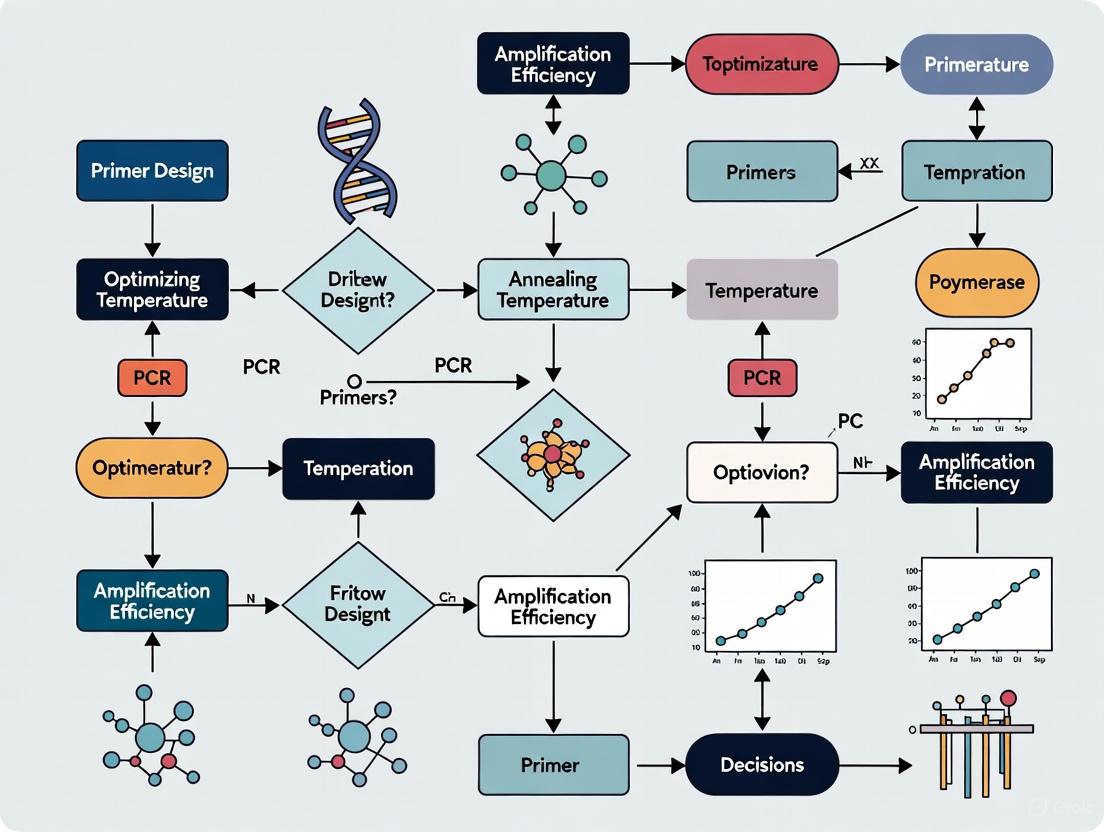
This article provides a comprehensive guide for researchers and drug development professionals on optimizing PCR annealing temperature, a critical factor for successful DNA amplification.
PCR Annealing Temperature Optimization: A Complete Guide for Enhanced Specificity and Yield in Biomedical Research
Abstract
This article provides a comprehensive guide for researchers and drug development professionals on optimizing PCR annealing temperature, a critical factor for successful DNA amplification. It covers foundational principles, including the relationship between melting temperature (Tm) and annealing temperature (Ta), and explores advanced methodological approaches for calculation and experimental optimization. The guide details systematic troubleshooting for common amplification issues and emphasizes validation strategies to ensure reliable, reproducible results in quantitative and diagnostic applications, ultimately supporting robust experimental outcomes in biomedical and clinical research.
The Science of Annealing: Understanding Tm and Its Critical Role in PCR Specificity
Defining Melting Temperature (Tm) and Its Direct Impact on Primer Binding
In polymerase chain reaction (PCR) research, the melting temperature (Tm) is a fundamental thermodynamic property defined as the temperature at which 50% of DNA duplexes dissociate into single strands [1]. This parameter directly governs the specificity and efficiency of primer binding to template DNA, forming the critical link between in silico primer design and successful experimental amplification [2] [3]. Within the broader context of optimizing annealing temperature for PCR primers, precise Tm determination enables researchers to establish reaction conditions that maximize target yield while minimizing non-specific amplification [2]. This application note provides a detailed framework for defining Tm, calculating it through multiple methods, and applying this knowledge through optimized experimental protocols for drug development and research applications.
Theoretical Foundations of Melting Temperature
Definition and Molecular Basis
Melting temperature (Tm) represents an equilibrium state where half of the double-stranded DNA molecules remain hybridized while the other half have dissociated into single strands [1]. This transition from double-stranded to single-stranded DNA occurs as hydrogen bonds between complementary base pairs break under thermal energy. The molecular stability of the primer-template duplex depends directly on its nucleotide composition: GC base pairs contribute greater stability than AT pairs due to their three hydrogen bonds versus two [4] [5]. This differential stability means that Tm is directly influenced by primer length, GC content, and nucleotide sequence rather than merely the sum of individual base pair interactions [1].
Key Factors Influencing Tm
The Tm of any oligonucleotide is determined by several interdependent factors that researchers must consider during experimental design:
- GC Content: Primers with higher GC content exhibit higher Tm values due to increased thermal stability of G-C bonds [4] [6]. Optimal primers typically contain 40-60% GC content [4] [3].
- Primer Length: Longer primers generally have higher Tm values because more hydrogen bonds must be broken for dissociation [6]. Optimal primer length falls between 18-30 bases, with 18-24 bases being ideal for most applications [4] [5].
- Salt Concentration: Divalent cations (especially Mg²⁺) and monovalent cations (Na⁺, K⁺) stabilize nucleic acid duplexes through electrostatic shielding, thereby increasing observed Tm [1] [7]. Higher salt concentrations raise Tm values.
- Chemical Additives: Cosolvents like dimethyl sulfoxide (DMSO) and formamide disrupt base pairing, significantly reducing Tm—approximately 0.5-0.6°C per 1% DMSO [1] [8].
- Oligonucleotide Concentration: Higher primer concentrations slightly increase Tm due to mass action effects, though this impact is generally minimal under standard PCR conditions [1].
Table 1: Factors Affecting Primer Melting Temperature
| Factor | Effect on Tm | Optimal Range | Mechanism |
|---|---|---|---|
| GC Content | Increases ~4°C per GC pair [6] | 40-60% [4] | Triple H-bonds in GC vs double in AT |
| Primer Length | Increases with length | 18-30 bases [4] | More hydrogen bonds to break |
| Salt Concentration | Increases | 50 mM Na⁺ (standard) [1] | Electrostatic shielding of phosphate backbone |
| DMSO | Decreases | 0-10% (avoid if possible) [8] | Disruption of base pairing |
| Primer Concentration | Slight increase | 0.1-0.5 μM [1] | Mass action effect |
Methods for Calculating Tm
Calculation Formulas and Their Applications
Multiple computational approaches exist for determining Tm, each with varying levels of accuracy and appropriate applications:
Basic Wallace Rule Formula:
Tm = 4°C × (G + C) + 2°C × (A + T) [6] [5]
This simplified calculation provides rapid estimates suitable for primers of 14-20 nucleotides but can produce errors of 5-10°C due to ignoring sequence context and salt effects [1].
Salt-Adjusted Calculations:
Tm = 81.5 + 16.6(log[Na⁺]) + 0.41(%GC) - 675/primer length [7]
This method incorporates monovalent salt concentration, offering improved accuracy for standard PCR buffers [7].
Nearest-Neighbor Thermodynamic Method: This gold-standard approach calculates Tm based on the thermodynamic stability of each adjacent nucleotide pair (dinucleotide stack) rather than treating all base pairs equally [1] [9]. It incorporates ΔH (enthalpy) and ΔS (entropy) values for each possible dinucleotide combination, along with precise salt corrections and terminal base effects [1]. Modern algorithms based on SantaLucia's 1998 parameters achieve accuracy within 1-2°C of experimental values and represent the method of choice for critical applications [1].
Table 2: Comparison of Tm Calculation Methods
| Method | Accuracy | Best For | Limitations |
|---|---|---|---|
| Wallace Rule | ±5-10°C [1] | Quick estimates, simple designs | Ignores sequence context, salt effects |
| Salt-Adjusted | ±3-5°C [1] | Standard PCR with defined buffers | Does not account for Mg²⁺ specifically |
| Nearest-Neighbor | ±1-2°C [1] | qPCR, multiplex PCR, critical applications | Computationally complex, requires specialized software |
Tm Calculation Protocol
Procedure: Calculating Tm Using the Nearest-Neighbor Method
- Sequence Input: Obtain pure nucleotide sequence (5'→3') without modifications or spacers [1].
- Buffer Conditions Identification:
- Software Selection: Utilize reliable Tm calculators implementing SantaLucia method:
- Additive Adjustments: For reactions containing DMSO, apply correction factor of -0.6°C per 1% DMSO [1] [8].
- Validation: Cross-check calculated Tm using multiple algorithms if possible [1].
Troubleshooting:
- If Tm <50°C: Increase primer length or GC content [1]
- If Tm >70°C: Shorten primer or reduce GC content [1]
- Large Tm difference between forward/reverse primers: Redesign one primer to match the other's Tm [1]
Experimental Determination and Optimization
From Tm to Annealing Temperature
The melting temperature directly informs the optimal annealing temperature (Ta) for PCR experiments. While Tm represents the dissociation temperature of the primer-template duplex, the annealing temperature is deliberately set lower to maintain sufficient binding stability while ensuring specificity. A general rule establishes annealing temperature at 3-5°C below the calculated Tm of the primer [2] [7]. For primers of different lengths, specific adjustments apply: for primers ≤20 nucleotides, use the lower Tm given by the calculator for annealing; for primers >20 nucleotides, use an annealing temperature 3°C higher than the lower Tm [8].
A more precise calculation considers both primer and product thermodynamics:
Ta Opt = 0.3 × Tm(primer) + 0.7 × Tm(product) - 14.9 [2] [5]
where Tm(primer) represents the melting temperature of the less stable primer-template pair and Tm(product) is the melting temperature of the PCR product [2].
Figure 1: Workflow for PCR annealing temperature optimization. Following calculated Tm determination, empirical testing identifies optimal conditions.
Gradient PCR Optimization Protocol
Purpose: Empirically determine optimal annealing temperature for a primer pair [5].
Materials:
- Thermostable DNA polymerase with appropriate buffer
- dNTP mix (10 mM each)
- Forward and reverse primers (20 μM each)
- Template DNA (10-100 ng for genomic DNA)
- Molecular biology grade water
- Thermal cycler with gradient capability
Procedure:
- Prepare Master Mix (for 50 μL reactions):
- 5.0 μL 10X PCR Buffer
- 1.0 μL dNTP Mix (10 mM each)
- 1.0 μL Forward Primer (20 μM)
- 1.0 μL Reverse Primer (20 μM)
- 0.5-1.0 μL DNA Polymerase (1-2.5 U)
- 1.0 μL Template DNA (10-100 ng)
- Molecular biology grade water to 50 μL final volume [3]
Set Up Gradient PCR:
- Program thermal cycler with denaturation at 94-98°C for 30 seconds
- Set annealing step gradient spanning calculated Ta ±5°C
- Set extension at 68-72°C (1 minute per kb)
- Include initial denaturation (94-98°C for 1-3 minutes) and final extension (72°C for 5-10 minutes) [7]
Execute PCR Amplification:
- Run 25-35 cycles depending on template abundance
- For low copy number templates (<10 copies), use up to 40 cycles [7]
Analyze Results:
- Separate PCR products by agarose gel electrophoresis (1.5-2.0%)
- Visualize with ethidium bromide or SYBR Safe
- Identify annealing temperature producing strongest specific band with minimal non-specific amplification [5]
Troubleshooting:
- No amplification: Lower annealing temperature in 2-3°C increments or check primer design [7]
- Non-specific bands: Increase annealing temperature in 2-3°C increments up to extension temperature [7]
- Smear of products: Optimize Mg²⁺ concentration (0.5-5.0 mM) or add enhancers like BSA, betaine, or DMSO [3]
The Scientist's Toolkit: Essential Research Reagents
Table 3: Key Research Reagent Solutions for PCR Optimization
| Reagent/Category | Function | Example Products | Optimization Guidelines |
|---|---|---|---|
| DNA Polymerases | Catalyzes DNA synthesis | Taq, Phusion, Pfu [3] | Taq: 1 min/kb extension; Pfu: 2 min/kb [7] |
| Buffer Systems | Provides optimal ionic environment | Standard, GC-rich, High-fidelity buffers [7] | Mg²⁺ concentration critical (0.5-5.0 mM) [3] |
| Enhancers/Additives | Improve specificity and yield | DMSO, formamide, betaine, BSA [3] | DMSO at 1-10% reduces Tm ~0.6°C/% [1] [8] |
| dNTPs | Building blocks for DNA synthesis | dATP, dCTP, dGTP, dTTP mixes [3] | Standard concentration: 200 μM each [3] |
| Nuclease-Free Water | Reaction component suspension | Various molecular biology grades | Essential for preventing enzymatic degradation |
Impact of Tm Mismatches on Primer Binding
Deviations from perfect primer-template complementarity significantly impact PCR efficiency through altered Tm. Mismatches—particularly those located at the 3' terminus—disrupt both duplex stability and polymerase active site configuration, potentially reducing amplification efficiency by >7.0 cycle thresholds for certain mismatch types (A-A, G-A, A-G, C-C) [10]. The positional effect follows a consistent pattern: mismatches at the 3'-terminal base (position 1) exert the most dramatic effects, with decreasing impact at more 5' positions (positions 2, 3, and 5) [10].
This understanding enables strategic applications in molecular diagnostics:
- Allele-Specific PCR: Deliberate 3' mismatch introduction discriminates single-nucleotide polymorphisms [10]
- Pathogen Detection: Mismatch tolerance must be considered for heterogeneous viral targets [10]
- Multiplex Assays: Balanced primer Tm values (±5°C) ensure uniform amplification across multiple targets [1]
Figure 2: Impact of primer-template mismatches on PCR efficiency. Mismatches at the 3' end have the most severe consequences.
Precise definition and application of melting temperature principles provides the foundation for successful PCR experimental design in research and diagnostic applications. Through methodical Tm calculation followed by empirical validation, researchers can establish annealing conditions that balance specificity with efficiency—particularly crucial for drug development workflows requiring robust, reproducible amplification. The direct relationship between Tm and primer binding efficiency underscores the importance of incorporating these principles into all molecular biology experimental design, ensuring optimal outcomes across diverse applications from basic research to clinical diagnostics.
The Critical Relationship Between Tm and Optimal Annealing Temperature (Ta)
In the polymerase chain reaction (PCR), the precise relationship between the primer melting temperature (Tm) and the optimal annealing temperature (Ta) is a fundamental determinant of success. This relationship directly controls the specificity and yield of DNA amplification [11] [12]. Tm is defined as the temperature at which half of the primer-DNA duplexes dissociate into single strands, while Ta is the actual temperature used during the thermal cycling protocol to facilitate primer binding to the template DNA [13] [14]. Using an annealing temperature that is too low can lead to non-specific amplification, as primers may bind to unintended, partially complementary sequences. Conversely, an excessively high Ta can result in poor reaction efficiency or even complete PCR failure due to insufficient primer-template binding [2] [15]. This application note provides detailed methodologies and data to guide researchers in systematically determining the optimal Ta for their specific primer sets, thereby ensuring robust and reliable PCR outcomes.
Theoretical Foundation of Tm and Its Calculation
The Tm of a primer is influenced by its length, nucleotide sequence, and concentration, as well as the salt concentration of the reaction buffer [13]. Primers with higher Guanine-Cytosine (GC) content exhibit higher Tm values because G-C base pairs are stabilized by three hydrogen bonds, whereas A-T base pairs have only two [13]. Several methods exist for calculating Tm, each with varying levels of complexity and accuracy.
The most basic calculation is a simple approximation based on base composition: Tm = 2°C × (A + T) + 4°C × (G + C) [16]. While straightforward, this method does not account for salt concentrations or the interactions between adjacent nucleotides. For greater accuracy, the nearest-neighbor method is preferred, as it incorporates thermodynamic parameters for enthalpy change (ΔH°) and entropy change (ΔS°) based on the sequence of nucleotide pairs [14]. This model more effectively reflects the interactions between adjacent base pairs and can be applied to predict the Tm of longer PCR products for techniques like high-resolution melting analysis [14].
A critical, often overlooked calculation for optimal Ta determination is presented by Rychlik et al., which considers both the primer and the product Tm [2] [13]:
Ta Opt = 0.3 × Tm(primer) + 0.7 × Tm(product) – 14.9
In this formula, Tm(primer) refers to the melting temperature of the less stable primer-template pair, and Tm(product) is the melting temperature of the PCR product itself [2].
Table 1: Comparison of Tm Calculation Methods
| Method | Formula / Basis | Key Considerations | Typical Application |
|---|---|---|---|
| Basic Approximation | Tm = 2°C × (A + T) + 4°C × (G + C) |
Does not account for salt or sequence context; less accurate. | Quick estimation for standard primers [16]. |
| Nearest-Neighbor Model | Based on experimental ΔH° and ΔS° values for all dinucleotide pairs. | High accuracy; accounts for sequence context; more complex to calculate. | Predicting Tm of PCR products for HRM analysis; high-accuracy needs [14]. |
| Empirical Optimization | Ta = Tm - 5°C (General starting point) |
Requires experimental validation; Tm calculation method must be consistent. |
Standard starting point for gradient PCR optimization [16] [13]. |
Experimental Protocols for Ta Determination
Protocol 1: Gradient PCR for Empirical Ta Optimization
The most reliable method for determining the optimal Ta is empirical testing using a thermal cycler with a gradient function [16] [15]. This approach allows for the simultaneous testing of a range of annealing temperatures in a single run.
Materials:
- Platinum SuperFi II DNA Polymerase (or another high-fidelity polymerase) [11]
- Thermocycler with gradient functionality
- Prepared PCR master mix and primer set
- Template DNA (e.g., 10-40 ng cDNA, up to 1 μg genomic DNA) [16]
- Agarose gel electrophoresis equipment
Procedure:
- Reaction Setup: Prepare a master mix containing all PCR components: DNA polymerase, reaction buffer, dNTPs, primers (typically at a final concentration of 200-500 nM each), and nuclease-free water [17]. Aliquot the master mix into identical PCR tubes.
- Template Addition: Add a standardized amount of high-quality template DNA to each tube. Using too much DNA can decrease specificity [16].
- Gradient Programming: Program the thermocycler with a standard PCR protocol (e.g., initial denaturation at 95°C for 2 minutes, followed by 35 cycles of denaturation, annealing, and extension). For the annealing step, set the gradient to cover a range of approximately 5°C below to 5°C above the calculated average
Tmof your primer pair (e.g., from 55°C to 70°C) [11] [16]. - Amplification and Analysis: Run the PCR program. Analyze the resulting products using agarose gel electrophoresis. The optimal
Tais identified as the highest temperature within the gradient that produces a strong, single band of the expected amplicon size with minimal to no non-specific products or primer-dimers [11] [15].
Diagram 1: Gradient PCR optimization workflow for determining the optimal annealing temperature (Ta).
Protocol 2: Touchdown PCR for Enhanced Specificity
Touchdown PCR is a powerful technique to increase amplification specificity by progressively lowering the annealing temperature during the initial cycles of the reaction [16]. This method ensures that the first amplifications are highly stringent, favoring the most perfectly matched primer-template interactions.
Materials:
- Hot-Start DNA Polymerase (e.g., Platinum II Taq) [11]
- Standard thermal cycler
- Prepared PCR master mix and primer set
- Template DNA
Procedure:
- Program Setup: Design a thermocycler program that begins with an initial denaturation step (e.g., 95°C for 2 minutes).
- Initial High-Stringency Cycles: Set the first 2 cycles with an annealing temperature 2-3°C above the calculated optimal
Tm(e.g., 63°C if the estimatedTais 60°C) [16]. - Step-Down Phase: Program subsequent cycles to decrease the annealing temperature by 1-2°C every 2 cycles. Continue this step-down until the final, calculated
Tais reached. For example: Cycles 1-2: 63°C, Cycles 3-4: 61°C, Cycles 5-6: 59°C [16]. - Final Amplification: Perform the remaining 25-30 cycles at the final, predetermined
Ta(e.g., 58°C). - Final Extension: Include a final extension step (e.g., 72°C for 5-10 minutes) to ensure all amplicons are fully extended.
The early, high-temperature cycles selectively amplify the intended target with high specificity. Once generated, this specific product out-competes non-specific targets in the later, less stringent cycles, leading to a pure final product [16].
Advanced Considerations and Reagent Solutions
The Impact of Buffer Composition and Polymerase Selection
Modern PCR enzymes and specialized buffers can significantly simplify Ta optimization. Certain DNA polymerases are supplied with buffers containing isostabilizing components that increase the stability of primer-template duplexes. This innovation allows for the use of a universal annealing temperature, typically 60°C, for a wide range of primers with differing Tm values, drastically reducing optimization time [11]. Furthermore, these buffers enable the co-cycling of different PCR assays—even those with varying amplicon lengths—using the same protocol, with the extension time selected for the longest amplicon [11].
Table 2: Research Reagent Solutions for PCR Annealing Optimization
| Reagent / Material | Function in Annealing Optimization | Example Use Case |
|---|---|---|
| Platinum DNA Polymerases (e.g., SuperFi II) | Specialized reaction buffers permit a universal annealing temperature of 60°C, reducing need for extensive optimization [11]. | Simplifying high-throughput screening with multiple primer sets. |
| High-Fidelity Polymerases (e.g., Pfu, KOD) | Possess 3'→5' proofreading exonuclease activity for superior accuracy; often require specific Ta [15]. |
Cloning, sequencing, and applications requiring minimal error rates. |
| Hot-Start DNA Polymerase | Remains inactive until initial denaturation step, preventing non-specific priming and primer-dimer formation at low temperatures [15]. | Improving specificity and yield, especially with complex templates. |
| DMSO (Dimethyl Sulfoxide) | Additive that disrupts secondary structures; lowers effective Tm of DNA [15]. |
Amplification of templates with high GC-content (>65%). |
| Betaine | Additive that homogenizes the stability of DNA duplexes, equalizing the melting behavior of GC- and AT-rich regions [15]. | Improving the amplification of long templates and those with complex secondary structures. |
| MgCl₂ Solution | Magnesium ions (Mg²⁺) are an essential cofactor for DNA polymerase; concentration directly affects primer annealing and reaction fidelity [15]. | Fine-tuning reaction stringency and efficiency (typical optimal range: 1.5 - 2.0 mM). |
The Role of Divalent Cations and Primer Design
The concentration of magnesium ions (Mg²⁺) is a critical parameter. As an essential cofactor for DNA polymerase, its concentration must be carefully optimized. A concentration that is too low can lead to reduced enzyme activity and poor yield, while a concentration that is too high can promote non-specific amplification and reduce fidelity [15]. Titrating Mg²⁺ concentration in 0.5 mM increments around a starting point of 1.5 mM is often necessary for challenging amplifications [15].
Ultimately, successful PCR begins with prudent primer design. Primers should be 18-25 nucleotides in length, have a GC content between 40-60%, and possess similar Tm values (within 1-2°C of each other) [13] [15]. The 3' end of the primer should be stabilized with at least 2 G or C bases within the last 5 nucleotides (a GC clamp) to ensure efficient initiation of polymerization [13]. Crucially, primers must be analyzed in silico to avoid secondary structures like hairpins and self-dimers, particularly at the 3' end, as these can severely compromise the reaction [13] [17].
Diagram 2: Logical relationships between primer properties, reaction environment, annealing temperature, and the final PCR outcome.
Mastering the critical relationship between Tm and Ta is indispensable for effective PCR assay development. While established calculations provide a essential theoretical starting point, empirical determination via gradient PCR remains the gold standard for identifying the optimal Ta that maximizes both specificity and yield [11] [16] [15]. For particularly challenging targets, advanced strategies such as touchdown PCR [16] and the use of specialized reagent systems with universal annealing buffers [11] offer powerful paths to success. By integrating robust primer design principles with the systematic experimental protocols and reagent knowledge outlined in this document, researchers and drug development professionals can achieve highly specific, efficient, and reproducible DNA amplification—a cornerstone capability for advanced molecular research and diagnostics.
The polymerase chain reaction (PCR) is a foundational technique in molecular biology, genetics, and drug development. Its power to exponentially amplify specific DNA sequences underpins everything from basic research to clinical diagnostics. However, this power is critically dependent on the precise binding of oligonucleotide primers to their intended target sequences. The annealing temperature of a PCR protocol is a central parameter that controls this binding specificity. When the annealing temperature is suboptimal, the entire reaction is compromised, leading to a cascade of issues including non-specific amplification, primer-dimer formation, and ultimately, experimental failure. This application note, framed within a broader thesis on optimizing PCR primer annealing temperature, details the consequences of suboptimal annealing and provides researchers with structured data, validated protocols, and actionable strategies to achieve robust and reliable amplification.
The Critical Role of Annealing Temperature in PCR Specificity
The annealing step in a PCR cycle is where primers bind to the denatured single-stranded DNA template, enabling the DNA polymerase to initiate synthesis. The temperature at which this occurs must be carefully calibrated to the melting temperature (Tm) of the primers, which is the temperature at which 50% of the DNA duplex dissociates.
An annealing temperature that is too low reduces the reaction stringency. Under these conditions, the hydrogen bonds that form between the primer and the template are stable even when there are mismatches. This allows the primers to bind to non-target sites on the DNA template that share partial complementarity, leading to the amplification of non-specific products. These unwanted amplicons consume precious reaction components (dNTPs, polymerase, and primers), thereby reducing the yield of the desired product and complicating downstream analysis with multiple bands or smears on an agarose gel.
Conversely, an annealing temperature that is too high increases stringency to a point where even perfectly matched primer-template duplexes cannot form stably. The primers are unable to bind to the target site, resulting in a complete or severe reduction in amplification of the desired product. Therefore, finding the optimal annealing temperature is a balancing act that maximizes specific product yield while minimizing non-specific amplification and side reactions like primer-dimer formation.
Quantitative Data and Optimization Parameters
Systematic optimization of PCR conditions is essential for assay reliability. The following tables summarize key parameters and their quantitative effects on PCR outcomes, providing a reference for researchers during experimental setup.
Table 1: Key PCR Component Ranges and Their Impact on Annealing Specificity
| Parameter | Optimal Range | Consequence of Deviation | Citation |
|---|---|---|---|
| Primer Length | 18-30 nucleotides | Shorter primers reduce specificity; longer primers may reduce efficiency. | [3] [15] |
| Primer Tm | 55-65°C | A Tm outside this range complicates finding a compatible annealing temperature. | [15] |
| Tm Difference Between Primers | ≤ 5°C | Large differences prevent simultaneous optimal annealing of both primers. | [3] |
| Primer GC Content | 40-60% | Higher GC content increases stability but can promote secondary structures. | [3] [15] |
| Mg²⁺ Concentration | 1.5-2.5 mM (needs titration) | Too low: poor polymerase activity; Too high: non-specific binding. | [3] [15] |
| Annealing Temperature (Tₐ) | Tm of primer - (3 to 5°C) | Too low: non-specific binding; Too high: failed amplification. | [15] |
Table 2: Common PCR Additives for Challenging Templates
| Additive | Common Working Concentration | Primary Function | Considerations |
|---|---|---|---|
| DMSO | 2-10% | Disrupts secondary structure, lowers effective Tm. Ideal for GC-rich templates (>65% GC). | [15] |
| Betaine | 1-2 M | Homogenizes base pair stability, equalizing Tm of GC and AT regions. Useful for GC-rich regions and long amplicons. | [18] [15] |
| Formamide | 1.25-10% | Denaturant that can help reduce secondary structure in the template. | [3] |
| BSA | 10-100 μg/mL | Binds inhibitors often present in complex biological samples (e.g., from blood, plants). | [3] |
Experimental Protocol for Annealing Temperature Optimization
The following protocol provides a detailed methodology for determining the optimal annealing temperature for a primer pair, a critical step in any rigorous PCR-based research project.
Gradient PCR Optimization
The Scientist's Toolkit: Essential Reagents and Equipment
| Item | Function/Description |
|---|---|
| Thermal Cycler with Gradient Function | Allows a single PCR run to test a range of annealing temperatures (e.g., 50°C to 65°C) across different tubes. |
| High-Fidelity or Hot-Start DNA Polymerase | Hot-Start polymerases remain inactive until a high-temperature activation step, preventing primer-dimer formation during reaction setup [19]. High-Fidelity polymerases (e.g., Pfu, KOD) have proofreading activity for lower error rates [15]. |
| Optimized Primer Pair | Primers designed according to the parameters in Table 1, resuspended in sterile water or TE buffer to a stock concentration (e.g., 100 μM). |
| Template DNA | Purified, quantitated DNA. The amount should be within the linear range for the polymerase (e.g., 1-100 ng genomic DNA per 50 μL reaction). |
| dNTP Mix | A solution containing all four dNTPs (dATP, dCTP, dGTP, dTTP) at a concentration of 2.5 mM each. |
| PCR Buffer (with or without Mg²⁺) | Provides the optimal chemical environment (pH, salts) for the polymerase. |
| MgCl₂ Solution (if needed) | A separate stock solution (e.g., 25 mM) for titrating the Mg²⁺ concentration if it is not included in the buffer. |
| Molecular Biology Grade Water | Nuclease-free water to bring the reaction to its final volume. |
Step-by-Step Workflow:
Prepare Master Mix: In a sterile, nuclease-free tube on ice, combine the following components for n+1 reactions (where 'n' is the number of temperature points) to minimize pipetting error and ensure consistency:
- Molecular biology grade water: Q.S. to 50 μL final volume per reaction.
- 10X PCR Buffer (with MgCl₂): 5 μL per reaction.
- dNTP Mix (10 mM total): 1 μL per reaction.
- Forward Primer (20 μM): 1 μL per reaction.
- Reverse Primer (20 μM): 1 μL per reaction.
- DNA Polymerase (e.g., 1 U/μL): 0.5 μL per reaction.
- Note: If Mg²⁺ needs optimization, prepare multiple master mixes with varying MgCl₂ concentrations.
Aliquot and Add Template: Mix the master mix thoroughly by pipetting up and down or gentle vortexing. Aliquot equal volumes (e.g., 48.5 μL) into individual PCR tubes. Add the template DNA (e.g., 1.5 μL) to each tube. Include a No-Template Control (NTC) by adding sterile water instead of template DNA to one tube. This control is crucial for identifying contamination and confirming that any primer-dimer formation is not template-derived [19].
Program Thermal Cycler: Place the tubes in the thermal cycler and program a protocol with the following steps:
- Initial Denaturation: 94-98°C for 2-5 minutes (activates Hot-Start polymerases and fully denatures complex template).
- Amplification Cycle (30-35 cycles):
- Denaturation: 94-98°C for 15-30 seconds.
- Annealing: GRADIENT from the lowest to the highest temperature in your desired range (e.g., 50°C to 65°C) for 15-30 seconds.
- Extension: 72°C for 1 minute per kilobase of expected amplicon length.
- Final Extension: 72°C for 5-10 minutes.
- Hold: 4-10°C.
Analyze Results: Run the completed PCR products on an agarose gel stained with ethidium bromide or a comparable DNA stain.
- Identify Optimal Temperature: The optimal annealing temperature produces a single, intense band of the expected size. Non-specific bands (multiple bands or a smear) at lower temperatures should disappear as the temperature increases.
- Identify Primer-Dimers: These appear as a fuzzy smear or band typically below 100 bp and will be present in both test reactions and the NTC [19]. The temperature that eliminates primer-dimer formation without sacrificing specific product yield should be selected.
The following workflow diagram illustrates the experimental and decision-making process for PCR annealing temperature optimization.
Advanced Troubleshooting and Solution Strategies
When standard optimization is insufficient, advanced strategies are required to overcome persistent issues like primer-dimer formation and non-specific amplification.
Addressing Primer-Dimer Formation
Primer dimers are short, unintended amplification artifacts that occur when primers anneal to each other via complementary regions, particularly at their 3' ends, and are extended by the polymerase [19]. They compete with the target amplicon for reagents and can dominate the reaction, especially in sensitive applications like qPCR.
Strategies to mitigate primer-dimer formation include:
- Lower Primer Concentration: Reducing the concentration of primers (e.g., from 0.5 μM to 0.2-0.3 μM) decreases the probability of primers encountering and annealing to each other [19] [20].
- Touchdown PCR: This technique uses an initial annealing temperature higher than the primer's Tm, then gradually decreases it in subsequent cycles. This ensures that the first, most specific amplifications are given a exponential head start, outcompeting non-specific products that form at lower temperatures later in the cycle.
- Re-design Primers: If dimers persist, the ultimate solution is to re-design primers, using software to check for and avoid 3'-end complementarity between the forward and reverse primers [19] [3].
Utilizing Additives for Challenging Templates
For templates with high GC content, strong secondary structure, or extreme length, buffer additives can be indispensable.
- DMSO (Dimethyl Sulfoxide): Added at 2-10% (v/v), DMSO interferes with base pairing, helping to denature stable secondary structures in GC-rich templates and lower the effective Tm [15].
- Betaine: At a concentration of 1-2 M, betaine equalizes the thermodynamic stability of GC and AT base pairs, which can help polymerases traverse homogenous GC-rich regions that would otherwise cause polymerase stalling [18] [15].
The consequences of suboptimal annealing temperature—non-specific binding, primer-dimer formation, and PCR failure—are significant hurdles in molecular research and development. However, these challenges are surmountable through a systematic approach to optimization. By understanding the underlying principles, employing quantitative optimization strategies like gradient PCR, and utilizing advanced tools such as hot-start polymerases and chemical enhancers, researchers can robustly define their experimental conditions. This rigorous approach ensures the specificity, efficiency, and reproducibility of PCR assays, thereby generating reliable data that accelerates scientific discovery and drug development.
How Primer Characteristics (Length, GC Content, Sequence) Influence Tm
Within polymerase chain reaction (PCR) optimization, the annealing temperature (Ta) is a critical parameter determining the success and specificity of DNA amplification. This temperature is directly governed by the melting temperature (Tm) of the primers, which is the temperature at which 50% of the DNA duplex dissociates into single strands. The Tm itself is not an inherent constant but a value determined by the primer's physical characteristics: its length, guanine-cytosine (GC) content, and specific nucleotide sequence. This application note details the quantitative relationships between these primer characteristics and Tm, providing validated protocols and frameworks to enable researchers to systematically design and optimize PCR assays, thereby enhancing specificity and yield in diagnostic and drug development applications.
The Quantitative Relationship Between Primer Characteristics and Tm
The melting temperature (Tm) of a primer is a predictable function of its length, base composition, and sequence. The following sections and accompanying tables summarize the core principles and quantitative guidelines for designing effective primers.
Table 1: Core Guidelines for Primer Design Characteristics
| Characteristic | Recommended Range | Rationale & Influence on Tm |
|---|---|---|
| Length | 18–30 nucleotides [4] [21] [22] | Longer primers increase sequence specificity and Tm; shorter primers anneal more efficiently. |
| GC Content | 40–60% [4] [21] [22] | GC base pairs (3 H-bonds) stabilize duplex more than AT pairs (2 H-bonds), directly increasing Tm. |
| Melting Temp (Tm) | 65–75°C [4] | Provides an optimal thermal window for setting a specific annealing temperature (Ta). |
| Tm Difference Between Primer Pairs | ≤ 5°C [4] [23] | Ensures both primers in a pair anneal to the template with similar efficiency during the Ta step. |
| GC Clamp | 1-2 G or C bases at the 3' end [4] [22] | Promotes strong binding at the 3' end, crucial for polymerase initiation. Avoid >3 consecutive G/Cs [22]. |
Primer Length
Primer length is a primary determinant of specificity and Tm. While primers of 18–30 nucleotides are standard for conventional PCR, the exact length within this range directly impacts the melting temperature [4] [24]. Each additional nucleotide contributes to the total Gibbs free energy stabilizing the DNA duplex, thereby increasing the Tm. However, a trade-off exists: excessively long primers (>30 nt) can exhibit slower hybridization kinetics and reduced amplification efficiency, whereas very short primers (<18 nt) may lack the required sequence complexity for unique binding, leading to non-specific amplification [22] [24].
GC Content and Sequence
The GC content of a primer significantly influences its Tm due to the stronger binding energy of GC base pairs, which form three hydrogen bonds, compared to AT base pairs, which form only two [4] [22]. A primer with a GC content of 40–60% typically provides an optimal balance of stability and specificity [4] [21] [22].
Beyond the overall percentage, the sequence distribution is critical. Runs of identical bases, particularly three or more consecutive Gs or Cs, should be avoided, as they can promote mispriming and are challenging for oligonucleotide synthesis [4] [21]. Similarly, dinucleotide repeats (e.g., ATATAT) can lead to mispriming [4] [24]. The concept of a "GC clamp" – the presence of one or two G or C bases at the 3'-terminal end – is recommended to strengthen binding at the site where polymerase extension initiates [4] [22].
Calculating Melting Temperature
The Tm can be estimated using several established formulas. The "Wallace rule" is a simple method suitable for short primers: Tm = 4°C × (G + C) + 2°C × (A + T) [21] [24]
For more accurate calculations, particularly for longer primers or those with unusual composition, the nearest-neighbor method is preferred, as it accounts for the sequence context and stacking interactions between adjacent bases. This method is the standard employed by modern primer design software [25]. It is critical to remember that the calculated Tm is influenced by the reaction buffer's composition, including monovalent cation concentration (e.g., Na⁺), and the presence of additives like DMSO [23] [22]. The empirical formula Tm = 81.5 + 16.6(log[Na+]) + 0.41(%GC) – 675/primer length can be used to account for salt concentration [22].
Experimental Protocol: Linking Primer Tm to Annealing Temperature Optimization
This protocol provides a systematic methodology to empirically determine the optimal annealing temperature (Ta) for a primer pair based on its calculated Tm, a cornerstone of PCR optimization.
Materials and Equipment
- Thermocycler with gradient functionality
- DNA Template (e.g., 1–10 ng genomic DNA, 1–10 pg plasmid DNA) [23]
- Primer Pair (resuspended to a stock concentration, e.g., 100 µM)
- PCR Master Mix (containing buffer, dNTPs, Mg²⁺, and DNA polymerase)
- Standard Agarose Gel Electrophoresis equipment
Table 2: Research Reagent Solutions for PCR Optimization
| Reagent / Tool | Function / Rationale |
|---|---|
| Hot-Start DNA Polymerase | Reduces non-specific amplification and primer-dimer formation by requiring heat activation [23]. |
| Gradient Thermocycler | Enables empirical determination of optimal Ta by running a single PCR across a temperature range. |
| Betaine or DMSO | Additives that destabilize DNA secondary structures, crucial for amplifying GC-rich templates [23] [26]. |
| MgCl₂/MgSO₄ | Cofactor for DNA polymerase; its concentration can be optimized (typically 1.5–2.0 mM) to enhance yield and specificity [23]. |
| Primer Design Software (e.g., Primer-BLAST, PrimerQuest) | Automates Tm calculation and checks for specificity, secondary structures, and primer-dimer potential [27] [25]. |
Step-by-Step Procedure
Primer Design and Tm Calculation: Design your primers according to the guidelines in Section 2. Use software to calculate the Tm of each primer. The Tm values for the forward and reverse primers should be within 5°C of each other [4] [23].
Initial Ta Estimation: Set the initial annealing temperature to 5°C below the calculated Tm of the primer with the lower melting temperature [21] [23]. For multiplex PCR, a starting Ta of 5–8°C below the Tm may be necessary [21].
Gradient PCR Setup:
- Prepare a master mix containing all reaction components (template, primers, master mix, water).
- Aliquot the master mix into the wells of the gradient thermocycler.
- Program the thermocycler with a gradient spanning a range of at least 10°C, centered on the initial Ta estimated in Step 2. For example, if the initial Ta is 55°C, set a gradient from 50°C to 60°C.
- Run the PCR using standard cycling parameters: initial denaturation (95°C for 2–5 min), followed by 30–35 cycles of denaturation (95°C for 15–30 s), annealing (gradient temperature for 15–30 s), and extension (68–72°C for 1 min/kb) [23].
Product Analysis:
- Resolve the PCR products from all gradient temperatures on an agarose gel.
- Identify the annealing temperature that produces a single, intense band of the expected size with minimal to no non-specific products or primer-dimer.
Validation and Refinement: Use the optimal Ta identified from the gradient PCR for subsequent experiments. If spurious products persist, consider increasing the Ta in 1–2°C increments or optimizing the Mg²⁺ concentration [23].
Workflow Diagram
The following diagram illustrates the logical workflow for optimizing PCR annealing temperature based on primer characteristics.
Advanced Application: Mitigating PCR Bias in Complex Templates
The relationship between primer characteristics and Tm is critical when amplifying complex or heterogeneous templates, such as in microbial community analysis. A primer with a high Tm and perfect match to its target will amplify more efficiently than a primer with a mismatch, leading to quantitative bias [28].
Experimental Insight: A key study demonstrated that by lowering the annealing temperature from 55°C to 45°C, the amplification bias between a perfect-match template and a one-mismatch template was significantly reduced [28]. At the lower temperature, the binding kinetics between the matched and mismatched primers became more similar, leading to a product ratio that more accurately reflected the original template ratio. This finding is crucial for quantitative applications like RT-PCR and metagenomic sequencing, where accurate representation of template abundance is essential.
For GC-rich templates (>70%), which form stable secondary structures, standard protocols often fail. A fundamental study showed that for a GC-rich human gene (ARX, 78.72% GC), shorter annealing times (3–6 seconds) were not only sufficient but necessary for specific amplification [26]. Longer annealing times (>10 s) resulted in significant smearing due to increased mispriming at alternative sites. This protocol can be combined with additives like betaine or DMSO, which act as destabilizing agents to lower the effective Tm and help unwind secondary structures [23] [26].
The characteristics of a PCR primer—its length, GC content, and specific sequence—are not merely design suggestions but are the fundamental variables that quantitatively define its melting temperature. A deep understanding of these relationships allows researchers to move beyond empirical troubleshooting to a rational design and optimization process. By systematically applying the guidelines and protocols outlined in this document—calculating Tm, employing gradient PCR to determine Ta, and implementing advanced strategies for complex templates—scientists can achieve highly specific and efficient amplification. This precision is indispensable across the spectrum of molecular research, from basic gene expression analysis to the development of robust diagnostic assays.
The Role of Reaction Buffers and Additives in Modifying Effective Tm
Within the broader context of optimizing annealing temperature (Ta) for polymerase chain reaction (PCR) primers, the precise calibration of the melting temperature (Tm) is a fundamental determinant of success. The Tm, defined as the temperature at which half of the DNA duplex dissociates into single strands, directly dictates the stringency of primer-template binding during the annealing step [15]. However, the "effective Tm" experienced in a reaction is not solely a function of primer sequence; it is dynamically modified by the chemical environment established by reaction buffers and specific additives [29] [30]. Achieving amplification specificity, particularly for challenging templates such as those with high GC-content or complex secondary structures, requires a deliberate strategy to manipulate this effective Tm [15] [30]. These Application Notes detail the mechanisms, quantitative applications, and practical protocols for using buffer composition and additives to modulate hybridization dynamics, thereby ensuring robust and specific PCR outcomes for research and drug development.
Mechanistic Principles: How Buffers and Additives Influence Tm
The effective Tm of a primer-template duplex is governed by the stability of hydrogen bonding between bases and the extensive base-stacking interactions within the DNA helix. Reaction buffers and additives modify this stability through two primary, non-mutually exclusive mechanisms: ionic modulation of duplex stability and direct alteration of DNA thermodynamics.
Ionic Modulation: The standard PCR buffer includes Tris-HCl to maintain a stable pH (typically around 8.3) and potassium chloride (KCl) [29]. Positively charged ions, such as potassium (K⁺) from KCl, shield the intrinsic negative charges on the phosphate backbone of DNA. This electrostatic shielding reduces the repulsive forces between the two complementary strands, thereby stabilizing the duplex and effectively raising the observed Tm [31]. A critical cationic component is magnesium (Mg²⁺), an essential cofactor for DNA polymerase. Beyond its enzymatic role, Mg²⁺ acts as a powerful duplex stabilizer by binding tightly to the phosphate backbone, which also contributes to an increase in effective Tm [15] [31].
Altering DNA Thermodynamics: Certain organic additives penetrate the DNA helix and directly interfere with the forces that stabilize it. Reagents such as dimethyl sulfoxide (DMSO), formamide, and betaine (also known as N,N,N-trimethylglycine) disrupt hydrogen bonding and base-stacking interactions [29] [30]. This action destabilizes the double-stranded DNA, leading to a lowering of the effective Tm. For GC-rich templates, the strong hydrogen bonding of G:C base pairs makes these regions particularly resistant to denaturation. Additives like DMSO and betaine exert a preferential effect on these stable regions, homogenizing the melting landscape across the template and facilitating strand separation at lower temperatures [15] [30] [32]. This is crucial for allowing polymerase access and primer annealing.
The following conceptual diagram illustrates how these components interact to determine the final effective Tm in a PCR reaction.
Quantitative Guide to Common PCR Additives
The strategic use of additives requires careful attention to their optimal working concentrations. Exceeding these ranges can lead to profound inhibition of the DNA polymerase, resulting in PCR failure [15] [29]. The table below summarizes key additives, their mechanisms, and their effective concentrations for modulating Tm.
Table 1: Quantitative Profile of Common PCR Additives for Tm Modification
| Additive | Primary Mechanism | Effect on Effective Tm | Recommended Final Concentration | Primary Application |
|---|---|---|---|---|
| DMSO | Disrupts base pairing, reduces secondary structure | Lowers Tm [29] [32] | 2–10% [15] [29] [30] | GC-rich templates (>60–65%) [15] [30] |
| Betaine | Homogenizes duplex stability, disrupts base stacking | Reduces Tm dependence on GC content [15] [30] | 0.5 M – 2.5 M [15] [29] | GC-rich templates, long amplicons [15] [30] |
| Formamide | Denaturant, weakens hydrogen bonding | Lowers Tm [29] [32] | 1.25–10% [29] [32] | Increases stringency, GC-rich templates [29] |
| Mg²⁺ | Essential cofactor, stabilizes DNA duplex | Raises Tm [15] [31] | 1.5–5.0 mM [15] [29] [16] | Critical for all PCRs; requires titration [15] |
| TMAC | Binds AT base pairs, increases hybridization specificity | Increases Tm, eliminates mismatch [29] | 15–100 mM [29] | Use with degenerate primers [29] |
Magnesium ion (Mg²⁺) concentration is a particularly critical parameter that requires separate consideration due to its dual role as a polymerase cofactor and a powerful modulator of duplex stability. Its effect on the reaction is biphasic, and fine-tuning is essential.
Table 2: Effects of Magnesium Chloride (MgCl₂) Concentration in PCR
| Mg²⁺ Concentration | Impact on Fidelity & Specificity | Impact on Polymerase Activity | Observed Outcome |
|---|---|---|---|
| Too Low (< 1.0 mM) | N/A (Reaction fails) | Greatly reduced or inactive; dNTP incorporation inefficient [15] [29] | Greatly reduced or no yield [15] |
| Optimal (1.5 – 2.5 mM) | High fidelity and specificity [15] | Maximal enzyme activity and processivity [15] | Strong, specific amplification of the target |
| Too High (> 4.0 mM) | Decreased fidelity; promotes non-specific priming and mis-incorporation [15] [29] | Stabilizes even mismatched primer-template binding [15] | Non-specific amplification, smearing, or multiple bands [15] |
Experimental Protocols for Tm Optimization
Protocol: Systematic Optimization of Annealing Temperature (Ta) and Additives
This protocol provides a robust methodology for empirically determining the optimal annealing temperature and additive combination for a new primer set, using a gradient thermal cycler.
I. Research Reagent Solutions & Materials Table 3: Essential Materials for PCR Optimization
| Reagent / Material | Function / Rationale |
|---|---|
| Gradient Thermal Cycler | Allows empirical testing of a temperature gradient (e.g., 50–70°C) in a single run [15]. |
| High-Fidelity DNA Polymerase | Enzyme with proofreading activity (e.g., Pfu, KOD) for high specificity and yield in complex optimizations [15] [32]. |
| Template DNA | High-quality template (e.g., 10–50 ng genomic DNA). Purity is critical to avoid inhibitors [15] [31]. |
| Optimized Primer Pair | Primers (18–24 bp, Tm within 5°C, 40–60% GC content) [15] [31]. |
| 10X PCR Buffer (Mg-free) | Baseline buffer to which Mg²⁺ can be added at precise concentrations [15]. |
| 25 mM MgCl₂ Stock | For titrating the magnesium concentration [15] [16]. |
| Additive Stock Solutions | DMSO (100%), Betaine (5M), Formamide (100%). Prepare aliquots to avoid freeze-thaw cycles [29] [30]. |
II. Step-by-Step Procedure:
- Master Mix Preparation: Prepare a master mix for 12 reactions (including ~10% overage) containing:
- 1X PCR Buffer (Mg-free)
- 200 µM of each dNTP
- 0.3–0.5 µM of each forward and reverse primer
- 1.5 mM MgCl₂ (initial concentration)
- 1–2 units of DNA polymerase
- Nuclease-free water
- A consistent, pre-optimized amount of template DNA.
- Aliquot and Add Additives: Aliquot the master mix into 5 thin-wall PCR tubes. Add reagents as follows:
- Tube 1 (Control): No additive.
- Tube 2 (DMSO): DMSO to a final concentration of 5%.
- Tube 3 (Betaine): Betaine to a final concentration of 1 M.
- Tube 4 (DMSO + Betaine): Both DMSO (5%) and Betaine (1 M).
- Tube 5 (Formamide): Formamide to a final concentration of 3%.
- Gradient PCR Cycling: Place all tubes in the gradient thermal cycler and run the following program, setting a gradient across the block (e.g., 50°C to 70°C):
- Initial Denaturation: 98°C for 30 s.
- 35 Cycles:
- Denaturation: 98°C for 10 s
- Annealing: Gradient from 50°C to 70°C for 30 s
- Extension: 72°C for 60 s/kb
- Final Extension: 72°C for 5 min.
- Hold: 4°C.
- Product Analysis: Analyze the PCR products using agarose gel electrophoresis. Identify the well-defined, single band of the expected size. The optimal condition is the combination of the highest annealing temperature and the most effective additive that produces a strong, specific amplicon with minimal background [15] [30].
The workflow for this optimization protocol is summarized in the following diagram.
Case Study: Amplification of a GC-Rich nAChR Subunit
This case study illustrates a real-world application of these principles for amplifying a challenging GC-rich target.
Background: The amplification of the beta1 subunit of the nicotinic acetylcholine receptor (Ir-nAChRb1) from Ixodes ricinus was unsuccessful with standard PCR protocols. The target has an overall GC content of 65%, predisposing it to stable secondary structures that hinder amplification [30].
Optimization Strategy & Outcome: A multipronged optimization strategy was employed, focusing on polymerase selection, additive use, and adjusted thermal cycling.
- DNA Polymerase: Testing switched from standard Taq to high-fidelity, GC-tolerant polymerases (Phusion High-Fidelity, Platinum SuperFi).
- Additives: Individual and combined effects of DMSO (5%) and betaine (1 M) were evaluated.
- Results: The tailored protocol incorporating both DMSO and betaine, along with a specialized polymerase, successfully resolved the secondary structures and enabled specific amplification of the full-length Ir-nAChRb1 subunit, which had previously failed [30]. This demonstrates the necessity of a combined approach for the most challenging templates.
Integrated Workflow for Challenging Templates
For targets resistant to standard optimization, such as those with extreme GC content or long amplicons, an integrated workflow that combines multiple strategies is most effective. The following diagram outlines a logical, step-by-step troubleshooting guide.
Universal Annealing Buffers
A significant innovation in simplifying PCR setup is the development of specialized reaction buffers, such as the Invitrogen Platinum series buffers. These buffers contain proprietary isostabilizing components that increase the stability of primer-template duplexes [11]. This allows for a universal annealing temperature of 60°C to be used with a wide range of primer pairs, irrespective of their calculated Tm, thereby drastically reducing optimization time and enabling co-cycling of multiple targets with different amplicon lengths [11].
The deliberate modification of the effective Tm through reaction buffers and additives is a powerful and often indispensable strategy in PCR optimization. By understanding the mechanistic principles behind ionic modulators and thermodynamic destabilizers, researchers can make informed decisions to overcome the challenges of non-specific amplification and GC-rich templates. The quantitative guidelines and detailed protocols provided here offer a systematic pathway to achieve high specificity and yield, ensuring that PCR remains a robust and reliable tool in scientific research and therapeutic development.
From Theory to Practice: Calculating and Determining Optimal Annealing Conditions
Within the broader context of optimizing annealing temperature for polymerase chain reaction (PCR) primers, the accurate prediction of oligonucleotide melting temperature (T~m~) is a cornerstone of experimental success. The T~m~, defined as the temperature at which 50% of DNA duplexes dissociate into single strands, directly determines the primer annealing temperature [1]. miscalculations can lead to failed reactions, non-specific amplification, or inefficient hybridization, ultimately compromising research and development in diagnostics and therapeutics [1] [33]. This application note details the two predominant computational methods for T~m~ estimation—simple formulas based on GC content and sophisticated nearest-neighbor algorithms—providing researchers with the protocols and data necessary to make informed decisions for robust PCR optimization.
Theoretical Foundations of Tm Calculation
The stability of a DNA duplex in solution is governed by its thermodynamics. The dissociation process is characterized by a change in Gibbs free energy (ΔG), which is itself a function of enthalpy (ΔH) and entropy (ΔS) changes, as described by the equation: ΔG = ΔH - TΔS [34]. At the melting temperature (T~m~), the system is at equilibrium between double-stranded and single-stranded states (ΔG = 0). The foundational equation for T~m~ calculation, considering this equilibrium and the concentration of the oligonucleotides, is derived as follows [35]:
T~m~ = ΔH° / (ΔS° + R ln(C~t~/4)) - 273.15
Here, ΔH° and ΔS° represent the sums of enthalpy and entropy changes for the duplex, R is the universal gas constant, and C~t~ is the total molar concentration of the oligonucleotides. The factor of 4 applies to non-self-complementary primers, accounting for the four possible strand species in solution [35]. The accuracy of T~m~ prediction hinges on how precisely ΔH° and ΔS° are determined, which is the critical distinction between the simple and nearest-neighbor methods.
Comparative Analysis of Tm Calculation Methods
Simple GC% Formula
The historical method for estimating T~m~ relies on a simple, linear relationship with the primer's base composition.
- Governing Equation: The most common form of this method is expressed as: T~m~ = 4°C × (G + C) + 2°C × (A + T) This formula, often used for primers shorter than 14 nucleotides, calculates T~m~ based solely on the count of G/C and A/T bases [36].
- Underlying Assumptions and Limitations: This method operates on the average thermodynamic contribution of each nucleotide type, ignoring the sequence context. It assumes that the stability contributed by a GC base pair is uniformly 4°C and by an AT base pair is 2°C, regardless of their neighbors. This overlooks the nuanced reality that the stability of a DNA duplex is significantly influenced by stacking interactions between adjacent base pairs [1]. Consequently, two primers with identical lengths and GC content can have markedly different actual T~m~ values due to their specific nucleotide sequences. This method is best suited for rough estimates only and is not recommended for precise experimental design [35].
Nearest-Neighbor Algorithm
The nearest-neighbor method is the modern gold standard for T~m~ prediction, offering high accuracy by accounting for the sequence-specific arrangement of nucleotides.
- Governing Principle and Equation: This algorithm is based on the empirical finding that the stability of a DNA duplex can be accurately modeled as the sum of the interactions between adjacent (nearest-neighbor) base pairs. Ten unique dinucleotide pairs exist, each with its own set of validated thermodynamic parameters (ΔH° and ΔS°) [35]. The total ΔH° and ΔS° for the duplex are the sums of these individual parameters, which are then used in the foundational T~m~ equation above. The model also includes penalties for initiation and terminal mismatches, providing a comprehensive thermodynamic profile [1] [37].
- Sources of Superior Accuracy: The primary advantage of this method is its consideration of sequence context. For example, the stacking energy for the sequence 5'-GC-3'/3'-CG-5' is significantly more stable than for 5'-GG-3'/3'-CC-5'. By capturing these interactions, the nearest-neighbor method, particularly the SantaLucia 1998 unified parameters, provides predictions that are highly consistent with experimental values [1] [33]. This makes it indispensable for applications requiring high precision, such as quantitative PCR, multiplex PCR, and CRISPR guide RNA design [1] [35].
Table 1: Quantitative Comparison of Tm Calculation Methods
| Feature | Simple GC% Formula | Nearest-Neighbor Algorithm |
|---|---|---|
| Governing Principle | Base composition (GC vs. AT count) | Sequence context & dinucleotide stacking |
| Key Inputs | Primer length, GC count | Full nucleotide sequence |
| Typical Accuracy | ±5–10°C error [1] | ±1–2°C error [1] |
| Best For | Quick, rough estimates | Experimental design, PCR, qPCR, research |
| Salt Correction | Not inherently included | Explicitly integrated (e.g., Owczarzy 2008 model) |
Experimental Protocols for Tm Determination and Validation
In Silico Tm Calculation Using Nearest-Neighbor Tools
This protocol outlines the steps for obtaining an accurate, salt-adjusted T~m~ value using a web-based calculator that implements the nearest-neighbor method.
- Step 1: Access a Validated Calculator Navigate to a T~m~ calculator that utilizes the SantaLucia nearest-neighbor method, such as the OligoPool.com Tm Calculator, Primer3 Plus, or the IDT OligoAnalyzer Tool. These tools have been benchmarked for high accuracy [1] [33].
- Step 2: Enter Oligonucleotide Sequence Input the full DNA or RNA sequence (5' to 3') into the tool. The sequence can be pasted directly, and the tool will automatically ignore spaces or line breaks. Select the correct nucleic acid type (DNA or RNA) [1].
- Step 3: Set Reaction Conditions
Accurately input the following parameters from your specific PCR or hybridization buffer to apply the correct salt corrections [1] [35]:
- Monovalent cation concentration (e.g., Na⁺, K⁺): Typical range is 50–100 mM.
- Divalent cation concentration (e.g., Mg²⁺): Typical range is 1.5–5 mM. Mg²⁺ has a stronger stabilizing effect than monovalent ions and its correction is critical [35] [34].
- Oligonucleotide concentration (C~t~): Standard for PCR primers is 0.25 µM.
- Step 4: Account for Additives (Optional) If your protocol includes DMSO, input the percentage. DMSO reduces the T~m~ by approximately 0.5–0.7°C per 1% concentration [1] [35].
- Step 5: Calculate and Interpret Execute the calculation. The tool will return the predicted T~m~, often accompanied by thermodynamic parameters (ΔH, ΔS) for verification. For PCR, the optimal annealing temperature is typically set 3–5°C below the calculated T~m~ [1] [38].
Workflow for PCR Annealing Temperature Optimization
The following diagram illustrates the logical workflow for progressing from a T~m~ calculation to a successful, optimized PCR experiment.
Experimental Validation of Calculated Tm
While in silico tools are highly accurate, empirical validation is crucial for critical applications. The following methodology, adapted from comparative studies, can be used [33].
- Objective: To determine the experimental T~m~ of a primer-template duplex and validate the in silico prediction.
- Materials:
- Purified oligonucleotide primer and its complementary target sequence.
- UV-Vis spectrophotometer equipped with a temperature-controlled Peltier cell.
- Appropriate buffer matching the salt conditions used in the T~m~ calculation.
- Procedure:
- Prepare a solution containing a defined concentration (e.g., 4 µM) of the duplex DNA in the selected buffer.
- Denature the duplex at 95°C for 5 minutes and then allow it to reanneal by cooling slowly to room temperature.
- Place the sample in the spectrophotometer and set the program to monitor UV absorbance at 260 nm while ramping the temperature from 20°C to 95°C at a slow, constant rate (e.g., 0.5–1.0°C per minute).
- The hyperchromic effect will cause the absorbance to increase as the duplex dissociates. Plot the absorbance against temperature to generate a melting curve.
- The experimental T~m~ is defined as the temperature corresponding to the midpoint of the transition, which can be found by taking the first derivative of the melting curve (dA/dT vs. T) and identifying the peak.
- Data Analysis: Compare the experimentally derived T~m~ with the in silico prediction. A well-parameterized nearest-neighbor calculator should yield a value within 1–2°C of the experimental result [1] [33].
Advanced Considerations and Optimization
The Critical Role of Salt Corrections
The ionic strength of the solution profoundly affects DNA duplex stability by shielding the negative charges on the phosphate backbone. The basic nearest-neighbor T~m~ equation is often modified for monovalent cations as follows [35]:
T~m~ = [ΔH° / (ΔS° + R ln(C~t~/4))] - 273.15 + 16.6 × log₁₀[Na⁺]
For PCR conditions where Mg²⁺ is present, the correction becomes more complex. The model developed by Owczarzy et al. (2008) is considered the most accurate, as it accounts for the competitive binding of Mg²⁺ to dNTPs and the DNA backbone [35] [34]. The formula differs based on the ratio of [Mg²⁺] to the square root of the monovalent cation concentration, highlighting the necessity of inputting precise buffer conditions into modern T~m~ calculators.
Table 2: Effect of Reaction Components on Primer Tm
| Component | Typical Concentration | Impact on Tm | Practical Consideration |
|---|---|---|---|
| Mg²⁺ | 1.5–2.5 mM | Increases Tm by ~5–8°C (from 0 mM) [35] | Critical for accurate prediction; stronger effect than Na⁺. |
| Na⁺/K⁺ | 50–100 mM | Increases Tm; +3–5°C (50→100 mM) [35] | Use total monovalent cation concentration. |
| DMSO | 0–10% | Decreases Tm by ~0.5–0.7°C per 1% [1] [35] | Essential for GC-rich templates to reduce secondary structure. |
| Oligo Concentration (C~t~) | 0.1–0.5 µM | Slight Tm increase at higher concentrations [1] | Mass action effect; use consistent concentration for comparisons. |
The Scientist's Toolkit: Research Reagent Solutions
Table 3: Essential Tools and Reagents for Tm-Based PCR Optimization
| Item | Function/Description | Example Use Case |
|---|---|---|
| SantaLucia Nearest-Neighbor Calculator | Software using gold-standard thermodynamic parameters for accurate Tm prediction. | Predicting primer Tm within ±1-2°C of experimental values for robust assay design [1]. |
| Platinum DNA Polymerases with Universal Annealing Buffer | PCR enzymes supplied with an isostabilizing buffer that allows a universal annealing temperature of 60°C. | Simplifying multiplex PCR by allowing different primer sets to be used at a single annealing temperature without sacrificing yield or specificity [11]. |
| In Silico PCR Tools (e.g., FastPCR, Primer-BLAST) | Bioinformatics software for simulating PCR amplification against genomic databases to check primer specificity. | Validating that primers bind only to the intended target sequence, minimizing off-target amplification [39]. |
| Thermodynamic Parameters (ΔH°, ΔS°) | Experimentally derived values for the ten unique DNA dinucleotide pairs. | The foundational data used by nearest-neighbor algorithms to calculate total duplex stability [35] [37]. |
The choice of T~m~ calculation method has a direct and measurable impact on the efficiency of PCR and related molecular techniques. While the simple GC% formula offers speed, its significant error margin makes it unsuitable for precise experimental design. The nearest-neighbor algorithm, with its foundation in rigorous thermodynamics and ability to incorporate critical reaction conditions like salt concentrations, provides the accuracy and reliability required by modern research and drug development applications. By adhering to the detailed protocols and considerations outlined in this document, scientists can confidently optimize annealing temperatures, thereby enhancing the specificity, sensitivity, and success rate of their nucleic acid amplification experiments.
The annealing temperature (Ta) is a critical parameter in the polymerase chain reaction (PCR) that dictates the specificity and efficiency of primer binding to the target DNA sequence. Selecting an appropriate Ta is fundamental to the success of any PCR-based experiment, as it directly influences the yield of the desired product and minimizes the amplification of non-specific sequences. An optimal Ta ensures that primers anneal specifically to their complementary sequences, providing a strong foundation for the DNA polymerase to initiate synthesis. Within the broader context of primer research, establishing a robust starting annealing temperature is a cornerstone of assay development, impacting everything from basic cloning to advanced diagnostic applications. This document outlines the standard rules, calculation methods, and best practices for determining the optimal annealing temperature, providing researchers and drug development professionals with a structured framework for PCR optimization [40] [41].
The Principles of Annealing Temperature
Defining Melting Temperature (Tm) and Annealing Temperature (Ta)
The melting temperature (Tm) of a primer is defined as the temperature at which 50% of the primer-DNA duplexes are dissociated and 50% are bound. In essence, it is a measure of the stability of the hydrogen bonds between the primer and its perfect complement. The Tm is not a fixed value but is influenced by several factors, including the primer's length, nucleotide composition (%GC content), and the concentration of ions in the reaction buffer [41].
The annealing temperature (Ta) is the actual temperature used during the PCR cycling protocol to facilitate primer binding. To ensure specific hybridization, the Ta is typically set 3–5°C below the calculated Tm of the primer. If the Ta is set too low, the primers may tolerate mismatches and bind to non-target sequences, leading to non-specific amplification and reduced yield of the correct product. Conversely, if the Ta is set too high, primer binding may be inefficient or not occur at all, resulting in low or no amplification yield [40] [2] [7].
Consequences of Sub-Optimal Annealing Temperatures
Understanding the effects of an incorrect Ta is key to effective troubleshooting.
- Too Low Ta:
- Too High Ta:
Standard Rules and Calculation Methods
Several established methods exist for calculating a theoretical starting annealing temperature. The most common approaches are summarized in the table below.
Table 1: Methods for Calculating Starting Annealing Temperature
| Method | Formula / Guideline | Key Considerations | Best Use Case |
|---|---|---|---|
| Basic Rule of Thumb | Ta = TmLowest – (3–5°C) [40] [7] | - Tm of the least stable primer in the pair is used.- A quick and simple estimate. | Routine PCR with primers of similar Tm and simple templates. |
| Empirical Optimization Equation | TaOpt = 0.3 x (TmPrimer) + 0.7 x (TmProduct) – 14.9 [40] [2] | - Tm of the primer is for the less-stable primer-template pair.- Tm of the product is the melting temperature of the PCR amplicon.- Provides a more refined estimate. | When high precision is required from the outset; for complex templates. |
| Universal Annealing | Use a single temperature (e.g., 60°C) for all primers [7] | - Relies on specialized, isostabilizing PCR buffers.- Eliminates the need for individual Ta calculation. | High-throughput workflows using a standardized polymerase system. |
Calculating Tm for the Basic Rule
The simplest formula for Tm calculation, based on the Wallace Rule, is: Tm = 4(G + C) + 2(A + T) where G, C, A, T represent the number of each nucleotide in the primer [7].
For greater accuracy, salt-adjusted formulas or the Nearest Neighbor method are recommended. These are typically built into online oligonucleotide analysis tools, such as IDT's OligoAnalyzer Tool or NEB's Tm Calculator, which account for buffer composition and primer concentration [41] [7].
Experimental Protocols for Ta Determination and Verification
While calculations provide a starting point, experimental validation is essential for assay robustness. The following protocol details the standard method for empirical optimization.
Protocol: Annealing Temperature Gradient PCR
Principle: A gradient thermal cycler is used to perform a single PCR reaction where the annealing temperature varies systematically across the block. This allows for the simultaneous testing of a range of temperatures in one experiment, identifying the Ta that provides the highest specificity and yield [7].
Materials: Table 2: Research Reagent Solutions for Gradient PCR
| Reagent / Material | Function / Description | Example / Recommended Concentration |
|---|---|---|
| Template DNA | The DNA containing the target sequence to be amplified. | 1 pg–10 ng (plasmid), 1 ng–1 µg (genomic) [42] [23] |
| Primer Pair | Forward and reverse oligonucleotides specific to the target. | 0.1–0.5 µM each primer [42] [23] |
| Thermostable DNA Polymerase | Enzyme that synthesizes new DNA strands. | 0.5–2.0 units per 50 µL reaction (e.g., Taq DNA Polymerase) [42] |
| PCR Buffer (with MgCl₂) | Provides optimal chemical environment for polymerase activity. | Typically includes 1.5–2.0 mM Mg²⁺ final concentration [42] |
| dNTP Mix | Building blocks (dATP, dCTP, dGTP, dTTP) for new DNA synthesis. | 200 µM of each dNTP [42] [23] |
| Gradient Thermal Cycler | Instrument that creates a precise temperature gradient across the block. | "Better-than-gradient" blocks are recommended for precise control [7] |
Method:
- Reaction Setup: Prepare a master mix containing all PCR components except the template DNA. Aliquot the master mix into individual PCR tubes or a multi-well plate. Add the template DNA to each tube.
- Thermal Cycler Programming: Program the thermal cycler with an initial denaturation step (e.g., 95°C for 2 minutes), followed by 25-35 cycles of:
- Denaturation: 95°C for 15-30 seconds.
- Annealing Gradient: Set a temperature range (e.g., 50–65°C) for 15-30 seconds. The cycler will assign different temperatures within this range to each column of tubes.
- Extension: 68–72°C for 1 minute per kilobase of the expected product. Program a final extension (e.g., 68°C for 5 minutes) and a hold step at 4–10°C [42] [7].
- Post-PCR Analysis: Analyze the PCR products using agarose gel electrophoresis. Include appropriate molecular weight markers.
- Interpretation: Identify the well that shows a single, intense band of the expected size. The annealing temperature for that well is the optimal Ta. If non-specific products are present at the lower end of the gradient, select the highest temperature that still produces a strong specific band [7].
Protocol: Annealing of Complementary Oligonucleotides
Principle: This protocol is used to form double-stranded DNA (duplexes) from two complementary single-stranded oligonucleotides, which may be required for probes or other applications.
Method:
- Resuspension: Resuspend each oligonucleotide in a suitable duplex buffer (e.g., IDT Duplex Buffer) or TE buffer to a high concentration (e.g., 100 µM).
- Mixing: Combine the two oligos in an equimolar ratio in a thin-walled PCR tube.
- Thermal Cycling: Place the tube in a thermal cycler and run the following program:
- Heat to 94°C for 2 minutes.
- Cool gradually to room temperature over 45-60 minutes.
- Storage: Store the annealed oligos at –20°C. They can be diluted to a working concentration as needed [40].
Verification: The success of oligo annealing can be confirmed by running the duplexed oligos alongside the single-stranded controls on a non-denaturing polyacrylamide or high-percentage agarose gel. The double-stranded band will migrate more slowly than the single-stranded bands [40].
Advanced Considerations and Troubleshooting
The Impact of Reaction Components
The calculated Tm and optimal Ta are not absolute; they are influenced by the specific reaction conditions.
- Magnesium Ions (Mg²⁺): As a cofactor for DNA polymerase, Mg²⁺ concentration is critical. A typical optimal concentration is 1.5–2.0 mM. If [Mg²⁺] is too low, no product is formed; if it is too high, non-specific products may appear. Mg²⁺ chelates with dNTPs, so changes in dNTP concentration can affect the free [Mg²⁺] [42] [23].
- PCR Additives: Reagents like DMSO, glycerol, formamide, or betaine can help amplify difficult templates (e.g., those with high GC content or strong secondary structure) by lowering the overall Tm of the duplex. When using these additives, the annealing temperature may need to be lowered by several degrees [7].
Troubleshooting Common Scenarios
- No Amplification: Lower the annealing temperature in 2–3°C increments. Check primer design and template quality [7].
- Non-specific Bands/Prer Dimers: Increase the annealing temperature in 2–3°C increments. Alternatively, use a Hot-Start DNA polymerase, which remains inactive until the initial denaturation step, preventing primer-dimer formation during reaction setup [23] [7].
- Low Yield: Ensure the extension time is sufficient (typically 1 minute/kb for Taq polymerase). Optimize Mg²⁺ concentration and template quality. Increasing the number of cycles (up to 40) can help with low-copy-number targets [42] [7].
Establishing an optimal annealing temperature is a non-negotiable step in developing a robust and reliable PCR assay. The process begins with a theoretical calculation using the Tm of the primers, most commonly by setting the Ta 3–5°C below the Tm of the lower-melting primer. This calculated value should then be refined experimentally using a gradient PCR approach, which provides the most accurate determination of the Ta that balances high yield with maximal specificity. By systematically applying these standard rules and best practices, researchers can ensure the success of their PCR experiments, thereby generating high-quality data for scientific research and drug development.
Step-by-Step Guide to Gradient PCR for Empirical Optimization
The polymerase chain reaction (PCR) is a foundational technique in molecular biology, but its success is often contingent on the precise binding of primers to their target DNA sequences during the annealing phase. The annealing temperature (Ta) is a critical parameter that balances primer specificity with efficient binding; a temperature that is too low can lead to non-specific amplification, while one that is too high can result in failed amplification due to insufficient primer-template binding [43]. Within the broader context of primer optimization research, gradient PCR emerges as an empirical and highly efficient method for determining the optimal Ta in a single experiment. By establishing a temperature gradient across the thermal cycler block, this technique allows researchers to simultaneously test a spectrum of annealing conditions, thereby accelerating assay development and enhancing amplification specificity and yield [44] [43]. This protocol provides a detailed, step-by-step guide for employing gradient PCR to empirically determine the ideal annealing temperature for any primer pair.
Principles of Gradient PCR
Gradient PCR functions by creating a linear temperature profile across the heating block of a compatible thermal cycler. Different wells of the same PCR plate experience slightly different annealing temperatures, enabling the direct comparison of amplification efficiency across a user-defined range [43]. This approach is far more efficient than running multiple individual PCRs.
The core principle involves the relationship between a primer's melting temperature (Tm) and the optimal annealing temperature. The Tm is the temperature at which 50% of the primer-DNA duplex dissociates [44]. While a common starting point is to set the Ta 3–5°C below the calculated Tm of the primer with the lower Tm, this is only an estimate [16]. Theoretical calculations can be inaccurate due to variations in buffer composition, template quality, and reagent concentrations [44]. Gradient PCR empirically identifies the true optimal Ta, which is the temperature that produces the maximum yield of the specific target product with minimal to no non-specific amplification [43].
Materials and Equipment
Research Reagent Solutions
The following table details the essential materials and reagents required to perform a gradient PCR optimization experiment.
Table 1: Key Reagents and Materials for Gradient PCR
| Item | Function / Description | Example / Note |
|---|---|---|
| DNA Template | The target DNA sequence to be amplified. | Use high-quality template: ≤1 ng plasmid, 10-40 ng cDNA, or ≤1 µg gDNA [16]. |
| Forward & Reverse Primers | Single-stranded DNA oligonucleotides that bind flanking sequences of the target. | Primer pairs should have closely matched Tm values (difference ≤5°C) [44]. |
| DNA Polymerase | Enzyme that synthesizes new DNA strands. | Often Taq polymerase; choice affects fidelity and performance with complex templates [16]. |
| dNTP Mix | Nucleotide building blocks (dATP, dCTP, dGTP, dTTP) for DNA synthesis. | Typical concentration is 50-200 µM; higher concentrations can increase yield but reduce specificity [16]. |
| PCR Buffer | Provides optimal chemical environment (pH, salts) for the polymerase. | Usually supplied with the enzyme. May contain MgCl₂, a co-factor critical for polymerase activity [16]. |
| MgCl₂ Solution | Cofactor for DNA polymerase; concentration can significantly impact specificity and yield. | Standard range is 1.5-2.0 mM for Taq. Can be optimized in 0.5 mM increments if needed [16]. |
Essential Laboratory Equipment
- Gradient Thermal Cycler: A PCR machine with a specialized block capable of generating and maintaining a precise temperature gradient across its columns or rows. This is the core equipment for the experiment.
- Microcentrifuge Tubes and Pipettes: For accurate preparation and handling of microliter-volume reagents.
- Microcentrifuge: To collect all liquid to the bottom of reaction tubes before cycling.
- Gel Electrophoresis System: For analyzing the results of the PCR, including an agarose gel, gel tank, power supply, and a system for DNA visualization (e.g., UV transilluminator).
Experimental Protocol
Pre-PCR Preparation
- Primer Design and Tm Calculation: Design primers specific to your target sequence. Calculate the Tm for each primer. A simple formula is Tm = 2°C × (A + T) + 4°C × (G + C) [16]. For a more accurate calculation, use tools like OligoAnalyzer from IDT.
- Define the Temperature Gradient: Based on the calculated Tms, select a gradient range. A typical starting range is from 55°C to 65°C, spanning 5–10°C below the lowest Tm to 5°C above the highest Tm [43] [11].
- Prepare the Master Mix: Prepare a master mix on ice to ensure reagent consistency across all reactions. The following table provides a sample reaction setup for a 20 µL total volume.
Table 2: Sample Master Mix for a Single 20 µL Gradient PCR Reaction
| Component | Final Concentration/Amount | Volume per Rxn (µL) |
|---|---|---|
| PCR Buffer (10X) | 1X | 2.0 |
| MgCl₂ (25 mM) | 1.5 - 2.0 mM | 1.2 - 1.6 |
| dNTP Mix (10 mM each) | 200 µM | 0.4 |
| Forward Primer (10 µM) | 0.5 µM | 1.0 |
| Reverse Primer (10 µM) | 0.5 µM | 1.0 |
| DNA Polymerase | e.g., 1.25 U | 0.2 |
| DNA Template | Variable (see Table 1) | X µL |
| Nuclease-Free Water | To 20 µL | 14.2 - X |
| Total Volume | 20.0 |
- Aliquot the Master Mix: Thoroughly mix the master mix and aliquot equal volumes (e.g., 19 µL if using 1 µL of template) into each well of the PCR plate or tube that will be used for the gradient experiment. Include a no-template control (NTC) by replacing the DNA template with nuclease-free water.
- Add Template: Add the predetermined volume of DNA template to each sample well.
PCR Cycling Conditions
Place the plate or tubes in the gradient thermal cycler and program it using the parameters below. The exact denaturation and extension times may need adjustment based on the polymerase used and the amplicon length.
Table 3: Standard Gradient PCR Cycling Parameters
| Step | Temperature | Time | Cycles | Purpose |
|---|---|---|---|---|
| Initial Denaturation | 94-98°C | 2-5 min | 1 | Complete denaturation of double-stranded DNA template. |
| Denaturation | 94-98°C | 20-30 s | ||
| Annealing | Gradient (e.g., 55-65°C) | 20-30 s | 30-40 | Primer binding to template; this is the step being optimized. |
| Extension | 72°C | 1 min per kb | DNA synthesis by polymerase. | |
| Final Extension | 72°C | 5-10 min | 1 | Ensure all amplicons are fully extended. |
| Hold | 4-10°C | ∞ | 1 | Short-term product storage. |
The following workflow diagram summarizes the key steps of the gradient PCR optimization process.
Data Analysis and Interpretation
- Analyze PCR Products: After the run is complete, analyze the entire contents of each reaction well using agarose gel electrophoresis.
- Interpret the Results: Visualize the gel under UV light. The optimal annealing temperature is identified in the well that shows:
- A single, intense band of the expected amplicon size.
- The absence of non-specific bands (higher or lower molecular weight smears or bands).
- The absence of primer-dimer (a faint, low molecular weight band).
- Document Findings: The figure legend below describes the expected outcome of a successful gradient PCR experiment.
Figure 2: Interpreting Gradient PCR Results. A conceptual representation of gel analysis results across a temperature gradient. At low annealing temperatures (left), non-specific primer binding occurs, resulting in multiple bands. At the optimal temperature (center), specificity is highest, yielding a single, intense band of the correct size. At excessively high temperatures (right), primer binding is inefficient, leading to poor or no yield [43] [16].
Troubleshooting and Alternative Strategies
Even with gradient optimization, challenges may persist. The table below outlines common problems and their solutions.
Table 4: Troubleshooting Common Gradient PCR Issues
| Problem | Potential Cause | Solution |
|---|---|---|
| No amplification at any temperature | Faulty reagents, incorrect template, or enzyme inactivation. | Check reagent integrity and concentrations. Verify template quality and presence. Include a positive control. |
| Smearing or multiple bands at all temperatures | Excessive template, primer concentration too high, or Mg²⁺ concentration too high. | Titrate down template and primer concentrations. Optimize Mg²⁺ concentration in 0.5 mM steps [16]. |
| Poor yield even at optimal Ta | Suboptimal extension time or dNTP concentration. | Ensure extension time is sufficient (e.g., 1 min/kb). Consider increasing dNTP concentration up to 200 µM [16]. |
Advanced Optimization: Touchdown PCR
If gradient PCR alone does not yield a sufficiently specific product, Touchdown PCR is a powerful complementary technique. This method starts with an annealing temperature higher than the expected Tm for the first few cycles, promoting only highly specific binding. The Ta is then gradually decreased (e.g., by 1°C every one or two cycles) over subsequent cycles. This enriches the specific target early on, allowing it to out-compete non-specific products later, even under less stringent conditions [16].
Simplified Workflow with Universal Annealing
For laboratories running numerous different PCR assays, optimizing each primer pair can be time-consuming. Some commercially available polymerases are supplied with specialized buffers containing isostabilizing components. These buffers enable a universal annealing temperature of 60°C for a wide range of primers with differing Tms, significantly simplifying workflow and enabling the co-cycling of different assays without re-optimization [11].
Application in Diagnostic Screening
The utility of gradient PCR extends beyond basic research. It is invaluable in clinical and diagnostic settings where screening for multiple targets is required. For instance, an optimized two-step gradient PCR protocol has been developed for the simultaneous detection of six genera of vector-borne hemoparasites in goats. This approach uses the thermal cycler's gradient function to accommodate the varying optimal annealing temperatures of different genus-specific primers in a single run, drastically reducing testing time and enabling prompt clinical decisions [45].
Implementing Touchdown PCR to Enhance Specificity and Yield
Touchdown Polymerase Chain Reaction (TD-PCR) is a powerful modification of conventional PCR designed to enhance the specificity and sensitivity of DNA amplification without the need for extensive reaction optimization or primer redesign [46]. This technique is particularly valuable within the broader context of optimizing annealing temperature for PCR primers, as it systematically navigates a temperature gradient to selectively enrich the desired amplicon. The core principle involves initiating the amplification process with an annealing temperature significantly above the calculated melting temperature (Tm) of the primers. This initial high-stringency condition favors the formation of perfect primer-template hybrids, thereby minimizing off-target binding and nonspecific amplification. Over subsequent cycles, the annealing temperature is progressively decreased in small increments—typically 0.5°C to 1°C per cycle—until it reaches a more permissive, optimal temperature below the primer Tm [47] [48]. This gradual "touchdown" ensures that by the time the reaction reaches lower annealing temperatures, the specific target has already been amplified over several cycles and dominates the reaction, outcompeting any nonspecific products that might form under less stringent conditions. The exponential advantage gained by the correct product, often twofold per cycle, makes TD-PCR exceptionally effective for challenging templates, including those with high GC content, complex secondary structures, or for primer sets with suboptimal characteristics [48] [46].
Principle and Strategic Advantages
The Problem of Non-Specific Amplification
Standard PCR is frequently plagued by issues of nonspecific amplification and primer-dimer formation, which arise from mispriming events. Mispriming occurs when primers bind to non-complementary or partially complementary sequences on the DNA template, especially during reaction setup and the initial PCR cycles when the template is most abundant relative to the product. This leads to the DNA polymerase amplifying incorrect sequences, resulting in smeared or multiple bands upon gel electrophoresis and reducing the yield of the intended product [49]. The optimal annealing temperature for a primer set is traditionally determined based on its calculated Tm. However, the actual Tm can be influenced by individual buffer components, primer concentration, and template quality, making any in-silico calculation an approximation [49]. Consequently, finding the single, perfect annealing temperature often requires meticulous and time-consuming empirical optimization.
How Touchdown PCR Provides a Solution
Touchdown PCR circumvents this limitation by employing a dynamic annealing temperature profile rather than a static one. It leverages the principle that any difference in Tm between correct and incorrect primer binding creates an exponential advantage for the desired product. The process can be broken down into two critical phases:
- High-Stringency Initial Phase: The first cycle uses an annealing temperature approximately 5–10°C above the calculated Tm of the primers [49] [48]. At this high temperature, only the most perfectly matched primer-template hybrids, which have a higher actual Tm, are stable enough to form. This results in highly specific, albeit potentially low-yield, amplification from the very beginning.
- Progressive Transition Phase: The annealing temperature is gradually lowered by 0.5–1°C per cycle over a series of 10-15 cycles. As the temperature decreases, it becomes permissive for primers to bind to their intended targets with high efficiency. However, because the specific product was preferentially amplified in the initial cycles, it now exists in a significantly higher concentration than any potential nonspecific targets. This allows the specific amplicon to effectively outcompete nonspecific products for primers and polymerase, even at the lower, more permissive temperatures [47] [50].
This strategic approach ensures that the reaction becomes enriched with the correct product early on, safeguarding the specificity throughout the remainder of the amplification process.
Experimental Protocol and Workflow
Reagent Setup and Primer Design
A successful TD-PCR experiment begins with careful preparation and validated reagents. The table below outlines the essential components for a standard 50 µL reaction.
Table 1: Key Research Reagent Solutions for Touchdown PCR
| Reagent | Final Concentration/Amount | Function and Notes |
|---|---|---|
| DNA Polymerase | 1.25 U | Use a hot-start polymerase to prevent activity at room temperature and further reduce nonspecific amplification [49]. |
| 10X Reaction Buffer | 1X | Supplied by the polymerase manufacturer. May require optimization of MgCl₂ concentration. |
| dNTP Mix | 200 µM each | Building blocks for DNA synthesis. |
| Forward & Reverse Primers | 0.1–1.0 µM each | Must be well-designed; see primer design guidelines below. |
| Template DNA | 10 pg–500 ng | Amount depends on template complexity (e.g., 30-100 ng for human genomic DNA) [51]. |
| PCR-Grade Water | To volume | Nuclease-free to avoid degrading reaction components. |
Primer Design Guidelines: While TD-PCR is forgiving, proper primer design remains critical.
- Length and Tm: Primers are typically 21–34 bases long with a Tm above 65°C [52]. The forward and reverse primer Tms should be within 3°C of each other [52].
- GC Content: Aim for 45–60% GC content [52].
- Specificity: Avoid internal hairpin structures or significant complementarity between the two primers to prevent primer-dimer formation [52].
Thermal Cycling Protocol
The following protocol is adapted from established methods [49] [46] and can be executed on most modern thermal cyclers. The example assumes a primer Tm of 57°C.
Table 2: Detailed Touchdown PCR Thermal Cycling Protocol
| Step | Temperature | Time | Stage & Cycles | Purpose |
|---|---|---|---|---|
| Initial Denaturation | 95°C | 2–3 min | 1 cycle | Denature complex template DNA and activate hot-start polymerase. |
| Denaturation | 95°C | 15–30 sec | Stage 1: Touchdown (10-15 cycles) | Melt double-stranded DNA before each cycle. |
| Annealing | 67°C (Tm +10°C) | 15–45 sec | Temperature decreases by 1°C/cycle | High-stringency primer binding to promote specificity. |
| Extension | 72°C | 1 min/kb | Synthesize new DNA strand. | |
| Denaturation | 95°C | 15–30 sec | Stage 2: Amplification (20-25 cycles) | Standard cycling for product amplification. |
| Annealing | 57°C (calculated Tm) | 15–45 sec | Temperature is held constant | Efficient primer binding after specific product is enriched. |
| Extension | 72°C | 1 min/kb | Synthesize new DNA strand. | |
| Final Extension | 72°C | 5–10 min | 1 cycle | Ensure all amplicons are fully extended. |
Workflow Visualization: The following diagram illustrates the logical relationship and temperature progression during the TD-PCR process.
Diagram 1: Touchdown PCR Thermal Cycling Workflow. The process begins with an initial denaturation, followed by the key touchdown phase where the annealing temperature is incrementally reduced each cycle, and concludes with standard amplification cycles and a final extension.
Optimization and Troubleshooting
Quantitative Optimization Parameters
For researchers fine-tuning their TD-PCR assays, several parameters can be systematically adjusted. The following table summarizes key variables and their recommended optimizations based on experimental goals.
Table 3: Touchdown PCR Optimization Guide
| Parameter | Recommended Optimization | Impact on Specificity/Yield |
|---|---|---|
| Annealing Temp Range | Start 5–10°C above Tm; end 2–5°C below Tm [48]. | Specificity: Maximized by a higher starting point. Yield: Ensured by a sufficient touchdown range. |
| Touchdown Rate | Decrease by 0.5–1°C per cycle for 10–15 cycles [49] [46]. | A slower rate (e.g., 1°C every 2-3 cycles) can further enhance specificity for difficult templates. |
| Cycle Number | Keep total cycles (touchdown + amplification) below 35 [49]. | Prevents the emergence of nonspecific products that can appear after excessive cycling. |
| Magnesium (Mg²⁺) Concentration | Optimize between 1–5 mM; start with 1.5 mM [51] [52]. | Excess Mg²⁺ reduces fidelity and increases nonspecific binding; too little inhibits polymerase activity. |
| Additives (e.g., DMSO) | Add 2.5–5% for GC-rich templates (>65% GC) [47] [51]. | Helps denature stable secondary structures, improving both specificity and yield of difficult amplicons. |
Expert Tips for Success
- Maintain a Cold Setup: Keep all reaction components on ice until the moment they are placed in the pre-heated thermal cycler. This prevents non-specific priming and primer-dimer formation during setup [49].
- Utilize a Hot-Start Polymerase: This is highly recommended for TD-PCR. The reversible inhibition of the polymerase at room temperature synergizes with the high initial annealing temperature to virtually eliminate nonspecific amplification during the critical first cycles [49] [48].
- Consider an Extra Denaturation Cycle: For particularly difficult templates with extensive secondary structure, an extra denaturation step of 1 minute at 96–97°C before cycling begins can be beneficial [49].
- Adapt for Basic Equipment: If your thermal cycler lacks automated touchdown programming, use stepdown PCR. Program 2-3 cycles at each of several decreasing annealing temperatures (e.g., 3 cycles at 62°C, 3 at 58°C, 3 at 54°C, then 29 cycles at 50°C) to achieve a similar effect [50].
Applications and Limitations
Key Research Applications
Touchdown PCR has found wide applicability across various fields of molecular biology due to its robustness and high specificity.
- Amplification of Difficult Templates: It is indispensable for templates that are hard to amplify, such as those with high GC content (>65%), extensive secondary structures, or CpG islands [48] [51]. The high initial annealing temperature helps denature these stable structures.
- Genotyping and SNP Screening: The technique's high specificity makes it ideal for applications where primer fidelity is critical, such as in single nucleotide polymorphism (SNP) screening and genotyping, where distinguishing between highly similar sequences is necessary [46].
- Evolutionary PCR and Multigene Families: When the degree of identity between the primer and template is unknown, such as when amplifying homologous genes from different species ("evolutionary PCR") or members of a multigene family, TD-PCR is the method of choice. It can tolerate minor primer-template mismatches while still maintaining specificity [48].
- cDNA Library Construction and Reverse Transcription PCR (RT-PCR): The enhanced sensitivity and specificity of TD-PCR reduce background and false positives in the generation of cDNA libraries and in RT-PCR assays, leading to cleaner and more reliable results [46].
Inherent Limitations
Despite its many advantages, researchers should be aware of the limitations of touchdown PCR.
- Not Suitable for Quantification: TD-PCR is an endpoint PCR method and is not suitable for the quantitative assessment of target concentration. For this purpose, optimized real-time quantitative PCR (qPCR) protocols, which are designed for accurate quantification, should be used instead [48].
- Potential for Low Yield with High Starting Temperatures: If the initial annealing temperature is set too high, the yield of the desired product can be severely reduced in the early cycles, leading to overall amplification failure. It is crucial to calculate the primer Tm accurately and use a reasonable starting temperature [48].
- Increased Protocol Complexity: The cycling program is more complex than that of standard PCR, which may require more time to set up and validate on older thermal cyclers, though this is less of an issue with modern instruments.
Leveraging Universal Annealing Buffers and Specialized Polymerases to Simplify Workflows
The polymerase chain reaction (PCR) is a foundational technique in molecular biology, yet its success critically depends on the precise optimization of reaction parameters, with primer annealing temperature being among the most variable. Traditional optimization of annealing temperature for each primer set is a time-consuming and resource-intensive process, often requiring gradient thermal cycling to identify the ideal temperature that balances specificity and yield. This application note explores the transformative potential of universal annealing buffers and specialized DNA polymerases to circumvent extensive optimization, thereby streamlining workflows, enhancing reproducibility, and accelerating research and diagnostic applications. This approach is framed within the broader thesis that innovative reagent design can effectively overcome fundamental PCR challenges, moving beyond iterative thermal cycling adjustments to a more robust and simplified methodology.
The Challenge of Traditional Annealing Temperature Optimization
In conventional PCR, the annealing step is where primers bind to their complementary sequences on the DNA template. The temperature of this step is primarily determined by the primers' melting temperature (Tm), which is the temperature at which 50% of the primer-DNA duplex dissociates [7]. The Tm is influenced by the primer's length, sequence composition, and GC content [7] [3].
A significant challenge arises when the two primers in a pair have substantially different Tm values. The recommended practice is for primers to have Tm values within 5°C of each other [53] [54]. However, achieving this is often difficult in practice. When primers have divergent Tm values:
- The primer with the higher Tm may bind to unintended, partially complementary sequences at a standard annealing temperature, leading to nonspecific amplification and background noise [53].
- The primer with the lower Tm may not bind efficiently or at all, drastically reducing the yield of the desired specific product or causing complete PCR failure [53] [54].
To address this, researchers typically employ gradient thermal cyclers to empirically determine the optimal annealing temperature for each new primer set, a process that is both tedious and costly, especially in laboratories screening multiple targets or primer sets [53] [54]. Furthermore, this challenge is compounded in complex applications like multi-template PCR, where sequence-specific variations in amplification efficiency can lead to significant bias and skewed results, as highlighted by recent deep learning models predicting amplification efficiency [55].
A innovative solution to the annealing optimization problem is the development of novel DNA polymerases paired with specially formulated reaction buffers that enable a universal annealing temperature. A leading example of this is the Invitrogen Platinum DNA polymerase series from Thermo Fisher Scientific, designed for a universal annealing temperature of 60°C [53] [54].
The core of this technology is an isostabilizing component within the proprietary PCR buffer. This component functions by increasing the stability of the primer-template duplex during the critical annealing step [53]. As illustrated in the mechanistic diagram below, this stabilization allows both primers to bind specifically to their intended targets at a fixed temperature of 60°C, even when their calculated melting temperatures differ significantly from this value.
Diagram 1: Mechanism of Universal Annealing Buffer. The isostabilizing component enhances primer-template duplex stability, enabling efficient binding at 60°C despite varying primer Tms.
This innovation fundamentally changes the PCR setup paradigm, eliminating the need for calculating the Tm of each primer set and for subsequent optimization via gradient PCR [53].
Comparative Data and Performance Analysis
The performance of DNA polymerases with universal annealing buffers has been rigorously tested against conventional systems. The data demonstrate that this technology not only simplifies workflows but also maintains high specificity and yield across diverse primer sets and amplicon lengths.
Table 1: Specificity and Yield of Universal Annealing at 60°C [53]
| Primer Set Calculated Tm Range | Target | Template | Specificity (Gel Analysis) | Yield (Gel Analysis) |
|---|---|---|---|---|
| 52.5 - 67.5°C | 12 different targets | Human Genomic DNA | High (single, sharp bands for all targets) | High and consistent across all targets |
| Varied, not specified | 4 targets of different lengths | Human Genomic DNA | High, even with uniform extension time | Maintained for both short and long amplicons |
A key advantage of the universal annealing buffer is its ability to facilitate the co-cycling of different amplicon lengths in a single PCR run. Traditionally, amplifying targets of different lengths requires different extension times; long amplicons need more time for the polymerase to complete synthesis, while overly long extension times for short amplicons can promote nonspecific amplification [53]. The isostabilizing property of the universal buffer allows for the use of a single extension time (sufficient for the longest amplicon) without compromising the specificity of shorter products, as demonstrated in the comparative data below.
Table 2: Co-cycling of Different Amplicon Lengths with a Universal Annealing Buffer [53]
| DNA Polymerase | Amplicon Lengths (bp) | Annealing/Extension Settings | Specificity (Gel Analysis) |
|---|---|---|---|
| Platinum II Taq Hot-Start (with universal annealing) | 100, 200, 500, 1000 | 60°C annealing, 2 min extension | High (discrete bands for all amplicons) |
| Another Hot-Start DNA Polymerase (without universal annealing) | 100, 200, 500, 1000 | 60°C annealing, 2 min extension | Low (smearing and nonspecific products) |
This capability translates directly into significant time savings, as multiple assays that would have required sequential runs with different protocols can now be amplified simultaneously in a single run [53] [54]. The following workflow diagram contrasts the two approaches.
Diagram 2: Workflow Efficiency Comparison. The universal annealing approach consolidates multiple sequential runs into a single, simplified protocol.
Detailed Experimental Protocols
Protocol 1: Standard PCR Using Universal Annealing Temperature
This protocol is designed for amplifying single or multiple targets from a pure DNA template using a DNA polymerase equipped with a universal annealing buffer.
Research Reagent Solutions & Materials:
- DNA Template: 1-100 ng genomic DNA or 0.1-10 ng plasmid DNA.
- Specialized DNA Polymerase: e.g., Invitrogen Platinum SuperFi II, Platinum II Taq, or other Platinum DNA polymerases.
- Universal Annealing PCR Buffer: Provided with the polymerase (formulated with isostabilizing agents).
- Primers: Forward and reverse primers (designed per standard rules, but Tm matching is less critical).
- Nuclease-free Water
- dNTP Mix
- Thermal Cycler
Procedure:
- Reaction Setup: Prepare a master mix on ice in a sterile microcentrifuge tube for the desired number of reactions to ensure consistency.
- 5.0 µL of 10X Universal Annealing PCR Buffer
- 1.0 µL of 10 mM dNTP Mix
- 1.0 µL of 20 µM Forward Primer
- 1.0 µL of 20 µM Reverse Primer
- 1.0 µL of DNA Template (variable amount, see above)
- 0.2-0.5 µL of specialized DNA Polymerase (follow manufacturer's recommendation)
- Nuclease-free Water to a final volume of 50 µL
Thermal Cycling: Program the thermal cycler with the following protocol and run the reaction.
- Initial Denaturation: 94°C for 2-3 minutes. (1 cycle)
- Amplification: 35 cycles of:
- Denaturation: 94°C for 15-30 seconds.
- Annealing: 60°C for 30 seconds. (Universal step)
- Extension: 68°C for 1 minute per kilobase of the longest amplicon.
- Final Extension: 68°C for 5-10 minutes. (1 cycle)
- Hold: 4°C forever.
Analysis: Analyze 5-10 µL of the PCR product by agarose gel electrophoresis.
Protocol 2: Co-cycling of Multiple Targets with Different Lengths
This protocol is optimized for the simultaneous amplification of several DNA fragments of different sizes from the same template, leveraging the universal annealing buffer's stability.
Procedure:
- Primer and Template Mix: Combine all primer pairs for the different targets in a single reaction tube. The final concentration of each primer should be 0.2-0.4 µM. Use an appropriate amount of DNA template.
Master Mix Preparation: Prepare the master mix as in Protocol 1, but include all primer sets.
Thermal Cycling with Universal Parameters: The key is to use a single protocol for all amplicons.
- Initial Denaturation: 94°C for 2-3 minutes. (1 cycle)
- Amplification: 35 cycles of:
- Denaturation: 94°C for 15-30 seconds.
- Annealing: 60°C for 30 seconds. (Universal step for all primers)
- Extension: 68°C for a duration calculated based on the longest amplicon (e.g., 1 min/kb). Do not adjust the extension time for shorter amplicons.
- Final Extension: 68°C for 5-10 minutes. (1 cycle)
- Hold: 4°C forever.
Analysis: Analyze the products by agarose gel electrophoresis. Expect to see discrete bands for all expected amplicon sizes without a smear of nonspecific products.
The Scientist's Toolkit: Essential Research Reagents
Table 3: Key Reagent Solutions for Universal Annealing PCR
| Item | Function & Rationale |
|---|---|
| Platinum DNA Polymerases (e.g., SuperFi II, II Taq) | Engineered enzymes paired with a proprietary buffer containing an isostabilizing agent. This is the core component that enables specific primer binding at a universal 60°C annealing temperature, eliminating optimization [53] [54]. |
| Universal Annealing Buffer (Provided) | A specially formulated reaction buffer. The isostabilizing component increases the stability of primer-template duplexes, allowing primers with divergent Tm values to function efficiently at the same temperature [53]. |
| dNTP Mix | The building blocks (dATP, dCTP, dGTP, dTTP) for DNA synthesis by the polymerase. |
| High-Purity, Nuclease-Free Water | Used to bring the reaction to volume without introducing nucleases that could degrade the reaction components. |
| Gradient Thermal Cycler | While not needed for routine amplification with universal buffers, it remains an essential tool for validating primer sets and for other laboratory PCR optimization needs [7]. |
The adoption of universal annealing buffers and specialized polymerases represents a significant advancement in PCR methodology. By addressing the primer annealing challenge at the reagent level, this technology offers a paradigm shift from extensive optimization to a "set-and-forget" 60°C annealing temperature. The benefits are multifold:
- Workflow Simplification and Time Savings: Eliminates the need for calculating Tm and running gradient PCR for every new primer set [53] [54].
- Enhanced Reproducibility: Standardizing on a single annealing temperature across experiments and users improves inter-assay and inter-operator reproducibility.
- Protocol Unification: Enables the creation of unified PCR protocols for high-throughput screening and diagnostic panels, and allows for the co-cycling of different amplicon lengths without sacrificing specificity [53].
- Resource Efficiency: Reduces the consumption of reagents, templates, and laboratory time associated with optimization.
In the context of a broader thesis on PCR optimization, this approach demonstrates that biochemical innovation in enzyme and buffer formulation can provide a more efficient and robust solution than traditional parameter adjustment. For researchers and drug development professionals, integrating these specialized polymerases into standard protocols offers a direct path to more streamlined, reliable, and scalable genetic analysis.
Solving Common Annealing Problems: A Troubleshooting Guide for Complex Assays
Within the broader context of polymerase chain reaction (PCR) optimization research, the annealing temperature serves as a critical variable influencing the success and specificity of nucleic acid amplification. This parameter dictates the binding efficiency of primers to their complementary target sequences. An inappropriately high annealing temperature is a frequent cause of reaction failure, leading to a complete absence of the desired amplicon. This application note provides a structured framework for researchers and drug development professionals to diagnose and rectify amplification failure by systematically lowering and optimizing the annealing temperature, thereby restoring reaction efficiency while maintaining amplification specificity.
The Critical Role of Annealing Temperature in PCR
The annealing step in PCR facilitates the hybridization of oligonucleotide primers to denatured single-stranded DNA templates. The temperature at which this occurs must be precisely balanced; it must be low enough to permit stable hydrogen bonding between the primer and template, yet high enough to discourage non-specific binding [56].
When the annealing temperature is set too high, the kinetic energy prevents the primers from forming a stable duplex with the template DNA. Consequently, the DNA polymerase cannot initiate synthesis, and no amplification product is generated [56]. Conversely, an excessively low annealing temperature promotes non-specific binding and primer-dimer formation, where primers anneal to off-target sequences or to each other, consuming reaction reagents and potentially outcompeting the desired amplification product [57] [16]. This balance is intrinsically linked to the primers' melting temperature (Tm), defined as the temperature at which 50% of the primer-template duplexes dissociate [7] [56].
A Systematic Protocol for Lowering Annealing Temperature
Establishing a Diagnostic Baseline
Before adjusting the temperature, confirming that no amplification is the primary issue is essential.
- Gel Electrophoresis: After PCR completion, resolve the reaction products on an agarose gel. The absence of a band at the expected molecular weight, combined with no other products or only a low molecular weight smear (indicative of primer-dimer), suggests potential annealing temperature issues.
- qPCR Analysis: In quantitative PCR, a failed reaction is characterized by an absent or significantly delayed amplification curve (high Ct value) that fails to cross the threshold within a reasonable number of cycles [58].
Empirical Optimization via Temperature Gradient PCR
The most effective method for determining the optimal annealing temperature is empirical testing using a gradient thermal cycler.
- Calculate Theoretical Tm: Use the following formula as a starting point for both primers: Tm = 4(G + C) + 2(A + T) where G, C, A, and T represent the number of each nucleotide in the primer [16]. Alternatively, use an online calculator like the IDT OligoAnalyzer or NEB Tm Calculator, which can account for buffer conditions [56] [38].
- Set Gradient Range: Program the thermal cycler's gradient function to test a range from 5–10°C below the calculated Tm up to the calculated Tm itself [7] [23]. For example, if the calculated Tm is 60°C, set a gradient from 50°C to 60°C.
- Analyze Results: Resolve the PCR products on an agarose gel. The optimal temperature is the highest one that yields a strong, specific band of the correct size.
Table 1: Troubleshooting Guide for No Amplification
| Observation | Probable Cause | Recommended Action |
|---|---|---|
| No bands on gel | Annealing temperature too high | Lower the annealing temperature in 2–3°C increments [7] |
| Faint target band | Suboptimal annealing temperature | Perform a gradient PCR to identify the ideal temperature [7] |
| Non-specific bands/ smearing | Annealing temperature too low | Increase the annealing temperature in 2–3°C increments [7] |
| Primer-dimer only | Annealing temperature too low and/or primer concentration too high | Increase annealing temperature and/or reduce primer concentration [57] [16] |
Implementing a Touchdown PCR Protocol
Touchdown PCR is a powerful technique to enhance specificity while circumventing the need for a precise initial Tm calculation. It begins with a high, stringent annealing temperature that is progressively lowered in subsequent cycles.
- Initial Annealing Temperature: Start 5–10°C above the estimated Tm of the primers [16].
- Cycle Program:
- Cycles 1-2: Anneal at the initial high temperature (e.g., 65°C if the estimated Tm is 60°C).
- Subsequent Cycles: Decrease the annealing temperature by 1–2°C every two cycles until the "touchdown" phase is complete [16].
- Final Cycles: Perform 15-20 cycles at the final, lower annealing temperature (e.g., 55°C).
- Rationale: The early, high-stringency cycles selectively amplify only the perfectly matched primer-template sequences. This specific product is then amplified exponentially in the later, more permissive cycles, outcompeting any non-specific products [16].
The following workflow diagram illustrates the logical decision process for diagnosing no amplification and implementing the strategies of gradient and touchdown PCR.
Complementary Reaction Optimizations
Lowering the annealing temperature alone may not always resolve amplification issues. The following parameters can be co-optimized to improve efficiency.
Magnesium Ion Concentration
Magnesium (Mg2+) is a critical cofactor for DNA polymerase, and its concentration directly affects primer annealing and reaction specificity.
- Typical Range: 1.5–2.0 mM for Taq DNA polymerase [16] [23].
- Optimization: If no product is observed, test increments of 0.5 mM. If non-specific binding occurs, try lowering the concentration [16].
Primer and Template Quality
- Primer Design: Ensure primers are 18–30 nucleotides long with a GC content of 40–60% and similar Tms (within 5°C of each other) [57] [4] [23]. The 3' end should be a G or C to strengthen binding (a "GC clamp") [57] [4].
- Template Quality: Use high-quality, pure template DNA. Contaminants like phenol, ethanol, or salts can inhibit polymerase activity [58]. For genomic DNA, a A260/A280 ratio of ~1.8 is ideal [58].
Table 2: Research Reagent Solutions for PCR Optimization
| Reagent / Solution | Function in PCR | Considerations for Optimization |
|---|---|---|
| High-Fidelity DNA Polymerase (e.g., Platinum SuperFi II, Q5) | Catalyzes DNA synthesis; many offer proofreading for high accuracy. | Buffer composition affects Tm; some enable universal annealing [11]. |
| dNTP Mix | Provides the nucleotide building blocks for new DNA strands. | Final concentration of 50-200 µM each; higher concentrations may reduce fidelity [16] [23]. |
| MgCl2 Solution | Essential cofactor for DNA polymerase; stabilizes primer-template duplex. | Concentration is critical; optimize between 1.5-4.0 mM [16] [23]. |
| PCR Additives (DMSO, Betaine) | Reduces secondary structure in GC-rich templates; lowers effective Tm. | Use at 5-10% (DMSO) or 0.5-1.5 M (Betaine); requires Ta adjustment [7]. |
| Universal Annealing Buffer | Specialized buffer with isostabilizing components. | Allows a fixed annealing temperature (e.g., 60°C) for diverse primer sets, simplifying optimization [11]. |
Diagnosing and resolving PCR failure due to high annealing temperature is a systematic process grounded in an understanding of primer-template kinetics. The sequential application of gradient PCR and touchdown PCR provides a robust framework for identifying a permissive yet specific annealing temperature. By integrating these strategies with optimization of critical reaction components like magnesium concentration and primer design, researchers can effectively overcome the challenge of no amplification, thereby accelerating experimental workflows in research and diagnostic assay development.
In the broader context of polymerase chain reaction (PCR) optimization, achieving precise and specific amplification is a cornerstone of reliable molecular biology research and diagnostic assay development. Non-specific amplification, manifesting as extraneous bands or smearing on agarose gels, presents a significant obstacle to data integrity, compromising downstream applications and the accuracy of experimental conclusions. The annealing temperature of PCR primers is a critical parameter that governs the stringency of the reaction, directly influencing the binding specificity of primers to their intended target sequences. This application note details evidence-based strategies and structured protocols to systematically increase reaction stringency, effectively eliminating non-specific products by optimizing key experimental parameters, with a particular focus on annealing temperature.
Understanding the Causes of Non-Specific Amplification
Non-specific bands and smearing arise when primers anneal to non-target sequences or to each other, leading to the amplification of unintended products. A systematic approach to troubleshooting begins with identifying the root cause. The following table summarizes the primary culprits and their immediate solutions.
Table 1: Common Causes of Non-Specific Amplification and Immediate Solutions
| Category | Specific Cause | Immediate Solution |
|---|---|---|
| Template DNA | Excess quantity [59] [60] | Reduce template amount by 2–5 fold [60]. |
| Degraded or impure DNA [59] [61] | Re-isolate template; use ethanol precipitation to remove inhibitors [59] [61] [60]. | |
| Primers | Suboptimal concentration [61] | Optimize concentration, typically between 0.1–1 µM; high concentrations promote primer-dimer formation [61]. |
| Poor design (e.g., self-complementarity) [62] [61] | Redesign primers using specialized software; ensure 3' ends lack complementary sequences [61] [60]. | |
| Reaction Components | Inappropriate Mg²⁺ concentration [61] | Lower Mg²⁺ concentration to prevent nonspecific products [61]. |
| Non-hot-start DNA polymerase [61] | Switch to a hot-start enzyme to prevent activity at room temperature [61]. | |
| Thermal Cycling | Low annealing temperature [61] [60] | Increase annealing temperature in 2–3°C increments [61] [60]. |
| Excessive cycle number [59] [61] | Reduce cycles to 25–35; overcycling leads to nonspecific product accumulation [59] [61]. | |
| Long extension times [59] [60] | Reduce extension time to the minimum required for the amplicon length [59] [60]. |
The logical relationships between the primary causes and their corresponding optimization strategies can be visualized as a troubleshooting workflow. The following diagram outlines a decision-making pathway to guide researchers from problem identification to resolution.
Figure 1. A logical workflow for troubleshooting non-specific PCR amplification. This diagram guides users from initial problem identification through the key parameters to check, leading to targeted solutions for increasing stringency.
Core Strategy: Optimizing Annealing Temperature
Annealing temperature is the most powerful single parameter for controlling PCR stringency. A temperature that is too low facilitates primer binding to partially homologous sequences, while a temperature that is too high can prevent specific priming altogether, resulting in no product.
Calculating and Setting Annealing Temperature
The annealing temperature (Ta) is intrinsically linked to the melting temperature (Tm) of the primer-template duplex. The Tm is the temperature at which 50% of the primer-DNA duplex dissociates into single strands [7]. Several calculation methods exist, with the nearest-neighbor method being among the most accurate [7].
A standard rule is to set the Ta 3–5°C below the calculated Tm of the primer with the lowest Tm [7]. For a more precise calculation, the following formula is recommended [63]: Ta Opt = 0.3 x (Tm of primer) + 0.7 x (Tm of product) – 14.9
It is critical to use the Tm of the less stable primer-template pair in these calculations [63]. Furthermore, the presence of PCR additives like DMSO must be accounted for, as they lower the effective Tm; for instance, 10% DMSO can decrease Tm by 5.5–6.0°C [8] [7].
Table 2: Annealing Temperature Guidelines for Different Scenarios
| Scenario | Recommended Annealing Temperature (Ta) | Notes |
|---|---|---|
| Standard PCR | 3–5°C below the lowest primer Tm [7] | A common starting point for optimization. |
| Primers with Similar Tm | 2–5°C below the lower Tm [63] | Applicable when primer Tms are within a narrow range. |
| Presence of Additives (e.g., DMSO) | Decrease calculated Ta by 5.5–6.0°C per 10% DMSO [8] | Additives reduce duplex stability, requiring a lower Ta. |
| Using Specialized Polymerases | Follow manufacturer-specific guidelines [8] | Some master mixes allow for a universal annealing temperature (e.g., 60°C). |
Experimental Protocol: Annealing Temperature Gradient
A temperature gradient experiment is the most effective empirical method for determining the optimal annealing temperature for a given primer set and template.
Materials:
- Thermocycler with Gradient Capability: Essential for testing multiple temperatures in a single run [8].
- PCR Master Mix: Including a hot-start, high-fidelity DNA polymerase [61].
- Primer Set: Resuspended in nuclease-free water or TE buffer.
- Template DNA: Of known quality and concentration.
- Agarose Gel Electrophoresis Equipment: For analyzing results.
Method:
- Prepare Master Mix: Create a single master mix containing all reaction components—buffer, dNTPs, DNA polymerase, primers, and template. Aliquot equal volumes into individual PCR tubes or a multi-well plate.
- Set Gradient: Program the thermocycler with a gradient across the annealing step. The temperature range should span at least 5–10°C, centered on the calculated Ta. For example, if the calculated Ta is 60°C, set a gradient from 55°C to 65°C [8].
- Run PCR: Execute the PCR cycle. A standard cycling profile includes:
- Analyze Results: Separate the PCR products by agarose gel electrophoresis. The optimal annealing temperature is the highest temperature that yields a strong, specific band of the expected size with minimal to no non-specific products or primer-dimer [61].
Advanced Stringency Techniques
When optimizing annealing temperature alone is insufficient, advanced techniques can be employed to further enhance specificity.
Touchdown PCR
Touchdown PCR is a robust strategy that progressively increases stringency during the early stages of amplification. The protocol starts with an annealing temperature higher than the calculated Tm and gradually decreases it in subsequent cycles (e.g., by 1°C every cycle or every few cycles) to a defined "touchdown" temperature [60]. This approach ensures that the first-amplified products are the most specific ones, which then dominate the reaction as it continues at the lower, more permissive temperatures.
Hot-Start PCR
Hot-start DNA polymerases remain inactive until a high-temperature activation step (usually during the initial denaturation). This prevents enzymatic activity during reaction setup at room temperature, where primers can bind non-specifically and form primer-dimers. Using a hot-start enzyme is a simple yet highly effective way to reduce non-specific amplification and increase target yield [61].
Two-Step PCR
For primers with annealing temperatures very close to the extension temperature of the polymerase (typically 68–72°C), a two-step PCR protocol can be used. This method combines the annealing and extension steps into a single incubation, shortening the cycle time and potentially reducing opportunities for non-specific binding [7] [60].
The Scientist's Toolkit: Essential Research Reagents
The following table lists key reagents and their specific functions in achieving high-stringency PCR amplification.
Table 3: Essential Reagents for High-Stringency PCR
| Reagent / Material | Function in Increasing Stringency | Application Notes |
|---|---|---|
| Hot-Start DNA Polymerase | Prevents non-specific priming and primer-dimer formation during reaction setup by requiring thermal activation [61]. | Available in various fidelity levels. Choose high-fidelity versions for cloning or sequencing. |
| Gradient Thermocycler | Enables empirical determination of the optimal annealing temperature by testing a range of temperatures in a single run [8]. | Critical for robust assay development and troubleshooting. |
| Primer Design Software | Identifies primers with high specificity to the target, minimizing self-complementarity and homology to non-target sites [62] [9]. | Tools like Primer3 and OligoAnalyzer are widely used. |
| PCR Additives (e.g., DMSO, Betaine) | Reduces secondary structure in GC-rich templates, facilitating primer binding and improving specificity [61] [7]. | Concentration must be optimized, as excess can inhibit amplification. |
| Nuclease-Free Water & Filter Tips | Prevents contamination from nucleases and previously amplified DNA products, a common source of non-specific bands [60]. | Essential for maintaining a clean pre-PCR workspace. |
The interplay between the core optimization strategies discussed—from basic parameter adjustment to advanced techniques—forms a comprehensive approach to achieving a highly specific and efficient PCR. The relationship between these strategies is summarized in the following workflow.
Figure 2. A comprehensive experimental workflow for achieving specific PCR amplification. This diagram outlines the sequential steps, from foundational reagent preparation through the core annealing temperature optimization and finally to the implementation of advanced techniques for maximum stringency.
Eliminating non-specific bands and smearing in PCR is an achievable goal through a systematic, evidence-based approach to increasing stringency. While the optimization of annealing temperature serves as the central pillar of this strategy, it is most effective when combined with careful primer design, appropriate reagent selection, and disciplined laboratory practices. By adhering to the protocols and guidelines outlined in this application note, researchers and drug development professionals can significantly enhance the reliability, specificity, and reproducibility of their PCR assays, thereby strengthening the foundation of their molecular research.
Within the broader research on optimizing annealing temperature for PCR primers, the amplification of challenging templates such as GC-rich sequences and long amplicons represents a critical frontier. These templates are prevalent in biologically significant contexts; for instance, GC-rich sequences are often concentrated in regulatory domains like promoters and enhancers, complicating the molecular analysis of many housekeeping and tumor-suppressor genes [26]. Successfully amplifying these sequences necessitates a departure from standard protocols, moving toward a fundamental understanding of the kinetic and thermodynamic parameters governing the polymerase chain reaction. This application note provides detailed methodologies and data to guide researchers in systematically optimizing these challenging amplifications, with a specific focus on the critical role of annealing temperature and time.
The Fundamental Challenge: Template Characteristics and Amplification Barriers
GC-Rich Templates
Templates with a Guanine-Cytosine (GC) content exceeding 65% are classified as GC-rich [64]. The primary challenge stems from the stronger hydrogen bonding between G and C bases (three hydrogen bonds) compared to A and T bases (two hydrogen bonds). This results in elevated melting temperatures (Tm) and high thermodynamic stability, which promotes the formation of intramolecular secondary structures such as hairpins and stable duplexes that polymerase enzymes cannot easily unwind [64] [65]. These secondary structures cause the polymerase to stall, leading to truncated amplicons, nonspecific amplification, and significantly reduced yield.
Long Amplicons
Amplifying long DNA fragments (commonly >10 kb) introduces a different set of challenges centered on template integrity and replication fidelity. The probability of DNA damage, such as depurination at elevated temperatures or strand breakage from inadequate isolation procedures, increases with template length [64]. Furthermore, achieving complete extension within each cycle becomes more demanding. Standard polymerases with low processivity often fail to fully replicate long templates before the cycle ends, resulting in a high proportion of incomplete products and a phenomenon known as the "plateau effect" [7].
Table 1: Key Challenges in PCR Optimization
| Challenge Type | Primary Characteristic | Major Amplification Barriers | Common Experimental Outcomes |
|---|---|---|---|
| GC-Rich Targets | GC content >65% [64] | High Tm, stable secondary structures (hairpins), incomplete denaturation [64] [65] |
Smear on gel, low yield, primer-dimer formation, truncated products [26] |
| Long Amplicons | Length >10 kb [64] | Template depurination, strand breakage, incomplete polymerase extension [64] | Faint or absent band, smearing, multiple non-specific bands [64] |
Theoretical Foundation: The Critical Role of Annealing Kinetics
The annealing step is a thermodynamic equilibrium where primers bind to their complementary sequences. For GC-rich templates, this step is particularly sensitive. A foundational study demonstrated that the efficiency of annealing (η) is a function of annealing temperature (Ta), annealing period (ta), and template composition [26]. The research concluded that for GC-rich templates, the optimal annealing efficiency lies in a narrow region of Ta and ta, whereas it is much broader for normal GC templates [26].
The model highlights the problem of competitive annealing, where primers bind to incorrect, partially complementary sites. Longer annealing times increase the probability of polymerase binding to these incorrectly annealed primers, stabilizing the complexes and initiating elongation at reduced rates. The study found that for the 78.72% GC-rich human ARX gene, annealing times greater than 10 seconds yielded smeared amplification products, whereas times between 3 and 6 seconds produced a specific band [26]. This leads to the critical insight: for GC-rich targets, shorter annealing times are not only sufficient but also necessary to minimize off-target binding and ensure specific amplification [26].
Material and Reagent Solutions
Table 2: Research Reagent Solutions for Challenging PCR
| Reagent Category | Specific Examples | Function & Rationale |
|---|---|---|
| Specialized Polymerases | KOD Hot Start [26], PrimeSTAR GXL [64], GC-Rich Enzyme Systems [65] | High processivity and fidelity to navigate secondary structures and accurately synthesize long amplicons. |
| PCR Additives | DMSO (2-10%) [15], Betaine (1-2 M) [15], Formamide [65] | Destabilize DNA secondary structures, lower effective Tm, and promote strand separation for GC-rich templates. |
| Buffer Components | Mg2+ (1.5-2.0 mM, requires titration) [15], KCl (50 mM) [64] | Mg2+ is an essential polymerase cofactor; optimal concentration is critical for enzyme activity and fidelity [15]. |
| High-Quality Template | DNase I-treated RNA [38], Integrity-checked gDNA [64] | For long amplicons, intact, pure template DNA without contaminants is non-negotiable to prevent polymerization failure. |
Experimental Protocols & Workflows
Core Optimization Protocol for GC-Rich Templates
This protocol is adapted from a study that successfully amplified a 660 bp fragment from the human ARX gene (78.72% GC) [26].
1. Reagent Setup:
- Polymerase: KOD Hot Start DNA Polymerase [26].
- Reaction Mix: 25 µL containing 100 ng genomic DNA, 200 µM of each dNTP, 4 mM MgSO4, 400 µg/mL non-acetylated BSA, 0.75 µM of each primer, 0.5 units polymerase, and 1X manufacturer's buffer [26].
- Additive: Include 11% (v/v) DMSO in the master mix [26].
2. Thermocycling Conditions:
- Initial Denaturation: 94°C for 30 seconds [26].
- Amplification Cycles (35-38 cycles):
- Final Extension: 72°C for 30 seconds [26].
3. Optimization and Analysis:
- Annealing Time Titration: Test a range of annealing times (e.g., 1s, 3s, 5s, 10s, 20s) at a constant temperature (e.g., 60°C) to observe the emergence of smearing at longer times [26].
- Annealing Temperature Gradient: Using the optimized short annealing time (e.g., 3s), perform a gradient PCR from 56°C to 64°C to identify the temperature yielding the highest specificity and yield [26].
- Analysis: Analyze all reactions by agarose gel electrophoresis. A successful amplification will show a single, sharp band of the expected size.
Protocol for Long Amplicon Amplification
This protocol is informed by general guidelines for long-range PCR and principles from a novel tiling PCR method for HIV-1 sequencing [64] [66].
1. Reagent Setup:
- Polymerase: PrimeSTAR GXL DNA Polymerase [64].
- Reaction Mix: Components as per manufacturer's instructions, with a final Mg2+ concentration of 1 mM [64]. Betaine (1 M final) can be added as a stabilizing agent [15].
- Primer Design: Design primers with a
Tm >68°C [64].
2. Thermocycling Conditions:
- Initial Denaturation: 98°C for 2 minutes [64].
- Amplification Cycles (30-35 cycles):
- Final Extension: 72°C for 10 minutes to ensure all products are fully double-stranded [7].
3. Workflow: Tiling PCR for Ultra-Long Sequences For sequencing very long targets (e.g., the 5' half of the HIV-1 genome), a tiling PCR approach is highly effective [66].
- Primer Design: Design multiple primer pairs to generate overlapping segments of ~1 kb that span the entire target region [66].
- Primer Pooling: Combine the forward primers for all odd-numbered segments into "Pool A" and all even-numbered segments into "Pool B," and do the same for the reverse primers [66].
- Multiplex PCR: Set up two separate PCR reactions, one with Pool A and one with Pool B. This reduces the number of reactions while providing overlapping coverage for assembly [66].
- Sequencing and Assembly: Purify the amplicons and use them for next-generation sequencing. The overlapping sequences allow for robust bioinformatic assembly of the complete long-range sequence [66].
Diagram 1: A workflow for optimizing PCR based on template type.
Data Presentation and Analysis
Table 3: Quantitative Data from GC-Rich PCR Optimization (ARX Gene, 78.72% GC) [26]
| Annealing Time (seconds) | Annealing Temperature (°C) | Experimental Outcome (Gel Electrophoresis) |
|---|---|---|
| 1 to 4 | 60 | Specific 660 bp band present; yield increases from 3s to 4s. |
| 5 | 58 | Faint smear begins to appear. |
| 6 | 60 | Distinguishable smear starts. |
| 9 | 62 | Fewer incorrect products compared to lower temperatures. |
| 10+ | 58, 60, 62 | Increasing smear, indicating nonspecific amplification. |
Table 4: Optimization Guidelines for Challenging PCRs
| Parameter | Standard PCR Recommendation | GC-Rich Target Optimization | Long Amplicon Optimization |
|---|---|---|---|
| Annealing Time | 30 sec [64] | 3-6 sec [26] | 30 sec (part of combined step) [64] |
Annealing Temp (Ta) |
Tm -5°C [7] |
Higher Ta (narrow optimal window) [26] [65] |
Use two-step PCR [64] |
| Denaturation Temp/Time | 94°C for 30 sec [64] | 98°C for 5-10 sec [64] | 98°C for 10 sec [64] |
| Extension Time | 1 min/kb (Taq) [7] | Polymerase-dependent (e.g., 4s for 660bp with KOD) [26] | 1 min/kb (adjust for polymerase) [64] |
| Cycle Type | Three-step | Three-step or two-step | Two-step recommended [64] |
| Key Additives | None typically | DMSO, Betaine [15] | Betaine [15] |
Advanced Method: Touchdown PCR for Enhanced Specificity
Touchdown PCR is a powerful technique to increase specificity, particularly for challenging templates where optimal Ta is unknown [16].
Protocol:
- Design: Calculate the
Tm of your primers. - Initial
Ta: Set the initial annealing temperature 5-10°C above the estimatedTm. - Cycling: Begin the PCR with this high
Ta. After every one or two cycles, decrease theTa by 1°C. Continue this step-down process until a final, permissiveTa (e.g.,Tm -5°C) is reached. - Final Cycles: Perform the remaining 15-20 cycles at this final, lower
Ta.
Rationale: The early high-temperature cycles are highly stringent, favoring only the most perfectly matched primer-template binding. This selectively amplifies the correct target, which then out-competes any non-specific products in the later, less stringent cycles [16].
Diagram 2: Touchdown PCR protocol for high specificity.
Optimizing PCR for GC-rich targets and long amplicons requires a refined understanding of the annealing step and a strategic approach to reaction conditions. The key findings from both theoretical and experimental studies indicate that shorter annealing times are critical for GC-rich templates to prevent competitive annealing and nonspecific amplification [26]. For long amplicons, the focus shifts to preserving template integrity, using polymerases with high processivity, and allowing sufficient extension time. By integrating the detailed protocols, reagent solutions, and data-driven guidelines provided in this application note, researchers can systematically overcome these common but challenging obstacles, thereby advancing their work in gene characterization, diagnostic assay development, and other critical areas of molecular biology and drug development.
The Polymerase Chain Reaction (PCR) is a cornerstone technique in molecular biology, but its success is profoundly dependent on the precise optimization of reaction components. Within a broader research context on optimizing annealing temperature for PCR primers, it is critical to understand that annealing efficiency is not an isolated parameter. It is intrinsically linked to and can be dominated by the concentrations of magnesium ions, deoxynucleoside triphosphates (dNTPs), and the primers themselves. Fine-tuning these components is a prerequisite for achieving high specificity, yield, and fidelity in PCR, which are non-negotiable requirements for applications in drug development and biomedical research [67] [12] [15]. This protocol provides a detailed, evidence-based framework for researchers to systematically optimize these critical reaction conditions.
The Role and Optimization of Critical Reaction Components
The following sections detail the function and optimization strategies for each key component. A summary of the effects of their suboptimal concentrations is provided in the table below.
Table 1: Effects of Suboptimal Magnesium, dNTP, and Primer Concentrations on PCR Performance
| Component | Concentration Too Low | Concentration Too High |
|---|---|---|
| Magnesium (Mg²⁺) | Reduced or no PCR product due to insufficient enzyme activity [68] [15]. | Increased non-specific amplification and reduced polymerase fidelity [69] [31] [15]. |
| dNTPs | Reduced reaction yield [16]; can enhance fidelity when paired with lower [Mg²⁺] [31]. | Decreased specificity; can inhibit the reaction and reduce yield [31] [16]. |
| Primers | Low or no amplification of the desired target [31]. | Increased mispriming, nonspecific products, and primer-dimer formation [68] [31] [16]. |
Magnesium Ion (Mg²⁺) Concentration
Magnesium ions (Mg²⁺) are an essential cofactor for thermostable DNA polymerases. They facilitate the binding of the enzyme to the DNA template and are directly involved in the catalytic reaction for phosphodiester bond formation [31] [15]. Furthermore, Mg²⁺ stabilizes the double-stranded structure of the primer-template hybrid, influencing the effective annealing temperature [70] [31].
A recent comprehensive meta-analysis established that the optimal MgCl₂ concentration for PCR typically falls between 1.5 and 3.0 mM [70]. This analysis revealed a logarithmic relationship between Mg²⁺ concentration and DNA melting temperature, with every 0.5 mM increase within this range increasing the melting temperature by approximately 1.2 °C [70]. The complexity of the DNA template also influences the requirement; genomic DNA often requires higher Mg²⁺ concentrations than simpler plasmid or viral templates [70]. It is crucial to remember that dNTPs act as chelators of Mg²⁺. Therefore, the concentration of free Mg²⁺ available for the polymerase is the total Mg²⁺ minus that bound by dNTPs. This relationship necessitates that Mg²⁺ and dNTP concentrations be optimized in tandem [31].
Table 2: Guidelines for Optimizing Magnesium Chloride Concentration
| Parameter | Recommended Range / Guideline | Notes |
|---|---|---|
| General Optimal Range | 1.5 - 3.0 mM [68] [70] | A starting point for most standard PCRs with Taq polymerase. |
| Optimization Increment | 0.5 mM [68] [16] | Titrate up to 4 mM if necessary [68]. |
| Template Consideration | Genomic DNA may require higher concentrations [70]. | |
| Fidelity Consideration | Lower [Mg²⁺] can enhance fidelity [31]. | Must be balanced with maintaining sufficient enzyme activity. |
Deoxynucleoside Triphosphates (dNTPs)
dNTPs are the fundamental building blocks for new DNA strands. The four dNTPs (dATP, dCTP, dGTP, and dTTP) are typically added to the reaction in equimolar amounts to ensure balanced and efficient incorporation [31]. The standard final concentration for each dNTP is 200 µM [68]. However, deviations from this standard can be used strategically. Lowering the concentration of each dNTP to 50-100 µM can enhance the fidelity of polymerization, as it reduces the chance of misincorporation, though this often comes at the cost of reduced overall yield [68] [16]. Conversely, higher dNTP concentrations (e.g., 200 µM each) can improve yields in long-range PCR but may reduce specificity and fidelity if not balanced with adequate Mg²⁺ [68] [31].
Primer Concentration
Primers are the sequence-specific guides that determine the target of amplification. Their concentration in the reaction directly controls the efficiency and specificity of this process. The typical working concentration for each primer is between 0.1 µM and 0.5 µM [68] [31]. Higher primer concentrations (e.g., approaching 1 µM) increase the risk of off-target binding, leading to nonspecific amplification and the formation of primer-dimers, which consume reagents and reduce the yield of the desired product [68] [31] [16]. Lower primer concentrations (e.g., 0.1 µM) can be used to increase stringency and specificity, but may result in low or no amplification if the concentration is insufficient for efficient binding [31] [16]. A study on pig DNA detection using qPCR found that a primer concentration of 0.4 µM provided the optimal balance, yielding the lowest Cycle Threshold (Ct) value, indicating high amplification efficiency [20].
Experimental Protocols for Systematic Optimization
This section provides detailed methodologies for establishing optimal concentrations of Mg²⁺, dNTPs, and primers in a sequential and controlled manner.
Protocol 1: Magnesium Chloride Titration
This protocol is fundamental, as Mg²⁺ concentration affects virtually every aspect of PCR efficiency and specificity [70] [15].
- Principle: To empirically determine the Mg²⁺ concentration that provides the highest yield and specificity for a given primer-template system by testing a range of concentrations.
- Materials:
- Taq DNA polymerase supplied with Mg²⁺-free buffer and separate 25 mM MgCl₂ [69].
- Standard PCR reagents: template DNA, primers, dNTP mix, nuclease-free water.
- Thermal cycler.
- Procedure:
- Prepare a master mix for 8 PCR reactions containing all components except MgCl₂. Include a 10% excess to account for pipetting error.
- Aliquot the master mix into 8 PCR tubes.
- Add MgCl₂ to each tube to create a final concentration series: 0 mM, 0.5 mM, 1.0 mM, 1.5 mM, 2.0 mM, 2.5 mM, 3.0 mM, and 4.0 mM [68] [15].
- Run the PCR using a standardized cycling program, starting with an annealing temperature 3–5°C below the primer Tm.
- Analyze the results using agarose gel electrophoresis. The optimal condition is the lowest Mg²⁺ concentration that produces a strong, specific band with minimal background smearing or non-specific bands [15].
Protocol 2: dNTP and Primer Concentration Matrix Optimization
After establishing the optimal Mg²⁺ range, a matrix optimization of dNTP and primer concentrations can further refine the reaction [31] [16].
- Principle: To simultaneously identify the best-performing combination of dNTP and primer concentrations, as these components interact and affect reaction stringency.
- Materials:
- Optimized MgCl₂ concentration from Protocol 1.
- PCR reagents, including a stock of dNTP mix and primers.
- Procedure:
- Prepare a master mix with the optimized MgCl₂ concentration, template, and polymerase.
- Set up a 3x3 matrix of reactions testing three dNTP concentrations (50 µM, 200 µM, and 400 µM of each dNTP) against three primer concentrations (0.1 µM, 0.3 µM, and 0.5 µM of each primer) [68] [31] [16].
- Run the PCR and analyze the products by gel electrophoresis. The ideal condition will show a robust, specific amplicon. Lower dNTP/primer concentrations may favor fidelity and specificity, while higher concentrations may favor yield [31] [16].
The Scientist's Toolkit: Research Reagent Solutions
Table 3: Essential Reagents for PCR Optimization Experiments
| Reagent / Tool | Function / Description | Application Note |
|---|---|---|
| Taq DNA Polymerase | A thermostable DNA polymerase; the workhorse for standard PCR. | Often supplied with Mg-free buffer, allowing for flexible optimization of Mg²⁺ [69]. |
| High-Fidelity Polymerase | Engineered polymerases (e.g., Pfu, KOD) with 3'→5' exonuclease (proofreading) activity. | Essential for cloning and sequencing; reduces error rate by up to 10-fold compared to Taq [15]. |
| Hot-Start Taq | A modified polymerase inactive until a high-temperature activation step. | Suppresses non-specific amplification and primer-dimer formation during reaction setup [15] [7]. |
| dNTP Mix | An aqueous solution containing equimolar amounts of dATP, dCTP, dGTP, and dTTP. | For high-fidelity applications, use lower concentrations (e.g., 50 µM each) [31] [16]. |
| MgCl₂ Solution | A separate, sterile solution of magnesium chloride (e.g., 25 mM). | Required for titration experiments when using polymerases supplied with Mg-free buffers [69]. |
| Gradient Thermal Cycler | A thermocycler that allows different wells to run at different temperatures simultaneously. | Indispensable for efficiently optimizing annealing temperatures across a range in a single run [7]. |
Integrated Workflow for Reaction Optimization
The following diagram illustrates the sequential, systematic workflow for fine-tuning PCR reaction components, integrating the optimization of magnesium, dNTPs, and primers with the broader goal of annealing temperature calibration.
The journey to a robust and reproducible PCR assay is iterative and requires meticulous attention to reaction component concentrations. As demonstrated, magnesium, dNTP, and primer concentrations are not standalone variables but form an interconnected system that governs the efficiency, specificity, and fidelity of the amplification reaction. The protocols outlined here, from Mg²⁺ titration to matrix optimization, provide a clear, actionable pathway for researchers to deconvolute these interactions. By systematically applying these principles, scientists can establish highly optimized PCR conditions that form a reliable foundation for critical downstream applications in drug development, diagnostics, and genetic research.
Within the broader scope of optimizing annealing temperature for PCR primers, the challenges of multiplexing assays and enhancing sequencing library preparation represent significant hurdles in molecular biology research. Traditional PCR protocols often require meticulous, target-specific optimization, which is time-consuming and limits experimental flexibility. This application note details two advanced strategies—co-cycling of different amplicons using a universal annealing buffer and an optimized two-step PCR (2P) meta-barcoding protocol—that circumvent these limitations. By enabling simultaneous amplification of multiple targets with varying lengths and streamlining library construction for next-generation sequencing, these techniques significantly improve throughput, specificity, and yield for researchers and drug development professionals.
Co-cycling Different Amplicons with a Universal Annealing Temperature
The Principle of Universal Annealing
A major challenge in simultaneously amplifying multiple DNA targets (co-cycling) in a single PCR is that different primer sets often have different optimal annealing temperatures (Ta). Using a single Ta in a conventional buffer typically forces a compromise, leading to inefficient binding of some primers and potential nonspecific amplification by others [11].
This problem is overcome through the use of specially formulated PCR buffers containing isostabilizing components. These reagents increase the stability of primer-template duplexes during the annealing step, allowing all primers to bind specifically and efficiently at a single, universal temperature—typically 60°C [11]. This innovation eliminates the need for extensive empirical optimization of the annealing temperature for each new primer set.
Experimental Protocol for Co-cycling
Research Reagent Solutions:
| Reagent | Function in the Protocol |
|---|---|
| Platinum DNA Polymerases (e.g., Platinum SuperFi II, Platinum II Taq) | Thermostable enzyme compatible with the universal annealing buffer [11]. |
| Universal Annealing Buffer | Proprietary buffer with isostabilizing components enabling primer annealing at 60°C [11]. |
| dNTP Mix | Nucleotides for DNA synthesis by the polymerase [71]. |
| Template DNA (e.g., Human Genomic DNA) | Source of the target sequences to be amplified [11]. |
| Primers for Targets of Varying Lengths | Oligonucleotides designed to flank the different genomic regions of interest [11]. |
Methodology:
- Reaction Setup: Prepare a master mix on ice containing the following components per reaction:
- Thermal Cycling: Run the following protocol in a thermal cycler:
- Product Analysis: Analyze the PCR products using agarose gel electrophoresis to confirm the specific amplification of all expected target sizes [71].
Advantages and Data Output
This technique simplifies experimental workflow and reduces hands-on time. The key advantage is the ability to use a single, streamlined PCR protocol for multiple, distinct targets without sacrificing yield or specificity [11].
Table 1: Performance of Co-cycling with Universal Annealing vs. Conventional PCR
| Parameter | Conventional PCR (Different Protocols) | Co-cycling with Universal Annealing (Single Protocol) |
|---|---|---|
| Experimental Workflow | Sequential runs requiring different annealing/extension times [11]. | Single, simultaneous run for all targets [11]. |
| Amplification Specificity | Variable; requires individual optimization to minimize nonspecific products [11] [15]. | High specificity for all targets demonstrated by clear, distinct bands on a gel [11]. |
| Amplification Yield | Optimal only for targets matching the specific cycle conditions [11]. | Robust yield for both short and long amplicons in the same reaction [11]. |
Figure 1: Workflow comparison of conventional and universal annealing PCR.
An Optimized Two-Step PCR Protocol for Meta-Barcoding
Rationale for Protocol Improvement
In high-throughput amplicon sequencing (meta-barcoding), library preparation often uses a one-step PCR where barcodes and adapters are directly attached to the gene-specific primers. This is costly and inflexible, as new primers are needed for each new target [72]. While a three-step PCR (3P) protocol offered more flexibility, it suffered from high rates (7–46%) of undetermined reads due to inefficient barcoding and primer dimer formation [72].
An optimized two-step PCR (2P) protocol was developed to address these shortcomings. The key modifications include reducing the number of PCR steps, implementing a touchdown PCR approach in the second step, and adding a magnetic bead clean-up between steps to remove leftover primers [72].
Detailed Two-Step PCR Protocol
Research Reagent Solutions:
| Reagent | Function in the Protocol |
|---|---|
| Genomic DNA | Template extracted from samples (e.g., soil, plant). |
| Long Primers (Step 1) | Contain the sequence: [Illumina Seq Primer]-[Frame Shift]-[Linker]-[Gene-Specific Primer] [72]. |
| Universal Primer Set (Step 2) | Adds Illumina adapters and sample-specific barcodes [72]. |
| High-Fidelity DNA Polymerase | For accurate amplification (e.g., PrimeSTAR GXL) [15] [72]. |
| AMPure XP Beads | For size-selective purification of PCR products between steps [72]. |
Methodology [72]:
Step 1: Initial Amplification with Long Primers
- Reaction Setup: Prepare a PCR mix containing:
- 1X Polymerase Buffer
- 200 µM dNTPs
- Forward and Reverse Long Primers
- Template Genomic DNA
- High-Fidelity DNA Polymerase
- Water to volume.
- Thermal Cycling:
- Initial Denaturation: 95°C for 2–5 min.
- 25–30 cycles of:
- Denaturation: 98°C for 10–20 sec.
- Annealing: Temperature specific to the gene-specific primer for 15–30 sec.
- Extension: 68–72°C for 15–60 sec/kb.
- Final Extension: 72°C for 5–10 min.
Step 2: Indexing PCR with Touchdown Cycling
- Product Clean-up: Purify the 2P_1st PCR product using AMPure XP beads to remove primers and primer dimers. Elute in water or buffer.
- Reaction Setup: Prepare a PCR mix using the cleaned-up 2P_1st product as the DNA template and a universal primer set that adds full Illumina adapters and barcodes.
- Thermal Cycling with Touchdown:
- Initial Denaturation: 95°C for 2–5 min.
- 10–15 cycles of:
- Denaturation: 98°C for 10–20 sec.
- Annealing: Start 2–3°C above the expected
Taand decrease by 0.5–1°C per cycle, then hold at the finalTafor remaining cycles. - Extension: 68–72°C for 15–60 sec/kb.
- Final Extension: 72°C for 5–10 min.
- Library Completion: Purify the final 2P_2nd product, quantify, normalize, and pool for sequencing.
Figure 2: Two-step PCR meta-barcoding workflow.
Performance Comparison and Outcomes
The optimized 2P protocol dramatically improves sequencing efficiency and quality compared to the earlier 3P method.
Table 2: Quantitative Comparison of Two-Step vs. Three-Step PCR for Meta-barcoding [72]
| Metric | Three-Step PCR (3P) | Two-Step PCR (2P) |
|---|---|---|
| Number of PCR Steps | 3 | 2 |
| Assigned Read Recovery Rate | ~54–93% (7–46% undetermined) | ~90% |
| Total Read Counts per Sample | Baseline (1X) | 4X increase |
| Read Quality (Q30 >) | Not specified | 80% |
| Key Differentiating Feature | Constant annealing temperature | Touchdown PCR and bead clean-up |
The significant increase in assigned reads and overall yield with the 2P protocol enhances the robustness of meta-barcoding studies and allows for more reliable downstream statistical analysis.
The techniques of co-cycling amplicons via a universal annealing temperature and the optimized two-step PCR for sequencing library preparation represent significant advancements in PCR methodology. Both strategies directly address core challenges in annealing temperature optimization, offering researchers pathways to achieve higher specificity, greater multiplexing capability, and improved operational efficiency. By integrating these protocols, scientists can accelerate research workflows in genomics, diagnostics, and drug development, enabling more complex and high-throughput experimental designs.
Ensuring Accuracy and Reproducibility: Validation Strategies for Robust PCR Data
The accuracy of quantitative PCR (qPCR) and digital PCR (dPCR) is fundamentally dependent on the specific interaction between primers and their target DNA sequences, a parameter controlled primarily through annealing temperature optimization. Annealing temperature (Ta) serves as a critical experimental variable that directly influences amplification efficiency, specificity, and ultimately, quantification accuracy in molecular assays. Within the context of PCR primer research, rigorous validation of annealing conditions establishes a foundational requirement for generating reliable, reproducible data in both basic research and applied diagnostic fields. This application note details the strategic importance and practical methodologies for validating annealing conditions, providing structured protocols and comparative data to guide researchers in achieving optimal assay performance.
The Critical Role of Annealing Temperature in Quantification Accuracy
In both qPCR and dPCR, the annealing temperature determines the stringency under which primers bind to their complementary target sequences. Non-optimal annealing temperatures can introduce significant biases in quantification, leading to inaccurate experimental conclusions and problematic diagnostic results.
- Low Annealing Temperature Effects: When the Ta is set too low, primers may bind non-specifically to sequences with partial complementarity. This produces non-specific amplification and elevated background fluorescence, reducing the target signal-to-noise ratio [7] [38]. In qPCR, this manifests as earlier Ct (cycle threshold) values, causing underestimation of the initial template concentration. In dPCR, non-specific amplification consumes reaction components, potentially reducing the number of positive partitions for the true target and leading to quantification inaccuracies [73].
- High Annealing Temperature Effects: Excessively high Ta reduces priming efficiency, as the thermal energy prevents stable hybridization of the primer to the template. The consequence is reduced amplification efficiency or failed amplification, particularly for low-abundance targets. In qPCR, this results in delayed Ct values and overestimation of the initial template concentration [7]. In both platforms, inefficient amplification directly compromises the fundamental quantitative measurement [74].
- Impact on dPCR Quantification: While dPCR provides absolute quantification without a standard curve, its accuracy remains dependent on specific amplification. PCR inhibition is a common challenge in complex biological samples (e.g., soil, plasma). dPCR demonstrates greater tolerance to inhibitors because amplification occurs in partitioned volumes; however, this tolerance can be compromised if non-optimal Ta further reduces amplification efficiency [73] [75]. Proper Ta validation is therefore essential for robust dPCR performance in applied settings.
Experimental Protocols for Annealing Condition Validation
Primer Design and Initial Melting Temperature Calculation
Successful validation begins with proper primer design. Adhere to the following design principles before initiating experimental optimization [4] [38] [3].
- Primer Length: Design primers between 18–30 bases to ensure specificity and efficient binding [4] [38].
- GC Content: Aim for a GC content of 40–60% to provide sufficient duplex stability without promoting non-specific binding [4] [3].
- GC Clamp: Include a G or C base at the 3'-end of the primer to strengthen binding and prevent "breathing" (fraying) of the termini [4] [3].
- Melting Temperature (Tm): Calculate the Tm for both forward and reverse primers. The two primers should have Tm values within 2–5°C of each other [38] [3]. Use the nearest-neighbor method with tools like the IDT OligoAnalyzer, inputting your specific buffer conditions (e.g., 50 mM K+, 3 mM Mg2+) for the most accurate calculation [38].
- Specificity Checks: Utilize tools like NCBI Primer-BLAST to verify primer specificity and avoid amplification of homologous sequences or pseudogenes [67] [3].
Empirical Optimization of Annealing Temperature
After primer design, empirical testing is required to determine the optimal Ta. The calculated Tm serves as a starting point, not a definitive value.
Protocol: Gradient PCR Optimization
- Reaction Setup: Prepare a master mix containing all standard PCR components: DNA polymerase, buffer, dNTPs, primers (typically 0.2–1.0 µM final concentration each), and a well-characterized, positive control template [3].
- Gradient Programming: On a thermal cycler with a gradient function, set a range of annealing temperatures, typically from 3–5°C below to 3–5°C above the calculated average Tm of the primer pair [7].
- Cycling and Analysis: Run the PCR program. Analyze the products using agarose gel electrophoresis. The optimal annealing temperature produces a single, intense band of the expected amplicon size with minimal to no non-specific products or primer-dimers [7].
- q/dPCR Refinement: For qPCR and dPCR, further refine the optimal Ta by running the gradient experiment on the respective instrument. Select the temperature that yields the lowest Ct value (for qPCR) or the highest number of positive partitions/chambers (for dPCR) with a clear separation between positive and negative populations [73] [67].
Validation of Amplification Efficiency
Once the optimal Ta is identified, validate the amplification efficiency (E) of the assay, a critical parameter for accurate quantification, especially in qPCR.
Protocol: Efficiency Calibration using Standard Curve
- Standard Preparation: Serially dilute (e.g., 10-fold dilutions) the target DNA template of known concentration over at least 5 orders of magnitude [67].
- qPCR Run: Amplify each dilution in replicate (at least n=3) using the optimized Ta.
- Data Analysis: Plot the log of the initial template quantity against the Ct value for each dilution. Perform linear regression analysis. The slope of the line is used to calculate efficiency: E = [10(-1/slope) - 1] x 100%.
- Acceptance Criteria: An ideal reaction has an efficiency of 100% (corresponding to a slope of -3.32). For reliable quantification, especially when using the 2-ΔΔCt method, the efficiency should fall within the range of 90–110% (slope between -3.1 and -3.6) with a linear regression correlation coefficient (R²) ≥ 0.99 [67].
Table 1: Troubleshooting Common Annealing-Related Issues
| Problem | Potential Cause | Solution |
|---|---|---|
| Non-specific amplification (multiple bands/smear) | Ta too low | Increase Ta in 1–2°C increments |
| Low yield/No amplification | Ta too high | Decrease Ta in 1–2°C increments |
| Low amplification efficiency | Poor primer design, secondary structure | Redesign primers; use additives like DMSO (1–3%) or betaine [7] |
| Inconsistent replicate signals | Poor pipetting, inadequate mixing | Ensure thorough mixing of reagents; use master mixes |
Comparative Performance of qPCR and dPCR under Optimized Conditions
The following data, synthesized from recent studies, demonstrates how proper validation impacts the analytical performance of qPCR and dPCR.
Table 2: Comparative Analytical Performance of qPCR vs. dPCR from Recent Studies
| Performance Characteristic | qPCR Performance | dPCR Performance | Experimental Context |
|---|---|---|---|
| Linear Dynamic Range | R² > 0.99 [74] | R² > 0.99 [74] [73] | Adenoviral vector biodistribution [74] |
| Precision (Intra-assay CV) | Met predefined criteria [74] | Superior; Median CV: 4.5% [73] | Periodontal pathobiont quantification [73] |
| Limit of Detection (LoD) | Higher LoD | 5-fold higher sensitivity for A. actinomycetemcomitans [73] | Periodontal pathogen detection [73] |
| Positive Detection Rate | 83.9% | 96.4% | Phytophthora nicotianae in plant/soil samples [75] |
| Tolerance to Inhibitors | Moderate | High; Accurate quantitation in soil samples [75] | Pathogen detection in complex matrices [75] |
The data in Table 2 underscores that while both technologies can perform robustly, dPCR often demonstrates superior sensitivity and precision, particularly at low target concentrations and in challenging sample matrices. However, the performance of both platforms is contingent upon optimized reaction conditions, including annealing temperature.
Table 3: Research Reagent Solutions for Annealing Validation
| Item | Function/Description | Example Use Case |
|---|---|---|
| Hot-Start DNA Polymerase | Reduces non-specific amplification and primer-dimer formation by requiring thermal activation. | Essential for complex templates (e.g., genomic DNA) to improve specificity across all Ta [7]. |
| Gradient Thermal Cycler | Allows empirical testing of a range of annealing temperatures in a single run. | Core instrument for the initial rapid optimization of Ta [7]. |
| dPCR System (e.g., QIAcuity, QX200) | Partitions reactions into thousands of nanoreactors for absolute quantification. | Used for final assay validation and for quantifying low-abundance targets with high precision [74] [73] [75]. |
| PCR Additives (DMSO, Betaine) | Reduce secondary structure in DNA and equalize Tm of AT/GC-rich regions. | Added to the master mix to improve amplification efficiency of difficult templates (e.g., high GC%) [7] [3]. |
| Nucleic Acid Quantification Tools | Accurately measure DNA concentration and purity for standard curve generation. | Critical for preparing serial dilutions for qPCR efficiency calculations [67]. |
| Online Design Tools (e.g., Primer-BLAST, OligoAnalyzer) | Assist in designing sequence-specific primers and calculating Tm under user-defined conditions. | First step in assay design to ensure primer specificity and appropriate predicted Tm [38] [3]. |
Workflow and Decision Pathway
The following diagram illustrates the logical workflow for validating annealing conditions and selecting the appropriate PCR technology based on experimental requirements.
Rigorous validation of annealing conditions is a non-negotiable step in developing robust qPCR and dPCR assays. This process, encompassing in-silico design, empirical temperature optimization, and efficiency calibration, directly determines the accuracy and reliability of nucleic acid quantification. As molecular techniques continue to underpin critical research and diagnostic decisions, a disciplined approach to this fundamental parameter ensures data integrity. The protocols and data presented herein provide a framework for researchers to systematically optimize and validate their assays, thereby enhancing the quality and impact of their findings in the field of PCR-based analysis.
Comparative Analysis of Polymerase Performance with Standardized Annealing Protocols
Within polymerase chain reaction (PCR) experiments, the annealing step is a critical determinant of success, controlling the specificity of primer-template binding. While established principles define a primer's melting temperature (Tm), the optimal annealing temperature (Ta) in practice is influenced by the specific DNA polymerase employed. This application note frames the optimization of annealing temperature within the broader context of a thesis on standardized PCR protocols. We present a comparative analysis of several commercially available DNA polymerases, evaluating their performance under a standardized annealing protocol to provide researchers, scientists, and drug development professionals with a clear framework for enzyme selection and protocol design. The data and methodologies herein are designed to reduce optimization time and improve the reproducibility of PCR across diverse applications, from routine genotyping to complex diagnostic assay development.
Polymerase Performance Under Standardized Conditions
To objectively compare performance, we evaluated several polymerases using a unified annealing temperature of 55°C on common target amplicons. The results, summarized in Table 1, highlight significant differences in efficacy and suitability for specific applications.
Table 1: Comparative Performance of DNA Polymerases with Standardized Annealing at 55°C
| DNA Polymerase | Vendor | Success with 12.9 kb Amplicon (at Ta=55°C) | Success with 9.7 kb Amplicon (at Ta=55°C) | Key Characteristic / Primary Application |
|---|---|---|---|---|
| PrimeSTAR GXL | TaKaRa | Successful [76] | Successful [76] | Long-range PCR, high fidelity [76] |
| SequalPrep | Invitrogen | Successful [76] | Successful [76] | Long-range PCR [76] |
| AccuPrime | Invitrogen | Successful [76] | Unsuccessful [76] | Long-range PCR [76] |
| LA Taq Hot Start | TaKaRa | Successful [76] | Unsuccessful [76] | Long-range PCR [76] |
| KAPA Long Range | KAPA Biosystems | Unsuccessful [76] | Unsuccessful [76] | Long-range PCR [76] |
| QIAGEN LongRange | QIAGEN | Unsuccessful [76] | Unsuccessful [76] | Long-range PCR [76] |
| KOD FX | Toyobo | N/A | N/A | Superior resistance to blood inhibitors [77] |
| BIOTAQ | Bioline | N/A | N/A | Good resistance to blood inhibitors [77] |
A separate study focusing on resistance to PCR inhibitors present in blood samples found that KOD FX and BIOTAQ DNA polymerases maintained strong performance, producing target PCR products in reaction mixtures containing up to 40% blood eluent. This makes them particularly suitable for direct PCR from blood samples without prior DNA purification [77].
Experimental Protocols for Polymerase Comparison
Protocol 1: Standardized Annealing Performance Test
This protocol is designed to compare the performance of different DNA polymerases under identical annealing conditions.
Research Reagent Solutions:
- DNA Polymerases: The polymerases listed in Table 1.
- Template DNA: Human genomic DNA (30–100 ng for a single-copy gene in a 20 µL reaction) [78].
- Primers: Designed for targets of varying lengths (e.g., 5.8 kb, 9.7 kb, 12.9 kb) with a
Tmclose to 55°C [76]. - PCR Plates and Seals: Nuclease-free.
- Thermal Cycler: Standard ramp mode capable of precise temperature control.
Methodology:
- Reaction Setup: Prepare PCR master mixes according to each manufacturer's recommendations for a 20 µL reaction [77] [76]. Use the same DNA template and primer concentrations across all reactions.
- Thermal Cycling:
- Product Analysis: Analyze 5 µL of the final PCR product by gel electrophoresis (0.8–1.2% agarose). Evaluate for presence, yield, and specificity of the target amplicon [76].
The workflow for this comparative experiment is outlined below.
Protocol 2: Evaluating Resistance to Blood Inhibitors
This protocol assesses polymerase performance for direct PCR amplification from blood samples.
Research Reagent Solutions:
Methodology:
- Sample Preparation:
- Punch a 2.5 mm disk from a dried blood spot filter paper.
- Elute by adding 20 µL of elution buffer and heating for 15 min at 50°C.
- Press the disk gently and heat for 15 min at 97°C.
- Centrifuge at 15,000 rpm for 5 min [77].
- PCR Setup:
- Use 1–8 µL of the supernatant (5–40% blood eluent) in a 20 µL PCR reaction.
- Set up reactions with candidate direct PCR polymerases following their respective recommended protocols [77].
- Thermal Cycling: Perform amplification using the conditions recommended by the polymerase supplier for blood direct PCR [77].
- Analysis: Evaluate PCR products via gel electrophoresis and densitometric analysis to determine relative amplification efficiency compared to a positive control without blood components [77].
- Sample Preparation:
The Scientist's Toolkit: Essential Research Reagents
Table 2: Key Reagents for Polymerase Performance Studies
| Item | Function / Explanation |
|---|---|
| PrimeSTAR GXL DNA Polymerase | Recommended for long-range PCR (>10 kb) under standardized conditions due to its robust performance across amplicons of different sizes and Tm values [76]. |
| KOD FX DNA Polymerase | Optimal for direct PCR from blood samples due to superior resistance to inhibitory blood components and detergents [77]. |
| DMSO (Dimethyl Sulfoxide) | Additive used at 2–10% to help resolve strong secondary structures in GC-rich templates (>65% GC) by lowering the DNA template's Tm [15] [78]. |
| MgCl₂ Solution | Essential cofactor for thermostable DNA polymerases. Concentration must be optimized (typically 1.5–2.5 mM) as it affects enzyme activity, primer-template annealing, and fidelity [15] [78]. |
| Nuclease-Free Water | Prevents enzymatic degradation of primers, templates, and PCR products. |
| Standardized Template DNA | High-quality, intact genomic DNA (e.g., human) is critical for long-range PCR comparisons. DNA damage results in partial products and decreased yield [78]. |
Pathway to PCR Optimization
The relationship between polymerase selection, annealing temperature, and successful amplification can be conceptualized as a decision pathway. The following diagram integrates the critical findings of this study to guide researchers in selecting the appropriate polymerase and configuring the annealing step based on their experimental goals.
This comparative analysis demonstrates that while a standardized annealing temperature of 55°C provides a useful baseline, the optimal Ta is intrinsically linked to the DNA polymerase selected. Enzymes like PrimeSTAR GXL demonstrate remarkable versatility, successfully amplifying long and challenging templates under a single set of conditions [76]. In contrast, other long-range enzymes require individual optimization to achieve similar results. For specialized applications such as direct PCR from blood, KOD FX polymerase emerges as a superior choice due to its exceptional resistance to inhibitors [77].
These findings underscore a core thesis of annealing optimization: standardization is not about finding a single universal condition, but about establishing robust, well-characterized protocols for specific enzyme classes and applications. By leveraging the data and protocols provided, researchers can make informed decisions that streamline their workflow, enhance assay robustness, and improve reproducibility in diagnostic and drug development pipelines.
Accurate quantification of genetically modified organisms (GMOs) is essential for regulatory compliance and labeling enforcement in many countries [79]. Digital PCR (dPCR) has emerged as a powerful alternative to real-time quantitative PCR (qPCR), enabling absolute quantification of nucleic acids without standard curves through partitioning of samples into thousands of individual reactions [79] [80]. This case study details the development and validation of a duplex chamber-based dPCR (cdPCR) method for quantifying GM maize events, with particular focus on the critical role of annealing temperature optimization in assay performance [79]. The methodology was validated for accuracy at key regulatory thresholds (0.9%, 3.0%, and 5.0%) and demonstrated performance satisfying international guidelines [79].
Experimental Design and Workflow
The validation study followed a systematic workflow from sample preparation through data analysis, with annealing temperature optimization integrated as a critical component [79]. The experimental workflow for the duplex dPCR assay validation is summarized in the diagram below:
Materials and Methods
Research Reagent Solutions
Essential materials and reagents used in the duplex dPCR assay validation are summarized in the table below:
Table 1: Essential Research Reagents and Materials for Duplex dPCR
| Reagent/Material | Specification | Function/Application |
|---|---|---|
| Reference Materials | Certified Reference Materials (CRMs) from AOCS [80] | Provides standardized GM and non-GM material for method validation |
| DNA Extraction Kit | Maxwell RSC PureFood GMO and Authentication Kit (Promega) [79] | High-quality genomic DNA extraction from plant tissue |
| dPCR System | QuantStudio Absolute Q cdPCR system [79] | Microfluidic array plate-based partitioning and amplification |
| PCR Master Mix | ddPCR Supermix for Probes (Bio-Rad) [80] | Provides optimized buffer, enzymes, and dNTPs for probe-based dPCR |
| Fluorescent Probes | FAM and VIC-labeled TaqMan probes with NFQ-MGB or TAMRA quenchers [79] | Target-specific detection with minimal spectral overlap |
| Primers | Event-specific and hmg endogenous reference gene primers [79] | Amplification of specific GM targets and reference gene |
Sample Preparation and DNA Extraction
Genomic DNA was extracted from ground maize seeds using the Maxwell RSC PureFood GMO and Authentication Kit according to the manufacturer's protocol [79]. DNA concentration and purity were assessed using a NanoDrop One spectrophotometer, with double-stranded DNA content quantified using a Qubit 4 Fluorometer [79]. For validation studies, certified reference materials (CRMs) were used, with specific GM levels prepared by mixing 100% GM material with non-GM material based on absolute copy number measurements of the reference gene [80].
Primer and Probe Design
The assay utilized event-specific primers and probes targeting twelve GM maize events (DAS01131-3, DAS40278-9, DP004114-3, DP023211-2, DP051291-1, DP098140-6, DP202216-6, MON87403-1, MON87411-9, MON87429-9, MON87460-4, and MON88017-3) along with the endogenous reference gene high mobility group a (hmg) [79]. Probes targeting GM events were labeled with 6-carboxyfluorescein (FAM), while hmg probes were labeled with either FAM or VIC, with 3' ends modified with either TAMRA or non-fluorescent quencher-minor groove binder (NFQ-MGB) [79].
Annealing Temperature Optimization Protocol
Gradient PCR Methodology
Annealing temperature optimization was performed using a gradient PCR approach [15]. The optimal annealing temperature (Ta) was determined by testing a temperature range from 56°C to 66°C in increments of 1-2°C [81]. For each temperature, reaction efficiency and specificity were evaluated through amplification curves and post-amplification melt curve analysis [80]. The relationship between melting temperature (Tm) and annealing temperature follows the principle: Optimal Ta = Tm - 3-5°C, where Tm is the calculated melting temperature of the primers [15].
Step-by-Step Optimization Procedure
Primer Design Verification: Confirm primer specifications meet optimal criteria: length of 18-24 bases, Tm between 55-65°C, GC content of 40-60%, and minimal secondary structures or primer-dimer formation [15].
Initial Temperature Screening: Set up reactions with identical components across a gradient of annealing temperatures (56-66°C) using a thermal cycler with gradient capability [81].
Amplification Efficiency Assessment: Analyze amplification curves for optimal Cq values and fluorescence intensity (ΔRn). The optimal temperature typically produces the lowest Cq with highest ΔRn without non-specific amplification [81].
Specificity Verification: Perform DNA melt curve analysis post-amplification to verify single, pure amplicons without secondary products [80].
Final Condition Selection: Choose the annealing temperature that provides the best balance of efficiency, specificity, and signal intensity for both targets in the duplex reaction [79].
Troubleshooting Common Issues
- Excessive Background Signal: Increase annealing temperature by 1-2°C increments to enhance stringency [15].
- Poor Amplification Efficiency: Decrease annealing temperature gradually to improve primer binding, or verify primer design and Mg²⁺ concentration [15].
- Spectral Cross-Talk Between Channels: Adjust probe concentrations and verify filter sets to minimize fluorescence overlap in multiplex reactions [80].
Validation Results and Performance Metrics
Quantitative Performance Data
The validated duplex dPCR assay demonstrated robust performance across key metrics, as summarized in the table below:
Table 2: Performance Metrics of Validated Duplex dPCR Assay for GMO Quantification
| Performance Parameter | Result | Validation Criteria |
|---|---|---|
| Dynamic Range | 0.1% to 100% GM content [80] | Linear response across measured concentrations |
| Trueness (Accuracy) | Satisfied international criteria at 0.9%, 3.0%, and 5.0% levels [79] | Deviation from reference value < ±25% |
| Precision | Met minimum performance criteria [79] | CV < 25% for repeatability and reproducibility |
| Specificity | No cross-reactivity with non-target events [80] | 100% specific to target GM events |
| Limit of Quantification (LOQ) | 0.1% GM content [80] | Lowest level meeting accuracy and precision criteria |
| Reproducibility | Intra- and inter-assay CV < 8% [82] | Consistent across runs and operators |
| Cost Efficiency | Superior to qPCR [79] | Reduced reagent use and operational complexity |
Comparison with qPCR Methods
Comparative analysis with real-time qPCR showed comparable accuracy, with dPCR providing additional advantages in cost-efficiency and operational simplicity while eliminating the need for standard curves [79]. The duplex dPCR format demonstrated higher flexibility and cost effectiveness compared to singleplex qPCR methods [80].
Application in Regulatory Compliance
The validated duplex dPCR method successfully supports regulatory enforcement of labeling thresholds, particularly relevant for South Korea's 3.0% rule and the European Union's 0.9% threshold [79]. The incorporation of event-specific zygosity ratio correction further enhances measurement accuracy for GMO quantification [79]. The method's performance satisfies the minimum criteria recommended by international guidelines including those from the European Network of GMO Laboratories (ENGL) [79] [80].
Technical Implementation Workflow
The comprehensive implementation pathway for the duplex dPCR assay, highlighting the central role of annealing temperature optimization, is illustrated below:
This case study demonstrates that systematic optimization of annealing temperature is fundamental to developing robust duplex dPCR assays for GMO quantification. The validated method provides accurate, reproducible results that comply with international regulatory standards while offering advantages in cost-efficiency and operational simplicity compared to traditional qPCR approaches [79]. The principles outlined can be extended to dPCR assay development across various applications requiring precise nucleic acid quantification.
The Role of Internal Controls and Reference Genes in Assay Validation
Accurate gene expression analysis using reverse transcription quantitative polymerase chain reaction (RT-qPCR) is foundational to numerous fields, from basic plant physiology to advanced drug development. The reliability of this powerful technique, however, is critically dependent on two fundamental pillars: the use of stable internal controls, known as reference genes, and the rigorous validation of the entire assay system. Proper normalization using validated reference genes corrects for technical variations in RNA quality, cDNA synthesis efficiency, and sample loading, ensuring that observed expression changes reflect true biological differences rather than experimental artifacts [83] [84]. Concurrently, meticulous optimization of PCR parameters, particularly primer annealing temperature, is essential for achieving specific and efficient amplification. This application note details integrated protocols for the selection of reference genes and the validation of qPCR assays, framed within the context of optimizing annealing temperature for robust and reproducible gene expression analysis.
The Critical Role of Reference Genes in Normalization
Why Reference Genes Matter
Reference genes, or housekeeping genes, are constitutively expressed genes used to normalize mRNA expression levels of target genes in RT-qPCR. Their stability is paramount; using inappropriate reference genes that vary across experimental conditions can lead to inaccurate data interpretation and erroneous conclusions [83] [85]. As highlighted in studies on sweet potato (Ipomoea batatas), the expression stability of candidate reference genes must be empirically validated across the specific tissues or experimental conditions under investigation. For instance, IbACT, IbARF, and IbCYC were identified as the most stable genes across various sweet potato tissues, while IbGAP, IbRPL, and IbCOX showed significant variation [83]. This condition-specific stability underscores that a universal reference gene does not exist.
Consequences of Improper Normalization
The reliance on a single, unvalidated reference gene poses a significant risk to data integrity. A study on 3T3-L1 adipocytes treated with Lacticaseibacillus paracasei postbiotics demonstrated that widely used genes like GAPDH and Actb were in fact highly variable, whereas HPRT and HMBS exhibited superior stability [84]. Normalizing with an unstable reference gene can mask genuine expression changes or create artifactual ones, potentially invalidating research outcomes. Adherence to the MIQE guidelines (Minimum Information for Publication of Quantitative Real-Time PCR Experiments) is therefore strongly recommended to ensure the transparency, reproducibility, and reliability of qPCR data [86].
Experimental Protocol for Reference Gene Selection and Validation
This section provides a detailed workflow for identifying and validating stable reference genes for a specific experimental system.
Selection of Candidate Reference Genes and RNA Extraction
- Step 1: Candidate Gene Selection. Begin by selecting 8-10 candidate reference genes. These can be chosen from literature reviews of related organisms or conditions [87] [85], or identified from RNA sequencing datasets for a more hypothesis-free approach [88]. Common candidates include genes involved in basic cellular maintenance (e.g., ACT, TUB, GAPDH, EF1α, UBI, 18S rRNA).
- Step 2: Sample Preparation. Prepare RNA from all relevant biological conditions of your experiment (e.g., different tissues, drug treatments, time points). For the sweet potato study, this included fibrous roots, tuberous roots, stems, and leaves [83]. Use a minimum of three biological replicates per condition to account for natural variation.
- Step 3: RNA Extraction and QC. Extract total RNA using a commercial kit (e.g., RNeasy Mini Kit). Assess RNA integrity and purity spectrophotometrically, ensuring OD 260/280 ratios are between 1.9 and 2.1 [84]. Treat samples with DNase to remove genomic DNA contamination.
- Step 4: cDNA Synthesis. Reverse-transcribe equal amounts of high-quality RNA (e.g., 1 µg) from all samples into cDNA using a robust reverse transcription kit (e.g., HiScript III SuperMix for qPCR). Using the same amount of RNA for all reverse transcription reactions is critical for accurate subsequent comparisons.
qPCR Amplification and Data Collection
- Step 5: qPCR Setup. Perform qPCR reactions in triplicate for each candidate gene across all cDNA samples. Use a SYBR Green or probe-based master mix on a real-time PCR instrument.
- Step 6: Cycling Conditions. A standard cycling protocol includes: initial denaturation (95°C for 2-5 min), 40 cycles of denaturation (95°C for 15 sec), annealing (60°C for 30 sec, but optimization may be required - see Section 4), and extension (72°C for 30 sec). The annealing temperature is a key parameter that must be optimized for each primer set to ensure specificity.
- Step 7: Data Collection. Record the quantification cycle (Cq) for each reaction. The mean Cq values for each gene provide an initial indication of its expression abundance [83] [87].
Stability Analysis Using Computational Algorithms
- Step 8: Analyze Expression Stability. Input the Cq values into multiple algorithms to comprehensively evaluate stability. The use of multiple programs is recommended as they employ different statistical approaches [83] [84] [85].
- geNorm: Calculates a stability measure (M-value) through pairwise comparison; a lower M-value indicates greater stability. It also determines the optimal number of reference genes by calculating the pairwise variation (Vn/Vn+1) [87] [84].
- NormFinder: Evaluates intra- and inter-group variation, providing a stability value that considers sample subgroups [84] [85].
- BestKeeper: Assesses stability based on the standard deviation (SD) and coefficient of variance (CV) of Cq values [87].
- RefFinder: A web-based tool that integrates results from geNorm, NormFinder, BestKeeper, and the comparative ΔCq method to generate a comprehensive overall ranking [83] [87].
Table 1: Stable Reference Genes Identified in Various Studies.
| Organism/Condition | Most Stable Reference Genes | Least Stable Reference Genes | Primary Citation |
|---|---|---|---|
| Sweet Potato (Multiple Tissues) | IbACT, IbARF, IbCYC | IbGAP, IbRPL, IbCOX | [83] |
| Aeluropus littoralis (Abiotic Stress) | AlEF1A, AlTUB6, AlRPS3 | AlGAPDH1 (Condition-dependent) | [85] |
| Pseudomonas aeruginosa L10 (n-hexadecane) | nadB, anr | tipA | [87] |
| 3T3-L1 Adipocytes (Postbiotic Treatment) | HPRT, HMBS, 36B4 | GAPDH, Actb | [84] |
| Human Endometrial Decidualization | STAU1, KLHL9, TSC1 | β-actin (Commonly used, but less stable) | [88] |
Optimizing Annealing Temperature in PCR Assay Validation
The Challenge of Annealing Temperature
The annealing temperature (Ta) is a critical parameter in PCR that determines the specificity of primer binding to the template DNA. A Ta that is too low can lead to non-specific binding and primer-dimer formation, while a Ta that is too high can reduce yield or prevent amplification entirely [11] [89]. The optimal annealing temperature (TaOPT) is a function of the primer's melting temperature (Tm), but it must often be determined empirically, especially for complex templates like genomic DNA [89].
Strategies for Annealing Temperature Optimization
- Gradient PCR: The most common method is to perform a gradient PCR experiment, where a thermal cycler is used to run a temperature gradient across the block during the annealing step (e.g., from 55°C to 70°C). The resulting amplification products are analyzed by gel electrophoresis. The optimal Ta is the highest temperature that produces a single, robust band of the expected size [11].
- Universal Annealing Buffer: To simplify workflow, especially when using multiple primer sets, novel PCR polymerases and buffers have been developed. These "universal annealing buffers" contain isostabilizing components that allow for a single, universal annealing temperature (typically 60°C) to be used for a wide range of primers with different Tm values, without compromising yield or specificity [11]. This innovation can circumvent the need for tedious optimization of each primer set.
- Calculation of TaOPT: While empirical testing is gold standard, one study established that the TaOPT can be calculated as a function of the melting temperatures of the less stable primer-template pair and of the PCR product itself, with calculated and experimental values agreeing within 0.7°C [89].
Integrated Validation Workflow
The diagram below illustrates the integrated workflow for qPCR assay validation, encompassing both reference gene selection and annealing temperature optimization.
Table 2: Key Research Reagent Solutions for qPCR Assay Validation.
| Reagent / Resource | Function / Description | Example Product / Source |
|---|---|---|
| RNA Extraction Kit | Isolves high-quality, intact total RNA from tissues or cells. | RNeasy Mini Lipid Tissue Kit (QIAGEN) [84] |
| Reverse Transcription Kit | Converts RNA template into stable cDNA for qPCR amplification. | HiScript III SuperMix for qPCR (Vazyme) [87] |
| qPCR Master Mix | Contains polymerase, dNTPs, buffer, and fluorescent dye (SYBR Green) for detection. | ChamQ Universal SYBR qPCR Master Mix (Vazyme) [87] |
| PCR Polymerase with Universal Annealing Buffer | Enables use of a single annealing temperature (e.g., 60°C) for multiple primer sets, reducing optimization. | Platinum DNA Polymerases (Thermo Fisher) [11] |
| Primer/Probe Design Software | In silico tool for selecting specific primer and probe sequences from a target sequence. | PrimerQuest (IDT), Primer Express (Thermo Fisher) [90] |
| Stability Analysis Algorithms | Software tools for calculating and ranking reference gene expression stability. | geNorm, NormFinder, BestKeeper, RefFinder [83] [87] |
The validity of any conclusion drawn from RT-qPCR data is inextricably linked to the rigor of the assay validation process. This involves a dual strategy: first, the empirical selection of stable reference genes specific to the experimental system, and second, the systematic optimization of PCR conditions, with a focus on primer annealing temperature. The protocols detailed herein, which leverage modern computational tools and reagent systems, provide a robust framework for researchers to establish reliable and reproducible qPCR assays. By integrating these practices into their workflow—whether in agricultural biotechnology, microbiology, or pharmaceutical development—scientists can ensure that their gene expression data is a true reflection of biology, thereby strengthening the foundation of their research.
Adhering to MIQE Guidelines for Publication-Quality qPCR Data
The Minimum Information for Publication of Quantitative Real-Time PCR Experiments (MIQE) guidelines establish a standardized framework for ensuring the reproducibility, transparency, and technical rigor of qPCR experiments [91] [92]. First published in 2009 and recently updated to MIQE 2.0, these guidelines provide definitive best practices for every stage of the qPCR workflow, from sample handling to data analysis [91] [93]. For research focused on optimizing annealing temperature for PCR primers, adherence to MIQE is paramount. It ensures that the optimized parameters you report are supported by thoroughly validated and documented experimental data, allowing other scientists to replicate your findings and have confidence in your conclusions. This application note details the practical implementation of MIQE guidelines within the specific context of annealing temperature optimization to help you generate publication-quality data.
Core MIQE 2.0 Principles for Assay Design and Validation
The revised MIQE 2.0 guidelines emphasize transparent and comprehensive reporting to ensure the repeatability and reproducibility of qPCR results [91]. They reflect advances in technology and offer updated recommendations for sample handling, assay design, and validation.
Key Reporting Requirements for Assay Validation
For any qPCR assay, including those in optimization studies, specific experimental details must be reported to meet MIQE standards. The following table summarizes the essential information required for assay validation.
Table 1: Essential MIQE Checklist for PCR Assay Validation and Reporting
| Category | Specific Requirement | Application in Annealing Temperature Optimization |
|---|---|---|
| Sample & Template | Source, storage conditions, and quality assessment (e.g., RIN for RNA, purity for DNA) [94] | Ensures template integrity does not confound optimization results. |
| Assay Design | Primer sequences, database accession numbers, amplicon size, and genomic location [94] | Provides the foundation for determining optimal primer-binding conditions. |
| Oligonucleotide Sequences | Full primer and probe sequences; for commercial assays, the unique Assay ID and amplicon context sequence [86] | Allows other researchers to replicate the assay exactly. |
| Assay Validation | Evidence of specificity (e.g., melt curve analysis, gel electrophoresis), PCR efficiency, linear dynamic range, and LOD [94] | Critical output of an annealing temperature optimization study. |
| qPCR Protocol | Detailed reaction components (Mg²⁺ concentration, buffer, polymerase), cycling conditions, and instrument used [94] | Essential for replicating the optimized protocol. |
| Data Analysis | Cq values, method for Cq determination, normalization strategy, and statistical methods for precision [91] [94] | Ensures data is analyzed and interpreted correctly. |
The Centrality of PCR Efficiency and Specificity
A core objective of the MIQE guidelines is the accurate determination of PCR efficiency and specificity. The guidelines state that "Cq values should be converted into efficiency-corrected target quantities" and that detection limits and dynamic ranges for each target must be reported [91]. PCR efficiency, typically derived from a standard curve, indicates how effectively a target sequence is amplified during each cycle. Assay specificity confirms that the amplification signal originates only from the intended target. Proper optimization of annealing temperature is one of the most critical steps for achieving high efficiency and specificity, thereby preventing false positives and quantitative inaccuracies [15] [95].
Experimental Protocol: Annealing Temperature Optimization within a MIQE Framework
This protocol provides a step-by-step methodology for determining the optimal annealing temperature (Ta) for a qPCR assay, designed to generate data that complies with MIQE guidelines.
Preliminary Assay Design and Reagent Setup
- Primer Design: Design primers according to best practices for specificity and efficiency [15]. Key parameters include:
- Length: 18-24 bases.
- Melting Temperature (Tm): 55-65°C for both forward and reverse primers, with Tm values closely matched (within 1-2°C).
- GC Content: 40-60%.
- 3' End Stability: Avoid complementarity between primers to prevent dimer formation and ensure a GC-rich clamp at the 3' end [15].
- Validation: Perform in silico specificity checks using tools like BLAST.
- Reaction Mix Preparation: Prepare a master mix for enough reactions to test a gradient of annealing temperatures. A typical SYBR Green I reaction mixture includes:
- 1X PCR Buffer
- 2.5 mM MgCl₂ (a starting point; concentration may require optimization) [15] [95]
- 200 µM of each dNTP
- 0.2 - 1 µM of each forward and reverse primer (concentration requires validation) [95]
- 1X SYBR Green I dye
- 0.5 - 1 U of DNA polymerase (e.g., a hot-start enzyme to prevent non-specific amplification)
- Nuclease-free water to volume
- Template DNA (e.g., 10 ng of high-quality, pure DNA per reaction, free of inhibitors like EDTA or phenols [15] [95])
Gradient PCR and Data Acquisition
- Instrument Setup: Utilize a real-time PCR instrument with a gradient block functionality.
- Thermal Cycling: Program the cycler with a range of annealing temperatures, typically spanning 4-8°C below and above the calculated aggregate Tm of the primers. A standard cycling protocol is:
- Initial Denaturation: 95°C for 5 min.
- 40 Cycles of:
- Denaturation: 95°C for 15 sec
- Annealing: [Gradient from Tm-4°C to Tm+4°C] for 30 sec → This is the critical optimization step.
- Extension: 72°C for 30 sec (adjust based on amplicon length and polymerase).
- Melt Curve Analysis: 65°C to 95°C, with continuous fluorescence measurement.
Data Analysis for Determining Optimal Ta
- Amplification Efficiency: Calculate the PCR efficiency for each annealing temperature using a standard curve with a minimum of 3-log serial dilution points (e.g., 1:10 dilutions) run in duplicate [94]. The optimal Ta will produce a standard curve with a slope near -3.32, corresponding to an efficiency of 100% (E=10(-1/slope)-1).
- Specificity Assessment: Analyze the melt curves for each Ta. A single, sharp peak indicates specific amplification of a single product. Multiple peaks or broad peaks suggest non-specific amplification or primer-dimer formation. Gel electrophoresis can provide further confirmation of a single amplicon of the expected size [94].
- Optimal Ta Selection: The optimal annealing temperature is the highest temperature that yields a single, specific product with maximum PCR efficiency (typically 90-105%) and the lowest Cq (quantification cycle) for the same template input.
The logical workflow for this optimization and validation process is outlined below.
The Scientist's Toolkit: Essential Reagents and Materials
Successful and MIQE-compliant optimization requires high-quality reagents. The following table lists key solutions and their critical functions in the process.
Table 2: Research Reagent Solutions for qPCR Assay Optimization
| Reagent / Material | Function in Optimization | MIQE Compliance Consideration |
|---|---|---|
| High-Fidelity DNA Polymerase | Enzyme with proofreading (3'→5' exonuclease) activity for accurate amplification; hot-start versions prevent non-specific amplification prior to cycling [15]. | Report the specific enzyme used and its concentration. High-fidelity enzymes are essential for downstream applications like cloning. |
| MgCl₂ Solution | Essential cofactor for polymerase activity; concentration directly affects primer annealing, reaction efficiency, and fidelity [15] [95]. | Report the final concentration in the reaction. This is a crucial, often-optimized parameter. |
| SYBR Green I Dye | Intercalating dye for monitoring DNA amplification in real-time and for subsequent melt curve analysis to assess amplicon specificity [94]. | Specify the dye and its concentration. Melt curve analysis is a MIQE-recommended method for validating specificity. |
| Nuclease-Free Water | Solvent for preparing reactions, ensuring no contaminating nucleases degrade primers or template. | Use of certified nuclease-free water is a basic quality control step. |
| Standardized Template DNA | A well-quantified, high-quality DNA sample (e.g., a plasmid or gDNA) used for creating the serial dilutions for the standard curve [94]. | Essential for calculating PCR efficiency. The source, quality, and quantification method must be reported. |
| Buffer Additives (e.g., DMSO, Betaine) | Additives that can help amplify difficult templates (e.g., GC-rich sequences) by destabilizing secondary structures [15]. | If used, the type and concentration must be reported, as they affect reaction stringency. |
Integrating MIQE guidelines into the core of your qPCR annealing temperature optimization research is not merely a bureaucratic hurdle for publication; it is the foundation of scientific integrity. By meticulously documenting your experimental conditions, rigorously validating your assay's efficiency and specificity, and reporting all essential information as outlined in MIQE 2.0, you ensure that your findings on optimal primer annealing are robust, reliable, and reproducible [91] [93]. This commitment to methodological rigor elevates the quality of your work, strengthens the credibility of the scientific literature, and provides the drug development community with trustworthy data upon which critical decisions can be based.
Conclusion
Optimizing PCR annealing temperature is not a one-time calculation but an iterative process that balances specificity and yield, directly impacting the reliability of downstream results in drug development and clinical diagnostics. By integrating foundational knowledge of Tm, applying systematic methodological optimization, employing strategic troubleshooting, and rigorously validating final conditions, researchers can achieve robust and reproducible amplification. Future directions will likely see increased adoption of universal buffers and digital PCR for absolute quantification, further streamlining workflows and enhancing data integrity in personalized medicine and complex biomarker analysis.
References
- 1. 2025 Melting Temperature (Tm) Calculator: Complete Guide [https://oligopool.com/resources/tutorials/calculating-tm]
- 2. How to Calculate Annealing Temperature for PCR | IDT [https://www.idtdna.com/pages/support/faqs/how-do-you-calculate-the-annealing-temperature-for-pcr-]
- 3. Polymerase Chain Reaction: Basic Protocol Plus ... [https://pmc.ncbi.nlm.nih.gov/articles/PMC4846334/]
- 4. PCR Primer Design Tips - Behind the Bench [https://www.thermofisher.com/blog/behindthebench/pcr-primer-design-tips/]
- 5. How to design primers for PCR - INTEGRA Biosciences [https://www.integra-biosciences.com/united-states/en/blog/article/how-design-primers-pcr]
- 6. How to Calculate the Melting Temperature (Tm) of a PCR Primer [https://www.letstalkacademy.com/how-to-calculate-the-melting-temperature-tm-of-a-pcr-primer/]
- 7. PCR Cycling Parameters—Six Key Considerations for ... [https://www.thermofisher.com/us/en/home/life-science/cloning/cloning-learning-center/invitrogen-school-of-molecular-biology/pcr-education/pcr-reagents-enzymes/pcr-cycling-considerations.html]
- 8. Optimizing PCR Primer's T m and Annealing Temperatures [https://www.thermofisher.com/us/en/home/brands/thermo-scientific/molecular-biology/molecular-biology-learning-center/molecular-biology-resource-library/spotlight-articles/optimizing-tm-and-annealing.html]
- 9. Prediction of PCR amplification from primer and template ... [https://www.nature.com/articles/s41598-021-86357-1]
- 10. The Effect of Primer-Template Mismatches on the Detection ... [https://pmc.ncbi.nlm.nih.gov/articles/PMC2797725/]
- 11. How to Simplify PCR Optimization Steps for Primer Annealing [https://www.thermofisher.com/us/en/home/brands/thermo-scientific/molecular-biology/molecular-biology-learning-center/molecular-biology-resource-library/spotlight-articles/pcr-annealing-optimization-universal-annealing.html]
- 12. Polymerase Chain Reaction (PCR) - StatPearls - NCBI - NIH [https://www.ncbi.nlm.nih.gov/books/NBK589663/]
- 13. Guide to Primer Design for PCR [https://www.benchling.com/primer-design-for-pcr]
- 14. high-resolution melting curve analysis of PCR products [https://pmc.ncbi.nlm.nih.gov/articles/PMC12002481/]
- 15. Optimizing PCR Reaction Conditions for High Fidelity and ... [https://www.labx.com/resources/optimizing-pcr-reaction-conditions-for-high-fidelity-and-yield/5579]
- 16. Faster PCR Optimization [https://bitesizebio.com/31937/optimizing-your-pcr-faster/]
- 17. PCR Assay Optimization and Validation [https://www.sigmaaldrich.com/US/en/technical-documents/technical-article/genomics/pcr/assay-optimization-and-validation?srsltid=AfmBOoq-d5OTDX6_SBtmG0JXJ9mvJw09KGM03JPlYkOgb8d4V4taB_v0]
- 18. Optimization of Protocol for Sequencing of Difficult Templates [https://pmc.ncbi.nlm.nih.gov/articles/PMC2884315/]
- 19. Troubleshooting primer dimer in PCR [https://www.minipcr.com/primer-dimer-pcr/]
- 20. OPTIMIZATION OF ANNEALING TEMPERATURE AND ... [https://e-journal.unair.ac.id/JVHS/upcoming/view/48339]
- 21. PCR primer design [https://www.qiagen.com/us/knowledge-and-support/knowledge-hub/bench-guide/pcr/introduction/pcr-primer-design]
- 22. Primer design guide - 5 tips for best PCR results [https://the-dna-universe.com/2022/09/05/primer-design-guide-the-top-5-factors-to-consider-for-optimum-performance/]
- 23. Optimization of Annealing Temperature and other PCR ... [https://www.genaxxon.com/shop/en/blog/optimization-of-annealing-temperature-and-other-pcr-parameters]
- 24. 8 Basic Concepts for Designing Primers for a Standard PCR [https://bitesizebio.com/24608/designing-luck-8-basic-concepts-for-designing-primers-for-a-standard-pcr/]
- 25. Primer designing tool - NCBI - NIH [https://www.ncbi.nlm.nih.gov/tools/primer-blast/]
- 26. A Fundamental Study of the PCR Amplification of GC-Rich ... [https://pmc.ncbi.nlm.nih.gov/articles/PMC2727727/]
- 27. PrimerQuest PCR & qPCR Primer Design Tool | IDT [https://www.idtdna.com/pages/tools/primerquest]
- 28. Optimization of Annealing Temperature To Reduce Bias ... [https://pmc.ncbi.nlm.nih.gov/articles/PMC93085/]
- 29. PCR Additives & Buffer Selection [https://www.aatbio.com/resources/application-notes/pcr-additives-buffer-selection]
- 30. Optimizing PCR amplification of GC-rich nicotinic ... [https://pmc.ncbi.nlm.nih.gov/articles/PMC12145843/]
- 31. PCR Setup—Six Critical Components to Consider [https://www.thermofisher.com/us/en/home/life-science/cloning/cloning-learning-center/invitrogen-school-of-molecular-biology/pcr-education/pcr-reagents-enzymes/pcr-component-considerations.html]
- 32. Optimizing PCR: Proven Tips and Troubleshooting Tricks [https://www.the-scientist.com/optimizing-pcr-proven-tips-and-troubleshooting-tricks-71660]
- 33. Versatility of different melting temperature (T m ) calculator ... [https://www.sciencedirect.com/science/article/abs/pii/S2452014415000059]
- 34. Mathematical Modeling and Thermodynamic Integration for ... [https://pmc.ncbi.nlm.nih.gov/articles/PMC12620865/]
- 35. 2025 Oligonucleotide Design Guide: Complete User Manual [https://oligopool.com/resources/user-guide]
- 36. PCR Optimization Calculator - Annealing Temperature, Master ... [https://punnettsquare.org/pcr-optimization/]
- 37. ThermoPlex: an automated design tool for target-specific ... [https://pmc.ncbi.nlm.nih.gov/articles/PMC12598146/]
- 38. Rules and Tips for PCR & qPCR Primer Design | IDT [https://www.idtdna.com/page/support-and-education/decoded-plus/how-to-design-primers-and-probes-for-pcr-and-qpcr/]
- 39. In silico PCR analysis: a comprehensive bioinformatics tool ... [https://www.frontiersin.org/journals/bioinformatics/articles/10.3389/fbinf.2024.1464197/full]
- 40. Annealing temperature FAQs | IDT [https://www.idtdna.com/pages/education/decoded/article/annealing-temperature-faqs]
- 41. How should I determine the appropriate annealing temperature for my reaction? | NEB [https://www.neb.com/en-us/faqs/2023/07/27/how-should-i-determine-the-appropriate-annealing-temperature-for-my-reaction]
- 42. Guidelines for PCR Optimization with Taq DNA Polymerase [https://www.neb.com/en-us/tools-and-resources/usage-guidelines/guidelines-for-pcr-optimization-with-taq-dna-polymerase?srsltid=AfmBOop9YLVhO6hhPnQJTdSJjnmQpr4jxtc0jor7PRSXz1bgWSclwsmW]
- 43. Video: Gradient Polymerase Chain Reaction to Determine ... [https://www.jove.com/v/30488/gradient-polymerase-chain-reaction-to-determine-optimum-annealing]
- 44. Gradient PCR for Optimization [https://www.eppendorf.com/us-en/lab-academy/life-science/molecular-biology/gradient-pcr-for-optimization/]
- 45. Optimized two-step gradient PCR for efficient clinical ... [https://www.sciencedirect.com/science/article/abs/pii/S003452882500339X]
- 46. Touchdown PCR for increased specificity and sensitivity in ... [https://pubmed.ncbi.nlm.nih.gov/18772872/]
- 47. PCR Methods - Top Ten Strategies [https://www.thermofisher.com/tr/en/home/life-science/cloning/cloning-learning-center/invitrogen-school-of-molecular-biology/pcr-education/pcr-reagents-enzymes/pcr-methods.html]
- 48. Standard vs. Touchdown PCR [https://www.aatbio.com/resources/application-notes/standard-vs-touchdown-pcr]
- 49. Touchdown PCR: Easy Intro Plus 5 Expert Tips [https://bitesizebio.com/2203/touchdown-pcr-a-primer-and-some-tips/]
- 50. Touchdown and Stepdown PCR [https://bento.bio/resources/thoughts-notes-and-ideas/touchdown-and-stepdown-pcr/]
- 51. Optimizing your PCR [https://www.takarabio.com/learning-centers/pcr/faq/optimization?srsltid=AfmBOopUb9FMN9FUcBO7OhazIlExS_oy_MTXLv8e7gG1ruCDhldPm4vy]
- 52. End Point PCR Protocol for Long and Accurate DNA ... [https://www.sigmaaldrich.com/US/en/technical-documents/protocol/genomics/pcr/long-and-accurate-dna-amplification?srsltid=AfmBOoolHxlebe6svTxN2WvqoOiMmSddjBBPJk4RSeKM0aCmxbEfWxor]
- 53. How to Simplify PCR Steps for Primer Optimization Annealing [https://www.thermofisher.com/in/en/home/brands/thermo-scientific/molecular-biology/molecular-biology-learning-center/molecular-biology-resource-library/spotlight-articles/pcr-annealing-optimization-universal-annealing.html]
- 54. Primer Optimization for PCR : Enhance Accuracy and Yield with... [https://chemcafe.net/molecular/primer-optimization-4114/]
- 55. Predicting sequence-specific amplification efficiency in ... [https://www.nature.com/articles/s41467-025-64221-4]
- 56. FAQ: How should I determine the appropriate annealing ... [https://www.neb.com/en-us/faqs/2023/07/27/how-should-i-determine-the-appropriate-annealing-temperature-for-my-reaction?srsltid=AfmBOoqxyMh2Wqn__RCNQr8Dyzbmrney47jDpV7wrdFfwnwqdZn9610C]
- 57. Four Tips for Optimizing Your PCR Amplification [https://www.genscript.com/synthetic-biology-news/four-tips-for-optimizing-your-pcr-amplification.html]
- 58. Poor PCR Efficiency [https://www.thermofisher.com/us/en/home/life-science/pcr/real-time-pcr/real-time-pcr-learning-center/real-time-pcr-basics/real-time-pcr-troubleshooting-tool/gene-expression-quantitation-troubleshooting/poor-pcr-efficiency.html]
- 59. Weak PCR Band Results or Smearing - What To Do [https://www.goldbio.com/blogs/articles/troubleshooting-pcr-part-three-solutions-for-weak-bands-and-smearing?srsltid=AfmBOoodm2Qjjhyd9aarc5op51yTv5HX3hslS10aKc5STiigoYJ2pc62]
- 60. Troubleshooting your PCR [https://www.takarabio.com/learning-centers/pcr/faq/troubleshooting?srsltid=AfmBOorWim0DiSC0A0jxi-kjQgDAIHG9ifapsbvqOtE-ZXs3NoOFTDyl]
- 61. PCR Troubleshooting Guide | Thermo Fisher Scientific - US [https://www.thermofisher.com/us/en/home/life-science/cloning/cloning-learning-center/invitrogen-school-of-molecular-biology/pcr-education/pcr-reagents-enzymes/pcr-troubleshooting.html]
- 62. PCR Optimization: Strategies To Minimize Primer Dimer [https://genemod.net/blog/pcr-optimization]
- 63. Annealing temperature FAQs | IDT [https://www.idtdna.com/page/support-and-education/decoded-plus/annealing-temperature-faqs/]
- 64. Optimizing your PCR [https://www.takarabio.com/learning-centers/pcr/faq/optimization?srsltid=AfmBOor2U2jU74sFnr1FuaMpxTOds-992DNViv2bhokU1jPbuq-LyDPr]
- 65. How to optimize PCR conditions for GC-rich regions? [https://synapse.patsnap.com/article/how-to-optimize-pcr-conditions-for-gc-rich-regions]
- 66. Development and verification of a novel tiling PCR method ... [https://www.nature.com/articles/s41598-025-03190-6]
- 67. An optimized protocol for stepwise optimization of real-time ... [https://www.nature.com/articles/s41438-021-00616-w]
- 68. Guidelines for PCR Optimization with Taq DNA Polymerase [https://www.neb.com/en-us/tools-and-resources/usage-guidelines/guidelines-for-pcr-optimization-with-taq-dna-polymerase?srsltid=AfmBOopH1932sJ0iVo1jOsfv4Gczs3AMrLyPhBc66APihQ05pBFfuQpd]
- 69. Optimizing your PCR [https://www.takarabio.com/learning-centers/pcr/faq/optimization?srsltid=AfmBOooRj1s9zQLiK2Q0whb04vVjyqwcZ_MoV1Ed3pcrYVdoTMy75VXu]
- 70. Comprehensive review and meta-analysis of magnesium ... [https://pubmed.ncbi.nlm.nih.gov/40436087/]
- 71. What is Polymerase Chain Reaction (PCR) [https://www.addgene.org/protocols/pcr/]
- 72. A Two-Step PCR Protocol Enabling Flexible Primer Choice ... [https://www.mdpi.com/2073-4395/11/7/1274]
- 73. Digital PCR outperforms quantitative real-time PCR for the ... [https://pmc.ncbi.nlm.nih.gov/articles/PMC12288185/]
- 74. Method validation and assessment of the biodistribution ... [https://www.sciencedirect.com/science/article/pii/S2329050125001445]
- 75. Development and validation of a droplet digital PCR assay ... [https://www.frontiersin.org/journals/plant-science/articles/10.3389/fpls.2025.1573949/full]
- 76. Long-range PCR in next-generation sequencing [https://www.nature.com/articles/srep05737]
- 77. COMPARISON OF SIX COMMERCIALLY-AVAILABLE DNA ... [https://pmc.ncbi.nlm.nih.gov/articles/PMC4105087/]
- 78. Optimizing your PCR [https://www.takarabio.com/learning-centers/pcr/faq/optimization?srsltid=AfmBOoq0NEZ1vjFVOK8j8Ruf-rBVa29vV7UyfsVifmfgxSeP1SrwX0Rk]
- 79. Development of a duplex chamber digital PCR to quantify ... [https://pmc.ncbi.nlm.nih.gov/articles/PMC12377078/]
- 80. In-House Validation of Four Duplex Droplet Digital PCR ... [https://www.mdpi.com/2304-8158/13/24/4011]
- 81. Suitability of Real-Time PCR Methods for New Genomic ... [https://pmc.ncbi.nlm.nih.gov/articles/PMC11989662/]
- 82. Development of Duplex Crystal Digital PCR (dPCR) Assay ... [https://www.sciencedirect.com/science/article/pii/S2451943X25000742]
- 83. Evaluation and validation of reference genes for RT-qPCR ... [https://www.nature.com/articles/s41598-025-22650-7]
- 84. Comparative Evaluation of Computational Methods for ... [https://pmc.ncbi.nlm.nih.gov/articles/PMC12383485/]
- 85. Validation of Reference Genes for Accurate RT-qPCR ... [https://www.mdpi.com/2073-4395/15/7/1596]
- 86. MIQE Guidelines | Thermo Fisher Scientific - US [https://www.thermofisher.com/us/en/home/life-science/pcr/real-time-pcr/real-time-pcr-assays/why-choose-taqman-assays/publish-real-time-pcr-results.html]
- 87. Identification and validation of reference genes for qPCR of ... [https://bmcmicrobiol.biomedcentral.com/articles/10.1186/s12866-025-04112-2]
- 88. Selection and validation of reference genes for ... [https://www.sciencedirect.com/science/article/pii/S1642431X25000300]
- 89. Optimization of the annealing temperature for DNA ... [https://pmc.ncbi.nlm.nih.gov/articles/PMC332522/]
- 90. Recommendations for Method Development and ... [https://link.springer.com/article/10.1208/s12248-023-00880-9]
- 91. MIQE 2.0: Revision of the Minimum Information for ... [https://pubmed.ncbi.nlm.nih.gov/40272429/]
- 92. MIQE: Real-Time PCR Experiment Standards [https://www.sigmaaldrich.com/US/en/technical-documents/technical-article/genomics/qpcr/minimum-information-for-publication-of-quantitative-real-time-pcr-experiments?srsltid=AfmBOoqOtwZl3X9EhLBHLm_rKv7w1WJLqRpftfkmDMeUI4gw_5z0k6Ry]
- 93. MIQE 2.0 and the Urgent Need to Rethink qPCR Standards [https://www.mdpi.com/1422-0067/26/11/4975]
- 94. MIQE précis: Practical implementation of minimum standard ... [https://bmcmolbiol.biomedcentral.com/articles/10.1186/1471-2199-11-74]
- 95. PCR Optimization: Factors Affecting Reaction Specificity ... [https://www.mybiosource.com/learn/pcr-optimization-factors-affecting-reaction-specificity-and-efficien/]