Overcoming PCR Inhibition: A Comprehensive Guide to Identifying, Removing, and Preventing Sample Contaminants
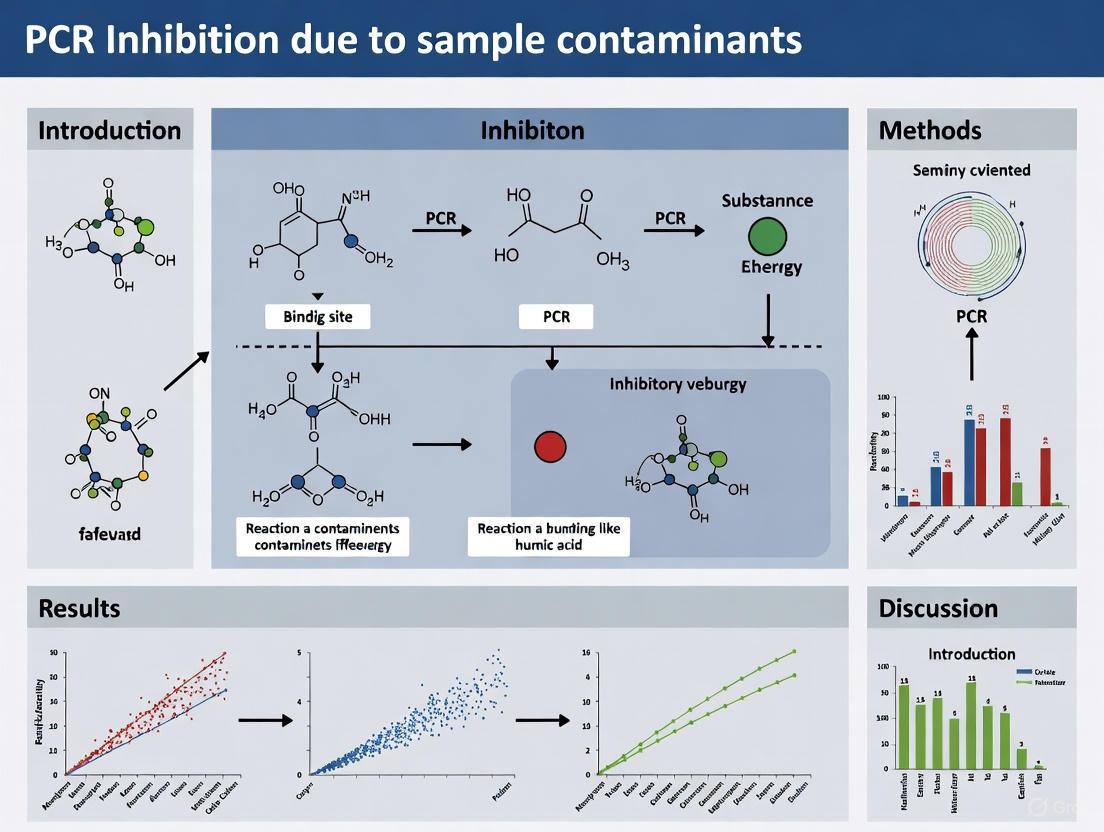
PCR inhibition by sample contaminants remains a significant challenge in molecular diagnostics and research, leading to false negatives, reduced sensitivity, and unreliable data.
Overcoming PCR Inhibition: A Comprehensive Guide to Identifying, Removing, and Preventing Sample Contaminants
Abstract
PCR inhibition by sample contaminants remains a significant challenge in molecular diagnostics and research, leading to false negatives, reduced sensitivity, and unreliable data. This article provides a systematic framework for researchers and drug development professionals to understand, troubleshoot, and overcome PCR inhibition. Drawing from recent studies and validated protocols, we explore the mechanisms of common inhibitors, evaluate effective removal strategies like BSA supplementation and commercial cleanup kits, and establish robust validation workflows. The content integrates foundational knowledge with practical applications, offering comparative analyses of methodological approaches and optimization techniques to ensure assay reliability across diverse sample types, from clinical specimens to complex environmental matrices.
Understanding PCR Inhibition: Sources, Mechanisms, and Impact on Assay Performance
Defining PCR Inhibition and Its Consequences for Diagnostic Accuracy
FAQ: Understanding PCR Inhibition
What is PCR inhibition? PCR inhibition occurs when substances, known as inhibitors, prevent the efficient amplification of nucleic acids during the Polymerase Chain Reaction. These inhibitors interfere with the biochemical process of DNA polymerization, leading to reduced sensitivity, false negatives, or complete amplification failure [1] [2]. They can originate from the original sample itself (e.g., blood, tissues, soil), be introduced during sample processing, or come from reagents used in DNA extraction and purification [2] [3].
Why is PCR inhibition particularly problematic for diagnostic accuracy? In diagnostic settings, the consequences of undetected PCR inhibition are severe. It can directly lead to false-negative results, where a pathogen is present but not detected due to suppressed amplification [4] [5]. This compromises patient care, can lead to the spread of infectious diseases, and may cause clinicians to miss critical treatment windows. Quantitative results are also skewed, as inhibitors can delay the quantification cycle (Cq) in qPCR, leading to an underestimation of the pathogen load or viral titer [1] [4].
How can I detect PCR inhibition in my experiments? You can detect inhibition through several control methods:
- No Template Control (NTC): A reaction containing all PCR components except the DNA template. Amplification in the NTC indicates contamination with foreign DNA, not necessarily inhibition [6] [7].
- Internal Positive Control (IPC): The most reliable method for detecting inhibitors. A known, non-target DNA sequence is spiked into the sample reaction. If the amplification of the IPC is delayed or absent compared to a control reaction, it confirms the presence of inhibitors in the sample [2] [3].
- Sample Quality Assessment: Spectrophotometric analysis (A260/280 and A260/230 ratios) can indicate the presence of common contaminants like phenol or carbohydrates that are also frequent inhibitors [3].
What are the most common sources of PCR inhibitors? Common inhibitors vary by sample type [1] [3]:
- Blood: Heparin, hemoglobin, immunoglobulin G (IgG), lactoferrin.
- Feces & Gut Samples: Bile salts, complex polysaccharides.
- Tissues: Collagen, proteases.
- Plants & Soil: Humic and fulvic acids, polyphenols.
- Sample Processing: Detergents (SDS), phenol, ethanol, isopropanol, and EDTA from TE buffer (which chelates essential Mg²⁺ ions) [2] [3].
The following diagram illustrates the primary mechanisms through which these inhibitors disrupt the PCR process.
Troubleshooting Guide: Overcoming PCR Inhibition
Step 1: Identify and Confirm Inhibition
Before optimizing your protocol, confirm that poor amplification is due to inhibition.
- Protocol: To quantify the extent of inhibition, spike a known amount of a control template (one not expected in your samples) into your investigated reaction mixture. Compare its amplification to the same template run in a clean, inhibitor-free reaction. A significant delay or reduction in amplification in the sample mixture confirms the presence of inhibitors [2].
Step 2: Optimize Sample Collection and Preparation
The goal is to minimize the co-purification of inhibitors with your nucleic acids.
- Refined Sampling: For swabbed samples, avoid collecting excess background material (e.g., from fabric or food) that may contain inhibitors [2].
- DNA Purification: Use purification methods designed for challenging samples. Silica-based columns, magnetic beads, Chelex resin (common in forensics), and guanidium isothiocyanate extraction can be effective [1] [3].
- Inhibitor Removal: For specific inhibitors, use targeted methods:
Step 3: Optimize the PCR Reaction Itself
If inhibition persists after purification, modify the PCR chemistry to be more tolerant.
- Use Inhibitor-Tolerant Reagents: Specialized DNA polymerases and master mixes (e.g., InhibiTaq Master Mix) are formulated for robust performance in the presence of common contaminants like hemoglobin, bile salts, and collagen [8] [5].
- Increase DNA Polymerase Concentration: Raising the concentration of the polymerase can sometimes overcome the effects of mild inhibition [2].
- Employ PCR Additives: Additives can help overcome inhibition through various mechanisms. The table below summarizes common additives and their functions.
Table: Common PCR Additives to Overcome Inhibition
| Additive | Function | Effective Against |
|---|---|---|
| Bovine Serum Albumin (BSA) | Binds to inhibitors, preventing them from interacting with the polymerase or DNA [2] [5]. | Immunoglobulin G, hemoglobin, bile salts, collagen [8]. |
| Betaine | Reduces secondary structure in DNA, can help with amplification of GC-rich templates [9]. | Not specified. |
| Dimethyl Sulfoxide (DMSO) | Destabilizes DNA secondary structure, improves specificity and yield for some difficult templates [3]. | Polysaccharides. |
| Formamide | Similar to DMSO, helps denature DNA with stable secondary structures [3]. | Not specified. |
| Tween-20 | A detergent that can help by binding certain inhibitor types [3]. | Polysaccharides. |
- Dilute the DNA Template: Diluting the DNA extract can reduce the concentration of the inhibitor to a level that no longer affects the reaction. However, this also dilutes the target DNA and can reduce sensitivity, making it unsuitable for samples with low target copy numbers [3].
The following workflow provides a systematic approach to troubleshooting PCR inhibition in your lab.
Research Reagent Solutions
Table: Key Reagents for Managing PCR Inhibition
| Reagent / Method | Function | Considerations for Use |
|---|---|---|
| Inhibitor-Tolerant DNA Polymerase | Enzyme blends or engineered polymerases resistant to a wide range of inhibitors found in complex samples [1] [8]. | Ideal for direct PCR protocols and dirty sample types like stool, soil, and blood. |
| Hot-Start Polymerase | Chemically modified or antibody-bound enzyme inactive at room temperature, preventing non-specific amplification and primer-dimer formation during reaction setup [9] [8]. | Improves assay specificity and sensitivity; requires a heat activation step (e.g., 95°C for 2 min). |
| Bovine Serum Albumin (BSA) | Additive that binds to and neutralizes a broad spectrum of inhibitors, particularly effective for blood and tissue samples [2] [5]. | A versatile, low-cost first-line additive to include in master mixes for challenging samples. |
| Uracil-DNA Glycosylase (UNG) | Enzyme that prevents carryover contamination by degrading PCR products from previous reactions (containing dUTP) before thermocycling begins [7] [8]. | Requires the use of dUTP in place of dTTP in all PCR mixes. Not effective for GC-rich amplicons. |
| Silica-Based / Magnetic Bead Kits | DNA purification systems designed to efficiently separate nucleic acids from common inhibitors like humic substances and salts [1] [3]. | Choosing the right purification method is sample-dependent and critical for success. |
FAQs and Troubleshooting Guides
What are the most common PCR inhibitors and where are they found?
PCR inhibitors are substances that interfere with in vitro DNA polymerization or fluorescence measurements, leading to failed or skewed results [1]. The table below summarizes common inhibitors, their sources, and primary mechanisms of action.
Table 1: Common PCR Inhibitors, Their Sources, and Mechanisms
| Inhibitor | Common Sample Sources | Primary Mechanism of Inhibition |
|---|---|---|
| Hematin & Hemoglobin [1] | Blood, tissue samples [1] | Interferes with DNA polymerase activity [1]. |
| Humic and Fulvic Acids [1] | Soil, sediment, plants [1] | Interacts with nucleic acids and inhibits DNA polymerase [1]. |
| Immunoglobulin G (IgG) [1] | Blood, serum [1] | Inhibits DNA polymerase [1]. |
| Urea [10] | Urine, clinical samples | Can inhibit DNA polymerases; often carried over during purification [10]. |
| Heparin & EDTA [1] | Blood (anticoagulants) [1] | Anticoagulants that can chelate metal ions essential for polymerase activity [1]. |
| Complex Polysaccharides & Lipids [11] | Feces, plant material, food samples [11] | Can sequester nucleic acids or interfere with DNA polymerase [11]. |
| Metal Ions [10] [11] | Various, including reagents and environmental samples [10] [11] | At high concentrations, can be inhibitory; may also chelate essential Mg²⁺ [10] [11]. |
How do I detect the presence of PCR inhibitors in my samples?
Inhibition can manifest as a complete amplification failure, reduced sensitivity, or inaccurate quantification. Here are key methods for detection:
- No Template Control (NTC): An NTC containing all reaction components except the DNA template should show no amplification. Amplification in the NTC indicates contamination of reagents with target DNA or primers [7] [12].
- Internal/Inhibition Controls: These are control sequences added to each reaction. A delay or failure in the amplification of the internal control signal indicates the presence of inhibitors in the sample [12].
- Standard Dilution Series: Running a dilution series of a known positive control can reveal inhibition. A significant shift in quantification cycle (Cq) values or reduced amplification efficiency in more concentrated samples suggests the presence of inhibitors [12].
- Droplet Digital PCR (dPCR) Comparison: Since dPCR is less affected by inhibitors that impact amplification kinetics, comparing results from qPCR and dPCR for the same sample can indicate inhibition. Consistently higher estimated concentrations from dPCR suggest the qPCR is being inhibited [1] [11].
What are the best strategies to overcome PCR inhibition?
A multi-faceted approach is often required to mitigate the effects of potent PCR inhibitors.
- Optimize Sample Purification: Use purification kits specifically designed to remove inhibitors (e.g., those effective for humic substances or heparin) [11]. Be aware that extensive purification can lead to DNA loss [1].
- Dilute the Sample: A simple 10-fold dilution of the DNA extract can dilute inhibitors to a non-inhibitory concentration. This is a common first step but reduces sensitivity and may not be sufficient for strong inhibition [11].
- Use Inhibitor-Tolerant DNA Polymerases: Select polymerases engineered or blended for high tolerance to common inhibitors [1] [10].
- Add PCR Enhancers: Specific additives can bind to or neutralize inhibitors. The table below summarizes effective reagents.
Table 2: Reagents to Overcome PCR Inhibition
| Reagent | Recommended Final Concentration | Function and Effectiveness |
|---|---|---|
| Bovine Serum Albumin (BSA) [11] [13] | 10–100 μg/mL [13] | Binds to and neutralizes a range of inhibitors, including humic acids and hematin [11]. |
| T4 Gene 32 Protein (gp32) [11] | 0.2 μg/μL [11] | Binds to single-stranded DNA, preventing denaturation, and is highly effective against inhibitors in wastewater and other complex matrices [11]. |
| Dimethyl Sulfoxide (DMSO) [11] [13] | 1–10% [13] | Destabilizes DNA secondary structures, aiding in the denaturation of GC-rich templates [11]. |
| Tween-20 [11] | Varies (e.g., 0.1-1%) | A non-ionic detergent that can counteract inhibitory effects on Taq DNA polymerase, particularly in fecal samples [11]. |
- Switch to Digital PCR (dPCR): For quantification, dPCR is inherently more tolerant to many inhibitors because it relies on end-point measurement and partitioning, which can isolate inhibitor molecules [1] [11].
Detailed Protocol: Evaluating PCR Enhancers for Inhibitor-Rich Wastewater Samples
This protocol, adapted from a 2024 study, provides a methodology to test different enhancers for removing inhibition [11].
1. Sample and Reagent Preparation
- Extract nucleic acids from your inhibitor-rich sample (e.g., wastewater, soil) using your standard method.
- Prepare a master mix containing your standard PCR buffer, primers, probes, dNTPs, and DNA polymerase.
- Aliquot the master mix into separate tubes for each enhancer condition to be tested.
- From stock solutions, add the enhancers to their respective tubes to achieve the final concentrations listed in Table 2. Include a control with no enhancer.
2. Reaction Setup and Thermal Cycling
- Add a consistent volume of the extracted nucleic acid sample (both undiluted and a 10-fold diluted series) to each master mix aliquot.
- Pipette the reactions into a qPCR plate and run under your standard thermal cycling conditions.
- Include a positive control (inhibitor-free template) and a no-template control (NTC) for each enhancer condition.
3. Data Analysis
- Compare the Cq values and fluorescence curves across all conditions.
- A significant decrease in Cq (e.g., from undetected to a low Cq) in an enhancer-containing reaction compared to the no-enhancer control indicates successful inhibition relief.
- Calculate the percentage of inhibited samples that became detectable after each treatment.
This workflow evaluates multiple strategies to identify the most effective one for your specific sample type:
The Scientist's Toolkit: Essential Reagents for Overcoming Inhibition
Table 3: Key Research Reagent Solutions for PCR Inhibition
| Item | Function/Benefit | Example Use Case |
|---|---|---|
| Inhibitor-Tolerant DNA Polymerase [1] [10] | Engineered enzyme or enzyme blend resistant to a wide array of inhibitors. | Direct PCR from blood or soil samples without extensive purification [1]. |
| Bovine Serum Albumin (BSA) [11] [13] | Non-specific protein that binds to inhibitors, preventing them from interacting with the polymerase or DNA. | Mitigating effects of humic acid in environmental samples or hematin in blood [11]. |
| T4 Gene 32 Protein (gp32) [11] | Single-stranded DNA binding protein that stabilizes DNA and prevents inhibitor binding. | Highly effective for complex matrices like wastewater; shown to be a top-performing enhancer [11]. |
| dUTP/UNG Carryover Prevention System [7] [12] | Incorporation of dUTP in PCR products allows enzymatic (UNG) degradation of contaminating amplicons from previous runs. | Essential for high-sensitivity diagnostic testing to prevent false positives [7]. |
| PCR Additives (DMSO, Formamide, Glycerol) [11] [13] | Modify DNA melting temperature and reduce secondary structures, improving amplification efficiency. | Amplification of GC-rich targets or templates with complex secondary structures [10]. |
| Silica/Magnetic Bead-Based Purification Kits [1] [11] | Designed to efficiently co-purify nucleic acids while removing specific inhibitory compounds. | Purifying DNA from samples high in humic substances, polyphenolics, or tannins [11]. |
How can I prevent contamination in my sensitive PCR experiments?
Preventing contamination is crucial, as the extreme sensitivity of PCR can lead to false positives from minute amounts of contaminating DNA [7].
- Physical Separation of Work Areas: Establish physically separated, dedicated areas for pre-PCR (reagent preparation, sample setup) and post-PCR (product analysis) activities. Use separate equipment, lab coats, and consumables for each area [7] [12].
- Use Aerosol-Reduction Tips: Always use filtered pipette tips to prevent aerosol contamination of pipette shafts and reagents [7].
- Implement Good Laboratory Practices: Wear gloves, open tubes carefully, and decontaminate work surfaces and equipment regularly with 10% bleach solution followed by 70% ethanol [7].
- Utilize Enzymatic Controls (UNG/Uracil): Use a master mix containing dUTP instead of dTTP and the enzyme Uracil-N-Glycosylase (UNG). UNG will degrade any PCR products from previous reactions (which contain uracil) before the new thermal cycling begins, preventing carryover contamination [7] [12].
This workflow outlines the key steps for a contamination-free qPCR setup:
Core Mechanisms of PCR Inhibition
Polymerase Chain Reaction (PCR) inhibition occurs when contaminants interfere with the biochemical processes essential for DNA amplification. The mechanisms can be broadly categorized into disruptions of polymerase activity, nucleic acid integrity, and essential co-factors [14].
| Inhibition Mechanism | Description | Common Inhibitors |
|---|---|---|
| Direct Polymerase Inhibition | Inhibitor binds to the DNA polymerase, degrading it or blocking its active site, preventing DNA synthesis [9] [14]. | Hemoglobin, heparin, humic acids, phenolic compounds, detergents (SDS) [15] [16] [14]. |
| Nucleic Acid Interaction | The contaminant binds to or degrades the DNA template, making it inaccessible for primer binding or polymerization [11] [14]. | Humic acids (mimic DNA), polysaccharides, collagen, melanin [16] [14]. |
| Cof-factor Chelation | The inhibitor binds to magnesium ions (Mg2+), which are essential cofactors for DNA polymerase activity, reducing reaction efficiency [9] [16]. | EDTA, citrate, calcium ions [16]. |
| Fluorescence Quenching | Substances interfere with the fluorescent signals used for detection in qPCR and digital PCR, leading to inaccurate quantification [14]. | Humic acids, colored plant pigments [14]. |
The following diagram illustrates how these inhibitors disrupt the PCR process at the molecular level.
Frequently Asked Questions (FAQs) & Troubleshooting
Q1: My qPCR results show delayed quantification cycle (Cq) values and poor amplification efficiency. What does this indicate and how can I resolve it?
Answer: Delayed Cq values and inefficient amplification are classic signs of PCR inhibition [17]. This means inhibitors are interfering with the polymerase or fluorescence detection, skewing quantification.
- Confirm Inhibition: Run an internal PCR control (IPC). If the IPC Cq is also delayed, inhibition is likely present [17].
- Optimize Reaction Mix: Add PCR enhancers like Bovine Serum Albumin (BSA) (0.1-0.5 µg/µL) or T4 gene 32 protein (gp32) (0.2 µg/µL) to bind inhibitors and stabilize the polymerase [11] [17]. Adjust the MgCl2 concentration upward in 0.2-1 mM increments to counteract chelators [18] [17].
- Purify Template: Further purify your DNA sample using column-based clean-up kits or ethanol precipitation [18] [17]. Alternatively, a simple 10-fold dilution of the DNA template can dilute inhibitors, though this may reduce sensitivity [11].
Q2: I observe non-specific bands or a smear on my agarose gel instead of a single, sharp product. What is the cause and how can I improve specificity?
Answer: Non-specific amplification is often due to suboptimal cycling conditions or contaminants that promote mis-priming [9] [16].
- Increase Stringency: Raise the annealing temperature in increments of 2°C [18] [16]. Use a hot-start polymerase to prevent premature primer extension during reaction setup [9] [16].
- Check Template Quality: Reduce the amount of template DNA by 2–5 fold, as excess DNA can increase non-specific binding [16]. Ensure template purity.
- Optimize Primers: Verify primer specificity using BLAST and redesign if they have complementary regions or form secondary structures [18] [16].
Q3: I am getting no PCR product at all. What are the first steps I should take to troubleshoot?
Answer: A complete failure of amplification can be due to several factors, from reagent issues to severe inhibition.
- Verify Reagents: Confirm all PCR components were added and are functional by including a positive control reaction [18] [16]. Check the expiration dates of reagents and avoid multiple freeze-thaw cycles [19].
- Check Program Parameters: Ensure the thermocycler program has the correct temperatures and times. Increase the number of cycles (e.g., by 3-5) and ensure the extension time is sufficient for your amplicon length [16] [19].
- Assess Template and Inhibitors: Check template quality and concentration via spectrophotometry or gel electrophoresis [9] [19]. If inhibitors are suspected, dilute the template or use an inhibitor-tolerant DNA polymerase [20] [16].
Detailed Experimental Protocol: Evaluating PCR Enhancers
This protocol is adapted from a study that systematically evaluated eight different approaches to mitigate PCR inhibition in complex wastewater samples [11].
Methodology
- Sample Preparation: 24-hour composite flow-proportional raw wastewater samples are collected. Nucleic acids are extracted using a standard commercial kit.
- Inhibition Assessment: The presence of inhibitors is confirmed by comparing Cq values of the undiluted extracted sample to a 10-fold diluted sample. A significant decrease in Cq with dilution indicates inhibition [11].
- Evaluating Enhancers: The following enhancers are spiked into the RT-qPCR master mix at various concentrations. Each reaction uses a constant amount of extracted nucleic acid.
- Control Strategies: In parallel, test a 10-fold dilution of the extracted sample and the use of a commercial inhibitor removal kit.
- Data Analysis: Compare the Cq values and calculated viral loads (for a target like SARS-CoV-2) across the different strategies. The most effective method will yield the lowest Cq and highest viral recovery.
Expected Outcomes
In the referenced study, the addition of T4 gp32 was the most effective single approach, followed by BSA, sample dilution, and the inhibitor removal kit [11]. The workflow for this experiment is summarized below.
Research Reagent Solutions
A selection of key reagents and materials for overcoming PCR inhibition is listed in the table below.
| Reagent/Material | Function in Overcoming Inhibition |
|---|---|
| T4 gene 32 protein (gp32) | Binds to single-stranded DNA and inhibits substances like humic acids, preventing them from interfering with the polymerase or template [11]. |
| Bovine Serum Albumin (BSA) | Binds to and neutralizes a wide range of inhibitors, such as phenols and humic acids, stabilizing the DNA polymerase [11] [17]. |
| Inhibitor-Tolerant Polymerases | Engineered or selected DNA polymerases (e.g., OmniTaq, GoTaq Endure) with inherent resistance to common inhibitors found in blood, soil, and plants [20] [17]. |
| Inhibitor Removal Kits | Column-based kits designed to efficiently remove polyphenolic compounds, humic acids, tannins, and other inhibitors during nucleic acid purification [11]. |
| dNTPs | Balanced deoxynucleotide solutions are crucial; unbalanced or degraded dNTPs can increase error rates and cause amplification failure [18] [19]. |
| MgCl2 Solution | A optimized and well-mixed MgCl2 solution is vital, as Mg2+ is a cofactor for polymerase activity and its concentration often requires optimization in the presence of chelators [18] [9]. |
FAQs and Troubleshooting Guides
Wastewater Samples
Question: My RT-qPCR assays for virus detection in wastewater consistently show inhibition, leading to false negatives. What are the most effective strategies to overcome this?
Answer: Wastewater contains a complex mix of inhibitors like humic acids, heavy metals, and complex polysaccharides that can disrupt PCR. Several enhancer strategies have been directly evaluated for their efficacy in this matrix [21] [11].
Key Experimental Protocol from Recent Research: A 2024 study systematically evaluated eight different PCR-enhancing strategies for wastewater samples targeting SARS-CoV-2 [11]. The optimized RT-qPCR protocol successfully eliminated false negatives. The methodology was as follows:
- Wastewater Processing: 24-hour composite flow-proportional raw wastewater samples were collected, concentrated, and nucleic acids were extracted.
- Inhibition Assessment: The presence of inhibitors was first confirmed by comparing undiluted and 10-fold diluted samples.
- Enhancer Evaluation: The following enhancers were added to the RT-qPCR reaction mix at various concentrations:
- T4 gene 32 protein (gp32)
- Bovine Serum Albumin (BSA)
- Dimethyl Sulfoxide (DMSO)
- Formamide
- TWEEN-20
- Glycerol
- Comparison: The performance of these enhancers was compared against a 10-fold dilution of the sample and a commercial inhibitor removal kit.
The study found that false negatives were eliminated by four approaches: a 10-fold dilution, the addition of gp32 (0.2 μg/μl), the addition of BSA, and using an inhibitor removal kit [21] [11]. Among these, the addition of gp32 was the most significant for removing inhibition.
Quantitative Data on PCR Enhancers for Wastewater:
| Enhancer Strategy | Final Concentration Evaluated | Effectiveness in Removing Inhibition | Key Consideration |
|---|---|---|---|
| T4 gene 32 protein (gp32) | 0.2 μg/μl | Most Significant | Binds to humic acids, preventing polymerase inhibition [11]. |
| 10-fold Sample Dilution | 1:10 | High | Dilutes inhibitors but also reduces target concentration, potentially lowering sensitivity [21] [11]. |
| Bovine Serum Albumin (BSA) | Not Specified | High | Binds to inhibitors like polyphenolic compounds [11]. |
| Inhibitor Removal Kit | As per manufacturer | High | Effective but adds cost and processing time [11]. |
| DMSO, Formamide, TWEEN-20, Glycerol | Various | Lower | Were less effective at reversing inhibition in this specific wastewater study [11]. |
Forensic Evidence
Question: How can I minimize the risk of DNA contamination when collecting and processing trace forensic evidence?
Answer: Contamination is a critical issue in forensic DNA analysis, especially with modern, highly sensitive STR typing kits. Even minute amounts of contaminating DNA from an investigator or the environment can lead to false positives [22]. A multi-pronged approach is essential.
Key Strategies and Supporting Data:
- Establish Dedicated Procedures: Use dedicated lab coats and gloves for PCR setup that never go near amplified PCR products or post-PCR analysis areas. Use filtered tips and dedicated equipment (pipettes, centrifuges) for setting up reactions [6].
- Physical Decontamination: Decontaminate work surfaces and equipment with a 10% bleach solution or commercial DNA decontamination products like DNA-away [6].
- Utilize Elimination Databases: The implementation of a "Police Elimination Database" (PED) is a powerful tool. One study showed that using a PED increased the detection rate of contamination incidents from 0.36% (via manual screening alone) to 0.66% in a more recent testing period, highlighting its importance for identifying false positives resulting from contamination by personnel [22].
The following workflow outlines a systematic approach to preventing and identifying contamination in forensic samples:
Plant Material
Question: My PCRs from plant DNA extracts often fail or show poor yield. What are the common causes and solutions?
Answer: Plant tissues are challenging due to the presence of PCR-inhibiting compounds like polysaccharides, polyphenols, tannins, and pigments that co-purify with DNA. These can inhibit polymerase activity [10].
Troubleshooting Guide:
- Cause: Co-purified Inhibitors. Polysaccharides and polyphenols are common in plant extracts.
- Cause: Complex Target Sequences. Plant DNA can be GC-rich or have complex secondary structures.
- Cause: Poor DNA Quality or Integrity.
- Solution: Always evaluate template DNA integrity by gel electrophoresis. Ensure DNA is stored in molecular-grade water or TE buffer (pH 8.0) to prevent degradation [10].
Buccal Swabs
Question: What are the best practices for extracting DNA from buccal swabs to ensure high-quality, inhibitor-free PCR template?
Answer: While the search results do not specifically detail buccal swab protocols, the general principles for obtaining pure DNA apply. The key is to remove inhibitors common in buccal cells and ensure DNA integrity.
Best Practices and Reagent Solutions:
- Thorough Purification: Follow manufacturer protocols for purification kits stringently to remove residual inhibitors like proteins or salts. If inhibition is suspected, re-purify or precipitate the DNA with 70% ethanol to wash away residual salts [10].
- Assess Purity and Integrity: Check the 260/280 ratio of the DNA and run a gel to confirm the DNA is high molecular weight and not degraded [10].
- Use Inhibitor-Tolerant Polymerases: For difficult samples, choose DNA polymerases known for high tolerance to common PCR inhibitors [10].
The Scientist's Toolkit: Research Reagent Solutions
This table details key reagents used to mitigate PCR inhibition across different sample types.
| Reagent/Kit | Function/Benefit | Example Application |
|---|---|---|
| T4 gene 32 protein (gp32) | Binds to single-stranded DNA and inhibitors like humic acids, preventing them from inhibiting the polymerase. | Highly effective for wastewater samples; shown to be the most significant enhancer in a 2024 study [21] [11]. |
| Bovine Serum Albumin (BSA) | Binds to and neutralizes a range of inhibitors, including polyphenols, tannins, and humic acids. | Useful for plant materials and wastewater; a common additive to relieve inhibition [11] [13]. |
| PCR Inhibitor Removal Kits | Contains a column matrix designed to efficiently remove polyphenolic compounds, humic acids, and tannins. | Can be used as a purification step for complex samples like wastewater or plant extracts [11]. |
| DMSO | Destabilizes DNA secondary structures by lowering the melting temperature (Tm), improving amplification of GC-rich targets. | Helpful for GC-rich templates found in some plant and microbial DNA [10] [13]. |
| Hot-Start DNA Polymerase | Remains inactive until a high-temperature activation step, preventing non-specific amplification and primer-dimer formation at room temperature. | A universal best practice to improve specificity in all PCRs, especially those with low template concentration [10] [23]. |
| 10% Bleach / DNA-away | Degrades contaminating DNA on surfaces and equipment, breaking down DNA amplicons from previous experiments. | Essential for decontaminating lab benches and equipment in forensic labs and any PCR setup area [6]. |
Frequently Asked Questions (FAQs)
Q1: What are the immediate visual signs of inhibition in a qPCR amplification curve? Inhibited qPCR reactions often display amplification curves that are flattened, show inconsistent exponential growth, or fail to cross the detection threshold [17]. A key indicator is a delayed Quantification Cycle (Cq) value across all samples, including controls, suggesting a general reduction in amplification efficiency rather than just low template concentration [17] [24].
Q2: How can I distinguish between true inhibition and simple low template concentration? The most reliable method is to use an Internal Positive Control (IPC) [17] [24]. If an IPC spiked into your sample also shows a delayed Cq compared to its expected value in a clean reaction, inhibition is confirmed. Without an IPC, low template and inhibition can be confused, as both lead to high Cq values [24].
Q3: Which QC metrics, beyond the amplification curve, can signal inhibition? The primary QC metric is amplification efficiency calculated from a standard curve [25] [24]. Optimal qPCR efficiency is 90-110%, corresponding to a standard curve slope between -3.6 and -3.1 [17] [24]. A slope steeper than -3.6 or shallower than -3.1 indicates potential inhibition [25] [17]. Furthermore, a correlation coefficient (R²) of the standard curve below 0.98 suggests issues with pipetting, dilution errors, or inhibition affecting linearity [25].
Q4: My no-template control (NTC) is clean, but my samples look inhibited. Could it still be contamination? Yes. A clean NTC rules out contamination of your master mix or reagents, but it does not rule out inhibitors present in the original sample itself [7]. Inhibitors like hemoglobin, heparin, or polysaccharides can be co-extracted with your nucleic acids and only affect the sample wells, not the NTC [17].
Quantitative Metrics for Identifying Inhibition
The following table summarizes key quantitative metrics and how they are affected by inhibition.
Table 1: Key QC Metrics for Detecting qPCR Inhibition
| Metric | Optimal Range | Indication of Inhibition | Notes |
|---|---|---|---|
| Standard Curve Slope [17] [24] | -3.6 to -3.1 | Slope shallower than -3.1 (efficiency <90%) or steeper than -3.6 (efficiency >110%) | Calculate efficiency (E) as E = (10-1/slope - 1) * 100% [24] |
| Amplification Efficiency [17] [24] | 90% - 110% | Efficiency below 90% | |
| Standard Curve R² Value [25] | >0.98 | Value below 0.98 | Suggests poor reproducibility and linearity, often due to inhibitors or pipetting errors. |
| Cq Shift in IPC [17] [24] | ≤ 0.5 cycles vs. control | Cq value significantly higher in sample than in clean reaction | A difference of >0.5 cycles in the IPC Cq is a strong indicator of inhibition [25]. |
Experimental Protocol: Differentiating Inhibition from Low Input
This protocol uses a diluted standard curve and an Internal Positive Control (IPC) to diagnose inhibition.
Objective: To determine whether a high Cq value in a sample is due to true low target concentration or the presence of PCR inhibitors.
Materials:
- Test sample nucleic acids
- qPCR master mix (Consider an inhibitor-resistant formulation like GoTaq Endure for difficult samples [17])
- Primers and probe for the target gene
- Primers and probe for the IPC (a non-competitive, synthetic sequence with its own primer set [24])
- Nuclease-free water
- qPCR instrument and plates
Method:
- Prepare a Standard Curve: Create a serial dilution (e.g., 1:10 dilutions) of a known, clean DNA template for your target gene [24].
- Spike the IPC: Add a consistent, known amount of the IPC template into every well that will be used for the standard curve and the test samples [24].
- Run qPCR: Set up the qPCR reaction for both the standard curve and the test samples. Ensure the IPC is detectable with a different dye (e.g., VIC) than the target gene (e.g., FAM).
- Analyze Data:
- Plot the standard curve for the target gene and check its efficiency and R² value (see Table 1). Poor metrics suggest a general assay problem.
- For each test sample, record the Cq value for both the target gene and the IPC.
Interpretation of Results:
- No Inhibition: The IPC Cq values are consistent across the standard curve and all test samples.
- Sample Inhibition: The target gene Cq in a sample is high, and the IPC Cq in the same well is significantly delayed (>0.5 cycles) compared to the IPC Cq in the standard curve wells. This confirms the sample contains inhibitors [17] [24].
- Low Target Concentration: The target gene Cq is high, but the IPC Cq remains consistent and on-time. This confirms the sample has low target concentration but is not inhibited.
The logic for diagnosing the root cause of a high Cq value is summarized in the following workflow.
The Scientist's Toolkit: Key Reagents for Inhibition Management
Table 2: Essential Reagents and Their Functions in Managing Inhibition
| Reagent / Tool | Function in Inhibition Context |
|---|---|
| Inhibitor-Resistant Polymerase Mixes [17] | Specially formulated master mixes containing polymerases and buffers with high tolerance to common inhibitors found in blood, soil, and plants. |
| Internal Positive Control (IPC) [24] | A non-target DNA sequence used to distinguish between true inhibition (delayed IPC Cq) and low template concentration (normal IPC Cq). |
| Bovine Serum Albumin (BSA) [17] | Acts as a stabilizer, binding to inhibitors and reducing their interference with the DNA polymerase. |
| dUTP and Uracil-N-Glycosylase (UNG) [7] [26] | Prevents carryover contamination from previous PCR products. While not a direct sample inhibitor control, it ensures that amplification is from the original template and not contaminating amplicons. |
| High-Quality Nucleic Acid Purification Kits [17] | Designed to remove common inhibitors during the DNA/RNA extraction process, providing a cleaner template for amplification. |
| Automated Liquid Handlers [27] | Improve pipetting precision and reproducibility, reducing Cq variation and the risk of cross-contamination, which aids in accurate inhibition diagnosis. |
Practical Strategies for Inhibitor Removal and Contamination Control
Polymerase Chain Reaction (PCR) is a cornerstone technique in molecular biology, but its efficiency is often compromised by inhibitors present in complex biological samples. These substances, which can include salts, proteins, organic compounds, and detergents, interfere with DNA polymerase activity, leading to reduced amplification or complete reaction failure. [15] [11] Bovine Serum Albumin (BSA) serves as a powerful chemical antidote to this problem. This inexpensive and readily available protein binds to a wide range of PCR inhibitors, effectively neutralizing them and freeing the DNA polymerase to function optimally. Its application is particularly valuable when working with challenging samples such as blood, plant tissues, fecal matter, and wastewater, where purification alone may be insufficient to achieve robust amplification. [9] [11] [28]
FAQs and Troubleshooting Guide
1. How does BSA actually work to reduce PCR inhibition? BSA functions as a competitive binding agent. Many PCR inhibitors, such as polyphenolic compounds from plants or humic acids from environmental samples, work by binding to the DNA polymerase enzyme and blocking its active site. BSA acts as a decoy by providing alternative binding sites for these inhibitory substances. When inhibitors bind to BSA instead of the polymerase, the enzyme remains active and can efficiently amplify the target DNA. [11] [28]
2. For which types of samples is BSA most beneficial? BSA is particularly effective for samples known to contain potent PCR inhibitors. Research and clinical experience have demonstrated its utility in:
- Plant extracts containing polysaccharides and polyphenols
- Blood and tissue samples with heme and immunoglobulins
- Fecal matter with complex organic compounds
- Soil and environmental samples containing humic acids
- Wastewater with diverse chemical contaminants [11] [28] [10]
3. What is the recommended concentration for BSA in PCR? The optimal concentration of BSA typically falls within the range of 0.1 to 0.5 μg/μL in the final reaction mixture. [28] However, some studies evaluating wastewater samples have used BSA as one of several enhancers to eliminate false negative results. [11] We recommend testing a range of concentrations to determine the optimal amount for your specific application.
4. Can high concentrations of BSA be inhibitory? Yes, like any PCR component, excessive BSA can potentially inhibit the reaction. It is crucial to optimize the concentration for your specific reaction conditions. If problems persist despite BSA addition, consider complementary strategies such as diluting the template DNA or using inhibitor-tolerant polymerases. [10]
5. Are there different types of BSA, and does it matter which one I use? Commercial BSA preparations vary in their purification levels, with some being fatty acid-free, protease-free, or essentially globulin-free. Research has shown that different BSA variants can exhibit varying binding properties with other molecules. [29] For most PCR applications, standard molecular biology grade BSA is sufficient, but for critical applications, you may want to test different variants or consistently use the same catalog number from your supplier.
Troubleshooting Common BSA-Related Issues
| Problem | Possible Cause | Solution |
|---|---|---|
| No improvement in amplification | Incorrect BSA concentration | Titrate BSA concentration (0.1-0.8 μg/μL) to find optimal level [28] |
| Inhibitors too concentrated | Dilute template DNA or combine BSA with other enhancers [11] | |
| Reduced PCR efficiency | BSA concentration too high | Reduce BSA amount; high concentrations can become inhibitory [10] |
| Interaction with other components | Ensure BSA is compatible with your polymerase buffer system | |
| Inconsistent results between experiments | Different BSA variants or sources | Use the same BSA catalog number consistently across experiments [29] |
| Improper storage or old BSA stock | Prepare fresh aliquots; avoid repeated freeze-thaw cycles |
Experimental Protocol: Implementing BSA in Your PCR Workflow
Materials and Reagents
- Molecular biology grade BSA: Available from various suppliers (e.g., Sigma-Aldrich, Thermo Fisher) [29]
- PCR master mix components: DNA polymerase, buffer, dNTPs, primers [30]
- Template DNA: Prepared from your target sample
- Nuclease-free water
Step-by-Step Procedure
Prepare BSA Stock Solution:
- Reconstitute lyophilized BSA in nuclease-free water to create a concentrated stock solution (e.g., 10-20 mg/mL).
- Aliquot and store at -20°C to avoid repeated freeze-thaw cycles.
Set Up PCR Reactions:
- To your standard PCR master mix, add BSA to achieve the desired final concentration (typically 0.1-0.5 μg/μL).
- A typical 50 μL reaction might contain:
Run PCR:
- Use your standard cycling parameters initially.
- If necessary, optimize annealing temperature or extension times based on your specific target.
Analyze Results:
- Separate PCR products by agarose gel electrophoresis.
- Compare amplification efficiency with and without BSA.
Optimization Tips
- Always include positive and negative controls in your experiment.
- If using a hot-start polymerase, ensure BSA doesn't interfere with activation.
- For difficult samples, consider combining BSA with other enhancers like DMSO (1-10%) or Tween-20 (0.1-1%). [28]
- When troubleshooting, systematically vary one parameter at a time (BSA concentration, Mg²⁺ levels, annealing temperature) to identify optimal conditions. [10]
BSA Enhancement Mechanism and Workflow
Research Reagent Solutions
| Reagent | Function in PCR | Key Considerations |
|---|---|---|
| Bovine Serum Albumin (BSA) | Binds inhibitors; stabilizes enzymes [9] [11] [28] | Use 0.1-0.5 μg/μL final concentration; test different variants [29] |
| T4 Gene 32 Protein (gp32) | Binds single-stranded DNA; improves efficiency in inhibitor-rich samples [11] | Particularly effective for complex samples like wastewater [11] |
| DMSO | Disrupts secondary structures; reduces melting temperature [28] | Use 1-10% final concentration; can inhibit some polymerases at high levels [28] |
| Betaine | Reduces secondary structure; equalizes Tm of GC-rich regions [9] | Especially useful for GC-rich templates [10] |
| Formamide | Destabilizes DNA helix; increases primer specificity [11] [28] | Use 1.25-10% final concentration [28] |
| Non-ionic Detergents | Stabilizes polymerases; prevents secondary structures [28] | Tween-20, Triton X-100 at 0.1-1% [28] |
Frequently Asked Questions (FAQs)
1. What is the most common cause of PCR inhibition in environmental and forensic samples? PCR inhibitors are diverse and originate from the sample matrix or the sample processing steps. Common inhibitors include:
- Humic Substances: These are major inhibitors in soil and sediment samples, with humic acid being a primary concern. They can interfere with the DNA polymerase enzyme [1].
- Metal Ions: Ions such as iron, copper, zinc, and tin are strong inhibitors often encountered when sampling from metal surfaces like bullets, cartridge casings, or wires. Calcium from bone samples can also inhibit PCR by competitively binding to the polymerase in place of magnesium [31].
- Blood Components: Hemoglobin, immunoglobulin G (IgG), and lactoferrin are known inhibitors in blood samples [1].
- Clinical Anticoagulants: Substances like EDTA and heparin can also act as PCR inhibitors [1].
2. My DNA yield is low after using a cleanup kit. What could be the reason? Low DNA yield can often be traced to protocol deviations or sample characteristics:
- Incomplete Lysis or Binding: The initial cell lysis step may be incomplete, or the sample may be overloaded, preventing all DNA from binding to the column or beads [32].
- Incorrect Buffer Preparation: A common error is forgetting to add ethanol to the wash buffers, which is essential for proper DNA binding during the wash steps [32].
- Inefficient Elution: The elution buffer may not be applied directly to the center of the membrane, the volume may be too large, or the incubation time may be too short. For larger DNA fragments (>10 kb), using pre-heated elution buffer and longer incubation is recommended [32].
- Plasmid Characteristics: If purifying plasmids, low-copy number plasmids will naturally yield less DNA and may require processing a larger volume of cells [32].
3. How can I quantitatively measure the level of inhibition in my sample? A standardized method involves using an internal or external control to detect a shift in the quantification cycle (Cq).
- Procedure: Spike a known quantity of a control DNA or RNA (e.g., Hepatitis G virus RNA) into your sample extract [33].
- Measurement: Perform qPCR and measure the Cq value of the control spiked into your sample versus the Cq value of the control in a clean, uninhibited reaction [33].
- Interpretation: A significant delay or increase in the Cq value indicates the presence of inhibitors. The magnitude of the Cq shift can be used to calculate a dilution factor required to mitigate the inhibition [33].
4. Beyond using a cleanup kit, what other strategies can mitigate PCR inhibition? Several supplementary strategies can be employed:
- Use Inhibitor-Tolerant Polymerases: Specific DNA polymerases, such as KOD polymerase, have been demonstrated to be more resistant to metal ion inhibition compared to standard Taq polymerase [31].
- Employ PCR Facilitators: Adding compounds like Bovine Serum Albumin (BSA) or the protein gp32 to the PCR reaction can bind to inhibitory substances and improve amplification efficiency, especially for humic acids [33].
- Dilution: Diluting the DNA extract is a classical method to reduce the concentration of inhibitors, though it also dilutes the DNA and is not suitable for low-concentration samples [1].
- Chemical Reversal: For specific inhibitors like calcium, the chelator EGTA can be used to reverse inhibition without damaging the DNA template [31].
5. My sample is of very low microbial biomass. How can I prevent contamination during DNA cleanup? Low-biomass samples are exceptionally vulnerable to contamination from reagents, the environment, and the researcher. Key practices include:
- Use Sterile, Single-Use Consumables: Utilize pre-sterilized tips, tubes, and plates to act as barriers to contaminants [34].
- Decontaminate Surfaces and Equipment: Treat work surfaces, equipment, and reusable tools with a nucleic acid degrading solution (e.g., bleach, UV-C light) to remove trace DNA, as ethanol alone may not eliminate cell-free DNA [35].
- Include Comprehensive Controls: Always process negative control samples (e.g., blank extraction controls with water) alongside your samples to identify the background contaminant profile [35].
- Maintain a One-Way Workflow: Physically separate pre- and post-amplification areas and follow a unidirectional workflow to prevent amplicon carryover [34].
Troubleshooting Common Issues
| Problem | Possible Cause | Recommended Solution |
|---|---|---|
| No DNA Recovered | Ethanol not added to wash buffer; plasmid loss during culture growth [32]. | Verify correct buffer preparation; ensure correct antibiotic is used for plasmid selection [32]. |
| Low DNA Yield | Incomplete cell lysis; inefficient elution; sample overload [32]. | Resuspend pellet completely; ensure elution buffer is applied to membrane center; use recommended amount of starting material [32]. |
| Inhibitors Not Removed | Sample has exceptionally high inhibitor load; kit is not optimal for inhibitor type [1]. | Dilute the purified DNA and re-cleanup; select a kit designed for your specific sample matrix (e.g., soil, blood) [1] [33]. |
| Inconsistent Results (Well-to-Well) | Cross-contamination during liquid handling; aerosol contamination [35]. | Use good pipetting practices; employ filter tips; maintain equipment [34]. |
| Inaccurate Quantification (dPCR/qPCR) | Presence of enzyme inhibitors or fluorescent quenchers [1]. | Use an internal amplification control (IAC) to detect inhibition; consider using inhibitor-tolerant polymerases [1] [33]. |
Table 1: Inhibitory Concentration (IC₅₀) of Metal Ions on PCR Amplification This table summarizes the concentration of various metal ions required to cause 50% inhibition of PCR, highlighting which metals are most problematic. Data adapted from [31].
| Metal Ion | IC₅₀ (mM) | Common Sample Sources |
|---|---|---|
| Zinc (Zn²⁺) | < 0.1 | Metal surfaces, wires [31]. |
| Tin (Sn²⁺) | < 0.1 | Food packaging, beverage containers [31]. |
| Iron (Fe²⁺) | < 0.1 | Blood, weapons, tools [31]. |
| Copper (Cu²⁺) | < 0.1 | Wires, cartridge casings, jewelry [31]. |
| Nickel (Ni²⁺) | ~ 1.0 | Metal alloys, coins [31]. |
| Calcium (Ca²⁺) | ~ 1.0 | Bone samples [31]. |
| Lead (Pb²⁺) | > 1.0 | Soil, paints [31]. |
Table 2: Comparison of DNA Extraction Kit Performance on Clinical Specimens A historical comparison of six commercial kits for recovering Cytomegalovirus (CMV) DNA from spiked clinical samples, evaluating sensitivity and practicality. Data adapted from [36].
| Extraction Kit | Core Technology | Cost per Test (USD, 1999) | Total Processing Time (for 18 samples) | Sensitivity (Lowest PFU/ml detected) |
|---|---|---|---|---|
| NucliSens (NS) | Silica particle binding | $4.00 | 3h 8min | 0.4 PFU/ml [36] |
| Puregene (PG) | Alcohol precipitation | $0.23 | 4h 39min | 0.4 PFU/ml [36] |
| QIAamp (QIA) | Silica-gel membrane column | $1.10 | 1h 55min | 4 PFU/ml [36] |
| IsoQuick (IQ) | Nuclease-binding matrix | $0.84 | 2h 38min | 4 PFU/ml [36] |
| MasterPure (MP) | Alcohol precipitation | $0.69 | 1h 59min | 4 PFU/ml [36] |
| Generation (GCC) | Capture column | $1.08 | 0h 55min | 4 PFU/ml [36] |
Detailed Experimental Protocol: Measuring and Mitigating Inhibition
Objective: To quantify the level of PCR inhibition in a DNA extract and determine the appropriate dilution to neutralize it.
Materials:
- Purified DNA sample
- Standardized control DNA or RNA (e.g., Hepatitis G virus RNA)
- qPCR or RT-qPCR master mix
- Nuclease-free water
Methodology:
- Prepare Reaction Tubes:
- Sample Tube: Combine the DNA sample, a known amount of control DNA/RNA, qPCR master mix, and primers.
- Control Tube: Combine an equivalent amount of the same control DNA/RNA with master mix and primers in nuclease-free water (no sample DNA).
- Run qPCR: Perform quantitative PCR using appropriate cycling conditions.
- Analyze Data:
- Record the Cq values for the control in both the sample tube (Cqsample) and the control tube (Cqcontrol).
- Calculate the Cq shift: ΔCq = Cqsample - Cqcontrol.
- Determine Mitigation Dilution:
- Validate: Dilute the original DNA sample by the calculated factor and repeat the qPCR with the control to confirm the ΔCq is minimized.
The Scientist's Toolkit: Key Reagent Solutions
| Reagent / Material | Function in Troubleshooting PCR Inhibition |
|---|---|
| Inhibitor-Tolerant DNA Polymerase | Enzyme blends (e.g., KOD, Phusion Flash) with enhanced resistance to inhibitors like humic acid and metal ions, crucial for direct PCR protocols [1] [31]. |
| Bovine Serum Albumin (BSA) | A PCR facilitator that binds to inhibitory substances, such as phenolic compounds and proteinases, preventing them from interfering with the DNA polymerase [33]. |
| Ethylene Glycol-Bis (EGTA) | A specific calcium chelator that can reverse PCR inhibition caused by calcium ions without being destructive to the DNA template, useful for bone samples [31]. |
| Silica-based Columns/Magnetic Beads | The core technology in many cleanup kits (e.g., DNA IQ, QIAamp) that binds DNA while allowing impurities and inhibitors to be washed away [1] [36]. |
| Internal Amplification Control (IAC) | A non-target DNA sequence added to the PCR reaction to distinguish between true target amplification failure and PCR inhibition; a failed IAC signal indicates the presence of inhibitors [33]. |
Workflow: A Systematic Approach to Tackling PCR Inhibition
The following diagram outlines a logical pathway for diagnosing and resolving issues related to PCR inhibition.
Physical Separation and Laboratory Best Practices to Prevent Amplicon Contamination
In polymerase chain reaction (PCR) and other nucleic acid amplification tests (NAATs), the exquisite sensitivity that enables detection of minute target sequences also makes these techniques vulnerable to contamination. Amplicon contamination, caused by the carryover of amplification products from previous reactions, is a primary source of false-positive results in molecular microbiology testing [37]. These aerosolized DNA fragments can contaminate laboratory environments, reagents, and equipment, potentially compromising experimental results and diagnostic accuracy [38] [26]. Even the smallest aerosol can contain as many as 10⁶ amplification products, creating significant challenges for laboratories performing molecular testing [26]. This guide outlines established best practices for preventing amplicon contamination through physical separation and proper laboratory procedures within the broader context of troubleshooting PCR inhibition from sample contaminants.
Laboratory Design and Physical Separation
Establishing Dedicated Work Areas
The foundation of effective amplicon contamination prevention is strict physical separation of laboratory workflows. This separation minimizes the risk of amplified DNA fragments contaminating pre-amplification reagents and samples.
Table 1: Laboratory Zoning Specifications for Amplicon Contamination Control
| Work Area | Primary Function | Equipment & Materials | Environmental Controls |
|---|---|---|---|
| Pre-PCR Area (Clean Area) | PCR reaction setup, reagent preparation, aliquotting | Dedicated pipettes, aerosol-resistant tips, centrifuges, racks, tubes, lab coats | Positive air pressure relative to adjacent rooms, UV light sterilization cabinets [38] [7] |
| Post-PCR Area (Contaminated Area) | PCR amplification, analysis of amplified products (gel electrophoresis, etc.) | Thermal cyclers, electrophoresis equipment, product storage | Negative air pressure, physically separated from pre-PCR area [39] [7] |
| Sample Preparation Area | Nucleic acid extraction from clinical specimens | Extraction equipment, biological safety cabinets | Separate from both pre-and post-PCR areas if possible [39] |
The most effective approach involves establishing distinct physical rooms for pre-and post-amplification activities, with traffic flowing unidirectionally from clean to contaminated areas [26]. When dedicated rooms are not feasible, place workstations as far apart as possible—"benches away" from each other—and consider using laminar flow hoods fitted with ultraviolet (UV) light for sterilization between setups [38] [39].
Diagram 1: Unidirectional workflow for PCR laboratory contamination control showing mandatory separation of pre-and post-PCR areas with prohibited return of materials or personnel.
Equipment and Consumable Dedication
All equipment and consumables must be rigorously dedicated to their respective zones:
- Pre-PCR equipment: Dedicated pipettes, centrifuges, racks, tubes, and lab coats should remain exclusively in the pre-PCR area [38]. These items should never be borrowed or shared with post-PCR areas [38].
- Aerosol-resistant tips: Use barrier tips containing cotton-like material to prevent aerosol contamination of pipettes [38].
- Labeling system: Clearly mark all pre-and post-PCR items to prevent accidental transfer between areas [39].
Best Practices for Contamination Prevention
Personal Protective Equipment and Technique
Proper technique and protective equipment are essential for minimizing contamination risks:
- Glove changing: Always wear clean gloves when setting up PCR reactions and change them immediately if you touch anything other than dedicated PCR bench or equipment [38].
- Proper pipetting: Use slow, controlled pipetting motions to minimize aerosol formation [7].
- Tube handling: Open tubes carefully to avoid splashing or spraying contents, and keep samples capped as much as possible [7].
Reagent Management
Strategic handling of reagents provides additional protection against contamination:
- Aliquot all reagents: When new reagents arrive, immediately aliquot them into smaller vials [38]. This practice reduces freeze-thaw cycles, provides clean backups if contamination occurs, and prevents waste of entire reagent supplies [38].
- Dedicated storage: Store PCR reagents and samples separately from amplified PCR products [7]. Some laboratories maintain separate refrigerators or freezers for pre-and post-PCR materials [38].
- Water quality: Use sterile, filtered, molecular-grade water specially dedicated for PCR setup—not just deionized water from taps [38].
Decontamination Protocols
Regular decontamination of surfaces and equipment is crucial for maintaining contamination-free work areas:
Table 2: Decontamination Agents and Protocols
| Decontamination Agent | Concentration | Application Method | Contact Time | Mechanism of Action |
|---|---|---|---|---|
| Sodium hypochlorite (Bleach) | 10% solution | Wipe down surfaces and equipment; overnight soaking for contaminated items | 10-15 minutes for surfaces; overnight for equipment | Oxidative damage to nucleic acids, rendering them unamplifiable [38] [7] [26] |
| UV light | 254-300 nm wavelength | Irradiation of empty reaction tubes, pipettes, work surfaces | 5-20 minutes | Induces thymidine dimers and other covalent modifications in DNA [26] |
| Ethanol | 70% solution | Wipe down surfaces after bleach treatment | N/A | Removes bleach residue and provides additional cleaning |
Additional decontamination notes:
- Prepare fresh bleach dilutions regularly (at least every week or two) as bleach is unstable and loses effectiveness over time [7].
- UV irradiation has reduced efficacy for short (<300 nucleotides) and GC-rich templates and may damage enzymes and primers if not properly controlled [26].
- Leave contaminated pipettes under UV light in a cell culture hood overnight for thorough decontamination [39].
Troubleshooting Guide: FAQs on Amplicon Contamination
Q1: My no-template controls (NTCs) are showing amplification. What does this pattern indicate and how should I respond?
Answer: Amplification in NTCs signals contamination, and the specific pattern provides clues to the source:
- Consistent amplification across all NTCs at similar Ct values: Suggests reagent contamination. Replace all reagents, starting with new aliquots [7].
- Random amplification in some NTCs with varying Ct values: Indicates random environmental contamination from aerosolized DNA [7]. This requires comprehensive review and improvement of laboratory practices.
Systematic response protocol:
- Immediately halt testing with the affected reagents.
- Discard all suspect reagents and prepare fresh aliquots.
- Thoroughly decontaminate work surfaces, equipment, and pipettes with 10% bleach followed by 70% ethanol [39] [7].
- Review laboratory workflows to ensure strict unidirectional movement and physical separation.
- Retrain all personnel on contamination prevention protocols.
Q2: What enzymatic method can I incorporate to prevent carryover contamination from previous amplifications?
Answer: The Uracil-N-Glycosylase (UNG) system effectively prevents carryover contamination from previous amplifications [7] [26].
UNG Protocol:
- Substitute dUTP for dTTP in all PCR reactions, resulting in amplicons containing uracil instead of thymine [26].
- Add UNG enzyme to the PCR master mix.
- Incubate reactions at room temperature for 10 minutes before thermal cycling. During this step, UNG hydrolyzes any contaminating uracil-containing amplicons from previous reactions [26].
- Proceed with PCR amplification. The initial denaturation step at 95°C inactivates UNG, allowing amplification of the natural thymine-containing template [26].
Considerations:
- UNG works best with thymine-rich amplification products and has reduced activity with GC-rich targets [7] [26].
- UNG may not be completely inactivated in some conditions, potentially degrading early amplification products [26].
- Store UNG-treated PCR products at -20°C or 72°C until analysis [26].
Q3: How can I distinguish between amplicon contamination and other PCR problems like nonspecific amplification?
Answer: Systematic troubleshooting can differentiate these issues:
Table 3: Troubleshooting Common PCR Contamination Symptoms
| Symptom | Possible Causes | Diagnostic Approach | Corrective Actions |
|---|---|---|---|
| Bands/signal in negative controls | Amplicon contamination, contaminated reagents | Check pattern of contamination across controls | Replace reagents, implement UNG, improve physical separation [39] [7] |
| Multiple bands or smearing on gel | Nonspecific priming, suboptimal PCR conditions, primer-dimer formation | Run temperature gradient, check primer design | Increase annealing temperature, use hot-start polymerase, optimize Mg²⁺ concentration [39] [10] |
| No amplification | PCR inhibitors, insufficient template, enzyme inactivity | Test with positive control, check template quality | Dilute template to reduce inhibitors, add more template, use inhibitor-tolerant polymerases [39] [1] |
| Inconsistent results between replicates | Pipetting errors, inadequate mixing, partial contamination | Check technique, ensure proper mixing | Use proper pipetting technique, mix reagents thoroughly, prepare master mixes [10] |
Q4: What specific training should I provide to new laboratory personnel to prevent contamination?
Answer: Comprehensive training should cover:
- Fundamental concepts: Explain the extreme sensitivity of PCR and how amplicon contamination occurs [38].
- Laboratory zoning: Emphasize the strict unidirectional workflow and prohibited movements [38] [7].
- Practical techniques: Demonstrate proper pipetting, tube opening, and glove-changing protocols [38].
- Contamination monitoring: Train staff to recognize early warning signs like positive negative controls [37].
- Documentation practices: Instill rigorous record-keeping for reagent aliquots, lot numbers, and any deviations [40].
Research Reagent Solutions for Contamination Control
Table 4: Essential Reagents and Kits for Amplicon Contamination Prevention
| Reagent/Kit | Primary Function | Application Protocol | Considerations |
|---|---|---|---|
| UNG (Uracil-N-Glycosylase) | Enzymatic degradation of carryover contamination | Add to PCR master mix, incubate at room temperature before thermal cycling | Most effective for thymine-rich targets; requires dUTP in reaction mix [7] [26] |
| Aerosol-resistant barrier tips | Prevent aerosol contamination of pipette barrels | Use for all pre-PCR liquid handling | More expensive but prevent costly experimental repeats [38] |
| Bleach (sodium hypochlorite) | Surface and equipment decontamination | 10% solution for wiping surfaces; 2-10% for soaking equipment | Fresh dilutions required regularly; corrosive to some equipment [38] [7] |
| Hot-start DNA polymerases | Reduce nonspecific amplification and primer-dimer formation | Require heat activation before beginning amplification cycles | Improve specificity but don't prevent amplicon carryover [10] |
| DNA decontamination solutions | Destroy DNA on surfaces and equipment | Commercial formulations available as alternatives to bleach | May be less corrosive than bleach; follow manufacturer instructions [7] |
Preventing amplicon contamination requires a comprehensive, multi-layered approach combining physical separation, meticulous laboratory practices, and ongoing vigilance. The most sophisticated laboratory design cannot compensate for poor technique, while the most careful technique remains vulnerable without proper physical barriers. By implementing the systematic approaches outlined in this guide—including strict laboratory zoning, personnel training, reagent management, and regular decontamination—research and diagnostic laboratories can maintain the integrity of their molecular testing and ensure reliable, contamination-free results.
Carryover contamination from previous polymerase chain reaction (PCR) products is a significant challenge in molecular diagnostics and research, potentially leading to false-positive results. The Uracil-N-Glycosylase (UNG) enzyme system provides a powerful proactive biochemical approach to prevent this contamination. Also referred to as Uracil-DNA Glycosylase (UDG), this enzyme belongs to an evolutionary well-preserved family of DNA-repair enzymes that specifically target and remove uracil bases from DNA molecules [41]. By incorporating this system into PCR workflows, laboratories can significantly enhance the reliability of their amplification results, which is particularly crucial for sensitive applications in clinical diagnostics and drug development.
Frequently Asked Questions (FAQs)
1. What is the difference between UNG and UDG? For practical purposes in qPCR, there is no functional difference. UDG is a broad term for a superfamily of enzymes, while UNG (uracil-N-glycosylase) specifically refers to Family I UDG enzymes. Both perform the identical function in PCR protocols: preventing carryover contamination by degrading uracil-containing DNA from previous amplifications [41].
2. How does the UNG system prevent PCR carryover contamination? The system involves two key components: (1) using dUTP instead of dTTP in all PCR reactions, which incorporates uracil into the newly synthesized amplification products, and (2) adding UNG enzyme to subsequent PCR setups. The UNG specifically recognizes and catalyzes the hydrolysis of uracil-containing DNA from previous reactions, while leaving the native thymine-containing template DNA intact [41] [42].
3. At what step in the PCR protocol is UNG activated? UNG treatment occurs as the first step of PCR, typically during a 50°C incubation for 2 minutes, before the initial denaturation step. This allows the enzyme to selectively degrade any contaminating uracil-containing DNA from previous amplifications [41].
4. Does UNG affect other components in the PCR reaction? No, UNG specifically targets uracil-containing single- and double-stranded DNA. dUTP is not a substrate for UNG, and Taq polymerase and other PCR components remain unaffected by the UNG treatment [41].
5. Can UNG be used in all types of PCR applications? No, there are specific situations where UNG is not recommended, including:
- One-step RT-PCR (unless using heat-labile UNG)
- Amplification of bisulfite-treated DNA
- Nested PCR protocols using dU-containing products
- Genotyping experiments with delayed endpoint reads
- Cloning applications without proper precautions [41] [43] [42]
Troubleshooting Guide
Common UNG-Related Issues and Solutions
| Problem | Possible Cause | Solution |
|---|---|---|
| No amplification | UNG degrading newly synthesized cDNA in 1-step RT-PCR | Use two-step RT-PCR or switch to heat-labile UNG [41] |
| Unexpected degradation of PCR products | Residual UNG activity after PCR | Store products at -20°C; use Proteinase K treatment or heat-labile UNG [42] |
| Poor amplification of target | UNG degradation of template in bisulfite-treated DNA | Use SafeBis procedure (retain sulfonation) to protect template [43] |
| Reduced yield with long amplicons | Lower efficiency with dUTP substitution | Optimize Mg²⁺ concentration; extend extension time [42] |
| False positives persist | Preexisting dTTP-containing contamination | UNG cannot remove standard PCR products; implement laboratory decontamination protocols [41] |
Quantitative Data on UNG Effectiveness
| Application | Contamination Level Prevented | Key Requirement |
|---|---|---|
| Standard qPCR [41] | Effective for routine carryover | dUTP incorporation in all PCRs |
| DNA methylation analysis [43] | Up to 10,000 copies of contaminating product | SafeBis DNA (non-desulfonated) procedure |
| Expanded CAG/CTG repeat PCR [42] | Prevents false sizing in difficult templates | dUTP substitution with optimized protocols |
| Molecular cloning [42] | Allows contamination-free cloning | Use of ung- bacterial strains |
Research Reagent Solutions
| Reagent | Function in UNG System |
|---|---|
| UNG/UDG Enzyme | Catalyzes hydrolysis of uracil-containing DNA from previous reactions [41] |
| dUTP Nucleotide | Replaces dTTP in PCR mixes, incorporating uracil into amplicons for future degradation [42] |
| Heat-Labile UNG | Thermolabile variant inactivated at high temperatures, preventing post-PCR degradation [41] [42] |
| BSA (Bovine Serum Albumin) | PCR additive that counteracts inhibition; improves robustness in challenging samples [44] |
| Proteinase K | Inactivates residual UNG activity after PCR to preserve products for downstream applications [42] |
Experimental Protocols
Protocol 1: Standard UNG Carryover Prevention in qPCR
Materials:
- UNG-containing master mix (standard or heat-labile)
- dUTP-containing dNTP mix
- Template DNA
- Target-specific primers
Method:
- Prepare PCR reaction mix according to manufacturer's instructions, ensuring UNG is included
- Incubate at 50°C for 2 minutes (UNG activation step)
- Proceed with standard PCR cycling conditions
- For heat-labile UNG: initial denaturation at 95°C for 7 minutes simultaneously inactivates UNG [41] [42]
Protocol 2: UNG System for Expanded Repeat Amplification
Background: Amplification of expanded CAG/CTG repeats is challenging due to low yields, increasing contamination risk.
Modified Protocol:
- Set up PCR reactions with dUTP completely substituting for dTTP
- Include UNG pretreatment at 50°C for 2 minutes
- Use modified cycling conditions accounting for GC-rich content
- For downstream applications: add Proteinase K treatment (0.5 μg/μL, 37°C for 30 minutes) to inactivate residual UNG [42]
Protocol 3: UNG-Compatible Bisulfite Treatment (SafeBis Protocol)
Background: Standard bisulfite-treated DNA contains uracil residues and would be degraded by UNG.
Modified Bisulfite Treatment:
- Perform standard sodium bisulfite treatment of DNA sample
- Omit the desulfonation step (typically done with NaOH)
- Purify DNA without desulfonation, creating "SafeBis DNA"
- SafeBis DNA is resistant to UNG degradation due to retained sulfonation
- Desulfonation occurs automatically during the initial prolonged denaturation (95°C for 30 minutes) in PCR [43]
Workflow and Mechanism Visualization
Figure 1: UNG System prevents carryover contamination by degrading uracil-containing amplicons from previous PCRs while preserving native template DNA.
Advanced Applications and Considerations
Specialized Research Applications
The UNG system has been successfully adapted for challenging PCR scenarios. For expanded trinucleotide repeat applications associated with neurological disorders, researchers have implemented dUTP substitution with minimal impact on amplification efficiency, even for repeats up to 1000 CAG/CTG units [42]. In DNA methylation analysis, where standard bisulfite conversion creates uracil residues, the SafeBis protocol maintains the UNG carryover prevention capability while protecting the template [43].
Limitations and Alternative Strategies
Researchers should recognize that UNG cannot remove preexisting contamination from standard dTTP-containing PCR products [41]. Additionally, any experimental procedure that naturally introduces uracil into the template DNA (such as bisulfite conversion for methylation analysis) requires protocol modifications to be compatible with the UNG system [43]. In these scenarios, physical separation of pre- and post-PCR areas and rigorous laboratory practices remain essential supplements to the UNG system.
Troubleshooting Guides and FAQs
PCR Inhibition Troubleshooting Guide
Q: My PCR reaction shows no product or very poor yield. What could be the cause and how can I fix it?
A: Poor PCR yield is often due to sample contaminants that co-purify with your DNA. The table below outlines common causes and solutions.
| Observation | Possible Cause | Recommended Solution |
|---|---|---|
| No Product or Poor Yield [10] [45] | PCR Inhibitors (e.g., phenol, EDTA, heparin, hemoglobin, humic acids) [10] [46] [1] | Further purify template DNA via alcohol precipitation or drop dialysis [45]. Use inhibitor-tolerant DNA polymerases [10] [1]. Dilute the DNA template [45]. |
| Poor Template Quality/Degradation [10] | Minimize shearing during isolation. Evaluate template integrity by gel electrophoresis. Store DNA in nuclease-free water or TE buffer [10]. | |
| Insufficient Template Quantity [10] | Increase the amount of input DNA. Use a DNA polymerase with high sensitivity. Increase the number of PCR cycles (up to 40) [10]. | |
| Suboptimal Reaction Conditions [10] [45] | Optimize Mg2+ concentration [10] [45]. Ensure balanced dNTP concentrations [10]. Use a hot-start DNA polymerase to prevent nonspecific amplification [10] [45]. | |
| Multiple or Nonspecific Bands [10] [45] | Contamination with Exogenous DNA [45] | Use a dedicated pre-amplification workspace. Decontaminate pipettes and surfaces with 5% bleach or UV light. Use filter tips [47]. |
| Low Annealing Temperature [10] [45] | Increase the annealing temperature stepwise. Use a gradient cycler to find the optimal temperature [10]. | |
| Excess Primer or DNA Polymerase [10] | Optimize primer concentrations (typically 0.1–1 µM). Follow manufacturer recommendations for polymerase amount [10]. | |
| High Background or Smearing [10] | Excess Template DNA [10] | Lower the quantity of input DNA. |
| Primer-Dimer Formation [10] | Review primer design to avoid 3'-end complementarity. Optimize primer concentration [10]. | |
| Inconsistent Replication (Low Fidelity) [10] | Low-Fidelity DNA Polymerase [10] [45] | Use a high-fidelity polymerase. |
| Unbalanced dNTPs or Excess Mg2+ [10] | Use fresh, equimolar dNTP mixes. Optimize and potentially decrease Mg2+ concentration [10]. |
Q: How can I confirm that my quantitative PCR (qPCR) is being inhibited?
A: In qPCR, inhibition can be detected by examining the amplification data in several ways [46]:
- Cq Shift: A delay in the quantification cycle (Cq) value compared to a clean control sample suggests partial inhibition of the polymerase [46].
- Amplification Efficiency: Create a dilution series of your template. A shift of less than 3.3 cycles between 10-fold dilutions indicates poor efficiency and possible inhibition [46].
- Internal PCR Control (IPC): Inhibition is confirmed if the Cq of an IPC is substantially delayed in the test sample [46].
- Altered Curve Morphology: Flattened amplification curves can signal fluorescence quenching, where an inhibitor interferes with the detection dye or probe [46].
Solid-Phase Extraction (SPE) Troubleshooting Guide
Q: I am getting low recovery of my target analytes during SPE. What parameters should I optimize?
A: Low recovery in SPE is often related to suboptimal conditioning, loading, or elution conditions. The following table summarizes a method optimized for pharmaceutical contaminants in wastewater, which can serve as a guide [48].
| SPE Parameter | Optimized Condition (for Efavirenz & Levonorgestrel) [48] | General Purpose & Impact |
|---|---|---|
| Sorbent Type | 60 mg/3 mL Oasis HLB (Hydrophilic-Lipophilic Balanced) [48] | Retains a wide range of acidic, basic, and neutral compounds [49]. |
| Solution pH | pH 2 [48] | Ensures analytes are in the correct ionic form for retention on the sorbent. |
| Elution Solvent | 100% Methanol [48] | Must be strong enough to disrupt the analyte-sorbent interaction. Acetonitrile is a common alternative. |
| Elution Volume | 4 mL [48] | Must be sufficient to completely desorb all analytes from the sorbent bed. |
Q: What are the fundamental steps in an SPE protocol, and what are common pitfalls?
A: A typical reversed-phase SPE protocol (e.g., using C18 or HLB sorbent) follows these steps [49] [50]:
- Conditioning: Pass 1-2 column volumes of methanol through the cartridge, followed by a water or buffer (similar to your sample matrix). This activates the sorbent and settles the bed. Pitfall: Letting the sorbent bed run dry before sample loading [50].
- Sample Loading: Pass the prepared sample through the cartridge at a controlled flow rate. The analytes of interest should be retained.
- Washing: Use a weak solvent (e.g., water or 5-10% methanol) to remove weakly retained matrix interferences without eluting your targets.
- Elution: Use a small volume of a strong solvent (e.g., methanol, acetonitrile) to release the purified analytes from the sorbent. Pitfall: Using an elution solvent that is too weak, leading to low recovery [49].
Experimental Protocols
Detailed Protocol: Optimizing SPE for Simultaneous Analyte Extraction
This protocol is adapted from research on extracting pharmaceuticals from wastewater and can be modified for other analytes [48].
1. Objective: To purify and pre-concentrate target analytes from a complex aqueous sample using Solid-Phase Extraction.
2. Materials and Reagents:
- SPE Cartridges: 60 mg/3 mL Oasis HLB cartridges [48].
- Solvents: Methanol (HPLC grade), water (HPLC grade) [48].
- Equipment: SPE vacuum manifold, glass test tubes, nitrogen evaporator.
3. Procedure:
- Conditioning: Condition the HLB cartridge with 5 mL of methanol, followed by 5 mL of ultra-pure water. Do not let the sorbent bed dry out [48].
- Sample Loading: Acidify 100 mL of your sample to pH 2 using 0.1 M HCl. Load this onto the conditioned cartridge under a gentle vacuum (~5 inches Hg) [48].
- Washing: Wash the cartridge with 5 mL of ultra-pure water and then with 5 mL of 10% methanol to remove impurities [48].
- Elution: Elute the adsorbed analytes into a clean collection tube using 4 mL of 100% methanol [48].
- Post-Processing: Evaporate the eluent to dryness under a gentle stream of nitrogen at 50°C. Reconstitute the dry residue in 1 mL of methanol for analysis [48].
Workflow: Solid-Phase Extraction Process
The following diagram illustrates the logical sequence and options for a standard SPE workflow.
Workflow: Diagnosing PCR Inhibition
This diagram outlines a logical pathway for identifying and addressing PCR inhibition.
The Scientist's Toolkit: Research Reagent Solutions
The table below details key reagents and materials essential for effective sample preparation in PCR and SPE.
| Item | Function/Application |
|---|---|
| Hydrophilic-Lipophilic Balanced (HLB) Sorbent [48] [49] | A polymeric SPE sorbent ideal for retaining a wide range of acidic, basic, and neutral compounds from aqueous samples. |
| Inhibitor-Tolerant DNA Polymerases [10] [1] | Engineered enzymes or enzyme blends with high processivity and tolerance to common PCR inhibitors found in blood, soil, and plant tissues. |
| Hot-Start DNA Polymerase [10] [45] | A modified enzyme inactive at room temperature, preventing nonspecific amplification and primer-dimer formation during reaction setup. |
| GC Enhancer / PCR Additives [10] | Co-solvents (e.g., DMSO, betaine) that help denature GC-rich templates and resolve secondary structures, improving amplification yield. |
| DNase I (RNase-free) [47] | An enzyme used to degrade contaminating genomic DNA in RNA samples prior to reverse transcription PCR (RT-PCR). |
| Methanol & Acetonitrile (HPLC Grade) [48] | High-purity solvents used for elution in reversed-phase SPE and for mobile phases in subsequent HPLC analysis. |
| SYBR Green / DNA Intercalating Dyes [51] [46] | Fluorescent dyes used to detect and quantify double-stranded DNA amplicons in qPCR and gel electrophoresis. |
Systematic Troubleshooting and Workflow Optimization for Reliable PCR
Core Concepts and Definitions
What are the essential controls for detecting PCR inhibition, and how do they function?
Effective PCR monitoring requires two primary types of controls that serve distinct purposes in validating amplification results and detecting inhibition.
- No Template Control (NTC): This control contains all PCR reaction components (master mix, primers, water) except for the template DNA/cDNA. Its primary purpose is to detect contamination in reagents or environmental carryover. Amplification in the NTC indicates that one or more reagents are contaminated with the target nucleic acid or that primer-dimer formation is occurring, compromising the assay's specificity [52].
- Internal Amplification Control (IAC): This is a non-target nucleic acid sequence added to the same reaction tube as the test sample. It uses the same primers (competitive) or a separate primer set (non-competitive) to be co-amplified simultaneously with the target sequence. The IAC's purpose is to distinguish between a true negative result (no target sequence present) and a false negative result caused by PCR failure or inhibition. If neither the target nor the IAC amplifies, the reaction is invalid due to inhibition or other failures [53].
The table below summarizes the key characteristics and purposes of these controls.
| Feature | No Template Control (NTC) | Internal Amplification Control (IAC) |
|---|---|---|
| Primary Purpose | Detect reagent or environmental contamination [52] | Identify PCR inhibition or reaction failure [53] |
| Content | All reagents except the template DNA | All reagents plus sample template DNA plus a control nucleic acid |
| Interpretation of Amplification | Assay is contaminated; results are invalid [52] | For a competitive IAC: Valid result if target is amplified; if only IAC amplifies, the sample is negative for the target. |
| Interpretation of No Amplification | No contamination detected; result is valid for contamination check | Assay has failed due to inhibition or other error; result is invalid [53] |
The following diagram illustrates the logical decision process for interpreting results from these controls in an experiment.
Troubleshooting Guides and FAQs
Frequently Asked Questions
1. My No Template Control (NTC) is amplifying. What are the main causes and solutions?
Amplification in your NTC typically stems from two major issues:
- Contamination: The most common cause is contamination of reagents, water, or plasticware with the target DNA, or more critically, with amplicons from previous PCRs (carryover contamination) [52].
- Solutions:
- Physical Separation: Use separate, dedicated rooms or workstations for pre-PCR (reaction setup) and post-PCR (product analysis) activities [52].
- Good Laboratory Practice: Use aerosol-barrier pipette tips, clean surfaces with bleach or DNA-degrading solutions, and use fresh reagents [52].
- Enzymatic Control: Incorporate Uracil-N-Glycosylase (UNG) into your master mix. This enzyme degrades uracil-containing DNA (from previous PCRs where dUTP was used) before amplification starts, effectively preventing carryover contamination [52].
- Solutions:
- Primer-Dimer Formation: In SYBR Green-based qPCR, primers can anneal to each other and be extended by the polymerase, creating short, non-specific products. This is especially common with low annealing temperatures and high primer concentrations [52].
- Solutions:
- Optimize Primer Design: Check primers for self-complementarity and 3'-end complementarity.
- Optimize Reaction Conditions: Increase the annealing temperature and titrate primer concentrations to find the lowest concentration that gives efficient amplification without dimerization [52]. A sample optimization matrix is shown below.
- Solutions:
| Reverse Primer (nM) | Forward Primer (nM) | ||
|---|---|---|---|
| 100 | 100/100 | 200/100 | 400/100 |
| 200 | 100/200 | 200/200 | 400/200 |
| 400 | 100/400 | 200/400 | 400/400 |
Table: Example primer concentration matrix for optimization. The combination that produces no primer-dimer with optimal amplification efficiency should be selected [52].
2. Why is an Internal Amplification Control (IAC) necessary even when I use a positive control?
A positive control and an IAC serve different purposes. A positive control is run in a separate tube and confirms that the PCR reagents and thermal cycler are working correctly under ideal conditions. However, it does not account for sample-specific inhibitors co-purified with the template DNA in the test sample. An IAC, being present in the same tube as the test sample, is exposed to the exact same chemical environment. Therefore, failure of the IAC to amplify indicates that something in the sample itself is inhibiting the reaction, alerting you to a potential false negative [53].
3. How can I design and implement an effective IAC?
There are two main strategies for designing an IAC, each with advantages and considerations.
- Competitive IAC: This uses the same primer set as the target but amplifies a slightly different sequence (e.g., a fragment of different size or with a modified internal sequence). The IAC and target compete for primers and reagents [53] [54].
- Non-Competitive IAC: This uses a separate primer set to amplify a non-target sequence (e.g., a housekeeping gene or a synthetic sequence) added to the reaction mixture [53].
- Critical Parameter: The primer concentration for the IAC must be limited to a suboptimal level to prevent it from competing with and inhibiting the primary target amplification [53].
The workflow for constructing a competitive IAC using a simple PCR-based method is outlined below.
Comprehensive Troubleshooting Table
The following table consolidates common issues, their probable causes, and verified solutions related to PCR controls and inhibition.
| Observed Problem | Potential Causes | Recommended Solutions & Methodologies |
|---|---|---|
| Amplification in NTC | Contamination from amplicon carryover [52] | Implement UNG treatment; use separate pre-/post-PCR areas; use fresh reagents [52]. |
| Primer-dimer formation [52] | Optimize annealing temperature; use a hot-start polymerase; titrate primer concentrations [52] [9]. | |
| Inconsistent Replicates | Pipetting inaccuracies [55] | Calibrate pipettes; use master mixes for consistency. |
| Incomplete reagent mixing [55] | Vortex and centrifuge all reagents thoroughly before use. | |
| Uneven sealing of PCR plates [55] | Ensure plates are properly and evenly sealed. | |
| PCR Inhibition (IAC fails) | Co-purified inhibitors from sample (e.g., humic acids, hemoglobin, bile salts, polysaccharides) [56] [57] | Dilute the template to reduce inhibitor concentration [57]. Add adjuncts like BSA (0.1-0.5 µg/µL) or T4 gene 32 protein (10-40 ng/µL) to bind inhibitors [56] [58] [57]. Purify DNA using silica columns, phenol-chloroform extraction, or dedicated inhibitor removal kits [56] [58]. |
| High Ct (Late Amplification) | Low template concentration or degradation [55] | Re-assess template quality (A260/280) and quantity; use fresh extraction. |
| Reagent degradation or suboptimal efficiency [55] | Use fresh aliquots of primers/probes; confirm master mix is not expired. | |
| Partial inhibition [55] | See solutions for "PCR Inhibition" above. | |
| Non-Specific Amplification | Annealing temperature too low [55] [9] | Perform a temperature gradient to optimize annealing. |
| Magnesium concentration too high [9] [19] | Titrate Mg²⁺ concentration in 0.5 mM increments. | |
| Primers binding to unintended sequences [9] | Re-design primers for better specificity; use in silico tools to check for off-target binding. |
The Scientist's Toolkit: Research Reagent Solutions
The following table details key reagents and materials essential for implementing effective controls and mitigating PCR inhibition.
| Reagent/Material | Function in Control & Inhibition Management |
|---|---|
| Uracil-N-Glycosylase (UNG) | Enzyme used to prevent amplicon carryover contamination by degrading PCR products from previous reactions, safeguarding NTC integrity [52]. |
| Competitive IAC DNA | A non-target DNA sequence that is co-amplified using the same primers as the target, serving as a direct indicator of reaction efficiency and inhibition within each sample [53] [54]. |
| Bovine Serum Albumin (BSA) | A common PCR adjunct that binds to and neutralizes a wide range of inhibitors, such as phenolics and humic acids, found in complex biological and environmental samples [56] [57]. |
| Hot-Start DNA Polymerase | A modified polymerase that is inactive at room temperature, preventing non-specific priming and primer-dimer formation during reaction setup, which improves both specificity and NTC clarity [9]. |
| Silica-Based Purification Kits | Kits designed to efficiently separate nucleic acids from common PCR inhibitors (proteins, salts, organic compounds) during DNA extraction, reducing the risk of false negatives [56]. |
Polymerase Chain Reaction (PCR) inhibition is a significant challenge in molecular biology, diagnostic testing, and drug development research. Inhibitors present in sample matrices can interfere with PCR amplification by interacting directly with DNA or blocking polymerase activity, potentially leading to false-negative results and compromised experimental outcomes [59]. This technical guide provides researchers with practical methodologies for detecting and assessing PCR inhibition using two fundamental approaches: dilution assays and spike-in controls. Understanding these techniques is essential for ensuring data integrity across various applications, from clinical diagnostics to pharmaceutical research and development.
Frequently Asked Questions (FAQs)
PCR inhibitors originate from various sources, including the starting biological material and reagents used during nucleic acid extraction. Common inhibitors include:
- Heparin (>0.15 mg/mL) and hemoglobin (>1 mg/mL) from blood samples
- Bile salts in feces and urea in urine
- Polysaccharides, chlorophyll, melanin, and humic acids from plant or environmental samples
- Reagent carryover such as SDS (>0.01% w/v), phenol (>0.2% w/v), ethanol (>1%), guanidinium, and sodium acetate (>5 mM) from extraction procedures [60] [59]
- Components of collection devices including viral transport medium, swabs containing gel or charcoal, and formalin from fixed tissues [59]
How can I quickly determine if my sample contains PCR inhibitors?
The most straightforward initial test is to perform a dilution series of your template DNA. If the measured CT values decrease linearly with increasing template concentration, your sample is likely free of significant inhibitors. If the curve shows nonlinearity, especially at higher concentrations where CT values are higher than expected, inhibition is probable [60]. For a more controlled approach, add a known quantity of external template (spike-in control) to your sample and measure amplification efficiency compared to a clean control reaction.
What is the acceptable rate of inhibition in a validated PCR assay?
According to regulatory perspectives, an inhibition rate of less than 1% for a given specimen matrix is generally considered acceptable, and some authorities suggest inhibition controls may not be necessary once this threshold is consistently demonstrated [59]. However, this depends on the criticality of the application, with clinical diagnostics requiring more stringent thresholds than research applications.
When should I use spike-in controls versus dilution assays for inhibition testing?
- Use dilution assays when you have sufficient sample material and need a quick, straightforward assessment of potential inhibition.
- Use spike-in controls when working with precious samples where dilution isn't practical, when you need to identify inhibition in individual samples (rather than just its presence), or when validating assays for regulatory purposes where documented inhibition tracking is required [59].
Troubleshooting Guides
Problem: Suspected PCR Inhibition in Sample
| Observation | Possible Cause | Solution |
|---|---|---|
| No amplification or reduced sensitivity | Sample contains PCR inhibitors | Dilute template 1:10 and re-amplify; if CT improves, inhibition is confirmed [60] |
| High CT values with good quality DNA | Inhibitors affecting polymerase efficiency | Add spike-in control to sample pre-extraction; compare CT values to control reactions [59] |
| Nonlinear standard curve in dilution series | Inhibition disproportionately affecting higher concentrations | Further purify sample using phenol-chloroform extraction, LiCl precipitation, or commercial cleanup kits [60] |
| Inconsistent replicates | Variable inhibitor carryover | Implement a standardized purification protocol; add inhibition control to each sample [59] |
Problem: Inconclusive Inhibition Test Results
| Observation | Possible Cause | Solution |
|---|---|---|
| Dilution improves amplification but not linearly | Multiple inhibitors with different binding affinities | Use multiple approaches: both dilution and spike-in controls; consider alternative polymerases resistant to specific inhibitors |
| Spike-in control amplifies but target doesn't | Inhibitors not present or insufficient template | Verify template quality and quantity; ensure spike is added pre-extraction to monitor entire process [59] |
| Variable inhibition across sample types | Matrix-specific inhibitors | Characterize inhibition rates for each matrix type; adapt extraction methods accordingly [59] |
Experimental Protocols
Protocol 1: Dilution Series Assay for Inhibition Detection
This protocol evaluates PCR inhibition by analyzing amplification efficiency across a serial dilution of the template sample.
Materials Needed:
- Template DNA (from test sample)
- PCR master mix (with polymerase, dNTPs, buffers)
- Target-specific primers and probes
- Nuclease-free water
- Real-time PCR instrument
Procedure:
- Prepare a 10-fold serial dilution of your template DNA in nuclease-free water, typically covering 3-4 orders of magnitude (e.g., 1:10, 1:100, 1:1000 dilutions).
- Set up PCR reactions using equal volumes of each dilution in duplicate or triplicate.
- Run real-time PCR with appropriate cycling conditions for your target.
- After amplification, properly set the baseline and threshold in your instrument's software.
- Generate a standard curve by plotting the log of the starting template quantity against the CT value for each dilution.
- Calculate the slope of the standard curve: Slope = (CT2 - CT1) / (log10 Concentration1 - log10 Concentration2)
Interpretation:
- Optimal efficiency: Slope = -3.3 ± 0.1 (90-110% efficiency)
- Possible inhibition: Slope < -3.6 (efficiency < 90%)
- Check the R² value; it should be ≥0.99 for good precision [60]
Protocol 2: Spike-in Controls for Inhibition Assessment
This protocol uses external control templates added to samples to detect inhibition throughout the extraction and amplification process.
Materials Needed:
- Test samples
- Spike-in control (non-target DNA/RNA, e.g., bacterial sequences for human samples)
- Appropriate primers/probes for spike detection
- Nucleic acid extraction reagents
- PCR master mix
- Real-time PCR instrument
Procedure:
- Pre-extraction spike: Add a known amount of spike-in control to an aliquot of your clinical specimen or sample before nucleic acid extraction.
- Extract nucleic acids from both spiked and non-spiked samples using your standard protocol.
- Set up PCR reactions that can detect both your target and the spike-in control (either in multiplex or separate reactions).
- Amplify using real-time PCR.
- Compare CT values of the spike-in control between the sample and a positive control (spike added to nuclease-free water).
Interpretation:
- No inhibition: ΔCT (sample - control) < 1 cycle
- Moderate inhibition: ΔCT = 1-3 cycles
- Significant inhibition: ΔCT > 3 cycles [59]
For optimal results, use 8 different spike RNAs as a composite control to improve normalization accuracy, particularly for low-density arrays where the distribution of up- and down-regulated genes may be asymmetric [61].
Data Presentation
Inhibition Rates Across Different Sample Matrices
A comprehensive analysis of 386,706 specimens tested across 28 qualitative real-time PCR assays revealed significant variation in inhibition rates depending on specimen matrix and when the inhibition control was added [59]:
Table 1: Inhibition Rates by Specimen Matrix and Control Addition Method
| Specimen Matrix | Inhibition Rate (Pre-extraction Spike) | Inhibition Rate (Post-extraction Spike) |
|---|---|---|
| All Specimens (Overall) | 0.87% (5,613 specimens) | 0.01% (381,093 specimens) |
| Swabs | 0.85% | 0.01% |
| EDTA Whole Blood | 0.92% | 0.01% |
| Respiratory Specimens | 0.90% | 0.01% |
| Body Fluids | 0.88% | 0.01% |
| Cerebrospinal Fluid | 0.15% | 0.01% |
| Fresh Tissue | 0.83% | 0.01% |
| Stool | 0.95% | 0.01% |
| Urine | >1% | 0.01% |
| FFPE Tissue | >1% | 0.01% |
Data derived from a retrospective evaluation of real-time PCR assays using the LightCycler platform [59].
PCR Efficiency Calculations and Interpretation
Table 2: Interpreting Standard Curve Parameters for Inhibition Assessment
| Standard Curve Slope | PCR Efficiency | Interpretation | Recommended Action |
|---|---|---|---|
| -3.1 to -3.3 | 100-110% | Optimal efficiency | None required |
| -3.3 to -3.6 | 90-100% | Acceptable efficiency | Monitor performance |
| -3.6 to -4.0 | 80-90% | Reduced efficiency; possible mild inhibition | Further purify template; optimize Mg²⁺ concentration |
| < -4.0 | < 80% | Poor efficiency; significant inhibition | Dilute template 1:10; use alternative extraction method; add BSA |
Based on parameters that affect the efficiency of PCR, where optimal efficiency should be between 90-100% (-3.6 ≥ slope ≥ -3.3) [60].
The Scientist's Toolkit
Table 3: Essential Research Reagents for Inhibition Assessment
| Reagent/Kit | Function in Inhibition Assessment | Application Notes |
|---|---|---|
| External spike-in controls (e.g., bacterial RNA/DNA) | Added to samples to monitor extraction and amplification efficiency; should not cross-react with target genome [61] | Use 8 different spikes for composite normalization; add pre-extraction to monitor entire process |
| PCR additive solutions (BSA, GC enhancers) | Counteract inhibitors by binding interfering substances or improving amplification of difficult templates | Use with GC-rich targets or inhibitor-prone samples like stool, blood |
| Nucleic acid purification kits | Remove inhibitors during extraction; selection should be based on sample type | Phenol-chloroform extraction effective for removing proteins; LiCl precipitation for polysaccharides |
| Magnesium chloride/sulfate | Cofactor for DNA polymerase; optimization can overcome some inhibition | Excessive Mg²⁺ causes nonspecific amplification; balance with dNTP concentrations |
| Commercial inhibition removal buffers | Specifically formulated to bind common inhibitors in various matrices | Particularly useful for environmental, forensic, and archaeological samples |
| dNTP mixes | Balanced equimolar concentrations essential for efficient amplification | Unbalanced dNTPs increase error rate and reduce efficiency; prepare fresh aliquots |
Advanced Considerations
Troubleshooting Complex Inhibition Scenarios
For persistent inhibition issues despite standard approaches:
- Evaluate polymerase selection: Some DNA polymerases display higher tolerance to common PCR inhibitors carried over from soil, blood, and plant tissues [10].
- Assess template quality: Analyze RNA/DNA samples with UV spectrophotometry; a high-quality RNA sample should have an A260/A280 ratio close to 2.0. A reading of 1.8 suggests approximately 70-80% protein contamination, which can inhibit both PCR and reverse transcription [60].
- Implement composite normalization: For low-density arrays where gene expression distribution may be asymmetric, using multiple spike-in controls with composite loess normalization provides superior results compared to global normalization methods [61].
Quality Control Recommendations
- Establish a baseline inhibition rate for each specimen matrix in your laboratory
- Implement inhibition controls when validating new extraction methods or sample types
- Monitor inhibition rates quarterly to detect procedural drift
- Document all inhibition events to identify patterns and implement preventive measures
By integrating these dilution assays and spike-in control methodologies into your routine workflow, you can significantly improve the reliability of your PCR-based experiments and ensure the integrity of your research outcomes in pharmaceutical development and diagnostic applications.
In molecular biology, the polymerase chain reaction (PCR) is a fundamental technique for amplifying specific DNA sequences. However, its exquisite sensitivity also makes it exceptionally vulnerable to contamination, notably from amplicons (PCR products) generated in previous reactions. Furthermore, substances co-purified from complex sample matrices can inhibit the PCR reaction, leading to false-negative results or an underestimation of target concentration. This technical support guide outlines established decontamination protocols to prevent amplicon carryover contamination and provides troubleshooting advice for overcoming PCR inhibition, ensuring the reliability of your experimental results.
Frequently Asked Questions (FAQs)
1. What are the most common sources of PCR contamination? The primary sources are:
- Amplicon Carryover: Aerosolized amplification products from previous PCRs are the most significant concern. A single PCR can generate up to 10^9 copies of the target sequence, and even a tiny aerosol can contain 10^6 copies that can contaminate reagents, equipment, and ventilation systems [26].
- Cross-contamination: Plasmid clones or high-titer target organisms from processed clinical or environmental samples [26].
- Contaminated Reagents or Consumables: Impurities in water, chemicals, or disposables like tubes and tips can introduce inhibitors or contaminants [3].
2. How does bleach decontamination work, and how should it be used? Bleach (sodium hypochlorite) works through oxidative damage, which fragments nucleic acids and renders them unamplifiable [26].
- Application: Work surfaces should be cleaned with a 10% sodium hypochlorite solution, followed by ethanol to remove the bleach residue [26].
- Important Note: While excellent for cleaning workspaces, bleach must not come into contact with sample DNA or PCR reagents, as it will destroy the target template as well [26].
3. Can UV light be used to decontaminate PCR reagents and workspaces? Yes, Ultraviolet (UV) light, specifically in the UV-C range (100–280 nm), induces thymidine dimers and other covalent modifications in DNA, preventing it from being used as a template for amplification [62] [26].
- Workspace/Equipment Decontamination: UV light boxes are recommended for decontaminating opened packages of pipettes, disposable devices, and work areas where master mixes are prepared [26].
- Limitations: The efficacy of UV irradiation is suboptimal for short (<300 nucleotides) or G+C-rich templates. Nucleotides in the PCR mix can also shield contaminants from the light, and prolonged exposure can damage enzymes and primers [26].
4. What are PCR inhibitors, and where do they come from? PCR inhibitors are substances that prevent the amplification of nucleic acids, leading to reduced sensitivity, false negatives, or complete reaction failure [3]. They interfere by binding to nucleic acids or polymerases, chelating essential co-factors like Mg2+, or preventing primer annealing [63] [3]. Common sources include:
- Clinical/Environmental Samples: Hemoglobin, immunoglobulins, and proteases from blood; collagen from tissues; bile salts and complex polysaccharides from feces; humic and fulvic acids from soil and sewage; and urea from urine [10] [11] [3].
- Sample Preparation: Chemicals like phenol, EDTA, KCl, NaCl, and detergents (SDS, Triton X-100) if not adequately removed [10] [3].
5. What strategies can I use to remove or overcome PCR inhibitors? Multiple strategies can be employed, often in combination:
Table: Strategies for Mitigating PCR Inhibition
| Strategy | Description | Examples & Considerations |
|---|---|---|
| Sample Dilution | Diluting the nucleic acid extract to reduce inhibitor concentration. | A 10-fold dilution is common; however, this also dilutes the target, potentially reducing sensitivity [11] [63]. |
| Improved Purification | Using purification methods designed to remove specific inhibitors. | Silica columns, inhibitor removal kits (e.g., for humic acids), polymeric adsorbents (e.g., DAX-8, PVP), and dialysis [11] [63] [3]. |
| PCR Enhancers/Additives | Adding substances to the reaction mix that counteract inhibitors. | BSA: Binds to inhibitors like phenols and humic acids [11] [63]. T4 gp32 Protein: Protects single-stranded DNA and binds inhibitors [11]. DMSO: Destabilizes DNA secondary structure [10] [11]. |
| Enzyme Selection | Using robust, inhibitor-tolerant DNA polymerases. | Hot-start and high-processivity polymerases can improve performance in the presence of inhibitors [10] [11]. |
Troubleshooting Guides
Guide 1: Addressing False Positives (Amplicon Contamination)
Problem: Amplification occurs in no-template controls (NTCs), indicating contamination.
Solutions:
- Implement Physical Barriers: Establish unidirectional workflow in physically separated areas for pre-PCR (reagent preparation, sample preparation), amplification, and post-amplification analysis. Use dedicated equipment, lab coats, and supplies for each area [26].
- Chemical Decontamination with Bleach: Regularly clean work surfaces, especially in pre-PCR areas, with 10% bleach followed by ethanol. Soak reusable items transferred from post-PCR areas in 2-10% bleach overnight [26].
- Pre-amplification Sterilization with UNG: This is the most widely used method. Incorporate dUTP instead of dTTP in all PCR mixes and add the enzyme Uracil-N-Glycosylase (UNG) to the master mix. UNG will destroy any uracil-containing contaminating amplicons before the PCR begins. The initial denaturation step then inactivates the UNG, allowing the new amplification to proceed [26].
- UV Irradiation of Reagents: Expose reaction tubes containing all PCR components (except the template) to UV light in a cross-linker for 5-20 minutes before adding the sample DNA. This can sterilize potential contaminating DNA in the reagents [26].
The following workflow integrates these key strategies into a logical decontamination plan:
Guide 2: Addressing False Negatives (PCR Inhibition)
Problem: No amplification in samples with confirmed target presence, or signal is significantly weaker than expected.
Solutions:
- Assess Inhibition: Use an internal positive control (IPC). If the IPC fails to amplify or has a delayed quantification cycle (Cq), inhibition is likely present [3].
- Dilute the Sample: Perform a 10-fold dilution of the extracted nucleic acid. This is the quickest way to dilute potential inhibitors, though it may reduce sensitivity [11] [63].
- Add PCR Enhancers: Incorporate additives into the reaction mix. Studies have shown that T4 gene 32 protein (gp32) at a final concentration of 0.2 μg/μL and BSA are particularly effective at mitigating inhibition in complex samples like wastewater [11].
- Re-purify Nucleic Acids: Use a different purification method or a commercial inhibitor removal kit. For environmental samples containing humic acids, polymeric adsorbents like Supelite DAX-8 (5% w/v) have been shown to outperform some standard kits [63].
- Optimize Reaction Components: Ensure Mg2+ concentration is optimized, as excess Mg2+ can promote non-specific amplification, while too little can cause reaction failure [10]. Consider using a more robust, inhibitor-tolerant DNA polymerase [10] [11].
The logical process for troubleshooting a failed PCR due to inhibition follows a systematic path:
Research Reagent Solutions
The following table details key reagents used to prevent contamination and overcome inhibition in PCR.
Table: Essential Reagents for Contamination and Inhibition Control
| Reagent | Function/Brief Explanation | Example Protocol/Concentration |
|---|---|---|
| Sodium Hypochlorite (Bleach) | Causes oxidative damage to nucleic acids, rendering them unamplifiable. Used for surface decontamination [26]. | Use a 10% solution for cleaning workstations. Soak contaminated items in 2-10% solution overnight [26]. |
| Uracil-N-Glycosylase (UNG) | Enzymatic pre-amplification sterilization. Digests contaminating uracil-containing amplicons from previous PCRs [26]. | Incorporate dUTP in PCR mix instead of dTTP. Add UNG to master mix. Incubate at room temp for 10 min before PCR cycling [26]. |
| T4 Gene 32 Protein (gp32) | A PCR enhancer that binds to single-stranded DNA, preventing the formation of secondary structures and neutralizing common inhibitors (e.g., from wastewater) [11]. | Add to the PCR reaction at a final concentration of 0.2 μg/μL [11]. |
| Bovine Serum Albumin (BSA) | Acts as a competitive binding agent for common PCR inhibitors such as phenols, humic acids, and proteases [11] [63] [3]. | Concentration must be optimized for the specific assay and sample type. Commonly used in concentrations of 0.1-0.5 μg/μL. |
| Supelite DAX-8 | A polymeric adsorbent that permanently binds to and removes humic acids and other organic inhibitors from nucleic acid extracts prior to PCR [63]. | Add 5% (w/v) DAX-8 to the sample concentrate, mix for 15 minutes, then centrifuge to separate [63]. |
| Dimethyl Sulfoxide (DMSO) | A PCR additive that destabilizes secondary DNA structures, which is particularly useful for amplifying GC-rich templates. It can also help relieve inhibition [10] [11]. | Typical working concentration is 1-10% (v/v) in the final PCR reaction. Requires optimization [10]. |
Reagent and Aliquot Management to Minimize Contamination Risks
FAQs on Contamination Control
How can proper aliquoting of reagents prevent PCR contamination?
Aliquoting involves dividing reagents into single-use volumes to minimize repeated exposure to the laboratory environment. This practice is fundamental because each time a master stock reagent is opened, it risks contamination from airborne amplicons or aerosols. By creating single-use aliquots, you create a physical barrier; if one aliquot becomes contaminated, the entire stock is not compromised. Aliquot reagents such as nucleotides, primers, MgCl₂, buffers, and even water into small, single-use volumes immediately upon receipt or after preparation [64] [7]. Store these aliquots separately from amplified DNA and other post-PCR products [65].
What are the critical reagents to aliquot for PCR?
The most critical reagents to aliquot are those added to the master mix and those most vulnerable to contamination or degradation.
Table 1: Essential Reagents for Aliquoting
| Reagent | Reason for Aliquoting | Best Practice |
|---|---|---|
| dNTPs | Prevents degradation from repeated freeze-thaw cycles and potential contamination. | Aliquot small volumes and store at -70°C [66]. |
| Primers | Prevents degradation and contamination, ensuring binding efficiency. | Aliquot after resuspension and store properly [10]. |
| MgCl₂ | Prevents contamination that could lead to non-specific amplification. | Aliquot to avoid cross-contamination between experiments [64]. |
| Molecular-grade Water | Prevents contamination from aerosols and nucleases. | Aliquot into small, autoclaved screw-cap tubes [64]. |
| DNA Polymerase | Prevents enzymatic degradation and contamination. | Aliquot and use a fresh aliquot for each experiment [7]. |
What is the best way to organize and store PCR aliquots?
Organizing and storing aliquots correctly is as important as creating them. Implement a strict physical separation of pre-PCR and post-PCR materials. Store all PCR reagent aliquots and consumables in a dedicated "pre-PCR area" or a specific section of a freezer/fridge that is completely separate from any amplified DNA or post-PCR analysis products [64] [65]. This prevents amplicons from contaminating your clean reagents. All items, including pipettes, lab coats, and tip boxes, should be labeled and dedicated exclusively to the pre-PCR area [65].
Besides aliquoting, what other practices prevent reagent contamination?
Aliquoting is one part of a multi-layered defense strategy. Key complementary practices include:
- Using Filtered Pipette Tips: Aerosol-resistant tips prevent contamination from aerosols and from within the pipette barrel [66] [65].
- Decontaminating Work Surfaces: Regularly clean workstations with 70% ethanol or a 10% sodium hypochlorite (bleach) solution before and after setting up reactions. Bleach causes oxidative damage to nucleic acids, rendering them unamplifiable [26] [7].
- Using UNG Treatment: Incorporate the enzyme uracil-N-glycosylase (UNG) into your PCR master mix. This method involves using dUTP instead of dTTP in PCR. Any contaminating amplicons from previous reactions (which contain uracil) will be degraded by UNG during an initial incubation step, before the thermal cycling begins [26] [7].
Troubleshooting Guide: Suspected Reagent Contamination
Problem: Amplification in No-Template Control (NTC)
If your negative control shows amplification, it indicates that one or more of your reagents are contaminated with the target DNA sequence.
Step-by-Step Mitigation Protocol:
- Discard Suspect Reagents: Immediately dispose of all master mixes and reagents that were used in the contaminated run. Do not re-use them [66].
- Prepare Fresh Aliquots: Retrieve new, frozen aliquots of all core reagents from your pre-PCR storage. If no aliquots exist, use a fresh stock solution to create new aliquots [64] [66].
- Decontaminate Equipment and Workspace: Thoroughly clean pipettes, centrifuges, and work surfaces with 10% bleach, followed by 70% ethanol to remove the bleach residue. A UV light cabinet can also be used to irradiate pipettes and other equipment to damage residual DNA [26] [65].
- Test the New Aliquots Systematically: Prepare a new NTC with the fresh aliquots. If the NTC is clean, the issue is resolved. If not, you may need to test each reagent individually by creating a series of master mixes, each omitting one reagent, to identify the contaminated component.
Experimental Workflow for Contamination Control
The following diagram illustrates the critical unidirectional workflow for preventing contamination, from reagent preparation to post-PCR analysis.
Research Reagent Solutions Toolkit
Table 2: Key Materials for Effective Reagent Management
| Item | Function |
|---|---|
| Aerosol-resistant Filter Tips | Creates a physical barrier within the pipette to prevent aerosol contamination of reagents [64] [7]. |
| Single-use, DNA-free Tubes | Provides sterile vessels for creating and storing aliquots, preventing introduction of contaminants [35]. |
| UNG Enzyme (Uracil-N-Glycosylase) | Enzymatically degrades carryover contamination from previous PCR amplifications [26] [7]. |
| dUTP Nucleotide | Used in place of dTTP to generate uracil-containing amplicons that are susceptible to UNG degradation [26]. |
| 10% Sodium Hypochlorite (Bleach) | Decontaminates work surfaces and equipment by oxidizing and fragmenting contaminating DNA [26] [7]. |
| 70% Ethanol | Used for general cleaning of gloves, benches, and equipment to remove nuclease contamination and for wiping off bleach [64] [7]. |
| Hot-Start DNA Polymerase | Reduces non-specific amplification and primer-dimer formation by remaining inactive until the high-temperature denaturation step, improving assay specificity and yield [10] [66]. |
FAQ: Troubleshooting PCR Inhibition from Sample Contaminants
1. Why did my PCR reaction fail even though my nanodrop measurements show sufficient DNA template? PCR failure with adequate DNA quantitation is a classic sign of PCR inhibition. Spectrophotometric methods like Nanodrop can overestimate DNA concentration in the presence of contaminants and cannot detect the presence of common PCR inhibitors [57]. These inhibitors, which can co-purify with your DNA from complex samples like blood, soil, or plant material, interfere with the DNA polymerase or sequester essential co-factors like Mg2+ [3] [57]. To diagnose this, perform a dilution series of your template; a reduction in inhibition (successful amplification) at higher dilutions confirms the presence of inhibitors [3] [57].
2. How can I adjust my protocol to overcome slight to moderate PCR inhibition? Several adjustments to your master mix formulation can enhance the robustness of your PCR against inhibitors:
- Use Inhibitor-Resistant Enzymes: Opt for specialized DNA polymerases known for high processivity and tolerance to inhibitors, often found in kits designed for forensic or plant samples [10] [3].
- Add Enhancers: Incorporate additives like Bovine Serum Albumin (BSA) (10–100 μg/mL) or dimethyl sulfoxide (DMSO) (1–10%) into your master mix. BSA can bind to and neutralize certain inhibitors, while DMSO helps denature complex DNA secondary structures [3] [13].
- Optimize Mg2+ Concentration: Inhibitors like EDTA from storage buffers can chelate Mg2+. Optimize the Mg2+ concentration in your master mix by testing increments of 0.5 mM up to 4 mM to ensure the DNA polymerase has sufficient co-factor available [10] [67] [68].
3. My PCR has high background or multiple non-specific bands. How can cycle number and template volume fix this? Excessive template DNA and a high number of cycles are common causes of non-specific amplification [10] [67].
- Reduce Template Volume: High DNA concentration can overwhelm the reaction, leading to primers binding to non-target sequences. For genomic DNA, use 1 ng–1 μg per 50 μL reaction, and for plasmid DNA, use 1 pg–10 ng [67] [68].
- Optimize Cycle Number: Using more than 35-40 cycles can allow nonspecific products to accumulate. Reduce the number of cycles to the minimum required to generate a detectable product (typically 25–35 cycles) to improve specificity [10] [15].
4. What is the most critical practice to prevent false positives in diagnostic PCR? The most critical practice is to always include a negative control (a reaction with all master mix components except the template DNA) and to maintain physical separation of pre- and post-PCR areas [47] [69]. A negative control will reveal any contamination from reagents, amplicon carryover, or the environment. Using a unidirectional workflow—where master mix is prepared in a "clean" room and templates are added in a separate area—prevents the introduction of amplified DNA into your sensitive pre-PCR reagents [47] [69].
Troubleshooting Guide: Resolving Common PCR Issues
Table 1: Troubleshooting No Amplification or Low Yield
| Observation | Possible Cause | Protocol Adjustments & Solutions |
|---|---|---|
| No product | PCR Inhibitors | Further purify template (ethanol precipitation, column cleanup); add BSA (10-100 μg/mL) or use a more robust polymerase; dilute template [10] [3] [68]. |
| Insufficient Template or Cycles | Increase template volume to recommended levels; increase cycle number to 35-40 for low-copy targets [10] [67]. | |
| Suboptimal Mg2+ | Optimize Mg2+ concentration in 0.5 mM increments, typically between 1.5-5.0 mM [67] [68] [13]. | |
| Faint bands or low yield | Complex Template (GC-rich) | Use a PCR enhancer like DMSO (1-10%), Betaine (0.5-2.5 M), or a commercial GC enhancer; increase denaturation temperature [10] [13]. |
| Insufficient Polymerase | Increase DNA polymerase amount, not to exceed 2.5 units per 50 μL reaction [10] [67]. | |
| Short Extension Time | Increase extension time; use a rule of 1 minute per 1000 base pairs [67]. |
Table 2: Troubleshooting Non-Specific Products and False Positives
| Observation | Possible Cause | Protocol Adjustments & Solutions |
|---|---|---|
| Multiple bands or smearing | Low Annealing Temperature | Increase annealing temperature in 1-2°C increments; use a gradient thermal cycler. Optimal temperature is typically 3-5°C below the primer Tm [10] [68]. |
| Excess Template, Primers, or Enzyme | Lower the amount of template DNA; optimize primer concentration (0.1-1 μM); use the recommended amount of polymerase [10] [67] [68]. | |
| Contaminated Reagents | Replace all reagents; use fresh aliquots; decontaminate surfaces and pipettes with 5-10% bleach [47] [69]. | |
| False positive in negative control | Amplicon Carryover Contamination | Implement strict unidirectional workflow (separate pre-and post-PCR areas); use UV sterilization and filter tips; discard contaminated reagents [47] [69]. |
Experimental Protocol: A Systematic Workflow for Overcoming PCR Inhibition
The following workflow provides a step-by-step methodology to diagnose and resolve PCR inhibition, a core challenge in the thesis research on sample contaminants.
Diagram 1: A logical workflow for diagnosing and resolving PCR inhibition.
Objective: To systematically identify the presence of PCR inhibitors in a DNA sample and apply appropriate corrective measures to restore amplification.
Materials:
- Test DNA sample
- Nuclease-free water
- Standard PCR master mix components (polymerase, buffer, dNTPs, Mg2+, primers)
- Internal positive control (IPC) DNA
- PCR enhancers: BSA (10 μg/μL stock), DMSO (100% stock), Betaine (5M stock)
- Inhibitor-resistant DNA polymerase
- PCR purification kit (e.g., silica column-based)
- Thermal cycler
Methodology:
- Template Dilution Series:
- Prepare a 5-fold serial dilution of the test DNA sample (e.g., undiluted, 1:5, 1:25) in nuclease-free water.
- Set up PCR reactions using these dilutions as template alongside a negative control (water).
- Interpretation: If amplification is successful in the diluted samples but not in the undiluted one, this confirms the presence of PCR inhibitors. The inhibitors are diluted below a critical threshold in the higher dilutions [3] [57].
Internal Positive Control (IPC) Spike-In:
- If the dilution series does not yield a product, the issue may be low template quality/quantity or severe inhibition. To distinguish, repeat the PCR with a known, control DNA sequence (IPC) spiked into the reaction.
- Set up two reactions with the undiluted test DNA: one with and one without the IPC.
- Interpretation: If neither the target nor the IPC amplifies, severe inhibition is confirmed. If the IPC amplifies but the target does not, the problem is more likely related to template integrity or primer specificity [3].
Master Mix Additive Titration:
- Based on the sample source, test different additives in separate reactions. Prepare master mixes containing:
- Note: Additives can sometimes inhibit the reaction themselves, so they should be titrated to find the optimal concentration.
Enzyme and Template Substitution:
- If inhibition persists, use a DNA polymerase engineered for high tolerance to inhibitors (e.g., those designed for forensic or direct PCR applications) [10] [3].
- As a final step, re-purify the DNA template using a method effective for your specific contaminant (e.g., silica column for humic acids, ethanol precipitation for salts) [10] [68].
Master Mix Optimization for Inhibitor-Prone Samples
Optimizing the master mix is a critical step in formulating a robust PCR protocol resistant to sample-derived contaminants.
Diagram 2: Key components of an optimized master mix for inhibitor-prone samples.
Table 3: Research Reagent Solutions for PCR Inhibition
| Reagent / Material | Function in Overcoming Inhibition | Example Usage & Notes |
|---|---|---|
| Inhibitor-Resistant DNA Polymerase | Engineered to maintain activity in the presence of common inhibitors like humic acid, hematin, and tannins. | Essential for amplifying DNA from soil, blood, or plant extracts. More robust than standard Taq [10] [3]. |
| Bovine Serum Albumin (BSA) | Binds to and neutralizes a wide range of inhibitors, including phenolics, humic acids, and proteases [57]. | Use at 10-100 μg/mL final concentration. Particularly useful for forensic, environmental, and food samples [3] [57]. |
| Dimethyl Sulfoxide (DMSO) | Disrupts DNA secondary structures and reduces melting temperature, aiding in denaturation of GC-rich templates. | Use at 1-10% final concentration. Higher concentrations can inhibit polymerase, so titration is required [10] [13]. |
| dNTPs | Building blocks for DNA synthesis. Unbalanced concentrations can increase error rates and reduce yield. | Use at 200 μM of each dNTP for standard PCR. For high fidelity, 50-100 μM can be used, but yield may be reduced [67] [68]. |
| Mg2+ (MgCl2 or MgSO4) | Essential co-factor for DNA polymerase. Its availability is critical, as inhibitors may chelate it. | Optimal concentration is template- and buffer-dependent. Titrate from 1.5-5.0 mM if inhibition is suspected [10] [67] [13]. |
| Silica-Based Purification Columns | Selectively binds DNA, removing many PCR inhibitors such as humic substances, salts, and pigments. | A standard method for cleaning up inhibitor-heavy samples post-extraction before setting up the PCR [3] [68]. |
Assay Validation, Comparative Performance, and Establishing Laboratory Confidence
Determining Limits of Detection (LOD) and Quantification in the Presence of Inhibitors
Core Concepts: LOD, LOQ, and PCR Inhibition
What are LOD and LOQ? In the context of PCR-based analysis, the Limit of Detection (LOD) is the lowest number of target molecules that can be detected in a sample with a stated probability (e.g., 95% confidence), although not necessarily quantified as an exact value [70]. The Limit of Quantification (LOQ) is the lowest number of target molecules that can be quantitatively determined with acceptable precision and accuracy [70]. These parameters are critical for validating methods in diagnostics, forensic science, and drug development, where detecting trace amounts of nucleic acids is essential.
The Challenge of PCR Inhibitors PCR inhibition occurs when substances from the sample matrix interfere with the amplification process, leading to reduced sensitivity, inaccurate quantification, or false-negative results [1] [3]. Inhibitors can affect the DNA polymerase, chelate essential co-factors like Mg2+, interact with the nucleic acids, or even quench fluorescence signals in real-time PCR and sequencing-by-synthesis platforms [1]. The presence of these inhibitors directly impacts the determined LOD and LOQ, making it crucial to understand and mitigate their effects.
Determining LOD and LOQ in the Presence of Inhibitors
Statistical Determination of LOD and LOQ
For standard linear analytical techniques, LOD and LOQ are often derived from a calibration curve. The standard deviation of the response (S0) and the slope of the calibration curve (b) are used in the following calculations [71]:
- LOD = 3.3 × S0 / b
- LOQ = 10 × S0 / b
However, qPCR data presents a unique challenge because the response (Cq value) is proportional to the logarithm of the starting concentration [70]. Furthermore, negative samples (those with no amplification) do not yield a Cq value, preventing the calculation of a standard deviation. Therefore, a different, practical approach based on replication at low target concentrations is required [70].
A Practical Experimental Protocol for LOD/LoQ Determination
The following protocol, adapted from established statistical methods, allows for the determination of LOD in the presence of inhibitors [70].
Step 1: Prepare a Dilution Series Prepare a serial dilution of the target nucleic acid, ensuring it covers a range from a concentration that amplifies reliably down to a concentration where amplification is sporadic or absent. The exact range will depend on the specific assay but should aim to find the concentration where the probability of detection is between 0% and 100%.
Step 2: Spike with Inhibitor Add a consistent, relevant concentration of the inhibitor under investigation (e.g., humic acid, blood components) to each reaction in the dilution series. Using an inhibitor-tolerant DNA polymerase can be beneficial at this stage [20] [72].
Step 3: Perform Replicated qPCR Runs Run a large number of replicates (e.g., n=64 or more) for each concentration in the dilution series. A high number of replicates is crucial for robust statistical analysis, especially at the lowest concentrations [70].
Step 4: Data Analysis and Logistic Regression
- Record the proportion of positive replicates (detections) at each concentration.
- Fit a logistic regression model to the data, where the probability of detection (P) is related to the logarithm of the concentration (log c) by the function:
- P = 1 / (1 + e^(-(β0 + β1 * log c))) where β0 and β1 are parameters estimated from the data [70].
- The LOD is defined as the concentration at which a pre-defined probability of detection is achieved. A common standard is to set the LOD at the concentration where 95% of the replicates test positive [70].
Step 5: Determine the LOQ The LOQ is the lowest concentration at which quantification is reliable with acceptable precision. This is typically determined by assessing the Coefficient of Variation (CV) across the replicates. The LOQ is the lowest concentration where the CV falls below a predetermined threshold (e.g., 25% or 35%), ensuring that measurements are both precise and accurate [70].
The workflow below illustrates this experimental and analytical process.
FAQs and Troubleshooting Guide
Q1: Why did my LOD increase significantly when testing a soil sample? Soil contains high levels of humic substances, which are potent PCR inhibitors. Humic acid can inhibit DNA polymerase activity and quench fluorescence, directly reducing amplification efficiency and detection sensitivity [1]. This forces the LOD to a higher concentration. To address this, consider using inhibitor-tolerant DNA polymerases, incorporating additives like BSA, or employing more stringent DNA purification methods such as silica columns or magnetic beads [1] [3].
Q2: My positive control works, but my spiked sample does not amplify. What is wrong? This is a classic sign of PCR inhibition. The sample matrix (e.g., blood, plant material) contains substances that are not present in your positive control. Common inhibitors include hemoglobin and IgG from blood, heparin from anticoagulated blood, and collagen from tissues [1] [3]. Run an internal positive control (IPC) spiked into your sample to confirm inhibition. Diluting the DNA template can dilute the inhibitor, but this also dilutes the target, which may push it below the LOD [3].
Q3: How do I choose the best DNA polymerase for inhibitor-rich samples? Not all DNA polymerases have the same susceptibility to inhibitors. Research has shown that engineered mutant polymerases, such as Taq C-66 (E818V) and Klentaq1 H101 (K738R), demonstrate superior resistance to a wide range of inhibitors, including those found in blood, humic acid, and plant extracts [20] [72]. The table below compares different strategies to mitigate inhibition.
Table: Strategies to Overcome PCR Inhibition and Improve LOD/LOQ
| Strategy | Method | Considerations |
|---|---|---|
| Sample Purification | Silica columns, magnetic beads, Chelex resin, dialysis. | Can lead to DNA loss, potentially offsetting gains in LOD [1]. |
| Enzyme Selection | Use inhibitor-tolerant DNA polymerases (e.g., engineered Taq variants). | Provides a direct and efficient solution; resistance is an intrinsic property of the enzyme [20] [72]. |
| Reaction Additives | BSA (10-100 μg/mL), Betaine (0.5-2.5 M), DMSO (1-10%), Tween-20. | The effectiveness is inhibitor-dependent; requires optimization as some additives can inhibit PCR themselves at high concentrations [3] [13] [28]. |
| Sample Dilution | Diluting the DNA extract. | Simple but reduces the concentration of the target, which can be detrimental for low-copy-number targets [3]. |
| Digital PCR (dPCR) | Using dPCR instead of qPCR for quantification. | dPCR has been shown to be more resilient to inhibitors because it relies on end-point, not kinetic, measurements [1]. |
Q4: How does digital PCR compare to qPCR for LOD determination with inhibitors? Digital PCR (dPCR) is generally less affected by PCR inhibitors than qPCR [1]. The main reason is that dPCR uses end-point measurements, so it does not rely on amplification kinetics (Cq values), which are easily skewed by inhibitors in qPCR. Furthermore, partitioning the sample into thousands of individual reactions may reduce the local concentration of the inhibitor, allowing some reactions to proceed successfully even in the presence of inhibitors [1]. This can result in a more accurate and robust LOD in challenging samples.
The Scientist's Toolkit: Key Reagents and Materials
The following table details essential reagents used in experiments designed to evaluate LOD and LOQ in the presence of PCR inhibitors.
Table: Key Research Reagents for Inhibitor Tolerance Studies
| Reagent / Material | Function / Explanation |
|---|---|
| Inhibitor-Tolerant DNA Polymerase | Engineered enzymes (e.g., Taq C-66, OmniTaq) with mutations that provide intrinsic resistance to a broad spectrum of PCR inhibitors, crucial for maintaining low LODs in dirty samples [20] [72]. |
| Inhibitor Stocks | Purified substances (e.g., humic acid, hemoglobin, IgG) used to spike into PCR reactions at defined concentrations to systematically study their impact on amplification efficiency and LOD/LOQ [1] [20]. |
| BSA (Bovine Serum Albumin) | A common PCR additive that binds to and neutralizes certain inhibitors, particularly effective against inhibitors found in soil and plant extracts [3] [28]. |
| Master Mix Additives | Chemicals like DMSO, formamide, or betaine that can help denature GC-rich secondary structures or stabilize the polymerase, indirectly countering the effects of some inhibitors [13] [28]. |
| Internal Positive Control (IPC) | A non-target DNA sequence spiked into the reaction at a known concentration. Failure to amplify the IPC indicates the presence of inhibitors in the sample, helping to distinguish inhibition from true target absence [3]. |
The logical relationships between the core concepts, experimental protocols, and troubleshooting solutions in this field are summarized in the following workflow.
Assessing Analytical Specificity and Sensitivity with Challenging Sample Matrices
Troubleshooting Guides and FAQs
FAQ: Addressing Common PCR Challenges
1. Why is my PCR result showing a false positive? False positives are almost always due to contamination, most commonly from "carryover contamination" where PCR products from previous amplifications are introduced into a new reaction [26]. This is a significant risk in laboratories that repeatedly amplify the same target, as a single PCR can generate up to 10^9 copies of the target sequence [26]. To confirm contamination, always run a negative control (a reaction with no template DNA). If this control shows amplification, it indicates that one of your reagents or your workspace is contaminated [69].
2. What does it mean if I get no amplification product? A lack of amplification can be caused by several factors related to the template DNA or reaction components [10]. Common causes include:
- PCR Inhibitors: The template sample may contain contaminants that interfere with the DNA polymerase [73] [1].
- Insufficient Template Quality or Quantity: The DNA may be degraded, too pure (containing inhibitors), or simply not enough was added [10].
- Suboptimal Reaction Conditions: The annealing temperature may be too high, the number of cycles too low, or the DNA polymerase inappropriate for your template (e.g., a standard polymerase for a long or GC-rich target) [10] [73].
3. How can I reduce nonspecific bands (smearing) in my gel? Nonspecific amplification is often a sign that the PCR conditions are not stringent enough, allowing primers to bind to incorrect sequences [10] [73]. To improve specificity:
- Increase the annealing temperature in increments of 2°C [73].
- Use a hot-start DNA polymerase to prevent activity at room temperature during reaction setup [10].
- Reduce the number of cycles, the amount of template, or the concentration of magnesium ions (Mg2+) [10] [73].
- Review your primer design to ensure specificity for the target [10].
4. My template has high GC content. How can I improve amplification? GC-rich sequences (over 65%) can form stable secondary structures that prevent efficient denaturation and primer binding [10] [73]. To overcome this:
- Use a DNA polymerase with high processivity, which has a stronger affinity for difficult templates [10].
- Incorporate PCR additives or co-solvents like DMSO, formamide, or GC enhancer solutions specifically designed for this purpose [10].
- Increase the denaturation temperature and/or time to ensure the DNA is fully single-stranded [10].
Troubleshooting Guide: PCR Inhibition from Sample Contaminants
PCR inhibition is a major challenge when working with complex sample matrices, as it directly reduces the analytical sensitivity and specificity of your assay [1]. The table below summarizes common inhibitors, their sources, and their mechanisms of action.
Table 1: Common PCR Inhibitors and Their Mechanisms
| Inhibitor Category | Specific Inhibitors | Common Sources | Mechanism of Action |
|---|---|---|---|
| Organic Substances | Humic acids, Fulvic acids [1] | Soil, sediment [1] | Interact with template DNA and polymerase, preventing the enzymatic reaction [1]. |
| Hemoglobin, Lactoferrin, IgG [73] [1] | Blood, serum, plasma [1] | Form reversible complexes with DNA polymerase [73]. | |
| Polysaccharides, Glycolipids [73] | Plants, tissues [73] | Mimic nucleic acid structure, interfering with primer binding [73]. | |
| Melanin, Collagen [73] | Hair, skin, tissues [73] | Bind to DNA polymerase, reducing its activity [73]. | |
| Anticoagulants & Reagents | Heparin, EDTA [73] [1] | Treated blood samples [1] | Heparin inhibits polymerase; EDTA chelates Mg²⁺, a crucial cofactor [2] [1]. |
| Phenol, SDS, Ethanol [73] | DNA extraction reagents [73] | Denature proteins (polymerase) or interfere with the reaction milieu [73]. | |
| Inorganic Ions | Ca²⁺, K⁺, Na⁺ [10] [2] | Sample buffers, incomplete purification [10] | Compete with Mg²⁺ or introduce ionic imbalances [2]. |
Experimental Protocol: Diagnosing and Overcoming PCR Inhibition
Objective: To determine if a sample extract contains PCR inhibitors and implement a validated strategy to mitigate their effect.
Materials:
- Test DNA sample (from a challenging matrix, e.g., soil, blood, plant)
- Inhibitor-tolerant DNA polymerase (e.g., Phusion Flash, Terra PCR Direct) [73] [1]
- Standard DNA polymerase
- Bovine Serum Albumin (BSA) [2]
- Control DNA template (known to amplify well)
- Standard PCR reagents (primers, dNTPs, buffer)
Methodology:
- Internal Control Spike-In Assay:
- Set up two parallel PCR reactions with the same test sample DNA.
- To one reaction, add a known amount of the control DNA template.
- Amplify both reactions using the standard DNA polymerase and standard protocol.
- Interpretation: If the test sample alone shows no amplification but the spiked sample shows amplification of the control template, then the test sample contains the target DNA but also inhibitors that are affecting the reaction. If the spiked sample also fails to amplify the control, this confirms strong PCR inhibition [2].
- Mitigation Strategies:
- Dilution: Perform a simple dilution (e.g., 1:10, 1:100) of the template DNA. This can dilute the inhibitor to a non-critical concentration while retaining enough target DNA for amplification [73].
- Purification: Re-purify the DNA using a commercial kit designed to remove specific inhibitors (e.g., silica-based columns for humic acids or ethanol precipitation to remove salts) [10] [73].
- Use Inhibitor-Tolerant Reagents:
The following workflow diagram outlines the logical process for diagnosing and addressing PCR inhibition.
The Scientist's Toolkit: Research Reagent Solutions
Table 2: Essential Reagents for Managing PCR Inhibition
| Item | Function & Rationale |
|---|---|
| Inhibitor-Tolerant DNA Polymerase | Engineered polymerases or enzyme blends (e.g., Phusion Flash, Terra PCR Direct) maintain activity in the presence of common inhibitors found in blood, soil, and plant tissues, preserving sensitivity [73] [1]. |
| Bovine Serum Albumin (BSA) | Acts as a "molecular sponge" by binding to and neutralizing organic inhibitors like humic acids and melanin, preventing them from interacting with the polymerase [2]. |
| PCR Additives (DMSO, GC Enhancers) | Co-solvents that help denature complex DNA secondary structures in GC-rich templates and can improve polymerase processivity, aiding in the amplification of difficult targets [10]. |
| dUTP and Uracil-N-Glycosylase (UNG) | A pre-amplification sterilization system. dUTP is incorporated into PCR products instead of dTTP. UNG enzyme in the subsequent reaction mix degrades any contaminating uracil-containing amplicons before PCR begins, preventing false positives [26] [74]. |
| Silica-Based DNA Purification Kits | Designed to efficiently separate nucleic acids from a wide range of inhibitory substances (salts, proteins, organics) during extraction, improving template purity [73]. |
Experimental Protocol: Implementing a Contamination Control Workflow
Preventing contamination is crucial for maintaining analytical specificity. This protocol establishes a robust unidirectional workflow.
Objective: To segregate laboratory activities to prevent the introduction of contaminating DNA into pre-amplification reagents and samples.
Materials:
- Dedicated pre-PCR and post-PCR rooms/benches
- Separate pipette sets and aerosol-resistant filter tips
- Dedicated lab coats, gloves, and waste containers
- Freshly prepared 10% bleach solution and 70% ethanol [69] [26]
- UV light chamber (optional but recommended) [26]
Methodology:
- Spatial Separation:
- Pre-PCR Area (Clean Area): Use this space exclusively for preparing PCR master mixes, aliquoting reagents, and handling template DNA before amplification. No amplified PCR products should ever enter this area [69] [73].
- Post-PCR Area (Contaminated Area): Use this space for thermocycling, analyzing PCR products on gels, and all other manipulations of amplified DNA [73].
Unidirectional Workflow:
- Personnel and materials must flow from the pre-PCR area to the post-PCR area only. Never bring equipment (especially pipettes), notebooks, or consumables from the post-PCR area back into the pre-PCR area [74].
Decontamination Procedures:
- Surfaces: Wipe down all work surfaces with 10% bleach, leave for 10-15 minutes, then wipe with deionized water followed by 70% ethanol [26] [74].
- Equipment: Regularly decontaminate pipettes and other equipment with bleach and ethanol. If possible, leave pipettes under UV light overnight [73].
- Reagents: Aliquot all reagents (primers, dNTPs, buffer, water) for single-use to prevent contamination of entire stocks [69].
The following workflow diagram provides a visual guide for maintaining a contamination-free laboratory.
Comparative Validation of Laboratory-Developed Tests vs. Commercial Assays
Technical Support Center
Troubleshooting Guides
FAQ: How do I choose between an LDT and a Commercial IVD for my application?
Answer: The choice depends on your specific needs for regulatory compliance, test uniqueness, and development resources.
- Choose a Commercial IVD when possible for routine diagnostics. These kits are pre-validated, have regulatory approval (e.g., from the FDA), and offer standardized instrument procedures and technical support [75] [76]. They are ideal for widely recognized targets and when you need to ensure consistency across multiple laboratories.
- Develop an LDT when you have an unmet clinical or research need. This is common for rare diseases, rapid response to emerging pathogens, or when developing tests for novel, complex biomarkers where no commercial test exists [76]. LDTs offer control over content and can be adapted quickly.
FAQ: My PCR test shows no amplification or low yield. What should I check?
Answer: "No amplification" or "low yield" is a common problem often related to template quality, reaction components, or cycling conditions [77] [9] [19]. Please follow this systematic troubleshooting guide.
- Confirm Template Quality and Quantity: Verify the presence, concentration, and purity of your DNA template using spectrophotometry or gel electrophoresis. For genomic DNA, use 1 ng–1 µg per 50 µL reaction; for plasmid DNA, use 1 pg–10 ng [77] [19]. Poor-quality template may require further purification [9].
- Verify Reaction Components: Ensure all reagents were added and are not expired [19]. Check primer concentrations (typical range 0.05–1 µM) and use fresh, balanced dNTP mixes [77]. Consider that the enzyme or dNTP concentration might be too low [9].
- Optimize PCR Conditions: The most common fixes involve recalculating primer Tm and testing an annealing temperature gradient (start 5°C below the lower Tm) [77]. Also, optimize Mg²⁺ concentration in 0.2–1 mM increments and ensure the solution is thoroughly mixed [77] [9]. Check that the number of cycles and extension time are sufficient for your polymerase and target length [77] [19].
FAQ: How can I prevent DNA contamination in my PCR setup?
Answer: Contamination control is critical for assay accuracy, especially for highly sensitive tests like LDTs [15].
- Physical Separation: Designate and use distinct pre-PCR and post-PCR areas on separate benchtops. Do not bring reagents, equipment, or lab notebooks from the post-PCR area back to the pre-PCR area [78].
- Dedicated Equipment and Reagents: Use separate sets of pipettes (with aerosol-filter tips), lab coats, and waste baskets for each area [78]. Prepare and store reagents separately and in aliquots to avoid cross-contamination [78].
- Include Controls and Use Hot-Start Polymerases: ALWAYS run a negative control (e.g., ultrapure water instead of template) to monitor for contamination [78]. Using a hot-start polymerase can prevent premature amplification during reaction setup, reducing non-specific products that can become contaminants [77] [9].
FAQ: My PCR results in non-specific products or primer-dimer. How can I improve specificity?
Answer: Non-specific amplification occurs when primers bind to unintended regions or to each other.
- Increase Annealing Temperature: Incrementally increase the annealing temperature to promote stricter primer binding [77] [19]. Use a temperature gradient to find the optimal conditions.
- Check Primer Design: Verify that primers are specific, have no complementarity to each other (which causes primer-dimer), and avoid GC-rich 3' ends. You may need to redesign your primers to be longer or use design software [77] [9].
- Optimize Reaction Chemistry: Use a hot-start polymerase to prevent activity during reaction setup [77] [9]. Adjust Mg²⁺ concentration, as high concentrations can reduce specificity [77] [19]. Ensure you are not using an excessive amount of primer [77].
Experimental Protocols & Data
Quantitative Comparison: LDTs vs. Commercial IVDs for SARS-CoV-2 Detection
A 2020 study compared the performance of two commercial assays (Roche cobas and Cepheid Xpert Xpress) with several LDT variants for SARS-CoV-2 detection [79]. The results demonstrated that with proper validation, both pathways can achieve excellent performance.
Table 1: Performance metrics of SARS-CoV-2 detection assays [79]
| Assay | Type | Positive Percent Agreement | Negative Percent Agreement | E gene LOD (copies/mL) |
|---|---|---|---|---|
| LDT-1 (Reference) | Laboratory Developed Test | Reference | Reference | 455 |
| Roche cobas | Commercial IVD | 100% | 100% | 24 |
| Cepheid Xpert Xpress | Commercial IVD | 100% | 100% | 100 |
| LDT-FUS | Laboratory Developed Test | 100% | 100% | 574 |
Table 2: Advantages and considerations for LDTs and Commercial IVDs [75] [76]
| Aspect | Commercial IVD | LDT |
|---|---|---|
| Regulatory Status | FDA approved/cleared; pre-validated | No FDA approval; lab-validated under CLIA |
| Development Speed | Slow (lengthy approval process) | Rapid adaptation and deployment |
| Cost Structure | Higher kit cost; lower development cost | Lower cost per test; high development cost |
| Flexibility | Fixed; changes require re-approval | High control over content and targets |
| Ideal Use Case | Routine testing, widespread use | Rare diseases, novel biomarkers, emerging pathogens |
Workflow: Selecting and Validating a Diagnostic Test
The following diagram illustrates the decision-making process for implementing a Commercial IVD versus developing an LDT.
The Scientist's Toolkit: Key Reagent Solutions for PCR Troubleshooting
Table 3: Essential reagents and materials for troubleshooting PCR and developing robust assays.
| Item | Function |
|---|---|
| High-Fidelity DNA Polymerase | Reduces sequence errors in amplified products for more reliable results [77]. |
| Hot-Start Polymerase | Prevents non-specific amplification and primer-dimer formation by remaining inactive until the high-temperature denaturation step [77] [9]. |
| MgCl₂ Solution | A critical cofactor for DNA polymerase; its concentration must be optimized for each assay to improve specificity and yield [77] [9]. |
| Nucleic Acid Cleanup Kits | For purifying template DNA to remove PCR inhibitors (e.g., salts, proteins) that can cause amplification failure [77] [80]. |
| PCR Additives (e.g., BSA, Betaine) | Helps overcome PCR inhibition by destabilizing secondary structures in the template (e.g., in GC-rich regions) or by binding contaminants [9]. |
| Aerosol-Barrier Pipette Tips | Prevents cross-contamination between samples by blocking aerosols from entering the pipette shaft [78]. |
Establishing Repeatability and Reproducibility Across Instruments and Operators
Frequently Asked Questions (FAQs)
Q1: What is the difference between repeatability and reproducibility in qPCR?
A: In qPCR validation, repeatability (also called short-term precision or intra-assay variance) refers to the precision of measurements when the same sample is repeated multiple times within the same assay run. Reproducibility (or long-term precision/inter-assay variance) assesses the precision of measurements across separately executed assays, potentially performed on different days, by different operators, or using different instruments [81].
Q2: How can I tell if my qPCR reagents are contaminated with DNA?
A: The most effective way to monitor for contamination is by consistently using No Template Controls (NTCs). These wells contain all qPCR reaction components (primers, reagents, etc.) except for the DNA template [7]. If you observe amplification in the NTC wells, it indicates contamination. If the contamination is from a reagent, you will typically see amplification in all NTC wells at similar quantification cycle (Cq) values. Random contamination (e.g., from aerosols) usually results in amplification in only some NTC wells, with varying Cq values [7].
Q3: My negative controls show amplification. What is the most common source of this contamination?
A: A primary and often overlooked source of contamination is bacterial DNA present in the Taq polymerase enzyme preparations themselves [82] [83]. This is particularly problematic when using broad-host-range primers, such as those for bacterial 16S rRNA. Other common sources include carryover of amplification products (amplicons) from previous PCR experiments and cross-contamination from samples or lab surfaces [7] [26].
Q4: What are the best laboratory practices to prevent PCR contamination?
A: Key practices include [7] [26] [69]:
- Physical Separation: Establish dedicated, separate areas for pre-amplification (reagent preparation, sample setup) and post-amplification (product analysis) work. Use separate equipment and lab coats for each area.
- Use of Aerosol-Robust Equipment: Utilize aerosol-resistant filtered pipette tips.
- Meticulous Work Habits: Aliquot reagents to avoid repeated freeze-thaw cycles and prevent contamination of entire stocks. Change gloves frequently and open tubes carefully.
- Rigorous Decontamination: Regularly clean work surfaces and equipment with a 10% bleach solution, followed by ethanol or water to remove the bleach residue [7] [26].
Troubleshooting Guide: Achieving Reliable Reproducibility
Problem: High Inter-Assay Variability
Inconsistent results between different qPCR runs, operators, or instruments make data unreliable.
| Possible Cause | Solution & Experimental Protocol |
|---|---|
| Suboptimal Primer or Probe Design | Redesign primers and probes using specialized software. Ensure primers are 20-25 nucleotides long, have minimal self-complementarity, and similar melting temperatures (Tm) [15]. Validate the new primers for inclusivity and cross-reactivity. |
| Inconsistent Sample or Reagent Preparation | Standardize all protocols. Create detailed, step-by-step Standard Operating Procedures (SOPs) for nucleic acid extraction, reaction setup, and instrument operation. Train all operators uniformly on these SOPs [81]. |
| Uncalibrated Instruments or Pipettes | Implement a regular calibration and maintenance schedule for all thermal cyclers and pipettes. Perform a pipette accuracy and precision check quarterly. |
| Unoptimized Reaction Components | Perform a crossed dilution series to optimize reagent concentrations. For example, test a dilution series of the DNA polymerase against a dilution series of the template DNA to find the concentration that minimizes background without sacrificing sensitivity [82]. |
Problem: Inhibition of PCR
The presence of contaminants in the sample co-purified with nucleic acids can inhibit the DNA polymerase, leading to reduced yield, false negatives, or inconsistent quantification [9].
| Possible Cause | Solution & Experimental Protocol |
|---|---|
| Carryover of Sample Matrix Inhibitors (e.g., hemoglobin, heparin, ionic detergents, phenol) [9] [15] | Further purify the DNA template using methods like alcohol precipitation, drop dialysis, or commercial PCR cleanup kits [84]. Include a sample dilution series in your assay; if the Cq value shifts linearly with dilution, inhibition is less likely, whereas a non-linear shift suggests its presence. |
| Contaminating DNA in Enzyme Preparations [82] [85] | Dilute the Taq polymerase. A crossed dilution experiment (polymerase dilution vs. template dilution) can identify a concentration that minimizes background DNA amplification while maintaining efficient target amplification [82]. Alternatively, use polymerases certified as DNA-free for highly sensitive applications. |
Experimental Protocol: Optimizing Taq Polymerase Concentration to Reduce Background
Objective: To reduce false positive signals from contaminating bacterial DNA in Taq polymerase preparations without compromising the detection of true low-abundance targets [82].
Background: Commercial Taq polymerase preparations often contain trace amounts of bacterial DNA, which can be amplified when using universal primers (e.g., 16S rRNA primers). Diluting the enzyme can reduce the copies of contaminating DNA below a detectable level while still providing sufficient enzyme activity for true targets [82].
Materials:
- Taq DNA Polymerase and its corresponding buffer
- dNTP mix
- Forward and Reverse Primers (e.g., broad-range 16S rRNA primers)
- Nuclease-free water
- Positive control DNA (e.g., E. coli genomic DNA)
- Thermal cycler
Method:
- Prepare a master mix containing buffer, dNTPs, primers, and water. Split it into several tubes.
- Create a serial dilution of the Taq polymerase (e.g., 2-fold dilutions from 1x to 0.125x of the manufacturer's recommended concentration).
- For each Taq polymerase dilution, set up two reaction series:
- A dilution series of the positive control DNA (e.g., 100 pg, 10 pg, 1 pg).
- A No-Template Control (NTC) with water.
- Run the qPCR program using standard cycling conditions.
- Analyze the results:
- Plot the Cq values against the template concentration for each polymerase dilution.
- Identify the Taq polymerase dilution where the NTC shows no (or minimal) amplification, but the Cq values for the positive control DNA remain consistent with those from higher polymerase concentrations [82].
Interpretation: The optimal polymerase concentration is the most dilute one that does not alter the detection threshold for your genuine target, thereby achieving "treatment-free" attenuation of background interference.
Research Reagent Solutions
| Reagent / Material | Function in Establishing Reproducibility |
|---|---|
| Hot-Start DNA Polymerase | Reduces non-specific amplification and primer-dimer formation that can occur during reaction setup, improving assay specificity and consistency across runs [9] [84]. |
| Uracil-N-Glycosylase (UNG) | An enzymatic system to prevent carryover contamination from previous PCR amplifications. It degrades any uracil-containing DNA from prior runs before the new PCR cycle begins, ensuring new results are not skewed by old products [7] [26]. |
| Aerosol-Resistant Filtered Pipette Tips | Physical barriers that prevent aerosols from contaminating the pipette shaft and subsequent reactions, a critical factor in minimizing cross-contamination [7] [69]. |
| BSA (Bovine Serum Albumin) | An additive that can help overcome PCR inhibition by binding to inhibitors that may be present in sample preparations, leading to more robust and reliable amplification [9]. |
Workflow for Contamination Control
The diagram below outlines a logical workflow for preventing and managing PCR contamination in the laboratory.
This technical support center provides troubleshooting guides and FAQs to address common challenges encountered when validating PCR assays for complex sample types, framed within the context of troubleshooting PCR inhibition from sample contaminants.
FAQ: Addressing Common PCR Challenges
What are the most common sources of PCR contamination and how can they be avoided? Contamination primarily arises from four sources: PCR products from previous amplifications ("carryover"), cloned DNA handled in the lab, sample-to-sample cross-contamination, and exogenous environmental DNA [86]. To avoid it:
- Physical Separation: Establish physically distinct, unidirectional workflow areas: a "pre-PCR area" for reaction setup only, and a "post-PCR area" for amplification and analysis [86] [26]. Never bring items from the post-PCR area back to the pre-PCR area [86].
- Dedicated Equipment: Use separate sets of pipettes (preferably with aerosol-resistant tips), lab coats, and supplies for each area [86].
- Decontamination: Clean workstations and equipment with 10% bleach, which causes oxidative damage to nucleic acids, and use UV irradiation in laminar flow cabinets to cross-link contaminating DNA [86] [26].
- Enzymatic Control: Incorporate uracil-N-glycosylase (UNG) into reactions. UNG degrades any PCR products from previous runs that contain dUTP (substituted for dTTP), preventing their re-amplification [26].
If no PCR products are observed, what should be investigated first? First, verify that all reaction components, including a positive control, were added correctly [86]. Then, systematically investigate:
- Template Issues: Check template quality, quantity, and for the presence of PCR inhibitors. Re-purify the template if necessary, or dilute it to reduce inhibitor concentration [86] [10] [87].
- Cycle Number: Increase the number of PCR cycles by 3-5 at a time, up to 40 cycles, to amplify low-abundance targets [86].
- Stringency: Lower the annealing temperature in 2°C increments or increase extension time if conditions are too stringent [86].
- Primers: Confirm primer design, specificity using BLAST, and concentration [86] [87].
How can nonspecific amplification bands or smears be resolved? Nonspecific bands or smearing often indicate low reaction stringency or contamination [86].
- Increase Stringency: Raise the annealing temperature stepwise (in 1-2°C increments) [10] [87]. Use a hot-start polymerase to prevent activity at room temperature [10] [87].
- Optimize Components: Reduce the amount of template or primers, and optimize Mg²⁺ concentration [86] [10].
- Shorten Annealing Time: For some polymerases, using a short annealing time (5-15 seconds) is essential for specificity [86].
- Check for Contamination: Run a no-template control. If the negative control is also smeared, contamination is likely and reagents/workstations must be decontaminated [86].
Troubleshooting Guide: PCR Inhibition and Sample Contaminants
Table 1: Troubleshooting No Amplification or Poor Yield
| Possible Cause | Recommended Solutions |
|---|---|
| PCR Inhibitors in Template | Dilute template 10- to 100-fold; re-purify using silica-column kits or ethanol precipitation; use inhibitor-tolerant polymerases [86] [10]. |
| Insufficient Template Quality/Quantity | Re-purify template; assess integrity by gel electrophoresis; for genomic DNA, use 1 ng–1 µg per 50 µL reaction; optimize template input [10] [87]. |
| Suboptimal Thermal Cycling | Increase cycle number (up to 40); lower annealing temperature; increase denaturation/extension times [86] [10]. |
| Primer-Related Issues | Redesign suboptimal primers; check concentration (0.1–1 µM); use nested PCR for low-copy targets [86] [87] [88]. |
Table 2: Troubleshooting Nonspecific Products and Smearing
| Possible Cause | Recommended Solutions |
|---|---|
| Low Reaction Stringency | Increase annealing temperature; use touchdown PCR; reduce cycle number; use hot-start DNA polymerase [86] [10]. |
| Excess Reaction Components | Reduce amount of template, primers, or Mg²⁺ concentration [86] [87]. |
| Contamination | Decontaminate workspace and equipment with bleach; use UNG; replace reagents; run no-template controls [86] [26]. |
| Primer Design | Verify primer specificity via BLAST; avoid primers with complementary regions or GC-rich 3' ends [86] [88]. |
Experimental Protocol: Validating an Inhibition-Tolerant PCR Assay
This protocol outlines key experiments to validate a PCR assay for complex samples prone to inhibition, based on industry best practices for assay validation [89] [40].
1. Assay Design and Primer/Probe Validation
- Design: Use specialized software (e.g., Primer3, Primer-BLAST) to design at least three candidate primer/probe sets. Target unique regions (e.g., transgene-vector junctions) to distinguish from endogenous sequences [89].
- Specificity Testing: Test all candidates against gDNA or cDNA from naïve host tissues to ensure no off-target amplification. Empirically confirm specificity in the relevant biological matrices (e.g., target tissues, biofluids) [89].
- Selection: Choose the set with the highest efficiency and specificity for subsequent validation steps [89].
2. Determination of Analytical Sensitivity (Limit of Detection - LOD)
- Sample Preparation: Serially dilute the target template (e.g., plasmid DNA, synthetic oligo) in the negative biological matrix (e.g., blood, tissue extract) that matches the sample type. A minimum of 100 samples (50-80 positive, 20-50 negative) is recommended for robust statistics [40].
- Testing and Analysis: Run each dilution in a sufficient number of replicates (e.g., 20+). The LOD is the lowest concentration at which ≥95% of replicates test positive [40].
3. Assessment of PCR Inhibition
- Spiking Experiment: Prepare samples by spiking a known, low concentration of the target analyte into various test matrices and into a clean, known non-inhibitory buffer (the positive control) [40].
- QC Metric: Compare the Cq (quantification cycle) values or copy number between the spiked matrix and the positive control. A significant delay in Cq (e.g., > 2 cycles) or a drop in calculated copies indicates the presence of inhibitors in the sample matrix [40].
- Mitigation: Test different sample dilution factors or alternative nucleic acid extraction kits to find the optimal protocol that minimizes inhibition.
4. Standard Curve and Efficiency Validation
- Run Standard Curve: Using serial dilutions of the target, generate a standard curve. The correlation coefficient (R²) should be ≥0.98 [40].
- Calculate Efficiency: PCR efficiency (E) is calculated from the slope of the standard curve: E = [10^(-1/slope) - 1] x 100%. An ideal efficiency of 100% corresponds to a slope of -3.32. Acceptable range is typically 90–110% [40].
The following workflow summarizes the key experimental stages in the validation process:
The Scientist's Toolkit: Key Research Reagent Solutions
Table 3: Essential Reagents for PCR Assay Validation
| Reagent / Material | Function |
|---|---|
| Hot-Start DNA Polymerase | Reduces nonspecific amplification by remaining inactive until a high-temperature activation step, improving specificity and yield [10] [87]. |
| Inhibitor-Tolerant Polymerase Blends | Specially formulated for amplifying challenging samples (e.g., blood, soil, plant) that contain common PCR inhibitors [86] [10]. |
| High-Fidelity DNA Polymerase | Essential for applications like cloning and sequencing, as it possesses proofreading activity to reduce misincorporation errors [86] [87]. |
| dUTP and Uracil-N-Glycosylase (UNG) | A system for preventing carryover contamination; UNG enzymatically degrades PCR products from previous runs that contain dUTP [26]. |
| PCR Additives (e.g., GC Enhancer, BSA) | Helps denature GC-rich templates and secondary structures, and can mitigate the effects of inhibitors present in the sample [10] [88]. |
| Nucleic Acid Purification Kits | Designed to yield high-quality, inhibitor-free DNA/RNA, crucial for consistent PCR performance from complex samples [90] [10]. |
Conclusion
PCR inhibition from sample contaminants is a multifaceted challenge that requires a comprehensive, systematic approach spanning from sample collection to final data interpretation. The integration of foundational knowledge about inhibitor mechanisms with practical removal strategies—such as BSA supplementation, commercial cleanup kits, and robust laboratory practices—forms the cornerstone of reliable PCR workflows. Effective troubleshooting through appropriate controls and validation against stringent performance criteria ensures assay robustness in real-world applications. As molecular diagnostics continue to expand into complex sample matrices and point-of-care testing, future directions will likely focus on developing more universal inhibitor-resistant chemistries, integrated automated purification systems, and standardized validation frameworks that can adapt to emerging contaminants and novel sample types, ultimately enhancing the reliability of PCR across biomedical research and clinical diagnostics.
References
- 1. PCR inhibition in qPCR, dPCR and MPS—mechanisms and ... [https://pmc.ncbi.nlm.nih.gov/articles/PMC7072044/]
- 2. Polymerase chain reaction inhibitors [https://en.wikipedia.org/wiki/Polymerase_chain_reaction_inhibitors]
- 3. The Inhibitors Haunting Your PCR [https://bitesizebio.com/35727/inhibitors-haunting-pcr/]
- 4. PCR-based diagnostics for infectious diseases [https://pmc.ncbi.nlm.nih.gov/articles/PMC7106425/]
- 5. Challenges and Solutions in PCR Assay Design [https://www.genengnews.com/topics/translational-medicine/challenges-and-solutions-in-pcr-assay-design/]
- 6. Clean Up Your Act! How To Clean Up PCR Contamination [https://bitesizebio.com/20773/clean-up-your-act-how-to-clean-up-pcr-contamination/]
- 7. Avoiding Contamination | Thermo Fisher Scientific - ES [https://www.thermofisher.com/us/en/home/life-science/pcr/real-time-pcr/real-time-pcr-learning-center/real-time-pcr-basics/good-laboratory-practice-avoid-contamination-qpcr-experiments.html]
- 8. Solutions for Common Challenges in Developing PCR ... [https://www.fortislife.com/resources/diagnostics-resources/solutions-for-common-challenges-in-developing-pcr-based-diagnostic-assays]
- 9. PCR Troubleshooting: Common Problems and Solutions [https://www.mybiosource.com/learn/pcr-troubleshooting-common-problems-and-solutions/]
- 10. PCR Troubleshooting Guide | Thermo Fisher Scientific - US [https://www.thermofisher.com/us/en/home/life-science/cloning/cloning-learning-center/invitrogen-school-of-molecular-biology/pcr-education/pcr-reagents-enzymes/pcr-troubleshooting.html]
- 11. Evaluation of PCR-enhancing approaches to reduce ... [https://www.sciencedirect.com/science/article/abs/pii/S0048969724069250]
- 12. Controlling for contamination in qPCR testing - LGC [https://blog.biosearchtech.com/how-to-control-for-contamination-in-qpcr-testing]
- 13. Polymerase Chain Reaction: Basic Protocol Plus ... [https://pmc.ncbi.nlm.nih.gov/articles/PMC4846334/]
- 14. PCR inhibition in qPCR, dPCR and MPS—mechanisms ... [https://link.springer.com/article/10.1007/s00216-020-02490-2]
- 15. Polymerase Chain Reaction (PCR) - StatPearls - NCBI - NIH [https://www.ncbi.nlm.nih.gov/books/NBK589663/]
- 16. Troubleshooting your PCR [https://www.takarabio.com/learning-centers/pcr/faq/troubleshooting?srsltid=AfmBOooWJTQvGvwNjJxYsI4jvT4mcEp4-ggbZTPtGRw9jSHqDIVzDnjj]
- 17. Overcoming qPCR Inhibitors: Strategies for Reliable ... [https://www.promegaconnections.com/overcoming-qpcr-inhibitors-strategies-for-reliable-quantification/]
- 18. PCR Troubleshooting Guide [https://www.neb.com/en-us/tools-and-resources/troubleshooting-guides/pcr-troubleshooting-guide?srsltid=AfmBOorBw2-5807Y37JCk4dvOMzHIqjfNXRTB6AvpfLMH2V6tYf66y9j]
- 19. PCR Basic Troubleshooting Guide [https://www.creative-biogene.com/blog/pcr-basic-troubleshooting-guide]
- 20. Live culture-based qPCR screening of Taq DNA ... [https://www.frontiersin.org/journals/bioengineering-and-biotechnology/articles/10.3389/fbioe.2025.1624735/full]
- 21. Evaluation of PCR-enhancing approaches to reduce ... [https://pubmed.ncbi.nlm.nih.gov/39393702/]
- 22. Contamination when collecting trace evidence—An issue ... [https://www.sciencedirect.com/science/article/abs/pii/S1875176815000050]
- 23. PCR Troubleshooting Guide [https://www.neb.com/en-us/tools-and-resources/troubleshooting-guides/pcr-troubleshooting-guide?srsltid=AfmBOooqO-SZUA2kp7eU7mxUqNodNDFfKCcI0KiEWsdeByvPiBltmP8I]
- 24. Low input or inhibition? Quantitative approaches to detect ... [https://www.bioecho.com/blog/low-input-or-inhibition-quantitative-approaches-to-detect-qpcr-inhibitors]
- 25. Troubleshooting qPCR: Interpreting Amplification Curves [https://blog.biosearchtech.com/thebiosearchtechblog/bid/63622/qpcr-troubleshooting]
- 26. Preventing PCR Amplification Carryover Contamination in ... [https://www.annclinlabsci.org/content/34/4/389.long]
- 27. qPCR Troubleshooting: How to Ensure Successful ... [https://dispendix.com/blog/qpcr-troubleshooting]
- 28. Optimizing PCR: Proven Tips and Troubleshooting Tricks [https://www.the-scientist.com/optimizing-pcr-proven-tips-and-troubleshooting-tricks-71660]
- 29. Effect of bovine serum albumin (BSA) variants on the ... [https://pubs.rsc.org/en/content/articlehtml/2025/ma/d5ma00066a]
- 30. PCR Setup—Six Critical Components to Consider [https://www.thermofisher.com/us/en/home/life-science/cloning/cloning-learning-center/invitrogen-school-of-molecular-biology/pcr-education/pcr-reagents-enzymes/pcr-component-considerations.html]
- 31. Impact of metal ions on PCR inhibition and RT- ... [https://link.springer.com/article/10.1007/s00414-020-02363-4]
- 32. Troubleshooting Guide for DNA Cleanup and Plasmid ... [https://www.neb.com/en-us/tools-and-resources/troubleshooting-guides/troubleshooting-guide-for-dna-cleanup-and-plasmid-purification?srsltid=AfmBOorsNInpGMzHKEzLyVbdv6ikQ9DJUUXGqc0HRBPQwNAYZmPAQOZA]
- 33. Measuring and mitigating inhibition during quantitative real ... [https://www.sciencedirect.com/science/article/abs/pii/S0043135412002850]
- 34. How Contamination Happens in Labs (and How to Prevent It) [https://www.msesupplies.com/blogs/news/how-contamination-happens-in-labs-and-how-to-prevent-it?srsltid=AfmBOorad9-MhFX6GE-QAWLdSy1f5qTm0T3qLD37_Y-DEnogNj1KX9jP]
- 35. Guidelines for preventing and reporting contamination in ... [https://www.nature.com/articles/s41564-025-02035-2]
- 36. Comparison of Six Commercial DNA Extraction Kits for ... [https://pmc.ncbi.nlm.nih.gov/articles/PMC87494/]
- 37. Best practices for molecular microbiology testing [https://www.sciencedirect.com/science/article/abs/pii/S0196439924000278]
- 38. The Devil is in the Details: How to Setup a PCR Laboratory [https://bitesizebio.com/19880/the-devil-is-in-the-details-how-to-setup-a-pcr-laboratory/]
- 39. Troubleshooting your PCR [https://www.takarabio.com/learning-centers/pcr/faq/troubleshooting?srsltid=AfmBOoooBk5hISEC0Q-M_0g8fQAbNIvmGoeO3ObJUa8TjrSQDlOD-hYF]
- 40. Validating Real-Time Polymerase Chain Reaction (PCR) Assays [https://pmc.ncbi.nlm.nih.gov/articles/PMC7834634/]
- 41. What is UNG/UDG? [https://www.thermofisher.com/br/en/home/life-science/pcr/real-time-pcr/real-time-pcr-learning-center/real-time-pcr-basics/what-is-ung-udg.html]
- 42. Minimizing carry-over PCR contamination in expanded ... [https://www.nature.com/articles/s41598-017-18168-2]
- 43. Control of carry-over contamination for PCR-based DNA ... [https://pmc.ncbi.nlm.nih.gov/articles/PMC1747185/]
- 44. PCR optimization for buccal swab-derived samples [https://bmcgenomics.biomedcentral.com/articles/10.1186/s12864-025-12350-x]
- 45. PCR Troubleshooting Guide [https://www.neb.com/en-us/tools-and-resources/troubleshooting-guides/pcr-troubleshooting-guide?srsltid=AfmBOope06CbcmtuLhUpwRvHdlbds1bSYflT9hhGMk5Jv48w_ruh3MPb]
- 46. Dealing with PCR Inhibitors [https://www.promegaconnections.com/dealing-with-pcr-inhibitors/]
- 47. Could your PCR be affected by contamination? | IDT [https://www.idtdna.com/page/support-and-education/decoded-plus/could-your-pcr-be-affected-by-contamination/]
- 48. Optimization of solid phase extraction for simultaneous ... [https://www.frontiersin.org/journals/environmental-science/articles/10.3389/fenvs.2025.1539932/full]
- 49. Solid-Phase Extraction: From Sample Prep Fundamentals ... [https://www.waters.com/blog/solid-phase-extraction-from-sample-prep-fundamentals-to-best-practices/?srsltid=AfmBOopMnh8ZneCJRlJLBAdvfZSHQcnpzoKz5CxA-92IIA8wEtMhSwMX]
- 50. Frequently Asked Questions (FAQs): Sample Preparation [https://www.restek.com/articles/frequently-asked-questions-sample-preparation?srsltid=AfmBOorykDVt2zKfcWa7b4Tl1L0Ne-e3L1O3f0quxq1_0dogRZ7pvjda]
- 51. Bacterial DNA Contamination of Commercial PCR Enzymes [https://pmc.ncbi.nlm.nih.gov/articles/PMC12029200/]
- 52. Amplification of the No Template Control (NTC) [https://www.thermofisher.com/us/en/home/life-science/pcr/real-time-pcr/real-time-pcr-learning-center/real-time-pcr-basics/real-time-pcr-troubleshooting-tool/gene-expression-quantitation-troubleshooting/amplification-no-template-control.html]
- 53. Practical Considerations in Design of Internal Amplification ... [https://pmc.ncbi.nlm.nih.gov/articles/PMC404670/]
- 54. Two methods for construction of internal amplification ... [https://www.sciencedirect.com/science/article/pii/S0890850802904317]
- 55. PCR/qPCR Troubleshooting Quick Reference [https://biopathogenix.com/pcr-qpcr-troubleshooting-quick-reference/]
- 56. PCR Inhibitor Levels in Concentrates of Biosolid Samples ... [https://pmc.ncbi.nlm.nih.gov/articles/PMC3008220/]
- 57. Forensic implications of PCR inhibition—A review [https://www.sciencedirect.com/science/article/abs/pii/S1872497311001797]
- 58. PCR inhibition by reverse transcriptase leads to an ... [https://pmc.ncbi.nlm.nih.gov/articles/PMC1298932/]
- 59. for Qualitative Real-Time PCR Assays: Are They... Inhibition Controls [https://pmc.ncbi.nlm.nih.gov/articles/PMC4042775/]
- 60. Poor PCR Efficiency [https://www.thermofisher.com/us/en/home/life-science/pcr/real-time-pcr/real-time-pcr-learning-center/real-time-pcr-basics/real-time-pcr-troubleshooting-tool/gene-expression-quantitation-troubleshooting/poor-pcr-efficiency.html]
- 61. Normalization of low-density microarray using external spike - in ... [https://bmcgenomics.biomedcentral.com/articles/10.1186/1471-2164-8-17]
- 62. A Review of Recent Evidence for Utilizing Ultraviolet ... [https://pmc.ncbi.nlm.nih.gov/articles/PMC8869636/]
- 63. Assessment of PCR Inhibitor Removal Methods to Monitor ... [https://link.springer.com/article/10.1007/s11270-023-06821-8]
- 64. 10 Handy Tips to Help Keep Your PCRs Contamination Free [https://bitesizebio.com/23625/10-handy-tips-to-help-keep-your-pcrs-contamination-free/]
- 65. Troubleshooting your PCR [https://www.takarabio.com/learning-centers/pcr/faq/troubleshooting?srsltid=AfmBOop4QsK8g20PX2mOmsZ0v5HEtmOetnGaJinKzwlVMvAwejTiG8c0]
- 66. PCR Tips - Technical Support [https://www.jax.org/jax-mice-and-services/customer-support/technical-support/genotyping-resources/general-pcr-reminders-dos-and-donts]
- 67. Guidelines for PCR Optimization with Taq DNA Polymerase [https://www.neb.com/en-us/tools-and-resources/usage-guidelines/guidelines-for-pcr-optimization-with-taq-dna-polymerase?srsltid=AfmBOooUWCQv2p1Iwnre9iSkJK2M5ouTnrW446Myn1FAy5BC4BXzR0fH]
- 68. PCR Troubleshooting Guide [https://www.neb.com/en-us/tools-and-resources/troubleshooting-guides/pcr-troubleshooting-guide?srsltid=AfmBOoo91AAbSoNTPpfrjcu8psE8Q2D94zUfmp4fQZfXjmr7TfFRqFmD]
- 69. How to prevent PCR contamination [https://www.minipcr.com/how-to-prevent-pcr-contamination/]
- 70. Methods to determine limit of detection and ... [https://pmc.ncbi.nlm.nih.gov/articles/PMC5496743/]
- 71. The limits of detection (LOD) and quantification (LOQ) ... [https://www.mtc-usa.com/kb-article/aa-03949]
- 72. Live culture-based qPCR screening of Taq DNA ... [https://pmc.ncbi.nlm.nih.gov/articles/PMC12425957/]
- 73. Troubleshooting your PCR [https://www.takarabio.com/learning-centers/pcr/faq/troubleshooting?srsltid=AfmBOor8aGW-tJE9jSFxbcNOb3V9un0BPGaMZ2CWJeDYKmqqCta_SUPA]
- 74. How to Avoid Contamination in Your qPCR Experiments [https://rheniumbio.co.il/how-to-avoid-contamination-in-your-qpcr-experiments/]
- 75. IVD vs LDT - Which should you be using? | LabLeaders [https://diagnostics.roche.com/global/en/article-listing/lab-leaders/article/ivd-vs-ldt.html]
- 76. An introduction to diagnostic testing in laboratories [https://www.thermofisher.com/us/en/home/clinical/clinical-genomics/molecular-diagnostics/diagnostic-testing-laboratories-intro.html]
- 77. PCR Troubleshooting Guide [https://www.neb.com/en-us/tools-and-resources/troubleshooting-guides/pcr-troubleshooting-guide?srsltid=AfmBOoo8ZnAylpVyJ6B-dJEFu6s9l741UW-_1wdKiYayRdf_LgwWqBXm]
- 78. 7 tips for avoiding DNA contamination in your PCR [https://www.takarabio.com/about/bioview-blog/tips-and-troubleshooting/avoid-dna-contamination-in-pcr]
- 79. Comparison of commercial assays and laboratory developed ... [https://pmc.ncbi.nlm.nih.gov/articles/PMC7482591/]
- 80. and Automation | Thermo Fisher Scientific - MR Sample Preparation [https://www.thermofisher.com/mr/en/home/life-science/bioproduction/contaminant-and-impurity-testing/sample-prep-and-automation.html]
- 81. Quantitative PCR validation for research scientists: Part 2 of 2 [https://virologyresearchservices.com/2023/01/13/quantitative-pcr-validation-for-research-scientists-part-2-of-2/]
- 82. Optimizing Taq Polymerase Concentration for Improved ... [https://pmc.ncbi.nlm.nih.gov/articles/PMC2737620/]
- 83. Taq Polymerase: what is it and its applications - LGC [https://blog.biosearchtech.com/thebiosearchtechblog/bid/48174/taq-facts]
- 84. PCR Troubleshooting Guide [https://www.neb.com/en-us/tools-and-resources/troubleshooting-guides/pcr-troubleshooting-guide?srsltid=AfmBOopVAFT0FhKywkh83fDamHr9qbPcfgl-EV7VXFXSzxwLPs5lQiFh]
- 85. Removal of contaminating DNA from polymerase chain ... [https://www.sciencedirect.com/science/article/abs/pii/S0167701206003368]
- 86. Troubleshooting your PCR [https://www.takarabio.com/learning-centers/pcr/faq/troubleshooting?srsltid=AfmBOop42sd5ImTzQlWpg8nVeb-6P_xSREBH1qbUMnN4ZR5B3ycgR636]
- 87. PCR Troubleshooting Guide [https://www.neb.com/en-us/tools-and-resources/troubleshooting-guides/pcr-troubleshooting-guide?srsltid=AfmBOopat9250cBXNvbpD7qo7NHL_oJmMcHIkAG_Y71hI6nqhbnA6mCy]
- 88. PCR Assay Development: Common Pitfalls and How to ... [https://synapse.patsnap.com/article/pcr-assay-development-common-pitfalls-and-how-to-avoid-them]
- 89. Recommendations for Method Development and ... [https://link.springer.com/article/10.1208/s12248-023-00880-9]
- 90. How to Work with Challenging or Limited Genomic ... [https://blog.omni-inc.com/blog/how-to-work-with-challenging-or-limited-genomic-samples-updated-for-2025]