Optimizing Microbial Diagnostics: A Comprehensive Comparison of Bacterial and Fungal DNA Sampling Methods
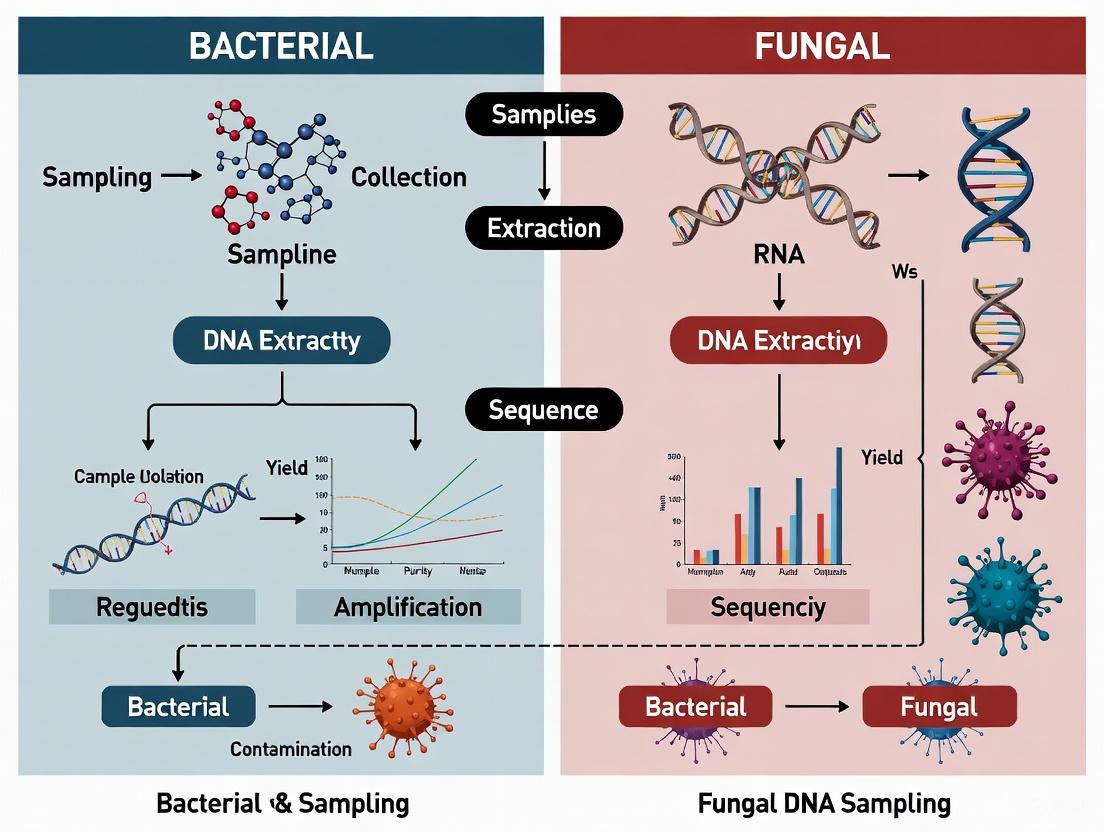
This article provides a systematic evaluation of DNA extraction methods for bacterial and fungal pathogens, crucial for molecular diagnostics in sepsis and microbiome research.
Optimizing Microbial Diagnostics: A Comprehensive Comparison of Bacterial and Fungal DNA Sampling Methods
Abstract
This article provides a systematic evaluation of DNA extraction methods for bacterial and fungal pathogens, crucial for molecular diagnostics in sepsis and microbiome research. It addresses foundational principles of cell lysis, applies methodologies to diverse clinical samples like blood, stool, and lung tissue, troubleshoots common issues of inhibition and bias, and delivers comparative performance data. Aimed at researchers and drug development professionals, this review synthesizes current evidence to guide method selection for accurate pathogen detection and microbial community analysis, ultimately impacting patient outcomes and therapeutic development.
Core Principles and Challenges in Microbial DNA Isolation
The cell wall serves as the primary interface between a microbial cell and its environment, providing critical functions including structural integrity, determination of cell shape, and protection from osmotic lysis. For researchers working with microbial DNA, the cell wall represents the first and most significant barrier to efficient nucleic acid extraction. Its composition varies dramatically across major microbial groups—Gram-positive bacteria, Gram-negative bacteria, and Fungi—each possessing a unique architectural blueprint that necessitates specific lysis strategies. This guide provides a detailed comparison of these cell wall structures and presents the experimental data and methodologies essential for optimizing DNA yield and purity in downstream applications such as PCR and next-generation sequencing.
Architectural Blueprints: A Structural Comparison
The fundamental differences in cell wall composition and organization across these microbial groups directly influence the mechanical and chemical lysis requirements for effective DNA release. The following section breaks down these key structural variations.
Bacterial Cell Walls: Gram-Positive vs. Gram-Negative
Most bacteria are classified by their Gram-staining characteristics, a direct reflection of their cell wall architecture [1] [2].
Gram-Positive Bacteria: These organisms possess a thick, multilayered peptidoglycan shell (15-80 nm), which can constitute up to 90% of the cell wall dry weight [1] [3]. Embedded within this peptidoglycan matrix are teichoic and lipoteichoic acids, which contribute to the net negative charge of the cell and overall wall rigidity [1] [4]. They lack an outer membrane.
Gram-Negative Bacteria: Their cell wall is a more complex, double-layered structure [3]. It features a thin, single layer of peptidoglycan (about 10 nm thick, representing only 5-10% of the wall) and a unique outer membrane exterior to it [1] [3]. This outer membrane is studded with lipopolysaccharides (LPS), which act as potent endotoxins, and porins, which control the passage of molecules [1] [4]. The space between the inner and outer membranes is known as the periplasm.
Table 1: Comparative Summary of Bacterial Cell Wall Structures
| Characteristic | Gram-Positive Bacteria | Gram-Negative Bacteria |
|---|---|---|
| Gram Stain Reaction | Purple | Pink [3] |
| Peptidoglycan Layer | Thick (15-80 nm), multi-layered | Thin (10 nm), single-layered [3] |
| Outer Membrane | Absent | Present [3] [2] |
| Teichoic Acids | Present | Absent [3] [4] |
| Lipopolysaccharide (LPS) | Absent | Present (Endotoxin) [1] [3] |
| Lipid Content | Low (2-5%) | High (15-20%) [3] |
| Porins | Absent | Present [1] [3] |
| Periplasmic Space | Small | Large [3] |
The Fungal Cell Wall: A Complex Carbohydrate Scaffold
Fungal cell walls are dynamic organelles composed primarily of polysaccharides, distinctly different from bacterial counterparts and absent in human hosts, making them excellent targets for antifungal therapy [5] [6].
- Core Skeleton: The inner wall is a conserved, load-bearing scaffold. In yeasts like Candida albicans, it consists of a chitin matrix linked to β-(1,3)-glucan and β-(1,6)-glucan, which in turn connects to cell wall proteins [6]. In filamentous fungi like Aspergillus fumigatus, β-(1,6)-glucan is absent, and the core is a branched β-(1,3)-glucan and chitin network [5] [6].
- Outer Layer and Variability: The outer layers are highly variable. In Candida and Saccharomyces, it is composed of highly mannosylated glycoproteins [5]. In pathogens like Histoplasma capsulatum and Cryptococcus neoformans, an outer layer of α-(1,3)-glucan or a massive capsule of glucuronoxylomannan (GXM), respectively, helps shield immunogenic inner wall components from host detection [5].
Table 2: Key Components of Model Fungal Pathogens' Cell Walls
| Fungal Species | Core Structural Scaffold | Key Linking Polysaccharide | Outer Layer/Special Features |
|---|---|---|---|
| Candida albicans | β-(1,3)-glucan, Chitin | β-(1,6)-glucan [6] | Mannoproteins [5] |
| Aspergillus fumigatus | β-(1,3)-glucan, Chitin | Galactomannan [5] | Rodlet layer (Hydrophobins), Galactosaminoglycan [5] |
| Cryptococcus neoformans | β-(1,3)-glucan, Chitin | α-(1,3)-glucan [5] | Gelatinous Capsule (GXM) [5] |
The following diagram synthesizes the structural components of these cell walls and the sequential barriers they present to DNA extraction, logically leading to the lysis strategies required.
Impact on DNA Extraction: Experimental Evidence and Protocols
The structural differences detailed above have a direct and quantifiable impact on the efficiency of DNA extraction, influencing yield, purity, and the relative abundance of taxa in metagenomic studies.
Key Experimental Findings
Research systematically comparing DNA extraction methods across microbial groups highlights the critical role of cell wall structure.
- Differential Lysis Efficiency: A study aiming to optimize DNA isolation from sepsis-causing pathogens demonstrated that a multi-step lysis procedure was necessary to handle the diversity of cell walls from Gram-negative (E. coli), Gram-positive (S. aureus), and fungal (C. albicans, A. fumigatus) organisms [7] [8]. The developed protocol sequentially employed mechanical disruption (with glass beads), chemical lysis, and thermal lysis to achieve sufficient DNA yield for all groups [7].
- Bias in Gram-Positive DNA Recovery: A 2024 meta-taxonomic study that included a mock community of known composition found that the efficiency of extracting DNA from Gram-positive bacteria (e.g., A. halotolerans) versus Gram-negative bacteria (e.g., I. halotolerans) varied significantly with the DNA extraction kit used [9]. The ratio of Gram-negative to Gram-positive ASV abundances was consistently lowest with the QIAGEN DNeasy Blood & Tissue kit (QBT), indicating its superior efficiency in lysing the robust Gram-positive cell wall under the tested conditions [9].
- Kit Performance is Sample-Type Dependent: The same 2024 study concluded that no single DNA extraction kit performed best across all sample matrices (e.g., soil, feces, invertebrates) [9]. However, the NucleoSpin Soil kit (MNS) was associated with the highest alpha diversity estimates and made the highest contribution to overall sample diversity, making it a robust choice for complex environmental samples [9].
Table 3: Summary of Experimental Data from DNA Extraction Comparisons
| Experimental Focus | Key Finding | Implication for Researchers |
|---|---|---|
| Sepsis Pathogen DNA Isolation [7] [8] | A triple-step lysis (mechanical, chemical, thermal) was required for effective DNA release from all four microbial groups. | Protocols for samples containing mixed microbiology must employ sequential, complementary lysis methods. |
| Gram-positive vs. Gram-negative Lysis [9] | The QBT kit yielded a lower Gram-negative/Gram-positive ASV ratio (0.71) vs. other kits (~1.35-1.40), indicating better Gram-positive lysis. | The choice of kit can introduce bias; select kits with proven efficiency for your target microbes. |
| Kit Performance Across Ecosystems [9] | The NucleoSpin Soil kit (MNS) provided the most consistent and highest diversity estimates across terrestrial ecosystem samples. | For studies involving multiple sample types (e.g., soil, feces), a single, well-validated kit like MNS can minimize technical variation. |
Detailed Experimental Protocol: Isolation of Microbial DNA from Blood
The following is a summarized protocol based on the methodology from Kaczorowski et al. (2014), which was designed to handle the tough cell walls of diverse pathogens [7] [8]. This serves as a model for a rigorous, multi-step lysis procedure.
Objective: To isolate microbial DNA from blood samples spiked with representative pathogens (e.g., E. coli, S. aureus, C. albicans, A. fumigatus).
Sample Pre-processing:
- Erythrocyte Lysis: Treat 1.5 mL of blood with 0.17 M ammonium chloride solution to lyse red blood cells. This critical step reduces heme concentration, a potent PCR inhibitor, in the final DNA extract [7].
Microbial Cell Lysis (Core Steps):
- Mechanical Disruption: Resuspend the pellet in a lysis buffer containing glass beads (ϕ 710–1,180 μm) and disrupt cells using a homogenizer (e.g., FastPrep machine). This step is crucial for breaking the rigid walls of fungi and Gram-positive bacteria [7].
- Enzymatic Lysis: Incubate the sample with an enzyme cocktail at 37°C. A typical cocktail includes:
- Lysozyme (2 mg/mL): Targets the peptidoglycan layer of Gram-positive bacteria.
- Lysostaphin (0.2 mg/mL): Specifically degrades the peptidoglycan of Staphylococcus species.
- Lyticase (40 U): Degrades the β-glucan cell walls of fungi like C. albicans [7].
- Chemical & Thermal Lysis: Subject the sample to a chemical agent like 50 mM NaOH and incubate at 95°C. This step denatures proteins and disrupts membranes, ensuring complete lysis [7].
DNA Purification:
- Following the multi-step lysis, purify the DNA using a commercial kit (e.g., GeneMATRIX Quick Blood DNA Purification Kit, QIAamp DNA Blood Mini kit) according to the manufacturer's protocol, which typically involves binding DNA to a silica membrane, washing, and elution [7].
The Scientist's Toolkit: Essential Reagents for Cell Wall Lysis
Successfully navigating the diverse defense mechanisms of microbial cell walls requires a strategic selection of reagents and kits. The following table details key solutions used in the featured experiments.
Table 4: Research Reagent Solutions for Microbial Cell Lysis
| Reagent / Kit | Function / Target | Specific Application |
|---|---|---|
| Lysozyme [7] | Enzyme that hydrolyzes β-(1,4) linkages between N-acetylglucosamine (NAG) and N-acetylmuramic acid (NAM) in peptidoglycan. | Primary lysis of Gram-positive bacterial cell walls; also active against Gram-negative bacteria after pretreatment. |
| Lysostaphin [7] | A glycyl-glycine endopeptidase that cleaves the pentaglycine cross-bridges in the peptidoglycan of Staphylococcus species. | Highly specific and efficient lysis of Staphylococci, including S. aureus. |
| Lyticase [7] | Enzyme complex with β-(1,3)-glucanase activity, degrading the primary structural polysaccharide of yeast cell walls. | Lysis of yeast cells (e.g., Candida albicans). |
| Glass Beads (710-1180 μm) [7] | Inert beads used in conjunction with vigorous shaking or vortexing to physically disrupt robust cell walls by abrasive force. | Mechanical disruption of fungal hyphae, spores, and Gram-positive bacterial clusters. |
| NucleoSpin Soil Kit (MNS) [9] | Commercial DNA extraction kit optimized for samples rich in PCR inhibitors (humic acids) and difficult-to-lyse microorganisms. | Recommended for diverse sample types (soil, feces, invertebrates) to maximize microbial diversity recovery. |
| DNeasy Blood & Tissue Kit (QBT) [9] | Commercial DNA extraction kit commonly used for tissue and blood samples; often includes proteinase K for digestion. | Effective for Gram-positive bacteria, as indicated by its high lysis efficiency for A. halotolerans in mock communities [9]. |
The structural dichotomy of microbial cell walls is not merely a taxonomic distinction but a fundamental factor that dictates experimental success in DNA-based research. The thick, sugar-based armor of Gram-positive bacteria, the complex double-membrane system of Gram-negatives, and the chitin-glucan scaffold of fungi each present unique challenges. As experimental data confirms, a one-size-fits-all approach to cell lysis leads to biased results and suboptimal DNA yields. A deep understanding of these cellular architectures empowers researchers to make informed decisions—selecting appropriate mechanical, chemical, and enzymatic lysis strategies and commercial kits—to ensure efficient, unbiased, and high-quality DNA recovery for advanced genomic applications.
The accuracy of microbial community analysis in various human body sites is critically dependent on the choice of sampling method and DNA extraction technique. In molecular microbiology, the optimal protocol for one sample type often performs poorly for another, creating significant challenges for researchers and clinicians aiming for reproducible, reliable results. This guide objectively compares sampling and extraction methodologies across four complex sample matrices—whole blood, stool, lung tissue, and swab-collected samples—by synthesizing current experimental evidence. The findings presented herein support a broader thesis in bacterial and fungal DNA research: that method standardization must be sample-specific to overcome the unique compositional challenges of each material.
Comparative Performance of Sampling and Extraction Methods
Whole Blood: Magnetic Bead-Based Automation Excels
Blood presents unique challenges for molecular detection of pathogens due to its low bacterial biomass and high concentration of PCR inhibitors like human DNA and hemoglobin. A 2025 study compared one column-based method (QIAamp DNA Blood Mini Kit) with two magnetic bead-based methods (K-SL DNA Extraction Kit and GraBon automated system) for detecting sepsis-causing pathogens in clinical whole blood samples [10].
Table 1: Comparison of DNA Extraction Methods for Whole Blood Samples
| Extraction Method | Technology | Accuracy for E. coli | Accuracy for S. aureus | Specificity | Sample Input/Elution |
|---|---|---|---|---|---|
| QIAamp DNA Blood Mini Kit | Column-based | 65.0% (12/40) | 67.5% (14/40) | 100% | 200 µL / 200 µL |
| K-SL DNA Extraction Kit | Magnetic bead-based | 77.5% (22/40) | 67.5% (14/40) | 100% | 200 µL / 100 µL |
| GraBon System | Automated magnetic bead | 76.5% (21/40) | 77.5% (22/40) | 100% | 500 µL / 100 µL |
The magnetic bead-based methods demonstrated significantly higher accuracy for E. coli detection compared to the column-based method (p = 0.031 and p = 0.022, respectively) [10]. The superior performance of magnetic bead-based systems, particularly the GraBon automated platform, is attributed to their ability to isolate bacteria from whole blood before lysis, providing a cleaner sample for DNA extraction. Additionally, GraBon's unique motor-driven rotating tip enables more effective disruption of the tough peptidoglycan cell wall of Gram-positive S. aureus, explaining its superior performance with this pathogen [10].
For rapid bacterial separation from blood prior to DNA extraction, a 2025 study compared centrifugation, chemical lysis (Polaris), and enzymatic digestion (MolYsis) methods. Centrifugation achieved the lowest Ct values in qPCR detection, indicating highest bacterial recovery, and most efficient depletion of host DNA, making it a fast, robust, and cost-effective method for molecular diagnostics of bloodstream infections [11].
Stool Samples: Consistent Profiles Across Kits
Stool represents a high-biomass sample with its own challenges, including diverse microbial communities and potential PCR inhibitors. A 2023 comparison of four commercial DNA extraction kits for stool samples found that despite differences in DNA quality and quantity, all kits yielded similar diversity and compositional profiles for stool samples [12].
Table 2: DNA Extraction Kits for Stool Samples
| Extraction Kit | Mechanical Lysis | Enzymatic Lysis | Chemical Lysis | DNA Binding | Performance on Stool |
|---|---|---|---|---|---|
| QIAamp PowerFecal Pro DNA Kit | Yes (Bead-beating) | No | Yes | Silica membrane columns | Effective, similar profiles |
| Macherey Nucleospin Soil | Yes (Bead-beating) | No | Yes | Silica membrane columns | Effective, similar profiles |
| Macherey Nucleospin Tissue | No | Yes (Proteinase K) | Yes | Silica membrane columns | Effective, similar profiles |
| MagnaPure LC DNA Isolation Kit III | No | Yes (Proteinase K) | Yes | Magnetic beads | Effective, similar profiles |
The critical differentiator among kits was their effectiveness on low-biomass samples (chyme, bronchoalveolar lavage, and sputum), for which all kits showed insufficient sensitivity [12]. This highlights that while stool sampling is relatively forgiving, the same methods cannot be universally applied to low-biomass samples.
Lung Tissue: Superior to BAL Fluid in Murine Studies
Low-biomass samples like lung tissue present significant challenges due to vulnerability to contamination and sequencing stochasticity. A 2021 study compared homogenized whole lung tissue versus bronchoalveolar lavage (BAL) fluid for characterizing murine lung microbiota [13].
Table 3: Murine Lung Sampling Method Comparison
| Parameter | Whole Lung Tissue | BAL Fluid |
|---|---|---|
| Bacterial DNA quantity | Greater | Lesser |
| Community composition | Distinct, biologically plausible | Minimal difference from controls |
| Sample-to-sample variation | Decreased | Increased |
| Vulnerability to contamination | Lower | Higher |
| Comparison to source communities | Greater biological plausibility | Minimal differentiation |
The study concluded that whole lung tissue contained greater bacterial signal and less evidence of contamination than BAL fluid, making it the preferred specimen type for murine lung microbiome studies [13]. This finding is particularly important given the anatomical limitations of murine models, where BAL fluid collection is severely limited by the small volume of murine lungs (~1 mL) [13].
Swab Sampling: Material and Solution Optimization
Swabbing is a common sampling technique for surfaces and skin, but efficiency varies considerably by swab material and moistening solution. A 2021 study compared bacterial DNA recovery from four swab types using Proteus mirabilis as a representative bacterium [14].
Swab Type and DNA Yield Comparison
Flocked swabs outperformed all other types with approximately 1240 ng of DNA recovery, compared to 184 ng for cotton swabs, 533 ng for dental applicators, and 430 ng for dissolvable swabs [14]. In surface sampling experiments, flocked swabs consistently outperformed cotton swabs across wood, glass, and tile surfaces, though they showed decreased recovery from plastic [14].
A 2025 pilot study on sensitive facial skin found that traditional swabbing consistently failed to recover detectable microbial DNA, while gentle scraping with a sterile No. 10 surgical blade yielded sufficient DNA for both bacterial and fungal sequencing [15]. This demonstrates that for low-biomass skin samples, scraping may be necessary to overcome the limitations of swabbing.
The optimal swabbing solution also affects recovery. A 2019 study found that a solution of 1% Tween20 + 1% glycerol in PBS (TG) showed the highest bacterial recovery rates for both E. coli and S. aureus compared to PBS alone or commercial GS solution [16].
Detailed Experimental Protocols
Magnetic Bead-Based DNA Extraction from Whole Blood
The superior-performing GraBon system utilizes the following protocol [10]:
- Bacterial Separation: Magnetic beads isolate bacteria from 500 µL of whole blood before lysis
- Cell Lysis: Utilizes a motor-driven rotating plastic tip for vigorous vortexing, particularly effective for Gram-positive bacteria
- DNA Binding: Magnetic beads bind DNA in the presence of chaotropic salts
- Washing: Multiple wash steps remove PCR inhibitors including hemoglobin and human DNA
- Elution: DNA is eluted in 100 µL elution buffer, concentrating the original sample
This protocol's key advantage is the initial separation of bacteria from blood components, reducing co-extraction of PCR inhibitors [10].
Skin Scraping Protocol for Low-Biomass Samples
For sensitive facial skin where swabbing fails, the following scraping protocol has proven effective [15]:
- Patient Preparation: Participants avoid topical products for 24 hours and wash with plain water only
- Skin Stabilization: One hand gently stretches and stabilizes the skin above the target area
- Scraping Technique: A No. 10 sterile surgical blade held at 15-30° angle, using the curved portion (not the tip) to gently scrape with light, controlled pressure
- Sample Collection: Superficial stratum corneum fragments are transferred to a pre-moistened sterile cotton swab
- Preservation: Swab heads are placed in sterile 15 mL Falcon tubes containing 3 mL of PBS for DNA preservation
This method is well-tolerated even by patients with sensitive skin and yields sufficient DNA for both bacterial and fungal analysis [15].
Centrifugation-Based Bacterial Separation from Blood
For rapid bacterial separation prior to DNA extraction [11]:
- First Centrifugation: Spiked blood in serum collection tube centrifuged at 2,000 g for 10 minutes
- Supernatant Collection: Supernatant collected without disturbing the middle layer
- Second Centrifugation: Supernatant centrifuged at 20,000 g for 10 minutes
- Pellet Resuspension: Supernatant discarded, pellet resuspended in 200 μL of sterile PBS
- DNA Isolation: Standard DNA isolation performed on the resuspended pellet
This method achieves efficient host DNA depletion and high bacterial recovery in a cost-effective, rapid manner suitable for diagnostic applications [11].
The Scientist's Toolkit: Essential Research Reagents
Table 4: Key Reagents for Microbial DNA Studies
| Reagent/Category | Specific Examples | Function and Application |
|---|---|---|
| DNA Extraction Kits | QIAamp DNA Blood Mini Kit, K-SL DNA Extraction Kit, QIAamp PowerFecal Pro DNA Kit | Isolation of microbial DNA from various sample matrices using different technologies |
| Lysis Components | Proteinase K, Bead-beating matrices, Chaotropic buffers, Lysozyme | Cellular disruption and nucleic acid release, tailored to different cell wall types |
| Separation Technologies | Magnetic beads, Silica membranes, Centrifugation methods | Selective binding and purification of nucleic acids from complex samples |
| Sampling Materials | Flocked swabs, Cotton swabs, Sterile surgical blades (No. 10), Dissolvable swabs | Collection of microbial biomass from surfaces, skin, and tissues |
| Swabbing Solutions | PBS, 1% Tween20 + 1% glycerol in PBS (TG), Commercial GS solution | Enhancement of microbial recovery during swabbing procedures |
| Inhibition Removal | DNase treatments, Wash buffers, Host depletion techniques | Reduction of PCR inhibitors and host DNA background |
The experimental data comprehensively demonstrate that optimal sampling and DNA extraction methods must be carefully matched to specific sample types to ensure accurate microbial characterization. Magnetic bead-based automated systems outperform traditional column-based methods for whole blood. Flocked swabs and appropriate solutions maximize recovery from surfaces, while scraping may be necessary for low-biomass skin sites. For murine lung studies, whole tissue homogenates provide more reliable data than BAL fluid. Stool samples show more consistent results across methods but still require careful selection for low-abundance targets. These findings underscore the critical importance of validating methods for each specific sample matrix rather than applying universal protocols across diverse sample types.
The accurate characterization of microbial communities is paramount across biomedical research, drug development, and clinical diagnostics. However, the representation of these communities in study results is profoundly influenced by technical decisions made throughout the experimental workflow. Even with advanced sequencing technologies, methodological variations can introduce significant bias, potentially obscuring true biological signals and leading to misleading conclusions. This guide objectively compares key methodological alternatives in bacterial and fungal DNA sampling research, synthesizing experimental data to highlight how choices in sample collection, DNA extraction, and library preparation impact microbial community representation. By examining comparative performance data, we aim to provide researchers with evidence-based guidance for minimizing technical bias in microbiome studies.
Sample Collection and Storage: The First Critical Step
The initial handling of samples immediately upon collection sets the stage for all downstream analyses. Decisions made at this stage can preserve the native microbial community or introduce significant compositional shifts.
Experimental Evidence from Comparative Studies
Study 1: Wild Mammal (Bat) Microbiome Sampling A 2018 study directly compared guano (feces) and distal intestinal mucosa samples from 19 species of wild bats in Belize to determine if these common sampling methods were interchangeable [17].
- Methodology: Researchers collected both guano and distal intestinal mucosa from each specimen. Microbial DNA was extracted using the MO BIO PowerLyzer PowerSoil DNA Isolation kit with mechanical disruption. 16S rRNA amplicon sequencing was then used to compare the resulting microbial communities [17].
- Key Finding: The diversity and composition of intestine and guano samples differed substantially. Intestinal mucosal samples retained a stronger signal of host evolution, while fecal samples more strongly reflected host diet [17]. This indicates that the choice of sample type should align with the specific biological question.
Study 2: Human Fecal Sample Storage Conditions A 2023 study systematically compared storage methods for human fecal samples to address logistical challenges in large-scale studies [18].
- Methodology: Human fecal aliquots were subjected to different storage conditions: immediate freezing at -80°C (standard), storage at room temperature (RT) for 3-5 days without preservation, and storage at RT for 3-5 days in two commercial stabilization buffers (OMNIgene·GUT and Zymo Research). Microbiota composition was analyzed via 16S rRNA gene amplicon sequencing [18].
- Key Finding: While immediate freezing remains the gold standard, stabilization systems effectively limited the overgrowth of Enterobacteriaceae compared to unpreserved samples stored at room temperature. Samples stored in stabilization buffers at RT showed a limited bias compared to immediately frozen samples, presenting a viable alternative when cold-chain logistics are prohibitive [18].
Comparative Data on Storage Methods
Table 1: Impact of Sample Collection and Storage Methods on Microbial Community Composition
| Sample Type / Storage Method | Key Effect on Microbial Community | Best Use Case |
|---|---|---|
| Intestinal Mucosa (Bat study) [17] | Records stronger phylogenetic signal of host evolutionary history. | Studies of host evolution, host-microbe interactions, and mucosal immunology. |
| Feces/Guano (Bat study) [17] | Records stronger signal of host diet and environmental influx. | Nutritional ecology, dietary interventions, and large-scale observational studies. |
| Immediate Freezing (-80°C) (Human study) [18] | Considered the gold standard; minimizes compositional shifts post-collection. | Ideal for most studies where cold-chain logistics are feasible. |
| Stabilization Buffer + RT (e.g., OMNIgene·GUT, Zymo) (Human study) [18] | Limits overgrowth of specific taxa (e.g., Enterobacteriaceae); introduces limited bias vs. frozen. | Large-scale or remote studies where immediate freezing is logistically challenging. |
| Unpreserved at Room Temperature (Human study) [18] | Leads to significant compositional shifts, including overgrowth of certain bacteria. | Not recommended; introduces substantial bias. |
Nucleic Acid Extraction: A Major Source of Bias
The method used to extract DNA is consistently identified as one of the most significant variables affecting microbiome profiling results. The efficiency of cell lysis, particularly for tough-to-lyse organisms, varies dramatically between protocols.
Mechanical vs. Enzymatic Lysis
Study 1: Comprehensive Workflow Comparison (2023) This study highlighted cell disruption as a major contributor to variation in microbiota composition [18].
- Methodology: Researchers compared mechanical disruption (repeated bead-beating with zirconia/silica beads) to enzymatic lysis (using lysis buffer and Proteinase K with heat) for DNA extraction from human fecal samples [18].
- Key Finding: Mechanical disruption via bead-beating was superior to enzymatic lysis for achieving representative community profiles. Bead-beating is more effective at breaking open the tough cell walls of Gram-positive bacteria and fungal spores, preventing their under-representation [18].
Study 2: Fungal DNA Extraction Method Comparison A 2005 study quantitatively compared six DNA extraction methods for recovering DNA from the fungal pathogens Aspergillus fumigatus (filamentous fungus) and Candida albicans (yeast) [19].
- Methodology: Known quantities of A. fumigatus conidia/hyphae and C. albicans yeast cells were added to bronchoalveolar lavage fluid and subjected to six different DNA extraction methods. DNA yield was measured using quantitative PCR [19].
- Key Finding: Differences in DNA yields among the methods were highly significant. Methods employing mechanical agitation with beads (e.g., FastDNA kit, UltraClean soil DNA kit) produced the highest yields from A. fumigatus hyphae. In contrast, an enzymatic lysis method worked well for C. albicans but performed poorly for A. fumigatus. The study concluded that no single extraction method was optimal for all organisms [19].
Comparison of DNA Extraction Kits and Methods
Context: Sepsis Diagnostics and Food Safety Studies in clinical and food safety settings further support the impact of extraction choice.
- Magnetic Bead vs. Column-Based Kits: A 2025 study on sepsis diagnostics found that magnetic bead-based DNA extraction methods (K-SL DNA Extraction Kit, GraBon system) demonstrated higher accuracy (77.5% and 76.5%, respectively) for detecting E. coli in whole blood compared to a column-based method (QIAamp DNA Blood Mini Kit, 65.0% accuracy). The magnetic bead methods, which included a bacterial isolation step prior to lysis, provided cleaner samples and reduced PCR inhibition [10].
- In-House vs. Commercial Methods: A 2021 food safety study developed a modified in-house phenol-chloroform-isoamyl alcohol DNA extraction method. When used for detecting Salmonella and Listeria in spiked food samples, this method showed statistically similar sensitivity to commercial kits (Qiagen, Macherey-Nagel) but at a much lower cost, highlighting a cost-effective alternative for certain applications [20].
Table 2: Performance Comparison of DNA Extraction Methods Across Studies
| Extraction Method / Technology | Target Microbes | Reported Performance / Bias |
|---|---|---|
| Mechanical Bead-Beating (e.g., FastDNA kit, PowerSoil kit) | General microbiome, Gram-positive bacteria, Fungi [19] [18] | Superior yield for tough-to-lyse cells; higher recovery of Gram-positive bacteria and fungal hyphae; considered essential for representative community profiles. |
| Enzymatic Lysis (e.g., Proteinase K + Heat) | Gram-negative bacteria, Yeasts [19] [18] | Simpler protocol but can under-represent microbes with robust cell walls (e.g., Gram-positives, fungal spores); lower overall community diversity. |
| Magnetic Bead-Based (e.g., K-SL Kit, GraBon) | Bloodstream pathogens [10] | Higher accuracy reported; reduces PCR inhibitors by isolating bacteria from sample matrix; amenable to automation. |
| Column-Based (e.g., QIAamp DNA Blood Mini Kit) | Bloodstream pathogens, Tissue [10] | Established benchmark; but may co-purify inhibitors and show lower sensitivity in complex matrices like whole blood. |
| In-House (Phenol-Chloroform) | Foodborne pathogens [20] | Low-cost; performance comparable to commercial kits for specific applications; requires more hands-on time and hazardous chemicals. |
Library Preparation and Sequencing
Downstream steps following DNA extraction continue to introduce variability, affecting the sensitivity and specificity of microbial community detection.
PCR Cycle Number and Input DNA
The 2023 workflow comparison study also investigated parameters during the library preparation phase [18].
- Methodology: The study tested different input DNA amounts and the number of PCR cycles during the amplification step prior to sequencing.
- Key Finding: Using a high number of PCR cycles (e.g., 35) led to a marked increase in contaminants detected in the negative controls. The study suggested using approximately 125 pg input DNA and 25 PCR cycles as optimal parameters to reduce the effect of contaminants and improve the signal-to-noise ratio in fecal microbiota profiling [18].
Batch Effects
The same study investigated batch effects by processing 139 replicate positive controls (a mixed sample from multiple participants) across different DNA extraction rounds and sequencing runs [18].
- Finding: While no significant batch effect was observed between replicate sequencing runs, the specific Illumina barcode used during library preparation did have a small but significant impact on the observed microbial composition. This highlights an often-overlooked technical factor that should be considered in experimental design, for example, by randomizing samples across barcodes [18].
The following diagram summarizes the key stages of a typical microbiome study and pinpoints where the biases discussed in this guide are introduced.
The Scientist's Toolkit: Essential Reagents and Materials
Based on the experimental protocols cited, the following table details key reagents and materials critical for minimizing bias in microbial community studies.
Table 3: Key Research Reagent Solutions for DNA Sampling Methods
| Item | Specific Examples | Function & Importance |
|---|---|---|
| Stabilization Buffers | OMNIgene·GUT (DNA Genotek), Zymo Research DNA/RNA Shield [18] | Preserves microbial community DNA/RNA at room temperature by inhibiting nuclease activity and microbial growth; crucial for field studies and unreliable cold chains. |
| Bead-Beating Tubes | Tubes with Zirconia/Silica Beads (0.1 mm & 2.7 mm) [18] | Essential for mechanical cell disruption. The variation in bead sizes ensures efficient lysis of diverse microbes, including tough Gram-positive bacteria and fungal cells. |
| DNA Extraction Kits | MO BIO PowerSoil PowerLyzer DNA Isolation Kit [17], FastDNA Kit [19], DNeasy Blood & Tissue Kit [20] | Standardized protocols for DNA purification. Kits optimized for soil/stool (e.g., PowerSoil) are often most effective for complex microbial communities due to robust inhibitor removal. |
| Lysis Buffers | S.T.A.R. Buffer [18], Lysis Buffer (Promega) with Proteinase K [18] | Chemical solutions designed to break down cell membranes and release nucleic acids, often used in conjunction with mechanical disruption. |
| Magnetic Bead Systems | K-SL DNA Extraction Kit, GraBon Automated System [10] | Enable purification and concentration of DNA while removing PCR inhibitors; especially useful for complex samples like whole blood. |
| PCR Master Mixes | OneTaq Hot Start Master Mix [20], WarmStart Colorimetric LAMP Master Mix [20] | Pre-mixed solutions containing enzymes, dNTPs, and buffers for DNA amplification. Hot-start enzymes improve specificity, reducing non-specific amplification and bias. |
The accurate representation of microbial communities is threatened by technical bias at every stage of the research workflow. Evidence consistently shows that the choice of sample type (e.g., mucosa vs. feces) captures different biological signals, while storage conditions can either preserve or distort community integrity. The DNA extraction method, particularly the use of mechanical bead-beating, is arguably the most critical factor for ensuring equitable lysis across diverse taxa. Finally, downstream parameters like PCR cycle number and even the choice of sequencing barcodes can introduce variability. There is no one-size-fits-all protocol; the optimal method depends on the sample type, target microorganisms, and research question. However, adherence to standardized, well-validated workflows that incorporate mechanical lysis and controlled library preparation, along with the inclusion of appropriate positive and negative controls, is fundamental for generating reliable and comparable data in microbial ecology.
Choosing an effective cell lysis method is a critical first step in molecular analysis, directly impacting the yield, quality, and reliability of downstream results. This guide provides a comparative analysis of mechanical and non-mechanical lysis techniques, supported by recent experimental data, to inform method selection for bacterial and fungal DNA sampling in research and drug development.
Cell lysis, the process of disrupting the cellular membrane to release intracellular components such as DNA, RNA, and proteins, is a foundational unit operation in biomolecular analysis [21]. The global market for cell lysis reflects its importance, having been valued at 2.35 billion U.S. dollars in 2016 [21]. The choice of lysis method is influenced by the target molecules, the type of cell (e.g., gram-positive bacteria, gram-negative bacteria, fungi), and the desired quality of the final product [21]. Methods are broadly classified into two categories: mechanical lysis, which uses physical force to break the cell membrane, and non-mechanical lysis, which employs chemical detergents or enzymes [22].
The structural differences between cell types are a primary consideration for selecting a lysis method. For instance, gram-positive bacteria possess a thick peptidoglycan cell wall that shows greater resistance to lysis than the thinner, multi-layered envelope of gram-negative bacteria like E. coli [10] [21]. Fungal cells present an even greater challenge due to their complex and diverse cell wall structures, which make finding a universal lysis method difficult [23].
◥ Comparative Performance of Lysis Methods
Recent comparative studies highlight how the choice of lysis method directly affects diagnostic accuracy and DNA recovery across different sample types and pathogens.
▍ Bacterial DNA Extraction from Whole Blood
A 2025 study compared DNA extraction methods for detecting sepsis-causing pathogens in clinical whole blood samples, a complex matrix containing numerous PCR inhibitors [10]. The research evaluated one column-based method and two magnetic bead-based methods.
Table 1: Diagnostic Accuracy for Sepsis Pathogen Detection in Whole Blood [10]
| Extraction Method | Core Lysis Mechanism | E. coli (Gram-negative) Detection Accuracy | S. aureus (Gram-positive) Detection Accuracy | Specificity |
|---|---|---|---|---|
| QIAamp DNA Blood Mini Kit (Column-based) | Chemical lysis directly in whole blood | 65.0% (12/40) | 67.5% (14/40) | 100% |
| K-SL DNA Extraction Kit (Magnetic bead-based) | Bead-based bacterial isolation + chemical lysis | 77.5% (22/40) | 67.5% (14/40) | 100% |
| GraBon System (Automated magnetic bead) | Bead-based isolation + vigorous mechanical lysis | 76.5% (21/40) | 77.5% (22/40) | 100% |
The magnetic bead-based methods, particularly the automated GraBon system, demonstrated superior performance. The study attributed this to more effective bacterial isolation from PCR inhibitors in blood prior to lysis. Furthermore, the GraBon system's "motor-driven rotating plastic tip for vigorous vortexing" provided a more effective mechanical disruption of the tough peptidoglycan cell wall of S. aureus, explaining its higher accuracy for this gram-positive bacterium [10].
▍ Fungal and Specialized Sample DNA Extraction
The influence of lysis method extends to other sample types and organisms:
- Gut Mycobiota Analysis: A comparative analysis of DNA extraction methods for fecal samples found that incorporating mechanical glass bead lysis significantly influenced results. Methods using bead beating (DNgb and MMgb) were enriched for filamentous fungal species, while methods without this step showed higher relative abundance of yeast fungi. The study concluded that bead beating favored the recovery of DNA more appropriate for fungal community analysis [24].
- Subgingival Biofilm Sampling: A 2025 pilot study comparing DNA extraction kits from single paper points highlighted different lysis approaches. The DNeasy Blood & Tissue Kit (enzymatic/chemical lysis) demonstrated the highest efficiency. In contrast, the ZymoBIOMICS DNA Miniprep Kit, which uses mechanical lysis by bead beating, required a longer processing time (~120 minutes) and had a higher cost per extraction [25].
- Long-Read Sequencing of Fungi: For long-read sequencing technologies like Oxford Nanopore, DNA integrity is paramount. A 2025 study found that chemical lysis with CTAB/SDS generated DNA from pure fungal cultures with high yields while preserving integrity, making it more suitable than physical methods like bead beating or grinding in liquid nitrogen, which carry a risk of DNA shearing [23].
◥ Experimental Protocols for Lysis Method Evaluation
To ensure reproducible and reliable results, standardized protocols for evaluating lysis methods are essential. The following are detailed methodologies adapted from recent comparative studies.
▍ Protocol 1: Comparative Evaluation of DNA Extraction Kits from Whole Blood
This protocol is adapted from the 2025 study evaluating sepsis diagnostics [10].
- Sample Preparation: Collect whole blood samples. For a controlled study, samples can be spiked with a known concentration of target pathogens (e.g., E. coli, S. aureus). Include negative controls (blood from healthy check-ups) to determine specificity.
- DNA Extraction:
- QIAamp DNA Blood Mini Kit: Follow the manufacturer's protocol for bacterial DNA from whole blood. This involves chemical lysis directly in the blood matrix.
- Magnetic Bead-Based Kits (K-SL and GraBon): These protocols typically involve a step to isolate bacteria from blood components using magnetic beads before the lysis and DNA purification steps are performed.
- Downstream Analysis: Perform real-time PCR using primers specific to the target pathogens. Quantify the results based on Cycle threshold (Ct) values.
- Data Analysis: Calculate diagnostic sensitivity, specificity, and accuracy by comparing PCR results to the known status of the samples (spiked vs. negative).
▍ Protocol 2: Optimizing Fungal DNA Extraction for Long-Read Sequencing
This protocol is derived from the 2025 study on fungal DNA extraction [23].
- Lysis Method Comparison:
- Chemical Lysis: Suspend 10 mg of fungal pellet in a CTAB/SDS-based lysis buffer. Incubate at a defined temperature (e.g., 65°C) for a set period.
- Physical Lysis (Bead Beating): Add the fungal pellet to a tube with lysis buffer and sterile glass beads (e.g., 0.5 mm). Agitate on a bead beater at high speed for a specific duration (e.g., 5 minutes).
- Physical Lysis (Grinding): Grind the fungal pellet in liquid nitrogen using a mortar and pestle.
- DNA Purification: For methods involving physical lysis or certain chemical buffers, a purification step using phenol/chloroform/isoamyl alcohol may be necessary, followed by DNA precipitation with isopropanol and washing with ethanol.
- Quality Assessment:
- Quantity and Purity: Measure DNA concentration and assess purity using a spectrophotometer (NanoDrop). Target 260/280 ratios of ~1.8 and 260/230 ratios of ~2.0-2.2.
- Integrity: Check DNA integrity by running samples on a 0.8% agarose gel electrophoresis alongside a high molecular weight DNA ladder (e.g., 10 kb). Intact DNA should appear as a high molecular weight band.
- Functional Assessment: Perform downstream sequencing (e.g., Oxford Nanopore Technology) and compare metrics like read length and percentage of active pores.
◥ A Guide to Lysis Method Selection
The decision tree below outlines a logical workflow for selecting an appropriate lysis method based on sample and experimental requirements.
◥ The Researcher's Toolkit: Essential Lysis Reagents & Kits
The following table details key reagents, kits, and instruments used in the featured experiments, along with their primary functions in the lysis process.
Table 2: Key Research Reagents and Kits for Cell Lysis
| Item Name | Type/Classification | Primary Function in Lysis |
|---|---|---|
| QIAamp DNA Blood Mini Kit [10] | Column-based / Chemical Lysis | Uses detergents to chemically disrupt cells and a silica membrane to bind DNA. |
| K-SL DNA Extraction Kit [10] | Magnetic Bead-based / Mechanical & Chemical | Uses magnetic beads to isolate bacteria, followed by chemical lysis. |
| GraBon System [10] | Automated / Mechanical & Chemical | Employs vigorous mechanical vortexing and magnetic beads for lysis and DNA capture. |
| CTAB/SDS Buffer [23] | Chemical Lysis Buffer | Detergents disrupt cell membranes and walls; CTAB helps separate polysaccharides from DNA. |
| Proteinase K [23] [25] | Enzyme / Enzymatic Lysis | Digests proteins and degrades nucleases, aiding in cell disruption and protecting nucleic acids. |
| Lysozyme [21] [26] | Enzyme / Enzymatic Lysis | Specifically degrades the peptidoglycan cell wall of gram-positive bacteria. |
| BashingBeads [25] | Mechanical Lysis Consumable | Ultra-high density beads for mechanical disruption of cells during vortexing. |
| Enhanced RIPA Lysis Buffer [26] | Chemical Lysis Buffer | A detergent-based buffer effective for tough applications like membrane protein extraction. |
| Phenol/Chloroform/Isoamyl Alcohol [23] | Purification Reagent | Used after initial lysis to separate DNA from proteins and other cellular debris. |
| DNeasy Blood & Tissue Kit [25] [24] | Column-based / Enzymatic & Chemical | Utilizes enzymatic (e.g., lysozyme) and chemical lysis for broad cell type applicability. |
Practical Protocols for Diverse Clinical and Environmental Samples
The extraction of high-quality microbial DNA from complex samples is a critical first step in metagenomic studies. This guide compares the performance of the manually-performed THSTI method, which integrates physical, chemical, and mechanical lysis, against other common DNA extraction technologies. Experimental data from direct comparisons demonstrate that this optimized manual workflow achieves superior DNA yield and quality across diverse sample types, including human-derived and environmental samples, making it a robust choice for demanding downstream applications like next-generation sequencing.
In microbiome research, the accuracy of community profiling is heavily influenced by the initial DNA extraction process. Efficient lysis of diverse microbial cells—from easily disrupted Gram-negative bacteria to tough-walled Gram-positive bacteria and fungal spores—without damaging their genetic material, presents a significant challenge. The THSTI method (named for the Translational Health Science and Technology Institute where it was developed) was specifically designed to address this bottleneck by combining multiple lysis modalities in a manual protocol [27] [28] [29].
This guide objectively evaluates the THSTI method against commercial kit-based and automated extraction systems, providing supporting experimental data on yield, purity, and suitability for downstream sequencing to inform researchers in their selection process.
Performance Comparison: THSTI Method vs. Alternative Systems
Direct comparative studies reveal significant differences in the efficiency of various DNA extraction methods. The table below summarizes quantitative performance data from the original THSTI method validation study, which compared it to a commercial kit (Qiagen) and an Automated Liquid Handling System (ALHS, MagNA pure, Roche) [28].
Table 1: Quantitative Comparison of DNA Yield and Purity Across Sample Types
| Sample Type | Method | Average Nucleic Acid Concentration (ng/μL) | Total Recovery (ng) | 260/280 Purity Ratio |
|---|---|---|---|---|
| Stool | THSTI | 543.3 ± 187.26 | 108,660 ± 37,520 | 1.85 ± 0.06 |
| Kit (Qiagen) | 202.29 ± 105.63 | 20,229.23 ± 10,563 | 1.94 ± 0.23 | |
| ALHS | 113.38 ± 62.26 | 11,338.46 ± 6,226 | 1.67 ± 0.07 | |
| Vaginal Swab | THSTI | 104.77 ± 39.61 | 20,955.38 ± 7,923.13 | 1.69 ± 0.12 |
| Kit (Qiagen) | 8.37 ± 5.66 | 836.15 ± 566.7 | 1.43 ± 0.58 | |
| ALHS | 22.79 ± 9.5 | 2,279.23 ± 906.02 | 2.47 ± 1.01 | |
| Soil | THSTI | 53.16 ± 36.77 | 10,633.84 ± 10,317.18 | 1.48 ± 0.04 |
| Kit (Qiagen) | 66.02 ± 70.13 | 6,602.30 ± 7,014 | 1.16 ± 0.05 | |
| ALHS | 93.91 ± 103.17 | 9,391.53 ± 7,355.84 | 1.44 ± 0.07 |
Key Performance Insights
- Superior Yield: The THSTI method consistently recovered a higher total mass of DNA from most sample types, particularly from complex human-derived samples like stool and vaginal swabs, where it outperformed the kit by 5.4-fold and 25-fold, respectively [28].
- High Molecular Weight DNA: Gel electrophoresis confirmed that the THSTI method reliably produced high molecular weight DNA fragments averaging ~20 kilobases, which is preferable for shotgun metagenomic sequencing [28].
- Robust Purity: The 260/280 absorbance ratios for DNA extracted with the THSTI method were generally within the acceptable range (1.6-1.9), indicating low protein contamination and pure nucleic acid preparations suitable for PCR and sequencing [28].
Detailed Experimental Protocol: The THSTI Method
The efficacy of the THSTI method stems from its comprehensive, multi-stage approach to cell lysis and DNA purification. The following workflow details the critical steps as described in the foundational protocol [27] [28].
Diagram 1: THSTI Method Workflow for Metagenomic DNA Extraction.
Step-by-Step Methodology
Enzymatic Pre-treatment (Spheroplast Formation):
- Samples are treated with a cocktail of enzymes including lysozyme, lysostaphin, and mutanolysin [28] [30].
- These enzymes target the glycoside-linkages and transpeptide bonds in the peptidoglycan layer of bacterial cell walls (both Gram-positive and Gram-negative), creating fragile spheroplasts that are highly susceptible to subsequent lysis [28].
Chemical Lysis:
- Spheroplasts are treated with Guanidinium Thiocyanate (GITC), a powerful chaotropic agent that disrupts cell membranes and simultaneously inactivates nucleases that could degrade exposed DNA [28].
Mechanical and Physical Lysis:
DNA Precipitation and Purification:
Essential Research Reagent Solutions
The following table lists key reagents used in the THSTI method and their specific functions in the lysis and purification process [28] [30].
Table 2: Key Research Reagents in the THSTI Workflow
| Reagent / Tool | Function / Role in the Protocol |
|---|---|
| Lysozyme | Hydrolyzes 1,4-beta linkages in Gram-positive bacterial cell walls. |
| Lysostaphin | Cleaves glycine-glycine bonds in the peptidoglycan of Staphylococcus species. |
| Mutanolysin | Lyses Gram-positive bacteria by hydrolyzing the peptidoglycan. |
| Guanidinium Thiocyanate (GITC) | Chaotropic salt; denatures proteins, inactivates nucleases, and disrupts membranes. |
| Bead Beating | Mechanical disruption using beads to break tough cell walls (e.g., spores). |
| Salt (e.g., NaCl, NaAc) | Neutralizes DNA charge, facilitating aggregation during ethanol precipitation. |
| Organic Solvent (e.g., Ethanol, Isopropanol) | Reduces DNA solubility, causing precipitation out of solution for concentration. |
Discussion and Research Implications
The comparative data strongly supports the THSTI method as a highly effective manual workflow for comprehensive metagenomic DNA extraction. Its primary advantage lies in the combinatorial lysis strategy, which mitigates the bias introduced by methods that rely on a single lysis mechanism. This is particularly crucial for accurately representing the entire microbial community, including hard-to-lyse organisms [27] [28].
The choice of DNA extraction method can directly influence the observed microbial community structure. For instance, the inclusion of mechanical bead beating has been shown to influence the recovery of certain fungal groups; one study found it enriched for filamentous fungi, while methods without this step showed a higher relative abundance of yeasts [24]. Therefore, for studies aiming for a broad and unbiased profile of both bacterial and fungal communities, a rigorous method like THSTI is advantageous.
While automated systems offer higher throughput, the THSTI method provides researchers with full control over the protocol, which can be optimized for specific sample matrices. The trade-off is the hands-on time required, making it ideal for projects where maximizing DNA yield and quality from complex and limited samples is the highest priority.
In the context of benchmarking bacterial and fungal DNA sampling methods, the manually executed THSTI method stands out for its performance. By integrating enzymatic, chemical, mechanical, and physical lysis, it achieves higher DNA yields and better quality high molecular weight DNA compared to several commercial kit and automated alternatives. For research applications such as shotgun metagenomics that demand high-quality, unbiased genomic data, the THSTI protocol represents a robust and validated manual workflow worthy of strong consideration by scientists in basic research and drug development.
The advancement of molecular diagnostics and microbiome research is fundamentally reliant on the efficient and consistent extraction of microbial DNA. Effective purification methods maximize DNA yield and purity, which are critical determinants for the success of downstream analytical protocols such as PCR and sequencing [31]. Automated extraction platforms have emerged as powerful tools to address the challenges of throughput, reproducibility, and handling of low-abundance microbial targets in complex matrices like whole blood and tissues [32] [33]. This guide provides an objective comparison of the performance of two automated systems—the GraBon system and the Maxwell systems—framed within the context of a broader thesis on bacterial and fungal DNA sampling methods. We summarize direct experimental data and methodologies to aid researchers, scientists, and drug development professionals in making informed platform selections.
Performance Comparison: GraBon vs. Alternative Methods
Quantitative Comparison of Diagnostic Accuracy
The following table summarizes the key performance metrics of the GraBon system compared to other DNA extraction methods, as established in a recent clinical study focused on pathogen detection in whole blood.
Table 1: Diagnostic Performance of DNA Extraction Methods for Sepsis Pathogens [32]
| Pathogen | Extraction Method | Technology | Sensitivity (%) (95% CI) | Specificity (%) (95% CI) | Accuracy (%) |
|---|---|---|---|---|---|
| E. coli | QIAamp DNA Blood Mini Kit | Column-based | 30.0 (16.56–46.53) | 100 (91.19–100.0) | 65.0 |
| K-SL DNA Extraction Kit | Magnetic Bead-based (Manual) | 55.0 (38.49–70.74) | 100 (91.19–100.0) | 77.5 | |
| GraBon | Magnetic Bead-based (Automated) | 52.0 (36.13–68.49) | 100 (91.19–100.0) | 76.5 | |
| S. aureus | QIAamp DNA Blood Mini Kit | Column-based | 35.0 (20.63–51.68) | 100 (91.19–100.0) | 67.5 |
| K-SL DNA Extraction Kit | Magnetic Bead-based (Manual) | 35.0 (20.63–51.68) | 100 (91.19–100.0) | 67.5 | |
| GraBon | Magnetic Bead-based (Automated) | 55.0 (38.49–70.74) | 100 (91.19–100.0) | 77.5 |
Comparative Analysis of Methodological Features
Beyond diagnostic accuracy, the operational characteristics of a DNA extraction system are vital for laboratory workflow. The table below contrasts the core features of the GraBon system with a generalized profile for the Maxwell systems, which are also prominent automated, magnetic bead-based platforms.
Table 2: Methodological and Operational Comparison of Automated Platforms
| Feature | GraBon System [32] | Generalized Maxwell Systems Profile |
|---|---|---|
| Core Technology | Magnetic bead-based | Magnetic bead-based |
| Automation Level | Fully automated | Fully automated |
| Throughput | Not explicitly stated; utilizes robotic handling | Known for modular scalability (e.g., 16-48 samples per run) |
| Sample Input Volume | 500 µL | Typically up to 300-500 µL, depending on the specific cartridge |
| Elution Volume | 100 µL | Typically 50-100 µL |
| Key Differentiating Mechanism | Bacterial isolation pre-lysis; motor-driven rotating tip for vigorous vortexing | Pre-packaged, cartridge-based reagents for hands-off operation |
| Demonstrated Clinical Advantage | Superior accuracy for S. aureus; effective for Gram-positive bacteria due to vigorous lysis | Widely documented for circulating DNA and viral extraction; high consistency |
Experimental Protocols and Workflows
Detailed Methodology: GraBon System Evaluation
The performance data for the GraBon system presented in Table 1 was generated through the following experimental protocol, which highlights the critical steps for optimal results [32].
- Sample Preparation: Whole blood samples were spiked with known concentrations of E. coli (Gram-negative) and S. aureus (Gram-positive) to simulate bloodstream infections.
- DNA Extraction - GraBon Protocol:
- Bacterial Isolation: The automated process begins with the GraBon system using magnetic beads to isolate and separate bacteria from the whole blood matrix before the lysis step. This reduces co-purification of PCR inhibitors present in blood.
- Cell Lysis: The system employs a unique, motor-driven rotating plastic tip to create vigorous vortexing within the sample tube. This mechanical lysis is particularly effective at disrupting the tough peptidoglycan cell wall of Gram-positive bacteria like S. aureus.
- DNA Binding and Purification: The lysate is transferred, and bacterial DNA is bound to magnetic beads.
- Washing: Contaminants and impurities are removed through a series of wash steps while the DNA remains bound to the beads.
- Elution: Purified DNA is eluted in a final volume of 100 µL. Processing a 500 µL sample into a 100 µL elution provides a 5-fold concentration effect, enhancing detection sensitivity for low bacterial loads.
- Downstream Analysis: The extracted DNA was analyzed via real-time PCR using specific primers for E. coli and S. aureus to determine detection sensitivity, specificity, and accuracy.
Workflow Visualization: Automated DNA Extraction
The following diagram illustrates the generalized logical workflow for automated, magnetic bead-based DNA extraction, common to both GraBon and Maxwell systems, while highlighting the key differentiating step for GraBon.
The Scientist's Toolkit: Key Research Reagent Solutions
Successful DNA extraction relies on a suite of specialized reagents and kits. The table below details essential solutions used in the studies cited, which are foundational to this field of research.
Table 3: Essential Research Reagents for Microbial DNA Studies
| Research Reagent / Kit | Primary Function | Application Context |
|---|---|---|
| K-SL DNA Extraction Kit [32] | Manual magnetic bead-based extraction of bacterial DNA from whole blood. | Serves as the manual counterpart and reagent base for the automated GraBon system. |
| HostZERO Microbial DNA Kit [34] | Depletes host DNA to enrich for microbial DNA, improving sequencing depth for low-biomass samples. | Critical for microbiome studies from samples with high human-to-microbe DNA ratio (e.g., skin, tissues). |
| DNeasy PowerSoil Kit [33] | Efficiently extracts DNA from complex, tough-to-lyse environmental and sample types, including soil and stool. | Standard for gut microbiome and environmental microbial studies. |
| QIAamp Circulating Nucleic Acid Kit [31] | Optimized for purifying short-fragment DNA and RNA from plasma, such as cell-free DNA. | Gold standard for liquid biopsy and circulating pathogen DNA studies. |
| E.Z.N.A. Bacterial DNA Kit [33] | Designed for the extraction of high-purity genomic DNA from bacterial cultures and tissues. | Commonly used for targeted DNA extraction from bacterial samples and tissue biopsies. |
The comparative data indicates that automated magnetic bead-based systems like GraBon offer significant advantages for clinical diagnostics, particularly for challenging applications like sepsis. The GraBon system demonstrates enhanced performance, especially for Gram-positive pathogens, attributable to its pre-lysis bacterial isolation and aggressive mechanical disruption [32]. While this guide provides data on GraBon, a complete direct comparison with the Maxwell systems under identical experimental conditions is a necessary area for future research.
The selection of an automated DNA extraction system must be guided by the specific research or clinical application. Key considerations include the sample matrix (whole blood, tissue, plasma), the type of microorganism (bacterial vs. fungal, Gram-positive vs. Gram-negative), and the required throughput and consistency for the intended workflow. The methodologies and data presented here provide a framework for this critical evaluation.
The accuracy of downstream molecular analyses in life science research is fundamentally dependent on the initial steps of sample preparation. Variations in protocols for handling different sample matrices can introduce significant bias, affecting data reliability and cross-study comparability. This guide objectively compares established and novel methods for processing three complex sample types: whole blood (requiring erythrocyte lysis), stool (requiring homogenization), and low-biomass lung tissue. The focus is on evaluating protocol performance based on DNA yield, microbial community fidelity, and practical implementation for research and drug development applications. Experimental data from controlled comparisons are synthesized to provide evidence-based recommendations.
Blood Sample Processing: Erythrocyte Lysis Protocols
The removal of red blood cells (RBCs) via osmotic lysis is a critical first step in analyzing peripheral blood mononuclear cells (PBMCs) for flow cytometry or molecular assays. The choice of lysis buffer and incubation conditions must effectively lyse erythrocytes while preserving the viability and integrity of leukocytes.
Quantitative Comparison of RBC Lysis Methods
Table 1: Comparison of Red Blood Cell Lysis Protocols for Various Species
| Component/Parameter | Ammonium Chloride Lysis Buffer (1X) | 1-Step Fix/Lyse Solution | Species-Specific Variations |
|---|---|---|---|
| Core Components | 8.02g/L NH₄Cl, 0.84g/L NaHCO₃, 0.37g/L EDTA [35] | Proprietary formulation (combines fixative and lysing agents) [36] | |
| Lysis Mechanism | Osmotic shock [36] | Osmotic shock and chemical fixation [36] | |
| Typical Lysis Time (Whole Blood) | 10-15 minutes (Human) [35] [36] | 15-60 minutes [36] | Mouse/Rat: 4-10 minutes [36] |
| Recommended Buffer Volume to Sample | 10 mL buffer per 1 mL human blood [35] | 2 mL 1X solution per 100 µL blood [36] | |
| Key Advantage | Minimal effect on leukocyte viability; suitable for subsequent cell culture [36] | Simultaneously lyses RBCs and fixes leukocytes, stabilizing samples for analysis [36] | |
| Primary Application | Flow cytometric analysis or cell culture after staining [35] | Flow cytometric analysis, especially when sample storage is required post-staining [36] | Mouse/Rat Tissues: Use 1X RBC Lysis Buffer on single-cell suspensions from spleen/bone marrow; incubate 4-5 minutes [35] [36] |
Detailed Experimental Protocol: Bulk Lysis of Human Whole Blood
The following protocol is adapted for processing human whole blood using an ammonium chloride-based lysis buffer [35] [36].
- Step 1: Add 10 mL of room-temperature 1X RBC Lysis Buffer per 1 mL of human whole blood (collected using heparin or EDTA as an anti-coagulant).
- Step 2: Incubate for 10-15 minutes at room temperature. Critical: Do not exceed 15 minutes. Observe turbidity; the solution becomes clear when lysis is complete.
- Step 3: Centrifuge at 500 x g for 5 minutes at room temperature to pellet leukocytes. Decant the supernatant.
- Step 4: Resuspend the cell pellet in an appropriate volume of buffer (e.g., Flow Cytometry Staining Buffer or culture medium).
- Step 5: Perform a cell count and viability analysis. The cells are now ready for downstream applications like staining for flow cytometry or placing in culture. Note: If cells are destined for culture, all steps must be performed using aseptic techniques.
Stool Sample Processing: The Impact of Homogenization
Stool is a heterogeneous mixture, and the method of subsampling can greatly influence the observed microbial community and metabolite concentrations. Homogenization is a key strategy to address this spatial variability.
Experimental Data on Homogenization Efficacy
Table 2: Impact of Stool Homogenization on Microbiome and Metabolite Analysis
| Analysis Method | Effect of Homogenization (vs. Non-Homogenized Spot Sampling) | Supporting Experimental Data | |
|---|---|---|---|
| 16S rRNA Sequencing (Bacteria) | Significantly reduces intra-individual variation in detected bacteria [37]. | One study showed homogenization by blending or pneumatic mixing reduced variation within a single stool sample [37]. | |
| ITS2 Sequencing (Fungi) | Reduces variability in the mycobiome profile, though fungal communities remain more challenging to characterize due to lower biomass and library preparation issues [38]. | ||
| Short-Chain Fatty Acid (SCFA) Profiling | Leads to more consistent metabolite concentrations. Non-homogenized spot sampling results in variable SCFA levels [38]. | Acetic and valeric acid were as variable in a single stool as across different days without homogenization [38]. | |
| Taxonomic Specificity | Alters the relative abundance of specific taxa. Frozen and homogenized stools showed higher proportions of Faecalibacterium, Streptococcus, and Bifidobacterium, and decreased Oscillospira, Bacteroides, and Parabacteroides compared to small, non-mixed samples [37]. | ||
| Differential Abundance | Non-homogenized aliquots can show significantly different abundance for specific ASVs. One study identified 12 bacterial and 16 fungal features with a log2 fold change > | 2.5 | between aliquots and homogenized whole stool [38]. |
Detailed Experimental Protocol: Homogenization of Stool Samples
The following method is derived from studies comparing fecal processing techniques [37] [38].
- Step 1: Collection. Collect the complete stool specimen. For optimal consistency, collecting the first full bowel movement of the day is recommended [38].
- Step 2: Pre-treatment. For fresh homogenization, proceed immediately. For frozen homogenization, freeze the entire stool specimen at -80°C.
- Step 3: Homogenization.
- Step 4: Aliquoting. After full homogenization, subsample the required volume (e.g., 200 mg) for DNA extraction or metabolite analysis.
- Step 5: Storage. Immediately freeze the aliquots at -80°C until nucleic acid extraction or other downstream processing.
Low-Biomass Lung Tissue: DNA Extraction and Contamination Control
The lung presents a unique challenge due to its low microbial biomass, where signal can be easily overwhelmed by contaminating DNA from reagents or the environment. The DNA extraction method is therefore paramount.
Comparison of DNA Extraction Methods for Low-Biomass Lung Tissue
Table 3: Evaluation of DNA Extraction Protocols for Lung Tissue Microbiome Analysis
| Extraction Protocol Component | Impact on DNA Yield and Quality | Impact on Microbial Community Profile |
|---|---|---|
| Bead-Beating Step | Slightly increases DNA yield compared to basic protocols [39]. Essential for lysing tough cell walls (e.g., Gram-positive bacteria) [40]. | Increases the proportion of Gram-positive bacteria recovered; essential for a representative community profile [40]. |
| Phenol:Chloroform:Isoamyl Alcohol Step | Significantly increases DNA concentration and improves purity (260/280 ratio) when combined with bead-beating [39]. | Changes the relative abundance of some bacterial and fungal taxa [39]. |
| Enzymatic Pre-treatment | Further increases microbial DNA concentration without increasing human DNA background, potentially by digesting non-viable cells [39]. | May make the microbial profile more representative of the actual living community by removing DNA from dead cells [39]. |
| PEG/NaCl Precipitation (vs. Silica Columns) | Higher DNA recovery efficiency from Bronchoalveolar Lavage Fluid (BALF); extracts are clearly distinguishable from negative controls [40]. | Reduces the pernicious effect of environmental contaminant DNA, providing a profile more reflective of the true low-biomass community [40]. |
| Contamination Mitigation (Negative Controls) | Critical for identifying background DNA. Common contaminants include Pseudomonadaceae, Streptococcaceae, and Aspergillaceae [39]. | Bioinformatic removal of contaminant sequences (e.g., those 100% identical to negative controls) is necessary for accurate analysis [39]. |
Detailed Experimental Protocol: Optimized DNA Extraction for Lung Tissue
This protocol synthesizes methods from published comparisons to maximize recovery and minimize contamination [39] [40] [41].
- Step 1: Pre-processing. Centrifuge BALF (1 mL) at 20,000 x g for 30 min at 4°C. Discard supernatant and resuspend pellet in 100 µL PBS.
- Step 2: Enzymatic Lysis. Resuspend lung tissue homogenate or BALF pellet in a lysis buffer containing lysozyme and incubate with mixing (e.g., 500 rpm, 37°C, 30 min) [40].
- Step 3: Mechanical Lysis (Bead-Beating). Transfer the suspension to a tube containing zirconia/silica beads (0.1 mm diameter). Bead-beat using a cell disrupter (e.g., 4 pulses of 1 min each) to ensure complete mechanical disruption of robust cell walls [40].
- Step 4: DNA Purification (PEG Method). Purify DNA using a polyethylene glycol (PEG)/NaCl precipitation protocol instead of, or in combination with, silica columns to improve recovery of low-concentration DNA [40].
- Step 5: Contamination Control. Include negative control samples (containing only lysis buffer) throughout the entire DNA extraction and sequencing process to allow for bioinformatic identification and subtraction of contaminant sequences [39] [41].
The Scientist's Toolkit: Essential Research Reagents and Materials
Table 4: Key Reagents and Materials for Sample Preparation Protocols
| Reagent/Material | Function | Example Use Case |
|---|---|---|
| Ammonium Chloride (NH₄Cl) Lysis Buffer | Lyses red blood cells via osmotic shock, sparing leukocytes [35] [36]. | Isolation of PBMCs from human whole blood for flow cytometry [35]. |
| 1-Step Fix/Lyse Solution | Simultaneously lyses RBCs and fixes leukocytes, stabilizing samples for later analysis [36]. | Staining of whole blood for flow cytometry when immediate analysis is not possible [36]. |
| Zirconia/Silica Beads (0.1 mm) | Mechanical disruption of tough microbial cell walls (e.g., Gram-positive bacteria, fungi) during DNA extraction [39] [40]. | Bead-beating step in DNA extraction from stool or low-biomass lung samples to ensure complete lysis [40]. |
| Phenol:Chloroform:Isoamyl Alcohol | Organic solvent used to separate DNA from proteins and other cellular contaminants during nucleic acid purification [39]. | Purification step in DNA extraction protocols to increase yield and purity, especially from complex samples [39]. |
| Polyethylene Glycol (PEG) with NaCl | Precipitates DNA molecules, providing an alternative or complementary purification method to silica columns [40]. | Enhanced recovery of microbial DNA from low-biomass samples like BALF [40]. |
| DNA/RNA Shield or Similar Stabilizing Reagents | Protects nucleic acids from degradation during sample storage and transport [41]. | Preservation of stool samples or microbial mock communities at ambient temperatures for short periods [41]. |
Visual Experimental Workflows
The following diagrams summarize the core experimental workflows for processing each sample type, highlighting critical steps that impact downstream results.
The selection of an optimal DNA extraction method is a critical foundational step in molecular research, directly influencing the reliability, accuracy, and reproducibility of downstream analyses. The choice between widespread technological platforms—specifically, column-based silica membranes and magnetic bead-based purification—presents a significant consideration for researchers designing experiments across fields from clinical diagnostics to environmental microbiology. Column-based methods, exemplified by the QIAamp DNA Blood Mini Kit, utilize a silica membrane in a spin-column format that binds DNA in the presence of high-salt buffers. In contrast, magnetic bead-based methods, such as the K-SL DNA Extraction Kit and systems leveraging PowerSoil chemistry, employ paramagnetic particles that bind nucleic acids when exposed to a magnetic field.
This guide provides an objective, data-driven comparison of these technologies, framing them within a broader thesis on comparative bacterial and fungal DNA sampling methodologies. It synthesizes recent comparative studies to evaluate kit performance across critical parameters including DNA yield, purity, taxonomic bias, and diagnostic accuracy, providing researchers with evidence-based insights for protocol selection.
Performance Comparison in Clinical & Environmental Samples
The performance of DNA extraction technologies is highly dependent on sample matrix. The following tables summarize key experimental findings from direct comparisons in blood and diverse ecosystem samples.
Table 1: Performance Comparison in Clinical Whole Blood Samples for Sepsis Diagnosis [42]
| Extraction Method | Technology | Accuracy for E. coli Detection | Accuracy for S. aureus Detection | Specificity |
|---|---|---|---|---|
| K-SL DNA Extraction Kit | Magnetic Bead-based | 77.5% (22/40) | 67.5% (14/40) | 100% |
| GraBon System | Magnetic Bead-based | 76.5% (21/40) | 77.5% (22/40) | 100% |
| QIAamp DNA Blood Mini Kit | Column-based | 65.0% (12/40) | 67.5% (14/40) | 100% |
Table 2: Performance Comparison Across Terrestrial Ecosystem Sample Matrices [9]
| Extraction Kit | Technology | Sample Types Tested | Key Findings |
|---|---|---|---|
| NucleoSpin Soil (MNS) | Column-based | Bulk soil, rhizosphere soil, invertebrate, mammalian feces | Highest alpha diversity estimates; highest contribution to overall sample diversity. |
| DNeasy PowerSoil Pro (QPS) | Column-based (Optimized for inhibitors) | Bulk soil, rhizosphere soil, invertebrate, mammalian feces | Consistently high performance; streamlined Inhibitor Removal Technology (IRT). |
| QIAamp DNA Stool Mini (QST) | Column-based | Mammalian feces | Best DNA yield for hare feces; significant yield variation for other sample types. |
| DNeasy Blood & Tissue (QBT) | Column-based | All sample types | Lowest ratio in mock community Gram+/Gram- test, indicating bias. |
Table 3: Performance in Whole Metagenome Shotgun Sequencing of Human Microbiome [43]
| Extraction Kit | Technology | Performance with Mock Community | Performance in Clinical Swabs |
|---|---|---|---|
| PowerSoil Pro | Column-based (Optimized for inhibitors) | Best approximation of expected microbial proportions. | Representative microbial community profiling. |
| HostZERO | Magnetic Bead-based | Biased against Gram-negative bacteria; superior fungal DNA yield. | Biased community representation; highest fraction of bacterial reads; lowest human host DNA. |
Detailed Experimental Protocols
To ensure reproducibility and provide clear insight into the data generation methods, the experimental protocols from key cited studies are detailed below.
- Sample Collection: Whole blood samples were obtained from patients with suspected sepsis.
- DNA Extraction Comparison:
- Column-based method: The QIAamp DNA Blood Mini Kit was used according to the manufacturer's instructions. This process involves cell lysis, binding of DNA to the silica membrane in a spin column, multiple wash steps, and final elution.
- Magnetic bead-based methods: The K-SL DNA Extraction Kit and the automated GraBon system were used following their respective protocols. These methods involve lysing samples and binding DNA to functionalized magnetic beads. Beads are captured with a magnet, washed, and the DNA is eluted.
- Downstream Analysis: Real-time PCR was performed using specific primers targeting sepsis-causing pathogens, including Escherichia coli and Staphylococcus aureus. The accuracy of each method was determined by comparing the PCR results to culture-based or clinical diagnostic standards.
- Sample Collection: A variety of sample matrices were collected from the same terrestrial ecosystem: bulk soil, rhizosphere soil, invertebrates (beetles, roundworms), and mammalian feces (cattle, hare).
- DNA Extraction Comparison: Five commercial kits were evaluated in parallel, including the column-based kits QIAamp DNA Stool Mini (QST), DNeasy Blood & Tissue (QBT), NucleoSpin Soil (MNS), and DNeasy PowerSoil Pro (QPS).
- Inclusion of Controls: A commercial mock community (MC) comprising a known ratio of Gram-positive (A. halotolerans) and Gram-negative (I. halotolerans) bacterial cells was processed with each kit and sample type to quantify extraction bias.
- Metataxonomic Analysis: The V4 region of the 16S rRNA gene was amplified from all eluted DNA and sequenced. Bioinformatic processing generated Amplicon Sequence Variants (ASVs) for alpha and beta diversity analysis, comparing the microbial communities revealed by each extraction method.
Analysis of Technological Biases and Applications
Gram-positive vs. Gram-negative Lysis Efficiency
A significant source of bias in microbial community analysis stems from the differential ability of extraction chemistries to lyse the robust peptidoglycan layer of Gram-positive bacteria. The comparison of a defined mock community in the terrestrial ecosystem study revealed that the QBT kit consistently produced the lowest ratio of Gram-negative to Gram-positive ASVs, indicating a relative under-representation of Gram-positive organisms compared to other kits [9]. This bias was directly linked to the use of lysozyme in some protocols, which is crucial for digesting the Gram-positive cell wall. Kits without a robust mechanical or enzymatic lysis step specific to Gram-positive bacteria will skew community representation.
Inhibitor Removal and Sample Purity
The presence of co-extracted contaminants like humic acids (in soil) or bile salts (in stool) can potently inhibit downstream enzymatic reactions like PCR. Kits specifically designed for challenging matrices, such as the DNeasy PowerSoil Pro Kit, incorporate specialized Inhibitor Removal Technology (IRT). One study noted that this kit was the only method to produce DNA with optimal 260/280 ratios across all soil types and showed no inhibition in PCR, unlike competitor methods [44]. This makes bead-based and specialized column-based kits superior for complex environmental and fecal samples.
Suitability for Long-Read Metagenomic Sequencing
For advanced applications like long-read shotgun metagenomics (e.g., Oxford Nanopore Technology), the integrity and fragment length of the extracted DNA are paramount. Research on fungal DNA extraction for ONT sequencing found that gentle chemical lysis (CTAB/SDS) generated DNA with high yield and integrity, avoiding the shearing forces of bead beating. This protocol, which could be adapted to both technology platforms, yielded sequences over 10 kb in length, which is critical for efficient long-read sequencing runs [45].
Research Reagent Solutions
The following table catalogues the key DNA extraction kits and their properties, as discussed in the comparative studies.
Table 4: Key Research Reagent Solutions for DNA Extraction
| Product Name | Technology | Primary Application & Function |
|---|---|---|
| QIAamp DNA Blood Mini Kit | Column-based | Purification of genomic DNA from liquid blood and other body fluids. |
| K-SL DNA Extraction Kit | Magnetic Bead-based | Automated, rapid extraction of bacterial DNA from whole blood for sepsis diagnosis. |
| GraBon System | Magnetic Bead-based | Automated, high-accuracy extraction system for clinical whole blood samples. |
| DNeasy PowerSoil Pro Kit | Column-based (with IRT) | Isolation of inhibitor-free microbial DNA from soil, sediment, and stool. |
| NucleoSpin Soil Kit | Column-based | High-efficiency DNA extraction from a wide range of environmental samples. |
| HostZERO Microbial DNA Kit | Magnetic Bead-based | Depletion of host DNA to enhance microbial signal in host-associated samples. |
The choice between column-based and magnetic bead-based DNA extraction technologies is not a matter of one being universally superior, but rather of selecting the right tool for the specific research question and sample type.
- Magnetic bead-based methods (e.g., K-SL, GraBon) demonstrate clear advantages in clinical diagnostics where speed, automation, and high accuracy for specific pathogens in blood are critical [42]. They also show promise in enhancing microbial read counts in host-rich samples via host DNA depletion [43].
- Specialized column-based kits (e.g., PowerSoil Pro, NucleoSpin Soil) remain the gold standard for complex environmental samples like soil and stool, where their robust inhibitor removal chemistries are essential for obtaining PCR-amplifiable DNA and representative microbiome profiles [46] [44] [9].
- The observed taxonomic biases, particularly against Gram-positive bacteria in some column-based kits, underscore the absolute necessity of including mock community controls in any metagenomic study to quantify and account for protocol-induced bias [9].
Ultimately, researchers must align their DNA extraction strategy with their experimental goals, considering the sample matrix, target organisms, required throughput, and the specific downstream application to ensure the generation of robust and reliable data.
Solving Common Problems in DNA Yield, Purity, and Representative Recovery
Overcoming PCR Inhibition from Hemoglobin, Heme, and Human DNA
The analysis of nucleic acids from complex biological samples is a cornerstone of modern molecular diagnostics and research. A significant challenge in this process is the presence of endogenous PCR inhibitors such as hemoglobin, heme, and human genomic DNA, which can severely compromise amplification efficiency and diagnostic accuracy [47]. These inhibitors are particularly problematic in clinical samples like whole blood, where they coexist with target pathogen DNA, creating a challenging environment for reliable detection [7] [10].
Hemoglobin and its breakdown product, heme, are potent PCR inhibitors commonly encountered in blood-rich samples. Their mechanisms include the release of iron ions that affect reaction pH and disrupt polymerase activity, while heme is often regarded as a universal PCR inhibitor due to its multifaceted interference [48]. Concurrently, high concentrations of human genomic DNA present in whole blood can outcompete target sequences for primers and polymerase, further reducing assay sensitivity for detecting bacterial or fungal pathogens [10]. Understanding these inhibition mechanisms and developing robust counterstrategies is therefore essential for advancing molecular diagnostic applications, particularly in critical areas such as sepsis diagnosis where accurate pathogen detection directly impacts patient outcomes [7] [10].
Mechanisms of Inhibition
Hemoglobin and Heme
Hemoglobin and heme interfere with PCR amplification through several distinct biochemical mechanisms. Heme, a component of hemoglobin, acts as a potent inhibitor primarily through the release of iron ions that affect reaction pH and directly disrupt polymerase activity, probes, and primers [48]. This interference is particularly pronounced when hemoglobin is disintegrated by proteinase K during extraction, while non-digested hemoglobin shows less inhibitory effect [48]. The iron ions released from heme can also catalyze oxidative damage to DNA and proteins, further compromising reaction integrity [47].
Human DNA
High concentrations of human genomic DNA present a different set of challenges for PCR amplification. The primary mechanism involves competitive binding of reaction components, where human DNA can outcompete target sequences for primers, polymerase, and nucleotides [10]. This is especially problematic when targeting low-abundance bacterial or fungal pathogens in whole blood samples, where human DNA predominates [7] [10]. The sheer physical presence of human DNA can also alter reaction viscosity and reduce the effective concentration of other essential components through molecular crowding effects.
Combined Inhibitory Effects
In clinical samples like whole blood, these inhibitors often act in concert, creating a synergistic inhibition effect. Hemoglobin and heme directly target polymerase function, while human DNA sequesters reaction components and additional inhibitors like immunoglobulin G (IgG) may form complexes with single-stranded DNA [48] [49]. This multifaceted interference can lead to complete amplification failure, particularly in samples with low pathogen loads where target sequences are already scarce [10].
Figure 1: Mechanisms of PCR Inhibition in Blood Samples. Hemoglobin, heme, human DNA, and immunoglobulin G interfere with PCR through multiple pathways including polymerase inhibition, Mg²⁺ chelation, competitive binding, and fluorescence quenching, leading to potential amplification failure.
Comparative Analysis of DNA Extraction Methods
Performance Evaluation of Extraction Methods
The efficiency of DNA extraction methods is critical for overcoming PCR inhibition in whole blood samples. Recent comparative studies have evaluated various commercial kits for their ability to recover microbial DNA while removing inhibitors, with magnetic bead-based methods demonstrating superior performance for pathogen detection in septic blood samples [10].
Table 1: Comparison of DNA Extraction Methods for Bacterial Detection in Whole Blood
| Extraction Method | Technology | E. coli Detection Accuracy | S. aureus Detection Accuracy | Specificity | Sample Input/Elution Volume |
|---|---|---|---|---|---|
| QIAamp DNA Blood Mini Kit | Column-based | 65.0% (26/40) | 67.5% (27/40) | 100% (40/40) | 200 μL/200 μL |
| K-SL DNA Extraction Kit | Magnetic bead-based with bacterial isolation | 77.5% (31/40) | 67.5% (27/40) | 100% (40/40) | 200 μL/100 μL |
| GraBon System | Automated magnetic bead-based | 76.5% (30/40) | 77.5% (31/40) | 100% (40/40) | 500 μL/100 μL |
The K-SL DNA Extraction Kit and GraBon system demonstrated significantly higher accuracy for E. coli detection compared to the column-based QIAamp DNA Blood Mini Kit (p = 0.031 and p = 0.022, respectively) [10]. This performance advantage stems from their use of magnetic beads to isolate bacteria from whole blood before lysis, providing a cleaner sample for DNA extraction compared to direct lysis methods [10].
Specialized Extraction Protocols
For particularly challenging samples, specialized extraction protocols have been developed. The repeat silica extraction technique has proven effective for removing inhibitors from ancient DNA samples and can be adapted for modern clinical applications [50]. This method involves binding DNA to silica in the presence of a chaotropic salt, followed by washing and elution, with the process repeated multiple times to ensure thorough inhibitor removal [50].
Another approach involves pre-extraction processing with Tris-EDTA buffer to dissolve crystals that can form in stored urine samples, which similarly could be adapted for blood-based samples to improve DNA recovery [51]. For samples with high collagen content (such as bone), the use of collagenase in place of proteinase K during extraction has shown promise in removing this particular inhibitor [50].
PCR Enhancers and Facilitators
Chemical Additives and Their Mechanisms
The strategic use of PCR enhancers can significantly improve amplification efficiency in the presence of inhibitors. These facilitators work through various mechanisms to counteract the effects of hemoglobin, heme, and human DNA.
Table 2: PCR Enhancers and Their Applications Against Specific Inhibitors
| Enhancer | Concentration Range | Mechanism of Action | Effective Against |
|---|---|---|---|
| Bovine Serum Albumin (BSA) | 0.1-0.5 μg/μL | Binds inhibitors like heme and phenols, preventing them from interacting with polymerase | Hemoglobin, heme, humic substances, tannic acid [52] [48] |
| T4 Gene 32 Protein (gp32) | 0.5-1.0 μM | Binds to single-stranded DNA, stabilizing templates and preventing inhibitor binding | Humic acids, proteinases [52] |
| Dimethyl Sulfoxide (DMSO) | 1-10% | Lowers DNA melting temperature, disrupts secondary structures | Hemoglobin, polysaccharides [52] [49] |
| Formamide | 1-5% | Destabilizes DNA helix, reduces melting temperature | Similar applications as DMSO [52] |
| Tween-20 | 0.1-2.5% | Nonionic detergent that stimulates polymerase activity, reduces false terminations | Fecal contaminants, blood components [52] [49] |
| Glycerol | 5-15% | Enhances hydrophobic interactions, lowers strand separation temperature | Blood components, improves polymerase stability [52] [49] |
Optimized Enhancer Combinations
Research indicates that combining multiple enhancers can provide synergistic benefits for overcoming severe inhibition. In wastewater samples with high inhibitor loads, the combination of BSA and Tween-20 has shown particular effectiveness [52]. Similarly, the use of DMSO with betaine can help ameliorate inhibition from high GC-rich regions that may be exacerbated by the presence of heme compounds [49].
The concentration of enhancers requires careful optimization, as excessive amounts can themselves become inhibitory. For instance, high concentrations of DMSO (>10%) can inhibit Taq polymerase activity, while excessive BSA may sequester essential reaction components [52]. Empirical testing is recommended to determine the optimal enhancer cocktail for specific sample types.
Experimental Protocols for Inhibition Management
Comprehensive DNA Extraction and Inhibition Removal
Protocol 1: Magnetic Bead-Based DNA Extraction with Pre-Lysis Bacterial Isolation
This protocol, adapted from the K-SL DNA Extraction Kit and GraBon system evaluation, is specifically designed for bacterial DNA extraction from whole blood with high inhibitor content [10].
Sample Preparation: Collect 1.5 mL of whole blood in EDTA-containing tubes to prevent coagulation. For simulated sepsis samples, inoculate with microbial strains (e.g., E. coli, S. aureus, C. albicans, A. fumigatus) at approximately 10^6 CFU/mL each [7].
Erythrocyte Lysis: Add 3 volumes of 0.17 M ammonium chloride solution to the blood sample. Incubate at room temperature for 10 minutes with gentle mixing. Centrifuge at 800 × g for 10 minutes and carefully discard the supernatant containing lysed erythrocytes [7].
Bacterial Isolation: Resuspend the pellet in 1 mL of PBS containing 0.1% Tween-20. Transfer the suspension to a tube containing sterile glass beads (ϕ 710-1180 μm). Vortex vigorously for 5 minutes or process in a specialized bead-beating instrument [7].
Chemical Lysis: Transfer the supernatant to a new tube. Add lysozyme (2 mg/mL) for Gram-negative bacteria, lysostaphin (0.2 mg/mL) for Gram-positive bacteria, and lyticase (40 U) for fungal cells. Incubate at 37°C for 30 minutes [7].
DNA Extraction: Proceed with magnetic bead-based DNA purification according to manufacturer protocols. For automated systems like GraBon, use 500 μL of sample with elution in 100 μL of Tris buffer to concentrate DNA [10].
Inhibition Check: Assess DNA purity by measuring A260/A280 and A260/A230 ratios. Verify absence of inhibition using β-actin gene amplification with SYBR Green chemistry [7].
Protocol 2: Repeat Silica Extraction for Stubborn Inhibition
For samples with persistent inhibition after standard extraction, this method provides enhanced purification [50].
Initial Extraction: Perform standard silica-based DNA extraction (e.g., using QIAamp kit) according to manufacturer instructions.
Repeat Binding: Add 5 volumes of guanidine thiocyanate binding buffer to the eluted DNA. Transfer to a new silica column and incubate at room temperature for 5 minutes.
Washing: Centrifuge and discard flow-through. Wash with 500 μL of wash buffer containing ethanol. Centrifuge and repeat washing with a second wash buffer.
Final Elution: Elute DNA in 50-100 μL of Tris-EDTA buffer or nuclease-free water. Avoid using TE buffer with high EDTA concentrations as this can chelate Mg²⁺ in PCR reactions [50].
Optimized PCR Setup with Enhancers
Protocol 3: Inhibition-Resistant PCR Master Mix Formulation
This protocol incorporates multiple facilitators to counteract residual inhibition in DNA extracts [52] [48].
Reaction Composition:
- 1× PCR buffer (supplied with polymerase)
- 200 μM of each dNTP
- 2.5-4.5 mM MgCl₂ (optimize based on template)
- 0.2-0.5 μM of each primer
- 0.1-0.3 μg/μL BSA
- 1-5% DMSO
- 0.1-1% Tween-20
- 0.5-1 U/μL inhibitor-tolerant DNA polymerase
- 2-5 μL template DNA (up to 25% of reaction volume)
- Nuclease-free water to final volume
Thermocycling Conditions:
- Initial denaturation: 95°C for 2-5 minutes
- 35-50 cycles of:
- Denaturation: 95°C for 15-30 seconds
- Annealing: 55-65°C for 30 seconds (optimize based on primers)
- Extension: 72°C for 30-60 seconds per kb
- Final extension: 72°C for 5-10 minutes
- Hold at 4°C
For samples with severe inhibition, a "booster PCR" approach can be employed, consisting of three early sets of 12 cycles with low annealing temperature, using the product of each booster as template for subsequent rounds [50].
Figure 2: Strategic Workflow for Overcoming PCR Inhibition. A multi-pronged approach combining optimized DNA extraction methods with enhanced PCR setup provides the most reliable path to successful amplification of inhibited samples.
The Scientist's Toolkit: Essential Reagents and Methods
Table 3: Research Reagent Solutions for Managing PCR Inhibition
| Category | Specific Products/Methods | Function | Considerations |
|---|---|---|---|
| DNA Extraction Kits | QIAamp DNA Blood Mini Kit [10] | Column-based DNA purification from blood | Standard benchmark, direct lysis in blood matrix |
| K-SL DNA Extraction Kit [10] | Magnetic bead-based with bacterial isolation | Pre-lysis bacterial separation improves purity | |
| GraBon Automated System [10] | Automated magnetic bead extraction | Higher throughput, consistent results, effective concentration | |
| Specialized Polymerases | Phusion Flash [47] | High-fidelity, inhibitor-tolerant polymerase | Suitable for direct PCR approaches |
| rTth and Tfl polymerase [49] | Polymerases resistant to blood inhibitors | Function in up to 20% blood volume | |
| Mutant Taq variants [49] | Engineered for inhibitor resistance | Higher affinity for primer-template complexes | |
| Chemical Enhancers | BSA (0.1-0.5 μg/μL) [52] [48] | Binds heme and other inhibitors | Cost-effective, broad-spectrum action |
| DMSO (1-5%) [52] | Reduces DNA melting temperature | Helpful for GC-rich targets, optimize concentration | |
| Tween-20 (0.1-1%) [52] | Nonionic detergent, stabilizes polymerase | Reduces false terminations | |
| Sample Processing | Ammonium Chloride Lysis [7] | Selective erythrocyte removal | Reduces hemoglobin load early in processing |
| Tris-EDTA Buffer [51] | Dissolves precipitates, chelates metals | Helps with crystal-containing samples | |
| Glass Bead Disruption [7] | Mechanical cell lysis | Effective for tough cell walls (e.g., Gram-positives, fungi) | |
| Inhibition Assessment | β-actin Gene Amplification [7] | Internal control for inhibition detection | Verifies sample amplification capacity |
| Spectrophotometric Ratios [53] | A260/A280 and A260/A230 assessment | Indicators of protein and chemical contamination |
The effective management of PCR inhibition caused by hemoglobin, heme, and human DNA requires a comprehensive strategy that integrates sample preparation, nucleic acid extraction, and amplification optimization. The comparative data presented in this guide demonstrates that magnetic bead-based extraction methods with bacterial pre-isolation significantly outperform traditional column-based approaches for pathogen detection in whole blood, achieving accuracy improvements of up to 12.5% for E. coli and 10% for S. aureus detection [10].
When combined with strategically formulated enhancer cocktails containing BSA, DMSO, and nonionic detergents, and utilizing inhibitor-tolerant polymerases, these methods provide a robust solution for the most challenging clinical samples [52] [48] [49]. The protocols and comparative data presented here offer researchers a validated framework for overcoming PCR inhibition, ultimately enhancing the reliability of molecular diagnostics in critical applications such as sepsis management where rapid and accurate pathogen identification directly impacts patient outcomes [7] [10].
Ensuring Efficient Lysis of Tough Gram-positive Bacteria and Fungal Spores
The accuracy of microbial community profiling in metagenomic studies is fundamentally dependent on the initial DNA extraction process, which must efficiently lyse a wide range of resilient cellular structures. Gram-positive bacteria, characterized by their thick peptidoglycan cell walls, and fungal spores, protected by complex chitinous structures, present significant challenges for complete lysis. Inefficient disruption of these tough cellular forms leads to substantial bias in microbial representation, skewing diversity assessments and impacting downstream analyses in drug development and diagnostic applications. This guide objectively compares the performance of various lysis methodologies and commercial kits specifically for these recalcitrant microorganisms, providing researchers with evidence-based recommendations for optimal DNA recovery.
Performance Comparison of Lysis Methodologies
Quantitative Efficiency Across Organisms
The efficacy of DNA extraction methods varies considerably between Gram-positive bacteria and fungal spores due to fundamental differences in cell wall composition. The data below summarize comparative performance metrics from controlled studies.
Table 1: Lysis Efficiency for Gram-positive Bacteria Across Methods
| Method Type | Specific Protocol/Kit | Reported Efficiency Metric | Key Findings | Experimental Context |
|---|---|---|---|---|
| International Standard | IHMS Protocol Q (RBBC) | Highest DNA yield and community representation for bacteria [54] | Considered benchmark for bacterial microbiota analysis; uses repeated bead beating | Human stool samples, germ-free mice feces spiked with Enterococcus faecalis |
| Mechanical Lysis | Bead-beating (general) | Superior for Gram-positive bacteria over non-mechanical methods [55] | Effective at physically disrupting thick peptidoglycan layer | Comparative analysis of microbiome profiling methods |
| Chemical Lysis | Alkaline-Degenerative (Rapid) | Lower efficiency for some Gram-positive taxa vs. HMP method [55] | KOH-based lysis; detected greater overall diversity but under-represented specific genera | Mouse and human fecal samples |
| Kit-Based (with Lysozyme) | QIAamp DNA Stool Mini Kit (QBT) | Highest extraction efficiency for A. halotolerans (Gram-positive) [9] | Mean mock community ratio (A. halotolerans/I. halotolerans): 0.71 ± 0.08 | Terrestrial ecosystem samples (soil, feces, invertebrates) with a defined mock community |
| Kit-Based (Bead Beating) | NucleoSpin Soil Kit (MNS) | High Gram-positive efficiency [9] | Mean mock community ratio: 1.35 ± 0.19 | Terrestrial ecosystem samples with a defined mock community |
| Kit-Based (Bead Beating) | DNeasy PowerSoil Pro (QPS) | High Gram-positive efficiency [9] | Mean mock community ratio: 1.31 ± 0.25 | Terrestrial ecosystem samples with a defined mock community |
Table 2: Lysis Efficiency for Fungal Spores and Structures Across Methods
| Method Type | Specific Protocol/Kit | Target Fungal Structure | Key Findings | Experimental Context |
|---|---|---|---|---|
| Lysis-Resistance Enrichment | Physical/Chemical Lysis Separation | Melanized spores, sclerotia, yeast [56] | DNA obtained from spores only; mycelium was always lysed | Pure cultures of A. niger, U. alternaria, C. cinerea, M. antarctica |
| Nanomaterial-Based | HI-modified ZnO Nano-Rices (HINRs) | Fungal spores in clinical samples [57] | Overcame chitin-rich barrier; efficient DNA release and enrichment; 2-3 orders of magnitude improvement vs. some kits | Clinical sputum, blood, lung tissue; fruit/vegetable drinks |
| Integrated Protocol | Multi-step Lysis (Mechanical+Chemical) | C. albicans (yeast), A. fumigatus (filamentous fungus) [7] | Effective for both yeast and filamentous fungi in a single protocol | Blood samples spiked with multiple pathogens |
| Mechanical Lysis | Bead-beating + Detergent | HT-29 colon cells [58] | Yielded greater concentrations of metabolites from intracellular compartments | Cell culture studies for metabolite analysis |
| International Standard | IHMS Protocol Q (RBBC) | C. albicans and A. fumigatus [54] | Performed best for simultaneous bacterial and fungal DNA extraction | Germ-free mice feces spiked with fungal and bacterial strains |
Impact on Microbial Community Representation
The choice of lysis protocol significantly influences the observed microbial diversity. Studies demonstrate that DNA extraction method can be a greater source of variation in microbiome composition than biological factors such as host health status [55]. For instance, the alkaline-degenerative (Rapid) method detected a greater overall taxonomic diversity in fecal samples compared to the established Human Microbiome Project (HMP) method, but it also led to the significant enrichment of specific genera (e.g., Lactobacillus, Escherichia/Shigella) and the under-representation of others (e.g., Faecalibacterium, Bacteroides) [55]. Similarly, the application of a lysis-resistant enrichment method to environmental samples from the Salar de Huasco led to a marked enrichment of Chytridiomycota members, which were less prevalent in the total community fraction [56]. This confirms that lysis efficiency directly shapes, and can potentially bias, the perceived structure of microbial communities.
Detailed Experimental Protocols
To ensure reproducibility, this section outlines standardized protocols for key methodologies referenced in the performance comparisons.
Protocol A: Lysis-Resistant Fraction Enrichment for Fungal Spores
This protocol, adapted from a study on fungal spores in extreme environments, uses physical and chemical treatments to lyse vegetative cells while enriching for resistant structures like spores and sclerotia [56].
1. Sample Preparation:
- Environmental Samples: Collect soil, sediment, or microbial mat samples. Homogenize gently in an appropriate buffer (e.g., sucrose-TKM buffer).
- Pure Cultures: Grow fungal cultures under conditions that promote the formation of spores or other resistant structures. Harvest cells and wash to remove media.
2. Lysis-Resistant Enrichment:
- Resuspend the sample pellet in a lysis buffer containing detergents (e.g., SDS) and other chemical lysing agents.
- Subject the sample to mechanical disruption, which may include bead-beating with acid-washed glass beads (e.g., 0.1 mm diameter) using a homogenizer like the Disruptor Genie for a defined time at 4°C.
- Incubate the sample under conditions that promote lysis of non-resistant cells.
3. Separation and DNA Extraction:
- Clarify the lysate by centrifugation (e.g., 5,000 x g for 20 minutes). The supernatant contains lysed material, while the pellet contains lysis-resistant structures.
- Discard the supernatant. Wash the pellet to remove any remaining contaminants.
- Extract DNA from the pellet containing the enriched lysis-resistant structures using a commercial kit or standard phenol-chloroform method. The NucleoSpin Soil Kit is a suitable choice [9].
4. Downstream Analysis:
- The extracted DNA is now enriched for sequences originating from fungal spores and other lysis-resistant structures and can be used for PCR, amplicon sequencing, or other molecular analyses.
Protocol B: Multi-Step Mechanical and Chemical Lysis for Gram-Positive Bacteria and Fungi
This comprehensive protocol, synthesized from methods used for pathogen detection in blood and complex samples, combines multiple lysis strategies to maximize efficiency across diverse cell types [7] [58].
1. Initial Processing:
- Blood Samples: Begin with erythrocyte lysis using 0.17 M ammonium chloride solution to reduce host DNA background [7].
- Other Samples: Homogenize solid samples (e.g., stool, tissue) in a suitable buffer like PBS.
2. Mechanical Disruption:
- Add lead-free, acid-washed glass beads (diameter 710–1180 μm) to the sample.
- Use a high-speed homogenizer (e.g., FastPrep, Disruptor Genie) for multiple cycles to physically break open tough cell walls. Keep samples on ice to prevent overheating.
3. Enzymatic Lysis:
- Incubate the sample with an enzymatic cocktail tailored to the target organisms. This typically includes:
- Lysozyme (2 mg/mL): Targets the peptidoglycan layer of Gram-positive bacteria.
- Lysostaphin (0.2 mg/mL): Specifically digests the cell wall of Staphylococcus species.
- Lyticase (40 U): Degrades the β-glucan layer of fungal cell walls.
- Incubate at 37°C for a defined period (e.g., 30-60 minutes).
4. Chemical Lysis:
- Add a lysis buffer containing strong detergents (e.g., SDS) and a chaotropic salt to denature proteins and disrupt membranes further.
- Optional: Apply a thermal lysis step by heating the sample to 95°C, optionally in the presence of 50 mM NaOH, to ensure complete disruption [7].
5. DNA Purification:
- Follow the manufacturer's protocol for a commercial DNA purification kit designed to handle complex lysates and remove inhibitors (e.g., humic acids, bile salts). The QIAamp DNA Blood Mini Kit or similar has been used successfully in such workflows [7].
The Scientist's Toolkit: Essential Research Reagents & Materials
Successful lysis of tough microorganisms requires a suite of specific reagents and materials. The following table details key solutions used in the protocols and studies cited in this guide.
Table 3: Key Research Reagent Solutions for Efficient Lysis
| Reagent/Material | Function in Lysis Process | Specific Application Example |
|---|---|---|
| Glass Beads (Various Sizes) | Mechanical shearing of tough cell walls. Smaller beads (0.1 mm) for fungal spores [56]; larger (710-1180 μm) for general disruption [7]. | Used in bead-beating steps with instruments like the Disruptor Genie or FastPrep [56] [58]. |
| Lysozyme | Enzyme that hydrolyzes the peptidoglycan layer in Gram-positive bacterial cell walls [55]. | Standard component of enzymatic lysis cocktails; used at 2 mg/mL [7]. |
| Lyticase | Enzyme that degrades β-(1,3)-glucan, a key structural component of fungal cell walls. | Critical for improving lysis efficiency of yeast and fungal spores [7]. |
| Sodium Dodecyl Sulfate (SDS) | Ionic detergent that dissolves lipids and denatures proteins, disrupting cellular and nuclear membranes. | Common component of lysis buffers; used in combination with bead-beating [56] [58]. |
| Chaotropic Salts (e.g., Guanidine HCl) | Disrupt hydrogen bonding and hydrophobic interactions, denaturing proteins and making nucleic acids more available for binding to silica membranes. | Key component of binding buffers in many commercial DNA purification kits [59]. |
| HI-modified ZnO Nano-Rices (HINRs) | Nanomaterial that generates reactive oxygen species (ROS) and releases Zn²⁺ ions, physically and chemically disrupting chitin-rich fungal walls [57]. | Core material in a novel, integrated system for efficient fungal spore lysis and DNA capture from clinical samples [57]. |
| Alkaline Lysis Reagent (KOH/NaOH) | Degrades cell wall components and denatures DNA by breaking hydrogen bonds. Effective against both Gram-positive and Gram-negative bacteria [55]. | Used in the "Rapid" alkaline-degenerative method for DNA extraction from fecal samples [55]. |
The efficient lysis of Gram-positive bacteria and fungal spores is a non-trivial challenge that demands carefully selected and validated methods. Evidence consistently shows that mechanical disruption, particularly bead-beating, is a critical component for successfully breaking open the tough peptidoglycan and chitinous structures of these microorganisms. Protocols that combine mechanical, enzymatic, and chemical lysis strategies, such as the IHMS Protocol Q and other multi-step workflows, generally provide the most robust and comprehensive DNA recovery for diverse microbial communities. For specific applications, novel materials like HINRs show transformative potential for fungal spore lysis. The choice of method should be guided by the specific sample type and target organisms, with the understanding that the lysis step is a primary determinant of data accuracy in all subsequent molecular analyses.
Studying low microbial biomass environments presents unique challenges for standard DNA-based sequencing approaches. In these samples, the inevitability of contamination from external sources becomes a critical concern when working near the limits of detection. Lower-biomass samples can be disproportionately impacted by cross-contamination, and practices suitable for handling higher-biomass samples may produce misleading results when applied to low microbial biomass samples. This is particularly relevant for numerous important environments including certain human tissues (such as respiratory tract, fetal tissues, and blood), the atmosphere, plant seeds, treated drinking water, hyper-arid soils, and the deep subsurface [60].
The fundamental issue lies in the proportional nature of sequence-based datasets. Even small amounts of microbial DNA contaminants can strongly influence study results and their interpretation, with contaminants potentially originating from human sources, sampling equipment, reagents/kits, and laboratory environments introduced at various stages from sampling to sequencing. Given these challenges, this guide objectively compares current methods for contamination control and sensitivity enhancement, providing researchers with evidence-based recommendations for studying low-biomass systems [60].
Comparative Analysis of Sampling Methods for Sensitivity Enhancement
Skin Scraping vs. Swabbing for Sensitive Facial Skin
The choice of sampling method significantly impacts DNA recovery efficiency, particularly in challenging low-biomass environments. A 2025 pilot study compared sterile surgical blade scraping against standard swabbing for sampling the facial skin microbiome of 10 patients with sensitive skin. The results demonstrated substantial differences in method performance [34].
Table 1: Performance Comparison of Sampling Methods for Sensitive Facial Skin
| Performance Metric | Swabbing Method | Scraping Method |
|---|---|---|
| DNA Recovery Success | Consistently failed to recover detectable microbial DNA | Successfully yielded sufficient DNA in all attempts |
| Bacterial DNA Concentration | Not detectable | 0.065 to 13.2 ng/µL |
| Fungal DNA Concentration | Not detectable | 0.104 to 30.0 ng/µL |
| Tolerability | Standard | Well-tolerated by patients with sensitive skin |
| Taxonomic Classification | Not applicable | >99.7% for bacteria; >97% for fungi |
| Shannon Diversity Index | Not applicable | 0.03-2.85 (bacteria); 0.106-2.849 (fungi) |
Detailed Scraping Protocol
The superior performing scraping method followed this standardized protocol. All samples were collected in a dedicated room maintained at 22±2°C and 50±10% relative humidity under strict sterile conditions. Participants were instructed to avoid topical facial products for 24 hours and wash with only plain water (no cleansers or soaps) prior to sampling [34].
The operator used one hand to gently stretch and stabilize the skin above the target area, while the other hand held a No. 10 sterile surgical blade (Doctor, India) with the thumb and index finger, resting the fifth finger lightly on the patient's skin for support and control. The blade was positioned at a 15-30° angle relative to the skin, with only the curved portion (not the pointed tip) contacting the surface. Using light, controlled pressure, the operator gently scraped along the skin surface in a downward motion, with each linear stroke repeated approximately 10 times before proceeding to adjacent areas until the entire region was covered [34].
Superficial stratum corneum fragments adhering to the blade were immediately transferred onto a pre-moistened sterile cotton swab (moistened with sterile PBS). Once sufficient material was collected, the cotton head was cut and placed into a sterile 15mL Falcon tube containing 3mL of PBS for microbial DNA preservation. Each tube contained four swabs, with separate tubes designated for bacterial and fungal DNA analysis. Tubes were tightly sealed, manually agitated for 30 seconds to disperse collected material, immediately sealed with parafilm, and transported on ice to the processing facility where they were stored at 4°C for no more than 3 days before DNA extraction [34].
Experimental Workflow: Sampling Method Selection
The following diagram illustrates the decision pathway for selecting appropriate sampling methods in low-biomass research contexts:
Host DNA Depletion Methods: Comparative Performance Benchmarking
Comprehensive Method Comparison in Respiratory Samples
A 2025 comprehensive study benchmarked seven host depletion methods using bronchoalveolar lavage fluid (BALF) and oropharyngeal swab (OP) samples. The methods included both established and novel approaches: nuclease digestion (Rase), osmotic lysis followed by PMA degradation (Opma) or nuclease digestion (Oase), saponin lysis followed by nuclease digestion (Sase), 10μm filtering followed by nuclease digestion (Fase - a new method), and two commercial kits (QIAamp DNA Microbiome kit - Kqia; HostZERO Microbial DNA Kit - K_zym) [61].
Table 2: Performance Benchmarking of Host DNA Depletion Methods for Respiratory Samples
| Method | Host DNA Reduction | Microbial Read Increase | Bacterial DNA Retention | Key Advantages | Key Limitations |
|---|---|---|---|---|---|
| S_ase | Highest efficiency (to 1.1‱ of original) | 55.8-fold (BALF) | Moderate | Most effective host removal | Alters microbial abundance |
| K_zym | Highest efficiency (to 0.9‱ of original) | 100.3-fold (BALF) | Low | Best microbial read increase | High bacterial DNA loss |
| F_ase (New) | Significant (1-4 orders magnitude) | 65.6-fold (BALF) | Moderate | Balanced performance | Cell-free DNA not captured |
| K_qia | Significant (1-4 orders magnitude) | 55.3-fold (BALF) | High (21% in OP) | Good bacterial retention | Moderate host removal |
| R_ase | Significant (1-4 orders magnitude) | 16.2-fold (BALF) | Highest (31% in BALF) | Best bacterial retention | Least microbial read increase |
| O_ase | Significant (1-4 orders magnitude) | 25.4-fold (BALF) | Moderate | Moderate performance | Cell-free DNA not captured |
| O_pma | Significant (1-4 orders magnitude) | 2.5-fold (BALF) | Low | PMA degrades free DNA | Least effective overall |
Detailed Host Depletion Protocols
The benchmarked methods followed these optimized experimental protocols:
Saponin Lysis with Nuclease Digestion (S_ase): This high-efficiency method used 0.025% saponin concentration (optimized from testing 0.025%, 0.10%, and 0.50%) for human cell lysis, followed by nuclease digestion of released host DNA. This combination proved most effective for host DNA removal, particularly in BALF samples, achieving a median human DNA concentration of 493.82 pg/mL (1.1‱ of original concentration) [61].
HostZERO Microbial DNA Kit (K_zym): This commercial kit protocol involved adding 1mL of Depletion Solution directly to a 15mL Falcon tube containing PBS-moistened sterile cotton swabs with collected sample material. Tubes were rotated end-over-end for 15 minutes at room temperature (20-30°C), followed by brief vortexing (10-15 seconds) and centrifugation for 2 minutes to pellet the sample. The pellet was carefully transferred to a 1.5mL microcentrifuge tube, centrifuged at 10,000×g for 5 minutes, and supernatant was removed leaving maximum 200µL volume. DNA extraction then continued following the manufacturer's Host DNA Depletion and Microbial DNA Isolation protocols [34] [61].
Filtering with Nuclease Digestion (F_ase): This newly developed method employed 10μm filtering to separate microbial cells from host cells and debris, followed by nuclease digestion of cell-free DNA. The method demonstrated balanced performance with moderate bacterial retention and significant (65.6-fold) increase in microbial reads in BALF samples. Sample cryopreservation with 25% glycerol was optimized to enhance host DNA depletion efficiency and minimize bacterial DNA loss [61].
Experimental Workflow: Host DNA Depletion Method Selection
The following diagram illustrates the strategic approach to selecting host depletion methods based on research objectives:
Comprehensive Contamination Control Framework
Integrated Strategies Across Experimental Workflow
Contamination control in low-biomass studies requires integrated strategies across all experimental stages, from study design and sampling to laboratory processing and data analysis. The proportional impact of contamination is dramatically higher in low-biomass samples, making comprehensive controls essential for generating reliable data [60].
Sampling Stage Controls: Researchers should decontaminate all sources of potential contaminant cells or DNA, including equipment, tools, vessels and gloves. For reusable equipment, thorough decontamination with 80% ethanol (to kill contaminating organisms) followed by a nucleic acid degrading solution (to remove traces of DNA) is recommended. Sodium hypochlorite (bleach), UV-C exposure, hydrogen peroxide, ethylene oxide gas, or commercially available DNA removal solutions effectively remove DNA where safe and practical. Personal protective equipment (PPE) or other barriers should limit contact between samples and contamination sources. Samples should not be handled more than necessary, and operators should cover exposed body parts with PPE (gloves, goggles, coveralls/cleansuits, shoe covers) to protect samples from human aerosol droplets and cells shed from clothing, skin, and hair [60].
Critical Sampling Controls: The collection and processing of controls from potential contamination sources is fundamental for determining contaminant identity and sources, evaluating prevention measure effectiveness, and interpreting data in context. Essential controls include empty collection vessels, swabs exposed to sampling environment air, swabs of PPE, swabs of contact surfaces, and aliquots of preservation solutions or sampling fluids. Multiple sampling controls should be included to accurately quantify contamination nature and extent, with recommendations for including at least three negative controls per sampling batch processed alongside samples through all processing steps [60].
Research Reagent Solutions for Low-Biomass Studies
Table 3: Essential Research Reagents and Materials for Low-Biomass Microbiome Research
| Reagent/Material | Function/Purpose | Application Notes |
|---|---|---|
| HostZERO Microbial DNA Kit | Simultaneous host DNA depletion and microbial DNA isolation | Effective for high-host content samples; demonstrated 100.3-fold microbial read increase |
| QIAamp DNA Microbiome Kit | Commercial host DNA depletion system | Good bacterial retention (21% in OP samples); moderate host removal |
| Saponin Reagent | Selective lysis of mammalian cells without microbial disruption | Optimal at 0.025% concentration; enables efficient host DNA removal in S_ase method |
| Propidium Monoazide (PMA) | Selective degradation of free DNA and DNA from compromised cells | Used at 10μM concentration in O_pma method; degrades host and microbial free DNA |
| Nuclease Enzymes | Digestion of free DNA in sample preparations | Critical component of multiple methods (Rase, Oase, Sase, Fase) |
| DNA-Free Collection Swabs | Sample collection without introducing contaminating DNA | Essential for sampling stage contamination control |
| Sterile Surgical Blades | Superior biomass recovery from surfaces via scraping | No. 10 blade effective for facial skin; yields 0.065-13.2 ng/μL bacterial DNA |
| DNA Decontamination Solutions | Remove contaminating DNA from equipment and surfaces | Sodium hypochlorite, specialized commercial DNA removal products |
The comparative analysis presented demonstrates that method selection significantly impacts outcomes in low-biomass microbiome studies. For sampling challenging surfaces like sensitive facial skin, scraping with sterile surgical blades provides superior DNA recovery compared to swabbing, enabling comprehensive bacterial and fungal profiling where swabbing fails to yield detectable DNA. For samples with high host DNA content, such as respiratory specimens, host depletion methods dramatically enhance microbial sequencing resolution, with performance characteristics varying substantially across approaches.
Researchers should select methods based on their primary research objectives: Kzym (HostZERO) and Sase methods for maximum sensitivity in pathogen detection, Rase for maximal preservation of authentic community structure in ecological studies, and Fase for balanced performance across metrics. Regardless of method selection, comprehensive contamination control spanning experimental design, sampling, processing, and bioinformatics remains essential for generating reliable data from low-biomass samples. By implementing these evidence-based strategies and controls, researchers can significantly improve the accuracy and interpretability of their low-biomass microbiome studies.
The extraction of high-quality, intact DNA is a foundational step in metagenomic studies, microbial ecology, and pathogen detection. For difficult-to-lyse microorganisms, such as Gram-positive bacteria and filamentous fungi, mechanical disruption via bead beating is often essential. However, this method presents a significant challenge: applying sufficient force to break down rigid cellular structures without shearing the liberated DNA into fragments too short for downstream applications, particularly long-read sequencing technologies. This guide objectively compares the performance of different bead-beating parameters and commercial systems, providing a structured overview of the experimental data needed to optimize this critical sample preparation step, thereby supporting robust and reproducible research outcomes.
Key Bead-Beating Parameters and Their Impact
The efficiency of bead beating is governed by several interdependent parameters. Understanding their individual and collective effects is crucial for method optimization. The table below summarizes the core parameters and their influence on lysis and shearing.
Table 1: Key Bead-Beating Parameters and Their Effects
| Parameter | Effect on Lysis Efficiency | Effect on DNA Shearing | Key Findings from Literature |
|---|---|---|---|
| Duration | Increases with longer durations, especially for tough cells [62]. | Increases with longer durations, leading to shorter DNA fragments [63]. | 20 min beating improved lysis of Gram-positive bacteria in feces, but 10 min may be sufficient for other sample types [62]. |
| Bead Material & Size | Harder, denser materials (e.g., zirconium oxide) lyse tougher cells more effectively [64]. Smaller beads provide more contact points [65]. | Aggressive beads (e.g., garnet) can fragment DNA; spherical beads are less harsh than angular ones [64]. | 100-μm diameter zirconia/silica beads showed high lysis efficiency for bacterial spores and mycobacteria [65]. |
| Agitation Speed | Higher speeds (RPM/SPM) increase impact forces, improving lysis [63]. | Higher speeds significantly increase DNA shearing [63]. | For DNA shearing, 1600 SPM for 5 min produced ~15 kb fragments, while 1750 SPM for 10 min produced ~10 kb fragments [63]. |
| Sample Type | Gram-positive bacteria, spores, and fungi require more aggressive parameters than Gram-negative bacteria [66] [65]. | The sample matrix itself can influence shearing rates. | Glass bead beating significantly improved RNA yields in L. lactis and E. faecium but had minimal benefit for S. aureus [66]. |
Comparative Performance of Bead-Beating Systems
Various instruments and disposable devices are available for implementing bead-beating lysis. The following table compares the performance characteristics of several systems as reported in the literature.
Table 2: Comparison of Bead-Beating Systems and Kits
| System / Kit | Format & Throughput | Key Performance Findings | Best Suited Applications |
|---|---|---|---|
| FastPrep-96 [63] [64] | High-throughput; processes deep-well plates. | Effectively controls DNA shearing via adjustable speed/time; used for high-throughput homogenization [63] [64]. | Large-scale studies requiring consistent, parallel processing of diverse samples. |
| OmniLyse [65] | Disposable, miniature, battery-operated. | Lysis efficiency for B. subtilis spores and M. bovis BCG was comparable to the BioSpec Mini-BeadBeater, as measured by PCR Ct values [65]. | Point-of-care and field-use nucleic acid testing where portability and disposability are key. |
| BioSpec Mini-BeadBeater [65] | Benchtop; standard for benchmarking. | Industry standard for lysing tough-walled organisms; used as a benchmark for other devices [65]. | Laboratory-based lysis of highly resistant samples like bacterial spores and mycobacteria. |
| QIAGEN DNeasy PowerSoil Pro [9] [67] | Kit (can be used with various homogenizers). | Associated with high alpha diversity estimates in terrestrial ecosystem samples; performed well in piggery wastewater pathogen detection [9] [67]. | Environmental microbiome studies and complex matrices like wastewater. |
| MACHEREY-NAGEL NucleoSpin Soil [9] [67] | Kit (can be used with various homogenizers). | Provided high purity (260/230 ratio) and was associated with the highest alpha diversity estimates in a multi-kit ecosystem study [9]. | Microbiota studies across diverse sample types (soil, feces, invertebrates). |
Detailed Experimental Protocols from Key Studies
Protocol: Optimized RNA Extraction from Gram-Positive Bacteria
This protocol, derived from an optimized method for Gram-positive bacteria, highlights the use of repeated bead-beating cycles [66].
- Sample Homogenization: Cell pellets are resuspended in an appropriate lysis buffer. The sample is transferred to a tube containing acid-washed glass beads (0.1 mm diameter).
- Bead Beating: The sample is subjected to mechanical homogenization using a bead beater (e.g., FastPrep-24 or Vortex-Genie adapter) for three cycles. Each cycle consists of 45 seconds of beating at maximum speed, followed by incubation on ice for 1 minute to dissipate heat.
- Post-Processing: After beating, samples are centrifuged to pellet cell debris and beads. The supernatant, containing the nucleic acids, is then transferred to a new tube for subsequent RNA purification steps using standard commercial kits. This method yielded a >15-fold and >6-fold increase in RNA for L. lactis and E. faecium, respectively, while maintaining RNA integrity (RIN >7) [66].
Protocol: DNA Shearing for Long-Read Sequencing
This protocol outlines a method for controlled DNA shearing using the FastPrep-96 system, demonstrating the direct trade-off between lysis and fragmentation [63].
- Sample Preparation: Adjust genomic DNA samples to a concentration of 30 ng/μL in a final volume of 120 μL with nuclease-free water. The sample is placed in a recommended 96-well plate (e.g., BioRad HSP9601).
- Sealing: The plate is thoroughly sealed with an adhesive seal (e.g., ThermoFisher AB0558) to prevent cross-contamination.
- Shearing Parameters: Load the plate into the FastPrep-96 instrument. To achieve an average fragment size (N50) of approximately 15 kb, run the instrument at 1600 RPM for 5 minutes. For a 12.5 kb fragment size, use 1750 RPM for 5 minutes [63].
- Quality Control: Analyze 1 μL of the sheared DNA on a fragment analyzer (e.g., Agilent Femto Pulse or Bioanalyzer) to confirm the fragment size distribution before proceeding to library preparation.
Protocol: Evaluating Lysis Efficiency with a Mock Community
This methodology, adapted from a DNA extraction kit comparison, uses a mock community to quantitatively assess bias and lysis efficiency [9].
- Spike-In Control: A mock community (MC) composed of a known ratio of Gram-positive (e.g., A. halotolerans) and Gram-negative (e.g., I. halotolerans) cells is spiked into the sample matrix prior to extraction.
- Bead Beating Application: The sample is processed according to the chosen DNA extraction kit's protocol, ensuring the bead-beating step (if any) is rigorously applied. For example, using the Vortex-Genie 2 at maximum speed for 10 minutes [67].
- Downstream Analysis: The extracted DNA is sequenced (e.g., 16S rRNA amplicon sequencing). The relative abundance of the MC-derived sequences is calculated. A lower-than-expected ratio of Gram-positive to Gram-negative MC sequences indicates suboptimal lysis of the tough-walled Gram-positive cells, revealing a kit- or parameter-specific bias [9].
The Scientist's Toolkit: Essential Reagents and Materials
Table 3: Key Research Reagent Solutions for Bead-Beating Experiments
| Item | Function / Application | Example Products / Materials |
|---|---|---|
| Lysing Matrix Tubes | Pre-filled tubes with optimized beads for specific sample types. | MP Bio Lysing Matrix A (all-purpose), B (soft tissues), C (soil), D (feces), I (tough tissues) [64]. |
| Zirconia/Silica Beads (100μm) | High-efficiency lysis of tough microorganisms with minimal DNA binding. | Acid-washed beads used in OmniLyse and other protocols for spores and mycobacteria [65]. |
| DNA Extraction Kits for Soil/Feces | Optimized to remove PCR inhibitors (humics, polysaccharides) co-extracted during bead beating. | QIAGEN DNeasy PowerSoil Pro, MACHEREY-NAGEL NucleoSpin Soil [9] [67]. |
| Mock Microbial Communities | Internal controls to quantify lysis efficiency and extraction bias across sample types. | Commercially available communities with defined ratios of Gram-positive and Gram-negative cells [9]. |
| Fragment Analyzer | Essential QC instrument for measuring DNA fragment size post-bead beating. | Agilent Femto Pulse, Agilent Bioanalyzer [63]. |
Workflow and Decision Pathway
The following diagram illustrates the logical decision-making process for optimizing bead-beating parameters based on sample type and research goals.
Benchmarking Performance: Accuracy, Yield, and Bias in Microbial Profiling
Experimental Comparison of DNA Extraction Methods
A 2025 comparative study evaluated the diagnostic accuracy of different DNA extraction methods for detecting sepsis-causing pathogens in clinical whole blood samples. The research compared one conventional column-based method with two magnetic bead-based techniques, with results demonstrating clear performance differences [42] [32].
Performance Metrics for Bacterial Pathogen Detection
Table 1: Diagnostic Accuracy for Escherichia coli Detection in Whole Blood
| Extraction Method | Technology Type | Accuracy (%) | Sensitivity (%) | Specificity (%) |
|---|---|---|---|---|
| QIAamp DNA Blood Mini Kit | Column-based | 65.0 (12/40) | 30.0 | 100 |
| K-SL DNA Extraction Kit | Magnetic bead-based | 77.5 (22/40) | 55.0 | 100 |
| GraBon System | Magnetic bead-based (Automated) | 76.5 (21/40) | 52.0 | 100 |
Table 2: Diagnostic Accuracy for Staphylococcus aureus Detection in Whole Blood
| Extraction Method | Technology Type | Accuracy (%) | Sensitivity (%) | Specificity (%) |
|---|---|---|---|---|
| QIAamp DNA Blood Mini Kit | Column-based | 67.5 (14/40) | 35.0 | 100 |
| K-SL DNA Extraction Kit | Magnetic bead-based | 67.5 (14/40) | 35.0 | 100 |
| GraBon System | Magnetic bead-based (Automated) | 77.5 (22/40) | 55.0 | 100 |
The magnetic bead-based methods demonstrated significantly higher accuracy for E. coli detection compared to the column-based method, with the K-SL DNA Extraction Kit showing the most substantial improvement (77.5% vs 65.0%) [42] [32]. For S. aureus detection, the automated GraBon system achieved the highest accuracy at 77.5%, outperforming both the manual magnetic bead and column-based methods, which showed identical accuracy rates of 67.5% [32]. All methods maintained perfect specificity (100%) across all tested samples [32].
Detailed Experimental Protocols
Sample Preparation and DNA Extraction
The study utilized clinical whole blood samples from patients with suspected bloodstream infections. Samples were processed using three different extraction methods according to manufacturers' protocols [32]:
2.1.1 Magnetic Bead-Based Methods (K-SL and GraBon)
- Sample Volume: 200μL for K-SL, 500μL for GraBon
- Bacterial Isolation: Magnetic beads isolate bacteria from whole blood before lysis
- Lysis Method: Specialized buffers for bacterial cell wall disruption
- DNA Elution: 100μL elution volume for both systems
- Automation Level: Manual (K-SL) vs. fully automated (GraBon)
2.1.2 Column-Based Method (QIAamp DNA Blood Mini Kit)
- Sample Volume: 200μL
- Lysis Approach: Direct bacterial lysis within whole blood
- Purification: Silica-membrane column binding and washing
- DNA Elution: 200μL elution volume
- Automation Level: Manual processing
Downstream Molecular Analysis
Real-time PCR was performed using species-specific primers for E. coli and S. aureus to assess the efficiency of each extraction method. The cycle threshold (Ct) values were compared to determine detection sensitivity, with lower Ct values indicating more efficient DNA extraction and higher template concentrations [42] [32].
Technology Workflow Comparison
The workflow diagram illustrates the fundamental difference between the two approaches. Magnetic bead-based methods incorporate a crucial bacterial isolation step that separates pathogens from whole blood components before cell lysis, reducing exposure to PCR inhibitors present in blood. In contrast, column-based methods perform lysis directly in the blood matrix, co-purifying these inhibitors with the target DNA [32].
Key Advantages of Magnetic Bead Technology
Mechanism for Superior Performance
The enhanced accuracy of magnetic bead-based methods stems from several key technological advantages:
Pre-Lysis Bacterial Separation: Both the K-SL and GraBon systems use magnetic beads to physically isolate bacteria from whole blood before lysis, providing a cleaner sample for DNA extraction and reducing PCR inhibition [32]
Effective Gram-Positive Lysis: The automated GraBon system employs a unique motor-driven rotating plastic tip for vigorous vortexing, providing more effective disruption of the thick peptidoglycan cell wall of Gram-positive bacteria like S. aureus [32]
DNA Concentration Effect: The GraBon system processes 500μL of sample and elutes in 100μL, effectively concentrating the DNA and improving detection sensitivity for low bacterial loads [32]
Automation Compatibility: Magnetic bead technology enables full automation, reducing manual handling errors and improving reproducibility in clinical laboratory settings [32] [68]
Research Reagent Solutions
Table 3: Essential Research Reagents for Sepsis Diagnostic Development
| Reagent/Category | Specific Examples | Function & Application |
|---|---|---|
| Magnetic Bead Kits | K-SL DNA Extraction Kit, GraBon System | Bacterial DNA extraction with isolation technology for whole blood samples |
| Column-Based Kits | QIAamp DNA Blood Mini Kit | Conventional silica-membrane DNA purification |
| Pathogen Detection | Real-time PCR primers (E. coli, S. aureus specific) | Downstream molecular detection of extracted pathogen DNA |
| Automation Platforms | GraBon Automated System | High-throughput, consistent DNA extraction processing |
| Specialized Lysis | CTAB/SDS Lysis Buffers | Effective disruption of tough fungal and bacterial cell walls |
| Quantification Kits | Femto Fungal DNA Quantification Kit | Highly sensitive detection and quantification of fungal DNA |
The comparative data demonstrates that magnetic bead-based DNA extraction methods, particularly automated systems like GraBon, provide significantly improved diagnostic accuracy for sepsis pathogens in whole blood samples compared to conventional column-based methods. The 77.5% versus 65.0% accuracy advantage for E. coli detection highlights the importance of selecting appropriate extraction technology for sepsis diagnostic development [42] [32].
The superior performance stems from the fundamental methodological advantage of separating bacteria from PCR inhibitors before lysis, combined with the ability to process larger sample volumes with effective DNA concentration. For researchers and drug development professionals working on sepsis diagnostics, magnetic bead technology represents a promising approach for improving pathogen detection sensitivity and ultimately enhancing patient outcomes through more accurate diagnosis [42] [32].
PowerSoil Outperforms QIAamp in Gram-positive Bacterial Recovery from Stool
The accuracy of microbiome research is fundamentally linked to the efficacy of DNA extraction. The method used to isolate genetic material from complex samples can significantly influence the observed microbial community, potentially skewing data and leading to erroneous biological conclusions. This guide provides an objective, data-driven comparison between two widely used commercial DNA extraction kits: the DNeasy PowerSoil Pro Kit (often referred to as PowerSoil) and the QIAamp DNA Stool Mini Kit (QIAamp). As the body of evidence demonstrates, the choice between these kits is critical, with the PowerSoil kit consistently demonstrating superior performance in lysing the tough cell walls of Gram-positive bacteria, thereby yielding a more representative profile of the gut microbiota.
Performance Comparison: PowerSoil vs. QIAamp
Extensive independent research has benchmarked these kits against each other, with a consistent trend emerging regarding their efficacy in Gram-positive bacterial recovery, DNA quality, and overall diversity metrics.
Table 1: Key Performance Indicators for PowerSoil and QIAamp Kits in Stool Sample Analysis
| Performance Metric | DNeasy PowerSoil Pro Kit | QIAamp DNA Stool Mini Kit | Experimental Support |
|---|---|---|---|
| Gram-positive Lysis Efficiency | Superior; more effective mechanical and chemical lysis | Less effective; can under-represent thick-walled bacteria | [9] [69] |
| DNA Yield | Higher yields reported from challenging samples | Lower yields in comparative studies | [70] [44] |
| Bacterial Diversity (Alpha Diversity) | Higher; recovers a greater number of unique taxa (OTUs/ASVs) | Lower observed diversity, particularly without bead-beating | [70] [69] [44] |
| Community Representation | More accurate representation of in-suite microbial communities | Skewed representation due to inefficient Gram-positive lysis | [9] [69] |
| PCR Inhibitor Removal | Effective removal of common inhibitors from complex samples | May require additional steps for optimal inhibitor removal | [71] [44] |
| Impact on Gram-positive vs. Gram-negative Ratio | Results in a more balanced ratio, closer to the expected community | Skews the ratio by under-representing Gram-positive taxa | [9] |
Experimental Data and Workflow Analysis
The performance differences summarized in Table 1 are rooted in the fundamental methodologies employed by each kit. The following diagram and analysis illustrate the procedural distinctions that lead to these divergent outcomes.
Diagram 1: A comparative workflow of the DNeasy PowerSoil Pro Kit and the QIAamp DNA Stool Mini Kit, highlighting the key methodological differences that impact Gram-positive bacterial recovery.
Critical Workflow Differences
The divergence in performance stems primarily from the lysis step, as illustrated in Diagram 1:
Mechanical Lysis Integration: The PowerSoil kit employs a robust mechanical lysis step using bead-beating tubes. This physical disruption is highly effective for breaking down the complex, multi-layered peptidoglycan cell walls of Gram-positive bacteria [9] [69]. In contrast, the standard protocol for the QIAamp kit relies more heavily on chemical and enzymatic lysis, which can be less effective for these resilient cells unless a separate bead-beating step is added [70].
Impact on Community Representation: This difference in lysis efficiency directly translates to taxonomic bias. A systematic comparison found that the PowerLyzer PowerSoil DNA Isolation Kit "outperformed the QIAamp DNA Stool Mini Kit mainly due to better lysis of Gram-positive bacteria" [69]. Without effective mechanical lysis, the relative abundance of Gram-positive taxa like Firmicutes can be significantly under-represented, skewing the perceived Gram-positive to Gram-negative ratio and overall community structure [9].
Supporting Experimental Evidence
The claims of superior performance are backed by quantitative data from controlled studies:
Diversity Metrics: One study directly comparing kits across multiple sample types found that the PowerSoil kit was "associated with the highest alpha diversity estimates," meaning it recovered a greater number of unique microbial species from the same sample [9]. Another study confirmed that the number of observed operational taxonomic units (OTUs) was "significantly increased" with the PowerSoil kit compared to the QIAamp kit [69].
Direct Comparison with Successor Kits: Research evaluating the successor to the QIAamp DNA Stool Mini Kit (the QIAamp PowerFecal Pro DNA Kit) found that while it performed comparably to the older kit with a bead-beating step, the new PowerFecal kit still showed no significant difference in Shannon's diversity compared to the PowerSoil-based protocol [70]. This indicates that the underlying technology in the PowerSoil line maintains an advantage in capturing comprehensive diversity.
The Scientist's Toolkit: Essential Research Reagents
Selecting the appropriate DNA extraction kit is a foundational decision in microbiome research. The following table details key solutions and their functions based on the methodologies discussed.
Table 2: Key Research Reagent Solutions for Microbiome DNA Extraction from Stool
| Reagent / Kit Component | Primary Function | Consideration for Gram-positive Recovery |
|---|---|---|
| Bead-Beating Tubes (e.g., PowerSoil PowerBead Tubes) | Mechanical cell disruption via vortexing or shaking. | Critical for breaking tough Gram-positive cell walls. Kits without this require a separate protocol [70] [69]. |
| Lysis Buffer | Chemical disruption of cell membranes and denaturation of proteins. | Works synergistically with mechanical lysis. Optimized chemistry can improve overall efficiency [44]. |
| Inhibitor Removal Solution (e.g., IRT in PowerSoil kits) | Binds to and removes PCR inhibitors like humic acids, bile salts, and polysaccharides. | Essential for downstream sequencing success from complex matrices like stool and soil [71] [44]. |
| InhibitEX Tablet (in QIAamp kits) | Adsorbs PCR inhibitors from the sample lysate. | Effective for inhibitor removal, but does not compensate for insufficient cell lysis on its own [71] [69]. |
| Silica Spin Column | Selective binding of DNA based on size and charge for purification. | A common technology across kits; performance is dependent on the quality of the preceding lysis and clean-up steps. |
For microbiome studies where an accurate and comprehensive representation of the bacterial community is paramount—especially those focusing on the balance between Gram-positive and Gram-negative taxa—the evidence strongly supports the use of the DNeasy PowerSoil Pro Kit. Its integrated, robust mechanical lysis protocol ensures more efficient disruption of a wider range of bacterial cells, leading to higher DNA yields, greater observed diversity, and a community profile that is more faithful to the original sample. While the QIAamp DNA Stool Mini Kit and its successors remain viable options, particularly for samples where Gram-positive taxa are not a primary focus, researchers should be aware of their potential for introducing bias. The choice of DNA extraction kit is not merely a technical detail but a fundamental parameter that directly shapes research outcomes.
In the field of molecular biology, the success of downstream applications—from routine PCR to advanced next-generation sequencing—hinges on the initial quality of the isolated DNA. For researchers engaged in the critical work of comparing bacterial and fungal DNA sampling methods, a rigorous, quantitative evaluation framework is essential for selecting the optimal extraction protocol. This guide provides a detailed, data-driven comparison of DNA extraction methods, focusing on three fundamental quantitative metrics: DNA Concentration, Purity (A260/280), and Inhibitor Presence. By synthesizing experimental data from recent studies, we aim to equip scientists and drug development professionals with the evidence needed to make informed decisions that enhance the reliability and reproducibility of their research.
Core Quantitative Metrics for DNA Quality Assessment
The evaluation of nucleic acid extracts relies on three cornerstone metrics, each providing distinct insights into sample quality and suitability for downstream applications.
DNA Concentration: This measures the yield of DNA obtained from a sample. Accurate quantification is vital for standardizing inputs in subsequent reactions like PCR or sequencing. Common measurement tools include spectrophotometry (e.g., NanoDrop), fluorometry (e.g., Qubit), and qPCR, each with different specificities and limits of detection [72] [73]. Fluorometry, for instance, is generally more specific for double-stranded DNA than spectrophotometry [73].
Purity (A260/280): The ratio of absorbance at 260 nm and 280 nm is a classic indicator of protein contamination in a DNA sample. Pure DNA typically has an A260/280 ratio between 1.8 and 2.0 [73] [9]. Significant deviations from this range suggest the presence of contaminants that can interfere with enzymatic reactions. It is crucial to note that this ratio can be influenced by the composition of the extraction elution buffer and the presence of RNA [73].
Inhibitor Presence: PCR inhibitors are substances that co-purify with DNA and impair the efficiency of polymerase chain reactions. Their presence is not always reflected in the A260/280 ratio [73]. Detection requires specific tests, such as qPCR inhibition assays where a known amount of exogenous DNA is spiked into the sample; an increase in the quantification cycle (Cq) value compared to a control indicates inhibition [72] [73] [74]. Common inhibitors include humic acids in soil, hemoglobins in blood, and complex polysaccharides in stool [9] [75].
Comparative Performance of DNA Extraction Methods
The choice of DNA extraction method significantly impacts the yield, purity, and usability of the resulting nucleic acids. The following tables summarize experimental data comparing various methods across different sample types, with a focus on the three core metrics.
Table 1: Performance Comparison of DNA Extraction Methods from Challenging Ticks (Ixodes ricinus)
| Extraction Method | Median DNA Yield (Range) | Mean A260/280 Purity | Inhibition Rate (by qPCR) | Key Findings / Recommended For |
|---|---|---|---|---|
| Ammonium Hydrolysis (Intact Ticks) | Data not specified | ~1.44 | 0% (0/50 samples) | Cheap, simple, and effective for qPCR; provided amplifiable DNA comparable to commercial kits [72]. |
| Ammonium Hydrolysis (Homogenized Ticks) | Data not specified | ~1.44 | 18% (9/50 samples) | Higher inhibition rate suggests homogenization releases more inhibitors; not recommended for qPCR [72]. |
| QIAGEN Blood & Tissue Kit | Data not specified | 1.63 | 0% (0/50 samples) | Provided the highest purity DNA among the methods tested; reliable for qPCR [72]. |
| QIAGEN Mini Kit | Data not specified | ~1.44 | 0% (0/50 samples) | Reliable for qPCR, though purity was lower than the Blood & Tissue Kit [72]. |
Table 2: Performance Comparison of Kits for Microbiota Studies from Multiple Terrestrial Sample Matrices
| Extraction Kit | Relative DNA Yield | Typical A260/280 | Inhibition / Quality Notes | Key Findings / Recommended For |
|---|---|---|---|---|
| NucleoSpin Soil (MNS) | High for soils | Good (Best 260/230 performance) | Low inhibition | Associated with the highest alpha diversity estimates in ecosystem studies; recommended for large-scale microbiota studies [9]. |
| DNeasy PowerSoil Pro (QPS) | High for soils | Good | Low inhibition | A robust and widely used kit for soil and complex environmental samples [9]. |
| QIAamp Fast DNA Stool Mini (QST) | High for hare feces, low for cattle feces | High (potentially indicating RNA contamination) | Low inhibition | Best for specific feces samples but performance is variable; may require DNase treatment [9]. |
Table 3: Performance Comparison of Kits for High Molecular Weight (HMW) DNA and Shotgun Metagenomics
| Extraction Method | DNA Yield | DNA Purity | Inhibition / Quality Notes | Key Findings / Recommended For |
|---|---|---|---|---|
| Quick-DNA HMW MagBead Kit | High | High | Low inhibition; accurate species detection | Best for HMW DNA recovery and accurate metagenomic profiling with Nanopore sequencing [76]. |
| Phenol-Chloroform + Gravity Column | High | High | Low inhibition; but uses hazardous chemicals | A gentle, "old-school" method effective for HMW DNA but is time-consuming and less safe [76]. |
Detailed Experimental Protocols for Method Evaluation
To ensure the reproducibility of the comparative data presented, this section outlines the core experimental procedures used in the cited studies.
Protocol: Comparison of DNA Extraction from Sub-optimally Stored Ticks
This protocol is adapted from a study evaluating methods on Ixodes ricinus ticks stored long-term under sub-optimal conditions [72].
- Sample Preparation: Individual ticks (nymphs, males, females) are processed. Ticks are either used intact or homogenized, depending on the method variant.
- DNA Extraction Methods:
- Ammonium Hydrolysis: Ticks are incubated with ammonium hydroxide at high temperature (e.g., 95°C for 15-30 minutes). The crude lysate is neutralized and used directly or centrifuged to obtain a supernatant [72].
- Silica-Membrane Kits (QIAGEN): Ticks are lysed using a proprietary buffer system with proteinase K. The lysate is loaded onto a silica membrane, washed, and DNA is eluted in buffer or water, following the manufacturer's instructions.
- DNA Quantification and Purity Assessment:
- Spectrophotometry: DNA concentration and A260/280 purity ratio are measured using a instrument like NanoDrop.
- Fluorometry: DNA concentration is measured using a dsDNA-specific dye on an instrument like Qubit.
- Inhibition Testing:
- A qPCR assay is performed with and without a spike of a known quantity of control DNA. A significant increase in the Cq value in the spiked sample relative to the control indicates the presence of PCR inhibitors [72].
Protocol: Evaluation of Extraction Efficiency using Mock Communities
This method, used in studies of complex microbiota, employs a defined microbial community to assess extraction bias and efficiency [9] [76].
- Mock Community Utilization: A commercial microbial community standard (e.g., ZymoBIOMICS Microbial Community Standard) with known proportions of Gram-positive and Gram-negative bacteria is used.
- DNA Extraction: The mock community is processed in parallel using the different DNA extraction kits being evaluated (e.g., NucleoSpin Soil, DNeasy PowerSoil Pro, etc.).
- Metataxonomic Analysis:
- The 16S rRNA gene (V4 region) is amplified from all DNA extracts and sequenced on an Illumina platform.
- Bioinformatic Analysis: Sequencing reads are processed into Amplicon Sequence Variants (ASVs) and classified taxonomically.
- Data Interpretation: The observed proportions of bacterial taxa in the sequencing data are compared to the known proportions in the mock community. Kits that recover taxa in proportions closest to the expected ratio are considered to have minimal bias. The ratio of Gram-positive to Gram-negative bacteria is a key indicator of lysis efficiency [9].
DNA Quality Evaluation Workflow: This diagram illustrates the logical relationship between the three core quantitative metrics and the techniques used to assess them, culminating in an evidence-based selection of a DNA extraction method.
Essential Research Reagent Solutions
The following table details key reagents and kits cited in the comparative studies, providing researchers with a quick reference for essential materials.
Table 4: Key Research Reagents and Kits for DNA Extraction and Evaluation
| Reagent / Kit Name | Manufacturer | Primary Function | Key Characteristic |
|---|---|---|---|
| NucleoSpin Soil Kit | MACHEREY–NAGEL | DNA purification from soil and complex samples | Associated with high microbial alpha diversity in ecosystem studies [9]. |
| DNeasy PowerSoil Pro Kit | QIAGEN | DNA purification from soil and complex samples | Robust performance for environmental samples; uses silica membrane technology [9]. |
| Quick-DNA HMW MagBead Kit | Zymo Research | Isolation of high molecular weight DNA | Magnetic bead-based purification ideal for long-read sequencing (e.g., Nanopore) [76]. |
| QIAamp Fast DNA Stool Mini Kit | QIAGEN | DNA purification from stool samples | Optimized to remove common PCR inhibitors found in feces [74] [9]. |
| ZymoBIOMICS Microbial Community Standard | Zymo Research | Mock community for QC | Defined mix of microorganisms for evaluating extraction bias and sequencing accuracy [9] [76]. |
| Lysozyme | Various | Enzyme for cell lysis | Breaks down Gram-positive bacterial cell walls to improve DNA recovery [9] [76]. |
Method Selection Guide: This diagram provides a visual guide for selecting an appropriate DNA extraction method based on sample type and primary research goal, linking to the kits described in Table 4.
The systematic comparison of DNA extraction methods reveals a clear truth: there is no universal "best" method. Instead, the optimal choice is dictated by the specific research context. For large-scale ecological studies, the NucleoSpin Soil Kit provides comprehensive diversity profiling [9]. When the goal is long-read sequencing for metagenomics, the Quick-DNA HMW MagBead Kit offers superior recovery of intact DNA [76]. In scenarios where cost-effectiveness is paramount and the application is limited to qPCR, the simple ammonium hydroxide hydrolysis method can be remarkably effective, provided the sample is processed intact to minimize inhibitors [72]. By applying the quantitative metrics of concentration, purity, and inhibition, researchers can move beyond anecdotal evidence and make strategically sound decisions that ensure the integrity and success of their molecular research.
The adoption of long-read sequencing technologies for microbiome analysis has highlighted an urgent need for rigorous benchmarking using well-characterized mock microbial communities. These communities, with their known composition, serve as the gold standard for validating the accuracy, sensitivity, and specificity of next-generation sequencing (NGS) workflows. This guide objectively compares the performance of various long-read amplicon sequencing approaches and bioinformatics tools in recapitulating the true structure of mock communities, providing critical experimental data on their fidelity for bacterial and fungal community profiling.
Next-generation sequencing has transformed microbial ecology, but the accuracy of the community structures it reveals is fundamentally dependent on rigorous validation. Mock communities—artificial mixtures of microbial strains with known abundances—provide an essential ground truth for this purpose. They enable researchers to quantify biases introduced at every stage, from DNA extraction to bioinformatic analysis [77]. The move toward long-read sequencing technologies, such as those offered by PacBio and Oxford Nanopore Technologies (ONT), promises enhanced resolution. However, these technologies come with their own unique error profiles and challenges, making validation with mock communities more critical than ever [78] [79]. This guide synthesizes recent experimental data to compare the performance of different long-read amplicon sequencing methods and analytical tools in reproducing the known composition of mock communities, thereby assessing their fidelity for authentic microbiome research.
Comparative Performance of Long-Read Amplicon Sequencing Methods
The following table summarizes key validation metrics reported for different long-read sequencing approaches when applied to mock communities.
Table 1: Performance Metrics of Long-Read Sequencing Methods on Mock Communities
| Sequencing Method | Target Region | Mock Community Used | Key Performance Metric | Reported Value |
|---|---|---|---|---|
| PacBio CCS + DADA2 [77] | Full-length 16S rRNA | Zymo (8 strains) & HMP (20 strains) | Error Rate | Near-zero |
| PacBio HiFi Simulator (MHASS) [78] | HiFi Amplicon (e.g., Titan-1) | Zymo/Titan-1, ATCC/16S, Phylotag/16S | Abundance Correlation (R²) | 0.519 - 0.999 |
| RRN Operon Sequencing [79] | 16S-ITS-23S | ATCC, MCAP, MCGD, Zymo | Species-Level Resolution | Superior to V3-V4 16S |
| Pangenome-Informed Amplicons [80] | Taxon-specific polymorphic loci | Custom Pseudomonas & Zymoseptoria | Phylogenetic Resolution | Order of magnitude higher than ribosomal amplicons |
The data demonstrates that full-length 16S rRNA sequencing using PacBio Circular Consensus Sequencing (CCS) can achieve exceptionally low error rates [77]. The MHASS simulator validation shows that while abundance correlation is high for communities with staggered abundances (R² up to 0.999), it can be more variable (R² = 0.519) in evenly distributed communities, reflecting the challenges of accurately modeling all technical and biological variabilities [78]. The emerging method of 16S-ITS-23S ribosomal RNA operon (RRN) sequencing shows a marked improvement in species-level resolution over short-read partial 16S sequencing, which is crucial for distinguishing closely related species [79]. For strain-level analysis, pangenome-informed amplicons offer the highest resolution by targeting highly variable, informative genomic regions [80].
Detailed Experimental Protocols for Method Validation
Protocol: Full-Length 16S rRNA Amplicon Sequencing and Analysis
This protocol, adapted from a study that achieved near-zero error rates, is a benchmark for high-fidelity microbial profiling [77].
- Mock Community DNA: The protocol was validated using the ZymoBIOMICS Microbial Community DNA Standard (8 bacterial strains) and the HMP Mock Community B (20 staggered abundance strains) [77].
- PCR Amplification: The full-length 16S rRNA gene is amplified using the universal primer pair 27F (5′-AGRGTTYGATYMTGGCTCAG-3′) and 1492R (5′-RGYTACCTTGTTACGACTT-3′). The use of a high-fidelity DNA polymerase (e.g., KAPA HiFi HotStart) is critical. For multiplexing, barcodes are added directly to the primers during this step to minimize chimera formation.
- Library Preparation and Sequencing: Amplified DNA is converted into SMRTbell libraries and sequenced on a PacBio platform using Circular Consensus Sequencing (CCS) to generate high-fidelity (HiFi) reads.
- Bioinformatic Processing: The core of this method is the use of the DADA2 algorithm for sample inference. DADA2 models and corrects amplicon errors without clustering reads into operational taxonomic units (OTUs), thereby resolving exact amplicon sequence variants (ASVs) with single-nucleotide resolution [77].
Protocol: Evaluating 16S-ITS-23S (RRN) Operon Sequencing
This protocol benchmarks the entire RRN sequencing workflow, from primer selection to bioinformatic classification [79].
- Primer Selection: Four RRN primer pairs are evaluated (e.g., 27F-2428R, 27F-2241R). The study found that primer choice did not substantially bias results for most communities, though 519F-2241R sometimes caused under-representation.
- Sequencing Platform Comparison: Amplicons are sequenced on both PacBio and Oxford Nanopore (ONT) platforms. ONT's Q20+ chemistry is noted for its improved reliability, while PacBio's HiFi sequencing provides high accuracy.
- Bioinformatic Classification: The most accurate species-level classification was consistently achieved by aligning reads directly to a reference database using Minimap2, in combination with the GROND database. The common practice of OTU clustering followed by classification with a BLAST classifier was less accurate for RRN data [79].
Protocol: Validation via Synthetic Data Simulation with MHASS
For benchmarking bioinformatic pipelines in silico, the Microbiome HiFi Amplicon Sequencing Simulator (MHASS) generates realistic synthetic datasets [78].
- Pipeline Overview: MHASS is a modular, five-step pipeline implemented in Python:
- Genome-Aware Abundance Simulation: Uses metaSPARSim to generate abundance matrices, accounting for multiple rRNA operons per genome.
- Template Generation: Incorporates realistic dual barcodes and primer sequences.
- Subread Simulation: Uses PBSIM3, informed by empirical pass-number distributions from real HiFi datasets.
- CCS Consensus: Processes subreads with the official PacBio CCS tool.
- Data Output: Generates final FASTQ files compatible with downstream analysis tools.
- Validation Metrics: The accuracy of the simulated data is assessed by comparing edit distance distributions, abundance correlations (Pearson R²), and error profiles to those observed in real sequencing data from known mock communities [78].
The following diagram illustrates the core workflow for validating a sequencing method using a mock community, from wet-lab preparation to quantitative assessment.
Table 2: Key Research Reagent Solutions for Mock Community Validation
| Reagent / Resource | Function in Validation | Specific Examples |
|---|---|---|
| Reference Mock Communities | Provides ground truth for benchmarking sequencing accuracy and abundance quantification. | ZymoBIOMICS Microbial Community DNA Standard (D6300) [78] [77]; HMP Mock Community B (BEI Resources HM-783D) [77]. |
| High-Fidelity DNA Polymerase | Reduces PCR errors and chimera formation during amplicon library preparation, crucial for accurate ASV inference. | KAPA HiFi HotStart DNA Polymerase [77]. |
| Long-Range PCR Primers | Amplifies long target regions for high-resolution profiling, from full-length 16S to the entire RRN operon. | 27F/1492R (full-length 16S) [77]; 27F/2428R (RRN operon) [79]. |
| Bioinformatic Tools | Processes raw sequencing data to resolve true biological sequences and assign taxonomy. | DADA2 (for error-correction and ASV calling) [77]; Minimap2 (for read alignment) [79]; MHASS (for data simulation) [78]. |
| Specialized Databases | Provides a curated reference for accurate taxonomic classification of long amplicon reads. | GROND (for RRN operon sequences) [79]; rrnDB (for ribosomal RNA operon information) [77] [79]. |
Validation with mock communities remains a non-negotiable step for ensuring the fidelity of NGS-based microbial community profiles. As this guide demonstrates, long-read sequencing methods, particularly PacBio HiFi and advanced ONT chemistries, have achieved accuracies that enable highly precise, species-level resolution when combined with appropriate bioinformatic tools like DADA2 and Minimap2. The emergence of even longer amplicons, such as the 16S-ITS-23S operon and pangenome-informed targets, promises to push resolution further to the strain level. For researchers, the choice of method should be guided by the specific resolution required—whether at the genus, species, or strain level—with the understanding that each step in the workflow, from primer selection to classification database, must be meticulously validated against a known standard to ensure data reliability and scientific rigor.
Conclusion
The selection of DNA extraction methods is not a one-size-fits-all endeavor but a critical determinant of diagnostic accuracy and research validity. This synthesis demonstrates that magnetic bead-based methods, particularly automated systems, offer significant advantages in sepsis diagnostics from blood, while integrated lysis protocols are essential for representative recovery from complex samples like stool and low-biomass lung tissue. The consistent finding that method choice introduces specific biases, especially against Gram-positive bacteria, underscores the necessity of aligning the extraction protocol with the sample type and target organisms. For the future, the field requires continued innovation towards standardized, automated, and bias-minimized protocols to enhance reproducibility in clinical diagnostics and accelerate the translation of microbiome research into novel therapeutics.
References
- 1. Bacteria: Cell Walls – General Microbiology [https://open.oregonstate.education/generalmicrobiology/chapter/bacteria-cell-walls/]
- 2. Gram Positive vs Gram Negative Bacteria Explained [https://www.technologynetworks.com/immunology/articles/gram-positive-vs-gram-negative-323007]
- 3. Difference between Gram-positive and Negative Cell Wall [https://byjus.com/biology/difference-between-gram-positive-and-gram-negative-cell-wall/]
- 4. Structure - Medical Microbiology - NCBI Bookshelf - NIH [https://www.ncbi.nlm.nih.gov/books/NBK8477/]
- 5. The Fungal Cell Wall: Structure, Biosynthesis, and Function [https://pmc.ncbi.nlm.nih.gov/articles/PMC11687499/]
- 6. The Fungal Cell Wall: Candida, Cryptococcus, ... - Frontiers [https://www.frontiersin.org/journals/microbiology/articles/10.3389/fmicb.2019.02993/full]
- 7. Comparison of Methods for Isolation of Bacterial and ... [https://pmc.ncbi.nlm.nih.gov/articles/PMC3895209/]
- 8. Comparison of methods for isolation of bacterial and fungal ... [https://pubmed.ncbi.nlm.nih.gov/24026449/]
- 9. Comparison of DNA extraction methods on different ... [https://www.nature.com/articles/s41598-024-59086-4]
- 10. Comparison evaluation of bacterial DNA extraction ... [https://www.nature.com/articles/s41598-025-87225-y]
- 11. Comparison of rapid bacterial separation techniques from ... [https://link.springer.com/article/10.1007/s44411-025-00257-8]
- 12. Comparison of four DNA extraction kits efficiency for ... [https://pmc.ncbi.nlm.nih.gov/articles/PMC10051199/]
- 13. Whole lung tissue is the preferred sampling ... - Microbiome [https://microbiomejournal.biomedcentral.com/articles/10.1186/s40168-021-01055-4]
- 14. Comparison of swab types for collection and analysis ... [https://pmc.ncbi.nlm.nih.gov/articles/PMC8591448/]
- 15. Scraping enhances microbial DNA recovery over swabbing ... [https://www.nature.com/articles/s41598-025-22259-w]
- 16. Influence of swabbing solution and swab type on DNA ... [https://www.sciencedirect.com/science/article/abs/pii/S0167701219302003]
- 17. Frontiers | Comparing Microbiome Sampling Methods in a Wild Mammal: Fecal and Intestinal Samples Record Different Signals of Host Ecology, Evolution [https://www.frontiersin.org/journals/microbiology/articles/10.3389/fmicb.2018.00803/full]
- 18. Frontiers | Reducing bias in microbiome research: Comparing methods from sample collection to sequencing [https://www.frontiersin.org/journals/microbiology/articles/10.3389/fmicb.2023.1094800/full]
- 19. Comparison of Six DNA Extraction Methods for Recovery ... [https://pmc.ncbi.nlm.nih.gov/articles/PMC1248488/]
- 20. A comparison of different DNA extraction methods and ... [https://pmc.ncbi.nlm.nih.gov/articles/PMC8500797/]
- 21. A Review on Macroscale and Microscale Cell Lysis Methods [https://pmc.ncbi.nlm.nih.gov/articles/PMC6190294/]
- 22. Cell Disruption Comparison: Mechanical vs. Non ... [https://www.pion-inc.com/blog/cell-disruption-comparison-mechanical-vs-non-mechanical-methods]
- 23. Optimizing fungal DNA extraction and purification for ... [https://pmc.ncbi.nlm.nih.gov/articles/PMC12172461/]
- 24. Effect of DNA extraction method in gut fungal ... [https://www.sciencedirect.com/science/article/pii/S0325754124001615]
- 25. Comparative pilot study of three commercial kits ... [https://pmc.ncbi.nlm.nih.gov/articles/PMC12372513/]
- 26. Cell Lysis Methods: A Guide to Efficient Protein Extraction [https://www.bosterbio.com/blog/post/cell-lysis-the-first-and-crucial-step-in-molecular-biology?srsltid=AfmBOorznNyyLkCZ9-A6yB0AQWTmQ2Aboj4oB04dAqpSS6n__40OrC8L]
- 27. An Improved Method for High Quality Metagenomics DNA ... [https://pubmed.ncbi.nlm.nih.gov/27240745/]
- 28. An Improved Method for High Quality Metagenomics DNA ... [https://pmc.ncbi.nlm.nih.gov/articles/PMC4886217/]
- 29. An Improved Method for High Quality Metagenomics DNA ... [https://researchprofiles.ku.dk/en/publications/an-improved-method-for-high-quality-metagenomics-dna-extraction-f/]
- 30. An Improved Method for High Quality Metagenomics DNA ... [https://www.academia.edu/33843306/An_Improved_Method_for_High_Quality_Metagenomics_DNA_Extraction_from_Human_and_Environmental_Samples]
- 31. Comparison of 4 commercial kits for the extraction of ... - CoLab [https://colab.ws/articles/10.1016%2Fj.cancergen.2018.02.004]
- 32. Comparison evaluation of bacterial DNA extraction ... [https://pmc.ncbi.nlm.nih.gov/articles/PMC11794844/]
- 33. Evaluation of Bacteria and Fungi DNA Abundance in ... [https://www.mdpi.com/2073-4425/13/2/237]
- 34. Scraping enhances microbial DNA recovery over swabbing in ... [https://pmc.ncbi.nlm.nih.gov/articles/PMC12583533/]
- 35. Lysing red blood cells [https://medicine.uams.edu/mbim/research-cores/flow-cytometry-core-facility/protocols-and-reagents/lysing-red-blood-cells/]
- 36. Red Blood Cell Lysis Protocols Using eBioscience ... [https://www.thermofisher.com/us/en/home/references/protocols/cell-and-tissue-analysis/protocols/red-blood-cell-lysis.html]
- 37. Impact of Different Fecal Processing Methods on Assessments ... [https://pmc.ncbi.nlm.nih.gov/articles/PMC5071325/]
- 38. Fecal sample collection methods and time of day impact ... [https://www.nature.com/articles/s41598-021-93031-z]
- 39. Optimized DNA extraction and purification method for ... [https://pmc.ncbi.nlm.nih.gov/articles/PMC7562954/]
- 40. Microbiomic Analysis on Low Abundant Respiratory ... [https://www.frontiersin.org/journals/microbiology/articles/10.3389/fmicb.2020.572504/full]
- 41. Benchmarking laboratory processes to characterise low ... [https://www.nature.com/articles/s41598-021-96556-5]
- 42. Comparison evaluation of bacterial DNA extraction ... [https://pubmed.ncbi.nlm.nih.gov/39905084/]
- 43. Comparison of commercial DNA extraction kits for whole ... [https://pmc.ncbi.nlm.nih.gov/articles/PMC9915679/]
- 44. DNeasy PowerSoil Pro Kits [https://www.qiagen.com/us/products/discovery-and-translational-research/dna-rna-purification/dna-purification/microbial-dna/dneasy-powersoil-pro-kit]
- 45. Optimizing fungal DNA extraction and purification for ... [https://pubmed.ncbi.nlm.nih.gov/40197053/]
- 46. Comparative analysis of commercially available kits for ... [https://pubmed.ncbi.nlm.nih.gov/38900289/]
- 47. PCR inhibition in qPCR, dPCR and MPS—mechanisms and ... [https://pmc.ncbi.nlm.nih.gov/articles/PMC7072044/]
- 48. Reducing PCR Inhibition in Forensic Science [https://www.news-medical.net/life-sciences/Reducing-PCR-Inhibition-in-Forensic-Science.aspx]
- 49. Inhibit inhibition: PCR inhibition and how to prevent it [https://www.bioecho.com/blog/inhibit-inhibition-pcr-inhibition-and-how-to-prevent-it]
- 50. a simple technique for the removal of PCR inhibitors from ... [https://www.sciencedirect.com/science/article/abs/pii/S0305440306000550]
- 51. Optimizing bacterial DNA extraction in urine | PLOS One [https://journals.plos.org/plosone/article?id=10.1371/journal.pone.0222962]
- 52. Evaluation of PCR-enhancing approaches to reduce ... [https://www.sciencedirect.com/science/article/abs/pii/S0048969724069250]
- 53. The Inhibitors Haunting Your PCR [https://bitesizebio.com/35727/inhibitors-haunting-pcr/]
- 54. The Impact of DNA Extraction Methods on Stool Bacterial ... [https://www.frontiersin.org/journals/microbiology/articles/10.3389/fmicb.2019.00821/full]
- 55. Comparison of Lysis and Amplification Methodologies for ... [https://www.mdpi.com/1422-0067/26/3/1180]
- 56. Assessment of fungal spores and spore-like diversity in ... [https://pmc.ncbi.nlm.nih.gov/articles/PMC10015814/]
- 57. Efficient handy DNA extraction from fungal spores using ... [https://www.sciencedirect.com/science/article/abs/pii/S0925400525001844]
- 58. Comparative Evaluation of Different Cell Lysis and Extraction ... [https://pmc.ncbi.nlm.nih.gov/articles/PMC3709193/]
- 59. Cell Lysis Kits Market Consumption Trends: Growth ... [https://www.datainsightsmarket.com/reports/cell-lysis-kits-1742647]
- 60. Guidelines for preventing and reporting contamination in ... [https://www.nature.com/articles/s41564-025-02035-2]
- 61. Benefits and challenges of host depletion methods in ... [https://pmc.ncbi.nlm.nih.gov/articles/PMC12234985/]
- 62. Optimisation of a bead-beating procedure for simultaneous ... [https://www.sciencedirect.com/science/article/pii/S2772694022000097]
- 63. High throughput genomic DNA shearing [https://nanoporetech.com/document/extraction-method/fastprep-96]
- 64. Bead Beating Technology Explained [https://www.mpbio.com/bs/bead-beating-technology-explained?srsltid=AfmBOoqbEwcYdu3x6x3O5UEIo4o3kL3GtrvWB6GeGm9ye_EVAdrMsvNs]
- 65. Mechanical Disruption of Lysis-Resistant Bacterial Cells by ... [https://pmc.ncbi.nlm.nih.gov/articles/PMC3147885/]
- 66. An optimised bead beating RNA extraction method for ... [https://www.sciencedirect.com/science/article/pii/S2950194625000731]
- 67. Optimization of DNA extraction methods from pig farm ... [https://pmc.ncbi.nlm.nih.gov/articles/PMC12551764/]
- 68. Magnetic Bead Extraction Kit Insightful Analysis [https://www.archivemarketresearch.com/reports/magnetic-bead-extraction-kit-780002]
- 69. Stool sampling and DNA isolation kits affect DNA quality ... [https://www.nature.com/articles/s41598-019-49520-3]
- 70. Evaluation of fecal DNA extraction protocols for human gut ... [https://pmc.ncbi.nlm.nih.gov/articles/PMC7367376/]
- 71. Evaluation of commercially available DNA extraction kits ... [https://pmc.ncbi.nlm.nih.gov/articles/PMC8112482/]
- 72. Comparison of DNA extraction and quantification methods ... [https://journals.plos.org/plosone/article?id=10.1371/journal.pone.0323251]
- 73. DNA extract characterization process for microbial detection ... [https://pmc.ncbi.nlm.nih.gov/articles/PMC3599793/]
- 74. Comparative Study of DNA Extraction Methods for the PCR ... [https://pmc.ncbi.nlm.nih.gov/articles/PMC9689707/]
- 75. DNA Extraction Guide: Mastering 7 Essential Sample Types [https://www.thermofisher.com/blog/life-in-the-lab/dna-extraction-guide-mastering-7-essential-sample-types/]
- 76. Comparison of 6 DNA extraction methods for isolation of high ... [https://bmcgenomics.biomedcentral.com/articles/10.1186/s12864-023-09537-5]
- 77. High-throughput amplicon sequencing of the full-length ... [https://pmc.ncbi.nlm.nih.gov/articles/PMC6765137/]
- 78. MHASS: Microbiome HiFi Amplicon Sequencing Simulator [https://arxiv.org/html/2509.12428]
- 79. Evaluating the efficiency of 16S-ITS-23S operon ... [https://www.nature.com/articles/s41598-024-83410-7]
- 80. High-resolution profiling of bacterial and fungal ... - Microbiome [https://microbiomejournal.biomedcentral.com/articles/10.1186/s40168-025-02206-7]