Optimizing Mg2+ Concentration for PCR Efficiency: A Data-Driven Guide for Researchers
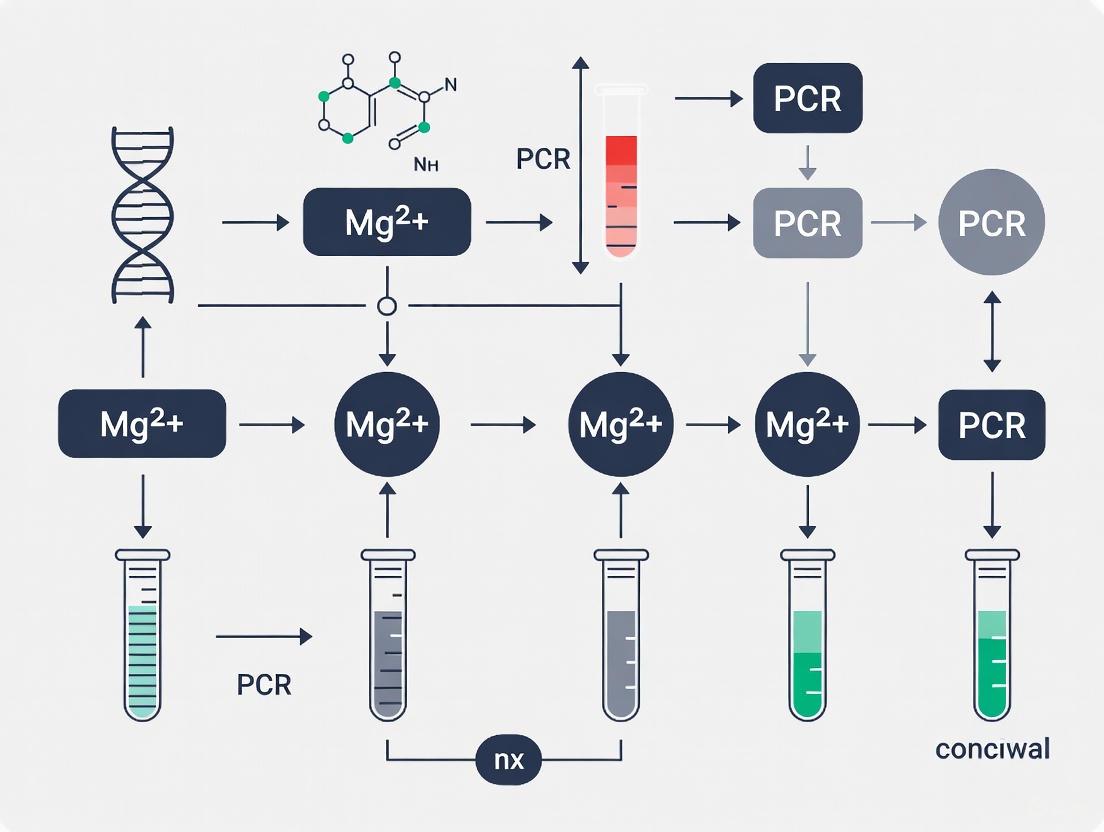
This article provides a comprehensive, evidence-based framework for researchers and drug development professionals to optimize magnesium chloride (MgCl2) concentration in Polymerase Chain Reaction (PCR).
Optimizing Mg2+ Concentration for PCR Efficiency: A Data-Driven Guide for Researchers
Abstract
This article provides a comprehensive, evidence-based framework for researchers and drug development professionals to optimize magnesium chloride (MgCl2) concentration in Polymerase Chain Reaction (PCR). Synthesizing findings from recent meta-analyses and predictive modeling studies, we cover the foundational role of Mg2+ as a critical cofactor, detail systematic methodological approaches for titration, offer targeted troubleshooting strategies for common pitfalls like nonspecific amplification, and explore advanced validation techniques. The guide translates complex thermodynamic principles into practical, actionable protocols to enhance amplification specificity, yield, and fidelity in diverse research and diagnostic applications.
The Fundamental Role of Mg2+ in PCR: Beyond a Simple Cofactor
The Critical Role of Mg2+ in Polymerase Chain Reaction
In Polymerase Chain Reaction (PCR), magnesium ions (Mg2+) serve as an essential cofactor for all thermostable DNA polymerases, making their optimization a fundamental requirement for experimental success [1] [2]. The Mg2+ concentration directly influences three vital aspects of the reaction: enzyme activity by enabling proper polymerase function for dNTP incorporation, primer-template annealing stability through stabilization of the double-stranded hybrid, and overall reaction fidelity by affecting the polymerase's specificity for correct base pairing [2]. Precise modulation of Mg2+ concentration, tailored to specific template characteristics, significantly improves both efficiency and specificity of PCR, providing a robust theoretical framework for developing template-specific optimization strategies [1].
Quantitative Effects of Mg2+ Concentration on PCR Parameters
Optimal Mg2+ Concentration Ranges
Extensive research has established clear quantitative relationships between Mg2+ concentration and PCR performance metrics. The following table summarizes evidence-based guidelines for Mg2+ optimization:
| Parameter | Optimal Range | Effect/Relationship | Research Basis |
|---|---|---|---|
| General Optimal Range | 1.5 – 3.0 mM | Efficient PCR performance across diverse templates [1] | Meta-analysis of 61 peer-reviewed studies [1] [3] |
| Mg2+ & Melting Temperature | +1.2°C per 0.5 mM MgCl₂ | Logarithmic relationship within 1.5-3.0 mM range [1] | Quantitative analysis of DNA melting thermodynamics [1] [3] |
| Template-Specific Needs | Varies by complexity | Genomic DNA requires higher concentrations than simple templates [1] | Analysis of template characteristics on Mg2+ requirements [1] |
| Standard Starting Point | 2.0 mM | Common recommendation for initial optimization tests [4] | Established laboratory protocols and manufacturer guidelines [4] |
Consequences of Suboptimal Mg2+ Concentrations
The precise concentration of Mg2+ is critical, as both insufficient and excess amounts lead to reaction failure:
- Low Mg2+ Concentration: Results in significantly reduced or completely absent enzyme activity, leading to poor or no amplification yield due to insufficient cofactor availability for the DNA polymerase [2] [5].
- High Mg2+ Concentration: Promotes non-specific amplification through reduced primer-binding stringency, decreases reaction fidelity by increasing misincorporation rates, and can result in the accumulation of unwanted PCR artifacts [2] [6].
Troubleshooting Guide: Mg2+-Related PCR Issues
| Observation | Possible Mg2+ Cause | Recommended Solution | Additional Considerations |
|---|---|---|---|
| No amplification or low yield | Insufficient Mg2+ concentration [7] [5] | Optimize Mg2+ concentration for maximum yield; if EDTA is present, increase Mg2+ to compensate [7] | Check template quality/quantity; optimize annealing temperature [7] [5] |
| Multiple or non-specific bands | Excess Mg2+ concentration [7] [6] | Titrate Mg2+ downward in 0.2-1 mM increments; review starting concentration [6] | Increase annealing temperature; use hot-start polymerase [7] [6] |
| Smear or high background | Excess Mg2+ reducing reaction stringency [2] | Lower Mg2+ concentration; re-optimize [2] | Reduce cycle number; check template integrity; use fresh reagents [5] |
| Low fidelity/sequence errors | Excess Mg2+ concentration favoring misincorporation [7] [6] | Decrease Mg2+ concentration to enhance fidelity [6] | Use high-fidelity polymerase; ensure balanced dNTP concentrations [7] [2] |
Experimental Protocol: Systematic Mg2+ Titration
Objective
To determine the optimal Mg2+ concentration for a specific PCR assay by testing a range of concentrations and evaluating amplification efficiency and specificity.
Materials and Reagents
- Template DNA: High-quality, intact DNA (1-1000 ng per reaction) [8]
- Primers: Specifically designed forward and reverse primers (0.1-1 μM final concentration) [7]
- dNTP Mix: Balanced equimolar mixture of dATP, dCTP, dGTP, dTTP (200 μM final concentration) [9]
- 10X PCR Buffer: Typically supplied with DNA polymerase, often without Mg2+ [9]
- MgCl2 Stock Solution: Usually 25 mM or 50 mM for precise dilution series [9]
- DNA Polymerase: Thermostable enzyme (e.g., Taq, Pfu) (0.5-2.5 units per 50 μL reaction) [8] [9]
- Nuclease-Free Water: Sterile, molecular-grade water to adjust final volume [8]
Procedure
- Prepare Mg2+ Stock Dilutions: Create a series of MgCl2 stock solutions to achieve final reaction concentrations spanning 0.5 mM to 5.0 mM in 0.5 mM increments [1] [9].
- Master Mix Preparation: Combine all reaction components except template DNA in a master mix to ensure consistency across reactions [8].
- Reaction Setup: Aliquot master mix into individual PCR tubes, then add Mg2+ stock solutions to achieve desired final concentrations [9].
- Template Addition: Add template DNA to each reaction tube, with one tube reserved as a no-template negative control [8].
- Thermal Cycling: Program thermal cycler with appropriate denaturation, annealing, and extension steps based on polymerase requirements and target length [8].
- Product Analysis: Separate PCR products by agarose gel electrophoresis and visualize under UV light to assess specificity and yield [8].
Expected Results
- Optimal Concentration: A single, clear band of expected size with maximum intensity at the ideal Mg2+ concentration [8].
- Suboptimal Results: No band (too little Mg2+), multiple bands/smearing (too much Mg2+), or primer-dimer formation [7] [5].
Mg2+ Optimization Workflow
Template-Specific Mg2+ Optimization Strategies
Different template characteristics demand tailored Mg2+ optimization approaches:
- Genomic DNA Templates: Require higher Mg2+ concentrations (typically at the upper end of the 1.5-3.0 mM range) due to greater complexity and potential inhibitor carryover [1].
- GC-Rich Templates: Often benefit from slightly elevated Mg2+ concentrations combined with additives like DMSO (2-10%) or betaine (0.5-2.5 M) to help resolve secondary structures [7] [2].
- Long Amplicons (>3 kb): May require optimized Mg2+ concentrations with extended extension times and specialized polymerases designed for long-range PCR [7].
- Plasmid or Simple Templates: Often perform well at standard Mg2+ concentrations (1.5-2.0 mM) due to lower complexity and minimal contaminants [1].
Frequently Asked Questions (FAQs)
Why is Mg2+ concentration so critical for PCR success?
Mg2+ serves as an essential cofactor for DNA polymerase activity, stabilizes the primer-template hybrid, and affects the melting temperature of DNA [1] [2]. Every 0.5 mM increase in MgCl2 within the optimal range increases DNA melting temperature by approximately 1.2°C, directly impacting reaction efficiency and specificity [1] [3].
What is the typical starting point for Mg2+ optimization?
Most protocols recommend beginning with 2.0 mM Mg2+ as a standard concentration, then titrating upward or downward in 0.2-0.5 mM increments based on initial results [4] [6]. Evidence-based guidelines suggest an optimal range of 1.5-3.0 mM for most applications [1].
How does Mg2+ concentration affect PCR fidelity?
Excessive Mg2+ concentrations reduce fidelity by decreasing the polymerase's specificity for correct base pairing, increasing misincorporation rates [7] [2]. For high-fidelity applications, use proofreading enzymes and carefully optimize Mg2+ to balance yield and accuracy [2] [6].
Why do different templates require different Mg2+ concentrations?
Template complexity significantly affects optimal Mg2+ requirements. Genomic DNA with high complexity typically requires higher Mg2+ concentrations than simpler templates like plasmids due to structural challenges and potential co-purified inhibitors [1].
How do PCR additives affect Mg2+ optimization?
Additives like DMSO, formamide, or betaine can alter Mg2+ requirements by affecting DNA melting behavior and polymerase activity [7] [2]. When using additives, re-optimize Mg2+ concentration as these compounds may change the optimal ionic conditions [7].
Research Reagent Solutions for Mg2+ Optimization
| Reagent | Function in PCR | Considerations for Mg2+ Optimization |
|---|---|---|
| MgCl2 Solution | Essential cofactor for DNA polymerase | Titrate between 0.5-5.0 mM; significantly affects specificity and yield [1] [9] |
| dNTP Mix | Building blocks for DNA synthesis | High dNTP concentrations chelate Mg2+; may require increased Mg2+ (0.2-1.0 mM beyond dNTP concentration) [7] |
| PCR Buffer | Maintains optimal pH and salt conditions | Some buffers contain pre-optimized Mg2+; check composition before additional supplementation [9] |
| Hot-Start Polymerase | Reduces non-specific amplification | Allows more precise Mg2+ optimization by preventing premature enzyme activity [7] [6] |
| Template DNA | Target sequence for amplification | Purify to remove EDTA and other chelators that sequester Mg2+; degraded DNA may require Mg2+ re-optimization [7] [5] |
| DMSO/Betaine | Additives for difficult templates | Alter DNA melting behavior; requires Mg2+ re-optimization when introduced [2] |
Mg2+ optimization remains non-negotiable for PCR success due to its fundamental roles in enzyme function, hybridization thermodynamics, and reaction specificity. The quantitative relationship between Mg2+ concentration and DNA melting temperature (approximately +1.2°C per 0.5 mM MgCl2) provides a theoretical framework for systematic optimization [1] [3]. By implementing the titration protocols, troubleshooting guides, and template-specific strategies outlined in this technical support document, researchers can transform Mg2+ optimization from an empirical art to an evidence-based practice, ensuring reproducible, specific, and efficient PCR results across diverse applications from basic research to drug development.
Troubleshooting Guides
No or Low PCR Amplification
| Possible Cause | Evidence-Based Explanation | Recommended Solution |
|---|---|---|
| Insufficient Mg2+ | Mg2+ is a crucial cofactor for DNA polymerase activity. Too little Mg2+ can prevent the enzyme from functioning, leading to no product [1] [7]. | Optimize Mg2+ concentration by testing increments of 0.5 mM, targeting a range of 1.5–4.0 mM [10] [11]. |
| Mg2+ Chelation | Components like EDTA (from template purification) or high concentrations of dNTPs can chelate Mg2+, making it unavailable for the polymerase [7]. | Ensure the Mg2+ concentration exceeds the total concentration of chelators and dNTPs. Re-purify the DNA template if necessary [7]. |
| Complex DNA Template | Genomic DNA and GC-rich templates have higher structural complexity, which often requires a higher Mg2+ concentration for efficient denaturation and primer annealing [1]. | For genomic DNA, use a Mg2+ concentration at the higher end of the optimal range (e.g., 2.5–3.0 mM) [1]. Use PCR additives like betaine or DMSO for GC-rich templates [7] [10]. |
Non-Specific Amplification or Multiple Bands
| Possible Cause | Evidence-Based Explanation | Recommended Solution |
|---|---|---|
| Excess Mg2+ | High Mg2+ concentration reduces the reaction stringency by stabilizing DNA duplexes, which can facilitate primer binding to non-target sequences [7] [10]. | Lower the Mg2+ concentration in 0.2–0.5 mM increments. The optimal range for specificity is often 1.5–2.0 mM for standard templates [11]. |
| Suboptimal Annealing Temperature | A low annealing temperature permits primers to bind to partially homologous sites. Mg2+ concentration directly influences the melting temperature (Tm) of the primer-template duplex [1] [7]. | Increase the annealing temperature stepwise by 1–2°C. Recalculate the primer Tm considering that every 0.5 mM increase in MgCl2 raises the DNA melting temperature by approximately 1.2°C [1]. |
Low Fidelity (High Error Rate)
| Possible Cause | Evidence-Based Explanation | Recommended Solution |
|---|---|---|
| Excess Mg2+ | Elevated Mg2+ concentrations can reduce the fidelity of DNA polymerase by promoting the misincorporation of nucleotides [7] [10]. | Use the lowest effective Mg2+ concentration that provides robust yield. For high-fidelity applications, carefully optimize within the 1.5–2.0 mM range [11]. |
| Unbalanced dNTPs | Non-equimolar dNTP concentrations increase the chance of misincorporation. The Mg2+ concentration must be in excess of the total dNTP concentration [10]. | Use balanced dNTP mixtures. Ensure the Mg2+ concentration is about 0.5–1.0 mM higher than the total dNTP concentration [11]. |
Diagram 1: Systematic troubleshooting workflow for Mg2+-related PCR issues.
Frequently Asked Questions (FAQs)
What is the fundamental biochemical role of Mg2+ in the PCR?
Mg2+ is an indispensable cofactor for DNA polymerase enzyme activity. It facilitates the formation of a functional catalytic core by coordinating the incoming dNTPs and stabilizing the transition state during the nucleotidyl transfer reaction. Essentially, it is required for the polymerase to add nucleotides to the growing DNA chain [1] [7].
How does Mg2+ concentration affect the DNA melting temperature (Tm)?
A meta-analysis of PCR optimization studies established a quantitative logarithmic relationship between MgCl2 concentration and DNA melting temperature. The analysis found that for every 0.5 mM increase in MgCl2 within the 1.5–3.0 mM range, the DNA melting temperature increases by approximately 1.2°C [1]. This must be factored into primer Tm calculations and annealing temperature setup.
What is the evidence-based optimal range for Mg2+ concentration?
A systematic review of 61 studies identified an optimal MgCl2 range of 1.5 to 3.0 mM for efficient PCR performance [1] [3]. However, the ideal concentration is template-dependent. Simpler templates (e.g., plasmid DNA) often perform well at the lower end (~1.5-2.0 mM), while more complex templates (e.g., genomic DNA) frequently require higher concentrations (~2.5-3.0 mM) [1] [11].
How should I approach optimizing Mg2+ in my experiment?
Begin with a gradient PCR using your standard protocol. Prepare a series of reactions where the MgCl2 concentration is varied, typically between 1.0 mM and 4.0 mM in 0.5 mM increments [10] [11]. Analyze the results by gel electrophoresis for yield and specificity, or by qPCR for efficiency. Select the concentration that gives the highest yield with minimal non-specific products.
Why does the type of DNA template influence the required Mg2+ level?
Template complexity influences Mg2+ requirements due to differences in secondary structure, GC content, and overall size. Genomic DNA, with its high complexity and potential for secondary structures, requires more Mg2+ to help destabilize these structures and make the target sequence accessible, compared to a simple, short plasmid template [1].
Optimal Mg2+ Concentations for Different Templates
| Template Type | Recommended [MgCl2] | Key Rationale |
|---|---|---|
| Plasmid or Viral DNA | 1.5 – 2.0 mM [11] | Low complexity and size reduce the need for high Mg2+ to stabilize the polymerase and manage template structure. |
| Genomic DNA | 2.5 – 3.0 mM (or higher) [1] | Higher complexity and longer amplicons require increased Mg2+ for enzyme processivity and to help denature structured regions. |
| GC-Rich Targets | 2.0 – 3.5 mM (with additives) [7] | Elevated Mg2+ helps destabilize the strong hydrogen bonding in GC-rich duplexes. Often used with co-solvents like DMSO. |
Effect of Mg2+ Concentration on PCR Parameters
| [MgCl2] Adjustment | Impact on DNA Melting Temp (Tm) | Impact on PCR Outcome |
|---|---|---|
| Increase by 0.5 mM | +1.2 °C [1] | Can increase yield but may reduce specificity and fidelity if in excess. |
| Decrease by 0.5 mM | -1.2 °C [1] | Can enhance specificity but may reduce yield or cause complete reaction failure if too low. |
The Scientist's Toolkit: Key Research Reagent Solutions
| Reagent / Material | Critical Function in Mg2+ Optimization |
|---|---|
| MgCl2 or MgSO4 Stock Solutions | Provides the essential Mg2+ cofactor. The choice of salt (Cl- or SO42-) can depend on polymerase preference (e.g., Pfu polymerase often works better with MgSO4) [7]. |
| Hot-Start DNA Polymerase | Prevents non-specific amplification and primer-dimer formation prior to the initial denaturation step, providing a cleaner baseline for assessing the effect of Mg2+ on specific product yield [7] [10]. |
| PCR Additives (e.g., DMSO, Betaine) | Help denature complex templates (e.g., GC-rich sequences), thereby modifying the Mg2+ requirements and often allowing for successful amplification within a broader Mg2+ range [7] [10]. |
| dNTP Mix (Balanced) | Provides the building blocks for DNA synthesis. Using a balanced, high-quality dNTP mix is critical because dNTPs chelate Mg2+, and an unbalanced mix can increase error rate [10] [11]. |
| Nuclease-Free Water | Ensures the reaction is not contaminated by nucleases that could degrade components or metal ions that could interfere with the precise Mg2+ concentration. |
Diagram 2: Experimental workflow for optimizing Mg2+ concentration in PCR.
For researchers and drug development professionals, achieving precise and reproducible Polymerase Chain Reaction (PCR) results is foundational. A critical, yet often overlooked, thermodynamic parameter in this process is the concentration of magnesium ions (Mg²⁺). Mg²⁺ is not merely a passive buffer component; it is an essential cofactor for DNA polymerase activity and a key player in stabilizing the DNA double helix. Its concentration directly influences the DNA melting temperature (Tm), which in turn dictates the efficiency and specificity of the primer annealing step. Understanding this relationship is paramount for troubleshooting amplification issues, from failed reactions to nonspecific products. This guide provides a detailed technical framework for optimizing Mg²⁺ concentration, transforming it from an empirical variable into a precisely controlled thermodynamic parameter.
Core Concepts: The Mechanism of Mg²⁺ Action
How Mg²⁺ Stabilizes DNA and Influences Tm
Magnesium ions function as a "molecular glue" that stabilizes the structure of DNA through electrostatic interactions. The backbone of a DNA duplex is highly negatively charged due to its phosphate groups, creating a natural repulsive force between the two complementary strands. Divalent Mg²⁺ ions powerfully shield this negative charge by binding to the phosphate groups, effectively neutralizing the inter-strand repulsion and allowing the strands to form a more stable duplex [12]. This stabilization has a direct and quantifiable impact on the DNA's melting temperature (Tm).
The following diagram illustrates the fundamental mechanism of how Mg²⁺ influences DNA thermodynamics, from stabilizing the double helix to facilitating primer annealing.
Quantitative Relationship Between Mg²⁺ and Tm
The effect of Mg²⁺ on Tm is not merely directional but follows a predictable, quantitative relationship. A comprehensive meta-analysis of 61 peer-reviewed studies established a clear logarithmic relationship between MgCl₂ concentration and DNA melting temperature.
Table 1: Quantitative Effect of MgCl₂ on DNA Melting Temperature
| MgCl₂ Concentration Change | Effect on DNA Melting Temperature (Tm) |
|---|---|
| Increase of 0.5 mM (within 1.5-3.0 mM range) | Increase of approximately 1.2°C [1] [3] |
| Optimal Concentration Range | 1.5 mM to 3.0 mM for standard templates [1] [3] |
| Low Concentration (<1.5 mM) | Reduced Tm, leading to unstable duplex formation and poor primer annealing [7] [2] |
| High Concentration (>3.0 mM) | Can promote non-specific annealing, reduce fidelity, and, in extreme cases, destabilize the duplex [7] [13] [2] |
This relationship is critical for predicting thermal behavior. For instance, increasing MgCl₂ from 1.5 mM to 2.5 mM in a PCR setup would be expected to raise the Tm of the DNA template by about 2.4°C, which must be accounted for when setting the annealing temperature.
Troubleshooting Guide: Common Mg²⁺-Related PCR Issues
This section addresses specific experimental problems linked to Mg²⁺ concentration, offering evidence-based solutions.
Table 2: Troubleshooting Mg²⁺-Related PCR Problems
| Observed Problem | Potential Mg²⁺-Related Cause | Recommended Solution |
|---|---|---|
| No or Weak Amplification [7] | Insufficient Mg²⁺ concentration, leading to poor DNA polymerase activity and unstable primer-template hybrids. | Titrate Mg²⁺ upward in 0.5 mM increments from the baseline, not exceeding 5.0 mM [7] [2]. Check for chelators like EDTA in the template sample. |
| Non-Specific Bands/Smearing [7] [14] | Excess Mg²⁺ concentration, which stabilizes non-specific primer binding and reduces reaction stringency. | Titrate Mg²⁺ downward in 0.5 mM increments. Combine with a stepwise increase in annealing temperature (1-2°C increments) [7] [14]. |
| High Error Rate (Low Fidelity) [7] [14] | Excessive Mg²⁺ concentration can reduce the proofreading activity of high-fidelity polymerases and promote misincorporation of nucleotides. | Optimize and use the lowest effective Mg²⁺ concentration. Ensure balanced dNTP concentrations, as dNTPs chelate Mg²⁺ [7]. |
| Inconsistent Results Between Replicates | Unbalanced Mg²⁺:dNTP ratio or non-homogeneous reagent mixing. | Ensure the Mg²⁺ concentration always exceeds the total dNTP concentration. Mix reagent stocks and reaction mixtures thoroughly before use [7]. |
Frequently Asked Questions (FAQs)
Q1: Why does Mg²⁺ concentration affect the annealing temperature I should use in my PCR protocol? Mg²⁺ stabilizes the DNA duplex, thereby raising its melting temperature (Tm). Since the optimal annealing temperature (Ta) is typically 3–5°C below the Tm of the primer-template duplex, any change in Mg²⁺ will change the Tm and thus the optimal Ta [1] [15]. If you significantly increase Mg²⁺, you may need to increase your Ta to maintain specificity.
Q2: How do I determine the starting Mg²⁺ concentration for a new PCR assay? Begin with the optimal range of 1.5 mM to 3.0 mM as indicated by the meta-analysis [1] [3]. The exact starting point depends on template complexity; genomic DNA often requires a higher concentration (e.g., 2.0-3.0 mM) than a simple plasmid template [1]. Always perform a gradient optimization from this baseline.
Q3: What is the relationship between dNTPs and Mg²⁺? dNTPs chelate Mg²⁺ ions. Therefore, the "free" Mg²⁺ concentration available for the polymerase and for duplex stabilization is the total Mg²⁺ minus the Mg²⁺ bound to dNTPs. If you change the dNTP concentration in your protocol, you must re-optimize the Mg²⁺ concentration accordingly [7] [2].
Q4: Can other salts interfere with Mg²⁺? Yes. Monovalent cations like Na⁺ and K⁺ also stabilize DNA duplexes, but they compete with Mg²⁺ for binding to the DNA backbone [12] [15]. High concentrations of monovalent ions can effectively reduce the amount of Mg²⁺ bound to DNA, influencing the observed Tm. It is crucial to remove residual salts from template preparations and to be aware of the salt composition of your PCR buffer [7].
Q5: Why do GC-rich templates often require special consideration for Mg²⁺? GC-rich templates have a higher innate Tm due to more hydrogen bonds. While Mg²⁺ stabilizes them further, they are also prone to forming stable secondary structures that hinder amplification. For such templates, a combination of optimized Mg²⁺ and additives like DMSO (2-10%) or betaine (1-2 M) is often necessary to lower the Tm and resolve secondary structures [7] [2].
Experimental Protocol: Optimizing Mg²⁺ Concentration
Title: A Stepwise Protocol for Empirical Mg²⁺ Titration in PCR.
Principle: This protocol determines the minimal Mg²⁺ concentration required for efficient and specific amplification of a target, minimizing non-specific products and polymerase errors.
Materials:
- Research Reagent Solutions:
- 10X PCR Buffer (without MgCl₂): Provides the core reaction environment (pH, salts).
- MgCl₂ Stock Solution (e.g., 25 mM or 50 mM): For precise titration.
- dNTP Mix (10 mM each): The building blocks for DNA synthesis.
- Template DNA: High-quality, minimal carryover of chelators like EDTA.
- Forward and Reverse Primers: Well-designed, resuspended in nuclease-free water.
- DNA Polymerase: A high-fidelity or standard polymerase, as required.
- Nuclease-Free Water: To adjust reaction volume.
Methodology:
- Prepare Master Mix: Create a master mix containing all common components: nuclease-free water, 1X PCR buffer, primers, dNTPs, template DNA, and polymerase. Omit MgCl₂.
- Aliquot: Dispense equal volumes of the master mix into 8 PCR tubes.
- Titrate Mg²⁺: Add MgCl₂ stock solution to the tubes to create a final concentration gradient. A typical range is 1.0 mM to 4.5 mM in 0.5 mM increments.
- Example: Tube 1: 1.0 mM, Tube 2: 1.5 mM, Tube 3: 2.0 mM ... Tube 8: 4.5 mM.
- Run PCR: Place the tubes in a thermal cycler and run the optimized cycling program, preferably using a gradient function for the annealing temperature if further fine-tuning is needed.
- Analyze Results: Separate the PCR products on an agarose gel. Identify the tube with the strongest specific band and the cleanest background (least smearing or non-specific bands). This represents the optimal Mg²⁺ concentration for your assay.
The Scientist's Toolkit: Essential Reagents for Mg²⁺ and PCR Optimization
Table 3: Key Research Reagents for Mg²⁺ Optimization Experiments
| Reagent / Material | Function / Explanation |
|---|---|
| MgCl₂ Stock Solution (25-50 mM) | A high-purity, sterile solution is essential for accurate and reproducible titration without introducing contaminants. |
| PCR Buffer (Mg²⁺-Free) | Using a Mg²⁺-free buffer as a base allows for complete and precise control over the final Mg²⁺ concentration in the reaction. |
| High-Fidelity DNA Polymerase | Enzymes like Pfu or Q5 possess proofreading activity (3'→5' exonuclease) for lower error rates, which is sensitive to Mg²⁺ levels [2]. |
| Hot-Start Polymerase | This enzyme formulation prevents activity until a high-temperature activation step, reducing primer-dimer formation and non-specific amplification at suboptimal Mg²⁺ levels during reaction setup [7] [14]. |
| dNTP Mix | The concentration of these nucleotides must be kept balanced and consistent, as they are key chelators of Mg²⁺ ions [7]. |
| PCR Additives (DMSO, Betaine) | Used to assist with challenging templates (e.g., GC-rich). They alter DNA melting behavior and thus can interact with Mg²⁺ effects, often allowing for lower optimal Mg²⁺ concentrations [2]. |
The optimization of magnesium chloride (MgCl₂) concentration is a critical step in the polymerase chain reaction (PCR), directly influencing the thermodynamics and kinetics of the amplification process. A clear, quantitative understanding of its effect on DNA melting temperature (Tₘ) is fundamental to developing efficient and reliable protocols. This guide synthesizes current evidence to provide researchers with a robust framework for tailoring Mg²⁺ levels to specific experimental conditions, thereby enhancing both the efficiency and specificity of PCR.
Core Quantitative Data: MgCl₂ and Its Effects
The relationship between MgCl₂ concentration and PCR parameters has been quantified through systematic meta-analysis. The data below provides a foundation for evidence-based optimization.
Table 1: Quantitative Effects of MgCl₂ Concentration on PCR Parameters
| Parameter | Effect / Optimal Range | Quantitative Relationship | Notes |
|---|---|---|---|
| Optimal MgCl₂ Range | 1.5 – 3.0 mM [1] | General starting point for optimization. | Template complexity influences the exact requirement; genomic DNA often needs higher concentrations [1]. |
| Impact on Melting Temp (Tₘ) | Positive correlation [1] | Every 0.5 mM increase in MgCl₂ raises DNA Tₘ by approximately 1.2 °C (within 1.5-3.0 mM range) [1]. | The relationship is logarithmic [1]. |
| Interaction with dNTPs | Critical for fidelity [16] | Mg²⁺ concentration must be higher than the total dNTP concentration [16]. | Excess Mg²⁺ can reduce fidelity by promoting misincorporation [16]. |
Table 2: Template-Specific MgCl₂ Guidance and Associated Issues
| Template Characteristic | Recommended MgCl₂ Consideration | Common Issues |
|---|---|---|
| Standard Templates | Start at 1.5 mM [1]. | Nonspecific amplification if concentration is too high [7]. |
| Complex Templates (e.g., Genomic DNA) | Higher concentrations within the 1.5-3.0 mM range are often required [1]. | Poor efficiency or amplification failure if concentration is too low [7]. |
| GC-Rich Templates | May require optimization and additives [7]. | Inefficient denaturation and secondary structure formation [7]. |
Experimental Protocol: MgCl₂ Concentration Optimization
The following protocol provides a detailed methodology for empirically determining the optimal MgCl₂ concentration for a specific PCR assay.
Background and Principle
Mg²⁺ ions are essential cofactors for DNA polymerase activity. They influence the reaction by stabilizing the double-stranded DNA structure, affecting the primer-template hybridization efficiency, and modulating enzyme kinetics. An incorrect concentration can lead to poor yield, nonspecific amplification, or complete reaction failure [1] [4]. This experiment establishes the optimal MgCl₂ concentration for a given primer-template system.
Materials and Equipment
Table 3: Research Reagent Solutions for MgCl₂ Optimization
| Item | Function / Description |
|---|---|
| Thermostable DNA Polymerase | Enzyme that catalyzes DNA synthesis; its activity is Mg²⁺-dependent [4]. |
| 10X PCR Buffer (without MgCl₂) | Provides the core reaction environment (pH, salts) without the variable being tested. |
| MgCl₂ Stock Solution (e.g., 25 mM) | The variable being optimized; added to the reaction to achieve the desired final concentration. |
| dNTP Mix | The building blocks (dATP, dCTP, dGTP, dTTP) for new DNA strands. |
| Forward and Reverse Primers | Oligonucleotides that define the start and end of the target amplicon. |
| Template DNA | The DNA sample containing the target sequence to be amplified. |
| Nuclease-free Water | Solvent to bring the reaction to the final volume; ensures no nuclease contamination. |
| Thermal Cycler | Instrument that programs and executes the temperature cycles for denaturation, annealing, and extension. |
| Agarose Gel Electrophoresis System | Used to separate and visualize the PCR products to assess yield and specificity. |
Step-by-Step Procedure
- Prepare Reaction Master Mixes: Create a master mix containing all PCR components except the template DNA and MgCl₂. This includes nuclease-free water, 10X PCR buffer, dNTP mix, primers, and DNA polymerase.
- Aliquot and Add MgCl₂: Aliquot the master mix into individual PCR tubes. Add MgCl₂ from a stock solution to each tube to create a concentration gradient. A typical range is from 0.5 mM to 5.0 mM, with increments of 0.5 mM. Always include a negative control (no template) for each Mg²⁺ concentration to check for contamination.
- Add Template and Run PCR: Add the template DNA to all tubes except the negative controls. Place the tubes in a thermal cycler and run the optimized cycling program for your specific assay.
- Analyze Results: Separate the PCR products using agarose gel electrophoresis. Visualize the DNA bands under UV light.
Data Analysis and Interpretation
- Optimal Concentration: The MgCl₂ concentration that produces the highest yield of the specific target product with minimal to no nonspecific bands or primer-dimers.
- Low Concentration: May result in no product or very faint bands due to insufficient DNA polymerase activity and unstable primer-template hybrids.
- High Concentration: Often leads to nonspecific amplification, visible as multiple bands or a smear on the gel, due to reduced stringency and stabilized mismatched hybrids [7] [16].
The workflow for this optimization experiment is outlined below.
Troubleshooting FAQs
Q: My PCR shows no amplification product. Could MgCl₂ be the issue? A: Yes. The most likely Mg²⁺-related cause is an insufficient concentration. Begin troubleshooting by verifying that all reaction components were added. If the setup was correct, consider increasing the MgCl₂ concentration incrementally, starting from a baseline of 1.5 mM. Low Mg²⁺ leads to poor DNA polymerase activity and unstable primer-template binding [16]. Other factors to check include the integrity and quantity of the template DNA, the activity of the DNA polymerase, and the number of PCR cycles [7].
Q: I see multiple nonspecific bands on my gel. How can adjusting MgCl₂ help? A: Nonspecific amplification is frequently caused by an excessively high MgCl₂ concentration. High Mg²⁺ stabilizes DNA duplexes, which can allow primers to bind to non-target sequences with imperfect complementarity. To resolve this, reduce the MgCl₂ concentration in increments of 0.5 mM [7] [16]. Simultaneously, you can increase the annealing temperature by 2°C increments to enhance reaction stringency [16].
Q: My PCR product appears as a smear on the gel. What is the role of MgCl₂? A: A smear can indicate a mixture of nonspecific products or enzyme errors, which can be influenced by Mg²⁺. An excessively high MgCl₂ concentration can promote mispriming and reduce the fidelity of some DNA polymerases, leading to a heterogeneous product population [16]. Optimize the Mg²⁺ concentration to the lowest level that gives a strong, specific product. Also, ensure you are not using an excessively long extension time, which can sometimes cause smearing with certain polymerases [16].
Q: How does MgCl₂ concentration affect PCR fidelity? A: Fidelity, or replication accuracy, can be compromised by high MgCl₂ concentrations. Excessive Mg²⁺ can increase the misincorporation rate of nucleotides by the DNA polymerase. For applications requiring high fidelity, such as cloning, use the minimal effective Mg²⁺ concentration and ensure the dNTP concentrations are balanced, as unbalanced dNTPs also increase error rates [7] [16]. Using a high-fidelity DNA polymerase is also recommended.
Q: Why does the optimal MgCl₂ concentration depend on my DNA template? A: Different templates have varying complexities. Genomic DNA, with its high complexity and potential secondary structures, often requires a higher Mg²⁺ concentration to stabilize the DNA and facilitate efficient primer binding. In contrast, simpler templates like plasmid DNA may perform optimally at the lower end of the range [1]. The GC content of the template also plays a role, as GC-rich sequences are more stable and may require adjusted conditions [7].
In polymerase chain reaction (PCR) optimization, magnesium ion (Mg2+) concentration is a pivotal factor for success. Acting as an essential cofactor for DNA polymerase activity, Mg2+ influences enzyme efficiency, primer-binding specificity, and DNA duplex stability. However, the optimal concentration is not universal; it is profoundly influenced by template-specific characteristics, primarily guanine-cytosine (GC) content and amplicon length. This guide details how these factors dictate Mg2+ requirements, providing researchers with targeted strategies for experimental optimization.
Core Concepts: Mg2+ in the PCR Reaction
Biochemical Functions of Mg2+
Mg2+ serves two critical, simultaneous functions in PCR:
- Polymerase Cofactor: The Mg2+ ion binds to a dNTP at its α-phosphate group, facilitating the removal of beta and gamma phosphates and enabling the formation of a phosphodiester bond with the 3' OH group of the adjacent nucleotide [17] [18].
- Nucleic Acid Stabilizer: Mg2+ binds to the negatively charged phosphate backbone of DNA, reducing electrostatic repulsion between the primer and template strands. This stabilizes the duplex, facilitating proper annealing and increasing the melting temperature (Tm) [1] [18].
Consequences of Improper Mg2+ Concentration
- Too Low (<1.0 mM): Reduced or completely failed amplification due to insufficient DNA polymerase activity and unstable primer-template hybrids [19] [18].
- Too High (>4.0 mM): Non-specific amplification, manifested as multiple bands or smearing on a gel, due to reduced primer annealing stringency and decreased polymerase fidelity [2] [19].
Quantitative Effects of Template Properties on Mg2+ Requirements
The following table summarizes evidence-based Mg2+ concentration ranges for different template types, derived from meta-analyses and experimental studies.
Table 1: Template-Specific Mg2+ Concentration Guidelines
| Template Characteristic | Recommended [Mg2+] Range | Key Considerations and Effects |
|---|---|---|
| Standard Templates | 1.5 – 2.0 mM [1] [19] | The standard starting point for most PCR reactions with typical complexity. |
| High GC Content (>60%) | 1.5 – 4.0 mM [17] [20] | Higher concentrations help denature stable secondary structures. Incremental optimization in 0.5 mM steps is advised [17]. |
| Long Amplicons (>3 kb) | May require increased concentration [2] | Longer extension times and potentially higher Mg2+ support polymerase processivity over extended distances. |
| Genomic DNA Templates | Often higher than for plasmid DNA [1] | Increased complexity and potential presence of inhibitors may necessitate higher Mg2+. |
The relationship between Mg2+, template properties, and reaction efficiency is a balancing act. The diagram below illustrates the systematic workflow for optimizing Mg2+ concentration based on your initial PCR results and template characteristics.
Diagram: A systematic workflow for troubleshooting and optimizing Mg²⁺ concentration based on PCR results and template properties.
Detailed Experimental Protocols
Protocol 1: Mg2+ Titration for Initial Optimization
This is the fundamental method for empirically determining the optimal Mg2+ concentration for any new PCR assay [17] [19].
- Preparation: Set up a series of identical 50 µL PCR reactions, varying only the Mg2+ concentration.
- Concentration Gradient: Use the provided buffer as a base and supplement MgCl2 to create final concentrations typically ranging from 1.0 mM to 4.0 mM in 0.5 mM increments [17].
- PCR Cycling: Run the reactions using your standard thermocycling protocol.
- Analysis: Analyze the products by agarose gel electrophoresis. The optimal condition is the lowest Mg2+ concentration that yields a strong, specific band with minimal background.
Protocol 2: Optimizing PCR for GC-Rich Templates
GC-rich templates (≥60% GC) require a multi-pronged approach where Mg2+ optimization is combined with other specialized reagents [17] [20].
- Polymerase Selection: Choose a polymerase specifically validated for GC-rich templates, such as OneTaq or Q5 High-Fidelity DNA Polymerase [17].
- Mg2+ Titration: Perform a Mg2+ titration as in Protocol 1, but extend the range up to 4.0 mM.
- Incorporate Additives: Include enhancers in the reaction mix:
- Thermal Cycling Adjustments: Use a higher denaturation temperature (98°C) and/or a higher annealing temperature. A "Touchdown" PCR protocol can also improve specificity [17].
The Scientist's Toolkit: Essential Research Reagents
Table 2: Key Reagents for PCR and Mg2+ Optimization
| Reagent / Solution | Function in PCR | Considerations for Mg2+ Optimization |
|---|---|---|
| MgCl₂ Solution | Source of free Mg²⁺ ions. | Chelation by dNTPs and template DNA reduces free [Mg²⁺]. Concentration must be optimized for each reaction [4] [19]. |
| DNA Polymerase | Enzyme that synthesizes new DNA strands. | Different polymerases (e.g., Taq vs. high-fidelity) may have slightly different optimal Mg²⁺ ranges [2]. |
| dNTP Mix | Building blocks for new DNA strands. | Each dNTP molecule chelates one Mg²⁺ ion. Consistent dNTP concentration is vital for stable Mg²⁺ availability [19]. |
| PCR Buffer | Provides optimal pH and salt conditions. | Often contains a base concentration of MgCl₂ (e.g., 1.5 mM). This must be accounted for when supplementing [19]. |
| DMSO | Additive that reduces DNA secondary structure. | Helps amplify GC-rich regions. Its use can alter the optimal Mg²⁺ window, requiring re-optimization [2] [20]. |
| Betaine | Additive that equalizes Tm of GC and AT base pairs. | Like DMSO, it improves amplification of difficult templates and interacts with Mg²⁺ requirements [2]. |
Frequently Asked Questions (FAQs)
Q1: Why does my GC-rich template require more Mg2+ for efficient amplification? GC-rich sequences form highly stable secondary structures (e.g., hairpins) that are difficult for the polymerase to unwind. Elevated Mg2+ helps stabilize the single-stranded DNA conformation after denaturation, making it more accessible for primer binding and polymerase progression. Furthermore, higher Mg2+ increases the melting temperature (Tm), which is necessary for primers to bind effectively to these highly stable templates [1] [17].
Q2: How do dNTPs influence the effective Mg2+ concentration in my reaction? dNTPs act as Mg2+ chelators; each dNTP molecule binds one Mg2+ ion. Therefore, the concentration of free Mg2+ available for the polymerase is the total Mg2+ minus the amount bound to dNTPs. It is critical to maintain a consistent dNTP concentration across experiments. A standard 200 µM dNTP mix will chelate an equivalent concentration of Mg2+. Any change in dNTP concentration may necessitate re-optimization of Mg2+ [19].
Q3: I see multiple bands on my gel. Should I increase or decrease Mg2+? Decrease the Mg2+ concentration. Multiple bands indicate non-specific amplification, where primers are binding to off-target sites. This occurs when Mg2+ is too high, as it reduces the stringency of primer annealing by over-stabilizing the primer-template duplex, even with mismatched bases. Titrate down Mg2+ in 0.5 mM increments to increase stringency and eliminate secondary bands [2] [19].
Q4: Is there a mathematical model to predict the optimal Mg2+ concentration?
Advanced predictive models using multivariate Taylor series expansion and thermodynamic integration have been developed. These models can achieve high predictive accuracy (R² = 0.9942 for MgCl2) by incorporating variables like Tm, GC%, amplicon length, and dNTP concentration. A simplified predictive equation takes the form: (MgCl2) ≈ Constant + Coefficients x (Tm, GC%, L, dNTP, etc.) + Interaction terms. While highly informative for understanding relationships, these models are complex, and empirical titration remains the most accessible and reliable method for most wet-lab applications [21].
Q5: How does amplicon length affect Mg2+ requirements? While the primary effect of amplicon length is on extension time, longer amplicons (>3 kb) can sometimes benefit from a slightly elevated Mg2+ concentration. This supports the processivity of the DNA polymerase over a longer distance. However, the effect is generally less pronounced than with high GC content. The most critical factor for long amplicons remains using a polymerase with high processivity and sufficient extension time [2].
Systematic Strategies for Mg2+ Titration and Protocol Implementation
Within the framework of polymerase chain reaction (PCR) efficiency research, the optimization of magnesium ion (Mg²⁺) concentration is a fundamental prerequisite for experimental success. Mg²⁺ serves as an essential cofactor for thermostable DNA polymerases, and its concentration directly influences the enzyme's activity, fidelity, and overall reaction efficiency [22]. The absence of adequate free Mg²⁺ renders polymerases inactive, while an excess can reduce fidelity and promote non-specific amplification [23] [22]. Establishing a standardized baseline concentration range, typically from 0.5 mM to 5.0 mM, is therefore critical for researchers and drug development professionals aiming to develop robust, reproducible PCR protocols. This guide provides a detailed troubleshooting resource for navigating Mg²⁺ optimization, a process complicated by the fact that the "optimal" concentration is not a single value but depends on specific reaction components and template characteristics [24].
The optimal concentration of Mg²⁺ varies based on the polymerase and the specific application. The table below summarizes evidence-based concentration ranges for routine and specialized PCR protocols.
Table 1: Standard Mg²⁺ Concentration Ranges for PCR
| Application/Polymerase | Recommended [Mg²⁺] Range | Common Starting Point | Key Influencing Factors |
|---|---|---|---|
| Routine PCR with Taq DNA Polymerase | 1.5 – 2.0 mM [24] | 1.5 mM | Template DNA, dNTP concentration, buffer composition [24] |
| General PCR (Meta-Analysis) | 1.5 – 3.0 mM [3] | 1.5 mM | Template complexity; genomic DNA requires higher concentrations [3] |
| High-Fidelity Polymerases (e.g., PrimeSTAR GXL) | ~1 mM [22] | 1 mM | Enhanced fidelity at lower Mg²⁺ concentrations [22] |
| Magnesium-Tolerant Polymerases (e.g., Titanium Taq) | ~3.5 mM (as supplied in buffer) [22] | 3.5 mM | Pre-optimized in proprietary buffer systems [22] |
| Broad Optimization Range | 1.5 – 4.5 mM [23] | 2.0 mM | A wider range for systematic empirical testing [23] |
The Thermodynamic Impact of Mg²⁺
Quantitative research reveals a clear logarithmic relationship between MgCl₂ concentration and DNA melting temperature (Tm). A comprehensive meta-analysis demonstrated that within the optimal range of 1.5 to 3.0 mM, every 0.5 mM increase in MgCl₂ is associated with a 1.2 °C increase in melting temperature [3]. This quantitative insight is crucial for accurately calculating primer annealing temperatures during protocol design. Furthermore, template complexity significantly affects requirements; genomic DNA templates generally require higher Mg²⁺ concentrations than simpler plasmid or viral templates [3] [24].
Mg²⁺ Optimization Workflow: A Step-by-Step Protocol
The following workflow provides a systematic methodology for empirically determining the optimal Mg²⁺ concentration for a specific PCR assay. This empirical approach is considered the gold standard in PCR optimization research [24] [22].
Detailed Experimental Methodology
- Preparation of Mg²⁺ Titration Series: Prepare a master mix containing all standard PCR components except Mg²⁺ and the DNA polymerase. Aliquot the master mix into individual PCR tubes. Supplement each tube with MgCl₂ from a stock solution (e.g., 25 mM) to create a final concentration series, typically from 0.5 mM to 4.0 mM or 5.0 mM, in increments of 0.5 mM [24] [25]. A common starting point is 1.5 mM, but this should be adjusted based on the polymerase manufacturer's recommendations [22].
- PCR Amplification and Product Analysis: Add the DNA polymerase last to each tube, initiate the PCR cycling program, and amplify the target sequence. Following amplification, analyze the products using agarose gel electrophoresis. The optimal Mg²⁺ concentration is identified as the lowest concentration that yields a strong, specific amplification product of the expected size with minimal to no non-specific background [24].
- Troubleshooting Based on Outcomes:
- No Amplification or Weak Yield: This indicates insufficient free Mg²⁺. Systematically increase the concentration in the next titration round [5] [26].
- Multiple Bands or Smearing: This signifies excessive Mg²⁺, leading to non-specific priming and reduced enzyme fidelity. Decrease the concentration in subsequent tests [5] [25].
Troubleshooting Common Mg²⁺-Related PCR Issues
This section addresses specific problems users may encounter, linking them directly to Mg²⁺ concentration and other potential factors.
Table 2: Troubleshooting Guide for Mg²⁺-Related PCR Issues
| Observation | Potential Causes Related to Mg²⁺ | Recommended Solutions |
|---|---|---|
| No PCR Product | Mg²⁺ concentration too low; dNTPs chelate all free Mg²⁺, inactivating the polymerase [23] [26]. | Optimize Mg²⁺ concentration upward in 0.5 mM increments. Ensure total dNTP concentration is balanced (typically 200 µM each) [24] [5]. |
| Non-Specific Amplification / Multiple Bands | Mg²⁺ concentration too high, reducing reaction stringency and promoting primer binding to non-target sites [24] [23]. | Optimize Mg²⁺ concentration downward in 0.5 mM increments. Simultaneously, increase the annealing temperature [25] [26]. |
| Primer-Dimer Formation | Excessively high Mg²⁺ concentrations can facilitate primer-dimer formation [23]. | Lower Mg²⁺ concentration. Re-evaluate primer design for self-complementarity and optimize primer concentration (typically 0.1-0.5 µM) [24] [5]. |
| Low PCR Fidelity/Sequence Errors | High Mg²⁺ concentration can reduce the fidelity of the DNA polymerase [25]. | Use the lowest effective Mg²⁺ concentration that provides good yield. For cloning or sequencing, use high-fidelity polymerases, which often perform best at lower Mg²⁺ (e.g., 1 mM) [22] [26]. |
Frequently Asked Questions (FAQs) on Mg²⁺ Optimization
Q1: Why can't I use a single, fixed Mg²⁺ concentration for all my PCR assays? The optimal free Mg²⁺ concentration is affected by several reaction components. dNTPs act as chelators, binding Mg²⁺ and reducing the amount available for the polymerase. The DNA template itself, especially at high concentrations or with high GC content, can also bind Mg²⁺. Furthermore, impurities like EDTA in the template prep can chelate Mg²⁺. Therefore, any change in template, dNTP concentration, or buffer system necessitates re-optimization [24] [22].
Q2: How does Mg²⁺ concentration specifically affect PCR efficiency and specificity? Mg²⁺ is a required cofactor that stabilizes the DNA duplex by neutralizing the negative charge of the phosphate backbone. It is directly involved in the catalytic function of the polymerase enzyme. At low concentrations, the enzyme is inactive, and primers cannot bind efficiently, leading to no product. At high concentrations, the stability of DNA duplexes is increased to a point where primers can bind non-specifically to incorrect sites, resulting in spurious amplification products and a decrease in enzyme fidelity [23] [22].
Q3: What is the relationship between Mg²⁺, dNTPs, and reaction stringency? dNTPs compete with the DNA polymerase for Mg²⁺, as they require Mg²⁺ to be biologically active. An increase in dNTP concentration will effectively reduce the free Mg²⁺ available for the polymerase. This is why it is critical to balance their concentrations. A common optimization strategy is to first set the dNTP concentration (e.g., to 200 µM of each dNTP) and then titrate Mg²⁺ to find the optimum [24] [22].
Essential Research Reagent Solutions
A successful Mg²⁺ optimization experiment relies on high-quality, specific reagents. The following table details key materials and their functions.
Table 3: Key Reagents for Mg²⁺ Optimization Experiments
| Reagent | Function in Optimization | Key Considerations |
|---|---|---|
| MgCl₂ or MgSO₄ Solution | Source of divalent Mg²⁺ cations. | Use a high-purity stock solution. MgSO₄ is preferred for some high-fidelity polymerases like Pfu [26]. Concentration is typically 25-50 mM. |
| DNA Polymerase with Mg²⁺-Free Buffer | Enzyme for DNA synthesis. | Essential for optimization. Many manufacturers supply polymerase with a dedicated Mg²⁺-free buffer and a separate vial of MgCl₂ [22]. |
| dNTP Mix | Building blocks for new DNA strands. | Use a balanced mixture (equal parts dATP, dCTP, dGTP, dTTP). Typical final concentration is 200 µM each; higher concentrations chelate more Mg²⁺ [24] [22]. |
| PCR Additives (e.g., DMSO, Betaine) | Assist in amplifying complex templates (e.g., high GC). | Can impact DNA duplex stability and thus the effective Tm. Their use may require re-optimization of the Mg²⁺ concentration [27] [22]. |
| Thermal Cycler with Gradient Function | Allows simultaneous testing of multiple annealing temperatures. | Crucial for efficient optimization, enabling the coupling of Mg²⁺ titration with annealing temperature optimization in a single experiment [26]. |
A Step-by-Step Guide to Mg2+ Titration Experiments
Magnesium ion (Mg2+) concentration is a critical parameter in polymerase chain reaction (PCR) efficiency, acting as an essential cofactor for DNA polymerase enzyme activity. Proper Mg2+ titration is fundamental to molecular biology research, diagnostics, and drug development workflows. This guide provides detailed methodologies and troubleshooting advice for researchers optimizing Mg2+ concentrations to enhance PCR specificity and yield.
Experimental Protocol: Mg2+ Titration for PCR Optimization
Step-by-Step Methodology
Step 1: Reagent Preparation
- Assemble high-quality reagents on ice: DNA template, primers, dNTPs, reaction buffer (without MgCl2), Taq DNA polymerase, and sterile water [9].
- Prepare a MgCl2 stock solution (typically 25-50 mM) for accurate dilution series.
Step 2: Master Mix Formulation
- Create a master mix excluding MgCl2 and DNA template to minimize tube-to-tube variation.
- For a 50 μL reaction volume, combine [9]:
- 5 μL of 10X PCR Buffer (without Mg2+)
- 1 μL of 10 mM dNTP Mix (200 μM final concentration)
- 1 μL of each primer (20 μM stock, 0.1-0.5 μM final concentration)
- 0.5-2.5 units of Taq DNA Polymerase
- Sterile distilled water (q.s. to final volume with MgCl2 and template)
Step 3: MgCl2 Dilution Series Setup
- Aliquot master mix into individual PCR tubes.
- Supplement with MgCl2 stock to create a concentration gradient from 0.5 mM to 5.0 mM [28].
- A typical optimization series: 0.5, 1.0, 1.5, 2.0, 2.5, 3.0, 3.5, 4.0, 4.5, 5.0 mM [18].
Step 4: Reaction Initiation
- Add DNA template to each tube (1pg–10 ng plasmid DNA or 1ng–1μg genomic DNA) [28].
- Gently mix reagents by pipetting and briefly centrifuge to collect contents.
Step 5: Thermal Cycling
- Use the following standard cycling conditions [28]:
- Initial Denaturation: 95°C for 2 minutes
- 25-35 Cycles:
- Denaturation: 95°C for 15-30 seconds
- Annealing: 50-60°C for 15-30 seconds
- Extension: 68°C for 1 minute per kb
- Final Extension: 68°C for 5 minutes
- Hold: 4-10°C
Step 6: Product Analysis
- Analyze PCR products using agarose gel electrophoresis.
- Evaluate for specificity (single band) and yield against molecular weight standards.
Quantitative Mg2+ Optimization Data
Table 1: Effects of MgCl2 Concentration on PCR Performance
| MgCl2 Concentration (mM) | PCR Efficiency | Specificity | Typical Application |
|---|---|---|---|
| < 1.0 | Low to none | High | Not typically effective |
| 1.5 - 2.0 | Optimal | High | Standard PCR [28] |
| 2.0 - 3.0 | High | Moderate | Complex templates [3] |
| > 3.0 | High | Low | High GC content, problematic templates |
Table 2: Troubleshooting Mg2+-Related PCR Failures
| Problem | Potential Causes | Solutions |
|---|---|---|
| No amplification | Mg2+ too low [18] | Increase MgCl2 in 0.5 mM increments |
| Multiple non-specific bands | Mg2+ too high [18] | Decrease MgCl2 concentration |
| Faint bands/low yield | Suboptimal Mg2+ [3] | Fine-tune around 1.5-2.0 mM range |
| Primer-dimer formation | Excessive Mg2+ [18] | Reduce MgCl2; optimize primer concentration |
The Scientist's Toolkit: Essential Research Reagents
Table 3: Key Reagents for Mg2+ Titration Experiments
| Reagent | Function | Optimization Notes |
|---|---|---|
| MgCl2 (Magnesium Chloride) | DNA polymerase cofactor; stabilizes primer binding [18] | Most critical variable; titrate between 0.5-5.0 mM |
| Taq DNA Polymerase | Enzyme that catalyzes DNA synthesis | Use 0.5-2.5 units/50 μL reaction [28] |
| dNTPs (deoxynucleotides) | DNA building blocks | 200 μM each dNTP; competes with primers for Mg2+ [28] |
| PCR Buffer (Tris-based) | Maintains pH during reaction | Provides ionic environment; may contain KCl [9] |
| DNA Template | Target sequence for amplification | 1pg-10ng plasmid; 1ng-1μg genomic DNA [28] |
| Oligonucleotide Primers | Define amplification targets | 0.1-0.5 μM each; design with 40-60% GC content [9] |
FAQs: Troubleshooting Mg2+ Titration Experiments
What are the consequences of insufficient Mg2+ in PCR? Inadequate Mg2+ concentration prevents primer binding and polymerase activity, resulting in weak or complete amplification failure [18]. The magnesium ion serves as an essential cofactor that facilitates the catalytic activity of Taq DNA polymerase by binding to dNTPs and enabling phosphodiester bond formation [18].
How does excessive Mg2+ affect PCR specificity? Elevated Mg2+ concentrations promote non-specific primer binding, leading to multiple aberrant amplification products visible as extra bands on agarose gels [18]. Excessive magnesium also increases primer-dimer formation through stabilized mismatched annealing [18].
Why does optimal Mg2+ concentration vary between experiments? Template characteristics significantly influence Mg2+ requirements. Genomic DNA templates typically require higher concentrations than plasmid DNA, while GC-rich sequences need more Mg2+ due to increased stability [3]. PCR inhibitors in DNA extracts may also chelate Mg2+, reducing availability [18].
What is the relationship between Mg2+ concentration and melting temperature? Mg2+ displays a logarithmic relationship with DNA melting temperature (Tm). Within the optimal 1.5-3.0 mM range, each 0.5 mM increase in MgCl2 raises Tm by approximately 1.2°C [3]. This directly impacts primer annealing efficiency.
How should I approach Mg2+ optimization for problematic templates? For challenging templates (high GC content, strong secondary structure), implement a broader Mg2+ titration range from 1.0-4.0 mM in 0.5 mM increments [28]. Consider supplementation with PCR enhancers like DMSO, betaine, or formamide which can modify magnesium requirements [9].
Experimental Workflow Visualization
Mg2+ Mechanism of Action in PCR
This guide addresses the critical challenge of optimizing Mg2+ concentration in PCR, focusing on its complex interactions with core reaction components. Proper management of these relationships is essential for achieving high amplification efficiency, specificity, and fidelity in research and diagnostic applications.
Quantitative Interactions of Mg2+ with Key PCR Components
Mg2+ is an essential cofactor for DNA polymerase activity, but its optimal concentration is not fixed. It is dynamically influenced by the concentrations of dNTPs and primers, as well as the presence of chelating agents. The following table summarizes these key interactions and their quantitative effects on PCR performance.
Table 1: Key Interactions Affecting Mg2+ Concentration in PCR
| Reaction Component | Interaction with Mg2+ | Effect on PCR if Unbalanced | Quantitative Guidance & Optimal Range |
|---|---|---|---|
| dNTPs | Chelate Mg2+ ions; each dNTP molecule binds one Mg2+ ion. [7] [2] | Low [Mg2+]: Reduced polymerase activity, leading to low or no yield. [7] [2] | - Atypical high dNTP concentrations require higher Mg2+. [7]- 200 µM of each dNTP is typical; 50-100 µM can enhance fidelity. [29] |
| Primers | Mg2+ stabilizes the primer-template duplex. [1] [2] | Low [Mg2+]: Unstable annealing, poor efficiency. [2]High [Mg2+]: Non-specific primer binding, spurious products. [7] [2] | - Optimal Mg2+ is influenced by template complexity (genomic DNA requires higher concentrations). [1]- Final primer concentration typically 0.1-1 µM. [7] [30] |
| Chelating Agents (e.g., EDTA) | Bind and sequester Mg2+ ions, making them unavailable for the polymerase. [2] | PCR failure due to complete inactivation of the DNA polymerase. [2] | - Ensure chelators from DNA purification (e.g., in TE buffer) are highly diluted in the final PCR mix. [7] |
| Overall Mg2+ Concentration | Directly affects enzyme activity, duplex stability, and reaction fidelity. [1] [2] | Low (e.g., <1.5 mM): Low or no yield. [2] [29]High (e.g., >3-4 mM): Non-specific products, reduced fidelity. [7] [2] | - General optimal range: 1.5–3.0 mM. [1] [29]- Titrate in 0.5 mM increments. [29] |
Troubleshooting Guide: Mg2+-Related PCR Issues
Table 2: Common Problems and Evidence-Based Solutions
| Problem | Possible Cause | Recommended Solution |
|---|---|---|
| No Amplification or Low Yield | - Mg2+ concentration too low. [7] [2]- dNTP concentration high, chelating all available Mg2+. [7] [2]- Carry-over EDTA from DNA purification. [2] | 1. Increase Mg2+ concentration in 0.5 mM increments up to 4 mM. [29]2. Verify that the Mg2+ concentration exceeds the total dNTP concentration. [7]3. Precipitate and wash DNA with 70% ethanol to remove salts/chelators, or re-purify the template. [7] |
| Non-Specific Amplification or Smeared Bands | - Mg2+ concentration too high. [7] [2]- Annealing temperature is too low. [2] | 1. Reduce Mg2+ concentration. [7] [2]2. Increase annealing temperature in 1-2°C increments. [7] [2]3. Use a hot-start DNA polymerase. [7] [30] [31] |
| High Error Rate (Low Fidelity) | - Excess Mg2+ concentration, which can reduce base-pairing specificity. [7] [2]- Unbalanced dNTP concentrations. [7] | 1. Optimize and lower Mg2+ concentration. [7]2. Use equimolar concentrations of all four dNTPs. [7]3. For high-fidelity needs, use a proofreading polymerase (e.g., Pfu). [30] [2] |
Experimental Protocol: Mg2+ Titration for PCR Optimization
This protocol provides a systematic method for empirically determining the optimal Mg2+ concentration for a specific primer-template system.
Objective: To identify the Mg2+ concentration that provides the highest yield and specificity for a given PCR assay.
Materials:
- Template DNA: High-quality, purified DNA. [7] [29]
- Primers: Well-designed, specific primers with matched melting temperatures (Tms). [30] [29]
- dNTP Mix: Equimolar mixture of dATP, dCTP, dGTP, and dTTP. [7]
- 10X PCR Buffer: Without Mg2+.
- MgCl2 Stock Solution: (e.g., 25 mM or 50 mM).
- Thermostable DNA Polymerase (e.g., Taq polymerase).
- Nuclease-free Water.
- Thermal Cycler.
Procedure:
- Prepare a Master Mix: Create a master mix for n+1 reactions (where n is the number of Mg2+ conditions) to minimize pipetting error. The mix should contain:
Aliquot and Supplement Mg2+: Dispense equal volumes of the master mix into individual PCR tubes. Supplement each tube with MgCl2 stock solution to create a final concentration series. A recommended starting range is:
Perform PCR Amplification: Place the tubes in a thermal cycler and run a standard PCR protocol. For a 500 bp amplicon:
Analyze Results: Analyze the PCR products using agarose gel electrophoresis. The optimal Mg2+ condition is the one that produces a single, intense band of the expected size with minimal to no non-specific products or primer-dimer.
Visualizing the Mg2+ Optimization Workflow and Interactions
The following diagram illustrates the decision-making process for troubleshooting Mg2+-related PCR issues, integrating the role of key reaction components.
Diagram 1: Troubleshooting Mg2+ and Reaction Component Issues
The core function of Mg2+ in PCR is fundamentally linked to other molecules. This next diagram summarizes these primary biochemical interactions.
Diagram 2: Biochemical Interactions of Mg2+ in PCR
Research Reagent Solutions
Table 3: Essential Reagents for Investigating Mg2+ in PCR
| Reagent | Function in Mg2+ Optimization | Key Considerations |
|---|---|---|
| MgCl2 or MgSO4 Stock Solutions | The source of Mg2+ ions for titration. [7] | - Concentration typically 25-50 mM. [30]- Check polymerase preference (MgCl2 is common, but Pfu works better with MgSO4). [7] |
| dNTP Mix (Equimolar) | Provides nucleotide substrates. [30] | - Unbalanced dNTPs increase error rate and distort Mg2+ requirements. [7]- Standard final concentration is 200 µM of each dNTP. [29] |
| PCR Buffer (without Mg2+) | Provides a consistent salt and pH background. [30] | - Allows for precise, independent manipulation of Mg2+ concentration without variable contributions from the buffer. |
| Hot-Start DNA Polymerase | Reduces non-specific amplification at low temperatures. [7] [30] | - Minimizes primer-dimer and off-target products, which can confound the interpretation of Mg2+ titration results. [31] |
| Proofreading DNA Polymerase (e.g., Pfu) | Provides 3'→5' exonuclease activity for high-fidelity amplification. [30] [2] | - Essential for applications like cloning where low error rate is critical; often requires different Mg2+ optimization than Taq. [2] |
Frequently Asked Questions (FAQs)
Q1: What is the most common symptom of insufficient Mg2+ in a PCR? The most common symptom is a complete lack of amplification or a very faint band of the correct product on a gel. [7] [2] This is because Mg2+ is an essential cofactor for DNA polymerase activity; without sufficient free Mg2+, the enzyme cannot function efficiently. [2]
Q2: How do dNTPs directly affect the required Mg2+ concentration? dNTPs act as chelators of Mg2+ ions. The actual substrate for the DNA polymerase is the dNTP-Mg2+ complex. [2] Therefore, the Mg2+ concentration must always exceed the total dNTP concentration to ensure there are enough free ions to serve as a cofactor for the polymerase and stabilize the primer-template duplex. [7] If you increase dNTP concentration, you will likely need to increase Mg2+ concentration correspondingly.
Q3: My PCR worked with a plasmid template but fails with genomic DNA. Could Mg2+ be the issue? Yes. Template complexity significantly influences the optimal Mg2+ requirement. Genomic DNA is more complex than a simple plasmid and often requires a higher Mg2+ concentration for efficient amplification. [1] If your protocol was optimized for a plasmid, try titrating Mg2+ upwards in 0.5 mM increments when switching to genomic DNA.
Q4: Can too much Mg2+ be detrimental? Absolutely. Excess Mg2+ reduces the fidelity of the DNA polymerase by decreasing its specificity for correct base pairing, leading to a higher error rate. [7] [2] It also stabilizes non-specific primer-template interactions, resulting in spurious amplification products and a messy background on gels. [7] [2]
Q5: How does EDTA in my DNA template affect the PCR? EDTA is a potent chelator of divalent cations like Mg2+. [2] If present in significant amounts from the DNA storage buffer or purification process, it will bind to Mg2+ ions in the PCR mix, making them unavailable for the polymerase. This can lead to complete PCR failure. [2] Ensure that your template DNA is either resuspended in TE buffer (pH 8.0) and used in a small volume, or preferably, in nuclease-free water to prevent this issue. [7]
FAQs: Magnesium Concentration in PCR
1. Why is magnesium chloride (MgCl₂) concentration so critical for PCR efficiency?
MgCl₂ is a fundamental cofactor for DNA polymerase activity and directly influences the reaction's thermodynamics by stabilizing DNA duplexes and affecting DNA melting behavior [1] [4]. An optimal concentration ensures the enzyme functions efficiently and that primers bind specifically to their intended target sequences. Precise modulation of MgCl₂ concentration, tailored to specific template characteristics, can significantly improve both the efficiency and specificity of PCR [1] [3].
2. What is the evidence-based optimal range for MgCl₂ concentration in PCR?
A recent comprehensive meta-analysis of 61 peer-reviewed studies identified an optimal MgCl₂ range of 1.5 to 3.0 mM for efficient PCR performance [1] [3]. This analysis also established a quantitative relationship: every 0.5 mM increase in MgCl₂ within this range is associated with a 1.2 °C increase in DNA melting temperature (Tm) [1]. The optimal concentration within this range is influenced by template complexity, with genomic DNA often requiring higher concentrations than simpler templates [1].
3. How does mathematical optimization apply to PCR protocol development?
Mathematical optimization provides a structured framework to find the best possible solution to a problem, moving beyond empirical "guess-and-check" methods [32] [33]. In the context of PCR, this involves creating a model that describes the reaction's dynamics—how factors like Mg²⁺ concentration affect outcomes like yield and specificity. An "objective function" is then defined, which quantifies the goal (e.g., maximize specific product yield while minimizing non-specific amplification). Sophisticated mathematical techniques are subsequently employed to find the parameter values that optimize this function, leading to more reliable and effective protocols [1] [33].
Troubleshooting Guide: Mg²⁺-Related PCR Issues
| Observation | Possible Cause | Recommended Solution |
|---|---|---|
| No Amplification or Low Yield | Insufficient Mg²⁺ concentration [5] [7] | Optimize Mg²⁺ concentration for maximum PCR yields. The presence of EDTA or high dNTPs may require a higher Mg²⁺ level [7]. |
| Multiple or Non-Specific Products | Excess Mg²⁺ concentration [7] [34] | Review and lower Mg²⁺ concentration to prevent nonspecific PCR products. Optimize by testing in 0.2–1.0 mM increments [7] [34]. |
| Low Fidelity (Sequence Errors) | Excess Mg²⁺ concentration [7] [34] | Reduce Mg²⁺ concentration, as excessive levels favor misincorporation of nucleotides by DNA polymerases [7] [34]. |
| Incorrect Product Size | Improper Mg²⁺ concentration [34] | Adjust Mg²⁺ concentration in 0.2–1.0 mM increments to improve specificity and product size accuracy [34]. |
Quantitative Data for MgCl₂ Optimization
Table 1: The Effect of MgCl₂ Concentration on PCR Melting Temperature (Tm) This data is derived from a systematic meta-analysis of 61 studies [1].
| Change in MgCl₂ Concentration | Associated Change in DNA Melting Temperature (Tm) |
|---|---|
| +0.5 mM | +1.2 °C |
Table 2: Recommended MgCl₂ Concentration Based on Template Type These guidelines are synthesized from quantitative meta-analysis findings [1].
| Template Type | Recommended MgCl₂ Concentration | Rationale |
|---|---|---|
| Genomic DNA | Higher end of the 1.5–3.0 mM range | Increased template complexity demands higher Mg²⁺ for stability and efficient polymerase activity [1]. |
| Simple Templates (e.g., plasmids, oligonucleotides) | Lower to middle of the 1.5–3.0 mM range | Less complex structure requires less Mg²⁺ to achieve optimal specificity and efficiency [1]. |
Experimental Protocol: MgCl₂ Titration for PCR Optimization
Objective: To empirically determine the optimal MgCl₂ concentration for a specific primer-template system.
Materials:
- Research Reagent Solutions:
- DNA Template: High-quality, intact DNA (e.g., genomic, plasmid) [7].
- Primers: Specifically designed oligonucleotides, resuspended and stored properly [7].
- MgCl₂ Stock Solution: Typically 25 mM or 50 mM.
- 10x PCR Buffer: Without MgCl₂.
- DNA Polymerase: Hot-start enzymes are recommended to enhance specificity [5] [7].
- dNTP Mix: Equimolar mixture of all four deoxynucleotides.
- Nuclease-Free Water.
Methodology:
- Prepare a master mix containing all PCR components except the MgCl₂ stock solution. Calculate for one extra reaction to account for pipetting error.
- Aliquot the master mix into multiple PCR tubes.
- Add a variable volume of the MgCl₂ stock solution to each tube to create a concentration gradient. A recommended starting range is 0.5 mM to 5.0 mM in increments of 0.5 mM [1] [4].
- Perform PCR amplification using the appropriate thermal cycling conditions for your system.
- Analyze the PCR products using agarose gel electrophoresis.
- Identify the MgCl₂ concentration that produces the highest yield of the desired specific product with the absence of smearing or non-specific bands.
Workflow Visualization
Diagram 1: Model-Driven Optimization Workflow
Diagram 2: Experimental Mg²⁺ Titration Protocol
Magnesium ions (Mg2+) are an essential cofactor for DNA polymerase activity, playing a pivotal role in the catalysis of phosphodiester bond formation during DNA synthesis [35]. Beyond this fundamental enzymatic requirement, Mg2+ concentration significantly influences PCR thermodynamics by stabilizing DNA templates and primers through neutralization of the negative charges on their phosphate backbones [35]. This stabilization affects DNA melting temperatures, primer annealing efficiency, and ultimately, both the specificity and yield of amplification [1].
Optimizing Mg2+ concentration is particularly crucial when working with challenging templates such as genomic DNA, GC-rich sequences, and long amplicons. Each template type presents unique structural characteristics that demand tailored Mg2+ concentrations for successful amplification. This guide provides evidence-based, template-specific protocols to systematically address these challenges and enhance experimental reproducibility.
Template-Specific Mg2+ Optimization Guidelines
Quantitative Mg2+ Recommendations by Template Type
Table 1: Optimal MgCl₂ concentration ranges and key considerations by template type
| Template Type | Recommended MgCl₂ Range | Key Influencing Factors | Additional Optimization Parameters |
|---|---|---|---|
| Standard Templates | 1.5–2.0 mM [1] | Polymerase specificity, primer characteristics | Standard optimization typically sufficient |
| Genomic DNA | Higher end of 1.5–3.0 mM range [1] | High sequence complexity, potential inhibitor carryover | Increase DNA input (5–50 ng/50 μL reaction) [35]; consider polymerase with high processivity [7] |
| GC-Rich Targets | 1.5–2.0 mM [20] | Secondary structure stability, high melting temperature | Mandatory use of additives (DMSO, betaine); increased denaturation temperature/time [7] [20] |
| Long Amplicons | Lower annealing/extension temperatures [7] | Polymerase processivity, extension time requirements | Polymerase with high processivity; prolonged extension times [7] |
Thermodynamic Effects of Mg2+ Concentration
Meta-analysis of 61 studies revealed a logarithmic relationship between MgCl2 concentration and DNA melting temperature, with every 0.5 mM increase in MgCl2 within the 1.5–3.0 mM range associated with an approximately 1.2°C increase in melting temperature [1]. This quantitative relationship provides a theoretical foundation for precise protocol adjustments when working with templates of varying stability.
Diagram 1: Template-specific Mg2+ optimization workflow. Follow the pathway based on your template type to determine the optimal magnesium concentration and complementary optimization strategies.
Troubleshooting Guide: Common Mg2+-Related PCR Issues
FAQ: Addressing Template-Specific Amplification Problems
Q1: I get no amplification when using human genomic DNA as template. How should I adjust Mg2+?
- Problem: Genomic DNA's complexity and potential inhibitors often require higher Mg2+ concentrations.
- Solution: Titrate MgCl2 from 1.5 mM to 3.0 mM in 0.5 mM increments [1]. Simultaneously ensure adequate DNA input (5-50 ng per 50 μL reaction) and use DNA polymerases with high processivity that display better tolerance to potential PCR inhibitors carried over from sample preparation [7].
Q2: My GC-rich target (75% GC content) shows poor yield despite correct Mg2+ concentration. What enhancements are needed?
- Problem: GC-rich sequences form stable secondary structures that resist denaturation.
- Solution: Combine Mg2+ optimization (1.5-2.0 mM) with PCR additives. Specifically, 5% DMSO was necessary for successful amplification of an EGFR promoter region with 75.45% GC content [20]. Betaine (0.5 M to 2.5 M) can also be used as an additive to help denature GC-rich templates [9]. Increase denaturation temperature and/or time to efficiently separate double-stranded DNA templates [7].
Q3: Long amplicons (>5 kb) produce smeared bands. Is Mg2+ adjustment sufficient?
- Problem: Long targets require balanced conditions for polymerase processivity and fidelity.
- Solution: While Mg2+ optimization is important, also reduce annealing and extension temperatures to help primer binding and enzyme thermostability [7]. Prolong extension time according to amplicon length and use DNA polymerases specifically designed for long PCR [7].
Q4: I observe multiple nonspecific bands even with optimized Mg2+. What else can I try?
- Problem: Nonspecific amplification may persist despite appropriate Mg2+ concentrations.
- Solution: Employ hot-start DNA polymerases to prevent nonspecific amplification at room temperature [7] [5]. Increase annealing temperature stepwise in 1-2°C increments [7]. Optimize primer concentrations (usually 0.1-1 μM) as high concentrations promote mispriming [7].
Experimental Protocols: Systematic Mg2+ Optimization
Standardized Mg2+ Titration Methodology
Table 2: Master mix preparation for MgCl₂ titration experiment
| Reagent | Final Concentration | Volume per 50 μL Reaction | Function |
|---|---|---|---|
| 10X PCR Buffer | 1X | 5 μL | Provides reaction environment |
| dNTP Mix | 200 μM each | 1 μL of 10 mM mix | DNA synthesis building blocks |
| Forward Primer | 0.2-0.5 μM | 1 μL of 10 μM stock | Target sequence specificity |
| Reverse Primer | 0.2-0.5 μM | 1 μL of 10 μM stock | Target sequence specificity |
| Template DNA | Varies by type | 1-5 μL | Amplification target |
| MgCl₂ Stock | Variable (titration) | 0-10 μL of 25 mM stock | Polymerase cofactor |
| DNA Polymerase | 0.5-2.5 units | 0.5-1 μL | Catalyzes DNA synthesis |
| Sterile Water | - | To 50 μL final volume | Reaction volume adjustment |
Protocol Steps:
Prepare Master Mix: Combine all reagents except MgCl₂ and template DNA in a 1.5 mL microcentrifuge tube on ice [9]. Scale volumes according to the number of reactions plus 10% extra to account for pipetting error.
Aliquot and Titrate Mg2+: Distribute master mix to individual PCR tubes. Add MgCl₂ to achieve final concentrations spanning 0.5 mM to 5.0 mM, focusing on the 1.5-3.0 mM range for most applications [1] [9]. Include a negative control without template DNA.
Thermal Cycling Conditions:
- Initial Denaturation: 94-95°C for 2-5 minutes
- 25-35 cycles of:
- Denaturation: 94-95°C for 30 seconds
- Annealing: Temperature gradient based on primer Tm for initial optimization
- Extension: 72°C (or polymerase-specific temperature) with time based on amplicon length (typically 1 minute per kb)
- Final Extension: 72°C for 5-10 minutes [9]
Product Analysis: Resolve PCR products by agarose gel electrophoresis. Analyze for specific product yield, absence of primer-dimers, and minimal nonspecific amplification.
Specialized Protocol: GC-Rich Template Amplification
For templates with GC content >70%, as demonstrated in EGFR promoter amplification [20]:
Prepare reaction mixture as in Table 2 with 1.5 mM MgCl₂ as starting point.
Add 5% DMSO (final concentration) to the master mix [20].
Set annealing temperature 7°C higher than the calculated Tm [20].
Implement a touchdown PCR protocol if nonspecific amplification persists: start with annealing temperature 5-10°C above calculated Tm and decrease by 0.5-1°C per cycle for the first 10-15 cycles, followed by 20-25 cycles at the final annealing temperature.
The Scientist's Toolkit: Essential Research Reagents
Table 3: Key reagents for Mg²⁺ optimization experiments
| Reagent/Category | Specific Examples | Function in PCR Optimization |
|---|---|---|
| DNA Polymerases | Taq, Q5, Phusion, Pfu | Catalyze DNA synthesis; vary in fidelity, processivity, and Mg²⁺ requirements [35] [36] |
| Mg²⁺ Salts | MgCl₂, MgSO₄ | Essential cofactor for polymerase activity; concentration critically affects specificity and yield [7] [35] |
| PCR Additives | DMSO, betaine, formamide, BSA | Reduce secondary structure in GC-rich templates; enhance specificity [20] [9] |
| Buffer Components | Tris-HCl, (NH₄)₂SO₄, KCl | Maintain optimal pH and ionic strength for polymerase activity [9] |
| Template Quality Assessment | Spectrophotometry, fluorometry, gel electrophoresis | Verify DNA integrity and quantity before optimization attempts [7] [5] |
Diagram 2: Multifunctional roles of Mg2+ in PCR. Magnesium ions participate in three critical functions that collectively determine PCR success: enzymatic catalysis, nucleic acid stabilization, and thermodynamic modulation.
Successful PCR amplification of challenging templates requires a systematic approach to Mg2+ optimization that accounts for template-specific characteristics. The protocols presented herein provide a evidence-based framework for tailoring Mg2+ concentrations to genomic DNA, GC-rich targets, and long amplicons. By integrating Mg2+ titration with complementary optimization strategies—including appropriate polymerase selection, strategic use of additives, and thermal cycling modifications—researchers can significantly improve amplification efficiency, specificity, and reproducibility across diverse experimental applications.
Troubleshooting Mg2+-Related PCR Failure and Advanced Optimization
This guide addresses frequent challenges in PCR optimization, providing targeted solutions to enhance the specificity and yield of your amplifications, with a particular focus on the critical role of magnesium ion (Mg2+) concentration.
Frequently Asked Questions (FAQs)
What are the first steps to take if I get no PCR product at all?
Begin by verifying that all reaction components were added correctly. Always include a positive control to confirm the functionality of all reagents [37]. If the setup was correct, consider the following initial adjustments:
- Increase the number of cycles: Gradually add 3–5 cycles at a time, up to 40 cycles, to overcome issues with low-abundance templates [37].
- Reduce stringency: If increasing cycles fails, the conditions may be too stringent. Lower the annealing temperature in 2°C increments or increase the extension time [37].
- Check template quality and quantity: Ensure you are using an appropriate amount of high-quality, pure DNA template [7] [38].
My PCR works, but the yield is very low. How can I improve it?
Low yield is often a matter of fine-tuning reaction components and conditions.
- Optimize reagent concentrations: Check and optimize the concentrations of primers (typically 0.1–1 µM), DNA polymerase, and dNTPs [7] [5].
- Review template quality: Assess the integrity of your template DNA by gel electrophoresis. Degraded DNA can lead to poor yields [7].
- Modify cycling parameters: Increase the number of cycles or the extension time, especially for longer amplicons [7] [38].
I see multiple bands or a smear on my gel instead of one clean band. What is the cause and solution?
Non-specific amplification, such as multiple bands or smears, indicates that your primers are binding to unintended sites.
- Increase annealing temperature: This is the most common remedy. Raise the temperature in 1-2°C increments to improve stringency [38] [37].
- Use a Hot-Start Polymerase: These enzymes remain inactive until the high-temperature denaturation step, preventing non-specific priming during reaction setup [7] [5] [38].
- Optimize Mg2+ concentration: Excessive Mg2+ can reduce specificity. Adjust the concentration in 0.2–1.0 mM increments to find the optimal level [38].
- Reduce template or primer amount: Overloading the reaction with template or primers can promote mis-priming and primer-dimer formation [39] [37].
Troubleshooting Guide: Key Parameters and Solutions
The table below summarizes the common problems, their primary causes, and recommended solutions.
| Problem | Possible Cause | Recommended Solution |
|---|---|---|
| No Amplification [7] [38] [37] | Incorrect annealing temperature | Recalculate primer Tm; use a gradient cycler to test temperatures. |
| Poor template quality or inhibitors | Repurify template DNA; dilute template to dilute inhibitors; use a polymerase resistant to inhibitors. | |
| Missing reaction component | Set up a new reaction, ensuring all components are added. | |
| Low Yield [7] [5] [38] | Insufficient number of cycles | Increase cycles up to 40. |
| Suboptimal extension time/temperature | Increase extension time for long targets; reduce extension temperature for long PCR. | |
| Insufficient primer or enzyme concentration | Optimize primer (0.1-1 µM) and polymerase concentrations. | |
| Non-Specific Bands/Smears [39] [7] [38] | Annealing temperature too low | Increase annealing temperature in 1-2°C increments. |
| Excess Mg2+ concentration | Titrate Mg2+ concentration downward in 0.2-1.0 mM steps. | |
| Too much template or primer | Reduce the amount of template DNA by 2-5 fold; optimize primer concentration. |
The Critical Role of Mg2+ in PCR Efficiency and Specificity
Magnesium chloride (MgCl2) is an essential cofactor for DNA polymerase activity. Its concentration directly influences the enzyme's fidelity, the melting temperature (Tm) of the DNA template, and the specificity of primer annealing [3] [21]. A recent meta-analysis established a clear logarithmic relationship between MgCl2 concentration and DNA melting temperature, with an optimal range between 1.5 and 3.0 mM for most reactions [3]. Within this range, every 0.5 mM increase in MgCl2 was associated with a 1.2 °C increase in melting temperature [3].
Advanced mathematical modeling has yielded predictive equations to guide Mg2+ optimization, accounting for variables such as primer Tm, GC content, amplicon length, and dNTP concentration [21]. Template complexity also affects requirements; genomic DNA often requires higher Mg2+ concentrations than simpler templates like plasmids [3]. Conversely, excessive Mg2+ can stabilize non-specific primer-template interactions, leading to spurious bands and smears, and can increase error rates by reducing polymerase fidelity [7] [38].
Experimental Protocol: Optimizing Mg2+ Concentration
Objective: To empirically determine the optimal MgCl2 concentration for a specific primer-template pair.
Materials:
- Template DNA
- Forward and Reverse Primers
- 10X PCR Buffer (without MgCl2)
- Taq or other DNA Polymerase
- dNTP Mix
- MgCl2 solution (e.g., 25 mM or 50 mM)
- Nuclease-free Water
Method:
- Prepare a master mix containing all PCR components except the MgCl2 and template DNA.
- Aliquot the master mix into multiple PCR tubes.
- Add MgCl2 to each tube to create a concentration gradient (e.g., 0.5 mM, 1.0 mM, 1.5 mM, 2.0 mM, 2.5 mM, 3.0 mM, 4.0 mM, 5.0 mM). A suggested starting range is 0.5-5.0 mM [9].
- Add template DNA to each tube.
- Run the PCR using previously determined or standard cycling conditions.
- Analyze the results by agarose gel electrophoresis. The condition that produces the strongest specific band with the least background smearing or non-specific bands represents the optimal Mg2+ concentration.
Research Reagent Solutions
The following table lists key reagents essential for successful PCR and their specific roles in reaction efficiency and specificity.
| Reagent | Function / Role in Troubleshooting |
|---|---|
| Hot-Start DNA Polymerase | Reduces non-specific amplification and primer-dimer formation by remaining inactive until the initial denaturation step [7] [38]. |
| MgCl2 / MgSO4 | Essential cofactor for DNA polymerase; concentration must be optimized for each primer-template system to balance yield and specificity [7] [9] [21]. |
| dNTP Mix | Building blocks for new DNA strands; use balanced, equimolar concentrations to prevent misincorporation and reduced fidelity [7] [38]. |
| PCR Additives (e.g., DMSO, BSA, Betaine) | Can help amplify difficult templates (e.g., GC-rich sequences) and mitigate the effects of PCR inhibitors [7] [9] [5]. |
| PCR Enhancers/GC Enhancers | Specialized additives included in some master mixes to improve amplification efficiency of complex targets [7] [38]. |
Systematic PCR Troubleshooting Workflow
Follow this logical pathway to diagnose and resolve the most common PCR issues.
The Mg2+ Connection to Primer-Dimer Formation and Spurious Amplification
In polymerase chain reaction (PCR) experiments, magnesium ion (Mg²⁺) concentration is a pivotal factor influencing the specificity and efficiency of DNA amplification. Acting as an essential cofactor for DNA polymerase enzyme activity, Mg²⁺ facilitates the formation of a functional complex between the enzyme and DNA template, catalyzes phosphodiester bond formation during nucleotide incorporation, and stabilizes the double-stranded DNA structure [40]. Deviation from the optimal Mg²⁺ range—typically 1.5 to 2.5 mM for standard PCR—can lead to two common experimental failures: the formation of primer-dimer artifacts and the amplification of non-specific products. This guide provides targeted troubleshooting and FAQs to help researchers optimize Mg²⁺ conditions, thereby enhancing PCR reliability for critical applications in diagnostics and drug development.
Core Mechanisms: How Mg2+ Influences PCR Specificity
Magnesium ions directly and indirectly affect several biochemical processes during PCR. The diagram below illustrates the primary relationships between Mg²⁺ concentration and common PCR artifacts.
The biochemical rationale behind these effects is twofold. First, Mg²⁺ is a required cofactor for DNA polymerase activity, forming a complex with dNTPs to enable efficient catalysis [40] [41]. Second, Mg²⁺ stabilizes the double-stranded DNA structure by neutralizing the negative charges on the phosphate backbones of both primers and template DNA [40]. This stabilization is crucial for specific primer binding but becomes detrimental when excessive, promoting non-specific interactions.
Troubleshooting Guide: Mg2+-Related PCR Issues
This section addresses the most common PCR problems linked to Mg²⁺ concentration, their underlying causes, and practical solutions.
Primer-Dimer Formation
Problem Definition: Primer-dimers are short, unintended DNA fragments that form when primers anneal to each other via complementary sequences, particularly at their 3' ends, instead of binding to the target template. These artifacts typically appear as a fuzzy smear or a discrete band below 100 bp on an agarose gel [42].
| Primary Cause | Mg²⁺ Connection | Corrective Strategies |
|---|---|---|
| High primer concentration & complementary 3' ends | High Mg²⁺ concentrations over-stabilize even weak primer-primer interactions, facilitating dimer extension by DNA polymerase. | - Redesign primers to avoid 3' end complementarity [43] [40].- Lower primer concentration (0.1–0.5 µM) to reduce interaction probability [42] [40].- Use a hot-start DNA polymerase to prevent activity during reaction setup [42] [5].- Decrease Mg²⁺ concentration in 0.2–1.0 mM increments [44]. |
Spurious or Non-Specific Amplification
Problem Definition: Multiple unwanted bands appear on the gel because primers are binding to and amplifying off-target regions of the template DNA.
| Primary Cause | Mg²⁺ Connection | Corrective Strategies |
|---|---|---|
| Over-stabilization of non-specific priming | Excess Mg²⁺ reduces the stringency of primer annealing, allowing primers to bind to sequences with partial homology [41]. | - Increase annealing temperature (by 2–5°C) to increase stringency [7] [44].- Perform a gradient PCR to identify the optimal annealing temperature [44].- Lower Mg²⁺ concentration incrementally [44] [41].- Verify primer specificity using tools like Primer-BLAST [43]. |
Smearing or Low Yield
Problem Definition: A continuous smear of DNA fragments appears on the gel instead of a sharp, defined band, often accompanied by low product yield.
| Primary Cause | Mg²⁺ Connection | Corrective Strategies |
|---|---|---|
| Reduced polymerase processivity & incomplete extension | Insufficient Mg²⁺ limits the DNA polymerase's catalytic efficiency, leading to partial synthesis of DNA fragments that appear as a smear [41]. | - Increase Mg²⁺ concentration in 0.5 mM increments, testing up to 3.0 mM [41].- Ensure equimolar dNTPs, as dNTPs chelate Mg²⁺ [40].- Check template quality and quantity to rule out other causes of smearing [7]. |
Experimental Protocol: Systematic Optimization of Mg2+ Concentration
To empirically determine the ideal Mg²⁺ concentration for your specific PCR assay, follow this detailed protocol. This is a cornerstone experiment for any thesis focused on PCR efficiency.
Objective: To identify the Mg²⁺ concentration that yields the highest amount of a specific PCR product with minimal background, primer-dimer, or non-specific amplification.
Materials and Reagents:
- Template DNA: Use a consistent, high-quality preparation.
- Primers: Resuspended to a known concentration.
- dNTP Mix: Equimolar mixture to prevent chelation issues.
- 10X Reaction Buffer (Mg²⁺-free): Essential for this test.
- MgCl₂ Solution: Typically 25 or 50 mM for easy dilution.
- DNA Polymerase: A high-fidelity or standard polymerase.
- Nuclease-free Water
- Thermal Cycler
Procedure:
- Prepare a Master Mix: Create a master mix containing all reaction components except the template and MgCl₂. This ensures consistency across reactions.
- Nuclease-free water
- 10X Mg²⁺-free reaction buffer
- Forward and Reverse Primers (final conc. 0.2–0.5 µM each)
- dNTP mix (final conc. 0.2 mM each)
- DNA Polymerase (1–2 units/reaction)
Aliquot the Master Mix: Dispense equal volumes of the master mix into 6-8 PCR tubes.
Add MgCl₂: Add MgCl₂ stock solution to each tube to create a concentration gradient. A typical range is 1.0 mM to 4.0 mM in increments of 0.5 mM.
Add Template: Add an identical, optimized amount of template DNA to each tube. Include a no-template control (NTC) to detect contamination or primer-dimer formation in the absence of target.
Run PCR: Place tubes in a thermal cycler and run the standard PCR protocol optimized for your primer pair's melting temperature (Tₘ).
Analyze Results: Separate the PCR products using agarose gel electrophoresis. Visualize the gel under UV light and document the results.
Expected Outcomes and Interpretation:
- Low Mg²⁺ (e.g., 1.0 mM): You will likely observe a faint specific band, a smear, or no product at all due to suboptimal polymerase activity [41].
- Optimal Mg²⁺ (e.g., 1.5–2.5 mM): A single, intense band of the expected size should be visible with a clean background.
- High Mg²⁺ (e.g., 3.0–4.0 mM): Multiple non-specific bands and/or intense primer-dimer formation are expected due to decreased reaction stringency [41].
Frequently Asked Questions (FAQs)
Q1: What is the typical starting Mg²⁺ concentration for a standard PCR? For most PCRs, a Mg²⁺ concentration of 1.5 mM is a standard and effective starting point. However, the optimal concentration is dependent on the specific primer-template system and the DNA polymerase used. Always refer to the manufacturer's recommendations for the specific enzyme [41].
Q2: How do dNTPs affect the required Mg²⁺ concentration? dNTPs chelate Mg²⁺ ions in the reaction buffer. The general rule is that the Mg²⁺ concentration must exceed the total dNTP concentration. A shift in dNTP concentration may necessitate a proportional adjustment to the Mg²⁺ concentration to ensure an adequate supply of free Mg²⁺ for the polymerase [40].
Q3: Why might a reaction with a low-copy-number template require more Mg²⁺? Amplifying low-copy-number templates is inherently less efficient. Slightly increasing the Mg²⁺ concentration (within the optimal range) can enhance the stability of the primer-template complex and boost polymerase processivity, thereby improving the probability of successful amplification from a scarce template [41].
Q4: Can I use the PCR buffer that comes with my DNA polymerase, which already contains Mg²⁺? Yes, these buffers are formulated for general use with the enzyme. However, if you are troubleshooting specificity issues or working with a difficult template, it is highly recommended to use a Mg²⁺-free buffer and add MgCl₂ separately. This provides the flexibility needed for fine-tuning the Mg²⁺ concentration, which is a powerful optimization strategy [41].
The Scientist's Toolkit: Essential Research Reagents
| Reagent / Tool | Primary Function | Role in Mg²⁺/PCR Optimization |
|---|---|---|
| MgCl₂ Solution | Source of magnesium ions (Mg²⁺). | The key variable to titrate for suppressing primer-dimer and non-specific amplification [44] [41]. |
| Mg²⁺-Free Buffer | Provides optimal pH and salt conditions for polymerase activity. | Allows for precise, user-defined adjustment of Mg²⁺ concentration without a fixed baseline [41]. |
| Hot-Start DNA Polymerase | Enzyme inactive at room temperature, requires heat activation. | Reduces primer-dimer and non-specific synthesis during reaction setup, independent of Mg²⁺ [42] [5]. |
| dNTP Mix (equimolar) | Building blocks (A, T, C, G) for new DNA strands. | Prevents Mg²⁺ chelation bias; unbalanced dNTPs can increase error rate and affect Mg²⁺ availability [44] [40]. |
| Gradient Thermal Cycler | Allows different tubes to run at slightly different temperatures simultaneously. | Enables parallel testing of annealing temperatures and Mg²⁺ concentrations, drastically speeding up optimization [44]. |
In polymerase chain reaction (PCR) efficiency research, achieving optimal results requires a refined understanding of how critical reaction components interact. Among these, magnesium ion (Mg²⁺) concentration, annealing temperature, and buffer pH do not function in isolation. Instead, they engage in a delicate, synergistic relationship that ultimately dictates reaction efficiency, specificity, and yield. This technical support center guide provides researchers and scientists with targeted troubleshooting and methodologies to master this interplay, framing the content within the broader thesis that precise, coordinated optimization of these parameters is fundamental to robust and reproducible PCR protocol development.
Troubleshooting Guides & FAQs
Common Problem: Non-specific Amplification (Multiple Bands or Smearing)
Q: My gel shows multiple bands or a smear, suggesting non-specific priming. I’ve already checked my primer design. How should I adjust Mg²⁺, annealing temperature, and pH?
A: This is a classic sign of reduced reaction specificity, often stemming from an imbalance between your Mg²⁺ concentration and annealing temperature.
- Primary Cause & Solution: Excess Mg²⁺ stabilizes weak, non-specific primer-template interactions, and this is exacerbated by an annealing temperature that is too low [7] [18] [45].
- Mg²⁺: Systematically decrease the Mg²⁺ concentration in 0.2–0.5 mM increments [7] [46]. Start from your current concentration and work downwards.
- Annealing Temperature: Simultaneously, increase the annealing temperature in 1–2°C increments. Use a gradient thermal cycler if available. The optimal annealing temperature is typically 3–5°C below the primer's melting temperature (Tm) [7].
- Underlying Synergy: Lowering Mg²⁺ reduces the stability of mismatched duplexes, while a higher annealing temperature provides the stringency needed to prevent these unstable duplexes from forming. This one-two punch effectively eliminates non-specific products.
- Buffer Consideration: Ensure you are using a buffer with a proven pH-stabilizing system (e.g., Tris-HCl). A suboptimal pH can alter the effective activity of the DNA polymerase and the true Tm of the primers, undermining your other optimizations [45].
Common Problem: Low or No Yield (Weak or No Bands)
Q: I see very faint or no bands on the gel, indicating poor amplification efficiency. What is the synergistic approach to resolving this?
A: Poor yield often points to insufficient enzyme activity and priming efficiency, which is tightly controlled by free Mg²⁺ and reaction stringency.
- Primary Cause & Solution: Limiting Mg²⁺ ions directly reduce DNA polymerase activity, as Mg²⁺ is an essential cofactor that forms a complex with dNTPs for catalysis [41] [18]. This can be compounded by an excessively high annealing temperature that prevents proper primer binding.
- Mg²⁺: Increase the Mg²⁺ concentration in 0.5 mM increments. Note that dNTPs chelate Mg²⁺, so ensure your free Mg²⁺ concentration is adequate. The recommended free Mg²⁺ concentration is typically above the Km of the polymerase for dNTPs (0.010–0.015 mM) [35].
- Annealing Temperature: Lower the annealing temperature in 1–2°C increments. Verify the Tm calculations for your primers and ensure the annealing temperature is not more than 5°C below the lowest primer Tm [7] [9].
- Underlying Synergy: Increasing Mg²⁺ boosts the catalytic capacity of the polymerase, while a slightly lower annealing temperature facilitates the initial primer binding to create the substrate for the enzyme. This coordinated adjustment kick-starts the reaction.
- Buffer & pH: The buffer's ionic strength (e.g., KCl concentration) can influence DNA duplex stability. Furthermore, the pH of the Tris buffer is temperature-sensitive. A drop in pH during thermal cycling can inhibit polymerase activity, so using a well-formulated buffer is critical [47] [45].
Common Problem: PCR Failure with Complex Templates
Q: I am working with a GC-rich or long genomic DNA template and consistently get failed reactions. Are there specific synergistic strategies for difficult templates?
A: Complex templates like GC-rich sequences require a more aggressive approach to denaturation and stabilization.
- For GC-Rich Templates:
- Mg²⁺ & Additives: A slightly higher Mg²⁺ concentration (e.g., at the upper end of the 1.5–3.0 mM range) can help stabilize the DNA polymerase against the challenging secondary structures [3] [47]. Combine this with additives like DMSO (2.5–5%) or betaine, which help denature GC-rich stretches and prevent secondary structure formation [7] [47].
- Temperature & pH: Use a higher denaturation temperature (e.g., 98°C) and shorter denaturation times to fully melt the template while minimizing DNA depurination [47]. The buffer pH must be stable at these higher temperatures to maintain enzyme fidelity.
- For Long Genomic Targets:
- Mg²⁺ & Polymerase Choice: Use a polymerase blend designed for long-range PCR. While Mg²⁺ remains essential, the choice of a high-processivity enzyme is paramount [7] [47].
- Temperature: A lower extension temperature (68°C) is often preferred for long targets (>4 kb) as it dramatically reduces the depurination rate, preserving template integrity for full-length amplification [47].
Quantitative Data and Optimization Ranges
The following tables consolidate evidence-based quantitative guidelines for optimizing Mg²⁺ and its related parameters.
Table 1: Summary of Optimal Concentration Ranges for Key PCR Components
| Component | Typical Optimal Range | Key Considerations & Interactions |
|---|---|---|
| Mg²⁺ (MgCl₂) | 1.5 – 3.0 mM [3] [41] | - Every 0.5 mM increase can raise DNA Tm by ~1.2°C [3].- dNTPs chelate Mg²⁺; free Mg²⁺ is the active form [35] [45].> 4 mM often increases non-specific binding [18] [45]. |
| Annealing Temperature | 3–5°C below primer Tm [7] | - Must be optimized in tandem with Mg²⁺.- Can be increased for higher specificity, decreased for higher yield. |
| Buffer pH (at 25°C) | 8.3–8.8 (Tris-HCl) [45] | - pH is temperature-sensitive; decreases with increasing temperature.- A stable pH is crucial for polymerase activity and fidelity. |
| dNTPs (each) | 0.2 mM [35] | - Unbalanced dNTPs increase error rate and affect free Mg²⁺ availability [7] [46]. |
Table 2: Effects of Mg²⁺ Concentration on PCR Outcome (for a standard template)
| Mg²⁺ Concentration | Expected PCR Result | Synergistic Adjustments to Consider |
|---|---|---|
| Too Low (< 1.5 mM) | Weak or no amplification; smearing [41] [18] | - Decrease annealing temperature.- Verify buffer pH and dNTP concentration. |
| Optimal (1.5 – 3.0 mM) | Clear, specific bands with good yield [3] [41] | - Fine-tune annealing temperature for maximum specificity. |
| Too High (> 3.0 mM) | Multiple non-specific bands; primer-dimers; reduced fidelity [7] [18] [46] | - Increase annealing temperature.- Ensure dNTP concentration is not too low. |
Experimental Protocols for Synergistic Optimization
Protocol 1: Coordinated Mg²⁺ and Annealing Temperature Gradient
This protocol provides a methodology for empirically determining the best combination of Mg²⁺ and annealing temperature for a new primer set or template.
1. Reagent Setup (50 µL Reaction): Prepare a master mix on ice containing the following core components:
| Component | Final Concentration | Volume (µL) for 1 Reaction |
|---|---|---|
| 10X PCR Buffer (Mg²⁺-free) | 1X | 5.0 |
| dNTP Mix (10 mM total) | 0.2 mM (each) | 1.0 |
| Forward Primer (10 µM) | 0.2 µM | 1.0 |
| Reverse Primer (10 µM) | 0.2 µM | 1.0 |
| DNA Polymerase | Per mfr. instructions | 0.5 – 1.0 |
| Template DNA | 10 – 100 ng (genomic) | Variable |
| Nuclease-free Water | - | To 50 µL |
2. Mg²⁺ Titration: Aliquot the master mix into multiple tubes. Supplement each tube with MgCl₂ (25 mM stock) to create a final concentration series, for example: 1.0 mM, 1.5 mM, 2.0 mM, 2.5 mM, and 3.0 mM.
3. Thermal Cycling with Annealing Gradient: Run the Mg²⁺ series on a thermal cycler with an annealing temperature gradient spanning a realistic range (e.g., from 5°C below the calculated Tm to 2°C above it).
4. Analysis: Analyze results via agarose gel electrophoresis. The combination that produces the strongest specific band with the least background is the optimal condition [7] [46].
Protocol 2: Evaluating Buffer Integrity and pH Stability
A stable buffer system is the foundation upon which Mg²⁺ and temperature optimizations are built.
1. Comparative Buffer Screening: Set up identical PCR reactions using the same Mg²⁺ concentration, primers, and template, but with different, commercially available buffers (e.g., standard buffer vs. high-fidelity buffer vs. specialized GC buffer).
2. Controlled Thermal Cycling: Use the same thermal cycler and profile for all reactions to eliminate instrument variability.
3. Outcome Measurement: Compare the yield (band intensity) and specificity (sharpness of band, absence of smearing) across the different buffers. A significant performance difference indicates the native buffer was suboptimal for your specific reaction conditions [47] [45].
The Scientist's Toolkit: Research Reagent Solutions
Table 3: Essential Reagents for PCR Optimization Experiments
| Reagent / Kit | Critical Function | Usage Note in Optimization Context |
|---|---|---|
| MgCl₂ Solution (25 mM) | Separate source of Mg²⁺ for precise titration. | Essential for experiments using Mg²⁺-free buffers to establish concentration-response curves [47] [9]. |
| Hot Start DNA Polymerase | Inhibits polymerase activity at room temperature, preventing non-specific priming. | Fundamental for improving specificity, providing a cleaner baseline for optimization [7] [45]. |
| dNTP Mix (100 mM) | Building blocks for new DNA strands. | Use a high-quality, equimolar mix. Unbalanced dNTPs affect fidelity and chelate Mg²⁺, skewing results [35] [46]. |
| PCR Additives (DMSO, Betaine) | Reduce secondary structures in GC-rich templates. | Use as a troubleshooting tool when optimizing difficult templates; requires re-optimization of annealing temperature [7] [47]. |
| Gradient Thermal Cycler | Allows a single run to test multiple annealing temperatures. | Indispensable instrument for efficiently determining the optimal annealing temperature for any primer set [7]. |
Workflow and Relationship Diagrams
The following diagram illustrates the logical decision-making process for synergistically troubleshooting common PCR problems by balancing Mg²⁺ concentration, annealing temperature, and buffer conditions.
Diagram 1: A logical workflow for troubleshooting common PCR problems by synergistically adjusting Mg²⁺ and annealing temperature.
This second diagram visualizes the direct and indirect relationships between Mg²⁺ concentration and other critical PCR components, highlighting its central role in reaction optimization.
Diagram 2: The central role of Mg²⁺ and its synergistic relationships with other PCR components. Green nodes are directly influenced by Mg²⁺, while blue nodes are parameters adjusted to achieve balance.
In the pursuit of PCR efficiency, magnesium ions (Mg2+) are indispensable as a core component of any reaction, serving as a essential cofactor for DNA polymerase activity [48] [9]. However, amplifying complex templates—such as those with high GC-content, stable secondary structures, or in the presence of inhibitors—often requires more than just optimizing Mg2+ concentration. This is where PCR enhancers like Dimethyl sulfoxide (DMSO), betaine, and Bovine Serum Albumin (BSA) become critical.
These additives work through distinct mechanisms to overcome specific amplification barriers. The key to successful optimization lies in understanding the synergistic relationship between the Mg2+ cofactor and these enhancers. The presence of an additive can alter the Mg2+ requirements of the reaction, and conversely, the Mg2+ concentration can influence the effectiveness of the enhancer. This guide provides a structured, evidence-based approach to integrating these powerful tools into your PCR protocols to rescue failed amplifications and improve yield and specificity.
Understanding the Enhancers: Mechanisms and Applications
The following table summarizes the core properties, mechanisms, and primary applications of DMSO, betaine, and BSA to guide your initial selection.
Table 1: Key Characteristics of Common PCR Enhancers
| Enhancer | Primary Mechanism of Action | Ideal Use Cases | Synergy with Mg2+ |
|---|---|---|---|
| DMSO (Dimethyl Sulfoxide) | Disrupts base pairing by reducing DNA melting temperature (Tm), facilitating denaturation of GC-rich templates and secondary structures [49] [48]. | GC-rich regions; templates with stable secondary structures [50]. | DMSO can reduce DNA duplex stability, potentially reducing the Mg2+ demand for polymerase processivity. However, it also inhibits Taq polymerase, which may require re-optimization of Mg2+ to restore enzyme activity [48]. |
| Betaine | Equalizes the stability of AT and GC base pairs by acting as a crowding agent, preventing secondary structure formation and promoting uniform melting [49] [51]. | GC-rich templates; long amplicons; reduces sequence bias [49] [50]. | By destabilizing DNA duplexes, betaine can lower the effective Tm, which may influence the optimal Mg2+ concentration for primer annealing and polymerase fidelity. |
| BSA (Bovine Serum Albumin) | Binds to and neutralizes common PCR inhibitors (e.g., phenols, polysaccharides) carried over from sample preparation; stabilizes polymerase [48] [5]. | Inhibitor-heavy samples (e.g., from blood, plant tissues, soil) [49] [7]. | BSA protects the polymerase without directly interacting with DNA. This can preserve Mg2+-dependent enzyme activity that would otherwise be lost to inhibition, making the Mg2+ concentration more predictable and robust. |
Optimizing Enhancer Use: A Data-Driven Workflow
Selecting the right enhancer is the first step; using it at the correct concentration is equally vital. The following workflow and data table provide a systematic approach to optimization.
Diagram 1: PCR Enhancer Selection Workflow
Table 2: Optimized Concentration Ranges and Experimental Guidance
| Enhancer | Recommended Concentration | Key Considerations & Protocols |
|---|---|---|
| DMSO | 2 - 10% (v/v) [48] [9]. | Titration is critical: Start at 2-3% and increase in 1-2% increments. Concentrations >10% can significantly inhibit Taq polymerase [48]. When adding DMSO, you may need to re-optimize the Mg2+ concentration and increase the amount of DNA polymerase to compensate for its inhibitory effect [7]. |
| Betaine | 0.5 - 2.5 M (1 M is common) [51] [9]. | Use betaine or betaine monohydrate; avoid betaine hydrochloride as it can alter reaction pH [48]. For extremely difficult long or GC-rich targets, consider cocktails with 1 M betaine + 0.1-0.2 M sucrose, which can enhance performance while minimizing negative effects on simpler fragments [51]. |
| BSA | 0.1 - 0.8 mg/mL (~10-100 μg/μL) [48] [9]. | BSA is most effective when the source of inhibition is known (e.g., from soil, blood, plant tissues). It is often used in conjunction with other enhancers. Ensure you are using acetylated BSA for best results in PCR. |
Frequently Asked Questions (FAQs)
Q1: Can I use DMSO and betaine together in a single PCR? Yes, combining enhancers is a valid strategy for particularly challenging amplifications. For instance, a study on GC-rich nicotinic acetylcholine receptor subunits successfully used a combination of 5% DMSO and 1 M betaine to achieve amplification where single additives failed [50]. However, remember that combinations can have cumulative effects on reaction stringency and polymerase activity, making re-optimization of Mg2+ and cycling conditions even more critical.
Q2: I've added an enhancer, but I now see non-specific products or smearing. What should I do? The addition of an enhancer can reduce reaction stringency by lowering the melting temperature of the DNA. To resolve this:
- Increase the annealing temperature in 1-2°C increments [7].
- Re-optimize the Mg2+ concentration, as excess Mg2+ can promote non-specific binding [7] [5].
- Consider using a hot-start DNA polymerase to prevent primer-dimer formation and non-specific amplification during reaction setup [7] [5].
Q3: Why is my PCR yield still low after adding the recommended amount of enhancer? An enhancer addresses specific issues like secondary structures or inhibition. Persistent low yield suggests other factors are at play:
- Verify template quality and quantity: Re-assess DNA integrity and concentration [7].
- Check primer design: Ensure primers are specific, have appropriate Tm, and lack self-complementarity [7] [9].
- Re-optimize Mg2+: The enhancer has likely shifted the optimal Mg2+ concentration. Perform a fresh Mg2+ titration in the presence of the enhancer [5] [9].
The Scientist's Toolkit: Essential Research Reagents
Table 3: Key Reagents for PCR Enhancement Experiments
| Reagent / Solution | Function in Optimization |
|---|---|
| Mg2+ Stock Solution (MgCl2/MgSO4) | The foundational cofactor; a titration series (e.g., 1.0 - 4.0 mM in 0.5 mM steps) is essential for any optimization [7] [9]. |
| PCR Enhancer Stocks | High-quality, molecular-grade stocks of DMSO, betaine, BSA, etc., prepared at known concentrations (e.g., 100% DMSO, 5M Betaine) for accurate pipetting [51]. |
| High-Processivity DNA Polymerase | Enzyme blends (often with proofreading activity) designed for amplifying long, complex, or GC-rich targets; many come with proprietary enhancer buffers [49] [7]. |
| dNTP Mix | Balanced equimolar solution of all four nucleotides; unbalanced concentrations increase error rates and can cause premature termination [7]. |
| Gradient Thermal Cycler | Instrument that allows testing a range of annealing temperatures in a single run, indispensable for finding the optimal Tm when enhancers are used [7]. |
How does Mg2+ concentration fundamentally affect PCR efficiency and specificity?
Magnesium ion (Mg2+) is an essential cofactor for thermostable DNA polymerases, and its concentration is one of the most critical parameters for a successful polymerase chain reaction (PCR). Mg2+ plays multiple crucial roles in the reaction thermodynamics and kinetics [1] [35].
Primary Functions of Mg2+ in PCR:
- DNA Polymerase Cofactor: Mg2+ is directly required for the catalytic activity of DNA polymerase. It facilitates the formation of phosphodiester bonds between the 3'-OH end of the primer and the phosphate group of the incoming deoxynucleoside triphosphate (dNTP) during polymerization [35] [52].
- Template-Primer Stability: Mg2+ helps stabilize the double-stranded structure formed between the primer and the DNA template by neutralizing the negative charges on the phosphate backbones of the DNA strands. This reduces electrostatic repulsion and facilitates proper annealing [53] [35].
The concentration of Mg2+ must be carefully optimized. Insufficient free Mg2+ results in inactive DNA polymerase and consequently, little to no PCR product [52] [54]. Conversely, excess free Mg2+ can reduce enzyme fidelity and increase non-specific amplification, leading to multiple unwanted bands or a smear on an agarose gel [7] [52] [54]. A comprehensive meta-analysis of PCR optimization studies identified an optimal MgCl2 range of 1.5 to 3.0 mM for efficient PCR performance, noting a logarithmic relationship between MgCl2 concentration and DNA melting temperature (Tm) [1] [3].
Case Study 1: Overcoming Failed Amplification of a GC-Rich Promoter Region
Challenge: A research team aimed to amplify a 600 bp GC-rich promoter region (75% GC content) from human genomic DNA for a gene expression study. Initial PCR attempts using standard conditions (1.5 mM MgCl2) resulted in complete amplification failure with no visible product on an agarose gel.
Background: GC-rich templates are challenging because the three hydrogen bonds in G-C base pairs make the DNA more thermostable and resistant to denaturation. These regions also readily form complex secondary structures, such as hairpins, which can cause the polymerase to stall [53].
Investigation & Solution: The team hypothesized that the standard MgCl2 concentration was insufficient for the polymerase to efficiently denature and replicate the stable GC-rich template.
- Polymerase Selection: They switched to a DNA polymerase specifically engineered for difficult templates, such as Q5 High-Fidelity DNA Polymerase, which is recommended for GC-rich amplicons [53].
- Mg2+ Optimization: A MgCl2 concentration gradient was tested, ranging from 1.5 mM to 4.0 mM in 0.5 mM increments [53] [54].
- Use of Additives: The reaction included a GC Enhancer, a proprietary additive containing agents like betaine or DMSO that help destabilize secondary structures and increase primer stringency [53].
Result: Robust amplification of the target band was achieved at a MgCl2 concentration of 3.5 mM. The GC Enhancer was also critical for success. The results demonstrate that higher Mg2+ concentrations, combined with specialized reagents, are often necessary to overcome the thermodynamic barriers posed by GC-rich sequences.
Table 1: Optimization Conditions for GC-Rich Template
| Parameter | Initial Failed Condition | Optimized Condition |
|---|---|---|
| MgCl2 Concentration | 1.5 mM | 3.5 mM |
| DNA Polymerase | Standard Taq | Q5 High-Fidelity DNA Polymerase |
| Additives | None | GC Enhancer |
| Template | Human genomic DNA (75% GC) | Human genomic DNA (75% GC) |
| Outcome | No product | Strong, specific band |
Case Study 2: Eliminating Non-Specific Products in Genomic DNA Amplification
Challenge: During the amplification of a single-copy gene from complex mouse genomic DNA, multiple non-specific bands were observed alongside the desired 1.2 kbp product, complicifying downstream analysis.
Background: Genomic DNA is highly complex, containing numerous sequences with partial homology to the target primers. Excess Mg2+ can stabilize these non-specific primer-template interactions, allowing primers to anneal to incorrect sites and leading to spurious amplification [1] [7]. Template complexity significantly influences optimal Mg2+ requirements, with genomic DNA often requiring fine-tuned concentrations [1].
Investigation & Solution: The team suspected that the initial MgCl2 concentration of 3.0 mM was too high, reducing reaction stringency.
- Mg2+ Titration: A fine-tuning experiment was conducted, testing MgCl2 concentrations from 1.0 mM to 2.5 mM in 0.25 mM increments.
- Hot-Start Polymerase: The protocol was amended to use a hot-start DNA polymerase, which remains inactive until a high-temperature activation step, preventing primer dimer formation and non-specific extension during reaction setup [7] [5].
- Annealing Temperature Gradient: The annealing temperature was simultaneously optimized using a thermal cycler gradient to increase stringency.
Result: A clear, single band of the expected size was achieved at a MgCl2 concentration of 1.75 mM and an annealing temperature 3°C higher than initially used. This case shows that lowering Mg2+ concentration can dramatically improve specificity in complex templates by preventing partial stabilization of mispriming events.
Case Study 3: Optimizing a Quantitative PCR (qPCR) Assay for Sensitivity
Challenge: Development of a hydrolytic probe-based reverse transcription qPCR (RT-qPCR) assay for influenza B virus detection showed poor reaction efficiency and a high limit of detection, undermining its diagnostic utility.
Background: In probe-based qPCR, Mg2+ concentration critically affects not only primer annealing and polymerase activity but also the efficiency of the probe hydrolysis step. Optimal Mg2+ is vital for maximizing fluorescence signal generation and thus, assay sensitivity [55].
Investigation & Solution: The researchers employed a Design of Experiments (DOE) approach to systematically optimize multiple factors simultaneously, including Mg2+ concentration, primer-probe spacing, and dimer stability [55].
- DOE Setup: A screening design was used to evaluate the effect of Mg2+ concentration and other input factors on the target value, a composite of PCR efficiency, R², and Cq value.
- Mg2+ Range: MgCl2 was tested within a range of 2.0 to 5.0 mM.
- Performance Measurement: The real-time PCR efficiency and the limit of detection (in copy number) were calculated for each condition.
Result: The DOE approach revealed that Mg2+ concentration was a dominant input factor. The optimized protocol, which included a specific MgCl2 concentration of 4.0 mM, increased PCR efficiency by up to 10% and achieved a detection limit of 3–14 target copies per reaction. This case highlights the power of systematic optimization for achieving maximum analytical performance in sensitive applications like diagnostic qPCR [55].
Table 2: Summary of Case Study Parameters and Outcomes
| Case Study | Primary Challenge | Key Mg2+ Adjustment | Complementary Strategies | Final Outcome |
|---|---|---|---|---|
| GC-Rich Amplification | Amplification failure due to stable secondary structures. | Increased from 1.5 mM to 3.5 mM. | Use of polymerase for difficult templates; GC Enhancer additive. | Successful amplification of target. |
| Genomic DNA Specificity | Multiple non-specific bands from a complex template. | Decreased from 3.0 mM to 1.75 mM. | Use of hot-start polymerase; increased annealing temperature. | A single, specific amplicon. |
| qPCR Sensitivity | Poor efficiency and high detection limit. | Optimized to 4.0 mM via DOE. | Statistical optimization of primer-probe interactions. | 10% efficiency gain; detection of <15 copies. |
Experimental Protocol: Systematic Mg2+ Optimization
This protocol provides a detailed methodology for optimizing MgCl2 concentration, a critical step for challenging PCR applications [9] [54].
Materials Required:
- DNA template (e.g., genomic, plasmid)
- Target-specific primers
- dNTP mix
- Taq or other DNA polymerase with appropriate 10X reaction buffer
- Separate 25 mM MgCl2 solution (if not included in the buffer)
- Sterile, nuclease-free water
- Thermal cycler
Procedure:
- Master Mix Preparation: Calculate the required reactions for a MgCl2 gradient (e.g., 1.0, 1.5, 2.0, 2.5, 3.0, 3.5, 4.0 mM) plus a negative control. Prepare a master mix for all common components to minimize pipetting error. Per 50 µL reaction, the master mix contains:
- 5.0 µL of 10X PCR Buffer (Mg-free if possible)
- 1.0 µL of 10 mM dNTP mix (200 µM final each)
- 1.0 µL of forward primer (20 µM stock)
- 1.0 µL of reverse primer (20 µM stock)
- 0.5-2.5 units of DNA Polymerase
- Variable volume of sterile water
- Variable volume of 25 mM MgCl2 stock to achieve the desired final concentrations.
- Aliquot and Add Template: Dispense the master mix into individual PCR tubes. Add the DNA template to each tube, except for the negative control (replace with water).
- Thermal Cycling: Place tubes in a thermal cycler and run the appropriate cycling program, typically including an initial denaturation (95°C for 2 min), followed by 25-35 cycles of denaturation (95°C for 15-30 s), annealing (primer-specific temperature for 15-30 s), and extension (68-72°C for 1 min/kb), with a final extension (68-72°C for 5 min) [54].
- Analysis: Analyze the PCR products by agarose gel electrophoresis. Identify the MgCl2 concentration that yields the highest amount of the specific product with the least background or non-specific amplification.
The Scientist's Toolkit: Essential Reagents for PCR Optimization
Table 3: Key Research Reagent Solutions for PCR Optimization
| Reagent / Solution | Function / Purpose | Example Use Case |
|---|---|---|
| MgCl2 Solution | Essential cofactor for DNA polymerase; stabilizes primer-template binding. | Titrated (0.5-5.0 mM) in every PCR to find the optimal concentration for specificity and yield [9] [54]. |
| Hot-Start DNA Polymerase | Enzyme chemically modified or antibody-bound to be inactive at room temperature. Prevents non-specific amplification and primer-dimer formation during reaction setup [7] [5]. | Critical for improving specificity in complex templates (e.g., genomic DNA) and when using high primer concentrations. |
| GC Enhancer / Betaine | Additive that destabilizes DNA secondary structures; acts as a universal PCR stabilizer. | Added to the reaction mix to facilitate amplification of GC-rich templates that cause polymerase stalling [53]. |
| DMSO (Dimethyl Sulfoxide) | Additive that reduces DNA melting temperature by disrupting base pairing. Helps denature templates with strong secondary structures [9] [53]. | Used at 1-10% (v/v) to improve amplification of difficult templates, including those with high GC content. |
| dNTP Mix | The four nucleotide building blocks (dATP, dCTP, dGTP, dTTP) for DNA synthesis. | Supplied at equimolar concentrations (typically 200 µM each). Unbalanced dNTPs can increase error rate; excess dNTPs can chelate Mg2+ [35] [54]. |
Frequently Asked Questions (FAQs)
Q1: What is the typical starting range for Mg2+ concentration in a standard PCR? For most PCR applications using Taq DNA Polymerase, a MgCl2 concentration of 1.5 to 2.0 mM is an excellent starting point. This range is optimal for many templates and primer sets [54].
Q2: How much should I adjust the Mg2+ concentration during optimization? It is recommended to test concentrations in increments of 0.5 mM within a broader range of 1.0 mM to 4.0 mM [53] [54]. For fine-tuning, especially after identifying a promising narrow range, 0.25 mM increments can be used.
Q3: Why does my PCR fail when I use a master mix from a different supplier without changing the protocol? Different manufacturers may use proprietary buffer formulations, including varying initial MgCl2 concentrations and other salts or additives. A change in supplier can therefore shift the reaction stringency and require re-optimization of Mg2+ or other parameters [53].
Q4: Can other reaction components affect the free Mg2+ concentration? Yes. dNTPs chelate Mg2+ ions in the solution. A high concentration of dNTPs can significantly reduce the amount of free Mg2+ available for the DNA polymerase, potentially inhibiting the reaction. Similarly, chelating agents like EDTA (often present in purified DNA samples) can bind Mg2+ [52] [54]. If you increase dNTP concentrations, you may need to correspondingly increase the MgCl2 concentration.
Assessing PCR Performance: Fidelity, Specificity, and Cross-Platform Validation
Why is it crucial to assess PCR amplification efficiency and specificity?
A: Assessing amplification efficiency and specificity is fundamental to generating reliable, quantitative data in PCR experiments. Amplification efficiency refers to the rate at which a target DNA sequence is doubled during each PCR cycle, ideally being 100% (a doubling every cycle) [56]. Specificity ensures that only the intended target sequence is amplified, without non-specific products or primer-dimers [7] [57].
When efficiency is low or varies between assays, it introduces significant inaccuracies in gene expression or quantification studies. For instance, a small difference in efficiency can lead to a large miscalculation of the actual target amount due to the exponential nature of PCR [58] [56]. Similarly, a lack of specificity can lead to false positives or overestimation of the target. Within the context of optimizing Mg2+ concentration, these parameters serve as critical benchmarks for establishing a robust and reliable PCR protocol [1].
How do I calculate PCR amplification efficiency?
A: The most common method for calculating efficiency is using a standard curve generated from a serial dilution of a known template amount [58] [56].
Experimental Protocol: Standard Curve Method
- Prepare a Dilution Series: Create a minimum 5-point, 10-fold serial dilution of your DNA template (e.g., cDNA, plasmid) [58] [56].
- Run Real-Time PCR: Amplify each dilution in your real-time PCR instrument.
- Generate Standard Curve: Plot the Quantification Cycle (Cq) values obtained for each dilution against the logarithm of the initial template amount. The instrument's software typically performs this step [58] [56].
- Calculate Efficiency: Use the slope of the standard curve to calculate the efficiency (E) using the formula:
An ideal reaction with 100% efficiency (a perfect doubling every cycle) will have a slope of -3.32 [56]. The table below interprets the calculated values.
Table 1: Interpreting Standard Curve Results
| Slope | Efficiency (E) | Percentage Efficiency (%) | Interpretation |
|---|---|---|---|
| -3.32 | 2.00 | 100% | Ideal amplification |
| -3.58 | 1.89 | 89% | Acceptable range |
| -3.10 | 2.15 | 115% | Theoretically impossible; often indicates pipetting error or inhibitor in dilution series [56] |
For a quick visual assessment, you can plot the amplification curves on a log scale. Curves with 100% efficiency should be parallel to each other, both within the same assay and between different assays known to be efficient [56].
How can I assess the specificity of my PCR reaction?
A: Specificity can be assessed through both post-PCR analysis and methods integrated into the real-time PCR protocol.
Experimental Protocol: Assessing Specificity
- Melting Curve Analysis: If using a double-stranded DNA binding dye like SYBR Green, perform a melting curve analysis after amplification. A single, sharp peak in the melting curve indicates a single, specific PCR product. Multiple peaks suggest non-specific amplification or primer-dimer formation [59].
- Gel Electrophoresis: After the PCR is complete, run the products on an agarose gel. A single, discrete band of the expected size indicates a specific reaction. A smear or multiple bands indicate non-specific amplification or primer-dimers [57] [9].
The following workflow diagram outlines the key steps for assessing both efficiency and specificity.
What are the common issues affecting efficiency and specificity?
A: Many factors can negatively impact PCR performance. The table below summarizes common problems, their causes, and solutions, with a focus on Mg2+ optimization.
Table 2: Troubleshooting Guide for PCR Efficiency and Specificity
| Observation | Possible Cause | Recommended Solution |
|---|---|---|
| Low or No Product Yield | Suboptimal Mg2+ concentration [7] [1] | Optimize Mg2+ concentration in 0.2-1.0 mM increments. The optimal range is typically 1.5-3.0 mM [1] [57]. |
| Poor primer design [7] [9] | Redesign primers to be 18-30 bases, with 40-60% GC content and similar Tm values. Avoid secondary structures [9] [60]. | |
| Low template quality/quantity [7] [57] | Check DNA integrity and purity. Ensure using the correct amount (1 pg–1 µg depending on template complexity) [57]. | |
| Multiple or Non-Specific Bands | Mg2+ concentration too high [7] [57] | Reduce Mg2+ concentration, as excess Mg2+ can reduce fidelity and promote mispriming [7] [57]. |
| Annealing temperature too low [7] [57] | Increase the annealing temperature in 1-2°C increments. Use a gradient thermal cycler [7] [57]. | |
| Non-hot-start DNA polymerase [7] [57] | Use a hot-start polymerase to prevent non-specific amplification during reaction setup [7] [57]. | |
| High Variation in Replicates | Inhibitors in the sample [7] [59] | Further purify the template DNA to remove contaminants like phenol, EDTA, or heparin [7] [59]. |
| Inconsistent pipetting or reagent mixing [7] | Mix all reagents thoroughly and ensure pipettes are properly calibrated [7]. |
How does Mg2+ concentration specifically impact PCR efficiency?
A: Magnesium chloride (Mg2+) is an essential cofactor for DNA polymerase activity and its concentration has a profound effect on PCR thermodynamics and kinetics [1]. A recent meta-analysis quantified this relationship, providing evidence-based guidelines for optimization.
Key Findings from Meta-Analysis:
- Optimal Range: The optimal MgCl2 concentration for efficient PCR performance is typically between 1.5 and 3.0 mM [1] [3].
- Effect on Melting Temperature (Tm): A strong logarithmic relationship exists between MgCl2 concentration and DNA melting temperature. Every 0.5 mM increase in MgCl2 raises the Tm by approximately 1.2°C [1] [3].
- Template Dependency: Template complexity influences the required Mg2+ concentration. Genomic DNA templates often require higher concentrations than simpler templates like plasmids [1].
Experimental Protocol: Optimizing Mg2+ Concentration
- Set up a series of PCR reactions where the only variable is the Mg2+ concentration.
- Use a range of concentrations, for example: 0.5, 1.0, 1.5, 2.0, 2.5, 3.0, 3.5, and 4.0 mM [57] [9].
- Run the reactions and analyze the products using gel electrophoresis (for specificity) and real-time PCR (for efficiency calculation).
- Select the Mg2+ concentration that yields the highest amplification efficiency (closest to 100%) and a single, specific band on the gel.
Can I use the ΔΔCq method if my efficiencies are not 100%?
A: The traditional ΔΔCq method assumes that both the target and reference genes amplify with 100% efficiency [58] [56]. Using this method when efficiencies are different and not accounted for will lead to inaccurate quantification.
The error introduced can be significant. For example, if the PCR efficiency is 0.9 (90%) instead of 1.0 (100%), the resulting error at a threshold cycle of 25 can be 261%, meaning the calculated expression level could be 3.6-fold less than the actual value [58].
Guidelines:
- If efficiencies are comparable and close to 100%: The standard ΔΔCq method (2–ΔΔCq) is appropriate [58].
- If efficiencies are comparable but not 100%: A modified formula that incorporates the actual efficiency (e) can be used: Uncalibrated Quantity = (etarget ^(-Cttarget)) / (enorm ^(-Ctnorm)) [56].
- If efficiencies are different: It is highly recommended to re-optimize the assay to achieve similar and high efficiencies. Alternatively, use a standard curve-based quantification method or efficiency-corrected calculation software [58].
The Scientist's Toolkit: Essential Reagents for PCR Optimization
Table 3: Key Research Reagent Solutions for PCR
| Reagent | Function | Considerations for Optimization |
|---|---|---|
| Magnesium Salts (MgCl2/MgSO4) | Essential cofactor for DNA polymerase; stabilizes DNA double helix and primer binding [1]. | Concentration is critical; directly affects specificity, yield, and fidelity. Must be optimized for each primer-template system [1] [57]. |
| DNA Polymerase | Enzyme that synthesizes new DNA strands. | Choice depends on application (e.g., high-fidelity for cloning, hot-start for specificity). Follow manufacturer's recommended buffer and Mg2+ conditions [7] [57]. |
| dNTPs | Building blocks (nucleotides) for new DNA synthesis. | Use balanced equimolar concentrations. Unbalanced dNTPs can increase error rate and affect Mg2+ availability [7] [57]. |
| PCR Enhancers/Additives | Chemicals like DMSO, Betaine, or BSA that aid in amplifying complex templates [9]. | Can help denature GC-rich sequences or reduce secondary structure. Use the lowest effective concentration as they can inhibit the polymerase at high levels [7] [9]. |
| Primers | Short sequences that define the start and end of the target region. | Design is paramount. Follow guidelines for length, Tm, and specificity to ensure efficient and specific binding [9] [60]. |
Should you have any further questions, please do not hesitate to contact our technical support team.
Magnesium ions (Mg²⁺) are a critical cofactor for DNA polymerases, directly influencing the enzyme's catalytic efficiency and replication fidelity. In PCR, optimizing Mg²⁺ concentration is essential for balancing high product yield with low error rates, a concern paramount to researchers and drug development professionals. This guide details how Mg²⁺ concentration impacts DNA polymerase error rates and provides methodologies for achieving optimal conditions in your experiments.
Core Concepts: Mg²⁺ in PCR Fidelity
Why is Mg²⁺ Concentration Critical for PCR Fidelity?
Mg²⁺ serves as an essential cofactor for DNA polymerase activity. It facilitates the nucleotidyl transfer reaction by stabilizing the binding of dNTPs and the enzyme's active site [61]. However, the concentration must be carefully titrated, as it affects both the reaction's specificity and the enzyme's intrinsic error rate.
- Mechanism of Action: The catalytic site of DNA polymerases typically coordinates two or three metal ions, often Mg²⁺, to enable the nucleotidyl transfer reaction that adds nucleotides to the growing DNA chain. Recent structural studies suggest a three-metal-ion model, where the precise alignment of these ions is crucial for correct nucleotide incorporation [61].
- Concentration Balance: An excessively high Mg²⁺ concentration reduces specificity by stabilizing nonspecific primer-template bindings, leading to spurious amplification and a higher observed error rate. Conversely, a concentration that is too low diminishes DNA polymerase activity, reducing overall product yield [62] [63] [64].
- Interaction with dNTPs: Mg²⁺ concentration is interdependent with dNTP concentration, as Mg²⁺ chelates dNTPs. An imbalance can exacerbate error-prone replication. The concentration of Mg²⁺ is typically maintained higher than that of the total dNTPs to ensure efficient enzyme function [63] [64].
Quantitative Impact on Error Rates
The relationship between Mg²⁺ and fidelity is complex, influencing both the rate of polymerase misincorporation and the types of errors produced.
Table 1: Representative Error Rates of DNA Polymerases
| DNA Polymerase | Typical Error Rate (errors per base per doubling) | Fidelity Relative to Taq | Key Characteristics |
|---|---|---|---|
| Taq | ( 1.0 \times 10^{-5} ) to ( 2.0 \times 10^{-4} ) [65] [66] | 1x | Lacks proofreading (3'-5' exonuclease) activity. |
| Pfu | ( 1.0 \times 10^{-6} ) to ( 2.0 \times 10^{-6} ) [65] | 6-10x better | Proofreading activity; high fidelity. |
| Phusion Hot Start | ( 4.0 \times 10^{-7} ) (HF buffer) [65] | >50x better | Engineered high-fidelity enzyme. |
| Q5 | Extremely low [66] | >100x better | For very accurate polymerases, DNA damage from thermocycling can be a major error source [66]. |
- Divalent Cation Specificity: The type of metal ion can dramatically alter fidelity. Using Mn²⁺ in place of Mg²⁺ has been shown to cause more frequent nucleotide misincorporation, resulting in more error-prone DNA synthesis [67] [61]. This template-dependent variation in fidelity highlights the unique role of Mg²⁺ in maintaining accuracy [67].
- Error Profiles: Different Mg²⁺ concentrations can influence the mutation spectrum. For Taq polymerase, the majority of errors are base substitutions, with A→G/T→C transitions being the most prevalent class [66].
Troubleshooting Guide: Mg²⁺-Related PCR Issues
FAQ: Addressing Common Experimental Challenges
1. How do I optimize Mg²⁺ concentration for a new PCR assay? Begin with a gradient PCR, supplementing the base buffer with Mg²⁺ in 0.5 mM increments from 1.0 mM to 4.0 mM [64]. Use an annealing temperature gradient simultaneously to find the optimal pair of conditions. The ideal concentration is typically between 1.5 mM and 3.0 mM [3]. Assess results based on product specificity (a single, sharp band on a gel) and yield.
2. What are the symptoms of incorrect Mg²⁺ concentration?
- Too High: Nonspecific amplification (multiple bands or a smear on a gel), increased error rates in the final sequence [62] [63] [64].
- Too Low: Greatly reduced product yield or complete PCR failure [64].
3. How does Mg²⁺ interact with my DNA template? Optimal Mg²⁺ concentration is template-dependent. Genomic DNA or templates with high GC content and complex secondary structures often require higher Mg²⁺ concentrations (e.g., 2.0 - 3.0 mM) for efficient amplification compared to simpler plasmid templates [3] [64].
4. Can I use a standard Mg²⁺ concentration for all polymerases? No. While Taq DNA polymerase often performs well at 1.5-2.0 mM Mg²⁺, different polymerases are formulated with specific buffer systems. Always consult the manufacturer's guidelines and perform optimization when switching enzymes [65] [64].
Table 2: Troubleshooting Mg²⁺-Related PCR Problems
| Symptom | Potential Cause | Recommended Solution |
|---|---|---|
| No amplification | Mg²⁺ concentration too low | Titrate Mg²⁺ upward in 0.5 mM steps [64]. |
| Nonspecific bands/smear | Mg²⁺ concentration too high | Decrease Mg²⁺ concentration; increase annealing temperature [63] [64]. |
| Low yield | Suboptimal Mg²⁺ (low or high) | Optimize Mg²⁺ via gradient PCR; ensure dNTP concentration is balanced [62] [64]. |
| High error rate in sequence | Excessively high Mg²⁺ or dNTPs | Use lower, more balanced concentrations of Mg²⁺ and dNTPs; consider a high-fidelity polymerase [65] [64]. |
Experimental Protocols
Protocol 1: Standard Mg²⁺ Titration for Fidelity Optimization
This protocol is designed to systematically identify the Mg²⁺ concentration that provides the best balance between yield and fidelity for a given primer-template system.
Research Reagent Solutions:
- 10X Reaction Buffer: Typically supplied with the DNA polymerase, usually without Mg²⁺.
- MgCl₂ Solution: A 25-50 mM stock solution, supplied with the enzyme or prepared separately.
- dNTP Mix: A ready-to-use solution containing dATP, dCTP, dGTP, and dTTP at identical concentrations (e.g., 10 mM each), pH 7.0-7.5, free of DNase contaminants [62].
- High-Fidelity DNA Polymerase: Such as Pfu, Phusion, or Q5, selected for its proofreading capability and low intrinsic error rate [65].
- Template DNA & Primers: High-quality, purified DNA template and HPLC- or PAGE-purified primers designed to avoid secondary structures [62].
Methodology:
- Prepare a Master Mix: Combine all reaction components except the MgCl₂ and the DNA polymerase in a nuclease-free tube. This includes nuclease-free water, 1X reaction buffer (without Mg²⁺), dNTP mix (200 µM of each dNTP final concentration is a standard starting point), primers (0.1-0.5 µM each final concentration), and template DNA (1 pg–10 ng for plasmid, 1 ng–1 µg for genomic) [64].
- Aliquot the Master Mix: Dispense equal volumes of the master mix into 6-8 PCR tubes.
- Supplement with Mg²⁺: Add MgCl₂ stock solution to each tube to create a final concentration series (e.g., 0.5 mM, 1.0 mM, 1.5 mM, 2.0 mM, 2.5 mM, 3.0 mM, 3.5 mM, 4.0 mM).
- Add Polymerase: Introduce the DNA polymerase (0.5–2.0 units per 50 µl reaction) to each tube last.
- Thermocycling:
- Initial Denaturation: 95°C for 2 minutes [64].
- Amplification (25-35 cycles):
- Final Extension: 68-72°C for 5-10 minutes.
- Analysis: Analyze PCR products by agarose gel electrophoresis. The optimal condition is the lowest Mg²⁺ concentration that produces a strong, specific band of the correct size. For ultimate fidelity assessment, products from optimal conditions should be cloned and sequenced to measure the actual error rate [65].
Protocol 2: Direct Sequencing of Cloned PCR Products for Error Rate Measurement
This methodology, adapted from a 2014 study, allows for direct interrogation of error rates across a vast DNA sequence space by sequencing a large number of clones [65].
Research Reagent Solutions:
- Cloning Kit: Such as Gateway or other restriction enzyme-based kits.
- Competent E. coli: High-efficiency cells for transformation.
- Sequencing Primers: Primers flanking the insertion site in the cloning vector.
- Agarose Gels & Supplies: For product purification and analysis.
Methodology:
- Amplify Multiple Targets: Using the optimized Mg²⁺ condition from Protocol 1, amplify a large set (e.g., 50-100) of unique target sequences with varying lengths and GC content [65].
- Clone PCR Products: Purify the amplification products and clone them into a suitable plasmid vector.
- Sequence Clones: Pick individual bacterial colonies and prepare plasmid DNA for Sanger sequencing. Alternatively, for higher throughput, use next-generation sequencing approaches [65] [66].
- Calculate Error Rate:
- Total Base Pairs Sequenced: Multiply the number of clones sequenced by the length of the insert.
- Observed Mutations: Count all mutations (substitutions, insertions, deletions) found across all clones.
- Raw Error Rate: Calculate as (Total Mutations) / (Total Base Pairs Sequenced).
- Normalized Error Rate: Normalize the raw error rate to the number of template doublings that occurred during PCR: Error Rate (per bp per doubling) = Raw Error Rate / Number of Doublings. The number of doublings (n) can be estimated from the fold-amplification (2^n = fold-amplification) [65] [66].
Visualization of Key Concepts
Diagram 1: Mg2+ Concentration Effect on PCR Outcomes
Diagram 2: Experimental Workflow for Mg2+ Optimization
This technical support center provides troubleshooting guides and FAQs to assist researchers in selecting the appropriate DNA polymerase and optimizing Mg2+ concentration for their specific PCR applications. The information is framed within the context of a broader thesis on optimizing Mg2+ concentration for PCR efficiency research, catering to the needs of researchers, scientists, and drug development professionals. Proper selection of DNA polymerase and reaction components is critical for achieving high specificity, yield, and fidelity in PCR experiments.
DNA Polymerase Selection Guide
The choice of DNA polymerase is fundamental to PCR success, influencing amplicon length, error rate, and suitability for downstream applications.
Table 1: Key Characteristics of Common DNA Polymerases [68]
| DNA Polymerase | 3'→5' Exonuclease (Proofreading) | Relative Fidelity (vs. Taq) | Resulting Ends | Primary Applications |
|---|---|---|---|---|
| Taq DNA Polymerase | No | 1x (Baseline) | 3'A Overhang | Routine PCR, genotyping |
| OneTaq DNA Polymerase | Yes (Low) | ~2x Taq | 3'A/Blunt | Routine PCR, colony PCR, genotype screening |
| Q5 High-Fidelity DNA Polymerase | Yes (High) | ~280x Taq | Blunt | High-fidelity PCR, cloning, sequencing, mutagenesis |
| Phusion High-Fidelity DNA Polymerase | Yes (High) | ~50x Taq | Blunt | High-fidelity PCR, cloning |
| LongAmp Taq DNA Polymerase | Yes (Low) | ~2x Taq | 3'A/Blunt | Long-range PCR |
Diagram 1: DNA Polymerase Selection Workflow
The Scientist's Toolkit: Essential Research Reagents
Table 2: Key Reagent Solutions for PCR Optimization [68] [7] [69]
| Reagent | Function & Importance | Optimization Tips |
|---|---|---|
| Mg2+ Salts (MgCl₂) | Essential cofactor for DNA polymerase activity; concentration critically affects primer annealing, template denaturation, and reaction specificity. [1] | Optimize between 1.5-3.0 mM; start at 1.5 mM and adjust in 0.2-1.0 mM increments. [1] [69] |
| Hot-Start DNA Polymerases | Engineered to be inactive at room temperature, preventing non-specific amplification and primer-dimer formation during reaction setup. [68] [7] | Use for complex templates (e.g., genomic DNA) or when specificity is a concern. Requires a high-temperature activation step. |
| dNTP Mix | Building blocks for DNA synthesis. Unbalanced concentrations increase misincorporation errors. [69] [70] | Use balanced, fresh solutions. Typical final concentration is 200 µM of each dNTP. Ensure Mg2+ concentration exceeds total dNTP concentration. |
| PCR Enhancers/Co-solvents | Additives like DMSO, betaine, or GC enhancers that help denature GC-rich templates and resolve secondary structures. [7] [70] | Use the lowest effective concentration. High amounts can inhibit the polymerase; may require adjustment of annealing temperature. |
| Template DNA | The source of the target sequence to be amplified. Purity and quantity are critical. | For genomic DNA, use 1 ng–1 µg per 50 µL reaction. Avoid carryover of inhibitors (e.g., phenol, EDTA, heparin). [7] [69] |
Mg2+ Optimization for PCR Efficiency
Magnesium chloride (MgCl2) is a critical PCR component, acting as a cofactor for DNA polymerase and influencing DNA strand dynamics. A recent meta-analysis of 61 studies provides quantitative insights into its effects [1] [3]:
- Optimal Concentration Range: The general optimal range for MgCl2 is 1.5–3.0 mM [1] [3].
- Effect on Melting Temperature (Tm): A strong logarithmic relationship exists between MgCl2 concentration and DNA melting temperature. Within the 1.5-3.0 mM range, every 0.5 mM increase in MgCl2 raises the Tm by approximately 1.2°C [1] [3].
- Template-Dependent Requirements: Template complexity influences optimal concentration. Genomic DNA templates often require higher MgCl2 concentrations than simpler templates like plasmids [1] [3].
Experimental Protocol: Mg2+ Titration for PCR Optimization
Objective: To determine the optimal MgCl2 concentration for a specific primer-template system.
- Prepare a Master Mix: Create a master mix containing all standard PCR components (buffer, dNTPs, primers, polymerase, template, water) except MgCl2.
- Aliquot and Spike: Aliquot the master mix into multiple PCR tubes. Add MgCl2 from a stock solution to each tube to create a concentration gradient.
- Recommended Gradient: Test a range from 1.0 mM to 4.0 mM MgCl2, in increments of 0.2 mM to 0.5 mM.
- Run PCR: Perform amplification using your standard thermocycling protocol.
- Analyze Results: Resolve the PCR products on an agarose gel. The optimal condition is the MgCl2 concentration that yields the strongest specific product band with the least non-specific amplification or smearing.
Troubleshooting Guides & FAQs
FAQ: Addressing Common PCR Issues
Q: I get no PCR product. What should I check first? [7] [69] [70]
A: Follow this systematic checklist:
- Verify Reagents: Ensure all components were added, including MgCl2. Include a positive control.
- Check Template: Assess quality and quantity via gel electrophoresis or spectrophotometry. Try diluting the template to dilute potential inhibitors.
- Optimize Thermocycling: Increase cycle number (up to 40). Lower the annealing temperature in 2°C increments. Ensure denaturation temperature and time are sufficient.
- Review Primer Design: Verify primer specificity and Tm. Ensure primers are not self-complementary.
Q: My PCR produces multiple bands or nonspecific products. How can I improve specificity? [7] [69] [70]
A: This is often due to low stringency conditions.
- Use Hot-Start Polymerase: Prevents non-specific amplification during reaction setup. [68] [7]
- Increase Annealing Temperature: Optimize by using a gradient thermal cycler, increasing in 1-2°C increments. [7] [69]
- Optimize MgCl2: High MgCl2 concentration can cause nonspecific binding. Titrate downwards in 0.2-0.5 mM steps. [69] [70]
- Check Primer Concentration: High primer concentrations promote mispriming; optimize between 0.1–1 µM. [7]
- Reduce Cycle Number: High cycle numbers can accumulate nonspecific products.
Q: I need to clone my PCR product, but sequencing reveals mutations. How can I improve fidelity? [68] [69] [70]
A: This is typically an issue of polymerase fidelity and reaction conditions.
- Switch to a High-Fidelity Polymerase: Use an enzyme with proofreading (3'→5' exonuclease) activity, such as Q5 or Phusion. [68]
- Optimize MgCl2 Concentration: Excess Mg2+ can decrease fidelity by promoting misincorporation. Use the lowest concentration that gives good yield. [69] [70]
- Use Balanced dNTPs: Ensure equimolar concentrations of all four dNTPs. Unbalanced mixes increase error rates. [69] [70]
- Reduce Cycle Number: Minimize the number of amplification cycles to reduce the chance of accumulating errors.
- Avoid UV Exposure: Limit exposure to UV light when excising products from gels, as it can damage DNA. [69] [70]
Q: How do I amplify GC-rich templates effectively? [7] [70]
A: GC-rich sequences are challenging due to stable secondary structures.
- Use a Specialty Polymerase or Buffer: Many manufacturers offer polymerases or GC enhancers specifically formulated for high-GC content.
- Add PCR Enhancers: Incorporate co-solvents like DMSO, formamide, or betaine to help denature the template.
- Increase Denaturation Temperature/Time: Use a higher denaturation temperature (e.g., 98°C) or a longer denaturation time.
- Try Touchdown PCR: This method starts with a high annealing temperature and gradually decreases it, favoring the specific product.
Q: My PCR product shows smearing on the gel. What is the cause? [71] [70]
A: Smearing can result from several factors:
- Overcycling: Too many PCR cycles can lead to excess product and nonspecific amplification. Reduce the number of cycles.
- Too Much Template or Enzyme: Decrease the amount of template DNA or polymerase in the reaction.
- Annealing Temperature Too Low: Increase the annealing temperature to improve specificity.
- Long Extension Times: For some fast polymerases, excessively long extension times can cause smearing. Follow manufacturer recommendations.
- Primer Degradation: Use fresh, high-quality primers.
Diagram 2: PCR Troubleshooting Flowchart
In the context of optimizing Mg²⁺ concentration for PCR efficiency, controls are not merely a quality check; they are fundamental diagnostic tools. Magnesium ions (Mg²⁺) are a critical cofactor for Taq DNA polymerase, stabilizing the DNA duplex and enabling enzyme activity [72]. However, both low and high concentrations of MgCl₂ can lead to issues such as low yield, non-specific amplification, or primer-dimer formation [3] [72]. Controls provide the necessary baseline to distinguish between a genuine negative result, a successful reaction, and an experiment compromised by contamination or reagent failure. By systematically using positive, negative, and no-template controls (NTCs), researchers can accurately attribute changes in PCR efficiency to their Mg²⁺ optimization efforts, ensuring that results are reliable and reproducible.
◎ Positive Controls
A positive control is a PCR reaction that contains a known, working DNA template. Its primary purpose is to verify that all components of the PCR mixture are functioning correctly and that the thermal cycling conditions are appropriate.
Purpose and Interpretation A positive control confirms that your PCR protocol is working as intended. When you are optimizing a variable like Mg²⁺ concentration, the positive control demonstrates that a failure in a test sample is likely due to the specific Mg²⁺ condition and not a general failure of the PCR setup itself.
The inferences drawn from a positive control are most powerful when used in conjunction with a negative control, as detailed in the table below [73]:
| PCR Result | Negative Control | Positive Control | Inferences and Next Steps |
|---|---|---|---|
| Amplicon observed | Negative | Positive | The PCR worked for samples and controls. Results are valid. |
| No amplicons observed | Negative | Positive | The PCR worked, but sample DNA failed. Troubleshoot DNA extractions. |
| No amplicons observed | Negative | Negative | The PCR itself has failed. Troubleshoot PCR reagents and cycling conditions. |
| Amplicons observed | Positive | Positive | PCR works but is contaminated. Distinguishing true products is difficult; decontaminate workflow. |
Detailed Methodology
- Source of Template: The positive control template can be a purified genomic DNA extract from a known sample that amplifies your target well. For long-term usability, select an abundant DNA source that is easy to extract and is distinct from your test samples to avoid confusion in case of contamination [73].
- Storage: Purified DNA extracts should be stored at -20°C or -70°C in slightly basic conditions (e.g., TE buffer) to prevent depurination [74]. Aliquot the control DNA to avoid repeated freeze-thaw cycles.
- In the Reaction: The positive control is run alongside your test samples and other controls. It should contain the same master mix, primers, and Mg²⁺ concentration as the test reactions.
◎ Negative Controls
A negative control is used to check for contamination in your DNA extraction process. It involves performing the DNA extraction procedure without adding any sample material.
Purpose and Interpretation A negative DNA extraction control helps pinpoint the source of contamination. If this control shows amplification in the subsequent PCR, it indicates that contamination was introduced during the DNA extraction process, likely from contaminated extraction reagents [73]. This is a critical distinction from PCR-specific contamination.
◎ No-Template Controls (NTC)
A No-Template Control (NTC) is a PCR reaction where the DNA template is replaced with nuclease-free water (e.g., ddH₂O) [74]. All other reagents remain the same.
Purpose and Interpretation The NTC is essential for diagnosing contamination within the PCR reagents themselves. A clean NTC should show no amplification. Amplification in the NTC indicates systemic contamination, which can be further investigated [75] [73]:
- Random Contamination: If amplification occurs randomly in some NTC replicates at varying cycle thresholds (CT values), it may be due to sporadic contamination, potentially from aerosolized template DNA during plate loading [75].
- Reagent Contamination: If all NTC replicates show similar amplification curves, it suggests one or more PCR reagents (master mix, water, primers) are contaminated with template DNA [75].
- Primer-Dimer Formation: In SYBR Green-based qPCR, primer-dimers can cause amplification in the NTC, typically visible as a broad, low-temperature peak in the melt curve analysis [75] [74]. This is often a sign of suboptimal primer design or Mg²⁺ concentration.
Troubleshooting a Failed NTC
- Use Clean Practices: Always use a dedicated pre-PCR workspace, separate from areas used for post-PCR analysis or DNA extraction. Use sterile filter tips and wear clean gloves [74].
- Decontaminate Reagents: To prevent carryover contamination from previous PCR products, incorporate Uracil N-Glycosylase (UNG) into your master mix. UNG degrades PCR products from previous reactions that contain dUTP [75] [74].
- Optimize Primers and Mg²⁺: Redesign primers that form dimers. Optimize primer concentrations and MgCl₂ levels, as excess Mg²⁺ can promote non-specific amplification and primer-dimer formation [75] [72].
◎ The Scientist's Toolkit: Research Reagent Solutions
The following table details key reagents and materials essential for implementing effective PCR controls and optimization.
| Item | Function & Importance |
|---|---|
| MgCl₂ Solution | Critical cofactor for Taq polymerase. Concentration must be optimized (typically 1.5-2.5 mM) as it dramatically affects efficiency, specificity, and fidelity [3] [72]. |
| AmpErase UNG (Uracil-N-Glycosylase) | Enzyme used to prevent amplicon carryover contamination by degrading PCR products from previous reactions, ensuring clean NTCs [75]. |
| High-Quality dNTPs | Nucleotides for DNA synthesis. Must be free of contaminants. Note that dNTPs chelate Mg²⁺, reducing the free concentration available for the polymerase [27]. |
| Nuclease-Free Water | Used for reconstituting reagents, dilutions, and as the substitute for template in NTCs. Must be sterile and certified free of nucleases and contaminants [74]. |
| Validated Positive Control DNA | A known, high-quality DNA sample that reliably amplifies with your target primers, serving as a benchmark for a successful PCR run [73]. |
◎ Experimental Protocol: Setting Up a Controlled PCR Experiment
This protocol outlines the steps for setting up a PCR experiment with controls, specifically designed to test the effect of different MgCl₂ concentrations.
Materials Needed
- Template DNA (test samples)
- Validated positive control DNA
- DNA extraction reagents (for negative extraction control)
- PCR master mix components: buffer, dNTPs, primers, Taq polymerase, nuclease-free water
- MgCl₂ stock solution (e.g., 25 mM or 50 mM)
- Sterile filter pipette tips, PCR tubes/strips/plates
Workflow The following diagram illustrates the logical workflow for setting up and interpreting a controlled Mg²⁺ optimization experiment.
Step-by-Step Procedure
- Prepare Master Mixes: In a dedicated pre-PCR area, prepare a master mix containing all PCR components except the template DNA and MgCl₂. Aliquot this master mix into several tubes. To each tube, add a different volume of MgCl₂ stock solution to create a concentration gradient (e.g., 0.5 mM, 1.0 mM, 1.5 mM, 2.0 mM, 2.5 mM, 3.0 mM). A recent meta-analysis suggests the optimal range is typically between 1.5 and 3.0 mM, with each 0.5 mM increase raising the melting temperature by approximately 1.2°C [3].
- Add Templates: To each Mg²⁺ master mix aliquot, add the appropriate DNA template.
- Test Samples: Add your experimental template DNA.
- Positive Control: Add the validated positive control DNA.
- No-Template Control (NTC): Add nuclease-free water.
- Run PCR: Place the tubes in the thermal cycler and start the programmed run.
- Analyze Results: After cycling, analyze the results using gel electrophoresis or qPCR analysis. Compare the results across different Mg²⁺ concentrations.
- Interpret Controls First:
- The Positive Control should show successful amplification at most Mg²⁺ concentrations to confirm the PCR itself worked.
- The NTC should show no amplification. If amplification is present, the experiment is compromised by contamination, and results are invalid. Troubleshoot before proceeding.
◎ Frequently Asked Questions (FAQs)
Q1: My positive control worked, but my test samples did not. What does this mean? This indicates that your PCR reagents and thermal cycling conditions are functional. The problem likely lies with the test samples themselves. Potential causes include poor quality or degradation of the sample DNA, incorrect concentration, or the absence of the target sequence [73].
Q2: All of my PCRs, including the positive control, failed. What should I check first? When everything fails, the issue is systemic to the PCR setup. First, verify the integrity and concentration of all PCR reagents, especially the Taq polymerase and dNTPs. Check that the thermal cycler block is calibrated and reaching the correct temperatures. Ensure you did not forget a critical component like the primers or MgCl₂ in the master mix [73] [74].
Q3: My NTC shows a band, but it's a smear at a low molecular weight, different from my target band. What is this? This is characteristic of primer-dimer formation. Primer-dimers are short, non-specific products formed by the self-annealing of primers. They are a common issue in SYBR Green qPCR and can be identified by a broad, low-temperature peak in the melt curve. To resolve this, optimize your primer sequences and concentrations, and ensure your MgCl₂ concentration is not too high, as excess Mg²⁺ can stabilize primer-dimer artifacts [75] [74].
Q4: How does Mg²⁺ concentration specifically affect my controls? Mg²⁺ is a central parameter. If the positive control fails only at very low Mg²⁺ concentrations, it confirms Mg²⁺ is essential for polymerase activity. If the NTC shows non-specific amplification or primer-dimer only at high Mg²⁺ concentrations, it indicates that high Mg²⁺ levels reduce reaction stringency and promote mis-priming. Thus, controls help you pinpoint the specific Mg²⁺ window that maximizes specificity and yield [3] [72].
In polymerase chain reaction (PCR) and quantitative PCR (qPCR) research, achieving optimal magnesium ion (Mg²⁺) concentration is a cornerstone for experimental success. Magnesium chloride (MgCl₂) serves as an essential cofactor for DNA polymerase activity and significantly influences DNA strand separation dynamics, directly impacting reaction efficiency, specificity, and fidelity [1]. The validation of optimized conditions across different platforms—from conventional gel analysis to sophisticated qPCR systems—is crucial for developing robust, reproducible assays, particularly in clinical research and drug development [76]. This guide provides targeted troubleshooting and procedural support to help researchers navigate this critical optimization and validation process.
Key Concepts and Definitions
Understanding these fundamental performance characteristics is essential for effective troubleshooting and assay validation.
- Analytical Sensitivity: The ability of a test to detect the analyte, often defined as the minimum detectable concentration or Limit of Detection (LOD) [76].
- Analytical Specificity: The ability of a test to distinguish the target from non-target analytes [76].
- Accuracy (Trueness): The closeness of a measured value to the true value [76].
- Precision: The closeness of agreement between two or more measurements under specified conditions, including repeatability and reproducibility [76].
- Fit-for-Purpose (FFP): A conclusion that the level of validation of an assay is sufficient to support its specific Context of Use [76].
The Scientist's Toolkit: Essential Research Reagent Solutions
The following reagents and tools are fundamental for PCR optimization and cross-platform validation.
Table 1: Key Research Reagents and Materials
| Item | Function in Optimization & Validation |
|---|---|
| Hot-Start DNA Polymerase | Reduces nonspecific amplification and primer-dimer formation by remaining inactive until a high-temperature activation step, thereby improving specificity and yield [7] [77]. |
| MgCl₂ or MgSO₄ Stock Solutions | Allows for precise optimization of magnesium concentration, which is a critical factor affecting DNA polymerase activity, primer annealing, and DNA melting temperature [1] [78]. |
| dNTP Mix | Provides the nucleoside triphosphate building blocks for DNA synthesis. Unbalanced concentrations can increase PCR error rates [77] [79]. |
| PCR Additives (e.g., GC Enhancers, DMSO) | Aid in denaturing GC-rich templates and resolving secondary structures, thereby facilitating the amplification of complex targets [7] [77]. |
| Standardized DNA Ladders | Serve as critical references for determining amplicon size in gel electrophoresis and for generating standard curves for semi-quantitative analysis [80]. |
| Nuclease-Free Water | Ensures reactions are free of contaminating nucleases that could degrade primers, templates, or PCR products. |
| Nucleic Acid Purification Kits | Essential for obtaining high-quality, inhibitor-free template DNA, which is a prerequisite for efficient and reproducible amplification [7] [81]. |
A systematic meta-analysis of PCR optimization studies provides quantitative insights into how MgCl₂ influences reaction parameters. The following table synthesizes key evidence-based relationships.
Table 2: Quantitative Effects of MgCl₂ on PCR Parameters
| Parameter | Effect of MgCl₂ | Optimal Range & Quantitative Impact | Notes |
|---|---|---|---|
| DNA Melting Temperature (Tm) | Increases Tm | 1.5 – 3.0 mM is generally optimal. Every 0.5 mM increase raises DNA Tm by approximately 1.2°C [1]. | The relationship is logarithmic. Template complexity influences the exact requirement [1]. |
| Amplification Efficiency | Bell-shaped curve effect | Maximal efficiency within the 1.5–3.0 mM range. | Too low: No PCR product. Too high: Nonspecific products and increased error rate [78] [77]. |
| Reaction Specificity | Critical determinant | Must be optimized for each primer-template system. | Excess Mg²⁺ decreases specificity, leading to spurious bands [7] [79]. |
| Template-Specific Needs | Varies by template | Genomic DNA typically requires higher concentrations than simple plasmid templates [1]. | GC-rich or complex templates may fall outside the standard range and require empirical testing. |
Troubleshooting Guides
FAQ: How do I troubleshoot a complete lack of PCR product?
- Check reaction components: First, ensure all PCR components were included. Always include a positive control to verify the functionality of each reagent [79].
- Optimize thermal cycling: Increase the number of PCR cycles (e.g., by 3–5 cycles, up to 40 cycles) for low-abundance templates. If that fails, lower the annealing temperature in 2°C increments and/or increase the extension time [79].
- Assess template quality and quantity: Verify template integrity via gel electrophoresis and quantify concentration/purity (e.g., A260/280 ratio). Use 1 pg–10 ng of plasmid DNA or 1 ng–1 µg of genomic DNA per 50 µL reaction. Consider diluting the template if PCR inhibitors are suspected, or re-purify it using a dedicated kit [7] [78] [77].
- Evaluate Mg²⁺ concentration: If the concentration is too low, no product will form. Optimize by supplementing Mg²⁺ concentration in 0.5 mM increments, typically up to 4 mM [78] [77].
- Review primer design: Ensure primers are specific, have ideal GC content (40-60%), and melting temperatures (Tm) within 5°C of each other. Recalculate Tm and test an annealing temperature gradient [78] [77].
FAQ: What can I do to reduce nonspecific amplification and smearing?
- Increase stringency: Raise the annealing temperature in 2°C increments. Use a gradient thermal cycler for systematic optimization. The optimal temperature is typically 3–5°C below the lowest primer Tm [7] [78].
- Employ hot-start polymerase: Use a hot-start enzyme to prevent nonspecific priming and primer-dimer formation during reaction setup at lower temperatures [7] [77].
- Reduce Mg²⁺ concentration: High Mg²⁺ concentration can decrease specificity. Titrate Mg²⁺ downward in 0.2–1.0 mM increments [77] [79].
- Adjust template and primer amounts: Reduce the amount of input template by 2–5 fold. Optimize primer concentrations (typically 0.1–0.5 µM), as high concentrations promote mispriming [7] [78] [79].
- Utilize advanced cycling protocols: Implement touchdown PCR or reduce the number of cycles to prevent the accumulation of nonspecific products in later cycles [7] [79].
FAQ: How can I improve amplification of a GC-rich template?
- Use specialized polymerases: Choose a DNA polymerase specifically formulated for high GC content or with high processivity [7] [77] [79].
- Incorporate additives: Use PCR enhancers or co-solvents like GC Enhancer, DMSO, or formamide to help denature stable secondary structures [7] [77].
- Modify thermal profile: Increase denaturation temperature and/or time to ensure complete separation of the tough DNA strands [7].
- Optimize Mg²⁺: GC-rich templates may require a higher Mg²⁺ concentration for efficient amplification [1].
FAQ: My gel analysis looks good, but my qPCR validation shows low efficiency or inconsistency. What steps should I take?
This is a classic cross-platform validation challenge. The following workflow diagram outlines a systematic approach to diagnose and resolve this issue.
Corresponding Troubleshooting Steps:
- Re-optimize Mg²⁺ for qPCR: The optimal Mg²⁺ concentration for a gel-based PCR may differ from that required for a probe-based qPCR assay due to the presence of the probe itself. Systematically titrate Mg²⁺ in 0.5 mM increments to find the new optimum for your qPCR assay [1] [81].
- Verify primer and probe specificity: For probe-based qPCR, ensure the probe is specific and binds efficiently. Use BLAST programs for in silico specificity checks and confirm the amplicon size on a gel to ensure a single product is being amplified [81].
- Assess for PCR inhibitors: qPCR is extremely sensitive to inhibitors carried over from the sample or extraction process. Check the standard curve linearity (R²). Re-purify your template DNA or use a dilution series to mitigate inhibition [81] [79].
- Validate qPCR assay parameters: Formally validate the qPCR assay by assessing its dynamic range, amplification efficiency (90–110% is ideal), Limit of Detection (LOD), and precision (repeatability and reproducibility) [76] [81].
Experimental Protocols for Validation
Protocol: Mg²⁺ Titration for PCR and qPCR Optimization
This protocol is fundamental for establishing optimal conditions for any primer-template system.
- Prepare Master Mix: Create a master mix containing all PCR components except Mg²⁺ and template. Distribute equal aliquots into separate tubes.
- Supplement Mg²⁺: Add MgCl₂ stock solution to each tube to create a concentration series (e.g., 0.5, 1.0, 1.5, 2.0, 2.5, 3.0, 3.5, 4.0 mM).
- Add Template and Run PCR: Add template DNA to each tube and initiate the PCR run using standard cycling conditions.
- Analyze Results:
- For Gel Analysis: Resolve products on an agarose gel. The optimal condition produces a single, intense band of the correct size with minimal background or nonspecific products [78].
- For qPCR Analysis: The optimal condition is identified by the lowest Cq (quantification cycle) value, highest fluorescence amplitude, and a reaction efficiency between 90–110% as determined by the standard curve [81].
Protocol: Cross-Platform Workflow from Gel to Validated qPCR Assay
This workflow ensures that an assay developed using gel electrophoresis is robust and quantitative when transferred to qPCR.
Detailed Steps:
- Initial Assay Development & Gel Analysis: Begin with in silico primer design. Perform initial PCRs and analyze products by gel electrophoresis to confirm a single amplicon of the expected size. This step provides a qualitative baseline for specificity [80].
- Systematic Mg²⁺ Optimization: Conduct a formal Mg²⁺ titration as described in Section 6.1, using gel analysis to identify the concentration that yields the strongest, cleanest band. This establishes the starting point for qPCR.
- qPCR Assay Transfer & Re-optimization: Transfer the assay to the qPCR platform. Use the Mg²⁺ concentration from Step 2 as a baseline and perform another, finer titration (e.g., in 0.2–0.3 mM increments) to account for the presence of the probe or dye. Select the concentration yielding the lowest Cq and highest fluorescence [81].
- Full qPCR Assay Validation: Establish and validate key performance characteristics.
- Linearity and Efficiency: Generate a standard curve using a serial dilution of template (e.g., 6-8 orders of magnitude). Assess the correlation coefficient (R²) and calculate efficiency from the slope [81].
- Limit of Detection (LOD) & Quantification (LOQ): Empirically determine the LOD (lowest concentration detected in 95% of replicates) and LOQ (lowest concentration quantified with acceptable accuracy and precision) [76] [81].
- Precision: Evaluate repeatability (within-run) and reproducibility (between-run) using at least three positive control concentrations with multiple replicates [81].
- Clinical Research Assay Application: For biomarkers intended for clinical research, perform a "fit-for-purpose" validation. This includes a rigorous evaluation of analytical precision, sensitivity, specificity, and trueness according to consensus guidelines, bridging the gap between Research Use Only (RUO) and In Vitro Diagnostics (IVD) [76].
Conclusion
Optimizing Mg2+ concentration is a cornerstone of robust and reproducible PCR, directly governing reaction efficiency, specificity, and fidelity. This synthesis of foundational knowledge, methodological protocols, troubleshooting guides, and validation techniques underscores that a one-size-fits-all approach is insufficient. Instead, a tailored strategy, informed by template characteristics and quantitative relationships, is essential. The advent of predictive modeling represents a significant shift from empirical optimization towards precision biochemistry. For biomedical and clinical research, particularly in sensitive applications like diagnostic assay development and next-generation sequencing, mastering Mg2+ optimization is not merely a technical step but a critical factor in ensuring data reliability and accelerating scientific discovery.
References
- 1. Investigating concentration effects on reaction efficiency ... [https://www.sciencedirect.com/science/article/abs/pii/S0003269725001472]
- 2. Optimizing PCR Reaction Conditions for High Fidelity and ... [https://www.labx.com/resources/optimizing-pcr-reaction-conditions-for-high-fidelity-and-yield/5579]
- 3. Investigating concentration effects on reaction efficiency ... [https://pubmed.ncbi.nlm.nih.gov/40436087/]
- 4. PCR Optimization: Factors Affecting Reaction Specificity ... [https://www.mybiosource.com/learn/pcr-optimization-factors-affecting-reaction-specificity-and-efficien/]
- 5. PCR Troubleshooting: Common Problems and Solutions [https://www.mybiosource.com/learn/pcr-troubleshooting-common-problems-and-solutions/]
- 6. PCR Troubleshooting Guide [https://www.neb.com/en-us/tools-and-resources/troubleshooting-guides/pcr-troubleshooting-guide?srsltid=AfmBOoolPUrt4GY2ZWbKddUPhIwOOHlxMFfKzh_iaET0R4KCoqN0y8R4]
- 7. PCR Troubleshooting Guide | Thermo Fisher Scientific - US [https://www.thermofisher.com/us/en/home/life-science/cloning/cloning-learning-center/invitrogen-school-of-molecular-biology/pcr-education/pcr-reagents-enzymes/pcr-troubleshooting.html]
- 8. Standard Operating Procedure for Polymerase Chain ... [https://www.genfollower.com/standard-operating-procedure-for-pcr/]
- 9. Polymerase Chain Reaction: Basic Protocol Plus ... [https://pmc.ncbi.nlm.nih.gov/articles/PMC4846334/]
- 10. PCR Troubleshooting Guide [https://www.neb.com/en-us/tools-and-resources/troubleshooting-guides/pcr-troubleshooting-guide?srsltid=AfmBOoq7ZXPOELzg9GyohnjaVrTzC0Q75cGCfzc3z2O1BZVBIbgIE6QR]
- 11. Guidelines for PCR Optimization with Taq DNA Polymerase [https://www.neb.com/en-us/tools-and-resources/usage-guidelines/guidelines-for-pcr-optimization-with-taq-dna-polymerase?srsltid=AfmBOoqxfNRZDis23cuCl8sQ4IqjA9XtEnKdtlGQjwprkuKWmr7iUlHw]
- 12. How do Na+ and Mg2+ concentrations affect annealing of ... [https://www.idtdna.com/pages/support/faqs/how-do-na-and-mg-concentrations-effect-the-annealing-of-oligos-]
- 13. [Effect of magnesium ions on heat denaturation of DNA] [https://pubmed.ncbi.nlm.nih.gov/618320/]
- 14. Troubleshooting your PCR [https://www.takarabio.com/learning-centers/pcr/faq/troubleshooting?srsltid=AfmBOorZtmdbpTAO4Lzju2Bd0k2w184jshEHqe8HW56H4JNenEljo7bH]
- 15. FAQ: How should I determine the appropriate annealing ... [https://www.neb.com/en-us/faqs/2023/07/27/how-should-i-determine-the-appropriate-annealing-temperature-for-my-reaction?srsltid=AfmBOor0yybjTz8GcgPwD-htkwoYIqV8R_4nCFOmRmWpzlI8c2noa89g]
- 16. Troubleshooting your PCR [https://www.takarabio.com/learning-centers/pcr/faq/troubleshooting?srsltid=AfmBOor0RQauAXraiQ_janSx1V9HHaZPWXuvpSsr2L6wK_W2n7mGuoc-]
- 17. Four tips for PCR amplification of GC-rich sequences [https://www.neb.com/en-nz/nebinspired-blog/four-tips-for-pcr-amplification-of-gc-rich-sequences?srsltid=AfmBOoovQ39DFfd6u_qAFJokNFs2UxCk9aaJ32h43Q4JHE7mAC-F-G9z]
- 18. What Is the Role of MgCl2 in PCR Amplification Reactions? [https://www.excedr.com/resources/what-is-the-role-of-mgcl2-in-pcr]
- 19. Guidelines for PCR Optimization with Taq DNA Polymerase [https://www.neb.com/en-us/tools-and-resources/usage-guidelines/guidelines-for-pcr-optimization-with-taq-dna-polymerase?srsltid=AfmBOooQfwdCsyU_rAHpU3GiO6uELjm2q2przkOsjQqCnCMyTdGG4FoC]
- 20. Optimization of PCR Conditions for Amplification of GC‐ ... [https://pmc.ncbi.nlm.nih.gov/articles/PMC6807403/]
- 21. Mathematical Modeling and Thermodynamic Integration for ... [https://pmc.ncbi.nlm.nih.gov/articles/PMC12620865/]
- 22. Optimizing your PCR [https://www.takarabio.com/learning-centers/pcr/faq/optimization?srsltid=AfmBOorXusnn_Wx_mx6UqJe-QSk8c81eNtisDV06AAGTWctohTRRVobO]
- 23. How does magnesium concentration affect PCR? [https://www.aatbio.com/resources/faq-frequently-asked-questions/how-does-magnesium-concentration-affect-pcr]
- 24. Guidelines for PCR Optimization with Taq DNA Polymerase [https://www.neb.com/en-us/tools-and-resources/usage-guidelines/guidelines-for-pcr-optimization-with-taq-dna-polymerase?srsltid=AfmBOooM-Xl7oqcdokCe61KAgU1J4KuE3vXQZVPTqgU0DmufEOEtp0cb]
- 25. PCR Troubleshooting Guide [https://www.neb.com/en/tools-and-resources/troubleshooting-guides/pcr-troubleshooting-guide?srsltid=AfmBOorHGVDDVU5ivZV98dDKSba8ZmBrhUN4wmENdFo6A2WZfCx0pUyf]
- 26. PCR实验疑难解答 - 赛默飞 [https://www.thermofisher.cn/cn/zh/home/life-science/cloning/cloning-learning-center/invitrogen-school-of-molecular-biology/pcr-education/pcr-reagents-enzymes/pcr-troubleshooting.html]
- 27. 2025 Oligonucleotide Design Guide: Complete User Manual [https://oligopool.com/resources/user-guide]
- 28. Guidelines for PCR Optimization with Taq DNA Polymerase [https://www.neb.com/en-us/tools-and-resources/usage-guidelines/guidelines-for-pcr-optimization-with-taq-dna-polymerase?srsltid=AfmBOoq_yuDWkwKbJpg9O8DsMn3N0FTVV80NT1KhwvIjyvYmboKjRhUM]
- 29. Guidelines for PCR Optimization with Taq DNA Polymerase [https://www.neb.com/en-us/tools-and-resources/usage-guidelines/guidelines-for-pcr-optimization-with-taq-dna-polymerase?srsltid=AfmBOopNnkrMPzy4zyY-zLgVYoN8uHtxZm8Isosz7QjlESlcqDtLo90e]
- 30. : Proven Tips and Troubleshooting Tricks | The Scientist Optimizing PCR [https://www.the-scientist.com/optimizing-pcr-proven-tips-and-troubleshooting-tricks-71660]
- 31. PCR Amplification | An Introduction to PCR Methods [https://www.promega.com/resources/guides/nucleic-acid-analysis/pcr-amplification/]
- 32. Mathematical Optimization Techniques in Drug Product ... [https://www.sciencedirect.com/science/article/pii/S0022354915376048]
- 33. How to mathematically optimize drug regimens using ... [https://pmc.ncbi.nlm.nih.gov/articles/PMC5847021/]
- 34. PCR Troubleshooting Guide [https://www.neb.com/en-us/tools-and-resources/troubleshooting-guides/pcr-troubleshooting-guide?srsltid=AfmBOooCtc0P40OjQhRtzedKTuenZayJHMH2WJadOyrSCHIo7TLCXsrH]
- 35. Setup—Six Critical Components to... | Thermo Fisher Scientific - US PCR [https://www.thermofisher.com/us/en/home/life-science/cloning/cloning-learning-center/invitrogen-school-of-molecular-biology/pcr-education/pcr-reagents-enzymes/pcr-component-considerations.html]
- 36. PCR Troubleshooting Guide [https://www.neb.com/en-us/tools-and-resources/troubleshooting-guides/pcr-troubleshooting-guide?srsltid=AfmBOorabwzkBNU-JxllhmYMHLETtqLrcCIMjEqUyKE1Q8cw-rnjVBEj]
- 37. Troubleshooting your PCR [https://www.takarabio.com/learning-centers/pcr/faq/troubleshooting?srsltid=AfmBOoqPoG5LmJoFsCEHkhO8DhiLY4p-pxfx7S46mWFThnojorxGiFTF]
- 38. PCR Troubleshooting Guide [https://www.neb.com/en-us/tools-and-resources/troubleshooting-guides/pcr-troubleshooting-guide?srsltid=AfmBOorToxhTPINj510KJLyTHDFpOS6K1Jntw4idpIptSa9WjXVfzesa]
- 39. Troubleshooting Non-Specific Amplification [https://bento.bio/resources/bento-lab-advice/troubleshooting-non-specific-amplification-with-bento-lab/]
- 40. Setup—Six Critical Components to... | Thermo Fisher Scientific - ZA PCR [https://www.thermofisher.com/za/en/home/life-science/cloning/cloning-learning-center/invitrogen-school-of-molecular-biology/pcr-education/pcr-reagents-enzymes/pcr-component-considerations.html]
- 41. Smearing in PCR Amplification | NTA NET LIFE SCIENCE [https://www.letstalkacademy.com/smearing-in-pcr-amplification-due-to-low-mg-ions-concentration/]
- 42. Troubleshooting primer dimer in PCR [https://www.minipcr.com/primer-dimer-pcr/]
- 43. How to Design Primers for DNA Sequencing | Practical Lab ... [https://www.cd-genomics.com/resource-how-to-design-primers-for-dna-sequencing.html]
- 44. PCR Troubleshooting Guide [https://www.neb.com/en-us/tools-and-resources/troubleshooting-guides/pcr-troubleshooting-guide?srsltid=AfmBOooc75cJ6LSmyZnib_Bdjq0EWMgrmebQB25sQo4NqnsME98jfBol]
- 45. Hot Start PCR – With Buffer, With MgCl₂, Without dNTP [https://www.topigen.com/hot-start-pcr-with-buffer-with-mgcl%E2%82%82-without-dntp-advanced-optimization-and-technical-analysis/]
- 46. PCR Troubleshooting Guide [https://www.neb.com/en-us/tools-and-resources/troubleshooting-guides/pcr-troubleshooting-guide?srsltid=AfmBOooNwlbrzrnPz4hJnjIJzcbYt1HVGzB5Fj8XzkfNBy_NTBX4TAmK]
- 47. Optimizing your PCR [https://www.takarabio.com/learning-centers/pcr/faq/optimization?srsltid=AfmBOooSA9DI_GsSXJkITeW4zw-jO-qUhrfpnXUhso71ZbZKkeLf_PlM]
- 48. Enhancement of DNA amplification efficiency by using ... [https://www.bocsci.com/blog/enhancement-of-dna-amplification-efficiency-by-using-pcr-additives/?srsltid=AfmBOoqVF3selW4giF8aVcHr8de6AcKWSUrvbsGi7oqIbu2MyaWCahoB]
- 49. Types, mechanisms, and applications in long-range PCR [https://www.sciencedirect.com/science/article/abs/pii/S0300908422000499]
- 50. Optimizing PCR amplification of GC-rich nicotinic ... [https://pmc.ncbi.nlm.nih.gov/articles/PMC12145843/]
- 51. Sweet enhancers of polymerase chain reaction - PMC [https://pmc.ncbi.nlm.nih.gov/articles/PMC11521273/]
- 52. What is the role of magnesium in PCR, and what ... [https://help.takarabio.com/36168/kb/article/110034/what-is-the-role-of-magnesium-in-pcr-and-what-is-the-optimal-concentration]
- 53. Four tips for PCR amplification of GC-rich sequences [https://www.neb.com/en-us/nebinspired-blog/four-tips-for-pcr-amplification-of-gc-rich-sequences?srsltid=AfmBOoq8w021QgFN1QakvkwQGwQ-VoLJvmVo_J0I0fbt8qFHCJeePIGd]
- 54. Guidelines for PCR Optimization with Taq DNA Polymerase [https://www.neb.com/en-us/tools-and-resources/usage-guidelines/guidelines-for-pcr-optimization-with-taq-dna-polymerase?srsltid=AfmBOop9kN4rzgI8QoQ8Yl_GFTxhPG65xgu26Pcee7V1v47NMxsx4DiE]
- 55. Real-time PCR probe optimization using design of ... [https://pmc.ncbi.nlm.nih.gov/articles/PMC4827641/]
- 56. Efficiency of Real-Time PCR [https://www.thermofisher.com/us/en/home/life-science/pcr/real-time-pcr/real-time-pcr-learning-center/real-time-pcr-basics/efficiency-real-time-pcr-qpcr.html]
- 57. PCR Troubleshooting Guide [https://www.neb.com/en-us/tools-and-resources/troubleshooting-guides/pcr-troubleshooting-guide?srsltid=AfmBOoqAj6LwXGWPjY9C0F7UqOCJ47X1S6rB7AF5WS7ZRWhlLBXN4qBd]
- 58. PCR efficiency | Determining amplification efficiencies [https://www.qiagen.com/us/knowledge-and-support/knowledge-hub/bench-guide/pcr/pcr-quantification/determining-amplification-efficiencies]
- 59. Polymerase Chain Reaction (PCR) - StatPearls - NCBI - NIH [https://www.ncbi.nlm.nih.gov/books/NBK589663/]
- 60. PCR Troubleshooting Guide [https://www.genscript.com/pcr-troubleshooting-guide.html]
- 61. How Metal Ions Impact Error-prone DNA Replication [https://azurebiosystems.com/blog/how-metal-ions-impact-error-prone-dna-replication/]
- 62. A Comprehensive Guide to Understanding Influences on ... [https://www.sbsgenetech.com/blog/a-comprehensive-guide-to-understanding-influences-on-pcr-reactions?srsltid=AfmBOorCnSxfirNVcS-0akM4z5xu8V_ahJ-HXscGJoMurp6m0wkFnZqZ]
- 63. PCR conditions | Primer annealing specificity | PCR buffers [https://www.qiagen.com/us/knowledge-and-support/knowledge-hub/bench-guide/pcr/introduction/pcr-conditions]
- 64. Guidelines for PCR Optimization with Taq DNA Polymerase [https://www.neb.com/en-us/tools-and-resources/usage-guidelines/guidelines-for-pcr-optimization-with-taq-dna-polymerase?srsltid=AfmBOoqAyRYuI6mrrFbyIeB6A_uk9mu0XqpZNUcnsgUQU8s4gVQfv-ZR]
- 65. Error Rate Comparison during Polymerase Chain Reaction ... [https://pmc.ncbi.nlm.nih.gov/articles/PMC4150459/]
- 66. Examining Sources of Error in PCR by Single-Molecule ... [https://pmc.ncbi.nlm.nih.gov/articles/PMC5218489/]
- 67. Template-dependent variation in the relative fidelity of DNA ... [https://pubmed.ncbi.nlm.nih.gov/6371712/]
- 68. DNA Polymerase Selection Chart [https://www.neb.com/en-us/tools-and-resources/selection-charts/dna-polymerase-selection-chart?srsltid=AfmBOoph2zzLhJnvra3XM5b5UXAEc-6ztFnDvrjgFIOVABZ3J7sSsXps]
- 69. PCR Troubleshooting Guide [https://www.neb.com/en-us/tools-and-resources/troubleshooting-guides/pcr-troubleshooting-guide?srsltid=AfmBOorE6ctq4yQRqUGdxrpY5z3CA3BCa6-0lcqqjq-emjXDBJ9CpasB]
- 70. Troubleshooting your PCR [https://www.takarabio.com/learning-centers/pcr/faq/troubleshooting?srsltid=AfmBOooeuTY9zSTRkFg-TRPPkV0WIkw5oXePQ9YXzdQ7LNSf7qI3AG7z]
- 71. Platinum™ Taq DNA Polymerase, High Fidelity ... [https://www.thermofisher.com/store/v3/products/faqs/11304102]
- 72. What is Magnesium Chloride and Why Is It Important for ... [https://www.linkedin.com/posts/dip-ghosh-2329b3291_pcr-mgcl2-molecularbiology-activity-7356124849922035713-5KhE]
- 73. Controls in PCR and PCR assays [https://bento.bio/resources/bento-lab-advice/controls-in-pcr-and-pcr-assays-with-bento-lab/]
- 74. Tips for successful PCR and Troubleshooting PCR-qPCR [https://info.abmgood.com/polymerase-chain-reaction-pcr-qpcr-troubleshooting]
- 75. Amplification of the No Template Control (NTC) [https://www.thermofisher.com/us/en/home/life-science/pcr/real-time-pcr/real-time-pcr-learning-center/real-time-pcr-basics/real-time-pcr-troubleshooting-tool/gene-expression-quantitation-troubleshooting/amplification-no-template-control.html]
- 76. Consensus guidelines for the validation of qRT-PCR ... [https://pmc.ncbi.nlm.nih.gov/articles/PMC8792405/]
- 77. PCR Troubleshooting Guide [https://www.neb.com/en-us/tools-and-resources/troubleshooting-guides/pcr-troubleshooting-guide?srsltid=AfmBOooGPqRVYRxHGIX3bdRimnwILZjGenxtciMsVEREcEsyXrXYdTIJ]
- 78. Guidelines for PCR Optimization with Taq DNA Polymerase [https://www.neb.com/en-us/tools-and-resources/usage-guidelines/guidelines-for-pcr-optimization-with-taq-dna-polymerase?srsltid=AfmBOooKIWwEIv4fRvJr6-f5xk_Vgp3p1pvAYTOGJVzgymIVQNlAaO1o]
- 79. Troubleshooting your PCR [https://www.takarabio.com/learning-centers/pcr/faq/troubleshooting?srsltid=AfmBOooW271GOQ2o264dkCsC6CM8v262CXD0hkfgPyrrQA-NEsl8cRFZ]
- 80. GelGenie: an AI-powered framework for gel ... [https://www.nature.com/articles/s41467-025-59189-0]
- 81. Validation of qPCR Assays for Gene Therapy [https://www.bioagilytix.com/blog/validation-of-qpcr-assays-for-gene-therapy/]