Optimizing Extension Time for Long PCR Products: A Comprehensive Guide for Robust Amplification
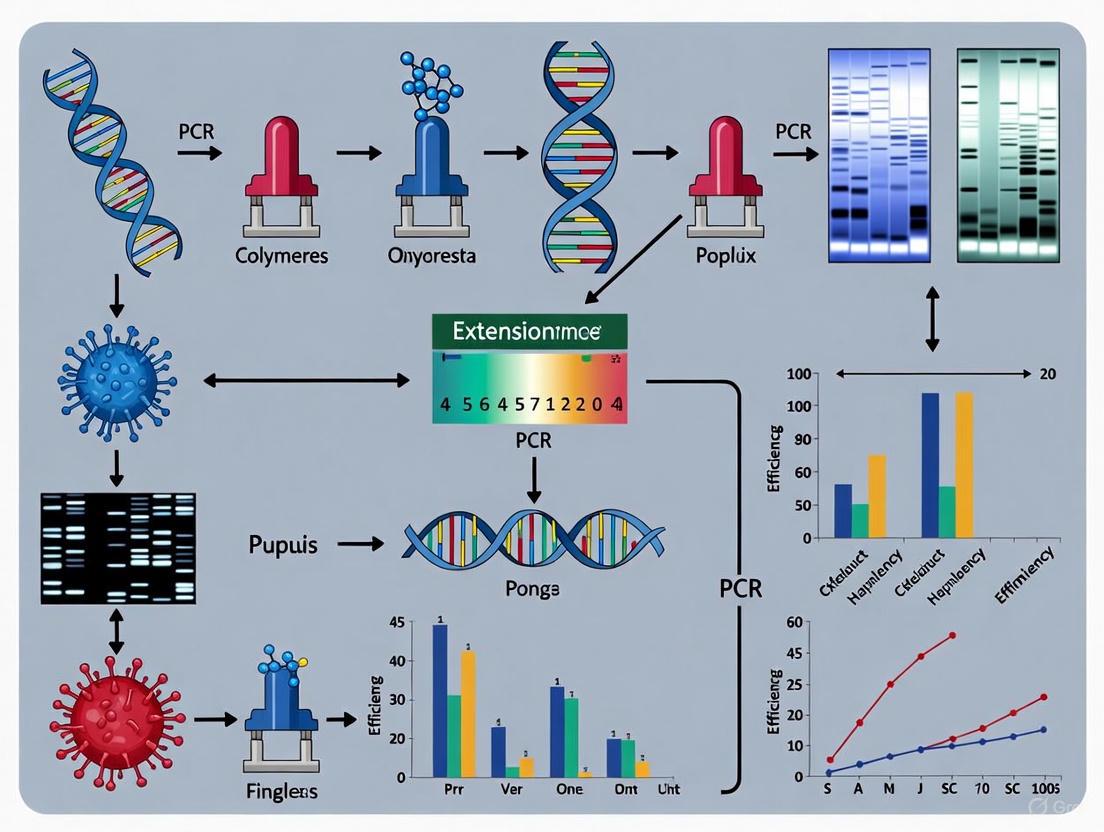
This article provides a definitive guide for researchers and drug development professionals on optimizing extension time to successfully amplify long PCR products.
Optimizing Extension Time for Long PCR Products: A Comprehensive Guide for Robust Amplification
Abstract
This article provides a definitive guide for researchers and drug development professionals on optimizing extension time to successfully amplify long PCR products. It covers the foundational principles of polymerase kinetics and template integrity, delivers practical methodologies for calculating and adjusting extension parameters, addresses common troubleshooting scenarios for complex targets like GC-rich sequences, and explores validation techniques and comparative analyses of different polymerases. The content synthesizes current best practices to enhance yield, specificity, and fidelity in long-range PCR applications critical for genomics, cloning, and molecular diagnostics.
The Science of Polymerase Extension: Core Principles for Long Amplicons
Frequently Asked Questions (FAQs)
What is the "1-minute per kb" rule in PCR?
The "1-minute per kb" rule is a standard starting point for determining the extension time during the PCR amplification step. It suggests allocating one minute of extension time for every kilobase (kb) of the DNA product to be synthesized [1] [2]. This ensures the DNA polymerase has sufficient time to fully copy the target template.
When does the 1-minute per kb rule not apply?
This rule is a general guideline and requires optimization in many scenarios. Key factors that necessitate adjustment include [1] [2]:
- Polymerase Synthesis Rate: Different DNA polymerases have different speeds. "Fast" enzymes may require only 10-20 seconds per kb, while "slow" enzymes might need 2 minutes per kb or more.
- Amplicon Length: For long targets (e.g., >10 kb), longer extension times are crucial. Furthermore, reducing the extension temperature (e.g., to 68°C) can help maintain enzyme activity over the prolonged cycling period [1] [3].
- Template Complexity: Amplifying from complex genomic DNA versus a simple plasmid may require longer extension times [4].
How do I calculate extension time for different polymerases?
The required extension time is directly influenced by the DNA polymerase's synthesis rate. The table below provides standard extension times for various common polymerases.
Table 1: DNA Polymerase Extension Time Guidelines
| Polymerase | Typical Extension Time | Key Characteristics / Notes |
|---|---|---|
| Taq DNA Polymerase | 1 min/kb [1] | Standard benchmark for the rule [1]. |
| Pfu DNA Polymerase | 2 min/kb [1] | "Slow" enzyme; proofreading activity [1]. |
| PrimeSTAR GXL | 5–20 sec/kb [2] | "Fast" enzyme; contains a proprietary elongation factor. With excess template (>200 ng), use 30 sec/kb - 1 min/kb [2]. |
| SpeedSTAR HS | 10 sec/kb [2] | "Fast" enzyme; for complex templates, increase to ~0.5 min/kb [4]. |
| KAPA HiFi HotStart | 1 min/kb [5] | Used for long-range PCR (e.g., 13 kb fragments) [5]. |
| Phusion Hot Start II | 1 min/kb [5] | High-fidelity enzyme; used for long amplicons [5]. |
What happens if my extension time is too short or too long?
- Too Short: The polymerase cannot finish replicating the DNA strand. This results in incomplete, shorter products visible as a smear or multiple bands below the expected size on an agarose gel, and significantly reduced yield [1] [3].
- Too Long: While generally less detrimental, excessively long extension times can promote the generation of non-specific PCR products and smearing [4]. It can also unnecessarily prolong the experiment and contribute to enzyme inactivation over many cycles.
How can I optimize the extension time for my experiment?
Optimization should be empirical. A standard method is to perform a time-course experiment:
- Start with the calculated time based on your polymerase and product length.
- Set up a series of identical reactions with extension times varying in 30-second or 1-minute increments (e.g., 30 sec, 1 min, 1 min 30 sec, 2 min).
- Analyze the PCR products by agarose gel electrophoresis. The optimal time will be the shortest duration that produces a single, strong band of the correct size with minimal background.
Troubleshooting Guide
| Observation | Possible Cause | Recommended Solution |
|---|---|---|
| No product or very low yield | Insufficient extension time | Increase the extension time in increments of 15-30 seconds per kb [3] [4]. |
| Smear of DNA below the target band | Extension time too short, leading to incomplete products | Increase the extension time [1] [3]. Ensure the final extension step is 5-15 minutes for full-length replication [1]. |
| Non-specific bands or smearing | Excessively long extension time | Reduce the extension time to the minimum required for full-length synthesis [4]. |
| Poor yield of long PCR products (>10 kb) | Denaturation time too long, causing template damage and depurination | Keep the denaturation time to a minimum [2]. Reduce the annealing and extension temperatures to 68°C to aid enzyme processivity [1] [3]. |
Experimental Protocol: Optimizing Extension Time for Long-Range PCR
The following detailed protocol is adapted from a study that successfully amplified a 13-kb fragment of the human filaggrin (FLG) gene, highlighting the critical considerations for long-range PCR [5].
Objective
To determine the optimal PCR conditions, including extension time, for the robust and specific amplification of a long DNA target (~13 kb).
Materials and Reagents
Table 2: Research Reagent Solutions
| Reagent | Function | Example (from Protocol) |
|---|---|---|
| High-Fidelity DNA Polymerase | Enzymatically synthesizes new DNA strands; high-fidelity and processivity are critical for long targets. | PrimeSTAR GXL, KAPA HiFi HotStart, Phusion Hot Start II [5]. |
| dNTP Mix | Provides the nucleotide building blocks (dATP, dCTP, dGTP, dTTP) for new DNA synthesis. | 200 μM final concentration of each dNTP is standard [5] [6]. |
| Primers | Short oligonucleotides that define the start and end of the target sequence to be amplified. | Designed with Tm >68°C for two-step PCR; tailed with universal sequences if needed for downstream applications [2] [5]. |
| Template DNA | The DNA sample containing the target sequence to be amplified. | High-quality, intact genomic DNA (e.g., 100 ng per reaction) [5]. |
| PCR Buffer (with Mg²⁺) | Provides the optimal chemical environment (pH, salts) for polymerase activity. Mg²⁺ is an essential cofactor. | Use the buffer supplied with the polymerase. Mg²⁺ concentration may be pre-optimized [5]. |
Methodology
A. Polymerase Selection:
- Test multiple high-fidelity, processive polymerases known for long-range PCR performance, such as PrimeSTAR GXL, KAPA HiFi HotStart, and Phusion Hot Start II [5].
B. Reaction Setup:
- Prepare separate master mixes for each polymerase according to the manufacturers' instructions.
- Template DNA: Use 100 ng of high-integrity human genomic DNA.
- Primers: Use 1.25 μL of each 10 μM primer [5].
C. Thermal Cycling Conditions: The thermal cycling profile will vary by polymerase. The key is to adjust the extension time based on the enzyme's characteristics.
Table 3: Thermocycling Parameters for Different Polymerases [5]
| Step | PrimeSTAR GXL (Two-Step PCR) | KAPA HiFi / Phusion (Three-Step PCR) |
|---|---|---|
| Initial Denaturation | 98°C for 10 s | 98°C for 30 s |
| Cycling (x 35) | Denaturation: 98°C for 10 s | Denaturation: 98°C for 30 s |
| Annealing & Extension: 68°C for 10 min* | Annealing: 64-65°C for 30 s | |
| Extension: 72°C for 13-20 min* | ||
| Final Extension | 68°C for 10 min | 72°C for 10 min |
*Note: The extension time is the critical parameter to optimize. The times listed here (10 min/kb for PrimeSTAR, ~1 min/kb for others) are starting points for a 13 kb fragment and may require further optimization.
D. Analysis:
- Analyze 5-10 μL of each PCR product by agarose gel electrophoresis (e.g., 0.8-1% gel).
- Visualize the DNA with a UV transilluminator. The optimal condition will show a single, sharp band at the expected size (13 kb) with minimal to no non-specific products or smearing.
Diagram: PCR Optimization Decision Pathway
The diagram below outlines a logical workflow for troubleshooting and optimizing PCR extension time based on experimental results.
Within the broader context of optimizing extension time for long PCR products, the precise management of reaction cofactors is a fundamental prerequisite for success. The replication of long DNA targets (typically >5 kb) places significant demands on the DNA polymerase, requiring not only a thermally stable enzyme but also a meticulously balanced chemical environment. Among all reaction components, magnesium ions (Mg²⁺) and deoxynucleoside triphosphates (dNTPs) play the most critical roles as essential cofactors, directly governing polymerase activity, fidelity, and the overall efficiency of the amplification process. An imbalance in either component is a frequent cause of amplification failure, resulting in no product, nonspecific amplification, or the generation of inaccurate sequences. This guide details the specific functions, optimal concentration ranges, and troubleshooting methodologies for these two vital cofactors to support robust and reliable long-range PCR.
The Essential Roles and Optimization of Cofactors
Magnesium Ions (Mg²⁺): The Central Cofactor
Magnesium is a non-negotiable cofactor for all thermostable DNA polymerases. Its role extends beyond a simple requirement for enzyme activity; it is a key determinant of reaction stringency and fidelity [7] [8].
- Primary Functions:
- Enzyme Activation: Mg²⁺ is a direct component of the polymerase's active site. It catalyzes the nucleophilic attack by the 3'-OH group of the primer on the alpha-phosphate of the incoming dNTP, facilitating the formation of the phosphodiester bond [8].
- Nucleic Acid Stability: The ion stabilizes the interaction between the primer and the template by neutralizing the negative charges on the phosphate backbones of the DNA, thus facilitating the formation of the primer-template hybrid [8].
- Concentration Optimization: The optimal concentration of free Mg²⁺ is critically dependent on the total dNTP concentration in the reaction, as Mg²⁺ chelates strongly to dNTPs [7] [8]. The typical optimal range is 1.5 to 2.0 mM for standard PCR, but long-range PCR often requires fine-tuning [7] [9].
- Low Mg²⁺: Results in significantly reduced polymerase activity, leading to low yield or complete amplification failure [7].
- High Mg²⁺: Decreases the fidelity of the polymerase, promotes misincorporation of nucleotides, and increases non-specific amplification and primer-dimer formation [7] [10]. For high-fidelity, proofreading enzymes, excess Mg²⁺ can be particularly detrimental to accuracy.
Deoxynucleoside Triphosphates (dNTPs): The Building Blocks
dNTPs (dATP, dCTP, dGTP, dTTP) provide the essential nucleotides for the synthesis of new DNA strands. Their concentration and quality are vital for achieving high yield and fidelity in long-range amplification [8].
- Primary Functions: Incorporated by the DNA polymerase into the nascent DNA strand, complementary to the template sequence.
- Concentration Optimization: The four dNTPs must be provided in equimolar concentrations to prevent misincorporation, which increases the error rate [3] [10]. The recommended final concentration for each dNTP is typically 0.2 mM [8].
- Low dNTPs: Concentrations below the Km of the polymerase (approximately 10-15 µM) will lead to incomplete extension, premature termination, and very low yield [8].
- High dNTPs: While potentially increasing yield, excessive dNTPs can reduce specificity. Furthermore, because they chelate Mg²⁺, high dNTP concentrations effectively reduce the amount of free Mg²⁺ available for the polymerase, thereby inhibiting the reaction [8]. This underscores the need to optimize Mg²⁺ and dNTP concentrations in tandem.
Table 1: Troubleshooting the Mg²⁺ and dNTP Interrelationship in Long-Range PCR
| Observation | Possible Cause | Recommended Solution |
|---|---|---|
| No amplification or very low yield | Excess dNTPs chelating all available Mg²⁺ | Titrate Mg²⁺ concentration upward in 0.5 mM increments while maintaining dNTPs at 0.2 mM each [7] [9]. |
| Non-specific bands/smearing | Excess Mg²⁺ reducing reaction stringency | Titrate Mg²⁺ concentration downward in 0.2-0.5 mM increments [3] [10]. |
| Smeared bands; truncated products | Imbalanced dNTP concentrations | Use a fresh, equimolar dNTP mixture [3] [10]. |
| Low fidelity/sequence errors | High Mg²⁺ and/or unbalanced dNTPs | Reduce Mg²⁺ concentration and ensure dNTPs are fresh and equimolar [3] [10]. |
Frequently Asked Questions (FAQs)
Q1: Why is the balance between Mg²⁺ and dNTP concentration so critical for long-range PCR? The relationship is primarily one of chelation. dNTPs bind Mg²⁺, meaning the "free" Mg²⁺ concentration available for the polymerase is the total Mg²⁺ minus the amount bound to dNTPs. An imbalance can lead to either no free Mg²⁺ (inactivating the enzyme) or an excess of free Mg²⁺ (reducing fidelity). For long-range PCR, where the polymerase must process a greater length of template without dissociating, maintaining this equilibrium is essential for both high yield and high fidelity [7] [8].
Q2: My long-range PCR shows a smear of products on the gel. Could Mg²⁺ be the cause? Yes. A smear is often indicative of non-specific amplification or the generation of incomplete fragments. Excess Mg²⁺ is a common cause of non-specific priming. We recommend performing a Mg²⁺ titration, testing a range from 1.0 mM to 3.0 mM in 0.5 mM increments to identify the concentration that provides a clean, single band [3] [11].
Q3: How do I systematically optimize Mg²⁺ and dNTPs for a new long-range PCR assay? Begin with the manufacturer's recommended concentrations for your polymerase. If optimization is needed:
- Establish a Mg²⁺ gradient: Keeping dNTPs at a standard 0.2 mM each, set up a series of reactions with Mg²⁺ concentrations from 1.0 mM to 3.0 mM.
- Evaluate results: Identify the Mg²⁺ concentration that gives the strongest specific product with the least background.
- Fine-tune dNTPs: If yield remains low and Mg²⁺ optimization doesn't help, test dNTP concentrations from 0.1 mM to 0.3 mM each, using the optimal Mg²⁺ concentration from step 2. Avoid dNTP concentrations above 0.4 mM each, as this can be inhibitory [8] [9].
Q4: Does the type of DNA polymerase affect the optimal Mg²⁺ concentration? Yes. Different polymerases have different cofactor preferences and optimal buffering conditions. For instance, some proofreading enzymes like Pfu DNA polymerase may perform better with MgSO₄ instead of MgCl₂ [3]. Always consult the manufacturer's protocol for your specific enzyme as a starting point for optimization.
Experimental Workflow for Cofactor Optimization
The following diagram outlines a logical, step-by-step protocol for troubleshooting and optimizing Mg²⁺ and dNTP concentrations in a long-range PCR experiment.
Research Reagent Solutions
The following table lists key reagents and their specific functions relevant to managing Mg²⁺ and dNTPs in long-range PCR.
Table 2: Essential Reagents for Long-Range PCR Cofactor Management
| Reagent | Function & Importance in Long-Range PCR |
|---|---|
| MgCl₂ or MgSO₄ Solution | The source of Mg²⁺ cofactors. Supplied separately from the buffer in many kits to allow for precise, user-defined optimization, which is crucial for long amplicons [3] [12]. |
| Equimolar dNTP Mix | A prepared mixture of all four dNTPs at equal concentrations (e.g., 10 mM each). Ensures balanced nucleotide incorporation, which is critical for maintaining sequencing fidelity over long amplification distances [3] [8]. |
| High-Fidelity DNA Polymerase | Enzymes with proofreading (3'→5' exonuclease) activity. Essential for long-range PCR to correct misincorporated nucleotides during extended elongation steps, ensuring accurate sequence replication [7] [10]. |
| Optimized Reaction Buffer | Provides the optimal salt conditions (e.g., KCl, (NH₄)₂SO₄) and pH to support polymerase processivity and primer-template binding over long distances, forming the foundation for cofactor optimization [8] [12]. |
| PCR Additives (e.g., Betaine, DMSO) | Can help denature GC-rich regions that may stall polymerase during long extensions. By homogenizing DNA stability, they can improve the efficiency of nucleotide incorporation and polymerase progression [7] [13]. |
FAQs on Template Integrity and Long PCR
Why is template quality disproportionately critical for long PCR compared to standard PCR? Template quality is paramount for long PCR because the probability of encountering lesions, nicks, or damage in the DNA backbone increases significantly with the length of the fragment being amplified. Any single break in the DNA template can terminate polymerase extension, preventing the synthesis of a full-length product. For long targets, intact, high-molecular-weight DNA is a prerequisite, whereas shorter amplicons can often be amplified successfully from partially degraded templates [3] [14].
What are the specific characteristics of a high-quality DNA template suitable for long-range PCR? A high-quality DNA template for long PCR should have:
- High Molecular Weight: It should appear as a tight, high-molecular-weight band upon gel electrophoresis, with minimal smearing, which indicates fragmentation [3].
- Purity: It should be free of common PCR inhibitors such as phenol, EDTA, heparin, or denatured proteins. A good indicator is an A260/A280 ratio of ~1.8-2.0 [3] [15].
- Structural Integrity: The DNA should be free of nicks and depurination sites, which can halt polymerase progression during long extensions [14].
How do common DNA extraction methods impact suitability for long PCR? Gentle lysis methods that minimize physical shearing and avoid over-drying ethanol precipitates are crucial. Protocols that use column-based purification or drop dialysis are effective at removing inhibitors. For particularly challenging samples, such as those from soil or blood, using a polymerase with high processivity and inhibitor tolerance is recommended [3].
What is the relationship between template quality and the required PCR extension time? There is a direct relationship. A pristine, high-integrity template allows the polymerase to synthesize DNA at its maximum efficiency. If the template is damaged, even excessively long extension times will not yield the desired full-length product, as the polymerase cannot bypass template strand breaks. Optimizing extension time is only effective once template quality is assured [1] [14].
Troubleshooting Guide for Long PCR Failure
Use the following guide to diagnose and resolve issues related to template quality in long PCR.
| Observation | Possible Cause Related to Template | Solution |
|---|---|---|
| No product or very low yield | Degraded or heavily nicked DNA template. | Verify integrity by gel electrophoresis. Isolate fresh DNA using a gentle purification kit [3] [16]. |
| Presence of PCR inhibitors in the sample. | Further purify the template by alcohol precipitation or use a dedicated clean-up kit. Dilute the template to reduce inhibitor concentration [16] [17]. | |
| Insufficient template quantity for a long target. | Increase the amount of input DNA, as longer targets require a higher number of intact starting molecules [3] [14]. | |
| Smearing or multiple bands | Template DNA is degraded, leading to a high background of non-specific fragments. | Minimize shearing during isolation and evaluate template integrity before PCR [3] [17]. |
| Excess template DNA leading to non-specific initiation. | For genomic DNA, use 1 ng–1 µg per 50 µl reaction. For low-complexity templates (plasmid, lambda), use 1 pg–10 ng [18] [16]. | |
| Products are shorter than expected | Template DNA contains depurination sites or nicks, causing premature termination. | Avoid repeated freeze-thaw cycles and storing DNA in water; use TE buffer (pH 8.0). Minimize denaturation time and temperature to reduce depurination [14] [17]. |
| DNA damage from UV light during gel excision. | Limit UV exposure time when analyzing or excising DNA from gels, and use longer-wavelength UV light if possible [3] [17]. |
Experimental Protocols for Template Assessment and Long PCR Setup
Protocol 1: Assessing DNA Template Integrity by Gel Electrophoresis
This protocol is used to visually confirm the quality and integrity of DNA prior to long PCR experiments.
Key Reagent Solutions:
- Agarose Gel (0.8%): Ideal for resolving high-molecular-weight genomic DNA.
- DNA Molecular Weight Marker: A high-range marker (e.g., lambda HindIII) is essential for size comparison.
- Ethidium Bromide or SYBR Safe DNA Stain: For visualizing DNA fragments under UV light.
Methodology:
- Prepare a 0.8% agarose gel in 1X TAE or TBE buffer and add the appropriate nucleic acid stain.
- Mix 1-2 µL of 6X DNA loading dye with 200-500 ng of the DNA sample and the marker.
- Load the samples and run the gel at 5-6 V/cm until the dye front has migrated sufficiently.
- Visualize the gel under UV light. Intact genomic DNA should appear as a single, tight high-molecular-weight band with minimal smearing downward. A degraded DNA sample will appear as a low-molecular-weight smear with the absence of the high-molecular-weight band [3].
Protocol 2: Long PCR Amplification with Quality-Controlled Template
This protocol is optimized for amplifying long fragments after verifying template integrity.
Key Reagent Solutions:
- Long-Range DNA Polymerase: Use a specialized enzyme mix like PrimeSTAR GXL DNA Polymerase or OneTaq DNA Polymerase, which combine a high-fidelity polymerase with a processive enzyme [16] [14].
- GC Enhancer/Betaine: For GC-rich targets, use 0.5 M to 2.5 M betaine to help denature stable secondary structures [14] [6].
- Mg2+-Optimized Buffer: Use the buffer system supplied with the polymerase, as the Mg2+ concentration is critical.
Methodology:
- Reaction Setup: Assemble the following components on ice in a sterile, nuclease-free tube. A master mix is recommended for multiple reactions.
*Template amount depends on complexity (see Troubleshooting Guide table) [18] [19].Component Final Concentration/Amount Volume for a 50 µL Reaction 2X Long-Range PCR Master Mix 1X 25 µL Forward Primer (10 µM) 0.4-0.5 µM 2 µL Reverse Primer (10 µM) 0.4-0.5 µM 2 µL High-Quality DNA Template 1 pg–1 µg* X µL Sterile Water - To 50 µL - Thermal Cycling:
- Product Analysis: Analyze 5-10 µL of the PCR product on an agarose gel alongside an appropriate DNA size marker.
The Critical Path to Long PCR Success
The following diagram illustrates the logical workflow and decision-making process for ensuring template integrity, which is the foundation of successful long PCR.
Research Reagent Solutions for Long PCR
The following table details key reagents and their critical functions in supporting long PCR, especially when working with challenging templates.
| Reagent Solution | Function in Long PCR |
|---|---|
| Specialized Long-Range Polymerase Mixes (e.g., PrimeSTAR GXL, OneTaq) | Combines a high-fidelity polymerase with a processive enzyme to ensure both accuracy and the ability to synthesize long stretches of DNA [16] [14]. |
| Betaine (GC Enhancer) | Equalizes the stability of AT and GC base pairs, helping to denature GC-rich regions that can form stable secondary structures and block polymerase progression [14] [6]. |
| DMSO (Dimethyl Sulfoxide) | A co-solvent that aids in DNA denaturation, particularly for templates with high GC content or strong secondary structures, by disrupting base pairing [14]. |
| High-Quality, Ultrapure dNTPs | Provides the essential building blocks for DNA synthesis. Unbalanced dNTP concentrations can dramatically increase the error rate of the polymerase [3] [17]. |
| Magnesium Ion (Mg2+) Optimization | An essential cofactor for all DNA polymerases. Its concentration must be carefully optimized, as too little causes no product formation, and too much reduces fidelity and increases non-specific binding [18] [9] [14]. |
Core Concept FAQs
What is polymerase processivity and why is it critical for PCR? Polymerase processivity is defined as the number of nucleotides a DNA polymerase incorporates into a growing DNA chain per single binding event with the template [20] [21]. This characteristic is fundamental to PCR efficiency, as a highly processive enzyme remains bound to the DNA template for longer periods, synthesizing more of the target sequence without dissociating. High processivity directly correlates with faster overall extension speeds and is particularly crucial for amplifying long targets, GC-rich sequences with strong secondary structures, and templates containing PCR inhibitors [20] [22] [3].
How does processivity relate to polymerase fidelity? Processivity and fidelity are interconnected yet distinct properties of DNA polymerases. Fidelity refers to the accuracy of nucleotide incorporation, which is significantly enhanced in proofreading DNA polymerases possessing 3'→5' exonuclease activity [20] [23]. While high processivity allows for the rapid synthesis of long amplicons, some early-generation high-fidelity polymerases (e.g., Pfu) exhibited lower processivity because the proofreading activity could slow down the polymerization rate [20]. Modern engineered enzymes overcome this trade-off by combining strong processivity with high-fidelity domains, enabling accurate and efficient amplification of long products [20] [22].
Troubleshooting Guides
Low Yield or Failed Amplification of Long Products
Problem: Inconsistent or no amplification when targeting long PCR fragments (>3-4 kb).
| Possible Cause | Recommended Solution |
|---|---|
| Suboptimal Polymerase | Use a high-processivity polymerase blend (e.g., mixes containing a proofreading enzyme) specifically designed for long-range PCR [22] [3]. |
| Excessive Depurination | Shorten denaturation time to 10-15 seconds and lower the denaturation temperature if possible. For extension, use 68°C instead of 72°C to reduce depurination rates [24] [22]. |
| Insufficient Extension Time | Increase the extension time according to the polymerase's speed. While a common guideline is 1 minute/kb, consult specific enzyme recommendations as some high-speed polymerases require only 10-20 seconds/kb [25] [24]. |
| Poor Template Quality | Ensure template DNA is intact and high-quality. Use agarose gel electrophoresis to check for degradation. Avoid repeated freeze-thaw cycles and store DNA in TE buffer (pH 8.0) or molecular-grade water [24] [3]. |
Non-Specific Amplification and Primer-Dimer Formation
Problem: Multiple unwanted bands or a smear on the gel, often due to primers binding to non-target sequences.
| Possible Cause | Recommended Solution |
|---|---|
| Non-Hot-Start Polymerase | Switch to a hot-start DNA polymerase. These enzymes are inactive at room temperature, preventing nonspecific priming and primer-dimer formation during reaction setup [20] [11] [3]. |
| Low Annealing Temperature | Increase the annealing temperature in 1-2°C increments. The optimal temperature is typically 3-5°C below the primer Tm [25] [3]. Use a gradient thermal cycler for optimization. |
| Excessive Mg²⁺ Concentration | Optimize Mg²⁺ concentration (usually between 1.5-2.0 mM for Taq). Excess Mg²⁺ can reduce fidelity and increase non-specific amplification [25] [24] [3]. |
| High Primer Concentration | Titrate primer concentrations, typically within the range of 0.1–0.5 µM. High concentrations promote mispriming and primer-dimer formation [25] [11]. |
Experimental Protocols & Data
Quantitative Comparison of DNA Polymerases
The following table summarizes key characteristics of different DNA polymerases, which dictate their performance in various applications.
| Polymerase | Source/Type | Processivity | Fidelity (Relative to Taq) | Primary Applications |
|---|---|---|---|---|
| Taq | Thermus aquaticus | Moderate | 1x | Routine PCR, fast cycling for short amplicons [20] [25] |
| Pfu | Pyrococcus furiosus | Lower than Taq [20] | ~7x [20] | High-fidelity amplification, cloning |
| Engineered Hi-Fi Enzymes | Engineered (e.g., via directed evolution) | High [20] | >50x–300x [20] | Cloning, mutagenesis, long amplicons |
| T4 DNA Polymerase | Bacteriophage T4 | Highly processive with clamp [26] | N/A | DNA replication studies |
| Dbh (Y-Family) | S. acidocaldarius | Low (can be enhanced) [27] | Low (high error rate) [27] | Mutagenesis studies, bypassing DNA lesions |
Protocol: Processivity Enhancement via DNA-Binding Domain Fusion
This methodology is based on research demonstrating that fusing a non-specific DNA-binding domain to a polymerase can significantly boost its processivity [27].
- Objective: To increase the number of nucleotides incorporated per polymerase binding event.
- Experimental Workflow:
- Selection: Choose a suitable DNA-binding protein (e.g., Sso7d from S. solfataricus).
- Design: Fuse the gene of the binding protein to the polymerase gene (e.g., Dbh) via a flexible linker (e.g., SS(GGGGS)₃GM) to allow independent domain movement.
- Expression & Purification: Express the fusion construct (e.g., Sdbh) in a host system and purify the protein.
- Assay: Measure processivity using a primer-extension assay with a single-stranded DNA template (e.g., M13mp18) in the presence of a trap (e.g., excess herring sperm DNA) to prevent re-binding.
- Outcome: The Sso7d-fused Dbh (Sdbh) exhibited a 4-fold increase in processivity compared to the wild-type enzyme [27].
Optimized Cycling Parameters for Long-Range PCR
Adhering to these parameters is critical for successful amplification of long targets.
| Parameter | Standard PCR | Long-Range PCR Optimization |
|---|---|---|
| Initial Denaturation | 95°C for 2 min [25] | 95°C for 2 min [22] |
| Denaturation | 15-30 sec at 95°C [25] | 10 sec at 94°C [22] |
| Annealing | 15-30 sec, 5°C below Tm [25] | 1 min, 50–68°C [22] |
| Extension | 1 min/kb at 68-72°C [25] | 1 min/kb at 68°C [24] [22] |
| Final Extension | 5 min at 68-72°C [25] | 5-10 min at 68°C [3] |
| Cycles | 25-35 | Up to 40 [22] |
The Scientist's Toolkit
| Research Reagent | Function in Experiment |
|---|---|
| Hot-Start DNA Polymerase | Enzyme chemically modified or antibody-bound to remain inactive until high-temperature activation, drastically reducing nonspecific amplification and primer-dimers [20] [3]. |
| Proofreading Polymerase (e.g., Pfu) | Enzyme with 3'→5' exonuclease activity ("proofreading") that removes misincorporated nucleotides, essential for high-fidelity synthesis during long PCR [20] [22]. |
| PCR Additives (DMSO, Betaine) | Co-solvents that help denature GC-rich templates and resolve secondary structures by reducing the melting temperature of DNA, thereby improving amplification efficiency [24] [3]. |
| dNTP Mix | The building blocks (dATP, dCTP, dGTP, dTTP) for DNA synthesis. Use balanced, equimolar concentrations (typically 200 µM each) to maintain polymerase fidelity [25] [3]. |
| MgCl₂ or MgSO₄ Solution | A required cofactor for DNA polymerase activity. The optimal concentration (usually 1.5-2.0 mM) must be determined experimentally, as it profoundly affects specificity and yield [25] [24]. |
Practical Protocols: Calculating and Implementing Optimal Extension Parameters
Core Calculation Formula and Guidelines
To ensure successful PCR amplification, the extension time must be adjusted based on the length of your target amplicon and the specific DNA polymerase you are using. The following table summarizes the standard and high-speed calculation methods.
Table 1: Guidelines for Calculating PCR Extension Time
| Polymerase Type | General Rule of Thumb | Example Calculation for a 2.5 kb Product | Key Considerations & Context |
|---|---|---|---|
| Standard Polymerases (e.g., Taq) | 1 minute per kilobase (kb) [28] | 2.5 minutes (2 min 30 sec) [28] | This is a safe starting point for most routine PCRs. For products <1 kb, 45-60 seconds may be sufficient [28]. |
| High-Processivity/"Fast" Polymerases (e.g., SpeedSTAR HS, PrimeSTAR series) | 10-20 seconds per kilobase (kb) [29] | 25-50 seconds [29] | These enzymes synthesize DNA more rapidly. Always consult the manufacturer's specific instructions. |
Detailed Protocol for Determining Optimal Extension Time
- Identify Your Polymerase: Before calculating, check the product information sheet for your specific DNA polymerase to confirm its recommended synthesis rate.
- Calculate Amplicon Length: Determine the exact length in base pairs (bp) or kilobases (kb) of your target PCR product. 1 kb = 1000 bp.
- Apply the Formula: Use the appropriate rule from Table 1 to calculate the initial extension time.
- Factor in Reaction Complexity:
- For long targets (>10-20 kb), use a slightly lower extension temperature (e.g., 68°C instead of 72°C) to help maintain polymerase activity and enzyme thermostability over the longer duration [29] [30].
- For complex templates (e.g., GC-rich regions with secondary structures), the primary adjustment is often a higher denaturation temperature. The extension time itself is typically calculated using the standard rules [29].
- Include a Final Extension: After the last PCR cycle, a final single extension step of 5-15 minutes is recommended to ensure all PCR products are fully double-stranded [3].
FAQs and Troubleshooting Guide
Q1: My PCR yield is low for a long amplicon, even with the calculated extension time. What should I adjust?
- Prolong Extension Time: For products greater than 3 kb, or when using a high number of cycles (>30), the extension time may need to be increased beyond the 1 min/kb rule [28].
- Check Template Quality: Intact, high-quality DNA template is absolutely critical for long-range PCR. Nicked or damaged DNA will result in truncated products and low yield [30].
- Reduce Denaturation Time: Keep the denaturation step as short as possible to minimize DNA depurination, which can damage the template and prevent full-length amplification [29] [30].
- Use a Specialized Polymerase: Switch to a polymerase blend specifically designed for long and accurate (LA) PCR, which combines high processivity with proofreading activity to repair misincorporations that can halt elongation [30].
Q2: How do I adjust the protocol for GC-rich or complex templates?
GC-rich templates require protocol adjustments that primarily affect denaturation, not the extension time calculation itself.
- Increase Denaturation Temperature: Use a higher denaturation temperature (e.g., 98°C) to ensure complete melting of the template's strong secondary structures [29].
- Use PCR Additives: Incorporate co-solvents like DMSO (2.5-5%) or betaine into your reaction mix. These additives help denature GC-rich DNA and prevent the formation of secondary structures during amplification [3] [29].
- Employ Specialized Polymerases: Use polymerases optimized for GC-rich templates [29].
Q3: What are the consequences of using an incorrect extension time?
- Too Short:
- Incomplete synthesis of the full-length product.
- Low or no yield of the desired amplicon.
- Accumulation of shorter, non-specific products.
- Too Long:
- Increased likelihood of generating spurious, non-specific amplification products [3].
- Potential damage to the DNA polymerase activity over many cycles, reducing overall yield.
Experimental Workflow for Optimization
The following diagram illustrates the logical decision-making process for determining and optimizing the extension time for your PCR experiment.
Research Reagent Solutions
Table 2: Essential Reagents for Long and Complex Amplicon PCR
| Reagent | Function & Importance in Optimization | Usage Example / Note |
|---|---|---|
| High-Processivity Polymerase Blends | Enzyme mixes designed for long PCR; combine high synthesis speed with proofreading activity to repair errors during elongation, preventing premature termination [30]. | E.g., AccuTaq LA, PrimeSTAR GXL. Essential for targets >5 kb. |
| PCR Additives (DMSO, Betaine) | Co-solvents that help denature complex DNA secondary structures (e.g., in GC-rich templates), facilitating primer binding and polymerase progression [3] [29]. | Typically used at 2.5-10% (DMSO) or 0.5-2.5 M (Betaine). |
| Optimized dNTP Mix | Balanced concentrations (typically 200 µM each) of the four nucleotides (dATP, dCTP, dGTP, dTTP) are critical for efficient amplification and high fidelity [28]. | Unbalanced concentrations can increase error rates and reduce yield. |
| Magnesium Salts (MgCl₂/MgSO₄) | An essential cofactor for DNA polymerase activity. The optimal concentration (usually 1.5-5.0 mM) must be determined experimentally, as it affects specificity, fidelity, and yield [3] [29] [28]. | Excess Mg²⁺ can reduce fidelity and increase non-specific binding [3]. |
| High-Purity Template DNA | Intact, undegraded DNA is non-negotiable for long amplicon PCR. Nicked or contaminated DNA serves as a source of spurious priming and truncated products [3] [30]. | Evaluate integrity by gel electrophoresis before use. |
This guide provides polymerase-specific troubleshooting for researchers optimizing extension times for long PCR products. Selecting the appropriate DNA polymerase is critical for the success of demanding applications such as the amplification of long genomic fragments. The guidelines below contrast the properties of Taq, Pfu, and advanced polymerase blends to help you diagnose and resolve common experimental issues.
Polymerase Characteristics and Selection Guide
The table below summarizes the core characteristics of different polymerase types to guide your selection.
Table 1: Key Characteristics of DNA Polymerases
| Feature | Taq DNA Polymerase | Pfu DNA Polymerase | High-Performance Blends (e.g., TaqPlus Precision) |
|---|---|---|---|
| Natural Source | Thermus aquaticus [31] | Pyrococcus furiosus [32] | Blend of recombinant Taq and Pfu [32] |
| Polymerization Rate | 1-4 kb/min [31] [1] | ~2 min/kb (slower rate) [1] | Designed for high yield with short extension times [32] |
| Proofreading (3'→5' Exonuclease) | No [31] | Yes [32] | Yes (contributed by Pfu component) [32] |
| Error Rate | Relatively high [9] [32] | Lowest among common thermostable polymerases [32] | Significantly lower than Taq alone [32] |
| Recommended Extension Time | 1 min/kb (general rule) [33] [9] [1] | 2 min/kb (general rule) [1] | Follow manufacturer's guidelines; combines speed and fidelity [32] |
| Typical Amplicon Size Range | Up to ~5 kb [32] | Varies; often used for demanding applications | Plasmid/lambda DNA up to 15 kb; genomic DNA up to 10 kb [32] |
| 3' A-Overhangs | Yes [31] | No (blunt ends) | Dependent on blend composition |
| Primary Application | Routine PCR, genotyping, TA cloning [31] | High-fidelity amplification for cloning, sequencing | Long-range PCR of difficult or long targets requiring high fidelity [32] |
Frequently Asked Questions (FAQs)
1. How does polymerase choice directly influence the optimization of extension time for long PCR products? The polymerization rate is an intrinsic property of the enzyme. Taq polymerase is relatively fast, while Pfu polymerase is slower, directly dictating the extension time required per kilobase of product [1]. For long products, using a "slow" enzyme without a sufficiently long extension time will result in incomplete or failed amplification [1]. High-performance blends are engineered to offer a favorable balance, providing higher fidelity than Taq without the slow speed of pure Pfu [32].
2. Why do I get no amplification product when trying to amplify long targets? This is a common issue with several potential causes:
- Insufficient Extension Time: The most likely cause. Ensure your extension time is scaled appropriately for your polymerase (e.g., 1 min/kb for Taq, 2 min/kb for Pfu) and the product length [1]. For very long targets (>10-15 kb), you may need to extend this time further [33].
- Inadequate Enzyme Processivity: Standard Taq may not be processive enough for very long targets. Switch to a polymerase or blend specifically designed for long-range PCR [32].
- Poor DNA Template Quality/Purity: Use high-quality, intact genomic DNA. Degraded DNA will not support long-range amplification.
- Suboptimal Denaturation: For long, complex templates like genomic DNA, ensure an initial denaturation step of 1-3 minutes is included [1].
3. My PCR produces smeared bands or multiple non-specific products. How can I improve specificity?
- Optimize Annealing Temperature: Use a thermal cycler with a gradient function to determine the optimal temperature. Start 3-5°C below the calculated Tm of your primers and increase in 2-3°C increments if non-specific binding occurs [1].
- Try Touchdown PCR: This method starts with a high, stringent annealing temperature and gradually lowers it, favoring the accumulation of the specific product early in the reaction [9].
- Reduce Primer Concentration: High primer concentrations (typically >0.5 µM) can promote primer-dimer formation and non-specific binding. Titrate primers down to 0.1-0.5 µM [33] [9].
- Adjust Magnesium Concentration: If [Mg²⁺] is too high, it can reduce specificity. Optimize the concentration in 0.5 mM increments, starting from 1.5 mM [33] [9].
- Use a Hot-Start Polymerase: This prevents enzyme activity at room temperature, reducing non-specific amplification during reaction setup [1].
4. What are the advantages of using a polymerase blend over a single enzyme? Blends, such as the TaqPlus Precision system, are designed to synergize the strengths of different polymerases. They typically combine the high processivity and speed of Taq with the proofreading activity and high fidelity of Pfu [32]. This results in a system capable of efficiently amplifying longer and more difficult targets (e.g., high GC-content) with higher accuracy than Taq alone, and often with better yield and speed than Pfu alone [32].
Troubleshooting Common PCR Problems
The table below outlines common symptoms, their potential causes, and recommended solutions.
Table 2: PCR Troubleshooting Guide
| Symptom | Potential Cause | Polymerase-Specific Solution |
|---|---|---|
| No Product | Extension time too short | Increase extension time according to polymerase rate (see Table 1). |
| Enzyme inactive or denatured | Use a highly thermostable enzyme; avoid prolonged pre-incubation at high temps [1]. | |
| Template too complex/degraded | Use high-quality genomic DNA; increase initial denaturation time [1]. | |
| Non-specific Bands/Smearing | Annealing temperature too low | Increase annealing temperature in 2-3°C increments [1]. |
| Excessive primer concentration | Titrate primer concentration down to 0.1-0.5 µM [33] [9]. | |
| Magnesium concentration too high | Optimize Mg²⁺ concentration in 0.5 mM decrements [33]. | |
| Product Smear in Long PCR | Polymerase processivity insufficient | Switch to a polymerase blend optimized for long-range PCR [32]. |
| Incomplete denaturation during cycling | Ensure denaturation steps are at 94-98°C [1]. | |
| Low Yield | Too few PCR cycles | Increase cycle number to 35-40 for low-copy targets [1]. |
| dNTP concentration too low | Increase dNTP concentration up to 200 µM each [33] [9]. | |
| Slow polymerase enzyme | Use a "fast" enzyme or blend; or significantly increase extension time [1]. |
Detailed Experimental Protocols
Protocol 1: Optimization of Extension Time for Long-Range PCR
This protocol is designed to empirically determine the optimal extension time for your specific long-range PCR assay.
Research Reagent Solutions:
- DNA Template: High-quality, intact genomic DNA (50-200 ng for a 50 µL reaction) [33].
- Long-Range Polymerase Blend: e.g., TaqPlus Precision PCR System [32].
- 10X Reaction Buffer: Supplied with the polymerase.
- dNTP Mix: 10 mM each dNTP.
- Primers: Forward and reverse, resuspended to 10 µM.
- Nuclease-Free Water.
Methodology:
- Prepare a master mix for 6 reactions on ice, containing (per reaction):
- Nuclease-Free Water: to 50 µL final volume
- 10X Reaction Buffer: 5 µL
- dNTP Mix (10 mM each): 1 µL (final 200 µM each) [33]
- Forward Primer (10 µM): 1.25 µL (final 0.25 µM)
- Reverse Primer (10 µM): 1.25 µL (final 0.25 µM)
- Long-Range Polymerase Blend: 0.5-2 units (follow manufacturer's recommendation) [32]
- Aliquot 45 µL of the master mix into each of 6 PCR tubes.
- Add 5 µL (50-200 ng) of DNA template to each tube, mix gently, and briefly centrifuge.
- Place tubes in a pre-heated thermal cycler and run the following program with varying extension times:
- Analyze the results by agarose gel electrophoresis. The optimal extension time is the shortest time that produces a strong, specific band of the correct size.
Protocol 2: Magnesium Concentration Titration for Enhanced Fidelity
Magnesium is a critical cofactor for DNA polymerases, and its concentration can significantly impact yield, specificity, and fidelity [33].
Methodology:
- Prepare a master mix as in Protocol 1, but omit MgCl₂ if it is not part of the 10X buffer. If the buffer already contains MgCl₂, this protocol will be an additive titration.
- Aliquot the master mix into 5 tubes.
- Supplement each tube with MgCl₂ (from a 25-50 mM stock) to create a final concentration series (e.g., 1.0, 1.5, 2.0, 2.5, 3.0 mM) [33] [9].
- Run the PCR with the cycling conditions determined from Protocol 1.
- Analyze by gel electrophoresis. The optimal [Mg²⁺] provides the best yield with the least non-specific amplification.
Decision Workflow and Experimental Design
The following diagrams outline the logical process for selecting a polymerase and optimizing your experiment.
Diagram 1: Polymerase Selection Workflow for Experimental Planning
Diagram 2: Systematic Troubleshooting and Optimization Workflow
Two-step polymerase chain reaction (PCR) is an efficient modification of the conventional three-step protocol, where the annealing and extension steps are combined into a single phase. This method is particularly valuable for high-throughput diagnostics and complex research applications, such as pharmacogenomic screening for alleles like HLA-B*57:01 and HLA-B*58:01, where it has demonstrated 100% concordance with sequencing methods while reducing hands-on PCR time to about one hour [34]. By reducing the number of temperature changes per cycle, two-step PCR shortens total run time and can simplify protocol optimization, especially when primers have high and similar melting temperatures (Tm) [35]. This article explores the principles, optimization strategies, and troubleshooting for this technique within the broader context of research focused on optimizing extension time for long PCR products.
Fundamental Principles and When to Use Two-Step PCR
The core principle of two-step PCR lies in combining the primer annealing and DNA extension steps at a single, elevated temperature. This is in contrast to the three-step protocol, which uses separate, typically lower temperatures for annealing (e.g., 55-65°C) and extension (e.g., 68-72°C).
Key Differences Between One-Step, Two-Step, and Three-Step PCR
| Protocol Type | Key Steps | Typical Annealing Temperature | Typical Extension Temperature | Ideal Use Cases |
|---|---|---|---|---|
| Three-Step PCR | Denaturation, Annealing, Extension | Lower (e.g., 55-65°C) | Higher (e.g., 68-72°C) | Primers with lower Tm, standard amplicons [35] |
| Two-Step PCR | Denaturation, Combined Annealing/Extension | Higher (same as extension, e.g., 68°C) | Same as annealing (e.g., 68°C) | Primers with Tm close to 68°C; long amplicons [35] |
Decision Guide: Opting for Two-Step PCR
You should consider a two-step approach under the following conditions [35]:
- Primer Design: When the melting temperature (Tm) of your primers is close to or only a few degrees lower than the standard extension temperature (72°C). This protocol is highly suitable for primers designed with a Tm above 68°C.
- Amplicon Length: For amplifying longer templates (>4 kb). Using a combined annealing/extension temperature of 68°C dramatically improves the yield of longer amplification products by reducing the rate of DNA depurination, a common cause of PCR failure for long targets [35] [22].
Optimizing Two-Step PCR for Long Products
Optimizing extension time is critical for successful amplification of long PCR products. Inefficient extension can lead to incomplete, truncated products or complete amplification failure.
Establishing Initial Extension Time
A general rule of thumb for extension time is 1 minute per kilobase (kb) of the target amplicon [6] [35]. However, the required time is highly dependent on the DNA polymerase you use. Some high-speed or high-processivity enzymes are capable of faster elongation, with extension times as short as 10-20 seconds per kb [35]. Always consult the manufacturer's recommendations for your specific polymerase.
Workflow for Optimizing Extension Time
The following diagram outlines a systematic workflow for optimizing extension time in a two-step PCR protocol.
Advanced Optimization Parameters for Long Amplicons
Beyond extension time, several other parameters are crucial for successfully amplifying long products in a two-step setup [35] [22]:
- Denaturation: Use shorter denaturation times (e.g., 10 seconds at 94-98°C) to minimize DNA depurination, which disproportionately affects long templates and leads to PCR failure [22].
- Template Quality: DNA integrity is critical. Use high-quality, intact template DNA. Damage from shearing or nicking during isolation will result in partial products and decreased overall yield [35] [3].
- Polymerase Choice: Employ polymerase mixes with proofreading (3'→5' exonuclease) activity for long PCR. These enzymes significantly improve amplification efficiency and fidelity by correcting base-pair mismatches that can terminate synthesis [22].
Troubleshooting Common Issues in Two-Step PCR
Troubleshooting Guide Table
| Problem | Possible Causes | Recommended Solutions |
|---|---|---|
| No or Weak Amplification | Extension time too short [3]Denaturation inefficient [3]Excess Mg2+ chelators (e.g., EDTA) [3] | Prolong extension time in 15-30 sec/kb increments [3].Increase denaturation temperature or duration [35] [3].Ensure template is pure; re-precipitate DNA to remove inhibitors [3]. |
| Non-specific Bands/Smear | Combined annealing/extension temperature too low [35] [3]Primer concentration too high [3] [36]Excess Mg2+ concentration [3] [36] | Increase the combined annealing/extension temperature [35] [3].Optimize primer concentration (typically 0.1-1 μM) [3].Reduce Mg2+ concentration in 0.5 mM steps [3]. |
| Primer-Dimer Formation | Combined annealing/extension temperature too low [3]Primers with complementary 3' ends [6]High primer concentration [3] [36] | Increase combined annealing/extension temperature [3].Redesign primers to avoid 3' complementarity [6].Lower primer concentration [3]. |
Frequently Asked Questions (FAQs)
Q1: Can I use any DNA polymerase for two-step PCR? A: While many polymerases can be used, it is most effective with enzymes whose optimal activity temperature aligns with the desired combined annealing/extension step (often around 68°C). Polymerases optimized for long-range PCR, such as PrimeSTAR GXL DNA Polymerase, are often a good choice for this application [35].
Q2: How do I calculate the combined annealing/extension temperature? A: The temperature should be based on the Tm of your primers. For two-step PCR, design primers with a Tm above 68°C and set the combined step to this Tm, or use a temperature 3-5°C below the lowest primer Tm, ensuring it does not exceed the polymerase's optimal extension temperature [35].
Q3: Why is my long amplicon yield low even with a long extension time? A: This could be due to DNA template degradation or depurination from excessive denaturation times. Assess DNA integrity and use shorter, high-temperature denaturation steps (e.g., 98°C for 5-10 seconds) to minimize damage [35] [22]. Also, verify you are using a proofreading polymerase mix suitable for long-range amplification [22].
Q4: What is the role of Mg2+ in two-step PCR and how should I optimize it? A: Magnesium is a essential cofactor for DNA polymerases. Insufficient Mg2+ causes low yield, while excess Mg2+ reduces fidelity and increases non-specific amplification [35] [36]. The optimal concentration for Taq polymerase is typically 1.5-2.0 mM, but you should optimize in 0.5 mM increments, noting that dNTPs and EDTA chelate Mg2+ and may require you to increase its concentration [9] [3].
The Scientist's Toolkit: Essential Reagents for Two-Step PCR
| Reagent / Solution | Function | Optimization Tips |
|---|---|---|
| High-Processivity DNA Polymerase | Synthesizes long DNA strands; some have proofreading for high fidelity. | Choose polymerases designed for long-range PCR (e.g., PrimeSTAR GXL, LA Taq) [35] [22]. |
| Mg2+ Solution (MgCl2/MgSO4) | Essential cofactor for polymerase activity. | Optimize concentration (1.5-4.0 mM); proofreading enzymes may prefer MgSO4 [35] [3]. |
| dNTP Mix | Building blocks for new DNA synthesis. | Use balanced, equimolar concentrations (typically 40-200 μM each). Unbalanced dNTPs increase error rate [6] [3] [36]. |
| PCR Additives (e.g., DMSO, Betaine) | Reduces secondary structures in GC-rich templates; improves amplification efficiency. | Use at low concentrations (e.g., 2.5-5% DMSO). High concentrations can inhibit polymerase, requiring adjustment of annealing temperature [6] [35] [3]. |
| Nuclease-Free Water | Solvent for the reaction; ensures no enzymatic degradation of components. | Always use high-purity, nuclease-free water to maintain reagent stability [3]. |
Next-generation sequencing (NGS) has revolutionized the field of viral genomics, enabling greater resolution of viral diversity and improved feasibility of full viral genome sequencing. For HIV-1, successful PCR amplification of the entire genome is an essential prerequisite for reliable sequencing template preparation, making long-range PCR a crucial step dictating the success of downstream applications [37]. This case study examines the implementation and optimization of long-range PCR methodologies for HIV-1 genome sequencing within a research thesis focused on optimizing extension time for long PCR products. We present a detailed technical framework encompassing experimental protocols, reagent selection, troubleshooting guidance, and workflow visualization to support researchers, scientists, and drug development professionals in establishing robust HIV-1 sequencing capabilities.
The transition from traditional Sanger sequencing, which typically targets only subgenomic regions of approximately 1–2 kb in the HIV-1 pol gene, to more comprehensive NGS-based approaches enables identification of drug resistance mutations outside conventional regions, detection of rare viral populations, and improved molecular epidemiology through cross-genome analysis [38]. Long-range PCR protocols make this transition possible by generating amplifiable fragments suitable for modern sequencing platforms.
Experimental Protocols: Tiling PCR for HIV-1 Genome Sequencing
Primer Design and Tiling Strategy
A novel tiling PCR methodology for HIV-1 sequencing was developed to amplify the 5' half of the HIV-1 genome in six overlapping segments of approximately 1,000 bp across only two PCR reactions [38]. The primer design process followed this systematic approach:
Reference Sequence Selection: All full-length (> 8,500 bp) subtype B (n = 6,757), C (n = 2,588), and CRF01_AE (n = 1,505) HIV-1 genome sequences were downloaded from GenBank. Sequences with high proportions of non-coding sites, duplicates, and incorrectly identified subtypes were removed to create subtype-specific reference alignments [38].
Primer Design Parameters: PrimalScheme analysis was performed on subtype-representative alignments with the following criteria: <3 mismatches to representative alignments, segment overlap >100 bp, amplicon length 0.6–1.5 kb, Tm between 55°C and 60°C, presence of GC clamp, no self-dimer/hairpin formation with Tm >40°C, and no significant inter-primer interactions [38].
Primer Pool Configuration: Final primers were combined into two multiplex pools (A and B) containing primers for non-overlapping segments of the genome, with the segment six primers added at half volume to optimize amplification balance [38].
Sample Preparation and Reverse Transcription
Proper sample preparation is critical for successful long-range PCR amplification:
RNA Extraction: High-throughput extraction of RNA from plasma samples using the Roche MagNA Pure 96 Instrument with the DNA and Viral NA small volume kit, following the pathogen universal 200 4.0 protocol with 200 μL input volume and 50 μL output volume [38].
Reverse Transcription: Extracted RNA was reverse transcribed using SuperScript VILO IV by adding 4 μL VILO enzyme to 8 μL sample in a final volume of 20 μL. The mixture was incubated for 10 minutes at 25°C, 20 minutes at 50°C, and 5 minutes at 85°C, then held at 4°C until use [38].
Tiling PCR Amplification
The optimized tiling PCR reaction conditions were established as follows:
Reaction Composition: Two PCR master mixes were prepared per run, each containing 5 μL of cDNA, 4 μL of primer pool (either A or B at 10 mM), and 10 μL of SuperFi II Green mastermix [38].
Thermal Cycling Conditions:
- Initial Denaturation: 98°C for 30 seconds
- Amplification: 35 cycles of:
- Denaturation: 98°C for 10 seconds
- Annealing/Extension: 65°C for 10 minutes
- Final Extension: 65°C for 5 minutes
- Hold: 4°C indefinitely
This optimized protocol enables processing from sample to sequencer in under one day, making it suitable for routine diagnostic applications [38].
Quantitative Performance Data
Assay Verification Results
The HIV-1 tiling PCR method was rigorously verified using a panel of 90 HIV-infected samples and 6 HIV-negative samples, with viral loads ranging from 1,295 to 1,301,198 copies/mL [38]. The performance data are summarized in the table below:
Table 1: Performance metrics of the HIV-1 tiling PCR assay across different viral load ranges
| Viral Load (copies/mL) | Sample Count | Amplification Success Rate | Complete PR-RT and IN Regions |
|---|---|---|---|
| >50,000 | 32 | 100% | >90% |
| 10,000-50,000 | 28 | 100% | >90% |
| 5,000-10,000 | 18 | 100% | >90% |
| <5,000 | 12 | 100% | <90% |
The assay demonstrated robust performance across diverse HIV-1 subtypes, including CRF01AE, B, C, CRF02AG, D, F, and G [38]. Comparative analysis with previous Sanger sequencing results identified seven additional drug resistance mutations that were not detected by the conventional method, highlighting the enhanced sensitivity of the tiling PCR approach [38].
Research Reagent Solutions
Selecting appropriate reagents is critical for successful long-range PCR applications. The following table summarizes key reagents and their functions based on comparative studies:
Table 2: Essential research reagents for long-range PCR applications in HIV-1 sequencing
| Reagent Category | Specific Products | Function and Performance Characteristics |
|---|---|---|
| Long-Range DNA Polymerases | TaKaRa PrimeSTAR GXL [39] [40], SuperFi II Green [38], LongAmp Taq [41] | PrimeSTAR GXL can amplify diverse amplicon sizes and Tm values under identical conditions [39]; SuperFi II enables robust multiplex tiling PCR [38] |
| Reverse Transcription Kits | SuperScript VILO IV [38] | Efficient cDNA synthesis from viral RNA with high sensitivity and reproducibility |
| Nucleic Acid Extraction Kits | Roche MagNA Pure 96 DNA and Viral NA SV Kit [38] | High-throughput RNA extraction with consistent yield and purity from plasma samples |
| PCR Purification Systems | Agencourt AMPure XP [39] [41] | Efficient purification and size selection of long-range PCR products for sequencing library preparation |
| Library Preparation Kits | Nextera XT [39] | Fragmentation and simultaneous adapter addition for Illumina sequencing platforms |
Troubleshooting Guides and FAQs
Common Experimental Challenges and Solutions
Table 3: Troubleshooting guide for long-range PCR in HIV-1 sequencing
| Problem | Possible Causes | Recommended Solutions |
|---|---|---|
| No PCR Product | Suboptimal annealing temperature [3] [42], Poor primer design [3], Insufficient template quality/quantity [3] [42] | Recalculate primer Tm using appropriate calculators; Verify primer specificity and avoid secondary structures; Assess DNA integrity by gel electrophoresis and quantify accurately [42] |
| Non-specific Amplification | Low annealing temperature [3] [42], Excess primers [3], Excess Mg2+ concentration [3] [42] | Increase annealing temperature stepwise (1-2°C increments); Optimize primer concentrations (typically 0.1-1 μM); Optimize Mg2+ concentration in 0.2-1 mM increments [42] |
| Insufficient Yield | Complex template (GC-rich/secondary structures) [3] [42], Suboptimal extension time [3], Insufficient number of cycles [3] | Use PCR additives (DMSO, GC enhancers) [3] [40]; Increase extension time (calculate 1-2 min/kb) [3]; Increase cycle number (up to 40 cycles for low copy samples) [3] |
| Multiple Bands/Smearing | Primer dimer formation [42], Mispriming [42], Contaminated reagents [42] | Use hot-start DNA polymerases [3] [42]; Set up reactions on ice [3] [42]; Prepare fresh reagents and use dedicated work areas [42] |
Frequently Asked Questions
Q: What is the maximum input volume of cDNA recommended for the tiling PCR protocol? A: The optimized protocol uses 5 μL of cDNA in a 20 μL reaction volume. Increasing the cDNA volume may introduce inhibitors and reduce amplification efficiency [38].
Q: How critical is the extension time for successful amplification of long HIV-1 fragments? A: Extension time is crucial. For fragments >10 kb, maintain approximately 1 minute/kb during method development, though optimized protocols may achieve faster rates. Insufficient extension time results in truncated products, while excessive time can promote non-specific amplification [3] [42].
Q: Can this protocol be adapted for other sequencing platforms besides Illumina? A: Yes, the amplified products can be adapted for Oxford Nanopore or PacBio sequencing with appropriate library preparation methods. For Nanopore sequencing, specific universal primer sequences must be added during primer synthesis [41].
Q: What viral load threshold is recommended for reliable amplification? A: The protocol reliably generates complete protease-reverse transcriptase and integrase regions in >90% of samples with viral load >5,000 copies/mL, though amplification is possible at lower concentrations with reduced completeness [38].
Workflow Visualization
Diagram 1: HIV-1 Long-Range PCR Sequencing Workflow
Diagram 2: PCR Optimization Decision Pathway
The implementation of long-range PCR for HIV-1 genome sequencing represents a significant advancement over traditional Sanger sequencing approaches. The tiling PCR methodology described in this case study enables efficient amplification of large HIV-1 genomic regions with high success rates across diverse viral subtypes and viral load ranges. By following the optimized protocols, reagent selections, and troubleshooting guidelines presented herein, researchers can establish robust HIV-1 sequencing capabilities that enhance drug resistance detection, minority variant identification, and molecular epidemiology. The continued optimization of extension times and reaction conditions for long PCR products remains an important area of research, particularly for challenging templates with complex secondary structures or extreme GC content.
Core Concepts and Importance
The final extension step is a critical phase in the Polymerase Chain Reaction (PCR) process, performed after the last amplification cycle. This step serves two primary functions: ensuring the complete synthesis of all PCR amplicons and, when using enzymes like Taq DNA polymerase, adding 'A' overhangs to the 3' ends of the PCR products to facilitate TA cloning [1].
Skipping or shortening this step can result in incomplete or heterogeneous PCR products, visible as a smear instead of a sharp band on an agarose gel, and can lead to inefficient 'A' tailing, reducing cloning efficiency [1]. The duration of this step depends on the length and composition of the amplicon and should be optimized to ensure full-length replication and good yield [1].
Optimization Guidelines and Quantitative Data
Optimizing the final extension step is crucial for successful downstream applications. The table below summarizes key optimization parameters based on experimental findings:
Table 1: Optimization Guidelines for the Final Extension Step
| Parameter | Recommended Conditions | Experimental Support & Rationale |
|---|---|---|
| Duration | Final 5–15 minutes [1]. For TA cloning: up to 30 minutes [1]. | Increasing the final extension time improves full-length replication and yield of a 0.7-kb, GC-rich fragment from human gDNA. A 0-minute final extension can result in a smear, suggesting incomplete products [1]. |
| Temperature | Same as the extension temperature used during cycling (generally 68–72°C) [1] [43]. | The temperature must be compatible with the DNA polymerase's optimal activity to ensure efficient nucleotide incorporation and tailing. |
| TA Cloning | 30-minute final extension is recommended [1]. | This prolonged incubation ensures proper 3'-dA tailing by DNA polymerases with terminal deoxynucleotide transferase activity (TdT), such as Taq DNA polymerase, which is essential for efficient cloning into TA vectors. |
The following diagram illustrates the logical workflow for optimizing the final extension step and the outcomes of correct versus incorrect application:
Frequently Asked Questions (FAQs)
1. Why is a final extension step necessary if the cyclic extension steps should have already synthesized the DNA? During the cycling phase, some amplicons may not be fully synthesized due to time constraints or enzyme dissociation. The final extension step provides a single, prolonged period for all polymerases to complete synthesis on every single-stranded template, ensuring a high proportion of full-length, double-stranded products [1].
2. How does the final extension step contribute to TA cloning? DNA polymerases like Taq possess a non-template-dependent terminal transferase activity. In the presence of only dATP in the reaction mix, they preferentially add a single deoxyadenosine (A) to the 3' ends of PCR products. A dedicated final extension step (e.g., 30 minutes) provides ample time for this "A-tailing" reaction to occur on a majority of PCR fragments, creating compatible ends for ligation into T-overhang vectors [1].
3. My PCR product shows a smear beneath the main band on an agarose gel. Could the final extension step be the issue? Yes, a smear below the expected product size often indicates incomplete or aborted synthesis. Increasing the duration of the final extension step can help the DNA polymerase complete the replication of all strands, resolving the smear into a sharp, discrete band [1].
4. I am using a high-fidelity, proof-reading polymerase. Do I still need a final extension for cloning? Most proof-reading enzymes (e.g., Pfu) lack the non-template-dependent A-tailing activity. Therefore, a final extension will ensure complete replication but will not add 'A' overhangs. If you plan to clone a product from a proof-reading enzyme, you must use a blunt-end cloning strategy or perform post-PCR A-tailing with Taq polymerase in a separate reaction [44].
Troubleshooting Guide
Table 2: Common Issues and Solutions Related to the Final Extension Step
| Problem | Potential Causes | Recommended Solutions |
|---|---|---|
| Smear of products below the main band | Incomplete extension of PCR amplicons [1]. | Increase the final extension time (e.g., from 5 to 15 minutes). Ensure the reaction components (dNTPs, enzyme) are not depleted. |
| Low efficiency in TA cloning | Insufficient 3'-dA tailing on the PCR product [1]. | Extend the final extension step to 30 minutes specifically for tailing. Verify that you are using a DNA polymerase with TdT activity, like Taq. |
| No improvement after optimization | Enzyme inactivation or non-optimal buffer conditions. | Ensure the DNA polymerase retains activity for the duration of the extended step. Check for inhibitors in the template. |
The Scientist's Toolkit: Essential Reagents and Materials
Table 3: Key Research Reagent Solutions for Final Extension and Cloning
| Reagent/Material | Function | Considerations for Use |
|---|---|---|
| Taq DNA Polymerase | The key enzyme for amplification and 3'-dA tailing due to its terminal transferase activity [1]. | Standard choice for TA cloning. Note its relatively lower fidelity compared to proof-reading enzymes. |
| dNTP Mix | Provides the nucleotides (dATP, dCTP, dGTP, dTTP) for DNA synthesis and the dATP for 3'-dA tailing [45]. | Use balanced, high-quality dNTPs to prevent misincorporation. Avoid repeated freeze-thaw cycles. |
| PCR Buffer (with MgCl₂) | Provides the optimal ionic environment (Mg²⁺ is a critical cofactor) and pH for polymerase activity during the final extension [43]. | The supplied buffer is optimized for the specific enzyme. Mg²⁺ concentration can affect enzyme fidelity and yield. |
| TA Cloning Vector | A linearized plasmid with 3'-deoxythymidine (T) overhangs designed for direct ligation with A-tailed PCR products [1]. | Ensures high-efficiency, directional cloning of the PCR product without the need for restriction enzyme digestion. |
Advanced Troubleshooting: Solving Common Challenges in Long-Range Amplification
FAQs: Core Issues and Solutions
What are the primary symptoms of incomplete extension in PCR? The main symptoms are a smear of DNA on an agarose gel (a continuous spread of DNA fragments of varying sizes), truncated products (shorter than the expected amplicon), and an overall low yield of the specific target product [6] [46]. This happens because the polymerase fails to fully synthesize the entire DNA strand during each cycle, leading to a population of incomplete fragments.
What are the most common causes of incomplete extension? The most frequent causes are:
- Insufficient extension time: The time allocated for the polymerase to copy the DNA is too short, especially for long targets [3] [47].
- Suboptimal extension temperature: A temperature that is too high or too low can reduce the enzyme's efficiency [3].
- Inappropriate DNA polymerase: Using a polymerase with low processivity (affinity for the template) is unsuitable for amplifying long or complex targets [3] [46].
- Degraded or impure template DNA: The presence of PCR inhibitors or damaged template can halt polymerase progression [3] [47].
How do I optimize my protocol to prevent smearing and get a clear, specific band? To prevent smearing and improve specificity:
- Increase annealing temperature: Raise the temperature in 2°C increments to enhance primer binding specificity [47].
- Use a hot-start DNA polymerase: This prevents non-specific amplification and primer-dimer formation at low temperatures [3] [46].
- Reduce the number of cycles: Overcycling can lead to the accumulation of non-specific products and smearing [3] [47].
- Ensure primer specificity: Verify that your primers are designed to bind uniquely to the target sequence [47].
Troubleshooting Guide: From Symptom to Solution
Quantitative Optimization Data
Table 1: Key Reaction Components to Optimize for Incomplete Extension
| Reaction Component | Recommended Optimization | Effect on Extension |
|---|---|---|
| Extension Time | Increase incrementally (e.g., 1-2 minutes/kb for long PCR) [46]. | Provides sufficient time for the polymerase to complete DNA synthesis on long templates. |
| DNA Polymerase | Use a high-processivity enzyme or a polymerase mixture designed for long-range PCR [3] [46]. | Enhances the enzyme's ability to traverse long, complex, or GC-rich template regions. |
| Mg²⁺ Concentration | Optimize concentration (typically 1.5-2.5 mM); excess Mg²⁺ can promote non-specific binding [3] [6]. | Mg²⁺ is a essential cofactor for polymerase activity; correct concentration is crucial for fidelity and yield. |
| Template Quality & Quantity | Use 1-1000 ng of high-quality, intact template DNA; re-purify if necessary [3] [6]. | Degraded or impure template contains lesions or inhibitors that cause the polymerase to stall. |
Table 2: Thermal Cycler Parameter Adjustments
| Thermal Cycling Parameter | Recommended Adjustment | Rationale |
|---|---|---|
| Extension Time | Prolong according to amplicon length and polymerase speed. For long targets (>5 kb), a final extension of 5-15 minutes may be beneficial [3]. | Ensures all nascent DNA chains are fully synthesized, reducing truncated products and smearing. |
| Annealing Temperature | Optimize using a gradient cycler, increasing in 1-2°C increments [3] [47]. | A higher, optimized temperature increases stringency, reducing primer binding to non-target sequences. |
| Number of Cycles | Reduce to 25-35 cycles to minimize non-specific product accumulation while maintaining adequate yield [3]. | Overcycling amplifies non-specific artifacts and can lead to smearing, especially in later cycles. |
| Denaturation Temperature/Time | Increase for GC-rich templates (e.g., 98°C) to ensure complete strand separation [3]. | Incomplete denaturation leaves secondary structures that the polymerase cannot efficiently read through. |
Diagnostic Workflow
The following diagram outlines a logical workflow for diagnosing and resolving incomplete extension issues based on the symptoms observed.
Experimental Protocols for Key Scenarios
Protocol: Optimizing Extension Time for Long Amplicons
This protocol is designed to systematically determine the minimal, sufficient extension time for a long-range PCR target.
Background: Long targets require more time for the polymerase to complete synthesis. Insufficient time is a primary cause of incomplete extension, leading to smearing and low yield [3] [46].
Materials:
- Long-range PCR enzyme mix (e.g., a blend of Taq and a proofreading polymerase) [46]
- 10X Long-range PCR buffer (often supplied with Mg²⁺)
- dNTP mix (10 mM each)
- Target-specific primers (20 μM each)
- High-quality, intact template DNA (e.g., 100 ng human genomic DNA)
- Nuclease-free water
- Thermal cycler with a gradient function
Methodology:
- Prepare Master Mix: Combine components on ice for a 50 μL reaction as follows. Multiply volumes by the number of planned reactions plus one to account for pipetting error.
- Nuclease-free water: Q.S. to 50 μL
- 10X Long-range PCR buffer: 5 μL
- dNTP mix (10 mM): 1 μL
- Forward Primer (20 μM): 1 μL
- Reverse Primer (20 μM): 1 μL
- Template DNA: 1 μL (100 ng)
- Long-range PCR enzyme mix: 0.5-1 μL (per mfr. instructions)
- Aliquot and Program Cyclers: Aliquot the master mix into PCR tubes. Program the thermal cycler with a standard denaturation step (e.g., 98°C for 30 sec) and an annealing step (optimized for your primers). For the extension step, set a gradient across the block (e.g., from 1 minute/kb to 4 minutes/kb).
- Run PCR and Analyze: Execute the PCR program. Analyze the results by resolving the products on a 1% agarose gel. Identify the well with the cleanest, brightest band of the correct size with the shortest extension time.
Protocol: Resolving PCR Contamination
Background: Contamination with foreign DNA (e.g., from previous PCR products, cloned DNA, or the environment) is a common cause of smearing and multiple non-specific bands, which can be mistaken for incomplete extension products [47].
Materials:
- Fresh aliquots of all PCR reagents (water, buffer, dNTPs, primers)
- New, sterile pipette tips with aerosol filters
- 10% (v/v) sodium hypochlorite (bleach) solution
- UV light box (e.g., in a laminar flow cabinet)
Methodology:
- Identify Contamination: Run a negative control (no template DNA) alongside your reactions. If the negative control shows a smear or bands, contamination is confirmed [47].
- Decontaminate Workspace and Equipment:
- Pipettes: Wipe down pipettes with a solution of 10% bleach, followed by ethanol or water. If possible, leave them under UV light in a cell culture hood overnight [47].
- Workstation: Clean the entire pre-PCR workstation surface with 10% bleach.
- Use New Reagents: Discard all old reagent stocks and open fresh aliquots from the pre-PCR area. Never bring reagents or equipment from the post-PCR analysis area back into the pre-PCR setup area [47].
- Re-run Reaction: Set up a new PCR reaction using the decontaminated space, cleaned equipment, and fresh reagents. Include a negative control to verify the contamination has been eliminated.
The Scientist's Toolkit: Research Reagent Solutions
Table 3: Essential Reagents for Overcoming Incomplete Extension
| Reagent / Material | Function / Rationale | Example Use Case |
|---|---|---|
| High-Processivity DNA Polymerase | Enzyme with high affinity for the template DNA; can synthesize long stretches of DNA without dissociating [3]. | Amplification of long targets (>5 kb) where standard polymerases fail. |
| Long-Range PCR Enzyme Mix | A blend of a non-proofreading polymerase (for speed) and a proofreading polymerase (to correct errors and allow continuation) [46]. | Standardized solution for robust amplification of long, complex genomic DNA fragments. |
| PCR Additives (Co-solvents) | Chemicals that help denature difficult DNA secondary structures. Includes DMSO, formamide, and betaine [3] [6]. | Amplification of GC-rich templates or sequences with strong secondary structures that cause polymerase stalling. |
| Hot-Start DNA Polymerase | Polymerase that is inactive at room temperature, preventing non-specific priming and primer-dimer formation before the PCR starts [3] [46]. | Improving specificity and yield in all PCRs, especially those with complex templates or suboptimal primer design. |
| Mg²⁺ Solution | Essential cofactor for DNA polymerase activity. Its concentration must be optimized for each primer-template system [3] [6]. | Fine-tuning reaction efficiency and fidelity when the supplied buffer does not yield optimal results. |
| Template DNA Clean-up Kit | Kits designed to remove common PCR inhibitors (e.g., salts, proteins, phenol, heparin) and isolate high-integrity DNA [47]. | When template is sourced from challenging biological samples (blood, plant tissue, soil) or appears degraded. |
Core Concepts: The GC-Rich Challenge and Strategic Solution
Why GC-Rich Templates Are Problematic
Amplifying DNA templates with high GC content (generally >60-65%) presents unique challenges that often lead to PCR failure or low yields. The core issue lies in the molecular structure of GC base pairs, which form three hydrogen bonds compared to only two in AT pairs. This results in stronger intermolecular forces and higher thermodynamic stability [48]. Consequently, GC-rich regions have significantly higher melting temperatures and are prone to forming stable secondary structures—such as hairpins and stem-loops—during the amplification process [49] [48]. These structures hinder complete DNA denaturation, prevent efficient primer annealing, and ultimately block DNA polymerase extension, leading to truncated amplicons or complete amplification failure [49] [50].
The Synergistic Relationship: Denaturation Temperature and Extension Time
Overcoming these challenges requires a synergistic optimization of two critical thermal cycling parameters: denaturation temperature and extension time.
- Higher Denaturation Temperature: Using temperatures up to 98°C, as opposed to standard 94-95°C, provides the necessary energy to completely separate the tightly bound double-stranded GC-rich DNA and melt secondary structures [1] [50].
- Adjusted Extension Time: GC-rich templates often require longer extension times than standard recommendations. The complex secondary structures can slow polymerase progression, and longer durations ensure complete synthesis of the full-length amplicon, especially for longer targets [1] [50].
This combination ensures the template is fully accessible for primer binding and gives the polymerase sufficient time to navigate through difficult regions, thereby significantly improving amplification success rates for GC-rich targets.
Troubleshooting Guide: GC-Rich PCR Amplification
| Problem Observation | Possible Cause | Recommended Solution |
|---|---|---|
| No Product or Low Yield | Incomplete denaturation of GC-rich template due to low denaturation temperature or short time [3] [1]. | Increase denaturation temperature to 98°C [50]. Ensure initial/cycle denaturation is sufficient (e.g., 10-30 sec at 98°C) [1] [50]. |
| Polymerase unable to complete synthesis through complex secondary structures [48]. | Increase extension time; for GC-rich targets, consider 1.5-2x the standard time per kb [1]. Use a polymerase mix with high processivity [3] [51]. | |
| Non-optimal annealing [3] [52]. | Use primers with a Tm >68°C [50]. Optimize annealing temperature stepwise or use a gradient cycler. Consider two-step PCR if primer Tm is close to 68°C [50]. | |
| Non-Specific Bands or Smears | Mispriming at low annealing temperatures [3] [9]. | Increase annealing temperature in 2-3°C increments to improve specificity [3] [52]. |
| Excessive extension time leading to non-specific product accumulation [9]. | Shorten extension time to the minimum required for the amplicon length [9]. | |
| Presence of residual salts or PCR inhibitors from template preparation [3]. | Re-purify template DNA via ethanol precipitation or column purification [3] [52]. | |
| Incomplete or Truncated Products | DNA polymerase stalling at robust secondary structures [48] [50]. | Use a PCR enhancer/additive like DMSO (2.5-5%) or betaine to destabilize secondary structures [49] [50]. |
| DNA template damage (e.g., depurination) from excessive denaturation [50]. | Keep denaturation time at high temperatures (≥98°C) as short as possible to prevent template damage [50]. | |
| High Background or Primer-Dimer | High primer concentration promoting non-specific binding [3] [9]. | Optimize primer concentration (typically 0.1-1 µM); use the lowest concentration that provides sufficient yield [3] [9]. |
| Low annealing temperature [3]. | Increase annealing temperature. Use hot-start DNA polymerases to prevent activity at room temperature [3] [52]. |
Experimental Protocols & Workflows
Core Optimization Protocol for GC-Rich Templates
This protocol provides a systematic methodology for optimizing the amplification of GC-rich targets, focusing on the synergy between denaturation temperature and extension time.
Materials:
- Template DNA (high-quality, integrity verified)
- High-Fidelity or GC-Rich Optimized DNA Polymerase (e.g., PrimeSTAR GXL, Q5 High-Fidelity, OneTaq GC-rich Enzyme) [52] [51] [50]
- Corresponding Polymerase Buffer (often supplied with Mg²⁺ or separate)
- 10 mM dNTP Mix
- Forward and Reverse Primers (resuspended to stock concentration)
- PCR Enhancers (e.g., DMSO, Betaine)
- Nuclease-free Water
- Thermal Cycler (preferably with gradient functionality)
Procedure:
- Master Mix Preparation: Prepare a master mix on ice according to the table below for a 50 µL reaction. Include a control reaction without enhancers for comparison.
- Thermal Cycling: Program the thermal cycler using the parameters in the table. If available, use a gradient function to test a range of annealing temperatures simultaneously.
- Analysis: Analyze PCR products using agarose gel electrophoresis. A successful reaction should show a single, sharp band of the expected size.
Master Mix Setup:
| Component | Final Concentration/Amount | Notes |
|---|---|---|
| Nuclease-free Water | To 50 µL | - |
| Polymerase Buffer (2X) | 1X | Use the buffer supplied with the enzyme. |
| dNTP Mix (10 mM each) | 200-250 µM | Ensure equimolar concentrations. |
| Forward Primer | 0.1-0.5 µM | Optimize concentration; high concentrations can cause non-specificity. |
| Reverse Primer | 0.1-0.5 µM | - |
| DNA Polymerase | As per manufacturer | Use enzymes suited for GC-rich/long-range PCR. |
| Template DNA | 10-100 ng (genomic) | Use high-quality, intact DNA. |
| Additive (e.g., DMSO) | 2.5-5% (v/v) | Add last; can enhance specificity and yield [50]. |
Thermal Cycling Conditions:
| Step | Temperature | Time | Cycles | Notes |
|---|---|---|---|---|
| Initial Denaturation | 98°C | 1-2 min | 1 | Critical for complete denaturation of GC-rich DNA [50]. |
| Denaturation | 98°C | 10-20 sec | 30-35 | Higher temperature and shorter time help preserve enzyme activity and template integrity. |
| Annealing | Tm +3 to -5°C | 15-30 sec | 30-35 | Optimize using gradient; often higher than for standard PCR. |
| Extension | 68-72°C | 1-2 min/kb | 30-35 | Longer times than standard (1 min/kb) are often necessary for GC-rich templates. |
| Final Extension | 68-72°C | 5-10 min | 1 | Ensures complete synthesis of all amplicons. |
| Hold | 4-10°C | ∞ | - | - |
Workflow Diagram: Optimization Strategy
The following diagram illustrates the logical decision-making process for optimizing extension time and denaturation temperature for GC-rich templates.
Research Reagent Solutions
The following table details key reagents and materials essential for successful amplification of GC-rich templates, as cited in experimental research.
| Reagent / Material | Function in GC-Rich PCR | Specification / Notes |
|---|---|---|
| Specialized DNA Polymerases | High processivity and affinity to navigate complex secondary structures and long targets [3] [51]. | PrimeSTAR GXL [50], Q5 High-Fidelity [52], OneTaq for GC-rich [52]. |
| PCR Enhancers: DMSO | Polar solvent that destabilizes DNA duplexes, reducing melting temperature and preventing secondary structure formation [49] [48] [50]. | Use at 2.5-5% (v/v). Additive of choice for many GC-rich protocols [50]. |
| PCR Enhancers: Betaine | Osmolyte that equalizes the thermodynamic stability of GC and AT base pairs, facilitating strand separation [49] [48]. | Also known as tetramethylglycine. Often used at 1-1.5 M final concentration. |
| 7-deaza-dGTP | Modified nucleotide analog that incorporates in place of dGTP, reducing the number of hydrogen bonds in GC pairs and lowering Tm [48]. | Can be used to partially or fully replace dGTP in the dNTP mix. |
| Magnesium Salts (MgCl₂/MgSO₄) | Essential cofactor for DNA polymerase activity. Concentration affects enzyme fidelity and primer annealing [9] [50]. | Typically optimized between 1.5-3 mM. Excess can reduce fidelity. |
Frequently Asked Questions (FAQs)
Q1: What precisely defines a "GC-rich" template for PCR? Templates with a GC content exceeding 60-65% are generally considered GC-rich and potentially problematic for standard PCR protocols [49] [50]. The challenge is not only the overall percentage but also the presence of local regions with extremely high GC composition, which can form particularly stable secondary structures [48].
Q2: Should I use a two-step or three-step PCR protocol for GC-rich targets? For GC-rich targets or when amplifying long sequences (>10 kb), a two-step PCR protocol is often recommended [50]. This protocol combines the annealing and extension steps into one, performed at a temperature of around 68°C. This is particularly effective if your primers have a high melting temperature (Tm >68°C), as it simplifies the cycling and can improve efficiency [50]. For shorter or less complex GC-rich targets, a standard three-step protocol is sufficient.
Q3: Besides DMSO, what other enhancers can I use, and can they be combined? Yes, enhancers are often used in combination for a synergistic effect. Common enhancers include:
- Betaine (1-1.5 M): Helps denature GC-rich DNA [49] [48].
- Formamide: Similar to DMSO, reduces DNA melting temperature [1].
- Glycerol: Can enhance separation of double-stranded DNA [1]. Research has demonstrated that a mixture of betaine, DMSO, and 7-deaza-dGTP can be a powerful solution for amplifying extremely challenging GC-rich sequences [48]. Start with single additives and then test combinations if needed.
Q4: How does template quality specifically impact the amplification of long, GC-rich products? DNA integrity is absolutely critical. Damage such as nicking or breakage during isolation will prevent the amplification of full-length products [50]. Furthermore, DNA depurination—which occurs at elevated temperatures and low pH—generates abasic sites that cause polymerase to stall, leading to truncated fragments. Always use high-quality, intact DNA and store it in a buffered solution at pH 7-8 to prevent acid hydrolysis [50].
Q5: My thermocycler doesn't have a gradient function. How can I optimize the annealing temperature? You can perform a series of parallel PCR reactions with different annealing temperatures, adjusting in 2-3°C increments. Alternatively, consider using touchdown PCR, a technique where the initial cycles use an annealing temperature several degrees above the estimated Tm to ensure high specificity, with the temperature gradually decreasing in subsequent cycles to allow for efficient amplification of the now-present specific product [9]. This method can enhance specificity without requiring extensive optimization.
FAQ: Core Concepts and Quick Solutions
What is the fundamental relationship between cycle number and stringency in PCR?
Answer: Cycle number and reaction stringency have an inverse relationship in managing nonspecific amplification. High cycle numbers increase the opportunity for primers to bind to non-target sequences, especially in later cycles when reagent concentrations drop and enzyme error rates may increase [1]. Conversely, high stringency conditions (achieved through optimized annealing temperatures, magnesium concentrations, and specialized enzymes) suppress nonspecific amplification from the outset, often reducing the number of cycles needed to obtain a clean product [3].
I see multiple unwanted bands in my gel. Should I first reduce cycle numbers or adjust stringency?
Answer: Adjust stringency first. While reducing cycle numbers (typically to 25-35 cycles) can help [1], the most effective approach is to address the root cause by increasing specificity through:
- Increasing annealing temperature in 2-3°C increments [3] [1]
- Using hot-start DNA polymerases to prevent activity at room temperature [53] [54]
- Optimizing magnesium concentration in 0.2-1 mM increments [55]
- Implementing touchdown PCR methods that start with higher annealing temperatures [53]
How does optimizing extension time for long PCR products relate to nonspecific amplification?
Answer: Proper extension time is crucial for long PCR success but doesn't directly cause nonspecific amplification. However, suboptimal extension can lead to incomplete products and smearing that masks true specificity issues [22] [1]. For long targets (>5 kb), use polymerases with high processivity, extend time according to length (1 min/kb for Taq, 2 min/kb for Pfu), and consider slightly reducing extension temperature to 68°C to maintain enzyme stability throughout longer cycling [22] [3].
Troubleshooting Guide: Nonspecific Amplification
Problem: Multiple Bands or Smearing on Agarose Gel
Possible Causes and Solutions:
| Cause Category | Specific Issue | Solution |
|---|---|---|
| Cycling Conditions | Annealing temperature too low | Increase temperature 2-3°C at a time; optimal is typically 3-5°C below primer Tm [3] [1]. |
| Too many cycles | Reduce to 25-35 cycles; >45 cycles causes significant nonspecific product accumulation [1]. | |
| Denaturation insufficient | Increase temperature (to 98°C) or time for GC-rich templates [3] [1]. | |
| Reaction Components | Non-hot-start polymerase | Switch to hot-start polymerase (antibody, aptamer, or chemically modified) [53] [54]. |
| Magnesium concentration too high | Optimize Mg²⁺ concentration in 0.2-1 mM increments [55]. | |
| Primer concentration too high | Reduce from standard 0.1-1 μM; high concentrations promote primer-dimer formation [3] [56]. | |
| Template & Primers | Complex template (GC-rich) | Use additives (DMSO, formamide, betaine) and highly processive enzymes [53] [3]. |
| Poor primer design | Redesign primers with minimal complementarity; avoid GC-rich 3' ends [6] [55]. |
Problem: Primer-Dimer Formation
Possible Causes and Solutions:
| Cause | Solution |
|---|---|
| Primer complementarity at 3' ends | Redesign primers to avoid 3'-end complementarity between forward and reverse primers [6] [11]. |
| Primer concentration too high | Optimize primer concentration within 0.1-1 μM range [3] [56]. |
| Low annealing temperature | Increase annealing temperature stepwise [3]. |
| Activity at setup temperature | Use hot-start polymerase and set up reactions on ice [53] [55]. |
| Excessive cycle numbers | Reduce number of PCR cycles [1]. |
Research Reagent Solutions
| Reagent Category | Specific Examples | Function in Addressing Nonspecific Amplification |
|---|---|---|
| Specialized Polymerases | Hot-start DNA polymerases | Remain inactive during reaction setup, preventing mispriming and primer-dimer formation [53] [54]. |
| High-fidelity/polymerase blends | Combine speed with proofreading (3'→5' exonuclease activity) for accurate long-range amplification [53] [56]. | |
| Highly processive enzymes | Maintain strong template binding to amplify through complex regions with secondary structures [53] [3]. | |
| PCR Additives | DMSO (1-10%) | Disrupts secondary structures in GC-rich templates; lowers effective Tm [6] [56]. |
| Formamide (1.25-10%) | Weakens base pairing, increasing primer annealing specificity [6] [56]. | |
| Betaine (0.5-2.5 M) | Equalizes Tm of GC and AT base pairs; helps amplify GC-rich targets [6]. | |
| BSA (10-100 μg/mL) | Binds inhibitors that may be present in complex biological samples [6] [56]. | |
| Optimized Buffers | Isostabilizing buffers | Increase primer-template duplex stability; some enable universal annealing temperatures [1]. |
| Mg²⁺-free formulations | Allow precise optimization of magnesium concentration without chelation concerns [3]. |
Experimental Protocol: Systematic Optimization for Nonspecific Amplification
Method: Touchdown PCR to Enhance Specificity
Principle: This method begins with an annealing temperature higher than the optimal Tm, then gradually decreases it in subsequent cycles. This ensures only specific primer binding occurs initially, providing these specific products a competitive advantage that dominates later cycles [53].
Procedure:
- Set initial cycling parameters:
- Initial denaturation: 94-98°C for 1-3 minutes
- First annealing temperature: Set 5-10°C above calculated primer Tm
- Extension: 70-75°C (time based on amplicon length and polymerase)
Program the touchdown phase:
- Reduce annealing temperature by 1°C every cycle for 10-15 cycles
- Continue remaining cycles at final, optimal annealing temperature (typically 3-5°C below Tm)
Include final extension of 5-15 minutes at extension temperature [1]
Method: Hot-Start PCR Implementation
Principle: Utilizes polymerases rendered inactive at room temperature through antibody binding, aptamers, or chemical modification. Activity is restored only after high-temperature activation, preventing nonspecific amplification during reaction setup [53] [54].
Procedure:
- Select appropriate hot-start method:
- Antibody-mediated: Requires initial activation at 95°C for 1-3 minutes
- Aptamer-mediated: Activates at lower temperatures (∼55°C), eliminating need for separate activation step [54]
- Chemically modified: Needs extended initial denaturation for activator dissociation
Set up reactions at room temperature without compromising specificity
Program thermal cycler with appropriate activation step if required [53]
Workflow Visualization: Troubleshooting Nonspecific Amplification
Successfully addressing nonspecific amplification requires recognizing that cycle number and stringency are interdependent parameters rather than independent variables. The most effective approach begins with establishing high stringency conditions through appropriate annealing temperatures, specialized polymerases, and optimized reaction components. Once optimal stringency is achieved, cycle numbers can be fine-tuned to provide sufficient product yield without accumulating nonspecific artifacts. This systematic approach—focusing first on specificity, then on yield—provides the most reliable path to clean, interpretable PCR results essential for downstream applications in research and drug development.
The successful amplification of complex DNA templates, such as genomic DNA with high GC-content, long targets, and material derived from Formalin-Fixed Paraffin-Embedded (FFPE) tissues, is a cornerstone of modern genetic research and diagnostic assay development. These templates present unique challenges, including DNA degradation, cross-linking, and secondary structures that hinder efficient polymerase activity. Within the broader context of thesis research focused on optimizing extension time for long PCR products, this technical support center provides targeted troubleshooting guides and detailed protocols. The following FAQs and solutions are designed to empower researchers, scientists, and drug development professionals in overcoming the most common and frustrating experimental obstacles.
FAQs and Troubleshooting Guides
What are the primary causes of PCR failure with complex genomic DNA, and how can I resolve them?
PCR amplification from complex genomic DNA can fail due to a variety of factors related to the template, primers, or reaction components.
Problematic Template DNA: The integrity, purity, and secondary structures of your DNA template are often the primary culprits [3].
- Cause: GC-rich sequences can form stable secondary structures that prevent complete denaturation and primer annealing. Long targets require polymerases with high processivity, and poor template quality can introduce PCR inhibitors [3].
- Solution:
- For GC-rich templates: Use a PCR additive or co-solvent such as DMSO, formamide, or a commercial GC enhancer to help denature the DNA. Increase the denaturation temperature and/or time [3] [57] [58].
- For long targets: Select a DNA polymerase specifically designed for long-range PCR. Reduce the annealing and extension temperatures to aid enzyme stability, and prolong the extension time according to the amplicon length [3].
- For poor purity: Re-purify the template DNA via alcohol precipitation or use a spin-column kit to remove residual salts, ions, or inhibitors like phenol and EDTA [3].
Suboptimal Primer Design and Usage: Primers are a common source of failure [3] [58].
- Cause: Primers with non-specific binding, low melting temperatures ((T_m)), or those that form primer-dimers will not amplify the intended target efficiently.
- Solution: Use online primer design tools to ensure specificity and optimal (T_m). Verify that primers do not have complementary sequences at their 3' ends. Optimize primer concentrations, typically between 0.1–1 μM, as high concentrations can promote non-specific amplification [3] [58].
Incorrect Reaction Components and Cycling Conditions: The wrong polymerase or buffer conditions will lead to failure [3] [57].
- Cause: Using a non-hot-start polymerase can result in non-specific amplification at room temperature. Insufficient ( \text{Mg}^{2+} ) concentration can prevent polymerase activity.
- Solution: Use hot-start DNA polymerases to suppress activity until the first denaturation step. Optimize the ( \text{Mg}^{2+} ) concentration in 0.2–1 mM increments, as the presence of EDTA or high dNTPs may require higher levels [3] [57]. Recalculate the annealing temperature using a ( T_m ) calculator and test it using a gradient thermal cycler [57].
How can I optimize my protocol for DNA extracted from FFPE samples?
DNA from FFPE samples is often cross-linked, fragmented, and damaged, making it a challenging template for PCR. The HiTE (Highly concentrated Tris-mediated DNA extraction) protocol offers a significantly optimized method for DNA recovery [59].
Table 1: Key Steps and Optimized Parameters in the HiTE FFPE-DNA Extraction Protocol [59]
| Step | Standard Protocol Challenges | HiTE Protocol Optimization | Function |
|---|---|---|---|
| Deparaffinization | Use of hazardous xylene; incomplete paraffin removal | Use of mineral oil; incubation at 56°C for 10 min [59] | Safely and effectively removes embedding paraffin |
| Tissue Lysis | Incomplete lysis; DNA remains cross-linked | Proteinase K digestion (e.g., 1-4 hours at 56°C) [59] | Digests proteins and begins to release DNA |
| Reverse-Crosslinking | High-temperature incubation (e.g., 90°C) causes DNA damage and base modifications [59] | Incubation with high-concentration Tris (1 M, pH 9.0) at 70°C for 2 hours [59] | Key Step: Tris acts as a formalin scavenger, reversing cross-links at a lower, less damaging temperature |
| DNA Purification | Low yield and poor quality of final DNA | Standard column-based purification [59] | Isletes high-quality, usable DNA from the reaction |
The HiTE method has been demonstrated to yield three times more DNA per FFPE tissue slice compared to a representative commercial kit and resulted in a log higher and more reproducible sequencing library yield [59]. When working with the extracted DNA, consider using a DNA polymerase with high tolerance to inhibitors and potentially incorporating a pre-PCR DNA repair step with enzymes involved in the base excision repair pathway to reduce false-positive mutations in sequencing [59].
How do I select and optimize a DNA polymerase for long-range PCR?
Long-range PCR requires a DNA polymerase with high fidelity, strong processivity, and robust performance over extended amplicon lengths. A comparative study evaluating polymerases for amplifying a 13-kb fragment of the FLG gene provides a clear framework for selection and optimization [5].
Table 2: Performance Comparison of Long-Range DNA Polymerases [5]
| DNA Polymerase | Key Features | Optimal Protocol for ~13 kb Target | Performance Notes |
|---|---|---|---|
| Phusion Hot Start II High-Fidelity | High fidelity; error rate of 4.4 × 10⁻⁷; capable of amplifying 20 kb fragments [5] | Denaturation: 98°C for 30 s; Annealing: 65°C for 30 s; Extension: 68°C for 13 min [5] | Requires high denaturation and annealing temperatures due to high salt concentration in buffer [5] |
| KAPA HiFi HotStart | High fidelity; error rate of 1 error per 3.6 × 10⁶ nt; capable of amplifying 15-20 kb fragments [5] | Denaturation: 98°C for 30 s; Annealing: 64°C for 30 s; Extension: 72°C for 13 min [5] | Annealing temperature is set 5°C higher than primer ( T_m ) [5] |
| PrimeSTAR GXL | High fidelity; capable of amplifying fragments ≥ 30 kb; performs two-step PCR [5] | Two-step protocol: Denaturation: 98°C for 10 s; Combined Annealing/Extension: 68°C for 10 min [5] | Identified as the most suitable for generating 13-kb amplicons with minimal non-specific amplification [5] |
General Optimization Tips for Long-Range PCR:
- Template Quantity: Use an adequate amount of high-quality DNA (e.g., 100 ng per reaction) [5].
- Extension Time: Calculate extension time based on polymerase speed, but be prepared to adjust. For complex genomic DNA, extension times may need to be longer than the standard 1 min/kb [3] [58].
- Thermal Cycling: A two-step PCR (skipping the separate annealing step) can be beneficial for some polymerases like PrimeSTAR GXL [5]. Reducing the extension temperature (e.g., to 68°C) can help maintain enzyme stability during long extensions [3].
What steps can I take to eliminate nonspecific products and smearing in my PCR?
The appearance of multiple bands or a smear on an agarose gel indicates non-specific amplification.
- Increase Stringency: The most common fix is to increase the annealing temperature in increments of 2°C [57] [58]. Use a gradient thermal cycler to find the optimal temperature. You can also employ touchdown PCR, where the annealing temperature starts high and gradually decreases over cycles, ensuring that only the most specific primers anneal in early cycles [58].
- Optimize Reaction Components: High primer or template concentrations can cause smearing [3] [58]. Optimize primer concentrations within the 0.1–1 μM range and reduce the amount of input DNA by 2–5 fold [3] [58]. Ensure ( \text{Mg}^{2+} ) concentration is not excessive, as this can reduce fidelity and promote mispriming [3] [57].
- Use Hot-Start Polymerases: These enzymes remain inactive until a high-temperature activation step, preventing primer-dimer formation and non-specific extension during reaction setup [3] [57].
- Reduce Cycle Number: Overcycling can lead to the accumulation of non-specific products and smearing. Reduce the number of PCR cycles to the minimum required for sufficient yield [3] [58].
The Scientist's Toolkit: Research Reagent Solutions
Table 3: Essential Reagents for Managing Complex PCR Templates
| Reagent / Kit | Function / Application | Specific Example / Note |
|---|---|---|
| Hot-Start DNA Polymerase | Suppresses enzyme activity until initial denaturation, reducing nonspecific amplification [3] [57] | Various formulations available (e.g., OneTaq Hot Start, PrimeSTAR HS) [57] [58] |
| Long-Range DNA Polymerase | Amplifies long targets (≥ 10 kb) due to high processivity and stability [3] [5] | PrimeSTAR GXL, KAPA HiFi, Phusion Hot Start II [5] |
| PCR Additives / Co-solvents | Aids in denaturing GC-rich templates and resolving secondary structures [3] | DMSO, formamide, commercial GC enhancers [3] [57] |
| DNA Clean-up / Purification Kit | Removes PCR inhibitors, salts, and enzymes from template DNA or PCR products [3] [57] | Ethanol precipitation or spin-column kits (e.g., Monarch PCR & DNA Cleanup Kit) [57] |
| FFPE DNA Extraction Kit | Optimized for reversing cross-links and recovering fragmented DNA from archived tissues [59] | HiTE method uses high-concentration Tris as a formalin scavenger [59] |
| dNTP Mix | Balanced equimolar concentrations of dATP, dCTP, dGTP, dTTP are critical for high-fidelity amplification [3] [57] | Unbalanced concentrations increase the error rate of DNA polymerases [3] |
Experimental Workflow and Protocols
This protocol is designed to maximize DNA yield and quality from FFPE tissues by optimizing the reverse-crosslinking step.
- Deparaffinization: Add 500 µL of mineral oil to the FFPE tissue section (up to 10 µm thick, 25 mm² area) and incubate at 56°C for 10 minutes with occasional vortexing. Centrifuge at 5000 × g for 2 minutes and discard the supernatant. Repeat this step once [59].
- Tissue Lysis: Add 180 µL of Buffer ATL (or similar lysis buffer) and 20 µL of Proteinase K (≥ 600 mAU/mL) to the deparaffinized tissue. Incubate at 56°C for 1 hour to digest the tissue [59].
- Reverse-Crosslinking (HiTE Key Step): Add 200 µL of a 1 M Tris-HCl buffer (pH 9.0) to the lysate. Vortex thoroughly to mix. Incubate the mixture at 70°C for 2 hours. The high concentration of Tris acts as a potent formalin scavenger, efficiently reversing cross-links at a temperature that minimizes DNA damage [59].
- DNA Purification: Add 200 µL of ethanol (96-100%) to the sample and mix. Purify the DNA using a commercial silica-membrane column (e.g., DNeasy column) according to the manufacturer's instructions, including wash steps. Elute DNA in 100 µL of elution buffer or nuclease-free water [59].
The following diagram illustrates the optimized, two-step long-range PCR protocol that was found to be most effective for generating a 13-kb amplicon using PrimeSTAR GXL DNA Polymerase.
Template and Reaction Quality Control Workflow
Before committing valuable samples to a long-range PCR, it is essential to assess template quality and reaction specificity. The following workflow outlines a systematic approach.
In the context of optimizing extension time for long PCR products, the geometric amplification of DNA means that any single error introduced early in the process can propagate exponentially, compromising data integrity. For researchers and drug development professionals, this presents a significant challenge in applications ranging from cloning and next-generation sequencing library preparation to the accurate identification of genetic variants [60]. Misincorporation errors—the insertion of an incorrect nucleotide during DNA synthesis—and errors introduced through excessive thermal cycling represent two major, yet controllable, sources of inaccuracy. This guide details practical methodologies to mitigate these errors through precise dNTP balancing and strategic cycle control, ensuring the fidelity of your long-amplicon research.
Core Concepts: dNTPs and PCR Fidelity
The Biochemical Role of dNTPs
Deoxynucleoside triphosphates (dNTPs), comprising dATP, dTTP, dCTP, and dGTP, serve as the essential building blocks for DNA polymerases to construct new DNA strands [61]. Each dNTP consists of a nucleoside bound to a high-energy triphosphate group. During the extension phase of PCR, DNA polymerase catalyzes the formation of a phosphodiester bond between the 5'-phosphate of the incoming dNTP and the 3'-hydroxyl group of the growing DNA chain, simultaneously releasing pyrophosphate and providing the necessary energy to drive the reaction [61]. The integrity and accuracy of this process are fundamental to successful long-range PCR.
What is Polymerase Fidelity?
Polymerase fidelity refers to the accuracy with which a DNA polymerase copies a template sequence, defined as the error rate per base synthesized [62]. This accuracy is maintained through a multi-step mechanism. The polymerase active site first selects the correct incoming nucleotide based on Watson-Crick base pairing. The geometry of the resulting complex is critical; a correct match aligns the catalytic groups for efficient incorporation, while an incorrect nucleotide creates a suboptimal architecture, slowing incorporation and allowing the incorrect nucleotide to dissociate [62]. For polymerases possessing 3'→5' exonuclease (proofreading) activity, an additional layer of protection exists. When a misincorporation occurs, the polymerase detects the structural perturbation, moves the growing chain into the exonuclease domain to excise the error, and then returns it to the polymerase site for correct nucleotide insertion [62].
Quantitative Data: Polymerase Error Rates
The error rates of DNA polymerases vary by several orders of magnitude, largely determined by the presence or absence of proofreading activity. The table below summarizes the fidelity of commonly used enzymes, providing a critical reference for selecting a polymerase suitable for error-sensitive applications.
Table 1: DNA Polymerase Fidelity Comparison. Data sourced from single-molecule sequencing (SMRT) assays, reporting errors per base per doubling [62].
| DNA Polymerase | Substitution Rate (per base/doubling) | Accuracy (1/Error Rate) | Fidelity Relative to Taq | Proofreading Activity |
|---|---|---|---|---|
| Q5 High-Fidelity | 5.3 × 10⁻⁷ | 1,870,763 | 280X | Yes |
| Phusion | 3.9 × 10⁻⁶ | 255,118 | 39X | Yes |
| Pfu | 5.1 × 10⁻⁶ | 195,275 | 30X | Yes |
| Deep Vent (exo-) | 5.0 × 10⁻⁴ | 2,020 | 0.3X | No |
| Taq | 1.5 × 10⁻⁴ | 6,456 | 1X | No |
Experimental Protocols: dNTP and Cycle Optimization
Protocol: Optimizing dNTP Concentration and Balance
Objective: To establish dNTP conditions that maximize yield while minimizing misincorporation for long PCR products. Background: Unbalanced dNTP concentrations increase the PCR error rate by promoting misincorporation [3]. Excessively high dNTP concentrations can also reduce specificity, while concentrations that are too low will decrease product yield [9].
Table 2: Recommended dNTP and Mg²⁺ Conditions for Standard PCR [6].
| Reagent | Final Concentration | Volume in a 50 µL Reaction (Example) | Notes |
|---|---|---|---|
| dNTP Mix (equimolar) | 200 µM (50 µM of each dNTP) | 1 µL of a 10 mM dNTP mix | Prepare a master mix to ensure consistency across reactions. |
| MgCl₂ | 1.5 - 2.0 mM (optimize) | 1.2 µL of 25 mM MgCl₂ (for 1.5 mM) | Mg²⁺ is a required cofactor; excess can reduce fidelity. |
Methodology:
- Prepare dNTP Master Mix: Create a working solution containing all four dNTPs at equal concentrations (e.g., 10 mM each). Using an equimolar master mix prevents a single dNTP from becoming limiting and ensures balanced incorporation [61].
- Set Up Optimization Reactions: Perform a dNTP concentration gradient. A final concentration of 50-200 µM of each dNTP is a standard starting range. For high-fidelity applications, the lower end of this range (e.g., 50 µM) is often preferred to enhance specificity [9].
- Coordinate Mg²⁺ Optimization: Remember that dNTPs chelate Mg²⁺ ions. If you increase the dNTP concentration significantly, you may need to correspondingly increase the concentration of MgCl₂ in the reaction buffer to maintain an adequate level of free Mg²⁺ for the polymerase [3].
Protocol: Determining the Optimal Number of PCR Cycles
Objective: To find the minimum number of cycles that produces sufficient product, thereby reducing the accumulation of errors. Background: Each PCR cycle presents an opportunity for the polymerase to introduce errors. Furthermore, errors introduced in early cycles are amplified exponentially. Excessive cycling leads to the accumulation of these errors, nonspecific products, and reaction plateau due to component depletion [3] [1].
Methodology:
- Define Cycle Range: A general guideline is 25–35 cycles. For reactions with very high DNA input (>100 ng genomic DNA), start at the lower end. For low-copy targets (<10 copies), up to 40 cycles may be necessary [1].
- Empirical Testing: Set up identical PCR reactions and remove them at different cycle numbers (e.g., 25, 28, 31, 34, 37).
- Analyze Results: Visualize the products on an agarose gel. Identify the cycle number at which the yield of the specific desired product begins to plateau. Avoid continuing amplification beyond this point, as "overcycling" increases the prevalence of chimeric products and nonspecific artifacts [60].
- Implement a Final Extension: Include a final extension step of 5–15 minutes to ensure all amplicons are fully extended, which is particularly important for long products [1].
The Scientist's Toolkit: Essential Reagents for High-Fidelity PCR
Table 3: Research Reagent Solutions for Error Reduction in PCR.
| Reagent / Solution | Function / Description | Considerations for Long PCR & Error Reduction |
|---|---|---|
| Proofreading DNA Polymerases (e.g., Q5, Phusion, Pfu) | Enzymes with 3'→5' exonuclease activity that excise misincorporated nucleotides, dramatically lowering error rates [62]. | Essential for amplifying long sequences where a single error can be catastrophic. Error rates can be >100-fold lower than non-proofreading enzymes. |
| Equimolar dNTP Mix | A prepared solution containing dATP, dCTP, dGTP, and dTTP at precisely equal concentrations. | Prevents misincorporation caused by the depletion of a single nucleotide type, a key factor in maintaining sequence fidelity [61] [3]. |
| Mg²⁺ Solution (MgCl₂ or MgSO₄) | A required cofactor for DNA polymerase activity. The free concentration is critical for enzyme fidelity and specificity [3]. | Concentration must be optimized; excess Mg²⁺ reduces fidelity and promotes nonspecific amplification. dNTPs chelate Mg²⁺, so their concentrations are interdependent. |
| PCR Enhancers (e.g., Betaine, DMSO) | Additives that reduce secondary structures in GC-rich templates, improving amplification efficiency and yield [61]. | By facilitating the amplification of difficult templates, they can reduce the need for excessive cycle numbers, indirectly limiting error accumulation. |
| Hot-Start DNA Polymerases | Enzymes that are inactive until a high-temperature activation step, preventing nonspecific priming and primer-dimer formation at room temperature. | Improves specificity and yield, which can allow for fewer PCR cycles to obtain a sufficient amount of the desired product [3]. |
FAQs and Troubleshooting Guide
Q1: My long PCR product has a high error rate upon sequencing, even with a high-fidelity polymerase. What could be wrong?
- A: Investigate these common causes:
- Unbalanced dNTPs: Ensure your dNTP stock solution is equimolar and has not undergone freeze-thaw degradation. A bias in concentration can force the polymerase to incorporate the wrong nucleotide [61] [3].
- Excessive Mg²⁺: High Mg²⁺ concentration reduces polymerase fidelity and promotes nonspecific binding. Titrate Mg²⁺ to the lowest concentration that gives robust yield [3] [63].
- Too many cycles: Each cycle is an opportunity for error. Determine the minimum number of cycles needed for sufficient product and do not exceed it [3].
- Template DNA damage: DNA damage introduced during thermal cycling can be a major source of mutations, sometimes exceeding polymerase errors for very accurate enzymes [64]. Minimize denaturation time to reduce depurination, especially for long templates [22].
Q2: How do I balance yield and fidelity when optimizing dNTPs?
- A: There is a direct trade-off. Higher dNTP concentrations (e.g., 200 µM each) can increase yield but may slightly reduce specificity. For maximum fidelity in cloning or sequencing applications, use lower concentrations (e.g., 50 µM each), even if this results in a slightly lower yield, as it promotes stricter primer binding [9]. The yield can often be compensated for by slightly increasing the number of cycles, but this must be done cautiously to avoid error accumulation.
Q3: For a long PCR product (>5 kb), should I change the standard dNTP or cycling conditions?
- A: Yes. For long-range PCR:
- Cycling: Use a lower extension temperature of 68°C instead of 72°C to dramatically reduce depurination of the template, which is a major cause of failure for long amplicons [22] [63]. Keep denaturation times very short (10-30 seconds) for the same reason.
- Enzyme: A proofreading polymerase is not just recommended, it is critical. The 3'→5' exonuclease activity is essential for preventing mismatches that would otherwise cause the polymerase to stall and fall off, leading to incomplete products [22].
- dNTPs: The principles remain the same, but ensure the concentration is sufficient to support the synthesis of the long product; 200 µM of each dNTP is a standard and effective concentration.
Q4: My negative control shows primer-dimers or nonspecific products, suggesting low specificity. How can cycle control help?
- A: Primer-dimers and nonspecific bands are often amplified more efficiently than your long target in the early cycles. You can use Touchdown PCR to improve specificity. Start with an annealing temperature 5-10°C above the calculated Tm and decrease it by 1-2°C every cycle for the first 10-15 cycles. This ensures that the first amplifications are highly specific, enriching the correct target that will then out-compete nonspecific products in later cycles [9]. This method often reduces or eliminates the need to empirically optimize a single annealing temperature.
Validation and Technology Comparison: Ensuring Reproducibility and Precision
Within the broader research on optimizing extension time for long PCR products, the analytical verification of the resulting amplicons is a critical step. This technical support center provides targeted troubleshooting guides and FAQs for researchers employing gel electrophoresis and capillary electrophoresis (CE)-based fragment analysis to assess amplicon integrity, size, and quantity. These techniques are indispensable for validating the success of long-range PCR experiments before proceeding to downstream applications such as next-generation sequencing (NGS) or cloning [65].
Frequently Asked Questions (FAQs)
Q1: What are the primary differences between gel electrophoresis and capillary electrophoresis for fragment analysis? Gel electrophoresis separates DNA fragments by size in an agarose gel matrix, allowing for visualization via intercalating dyes under UV light. It provides a qualitative or semi-quantitative overview of amplicon presence and size compared to a DNA ladder [66]. Capillary electrophoresis, used in genetic analyzers, separates fluorescence-labeled fragments by size in a polymer-filled capillary, providing precise, quantitative data on fragment size and relative abundance, which is essential for genotyping or microsatellite analysis [67] [65].
Q2: My long-range PCR product appears as a smear on the agarose gel. What could be the cause? A smear on the gel often indicates non-specific amplification, primer-dimer formation, or degraded DNA template [11]. However, for long-range PCR, it can also result from incomplete extension, where the polymerase does not fully synthesize the target amplicon within the allotted time, leading to a heterogeneous population of truncated fragments. Optimizing the extension time and using polymerases with high processivity is recommended [3].
Q3: Why is my sample signal low in capillary electrophoresis, but the internal size standard is normal? A normal size standard signal confirms that the instrument hardware and run conditions are functioning correctly. The low sample signal is likely attributable to issues with the PCR reaction itself, such as insufficient template, inefficient primers, or low amplification yield. Additional optimization of the PCR reaction—by increasing template concentration, primer concentration, or cycle number—is necessary [67].
Q4: What does it mean if my fragment analysis data shows "off-scale" or flat-topped peaks? Off-scale peaks indicate that the signal intensity is too high, causing saturation of the CCD camera. This is often due to loading too much DNA into the capillary. The sample concentration should be reduced by further diluting the PCR product before injection or by decreasing the injection time in the instrument run module [67].
Troubleshooting Guides
Troubleshooting Gel Electrophoresis Results
The following table outlines common issues observed during agarose gel electrophoresis of amplicons, their potential causes, and recommended solutions.
| Observation | Possible Cause | Recommended Solution |
|---|---|---|
| No bands or faint bands | Insufficient PCR amplification, degraded DNA template, or incorrect gel loading [11] | Verify DNA template quality and quantity; optimize PCR conditions (e.g., annealing temperature, Mg²⁺ concentration); ensure proper sample loading technique [68] [3]. |
| Multiple non-specific bands | Annealing temperature too low, excess Mg²⁺, or non-specific primer binding [68] [3] | Increase annealing temperature stepwise (1-2°C increments); optimize Mg²⁺ concentration; use a hot-start DNA polymerase to prevent mis-priming at low temperatures [11] [68]. |
| Smeared bands | Degraded DNA template, non-specific products, or PCR contaminants [11] | Use high-quality, intact DNA; optimize PCR stringency; separate pre- and post-PCR workspaces and reagents to prevent amplicon contamination [11]. |
| Unexpected band sizes | Incorrect primer design, mispriming, or secondary structures in the template [68] | Re-verify primer specificity and sequence complementarity to the target; use PCR additives like DMSO or betaine for GC-rich templates [3]. |
Troubleshooting Capillary Fragment Analysis Results
For labs using capillary electrophoresis platforms, the following guide addresses common data quality issues. A key first step is to run a size-standard-only sample to isolate problems related to the instrument from those related to the sample preparation or PCR [67].
| Observation | Possible Cause | Recommended Solution |
|---|---|---|
| Low or no signal for sample | Poor PCR yield, issues with fluorescent dye, or blocked capillary [67] | Optimize PCR reaction; confirm dye compatibility with instrument dye set; check for capillary blockage by running a size-standard-only sample [67]. |
| Broad or distorted peaks | Degraded polymer, capillary array degradation, high salt concentration in sample, or instrument leaks [67] | Replace polymer, buffer, and/or array; desalt the PCR sample; check the instrument for leaks in the fluidic system [67]. |
| Pull-up peaks (under the main peak) | Signal saturation (off-scale data), incorrect dye set selected, or required spectral calibration [67] | Dilute the sample and re-inject; verify the correct dye set is selected in the software; perform a new spectral calibration [67]. |
| Inaccurate sizing | Changed electrophoresis conditions, fluorescent label, or size standard [67] | Ensure consistent run conditions and reagents; note that the relative size determined by fragment analysis may not match the sequenced base-pair length exactly but should be reproducible [67]. |
Experimental Protocols for Verification
Protocol: Agarose Gel Electrophoresis for Amplicon Check
This standard protocol is used for a rapid qualitative assessment of PCR success and amplicon integrity [66].
- Gel Preparation: Prepare a 1-2% agarose gel by dissolving agarose in 1X TAE or TBE buffer. Add a fluorescent nucleic acid stain (e.g., ethidium bromide or a safer alternative) and cast the gel with a comb.
- Sample Preparation: Mix 5-10 µL of the PCR product with a 6X DNA loading dye.
- Electrophoresis: Load the mixture into the well alongside an appropriate DNA ladder. Run the gel at 5-10 V/cm until the dye front has migrated sufficiently.
- Visualization and Interpretation: Image the gel under UV light.
- A single, sharp band at the expected size indicates a specific amplification.
- A faint or absent band suggests failed or inefficient PCR.
- Multiple bands indicate non-specific amplification.
- A smear may suggest degraded DNA or primer-dimers (visible as a fast-migrating band) [66].
Protocol: Capillary Electrophoresis-based Fragment Analysis
This protocol details the preparation of PCR products for precise fragment analysis on a genetic analyzer, which is common for applications like microsatellite analysis or NGS library QC [67] [65].
- Sample Denaturation and Preparation:
- For each sample, combine 1 µL of diluted PCR product, 0.5 µL of internal size standard (e.g., LIZ 600), and 10.5 µL of HiDi Formamide [67].
- Denature the mixture at 95°C for 3 minutes and immediately place it on ice for 3 minutes. HiDi Formamide acts as a denaturant and stabilizes the sample, preventing reannealing and evaporation, which can occur with water [67].
- Instrument Run: Load the plate onto the genetic analyzer and run using the manufacturer's Standard Run Module and appropriate software settings for your dye set and size standard.
- Data Analysis: The software uses the internal size standard in each sample to create a standard curve and determine the base-pair size of the sample fragments. Analyze the electropherogram for peak size, height, and area.
Workflow and Signaling Pathways
The following diagram illustrates the core decision-making workflow for analyzing amplicon integrity using gel and capillary electrophoresis, directly within the context of optimizing long PCR.
The Scientist's Toolkit: Research Reagent Solutions
The following table lists key reagents and materials essential for successful gel electrophoresis and fragment analysis.
| Item | Function | Technical Notes |
|---|---|---|
| Hot-Start DNA Polymerase | Reduces non-specific amplification and primer-dimer formation by remaining inactive until a high-temperature activation step [3]. | Critical for complex targets (e.g., GC-rich, long amplicons). Examples: OneTaq Hot Start, Platinum Taq. |
| HiDi Formamide | Denaturant used in capillary electrophoresis sample preparation. Denatures DNA and provides sample stability, preventing evaporation and reannealing [67]. | Using water instead can cause variable injection quality and migration. Must be denatured at 95°C before running [67]. |
| Internal Size Standard | A set of fluorescence-labeled DNA fragments of known sizes, run with every sample in CE. Used by the software to create a standard curve for precise base-pair sizing of unknown fragments [67]. | Examples: LIZ, ROX dye-labeled standards. The choice depends on the instrument and expected fragment size range. |
| Agarose | Polysaccharide that forms a porous gel matrix for separating DNA fragments by size under an electric field [66]. | Gel concentration (e.g., 1-2%) determines the resolution range for different fragment sizes. |
| Fluorescent Dyes (for CE) | Dyes attached to primers or nucleotides that allow detection by the capillary electrophoresis instrument [67] [65]. | Dyes have different signal strengths (e.g., 6-FAM is brighter than NED). Must be compatible with the instrument's dye set and laser. |
Platform Comparison and Selection Guide
Digital PCR (dPCR) enables absolute quantification of nucleic acids by partitioning a sample into thousands of individual reactions, each containing zero, one, or a few target molecules [69]. Following PCR amplification, the fraction of positive partitions is counted, and the target concentration is calculated using Poisson statistics, providing a calibration-free method for absolute quantification [69]. The two primary partitioning methods are droplet-based systems (ddPCR) and nanoplate-based systems (dPCR) [69].
Table 1: Comparison of Nanoplate-based and Droplet-based dPCR Systems
| Feature | Nanoplate-based dPCR | Droplet-based ddPCR |
|---|---|---|
| Partition Type | Microchambers in a solid chip [69] | Water-in-oil droplets [69] |
| Partition Number | Fixed (e.g., 8,500 or 26,000 per well) [70] | Typically 20,000 droplets per sample [71] |
| Dynamic Range | ~5 log values [72] | ~5 log values [72] |
| Ideal Copy/Partition | 0.5 to 3 [70] [72] | 0.5 to 3 [72] |
| Reproducibility | High, less sensitive to impurities, partition size is fixed and verifiable [72] | Droplet size can vary by 2-20%, potentially affecting consistency [72] |
| Contamination Risk | Lower, as partitioning occurs in a closed system [73] | Standard risk during droplet generation and transfer |
| Throughput & Automation | Highly automation-friendly with integrated thermocycling and imaging [74] | Requires transfer of droplets to a separate thermocycler and reader [71] |
| Multiplexing Capacity | Up to 12-plex with recent advancements [74] | Commonly 2-plex, with higher multiplexing requiring more complex setups |
Troubleshooting Common Experimental Issues
Poor Partition Separation or Cluster Identification
- Problem: Inadequate fluorescence amplitude or poor separation between positive and negative clusters in data analysis.
- Solutions:
- Check PCR Efficiency: Ensure high PCR efficiency, as low efficiency reduces fluorescence signal. Test and optimize primer/probe concentrations [70]. For dPCR, final primer concentration is typically between 0.5 µM – 0.9 µM and 0.25 µM for probes [70].
- Assess Sample Purity: Contaminants like alcohols, salts, or heparin can impair amplification and fluorescence detection. Re-purify the nucleic acid template using high-quality kits [70].
- Verify Probe Chemistry: Avoid combinations where the quencher's emission spectrum overlaps with the fluorescent dye's emission, as this creates background noise [70].
Inaccurate Quantification or Low Precision
- Problem: Results are not reproducible or deviate from expected values.
- Solutions:
- Optimize Template Input: The average target copy number per partition is critical for precise quantification. For precise measurement, aim for 0.5–3 copies per partition. A range of 0.05 to 5 is functional, but precision decreases outside the ideal range [70] [72].
- Ensure Proper Mixing: Thoroughly mix the reaction mix before partitioning to ensure a random, Poisson distribution of targets. Vortex for 5–30 seconds or pipette up and down at least 10 times [72].
- Handle Complex Templates: For long DNA molecules (>20,000 bp), high-molecular-weight DNA, or supercoiled plasmids, perform restriction digestion prior to dPCR. This reduces viscosity, prevents uneven partitioning, and improves quantification accuracy. Ensure the restriction enzyme does not cut within the amplicon [70].
Low or No Amplification Signal
- Problem: A high number of negative partitions even when target is expected.
- Solutions:
- Check for Inhibitors: While dPCR is less prone to inhibition than qPCR, potent inhibitors like phenol, urea, or nucleases can still be present. Use high-quality nucleic acid isolation kits and consider inhibitor-resistant master mixes [70] [72].
- Verify Template Quality and Integrity: Strongly degraded templates (e.g., from FFPE or cfDNA) may require more input. Keep amplicons as short as possible for such samples to maximize detection efficiency [70].
- Confirm Thermal Cycler Conditions: While qPCR conditions can often be transferred, always check the manufacturer's recommendations for specific requirements for your dPCR platform [70].
Frequently Asked Questions (FAQs)
Q1: What are the key limitations of digital PCR in terms of template and dynamic range?
The dynamic range of dPCR is generally about 5 orders of magnitude [72]. The main limitation is the requirement to work within the "digital range," where the sample is sufficiently diluted so that some partitions contain template and others do not [75]. Excessively high template concentrations (e.g., >100,000 copies/µL) can lead to saturated fluorescence signals and prevent accurate quantification [73]. The precision of measurement is highest when the average copy number per partition is between 0.5 and 3 [72].
Q2: How does sample purity affect dPCR, and how can I overcome inhibition?
Sample purity is crucial because contaminants can interfere with the enzymatic reaction and fluorescence detection [70]. Inhibitors reduce PCR efficiency, which can range from a slight reduction in fluorescent signal to a complete loss of amplification [72]. To overcome this, use high-quality DNA/RNA isolation kits. Some specialized dPCR master mixes are also formulated to be particularly resistant to common inhibitors [72].
Q3: What are the best practices for assay design to minimize false positives and negatives?
Best practices for dPCR assay design are largely identical to those for qPCR [70] [72].
- For False Positives: Caused by off-target binding or primer-dimer interactions with probes. Perform in silico checks (e.g., BLAST) of your primers to ensure specificity [72].
- For False Negatives: Often caused by low PCR efficiency or the presence of inhibitors. Maximize PCR efficiency through careful primer and probe design, and use clean template [72]. Always include appropriate negative controls (NTCs) to monitor contamination and positive controls to confirm reaction success [70].
Q4: My data shows uneven partitioning. What could be the cause?
Uneven partitioning of targets is often related to the physical properties of the template. Long, "sticky" nucleic acid molecules (e.g., high-molecular-weight genomic DNA) can wind around each other and not homogenize well [72]. This can be mitigated by using restriction digestion to fragment large templates to sizes below 20,000 base pairs before the dPCR assay [70] [72]. Also, ensure the reaction mix is thoroughly mixed before loading [72].
Experimental Protocol for Assay Validation
The following protocol, adapted from a study developing a nanoplate-based dPCR assay for human adenovirus, provides a robust methodological framework for validating a dPCR assay [73].
Primer and Probe Design
- Sequence Selection: Select primers and probes based on a literature review or de novo design to ensure they detect all intended targets or variants. For the HAdV assay, previously published pan-adenoviral primers were used [73].
- In silico Verification: Verify primer and probe specificity using tools like the NCBI nBLAST. Determine the final target sequence and check for secondary structures using software like BioEdit [73].
Sample Preparation and Standardization
- Template Preparation: Prepare a standardized stock of the target nucleic acid. The HAdV study amplified and purified a specific gene region using magnetic beads [73].
- Concentration Measurement: Use a fluorometer (e.g., Qubit) for accurate DNA concentration measurement. Calculate the estimated copy number per volume based on the amplified sequence length and the fluorometer reading [73].
dPCR Reaction Setup and Run
- Master Mix Preparation: Prepare the dPCR reaction mix according to the manufacturer's instructions for your platform. The QIAcuity High Multiplex Probe PCR Kit is an example of a master mix optimized for nanoplate-based dPCR [74].
- Loading: Load the reaction mix into the nanoplate or droplet generator. For nplates, carefully deposit the mix at the bottom of the wells to avoid introducing bubbles [72].
- Amplification: Run the dPCR protocol with thermocycling conditions optimized for your assay. The integrated nature of systems like QIAcuity combines partitioning, thermocycling, and imaging [74].
Data Analysis and Validation
- Threshold Setting: Manually set the fluorescence threshold if the software's automatic setting does not adequately distinguish positive and negative partitions [75].
- Determine LoD and LoQ: Test a series of dilutions in replicate (e.g., triplicate over three independent runs) to establish the dynamic range, limit of detection (LoD), and limit of quantification (LoQ). In the HAdV study, the LoD and LoQ were both found to be 0.95 cp/μL [73].
- Assess Precision: Calculate the coefficient of variation (%CV) between replicates to determine the precision and reproducibility of the assay [73].
Research Reagent Solutions
Table 2: Essential Reagents and Kits for Digital PCR Workflows
| Reagent / Kit | Function | Example & Note |
|---|---|---|
| dPCR Master Mix | Provides core components (polymerase, dNTPs, buffers) for amplification, optimized for partitioning. | QIAcuity High Multiplex Probe PCR Kit enables up to 12-plex detection [74]. |
| Nucleic Acid Purification Kits | Isolate high-purity DNA/RNA from complex samples (blood, tissue, FFPE, cfDNA). | High-quality isolation is critical to remove PCR inhibitors [70] [72]. |
| Restriction Enzymes | Fragment long or complex DNA templates to ensure uniform partitioning and accurate quantification. | Must be selected to not cut within the amplicon sequence [70]. |
| Assay Design Software | In silico tool for designing specific primers and probes and checking for secondary structures. | NCBI nBLAST and BioEdit software are commonly used for verification [73]. |
| Fluorometric Quantitation Kits | Accurately measure nucleic acid concentration for copy number calculation prior to dPCR. | Qubit Fluorometer kits provide highly accurate concentration data [73]. |
Workflow and Signaling Pathways
Frequently Asked Questions
Q1: What does "polymerase fidelity" mean, and why is it critical for my experiments? Polymerase fidelity refers to the accuracy with which a DNA polymerase copies a template sequence. It is crucial for experiments where the correct DNA sequence is paramount, such as cloning, SNP analysis, and Next-Generation Sequencing (NGS) applications. Low-fidelity polymerases can introduce mutations that compromise experimental results [76] [20].
Q2: I need to clone a PCR product. Which type of polymerase should I use? For cloning, a high-fidelity DNA polymerase is strongly recommended. These enzymes have proofreading activity (3'→5' exonuclease) that drastically reduces the error rate. Enzymes like Q5, Pfu, or Phusion offer error rates that are >10x to 300x lower than Taq polymerase, minimizing the chance of introducing mutations into your cloned sequence [76] [77] [20].
Q3: My PCR yield is low when amplifying a long genomic target. What should I optimize? Amplifying long targets requires attention to several factors:
- Template Quality: Use high-integrity DNA, as damage from isolation or depurination can prevent full-length synthesis [78].
- Polymerase Choice: Use a polymerase engineered for long-range PCR, such as PrimeSTAR GXL or Takara LA Taq, which combine high processivity and fidelity [78].
- Denaturation Time: Keep denaturation times short at high temperatures (e.g., 98°C for 5-10 sec) to reduce DNA damage [78].
- Extension Temperature: For products longer than 4 kb, a lower extension temperature of 68°C is preferred as it reduces the depurination rate, improving the yield of full-length products [78].
Q4: How does extension time relate to polymerase speed, and what are typical rates? Polymerase speed dictates the required extension time. While a common guideline is 1 minute per kilobase, this varies significantly by enzyme. Standard Taq may require 1-2 min/kb, whereas high-speed enzymes like PrimeSTAR Max or SpeedSTAR HS can synthesize DNA at rates of 5-10 seconds per kilobase [78]. Always consult the manufacturer's specifications for the enzyme you are using.
Q5: My target has high GC content. How can I improve amplification? GC-rich templates (>65% GC) can form secondary structures that hinder amplification. Optimization strategies include:
- Higher Denaturation Temperature: Use 98°C for complete strand separation [78].
- PCR Additives: Additives like DMSO at 2.5-5% can help denature stable secondary structures [78].
- Specialized Polymerases: Use a polymerase optimized for high-GC content, such as PrimeSTAR GXL DNA Polymerase or Accuprime G-C Rich DNA Polymerase [9] [78].
- Primer Design: Design primers with a Tm >68°C to allow for a higher, more stringent annealing temperature [78].
Troubleshooting Common PCR Issues
| Problem | Possible Cause | Suggested Solution |
|---|---|---|
| Low or No Yield | Too few cycles for low-concentration template, degraded DNA, insufficient extension time | Increase cycle number to 35-40 for rare targets; check DNA quality/quantity; ensure extension time is sufficient for polymerase speed and product length [19] [78]. |
| Non-Specific Bands/Background | Annealing temperature too low, primer concentration too high, insufficient enzyme specificity | Increase annealing temperature in 2°C increments; optimize primer concentration (0.1-0.5 µM); use a hot-start polymerase to inhibit activity during setup [79] [9] [20]. |
| Error-Prone Products (Unsuitable for Cloning) | Use of low-fidelity polymerase (e.g., standard Taq), excessive Mg²⁺ concentration, too many cycles | Switch to a high-fidelity proofreading polymerase; optimize Mg²⁺ concentration (1.5-2.0 mM for Taq); reduce cycle number to minimize error accumulation [76] [79] [20]. |
Polymerase Characteristics and Performance Data
The following table summarizes key quantitative data for a comparison of commercially available DNA polymerases, as determined by advanced sequencing methods [76].
Table 1: DNA Polymerase Fidelity and Performance Comparison
| DNA Polymerase | Proofreading Activity | Substitution Rate (per base per doubling) | Relative Fidelity (vs. Taq) | Key Characteristics |
|---|---|---|---|---|
| Taq | No | ~1.5 × 10⁻⁴ | 1X | Standard for routine PCR; low fidelity; high processivity [76] [20] |
| Deep Vent (exo-) | No | 5.0 × 10⁻⁴ | 0.3X | Very low fidelity [76] |
| KOD Hot Start | Yes | 1.2 × 10⁻⁵ | 12X | High thermostability; good fidelity [76] |
| Pfu | Yes | 5.1 × 10⁻⁶ | 30X | High fidelity; high thermostability; slower synthesis speed [76] [77] [20] |
| Deep Vent | Yes | 4.0 × 10⁻⁶ | 44X | High fidelity and thermostability [76] |
| Phusion Hot Start | Yes | 3.9 × 10⁻⁶ | 39X | High fidelity and speed [76] [77] |
| Q5 High-Fidelity | Yes | 5.3 × 10⁻⁷ | 280X | Ultra-high fidelity; one of the most accurate enzymes available [76] |
Table 2: Guideline Extension Speeds for Different Polymerase Types
| Polymerase Type | Example Enzymes | Typical Extension Speed | Reference |
|---|---|---|---|
| Standard | Taq | 1-2 min/kb | [79] [9] |
| Fast | SpeedSTAR HS, SapphireAmp Fast | 10 sec/kb | [78] |
| High-Fidelity / Long-Range | PrimeSTAR GXL, PrimeSTAR Max | 5-20 sec/kb (with elongation factor) | [78] |
Experimental Protocols for Fidelity Assessment
Protocol 1: Measuring Fidelity by Blue/White Colony Screening (lacZ Assay) This traditional method uses a phenotypic screen to estimate error rates [76] [20].
- PCR Amplification: Amplify a segment of the lacZα gene using the test polymerase.
- Cloning: Ligate the PCR products into a suitable vector and transform into competent E. coli.
- Screening: Plate cells on agar containing X-gal. Functional β-galactosidase produces blue colonies. A mutation in the lacZ insert typically results in a loss-of-function and a white colony.
- Calculation: The error rate is estimated based on the ratio of white to total colonies, factoring in the number of detectable sites and the number of amplification doublings [76].
Protocol 2: Measuring Fidelity by Direct Sequencing (Sanger or NGS) This method provides a more direct and comprehensive measurement of errors [76] [77].
- PCR Amplification: Amplify a target gene of known sequence.
- Cloning or Barcoding:
- Sequence Analysis: Align the sequenced fragments to the reference sequence to identify substitutions, insertions, and deletions (indels).
- Error Rate Calculation: The error rate is calculated as the number of errors per total nucleotides sequenced, corrected for the number of template doublings during PCR [76].
The workflow for a direct sequencing-based fidelity assay is outlined below.
The Scientist's Toolkit: Essential Research Reagents
Table 3: Key Reagents for PCR and Fidelity Analysis
| Reagent | Function | Optimization Tips |
|---|---|---|
| High-Fidelity DNA Polymerase | Catalyzes DNA synthesis with high accuracy due to proofreading (3'→5' exonuclease) activity. | Essential for cloning and sequencing. Choose based on required balance of fidelity, speed, and template difficulty (e.g., Q5 for highest fidelity, Phusion for balance) [76] [20]. |
| Hot-Start Polymerase | Antibody or chemically modified enzyme inactive at room temperature, preventing non-specific amplification during reaction setup. | Critical for improving specificity and yield. Allows for room-temperature setup in high-throughput workflows [20]. |
| dNTP Mix | The building blocks (dATP, dCTP, dGTP, dTTP) for DNA synthesis. | Typical concentration is 200 µM each. Lower concentrations (50-100 µM) can enhance fidelity but may reduce yield [79] [9]. |
| Magnesium Chloride (MgCl₂) | Essential cofactor for DNA polymerase activity. | Concentration is critical. Too little: no product; too much: reduced fidelity and nonspecific bands. Optimize between 1.5-4.0 mM in 0.5 mM increments [79] [9] [78]. |
| PCR Enhancers (e.g., DMSO) | Additives that help denature complex secondary structures in DNA, especially in GC-rich templates. | Use 2.5-5% DMSO to improve amplification of difficult templates [78]. |
| Optimized Buffer Systems | Provides optimal pH, salt conditions, and sometimes Mg²⁺ for polymerase activity. | Always use the buffer supplied with the enzyme. Some systems offer separate Mg²⁺ and/or additive solutions for fine-tuning [78]. |
The following diagram illustrates the core decision-making process for selecting a polymerase based on experimental goals.
Next-generation sequencing (NGS) of long amplicons is a powerful technique for targeting specific genomic regions, but it introduces unique verification challenges. While NGS offers tremendous cost and throughput advantages over traditional Sanger sequencing, these benefits are offset by tradeoffs in accuracy, with error rates typically ranging from 0.26% to 1.78% depending on the platform [80]. These errors become particularly problematic when sequencing long PCR products, where issues like PCR-induced artifacts, amplification bias, and platform-specific errors can compromise data integrity. Verification of sequence accuracy in long amplicons is therefore essential, especially in clinical diagnostics where error detection can directly impact patient care [80] [81]. This guide addresses these challenges within the broader context of thesis research focused on optimizing extension time for long PCR products, providing researchers with practical troubleshooting approaches to ensure reliable NGS results.
Understanding Errors in Long Amplicon NGS
Multiple potential error sources exist throughout the long amplicon NGS workflow, each requiring specific verification approaches:
PCR-Induced Errors: Polymerase errors during amplification can introduce false-positive variant calls. These include base misincorporations, allelic frequency skewing (PCR bias), and artificial recombination products [80]. The use of PCR adds potential for several serious artifacts, as errors occurring in early PCR rounds become amplified in subsequent cycles [80].
Platform-Specific Errors: Different NGS platforms exhibit characteristic error profiles. For instance, Illumina platforms may show substitution errors in AT-rich and CG-rich regions, while homopolymer regions present challenges for Roche/454 and Ion Torrent platforms [80].
Template Quality Issues: DNA integrity is critical for successful long amplicon generation. DNA damage during isolation or depurination at elevated temperatures and low pH results in partial products and decreased overall yield [82].
Bioinformatics Challenges: Variant calling in long amplicons requires sophisticated bioinformatics pipelines. False positives can arise from misalignment, particularly in regions with high sequence homology or complex repeats [81].
Impact on Research and Diagnostics
The cumulative effect of these errors can significantly impact data interpretation. Given the size of the human genome, even a seemingly low error rate of 0.1% could lead to thousands of incorrect base calls, creating substantial obstacles for accurate mutation detection [80]. This is particularly problematic for detecting single-nucleotide polymorphisms (SNPs) or low-abundance mutations, limiting clinical applications such as pharmacogenomics studies or early cancer diagnosis [80]. Some false variants closely resemble real somatic mutations, and downstream validation of these false positives can be computationally intensive and costly [80].
Frequently Asked Questions (FAQs)
Q1: Why does my long amplicon NGS data show inconsistent variant calls across replicates?
Inconsistent variant calls typically stem from PCR artifacts or low template quality. PCR errors introduced during early amplification cycles become amplified in subsequent cycles, creating false variants that appear inconsistent across replicates [80]. Solution: Implement duplicate PCR analysis by performing independent amplification reactions and only considering variants detected in both replicates. This approach significantly improves sensitivity (85.2%) and positive predictive value (96.6%) for variant detection [81].
Q2: How can I improve detection of low-frequency variants in long amplicons?
Low-frequency variant detection is compromised by PCR bias and sequencing errors. PCR may preferentially amplify templates containing the reference allele, reducing the apparent frequency of genuine low-percentage variants [80] [83]. Solution: Consider long-read sequencing (LRS) technologies like PacBio HiFi, which outperforms NGS in detecting single-nucleotide variants with ratios below 5% [83]. Additionally, ensure sufficient sequencing depth (>5000x coverage) and use unique molecular identifiers (UMIs) to distinguish true variants from amplification artifacts.
Q3: What specific challenges exist for GC-rich or complex repeat regions in long amplicons?
GC-rich regions (>65% GC content) tend to form secondary structures that interfere with efficient amplification, resulting in truncated amplicons due to premature polymerase termination [82]. Complex repeats, like those in the FLG gene exon 3 with its 10-12 filaggrin tandem repeats, challenge short-read NGS due to mapping difficulties [5]. Solution: Add 2.5-5% DMSO to interfere with secondary structure formation [82] [39], use higher denaturation temperatures (98°C), and employ polymerases specifically optimized for GC-rich templates [82]. For complex repeats, consider third-generation sequencing like PacBio, which generates long reads spanning repetitive regions [5].
Q4: How does extension time optimization impact NGS verification of long amplicons?
Extension time directly affects polymerase processivity and amplification efficiency of long targets. Insufficient extension time results in incomplete products, while excessive denaturation time increases depurination events [82] [22]. Solution: Use a stepped extension approach, progressively increasing extension time during PCR cycles (e.g., in 20-second increments) [84]. For general guidance, use 1 minute per kilobase as a starting point, but adjust based on amplicon characteristics [85] [82]. Very short denaturation steps (10 seconds) at 94°C give higher yields with less background smearing compared to longer denaturation [22].
Troubleshooting Guides
Common Issues and Solutions
Table: Troubleshooting Common Problems in Long Amplicon NGS Verification
| Problem | Potential Causes | Solutions |
|---|---|---|
| Low or no amplification of long targets | • Insufficient extension time• Excessive depurination due to long denaturation• Suboptimal magnesium concentration• Poor template quality | • Increase extension time (1 min/kb, adjust empirically)• Shorten denaturation time to 10 seconds [22]• Optimize Mg2+ concentration in 0.5 mM increments [85]• Use high-quality, intact DNA templates [82] |
| Non-specific amplification | • Annealing temperature too low• Excessive primer concentrations• Magnesium concentration too high | • Increase annealing temperature in 2°C increments• Reduce primer concentration (0.1-0.5 µM optimal) [85]• Titrate Mg2+ concentration (1.5-2.0 mM optimal for Taq) [85] |
| High error rates in sequenced amplicons | • Non-proofreading polymerase• Excessive cycle number• Low fidelity polymerase | • Use high-fidelity polymerases with 3'→5' exonuclease activity [22]• Reduce number of PCR cycles• Select high-fidelity enzymes (e.g., PrimeSTAR GXL, KAPA HiFi) [5] [39] |
| Inconsistent coverage across amplicon | • Secondary structures in template• PCR bias• Variable melting temperatures | • Add DMSO (2.5-5%) to resolve secondary structures [82] [39]• Use touchdown PCR [82]• Design primers with uniform Tm >68°C [82] |
Step-by-Step Verification Protocol
Comprehensive Verification of Long Amplicon Sequence Accuracy
This protocol provides a systematic approach to verify sequence accuracy in long amplicons (>5 kb), incorporating both technical and bioinformatic validation steps.
Materials Needed
- High-fidelity DNA polymerase (e.g., PrimeSTAR GXL, KAPA HiFi)
- Quality genomic DNA template
- Target-specific primers with appropriate adapters
- DMSO (for GC-rich targets)
- Agarose gel electrophoresis equipment
- NGS library preparation kit
- Sanger sequencing reagents
Procedure
Optimized Long-Range PCR Amplification
- Set up 50 µL reactions containing:
- Use the following thermocycling conditions:
Quality Control of Amplicons
- Verify amplicon size and purity by agarose gel electrophoresis
- Quantify using fluorometric methods (e.g., Qubit)
- Purify using AMPure XP beads or similar
Library Preparation and Sequencing
- Prepare NGS library using platform-specific protocols
- Sequence with sufficient depth (>500× for variant calling)
- Include control samples with known variants if possible
Bioinformatic Analysis
- Perform quality control (FastQC)
- Align reads to reference genome (BWA-MEM, minimap2)
- Call variants using appropriate tools (GATK, Longshot)
- Filter variants based on quality metrics
Experimental Verification
- Select key variants for Sanger sequencing confirmation
- Perform duplicate PCR analysis to distinguish true variants from artifacts [81]
- Compare variant frequencies with expected values based on tumor purity or known dilution
Expected Results Successful verification should yield consistent variant calls across duplicate amplifications, concordance between NGS and Sanger sequencing for high-frequency variants, and appropriate correlation between expected and observed variant frequencies.
Experimental Protocols & Workflows
Comprehensive Verification Workflow for Long Amplicon Accuracy
The following diagram illustrates the complete workflow for verifying sequence accuracy in long amplicons, from initial amplification to final confirmation:
Quantitative Comparison of Long-Range PCR Enzymes
Selecting the appropriate DNA polymerase is critical for successful long amplicon generation. The following table compares the performance characteristics of six commercially available long-range PCR enzymes based on empirical evaluation:
Table: Performance Comparison of Long-Range PCR Enzymes for NGS Applications [39]
| DNA Polymerase | Maximum Reliable Amplicon Size | Error Rate (approx.) | Key Advantages | Success with 12.9 kb Amplicon |
|---|---|---|---|---|
| PrimeSTAR GXL | >30 kb | Moderate | Amplifies diverse targets under identical conditions; performs well with various Tm values | Yes |
| SequalPrep | ~15 kb | Low | Reliable performance across different amplicon sizes | Yes |
| LA Taq Hot Start | ~15 kb | Moderate | Established reliability; good for standard applications | Yes |
| AccuPrime | ~15 kb | Low | High fidelity; suitable for cloning applications | Yes |
| KAPA Long Range | ~10 kb | Low | Good for shorter long-range targets | No |
| QIAGEN LongRange | ~8 kb | Moderate | User-friendly system | No |
Optimal Cycling Conditions for Long Amplicons
Based on empirical studies, the following cycling parameters have been proven effective for amplification of long targets:
Table: Optimized Cycling Conditions for Long-Range PCR [82] [22]
| Parameter | Standard Recommendation | GC-Rich Template | AT-Rich Template | Rationale |
|---|---|---|---|---|
| Initial Denaturation | 94°C for 2 min | 98°C for 2 min | 94°C for 1 min | Complete denaturation without excessive depurination |
| Denaturation Cycle | 94°C for 10 s | 98°C for 10 s | 94°C for 10 s | Short time reduces DNA damage [22] |
| Annealing | Primer Tm -5°C, 15-30 s | Higher Tm, shorter time (5-15 s) | Standard | Prevent mispriming while ensuring specificity |
| Extension | 68°C, 1 min/kb | 68°C, 1 min/kb | 65°C, 1 min/kb | Lower temperature improves yield of long products [82] [22] |
| Cycle Number | 25-35 | 30-35 | 25-30 | Balance between yield and artifact generation |
| Final Extension | 68°C for 5-10 min | 68°C for 10 min | 68°C for 5 min | Complete all replication products |
The Scientist's Toolkit: Essential Reagents and Materials
Table: Key Research Reagent Solutions for Long Amplicon NGS Verification
| Reagent/Category | Specific Examples | Function/Application | Optimization Tips |
|---|---|---|---|
| High-Fidelity DNA Polymerases | PrimeSTAR GXL, KAPA HiFi, Phusion Hot Start II | Long-range amplification with minimal errors | PrimeSTAR GXL performs well across diverse amplicon sizes under identical conditions [39] |
| Template DNA Preparation | Universal DNA extraction kits, Qubit dsDNA HS Assay | Provide high-quality, quantifiable DNA template | Use 1-100 ng genomic DNA depending on target complexity; assess quality via fluorometry [83] |
| PCR Additives | DMSO, GC Buffer, betaine | Disrupt secondary structures in GC-rich regions | Use 2.5-5% DMSO for GC-rich targets to improve amplification efficiency [82] [39] |
| Library Preparation Kits | Nextera XT, SMRTbell Express Template Kit | Prepare sequencing libraries from long amplicons | Transposase-based fragmentation maintains complexity while adding adapters [39] |
| Clean-up Systems | Agencourt AMPure XP beads | Purify and size-select PCR products | Effective removal of primers and enzymes before sequencing [83] [39] |
| Validation Reagents | Sanger sequencing reagents, control DNA samples | Verify NGS findings through orthogonal methods | Use for confirming key variants identified by NGS [81] |
Advanced Verification Strategies
Orthogonal Validation Methods
For comprehensive verification of long amplicon sequence accuracy, employ multiple orthogonal methods:
Sanger Sequencing: Still considered the gold standard for verification due to its high accuracy (0.001% error rate) [80]. Use to confirm key variants identified by NGS, particularly those with clinical significance.
Long-Range PCR with Third-Generation Sequencing: Technologies like PacBio HiFi sequencing enable highly accurate (99.9%) long reads that span complex regions, outperforming NGS in detecting various types of single-nucleotide variants and structural variants, including those with low frequencies [83].
Duplicate PCR Analysis: Perform independent amplification reactions and only consider variants detected in both replicates. This approach improves sensitivity to 85.2% and positive predictive value to 96.6% for mosaic variant detection [81].
Bioinformatic Quality Metrics
Implement stringent bioinformatic quality control measures:
- Depth of Coverage: Ensure sufficient coverage (>500× for variant calling, >5000× for low-frequency variants) [83].
- Variant Quality Filtering: Apply filters including QD (quality by depth) <2.0, FS (Fisher strand bias) >60.0 for SNPs, MQ (mapping quality) <40.0 [39].
- Strand Bias Assessment: Check for balanced forward/reverse read support for identified variants.
- Database Annotation: Compare variants against population databases to identify potential artifacts.
By implementing these comprehensive verification strategies within the framework of extension time optimization research, scientists can significantly improve the reliability of long amplicon NGS data, leading to more robust research outcomes and clinically actionable results.
Establishing robust Quality Control (QC) criteria is fundamental for the reliability of partition-based detection methods, such as digital PCR (dPCR). In the context of research on optimizing extension time for long PCR products, these criteria ensure that the amplification signal measured in each partition accurately reflects the true target concentration, free from artifacts caused by suboptimal reaction conditions or partition irregularities. Precise thresholds for what constitutes a valid partition and a positive signal are critical for minimizing quantification uncertainty, which arises from both partitioning (the random distribution of molecules) and subsampling (analyzing only a portion of the total sample) [86]. This guide outlines specific, actionable QC parameters and troubleshooting procedures to uphold data integrity in your experiments.
Key Quantitative Parameters for QC Thresholds
The following parameters serve as the foundation for establishing QC criteria. The values in the tables below are synthesized from general best practices and should be validated for your specific experimental system.
Table 1: Thresholds for Valid Partitions
This table outlines criteria for determining whether a partition (e.g., a droplet or well) should be included in the final data analysis.
| Parameter | Recommended Threshold | Rationale & Impact |
|---|---|---|
| Partition Volume Uniformity | Coefficient of Variation (CV) < 10% | High volume variability between partitions is a major source of quantification uncertainty, as it violates the Poisson distribution's assumption of equal volume [86]. |
| Target Partitions Analyzed | > 10,000 partitions | A larger number of partitions minimizes the combined uncertainty from both partitioning and subsampling effects, especially at high target concentrations [86]. |
| Accepted Partitions (for analysis) | > 95% of total partitions | A low rate of invalid partitions (e.g., due to volume outliers, droplet merging, or splitting) ensures a statistically robust sample size for accurate concentration estimation. |
| Signal Intensity Range (for valid partitions) | Within 5 standard deviations of the mean negative population's signal | Partitions with aberrant signal intensities may indicate failed reactions, contamination, or non-amplification artifacts and should be excluded. |
Table 2: Thresholds for Positive Signal Calling
This table defines how to distinguish positive partitions (containing the target) from negative ones (not containing the target).
| Parameter | Recommended Method & Threshold | Rationale & Experimental Protocol |
|---|---|---|
| Threshold Setting | Set above the maximum fluorescence of the negative control population. | Prevents false positives from background fluorescence or non-specific amplification. Protocol: Run a no-template control (NTC) sample. The threshold should be set to a level where all NTC partitions are classified as negative [3]. |
| Confidence for Positive/Negative Call | Use a confidence interval (e.g., 95%) around the estimated concentration. | Accounts for the inherent randomness of molecule partitioning. The Clopper-Pearson confidence interval is often used for the binomial model of this process [86]. |
| Misclassification Rate | < 0.1% of partitions | Partitions can be misclassified due to technical errors. The state-of-the-art binomial model's accuracy depends on a sufficient level of subsampling [86]. |
| Rain (Intermediate Signal) | Define a clear, narrow zone between positive and negative clusters; exclude these partitions or use advanced analysis tools. | "Rain" can be caused by factors like impaired polymerase activity, low template quality, or suboptimal amplification efficiency, which is a key focus in long PCR optimization [3]. |
Experimental Protocol for Establishing QC Thresholds
This methodology describes how to empirically determine the thresholds for positive signal calling in a new assay.
Title: Empirical Determination of Fluorescence Threshold for Positive/Negative Partition Discrimination.
Principle: The fluorescence signal from a no-template control (NTC) defines the background and noise level of the system. The signal from a positive template control defines the true positive cluster. The threshold is set to maximize the separation between these two populations.
Reagents & Equipment:
- Partition-based PCR System (e.g., dPCR machine)
- Assay Master Mix (including polymerase, primers, probes, dNTPs, buffer)
- No-Template Control (NTC): Nuclease-free water.
- Positive Template Control: A sample with a known, medium concentration of the target.
- Pipettes and sterile tips.
Procedure:
- Sample Preparation: Prepare two reactions.
- Reaction 1 (NTC): Combine the master mix with Nuclease-free water.
- Reaction 2 (Positive Control): Combine the master mix with the positive template.
- Partitioning and Amplification: Load both reactions into the partition-based system and run the amplification protocol according to the manufacturer's instructions. Ensure extension times are optimized for your long amplicons to ensure complete amplification and robust signal [1] [87].
- Data Collection: After the run, export the raw fluorescence data for every partition from both samples.
- Data Analysis and Threshold Setting:
- Plot the fluorescence amplitude of all partitions from the NTC sample. This will form a tight cluster of negative partitions.
- Plot the fluorescence amplitude of all partitions from the positive control sample. This will show a distinct cluster of positive partitions and a cluster of negative partitions.
- Identify the maximum fluorescence value within the NTC cluster. Set the initial fluorescence threshold just above this value to ensure no NTC partitions are falsely classified as positive.
- Visually confirm that this threshold clearly separates the negative and positive clusters in the positive control sample. Adjust minimally if necessary to place the threshold in the valley between the two clusters.
The following workflow visualizes this empirical process:
FAQs and Troubleshooting Guides
FAQ 1: What are the most critical factors for establishing a clear separation between positive and negative partitions (reducing "rain")?
A clear separation is vital for accurate binary calling. The most critical factors are:
- Probe and Primer Design: Ensure primers and probes are specific and have minimal secondary structure. The GC content should be 40-60%, and primers should have closely matched melting temperatures (within 5°C) [88] [6].
- Optimized PCR Efficiency: This is paramount. Inefficient amplification, often a problem with long PCR products, leads to a wide spread of fluorescence in positive partitions. Focus on:
- Polymerase Choice: Use a polymerase with high processivity and fidelity designed for long-range PCR [3] [87].
- Extension Time: Optimize extension time to be sufficient for full-length product synthesis. A general rule is 1-2 minutes per kilobase, but this must be determined empirically for your specific template and polymerase [1] [87].
- Template Quality: Use high-quality, intact DNA template. Sheared or degraded DNA is a common cause of amplification failure and intermediate signals, especially for long targets [3] [87].
FAQ 2: How does template quality specifically impact the validity of partitions in long PCR applications?
For long PCR products, template integrity is non-negotiable. DNA damage, such as nicks or breaks introduced during isolation, or depurination from excessive heat denaturation, acts as a block to polymerase elongation [87]. This results in:
- Truncated Amplicons: Partitions containing damaged template may only produce a short, ineffective product, generating a weak or intermediate fluorescence signal ("rain").
- False Negatives: Partitions where the damage occurs at the primer binding site may not amplify at all, even if the target molecule is present, leading to an underestimation of the target concentration. To mitigate this, minimize denaturation time and temperature to reduce depurination, and always resuspend DNA in a buffered solution (e.g., TE buffer, pH 8.0) rather than water to prevent acid-induced damage [3] [87].
Troubleshooting Guide: High Rate of Invalid or Misclassified Partitions
| Observed Problem | Potential Causes | Recommendations |
|---|---|---|
| High background fluorescence in negative partitions | Contaminated reagents, degraded probe, or non-specific amplification. | Use fresh, aliquoted reagents. Implement a strict no-template control. Increase the annealing temperature in 2-3°C increments to enhance specificity [3] [1]. |
| Low signal intensity in positive partitions | Impaired polymerase activity, insufficient extension time, or low probe quality. | Check polymerase activity and use a hot-start enzyme to prevent non-specific activity. Critically, ensure extension time is optimized for your long amplicon [1]. Titrate the probe concentration. |
| Excessive "rain" (intermediate signals) | Suboptimal PCR efficiency, poor template quality, or incorrect magnesium concentration. | Verify template integrity. Optimize Mg2+ concentration in 0.5 mM increments (1.5-2.0 mM is often optimal for Taq polymerase) [88] [87]. Use a polymerase mix optimized for difficult templates. |
| Low number of accepted partitions | Issues during the partitioning process itself, such as droplet merging or splitting, or clogged microfluidic channels. | Follow the instrument manufacturer's protocol meticulously for sample preparation and loading. Filter sample solutions if necessary to remove particulates. |
The Scientist's Toolkit: Research Reagent Solutions
Table 3: Essential Reagents for Partition-Based QC Experiments
| Reagent / Material | Function / Rationale | Example & Usage Notes |
|---|---|---|
| High-Fidelity, Long-Range DNA Polymerase | Extends long templates with high accuracy and processivity, reducing amplification errors and incomplete products that cause "rain." | Examples: PrimeSTAR GXL DNA Polymerase, Takara LA Taq. Usage: Essential for amplifying products >4 kb; often used with proprietary buffers that enhance performance [87]. |
| Optimal Buffer System with Mg2+ | Provides the optimal ionic environment and pH for polymerase activity and specificity. Mg2+ is a critical cofactor. | Usage: Many systems supply Mg2+ separately, allowing for optimization (typically 1.5-2.0 mM final concentration). Excess Mg2+ can reduce fidelity [88] [87]. |
| PCR Additives / Enhancers | Aid in denaturing complex templates (e.g., GC-rich regions) that can form secondary structures and impede polymerization. | Examples: DMSO (1-10%), Betaine (0.5-2.5 M), GC Enhancer. Usage: DMSO at 2.5-5% can significantly improve amplification of GC-rich templates [3] [87]. |
| Fluorogenic Probes (e.g., TaqMan) | Provide the sequence-specific fluorescent signal for detecting amplification in each partition. | Usage: Ensure probes are designed to avoid secondary structure and are purified to remove non-full-length oligos. Old or degraded probes increase background [3]. |
| Nuclease-Free Water | Serves as the diluent for reactions and the critical No-Template Control (NTC). | Usage: Using water that is not nuclease-free can lead to degradation of primers, probes, and template, causing assay failure. |
The relationship between reagent quality, experimental optimization, and the final QC outcome is summarized below:
Conclusion
Optimizing extension time is a critical, multi-faceted parameter that dictates the success of long-range PCR. Mastery requires integrating fundamental polymerase kinetics with practical adjustments for template quality and complexity. As molecular applications evolve toward analyzing longer genomic regions and utilizing degraded clinical samples like FFPE tissues, the precise calibration of extension parameters becomes increasingly vital for diagnostic accuracy and research reproducibility. Future directions will likely involve the development of even more processive polymerases and the integration of automated, real-time optimization systems, further empowering researchers in drug development and clinical diagnostics to push the boundaries of genomic analysis.
References
- 1. PCR Cycling Parameters—Six Key Considerations for ... [https://www.thermofisher.com/us/en/home/life-science/cloning/cloning-learning-center/invitrogen-school-of-molecular-biology/pcr-education/pcr-reagents-enzymes/pcr-cycling-considerations.html]
- 2. Optimizing your PCR [https://www.takarabio.com/learning-centers/pcr/faq/optimization?srsltid=AfmBOoob7ZFgxQHUcSvD1U87Zg8wjU6uRIyuMz2xE5rl8kktuP7RrAba]
- 3. PCR Troubleshooting Guide | Thermo Fisher Scientific - US [https://www.thermofisher.com/us/en/home/life-science/cloning/cloning-learning-center/invitrogen-school-of-molecular-biology/pcr-education/pcr-reagents-enzymes/pcr-troubleshooting.html]
- 4. Troubleshooting your PCR [https://www.takarabio.com/learning-centers/pcr/faq/troubleshooting?srsltid=AfmBOoqKFB9oxatAw2jZUjIYKi1OHIqWTROxyc0GVE6Pf9QMp2vlHFXS]
- 5. Optimization of long-range PCR protocol to prepare ... [https://pmc.ncbi.nlm.nih.gov/articles/PMC10042914/]
- 6. Polymerase Chain Reaction: Basic Protocol Plus ... [https://pmc.ncbi.nlm.nih.gov/articles/PMC4846334/]
- 7. Optimizing PCR Reaction Conditions for High Fidelity and ... [https://www.labx.com/resources/optimizing-pcr-reaction-conditions-for-high-fidelity-and-yield/5579]
- 8. PCR Setup—Six Critical Components to Consider [https://www.thermofisher.com/us/en/home/life-science/cloning/cloning-learning-center/invitrogen-school-of-molecular-biology/pcr-education/pcr-reagents-enzymes/pcr-component-considerations.html]
- 9. Faster PCR Optimization [https://bitesizebio.com/31937/optimizing-your-pcr-faster/]
- 10. PCR Troubleshooting Guide [https://www.neb.com/en-us/tools-and-resources/troubleshooting-guides/pcr-troubleshooting-guide?srsltid=AfmBOorZ-Uk_USzXcKI8FeM-7h1FJc6MlguhJJtCYiL_DxInDfzxfKaU]
- 11. PCR Troubleshooting: Common Problems and Solutions [https://www.mybiosource.com/learn/pcr-troubleshooting-common-problems-and-solutions/]
- 12. Optimizing your PCR [https://www.takarabio.com/learning-centers/pcr/faq/optimization?srsltid=AfmBOoquUYbe-BybQPEC9PeI965o9DgPI0dTyKW3cKmohbdS4kf0lGrn]
- 13. Four tips for PCR amplification of GC-rich sequences [https://www.neb.com/en-us/nebinspired-blog/four-tips-for-pcr-amplification-of-gc-rich-sequences?srsltid=AfmBOoofoNC0aUktZXST6sRo0lOlbM9OsbNLAOHZKbt-yS7PON4FRf9s]
- 14. Optimizing your PCR [https://www.takarabio.com/learning-centers/pcr/faq/optimization?srsltid=AfmBOopnGgRs6cP-gG0iJ0BPTbXHuxsGf2XUH73VY9-d9QT_D2XkB58B]
- 15. PCR Troubleshooting Guide [https://www.genscript.com/pcr-troubleshooting-guide.html]
- 16. PCR Troubleshooting Guide [https://www.neb.com/en-us/tools-and-resources/troubleshooting-guides/pcr-troubleshooting-guide?srsltid=AfmBOopMnDmpQBaYVVHyug7EZoxy0CDVmhcEhKIlPaNND4fUMAF5RMmw]
- 17. Troubleshooting your PCR [https://www.takarabio.com/learning-centers/pcr/faq/troubleshooting?srsltid=AfmBOoo-fsA0ZXLWZVU13Aby3s6ULH1hD-7MS0O6FfRJ9l_CpMTXC824]
- 18. Guidelines for PCR Optimization with Taq DNA Polymerase [https://www.neb.com/en-us/tools-and-resources/usage-guidelines/guidelines-for-pcr-optimization-with-taq-dna-polymerase?srsltid=AfmBOormHWp4qJUu4TNFavad_ZJoTKwEzsXADFonRHZaKpt4ucScmPCp]
- 19. Free Guide: Top 5 PCR Optimization Tips - Yeasen [https://www.yeasenbio.com/blogs/molecular-biology/free-guide-top-5-pcr-optimization-tips]
- 20. DNA Polymerase—Four Key Characteristics for PCR [https://www.thermofisher.com/us/en/home/life-science/cloning/cloning-learning-center/invitrogen-school-of-molecular-biology/pcr-education/pcr-reagents-enzymes/dna-polymerase-characteristics.html]
- 21. Processivity of DNA polymerases: two mechanisms, one goal [https://www.sciencedirect.com/science/article/pii/S0969212698000148]
- 22. PCR amplification: Long PCR products [https://www.qiagen.com/us/knowledge-and-support/knowledge-hub/bench-guide/pcr/introduction/amplification-of-long-pcr-products]
- 23. The Fidelity of DNA Polymerase β during Distributive and ... [https://www.sciencedirect.com/science/article/pii/S0021925819879905]
- 24. Optimizing your PCR [https://www.takarabio.com/learning-centers/pcr/faq/optimization?srsltid=AfmBOopdvrhMj7ut-NRbB9joa18F3H40Q0zSwezv_sSXjAmy7VrUq3sw]
- 25. Guidelines for PCR Optimization with Taq DNA Polymerase [https://www.neb.com/en-us/tools-and-resources/usage-guidelines/guidelines-for-pcr-optimization-with-taq-dna-polymerase?srsltid=AfmBOooq7kpLTjeKwnbCosRYEWcRrILK1LB9P3aPvqjyRFh9OguUQDl-]
- 26. The dynamic processivity of the T4 DNA polymerase during ... [https://pmc.ncbi.nlm.nih.gov/articles/PMC420387/]
- 27. DNA binding strength increases the processivity and ... [https://www.nature.com/articles/s41598-017-02578-3]
- 28. Guidelines for PCR Optimization with Taq DNA Polymerase [https://www.neb.com/en-us/tools-and-resources/usage-guidelines/guidelines-for-pcr-optimization-with-taq-dna-polymerase?srsltid=AfmBOooiCcjammejE2uTCJNs4f0sqFZ0jwW6K_g6_DdaeFSD9RSN1b6L]
- 29. Optimizing your PCR [https://www.takarabio.com/learning-centers/pcr/faq/optimization?srsltid=AfmBOorlHQgKYP4wuOyqmD-D8b53e9oc6HoIXB0zW9_M2_24_BLXNDlk]
- 30. End Point PCR Protocol for Long and Accurate DNA ... [https://www.sigmaaldrich.com/US/en/technical-documents/protocol/genomics/pcr/long-and-accurate-dna-amplification?srsltid=AfmBOoo0rzs7MIhcFN97lA33rdwtWZR-Nl_UnF7npSRD29xfAC_jySoO]
- 31. Taq DNA Polymerase E (high efficiency) [https://www.genaxxon.com/shop/en/pcr-and-related-products/dna-polymerases-for-pcr/Taq-DNA-Polymerase-E-high-efficiency-M3043.0250M]
- 32. TaqPlus Precision PCR System [https://www.agilent.com/en/product/polymerase-chain-reaction-%28pcr%29/pcr-enzymes-reagents/dna-polymerases-for-pcr/taqplus-precision-pcr-system-785899?srsltid=AfmBOoosdO8_Um29RAdbZ_iVebikjhkzzakFpc4skX57Iqdyj8Wu4-BU]
- 33. Guidelines for PCR Optimization with Taq DNA Polymerase [https://www.neb.com/en-us/tools-and-resources/usage-guidelines/guidelines-for-pcr-optimization-with-taq-dna-polymerase?srsltid=AfmBOors9pMH5BHx5vVcd4cNW-AtFZccZ2P0QAeELo6xpc1Yh1hpDnhm]
- 34. Concordance of an in-house 2-steps PCR-SSP and ... [https://pmc.ncbi.nlm.nih.gov/articles/PMC12507366/]
- 35. Optimizing your PCR [https://www.takarabio.com/learning-centers/pcr/faq/optimization?srsltid=AfmBOopL2ndEe6sZ_LGTbQVEr8uYcP5A-u3CTx3kEIs7VhLlhhTV5LPH]
- 36. PCR Troubleshooting [https://www.caister.com/highveld/pcr/pcr-troubleshooting.html]
- 37. PCR Amplification Strategies Towards Full-length HIV-1 ... [https://pubmed.ncbi.nlm.nih.gov/29943704/]
- 38. Development and verification of a novel tiling PCR method ... [https://www.nature.com/articles/s41598-025-03190-6]
- 39. Long-range PCR in next-generation sequencing [https://www.nature.com/articles/srep05737]
- 40. Optimization of long-range PCR protocol to prepare ... [https://link.springer.com/article/10.1007/s11033-022-08170-x]
- 41. A guide to long-range PCR for Nanopore sequencing [https://www.protocols.io/view/a-guide-to-long-range-pcr-for-nanopore-sequencing-dqz35x8n.html]
- 42. PCR Troubleshooting Guide [https://www.neb.com/en-us/tools-and-resources/troubleshooting-guides/pcr-troubleshooting-guide?srsltid=AfmBOooEvzwuzrGrBu9i2OlATBvQMpCYeIdN03Tel1LBkV_irSJg79QV]
- 43. Optimizing your PCR [https://www.takarabio.com/learning-centers/pcr/faq/optimization?srsltid=AfmBOoqVkoHKcJaZ3_Y3hYCEXB_gFqS9FCr4e-9sDyhGvsbFSpZkuAk1]
- 44. PCR Protocol and Troubleshooting [https://www.labome.com/method/PCR-Protocol-and-Troubleshooting.html]
- 45. Guidelines for PCR Optimization with Taq DNA Polymerase [https://www.neb.com/en-us/tools-and-resources/usage-guidelines/guidelines-for-pcr-optimization-with-taq-dna-polymerase?srsltid=AfmBOorMLU0l3LYcWU-MhsZ249vXBrpDS3g_jLCBdTFGvb8MVgNEQy_6]
- 46. PCR Amplification | An Introduction to PCR Methods [https://www.promega.de/en/resources/guides/nucleic-acid-analysis/pcr-amplification/]
- 47. Troubleshooting your PCR [https://www.takarabio.com/learning-centers/pcr/faq/troubleshooting?srsltid=AfmBOorSjjO2ZxPDlJbvuafc9LBz7QDYikgNIlgzsDhYEYQaHSl5gz1t]
- 48. PCR enhancers. IV. Amplification of GC-rich templates - Biomics [https://biomicsj.ru/en/archive-of-issues/2025/volume-17,-no-2/articles/932.html]
- 49. Optimizing PCR amplification of GC-rich nicotinic ... [https://www.sciencedirect.com/science/article/pii/S2405580825001396]
- 50. Optimizing your PCR [https://www.takarabio.com/learning-centers/pcr/faq/optimization?srsltid=AfmBOopl-IwYKretCJsQCSzC5ogTadZNlC1v-EUiT9iw2Tj6OW8JfMBk]
- 51. Long-range PCR up to 53 kb and reliable multiplexing of ... [https://www.linkedin.com/pulse/long-range-pcr-up-53-kb-reliable-multiplexing-gcat-rich-repetitive-vpvdc]
- 52. PCR Troubleshooting Guide [https://www.neb.com/en-us/tools-and-resources/troubleshooting-guides/pcr-troubleshooting-guide?srsltid=AfmBOoqX9SvEGPXNrSD9Y619FL_mJYh0CrkFAsx73US1ZzeCCnY7wq5q]
- 53. Methods - Top Ten PCR | Thermo Fisher Scientific - RU Strategies [https://www.thermofisher.com/ru/ru/home/life-science/cloning/cloning-learning-center/invitrogen-school-of-molecular-biology/pcr-education/pcr-reagents-enzymes/pcr-methods.html]
- 54. Optimizing Your PCR To Avoid Non - specific Amplification [https://aptamergroup.com/optimizing-your-pcr-to-avoid-non-specific-amplification/]
- 55. PCR Troubleshooting Guide [https://www.neb.com/en-us/tools-and-resources/troubleshooting-guides/pcr-troubleshooting-guide?srsltid=AfmBOorUc9ue48jjBcTDRP9g7Uo5FQgl6-LKLnMoTe9mbf8CF3qQ4tTY]
- 56. Optimizing PCR : Proven Tips and Troubleshooting Tricks | The Scientist [https://www.the-scientist.com/optimizing-pcr-proven-tips-and-troubleshooting-tricks-71660]
- 57. PCR Troubleshooting Guide [https://www.neb.com/en-us/tools-and-resources/troubleshooting-guides/pcr-troubleshooting-guide?srsltid=AfmBOorKhiguYiiYyvIakur491xAJqaC1rmweke6LYJdJkUPbjDCr1sl]
- 58. Troubleshooting your PCR [https://www.takarabio.com/learning-centers/pcr/faq/troubleshooting?srsltid=AfmBOorC_zglxnmebA2o9Ctye6UcTM-GfqW0HQnfopJ7tA7uahPqtyWR]
- 59. An efficient procedure for the recovery of DNA ... [https://pmc.ncbi.nlm.nih.gov/articles/PMC9351614/]
- 60. Minimizing PCR-Induced Errors in Next-Generation ... [https://thearkdb.org/minimizing-pcr-induced-errors-in-next-generation-sequencing-library-prep-the-role-of-high-fidelity-enzymes/]
- 61. dNTPs and Primers in PCR [https://www.bocsci.com/resources/dntps-and-primers-in-pcr.html?srsltid=AfmBOorCQ_xqtwk11eYQO-VcYPX-K1JOhFoExR9L60B76Gjc4vIwxabw]
- 62. What does DNA polymerase fidelity mean? [https://www.neb.com/en-us/tools-and-resources/feature-articles/polymerase-fidelity-what-is-it-and-what-does-it-mean-for-your-pcr?srsltid=AfmBOopqLOs3io-Y-CcggzxkcF01a5FY9aiITVPfOmwAGZU1Ge6cP5XI]
- 63. Optimizing your PCR [https://www.takarabio.com/learning-centers/pcr/faq/optimization?srsltid=AfmBOor_-j9hg3y6KP0B2WCUp_oRVGnrhCDUHnvK5u7qOM49G8G6ZsZi]
- 64. Examining Sources of Error in PCR by Single-Molecule ... [https://pmc.ncbi.nlm.nih.gov/articles/PMC5218489/]
- 65. Techniques for Gene Fragment Analysis and Detection [https://www.cd-genomics.com/resource-gene-fragment-analysis-techniques.html]
- 66. How to Interpret DNA Gel Electrophoresis Results [https://www.goldbio.com/blogs/articles/interpreting-gel-electrophoresis-results?srsltid=AfmBOoqsN1pc1Cp-B4S0UtnIQU0QMG3e9nS7pqMb-2wpexcRzvUhKx8A]
- 67. Fragment Analysis Support—Troubleshooting [https://www.thermofisher.com/us/en/home/technical-resources/technical-reference-library/capillary-electrophoresis-applications-support-center/fragment-analysis-support/fragment-analysis-support-troubleshooting.html]
- 68. PCR Troubleshooting Guide [https://www.neb.com/en-us/tools-and-resources/troubleshooting-guides/pcr-troubleshooting-guide?srsltid=AfmBOorkOxCY7bOfVfWnaxNIfiFnEyVbJ-wwIOF_41rT-ODmmnYQOtrl]
- 69. Digital PCR: from early developments to its future application ... [https://pubs.rsc.org/en/content/articlehtml/2025/lc/d5lc00055f]
- 70. dPCR assay development | Digital PCR troubleshooting [https://www.qiagen.com/us/applications/digital-pcr/beginners/dpcr-guide/setup-and-troubleshooting]
- 71. Expert Droplet Digital PCR (ddPCR) - Reliable Services [https://sampled.com/services/multiomics/pcr/droplet-digital-pcr/]
- 72. More less-frequently asked questions on dPCR [https://www.qiagen.com/us/knowledge-and-support/knowledge-hub/science-matters/pcr-solutions/more-less-frequently-asked-questions-on-dpcr]
- 73. Development of a Nanoplate-Based Digital PCR Test Method ... [https://pmc.ncbi.nlm.nih.gov/articles/PMC10986707/]
- 74. QIAGEN Increases QIAcuity Digital PCR High-Order ... [https://corporate.qiagen.com/English/newsroom/press-releases/press-release-details/2025/QIAGEN-Increases-QIAcuity-Digital-PCR-High-Order-Multiplexing-Capabilities-to-Gain-Deeper-Insights-From-Biological-Samples/default.aspx]
- 75. Digital PCR Support—Troubleshooting [https://www.thermofisher.com/us/en/home/technical-resources/technical-reference-library/real-time-digital-PCR-applications-support-center/digital-pcr-support/digital-pcr-support-troubleshooting.html]
- 76. What does DNA polymerase fidelity mean? [https://www.neb.com/en-us/tools-and-resources/feature-articles/polymerase-fidelity-what-is-it-and-what-does-it-mean-for-your-pcr?srsltid=AfmBOorSTPMmcjancDhCQsP1yyqmzQHX-Uzsnokqmsz-XMBzdIElTkYF]
- 77. Error Rate Comparison during Polymerase Chain Reaction ... [https://pmc.ncbi.nlm.nih.gov/articles/PMC4150459/]
- 78. Optimizing your PCR [https://www.takarabio.com/learning-centers/pcr/faq/optimization?srsltid=AfmBOorVatPC4WD_Xb02EznWjVUt8ZWzXFebSCWnuhoWy1bHGp1d5byM]
- 79. Guidelines for PCR Optimization with Taq DNA Polymerase [https://www.neb.com/en-us/tools-and-resources/usage-guidelines/guidelines-for-pcr-optimization-with-taq-dna-polymerase?srsltid=AfmBOor6mWEs-6Jd0cxgthRz9whRwkzjZDDD_5SrYYko8C7n9x7ZRpT_]
- 80. Methods to improve the accuracy of next-generation sequencing [https://pmc.ncbi.nlm.nih.gov/articles/PMC9895957/]
- 81. Optimization and Validation of Multimodular, Long-Range ... [https://www.sciencedirect.com/science/article/pii/S1525157821000040]
- 82. Optimizing your PCR [https://www.takarabio.com/learning-centers/pcr/faq/optimization?srsltid=AfmBOoo1uPxYlE41Hp7mAEOvShUvHqvJhT25AihpDk1u2hHzJf_mncZ0]
- 83. HiFi long-read amplicon sequencing for full-spectrum variants ... [https://bmcgenomics.biomedcentral.com/articles/10.1186/s12864-024-10433-9]
- 84. Use of longer extension phases to improve yield of high ... [https://www.sciencedirect.com/science/article/abs/pii/S0009898100002928]
- 85. Guidelines for PCR Optimization with Taq DNA Polymerase [https://www.neb.com/en-us/tools-and-resources/usage-guidelines/guidelines-for-pcr-optimization-with-taq-dna-polymerase?srsltid=AfmBOooqSWmn-zzd-oEo48Ys4ZiDPGcF1SZCIn61aU4BbBbxN03ekGb1]
- 86. Partitioning and subsampling statistics in compartment-based ... [https://pmc.ncbi.nlm.nih.gov/articles/PMC10184943/]
- 87. Optimizing your PCR [https://www.takarabio.com/learning-centers/pcr/faq/optimization?srsltid=AfmBOor5GCV-BcmO4Lv9SAWtjqQztTOSpEBSZeFakOl6_amsNnCyG18g]
- 88. Guidelines for PCR Optimization with Taq DNA Polymerase [https://www.neb.com/en-us/tools-and-resources/usage-guidelines/guidelines-for-pcr-optimization-with-taq-dna-polymerase?srsltid=AfmBOop7pZ7LQknbkkcJaD7gepqI-Ag1FBtwVPctXWis6j-TtW794Je_]