Navigating AST Verification: A 2025 Guide to Breakpoint Updates, Regulatory Compliance, and Emerging Technologies
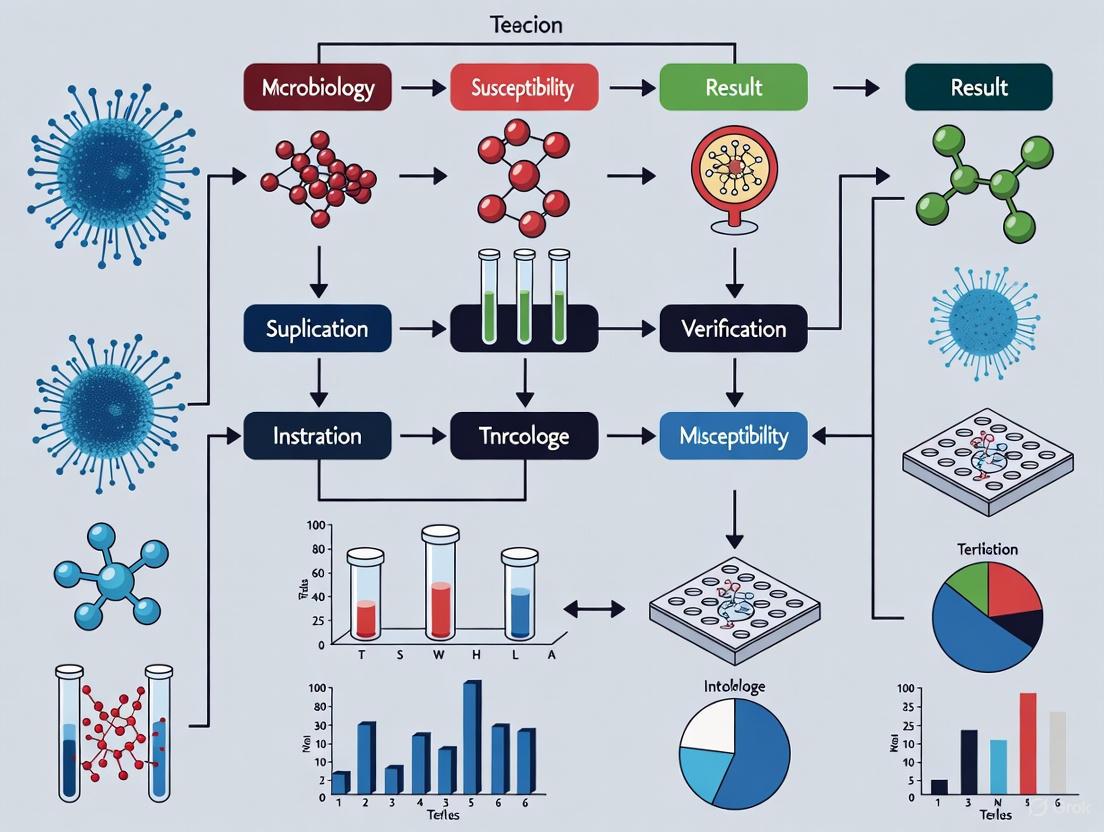
This article provides a comprehensive roadmap for researchers, scientists, and drug development professionals facing the complex challenges of antimicrobial susceptibility test (AST) verification.
Navigating AST Verification: A 2025 Guide to Breakpoint Updates, Regulatory Compliance, and Emerging Technologies
Abstract
This article provides a comprehensive roadmap for researchers, scientists, and drug development professionals facing the complex challenges of antimicrobial susceptibility test (AST) verification. Covering the period from foundational principles to future prospects, it details the evolving regulatory landscape, including the 2024 FDA final rule on Laboratory-Developed Tests and the major January 2025 FDA recognition of CLSI breakpoints. The content offers practical methodologies for verification and validation, strategies for overcoming financial, technical, and operational barriers, and a comparative analysis of rapid phenotypic and genotypic AST technologies. By synthesizing current standards, innovative solutions, and validation frameworks, this guide aims to equip professionals with the knowledge to ensure testing accuracy, enhance patient care, and combat antimicrobial resistance.
The Evolving Landscape of AST: Regulatory Shifts and the Imperative for Updated Breakpoints
The AMR Crisis and the Critical Role of Accurate AST
Antimicrobial resistance (AMR) is a quantifiable, escalating global crisis that threatens to undo decades of progress in infectious disease control. A 2025 World Health Organization (WHO) report revealed that one in six laboratory-confirmed bacterial infections worldwide were resistant to antibiotic treatments in 2023. Between 2018 and 2023, antibiotic resistance rose in over 40% of the pathogen-antibiotic combinations monitored, with an average annual increase of 5–15% [1]. The human cost is staggering, with AMR contributing to millions of deaths annually, a figure projected to rise without urgent intervention [2] [3].
Within this crisis, Antimicrobial Susceptibility Testing (AST) serves as a critical frontline defense. Accurate and timely AST guides effective therapeutic decisions, helps contain the spread of resistant pathogens, and supports antimicrobial stewardship efforts. However, researchers and clinical scientists face significant challenges in AST verification and implementation. This technical support center addresses these specific experimental and procedural challenges.
Global Resistance Prevalence of Key Pathogens (2023 WHO Data)
The following table summarizes the scale of resistance for critical bacterial pathogens, underscoring the necessity for precise AST [1].
| Bacterial Pathogen | Key Antibiotic Class Resisted | Global Resistance Prevalence (%) | Notes / Regional Variation |
|---|---|---|---|
| Klebsiella pneumoniae | Third-generation cephalosporins | >55% | Leading cause of resistant bloodstream infections; exceeds 70% in the WHO African Region [1]. |
| Escherichia coli | Third-generation cephalosporins | >40% | A major contributor to urinary tract and bloodstream infections [1]. |
| Acinetobacter spp. | Carbapenems | Rising | Carbapenem resistance, once rare, is becoming more frequent, severely limiting treatment options [1]. |
| Staphylococcus aureus | Methicillin (MRSA) | — | Remains a leading cause of hospital-acquired infections [2]. |
| Neisseria gonorrhoeae | Ceftriaxone & Azithromycin | — | First cases of untreatable strains reported, raising major public health concerns [2]. |
Troubleshooting Guides & FAQs
This section provides targeted solutions for common issues encountered during AST experiments and verification processes.
FAQ: Addressing Fundamental AST Challenges
Q1: What are the primary reasons for discrepant results between our in-house AST and reference laboratory tests?
Discrepancies often stem from methodological inconsistencies. Ensure your lab adheres to reference methods such as broth microdilution as per ISO 20776-1:2019 and EUCAST methodology [4]. Other factors include:
- Inoculum density: Variations in the number of bacteria used can significantly impact Minimum Inhibitory Concentration (MIC) results.
- Incubation conditions: Strict control of temperature, atmosphere, and duration is critical.
- Quality control strains: Regularly test using standard control strains (e.g., ATCC strains) to validate procedures and reagents.
Q2: How can we accelerate AST to provide results for critically ill patients faster than the standard 48 hours?
Rapid AST technologies are now emerging to address this exact challenge. Several approaches have received regulatory clearance and can provide results in hours instead of days [5]:
- Single-cell imaging and microfluidics: Systems like the ASTar instrument use high-speed time-lapse microscopy to monitor bacterial replication in miniaturized channels with different antibiotics [5].
- Metabolic VOC detection: Platforms like the Vitek Reveal system use nanosensors to detect volatile organic compounds emitted by growing bacteria, providing AST results in approximately 5 hours [5].
- Direct-from-sample testing: Investigational methods using magnetic nanoparticles to capture bacteria directly from blood samples without pre-incubation can yield results within an hour [5].
Q3: Our lab is implementing a new rapid AST method. What are the key steps for verification?
A robust verification protocol is essential. Key steps include:
- Correlation with reference method: Test a panel of 50-100 well-characterized clinical isolates, including resistant, susceptible, and intermediate strains, in parallel with your new method and the reference broth microdilution method. Calculate essential agreement (EA) and categorical agreement (CA).
- Precision/reproducibility testing: Perform repeat testing on the same samples across different days and by different technologists.
- Challenging with genetically characterized strains: Include isolates with well-defined resistance mechanisms (e.g., blaKPC for carbapenem resistance, mecA for MRSA) to ensure the method detects specific resistance phenotypes accurately [4].
Troubleshooting Guide: Common Experimental Pitfalls
| Problem | Possible Cause | Solution |
|---|---|---|
| Poor reproducibility of MIC values | Inconsistent inoculum preparation | Standardize the culture method and use a densitometer or quantitative plating to verify the inoculum size for each run. |
| Indeterminate or "skip" wells | Contamination or antibiotic degradation. | Check sterility techniques and ensure proper storage and handling of antibiotic panels; avoid freeze-thaw cycles. |
| Failure of quality control strains | Compromised reagents or deviation from standard protocols. | Prepare fresh media and reagents. Re-confirm the identity and viability of the QC strain. |
| New method fails to detect a specific resistance mechanism | The method's inherent limitations for that mechanism. | Understand the mechanism (e.g., enzymatic, efflux). Supplement phenotypic testing with genotypic methods (e.g., PCR) for key resistance genes (e.g., vanA, mcr-1, blaNDM) [2]. |
Experimental Protocols for AST Verification
Protocol 1: Reference Broth Microdilution for MIC Determination
This is the reference standard method for phenotypic AST [4].
Methodology:
- Antibiotic Panel Preparation: Prepare two-fold serial dilutions of the antibiotic in a cation-adjusted Mueller-Hinton broth in a 96-well microtiter plate. The concentration range should cover expected clinical breakpoints.
- Inoculum Standardization: Grow the test isolate to log phase and adjust the turbidity to a 0.5 McFarland standard. Further dilute the suspension to achieve a final inoculum of ~5 x 10^5 CFU/mL in each well.
- Inoculation and Incubation: Dispense the standardized inoculum into each well of the antibiotic panel. Include growth control (no antibiotic) and sterility control (no inoculum) wells.
- Incubation: Incub the plate at 35±2°C for 16-20 hours in an ambient atmosphere.
- Reading and Interpretation: The Minimum Inhibitory Concentration (MIC) is the lowest concentration of antibiotic that completely inhibits visible growth of the organism. Interpret results (S/I/R) using current EUCAST clinical breakpoints [4].
Protocol 2: Genetic Verification of Carbapenem Resistance
For isolates showing reduced susceptibility to carbapenems, confirm the presence of acquired carbapenemase genes.
Methodology:
- DNA Extraction: Use a commercial kit to extract genomic DNA from an overnight pure culture of the test isolate.
- PCR Amplification: Perform real-time PCR using primers and probes specific for major acquired carbapenemase genes (e.g., blaKPC, blaNDM, blaOXA-48, blaVIM, blaIMP) as recommended by EUCAST [4].
- Analysis: A positive amplification curve for a specific target confirms the presence of that carbapenemase gene. This genotypic data should be correlated with the phenotypic carbapenem MIC.
Workflow Visualization
The following diagram illustrates the logical workflow for integrating phenotypic and genotypic AST methods to comprehensively characterize bacterial resistance.
The Scientist's Toolkit: Key Research Reagent Solutions
Essential materials and their functions for establishing robust AST protocols in a research setting.
| Item | Function & Application | Key Considerations |
|---|---|---|
| Cation-Adjusted Mueller-Hinton Broth (CAMHB) | Standardized culture medium for broth microdilution AST. | Ensures consistent ion concentration, which is critical for the activity of aminoglycosides and tetracyclines. |
| Frozen or Lyophilized Antibiotic Panels | Pre-made panels with serial antibiotic dilutions for MIC testing. | Reduces preparation error and improves reproducibility. Check stability and storage conditions. |
| ATCC Quality Control Strains | Reference strains with known MIC ranges (e.g., E. coli ATCC 25922, P. aeruginosa ATCC 27853). | Used for daily or weekly quality control to monitor the performance of AST methods and reagents. |
| PCR Master Mix & Primers/Probes | For genotypic detection of specific resistance determinants (e.g., mecA, vanA, blaKPC). | Enables rapid confirmation of resistance mechanisms and detection of emerging threats like mcr-1 [2]. |
| Standardized Inoculum System | Densitometer or turbidity standard (0.5 McFarland) for preparing a consistent bacterial inoculum. | A critical step; inaccuracy here is a major source of MIC variability. |
In the fight against antimicrobial resistance (AMR), accurate susceptibility testing is a critical pillar of modern medicine and drug development. For researchers and clinical scientists, navigating the landscape of interpretive standards—primarily those from the Clinical and Laboratory Standards Institute (CLSI), the U.S. Food and Drug Administration (FDA), and the European Committee on Antimicrobial Susceptibility Testing (EUCAST)—presents a significant verification challenge. Discrepancies between these standards have historically complicated test validation, regulatory compliance, and the reliable interpretation of data. This guide provides troubleshooting and methodological support for professionals managing these complexities within their research and development workflows.
Frequently Asked Questions (FAQs) and Troubleshooting
Q1: Our laboratory needs to choose a primary standard for antimicrobial susceptibility testing (AST). What are the key differences between CLSI, FDA, and EUCAST?
A: The choice of standard depends on your geographic location, regulatory requirements, and the specific microorganisms you work with. The following table outlines the core characteristics of each major standardizing body.
Table 1: Key Characteristics of Major Antimicrobial Susceptibility Testing Standards
| Standardizing Body | Primary Focus & Audience | Update Cycle | Key Document(s) | Regulatory Status |
|---|---|---|---|---|
| CLSI | Global consensus standards for clinical and research laboratories [6] [7] | Annual [6] | M100 (for aerobic and anaerobic bacteria) [6] | FDA-recognized; the gold standard for many laboratories [6] [8] |
| FDA | Regulatory oversight for the United States; dictates labeling of FDA-cleared devices and antimicrobials [8] [9] | Reviewed every 6 months per the 21st Century Cures Act [9] | Susceptibility Test Interpretive Criteria (STIC) website [8] | Legally required for FDA-cleared AST devices in the U.S. [9] |
| EUCAST | Standards for European countries and those adopting its methodologies [10] | Annual [10] | Clinical Breakpoint Tables (for bacteria and fungi) [10] [11] | Widely adopted in Europe and by many research institutions globally |
Q2: We are encountering discrepancies when applying different breakpoints to the same dataset. How should we resolve this?
A: Discrepancies are a common verification challenge. A systematic approach is required for resolution.
- Define the Context of Testing: First, determine the purpose of your test. Is it for clinical diagnostics supporting patient care in the U.S.? If so, adherence to FDA-recognized breakpoints is necessary for compliant operation of FDA-cleared devices [9]. For research or in regions outside the U.S., CLSI or EUCAST standards may be more appropriate.
- Consult the Most Current Documents: Breakpoints are updated frequently to respond to evolving AMR data. Ensure you are using the latest editions. For example, as of 2025, the FDA fully recognizes the CLSI M100 35th Edition, a significant harmonization step that resolves many previous discrepancies [6] [8] [9].
- Check for Explicit Exceptions: The FDA now generally recognizes the entire CLSI M100 standard, listing only specific exceptions and additions on its website [8] [9]. Always cross-reference the FDA's "Exceptions or Additions" column for your specific drug-bug combination.
- Document Your Rationale: In your research protocols or laboratory standard operating procedures (SOPs), clearly document which standard is used and the justification for its selection, especially if it differs from the device's FDA-cleared claims.
Q3: How has the FDA's regulation of Laboratory-Developed Tests (LDTs) affected AST, and what does it mean for our research?
A: The FDA's final rule on LDTs, which phased out its previous enforcement discretion policy in 2024, significantly impacts AST methodologies that deviate from FDA-cleared claims [9]. This is highly relevant for research and verification workflows.
- What is an LDT in AST Context? Common scenarios now considered LDTs include:
- Modifying an FDA-cleared AST device to interpret results with newer CLSI breakpoints not yet on the device's label [9].
- Using a device for an organism-antimicrobial combination for which it is not cleared [9].
- Employing AST methods not considered FDA-recognized reference methods (e.g., broth disk elution for certain combinations) [9].
- Navigating the New Rule: The rule includes certain enforcement discretion exceptions. One key exception applies to LDTs implemented before May 6, 2024, and those offered within an integrated healthcare system to meet an unmet medical need for its patients [9]. However, this creates a challenge for reference laboratories serving external clients. The recent FDA recognition of many CLSI standards provides a pathway for manufacturers to update their devices, which in turn reduces the need for laboratories to create LDTs [9].
Q4: What is the basic experimental protocol for verifying a broth microdilution method according to CLSI standards?
A: The broth microdilution method is a reference standard detailed in CLSI document M07 [6]. The following workflow provides an overview of the verification process.
Detailed Protocol Steps:
- Principle: This method determines the Minimum Inhibitory Concentration (MIC) of an antimicrobial agent by testing its serial dilutions in a liquid growth medium against a standardized bacterial inoculum. The MIC is the lowest concentration that prevents visible growth.
- Materials and Reagents:
- Cation-Adjusted Mueller-Hinton Broth (CAMHB): The standard medium for most non-fastidious aerobic bacteria.
- Sterile Microtiter Plates: 96-well plates containing serial two-fold dilutions of antimicrobials.
- Standardized Bacterial Inoculum: Adjust a log-phase broth culture or a saline suspension of colonies to a 0.5 McFarland standard, then further dilute to achieve a final inoculum of ~5 x 10^5 CFU/mL in each well.
- Quality Control (QC) Strains: Use specific strains listed in CLSI M100 (e.g., E. coli ATCC 25922, S. aureus ATCC 29213) to verify the precision and accuracy of the test system [6].
- Procedure:
- Inoculate the microtiter plates with the prepared bacterial suspension.
- Incubate the plates aerobically at 35±2°C for 16-20 hours.
- After incubation, examine each well for visible growth.
- Interpretation:
- Record the MIC as the lowest antimicrobial concentration that completely inhibits visible growth.
- Compare the MIC value to the interpretive criteria (breakpoints) in the current CLSI M100 document to categorize the isolate as Susceptible (S), Intermediate (I), or Resistant (R) [6].
- The QC strain results must fall within the published acceptable ranges for the test to be considered valid [6].
The Scientist's Toolkit: Essential Research Reagents and Materials
Table 2: Key Reagents and Materials for Antimicrobial Susceptibility Testing
| Item | Function/Description | Key Standard for Use |
|---|---|---|
| Cation-Adjusted Mueller-Hinton Broth (CAMHB) | Standardized medium for broth dilution (MIC) tests for aerobic bacteria. Provides consistent ion concentration for reliable antibiotic activity. | CLSI M07 [6] |
| Mueller-Hinton Agar | Standardized medium for disk diffusion testing. Depth and pH are critically controlled. | CLSI M02 [6] |
| Antimicrobial Powder/Premade Panels | High-purity antimicrobial agents for preparing in-house dilution panels or commercial frozen/microtiter panels. | CLSI M07/M100 [6] |
| 0.5 McFarland Standard | Turbidity standard (latex or barium sulfate) to standardize bacterial inoculum density for both dilution and diffusion methods. | CLSI M07/M02 [6] |
| Quality Control (QC) Strains | Frozen or lyophilized reference strains (e.g., ATCC strains) with defined MICs used to monitor the precision and accuracy of the test system. | CLSI M100 [6] |
Visualizing the Breakpoint Application and Regulatory Workflow
The process of conducting AST and applying breakpoints, especially in a regulated environment, involves multiple decision points. The following diagram maps this complex workflow.
The year 2025 marks a transformative period in the landscape of antimicrobial susceptibility testing (AST). In a significant regulatory shift, the U.S. Food and Drug Administration (FDA) has recognized numerous breakpoints published by the Clinical and Laboratory Standards Institute (CLSI), including those for microorganisms representing previously unmet needs [9]. This unprecedented alignment between regulatory standards and clinical guidelines heralds a more pragmatic approach to AST, representing a substantial advancement for researchers, clinical laboratories, and ultimately patient care worldwide [9]. This technical support center provides essential guidance for navigating these changes, offering troubleshooting assistance and detailed protocols to facilitate seamless implementation within research and development workflows.
FAQ: Understanding the 2025 Regulatory Changes
1. What specifically changed with the FDA's recognition of CLSI breakpoints in early 2025?
In January 2025, the FDA updated its Susceptibility Test Interpretive Criteria (STIC) to fully recognize the standards published in several key CLSI documents [12] [9]:
- CLSI M100, 35th Edition (Aerobic and Anaerobic Bacteria)
- CLSI M45, 3rd Edition (Infrequently Isolated or Fastidious Bacteria)
- CLSI M24S, 2nd Edition (Mycobacteria, Nocardia spp., and Other Aerobic Actinomycetes)
- CLSI M43-A, 1st Edition (Human Mycoplasmas)
- CLSI M38M51S, 3rd Edition (Filamentous Fungi)
A critical structural change on the FDA's STIC webpages is that now only exceptions or additions to the recognized CLSI standards are specifically listed, rather than enumerating all recognized CLSI breakpoints [9]. This establishes the CLSI standards as the default recognized criteria unless explicitly noted otherwise.
2. How does this recognition affect the development and verification of Laboratory Developed Tests (LDTs)?
The FDA's recognition provides a clearer pathway for LDTs using these breakpoints, particularly important given the FDA's final rule on LDTs that took effect in 2024 [9]. Prior to this recognition, modifying an FDA-cleared AST device to interpret results with current CLSI breakpoints, or validating a novel AST device for organism-drug combinations without FDA-recognized breakpoints, constituted an LDT requiring FDA oversight. The 2025 recognition significantly reduces these scenarios by aligning FDA-recognized breakpoints with current CLSI standards.
3. What is the practical significance of recognizing CLSI M45 breakpoints?
The recognition of CLSI M45 breakpoints for infrequently isolated or fastidious bacteria addresses a critical unmet need in clinical practice and research [9]. Many of these breakpoints are based on historical data for microorganisms where clinical trial data or contemporary pharmacokinetic-pharmacodynamic studies are unlikely to be conducted. Despite this, they have been used for decades in managing patients with serious infections caused by these organisms. Their formal recognition enables more standardized AST for diverse microbes causing infections and provides a pathway for commercial manufacturers to develop tests for these pathogens [9].
4. How do these changes impact compliance with College of American Pathologists (CAP) requirements?
The College of American Pathologists requires laboratories to implement updated breakpoints within 3 years of their official publication by the FDA or other standards development organization [13]. The 2025 FDA recognition establishes a clear reference point for compliance, requiring laboratories to use these current breakpoints for interpreting antimicrobial susceptibility test results. Effective January 2024, laboratories must use current breakpoints, making it unacceptable to use breakpoints no longer recognized by either FDA or CLSI [13].
Troubleshooting Guide: Implementing Updated Breakpoints
Challenge 1: Verification and Validation of Updated Breakpoints
Problem: Researchers encounter difficulties performing verification or validation studies required to implement updated breakpoints in their systems.
Solution: Utilize the Breakpoint Implementation Toolkit (BIT) developed through a collaboration of CLSI, APHL, ASM, CAP, and CDC [14].
Implementation Steps:
- Documentation: Use BIT Part A to document all breakpoints currently in use across AST instruments, laboratory information systems, and electronic health records [14].
- Gap Analysis: Employ BIT Part B (CLSI vs. FDA Breakpoints spreadsheet) to identify discrepancies between current implementations and newly recognized standards [14].
- Study Documentation: Utilize BIT Part C template to document verification or validation study results, creating evidence for accreditation or regulatory bodies [14].
- Reference Materials: Access CDC and FDA Antibiotic Resistance (AR) Bank isolate sets outlined in BIT Part D for validation studies [14].
- Data Analysis: Use BIT Parts E and F, which include prefilled Excel worksheets with AR Bank data and calculation tools [14].
Challenge 2: Managing Discrepancies in Recognized Breakpoints
Problem: Despite broader recognition, some specific breakpoints still differ between CLSI and FDA criteria.
Solution: Systematic approach to identifying and managing exceptions.
Implementation Steps:
- Consult FDA STIC Table: Regularly check the "Exceptions or Additions to the Recognized CLSI Standard" column in the FDA's antibacterial susceptibility test interpretive criteria table [8].
- Review Notices of Updates: Monitor the FDA's "Notices of Updates" page for the latest changes to recognized standards [12].
- Prioritize Updates: Focus implementation efforts on breakpoints with clinical significance for your specific research focus or patient population.
- Document Justifications: Maintain detailed records when using alternative breakpoints, including input from antimicrobial stewardship teams where appropriate [13].
Challenge 3: Updating Automated AST Systems
Problem: Automated antimicrobial susceptibility testing systems may not immediately incorporate the most recently recognized breakpoints.
Solution: Proactive engagement with manufacturers and implementation of interim solutions.
Implementation Steps:
- Manufacturer Communication: Contact AST system manufacturers for specific guidance on breakpoints used and clearance status with their systems [14].
- LIS Modifications: Work with information technology staff to update laboratory information systems where AST interpretations are applied post-testing.
- Verification Studies: Perform verification studies per BIT guidelines when implementing software updates or manual overrides for breakpoint interpretations.
- Quality Control: Enhance quality control procedures to ensure updated breakpoints are correctly applied and functioning as intended.
Experimental Protocols for Breakpoint Verification
Protocol 1: Broth Microdilution Method Verification
Purpose: To verify the accuracy of updated breakpoints using reference broth microdilution methods.
Materials:
- BIT-recommended isolate sets from CDC and FDA AR Bank [14]
- Cation-adjusted Mueller-Hinton broth (for most non-fastidious bacteria)
- CLSI M07-compliant microdilution trays [6]
- Appropriate quality control strains
Methodology:
- Prepare antibiotic stock solutions at appropriate concentrations based on CLSI M100 guidelines [6].
- Perform serial dilutions in broth media to create a concentration range encompassing the breakpoints.
- Inoculate wells with standardized bacterial suspensions (5 × 10⁵ CFU/mL).
- Incubate at 35±2°C for 16-20 hours (standard incubation) or as recommended for specific organisms.
- Read Minimum Inhibitory Concentration (MIC) as the lowest concentration completely inhibiting visible growth.
- Interpret MICs using both previous and updated breakpoints.
- Compare essential and categorical agreement between old and new interpretations.
Troubleshooting:
- If unacceptable error rates occur (>3% major errors, >10% very major errors), verify inoculum preparation methodology.
- For fastidious organisms, ensure appropriate supplementation of media and incubation conditions per CLSI M45 guidelines [14].
Protocol 2: Disk Diffusion Method Verification
Purpose: To validate updated zone diameter breakpoints for disk diffusion testing.
Materials:
- BIT-recommended isolate sets [14]
- Mueller-Hinton agar plates (appropriate formulations for specific organisms)
- CLSI-compliant antibiotic disks
- Measuring calipers or automated zone readers
Methodology:
- Prepare bacterial suspensions to 0.5 McFarland standard.
- Lawn inoculate agar plates within 15 minutes of standardization.
- Apply antibiotic disks ensuring firm contact with agar surface.
- Incubate at 35±2°C for 16-18 hours (standard) or as recommended.
- Measure zones of inhibition to nearest millimeter.
- Interpret using both previous and updated breakpoint criteria.
- Calculate categorical agreement and identify discrepancies.
Troubleshooting:
- If trailing growth occurs with certain drug-organism combinations, read inhibition at 80% growth reduction.
- For fastidious organisms, ensure appropriate atmospheric conditions during incubation.
Research Reagent Solutions
Table: Essential Materials for Breakpoint Implementation Studies
| Reagent/Resource | Function/Purpose | Source/Reference |
|---|---|---|
| CDC & FDA AR Bank BIT Isolate Sets | Provides characterized bacterial isolates with known resistance mechanisms for validation studies [14] | BIT Part D [14] |
| CLSI M100, 35th Edition | Definitive reference for current breakpoints, quality control ranges, and testing methodologies [6] | CLSI [6] |
| Breakpoint Implementation Toolkit (BIT) | Comprehensive guide for performing verification studies, documenting results, and implementing updated breakpoints [14] | CLSI/APHL/ASM/CAP/CDC collaboration [14] |
| CLSI M07 Standard | Reference method for broth dilution antimicrobial susceptibility testing [6] | CLSI [6] |
| CLSI M02 Standard | Reference method for disk diffusion antimicrobial susceptibility testing [6] | CLSI [6] |
| CLSI M45, 3rd Edition | Standards for infrequently isolated or fastidious bacteria [14] | CLSI [14] |
Visual Workflows for Breakpoint Implementation
Breakpoint Implementation Process
LDT Validation Pathway
The FDA's 2025 recognition of CLSI breakpoints represents a landmark achievement in standardizing antimicrobial susceptibility testing. This alignment addresses critical challenges in managing antimicrobial resistance by providing researchers and clinical laboratories with clear, contemporary standards that reflect current understanding of resistance mechanisms and treatment outcomes. By leveraging the resources and protocols outlined in this technical support guide, research professionals can navigate this transition effectively, ensuring their work remains at the forefront of antimicrobial stewardship and patient care. The continued collaboration between regulatory bodies and standards organizations promises to further enhance our collective ability to combat the ongoing threat of antimicrobial resistance through scientifically robust and clinically relevant testing methodologies.
The U.S. Food and Drug Administration (FDA) has initiated a significant regulatory shift with its Final Rule on Laboratory Developed Tests, effectively ending its longstanding enforcement discretion policy. The rule, effective July 5, 2024, amends FDA regulations to explicitly state that IVD products are devices under the Federal Food, Drug, and Cosmetic Act "including when the manufacturer of these products is a laboratory" [15]. This redefinition clarifies that LDTs are regulated medical devices, subjecting them to the same oversight as other IVDs [16]. For clinical microbiology laboratories performing Antimicrobial Susceptibility Testing, this change profoundly impacts how test verification, validation, and implementation must be approached.
Understanding the LDT Phaseout Timeline and Requirements
Five-Stage Phaseout Policy
The FDA is implementing a structured, five-stage phaseout of its enforcement discretion policy over four years. Laboratories must meet specific compliance milestones according to the following timeline [16] [15]:
| Stage | Deadline | Key Compliance Requirements |
|---|---|---|
| Stage 1 | May 6, 2025 | Medical device reporting (MDR), corrections and removals reporting, and complaint handling |
| Stage 2 | May 6, 2026 | Establishment registration, device listing, labeling, and investigational use requirements |
| Stage 3 | May 6, 2027 | Quality System Regulation including good manufacturing practices |
| Stage 4 | November 6, 2027 | Premarket review requirements for high-risk LDTs (Class III) |
| Stage 5 | May 6, 2028 | Premarket review requirements for low and moderate-risk LDTs (Class I & II) |
Enforcement Discretion Exceptions
The Final Rule includes limited enforcement discretion for specific LDT categories [16] [15]:
- Pre-May 2024 LDTs: Tests marketed before the rule's issuance that remain unmodified may be exempt from premarket review and QSR requirements
- 1976-Type LDTs: Tests with characteristics common when the Medical Device Amendments were passed
- NYCLEP-approved LDTs: Tests approved by New York State's Clinical Laboratory Evaluation Program
- Public Health Service: Tests manufactured and used within Veteran's Health Administration or Department of Defense
AST Verification Under the New Framework
Impact on Antimicrobial Susceptibility Testing
The LDT Final Rule significantly affects common AST practices in clinical microbiology laboratories [9]:
- Modifying FDA-cleared AST devices to interpret results with current breakpoints (CLSI or updated FDA breakpoints)
- Validating new organism-antimicrobial combinations not included in the device's cleared indications
- Implementing novel AST methodologies not considered reference methods (e.g., broth disk elution for colistin)
- Updating breakpoints on legacy systems that were cleared with obsolete interpretive criteria
Breakpoint Recognition Changes
A January 2025 FDA update recognized many breakpoints published by the Clinical and Laboratory Standards Institute, representing a major advancement for AST [9]. The FDA now recognizes standards including:
- CLSI M100 35th edition (aerobic and anaerobic bacteria)
- CLSI M45 3rd Ed (infrequently isolated or fastidious bacteria)
- CLSI M24S 2nd Ed (mycobacteria, Nocardia spp., and other aerobic Actinomycetes)
- CLSI M27M44S 3rd Ed (yeast)
- CLSI M38M51S 3rd Ed (filamentous fungi)
The FDA's revised approach lists only exceptions or additions where no CLSI breakpoints are available, rather than listing all recognized CLSI breakpoints [9].
Troubleshooting Common AST Verification Challenges
Regulatory Compliance Issues
Scenario: Laboratory modified an FDA-cleared AST device to use current CLSI breakpoints rather than the obsolete breakpoints with which the device was originally cleared.
Solution: Under the Final Rule, this modification constitutes an LDT requiring compliance. Laboratories should [17] [9]:
- Document the validation demonstrating equivalent performance to reference methods
- Implement a predetermined change control plan for future breakpoint updates
- Review enforcement discretion exceptions to determine if the modification qualifies
- Consider the integrated health system exception if meeting an unmet need for patients within the same system
Scenario: Laboratory needs to validate AST for a novel antimicrobial-organism combination lacking FDA-recognized breakpoints.
- Consult FDA-STIC website for recognized breakpoints and exceptions
- Utilize the FDA-established docket for submitting information to support new interpretive criteria
- Document clinical justification for breakpoint selection based on available pharmacological and microbiological data
- Implement rigorous validation against reference methods when available
Operational Implementation Barriers
Scenario: Financial constraints limit adoption of rapid ID/AST technologies despite clinical benefits.
Solution [19]:
- Calculate total cost of ownership including reagent rental agreements versus capital expenditure
- Document clinical impact through pilot studies showing improved outcomes, reduced length of stay, or better antimicrobial stewardship
- Explore innovative funding models through antimicrobial stewardship programs or hospital quality initiatives
- Consider phased implementation starting with high-impact patient populations
Scenario: Limited technical expertise for implementing rapid AST methodologies during all shifts.
Solution [19]:
- Develop comprehensive training programs with competency assessments for all shifts
- Implement tiered reporting with expert review during off-hours
- Utilize available CLIA frameworks for personnel requirements based on test complexity
- Establish 24/7 consultative support from senior microbiology staff
Frequently Asked Questions
Q1: Can we continue using our current AST methods that were implemented before May 2024?
A1: Yes, with limitations. The Final Rule includes enforcement discretion for LDTs implemented before May 6, 2024, provided they are not significantly modified. However, these tests must still comply with medical device reporting, quality system, and other applicable requirements according to the phaseout schedule [15].
Q2: How does the FDA's recognition of CLSI breakpoints in early 2025 affect our AST verification?
A2: The January 2025 recognition of multiple CLSI standards enables laboratories to use these breakpoints without creating an LDT, provided the AST system manufacturer has updated the device clearance. For legacy systems, verification against these recognized breakpoints may still be considered an LDT if it modifies the device's intended use [9].
Q3: What are the consequences of not complying with the LDT Final Rule for our AST verification?
A3: Non-compliant laboratories may face regulatory action including warnings, fines, or prohibitions on testing. Additionally, results from non-compliant tests may not be reimbursed by payers or accepted for clinical care decisions [16].
Q4: How should we handle breakpoint updates for our AST systems under the new regulations?
A4: FDA guidance recommends implementing a Predetermined Change Control Plan for AST systems to facilitate timely adoption of updated breakpoints. For legacy systems, changes to incorporate new breakpoints require submission of a new 510(k) or compliance with LDT requirements [17].
Q5: Are there any exceptions for public health laboratories performing AST for surveillance?
A5: The Final Rule applies to public health laboratories, potentially affecting tests like ceftazidime-avibactam-aztreonam testing performed by the Antibiotic Resistance Laboratory Network. These laboratories should review the enforcement discretion exceptions and may need to pursue FDA clearance for surveillance tests used for clinical decision-making [9].
Essential Research Reagent Solutions for AST Verification
| Reagent/Component | Function in AST Verification | Regulatory Considerations |
|---|---|---|
| Reference strain panels | Quality control and method comparison | Must be traceable to recognized collections (ATCC, etc.) |
| CLSI reference powders | Establishing reference MIC values | Documentation of source and purity required for validation |
| Quality control strains | Daily monitoring of test performance | Must include susceptible and resistant strains for each drug |
| Cation-adjusted Mueller-Hinton broth | Standardized medium for broth microdilution | Must meet CLSI specifications for composition |
| Supplemental additives | Testing fastidious organisms (e.g., HTM, SBM) | Validation required for each matrix-organism combination |
AST Verification Workflow Under LDT Final Rule
The FDA's LDT Final Rule represents a fundamental shift in the regulatory landscape for antimicrobial susceptibility testing. Laboratories must now navigate a structured four-year phaseout of enforcement discretion while maintaining essential testing services. Success requires understanding the nuanced exceptions, implementing robust quality systems, and proactively planning for breakpoint updates. The recent FDA recognition of CLSI standards provides welcome clarity for many AST applications, but laboratories must still verify their specific implementations comply with the new framework. By approaching these changes systematically and utilizing available resources, laboratories can continue providing critical AST results while meeting enhanced regulatory expectations for test verification.
Antimicrobial resistance (AMR) is a pressing global health crisis, associated with an estimated 4.95 million deaths worldwide annually [20]. At the frontline of detecting and combating AMR are clinical microbiology laboratories, which perform antimicrobial susceptibility testing (AST) to guide effective patient treatment. The accuracy of this testing depends critically on using current, clinically relevant interpretive criteria, known as breakpoints. These breakpoints are the pre-established standards that categorize microorganisms as Susceptible (S), Intermediate (I), or Resistant (R) to specific antimicrobial agents based on Minimum Inhibitory Concentration (MIC) measurements or zone diameter sizes [20].
Using obsolete breakpoints introduces significant risk for patient mismanagement. Imagine a scenario where a patient transfers between hospitals and receives conflicting susceptibility results for the same bacterial isolate—all because the first facility used outdated breakpoints that incorrectly categorized a resistant organism as susceptible [20]. Such cases underscore why identifying and updating obsolete breakpoints constitutes a foundational compliance requirement for all clinical laboratories. Regulatory bodies have taken notice: The College of American Pathologists (CAP) now mandates that laboratories use current breakpoints by January 1, 2024, and implement new breakpoints within three years of their official publication [13] [20].
Understanding Breakpoint Obsoleteness: Regulatory Frameworks and Updates
The Breakpoint Ecosystem: FDA, CLSI, and EUCAST
In the United States, breakpoint standardization involves multiple key organizations with complementary roles. The U.S. Food and Drug Administration (FDA) regulates drugs and AST devices, requiring FDA clearance for any changes to commercial testing systems [20]. The Clinical and Laboratory Standards Institute (CLSI) is an independent standards development organization that regularly reviews and updates breakpoints based on the latest resistance patterns, pharmacological data, and clinical outcomes [9]. Internationally, the European Committee on Antimicrobial Susceptibility Testing (EUCAST) serves a similar standard-setting function [10].
Historically, disconnects between these organizations created challenges. The FDA was often unable to recognize updated CLSI breakpoints in a timely manner, leading to situations where laboratories continued applying breakpoints more than ten years out of date [9]. A significant regulatory shift occurred in early 2025 when the FDA recognized many CLSI breakpoints across multiple standards, including those for infrequently isolated or fastidious bacteria [9]. This unprecedented alignment heralds a more pragmatic approach to AST regulation and facilitates easier laboratory compliance.
Consequences of Obsolete Breakpoint Usage
- Misleading Susceptibility Reports: Outdated breakpoints may fail to detect emerging resistance mechanisms, leading to "susceptible" categorization for actually resistant organisms [9]
- Suboptimal Patient Therapy: Clinicians relying on obsolete reports may prescribe ineffective antibiotics, potentially leading to treatment failure and adverse outcomes [20]
- Compromised Antimicrobial Stewardship: Inaccurate susceptibility data undermines institutional efforts to combat antimicrobial resistance through appropriate antibiotic use [20]
- Regulatory Non-Compliance: Laboratories using obsolete breakpoints risk citations during CAP inspections for failing to meet current standards [13]
Table: Key Regulatory Milestones in Breakpoint Management
| Date | Regulatory Action | Impact on Laboratories |
|---|---|---|
| 2006 | FDA began requiring use of FDA-recognized breakpoints on cleared devices | Increased regulatory oversight of AST interpretations [9] |
| 2016 | 21st Century Cures Act enabled FDA recognition of CLSI breakpoints | Created pathway for alignment between CLSI and FDA standards [9] |
| 2022 | CAP announced new breakpoint requirements | Mandated documentation of breakpoints in use and plan to update obsolete versions [13] |
| 2024 | CAP requirement for current breakpoints took effect | Required laboratories to use current breakpoints for MIC and disk diffusion tests [13] |
| January 2025 | FDA recognized many CLSI breakpoints across multiple standards | Major alignment between FDA and CLSI, particularly for fastidious organisms [9] |
Step-by-Step Methodology for Identifying Obsolete Breakpoints
Comprehensive System Mapping and Documentation
The first critical step involves creating a complete inventory of where breakpoints are applied throughout the laboratory testing and reporting workflow. Breakpoints may be embedded in multiple systems, each requiring verification [20]:
- Automated AST Instruments: Check the software versions and configuration settings on commercial susceptibility testing platforms
- Laboratory Information System (LIS): Review how susceptibility interpretations are applied and stored within the laboratory's data management system
- Electronic Health Record (EHR): Verify that interpretations displayed to clinicians match those used in the laboratory
- Manual Testing Procedures: Document breakpoints used for manual methods like disk diffusion or gradient diffusion tests
CAP requirement MIC.11380 mandates that laboratories have written criteria for determining and interpreting susceptibility results, reviewed annually [13]. Laboratories should maintain a master spreadsheet documenting each antimicrobial-organism combination and the breakpoint sources applied at each stage of testing and reporting [14].
Comparative Analysis Against Current Standards
After mapping existing breakpoints, systematically compare them against current recognized standards. The process differs slightly depending on whether your laboratory follows CLSI or EUCAST standards, though most U.S. laboratories will reference CLSI and FDA resources [20]:
For CLSI-aligned laboratories:
- Obtain the current edition of CLSI M100 (35th edition, 2025)
- Compare each organism-drug combination breakpoint against the corresponding value in M100
- Verify recognition status on the FDA Susceptibility Test Interpretive Criteria (STIC) website
- Note any exceptions or additions the FDA specifies for specific drug-bug combinations
Important consideration: After January 2025, the FDA recognizes most breakpoints published in CLSI M100 35th Edition, M45 3rd Edition, and other specific standards unless exceptions are explicitly listed [9] [8]. The FDA STIC website now primarily lists exceptions to the recognized CLSI standards rather than repeating all recognized breakpoints [9].
Table: Common Scenarios Indicating Obsolete Breakpoints
| Scenario | Example | Recommended Action |
|---|---|---|
| Breakpoints match older CLSI editions | Using 2014 carbapenem breakpoints for Enterobacterales | Update to current CLSI M100 35th edition values [20] |
| FDA exceptions not implemented | CLSI ciprofloxacin breakpoints for Acinetobacter not recognized by FDA | Apply FDA exceptions listed on STIC website [9] |
| No breakpoints for established drug-bug combinations | Missing breakpoints for fastidious organisms covered in CLSI M45 | Implement breakpoints now recognized by FDA from M45 3rd Edition [9] |
| AST system not cleared for current breakpoints | Automated instrument uses pre-2025 breakpoints despite FDA recognition of current CLSI standards | Work with manufacturer to update or perform laboratory validation [20] |
Prioritization Framework for Breakpoint Updates
Not all breakpoint updates carry equal urgency. Laboratories should establish a risk-based prioritization system focusing first on updates with the greatest potential clinical impact [20]:
High-Priority Updates:
- Carbapenem breakpoints for Enterobacterales (critical for detecting carbapenemase producers)
- Anti-MRSA agents (vancomycin, daptomycin, linezolid)
- Broad-spectrum cephalosporins and β-lactam/β-lactamase inhibitor combinations
- Organism-drug combinations with documented treatment failures using old breakpoints
Medium-Priority Updates:
- Oral antibiotics with well-established breakpoints
- Organism-drug combinations rarely encountered in your patient population
- Antimicrobials not routinely used in your institution
Documentation Requirement: Any decision not to report a specific drug or to delay breakpoint implementation should be formally documented in laboratory procedures with input from the antimicrobial stewardship team [20].
Troubleshooting Common Breakpoint Implementation Challenges
Frequently Asked Questions
Q: Our automated AST system hasn't been cleared by the FDA for the latest breakpoints. Can we still update them? A: Yes, but the process differs. If the breakpoints are FDA-recognized but not yet cleared on your specific system, you can perform a laboratory validation (more extensive) rather than verification (less extensive). This constitutes off-label use of the device but is acceptable with proper documentation [20].
Q: How do we handle situations where CLSI and FDA breakpoints differ? A: Following the January 2025 updates, most CLSI breakpoints are now FDA-recognized. For the remaining discrepancies, U.S. laboratories must follow FDA breakpoints. However, laboratories may choose to report additional comments noting CLSI interpretations if clinically relevant, with proper documentation and notification to clinicians about the difference [9] [8].
Q: What if our AST panels don't have the testing range to accommodate new breakpoints? A: This requires contacting your manufacturer representative. Some panels may not include high enough antimicrobial concentrations to detect resistance with newer breakpoints. Manufacturers may provide information about when updated panels will be available or suggest alternative testing methods until the appropriate testing range is available [20].
Q: Are there specific resources to help with the breakpoint update process? A: Yes, a collaborative Breakpoint Implementation Toolkit (BIT) has been developed by CLSI, APHL, ASM, CAP, and CDC. This toolkit provides templates for documentation, verification protocols, and access to CDC/FDA Antibiotic Resistance Isolate Bank strains for validation studies [14].
Validation and Verification Methodologies
When implementing updated breakpoints, laboratories must perform either verification or validation studies depending on the regulatory status:
Verification Study (for FDA-cleared breakpoints on your system):
- Confirm performance comparable to manufacturer's FDA clearance claims
- Test approximately 30-50 clinical isolates representing susceptible, intermediate, and resistant categories
- Demonstrate ≥90% essential agreement and categorical agreement with reference method
- Document all results using standardized templates like those in the BIT [14]
Validation Study (for off-label use of breakpoints not cleared on your system):
- More extensive evaluation requiring 100+ isolates
- Include challenge set with known resistance mechanisms
- Establish performance specifications for your laboratory
- Requires more rigorous documentation and approval process [20]
Implementing updated breakpoints requires specific reagents and reference materials to ensure accurate validation and verification studies. The following resources represent the essential toolkit for researchers and laboratory professionals undertaking breakpoint updates:
Table: Research Reagent Solutions for Breakpoint Implementation
| Resource | Function/Application | Source/Availability |
|---|---|---|
| CDC & FDA Antibiotic Resistance Isolate Bank | Provides quality-controlled isolates with characterized resistance mechanisms for validation studies | CDC AR Bank panels; BIT-recommended sets [14] |
| CLSI M100 Supplement | Current breakpoint standards for commonly isolated bacteria | Annual CLSI publication [9] [8] |
| CLSI M45 Document | Breakpoints for infrequently isolated or fastidious bacteria | CLSI standard (3rd Edition recognized by FDA) [9] [8] |
| Breakpoint Implementation Toolkit (BIT) | Templates, protocols, and calculation tools for verification/validation studies | Collaborative resource from CLSI, APHL, ASM, CAP, CDC [14] |
| FDA STIC Website | Official listing of FDA-recognized breakpoints and exceptions | fda.gov/drugs/development-resources/antibacterial-susceptibility-test-interpretive-criteria [8] |
| EUCAST Clinical Breakpoint Tables | International breakpoint standards for global harmonization | eucast.org/clinical_breakpoints [10] |
Identifying and eliminating obsolete breakpoints is not a one-time project but rather an ongoing competency for modern clinical microbiology laboratories. The regulatory landscape has significantly improved with the FDA's 2025 recognition of numerous CLSI standards, creating unprecedented alignment between these two key organizations [9]. However, laboratories must maintain vigilance through established quality management processes.
A sustainable breakpoint management program includes:
- Annual review of all breakpoints against current CLSI M100 and FDA STIC resources
- Proactive communication with AST system manufacturers regarding update timelines
- Collaboration with antimicrobial stewardship and pharmacy teams to prioritize updates
- Documentation of all verification/validation activities using standardized tools
- Monitoring for newly published breakpoints and implementing within the 3-year CAP requirement window
By establishing robust processes for identifying obsolete breakpoints, laboratories not only achieve regulatory compliance but, more importantly, contribute significantly to the global fight against antimicrobial resistance through more accurate detection and reporting of resistance patterns. This foundational work ensures that susceptibility reports provide clinicians with the most current, evidence-based information to guide life-saving therapeutic decisions for patients with serious infections.
A Step-by-Step Framework for AST Verification and Breakpoint Implementation
Troubleshooting Guides
Guide 1: Resolving Discrepancies Between CLSI and FDA Breakpoints
Problem: Observing inconsistent antimicrobial susceptibility test (AST) results between CLSI and FDA interpretive criteria.
Solution: Systematically identify and verify the breakpoints in use.
- Confirm Breakpoint Sources: Use BIT Part A to document all breakpoints currently used in your laboratory, a requirement for College of American Pathologists (CAP) accreditation [14].
- Identify Specific Discrepancies: Consult BIT Part B, which contains a comprehensive spreadsheet comparing all disk diffusion and MIC breakpoints from CLSI M100 (35th Edition) and M45 (3rd Edition) with their corresponding FDA criteria [14]. This allows you to pinpoint exactly where mismatches occur.
- Validate with Isolate Panels: For breakpoints with discrepancies, perform a verification study using the recommended isolate sets from the CDC & FDA Antibiotic Resistance (AR) Isolate Bank, detailed in BIT Part D [14]. Using these standardized isolates ensures your validation is based on well-characterized controls.
Guide 2: Troubleshooting a Failed Breakpoint Verification Study
Problem: Your internal verification study for a new breakpoint yields unacceptable performance or errors.
Solution: Verify your methodology and data analysis using the BIT's structured templates.
- Review Experimental Setup: Ensure you are using the correct AR Bank isolate set as recommended in BIT Part D. Confirm that your AST methodology (e.g., broth microdilution, agar dilution) aligns with CLSI standards [14].
- Check Data Analysis: Use BIT Part F, a prefilled Excel workbook containing MIC results for AR Bank isolates. This template automates calculations, helping you verify your own data analysis process and identify potential calculation errors [14].
- Document for Scrutiny: If your study's results are valid but unexpected, use BIT Part C (the Breakpoint Implementation Summary template) to thoroughly document your entire study process and results. This provides a clear audit trail for any accreditation or regulatory body [14].
Frequently Asked Questions (FAQs)
Q1: What is the Breakpoint Implementation Toolkit (BIT), and who developed it? The BIT is a comprehensive kit designed to assist clinical laboratories in performing the verification or validation studies required to update their antimicrobial susceptibility testing (AST) breakpoints. It was developed through a collaboration between the Clinical and Laboratory Standards Institute (CLSI), the Association of Public Health Laboratories (APHL), the American Society for Microbiology (ASM), the College of American Pathologists (CAP), and the US Centers for Disease Control and Prevention (CDC) [14].
Q2: My lab's AST system is FDA-cleared. Why do I need to perform breakpoint verification? As of January 2024, laboratories are required to use breakpoints recognized by either CLSI or the FDA. Even if your AST system is FDA-cleared, the breakpoints it uses may not be the most current. The BIT helps you verify that the breakpoints you are applying, regardless of the system, are updated and correct, thus meeting regulatory and accreditation requirements [14].
Q3: Where can I find standardized bacterial isolates for my breakpoint verification study? The BIT directs users to the CDC and FDA Antibiotic Resistance (AR) Isolate Bank. BIT Part D specifically lists the AR Bank isolate sets that are recommended for use with the toolkit for breakpoint verification and validation studies [14].
Q4: What should I do if the breakpoint I need to verify is not covered by the AR Bank BIT sets? The toolkit includes BIT Part G, which is a blank form template for data entry. You can use this template to structure your validation or verification studies when using bacterial isolates from sources other than the recommended AR Bank sets [14].
Q5: How does the BIT help with the documentation required for accreditation? BIT Part C provides a standardized template (the Breakpoint Implementation Summary) for documenting the results of your verification or validation studies. This completed template serves as evidence of your study and can be presented to accreditation or regulatory bodies like CAP [14].
Experimental Protocols & Data
Table 1: Key Components of the Breakpoint Implementation Toolkit (BIT)
Table summarizing the core parts of the BIT and their primary functions in breakpoint management.
| BIT Component | Primary Function | Key Application in the Lab |
|---|---|---|
| Part A: Breakpoints in Use | Document current lab breakpoints | Meet CAP documentation requirements [14] |
| Part B: CLSI vs FDA Breakpoints | Compare breakpoint standards | Identify discrepancies between CLSI M100/M45 and FDA STIC criteria [14] |
| Part C: Breakpoint Implementation Summary | Template for study documentation | Create a report for accreditation bodies [14] |
| Part D: CDC & FDA AR Bank BIT Isolate Sets | List recommended isolate panels | Source quality-controlled organisms for validation studies [14] |
| Part F: AR Bank Data Entry & Calculations | Prefilled Excel worksheet with MIC data | Verify and automate calculation steps during testing [14] |
Table 2: Essential Research Reagent Solutions for AST Verification
Table detailing key materials and reagents used in antimicrobial susceptibility test verification studies.
| Research Reagent / Material | Function in AST Verification |
|---|---|
| CDC & FDA AR Bank Isolate Sets | Provides standardized, quality-controlled bacterial strains with known resistance mechanisms for breakpoint validation [14]. |
| Cation-Adjusted Mueller-Hinton Broth | The standardized growth medium for broth microdilution AST, ensuring consistent bacterial growth and antibiotic activity. |
| Mueller-Hinton Agar Plates | The standardized solid medium for disk diffusion AST, essential for consistent zone of inhibition measurements. |
| Antimicrobial Powder/Standard Disks | The source of the antibiotic agent being tested, with known potency, for preparing custom MIC panels or disk diffusion tests. |
Standard Protocol for Breakpoint Verification Using the BIT
Objective: To verify a new or updated antimicrobial breakpoint using the CLSI Breakpoint Implementation Toolkit.
Methodology:
- Documentation of Baseline: Using BIT Part A, create a complete inventory of all antimicrobial breakpoints currently in use within the laboratory information system (LIS) and AST instruments [14].
- Gap Analysis: Consult BIT Part B to identify any differences between the laboratory's current breakpoints and the most recent versions recognized by CLSI or the FDA. This spreadsheet is the definitive source for comparison [14].
- Acquisition of Verification Isolates: From the list provided in BIT Part D, order the appropriate CDC & FDA AR Bank isolate set for the antibiotic and organism in question. These panels include strains with a range of MICs to adequately challenge the new breakpoint [14].
- Experimental Testing: Perform AST on the acquired isolates using the laboratory's standard method (e.g., broth microdilution, disk diffusion). Testing should be performed in replicates as per standard laboratory quality control procedures.
- Data Analysis and Calculation: Input your experimental MIC results into BIT Part F. This prefilled Excel template will assist in organizing data and performing necessary calculations to compare your results against the expected outcomes from the AR Bank [14].
- Final Documentation and Implementation: Upon successful verification, complete BIT Part C (Breakpoint Implementation Summary). This document summarizes the study rationale, methodology, results, and the final decision to implement the new breakpoint, serving as the primary record for accreditors [14].
Navigating the Evolving Regulatory Framework for AST
The regulatory landscape for Antimicrobial Susceptibility Testing (AST) devices and interpretive criteria has undergone significant changes. Understanding this framework is the first step in engaging with industry partners and assessing a device's clearance status.
The 21st Century Cures Act and Breakpoint Recognition
The 21st Century Cures Act, enacted in 2016, established a more streamlined system for updating Susceptibility Test Interpretive Criteria (STIC), commonly known as breakpoints [18]. This act mandates that the FDA posts recognized STIC standards online and updates this information at least every six months. For developers, this means that the most current breakpoints are now referenced on FDA webpages rather than in individual drug labels, allowing for more rapid updates in response to emerging antimicrobial resistance [18].
FDA Recognition of CLSI Standards
A pivotal recent development occurred in January 2025, when the FDA recognized numerous breakpoints published by the Clinical and Laboratory Standards Institute (CLSI) [9]. This recognition includes standards for aerobic and anaerobic bacteria (CLSI M100 35th edition), infrequently isolated or fastidious bacteria (CLSI M45 3rd Ed), and various fungi and mycobacteria [9]. This major update provides a pragmatic solution for testing a wider array of microorganisms and enables commercial manufacturers to develop tests for pathogens that were previously not covered by FDA-recognized breakpoints.
The LDT Final Rule and Its Impact
The FDA's final rule on Laboratory-Developed Tests (LDTs), which took effect in 2024, phases out the agency's historical enforcement discretion policy [9]. This ruling has direct implications for clinical laboratories that modify FDA-cleared AST devices, for instance, to interpret results with current CLSI breakpoints that may not yet be recognized by the FDA. Such modifications are now classified as LDTs and are subject to FDA regulatory oversight. Understanding the exceptions to this rule, such as for tests implemented before May 6, 2024, is crucial for compliance [9].
Key Steps for Assessing FDA Clearance Status
Before engaging in a partnership or utilizing an AST system, verifying its FDA clearance status is a critical due diligence step. The following workflow outlines the key steps and decision points in this process.
Consult the FDA's 510(k) Clearances Database
The FDA maintains a public database of devices cleared through the 510(k) premarket notification process [21]. This database is searchable and can be browsed by year. For example, a search for 2025 clearances reveals numerous AST systems, including updates to established platforms like the ORTHO VISION Analyzer and Roche's cobas HIV-1 Quantitative nucleic acid test [22]. When assessing a device, always confirm its 510(k) number, applicant name, and specific cleared device name.
Verify Recognized Susceptibility Test Interpretive Criteria (STIC)
The FDA-Recognized Antimicrobial Susceptibility Test Interpretive Criteria website is the official source for current breakpoints [18]. Following the January 2025 update, the structure of these webpages has changed. The FDA now defaults to recognizing all breakpoints published in specific CLSI standards unless an exception is explicitly listed [9]. Researchers must cross-reference the breakpoints used in their AST device with those on the FDA's STIC pages to ensure compliance and clinical relevance.
Confirm Breakpoint Status with Manufacturers
Directly engage with device manufacturers to confirm the specific FDA-cleared breakpoint version embedded in their instrument's software. The College of American Pathologists requires laboratories to update AST breakpoints within three years of FDA recognition [9]. Proactively inquiring about a manufacturer's timeline for implementing newly recognized breakpoints is essential for planning and ensures your testing remains current.
Experimental Protocols for Verification and Compliance
Once a device's clearance status is confirmed, laboratories must perform their own verification studies. The following table summarizes the core components of a standard verification protocol.
Table 1: Core Components of an AST Verification Protocol
| Protocol Component | Description | Key Parameters |
|---|---|---|
| Accuracy Testing | Compare results from the new device/system against a reference method (e.g., CLSI broth microdilution M07) [9]. | Essential Agreement (EA), Category Agreement (CA). |
| Precision Testing | Assess reproducibility of results by testing a panel of isolates in replicates across different days and operators. | % of results within one doubling dilution (for MIC). |
| Quality Control (QC) | Perform QC using standard reference strains (e.g., ATCC strains) as recommended by the manufacturer and CLSI guidelines. | QC ranges must be within specified limits. |
Protocol for Verifying an AST System with Updated Breakpoints
This protocol is critical if you are validating the use of more recent CLSI breakpoints on an FDA-cleared device that was originally cleared with older criteria [9].
- Define Scope: Identify the specific organism-drug combinations for which the breakpoint has changed.
- Strain Selection: Assemble a panel of 20-30 well-characterized bacterial isolates. This panel should include strains with MICs at or near the new breakpoints to robustly challenge the interpretive categories.
- Reference Testing: Test the panel using the reference broth microdilution method (CLSI M07) to establish the reference MICs [9].
- Device Testing: Test the same panel using the AST device and its standard operating procedure.
- Data Analysis: Calculate the categorical agreement (CA) and essential agreement (EA) between the device results and the reference results, interpreted with the new breakpoints. A CA of ≥90% is typically required for verification.
- Documentation: Meticulously document all procedures, raw data, and analysis to meet quality standards.
Troubleshooting Guide and FAQs
Q1: Our laboratory wants to update the breakpoints on our FDA-cleared automated AST system to the latest CLSI standards, but the manufacturer has not yet updated the device software. Can we proceed?
A: Yes, but this modification is now classified as a Laboratory-Developed Test (LDT) under the FDA's final rule [9]. You must perform a full validation, as outlined in the experimental protocol above, to ensure patient safety and result accuracy. You should also be aware of the FDA's enforcement discretion for LDTs implemented before May 6, 2024, and those offered within an integrated healthcare system to meet an unmet medical need [9].
Q2: We are testing a rare bacterial species for which no FDA-recognized breakpoints exist. What is the best course of action?
A: The January 2025 FDA update recognized many CLSI standards for infrequently isolated or fastidious bacteria (e.g., M45) [9]. First, check if breakpoints are now available. If not, testing would constitute an LDT. In such cases, using CLSI M45 breakpoints or epidemiological cut-off values (ECOFFs) is the community standard, but a rigorous internal validation is mandatory.
Q3: We found a 510(k) clearance for an AST device, but it does not list the specific organism-antibiotic combination we need. Does this mean we cannot use it?
A: Not necessarily. The device may have been cleared for a broader panel after the 510(k) was posted. This is a critical point for discussion with the manufacturer. If the combination is not cleared, using it would be an "off-label" use, rendering the test an LDT subject to the new rule [9].
The Scientist's Toolkit: Essential Research Reagent Solutions
Successful AST verification and research rely on a foundation of well-characterized materials. The following table details key reagents and their functions.
Table 2: Key Research Reagent Solutions for AST Verification
| Reagent/Material | Function in Experiment | Critical Quality Points |
|---|---|---|
| Reference Bacterial Isolates | To challenge the AST system and ensure accuracy and precision near breakpoints. | Use well-characterized strains from reputable sources (e.g., ATCC). Should include a range of susceptibility profiles. |
| QC Strains (e.g., E. coli ATCC 25922, P. aeruginosa ATCC 27853) | To monitor the day-to-day performance and reproducibility of the AST system. | Must yield MICs within the established QC range for the antibiotic being tested. |
| Cation-Adjusted Mueller-Hinton Broth (CAMHB) | The standard medium for broth microdilution AST, ensuring consistent ion concentration that affects antibiotic activity. | Must be prepared and stored according to CLSI guidelines to avoid divalent cation variation. |
| Antimicrobial Powders | Used to prepare in-house reference trays for broth microdilution. | Source from a certified supplier. Purity and potency must be documented. Proper storage is critical for stability. |
FAQs: Navigating AST Verification Challenges
Q1: What is the gold standard reference method for Antimicrobial Susceptibility Testing (AST), and when can it be modified? A: The standard reference method is broth microdilution (BMD) in cation-adjusted Mueller-Hinton broth (CAMHB), as defined by CLSI M07 and ISO 20776-1 standards [23] [24]. While some novel antimicrobial agents may require scientifically justified modifications to this method to better reflect their clinical activity, any changes must be rigorously validated [23]. Modifications should never be made solely to produce lower Minimum Inhibitory Concentration (MIC) values or to make one agent appear superior to another [24].
Q2: What are the critical considerations for modifying a standard AST method during drug development? A: Clinical and Laboratory Standards Institute (CLSI) and the European Committee on Antimicrobial Susceptibility Testing (EUCAST) highlight several key considerations [23]:
- Initiate AST methods evaluation early in the drug development process.
- Use only minimal and scientifically justified adjustments.
- Consult with AST experts when encountering challenges with standard methods.
- Avoid modifications aimed solely at reducing MIC values, as this is scientifically unsound and can mislead.
Q3: What are the risks of unnecessary deviations from reference AST methods? A: Unnecessary deviations can lead to several significant negative outcomes, including increased development costs, regulatory hurdles, delays in test availability, and reduced clinical adoption of the new test or drug [24]. Adherence to the reference method ensures reliability and facilitates smoother implementation in clinical laboratories [23].
Q4: Where can I find officially recognized susceptibility test interpretive criteria (breakpoints)? A: The U.S. Food and Drug Administration (FDA) recognizes the breakpoints published in the CLSI Performance Standards for Antimicrobial Susceptibility Testing (M100) [8]. The FDA provides a comprehensive table of antibacterial drugs and the recognized standards that apply to them on its website [8].
Troubleshooting Guides for Common AST Verification Issues
Issue 1: Unexpected MIC Results with a New Antimicrobial Agent
Problem: Your experimental data for a new drug shows unexpectedly high or variable MICs compared to standard agents. Solution:
- Confirm Methodology: First, rigorously verify that your lab is precisely following the CLSI M07 or ISO 20776-1 reference BMD method without unvalidated alterations [24].
- Review Drug Properties: Investigate if the drug's physicochemical properties (e.g., solubility, stability in CAMHB) necessitate a justified modification of the medium. Consult published literature or regulatory guidance early [23].
- Action: Consult with AST experts or the drug developer to discuss the findings and determine if a method modification is scientifically warranted or if the results accurately reflect the drug's activity [23].
Issue 2: Inconsistent Results Across Different Laboratory Sites
Problem: A standardized verification protocol yields different MIC results when performed in different laboratories. Solution:
- Audit Reagents: Ensure all labs use the same lot and source of CAMHB and other reagents. Check the preparation and storage conditions of drug stock solutions [23].
- Standardize Inoculum: Verify that the inoculum preparation method (e.g., turbidity standard) is consistently applied across all sites [25].
- Cross-Check Equipment: Calibrate incubators and other equipment to ensure uniform environmental conditions [26].
- Action: Organize a joint session where technologists from different sites perform the test simultaneously to identify and correct procedural discrepancies.
Issue 3: Difficulty in Reproducing Published Reference Ranges
Problem: Your team cannot reproduce the quality control (QC) ranges or reference data provided in the drug's package insert or regulatory documents. Solution:
- Gather Information: Collect all available documentation, including the approved product labeling and the specific CLSI M100 supplement where interpretive criteria may be listed [8].
- Check for Exceptions: Review the FDA's "Exceptions or Additions to the Recognized CLSI Standard" for the specific drug, as additional testing conditions may be specified [8].
- Action: If the discrepancy persists, contact the drug manufacturer for technical support and report the issue to the relevant standards body (CLSI or EUCAST) to contribute to method refinement [23].
Strategic Planning Workflow for AST Verification
The following diagram outlines a logical workflow for clinical teams to prioritize and manage AST verification updates, based on best practices from CLSI, EUCAST, and regulatory guidance.
Research Reagent Solutions for AST Verification
The following table details essential materials and their functions for establishing reliable AST methods, based on regulatory and standards body requirements [23] [24] [8].
| Item | Function in AST Verification |
|---|---|
| Cation-Adjusted Mueller-Hinton Broth (CAMHB) | The standard medium for broth microdilution (BMD) tests; provides a consistent and defined environment for bacterial growth and antimicrobial activity [24]. |
| Broth Microdilution (BMD) Trays | Multi-well panels used to test multiple concentrations of an antimicrobial agent against a bacterial isolate simultaneously to determine the MIC [24]. |
| CLSI M100 Document | Provides the recognized standards for performance, interpretive criteria (breakpoints), and quality control parameters for AST [8]. |
| Quality Control (QC) Strains | Reference bacterial strains with known MIC ranges used to validate the accuracy and precision of the AST test procedure [8]. |
| Turbidity Standard (e.g., 0.5 McFarland) | Used to standardize the density of the bacterial inoculum suspension, ensuring a consistent number of organisms is used in each test [25]. |
Common AST Method Modification Scenarios
This table summarizes potential scenarios where modifications to the standard method might be considered and the recommended strategic approach, based on joint CLSI/EUCAST guidance [23] [24].
| Scenario | Justification Required? | Recommended Action |
|---|---|---|
| Novel drug requires a specific supplement in the medium to maintain stability or activity. | Yes, with data on drug stability. | Early consultation with regulatory and AST experts is crucial to design a valid and acceptable modified method [23]. |
| Desire to report a lower MIC for a new drug compared to a competitor. | No. This is strongly discouraged and is not scientifically valid [24]. | Adhere to the standard BMD method. Superiority should be demonstrated through clinical outcomes, not artificial MIC manipulation [23]. |
| Drug is ineffective in standard CAMHB due to cation-related antagonism. | Yes, with data showing improved in vitro-in vivo correlation. | A scientifically justified modification (e.g., adjusted cation concentrations) may be explored after expert consultation [23]. |
Definitions and Key Differences
Verification and Validation are distinct but critical processes in implementing antimicrobial susceptibility testing (AST) methods.
| Feature | Verification | Validation |
|---|---|---|
| Definition | Confirming that a test performs as specified by the manufacturer in your laboratory environment [27]. | Extensive data collection by manufacturers to establish performance for regulatory approval [27]. |
| Primary Goal | Ensure accurate and reproducible results in a specific lab [27]. | Establish overall test performance for regulatory clearance (e.g., FDA, IVD/CE marking) [27]. |
| Who Performs It | End-user laboratory [27]. | Test system manufacturer [27]. |
| Typical Scenario | Introducing a new FDA-cleared AST system or a new antimicrobial agent to an existing system [28] [27]. | Developing a new commercial test system or a laboratory-developed test (LDT) [27]. |
| Regulatory Driver | CLIA regulations, ISO 15189 standard [28] [27]. | Seeking FDA clearance or CE marking [27]. |
Experimental Protocols for Verification
Laboratories must perform verification when introducing a new AST system or a new antimicrobial agent to an existing system [27]. The following protocols are based on CLSI guideline M52 [28] [27].
Accuracy Testing Protocol
Accuracy ensures the new test correctly categorizes isolates and agrees with a reference method.
- Objective: Measure the categorical agreement (CA) and essential agreement (EA) with a reference method [27].
- Reference Method Options:
- An IVD-labeled and previously verified testing method.
- A standard AST reference method (e.g., broth microdilution).
- Isolates with known AST results from an external, verified source [27].
- Sample Size:
- Acceptance Criteria: Agreement should be ≥90% of test results, with fewer than 3% very major or major errors [27].
Precision (Reproducibility) Testing Protocol
Precision confirms the test produces consistent results upon repeat testing.
- Objective: Assess the reproducibility of qualitative (S, I, R) and quantitative (MIC) results [27].
- Testing Scheme:
- Acceptance Criteria: Agreement should be ≥95% of test results [27].
Workflow Diagram for AST Verification
The diagram below illustrates the decision-making process for planning and executing a verification study.
The Scientist's Toolkit: Research Reagent Solutions
Key materials required for executing a successful AST verification study.
| Reagent/Item | Function in Verification Study |
|---|---|
| Quality Control (QC) Strains | Validate test precision and reproducibility; ensure daily system control [27]. |
| Clinical Isolates | Assess test accuracy against real-world samples; must include strains with relevant resistance mechanisms [28] [27]. |
| Reference Strain Panels (e.g., from CDC-FDA AR Bank) | Provide isolates with well-characterized resistance for robust accuracy testing [27]. |
| Cation-Adjusted Mueller-Hinton Broth/Agar | Standardized medium for broth microdilution and agar-based AST, ensuring reproducible results [29]. |
Frequently Asked Questions & Troubleshooting
Q1: Our laboratory is adding a new beta-lactam/beta-lactamase inhibitor combination to our FDA-cleared AST panel. Is performing daily QC sufficient, or must we do a full verification? A: According to CLSI, QC testing alone is not sufficient. CLIA regulations require a verification study before implementing a new component of an FDA-cleared test for patient care. A limited verification is appropriate here, which includes accuracy testing with a minimum of 10 clinical isolates and a precision check [28] [27].
Q2: We are struggling to find enough clinical isolates for the verification of a new drug. What are our options? A: This is a common challenge. Practical options include:
- Utilize isolate banks: Source well-characterized isolates from resources like the CDC & FDA Antibiotic Resistance (AR) Isolate Bank [27].
- Collaborate with other labs: Obtain isolates from other laboratories or use proficiency testing samples [27].
- Engage regulators: Discuss streamlined strategies with accreditation bodies, as the extent of verification is ultimately determined by the laboratory director [28].
Q3: During verification, we found a Major Error for one drug/organism combination. What steps should we take? A:
- Confirm the result: Repeat the test for that specific isolate and the reference method to rule out technical error.
- Check your materials: Verify the purity of the isolate, the correct preparation of inoculum, and the storage conditions of panels/disks.
- Expand testing: If the error is confirmed, test additional isolates of the same species to determine if the issue is isolated or systematic.
- Consult the manufacturer: Report your findings, as they may have additional data or insights.
- Hold reporting: Do not implement patient testing for that specific drug/bug combination until the discrepancy is resolved and acceptance criteria are met.
Q4: How does the process differ if we are validating a laboratory-developed test (LDT) instead of verifying a commercial test? A: The process is more extensive. For an LDT, your laboratory takes on the role of the manufacturer and must perform a full validation. This involves larger-scale studies to establish performance claims from scratch, including rigorous determination of precision, accuracy, reportable range, and reference intervals. This process aligns with the Test Life Phases Model described in CLSI EP19 and other EP documents [30].
Utilizing Isolate Sets from the CDC and FDA Antibiotic Resistance (AR) Bank
The CDC & FDA Antibiotic Resistance (AR) Isolate Bank is a repository of well-characterized bacterial and fungal isolates, established as a collaboration between the Centers for Disease Control and Prevention (CDC) and the U.S. Food and Drug Administration (FDA) [31]. This resource provides diagnostic and pharmaceutical companies, academic institutions, and clinical laboratories with free access to panels of resistant isolates to support the development of new antibacterial drugs and in vitro diagnostic tests [32] [31]. Since its launch in 2015, the bank has distributed over 10,000 isolate panels to more than 2,000 institutions, playing a critical role in the national effort to combat antimicrobial resistance [32].
Research Reagent Solutions
The table below details the core materials available from the AR Isolate Bank and other relevant repositories essential for antimicrobial resistance research.
Table 1: Key Research Reagent Solutions for Antimicrobial Resistance Studies
| Resource Name | Description | Primary Application |
|---|---|---|
| AR Isolate Bank Panels | Curated panels of bacterial and yeast isolates with known resistance profiles and biomarkers [32]. | Diagnostic test validation and drug development [31]. |
| ABCs Isolates | Extensive collection of invasive bacterial pathogens from the Active Bacterial Core surveillance [33] [32]. | Population-based studies on pathogens like Streptococcus pneumoniae and Neisseria meningitidis [33]. |
| Whole Genome Sequence Data | Publicly available genomic data for AR Isolate Bank samples on the NCBI database [32]. | Genotypic basis of resistance and biomarker discovery [32]. |
| Characterization Data | Data including minimum inhibitory concentration (MIC), source, and collection year provided with each isolate [33] [32]. | Isolate selection and experimental design [32]. |
Experimental Protocols
Protocol 1: Isolate Request and Acquisition
- Panel Selection: Identify the appropriate isolate panel for your research needs from the AR Isolate Bank website [32].
- Request Submission: Submit a request through the official channel. Requests from for-profit institutions may incur costs, and all requestors are responsible for shipping fees [33].
- Review and Approval: The CDC isolate bank custodians will review the request before approval and release [33].
- Data Review: Upon receipt, review the provided characterization data, which includes antimicrobial susceptibility profiles and known resistance biomarkers [32].
Protocol 2: Verification of Isolate Purity and Identity
- Subculture: Streak the received isolate onto an appropriate non-selective solid medium to obtain single colonies.
- Purity Check: Incubate and examine for uniform colonial morphology.
- Confirmatory Identification: Use standardized methods such as matrix-assisted laser desorption-ionization time of flight mass spectrometry (MALDI-TOF MS) or 16S rRNA gene sequencing to confirm species identity, as performed by the bank during characterization [31].
Protocol 3: Antimicrobial Susceptibility Testing (AST) Verification
- Method Selection: Perform phenotypic AST using the reference broth microdilution method in accordance with Clinical and Laboratory Standards Institute (CLSI) standards [31].
- Inoculum Preparation: Prepare a standardized bacterial suspension adjusted to a 0.5 McFarland standard.
- Incubation and MIC Determination: Incubate panels and determine the Minimum Inhibitory Concentration (MIC) for relevant antibiotics.
- Data Correlation: Compare the generated MIC data with the provided genotypic and phenotypic data to verify your assay's accuracy [33] [31]. For isolates characterized after 2016, note that MICs were primarily inferred from Whole Genome Sequencing (WGS) [33].
Troubleshooting FAQs
Q1: The MIC results from my validation experiment do not match the expected resistance profile provided with the isolate. What are the potential causes?
- Confirm Testing Conditions: Ensure that your AST method (e.g., broth microdilution) and incubation conditions strictly adhere to CLSI standards. Even minor deviations can significantly impact MIC results [31].
- Check for Contamination: Re-verify the purity and identity of the isolate as outlined in Protocol 2. Contamination or misidentification will lead to erroneous results.
- Review Genomic Data: Consult the publicly available Whole Genome Sequence data for the isolate on NCBI. Re-check for the presence of the specific resistance markers you are investigating, as new mutations may be discovered [32].
- Consider Technical Error: Repeat the test with a fresh subculture to rule out technical errors during inoculum preparation or interpretation.
Q2: How can I effectively use the AR Isolate Bank to challenge a new diagnostic assay?
- Panel Comprehensiveness: Select panels that include a diverse range of isolates with both common and emerging resistance mechanisms relevant to your assay's claims [31].
- Include Control Strains: Supplement the panel with well-characterized, susceptible control strains to establish a baseline for assay performance.
- Blinded Testing: Perform testing in a blinded manner to avoid unconscious bias during result interpretation.
- Data Correlation: Correlate your assay's genotypic or phenotypic results with the extensive data provided by the bank, including WGS-based resistance markers and phenotypic MICs [32] [31].
Q3: What are the common pitfalls in designing a calibration verification study for AST, and how can I avoid them?
- Inadequate AMR Spanning: A robust study must adequately span the full Analytical Measurement Range (AMR). Use at least three data points, including low, mid, and high-range values, to ensure the entire reportable range is verified [34].
- Using Inappropriate Materials: Avoid using ad-hoc patient samples for calibration verification. Use purpose-built commercial materials that are linear, cover a broad AMR, and are validated for this specific use [34].
- Delaying Report Review: Review calibration verification reports immediately after the study is completed. Delaying review may cause you to miss the product's stability window, eliminating the chance to troubleshoot or rerun the test [34].
Experimental Workflow and Logical Diagrams
Diagram 1: AR Isolate Utilization Workflow
Diagram 2: AST Verification and Troubleshooting
Overcoming Real-World Hurdles in AST Verification: Cost, Workflow, and Expertise
The process of verifying and implementing new Antimicrobial Susceptibility Testing (AST) methods is fraught with significant financial and regulatory challenges. Clinical laboratories face a complex landscape marked by evolving interpretive standards, increased regulatory oversight from the U.S. Food and Drug Administration (FDA), and substantial capital investment requirements for new diagnostic technologies. Recent regulatory changes, including the FDA's 2024 final rule on Laboratory Developed Tests (LDTs) and its unprecedented recognition of numerous Clinical and Laboratory Standards Institute (CLSI) breakpoints in early 2025, have created both new opportunities and implementation hurdles for researchers and laboratory professionals [9]. These developments occur against the backdrop of a dwindling antibiotic pipeline, where small and medium-sized enterprises (SMEs) struggle with commercial viability despite developing critically needed antimicrobial agents [35] [36]. This technical support center provides practical guidance for navigating these challenges, with specific troubleshooting advice and FAQs to assist in AST verification and implementation.
Troubleshooting Guides: AST Verification Challenges
Regulatory Compliance Issues
Problem: Inability to implement updated breakpoints due to regulatory constraints and LDT oversight.
Solution: Implement a phased approach to breakpoint updates that complies with FDA enforcement discretion provisions.
- Pre-implementation Assessment: Determine whether your planned modification qualifies for enforcement discretion under the FDA's LDT final rule. Tests implemented before May 6, 2024, and those offered within an integrated healthcare system to meet unmet medical needs may be exempt [9]
- Documentation Protocol: Maintain comprehensive records demonstrating clinical need for updated breakpoints, including literature showing treatment failures with obsolete breakpoints and evidence of unmet medical needs in your patient population
- Manufacturer Coordination: Contact AST device manufacturers regarding their timeline for implementing FDA-recognized breakpoints. Document these communications for compliance purposes
Verification Steps:
- Consult the FDA's STIC (Susceptibility Test Interpretive Criteria) webpages for recognized breakpoints
- Cross-reference with CLSI M100 35th edition for aerobic and anaerobic bacteria
- Validate modified tests using a minimum of 30 isolates with characterized resistance mechanisms
- Establish quality control procedures using standard reference strains
Financial Justification for Capital Equipment
Problem: Inability to justify capital expenditure for rapid AST systems due to budget constraints.
Solution: Develop a comprehensive cost-benefit analysis that captures both direct and indirect financial benefits.
Implementation Protocol:
- Data Collection: Gather baseline metrics including length of stay for bloodstream infections, broad-spectrum antibiotic usage, and laboratory turnaround times
- Technology Assessment: Evaluate rapid ID/AST systems like the Accelerate PhenoTest BC kit, which provides results within approximately 7 hours compared to conventional methods taking up to 48 hours [37]
- Financial Modeling: Project savings from reduced length of stay and optimized antibiotic use using the following framework:
Table: Financial Impact Metrics of Rapid AST Implementation
| Metric | Pre-Implementation | Post-Implementation | Change |
|---|---|---|---|
| Average LOS for Gram-negative BSI | 12.1 days | 6.6 days | -5.5 days [37] |
| Meropenem days of therapy | 249 days | 115 days | -134 days [37] |
| Projected annual cost saving | - | - | $666,208 [37] |
| Mortality rate | 19% | 12% | Not statistically significant [37] |
Reimbursement Challenges for Novel Antibiotics
Problem: Inability to secure adequate reimbursement for newly approved antibiotics, particularly those targeting multidrug-resistant organisms.
Solution: Leverage alternative reimbursement pathways and understand payment models.
Troubleshooting Protocol:
- Inpatient Reimbursement Strategy: Pursue New Technology Add-On Payment (NTAP) status for qualified antibiotics. NTAP requires demonstrating that the drug is new, offers substantial clinical improvement, and has costs significantly exceeding the standard DRG payment [38]
- Outpatient Reimbursement Strategy: For Medicare Part B, ensure the drug meets the separate payment threshold ($135 in 2024). Reimbursement is typically ASP (Average Sales Price) + 6% for most drugs, with higher percentages for biosimilars [38]
- Commercial Insurance Strategy: Negotiate rates based on either a factor of the Medicare rate (e.g., 3x ASP) or a percentage of acquisition cost exceeding 100% to cover handling and storage [38]
Frequently Asked Questions (FAQs)
Q1: What are the key regulatory changes affecting AST verification in 2025?
The FDA has recognized many CLSI breakpoints that were previously not acknowledged, including those in CLSI M100 35th edition (aerobic and anaerobic bacteria), CLSI M45 3rd Ed (infrequently isolated or fastidious bacteria), and related standards for mycobacteria and fungi. This represents a major shift from prior years when there were over 100 differences between FDA and CLSI breakpoints. However, laboratories must still navigate the FDA's LDT final rule, which phases out enforcement discretion for most laboratory-developed tests [9].
Q2: How can our laboratory justify the capital expenditure for a rapid AST system?
Substantial financial justification comes from reduced hospital length of stay and more targeted antibiotic use. Studies implementing rapid ID/AST systems demonstrated a reduction in average LOS from 12.1 to 6.6 days for patients with Gram-negative bloodstream infections, representing potential savings of over $660,000 annually at one institution. Additional savings come from reduced use of broad-spectrum antibiotics like meropenem and quinolones [37].
Q3: What reimbursement challenges exist for novel antibiotics targeting resistant infections?
The current reimbursement system creates significant barriers. Inpatient payments are typically bundled into DRG payments, with separate payment only available through NTAP status. The case of plazomicin demonstrates that even FDA-approved antibiotics with designations like QIDP (Qualified Infectious Disease Product) and breakthrough therapy may fail commercially because the US market doesn't adequately support antibiotics for small patient populations with resistant infections [35] [36].
Q4: How does the LDT final rule affect our ability to implement updated breakpoints?
The FDA's LDT final rule clarifies that modified AST interpretations constitute laboratory-developed tests subject to FDA oversight. However, exceptions exist for tests implemented before May 6, 2024, and those offered within an integrated healthcare system to meet an unmet medical need. The recent FDA recognition of CLSI breakpoints significantly expands the scope of FDA-recognized criteria, reducing the need for LDTs in many cases [9].
Q5: What are the major economic barriers to antibiotic development that impact AST needs?
Antibiotic development faces a fundamental economic challenge: treatments are typically short-course, limiting revenue potential compared to chronic medications. Most SMEs developing antibiotics since 2010 have gone bankrupt or exited at a loss, despite FDA approval. This pipeline fragility threatens the availability of new drugs against which AST methods must be developed and verified [35] [36].
Experimental Protocols for AST Verification
Protocol for Breakpoint Verification Studies
Purpose: To verify the performance of updated breakpoints against a laboratory's current method.
Materials:
- 30-50 clinical isolates with characterized resistance mechanisms
- Reference strains for quality control (e.g., ATCC controls)
- AST method to be verified (automated system, disk diffusion, or gradient diffusion)
- Reference method (CLSI broth microdilution recommended)
- Appropriate media and supplies
Procedure:
- Test each isolate in parallel using both the verification method and reference method
- Include appropriate quality control strains in each run
- Categorize results as susceptible, intermediate, or resistant using both old and new breakpoints
- Calculate essential agreement (within ±1 doubling dilution) and categorical agreement (same category)
- Investigate any very major errors (false susceptible) or major errors (false resistant)
Acceptance Criteria:
- Essential agreement ≥90%
- Categorical agreement ≥90%
- No very major errors
- Major errors ≤3%
Protocol for Cost-Benefit Analysis of Rapid AST Implementation
Purpose: To quantify the financial impact of implementing rapid AST methods.
Data Collection:
- Baseline Period Metrics (3-6 months pre-implementation):
- Time to effective therapy (TTET)
- Time to definitive therapy (TTDT)
- Length of stay for target infections
- Days of therapy for broad-spectrum antibiotics
- Hospital costs associated with target infections
Implementation Phase:
- Document staff training requirements
- Record instrument costs and service contracts
- Track reagent costs per test
Post-Implementation Metrics (3-6 months):
- Repeat baseline metric collection
- Calculate differences in outcomes and costs
Analysis Framework:
- Project annualized savings based on LOS reduction
- Calculate antibiotic cost savings from reduced broad-spectrum use
- Compare savings against implementation and operational costs
- Perform sensitivity analysis on key variables
Workflow Visualization
Research Reagent Solutions
Table: Essential Materials for AST Verification Studies
| Reagent/Material | Function/Purpose | Specification Considerations |
|---|---|---|
| Cation-adjusted Mueller-Hinton broth | Reference broth microdilution method | Must meet CLSI specifications for cation concentrations [9] |
| Quality control strains | Verification of test performance | ATCC strains specific to organism-antibiotic combinations |
| Clinical isolates | Challenge set for verification | 30-50 isolates with characterized resistance mechanisms |
| Antibiotic powders | Preparation of critical concentrations | Reference standard potency, proper storage conditions |
| AST device-specific reagents | Function with automated systems | Manufacturer specifications, lot-to-lot validation |
| Culture media | Organism growth and maintenance | Appropriate for fastidious organisms when necessary |
Financial Analysis Framework
Capital Investment Decision Matrix:
When evaluating new AST technologies, consider the following financial parameters based on documented outcomes:
Table: Financial Parameters for AST Technology Evaluation
| Parameter | Benchmark Value | Source/Calculation |
|---|---|---|
| Reduction in LOS for BSI | 4-5 days | From 12.1 to 6.6 days in published study [37] |
| Cost savings per day reduced | ~$550/day | Institutional specific calculation needed [37] |
| Reduction in broad-spectrum antibiotic use | 35-50% reduction in carbapenems | 249 to 115 days of therapy in documented case [37] |
| Time to effective therapy improvement | ~17 hours | Documented with rapid AST implementation [37] |
| Time to definitive therapy improvement | ~30 hours | Documented with rapid AST implementation [37] |
| Implementation cost offset period | <12 months | Based on projected annual savings of $666,208 [37] |
The capital expenditure for new AST systems must be evaluated against these demonstrated benefits, with particular attention to the volume of applicable specimens and the potential for improved antimicrobial stewardship outcomes.
FAQs on Workforce Shortages and Regulatory Compliance
Q1: What are the primary workforce challenges affecting Antimicrobial Susceptibility Testing (AST) operations?
The most significant challenges include dedicated infection prevention staffing shortages and the resulting gaps in oversight and surveillance programs [39]. Staffing shortages often lead to responsibilities being reassigned to clinicians or administrators already carrying heavy workloads, contributing to high burnout and turnover rates [39]. This inconsistency makes it difficult to maintain standardized testing procedures and keep pace with evolving best practices, ultimately leaving patients and staff vulnerable during outbreaks [39].
Q2: What are the CLIA requirements for laboratory personnel performing AST?
The Clinical Laboratory Improvement Amendments (CLIA) of 1988 establish federal standards for all U.S. facilities that test human specimens for health assessment or to diagnose, prevent, or treat disease [40]. While CLIA regulations set quality standards for laboratory testing, specific personnel requirements are tiered based on test complexity. For AST, which typically falls under moderate or high complexity testing, CLIA mandates that testing personnel must possess appropriate education and experience, and demonstrate successful performance of testing responsibilities [41]. Laboratories must ensure staff competency through ongoing assessments, and testing personnel must demonstrate proficiency in performing and interpreting AST, identifying and confirming atypical results, and reporting appropriate agents according to guidelines [41].
Q3: How does the FDA's 2025 recognition of CLSI breakpoints impact laboratory workflow and staffing?
The January 2025 FDA recognition of many CLSI breakpoints is a "major win" that simplifies testing protocols and reduces the regulatory burden associated with Laboratory Developed Tests (LDTs) [9]. This change means laboratories can now use many CLSI breakpoints without needing to validate them as LDTs, thus conserving staff time and expertise [9]. However, laboratories must still update their systems and processes within the 3-year timeframe required by the College of American Pathologists (CAP) [9], which requires careful planning and allocation of personnel resources.
Q4: What strategies can laboratories employ to address staffing shortages while maintaining CLIA compliance?
Practical strategies include leveraging fractional expertise through consulting services to provide stability without requiring a full-time hire [39]. Cross-training competent clinical laboratory scientists in specific AST methodologies and quality assurance is also crucial [41]. Implementing robust training and mentorship programs for new personnel helps build consistency, while utilizing freely available resources like the CLSI MicroFree platform ensures access to current breakpoints despite budget constraints [42].
Q5: What are the consequences of non-compliance with CLIA regulations for AST?
Failure to comply with CLIA standards jeopardizes a laboratory's certification and ability to operate [40]. Beyond regulatory penalties, non-compliance can lead to inaccurate patient results, inappropriate antimicrobial therapy, and contribute to the spread of antimicrobial resistance [41]. Laboratories performing AST must participate in proficiency testing programs as mandated by CMS under CLIA regulations to maintain their certification and ensure testing accuracy [41].
Troubleshooting Common AST Personnel and Compliance Challenges
| Challenge | Root Cause | Impact on AST Operations | Recommended Solution |
|---|---|---|---|
| Outdated Breakpoints [20] | Slow FDA recognition process; delayed manufacturer updates; staff reluctance to validate new methods | Patient misdiagnosis; inappropriate therapy; increased antimicrobial resistance | Implement breakpoint update protocol; engage manufacturers; use CLSI MicroFree [42] |
| Training Inconsistencies [39] [41] | Lack of dedicated trainers; high turnover; variable prior experience | Procedure variations; quality assurance failures; increased errors | Develop standardized training modules; implement competency assessment; create quick-reference guides |
| Documentation Gaps [39] | Staffing shortages; unclear accountability; multiple reporting systems | CAP inspection deficiencies; inability to trace errors; reporting inaccuracies | Implement streamlined documentation systems; assign clear roles; use checklist approach |
| Proficiency Testing Failures [41] | Inadequate training; failure to follow QC procedures; equipment calibration issues | CLIA certification jeopardy; unreliable patient results | Enhance QC monitoring; implement peer review; ensure staff competency before testing |
| LDT Validation Backlog [9] | FDA LDT final rule; limited personnel for extensive validation studies | Delayed implementation of critical tests; inability to meet unmet needs | Prioritize based on clinical need; use FDA-recognized standards where possible [9] |
Experimental Protocols for AST Verification
Protocol: Breakpoint Implementation and Verification
Purpose: To ensure accurate application of current breakpoints following CLIA quality standards and CAP requirements [20].
Methodology:
- Identification: Compare current breakpoints against CLSI M100 or FDA STIC website; identify discrepancies [20]
- Manufacturer Engagement: Determine FDA-cleared status on automated systems; assess panel capability to accommodate new ranges [20]
- Clinical Prioritization: Collaborate with clinicians to prioritize updates based on local formulary and patient populations [20]
- Verification/Validation: For FDA-cleared breakpoints, perform verification demonstrating comparable performance; for non-cleared breakpoints, conduct full validation [20]
- Implementation: Update laboratory information systems (LIS) and electronic medical records (EMR); document all changes [20]
- Quality Monitoring: Establish ongoing monitoring using QC strains; document any discrepancies [20]
Quality Control: Use quality control (QC) strains with established disk zones or MIC ranges; test periodically to ensure testing conditions, media, and reagents remain acceptable [41].
Protocol: Staff Competency Assessment for AST
Purpose: To ensure technical staff maintain proficiency in AST performance and interpretation per CLIA regulations [41].
Methodology:
- Direct Observation: Qualified personnel observe routine testing procedures including inoculum preparation, standardization, and instrumentation [41]
- Specimen Processing: Assess performance with unknown specimens; compare results with established values [41]
- Result Interpretation: Evaluate ability to accurately read zones of inhibition or MIC panels; identify technical errors [41]
- Problem-Solving: Present challenging scenarios (e.g., mixed cultures, atypical results); assess response [41]
- Documentation Review: Evaluate accuracy and completeness of worksheet and result entry [41]
Quality Control: Maintain records of all competency assessments; remediate identified deficiencies; repeat assessments annually or when procedures change [41].
Research Reagent Solutions for AST
| Reagent/Material | Function | Quality Control Considerations |
|---|---|---|
| Mueller-Hinton Agar [41] | Standardized growth medium for disk diffusion and MIC testing | Check depth (4mm); cation concentrations; pH (7.2-7.4); performance with QC strains [41] |
| McFarland Standards [41] | Turbidity standard for inoculum preparation (0.5 McFarland = ~1.5 × 10^8 CFU/mL) | Verify turbidity visually or spectrophotometrically; replace periodically [41] |
| Antimicrobial Disks [41] | Contain precise antibiotic concentrations for disk diffusion | Store desiccated at -20°C or ≤8°C; monitor potency with QC strains [41] |
| MIC Panels [41] | Pre-diluted antibiotic concentrations in broth medium | Check expiration dates; ensure proper storage conditions; verify with QC strains [41] |
| Quality Control Strains [41] | Reference microorganisms with known susceptibility profiles | Maintain proper storage; subculture appropriately; monitor for contamination [41] |
| Saline Solution [41] | Diluent for bacterial suspension preparation | Ensure sterility; check expiration date; use within stability period [41] |
Staffing Solution Implementation Workflow
Operational and Spatial Constraints in Laboratory Implementation
Technical Support Center: FAQs & Troubleshooting Guides
This technical support center addresses common operational and spatial challenges faced by researchers and scientists, specifically within the context of managing antimicrobial susceptibility test (AST) verification challenges. The FAQs and guides below provide targeted solutions for your experimental workflows.
Frequently Asked Questions (FAQs)
1. Our laboratory is updating its AST breakpoints to the latest CLSI standards. Does this modification constitute a Laboratory-Developed Test (LDT) requiring FDA submission?
Yes, modifying an FDA-cleared AST device to interpret results with updated breakpoints (whether from CLSI or the FDA) is classified as an LDT under the FDA's final rule. While the FDA has recently recognized many CLSI breakpoints, thus easing the path for manufacturers, laboratories must still comply with enforcement discretion guidelines [9].
- Key Consideration: LDTs implemented before 6 May 2024 and those offered within an integrated healthcare system to meet an unmet patient need may fall under enforcement discretion. However, reference laboratories offering these tests after this date generally require FDA clearance [9].
2. We are experiencing significant delays in our AST workflow. How can we identify the source of the bottleneck?
Delays can occur in any phase of testing. To identify the source [43]:
- Pre-analytical: Monitor for delays in sample registration, transportation, and preparation. Manual data entry and mislabeled specimens are common culprits.
- Analytical: Check for equipment availability issues, inadequate scheduling of AST devices, or reagent quality problems.
- Post-analytical: Look for delays in result reporting, transcription errors, or inefficient communication channels with clinicians.
Solution: Implement a system to monitor turnaround times at each stage. Applying Lean management principles to remove non-value-added activities can significantly improve flow [43].
3. What are the critical spatial design considerations for a new microbiology lab to ensure efficiency and safety?
A well-designed lab is crucial for workflow and containment. Key considerations include [44] [45] [46]:
- Lineal Workflow: Design the lab layout to support a logical, linear workflow from sample receipt to processing, analysis, and disposal. This minimizes cross-traffic and reduces unnecessary movement, which is essential when handling sensitive cultures [45].
- Safety and Containment: The lab must be bound by four walls with self-closing doors. floors should be non-pervious, one-piece, and coved to the wall to contain spills. Each lab must contain a sink for handwashing located near the exit [44].
- Clear Aisles: Maintain a minimum aisle clearance of at least 24 inches, with main emergency egress aisles at least 36 inches wide. A 36-inch clearance must also be maintained at the face of all exit doors [44].
- Zoning: Create separate zones for different tasks (e.g., cell culture, bacteriology, chemical handling) to prevent contamination. Position equipment strategically within these zones to maximize usability [46].
4. Our lab has recurring issues with sample misidentification. What are the best practices to mitigate this risk?
Sample misidentification is a critical patient safety risk, occurring at a rate of approximately 5% [43].
- Eliminate Handwritten Labels: Move away from handwritten labels and manual tracking systems.
- Automate Identification: Implement barcode or RFID systems with dual verification processes at sample collection and reception.
- Use a LIMS: Deploy a Laboratory Information Management System (LIMS) for real-time sample tracking and automated audit trails [43].
Troubleshooting Guides
Guide 1: Troubleshooting AST Verification and Reporting Errors
Problem: Inconsistent or erroneous AST results are being reported, potentially due to the use of non-recommended methods or concentrations.
Investigation and Resolution Protocol:
| Step | Action | Documentation Required |
|---|---|---|
| 1 | Verify Methodology and Guidelines: Confirm that AST is performed and interpreted strictly according to current guidelines (CLSI or EUCAST). Do not use interpretive criteria from obsolete standards [47]. | SOP referencing the specific edition of CLSI M100 or EUCAST breakpoint tables. |
| 2 | Check Antibiotic Potency: Validate that the concentrations of antibiotics used in testing align with recommended potencies. Using incorrect potencies, such as 80mg/500mg for "Aminoglycosides" instead of specific doses for Gentamicin (10μg) or Amikacin (30μg), invalidates results [47]. | Lot-specific documentation of antibiotic disks or panels. |
| 3 | Confirm Proper Agent Use: Ensure antibiotics are tested appropriately. For example, Sulbactam should not be tested alone, but only in combination (e.g., Ampicillin-sulbactam) [47]. | Panel configuration and validation records. |
| 4 | Validate with Control Strains: Use appropriate reference control strains (e.g., E. coli ATCC 25922, P. aeruginosa ATCC 27853) in each test run to ensure the entire AST system is performing within expected parameters. | Quality control logs and results for control organisms. |
Guide 2: Addressing Operational Workflow Bottlenecks
Problem: Overall lab efficiency is low, with long turnaround times and overwhelmed staff.
Investigation and Resolution Protocol:
| Step | Action | Key Performance Indicator (KPI) to Monitor |
|---|---|---|
| 1 | Map the Process: Create a lineal workflow diagram (a "spaghetti diagram") of your current process, from sample arrival to final report. This visualizes the physical path and handoffs [45]. | Process map documenting all steps and distances. |
| 2 | Identify Constraints: Pinpoint stages where work accumulates. Common bottlenecks include manual sample registration, centralized equipment with poor scheduling, and paper-based documentation [43]. | Turnaround time measured per phase (pre-, analytical, post-analytical). |
| 3 | Implement Solutions: • Automate: Introduce barcoding and a LIMS to reduce manual entry [43]. • Apply Lean Principles: Eliminate unnecessary motion and waiting. Implement continuous flow processing instead of batching where possible [43]. • Cross-train Staff: Develop versatile staff to balance workload during peak periods [48]. | Reduction in hands-on time; increase in samples processed per FTE. |
| 4 | Optimize Layout: Reorganize the lab layout based on the workflow map. Position frequently used equipment and reagents ergonomically to minimize reaching and walking [45] [46]. | Reduction in distance traveled per sample. |
The following table consolidates key data on operational challenges that directly impact data integrity and efficiency [43].
Table 1: Common Laboratory Problems and Quantitative Impacts
| Problem Category | Specific Issue | Quantitative Impact / Statistic |
|---|---|---|
| Sample Management | Specimen mislabeling | Occurs at a rate of ~5% [43]. |
| Data Management | Manual data entry errors | Account for 38% of laboratory mistakes [43]. |
| Workflow Efficiency | Impact of intelligent automation | Can reduce diagnostic errors by up to 30% [43]. |
| Inventory Management | Benefit of optimized inventory | Can reduce inventory levels by up to 30% [43]. |
Detailed Protocol: AST Verification for a Novel Organism-Drug Combination
This protocol is for verifying performance when introducing AST for a new organism-drug combination not yet cleared on your system.
1. Objective: To verify that the laboratory can accurately determine the susceptibility of a bacterial isolate to a specified antimicrobial agent using a modified or non-cleared method.
2. Materials:
- Test Strains: A panel of 10-20 well-characterized clinical isolates, including both susceptible and resistant strains. Where possible, include strains with known resistance mechanisms.
- Reference Method: CLSI reference broth microdilution method (CLSI M07) [9] or a validated FDA-cleared method.
- Test Method: Your in-house method (e.g., disk diffusion, gradient diffusion, or automated system with updated breakpoints).
- Quality Control Strains: Appropriate ATCC control strains as per CLSI guidelines.
3. Methodology:
- Parallel Testing: Test all isolates in parallel using both the reference method and your test method. The tester should be blinded to the results of the reference method.
- Incubation: Follow standard incubation conditions (temperature, atmosphere, duration) as specified by the test method and CLSI guidelines.
- Reading and Interpretation: Interpret results (MIC or zone diameter) for both methods. For the test method, apply the breakpoints you are seeking to verify.
4. Data Analysis:
- Calculate the essential agreement (EA) for MIC methods (the percentage of isolates where the test MIC is within ±1 doubling dilution of the reference MIC).
- Calculate the categorical agreement (CA) (the percentage of isolates yielding the same interpretation - Susceptible, Intermediate, Resistant - by both methods).
- Investigate any very major errors (resistant by reference, susceptible by test) or major errors (susceptible by reference, resistant by test). The acceptable rate is generally <1.5% for very major errors and <3% for major errors.
5. Acceptance Criteria: The verification is successful if the calculated EA and CA meet or exceed the thresholds defined in your laboratory's validation SOP, which should be based on accepted guidelines.
The Scientist's Toolkit
Table 2: Key Research Reagent Solutions for AST Verification
| Item | Function in AST Verification |
|---|---|
| CLSI M100 Document | Provides the current, recognized standards for antimicrobial susceptibility testing, including tables for interpreting zone diameters and MICs. Essential for accurate result interpretation [9]. |
| CLSI M07 Document | Describes the standard reference broth microdilution method. Serves as the gold standard against which alternative or novel AST methods are validated [9]. |
| ATCC Quality Control Strains | Frozen or lyophilized reference strains (e.g., E. coli 25922, S. aureus 29213) with defined MIC ranges. Used to ensure daily test performance is within controlled limits [47]. |
| Cation-Adjusted Mueller-Hinton Broth (CAMHB) | The standardized growth medium specified by CLSI for broth microdilution AST. Ensures reproducible and accurate MIC results by providing consistent ion concentrations [47]. |
| Antimicrobial Powder or Pre-made Panels/Disks | The active pharmaceutical ingredient used to create dilution panels or the commercial disks for diffusion tests. Must be from a certified source and stored correctly to ensure stated potency [47]. |
Workflow Visualization
The following diagram illustrates the logical workflow and decision points for the AST verification process described in the protocol above.
Troubleshooting Guides & FAQs
Frequently Asked Questions
Q1: What are the most significant barriers to implementing rapid AST in a non-24/7 laboratory? The primary barriers are financial cost, staff expertise, and operational workflow challenges [19]. Rapid AST systems require significant capital expenditure and higher per-test costs compared to traditional methods without necessarily reducing human resource expenses [19]. Additionally, non-24/7 operations create inherent delays as tests cannot be initiated immediately when blood cultures turn positive outside of regular hours [49] [50].
Q2: How can we overcome workflow limitations in laboratories without 24/7 staffing? Implement strategic workflow modifications rather than attempting full 24/7 operation [50] [51]. This includes extending core hours for critical processing steps, implementing on-call systems for rapid testing initiation, and optimizing morning workflows to prioritize samples that became positive overnight. Studies show that even without true 24/7 operation, rapid AST can significantly reduce turnaround time compared to conventional methods [50].
Q3: What is the clinical impact of rapid AST when combined with antimicrobial stewardship? Integrating rapid diagnostics with immediate infectious disease consultation significantly improves patient outcomes [51] [52]. One study demonstrated this intervention increased adherence to appropriate antibiotic therapy from 27.8% to 89.3% and reduced mortality from 21% to 8.9% in patients with antibiotic-resistant Gram-negative bacteremia [51] [52]. The combination also reduced hospital length of stay and generated substantial cost savings [52].
Q4: How do I validate a new rapid AST system for my laboratory? Validation must confirm accuracy, reproducibility, and quality control against reference methods [49]. Follow Clinical Laboratory Improvement Amendments (CLIA) requirements for non-waived testing, which include proficiency testing, quality control, and personnel standards [19]. Utilize breakpoint implementation toolkits from organizations like CLSI, APHL, ASM, CAP, and CDC for standardized validation protocols [20].
Quantitative Performance Data
Table 1: Comparison of Rapid AST System Performance Characteristics
| System Name | Average Time to Result | Regulatory Status | Sample Type | Key Advantages |
|---|---|---|---|---|
| QuickMIC | 3 hours 4 minutes [53] | CE-IVD | Gram-negative blood cultures | Ultra-rapid TTR enables same-shift results [53] |
| Alfred 60/AST | 4-6 hours [49] | CE-IVD | Gram-positive and Gram-negative blood cultures | Moderate speed with broad organism coverage [49] |
| ASTar system | 6 hours [49] | US-FDA, CE-IVD | Gram-negative blood cultures | Regulatory clearance for US market [49] |
| FASTinov | 2 hours [49] | CE-IVD | Gram-positive and Gram-negative blood cultures | Fastest phenotypic testing available [49] |
| Pheno system | 7 hours [49] | US-FDA, CE-IVD | Gram-positive and Gram-negative blood cultures | Comprehensive FDA-cleared system [49] |
Table 2: Turnaround Time Comparison in Non-24/7 Laboratory Setting
| Testing Method | Average TAT from Positivity | Preparation Delay Impact | Implementation Considerations |
|---|---|---|---|
| Conventional AST | 48-72 hours [54] | Minimal | Established method but slowest results |
| Automated Systems (VITEK2, Phoenix) | 22-45 hours [53] | Moderate | Integration with existing workflows |
| QuickMIC | 10-11.5 hours [53] | High (~45% of TAT) [50] | Ultra-rapid but requires workflow adjustment |
| Direct AST with dRAST | Within 24 hours [50] | High | Suitable for limited-operation settings |
| SepsiTyper + BCID2 | ~1 day (19 hours reduction) [50] | Variable | Combination approach for identification |
Experimental Protocols
Protocol 1: Implementing Rapid AST in Non-24/7 Workflow
Objective: Integrate rapid diagnostic testing into microbiology laboratory workflow without 24/7 operational capability to reduce turnaround time for bloodstream infection management.
Materials:
- Positive blood culture samples
- Rapid identification system (e.g., SepsiTyper kit, FilmArray BCID2 panel)
- Rapid AST system (e.g., QuickMIC, dRAST, direct Phoenix)
- Centrifuge and standard microbiology laboratory equipment
Methodology:
- Sample Processing: Perform Gram staining immediately upon blood culture positivity detection during laboratory hours [50]
- Rapid Identification:
- Rapid AST:
- Staggered Processing: Implement batch testing for samples becoming positive outside hours to maximize rapid testing capacity [50]
- Result Integration: Report identified pathogens and AST results through laboratory information system with explicit notation as "Rapid Results"
Validation:
- Compare results with conventional culture-based identification and AST methods [50]
- Assess essential agreement (EA) and categorical agreement (CA) with reference methods [53]
- Monitor turnaround time from culture positivity to result reporting [50]
Protocol 2: Combined Rapid Diagnostic and Antimicrobial Stewardship Intervention
Objective: Evaluate clinical impact of rapid AST coupled with infectious disease consultation in intensive care unit patients with bloodstream infections.
Study Design:
- Population: Adult ICU patients with positive blood cultures and sepsis [51]
- Intervention Group: Receive rapid diagnostic testing with immediate infectious disease consultation
- Control Group: Receive conventional microbiology testing and standard care [51]
Intervention Protocol:
- Rapid Testing: Initiate ePlex and/or Accelerate PhenoTest simultaneously following Gram stain results [51]
- ID Consultation: Infectious disease specialist reviews rapid results and provides therapy recommendations to ICU team [51]
- Therapy Adjustment: Document adherence to recommended antibiotic adjustments through chart review [51]
- Outcome Assessment: Measure time to appropriate therapy, ICU length of stay, and mortality [51] [52]
Metrics:
- Percentage of patients on targeted antibiotic therapy [51]
- Adherence to local antibiotic therapy guidelines [51]
- Time to optimal antibiotic therapy [52]
- Healthcare costs and length of stay [52]
Workflow Optimization Diagrams
Non-24/7 Laboratory Workflow Comparison
AST Implementation Strategy
Research Reagent Solutions
Table 3: Essential Materials for Rapid AST Implementation
| Reagent/System | Function | Application Context | Implementation Considerations |
|---|---|---|---|
| SepsiTyper Kit (Bruker) | Sample preparation for direct MALDI-TOF ID from positive blood cultures | Rapid pathogen identification without subculture | Requires MALDI-TOF instrumentation; 30 min hands-on time [50] |
| FilmArray BCID2 Panel (bioMérieux) | Multiplex PCR-based identification of pathogens and resistance genes | Comprehensive molecular testing directly from positive blood cultures | ~1 hour turnaround; covers common resistance markers [50] |
| QuickMIC GN Cassette (Gradientech) | Microfluidics-based phenotypic AST with antibiotic gradient | Ultra-rapid MIC determination for Gram-negative bacteria | 2-4 hour TTR; tests 12 antibiotics simultaneously [53] |
| Accelerate PhenoTest BC Kit | FISH-based identification and phenotypic AST | Combined ID and AST from positive blood cultures | 7 hour average TTR; provides MIC values [49] [51] |
| Direct Inoculation Kits (Various) | Preparation of blood culture broth for conventional automated systems | AST acceleration using existing laboratory equipment | Modifies standard methods for faster results [50] |
Technical Support Center: Troubleshooting Integrated Data Systems for Antimicrobial Resistance (AMR) Surveillance
This support center provides targeted guidance for researchers and scientists overcoming technical challenges in linking Laboratory Information Management Systems (LIMS), Electronic Health Records (EHR), and Pharmacy data. The following guides and FAQs address common hurdles in creating robust datasets for antimicrobial susceptibility test (AST) verification and AMR research.
FAQs & Troubleshooting Guides
1. FAQ: Our lab data from the LIMS and clinical data from the EHR do not align, causing errors in our analysis. What is the root cause and how can we fix it?
- A: This is typically an interoperability and data standardization issue [55]. LIMS and EHRs often use different formats and naming conventions for the same tests and results [55].
- Troubleshooting Guide:
- Step 1: Identify Data Mismatches. Compare the data labels for the same AST result (e.g., a specific antibiotic) in both systems. It's common to find different names or codes for the same entity [55].
- Step 2: Implement Data Mapping. Create a "translation dictionary" that maps each data point from the LIMS format to the corresponding term in the EHR [55].
- Step 3: Adopt Data Standards. To prevent future issues, configure systems to use standardized data exchange protocols like HL7 or FHIR [55]. These standards provide a common language for structuring lab orders and results, ensuring consistent interpretation [55].
2. FAQ: We are implementing a new AST method. What are the regulatory requirements for verification, and what is a practical protocol we can follow?
- A: Regulations like CLIA require laboratories to verify that a new FDA-cleared AST system performs according to the manufacturer's specifications in your specific lab environment [56]. The level of verification depends on the change being made [27].
- Troubleshooting Guide (Verification Protocol):
- Objective: Verify the accuracy and precision of a new AST system [27].
- Reference Method: Compare the new system's results to an IVD-labeled and previously verified method, a reference broth microdilution method, or isolates with known AST results from an external source [27].
- Isolate Selection: Test a minimum number of well-characterized bacterial isolates, including strains with relevant resistance mechanisms. The required number depends on the type of verification [27].
- Performance Criteria: The new system must meet predefined accuracy thresholds when compared to the reference method [27].
Table 1: AST System Verification: Minimum Isolate Testing Requirements & Acceptance Criteria
| Type of Change | Minimum Number of Isolates for Accuracy Testing | Acceptance Criteria (Agreement) |
|---|---|---|
| Comprehensive (New system or method) [27] | 30 isolates [27] | ≥ 90% Categorical Agreement (CA) and ≥ 90% Essential Agreement (EA), with < 3% very major/major errors [27] |
| Limited (New antimicrobial agent on existing system) [27] | 10 isolates [27] | |
| Precision (Reproducibility) | Test 5 isolates in triplicate or QC strains over multiple days [27] | ≥ 95% of results reproducible [27] |
3. FAQ: Data migration from our old system to the new integrated platform is causing data loss and corruption. How can we ensure data integrity?
- A: Data migration is a complex but critical process. A failed migration can compromise historical research data [57] [58].
- Troubleshooting Guide:
- Pre-Migration Audit: Before moving any data, perform a complete audit of the existing database. Identify and clean up duplicate, incomplete, or non-standard records [57].
- Pilot Migration: Do not migrate all data at once. First, run a pilot with a small, well-defined subset of data. Thoroughly validate the results in the new system before proceeding with the full migration [57].
- Validate and Document: After the full migration, run checks to ensure data completeness and accuracy. Maintain a log of the migration process and any anomalies encountered [59].
4. FAQ: Our integrated system is flagged for potential security vulnerabilities. How can we protect sensitive patient and research data?
- A: Integrating systems expands the potential attack surface, making strong cybersecurity non-negotiable [55].
- Troubleshooting Guide:
- Encrypt Data: Ensure all data, both at rest and in transit between systems, is encrypted [55] [60].
- Implement Access Controls: Use role-based access controls to ensure only authorized personnel can view or modify data. Employ multi-factor authentication (MFA) for an added layer of security [55].
- Maintain Audit Trails: Use systems that generate secure, time-stamped audit logs that track every access and change to electronic records, which is also an FDA 21 CFR Part 11 requirement [59].
Essential Research Reagent Solutions for AST Verification
The following reagents and materials are critical for conducting a robust AST verification study.
Table 2: Key Research Reagents for Antimicrobial Susceptibility Testing (AST) Verification
| Reagent / Material | Function in AST Verification |
|---|---|
| Quality Control (QC) Strains | Well-characterized microbial strains used to ensure the AST system is performing within established control limits daily and during verification [27]. |
| Isolates with Defined Resistance Mechanisms | Clinical isolates or reference strains with known resistance genes (e.g., ESBL, carbapenemases) used to challenge the new system and verify its ability to detect specific resistance patterns [27]. |
| Reference Grade Antimicrobials | Pure, standardized powders used to prepare reference broth microdilution panels, which serve as the gold standard for comparing the new AST method [27] [56]. |
| Broth Microdilution Panels | Pre-made panels containing serial dilutions of antibiotics in a broth medium. They are a CLSI-defined reference method for determining Minimum Inhibitory Concentrations (MICs) against test isolates [27] [56]. |
Experimental Workflow & System Architecture Diagrams
The following diagram illustrates the ideal flow of data and materials in an integrated system, highlighting key verification and troubleshooting points.
Integrated AST Data Flow for AMR Surveillance
This diagram shows the key integration points and data pathways. The following chart maps the logical process for diagnosing and resolving the most common failure points in this system.
Troubleshooting Logic for Data Hurdles
Benchmarking Innovation: Evaluating Rapid AST Technologies and Future Directions
Antimicrobial resistance (AMR) is an urgent global public health threat, associated with millions of deaths annually and projected to cause 10 million deaths per year by 2050 if left unaddressed [2] [61]. The slow progress in implementing conventional clinical bacteriology in low-resource settings and a universal need for greater speed has focused significant attention on next-generation rapid Antimicrobial Susceptibility Testing (AST) technologies [62]. This technical support center resource, framed within broader research on managing AST verification challenges, provides troubleshooting and methodological guidance for the rapidly evolving pipeline of over 90 rapid phenotypic AST technologies identified in the 2024 landscape [62]. These technologies promise turnaround times faster than conventional methods, which typically require a minimum of 72 hours from specimen collection to final susceptibility results [62].
Frequently Asked Questions (FAQs): Navigating the Rapid AST Landscape
What defines a "rapid" phenotypic AST technology? A rapid phenotypic AST is defined as one that provides a final susceptibility result faster than conventional clinical microbiology methods. Crucially, the most meaningful metric is the time from clinical specimen collection (e.g., drawing blood) to the final AST result, not just the instrument's run time. These technologies achieve speed through innovations that reduce the time needed for bacterial isolation, antibiotic exposure, or signal detection [62].
What are the main technological categories of commercial rapid phenotypic AST platforms? Commercial platforms utilize diverse technological approaches to measure bacterial growth or viability in the presence of antibiotics in under 8 hours. The main categories include [63]:
- Morphokinetic Cellular Analysis & Time-lapse Imaging: e.g., PhenoTest BC Kit, ASTar
- Fluorescence Detection & Viability Assays: e.g., Selux NGP Test, dRAST
- Light Scattering & Colorimetric Sensors: e.g., Alfred, VITEK REVEAL
- Microfluidics & Microscopy: e.g., QuickMIC
- Growth-Independent Methods: e.g., FASTinov (flow cytometry), LifeScale (resonant mass measurement)
My research involves Gram-negative pathogens. Which platforms are most validated for these organisms? Many platforms are specifically designed or perform well with Gram-negative pathogens, which pose a significant threat due to rising resistance [1]. Technologies like LifeScale, ASTar, VITEK REVEAL, and QuickMIC are noted for their application to Gram-negative bacteria from positive blood cultures [63]. Performance can vary by organism-antibiotic combination, so consult the specific validation studies for your pathogens of interest.
Why is there a performance variation for drugs like piperacillin-tazobactam across different platforms? This is a common verification challenge. Some platforms, like Alfred and dRAST, have reported lower performance specifically for piperacillin-tazobactam and amoxicillin-clavulanic acid [63]. This can be due to the specific formulation of the drug, the mechanism of resistance, or the technology's detection mechanism. It underscores the necessity of conducting thorough platform-specific verification for each antibiotic before implementing a test in your research or clinical workflow.
What is the difference between "Technology Readiness Level" and "Phase of Clinical Validation"? These are two complementary frameworks for assessing new AST technologies [62]:
- Technology Readiness Level (TRL): Assesses the technical maturity of the platform, from basic principle observation (TRL 1) to proven in an operational environment (TRL 9).
- Phase of Clinical Validation: Classifies the extent of clinical testing, from analytical feasibility (Phase I) to assessment of impact on patient outcomes and cost-effectiveness (Phase IV). A technology can be technically mature (high TRL) but still require extensive clinical validation for new applications.
Troubleshooting Common Experimental Issues
Issue 1: Low Categorical Agreement (CA) with Reference Methods
Problem: Your rapid AST results show unacceptably low agreement with the gold standard (e.g., broth microdilution) when testing clinical isolates.
Potential Causes and Solutions:
- Cause: Inadequate Sample Preparation.
- Solution: Ensure the bacterial inoculum is prepared at the correct concentration (e.g., 0.5 McFarland standard). Deviation can lead to erroneous growth measurements. For positive blood cultures, follow the manufacturer's sample extraction protocol meticulously to avoid carry-over of inhibitors or human cells [63].
- Cause: Platform-Specific Antibiotic Limitations.
- Solution: Cross-reference your results with published literature. If low CA is isolated to specific antibiotics (e.g., tigecycline for QuickMIC or piperacillin-tazobactam for several platforms), this may be a known limitation. Your verification protocol should include extra validation steps for these problematic drugs [63].
- Cause: Incorrect Data Interpretation Thresholds.
- Solution: Recalibrate the susceptibility thresholds used for your specific pathogen-antibiotic combinations. Methods like digital AST (dAST) require precisely determined thresholds for the Control/Treated (CT) ratio to accurately classify susceptible and resistant strains [64].
Issue 2: Extended Time-to-Result Despite Using a "Rapid" Platform
Problem: The total time from specimen collection to AST result is not significantly shorter than conventional methods.
Potential Causes and Solutions:
- Cause: Overlooking Pre- and Post-Analytical Delays.
- Solution: Remember that "run time" is only part of the total turnaround time (TAT). Map your entire workflow, including specimen transport, initial culture (if required), sample preparation for the rapid platform, and data analysis. Streamlining these steps is crucial to realizing the full time-saving potential of rapid AST [62].
- Cause: Using the Platform with Low-Bacterial-Inoculum Samples.
- Solution: Many rapid platforms require a certain bacterial load to initiate testing. When working directly with clinical samples (e.g., urine), ensure the bacterial concentration meets the platform's minimum requirement. For low-load samples, a short pre-incubation step may be necessary, which will extend the TAT [64].
Issue 3: Failure of Pathogen-Specific Detection in Mixed Samples
Problem: The AST result is confounded by the presence of multiple bacterial species in a single sample.
Potential Causes and Solutions:
- Cause: Lack of Specificity in Detection Method.
- Solution: Technologies that rely solely on general growth indicators (like turbidity or metabolic activity) cannot differentiate between pathogens and contaminants. Consider using platforms that incorporate pathogen-specific identification, such as fluorescence in situ hybridization (e.g., PhenoTest BC) or molecular methods like digital nucleic acid quantification (dAST), which can target a specific pathogen's DNA even in a mixed sample [62] [64].
Standardized Experimental Protocols for Verification
Protocol 1: Broth Microdilution Reference Method
Methodology:
- Prepare Antibiotic Plates: Create a series of two-fold dilutions of the antibiotic in cation-adjusted Mueller-Hinton broth in a 96-well plate.
- Standardize Inoculum: Adjust the turbidity of a pure bacterial isolate in log-phase growth to a 0.5 McFarland standard (~1-2 x 10^8 CFU/mL). Further dilute this suspension to achieve a final inoculum of approximately 5 x 10^5 CFU/mL in each well.
- Inoculate and Incubate: Dispense the standardized inoculum into each well of the antibiotic plate. Include growth control (no antibiotic) and sterility control (no bacteria) wells. Seal the plate and incubate at 35±2°C for 16-20 hours.
- Determine MIC: Read the Minimum Inhibitory Concentration (MIC) visually or with a spectrophotometer. The MIC is the lowest concentration of antibiotic that completely inhibits visible growth.
- Interpret Results: Classify the isolate as Susceptible (S), Intermediate (I), or Resistant (R) by comparing the MIC to the breakpoints established by CLSI or EUCAST [63].
Protocol 2: Verification of a Digital AST (dAST) Workflow
This protocol is adapted from methods that use digital nucleic acid quantification to achieve very rapid AST directly from clinical samples like urine [64].
Methodology:
- Sample Aliquot and Antibiotic Exposure:
- Dilute the clinical sample (e.g., urine) 1:1 in a nutritious broth.
- Divide it into two equal aliquots. One serves as the growth control (-ABX), and the other is supplemented with a predetermined concentration of the antibiotic (+ABX).
- Incubate both aliquots at 37°C for a short, fixed period (e.g., 15 minutes).
- Digital Quantification:
- Option A (dPCR): Use droplet digital PCR to precisely quantify the target pathogen's DNA in both the control and antibiotic-treated samples. This step takes ~2 hours.
- Option B (dLAMP): For a faster readout, use digital Loop-Mediated Isothermal Amplification (dLAMP) in a SlipChip microfluidic device. This step can be completed in ~7 minutes.
- Calculate and Interpret CT Ratio:
- Calculate the Control/Treated (CT) ratio: [Pathogen DNA] in Control / [Pathogen DNA] in Antibiotic-treated sample.
- Compare the CT ratio to a pre-established susceptibility threshold. A ratio above the threshold indicates susceptibility (DNA replication halted by antibiotic), while a ratio below indicates resistance [64].
Technology Workflows and Logical Diagrams
Diagram 1: Rapid dAST Operational Workflow
Rapid dAST Workflow from Sample to Result
Diagram 2: Rapid Phenotypic AST Technology Classification
Rapid Phenotypic AST Technology Classification
Research Reagent Solutions and Essential Materials
Table 1: Key Reagents and Materials for Rapid Phenotypic AST Research
| Item | Function/Description | Example Platforms/Protocols |
|---|---|---|
| Cation-Adjusted Mueller-Hinton Broth | Standardized medium for AST to ensure consistent ion concentration for antibiotic activity. | Broth Microdilution [63] |
| 0.5 McFarland Standard | Turbidity standard for preparing a standardized bacterial inoculum (~1.5 x 10^8 CFU/mL). | Inoculum preparation for most phenotypic methods [63] |
| Microfluidic Chips/Slides | Miniaturized devices for manipulating fluids and cells, enabling single-cell analysis and rapid testing. | QuickMIC, dRAST, dLAMP SlipChip [63] [64] |
| Fluorescent Viability Dyes | Dyes that stain live/dead cells or indicate metabolic activity, allowing growth-independent detection. | Selux NGP, FASTinov [63] |
| Digital PCR/LAMP Reagents | Master mixes containing enzymes, nucleotides, and probes for absolute quantification of target DNA. | Digital AST (dAST) protocols [64] |
| Antibiotic Gradient Strips | Strips with a predefined antibiotic gradient for determining MIC on agar surfaces. | E-test [63] |
| Positive Blood Culture Bottles (Simulated) | Containers with blood culture media spiked with known pathogens for controlled method validation. | Platform verification studies [62] [63] |
Technical Support Center
Frequently Asked Questions (FAQs)
Q1: What are the most common causes of inaccurate MIC values in broth microdilution assays, and how can I troubleshoot them?
Inaccurate Minimum Inhibitory Concentration (MIC) values often stem from improper inoculum preparation, which is a critical pre-analytical variable [65]. To troubleshoot, ensure you perform Colony Forming Unit (CFU) enumeration for each bacterial strain to verify the inoculum density is approximately 5 × 10^5 CFU/mL [65]. Other common issues include:
- Contamination: Always work under sterile conditions using a suitable BSL-class laboratory [65].
- Non-reproducible results: For research purposes, test each strain in biological triplicate on different days to ensure reproducibility, a practice not always followed in clinical labs [65].
- Outdated guidelines: Regularly consult the most current recommendations from standards bodies like EUCAST or CLSI, as protocols and clinical breakpoints are updated yearly [65].
Q2: When using the new tissue expansion method for mass spectrometry imaging, how is spatial molecular context preserved?
The integrated tissue expansion microscopy technique preserves spatial context by physically expanding the tissue under mild conditions that maintain its molecular composition and native structure [66]. This process achieves higher resolution without requiring expensive new hardware. The protocol is straightforward and accessible to any laboratory with a commercial mass spectrometer, allowing biomedical researchers to investigate molecular detail down to the single-cell level while retaining crucial information about how molecules function in specific tissue areas [66].
Q3: How can I visualize complex IMS data to better understand molecular distribution gradients in my tissue samples?
Traditional heatmaps for Imaging Mass Spectrometry (IMS) can struggle to visualize subtle quantitative differences and distribution gradients [67]. A recently developed contour mapping approach directly addresses this. This technique combines IMS ion intensity distributions with stained microscopy images to create more informative and interpretable molecular contour maps [67]. Furthermore, you can use non-negative matrix factorization (NMF), a mathematical technique, to group hundreds of individual ion images into a smaller subset of representative patterns, whose contour maps can reveal distinct molecular profiles [67].
Troubleshooting Guides
Table 1: Common Issues in Antimicrobial Susceptibility Testing (AST)
| Issue | Possible Cause | Solution |
|---|---|---|
| Unreliable MIC results | Inaccurate inoculum density | Standardize the bacterial suspension using OD600 and confirm with CFU enumeration [65]. |
| Indeterminate resistance mechanism | Reliance on phenotypic methods alone | Supplement with genotypic methods (e.g., PCR, Whole Genome Sequencing) to identify specific resistance genes [68] [69]. |
| Long turnaround time for AST | Use of conventional culture-based methods | Implement rapid diagnostics like MALDI-TOF MS or automated systems (e.g., Selux AST, VITEK 2) to reduce time to result [70] [54]. |
| Difficulty colocalizing molecules and tissue structures | Using IMS heatmaps alone | Apply a contour mapping workflow that overlays IMS data with stained microscopy images for enhanced visualization [67]. |
Table 2: Troubleshooting Mass Spectrometry and Molecular Imaging
| Issue | Possible Cause | Solution |
|---|---|---|
| Lack of spatial context in mass spec data | Using standard MS without spatial imaging capabilities | Employ Imaging Mass Spectrometry (IMS) or integrated approaches like tissue expansion MS to retain spatial molecular distributions [66] [67]. |
| Low resolution in molecular imaging | Limitations of traditional IMS | Integrate with tissue expansion microscopy to physically enlarge the sample and achieve unprecedented spatial resolution [66]. |
| Managing large, complex datasets from omics research | Limitations of standard data analysis tools | Utilize machine learning and AI tools for data clustering, algorithmic identification (e.g., of neuropeptides), and single-cell analysis [66]. |
Experimental Protocols
Protocol 1: Minimum Inhibitory Concentration (MIC) Determination using Broth Microdilution [65]
This protocol is based on EUCAST guidelines and is intended for research purposes.
Bacterial Strain Growth:
- Day 1: Streak all test strains onto an LB agar plate using a sterile loop. Incubate statically overnight at 37°C.
- Day 2: Inoculate 5 mL of LB broth with a single colony from the plate. Incubate overnight at 37°C with agitation at 220 RPM.
Inoculum Preparation:
- Gently vortex the overnight culture.
- Mix 100 μL of the culture with 900 μL of growth media. Measure the OD600 in a spectrophotometer.
- Calculate the volume of overnight culture required to prepare a standardized inoculum using the formula:
Volume (μL) = 1000 μL ÷ (10 × OD600 measurement) / (target OD600) - Pipette the calculated volume into a sterile microtube and add 0.85% w/v sterile saline solution to a final volume of 1 mL. Use the inoculum within 30 minutes.
CFU Enumeration (Quality Control):
- Dilute 10 μL from the positive growth-control wells into 10 mL of 0.85% saline.
- Plate 100 μL of this dilution on a non-selective agar medium.
- Incubate statically for 18–24 h at 37°C and enumerate colonies the next day to confirm the inoculum density.
Broth Microdilution Setup:
- Prepare a dilution series of the antimicrobial agent in a microtiter plate.
- Add the standardized inoculum to each well.
- Include growth control (inoculum without antibiotic) and sterility control (media only) wells.
Incubation and Reading:
- Incubate the plate at 37°C for 16–20 h.
- The MIC is identified as the lowest concentration of antimicrobial that completely inhibits visible bacterial growth.
Research Reagent Solutions
Table 3: Essential Materials for Key Experiments
| Item | Function/Application | Example Use Case |
|---|---|---|
| LB Agar/Broth | General growth medium for bacteria. | Culturing E. coli for MIC assays [65]. |
| Cation-Adjusted Broth | Essential for accurate MIC testing of certain antibiotics. | Determining colistin MIC, as divalent cation concentration affects its activity [65]. |
| Antibiotic Gradient Strips | Determine MIC values by creating a continuous antibiotic gradient on an agar plate. | E-test for fastidious microorganisms like Campylobacter spp. [68] [65]. |
| Commercial Microdilution Panels (e.g., Sensititre) | Pre-configured panels for broth microdilution. | Determining susceptibility of carbapenem-resistant K. pneumoniae to polymyxins [68]. |
| Tissue Expansion Kit | Enables physical expansion of tissue samples for enhanced resolution. | Integrated tissue expansion for mass spectrometry imaging [66]. |
Workflow and Pathway Visualizations
Diagram 1: MIC assay workflow
Diagram 2: MS imaging methods comparison
Bloodstream infection (BSI) is a serious, life-threatening illness and a major cause of morbidity and mortality worldwide, with some estimates indicating mortality rates can be as high as 25% to 80% [71]. Each hour of delay in effective antimicrobial therapy after the onset of hypotension can increase mortality by approximately 7.6% [50]. Conventional culture-based methods for pathogen identification and antimicrobial susceptibility testing (AST) typically require 48-72 hours from blood collection to results, creating critical delays in appropriate therapy selection [49] [62]. Recent technological advances have resulted in several rapid methods that can provide turnaround times under 8 hours, significantly shorter than conventional culture-based methods [49]. This technical guide examines the performance characteristics and implementation challenges of these rapid diagnostic platforms within the context of antimicrobial stewardship programs and research verification frameworks.
Rapid ID/AST Technology Landscape and Performance Metrics
Technology Classifications and Methodologies
Rapid AST platforms can be broadly divided into two categories: (1) tests that examine the direct effect of antibiotics on bacteria (phenotypic tests), and (2) tests that detect nucleic acid sequences indicative of resistance genes (genotypic tests) [49]. Phenotypic methods provide functional assessment of microbial susceptibility, while genotypic methods offer rapid detection of specific resistance mechanisms. The current technology landscape includes over 90 rapid AST technologies promising faster turnaround times than conventional methods, with varying technology readiness levels and regulatory approval statuses [62].
Table 1: Commercialized Rapid Phenotypic AST Platforms
| Test Platform | Sample Type | Average Time to Results (h) | Regulatory Status |
|---|---|---|---|
| Alfred 60/AST (Alifax) | Gram-negative BC, Gram-positive BC | 4-6 | CE-IVD |
| ASTar system (Q-linea) | Gram-negative BC | 6 | US-FDA, CE-IVD |
| FASTinov | Gram-negative BC, Gram-positive BC | 2 | CE-IVD |
| LifeScale system (Affinity Biosensors) | Gram-negative BC | 4.5 | US FDA, CE-IVD |
| Next-Generation Phenotyping (NGP) system (Selux) | Gram-negative BC, Gram-negative isolated colonies, Gram-positive isolated colonies | 5.5 | US FDA, CE-IVD |
| Pheno system (Accelerate Diagnostics) | Gram-negative BC, Gram-positive BC | 7 | US FDA, CE-IVD |
| QMAC-dRAST (QuantaMatrix) | Gram-negative BC, Gram-positive BC | 6 | CE-IVD, MDFS Korea |
| VITEK REVEAL (bioMérieux) | Gram-negative BC | 5.5 | US FDA, CE-IVD |
BC: blood culture; CE-IVD: Conformité Européenne-in vitro diagnostic; MDFS: Ministry of Food and Drug Safety [49]
Molecular identification systems like the BioFire FilmArray Blood Culture Identification 2 (BCID2) panel and VERIGENE Blood Culture Tests provide rapid multiplexed pathogen detection and resistance gene identification directly from positive blood cultures, with sample-to-answer times of approximately 1-2 hours [71] [50]. These systems utilize automated nucleic acid extraction, amplification, and detection methodologies to significantly reduce hands-on time and technical expertise requirements.
Performance Validation and Comparison Studies
Recent comparative studies demonstrate the performance characteristics of various rapid ID/AST platforms against conventional methods. A 2025 assessment of 236 positive blood cultures compared multiple rapid diagnostic methods in a non-24/7 operational setting [50].
Table 2: Performance Metrics of Rapid Identification and AST Methods
| Method | Technology Type | Species-Level Accuracy (Monomicrobial) | Time to Result | Key Advantages |
|---|---|---|---|---|
| SepsiTyper kit | MALDI-TOF MS-based | Higher species-level accuracy in monomicrobial samples | ~1 day faster than conventional | Compatible with existing MALDI-TOF infrastructure |
| FilmArray BCID2 panel | Multiplex PCR | Superior performance in polymicrobial cases | ~19h faster than conventional | Comprehensive resistance gene detection |
| Direct AST (BD Phoenix M50) | Automated susceptibility testing | Not applicable | Within 24h of positivity | Utilizes existing automated systems |
| QdRAST system | Microscopy-based imaging | Not applicable | Within 24h of positivity | Real-time growth monitoring under antimicrobial exposure |
The SepsiTyper kit demonstrated higher species-level identification accuracy for monomicrobial samples, while the FilmArray BCID2 panel outperformed in polymicrobial cases due to its multiplexed target detection capabilities [50]. For rapid AST, both the BCID2 resistance gene detection and dRAST system enabled result reporting within 24 hours of blood culture positivity, significantly faster than conventional methods which typically require 48-72 hours [50].
Essential agreement rates between rapid phenotypic AST systems and reference methods typically exceed 90% for commonly isolated pathogens, though performance varies by organism-antibiotic combinations [49] [62]. Molecular resistance detection demonstrates high specificity (>95%) for most resistance markers but variable sensitivity (50-95%) depending on the genetic diversity of resistance mechanisms [71].
Technical Support Center: Troubleshooting Guides and FAQs
Pre-Analytical Considerations
Q: What specimen processing requirements are critical for accurate rapid AST results? A: Proper specimen processing is fundamental. For blood cultures, ensure bottles are flagged positive by continuous monitoring systems before testing. For molecular tests like VERIGENE or FilmArray, use 0.2-1.0 mL of positive blood culture broth depending on the system [71] [50]. Adhere strictly to sample volume requirements as deviations can impact extraction efficiency and amplification kinetics. For MALDI-TOF based methods like SepsiTyper, follow the lysis and washing protocols meticulously to minimize human protein interference [50].
Q: How does blood culture Gram stain result impact test selection? A: Gram stain direction is critical for test selection in platforms requiring separate Gram-positive and Gram-negative tests. Systems like VERIGENE require separate BC-GP and BC-GN tests based on Gram stain findings [71]. Other systems like FilmArray BCID2 incorporate both Gram-positive and Gram-negative targets in a single panel. Always correlate Gram stain morphology with identification results as a quality control measure.
Analytical Phase Troubleshooting
Q: What are common error codes and resolution strategies for instrument failures? A: For FilmArray systems, error codes typically follow a letter and three-number format (e.g., A123). Document the exact error code and instrument serial number when contacting technical support [72]. Common communication errors can often be resolved by power cycling the system: (1) power off the system, (2) unplug the switch box for 30 seconds, (3) reconnect all cables firmly, (4) power on the system [72]. Regular database archiving is recommended to prevent performance issues - the BioFire 2.0 database reliably stores up to 8,000 runs, but should be archived regularly in small batches [72].
Q: How should laboratories validate performance of loaner or repaired instruments? A: While verification protocols are ultimately the laboratory director's responsibility, BioFire recommends: (1) select 2-6 previously tested samples (positive or negative), (2) test these on the loaner/repaired instrument, (3) compare results with original findings [72]. Use proficiency samples or archived clinical specimens that span the expected testing repertoire. Document all verification procedures following quality management system requirements.
Post-Analytical Considerations
Q: How should discordant results between rapid and conventional methods be investigated? A: Resolving discrepant results requires systematic investigation: (1) Repeat the rapid test to exclude technical error, (2) Review Gram stain morphology for concordance with identification, (3) Subculture for purity plates to exclude mixed cultures, (4) Perform alternative confirmatory tests (e.g., biochemical, sequencing), (5) Consider epidemiological factors and resistance prevalence in your population. For AST discrepancies, check incubation time, inoculum purity, and compare with resistance genotyping when available.
Q: What reporting protocols optimize clinical impact of rapid results? A: Structured reporting protocols significantly enhance actionability: (1) Implement immediate notification for critical results (e.g., MRSA, VRE, CRE), (2) Include interpretive comments suggesting alternative agents when resistance detected, (3) Coordinate with antimicrobial stewardship programs for prospective audit and feedback, (4) Document result communication in patient records. Studies show that rapid AST results combined with stewardship intervention significantly improve appropriate therapy selection compared to testing alone [49] [71].
Experimental Protocols for Method Verification
Verification Protocol for Rapid AST Implementation
Objective: To verify performance of a rapid AST system against reference methods prior to clinical implementation.
Materials:
- 50-100 well-characterized clinical isolates representing locally prevalent species
- Reference AST method (CLSI broth microdilution or validated commercial system)
- Quality control strains per CLSI guidelines
- Rapid AST system and associated consumables
Methodology:
- Strain Selection: Include Gram-positive (S. aureus, Enterococcus spp.) and Gram-negative (E. coli, K. pneumoniae, P. aeruginosa) organisms with diverse resistance mechanisms. Ensure 30% of isolates exhibit resistant phenotypes.
- Testing Procedure: Test all isolates in parallel by reference and rapid methods following manufacturer instructions. Include appropriate quality controls in each run.
- Data Analysis: Calculate categorical agreement (CA), essential agreement (EA), major error (ME), and very major error (VME) rates according to FDA and CLSI criteria.
- Acceptance Criteria: Demonstrate ≥90% CA, ≥90% EA, ME rates ≤3%, and VME rates ≤1.5% with 95% confidence intervals.
Troubleshooting: If performance falls below acceptance criteria: (1) Verify inoculum preparation method and purity, (2) Confirm proper storage and handling of reagents, (3) Check instrument calibration and maintenance records, (4) Evaluate potential organism-specific issues [49] [50].
Workflow Integration Assessment Protocol
Objective: To assess impact of rapid AST implementation on laboratory workflow and turnaround time.
Materials:
- Timestamp documentation system
- Laboratory information system data extraction capability
- Workflow mapping tools
Methodology:
- Process Mapping: Document pre-implementation workflow from blood culture positivity to final AST result reporting.
- Time-Motion Study: Record timestamps for critical steps: blood culture positivity, Gram stain completion, rapid test initiation, result availability, verification, and final reporting.
- Comparative Analysis: Compare pre- and post-implementation median turnaround times using statistical process control methods.
- Resource Assessment: Document personnel time, reagent costs, and equipment utilization for both conventional and rapid methods.
Analysis: Identify and quantify workflow bottlenecks. Calculate preparation delay as percentage of total turnaround time - studies show preparation delays can exceed 45% of overall TAT in non-24/7 laboratories [50].
Research Reagent Solutions for Rapid ID/AST
Table 3: Essential Research Reagents and Materials for Rapid ID/AST
| Reagent/Material | Function | Application Examples |
|---|---|---|
| Lysis buffers (specific to technology) | Cellular disruption and nucleic acid/protein release | SepsiTyper kit for bacterial pellet preparation [50] |
| Neutralization solutions | pH adjustment and stabilization of lysates | Sample preparation for molecular assays |
| Nucleic acid amplification master mixes | Target amplification for detection | VERIGENE, FilmArray BCID2 panels [71] [50] |
| Hybridization reagents | Target-specific probe binding | VERIGENE microarray detection [71] |
| Enzyme substrates | Biochemical reaction detection | MicroScan Rapid ID panels [73] |
| Quality control strains | Process verification | ATCC strains for AST quality control |
| Gold nanoparticle probes | Signal amplification and detection | VERIGENE NanoGrid Technology [71] |
| Silver staining solutions | Signal enhancement | VERIGENE microarray signal amplification [71] |
Workflow Visualization
Diagram 1: Rapid ID/AST Implementation Workflow and Critical Decision Points
Implementation of rapid ID/AST technologies significantly reduces time to effective antibiotic therapy for bloodstream infections, with demonstrated improvements in patient outcomes and antimicrobial stewardship metrics [49] [71]. Successful implementation requires careful consideration of laboratory workflow, staff training, and verification protocols. The evolving landscape of rapid AST technologies promises further reductions in turnaround time while maintaining accuracy comparable to conventional methods. Future developments should focus on streamlining integration into laboratory information systems, expanding resistance detection capabilities, and improving accessibility for resource-limited settings. As these technologies advance, standardized verification protocols and continuous performance monitoring will remain essential for ensuring patient safety and diagnostic accuracy.
The Promise and Limitations of Genotypic Methods and Whole Genome Sequencing for AST Prediction
Frequently Asked Questions (FAQs)
Q1: What are the primary advantages of using Whole Genome Sequencing (WGS) for Antimicrobial Susceptibility Testing (AST) over traditional phenotypic methods?
WGS offers several key advantages for AST prediction:
- Speed and Turnaround Time: WGS can generate AST predictions in hours to a couple of days, significantly faster than the 48–72 hours required for conventional culture-based phenotypic AST [74] [75] [76]. This enables earlier transition from empiric to targeted antibiotic therapy.
- Comprehensive Genotype Detection: It provides a hypothesis-free approach to detect known and novel resistance mechanisms, including single nucleotide polymorphisms (SNPs), insertions/deletions, and genes located on mobile genetic elements, which might be missed by targeted molecular assays [74] [77].
- High-Resolution Data for Surveillance: The data is rich, reproducible, and can be used for high-resolution outbreak investigation, tracking transmission chains, and understanding the evolution and spread of resistance mechanisms at local, national, and global scales [74].
Q2: What are the most significant limitations preventing the routine clinical implementation of genotypic AST?
Despite its promise, several barriers hinder the widespread clinical adoption of genotypic AST:
- Genotype-to-Phenotype Discordance: A key challenge is the incomplete knowledge of the genetic basis of resistance. Not all resistance mechanisms are known, and the presence of a resistance gene does not always correlate with a resistant phenotype due to factors like variable gene expression [77] [62].
- Database Quality and Interpretation: The accuracy of WGS-based prediction is heavily dependent on the quality and comprehensiveness of curated resistance databases. Inconsistent annotations and the inability to detect novel mechanisms without a phenotypic reference remain problematic [77] [75].
- Technical and Resource Barriers: The technical complexity of WGS, the need for sophisticated bioinformatics infrastructure and expertise, high costs, and lengthy data analysis times pose significant challenges for routine use in clinical laboratories [77] [78].
- Regulatory and Standardization Hurdles: There is a lack of standardized protocols and regulatory frameworks (like FDA/IVDR approval) for using WGS and genotypic models as standalone clinical diagnostics [77].
Q3: How can machine learning (ML) improve the accuracy of genotypic AST predictions?
Machine learning enhances genotypic AST by moving beyond simple presence/absence checks of resistance genes:
- Identifying Minimal Predictive Determinants: ML algorithms can analyze thousands of bacterial genomes to identify a minimal set of genetic features (e.g., key SNPs or genes) that are most predictive of a resistance phenotype, thereby improving model accuracy and interpretability [75] [79].
- Managing Complex Genetic Interactions: ML models can account for the cumulative effect of multiple, weak resistance determinants and complex interactions between different genetic mutations that collectively lead to resistance [79].
- Model Performance: For pathogens like Mycobacterium tuberculosis, ML models have demonstrated high predictive accuracy for first-line drugs, with Area Under the Curve (AUC) values exceeding 0.92 for drugs like rifampicin and isoniazid [79].
Q4: Can WGS be applied directly to clinical samples (metagenomics) for AST, bypassing culture?
Yes, this is an emerging and promising application. Metagenomic next-generation sequencing (mNGS) allows for the detection of pathogens and their resistance genes directly from clinical specimens like blood or sputum.
- Promise: This approach can reduce the diagnostic time by an average of 40 hours by eliminating the need for culture [75]. It is particularly valuable for slow-growing or fastidious organisms.
- Limitations: The main challenges include low abundance of pathogen DNA in a background of host and other microbial DNA, which requires sensitive detection methods and sufficient sequencing depth. The complex bioinformatics analysis and higher cost are also current limitations [75].
Troubleshooting Guides
Issue 1: High Error Rates in Genotype-Phenotype Predictions
Problem: Your WGS-based AST predictions show a high rate of very major errors (VME; predicting susceptible when the isolate is resistant) or major errors (ME; predicting resistant when the isolate is susceptible).
Solution:
- Interrogate the Database: Verify the quality and scope of the resistance database used (e.g., CARD). Ensure it is updated and includes mechanisms relevant to your bacterial species and antibiotic [77] [75].
- Investigate Unknown Mechanisms: For discrepancies, consider that you may be encountering a novel or uncharacterized resistance mechanism. Use bacterial genome-wide association studies (bGWAS) or ML-based feature selection to identify new genetic markers associated with the resistant phenotype in your dataset [74] [75].
- Validate with a Rule-Based Model: For critical pathogen-antibiotic pairs, develop a simplified, rule-based model using machine learning-selected minimal genomic determinants. This can improve interpretability and reduce overfitting compared to complex "black box" models [75]. For example, a study on Staphylococcus aureus used this method to achieve a sensitivity of 97.43% and specificity of 99.02% [75].
Issue 2: Inconsistent Results from Different Bioinformatics Pipelines
Problem: Different automated bioinformatics pipelines for WGS analysis yield conflicting AST predictions for the same dataset.
Solution:
- Benchmark Pipeline Performance: Systematically evaluate available pipelines for your specific pathogen. A study on Mycobacterium tuberculosis complex found that while 12 automated pipelines were free to use, they differed in scalability, data privacy handling, and user-friendliness, though genotypic drug susceptibility testing (gDST) accuracy was similar across most [78].
- Standardize Inputs and Parameters: Ensure that the raw sequence data quality (e.g., read depth, coverage) is high and consistent. Use the same reference genome and quality control thresholds when comparing pipelines [78] [79].
- Prioritize Non-Functional Attributes: If accuracy is comparable, choose a pipeline based on practical needs: local vs. remote data processing, computational resource requirements, ease of use, and adherence to data privacy regulations [78].
Issue 3: Difficulty Detecting Resistance in Metagenomic Samples
Problem: When applying mNGS directly to clinical samples, the sensitivity for detecting pathogen-specific resistance markers is unacceptably low.
Solution:
- Optimize Sequencing Depth: Conduct simulation experiments to determine the minimum sequencing depth required for reliable resistance gene detection. Performance drops significantly below this threshold [75].
- Apply Targeted Enrichment: Use probe-based hybridization to enrich for pathogen DNA prior to sequencing, which increases the relative abundance of target sequences and improves detection sensitivity [75].
- Utilize Specialized Tools: Implement analysis tools like GenseqAMR, which are specifically designed with weighted scoring systems and alignment filters to minimize false positives and improve prediction accuracy from the noisy data of mNGS [75].
Experimental Protocols
Protocol 1: Developing a Rule-Based AST Prediction Model Using Machine Learning
This protocol outlines the steps for creating an interpretable, genotypic AST model, as demonstrated for Staphylococcus aureus [75].
1. Data Curation and Quality Control:
- Input: Collect a large set of paired bacterial genome sequences and high-quality phenotypic AST data from public databases (e.g., BV-BRC, NDARO) or local isolates.
- QC Filtering: Apply stringent quality control. Exclude genomes with:
- Contradictory AST data.
- Assembly quality issues (N50 <5000 bp, >2000 contigs).
- Genome length or gene count deviating significantly from the species average.
- Low average nucleotide identity (ANI <0.95) to the reference.
2. Feature Selection with Machine Learning:
- Strategy: Use a two-pronged approach for feature (resistance determinant) identification:
- CARD-based Strategy: Align genomes to the Comprehensive Antibiotic Resistance Database (CARD) to identify known resistance genes.
- ORF-based Strategy: Predict all Open Reading Frames (ORFs) to uncover potential novel resistance determinants not in CARD.
- Model Training: For each pathogen-antibiotic pair, apply a Lasso regression model with k-fold cross-validation to identify a minimal set of genetic features with the highest predictive power for the resistance phenotype.
3. Database and Model Construction:
- Build a Custom Database: Construct a curated resistance database (e.g., GenseqResDB) integrating features from CARD and the newly identified markers from the ORF-based strategy.
- Establish Prediction Rules: Develop a simple, rule-based prediction model where the detection of one or more features from the minimal set predicts resistance. Weigh features if necessary based on their positive predictive value.
4. Validation:
- Isolate-Level Validation: Test the model's performance on a held-back set of isolate genomes, calculating sensitivity, specificity, and error rates (VME, ME).
- Metagenomic Validation: Validate the model on simulated and real mNGS data from clinical samples, optimizing for lower sequencing depths.
Protocol 2: Workflow for Automated WGS Analysis for AST Prediction
This workflow describes the end-to-end process for generating AST predictions from a bacterial isolate [78].
1. Sample Preparation and Sequencing:
- Start with a pure bacterial colony from culture.
- Perform genomic DNA extraction using a standardized kit.
- Proceed with library preparation and whole-genome sequencing on a platform such as Illumina or Oxford Nanopore.
2. Bioinformatic Analysis:
- Quality Control: Process raw sequencing reads with tools like
fastpto remove low-quality bases and adapter sequences. - Genome Assembly and Annotation: Assemble the quality-filtered reads into contigs using a de Bruijn graph-based assembler (e.g., SPAdes, Velvet). Annotate the assembled genome to identify coding sequences [77].
- Automated Pipeline Analysis: Input the assembled genome or raw reads into an automated, publicly available WGS analysis pipeline (e.g., those evaluated for M. tuberculosis [78]). The pipeline will typically:
- Perform species identification.
- Call variants (SNPs, indels).
- Screen the genome against a resistance database.
- Generate a summary report.
3. Interpretation:
- The final report provides a list of detected resistance genes and mutations.
- This genotypic profile is interpreted against established rules or databases to predict susceptibility (S), intermediate (I), or resistance (R) for a panel of antibiotics.
Research Reagent Solutions
The following table details key reagents, tools, and databases essential for research in genotypic AST prediction.
| Item Name | Type | Function in Research | Example/Reference |
|---|---|---|---|
| CARD (Comprehensive Antibiotic Resistance Database) | Database | A curated repository of resistance genes, their products, and associated phenotypes. Used as a reference for aligning WGS data to identify known AMR determinants [75]. | https://card.mcmaster.ca/ |
| GenseqResDB | Database | A custom, expanded resistance database that integrates CARD data with novel resistance features identified through ORF-based screening and machine learning, improving annotation accuracy [75]. | [75] |
| Illumina Sequencing Platform | Instrument | A dominant technology for generating high-accuracy, short-read sequencing data, widely used for bacterial WGS in research and public health [77] [78]. | MiSeq, NextSeq |
| Oxford Nanopore Technologies (ONT) | Instrument | A platform for long-read sequencing, enabling real-time data analysis and the resolution of complex genomic regions, such as repetitive sequences and some structural variants [77]. | MinION, GridION |
| SPAdes | Software | An assembly toolkit used to reconstruct bacterial genomes from short-read sequencing data. Critical for generating the contigs used in downstream resistance analysis [77]. | http://cab.spbu.ru/software/spades/ |
| Lasso Regression Model | Algorithm | A machine learning method used for feature selection. It helps identify the minimal set of genetic features (SNPs/genes) most predictive of resistance by penalizing less important features [75] [79]. | Implemented in Scikit-learn, R glmnet |
| Automated WGS Pipelines | Software | Tools that automate the entire analysis workflow from raw sequence reads to an AMR prediction report, reducing the bioinformatics burden on researchers and clinicians [78]. | e.g., TB-Profiler, Mykrobe [78] |
Performance Metrics of AST Methods
The table below summarizes key performance metrics for conventional and next-generation AST methods as discussed in the search results.
| Method Category | Example Technology | Typical Turnaround Time | Key Performance Metrics | Major Limitations |
|---|---|---|---|---|
| Conventional Phenotypic AST | Broth microdilution, Disk diffusion [76] | 48-72 hours (from sample collection) [76] [5] | Considered the gold standard; Categorical Agreement (CA) & Essential Agreement (EA) ≥90% are targets for new tests [76]. | Slow; labor-intensive; requires viable culture [76]. |
| Rapid Phenotypic AST | Accelerate PhenoTest, Affinity LifeScale [76] [5] | ~5-8 hours (after positive culture) [76] [5] | CA: 90-99%; EA: 82-97% for various organisms [76]. | Requires prior culture (mostly); high instrument cost; complex 24/7 workflow needed for clinical impact [5]. |
| Genotypic AST (WGS + Rule-Based ML) | S. aureus model [75] | <24h (from isolate); ~40h faster than culture (from sample) [75] | Sensitivity: 97.43%; Specificity: 99.02%; VME: 2.57%; ME: 0.98% [75]. | Limited by known resistance mechanisms; requires sophisticated bioinformatics [77] [75]. |
| Genotypic AST (WGS + ML for MTB) | Gradient Boosting Classifier [79] | Days faster than culture for MTB | AUC: RIF: 0.97, INH: 0.96, PZA: 0.94, EMB: 0.93 [79]. | Performance varies by drug; requires large, high-quality datasets for training [79]. |
The global challenge of antimicrobial resistance (AMR) has intensified the need for rapid and accurate Antimicrobial Susceptibility Testing (AST). Slow progress in implementing conventional clinical bacteriology, particularly in low-resource settings, has shifted focus toward next-generation, rapid AST technologies [62]. However, the development and implementation of these novel platforms face significant barriers, including complex validation processes, regulatory landscapes, and the challenge of moving from proof-of-concept to clinically adopted tools [80]. To address these challenges, standardized frameworks such as the AST Technology Readiness Level (TRL) and Clinical Validation Phases have been developed to provide a structured pathway for technology development and evaluation. These frameworks help technology developers, clinical microbiologists, and researchers systematically navigate the complex journey from initial concept to routine clinical implementation, ensuring that new AST technologies are both technologically robust and clinically relevant.
Understanding the AST Technology Readiness Level (TRL) Framework
The AST Technology Readiness Level (TRL) framework is adapted from general TRL frameworks used by government agencies and provides a standardized approach to categorizing the development stage of AST technologies [62]. This framework systematically classifies technologies based on their maturity, from basic principle observation to full clinical implementation. The table below outlines the complete AST TRL framework, which serves as a crucial guide for developers to understand their current position in the development pipeline and the necessary milestones for advancement.
Table 1: AST Technology Readiness Level (TRL) Framework
| TRL | Stage Description | Key Characteristics and Milestones |
|---|---|---|
| 1 | Basic principles observed and reported | Initial proof-of-concept; fundamental principles are studied and documented. |
| 2 | Technology concept formulated | Invention step; practical application is identified but experimental. |
| TRL 3 | Experimental proof-of-concept | Analytical and laboratory studies validate predictions. |
| 4 | Technology validated in laboratory environment | Basic technological components integrated for testing in laboratory environment. |
| 5 | Technology validated in relevant environment | Fidelity testing in simulated or directly relevant clinical samples. |
| 6 | Technology demonstrated in relevant environment | Prototype system tested in target clinical specimen; comparable to conventional methods. |
| 7 | System prototype demonstration in clinical environment | Operational prototype ready for clinical testing in intended environment. |
| 8 | System complete and qualified | Technology successfully tested in clinical setting; meets performance specifications. |
| 9 | System proven in clinical environment | Actual technology proven in clinical routine; available for implementation. |
This framework helps bridge the gap between technology development and clinical implementation by providing clear benchmarks for progress. For researchers and developers, understanding the TRL framework is essential for strategic planning, resource allocation, and communicating technology maturity to potential partners and regulatory bodies.
Clinical Validation Phases Framework for AST Technologies
While the TRL framework assesses technological maturity, the Clinical Validation Phases framework evaluates the extent and rigor of clinical validation, answering the critical question of how well the technology performs in real-world clinical settings [62]. This framework is essential because even technologically mature systems require comprehensive clinical validation to ensure they meet diagnostic accuracy standards and provide clinically actionable results. The clinical validation pathway consists of multiple phases that systematically progress from initial analytical testing to post-market surveillance.
Table 2: Clinical Validation Phases Framework for AST Technologies
| Phase | Stage Name | Description | Typical Study Characteristics |
|---|---|---|---|
| Phase 0 | Analytical performance | Verification that technology performs to manufacturer specifications under ideal conditions. | Testing with reference strains and controls; minimal clinical samples. |
| Phase 1 | Retrospective validation | Initial assessment of performance using banked, characterized clinical isolates. | Case-control design; predefined inclusion of resistant and susceptible isolates. |
| Phase 2 | Prospective validation | Performance assessment against a reference standard using prospective clinical samples. | Consecutive or random sampling; comparison to conventional AST. |
| Phase 3 | Clinical utility | Assessment of impact on patient management and clinician behavior. | Randomized controlled trials; measurement of time to optimal therapy. |
| Phase 4 | Post-market surveillance | Ongoing monitoring after implementation in routine clinical care. | Observational studies; monitoring for rare resistance phenotypes or errors. |
The Clinical Validation Phases framework ensures that AST technologies undergo rigorous evaluation that progresses from controlled laboratory conditions to real-world clinical implementation. This systematic approach is crucial for generating robust evidence of clinical utility and ensuring that new technologies actually improve patient outcomes and support antimicrobial stewardship efforts.
Troubleshooting Guides and FAQs for AST Validation
Frequently Asked Questions (FAQs) on AST Validation Frameworks
Q1: What is the fundamental difference between the TRL and Clinical Validation frameworks? The TRL framework primarily assesses the technical maturity and readiness of the AST technology itself, focusing on engineering and development milestones from basic research to clinical implementation. In contrast, the Clinical Validation framework evaluates the evidence base for clinical performance and utility, focusing on how well the technology identifies antimicrobial resistance and impacts patient care in real clinical settings [62]. Both frameworks are complementary and should be used together to comprehensively assess a new AST technology.
Q2: At what TRL should we begin formal clinical validation studies? Substantial clinical validation (Phase 2 and beyond) should typically begin at TRL 7 or higher, when you have a system prototype ready for demonstration in the clinical environment [62]. However, preliminary analytical validation (Phase 0) and retrospective studies (Phase 1) should be initiated at earlier TRLs (4-6) to inform technology refinement and provide preliminary performance data.
Q3: How do we handle discrepancies between our new AST technology and reference methods during validation? When discrepancies occur between your new test and the reference standard, a rigorous discrepancy analysis is essential. This involves:
- Repeating the test with the new technology to rule out technical errors
- Confirming the reference method result using a different reference method if possible
- Using molecular methods (e.g., PCR, sequencing) to identify resistance mechanisms
- Consulting CLSI or EUCAST guidelines for resolving discordant results [81] [82] Document all discrepancy analyses thoroughly, as they provide crucial information for understanding the limitations and appropriate use cases for your technology.
Q4: What are the most common barriers when transitioning from TRL 4 to TRL 6? The transition from laboratory-validated technology (TRL 4) to technology demonstrated in relevant environments (TRL 6) often faces these key barriers:
- Sample matrix effects: Performance degradation when moving from pure cultures to clinical samples
- Automation challenges: Difficulties in automating manual processes while maintaining accuracy
- Integration issues: Challenges incorporating the technology into existing clinical workflows
- Cost constraints: Balancing performance with manufacturability and cost-effectiveness [80] Anticipating these barriers early and designing studies specifically to address them can smooth the transition through these critical TRL stages.
Q5: How do regulatory requirements align with these frameworks? Regulatory requirements map closely to both frameworks. The FDA 510(k) clearance typically requires evidence equivalent to Clinical Validation Phase 2, while Premarket Approval (PMA) often requires Phase 3 clinical utility evidence [62]. The recently implemented European In Vitro Diagnostic Regulation (IVDR) has increased the requirements for clinical evidence, making these frameworks even more valuable for navigating the regulatory landscape [81] [83].
Troubleshooting Common AST Validation Challenges
Challenge 1: Inconsistent performance between validation runs Potential Causes and Solutions:
- Sample quality degradation: Ensure consistent sample collection, processing, and storage conditions
- Reagent lot variability: Implement rigorous quality control for all reagents and materials
- Operator technique differences: Provide standardized training and detailed protocols for all personnel
- Instrument calibration drift: Establish regular calibration schedules and performance verification checks
Challenge 2: Difficulty obtaining sufficient clinical samples for validation Strategies to Address:
- Use well-characterized reference strains for initial validation phases [82]
- Collaborate with multiple clinical sites to increase sample diversity and volume
- Utilize banked clinical isolates with comprehensive metadata for retrospective studies
- Consider synthetic clinical samples where appropriate for early-stage validation
Challenge 3: Major errors or very major errors in susceptibility categorization Resolution Approach:
- Verify inoculum preparation and standardization methods
- Confirm incubation conditions (temperature, atmosphere, duration)
- Review interpretation criteria and ensure they align with current CLSI/EUCAST guidelines
- Investigate potential resistance mechanisms not detected by your technology
- Assess whether the reference method is appropriate for the organism-drug combination
Experimental Protocols for Key Validation Studies
Protocol for Basic Method Verification of Commercial AST Systems
For laboratories implementing already commercially developed AST systems, this protocol outlines the verification process required before clinical use [82].
Table 3: Key Research Reagent Solutions for AST Validation
| Reagent/Material | Function/Purpose | Quality Control Requirements |
|---|---|---|
| Reference bacterial strains | Quality control; assay calibration | Use CLSI/EUCAST recommended strains; maintain proper storage conditions |
| Clinical isolates | Performance verification | Well-characterized isolates with known susceptibility profiles |
| Culture media | Supports bacterial growth | Performance tested; lot-to-lot consistency verification |
| Antimicrobial agents | AST component | Standardized concentrations; purity verification |
| Sample matrices | Simulates clinical conditions | Sterility testing; interference testing |
Materials and Equipment:
- Commercial AST system and all required components
- Reference bacterial strains (e.g., ATCC quality control strains)
- 20-30 clinically relevant bacterial isolates with characterized susceptibility profiles
- Appropriate culture media and incubation equipment
- Quality control materials specified by manufacturer
Procedure:
- Accuracy Assessment: Test a minimum of 20 clinically relevant isolates representing different resistance phenotypes. Compare results between the new system and your laboratory's reference method. Calculate percentage agreement with acceptance criteria typically ≥90% essential agreement and ≥95% categorical agreement [82].
- Precision Evaluation: Test 2 positive and 2 negative samples in triplicate over 5 days by 2 different operators. Calculate within-run, between-run, and between-operator precision. Acceptance criteria should meet manufacturer claims or laboratory-defined standards.
- Reportable Range Verification: Verify the upper and lower limits of detection using samples with known values near the manufacturer's established cutoffs.
- Reference Range Confirmation: Test a minimum of 20 isolates representative of your patient population to verify the manufacturer's reference range is appropriate for your setting.
Troubleshooting Notes:
- If accuracy falls below acceptance criteria, verify that the reference method results are current and correct
- If precision is unacceptable between operators, provide additional training and standardized protocols
- If the reference range doesn't match your population, you may need to establish a laboratory-specific range
Protocol for Comprehensive Technology Validation (Phase 2)
For developers and researchers conducting more extensive validation of novel AST technologies, this protocol addresses the requirements for robust clinical validation.
Materials and Equipment:
- AST technology prototype or system
- Reference AST method (CLSI broth microdilution or disk diffusion reference methods)
- 100-300 prospective clinical isolates or samples
- All necessary reagents, media, and equipment for both new and reference methods
- Data collection and analysis tools
Procedure:
- Study Design: Implement a prospective study design with consecutive or random sampling of clinical isolates received by the laboratory. Include a range of bacterial species and antimicrobial combinations relevant to the technology's intended use [81].
- Sample Size Estimation: Calculate appropriate sample size based on expected performance characteristics. Include at least 30 isolates for common organism-drug combinations and 10-20 for less common combinations.
- Testing Protocol: Test all samples in parallel with the new technology and reference method. Ensure technologists are blinded to the results of the other method when interpreting each.
- Data Analysis: Calculate essential agreement (EA), categorical agreement (CA), major errors (ME), and very major errors (VME). Apply FDA or EUCAST performance criteria where available.
- Discrepancy Resolution: Implement a predefined protocol for resolving discrepant results, which may include repeat testing, additional reference methods, or genetic characterization of resistance mechanisms.
Validation Criteria:
- Essential agreement: ≥90% for most organism-drug combinations
- Categorical agreement: ≥90%
- Very major error rate: ≤3% for most organism-drug combinations
- Major error rate: ≤3% for most organism-drug combinations
Troubleshooting Notes:
- If error rates exceed acceptable limits, conduct detailed analysis to identify patterns (specific organisms, drugs, or concentrations)
- Consider whether the reference method is appropriate for all organism-drug combinations tested
- Evaluate potential technical issues with the new technology that may explain errors
Workflow Visualization: AST Validation Pathway
The following diagram illustrates the integrated pathway of technology development and clinical validation, showing how the TRL and Clinical Validation frameworks align throughout the process:
Integrated AST Development and Validation Workflow
This visualization illustrates the parallel progression through technology readiness levels and clinical validation phases, highlighting key integration points where technological maturity enables more advanced clinical validation.
The standardized frameworks for AST Technology Readiness Levels and Clinical Validation provide essential roadmaps for developers, researchers, and clinical laboratories working to advance antimicrobial susceptibility testing. By systematically applying these frameworks, stakeholders can more effectively navigate the complex pathway from concept to clinical implementation, avoid common pitfalls, and generate the robust evidence needed for regulatory approval and clinical adoption. As the field continues to evolve with emerging technologies such as digital imaging, genomic approaches, and artificial intelligence [62] [84], these frameworks will remain critical for ensuring that new AST technologies are both technologically sound and clinically valuable in the ongoing battle against antimicrobial resistance.
Conclusion
The successful management of antimicrobial susceptibility test verification challenges hinges on a synergistic approach that integrates evolving regulatory standards, robust methodological frameworks, practical troubleshooting, and the thoughtful adoption of innovative technologies. The landmark FDA recognition of CLSI breakpoints in 2025 marks a significant step forward, yet laboratories must continue to navigate the complexities of the LDT ruling and CAP requirements. By systematically employing the Breakpoint Implementation Toolkit and prioritizing clinical needs, professionals can ensure that AST reporting remains accurate and clinically relevant. Looking ahead, the fragile antibacterial pipeline and promising landscape of rapid phenotypic AST technologies underscore the urgent need for sustained innovation, cross-sector collaboration, and global data standardization. The future of AMR control depends on our collective ability to translate these verification protocols and technological advances into actionable, life-saving diagnostics at the point of care.
References
- 1. WHO warns of widespread resistance to common ... [https://www.who.int/news/item/13-10-2025-who-warns-of-widespread-resistance-to-common-antibiotics-worldwide]
- 2. The Global Challenge of Antimicrobial Resistance [https://pmc.ncbi.nlm.nih.gov/articles/PMC12284435/]
- 3. Antimicrobial Resistance in 2025: A Deepening Structural ... [https://speyside-group.com/news-insights/antimicrobial-resistance-in-2025-a-deepening-structural-crisis-in-global-health-governance]
- 4. AMRmap: An Interactive Web Platform for Analysis of ... [https://www.frontiersin.org/journals/microbiology/articles/10.3389/fmicb.2021.620002/full]
- 5. Making AST fast [https://myadlm.org/cln/articles/2025/mayjune/making-act-fast]
- 6. M100 | Performance Standards for Antimicrobial ... [https://clsi.org/shop/standards/m100/]
- 7. CLSI: Clinical & Laboratory Standards Institute [https://clsi.org/]
- 8. Antibacterial Susceptibility Test Interpretive Criteria [https://www.fda.gov/drugs/development-resources/antibacterial-susceptibility-test-interpretive-criteria]
- 9. Major updates to FDA-recognized Clinical and Laboratory ... [https://pmc.ncbi.nlm.nih.gov/articles/PMC12077184/]
- 10. Clinical Breakpoint Tables [https://www.eucast.org/bacteria/clinical-breakpoints-and-interpretation/clinical-breakpoint-tables/]
- 11. Clinical breakpoint table [https://www.eucast.org/fungi-afst/clinical-breakpoints-and-interpretation/clinical-breakpoint-table/]
- 12. Notices of Updates [https://www.fda.gov/drugs/development-resources/notices-updates]
- 13. 2022 AST Breakpoints Update | News [https://clsi.org/about/news/ast-news-update-june-2022-updating-breakpoints-new-developments-from-cap/]
- 14. Breakpoint Implementation Toolkit (BIT) | Resources [https://clsi.org/resources/breakpoint-implementation-toolkit/]
- 15. Key Takeaways from FDA ’s Final on Laboratory-Developed Tests Rule [https://www.morganlewis.com/pubs/2024/05/key-takeaways-from-fdas-final-rule-on-laboratory-developed-tests]
- 16. Disruptive FDAs Impact on Final Manufacturers | FTI Rule LDT [https://www.fticonsulting.com/insights/articles/fdas-disruptive-final-rule-glimpse-impact-laboratory-developed-test-manufacturers]
- 17. Antimicrobial Susceptibility Test (AST) System Devices [https://www.fda.gov/regulatory-information/search-fda-guidance-documents/antimicrobial-susceptibility-test-ast-system-devices-updating-breakpoints-device-labeling]
- 18. Antibacterial Susceptibility Test Interpretive Criteria [https://www.fda.gov/drugs/development-resources/fda-recognized-antimicrobial-susceptibility-test-interpretive-criteria]
- 19. Barriers to implementation of rapid identification and ... [https://pmc.ncbi.nlm.nih.gov/articles/PMC11412235/]
- 20. Updating Breakpoints in Antimicrobial Susceptibility Testing [https://asm.org/articles/2022/february/updating-breakpoints-in-antimicrobial-susceptibili]
- 21. 510(k) Clearances [https://www.fda.gov/medical-devices/device-approvals-and-clearances/510k-clearances]
- 22. Cleared 510(k) Submissions with Supporting Documents - 2025 | FDA [https://www.fda.gov/vaccines-blood-biologics/substantially-equivalent-510k-device-information/cleared-510k-submissions-supporting-documents-2025]
- 23. CLSI and EUCAST Release New Guidance on ... [https://clsi.org/about/news/clsi-and-eucast-release-new-guidance-on-modifications-to-antimicrobial-susceptibility-testing-methods/]
- 24. Modification of antimicrobial susceptibility testing methods [https://pubmed.ncbi.nlm.nih.gov/40971802/]
- 25. Antimicrobial Testing: Advancing Methodologies and ... [https://www.mdpi.com/2076-2607/13/10/2370]
- 26. The Art of Troubleshooting for Customer Support ... [https://www.helpscout.com/helpu/art-of-troubleshooting-support/]
- 27. Verification of new AST testing systems [https://www.thermofisher.com/us/en/home/industrial/microbiology/microbiology-learning-center/susceptibility-testing-empowered/AST-verification.html]
- 28. Expert Opinion on Verification of Antimicrobial ... [https://pmc.ncbi.nlm.nih.gov/articles/PMC7587095/]
- 29. Validation of Antibiotic Susceptibility Testing Guidelines in ... [https://pmc.ncbi.nlm.nih.gov/articles/PMC4068562/]
- 30. Verifying Performance Claims for Medical Laboratory Tests [https://clsi.org/resources/insights/verifying-performance-claims-for-medical-laboratory-tests/]
- 31. The CDC & FDA Antibiotic | FDA Resistance Isolate Bank [https://www.fda.gov/medical-devices/in-vitro-diagnostics/cdc-fda-antibiotic-resistance-isolate-bank]
- 32. Overview | Antimicrobial Resistance Isolate Bank [https://wwwn.cdc.gov/arisolatebank/overview]
- 33. Available Isolates and Antimicrobial Susceptibility Testing | ABCs | CDC [https://www.cdc.gov/abcs/isolates-and-data/available-isolates.html]
- 34. 7 Common Calibration Verification Mistakes—and How to ... [https://www.linkedin.com/pulse/7-common-calibration-verification-mistakesand-qcume]
- 35. Novel insights from financial analysis of the failure to ... [https://www.nature.com/articles/s41599-024-03452-0]
- 36. Current economic and regulatory challenges in developing ... [https://pmc.ncbi.nlm.nih.gov/articles/PMC12159177/]
- 37. Clinical and Financial Impact of Rapid Antimicrobial ... [https://pmc.ncbi.nlm.nih.gov/articles/PMC8868382/]
- 38. Understanding Drug Reimbursement in Pharmacy [https://healthtrustpg.com/thesource/ihp-pharmacy/understanding-drug-reimbursement-in-pharmacy/]
- 39. Top Infection Prevention Challenges for Healthcare in 2025 [https://www.iccs-home.com/news/2025/10/3/top-infection-prevention-challenges-healthcare-facilities-faced-in-2025-and-how-to-address-them]
- 40. Clinical Laboratory Improvement Amendments (CLIA) [https://www.cdc.gov/clia/php/about/index.html]
- 41. Antimicrobial Susceptibility Testing - StatPearls - NCBI - NIH [https://www.ncbi.nlm.nih.gov/books/NBK539714/]
- 42. Antimicrobial Susceptibility Testing | Area of Focus [https://clsi.org/standards-development/specialty-areas/antimicrobial-susceptibility-testing/]
- 43. Common Laboratory Problems and Solutions That Drive ... [https://blog.creliohealth.com/common-laboratory-problems-and-solutions-that-drive-efficiency/]
- 44. Laboratory Design Considerations [https://ehs.stanford.edu/manual/laboratory-standard-design-guidelines/laboratory-design-considerations]
- 45. 5 Key Considerations for a Great Laboratory Design [https://www.westlab.com/blog/5-key-considerations-for-a-great-laboratory-design]
- 46. Designing your lab space for maximum efficiency [https://automata.tech/blog/plan-and-design-your-lab-space]
- 47. Errors in antibiotic sensitivity testing: Barking up the wrong ... [https://pmc.ncbi.nlm.nih.gov/articles/PMC9214820/]
- 48. How To Manage Resource Constraints In Laboratory ... - SRG [https://www.srgtalent.com/blog/overcoming-resource-constraints-in-laboratory-workflow-management]
- 49. Evaluating the impact of rapid antimicrobial susceptibility ... [https://pmc.ncbi.nlm.nih.gov/articles/PMC11412245/]
- 50. Comparative Assessment of Rapid Identification and ... [https://www.mdpi.com/2076-2607/13/5/1041]
- 51. Rapid diagnostic testing combined with an immediate ... [https://www.frontiersin.org/journals/cellular-and-infection-microbiology/articles/10.3389/fcimb.2024.1513408/full]
- 52. Integrating rapid diagnostics and antimicrobial stewardship ... [https://www.sciencedirect.com/science/article/abs/pii/S0163445314001340]
- 53. impact on turnaround time compared to routine AST systems [https://link.springer.com/article/10.1007/s10096-025-05298-z]
- 54. Antimicrobial Susceptibility Testing: A Comprehensive Review ... [https://pmc.ncbi.nlm.nih.gov/articles/PMC9024665/]
- 55. Integrating LIMS with EHR and Other Healthcare Systems [https://www.vozohealth.com/blog/integrating-lims-with-ehr-and-other-healthcare-systems-challenges-and-solutions]
- 56. Verification of Antimicrobial Susceptibility Testing Methods [https://www.sciencedirect.com/science/article/pii/S0196439913000251]
- 57. Overcoming EHR Implementation Challenges: A 2025 ... [https://helpsquad.com/overcoming-ehr-implementation-challenges/]
- 58. An Ultimate Guide To Diagnostic Lab Management Systems [https://healthray.com/blog/lims/comprehensive-guide-diagnostic-lab-management-systems/]
- 59. The LIMS Glossary [https://www.labvantage.com/blog/the-lims-glossary/]
- 60. Ease LIMS Integration & Enhance Your Lab's Connectivity [https://creliohealth.com/lims/lab-integration/lims-integration]
- 61. Antimicrobial resistance: Impacts, challenges, and future ... [https://www.sciencedirect.com/science/article/pii/S2949916X24000343]
- 62. Next-generation rapid phenotypic antimicrobial ... [https://www.nature.com/articles/s41467-024-53930-x]
- 63. Rapid Phenotypic and Genotypic Antimicrobial ... [https://pmc.ncbi.nlm.nih.gov/articles/PMC11351821/]
- 64. Rapid pathogen-specific phenotypic antibiotic susceptibility ... [https://pmc.ncbi.nlm.nih.gov/articles/PMC6765391/]
- 65. Antibiotic susceptibility testing using minimum inhibitory ... [https://www.nature.com/articles/s44259-024-00051-6]
- 66. UW–Madison Scientists are Pushing the Boundaries of Mass ... [https://pharmacy.wisc.edu/2025/07/02/uw-madison-scientists-are-pushing-the-boundaries-of-mass-spectrometry-and-molecular-imaging/]
- 67. New Technique Combines Imaging Mass Spectrometry ... [https://www.chromatographyonline.com/view/new-technique-combines-imaging-mass-spectrometry-and-microscopy-for-enhanced-molecular-visualization]
- 68. Rapid Methods for Antimicrobial Resistance Diagnostics - PMC [https://pmc.ncbi.nlm.nih.gov/articles/PMC7924329/]
- 69. Detection of antimicrobial resistance via state-of-the-art ... [https://www.frontiersin.org/journals/microbiology/articles/10.3389/fmicb.2025.1549044/full]
- 70. Antimicrobial Resistance [https://www.fda.gov/emergency-preparedness-and-response/mcm-issues/antimicrobial-resistance]
- 71. Diagnosis and Management of Bloodstream Infections With ... [https://www.frontiersin.org/journals/cellular-and-infection-microbiology/articles/10.3389/fcimb.2022.859935/full]
- 72. BioFire ® FilmArray - ® - System FAQ [https://www.biofiredx.com/support/faq/]
- 73. MicroScan Panels: Rapid ID Panels [https://www.beckmancoulter.com/products/microbiology/rapid-id-panels]
- 74. Genomics for antimicrobial resistance—progress and future ... [https://pmc.ncbi.nlm.nih.gov/articles/PMC12057382/]
- 75. Machine learning-selected minimal features drive high ... [https://pmc.ncbi.nlm.nih.gov/articles/PMC12323339/]
- 76. Rapid Phenotypic and Genotypic Antimicrobial ... [https://www.mdpi.com/2079-6382/13/8/786]
- 77. Next generation sequencing as a panacea for antibiotic ... [https://pmc.ncbi.nlm.nih.gov/articles/PMC12399536/]
- 78. Evaluating 12 automated, whole-genome sequencing ... [https://www.sciencedirect.com/science/article/pii/S2666524725001387]
- 79. Machine learning-based prediction of antimicrobial resistance ... [https://bmcgenomdata.biomedcentral.com/articles/10.1186/s12863-025-01338-x]
- 80. Developmental roadmap for antimicrobial susceptibility testing ... [https://pmc.ncbi.nlm.nih.gov/articles/PMC7138758/]
- 81. How to verify and validate a clinical microbiology test ... [https://pubmed.ncbi.nlm.nih.gov/38977077/]
- 82. Planning a Method Verification Study in Clinical ... [https://asm.org/articles/2022/january/planning-a-method-verification-study-in-clinical-m]
- 83. How to verify and validate a clinical microbiology test ... [https://www.sciencedirect.com/science/article/pii/S1198743X24003094]
- 84. Antibiotic Susceptibility Testing Market Analysis 2025 [https://www.linkedin.com/pulse/antibiotic-susceptibility-testing-market-analysis-2025-ba6ne/]