Microbial Diversity in Ecosystems: Unveiling the Unseen Drivers of Planetary Health and Drug Discovery
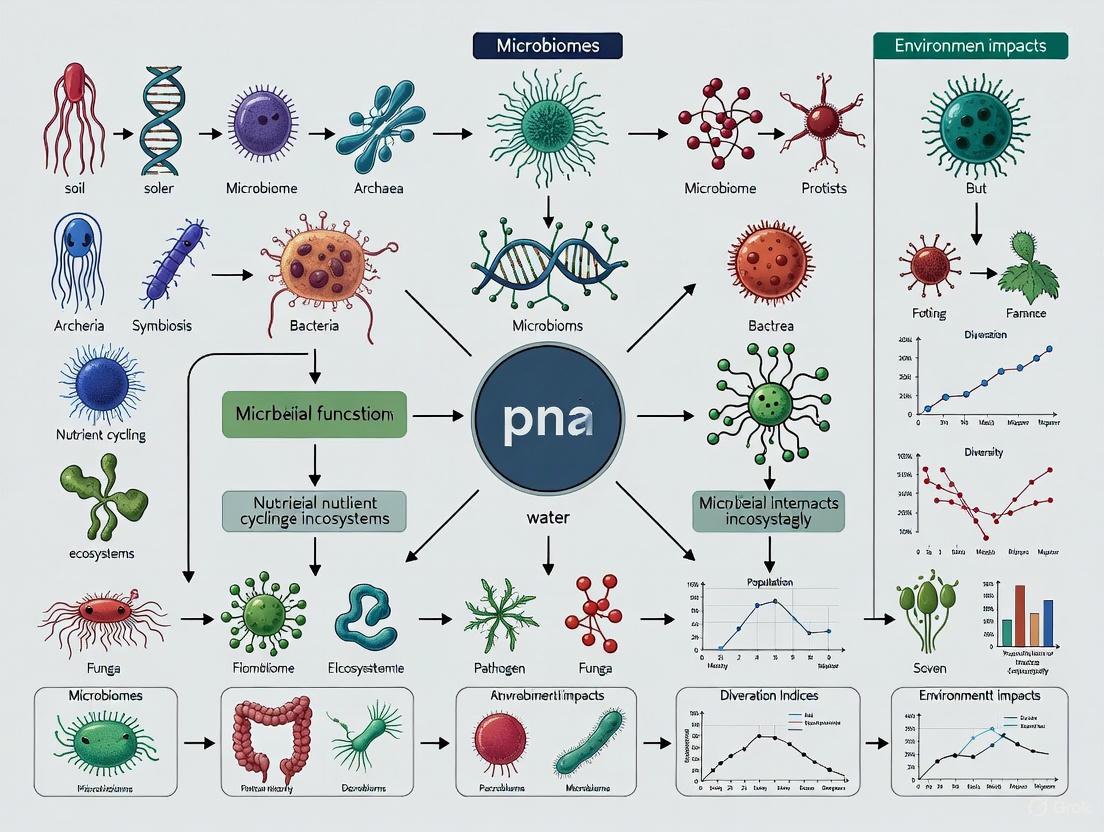
This article synthesizes current research on microbial diversity across global ecosystems, from deep oceans to internal tree tissues, highlighting its foundational role in ecological stability and carbon cycling.
Microbial Diversity in Ecosystems: Unveiling the Unseen Drivers of Planetary Health and Drug Discovery
Abstract
This article synthesizes current research on microbial diversity across global ecosystems, from deep oceans to internal tree tissues, highlighting its foundational role in ecological stability and carbon cycling. It critically examines methodological advances in culturing and metagenomics that are overcoming historical bottlenecks, enabling the discovery of novel microbial functions and metabolites. For researchers and drug development professionals, we provide a comparative analysis of techniques for accurate diversity measurement and explore the direct links between ecosystem microbial evenness, functional redundancy, and bioprospecting success. The content concludes with emerging conservation frameworks and data-driven strategies to harness microbial biodiversity for addressing antibiotic resistance and climate change.
The Unseen World: Exploring Microbial Diversity from Deep Oceans to Plant Biomes
Global Overturning Circulation as a Microbial Conveyor Belt in the South Pacific
The global overturning circulation acts as a planetary conveyor belt, redistributing heat, nutrients, and carbon as dense waters sink around Antarctica, spread through the deep ocean for centuries, and eventually rise elsewhere [1]. While its physical and chemical role is well-established, its function as a microbial conveyor belt structuring marine ecosystems has remained less clear. A groundbreaking study in the South Pacific Ocean reveals that this circulation system plays a pivotal role in partitioning the ocean into distinct microbial biomes [2]. This organization has profound implications for global carbon cycling and microbial diversity patterns, offering a new framework for understanding how ocean circulation structures life on a planetary scale.
This whitepaper synthesizes recent research demonstrating how overturning circulation creates spatially distinct microbial communities with specialized functional adaptations. By integrating genomic data with physical oceanography, we can now delineate microbial taxonomic and functional boundaries across the South Pacific, revealing a complex seascape where water mass history, physicochemical characteristics, and circulation patterns collectively shape microbial life [3]. Understanding these linkages is increasingly urgent as climate change threatens to alter global overturning circulation, with potentially dramatic consequences for microbial ecosystem functioning and their role in regulating atmospheric CO₂ [2] [1].
Core Mechanisms: How Circulation Structures Microbial Ecosystems
The Physical Driver: Global Overturning Circulation
The global overturning circulation is fundamentally driven by differences in water temperature and salinity, which affect density [2]. Unlike wind-driven surface currents that reach approximately 500 meters depth, this density-driven circulation operates throughout the entire water column [2]. In the Southern Ocean, particularly around Antarctica, the formation of Antarctic Bottom Water (AABW) initiates this conveyor belt system. This dense water sinks and spreads northward through the abyssal Pacific, gradually mixing with other water masses over centuries [1].
The ventilation age of water masses—the time since they were last at the surface—emerges as a critical factor influencing microbial community composition and functional potential [3]. As water masses age during their journey through the deep ocean, they develop distinct physicochemical characteristics including temperature, pressure, nutrient levels, and oxygen concentrations, creating specialized environments that select for microbial communities with matching adaptations [2].
Microbial Community Response and Stratification
Research along the GO-SHIP P18 line in the South Pacific has revealed that microbial genomes cluster into six spatially distinct cohorts that align with circulatory features and depth zones [2] [1]. These cohorts correspond to three major water masses—Antarctic Bottom Water, Upper Circumpolar Deep Water, and ancient Pacific Deep Water—plus three depth-related zones [2].
A striking finding is the prokaryotic phylocline, where microbial diversity increases sharply approximately 300 meters (1,000 feet) below the ocean surface [2]. This layer marks a transition from low-diversity surface waters to the rich microbial communities of the deep ocean, with diversity remaining high to full ocean depth, dipping only slightly in highly aged water [1] [3]. This pattern contrasts with traditional views of biodiversity declining with depth, highlighting the unique selective environment of the deep ocean.
Table 1: Characteristics of Major Microbial Cohorts in the South Pacific
| Microbial Cohort | Depth/Water Mass Association | Key Environmental Characteristics | Distinct Microbial Adaptations |
|---|---|---|---|
| Surface Cohort | Surface waters (0-500m) | High light, variable nutrients, oxygen-rich | Light harvesting, iron acquisition, photoprotection [2] |
| Prokaryotic Phylocline | ~300-1000m | Rapid density change, declining light | Transitional community, sharply increasing diversity [2] |
| Antarctic Bottom Water (AABW) | Deep, recently-formed water | Cold, high-pressure, recently ventilated | Membrane fluidity maintenance, oxidative stress resistance, rapid genetic exchange [2] [1] |
| Upper Circumpolar Deep Water | Intermediate depth | Moderate temperature, oxygenated | Mixed metabolic strategies [2] |
| Ancient Pacific Deep Water | Deep, slow-circulating water | Low oxygen, minimal nutrients, aged >1000 years | Anaerobic metabolism, breakdown of complex carbon compounds [2] |
Functional Mapping of Microbial Metabolic Potential
Beyond taxonomic composition, the research team mapped the functional potential of microbial communities across the South Pacific transect, identifying ten functional zones based on the presence of key metabolic genes [2]. These zones correspond to specific oceanographic features such as upwelling regions, nutrient gradients, and oxygen minimum zones, demonstrating how functional capacity tracks environmental gradients structured by circulation.
The functional mapping reveals a clear transition from light-dependent processes in surface waters to stress response and nutrient-scavenging strategies in deep waters. Surface zones were rich in genes for light harvesting, iron acquisition, and photoprotection—traits essential for life in the sunlit upper ocean [2]. In contrast, deeper zones featured genes for breaking down complex organic molecules, surviving low oxygen, and enduring environmental stress [2].
Table 2: Key Functional Genes and Their Distribution Across Depth Zones
| Functional Gene Category | Specific Functions | Primary Depth Distribution | Ecological Role |
|---|---|---|---|
| Photosynthesis & Light-Related | Light harvesting, photoprotection | Surface waters (0-200m) | Primary production, sun damage protection [2] |
| Nutrient Acquisition | Iron uptake, siderophore production | Surface waters (0-500m) | Overcoming nutrient limitation [2] |
| Stress Response | Oxidative stress resistance, membrane fluidity maintenance | Antarctic Bottom Water | Adaptation to high pressure, cold [2] |
| Carbon Metabolism | Complex carbon compound breakdown | Ancient deep waters | Energy extraction from recalcitrant organic matter [2] |
| Anaerobic Metabolism | Low-oxygen pathways | Oxygen-minimum zones, ancient waters | Survival in hypoxic conditions [2] |
The functional specialization of microbial communities according to water mass properties has crucial implications for carbon cycling. Microbes determine the amount of carbon that is recycled or stored long-term in the deep ocean [1]. The discovery that different microbial cohorts possess distinct metabolic capabilities for processing organic matter suggests that alterations in circulation patterns could fundamentally shift the balance between carbon recycling and sequestration.
Experimental Protocols and Methodologies
Field Sampling Design and Approach
The foundational research utilized an extensive sampling strategy along the GO-SHIP P18 line in the South Pacific, collecting over 300 water samples from the surface to the seafloor along a transect from Easter Island to Antarctica [2] [1]. This approach enabled comprehensive coverage of different water masses across their full geographic range.
Sampling followed established hydrographic protocols, retrieving water samples at standard depths using CTD rosettes equipped with Niskin bottles [4]. Concurrent physical measurements including temperature, salinity, pressure, and dissolved oxygen were collected to characterize water mass properties. Additional water samples were collected for nutrient analysis (nitrate, phosphate, silicate) and determination of water mass age using tracer methods [2] [1].
Molecular Analysis Techniques
Advanced genomic techniques were employed to characterize microbial diversity and functional potential. The research utilized both metagenomic sequencing and metabarcoding approaches to capture the full spectrum of microbial life [2].
For taxonomic profiling, researchers used molecular fingerprinting techniques targeting highly conserved genes—the 16S rRNA gene for prokaryotes (bacteria and archaea) and the 18S rRNA gene for eukaryotes [2]. This approach enabled identification of tens of thousands of microbial species across the transect. Additionally, shotgun metagenomic sequencing allowed reconstruction of more than 300 microbial genomes, providing insights into the functional capabilities of different microbial cohorts [2].
Denaturing Gradient Gel Electrophoresis (DGGE), a technique that separates PCR-generated DNA fragments according to their sequence, has been used in related microbial ecology studies to profile community structure and detect changes in response to environmental conditions [5] [6]. While this method has limitations common to PCR-based techniques, it effectively reveals shifts in microbial community composition [5].
Data Integration and Analysis
The power of this research lies in integrating disparate data types. Genomic data were paired with physical and chemical measurements to establish correlations between water mass properties and microbial community characteristics [2]. Multivariate statistical analyses identified significant associations between environmental parameters and microbial distributions.
Bioinformatic analysis included reconstruction of metabolic pathways from metagenomic data, enabling predictions about the functional potential of different microbial cohorts [2]. This approach allowed researchers to identify key metabolic genes and map their distribution across water masses, creating a comprehensive picture of the microbial functional seascape.
Research Reagent Solutions and Essential Materials
Table 3: Essential Research Reagents and Equipment for Ocean Microbial Ecology Studies
| Category | Specific Items | Function/Purpose |
|---|---|---|
| Field Sampling | CTD Rosette with Niskin bottles | Depth-stratified water collection with simultaneous physical parameter measurement [2] |
| Sterile filters (various pore sizes) | Concentration of microbial biomass from large water volumes [2] | |
| Liquid nitrogen or -80°C freezer | Preservation of samples for nucleic acid analysis [2] | |
| Molecular Biology | DNA extraction kits (e.g., MoBio Soil Ultra clean DNA kit) | Extraction of high-quality DNA from environmental samples [5] |
| PCR reagents and primers (16S/18S rRNA genes) | Amplification of taxonomic marker genes for diversity analysis [2] [5] | |
| Shotgun metagenomic sequencing reagents | Comprehensive analysis of genomic content and functional potential [2] | |
| Bioinformatics | High-performance computing resources | Processing and analysis of large genomic datasets [2] |
| Python with scientific stack (NumPy, SciPy, pandas) | Data analysis and visualization [4] | |
| Specialized oceanographic tools (e.g., sea-py, python-gsw) | Ocean-specific calculations and data handling [4] |
Implications for Microbial Diversity Research
The discovery that global overturning circulation structures microbial communities has transformative implications for understanding marine microbial diversity. Rather than a homogeneous soup, the ocean contains distinct microbial biomes shaped by physical circulation patterns [1]. This paradigm shift echoes the Constrained-Disorder Principle (CDP) proposed for understanding gut microbial diversity, which emphasizes the significance of maintaining variability within certain boundaries to sustain ecosystem stability and promote health [7].
The functional specialization observed across different water masses demonstrates how microbial communities adapt to their specific environmental conditions. In Antarctic Bottom Water, microbes carry hallmarks of rapid genetic exchange, suggesting horizontal gene transfer may help them adapt as they sink into the deep ocean [1]. In contrast, ancient deep water communities possess genes enabling life in low oxygen environments and the breakdown of complex, low-energy carbon compounds [2].
This research provides a crucial baseline for how microbial ecosystems are organized under current ocean conditions [2]. As climate change progresses, alterations in global overturning circulation could fundamentally reshape these microbial biomes, with unknown consequences for global carbon cycling and ecosystem functioning. The detailed mapping of current distributions enables researchers to track future changes and predict their biogeochemical consequences.
The connection between microbial community structure and carbon cycling is particularly significant. Microbes are the engines of the ocean's carbon cycle—they convert carbon dioxide into organic compounds (carbon fixing), recycle nutrients, and help trap carbon in the deep sea (carbon sequestration) [2]. Understanding how their communities are structured by ocean circulation is therefore essential for predicting how climate change might alter these processes [2].
The research synthesized in this whitepaper demonstrates that global overturning circulation functions as a microbial conveyor belt, partitioning the South Pacific into distinct microbial ecosystems with specialized taxonomic compositions and functional capabilities. The identification of six microbial cohorts and ten functional zones reveals a previously unrecognized level of organization in marine microbial communities, structured by the interplay between water mass properties, circulation patterns, and microbial adaptation.
These findings fundamentally advance our understanding of microbial diversity in marine ecosystems, highlighting the importance of physical transport processes in creating and maintaining biogeographic patterns. As climate change alters global overturning circulation, the distribution and function of these microbial communities will likely shift, with potentially significant consequences for global carbon cycling and climate regulation.
The research approach exemplified here—integrating genomic data with physical oceanography—provides a powerful framework for future studies of microbial ecology across diverse ecosystems. By revealing the hidden structure of microbial life in the deep ocean, this work opens new avenues for understanding and predicting how climate change will affect Earth's largest ecosystem.
The wood of living trees, representing Earth's largest reservoir of biomass and storing over 300 gigatons of carbon, has long been an overlooked habitat for microbial life [8] [9]. Recent pioneering research has revealed that a single living tree hosts approximately one trillion bacteria within its woody tissues, challenging previous assumptions about the sterility of internal tree structures [8] [10]. This discovery establishes trees as complex holobionts—integrated ecological units comprising the host and its specialized microbiome—with profound implications for understanding tree physiology, forest ecology, and global biogeochemical cycles [11] [10].
The microbial communities within trees are not uniformly distributed but are distinctly partitioned between heartwood (the inner, non-living wood) and sapwood (the outer, conducting tissue) [11] [8]. Each compartment maintains a unique microbiome with minimal similarity to other plant tissues such as roots, bark, leaves, or leaf litter, representing specialized ecological niches that have potentially co-evolved with their tree hosts [11] [9]. This technical guide provides an in-depth analysis of these partitioned microbial communities, their functional significance, and the methodologies required for their investigation.
Quantitative Characterization of Wood Microbiomes
Core Quantitative Findings
Table 1: Core quantitative findings from recent studies on tree wood microbiomes.
| Parameter | Findings | Research Context |
|---|---|---|
| Bacterial Abundance | Approximately 1 trillion bacteria per tree's woody tissues [8] [9] | Living trees across 16 species in northeastern USA [11] [8] |
| Spatial Partitioning | Distinct microbial communities in heartwood (innermost 5 cm) vs. sapwood (outermost 5 cm) [11] | Analysis of >160 living trees [11] |
| Community Overlap | Minimal similarity between heartwood and sapwood microbiomes, and between wood microbiomes and other plant tissues [11] [10] | Comparison with roots, bark, leaves, and leaf litter [11] |
| Oxygen Requirements | Heartwood dominated by anaerobic microbes; Sapwood dominated by aerobic microbes [8] [9] | Functional characterization of microbial communities [8] |
| Taxonomic Variation | Microbial communities varied consistently across different tree species (e.g., sugar maple vs. pine) [8] [9] | Survey of 16 tree species [8] |
Comparative Analysis of Heartwood and Sapwood Microbiomes
Table 2: Comparative analysis of microbial communities in heartwood versus sapwood compartments.
| Characteristic | Heartwood Microbiome | Sapwood Microbiome |
|---|---|---|
| Physical Location | Innermost 5 cm of wood tissue [11] | Outermost 5 cm of wood tissue [11] |
| Environmental Conditions | Low oxygen, higher secondary compounds [8] [10] | Higher oxygen, conductive tissue [8] |
| Dominant Microbial Types | Specialized archaea and anaerobic bacteria [11] [10] | Communities dominated by aerobic bacteria [8] [9] |
| Functional Specialization | Drivers of specialized biogeochemical processes [11] [10] | Likely involvement in nutrient exchange and metabolism [8] |
| Ecological Distinctness | Emerges as a particularly unique ecological niche [11] [10] | Distinct from heartwood but less unique than heartwood compared to external environments [11] |
| Community Drivers | pH value and water content (based on deadwood studies) [12] | pH value and water content (based on deadwood studies) [12] |
Research Methodologies for Wood Microbiome Characterization
Sample Collection and Processing
The investigation of endophytic wood microbiomes requires specialized methodologies to overcome the challenges of accessing microbial communities within dense woody tissues. The protocol developed by Arnold et al. involved comprehensive sampling of over 160 living trees across 16 species in the northeastern United States, ensuring ecological representation and statistical power [11] [8].
The sample processing methodology represents a significant technical advancement, requiring over one year of method development to achieve high-quality DNA extraction [8] [9]. The multi-step protocol encompasses:
- Sample Preservation: Immediate freezing of wood cores after extraction to preserve microbial community structure and nucleic acid integrity [9]
- Physical Disruption: Extensive mechanical disruption through freezing, smashing, grinding, and beating wood samples to break down lignocellulosic structures and release intracellular microbial components [8] [9]
- Nucleic Acid Extraction: Optimization of DNA extraction protocols to provide the high-quality DNA required for subsequent quantitative and qualitative microbiome characterization [8]
- Compartmental Separation: Careful separation of heartwood (innermost 5 cm of wood tissue) from sapwood (outermost 5 cm of wood tissue) to enable compartment-specific microbiome analysis [11]
Microbial Community Analysis
The characterization of wood microbiomes employs sophisticated molecular and bioinformatic approaches:
- DNA Sequencing: Amplification and sequencing of taxonomic marker genes (e.g., 16S rRNA for bacteria and archaea) to determine community composition [10]
- Quantitative Analysis: Implementation of both quantitative and qualitative microbiome characterization methods to determine absolute abundance and functional potential [11]
- Community Ecology Metrics: Calculation of alpha diversity (within-sample diversity), beta diversity (between-sample diversity), and phylogenetic structure to elucidate ecological patterns [13] [14]
- Functional Inference: Prediction of metabolic capabilities through phylogenetic placement and reference database comparison [11] [10]
Figure 1: Experimental workflow for characterizing wood microbiomes, from sample collection through data analysis [11] [8] [9].
Data Visualization Approaches for Microbiome Analysis
The analysis of microbiome data presents unique challenges due to its high dimensionality, compositionality, and sparsity [13] [14]. Effective visualization is essential for interpreting complex community patterns and communicating findings.
Standard Visualization Techniques
Table 3: Data visualization approaches for microbiome analysis, adapted from Bitesize Bio [13].
| Analysis Type | Visualization Method | Use Case | Considerations |
|---|---|---|---|
| Alpha Diversity (within-sample) | Box plots with jitters [13] | Comparing diversity between groups | Show distribution of samples; Add individual data points |
| Alpha Diversity (within-sample) | Scatter plots [13] | Examining all samples individually | Visualize overall distribution and outliers |
| Beta Diversity (between-sample) | Principal Coordinates Analysis (PCoA) [13] | Visualizing overall variation between groups | Reduced dimensionality; Color-code groups; Avoid overplotting |
| Beta Diversity (between-sample) | Dendrograms or Heatmaps [13] | Comparing individual samples | Clear visualization of sample relationships |
| Relative Abundance | Stacked Bar Charts [13] [15] | Comparing taxonomic distribution between groups | Aggregate rare taxa to avoid overcrowding |
| Relative Abundance | Heatmaps [13] | Comparing all samples | Use with clustering; Shows abundance patterns |
| Core Microbiome | UpSet plots [13] | Showing taxa intersections between >3 groups | More effective than Venn diagrams for multiple groups |
| Core Microbiome | Venn diagrams [13] | Showing taxa intersections between 2-3 groups | Becomes difficult to interpret with >3 groups |
| Microbial Interactions | Network plots [13] | Visualizing correlations between ASVs/OTUs | Show complex interaction networks |
| Microbial Interactions | Correlograms [13] | Displaying correlation matrices | Heatmap-style correlation visualization |
Advanced Visualization Framework
The "Snowflake" visualization method represents an advanced approach for visualizing microbiome abundance tables as multivariate bipartite graphs, displaying every observed OTU/ASV without aggregation [15]. This method:
- Preserves complete information without classification-related data loss or neglect of less abundant taxa [15]
- Enables identification of sample-specific taxa versus the core microbiome through topological structure exploration [15]
- Incorporates hierarchical taxonomic structure and additional analytical information (e.g., diversity metrics, metadata) [15]
- Provides a comprehensive overview of microbiome composition while maintaining fine-grained detail [15]
Figure 2: Conceptual diagram of the distinct microbial communities in sapwood versus heartwood, showing minimal overlap between compartments [11] [8] [10].
Essential Research Reagents and Materials
Table 4: Essential research reagents and materials for wood microbiome studies.
| Reagent/Material | Function/Application | Technical Considerations |
|---|---|---|
| DNA Extraction Kits (optimized for wood) | Isolation of high-quality microbial DNA from lignocellulosic matrices [8] [9] | Must overcome inhibitors in wood tissue; Requires extensive optimization [8] |
| PCR Reagents for 16S rRNA amplification | Amplification of taxonomic marker genes for community profiling [10] | Must account for potential plant host DNA contamination |
| Freezing Equipment (-80°C) | Sample preservation immediately after collection [9] | Critical for maintaining community structure integrity |
| Mechanical Disruption Equipment | Grinding, beating, and smashing wood tissues to release microbes [8] [9] | Specialized protocols required for dense woody material |
| Sequencing Kits (Illumina, PacBio) | High-throughput sequencing of amplified gene regions [10] | Choice affects read length and depth for community analysis |
| Bioinformatic Pipelines (QIIME 2, DADA2) | Processing raw sequence data into OTUs/ASVs [15] | Critical for accurate taxonomic classification and diversity estimates |
| Sterile Wood Corers | Aseptic collection of heartwood and sapwood samples [11] | Prevents cross-contamination between compartments and trees |
Implications and Future Research Directions
The discovery of partitioned microbiomes within tree wood establishes a new frontier in environmental microbiology with far-reaching implications for multiple scientific disciplines. Understanding these internal ecosystems provides crucial insights into trees' broader biogeochemical functions and their potential contributions to forest carbon cycling and nutrient exchange processes in previously unanticipated ways [8].
The finding that different tree species host distinct microbial communities—with sugar maples, for instance, housing different communities than pines—suggests potential co-evolution between trees and their microbial symbionts [8] [9]. This supports the holobiont concept of plants as integrated ecological units comprising the host and its associated microbiome [11] [10]. From a pharmaceutical perspective, the wood microbiome represents a massive reservoir of unexplored biodiversity that could yield novel compounds with therapeutic applications [8].
Future research directions should prioritize:
- Global sampling of wood microbiomes across different geographical regions and climate zones [8]
- Functional characterization through metatranscriptomic and metaproteomic approaches to elucidate microbial activities [11] [10]
- Temporal studies tracking microbiome succession and dynamics across seasons and tree developmental stages
- Experimental manipulations to determine how these microbial communities influence tree health, disease resistance, and environmental stress responses [9]
- Conservation efforts to document these microbial communities before climate change potentially alters them irreversibly [8]
The wood microbiome inside living trees represents one of the last vast, widespread habitats to remain largely unexplored, offering exciting opportunities for discovery at the intersection of microbiology, forestry, ecology, and biotechnology [8] [9].
Microbial Diversity as a Driver of Ecosystem Multifunctionality in Lakes and Soils
Ecosystem multifunctionality, defined as the capacity of an ecosystem to simultaneously maintain multiple biological or biogeochemical functions, is a cornerstone of ecosystem services and stability [16]. In recent years, the pivotal role of soil and sediment microbial communities in driving these multiple functions has become increasingly apparent. This technical review examines the mechanistic relationships between microbial diversity—encompassing taxonomic, phylogenetic, and functional dimensions—and ecosystem multifunctionality across lacustrine and terrestrial environments. Within the broader context of microbial ecology research, understanding these relationships is critical for predicting ecosystem responses to anthropogenic pressures and for informing restoration strategies aimed at preserving ecosystem services in a rapidly changing global environment.
Key Evidence Linking Microbial Diversity to Multifunctionality
Empirical Evidence from Diverse Ecosystems
Recent research across contrasting ecosystems has consistently demonstrated that microbial diversity is a significant predictor of ecosystem multifunctionality, though the strength and nature of this relationship vary with environmental context.
Table 1: Key Studies on Microbial Diversity and Ecosystem Multifunctionality
| Ecosystem Type | Key Finding | Dominant Microbial Drivers | Reference |
|---|---|---|---|
| Lake Water-Level-Fluctuating Zone (WLFZ) | Rare bacterial taxa drive multifunctionality during seasonal water level fluctuations. | Conditionally rare and always rare taxa; Actinobacteriota, Methylomirabilota | [16] |
| Temperate Forest | Structural attributes are optimal predictors; fungal diversity correlates positively, bacterial diversity negatively with multifunctionality. | Soil fungal diversity, plant diversity, stand structure | [17] |
| Anthropogenically Stressed Soils | Diversity loss reduces stability of ecosystem processes; community characteristics outweigh α-diversity. | Total microbial biomass, specific functional groups (e.g., nitrifiers) | [18] |
| Alpine Degraded Grassland | Restoration enhances multifunctionality via bacterial diversity and network stability. | Bacterial α-diversity and community composition | [19] |
| Experimental Soil Microcosms | Diversity decrease reduces CO₂ emission by up to 40% and shifts C source decomposition. | Microbial diversity for recalcitrant carbon decomposition | [20] |
In the water-level-fluctuating zone (WLFZ) of Poyang Lake, a positive correlation was observed between soil bacterial diversity and ecosystem multifunctionality as the soil transitioned from drought to flooding states [16]. Notably, rare bacterial sub-communities demonstrated a stronger correlation with multifunctionality than the overall bacterial community, with random forest regression identifying them as the optimal predictor variable. The phyla Actinobacteriota and Methylomirabilota were particularly significant for predicting multifunctionality under drought and flooding states, respectively [16].
In temperate forests, the relationship between microbial diversity and multifunctionality exhibits greater complexity. A recent study found that while soil fungal diversity correlated positively with multifunctionality, a surprising negative correlation was observed with soil bacterial diversity [17]. This suggests that the contributions of different microbial kingdoms to ecosystem functioning are not uniform and may involve trade-offs. Furthermore, structural attributes of the forest stand were identified as the optimal predictors of multifunctionality, indicating that aboveground and belowground diversity interact to determine overall ecosystem performance [17].
Under anthropogenic stress, the relationship between diversity and function becomes crucial for ecosystem stability. Experimental manipulations of bacterial diversity demonstrated that diversity loss resulted in reduced stability of nearly all measured ecosystem processes [18]. However, when all potential bacterial drivers were evaluated, α-diversity per se was often outperformed as a predictor by other community characteristics such as total microbial biomass, 16S gene abundance, and the abundances of specific prokaryotic taxa and functional groups (e.g., nitrifying taxa) [18]. This suggests that while bacterial α-diversity may serve as a useful indicator of soil ecosystem function and stability, other characteristics of bacterial communities may provide stronger statistical predictions and better reflect the underlying biological mechanisms.
The Critical Role of Rare Taxa
The disproportionate contribution of rare microbial taxa to ecosystem multifunctionality represents a paradigm shift in our understanding of biodiversity-ecosystem function relationships. In the WLFZ of Poyang Lake, the diversity of always rare taxa significantly influenced multifunctionality during drought conditions, while conditionally rare taxa were more important during flooding states [16]. These rare taxa, despite their low abundance, possess overwhelming functional diversity and are highly sensitive to environmental disturbances, allowing them to perform specialized functions under specific conditions [16]. Their phylogenetic patterns and response thresholds differ from those of abundant taxa, potentially enabling them to maintain and stabilize community functions through niche differentiation.
Methodological Approaches and Experimental Protocols
Field Sampling and Environmental Characterization
Standardized field sampling approaches are critical for comparative assessments of microbial diversity and ecosystem multifunctionality.
Lake Sediment Coring Protocol:
- Sample Collection: Collect sediment cores using a gravity corer or similar device. For vertical variation studies, section cores at regular intervals (e.g., 0.5 cm or 1 cm) to profile microbial communities with depth [21].
- Sample Preservation: Immediately after collection, divide each sample into subsamples for different analyses:
- For molecular analysis: preserve at -80°C
- For physicochemical analysis: air-dry or store at 4°C
- For process rate measurements: process fresh within 24-48 hours
- Environmental Variables: Measure key physicochemical parameters including pH, salinity, soil moisture, total organic carbon (TOC), total nitrogen (TN), available phosphorus (AP), available potassium (AK), and sulfur (S) concentrations [22] [21].
Water-Level Fluctuating Zone Sampling:
- Seasonal Monitoring: Conduct seasonal surveys across multiple years to capture temporal variation corresponding to water level changes [16].
- Multi-site Design: Establish sampling sites along elevation gradients that experience different flooding/drying regimes.
- Ecosystem Function Assessment: Measure multiple variables representing different ecosystem functions including nutrient cycling rates, soil enzyme activities, organic matter decomposition, and gas fluxes [16].
Molecular Characterization of Microbial Communities
High-throughput amplicon sequencing has become the standard approach for characterizing microbial communities in diversity-function studies.
Table 2: Essential Research Reagents and Platforms for Microbial Ecology
| Research Reagent/Platform | Function/Application | Key Details | |
|---|---|---|---|
| PowerSoil DNA Kit (MP Biomedicals) | DNA extraction from soil/sediment samples | Effective for difficult soils; removes PCR inhibitors | [23] |
| 515F/806R Primers | Amplification of bacterial 16S rRNA V4 region | Standard for bacterial community analysis | [18] |
| 341F/806R Primers | Amplification of bacterial/archaeal 16S V3-V4 | Alternative broader specificity | [24] |
| Illumina MiSeq/NovaSeq | High-throughput amplicon sequencing | Standard platform for community profiling | [22] [23] |
| SILVA Database | Taxonomic classification of sequences | Curated ribosomal RNA database | [23] |
| QIIME2 | Bioinformatic analysis pipeline | From raw sequences to diversity metrics | [23] [24] |
Standard 16S rRNA Amplicon Sequencing Workflow:
- DNA Extraction: Use commercial kits such as the PowerSoil DNA Kit following manufacturer's protocols with minor modifications for specific soil types [23].
- PCR Amplification: Amplify the hypervariable regions of the 16S rRNA gene (typically V3-V4 or V4) using primer pairs such as 341F/806R or 515F/806R [18] [24].
- Library Preparation and Sequencing: Prepare libraries following Illumina protocols and sequence on MiSeq or NovaSeq platforms to obtain sufficient sequencing depth (typically 50,000-100,000 reads per sample) [22].
- Bioinformatic Processing:
- Process raw sequences through QIIME2 or similar pipelines
- Perform quality filtering, denoising, and chimera removal using DADA2 or Deblur
- Cluster sequences into amplicon sequence variants (ASVs) or operational taxonomic units (OTUs)
- Assign taxonomy using reference databases (SILVA, Greengenes) [23] [24]
Quantifying Ecosystem Multifunctionality
Two primary approaches are used to quantify ecosystem multifunctionality:
Averaging Approach:
- Select multiple ecosystem functions (typically 8-15) representing key processes (e.g., nutrient cycling, decomposition, biomass production).
- Standardize each function to a common scale (0-1) by dividing by the maximum value observed.
- Calculate multifunctionality as the average of standardized functions for each sample [19].
Threshold Approach:
- Standardize functions as above.
- For each sample, count the number of functions exceeding a certain threshold (e.g., 50% of maximum function).
- Repeat across multiple thresholds to assess robustness [17].
Diversity Manipulation Experiments
To establish causal relationships between microbial diversity and ecosystem function, researchers employ experimental manipulations:
Dilation-to-Extinction Approach:
- Prepare serial dilutions of a native soil microbial community in sterile buffer.
- Use these dilutions to inoculate sterilized soil microcosms.
- Establish a gradient of microbial diversity while maintaining similar environmental conditions.
- Measure ecosystem processes across the diversity gradient [18] [20] [25].
This method was applied in a study evaluating the role of bacterial diversity under anthropogenic stress, where dilutions created richness gradients ranging from 15 to 280 operational taxonomic units (OTUs) [18] [25].
Conceptual Framework and Visualization
The relationship between microbial diversity and ecosystem multifunctionality involves complex interactions between community structure, environmental factors, and multiple ecosystem processes. The following diagram illustrates the key components and their relationships:
Diagram 1: Conceptual framework illustrating how microbial diversity drives ecosystem multifunctionality through multiple pathways, with environmental factors acting as moderators. Rare taxa (dashed line) play a disproportionately important role relative to their abundance.
The experimental workflow for establishing causal relationships between microbial diversity and ecosystem functioning typically follows a structured approach, as visualized below:
Diagram 2: Experimental workflow for manipulating microbial diversity and assessing its functional consequences, integrating molecular analyses with ecosystem function measurements.
The evidence synthesized in this review unequivocally demonstrates that microbial diversity is a critical driver of ecosystem multifunctionality across lacustrine and terrestrial ecosystems. However, the relationship is complex and context-dependent, influenced by environmental factors, community assembly processes, and the specific facets of biodiversity considered. Several key insights emerge from recent research:
First, different components of microbial communities contribute disproportionately to multifunctionality. While abundant taxa often maintain core functions, rare taxa provide specialized functional capabilities that become particularly important under changing environmental conditions [16]. Second, the stability of ecosystem functions in the face of anthropogenic stress is strongly linked to microbial diversity, with diverse communities exhibiting greater resistance and resilience [18]. Third, restoration practices that enhance microbial diversity, such as strategic vegetation planting in degraded grasslands, can effectively promote the recovery of multifunctionality [19].
Future research should prioritize several key directions: (1) moving beyond correlation to establish causal mechanisms through manipulative experiments; (2) integrating multiple dimensions of diversity, including functional genes and metabolic capabilities; (3) exploring the interplay between aboveground and belowground diversity in determining ecosystem multifunctionality; and (4) translating mechanistic understanding into predictive models that can forecast ecosystem responses to global change. As climate change and human activities continue to impact natural ecosystems, preserving microbial diversity represents a crucial strategy for maintaining the multiple functions that sustain ecosystem services.
In the exploration of microbial life, a fundamental paradigm has emerged: the environment dictates function. Microbial communities are the unparalleled engineers of Earth's biogeochemical processes, and their metabolic potential is not randomly distributed but is meticulously structured along environmental gradients such as salinity, oxygen availability, pH, and nutrient content [26] [27]. This functional zoning, where distinct metabolic capabilities are enriched in specific environmental niches, forms a core principle in understanding the diversity of microbial life in ecosystems. The genetic composition of microbial communities, which codes for their metabolic machinery, demonstrates predictable shifts in response to these gradients, often more prominently than their taxonomic composition does [26]. This article delves into the mechanisms of this structuring, presenting evidence from diverse ecosystems, summarizing key quantitative data, and providing a toolkit for researchers to investigate these critical relationships further. Understanding this zoning is paramount, as it allows scientists to predict ecosystem responses to environmental change and harness microbial capabilities in fields from drug development to bioremediation.
Evidence of Functional Zoning Across Ecosystems
Marine Sediments: Gradients of Salinity and Oxygen
The Baltic Sea, with its pronounced environmental gradients, serves as an ideal model system for studying functional zoning. A large-scale metagenomic study of 59 stations spanning over 1,100 km revealed that the composition of microbial functional genes was primarily structured by salinity and oxygen concentration, while the carbon-to-nitrogen (C:N) ratio specifically influenced pathways related to nutrient transport and carbon metabolism [26].
Table 1: Key Environmental Drivers and Functional Responses in Baltic Sea Sediments [26]
| Environmental Gradient | Impact on Microbial Functional Gene Composition |
|---|---|
| Salinity | A primary driver of overall functional gene composition; lower salinity limits specific metabolic capabilities. |
| Oxygen | Oxygen-deficient areas (dead zones) showed significantly different gene profiles compared to oxic sediments. |
| C:N Ratio | Specifically shaped metabolic pathways for nutrient transport and carbon metabolism. |
A critical finding was that the change in functional genes across these gradients was more pronounced than the change in microbial taxonomy, indicating that diverse microbial taxa can fulfill similar metabolic roles, and that the environment selects for function directly [26]. This highlights a level of functional redundancy and adaptation that is central to ecosystem resilience.
Estuarine and Coastal Waters: Salinity and Nutrient Dynamics
Estuaries represent another classic example of steep environmental gradients, where freshwater from rivers mixes with saline ocean water. Research in the East China Sea (ECS) demonstrated that distinct water masses, defined by their temperature and salinity, harbored microbial communities with different functional potentials [28]. GeoChip analysis revealed that:
- Microbial communities in surface water masses had a higher proportion of genes involved in starch metabolism (amyA, nplT).
- In contrast, bottom water masses enriched genes for chitin degradation, nitrogen fixation (nifH), and ammonification (gdh) [28]. These spatial variations were significantly correlated with salinity, temperature, and chlorophyll a, underscoring the influence of hydrologic conditions on metabolic potential [28].
Engineered and Impacted Ecosystems: pH and Electrical Conductivity
Functional zoning is equally evident in human-influenced environments. In wastewater treatment plants (WWTPs) with Carrousel oxidation ditch systems, functional zones are deliberately created. Studies show that the anaerobic, anoxic, and oxic zones host microbial communities with distinct compositions, all geared towards specific stages of nutrient removal, such as nitrification and denitrification [29]. Environmental variables like water temperature and influent chemical oxygen demand (COD) significantly correlate with the abundance of key functional genera like Nitrospira and Dechloromonas [29].
Furthermore, extreme environments created by industrial activity offer stark examples. Weathering of ferrous slag creates a powerful gradient of pH (8.0–12.4) and ionic concentration. In these harsh conditions, microbial diversity plummets, and the community becomes dominated by specialized, alkali-tolerant taxa such as Serpentinomonas and Meiothermus [30]. Metagenomic analysis revealed that these organisms possess unique metabolic adaptations, including cation/H+ antiporters and specific pathways for carbon fixation and sulfur oxidation, allowing them to not just survive but prosper in these niches [30]. Similarly, in subtropical estuaries, soil electrical conductivity (EC) was identified as the most influential factor shaping microbial functional gene composition, directly affecting ecosystem multifunctionality [31].
Methodologies for Investigating Functional Zoning
Studying the relationship between environmental gradients and microbial metabolic potential requires a combination of precise field sampling and advanced molecular techniques. The following workflow and detailed protocols outline a standardized approach used in contemporary research.
Field Sampling and Environmental Data Collection
Sediment Sampling: In marine and wetland studies, sediment cores are typically collected using a Kajak gravity corer or similar device. The top 0-2 cm layer, which is the most microbially active, is sliced off, homogenized, and stored immediately at -20°C until DNA extraction [26]. For water column studies, water is collected via Niskin bottles mounted on a rosette sampler, and microbes are concentrated by sequential filtration through 20 μm, 3 μm, and finally 0.22 μm filters [28].
Abiotic Factor Measurement: Concurrent with biological sampling, key environmental parameters must be recorded:
- Bottom water properties: Temperature, salinity, and dissolved oxygen are measured in situ using a portable multimeter or CTD profiler [26] [28].
- Sediment chemistry: Total carbon (TC), total nitrogen (TN), and their stable isotopes (δ13C, δ15N) are analyzed using an elemental analyzer coupled to an isotope ratio mass spectrometer [26].
- Other parameters: pH, electrical conductivity (EC), and chemical oxygen demand (COD) are also frequently measured as they are strong drivers of community structure [29] [31].
Molecular Techniques and Bioinformatics
DNA Extraction and Quality Control: DNA is extracted from filters or sediment subsamples using commercial kits, such as the DNeasy PowerSoil kit or the PowerWater DNA Isolation Kit [26] [29]. The quantity and quality of the extracted DNA are verified using spectrophotometry (NanoDrop) and fluorometry (Qubit) [26].
Sequencing and Functional Annotation: Two primary methods are used to assess metabolic potential:
- Metagenomic Sequencing: DNA is sequenced on platforms like Illumina NovaSeq. After quality trimming and adapter removal, reads are merged and annotated against functional databases (e.g., NCBI NR, KEGG) using tools like DIAMOND and MEGAN to identify functional genes and metabolic pathways [26].
- Functional Gene Microarrays (GeoChip): An alternative method involves hybridizing community DNA to a microarray containing probes for thousands of known functional genes involved in biogeochemical cycling (C, N, P, S), metal resistance, and organic remediation [28].
Statistical Analysis: Multivariate statistical techniques, such as Canonical Correspondence Analysis (CCA) and Random Forest modeling, are used to directly link the composition of functional genes to measured environmental variables [29] [28]. Tools like LEfSe (Linear Discriminant Analysis Effect Size) can identify specific genes or taxa that are statistically enriched in different environmental zones [29].
The Scientist's Toolkit: Essential Research Reagents and Materials
Table 2: Key Reagents and Materials for Microbial Metabolic Potential Studies
| Item | Function/Application |
|---|---|
| Kajak Gravity Corer | Collects undisturbed sediment cores from soft-bottom aquatic habitats for depth-resolved analysis. |
| Niskin Bottle (CTD Rosette) | Collects water samples from precise depths while recording conductivity, temperature, and depth data. |
| DNeasy PowerSoil Kit (Qiagen) | Standardized DNA extraction from sediment samples; effective at breaking down tough cell walls and removing PCR inhibitors. |
| PowerWater DNA Isolation Kit (MO BIO) | Optimized for extracting DNA from low-biomass water samples filtered onto 0.22 μm membranes. |
| Illumina NovaSeq 6000 | High-throughput sequencing platform for metagenomic analysis, generating millions of reads per sample. |
| GeoChip 4.2 Microarray | Functional gene microarray for profiling the diversity and abundance of genes involved in biogeochemical processes. |
| PANDAseq / QIIME | Bioinformatics tools for processing and analyzing raw amplicon sequencing data (PANDAseq assembles reads, QIIME performs OTU picking and diversity analyses). |
| DIAMOND / MEGAN | Bioinformatics tools for annotating metagenomic sequences. DIAMOND is a fast aligner for large datasets, and MEGAN visualizes and interprets the results. |
Implications for Ecosystem Function and Drug Development
The functional zoning of microbes has profound implications for ecosystem multifunctionality—the simultaneous performance of multiple ecosystem processes. A global study across drylands and Scotland demonstrated a positive relationship between soil microbial diversity and multifunctionality, linking microbial diversity to critical services like climate regulation, soil fertility, and nutrient cycling [32]. This relationship held even when accounting for other drivers like climate and soil properties, establishing microbial diversity as a key predictor of ecosystem health [32]. Any disturbance that simplifies microbial communities, such as land-use change or pollution, can disrupt this functional zoning and diminish an ecosystem's capacity to function [31].
For researchers and drug development professionals, understanding these principles opens two major avenues. First, extreme environments shaped by strong gradients are hotbeds for discovering novel microbes and metabolic pathways. The unique adaptations of organisms thriving in high-pH [30] or high-salinity [26] environments are a rich source of novel enzymes, antibiotics, and bioactive compounds with potential pharmaceutical applications. Second, the principles of functional zoning are directly applicable to industrial biotechnology and bioremediation. The design of wastewater treatment plants, which rely on sequentially arranged anaerobic, anoxic, and oxic zones to remove nutrients, is a direct application of functional zoning [29]. Similarly, harnessing microbial communities for bioremediation requires an understanding of how to manipulate environmental conditions to enrich for desired metabolic functions, such as the degradation of specific pollutants.
From Culturomics to Metagenomics: Methodological Advances for Unlocking Microbial Dark Matter
Microorganisms form the unseen foundation of every ecosystem on Earth, driving global biogeochemical cycles and maintaining the health of multicellular organisms [27]. For over a century, our understanding of this microbial cosmos has been limited by a fundamental constraint: the reliance on culturing techniques that fail to grow the vast majority of environmental bacteria [33]. This limitation, often referred to as the "great plate count anomaly," has left an estimated 99% of microbial diversity largely unexplored—a scientific frontier known as microbial dark matter [34] [35]. The emergence of metagenomic sequencing promised to bridge this gap by enabling researchers to study genetic material directly from environmental samples, bypassing the need for cultivation [33]. However, this culture-independent approach has its own limitations, including an inability to distinguish between living and dead organisms, and limited sensitivity for rare community members [34].
Culture-Enriched Metagenomic Sequencing (CEMS) represents a powerful hybrid approach that bridges the historical divide between traditional culturing and modern molecular methods [34]. By combining controlled cultivation with high-throughput sequencing, CEMS leverages the strengths of both approaches while mitigating their individual weaknesses. This technical guide explores the fundamental principles, methodological framework, and research applications of CEMS, positioning it as an essential tool for revealing the true depth of microbial diversity in ecosystem research and unlocking novel opportunities in drug discovery and development.
Technical Foundations: From Traditional Methods to Modern Hybrid Approaches
The Limitations of Conventional Microbial Diversity Assessment
Traditional approaches to studying microbial diversity have primarily followed two distinct paths: culture-based methods and culture-independent molecular techniques. Each approach offers distinct advantages but carries significant limitations that constrain our understanding of complex microbial ecosystems.
Table 1: Comparison of Conventional Methods for Microbial Diversity Assessment
| Method | Key Principle | Advantages | Limitations |
|---|---|---|---|
| Experienced Colony Picking (ECP) | Visual selection and purification of distinct colonies from culture plates [34] | • Yields pure culture isolates for functional studies• Established, standardized approach | • Heavy workload and high resource cost• Misses non-culturable and slow-growing organisms• Subjective colony selection leads to missed detection [34] |
| Culture-Independent Metagenomic Sequencing (CIMS) | Direct sequencing of all DNA from environmental samples without cultivation [34] | • Captures unculturable organisms• Provides comprehensive community profile• Faster turnaround for community analysis | • Cannot distinguish viable from non-viable cells• Limited sensitivity for low-abundance taxa• Database limitations for unknown sequences [34] [36] |
| 16S rRNA Amplicon Sequencing | PCR amplification and sequencing of the 16S rRNA gene from samples [33] | • Cost-effective for community profiling• Well-established bioinformatics pipelines | • Limited taxonomic resolution (often genus-level)• PCR amplification biases• No functional gene information [33] [37] |
The fundamental gap between these approaches is strikingly demonstrated in comparative studies. Research on human fecal samples revealed that conventional ECP failed to detect a large proportion of strains actually grown in culture media, while microbes identified by CEMS and CIMS showed only 18% overlap at the species level, with unique species accounting for 36.5% and 45.5% of identifications respectively [34]. This significant disparity highlights the complementary nature of culture-dependent and culture-independent approaches and underscores why both are essential for comprehensive microbial diversity analysis.
The Emergence of Culture-Enriched Metagenomic Sequencing
CEMS represents a paradigm shift that integrates the principles of culturomics with the power of next-generation sequencing [34]. The core innovation of CEMS lies in its approach to handling cultured samples: rather than selectively picking individual colonies, researchers harvest all biomass from culture plates for subsequent metagenomic analysis [34]. This strategy captures the full diversity of culturable organisms while eliminating the selection bias inherent in traditional colony picking.
The method leverages multiple cultivation conditions to maximize diversity recovery. A typical CEMS workflow involves inoculating samples across diverse media formulations with varying nutrient compositions, pH levels, and oxygen conditions [34]. Following an appropriate incubation period, all grown colonies from each condition are pooled, and DNA is extracted for shotgun metagenomic sequencing. This approach enables researchers to profile the phylogenetic diversity of bacteria grown on different cultivation media while simultaneously obtaining genomic information that reveals metabolic capabilities and functional potential [34].
The CEMS Methodology: A Detailed Technical Workflow
Experimental Design and Cultivation Strategies
Implementing a robust CEMS protocol requires careful attention to both culturing conditions and sequencing preparation. The following workflow illustrates the complete CEMS process from sample preparation to data analysis:
Sample Collection and Preservation: Proper sample handling is crucial for maintaining microbial viability. Fresh samples should be processed immediately or preserved in stabilizers that maintain cellular integrity. For human gut microbiota studies, samples are typically collected in airtight sterile containers, immediately frozen in liquid nitrogen, and transported on dry ice to preserve labile communities [34]. Environmental samples may require different preservation strategies based on the ecosystem of origin.
Medium Design and Cultivation Conditions: Medium selection is arguably the most critical factor in determining CEMS success. A comprehensive CEMS study typically employs 12 or more media formulations representing different nutritional and selective properties [34]:
- Type I - Nutrient-rich media (e.g., LGAM, PYG, GLB, MGAM) support the growth of fastidious intestinal bacteria
- Type II - Probiotic enrichment media (e.g., PYA, PYD) selectively promote the growth of beneficial microorganisms
- Type III-V - Selective media (e.g., PGAM - acid tolerance, DGAM - bile resistance, MAR - salt tolerance) target organisms with specific adaptations
- Type VI - Oligotrophic media (e.g., 1/10GAM) simulate nutrient-poor conditions to recover slow-growing species
- Type VII-VIII - Specialized media (e.g., MRS-L for Bifidobacterium, RG for Lactobacillus) target specific taxonomic groups
Cultivation should encompass both anaerobic and aerobic atmospheres, with incubation times typically ranging from 5-7 days at physiological temperatures (e.g., 37°C for human-associated microbiota) [34]. Including extended incubation times (up to 30 days) can further enhance diversity by capturing slow-growing organisms.
Biomass Processing and Sequencing Considerations
Total Biomass Harvesting: Following incubation, colonies from all plates within each cultivation condition are pooled using a cell scraper and suspended in an appropriate buffer [34]. This approach ensures that even morphologically similar colonies that might be overlooked during traditional picking are represented in the final analysis. The harvested biomass is typically divided, with one portion preserved in skim milk at -80°C for future cultivation studies and the remainder processed for DNA extraction.
DNA Extraction and Sequencing Platform Selection: DNA extraction should utilize kits specifically designed for complex microbial communities to ensure broad lysis efficiency across different taxonomic groups. For shotgun metagenomic sequencing, the Illumina platform is most commonly used due to its high accuracy and throughput [36]. However, emerging applications are leveraging Oxford Nanopore Technology (ONT) for its ability to generate long reads, which improve genome assembly and enable more accurate phylogenetic analysis [38]. Recent studies have demonstrated that ONT sequencing significantly enhances the recovery of mobile genetic elements and improves the quality of metagenome-assembled genomes (MAGs) [38].
Sequencing Depth Requirements: Metagenomic sequencing demands greater depth than single-genome sequencing due to sample complexity. Typical CEMS projects require 3-100 million reads per sample, depending on the diversity of the community and the specific research questions [37]. Higher sequencing depth increases the probability of detecting rare taxa and obtaining complete genomes from underrepresented community members.
Bioinformatic Analysis and Data Interpretation
The computational analysis of CEMS data involves multiple processing steps:
Quality Control and Host DNA Removal: Raw sequencing reads are filtered to remove low-quality sequences and contaminating host DNA (particularly important for host-associated samples).
Metagenome Assembly: High-quality reads are assembled into contigs using specialized metagenomic assemblers such as SPAdes or MEGAHIT.
Binning and Genome Reconstruction: Contigs are grouped into metagenome-assembled genomes (MAGs) based on sequence composition and abundance patterns using tools like CONCOCT or MaxBin.
Taxonomic and Functional Annotation: Reconstructed MAGs and unassembled reads are annotated against reference databases to determine taxonomic identity and functional potential.
Growth Rate Index Calculation: A unique advantage of CEMS is the ability to calculate Growth Rate Index (GRiD) values for various strains across different media, enabling researchers to predict optimal growth conditions for specific taxa [34].
Comparative Performance: CEMS vs. Conventional Methods
Detection Sensitivity and Diversity Recovery
The enhanced sensitivity of CEMS becomes particularly evident when analyzing its performance against conventional methods across multiple studies and sample types.
Table 2: Performance Comparison of Microbial Detection Methods
| Performance Metric | Experienced Colony Picking (ECP) | Culture-Independent Metagenomics (CIMS) | Culture-Enriched Metagenomics (CEMS) |
|---|---|---|---|
| Species Detection Rate | Limited to visually distinct colonies; misses 36.5% of culturable species [34] | Comprehensive but misses 45.5% of species detectable by CEMS [34] | Highest recovery; captures both CIMS-missed species and unculturable taxa [34] |
| Viability Assessment | Confirms viability through growth | Cannot distinguish between living and dead cells [34] | Confirms viability through growth |
| Low-Abundance Pathogen Detection | Poor without selective enrichment | Limited by sequencing depth and host DNA background [39] | Excellent after targeted enrichment; 70 pathogen MAGs vs. 10 species with direct sequencing [38] |
| Genome Quality/Completeness | High (pure cultures) | Variable; depends on abundance | High-quality MAGs; 86 high-quality MAGs vs. 12 with direct sequencing [38] |
| Functional Characterization | Possible through subsequent experiments | Comprehensive but inferred | Comprehensive with viability context |
| Method Flexibility | Fixed after colony selection | Fixed after sampling | Adjustable through media and condition optimization |
The quantitative advantage of CEMS is demonstrated in a drinking water study where the approach recovered 70 high-quality pathogen metagenome-assembled genomes (MAGs) compared to only 10 species obtained through direct metagenomic sequencing [38]. Similarly, in gastrointestinal research, CEMS identified a substantial proportion of gut microbiota that remained undetected by either conventional culturing or direct metagenomic sequencing alone [34].
Applications in Ecosystem Research and Drug Discovery
The unique capabilities of CEMS make it particularly valuable for specific research applications:
Uncovering Ecosystem-Specific Adaptations: By employing media that simulate environmental conditions (e.g., high salinity, extreme pH, or nutrient limitations), researchers can identify microbial lineages with specialized adaptations to particular ecosystems. This approach has revealed previously unrecognized diversity in environments ranging from Arctic permafrost to acid mine drainage systems [27] [33].
Drug Discovery from Uncultured Microbes: CEMS facilitates the discovery of novel bioactive compounds by providing access to biosynthetic gene clusters from organisms that cannot be cultured traditionally. Metagenomic approaches have identified the gene clusters encoding potent cytotoxins like patellazole, novel polyketides such as nosperin, and promising biosynthetic pathways from previously uncultured bacterial symbionts [35]. This is particularly valuable in an era of increasing antibiotic resistance, where discovering new therapeutic compounds is urgently needed [40].
Microbial Risk Assessment in Environmental Samples: The enhanced sensitivity of CEMS for low-abundance pathogens makes it invaluable for environmental monitoring. In drinking water safety assessment, CEMS with targeted enrichment protocols uncovered pathogenic species that traditional methods missed, enabling more accurate risk assessment and management [38].
Essential Research Reagents and Tools
Implementing a successful CEMS pipeline requires specific laboratory reagents and bioinformatic tools. The following table summarizes key resources for establishing CEMS capabilities:
Table 3: Essential Research Reagents and Solutions for CEMS Implementation
| Category | Specific Examples | Function/Application | Technical Considerations |
|---|---|---|---|
| Culture Media | LGAM, PYG, GLB, MGAM [34] | Nutrient-rich media for fastidious gut bacteria | Commercial preparations ensure batch-to-batch consistency |
| Selective Media | PYA, PYD (probiotics), PGAM (acid), DGAM (bile) [34] | Selective enrichment of specific microbial groups | Combine multiple selective agents for targeted recovery |
| Anaerobic System | Type B Vinyl Anaerobic Chamber [34] | Creates oxygen-free environment for strict anaerobes | Maintain atmosphere of 95% nitrogen and 5% hydrogen |
| DNA Extraction Kits | QIAamp Fast DNA Stool Mini Kit [34] | Efficient lysis of diverse microbial cells | Mechanical disruption enhances recovery from tough cells |
| Library Prep Kits | Illumina DNA Prep | Preparation of sequencing libraries | Include fragmentation and adapter ligation steps |
| Sequencing Platforms | Illumina HiSeq 2500, Oxford Nanopore [34] [38] | High-throughput DNA sequencing | Long-read technologies improve assembly completeness |
| Bioinformatic Tools | HUMANN2, MetaPhlAn2, DIAMOND [34] | Taxonomic and functional profiling | Customize reference databases for specific environments |
Culture-Enriched Metagenomic Sequencing represents a significant advancement in microbial ecology by bridging the historical gap between traditional culturing and modern molecular methods. By leveraging controlled cultivation to select for viable organisms followed by comprehensive metagenomic analysis, CEMS provides unprecedented access to microbial diversity while preserving information about metabolic capabilities and growth requirements. The approach has demonstrated superior performance compared to either method alone, particularly for detecting low-abundance taxa and obtaining high-quality genomes from complex environmental samples.
As sequencing technologies continue to advance and cultivation methods become more sophisticated, CEMS promises to play an increasingly important role in ecosystem research, pharmaceutical development, and environmental monitoring. The integration of innovative cultivation techniques—including microfluidics, single-cell isolation, and condition-specific enrichment—with long-read sequencing and advanced bioinformatic tools will further enhance our ability to explore the microbial dark matter that shapes our planet's ecosystems. For researchers seeking to comprehensively characterize microbial communities in diverse environments, CEMS offers a powerful integrated framework that finally bridges the culturing gap that has long limited our view of the microbial universe.
High-Throughput Screening and Genomic Mining for Novel Biosynthetic Gene Clusters (BGCs)
Microbial biosynthetic gene clusters (BGCs) represent a vast, untapped reservoir of genetic potential for novel natural product discovery. These clustered genes, found in bacteria, fungi, and some plants and animals, are crucial for synthesizing secondary metabolites (SMs) with diverse biological activities [41]. Genomic sequencing has revealed that known natural products represent merely the tip of the iceberg, with less than 0.25% of identified BGCs having been experimentally correlated to known compounds [42]. In Streptomyces bacteria alone, genomes can harbor between 8-83 BGCs per strain, with non-ribosomal peptide synthetases (NRPS), type 1 polyketide synthases (t1PKS), terpenes, and lantipeptides being the most common classes [43]. This hidden biosynthetic potential represents a promising frontier for discovering new therapeutic agents, with more than half of all approved small molecule drugs originating from natural products or containing natural product pharmacophores [42].
The exploration of diverse ecosystems has further illuminated the scale of this untapped potential. Agricultural soils across China were found to harbor 11,149 BGCs clustered into 8,303 gene cluster families, with 38.1% showing no overlap with computationally predicted databases [44]. Similarly, global marine microbiome analysis has uncovered 43,191 bacterial and archaeal genomes encompassing 138 distinct phyla, revealing complex trade-offs between defense systems and extensive biosynthetic capabilities [45]. These findings underscore that microbial BGC diversity in natural environments remains largely unexplored, presenting both a challenge and opportunity for researchers seeking novel bioactive compounds.
Computational Genomic Mining Strategies
BGC Databases and Prediction Tools
The foundation of modern BGC discovery rests on comprehensive databases and sophisticated prediction algorithms. These resources can be broadly categorized into three types: comprehensive databases, organism-specific databases, and specialized metabolite databases [41].
Table 1: Major BGC Databases and Their Applications
| Database Name | Type | Primary Focus | Utility in BGC Discovery |
|---|---|---|---|
| MIBiG | Comprehensive | Experimentally characterized BGCs | Reference for known BGCs; validation standard |
| antiSMASH DB | Comprehensive | Predicted BGCs from genomic data | Resource for BGC comparison and classification |
| BiG-FAM | Comprehensive | BGC family classification | Gene cluster family analysis and novelty assessment |
| DoBISCUIT | Specialized Metabolites | Clinically relevant BGCs | Chemotherapeutic gene cluster identification |
| ABC-HuMi | Organism-specific | Human microbiome BGCs | Host-associated biosynthetic potential |
The advent of artificial intelligence, particularly machine learning and deep learning algorithms, has significantly enhanced both the speed and precision of BGC mining [41]. Conventional rule-based algorithms like antiSMASH and PRISM excel at identifying known BGC types but struggle with novel or understudied clusters [41] [46]. Deep learning approaches like DeepBGC overcome these limitations by employing Bidirectional Long Short-Term Memory (BiLSTM) recurrent neural networks and embedding techniques that preserve positional dependencies between distant genomic elements [46]. This architecture enables improved detection of BGCs of known classes from bacterial genomes and enhances the ability to identify novel BGC classes beyond the capabilities of previous methods [46].
Genome Mining Workflows
A standardized genome mining workflow enables systematic identification and characterization of novel BGCs. The following diagram illustrates the core computational pipeline:
For Streptomyces strains, which are prolific producers of secondary metabolites, a specialized protocol begins with predicting secondary metabolite BGCs in the genome using antiSMASH [47]. This is followed by establishing methods for in-frame gene deletion using conjugal transfer systems to activate silent clusters [47]. The process involves preparation of donor E. coli cells, receptor Streptomyces spores, and intergeneric conjugation with overlay techniques [47].
Advanced mining strategies incorporate phylogenetic distribution patterns to prioritize BGCs with higher likelihood of novelty. Analysis of 1,110 Streptomyces genomes revealed that strains considered the same species can vary tremendously in BGC content, suggesting that strain-level genome sequencing can uncover high BGC diversity [43]. This strain-level approach provides an alternative path for exploring secondary metabolites compared to traditional species-level discovery.
High-Throughput Experimental Screening Methods
Genetics-Free Screening Approaches
For researchers working with unsequenced strains or seeking to bypass genetic manipulation, high-throughput elicitor screening coupled with imaging mass spectrometry (HiTES-IMS) provides a powerful alternative [48]. This approach does not require challenging genetic, cloning, or culturing procedures and can be used with both sequenced and unsequenced bacteria [48].
The HiTES-IMS workflow involves subjecting wild-type microorganisms to elicitor screening using libraries of 500-1000 compounds, followed by imaging the resulting metabolomes using laser ablation-coupled electrospray ionization MS (LAESI-MS) [48]. This method combines soft ionization with broad molecular coverage, enabling detection of peptides, lipids, alkaloids, and other metabolites with sensitivities in the single-digit μM range [48]. Computational approaches then pinpoint cryptic metabolites by visualizing the resulting data in 3D plots depicting intensity and m/z for each metabolite produced in response to specific elicitors.
Table 2: Key Research Reagents for High-Throughput BGC Screening
| Reagent/Resource | Function | Application Examples |
|---|---|---|
| Natural Product Libraries (500-1000 members) | Elicitor compounds to activate silent BGCs | HiTES-IMS screening in Pseudomonas and Streptomyces [48] |
| pHluorin2 (pHin2) Biosensors | Fluorescent reporters of membrane integrity | Detection of pore-forming bacteriocins in lactic acid bacteria [49] |
| antiSMASH Pipeline | BGC identification and annotation | Genome mining in novel Streptomyces strains [44] [47] |
| Biosensor Strains | Target-specific activity detection | Custom biosensors for E. coli, B. cereus, S. epidermidis, MRSA [49] |
| Conjugal Transfer Systems | Genetic manipulation in intractable strains | Gene deletion in Streptomyces for BGC activation [47] |
Live Biosensor Screening Platforms
For targeted discovery of antimicrobial compounds, live fluorescent biosensors provide a flexible, cost-efficient high-throughput screening system [49]. These biosensors express pHluorin2 (pHin2), a pH-dependent fluorescent protein that reports membrane damage through ratiometric shifts in fluorescence intensity [49]. When unchallenged, sensor bacteria maintain constant intracellular pH, but exposure to membrane-disrupting compounds causes immediate intracellular pH changes detectable within minutes [49].
The biosensor screening workflow begins with cultivating the strain library in 96-well plates and preparing cell-free supernatants. These supernatants are then applied to biosensor strains in acidic buffer systems, and fluorescence is measured after excitation at 400 and 470 nm [49]. The ratio of emission intensities indicates membrane damage, enabling rapid identification of potential bacteriocin producers. This approach has successfully identified 19 strains producing antimicrobial activity against Listeria species from a collection of 395 lactic acid bacteria [49].
Integration of Genomic and Experimental Data
From BGC Prediction to Compound Characterization
The integration of genomic predictions with experimental validation creates a powerful cycle for natural product discovery. Genome mining identifies potential novelty, while experimental approaches confirm compound production and biological activity. This integrated workflow is depicted below:
Successful application of this integrated approach led to the discovery of canucins A and B, novel lasso peptides from Streptomyces canus induced by the cyclin-dependent kinase inhibitor kenpaullone [48]. Structure elucidation revealed a lasso topology stabilized by isopeptide bonds between Gly1 and Asp8 residues, with His12 and Phe13 providing steric locks [48]. This discovery highlights how combining elicitor screening with analytical techniques can access cryptic metabolites encoded by silent BGCs.
Ecological Insights from Large-Scale BGC Analysis
Large-scale genomic analyses have revealed fundamental principles governing BGC distribution in natural environments. Studies of agricultural soils across China demonstrated that soil pH serves as the strongest environmental driver of BGC biogeography, suggesting that soil acidification and global climate change could damage the biosynthetic potential of soil microbiomes [44]. Furthermore, BGC-rich species often occupy keystone positions in microbial co-occurrence networks, indicating their ecological importance beyond their metabolic capabilities [44].
Marine microbiome studies have uncovered additional patterns, revealing 303 large bacterial genomes with sizes of at least 8 Mb, including three Planctomycetota MAGs with genome sizes ranging from 16.7 to 18.4 Mb [45]. These large genomes, recovered from anoxic marine basins with fluctuating nutrient supplies, suggest that environmental variability selects for expanded metabolic potential encoded by larger genomes [45]. Analysis of 77 Pfam domains that potentially underpin genome size expansion revealed significant positive correlations with functions such as nutrient acquisition, responsiveness to environmental stimuli, and interactions with other organisms [45].
The field of BGC discovery stands at the intersection of computational innovation and experimental advancement. Future progress will depend on developing more sophisticated algorithms that can better predict chemical structures from genetic sequences, particularly for tailoring enzymes that introduce structural diversity into natural product scaffolds [42]. Additionally, universal strategies for activating silent BGCs remain a critical need, as current approaches must be tailored to specific bacterial hosts and BGC types [42].
The exponential growth of genomic data from diverse ecosystems provides an unprecedented resource for natural product discovery. However, effectively prioritizing which BGCs among millions to experimentally characterize requires improved bioinformatic tools and collaborative interdisciplinary efforts [42]. Integrating genomic mining with high-throughput screening creates a powerful synergy that accelerates the discovery of novel bioactive compounds from microbial sources.
As sequencing technologies continue to advance and our understanding of microbial ecology deepens, the systematic exploration of BGC diversity across global ecosystems will undoubtedly yield new therapeutic agents and expand our knowledge of microbial chemical communication. The integration of computational predictions with experimental validation represents the most promising path forward for unlocking the vast hidden metabolomes of microorganisms.
The study of microbial ecology has been revolutionized by culture-independent techniques that allow for the comprehensive characterization of microbial communities in their natural environments. While metagenomics has been a cornerstone of this revolution by revealing taxonomic composition and functional potential, it provides a static view of the genetic blueprint. Integrating it with metatranscriptomics and metaproteomics offers a dynamic perspective into the actual functions being expressed and executed by microbial communities [50] [51]. This multi-omics approach is critical for advancing our understanding of the diversity of microbial life in ecosystems, as it moves beyond cataloging "who is there" to elucidating "what they are actively doing" within complex environmental contexts, from aquatic systems to the human skin [50] [52] [53]. Such integration is indispensable for linking microbial community structure to functional outcomes in ecological processes, host-microbe interactions, and responses to environmental stressors.
Core Technical Foundations of Individual Omics Layers
Metagenomics: Profiling Taxonomic Composition and Functional Potential
Metagenomics involves the genomic analysis of entire microbial communities through direct DNA extraction and sequencing from environmental samples [54] [53]. Two primary methodologies are employed: 16S rRNA gene amplicon sequencing (metataxonomics) and Whole Metagenome Shotgun (WMS) sequencing.
- 16S rRNA Amplicon Sequencing: This technique uses primers targeting conserved regions of the bacterial and archaeal 16S rRNA gene to profile community composition. Its utility lies in comprehensive reference databases, but it is limited by primer bias, PCR artifacts, and lower taxonomic resolution [54] [53].
- Whole Metagenome Shotgun (WMS) Sequencing: WMS sequences all DNA fragments in a sample, providing a more comprehensive view of microbial diversity, including bacteria, archaea, viruses, and eukaryotes, without PCR amplification bias. It enables functional gene profiling and, with sufficient depth, the assembly of Metagenome-Assembled Genomes (MAGs) to recover genomes of uncultured organisms [54] [55]. A key challenge is the computational burden of separating host DNA from microbial signals, especially in low-biomass environments [54] [53].
Table 1: Comparison of Key Metagenomic Sequencing Approaches
| Feature | 16S rRNA Amplicon Sequencing | Whole Metagenome Shotgun (WMS) |
|---|---|---|
| Target | Specific hypervariable regions of the 16S rRNA gene | All genomic DNA in a sample |
| Resolution | Typically genus-level, sometimes species | Species and strain-level possible |
| Functional Insights | Inferred from taxonomy | Direct, via identification of functional genes |
| Cost & Complexity | Lower cost and computational demand | Higher cost, extensive computational resources needed |
| Primary Limitations | PCR bias, limited resolution | High host DNA contamination, complex data analysis |
Metatranscriptomics: Characterizing Community-Wide Gene Expression
Metatranscriptomics characterizes the total messenger RNA (mRNA) of a microbial community, revealing which genes are actively being transcribed and providing insights into real-time metabolic activity [50] [53]. The typical workflow involves isolating total RNA from an environmental sample, enriching for mRNA (which can be challenging due to high ribosomal RNA abundance), reverse transcribing it into complementary DNA (cDNA), and high-throughput sequencing [52] [53].
A powerful application is Environmental RNA (eRNA) metatranscriptomics, which captures a mixture of extra-organismal RNA released into the environment and RNA from intact organisms. This approach can identify differentially expressed genes in response to environmental stressors across diverse taxa simultaneously. For instance, a study on glyphosate-based herbicide effects in freshwater mesocosms revealed significant alterations in eukaryotic transcript abundances and identified downregulated genes involved in oxidative stress response [52]. The main challenges include the technical difficulty of isolating high-quality microbial mRNA, its rapid turnover, and high susceptibility to host RNA contamination in host-associated ecosystems [50] [53].
Metaproteomics: Profiling the Functional Protein Repertoire
Metaproteomics aims to identify and quantify the entire protein complement expressed by a microbial community at a given point in time [51]. As proteins are the main executors of cellular functions and metabolic activities, metaproteomics data is considered a strong indicator of biological phenotype [51].
The general workflow involves protein extraction from samples (e.g., feces, water filters), proteolytic digestion (usually with trypsin) into peptides, and analysis via high-performance Liquid Chromatography coupled with Tandem Mass Spectrometry (LC-MS/MS) [51] [56]. Measured peptide spectra are then searched against protein databases constructed from metagenomic or genomic sequence data from the same sample to enable identification [51].
A significant advantage is the ability to simultaneously profile proteins from both the host and the microbiota, characterizing their interplay [51]. However, the lack of a protein amplification method like PCR, combined with the immense complexity of protein mixtures and a large dynamic range, makes deep metaproteome coverage challenging. Advanced fractionation techniques (e.g., multi-dimensional LC) are often required to reduce sample complexity prior to MS analysis [51].
Integrated Multi-Omics Workflow and Data Interpretation
Combining metagenomics, metatranscriptomics, and metaproteomics provides a multi-layered view of a microbial ecosystem, from genetic potential to functional activity. The following diagram illustrates a typical integrated workflow.
A critical step in this workflow is the creation of a customized protein sequence database from metagenomic assemblies of the same sample [51]. This database is essential for accurately identifying peptides and proteins in the subsequent metaproteomic analysis, as standard databases may lack relevant sequences from uncultured microbes. Bioinformatic tools like PathwayPilot further aid integration by mapping identified proteins and peptides onto metabolic pathways, facilitating the functional interpretation of multi-omics data [56].
Experimental Protocols for Key Analyses
Protocol: Metagenomic Assembly and Binning for MAG Recovery
This protocol is adapted from procedures used to cultivate the "uncultivated microbial majority" in freshwater ecosystems and subsequent metagenomic analysis [55].
- DNA Sequencing and Quality Control: Perform Whole Metagenome Shotgun sequencing on an Illumina platform (or comparable technology). Quality filter raw reads using tools like Trimmomatic or PRINSEQ to remove adapters and low-quality sequences [54].
- Metagenomic Assembly: Assemble quality-filtered reads into longer sequences (contigs) using a de novo assembler such as MEGAHIT or metaSPAdes. This step is computationally intensive and aims to reconstruct fragments of microbial genomes from the community [54] [55].
- Binning of Contigs: Group assembled contigs into discrete "bins" that potentially represent individual population genomes. This is achieved using binning tools that leverage sequence composition (e.g., k-mer frequency, GC content) and differential abundance coverage across multiple samples [54] [55].
- Bin Refinement and Quality Assessment: Manually refine and curate automated bins using tools like CheckM and anvi'o to remove contaminating contigs and assess completeness and contamination. High-quality Metagenome-Assembled Genomes (MAGs) are typically defined as >90% complete and <5% contaminated [55].
- Taxonomic Classification and Functional Annotation: Classify MAGs taxonomically using the Genome Taxonomy Database (GTDB). Annotate genes and metabolic pathways within MAGs using databases like KEGG and COG [55].
Protocol: Metatranscriptomic Analysis of Community Response to Stress
This protocol is based on a study investigating the effects of glyphosate-based herbicide on freshwater eukaryotic communities [52].
- Experimental Setup and RNA Preservation: Expose mesocosms (or microcosms) to the stressor of interest and collect environmental samples (e.g., water) at designated time points. Immediately filter samples on-site (e.g., through 0.7 μm glass microfiber filters) to capture biomass. Preserve filters in RNA stabilization buffer (e.g., RLT buffer with β-mercaptoethanol) and flash-freeze in liquid nitrogen. Store at -80°C to prevent RNA degradation [52].
- RNA Extraction and Eukaryotic mRNA Enrichment: Extract total RNA using a commercial kit. Given the focus on eukaryotes, perform poly-A enrichment to capture eukaryotic mRNA or use ribosomal RNA depletion kits to remove abundant rRNA. Include filtration blanks during sampling as negative controls [52].
- Library Preparation and Sequencing: Reverse transcribe the enriched mRNA into double-stranded cDNA. Prepare sequencing libraries with appropriate adapters. Sequence on an Illumina platform to generate high-depth, paired-end reads [52].
- Read Processing and Taxonomic Profiling: Quality trim and filter sequencing reads. For community composition analysis, align reads to reference databases or assemble them de novo to characterize the active eukaryotic taxa [52].
- Differential Gene Expression Analysis: Map high-quality reads to a curated database of reference genomes or transcriptomes. Use statistical tools like DESeq2 in an R environment to identify genes that are significantly differentially expressed between control and treated samples. Conduct pathway enrichment analysis (e.g., with KEGG or GO) to interpret the biological functions of the responsive genes [52].
Protocol: Metaproteomic Analysis of Gut Microbiota
This protocol outlines a standard workflow for metaproteomic analysis of fecal samples, a common proxy for gut microbiota [51].
- Sample Collection and Protein Extraction: Collect fecal samples and immediately freeze at -80°C. For direct analysis, lyse cells via bead-beating or sonication in a detergent-containing buffer. Precipitate proteins to remove contaminants. Alternatively, to enrich for microbial proteins and reduce host protein interference, use differential centrifugation or density gradient centrifugation to isolate microbial cells before lysis [51].
- Protein Digestion and Peptide Cleanup: Redissolve the extracted proteins and digest them into peptides using a sequence-specific protease, most commonly trypsin. Desalt the resulting complex peptide mixture using C18 solid-phase extraction tips or columns [51].
- Peptide Fractionation (Optional): To reduce sample complexity, fractionate peptides using strong cation exchange (SCX) chromatography or high-pH reverse-phase chromatography before MS analysis. This step is highly recommended for complex samples like gut microbiomes [51].
- LC-MS/MS Analysis and Database Search: Separate peptides by reverse-phase liquid chromatography coupled online to a high-resolution tandem mass spectrometer. The MS instrument fragments the peptides, generating MS/MS spectra. Search these spectra against a customized protein database generated from the metagenomic sequences of the same sample using search engines like MaxQuant or Proteome Discoverer [51] [56].
- Bioinformatic Analysis and Data Integration: Use bioinformatics tools for downstream analysis. For example, PathwayPilot can map identified proteins and their abundances onto metabolic pathways, allowing for functional comparisons between different sample groups (e.g., healthy vs. diseased) [56].
The Scientist's Toolkit: Essential Reagents and Materials
Table 2: Key Research Reagent Solutions for Integrated Omics Studies
| Reagent/Material | Function in Workflow | Specific Examples / Notes |
|---|---|---|
| DNA/RNA Shields | Preserves nucleic acid integrity immediately after sample collection from degradation. | RLT buffer with β-mercaptoethanol [52]. |
| Nucleic Acid Extraction Kits | Isolates high-quality genomic DNA or total RNA from complex environmental matrices. | Commercial kits for soil, stool, or water; includes mechanical lysis steps [52] [55]. |
| rRNA Depletion Kits | Enriches for mRNA by removing abundant ribosomal RNA, crucial for metatranscriptomics. | Prokaryotic and/or eukaryotic rRNA removal probes [52] [53]. |
| Protease (Trypsin) | Digests extracted proteins into peptides for mass spectrometric analysis. | Sequence-specific cleavage at lysine and arginine residues [51]. |
| Mass Spectrometry-Grade Solvents | Used in liquid chromatography and mass spectrometry for high-sensitivity peptide separation and ionization. | Acetonitrile, methanol, and water with 0.1% formic acid [51]. |
| Defined Artificial Media | Used in cultivation to isolate and characterize uncultured microbes based on genomic predictions. | Media mimicking natural carbon concentrations (e.g., med2, med3, MM-med for methylotrophs) [55]. |
| Custom Protein Sequence Database | A critical bioinformatic "reagent" for accurate metaproteomic identification, built from sample-specific metagenomes. | Generated from metagenome-assembled genomes (MAGs) or WMS reads of the same sample [51]. |
The integration of metagenomics, metatranscriptomics, and metaproteomics provides an unparalleled, multi-dimensional view into the structure, function, and activity of microbial communities. This powerful synergy moves ecological research beyond descriptive catalogs of diversity to a mechanistic understanding of how microbes interact with each other, their hosts, and their environment. As these technologies continue to advance in sensitivity, throughput, and accessibility, and as bioinformatic tools for integration become more sophisticated, their application will be pivotal in addressing pressing challenges in environmental science, medicine, and biotechnology.
Microbial diversity represents a vast and largely untapped reservoir of novel bioactive compounds critical for addressing pressing global health challenges, particularly the rise of antimicrobial resistance (AMR). Within diverse ecosystems, from soils to aquatic environments, microorganisms engage in complex ecological interactions that drive the production of specialized metabolites as competitive tools [57] [58]. These natural products (NPs) have historically served as premier sources for chemically novel therapeutics, but traditional discovery approaches have faced significant limitations [59] [60]. This technical guide examines contemporary strategies that leverage ecological principles and technological advancements to access this microbial treasure trove, providing researchers with methodologies to overcome previous bottlenecks in NP-based drug discovery.
Emerging Technologies and Strategies
The field of microbial drug discovery is undergoing a transformation driven by interdisciplinary approaches that integrate genomics, synthetic biology, and artificial intelligence to exploit microbial diversity more systematically.
Activation of Silent Biosynthetic Gene Clusters
A significant challenge in microbial NP discovery lies in the fact that many biosynthetic gene clusters (BGCs) remain silent under standard laboratory conditions. Advanced gene-editing tools, particularly CRISPR-based systems, now enable targeted activation of these silent genetic elements [59]. Refactoring strategies, which involve redesigning genetic architecture to optimize expression, have proven successful in awakening cryptic pathways. Experimental protocols typically involve:
- Bioinformatic Identification: Use genome mining tools (e.g., antiSMASH) to identify silent BGCs in microbial genomes.
- Promoter Engineering: Replace native promoters with strong, inducible promoters using CRISPR-Cas9 systems.
- Heterologous Expression: Clone refactored BGCs into suitable expression hosts (e.g., Streptomyces species).
- Metabolite Profiling: Analyze expressed compounds via LC-MS/NMR and assess bioactivity against target pathogens.
Artificial Intelligence and Machine Learning Applications
AI and machine learning (ML) algorithms are dramatically accelerating antibiotic discovery by compressing the traditionally lengthy screening processes [59] [60]. These approaches can parse biological data at unprecedented scales to identify patterns predictive of bioactivity.
Key methodologies include:
- Predictive Modeling: Train ML models on chemical structures with known antibiotic activity to predict novel candidates from vast molecular databases [60].
- Generative AI: Design "new-to-nature" antibiotic molecules from scratch by learning the structural rules governing bioactivity [60].
- Molecular De-extinction: Mine proteomic data from extinct organisms (e.g., woolly mammoths, Neanderthals) to identify ancient peptides with antimicrobial properties [60].
Researchers at the University of Pennsylvania have developed AI systems that take a pathogen's genome sequence and suggest novel molecules to neutralize it, potentially enabling rapid responses to emerging threats [60].
Cell-Free Biosynthesis Systems
Cell-free methods bypass many limitations associated with whole-cell systems, including toxicity issues and low production yields [59]. These systems utilize purified cellular components (enzymes, ribosomes, cofactors) to conduct biosynthetic reactions in vitro, offering greater control over pathway optimization and product diversification.
Table 1: Emerging Strategies for Harnessing Microbial Diversity in Drug Discovery
| Strategy | Key Methodology | Applications | Advantages |
|---|---|---|---|
| Gene Cluster Activation | CRISPR editing, promoter refactoring | Activation of silent biosynthetic pathways | Accesses cryptic metabolic potential |
| AI-Guided Discovery | Machine learning, generative models | Novel compound prediction, molecular design | Rapid screening of vast chemical spaces |
| Cell-Free Biosynthesis | In vitro enzyme reactions | Pathway optimization, toxic compound production | Bypasses cellular regulatory constraints |
| Microbial Conservation | Habitat protection, strain biobanking | Preservation of genetic diversity | Ensures long-term access to microbial resources |
Ecological Foundations and Diversity Metrics
Understanding microbial ecology and ecosystem functioning provides the scientific foundation for targeted discovery efforts. Research demonstrates that microbial diversity positively correlates with ecosystem multifunctionality, including processes relevant to drug discovery such as secondary metabolite production [32].
Microbial Diversity and Ecosystem Functioning
Empirical evidence from global studies confirms that soil microbial diversity directly enhances multifunctionality, maintaining services including nutrient cycling, climate regulation, and metabolic activities that generate bioactive compounds [32]. Random Forest modeling has shown microbial diversity to be as important as or more important than climate, soil pH, or spatial predictors in driving ecosystem multifunctionality [32]. This relationship underscores the conservation of diverse microbial habitats as a crucial strategy for sustaining the metabolic potential required for future drug discovery.
Standardized Diversity Assessment
Accurate measurement of microbial diversity requires standardized metrics and methodologies. A comprehensive analysis of alpha diversity metrics provides guidelines for robust community characterization [61]. Key metric categories include:
- Richness: Quantifies the number of species or amplicon sequence variants (ASVs) in a sample (e.g., Chao1, ACE)
- Phylogenetic Diversity: Measures evolutionary relationships among community members (Faith's PD)
- Evenness: Assesses the relative abundance distribution of taxa (e.g., Simpson, Berger-Parker indices)
- Information Theory Indices: Incorporates richness and evenness (e.g., Shannon, Brillouin)
Standardized protocols recommend reporting multiple metrics from different categories to capture complementary aspects of diversity, as specific metrics respond differently to factors such as sequencing depth and singleton counts [61].
Experimental Approaches and Workflows
Sample Collection and Microbial Community Assembly
Understanding the ecological processes that shape microbial communities is essential for targeted sampling strategies. Research across river-lake continua demonstrates that both deterministic (environmental filtering) and stochastic (ecological drift) processes influence community assembly [58]. In Lake Bosten, China, salinity and total suspended solids were identified as key environmental factors shaping community variations, with spatially structured environmental variables explaining 32.0% of community variation [58].
Table 2: Key Environmental Factors Shaping Aquatic Microbial Communities
| Environmental Factor | Impact on Microbial Community | Measurement Method |
|---|---|---|
| Salinity | Primary driver of community composition; inhibits freshwater taxa | Conductivity meters, ion chromatography |
| Total Suspended Solids | Affects light penetration, nutrient adsorption | Gravimetric analysis, filtration |
| pH | Influences enzyme activity, membrane function | pH electrode, colorimetric tests |
| Dissolved Organic Carbon | Carbon source for heterotrophic bacteria | TOC analyzer, UV-persulfate oxidation |
| Temperature | Regulates metabolic rates, growth efficiency | Thermistors, infrared sensors |
Fermentation and Microbial Competition
Harnessing ecological competition through fermentation represents a promising approach to enhance microbial diversity and identify novel antimicrobial agents. Experimental studies with camel milk fermentation demonstrate that this process can increase microbial diversity while reducing pathogen loads [62]. Actinobacteria populations increased from 0.1% to 24% after fermentation, while Gammaproteobacteria decreased from 21% to 3%, and pathogens like Salmonella were eliminated [62].
Experimental protocol for assessing antimicrobial activity through fermentation:
- Sample Preparation: Aliquot raw substrate (e.g., camel milk) into sterile tubes.
- Fermentation: Inoculate with selected lactic acid bacteria and incubate for 20 hours at room temperature with agitation.
- Acidity Tolerance Assessment: Dilute samples 1:10 in PBS (pH 2.5) and incubate at 37°C for 3 hours to simulate gastrointestinal conditions.
- Viability Testing: Perform serial dilutions to 10⁴ in M17 broth, plate onto M17 agar, and incubate anaerobically overnight at 37°C for colony counting.
- Antibiotic Resistance Profiling: Use disc diffusion tests with tetracycline (30 μg), chloramphenicol (30 μg), penicillin (P10), and streptomycin (S10) on M17 agar plates incubated anaerobically at 37°C.
- Metagenomic Analysis: Extract DNA using kits (e.g., QIAGEN DNeasy PowerFood Microbial Kit) for shotgun whole metagenomic sequencing to detect bacterial, fungal, and viral components [62].
Visualization of Workflows and Pathways
AI-Driven Antibiotic Discovery Pipeline
Microbial Community Analysis Workflow
Research Reagent Solutions and Essential Materials
Table 3: Essential Research Reagents and Materials for Microbial Discovery
| Reagent/Material | Function/Application | Examples/Specifications |
|---|---|---|
| DNA Extraction Kits | Metagenomic DNA isolation from environmental samples | DNeasy PowerFood Microbial Kit (QIAGEN) |
| Sequencing Reagents | Amplicon and whole metagenome sequencing | 16S rRNA primers, shotgun sequencing kits |
| Culture Media | Selective cultivation of diverse microbial taxa | M17 agar for lactic acid bacteria, R2A for oligotrophs |
| CRISPR-Cas9 Systems | Genetic editing and BGC activation | Plasmid systems with inducible promoters |
| Chromatography Materials | Compound separation and purification | LC-MS columns, HPLC solvents |
| Antibiotic Test Media | Bioactivity assessment | Mueller-Hinton agar, antibiotic discs |
| Fermentation Substrates | Microbial growth and metabolite production | Raw camel milk, specialized growth media |
The strategic harnessing of microbial diversity represents a paradigm shift in drug discovery, moving from traditional cultivation-based approaches to integrated strategies that combine ecological principles with cutting-edge technologies. The convergence of AI-guided discovery, genetic engineering tools, and ecological understanding creates unprecedented opportunities to access novel chemical space for combating AMR and other health challenges. Future success will depend on continued development of standardized diversity metrics, expansion of reference databases, and conservation of microbial habitats to preserve genetic diversity. As these technologies mature, researchers must also address challenges in compound development, including scalability, toxicity profiling, and clinical translation, to fully realize the potential of microbial diversity for drug discovery.
Overcoming Measurement and Conservation Challenges in Microbial Ecology
The study of microbial life in ecosystems research is fundamentally reliant on the accurate identification and classification of its constituent units. However, defining these fundamental units—the "species"—for bacteria presents unique conceptual and methodological challenges that distinguish microbiology from macroorganism ecology. The core issue stems from the fact that bacterial systematics lacks a unified, theory-based concept of species comparable to that used for plants and animals [63]. This theoretical gap complicates efforts to understand the ecological and evolutionary dynamics responsible for the origin, maintenance, and distribution of microbial diversity [63]. Since microbial communities profoundly influence ecosystem functioning, much as plants and animals do, a precise and reproducible characterization of bacterial diversity is fundamental to advancing microbial ecology as a quantitative field [64] [61]. This guide examines the prevailing species concepts, the metrics and methodologies used to measure bacterial diversity, and the experimental frameworks required to quantitatively link microbial taxonomy to ecosystem function.
Theoretical Frameworks: From Typological to Phylogenetic Species Concepts
The definition of a species has been a contentious issue for centuries, with concepts evolving significantly over time. Table 1 summarizes the key species concepts and their applicability to bacteria.
Table 1: Major Species Concepts and Their Application to Bacterial Systematics
| Species Concept | Core Definition | Applicability to Bacteria | Key Limitations |
|---|---|---|---|
| Typological/Morphological [65] | Based on consistent and distinctive morphological characteristics. | Applicable to asexual organisms and fossils; uses simple, observable traits. | Subjective; cannot distinguish cryptic species; relies on 'expert' opinion. |
| Biological [65] | Groups of actually or potentially interbreeding populations reproductively isolated from other such groups. | Simple and intuitive for sexually reproducing organisms. | Inapplicable to asexual organisms; impractical for allopatric (geographically isolated) populations. |
| Ecological [65] | A lineage occupying an adaptive zone minimally different from any other lineage in its range. | Accounts for ecological niche specialization. | Difficult to define the degree of ecological difference required; life histories not always uniform. |
| Evolutionary [65] | A single lineage with its own evolutionary tendencies and historical fate. | Includes asexual organisms and extinct species. | Difficult to apply in practice due to gaps in the fossil record. |
| Polyphasic [66] | Takes into account both phenotypic and genetic differences. | The most commonly accepted definition in modern microbiology; integrative. | Requires multiple lines of evidence; no single, universally accepted genetic threshold. |
The journey of the species concept began with typological definitions, such as those by John Ray and Linnaeus, who classified species based on fixed, unchangeable types or morphological characters [65]. The 20th century introduced the influential Biological Species Concept (BSC), which defines species as "groups of actually or potentially interbreeding natural populations which are reproductively isolated from other such groups" [65]. While foundational for zoology and botany, the BSC is largely inapplicable to bacteria due to their predominant asexuality and the extensive horizontal gene transfer that blurs the distinctions between lineages [66].
This has led microbiologists to adopt more pragmatic, empirically driven concepts. The polyphasic species concept, which integrates phenotypic, genotypic, and phylogenetic data, is the current standard [66]. A common operational threshold for separating bacterial species is less than 70% DNA-DNA hybridization under standardized conditions, which generally corresponds to less than 97% 16S rRNA gene sequence identity [66]. However, this 16S rRNA threshold is not absolute, as organisms with high sequence similarity may still represent distinct ecotypes [67]. Consequently, a more robust, theory-based concept for bacterial species has been proposed, seeking to identify "ecologically distinct groups with evidence of a history of coexistence" by interpreting sequence clusters within an ecological and evolutionary framework [63].
Quantitative Measurement of Bacterial Diversity
In practice, microbial ecologists measure diversity through metrics that describe the composition of communities without always relying on a rigid species definition. These metrics are grouped into two primary categories: alpha and beta diversity.
Alpha Diversity: Within-Sample Diversity
Alpha diversity is an umbrella term for metrics that describe the species richness, evenness, or diversity within a single sample [61]. Due to the ambiguity of the term, metrics are grouped into distinct categories focusing on different aspects of diversity. Table 2 outlines the key alpha diversity metrics, their formulas, and their biological interpretation.
Table 2: Key Alpha Diversity Metrics for Microbiome Analysis [61]
| Category | Key Metrics | What It Measures | Biological Interpretation |
|---|---|---|---|
| Richness | Chao1, ACE, Observed ASVs | The number of different taxa (e.g., ASVs) in a sample. | Estimates the total number of distinct microbial types present. |
| Phylogenetic Diversity | Faith's PD | The sum of phylogenetic branch lengths covered by a sample. | Incorporates evolutionary relationships among community members. |
| Evenness/Dominance | Simpson, Berger-Parker, ENSPIE | The uniformity of species abundances. | Measures whether a community is dominated by a few taxa or has even distribution. |
| Information Indices | Shannon, Brillouin, Pielou | Combines richness and evenness into a single entropy value. | Higher values indicate greater, more uniform diversity. |
Guidelines recommend a comprehensive approach that includes at least one metric from each category—richness, phylogenetic diversity, evenness/dominance, and information indices—to avoid biased or partial information [61]. For instance, while many richness metrics (e.g., Chao1, ACE) are highly correlated, Robbins is an exception as it depends on the number of singletons (ASVs with only one read) and is not strongly correlated with other richness metrics [61]. Similarly, the Berger-Parker index has a clearer biological interpretation (the proportional abundance of the most dominant taxon) compared to other dominance metrics [61].
Beta Diversity: Between-Sample Diversity
Beta diversity measures the differences in taxonomic composition between two or more samples or communities [13] [61]. The choice of visualization depends on whether the focus is on individual samples or group-level patterns:
- For individual samples: Dendrograms (from cluster analysis) or heatmaps are preferable, as they clearly show pairwise relationships and similarities between samples [13].
- For groups of samples: Ordination plots, such as Principal Coordinates Analysis (PCoA), are better for visualizing overall variation and patterns amongst groups, especially with larger sample sizes [13].
Advanced Experimental Protocols: Quantitative Stable Isotope Probing (qSIP)
Linking taxonomic identity to functional roles in an ecosystem is a central goal in microbial ecology. Stable Isotope Probing (SIP) is a powerful technique that identifies microorganisms that assimilate a specific substrate by incorporating stable isotopes (e.g., ^13^C, ^18^O) into their biomass [64]. However, conventional SIP is qualitative. Quantitative SIP (qSIP) overcomes this limitation by quantifying isotopic enrichment into the DNA of individual taxa [64].
Detailed qSIP Methodology
The following workflow, as applied in soil incubation studies, outlines the key steps for implementing qSIP [64]:
- Sample Incubation & Isotope Tracer Addition: Environmental samples (e.g., soil) are incubated with isotopically labeled substrates (e.g., [^13^C]glucose) or universal tracers like [^18^O]water. Control treatments with natural abundance isotopes are essential.
- DNA Extraction & Density Gradient Centrifugation: Post-incubation, total DNA is extracted. Approximately 5 μg of DNA is added to a cesium chloride (CsCl) solution (final density ~1.73 g cm⁻³) and centrifuged at high speed (e.g., 127,000 × g for 72 h) in an ultracentrifuge to form a density gradient.
- Fraction Collection & Density Measurement: The centrifuged gradient is fractionated into multiple fractions (e.g., 150 μl each). The density of each fraction is measured with a refractometer.
- DNA Purification & Quantification: DNA is separated from the CsCl solution via isopropanol precipitation, resuspended, and quantified. The number of 16S rRNA gene copies in each fraction is determined by quantitative PCR (qPCR).
- Sequencing & Data Analysis: Each density fraction is sequenced separately. Taxon-specific density curves are produced for both labeled and non-labeled treatments. The density shift for each taxon is calculated, which is then translated into isotopic enrichment, accounting for the innate influence of GC content on DNA density.
Figure 1: The Quantitative Stable Isotope Probing (qSIP) workflow enables the measurement of isotope assimilation by individual microbial taxa within complex communities.
The Scientist's Toolkit: Essential Reagents and Materials for qSIP
Table 3: Key Research Reagent Solutions for qSIP Experiments [64]
| Reagent / Material | Function in Protocol |
|---|---|
| Isotope Tracers (e.g., [^13^C]glucose, [^18^O]water) | Label substrates to trace their assimilation into microbial DNA. |
| FastDNA Spin Kit for Soil | Efficiently extract pure DNA from complex environmental samples. |
| Cesium Chloride (CsCl) | Forms the density gradient for isopycnic centrifugation of nucleic acids. |
| Optima Max Ultracentrifuge & TLN-100 Rotor | High-speed centrifugation system to separate DNA by density. |
| Fraction Recovery System | Precisely collects multiple density fractions after centrifugation. |
| Digital Refractometer | Measures the density of each collected fraction. |
| Qubit dsDNA HS Assay Kit | Precisely quantifies DNA concentration in extracts and fractions. |
Data Visualization and Reporting Standards
Effective visualization is critical for interpreting and communicating the complex, high-dimensional data characteristic of microbiome studies [13]. The choice of plot should be guided by the type of analysis and the level of comparison (samples vs. groups) [13].
- Relative Abundance: For comparing groups, bar charts or pie charts are suitable. For comparing all individual samples, a heatmap is more effective [13].
- Alpha Diversity: Scatterplots are ideal for visualizing all samples, while box plots are better for comparing groups [13].
- Beta Diversity: Ordination plots (e.g., PCoA) show overall variation between groups, while dendrograms or heatmaps are better for comparing individual samples [13].
- Core Taxa: For comparing the shared taxa (intersections) between more than three groups, UpSet plots are recommended over complex and difficult-to-interpret Venn diagrams [13].
Optimizing figures for publication involves ensuring clear titles and axis labels, using color-blind-friendly palettes (e.g., viridis), adding jitters to box plots to show data distribution, reordering data by median or abundance for clarity, and strategically placing legends to improve readability [13].
Defining the fundamental unit of bacterial diversity remains a formidable challenge, necessitating a pragmatic combination of theoretical concepts and advanced molecular techniques. The polyphasic species concept, supplemented by ecologically informed interpretations of sequence data, provides the most robust framework for classification. Meanwhile, the adoption of standardized, quantitative metrics for alpha and beta diversity, coupled with powerful functional tools like qSIP, allows researchers to move beyond mere cataloging. By integrating high-resolution functional characterization with metagenomic data, as mandated by emerging experimental infrastructures [68], microbial ecologists can achieve a quantitative understanding of how the vast diversity of microbial life translates into the functioning of ecosystems. This progression is essential for exploring and harnessing microbial communities for objectives in human health, agriculture, and the circular economy.
The long-standing ecological paradigm of widespread functional redundancy in soil microbial communities—where multiple taxa perform similar ecological roles—requires critical reexamination in the context of global carbon cycling. Contemporary research reveals that biodiversity loss triggers non-linear disruptions to biogeochemical processes, challenging assumptions that ecosystem functioning remains buffered against species declines. This synthesis integrates evidence from microbial dilution experiments, land-use change studies, and biodiversity manipulations to demonstrate that functional redundancy diminishes with increasing substrate complexity and environmental heterogeneity. We document a concerning trade-off between functional diversity and genetic redundancy across ecosystems, highlighting previously underestimated vulnerabilities in soil carbon storage mechanisms. As anthropogenic pressures accelerate biodiversity decline, understanding these limitations becomes imperative for predicting climate feedbacks and developing effective conservation strategies.
The concept of functional redundancy has fundamentally shaped our understanding of ecosystem stability, suggesting that multiple species perform similar functions, thereby buffering ecosystems against biodiversity loss. This review synthesizes growing evidence that this buffering capacity is more limited than traditionally assumed, particularly for carbon cycling processes in terrestrial ecosystems. We examine how taxonomic diversity loss cascades through microbial communities to disrupt key biogeochemical functions, focusing on mechanistic links between diversity declines and altered carbon dynamics.
Historically, the immense diversity of soil microbial communities led to assumptions of high functional redundancy, suggesting that carbon cycling would remain stable despite species loss. However, recent studies employing sophisticated experimental designs reveal that functional redundancy varies significantly across microbial guilds and ecosystem contexts. Crucially, redundancy appears lowest for processes involving decomposition of complex organic compounds—precisely those functions most critical to long-term carbon sequestration. By integrating findings from molecular ecology, ecosystem experiments, and modeling approaches, this analysis demonstrates that the erosion of soil biodiversity poses direct threats to carbon storage capacities with potentially significant climate feedbacks.
Mechanisms Linking Diversity Loss to Carbon Cycling Disruption
Threshold Dynamics and Non-linear Responses
Soil microbial communities do not respond linearly to gradual biodiversity loss but instead exhibit threshold dynamics with potentially abrupt functional disruptions. In a nationwide study tracking microbial succession following land abandonment, researchers observed threshold-like tipping points where bacterial diversity declined sharply between late-successional grasslands and fully afforested sites [69]. These taxonomic shifts coincided with fundamental functional changes, including:
- Increasing functional but decreasing taxonomic diversity along successional gradients
- Specialization of microbial nutrient cycling genetic repertoires with declining genetic redundancy
- Divergence between taxonomic and functional diversity patterns, indicating constrained redundancy
Similarly, dilution-to-extinction experiments across three land-use types revealed non-linear relationships between microbial diversity loss and soil CO₂ fluxes [70]. Rather than a steady decline in function, these experiments demonstrated an initial increase in carbon mineralization at moderate diversity loss, followed by sharp declines at severe diversity depletion. This unimodal response pattern contradicts simple linear models and highlights the complex interplay between diversity and function.
The Specialization-Redundancy Trade-off
Ecosystem succession studies reveal a critical trade-off between functional specialization and genetic redundancy that shapes carbon cycling vulnerabilities [69]. As ecosystems develop from managed grasslands to forests, microbial communities undergo functional specialization with declining genetic redundancy—creating a potential vulnerability where specialized functions become concentrated in fewer taxonomic groups.
This specialization process creates two distinct carbon cycling vulnerabilities:
- Reduced resilience to additional perturbations due to diminished response diversity
- Increased functional bottlenecks when keystone taxa are lost from the system
The trade-off between these desirable ecosystem properties—functional diversity and functional redundancy—creates a fundamental constraint on ecosystem stability. In this context, high-diversity ecosystems may maintain multiple parallel pathways for carbon processing, while simplified systems become increasingly dependent on specific taxa–environment configurations.
Phenological Complementarity and Seasonal Dynamics
The contribution of biodiversity to ecosystem functioning extends beyond peak growing seasons through phenological complementarity—where species with different seasonal activity patterns collectively maintain year-round functioning. Research in naturally species-rich grasslands demonstrates that subordinate and rare species enhance ecosystem functions particularly during early spring and autumn when dominant species are less active [71].
This temporal dimension of functional redundancy reveals another vulnerability: while dominant species drive ecosystem functioning during peak vegetation, their loss creates seasonal functional gaps that cannot be fully compensated by remaining species. This challenges redundancy assumptions by demonstrating that species contributions are temporally partitioned, with different taxa critical during different periods.
Table 1: Carbon Pool Vulnerabilities to Different Biodiversity Loss Scenarios
| Carbon Pool/Flux | Dominant Species Loss | Rare Species Loss | Seasonal Variation |
|---|---|---|---|
| Aboveground Phytomass | Severe reduction (>25%) | Minimal change | Greatest vulnerability in peak season |
| Litter Production | Substantial reduction | Moderate reduction | Consistent vulnerability across seasons |
| Belowground Phytomass | Minimal change | Minimal change | Resilient to species loss |
| Soil Organic Carbon | Minimal change | Minimal change | Highly resilient |
| Litter Decomposition | Minimal change | Minimal change | Resilient to species loss |
| Net Ecosystem C Exchange | Significant reduction | Moderate reduction | Greatest vulnerability in shoulder seasons |
Methodological Approaches for Assessing Functional Redundancy
Experimental Diversity Manipulations
Dilution-to-Extinction Approach
The dilution-to-extinction method progressively reduces microbial diversity through serial dilution of soil inocula, creating diversity gradients while maintaining environmental conditions [70] [20]. This approach effectively establishes diversity gradients while preserving some natural community structure:
- Soil collection: Gather representative samples from field sites
- Serial dilution: Create dilution series (typically 10⁻¹ to 10⁻⁵) in sterile saline solution
- Reinoculation: Transfer diluted suspensions to sterilized soil microcosms
- Incubation: Allow communities to establish under controlled conditions
- Characterization: Assess taxonomic diversity and functional measurements
This method successfully reduces bacterial richness from approximately 1141 to 848 ASVs in forest soils and fungal richness from 580 to 118 [70], creating meaningful diversity gradients while avoiding the complete community disassembly of more extreme sterilization approaches.
Species Removal Experiments
Long-term species removal experiments in natural communities directly test redundancy by examining whether remaining species can compensate for lost functions [71]. These experiments employ two complementary approaches:
- Dominant species removal: Targeted removal of the most abundant species to test redundancy capacity
- Rare species removal: Progressive removal of subordinate and rare species to test complementarity effects
These manipulations reveal that dominant species play pivotal roles in driving ecosystem functioning, with their loss leading to substantial reductions in aboveground phytomass and litter production [71]. Surprisingly, even in highly diverse communities (approximately 30 species per 0.25 m²), other species cannot fully compensate for single dominant species loss even after 25 years, challenging redundancy assumptions.
Molecular and Genetic Assessments
Modern molecular techniques enable direct examination of functional gene distributions across microbial taxa. Metagenomic sequencing provides comprehensive profiling of genetic potential, while amplicon sequencing (16S for bacteria, ITS for fungi) characterizes taxonomic diversity [69]. Integration of these approaches allows researchers to:
- Quantify the relationship between taxonomic diversity and functional gene diversity
- Identify genetic redundancy by tracking shared functional capabilities across taxa
- Detect functional specialization through associations between taxa and specific genetic repertoires
These molecular approaches reveal that succession entailed specialization of microbial nutrient (C-N-P) cycling genetic repertoires while decreasing genetic redundancy [69], highlighting a putative trade-off between two desirable ecosystem properties.
Figure 1: Conceptual Framework of Mechanisms Linking Microbial Diversity Loss to Soil CO₂ Flux. Structural equation modeling reveals that indirect effects mediated by microbial physiological properties exert stronger influence than direct diversity effects [70].
Key Findings: Vulnerability of Carbon Processes to Diversity Loss
Contrasting Responses in Carbon Pools and Fluxes
Experimental evidence demonstrates differential vulnerability across carbon cycle components. Dilution-to-extinction experiments reveal that soil CO₂ fluxes respond nonlinearly to diversity loss, increasing initially at moderate diversity loss then declining sharply at severe loss [70]. Several key microbial physiological properties exhibit similar hump-shaped responses to declining diversity, including:
- Microbial carbon use efficiency (CUE)
- Nitrogen use efficiency (NUE)
- Microbial turnover rate
Linear mixed-effects models show that microbial turnover and NUE are positively correlated with soil CO₂ fluxes, whereas microbial CUE and the interaction between turnover and NUE are negatively correlated [70]. Structural equation modeling demonstrates that indirect effects mediated by microbial physiological properties, especially turnover rate, exert stronger influence on soil CO₂ fluxes than direct effects of diversity loss.
Context-Dependent Functional Redundancy
Functional redundancy varies substantially across ecosystem contexts and environmental conditions. Research shows that the significance of the diversity effect increases with nutrient availability [20], suggesting that redundancy may be more limited in enriched environments. Additionally, functional redundancy decreases with increasing carbon source recalcitrance [20], creating particular vulnerabilities for decomposition of complex organic compounds.
Land-use changes further modulate redundancy patterns, with studies showing that grassland abandonment leads to loss of genetic redundancy in microbial communities [69]. This loss occurs despite increasing functional diversity, highlighting that potentially redundant taxa may not provide equivalent ecosystem functions under changed environmental conditions.
Table 2: Microbial Physiological Responses to Diversity Loss Across Ecosystems
| Physiological Property | Response to Diversity Loss | Relationship with CO₂ Flux | Land-Use Variation |
|---|---|---|---|
| Carbon Use Efficiency (CUE) | Hump-shaped response | Negative correlation | Strongest in croplands |
| Nitrogen Use Efficiency (NUE) | Hump-shaped response | Positive correlation | Consistent across systems |
| Microbial Turnover Rate | Hump-shaped response | Positive correlation | Strongest in grasslands |
| Labile C Decomposition | Transient increase then decline | Positive correlation | Greatest in forests |
| Recalcitrant C Decomposition | Progressive decline | Weak correlation | Most vulnerable in forests |
| Genetic Redundancy | Linear decline | Not determined | Greatest in grasslands |
Global Implications for Carbon Storage
The disruption of microbial functions due to diversity loss has significant implications for global carbon storage. Modeling studies indicate that biodiversity declines from climate and land use change could lead to a global loss of between 7.44-103.14 PgC under global sustainability scenarios and 10.87-145.95 PgC under fossil-fueled development scenarios [72]. These estimates indicate a self-reinforcing feedback loop, where higher levels of climate change lead to greater biodiversity loss, which in turn leads to greater carbon emissions and ultimately more climate change.
The spatial distribution of these vulnerabilities is not uniform, with vegetation carbon loss being greatest in tropical regions of South America, central Africa, and Southeast Asia [72]. These patterns are driven by both high biodiversity loss projections and substantial vegetation carbon storage in these regions, particularly in areas like the Amazon.
The Researcher's Toolkit: Essential Methodologies
Table 3: Key Research Reagent Solutions for Studying Microbial Functional Redundancy
| Reagent/Method | Function | Application Example |
|---|---|---|
| Dilution-to-Extinction Series | Creates microbial diversity gradients | Establishing diversity-function relationships [70] [20] |
| 13C-Labeled Plant Residues | Tracing allochthonous carbon decomposition | Distinguishing microbial decomposition sources [20] |
| 18O–H2O Labeling | Measuring microbial turnover rates | Quantifying growth rates in diverse communities [70] |
| EcoPlate Microarrays | Assessing substrate use patterns | Community-level physiological profiling [70] |
| Metagenomic Sequencing | Profiling functional gene diversity | Characterizing genetic potential of communities [69] |
| Amplicon Sequencing (16S/ITS) | Taxonomic characterization | Determining microbial community composition [69] |
| Chloroform Fumigation | Microbial biomass estimation | Direct extraction method for biomass N [70] |
Figure 2: Experimental Workflow for Assessing Functional Redundancy in Microbial Communities. Integrated approaches combine diversity manipulations with molecular characterization and functional assays [69] [70] [20].
The collective evidence necessitates a fundamental reexamination of functional redundancy in microbial systems. Rather than providing universal insurance against biodiversity loss, redundancy appears constrained by biochemical trade-offs, environmental context, and functional specialization. The implications for carbon cycling are substantial: diminished redundancy creates vulnerabilities in decomposition processes, potentially disrupting carbon storage and generating climate feedbacks.
Future research should prioritize integrating molecular approaches with ecosystem-scale measurements to better predict which ecosystems and processes face greatest risks. Conservation and climate mitigation strategies must account for these biodiversity-function relationships, recognizing that biodiversity conservation and restoration can help achieve climate change mitigation goals [72]. As global change accelerates biodiversity decline, understanding the limits of functional redundancy becomes increasingly urgent for projecting ecosystem responses and developing effective management strategies.
Microbial life represents approximately 99% of the planet's biological diversity, yet this invisible majority has been largely excluded from global conservation frameworks until recently [73] [74]. This omission is particularly critical for researchers and drug development professionals who increasingly recognize that microbial diversity represents an untapped reservoir of genetic innovation with profound implications for therapeutic discovery, ecosystem resilience, and planetary health. The formal establishment of the Microbial Conservation Specialist Group (MCSG) within the International Union for Conservation of Nature (IUCN) in July 2025 marks a paradigm shift in conservation biology, extending protection to microorganisms for the first time in history [73]. This groundbreaking initiative reframes conservation from saving individual macro-species to preserving the complex networks of invisible life that make all visible life possible, representing what some researchers have termed "the most important conservation effort ever" [74].
For the scientific community, this roadmap transcends traditional conservation boundaries by recognizing microbes as fundamental drivers of Earth's ecological, climate, and health systems [73]. Microbes regulate essential processes including soil fertility, carbon storage, marine productivity, and host health, yet they remain conspicuously absent from most conservation policies [57]. This oversight critically undermines global efforts to enhance climate resilience, ensure food security, and facilitate ecosystem recovery. The IUCN roadmap establishes a strategic framework for embedding microbial diversity directly into conservation machinery through adapted Red List criteria, ecosystem assessments, and restoration programs, thereby making microbes visible in both policy and scientific practice [73].
The Scientific Foundation: Microbial Diversity as an Ecosystem Cornerstone
The Essential Roles of Microbial Systems
Microorganisms perform non-redundant functions across Earth's ecosystems that sustain both natural processes and human civilization. Their roles can be categorized into several critical domains:
Biogeochemical Cycling: Microbes are primary engineers of global element cycles, contributing approximately 7% of the net primary production by terrestrial vegetation and half of the biological nitrogen fixation on land [75]. This positions them as crucial regulators of atmospheric composition and climate patterns.
Ecosystem Engineering: At the mineral-air interface, subaerial biofilms (SABs) operate as self-organized structures that modify their physical and chemical environments, creating conditions conducive to other life forms [75]. These microbial communities represent excellent ecosystem models for studying survival strategies in extreme conditions relevant to both terrestrial and potential extraterrestrial settings.
Host-Associated Health: Microbiomes play indispensable roles in maintaining the health of macroorganisms. For instance, captivity alters the gut microbiome of cheetahs toward higher abundance of pathogenic bacteria, contributing to their high mortality and low reproduction rates in zoos [57]. This illustrates the critical importance of microbial conservation for species protection efforts.
Quantitative Evidence of Microbial Vulnerability
Table 1: Documented Threats to Microbial Diversity and Ecosystem Functions
| Threat Factor | Impact on Microbial Communities | Ecosystem Consequences | Reference |
|---|---|---|---|
| Multi-factorial stress (combined warming, drought, chemicals) | Non-predictable community shifts; increased pathogens & antibiotic-resistance genes | Compromised ecosystem resilience; emerging health risks | [57] |
| Habitat loss & fragmentation | Disruption of microbial connectivity & functional diversity | Reduced ecosystem multifunctionality | [57] |
| Global climate change | Decline in current microbial diversity hotspots (projected) | Severe negative consequences for ecosystem services | [57] |
| Agricultural intensification | Simplification of soil microbial communities | Reduced soil fertility & carbon sequestration capacity | [57] |
The drivers of microbial diversity loss significantly overlap with those affecting macrobiological diversity, including habitat destruction, pollution, drought, land-use changes, and climate warming [57]. However, microbial responses to multifactorial environmental stresses cannot be predicted based on their responses to individual stresses alone, both in direction and magnitude [57]. This complexity underscores the urgent need for developing predictive models that can simulate microbial community responses to global change scenarios.
The IUCN Microbial Conservation Roadmap: Strategic Framework
Governance Structure and Historical Development
The Microbial Conservation Specialist Group (MCSG) operates within the IUCN Species Survival Commission, co-chaired by Professor Jack Gilbert (Applied Microbiology International President) and Raquel Peixoto (KAUST/ISME) [73]. Its formation in July 2025 culminated from a meeting Professor Gilbert led in May 2025 that assembled conservation experts and microbiologists to define the premise of conservation in a microbial world [73]. Over the preceding two years, the founding team built an international network of experts across more than 30 countries, including microbiologists, ecologists, legal scholars, and Indigenous knowledge holders [73]. This diverse coalition drafted the first microbial conservation roadmap, establishing five core functions within the IUCN Species Conservation Cycle [73].
The MCSG represents the first global coalition dedicated specifically to safeguarding microbial biodiversity, officially extending IUCN's conservation mandate to include microorganisms [74]. This institutionalization of microbial conservation within the world's premier conservation organization marks a historic transition from theoretical discussion to practical implementation. The group operates with funding from the Gordon & Betty Moore Foundation, with additional in-kind support from Applied Microbiology International (AMI) and the International Society for Microbial Ecology (ISME) [73].
The Five Pillars of Microbial Conservation
The microbial conservation roadmap defines five core functions that structure the MCSG's activities within the IUCN Species Conservation Cycle:
Assessment: Developing Red List-compatible metrics for microbial communities and biobanks to establish standardized evaluation protocols [73]. This includes creating novel assessment frameworks that accommodate microbial taxonomic complexity and functional diversity.
Planning: Creating ethical and economic frameworks for microbial interventions that address the unique considerations of working with microorganisms, including intellectual property rights, access and benefit-sharing, and Indigenous rights regarding microbial resources [73].
Action: Piloting restoration projects using microbial solutions such as coral probiotics, soil carbon microbiomes, and pathogen-resistant wildlife treatments [73]. These practical interventions demonstrate the applied potential of microbial conservation.
Networking: Connecting scientists, culture collections, and Indigenous custodians worldwide to establish a coordinated global knowledge network for microbial conservation [73]. This facilitates data sharing, capacity building, and collaborative research.
Communication & Policy: Launching targeted campaigns including "Invisible but Indispensable" to engage policymakers and the public, thereby enhancing microbial literacy across sectors [73].
Table 2: Implementation Timeline for Key Microbial Conservation Milestones
| Timeframe | Key Objectives | Outputs & Deliverables | Target Policy Impact |
|---|---|---|---|
| By 2027 | Produce first Microbial Red List framework | Standardized assessment protocols for microbial diversity | Integration into IUCN Red List reporting |
| By 2027 | Publish global microbial hotspot maps | Integrated maps of soil, marine, and host-associated ecosystems | Identification of priority conservation areas |
| Ongoing (2025-) | Pilot conservation interventions | Microbial bioremediation; coral probiotics; soil carbon restoration | Evidence-based scalable solutions |
| By 2030 | Ensure microbial indicators in biodiversity targets | Microbial metrics alongside plants and animals in UN targets | Formal inclusion in Kunming-Montreal Global Biodiversity Framework |
Methodological Framework: Research Protocols for Microbial Conservation
Experimental Approaches for Microbial Diversity Assessment
The methodological transition from macroorganism to microbial conservation requires adapting established ecological approaches while developing novel techniques specific to microorganisms. The following experimental protocols provide a framework for assessing microbial diversity for conservation purposes:
Protocol 1: Integrated Microbial Biogeography Assessment
Objective: To evaluate microbial distribution patterns against classical macroecological rules to identify conservation priorities [76].
Sample Design: Stratified random sampling across environmental gradients (latitudinal, elevational, habitat types) with paired microbial and macroorganism surveys [76].
Data Collection: High-throughput sequencing of marker genes (16S rRNA for prokaryotes, ITS for fungi) coupled with environmental metagenomics and geochemical parameter measurement [76].
Analysis Framework: Testing microbial patterns against established rules including Island Biogeography Theory, Latitudinal Diversity Gradients, Species-Area Relationships, and Abundance-Occupancy Relationships [76].
Application: Identifies microbial hotspots and endemism centers requiring conservation priority. Research indicates microorganisms often follow patterns of macroorganisms for island biogeography (74% confirmation) but rarely follow Latitudinal Diversity Gradients (only 32% confirmation) [76].
Protocol 2: Pigment-Based Microbial Community Screening
Objective: To use pigment-based phenotypic traits as proxies for microbial community structure and function [75].
Sample Collection: Non-invasive sampling of subaerial biofilms using sterile swabs or adhesive tapes to preserve structural integrity [75].
Pigment Profiling: High-performance liquid chromatography (HPLC) analysis of pigment extracts including chlorophylls, carotenoids, scytonemin, and melanins [75].
Data Interpretation: Correlation of pigment signatures with metabolic capabilities (e.g., photoprotection, photosynthesis) and stress responses [75].
Application: Provides rapid assessment of community physiological status and environmental adaptation, particularly valuable for monitoring ecosystem responses to environmental change [75].
Conceptual Workflow for Microbial Conservation Implementation
The following diagram illustrates the integrated conceptual workflow for implementing microbial conservation, from initial assessment to policy integration:
Diagram 1: Microbial Conservation Implementation Workflow. This workflow illustrates the five core pillars of the IUCN microbial conservation roadmap and their key outputs, demonstrating the integrated approach from scientific assessment to policy implementation.
Research Tools and Reagents for Microbial Conservation
Essential Methodologies for the Microbial Conservation Laboratory
Table 3: Essential Research Reagents and Platforms for Microbial Conservation Studies
| Research Tool Category | Specific Examples | Research Application | Conservation Relevance |
|---|---|---|---|
| DNA Sequencing Platforms | Illumina NovaSeq, Oxford Nanopore | Amplicon sequencing, metagenomics, genome assembly | Biodiversity assessment; functional potential evaluation |
| Culture Collection Media | Oligotrophic media, host-simulating media | Cultivation of previously uncultured microbes | Ex situ conservation; biobanking |
| Biobanking Systems | Cryopreservation protocols, lyophilization methods | Long-term strain preservation | Safeguarding microbial genetic diversity |
| Pigment Analysis Tools | HPLC with photodiode array detection | Scytonemin, carotenoid quantification | Community stress response monitoring |
| Microbial Traits Arrays | BioLOG plates, genomic trait inference | Functional profiling | Ecosystem process measurement |
| Remote Sensing Linkages | Hyperspectral imagery, environmental sensors | Pigment signature detection at ecosystem scale | Large-scale monitoring of microbial ecosystems |
Field Sampling and Monitoring Toolkit
Effective microbial conservation requires specialized approaches for field sampling and monitoring:
Non-Invasive Sampling Kits: Sterile swabs, adhesive tapes, and coring devices that minimize ecosystem disruption while collecting representative microbial samples [75].
Environmental Sensor Arrays: Portable devices for measuring temperature, moisture, pH, and light intensity at micro-scales to characterize microbial niches [57].
Portable Sequencing Devices: Field-deployable sequencing technologies (e.g., Oxford Nanopore MinION) for rapid in situ biodiversity assessment [73].
Metadata Documentation Protocols: Standardized forms for recording geolocation, habitat characteristics, and associated macroorganism data to ensure sample context preservation [57].
Implementation Challenges and Innovative Solutions
Conceptual and Technical Barriers
The development of effective microbial conservation strategies faces several significant challenges that require innovative solutions:
Species Concept Limitations: The traditional biological species concept based on reproductive isolation does not readily apply to microorganisms that primarily reproduce asexually [57]. This necessitates development of population-based conservation units that incorporate genomic, functional, and ecological criteria rather than relying strictly on taxonomic classifications [73].
Taxonomic Instability: Rapidly changing microbial taxonomy complicates the establishment of stable conservation lists and priorities. Potential solutions include functional gene-based conservation targets and phylotype monitoring that remains robust to nomenclatural changes [73].
Spatial Scaling Issues: Microbial diversity varies at micrometer to centimeter scales, creating mismatches with conservation units designed for macroorganisms [57]. This requires developing multi-scale conservation approaches that protect both macrohabitats and critical micro-niches within them.
Baseline Data Gaps: The lack of long-term baselines for most microbial communities makes it difficult to assess diversity loss or community shifts [57]. Implementation of standardized global microbial observatory networks represents a priority solution to address this limitation.
Ethical Considerations in Microbial Conservation
The extension of conservation frameworks to microorganisms raises unique ethical considerations that must be addressed:
Indigenous Microbial Rights: Handling microbial samples associated with Indigenous territories, including human-associated microbiota, requires developing new protocols for informed consent and benefit-sharing [73].
Biosecurity Implications: Conservation of pathogenic microorganisms or those carrying antibiotic resistance genes necessitates comprehensive risk assessments to avoid jeopardizing environmental and public health [57].
Intervention Ethics: The application of microbial probiotics, transplants, and engineered communities in conservation raises questions about naturalness and ecological manipulation that require ethical frameworks specific to microbial systems [57].
Research and Drug Development Applications
Microbial Conservation as a Resource for Biomedical Discovery
The conservation of microbial diversity has direct relevance for drug development professionals and biomedical researchers:
Genetic Resource Protection: Microbial diversity represents an incompletely explored reservoir of genetic innovation for therapeutic discovery. Conservation of diverse microbial ecosystems safeguards future options for drug discovery, particularly as cultivation and screening technologies advance [57].
Microbiome-Based Therapeutics: Protection of host-associated microbial diversity, particularly from species with specialized microbiomes, provides reference data for developing microbiome-based therapeutics and understanding host-microbe interactions relevant to human health [57].
Ecosystem-Mediated Drug Discovery: Complex microbial interactions in conserved ecosystems produce novel secondary metabolites with potential pharmaceutical applications that are not produced in isolated laboratory cultures [75].
Microbial Solutions for Conservation Challenges
The IUCN roadmap emphasizes using "microbiology to solve the world's biggest problems" through several applied approaches [73]:
Coral Probiotics: Development and application of beneficial microbial consortia to enhance coral resilience to bleaching and disease [73] [74].
Soil Carbon Restoration: Manipulation of soil microbial communities to enhance carbon sequestration and improve agricultural sustainability [73].
Pathogen-Resistant Wildlife: Microbial interventions to protect endangered species from infectious diseases through competitive exclusion and immunity enhancement [73].
Bioremediation Applications: Use of specialized microbial communities to detoxify polluted environments, addressing legacy contamination while restoring ecosystem health [77].
Future Directions and Research Priorities
The successful implementation of microbial conservation requires addressing several critical research gaps while building capacity across scientific disciplines:
Predictive Modeling Development: Creating integrated models that combine microbial community dynamics with ecosystem processes to forecast responses to environmental change [73].
Standardized Monitoring Protocols: Establishing globally consistent methods for tracking microbial diversity and function across ecosystems to enable meaningful comparisons and trend assessments [57].
Cultivation Technology Innovation: Developing novel approaches to overcome the "great plate count anomaly" and bring more microbial diversity into culture for functional characterization and ex situ conservation [57].
Policy Integration Mechanisms: Creating effective interfaces between microbial science and policy development to ensure microbial considerations are incorporated into international agreements including the Kunming-Montreal Global Biodiversity Framework [57].
The formal recognition of microbial conservation within the IUCN represents a transformative moment in both conservation biology and microbial sciences. By establishing a comprehensive framework for protecting the "invisible 99%" of life, this initiative has potential to revolutionize how we understand, value, and safeguard biological diversity at planetary scales. For researchers and drug development professionals, it offers new paradigms for exploring microbial contributions to ecosystem functioning and human health while emphasizing our profound dependence on the microbial world that sustains all visible life.
The Growth Rate Index (GRiD) represents a transformative methodology for estimating in situ bacterial replication rates from metagenomic data, enabling precise prediction of optimal growth conditions within complex ecosystems. This technical guide details GRiD's application for inferring microbial nutritional preferences and designing optimal culture media, framed within the critical context of microbial diversity research. By leveraging ultra-low coverage sequencing (>0.2×) and de novo-assembled metagenomes, GRiD significantly advances ecosystem-scale investigations by linking microbial growth dynamics to environmental parameters, thereby bridging the gap between molecular potential and ecological function in diverse habitats from human microbiomes to natural environments [78].
Understanding microbial growth rates within their native habitats provides invaluable insights into ecosystem functioning, nutrient cycling, and community interactions. The Growth Rate InDex (GRiD) method addresses a critical technological gap by enabling growth rate estimation from metagenomic data at previously unattainable coverage levels, making it particularly valuable for studying rare or uncultivated taxa that constitute the majority of microbial diversity in most ecosystems [78].
Traditional approaches like Peak-to-Trough Ratio (PTR) and iRep have limitations that restrict their application to high-coverage genomes or require closed circular references, excluding the vast majority of microbial diversity from analysis. GRiD overcomes these barriers through sophisticated statistical filtering and noise reduction, enabling researchers to investigate growth dynamics across entire communities rather than selectively abundant members. This capability is revolutionizing our understanding of microbial responses to environmental changes, interspecies interactions, and niche specialization in diverse ecosystems [78].
Recent advances in spatial sampling methodologies have further highlighted the importance of growth rate measurements in understanding microbial heterogeneity. Three-dimensional sampling frameworks demonstrate that microbial diversity can increase more than ten-fold compared to single-grid sampling, emphasizing the complex spatial dynamics that GRiD can help elucidate through growth rate mapping across microenvironments [79] [80].
GRiD Methodology and Technical Implementation
Core Algorithm and Computational Workflow
The GRiD algorithm calculates microbial growth rates through a multi-step process that transforms fragmented genomic data into reliable replication estimates:
Contig Processing and Sorting: GRiD initially calculates coverage for all contigs of a reference genome or metagenomic bin, sorting them from highest to lowest coverage. These sorted contigs are then reordered into two groups to approximate a synthetic circular genome, strategically positioning an origin of replication (ori)-containing contig near the genome "start" and a terminus (ter)-containing contig near the mid-region [78].
Coverage Analysis with Statistical Filtering: Unlike earlier methods, GRiD implements sophisticated statistical filters to reduce noise. After removing initial outliers, a smoothing curve is fitted using a re-descending M estimator with Tukey's biweight function, enabling local fitting resistant to noise from species heterogeneity. The growth value is calculated as the coverage ratio between the peak and trough of this curve [78].
Growth Value Refinement: For genomes with very low coverage, GRiD refines growth values by selecting the lowest point of expected variation of the mean for the peak coverage value, while choosing the upper point of variance of the mean for the trough coverage value. This refinement step markedly increases reproducibility at ultra-low coverage levels [78].
Quality Control and Confidence Estimation: GRiD incorporates multiple confidence estimates, including bootstrapping for confidence intervals, assessment of error from closely related species, and growth rate correction guidelines. The algorithm utilizes the conserved dnaA (chromosome initiator) and dif (deletion-induced filamentation) sequences as biological validators, where accurate predictions in rapidly dividing cells should have dnaA and dif coverage similar to those of ori and ter, respectively [78].
Table 1: Key Technical Specifications of GRiD Methodology
| Parameter | Specification | Comparative Advantage |
|---|---|---|
| Minimum Coverage | >0.2× | Enables analysis of low-abundance community members |
| Genome Requirements | Complete, draft, or metagenomic bins | No need for closed circular references |
| Fragmentation Tolerance | ≤90 fragments/Mbp at 0.2× coverage | Effective with highly fragmented assemblies |
| Quality Metrics | dnaA coverage, dif coverage, species heterogeneity | Multiple built-in confidence estimates |
| Species Heterogeneity Threshold | <0.3 for accurate predictions | Identifies samples with problematic cross-mapping |
Diagram 1: GRiD Computational Workflow. The process transforms raw metagenomic data into refined growth rate estimates through sequential computational stages.
Experimental Protocol for Growth Media Optimization
The following protocol outlines a complete workflow for utilizing GRiD to predict and validate optimal growth media for target microorganisms:
Phase 1: Sample Collection and Metagenomic Sequencing
- Sample Collection: Collect environmental or host-associated samples under conditions relevant to the target microbes. For soil ecosystems, employ multidimensional sampling across horizontal and vertical gradients to capture spatial heterogeneity [80].
- DNA Extraction: Use the FastDNA SPIN Kit for Soil or equivalent, with modifications for different sample types. Include mechanical lysis for robust cell disruption.
- Library Preparation and Sequencing: Prepare Illumina amplicon libraries using dual-PCR amplification with appropriate primer sets (e.g., 341F/805R for bacterial 16S rRNA). Sequence using Illumina platforms (2×300 bp recommended) [80].
Phase 2: Metagenomic Assembly and Binning
- Quality Control: Process raw reads using the DADA2 pipeline or equivalent, with filtering parameters:
truncLen=c(250,220),maxEE=c(2,2),rm.phix=TRUE. - Assembly and Binning: Perform metagenomic assembly using MEGAHIT or SPAdes. Bin contigs into metagenome-assembled genomes (MAGs) using tools like MetaBAT2, maximizing for completeness and contamination thresholds based on CheckM.
- Taxonomic Assignment: Assign taxonomy using standardized databases (SILVA for 16S/18S, UNITE for ITS) [80].
Phase 3: GRiD Analysis for Growth Rate Estimation
- Input Preparation: Format coverage files for each MAG or reference genome of interest.
- GRiD Execution: Run GRiD with default parameters initially, then adjust based on data quality:
- Quality Assessment: Filter results based on quality metrics: species heterogeneity <0.3, dnaA/ori and ter/dif coverage ratios approaching 1.
Phase 4: Media Formulation Based on Growth Predictions
- Correlation Analysis: Correlate high growth rates with environmental parameters (pH, nutrients, metabolites) from sample metadata.
- Media Design: Formulate candidate media based on habitat conditions where target organisms show maximal GRiD values.
- Validation Culture: Test prediction accuracy by attempting to culture target organisms in designed media, comparing growth yields with GRiD predictions.
Data Interpretation and Analytical Framework
Benchmarking GRiD Performance
GRiD has been rigorously benchmarked against established methods like iRep and PTR, demonstrating superior performance particularly at low coverage levels relevant to complex microbial communities:
Table 2: Performance Comparison Between GRiD and Alternative Methods
| Method | Minimum Coverage | Genome Requirements | Reproducibility at 0.2× | Species Heterogeneity Accounting |
|---|---|---|---|---|
| GRiD | >0.2× | Draft/complete genomes or metagenomic bins | High (Low delta values) | Yes (Quantitative metric) |
| iRep | >5× | Draft genomes | Low | No |
| PTR | Varies | Closed circular genome | Moderate | No |
In validation studies using pure cultures of Staphylococcus epidermidis and Corynebacterium simulans harvested at different exponential growth time points, GRiD demonstrated significantly higher reproducibility compared to iRep when subsampled to ultra-low coverage levels. When applied to a longitudinal skin metagenomic dataset of 698 samples, GRiD maintained a much lower percentage of error compared to iRep at both 0.4× and 0.2× coverage [78].
The method's versatility was further demonstrated using Candidate Phyla Radiation (CPR) genomes from groundwater environments, where GRiD produced reproducible growth estimates indicating generally slow growth (ori/ter < 1.5), even when subsampled to ultra-low coverage where iRep performance degraded significantly [78].
Advanced Applications in Microbial Ecology
GRiD enables several advanced applications in ecosystem research:
Identifying Antagonistic Interactions: Applying GRiD-MG (the high-throughput implementation) to 1756 bacterial species from healthy skin metagenomes revealed a previously unrecognized Staphylococcus-Corynebacterium antagonism likely mediated by antimicrobial production [78].
Spatial Dynamics Mapping: When integrated with 3D sampling frameworks, GRiD can map growth rate gradients across microenvironments, revealing how plant-driven effects create spatial heterogeneity in microbial activity [80].
Niche Differentiation Analysis: By correlating growth rates with environmental parameters, researchers can identify niche specialization and functional roles of previously uncharacterized taxa.
Diagram 2: Media Optimization Pipeline. The workflow integrates computational predictions with experimental validation for media development.
Research Reagent Solutions
Table 3: Essential Research Reagents and Computational Tools for GRiD Analysis
| Reagent/Tool | Specifications | Application in GRiD Protocol |
|---|---|---|
| FastDNA SPIN Kit | MP Biomedicals, Cat# 116560200 | High-quality DNA extraction from diverse sample types |
| Illumina MiSeq | 2×300 bp chemistry | Metagenomic sequencing with appropriate read length |
| DADA2 Pipeline | R package, version 1.14+ | Quality filtering, denoising, and ASV calling |
| MEGAHIT | Version 1.2.9+ | Efficient metagenomic assembly from complex communities |
| MetaBAT2 | Version 2.12+ | Binning of contigs into metagenome-assembled genomes |
| CheckM | Version 1.1.2+ | Assessing genome completeness and contamination |
| SILVA Database | Release 132.1+ | Taxonomic classification of 16S/18S rRNA sequences |
| GRiD Software | Python implementation | Core growth rate estimation algorithm |
GRiD represents a significant methodological advancement for predicting optimal growth conditions from metagenomic data, enabling researchers to move beyond compositional analysis to dynamic growth assessments within complex ecosystems. Its ability to function at ultra-low sequencing coverage makes it particularly valuable for investigating the "microbial dark matter" that constitutes most of planetary biodiversity.
Future developments in this field will likely focus on integrating GRiD with global metagenomic databases like gcMeta, which currently houses over 2.7 million metagenome-assembled genomes from 104,266 samples across diverse biomes [81]. Such integration will enable cross-ecosystem comparisons of growth dynamics and more sophisticated predictions of microbial responses to environmental changes.
As soil biodiversity gains recognition in conservation policies, including the Kunming-Montreal Global Biodiversity Framework, methodologies like GRiD will play an increasingly important role in monitoring ecosystem health and functioning [82]. By connecting genomic potential with growth activity, GRiD provides a powerful tool for advancing both fundamental microbial ecology and applied biotechnology efforts aimed at harnessing microbial capabilities for drug development, bioremediation, and sustainable technologies.
Validating Techniques and Comparing Ecosystem Contributions to Biodiversity
The comprehensive characterization of microbial diversity is a cornerstone of modern ecosystem research, with profound implications for environmental science, human health, and drug discovery. In this pursuit, two methodological paradigms have emerged: Culture-Enriched Metagenomic Sequencing (CEMS) and Culture-Independent Metagenomic Sequencing (CIMS). While CIMS has revolutionized our understanding of microbial communities by bypassing the need for cultivation, CEMS leverages high-throughput culturing techniques to access microbes that are often missed by direct sequencing alone [83]. The fundamental distinction lies in their approach: CIMS provides a snapshot of the entire genetic material in a sample, whereas CEMS aims to expand the cultivable fraction of the microbiome before sequencing, thereby revealing a different subset of microbial diversity. Within the context of a broader thesis on microbial life, this comparative analysis demonstrates that neither method is superior; rather, they offer complementary lenses through which to view ecosystem complexity. This technical guide provides researchers and drug development professionals with a detailed framework for implementing and interpreting these powerful approaches.
Core Principles and Definitions
Culture-Independent Metagenomic Sequencing (CIMS)
Culture-Independent Metagenomic Sequencing (CIMS) involves the direct extraction, sequencing, and analysis of DNA from environmental samples without any cultivation step [83]. This approach, often called "shotgun metagenomics," allows for the comprehensive profiling of all genetic material in a sample—bacterial, archaeal, viral, and eukaryotic [84]. Its primary strength is its ability to capture the full taxonomic and functional potential of a microbial community, including the vast majority of organisms that have not been cultured in the laboratory. CIMS has been instrumental in revealing the stunning diversity of microbial "dark matter"—lineages with no cultivated representatives [83]. Furthermore, it enables the identification and analysis of biosynthetic gene clusters (BGCs) responsible for producing novel bioactive compounds, such as antibiotics, directly from complex environmental samples [59] [84].
Culture-Enriched Metagenomic Sequencing (CEMS)
Culture-Enriched Metagenomic Sequencing (CEMS) represents a hybrid approach that bridges classical microbiology and modern sequencing technologies. In CEMS, a sample is first cultured under various conditions using diverse media and atmospheric conditions to stimulate the growth of different microbial taxa. Instead of picking individual colonies, the entire biomass from all culture plates is collected and subjected to metagenomic sequencing [83]. This strategy significantly expands the diversity of cultivable organisms recovered compared to traditional colony-picking methods. A key application of CEMS is the calculation of Growth Rate Index (GRiD) values, which help predict the optimal medium for specific bacterial growth. This systematic culturing can be used to design novel isolation media, thereby promoting the recovery of specific microbiota and providing new insights into microbiome diversity [83].
Comparative Methodological Analysis
Experimental Protocols and Workflows
A rigorous comparative study by Yao et al. (2025) provides a definitive experimental framework for analyzing human fecal microbial diversity using both CEMS and CIMS from the same sample, offering a direct comparison of their outputs [83].
CEMS Protocol (Culture-Enriched Metagenomic Sequencing):
- Sample Cultivation: A single fresh fecal sample is cultured using a diverse array of 12 commercial or modified culture media.
- Incubation: Culture plates are incubated under both aerobic and anaerobic conditions to cater to the physiological needs of different microbes.
- Biomass Harvesting: All colonies growing on the culture plates are collectively harvested, bypassing the selective and time-consuming process of experienced colony picking (ECP).
- DNA Extraction and Sequencing: Metagenomic DNA is extracted from this pooled biomass and sequenced using a high-throughput platform like Illumina [83].
CIMS Protocol (Culture-Independent Metagenomic Sequencing):
- Direct DNA Extraction: Metagenomic DNA is extracted directly from the original fecal sample, without any cultivation step.
- Library Preparation and Sequencing: The extracted DNA is used to construct a whole-genome shotgun library, which is sequenced on a platform such as the Illumina HiSeq 1500 [84].
Quantitative Comparison of Microbial Diversity
The study by Yao et al. revealed critical quantitative differences in the microbial diversity captured by each method, summarized in the table below.
Table 1: Quantitative Comparison of Microbial Diversity Revealed by CEMS and CIMS
| Metric | CEMS (Culture-Enriched) | CIMS (Culture-Independent) |
|---|---|---|
| Core Principle | Sequencing of pooled cultures from multiple media | Direct sequencing of environmental DNA |
| Cultivation Requirement | Required | Not required |
| Proportion of Shared Species | 18% of species overlapped with CIMS | 18% of species overlapped with CEMS |
| Unique Species Detection | 36.5% of species were unique to this method | 45.5% of species were unique to this method |
| Key Advantage | Expands the range of culturable organisms; enables GRiD analysis for medium optimization | Captures "microbial dark matter" and unculturable organisms; provides a complete community snapshot |
The data clearly shows a surprisingly low overlap between the two methods, with each approach detecting a large fraction of unique species. CEMS failed to detect a significant portion of the community revealed by CIMS, and conversely, CIMS missed many organisms that were culturable under the conditions provided [83]. This underscores the fact that culture-dependent and culture-independent methods are not redundant but are instead essential and complementary for revealing a comprehensive picture of gut microbial diversity.
Essential Research Tools and Reagents
Implementing CEMS and CIMS requires a suite of specialized reagents and laboratory materials. The following table details the key components for establishing these methodologies.
Table 2: Research Reagent Solutions for CEMS and CIMS
| Item | Function | Application |
|---|---|---|
| Commercial & Modified Culture Media | Provides diverse nutrients to support the growth of a wide range of fastidious microbes. | CEMS |
| Anaerobic Chamber/Station | Creates an oxygen-free environment for cultivating obligate anaerobic microorganisms. | CEMS |
| CTAB Extraction Buffer | Lysis buffer for efficient disruption of microbial cell walls in complex samples like soil and feces. | CIMS, CEMS |
| Phenol-Chloroform-Isoamyl Alcohol | Organic solvent mixture used to separate DNA from proteins and other cellular contaminants during extraction. | CIMS, CEMS |
| Illumina HiSeq Series Platform | High-throughput sequencer for generating massive amounts of short-read sequence data. | CIMS, CEMS |
| antiSMASH Software | Bioinformatics pipeline for the genome-wide identification, annotation, and analysis of biosynthetic gene clusters (BGCs). | CIMS, CEMS Data Analysis |
| V4 515F/806R Primers | Target the V4 hypervariable region of the 16S rRNA gene for amplicon-based community analysis. | 16S rRNA Sequencing |
Research Applications and Workflow Integration
Application in Drug Discovery and Ecosystem Research
The complementary nature of CEMS and CIMS is particularly valuable in the search for novel Natural Products (NPs) for drug discovery. Microorganisms are premier sources for small-molecule drug discovery, but a major obstacle has been that the bulk of biosynthetic gene clusters (BGCs) are found in uncultivated bacteria or remain silent under standard laboratory conditions [59] [84]. CIMS allows for the direct mining of these BGCs from any environment, including extreme or polluted niches [84]. CEMS, on the other hand, can be used to activate these silent clusters by providing novel growth stimuli or by using CRISPR and refactoring-based strategies in cultivated strains [59]. Furthermore, the integration of artificial intelligence (AI) and machine learning with data from both methods can generate novel chemical structures and predict their biological relevance, dramatically accelerating the discovery pipeline [59].
Strategic Workflow for Comprehensive Diversity Assessment
A systematic workflow that integrates both CEMS and CIMS maximizes the coverage of microbial diversity and functional potential in an ecosystem. The following diagram illustrates a recommended strategic approach.
Diagram 1: Integrated CEMS and CIMS Workflow. This workflow illustrates the parallel application of CEMS and CIMS on a single sample, followed by integrated data analysis to achieve a comprehensive understanding of microbial diversity.
The comparative analysis of CEMS and CIMS unequivocally demonstrates that a singular approach is insufficient for revealing the comprehensive complexity of microbial ecosystems. The low degree of species overlap (18%) and the high proportion of unique species captured by each method (36.5% by CEMS; 45.5% by CIMS) provide compelling empirical evidence for their complementarity [83]. CIMS offers an unbiased snapshot of total genetic potential, including uncultivated microbial dark matter and silent biosynthetic gene clusters, making it indispensable for initial exploration and gene-centric studies [84]. CEMS, by expanding the window of cultivability, provides living biomass for functional validation, enables the calculation of growth parameters like GRiD, and facilitates the discovery of novel taxa and the activation of silent metabolic pathways [83] [59]. For researchers and drug development professionals, the strategic integration of both methods, potentially guided by AI-driven platforms [7] [59], represents the most powerful path forward. This synergistic workflow promises to unlock a deeper understanding of microbial ecology and accelerate the discovery of novel bioactive compounds essential for addressing the pressing challenges of antibiotic resistance and ecosystem management.
The relationship between biodiversity and ecosystem functioning (BEF) has long been a cornerstone of ecological research. While species richness has traditionally been the primary focus, emerging evidence underscores the critical, and often mediating, role of species evenness. This technical review synthesizes current understanding of how richness and evenness independently and interactively predict key ecosystem processes. Drawing from global studies across microbial, plant, and forest ecosystems, we analyze quantitative evidence that evenness can buffer or enhance the richness-function relationship. The findings validate that a holistic approach integrating both richness and evenness is essential for accurately modeling, predicting, and managing ecosystem multifunctionality in the face of global environmental change.
Biodiversity encompasses two fundamental components: species richness, the number of species in a community, and species evenness, the equitability of species' abundance distributions [85]. For decades, ecological research has primarily focused on richness as a predictor of ecosystem functioning. However, within the context of microbial life in ecosystems, it is increasingly clear that richness alone provides an incomplete picture. A community with high richness but low evenness—dominated by a few species with many rare species—may not function the same as a community with similarly high richness and a more equitable distribution of abundances [86] [87].
The independent role of evenness is crucial because it directly influences the probability of species interactions and the stability of community processes. Furthermore, the relationship between richness and evenness itself is complex and context-dependent. Some studies suggest a general negative correlation, where highly speciose communities tend to be uneven, characterized by a few dominants and many rare species [87]. This interplay necessitates their joint consideration.
This whitepaper provides an in-depth technical guide for researchers and scientists, synthesizing empirical evidence and analytical frameworks that validate evenness and richness as key, interdependent predictors of ecosystem functioning. We focus particularly on insights from microbial ecology and extend the principles to broader ecosystem contexts.
Theoretical Foundations and Definitions
Core Concepts and Mathematical Formulations
Species Richness (S) is the simplest measure of diversity, representing the count of unique species (or Operational Taxonomic Units, OTUs, in microbial ecology) present in a sample or community [88].
Species Evenness describes the distribution of individuals among species. A community is perfectly even when all species have identical abundances. Common metrics include Pielou's evenness (J'), derived from the Shannon index [61].
Diversity Indices integrate both richness and evenness into a single value. Two of the most widely used are:
Shannon Index (H'): An information-theoretic measure that calculates the uncertainty in predicting the identity of a randomly chosen individual. H' = -Σ(p_i * ln(p_i)) where p_i is the proportion of species i [61] [88].
Simpson Index (λ): The probability that two individuals randomly selected from a community will belong to the same species. λ = Σ(p_i²) Simpson's Diversity is often expressed as 1-λ or 1/λ to represent diversity [85] [88].
These indices are foundational to alpha-diversity, defined as the mean species diversity within a local habitat or sample [88].
The Richness-Evenness Relationship: A Conceptual Workflow
The following diagram illustrates the conceptual relationship and key analytical steps for investigating the interplay between richness, evenness, and ecosystem function.
Quantitative Evidence from Empirical Studies
Recent empirical work across ecosystem types has been instrumental in disentangling the effects of richness and evenness. The table below summarizes key experimental studies and their findings.
Table 1: Key Experimental Studies on Richness and Evenness Effects on Ecosystem Functioning
| Ecosystem / Study Type | Experimental Manipulation | Key Finding on Evenness | Reference |
|---|---|---|---|
| Plant Communities (Drought Experiment) | Constructed communities with 1, 2, 4, or 8 species and high, medium, low evenness under drought. | Evenness significantly increased community drought resistance. The positive richness-resistance relationship existed at high/medium evenness but disappeared at low evenness. | [86] |
| Lake Sediment Microbes (Natural Gradient) | Sampled bacteria, archaea, and fungi along a water depth gradient, measuring 9 nutrient cycling functions. | Ecosystem multifunctionality (EMF) was predominantly mediated by microbial evenness and community composition, but not by species richness. | [89] |
| Global Forest Survey (Observational) | Analyzed global forest inventory data on tree richness, evenness, and productivity (biomass accumulation). | Richness and evenness were negatively correlated. Productivity increased with richness only when evenness was high; the relationship attenuated when evenness was low. | [87] |
| Soil Microbes (Global Drylands & Scotland) | Large-scale observational studies across 78 drylands and 179 Scottish sites measuring multiple soil functions. | Microbial diversity (Shannon index, integrating richness & evenness) was a major predictor of multifunctionality, as important as climate and soil pH. | [32] |
Analysis of Key Experimental Protocols
To illustrate the empirical rigor behind these findings, we detail the methodology from the plant community drought resistance study [86], which provides a robust model for isolating richness and evenness effects.
1. Experimental Design:
- Factor 1 - Species Richness: Communities were assembled with 1, 2, 4, or 8 plant species.
- Factor 2 - Species Evenness: Three levels were established: High, Medium, and Low evenness. This was achieved by varying the seeding proportions of the constituent species.
- Factor 3 - Drought Treatment: A controlled drought stress was applied versus well-watered conditions.
2. Ecosystem Function Measurements:
- Aboveground Biomass: Harvested and weighed at the end of the growing season to measure plant productivity.
- Soil Water Content: Monitored regularly to quantify the drought intensity and community water use.
- Biodiversity Effects: The community biomass was partitioned into the complementarity effect (net effect of species interactions) and the selection effect (dominance by high-performing species) using the additive partitioning method.
3. Data Analysis:
- Drought Resistance (R): Calculated as R = (D_{drought} / D_{control}), where D is the ecosystem function (e.g., biomass) under drought and control conditions.
- Statistical Modeling: Linear mixed-effects models and structural equation modeling (SEM) were used to test the effects of richness, evenness, and their interaction on resistance and the underlying complementarity and selection effects.
This protocol demonstrates how fully factorial designs and advanced statistical partitioning are required to validate the independent and interactive roles of richness and evenness.
Methodological Guide for Microbial Ecosystems
The analysis of microbial ecosystems presents unique challenges and opportunities for assessing diversity and function.
A Taxonomy of Alpha-Diversity Metrics
In microbial ecology, alpha-diversity metrics are categorized based on what they emphasize. The following diagram classifies common metrics and their primary drivers.
Essential Metrics and Their Interpretation
Table 2: Essential Alpha-Diversity Metrics for Microbiome Analysis [61]
| Metric Category | Specific Metric | Mathematical Focus | Biological Interpretation | Guideline for Use |
|---|---|---|---|---|
| Richness | Chao1 / ACE | Estimates total species/OTUs, accounting for unseen rare species. | The estimated number of distinct taxa in a sample. | Required. Use to estimate total diversity, but recognize it ignores abundance. |
| Phylogenetic | Faith's PD | Sum of branch lengths in a phylogenetic tree of OTUs. | The evolutionary breadth of the community. | Required. Captures phylogenetic relatedness, which can reflect functional diversity. |
| Information | Shannon Index (H') | Weighted geometric mean of proportional abundances. | Overall diversity, increasing with both richness and evenness. | Required. A standard, integrative measure of community diversity. |
| Dominance/Evenness | Simpson / Berger-Parker | Probability two randomly chosen individuals are the same species / Proportion of the most abundant taxon. | The extent to which one or a few taxa dominate the community. | Required. Directly quantifies the dominance structure, inverse to evenness. |
| Evenness | Pielou's Evenness (J') | H' / ln(S) | How evenly individuals are distributed among taxa. | Recommended. Isolates the evenness component from the Shannon index. |
The Scientist's Toolkit: Key Reagents and Platforms
Table 3: Essential Research Reagents and Platforms for Microbial Diversity-Function Studies
| Item / Solution | Function / Application | Technical Notes |
|---|---|---|
| 16S rRNA Gene Primers (e.g., V4 region) | Amplification of a conserved bacterial/archaeal gene for amplicon sequencing. | Choice of hypervariable region (V4, V3-V4) can impact OTU clustering and diversity estimates; must be consistent within a study. |
| ITS Gene Primers | Amplification of the fungal Internal Transcribed Spacer region for amplicon sequencing. | The standard for characterizing fungal diversity in community samples. |
| DADA2 / DEBLUR | Bioinformatics pipelines for processing raw sequencing reads into high-resolution Amplicon Sequence Variants (ASVs). | DADA2 removes singletons; DEBLUR retains them. Singleton handling is critical for richness estimators like Robbins. |
| QIIME 2 Suite | A comprehensive, modular platform for microbial bioinformatics analysis from raw data to statistical analysis. | The industry standard for integrating diversity calculations (alpha/beta) with statistical comparisons and visualization. |
| Pfam / KEGG Databases | Curated databases of protein families (Pfam) or metabolic pathways (KEGG) for metagenomic functional annotation. | Used as a proxy for functional diversity (FD). Pfam diversity can be compared to species diversity (SD) to model FD-SD relationships [90]. |
| Standardized DNA Extraction Kits (e.g., MoBio PowerSoil) | Consistent cell lysis and DNA isolation from complex environmental samples (soil, sediment). | Critical for minimizing technical bias and enabling cross-study comparisons, especially in large consortia like the Earth Microbiome Project. |
The collective evidence from microbial, aquatic, and terrestrial ecosystems firmly validates that both species evenness and richness are key predictors of ecosystem functioning. Richness sets the potential pool of functional traits, while evenness determines the probability with which these traits are expressed and interact within the community. Ignoring evenness leads to an incomplete and potentially misleading understanding of biodiversity-ecosystem function relationships.
Future research should prioritize:
- Longitudinal Studies: Tracking how evenness and richness co-vary and collectively influence ecosystem stability and resilience over time.
- Mechanistic Integration: Using multi-omics approaches (metagenomics, metatranscriptomics) to directly link shifts in evenness to changes in functional gene expression and metabolite fluxes.
- Applied Outcomes: Incorporating evenness as a key metric in ecosystem health monitoring, restoration ecology, and sustainable management practices. As shown, the conservation of diverse and even communities is paramount for maintaining multifunctionality in the face of global change.
Microbial communities are fundamental to the functioning of Earth's ecosystems, driving biogeochemical cycling, influencing host health, and responding to environmental change. While traditionally studied within ecosystem boundaries, a contemporary understanding of microbial ecology requires a cross-ecosystem perspective that identifies unifying principles and distinctive features across habitats. This technical guide synthesizes current research on the structural and functional dynamics of microbial communities in soil, aquatic, and host-associated environments, framing these comparisons within the broader context of microbial diversity and ecosystem research. By integrating findings from global surveys, experimental manipulations, and comparative studies, we provide researchers and drug development professionals with a mechanistic framework for understanding microbial community assembly, stability, and function across the biosphere.
Comparative Ecology of Microbial Communities
Drivers of Community Assembly and Diversity
Microbial community assembly is governed by the interplay of dispersal, environmental filtering, biotic interactions, and stochastic processes. However, the relative importance of these factors varies substantially across ecosystem types.
Table 1: Primary Drivers of Microbial Community Assembly Across Ecosystems
| Ecosystem Type | Dominant Assembly Drivers | Diversity Patterns | Response to Perturbation |
|---|---|---|---|
| Soil | Abiotic factors (pH, moisture), plant functional groups, microbial interactions [91] [92] | High α-diversity; spatial heterogeneity [92] | Functional stability linked to diversity [93] |
| Aquatic | Hydrology, temperature, salinity, nutrient availability [94] [95] | Distance-decay relationships in low-flow systems [95] | Composition shifts with environmental change [94] |
| Host-Associated | Host phylogeny/immunity (internal), climate (external), diet [96] [97] | Host-specific communities; higher internal diversity [96] | Dysbiosis following environmental/host changes [96] |
In soil ecosystems, environmental filtering and biotic interactions play predominant roles. Plant functional groups significantly modulate the relationship between microbial diversity and soil functions, with effects intensified under climate change [91]. The physical structure of soil creates microhabitats with varying abiotic conditions, supporting highly diverse microbial communities with significant spatial heterogeneity [92].
Aquatic ecosystems exhibit strong hydrologic control on microbial connectivity. Studies in the Great Lakes system demonstrate that bacterial community similarity decreases with distance in low-flow environments (Lake Erie), while high-flow systems (Little River) show greater connectivity and homogenization [95]. Additional factors including temperature, salinity, pH, dissolved oxygen, and nutrient availability further structure these communities [94].
Host-associated microbiomes show divergent assembly patterns based on colonization site. Internal microbiomes (e.g., digestive systems) are predominantly shaped by host factors including phylogeny, immune complexity, and trophic level, while external microbiomes (e.g., skin, leaves) respond more strongly to climatic variables [96]. This suggests that host immunity exerts top-down regulation on internal microbial communities analogous to predator-prey dynamics in macroscopic ecosystems [96].
Microbial Generalists and Specialists
Cross-ecosystem comparisons reveal a continuum of microbial niche breadth, from habitat generalists to specialists. A global survey of 1,580 host, soil, and aquatic samples identified 48 bacterial and 4 fungal genera that are abundant across all three biomes [98]. These generalist taxa possess distinctive genomic features:
- Larger genomes with more coding sequences
- Enhanced metabolic flexibility and resource utilization capabilities
- More secondary metabolite clusters and antimicrobial resistance genes
Samples containing these generalist microorganisms exhibited significantly higher alpha diversity, suggesting they may play keystone roles in community assembly [98]. Conversely, specialist taxa (30 bacterial and 19 fungal genera were found exclusively in single habitats) demonstrate limited environmental flexibility but potentially optimized function within specific ecosystems [98].
Figure 1: Characteristics of microbial generalists versus specialists across ecosystems. Generalists exhibit genomic flexibility and broader distribution, while specialists show niche adaptation and limited dispersal [98].
Ecosystem Functions and Stability
Functional Relationships and Biodiversity
The relationship between microbial diversity and ecosystem function demonstrates both conserved principles and ecosystem-specific patterns across soil, aquatic, and host-associated environments.
Table 2: Microbial Diversity-Function Relationships Across Ecosystems
| Ecosystem | Key Functions | Diversity-Function Relationship | Stability Mechanisms |
|---|---|---|---|
| Soil | Nutrient cycling, organic matter decomposition, plant productivity, soil C assimilation [91] [93] | Positive correlation for multiple functions; microbial diversity loss reduces stability [93] | Asynchrony in taxon functional contributions [93] |
| Aquatic | Biogeochemical cycling, organic matter degradation, water self-purification [94] | Community composition predicts functional potential; hydrology affects connectivity [94] [95] | Functional redundancy; community shifts with conditions [94] |
| Host-Associated | Nutrient absorption, immune modulation, pathogen defense [96] [99] | Higher diversity linked to host health; functions conserved across hosts [96] | Host regulation; functional redundancy; resistance to invasion [99] |
In soil ecosystems, microbial diversity enhances the temporal stability of multiple ecosystem functions. Experimental reduction of soil fungal and bacterial richness significantly decreased the stability of plant biomass production, plant diversity, litter decomposition, and soil carbon assimilation [93]. This stabilization mechanism operates through asynchronous responses of microbial taxa to environmental fluctuations—different taxa support different functions at different times, creating a temporal buffer that maintains overall ecosystem functioning [93].
Aquatic microbial communities mediate essential biogeochemical processes including nutrient cycling and organic matter degradation [94]. The catabolic potential of aquatic microbiota, particularly their capacity to degrade environmental contaminants, is a key functional attribute with implications for ecosystem health and water quality management [94]. Hydrology directly affects functional connectivity, with flow regimes determining microbial dispersal and community composition [95].
Host-associated microbiomes contribute extensively to host physiological functions, including nutrient extraction, immune system development, and pathogen resistance [99]. Meta-analyses reveal that internal microbiomes represent extensions of host phenotype, with complexity in host immune systems correlating with microbiome diversity across taxa [96]. Functional redundancy among microbial members provides resilience to these communities, though this redundancy may decrease when multiple functions are considered simultaneously [99].
Response to Environmental Change
Microbial communities across ecosystems face unprecedented environmental change, including climate warming, habitat alteration, and anthropogenic disturbance.
Climate change factors, particularly drought, impact plant-microbial diversity interactions in soil ecosystems, with consequences for nutrient cycling [91]. Microbial diversity loss significantly alters community structure and impacts microbially-driven soil nitrogen and phosphorus pools, with these effects modulated by plant species richness and functional groups [91].
In aquatic ecosystems, environmental changes including temperature shifts, nutrient pollution, and anthropogenic influence promote the growth of opportunistic pathogens such as Vibrio, Legionella, and Listeria, which can develop multiple resistance mechanisms [94]. Understanding the ecological niches occupied by pathogens enables improved risk assessment and management strategies for water resources [94].
Host-associated microbiomes respond to environmental changes differently based on their localization. External microbiomes show stronger correlations with climatic factors such as mean daily temperature range and precipitation seasonality, while internal microbiomes are more tightly linked to host factors [96]. This has implications for host health under changing environmental conditions, particularly for ectothermic organisms and species with limited thermoregulatory capacity.
Methodological Framework
Experimental Approaches for Cross-Ecosystem Comparison
Standardized methodologies are essential for meaningful cross-ecosystem comparisons of microbial communities. While techniques must be optimized for specific ecosystems, common principles underlie robust experimental design.
Table 3: Core Methodologies for Cross-Ecosystem Microbial Analysis
| Method Category | Specific Techniques | Applications | Considerations |
|---|---|---|---|
| Community Profiling | 16S rRNA gene sequencing (V4 region), ITS sequencing, metagenomics [98] [96] [95] | Diversity assessment, community composition, cross-study comparisons | Region selection, primer bias, sequencing depth [96] |
| Functional Analysis | Metagenomic sequencing, metatranscriptomics, functional gene arrays [94] | Metabolic potential, gene content, functional diversity | Gene annotation quality, database completeness [94] |
| Statistical Frameworks | Null models, PERMANOVA, path analysis, distance-decay relationships [96] [92] [95] | Disentangling assembly processes, testing hypotheses | Model assumptions, spatial scale considerations [92] |
Figure 2: Standardized workflow for cross-ecosystem microbial community analysis. Consistent methodologies enable valid comparisons across soil, aquatic, and host-associated environments [98] [96] [95].
Research Reagent Solutions
Table 4: Essential Research Reagents for Microbial Community Analysis
| Reagent/Category | Specific Examples | Function | Application Notes |
|---|---|---|---|
| DNA Extraction Kits | DNeasy Blood & Tissue Kit (Qiagen) [97] | Nucleic acid isolation from complex samples | Modified protocols for different sample types [97] |
| PCR Reagents | 16S rRNA primers (341F/805R, 515F/806R) [97] | Target amplification for sequencing | Region selection affects taxonomic resolution [96] |
| Sequencing Kits | Illumina sequencing kits | High-throughput DNA sequencing | Platform selection based on read length/depth needs |
| Quality Control Tools | NanoDrop, Qubit dsDNA HS assay [97] | Nucleic acid quantification/qualification | Multiple assessment methods recommended [97] |
| Bioinformatic Tools | DADA2, UNOISE, QIIME 2, MOTHUR | Sequence processing, OTU clustering | Impact on sOTU resolution and diversity metrics [96] |
Implications for Research and Applications
Research Design Considerations
Cross-ecosystem microbial research requires careful attention to spatial and temporal scale. Microbial community assembly occurs on different spatial scales compared with plants and animals—a single soil particle or leaf surface contains multiple microbial niches characterized by different environmental conditions [92]. This necessitates sampling strategies that account for microbial-scale heterogeneity while enabling ecosystem-level comparisons.
Longitudinal designs are particularly valuable for assessing stability and response to perturbation. Temporal sampling reveals asynchronous responses among microbial taxa that stabilize ecosystem functions [93], providing insights not apparent from single-timepoint studies. This is especially relevant for understanding ecosystem responses to environmental change and for predicting future states under climate change scenarios.
Therapeutic and Biotechnological Applications
Understanding cross-ecosystem microbial patterns has profound implications for drug development and biotechnology. The expanded genomic repertoire of generalist microorganisms, particularly their enhanced capacity for secondary metabolite production [98], identifies them as promising targets for natural product discovery. Antimicrobial resistance genes prevalent in generalist taxa may represent evolutionary innovations with clinical relevance.
Microbiome-based therapeutics can draw inspiration from cross-ecosystem comparisons. The conservation of stability mechanisms—such as asynchronous responses and functional redundancy—across diverse ecosystems suggests general principles for designing resilient microbial communities. These principles can inform development of probiotic consortia and microbial ecosystem management strategies for clinical, agricultural, and environmental applications.
This cross-ecosystem comparison reveals both unifying principles and distinctive features of microbial communities in soil, aquatic, and host-associated environments. While all microbial communities are shaped by the interplay of dispersal, environmental filtering, and biotic interactions, the relative importance of these factors varies across ecosystems. Microbial generalists with expanded genomic capabilities inhabit multiple ecosystems and may play keystone roles in community stability, while specialists optimize function within specific habitats. The relationship between microbial diversity and ecosystem function is consistently positive across ecosystems, though the specific functions supported and stability mechanisms employed show ecosystem-specific patterns. Standardized methodological approaches enable robust cross-ecosystem comparisons, revealing insights that transcend traditional ecosystem boundaries. These cross-system perspectives provide a more complete understanding of microbial diversity and its role in ecosystem functioning, offering valuable insights for researchers and drug development professionals working to harness microbial communities for human and environmental health.
The exploration of microbial life in diverse ecosystems represents a frontier in modern drug discovery. This whitepaper provides a comparative analysis of drug discovery pipelines for natural products (NPs) and synthetic derivatives, contextualized within the study of microbial diversity. While synthetic approaches offer precision and scalability, natural products derived from microbial sources provide unparalleled chemical diversity honed by evolution. Advances in genome mining, synthetic biology, and analytical technologies are revolutionizing NP-based discovery, transforming microbial ecosystems into accessible and sustainable pharmaceutical resource. This review delineates the methodological frameworks for both approaches, presents comparative data on their output and efficiency, and discusses emerging strategies that integrate both paradigms to address current challenges in antimicrobial resistance and oncology.
Microorganisms from diverse ecosystems produce a vast array of secondary metabolites as part of their survival and communication strategies. These natural products have evolved over millions of years to interact with specific biological targets, making them invaluable as therapeutic agents or as starting points for drug development [100]. The historical significance of natural products in medicine is profound, with early records dating back to ancient Mesopotamia around 2600 BCE, where approximately 1000 plant-derived substances were documented for medicinal use [101]. The modern era of microbial drug discovery began in 1929 with Fleming's discovery of penicillin from Penicillium notatum, which dramatically shifted pharmaceutical research toward microbial sources and positioned microbial natural products as one of the most important sources for drug discovery [100].
The structural diversity of natural products far exceeds what is typically achievable through synthetic chemistry alone. Natural products often exhibit higher molecular complexity, including increased proportions of sp³-hybridated carbon atoms, greater oxygenation, and more rigid molecular frameworks compared to synthetic compounds [102]. These properties contribute to their success as drugs, particularly for targeting protein-protein interactions and other challenging biological targets that often elude synthetic compounds [103]. Despite a decline in pharmaceutical industry interest in NPs from the 1990s onward due to technical challenges in screening, isolation, and characterization, recent technological advances have revitalized the field [103] [104]. This resurgence is particularly critical in the context of growing antimicrobial resistance and the need for novel therapeutic agents.
Historical Context and Clinical Significance
Landmark Natural Product-Derived Medicines
Natural products and their derivatives have constituted a major source of clinical agents for decades, particularly in anti-infective and anticancer therapies. Between 2008 and 2018 alone, at least 26 natural product-derived new molecular entities were approved, with antibacterial agents representing a significant portion (7/26) [104]. Notable examples include artemisinin derivatives for malaria, various morphinan-based agents for pain management and constipation, and rapamycin-derived compounds for preventing stenosis [104].
Table 1: Historically Significant Natural Product-Derived Drugs and Their Origins
| Drug/Drug Class | Natural Source | Therapeutic Area | Key Clinical Application |
|---|---|---|---|
| Penicillins | Penicillium notatum | Infectious Disease | Bacterial infections |
| Artemisinin | Artemisia annua | Infectious Disease | Malaria |
| Taxol (Paclitaxel) | Taxus brevifolia | Oncology | Ovarian, breast cancer |
| Vinca Alkaloids | Catharanthus roseus | Oncology | Hematologic cancers |
| Erythromycin | Saccharopolyspora erythraea | Infectious Disease | Broad-spectrum antibiotic |
| Vancomycin | Amycolatopsis orientalis | Infectious Disease | MRSA infections |
| Statins (lovastatin) | Aspergillus terreus | Cardiovascular | Cholesterol reduction |
The clinical impact of natural products is particularly pronounced in oncology and infectious disease. Plant-derived anticancer agents such as paclitaxel, vinblastine, and vincristine revolutionized cancer treatment, while microbial-derived antibiotics including penicillins, tetracyclines, and aminoglycosides transformed the management of infectious diseases [101] [105]. Even today, approximately 60% of approved small molecule medicines are related to natural products, with 69% of all antibacterial agents originating from natural products [105].
The Shift to Synthetic Approaches
The latter part of the 20th century saw a gradual shift away from natural products toward synthetic approaches in pharmaceutical research. The advent of combinatorial chemistry in the 1980s promised unprecedented efficiency in generating chemical diversity, leading many pharmaceutical companies to redirect resources from natural product discovery to high-throughput screening of synthetic compound libraries [106] [101]. This transition was driven by several perceived advantages of synthetic approaches, including greater simplicity in compound supply, more straightforward intellectual property landscapes, and the ability to finely tune drug-like properties through rational design [104].
However, this shift coincided with declining productivity in pharmaceutical research and development, particularly in certain therapeutic areas like antibiotic discovery. Analysis of property distributions revealed that natural products often occupy chemical space distinct from synthetic compounds and combinatorial libraries, with more complex ring systems, greater stereochemical complexity, and higher oxygen content [103]. These properties may contribute to the superior performance of natural products as starting points for drug discovery, particularly for challenging biological targets.
The Natural Product Drug Discovery Pipeline
Modern Approaches to NP Discovery
Contemporary natural product discovery has been transformed by technological advances that address historical bottlenecks. Key innovations include:
Genome Mining and Metagenomics: The analysis of microbial genomes has revealed a wealth of biosynthetic gene clusters (BGCs) that encode the production of secondary metabolites. Tools such as antiSMASH (Antibiotics & Secondary Metabolite Analysis Shell) and DeepBGC enable systematic identification of these clusters, including "cryptic" clusters not expressed under standard laboratory conditions [106] [102]. This approach has unveiled previously inaccessible chemical diversity, with studies indicating an average of 10-30 BGCs per microbial genome, the majority of which remain uncharacterized [101].
Synthetic Biology and Heterologous Expression: Synthetic biology enables the refactoring and expression of BGCs in amenable host organisms such as E. coli, S. cerevisiae, or model actinomycetes. This approach bypasses cultivation challenges associated with many environmental microbes and enables production of compounds from unculturable microorganisms [106] [102]. Advanced genetic tools including CRISPR-Cas systems facilitate precise engineering of biosynthetic pathways for optimized production or generation of novel analogs [107].
Advanced Analytical Technologies: Modern metabolomics approaches combining high-resolution mass spectrometry (LC-HRMS) and NMR spectroscopy enable rapid dereplication and structural characterization of natural products [103]. Techniques such as HPLC-HRMS-SPE-NMR combine separation science with structural analysis, accelerating the identification of novel bioactive compounds from complex extracts [103]. Global Natural Products Social Molecular Networking (GNPS) facilitates community curation of mass spectrometry data and comparative analysis across research groups [103].
Experimental Protocol: Genome Mining for Novel Natural Products
Objective: Identify and characterize novel bioactive natural products from microbial genomes.
Step 1 - Genome Sequencing and Analysis
- Sequence microbial genomes using next-generation sequencing platforms.
- Annotate genomes using automated annotation pipelines (e.g., Prokka, RAST).
- Identify biosynthetic gene clusters using specialized tools (antiSMASH, DeepBGC, SMURF).
Step 2 - Prioritization of Gene Clusters
- Compare identified BGCs against databases of known clusters (MIBiG).
- Prioritize based on phylogenetic distance from known clusters, presence of unique domains, or association with specific ecological niches.
- Analyze cluster sequences for completeness and presence of regulatory elements.
Step 3 - Activation and Heterologous Expression
- Design constructs for cluster expression, potentially refactoring genetic elements for optimized expression.
- Transfer constructs into suitable heterologous hosts (e.g., S. coelicolor, S. albus, E. coli).
- Screen for metabolite production under various cultivation conditions.
Step 4 - Compound Isolation and Characterization
- Ferment positive strains at larger scale for compound production.
- Extract metabolites using appropriate solvents based on predicted compound chemistry.
- Purify compounds using chromatographic techniques (HPLC, MPLC).
- Determine structures using spectroscopic methods (NMR, MS, UV-Vis).
- Evaluate bioactivity against relevant therapeutic targets.
The Synthetic Derivatives Drug Discovery Pipeline
Rational Design and Optimization Approaches
Synthetic approaches to drug discovery employ systematic methodologies for lead identification and optimization:
High-Throughput Screening (HTS): Large libraries of synthetic compounds are screened against biological targets using automated platforms. Modern HTS campaigns can test hundreds of thousands of compounds in weeks, generating structure-activity relationship (SAR) data rapidly [104]. Target-focused libraries are often designed with properties optimized for specific target classes, incorporating structural knowledge to increase hit rates [106].
Structure-Based Drug Design: X-ray crystallography and cryo-electron microscopy provide detailed structural information about target proteins, enabling rational design of synthetic ligands. Computational approaches including molecular docking and free energy calculations guide the design of compounds with optimized binding interactions [104]. Fragment-based drug discovery identifies small molecular fragments that bind to sub-pockets of targets, which are then elaborated or combined to create potent inhibitors [103].
Combinatorial Chemistry and Diversity-Oriented Synthesis: Synthetic methodologies enable systematic exploration of chemical space around privileged scaffolds [106]. Diversity-oriented synthesis creates structurally complex and diverse compound collections with enhanced three-dimensionality, potentially mimicking the structural features of natural products while maintaining synthetic tractability [103].
Experimental Protocol: Structure-Based Optimization of Synthetic Leads
Objective: Optimize a synthetic lead compound for enhanced potency, selectivity, and drug-like properties.
Step 1 - Target-Lead Complex Structure Determination
- Express and purify the target protein in sufficient quantity and quality for structural studies.
- Co-crystallize the target protein with the lead compound or obtain complex using cryo-EM.
- Determine three-dimensional structure using X-ray crystallography or cryo-EM.
Step 2 - Computational Analysis and Design
- Analyze binding interactions and identify suboptimal contacts or opportunities for enhanced interactions.
- Design analogs with modifications to improve binding affinity, including:
- Incorporation of additional interacting groups
- Optimization of hydrophobic contacts
- Introduction of conformational constraints
- Use molecular dynamics simulations to assess binding stability.
Step 3 - Compound Synthesis
- Plan synthetic routes considering efficiency, yield, and feasibility for analog production.
- Synthesize designed analogs using appropriate organic chemistry methodologies.
- Purify and characterize compounds using analytical techniques (HPLC, NMR, MS).
Step 4 - Biological Evaluation
- Determine binding affinity using biophysical methods (SPR, ITC, thermal shift).
- Assess functional activity in biochemical or cell-based assays.
- Evaluate selectivity against related targets (e.g., kinase panels).
- Determine preliminary ADMET properties (solubility, metabolic stability, permeability).
Step 5 - Iterative Optimization
- Use SAR data to guide subsequent design cycles.
- Address emerging issues such as metabolic liabilities or toxicity.
- Advance promising candidates to more complex disease models.
Comparative Analysis: Output and Efficiency
Quantitative Comparison of Discovery Outputs
Table 2: Comparative Analysis of Natural Product vs. Synthetic Derivative Drug Discovery
| Parameter | Natural Product Pipeline | Synthetic Derivative Pipeline |
|---|---|---|
| Chemical Diversity | High structural complexity, stereochemical richness, evolutionary optimization | Focused around synthesizable scaffolds, often lower complexity |
| Hit Rate | Historically higher hit rates in phenotypic screening | Variable; typically lower but more consistent |
| Development Timeline | Longer initial phase (isolation, characterization) | Rapid initial screening but potentially lengthy optimization |
| Technical Challenges | Supply, dereplication, purification | Optimization of drug-like properties, patentability |
| Success Areas | Anti-infectives, oncology, immunosuppressants | CNS disorders, metabolic diseases, targeted therapies |
| Molecular Properties | Higher molecular weight, more oxygen atoms, more stereocenters | Compliance with Rule of Five, lower molecular complexity |
| Scalability | Historically challenging; addressed via synthesis or fermentation | Typically straightforward once route established |
Natural products have consistently demonstrated superior performance as starting points for drug discovery, particularly in certain therapeutic areas. Analysis of new drug approvals between 1981-2014 indicates that natural products or their derivatives accounted for approximately one-third of all new chemical entities, with higher proportions in certain categories like anti-infectives and anticancer drugs [103]. Despite declines in industry investment in natural products research during the 1990s and early 2000s, the historical contribution of natural products to drug discovery remains substantial.
Advantages and Limitations of Each Approach
Natural Products: Advantages: Provide evolutionarily validated interactions with biological systems; offer structural complexity difficult to achieve synthetically; high success rate in progressing to clinical approval [101] [100]. Limitations: Challenges in sustainable supply; complexity of isolation and characterization; potential for rediscovery of known compounds; intellectual property complexities regarding natural compounds [104] [102].
Synthetic Derivatives: Advantages: Unlimited and definable supply; precise control over molecular properties; straightforward structure-activity relationship studies; typically stronger patent protection [106] [104]. Limitations: May have lower biological relevance; limited to chemically accessible space; potentially more off-target effects due to lack of evolutionary optimization [106].
Emerging Integration Strategies and Future Perspectives
Convergent Approaches in Modern Drug Discovery
The historical distinction between natural product and synthetic approaches is increasingly blurred by integrated strategies:
Biomimetic Synthesis: Synthetic approaches inspired by natural product biosynthesis can achieve complex natural product-like scaffolds with synthetic efficiency [103]. This includes function-oriented synthesis that aims to capture the pharmacophore of complex natural products in synthetically accessible compounds [106].
Combining Biosynthesis and Synthetic Chemistry: Semisynthetic approaches harness nature's biosynthetic machinery to produce complex intermediates that are then diversified by synthetic chemistry. Notable examples include semisynthetic derivatives of taxanes, artemisinin, and vancomycin [104] [101]. Advances in pathway engineering enable production of "unnatural" natural products through precursor-directed biosynthesis or mutasynthesis [106].
Biology-Inspired Design: The privileged structural features of natural products inform the design of synthetic libraries with enhanced three-dimensionality and natural product-like properties [103]. Analysis of natural product property spaces guides the design of synthetic compounds that capture their advantageous molecular characteristics while maintaining synthetic feasibility [103].
The Scientist's Toolkit: Essential Research Reagents and Platforms
Table 3: Key Research Reagent Solutions for Integrated Drug Discovery
| Reagent/Platform | Function | Application Examples |
|---|---|---|
| antiSMASH | Identifies biosynthetic gene clusters in genomic data | Genome mining for novel natural products |
| Heterologous Host Systems | Expression of biosynthetic pathways in model organisms | Production of compounds from unculturable microbes |
| CRISPR-Cas Tools | Genome editing for pathway engineering | Activation of silent gene clusters |
| LC-HRMS/MS Platforms | High-resolution metabolomic analysis | Dereplication, metabolite profiling |
| GNPS Database | Community mass spectrometry data resource | Compound identification, molecular networking |
| Fragment Libraries | Low molecular weight compounds for screening | Structure-based drug design |
| Directed Evolution Systems | Protein engineering through iterative mutation/selection | Optimization of biocatalysts for synthesis |
Future Outlook: Sustainable Exploration of Microbial Diversity
The future of drug discovery lies in leveraging the strengths of both natural product and synthetic approaches while addressing their respective limitations. Key future directions include:
Sustainable Natural Product Sourcing: Advanced cultivation techniques, microbial fermentation, and plant cell culture technologies provide sustainable alternatives to wild harvest of source organisms [102]. Bioprospecting guided by ecological and evolutionary principles can prioritize sources with highest likelihood of novel chemistry [101].
AI-Enabled Discovery: Machine learning approaches analyze complex datasets to predict biosynthetic potential, bioactive compounds, and optimize synthetic pathways [102]. AI-guided molecular docking and virtual screening bridge natural product chemistry and synthetic design [102].
Ecosystem-Inspired Discovery: Understanding the ecological roles of natural products in microbial communities informs targeted discovery efforts [100]. Studying chemical interactions in microbiomes reveals compounds optimized for specific biological interactions [101].
The drug discovery pipelines for natural products and synthetic derivatives, while historically distinct, are increasingly converging through technological advances. Natural products derived from microbial ecosystems provide unparalleled chemical diversity and biological relevance, while synthetic approaches offer precision, scalability, and optimization capability. The integration of genome mining, synthetic biology, and computational design represents a powerful synthesis of these approaches, leveraging nature's evolutionary innovation while applying rational engineering principles. As we face ongoing challenges in antimicrobial resistance, cancer therapy, and emerging diseases, this integrated strategy will be essential for sustaining the pipeline of therapeutic agents. The vast diversity of microbial life in Earth's ecosystems remains largely untapped, promising a continuing source of inspiration and innovation for drug discovery in the decades ahead.
Conclusion
The study of microbial diversity is undergoing a paradigm shift, moving from simple cataloging to understanding its fundamental role in global biogeochemical cycles, ecosystem stability, and as an untapped reservoir for pharmaceutical innovation. The integration of advanced culturomics with high-resolution metagenomics is critical to overcome the limitations of either method alone, providing a more complete picture of the microbial world. For drug development professionals, this expanded toolkit is essential for discovering novel therapeutic compounds from previously inaccessible microbial niches. Future directions must include the development of standardized metrics for the IUCN Microbial Red List, the mapping of global microbial hotspots, and the intentional integration of microbial community data into climate and biodiversity policies. By making the invisible 99% of life a core component of conservation and bioprospecting efforts, we can harness microbial solutions for some of humanity's most pressing challenges, from antibiotic resistance to climate change mitigation.
References
- 1. A Microbial Conveyor Belt Beneath the South Pacific [https://www.us-ocb.org/s-pacific-microbial-conveyor-belt/]
- 2. Study Reveals how Deep Ocean Currents Shape Microbial ... [https://scripps.ucsd.edu/news/study-reveals-how-deep-ocean-currents-shape-microbial-life-across-south-pacific]
- 3. Overturning circulation structures the microbial functional ... [https://pubmed.ncbi.nlm.nih.gov/40638745/]
- 4. SEA-PY: Python Tools for Oceanographic Analysis [https://pyoceans.github.io/sea-py/]
- 5. Experimentally Simulated Global Warming and Nitrogen ... [https://pmc.ncbi.nlm.nih.gov/articles/PMC3028715/]
- 6. Profiling of a microbial community under confined ... [https://www.sciencedirect.com/science/article/abs/pii/S0960852407004725]
- 7. Understanding gut microbial diversity using systems based ... [https://www.frontiersin.org/journals/microbiology/articles/10.3389/fmicb.2025.1713775/full]
- 8. Novel Research Reveals Thriving Microbial Life in Trees [https://environment.yale.edu/news/article/novel-research-reveals-thriving-microbial-life-trees]
- 9. Novel research reveals thriving microbial life in trees | News [https://engineering.yale.edu/news-and-events/news/novel-research-reveals-thriving-microbial-life-trees]
- 10. A diverse and distinct microbiome inside living trees [https://pubmed.ncbi.nlm.nih.gov/40770104/]
- 11. The wood microbiome inside living trees [https://www.nature.com/articles/s41579-025-01236-0]
- 12. Bacteria Inhabiting Deadwood of 13 Tree Species Are ... [https://pubmed.ncbi.nlm.nih.gov/30109768/]
- 13. Choosing the Perfect Way to Visualize Your Microbiome Data [https://bitesizebio.com/78637/visualize-microbiome-data/]
- 14. Exploring the Microbiome Analysis and Visualization Landscape [https://pmc.ncbi.nlm.nih.gov/articles/PMC9580862/]
- 15. Snowflake: visualizing microbiome abundance tables as ... [https://www.frontiersin.org/journals/bioinformatics/articles/10.3389/fbinf.2024.1331043/full]
- 16. Rare bacterial taxa drive the ecosystem multifunctionality in ... [https://www.sciencedirect.com/science/article/abs/pii/S0022169424015518]
- 17. Plant–soil microbial diversity and structural attributes jointly ... [https://www.sciencedirect.com/science/article/pii/S1470160X24007398]
- 18. Evaluating the role of bacterial diversity in supporting soil ... [https://www.nature.com/articles/s43705-023-00273-1]
- 19. Ecosystem multifunctionality and soil microbial communities in ... [https://pmc.ncbi.nlm.nih.gov/articles/PMC10431941/]
- 20. High Microbial Diversity Promotes Soil Ecosystem ... [https://pmc.ncbi.nlm.nih.gov/articles/PMC5930326/]
- 21. Vertical variations in microbial diversity, composition, and ... [https://pmc.ncbi.nlm.nih.gov/articles/PMC10031068/]
- 22. Variation of soil microbial communities on the shores ... [https://www.sciencedirect.com/science/article/pii/S0341816225001110]
- 23. Response of microbial diversity and function to the ... [https://pmc.ncbi.nlm.nih.gov/articles/PMC11111964/]
- 24. Response mechanism of soil microorganisms to simulated ... [https://ecologicalprocesses.springeropen.com/articles/10.1186/s13717-024-00502-y]
- 25. Effects of multiple dimensions of bacterial diversity on ... [https://pubmed.ncbi.nlm.nih.gov/27859115/]
- 26. Microbial functional genes are driven by gradients in sediment ... [https://pmc.ncbi.nlm.nih.gov/articles/PMC9377124/]
- 27. Microbial diversity — exploration of natural ecosystems ... [https://pmc.ncbi.nlm.nih.gov/articles/PMC4852739/]
- 28. Functional Gene Diversity and Metabolic Potential of the ... [https://www.frontiersin.org/journals/microbiology/articles/10.3389/fmicb.2017.01153/full]
- 29. Microbial community compositions in different functional ... [https://pmc.ncbi.nlm.nih.gov/articles/PMC5311017/]
- 30. Distinct microbial structure and metabolic potential shaped ... [https://www.sciencedirect.com/science/article/pii/S0160412023003409]
- 31. Land use changes alter microbial functional gene diversity ... [https://www.frontiersin.org/journals/microbiology/articles/10.3389/fmicb.2025.1592901/full]
- 32. Microbial diversity drives multifunctionality in terrestrial ... [https://www.nature.com/articles/ncomms10541]
- 33. Metagenomics - Wikipedia [https://en.wikipedia.org/wiki/Metagenomics]
- 34. Comparative analysis of three experimental methods for revealing human fecal microbial diversity | BMC Microbiology | Full Text [https://bmcmicrobiol.biomedcentral.com/articles/10.1186/s12866-025-03985-7]
- 35. Metagenomic small molecule discovery methods - PMC [https://pmc.ncbi.nlm.nih.gov/articles/PMC4135586/]
- 36. Application of metagenomic next-generation sequencing in ... [https://pmc.ncbi.nlm.nih.gov/articles/PMC11604630/]
- 37. Metagenome vs Genome: The Differences [https://www.cosmosid.com/blog/metagenome-vs-genome-the-differences/]
- 38. A novel culture-enriched metagenomic sequencing ... [https://www.sciencedirect.com/science/article/abs/pii/S0301479723015256]
- 39. Advantages and challenges of metagenomic sequencing ... [https://pmc.ncbi.nlm.nih.gov/articles/PMC9527156/]
- 40. Uses of Metagenomics in Pharmaceutical Development [https://www.psomagen.com/blog/metagenomics-pharmaceutical-development]
- 41. Computational advances in biosynthetic gene cluster discovery and prediction - ScienceDirect [https://www.sciencedirect.com/science/article/abs/pii/S0734975025000187]
- 42. Targeting Bacterial Genomes for Natural Product Discovery [https://pmc.ncbi.nlm.nih.gov/articles/PMC6938545/]
- 43. Genome mining of biosynthetic and chemotherapeutic gene clusters in Streptomyces bacteria - PMC [https://www.ncbi.nlm.nih.gov/pmc/articles/PMC7005152/]
- 44. Diversity and distribution of biosynthetic gene clusters in ... [https://pmc.ncbi.nlm.nih.gov/articles/PMC11019929/]
- 45. Global marine microbial diversity and its potential in ... [https://www.nature.com/articles/s41586-024-07891-2]
- 46. A deep learning genome-mining strategy for biosynthetic ... [https://pmc.ncbi.nlm.nih.gov/articles/PMC6765103/]
- 47. A guide to genome mining and genetic manipulation ... [https://www.jmicrobiol.or.kr/journal/view.php?number=2974]
- 48. A Genetics-Free Method for High-Throughput Discovery of ... [https://pmc.ncbi.nlm.nih.gov/articles/PMC6339573/]
- 49. High-throughput detection of potential bacteriocin ... [https://www.frontiersin.org/journals/bioengineering-and-biotechnology/articles/10.3389/fbioe.2024.1405202/full]
- 50. A Focus on Metagenomics, Metatranscriptomics, and ... [https://pubmed.ncbi.nlm.nih.gov/40871274/]
- 51. Microbial metaproteomics for characterizing the range of ... [https://pmc.ncbi.nlm.nih.gov/articles/PMC4607593/]
- 52. Environmental RNA‐Based Metatranscriptomics as a ... [https://pmc.ncbi.nlm.nih.gov/articles/PMC12617048/]
- 53. Alternatives Integrating Omics Approaches for the ... [https://www.mdpi.com/2076-2607/13/8/1771]
- 54. Metagenomic approaches in microbial ecology: an update ... [https://pmc.ncbi.nlm.nih.gov/articles/PMC7641418/]
- 55. Bringing the uncultivated microbial majority of freshwater ... [https://www.nature.com/articles/s41467-025-63266-9]
- 56. New tool matches microbial and metabolic metaproteomic ... [https://www.asbmb.org/asbmb-today/science/043025/tool-matches-microbial-metabolic-metaproteomics]
- 57. Microbial conservation is essential for sustaining ... [https://pmc.ncbi.nlm.nih.gov/articles/PMC12478101/]
- 58. Contrast diversity patterns and processes of microbial ... [https://environmentalmicrobiome.biomedcentral.com/articles/10.1186/s40793-020-00356-9]
- 59. Emerging strategies to enhance microbial natural product– ... [https://www.sciencedirect.com/science/article/pii/S0958166925001132]
- 60. Harnessing AI to Revolutionize Antibiotic Discovery [https://asm.org/articles/2025/august/ai-next-frontier-antibiotic-discovery]
- 61. Key features and guidelines for the application of microbial ... [https://www.nature.com/articles/s41598-024-77864-y]
- 62. Beyond antibiotics: leveraging microbiome diversity to ... [https://www.frontiersin.org/journals/microbiomes/articles/10.3389/frmbi.2025.1618175/full]
- 63. A Systematics for Discovering the Fundamental Units of ... [https://www.sciencedirect.com/science/article/pii/S0960982207011347]
- 64. Quantitative Microbial Ecology through Stable Isotope ... [https://pmc.ncbi.nlm.nih.gov/articles/PMC4592864/]
- 65. Species concept and speciation - PMC [https://pmc.ncbi.nlm.nih.gov/articles/PMC5910646/]
- 66. 8.4C: The Species Concept in Microbiology [https://bio.libretexts.org/Bookshelves/Microbiology/Microbiology_(Boundless)/08%3A_Microbial_Evolution_Phylogeny_and_Diversity/8.04%3A_Classification_of_Microorganisms/8.4C%3A_The_Species_Concept_in_Microbiology]
- 67. A natural species concept for prokaryotes [https://www.sciencedirect.com/science/article/pii/S1369527498800295]
- 68. Experimental infrastructure requirements for quantitative ... [https://www.sciencedirect.com/science/article/pii/S0958166921000227]
- 69. Functional diversity of soil microbial communities increases ... [https://pmc.ncbi.nlm.nih.gov/articles/PMC12644890/]
- 70. Nonlinear effect of microbial diversity loss on soil carbon flux [https://www.sciencedirect.com/science/article/abs/pii/S0038071725003220]
- 71. Biodiversity loss disrupts seasonal carbon dynamics in a ... [https://pmc.ncbi.nlm.nih.gov/articles/PMC12060612/]
- 72. Biodiversity loss reduces global terrestrial carbon storage [https://www.nature.com/articles/s41467-024-47872-7]
- 73. Why Conserving The Invisible 99% Of Life On Our Home ... [https://astrobiology.com/2025/11/why-conserving-the-invisible-99-of-life-on-our-home-world-is-fundamental-to-planetary-health.html]
- 74. Why saving microbes may be the most important ... [https://www.sciencedaily.com/releases/2025/11/251120102600.htm]
- 75. In Living Color: Pigment-Based Microbial Ecology At the ... [https://pmc.ncbi.nlm.nih.gov/articles/PMC9699719/]
- 76. The Utility of Macroecological Rules for Microbial ... [https://www.frontiersin.org/journals/ecology-and-evolution/articles/10.3389/fevo.2021.633155/full]
- 77. 8 th International Conference on Microbial ... [https://www.md25.simtrea.org/it/general-information]
- 78. High throughput in situ metagenomic measurement of ... [https://www.nature.com/articles/s41467-018-07240-8]
- 79. Multidimensional sampling framework reveals plant-driven ... [https://pubmed.ncbi.nlm.nih.gov/41044628/]
- 80. Multidimensional sampling framework reveals plant-driven ... [https://environmentalmicrobiome.biomedcentral.com/articles/10.1186/s40793-025-00793-4]
- 81. gcMeta 2025: a global repository of metagenome ... [https://pubmed.ncbi.nlm.nih.gov/41171134/]
- 82. Building on monitoring and conservation policies for global ... [https://www.nature.com/articles/s44358-025-00108-y]
- 83. Comparative analysis of three experimental methods for ... [https://pubmed.ncbi.nlm.nih.gov/40301726/]
- 84. Secondary metabolite biosynthetic gene clusters and ... [https://www.nature.com/articles/s41598-025-03467-w]
- 85. Diversity analysis: Richness versus evenness - PMC [https://pmc.ncbi.nlm.nih.gov/articles/PMC11420109/]
- 86. Evenness alters the positive effect of species richness on ... [https://www.sciencedirect.com/science/article/pii/S1470160X21011298]
- 87. Evenness mediates the global relationship between forest ... [https://environment.yale.edu/publications/journal-article/evenness-mediates-global-relationship-between-forest-productivity-and]
- 88. The Use and Types of Alpha-Diversity Metrics in Microbial ... [https://www.cd-genomics.com/microbioseq/the-use-and-types-of-alpha-diversity-metrics-in-microbial-ngs.html]
- 89. Ecosystem functioning is linked to microbial evenness and ... [https://www.sciencedirect.com/science/article/pii/S1470160X21009791]
- 90. Microbial Functional Diversity Correlates with Species ... [https://pmc.ncbi.nlm.nih.gov/articles/PMC8845567/]
- 91. Soil function-microbial diversity relationship is impacted by ... [https://www.sciencedirect.com/science/article/pii/S0038071724003122]
- 92. Divergent assembly processes? A comparison of the plant ... [https://pmc.ncbi.nlm.nih.gov/articles/PMC8478474/]
- 93. Diversity and asynchrony in soil microbial ... [https://pmc.ncbi.nlm.nih.gov/articles/PMC7987343/]
- 94. Microbial Communities in Changing Aquatic Environments [https://pmc.ncbi.nlm.nih.gov/articles/PMC11051731/]
- 95. Aquatic Bacterial Community Connectivity: The Effect of ... [https://www.mdpi.com/2076-3298/11/5/90]
- 96. Host-associated microbiomes are predicted by immune ... [https://genomebiology.biomedcentral.com/articles/10.1186/s13059-019-1908-8]
- 97. Host habitat rather than evolutionary history explains gut ... [https://www.frontiersin.org/journals/microbiology/articles/10.3389/fmicb.2023.1232358/full]
- 98. A global survey of host, aquatic, and soil microbiomes ... [https://www.sciencedirect.com/science/article/pii/S2211124724003747]
- 99. From Structure to Function: the Ecology of Host-Associated ... [https://pmc.ncbi.nlm.nih.gov/articles/PMC2937523/]
- 100. Microbial Natural Products in Drug Discovery [https://www.mdpi.com/2227-9717/8/4/470]
- 101. A CONTINUING SOURCE OF NOVEL DRUG LEADS - PMC [https://pmc.ncbi.nlm.nih.gov/articles/PMC3672862/]
- 102. Revitalizing natural products for sustainable drug Discovery [https://www.sciencedirect.com/science/article/abs/pii/S2352554125001809]
- 103. Natural products in drug discovery: advances and ... [https://www.nature.com/articles/s41573-020-00114-z]
- 104. Natural Products as a Foundation for Drug Discovery - PMC [https://pmc.ncbi.nlm.nih.gov/articles/PMC7442317/]
- 105. A Review of the Microbial Production of Bioactive Natural ... [https://www.frontiersin.org/journals/microbiology/articles/10.3389/fmicb.2019.01404/full]
- 106. Synthetic biology for pharmaceutical drug discovery - PMC [https://pmc.ncbi.nlm.nih.gov/articles/PMC4675648/]
- 107. A Perspective on Synthetic Biology in Drug Discovery and ... [https://www.sciencedirect.com/science/article/pii/S2472555222067132]