Measuring Microbial Activity with RNA Analysis: A Comprehensive Guide for Researchers
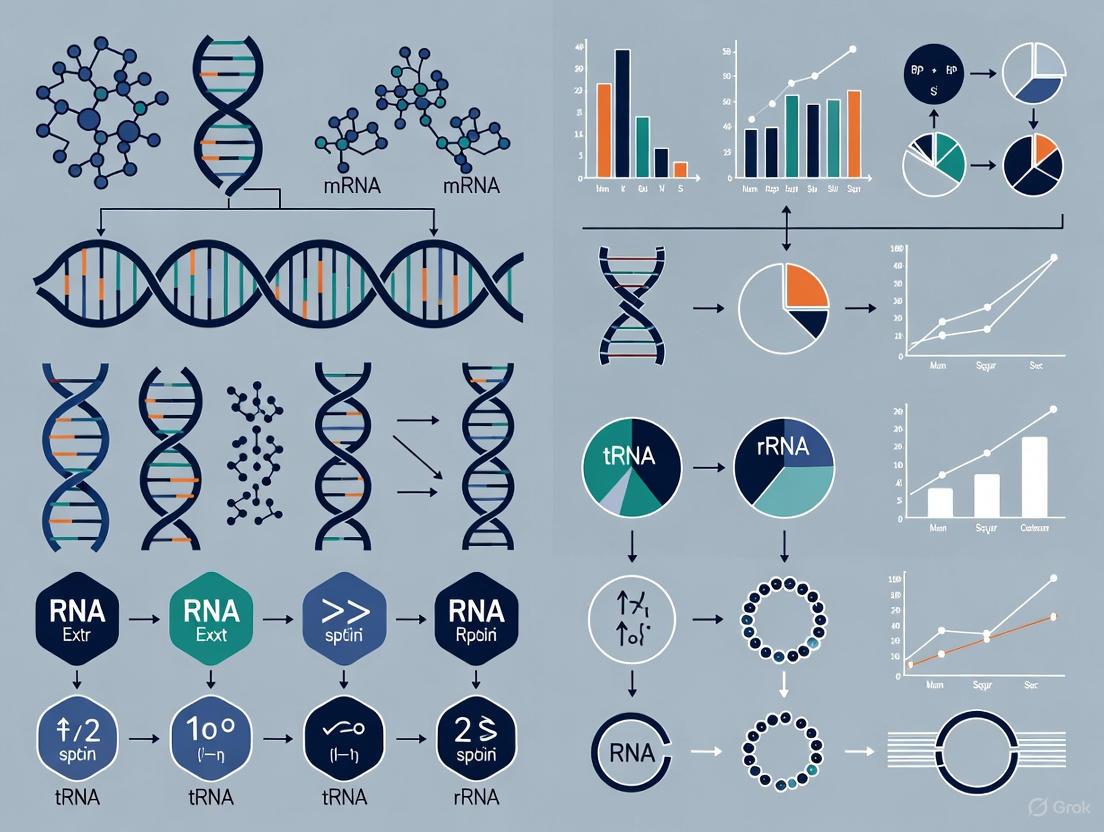
This article provides a comprehensive overview of RNA sequencing (RNA-Seq) as a powerful tool for measuring functional microbial activity in complex communities.
Measuring Microbial Activity with RNA Analysis: A Comprehensive Guide for Researchers
Abstract
This article provides a comprehensive overview of RNA sequencing (RNA-Seq) as a powerful tool for measuring functional microbial activity in complex communities. Tailored for researchers, scientists, and drug development professionals, it covers foundational principles, from distinguishing between microbial presence and activity to exploring the roles of different RNA types. It details optimized methodologies for RNA extraction and library preparation from challenging samples like soil, addresses common troubleshooting and optimization challenges, and validates the approach through comparative analysis with DNA-based methods. The scope extends to diverse applications, including environmental microbiomes, host-pathogen interactions, and drug discovery, offering a practical guide for implementing and interpreting microbial metatranscriptomics.
From Presence to Activity: Foundational Principles of Microbial RNA Analysis
Why RNA-Seq? Moving Beyond DNA to Capture Functional Activity
While genomic sequencing provides a static blueprint of an organism's potential, it reveals little about dynamic biological processes. RNA sequencing (RNA-Seq) has emerged as a transformative technology that bridges this gap by capturing the transcriptome—the complete set of RNA transcripts present in a cell or community at a specific moment. This capability to profile functional activity rather than just genetic potential is particularly valuable in microbial research, where up to 70% of proteins in even well-characterized communities like the human gut microbiome remain functionally uncharacterized based on DNA evidence alone [1]. For researchers and drug development professionals, RNA-Seq provides critical insights into microbial gene regulation, metabolic pathways, and responses to environmental stimuli, pharmaceutical compounds, and host interactions that are undetectable through DNA-based approaches.
The power of RNA-Seq lies in its ability to provide a comprehensive, quantitative snapshot of gene expression. Since its introduction in 2008, RNA-Seq has generated an exponentially growing wealth of data, with PubMed listings reaching 2,808 publications by 2016 [2]. This growth reflects the technology's increasing accessibility and its pivotal role in revealing active biological pathways, identifying novel therapeutic targets, and understanding disease mechanisms at a molecular level.
Key Applications in Microbial Research and Drug Development
Elucidating Function in Microbial Communities
In microbial communities, RNA-Seq (specifically metatranscriptomics) enables researchers to determine which genes are actively expressed under different conditions, providing insights into community interactions, metabolic specialization, and functional responses:
Functional Annotation: A novel method called FUGAsseM leverages community-wide multiomics data to predict functions for uncharacterized microbial proteins. This approach has successfully predicted high-confidence functions for >443,000 protein families, approximately 82.3% of which were previously uncharacterized. Notably, this included >27,000 protein families with only remote homology to known proteins and >6,000 families without any homology [1].
Pathway Activity Profiling: Genes involved in the same biological pathway tend to be co-expressed. RNA-Seq captures these coexpression patterns, allowing researchers to infer pathway membership and activity for uncharacterized genes, moving beyond the limitations of sequence similarity alone [1].
Microbial Dark Matter Exploration: Even in well-studied microorganisms like Escherichia coli, pangenomes derived from typical communities remain predominantly uncharacterized. While E. coli K-12 reference strains have 64.6% of protein families annotated with biological process terms, only 37.6% of proteins in the E. coli pangenome have such annotations, with 24.9% lacking any Gene Ontology annotations [1].
Drug Discovery and Development Applications
RNA-Seq provides powerful approaches throughout the drug development pipeline, from initial target identification to mechanism of action studies:
Target Identification: RNA-Seq can reveal expression patterns in response to treatment, helping identify potential drug targets by highlighting pathways critical to disease states or microbial viability [3].
Mode-of-Action Studies: Analyzing transcriptomic changes following drug treatment can elucidate a compound's mechanism of action by revealing which pathways and processes are affected [3].
Biomarker Discovery: Expression signatures can serve as biomarkers for disease progression, treatment response, or toxicological effects [3].
Dose-Response Characterization: Kinetic RNA-Seq approaches monitor transcriptome changes over time and at different drug concentrations, distinguishing primary from secondary drug effects and identifying optimal therapeutic windows [3].
Table 1: RNA-Seq Applications in Drug Discovery and Development
| Application | Key Insights | Experimental Considerations |
|---|---|---|
| Target Identification | Expression patterns in disease vs. healthy states; essential pathways | Multiple cell lines/tissues; sufficient biological replicates |
| Mode-of-Action Studies | Early transcriptional responses; affected pathways and processes | Multiple time points; kinetic approaches like SLAMseq |
| Biomarker Discovery | Gene expression signatures correlating with disease or treatment response | Large cohort sizes; validation in independent datasets |
| Dose-Response Studies | Concentration-dependent effects; therapeutic windows | Multiple dosage levels; time course experiments |
Experimental Design and Workflow
Critical Design Considerations
Robust experimental design is fundamental to generating meaningful RNA-Seq data:
Hypothesis-Driven Objectives: Begin with a clear hypothesis and specific aims to guide choices in model systems, experimental conditions, controls, and analytical approaches [3].
Replication Strategy: Include sufficient biological replicates (independent samples from the same experimental group) to account for natural variation. Typically, 3-8 replicates per condition are recommended, with higher numbers increasing statistical power and reliability [3].
Batch Effect Control: Systematic non-biological variations can arise from how samples are processed. Implement strategies such as randomizing sample processing orders, including controls in each batch, and using spike-in controls to enable batch correction during analysis [3] [4].
Sample Size Planning: The ideal sample size balances statistical power, practical constraints, and cost. Pilot studies are valuable for estimating variability and determining appropriate sample sizes for main experiments [3].
Microbial Single-Cell RNA-Seq Considerations
Applying RNA-Seq to microbial communities presents unique challenges and opportunities:
Cell Wall Integrity: The rigid microbial cell wall requires specialized lysis protocols different from those used for mammalian cells [5].
mRNA Capture: Unlike eukaryotic mRNAs with poly(A) tails, bacterial mRNAs require alternative capture methods such as random priming, poly(A) polymerase treatment, or gene-specific probes [5].
rRNA Depletion: Ribosomal RNA constitutes >90% of bacterial RNA content, necessitating effective depletion strategies such as Cas9 cleavage, RNase H digestion, or cDNA pull-down methods [5].
Single-Cell Applications: Recent advances enable single-cell RNA sequencing in microbes, revealing functional heterogeneity within populations:
- Combinatorial indexing methods (PETRI-seq, microSPLiT, BaSSSh-seq) enable profiling of thousands of cells without specialized equipment [5].
- Droplet-based methods (smRandom-seq, ProBac-seq) provide high-throughput single-cell analysis with good transcript capture efficiency [5].
- Flow sorting approaches (MATQ-seq) allow enrichment of specific subpopulations with higher transcripts per cell [5].
Diagram 1: RNA-Seq experimental and computational workflow
Data Analysis Framework
Analysis Workflow and Quality Control
RNA-Seq data analysis requires a structured approach to transform raw sequencing data into biologically meaningful insights:
Primary Analysis: Conversion of raw sequencing signals into base calls and demultiplexing of samples [2] [6].
Secondary Analysis: Alignment of reads to a reference genome and generation of count tables quantifying gene expression levels [2].
Quality Assessment: Critical quality metrics include:
Differential Expression Analysis: Statistical testing to identify genes with significant expression changes between conditions using tools such as DESeq2 and edgeR, which employ negative binomial models to account for biological variability and technical noise [2] [6].
Advanced Analytical Approaches
Coexpression Network Analysis: Genes with similar functions often show coordinated expression patterns. Methods like Weighted Gene Co-expression Network Analysis (WGCNA) can identify functionally related gene modules [1] [7].
CoRegNet: A novel statistical approach based on beta-binomial distributions that constructs robust gene co-regulation networks across thousands of heterogeneous experiments, overcoming limitations of traditional correlation-based methods when integrating diverse datasets [7].
Functional Enrichment Analysis: Interpretation of differentially expressed genes in the context of biological pathways, molecular functions, and cellular components using Gene Ontology, KEGG, and other annotation databases [6].
Table 2: Essential RNA-Seq Analysis Tools and Their Applications
| Tool Category | Representative Tools | Primary Function | Considerations |
|---|---|---|---|
| Alignment | TopHat2, STAR | Map sequencing reads to reference genome | Depends on reference quality; affects mapping rates |
| Quantification | HTSeq, featureCounts | Generate count tables for genes/transcripts | Affected by annotation quality |
| Differential Expression | DESeq2, edgeR | Identify statistically significant expression changes | Require biological replicates; different statistical models |
| Quality Control | RSeQC, Picard | Assess read distribution, rRNA content, duplicates | Essential for validating data quality |
| Functional Enrichment | clusterProfiler, GSEA | Interpret results in biological context | Dependent on annotation completeness |
Research Reagent Solutions
Successful RNA-Seq experiments rely on appropriate reagents and controls tailored to the research question and sample type:
RNA Stabilization Reagents: Compounds that immediately stabilize RNA at collection to preserve accurate transcriptional profiles, especially critical for clinical samples or time-course experiments [3].
rRNA Depletion Kits: Probe sets that selectively remove abundant ribosomal RNA, dramatically improving sequencing coverage of informative transcripts, particularly important for prokaryotic samples [5] [6].
Spike-In Controls: Synthetic RNA sequences (e.g., ERCC, SIRVs) added in known quantities to enable normalization, assessment of technical variability, and quantification accuracy across samples and batches [3] [6].
Library Preparation Kits: Tailored to specific applications—3' mRNA-Seq (e.g., QuantSeq) for high-throughput gene expression studies, whole transcriptome approaches for isoform analysis, and single-cell kits for cellular heterogeneity studies [3] [5] [6].
DNA Removal Reagents: DNase treatments to eliminate genomic DNA contamination that would otherwise confound RNA-Seq results [6].
RNA-Seq represents a fundamental advancement beyond DNA sequencing by capturing the dynamic functional activity of cells and microbial communities. Its ability to profile transcriptomes comprehensively and quantitatively has made it indispensable for understanding microbial community function, identifying drug targets, and elucidating mechanisms of action. As methodologies continue to evolve—particularly in the realm of single-cell transcriptomics and integrated multiomics approaches—RNA-Seq will remain at the forefront of functional genomics, providing increasingly sophisticated insights into biological systems and accelerating therapeutic development.
The successful implementation of RNA-Seq requires careful experimental design, appropriate analytical strategies, and awareness of both its power and limitations. By moving beyond static genetic information to capture dynamic functional activity, RNA-Seq empowers researchers to address fundamental biological questions and translate findings into practical applications across microbiology, medicine, and drug development.
The microbial transcriptome constitutes the complete set of RNA molecules transcribed from the genome of a microbial community, including messenger RNA (mRNA), ribosomal RNA (rRNA), transfer RNA (tRNA), and various regulatory non-coding RNAs. This dynamic entity provides a snapshot of functional microbial activity, revealing which genes are actively being expressed under specific environmental conditions, from host-pathogen interactions to soil ecosystems. Unlike genomic DNA, which offers information about metabolic potential, the transcriptome captures active physiological processes, making it indispensable for understanding microbial behavior in natural environments, host systems, and industrial or drug discovery contexts [8] [9]. Advanced RNA sequencing technologies have revolutionized our ability to decode this complexity, enabling researchers to move beyond census-taking to understanding functional dynamics in microbiomes.
The composition of the microbial transcriptome is dominated by rRNA, which typically comprises 82-90% of a cell's total RNA pool and serves as a fundamental structural component of ribosomes [8]. Despite its abundance, mRNA is the primary target for most functional studies because its abundance often correlates with protein-coding gene activity. Furthermore, the growing field of epitranscriptomics has revealed that RNA modifications serve as critical regulatory strategies for pathogens, influencing their adaptability, virulence, and replication during host-microbe interactions [10]. These modifications, including m6A, m5C, and ac4C on mRNAs, tRNAs, and rRNAs, represent a sophisticated layer of post-transcriptional control that microbes exploit to survive in dynamic environments.
Components of the Microbial Transcriptome
Messenger RNA (mRNA)
Messenger RNA serves as the transient intermediary between genes encoded in DNA and functional proteins, making it the most direct indicator of a microbe's metabolic activity. In metatranscriptomic studies, mRNA profiling allows researchers to identify which metabolic pathways are active within a community, from nutrient cycling in environmental samples to virulence factor expression in pathogens. A key challenge in mRNA analysis lies in its relatively low abundance compared to rRNA and its lack of poly-A tails in prokaryotic organisms, necessitating specialized enrichment or depletion techniques during library preparation [11]. The stability of bacterial mRNA, which typically has a shorter half-life than eukaryotic mRNA, means that transcriptome profiles provide a near real-time view of microbial responses to environmental stimuli, drug treatments, or other perturbations.
Recent evidence indicates that bacterial mRNA modifications play crucial regulatory roles in pathogen adaptability. For instance, in Acinetobacter baumannii, mRNA modifications (m5C, m6A, and Ψ) on iron-chelating genes (exbD and feoB) modulate iron uptake and enhance bacterial survival during infection, demonstrating how epitranscriptomic marks directly influence nutrient assimilation in host environments [10]. Similarly, in Escherichia coli, increased levels of m5C, m6A, and N6,N6-dimethyladenosine in 16S rRNA occur in response to heat shock conditions, facilitating bacterial adaptation to thermal stress [10]. These findings highlight the underappreciated regulatory functions of mRNA modifications in microbial physiology.
Ribosomal RNA (rRNA)
Ribosomal RNA constitutes the structural and functional core of ribosomes, the protein synthesis machinery of the cell. While rRNA genes are routinely sequenced (via 16S for prokaryotes and 18S for eukaryotes) for phylogenetic classification in microbial ecology, the rRNA transcripts themselves have historically been used as indicators of microbial "activity" or growth states [8] [12]. The underlying assumption is that cells with higher ribosome content are more metabolically active and capable of protein synthesis. This approach has been applied to identify active fractions of microbes in diverse environments, including soils, oceans, and host-associated microbiomes.
However, the relationship between rRNA content and microbial activity is not straightforward. Critical limitations have been identified in using rRNA as a reliable indicator of metabolic state [8]:
- Non-linear correlation with growth rate: The relationship between rRNA concentration and growth rate is not consistent across all measured growth rates and can break down altogether, especially outside balanced growth conditions.
- Taxonomic variability: The relationship between rRNA concentration and growth rate differs significantly among microbial taxa, making cross-species comparisons of relative activity problematic.
- Persistence in dormant cells: Dormant cells can maintain high ribosome numbers, leading to false positives for activity detection in environments likely to contain dormant microbes (e.g., spores).
- Unknown relationship with non-growth activities: The connection between non-growth metabolic functions and rRNA concentration remains largely uninvestigated.
These limitations necessitate a more nuanced interpretation of rRNA-based assessments and underscore the importance of complementing such data with mRNA and other functional metrics.
Regulatory RNAs and RNA Structural Switches
Beyond the classical RNA classes, microbial transcriptomes contain diverse regulatory RNAs that fine-tune gene expression in response to environmental cues. These include small RNAs (sRNAs), antisense RNAs, riboswitches, and RNA thermometers that modulate transcription, translation, or RNA stability through complementary base-pairing interactions. RNA structural switches represent a particularly sophisticated mechanism where RNAs interconvert between alternative conformations to regulate gene expression [13].
Recent transcriptome-wide mapping of RNA secondary structure ensembles in Escherichia coli has revealed that approximately 16.6% of analyzed RNA regions populate two or more structural conformations, indicating widespread structural heterogeneity with potential regulatory consequences [13]. These dynamic structural elements enable microbes to rapidly adapt to changing conditions without requiring new protein synthesis. For example, RNA thermometers in the 5' untranslated regions (UTRs) of cspG, cspI, cpxP, and lpxP mRNAs in E. coli undergo temperature-dependent structural rearrangements that control translation efficiency in response to cold shock [13]. Similarly, riboswitches in the 5' UTRs of bacterial mRNAs alter their structure upon binding specific metabolites (e.g., FMN, Mg2+, TPP, lysine), thereby modulating the expression of downstream genes involved in biosynthesis or transport [13].
Table 1: Key Components of the Microbial Transcriptome and Their Research Applications
| Transcriptome Component | Primary Function | Research Applications | Technical Considerations |
|---|---|---|---|
| mRNA | Protein coding; direct indicator of gene expression | Pathway activity profiling; functional response to treatments; biomarker discovery | Low abundance in bacteria; requires rRNA depletion; no universal poly-A tails |
| rRNA | Ribosomal structural RNA; protein synthesis | Phylogenetic identification; historical indicator of cellular activity | Dominates RNA pool (82-90%); requires depletion for mRNA studies; problematic activity indicator |
| tRNA | Amino acid transport to ribosomes | Translation efficiency; codon usage bias; modification studies | Modifications affect function; hypoxia alters tRNA pool in pathogens |
| Regulatory RNAs | Gene expression regulation | Virulence regulation; stress adaptation mechanisms; antibiotic resistance | Includes sRNAs, riboswitches, RNA thermometers; structural dynamics important |
| RNA Modifications | Post-transcriptional regulation (m6A, m5C, ac4C, Ψ) | Pathogen adaptation; virulence; drug resistance studies | Emerging field (epitranscriptomics); requires specialized sequencing methods |
Methodological Framework: From Sample to Analysis
Experimental Design Considerations
Robust experimental design forms the foundation of reliable transcriptomic research. Several critical factors must be addressed during planning:
- Hypothesis and Objectives: Begin with a clearly defined hypothesis and experimental aims, as these will guide decisions on model systems, conditions, controls, library preparation methods, and sequencing parameters [3]. Determine whether your study requires a global, unbiased readout or a targeted approach, and what type of differential expression you expect to find.
- Sample Size and Replication: Statistical power depends heavily on appropriate sample size and replication. Biological replicates (independent samples from the same experimental group) are essential to account for natural variation and ensure findings are generalizable. While 3 biological replicates per condition are typically recommended, between 4-8 replicates per sample group better cover most experimental requirements, particularly for detecting subtle expression changes [3]. Technical replicates (multiple measurements of the same biological sample) are less critical but can help assess technical variation in sequencing runs or laboratory workflows.
- Batch Effects and Controls: Large-scale studies inevitably introduce batch effects—systematic, non-biological variations arising from how samples are collected and processed over time or across multiple sites. Experimental designs should minimize batch effects through randomization and include appropriate controls that enable statistical correction during analysis [3]. Artificial spike-in controls provide internal standards for quantifying RNA levels between samples, assessing technical variability, and ensuring data consistency across large experiments [3].
Pilot studies represent a valuable strategy for mitigating risks in main experiments, allowing researchers to validate parameters, test wet lab and data analysis workflows, and make necessary adjustments before committing to full-scale studies [3].
RNA Extraction and Quality Control
Obtaining high-quality RNA from microbial samples, particularly complex environmental matrices like soil, presents significant technical challenges. Humic acids, phenolics, and other contaminants can co-purify with RNA and inhibit downstream molecular applications. Additionally, the ubiquity of robust RNases in environmental samples requires carefully controlled extraction conditions [11].
An optimized CTAB phenol-chloroform extraction protocol has been developed specifically for challenging samples like clay-rich rhizosphere soils, significantly improving RNA yield and quality compared to commercial kits [11]. Key steps in this protocol include:
- Homogenization of 250 mg soil samples with silica beads in CTAB extraction buffer
- Organic extraction using water-saturated phenol and chloroform:isoamyl alcohol (49:1)
- Precipitation with PEG-NaCl solution
- Purification using commercial clean-up kits supplemented with DNase I
Comprehensive quality assessment should include:
- Quantification using fluorometric methods (e.g., Qubit fluorometer)
- Purity assessment via A260/A280 and A260/230 ratios (NanoDrop spectrophotometer)
- Integrity evaluation through RNA Integrity Number (RINe) or similar metrics (e.g., Agilent TapeStation)
Table 2: Comparison of Transcriptomic Approaches for Microbial Community Analysis
| Methodological Aspect | Total RNA-seq | Amplicon-seq (16S/18S) | Metatranscriptomics (rRNA-depleted) |
|---|---|---|---|
| Target Molecules | All RNA species | Specific rRNA genes | mRNA & non-rRNA transcripts |
| PCR Amplification Bias | Minimal | Significant | Minimal |
| Cross-Domain Analysis | Yes (bacteria, archaea, eukaryotes simultaneously) | No (separate analyses required) | Yes (theoretically possible) |
| Functional Insights | Limited for mRNA without depletion | Indirect inference only | Direct assessment of expressed functions |
| Taxonomic Resolution | Genus to species level with mapping-based approaches [12] | Genus to family level | Dependent on reference databases |
| Quantitative Accuracy | High (median ~10% abundance in mock community) [12] | Variable, often lower than actual proportions | Relative expression levels |
| Technical Challenges | rRNA dominates sequencing output | Primer bias, chimera formation | Efficient rRNA depletion, high RNA quality |
rRNA Depletion and Library Preparation
Effective removal of abundant rRNA is crucial for efficient mRNA sequencing, particularly in metatranscriptomic studies where rRNA can constitute over 90% of total RNA. This process is especially challenging for heterogeneous multi-species samples due to differences in prokaryotic and eukaryotic rRNA sequences [11]. While eukaryotic mRNA is typically enriched through poly(A) tail selection, this approach is ineffective for bacterial mRNA lacking poly-A tails.
Universal rRNA depletion methods have been developed to address this challenge, using probe-based hybridization to remove both prokaryotic and eukaryotic rRNAs from total RNA samples. The Zymo-Seq RiboFree Total RNA Library Kit represents one such solution, enabling construction of rRNA-depleted libraries from complex environmental samples [11]. The workflow involves:
- cDNA synthesis from total RNA
- rRNA-cDNA hybrid depletion using universal depletion reagents
- Adapter ligation and amplification with unique dual indices (UDIs)
- Library quantification and sequencing on platforms such as Illumina NovaSeq
This approach has demonstrated minimal rRNA contamination in sequencing data, with effective removal confirmed in silico using tools like SortMeRNA with SILVA database references [11].
Data Analysis Workflow
The computational analysis of microbial transcriptome data follows a structured pipeline with quality control checkpoints at multiple stages [14]:
- Quality Control (QC1): Initial assessment of raw sequencing data using tools like FastQC to identify samples with artefacts or problematic batch effects.
- Data Type Specific Processing: Processing of raw data, including adapter trimming, quality filtering, and alignment to reference genomes or assemblies.
- Data Summarization: Summarization of processed reads to features of interest (e.g., genes, transcripts, contigs).
- Normalization: Removal of technical variation between samples while retaining biological variance, making samples comparable.
- Quality Control (QC2): Identification of issues arising during preprocessing, often using multivariate visualization techniques like PCA.
- Hypothesis Testing: Statistical analysis using moderated methods to prevent type I error inflation in omics analyses.
- Quality Control (QC3): Validation of statistical results through sanity checks and assumption verification.
- Multiple Testing Correction: Adjustment for false discovery rate (FDR) given the large number of simultaneous statistical tests.
For total RNA-seq data, a mapping-based quantification approach has shown superior performance for microbial community analysis. This method involves dividing reads into ssrRNA-origin and other RNA (primarily mRNA) categories, then mapping these reads to annotated assembled contigs or reference databases [12]. This strategy has demonstrated genus-level taxonomic accuracy and quantitatively reproduced mock community compositions with median relative abundance of approximately 10% among ten community members, outperforming standard amplicon-seq approaches [12].
Diagram 1: Microbial Transcriptomics Workflow. The workflow encompasses wet lab procedures (yellow) and bioinformatic analysis (green), highlighting key steps from sample collection to biological interpretation.
Applications and Case Studies
Environmental Microbial Ecology
Metatranscriptomics has revealed how microbial communities drive essential ecosystem processes and respond to environmental change. In arid and semiarid environments, where microbial activity is restricted by low water availability, transcriptomic profiling has uncovered rapid functional responses to simulated humid conditions [9]. Arid soil communities subjected to increased moisture exhibited heightened transcription of pedogenesis-related genes, including those involved in:
- Soil aggregate formation through exopolysaccharide (EPS) and lipopolysaccharide (LPS) production
- Phosphorus metabolism and solubilization
- Weathering of minerals via organic acid production and oxidoreduction reactions
- Carbon and nitrogen dynamics, with transcriptional reconfiguration suggesting utilization of available organic resources alongside autotrophy
This functional activation was particularly pronounced in arid sites compared to semiarid sites, which showed greater resilience to moisture changes. Taxonomically, Pseudomonadota and Actinomycetota dominated the transcriptional profiles associated with these early stages of soil development, highlighting their crucial role in pioneering pedogenetic processes under changing climate conditions [9].
Host-Microbe Interactions and Pathogenesis
Transcriptomic approaches have illuminated how pathogens manipulate their gene expression to establish infections, evade host defenses, and exploit host resources. RNA modification reprogramming represents a key strategy employed by diverse pathogens during host adaptation:
- Bacterial pathogens: In Pseudomonas aeruginosa, GidA-dependent cmnm5U tRNA modification modulates expression of virulence regulators, shifting protein translation toward pathogenic physiological states [10]. Similarly, queuosine (Q) modification on tRNA regulates virulence and biofilm formation across diverse bacterial phyla, particularly in human pathogens [10].
- Viruses: HIV-1 utilizes host machinery to introduce m6A modifications at multiple sites across its RNA genome, promoting viral replication and regulating full-length RNA packaging into viral particles [10]. Hepatitis B virus employs m5C modifications in epsilon elements critical for virion production and reverse transcription [10].
- Parasites and fungi: While less extensively characterized, emerging evidence indicates similar exploitation of RNA modification systems in eukaryotic pathogens.
These findings not only advance fundamental understanding of infection biology but also identify potential therapeutic targets for novel anti-infective strategies aimed at disrupting pathogen epitranscriptomic programming.
Drug Discovery and Development
RNA-seq has become an integral tool throughout the drug discovery pipeline, from target identification to mode-of-action studies [3]. In large-scale drug screens, transcriptomic profiling can:
- Identify expression patterns in response to compound treatment
- Reveal differential responses to drug combinations
- Discover biomarkers for patient stratification and treatment response monitoring
- Distinguish primary drug effects from secondary consequences through kinetic studies
Methodologies such as 3'-end sequencing (3'-Seq) enable cost-effective processing of large sample numbers by focusing on the 3' termini of transcripts, often permitting library preparation directly from cell lysates without RNA extraction [3]. This approach is particularly valuable for high-throughput screening applications where quantitative gene expression data rather than complete isoform information is sufficient. For more in-depth investigations of drug effects on splicing, non-coding RNAs, or viral variants, whole transcriptome approaches with mRNA enrichment or ribosomal RNA depletion remain preferable [3].
The Scientist's Toolkit: Essential Reagents and Methods
Table 3: Essential Research Reagents and Methods for Microbial Transcriptomics
| Reagent/Method | Function/Application | Key Features | Representative Examples |
|---|---|---|---|
| CTAB Phenol-Chloroform Extraction | RNA isolation from complex matrices | Effective for clay-rich soils; reduces humic acid contamination; customizable protocol [11] | Optimized for rhizosphere soil; superior to commercial kits for challenging samples |
| Universal rRNA Depletion Kits | Removal of prokaryotic and eukaryotic rRNA | Probe-based hybridization; enables mRNA enrichment without poly-A selection [11] | Zymo-Seq RiboFree Total RNA Library Kit; effective for metatranscriptomics |
| Spike-in Controls | Technical variability assessment; normalization | Artificial RNA sequences; quantitation standards; performance monitoring [3] | SIRVs (Spike-in RNA Variant Control Mixes); assess dynamic range, sensitivity |
| RNA Clean-up Kits | Post-extraction purification | Contaminant removal; DNase treatment; sample concentration [11] | Zymo RNA Clean & Concentrator kits; include DNase I treatment |
| RiboFree Library Prep Kits | rRNA-depleted library construction | cDNA synthesis with rRNA depletion; adapter ligation; index PCR [11] | Zymo-Seq RiboFree Total RNA Library Kit; compatible with Illumina sequencing |
| Mapping-based Quantification | Taxonomic and functional analysis | Uses own reads as reference; superior to amplicon-seq for quantification [12] | ARI-seq; genus-level accuracy; minimal PCR bias |
The microbial transcriptome represents a dynamic landscape of coding, structural, and regulatory RNAs that collectively determine microbial functional potential in diverse environments. While rRNA continues to serve as a valuable phylogenetic marker and rough indicator of cellular ribosome content, its limitations as a precise metric of microbial activity necessitate complementary approaches focusing on mRNA and regulatory RNAs. Advances in RNA extraction, particularly from complex matrices like soil, coupled with effective rRNA depletion strategies and sophisticated bioinformatic pipelines, have dramatically enhanced our ability to characterize microbial community function at unprecedented resolution.
The growing recognition of RNA modifications as key regulatory mechanisms in host-microbe interactions, alongside the discovery of widespread RNA structural switches in bacterial transcriptomes, highlights the expanding complexity of RNA-mediated regulation in microbes [10] [13]. These emerging layers of transcriptional and post-transcriptional control offer exciting avenues for future research and potential therapeutic intervention. As methodologies continue to evolve, particularly in single-cell transcriptomics and spatial mapping of gene expression, our understanding of microbial community dynamics and function will deepen, offering new insights into ecosystem processes, host-pathogen interactions, and biotechnological applications.
Application Note: Measuring the Rhizosphere Effect through RNA Analysis
Theoretical Foundation and Quantitative Assessment
The rhizosphere effect quantifies how plant roots alter soil microbial communities, a phenomenon measurable through advanced RNA analysis. Research comparing Arabidopsis thaliana to eight other plant species revealed that its bacterial rhizosphere effect was approximately 35% lower than the average of the other species, while its fungal effect was a striking 90% lower [15]. However, within the root endosphere, the selective pressure of Arabidopsis was comparable to other species, indicating a specialized relationship with its core microbial partners [15].
RNA-based analysis is critical because it moves beyond census-taking to identify functionally active community members. This is superior to DNA-based methods like 16S rDNA amplicon sequencing, which can detect both active and dormant organisms [8]. Metatranscriptomics captures actively transcribed genes, providing direct insight into microbial functional dynamics and their responses to plant and environmental signals [11].
Quantitative Data from Rhizosphere Studies
Table 1: Quantitative Measures of the Rhizosphere Effect (Arabidopsis vs. Other Species)
| Metric | Arabidopsis thaliana | Average of Eight Other Species | Measurement Context |
|---|---|---|---|
| Bacterial Rhizosphere Effect | ~35% lower | Baseline (100%) | Number of enriched/depleted bacterial taxa [15] |
| Fungal Rhizosphere Effect | ~90% lower (10% of average) | Baseline (100%) | Number of differentially abundant fungal taxa [15] |
| Endorhizosphere Effect | Comparable | Comparable | Selective pressure for both bacteria and fungi [15] |
| Community Distinctness | Closest to soil cluster | More distinct from soil | PCoA analysis of bacterial communities [15] |
Table 2: Microbial Community Shifts from Bulk Soil to Rhizosphere Compartments
| Microbial Group | Trend from Soil to Rhizosphere | Trend from Soil to Endorhizosphere |
|---|---|---|
| Proteobacteria | Increase | Considerable Increase [15] |
| Actinobacteria | - | Considerable Increase [15] |
| Acidobacteria | - | Reduced [15] |
| Overall Alpha Diversity | No large decrease | Substantial decrease [15] |
Protocol: Metatranscriptomic Analysis of Rhizosphere Microbial Activity
Optimized RNA Extraction from Rhizosphere Soil
Principle: Obtain high-quality, inhibitor-free total RNA from clay-rich rhizosphere soils for downstream sequencing. An optimized CTAB phenol-chloroform protocol significantly improves yield and quality compared to standard commercial kits [11].
Materials:
- CTAB Extraction Buffer
- Water-saturated phenol
- 49:1 Chloroform:Isoamyl alcohol
- 500 mM sodium phosphate (NaP) buffer, pH 5.8
- 2-Mercaptoethanol
- PEG-NaCl precipitation solution
- Silica beads (0.1 mm and 0.5 mm, 19:1 ratio)
- Zymo RNA Clean & Concentrator kits (Cat #R1015)
- DNase I (Zymo Research, Cat #E1010)
Procedure:
- Homogenization: Homogenize 250 mg of flash-frozen rhizosphere soil with silica beads in CTAB extraction buffer, phenol, chloroform:isoamyl alcohol, NaP buffer, and 2-Mercaptoethanol [11].
- Centrifugation: Centrifuge at 10,000 g for 10 min at 4°C. Recover the aqueous phase [11].
- Organic Extraction: Perform sequential extractions with Phenol:Chloroform:Isoamyl alcohol and a second Chloroform:Isoamyl alcohol [11].
- Precipitation: Precipitate the RNA from the final aqueous phase with one volume of PEG-NaCl solution. Incubate on ice at 4°C for 20 min and centrifuge at 20,000 g for 20 min at 4°C [11].
- Pellet Washing and Resuspension: Wash the pellet with 70% ice-cold ethanol, air-dry, and resuspend in nuclease-free water [11].
- Purification and DNase Treatment: Further purify the crude RNA using a Zymo RNA Clean & Concentrator kit, including on-column DNase I treatment [11].
Quality Control:
- Quantification: Use a Qubit 4 fluorometer.
- Purity: Assess via NanoDrop (target A260/A280 and A260/A230 ratios).
- Integrity: Determine RNA Integrity Number (RINe) using an Agilent 4150 TapeStation system [11].
Universal rRNA Depletion and Library Preparation
Principle: Remove abundant ribosomal RNA (rRNA) to enable efficient sequencing of messenger RNA (mRNA), allowing for the assessment of functional gene expression.
Materials:
Procedure:
- cDNA Synthesis: Convert 250 ng of total RNA to cDNA [11].
- rRNA Depletion: Treat cDNA with RiboFree Universal Depletion reagents to remove rRNA-cDNA hybrids [11].
- Adapter Ligation and Amplification: Ligate adapters to the remaining cDNA and amplify the library using Zymo-Seq UDI Primers per the manufacturer's protocol [11].
- Library QC and Sequencing: Quantify the final cDNA libraries with a Qubit and sequence on an Illumina NovaSeq platform (e.g., 20 million 150-bp paired-end reads) [11].
Bioinformatics Workflow for Metatranscriptomic Data
The following workflow outlines the key steps for processing sequencing data to analyze microbial activity.
The Scientist's Toolkit: Key Research Reagents and Materials
Table 3: Essential Reagents for Rhizosphere Metatranscriptomics
| Item Name | Function / Application | Example Product (if specified) |
|---|---|---|
| CTAB Phenol-Chloroform Solution | Lysis buffer for effective cell disruption and nucleic acid extraction from complex soil matrices. | Custom-made [11] |
| PEG-NaCl Precipitation Solution | Precipitates nucleic acids from the aqueous phase after organic extraction. | Custom-made [11] |
| RNA Clean & Concentrator Kit | Purifies crude RNA extracts, removing contaminants like humic acids, and includes DNase treatment. | Zymo Research, Cat #R1015 [11] |
| Universal rRNA Depletion Kit | Removes prokaryotic and eukaryotic rRNA from total RNA samples, enriching for mRNA. | Zymo-Seq RiboFree Total RNA Library Kit, Cat #R3000 [11] |
| Silica Beads (0.1 & 0.5 mm) | Mechanical homogenization of tough soil and microbial cell walls during lysis. | Various suppliers [11] |
| DNase I Enzyme | Degrades genomic DNA contamination during RNA purification to ensure pure RNA for sequencing. | Zymo Research, Cat #E1010 [11] |
Application in Host-Pathogen Interactions and Drug Discovery
From Ecology to Translation
Understanding microbial activity through RNA analysis bridges fundamental ecology and applied science. In host-pathogen interactions, metatranscriptomics can identify the functional shifts in the rhizosphere that precede disease outbreaks, revealing pathogen activation and the host's defensive microbiome response [11]. This provides targets for preemptive biocontrol strategies.
In drug discovery, the rhizosphere is a reservoir for novel antimicrobial compounds. Microbial warfare via specialized metabolites (e.g., antibiotics) is a key mechanism of interference competition [16]. By analyzing the metatranscriptome, researchers can pinpoint the expression of biosynthetic gene clusters for compounds like novel antibiotics under specific conditions, streamlining the discovery pipeline [17] [16]. This metabolic ecology framework, focused on nutrient competition and bacterial interactions, offers a general principle for understanding and engineering microbiomes across health, agriculture, and environmental contexts [17].
Metatranscriptomics is a powerful molecular technique that sequences the collective messenger RNA (mRNA) from entire microbial communities, providing a real-time snapshot of actively expressed genes and metabolic functions. Unlike metagenomics, which reveals the genetic potential of a microbiome, metatranscriptomics reveals which functions are actively being performed, offering direct insight into microbial community responses to their environment [18] [19].
This Application Note details the distinct advantages of metatranscriptomics and provides established protocols for its application. The content is framed within a broader thesis on RNA analysis, underscoring its critical role in measuring microbial activity for research and drug development.
Comparative Analysis of Microbial Omic Approaches
The table below summarizes how metatranscriptomics complements and enhances other common microbial community profiling techniques.
Table 1: Comparison of Key Microbial Community Profiling Techniques
| Feature | Metatranscriptomics | Metagenomics | 16S rRNA Sequencing |
|---|---|---|---|
| Analytical Target | Total mRNA from a community [19] | Total DNA from a community [19] | 16S rRNA gene (DNA) [18] |
| Primary Insight | Active gene expression and metabolic activity [20] | Functional potential and taxonomic composition [21] | Taxonomic composition and diversity [18] |
| Temporal Resolution | High (snapshot of active processes) [19] | Low (stable genetic blueprint) | Low (stable genetic blueprint) |
| Key Advantage | Identifies actively transcribed pathways and community responses [22] | Unbiased view of all encoded functions | Cost-effective for community profiling |
| Main Challenge | RNA instability; host RNA contamination [21] [19] | Does not distinguish active vs. silent genes [21] | Limited functional and taxonomic resolution [18] |
Key Advantages and Research Applications
Metatranscriptomics provides several critical advantages that make it indispensable for modern microbiome research.
Reveals Active Metabolic Pathways in Real-Time: By capturing mRNA, this technique directly identifies which metabolic pathways are actively functioning, moving beyond mere genetic potential. For instance, in a urinary tract infection (UTI) study, metatranscriptomics identified highly expressed virulence genes in E. coli, such as adhesion genes (fimA, fimI) and iron acquisition systems (chuY, iroN), which are critical for host colonization and infection [22].
Unveils Host-Microbiome Interactions: The method allows for the simultaneous profiling of both host and microbial RNA. This integrative approach sheds light on complex communication networks, providing insights into the role of microbial gene expression in health, disease, and host physiology [19].
Captures Dynamic Community Responses: Metatranscriptomics is ideal for monitoring how microbial communities respond to environmental changes, dietary interventions, or disease states over time. This temporal resolution helps researchers understand microbial population dynamics, community resilience, and functional shifts in response to perturbations [19].
Identifies Active Key Taxa: A critical finding across studies is the frequent divergence between microbial abundance (DNA) and activity (RNA). For example, in the skin microbiome, Staphylococcus and Malassezia species often have an outsized contribution to metatranscriptomes despite their modest representation in metagenomes, highlighting them as key active players [21]. Similarly, in aerobic granular sludge, a weak correlation was found between the relative abundance of microbes and their transcriptomic activity, underscoring that abundance does not equate to metabolic importance [23].
Table 2: Selected Case Studies Demonstrating Metatranscriptomic Applications
| Field of Study | Research Objective | Key Metatranscriptomic Finding | Reference |
|---|---|---|---|
| Infectious Disease (UTI) | Characterize active metabolic functions of uropathogenic E. coli (UPEC) in patient samples. | Identified highly expressed virulence genes and patient-specific metabolic adaptations in UPEC strains. | [22] |
| Skin Microbiology | Profile active gene expression of the healthy human skin microbiome across body sites. | Revealed that Staphylococcus and Malassezia are highly transcriptionally active; discovered diverse antimicrobial genes (bacteriocins) expressed by commensals. | [21] |
| Wastewater Treatment | Investigate microbial activity patterns in different-sized aggregates of aerobic granular sludge. | Uncovered a weak correlation between microbial abundance and activity; identified distinct functional roles for microbes in flocs vs. granules. | [23] |
| Nutritional Science | Understand gut microbiome metabolism of dietary components like fibres and proteins. | Enabled the capture of active transcripts related to metabolite production (e.g., short-chain fatty acids) that affect gut health. | [18] |
Detailed Experimental Protocol
The following section outlines a robust, generalized workflow for metatranscriptomic analysis, synthesized from recent studies on human skin [21] and rhizosphere soil [11].
The diagram below illustrates the complete metatranscriptomics workflow, from sample collection to data analysis.
Step-by-Step Protocol
1. Sample Collection and Preservation
- Objective: To obtain microbial biomass while preserving RNA integrity and minimizing host contamination.
- Procedure:
- Collect samples using appropriate methods (e.g., swabs for skin [21], soil cores for rhizosphere [11]).
- Immediately preserve samples in a nucleic acid stabilization reagent (e.g., DNA/RNA Shield) and flash-freeze in liquid nitrogen.
- Store at -80°C until processing. Note: Rapid preservation is critical due to the rapid degradation of mRNA [21] [11].
2. Total RNA Extraction
- Objective: To isolate high-quality, intact total RNA from the complex sample matrix.
- Procedure:
- Use a protocol combining mechanical lysis (e.g., bead beating with silica beads) and chemical lysis (e.g., CTAB-phenol-chloroform) for robust cell disruption [11].
- Purify the crude RNA extract using commercial kits (e.g., Zymo RNA Clean & Concentrator) to remove contaminants like humic acids, proteins, and genomic DNA (using DNase I treatment) [11].
- Quality Control: Assess RNA concentration, purity (A260/A280 and A260/A230 ratios via NanoDrop), and integrity (RNA Integrity Number (RINe) using an Agilent TapeStation) [21] [11].
3. rRNA Depletion and mRNA Enrichment
- Objective: To remove highly abundant ribosomal RNA (rRNA), which can constitute >90% of total RNA, to enrich for messenger RNA (mRNA).
- Procedure:
- Use probe hybridization-based kits designed for universal rRNA depletion (e.g., riboPOOLs, Zymo-Seq RiboFree Total RNA Library Kit) [18] [21] [11]. These kits use oligonucleotides that bind to rRNA from a wide range of prokaryotes and eukaryotes, which is then degraded or removed.
- Note: Unlike eukaryotic mRNA, prokaryotic mRNA lacks a poly-A tail, so oligo(dT)-based enrichment cannot be used [18].
4. Library Preparation and Sequencing
- Objective: To convert the enriched mRNA into a sequencing library.
- Procedure:
- Reverse-transcribe the mRNA into double-stranded cDNA using random hexamer primers [18].
- Fragment the cDNA, ligate sequencing adapters, and amplify the library using index primers for multiplexing.
- Sequence the library on an Illumina platform (e.g., NovaSeq) to generate a minimum of 20-30 million paired-end (e.g., 2x150 bp) reads per sample for sufficient coverage [21] [22] [24].
5. Bioinformatic Analysis
- Objective: To process raw sequencing data into biologically meaningful information about active taxa and functions.
- Procedure:
- Quality Control & Trimming: Use FastQC for quality assessment and tools like Trimmomatic or BBMAP to remove adapters and low-quality bases [18] [11].
- Host Read Removal: Align reads to the host genome (e.g., human, soybean) using STAR or BWA and remove matching reads [21] [11].
- rRNA Filtering: Remove residual rRNA sequences using SortMeRNA with Silva database references [18] [11].
- Assembly & Gene Prediction: Assemble high-quality, non-rRNA reads into transcripts using a metatranscriptomic assembler like IDBA-MT or rnaSPAdes [18] [11].
- Taxonomic & Functional Annotation: Classify transcripts taxonomically using Kraken2 or Kaiju [18]. Annotate gene functions by aligning transcripts to protein databases (e.g., UniRef, KEGG) using DIAMOND [18] [11].
- Differential Expression Analysis: Quantify transcript abundances and identify significantly differentially expressed genes between conditions using tools like DESeq2 or EdgeR [18].
The Scientist's Toolkit: Essential Research Reagents
The table below lists key reagents and kits critical for a successful metatranscriptomic study.
Table 3: Essential Reagents and Kits for Metatranscriptomics
| Item | Function/Application | Specific Examples (from search results) |
|---|---|---|
| Nucleic Acid Preservation Reagent | Stabilizes RNA at the point of collection to prevent degradation. | DNA/RNA Shield [21] |
| Bead Beating Tubes | Mechanical cell lysis for robust extraction from tough microbial cell walls and soil. | Tubes with 0.1 mm and 0.5 mm silica beads [11] |
| RNA Extraction Kit | Purifies high-quality total RNA, free of contaminants like humics and gDNA. | Zymo RNA Clean & Concentrator kits; CTAB-phenol-chloroform method [11] |
| Universal rRNA Depletion Kit | Selectively removes rRNA to enrich for mRNA. Critical for prokaryote-dominated samples. | riboPOOLs, Zymo-Seq RiboFree Total RNA Library Kit [18] [21] [11] |
| Library Prep Kit | Prepares rRNA-depleted RNA for Illumina sequencing. | SMARTer Stranded RNA-Seq Kit; Zymo-Seq RiboFree Total RNA Library Kit [18] [11] |
Metatranscriptomics has emerged as a fundamental tool for moving beyond the census of microbial communities to understanding their active functions and dynamic responses. The protocols and advantages outlined in this Application Note provide a framework for researchers and drug development professionals to design robust studies that uncover the critical, active roles microbes play in human health, disease, and environmental ecosystems. When integrated with other multi-omic data, metatranscriptomics offers an unparalleled view into the functional state of microbial communities.
From Sample to Sequence: Optimized RNA-Seq Workflows for Complex Microbial Samples
RNA analysis is a powerful tool for measuring microbial activity, providing insights into functional gene expression and active community members in diverse environments. However, obtaining high-quality RNA for downstream analyses is fraught with technical challenges. Three significant hurdles consistently complicate microbial RNA extraction: the co-purification of inhibitory substances like humic acids, the pervasive threat of RNase degradation, and the limited yield from low-biomass samples [25] [26]. The inherent fragility of RNA and the diverse structural composition of microbial cells further necessitate optimized, robust protocols. This Application Note details these primary challenges and provides validated, detailed methodologies to overcome them, ensuring the recovery of intact, pure RNA for accurate assessment of microbial activity.
The Core Challenges in Microbial RNA Extraction
Humic Acid Interference
Humic substances are complex organic polymers formed from the decomposition of plant and microbial matter. While naturally abundant in soil, water, and sediments, they pose a significant problem for RNA extraction. Their chemical structure, rich in phenolic and carboxylic functional groups, allows them to co-purify with nucleic acids, acting as potent inhibitors in downstream enzymatic reactions like reverse transcription and PCR [27]. Their brown-black color also interferes with spectrophotometric quantification of RNA. Critically, their polyanionic nature enables them to bind to positively charged viral glycoproteins, which, while the basis for their reported antiviral activity, can also interfere with the detection and analysis of RNA viruses in environmental samples [27].
RNase Degradation
Unlike DNA, RNA is single-stranded and features a reactive 2'-hydroxyl group on its ribose sugar, making it inherently susceptible to base-catalyzed hydrolysis. This chemical instability is compounded by the ubiquitous presence of ribonucleases (RNases), enzymes that rapidly degrade RNA [28] [29]. RNases are exceptionally durable; they are found on skin, in dust, and on surfaces, and do not require co-factors to function, meaning they can remain active even after autoclaving [29]. A single introduction of RNase contamination can devastate an RNA sample, leading to fragmented, unreliable data. Therefore, a paramount concern in any RNA workflow is maintaining an RNase-free environment.
Low Microbial Biomass
Many microbial niches, such as the human respiratory tract, deep subsurface environments, and clean-room facilities, are characterized by low microbial biomass. Extracting sufficient RNA from such samples for sequencing is highly challenging. The low absolute amount of microbial RNA is often dwarfed by host or environmental RNA, requiring extremely high sequencing depth to achieve adequate coverage of the microbial transcriptome [25] [26]. This amplifies the impact of any inhibitors or degradation, as the already faint microbial signal can be easily lost. Furthermore, standard extraction protocols often fail to lyse robust microbial cells (e.g., Gram-positive bacteria, fungi) efficiently in these samples, leading to a biased representation of the active community [25].
Optimized Protocols for Challenging Samples
The following protocols have been specifically selected and optimized to address the intertwined challenges of humic acids, RNases, and low biomass.
Comprehensive RNA Extraction from Low-Biomass Respiratory Samples
This protocol, adapted from a 2025 study on the respiratory microbiome, is designed for maximal recovery of microbial RNA from sample types like nasopharyngeal swabs (NPS) and bronchoalveolar lavage (BAL) [25]. It is particularly effective for lysing tough microbial cells.
- Sample Preparation: Pooled human NPS or BAL samples, stored in transport medium, were used in the original study. Ensure all collection tubes are RNase-free.
- Lysis Method: The key to success is using a kit that combines Chemical and Mechanical Lysis (CML). The Quick-DNA/RNA Miniprep Plus Kit (Zymo Research) was used with bead beating to physically disrupt robust cell walls of gram-positive bacteria and fungi [25].
- Optimized Steps:
- Use an increased input volume of 400 µL (instead of the standard 200 µL) to maximize yield from low-biomass samples.
- Perform all steps in duplicate to improve robustness.
- Include a DNase treatment step using TURBO DNase (Invitrogen) directly on the extraction column or eluate to remove genomic DNA contamination [25].
- Critical Notes: This CML protocol significantly outperformed chemical lysis-only methods, yielding higher sequencing reads and enhancing the detection of gram-positive bacteria and fungi without compromising viral detection [25].
RNA Extraction from Low-Biomass Autotrophic Bacteria
Developed for volume-limited cultures of autotrophic bacteria, this protocol emphasizes high-quality RNA yield suitable for RNA-seq [26].
- Sample Preparation: Bacterial cultures of Nitrosomonas europaea and Nitrobacter winogradskyi were used. Concentrate cells by centrifugation from a sufficient culture volume.
- Lysis Method: Enzymatic lysis using lysozyme digestion. This method was found to generate higher quality RNA compared to ultrasonication, which can degrade RNA [26].
- Optimized Steps:
- Begin with a standard commercial silica-column based kit protocol.
- Amend the initial lysis step with a dedicated incubation with lysozyme to gently but effectively break down the bacterial cell wall.
- Proceed with the kit's standard binding, washing, and elution steps.
- Critical Notes: This method is ideal for experiments where sample volume and/or biomass is limited, as it avoids the RNA shearing associated with harsh physical lysis methods [26].
General Best Practices for an RNase-Free Environment
These precautions are non-negotiable for all RNA work and should be integrated into every protocol [28] [29].
- Personal Equipment: Always wear gloves and change them frequently. Avoid touching skin, hair, or any potentially contaminated surfaces with gloved hands.
- Workspace: Designate a special area for RNA work only. Before starting, clean the bench and equipment with a commercial RNase-inactivating agent like RNaseZap or a solution of SDS and ethanol [28] [29].
- Consumables: Use sterile, disposable plasticware (tubes, tips), which are typically RNase-free. Always use filter tips to prevent aerosol contamination of pipettors [28].
- Liquid Reagents: Use only RNase-free water (e.g., DEPC-treated and autoclaved) for making solutions. Dedicate separate reagents for RNA work. Note that Tris buffers cannot be decontaminated with DEPC and should be made from a reserved, RNase-free stock [29].
- Sample Handling: Keep samples on ice whenever possible to slow RNase activity. For long-term storage, preserve RNA at -70 °C to -80 °C as ethanol precipitates or in RNase-free buffer [29].
Essential Reagents and Solutions
The table below summarizes key reagents and their roles in overcoming extraction challenges.
Table 1: Research Reagent Solutions for Microbial RNA Extraction
| Reagent/Kit | Function/Role | Key Benefit |
|---|---|---|
| Quick-DNA/RNA Miniprep Plus Kit (Zymo Research) | Combined chemical & mechanical lysis (CML) | Effectively disrupts robust gram-positive bacterial and fungal cell walls in low-biomass samples [25]. |
| Lysozyme | Enzymatic lysis agent | Gently digests bacterial cell walls, providing high-quality RNA suitable for RNA-seq from low-biomass cultures [26]. |
| TURBO DNase (Invitrogen) | DNA digestion | Removes contaminating genomic DNA without compromising RNA integrity, critical for metatranscriptomics [25]. |
| Protector RNase Inhibitor (Roche) | RNase inhibition | Protects RNA from a broad spectrum of RNases during isolation and downstream applications like reverse transcription [29]. |
| RNaseZap / DEPC-treated Water | RNase decontamination | Creates an RNase-free environment for workspace (RNaseZap) and aqueous solutions (DEPC-water) [28] [29]. |
| NEBNext rRNA Depletion Kit (NEB) | Ribosomal RNA removal | Enriches for messenger RNA by depleting host and microbial rRNA, greatly improving sequencing depth of informative transcripts [25]. |
| ZymoBIOMICS Microbial Community Standard (Zymo Research) | Positive control | Validates extraction efficiency and sequencing performance across a defined mix of bacterial and fungal cells [25]. |
Quantitative Data Comparison
The following table summarizes performance metrics from key studies, illustrating the impact of different optimization strategies.
Table 2: Comparative Performance of RNA Extraction Optimizations
| Extraction Method / Strategy | Sample Type | Key Outcome Metrics | Reference |
|---|---|---|---|
| Chemical + Mechanical Lysis (CML) | Human Respiratory (BAL, NPS) | - Significantly higher dsDNA library yields and sequencing read counts (p < 0.0001).- Enhanced detection of gram-positive bacteria and fungi. [25] | [25] |
| Chemical Lysis (CL) Only | Human Respiratory (BAL, NPS) | Lower yields and microbial detection compared to CML, potential bias against robust cells. [25] | [25] |
| Enzymatic Lysis (Lysozyme) | Low-biomass Autotrophic Bacteria | Generated high-quality, high-yield RNA suitable for downstream RNA-seq analysis. [26] | [26] |
| Ultrasonication Lysis | Low-biomass Autotrophic Bacteria | Resulted in high RNA yield but low RNA quality, making it less suitable for sensitive applications. [26] | [26] |
| Silica Beads with Phenol-Chloroform (NS2) | Raw Wastewater | - Higher SARS-CoV-2 RNA detection than silica columns (p < 0.0001).- Effective RT-qPCR inhibitor removal. [30] | [30] |
Workflow and Pathway Visualizations
Strategic Workflow for RNA Extraction
The diagram below outlines the critical decision points and pathways for selecting the optimal RNA extraction strategy based on sample-specific challenges.
RNase Control Pathway
This diagram illustrates the parallel pathways required for successful RNase control, encompassing both the laboratory environment and the sample itself.
Successful RNA analysis for measuring microbial activity hinges on overcoming the technical barriers of humic acid interference, RNase degradation, and low biomass. As detailed in this Application Note, a one-size-fits-all approach is inadequate. Researchers must instead select and optimize their extraction protocols based on the specific sample matrix and research question. The integration of robust mechanical lysis for tough cells, enzymatic treatments for gentle and effective disruption, inhibitor-removal steps, and scrupulous RNase-free technique provides a comprehensive strategy to recover high-quality RNA. By implementing these validated protocols and best practices, researchers can ensure that the microbial activity data they generate is both accurate and reliable, forming a solid foundation for advanced research in drug development, environmental microbiology, and human health.
Within the context of microbial activity measurement research, obtaining high-quality RNA from environmental samples is a critical first step for techniques like metatranscriptomics, which reveal the active functional roles of soil microbes [11]. Clay-rich soils present a significant challenge for nucleic acid extraction due to the strong adsorption of RNA to clay particles and the co-purification of potent enzymatic inhibitors like humic substances [31] [32]. Standard protocols often yield degraded RNA or extracts unsuitable for downstream applications [33] [32].
The cetyltrimethylammonium bromide (CTAB) phenol-chloroform method is a robust, in-house technique that allows for the flexibility needed to overcome these challenges. This protocol details a optimized CTAB-based approach, specifically tailored for clay-rich soils, that significantly improves RNA yield and purity by incorporating key steps such as a sodium phosphate buffer wash and PEG-based precipitation [11] [33]. The resulting high-quality RNA is ideal for sensitive downstream analyses, including quantitative reverse transcription-PCR (qRT-PCR) and next-generation sequencing, providing a reliable tool for studying microbial activity in soil environments [31] [11].
Key Reagents and Equipment
The following table lists the specialized solutions and equipment required to successfully execute this protocol.
Table 1: Research Reagent Solutions and Essential Materials
| Item Name | Function / Explanation |
|---|---|
| CTAB Extraction Buffer | A cationic detergent buffer that facilitates cell lysis and separation of polysaccharides and polyphenols from nucleic acids [34]. |
| Sodium Phosphate (NaP) Buffer | Helps to displace clay-adsorbed RNA through ion exchange, dramatically improving yield from clay-rich matrices [35] [11]. |
| Polyvinylpolypyrrolidone (PVP) | Binds to and removes phenolic compounds (e.g., humic acids) that are common PCR inhibitors in soil [35] [32]. |
| β-Mercaptoethanol | A reducing agent added to the lysis buffer to inhibit RNases and prevent RNA degradation [11]. |
| PEG-NaCl Precipitation Solution | Used as an alternative to alcohol precipitation to improve RNA recovery and simultaneously remove carry-over pigmentation [35] [33]. |
| Silica Spin Column | Used for final purification to concentrate the RNA and remove residual salts and contaminants [11]. |
| Bead Beater | Provides mechanical lysis via rapid shaking with silica/zirconia beads, essential for disrupting robust microbial cell walls [11] [25]. |
Method
The diagram below illustrates the complete experimental workflow for RNA extraction and validation from clay-rich soil.
Detailed Step-by-Step Protocol
Step 1: Soil Sample Preparation and Pre-treatment
- Begin with 250 mg of freeze-dried, homogenized clay-rich soil [11]. Use a swing mill with tungsten carbide beads to pulverize the sample for 1 minute to further disrupt soil aggregates [35].
- Critical: For soils with very high clay content (>40%), a pre-wash with 500 µL of 0.1 M sodium phosphate buffer (pH 7.5) can be beneficial. Vortex thoroughly, centrifuge at 10,000 × g for 5 min, and discard the supernatant. This step helps elute humic substances and initiates the displacement of clay-adsorbed RNA [35] [33].
Step 2: Combined Chemical and Mechanical Lysis
- To the pre-washed pellet, add:
- Homogenize the mixture using a bead beater (e.g., FastPrep) with a lysing matrix containing 0.1 mm and 0.5 mm silica beads. Process at 6 m/s for 45-60 seconds [31] [11].
- Incubate the homogenate at 65°C for 10 minutes with occasional inversions to ensure thorough chemical lysis [35].
Step 3: Organic Phase Separation and Nucleic Acid Recovery
- Centrifuge the lysate at 10,000 × g for 10 minutes at 4°C to separate soil debris [11].
- Transfer the upper aqueous phase to a new tube. Add an equal volume of phenol:chloroform:isoamyl alcohol (25:24:1), vortex thoroughly, and centrifuge again [11] [34].
- Transfer the aqueous phase and perform a second extraction with an equal volume of chloroform:isoamyl alcohol (24:1) to remove residual phenol [35] [11].
Step 4: Precipitation and Purification of RNA
- To the final aqueous phase, add 0.7 volumes of PEG-NaCl precipitation solution (e.g., 20-30% PEG 6000, 5 M NaCl) instead of traditional isopropanol. Incubate on ice for 20 minutes [11] [33]. This step is highly effective at removing pigmentation.
- Centrifuge at 20,000 × g for 20 minutes at 4°C to pellet the RNA. Wash the pellet with 500 µL of ice-cold 70% ethanol, air-dry, and resuspend in nuclease-free water [11].
- Further Purification: Pass the resuspended RNA through a silica spin column (e.g., Zymo RNA Clean & Concentrator). Perform an on-column DNase I digestion (1 U/µL) to remove contaminating genomic DNA [11]. Elute in 20-50 µL of nuclease-free water.
Expected Results and Quality Control
When optimized, this protocol yields RNA suitable for the most sensitive downstream applications. The table below summarizes typical performance metrics and benchmarks.
Table 2: Expected RNA Yield and Quality Metrics from Clay-Rich Soils
| Parameter | Target Value | Measurement Technique | Significance for Downstream Apps |
|---|---|---|---|
| Total RNA Yield | >100 ng/µL (from 250 mg soil) | Qubit Fluorometer | Sufficient quantity for library prep (e.g., 250 ng input) [11]. |
| Purity (A260/A280) | 1.8 - 2.1 | NanoDrop Spectrophotometer | Indicates minimal protein contamination [33]. |
| Purity (A260/A230) | >1.8 | NanoDrop Spectrophotometer | Indicates removal of humics, salts, and other organics [33]. |
| RNA Integrity (RINe) | ≥7.0 | Agilent TapeStation | Confirms RNA is not degraded; essential for sequencing [11] [33]. |
| qRT-PCR Suitability | Cq < 30 for 16S rRNA | Quantitative RT-PCR | Validates RNA is free of inhibitors and functionally intact [31] [32]. |
Application Notes
Downstream Molecular Applications
The high-quality RNA extracted via this protocol enables a range of advanced techniques for profiling active microbial communities.
- Metatranscriptomic Sequencing: For Illumina sequencing, use 250 ng of total RNA. Employ a universal rRNA depletion kit (e.g., Zymo-Seq RiboFree) to remove both prokaryotic and eukaryotic rRNA, dramatically increasing the proportion of informative mRNA reads [11]. This allows for the assembly and annotation of active microbial transcripts.
- Quantitative RT-PCR (qRT-PCR): The extracted RNA is free from PCR inhibitors, making it directly suitable for sensitive qRT-PCR assays targeting functional genes (e.g., hcnC) or phylogenetic markers like 16S rRNA to quantify specific active microbial populations [31].
Distinguishing Microbial Activity from Presence
A key application in microbial ecology is differentiating the active from the total microbial community. This is conceptually achieved by comparing RNA-based and DNA-based community profiles.
Table 3: DNA vs. RNA Based Microbial Community Analysis
| Analysis Type | Target Molecule | What It Reveals | Key Consideration |
|---|---|---|---|
| DNA-Based Community Profiling | 16S rRNA gene (DNA) | Total microbial membership: includes active, dormant, and dead cells [36]. | May overrepresent dormant populations (e.g., Saccharibacteria) and underestimate active root associates [36]. |
| RNA-Based Community Profiling (PSP) | 16S rRNA transcript (RNA) | Protein Synthesis Potential (PSP): identifies the potentially active fraction of the community [36]. | More sensitive to environmental changes; reveals fine-scale differences (e.g., enrichment of Comamonadaceae in rhizosphere) [36]. |
Troubleshooting
- Low RNA Yield: Increase the sodium phosphate buffer concentration to 1 M in the lysis buffer to better compete with clay particles for RNA binding [35]. Ensure bead-beating is performed at sufficient speed and duration.
- Brown Pigmentation (Humics): If a brown color persists, repeat the PEG precipitation step or use a higher concentration (30% PEG). Ensure PVP is fresh and included in the CTAB buffer [33] [32].
- RNA Degradation: Always work on ice and use fresh β-mercaptoethanol. Pre-chill centrifuges. Process samples quickly or flash-freeze in liquid nitrogen after collection [11].
- DNA Contamination: Ensure the DNase I digestion is performed on a silica column for maximum efficiency. Include a "no-RT" control in downstream qRT-PCR assays to check for gDNA contamination [31] [11].
The study of host-microbe interactions represents a frontier in understanding health, disease, and ecosystem function. These complex biological systems, known as holobionts, require analytical approaches that can simultaneously capture transcriptional activity from all symbiotic partners. RNA sequencing has emerged as a powerful tool for this purpose, yet a significant technical challenge persists: the efficient enrichment of messenger RNA from both prokaryotic and eukaryotic cells within the same sample [37].
Ribosomal RNA dominates cellular RNA content, comprising approximately 80-90% of total RNA in both bacterial and eukaryotic cells [38] [39]. This abundance poses a substantial barrier to mRNA sequencing, as rRNA reads can consume the majority of sequencing depth and resources. While polyadenylated (polyA) RNA selection effectively enriches eukaryotic mRNA by targeting the polyA tail, this approach fails to adequately capture bacterial transcripts due to fundamental biological differences in RNA processing and stability [37] [39].
This Application Note establishes universal rRNA depletion as a critical methodological foundation for dual RNA-sequencing in mixed prokaryotic-eukaryotic communities. We present quantitative comparisons of methodological approaches, detailed protocols, and practical implementation strategies to enable comprehensive transcriptomic profiling in holobiont systems.
The Technical Challenge of Holobiont Transcriptomics
Fundamental Differences in Eukaryotic and Prokaryotic RNA Biology
The core challenge in simultaneous host-microbe transcriptomics stems from fundamental differences in RNA biology between these domains of life:
- Eukaryotic mRNA: Characterized by relatively long half-lives (several hours) and stable polyA tails (~250 nucleotides) that facilitate enrichment via oligo(dT) capture [37].
- Bacterial mRNA: Features short half-lives (minutes) and transient, short polyA tails (<50 nucleotides) that tag transcripts for degradation rather than stabilization [37].
These differences render polyA enrichment ineffective for bacterial transcript capture, as demonstrated in a study of the marine sponge Amphimedon queenslandica holobiont, where polyA enrichment performed poorly for bacterial symbiont transcriptomes compared to rRNA depletion methods [37].
Methodological Limitations in Mixed Samples
In infection models or symbiotic systems, bacterial RNA can represent less than 1% of total RNA, with eukaryotic ribosomal RNA constituting up to 98% of the remaining material [40]. This imbalance necessitates highly efficient rRNA removal to achieve sufficient sequencing depth for bacterial transcripts without prohibitive sequencing costs.
Comparative Performance of rRNA Depletion Methods
rRNA Depletion Versus PolyA Enrichment
Direct comparison of rRNA depletion and polyA enrichment methods reveals distinct performance characteristics and trade-offs:
Table 1: Comparative Performance of PolyA Enrichment vs. rRNA Depletion for RNA-seq
| Parameter | PolyA Enrichment | rRNA Depletion |
|---|---|---|
| Eukaryotic mRNA Capture | Excellent | Excellent |
| Bacterial mRNA Capture | Poor | Excellent |
| Required Sequencing Depth | Lower | Higher (50-220% more for equivalent exonic coverage) |
| Intronic Read Capture | Minimal | Substantial (up to 50% of reads in blood samples) |
| Non-coding RNA Detection | Limited to polyA+ ncRNA | Comprehensive (lncRNA, snoRNA, etc.) |
| Performance with Degraded RNA | Poor | Good |
| Applicability to Holobiont Studies | Limited | Ideal |
Research comparing both methods on human blood and colon samples demonstrated that rRNA depletion captured a wider diversity of unique transcriptome features, while polyA selection provided higher exonic coverage and better accuracy for gene quantification [41]. For the same level of exonic coverage in blood-derived RNA, rRNA depletion required 220% more sequencing reads compared to polyA selection, and 50% more reads for colon tissue [41].
Efficiency of Commercial rRNA Depletion Kits
Various commercial rRNA depletion kits employ different technologies with varying efficiencies:
Table 2: Comparison of Commercial rRNA Depletion Approaches
| Kit/Method | Technology | Efficiency | Notes |
|---|---|---|---|
| RiboZero (discontinued) | Probe hybridization & magnetic bead capture | High (gold standard) | Discontinued in 2018; pan-prokaryotic |
| riboPOOLs | Species-specific biotinylated probes & magnetic capture | Similar to RiboZero [42] | Species-specific designs available |
| RiboMinus | Probe hybridization & magnetic separation | Moderate [42] | Pan-prokaryotic |
| MICROBExpress | Probe hybridization & magnetic separation | Lower efficiency [42] | Targets only 16S and 23S rRNA |
| Biotinylated Probes (custom) | Custom-designed probes & magnetic capture | Similar to RiboZero [42] | Cost-effective; customizable |
| RNase H-based Depletion | DNA probes & enzymatic rRNA degradation | High (>97% in Drosophila) [43] | Cost-effective; customizable probes |
A systematic comparison of depletion methods for E. coli found that riboPOOLs and custom biotinylated probes showed similar efficiency to the former RiboZero kit, followed by RiboMinus, with MICROBExpress showing the lowest performance [42]. Custom probe-based approaches offer the advantage of species-specific optimization, which is particularly valuable for non-model organisms or specific microbial communities [42] [43].
Experimental Design Considerations for Dual RNA-Seq
Sample Preparation and RNA Extraction
Successful dual RNA-seq begins with optimized sample preparation:
- Simultaneous Lysis: Use lysis techniques effective for both eukaryotic and prokaryotic cells. Mechanical disruption with bead beating effectively liberates RNA from both cell types [42].
- Simultaneous RNA Stabilization: Immediately preserve RNA with RNase inhibitors or flash-freezing to maintain RNA integrity from both organisms.
- Bacterial Enrichment (Optional): For samples with low microbial biomass, consider bacterial enrichment via centrifugation and filtration to improve bacterial RNA yield [37].
Method Selection Guidelines
The choice of rRNA depletion method should consider several factors:
- Community Complexity: Pan-prokaryotic kits suit diverse communities, while custom probes optimize depletion for specific species [44].
- RNA Quality: rRNA depletion outperforms polyA enrichment for degraded RNA samples [41].
- Sequencing Budget: Account for the higher sequencing depth required for rRNA-depleted libraries.
- Study Objectives: If focusing exclusively on protein-coding genes, polyA selection is more efficient; for comprehensive transcriptome characterization including non-coding RNAs, rRNA depletion is essential [41].
Detailed Protocol: rRNA Depletion for Holobiont Transcriptomics
Custom Probe Design for rRNA Depletion
For organisms not covered by commercial kits, design custom probes following this procedure:
- Sequence Acquisition: Download target rRNA sequences (16S, 23S, 5S for bacteria; 18S, 28S, 5.8S, 5S for eukaryotes) from databases such as SILVA or NCBI [38] [44].
- Probe Design: Generate reverse-complement DNA oligos (50-100 nt) tiling across full-length rRNA sequences. For large rRNAs (e.g., 23S), divide into overlapping segments [42].
- Specificity Validation: BLAST probes against the host and symbiont transcriptomes to minimize off-target binding [38].
- Biotinylation: Incorporate biotin modifications for magnetic bead-based capture, or use unmodified probes for RNase H-based depletion [42] [43].
An iterative design process significantly improves probe efficiency. For human microbiome samples, supplementing standard Ribo-Zero Plus probes with custom-designed oligos targeting abundant undepleted rRNA sequences reduced rRNA content from >70% to <17% [44].
Laboratory Protocol: rRNA Depletion Using Biotinylated Probes
Materials:
- Total RNA from holobiont sample
- Custom biotinylated DNA probes
- Streptavidin magnetic beads
- Hybridization buffer (e.g., 2× SSC, 20% formamide)
- RNase-free water and reagents
Procedure:
- Probe Hybridization:
- Combine 1 μg total RNA with 10-50 pmol biotinylated probes in hybridization buffer.
- Denature at 95°C for 2 minutes, then hybridize at 55-60°C for 30 minutes [42].
rRNA Capture:
- Add pre-washed streptavidin magnetic beads (10 μL per 1 μg RNA).
- Incubate with rotation at room temperature for 15 minutes.
- Capture beads using a magnetic separator and transfer supernatant to a new tube [42].
Secondary Depletion (Optional):
- Repeat hybridization and capture with fresh beads to improve depletion efficiency.
RNA Purification:
- Purify depleted RNA using RNA clean-up kits.
- Quantify using fluorometry and assess quality via Bioanalyzer.
For RNase H-based depletion, after probe hybridization, add RNase H to specifically digest DNA-RNA hybrids, then purify the remaining RNA [38] [43].
Quality Control and Validation
- Depletion Efficiency: Assess via Bioanalyzer or TapeStation profiles showing reduction of rRNA peaks [43].
- qRT-PCR Validation: Measure rRNA abundance relative to housekeeping genes before and after depletion.
- Spike-in Controls: Use synthetic RNA spike-ins to monitor technical variability and depletion efficiency [44].
The Scientist's Toolkit: Essential Research Reagents
Table 3: Key Reagents for rRNA Depletion in Holobiont Studies
| Reagent/Category | Specific Examples | Function/Application |
|---|---|---|
| Commercial Depletion Kits | riboPOOLs, RiboMinus, QIAseq FastSelect | Standardized rRNA depletion for various sample types |
| Enzymes | RNase H, Turbo DNase | Enzymatic rRNA degradation (RNase H) and DNA removal |
| Magnetic Beads | Streptavidin magnetic beads | Capture of biotinylated probe-rRNA complexes |
| Probe Synthesis | Biotin-labeled nucleotides, DNA synthesis services | Production of custom depletion probes |
| RNA Quality Control | Bioanalyzer RNA kits, Qubit RNA assays | Assessment of RNA integrity and quantification |
| Sequencing Library Prep | Strand-specific library prep kits | Preparation of sequencing libraries from depleted RNA |
Bioinformatic Analysis of Depleted Transcriptomes
rRNA Read Filtering
Despite depletion, some rRNA reads persist and should be filtered bioinformatically:
- Reference Databases: Use SILVA, SortMeRNA, or custom rRNA databases for read alignment and filtering [44].
- Mapping Tools: bbduk showed superior performance in rRNA classification compared to bowtie2 or SortMeRNA in benchmarking studies [44].
Dual Transcriptome Alignment
- Reference Preparation: Create combined host-symbiont reference genomes/transcriptomes.
- Strand-specific Alignment: Use strand-aware aligners (e.g., HISAT2, STAR) to correctly assign reads and detect antisense transcription [40].
- Quantification: Generate gene counts using featureCounts or similar tools, considering overlapping genomic features.
Applications and Case Studies
Host-Symbiont Interactions in Marine Sponges
Application of rRNA depletion to the Amphimedon queenslandica holobiont demonstrated equivalent capture of host sponge transcripts compared to polyA enrichment, while dramatically improving detection of bacterial symbiont (AqS1, AqS2, AqS3) transcripts [37]. This approach enabled comprehensive analysis of metabolic interactions within the holobiont.
Infection Microbiology
Dual RNA-seq of Chlamydia-infected human cells revealed coordinated host-pathogen transcriptional dynamics [40]. rRNA depletion allowed simultaneous capture of both eukaryotic and bacterial transcripts from the same infected tissue samples, providing insights into infection mechanisms and host responses.
Human Microbiome Studies
Iterative design of pan-human microbiome rRNA depletion probes enabled efficient rRNA removal from diverse body sites (gut, oral, vaginal), facilitating metatranscriptomic analysis of microbial community function without introducing significant quantitative bias [44].
Workflow Diagram: rRNA Depletion for Dual RNA-Seq
Diagram 1: Complete workflow for rRNA depletion and dual RNA-seq analysis in holobiont samples
Troubleshooting and Optimization
Common Challenges and Solutions
- Incomplete Depletion: Increase probe:RNA ratio, extend hybridization time, or add a second depletion round.
- RNA Degradation: Maintain RNase-free conditions; include RNase inhibitors; minimize incubation times.
- Low Bacterial RNA Yield: Enrich bacterial cells prior to RNA extraction; increase sequencing depth.
- Off-target Depletion: Redesign probes with stricter specificity criteria; validate via BLAST.
Cost Optimization Strategies
- Custom Probes: For high-volume studies, custom probe synthesis reduces costs compared to commercial kits [42].
- Pooled Depletion: Process multiple samples simultaneously to reduce reagent costs per sample.
- Sequencing Depth Adjustment: Balance depletion efficiency with sequencing depth; highly efficient depletion requires less sequencing.
Universal rRNA depletion represents a foundational methodology for advancing holobiont research, enabling simultaneous transcriptional profiling of eukaryotic hosts and their prokaryotic associates. The strategic implementation of either commercial depletion kits or custom-designed probes allows researchers to overcome the fundamental biological differences in RNA processing between these domains of life. As the field progresses, continued refinement of depletion strategies and the development of more accessible protocols will further empower comprehensive studies of host-microbe interactions across diverse biological systems.
Metatranscriptomics has emerged as a powerful functional tool in microbial ecology, enabling researchers to move beyond cataloging microbial membership to actively investigating community-wide gene expression. By capturing and sequencing the total messenger RNA (mRNA) from a complex microbial sample, this technique provides a snapshot of the actively transcribed genes and biological pathways under specific environmental conditions [45]. This dynamic view is crucial for a broad thesis on RNA analysis for microbial activity, as it directly links microbial identity to function, revealing how communities respond to stimuli, contribute to biogeochemical cycles, or interact with their hosts [22]. The fidelity of these insights, however, is entirely dependent on the initial wet-lab phases: robust library preparation and informed sequencing platform selection. This article provides detailed application notes and protocols to guide researchers in making these critical technical decisions.
Core Components of a Metatranscriptomic Workflow
A successful metatranscriptomic study involves a series of interconnected steps, from sample collection to data analysis. The wet-lab phase is particularly critical, as the choices made here fundamentally impact the quality and scope of all downstream results.
The diagram below illustrates the primary stages of a standard metatranscriptomic analysis.
The Scientist's Toolkit: Essential Research Reagents
The following table catalogues key reagents and kits essential for executing the core wet-lab procedures in metatranscriptomics.
Table 1: Key Research Reagent Solutions for Metatranscriptomic Library Preparation
| Item | Function | Example Products & Kits |
|---|---|---|
| RNA Stabilization Reagent | Prevents degradation of RNA post-collection, preserving the expression profile. | RNAlater [46] |
| Total RNA Extraction Kit | Isolates total RNA (including mRNA, rRNA, tRNA) from complex sample matrices. | RNeasy Mini Kit [46], Zymo RNA Clean & Concentrator kits [11], TRIzol-based protocols [47] |
| rRNA Depletion Kit | Selectively removes abundant ribosomal RNA to increase the proportion of mRNA for sequencing. | Zymo-Seq RiboFree Total RNA Library Kit [11], ALFA-SEQ/Illumina Ribo-Zero Plus rRNA Depletion Kit [47] |
| Library Prep Kit | Converts purified mRNA into a sequencing-ready library; involves cDNA synthesis, adapter ligation, and amplification. | Nextera XT Library Kit [48], NEBNext Ultra II Directional RNA Library Prep Kit [47] |
| Homogenization System | Physically disrupts tough cell walls (e.g., in soil, tissue) to release nucleic acids. | Bead-beating with Precellys lysate tubes [46], FastPrep-24 homogenizer [47] |
| DNase I | Digests residual genomic DNA post-RNA extraction to prevent DNA contamination in RNA-seq libraries. | RNase-Free DNase Set (Qiagen) [46], DNase I (Zymo Research) [11] |
Strategic Selection of Sequencing Platforms
Choosing a sequencing platform is a strategic decision that balances cost, data output, and application needs. The market offers several options, each with distinct strengths.
Table 2: Sequencing Platform Comparison for Metatranscriptomics
| Platform | Read Technology | Key Strengths | Ideal for Metatranscriptomics | Estimated Cost/Sample |
|---|---|---|---|---|
| Illumina NovaSeq | Short-read (e.g., 2x150 bp) | High accuracy, high throughput, cost-effective for large studies [49]. | Differential gene expression analysis, profiling complex microbial communities [49]. | ~¥735 [49] |
| Illumina MiSeq | Short-read (e.g., 2x300 bp) | Rapid turnaround, lower throughput, ideal for method optimization and smaller projects. | Smaller-scale metatranscriptomic studies [48]. | Varies by configuration |
| PacBio (SMART-Seq) | Long-read (full-length transcript) | Captures full-length transcripts, enables analysis of alternative splicing and isoform diversity [49]. | Resolving complex transcriptomes in well-studied systems. | ~¥1,400 [49] |
| Oxford Nanopore | Long-read (>100 kb) | Real-time sequencing, very long reads, portable options available. | Full-length 16S rRNA analysis, novel pathogen discovery [49]. | ~¥2,940 [49] |
For most metatranscriptomic studies aimed at quantifying gene expression across a community, Illumina-based short-read sequencing is the benchmark due to its high accuracy and throughput [49]. However, long-read platforms from PacBio and Oxford Nanopore are invaluable for applications requiring the resolution of full-length transcripts or entire genes, such as detecting specific microbial taxa via full-length 16S rRNA sequencing [49].
Detailed Experimental Protocols
This section provides two detailed protocols representing optimized strategies for different sample types: mammalian tissues and rhizosphere soils.
Protocol 1: Optimized Workflow for Mammalian Tissues (Method B)
This protocol, adapted from a 2025 study, demonstrates an optimized homogenization and purification method that achieved a 5-fold increase in RNA yield and recovered more complete viral genomes compared to other methods [46]. It is particularly suited for tissues where host RNA background is a significant challenge.
Sample Pretreatment and Homogenization
- Tissue Lysis: Place a piece of RNAlater-stabilized tissue (max 20 mg) into a tube containing 600 µL of RLT buffer and ceramic beads.
- Freeze-Thaw Cycle: Immediately freeze the tubes on dry ice for 2 minutes, then thaw. This cycle helps in disrupting the tissue.
- Mechanical Homogenization: Disrupt the tissue thoroughly using a rotor-stator homogenizer (e.g., Minilys, Bertin Instruments) [46].
RNA Purification
- Extraction: Purify the total RNA from the homogenate using a commercial kit like the RNeasy mini kit (Qiagen), following the manufacturer's instructions.
- DNase Treatment: Perform an on-column DNase treatment (e.g., using the RNase-Free DNase Set from Qiagen) to remove residual genomic DNA [46].
- Elution: Elute the RNA by collecting and re-loading the same eluate on the filter column to maximize yield.
rRNA Depletion and Library Construction
- rRNA Depletion: Apply the extracted total RNA to a ribosomal RNA depletion kit, such as the Zymo-Seq RiboFree Total RNA Library Kit, which is designed for universal rRNA removal from complex samples [11].
- Library Preparation: Use a library prep kit like the NEBNext Ultra II Directional RNA Library Prep Kit for Illumina to synthesize cDNA, ligate adapters, and amplify the library [47].
- Quality Control: Quantify the final library using a fluorometer (e.g., Qubit 4.0) and assess its size distribution using a Bioanalyzer [47] [48].
- Sequencing: Pool libraries at equimolar concentrations and sequence on an Illumina platform (e.g., NovaSeq) [49].
Protocol 2: Optimized RNA Extraction from Clay-Rich Rhizosphere Soils
Soil presents unique challenges due to the presence of enzymatic inhibitors and the physical complexity of the matrix. This CTAB-based protocol has been optimized for clay-rich soils, significantly improving RNA yield and quality [11].
Optimized RNA Isolation and Purification
- Homogenization: Weigh 250 mg of rhizosphere soil. Add CTAB extraction buffer, water-saturated phenol, chloroform:isoamyl alcohol (49:1), sodium phosphate buffer, and 2-Mercaptoethanol.
- Cell Disruption: Homogenize the mixture with a ratio of 19:1 of 0.1 mm and 0.5 mm silica beads in a homogenizer.
- Centrifugation: Centrifuge at 10,000 g for 10 minutes at 4°C. Transfer the aqueous upper phase to a new tube.
- Organic Extraction: Perform a second extraction with Phenol:Chloroform:Isoamyl alcohol, followed by a Chloroform:Isoamyl alcohol extraction.
- Precipitation: Precipitate the nucleic acids from the final aqueous phase by adding one volume of PEG-NaCl precipitation solution. Incubate on ice for 20 minutes and centrifuge at 20,000 g for 20 minutes at 4°C.
- Purification: Wash the pellet with 70% ice-cold ethanol, air-dry, and resuspend in nuclease-free water. Further purify the crude RNA using a column-based kit (e.g., Zymo RNA Clean & Concentrator) with an on-column DNase I digestion step [11].
Library Construction and Sequencing
- rRNA Depletion and Library Prep: Use 250 ng of total RNA with the Zymo-Seq RiboFree Total RNA Library Kit. This kit integrates cDNA synthesis and universal rRNA depletion using RiboFree reagents to remove rRNA-cDNA hybrids [11].
- Amplification and Indexing: Amplify the remaining cDNA with unique dual indexes (UDIs) following the manufacturer's protocol.
- Sequencing: Quantify the final libraries and sequence on an Illumina NovaSeq platform, typically generating 20 million 150 bp paired-end reads per sample [11].
Data Analysis and Integration for Functional Insights
Once sequencing is complete, the raw data must be processed to extract biological meaning. A standard bioinformatic workflow includes:
- Quality Control and Trimming: Use tools like FastQC and BBMAP to assess read quality and remove adapters and low-quality bases [11].
- rRNA Filtering: Even after wet-lab depletion, residual rRNA reads can be removed in silico using tools like SortMeRNA with databases such as SILVA [11].
- Assembly and Annotation: For discovery-based studies, de novo assembly of reads into transcripts is performed using tools like Trinity [48] or rnaSPAdes [11]. These contigs are then annotated against protein databases (e.g., UniProt) using DIAMOND [11].
- Quantification and Differential Expression: For targeted analysis, reads can be aligned to a database of reference genomes or gene families to quantify abundance, often reported in Fragments Per Kilobase of transcript per Million mapped reads (FPKM) [22].
To derive mechanistic insights, metatranscriptomic data can be integrated with other modeling approaches. A powerful application is constraining genome-scale metabolic models (GEMs) with gene expression data. This integration involves mapping metatranscriptomic reads to the metabolic genes in a GEM, creating a context-specific model that more accurately simulates the community's metabolic activity in situ [22]. This approach has been used, for instance, to reveal distinct metabolic strategies in uropathogenic E. coli during patient-specific urinary tract infections [22].
The path to robust metatranscriptomic data is paved with careful choices at every stage. The selection of library preparation strategies and sequencing platforms must be guided by the specific research question and sample type. As demonstrated, optimized wet-lab protocols—such as vigorous homogenization combined with universal rRNA depletion—are paramount for success in challenging samples like mammalian tissues or soil. Meanwhile, the strategic selection of a sequencing platform balances the need for quantitative accuracy, transcriptome completeness, and budget. By adhering to these detailed application notes and protocols, researchers can effectively harness metatranscriptomics to illuminate the dynamic functional activities of microbial communities, thereby advancing our understanding of their roles in health, disease, and the environment.
Solving Practical Challenges: A Troubleshooting Guide for Microbial RNA Analysis
{ dropzone disabled="true" }
Addressing Sample Variability: Strategies for Robust Experimental Design and Replication
In microbial activity measurement research, particularly in studies utilizing RNA analysis, the inherent variability of biological systems presents a significant challenge. The high-dimensional data generated by modern -omics technologies, such as RNA sequencing (RNA-Seq), can create an illusion of robustness, but statistical validity hinges on thoughtful experimental design rather than simply the quantity of data points [50]. Failures in design lead to wasted resources, an inability to draw meaningful conclusions, and the introduction of biased or misleading results into the scientific literature.
This document provides application notes and detailed protocols to empower researchers in designing experiments that effectively control for sample variability. By focusing on principles of adequate replication, appropriate randomization, and strategic noise reduction, scientists can ensure their findings on microbial transcriptomes are both rigorous and reproducible, thereby strengthening the foundation for subsequent drug development efforts.
Core Principles for Managing Variability
The Critical Role of Biological Replication
A common misconception is that a high volume of data, such as deep sequencing that generates millions of reads, ensures precision. In reality, it is the number of biological replicates—independently processed samples representing the biological population of interest—that empowers statistical inference [50].
- Biological vs. Technical Replicates: A biological replicate is an independent biological unit (e.g., a microbial culture started from a distinct colony, an animal, a patient sample) subjected to the same treatment condition. Technical replicates are multiple measurements (e.g., sequencing runs) taken from the same biological sample. While technical replicates help control for measurement error, only biological replicates capture the random biological variation present in the population.
- Avoiding Pseudoreplication: Pseudoreplication occurs when treatments are applied to multiple measurements within the same experimental unit, but those measurements are incorrectly treated as independent replicates in the statistical analysis. This artificially inflates the sample size and drastically increases the false positive rate [50]. The correct unit of replication is the smallest unit that can be independently assigned to a treatment.
Power Analysis for Sample Size Determination
The number of biological replicates required depends on the expected effect size and the inherent variability within the system. Power analysis is a statistical method used to optimize sample size before an experiment is conducted [50]. It ensures that the study has a high probability of detecting a true effect of a specified size, if it exists.
The key components of a power analysis are:
- Sample Size (N): The number of biological replicates per group.
- Effect Size: The minimum magnitude of a biologically meaningful effect (e.g., a 2-fold change in gene expression).
- Within-Group Variance (σ²): The expected variability among replicates within the same condition.
- Significance Level (α): The probability of rejecting a true null hypothesis (false positive rate), typically set at 0.05.
- Statistical Power (1-β): The probability of correctly rejecting a false null hypothesis, typically targeted at 0.8 or 80%.
By defining four of these parameters, the fifth can be calculated. For instance, specifying the effect size, variance, alpha, and power allows for the calculation of the necessary sample size.
Noise Reduction Through Blocking and Covariates
Unplanned technical factors can introduce noise that obscures biological signals. Strategies like blocking can systematically control for these known sources of variation. Blocking involves grouping experimental units that are similar (e.g., samples processed on the same day, RNA extracted by the same technician) and then randomizing treatments within each block. This partitions the variability attributable to the blocking factor, thereby increasing the sensitivity to detect treatment effects [50]. Furthermore, measuring potential covariates (e.g., RNA integrity number, total sequencing depth) allows for their effect to be statistically accounted for during data analysis.
Quantitative Guidelines for RNA-Seq Experiments
For RNA-Seq studies aimed at identifying differentially expressed genes (DEGs), specific quantitative thresholds and practices are recommended to ensure robust results. The table below summarizes key parameters based on established best practices [51].
Table 1: Key experimental parameters for robust RNA-Seq study design.
| Parameter | Recommended Guideline | Rationale & Considerations |
|---|---|---|
| Biological Replicates | Minimum of 3 per condition; more required if biological variability is high [51]. | With only 2 replicates, the ability to estimate variability and control false discovery rates is greatly reduced. A single replicate does not allow for statistical inference [51]. |
| Sequencing Depth | ~20-30 million reads per sample for standard DEG analysis [51]. | Deeper sequencing increases sensitivity for detecting lowly expressed transcripts. Requirements can be guided by pilot data or power analysis tools (e.g., Scotty [51]). |
| Normalization Method | Use methods that correct for library composition (e.g., median-of-ratios in DESeq2, TMM in edgeR) [51]. | Simple methods like CPM are unsuitable for DEG analysis as they do not account for composition bias caused by highly expressed genes. Advanced methods are implemented in dedicated DEG tools [51]. |
Detailed Experimental Protocol: RNA-Seq for Microbial Communities
This protocol outlines a rigorous workflow for an RNA-Seq experiment designed to compare the transcriptomic responses of a microbial community to two different conditions (e.g., treatment with a novel antimicrobial compound vs. control).
Pre-Experimental Planning and Power Analysis
- Define the Biological Question: Clearly state the hypothesis. Example: "Exposure to compound X alters the gene expression profile of microbial community Y."
- Pilot Study: If no prior data on variability exists, conduct a small-scale pilot experiment with 2-3 replicates per condition.
- Power Analysis:
- From the pilot data or a comparable published study, estimate the within-group variance for a key gene of interest or an average variance metric.
- Define the minimum effect size of biological interest (e.g., 1.5-fold change).
- Using statistical software (e.g., R with
pwrpackage) or online tools, input the effect size, variance, desired power (0.8), and alpha (0.05) to calculate the required number of biological replicates.
Sample Preparation and RNA Extraction
Table 2: Research Reagent Solutions for Microbial RNA-Seq.
| Item | Function |
|---|---|
| Synthetic Microbial Community | A defined, simplified model community that mimics in vivo functional and compositional traits, reducing uncontrollable variability [52]. |
| Disease-Mimicking Growth Media (e.g., SCFM2) | Culture media that reflects the nutritional composition of the infection site, providing more clinically relevant transcriptomic responses than nutrient-rich media [52]. |
| RNA Stabilization Reagent (e.g., RNAlater) | Immediately stabilizes cellular RNA to halt degradation and preserve the in vivo transcriptome at the moment of sampling. |
| DNase I Enzyme | Digests genomic DNA contamination during RNA purification, ensuring that sequencing reads originate from RNA. |
| RNA Integrity Analysis (e.g., Bioanalyzer) | Assesses RNA quality; only samples with high RIN (e.g., >8.0) should be used for library prep to avoid 3' bias. |
Library Preparation and Sequencing
- Library Construction: Use a kit designed for bacterial RNA (which typically lacks poly-A tails), such as those employing ribosomal RNA depletion.
- Pooling and Randomization: After library preparation, quantify and pool libraries in equimolar amounts. When distributing pools across sequencing lanes, use a blocked design. For example, if you have 12 libraries and 2 flow cell lanes, do not put all treatment A libraries in one lane and all treatment B in another. Instead, distribute replicates from all conditions across both lanes to control for lane-to-lane technical variation.
- Sequencing: Sequence the pooled libraries on an appropriate platform to achieve the predetermined depth (e.g., 30 million paired-end reads per sample).
The following workflow diagram summarizes the key experimental and computational steps, highlighting points where design choices control for variability.
Data Analysis and Quality Control
- Preprocessing: Perform quality control on raw reads using FastQC/multiQC, trim adapters and low-quality bases with Trimmomatic or fastp, and align reads to a reference genome/transcriptome using STAR or HISAT2, or perform pseudoalignment with Salmon [51].
- Read Quantification: Generate a raw count matrix using tools like featureCounts [51].
- Differential Expression Analysis: Import the raw count matrix into a dedicated analysis tool like DESeq2 or edgeR. These tools apply internal normalization (e.g., median-of-ratios) to correct for sequencing depth and library composition [51]. Test for differential expression using a statistical model that incorporates your experimental design (e.g., considering blocking factors as covariates).
Advanced Consideration: Polymicrobial Interactions
A critical source of biological variability in microbial research that is often overlooked is the context of polymicrobial communities. Traditional antimicrobial susceptibility testing (AST) and many transcriptomic studies are performed on pure cultures, adhering to the "one microbe, one disease" postulate [52]. However, in vivo, microbes exist in complex communities where interspecies interactions (e.g., metabolic cross-feeding, quorum sensing) can dramatically alter an individual species' gene expression and phenotypic response to treatment [52].
- Impact on Variability: The transcriptional state of a pathogen in a polymicrobial environment can be fundamentally different and more variable than in monoculture. For example, co-culture with Pseudomonas aeruginosa can change the essentiality of over 200 genes in Staphylococcus aureus and increase its tolerance to antibiotics like vancomycin [52].
- Design Strategy: To account for this, researchers should consider building simplified, defined model microbial communities that reflect key features of the in vivo environment [52]. Using these synthetic communities in place of single-species cultures during RNA analysis provides a more realistic and less variable baseline for measuring true biological effects and can help explain why some compounds effective in vitro fail in clinical settings.
The following diagram illustrates how the experimental framework changes when accounting for polymicrobial effects.
Application Context: The Challenge of Contaminants in Microbial RNA Analysis
In microbial activity measurement research, particularly in environmental samples like soil, the accurate analysis of RNA is paramount for understanding functional gene expression and metabolic pathways. A significant technical hurdle in this process is the co-purification of contaminants, primarily humic substances and proteins, which can severely inhibit downstream enzymatic reactions. Humic acids share physicochemical properties with nucleic acids, allowing them to co-precipitate during standard extraction protocols [53] [54]. Their presence has been shown to interfere with reverse transcription, PCR amplification, and hybridization, leading to compromised data and false conclusions in transcriptome analyses [53]. Similarly, residual proteins can degrade RNA or inhibit enzymatic assays. This application note details optimized protocols to overcome these challenges, ensuring the isolation of high-quality RNA for reliable metatranscriptomic studies.
Detailed Methodologies for Contaminant Removal
Optimized CTAB Phenol-Chloroform Extraction for Clay-Rich Soils
This protocol, optimized for rhizosphere soils, effectively removes phenolics and humic acids through a combination of a CTAB buffer and sequential organic extraction [11].
Materials:
- Silica beads (0.1 mm and 0.5 mm): For mechanical cell lysis.
- CTAB Extraction Buffer: Cetyltrimethylammonium bromide binds to and helps remove polysaccharides and humic acids.
- Phenol:Chloroform:Isoamyl Alcohol (49:1): Denatures and removes proteins.
- Sodium Phosphate Buffer (500 mM, pH 5.8): Helps in the separation of humic substances.
- 2-Mercaptoethanol: A reducing agent that inactivates RNases.
- PEG-NaCl Precipitation Solution: Preferentially precipitates nucleic acids over humic acids.
- DNase I (RNase-free): For digesting residual genomic DNA.
- Silica-based purification columns (e.g., Zymo RNA Clean & Concentrator).
Procedure:
- Homogenization: Add 250 mg of soil to a tube containing silica beads and 1 ml of CTAB extraction buffer supplemented with 2-mercaptoethanol. Homogenize using a bead beater.
- Centrifugation: Centrifuge the lysate at 10,000 × g for 10 minutes at 4°C. Transfer the supernatant to a new tube.
- Organic Extraction:
- Add an equal volume of Phenol:Chloroform:Isoamyl Alcohol (49:1) to the supernatant. Mix thoroughly and centrifuge.
- Transfer the aqueous (upper) phase to a new tube.
- Perform a second extraction with Chloroform:Isoamyl Alcohol to remove residual phenol.
- Nucleic Acid Precipitation: Add one volume of PEG-NaCl solution to the recovered aqueous phase. Incubate on ice for 20 minutes, then centrifuge at 20,000 × g for 20 minutes at 4°C to pellet the nucleic acids.
- Wash and Resuspend: Wash the pellet with 70% ice-cold ethanol, air-dry, and resuspend in nuclease-free water.
- DNase Treatment and Final Purification: Purify the crude RNA using a silica-based column, including an on-column DNase I digestion step according to the manufacturer's instructions [11].
Aluminum Sulfate (Alum) Flocculation for Humic Acid Removal
This method effectively flocculates and precipitates humic substances prior to cell lysis, preventing their co-extraction with nucleic acids [54].
Materials:
- Aluminum Sulfate (Alum) Solution: 1-2 M stock solution.
- SDS Lysis Buffer: Sodium dodecyl sulfate for subsequent cell lysis.
Procedure:
- Soil Pre-treatment: Suspend the soil sample in a buffer or water.
- Flocculation: Add aluminum sulfate to a final concentration of 50-100 mM and mix thoroughly. The Al³⁺ ions cause humic substances to flocculate out of solution.
- Centrifugation: Centrifuge the sample to pellet the flocculated humic material. Carefully transfer the supernatant, which is now significantly depleted of humic acids.
- pH Adjustment and Superfluous Al³⁺ Removal: Adjust the pH of the supernatant to neutralize it and precipitate any excess Al³⁺ ions.
- Cell Lysis and RNA Extraction: Proceed with standard cell lysis using an SDS-based buffer and your RNA extraction method of choice on the clarified supernatant [54].
The following workflow diagram illustrates the decision path for selecting and applying the appropriate decontamination protocol:
Quantitative Data and Performance Comparison
The performance of different RNA extraction and decontamination methods can be evaluated based on yield, purity, and suitability for downstream applications. The table below summarizes key characteristics of the featured and common alternative methods.
Table 1: Comparative Analysis of RNA Isolation and Decontamination Methods
| Method | Key Principle | Effectiveness Against Humic Acids | Effectiveness Against Proteins | Suitability for Downstream Applications | Throughput & Ease of Use |
|---|---|---|---|---|---|
| CTAB Phenol-Chloroform [11] | Chemical binding & organic separation | High | High | High-quality RNA for sensitive applications (e.g., RNA-Seq) | Medium (involves multiple steps) |
| Alum Flocculation [54] | Cationic flocculation | High | Low | Effective pre-treatment for subsequent extraction | High (simple pre-lysis step) |
| Silica Spin Columns (Standard Kits) [55] | Binding in chaotropic salt | Variable; poor for humic-rich soils | Medium | Can be inhibited by residual contaminants | High / Amenable to automation |
| Magnetic Beads [55] | Silica-coated paramagnetic beads | Variable | Medium | Less prone to clogging from viscous samples | High / Easily automated |
The success of RNA purification is quantitatively assessed using spectrophotometric ratios and functional assays. A260/A280 ratios indicate protein contamination, with a value of ~2.0 indicating pure RNA. A260/A230 ratios indicate contamination from salts or organic compounds like humic acids, with a value of ~2.0 or higher indicating acceptable purity [11]. The following table outlines critical reagents that form the core of an effective decontamination strategy.
Table 2: Research Reagent Solutions for Effective Decontamination
| Reagent / Kit | Primary Function | Application Note |
|---|---|---|
| CTAB Buffer | Preferentially binds to and removes polysaccharides and humic acids. | Critical for clay-rich and humic-heavy soils; part of an optimized phenol-chloroform protocol [11]. |
| Phenol:Chloroform:Isoamyl Alcohol | Denatures and removes proteins through organic phase separation. | A gold-standard for protein removal; requires careful handling of hazardous waste [55]. |
| Aluminum Sulfate (Alum) | Flocculates humic substances via Al³⁺ cations, precipitating them before cell lysis. | An effective pre-treatment step to prevent humic acid co-extraction [54]. |
| PEG-NaCl Solution | Preferentially precipitates nucleic acids over humic acids. | Used in CTAB protocols to improve RNA purity after organic extraction [11]. |
| Zymo-Seq RiboFree Total RNA Library Kit | rRNA depletion and library prep for metatranscriptomics. | Enables effective sequencing of mRNA from complex communities after successful RNA extraction [11]. |
Integrated Workflow for Metatranscriptomic Analysis
For a complete metatranscriptomic analysis, the decontamination and RNA extraction steps must be seamlessly integrated with downstream library preparation, which involves the critical removal of ribosomal RNA (rRNA) to enrich for messenger RNA (mRNA). The following diagram outlines this comprehensive workflow.
In this workflow, high-quality RNA extracted using the described protocols is used to construct sequencing libraries. For microbial communities, rRNA depletion is crucial because ribosomal RNA can constitute over 95% of the total RNA, which would otherwise dominate the sequencing data and obscure the mRNA signal [56] [11]. Universal rRNA depletion kits, such as the Zymo-Seq RiboFree Total RNA Library Kit, are designed to remove rRNA from both prokaryotic and eukaryotic organisms simultaneously, allowing for a comprehensive analysis of active microbial functions in a sample [11]. This integrated approach from sample to sequence ensures that the resulting data accurately reflects the in-situ metabolic activity of the microbial community.
High-quality, intact RNA is a fundamental requirement for accurate molecular analyses, especially in microbial activity research where metatranscriptomics aims to capture a snapshot of active gene expression profiles. RNA is inherently susceptible to degradation due to the ubiquitous presence of robust ribonucleases (RNases) and its chemical instability [29]. The integrity of an RNA sample directly influences the fidelity of downstream applications, from reverse transcription quantitative PCR (RT-qPCR) to next-generation sequencing. For research measuring microbial activity, where samples can be particularly challenging (e.g., soil rhizosphere), a rigorous and methodical approach to RNA handling, storage, and quality control (QC) is not just beneficial—it is essential for obtaining reliable and interpretable data [11]. This application note provides detailed protocols and best practices to ensure RNA integrity throughout your experimental workflow.
Sample Handling and Stabilization
Effective RNA isolation begins with proper sample collection and stabilization. Immediate inactivation of endogenous RNases, which are released upon cell lysis and can rapidly degrade RNA, is critical.
Initial Sample Handling
- RNase-free Environment: Always wear gloves and use sterile, disposable plasticware to prevent introduction of external RNases from skin or contaminated surfaces [29]. Designate a dedicated, clean workspace for RNA work.
- Rapid Processing: Extract RNA as quickly as possible after obtaining samples. For tissues, this should ideally occur immediately after collection [29].
- Stabilization Methods: Several approaches can be used to preserve RNA integrity upon sample collection:
- Flash-Freezing: Immerse small tissue pieces ((\leq)0.5 cm) directly in liquid nitrogen. This instantly halts all enzymatic activity, including RNase activity [57].
- Stabilization Solutions: For samples that cannot be immediately processed, submerge them in commercial RNase-inhibiting solutions like RNAlater. These solutions permeate tissues and stabilize RNA at non-frozen temperatures for limited periods, making them ideal for clinical or field settings [57]. A 2025 study on placenta samples underscores the importance of timely stabilization, suggesting a cut-off of 3 hours post-delivery at room temperature to maintain good RNA quality for genes with complex or low expression levels [58].
- Chaotropic Lysis: Immediate homogenization of samples in a lysis buffer containing strong protein denaturants, such as guanidinium thiocyanate (found in TRIzol Reagent or certain kit buffers), effectively inactivates RNases at the source [57].
Protocol: Optimized RNA Extraction from Complex Environmental Samples
This protocol, adapted for microbial rhizosphere soil, can be optimized for other challenging sample types [11].
- Homogenization: Homogenize 250 mg of rhizosphere soil sample with a blend of 0.1 mm and 0.5 mm silica beads in a bead-beating tube containing:
- CTAB extraction buffer
- Water-saturated phenol
- 49:1 Chloroform:Isoamyl alcohol
- 500 mM sodium phosphate (NaP) buffer (pH 5.8)
- 2-Mercaptoethanol
- Vortex at maximum speed for efficient cell disruption.
- Centrifugation: Centrifuge at 10,000 × g for 10 minutes at 4°C.
- Organic Extraction: Transfer the supernatant to a new tube. Perform a Phenol:Chloroform:Isoamyl alcohol extraction, followed by a second Chloroform:Isoamyl alcohol extraction to remove proteins and other contaminants.
- Precipitation: Recover the aqueous phase and mix with one volume of PEG-NaCl precipitation solution. Incubate on ice for 20 minutes, then centrifuge at 20,000 × g for 20 minutes at 4°C to pellet the nucleic acids.
- Pellet Wash and Resuspension: Wash the pellet with 70% ice-cold ethanol, air-dry, and resuspend in nuclease-free water.
- DNA Removal: Further purify the crude RNA using a commercial RNA clean-up kit, incorporating an on-column DNase I digestion step (e.g., 1 U/µl) to remove contaminating genomic DNA [11]. An additional DNase treatment has been shown to significantly reduce genomic DNA contamination, which is critical for accurate sequencing results [59].
RNA Storage Conditions
Proper storage is crucial for maintaining RNA integrity over time.
- Short-Term Storage: For use within a few days, RNA can be stored at –20°C [57].
- Long-Term Storage: For extended periods, store RNA at –80°C in single-use aliquots to prevent degradation from repeated freeze-thaw cycles and to minimize the risk of accidental RNase contamination [57].
- Storage Format: RNA can be stored stably as a pellet in ethanol or isopropanol at –80°C. Before use, the pellet should be centrifuged and resuspended in an appropriate RNase-free buffer [29].
- Resuspension Buffer: When resuspending dried RNA pellets, use RNase-free water or a specialized RNA storage solution. Place the tube on ice for 15 minutes to dissolve, and avoid vigorous vortexing to prevent shearing [57] [29].
Table 1: Summary of RNA Storage Recommendations
| Storage Duration | Temperature | Format | Key Considerations |
|---|---|---|---|
| Short-Term | –20°C | Aqueous solution in RNase-free buffer | Suitable for a few days; avoid frequent access. |
| Long-Term | –80°C | Single-use aliquots in buffer or ethanol | Prevents freeze-thaw degradation; ensures sample stability for years. |
| Long-Term (Alternative) | –80°C | Pellet in ethanol or isopropanol | Provides stable storage before resuspension; requires centrifugation before use. |
RNA Quality Control and Integrity Assessment
A multi-faceted QC approach is necessary to accurately determine RNA concentration, purity, and integrity before proceeding to costly downstream applications.
Quantification and Purity
- UV Spectrophotometry: Instruments like the NanoDrop measure absorbance at 230nm, 260nm, and 280nm.
- A260/A280 Ratio: An acceptable ratio for pure RNA is typically 1.8–2.2. Deviations can indicate protein contamination [60] [57].
- A260/A230 Ratio: This ratio is generally required to be >1.7. A low ratio suggests contamination with guanidine salts or other organic compounds common in purification kits [60].
- Limitation: Absorbance cannot distinguish between RNA and DNA, and it is insensitive to RNA degradation, as nucleotides from degraded RNA still contribute to the 260nm reading [60].
- Fluorometric Methods: Using dyes like the QuantiFluor RNA System with instruments like the Qubit Fluorometer offers high sensitivity, detecting as little as 100 pg/µl of RNA [60]. This method is highly specific for RNA but provides no information about purity or integrity.
Integrity Analysis
- Agarose Gel Electrophoresis: The traditional method involves running RNA on a denaturing agarose gel. Intact eukaryotic total RNA displays sharp 28S and 18S ribosomal RNA (rRNA) bands, with the 28S band approximately twice as intense as the 18S band (a 2:1 ratio) [61]. Degraded RNA appears as a smear of lower molecular weight fragments. This method requires at least 200 ng of RNA for visualization with ethidium bromide, though more sensitive stains (SYBR Gold) can detect less [61].
- Microfluidics Capillary Electrophoresis: Systems like the Agilent 2100 Bioanalyzer provide an automated, highly sensitive alternative. This method requires only 1 µl of sample at ~10 ng/µl and generates an RNA Integrity Number (RIN), a numerical value from 1 (degraded) to 10 (intact) [61]. For mammalian RNA, a RIN value of 7 is often the minimum acceptable threshold for many applications, though RT-qPCR can be more tolerant of lower RIN values [57]. This method is superior for analyzing microbial or degraded samples (e.g., FFPE) where the 28S:18S ratio is not informative [60] [11].
- RT-qPCR-Based Integrity Quantification: A sophisticated mathematical model can quantify RNA degradation by amplifying several sequences of different lengths from a reference gene using RT-qPCR. The regression of the quantification cycle (Ct) value on the amplicon length yields a slope from which the frequency of RNA lesions per base (r) can be calculated. This method is highly sensitive and allows for the correction of quantitative data for degradation effects, spanning a wider range of RNA damage than RIN [62].
Table 2: Comparison of Major RNA QC Techniques
| Method | Principle | Information Provided | Sample Required | Key Advantage |
|---|---|---|---|---|
| UV Spectrophotometry | Absorbance of UV light | Concentration, Purity (A260/A280, A260/A230) | 0.5-2 µL | Fast, requires minimal sample volume |
| Fluorometry | Fluorescence of RNA-binding dyes | Accurate RNA concentration, high sensitivity | 1-20 µL (dependent on conc.) | Highly sensitive and specific for RNA quantitation |
| Agarose Gel Electrophoresis | Size separation in a gel matrix | RNA integrity (28S:18S ratio), DNA contamination | ≥200 ng | Low cost, visual integrity assessment |
| Capillary Electrophoresis | Microfluidics and fluorescence | RNA Integrity Number (RIN), concentration, integrity | ~5-10 ng total | Automated, quantitative integrity score, very low input |
The Scientist's Toolkit: Research Reagent Solutions
Table 3: Essential Reagents and Kits for RNA Work
| Reagent / Kit | Function | Application Note |
|---|---|---|
| TRIzol Reagent | Monophasic solution of phenol and guanidine isothiocyanate for cell lysis and RNA isolation. | Ideal for difficult samples (high in nucleases or lipids); rigorous, phenol-based method [57]. |
| PureLink RNA Mini Kit | Column-based silica membrane method for total RNA isolation. | Easiest and safest method for most sample types; allows for on-column DNase digestion [57]. |
| RNaseZap RNase Decontamination Solution | A solution specifically formulated to rapidly inactivate RNases on surfaces. | Critical for decontaminating pipettors, benchtops, and other equipment [57]. |
| Protector RNase Inhibitor | A protein that non-competitively binds to and inhibits a wide spectrum of RNases. | Protects RNA during isolation and downstream applications like reverse transcription [29]. |
| Zymo RNA Clean & Concentrator Kits | A column-based system to purify and concentrate RNA from aqueous solutions. | Effective for removing salts, enzymes, and other contaminants after extraction or precipitation [11]. |
| Zymo-Seq RiboFree Total RNA Library Kit | A library preparation kit that includes reagents for universal rRNA depletion. | Enables preparation of rRNA-depleted RNA-seq libraries from complex, multi-species samples [11]. |
| Qubit RNA HS Assay Kit | A highly sensitive fluorescent dye-based assay for accurate RNA quantification. | Used with the Qubit fluorometer; specific for RNA and more accurate than absorbance for low-concentration samples [63]. |
Special Considerations for Microbial Activity Research
Research into microbial activity, particularly through metatranscriptomics, presents unique challenges that demand optimized protocols.
- Challenging Sample Matrices: Soils and sediments contain humic acids, phenolics, and other compounds that copurify with RNA and inhibit downstream enzymes [11]. Optimized extraction buffers like CTAB, combined with phenol-chloroform extraction and column-based clean-up, are crucial for obtaining inhibitor-free RNA [11].
- Universal rRNA Depletion: In microbial communities, ribosomal RNA (rRNA) can constitute over 90% of total RNA, obscuring the messenger RNA (mRNA) signal in sequencing data [63]. Unlike poly(A) selection used for eukaryotic mRNA, prokaryotic mRNA lacks poly(A) tails. Therefore, universal rRNA depletion methods that use probes to remove rRNA from both prokaryotes and eukaryotes are essential for effective metatranscriptomics of complex communities [11].
- Low-Input RNA Methods: For low-biomass microbial samples (e.g., tap water, human skin), specialized low-quantity RNA-seq methods have been developed. These protocols often involve direct ligation of adapters to RNA before reverse transcription, requiring only 10-100 ng of total input RNA and avoiding a separate DNA removal step [63].
Ensuring RNA integrity is a continuous process that demands vigilance from sample collection to final analysis. By implementing rigorous stabilization techniques, adhering to strict storage protocols, and employing a multi-parameter QC strategy, researchers can confidently preserve the integrity of their RNA. This is especially critical in microbial activity studies, where sample complexity is high and the RNA signal directly reflects functional metabolic processes. The protocols and best practices outlined here provide a robust framework for obtaining high-quality RNA, thereby ensuring the reliability and success of downstream transcriptional analyses.
Ribosomal RNA (rRNA) depletion is a critical preprocessing step in RNA sequencing, particularly for microbial activity measurement research. While rRNA constitutes the majority of cellular RNA, its persistence in sequencing libraries can severely limit detection sensitivity for messenger RNAs and non-coding RNAs of interest. The efficiency of rRNA removal and the analytical choices made thereafter directly impact data quality, potentially introducing significant biases that compromise biological interpretations. This Application Note examines the pitfalls associated with rRNA depletion methods and provides structured guidance for optimizing this crucial procedure within microbial research pipelines.
Comparative Efficiency of rRNA Depletion Methods
The choice of rRNA depletion methodology significantly impacts downstream analytical outcomes. Recent comparative studies have quantified the performance characteristics of various commercial kits and custom approaches, revealing substantial variation in depletion efficiency and potential introduction of bias.
Table 1: Performance Comparison of rRNA Depletion Methods
| Method | Reported Efficiency | Organism Tested | Key Strengths | Key Limitations |
|---|---|---|---|---|
| Zymo-Seq RiboFree | Highest sensitivity and minimal bias [64] | Strongyloides ratti (parasitic nematode) | Optimal for gene expression studies; minimal differential expression bias [64] | Performance may vary across organisms |
| QIAseq FastSelect | Least efficient rRNA depletion [64] | Strongyloides ratti (parasitic nematode) | Commercial availability | Significant differential expression biases [64] |
| riboPOOL | Not specified | Strongyloides ratti (parasitic nematode) | Commercial availability | Intermediate performance between QIAseq and Zymo-Seq [64] |
| Custom RNase H-based | ~97% rRNA depletion [65] | Drosophila melanogaster | Cost-effective; superior to commercial kit tested; effective for ncRNA enrichment [65] | Requires protocol optimization; organism-specific probe design |
The selection of an appropriate depletion strategy must consider organism-specific factors, particularly for non-model organisms and parasites where probe binding efficiency may vary due to sequence divergence [64]. Empirical validation is strongly recommended rather than relying solely on manufacturer claims.
Detailed Experimental Protocols
Commercial Kit-Based rRNA Depletion
For commercial kits such as Zymo-Seq RiboFree, QIAseq FastSelect, and riboPOOL, follow manufacturer protocols with these critical considerations:
- RNA Quality Assessment: Verify RNA Integrity Number (RIN) > 8.0 using bioanalyzer or equivalent system. Degraded RNA reduces depletion efficiency.
- Input RNA Quantification: Precisely measure input RNA (typically 100-1000 ng) using fluorometric methods. Avoid spectrophotometry due to rRNA contamination skewing ratios.
- Probe Hybridization:
- Incubate RNA with organism-specific rRNA probes at 68°C for 5 minutes, then 45°C for 15 minutes [65].
- Ensure thermal cycler lid is preheated to 105°C to prevent condensation.
- rRNA Removal:
- For enzyme-based methods: Add RNase H (5 units/μg RNA) and incubate at 37°C for 30 minutes [65].
- For probe capture methods: Follow manufacturer-specified incubation times precisely.
- Post-Depletion Cleanup: Use magnetic bead-based purification (1.8X bead:sample ratio) with two 80% ethanol washes.
- Quality Control:
- Assess depletion efficiency using Bioanalyzer or TapeStation.
- Verify rRNA percentage <10% of remaining RNA.
- Confirm absence of rRNA peaks in electrophoretogram.
Custom RNase H Depletion Protocol
This cost-effective alternative employs targeted DNA probes and RNase H digestion [65]:
Table 2: Reagent Formulation for Custom RNase H Depletion
| Component | Final Concentration | Function |
|---|---|---|
| Total RNA | 1 μg/μL | Template for depletion |
| Single-stranded DNA probes | 2.5 μM each | Hybridize to complementary rRNA sequences |
| RNase H buffer (10X) | 1X | Maintain optimal enzyme activity |
| RNase H enzyme | 5 units/μg RNA | Degrades RNA in DNA-RNA hybrids |
| DTT (100 mM) | 5 mM | Maintaining reducing environment |
| RNasin RNase Inhibitor | 0.5 U/μL | Prevents non-specific RNA degradation |
Procedure:
- Probe Design: Design 60-80 nt DNA oligonucleotides complementary to target rRNA sequences (28S, 18S, 5.8S, 5S). For non-model organisms, use conserved regions identified through multiple sequence alignment.
- Hybridization: Combine RNA and probes in nuclease-free water, denature at 68°C for 5 minutes, then hybridize at 45°C for 15 minutes.
- Enzymatic Digestion: Add RNase H in provided buffer with DTT and RNase inhibitor. Incubate at 37°C for 30 minutes.
- RNA Purification: Recover non-hybridized RNA using magnetic bead-based cleanup. Elute in 15-20 μL nuclease-free water.
- Efficiency Verification:
- Quantify using qRT-PCR with rRNA-specific and mRNA-specific primers.
- Calculate ΔCq values to determine rRNA abundance relative to control genes.
- Proceed to library preparation only if rRNA represents <10% of total RNA.
Bioinformatics Considerations for Depleted Libraries
Quality Control Metrics
Following rRNA depletion, implement these critical QC checkpoints:
- rRNA Residual Calculation: Align a subset of reads (10,000-50,000) to rRNA reference sequences using lightweight aligners (Bowtie2, STAR). Acceptable thresholds: <10% rRNA alignment for microbial samples.
- Library Complexity Assessment: Calculate gene-body coverage uniformity using tools like Picard Tools CollectRnaSeqMetrics. Expect uniform 3' to 5' coverage.
- Bias Detection:
- Compare expression values between 5' and 3' gene regions.
- Identify 3'-end bias indicating RNA degradation or inefficient reverse transcription.
- Differential Expression Analysis:
- Use normalization methods (TPM, DESeq2) that account for composition bias.
- Apply batch correction when comparing samples processed with different depletion methods.
Analytical Workflow for Depleted rRNA Samples
The post-depletion analytical pipeline requires specific considerations to account for method-specific biases and ensure accurate biological interpretations.
The Scientist's Toolkit: Essential Research Reagents
Table 3: Key Research Reagent Solutions for rRNA Depletion Studies
| Reagent/Category | Specific Examples | Function & Application Notes |
|---|---|---|
| Commercial rRNA Depletion Kits | Zymo-Seq RiboFree, QIAseq FastSelect, riboPOOL [64] | Standardized protocols; optimal for model organisms with well-characterized rRNA sequences |
| Enzymatic Reagents | RNase H enzyme [65] | Core component of custom depletion; degrades RNA in DNA-RNA hybrids |
| Custom Oligonucleotides | Single-stranded DNA probes (60-80 nt) [65] | Target species-specific rRNA sequences; critical for non-model organisms |
| RNA Stabilization Reagents | RNAlater, DNA/RNA Shield | Preserve RNA integrity from sample collection through processing |
| Library Preparation Kits | Smart-seq3, NEBNext Ultra II | Must be compatible with ribodepleted RNA; optimize for lower input amounts |
| Quality Control Assays | Bioanalyzer RNA Pico, TapeStation, Qubit RNA HS | Essential for assessing RNA integrity and depletion efficiency pre-sequencing |
| rRNA Reference Databases | SILVA, RDP, Greengenes | Provide reference sequences for probe design and computational rRNA filtering |
Advanced Applications: Environmental RNA for Microbial Activity
Environmental RNA (eRNA) represents an emerging application where rRNA depletion plays a crucial role in functional microbial assessment. Unlike environmental DNA (eDNA), eRNA provides insights into metabolically active communities, offering real-time transcriptional information for assessing physiological status in aquatic ecosystems [66]. Effective rRNA depletion enables:
- Microbial Functional Analysis: Detection of mRNA from active microorganisms provides direct evidence of metabolic processes rather than mere presence.
- Pathogen Detection and Immune Response: eRNA identifies transcriptionally active pathogens and host responses through immune-related transcript detection [66].
- Environmental Stress Assessment: Reveals microbial community responses to pollutants and environmental changes through stress-responsive gene expression.
- Biodiversity Monitoring: When combined with eDNA, provides comprehensive view of both present and active community members.
For eRNA applications, rRNA depletion must be optimized for potentially degraded environmental samples and mixed microbial communities, requiring broad-specificity probes targeting rRNA across diverse taxa.
Successful rRNA depletion requires careful method selection, rigorous quality control, and bias-aware bioinformatics analysis. The optimal approach balances efficiency with minimal introduction of transcriptional biases, particularly for non-model organisms and environmental samples where sequence divergence may impact probe efficacy. As microbial activity research increasingly relies on sensitive transcriptomic detection, robust rRNA depletion methodologies paired with appropriate analytical pipelines remain fundamental to generating biologically meaningful data. Researchers should prioritize empirical validation of depletion efficiency specific to their study system rather than relying solely on manufacturer specifications or protocols developed for model organisms.
Validation and Comparative Analysis: Benchmarking RNA-Seq Against Other Microbial Techniques
The study of complex microbial communities has been revolutionized by high-throughput sequencing technologies. The fundamental choice between analyzing genomic DNA (gDNA) or ribosomal RNA (rRNA) and messenger RNA (mRNA) dictates whether researchers assess the genetic potential or the functional activity of a microbiome. This application note provides a detailed comparative analysis of DNA-based methods (16S rRNA amplicon and shotgun metagenomic sequencing) and RNA-based metatranscriptomics, framed within the context of measuring genuine microbial activity for research and drug development.
DNA-based approaches, including 16S rRNA gene sequencing and shotgun metagenomics, provide a census of which organisms and genes are present, reflecting the community's functional potential. In contrast, metatranscriptomics sequences the total RNA pool to reveal which genes are actively being expressed, offering a dynamic view of microbial metabolism and responses to the environment [67] [68]. The core distinction is that DNA can persist in the environment from dead cells, while RNA—particularly mRNA—provides a snapshot of ongoing cellular processes due to its rapid turnover [69] [70].
Technical Comparison: Capabilities and Limitations
The choice between DNA and RNA-based methods impacts the resolution, biological interpretation, and practical execution of a microbiome study. The table below summarizes the core capabilities of each approach.
Table 1: Comparative overview of microbial community analysis techniques.
| Feature | 16S rRNA Amplicon (DNA) | Shotgun Metagenomics (DNA) | Metatranscriptomics (RNA) |
|---|---|---|---|
| Target Molecule | Genomic DNA (16S gene) | Total Genomic DNA | Total RNA (primarily mRNA) |
| Primary Output | Taxonomic profile (OTUs/ASVs) | Taxonomic & functional gene profile | Gene expression profile & active taxonomy |
| Taxonomic Resolution | Genus-level, sometimes species [71] | Species- and strain-level resolution [71] | Species- and strain-level (of active members) |
| Functional Insight | Inferred from taxonomy [71] | Functional potential from gene content [67] | Actual activity from expressed genes [67] [68] |
| Ability to Discern Live/Active Cells | No (detects DNA from live and dead cells) [70] | No (detects DNA from live and dead cells) | Yes (targets RNA from metabolically active cells) [70] |
| Multi-Kingdom Coverage | Bacteria (and Archaea with specific primers) [71] | Bacteria, Archaea, Fungi, Viruses [71] | All domains (based on what is transcribed) |
| Host DNA/RNA Interference | Low (PCR-amplifies specific gene) [71] | High (requires depletion or deep sequencing) [71] | Very High (requires robust rRNA depletion) [72] |
Quantitative Performance in Microbial Characterization
The technical differences outlined above translate into measurable disparities in performance. A controlled comparison of DNA-based (shotgun metagenomics) and RNA-based (total RNA-Seq) methods on a mock microbial community found that total RNA-Seq provided more accurate taxonomic identifications at equal sequencing depths, and even maintained higher accuracy at sequencing depths almost an order of magnitude lower [73]. This is largely because 80-98% of cellular RNA is ribosomal RNA (rRNA), which enriches for standard taxonomic markers (16S, 18S, 23S, 28S rRNAs) that can constitute 37-71% of total RNA-Seq reads. In contrast, these marker genes make up only 0.05-1.4% of metagenomic reads, making taxonomic identification less efficient per sequencing read [73].
Furthermore, a study comparing the quantitative relationships between DNA, RNA, and protein levels with measured nitrification rates in soil found that "mRNA quantitatively reflected measured activity and was generally more sensitive than DNA under these conditions" [69]. This underscores that metatranscriptomic data can be a stronger predictor of in-situ microbial process rates than genomic potential.
Table 2: Performance comparison based on mock community and environmental studies.
| Performance Metric | Shotgun Metagenomics (DNA) | Metatranscriptomics (RNA) |
|---|---|---|
| Taxonomic Identification Accuracy | Lower at equal sequencing depth [73] | Higher at equal sequencing depth [73] |
| Correlation with Measured Process Rates | Moderate (reflects potential) | Strong (reflects active expression) [69] |
| Detection of Less Abundant Taxa | Requires high sequencing depth (>500,000 reads) [74] | More sensitive to active rare taxa |
| Differentiation of Live vs. Dead Cells | Poor; requires additional treatment (e.g., PMA) [70] | Excellent; inherently targets live, active cells [70] |
| Cost & Sequencing Depth for Comparable Taxonomy | Higher cost for comparable accuracy [73] | Lower cost for comparable accuracy due to marker enrichment [73] |
Experimental Protocols
Protocol 1: Shotgun Metagenomic Sequencing for Taxonomic and Functional Potential
Principle: This DNA-based method involves the random fragmentation and sequencing of all genomic DNA from a sample, enabling comprehensive profiling of all organisms and functional genes present [74] [67].
Workflow Steps:
- Sample Collection & DNA Extraction: Collect sample (e.g., stool, soil, water) and preserve immediately (e.g., flash-freezing in liquid nitrogen). Extract total genomic DNA using kits designed for complex samples (e.g., DNeasy PowerSoil Pro Kit). Validate DNA quality and quantity using NanoDrop and Qubit, and assess integrity via gel electrophoresis.
- Library Preparation: Fragment purified DNA via sonication or enzymatic digestion to desired size (e.g., 300-500 bp). Repair DNA ends, add adenosine overhangs, and ligate Illumina sequencing adapters. Amplify the library with a limited number of PCR cycles.
- Sequencing: Pool libraries and sequence on an Illumina platform (e.g., NovaSeq) to a recommended depth of at least 10-20 million reads per sample for complex communities. For cost-effective taxonomic profiling, "shallow shotgun" at 1-5 million reads can be sufficient [71].
- Bioinformatic Analysis:
- Pre-processing: Use FastQC for quality control and Trimmomatic to remove adapters and low-quality bases.
- Taxonomic Profiling: Classify reads using reference-based tools like Kraken 2/Bracken or MetaPhlAn 4 against databases such as GTDB or NCBI RefSeq.
- Functional Profiling: Assemble reads into contigs using metaSPAdes or MEGAHIT. Predict genes with Prodigal. Annotate predicted genes against functional databases like KEGG, eggNOG, and COG using DIAMOND or HUMAnN 3.
Protocol 2: Metatranscriptomic Sequencing for Functional Activity
Principle: This RNA-based method sequences the total RNA content of a microbial community to identify actively expressed genes and pathways, providing a direct measure of microbial activity [67] [68] [72].
Workflow Steps:
- Sample Collection & RNA Extraction: Rapidly preserve samples in RNAlater or flash-freeze in liquid N₂ to prevent RNA degradation. Co-extract DNA and RNA using specialized kits (e.g., Zymo BIOMICS DNA/RNA Miniprep Kit) or extract total RNA directly. Treat samples with DNase to remove genomic DNA contamination. Assess RNA integrity and quantity using Agilent Bioanalyzer (RIN > 7 is ideal).
- rRNA Depletion & Library Preparation: Deplete ribosomal RNA (both prokaryotic and eukaryotic) using kits like Illumina Ribo-Zero Plus. This is a critical step to enrich the messenger RNA (mRNA) fraction. Synthesize cDNA from the enriched mRNA and construct sequencing libraries with Illumina-compatible adapters.
- Sequencing: Sequence on a high-output Illumina platform (e.g., NovaSeq 6000). Due to high host and rRNA background, aim for high depth (>50 million reads per sample for low-microbial-biomass samples) to ensure sufficient coverage of microbial transcripts [72].
- Bioinformatic Analysis:
- Pre-processing: Use FastQC for quality control. Trim adapters and low-quality bases with Trimmomatic. Remove host and rRNA sequences by aligning to host (e.g., human GRCh38) and rRNA databases using Bowtie 2.
- Taxonomic Profiling of Active Community: For samples with low microbial biomass, an optimized Kraken 2/Bracken pipeline with a confidence threshold of 0.05 has been shown to provide high recall and precision [72].
- Functional Analysis: Align reads to a protein database (e.g., UniRef90) using DIAMOND or directly use HUMAnN 3 to reconstruct and quantify metabolic pathways from the metatranscriptomic reads. Identify differentially expressed genes (DEGs) between conditions using tools like DESeq2.
The following workflow diagram visualizes the key steps and decision points in these protocols.
The Scientist's Toolkit: Essential Research Reagents and Materials
Successful implementation of the protocols above requires specific reagents and computational tools. The following table lists essential solutions for metatranscriptomic and metagenomic studies.
Table 3: Essential research reagents and tools for metagenomic and metatranscriptomic analysis.
| Category | Item | Specific Example / Tool | Function & Application Notes |
|---|---|---|---|
| Sample Preservation | DNA/RNA Stabilizer | DNA/RNA Shield (Zymo Research), RNAlater | Preserves nucleic acid integrity immediately upon sample collection, preventing degradation. |
| Nucleic Acid Extraction | Co-Extraction Kit | Zymo BIOMICS DNA/RNA Miniprep Kit | Simultaneously purifies DNA and RNA from same sample, allowing for integrated multi-omics. |
| Total RNA Kit | RNeasy PowerMicrobiome Kit (Qiagen) | Efficiently extracts high-quality RNA from complex, challenging samples. | |
| Library Preparation | rRNA Depletion Kit | Illumina Ribo-Zero Plus, QIAseq FastSelect | Critically enriches for mRNA by removing abundant ribosomal RNA, vital for metatranscriptomics. |
| cDNA Synthesis Kit | SuperScript IV Double-Stranded cDNA Kit | Generates stable cDNA from often labile microbial mRNA for sequencing library construction. | |
| Bioinformatic Tools | Taxonomic Classifier | Kraken 2/Bracken, MetaPhlAn 4 | Assigns taxonomy to sequencing reads. Kraken 2/Bracken is recommended for sensitive detection in RNA samples [72]. |
| Functional Profiler | HUMAnN 3 | Quantifies the abundance of microbial metabolic pathways from metagenomic or metatranscriptomic data. | |
| Differential Analysis | DESeq2 | A statistical tool for identifying differentially abundant genes or taxa between experimental conditions. | |
| Reference Databases | Taxonomic Database | SILVA, GTDB, Greengenes | Curated databases of 16S rRNA sequences used for taxonomic assignment and alignment. |
| Functional Database | KEGG, eggNOG, UniRef | Databases of orthologous genes and pathways for functional annotation of sequenced reads. |
Application in Drug Development and Disease Research
Understanding the functional activity of the microbiome, rather than just its composition, is critical for elucidating disease mechanisms and identifying therapeutic targets.
Identifying Mechanistic Pathways: Metatranscriptomics can directly link microbial activity to host physiology. For example, in studying Inflammatory Bowel Disease (IBD), this approach can identify the upregulation of microbial genes involved in lipopolysaccharide (LPS) biosynthesis and the downregulation of short-chain fatty acid (SCFA) synthesis genes in active patients, providing a functional explanation for observed inflammation [68]. This moves beyond simple correlation (e.g., "Faecalibacterium is depleted in IBD") to mechanistic insight ("the anti-inflammatory butyrate synthesis pathway is under-expressed") [75].
Discovering Diagnostic Biomarkers: Active microbial gene expression profiles serve as more precise biomarkers than static genomic content. In a study on childhood obesity and metabolic syndrome, metatranscriptomic analysis revealed a specific "Secrebiome" profile—genes encoding secreted proteins—that differentiated patient groups, suggesting potential targets for diagnostics and interventions [68].
Assessing Compound Efficacy: In drug development, metatranscriptomics can monitor how a therapeutic compound modulates the metabolic activity of the gut microbiome, distinguishing a true functional response from a compositional shift. This is vital for understanding the mode of action of microbiome-based therapeutics and for patient stratification based on their microbiome's functional potential and response.
The accurate assessment of microbial activity is a cornerstone of modern microbial ecology, environmental science, and therapeutic development. While DNA-based methods effectively catalog microbial presence and potential functional capabilities, they cannot distinguish between dormant, slowly metabolizing, and highly active community members. The analysis of RNA transcripts, particularly messenger RNA (mRNA), provides a direct snapshot of metabolically active processes and microbial responses to environmental conditions at the time of sampling [76] [77]. This document presents a series of application notes and protocols that frame the correlation between transcript abundance and microbial activity within the broader thesis of RNA analysis for microbial activity measurement. By detailing specific case studies and standardized methodologies, we provide researchers and drug development professionals with a framework for implementing these powerful techniques in diverse experimental contexts.
Theoretical Foundation: From RNA Abundance to Microbial Activity
The core premise underlying transcript abundance analysis is that the level of mRNA for a specific gene is proportional to the rate of its corresponding protein synthesis and, consequently, to the activity of the metabolic pathway in which it participates. This relationship allows researchers to move beyond cataloging which organisms or genes are present ("who is there") to understanding what functions are actively being performed ("what are they doing") [76] [77]. Metatranscriptomics, the study of gene expression in a heterogeneous microbial community, has thus become a powerful tool for evaluating microbial functional activity [11].
A crucial conceptual and technical consideration is the handling of ribosomal RNA (rRNA), which typically constitutes over 90% of total cellular RNA. While rRNA abundance has historically been used as a proxy for metabolic activity, its relationship with growth rate is not linear and varies across taxa [78] [79]. Therefore, for functional studies, rRNA depletion is essential to enrich the mRNA fraction and enable cost-effective sequencing of protein-coding transcripts [11] [80]. The following conceptual diagram outlines the core premise of this approach.
Application Notes: Case Studies Across Diverse Fields
Soil Microbial Ecology: Functional Dynamics in the Rhizosphere
- Study Context: Investigation of soybean rhizosphere microbes to understand plant-microbe-pathogen interactions and soil health [11].
- Key Findings: An optimized CTAB phenol-chloroform RNA extraction protocol significantly improved RNA yield and quality from clay-rich soils compared to commercial kits. Subsequent universal rRNA depletion and Illumina sequencing generated data with minimal rRNA contamination, enabling successful assembly of microbial transcripts. This approach allowed for the direct assessment of active functional genes involved in nutrient cycling and plant health in a complex environmental matrix [11].
- Quantitative Data: The table below summarizes key parameters and outcomes from the featured case studies.
Table 1: Summary of Quantitative Data from Microbial Metatranscriptomics Case Studies
| Field of Study | Sample Type | Key Active Microbial Taxa / Functions Identified | Sequencing Output & rRNA Depletion Efficiency | Correlation with Activity |
|---|---|---|---|---|
| Soil Ecology [11] | Soybean rhizosphere soil | Active microbial communities involved in plant-health interactions | Illumina NovaSeq (20M 150 PE reads/sample); Minimal rRNA contamination after depletion | mRNA abundance directly indicated functional activity in the plant-soil interface |
| Oral Health [76] | Peri-implant biofilm | Prevotella, Porphyromonas, Treponema; Enzymes: urocanate hydratase, tripeptide aminopeptidase | 1.5B total reads; 226 active enzyme functions (ECs) identified | Strong correlation (r > 0.75) between taxonomic abundance (Full-16S) and activity (RNAseq) for most classes |
| Gut Microbiome [77] | Mouse cecal content | Bile salt hydrolase (bsh) from Dubosiella newyorkensis | Metatranscriptomics revealed diurnal functional shifts missed by metagenomics | Diurnal expression of bsh under TRF linked to improved host metabolic health |
| Industrial Microbiology [81] | Oilfield produced water | Pseudomonas (20% metatranscriptome), Acinetobacter (17% metatranscriptome) | Dominant active genera identified via 16S rRNA and metatranscriptome sequencing | RNA-based methods identified key microbes responsible for biocorrosion and hydrocarbon degradation |
Clinical Diagnostics: Biomarker Discovery in Peri-Implantitis
- Study Context: Identification of taxonomic and functional biomarkers for peri-implantitis, a severe biofilm-associated infection, by integrating full-length 16S rRNA gene sequencing with metatranscriptomics [76].
- Key Findings: The study revealed a significant shift in the active community composition from health to disease, towards anaerobic Gram-negative bacteria. Metatranscriptomics identified specific enzymatic activities and metabolic pathways associated with disease, including those involved in amino acid metabolism, which are critical for biofilm pathogenesis and tissue damage. The integration of taxonomic and functional data enhanced diagnostic prediction accuracy (AUC = 0.85), revealing biomarkers with high clinical potential [76]. The relationship between taxonomic shifts and functional activity in this context is shown below.
Gut Microbiome and Metabolism: Diurnal Functional Shifts
- Study Context: Characterization of diurnal fluctuations in the mouse cecal metatranscriptome to understand microbial functional dynamics under a high-fat diet and time-restricted feeding (TRF) [77].
- Key Findings: Metatranscriptomics uncovered TRF-induced, time-dependent microbial functional shifts that were undetectable with metagenomics alone. A specific bile salt hydrolase (bsh) from Dubosiella newyorkensis exhibited unique diurnal expression under TRF. Administering an E. coli strain engineered to express this BSH improved mouse insulin sensitivity and glucose tolerance, demonstrating a direct causal role for a time-dependent microbial activity in host metabolic health [77].
Detailed Experimental Protocols
Protocol 1: RNA Extraction from Complex Environmental Samples (e.g., Rhizosphere Soil)
This protocol is optimized for challenging, clay-rich soils based on an optimized CTAB phenol-chloroform method [11].
Sample Collection and Preservation:
- Excise plant roots and gently shake to remove loose soil.
- Place roots in 50 mL conical tubes with 35 mL of 1X PBS buffer.
- Vortex for 2 minutes to separate rhizosphere soil from root tissue.
- Centrifuge at 3,000 g for 5 minutes, discard supernatant.
- Flash-freeze the soil pellet and store at -80°C.
RNA Isolation and Purification:
- Homogenization: Homogenize 250 mg of soil with silica beads (0.1 mm and 0.5 mm) in CTAB extraction buffer, water-saturated phenol, chloroform:isoamyl alcohol (49:1), sodium phosphate buffer (pH 5.8), and 2-Mercaptoethanol.
- Centrifugation: Centrifuge at 10,000 g for 10 min at 4°C. Recover the aqueous phase.
- Organic Extraction: Perform sequential extractions with Phenol:Chloroform:Isoamyl alcohol and a second Chloroform:Isoamyl alcohol extraction.
- Precipitation: Precipitate the RNA from the final aqueous phase with one volume of PEG-NaCl solution. Incubate on ice at 4°C for 20 min and centrifuge at 20,000 g for 20 min at 4°C.
- Wash and Resuspend: Wash the pellet with 70% ice-cold ethanol, air-dry, and resuspend in nuclease-free water.
- Purification: Further purify crude RNA using Zymo RNA Clean & Concentrator kits with on-column DNase I digestion.
Quality Control:
- Quantification: Use a fluorometer (e.g., Qubit 4).
- Purity: Assess A260/A280 and A260/A230 ratios using a microvolume spectrophotometer.
- Integrity: Determine the RNA Integrity Number (RINe) using a system (e.g., Agilent TapeStation).
Protocol 2: rRNA Depletion and Library Preparation for Metatranscriptomics
This protocol utilizes the Zymo-Seq RiboFree Total RNA Library Kit for universal rRNA depletion, suitable for mixed prokaryotic/eukaryotic communities [11].
- cDNA Synthesis: Use 250 ng of high-quality total RNA as input for first-strand cDNA synthesis according to the manufacturer's protocol.
- rRNA Depletion: Treat the synthesized cDNA with RiboFree Universal Depletion reagents to selectively remove rRNA-cDNA hybrids. This step is critical for enriching the messenger RNA (mRNA) fraction.
- Library Construction:
- Ligate specific adapters to the remaining, enriched cDNA pool.
- Amplify the adapter-ligated cDNA using unique dual-indexed (UDI) primers for multiplexing.
- Library QC and Sequencing:
- Quantify the final cDNA libraries using a fluorometer.
- Sequence on an Illumina platform (e.g., NovaSeq) with a target of 20 million 150-bp paired-end reads per sample for sufficient coverage.
The complete workflow from sample to data is summarized in the following diagram.
Technical Considerations and Limitations
While a powerful technique, correlating transcript abundance with microbial activity requires careful consideration of its limitations:
- rRNA as an Activity Proxy: Ribosomal RNA content does not scale linearly with growth rate across all taxa and can be influenced by life history, life strategy, and non-growth activities. Therefore, rRNA is better used for identifying active populations rather than quantifying precise growth rates [78] [79].
- RNA Instability: RNA is an unstable molecule highly susceptible to degradation by RNases. Rapid sampling, immediate stabilization (e.g., flash-freezing, RNase inhibitors), and proper storage are critical for preserving an accurate snapshot of in situ activity [81].
- Technical Bias: Every step—from biomass collection (filtration/centrifugation) and RNA extraction efficiency to library preparation protocols—can introduce biases that affect the final transcriptional profile [81] [80]. Using mock communities and internal standards is recommended to evaluate and control for these biases.
- Bioinformatic Complexity: Metatranscriptomic data analysis requires specialized computational tools for quality filtering, rRNA read removal, de novo transcript assembly, and functional annotation, which demands significant bioinformatics expertise and resources [11] [76].
The Scientist's Toolkit: Essential Reagents and Materials
Table 2: Key Research Reagent Solutions for Microbial Transcriptomics
| Item | Specific Example(s) | Function / Application |
|---|---|---|
| RNA Stabilization Solution | 95:5 v/v Ethanol/TRIzol [81] | Preserves RNA integrity immediately after sample collection by inhibiting RNases. |
| RNA Extraction Kit/Reagents | TRIzol Reagent [81]; Optimized CTAB phenol-chloroform [11] | Lyses cells and separates RNA from DNA and proteins during isolation. |
| DNA Removal System | DNase I (e.g., Zymo Research) [11] | Degrades genomic DNA contaminants during RNA purification. |
| Universal rRNA Depletion Kit | Zymo-Seq RiboFree Total RNA Library Kit [11] | Selectively removes abundant rRNA sequences from total RNA to enrich mRNA. |
| cDNA Synthesis Kit | Included in Zymo-Seq kit or similar | Converts purified mRNA into stable complementary DNA for library construction. |
| NGS Library Prep Kit | Zymo-Seq RiboFree Total RNA Library Kit [11] | Prepares cDNA for high-throughput sequencing by adding adapters and indexes. |
| Automated Electrophoresis System | Agilent 4150 TapeStation [11] | Assesses RNA integrity and quality (RINe) and checks final library size distribution. |
The case studies and protocols detailed herein demonstrate that measuring transcript abundance via metatranscriptomics is a robust approach for investigating microbial activity in diverse and complex systems. From uncovering diagnostic biomarkers in human disease to elucidating functional dynamics in environmental and gut microbiomes, this methodology provides a direct window into the active metabolic processes of microbial communities. By adhering to optimized protocols for RNA extraction, rRNA depletion, and sequencing library preparation—while acknowledging and accounting for technical limitations—researchers can reliably correlate gene expression with microbial activity. This powerful application continues to deepen our understanding of microbial function and its impact on health, industry, and the environment.
Orthogonal validation, the process of confirming research findings using independent methodological approaches, is a cornerstone of robust biological research. Within the framework of RNA analysis for microbial activity, integrating proteomic and metabolomic data provides a powerful, multi-layered validation strategy. While transcriptomics can identify active genes, proteomics and metabolomics deliver direct evidence of functional outputs—proteins and metabolites—that constitute the actual biochemical activity within microbial systems [21]. This multi-omics approach moves beyond correlative relationships to establish causative links between gene expression and functional phenotypes, offering a comprehensive view of microbial activity that is essential for drug discovery and functional microbiome research.
Key Principles of Orthogonal Validation
The core principle of orthogonal validation lies in its ability to mitigate the limitations inherent to any single analytical platform. For instance, transcriptomic data reveals what genes might be active, but provides no direct evidence of the resulting functional proteins or metabolic fluxes. By integrating proteomics and metabolomics, researchers can confirm that transcriptional signals translate into functional biological activities.
This approach is particularly valuable in microbial research, where phenotypic heterogeneity and post-transcriptional regulation can create significant disparities between mRNA levels and functional outputs [82] [83]. Orthogonal validation strengthens research conclusions by demonstrating that observed phenomena are consistent across different measurement technologies and biological layers, thereby reducing false discoveries and providing mechanistic insights into microbial functions.
Experimental Design for Multi-Omic Integration
Core Considerations
Successful orthogonal validation requires careful experimental design with particular attention to sample collection, timing, and data integration strategies. Sample integrity is paramount, especially for metabolomic analyses where quenching metabolic pathways immediately upon collection is crucial to maintain analyte concentrations that reflect the endogenous state [84]. For proteomic studies of microbial communities, standardized sample collection and handling protocols are essential to ensure reproducibility [85].
Temporal considerations are equally critical, as proteins and metabolites have different turnover rates. For longitudinal studies, such as monitoring microbial community responses to perturbations, sample collection should be spaced to capture meaningful biological changes across all molecular layers. The experimental workflow must be designed from the outset to enable direct comparison between datasets, often requiring specialized computational tools for data integration and interpretation.
The following diagram illustrates a generalized workflow for orthogonal validation integrating proteomics and metabolomics data:
Detailed Methodologies
Proteomic Profiling Protocols
Mass Spectrometry-Based Proteomics
Liquid chromatography coupled to mass spectrometry (LC-MS) represents the gold standard for proteomic analysis. The protocol typically involves protein extraction, digestion into peptides, LC separation, and MS detection. For microbial samples, efficient cell lysis is critical and can be achieved through bead-beating with acid-washed glass beads (≤106 μm) in lysis buffer [63]. Following extraction, proteins are digested typically using trypsin, and the resulting peptides are separated using ultra-performance liquid chromatography (UHPLC) systems [84].
For quantification, both data-dependent acquisition (DDA) and data-independent acquisition (DIA) methods are employed. DIA methods, such as the label-free DIA quantitative proteomics used in obesity research [86], provide more comprehensive coverage and better quantification accuracy. Protein identification and quantification are typically performed using software tools like MaxQuant, with false discovery rates (FDR) controlled at 1% at both peptide and protein levels [86].
Affinity-Based Proteomic Assays
Alternative proteomic approaches utilize affinity-based methods, such as sandwich immunoassays, which employ validated antibodies for specific protein detection [85]. While these methods offer high sensitivity for specific targets, they require well-characterized antibodies and are limited in multiplexing capacity compared to MS-based approaches. For orthogonal validation, immunoassays can confirm specific protein identities and quantities initially discovered through MS approaches, as demonstrated in Duchenne muscular dystrophy biomarker studies where carbonic anhydrase III and lactate dehydrogenase B showed correlations of 0.92 and 0.946 between MS and immunoassay methods [85].
Metabolomic Profiling Protocols
Mass Spectrometry-Based Metabolomics
Metabolomic analysis employs either targeted or untargeted approaches, with LC-MS being the most widely used platform. For untargeted metabolomics, the typical workflow involves metabolite extraction, LC separation, and high-resolution MS analysis [84]. Raw MS data are converted to mzXML format and processed using packages like XCMS for peak detection, retention time correction, and peak alignment [86].
Critical considerations for microbial metabolomics include rapid quenching of metabolism to preserve in vivo metabolite levels and efficient extraction methods that cover diverse chemical classes. Metabolite identification is performed by matching accurate mass and fragmentation patterns to databases such as HMDB and KEGG, with mass error thresholds typically less than 5 ppm [86]. Significant metabolites are identified using statistical thresholds (e.g., p<0.05 and variable importance in projection >1).
NMR-Based Metabolomics
Nuclear magnetic resonance (NMR) spectroscopy provides an alternative metabolomic platform that requires minimal sample preparation and offers high reproducibility [84]. NMR measures the chemical shifts of atomic nuclei (e.g., 1H, 31P, 13C) dependent on their molecular environment, enabling structural characterization of metabolites. While less sensitive than MS, NMR is non-destructive and excellent for identifying novel compounds and absolute quantification [84].
Integrated Multi-Omic Sample Preparation
For orthogonal validation studies where both proteomic and metabolomic data are generated from the same biological samples, coordinated sample processing is essential. The following protocol outlines an optimized workflow for parallel proteome and metabolome analysis:
Sample Collection and Processing:
- Collection: Collect microbial samples (e.g., from rhizosphere, skin, or gut environments) using appropriate methods such as swabbing or centrifugation. Immediately flash-freeze in liquid nitrogen or preserve in appropriate stabilization buffers (e.g., DNA/RNA Shield) [21].
- Homogenization: Homogenize samples using bead-beating with silica beads (0.1 mm and 0.5 mm mixture) in appropriate extraction buffers. For proteomics, use lysis buffers compatible with downstream MS analysis. For metabolomics, use solvent-based extraction systems (e.g., methanol:acetonitrile:water) to quench metabolism and extract metabolites [86] [84].
- Partitioning: Split homogenized samples for parallel proteomic and metabolomic processing.
- Protein Extraction: Precipitate proteins with cold acetone, resuspend in digestion-compatible buffers, and quantify using BCA assay [85].
- Metabolite Extraction: Transfer metabolite-containing supernatants to new tubes, evaporate solvents, and reconstitute in MS-compatible solvents [86].
Quality Control:
- Assess protein quality and quantity using fluorometric assays (e.g., Qubit) and gel electrophoresis.
- Evaluate metabolite extract quality using internal standards and control pools.
- For both analyses, include quality control samples (pooled quality controls) throughout the processing sequence to monitor technical variability.
Data Integration and Analytical Approaches
Statistical Integration Methods
Integrating proteomic and metabolomic data requires specialized statistical approaches that account for the unique characteristics of each data type. Correlation analysis forms the foundation, identifying relationships between protein abundances and metabolite levels. More advanced methods include multivariate statistical approaches such as Principal Component Analysis (PCA) and Partial Least Squares Discriminant Analysis (PLS-DA) to identify patterns that span both data types [86].
For network-based integration, protein-protein interaction databases like STRING can be combined with metabolite-protein interaction networks to identify key regulatory nodes [86]. In obesity research, this approach identified OSBPL10, CUL2, and PRTN3 as potential regulators of lipid metabolism and insulin resistance through integrated analysis of visceral adipose tissue proteomes and metabolomes [86].
Pathway and Enrichment Analysis
Functional interpretation of integrated omics data relies heavily on pathway analysis. Enrichment analysis using Gene Ontology (GO) and Kyoto Encyclopedia of Genes and Genomes (KEGG) databases identifies biological processes and pathways that are significantly represented in both proteomic and metabolomic datasets [86]. For microbial systems, specialized databases such as the integrated Human Skin Microbial Gene Catalog (iHSMGC) can significantly improve annotation rates compared to general-purpose databases (81% versus 60%) [21].
Joint pathway analysis can reveal coordinated changes across molecular layers, such as the disturbances in purine/pyrimidine metabolism, AMPK signaling, and cortisol biosynthesis identified in obesity studies [86]. These integrated pathway analyses provide mechanistic insights that would be impossible to derive from either dataset alone.
Applications in Microbial Activity Research
Case Study: Skin Microbiome Metatranscriptomics
In skin microbiome research, integrating metatranscriptomic data with proteomic and metabolomic profiles has revealed significant divergences between metabolic potential and actual activity. While metagenomics identifies which microbes and genes are present, metatranscriptomics shows which genes are actively transcribed, and proteomics/metabolomics confirms functional outputs [21]. For example, Staphylococcus species and the fungi Malassezia demonstrate outsized contributions to metatranscriptomes despite modest representation in metagenomes, highlighting their disproportionate activity in skin ecosystems [21].
This approach has identified diverse antimicrobial genes transcribed by skin commensals in situ, including uncharacterized bacteriocins expressed at levels similar to known antimicrobial genes [21]. Correlation of microbial gene expression with organismal abundances has uncovered more than 20 genes that potentially mediate microbe-microbe interactions, providing candidate mechanisms for microbial community dynamics.
Case Study: Rhizosphere Microbial Communities
In agricultural research, optimized RNA extraction methods coupled with universal rRNA depletion have enabled high-quality metatranscriptomic profiling of rhizosphere microbes [11]. When validated against proteomic and metabolomic data, these transcriptomic profiles provide insights into active microbial functions governing plant health and soil ecosystems. The optimized cetyltrimethylammonium bromide (CTAB) phenol-chloroform extraction protocol significantly improved RNA yield and quality from clay-rich soils, outperforming commercial kits and enabling downstream functional analyses [11].
Quantitative Data from Orthogonal Validation Studies
Protein and Metabolite Quantification
Table 1: Biomarker Quantification by Orthogonal Methods in Duchenne Muscular Dystrophy Research
| Biomarker | Measurement Platforms | Correlation Coefficient | Concentration Range in DMD Patients | Fold Change vs. Healthy |
|---|---|---|---|---|
| Carbonic Anhydrase III (CA3) | Sandwich Immunoassay & PRM-MS | 0.92 | 0.36 - 10.26 ng/ml | 35-fold increase |
| Lactate Dehydrogenase B (LDHB) | Sandwich Immunoassay & PRM-MS | 0.946 | 0.8 - 15.1 ng/ml | 3-fold increase |
Table 2: Proteomic and Metabolomic Findings in Obesity Research
| Analysis Type | Differentially Expressed Molecules | Key Functional Disturbances | Potential Regulatory Hub Molecules |
|---|---|---|---|
| Proteomic | 135 DEPs (57 upregulated, 78 downregulated) | Lipid droplet formation, muscle processes, protein autophosphorylation | KRT1/MYH9, NF1/ATR |
| Metabolomic | 191 metabolites (110 upregulated, 81 downregulated) | Purine/pyrimidine metabolism, AMPK signaling, cortisol biosynthesis | 4-Vinylcyclohexene (BMI-positive), asparagine-betaxanthin (BMI-negative) |
| Integrated Analysis | - | Lipid metabolism, insulin resistance | OSBPL10, CUL2, PRTN3 |
Essential Research Reagents and Tools
Core Reagent Solutions
Table 3: Essential Research Reagents for Orthogonal Multi-Omic Studies
| Reagent/Kits | Specific Examples | Primary Function |
|---|---|---|
| RNA Extraction Kits | mirVANA miRNA Isolation Kit [63], Zymo RNA Clean & Concentrator [11] | High-quality RNA extraction and purification from low-biomass samples |
| rRNA Depletion Kits | Zymo-Seq RiboFree Total RNA Library Kit [11] | Removal of ribosomal RNA for transcriptome sequencing |
| Protein Digestion & Quantification | Trypsin, BCA Protein Assay Kit [85] | Protein digestion into peptides and accurate quantification |
| Proteomic Standards | Stable Isotope-labeled Standards (SIS-PrESTs) [85] | Absolute quantification of proteins in mass spectrometry |
| Metabolomic Extraction Solvents | Methanol, acetonitrile, chloroform [84] | Efficient metabolite extraction and quenching of metabolic activity |
| Chromatography Columns | C18 columns (e.g., PepMap RSLC C18) [85] | Separation of peptides or metabolites prior to mass spectrometry |
Visualization of Integrated Data
Multi-Omic Integration Pathway
The following diagram illustrates the conceptual framework for integrating proteomic and metabolomic data to validate findings from transcriptomic studies of microbial activity:
Orthogonal validation through integrated proteomic and metabolomic profiling represents a powerful approach for confirming transcriptomic findings in microbial activity research. The methodologies outlined here provide a framework for designing robust multi-omics studies that can distinguish between metabolic potential and actual activity in complex microbial systems. As these technologies continue to advance, with improvements in sensitivity, throughput, and computational integration, orthogonal validation will play an increasingly critical role in elucidating the functional mechanisms of microbial communities in health, disease, and environmental ecosystems.
Technical reproducibility is the cornerstone of reliable microbial RNA sequencing (RNA-seq), ensuring that experimental results are consistent, accurate, and repeatable across different batches, platforms, and laboratories. For researchers and drug development professionals investigating microbial activity, irreproducible results can lead to false conclusions about microbial gene expression, function, and community dynamics, ultimately compromising downstream applications in therapeutic development and biomarker discovery. The intrinsic challenges of microbial RNA-seq—including low microbial biomass in complex samples, high abundance of ribosomal RNA (rRNA), and the need to distinguish between active and dormant community members—make rigorous standardization particularly critical. This Application Note outlines established standards, metrics, and detailed protocols to achieve high technical reproducibility in microbial RNA-seq studies, framed within the broader context of measuring microbial activity for drug discovery and functional research.
Established Standards and Quality Metrics
A robust quality control (QC) framework must be implemented across pre-analytical, analytical, and post-analytical stages to ensure data integrity. The table below summarizes key quality metrics and their recommended thresholds for assessing technical reproducibility in microbial RNA-seq.
Table 1: Quality Standards and Metrics for Reproducible Microbial RNA-seq
| Stage | Metric | Recommended Threshold | Impact on Reproducibility |
|---|---|---|---|
| Sample & Library Prep | RNA Integrity Number (RIN)DNA ContaminationrRNA Depletion Efficiency | RIN > 8 for cell lines [87]Post-DNase treatment [88]>79.5% non-rRNA reads [21] | Ensures intact templates, reduces bias.Lowers intergenic reads, improves mapping. [88]Enriches mRNA, increases functional resolution. |
| Sequencing | Microbial Read CountSequencing Depth (Mock Communities) | >1 million microbial reads [21]Median correlation > 0.98 [21] | Sufficient depth for rare transcript detection.High inter-replicate consistency. |
| Bioinformatics | Species-Level Similarity (Sorensen)Gene-Level Correlation (Pearson) | ≥ 0.98 [21]≥ 0.99 [21] | High reproducibility in taxonomic profiles.High reproducibility in gene expression profiles. |
Detailed Experimental Protocol for Skin Metatranscriptomics
The following optimized protocol, adapted from a robust skin metatranscriptomics workflow, ensures high technical reproducibility for low-biomass microbial communities [21]. This workflow is also applicable to other sample types with appropriate adjustments.
Sample Collection and Preservation
- Collection Tool: Use sterile synthetic swabs (e.g., nylon flocked swabs).
- Collection Method: Firmly swab the target area (e.g., skin site, surface) using a consistent technique and pressure.
- Immediate Preservation: Immediately place swabs into DNA/RNA Shield solution or an equivalent nucleic acid stabilization buffer. This step is critical to preserve RNA integrity and prevent degradation.
- Storage: Flash-freeze samples in liquid nitrogen and store at -80°C until RNA extraction.
RNA Extraction and Purification
- Lysis: Perform mechanical lysis using bead beating (with a mix of 0.1 mm and 0.5 mm silica beads) in a CTAB-containing buffer or a commercial lysis buffer. This ensures efficient rupture of diverse microbial cell walls.
- Extraction: Use a phenol-chloroform-based extraction method. An optimized CTAB phenol-chloroform protocol has been shown to significantly improve RNA yield and quality from complex, inhibitor-rich matrices like soil and rhizosphere samples, outperforming some commercial kits [11].
- Purification: Further purify the crude RNA using column-based purification kits (e.g., Zymo RNA Clean & Concentrator). Include an on-column DNase I digestion step to remove genomic DNA contamination, which is a common pre-analytical failure point [88].
RNA Quality Control (Pre-Analytical)
- Quantification: Use a fluorometer (e.g., Qubit) for accurate RNA concentration measurement.
- Purity: Assess via spectrophotometry (e.g., NanoDrop). Acceptable ratios are A260/A280 ≈ 2.0 and A260/A230 > 2.0.
- Integrity: Analyze RNA integrity using a capillary electrophoresis system (e.g., Agilent TapeStation). For microbial cell line RNA, require a minimum RINe of 8.0; for challenging environmental samples, a RINe as low as 3.5 may be acceptable for modern protocols, but higher is always preferable [87] [89].
Library Preparation for Sequencing
- rRNA Depletion: Deplete ribosomal RNA using a kit designed for universal rRNA depletion (e.g., Zymo-Seq RiboFree Total RNA Library Kit). This step is vital for enriching messenger RNA (mRNA) and is more effective for microbial communities than poly-A selection, which is specific to eukaryotic mRNA [21] [11]. Custom oligonucleotide probes can further enhance depletion efficiency for specific communities.
- Library Construction: Convert RNA to cDNA and construct sequencing libraries according to the manufacturer's instructions. The incorporation of Unique Molecular Identifiers (UMIs) is highly recommended to correct for PCR amplification biases and enable accurate digital counting of transcripts [89].
- Library QC: Quantify the final library using a fluorometer and assess its size distribution using a bioanalyzer or tape station.
Sequencing and Data Analysis
- Sequencing: Sequence libraries on an Illumina NovaSeq or similar platform to a minimum depth of 20 million paired-end 150 bp reads per sample, aiming for over 1 million microbial reads post-QC.
- Bioinformatic QC: The computational workflow must include rigorous controls.
- Read Trimming: Use tools like
fastporTrim Galoreto remove adapters and low-quality bases. - Contaminant Removal: Align reads to the host genome (e.g., human, soybean) and remove aligning reads. Also, subtract reads matching "kitome" contaminants identified from negative controls [21].
- rRNA Filtering: Use
SortMeRNAwith SILVA database references to remove any residual rRNA sequences [11]. - Taxonomic/Functional Profiling: Align non-host, non-rRNA reads to a specialized microbial gene catalog (e.g., the integrated Human Skin Microbial Gene Catalog, iHSMGC) for superior annotation rates [21]. Apply a uniqueness threshold to minimize false-positive taxonomic assignments.
- Read Trimming: Use tools like
The Scientist's Toolkit: Essential Research Reagents
The following table lists key reagents and kits critical for implementing the reproducible microbial RNA-seq workflow described herein.
Table 2: Key Research Reagent Solutions for Microbial RNA-seq
| Item | Function/Application | Example Product/Catalog |
|---|---|---|
| DNA/RNA Shield | Immediate sample preservation at point of collection; stabilizes nucleic acids and inactivates RNases. | DNA/RNA Shield (e.g., Zymo Research) |
| CTAB Phenol-Chloroform | Robust, customizable RNA extraction from complex, inhibitor-rich samples (e.g., soil, rhizosphere). | Custom lab formulation [11] |
| Universal rRNA Depletion Kit | Simultaneous removal of prokaryotic and eukaryotic rRNA from total RNA; crucial for metatranscriptomes. | Zymo-Seq RiboFree Total RNA Library Kit [11] |
| DNase I (RNase-free) | Digestion of genomic DNA contaminating RNA samples; critical pre-analytical QC step. | DNase I (e.g., Zymo Research, Cat #E1010) [11] |
| Unique Molecular Identifiers (UMIs) | Molecular barcoding of individual RNA molecules to correct for PCR duplicates and enable absolute quantification. | Various Library Prep Kits with UMI [89] |
| Bead Beating Tubes | Mechanical lysis of diverse microbial cell walls using a homogenizer. | Tubes with 0.1 mm & 0.5 mm silica beads [21] [11] |
Achieving technical reproducibility in microbial RNA-seq demands a meticulous, end-to-end approach that integrates standardized experimental wet-lab protocols with rigorous bioinformatic quality control. By adhering to the defined metrics for sample quality, library preparation, sequencing output, and data analysis—such as gene-level Pearson correlations ≥ 0.99—researchers can generate highly consistent and reliable data [21]. The adoption of universal rRNA depletion, UMI incorporation, and standardized protocols like those for skin and rhizosphere samples provides a clear path toward this goal. For the drug development community, these practices are not merely procedural; they are foundational for building robust, reproducible biomarkers and gaining trustworthy insights into microbial activity in health and disease.
Conclusion
RNA analysis, particularly through advanced RNA-Seq workflows, has fundamentally transformed our ability to measure genuine microbial activity, moving beyond simple community censuses to reveal dynamic functional processes. By integrating robust RNA extraction, effective rRNA depletion, and careful bioinformatics, researchers can now accurately profile active metabolic pathways and regulatory networks in diverse environments, from the rhizosphere to the human host. The comparative strength of this approach lies in its direct measurement of the expressed genome, offering unparalleled insights into how microbial communities function and respond to stimuli. Future directions will likely involve standardizing protocols for clinical applications, enhancing single-cell metatranscriptomics to resolve individual microbial activities, and leveraging long-read sequencing to overcome assembly challenges. For biomedical research, this paves the way for discovering novel microbial biomarkers, understanding drug-microbiome interactions, and developing RNA-targeted therapeutic strategies, solidifying RNA analysis as an indispensable tool in modern microbiology and precision medicine.
References
- 1. Predicting functions of uncharacterized gene products from ... [https://www.nature.com/articles/s41587-025-02813-7]
- 2. A Beginner's Guide to Analysis of RNA Sequencing Data [https://pmc.ncbi.nlm.nih.gov/articles/PMC6096346/]
- 3. RNA-Seq Experimental Design Guide for Drug Discovery [https://www.lexogen.com/blog/planning-for-success-a-strategic-design-guide-for-rna-seq-experiments-in-drug-discovery/]
- 4. How can I create a Metadata Table for my RNA-Seq ... [https://qiagen.my.salesforce-sites.com/KnowledgeBase/KnowledgeNavigatorPage?id=kA41i000000g4avCAA]
- 5. Dissecting microbial communities with single-cell ... [https://pmc.ncbi.nlm.nih.gov/articles/PMC12467864/]
- 6. Tertiary Data Analysis of RNA-Seq data | RNA Lexicon [https://www.lexogen.com/blog/rna-lexicon-data-analysis-and-quality-control-tertiary-analysis/]
- 7. unraveling gene co-regulation networks from public RNA-Seq ... [https://pmc.ncbi.nlm.nih.gov/articles/PMC10729864/]
- 8. Evaluating rRNA as an indicator of microbial activity in ... [https://pmc.ncbi.nlm.nih.gov/articles/PMC3806256/]
- 9. Microbial transcriptome patterns highlight increased ... [https://environmentalmicrobiome.biomedcentral.com/articles/10.1186/s40793-025-00689-3]
- 10. RNA modification is the mark and strategy for host-microbe ... [https://pmc.ncbi.nlm.nih.gov/articles/PMC12334391/]
- 11. Assessment of rhizosphere microbial activity using optimized ... [https://bmcmethods.biomedcentral.com/articles/10.1186/s44330-025-00027-6]
- 12. Simple mapping-based quantification of a mock microbial ... [https://journals.plos.org/plosone/article?id=10.1371/journal.pone.0254556]
- 13. Identification of conserved RNA regulatory switches in ... [https://www.nature.com/articles/s41587-025-02739-0]
- 14. Quantitative transcriptomic and epigenomic data analysis [https://pmc.ncbi.nlm.nih.gov/articles/PMC10997052/]
- 15. Quantitative comparison between the rhizosphere effect of ... [https://pmc.ncbi.nlm.nih.gov/articles/PMC7490400/]
- 16. Rhizosphere bacterial interactions and impact on plant health [https://www.sciencedirect.com/science/article/pii/S1369527423000346]
- 17. Metabolic ecology of microbiomes: Nutrient competition ... [https://www.sciencedirect.com/science/article/pii/S1931312825001969]
- 18. Metatranscriptomics for Understanding the Microbiome in ... [https://pmc.ncbi.nlm.nih.gov/articles/PMC11943699/]
- 19. Metatranscriptomics vs Metagenomics: Exploring the ... [https://www.cosmosid.com/blog/metatranscriptomics-vs-metagenomics-exploring-the-difference/]
- 20. Understanding human health through metatranscriptomics [https://www.sciencedirect.com/science/article/pii/S1471491423000345]
- 21. Skin metatranscriptomics reveals a landscape of variation ... [https://www.nature.com/articles/s41587-025-02797-4]
- 22. Metatranscriptomics-based metabolic modeling of patient ... [https://www.nature.com/articles/s41522-025-00823-6]
- 23. Genome-resolved metatranscriptomics unveils distinct ... [https://www.sciencedirect.com/science/article/pii/S2666498425000389]
- 24. Metatranscriptomics: Case Studies on Microbial Gene ... [https://www.cd-genomics.com/blog/metatranscriptomics-case-study-environments/]
- 25. Impact of RNA extraction on respiratory microbiome ... [https://pmc.ncbi.nlm.nih.gov/articles/PMC12512950/]
- 26. Article Optimization of RNA extraction for bacterial whole ... [https://www.sciencedirect.com/science/article/pii/S2589004222015838]
- 27. Biomedical Applications of Humic Substances [https://www.mdpi.com/2076-3921/14/9/1139]
- 28. 5 Ways to Really Screw Up Your RNA Prep [https://bitesizebio.com/13537/5-ways-to-really-screw-up-your-rna-prep/]
- 29. Precautions for Handling of RNA [https://lifescience.roche.com/global/en/article-listing/article/precautions-for-handling-of-rna.html]
- 30. Optimized protocol for direct extraction of SARS-CoV-2 ... [https://www.sciencedirect.com/science/article/pii/S2215016125001694]
- 31. Effect of Soil Clay Content on RNA Isolation and ... [https://pmc.ncbi.nlm.nih.gov/articles/PMC3165432/]
- 32. Overcoming soil matrix interference for reliable ... [https://www.sciencedirect.com/science/article/pii/S2352186425003694]
- 33. Optimising RNA extraction for paddy bulk soil samples for ... [https://bmcresnotes.biomedcentral.com/articles/10.1186/s13104-025-07342-9]
- 34. CTAB Protocol for the Isolation of DNA from Plant Tissues [https://opsdiagnostics.com/notes/protocols/ctab_protocol_for_plants.htm]
- 35. Improved Protocol for DNA Extraction from Subsoils Using ... [https://www.mdpi.com/2076-2607/8/4/532]
- 36. A comparison of 16S rRNA-gene and 16S rRNA-transcript ... [https://www.frontiersin.org/journals/microbiology/articles/10.3389/fmicb.2025.1608399/full]
- 37. Ribosomal RNA-Depletion Provides an Efficient Method for ... [https://pmc.ncbi.nlm.nih.gov/articles/PMC9385839/]
- 38. Novel rRNA-depletion methods for total RNA sequencing ... [https://pmc.ncbi.nlm.nih.gov/articles/PMC8322463/]
- 39. Studying bacterial transcriptomes using RNA-seq - PMC [https://pmc.ncbi.nlm.nih.gov/articles/PMC3025319/]
- 40. A Laboratory Methodology for Dual RNA-Sequencing of ... [https://www.frontiersin.org/journals/microbiology/articles/10.3389/fmicb.2017.01830/full]
- 41. Evaluation of two main RNA-seq approaches for gene ... [https://www.nature.com/articles/s41598-018-23226-4]
- 42. Comparison of rRNA depletion methods for efficient ... [https://www.nature.com/articles/s41598-022-09710-y]
- 43. EFFICIENT RIBOSOMAL RNA DEPLETION FROM ... [https://pmc.ncbi.nlm.nih.gov/articles/PMC12123297/]
- 44. Rational probe design for efficient rRNA depletion and ... [https://bmcmicrobiol.biomedcentral.com/articles/10.1186/s12866-023-03037-y]
- 45. Comparison of Metagenomics and Metatranscriptomics Tools [https://www.mdpi.com/2073-4425/13/12/2280]
- 46. Evaluation of metatranscriptomic sequencing protocols to ... [https://pmc.ncbi.nlm.nih.gov/articles/PMC12124746/]
- 47. Benchmarking and optimizing qualitative and quantitative ... [https://pmc.ncbi.nlm.nih.gov/articles/PMC12202999/]
- 48. Metagenomic and metatranscriptomic library preparation, ... [https://bio-protocol.org/exchange/minidetail?id=5349093&type=30]
- 49. Metagenomics vs Metatranscriptomics: Unveiling Microbial ... [https://www.cd-genomics.com/blog/metagenomics-metatranscriptomics-comparative-application/]
- 50. How thoughtful experimental design can empower ... [https://www.nature.com/articles/s41467-025-62616-x]
- 51. a practical guide to RNA sequencing data analysis [https://pmc.ncbi.nlm.nih.gov/articles/PMC12599993/]
- 52. Building microbial communities to improve antimicrobial ... [https://www.nature.com/articles/s44259-025-00115-1]
- 53. Extraction of Bacterial RNA from Soil: Challenges and ... [https://pmc.ncbi.nlm.nih.gov/articles/PMC4036013/]
- 54. Removal of humic substances from soil DNA using ... [https://www.sciencedirect.com/science/article/abs/pii/S0167701205003507]
- 55. The top pros and cons of different RNA extraction methods [https://lifescience.roche.com/global/en/article-listing/article/the-top-pros-and-cons-of-different-rna-extraction-methods.html]
- 56. RNA-Seq methods for transcriptome analysis - PMC [https://pmc.ncbi.nlm.nih.gov/articles/PMC5717752/]
- 57. Top Ten Ways to Improve Your RNA Isolation [https://www.thermofisher.com/in/en/home/references/ambion-tech-support/rna-isolation/general-articles/ten-ways-to-improve-your-rna-isolation.html]
- 58. Optimal timing for RNA isolation [https://pubmed.ncbi.nlm.nih.gov/39908746/]
- 59. Development of an End-to-End Total RNA Sequencing Quality ... [https://pubmed.ncbi.nlm.nih.gov/40578551/]
- 60. Methods of RNA Quality Assessment [https://www.promega.com/resources/pubhub/methods-of-rna-quality-assessment/]
- 61. Is Your RNA Intact? Methods to Check RNA Integrity [https://www.thermofisher.com/us/en/home/references/ambion-tech-support/rna-isolation/tech-notes/is-your-rna-intact.html]
- 62. Quantification of RNA integrity and its use for measurement ... [https://pmc.ncbi.nlm.nih.gov/articles/PMC3467039/]
- 63. A Modified Low-quantity RNA-Seq Method for Microbial ... [https://pmc.ncbi.nlm.nih.gov/articles/PMC8275259/]
- 64. The efficacy and accuracy of ribosomal RNA depletion methods [https://sciety-labs.elifesciences.org/articles/by?article_doi=10.1101/2025.07.23.666324]
- 65. EFFICIENT RIBOSOMAL RNA DEPLETION FROM ... [https://pubmed.ncbi.nlm.nih.gov/40454261/]
- 66. Environmental RNA as a transformative tool for aquatic ... [https://www.sciencedirect.com/science/article/pii/S1470160X25012609]
- 67. Comparison of Metagenomics and Metatranscriptomics Tools [https://pmc.ncbi.nlm.nih.gov/articles/PMC9777648/]
- 68. 16S rRNA Metatranscriptomics: Workflow, Applications ... [https://www.cd-genomics.com/resource-16s-rrna-metatranscriptomics-workflow-strategies-applications.html]
- 69. Comparing DNA, RNA and protein levels for measuring ... [https://pmc.ncbi.nlm.nih.gov/articles/PMC6879594/]
- 70. Comparison of DNA-, PMA-, and RNA-based 16S rRNA ... [https://www.nature.com/articles/s41598-017-02516-3]
- 71. 16S vs Metagenomics: What's the Difference? [https://www.cosmosid.com/blog/16s-vs-metagenomics-whats-the-difference/]
- 72. A metatranscriptomics strategy for efficient characterization ... [https://pmc.ncbi.nlm.nih.gov/articles/PMC10913719/]
- 73. Metagenomics versus total RNA sequencing - PubMed Central [https://pmc.ncbi.nlm.nih.gov/articles/PMC9458450/]
- 74. Comparison between 16S rRNA and shotgun sequencing ... [https://www.nature.com/articles/s41598-021-82726-y]
- 75. Enhanced metagenomic strategies for elucidating the ... [https://www.frontiersin.org/journals/microbiology/articles/10.3389/fmicb.2025.1626002/full]
- 76. Integrative microbiome- and metatranscriptome-based ... [https://www.nature.com/articles/s41522-025-00807-6]
- 77. Metatranscriptomics uncovers diurnal functional shifts in ... [https://www.sciencedirect.com/science/article/abs/pii/S1931312825002070]
- 78. Evaluating rRNA as an indicator of microbial activity in ... [https://pubmed.ncbi.nlm.nih.gov/23823491/]
- 79. Evaluating rRNA as an indicator of microbial activity in ... [https://www.nature.com/articles/ismej2013102]
- 80. Modified RNA-seq method for microbial ... - Research journals [https://journals.plos.org/plosone/article?id=10.1371/journal.pone.0186161]
- 81. Metabolically Active Microbial Communities in Oilfields [https://www.mdpi.com/2673-8007/3/4/79]
- 82. Single microorganism RNA sequencing of microbiomes ... [https://pubmed.ncbi.nlm.nih.gov/40404925/]
- 83. Bacteria: Recording gene activity more efficiently [https://www.sciencedaily.com/releases/2025/05/250508113146.htm]
- 84. Methods for Metabolomics [https://frontlinegenomics.com/methods-for-metabolomics/]
- 85. Orthogonal proteomics methods warrant the development ... [https://pmc.ncbi.nlm.nih.gov/articles/PMC10258980/]
- 86. Integrated proteomic and metabolomic profiling identifies ... [https://pmc.ncbi.nlm.nih.gov/articles/PMC12350109/]
- 87. Unlocking the regulatory code of RNA - PubMed Central - NIH [https://pmc.ncbi.nlm.nih.gov/articles/PMC12551254/]
- 88. Development of an End-to-End Total RNA Sequencing ... [https://www.sciencedirect.com/science/article/abs/pii/S1525157825001436]
- 89. Total RNA Sequencing Breakthroughs Transform ... [https://broadclinicallabs.org/total-rna-sequencing-breakthroughs-transform-research-accessibility/]