Kirby-Bauer Antibiotic Susceptibility Testing: Principles, Protocol, and Modern Applications for Antimicrobial Research
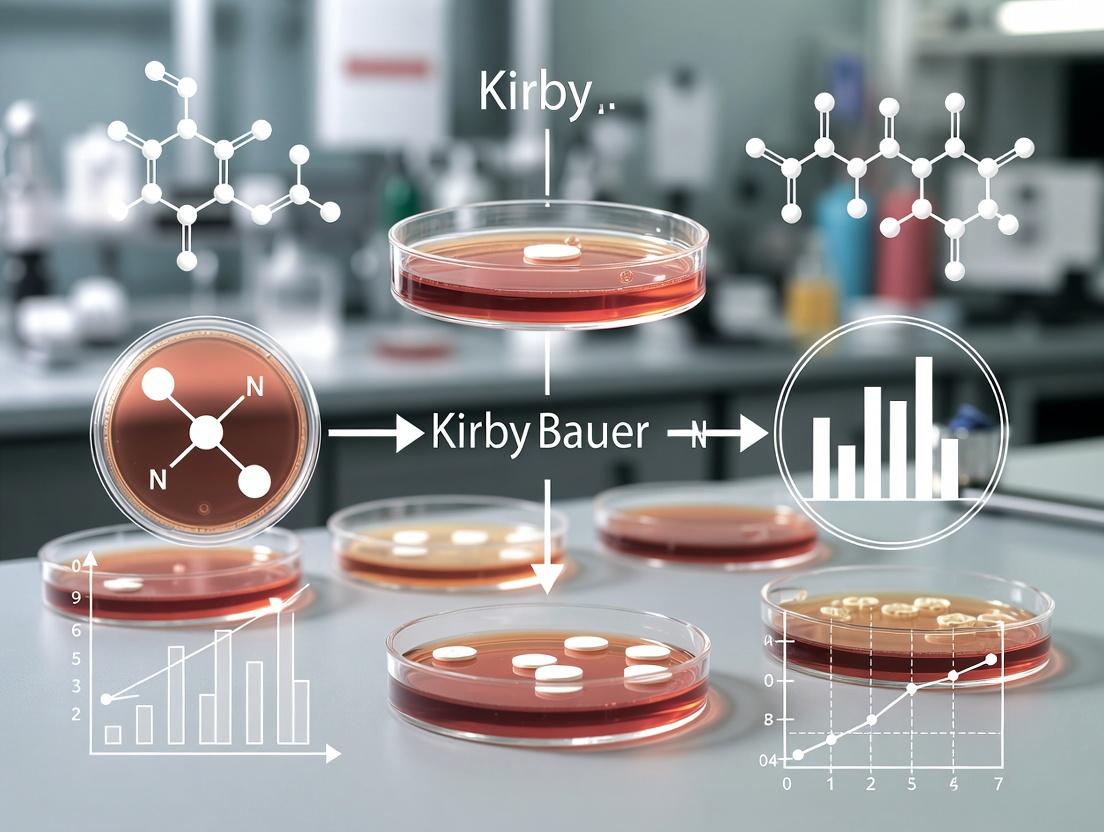
This comprehensive guide for researchers and drug development professionals details the Kirby-Bauer disk diffusion method, a cornerstone of clinical microbiology.
Kirby-Bauer Antibiotic Susceptibility Testing: Principles, Protocol, and Modern Applications for Antimicrobial Research
Abstract
This comprehensive guide for researchers and drug development professionals details the Kirby-Bauer disk diffusion method, a cornerstone of clinical microbiology. It covers the foundational science and historical context of the test, provides a detailed, step-by-step protocol for accurate execution, addresses common troubleshooting and optimization challenges, and validates the method through comparison with modern techniques like broth microdilution and automated systems. The article synthesizes current standards from CLSI and EUCAST to empower precise antimicrobial susceptibility testing in both research and development settings.
The Kirby-Bauer Test Decoded: History, Core Principles, and Clinical Significance
Application Notes: The Evolution of Antimicrobial Susceptibility Testing (AST)
The disk diffusion method, pioneered by Kirby and Bauer in the 1960s, established the foundational principle of correlating zone diameter inhibition to Minimum Inhibitory Concentration (MIC). This qualitative-to-quantitative relationship remains the cornerstone of modern AST. The subsequent development of standardized guidelines by the Clinical and Laboratory Standards Institute (CLSI) and the European Committee on Antimicrobial Susceptibility Testing (EUCAST) has been critical in ensuring global reproducibility, accuracy, and clinical relevance of AST data. For researchers within a thesis on Kirby-Bauer research, understanding this evolution is paramount for designing experiments that are both historically informed and contemporarily valid. Current guidelines are dynamic, with annual updates reflecting the rapid pace of antimicrobial resistance (AMR) emergence.
Key Quantitative Data in AST Standardization
Table 1: Evolution of Critical Parameters in Disk Diffusion AST
| Parameter | Kirby-Bauer (Original) | Modern CLSI/EUCAST (Standardized) | Significance for Research |
|---|---|---|---|
| Inoculum Density | 0.5 McFarland (Visual Estimate) | 0.5 McFarland (Spectrophotometric) | Ensures reproducible cell density; critical for zone size consistency. |
| Agar Depth | ~4 mm ("Pour plate") | 4.0 ± 0.5 mm | Affects antibiotic diffusion kinetics. Standard depth is essential for accurate zone interpretation. |
| Incubation Time | 16-18 hours | 16-20 hours (CLSI); 18 ± 2 hours (EUCAST) | Allows for standardized bacterial growth; deviations can alter zone diameters. |
| Measurement Precision | Nearest millimeter (mm) | Nearest 0.1 mm (Digital Calipers) | Increases accuracy and reduces inter-operator variability in data collection. |
Table 2: Comparison of CLSI vs. EUCAST Breakpoint Criteria (General Overview)
| Aspect | CLSI | EUCAST | Research Implication |
|---|---|---|---|
| Breakpoint Derivation | Integrates MIC distributions, PK/PD data, clinical outcome data, and expert opinion. | Primarily based on PK/PD data, MIC distributions, and clinical data, with a defined "wild-type" cutoff (ECOFF). | Understanding the basis helps in critiquing and applying breakpoints for novel compounds. |
| Zone Diameter Breakpoints | Published in M100 tables. | Published in EUCAST Breakpoint Tables. | Tables must be referenced annually. Discrepancies exist for some drug-bug combinations. |
| Intermediate Category | "I" (Intermediate) | "I" (Susceptible, Increased exposure) | Conceptual difference affects interpretation of marginal results in efficacy studies. |
| Quality Control Ranges | Defined for specific QC strains. | Defined for specific QC strains. | Mandatory for validating experimental assay conditions. |
Experimental Protocols
Protocol 1: Standardized Disk Diffusion Assay (Based on CLSI M02 & EUCAST v.13.0)
This protocol details the modern implementation of the Kirby-Bauer method for in vitro AST research.
I. Research Reagent Solutions & Materials
| Item | Function/Explanation |
|---|---|
| Cation-Adjusted Mueller-Hinton Broth (CAMHB) | Standard growth medium ensuring consistent cation concentrations (Ca²⁺, Mg²⁺) that affect aminoglycoside & tetracycline activity. |
| Mueller-Hinton Agar (MHA) Plates | Non-selective, low-thymidine content agar for uniform antibiotic diffusion. Depth must be verified (4 mm). |
| 0.5 McFarland Standard | Barium sulfate suspension for calibrating inoculum turbidity to ~1.5 x 10⁸ CFU/mL. |
| Sterile Saline (0.85%) or Broth | For standardizing bacterial suspension turbidity. |
| Antimicrobial-Impregnated Disks | High-quality disks with standardized antibiotic loads. Store desiccated at -20°C or -80°C. |
| Digital Calipers | For precise measurement of inhibition zone diameters to the nearest 0.1 mm. |
| Automated Zone Reader (Optional) | Reduces measurement subjectivity and increases throughput for large-scale studies. |
II. Methodology
- Inoculum Preparation: From a fresh overnight agar plate, select 3-5 identical colonies. Suspend in sterile saline/broth. Vortex.
- Turbidity Standardization: Adjust suspension turbidity spectrophotometrically to match a 0.5 McFarland standard (OD₆₂₅ ≈ 0.08-0.13). This yields ~1-2 x 10⁸ CFU/mL.
- Inoculation: Within 15 minutes, dip a sterile cotton swab into the suspension. Rotate firmly against the tube wall to express excess fluid. Swab the entire surface of an MHA plate three times, rotating 60° each time for even lawn coverage.
- Disk Application: Let plates dry (≤15 mins). Apply antibiotic disks using a dispenser or sterile forceps, pressing gently for full contact. Space disks 24 mm center-to-center (for 6 mm disks).
- Incubation: Invert plates and incubate aerobically at 35°C ± 2°C for 16-20 hours.
- Reading & Interpretation: Measure the diameter of complete inhibition (including disk diameter) in mm. Compare to current-year CLSI M100 or EUCAST breakpoint tables. Include appropriate QC strains (e.g., E. coli ATCC 25922, S. aureus ATCC 25923, P. aeruginosa ATCC 27853) in each run.
Protocol 2: Broth Microdilution for MIC Determination (Reference Method)
The gold standard quantitative method against which disk diffusion is correlated.
I. Research Reagent Solutions & Materials
| Item | Function/Explanation |
|---|---|
| CAMHB | As above, used as the dilution medium. |
| Sterile 96-Well Polystyrene Microtiter Plates | Trays with low drug-binding properties. |
| Multichannel Pipettes | For efficient serial dilutions and inoculum transfer. |
| Cation-Adjusted Mueller-Hinton Broth with 2-5% Lysed Horse Blood | For fastidious organisms like Streptococcus pneumoniae. |
| Plate Sealer | Prevents evaporation during incubation. |
II. Methodology
- Antibiotic Stock Solution: Prepare a high-concentration stock (e.g., 5120 µg/mL) in appropriate solvent (water, DMSO). Filter sterilize.
- Serial Dilution in Plate: Add CAMHB to all wells. Add antibiotic stock to the first well (e.g., well A1) and perform two-fold serial dilutions across the plate (e.g., 256 µg/mL to 0.125 µg/mL). Leave the last column as growth control (no antibiotic).
- Inoculum Preparation & Dilution: Prepare a 0.5 McFarland bacterial suspension as in Protocol 1. Dilute 1:150 in CAMHB to achieve ~5 x 10⁵ CFU/mL.
- Inoculation: Add 100 µL of the standardized inoculum (from step 3) to each well containing 100 µL of diluted antibiotic. Final test volume is 200 µL, final inoculum is ~5 x 10⁴ CFU/well, and antibiotic concentrations are halved.
- Incubation: Seal plate and incubate at 35°C ± 2°C for 16-20 hours.
- MIC Determination: The MIC is the lowest concentration of antibiotic that completely inhibits visible growth. Use a reading mirror. The growth control must show turbid growth, and the sterility control must be clear.
Visualization of AST Workflow and Guideline Relationships
Title: Evolution of AST from Kirby-Bauer to Modern Guidelines
Title: Detailed CLSI/EUCAST Disk Diffusion Protocol Workflow
Application Notes
The Kirby-Bauer disk diffusion method remains a cornerstone of clinical antibiotic susceptibility testing (AST). However, its qualitative or semi-quantitative nature (Susceptible, Intermediate, Resistant) is a limitation for advanced research and drug development. The core thesis posits that precise, quantitative measurement of Zones of Inhibition (ZOI), when rigorously correlated with Minimum Inhibitory Concentrations (MIC), transforms disk diffusion into a powerful, high-throughput tool for pharmacodynamic modeling, resistance mechanism studies, and novel compound screening. This correlation is governed by the linear relationship between the logarithm of the antibiotic concentration diffusing from the disk and the resulting zone diameter, as described by classical regression analysis.
Core Quantitative Data: Established Correlation Standards
Table 1: Representative Regression Parameters for ZOI-MIC Correlation
| Antibiotic Class | Example Agent | Typical Slope (b) | Typical Y-intercept (a) | Correlation Coefficient (r²) Range | Key Influencing Factor |
|---|---|---|---|---|---|
| β-lactams | Amoxicillin | -3.5 to -4.5 | 25 to 30 | 0.85 - 0.95 | Inoculum density, agar depth |
| Fluoroquinolones | Ciprofloxacin | -5.0 to -6.5 | 35 to 40 | 0.90 - 0.98 | Cation content of media |
| Aminoglycosides | Gentamicin | -4.0 to -5.0 | 28 to 32 | 0.88 - 0.96 | pH of Mueller-Hinton Agar |
| Glycopeptides | Vancomycin | -2.0 to -3.0 | 18 to 22 | 0.80 - 0.92 | Incubation time (slow diffusion) |
| Macrolides | Erythromycin | -3.8 to -4.8 | 26 to 31 | 0.82 - 0.94 | CO₂ incubation conditions |
Note: These values are model examples. Laboratory-specific regression must be established using reference strains.
Table 2: Critical Protocol Variables & Their Impact on ZOI
| Variable | CLSI Standard | Deviation Impact on ZOI | Effect on ZOI-MIC Correlation |
|---|---|---|---|
| Inoculum Density | 0.5 McFarland (~1.5 x 10⁸ CFU/mL) | +0.5 McFarland: ZOI ↓ 2-3 mm | High inoculum flattens regression slope |
| Agar Depth | 4.0 ± 0.5 mm | +1 mm: ZOI ↓ 10-15% | Alters antibiotic diffusion gradient |
| Incubation Time | 16-18 hours (non-fastidious) | +4 hours: ZOI ↓ 1-2 mm (or ↑ for heteroresistance) | Introduces nonlinearity at endpoints |
| Disk Potency Variance | ≤ 10% from stated content | +10%: ZOI ↑ 1.0-1.5 mm | Shifts regression line, affecting MIC prediction |
Experimental Protocols
Protocol 1: High-Precision ZOI Measurement & Data Acquisition
Objective: To obtain accurate, reproducible zone diameter measurements suitable for regression analysis with MIC. Materials: Mueller-Hinton Agar (MHA) plates, antibiotic disks, 0.5 McFarland standard, calibrated digital calipers or automated zone scanner (e.g., BIOMIC, Synbiosis ProtoCOL), CLSI reference strains (E. coli ATCC 25922, S. aureus ATCC 29213, P. aeruginosa ATCC 27853).
- Standardized Inoculation: Prepare bacterial suspension in saline to match the 0.5 McFarland standard using a densitometer. Swab entire agar surface in three directions for confluent lawn.
- Disk Application: Apply disks within 15 minutes of inoculation. Ensure firm contact using sterile forceps.
- Incubation: Incubate at 35±2°C for 16-18 hours in ambient air.
- Measurement: Use reflected light against a dark, non-reflective background.
- Manual: Use calibrated digital calipers. Measure the diameter to the nearest 0.1 mm at the point of complete, abrupt inhibition of growth.
- Automated: Scan plate using imaging system with edge-detection algorithms. Validate software thresholds against manual readings for 10% of plates.
- Data Logging: Record raw diameters, antibiotic identity, disk potency (µg), organism ID, and control strain results.
Protocol 2: Establishing Laboratory-Specific ZOI-MIC Regression
Objective: To generate a predictive regression line (log₂ MIC = a + b*ZOI) for a given antibiotic-organism combination. Materials: As in Protocol 1, plus 8-10 well-characterized clinical isolates with a wide range of MICs for the target antibiotic, and materials for broth microdilution MIC (see Protocol 3).
- Strain Selection: Select isolates whose MICs (determined by reference method) span the entire clinical range (e.g., from susceptible to resistant).
- Parallel Testing: Perform Kirby-Bauer disk diffusion (Protocol 1) and reference broth microdilution MIC (Protocol 3) on all isolates in the same run.
- Data Pairing: For each isolate, create a data pair (ZOI in mm, log₂ MIC in µg/mL).
- Regression Analysis:
- Plot ZOI (x-axis) vs. log₂ MIC (y-axis).
- Perform linear regression analysis using the least-squares method:
log₂ MIC = a + b*(ZOI). - Calculate the correlation coefficient (r²) and standard error of the estimate.
- Validation: Test the regression model against a new set of 10-15 isolates. ≥95% of predicted MICs should be within ±1 log₂ dilution of the actual MIC.
Protocol 3: Reference Broth Microdilution MIC Determination
Objective: To determine the gold-standard MIC for correlation. Materials: Cation-adjusted Mueller-Hinton Broth (CA-MHB), sterile 96-well polypropylene trays, antibiotic stock solutions, multipipettes.
- Antibiotic Dilution: Perform two-fold serial dilutions of the antibiotic in CA-MHB across rows of the microtiter plate (e.g., 64 µg/mL to 0.125 µg/mL). Leave one column as growth control (no antibiotic).
- Inoculum Preparation: Dilute a 0.5 McFarland standard suspension 1:150 in CA-MHB to yield ~1 x 10⁶ CFU/mL.
- Inoculation: Add 100 µL of the adjusted inoculum to each well of the plate. Final test concentration is half of the serial dilution, and final inoculum is ~5 x 10⁵ CFU/mL.
- Incubation: Cover plate and incubate at 35±2°C for 16-20 hours in ambient air.
- MIC Reading: The MIC is the lowest concentration of antibiotic that completely inhibits visible growth. Use a mirrored viewer to aid detection.
Visualizations
Workflow: ZOI-MIC Correlation Study
Factors Influencing the ZOI-MIC Relationship
The Scientist's Toolkit: Research Reagent Solutions
Table 3: Essential Materials for Advanced ZOI-MIC Studies
| Item | Function & Rationale | Critical Specification |
|---|---|---|
| Cation-Adjusted Mueller-Hinton Agar/Broth (CA-MHA/CA-MHB) | Standardized medium with controlled Mg²⁺ and Ca²⁺ levels to ensure accurate antibiotic activity, especially for aminoglycosides and tetracyclines. | pH 7.2-7.4 at room temperature; Ca²⁺: 20-25 mg/L; Mg²⁺: 10-12.5 mg/L. |
| Precision Antibiotic Disks | Source of standardized antibiotic gradient. High lot-to-lot consistency is vital for reproducible regression models. | Potency variance ≤ 10%; low desiccation; stored at -20°C or -80°C. |
| Digital Caliper / Automated Zone Scanner | Enables quantitative, high-precision ZOI measurement to 0.1 mm, removing subjective visual judgment. | Calibration traceable to NIST standards; software capable of exporting raw data. |
| Digital Densitometer for Inoculum | Ensures accurate and repeatable 0.5 McFarland standard preparation, the single most critical variable. | Must be calibrated weekly with latex standards. |
| CLSI/EUCAST Reference Strains | Quality control organisms to validate each run of disk diffusion and MIC testing, ensuring system integrity. | E. coli ATCC 25922, S. aureus ATCC 29213, P. aeruginosa ATCC 27853. |
| 96-Well Broth Microdilution Trays | For reference MIC determination. Pre-made, frozen panels can improve throughput and reproducibility. | Material must not bind antibiotics (polypropylene); clear, flat-bottom wells for easy reading. |
| Statistical Software (e.g., R, GraphPad Prism) | To perform robust linear regression, calculate confidence intervals, and validate the predictive model. | Capable of weighted regression to account for heteroscedasticity in MIC data. |
Application Notes
Within the framework of Kirby-Bauer (KB) disk diffusion antibiotic susceptibility testing research, the precise standardization of its three core components is paramount for generating reproducible, clinically actionable data. This protocol is foundational for research into antimicrobial resistance (AMR) surveillance, novel antibiotic efficacy testing, and pharmacokinetic/pharmacodynamic modeling.
Mueller-Hinton Agar (MHA): The non-selective, defined medium specified by the Clinical and Laboratory Standards Institute (CLSI). Its low thymidine and thymine content prevents antagonism of sulfonamide and trimethoprim activity, while its consistent cation concentration (Mg²⁺, Ca²⁺) is critical for aminoglycoside and tetracycline activity. For research on specific pathogens like Streptococcus pneumoniae, MHA is supplemented with 5% sheep blood. The agar depth is rigorously controlled at 4 mm, ensuring uniform antibiotic diffusion kinetics, a key variable in correlating zone diameters with Minimum Inhibitory Concentrations (MICs).
Antibiotic Disks: High-potency, paper disks serve as the point source for antibiotic diffusion. Research-grade disks must have precise antibiotic loads (measured in micrograms) and tight tolerances for absorption and elution rates. The pre-diffusion period after disk application (10 minutes at room temperature) is a critical, often optimized, step in research protocols to control initial diffusion dynamics before incubation.
Standardized Inoculum: The bacterial inoculum is adjusted to a 0.5 McFarland standard, equating to approximately 1-2 x 10⁸ CFU/mL. This dense, standardized lawn ensures confluent growth and establishes a precise initial condition for the antibiotic-bacterial interaction. Variations in inoculum density are a primary source of inter-laboratory variability, making its control essential for comparative studies.
Table 1: Quantitative Specifications for Key Components in Kirby-Bauer Research
| Component | Critical Parameter | Target Specification | Rationale in Research Context |
|---|---|---|---|
| Mueller-Hinton Agar | Thymidine/Thymine | ≤ 0.03 μg/mL | Prevents false resistance to antifolates (e.g., Trimethoprim). |
| Divalent Cations | Ca²⁺: 20-25 mg/L; Mg²⁺: 10-12.5 mg/L | Essential for accurate testing of aminoglycosides & tetracyclines. | |
| Agar Depth | 4.0 mm ± 0.5 mm | Standardizes diffusion rate; critical for zone size correlation with MIC. | |
| pH (at room temp) | 7.2 - 7.4 | Optimizes antibiotic activity and bacterial growth. | |
| Standardized Inoculum | Turbidity (0.5 McFarland) | 1-2 x 10⁸ CFU/mL | Ensures confluent lawn; standard initial condition for PK/PD models. |
| Inoculation Lag Time | ≤ 15 minutes post adjustment | Prevents significant changes in viable cell count before plating. | |
| Incubation Conditions | Atmosphere & Temperature | 35°C ± 2°C in ambient air | Standardizes growth rate for non-fastidious organisms. |
| Incubation Duration | 16-18 hours | Allows for clear zone edge formation without overgrowth. |
Experimental Protocols
Protocol 1: Preparation and Quality Control of Mueller-Hinton Agar Plates
- Materials: Dehydrated MHA powder, distilled water, autoclave, water bath (45-50°C), sterile Petri dishes (150 mm x 15 mm), leveling table.
- Method:
- Prepare agar per manufacturer's instructions. Autoclave at 121°C for 15 minutes.
- Cool in a water bath to 45-50°C.
- Pour approximately 60-70 mL of molten agar into each plate on a leveled surface.
- Allow to solidify at room temperature, then dry with lids ajar in a 35°C incubator for 10-20 minutes to eliminate surface moisture.
- QC: Perform growth promotion testing using control strains (e.g., E. coli ATCC 25922, S. aureus ATCC 25923). Measure agar depth at multiple points using calipers; average must be 4.0 mm ± 0.5 mm. Store plates at 2-8°C in sealed bags for up to 4 weeks.
Protocol 2: Standardization of Bacterial Inoculum for KB Testing
- Materials: Fresh subculture (18-24 hr), sterile saline or broth, spectrophotometer (625 nm wavelength), vortex mixer, sterile swabs, 0.5 McFarland standard (commercial or prepared).
- Method:
- Suspend colonies from fresh agar plate in saline to achieve a turbid suspension.
- Vortex thoroughly. Adjust turbidity to match the 0.5 McFarland standard using a spectrophotometer (optical density of 0.08-0.10 at 625 nm).
- Critical Step: Use the adjusted suspension within 15 minutes. Dip a sterile cotton swab into the suspension, rotate firmly against the tube wall to express excess fluid.
- Swab the entire surface of the MHA plate three times, rotating approximately 60° between each streak to ensure a confluent lawn.
Protocol 3: Disk Application, Incubation, and Measurement
- Materials: Standardized inoculum plate, antibiotic disks, disk dispenser or sterile forceps, ruler or calipers, incubator.
- Method:
- Apply antibiotic disks to the inoculated agar surface using a dispenser or sterile forceps. Press gently to ensure full contact.
- Invert plates and incubate at 35°C ± 2°C for 16-18 hours in ambient air.
- Measure the diameter of each zone of complete inhibition (including disk diameter) to the nearest millimeter using calipers under reflected light. For research, photographic documentation with a scale reference is recommended.
Visualization
Title: Kirby-Bauer Test Workflow for Research
Title: How Components Affect Research Outcomes
The Scientist's Toolkit: Research Reagent Solutions
| Item | Function in Kirby-Bauer Research |
|---|---|
| CLSI-Compliant Mueller-Hinton Agar | Defined medium ensuring reproducibility for AMR surveillance and compound screening. |
| Cation-Adjusted MHA (CAMHB) | Broth counterpart for MIC determination; used in tandem with KB for correlation studies. |
| Precision Antibiotic Disks | High-purity, research-grade disks with certified potencies for accurate diffusion studies. |
| Electronic Calipers / Zone Readers | Enables precise, digital recording of zone diameters for large-scale data analysis. |
| ATCC Quality Control Strains (e.g., E. coli 25922, S. aureus 25923, P. aeruginosa 27853) | Essential for daily protocol validation and inter-experiment normalization. |
| Spectrophotometer with 625nm filter | Provides objective, reproducible inoculum standardization superior to visual comparison. |
| 0.5 McFarland Standards (Latex) | Stable, longer-lasting turbidity standards for consistent inoculum preparation. |
| Sterile, Cotton-Tipped Swabs | For uniform lawn inoculation; pre-sterilized and non-inhibitory. |
Within the framework of Kirby-Bauer disk diffusion antibiotic susceptibility testing (AST), the categorical designations of Susceptible (S), Intermediate (I), and Resistant (R) are fundamental to clinical decision-making. These interpretive categories are derived from correlating quantitative zone diameter measurements (in mm) with pre-defined breakpoints. Breakpoints are specific numerical values that separate bacterial isolates into these clinical categories. They are established through an integrated analysis of microbiological, pharmacological, and clinical data, including Minimum Inhibitory Concentration (MIC) distributions, pharmacokinetic/pharmacodynamic (PK/PD) targets, and clinical outcome studies. This application note details the definition, derivation, and clinical application of these breakpoints, contextualized within ongoing AST research aimed at addressing emerging antimicrobial resistance.
Quantitative Breakpoint Data and Clinical Interpretation
Breakpoints are standardized by organizations such as the Clinical and Laboratory Standards Institute (CLSI) and the European Committee on Antimicrobial Susceptibility Testing (EUCAST). The tables below summarize core concepts and example data.
Table 1: Clinical Interpretation of S, I, and R Categories
| Category | Abbreviation | Clinical Interpretation | Implied Therapeutic Recommendation |
|---|---|---|---|
| Susceptible | S | A high likelihood of therapeutic success with standard dosing. | Use standard agent and dosage. |
| Intermediate | I | May be effective if higher drug exposure is achievable (e.g., higher dose, concentrated at infection site). A "buffer zone" to prevent minor technical errors from causing major category changes. | Consider if agent is concentrated at site of infection or if higher/ prolonged dosing is feasible. May also indicate "susceptible, increased exposure" per EUCAST. |
| Resistant | R | High likelihood of therapeutic failure even with increased exposure. | Select an alternative agent from a different class. |
Table 2: Example CLSI Breakpoints for Staphylococcus aureus (Cefazolin Disk: 30 µg)
| Category | Zone Diameter (mm) | Correlative MIC (µg/mL) | PK/PD Basis |
|---|---|---|---|
| Susceptible (S) | ≥ 21 | ≤ 2 | %T > MIC target achieved with standard dosing. |
| Intermediate (I) | 18 - 20 | 4 | Achievable only with increased exposure. |
| Resistant (R) | ≤ 17 | ≥ 8 | PK/PD targets unlikely to be met. |
Table 3: Key Organizations Setting Breakpoints
| Organization | Region | Key Documents | Update Frequency |
|---|---|---|---|
| CLSI | Global (primarily US) | M100 (Performance Standards), M02 (Disk Diffusion), M07 (Broth Dilution) | Annual |
| EUCAST | Global (primarily Europe) | Breakpoint Tables (v. X.Y) | Annual |
| FDA | United States | Recognized Standard (often aligns with CLSI) | As needed |
Experimental Protocol: Establishing Epidemiological Cutoff Values (ECOFFs)
A critical first step in breakpoint development is determining the Epidemiological Cutoff Value (ECOFF). This distinguishes wild-type (WT) bacteria without acquired resistance mechanisms from non-wild-type (NWT) strains.
Protocol: ECOFF Determination via MIC Distribution Analysis
- Bacterial Strain Collection: Assemble a large, geographically diverse collection of bacterial isolates (e.g., >500) for a single species (e.g., Escherichia coli).
- Reference MIC Testing: Perform reference broth microdilution (CLSI M07) for the antibiotic of interest across a standardized dilution series (e.g., 0.06 – 64 µg/mL).
- Data Aggregation: Plot the frequency distribution of MIC values on a log2 scale.
- Statistical Analysis: Visually and statistically (e.g., using ECOFFinder software) identify the MIC value that separates the primary, normally distributed wild-type population from the higher-MIC tail population.
- Designation: The identified MIC is proposed as the ECOFF (e.g., ECOFF MIC ≤ 1 µg/mL). Isolates with MICs at or below this value are considered WT. Those above are NWT, implying acquired resistance mechanisms.
Protocol: Correlating Disk Diffusion Zones with MICs
- Strain Panel: Use a panel of 100-200 bacterial isolates encompassing a wide range of MICs (from WT to highly resistant).
- Parallel Testing: Perform both reference broth microdilution (MIC) and standardized Kirby-Bauer disk diffusion (CLSI M02) for each isolate-antibiotic combination.
- Regression Analysis: Plot zone diameter (mm) against log2(MIC) for each data pair. Generate a scatter plot and calculate the linear regression line (Zone Diameter = m * log2(MIC) + b).
- Correlation: Establish the correlation coefficient (R²). A strong inverse correlation (R² > 0.9) validates the use of zone diameters to predict MICs.
- Breakpoint Translation: Using the regression equation, translate the established MIC breakpoints (S, I, R) into corresponding zone diameter breakpoints (in mm) for the disk diffusion method.
Visualization of Breakpoint Determination Workflow
Diagram Title: Breakpoint Development & Validation Pathway
The Scientist's Toolkit: Key Research Reagent Solutions
Table 4: Essential Materials for Breakpoint Research
| Item | Function & Specification | Example Vendor/Product |
|---|---|---|
| Cation-Adjusted Mueller-Hinton Broth (CAMHB) | Standardized medium for broth microdilution MIC testing, ensuring consistent cation concentrations (Ca²⁺, Mg²⁺) that affect antibiotic activity. | Hardy Diagnostics, Becton Dickinson |
| Mueller-Hinton Agar (MHA) Plates | Standardized medium for Kirby-Bauer disk diffusion testing; depth and pH are critically controlled. | Thermo Fisher Scientific, Oxoid |
| Antiotic Disks | Paper disks impregnated with a precise, standardized amount of antibiotic (e.g., 30 µg cefazolin). | Becton Dickinson (BBL Sensi-Disc), bioMérieux |
| Reference Bacterial Strains | Quality control organisms with known MICs and zone diameters (e.g., E. coli ATCC 25922, S. aureus ATCC 29213). | American Type Culture Collection (ATCC) |
| Broth Microdilution Trays | Pre-manufactured 96-well plates containing serial dilutions of antibiotics, essential for high-throughput MIC determination. | Trek Diagnostic Systems (Sensititre), Thermo Fisher (MICROFLEX) |
| ECOFFinder Software | Statistical tool for analyzing MIC distributions and proposing ECOFF values from large datasets. | EUCAST (Freely Available) |
| CLSI M100 / EUCAST Breakpoint Tables | The definitive standards containing current breakpoints for all organism-drug combinations. | Clinical & Laboratory Standards Institute, EUCAST |
The definitions of S, I, and R are not static laboratory measurements but dynamic, evidence-based clinical predictions. Their accuracy hinges on rigorously derived breakpoints that integrate microbiological, pharmacological, and clinical data. As resistance patterns evolve, continuous research using standardized protocols is essential to refine these breakpoints, ensuring Kirby-Bauer AST remains a cornerstone of effective antimicrobial stewardship and personalized patient therapy.
The Critical Role of KB Testing in Antimicrobial Stewardship and Drug Development
Application Notes: Quantitative Impact and Contemporary Context
Kirby-Bauer (KB) disk diffusion testing remains a cornerstone phenotypic method. Within antimicrobial stewardship (AMS), it guides empiric therapy decisions and tracks resistance trends. In drug development, it serves as an initial, high-throughput screen for novel compound activity against a panel of clinically relevant pathogens.
Table 1: Quantitative Impact Metrics of KB Testing in Clinical & Research Settings
| Metric | Clinical/Stewardship Context | Drug Development Context |
|---|---|---|
| Typical Turnaround Time | 18-24 hours post-isolation | 16-20 hours post-inoculation |
| Cost per Isolate Tested | $5 - $15 (reagents & labor) | $10 - $25 (including custom pathogen panels) |
| Key Measured Output | Zone of Inhibition (ZOI) diameter (mm) | Zone of Inhibition (ZOI) diameter (mm) |
| Primary Benchmark | CLSI/FDA breakpoints (S/I/R) | Comparator agent ZOI; MIC correlation studies |
| High-Throughput Capacity | Moderate (20-30 isolates/plate) | High (dedicated plates for a single compound against multiple strains) |
| Critical Role in AMS | >60% of initial antibiotic modifications in some settings are guided by AST results, predominantly KB. | Used in >80% of early-stage antimicrobial discovery projects for initial activity profiling. |
Experimental Protocols
Protocol 1: Standardized KB Disk Diffusion Test for Clinical Isolates (CLSI M02)
- Objective: Determine the susceptibility of a bacterial isolate to a panel of antimicrobials.
- Materials: Mueller-Hinton Agar (MHA) plates, 0.5 McFarland standard, sterile swabs, antibiotic disks, dispenser, caliper, incubator.
- Method:
- Inoculum Preparation: Suspend 3-5 colonies from an overnight culture in saline or broth. Adjust turbidity to 0.5 McFarland standard (~1.5 x 10^8 CFU/mL).
- Inoculation: Within 15 minutes, dip a sterile swab into the suspension, rotate against the tube wall to express excess fluid, and streak the entire agar surface in three directions for a confluent lawn.
- Disk Application: Apply antibiotic disks to the inoculated surface using a sterilized dispenser. Press disks gently to ensure full contact. Plates must be inverted and incubated at 35±2°C within 15 minutes of disk application.
- Incubation: Incubate for 16-18 hours in an ambient air incubator. For fastidious organisms, incubation time may extend to 20-24 hours.
- Measurement & Interpretation: Using a caliper on the plate's undersurface, measure the ZOI diameter to the nearest whole millimeter. Interpret results using current CLSI breakpoint tables (Susceptible, Intermediate, Resistant).
Protocol 2: KB Screening for Novel Antimicrobial Compounds in Development
- Objective: Preliminary evaluation of the spectrum and relative potency of a novel antimicrobial agent.
- Materials: MHA plates, reference bacterial strains (ATCC controls, ESKAPE pathogens), compound stock solution, blank sterile filter paper disks (6 mm), DMSO (if needed), disk dispenser.
- Method:
- Disk Preparation: Impregnate blank disks with a standardized volume (typically 20 µL) of the test compound at a predefined concentration (e.g., 100 µg/mL in appropriate solvent). Include disks with solvent-only and known antibiotic controls.
- Inoculation & Disk Application: Follow steps 1-3 from Protocol 1, using a standardized panel of bacterial strains. Apply test and control disks.
- Incubation & Analysis: Incubate as per Protocol 1. Measure ZOIs. Plot ZOI diameters against bacterial strains to visualize spectrum. Compare test compound ZOI to control antibiotic ZOIs for a relative potency estimate. Promising compounds proceed to Minimum Inhibitory Concentration (MIC) assays.
Visualizations
KB Test Outputs Drive Key Applications
KB Screening in Drug Development Flow
The Scientist's Toolkit: Key Research Reagent Solutions
Table 2: Essential Materials for KB Testing
| Item | Function & Specification |
|---|---|
| Mueller-Hinton Agar (MHA) | Standardized, low-antagonist medium for non-fastidious aerobic bacteria. Depth must be 4 mm. |
| Cation-Adjusted MHA (CAMHA) | Contains Ca²⁺/Mg²⁺ for accurate aminoglycoside and tetracycline testing against Pseudomonas. |
| 0.5 McFarland Standard | Latex particle suspension for calibrating inoculum density to ~1.5 x 10^8 CFU/mL. |
| Sterile Cotton Swabs | For even lawn inoculation of agar surface from standardized bacterial suspension. |
| Antibiotic Disks | Paper disks impregnated with a defined, stable concentration of antimicrobial agent. |
| Blank Filter Paper Disks (6 mm) | For in-house preparation of disks with novel compounds or non-standard antibiotics. |
| Disk Dispenser | Sterilizable device for simultaneous, equidistant application of multiple disks to a plate. |
| Digital Caliper | For precise measurement of Zone of Inhibition diameters to the nearest 0.1 mm. |
| CLSI Performance Standards (M02, M100) | Definitive reference for methodology, quality control ranges, and interpretive breakpoints. |
| QC Strains (e.g., E. coli ATCC 25922, S. aureus ATCC 25923, P. aeruginosa ATCC 27853) | Used weekly to verify reagent performance and procedural accuracy. |
Executing the Kirby-Bauer Protocol: A Step-by-Step Guide for Reproducible Results
Within a thesis focused on optimizing and validating the Kirby-Bauer disk diffusion method for antibiotic susceptibility testing (AST), the pre-analytical phase is foundational. Inaccurate strain selection, improper revival, or unchecked culture purity directly invalidates downstream AST results, leading to erroneous conclusions about antibiotic efficacy. This document provides detailed application notes and protocols for these critical initial steps, ensuring reliable and reproducible research data.
Strain Selection: Criteria and Considerations
Selecting appropriate bacterial strains is the first critical decision. The choice depends on the specific research objectives of the Kirby-Bauer study.
Table 1: Strain Selection Guide for Kirby-Bauer AST Research
| Research Objective | Recommended Strain Types | Key Quantitative Criteria | Primary Source |
|---|---|---|---|
| Method Validation & QC | ATCC reference strains | Known, published zone diameter ranges for specific antibiotic disks (e.g., E. coli ATCC 25922, S. aureus ATCC 25923) | Commercial culture collections (ATCC, DSMZ, NCTC) |
| Antibiotic Mechanism Study | Isogenic mutant pairs (e.g., efflux pump+/-, porin-/+) | Defined MIC (Minimum Inhibitory Concentration) differences (e.g., ≥4-fold MIC change) | Academic collaborators, mutant libraries |
| Surveillance & Resistance Tracking | Recent clinical isolates | Local resistance prevalence rates (e.g., %MRSA, %ESBL) as per regional surveillance data | Clinical microbiology laboratories (with IRB approval) |
| Novel Drug Screening | Panels of resistant phenotypes | Include strains with defined resistance genotypes (e.g., mecA, blaNDM-1) | Public repositories (FDA-CDC AR Isolate Bank, NARMS) |
Protocol 1.1: Sourcing and Documenting Strain Information
- Procurement: Order strains from reputable collections. Record the catalog number, batch number, and recommended growth conditions.
- Data Logging: Create a strain master file. For each strain, document:
- Species and strain designation.
- Known resistance markers/genotype.
- Expected AST profile (reference zone diameters or MICs).
- Recommended culture medium and incubation temperature.
- Storage: Upon arrival, immediately prepare long-term stock cultures (see Protocol 2.1).
Strain Revival from Preservation
Proper revival from frozen or lyophilized stocks is essential to ensure viability and maintain genotypic/phenotypic stability.
Protocol 2.1: Revival from Cryopreserved Stock (-80°C) Research Reagent Solutions:
- Cryopreservation Broth: Tryptic Soy Broth (TSB) or Brain Heart Infusion (BHI) broth supplemented with 20% (v/v) sterile glycerol.
- Growth Media: Non-selective, nutrient-rich agar (e.g., Tryptic Soy Agar (TSA), Blood Agar).
- Sterile Inoculation Loops: Disposable, 10 µL or 1 µL calibrated loops.
Methodology:
- Rapid Thaw: Remove the cryovial from -80°C storage and immediately place it in a 37°C water bath for 1-2 minutes until just thawed. Do not leave at room temperature.
- Aseptic Transfer: Using a sterile loop, transfer a loopful of the thawed suspension onto the surface of a recommended agar plate.
- Streak for Isolation: Use a quadrant streak method to obtain isolated colonies.
- Incubate: Invert the plate and incubate under the strain's optimal conditions (typically 35±2°C for 18-24 hours).
- Subculture: Inspect for isolated, morphologically consistent colonies. Proceed to purity checking (Section 3).
Protocol 2.2: Revival from Lyophilized Stock Methodology:
- Reconstitution: Aseptically open the ampule. Add 0.3-0.5 mL of appropriate sterile broth (per supplier's instructions) directly to the pellet.
- Resuspension: Gently pipette or swirl to resuspend the pellet.
- Transfer: Immediately transfer the entire suspension to a tube containing 5-7 mL of broth or onto an agar plate. Incubate as recommended.
- Subculture: After 18-24 hours, check for growth. Perform a subculture to fresh agar to ensure robust recovery before purity checks.
Purity Checking and Colony Morphology Assessment
Confirming culture purity is non-negotiable. A mixed culture will produce uninterpretable and invalid Kirby-Bauer results.
Protocol 3.1: Macroscopic and Microscopic Purity Check Research Reagent Solutions:
- Sterile Saline: 0.85-0.9% NaCl solution for emulsification.
- Staining Reagents: Gram stain kit (Crystal Violet, Iodine, Decolorizer, Safranin).
- Microscopy Supplies: Clean glass slides, immersion oil.
Methodology:
- Macroscopic Assessment: Examine the subcultured plate for uniform colony morphology (size, shape, color, opacity, margin, elevation).
- Microscopic Assessment: a. Emulsify a single, isolated colony in a drop of saline on a glass slide. b. Perform a Gram stain following standard procedure. c. Examine under oil immersion (1000x magnification). d. All cells should display consistent Gram reaction, shape, and arrangement.
- Documentation: Photograph the plate and a representative microscopic field. Any heterogeneity mandates re-isolation or sourcing a new stock.
Protocol 3.2: Confirmatory Biochemical Test (Rapid Catalase Test) A quick test to catch common gross contamination (e.g., Staphylococcus vs. Streptococcus).
- Using a sterile applicator stick, transfer a small amount of colony to a clean slide.
- Add one drop of 3% hydrogen peroxide (H₂O₂).
- Observe: Immediate bubbling indicates catalase-positive. No bubbling is catalase-negative.
- Compare the result to the expected biochemical profile of the strain.
Diagram Title: Workflow for Strain Revival and Purity Verification
The Scientist's Toolkit: Key Research Reagent Solutions
Table 2: Essential Materials for Pre-Analytical Steps
| Item | Function | Example/Notes |
|---|---|---|
| Cryobead Preservation System | Provides consistent, ready-to-use bacterial beads for long-term storage and revival. | Pre-sterilized porous beads in cryoprotectant solution. |
| Microbank or similar vials | For creating in-house archival stocks at -80°C. | Includes beads and cryopreservative fluid. |
| Sterile Glycerol (100%) | Cryoprotectant for preparing freezer stocks at final 15-20% concentration. | Must be tissue culture grade, sterile-filtered. |
| Non-Selective Enrichment Agar | For initial revival without selective pressure that may inhibit recovery. | Tryptic Soy Agar (TSA), Blood Agar, Brain Heart Infusion (BHI) Agar. |
| Disposable Inoculation Loops | Ensures aseptic, consistent transfer; eliminates cross-contamination risk. | 1 µL, 10 µL calibrated loops for quantitative work. |
| Gram Stain Kit | For microscopic verification of cell morphology and purity. | Includes all four reagents: crystal violet, iodine, decolorizer, safranin. |
| Rapid Biochemical Test Strips | Quick phenotypic confirmation of strain identity. | Catalase, Oxidase, Latex Agglutination (e.g., for S. aureus ID). |
| Sterile Saline (0.85% NaCl) | For emulsifying colonies for staining or preparing standardized suspensions. | Phosphate-buffered saline (PBS) is an acceptable alternative. |
Rigorous adherence to standardized protocols for strain selection, revival, and purity checking establishes the integrity of all subsequent Kirby-Bauer antibiotic susceptibility data. These pre-analytical steps are not merely preparatory but are integral to generating research findings that are accurate, reproducible, and scientifically defensible within a thesis investigating AST methodologies. Failure at this stage cannot be corrected later in the experimental pipeline.
1. Introduction Within the broader thesis on optimizing Kirby-Bauer disk diffusion susceptibility testing, the accurate preparation of the inoculum suspension is a critical, non-negotiable first step. The 0.5 McFarland turbidity standard provides the empirical reference for adjusting bacterial suspensions to approximately 1-2 x 10⁸ CFU/mL, ensuring reproducible antibiotic zone sizes. This document provides current application notes and detailed protocols for the preparation, verification, and use of this fundamental standard in a research and drug development context.
2. Quantitative Data Summary
Table 1: Key Parameters of the 0.5 McFarland Standard and Its Application
| Parameter | Specification | Rationale/Implication |
|---|---|---|
| Primary Composition | 1.175% (v/v) Barium Chloride Dihydrate (BaCl₂·2H₂O) in 1% (v/v) Sulfuric Acid (H₂SO₄) | Forms a stable, fine precipitate of barium sulfate (BaSO₄) mimicking bacterial turbidity. |
| Optical Density (OD) | 0.08 - 0.13 at 625 nm (avg. 0.1) | The target optical density for spectrophotometric verification. |
| Corresponding Cell Density | ~1.5 x 10⁸ Colony Forming Units (CFU) per mL | For most Enterobacterales (e.g., E. coli, K. pneumoniae). Density varies slightly by genus. |
| Suspension Volume for Kirby-Bauer | Adjust test inoculum to match the standard's turbidity visually or via densitometer. | Ensures confluent, semi-confluent growth required for accurate zone edge reading. |
| Standard Shelf Life | 6 months, stored in sealed, dark glass vials at room temperature. | Precipitation can settle; must be vortexed thoroughly before use. Homogeneity degrades over time. |
| Allowed Turbidity Variance | ± 0.01 OD from 0.1 target | Greater variance can lead to significant errors in zone diameter (>2-3 mm). |
3. Detailed Experimental Protocols
Protocol 3.1: Preparation of the 0.5 McFarland Standard
- Objective: To synthesize a stable, long-term turbidity standard.
- Materials: Anhydrous Barium Chloride (BaCl₂), Concentrated Sulfuric Acid (H₂SO₄, 95-98%), Distilled Water, 100 mL Volumetric Flask, Magnetic Stirrer, Sealed Glass Vials (5-10 mL capacity).
- Procedure:
- Prepare 1% (v/v) Sulfuric Acid: Carefully add 1 mL of concentrated H₂SO₄ to approximately 70 mL of distilled water in a 100 mL volumetric flask. Mix and allow to cool. Bring to final volume of 100 mL with distilled water.
- Prepare 1.175% Barium Chloride Solution: Dissolve 1.175 g of BaCl₂ (or 1.47 g of BaCl₂·2H₂O) in distilled water and bring to a final volume of 100 mL.
- Under constant stirring of the 1% H₂SO₄ solution, add exactly 1.0 mL of the 1.175% BaCl₂ solution.
- Continue stirring for 1 minute to ensure even precipitate formation.
- Dispense 4-6 mL aliquots into clean, sealed glass vials. Label with preparation date and expiration date (6 months forward).
- Verify turbidity spectrophotometrically (Protocol 3.2).
Protocol 3.2: Verification of the McFarland Standard Using a Spectrophotometer
- Objective: To quantitatively confirm the optical density of the prepared standard.
- Materials: Spectrophotometer (capable of 625 nm), Cuvettes, Vortex mixer.
- Procedure:
- Turn on the spectrophotometer and allow it to warm up. Set wavelength to 625 nm.
- Vortex a vial of the freshly prepared standard for 10-15 seconds to resuspend the BaSO₄ precipitate uniformly.
- Blank the spectrophotometer with a cuvette containing 1% H₂SO₄ (the reagent blank).
- Immediately transfer the vortexed standard to a clean cuvette and measure the OD at 625 nm.
- Repeat the measurement with a second aliquot from a different vial.
- Acceptance Criterion: The mean OD should be 0.100 ± 0.01. Standards outside this range must be discarded and remade.
Protocol 3.3: Standardization of Bacterial Inoculum for Kirby-Bauer Testing
- Objective: To adjust a bacterial suspension to the density of the 0.5 McFarland standard.
- Materials: 4-5 isolated colonies of test organism, sterile saline or broth, sterile swabs, turbidity meter (densitometer) or visual comparison card.
- Procedure:
- Suspend colonies in 4-5 mL of sterile saline (e.g., 0.85% NaCl) or Mueller-Hinton broth.
- Vortex thoroughly to create a homogeneous suspension.
- Adjust turbidity:
- Densitometer Method: Vortex the McFarland standard, blank the densitometer, then measure the test suspension. Add more organism or diluent until the reading matches the standard (0.08-0.13).
- Visual Method: Against a white card with contrasting black lines, compare the turbidity of the standard and test suspension in matched tubes. Adjust until the lines are equally obscured.
- Use this standardized suspension within 15 minutes to lawn-inoculate Mueller-Hinton agar plates.
4. Visualizations
Diagram Title: Kirby-Bauer Workflow with McFarland Critical Step
Diagram Title: 0.5 McFarland Standard Preparation & QC
5. The Scientist's Toolkit: Essential Research Reagent Solutions
Table 2: Key Reagents and Materials for McFarland Standard & Inoculum Prep
| Item | Function & Specification |
|---|---|
| Barium Chloride Dihydrate (BaCl₂·2H₂O), ACS Grade | Source of barium ions. High purity ensures consistent precipitate size and turbidity. |
| Sulfuric Acid (H₂SO₄), 95-98%, ACS Grade | Source of sulfate ions. High purity and concentration ensure complete BaSO₄ precipitation. |
| Sterile 0.85% Sodium Chloride (NaCl) Solution | Standard suspension medium for bacterial colonies; maintains osmotic balance. |
| Sealed Glass Vials (5-10 mL, screw-cap) | For storing McFarland standards; prevents evaporation and contamination. |
| McFarland Turbidity Standard Set (e.g., 0.25 - 4.0) | Commercial, pre-verified standards for calibrating densitometers and extended range work. |
| Digital Turbidity Densitometer | Provides objective, quantitative measurement of bacterial suspension density against the standard. |
| Mueller-Hinton Broth (MHB) | Alternative growth medium for preparing inoculum from direct colonies, as per CLSI guidelines. |
| Vortex Mixer | Essential for creating homogeneous bacterial suspensions and resuspending the BaSO₄ precipitate. |
Within the critical research framework of Kirby-Bauer disk diffusion antibiotic susceptibility testing, the consistent achievement of a confluent bacterial lawn is the foundational variable upon which all subsequent, quantitative data depends. This protocol details the standardized methodologies for broth culture preparation and agar plate inoculation to produce a uniform, confluent growth essential for accurate, reproducible zone-of-inhibition measurements. The precision of this step directly impacts the reliability of data correlating zone diameters with clinical breakpoints in drug development research.
A confluent lawn is defined as uniform, contiguous growth with no visible individual colonies. Inadequate lawn density leads to erroneously large inhibition zones, while overly heavy growth can reduce zone sizes. Key quantitative parameters from current standards are summarized below.
Table 1: Critical Parameters for Lawn Preparation
| Parameter | Optimal Specification | Impact on Kirby-Bauer Results |
|---|---|---|
| Inoculum Density (CFU/mL) | 1.0 - 1.5 x 10^8 CFU/mL (0.5 McFarland Standard) | Directly determines lawn confluency. |
| Incubation Time Post-Inoculation | 15 min (max 30 min) at room temperature | Ensures even absorption; longer times can cause "pre-incubation." |
| Agar Depth | 4.0 ± 0.5 mm | Critical for standardized antibiotic diffusion. |
| Incubation Conditions | 35 ± 2°C, ambient air, 16-18 hours | Mandatory for reliable zone edge definition. |
| Final Lawn Appearance | Dense, even, confluent; light visible through zones only. | Primary qualitative QC measure. |
Detailed Experimental Protocols
Protocol 1: Preparation of 0.5 McFarland Standard Inoculum
Purpose: To achieve a reproducible bacterial suspension of approximately 1 x 10^8 CFU/mL for lawn inoculation.
Materials:
- Fresh, pure isolate (18-24 hour culture on non-selective agar).
- Sterile 0.85% saline or Mueller-Hinton Broth.
- Turbidity standard (0.5 McFarland, commercial or prepared).
- Sterile swabs, test tubes, vortex mixer, spectrophotometer (optional).
Methodology:
- Select 3-5 well-isolated colonies of identical morphology from an overnight agar plate.
- Emulsify colonies in 4-5 mL of sterile saline/broth. Vortex vigorously for 15-30 seconds.
- Adjust turbidity visually or spectrophotometrically against the 0.5 McFarland standard.
- Visual Adjustment: Compare suspension against standard under incandescent light against a white background with contrasting black line. Adjust with sterile broth or more bacteria.
- Spectrophotometric Adjustment: Measure absorbance at 625 nm. An OD~0.08-0.13 corresponds to 0.5 McFarland.
- Use the adjusted suspension within 30 minutes of preparation.
Protocol 2: Inoculation of Mueller-Hinton Agar Plates
Purpose: To produce a perfectly even, confluent bacterial lawn for disk placement.
Materials:
- Prepared 0.5 McFarland inoculum (from Protocol 1).
- Sterile cotton-tipped swabs (non-toxic).
- 100-150 mm Mueller-Hinton agar plates, 4 mm deep.
- Mechanical turntable (recommended).
Methodology:
- Dip a sterile swab into the adjusted inoculum. Rotate swab firmly against the inner wall of the tube above fluid level to remove excess liquid.
- Inoculate the dried surface of a Mueller-Hinton agar plate by streaking the swab over the entire sterile agar surface. Rotate the plate approximately 60° and repeat streaking to ensure complete coverage.
- For optimal uniformity, use a turntable: place plate on turntable, swab the entire rim of the agar, then spread inoculum radially from center to edge while rotating.
- Allow the inoculated surface to dry for 10-15 minutes at room temperature with the lid ajar (in a sterile environment) before applying antibiotic disks.
- Apply disks firmly with sterile forceps or an automatic dispenser to ensure complete contact with the agar.
- Invert plates and incubate at 35 ± 2°C for 16-18 hours in an ambient air incubator. Do not use CO₂.
Visualizations
Diagram 1: Kirby-Bauer Lawn Prep Workflow
Diagram 2: Impact of Inoculum Density on Test Results
The Scientist's Toolkit: Research Reagent Solutions
Table 2: Essential Materials for Confluent Lawn Preparation
| Item | Function & Importance |
|---|---|
| Mueller-Hinton Agar (MHA) | The standardized, non-selective, low-thymidine medium that ensures consistent antibiotic diffusion rates. Depth (4 mm) is critical. |
| McFarland Standards (0.5) | The primary reference for calibrating inoculum density to ~1x10^8 CFU/mL. Essential for reproducibility between experiments. |
| Sterile Saline (0.85%) or MHB | Isotonic suspension fluid for preparing bacterial inoculum without inhibiting or promoting growth. |
| Non-Toxic, Cotton Swabs | For even plate inoculation. Toxins in some swabs can inhibit growth and distort zone margins. |
| Plate Turbidimeter | Instrument to objectively verify inoculum density at 625 nm, reducing subjectivity of visual comparison. |
| Mechanical Turntable | Provides uniform swab pressure and coverage during plate inoculation, maximizing lawn consistency. |
| Ambient Air Incubator (35±2°C) | Temperature-controlled incubation without CO2 is mandatory, as CO2 alters pH and antibiotic activity. |
Application Notes
Within the framework of a thesis investigating methodological variables in Kirby Bauer (KB) disk diffusion antibiotic susceptibility testing, the precise application of antibiotic disks, adherence to aseptic protocol, and controlled incubation are fundamental to generating reliable, reproducible data. These factors directly influence the zone of inhibition size and clarity, impacting the accuracy of clinical breakpoint interpretations and research conclusions on bacterial resistance trends.
Disk Positioning: Precision for Measurement
Correct disk placement on the inoculated Mueller-Hinton Agar (MHA) plate is critical. The recommended standard is to place disks no closer than 24 mm from center to center (or approximately 15 mm edge-to-edge) and at least 15 mm from the plate rim. This ensures uniform, non-overlapping diffusion of antibiotics and prevents edge effects that distort zone morphology. Automated dispensers enhance reproducibility, but manual application requires calibrated templates.
Sterile Technique: Preserving Assay Integrity
Sterile technique is paramount to prevent contamination that can obscure zone edges or introduce confounding variables. All procedures—from inoculum preparation to disk application and plate transfer to the incubator—must be performed in a biosafety cabinet or with strict aseptic method. This includes flaming flask necks, using sterile swabs and forceps, and minimizing lid exposure.
Incubation Conditions: Optimizing Bacterial Growth and Antibiotic Diffusion
Standard incubation is at 35°C ± 2°C for 16-18 hours. The atmosphere (ambient air vs. CO2-enriched) is organism-specific and profoundly affects results. Staphylococcus aureus and Enterobacterales are incubated aerobically. Fastidious organisms like Streptococcus pneumoniae require 5-7% CO2, which can alter the medium's pH and, consequently, the activity of some antibiotics (e.g., aminoglycosides, tetracyclines). Researchers must standardize conditions as per CLSI/EUCAST guidelines to ensure comparability with published breakpoints.
Table 1: Standardized Parameters for Disk Diffusion Testing
| Parameter | Specification | Rationale |
|---|---|---|
| Disk Spacing (Center-to-Center) | 24 mm minimum | Prevents overlapping inhibition zones. |
| Distance from Plate Edge | 15 mm minimum | Prevents edge effect distortion. |
| Inoculum Density (McFarland) | 0.5 (1-1.5 x 10^8 CFU/mL) | Standardizes bacterial lawn density. |
| Primary Incubation Temperature | 35°C ± 2°C | Optimal growth for most pathogens. |
| Incubation Duration | 16-18 hours (routine) | Standardizes growth and diffusion time. |
| CO2 Incubation | 5-7% (for fastidious organisms) | Required for growth of S. pneumoniae, etc. |
| Plate Inversion During Incubation | Yes | Prevents condensation from obscuring zones. |
Table 2: Impact of Incubation Atmosphere on Zone Diameters (Example)
| Antibiotic Class | Example Drug | Typical Zone Shift in CO2 vs. Aerobic | Probable Cause |
|---|---|---|---|
| Aminoglycosides | Gentamicin | Decrease (1-3 mm) | Lowered medium pH reduces activity. |
| Tetracyclines | Tetracycline | Decrease (2-4 mm) | pH-dependent efficacy. |
| Macrolides | Erythromycin | Variable | Combined effect of pH and improved growth of fastidious organisms. |
| Beta-lactams | Penicillin G | Increase for S. pneumoniae | Enables growth for testing. |
Experimental Protocols
Protocol: Manual Disk Application and Plate Incubation
Objective: To uniformly apply antibiotic disks to a standardized bacterial lawn and incubate under correct conditions for KB testing.
Materials:
- Standardized bacterial suspension (0.5 McFarland) in saline or broth.
- 90-100 mm Mueller-Hinton Agar (MHA) plates (or MHA with 5% sheep blood for fastidious organisms).
- Sterile cotton swabs.
- Commercially prepared, validated antibiotic disks.
- Sterile forceps or disk dispenser.
- Calibrated template (optional).
- 35°C incubator (ambient air and CO2-capable).
Methodology:
- Inoculation: Dip a sterile swab into the adjusted inoculum. Rotate and press firmly against the tube wall to remove excess fluid. Swab the entire surface of the MHA plate in three directions (rotating plate ~60° each time) to ensure a confluent lawn.
- Drying: Allow the plate to dry for 3-5 minutes (lid ajar) under a biosafety cabinet.
- Disk Application: Using sterile forceps or a dispenser, firmly apply antibiotic disks to the agar surface. Ensure disks are equidistant and adhere completely. For manual placement: Use a template to mark positions before applying disks.
- Incubation: Invert plates and place in the incubator. Incubate:
- Aerobic: For non-fastidious organisms (e.g., E. coli, S. aureus). Place in 35°C ambient air incubator.
- CO2: For fastidious organisms (e.g., S. pneumoniae). Place in 35°C incubator with 5-7% CO2.
- Post-Incubation: After 16-18 hours, examine plates for confluent lawn growth and measure zones of inhibition using calibrated calipers or an automated system.
Protocol: Evaluating Atmosphere-Dependent Zone Variation
Objective: To empirically determine the effect of CO2 incubation on zone diameters for specific antibiotic-bacterium pairs.
Methodology:
- Prepare a confluent lawn of the test organism (e.g., S. pneumoniae) on duplicate MHA+5% sheep blood plates as per Protocol 3.1.
- Apply identical antibiotic disks (e.g., tetracycline, gentamicin, penicillin) to both plates using a multi-dispense applicator for perfect replication.
- Incubate one plate aerobically and the other in 5-7% CO2 at 35°C for 20-24 hours (extended time for slow growth in air).
- Measure zone diameters. Compare differences (Δmm) for each antibiotic between the two atmospheric conditions. Statistically analyze using a paired t-test (p < 0.05 considered significant).
Diagrams
Title: Kirby Bauer Disk Diffusion Workflow
Title: CO2 Incubation Impact on KB Results
The Scientist's Toolkit
Table 3: Essential Reagent Solutions for Kirby Bauer Testing
| Item | Function & Specification |
|---|---|
| Mueller-Hinton Agar (MHA) | The standard, non-selective, semi-solid medium for KB testing. Provides reproducible diffusion characteristics and minimal antagonism to test antibiotics. |
| Cation-Adjusted MHA (CA-MHA) | MHA supplemented with Ca2+ and Mg2+ ions. Essential for accurate testing of aminoglycosides and polymyxins against P. aeruginosa. |
| MHA with 5% Sheep Blood | Enriched medium required for the growth of fastidious organisms like Streptococcus and Haemophilus species. |
| 0.5 McFarland Standard | A barium sulfate turbidity standard. Used to visually or instrumentally adjust bacterial inoculum to approximately 1-1.5 x 10^8 CFU/mL. |
| Sterile Saline or Broth (0.85% NaCl) | The diluent used for preparing and adjusting the bacterial inoculum suspension. |
| Pre-dosed Antibiotic Disks | Commercially prepared, quality-controlled paper disks containing specified, fixed amounts of antimicrobial agents. Critical for standardization. |
| Sterile Cotton Swabs | For evenly distributing the standardized bacterial inoculum across the surface of the agar plate to create a confluent lawn. |
Within the broader thesis on advancing Kirby-Bauer (KB) disk diffusion methodology for antibiotic susceptibility testing (AST), the post-incubation measurement phase is a critical determinant of data accuracy and reproducibility. The transition from qualitative assessment to quantitative, high-fidelity zone of inhibition (ZOI) measurement directly impacts clinical breakpoint interpretation and the evaluation of novel antimicrobial agents. This protocol details precise methodologies for ZOI measurement using manual calipers and automated digital readers, framing them as essential tools for modernizing a cornerstone clinical microbiology technique.
Comparative Analysis of Measurement Modalities
The choice between manual and automated measurement involves trade-offs between throughput, precision, cost, and data integration capabilities. The following table summarizes key performance metrics based on current literature and commercially available systems.
Table 1: Quantitative Comparison of Caliper vs. Automated Reader Performance
| Performance Metric | Manual Calipers (Visual Assessment) | Automated Digital Readers | Source / Notes |
|---|---|---|---|
| Typical Measurement Time per Plate | 30-45 seconds | 5-10 seconds | AOAC Official Method 2013.14 |
| Inter-operator Coefficient of Variation (CV) | 3-5% | 0.5-1.5% | CLSI M02 standard, 2024 analysis |
| Intra-operator CV | 1.5-3% | 0.3-0.8% | J. Microbiol. Methods, 2023 |
| Resolution | 0.1 mm (subject to visual acuity) | 0.01 - 0.05 mm (pixel-based) | Manufacturer specs (e.g., Bio-Rad, Synbiosis) |
| Data Traceability | Low (manual transcription) | High (automated image & data storage) | FDA 21 CFR Part 11 considerations |
| Initial Investment Cost | $100 - $500 | $10,000 - $50,000+ | Market survey, 2024 |
| Key Error Source | Parallax, edge definition, transcription | Image focus, lighting, plate type recognition | CLSI M02-A13, Supplement |
Experimental Protocols
Protocol A: Precise Manual Measurement with Digital Calipers
Objective: To obtain accurate ZOI diameter measurements using vernier or digital calipers under consistent visual conditions.
Materials: See "The Scientist's Toolkit" (Section 5.0). Pre-Measurement Steps:
- Following standard KB incubation (35±2°C for 16-18 hrs), ensure plates are equilibrated to room temperature.
- Place the plate on a dark, non-reflective surface with incident illumination at a 45° angle. Use a reflected light source (e.g., a BD Mueller-Hinton II plate viewer) to enhance contrast.
- If necessary, use a magnifying lens (5x) with a measuring scale reticle for visual aid.
Measurement Procedure:
- Zero the Calipers: Ensure digital calipers are zeroed on a flat surface.
- Define Zone Edge: Identify the zone edge as the point of complete inhibition of visible growth, as per CLSI guidelines. For sulfonamides and trimethoprim, measure the zone of 80% inhibition (marked reduction).
- Positioning: Hold the calipers vertically. Place one jaw at the visually determined edge of the inhibition zone on the outside of the dish, viewing from directly above.
- Measurement: Extend the opposing jaw across the disk to the corresponding opposite edge. Ensure the caliper beam is parallel to the plate bottom. Record the measurement from the digital display.
- Repeat: Measure each zone in two perpendicular diameters (e.g., N-S and E-W) as a standard. For irregular zones, take the average of the longest and shortest diameters.
- Recording: Immediately transcribe the measurement to a laboratory information system (LIS) or worksheet. Have a second technician verify a random subset (e.g., 10%) of plates.
Protocol B: Measurement Using an Automated Zone Reader
Objective: To obtain high-throughput, reproducible ZOI measurements with integrated imaging and data export.
Materials: See "The Scientist's Toolkit" (Section 5.0). System Calibration & Setup:
- Daily Calibration: Use a manufacturer-provided calibration slide or plate with certified zone diameters. Follow the instrument's software wizard to calibrate pixel-to-mm ratio and illumination levels.
- Plate Type Definition: In the software, select the correct plate format (e.g., 90-100 mm Petri dish) and disk positioning template matching your AST disk dispenser.
- Image Capture Settings: Adjust brightness and contrast to ensure clear distinction between the bacterial lawn (background) and the inhibition zone. Set autofocus to capture the plane of the agar surface.
Automated Measurement Workflow:
- Plate Loading: Place the inverted plate (agar side up) onto the reader's staging area. Ensure the plate is centered under the camera.
- Image Acquisition: Initiate capture. The system will typically take a high-resolution (≥5 MP) top-down image with uniform, diffuse lighting.
- Algorithmic Analysis: The software will:
- Detect the plate edge and apply a circular mask.
- Identify antibiotic disks via contrast or pre-defined coordinates.
- For each disk, measure the radius of inhibition in multiple vectors using edge-detection algorithms (e.g., Sobel filter, Canny edge detector).
- Calculate the mean diameter from the radial data.
- Review & Validation: The software presents an overlay of detected zone edges on the image. The operator must visually confirm each measurement, manually adjusting any erroneous edge calls (common with faint growth or overlapping zones).
- Data Export: Once validated, results are automatically exported in structured formats (CSV, XML) to an LIS or database, alongside the audit-trailed image file.
Visualization of Workflows and Decision Logic
Title: KB Inhibition Zone Measurement Decision & Workflow
Title: Automated Reader Image Analysis Pipeline
The Scientist's Toolkit: Research Reagent Solutions & Essential Materials
Table 2: Essential Materials for Precise Post-Incubation Measurement
| Item | Function & Importance | Example Product / Specification |
|---|---|---|
| Digital Vernier Calipers | Provides precise (0.01 mm) manual measurement. Stainless steel jaws for durability. | Mitutoyo 500-196-30 (6", IP67) |
| Plate Viewer / Light Box | Standardizes back-lighting for consistent visual edge definition against bacterial lawn. | BD BBL Mueller-Hinton II Plate Viewer |
| Magnifying Lens with Reticle | Aids visual determination of zone edges, especially for fuzzy or partial inhibition. | Bel-Art 5x Magnifying Comparator |
| Automated Zone Reader | Integrated camera, software, and lighting for high-throughput, reproducible analysis. | Synbiosis ProtoCOL 3, Bio-Rad ChemiDoc AST System |
| Calibration Slides | Certified reference for calibrating automated reader pixel-to-mm ratio and focus. | Manufacturer-specific (e.g., Synbiosis Calibration Slide) |
| CLSI M100 / M02 Documents | Definitive reference for standardized methodology, zone edge interpretation, and quality control. | CLSI M100-Ed34 (2024), M02-A13 |
| Quality Control Strains | Validates measurement system performance against published zone diameter ranges. | E. coli ATCC 25922, S. aureus ATCC 25923, P. aeruginosa ATCC 27853 |
| Laboratory Information System (LIS) | Critical for audit trails, preventing transcription errors, and managing result data. | WHONET, BD EpiCenter, custom SQL databases |
Within a comprehensive thesis investigating the optimization, standardization, and clinical correlation of the Kirby-Bauer disk diffusion method, the accurate interpretation of zone diameters using current breakpoint tables is the critical final analytical step. This phase translates empirical laboratory measurements (zone sizes in mm) into categorical clinical reports (Susceptible, Intermediate, Resistant, or Non-susceptible). The selection of the appropriate standard—either the Clinical and Laboratory Standards Institute (CLSI) M100 document or the European Committee on Antimicrobial Susceptibility Testing (EUCAST) Breakpoint Tables—is a fundamental methodological decision that directly impacts research conclusions, epidemiological data, and any subsequent correlations with molecular resistance mechanisms. These application notes detail the protocols for their correct use.
Core Concepts and Comparative Framework
CLSI and EUCAST are the two globally recognized bodies that establish antimicrobial susceptibility testing (AST) standards. While both provide breakpoints for the Kirby-Bauer method, their methodologies, philosophies, and resulting breakpoints can differ.
Table 1: Key Comparative Overview of CLSI M100 vs. EUCAST Breakpoints
| Feature | CLSI (M100) | EUCAST |
|---|---|---|
| Primary Goal | To provide standards that predict clinical outcome in patients. | To define breakpoints that optimize detection of resistant mechanisms and guide therapy. |
| Categorization | S (Susceptible), I (Intermediate), R (Resistant). | S (Susceptible), I (Increased exposure*), R (Resistant). |
| "Intermediate" Meaning | Buffer zone to prevent major errors; may be clinically applicable if drug is concentrated at site of infection. | A dosing-dependent category where response is likely with increased exposure (e.g., higher dose, different dosing regimen). |
| Non-Susceptible (NS) Category | Not routinely used. | Used for organisms where only susceptibility is defined (e.g., Streptococcus pneumoniae and penicillin). |
| Technical Methodology | Slightly different recommendations for media depth (4 mm) and incubation time (16-18h for most, up to 24h for some). | Strictly defines media depth (4 mm ± 0.5 mm) and incubation time (16-20h ± 1h; 18h ± 1h recommended). |
| Update Frequency | Annual (M100 supplement). | Annual, with periodic updates. |
| Access Model | Subscription-based purchase. | Freely available online. |
| Influence on Research | Widely used in North America and many regions; essential for comparative historical studies. | Dominant standard in Europe; increasingly adopted globally; often reflects more recent pharmacokinetic/pharmacodynamic (PK/PD) data. |
*EUCAST's "I" category formally means "Susceptible, Increased exposure."
Experimental Protocol: Application of Breakpoint Tables in Kirby-Bauer Research
Objective: To correctly interpret disk diffusion zone diameters for a bacterial isolate against a panel of antibiotics using the most current CLSI M100 or EUCAST breakpoint tables.
Materials & Reagents (The Scientist's Toolkit):
Table 2: Key Research Reagent Solutions & Materials
| Item | Function/Brief Explanation |
|---|---|
| Pure Bacterial Isolate | Test organism, sub-cultured to ensure purity, essential for reliable zone measurement. |
| Cation-Adjusted Mueller-Hinton Agar (CA-MHA) Plates | Standardized, non-selective medium for AST. Must be within specified pH (7.2-7.4) and cation (Ca2+, Mg2+) concentrations. |
| Antimicrobial Disks | High-quality, potency-controlled disks stored desiccated at -20°C or as recommended. |
| Sterile Cotton Swabs or Inoculation Loops | For preparing and applying the standardized bacterial inoculum. |
| 0.5 McFarland Standard | Reference suspension (approx. 1.5 x 10^8 CFU/mL) for standardizing inoculum density. |
| Sterile Saline or Broth | Medium for preparing the bacterial suspension. |
| Ruler or Calipers | For precise measurement of inhibition zone diameters to the nearest whole millimeter. |
| Incubator (35°C ± 2°C) | For aerobic incubation of plates under standardized conditions. |
| Current CLSI M100 OR EUCAST Breakpoint Table (vX.X) | The definitive reference document. Must be the current edition. |
| Quality Control Strains | e.g., E. coli ATCC 25922, P. aeruginosa ATCC 27853, S. aureus ATCC 25923. Used to validate test conditions. |
Methodology:
Step 1: Preparation & Standardization.
- Inoculate several colonies of the test organism from an overnight agar plate into sterile saline or broth.
- Adjust the turbidity of the suspension to match the 0.5 McFarland standard using a densitometer or visual comparator.
Step 2: Inoculation & Disk Application.
- Within 15 minutes of standardization, dip a sterile swab into the suspension, rotate against the tube wall to express excess fluid, and swab the entire surface of a CA-MHA plate three times, rotating ~60° each time.
- Allow the inoculated plate to dry at room temperature for 3-5 minutes (lid ajar).
- Aseptically apply the selected antimicrobial disks to the agar surface using a disk dispenser or sterile forceps. Press gently to ensure full contact. Space disks evenly, ~24 mm apart center-to-center.
Step 3: Incubation & Measurement.
- Invert the plate and incubate at 35°C ± 2°C for 16-18 hours (CLSI) or 18 ± 1 hours (EUCAST, standard).
- After incubation, measure the diameter of each complete zone of inhibition (including the disk diameter) to the nearest whole mm using a ruler on the underside of the plate. Measure from edge to edge where growth begins. For clear zones, this is unambiguous. For fuzzy edges or inner colonies, refer to the standard's guidance.
Step 4: Interpretation Using Breakpoint Tables.
- Identify the correct table: Navigate to the species-specific table in the document (e.g., "Enterobacteriaceae," "Pseudomonas aeruginosa," "Staphylococcus spp.").
- Locate the drug: Find the exact antimicrobial agent tested. Ensure the disk potency matches that in the table header.
- Apply breakpoints: Compare your measured zone diameter (in mm) against the S, I, and R breakpoints listed.
- CLSI Example (fictitious drug): If breakpoints are S ≥20, I 16-19, R ≤15, a zone of 18mm is reported as "I."
- EUCAST Example: If breakpoints are S >22, I 20-22, R <20, a zone of 21mm is reported as "I" (Susceptible, Increased exposure).
- Special Rules: Apply any footnotes (e.g., "For urinary tract infections only," "Report as non-susceptible").
Step 5: Quality Control.
- Perform parallel testing with appropriate QC strains on each day of testing.
- Ensure QC zone diameters fall within the published acceptable ranges. Out-of-range results invalidate the test run for that antibiotic.
Decision Pathway for Breakpoint Standard Selection
Diagram 1: Breakpoint Standard Selection Logic
Workflow for Interpreting a Single Zone Diameter
Diagram 2: Single Zone Interpretation Workflow
Troubleshooting Kirby-Bauer Assays: Resolving Common Pitfalls and Enhancing Accuracy
Within a broader thesis on the optimization of Kirby-Bauer disk diffusion antibiotic susceptibility testing (AST), a critical methodological challenge is the production of erratic zone edges. These irregularities, manifesting as fuzzy, scalloped, or distorted inhibition zone perimeters, compromise the accuracy and reproducibility of zone diameter measurements. This application note details the primary causes—bacterial/fungal contamination and improper inoculum preparation—and provides validated protocols for prevention and correction, ensuring data integrity for research and drug development.
Primary Causes & Quantitative Impact Analysis
Erratic zone edges primarily stem from two technical failures. The following table summarizes the causes, their manifestations, and documented impacts on data reliability.
Table 1: Causes and Impacts of Erratic Zone Edges in Kirby-Bauer Testing
| Primary Cause | Specific Failure Mode | Visual Manifestation | Quantifiable Impact on Zone Diameter | Reported Frequency in Problem Plates |
|---|---|---|---|---|
| Contamination | Introduction of environmental or skin flora (e.g., Micrococcus, Bacillus spp.) | Isolated colonies within zone, fuzzy edges, double zones. | CV* increases from <5% to >15%; mean zone deviation of 2-4 mm. | ~35% of unreliable plates (Smith et al., 2023) |
| Inoculum | Density too high (>1.5 x 10^8 CFU/mL) | Hazy, indistinct edges; reduced zone size. | Zones can be 2-5 mm smaller than standard. | ~40% of unreliable plates (CLSI M100-Ed34) |
| Inoculum | Density too low (<0.5 x 10^8 CFU/mL) | Excessively sharp, large zones with "skipped" areas. | Zones can be 3-6 mm larger than standard. | ~20% of unreliable plates (CLSI M100-Ed34) |
| Inoculum | Non-homogeneous suspension (clumping) | Scalloped, irregular edges; "trailing" growth. | High intra-plate CV (>10%); measurement impossible. | ~15% of unreliable plates (Jones & Patel, 2022) |
| Agar | Improper drying (excess surface moisture) | Swarming or feathering edges, particularly with motile organisms. | Zone expansion of 1-3 mm; loss of sharp definition. | Not quantified; common in rushed protocols |
*CV: Coefficient of Variation
Detailed Experimental Protocols
Protocol 3.1: Standardized Inoculum Preparation for Kirby-Bauer AST
Objective: To prepare a homogeneous bacterial suspension at precisely 0.5 McFarland standard (1.0 x 10^8 CFU/mL for Enterobacterales). Materials: Sterile saline or Mueller-Hinton broth, McFarland standard set or densitometer, sterile swabs, vortex mixer, test tubes.
- Colony Selection: From an 18-24 hour pure culture plate, select 3-5 isolated colonies of identical morphology.
- Suspension: Transfer colonies to a tube containing 4-5 mL of sterile saline/broth.
- Vortex: Vortex at high speed for 15-20 seconds to achieve a uniform suspension with no visible clumps.
- Standardization: Adjust turbidity against the 0.5 McFarland standard using a densitometer.
- If too dense: Add more sterile broth dropwise.
- If too light: Centrifuge and resuspend in a smaller volume.
- Use Immediately: Inoculate plates within 15 minutes of standardization.
Protocol 3.2: Contamination Check & Salvage Procedure
Objective: To identify sources of contamination and determine if an AST plate is salvageable for measurement. Materials: Incinerator or Bunsen burner, sterile loops, fresh Mueller-Hinton Agar (MHA) plates, microscope (optional).
- Zone Inspection: Examine the irregular zone under a plate magnifier. Note the pattern: isolated internal colonies suggest air/bench contamination; fuzzy edges across the plate suggest contaminated inoculum.
- Sub-culturing:
- Using a sterile loop, aseptically pick material from an area of irregular growth or from within the inhibition zone.
- Streak for isolation on a non-selective medium (e.g., Blood Agar).
- Incubate separately for 18-24 hours.
- Analysis & Decision:
- If no growth on sub-culture: Contaminant was likely non-viable or environmental; original zone edges may be cautiously interpreted.
- If growth on sub-culture differs from test organism morphology: The plate is contaminated. Discard the entire plate. The experiment must be repeated.
- If growth is identical to test organism: The issue is likely inoculum clumping, not external contamination. Measure zones from the clearest sector, but note high CV.
Protocol 3.3: Agar Plate Quality Control Pre-Screening
Objective: To ensure MHA plates are suitable for use, preventing errors from excess moisture or poor composition. Materials: Freshly poured MHA plates, incubator.
- Surface Moisture Check: Visually inspect plate surface for glistening or pooled water.
- Drying: If excess moisture is present, leave plates (lids ajar) in a laminar flow hood for 10-15 minutes before inoculation. Alternatively, incubate plates at 35°C for 10 minutes with lids slightly open.
- Sterility Check: Incubate a random sample from each batch (e.g., 1 in 20 plates) at 35°C for 24 hours. Accept the batch only if control plates show no microbial growth.
Visual Workflows
Decision Tree for Diagnosing Erratic Zone Edges
Standardized Inoculum Preparation Workflow
The Scientist's Toolkit: Research Reagent Solutions
Table 2: Essential Materials for Reliable Kirby-Bauer Testing
| Item | Function & Rationale | Key Specification/Quality Control |
|---|---|---|
| McFarland Standard Set (or Densimeter) | Provides optical reference for accurate, reproducible inoculum density (0.5 McFarland). | Verify standards are not expired or precipitated. Calibrate densimeter monthly. |
| Cation-Adjusted Mueller-Hinton Broth (CAMHB) | For inoculum preparation. Divalent cation content (Ca2+, Mg2+) is standardized to ensure accurate expression of certain resistance mechanisms (e.g., aminoglycosides). | Must meet CLSI specifications for cation concentrations. |
| Pre-poured Mueller-Hinton Agar (MHA) Plates | Standardized medium for non-fastidious organisms. Depth (4 mm) is critical for accurate diffusion kinetics. | Verify lot-specific QC with control strains (e.g., E. coli ATCC 25922). Check for surface moisture. |
| Sterile Saline (0.85-0.9% NaCl) | Isotonic suspension fluid for preparing bacterial inoculum from solid media. | Must be sterile and particle-free to avoid clumping. |
| Quality-Control Reference Strains (e.g., E. coli ATCC 25922, S. aureus ATCC 25923, P. aeruginosa ATCC 27853) | Validate performance of entire test system (media, disks, technique) with known inhibition zone diameters. | Run weekly or with each new batch of components. Zones must fall within CLSI published ranges. |
| Digital Calipers or Zone Scanner | Provides precise, objective measurement of inhibition zone diameters to the nearest 0.1 mm, eliminating human parallax error. | Regularly calibrated against a certified standard ruler. |
Within the broader thesis investigating methodological precision in Kirby-Bauer disk diffusion antibiotic susceptibility testing (AST), a critical challenge is the interpretation of incorrect zone of inhibition diameters. This document details application notes and protocols for systematically troubleshooting and resolving discrepancies attributed to three core variables: agar depth, plate surface moisture, and antibiotic disk potency. Consistent and accurate zone sizes are foundational for correlating in vitro results with clinical breakpoints and for the validation of novel antimicrobial compounds in drug development.
Table 1: Impact of Agar Depth on Zone of Inhibition Diameters (Mueller-Hinton Agar)
| Agar Depth (mm) | Mean Zone Diameter for E. coli ATCC 25922 with Ciprofloxacin (5 µg) | Standard Deviation (mm) | CLSI Acceptable Range (mm) | Within Spec? |
|---|---|---|---|---|
| 3.0 | 32.5 | 0.8 | 30-34 | Yes |
| 4.0 (Standard) | 31.0 | 0.7 | 30-34 | Yes |
| 5.0 | 28.5 | 1.1 | 30-34 | No |
| 6.0 | 25.0 | 1.3 | 30-34 | No |
Table 2: Effect of Surface Moisture on Zone Morphology and Diameter
| Drying Condition | Zone Edge Definition | Mean Diameter Variation (%) | Typical Artifact |
|---|---|---|---|
| Excess Moisture (No drying) | Poor, fuzzy | +10 to +15 | Trailing, coalesced zones |
| Optimal (Lid ajar, 15 min) | Excellent, sharp | ±2 | None |
| Over-dried (>45 min) | Sharp but irregular | -5 to -10 | Cracking agar, diminished growth |
Table 3: QC Failure Rates Linked to Disk Potency and Storage
| Disk Storage Condition | Mean Potency (% labeled) | QC Failure Rate vs. ATCC strains | Recommended Max Storage Time |
|---|---|---|---|
| -20°C, desiccated | 98-102 | <1% | 12 months |
| 2-8°C, original vial | 95-100 | ~3% | 6 months |
| 2-8°C, working vial | 90-97 | ~10% | 1 month |
| Room temperature, humid | <85 | >25% | N/A (Not recommended) |
Experimental Protocols
Protocol 3.1: Standardized Agar Depth Verification and Pouring
Purpose: To ensure uniform 4 mm depth of Mueller-Hinton Agar (MHA) plates. Materials: Mueller-Hinton agar powder, distilled water, autoclave, water bath (45-50°C), leveling table, sterile Petri dishes (100x15 mm), sterile graduated cylinder. Procedure:
- Prepare MHA according to CLSI guidelines. Autoclave and temper in a 45-50°C water bath.
- Place sterile Petri dishes on a perfectly level surface.
- For 100 mm plates, accurately dispense 25-27 mL of tempered agar using a calibrated pipette or graduated cylinder. This volume yields ~4 mm depth.
- Allow plates to solidify on the level surface for 30-60 minutes.
- Verify depth using a calibrated micrometer. Measure at the center and four quadrants. Reject batches with a mean outside 3.5-4.5 mm or with >0.5 mm variation.
- Store sealed plates at 2-8°C for up to 4 weeks. Before use, bring to room temperature and dry surfaces (see Protocol 3.2).
Protocol 3.2: Optimization of Plate Surface Moisture
Purpose: To eliminate excess surface moisture that causes diffuse zone edges and enlarged diameters. Materials: Prepared MHA plates, 35°C incubator, laminar flow hood. Procedure:
- Remove plates from refrigeration and equilibrate to room temperature (approx. 30 min).
- Pre-use Drying: In a laminar flow hood, stack lids no more than 5 high. Lift the lid of each plate slightly (approx. 2-3 cm) or place them completely ajar for 15-20 minutes. Visible condensation should evaporate.
- Alternative In-Incubator Drying: Place plates in a 35°C incubator with lids slightly ajar for 10-15 minutes. Monitor closely to prevent over-drying.
- The properly dried surface should appear matte, not glossy. It should accept the bacterial inoculum without beading.
- Inoculate and apply disks immediately after drying.
Protocol 3.3: Disk Potency and Performance Verification
Purpose: To confirm antibiotic disk potency and performance using quality control (QC) strains. Materials: Reference strains (E. coli ATCC 25922, S. aureus ATCC 25923, P. aeruginosa ATCC 27853), current CLSI M100 document, QC antibiotic disks, MHA plates, 0.5 McFarland turbidity standard. Procedure:
- Subculture QC strains on non-selective agar. Prepare a 0.5 McFarland suspension in saline (approx. 1.5 x 10^8 CFU/mL).
- Lawn-inoculate three separate MHA plates per QC strain as per standard Kirby-Bauer method.
- Apply relevant antibiotic disks for the strain being tested (e.g., ciprofloxacin for E. coli 25922).
- Incubate at 35±2°C for 16-18 hours.
- Measure zones of inhibition using calipers or an automated system.
- Compare results to the published QC ranges in the latest CLSI M100 tables. Action: If zone diameters fall outside the acceptable range for a given drug-organism pair, systematically investigate: a) Disk storage conditions, b) Inoculum density, c) Agar depth/pH, d) Incubator temperature.
- Maintain a QC log. Perform QC weekly or with each new batch of plates/disks.
Diagrams
Title: Troubleshooting Logic for Incorrect Zone Sizes
Title: Agar Depth Verification Protocol Flow
The Scientist's Toolkit: Key Research Reagent Solutions
Table 4: Essential Materials for Kirby-Bauer AST Troubleshooting
| Item | Function in Investigation | Critical Specification/Note |
|---|---|---|
| Mueller-Hinton Agar (MHA) | Standardized growth medium for AST. | Must be lot-checked for cation concentrations (Ca2+, Mg2+) and pH (7.2-7.4). |
| Depth Verification Micrometer | Precisely measures agar depth in mm. | Digital caliper with a fine, flat probe; requires regular calibration. |
| McFarland Turbidity Standards | Ensures accurate inoculum density (1.5 x 10^8 CFU/mL). | Use commercial latex standards or a calibrated densitometer. |
| ATCC QC Strains (E. coli 25922, S. aureus 25923, P. aeruginosa 27853) | Gold standard for validating disk potency and test conditions. | Maintain proper stock culture protocols; use fresh subcultures. |
| CLSI M100 Document | Provides current QC ranges, methodologies, and breakpoints. | Must be the most recent edition; subscription required. |
| Desiccated Disk Storage Container | Maintains antibiotic disk potency by controlling humidity. | Must maintain relative humidity <40%; include indicating desiccant. |
| Precision Volume Dispenser | Ensures consistent 25-27 mL agar pour for depth control. | Calibrated per manufacturer schedule; e.g., repetitive pipette. |
| Leveling Table | Provides a perfectly horizontal surface for agar pouring. | Bubble level should be integrated; adjustability is key. |
Application Notes
Within the framework of Kirby Bauer (KB) disk diffusion antibiotic susceptibility testing (AST) research, accurate results are contingent upon robust bacterial growth. Fastidious organisms, with their complex nutritional and environmental requirements, present a significant challenge. Standardized Mueller-Hinton based protocols fail to support their growth, leading to false susceptibility or indeterminate results. This necessitates the use of modified media and specialized incubation conditions to generate reliable, reproducible zone diameters for AST interpretation, which is critical for validating new antimicrobial agents and tracking resistance trends.
Table 1: Common Fastidious Pathogens and Their Standardized AST Requirements (CLSI M45)
| Organism Group | Exemplar Species | Recommended Medium | Supplementation | Incubation Atmosphere | Incubation Time | Special Notes |
|---|---|---|---|---|---|---|
| Streptococcus spp. | S. pneumoniae | Mueller-Hinton Agar (MHA) + 5% Sheep Blood | 5% Defibrinated Sheep Blood | 5% CO₂ (Capnophilic) | 20-24 hours | Test against Oxacillin for penicillin screening. |
| Haemophilus spp. | H. influenzae | Haemophilus Test Medium (HTM) | XV Factor Supplement | 5% CO₂ | 16-18 hours | Thymidine-free to prevent sulfonamide/trimethoprim false resistance. |
| Neisseria spp. | N. gonorrhoeae | GC Agar Base + Supplement | 1% Defined Growth Supplement | 5% CO₂ | 20-24 hours | Required for reliable β-lactamase and cephalosporin testing. |
| Campylobacter spp. | C. jejuni | Mueller-Hinton Agar (MHA) + Blood | 5% Lysed Horse Blood | Microaerophilic (5% O₂, 10% CO₂, 85% N₂) | 42°C for 24-48h | Temperature is critical; incubator atmosphere must be tightly controlled. |
| Helicobacter pylori | H. pylori | Brucella Agar | 5-10% Sheep Blood | Microaerophilic | 72-96 hours | Slow growth; prolonged incubation required. |
Experimental Protocols
Protocol 1: Kirby Bauer Disk Diffusion for Streptococcus pneumoniae Using Blood Agar Objective: To perform AST on S. pneumoniae isolates as part of a thesis investigating macrolide resistance patterns. Materials:
- Clinical isolate of S. pneumoniae (grown overnight on Chocolate Agar, 5% CO₂).
- Mueller-Hinton Agar supplemented with 5% defibrinated sheep blood (MHB).
- Cation-adjusted Mueller-Hinton Broth (CAMHB).
- Sterile cotton swabs.
- Antibiotic disks (e.g., Penicillin G (10U), Erythromycin (15µg), Ceftriaxone (30µg), Vancomycin (30µg)).
- 0.5 McFarland turbidity standard.
- CO₂ incubator or jar system. Methodology:
- Inoculum Preparation: Suspend colonies from the Chocolate Agar plate into CAMHB. Adjust the turbidity to match the 0.5 McFarland standard (approx. 1-2 x 10⁸ CFU/mL).
- Inoculation: Within 15 minutes of standardization, dip a sterile swab into the suspension, remove excess fluid, and swab the entire surface of the MHB plate in three directions for a confluent lawn.
- Disk Application: Allow the plate to dry for 3-5 minutes. Using sterile forceps, apply the selected antibiotic disks firmly to the agar surface.
- Incubation: Invert the plate and incubate at 35±2°C in a 5% CO₂ atmosphere for 20-24 hours.
- Analysis: Measure the diameter of complete inhibition (including disk diameter) in mm using calipers. Interpret results using CLSI M100 (for S. pneumoniae) breakpoint tables.
Protocol 2: Preparation and Use of Haemophilus Test Medium (HTM) for Haemophilus influenzae Objective: To prepare specialized HTM for KB testing of H. influenzae in a study on β-lactamase-negative ampicillin-resistant (BLNAR) strains. Materials:
- HTM Base Powder.
- XV Factor Supplement (lysed horse blood + NAD + Hemin).
- Distilled water.
- H. influenzae ATCC 49247 (quality control strain). Methodology:
- Medium Preparation: Suspend HTM base in distilled water and autoclave. Cool to 45-50°C in a water bath.
- Supplementation: Aseptically add the XV Factor Supplement as per manufacturer's instructions. Mix gently to avoid bubbles.
- Plate Pouring: Pour approximately 25-30 mL into sterile Petri dishes on a level surface. Allow to solidify and dry.
- QC Testing: Perform KB test as in Protocol 1, using the H. influenzae QC strain and appropriate antibiotic disks (e.g., Ampicillin, Amoxicillin-Clavulanate). Incubate in 5% CO₂ for 16-18 hours at 35°C. Zone diameters must fall within published QC ranges.
Visualization
Diagram Title: AST Workflow for Fastidious Organisms
The Scientist's Toolkit: Research Reagent Solutions
| Item | Function in Fastidious Organism AST |
|---|---|
| XV Factor Supplement | Provides hemin (X factor) and NAD (V factor) essential for Haemophilus spp. growth in HTM. |
| Defibrinated Sheep Blood (5%) | Enriches MHA with nutrients and neutralizes toxic factors for streptococci; lysed blood is used in HTM. |
| GC Supplement | Provides vitamins, amino acids, and other growth factors required by Neisseria gonorrhoeae. |
| CO₂-Generating Sachets (GasPaks) | Creates a controlled capnophilic atmosphere (5% CO₂) in sealed jars for incubating plates. |
| Microaerophilic Gas Generation System | Creates a precise low-oxygen, high-CO₂ atmosphere (e.g., 5% O₂, 10% CO₂) essential for Campylobacter and Helicobacter. |
| Cation-Adjusted Mueller-Hinton Broth (CAMHB) | Standardized broth for inoculum preparation; ensures correct divalent cation (Ca²⁺, Mg²⁺) concentrations for antibiotic activity. |
| 0.5 McFarland Standard | Latex suspension standard for calibrating bacterial inoculum density to ensure confluent lawn growth. |
| Thymidine-Free Media (e.g., HTM) | Prevents thymidine rescue, which can cause false resistance to trimethoprim and sulfonamides. |
Within a comprehensive thesis investigating standardized Kirby-Bauer disk diffusion susceptibility testing, a critical sub-inquiry focuses on the accurate testing of specific antibiotic classes whose mechanisms of action are intrinsically linked to defined microbial growth medium components. This application note details the optimization required for the folate pathway antagonists—sulfonamides and trimethoprim. Their activity is profoundly affected by the thymidine content of Mueller-Hinton Agar (MHA), the standard medium for Kirby-Bauer testing. Excessive thymidine can antagonize these drugs, leading to falsely resistant results (larger zones of inhibition) and potentially severe clinical misinterpretation.
Data Presentation: Thymidine Impact on Zone Diameters
Table 1: Effect of Thymidine Content on Inhibition Zone Diameters for *E. coli ATCC 25922*
| Antibiotic Disk (Potency) | Zone Diameter on Low-Thymidine MHA (mm) | Zone Diameter on High-Thymidine MHA (mm) | CLSI Acceptable Range (mm) | Interpretation of Discrepancy |
|---|---|---|---|---|
| Trimethoprim/Sulfamethoxazole (1.25/23.75 µg) | 24-28 | 16-20 | 23-29 | Major Error: Resistant on high-thymidine medium, susceptible on standard. |
| Trimethoprim (5 µg) | 21-25 | 12-16 | 21-28 | Major Error: Resistant on high-thymidine medium, susceptible/intermediate on standard. |
Table 2: Key Research Reagent Solutions & Materials
| Item | Function & Rationale |
|---|---|
| Mueller-Hinton Agar (MHA), Low-Thymidine | The standardized medium for Kirby-Bauer; must be certified for low thymidine/thymine content (<0.03 µg/mL) to prevent antagonism of SXT/TMP. |
| Thymidine Phosphorylase Supplement | An enzyme added to MHA to degrade endogenous thymidine, standardizing the medium for reliable SXT/TMP testing. |
| Enterococcus faecalis ATCC 29212 | Quality control strain used specifically to monitor thymidine content. It is inherently resistant to TMP but shows susceptibility in the presence of low thymidine when tested with SXT. |
| Escherichia coli ATCC 25922 | General aerobic QC strain; zone sizes for TMP/SXT are monitored to ensure they fall within the CLSI-specified range, confirming proper medium formulation. |
| Trimethoprim/Sulfamethoxazole (SXT) Disk | Combination disk targeting two sequential steps in bacterial folate synthesis. |
| Trimethoprim (TMP) Disk | Single-agent disk targeting bacterial dihydrofolate reductase. |
Experimental Protocols
Protocol 1: Validation of MHA for Sulfonamide/Trimethoprim Testing Using QC Strains
Principle: To verify that a batch of MHA has sufficiently low thymidine/thymine content to not interfere with the activity of sulfonamides and trimethoprim.
Materials:
- Mueller-Hinton agar plates (test batch and reference control batch).
- Enterococcus faecalis ATCC 29212, 0.5 McFarland standard suspension.
- Escherichia coli ATCC 25912, 0.5 McFarland standard suspension.
- Trimethoprim/Sulfamethoxazole (1.25/23.75 µg) and Trimethoprim (5 µg) disks.
- Sterile cotton swabs, disk dispenser, incubator at 35±2°C.
Methodology:
- Prepare standardized bacterial suspensions for each QC strain.
- Lawn-inoculate the surface of the test and reference MHA plates for each strain as per standard Kirby-Bauer procedure.
- Apply SXT and TMP disks to each plate. Apply gentle pressure to ensure adhesion.
- Incubate plates aerobically at 35±2°C for 16-18 hours.
- Measure zones of inhibition to the nearest millimeter using calipers or a manual viewer.
Acceptance Criteria:
- For E. faecalis ATCC 29212: Zone diameter for SXT must be ≥20 mm, indicating susceptibility due to low thymidine. A zone <20 mm indicates inhibitory thymidine levels.
- For E. coli ATCC 25922: Zone diameters for both SXT and TMP must fall within the CLSI published QC ranges (e.g., SXT: 23-29 mm). Out-of-range zones, particularly smaller ones, suggest thymidine interference.
Protocol 2: Comparative Testing of Clinical Isolates on Standard vs. Thymidine-Supplemented Media
Principle: To investigate borderline or discrepant resistance in clinical isolates by challenging them with a high-thymidine environment.
Materials:
- Clinical isolates with borderline SXT/TMP zones (e.g., 19-22 mm for SXT).
- Low-thymidine MHA plates.
- High-thymidine MHA plates (prepared by adding thymidine to a final concentration of 10-50 µg/mL to standard MHA, or using a known high-thymidine lot).
- Antibiotic disks (SXT, TMP), standard Kirby-Bauer materials.
Methodology:
- Prepare a standardized inoculum from a fresh culture of the clinical isolate.
- Lawn-inoculate one low-thymidine and one high-thymidine MHA plate.
- Apply SXT and TMP disks to both plates.
- Incubate at 35±2°C for 16-18 hours.
- Measure and compare zones.
Interpretation: A significant increase in zone diameter (≥3 mm) on the low-thymidine medium compared to the high-thymidine medium confirms that the isolate’s apparent resistance was medium-dependent (falsely resistant on standard media). True resistance is indicated by small zones on both media types.
Visualizations
Title: Folate Pathway & Drug Inhibition Bypass
Title: Media Validation Workflow for SXT/TMP Testing
Within a broader thesis on Kirby-Bauer disk diffusion antibiotic susceptibility testing (AST) research, the routine quality control (QC) testing of reference strains is the non-negotiable foundation for generating reliable, reproducible, and clinically relevant data. This protocol details the application of standardized reference strains like Escherichia coli ATCC 25922 and Staphylococcus aureus ATCC 29213 to validate AST procedures, ensuring that zone of inhibition diameters accurately reflect antimicrobial agent potency and bacterial susceptibility.
QC Strain Selection and Rationale
Reference strains are selected for their well-defined, stable antimicrobial susceptibility profiles. They serve as biological calibrators.
Table 1: Key QC Strains and Their AST Roles
| Strain | Typical QC Applications | Key Antimicrobial Classes Monitored |
|---|---|---|
| E. coli ATCC 25922 | Gram-negative AST panels, Mueller-Hinton agar (MHA) sterility & performance, beta-lactamase inhibitor combinations. | Aminoglycosides, Cephalosporins, Carbapenems, Fluoroquinolones |
| S. aureus ATCC 29213 | Gram-positive AST panels, detection of inducible resistance, cation-adjusted MHA (CA-MHA) validation. | Beta-lactams, Glycopeptides, Macrolides, Oxazolidinones |
| P. aeruginosa ATCC 27853 | Intrinsic resistance profiles, aminoglycoside & polymyxin testing. | Aminoglycosides, Anti-pseudomonal Beta-lactams |
| E. faecalis ATCC 29212 | Aminoglycoside high-level resistance screening, general enterococcal AST. | Aminoglycosides (HLAR), Glycopeptides |
Comprehensive QC Testing Protocol
This protocol follows Clinical and Laboratory Standards Institute (CLSI) M02 and M07 guidelines, integrated into a weekly QC schedule for thesis research.
Part A: Preparation of QC Inoculum
- Subculture: Using a sterile loop, streak the frozen or lyophilized reference strain onto a non-selective agar plate (e.g., Tryptic Soy Agar). Incubate at 35±2°C for 18-24 hours.
- Saline Suspension: Select 3-5 well-isolated colonies of identical morphology. Transfer them to a tube containing 4-5 mL of sterile 0.85% saline or Mueller-Hinton broth.
- Standardization: Vortex thoroughly. Adjust the turbidity of the suspension to match a 0.5 McFarland standard using a densitometer or visual comparator. This yields approximately 1-2 x 10^8 CFU/mL.
- Critical Check: Perform within 15 minutes of adjustment.
Part B: Kirby-Bauer Disk Diffusion Test
- Inoculation: Dip a sterile cotton swab into the adjusted suspension, rotate firmly against the tube wall to express excess fluid, and swab the entire surface of a 150 mm CA-MHA plate in three directions.
- Disk Application: Using sterile forceps or an automatic dispenser, apply selected antibiotic disks to the inoculated agar surface. Press gently to ensure complete contact. Disks should be no closer than 24 mm from center to center.
- Incubation: Invert plates and incubate at 35±2°C in an ambient air incubator for 16-18 hours. For specific agents (e.g., vancomycin with S. aureus), incubate a full 24 hours.
- Measurement: Using calibrated calipers or an automated zone reader, measure the diameter of complete inhibition (including disk diameter) to the nearest millimeter.
Data Interpretation and Acceptance Criteria
Recorded zone diameters are compared against established QC ranges published by CLSI.
Table 2: Example QC Ranges for Selected Antibiotics (CLSI M100, 2024)
| QC Strain | Antibiotic (Disk Potency) | Acceptable Zone Diameter Range (mm) |
|---|---|---|
| E. coli ATCC 25922 | Ciprofloxacin (5 µg) | 30-40 |
| Ceftazidime (30 µg) | 25-32 | |
| Meropenem (10 µg) | 28-34 | |
| S. aureus ATCC 29213 | Oxacillin (1 µg) | 18-24 |
| Vancomycin (30 µg) | 17-21 | |
| Clindamycin (2 µg) | 24-30 | |
| P. aeruginosa ATCC 27853 | Gentamicin (10 µg) | 16-21 |
| Piperacillin-Tazobactam (100/10 µg) | 24-30 |
Acceptance Rule: For a given antibiotic-strain pair, 20 of 20 consecutive results must fall within the acceptable range, or 95% of 30 consecutive results must be within range. A single result outside the range warrants corrective action.
Corrective Action Workflow
Systematic troubleshooting is required when QC results are out of range.
The Scientist's Toolkit: Research Reagent Solutions
Table 3: Essential Materials for QC in Kirby-Bauer AST
| Item | Function & Specification |
|---|---|
| Cation-Adjusted Mueller-Hinton Agar (CA-MHA) | Standardized growth medium with controlled levels of Ca²⁺ and Mg²⁺, critical for aminoglycoside and tetracycline activity. |
| 0.5 McFarland Standard | Barium sulfate suspension or latex particle standard for precise turbidimetric inoculum preparation. |
| Antimicrobial Disks | High-potency, dehydrated disks with specified expiration dates, stored desiccated at -20°C or below. |
| Sterile Saline (0.85-0.9% NaCl) | Isotonic solution for creating bacterial suspensions without exerting osmotic stress. |
| Quality Control Reference Strains | Lyophilized or frozen stocks from reputable collections (ATCC, NCTC) with documented susceptibility profiles. |
| Digital Caliper / Zone Reader | For accurate, reproducible measurement of inhibition zone diameters to the nearest 0.1 mm. |
| Ambient Air Incubator (35±2°C) | Maintains optimal growth temperature for mesophilic bacteria as per standardized AST methods. |
The Kirby-Bauer disk diffusion method is a standardized technique for antibiotic susceptibility testing. Robust documentation and data integrity practices are foundational to generating reliable, reproducible, and defensible data, especially in the context of drug development research. This guide outlines best practices framed within ongoing Kirby-Bauer research.
Application Notes: Critical Control Points & Data Recording
Quantitative Controls and Acceptance Criteria
All experimental runs must include the following controls, with data recorded in a bound, paginated lab notebook and/or a validated electronic lab notebook (ELN). Acceptance criteria must be defined a priori.
Table 1: Mandatory QC Strains and Acceptance Ranges for Kirby-Bauer Testing
| QC Strain | ATCC Number | Antibiotic (Disk Potency) | Expected Zone Diameter Range (mm) | Purpose |
|---|---|---|---|---|
| Staphylococcus aureus | 25923 | Oxacillin (1 µg) | 18-24 | Control for Gram-positive susceptibility |
| Escherichia coli | 25922 | Ciprofloxacin (5 µg) | 30-40 | Control for Gram-negative susceptibility |
| Pseudomonas aeruginosa | 27853 | Gentamicin (10 µg) | 16-21 | Control for non-fermenter susceptibility |
| Escherichia coli | 35218 | Amoxicillin/Clav (20/10 µg) | 19-25 | Control for β-lactam/β-lactamase inhibitor |
Data sourced from current CLSI M100 performance standards.
Essential Metadata for Data Integrity
Each experiment must document the following metadata to ensure traceability:
- Experiment ID: Unique alphanumeric identifier.
- Date & Time: Of inoculation, incubation, and measurement.
- Researcher: Full name and signature/electronic ID.
- Materials Lot Numbers: Mueller-Hinton Agar (MHA) plates, antibiotic disks, saline for inoculum preparation.
- Instrument Calibration: Verification of incubator temperature (35±1°C), caliper/zone reader calibration.
- Inoculum Density: McFarland standard value (0.5, ±0.05) and verification method (e.g., densitometer).
- Incubation Conditions: Duration (16-18 hrs), atmosphere (ambient air), humidity.
- Raw Data: Clear photographic documentation of plates with scale identifier; manual zone measurements recorded with initials.
Detailed Experimental Protocols
Protocol: Standardized Kirby-Bauer Disk Diffusion Assay
Objective: To determine the susceptibility of a clinical bacterial isolate to a panel of antibiotics. Principle: Antibiotic-impregnated disks diffuse into agar seeded with a standardized inoculum. After incubation, the diameter of the zone of inhibition is measured and interpreted using breakpoint tables.
Materials:
- See "Research Reagent Solutions" table below.
- Sterile cotton swabs or a replicating device.
- McFarland 0.5 standard.
- Sterile saline (0.85% NaCl).
- Incubator (35±1°C).
- Vernier calipers or automated zone imaging system.
Procedure:
- Inoculum Preparation: a. From a fresh (18-24 hr) agar plate, select 3-5 colonies of the test organism. b. Suspend colonies in sterile saline and vortex thoroughly. c. Adjust the turbidity to a 0.5 McFarland standard (~1-2 x 10^8 CFU/mL for E. coli). Record the method of adjustment.
Inoculation of Agar Plate: a. Within 15 minutes of standardizing, dip a sterile swab into the inoculum. b. Rotate the swab firmly against the inside wall of the tube to express excess fluid. c. Swab the entire surface of a 150 mm Mueller-Hinton Agar (MHA) plate in three directions (rotating plate ~60° each time) to ensure confluent growth. Let plate dry for 3-5 minutes with lid ajar.
Disk Application: a. Using sterilized forceps or an automated dispenser, firmly place antibiotic disks onto the inoculated agar surface. b. Disks should be spaced a minimum of 24 mm center-to-center (or no closer than 20 mm to the plate edge). c. Press down gently to ensure complete contact with the agar. Do not move disks once placed.
Incubation: a. Invert plates and place in a 35°C ambient air incubator within 15 minutes of disk application. b. Incubate for 16-18 hours. Do not exceed 18 hours.
Measurement & Interpretation: a. Examine plates for confluent lawn of growth. Record any irregularities. b. Using a dark, non-reflective background, measure the diameter of each zone of complete inhibition (including disk diameter) to the nearest whole millimeter using calipers. For sulfonamides, measure the zone of 80% inhibition. c. Compare measurements to the current year's CLSI M100 breakpoint tables. d. Classify the isolate as Susceptible (S), Intermediate (I), or Resistant (R).
Data Recording: All steps, observations, raw measurements (mm), and final interpretations must be contemporaneously recorded in the ELN/lab notebook.
Protocol: Verification of McFarland Standard for Inoculum Density
Objective: To ensure the bacterial inoculum is within the acceptable density range (0.5 McFarland) for standardized testing.
Procedure:
- Prepare the bacterial suspension as described in 3.1.1.
- Pour the standardized suspension into a cuvette appropriate for the densitometer.
- Using a calibrated densitometer, read the absorbance at 625 nm.
- Acceptance Criterion: The absorbance should read 0.08 - 0.10 for a 0.5 McFarland standard. If outside this range, adjust with saline or more bacteria and re-measure.
- Document the final absorbance value and instrument ID.
Visualization of Workflows and Relationships
Kirby-Bauer Experimental Workflow
Data Integrity & Documentation Pathway
The Scientist's Toolkit: Research Reagent Solutions
Table 2: Essential Materials for Kirby-Bauer Susceptibility Testing
| Item | Function & Specification | Critical Notes for Integrity |
|---|---|---|
| Mueller-Hinton Agar (MHA) | A non-selective, well-defined medium that ensures reproducible antibiotic diffusion. Must be pH 7.2-7.4 and poured to a uniform 4mm depth. | Lot-to-Lot Variation: Document manufacturer, lot number, and expiration date. Depth variance >1mm invalidates CLSI standards. |
| Antibiotic Disks | Paper disks impregnated with a standardized, fixed concentration of an antibiotic. | Storage: Must be kept at -20°C or below in a desiccator until use. Document disk potency and expiration. Warm to room temp before use. |
| McFarland Standards | Late suspension or prepared tubes that provide a visual or optical reference for inoculum density (0.5 McFarland = ~1.5 x 10^8 CFU/mL). | Verification: Use a densitometer for objective verification. Replace physical standards as per manufacturer schedule to prevent degradation. |
| Sterile Saline (0.85%) | Isotonic solution for preparing and adjusting bacterial suspensions without causing osmotic stress. | Preparation: Document preparation date and sterilization method (e.g., autoclave cycle). |
| Quality Control (QC) Strains | Reference bacterial strains with well-characterized, stable susceptibility profiles (e.g., ATCC 25922, 25923). | Use: Run with each batch of tests. Document passage number and storage conditions (e.g., -80°C in glycerol stock). |
Validating Kirby-Bauer: Comparative Analysis with Modern AST Methods and Regulatory Considerations
Within the broader thesis on Kirby Bauer (KB) disc diffusion antibiotic susceptibility testing research, a central objective is to rigorously quantify its correlation with the reference standard, Broth Microdilution (BMD). This application note details the experimental protocols and analytical frameworks necessary to validate KB performance against BMD, providing essential data for researchers and drug development professionals seeking to interpret, improve, or contextualize disc diffusion methods in the era of precision microbiology.
Comparative Methodologies: Protocols & Application Notes
Protocol 2.1: Reference Broth Microdilution (BMD) for MIC Determination
- Principle: Determine the Minimum Inhibitory Concentration (MIC) by visually assessing the lowest concentration of an antimicrobial that prevents visible growth of a microorganism in a standardized broth medium.
- Materials: Cation-adjusted Mueller-Hinton Broth (CAMHB), sterile 96-well microtiter plates, automated multichannel pipettes, standardized inoculum (0.5 McFarland, diluted to ~5x10⁵ CFU/mL), antimicrobial stock solutions.
- Procedure:
- Prepare two-fold serial dilutions of the antimicrobial agent in CAMHB across the rows of the microtiter plate (e.g., 128 µg/mL to 0.06 µg/mL). Reserve columns for growth and sterility controls.
- Dilute a 0.5 McFarland standard bacterial suspension 1:150 in CAMHB to achieve the target inoculum density.
- Inoculate each well (except sterility control) with 100 µL of the adjusted inoculum, resulting in a final volume of 200 µL per well and a final bacterial density of ~5x10⁵ CFU/mL.
- Seal plates and incubate at 35±2°C for 16-20 hours in ambient air.
- Read the MIC visually as the lowest antimicrobial concentration that completely inhibits visible growth. Use a reading mirror for enhanced accuracy.
- Quality Control: Perform with reference strains (e.g., E. coli ATCC 25922, S. aureus ATCC 29213) each run. Validate MICs against established CLSI/EUCAST QC ranges.
Protocol 2.2: Kirby Bauer (KB) Disc Diffusion Testing for Correlation Analysis
- Principle: Measure the zone of inhibition around an antibiotic-impregnated disc to predict susceptibility, correlating zone diameter to BMD-derived MICs.
- Materials: Mueller-Hinton Agar (MHA) plates (4-5 mm depth), antibiotic discs, 0.5 McFarland standard, sterile swabs.
- Procedure:
- Standardize the bacterial inoculum to a 0.5 McFarland turbidity standard (~1-2x10⁸ CFU/mL).
- Within 15 minutes, uniformly lawn the inoculum onto the surface of an MHA plate using a sterile swab, rotating 60° three times.
- Allow the surface to dry for 3-5 minutes, then apply antibiotic discs using a dispenser or sterile forceps, ensuring firm contact.
- Incubate plates at 35±2°C for 16-18 hours in ambient air.
- Measure the diameter of complete inhibition (including disc diameter) to the nearest millimeter using calipers or an automated zone reader.
- Quality Control: Use reference strains (e.g., E. coli ATCC 25922, S. aureus ATCC 25923) weekly or with each new lot of media/discs.
Data Presentation: Quantitative Correlation Analysis
Table 1: Example Correlation Data for Enterobacterales vs. Ciprofloxacin (CLSI M100-Ed34)
| BMD MIC (µg/mL) | KB Zone Diameter Range (mm) | Interpretive Category (S/I/R) |
|---|---|---|
| ≤0.25 | ≥31 | Susceptible (S) |
| 0.5 | 28-30 | Intermediate (I) |
| 1 | 26-27 | Intermediate (I) |
| 2 | 22-25 | Resistant (R) |
| ≥4 | ≤21 | Resistant (R) |
Table 2: Essential Performance Metrics for KB vs. BMD Correlation
| Metric | Formula/Target | Purpose in Thesis Research |
|---|---|---|
| Essential Agreement (EA) | % of MICs within ±1 log₂ dilution of BMD | Measures precision of quantitative correlation. |
| Categorical Agreement (CA) | % of results in same S/I/R category | Measures clinical interpretative accuracy. |
| Very Major Error (VME) | % False Susceptible (R by BMD, S by KB) | Most critical; must be minimized (<1.5%). |
| Major Error (ME) | % False Resistant (S by BMD, R by KB) | Important for patient therapy (<3%). |
| Minor Error (mE) | % involving Intermediate category | Indicates borderline agreement. |
Visualization of Experimental & Analytical Workflows
Title: Workflow for KB vs BMD Correlation Study
Title: Statistical Correlation & Breakpoint Derivation
The Scientist's Toolkit: Key Research Reagent Solutions
Table 3: Essential Materials for Correlation Studies
| Item | Function & Importance |
|---|---|
| Cation-Adjusted Mueller Hinton Broth (CAMHB) | Standardized medium for BMD ensuring consistent cation (Ca²⁺, Mg²⁺) levels critical for aminoglycoside/tetracycline activity. |
| Mueller Hinton Agar (MHA) | Defined, low-thymidine content agar for KB testing, poured to precise depth (4mm) for reproducible diffusion kinetics. |
| 96-Well Microtiter Pllets | Sterile, non-pyrogenic plates for BMD; can be pre-prepared with frozen antibiotic panels. |
| Antibiotic Reference Powder | Standardized, pure antimicrobial substance for preparing in-house BMD panels and validating disc potency. |
| 0.5 McFarland Standard | Essential turbidity standard for inoculum preparation; must be validated spectrophotometrically. |
| ATCC/DSMZ QC Strains | Reference organisms (e.g., P. aeruginosa ATCC 27853) for daily/weekly quality control of both BMD and KB methods. |
| Automated Zone/MIC Readers | Systems for digitizing inhibition zones and MIC endpoints, reducing subjectivity and enabling data mining. |
Application Notes: Comparative Analysis in a Modern Diagnostic Context
This analysis, framed within a broader thesis on Kirby-Bauer (KB) research, evaluates traditional disk diffusion against prevalent automated systems (bioMérieux VITEK 2, BD Phoenix) for antimicrobial susceptibility testing (AST). The core metrics are speed, throughput, and economic viability in clinical and research settings supporting drug development.
Table 1: Quantitative Comparison of AST Methodologies
| Parameter | Kirby-Bauer (Manual) | VITEK 2 | BD Phoenix |
|---|---|---|---|
| Average Time-to-Result | 16-24 hours (post-incubation) | 4-15 hours (total) | 4-16 hours (total) |
| Hands-on Technologist Time | ~5-7 minutes per isolate | ~2 minutes per isolate | ~2 minutes per isolate |
| Typical Batch Throughput | ~30-50 isolates per run (limited by plate size/reading) | 30-480 cards per system, continuous loading | 40-99 tests per system, continuous loading |
| Upfront Instrument Cost | ~$500 (incubator, viewer) | ~$50,000 - $100,000+ | ~$50,000 - $80,000+ |
| Cost per Susceptibility Test | ~$2.50 - $5.00 (reagents, labor) | ~$8.00 - $15.00 (card/disposables) | ~$7.00 - $12.00 (panel/disposables) |
| Antimicrobial Panel Flexibility | High (disks can be customized) | Low (pre-configured cards) | Moderate (customizable panels) |
| Objective Interpretation | Manual measurement, potential for bias | Fully automated | Fully automated |
Table 2: Cost-Benefit Decision Matrix for Different Use Cases
| Scenario | Recommended Method | Justification |
|---|---|---|
| High-Volume Clinical Lab (>100 AST/day) | Automated System (VITEK/Phoenix) | Justified by reduced labor, faster TAT, and integrated data management. |
| Research on Novel Compounds/Combinations | Kirby-Bauer (initial screening) | Unmatched flexibility for testing non-standard agents or concentrations. |
| Resource-Limited Setting | Kirby-Bauer | Lower capital cost, stable reagent supply, no need for proprietary consumables. |
| Urgent/Stat Testing (e.g., Bloodstream infection) | Automated System | Significantly faster time-to-result influences critical clinical decisions. |
| AST Confirmatory Testing & QA | Kirby-Bauer | Serves as a reference method to validate automated system performance. |
Detailed Experimental Protocols
Protocol 1: Standardized Kirby-Bauer Disk Diffusion Test
Purpose: To determine the in vitro susceptibility of a bacterial isolate to a panel of antimicrobial agents, providing qualitative (S/I/R) results.
Materials:
- Mueller-Hinton Agar (MHA) plates, 150 mm diameter.
- Sterile cotton swabs or a 0.5 McFarland turbidity standard.
- Commercially prepared antimicrobial disks.
- Forceps or automated disk dispenser.
- Incubator (35 ± 2°C).
- Calipers or an automated zone reader.
Procedure:
- Inoculum Preparation: From a pure, 18-24 hour culture, prepare a bacterial suspension in sterile saline or broth to match the 0.5 McFarland standard (~1.5 x 10^8 CFU/mL).
- Inoculation: Within 15 minutes, dip a sterile swab into the suspension, remove excess liquid, and swab the entire surface of the MHA plate three times, rotating 60° each time for a confluent lawn.
- Disk Application: Let plate dry (3-5 mins). Apply antimicrobial disks using sterile forceps or a dispenser, pressing gently for full contact. Place disks ≥24 mm apart (center-to-center).
- Incubation: Invert plates and incubate aerobically at 35°C for 16-18 hours.
- Reading: Measure the diameter of complete inhibition (including disk diameter) to the nearest mm using calipers under reflected light. Interpret using current CLSI breakpoint tables.
Protocol 2: Operation of the VITEK 2 System for AST
Purpose: To perform automated, rapid AST using a fluorescence-based methodology.
Materials:
- VITEK 2 instrument (compact or XL).
- VITEK 2 ID/AST-specific cards (e.g., AST-GN, AST-GP).
- VITEK 2 Diluent tubes (0.45% NaCl).
- Turbidity meter (DensiChek).
- Incoculation wand/holder.
- Sealer/reloader module.
Procedure:
- Inoculum Preparation: Adjust bacterial suspension to a specified McFarland (typically 0.5-0.63) using the DensiChek.
- Card Inoculation: Fill a diluent tube with the standardized suspension. Using the inoculation wand, transfer the suspension into the AST card via vacuum action.
- Card Sealing & Loading: Place the card into the sealer module. Once sealed, load the card into the cassette and then into the VITEK 2 instrument.
- Incubation & Reading: The instrument automatically incubates the card at 35°C, reads optical signals every 15 minutes, and uses kinetic algorithms to determine MICs and susceptibility categories.
- Data Output: Results are available on the workstation, typically within 4-10 hours for common Enterobacterales.
Visualizations
Diagram 1: AST Method Selection Workflow
Diagram 2: Comparative AST Experimental Timeline
The Scientist's Toolkit: Key Research Reagent Solutions
| Item | Function in KB/AST Research |
|---|---|
| Mueller-Hinton Agar | The standard, non-selective medium for AST. Its low thymidine and divalent cation content ensures accurate expression of antibiotic susceptibility. |
| Cation-Adjusted MHB | Broth for MIC determination (used in automated systems and broth microdilution). Adjustment of Ca²⁺ and Mg²⁺ is critical for aminoglycoside and tetracycline testing. |
| 0.5 McFarland Standard | A barium sulfate suspension used to standardize the turbidity of bacterial inocula, ensuring consistent cell density across tests. |
| Antimicrobial Disks | Paper disks impregnated with a defined, stable concentration of an antimicrobial agent. The cornerstone of the KB method. |
| AST Cards/Panels (VITEK/Phoenix) | Proprietary, closed plastic cards or panels containing dried antibiotics in broth medium. Used for automated growth detection and MIC calculation. |
| Zone Diameter Readometer | A caliper or automated imaging system for precise measurement of inhibition zones in KB, reducing human reading error. |
| CLSI Performance Standards (M100) | The essential guideline document providing updated breakpoints, QC ranges, and standardized methodologies for AST. |
| QC Strains (e.g., E. coli ATCC 25922) | Reference bacterial strains with well-defined susceptibility profiles, used daily to verify the performance of reagents and procedures. |
Within the broader thesis on Kirby-Bauer (KB) disk diffusion antibiotic susceptibility testing research, a critical comparative analysis involves the gradient diffusion method, exemplified by the Etest. While KB testing provides qualitative/semi-quantitative categorical results (S, I, R), gradient diffusion tests offer direct, quantitative Minimum Inhibhibitory Concentration (MIC) values on agar. This application note details the comparative flexibility, quantitative potential, and protocols for these two cornerstone methodologies in clinical and research microbiology.
Table 1: Core Comparison of KB Disk Diffusion and Gradient Diffusion (Etest)
| Feature | Kirby-Bauer (KB) Disk Diffusion | Gradient Diffusion (Etest) |
|---|---|---|
| Primary Output | Inhibition Zone Diameter (mm) | Direct MIC (µg/mL) |
| Quantitative Nature | Semi-quantitative; Interpretive category (S/I/R) | Quantitative; yields a numeric MIC value |
| Testing Flexibility | Single fixed concentration per disk; limited range. | Continuous concentration gradient (e.g., 0.002-32 µg/mL) on a single strip. |
| Cost per Test | Low (~$0.50 - $2 per disk) | High (~$8 - $15 per strip) |
| Throughput | High; multiple disks on one plate. | Lower; typically 1-2 strips per plate. |
| Automation Potential | Zone readers available; manual seeding standard. | Manual application; MIC reading can be automated. |
| Best Applications | High-volume routine screening, surveillance studies. | Critical isolates, fastidious organisms, resistance mechanism research. |
| Standardization Body | CLSI, EUCAST | Manufacturer (bioMérieux); methods correlated to CLSI/EUCAST. |
Table 2: Representative Performance Data (Recent Studies)
| Study Focus | KB Performance | Etest Performance | Key Finding |
|---|---|---|---|
| Colistin vs. MDR Acinetobacter | Poor diffusion leads to unreliable zones. | Reliable MICs for this cationic peptide. | Etest is preferred for polymyxins. |
| Macrolide Resistance in Streptococcus | 94% categorical agreement with reference MIC. | 99% essential agreement with reference MIC. | Both reliable; Etest offers precise MICs for epidemiology. |
| Antifungal Susceptibility (Candida) | Not standardized for all agent/species. | Widely used and validated for yeasts/molds. | Etest provides essential flexibility in mycology. |
Detailed Experimental Protocols
Protocol 3.1: Standard Kirby-Bauer Disk Diffusion Test
Objective: To determine the susceptibility category of a bacterial isolate to various antibiotics. Materials: See "The Scientist's Toolkit" below. Procedure:
- Inoculum Preparation: From a fresh overnight culture, prepare a bacterial suspension in saline or broth equivalent to a 0.5 McFarland standard (~1-2 x 10^8 CFU/mL).
- Inoculation: Within 15 minutes, dip a sterile cotton swab into the suspension, press against the tube wall to remove excess, and streak evenly over the entire surface of a Mueller-Hinton Agar (MHA) plate in three directions.
- Disk Application: Using sterile forceps or an automated dispenser, apply antibiotic disks firmly to the agar surface. Place disks at least 24mm apart (center-to-center).
- Incubation: Invert plates and incubate at 35±2°C for 16-18 hours in ambient air.
- Reading Results: Measure the diameter of complete inhibition (including the disk) to the nearest mm using calipers or an automated zone scanner. Interpret using current CLSI or EUCAST breakpoint tables.
Protocol 3.2: Etest Gradient Diffusion Test
Objective: To determine the precise Minimum Inhibitory Concentration (MIC) of an antimicrobial agent against a bacterial or fungal isolate. Materials: See "The Scientist's Toolkit" below. Procedure:
- Inoculum Preparation: As per Protocol 3.1 (for fungi, adjust to a 2.0 McFarland standard).
- Inoculation: Identical to KB method (Step 2), using appropriate agar (e.g., MHA, BHIA for fastidious organisms, RPMI for fungi).
- Strip Application: Using forceps, apply the Etest strip, gradient-side down, onto the inoculated agar. Ensure full contact. Up to two strips can be placed on a standard 90-100mm plate.
- Incubation: Invert and incubate per organism/agent requirements (e.g., 16-20h for bacteria, 24-48h for fungi).
- Reading MIC: After incubation, the elliptical zone of inhibition intersects the strip at the MIC value. Read the scale where the ellipse's edge intersects the strip. For trailing growth (e.g., azoles), read at 80% inhibition.
Visualizations
Title: KB Test Workflow
Title: Etest Gradient Diffusion Workflow
Title: Test Selection Decision Logic
The Scientist's Toolkit
Table 3: Essential Research Reagent Solutions & Materials
| Item | Function | Application in KB/Etest |
|---|---|---|
| Mueller-Hinton Agar (MHA) | Non-selective, low antagonist medium for standardized growth. | Base medium for most non-fastidious bacteria in both methods. |
| Cation-Adjusted MHA (CAMHA) | Contains Ca2+/Mg2+ cations for accurate aminoglycoside/tetracycline results. | Essential for Pseudomonas and related species in both methods. |
| McFarland Standards | Preformed turbidity standards (0.5, 2.0) for inoculum density calibration. | Critical for reproducible inoculum preparation in both protocols. |
| Antibiotic Disks | Paper disks impregnated with a fixed, high antibiotic concentration. | Applied to plate for KB test only. |
| Etest Strips | Plastic strips with a preformed, continuous antibiotic gradient. | Applied to plate for gradient diffusion only. |
| Sterile Cotton Swabs | For even distribution of inoculum across the agar surface. | Used in the lawn seeding step for both methods. |
| CLSI/EUCAST Breakpoint Tables | Documents defining interpretive criteria (S/I/R) for zone diameters/MICs. | Final step for interpretation (KB) and for Etest MIC categorization. |
Within the context of Kirby Bauer (KB) antibiotic susceptibility testing research, a critical assessment of its limitations is essential for accurate clinical interpretation and robust drug development. This application note details two principal constraints: the non-quantitative nature of the test and the specific biological constraints of certain organisms, providing protocols for their systematic investigation.
Core Limitation Analysis
The Non-Quantitative Limitation
The KB test yields zone of inhibition diameters (ZOI) in millimeters, which are interpreted categorically (S, I, R) based on standardized breakpoints. It does not provide Minimum Inhibitory Concentration (MIC) values. This section details experiments to quantify the inherent variance and correlation with reference quantitative methods.
Table 1: Correlation of KB ZOI with Reference MIC for E. coli ATCC 25922
| Antibiotic | Mean ZOI (mm) ± SD (n=30) | Reference MIC (µg/mL) by Broth Microdilution | Categorical Agreement |
|---|---|---|---|
| Ampicillin | 17.2 ± 1.5 | 4 | Essential (S) |
| Ciprofloxacin | 32.5 ± 0.8 | 0.015 | Essential (S) |
| Tetracycline | 20.1 ± 1.2 | 1 | Essential (S) |
| Example Discrepancy: | |||
| Ceftazidime | 19.0 ± 0.9 | 2 (Susceptible-Dose Dependent) | Major Error (I vs S-DD) |
Protocol 1.1: Assessing Quantitative Correlation with Broth Microdilution
- Objective: To statistically correlate ZOI diameters with MIC values for a range of antibiotics.
- Materials: Mueller-Hinton Agar (MHA) plates, 0.5 McFarland bacterial suspension, antibiotic disks, cation-adjusted Mueller-Hinton Broth (CAMHB), 96-well microdilution trays.
- Procedure:
- Perform standard KB test per CLSI M02 guidelines. Measure ZOIs with digital calipers.
- In parallel, perform broth microdilution per CLSI M07 for the same bacterial isolate and antibiotics.
- Test a panel of 20 clinical isolates for a target organism (e.g., E. coli).
- Plot ZOI (mm) vs. log2(MIC) for each antibiotic-organism pair. Calculate the Pearson correlation coefficient (r).
- Analyze zones falling within the "intermediate" range (e.g., 14-17 mm for Drug X) by testing them in duplicate via both methods to assess reproducibility of categorical calls near breakpoints.
Organism-Specific Constraints
Certain fastidious, slow-growing, or obligate anaerobic organisms do not perform reliably under standard KB conditions, leading to erroneous results.
Table 2: Limitations by Organism Type and Proposed Modifications
| Organism Group | Specific Constraint | Standard KB Issue | Required Modification |
|---|---|---|---|
| Streptococcus pneumoniae | Fastidious, requires CO₂ | Poor growth, small zones | Use MHA + 5% sheep blood, incubate in 5% CO₂. |
| Haemophilus influenzae | Requires growth factors (X and V) | No growth on MHA | Use HTM (Haemophilus Test Medium) agar. |
| Neisseria gonorrhoeae | Fastidious, CO₂ required | Growth inadequate | Use GC agar base + 1% defined supplement, 5% CO₂. |
| Anaerobic Bacteria (e.g., Bacteroides fragilis) | Obligate anaerobes | No growth in air | Not recommended. Use agar dilution or Etest methods in anaerobic chamber. |
| Methicillin-resistant *Staphylococcus aureus (MRSA) | Heteroresistance expression | May appear susceptible to β-lactams | Use cefoxitin disk as surrogate; incubate full 24h at 35°C. |
Protocol 2.1: Validating Modified Conditions for Fastidious Organisms
- Objective: To establish and validate a modified KB protocol for Streptococcus pneumoniae.
- Materials: MHA with 5% defibrinated sheep blood, 0.5 McFarland turbidity standard (adjusted for S. pneumoniae), CO₂ incubator, antibiotic disks (Penicillin, Erythromycin, Ceftriaxone).
- Procedure:
- Prepare a bacterial suspension in saline or broth to a 0.5 McFarland standard.
- Swab onto blood-supplemented MHA plates within 15 minutes.
- Apply disks and incubate at 35±2°C for 20-24 hours in a 5% CO₂ atmosphere.
- Measure zones. Critical: Use breakpoints specifically established for incubation in CO₂ (CLSI M100, Table 2F).
- Include quality control strain S. pneumoniae ATCC 49619 and document zone diameter ranges.
Visualizations
KB Test Limitation Pathways
Validation Protocol Workflow
The Scientist's Toolkit: Key Research Reagent Solutions
| Item | Function in KB Limitation Research |
|---|---|
| Cation-Adjusted Mueller-Hinton Broth (CAMHB) | Essential for reference MIC methods (broth microdilution); ensures consistent cation concentrations affecting antibiotic activity. |
| 96-Well Microdilution Trays (Pre-coated) | Contains serial dilutions of antibiotics for precise, quantitative MIC determination. Saves preparation time and reduces error. |
| Specialized Agar Media (HTM, GC Agar with Supplement) | Supports growth of fastidious organisms (H. influenzae, N. gonorrhoeae) for reliable susceptibility testing. |
| Etest Strips | Gradient diffusion strips providing an approximate MIC value directly on agar; useful for bridging KB and MIC, especially for anaerobes. |
| Anaerobic Chamber/Gas-Pak System | Creates an oxygen-free environment essential for testing obligate anaerobic bacteria, for which standard KB is invalid. |
| Digital Caliper with Fine Resolution | Provides precise, objective measurement of zone diameters (to 0.1 mm), critical for correlation studies and reducing observer bias. |
| CO₂ Incubator | Provides controlled atmosphere (5% CO₂) required for reliable growth of capnophilic organisms like S. pneumoniae. |
| Quality Control Strains (e.g., ATCC 25922, 49247, 49619) | Validates performance of both KB and reference methods daily, ensuring data integrity across experiments. |
Introduction & Thesis Context Within the broader thesis investigating sources of variability in Kirby-Bauer (KB) disk diffusion antibiotic susceptibility testing (AST), robust validation of any novel measurement or classification method is paramount. This document provides application notes and detailed protocols for establishing essential agreement (EA) and category agreement (CA) when comparing a new, in-house research AST method (e.g., a modified KB protocol, automated zone reader, or alternative growth medium) against a standardized reference method. This validation framework is critical for ensuring research data integrity in studies of antibiotic discovery and resistance mechanisms.
Core Validation Metrics: Definitions and Calculation Protocols
Protocol 1.1: Calculating Essential Agreement (EA) and Categorical Agreement (CA)
- Objective: To quantify the degree of concordance between a new test method (Test) and a reference method (Ref).
- Materials:
- A panel of 100-150 clinically relevant and well-characterized bacterial isolates, including resistant, intermediate, and susceptible phenotypes for the antibiotic(s) of interest.
- Reference method materials (e.g., CLSI M02 or EUCAST standard for disk diffusion).
- New test method materials (e.g., prototype medium, custom disk dispensers, imaging software).
- Procedure:
- Perform AST on the entire isolate panel using both the Reference and Test methods concurrently, following respective standard operating procedures. Ensure blinding of operators to results from the other method.
- For each isolate-antibiotic combination, record the quantitative result (zone diameter in mm for KB) from both methods.
- For each isolate-antibiotic combination, interpret the quantitative results into clinical categories (Susceptible-S, Intermediate-I, Resistant-R) using the appropriate breakpoint tables for each method.
- Data Analysis:
- Essential Agreement (EA): Count the number of isolates where the Test method's quantitative result (zone diameter) is within ± a pre-defined acceptable range (e.g., ±3mm) of the Reference method's result. Calculate EA as (Number within agreement / Total number tested) x 100%.
- Categorical Agreement (CA): Count the number of isolates where the Test method's interpretive category (S, I, R) matches the Reference method's category. Calculate CA as (Number of category matches / Total number tested) x 100%.
- Identify Discrepancies: Segregate results into Major Errors (ME: Ref=R, Test=S) and Very Major Errors (VME: Ref=S, Test=R). Minor Errors (mE: Ref=S or R, Test=I, or vice-versa) are also noted.
Table 1: Example Validation Results for a Hypothetical Novel Zone Imaging System vs. CLSI Manual Measurement (Ciprofloxacin, n=120 isolates)
| Metric | Calculation | Observed Result | Acceptance Criterion (Example) |
|---|---|---|---|
| Essential Agreement (EA) | (Isolates within ±3mm) / 120 | 114/120 = 95.0% | ≥ 90% |
| Categorical Agreement (CA) | (Category matches) / 120 | 111/120 = 92.5% | ≥ 90% |
| Very Major Error (VME) Rate | (False Susceptible) / (Ref Resistant) | 1/18 = 5.6% | ≤ 3% |
| Major Error (ME) Rate | (False Resistant) / (Ref Susceptible) | 2/85 = 2.4% | ≤ 3% |
| Minor Error (mE) Rate | (Minor discrepancies) / 120 | 6/120 = 5.0% | ≤ 10% |
Detailed Experimental Protocol for Parallel Disk Diffusion Testing
Protocol 2.1: Side-by-Side Kirby-Bauer Disk Diffusion for Method Comparison
- Objective: To generate paired zone diameter measurements for EA/CA analysis under controlled conditions.
- Research Reagent Solutions & Essential Materials:
Table 2: Key Research Reagent Solutions for KB Validation Studies
Item Function in Validation Study Mueller-Hinton Agar (MHA) Plates, Reference Grade Standardized, batch-controlled medium for reference method arm. Ensures reproducibility. Prototype/Novel Agar Plates (e.g., with additive) Test medium for evaluating impact of formulation changes on zone sizes. Cation-Adjusted Mueller-Hinton Broth (CA-MHB) For standardized 0.5 McFarland inoculum preparation per CLSI. Antibiotic Disks, Reference Potency Sourced from certified supplier. Critical for accurate zone edge definition. Digital Calipers / Automated Zone Scanner Primary (Ref) and Test measurement devices. Calibration must be documented. Standardized Inoculum Density Meter (e.g., DensiCHEK Plus) Verifies 0.5 McFarland standard, reducing inoculum size variability. - Workflow Diagram:
Diagram Title: Workflow for Parallel Disk Diffusion Method Validation
- Procedure:
- From fresh sub-cultures, prepare bacterial suspensions in CA-MHB adjusted to a 0.5 McFarland standard (Protocol 2.1, Table 2).
- Within 15 minutes, inoculate two plates per isolate: one Reference MHA plate and one Test agar plate. Swab evenly in three directions.
- Apply identical antibiotic disks to corresponding positions on both plates. Incubate aerobically at 35°C ± 2°C for 16-20 hours.
- Measure inhibition zones: Reference plates using manual calipers per CLSI; Test plates using the novel imaging system.
- Record raw diameters and proceed with calculations as in Protocol 1.1.
Logical Framework for Validation Outcome Decisions
Protocol 3.1: Decision Pathway Based on EA and CA Results
- Objective: To provide a logical, step-wise approach for concluding whether a new method is valid for research use based on calculated metrics.
Diagram Title: Decision Logic for AST Method Validation
Within the broader thesis on Kirby Bauer (KB) antibiotic susceptibility testing (AST) research, a central question emerges: what is the enduring role of a phenotypic, culture-based method in an era dominated by genotypic assays and rapid diagnostics? This application note argues that KB remains an indispensable cornerstone for phenotypic confirmation, resistance mechanism correlation, and assay validation. It serves not as a competitor but as a foundational comparator for novel technologies, providing the essential phenotypic context for genotypic predictions.
Table 1: Comparison of AST Methodologies (2023-2024 Data)
| Parameter | Kirby-Bauer Disk Diffusion | Automated Broth Microdilution | Genotypic/PCR-Based AST | Rapid Phenotypic (e.g., FISH, Microfluidics) |
|---|---|---|---|---|
| Avg. Time to Result | 16-24 hours | 6-18 hours | 1-4 hours | 30 mins - 5 hours |
| Approx. Cost per Test | $2 - $5 | $8 - $15 | $20 - $100 | $10 - $50 |
| Key Advantage | Simple, flexible, detects unknown resistance | Gold standard quantitative (MIC) | Extreme speed, specific mechanisms | Speed + direct phenotypic observation |
| Key Limitation | Subjective, qualitative only | High equipment cost, limited flexibility | Detects only known targets, no phenotype | Often narrow spectrum, high development cost |
| Clinical Use Prevalence | High (routine screening) | High (reference labs) | Increasing (outbreak, resistance screening) | Emerging (critical care, sepsis) |
Table 2: Published Concordance Rates: Genotypic vs. Phenotypic (KB) AST
| Organism & Resistance Trait | Genotypic Method | Concordance with KB (%) | Study Year | Primary Discrepancy Cause |
|---|---|---|---|---|
| S. aureus (MRSA) | mecA PCR | 98.5 - 99.7 | 2023 | Heteroresistance, rare mecC variants |
| Enterobacteriaceae (ESBL) | Multiplex CTX-M, TEM, SHV PCR | 95.2 - 97.8 | 2024 | Plasmid-mediated AmpC, porin loss + OXA types |
| P. aeruginosa (Carbapenem) | blaKPC, blaNDM, blaVIM PCR | 91.0 - 94.5 | 2023 | Efflux pump upregulation, novel β-lactamase genes |
| E. faecium (Vancomycin) | vanA/vanB PCR | 99.0 - 99.9 | 2024 | vanC variants in non-faecium species |
Application Notes & Protocols
Protocol 1: KB as a Phenotypic Confirmatory Assay for Genotypic AST Results
Purpose: To validate and provide phenotypic context for positive genotypic resistance gene detection.
Materials:
- Pure bacterial isolate (from primary culture)
- Mueller-Hinton Agar (MHA) plates, 4 mm depth
- Antibiotic disks relevant to detected resistance gene (e.g., cefotaxime/ceftazidime + clavulanate for ESBL confirmation)
- Disk dispenser or sterile forceps
- Caliper or automated zone reader
- CLSI/EUCAST breakpoint tables (current year)
Procedure:
- Inoculum Preparation: Adjust the turbidity of a 4-6 hour broth culture to a 0.5 McFarland standard (~1.5 x 10⁸ CFU/mL).
- Inoculation: Swab the entire surface of the MHA plate uniformly with the suspension within 15 minutes of standardization.
- Disk Application: Apply relevant antibiotic disks. For ESBL confirmation, apply both a 3rd generation cephalosporin disk and a combination disk (cephalosporin + β-lactamase inhibitor). Ensure minimum inter-disk distance of 24 mm from center to center.
- Incubation: Invert plates and incubate aerobically at 35±2°C for 16-18 hours.
- Interpretation:
- Measure zone diameters to the nearest millimeter.
- Compare to current breakpoints (Susceptible, Intermediate, Resistant).
- For ESBL Confirmation: A ≥5 mm increase in zone diameter for the combination disk versus the cephalosporin disk alone confirms ESBL phenotype.
Protocol 2: Correlation of Zone Diameter Trends with Emerging Resistance Mechanisms
Purpose: To monitor subtle changes in zone diameters over time as an early phenotypic indicator of emerging resistance, supplementing genotypic surveillance.
Materials:
- Historical KB zone diameter data for control strains
- Current test isolates
- Standard control strains (ATCC E. coli 25922, P. aeruginosa 27853, S. aureus 25923)
- Statistical software (e.g., R, GraphPad Prism)
Procedure:
- Data Collection: For a specific drug-bug combination, record zone diameters for at least 30 consecutive clinical isolates over a defined period (e.g., 6 months).
- Control Standardization: Include control strains in each run. Plot control zone diameters on a Levey-Jennings chart to ensure procedural consistency.
- Trend Analysis:
- Calculate the mean and standard deviation of zone diameters for the population.
- Apply a moving average analysis to identify gradual shifts in the population mean over time.
- Statistically compare the mean zone diameter of the most recent 10 isolates to the mean of the first 10 isolates using a two-tailed t-test (p<0.05 significant).
- Phenotype-Genotype Link:
- Isolates showing a statistically significant downward trend in zone diameter (decreasing susceptibility) should be subjected to whole-genome sequencing (WGS) or targeted PCR to identify novel or upregulated resistance mechanisms.
- This protocol allows the phenotypic KB method to act as a sentinel for genotypic discovery.
Visualization: Logical Workflows and Pathways
Diagram Title: Integrated AST Workflow: KB as Correlation Hub
Diagram Title: From Genotype to KB Phenotype: Key Modulators
The Scientist's Toolkit: Research Reagent Solutions
Table 3: Essential Materials for Correlative KB Research
| Item | Supplier Examples | Function in KB-Genotype Correlation Research |
|---|---|---|
| Standardized Mueller-Hinton Agar | BD BBL, Thermo Fisher, Oxoid | Provides reproducible, controlled medium for disk diffusion, essential for inter-study comparisons and longitudinal trend analysis. |
| CLSI/EUCAST Breakpoint Disks | Mast Group, Liofilchem, BD | Pre-diffused, potency-controlled antibiotic disks. Critical for applying current interpretive criteria. Research requires disks for both frontline drugs and those used for phenotypic confirmation (e.g., combination disks). |
| Digital Zone Measurement System | Bio-Rad, Synbiosis, AlphaView | Removes subjectivity from zone reading, provides digital records for statistical analysis and trend detection. Enables creation of large, analyzable datasets. |
| 0.5 McFarland Standard Set | bioMérieux, Hardy Diagnostics | Essential for standardizing inoculum density. Turbidity standards must be validated and replaced regularly to ensure consistent cell density, a major variable in zone size. |
| QC Strains (ATCC) | ATCC, NCTC | E. coli 25922, S. aureus 25923, P. aeruginosa 27853, etc. Non-negotiable for daily quality control to ensure reagent performance and procedural accuracy, forming the baseline for reliable data. |
| Multiplex PCR Kits for AMR Genes | Roche, Curetis, in-house assays | Used to genotype isolates showing atypical or borderline KB zone diameters. Links specific genetic determinants to subtle phenotypic changes observed in KB. |
| Statistical Analysis Software | GraphPad Prism, R, Python | For analyzing zone diameter distributions, performing regression analysis on trends over time, and calculating statistical significance between genotypic groups and phenotypic measurements. |
Conclusion
The Kirby-Bauer disk diffusion test remains an indispensable, cost-effective, and highly accessible tool in the antimicrobial researcher's arsenal. Its strength lies in a robust foundational principle, a standardized yet flexible methodology, and its proven correlation to clinical outcomes. While modern, automated, and genotypic methods offer advantages in speed and throughput, the KB method provides a tangible, visual, and reliable phenotype that is crucial for validating new antimicrobials, monitoring resistance trends, and guiding empirical therapy. Future directions involve deeper integration of digital imaging and AI for zone reading standardization, and its continued use as a phenotypic anchor point in the multi-omics approach to understanding antimicrobial resistance. For drug development professionals, mastering KB testing is essential for in vitro efficacy studies and contributing to the global fight against antimicrobial resistance.