Hot-Start PCR: Advanced Techniques to Eliminate Nonspecific Amplification for Robust Research and Diagnostics
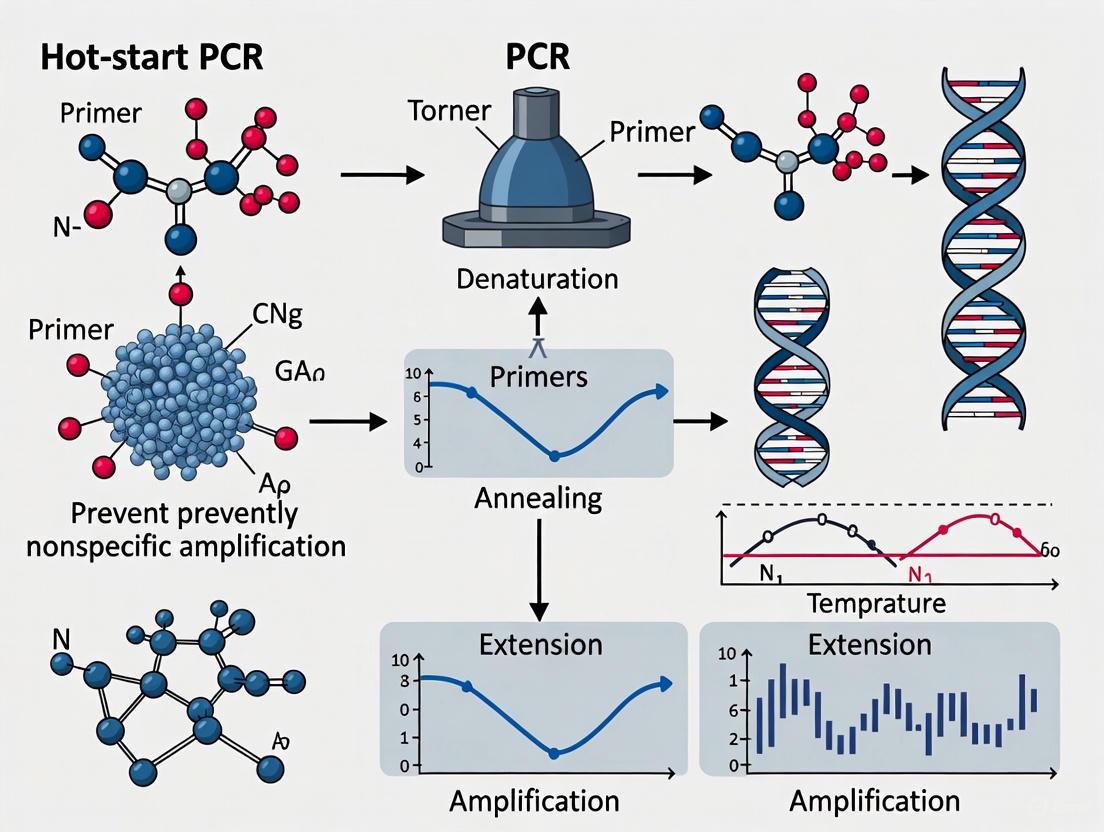
This article provides a comprehensive guide to Hot-Start PCR, a fundamental enhancement to the polymerase chain reaction designed to prevent nonspecific amplification and primer-dimer formation.
Hot-Start PCR: Advanced Techniques to Eliminate Nonspecific Amplification for Robust Research and Diagnostics
Abstract
This article provides a comprehensive guide to Hot-Start PCR, a fundamental enhancement to the polymerase chain reaction designed to prevent nonspecific amplification and primer-dimer formation. Tailored for researchers, scientists, and drug development professionals, it explores the foundational principles behind nonspecific product formation and details the mechanisms of various Hot-Start methodologies, including antibody-based inhibition, chemical modification, and physical barrier techniques. The content further delivers practical troubleshooting and optimization strategies for challenging applications like multiplex and long-range PCR, and offers a comparative analysis of Hot-Start versus standard PCR to guide method selection. By synthesizing foundational knowledge with advanced applications, this guide aims to empower professionals to achieve higher specificity, sensitivity, and yield in their molecular assays, directly impacting the reliability of genetic testing, clinical diagnostics, and therapeutic development.
The Problem of Nonspecific Amplification: Understanding the 'Why' Behind Hot-Start PCR
The polymerase chain reaction (PCR) stands as one of the most pivotal techniques in modern molecular biology, enabling the exponential amplification of specific DNA sequences. However, conventional PCR methodologies contain a fundamental flaw that compromises reaction specificity and efficiency: DNA polymerase activity at non-optimal temperatures. This inherent limitation manifests during reaction setup when the enzyme retains significant catalytic capability at ambient temperatures, facilitating the extension of misprimed sequences and primer-dimers before thermal cycling commences. These nonspecific products then compete with the desired target for reaction components, substantially reducing amplification yield, sensitivity, and reliability for downstream applications [1] [2].
The core issue stems from the biochemical properties of mesophilic DNA polymerases, which exhibit measurable activity across a broad temperature range, including those encountered during experimental preparation. Research demonstrates that reaction temperature substantially increases substitution and deletion error rates of psychrophilic and mesophilic DNA polymerases, with implications for both diagnostic accuracy and research validity [3]. For pharmaceutical scientists engaged in drug discovery and diagnostic development, this flaw presents a significant obstacle to achieving reproducible, reliable molecular analyses essential for therapeutic innovation and clinical application.
Quantitative Analysis of Temperature Effects on Polymerase Fidelity
Error Rate Variation with Temperature
Comprehensive profiling of DNA polymerase error rates across temperature gradients reveals a direct correlation between reaction temperature and replication inaccuracy. Studies employing high-throughput sequencing with single-molecule resolution demonstrate that psychrophilic and mesophilic DNA polymerases exhibit significantly elevated substitution and deletion error rates as temperature increases [3]. This temperature-dependent fidelity loss occurs independently of sequence context, suggesting a global effect on polymerase accuracy rather than localized sequence susceptibility.
Table 1: DNA Polymerase Error Rates Relative to Reaction Temperature
| Polymerase Type | Temperature Range Tested (°C) | Error Rate Trend with Increasing Temperature | Primary Error Type |
|---|---|---|---|
| Psychrophilic | -19 to 37 | Substantial increase | Substitutions & Deletions |
| Mesophilic | 20 to 37 | Substantial increase | Substitutions & Deletions |
| Thermophilic | 30 to 72 | Minimal increase at optimal temperatures | Minimal errors at optimum |
The mechanistic basis for this fidelity compromise involves temperature-induced alterations to the enzyme's catalytic site, potentially affecting conformational stability during nucleotide selection and incorporation. Notably, motif analysis indicates that substitution error profiles cluster according to phylogenetic similarity of polymerases rather than reaction temperature, emphasizing the conserved structural determinants of fidelity across evolutionary adaptations [3].
Comparative Fidelity of DNA Polymerases
Polymerase fidelity varies substantially across enzymes derived from different organisms, with direct implications for experimental outcomes. High-fidelity polymerases incorporate proofreading mechanisms (3'→5' exonuclease activity) that dramatically reduce error rates compared to standard polymerases like Taq.
Table 2: DNA Polymerase Fidelity Comparison
| DNA Polymerase | 3'→5' Exonuclease (Proofreading) | Fidelity (Relative to Taq) | Error Rate (approx. per bp) | Resulting Ends |
|---|---|---|---|---|
| Taq DNA Polymerase | No | 1x | 1.3-1.8 × 10^-4 | 3'A |
| OneTaq DNA Polymerase | Yes | 2x | ~8 × 10^-5 | 3'A/Blunt |
| Q5 High-Fidelity | Yes | 280x | ~5 × 10^-7 | Blunt |
| Phusion High-Fidelity | Yes | 39-50x | ~3 × 10^-6 | Blunt |
For applications requiring high accuracy, such as cloning, sequencing, or diagnostic assay development, selecting polymerases with enhanced fidelity is paramount. The data indicate that proofreading enzymes can improve accuracy by up to 280-fold compared to standard Taq polymerase, dramatically reducing mutation rates in amplified products [4].
Experimental Protocols for Assessing PCR Specificity
Standard PCR Protocol with Specificity Assessment
Materials and Reagents:
- Template DNA (purified genomic DNA, plasmid, or cDNA)
- Forward and reverse primers (10-25 nucleotides, specific to target)
- DNA polymerase (standard Taq or high-fidelity enzyme)
- dNTP mix (10mM each)
- PCR buffer (typically 10X concentration with MgCl₂)
- Nuclease-free water
- Agarose gel electrophoresis components
Procedure:
- Prepare PCR master mix on ice according to the following composition:
- 5.0 μL 10X PCR buffer
- 1.0 μL forward primer (10μM)
- 1.0 μL reverse primer (10μM)
- 1.0 μL dNTP mix (10mM each)
- 0.5 μL DNA polymerase (1-5 units/μL)
- 1.0 μL template DNA (10pg-1μg)
- 40.5 μL nuclease-free water
- Total volume: 50 μL
If using a thermal cycler without a heated lid, overlay reactions with 50 μL mineral oil to prevent evaporation [5].
Program thermal cycler with the following parameters:
- Initial denaturation: 94-98°C for 1-3 minutes
- 25-35 cycles of:
- Denaturation: 94-98°C for 15-60 seconds
- Annealing: Temperature specific to primers (typically 45-65°C) for 15-60 seconds
- Extension: 68-72°C for 1 minute per kilobase of target
- Final extension: 68-72°C for 5-15 minutes
- Hold: 4°C indefinitely [6]
Analyze PCR products by agarose gel electrophoresis:
- Prepare 1-2% agarose gel in TAE or TBE buffer containing ethidium bromide or alternative DNA stain
- Load 10-20 μL PCR product mixed with loading dye
- Run gel at 5-10 V/cm until adequate separation achieved
- Visualize under UV transillumination
Assess specificity:
- Specific amplification: Single band of expected size
- Nonspecific amplification: Multiple bands or smearing
- Primer-dimer formation: Low molecular weight band near dye front
Troubleshooting:
- If nonspecific bands appear: Increase annealing temperature in 2-3°C increments or optimize MgCl₂ concentration
- If no product forms: Lower annealing temperature, check primer specificity, or increase template quantity
- If primer-dimer forms: Redesign primers or use hot-start polymerase [6]
Quantitative Comparison of Standard vs. Hot-Start PCR
Experimental Design: To directly compare standard and hot-start PCR specificity, parallel reactions should be performed using identical reaction components except for the DNA polymerase formulation.
Methodology:
- Prepare two identical master mixes as described in Section 3.1, excluding polymerase
- To one mix, add standard Taq DNA polymerase; to the other, add antibody-mediated hot-start Taq polymerase
- Split each master mix into three aliquots:
- Aliquot 1: Place immediately on ice, then transfer to thermal cycler
- Aliquot 2: Incubate at room temperature for 30 minutes before thermal cycling
- Aliquot 3: Incubate at room temperature for 60 minutes before thermal cycling
- Run all samples with identical cycling parameters
- Analyze products by agarose gel electrophoresis and quantify band intensities
Expected Results: Standard polymerase reactions will show significant nonspecific amplification and primer-dimer formation with increasing room temperature incubation, while hot-start polymerase reactions will maintain specificity regardless of pre-incubation conditions [2].
Hot-Start PCR as a Solution to Nonspecific Amplification
Mechanisms of Hot-Start Inhibition
Hot-start PCR employs various enzyme modification strategies to inhibit DNA polymerase activity at ambient temperatures, preventing extension of misprimed sequences during reaction setup. The principal mechanisms include:
Diagram 1: Hot-Start PCR Activation Pathway
Antibody-Based Inhibition: A neutralizing antibody binds the polymerase active site, sterically blocking substrate access. This interaction is heat-labile, dissociating during initial denaturation (typically 94-98°C) to restore full enzymatic activity. Benefits include rapid activation and preservation of native enzyme characteristics [2].
Chemical Modification: Covalent attachment of chemical groups to essential amino acid residues renders the enzyme catalytically inactive. Thermal activation requires longer incubation (often 10-12 minutes) to cleave these inhibitory modifications. This approach provides stringent inhibition but may not fully restore native enzyme activity [2].
Aptamer/Affibody Binding: Oligonucleotide aptamers or engineered protein domains (Affibodies) bind specifically to polymerase regions critical for catalysis. These methods offer animal-origin-free alternatives with intermediate stringency and activation kinetics [2].
Comparative Analysis of Hot-Start Technologies
Table 3: Hot-Start Technology Comparison
| Technology | Activation Time | Activation Temperature | Stringency | Animal-Free | Key Characteristics |
|---|---|---|---|---|---|
| Antibody-Based | Short (1-3 min) | 94-98°C | High | No (unless recombinant) | Full enzyme activity after activation |
| Chemical Modification | Long (10-12 min) | 94-98°C | Very High | Yes | Gradual activation; may not achieve full activity |
| Affibody Molecule | Short (1-3 min) | 94-98°C | Moderate | Yes | Lower protein load than antibody |
| Aptamer-Based | Short (1-3 min) | 94-98°C | Moderate | Yes | May have reversible activation |
Research Reagent Solutions for Optimal PCR Specificity
The selection of appropriate reagents is critical for overcoming the inherent limitations of standard PCR. The following solutions represent essential components for achieving specific, reliable amplification across diverse applications.
Table 4: Research Reagent Solutions for Specific PCR
| Reagent Category | Specific Products | Function & Application |
|---|---|---|
| High-Fidelity Polymerases | Q5 High-Fidelity, Phusion High-Fidelity | Reduces replication errors; essential for cloning, sequencing, and expression vector construction |
| Hot-Start Polymerases | Platinum Taq DNA Polymerase, DreamTaq Hot Start | Prevents nonspecific amplification during reaction setup; improves yield and specificity |
| Specialized PCR Buffers | GC-Rich Buffers, Betaine-containing formulations | Facilitates denaturation of challenging templates; essential for high-GC content targets |
| Multiplex PCR Master Mixes | Multiplex PCR 5X Master Mix | Enables simultaneous amplification of multiple targets; optimized primer compatibility |
| Direct PCR Reagents | Hemo KlenTaq, Blood Direct Master Mix | Amplification without prior DNA purification; ideal for high-throughput screening |
For pharmaceutical applications requiring exceptional accuracy, polymerases with proofreading capability (3'→5' exonuclease activity) such as Q5 High-Fidelity DNA Polymerase provide 280-fold greater fidelity than standard Taq polymerase, dramatically reducing mutation rates in amplified products [4]. Similarly, hot-start formulations like Platinum II Taq Hot-Start DNA Polymerase enable room-temperature setup without compromising specificity, particularly valuable in automated high-throughput screening environments [2].
Advanced PCR Techniques for Enhanced Specificity
Touchdown PCR Protocol
Touchdown PCR employs progressively decreasing annealing temperatures during initial cycles to enhance specificity by ensuring early amplification of the correct target while suppressing nonspecific products.
Procedure:
- Prepare reaction mixture as described in Section 3.1
- Program thermal cycler with an initial annealing temperature 5-10°C above the calculated Tm of primers
- Decrease annealing temperature by 1°C each cycle for 10-15 cycles until reaching the optimal annealing temperature
- Continue with remaining cycles (20-25 total) at the optimal annealing temperature
- Maintain standard denaturation and extension steps throughout [7]
Mechanistic Basis: Higher initial annealing temperatures stringently favor perfect primer-template matches, while progressively lower temperatures permit efficient amplification of the specific product once it becomes the dominant template.
Nested PCR for Challenging Templates
Nested PCR significantly enhances specificity and sensitivity through two successive amplification rounds with different primer sets.
Diagram 2: Nested PCR Specificity Enhancement
Protocol:
- Perform first PCR round with outer primers flanking the target region
- Use standard PCR protocol (Section 3.1) with 20-25 cycles
- Typically use 1:100 dilution of first-round product as second-round template
- Execute second PCR round with nested primers internal to first amplicon
- Identical cycling conditions but with nested primers
- Hot-start polymerase recommended to prevent carryover amplification [7]
Applications: Ideal for low-copy templates, contaminated samples, or when maximum specificity is required. The sequential primer binding ensures that only the intended target is efficiently amplified.
Implications for Pharmaceutical Research and Development
The implementation of hot-start PCR methodologies carries significant implications for pharmaceutical science, particularly in diagnostic development, biomarker validation, and quality control processes. The enhanced specificity directly addresses fundamental challenges in molecular assay development, including false-positive results in diagnostic screening, spurious amplification in genetic testing, and unreliable data in pharmacogenomic studies.
For pharmaceutical scientists engaged in preclinical research, the fidelity improvements afforded by proofreading polymerases combined with hot-start activation ensure accurate amplification of target sequences for cloning into expression vectors, a critical step in recombinant therapeutic production. Similarly, the reproducibility enabled by these technologies facilitates robust analytical validation of molecular assays supporting clinical trial endpoints, regulatory submissions, and ultimately, patient care.
The quantitative data presented in this application note demonstrates that strategic selection of polymerase systems and reaction conditions can dramatically improve PCR specificity and fidelity. By addressing the fundamental flaw of enzymatic activity at non-optimal temperatures through the implementation of hot-start technologies, pharmaceutical researchers can achieve the reliability, reproducibility, and accuracy required for rigorous drug development and diagnostic applications.
In polymerase chain reaction (PCR) amplification, the integrity of results is fundamentally dependent on the specific amplification of the intended target DNA sequence. A significant challenge to this integrity is premature amplification, where DNA synthesis initiates under non-stringent conditions before thermal cycling begins. This phenomenon primarily manifests as two interrelated artifacts: primer-dimer formation and mis-priming. These artifacts compete with the desired amplification for essential reaction components, thereby reducing yield, sensitivity, and detection reliability, particularly for low-copy-number targets [8] [9].
The following application note details the consequences of these premature amplification events and provides validated protocols, grounded in the principles of hot-start PCR techniques, to prevent them. This content is framed within a broader research thesis on enhancing amplification specificity and efficiency for research and diagnostic applications.
Mechanisms and Consequences of Premature Amplification
Primer-Dimer Formation
Primer-dimers are short, unintended DNA fragments that form when PCR primers anneal to each other via regions of complementarity instead of to the target template [10]. This occurs through two main mechanisms:
- Self-dimerization: A single primer molecule contains regions that are self-complementary.
- Cross-dimerization: Forward and reverse primers anneal to each other through complementary sequences [10].
Once primers anneal to one another, DNA polymerase extends the annealed primers, synthesizing a short, double-stranded product. This is particularly problematic during reaction setup at room temperature, where thermostable DNA polymerases retain partial activity [11]. Primer-dimers are typically observed as a smeary band below 100 base pairs during gel electrophoresis [10].
Mis-Priming
Mis-priming occurs when primers bind non-specifically to regions of the template DNA that exhibit partial complementarity, but not the intended target sequence [8] [12]. At lower temperatures, the stringency of primer annealing is reduced, allowing stable binding to these off-target sites. The DNA polymerase then extends these mis-annealed primers, generating a complex mixture of non-specific amplification products that can range in size [8].
Impact on Amplification Efficiency
The consequences of primer-dimer and mis-priming are severe, especially in sensitive applications:
- Competition for Reagents: Both artifacts consume primers, dNTPs, and DNA polymerase, sequestering these finite resources from the desired amplification reaction [9].
- Reduced Sensitivity and Yield: This competition leads to a significant reduction in the yield of the specific target amplicon. In extreme cases, the target may fail to amplify altogether [2] [9].
- Compromised Detection Limits: In real-time PCR, primer-dimer formation can generate false-positive fluorescence signals, interfering with the accurate quantification of low-abundance targets and raising the limit of detection [9].
Table 1: Quantitative Impact of Premature Amplification on PCR Sensitivity
| Template Copy Number | Amplification with Unmodified Primers | Amplification with Hot-Start Primers |
|---|---|---|
| 50,000 | Successful detection | Successful detection |
| 5,000 | Successful detection | Successful detection |
| 500 | Indistinguishable from No Template Control (NTC) | Successful detection |
| 50 | Not detected | Successful detection |
| 5 | Not detected | Successful detection [9] |
The Hot-Start Solution: Mechanisms of Inhibition
Hot-start PCR is a powerful strategy designed to suppress DNA polymerase activity during reaction setup, preventing extension until the first high-temperature denaturation step is reached [13] [12] [14]. The core principle involves blocking polymerase function until stringent conditions are achieved.
Diagram 1: Hot-start PCR activation workflow.
Table 2: Common Hot-Start Technologies and Their Characteristics
| Technology | Mechanism | Activation | Key Benefits | Considerations |
|---|---|---|---|---|
| Antibody-Based | Antibody binds polymerase active site [2] [11]. | Initial denaturation (≥90°C) denatures antibody [7]. | Fast activation; full enzyme activity restored [2]. | Animal-origin components; exogenous proteins present [2]. |
| Chemical Modification | Polymerase covalently modified with blocking groups [2] [11]. | Extended high-temp incubation (e.g., 10 min) [2]. | Highly stringent inhibition [2]. | Longer activation time; may affect long targets [2]. |
| Affibody/Aptamer | Peptide (Affibody) or oligonucleotide (Aptamer) binds polymerase [2] [12]. | Initial denaturation releases binder [2]. | Short activation; animal-origin free [2]. | May be less stringent; reversible activation possible [2]. |
| Primer-Based | Thermolabile groups (e.g., OXP, CleanAmp) on primer 3'-end [8] [9]. | High temp cleaves groups to yield native primer [8]. | Flexible primer design; compatible with various polymerases [9]. | Requires modified primer synthesis [8]. |
| Magnesium Separation | Magnesium co-factor is physically separated (e.g., in wax bead) [12] [11]. | Bead melts at high temp, releasing Mg²⁺ [12]. | Simple concept; effective physical barrier [12]. | Less common in modern systems. |
Experimental Protocols for Prevention and Analysis
Protocol: Evaluating Hot-Start Primers in Endpoint PCR
This protocol assesses the performance of thermolabile modified primers (e.g., CleanAmp primers) in reducing primer-dimer and mis-priming in a conventional PCR setup [8] [9].
1. Research Reagent Solutions
Table 3: Essential Materials for Hot-Start PCR Evaluation
| Item | Function/Description | Example |
|---|---|---|
| DNA Polymerase | Catalyzes DNA synthesis. Can be used unmodified if using hot-start primers. | Taq DNA Polymerase [9] |
| Hot-Start Primers | Primers with thermolabile 3' modifications. | CleanAmp Turbo or Precision Primers [9] |
| Control Primers | Unmodified primers of identical sequence. | Standard phosphodiester (PDE) primers [8] |
| Template DNA | Target nucleic acid for amplification. | HIV-1 tat genomic DNA [9] |
| dNTPs | Nucleotide building blocks for DNA synthesis. | dATP, dCTP, dGTP, dTTP [15] |
| PCR Buffer | Provides optimal ionic and pH conditions. | Contains KCl, MgCl₂, Tris-HCl [8] |
2. Methodology
- Reaction Setup: Prepare a master mix containing 1X PCR buffer, 200 µM of each dNTP, and unmodified Taq DNA polymerase.
- Primer Addition: Aliquot the master mix and add either:
- Test Reaction: 0.5 µM each of forward and reverse hot-start primers (e.g., CleanAmp Turbo).
- Control Reaction: 0.5 µM each of unmodified forward and reverse primers.
- Template: Add a known, low-copy-number template (e.g., 500 copies of HIV-1 genomic DNA) and include a no-template control (NTC) for each primer type.
- Thermal Cycling:
- Product Analysis: Analyze 5–10 µL of the final reaction by agarose gel electrophoresis. Compare the intensity of the specific band and the presence of smearing or low-molecular-weight bands between hot-start and control reactions [9].
Protocol: One-Step Reverse Transcription (RT) PCR with Hot-Start Components
This protocol is crucial for amplifying RNA targets with high specificity, minimizing artifacts during the combined reverse transcription and PCR steps [8] [11].
1. Research Reagent Solutions
- Reverse Transcriptase: Converts RNA to cDNA (e.g., M-MLV RT).
- Hot-Start DNA Polymerase: For specific PCR amplification post-RT.
- RNA Template: Intact, DNA-free total RNA or poly(A)+ RNA.
- Primers: Sequence-specific primers or oligo(dT) primers for RT. PCR primers can be gene-specific and modified for hot-start.
- dNTPs & RNase Inhibitor [8] [11].
2. Methodology
- Reaction Assembly: On ice, combine:
- 1X RT-PCR buffer
- 500 µM dNTPs
- 2.5 U/µL Reverse Transcriptase (e.g., M-MLV RT)
- 1 U/µL RNase Inhibitor
- 2.5 U Hot-Start DNA Polymerase (antibody-based for fast activation)
- 0.2–1 µM gene-specific hot-start PCR primers
- 50–500 ng total RNA
- Thermal Cycling Profile:
- Reverse Transcription: 50°C for 15–30 minutes.
- Initial Denaturation/Enzyme Activation: 95°C for 2–5 minutes (activates hot-start polymerase).
- PCR Amplification (35-40 cycles):
- Denature: 95°C for 15–30 seconds.
- Anneal/Extend: 60°C for 30–60 seconds (two-step protocol).
- Final Extension: 72°C for 5 minutes [8] [7] [11].
- Analysis: Analyze by gel electrophoresis or real-time detection systems.
Protocol: Using a No-Template Control (NTC) to Diagnose Primer-Dimer
An NTC is a critical diagnostic tool to identify amplification artifacts derived from the primers themselves [10].
1. Methodology
- Preparation: Prepare the PCR master mix exactly as for the test reactions, including the hot-start DNA polymerase or primers.
- Setup: Aliquot the master mix into a separate tube. Instead of template DNA, add nuclease-free water or the buffer used to resuspend the template.
- Cycling and Analysis: Run the NTC in parallel with all test samples through the identical thermal cycling protocol. Analyze the products by gel electrophoresis.
- Interpretation: A clean NTC with no amplification products indicates that primers are not forming dimers and reagents are not contaminated. The presence of bands (especially smears ~50-100 bp) in the NTC confirms primer-dimer formation, which can then be compared to test samples to determine if it is interfering with target amplification [10].
Premature amplification presents a significant obstacle to obtaining reliable, high-quality PCR results. The formation of primer-dimers and mis-primed products directly competes with the amplification of the desired target, leading to reduced yield, poor sensitivity, and unreliable quantification [8] [9] [10].
Integrating hot-start methodologies—whether through modified polymerases, engineered primers, or other inhibitory mechanisms—is an effective strategy to mitigate these issues. The presented data and protocols demonstrate that hot-start activation significantly improves amplification specificity and sensitivity, enabling robust detection of low-copy targets and facilitating complex applications like multiplex PCR and one-step RT-PCR [8] [9].
For researchers and drug development professionals, the consistent application of hot-start techniques, combined with rigorous experimental design including proper controls, is essential for generating reproducible and interpretable data in genetic testing, clinical diagnostics, and biomedical research.
How Nonspecific Products Compete for Precious Reagents and Reduce Target Yield
In the polymerase chain reaction (PCR), the precise amplification of a specific DNA target is paramount. However, reactions are frequently plagued by off-target amplifications, which include primer-dimer artifacts and mis-primed products [8] [11]. These nonspecific products are not merely benign byproducts; they actively compete with the desired amplification for the reaction's finite reagents, thereby significantly reducing the efficiency and yield of the target amplicon [9]. This competition is especially detrimental when amplifying low-copy-number targets, where the efficient use of every reagent molecule is critical for detection [8].
The genesis of this problem often occurs during the reaction setup. At the lower, less stringent temperatures present during sample preparation and the initial thermal cycler ramp, PCR primers can anneal to sequences with partial complementarity or to each other [8] [11]. Conventional DNA polymerases retain some enzymatic activity even at these low temperatures, allowing them to extend these incorrectly annealed primers and synthesize undesired products [11] [16]. Once formed, these nonspecific sequences are amplified in subsequent cycles, consuming precious deoxynucleoside triphosphates (dNTPs), DNA polymerase, and primers that are essential for amplifying the intended target [9]. The result is often a failure to detect a low-abundance target, a reduced yield of the specific product, or a complex mixture of amplification artifacts that complicates analysis [8].
Quantitative Impact of Nonspecific Amplification
The Resource Competition Mechanism
The PCR amplification process is an exponential, but resource-limited, process. The essential reagents—primers, DNA polymerase, and dNTPs—are present in a fixed quantity. Nonspecific products initiate a competitive drain on these resources from the earliest cycles. As illustrated in the diagram below, this competition directly impacts the final yield of the specific target DNA.
The core problem is that any primer or enzyme molecule used for off-target amplification is permanently unavailable for amplifying the desired target. This competition is quantifiable and has a direct impact on key performance metrics, as demonstrated in studies comparing standard PCR with Hot Start methods.
Comparative Performance Data
The following table summarizes quantitative data demonstrating how nonspecific amplification reduces PCR efficiency and how Hot Start techniques mitigate this problem.
Table 1: Quantitative Impact of Nonspecific Amplification on PCR Performance
| Performance Metric | Standard PCR with Unmodified Primers | Hot Start PCR (e.g., CleanAmp Primers) | Reference |
|---|---|---|---|
| Lower Limit of Detection (Lambda DNA) | >500 copies | 5 copies (with Precision Primers) | [9] |
| Primer-Dimer Formation | Robust formation, competes with target | Significantly reduced or eliminated | [8] [9] |
| Amplicon Yield | Can be low due to competition | Higher yield of specific product | [9] |
| Sensitivity in Multiplex PCR | 5,000 copies required for detection | 50 copies detectable (10-fold improvement) | [9] |
The data show that nonspecific amplification can raise the detection limit by two orders of magnitude, severely hampering the analysis of scarce samples. Hot Start methods, by contrast, can enhance sensitivity to the single-copy level [9]. Furthermore, in multiplex PCR applications where multiple primer pairs are used simultaneously, the problem of primer-dimer formation is exacerbated. The use of Hot Start primers was shown to provide a hundred-fold increase in sensitivity, allowing for efficient detection at 50 copies of template compared to 5,000 copies with unmodified primers [9].
Experimental Protocol for Evaluating Nonspecific Amplification
Protocol: Assessing Primer-Dimer Formation and Amplification Specificity
This protocol is designed to compare the performance of standard and Hot Start PCR reagents in the amplification of a specific target, with a focus on quantifying nonspecific products and yield.
1. Reagent Setup:
- Prepare two separate 50 µL PCR reactions.
- Reaction A (Standard):
- 1X Standard PCR Buffer (e.g., containing MgCl₂)
- 0.4-0.5 µM of each unmodified forward and reverse primer [17]
- 200 µM of each dNTP
- 1 U/µL of non-Hot Start DNA Polymerase (e.g., standard Taq)
- Template DNA (e.g., serial dilution of human genomic DNA, 1 ng to 1 pg)
- Nuclease-free water to volume.
- Reaction B (Hot Start):
- 1X Hot Start PCR Buffer
- 0.4-0.5 µM of each Hot Start primer (e.g., CleanAmp modified) or use a Hot Start DNA polymerase [9]
- 200 µM of each dNTP
- 1 U/µL of Hot Start DNA Polymerase (if not using modified primers)
- Identical template DNA dilution series as Reaction A.
- Nuclease-free water to volume.
2. Thermal Cycling:
- Use the following cycling conditions on a thermal cycler [9]:
- Initial Denaturation: 95°C for 2 minutes (Hot Start activation for Reaction B).
- Amplification (35 cycles):
- Denaturation: 95°C for 30 seconds.
- Annealing: 55-60°C (primer-specific) for 30 seconds.
- Extension: 72°C for 1 minute per kb.
- Final Extension: 72°C for 5 minutes.
- Hold at 4°C.
3. Analysis:
- Gel Electrophoresis: Separate 10 µL of each PCR product on a 2% agarose gel stained with ethidium bromide. Visualize under UV light.
- Expected Results:
- Reaction A (Standard): Will likely show a bright, specific band at the correct amplicon size, but may also exhibit a smear of nonspecific products and a prominent, diffuse band around 50-100 bp, indicating primer-dimer [11]. The intensity of the specific band may decrease with lower template concentrations.
- Reaction B (Hot Start): Should display a clean, single band of the expected amplicon with little to no primer-dimer or nonspecific smearing, even at low template concentrations [9].
The Scientist's Toolkit: Key Research Reagent Solutions
The following table outlines essential reagents and their functions in combating nonspecific amplification in PCR.
Table 2: Essential Reagents for Preventing Nonspecific Amplification
| Reagent Solution | Function & Mechanism | Key Considerations |
|---|---|---|
| Hot Start DNA Polymerase | Polymerase is inactive at room temperature. Activated by high initial denaturation temperature, preventing extension during reaction setup. | Available in antibody-based, aptamer-based, or chemically modified formats [11] [16]. |
| Chemically Modified (Hot Start) Primers | Primers contain thermolabile groups (e.g., CleanAmp) that block extension. Groups are removed at high temps, releasing active primers [8] [9]. | Offers flexibility; can be used with standard polymerases. "Turbo" and "Precision" versions control activation rate [9]. |
| Optimized Primer Pairs | Well-designed primers with appropriate length, Tm, and 3'-end sequence (ending in G or C) improve specificity and reduce mis-priming [17]. | Critical for all PCR success. Avoid 3' complementarity to prevent primer-dimer. |
| dNTP Mix | The building blocks for DNA synthesis. | Quality and correct concentration are vital. Impurities can inhibit polymerization. |
| MgCl₂ Buffer | Magnesium is a cofactor for DNA polymerase and affects primer annealing stringency. | Concentration must be optimized; too much can increase nonspecific binding. |
Hot Start PCR as a Solution
Hot Start PCR encompasses various techniques designed to inhibit DNA polymerase activity or primer extension during reaction setup until a high, stringent temperature is reached [18]. The core principle is to block polymerase extension at lower temperatures, which prevents the initiation and accumulation of nonspecific products and primer-dimers [8] [11]. The different methodological approaches to achieving this Hot Start effect are summarized below.
The implementation of Hot Start techniques provides a direct solution to the problem of reagent competition. By ensuring that the amplification machinery is only functional at high stringency, resources are not wasted on off-target products. This leads to a dramatic improvement in the yield of the desired amplicon, a lower detection limit for rare targets, and cleaner, more reliable results, particularly in complex applications like multiplex PCR and one-step RT-PCR [8] [9].
Nonspecific amplification presents a significant challenge in polymerase chain reaction (PCR) protocols, drastically impacting performance through low target amplicon yield, reduced detection sensitivity, unreliable results, and poor downstream application efficacy [2]. This problem predominantly originates from DNA polymerase activity at non-optimal temperatures, leading to extension of misprimed sequences and primer-dimer formation during reaction setup at room temperature [2]. Hot-start PCR addresses this fundamental issue by employing various mechanisms to inhibit DNA polymerase activity until the reaction reaches high-temperature conditions, thereby preventing premature amplification events and ensuring reaction specificity [12]. This application note delineates the core principles, methodological approaches, and practical protocols for implementing hot-start PCR within research and diagnostic frameworks.
Mechanisms of Hot-Start PCR
The fundamental goal of hot-start PCR is to prevent DNA polymerase from extending primers until the system reaches stringent temperatures that promote specific primer-template hybridization [13]. Although thermostable DNA polymerases possess optimal activity at higher temperatures, they retain some degree of activity at lower temperatures, which can amplify nonspecific priming events that occur when reactions are prepared [13]. Hot-start enzymes remain inactive at room temperature, requiring heating at nucleic acid melting temperatures for activation, thereby ensuring that nonspecific priming events are melted before the enzyme can amplify them [13].
Comparative Hot-Start Technologies
The following table summarizes the primary methods employed to achieve hot-start activation, each utilizing distinct mechanisms to inhibit polymerase activity at room temperature.
Table 1: Comparison of Primary Hot-Start PCR Technologies
| Technology | Mechanism of Action | Key Benefits | Key Considerations |
|---|---|---|---|
| Antibody-Based | Antibody binds polymerase active site, blocking activity until initial denaturation [2] | Short activation time; full enzyme activity restoration; enzyme characteristics similar to non-hot-start version [2] | Animal-origin components; higher level of exogenous proteins in reaction [2] |
| Chemical Modification | Polymerase covalently linked with chemical groups blocking activity [2] | Stringent inhibition; gradual enzyme activation; animal-origin component free [2] | Longer activation time required; may not achieve full activation; affects long target amplification (>3 kb) [2] |
| Affibody Molecule | Alpha-helical peptides bind polymerase active site [2] | Lower protein content; short activation time; animal-origin component free [2] | Potentially less stringent than antibody method; limited benchtop stability [2] |
| Aptamer-Based | Oligonucleotides bind polymerase active site [2] | Short activation time; animal-origin component free [2] | Potential for nonspecific amplification; limited benchtop stability; unsuitable for low-Tm primers [2] |
| Physical Barrier (Wax Beads) | Temperature-dependent physical separation of reaction components [12] | Simple mechanism; also acts as vapour barrier [12] | Requires manual preparation; less adaptable to high-throughput formats [12] |
| Primer Modification (OXP) | Thermolabile groups at 3'-terminal linkages block extension [8] | High specificity; applicable to any oligonucleotide sequence; no enzyme modification required [8] | Requires specialized primer synthesis; additional cost for modified primers [8] |
Experimental Protocols and Methodologies
Standard Hot-Start PCR Protocol
The following protocol provides a generalized framework for performing hot-start PCR, with specific conditions potentially requiring optimization based on template, primer design, and polymerase selection.
Table 2: Standard Hot-Start PCR Reaction Setup
| Component | Final Concentration/Amount | Function |
|---|---|---|
| Buffer | 1X | Provides optimal ionic environment and pH stability [19] |
| MgCl₂ | 1.5-2.5 mM | Essential co-factor for DNA polymerase activity [19] |
| dNTPs | 200 μM each | DNA synthesis building blocks [19] |
| Forward Primer | 0.1-1 μM | Specific binding to target sequence [19] |
| Reverse Primer | 0.1-1 μM | Specific binding to target sequence [19] |
| Template DNA | 10-100 ng | Target nucleic acid for amplification [19] |
| Hot-Start Taq DNA Polymerase | 1.25 units | Catalyzes DNA synthesis; thermally activated [19] |
| Nuclease-Free Water | To volume | Reaction medium |
Thermal Cycling Parameters
Initial Denaturation/Activation: 95°C for 2-10 minutes [19]. This critical step serves dual purposes: activating the hot-start polymerase and completely denaturing the template DNA. The duration depends on the specific hot-start enzyme used, with antibody-based methods typically requiring shorter times than chemically modified enzymes [2].
Amplification Cycles (25-35 cycles):
Final Extension: 72°C for 5-10 minutes to ensure complete elongation of all PCR products [19].
Hold: 4°C indefinitely for short-term storage.
Product Analysis
PCR products are typically analyzed by agarose gel electrophoresis (1-2% agarose) containing DNA intercalating dyes such as ethidium bromide or SYBR Green I [19]. Visualization under UV light allows assessment of target fragment amplification and specificity, with successful hot-start PCR demonstrating a single prominent band of expected size with minimal nonspecific products or primer-dimer formations.
The Scientist's Toolkit: Essential Research Reagent Solutions
Table 3: Key Reagents for Hot-Start PCR Implementation
| Reagent Category | Specific Examples | Function & Application Notes |
|---|---|---|
| Hot-Start DNA Polymerases | Platinum Taq DNA Polymerase, DreamTaq Hot Start DNA Polymerase (Antibody-based) [2]; AmpliTaq Gold DNA Polymerase (Chemical modification) [2]; Phire Hot Start II DNA Polymerase (Affibody-based) [2] | Catalyzes DNA synthesis; thermally activated to prevent nonspecific amplification. Selection depends on required stringency, activation time, and target length [2]. |
| Modified Primers | CleanAmp Primers with OXP (4-oxo-1-pentyl) modification [8] [19] | Primers containing thermolabile groups at 3'-terminus that block extension until thermal deprotection; provides primer-based hot-start without enzyme modification [8]. |
| Specialized dNTPs | Hot start dNTPs with heat-sensitive protecting groups [12] | Chemically modified nucleotides that prevent polymerase incorporation until protecting group removal during initial denaturation [12]. |
| Magnesium Salts | Magnesium chloride (MgCl₂) [19] | Essential cofactor for DNA polymerase; concentration optimization (1.5-2.5 mM) is critical for reaction efficiency and specificity [19]. |
| Reaction Buffers | Manufacturer-provided buffers with potential additives [19] | Provides optimal ionic strength (KCl), pH (Tris-HCl), and stabilizing components for efficient amplification [19]. |
| Physical Separation Agents | Wax beads [12] | Creates temperature-dependent physical barrier between reaction components; melts during initial denaturation to allow component mixing [12]. |
Applications and Implementation Guidelines
Hot-start PCR provides particular benefit in challenging amplification scenarios, including: when template DNA concentration is low (<10⁴ copies), with highly complex DNA templates (e.g., mammalian genomic DNA), and in multiplex PCR applications employing several primer pairs [19]. The technique significantly improves amplification specificity and sensitivity, which is imperative for high-sensitivity analytical applications including genetic testing, clinical diagnostics, blood screening, forensics, biodefense, and detection of low-copy-number targets [8].
Hot-start PCR represents a fundamental advancement in molecular biology by addressing the inherent limitation of DNA polymerase activity at non-stringent temperatures. Through various inhibition mechanisms that maintain polymerase inactivity until high-temperature activation is achieved, this technology effectively minimizes nonspecific amplification and primer-dimer formation, thereby enhancing amplification specificity, sensitivity, and product yield. The selection of appropriate hot-start methodology—whether antibody-based, chemically modified, or primer-based—should be guided by specific application requirements, template characteristics, and experimental constraints. When implemented according to optimized protocols, hot-start PCR provides researchers with a robust tool for reliable and specific nucleic acid amplification across diverse research and diagnostic applications.
A Technical Deep Dive: Mechanisms and Applications of Modern Hot-Start Techniques
The polymerase chain reaction (PCR) serves as a foundational technique in molecular biology, enabling the exponential amplification of specific DNA segments. However, conventional PCR faces a significant challenge: DNA polymerase enzymes possess residual activity at room temperature, leading to non-specific amplification during reaction setup. This activity results in undesirable byproducts such as primer-dimers and mis-primed sequences, which compete with the target amplification, reducing yield, specificity, and overall assay sensitivity [20] [12]. To address these limitations, hot-start PCR methodologies were developed to temporarily inhibit polymerase activity until high stringency temperatures are reached, thereby preventing off-target amplification during reaction preparation and the initial thermal cycler ramp-up [21].
Among the various hot-start approaches, antibody-based inhibition has emerged as the premier method for achieving rapid, high-fidelity activation. This technique employs specific antibodies or affibodies that bind directly to the DNA polymerase, forming an inert complex that blocks enzymatic activity at low temperatures [7]. During the initial high-temperature denaturation step (typically >90°C), the antibody denatures irreversibly, releasing fully active polymerase into the reaction mixture [22] [12]. This mechanism ensures that the enzyme remains inactive during reaction assembly but becomes available precisely when the reaction conditions are stringent enough to favor specific primer-template hybridization. The robust performance and convenience of antibody-based hot-start systems have made them indispensable for demanding applications including clinical diagnostics, forensics, next-generation sequencing library preparation, and any scenario requiring maximal amplification specificity and sensitivity [23] [20].
Comparative Analysis of Hot-Start Activation Methods
Performance Characteristics of Different Systems
Various hot-start methods have been commercialized, each employing distinct mechanisms to control polymerase activity. The table below provides a comparative summary of the primary hot-start technologies available, highlighting key performance metrics.
Table 1: Comparison of Major Hot-Start PCR Methodologies
| Method | Mechanism of Inhibition | Activation Requirement | Activation Time | Key Advantages | Key Limitations |
|---|---|---|---|---|---|
| Antibody-Based | Affibody or antibody binds polymerase active site [7]. | High temperature (>90°C) denatures antibody [12]. | 30 seconds - 2 minutes [22] | Rapid activation; high specificity; widely commercialized [20]. | Irreversible activation; potential for animal-derived components [22]. |
| Aptamer-Based | Modified oligonucleotide binds polymerase [22]. | Dissociates at lower temperatures (Tm ~45°C) [22]. | None required [22] | Fully reversible; no high-temperature step needed [22] [24]. | Newer technology; fewer commercial offerings. |
| Chemical Modification | Covalent modification of amino acid side chains [22]. | High-temperature incubation for chemical cleavage [22]. | 4 - 15 minutes [22] | Effective inhibition; stable at room temperature [22]. | Long activation times; potential for incomplete reactivation [22] [12]. |
| Physical Separation | Wax barrier or manual addition [20] [12]. | Melting of wax or manual pipetting. | Varies | Low cost; simple concept. | Labor-intensive; high risk of contamination [22] [20]. |
| Primer-Based | Thermolabile groups on primers [8]. | Thermal deprotection of primer 3' end. | Varies | Inhibition targeted at the primer level. | Requires specialized, expensive primers [8]. |
Quantitative Benchmarking of Activation Parameters
A critical differentiator among hot-start methods is the time required to fully activate the DNA polymerase, which directly impacts total protocol duration. Antibody-based systems offer a significant advantage in speed, as the denaturation of the antibody is a rapid, co-incident event with the initial denaturation step of the PCR cycle.
Table 2: Polymerase Activation Times by Hot-Start Method (Adapted from NEB [22])
| DNA Polymerase (Commercial Example) | Hot Start Method | Typical Activation Time |
|---|---|---|
| Platinum Taq (Invitrogen) | Antibody | 30 seconds |
| JumpStart Taq (Sigma) | Antibody | 1 minute |
| GoTaq Hot (Promega) | Antibody | 2 minutes |
| FastStart Taq (Roche) | Chemical | 4 minutes |
| Maxima Hot Start Taq (Thermo Fisher) | Chemical | 4 minutes |
| AmpliTaq Gold 360 (Applied Biosystems) | Chemical | 10 minutes |
| Hot Star Taq (Qiagen) | Chemical | 15 minutes |
| Hot Start Taq (NEB) | Aptamer | None |
The data demonstrates that antibody-based polymerases consistently require the shortest activation periods, with some achieving full activity in 30-60 seconds. This efficiency streamlines workflows and reduces total thermal cycler time. Furthermore, the initial denaturation step is often sufficient for activation, eliminating the need for an extended, separate hold time [7]. In contrast, chemically modified polymerases can require up to 15 minutes of pre-incubation, a substantial delay in high-throughput settings.
Experimental Protocols for Antibody-Based Hot-Start PCR
Standard Endpoint PCR Protocol
This protocol is designed for the specific amplification of a DNA target using an antibody-hot-started master mix, suitable for applications like clone verification or genotyping.
Research Reagent Solutions & Materials:
- Antibody-Hot-Start DNA Polymerase: e.g., Platinum Taq, AmpliTaq Gold, or equivalent.
- 10X PCR Buffer: Supplied with the enzyme.
- dNTP Mix: 10 mM aqueous solution of each dNTP.
- Primers: Forward and reverse primers, resuspended to 100 µM in nuclease-free water.
- Nuclease-free Water
- Template DNA: e.g., genomic DNA, plasmid DNA, or cDNA.
- Thermal Cycler
Procedure:
- Prepare Master Mix: Thaw all reagents on ice. For a single 50 µL reaction, combine the following components in a sterile PCR tube:
- Nuclease-free Water: 33.5 µL
- 10X PCR Buffer: 5 µL
- 10 mM dNTP Mix: 1 µL
- 100 µM Forward Primer: 0.5 µL
- 100 µM Reverse Primer: 0.5 µL
- Antibody-Hot-Start DNA Polymerase (e.g., 5 U/µL): 0.5 µL
- Total Volume: 41 µL
* Aliquot Template:* Add 9 µL of template DNA (e.g., 10-100 ng genomic DNA) to the master mix. Include a negative control by adding 9 µL of nuclease-free water to a separate aliquot of master mix.
Thermal Cycling: Place tubes in a thermal cycler and run the following program:
- Initial Denaturation/Activation: 95°C for 2 minutes [This step denatures the antibody and activates the polymerase].
- Amplification (30-35 cycles):
- Denature: 95°C for 30 seconds
- Anneal: 55-65°C (primer-specific) for 30 seconds
- Extend: 72°C for 1 minute per kb
- Final Extension: 72°C for 5 minutes
- Hold: 4°C forever
Analysis: Analyze 5-10 µL of the PCR product by agarose gel electrophoresis.
High-Throughput NGS Library Amplification Protocol
This protocol utilizes a concentrated, antibody-based hot-start master mix for robust and uniform amplification of next-generation sequencing (NGS) libraries, which is critical for maintaining library complexity and minimizing bias [23].
Research Reagent Solutions & Materials:
- Concentrated Antibody-Hot-Start Master Mix (e.g., 4X): Formulated for high-fidelity amplification [23].
- Library Adaptor-Specific Primers (e.g., P5/P7)
- NGS Library Template
- Nuclease-free Water
- 96-Well PCR Plates and Seals
Procedure:
- Reaction Setup: In a 96-well plate, combine the following on a benchtop at room temperature:
- Nuclease-free Water: to 25 µL final volume
- 4X Amplification Master Mix: 6.25 µL
- 10X Primer Mix: 2.5 µL
- NGS Library Template: Variable volume (e.g., 1-100 ng)
Seal and Centrifuge: Securely seal the plate and centrifuge briefly to collect all liquid at the bottom.
Thermal Cycling:
- Initial Denaturation/Activation: 98°C for 30 seconds [Rapid activation is a key feature of antibody-based systems].
- Amplification (8-12 cycles):
- Denature: 98°C for 10 seconds
- Anneal/Extend: 60°C for 1-2 minutes [Combined step for speed without sacrificing yield].
- Final Extension: 72°C for 1 minute
- Hold: 4°C
Post-Amplification Cleanup: Purify the amplified library using paramagnetic beads according to the manufacturer's instructions. The effective hot-start inhibition is crucial here, as it prevents primer-dimer formation that could otherwise dominate low-input reactions and be co-purified with the target library [23].
Diagram 1: Antibody-based hot start PCR mechanism.
Applications and Data Analysis
Key Application Areas in Molecular Biology
Antibody-based hot-start PCR is the cornerstone of numerous high-sensitivity and high-specificity applications due to its robust performance.
Diagnostic Assays and qPCR: The prevention of nonspecific amplification and primer-dimer formation is paramount in quantitative PCR (qPCR) and diagnostic tests. These byproducts can fluoresce and interfere with the accurate quantification of the target DNA, leading to false positives or inaccurate cycle threshold (Ct) values [20]. Antibody-based hot-start ensures that fluorescence accumulation is solely due to the intended amplicon, thereby enhancing assay sensitivity and reliability.
Next-Generation Sequencing (NGS): In library amplification for NGS, maintaining uniform coverage and minimizing PCR-induced bias is critical. Antibody-based hot-start master mixes, are engineered for "low-bias amplification," which preserves library complexity and ensures even coverage across regions with varying GC content [23]. This is especially important for sensitive applications like rare variant detection and single-cell sequencing, where preferential amplification can lead to missed variants or skewed data.
Multiplex PCR: Reactions involving multiple primer pairs are highly prone to off-target interactions and primer-dimer formation. The stringent inhibition provided by antibody-based hot-start is essential for the success of multiplex PCR, as it prevents cross-reactivity between different primer sets during reaction setup, allowing for simultaneous amplification of multiple targets in a single tube [7].
Cloning and Mutagenesis: For downstream applications that require high-fidelity amplification, such as cloning and site-directed mutagenesis, the combination of antibody-based hot-start with high-fidelity, proofreading DNA polymerases is standard. This approach minimizes both nonspecific products and polymerase-introduced errors, ensuring the integrity of the cloned sequence [25].
Data Interpretation and Troubleshooting
Effective implementation requires careful analysis of results. The following diagram and table guide data interpretation and common issue resolution.
Diagram 2: Interpreting PCR results.
Table 3: Troubleshooting Guide for Antibody-Based Hot-Start PCR
| Observation | Potential Cause | Recommended Solution |
|---|---|---|
| Non-specific Bands or Smear | Incomplete inhibition during setup; annealing temperature too low. | Verify thermal cycler calibration. Increase annealing temperature in 2°C increments. Ensure master mix is not left at room temperature for extended periods. |
| No Amplification | Polymerase not fully activated; inhibitors present; primer binding site absent. | Ensure initial denaturation step is at correct temperature and duration (e.g., 95°C for 2 min). Check template quality and purity. Redesign primers. |
| Low Yield | Extension time too short; too few cycles; reagents degraded. | Increase extension time. Increase cycle number by 2-5. Prepare fresh aliquots of dNTPs and primers. |
| Primer-Dimer Formation | Primer 3' ends complementary; high primer concentration. | Redesign primers to avoid 3' complementarity. Titrate primer concentration downwards (0.1-0.5 µM final). |
Antibody-based inhibition stands as a validated and dominant methodology for achieving rapid and high-fidelity activation in hot-start PCR. Its superiority is evidenced by its quick activation time, robust suppression of nonspecific amplification, and compatibility with a wide range of demanding molecular applications. The mechanistic elegance of using an affinity-based inhibitor that is effortlessly removed by a standard PCR step provides an unparalleled combination of performance, convenience, and reliability. As PCR continues to be a workhorse technique in research and diagnostics, from high-throughput NGS to sensitive point-of-care tests, antibody-based hot-start remains an essential tool for ensuring data integrity, maximizing sensitivity, and driving successful experimental outcomes.
Nonspecific amplification presents a major challenge in polymerase chain reaction (PCR) applications, potentially compromising sensitivity, yield, and reliability in genetic testing, clinical diagnostics, and drug development [8] [2]. Hot Start activation techniques represent a cornerstone solution, with chemical modification using thermally labile groups emerging as a particularly effective strategy for achieving stringent enzyme inhibition until elevated temperatures are reached [2]. This application note details the mechanism, experimental validation, and implementation protocols for hot-start PCR employing thermally labile, chemically modified DNA polymerases. We provide quantitative data demonstrating how this irreversible activation method significantly enhances amplification specificity and efficiency, alongside detailed methodologies suitable for research and development applications.
The fundamental challenge in conventional PCR stems from the residual activity of thermostable DNA polymerases at room temperature. During reaction setup at ambient conditions, primers can hybridize non-specifically to regions of low complementarity or to each other, leading to mis-priming and primer-dimer formation [8] [18]. When extended by the active polymerase, these nonspecific products compete with the target amplicon for reaction resources, drastically reducing the yield and sensitivity of the desired amplification, particularly for low-copy-number targets [8] [13].
Hot Start PCR techniques address this by employing various mechanisms to inhibit DNA polymerase activity during reaction setup, activating the enzyme only after the reaction mixture reaches high-stringency temperatures [7]. Among the available strategies—including antibody-based inhibition, aptamers, and physical barrier methods—chemical modification offers a distinct approach. This method involves the covalent attachment of thermolabile chemical groups directly to the enzyme's active site, rendering it inactive at room temperature [2]. Upon exposure to the initial high-temperature denaturation step in PCR (typically >90°C), these modifying groups are irreversibly cleaved, restoring full polymerase activity under conditions where primer binding is highly specific [2] [18]. This irreversible activation is a key differentiator from reversible methods like antibody or aptamer-based inhibition.
Mechanism of Action: Thermally Labile Groups
The core principle of this technology involves the synthetic introduction of proprietary thermolabile groups onto key amino acid residues within the DNA polymerase enzyme. These bulky chemical moieties sterically hinder the enzyme's active site, physically preventing the binding of the DNA template and the incorporation of nucleotides at temperatures below the activation threshold [2].
The inactivation is maintained during all steps of reaction preparation at room temperature. The subsequent activation is a function of temperature and time. During the initial denaturation step of the PCR cycle, the applied heat provides sufficient energy to break the specific chemical bonds tethering the inhibitory group to the enzyme. This cleavage is irreversible and proceeds to near-completion, releasing the unmodified, fully active DNA polymerase into the reaction mix [2]. A significant advantage of this mechanism is its stringency; the block is covalent and absolute until the precise thermal cleavage point is reached, leaving no residual activity that could contribute to off-target amplification [2].
The following diagram illustrates the logical workflow and mechanism of chemical modification-based hot-start activation:
Quantitative Performance Data
The efficacy of chemically modified hot-start polymerases has been rigorously quantified against non-hot-start counterparts and other inhibition methods. Performance improvements are consistently observed across multiple metrics, including specificity, sensitivity, and yield.
Table 1: Comparative Performance of Hot-Start Methods
| Hot-Start Technology | Activation Mechanism | Key Benefits | Key Considerations |
|---|---|---|---|
| Chemical Modification | Irreversible thermal cleavage of covalent modifiers [2] | Highly stringent inhibition; animal-origin-component-free [2] | Requires longer initial activation time (e.g., 10 minutes); may affect amplification of long targets (>3 kb) [2] |
| Antibody-Based | Reversible dissociation of antibody blockers at high heat [2] [26] | Fast activation; features similar to native enzyme; full activity restored [2] | Potential animal-origin components; introduces exogenous protein [2] |
| Aptamer-Based | Reversible dissociation of oligonucleotide inhibitors [27] | Short activation time; animal-origin-component-free; does not alter core enzyme [27] | Potential for less stringent inhibition; reaction stability at room temperature may be limited [2] |
Table 2: Quantitative Experimental Results with OXP-Modified Primers Data derived from PCR experiments using primers with 4-oxo-1-pentyl (OXP) phosphotriester modifications at the 3'-terminus [8].
| Experimental System | Template | Key Finding | Performance Improvement vs. Unmodified Primers |
|---|---|---|---|
| Endpoint PCR | Bacteriophage λ DNA, HIV-1 DNA, Human genomic DNA | Significant reduction in off-target products and primer-dimer formation [8]. | Marked increase in specificity and yield of the desired amplicon [8]. |
| One-Step RT-PCR | Human Liver Total RNA | Improved specificity and efficiency in target amplification from RNA templates [8]. | Enhanced detection sensitivity in combined reverse transcription and amplification [8]. |
| Real-Time PCR (SYBR Green I) | Human genomic DNA | Lower baseline and earlier Ct (Cycle threshold) values for specific targets [8]. | Increased amplification efficiency and reliability of quantification [8]. |
| Kinetics of Activation | N/A | Conversion of OXP-modified primers to unmodified form was >95% after 5 min at 95°C in PCR buffer [8]. | Enables precise synchronization of primer availability with high-stringency cycling conditions [8]. |
Experimental Protocols
Protocol 1: PCR Using a Commercial Chemically Modified Hot-Start DNA Polymerase
This protocol is adapted for use with a polymerase like AmpliTaq Gold DNA Polymerase, which is covalently modified with thermolabile groups [2].
Research Reagent Solutions
| Reagent | Function | Notes |
|---|---|---|
| 10X PCR Buffer | Provides optimal pH, ionic strength, and co-factors (e.g., MgCl₂ may be included) [28]. | Composition is often proprietary and optimized by the manufacturer. |
| dNTP Mix | Provides the nucleotide building blocks (dATP, dCTP, dGTP, dTTP) for DNA synthesis [28]. | Typically used at 200 μM of each dNTP final concentration to maintain fidelity and yield [28]. |
| Hot-Start DNA Polymerase | Enzymatically synthesizes new DNA strands. The hot-start modification prevents activity at room temperature [2]. | e.g., AmpliTaq Gold DNA Polymerase. Requires a prolonged initial activation step. |
| Template DNA | Contains the target sequence to be amplified. | 1–1000 ng of genomic DNA, or 1–100 pg of plasmid DNA [28]. |
| Primer Pair | Sequence-specific oligonucleotides that define the 5' and 3' ends of the amplicon [28]. | Typically 20–30 nucleotides, with balanced Tm; used at 0.1–1.0 μM final concentration each [28]. |
| Sterile Nuclease-Free Water | Solvent to bring the reaction to its final volume. |
Procedure:
- Reaction Setup on Ice: Thaw all reagents and mix gently. Pulse-spin in a microcentrifuge to collect contents at the bottom of the tubes. Assemble the following 50 μL reaction mixture on ice [28]:
- 5.0 μL of 10X PCR Buffer (with 15 mM MgCl₂)
- 1.0 μL of 10 mM dNTP Mix (200 μM final)
- 1.0 μL of Forward Primer (20 μM stock)
- 1.0 μL of Reverse Primer (20 μM stock)
- 1.0 μL of Template DNA (variable concentration)
- 0.5 μL of Chemically Modified Hot-Start DNA Polymerase (e.g., 2.5 U)
- Nuclease-Free Water to 50 μL total volume
- Thermal Cycling: Place the tubes in a thermal cycler and run the following program:
- Initial Activation/Denaturation: 95°C for 10 minutes [Critical: This extended step is required for irreversible cleavage of the chemical modifier and full enzyme activation] [2].
- Amplification (30–40 cycles):
- Denature: 95°C for 30 seconds
- Anneal: 55–65°C (primer-specific) for 30 seconds
- Extend: 72°C for 1 minute per kb of amplicon
- Final Extension: 72°C for 5–10 minutes.
- Hold: 4°C ∞.
- Product Analysis: Analyze the PCR products by agarose gel electrophoresis.
Protocol 2: Kinetic Analysis of OXP-Modified Primer Thermolysis
This protocol describes a method to empirically determine the conversion kinetics of OXP-modified primers to their native, extendable form, as performed in the supporting research [8].
Procedure:
- Sample Preparation: Prepare a solution containing the OXP-modified oligonucleotide (50 μM) in 1X PCR buffer (e.g., 50 mM Tris, pH 8.4, 250 mM KCl, 7.5 mM MgCl₂) [8].
- Heat Exposure: Aliquot the solution into thin-walled PCR tubes. Immediately place one control tube on dry ice. Incubate the remaining tubes at 95°C in a thermal cycler for varying durations (e.g., 0.5, 1, 2, 5, 10 minutes) [8].
- Reaction Termination: At each specified time point, remove the corresponding tube and immediately freeze it on dry ice to halt the thermolysis reaction [8].
- Analysis by HPLC: Thaw and dilute the samples. Analyze by reverse-phase HPLC using a C18 column and a gradient of acetonitrile in 100 mM triethylammonium acetate (TEAA) buffer, pH 7.5. Monitor the absorbance at 260 nm [8].
- Data Quantification: Integrate the HPLC peaks corresponding to the OXP-modified oligonucleotide and the converted unmodified phosphodiester (PDE) oligonucleotide. Plot the percentage of primer converted versus time to determine the rate constant and half-life for the thermolysis reaction [8].
The data and protocols presented confirm that chemical modification with thermally labile groups provides a robust and highly effective method for hot-start PCR. The primary strength of this approach lies in its irreversible and stringent inhibition at low temperatures, which virtually eliminates the formation of nonspecific products and primer-dimers that plague standard PCR setups [2]. This leads directly to enhanced sensitivity, particularly for challenging applications like low-copy-number target detection, one-step RT-PCR, and multiplex PCR where the competition from off-target amplification can be detrimental [8] [7].
When integrating this technique into a broader research thesis on hot-start methods, it is important to weigh its advantages against its limitations. The requirement for a prolonged initial activation step can extend total assay time, and some studies suggest that the chemical modification process might slightly reduce the specific activity of the enzyme or impair the amplification of very long genomic fragments [2]. Furthermore, optimization of the initial denaturation time may be necessary for different instruments and reaction formats.
In conclusion, the application of thermally labile groups for irreversible enzyme activation remains a cornerstone technology for achieving superior PCR specificity. Its value is unequivocal in applications demanding high fidelity and reliability, making it an indispensable tool in the molecular biologist's toolkit for genetic analysis, clinical diagnostics, and drug development research.
Physical separation techniques represent a foundational approach to hot-start PCR, designed to prevent nonspecific amplification by compartmentalizing essential reaction components until high stringency temperatures are achieved. In conventional PCR, DNA polymerase possesses residual activity at room temperature, which can lead to primer-dimer formation and extension of mis-primed sequences during reaction setup [12]. These non-specific products compete with the target amplicon for reagents, dramatically reducing amplification efficiency, sensitivity, and yield, particularly when dealing with low-copy-number targets or complex DNA templates [12] [29].
Physical barrier methods address this problem by mechanically separating a crucial reagent—typically DNA polymerase or magnesium ions—from the rest of the reaction mixture until the first high-temperature denaturation step of thermal cycling. The two primary techniques achieving this separation are wax barriers and manual late addition, both of which function without modifying the enzymes or primers themselves. By preventing the polymerase from accessing the DNA template until the reaction mixture reaches temperatures incompatible with nonspecific priming, these methods significantly enhance amplification specificity and sensitivity, making them particularly valuable for diagnostic applications, low-copy-number amplification, and multiplex PCR systems [30] [29].
Wax Barrier Methodology
Principle and Mechanism
The wax barrier technique employs a solid, heat-labile physical barrier to separate PCR components into distinct aqueous phases until thermal cycling commences. This method typically involves creating a layered reaction system where one critical component, most commonly the DNA polymerase, is isolated from primers, template DNA, and dNTPs [12]. At room temperature, the wax barrier remains solid, preventing interaction between the partitioned components. During the initial denaturation step of PCR (typically 94-95°C), the wax melts, allowing the previously separated components to mix convectively and form a unified reaction mixture [29]. The melted wax then rises to the top of the reaction volume due to its lower density, forming a protective seal that minimizes evaporation during thermal cycling [12].
The effectiveness of wax barriers stems from their ability to prevent any DNA polymerase activity during the reaction setup phase, which occurs at permissive temperatures for nonspecific annealing. Without this barrier, primers can anneal to partially complementary sequences or to each other at room temperature, and the polymerase can extend these aberrant complexes, generating unwanted products that compete with the target amplification [12]. Studies have demonstrated that wax-mediated hot-start PCR provides "considerable to complete reduction in the amplification of mis-primed sequences and putative primer oligomers" [29], enabling reliable amplification of single target molecules with detection by standard ethidium-stained gel electrophoresis.
Experimental Protocol: Solid Wax Barrier Method
Reagent Preparation
Lower Phase Mixture: Combine in a PCR tube:
- Template DNA (10-100 ng genomic DNA or 10^4-10^7 copies of target)
- Forward and reverse primers (20-50 pmol of each)
- dNTP mix (200 μM of each dNTP)
- PCR buffer (1× final concentration, without magnesium if separate)
- Sterile distilled water to adjust volume
- Total volume: 25 μL for a 50 μL final reaction [28]
Wax Barrier: Add a solid wax bead (~100-150 μL volume capacity) to the tube, or sufficient melted wax to form a complete layer when solidified [12].
Upper Phase Mixture: Prepare a mixture containing:
- DNA polymerase (0.5-2.5 units, typically Taq polymerase)
- Magnesium chloride (if not in buffer; 1.5-2.5 mM final concentration)
- PCR buffer (if additional is required)
- Sterile distilled water
- Total volume: 25 μL for a 50 μL final reaction [28]
Procedure
- Lower Phase Assembly: Dispense the lower phase mixture into the bottom of a 0.2 mL thin-walled PCR tube.
- Barrier Formation: Add a solid wax bead to the tube. Alternatively, melt wax and add it to the tube, then allow it to solidify completely, forming an intact barrier layer.
- Upper Phase Addition: Carefully pipette the upper phase mixture onto the solid wax barrier.
- Thermal Cycling: Place the prepared tubes in a thermal cycler and initiate the following program:
- Initial Denaturation: 94-95°C for 2-10 minutes (melts wax, allowing components to mix)
- Amplification Cycles (25-35 cycles):
- Denaturation: 95°C for 30 seconds
- Annealing: 50-65°C for 30 seconds (template-specific temperature)
- Extension: 72°C for 1 minute per kb of amplicon
- Final Extension: 72°C for 5-10 minutes
- Hold: 4°C indefinitely [30] [28]
- Post-Amplification Analysis: Following thermal cycling, the wax solidifies into a solid layer atop the reaction mixture. PCR products can be directly sampled from beneath the wax layer for analysis by agarose gel electrophoresis.
The following workflow diagram illustrates the key steps in the wax barrier hot-start PCR method:
Alternative Wax Barrier Approach: Molten Wax Method
An alternative protocol utilizes pre-melted wax to create the physical barrier:
- Wax Dispensing: Add a small aliquot of solid wax or pre-melted wax to the empty PCR tube.
- Component Layering: Pipette the complete PCR mixture (containing all components except polymerase) into the tube.
- Polymerase Addition: Carefully layer the DNA polymerase solution on top of the aqueous phase.
- Barrier Formation: Briefly centrifuge the tube if necessary to create distinct layers.
- Thermal Cycling: Proceed with thermal cycling as described in section 2.2.2, with the initial denaturation step melting the wax and allowing convective mixing of all components [12].
Manual Late Addition Technique
Principle and Mechanism
Manual late addition, also referred to as manual hot-start, is a straightforward physical separation technique where a critical reaction component—typically DNA polymerase or magnesium ions—is withheld from the reaction mixture until the thermal cycler has reached a temperature that prevents nonspecific priming (typically >60°C) [12]. This method directly addresses the problem of nonspecific amplification by ensuring that the DNA polymerase is not present during the reaction setup phase when primers may bind to non-target sequences with partial complementarity.
The manual late addition technique capitalizes on the temperature dependence of DNA hybridization. At the elevated temperatures maintained in the thermal cycler during reagent addition (60-80°C), nonspecific primer-template interactions are unstable, and only highly complementary sequences remain annealed [29]. This approach provides a "considerable to complete reduction in the amplification of mis-primed sequences" [29] and is particularly effective for suppressing primer oligomerization. While highly effective, this method requires precise timing and can increase the risk of contamination when handling multiple samples.
Experimental Protocol: Manual Late Addition
Reagent Preparation
Master Mix Preparation: Combine in a microcentrifuge tube on ice:
- PCR buffer (1× final concentration)
- dNTP mix (200 μM of each dNTP)
- Forward and reverse primers (20-50 pmol of each)
- Template DNA (10-100 ng)
- Magnesium chloride (if not in buffer; 1.5-2.5 mM final concentration)
- Sterile distilled water (to 45 μL for a 50 μL reaction)
- Mix thoroughly by pipetting [28]
Polymerase Preparation: Prepare a separate solution containing:
- DNA polymerase (0.5-2.5 units in a 5 μL volume)
- Use the same PCR buffer as in the master mix for dilution
Procedure
- Reaction Setup: Dispense 45 μL of the master mix into each 0.2 mL thin-walled PCR tube. Seal tubes with caps.
- Preheating: Place the tubes in a preheated thermal cycler that has reached and stabilized at 80°C. Some protocols use a lower temperature (60-70°C), but higher temperatures provide more stringent conditions against nonspecific priming.
- Brief Incubation: Allow tubes to incubate for 30-60 seconds to equilibrate to the elevated temperature.
- Polymerase Addition: Pause the thermal cycler after the brief incubation. Quickly open each tube and add 5 μL of the prepared polymerase solution. Reseal tubes immediately to prevent evaporation and cross-contamination.
- Cycle Initiation: Resume the thermal cycler program with the following typical parameters:
The following workflow illustrates the manual late addition process:
Variations of Manual Late Addition
Magnesium Addition: Instead of polymerase, magnesium chloride can be withheld and added later, as magnesium is an essential cofactor for DNA polymerase activity [12]. This approach similarly prevents premature polymerization until the elevated temperature is reached.
Preheated Tube Method: An alternative approach involves preheating empty PCR tubes in the thermal cycler before adding the complete reaction mixture. However, this method is less effective as the polymerase is immediately exposed to suboptimal temperatures during the addition process [12].
Comparative Analysis of Physical Separation Methods
The following table summarizes the key characteristics, advantages, and limitations of wax barrier versus manual late addition techniques:
Table 1: Comparative Analysis of Physical Separation Methods in Hot-Start PCR
| Parameter | Wax Barrier Method | Manual Late Addition |
|---|---|---|
| Principle | Physical separation by solid wax layer that melts during initial denaturation [12] | Temporal separation by withholding polymerase until elevated temperature is reached [29] |
| Key Advantage | Suitable for high-throughput applications; no timing critical steps; provides evaporation barrier [12] | No special reagents required; highly effective suppression of primer-dimers [12] [29] |
| Primary Limitation | Additional cost of wax beads; potential for incomplete mixing | Increased handling time; contamination risk; not suitable for high-throughput [12] [31] |
| Activation Temperature | ~70°C (wax melting point) [12] | 60-80°C (user-dependent) [29] |
| Setup Complexity | Moderate | High (timing-critical) |
| Throughput Compatibility | High | Low to moderate |
| Reagent Compatibility | Compatible with standard polymerases | Compatible with standard polymerases |
| Specificity Improvement | Substantial reduction in mis-priming and primer-dimer formation [29] | Complete suppression of mis-primed sequences and primer oligomers [29] |
| Sensitivity | Enables single-copy target amplification [29] | Suitable for low-copy-number targets (<10³ copies) [29] |
Table 2: Quantitative Performance Improvement with Physical Separation Hot-Start Methods
| Performance Metric | Conventional PCR | Physical Separation Hot-Start PCR |
|---|---|---|
| Non-specific Amplification | Significant mis-priming and primer-dimer formation [12] | Considerable to complete reduction [29] |
| Detection Limit | >100-1000 target copies | Single-copy target detection possible [29] |
| Amplification Yield | Reduced due to competition by non-specific products | Increased yield of specific product [30] [29] |
| Signal-to-Noise Ratio | Low (multiple bands/smears on gels) | High (single dominant band) [29] |
| Assay Precision | Variable between replicates | High reproducibility [29] |
Research Reagent Solutions
The following table outlines essential reagents and materials required for implementing physical separation hot-start PCR methods:
Table 3: Essential Research Reagents for Physical Separation Hot-Start PCR
| Reagent/Material | Function/Application | Notes |
|---|---|---|
| Taq DNA Polymerase | Thermostable DNA polymerase for PCR amplification | Standard unmodified enzyme is suitable [28] |
| Wax Beads | Physical barrier to separate reaction components | Commercial preparations available (e.g., AmpliWax) [29] |
| dNTP Mix | Nucleotide substrates for DNA synthesis | 200 μM of each dNTP recommended [28] |
| MgCl₂ Solution | Essential cofactor for DNA polymerase activity | 1.5-2.5 mM final concentration typically optimal [28] |
| PCR Buffer | Provides optimal ionic and pH conditions | Typically supplied with polymerase [28] |
| Oligonucleotide Primers | Sequence-specific amplification | 20-50 pmol per reaction; 18-30 bases length [28] |
| Template DNA | Target nucleic acid for amplification | 10-100 ng genomic DNA; 10^4-10^7 target copies [28] |
| Agarose | Gel matrix for product analysis | 1-2% gels for product resolution [30] |
| DNA Stains | Visualization of amplified products | Ethidium bromide, SYBR Green, or safer alternatives [30] |
Physical separation techniques, including wax barriers and manual late addition, provide effective and accessible approaches to implementing hot-start PCR for improving amplification specificity and sensitivity. While these methods have been partially supplanted by more convenient commercial hot-start polymerases (antibody-mediated or chemically modified), they remain valuable techniques, particularly in resource-limited settings or when using standard polymerase formulations. The wax barrier method offers a robust solution for higher-throughput applications, while manual late addition provides maximum specificity enhancement when handling considerations permit. Both techniques effectively address the fundamental challenge of preventing nonspecific amplification during reaction setup, enabling researchers to achieve the stringent conditions necessary for demanding PCR applications including diagnostic testing, low-copy-number detection, and multiplex amplification systems.
Nonspecific amplification remains a significant challenge in polymerase chain reaction (PCR) protocols, particularly affecting applications in genetic testing, clinical diagnostics, and drug development. These undesirable artifacts—including mis-priming and primer-dimer formation—occur when DNA polymerase exhibits residual activity at room temperature during reaction setup, leading to extension of partially complementary sequences and ultimately reducing target amplicon yield and detection sensitivity [2] [13]. Hot-start PCR techniques address this fundamental problem by inhibiting DNA polymerase activity until higher, more stringent temperatures are reached, thereby preventing off-target amplification during reaction preparation and initial thermal cycling phases [12].
Heat-activatable modifications represent a sophisticated approach within the hot-start methodology, focusing on engineering key PCR components—primers and deoxynucleoside triphosphates (dNTPs)—to become functional only after exposure to elevated temperatures. Unlike antibody-based or chemical modification approaches that target the DNA polymerase itself, heat-activatable modifications directly engineer the substrates of the PCR reaction [32] [8]. This strategy offers researchers precise temporal control over amplification initiation while maintaining compatibility with a wide range of standard DNA polymerases. The fundamental principle involves incorporating thermolabile protecting groups that sterically hinder molecular interactions at lower temperatures but are rapidly removed during the initial denaturation step, restoring natural function precisely when optimal annealing specificity is achieved [9].
For research scientists and drug development professionals, implementing heat-activatable primer and dNTP technologies translates to substantially improved PCR specificity, enhanced sensitivity for low-copy-number targets, and more reliable results in multiplex assays and high-throughput screening environments. These advancements are particularly valuable in diagnostic applications where false positives from nonspecific amplification can critically impact result interpretation [8] [12].
Engineering Heat-Activatable dNTPs
Chemical Modifications and Activation Mechanisms
The strategic engineering of dNTPs with heat-labile protecting groups centers on modifying the 3'-hydroxyl position of the deoxyribose sugar, as this chemical moiety is essential for polymerase-mediated strand elongation. By incorporating thermolabile groups at this critical position, researchers can effectively block the phosphodiester bond formation required for DNA chain extension [32]. The most effective protections identified include 3'-ether and 3'-ester derivatives of natural dNTPs, with 3'-tetrahydrofuranyl modifications demonstrating particularly favorable performance characteristics in PCR applications [32].
These engineered dNTPs remain non-functional during reaction setup and initial heating phases because DNA polymerase cannot utilize them as substrates for primer extension. The chemical protection creates a steric hindrance that prevents the correct positioning in the enzyme's active site. However, upon exposure to the high temperatures of the initial denaturation step (typically 95°C for short periods), the protecting groups undergo rapid thermolytic cleavage through predetermined breakdown pathways, regenerating the natural dNTPs just before the commencement of thermal cycling [32]. This controlled activation ensures that functional dNTPs only become available when the reaction mixture has reached temperatures that favor specific primer-template hybridization.
Table 1: Performance Comparison of 3'-Modified dNTPs
| Modification Type | Activation Temperature | Activation Time | PCR Yield Improvement | Reduction in Off-target Products |
|---|---|---|---|---|
| 3'-tetrahydrofuranyl | 95°C | Short pre-heating (minutes) | Significant | Highest reduction observed |
| 3'-ether derivatives | 95°C | Short pre-heating (minutes) | Moderate | Substantial reduction |
| 3'-ester derivatives | 95°C | Short pre-heating (minutes) | Moderate | Substantial reduction |
Experimental Protocol: Evaluating Heat-Activatable dNTPs
Materials Required:
- 3'-modified dNTPs (tetrahydrofuranyl, ether, or ester derivatives)
- Standard natural dNTPs (for control reactions)
- DNA polymerase (without inherent hot-start capability)
- PCR buffer (typically containing KCl, MgCl₂, Tris-HCl)
- Template DNA
- Forward and reverse primers
- Thermal cycler
- Agarose gel electrophoresis equipment
Procedure:
- Reaction Setup: Prepare PCR master mixes containing either modified or natural dNTPs while maintaining identical concentrations of all other components (DNA polymerase, primers, buffer, template).
- Thermal Cycling: Program the thermal cycler with the following profile:
- Initial activation: 95°C for 2-5 minutes
- Denaturation: 95°C for 30 seconds
- Annealing: Primer-specific temperature for 30 seconds
- Extension: 72°C for 1 minute per kb
- Repeat for 30-35 cycles
- Final extension: 72°C for 5-7 minutes
- Product Analysis:
- Separate PCR products by agarose gel electrophoresis
- Quantify band intensities for target amplicon and nonspecific products
- Compare yield and specificity between modified and natural dNTP reactions
Technical Notes: The short pre-heating at 95°C is critical for complete conversion of modified dNTPs to their natural forms. While using all four modified dNTPs provides the most stringent hot-start effect, research indicates that substituting just one or two natural dNTPs with modified versions may be sufficient to significantly reduce nonspecific amplification [32] [12]. The conversion efficiency can be monitored by reverse-phase HPLC analysis of heated versus unheated dNTP samples if quantitative assessment is required [8].
Engineering Heat-Activatable Primers
Modification Strategies and Molecular Designs
Heat-activatable primers employ strategic modifications at the 3'-end to temporarily block extension by DNA polymerase until thermal activation occurs. The most well-characterized approaches include:
Phosphotriester (PTE) Modifications with 4-oxo-1-pentyl (OXP) Groups: This technology incorporates thermolabile PTE modifications at the 3'-terminal and/or 3'-penultimate internucleotide linkages [8]. These modifications effectively impair the primer's ability to serve as a substrate for DNA polymerase at lower temperatures. When heated to standard PCR denaturation temperatures (90-98°C), the OXP groups are rapidly removed through thermolysis, regenerating natural phosphodiester linkages and fully functional primers. The kinetics of this conversion can be tuned by modifying the number and position of OXP groups within the primer sequence.
CleanAmp Thermolyable Protecting Groups: Commercial implementations include CleanAmp Precision and Turbo primers, which differ in their thermal activation kinetics [9]. Precision primers feature slower-releasing protecting groups that provide more stringent hot-start control, making them ideal for applications requiring maximum specificity. Turbo primers incorporate faster-releasing groups that balance specificity with rapid activation, suitable for standard PCR applications. Both systems can be incorporated into any primer sequence using standard solid-phase oligonucleotide synthesis protocols, offering remarkable flexibility in experimental design.
Table 2: Comparison of Heat-Activatable Primer Technologies
| Primer Type | Modification Position | Activation Kinetics | Best Application | Primer-Dimer Reduction |
|---|---|---|---|---|
| OXP-PTE (single) | 3'-terminal | Intermediate | Standard PCR | Significant |
| OXP-PTE (double) | 3'-terminal and penultimate | Slower | High-specificity PCR | Near-complete |
| CleanAmp Precision | 3'-terminal | Slow | High-sensitivity, multiplex PCR | Maximum |
| CleanAmp Turbo | 3'-terminal | Fast | Balanced specificity/yield | Substantial |
Experimental Protocol: OXP-Modified Primers in Endpoint PCR
Materials Required:
- OXP-modified primers (3'-terminal or dual modifications)
- Corresponding unmodified primers (for control)
- DNA polymerase (standard, non-hot-start)
- dNTP mix
- PCR buffer with MgCl₂
- Template DNA (e.g., human genomic DNA)
- Thermal cycler
- Agarose gel electrophoresis equipment
- SYBR Green I nucleic acid stain (for real-time applications)
Procedure:
- Primer Design and Synthesis: Design primers targeting your sequence of interest. Incorporate OXP modifications at the 3'-terminal position during oligonucleotide synthesis using specialized phosphoramidites.
- Reaction Setup: Prepare identical PCR mixtures containing either OXP-modified or unmodified primers, keeping all other components constant.
- Thermal Cycling: Use the following cycling conditions:
- Initial denaturation/activation: 95°C for 2 minutes
- Denaturation: 95°C for 20-30 seconds
- Annealing: Primer-specific temperature for 20-30 seconds
- Extension: 72°C for appropriate time based on amplicon length
- Repeat for 35-40 cycles
- Product Analysis:
- Analyze PCR products by agarose gel electrophoresis
- Compare banding patterns between modified and unmodified primers
- Quantify target amplicon yield and nonspecific products
Technical Notes: The performance of OXP-modified primers can be evaluated in multiple PCR applications, including conventional PCR, one-step reverse transcription PCR, and real-time PCR with both SYBR Green I and TaqMan probe detection formats [8]. For researchers synthesizing their own OXP-modified primers, HPLC analysis is recommended to verify conversion kinetics in PCR buffer at 95°C, ensuring complete activation occurs within standard initial denaturation times [8].
Diagram 1: Mechanism of Heat-Activatable Primers in Hot-Start PCR. At room temperature, OXP modifications prevent DNA polymerase interaction. Upon heating, OXP groups are removed, allowing specific primer-template binding and efficient amplification.
Comparative Performance Analysis
Quantitative Assessment of Specificity and Sensitivity
The implementation of heat-activatable modifications in PCR reagents delivers measurable improvements in key performance parameters. Research data demonstrates that 3'-modified dNTPs provide significant improvement in PCR performance resulting in higher amplicon yield and dramatically reduced formation of off-target products including both mis-priming and primer dimer artifacts [32]. Similarly, OXP-modified primers show remarkable specificity enhancements, with studies reporting near-complete elimination of primer-dimer formation even in challenging amplification contexts [8].
Sensitivity improvements are particularly notable in low-copy-number applications. CleanAmp Precision primers have demonstrated detection sensitivity as low as 5 template copies in real-time PCR assays, representing a 100-fold improvement over unmodified primers in some systems [9]. This exceptional sensitivity stems from the effective elimination of competing amplification events that would otherwise consume reaction components and obscure target detection at low concentrations.
Table 3: Performance Metrics of Heat-Activatable Technologies
| Performance Parameter | Unmodified Reagents | 3'-Modified dNTPs | OXP-Modified Primers | CleanAmp Primers |
|---|---|---|---|---|
| Detection Limit | >500 copies (model system) | Not specified | 10-100 fold improvement | 5 copies (Precision) |
| Primer-Dimer Formation | High | Significantly reduced | Significantly reduced | Near elimination (Precision) |
| Mis-priming Products | High | Significantly reduced | Significantly reduced | Substantial reduction |
| Target Yield | Variable, often low | Higher | Higher | Higher |
| Multiplexing Capability | Limited | Improved | Improved | Excellent |
Application-Specific Performance
The comparative advantages of heat-activatable technologies become particularly evident in challenging PCR applications:
Multiplex PCR: In multiplex applications where multiple primer pairs coexist in a single reaction, heat-activatable primers demonstrate exceptional utility. Research shows that CleanAmp Turbo primers enable efficient amplification of all targets in triplex reactions even at low template concentrations (50 copies) where unmodified primers fail to detect longer amplicons [9]. The reduction in primer-dimer formation and mis-priming directly addresses the primary limitations in multiplex assay development.
One-Step RT-PCR: Heat-activatable primers maintain compatibility with one-step reverse transcription PCR protocols, providing specificity benefits without compromising reverse transcription efficiency [8]. This combination is particularly valuable in diagnostic applications where RNA viruses are detected and false positives from nonspecific amplification must be minimized.
Fast-Cycling PCR: The rapid activation kinetics of certain heat-activatable primers (particularly Turbo variants) make them compatible with fast-cycling protocols where extended initial activation steps are undesirable [9]. This compatibility enables maintenance of specificity benefits while reducing total assay time.
Research Reagent Solutions
Table 4: Essential Reagents for Heat-Activatable PCR
| Reagent Category | Specific Examples | Function & Mechanism | Application Notes |
|---|---|---|---|
| Heat-Activatable dNTPs | 3'-tetrahydrofuranyl dNTPs | 3'-OH blocking with thermal deprotection | Highest specificity with all four modified; can be mixed with natural dNTPs |
| Heat-Activatable Primers | OXP-modified primers | PTE modifications at 3'-terminus | Compatible with standard DNA polymerases; tunable activation kinetics |
| Specialty Primers | CleanAmp Precision | Slow-activation chemistry | Maximum specificity for high-sensitivity applications |
| Specialty Primers | CleanAmp Turbo | Fast-activation chemistry | Balanced performance for standard applications |
| DNA Polymerases | Standard Taq polymerase | Enzymatic DNA synthesis | Use with modified primers; avoid inherent hot-start versions |
| Activation Buffer | Standard PCR buffer | Provides optimal activation conditions | Must contain appropriate Mg²⁺ concentration |
Implementation Protocols
Standardized Workflow for Heat-Activatable PCR
Implementing heat-activatable technologies requires minimal modification to standard PCR protocols while delivering substantial performance benefits. The following integrated workflow applies to both modified dNTPs and primers:
Reaction Assembly:
- Prepare master mix on ice or at room temperature containing:
- 1X PCR buffer
- 1.5-2.5 mM MgCl₂ (optimize based on template)
- 200 μM of each heat-activatable dNTP (or natural dNTPs if using modified primers)
- 0.2-0.5 μM heat-activatable primers
- 0.5-1 U/μL standard DNA polymerase
- Template DNA
- Water to final volume
- Mix thoroughly by gentle vortexing and brief centrifugation
Thermal Cycling Parameters:
- Initial Activation/Denaturation: 95°C for 2-5 minutes (critical for modifier activation)
- Cycling Phase (30-40 cycles):
- Denaturation: 95°C for 15-30 seconds
- Annealing: Primer-specific temperature for 20-30 seconds
- Extension: 72°C for 30-60 seconds per kb
- Final Extension: 72°C for 5-7 minutes
- Hold: 4°C indefinitely
Troubleshooting Guidance:
- Low Yield: Extend initial activation time to ensure complete deprotection; optimize Mg²⁺ concentration
- Residual Nonspecific Products: Increase annealing temperature; switch to slower-activating modifiers (Precision primers)
- Incomplete Activation: Verify thermal cycler calibration; ensure adequate heating time at 95°C
Advanced Application: Multiplex PCR with Heat-Activatable Primers
Protocol Adaptation for Multiplexing:
- Primer Design: Design all primer pairs with similar Tₘ values (±2°C)
- Primer Modification: Incorporate CleanAmp Turbo modifications into all primers
- Concentration Optimization: Perform checkerboard titration of primer concentrations (typically 0.1-0.3 μM each)
- Template Optimization: Use 50-100 ng genomic DNA or 10⁴-10⁵ copies for specific targets
- Enhanced Cycling Parameters:
- Initial activation: 95°C for 3 minutes
- 35-40 cycles of: 95°C for 20 seconds, 60°C for 30 seconds, 72°C for 60 seconds per kb
- Final extension: 72°C for 7 minutes
Validation: Assess multiplex efficiency by comparing amplification efficiency of each target in multiplex versus singleplex reactions. Successful optimization yields equivalent efficiency (ΔCq < 1) between formats.
Heat-activatable modifications to primers and dNTPs represent a sophisticated and effective approach to overcoming the persistent challenge of nonspecific amplification in PCR. By engineering key reaction components to remain inactive until thermally activated, these technologies provide researchers with precise temporal control over amplification initiation, resulting in substantially improved specificity, sensitivity, and reliability across diverse applications. The direct comparison data demonstrates clear advantages over both unmodified reagents and alternative hot-start methods, particularly in challenging applications such as multiplex PCR, low-copy-number detection, and complex template amplification.
For the research scientist and drug development professional, implementing these technologies translates to more reliable results, reduced optimization time, and enhanced detection capabilities—critical factors in diagnostic assay development, genetic testing, and biomedical research. The comprehensive protocols and performance data provided herein serve as a practical foundation for successful implementation of these advanced molecular tools in both basic and applied research settings.
Hot-start PCR is a modified form of conventional polymerase chain reaction that reduces the presence of undesired products and primer dimers due to non-specific DNA amplification at room (or colder) temperatures [12]. This technique provides crucial advantages for demanding molecular biology applications by preventing DNA polymerase activity during reaction setup, thereby ensuring that amplification only initiates after the first high-temperature denaturation step [2]. The fundamental principle involves inhibiting polymerase activity at lower temperatures through various physical, chemical, or biological methods, which significantly improves amplification specificity and yield across multiple challenging applications [12].
The core problem addressed by hot-start technology stems from the inherent low-level activity of DNA polymerases at room temperature, which can lead to extension of misprimed sequences and primer-dimer formation during reaction preparation [2]. These non-specific products compete with the target DNA for reaction components, substantially reducing amplification efficiency, sensitivity, and reliability—factors critically important in research and diagnostic settings [13]. Through inhibition of polymerase activity until the optimal temperature is reached, hot-start methods prevent these premature amplification events, enabling exclusive amplification of the target of interest [13].
Mechanism of Action
Hot-start PCR functions through several distinct mechanisms that temporarily inactivate the DNA polymerase until high temperatures are applied. These methods all share the common principle of blocking enzyme activity during reaction setup at lower temperatures, with activation occurring during the initial denaturation step of the PCR cycle [2] [12]. The temperature-dependent activation ensures that when specific primers anneal to their correct targets at the optimal annealing temperature, the polymerase is fully active and ready for extension, while any misprimed sequences formed during setup are melted away before amplification can begin [13].
Comparison of Hot-Start Technologies
Table 1: Key Characteristics of Major Hot-Start Technologies
| Technology Type | Mechanism of Action | Activation Requirements | Key Advantages | Common Examples |
|---|---|---|---|---|
| Antibody-Based | Antibody binds polymerase active site [2] | Short initial denaturation (2-5 min) [2] | Rapid activation; full enzyme activity restored [2] | DreamTaq Hot Start, Platinum II Taq [2] |
| Chemical Modification | Covalent linkage of inhibitory groups [2] | Longer activation (10-12 min) [2] | Stringent inhibition; animal-origin free [2] | AmpliTaq Gold DNA Polymerase [2] |
| Affibody-Based | Alpha-helical peptide binding [2] | Short initial denaturation [2] | Minimal exogenous protein; animal-origin free [2] | Phire Hot Start II DNA Polymerase [2] |
| Aptamer-Based | Oligonucleotide inhibitor [2] [12] | Short initial denaturation [2] | Short activation time; animal-origin free [2] | Not specified in search results |
| Physical Barrier | Wax separation of components [12] | Melting of barrier (>70°C) [12] | No chemical modifications; simple design [12] | Traditional manual hot-start [12] |
Figure 1: Activation Pathways of Major Hot-Start PCR Technologies
Application-Specific Protocols
Enhanced Multiplex PCR Applications
Multiplex PCR presents unique challenges that make hot-start technology particularly valuable. This technique employs different primer pairs in the same reaction for simultaneous amplification of multiple targets, requiring extensive optimization of annealing conditions for maximum amplification efficiency across different primer-template systems [33]. The varying hybridization kinetics of different primer pairs creates an environment where primers binding with high efficiency could utilize more PCR reaction components, thereby reducing the yield of other PCR products [33]. A stringent hot-start procedure and specially optimized buffer systems are absolutely crucial for successful multiplex PCR, as they prevent primer-dimer formation and non-specific amplification that would otherwise compromise results [33].
Protocol: Optimized Multiplex Hot-Start PCR
Reaction Setup:
- 1X Hot-Start PCR Master Mix (contains pre-formulated antibodies or chemical modifiers)
- 0.2-0.5 µM each primer (multiple primer pairs)
- 50-200 ng genomic DNA template
- 1.5-3.0 mM MgCl₂ (optimize based on target number)
- 200 µM each dNTP
- Adjust to final volume with nuclease-free water
Thermal Cycling Conditions:
- Initial activation: 95°C for 5 minutes (critical for antibody-based systems) [2] [13]
- Denaturation: 95°C for 30 seconds
- Annealing: 55-65°C for 45 seconds (optimize based on primer Tm)
- Extension: 72°C for 1 minute per kb
- Repeat steps 2-4 for 30-35 cycles
- Final extension: 72°C for 7 minutes
- Hold at 4°C
Key Considerations:
- Primer design should ensure similar melting temperatures (within 2-3°C)
- Increase extension time by 15-30 seconds for each additional target
- Optimize Mg²⁺ concentration as it critically affects multiplex efficiency
- Use touchdown PCR for difficult multiplex reactions to improve specificity
Advanced Long-Range PCR Applications
Amplification of PCR products longer than 4 kb often fails without lengthy optimization using standard PCR protocols [33]. The challenges include nonspecific primer annealing, secondary structures in the DNA template, and suboptimal cycling conditions—all factors which have a greater effect on the amplification of longer PCR products than on shorter ones [33]. Hot-start technology provides particular benefits for long-range PCR by preventing non-specific initiation events that can stall polymerase processivity over extended segments. Preventing DNA damage, such as DNA depurination, is of particular importance for amplification of long PCR products, as a single DNA lesion within the template is sufficient to stall the PCR enzyme [33].
Protocol: Long-Range Hot-Start PCR
Reaction Setup:
- 1X High-Fidelity Hot-Start PCR Master Mix (often contains polymerase mixtures)
- 0.3 µM each primer
- 100-500 ng high-quality DNA template
- Additional dNTPs to 400 µM each
- Optional: DMSO (3-8%) or GC enhancers for high-GC targets
- Adjust to final volume with nuclease-free water
Thermal Cycling Conditions:
- Initial denaturation/activation: 94°C for 2 minutes
- Primary denaturation: 98°C for 10 seconds
- Annealing: 55-68°C for 30 seconds
- Extension: 68°C for 1-6 minutes (depending on product length)
- Repeat steps 2-4 for 30-35 cycles
- Final extension: 72°C for 10 minutes
- Hold at 4°C
Key Considerations:
- Use polymerase blends containing proofreading enzymes for >5kb products
- Limit cycle number to reduce accumulation of errors
- Extend extension time progressively (60-90 sec/kb)
- Template quality is critical; use freshly prepared DNA when possible
Diagnostic PCR Applications
In diagnostic applications, the substantial increase in sensitivity of amplification provided by hot-start PCR is of utmost importance [12]. The technique's ability to improve specificity and sensitivity makes it particularly valuable for amplifying low-copy number templates such as viral RNA through RT-PCR kits or during pathogen detection with pathogen PCR kits [34]. Hot-start enzymes remain inactive at room temperature and require heating at nucleic acid melting temperatures for activation, ensuring that nonspecific priming events are melted before the enzyme can amplify them [13]. This results in amplification exclusively of the target of interest, a critical requirement for diagnostic reliability.
Protocol: Diagnostic qRT-PCR with Hot-Start Technology
Reaction Setup:
- 1X Hot-Start One-Step RT-PCR Master Mix
- 0.1-0.5 µM each primer and probe
- 5-50 ng RNA template
- Additional MgSO₄ if required (varies by system)
- Adjust to final volume with nuclease-free water
Thermal Cycling Conditions:
- Reverse transcription: 45-50°C for 15-30 minutes
- Initial activation: 95°C for 2-5 minutes
- Denaturation: 95°C for 15 seconds
- Annealing/Extension: 60°C for 30-60 seconds (with fluorescence acquisition)
- Repeat steps 3-4 for 40-45 cycles
Key Considerations:
- Use uracil-N-glycosylase (UNG) carryover prevention for diagnostic applications
- Include multiple negative controls (no template, no reverse transcriptase)
- Validate with known positive and negative clinical samples
- Ensure complete activation of hot-start enzyme to avoid false negatives
Comparative Performance Data
Table 2: Application-Specific Benefits of Hot-Start PCR
| Application Type | Key Challenges | Hot-Start Benefits | Recommended Technology | Expected Improvement |
|---|---|---|---|---|
| Multiplex PCR | Primer-dimer formation; competitive amplification [33] | Prevents non-specific priming; increases target yield [2] | Antibody-based [2] | 3-5x increase in sensitivity for minor targets [33] |
| Long-Range PCR | Non-specific initiation; polymerase stalling [33] | Reduces false starts; improves processivity [12] | Chemical modification or antibody-based [2] | 2-4x longer amplifications (up to 20+ kb) [33] |
| Diagnostic Assays | Low template concentration; false positives [34] | Increases sensitivity; reduces false results [13] | Antibody-based for rapid activation [2] | 10-100x sensitivity improvement for low-copy targets [34] |
| High-Throughput Screening | Room temperature setup variability [2] | Enables setup at room temperature without compromise [2] | Affibody or aptamer-based [2] | 2-3x improvement in well-to-well consistency [2] |
| Cloning & Sequencing | Non-specific background; mixed populations [12] | Higher fidelity amplification; cleaner products [12] | Antibody-based with proofreading [2] | 5-10x reduction in background colonies [12] |
Figure 2: Hot-Start PCR Workflow Preventing Non-Specific Amplification
Research Reagent Solutions
Table 3: Essential Research Reagents for Hot-Start PCR Applications
| Reagent Category | Specific Examples | Function & Mechanism | Application Notes |
|---|---|---|---|
| Antibody-Based Hot-Start Enzymes | DreamTaq Hot Start DNA Polymerase; Platinum II Taq [2] | Antibody binds active site; inactivated at low T [2] | Quick activation (2-5 min); ideal for diagnostic and multiplex applications [2] |
| Chemically Modified Enzymes | AmpliTaq Gold DNA Polymerase [2] | Covalent modification blocks activity [2] | Longer activation required; highly stringent inhibition [2] |
| Affibody-Modified Enzymes | Phire Hot Start II DNA Polymerase [2] | Alpha-helical peptide inhibitor [2] | Minimal exogenous protein; rapid activation [2] |
| Specialized Master Mixes | Hot-Start PCR Master Mix; qPCR Master Mix [35] | Pre-mixed optimized formulations [35] | Reduce setup time; improve reproducibility [35] |
| dNTP Formulations | Hot-start dNTPs with protecting groups [12] | 3' terminus blocking [12] | Chemical inhibition of extension at low T [12] |
| Magnesium Control Systems | Magnesium precipitate formulations [12] | Controlled Mg²⁺ release [12] | Magnesium-dependent activation [12] |
Hot-start PCR technology provides critical advantages for challenging amplification applications including multiplex PCR, long-range PCR, and diagnostic assays. The various implementation methods—antibody-based, chemical modification, affibody, and aptamer technologies—all function to prevent polymerase activity during reaction setup, thereby dramatically reducing non-specific amplification and improving sensitivity [2]. For multiplex applications, hot-start technology is absolutely crucial for successful simultaneous amplification of multiple targets [33], while for long-range PCR, it enables amplification of longer fragments by preventing non-specific initiation events [33]. In diagnostic settings, the substantial increase in sensitivity and specificity makes hot-start methods indispensable for reliable detection of low-copy targets [12] [34]. As molecular biology continues to advance toward more complex and demanding applications, hot-start PCR remains a foundational technology ensuring specificity, sensitivity, and reproducibility across research and clinical applications.
Optimizing Your Reaction: A Troubleshooting Guide for Maximum Specificity and Yield
In the realm of molecular biology, hot-start polymerase chain reaction (PCR) is a refined technique designed to prevent nonspecific amplification by keeping the DNA polymerase inactive until the reaction mixture reaches high temperatures during the initial denaturation step [2] [13]. This method is crucial for enhancing the specificity and sensitivity of PCR, which is vital for applications in genetic testing, clinical diagnostics, and drug development [8]. The core principle involves modifying the DNA polymerase to block its activity at room temperature, thereby preventing the extension of misprimed sequences and the formation of primer-dimers during reaction setup [2] [13]. Complete activation of the polymerase in the initial heating step is therefore critical to the success of the entire amplification process.
Understanding Polymerase Activation in Hot-Start PCR
The Problem of Nonspecific Amplification
Traditional PCR setups are susceptible to nonspecific amplification events at lower temperatures. When reaction components are mixed at room temperature, the DNA polymerase can exhibit residual activity, leading to the extension of primers bound to sequences with low homology or to each other (primer-dimer formation) [2]. These undesired products compete with the target amplicon for reaction resources, resulting in low yield, reduced sensitivity, and unreliable results for downstream applications [2] [8]. Even preparing reactions on ice offers only a partial solution, as nonspecific synthesis may still occur [2].
The Hot-Start Solution
Hot-start technology addresses this fundamental challenge by inhibiting the DNA polymerase during the reaction setup at ambient temperatures [2] [36]. The polymerase is rendered inactive through various mechanisms until the first high-temperature denaturation step in the thermal cycler, typically above 90°C [7] [13]. At this point, the inhibitory modification is reversed, activating the enzyme. Simultaneously, any weakly bound, nonspecific primer-template complexes melt apart, ensuring that the now-active polymerase only extends correctly annealed primers during the subsequent cycles [13]. This simple yet powerful concept significantly improves amplification specificity and yield.
Comparison of Hot-Start Activation Methods
The stringency, activation time, and practical convenience of a hot-start PCR depend heavily on the mechanism used to inhibit the DNA polymerase. The most common methods employ an enzyme modifier, such as an antibody, chemical group, Affibody molecule, or aptamer [2]. The table below summarizes the key characteristics, benefits, and considerations of these primary methods.
Table 1: Comparison of Common Hot-Start Technologies
| Hot-Start Technology | Key Benefits | Key Considerations | Example Enzymes |
|---|---|---|---|
| Chemical Modification [2] | • Stringent inhibition at room temperature• Free of animal-origin components | • Longer activation time required (e.g., 10 minutes at 95°C)• Can affect amplification of long targets (>3 kb) | AmpliTaq Gold DNA Polymerase |
| Antibody-Based [2] [7] | • Short activation time (initial denaturation activates it)• Full enzyme activity restored after activation | • Antibody may be of animal origin• Higher level of exogenous proteins in the reaction | Platinum II Taq, DreamTaq Hot Start DNA Polymerase |
| Affibody-Based [2] | • Short activation time• Free of animal-origin components; less protein in reaction | • May be less stringent than antibody-based method• Benchtop stability of assembled reactions may be limited | Phire Hot Start II DNA Polymerase |
| Aptamer-Based [2] | • Short activation time• Free of animal-origin components | • May be less stringent, risking nonspecific amplification• May not work well with low-Tm primers | N/A in provided results |
| Heat-Activatable Primers [8] | • High specificity and efficiency; novel approach | • Requires specialized primer synthesis with OXP modifications | Custom-made primers |
The following workflow diagram illustrates the general process of a hot-start PCR, from setup to amplification, highlighting the critical activation step.
Essential Reagents and Materials
Successful implementation of a hot-start PCR protocol requires a set of core reagents. The following table details the essential components of a reaction mixture and their specific functions.
Table 2: Research Reagent Solutions for Hot-Start PCR
| Reagent | Function / Description | Example / Typical Concentration |
|---|---|---|
| Hot-Start DNA Polymerase [2] [36] | Enzyme whose activity is blocked at low temperatures and activated by heat. The core component of the technique. | e.g., AmpliTaq Gold, Platinum Taq, Phusion Plus (0.5-2.5 U/50 µL reaction) [28] |
| 10X Reaction Buffer [28] | Provides optimal pH and salt conditions (e.g., KCl, Tris-HCl) for polymerase activity. May contain MgCl₂. | Supplied by enzyme manufacturer (5 µL/50 µL reaction) |
| MgCl₂ [28] | Essential co-factor for DNA polymerase activity. Concentration must be optimized. | 1.5-4.0 mM final concentration (if not in buffer) |
| dNTPs [28] | The building blocks (dATP, dCTP, dGTP, dTTP) for synthesizing new DNA strands. | 200 µM of each dNTP (1 µL of 10 mM mix/50 µL reaction) |
| Forward & Reverse Primers [37] [28] | Short, single-stranded DNA sequences that define the start and end of the target amplicon. | 20-50 pmol per reaction (0.2-1.0 µM each) |
| DNA Template [28] | The sample DNA containing the target region to be amplified. | 1-1000 ng (e.g., 10^4 - 10^7 molecules) |
| Nuclease-Free Water [37] | Solvent that brings the reaction to its final volume. | Quality is critical to avoid RNase/DNase contamination |
Standardized Protocol for Complete Polymerase Activation
Pre-PCR Setup
- Thaw and Mix Reagents: Thaw all PCR reagents completely on ice. Gently vortex and briefly centrifuge each tube before use to ensure homogeneity [28].
- Prepare Master Mix: When setting up multiple reactions, prepare a master mix of all common components (water, buffer, dNTPs, primers, polymerase) to minimize pipetting errors and contamination [37] [28]. Keep the tube on ice.
- Aliquot and Add Template: Dispense the master mix into individual PCR tubes. Then, add the specific DNA template to each tube, including positive and negative controls (a reaction with no template DNA) [37] [28].
Thermal Cycler Programming
The precise thermal cycling parameters are critical, especially the initial denaturation/activation step. The following protocol provides a robust starting point for a 50 µL reaction.
Table 3: Standardized Hot-Start PCR Protocol
| Step | Temperature | Duration | Notes / Purpose |
|---|---|---|---|
| Initial Denaturation & Polymerase Activation [2] [13] [28] | 95°C | 5-10 minutes | This is the critical step. Duration must be sufficient to fully activate the hot-start polymerase. Consult manufacturer's instructions. |
| Amplification (25-35 cycles) | |||
| › Denaturation [28] | 94-98°C | 20-30 seconds | Melts double-stranded DNA into single strands. |
| › Annealing [37] [28] | 45-65°C* | 20-30 seconds | Primers bind to their complementary sequences. *Temperature is primer-specific. |
| › Extension [37] [28] | 68-72°C | 1 min/kb | Polymerase synthesizes new DNA strands. |
| Final Extension [37] | 68-72°C | 5-10 minutes | Ensures all amplicons are fully extended. |
| Hold [37] | 4°C | ∞ | Short-term storage of PCR products. |
Post-Amplification Analysis
- Gel Electrophoresis: To verify the success and specificity of the PCR, analyze 5 µL of the product using agarose gel electrophoresis [37].
- Visualization: Mix the PCR product with a DNA loading dye, load it onto a 1-2% agarose gel, and run alongside a DNA molecular weight marker. Visualize the bands under UV light after staining with ethidium bromide or a safer alternative like GelRed [37]. A single, sharp band of the expected size indicates specific amplification.
Troubleshooting Common Activation Issues
Despite the robustness of hot-start PCR, incomplete activation or other issues can arise. The table below lists common problems and their solutions.
Table 4: Troubleshooting Guide for Polymerase Activation and Specificity
| Problem | Potential Cause | Recommended Solution |
|---|---|---|
| No / Low Yield | Incomplete polymerase activation; insufficient denaturation temperature or time. | Increase the initial denaturation duration to the maximum recommended by the manufacturer [13]. |
| Nonspecific Bands / Primer-Dimers | Hot-start mechanism not stringent enough; annealing temperature too low; primers poorly designed. | Optimize annealing temperature, use a more stringent hot-start enzyme (e.g., chemical or antibody), and check primer design for self-complementarity [2] [28]. |
| Smearing | Excessive enzyme activity due to overly long extension times or too much template. | Titrate template DNA concentration and optimize cycling times [28]. |
| Poor Reproducibility | Inconsistent reagent mixing or pipetting. | Always prepare a master mix, vortex reagents thoroughly, and centrifuge before use [28]. |
Complete activation of the hot-start DNA polymerase during the initial denaturation step is a simple but non-negotiable prerequisite for achieving high-specificity PCR amplification. By selecting the appropriate hot-start technology, adhering to a optimized protocol with a sufficiently long activation step, and carefully preparing the reaction mixture, researchers can consistently obtain clean, specific, and high-yield amplification results. This attention to the critical initial steps ensures the reliability of data for demanding downstream applications in research and drug development.
Optimizing Primer Design and Concentration to Work in Concert with Hot-Start
Hot-start PCR techniques represent a significant advancement in molecular biology by preventing nonspecific amplification during reaction setup. This application note details the synergistic integration of optimized primer design and concentration with hot-start technology to achieve superior amplification specificity and yield. Aimed at researchers and drug development professionals, this protocol provides a comprehensive framework for leveraging hot-start mechanisms—including antibody-mediated, chemical modification, Affibody, and aptamer-based methods—to enhance PCR performance in diagnostic and research applications. By following the detailed methodologies and guidelines presented herein, scientists can effectively mitigate common amplification artifacts such as primer-dimers and mispriming, thereby ensuring reliable results for downstream analyses.
Hot-start PCR is a powerful technique designed to improve amplification specificity by inhibiting DNA polymerase activity at room temperature, thereby preventing the extension of nonspecifically bound primers before thermal cycling begins [2]. The core principle involves keeping the polymerase inactive during reaction setup and initial heating phases, with activation occurring only at high temperatures, typically during the initial denaturation step [13]. This approach effectively minimizes two major sources of nonspecific amplification: mispriming (extension of primers bound to template sequences with low homology) and primer-dimer formation (extension of primers that have bound to each other) [2].
The efficacy of hot-start PCR is not standalone; it depends significantly on proper primer design and concentration. Even the most advanced hot-start polymerases cannot compensate for poorly designed primers or suboptimal reaction conditions. The synergy between hot-start technology and primer optimization creates a complementary relationship: hot-start mechanisms prevent premature extension during reaction setup, while proper primer design ensures that once activated, the polymerase efficiently amplifies only the intended target [38]. This collaboration is particularly crucial for applications requiring high sensitivity and specificity, such as genetic testing, clinical diagnostics, and biodefense [8].
Hot-Start Technology Mechanisms
Hot-start PCR employs various mechanisms to temporarily inhibit DNA polymerase activity. The table below summarizes the primary technologies available, their benefits, and key considerations for implementation.
Table 1: Comparison of Major Hot-Start Technologies
| Technology | Mechanism of Action | Benefits | Considerations |
|---|---|---|---|
| Antibody-based | Antibody binds polymerase active site, denatured at initial denaturation | Short activation time; full enzyme activity restored; features similar to non-hot-start version [2] | Animal-origin components; higher exogenous proteins [2] |
| Chemical Modification | Polymerase covalently linked with chemical groups blocking activity | Stringent inhibition; animal-origin component free [2] | Longer activation time; potential reduced efficiency for >3 kb targets [2] |
| Affibody-based | Alpha-helical peptides bind active site | Short activation; minimal exogenous protein; animal-origin free [2] | Potentially less stringent; limited bench stability [2] |
| Aptamer-based | Oligonucleotides bind active site | Short activation time; animal-origin free [2] | Potential nonspecific amplification; limited bench stability; may not work well with low-Tm primers [2] |
| Primer-based (OXP) | Thermolabile phosphotriester modifications at 3'-terminal linkages | Significant improvement in specificity and efficiency; convertible to natural primers at high temperature [8] | Requires specialized primer synthesis [8] |
The following diagram illustrates the functional mechanism of antibody-mediated hot-start PCR, one of the most common implementations:
Diagram 1: Antibody-mediated hot-start PCR mechanism. This process prevents nonspecific amplification by keeping the polymerase inactive until the initial denaturation step denatures the inhibitory antibody.
Primer Design Principles for Hot-Start PCR
Core Design Parameters
Effective primer design is fundamental to successful hot-start PCR. The following parameters should be carefully considered:
Length: Optimal primer length ranges from 18-30 nucleotides [38] [25]. This provides sufficient sequence for specific binding while minimizing the likelihood of secondary structure formation.
GC Content: Maintain 40-60% GC content [38] [25]. This balance ensures appropriate melting temperature without excessive stability that could promote nonspecific binding.
Melting Temperature (Tm): Design forward and reverse primers with Tm values within 3°C of each other [38]. This ensures both primers anneal efficiently at the same temperature. Computer programs such as Primer3 can be used to design or analyze primers [39].
3' End Specificity: The 3' terminus should end with a G or C base to strengthen binding through stronger hydrogen bonding [38] [25]. This "GC clamp" enhances priming efficiency but should be limited to 1-2 bases to avoid increasing annealing temperature excessively.
Sequence Complexity: Avoid stretches of 4 or more identical nucleotides and dinucleotide repeats [38]. These can promote mispriming and secondary structure formation that compete with specific template binding.
Specificity Enhancements
Homology Check: Verify that primers lack significant homology to non-target sequences in the template and have minimal complementarity to each other, especially at the 3' ends [38]. This prevents primer-dimer formation and misamplification of non-target sequences.
Secondary Structure: Analyze primers for potential hairpins, self-dimers, and cross-dimers using appropriate software tools. These structures can compete with proper template binding and reduce amplification efficiency.
Table 2: Optimal Primer Design Parameters for Hot-Start PCR
| Parameter | Optimal Range | Rationale | Validation Method |
|---|---|---|---|
| Length | 18-30 nucleotides [38] [25] | Balances specificity and binding strength | Software analysis (e.g., Primer3) [39] |
| GC Content | 40-60% [38] [25] | Provides appropriate Tm without excessive stability | Calculation tools |
| Melting Temperature (Tm) | 52-68°C; primers within 3°C [38] [25] | Enables simultaneous efficient annealing | NEB Tm Calculator or equivalent [39] |
| 3' End Sequence | Preferentially G or C [38] [25] | Stronger hydrogen bonding for efficient extension | Visual inspection or software |
| Concentration | 0.1-1.0 μM [39] [25] | Balances ample substrate with minimized primer-dimer risk | Spectrophotometric quantification |
Optimizing Primer Concentration with Hot-Start Systems
Concentration Guidelines
Primer concentration significantly impacts both specificity and efficiency in hot-start PCR. The recommended final concentration typically ranges between 0.1-1.0 μM [39] [25], with 0.5 μM often serving as an optimal starting point for most applications [39]. Excessive primer concentrations (>1.0 μM) promote primer-dimer formation and increase the likelihood of mispriming, even with hot-start polymerases [38] [25]. Conversely, insufficient concentrations (<0.1 μM) may reduce amplification efficiency and yield, particularly for low-abundance targets.
Titration Strategy
A systematic titration approach ensures optimal primer concentration:
- Prepare a master mix containing all reaction components except primers.
- Create primer dilutions spanning 0.1, 0.3, 0.5, 0.7, and 1.0 μM final concentrations.
- Perform amplification using standardized cycling conditions.
- Evaluate results based on amplicon yield, specificity, and absence of primer-dimer artifacts.
This empirical approach identifies the minimum concentration that provides robust target amplification without nonspecific products, conserving reagents while maximizing performance.
Integrated Experimental Protocol
Research Reagent Solutions
Table 3: Essential Reagents for Hot-Start PCR with Optimized Primers
| Reagent | Function | Recommended Concentration/Source |
|---|---|---|
| Hot-Start DNA Polymerase | Enzymatic DNA synthesis with temperature-activated specificity | Varies by type (antibody, chemical, etc.); 0.5-2 units/50 μL reaction [39] |
| Primers (designed per Section 3) | Define amplification target region | 0.1-1.0 μM each primer [39] [25] |
| dNTPs | Building blocks for DNA synthesis | 200 μM each dNTP [39] [25] |
| MgCl₂ | Essential polymerase cofactor | 1.5-2.0 mM (typically supplied in buffer) [39] [25] |
| Reaction Buffer | Maintains optimal pH and salt conditions | 1X concentration (typically supplied with enzyme) [39] |
| Template DNA | Source of target sequence | 1 ng-1 μg genomic DNA; 1 pg-1 ng plasmid DNA [39] |
| GC Enhancer (optional) | Improves amplification of GC-rich targets | 1X concentration for ≥65% GC content [39] |
Step-by-Step Procedure
Reaction Setup (on ice):
- Combine the following components in a sterile PCR tube:
- 10 μL 5X reaction buffer (1X final)
- 1 μL 10 mM dNTP mix (200 μM final)
- 2.5 μL each forward and reverse primer (10 μM stocks, 0.5 μM final)
- 0.5 μL hot-start DNA polymerase (e.g., Q5 Hot Start)
- X μL template DNA (optimized amount)
- Nuclease-free water to 50 μL total volume [39]
- Combine the following components in a sterile PCR tube:
Thermal Cycling:
Product Analysis:
- Analyze 5-10 μL of PCR product by agarose gel electrophoresis.
- Expect a single, discrete band of expected size without primer-dimer artifacts or smearing [40].
Troubleshooting Common Issues
Despite optimized conditions, challenges may arise. The following table addresses common issues and solutions:
Table 4: Troubleshooting Guide for Hot-Start PCR with Optimized Primers
| Problem | Potential Causes | Solutions |
|---|---|---|
| Primer-dimer formation | Excessive primer concentration; poor primer design; insufficient hot-start activation | Reduce primer concentration (0.1-0.3 μM); verify 3' end complementarity; ensure complete hot-start activation [40] [38] |
| Nonspecific amplification | Annealing temperature too low; primer homology issues; excessive cycle number | Increase annealing temperature (1-2°C increments); verify primer specificity; reduce cycles to 25-30 [40] [25] |
| Low yield | Insufficient primer concentration; inadequate hot-start activation; template issues | Titrate primer concentration (up to 1.0 μM); extend initial denaturation; optimize template amount [39] [25] |
| No amplification | Primer design flaws; incomplete primer resuspension; inhibitor presence | Verify primer design parameters; ensure proper primer resuspension; dilute template or add BSA (400 ng/μL) [25] |
The strategic integration of optimized primer design and concentration with hot-start technology creates a powerful synergy that significantly enhances PCR specificity and efficiency. By adhering to the primer design parameters, concentration guidelines, and experimental protocols outlined in this application note, researchers can maximize the benefits of hot-start PCR systems. This approach reliably minimizes nonspecific amplification while ensuring robust target amplification, making it particularly valuable for demanding applications in research, diagnostics, and drug development where result accuracy is paramount. The systematic optimization of both primer variables and hot-start selection provides a foundation for reproducible, high-quality amplification across diverse experimental contexts.
The success of polymerase chain reaction (PCR) is fundamentally dependent on the quality and quantity of the nucleic acid template, a factor that becomes critically important when working with difficult samples. While hot-start PCR techniques provide a powerful means to prevent nonspecific amplification by inhibiting polymerase activity at lower temperatures, even the most advanced hot-start methods cannot compensate for poor template preparation [24] [2]. Nonspecific amplification can drastically impact PCR performance, resulting in low target amplicon yield, reduced detection sensitivity, and unreliable results for interpretation [2]. This application note details best practices for template assessment and optimization, framed within the broader context of hot-start PCR to provide researchers with a comprehensive strategy for challenging amplification scenarios.
Template Quality Assessment and Optimization
Assessing Template Quality and Quantity
The initial step in optimizing PCR for difficult samples involves accurate assessment of template quality and quantity. Spectrophotometric measurements provide a rapid method for quantification, while also indicating sample purity. The following table outlines standard spectrophotometric conversions for different nucleic acid templates:
Table 1: Spectrophotometric Conversions for Nucleic Acid Templates
| Nucleic Acid Type | Concentration per 1 A₂₆₀ Unit |
|---|---|
| Double-stranded DNA | 50 µg/mL |
| Single-stranded DNA | 33 µg/mL |
| Single-stranded RNA | 40 µg/mL |
For PCR sensitivity and efficiency, the presence of impurities in nucleic acid preparations can act as potent PCR inhibitors. These inhibitors are particularly problematic with difficult sample types and can completely prevent amplification even when the template appears quantitatively sufficient [41]. The removal of these inhibitors during template preparation is therefore essential, especially when working with complex biological samples.
Determining Optimal Template Quantity
The optimal amount of template DNA varies significantly based on the source and complexity of the DNA, as well as the specific application. Using too little template may prevent primers from finding complementary sequences, while excessive template can increase mispriming events [41]. Generally, no more than 1 µg of template DNA should be used per PCR reaction [41]. The following table provides detailed guidance for template quantities based on DNA source:
Table 2: Recommended Template Quantities for PCR
| Template Source | Recommended Amount | Notes |
|---|---|---|
| Human Genomic DNA | 30-100 ng | Optimal for most reactions; 10 ng may suffice for abundant genes [25] |
| Plasmid or Viral DNA | 1 pg - 1 ng | Lower amounts required due to lower complexity [39] |
| Low Copy Number Targets | ≥10⁴ copies | Sufficient to generate detectable product in 25-30 cycles [25] |
For specialized applications, these general guidelines may require modification. Low copy number PCR, particularly useful for forensic investigations or detecting trace amounts of DNA, typically employs increased amplification cycles (up to 34 instead of 28) and may require additional modifications to cycling conditions or PCR mix composition to enhance sensitivity [25].
Template-Specific Challenges and Solutions
Handling Complex Templates
Difficult templates often present specific challenges that require tailored approaches for successful amplification:
GC-Rich Templates: Templates with high guanine and cytosine (GC) content (>60%) tend to form stable secondary structures that impede amplification. Effective strategies include:
- Using a higher melting temperature to separate secondary structures [25]
- Incorporating additives such as DMSO (1-10%) to lower the Tm and optimize reactions [25]
- Using formamide (1.25-10%) to weaken base pairing and increase primer annealing specificity [25]
- Employing specialized buffer systems like the 5X Q5 High GC Enhancer for particularly challenging templates [39]
Long-Range PCR: Amplification of complex genomic DNA (up to 20kb) or longer protein-coding DNA templates (30kb and more) requires a combination of highly processive thermostable DNA polymerase and a high-fidelity polymerase with 3′-5′ exonuclease activity [25]. Extension times should be adjusted accordingly, typically 20-30 seconds per kb for complex genomic samples [39].
Inhibitor-Containing Samples: Samples such as fecal matter, blood, or soil extracts may contain PCR inhibitors. The addition of bovine serum albumin (BSA) at approximately 400ng/μL can alleviate the inhibitor effect of ferric salts and organic extracts [25]. Non-ionic detergents such as NP-40, Tween 20, or Triton X-100 (0.1-1%) can also stabilize DNA polymerases and prevent templates from forming secondary structures [25].
Integrated Workflow for Template Handling
The following diagram illustrates a comprehensive workflow for template quality and quantity assessment, integrated with hot-start PCR setup to maximize specificity and yield for difficult samples:
Template Handling and Hot-Start PCR Integration Workflow
Research Reagent Solutions for Demanding Applications
Successful amplification of difficult samples requires not only appropriate template preparation but also the selection of specialized reagents designed to address specific challenges. The following table details key research reagent solutions and their functions:
Table 3: Essential Research Reagent Solutions for Difficult Samples
| Reagent Category | Specific Examples | Function & Application |
|---|---|---|
| Hot-Start DNA Polymerases | Q5 Hot Start High-Fidelity DNA Polymerase [39], AmpliTaq Gold DNA Polymerase [2] | Inhibits polymerase activity at room temperature to prevent nonspecific amplification; essential for challenging targets |
| GC-Rich Enhancers | 5X Q5 High GC Enhancer [39], DMSO [25], Formamide [25] | Disrupts secondary structures in GC-rich templates (>65% GC) to improve amplification efficiency |
| Stabilizing Additives | BSA (400ng/μL) [25], Non-ionic detergents (Tween 20, Triton X-100) [25] | Neutralizes inhibitors in complex biological samples; stabilizes polymerase enzymes |
| High-Fidelity Systems | Polymerases with 3'→5' exonuclease activity [39] | Provides proofreading capability for applications requiring high accuracy (cloning, sequencing) |
Comprehensive Protocol: Template Optimization with Hot-Start PCR
Sample Assessment and Preparation
- Template Quantification: Quantify DNA using spectrophotometric methods. Refer to Table 1 for appropriate conversions based on nucleic acid type.
- Purity Assessment: Check A₂₆₀/A₂₈₀ ratio. Expected values: ~1.8 for pure DNA, ~2.0 for pure RNA. Deviations suggest contamination.
- Inhibitor Testing: Perform dilution series or spike-in controls to detect PCR inhibitors if amplification fails despite adequate template quantification.
Reaction Setup with Hot-Start Polymerase
Set up the following 50 μL reaction mixture for optimal results with difficult templates:
Table 4: Reaction Setup for Difficult Samples with Hot-Start Polymerase
| Component | Volume for 50 μL Reaction | Final Concentration |
|---|---|---|
| 5X Reaction Buffer | 10 μL | 1X |
| 10 mM dNTPs | 1 μL | 200 μM each |
| 10 μM Forward Primer | 2.5 μL | 0.5 μM |
| 10 μM Reverse Primer | 2.5 μL | 0.5 μM |
| Template DNA | Variable (see Table 2) | Optimal amount for source |
| Q5 Hot Start High-Fidelity DNA Polymerase | 0.5 μL | 0.02 U/μL |
| 5X Q5 High GC Enhancer (optional) | 10 μL | 1X |
| Nuclease-Free Water | To 50 μL | - |
Thermocycling Conditions for Demanding Applications
Employ the following thermocycling protocol, optimized for difficult samples with Q5 Hot Start High-Fidelity DNA Polymerase:
- Initial Denaturation: 98°C for 30 seconds
- Amplification Cycles (25-35 cycles):
- Denaturation: 98°C for 5-10 seconds
- Annealing: Temperature calculated using NEB Tm Calculator, typically 10-30 seconds at 3°C above the Tm of the lower Tm primer [39]
- Extension: 72°C for 20-30 seconds/kb for complex genomic templates
- Final Extension: 72°C for 2 minutes
- Hold: 4-10°C indefinitely
For particularly challenging templates, consider these modifications:
- Increase extension time to 40 seconds/kb for long, complex templates or cDNA
- Implement a two-step thermocycling protocol (combining annealing and extension) when using primers with annealing temperatures ≥72°C
- Increase cycle number to 35 for low copy number targets or complex genomic amplicons
Optimal template quality and quantity form the foundation for successful PCR amplification, particularly when working with difficult samples. By integrating rigorous template assessment with the strategic application of hot-start PCR technologies and specialized reagent systems, researchers can overcome the challenges posed by GC-rich content, low copy numbers, long amplicons, and inhibitor-containing samples. The protocols and guidelines presented here provide a comprehensive framework for maximizing amplification specificity and yield, enabling more reliable results in genetic testing, clinical diagnostics, and research applications.
Hot-start PCR is a fundamental molecular biology technique designed to prevent nonspecific amplification by keeping the DNA polymerase inactive until high temperatures are reached during the initial denaturation step. This method addresses a critical limitation of conventional PCR, where polymerase activity at room temperature can lead to primer-dimer formation and amplification of off-target sequences, significantly compromising assay specificity and sensitivity [20] [13]. While hot-start technologies offer substantial improvements, researchers often encounter three significant pitfalls: incomplete enzyme activation, contamination, and inhibition from complex samples. Understanding and addressing these challenges is essential for obtaining reliable, reproducible results in diagnostic, research, and drug development applications [2] [12]. This application note provides detailed protocols and strategic approaches to overcome these common obstacles, ensuring optimal performance of hot-start PCR across diverse experimental conditions.
Pitfall 1: Incomplete Activation of Hot-Start Enzymes
Incomplete activation of hot-start DNA polymerases represents a frequent yet often overlooked problem that can severely compromise PCR efficiency. This issue manifests as reduced amplification yield, false negatives, and inconsistent results between replicates [2]. The underlying cause typically involves insufficient initial denaturation time or temperature to fully activate the modified enzyme, particularly problematic with chemically modified polymerases that require extended activation periods [2] [12].
Mechanism of Hot-Start Activation
Hot-start technologies employ various mechanisms to inhibit polymerase activity at ambient temperatures:
- Antibody-based inhibition: Antibodies bind the polymerase active site, with denaturation at high temperatures (≥90°C) required to release the enzyme [20] [2].
- Chemical modification: Covalent attachment of thermolabile groups blocks enzyme activity until cleaved by prolonged heating [2].
- Aptamer/Affibody binding: Oligonucleotides or peptide molecules transiently bind the polymerase, dissociating at elevated temperatures [20] [2].
- Primer modification: Thermolabile groups (e.g., 4-oxo-1-pentyl phosphotriester) incorporated at primer 3'-termini prevent extension until deprotected by heat [8].
Each mechanism has distinct activation kinetics and temperature requirements that must be carefully considered during protocol development.
Optimization Protocol for Complete Activation
- Determine activation requirements: Consult manufacturer specifications for optimal activation temperature and duration specific to your hot-start polymerase.
- Implement extended initial denaturation: Program thermal cycler for an extended initial denaturation step (typically 2-5 minutes at 95°C for antibody-based methods; up to 10-15 minutes for chemically modified enzymes) [2] [13].
- Validate activation efficiency:
- Include a no-template control to assess primer-dimer formation indicating incomplete activation.
- Perform time course experiments with activation times ranging from 1-15 minutes.
- Compare amplification efficiency using standardized template quantities.
- Adjust for sample characteristics: Increase activation time when using complex templates (e.g., genomic DNA) or when reaction volumes exceed 25 μL.
- Verify thermal cycler calibration: Ensure your instrument accurately reaches and maintains the required activation temperature.
Table 1: Activation Requirements for Different Hot-Start Mechanisms
| Hot-Start Type | Example Products | Recommended Activation | Key Considerations |
|---|---|---|---|
| Antibody-based | Platinum Taq, DreamTaq | 2-5 min at 95°C | Rapid activation, full activity restored [2] |
| Chemical modification | AmpliTaq Gold | 10-15 min at 95°C | Stringent inhibition, gradual activation [2] |
| Aptamer-based | OneTaq Hot Start | 2-5 min at 95°C | Animal-origin free, potentially less stringent [20] [2] |
| Affibody-based | Phire Hot Start II | 2-5 min at 95°C | Lower protein content, benchtop stability concerns [2] |
| Modified primers | OXP-modified primers | Standard denaturation | Applicable to any polymerase, sequence-specific [8] |
Pitfall 2: Contamination
Contamination represents a critical challenge in sensitive PCR applications, particularly in diagnostic and forensic settings where false positives can have significant implications. Hot-start PCR setups remain vulnerable to contamination despite the technical advantages, as the fundamental chemistry cannot distinguish between target and contaminant templates [12].
Contamination Prevention Protocol
- Spatial segregation: Perform reagent preparation, sample addition, and amplification in physically separated areas with dedicated equipment.
- * enzymatic decontamination*: Incorporate uracil-N-glycosylase (UNG) into reactions when using dUTP instead of dTTP to degrade PCR products from previous amplifications.
- Aerosol-resistant tips: Use filter-containing pipette tips for all liquid handling steps.
- Reagent aliquoting: Divide master mix components into single-use aliquots to minimize repeated exposure to potential contaminants.
- Environmental controls: Regularly disinfect work surfaces, equipment, and instruments with DNA-degrading solutions (e.g., 10% bleach followed by ethanol wipe).
- Workflow discipline: Always move from clean areas to potentially contaminated areas, never in reverse direction.
Contamination Monitoring Framework
Implement a comprehensive QC system including:
- Negative controls: Multiple no-template controls distributed throughout plate
- Positive controls: Weak positive controls to detect inhibition
- Environmental sampling: Swab tests of work areas and equipment
- Reagent blanks: Test all new reagent lots before use in experiments
Contamination Control Strategy
Pitfall 3: Inhibitors in Complex Samples
The move toward direct PCR amplification from complex samples without nucleic acid purification introduces inhibitors that can profoundly affect hot-start PCR performance. Common inhibitors include hemoglobin (blood), collagen (tissues), humic acids (environmental samples), and urea (forensic samples) [7]. These substances can interfere with polymerase activity, magnesium availability, or nucleic denaturation, leading to reduced sensitivity or complete amplification failure.
Inhibitor Identification and Mitigation Protocol
Recognize inhibition patterns:
- Delayed amplification in real-time PCR
- Reduced endpoint signal or complete failure
- Inconsistent results across sample types
Implement inhibitor-resistant formulations:
- Use high-processivity DNA polymerases specifically engineered for tolerance to common inhibitors [7].
- Incorporate specialized PCR additives:
- BSA (0.1-0.5 μg/μL): Binds phenolic compounds
- Betaine (0.5-1.5 M): Reduces secondary structure, mitigates GC-content issues
- DMSO (1-10%): Improves amplification of GC-rich templates [7]
Sample pretreatment:
- Dilute samples to reduce inhibitor concentration (with sensitivity trade-off)
- Implement brief centrifugation to remove particulate matter
- Use inhibitor removal columns for critical applications
Magnesium optimization:
- Titrate Mg²⁺ concentration (1.5-4.0 mM) to counteract chelation by inhibitors
Enhanced denaturation:
- Increase denaturation temperature to 98°C for difficult templates
- Extend denaturation time for samples with potential secondary structure
Table 2: Troubleshooting Common PCR Inhibitors
| Inhibitor Source | Primary Interference | Recommended Mitigation | Compatible Hot-Start Types |
|---|---|---|---|
| Blood (hemoglobin) | Polymerase activity | 1:10 dilution + BSA (0.4 μg/μL) | All types, particularly antibody-based |
| Tissue (collagen) | Nucleic acid extraction | Proteinase K pretreatment | Chemically modified, antibody-based |
| Soil (humic acids) | Polymerase activity | Dilution + high-processivity enzyme | All types with enhanced processivity |
| Forensic samples (indigo dyes) | Polymerase activity | Increased Mg²⁺ (up to 4.0 mM) | Antibody-based, aptamer-based |
| High GC content | Template denaturation | DMSO (5-10%) + betaine (1 M) | All types with enhanced thermostability |
Integrated Quality Control Framework
A comprehensive quality control system is essential for identifying the specific pitfall affecting experimental outcomes and implementing appropriate corrective measures.
QC Protocol Design
Control selection:
- Positive control: Known template quantity to assess amplification efficiency
- No-template control: Detects contamination and primer-dimer formation
- Inhibition control: Spiked template to identify sample-specific inhibition
- Activation control: Assesses complete hot-start enzyme activation
Systematic troubleshooting:
- Follow decision tree to identify root causes
- Implement corrective actions based on specific failure mode
- Document all observations for protocol refinement
Troubleshooting Decision Tree
The Scientist's Toolkit: Research Reagent Solutions
Table 3: Essential Reagents for Optimized Hot-Start PCR
| Reagent Category | Specific Examples | Function & Mechanism | Application Notes |
|---|---|---|---|
| Hot-Start DNA Polymerases | Platinum Taq, AmpliTaq Gold, DreamTaq | Inhibits polymerase at room temperature, activates at high temperature | Antibody-based for rapid activation; chemical for stringency [2] |
| Inhibitor-Resistant Polymerases | Platinum Direct PCR, Phire Blood | Maintains activity in complex samples | High processivity enables direct amplification [7] |
| PCR Additives | BSA, DMSO, betaine, formamide | Counteracts inhibitors, improves efficiency | Concentration optimization required for each application [7] |
| Modified Nucleotides | CleanAmp dNTP Mix | 3' thermolabile protecting groups | Prevents mispriming; requires initial denaturation [20] |
| Contamination Prevention | UNG, dUTP, UV cabinets | Degrades contaminating amplicons | Essential for diagnostic applications [12] |
| Specialized Primers | OXP-modified primers | Thermally activated primers | Compatible with any polymerase; sequence-specific [8] |
| Buffer Systems | GC-rich buffers, multiplex buffers | Optimizes conditions for specific challenges | Match buffer to polymerase and application [7] |
Successfully addressing the common pitfalls of incomplete activation, contamination, and inhibitors in hot-start PCR requires a systematic approach combining appropriate reagent selection, optimized protocols, and comprehensive quality control. By understanding the mechanisms underlying each challenge and implementing the detailed methodologies presented herein, researchers can achieve the full potential of hot-start PCR technology—maximizing specificity, sensitivity, and reliability across diverse applications from basic research to clinical diagnostics and drug development. The integrated framework presented in this application note provides a practical roadmap for troubleshooting and optimizing hot-start PCR assays, ensuring robust performance even with challenging samples and demanding experimental requirements.
The pursuit of specific and efficient amplification is the central challenge in polymerase chain reaction (PCR), a challenge that becomes significantly more pronounced when working with GC-rich templates or low-copy number targets. These demanding scenarios are common in applications ranging from genetic testing and clinical diagnostics to the study of complex genomes [42] [8]. GC-rich sequences tend to form stable secondary structures that impede polymerase progression, while low-copy number targets are exceptionally vulnerable to competition from nonspecific amplification and primer-dimer artifacts, often resulting in complete assay failure [2] [40] [8].
Hot-start PCR techniques provide a foundational strategy to enhance amplification specificity and are particularly crucial for these difficult targets [2] [13]. This technology functions by inhibiting DNA polymerase activity during reaction setup and the initial heating phases, preventing the extension of misprimed sequences and primer-dimers that occur at lower, non-stringent temperatures [2] [8]. By the time the polymerase is activated at a high temperature, the reaction stringency is optimal for specific primer binding, thereby dramatically improving the yield of the desired product [13]. These application notes detail optimized protocols and methodologies to leverage hot-start PCR for successfully amplifying GC-rich and low-copy number targets.
Key Research Reagent Solutions
Selecting the appropriate reagents is the first critical step in optimizing these advanced PCR applications. The table below catalogs essential materials and their specific functions.
Table 1: Essential Research Reagents for Advanced PCR
| Reagent Category | Specific Examples | Function & Rationale |
|---|---|---|
| Hot-Start DNA Polymerase | Antibody-based (Platinum II Taq, DreamTaq Hot Start), Chemical modification (AmpliTaq Gold), Affibody-based (Phire Hot Start II) [2] | Suppresses enzyme activity at room temperature to prevent nonspecific amplification and primer-dimer formation, which is critical for low-copy targets [2] [13]. |
| GC-Rich Enhancers | DMSO (2.5-5%) [42] | Disrupts stable secondary structures in GC-rich templates by reducing DNA melting temperature, improving amplification efficiency [42]. |
| High-Quality Template | Genomic DNA, cDNA, purified PCR product [42] | The integrity and purity of the input template are paramount, especially for long-range or low-copy number amplification [42]. |
| Optimized Primers | Primers with Tm >68°C, 40-60% GC content [42] [43] | High-Tm primers facilitate binding at higher, more stringent annealing temperatures, reducing mispriming [42]. |
| MgCl₂ Solution | Separate MgCl₂ supplement (e.g., 25 mM) [42] | Allows for fine-tuning of magnesium concentration, which is a crucial cofactor for polymerase activity and fidelity [42]. |
Optimized Protocol for GC-Rich Templates
Templates with a guanine-cytosine (GC) content greater than 65% are considered GC-rich [42]. Their high thermodynamic stability leads to incomplete denaturation and the formation of intramolecular secondary structures (e.g., hairpins) during PCR. This results in premature polymerase termination, truncated amplicons, and ultimately, low or no yield of the full-length product. The following protocol is designed to overcome these challenges.
Experimental Workflow and Mechanism
The diagram below illustrates the optimized workflow for amplifying GC-rich templates, highlighting the key steps that counteract the challenges of stable secondary structures.
Detailed Methodology
Reaction Setup
- Prepare a master mix on ice with the following components:
- Hot-start DNA polymerase (e.g., PrimeSTAR GXL, EmeraldAmp Max): Follow manufacturer's recommendations for buffer and enzyme volume [42].
- dNTPs: Standard concentration (e.g., 200 µM each).
- Forward and reverse primers: 0.2-0.5 µM each. Primers should be designed with a melting temperature (Tm) above 68°C [42].
- DMSO: Add to a final concentration of 2.5-5% (v/v) [42].
- Template DNA: 10-100 ng of high-quality genomic DNA or equivalent.
- Gently mix and briefly centrifuge to collect the reaction at the bottom of the tube.
- Prepare a master mix on ice with the following components:
Thermal Cycling Protocol
- Use a thermal cycler and program the following protocol:
- Initial Denaturation/Activation: 98°C for 2-5 minutes. This critical step fully activates the hot-start polymerase and ensures complete denaturation of the complex template [42].
- Amplification (30-35 cycles):
- Denaturation: 98°C for 5-10 seconds. A higher temperature and shorter time minimize depurination and maintain polymerase activity [42].
- Annealing: 68-72°C for 5-15 seconds. The high annealing temperature, enabled by high-Tm primers, increases stringency. Short times reduce mispriming [42].
- Extension: 72°C. The duration is template-dependent (see Table 2).
- Final Extension: 72°C for 5-10 minutes.
- Hold: 4°C.
- Use a thermal cycler and program the following protocol:
Post-Amplification Analysis
- Analyze the PCR product using agarose gel electrophoresis. The expected result is a single, discrete band of the expected size.
- For downstream applications like cloning or sequencing, purify the amplicon using a PCR cleanup kit.
Table 2: Key Cycling Parameters for GC-Rich and Low-Copy Number Amplification
| Parameter | GC-Rich Template Protocol | Low-Copy Number Protocol | Rationale |
|---|---|---|---|
| Initial Denaturation | 98°C, 2-5 min [42] | 94-95°C, 1 min [42] | Ensures complete strand separation and hot-start enzyme activation. Higher temp needed for GC-rich structures [42]. |
| Denaturation Cycle | 98°C, 5-10 sec [42] | 94-95°C, 30 sec [42] | Maintains denaturation while minimizing polymerase inactivation and template depurination [42]. |
| Annealing Temperature | 68-72°C (high stringency) [42] | Optimized based on primer Tm, can use Touchdown PCR [42] | High temperature prevents mispriming. Touchdown increases specificity in early cycles for rare targets [42]. |
| Annealing Time | 5-15 sec (short) [42] | 30 sec [42] | Short time reduces opportunity for nonspecific binding [42]. |
| Extension Time | 1 min/kb (standard) [42] | 1 min/kb (standard) [42] | Standard extension rate. High-speed enzymes can use 10-20 sec/kb [42]. |
| Cycle Number | 30-35 | 35-40 [8] | Higher cycles increase the probability of detecting rare targets [8]. |
Optimized Protocol for Low-Copy Number Targets
Amplifying targets present in very low abundance (e.g., < 100 copies) is a high-stakes application where the primary adversary is nonspecific amplification. Even minor primer-dimer formation or mispriming can efficiently outcompete the scarce genuine target, consuming reagents and yielding false negatives or unreliable data [2] [8]. The protocol below is designed to maximize sensitivity and specificity for these challenging targets.
Experimental Workflow and Mechanism
The following workflow outlines a strategy that prioritizes specificity at every stage, from setup to final amplification, to ensure the detection of the true low-abundance target.
Detailed Methodology
Reaction Setup with Meticulous Technique
- Prepare reactions on ice to further suppress any residual low-temperature polymerase activity [2].
- Use a stringent hot-start polymerase, such as an antibody-based or chemically modified enzyme, for effective suppression of nonspecific amplification [2].
- Avoid excessive template DNA. While counterintuitive, too much template can increase carryover of impurities and promote nonspecific amplification. The optimal input is often 30-100 ng of human genomic DNA, which provides approximately 10⁴-10⁵ copies of a single-copy gene [42]. For a very rare target, ensure the reaction contains at least 10⁴ copies of the target sequence for reliable detection in 25-30 cycles [42].
- Include appropriate controls:
- No-Template Control (NTC): Contains all reagents except template to detect contamination.
- Positive Control: A sample with a known, low-copy target to verify assay efficacy.
Thermal Cycling Protocol
- Initial Denaturation/Activation: 94-95°C for 1 minute to activate the polymerase [42].
- Touchdown PCR (Recommended for specificity) [42]:
- Start with an annealing temperature 10°C above the calculated Tm of the primers.
- Over the next 10-15 cycles, decrease the annealing temperature by 0.5-1.0°C per cycle until the optimal annealing temperature is reached.
- This approach ensures that the first, most critical amplification cycles occur under high-stringency conditions, favoring the specific primer-target binding.
- Standard Cycling:
- Continue with 20-25 additional cycles at the optimal annealing temperature.
- Use a standard extension time of 1 minute per kilobase.
- Total cycle number can be increased to 35-40 for extremely rare targets, but be aware that this also increases the risk of accumulating late-cycle artifacts [8].
Post-Amplification Analysis
- Analyze results by gel electrophoresis. A single band at the expected size indicates success.
- For absolute confirmation, especially if multiple bands are observed, perform Sanger sequencing of the purified amplicon.
Data Analysis and Interpretation
Successful optimization requires careful analysis of the results. When troubleshooting, compare the outcomes against a positive control and the NTC.
Table 3: Troubleshooting Common Issues in Advanced PCR
| Observed Result | Potential Cause | Recommended Solution |
|---|---|---|
| No Amplification | Inhibitors in template, overly stringent conditions, inefficient polymerase activation. | Clean up template DNA, reduce annealing temperature in a gradient, ensure initial denaturation is at correct duration/temp [13] [42]. |
| Smear on Gel | Non-specific amplification, degraded primers, too much template DNA, low annealing temperature [40]. | Increase annealing temperature, use touchdown PCR, titrate template amount, check primer integrity [40] [42]. |
| Primer-Dimer Bands | Primer self-complementarity, excessive primer concentration, low-temperature mispriming during setup [2] [40]. | Redesign primers, lower primer concentration (0.1-0.2 µM), ensure use of a stringent hot-start polymerase [2] [40]. |
| Unexpected Band Sizes | Mispriming due to low annealing stringency, or presence of homologous sequences [40]. | Increase annealing temperature, check primer specificity via in silico analysis (BLAST) [40] [42]. |
Amplification of GC-rich and low-copy number targets demands a strategic approach that prioritizes specificity and efficiency. As detailed in these application notes, the combination of robust hot-start polymerase technology, meticulously optimized thermal cycling parameters, and tailored reagent compositions provides a reliable path to success. The protocols outlined here, supported by structured workflows and troubleshooting guides, offer researchers a solid foundation for tackling these advanced PCR scenarios, thereby enabling progress in demanding fields like clinical diagnostics, pathogen detection, and genetic research.
Hot-Start vs. Standard PCR: A Data-Driven Comparison for Informed Method Selection
In the polymerase chain reaction (PCR), the specificity of amplification is paramount. Nonspecific amplification, including mispriming and primer-dimer formation, competes with the target amplicon for precious reagents, drastically reducing yield, compromising sensitivity, and yielding unreliable results for downstream applications [2] [40]. These artifacts are a significant hurdle in drug development and basic research, where the purity of a PCR product can determine the success of subsequent steps like cloning, sequencing, or genetic analysis.
Hot-start PCR has emerged as a cornerstone technique to mitigate these issues. This methodology employs various mechanisms to inhibit the DNA polymerase's activity during reaction setup at room temperature, preventing the elongation of erroneously bound primers before the thermal cycling begins [11] [12]. By activating the polymerase only at elevated temperatures, hot-start methods enforce greater stringency from the first PCR cycle. This application note provides a direct, data-driven comparison of major hot-start technologies and delivers optimized protocols to achieve superior amplification specificity and product purity.
The Core Challenge: Nonspecific Amplification
Nonspecific amplification occurs when DNA polymerase extends primers bound to non-complementary sequences (mispriming) or to each other (primer-dimer formation) [2]. At room temperature, the reaction components are mixed, and even the reduced activity of thermostable polymerases can synthesize DNA from these imperfect complexes. These undesired products then act as templates in subsequent cycles, efficiently competing with the intended target and consuming dNTPs and primers [11] [40].
The consequences are readily visible on an agarose gel as multiple unexpected bands, a diffuse smear, or a bright primer-dimer band at low molecular weights [40]. Primer-dimers, typically 20-60 bp in length, are a common by-product that can be exacerbated by high primer concentrations and prolonged setup times on the bench [11] [40].
Head-to-Head Comparison of Hot-Start Technologies
Several strategies have been developed to implement the hot-start principle, each with distinct mechanisms, advantages, and considerations for product purity. The following table provides a quantitative comparison of the four primary hot-start technologies.
Table 1: Direct Comparison of Hot-Start PCR Technologies
| Technology | Mechanism of Inhibition | Activation Requirement | Impact on Specificity & Purity | Key Considerations |
|---|---|---|---|---|
| Antibody-Based [2] [7] | A monoclonal antibody binds the polymerase's active site. | Short initial denaturation (e.g., 30 sec at 95°C) denatures the antibody. | High specificity; short activation preserves enzyme fidelity and full yield. | May contain animal-origin components; higher exogenous protein in reaction [2]. |
| Chemical Modification [2] | Polymerase is covalently modified with a chemical group. | Longer initial incubation (e.g., 10-12 min) required to cleave the group. | Very stringent inhibition; reduces primer-dimer formation effectively. | Longer activation can damage template; may not fully reactivate, affecting long targets >3 kb [2]. |
| Affibody-Based [2] | A small, engineered alpha-helical peptide binds the polymerase. | Short initial denaturation (similar to antibody-based). | High specificity with less exogenous protein than antibody methods. | May be less stringent than antibody-based methods; bench stability can be lower [2]. |
| Aptamer-Based [2] [12] | An oligonucleotide aptamer binds the polymerase. | Short initial denaturation. | Fast activation; animal-origin free. | Can be less stringent, potentially allowing nonspecific amplification; reversible at lower temperatures [2]. |
Workflow and Logical Relationship
The following diagram illustrates the logical decision-making process for selecting and applying a hot-start PCR method to overcome nonspecific amplification, leading to a pure final product.
Recommended Experimental Protocols
Protocol 1: Standard Hot-Start PCR with Antibody-Based Polymerase
This protocol is designed for robust amplification of a single target from purified DNA templates using a proprietary antibody-based hot-start DNA polymerase (e.g., GoTaq G2 Hot Start Taq, Platinum II Taq) [11] [7].
Research Reagent Solutions:
- Hot-Start DNA Polymerase: The core enzyme, provided pre-bound with an inhibitory antibody.
- 10X Reaction Buffer: Supplied with the polymerase, typically containing MgCl₂ at a set concentration.
- dNTP Mix: A solution containing equimolar amounts of dATP, dCTP, dGTP, and dTTP.
- Primers: Forward and reverse oligonucleotides, resuspended in nuclease-free water or TE buffer.
- Nuclease-Free Water: The solvent for the reaction, free of RNases and DNases.
- Template DNA: Purified genomic DNA or plasmid, quantitated and free of inhibitors.
Methodology:
- Reaction Assembly (on ice):
- In a sterile PCR tube, combine the following components to a final volume of 25 µL:
- Nuclease-Free Water: to 25 µL final volume
- 10X Reaction Buffer: 2.5 µL
- dNTP Mix (10 mM each): 0.5 µL
- Forward Primer (10 µM): 0.5 µL
- Reverse Primer (10 µM): 0.5 µL
- Template DNA (variable concentration, e.g., 10-100 ng): 1-5 µL
- Hot-Start DNA Polymerase (e.g., 1.25 U/µL): 0.2 µL
- Mix gently by pipetting and briefly centrifuge to collect the contents.
- In a sterile PCR tube, combine the following components to a final volume of 25 µL:
Thermal Cycling:
- Place the tubes in a thermal cycler and run the following program:
- Initial Denaturation/Activation: 95°C for 2 minutes (Activates the polymerase)
- 35 Cycles of:
- Denaturation: 95°C for 15-30 seconds
- Annealing: 55-65°C for 15-30 seconds (Optimize temperature based on primer Tm)
- Extension: 72°C for 1 minute per kb of amplicon
- Final Extension: 72°C for 5 minutes
- Hold: 4°C ∞
- Place the tubes in a thermal cycler and run the following program:
Analysis:
- Analyze 5-10 µL of the PCR product by agarose gel electrophoresis alongside a DNA ladder to verify amplicon size and purity [40].
Protocol 2: Optimization via Touchdown PCR for Enhanced Specificity
Touchdown PCR can be combined with hot-start methods for exceptionally challenging targets or multiplex reactions. It starts with an annealing temperature above the primer's predicted Tm and gradually decreases it in subsequent cycles, ensuring that only the most specific primer binding events are amplified in the early cycles [7].
Methodology:
- Reaction Assembly: Follow Protocol 1 for reaction setup using a hot-start polymerase.
- Thermal Cycling:
- Initial Denaturation/Activation: 95°C for 2 minutes
- 10 Cycles of Touchdown:
- Denaturation: 95°C for 15-30 seconds
- Annealing: Start at 72°C and decrease by 1°C per cycle for 10 cycles (e.g., 72°C, 71°C... 63°C) for 15-30 seconds
- Extension: 72°C for 1 minute per kb
- 25 Cycles of Standard Amplification:
- Denaturation: 95°C for 15-30 seconds
- Annealing: 62°C for 15-30 seconds ("Touchdown" final temperature)
- Extension: 72°C for 1 minute per kb
- Final Extension and Hold: As in Protocol 1.
Protocol 3: Post-Amplification Purification for Downstream Applications
For applications like cloning or sequencing, purifying the PCR product is essential to remove enzymes, dNTPs, and primers (including primer-dimers) [44] [45]. This protocol outlines a standard silica membrane-based column purification.
Research Reagent Solutions:
- PCR Purification Kit: A commercial kit containing a DNA Binding Buffer, Wash Buffer, and Elution Buffer.
- Ethanol (96-100%): For preparing the Wash Buffer if required.
- Nuclease-Free Water or TE Buffer: For eluting the pure DNA.
Methodology:
- Bind:
- Transfer the 25 µL PCR reaction to a clean microcentrifuge tube.
- Add 5 volumes (125 µL) of DNA Binding Buffer to 1 volume of PCR product. Mix thoroughly by vortexing.
- For fragments below 100 bp, adding additional alcohol to the sample-binding buffer mix may be necessary as per kit guidelines [45].
- Apply the mixture to a purification spin column and centrifuge for 30-60 seconds. Discard the flow-through.
Wash:
- Add an appropriate volume of Wash Buffer (prepared with ethanol) to the column. Centrifuge for 30-60 seconds. Discard the flow-through.
- Repeat the wash step if the protocol requires it.
- Centrifuge the empty column for an additional minute to ensure all ethanol is removed.
Elute:
- Place the column in a clean collection tube.
- Apply 5-20 µL of pre-warmed (50°C) Nuclease-Free Water or Elution Buffer directly to the center of the column membrane.
- Let it incubate at room temperature for 1-5 minutes.
- Centrifuge for 1 minute to elute the pure DNA. The purified product is now ready for downstream applications [45].
The choice of hot-start technology directly influences the specificity, yield, and purity of a PCR amplification. Antibody-based methods offer a strong balance of fast activation and high stringency, while chemical modification provides extremely stringent inhibition at the cost of longer activation times. Coupling these hot-start techniques with optimized cycling parameters like touchdown PCR and a reliable post-amplification cleanup protocol provides researchers and drug development professionals with a comprehensive strategy to overcome nonspecific amplification, ensuring the generation of pure, reliable products for critical downstream analyses.
Within the broader research on hot-start PCR techniques to prevent nonspecific amplification, achieving high yield and sensitivity with low-abundance templates remains a critical challenge. In scenarios where the copy number of the target nucleic acid is limited, the efficiency of Polymerase Chain Reaction (PCR) can be severely compromised by competing, off-target amplification events such as primer-dimer formation and mis-priming [8]. These non-specific products consume reaction substrates and can outcompete the amplification of the desired target, leading to reduced sensitivity, unreliable results, and failed experiments [2]. This application note provides a detailed quantitative analysis and validated protocols for leveraging advanced hot-start methods to maximize performance in low-template conditions, a common situation in fields like cancer diagnostics, pathogen detection, and single-cell analysis.
Quantitative Performance Data
The following tables summarize key quantitative findings from experiments comparing different hot-start approaches and their impact on amplification yield and sensitivity in low-template scenarios.
Table 1: Comparison of Hot-Start Technologies and Their Key Characteristics [2]
| Hot-Start Technology | Activation Mechanism | Activation Time | Key Benefits | Key Considerations |
|---|---|---|---|---|
| Antibody-based | Antibody blocks active site; denatured at initial denaturation | Short | Fast activation; full enzyme activity restored | Animal-origin antibodies; higher exogenous protein |
| Chemical Modification | Covalent chemical group blocks activity | Longer | Stringent inhibition; animal-origin free | Longer activation time needed |
| Affibody-based | Alpha-helical peptide blocks active site | Short | Less protein than antibody; animal-origin free | Potentially less stringent |
| Aptamer-based | Oligonucleotide blocks active site | Short | Animal-origin free | May be less stringent; reversible activation |
| Thermolabile Primers | 3'-end modification blocks extension [8] | Short (Turbo) to Medium (Precision) [9] | Simple, flexible primer design; reduces primer-dimer [9] | Requires modified primer synthesis |
Table 2: Performance of CleanAmp Thermolaible Primers in Low-Template Amplification [9]
| Template Copy Number | Unmodified Primers | CleanAmp Turbo Primers | CleanAmp Precision Primers |
|---|---|---|---|
| 5,000 copies | Detected | Detected | Detected |
| 500 copies | Not distinguishable from NTC | Detected | Detected |
| 50 copies | Not Detected | Detected | Detected |
| 5 copies | Not Detected | Not Detected | Detected |
Experimental Protocols
Protocol 1: Endpoint PCR for Specificity and Yield Analysis
This protocol is designed to evaluate the specificity and amplicon yield of a hot-start method compared to a standard polymerase, particularly when dealing with a low-copy-number target.
- Objective: To assess the ability of a hot-start method to suppress nonspecific amplification and enhance the yield of the desired target in endpoint PCR.
- Materials:
- Test Samples: DNA template (e.g., Lambda genomic DNA) serially diluted to concentrations ranging from 10 to 10,000 copies/µL [9].
- Positive Control: High-copy-number template (e.g., 50,000 copies).
- Negative Control: No-Template Control (NTC) with molecular grade water.
- PCR Reagents:
- Hot-Start Polymerase: e.g., Antibody-mediated hot-start Taq DNA polymerase [2] OR
- Standard Taq DNA Polymerase paired with CleanAmp Modified Primers [9].
- Primers: Forward and reverse primers (0.1-1.0 µM each) targeting a specific region (e.g., 365 bp amplicon from HIV-1 tat genomic DNA) [9].
- dNTP Mix: 200 µM of each dNTP.
- PCR Buffer: 10X concentration with MgCl₂ (typically 1.5-2.5 mM final concentration).
- Method:
- Reaction Setup: On ice, prepare a master mix containing all PCR components except the DNA template. Aliquot the master mix into individual PCR tubes, then add the respective template to each tube.
- Thermal Cycling:
- Analysis: Separate the PCR products using agarose gel electrophoresis (e.g., 1.5-2.0% gel). Visualize the bands under UV light after staining with an intercalating dye. Compare the intensity of the specific target band and the presence/absence of nonspecific bands and primer-dimer across different template concentrations and reaction conditions [9].
Protocol 2: Real-Time PCR for Sensitivity and Limit of Detection (LOD)
This protocol uses real-time PCR with SYBR Green I to quantitatively determine the improvement in sensitivity and the limit of detection afforded by hot-start methods.
- Objective: To determine the limit of detection (LOD) and the efficiency of target amplification at very low copy numbers using a hot-start method.
- Materials:
- Test Samples: DNA template serially diluted in molecular grade water to create a standard curve (e.g., 10, 50, 100, 500, 1000, 5000 copies/reaction).
- Negative Control: No-Template Control (NTC).
- PCR Reagents:
- Hot-Start Polymerase or Standard Polymerase with Modified Primers (as in Protocol 1).
- Primers: The same sequence-specific primers as in Protocol 1.
- SYBR Green I Master Mix: Contains SYBR Green I dye, dNTPs, buffer, and a passive reference dye (e.g., ROX).
- Method:
- Reaction Setup: Prepare reactions in triplicate for each standard and the NTC in optical plates or tubes.
- Thermal Cycling:
- Use the same cycling conditions as in Protocol 1, but add a signal acquisition step at the end of each extension phase.
- Data Analysis:
- Cq Analysis: Determine the quantification cycle (Cq) for each reaction.
- Standard Curve: Plot the log of the starting template quantity against the mean Cq value for each standard dilution. The slope of the curve is used to calculate PCR efficiency.
- Limit of Detection (LOD): The lowest template concentration at which amplification is consistently detected with a Cq value significantly lower than the NTC. As demonstrated in Table 2, hot-start methods can lower the LOD by 10 to 100-fold compared to unmodified primers [9].
Workflow and Signaling Pathways
The following diagram illustrates the logical workflow and the critical inhibitory mechanism of hot-start PCR, highlighting how it prevents non-specific amplification at low temperatures to benefit low-abundance template scenarios.
Diagram 1: Hot-Start PCR Workflow. The diagram contrasts the standard pathway (leading to non-specific amplification) with the hot-start pathway, where polymerase activation only occurs at high temperature, thus preventing the formation of off-target products during reaction setup.
The Scientist's Toolkit: Research Reagent Solutions
Table 3: Essential Reagents for High-Sensitivity Hot-Start PCR
| Item | Function/Description | Key Considerations |
|---|---|---|
| Antibody-Hot-Start Polymerase | Enzyme bound by an inhibitor antibody; rapidly activated during initial denaturation [2]. | Ideal for fast cycling protocols; ensures high fidelity and specificity [2]. |
| Chemically Modified Hot-Start Polymerase | Enzyme activity blocked by a covalently attached chemical group [2]. | Provides stringent inhibition; may require longer initial activation time [2]. |
| CleanAmp / OXP-Modified Primers | Primers with a thermolabile group at the 3'-end that blocks extension until deprotected by heat [8] [9]. | Offers flexibility; can be used with standard polymerases; effectively reduces primer-dimer [9]. |
| SYBR Green I Dye | Fluorescent dye that intercalates into double-stranded DNA, allowing real-time monitoring of amplification [8]. | Cost-effective for qPCR; requires optimization of melting curve analysis to verify specificity. |
| TaqMan Probes | Sequence-specific fluorogenic probes for highly specific real-time PCR detection [8] [9]. | Provides superior specificity in multiplex assays; higher cost than SYBR Green [9]. |
Within the broader research on hot-start PCR techniques to prevent nonspecific amplification, a critical and practical area of investigation is the evaluation of workflow efficiency. The fundamental principle of hot-start PCR involves the reversible inhibition of DNA polymerase activity during reaction setup at room temperature, which is crucial for suppressing nonspecific products such as primer-dimers and misprimed sequences [2] [47]. While the primary benefit of enhanced specificity is well-documented, the choice of hot-start methodology significantly impacts practical workflow parameters: setup convenience, hands-on time, and overall cost. These factors are paramount for researchers, scientists, and drug development professionals who must balance experimental rigor with throughput, timelines, and budgetary constraints. This application note provides a structured evaluation of these efficiency parameters across different hot-start technologies, supported by quantitative data and detailed protocols.
Comparative Analysis of Hot-Start Technologies
Hot-start technologies employ various enzyme modifiers to inhibit polymerase activity at lower temperatures. The modifier is released or inactivated during the initial denaturation step, activating the enzyme only at higher stringency conditions [7] [13]. The mechanism of inhibition, however, varies and directly influences workflow.
Table 1: Comparison of Hot-Start Technology Mechanisms and Workflow Impact
| Technology | Mechanism | Activation Requirement | Key Workflow Characteristics |
|---|---|---|---|
| Chemical Modification [2] | Covalent linkage of chemical groups blocks the active site. | Longer activation time (up to 10-15 minutes at 95°C) to cleave the chemical bond. | - Setup Convenience: Stable at room temperature.- Hands-On Time: Unchanged, but extends total PCR run time.- Cost: Generally lower cost per unit. |
| Antibody-Based [2] [48] | An antibody binds the active site, sterically blocking it. | Short activation time (a few minutes during initial denaturation) as heat denatures the antibody. | - Setup Convenience: Highly stable; suitable for automated, high-throughput setups [2].- Hands-On Time: Minimal impact on total PCR run time.- Cost: May be higher due to the antibody component. |
| Aptamer-Based [2] [48] | An oligonucleotide aptamer binds to the polymerase. | Short activation time; dissociates at elevated temperatures. | - Setup Convenience: Potential instability during extended room-temperature setup [2].- Hands-On Time: Fast activation.- Cost: Free of animal-origin components. |
| Affibody-Based [2] | A small, stable protein domain binds the polymerase. | Short activation time. | - Setup Convenience: May be less stable at room temperature for long periods [2].- Hands-On Time: Fast activation.- Cost: Free of animal-origin components. |
The following diagram illustrates the logical decision-making process for selecting a hot-start method based on these key workflow priorities.
The Scientist's Toolkit: Key Research Reagent Solutions
Successful implementation of an efficient hot-start PCR workflow relies on a core set of reagents and materials. The table below details these essential components and their functions.
Table 2: Essential Reagents and Materials for Hot-Start PCR Workflow
| Item | Function/Description | Example Products / Notes |
|---|---|---|
| Hot-Start DNA Polymerase | The core enzyme, inactive at room temperature to prevent nonspecific amplification. | Platinum II Taq (Antibody) [2], AmpliTaq Gold (Chemical) [2], Phire Hot Start II (Affibody) [2], ApStarTaq (Aptamer) [48]. |
| PCR Master Mix | A pre-mixed, optimized solution containing buffer, dNTPs, and hot-start polymerase. Reduces hands-on time and pipetting errors. | 2X Hot-Start PCR Master Mix [48]. Available as liquid or room-temperature-stable lyophilized pellets [48]. |
| Primers | Forward and reverse oligonucleotides designed to flank the target DNA sequence. | Designed with a Tm of 55-65°C; GC content ~50% [49]. |
| Template DNA | The source DNA containing the target sequence to be amplified. | 100 ng of genomic DNA is a typical starting amount [49]. |
| Nuclease-Free Water | Solvent for the reaction, free of nucleases that could degrade reagents. | Critical for reaction integrity. |
| Thermal Cycler | Instrument that programs and executes the precise temperature cycles for DNA amplification. | Instruments with fast ramping rates can further reduce total run time. |
Detailed Experimental Protocols for Workflow Assessment
Protocol A: Standard Endpoint Hot-Start PCR
This protocol is designed for specificity-critical applications like genotyping or cloning, and highlights steps that impact hands-on time [49].
Reaction Setup (on ice or at room temperature, depending on enzyme stability):
- Assemble the following components in a 0.2 mL PCR tube for a 50 µL reaction:
- Workflow Note: Using a pre-formulated Master Mix significantly reduces hands-on time and improves pipetting accuracy compared to adding separate components (polymerase, dNTPs, buffer).
Thermal Cycling:
- Place tubes in a thermal cycler and run the following program:
- Initial Activation/Denaturation: 95°C for 2-5 minutes (for antibody-based) or 10-15 minutes (for chemical modification-based) [2]. This step is critical for full enzyme activation.
- Amplification (25-35 cycles):
- Denature: 95°C for 15-30 seconds
- Anneal: 55-65°C (primer-specific) for 15-30 seconds
- Extend: 72°C for 1 minute per kb of amplicon
- Final Extension: 72°C for 5-10 minutes [49]
- Hold: 4°C ∞
- Place tubes in a thermal cycler and run the following program:
Analysis:
- Analyze 5 µL of the PCR product by agarose gel electrophoresis [49].
Protocol B: Fast Hot-Start PCR for Rapid Results
This protocol leverages highly processive enzymes and optimized cycling to reduce total assay time, which is useful for quick screening or diagnostic assays [7].
Reaction Setup:
Thermal Cycling (Fast Conditions):
- Use a thermal cycler with fast ramping rates and thin-walled tubes.
- Initial Denaturation/Activation: 98°C for 1 minute (antibody-based).
- Amplification (35 cycles):
- Denature: 98°C for 5 seconds
- Anneal/Extend: 72°C for 15 seconds per kb (Two-step protocol combining annealing and extension)
- Final Extension: 72°C for 1 minute.
- Hold: 4°C ∞
- Workflow Note: This fast protocol can reduce total cycling time to less than 30 minutes, offering significant time savings [7].
The complete workflow, from setup to analysis, is summarized in the diagram below.
Quantitative Data and Cost Analysis
To make an informed decision, researchers must consider the quantitative trade-offs between different hot-start methods and formats.
Table 3: Workflow Efficiency and Cost Comparison of Common Hot-Start Formats
| Parameter | Separate Components | Liquid Master Mix | Lyophilized Master Mix |
|---|---|---|---|
| Hands-On Setup Time | Longer (~5-10 minutes per reaction) | Shorter (~2-5 minutes per reaction) | Shortest (Reconstitute once for many reactions) |
| Setup Error Risk | Higher (multiple pipetting steps) | Lower (fewer pipetting steps) | Lowest (minimal pipetting) |
| Reaction Stability Post-Setup | Varies by technology [2] | High (typically stable for 24 hours at room temp) [7] | Highest (stable for months at room temp) [48] |
| Shipping & Storage Cost | -20°C (standard) | -20°C (standard) | Ambient (reduced cost) [48] |
| Upfront Reagent Cost | Lower | Moderate | Moderate to Higher |
| Total Cost of Ownership | Higher (labor, errors, storage) | Lower | Potentially Lowest (saves on shipping, storage, labor) |
The evaluation of workflow efficiency reveals that there is no single "best" hot-start technology, but rather an optimal choice based on specific project goals. Antibody-based methods, integrated into a liquid Master Mix, often provide the best balance of rapid activation, high specificity, and setup convenience for most high-throughput research and diagnostic applications. For laboratories where minimizing upfront cost is the primary driver and longer thermal cycling times are acceptable, chemical modification-based polymerases remain a viable option. Meanwhile, the emergence of lyophilized Master Mixes presents a compelling case for maximizing efficiency, dramatically reducing hands-on time, and lowering logistical costs associated with cold-chain shipping and storage. By aligning the technical characteristics and economic factors of these hot-start solutions with the demands of their workflow, researchers and drug developers can make a strategic decision that enhances both the reliability and the efficiency of their molecular assays.
Hot-start PCR techniques are indispensable in modern molecular biology for preventing nonspecific amplification, a phenomenon that can drastically impact PCR performance by yielding low target amplicon yields, reducing detection sensitivity, and producing unreliable results [2]. Nonspecific amplification primarily arises from the extension of misprimed sequences by DNA polymerases and the formation of primer-dimers during reaction setup at room temperature [2]. This application note provides a structured decision matrix and detailed protocols to guide researchers in selecting the optimal hot-start PCR technology—encompassing antibody-based, chemical modification, Affibody, and aptamer methods—for three key application scenarios: routine laboratory procedures, high-throughput automated systems, and critical diagnostic applications. By framing these technologies within the context of fidelity and specificity, this guide aims to enhance experimental reproducibility and efficacy in downstream applications.
Hot-start PCR is a modified polymerase chain reaction method that employs an enzyme modifier to inhibit DNA polymerase activity at room temperature. This temporary inhibition is crucial for preventing spurious amplification events, such as primer-dimer formation and mispriming, which can occur during reaction preparation before the thermal cycling begins [2]. The modifier is subsequently inactivated during the initial denaturation step of the PCR cycle, restoring full polymerase activity only at elevated temperatures. The fundamental benefit of this approach is a significant increase in the specificity, sensitivity, and yield of the desired target amplicons [2].
Different hot-start technologies have been developed, each with unique mechanisms of action, activation profiles, and performance characteristics. The choice among them depends on the specific requirements of the application, including the need for stringency, activation time, compatibility with automated systems, and the presence of animal-origin components.
Decision Matrix: Hot-Start Technology Selection Guide
The following matrix summarizes the key characteristics of the primary hot-start technologies to facilitate informed decision-making. A subsequent detailed analysis for each application scenario is provided in Section 3.
Table 1: Comparative Analysis of Major Hot-Start PCR Technologies
| Hot-Start Technology | Mechanism of Inhibition | Key Benefits | Critical Considerations | Ideal PCR Application Profile |
|---|---|---|---|---|
| Antibody-Based [2] | Antibody bound to the polymerase's active site. | - Short activation time (initial denaturation) [2]- Full enzyme activity restored post-activation [2]- Features closely match the native polymerase. | - Animal-origin components may be present [2]- Higher level of exogenous proteins in the reaction. | - Fast-cycling protocols- Applications requiring full enzyme fidelity (e.g., cloning)- Standard and long-range PCR. |
| Chemical Modification [2] | Polymerase covalently linked with inhibitory chemical groups. | - Generally high level of stringency [2]- Free of animal-origin components. | - Longer activation time required (e.g., 10-min heat step) [2]- Full enzyme activity may not be achieved.- Can impair amplification of long (>3 kb) targets [2]. | - High-specificity routine applications- Protocols where a prolonged initial activation is acceptable. |
| Affibody Molecule [2] | Alpha-helical peptide bound to the active site. | - Short activation time [2]- Free of animal-origin components- Less exogenous protein than antibody-based. | - May be less stringent than antibody-based method [2]- Assembled reactions may lack long-term bench stability. | - Fast-cycling, high-fidelity PCR- Applications requiring minimal exogenous protein. |
| Aptamer [2] | Oligonucleotide bound to the active site. | - Short activation time [2]- Free of animal-origin components. | - May be less stringent, risking nonspecific amplification [2]- Low bench stability of assembled reactions.- May not work well with low-Tm primers. | - Research applications with well-optimized primer systems. |
Application-Specific Protocol Recommendations
Routine Laboratory Applications
For standard cloning, genotyping, and routine amplicon generation, the primary goals are reliability, cost-effectiveness, and ease of use.
- Recommended Technology: Antibody-based hot-start DNA polymerases (e.g., DreamTaq Hot Start DNA Polymerase) are often ideal due to their rapid activation and robust performance across various templates [2]. Affibody-based polymerases (e.g., Phire Hot Start II DNA Polymerase) are a strong alternative, especially if animal-origin components are a concern [2].
- Justification: These technologies offer a favorable balance of stringency, speed, and yield without the need for extended activation steps, streamlining workflow for routine assays.
- Standardized Protocol:
- Reaction Setup: Assemble a 25 µL reaction on the benchtop. For a 2X Master Mix, combine 12.5 µL of master mix, 0.2-1.0 µM each of forward and reverse primer, 10-100 ng of template DNA, and nuclease-free water to the final volume.
- Thermal Cycling:
- Initial Denaturation/Activation: 95°C for 2-3 minutes.
- Amplification (25-35 cycles):
- Denature: 95°C for 15-30 seconds.
- Anneal: Primer-specific temperature (50-65°C) for 15-30 seconds.
- Extend: 72°C for 1 minute per kb of amplicon.
- Final Extension: 72°C for 5-10 minutes.
- Hold: 4°C.
High-Throughput and Automated Liquid-Handling Applications
In screening and diagnostic pipelines where reactions are assembled by robots and may sit at room temperature, reaction stability is paramount.
- Recommended Technology: Chemical modification-based hot-start DNA polymerases (e.g., AmpliTaq Gold DNA Polymerase) are the most suitable [2]. Their high stringency and stability at room temperature prevent off-target activity during the extended periods between plate setup and thermal cycling initiation.
- Justification: The covalent chemical modification provides a physical barrier to activity that is highly stable, making these enzymes resistant to mispriming during automated liquid handling, a key benefit highlighted for high-throughput platforms [2].
- Standardized Protocol:
- Reaction Setup: Automated assembly of 10-384 well plates. Use a pre-formulated 2X master mix for consistency and to minimize pipetting steps.
- Thermal Cycling:
- Initial Denaturation/Activation: 95°C for 10 minutes (necessary for full chemical activation).
- Amplification (35-40 cycles):
- Denature: 95°C for 15 seconds.
- Anneal/Extend: 60°C for 1 minute (if using a universal annealing temperature for assay consistency).
- Hold: 4°C.
Critical Diagnostic and Real-Time PCR Applications
For clinical diagnostics, pathogen detection, and quantitative real-time PCR (qPCR), the utmost sensitivity, specificity, and reliability are required. The revolutionary impact of real-time PCR in clinical microbiology laboratories underscores the need for robust and specific assays [50].
- Recommended Technology: Antibody-based hot-start polymerases used in advanced systems (e.g., Platinum II Taq, Platinum SuperFi II DNA Polymerase) are preferred for their rapid and complete activation, which is critical for the accurate quantification and high fidelity required in diagnostics [2]. These are often integrated into specialized qPCR master mixes.
- Justification: The short activation time and full restoration of activity ensure that the early cycles of amplification—critical for accurate quantification in qPCR—are highly efficient and specific. The prevention of primer-dimer formation also reduces background fluorescence, leading to more reliable Cq values.
- Standardized qPCR Protocol:
- Reaction Setup: Assemble reactions on ice using a qPCR master mix containing antibody-based hot-start DNA polymerase, dNTPs, MgCl₂, and a reference dye. Include an appropriate fluorescent probe (e.g., TaqMan, Molecular Beacon) or DNA-binding dye (SYBR Green).
- Thermal Cycling on a Real-Time Instrument:
- Initial Denaturation/Activation: 95°C for 2 minutes.
- Amplification (40-50 cycles):
- Denature: 95°C for 5-15 seconds.
- Anneal/Extend/Read: 60°C for 20-30 seconds (with plate read).
- Data Analysis: Generate standard curves for absolute quantification or use the comparative Cq method (ΔΔCq) for relative quantification.
Troubleshooting Nonspecific Amplification
Even with hot-start polymerases, suboptimal conditions can lead to nonspecific amplification. The following flowchart outlines a systematic troubleshooting approach, and the table below details common artefacts.
Diagram 1: A logical workflow for troubleshooting nonspecific amplification in PCR.
Table 2: Common Non-Specific Amplification Artefacts and Solutions [40]
| Artefact | Description | Potential Causes | Corrective Actions |
|---|---|---|---|
| Primer Dimers [2] [40] | A bright band at the very bottom of the gel (20-60 bp). | Primers hybridizing to each other; high primer concentration; low-stringency setup. | - Reduce primer concentration.- Use a more stringent hot-start polymerase.- Set up reactions on ice. |
| Smears [40] | A continuous spread of DNA of various sizes. | - Degraded primers [40]- Too much template DNA [40]- Low annealing temperature [40]- Highly fragmented template DNA. | - Use fresh, high-quality primers.- Dilute template DNA (10-100x) [40].- Increase annealing temperature.- Re-extract DNA to reduce fragmentation. |
| Unexpected Bands | Discrete bands at sizes other than the target. | Mispriming due to low annealing temperature or non-specific primer binding sites. | - Increase annealing temperature in 2°C increments.- Perform touchdown PCR.- Redesign primers for greater specificity. |
| DNA Stuck in Well [40] | PCR product fails to enter the gel. | - Carryover of impurities from DNA extraction [40]- Overloading of PCR product [40]- Formation of complex DNA structures. | - Clean up DNA extract or dilute it [40].- Load less PCR product onto the gel.- Check gel and loading dye integrity. |
The Scientist's Toolkit: Key Research Reagent Solutions
Table 3: Essential Materials for Hot-Start PCR Experiments
| Reagent / Solution | Function / Rationale |
|---|---|
| Antibody-based Hot-Start Master Mix | Ready-to-use solution containing hot-start polymerase, dNTPs, buffers, and MgCl₂. Ideal for high-throughput qPCR and routine applications due to rapid activation. |
| Chemical-modified Hot-Start Polymerase | Provides the highest level of room-temperature inhibition for stable automated setup. Requires a longer initial activation step. |
| Nuclease-Free Water | Prevents degradation of primers, templates, and reagents by nucleases, ensuring reaction integrity. |
| Standardized DNA Ladder | Essential for accurate size determination of amplicons and identification of non-specific products on agarose gels. |
| Fluorescent Probes (TaqMan, Molecular Beacons) | Enable specific, real-time detection of amplified products in quantitative PCR assays, crucial for diagnostic applications [50]. |
| SYBR Green Dye | A cost-effective fluorescent dye that binds double-stranded DNA, used for real-time PCR but requires careful optimization to ensure specificity [50]. |
The global response to the COVID-19 pandemic has relied heavily on reverse transcription polymerase chain reaction (RT-PCR) as the gold standard for SARS-CoV-2 detection. However, the requirements for massive diagnostic throughput have highlighted critical challenges in PCR reliability, particularly the risk of false-positive and false-negative results due to nonspecific amplification. This case study examines the application of advanced hot-start PCR techniques to overcome these limitations in SARS-CoV-2 testing, with a specific focus on the novel "double-bubble" primer system that demonstrates significant improvements in assay specificity, sensitivity, and reliability [51].
Hot-start PCR technology represents a fundamental advancement in molecular diagnostics by preventing DNA polymerase activity during reaction setup at room temperature, thereby minimizing primer-dimer formation and mispriming events that compromise assay accuracy [2] [13] [12]. In the context of SARS-CoV-2 diagnostics, where mutation rates threaten primer binding efficiency and test reliability, incorporating hot-start methodologies becomes particularly valuable for maintaining diagnostic integrity amid evolving viral genomes [52] [51].
Background: The Principles of Hot-Start PCR
The Problem of Nonspecific Amplification
In conventional PCR, reactions assembled at room temperature suffer from a fundamental limitation: DNA polymerases exhibit residual activity at lower temperatures, enabling extension of misprimed sequences and primer-dimers before thermal cycling begins [13] [12]. This premature enzymatic activity occurs because thermostable DNA polymerases, while optimized for higher temperatures, retain some functionality at ambient temperatures [13]. These nonspecific products then compete with the target amplicon for reaction resources throughout amplification cycles, substantially reducing sensitivity and specificity—an unacceptable scenario in clinical diagnostics where false results carry significant consequences [2] [20].
The problem is particularly acute in RT-PCR-based SARS-CoV-2 tests, where the initial reverse transcription step occurs at lower temperatures (typically 42-50°C), creating an extended window for nonspecific amplification before PCR cycling commences [51]. Additionally, the high throughput required in pandemic conditions often necessitates setting up reactions at room temperature for extended periods, further exacerbating the risk of preamplification artifacts.
Hot-Start Mechanism Solutions
Hot-start technologies address these limitations by rendering the DNA polymerase inactive until elevated temperatures are reached during the initial denaturation step [2] [12]. The table below summarizes the primary hot-start mechanisms and their characteristics:
Table 1: Comparison of Hot-Start PCR Mechanisms
| Mechanism | Principle | Activation | Advantages | Limitations |
|---|---|---|---|---|
| Antibody-Based | Antibody binds polymerase active site | Initial denaturation (95°C, 2-10 min) | Rapid activation; full enzyme activity restored [2] | Animal-origin components; higher exogenous proteins [2] |
| Chemical Modification | Polymerase covalently modified with blocking groups | Extended pre-incubation at 95°C | Stringent inhibition; animal-origin free [2] | Longer activation time; may affect long targets (>3kb) [2] |
| Aptamer-Based | Oligonucleotides bind polymerase | Initial denaturation | Short activation time; animal-origin free [2] [53] | Potentially less stringent; reversible activation [2] |
| Primer-Based | Modified primers require thermal activation | Elevated temperatures during cycling | No enzyme modification required; highly specific [8] [51] | Specialized primer design and synthesis needed [51] |
The SARS-CoV-2 Diagnostic Challenge
The COVID-19 pandemic created unprecedented demands on molecular diagnostic systems, revealing several specific challenges that hot-start PCR effectively addresses:
Mutation Rates and Primer Design Limitations
SARS-CoV-2 has demonstrated significant mutational capacity throughout the pandemic, with one analysis of 31,421 genome samples revealing mutations in essentially all current COVID-19 diagnostic targets [51]. This rapid evolution threatens primer binding efficiency and consequently diagnostic reliability. Furthermore, the requirement for highly specific amplification to distinguish between different viral variants, such as the N501Y mutation, demands exceptional PCR specificity that conventional methods struggle to provide [51].
Throughput and Automation Requirements
Massive testing volumes necessitated the use of automated liquid-handling platforms for reaction setup, which often occurs at room temperature [2]. Without hot-start protection, this extended benchtop exposure significantly increases the risk of nonspecific amplification, potentially compromising test accuracy across thousands of samples simultaneously processed.
Sensitivity Demands for Early Detection
Effective pandemic control requires detecting infection during early stages when viral loads are low. Conventional PCR reactions hampered by primer-dimer formation and mispriming exhibit reduced sensitivity, potentially failing to identify these early infections [2] [13]. Hot-start methods preserve reaction efficiency for legitimate targets, maintaining essential detection sensitivity.
Case Study: Double-Bubble Primers for SARS-CoV-2 Detection
The double-bubble primer system represents an innovative approach to hot-start PCR that incorporates temperature-sensitive structural configurations directly into the primers themselves [51]. Unlike conventional hot-start methods that target polymerase activity, this method modifies the primers to remain inactive until the appropriate temperature is reached.
These specialized primers contain three distinct regions:
- A 3' short overhang that enables reverse transcription
- A stem region that facilitates hot-start functionality through secondary structure
- A template-specific region for PCR amplification [51]
The primers are engineered to form both intramolecular stem-loop structures and intermolecular homodimer configurations, creating thermodynamically stable "bubbles" that prevent premature binding and extension [51]. The homodimer configuration is particularly significant as it demonstrates higher thermodynamic stability (melting temperature) than simple stem-loop structures, providing more robust protection against nonspecific amplification at lower temperatures [51].
Experimental Application to SARS-CoV-2 Detection
Researchers applied the double-bubble primer system to SARS-CoV-2 detection using primers designed against two main regions of the SARS-CoV-2 genome: the N (nucleoprotein) gene and the S (spike) gene [51]. The experimental workflow and mechanism of action are detailed below:
Diagram 1: Double-Bubble Primer Mechanism
The RT-PCR protocols employed both standard and fast cycling conditions:
- Standard conditions: 95°C for 10 min, then 40 cycles of 95°C for 15s and 70°C for 1min
- Fast conditions: 95°C for 20s, then 30 cycles of 95°C for 1s and 70°C for 20s [51]
For one-tube RT-PCR, an additional pre-cycling step of 42°C for 15min → 95°C for 1min was included to accommodate the reverse transcription process [51].
Key Findings and Performance Data
The double-bubble primer system demonstrated remarkable improvements in SARS-CoV-2 detection, with experimental data revealing significant advantages over conventional primers:
Table 2: Performance Comparison of Double-Bubble vs Conventional Primers in SARS-CoV-2 Detection
| Performance Metric | Double-Bubble Primers | Conventional Primers | Experimental Conditions |
|---|---|---|---|
| Specificity | High (minimal primer-dimer) | Significant primer-dimer formation | End-point PCR analysis [51] |
| Efficiency | Robust amplification | Variable, often inefficient | Different gene targets and regions [51] |
| Speed | Compatible with fast cycling | Required standard cycling | 30-cycle fast protocol vs 40-cycle standard [51] |
| Template Flexibility | Effective across different templates | Performance varied | Tested with synthetic RNA, viral RNA from swabs [51] |
| Mutation Detection | Successfully identified N501Y mutation | Conventional methods less reliable | Nasopharyngeal swab genotyping [51] |
| Polymerase Compatibility | Worked with various Taq polymerases | Required optimized enzymes | Tested with expensive and inexpensive polymerases [51] |
The double-bubble primers exhibited particular strength in preventing primer-dimer formation, a common issue in conventional PCR that consumes reaction resources and generates false-positive signals [51]. Melt curve analysis with consecutive double dilutions of double-bubble primers confirmed the existence of both monomeric and dimeric configurations, with the homodimer form showing greater thermodynamic stability [51].
Research Reagent Solutions
The successful implementation of hot-start PCR for SARS-CoV-2 detection relies on specific reagent systems designed to maximize specificity and sensitivity:
Table 3: Essential Research Reagents for Hot-Start SARS-CoV-2 RT-PCR
| Reagent Category | Specific Examples | Function in Hot-Start SARS-CoV-2 RT-PCR |
|---|---|---|
| Hot-Start DNA Polymerases | Platinum Taq DNA Polymerase, DreamTaq Hot Start DNA Polymerase, AmpliTaq Gold DNA Polymerase [2] | Antibody-mediated inhibition of polymerase activity during setup; activated during initial denaturation [2] |
| Aptamer-Based Systems | AptaTaq Fast DNA Polymerase, OneTaq Hot Start DNA Polymerase [20] | Oligonucleotide aptamers bind polymerase at low temperatures; dissociate at high temperatures [2] [20] |
| Specialized Primer Systems | Double-bubble primers, OXP-modified primers [8] [51] | Primer structural modifications prevent extension until optimal temperatures are reached [8] [51] |
| Detection Chemistries | SYBR Green I, TaqMan probes (FAM/VIC labeled) [54] [51] | Fluorescent detection of amplified products; probe-based methods increase specificity [54] |
| Reverse Transcriptase | iScript Reverse Transcriptase, M-MLV RT [51] | Converts SARS-CoV-2 RNA to cDNA for PCR amplification; critical for RT-PCR [51] |
| dNTP Formulations | CleanAmp dNTP Mix [20] | Thermally labile protecting groups on dNTPs prevent incorporation until activation [20] |
Detailed Experimental Protocol: SARS-CoV-2 Detection with Double-Bubble Primers
Primer Design and Specifications
The following protocol details the application of double-bubble primers for SARS-CoV-2 detection based on experimental validation [51]:
Primer Design Parameters:
- Design primers targeting conserved regions of SARS-CoV-2 N and S genes
- Incorporate self-complementary sequences at the 5' end to facilitate stem-loop formation
- Ensure 3' end contains template-specific sequence (typically 18-22 nt)
- Include a short 3' overhang (2-4 nt) to enable reverse transcription
- Verify thermodynamic properties using oligonucleotide analysis software (e.g., Oligo Analyzer)
- Target stem-loop free energy (ΔG) ≈ -6.34 kcal/mol and homodimer ΔG ≈ -10.01 kcal/mol [51]
RT-PCR Reaction Setup
Reagents and Consumables:
- Double-bubble primers (10 μM working concentration)
- Hot-start DNA polymerase (e.g., Platinum Taq DNA Polymerase)
- Reverse transcriptase (e.g., iScript Reverse Transcriptase)
- dNTP mix (10 mM each)
- MgCl₂ (25 mM)
- Reaction buffer (compatible with both RT and PCR steps)
- SARS-CoV-2 RNA template (from nasopharyngeal swabs)
- Nuclease-free water
- RT-PCR tubes or plates
Reaction Composition (10 μL total volume):
- 2.0 μL 5× reaction buffer
- 0.4 μL dNTP mix (10 mM each)
- 0.3 μL forward primer (10 μM)
- 0.3 μL reverse primer (10 μM)
- 0.5 μL hot-start DNA polymerase
- 0.5 μL reverse transcriptase
- 1.0 μL template RNA
- 4.0 μL nuclease-free water
Table 4: Thermal Cycling Parameters for One-Step SARS-CoV-2 RT-PCR with Double-Bubble Primers
| Step | Temperature | Time | Purpose |
|---|---|---|---|
| Reverse Transcription | 42°C | 15 min | cDNA synthesis from viral RNA |
| Initial Denaturation/Activation | 95°C | 1 min | Hot-start activation & template denaturation |
| PCR Amplification (40 cycles) | 95°C | 15 s | Denaturation |
| 70°C | 1 min | Annealing & extension | |
| Final Extension | 72°C | 5 min | Complete extension |
| Hold | 4°C | ∞ | Short-term storage |
Results Interpretation and Quality Control
Specificity Assessment:
- Analyze amplification curves for sigmoidal shape with minimal secondary amplification
- Check melt curves for single peaks indicating specific product
- Run gel electrophoresis for expected amplicon size without primer-dimer
Sensitivity Determination:
- Establish limit of detection using serial dilutions of SARS-CoV-2 RNA
- Compare threshold cycles (Cq) between double-bubble and conventional primers
- Assess reproducibility across multiple replicates
Mutation Detection:
- For variant identification, design double-bubble primers specific to mutation sites
- Utilize specific TaqMan probes for different variants (e.g., FAM for wild-type, VIC for mutant)
- Analyze amplification patterns to determine variant status [51]
The integration of hot-start methodologies, particularly innovative approaches like double-bubble primers, has proven essential for reliable SARS-CoV-2 detection throughout the COVID-19 pandemic. By addressing the fundamental challenge of nonspecific amplification, these techniques enhance the specificity, sensitivity, and robustness of diagnostic RT-PCR, enabling accurate detection even in the face of viral mutations and high-throughput testing demands.
The double-bubble primer system represents a significant advancement in hot-start technology by incorporating temperature-sensitive structural configurations directly into primer design. This approach demonstrates that controlled primer secondary structures can effectively prevent premature amplification while maintaining compatibility with rapid, one-step RT-PCR protocols essential for pandemic response. As molecular diagnostics continue to evolve, the principles established in this case study will inform future development of nucleic acid testing platforms for emerging pathogens and other applications requiring maximal specificity and reliability.
Conclusion
Hot-Start PCR is not merely a minor improvement but a fundamental advancement that elevates the specificity, sensitivity, and reliability of PCR across research and clinical domains. By understanding the core problem of nonspecific amplification and leveraging the sophisticated mechanisms of modern Hot-Start techniques—from antibody inhibition to novel chemical modifications—researchers can consistently achieve cleaner results and higher yields. The comparative advantage of Hot-Start PCR over standard methods is clear, particularly for demanding applications like diagnostics, multiplexing, and low-copy number detection. As molecular techniques continue to evolve, the principles of Hot-Start PCR will remain foundational for next-generation sequencing library preparation, point-of-care diagnostics, and the development of novel therapeutics, ensuring data integrity and accelerating discovery in biomedical science.
References
- 1. What is Hot Start PCR? [https://www.sigmaaldrich.com/US/en/technical-documents/technical-article/genomics/pcr/what-is-hot-start-pcr?srsltid=AfmBOoonAY4OGa27CeZEC-OlvIe8pBWsTca29zyCQv9kAmKWRu6FO7je]
- 2. How is Hot-Start Technology Beneficial For Your PCR [https://www.thermofisher.com/us/en/home/brands/thermo-scientific/molecular-biology/molecular-biology-learning-center/molecular-biology-resource-library/spotlight-articles/hot-start-technology-benefits-PCR.html]
- 3. Temperature effect on polymerase fidelity - PMC [https://pmc.ncbi.nlm.nih.gov/articles/PMC8592868/]
- 4. DNA Polymerase Selection Chart [https://www.neb.com/en-us/tools-and-resources/selection-charts/dna-polymerase-selection-chart?srsltid=AfmBOoq63tEi5ZQxhw0rt6Zy8OqbysqpBoV2sFqn41Q94zR_8Rjdbfo0]
- 5. Standard PCR Protocol [https://www.sigmaaldrich.com/CA/en/technical-documents/protocol/genomics/pcr/standard-pcr]
- 6. PCR Cycling Parameters—Six Key Considerations for ... [https://www.thermofisher.com/us/en/home/life-science/cloning/cloning-learning-center/invitrogen-school-of-molecular-biology/pcr-education/pcr-reagents-enzymes/pcr-cycling-considerations.html]
- 7. PCR Methods - Top Ten Strategies [https://www.thermofisher.com/us/en/home/life-science/cloning/cloning-learning-center/invitrogen-school-of-molecular-biology/pcr-education/pcr-reagents-enzymes/pcr-methods.html]
- 8. Hot Start PCR with heat-activatable primers [https://pmc.ncbi.nlm.nih.gov/articles/PMC2582603/]
- 9. Hot Start PCR update: CleanAmp™ Primers [https://www.glenresearch.com/reports/gr21-11]
- 10. Troubleshooting primer dimer in PCR [https://www.minipcr.com/primer-dimer-pcr/]
- 11. PCR Amplification | An Introduction to PCR Methods [https://www.promega.com/resources/guides/nucleic-acid-analysis/pcr-amplification/]
- 12. Hot start PCR [https://en.wikipedia.org/wiki/Hot_start_PCR]
- 13. How does HotStart PCR help minimize nonspecific ... [https://www.qiagen.com/us/resources/faq/2676]
- 14. What is Hot Start PCR? [https://www.sigmaaldrich.com/US/en/technical-documents/technical-article/genomics/pcr/what-is-hot-start-pcr?srsltid=AfmBOopWUsdOgefLRRGc_69sQtvoyVhmq8Tb9Zyzj0PrpX8nPTrCiCWw]
- 15. Polymerase Chain Reaction [https://www.sigmaaldrich.com/US/en/technical-documents/technical-article/genomics/pcr/polymerase-chain-reaction?srsltid=AfmBOorqKF4oBAvJwnImR1Vc9IKUvgaHOYMCVfiUiH_RpnyaAmzfJB4z]
- 16. Hot-Start PCR: Higher specificity, higher yield, ... [https://www.genaxxon.com/shop/en/blog/hot-start-pcr-higher-specificity-higher-yield-higher-sensitivity]
- 17. Free Guide: Top 5 PCR Optimization Tips - Yeasen [https://www.yeasenbio.com/blogs/molecular-biology/free-guide-top-5-pcr-optimization-tips]
- 18. Comparing Hot Start vs. Standard PCR [https://www.aatbio.com/resources/application-notes/comparing-hot-start-vs-standard-pcr]
- 19. Hot Start PCR: Definition, Protocol and Application [https://www.bocsci.com/resources/hot-start-pcr-definition-protocol-and-application.html?srsltid=AfmBOorZDlocciEPKGlEjE2ajBBECTRuU-KvIjyrMOhERLwO18yyDqwY]
- 20. Hot Start PCR - an overview [https://www.sciencedirect.com/topics/biochemistry-genetics-and-molecular-biology/hot-start-pcr]
- 21. PCR : Types and Applications [https://www.assaygenie.com/blog/pcr-types-and-applications?srsltid=AfmBOooUUDP3y88IDnNPFtv2aHfZ5FZ6R2xlfe0wo-XpQPKZc6QeH-0n]
- 22. Using aptamers to control enzyme activity: Hot Start Taq ... [https://www.neb.com/en-us/tools-and-resources/feature-articles/using-aptamers-to-control-enzyme-activities-hot-start-taq-and-beyond?srsltid=AfmBOopXY4WVGXj2BWTPXWvwLx_GmTH2vFOhreOz32rAFN3-L7dXHEag]
- 23. Equinox Library Amplification Kit [https://www.watchmakergenomics.com/ngs-library-amplification-solutions/equinox.html]
- 24. Optimizing Your PCR To Avoid Non-specific Amplification [https://aptamergroup.com/optimizing-your-pcr-to-avoid-non-specific-amplification/]
- 25. Optimizing PCR: Proven Tips and Troubleshooting Tricks [https://www.the-scientist.com/optimizing-pcr-proven-tips-and-troubleshooting-tricks-71660]
- 26. Production and evaluation of egg derived hot start antibodies [https://www.sciencedirect.com/science/article/pii/S0717345820300051]
- 27. FAQ: What are Hot Start and WarmStart ® polymerases ... [https://www.neb.com/en-us/faqs/2023/08/02/what-are-hot-start-and-warmstart-polymerases-and-when-would-i-use-them?srsltid=AfmBOoqEBSCx17N3Y6uRRg_lC1jdmpmzbMQD0tXQhMUGNvjV53HdmQyf]
- 28. Polymerase Chain Reaction: Basic Protocol Plus ... [https://pmc.ncbi.nlm.nih.gov/articles/PMC4846334/]
- 29. Prevention of pre-PCR mis-priming and primer dimerization improves low-copy-number amplifications - PMC [https://pmc.ncbi.nlm.nih.gov/articles/PMC312262/]
- 30. Hot Start PCR - BOC Sciences [https://www.bocsci.com/resources/hot-start-pcr-definition-protocol-and-application.html]
- 31. Hot Start PCR - Creative Biogene [https://www.pcrtechbio.com/resource/pcr-introduction/hot-start-pcr/]
- 32. 3'-modified dNTPs: synthesis and application for Heat ... activatable hot [https://pubmed.ncbi.nlm.nih.gov/18776352/]
- 33. Types of PCR [https://www.qiagen.com/us/knowledge-and-support/knowledge-hub/bench-guide/pcr/introduction/types-of-pcr]
- 34. Hot Start PCR vs Standard PCR – What You Need to Know [https://www.icnbiomed.com/pcr-methodologies-compared-hot-start-pcr-vs-standard-pcr-what-you-need-to-know/]
- 35. Exploring Hot-start PCR Master Mix Trends 2025-2033 [https://www.datainsightsmarket.com/reports/hot-start-pcr-master-mix-299559]
- 36. What is Hot Start PCR? [https://www.sigmaaldrich.com/US/en/technical-documents/technical-article/genomics/pcr/what-is-hot-start-pcr?srsltid=AfmBOopT_GaIUNaZTekuK8tDK11WfD8v7R8R6S_RDhyhZv9fTLK-1Cyv]
- 37. PCR Protocols & Primer Design Guide | Boster Bio [https://www.bosterbio.com/protocol-and-troubleshooting/pcr-protocol?srsltid=AfmBOooFfES2bJu-P2BU27wgSfbhou8INX7eHo-9dK96eSv-uS7DBLfh]
- 38. Four Tips for Optimizing Your PCR Amplification [https://www.genscript.com/synthetic-biology-news/four-tips-for-optimizing-your-pcr-amplification.html]
- 39. PCR Using Q5® Hot Start High-Fidelity DNA Polymerase ... [https://www.protocols.io/view/pcr-using-q5-hot-start-high-fidelity-dna-polymeras-bfknjkve.html]
- 40. Troubleshooting Non-Specific Amplification [https://bento.bio/resources/bento-lab-advice/troubleshooting-non-specific-amplification-with-bento-lab/]
- 41. What should the starting template DNA quality and quantity ... [https://www.qiagen.com/us/resources/faq/74]
- 42. Optimizing your PCR [https://www.takarabio.com/learning-centers/pcr/faq/optimization?srsltid=AfmBOooSHkmDMZAt77l-GGA64ofJfGX5tAiU1d2e7EgduJPSkunqW2gF]
- 43. Insights into qPCR: Protocol, Detection Methods, and Analysis [https://www.the-scientist.com/insights-into-qpcr-protocol-detection-methods-and-analysis-71478]
- 44. PCR Cleanup: Purifying Your PCR Product [https://www.thermofisher.com/us/en/home/references/an-introduction-to-cloning-a-researchers-guide-to-cloning-dna/purifying-your-pcr-product.html]
- 45. Essential Tips for PCR & DNA Cleanup: Maximize Your ... [https://www.neb.com/en-us/nebinspired-blog/essential-tips-for-pcr-and-dna-cleanup-maximize-your-dna-purity-and-yield?srsltid=AfmBOorhz1U-kOt0Cle1Wrot0pG71eZkd-mQ-wY6qlMwqCHSgm4qsPDg]
- 46. What is Hot Start PCR? [https://www.sigmaaldrich.com/US/en/technical-documents/technical-article/genomics/pcr/what-is-hot-start-pcr?srsltid=AfmBOorm-i8cNvBvnjKP_QZc0Jc0-7pM5kbJR4rNNYx80fIJ42mOfe54]
- 47. What is Hot Start PCR? [https://www.sigmaaldrich.com/US/en/technical-documents/technical-article/genomics/pcr/what-is-hot-start-pcr?srsltid=AfmBOopwkDyBdvGPJQRIDlR2JILuB-tC-xFatrt8tYdt-0WGRDcFz7hJ]
- 48. Hot-Start PCR - PCR Products - Products | leap and lead [https://www.biotechrabbit.com/products/endpoint-pcr/hot-start-pcr.html]
- 49. PCR Protocols & Primer Design Guide | Boster Bio [https://www.bosterbio.com/protocol-and-troubleshooting/pcr-protocol?srsltid=AfmBOoqkC1R0y9q3XtbQ8sz_77EBY3OB2UFYjLGUjUoKYD6YscSlAby3]
- 50. Real-Time PCR in Clinical Microbiology - PubMed Central - NIH [https://pmc.ncbi.nlm.nih.gov/articles/PMC1360278/]
- 51. Improved SARS-CoV-2 PCR detection and genotyping with ... [https://pmc.ncbi.nlm.nih.gov/articles/PMC8544493/]
- 52. Elements must meet minimum color contrast ratio thresholds [https://dequeuniversity.com/rules/axe/4.8/color-contrast]
- 53. IsoFast® Hot Start Bst Polymerase Colour & Mix [https://pcrbio.com/products/isothermal-amplification/isofast-hot-start-bst-polymerase-colour-mix/]
- 54. Quantitative PCR Basics [https://www.sigmaaldrich.com/US/en/technical-documents/technical-article/genomics/qpcr/quantitative-pcr?srsltid=AfmBOoo3J4eXZiYIQRFsKEh9wpKn-geeG52Oet3ijEPfkoN0JTHC4cnH]