E. coli Bacterial Transformation: A Complete Guide from Foundational Principles to Advanced Optimization for Researchers
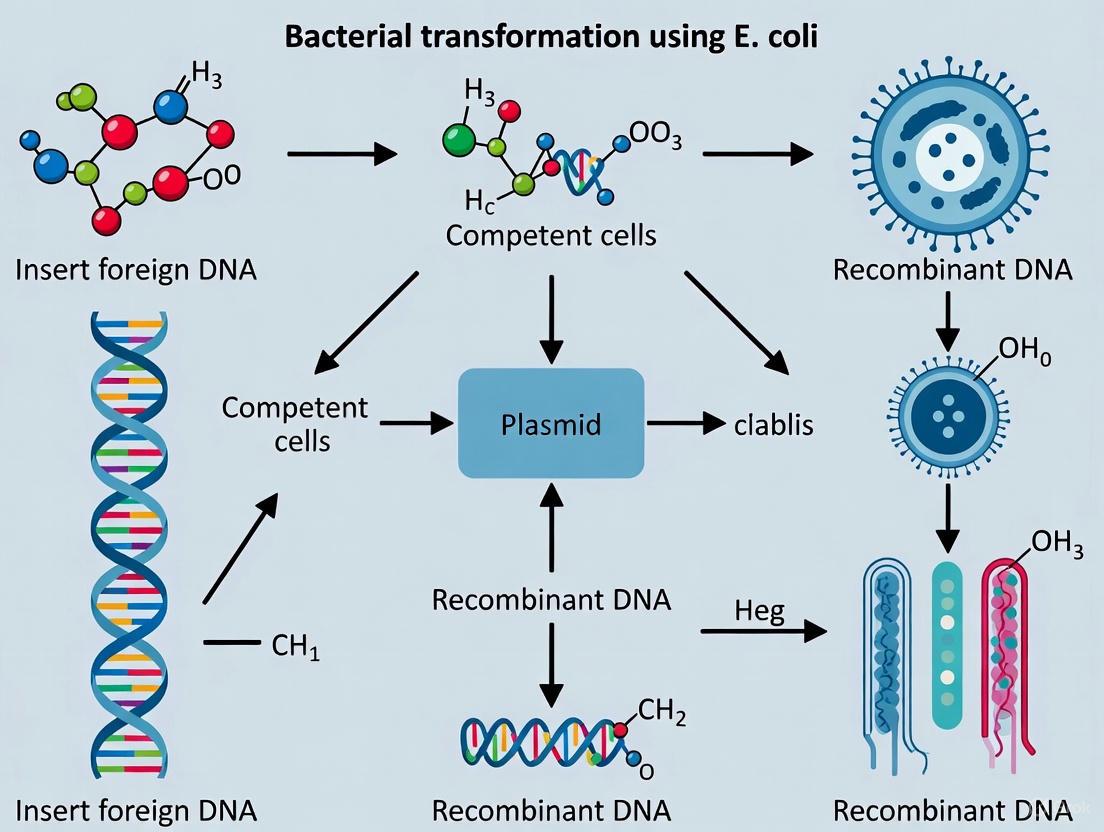
This comprehensive guide details the E.
E. coli Bacterial Transformation: A Complete Guide from Foundational Principles to Advanced Optimization for Researchers
Abstract
This comprehensive guide details the E. coli bacterial transformation process, a cornerstone technique in molecular biology and drug development. It provides foundational knowledge on how bacteria uptake foreign DNA, compares established methodological protocols including heat shock and electroporation, and offers in-depth troubleshooting and optimization strategies to maximize transformation efficiency. Tailored for researchers and scientists, the article also presents a comparative analysis of methods and strains, supported by recent scientific literature, to enable robust experimental validation and successful application in biomedical research.
Understanding Bacterial Transformation: Core Principles and Cellular Competency
Bacterial transformation is a fundamental molecular biology technique involving the introduction of foreign DNA, typically a plasmid, into a bacterial cell. In a laboratory setting, this process allows bacteria to acquire new genetic traits, enabling them to replicate the foreign DNA and, if the plasmid contains a functional gene, express it to produce proteins of interest [1] [2]. This technique is vital for various applications, from basic research to the industrial production of pharmaceuticals like insulin [2].
The process of bacterial transformation relies on three key steps: plasmid uptake, where DNA is introduced into bacterial cells; cell recovery, a period for bacteria to repair and express antibiotic resistance genes; and selection, where only successfully transformed bacteria are able to grow on antibiotic-containing media [2]. The workflow below illustrates this core process.
Quantitative Data in Bacterial Transformation
Transformation efficiency is a critical metric for evaluating the success of a transformation experiment. It is defined as the number of colony-forming units (CFU) produced per microgram of plasmid DNA used [1]. The table below summarizes key quantitative aspects.
Table 1: Key Quantitative Parameters for Bacterial Transformation
| Parameter | Typical Range or Value | Protocol Note |
|---|---|---|
| Transformation Efficiency | Expressed as CFU/μg DNA [1] | A measure of protocol success; higher is better. |
| Competent Cell Volume | 50–100 μL [1] | Used per transformation reaction. |
| Plasmid DNA Amount | 1–10 ng (intact plasmid) [1] | Using more DNA can sometimes lower efficiency. |
| Heat Shock Duration | 30–60 seconds [3] | 45 seconds is often ideal, but strain-dependent. |
| Recovery Time | 45–60 minutes [3] | Crucial for antibiotic resistance gene expression. |
| Outgrowth Media | SOC Media [1] | Can increase transformed colonies 2- to 3-fold vs. LB. |
| Natural Competency of E. coli | 10⁻⁵ – 10⁻¹⁰ [1] | Highlights need for artificial competence methods. |
Detailed Experimental Protocol: Heat Shock Transformation
The following is a standardized protocol for transforming chemically competent E. coli cells via the heat shock method, consolidating best practices from cited sources [1] [3].
Preparation
- Thaw chemically competent E. coli cells on ice (approximately 20–30 minutes).
- Pre-warm LB agar plates containing the appropriate antibiotic to room temperature.
- Pre-warm SOC or LB recovery media to 37°C.
Transformation
- Gently mix the thawed competent cells; avoid vortexing.
- Aliquot 50 μL of cells into a pre-chilled microcentrifuge tube.
- Add 1–10 ng of plasmid DNA (or 1–5 μL of a ligation mixture) to the cells. Gently mix by flicking the tube.
- Incubate the DNA-cell mixture on ice for 20–30 minutes.
Heat Shock
- Transfer the tube to a pre-heated 42°C water bath for 30 seconds (for smaller tubes, a shorter time may be needed). Do not shake.
- Immediately return the tube to ice for at least 2 minutes.
Recovery
- Add 250–1,000 μL of pre-warmed SOC media to the tube.
- Incubate the tube at 37°C in a shaking incubator (225 rpm) for 45–60 minutes. This outgrowth step allows the bacteria to express the antibiotic resistance gene encoded on the plasmid.
Selection
- Spread 50–200 μL of the transformation culture onto the pre-warmed selective LB agar plates.
- Incubate the plates upside down at 37°C overnight (16–24 hours).
- The following day, transformed colonies should be visible on the plate.
The Scientist's Toolkit: Essential Research Reagents
Successful transformation relies on specific biological materials and reagents. The following table details key components and their functions.
Table 2: Essential Research Reagents for Bacterial Transformation
| Reagent / Material | Function / Purpose |
|---|---|
| Chemically Competent Cells | E. coli cells (e.g., K12, TOP10) treated with cations like CaCl₂ to make their membranes permeable to DNA [4] [1] [5]. |
| Plasmid DNA | A circular DNA vector containing an origin of replication for propagation in bacteria and a selectable marker (e.g., antibiotic resistance gene) [3]. |
| LB Agar Plates with Antibiotic | A solid growth medium used for selection. Only bacteria that have successfully taken up the plasmid and its resistance gene will grow [4] [3]. |
| SOC Recovery Media | A nutrient-rich liquid medium used after heat shock to allow cell recovery and expression of the antibiotic resistance gene before selection [1]. |
| Cation Solutions (e.g., CaCl₂) | Used in the preparation of chemically competent cells. The cations help neutralize the negative charges on the cell membrane and DNA, facilitating DNA uptake [1]. |
| Antibiotics (e.g., Kanamycin, Ampicillin) | Selectable agents added to growth media to inhibit the growth of untransformed cells, ensuring only successful transformants proliferate [4] [3]. |
Historical and Mechanistic Context
The concept of bacterial transformation was first demonstrated in 1928 by Frederick Griffith using Streptococcus pneumoniae [6]. His experiment showed that a "transforming principle" from a heat-killed virulent strain (S) could be taken up by a live, non-virulent strain (R), conferring virulence. This principle was later identified by Avery, MacLeod, and McCarty as DNA, establishing it as the genetic material [6].
The modern heat shock method leverages this natural principle artificially. The process involves making bacterial cells "competent" by treating them with calcium chloride. The Ca²⁺ ions are thought to neutralize repulsive charges on the DNA backbone and the bacterial cell membrane [1]. A subsequent brief heat shock creates a thermal imbalance, thought to cause the formation of pores in the membrane, allowing the plasmid DNA to enter the cell. After returning to optimal growth conditions, the cell membrane repairs itself, and the bacterium can propagate the plasmid. The relationship between key bacterial strains in Griffith's seminal work is shown below.
Plasmids are extra-chromosomal genetic elements that are fundamental to molecular biology, serving as versatile vehicles for gene cloning, protein expression, and genetic engineering [7]. These circular DNA molecules replicate independently of the bacterial chromosome and have been domesticated from their natural states into essential tools for biotechnology and therapeutic development. The functionality of a plasmid is governed by two critical genetic elements: the origin of replication (ORI), which controls plasmid replication and copy number, and the selectable marker, which enables selective pressure to maintain the plasmid within a bacterial population [8] [9]. For researchers working with E. coli transformation systems, understanding the interplay between these elements is crucial for experimental success, influencing everything from transformation efficiency to recombinant protein yield.
The historical significance of plasmid engineering was demonstrated in pioneering experiments as early as 1974, when researchers successfully joined Staphylococcus plasmid genes to the E. coli pSC101 plasmid, creating hybrid molecules that replicated as functional units in E. coli and expressed genetic information from both parent DNA molecules [10]. This foundational work established the principle that plasmid elements could function across bacterial species, expanding the possibilities for genetic engineering. Today, plasmid engineering continues to evolve with sophisticated approaches to optimize copy number, stability, and functionality for specific research and industrial applications.
Origins of Replication: The Copy Number Control Center
The origin of replication (ORI) is a specific DNA sequence where plasmid replication initiates, determining both the copy number (number of plasmid copies per cell) and host range (bacterial species in which the plasmid can replicate) [9]. The ORI includes the origin of vegetative replication (oriV) where replication begins, plus coding sequences for proteins (such as Rep proteins) that bind to oriV and regulate replication initiation, copy number control, and plasmid partitioning [9].
Plasmid replication is typically regulated by negative feedback mechanisms that narrow the distribution of plasmid copy numbers across single cells [7]. Many plasmids also encode active partitioning systems (Par systems) that ensure proper segregation of plasmid copies to daughter cells during cell division, significantly reducing the rate of plasmid loss [7]. Without such stabilization mechanisms, plasmid-free cells can rapidly emerge and outcompete plasmid-containing cells, especially if plasmid maintenance imposes a metabolic burden on the host [7].
Table 1: Common Origins of Replication and Their Properties
| Origin Type | Copy Number | Host Range | Key Features | Common Applications |
|---|---|---|---|---|
| pUC/pMB1 | 500-700 [11] | Narrow | High copy number, minimal size | High-yield protein expression, gene cloning |
| pBR322 | 15-20 [11] | Narrow | Moderate copy number, proven stability | General cloning, protein expression |
| pSC101 | ~5 [10] | Narrow | Very low copy number, high stability | Expression of toxic genes, metabolic engineering |
| RK2 | Variable [9] | Broad | Engineerable copy number [9] | Agrobacterium-mediated transformation, cross-species applications |
| pVS1 | Variable [9] | Broad | Engineerable copy number [9] | Binary vectors, plant and fungal transformation |
Recent advances in ORI engineering demonstrate that copy number can be systematically optimized for specific applications. Using directed evolution approaches with high-throughput growth-coupled selection assays, researchers have identified mutations in Rep proteins that significantly increase plasmid copy number across diverse origins including pVS1, RK2, pSa, and BBR1 [9]. These mutations often occur at dimerization interfaces of Rep proteins, potentially reducing "handcuffing" (dimer-mediated inhibition of replication) and enabling higher replication rates [9]. Such engineered high-copy-number variants have demonstrated remarkable improvements in transformation efficiency, with stable transformation efficiencies increasing by 60-100% in Arabidopsis thaliana and 390% in the oleaginous yeast Rhodosporidium toruloides [9].
Selectable Markers: Ensuring Plasmid Maintenance
Selectable markers are genes that confer a survival advantage to plasmid-containing cells under specific growth conditions, enabling selective pressure that maintains plasmid inheritance across bacterial generations [8]. Typically, these markers confer resistance to antibiotics, allowing only transformed cells to grow in antibiotic-containing media. The selectable marker is arguably the most critical element for ensuring plasmid stability in bacterial cultures, as it prevents the overgrowth of plasmid-free cells that inevitably arise through imperfect plasmid segregation or replication errors [7].
Table 2: Common Selectable Markers and Their Mechanisms
| Antibiotic | Cell Type | Mechanism of Action | Resistance Mechanism |
|---|---|---|---|
| Ampicillin | Prokaryote | Inhibits bacterial cell wall synthesis | β-lactamase enzyme hydrolyzes β-lactam ring [8] |
| Chloramphenicol | Prokaryote | Binds to 50S ribosomal subunit, inhibiting protein synthesis | Chloramphenicol acetyltransferase modifies antibiotic [8] |
| Kanamycin | Prokaryote | Binds to 70S ribosomal subunit, inhibiting protein synthesis | Aminoglycoside phosphotransferase modifies antibiotic |
| Tetracycline | Prokaryote | Binds to 30S ribosomal subunit, inhibiting translocation | Membrane-associated protein prevents antibiotic uptake [8] |
| Hygromycin B | Eukaryote | Inhibits protein synthesis by disrupting translocation | Hygromycin B phosphotransferase enzyme [8] |
While antibiotic resistance markers are widely used, they present certain limitations, including loss of selective pressure due to antibiotic degradation and potential contamination of therapeutic products with antibiotics, which may be unacceptable for medical applications [8]. Additionally, ampicillin resistance presents specific challenges because Ampr cells secrete β-lactamase into the medium, gradually hydrolyzing the antibiotic and potentially allowing plasmid-free cells to grow after extended culture periods [8]. This can lead to the appearance of "satellite colonies" around genuine transformants on agar plates. To mitigate this issue, researchers can use more stable carbenicillin instead of ampicillin or limit culture times to 8-10 hours [8].
Alternative selection strategies that avoid antibiotics are increasingly important for biopharmaceutical production. These include complementation of essential genes, toxin-antitoxin systems, and metabolic pathway engineering that creates auxotrophies requiring plasmid-borne genes for survival [8].
Essential Protocols for Plasmid Engineering
Plasmid Copy Number Determination by qPCR
Quantitative PCR (qPCR) provides a sensitive and accurate method for determining plasmid copy number, essential for characterizing plasmid behavior and optimizing expression systems [11].
Materials and Reagents:
- Bacterial culture harboring the plasmid of interest
- Primers targeting a single-copy chromosomal gene (e.g., tdk encoding thymidine kinase)
- Primers targeting the plasmid ORI region
- qPCR reagents and instrumentation
- Known copy number control plasmid (e.g., pBR322 with ~19 copies/cell)
Procedure:
- Cell Lysis: Prepare bacterial lysates from cultures with defined cell counts (10²–10⁵ cells/μL). Incubate at 95°C for 10 minutes, followed by immediate freezing at -4°C [11].
- Primer Design and Validation: Design primers targeting a single-copy chromosomal reference gene and a conserved region of the plasmid ORI. Verify primer specificity and efficiency (ideal efficiency: 1.85-2.05) [11].
- qPCR Reaction: Perform qPCR with both primer sets using the following conditions:
- Denaturation: 95°C for 3 minutes
- 40 cycles of: 95°C for 15 seconds, 60°C for 30 seconds, 72°C for 30 seconds
- Melting curve analysis: 65°C to 95°C, increment 0.5°C [11]
- Data Analysis: Calculate the Plasmid/Chromosome (P/C) ratio using the formula:
- P/C ratio = 2^(Ctchromosome - Ctplasmid)
- Compare the P/C ratio of test plasmids to the standard curve generated from control plasmids with known copy numbers [11].
Applications and Limitations: This method provides precise copy number determination but requires careful primer design and validation. It is particularly valuable for characterizing engineered ORI variants and optimizing expression systems for industrial protein production, where low-copy-number plasmids are often preferred for their enhanced stability [11].
Plasmid Loss Rate Measurement
Accurate measurement of plasmid loss rates is essential for understanding plasmid stabilization mechanisms and designing stable expression systems [7].
Materials and Reagents:
- Plasmid-containing bacterial strain
- Selective and non-selective growth media
- Microscope slides and agarose pads for microscopy-based methods
- 96-well plates for fluctuation tests
- Appropriate antibiotics for counterselection
Procedure - Modified Fluctuation Test:
- Culture Preparation: Grow plasmid-containing cells overnight in selective medium to saturation [7].
- Dilution and Outgrowth: Dilute the culture by approximately 10⁸ into non-selective medium and aliquot into a 96-well plate (100 μL per well) [7].
- Incubation: Incubate with vigorous agitation at 37°C for several hours to allow population growth and plasmid loss events to occur.
- Selection and Counting: Add chloramphenicol (or other appropriate selective agent) to each well to select for plasmid-containing cells. Determine the fraction of wells without growth, which indicates wells where plasmid loss occurred in the founding population [7].
- Calculation: Use fluctuation analysis principles to calculate the inherent plasmid loss rate from the distribution of plasmid-free cells across the wells.
Alternative Microscopy-Based Method:
- Culture and Resuspension: Grow plasmid-containing cells in selective medium to OD600 ≈ 0.3, centrifuge, and resuspend in non-selective medium [7].
- Imaging: At 5-minute intervals, spot 5 μL of culture onto selective low-melt agarose pads on microscope slides [7].
- Analysis: After incubation, image microcolonies and manually count single lysed cells (plasmid-free) versus growing microcolonies (plasmid-containing) to determine immediate loss frequencies at extremely short time scales [7].
Technical Considerations: Traditional plasmid loss assays can overestimate loss rates due to growth advantages of plasmid-free cells. These modified approaches separate inherent loss events from growth differences, providing more accurate measurements [7]. For many plasmids, loss rates may be much lower than previously believed, suggesting the existence of unknown stabilization mechanisms that improve copy number control or partitioning at cell division [7].
Restriction Digestion for Plasmid Analysis
Restriction enzyme digestion is a fundamental technique for plasmid verification, cloning, and analysis [12].
Materials and Reagents:
- Purified plasmid DNA
- Appropriate restriction enzymes
- Compatible restriction buffer
- BSA (if recommended by manufacturer)
- Gel loading dye
- Electrophoresis equipment and reagents
Procedure:
- Reaction Setup: In a 1.5 mL tube, combine:
- 1 μg plasmid DNA (for cloning) or 500 ng (for diagnostic digest)
- 1 μL of each restriction enzyme
- 3 μL 10x buffer
- 3 μL 10x BSA (if recommended)
- Nuclease-free water to 30 μL total volume [12]
- Incubation: Mix gently by pipetting and incubate at the appropriate temperature (usually 37°C) for 1 hour to overnight, depending on application [12].
- Analysis: Add gel loading dye and analyze digestion products by agarose gel electrophoresis.
Troubleshooting Tips:
- For double digests (two enzymes), use compatibility charts to determine optimal buffer [12].
- If enzymes don't cut, check for methylation sensitivity (Dam/Dcm methylases can block certain sites) [12].
- Use phosphatase treatment (CIP or SAP) for vectors in cloning to prevent recircularization [12].
- Avoid star activity (cleavage at non-canonical sites) by minimizing glycerol concentration and following manufacturer recommendations [12].
The Scientist's Toolkit: Essential Research Reagents
Table 3: Key Research Reagents for Plasmid Engineering and Analysis
| Reagent/Resource | Function | Application Notes |
|---|---|---|
| Chemically Competent Cells | DNA uptake for transformation | Efficiency ranges from 10⁶-10⁹ CFU/μg; choose based on application [13] |
| Electrocompetent Cells | High-efficiency transformation via electroporation | Essential for large plasmids (>10 kb) or BACs [3] |
| Universal MCS Vectors | Standardized cloning platforms | Enable automation-friendly cloning with consistent homologous linkers [14] |
| recA-deficient E. coli Strains | Enable in vivo assembly | Facilitate RecA-independent recombination for simplified cloning [14] |
| High-Fidelity DNA Polymerases | PCR amplification with minimal errors | Essential for ORI mutagenesis and vector construction [14] |
| Antibiotic Selection Media | Maintain plasmid retention | Critical for preventing plasmid loss; be aware of stability issues with ampicillin [8] |
Visualizing Plasmid Engineering Workflows
Plasmid Component Relationships
Diagram 1: Plasmid functional relationships. The origin of replication (ORI) controls copy number, which influences expression levels, metabolic load, and stability. Selectable markers enable antibiotic resistance, creating selective pressure for plasmid maintenance. MCS (Multiple Cloning Site) provides cloning flexibility for inserting genes of interest.
Plasmid Copy Number Engineering Workflow
Diagram 2: Directed evolution workflow for plasmid copy number engineering. This pipeline uses growth-coupled selection to identify ORI mutations that increase copy number, followed by screening in plant systems to validate improved transformation efficiency [9].
Advanced Applications and Future Directions
The strategic engineering of plasmid components continues to enable advances across biotechnology. In Agrobacterium-mediated transformation (AMT), binary vector copy number directly impacts transformation efficiency in both plant and fungal systems [9]. Recent work demonstrates that engineered high-copy-number variants of broad-host-range origins (pVS1, RK2, pSa, BBR1) can significantly improve transient and stable transformation efficiencies [9]. This approach provides an easily deployable framework for improving transformation in recalcitrant species that remain challenging targets for genetic engineering.
In industrial protein production, plasmid copy number control is critical for optimizing yields while maintaining genetic stability. Low-copy-number plasmids like pBR322 derivatives (typically 15-20 copies/cell) often provide superior stability for large-scale fermentations, while high-copy-number pUC derivatives (500-700 copies/cell) can maximize expression for research applications [11]. The development of tunable copy number systems represents an important frontier in metabolic engineering, where precise control of gene expression levels is needed to optimize pathway fluxes without overburdening host metabolism.
Emerging techniques in automation-friendly cloning using universal multiple cloning sites (MCS) and bacterial in vivo assembly are simplifying plasmid construction while maintaining high efficiency and fidelity [14]. These approaches leverage RecA-independent recombination pathways in E. coli, allowing direct transformation of linearized vectors with PCR-amplified inserts without in vitro ligation [14]. Optimization of homologous linker length (12-15 bp) and insert-to-vector ratios (5:1 molar ratio) enables highly efficient assembly with positive clone rates exceeding 95% [14], significantly accelerating plasmid engineering workflows for high-throughput applications.
As synthetic biology advances, the critical role of well-characterized plasmid origins of replication and selectable markers will continue to grow, enabling more precise genetic engineering across diverse host systems from bacteria to plants and fungi. The continued refinement of these fundamental genetic elements promises to overcome current bottlenecks in transformation efficiency, genetic stability, and predictable gene expression.
What are Competent Cells? Enhancing DNA Uptake Efficiency
Competent cells are bacterial cells that have been specially treated to permit the efficient uptake of foreign DNA from the environment, a process fundamental to molecular cloning and genetic engineering [15]. In nature, some bacteria possess natural competence, a genetically programmed ability to take up DNA, as first demonstrated by Frederick Griffith in 1928 with Streptococcus pneumoniae [16]. However, common laboratory bacteria such as Escherichia coli do not possess this natural ability and require artificial methods to become competent [17]. The advent of artificial competence, beginning with the calcium chloride method developed by Mandel and Higa in 1970, revolutionized molecular biology by enabling researchers to introduce recombinant DNA into bacterial hosts for amplification and study [16].
The principle behind artificial competence involves altering the permeability of the bacterial cell wall and membrane to allow the passage of large, negatively charged DNA molecules [15]. Chemical methods typically use divalent cations such as Ca²⁺ to neutralize the charges on both the DNA backbone and the cell membrane, facilitating DNA binding to the cell surface [18] [19]. A subsequent heat shock creates a thermal imbalance that further increases membrane permeability, allowing DNA to enter the cell [15]. Alternatively, electroporation uses a high-voltage electrical pulse to create transient pores in the cell membrane through which DNA can enter [18]. The efficiency of this transformation process is critical for success in many applications, including DNA library construction, cloning of multiple fragments, and the handling of large plasmids [20].
Quantitative Analysis of Transformation Efficiency
Transformation efficiency (TE) is the gold standard metric for evaluating competent cell performance, expressed as colony-forming units per microgram of DNA (CFU/μg DNA) [20]. Achieving high TE is essential for demanding applications where the number of successful transformants is low.
Comparison of Transformation Methods
The choice of transformation method significantly impacts the efficiency and success of DNA uptake. The table below summarizes the key characteristics of the most common methods.
Table 1: Comparison of Bacterial Transformation Methods
| Method | Key Principle | Typical Transformation Efficiency (CFU/μg) | Key Advantages | Key Disadvantages |
|---|---|---|---|---|
| Chemical Transformation (Heat Shock) | Chemical treatment (e.g., CaCl₂) and brief heat pulse to increase membrane permeability [18] [15]. | (1.0 \times 10^5) – (2.0 \times 10^9) [18] | Simple protocol, requires only a water bath, cost-effective [18]. | Lower efficiency compared to electroporation for some applications [18]. |
| Electroporation | A brief high-voltage electrical pulse creates transient pores in the cell membrane [18]. | (5.0 \times 10^9) – (2.0 \times 10^{10}) [18] | Highest achievable efficiency, faster process [18]. | Requires specialized (expensive) equipment, samples must be salt-free to prevent arcing [18]. |
| TSS-HI Method | A simplified chemical method combining advantages of TSS, Hanahan, and Inoue methods [20]. | Up to ((7.21 \pm 1.85) \times 10^9) [20] | Simplicity and extremely high efficiency for a chemical method [20]. | Optimization may be required for different bacterial strains [20]. |
Strain and Method Selection for Optimal Efficiency
The genetic background of the E. coli strain and the specific preparation protocol are critical determinants of TE. Research has demonstrated that no single method is optimal for all strains.
Table 2: Optimization of Transformation Methods for Common E. coli Strains
| E. coli Strain | Recommended Method | Reported Transformation Efficiency (CFU/μg) | Strain Characteristics and Common Applications |
|---|---|---|---|
| DH5α | Hanahan's Method [17] | > (1 \times 10^9) [20] | General cloning; endA1 mutation for high-quality plasmid DNA, recA1 to reduce recombination [16]. |
| BL21 (DE3) | CaCl₂ Method [17] | Information missing | Recombinant protein expression; lacks lon and ompT proteases, carries T7 RNA polymerase gene [16]. |
| BW3KD | TSS-HI Method [20] | ((7.21 \pm 1.85) \times 10^9) [20] | Derived from BW25113; high TE, fast growth, deletions in endA, fhuA, and deoR for improved cloning [20]. |
| XL-1 Blue | Hanahan's Method [17] | Information missing | General cloning and phage display applications. |
| TOP10 | CaCl₂ Method [17] | Information missing | General cloning; high transformation efficiency and stable replication of large plasmids. |
Factors Affecting Transformation Efficiency
Multiple variables during the preparation and transformation of competent cells can dramatically impact the resulting efficiency.
- Growth Phase of Bacteria: Cells harvested during the mid-logarithmic growth phase (OD600 of approximately 0.4-0.5) are metabolically active and yield the highest competence [18] [17].
- Temperature Control: Maintaining cells constantly on ice during chemical treatment is crucial. Low temperature helps maintain membrane permeability and prevents the loss of competence [18].
- Heat-Shock Conditions: The duration and temperature of the heat shock are critical. While a 45-second shock is often used, optimal times can vary [17].
- Storage and Handling: Competent cells must be stored at -80°C and never refrozen after thawing, as temperature fluctuations cause a dramatic decrease in transformation efficiency [18]. Proper storage allows cells to remain viable for at least one year [18].
- Recovery Time: Following transformation, an incubation period in a nutrient-rich, non-selective medium (e.g., SOC or LB broth) allows cells to recover, express the antibiotic resistance marker, and restore their cell walls [18].
Advanced Protocol: TSS-HI Method for High-Efficiency Transformation
The TSS-HI method represents a significant advance in preparing highly competent cells with a simpler protocol [20].
Reagent Preparation
- LB Broth: Standard Lennox formulation (10 g/L tryptone, 5 g/L yeast extract, 5 g/L NaCl).
- TSS-HI Solution: 10% (w/v) Polyethylene glycol (PEG) 3350, 5% Dimethyl sulfoxide (DMSO), 20 mM MgCl₂, 20 mM MgSO₄, 40 mM Potassium acetate (pH 7.5), 90 mM MnCl₂, 10 mM CaCl₂, 0.1 M KCl, 3 mM Hexamminecobalt(III) chloride, adjusted to pH 6.1 with HCl and filter-sterilized. Store in aliquots at -20°C.
- KCM Solution: 0.1 M KCl, 30 mM CaCl₂, 50 mM MgCl₂. Autoclave and store at room temperature.
Step-by-Step Procedure
- Inoculation and Growth: Streak the E. coli strain (e.g., BW3KD) onto a fresh LB agar plate and incubate overnight at 37°C. Pick a single colony and inoculate 5 mL of LB broth, incubating overnight with shaking at 37°C and 200-220 rpm. The next day, dilute 1 mL of the overnight culture into 99 mL of pre-warmed LB in a flask (1:100 dilution). Grow with vigorous shaking until the OD600 reaches 0.55 [20].
- Harvesting and Washing: Chill the culture flask on ice for 15-20 minutes. Centrifuge the cells at 3200 × g for 10 minutes at 4°C. Gently decant the supernatant and resuspend the pellet in 1/20 of the original volume (e.g., 5 mL for a 100 mL culture) of ice-cold TSS-HI solution.
- Aliquoting and Freezing: Dispense the cell suspension into pre-chilled microcentrifuge tubes (e.g., 100 µL aliquots). Flash-freeze the aliquots immediately in liquid nitrogen and store at -80°C. Properly stored, these competent cells remain stable for at least one year [18].
- Transformation: Thaw a 100 µL aliquot of competent cells on ice. Add 1-10 ng of plasmid DNA (in a volume not exceeding 5 µL) and 10 µL of KCM solution. Mix gently by flicking the tube and incubate on ice for 30 minutes. Subject the mixture to a heat shock in a water bath at 42°C for 45-90 seconds. Immediately return the tube to ice for 2 minutes.
- Recovery and Plating: Add 900 µL of room-temperature SOC or LB broth to the tube. Incubate with shaking at 37°C for 45-60 minutes to allow for antibiotic resistance expression. Plate appropriate volumes onto selective agar plates and incubate overnight at 37°C.
Diagram 1: Competent Cell Preparation Workflow
The Scientist's Toolkit: Essential Reagents and Materials
Table 3: Key Reagent Solutions for Competent Cell Preparation
| Reagent Solution | Composition | Primary Function in Protocol |
|---|---|---|
| Calcium Chloride (CaCl₂) | 0.1 M CaCl₂, often with 15% glycerol [17]. | The foundational chemical method; Ca²⁺ ions neutralize charge repulsion between DNA and cell membrane [15] [17]. |
| Hanahan's FSB Buffer | Complex mixture including MnCl₂, CaCl₂, KCl, Hexamminecobalt(III) chloride, and DMSO [17]. | A multi-component buffer designed for ultra-high efficiency transformation of specific strains like DH5α [17]. |
| TSS Solution | LB broth (pH 6.1), PEG 3350, DMSO, MgCl₂, MgSO₄ [20] [17]. | A simple, one-step chemical method that can achieve high transformation efficiencies without the need for heat shock in its original form [17]. |
| Glycerol Solution (10%) | 10% v/v glycerol in ultrapure water [18]. | Used as a cryoprotectant for preparing electrocompetent cells; it replaces salts to prevent arcing during electroporation [18]. |
| SOC Recovery Medium | A nutrient-rich broth containing glucose and additional ions. | Provides essential nutrients for cell wall repair and allows expression of antibiotic resistance genes after heat shock or electroporation [17]. |
Competent cells are an indispensable tool in modern molecular biology and biotechnology. Understanding the principles behind DNA uptake and the variables that influence transformation efficiency allows researchers to select the appropriate strain, method, and protocol for their specific application. The continued optimization of protocols, such as the development of the TSS-HI method achieving efficiencies rivaling electroporation with the simplicity of a chemical method, ensures that researchers can tackle increasingly complex cloning challenges. By adhering to optimized protocols and paying meticulous attention to factors like growth phase, temperature control, and storage conditions, scientists can reliably produce highly competent cells that form the foundation of successful genetic manipulation workflows.
Within the framework of bacterial transformation protocol research for E. coli, the selection of an appropriate DNA delivery method is a critical determinant of experimental success. Transformation, the process of introducing foreign DNA into a host cell, relies on overcoming the fundamental barrier of the cell's plasma membrane [21]. For the widely used E. coli model system, two primary techniques—chemical transformation and electroporation—have been established as the most effective and commonly used methods [22] [23]. This application note delineates the fundamental mechanisms of DNA entry for both chemical and electroporation methods, providing a structured comparison of their capabilities. It further offers detailed, actionable protocols to guide researchers, scientists, and drug development professionals in selecting and optimizing the ideal transformation strategy for their specific applications, from routine cloning to complex library construction. Understanding the distinct principles underpinning each method is essential for maximizing transformation efficiency, a key metric in molecular cloning workflows.
Fundamental Mechanisms of DNA Entry
The journey of exogenous DNA into an E. coli cell requires a temporary and reversible alteration of the cell membrane's permeability. While the end goal is identical, the physical and chemical principles exploited to achieve this differ profoundly between the two methods.
Chemical Transformation (Heat Shock)
Chemical transformation, also referred to as heat shock or calcium chloride transformation, utilizes a combination of chemical and thermal stimuli to facilitate DNA uptake [22] [23]. The process begins with the preparation of competent cells—harvested during the mid-log phase of growth (OD₆₀₀ between 0.4 and 0.9) to ensure optimal physiological state [23]. These cells are then incubated in a solution containing divalent cations, most commonly calcium chloride (CaCl₂).
The mechanism is multi-faceted. The Ca²⁺ ions are thought to neutralize the negative charges on both the DNA backbone and the bacterial cell membrane, reducing electrostatic repulsion and promoting DNA adhesion to the cell surface [22] [24]. This incubation is performed on ice to stabilize this complex. The subsequent heat shock—a brief, sudden elevation in temperature to 42°C for 30-60 seconds—creates a thermal current and induces fluidity in the membrane's lipid bilayer. This temporary phase transition is believed to form transient pores or channels, allowing the bound DNA to enter the cell via diffusion or convection [22] [23]. Following the heat shock, the cells are immediately returned to ice to reseal the membrane.
Electroporation
Electroporation relies purely on a physical force to drive DNA into cells. This method involves subjecting a mixture of cells and DNA to a brief, high-intensity electrical pulse [21] [22]. The preparation of cells for electroporation, termed electrocompetent cells, requires extensive washing with ice-cold deionized water or a low-conductivity buffer like 10% glycerol [23]. This critical step removes salts from the medium, which would otherwise conduct electricity and cause arcing (an electrical discharge), thereby reducing cell viability and transformation efficiency [22] [23].
The fundamental mechanism involves the application of an electric field across the cell suspension, typically in a specialized cuvette with a gap of 0.1 to 0.2 cm. When a high-voltage pulse (with a field strength of >15 kV/cm for bacteria) is applied, it induces a transient transmembrane potential [23]. This potential difference causes the polar phospholipid heads of the membrane to realign, forming hydrophilic pores that are thought to be nanometers in diameter [21] [22]. Because the DNA is negatively charged, the electric field then drives the molecules through these pores into the cell via electrophoresis [22]. The pores are transient and reseal spontaneously once the electric field is dissipated, trapping the DNA inside the cell.
The following workflow diagrams illustrate the key procedural differences between these two methods.
Comparative Analysis & Application Selection
The choice between chemical transformation and electroporation is not merely one of preference but should be guided by the specific requirements of the experimental application. The two methods differ significantly in their efficiency, requisite setup, and optimal use cases.
Table 1: Method Comparison at a Glance
| Feature | Chemical Transformation | Electroporation |
|---|---|---|
| Fundamental Mechanism | Chemical (cation-based) pore formation & heat shock [22] [23] | Physical (electrical field-induced) pore formation [21] [22] |
| Typical Transformation Efficiency | (1 \times 10^6) to (5 \times 10^9) CFU/µg [25] | (1 \times 10^{10}) to (3 \times 10^{10}) CFU/µg [25] [26] |
| Key Equipment | Water bath or dry bath/block heater [25] | Electroporator and electroporation cuvettes [22] [25] |
| Optimal DNA Amount | 1–10 ng [23] | Low amounts (e.g., 10 pg) to saturating concentrations [25] |
| Critical Parameter | Duration and temperature of heat shock [3] [23] | Electrical field strength and pulse time constant [23] [26] |
| Susceptibility to Issues | Less sensitive to protocol variations [22] | Sensitive to salt content, can cause arcing [22] [23] |
Table 2: Guideline for Application-Based Method Selection
| Research Application | Recommended Method | Justification & Required Efficiency |
|---|---|---|
| Routine Cloning & Subcloning | Chemical Transformation | Sufficient efficiency ((10^6)-(10^8) CFU/µg); simplicity and cost-effectiveness [25] |
| cDNA/genomic DNA Library Construction | Electroporation | Requires highest efficiency ((>10^{10}) CFU/µg) to represent large diversity [25] |
| Large Plasmid Transformation (>30 kb) | Electroporation | More effective at introducing large DNA molecules [3] [25] |
| High-Throughput Workflows | Chemical Transformation | Adaptable to 96-well plates and automated formats [25] |
| Transformation of Other Microbial Species | Electroporation | Broader range, including bacteria with cell walls [25] |
Detailed Experimental Protocols
Protocol 1: Chemical Transformation ofE. colivia Heat Shock
This protocol is adapted from standard laboratory practices and manufacturer guidelines [3] [23].
Research Reagent Solutions
- Competent Cells: Chemically competent E. coli (e.g., DH5α, XL1-Blue). Prepared by CaCl₂ treatment or purchased commercially.
- SOC Media: Contains nutrients and MgCl₂ to maximize transformation efficiency during recovery [23].
- LB Agar Plates: Containing the appropriate selective antibiotic (e.g., ampicillin, kanamycin).
- Plasmid DNA: Supercoiled plasmid DNA, such as pUC19, for transformation control.
- Thawing Competent Cells: Gently thaw 50–100 µL of chemically competent E. coli cells on ice.
- DNA Addition: Add 1–10 ng of plasmid DNA (or 1–5 µL of a ligation mixture) directly to the thawed cells. Mix gently by tapping the tube. Do not vortex.
- Incubation on Ice: Incubate the cell-DNA mixture on ice for 20–30 minutes.
- Heat Shock: Transfer the tube to a preheated 42°C water bath for exactly 30 seconds. Do not shake.
- Recovery on Ice: Immediately return the tube to ice for at least 2 minutes.
- Outgrowth: Add 250–500 µL of pre-warmed SOC media to the tube. Shake at 37°C for 45–60 minutes at 225 rpm.
- Plating: Plate 50–200 µL of the transformation culture onto pre-warmed LB agar plates containing the appropriate antibiotic.
- Incubation: Incubate plates overnight at 37°C.
Protocol 2: High-Efficiency Transformation ofE. colivia Electroporation
This protocol is based on established methodologies for high-efficiency transformation [23] [26] [27].
Research Reagent Solutions
- Electrocompetent Cells: E. coli strain (e.g., DH10B, MC4100) washed in 10% glycerol [23] [27].
- Electroporation Buffer: Ice-cold 10% glycerol or similar low-ionic-strength buffer.
- SOC Media: For immediate recovery post-pulse.
- LB Agar Plates: Containing the appropriate selective antibiotic.
- Preparation of Cells: Thaw electrocompetent cells on ice. Alternatively, use freshly prepared, ice-cold electrocompetent cells.
- DNA and Cell Mixing: Add 1 µL of plasmid DNA (10 pg–100 ng) to 20–50 µL of electrocompetent cells in a pre-chilled electroporation cuvette (0.1 cm gap). Mix gently by pipetting. Ensure the sample is free of bubbles and at the bottom of the cuvette.
- Electroporation: Place the cuvette in the electroporator chamber and deliver a single pulse. Typical parameters for E. coli are 1.8–2.5 kV, 200 Ω, and 25 µF, resulting in a time constant of ~4–5 ms [26] [27].
- Immediate Recovery: Immediately after the pulse, add 0.5–1 mL of pre-warmed SOC media directly to the cuvette. Transfer the cell suspension to a sterile culture tube.
- Outgrowth: Incubate the culture at 37°C with shaking at 225 rpm for 45–60 minutes.
- Plating and Incubation: Plate appropriate volumes onto selective LB agar plates and incubate overnight at 37°C.
The Scientist's Toolkit: Essential Reagents and Materials
Successful transformation is dependent on the quality and appropriateness of the reagents and materials used. The following table details key components for a successful transformation workflow.
Table 3: Essential Research Reagent Solutions for Bacterial Transformation
| Item | Function/Description | Key Considerations |
|---|---|---|
| Competent Cells | E. coli strains treated to uptake foreign DNA. | Select strain based on genotype (e.g., endA1 for high-quality plasmid prep, recA for unstable inserts) [25]. |
| Calcium Chloride (CaCl₂) | Primary chemical for creating chemically competent cells; neutralizes charge repulsion [23]. | Use high-purity, ice-cold solutions. Can be supplemented with other cations (Rb⁺, Mn²⁺) for higher efficiency [23]. |
| SOC Media | Rich recovery medium containing glucose and MgCl₂. | Significantly increases transformation efficiency (2–3 fold) compared to LB during outgrowth [23]. |
| Electroporation Cuvettes | Disposable cuvettes with specific gap widths (e.g., 0.1 cm, 0.2 cm) to deliver precise electric fields. | Must be clean, dry, and ice-cold. The gap width determines the required field strength (V/cm) [23]. |
| Selective Agar Plates | LB agar supplemented with antibiotic for selectable marker-based screening of transformants. | Antibiotic must be active; use fresh plates to avoid satellite colonies from degraded antibiotic [23]. |
| pUC19 Control Plasmid | Small, supercoiled, high-copy-number plasmid. | Used as a control to determine the transformation efficiency (CFU/µg) of competent cell batches [23] [25]. |
| Dithiothreitol (DTT) | A reducing agent. | Sometimes added to chemical transformation protocols to further improve efficiency [23]. |
The strategic selection between chemical transformation and electroporation is a cornerstone of efficient molecular biology research involving E. coli. Chemical transformation, with its straightforward protocol and minimal equipment needs, remains the workhorse for routine cloning applications. In contrast, electroporation offers a substantial advantage in transformation efficiency, making it indispensable for challenging applications such as library construction and the transformation of large DNA fragments. The detailed mechanisms, comparative data, and robust protocols outlined in this application note provide a foundational resource for researchers to make an informed decision, optimize their experimental parameters, and ultimately accelerate their research and development pipeline in drug discovery and basic science.
Within molecular biology and biotechnology, the successful transformation of Escherichia coli is a foundational procedure. It is essential for cloning, protein expression, and genetic engineering [28]. While standard protocols exist, achieving high efficiency, particularly with challenging constructs, depends critically on three interlinked factors: the size of the plasmid, the genetic background of the bacterial strain, and the physiological health of the competent cells. This application note details the influence of these factors and provides optimized protocols to maximize transformation success for researchers and drug development professionals.
Strain Genetics: The Foundational Element
The choice of E. coli strain is not arbitrary; its genotype must be strategically matched to the experimental goal, whether it be routine cloning, propagation of large plasmids, or protein expression.
Table 1: Selection of E. coli Strains for Specific Applications
| Application | Recommended Strains | Key Genetic Features | Rationale |
|---|---|---|---|
| High-Efficiency Cloning | BW3KD, DH5α, TOP10 | endA1, deoR (in BW3KD), recA1 |
endA1 mutation inactivates an endonuclease that degrades plasmid DNA during purification. deoR facilitates the transformation of large plasmids [20]. |
| Large Plasmid/BAC Propagation | BW3KD, XL1-Blue MRF′ | deoR deletion, recA1 |
Mutations like deoR overcome the inefficiency in transforming large plasmids (>50 kbp) [29] [20]. |
| Protein Expression | BL21(DE3) and derivatives | lon, ompT, T7 RNA polymerase |
Deficiencies in Lon and OmpT proteases minimize target protein degradation. The T7 expression system enables strong, IPTG-inducible expression [30]. |
| Methylated DNA Cloning | STBL2, SCS110 | mcrA, mcrBC, mrr |
Mutations in methylation-dependent restriction systems prevent cleavage of genomic DNA methylated at cytosine residues [30]. |
| Toxic Gene Expression | BL21(DE3)pLysS, BL21(DE3)pLysE | T7 lysozyme gene on pLys plasmid | T7 lysozyme suppresses basal expression from the T7 promoter by inhibiting T7 RNA polymerase, allowing propagation of toxic genes [30]. |
Strain Genotype Deep Dive
- Restriction Systems: Wild-type K-12 strains possess the EcoKI Type I restriction-modification system (
hsdRMS). Strains withhsdRmutations (r–, m+) are preferred for cloning unmethylated DNA (e.g., PCR products) as they cannot restrict it [30]. - Methylation Considerations: For routine cloning, standard strains are sufficient. However, if using restriction enzymes sensitive to adenine or cytosine methylation, one should use
dam/dcmdeficient strains. Conversely, for cloning eukaryotic DNA, strains deficient in the McrA, McrBC, and Mrr systems are necessary to avoid restriction of methylated cytosine [30].
Plasmid Size: A Critical Determinant of Efficiency
Transformation efficiency (TE) is highly dependent on plasmid size, with a dramatic inverse correlation observed.
Table 2: Impact of Plasmid Size on Transformation Efficiency
| Plasmid Type | Approximate Size (kbp) | Relative Transformation Efficiency | Recommended Method |
|---|---|---|---|
| Standard Cloning Vector | 3 - 5 | Very High (e.g., >10⁹ CFU/µg) | Chemical Transformation [3] |
| Large Plasmid | 10 - 50 | High to Moderate | Chemical Transformation or Electroporation |
| Bacterial Artificial Chromosome (BAC) | >50 | Very Low (requires optimization) | High-Efficiency Electroporation [29] |
| Assembled Product (e.g., Gibson) | Variable | Often Low (multiple orders of magnitude drop) | High-Efficiency Chemical Cells [20] |
Research indicates that the transformation efficiency for a 120 kbp BAC plasmid can be optimized to reach up to 7 × 10⁸ transformants/µg using specialized electroporation protocols, highlighting that method optimization can partially overcome the physical barriers to large DNA uptake [29].
Cellular Health and Transformation Workflow
The preparation of highly competent cells is a sensitive process where physiological state and handling are paramount. The following workflow and protocol ensure maximum viability and transformation efficiency.
Optimized High-Efficiency Chemical Transformation Protocol
This protocol, incorporating elements from the TSS-HI method [20] and other established sources [23] [17] [3], is designed for high transformation efficiency with standard plasmids.
Materials (The Scientist's Toolkit)
- Recombinant Plasmid DNA: 1-10 ng for high-efficiency cells.
- E. coli Strain: Select based on application (see Table 1).
- Growth Media: LB, SOB, or SOC (SOC is preferred for outgrowth).
- Transformation Buffers: Ice-cold CaCl₂ solution or specialized buffers like TSS or FSB.
- Antibiotics: For selective plating.
- Equipment: Water bath (42°C), shaking incubator (37°C), ice bucket, sterile tubes and plates.
Methodology
- Competent Cell Thawing: Thaw 50-100 µL of competent cells (prepared in-house or commercial) on ice [23] [3].
- DNA Addition: Gently mix cells with 1-10 ng of plasmid DNA. Do not vortex. Incubate on ice for 20-30 minutes [3].
- Heat Shock: Transfer the tube to a preheated 42°C water bath for 45 seconds. The optimal duration can vary from 30-90 seconds depending on the strain and method [17] [20].
- Recovery: Immediately return the tube to ice for 2 minutes [3].
- Outgrowth: Add 250-1000 µL of pre-warmed SOC medium [23]. Shake at 37°C for 45-60 minutes to allow expression of the antibiotic resistance gene [3].
- Plating: Plate an appropriate volume onto pre-warmed LB agar plates containing the selective antibiotic. Incubate at 37°C overnight [23].
Integrated Optimization Strategies
For maximum transformation efficiency, a holistic approach that considers all factors is required.
Method Selection: Chemical vs. Electroporation
- Chemical Transformation: Simpler, requires no specialized equipment, and is ideal for routine cloning with small to medium-sized plasmids. Efficiency for supercoiled plasmids can exceed 10⁹ CFU/µg with optimized methods like TSS-HI [20].
- Electroporation: Generally yields higher efficiencies (up to 10¹⁰ CFU/µg for supercoiled plasmids) and is strongly recommended for large plasmids (>10 kbp) and BACs [3] [29]. It requires electrocompetent cells, which are washed in low-ionic-strength buffers to prevent arcing [23].
Protocol for Large Plasmids and BACs
Electrotransformation is the method of choice for large constructs [29]. Key optimizations include:
- Cell Preparation: Grow cells at a lower temperature (e.g., 25-30°C) and use specific media supplements to enhance competency for large DNA uptake [29].
- Washing Buffer: Use ice-cold deionized water or 10% glycerol to remove all salts from the electrocompetent cells [23].
- Electroporation Parameters: Use a high field strength (>15 kV/cm) with a 0.1 cm cuvette and an exponential decay pulse [23].
- DNA Handling: Use high-quality, concentrated DNA to minimize volume. Avoid excessive handling to prevent shearing.
Troubleshooting Common Issues
- No Transformants: Verify the antibiotic is active and the resistance marker on the plasmid matches. Include a positive control plasmid [3].
- Low Efficiency with Assembled DNA: DNA from assembly reactions (e.g., Gibson, Golden Gate) often transforms poorly. Using rolling circle amplification (RCA) followed by nicking can yield a >6,500-fold increase in transformed colonies [31].
- Satellite Colonies: Avoid prolonged incubation (>16 hours). Satellite colonies are antibiotic-sensitive and form around true transformants due to antibiotic degradation [23].
Achieving robust and efficient bacterial transformation in E. coli requires a meticulous, integrated strategy. Researchers must select a host strain whose genetics are tailored to the application, acknowledge and address the inherent challenges of transforming large plasmids, and adhere to protocols that prioritize cellular health throughout the competency and transformation process. By systematically optimizing these key factors—plasmid size, strain genetics, and cellular health—scientists can significantly enhance the reliability and throughput of their molecular cloning workflows, accelerating discovery and development in biotechnology and pharmaceutical research.
Step-by-Step Transformation Protocols: Heat Shock, Electroporation, and Best Practices
Chemical transformation followed by heat shock is a foundational technique in molecular biology for introducing plasmid DNA into Escherichia coli (E. coli). This process creates "competent" bacterial cells capable of taking up exogenous DNA from their environment. The principle relies on a chemical pretreatment, typically with calcium chloride, to neutralize charge repulsions between the bacterial cell surface and the DNA, followed by a brief thermal shock to facilitate DNA uptake [32] [33]. The success of this method is highly dependent on several factors, including the specific E. coli strain, the chemical method used for inducing competence, and the precise execution of the heat shock step [17]. Within the broader context of a thesis on bacterial transformation, this protocol details the standardized methodology for achieving high-efficiency transformation, a critical step in cloning, protein expression, and genetic engineering workflows for researchers and drug development professionals.
Key Research Reagent Solutions
The following table outlines the essential reagents and their specific functions in the chemical transformation workflow.
Table 1: Essential Reagents for Chemical Transformation
| Reagent | Function in Protocol |
|---|---|
| Calcium Chloride (CaCl₂) | A divalent cation that neutralizes the negative charges on the lipopolysaccharide (LPS) of the bacterial outer membrane and the DNA backbone, reducing electrostatic repulsion and allowing DNA to adhere to the cell surface [34] [32]. |
| SOC Medium (Super Optimal broth with Catabolite repression) | A nutrient-rich recovery media used after heat shock. It provides essential metabolites and a controlled osmotic environment, allowing the bacteria to recover and express the antibiotic resistance gene encoded on the plasmid before being placed on selective plates [35] [32]. |
| Glycerol | Added to the final competent cell suspension as a cryoprotectant, enabling long-term storage of the prepared competent cells at -80°C without significant loss of viability or transformation efficiency [17] [32]. |
| Polyethylene Glycol (PEG) | Used in some transformation buffers (e.g., DMSO method) to promote the aggregation of DNA and its precipitation onto the cell membranes, thereby increasing the local DNA concentration available for uptake [17]. |
| Dimethyl Sulfoxide (DMSO) | A membrane fluidizer used in some high-efficiency protocols (e.g., Hanahan's method) to help disrupt the cell membrane, potentially facilitating the passage of DNA during the heat shock step [17]. |
Optimizing transformation efficiency (TE), measured in colony-forming units per microgram of DNA (CFU/μg), is crucial for experiments involving limited DNA or complex cloning steps. The data below summarize key factors influencing TE.
Table 2: Comparison of Chemical Transformation Methods Across Common E. coli Strains Data adapted from a systematic comparison of four chemical methods [17]
| E. coli Strain | Optimal Transformation Method | Significant Media Effect? (SOB vs. LB) |
|---|---|---|
| DH5α | Hanahan's Method | No significant effect |
| XL-1 Blue | Hanahan's Method | Enhanced with SOB |
| JM109 | Hanahan's Method | Dampened with SOB |
| SCS110 | CaCl₂ Method | No significant effect |
| TOP10 | CaCl₂ Method | No significant effect |
| BL21(DE3) | CaCl₂ Method | No significant effect |
Table 3: Transformation Efficiency Benchmarks and Influential Parameters Efficiency benchmarks from [36]; Heat shock data from [17] [34]
| Parameter | Impact on Transformation Efficiency (TE) |
|---|---|
| Transformation Efficiency Benchmark | >10⁸ CFU/μg (Excellent); 10⁷-10⁸ CFU/μg (Good); 10⁶-10⁷ CFU/μg (Fair); <10⁶ CFU/μg (Poor) [36] |
| Heat Shock Duration | No significant difference in TE was found between 45 s and 90 s heat shock across multiple strains [17]. |
| Storage Temperature of Competent Cells | Fresh competent cells stored at 4°C demonstrated higher TE compared to those stored frozen at -80°C [34]. |
| DNA Amount | Using an excessive amount of DNA can saturate the system and lower efficiency. For highly competent cells, less DNA (e.g., 1-10 pg to 100 ng) often yields higher TE [3] [35]. |
Experimental Workflow and Procedure
The following diagram illustrates the complete chemical transformation protocol, from cell preparation to the analysis of results.
Diagram 1: Complete workflow for chemical transformation of E. coli.
Detailed Protocol Steps
Part I: Preparation of Chemically Competent E. coli DH5α (Adapted Calcium Chloride Method) [35] [32]
- Duration: Approximately 4-6 hours.
- Critical Note: All steps must be performed aseptically and kept on ice or at 4°C unless specified.
- Starter Culture: From a freshly streaked LB agar plate, inoculate a single colony of E. coli DH5α into 2-5 mL of LB broth. Grow overnight (16-20 hours) at 37°C with vigorous shaking (200-250 rpm).
- Dilution and Growth: Inoculate 100 mL of pre-warmed LB broth in a 1L flask with the overnight culture to an initial OD₆₀₀ of 0.01-0.05. Incubate at 37°C with vigorous shaking (210 rpm) until the culture reaches mid-exponential phase (OD₆₀₀ = 0.35-0.5). This typically takes about 3 hours. Note: Cells must be in this growth phase for optimal competence.
- Chilling: Transfer the culture to ice-cold polypropylene centrifuge bottles. Incubate on ice for 20 minutes to halt bacterial growth.
- Pellet and Wash: Pellet the cells by centrifugation at 2,700-5,000 × g for 10 minutes at 4°C. Carefully decant the supernatant.
- Gently resuspend the pellet in 30 mL of ice-cold CaCl₂-MgCl₂ solution (80 mM MgCl₂, 20 mM CaCl₂). Avoid vortexing.
- Incubate the resuspended cells on ice for 15-30 minutes.
- Final Resuspension: Pellet the cells again as in step 4. Carefully decant the supernatant.
- Gently resuspend the pellet in 4 mL of ice-cold 0.1 M CaCl₂ solution containing 10% (v/v) glycerol. Use a chilled pipette for this step.
- Aliquoting and Storage: Dispense 50-100 μL aliquots of the cell suspension into pre-chilled, sterile microcentrifuge tubes. Flash-freeze the aliquots in a dry-ice/ethanol bath or liquid nitrogen and store at -80°C for future use.
Part II: Transformation of Competent Cells via Heat Shock [3] [35] [37]
- Duration: Approximately 2 hours.
- Thawing: Remove a vial of competent cells from -80°C and thaw on ice for 20-30 minutes.
- DNA Addition: Add 1-5 μL of plasmid DNA (10 pg to 100 ng) directly to the thawed competent cells. Do not vortex. Gently mix by flicking the tube. Incubate the mixture on ice for 30 minutes.
- Pro-Tip: For high-efficiency cells, using less DNA (e.g., a 1:5 or 1:10 dilution) can sometimes yield higher transformation efficiencies [3].
- Heat Shock: Transfer the tube to a pre-heated 42°C water bath for exactly 30-45 seconds. Do not shake or agitate the tube. The optimal duration may vary slightly between cell preparations [17] [38].
- Immediate Cooling: Immediately return the tube to ice for 2 minutes.
- Recovery: Add 250-1000 μL of pre-warmed SOC or LB media to the tube. Incubate at 37°C for 45-60 minutes in a shaking incubator (200-250 rpm). This "outgrowth" step allows the bacteria to recover and begin expressing the antibiotic resistance gene on the plasmid.
- Plating: Plate 20-200 μL of the transformation mixture onto pre-warmed LB agar plates containing the appropriate antibiotic. Spread the liquid evenly using a sterile spreader.
- Pro-Tip: If the volume plated is too large, concentrate the cells by centrifuging the transformation mixture, removing the supernatant, resuspending the pellet in a smaller volume of LB (e.g., 100 μL), and then plating the entire volume [37].
- Incubation: Leave the plates upright until the liquid is absorbed, then invert and incubate at 37°C for 16-20 hours.
Data Analysis and Calculation of Transformation Efficiency
After overnight incubation, count the number of colonies on the plate that has a countable number (ideally between 50-300 colonies for accuracy) [36].
Transformation Efficiency (TE) is calculated using the following formula and accounts for all dilution factors [36]:
[ \text{Transformation Efficiency (CFU/μg)} = \frac{\text{Number of Colonies Counted}}{\text{Amount of DNA plated (μg)}} ]
Where:
- Amount of DNA plated (μg) = (Concentration of DNA (ng/μL) × Volume of DNA used (μL) × (Volume of transformation reaction plated (μL) / Total volume of transformation mixture after recovery (μL))) / 1000 (to convert ng to μg).
Example Calculation:
- DNA used: 1 μL of a 10 ng/μL plasmid solution.
- Total transformation mixture volume after adding recovery media: 500 μL.
- Volume of transformation mixture plated: 100 μL.
- Colonies counted: 150.
[ \text{Amount of DNA plated} = (10 \, \text{ng/μL} \times 1 \, \mu\text{L}) \times (100 \, \mu\text{L} / 500 \, \mu\text{L}) / 1000 = 0.002 \, \mu\text{g} ] [ \text{Transformation Efficiency} = 150 \, \text{colonies} / 0.002 \, \mu\text{g} = 75,000 = 7.5 \times 10^4 \, \text{CFU/μg} ]
Troubleshooting and Technical Notes
- No Colonies: Verify the antibiotic in the plate matches the resistance gene on the plasmid. Check the health of the competent cells using a positive control plasmid. Ensure the heat shock step was performed at the correct temperature and duration [3].
- Low Transformation Efficiency: Ensure cells were kept ice-cold until the heat shock step. Use fresh, high-quality DNA. Avoid over- or under-growing the initial culture. Ensure the recovery media (SOC) is fresh, as glucose is unstable [3] [35].
- Excessive Background (Satellite Colonies): This can occur if the antibiotic in the plate is degraded. Use fresh selective plates. Ensure the antibiotic concentration is correct. For ampicillin, the 1-hour recovery step is less critical but helps reduce background [3].
- Transformation of Large Plasmids (>10 kb): Chemical transformation is less efficient for large plasmids. For higher efficiency with large plasmids or BACs, consider using electroporation as an alternative method [3].
Electroporation is a physical method of bacterial transformation that uses an electrical field to create transient pores in the cell membrane, allowing foreign DNA to enter the cell [39] [40]. This technique is a cornerstone of molecular biology, enabling the introduction of plasmid DNA into Escherichia coli for cloning, protein expression, and genetic engineering. Unlike chemical transformation methods, electroporation is highly efficient and can be used for a wide range of bacterial species, including strains that are difficult to transform using heat shock [39]. The technique is physicochemical, involving the manipulation of cells with cations and electrical currents to make them competent for the uptake of foreign DNA [41]. This protocol details the optimized methodology for the electroporation transformation of E. coli, framed within the broader research on bacterial transformation mechanisms and efficiencies.
Principle of Electroporation
The fundamental principle of electroporation involves subjecting a cell suspension to a high-voltage electrical pulse. This pulse acts on the cell membrane, which functions as an electrical capacitor [40]. The applied field induces a rearrangement of the membrane's lipid structure, leading to the formation of hydrophilic nanopores [42]. When these pores are transient (reversible electroporation), they permit the passage of macromolecules like plasmid DNA into the cell without causing permanent damage. If the electrical parameters are too severe, the pores become permanent, leading to cell death—a state known as irreversible electroporation [43] [42]. For successful transformation, the electrical conditions must be carefully optimized to achieve reversible electroporation, ensuring high DNA uptake while maintaining sufficient cell viability for subsequent recovery and growth [44].
The following diagram illustrates the workflow of a standard electroporation transformation procedure:
Materials and Reagents
Research Reagent Solutions
The following table details the essential reagents and equipment required for the electroporation transformation protocol.
| Reagent/Equipment | Function and Specification |
|---|---|
| Electrocompetent E. coli Cells | Host cells made permeable to DNA via repeated washing in an inert, cold solution like 10% glycerol [45]. Must be kept at -80°C and handled on ice. |
| Plasmid DNA | Circular DNA construct carrying the gene of interest and a selectable marker (e.g., antibiotic resistance gene). Must be high-quality and free of contaminants [39]. |
| Electroporation Buffer | Typically a low-ionic-strength solution like 10% glycerol or 1M sorbitol [41]. Prevents arcing during the electrical pulse and maintains osmotic stability. |
| SOC Recovery Medium | A rich growth medium containing nutrients that allows transformed cells to recover and express the newly acquired antibiotic resistance genes [17]. |
| Electroporator & Cuvettes | Device that generates controlled electrical pulses. Cuvettes have aluminum electrodes and a precise gap (e.g., 2 mm) to ensure a consistent electric field [40]. |
| Selective Agar Plates | Contain an antibiotic to select for bacterial colonies that have successfully taken up the plasmid [45]. |
Methodology
Preparation of Electrocompetent Cells
- Inoculation and Growth: Inoculate a single colony of the desired E. coli strain into a rich liquid medium (e.g., LB or SOB). Grow the culture overnight at 37°C with vigorous shaking (200-220 rpm) [17].
- Dilution and Log-Phase Growth: Dilute the overnight culture 1:50 to 1:100 into a larger volume of fresh, pre-warmed medium. Incubate with shaking until the cells reach the mid-logarithmic phase of growth, corresponding to an OD600 of 0.4 to 0.6 [45].
- Chilling and Harvesting: Chill the culture flask on ice for 15-30 minutes to halt growth. All subsequent steps should be performed on ice or at 4°C using pre-chilled solutions and centrifuges. Pellet the cells by centrifugation at 3200-4000 × g for 10-15 minutes at 4°C [17].
- Washing: Gently resuspend the cell pellet in a large volume (e.g., half the original culture volume) of ice-cold 10% glycerol or a similar electroporation buffer. Pellet the cells again by centrifugation. Repeat this washing step a total of two or three times to ensure complete removal of ionic salts from the growth medium, which can cause arcing during electroporation [45].
- Aliquoting and Storage: After the final wash, resuspend the cells in a small volume of ice-cold 10% glycerol. Dispense into pre-chilled, sterile microcentrifuge tubes as small aliquots (e.g., 50-100 µL). Flash-freeze the aliquots in a dry-ice/ethanol bath and store at -80°C until use [17].
Electroporation Transformation Procedure
- Thaw Competent Cells: Thaw an aliquot of electrocompetent cells on ice.
- Add DNA: Gently mix 1 µL to 10 µL of plasmid DNA (concentration ~10-100 ng/µL) into the thawed cells. Do not mix by pipetting vigorously. Incubate the DNA-cell mixture on ice for ~1 minute.
- Pulse Application: Transfer the entire mixture to a pre-chilled electroporation cuvette with a 2 mm gap, ensuring the sample covers the bottom and contacts both electrodes. Wipe any condensation from the cuvette. Apply a single electrical pulse using the optimized parameters (see Section 5.1 for details). A typical time constant for a successful pulse is between 4-5 milliseconds [39].
- Immediate Recovery: Immediately after the pulse, add 1 mL of pre-warmed, rich SOC recovery medium directly to the cuvette. Gently pipette to resuspend the cells and transfer the entire suspension to a sterile culture tube.
- Outgrowth: Incubate the recovered cells for 45-60 minutes at 37°C with shaking (200-220 rpm). This outgrowth period allows the bacteria to recover, express the antibiotic resistance gene, and begin plasmid replication [45].
- Plating and Selection: Spread 100-200 µL of the outgrowth culture onto selective agar plates containing the appropriate antibiotic. Incubate the plates inverted overnight at 37°C.
- Analysis: The following day, count the number of transformed colonies to calculate the transformation efficiency.
Optimization and Critical Parameters
Quantitative Optimization Data
Transformation efficiency is highly dependent on several physical and biological parameters. The following table summarizes key optimization data from the literature for E. coli transformation.
| Parameter | Optimal Range / Condition | Effect on Transformation Efficiency |
|---|---|---|
| Electric Field Strength | 12.5 - 18 kV/cm for E. coli [39] | Must be balanced; too low reduces DNA uptake, too high causes irreversible cell damage. |
| Pulse Length/Time Constant | 4 - 5 ms [39] | A longer time constant indicates successful pore formation and DNA entry. |
| DNA Quantity and Quality | 1 µL - 10 µL (10-100 ng) [39] | High-quality, supercoiled plasmid DNA is critical. Contaminants can reduce efficiency or cause arcing. |
| Cell Preparation | Mid-log phase (OD600 = 0.4-0.6), thorough washing [45] | Actively dividing cells are most competent. Complete salt removal is essential to prevent arcing. |
| Recovery Medium | Rich medium (SOC) [17] | Essential for cell wall repair and expression of antibiotic resistance markers. |
| Strain Dependence | Varies by strain; e.g., Hanahan's method best for DH5α, XL-1 Blue; CaCl₂ method best for TOP10, BL21 [17] | Different E. coli strains have inherent differences in transformation competency and optimal methods. |
Troubleshooting Common Issues
- Low Transformation Efficiency: Ensure cells are harvested at mid-log phase, washing is thorough to remove all salts, DNA is pure and at an optimal concentration, and the recovery period is sufficient.
- Electrical Arcing: This is often caused by the presence of salts in the cell/DNA mixture. Ensure all buffers are ice-cold and that the cuvette is dry and free of condensation before pulsing.
- Excessive Cell Death: Optimize the electrical parameters (field strength and pulse length). Using too high a voltage or too many pulses can lead to irreversible electroporation.
Applications in Research
Electroporation is a versatile tool with wide-ranging applications in molecular biology and biotechnology. Its primary use is in the cloning of DNA fragments into plasmid vectors for amplification and analysis [45]. It is also indispensable for recombinant protein production, where transformed E. coli are used as cellular factories to express proteins of interest for therapeutic, industrial, or research purposes [39] [45]. Furthermore, electroporation is crucial for modern genetic engineering techniques, including CRISPR-Cas9 gene editing, allowing for the precise introduction of editing machinery into bacterial cells [45]. The technique's reliability and high efficiency make it a fundamental procedure in any molecular biology laboratory.
The mechanism of DNA uptake via electroporation and its integration into the host cell's genetic repertoire is summarized in the following pathway:
Within bacterial transformation protocols, the preparation of competent Escherichia coli cells is a foundational step. The physiological state of the bacterial culture at the time of harvesting is a critical determinant of transformation efficiency (TrE). Achieving mid-log phase growth, characterized by rapidly dividing, metabolically active cells, is paramount for inducing the highest levels of competency. This application note details the protocols and quantitative data supporting the cultivation of E. coli to mid-log phase, providing researchers and drug development professionals with methodologies to maximize transformation success for cloning, library construction, and recombinant protein expression.
The Critical Window: Mid-Log Phase
Phases of Bacterial Growth
Bacterial growth in liquid medium follows a characteristic progression through four distinct phases [46]:
- Lag Phase: A period of slow growth following inoculation where cells adapt to the medium.
- Log Phase (Exponential Phase): Cells divide rapidly and exponentially. This is the phase where cells are healthiest and most actively producing proteins [46].
- Stationary Phase: Nutrient depletion and metabolic waste accumulation halt population growth.
- Death Phase: Toxicity from metabolic products leads to a decline in viable cell count.
Why Mid-Log Phase is Crucial
Harvesting cells during the early- to mid-log phase is essential because this is when bacterial cells are at their physiological peak. The cell walls are more permeable during active division, facilitating the formation of channels through which DNA molecules can pass during transformation [46]. All competent cell preparation methods, including the highly efficient TSS-HI and Hanahan methods, require cultures to be grown to an optical density at 600 nm (OD600) of between 0.3 and 0.5 before induction of competency [20] [17]. Allowing the OD600 to exceed 0.4 risks the culture exiting the log phase, resulting in cells that are suboptimal for transformation [46].
Table 1: Key Growth Parameters for Optimal Competency
| Parameter | Target Value | Significance |
|---|---|---|
| OD600 at Harvest | 0.35 - 0.5 [46] [17] | Indicates active, mid-log phase growth. |
| Doubling Time | ~20 minutes [46] | Characteristic of healthy, exponential growth. |
| Culture Volume | 50-100 mL [17] [47] | Standard for lab-scale competent cell preps. |
| Incubation Temp | 37°C [46] [17] | Optimal for E. coli growth. |
Experimental Protocol: Cultivation and Monitoring
Workflow for Cell Cultivation
The following diagram outlines the complete workflow from culture initiation to cell harvesting for competent cell preparation.
Detailed Methodology
Materials:
- E. coli strain of choice (e.g., DH5α, XL-1 Blue, BW3KD) [20] [17]
- LB (Luria-Bertani) broth or SOB (Super Optimal Broth) [17]
- Sterile conical flasks (volume ≥4x culture volume for aeration)
- Spectrophotometer with cuvettes for measuring OD600 [46]
- Incubator shaker at 37°C
Procedure:
- Starter Culture: From a freshly streaked agar plate, inoculate a single colony into 5-10 mL of sterile LB medium. Incubate overnight (~16 hours) at 37°C with shaking at 200-220 rpm [46] [17].
- Dilution and Main Culture: The next day, dilute the overnight starter culture 1:50 to 1:100 into a larger volume of pre-warmed LB medium (e.g., add 1 mL of starter to 50-100 mL of LB in a 250-500 mL flask) [17] [47].
- Incubation and Monitoring: Incubate the main culture at 37°C with vigorous shaking (200-220 rpm). After approximately 1.5-2 hours, begin monitoring the OD600 every 20-30 minutes.
- Calibrate the spectrophotometer at 600 nm using uninoculated LB broth as a blank [46].
- Pipette 2 mL of the growing culture into a clean cuvette, wipe the sides to remove fingerprints, and measure the absorbance.
- Harvesting: Once the OD600 reaches 0.35-0.4, immediately remove the flask from the incubator and place it on ice for 20-30 minutes to halt growth [46]. Swirl gently and occasionally to ensure even cooling.
- Processing: The chilled cells are now ready for the subsequent steps of competent cell preparation (e.g., centrifugation, resuspension in transformation buffers).
Impact of Growth Phase on Transformation Efficiency
The choice of growth medium and bacterial strain can influence the final transformation efficiency (TrE), even when cultures are harvested at the same OD600.
Table 2: Transformation Efficiencies Achieved with Different Strains and Media
| E. coli Strain | Optimal Preparation Method | Growth Medium | Reported Transformation Efficiency (CFU/µg DNA) | Source |
|---|---|---|---|---|
| BW3KD | TSS-HI | LB | (7.21 ± 1.85) × 10⁹ | [20] |
| DH5α, XL-1 Blue, JM109 | Hanahan's | LB / SOB (strain-dependent) | 10⁶ – 10⁹ | [17] |
| SCS110, TOP10, BL21 | CaCl₂ | LB | >4 × 10⁶ | [17] |
The data demonstrates that the BW3KD strain, when prepared with the optimized TSS-HI method, achieves record-breaking transformation efficiencies for chemically competent cells [20]. Furthermore, the use of SOB medium was found to significantly enhance the TrE of XL-1 Blue strains but dampened the competency of JM109, highlighting the importance of strain-specific optimization [17].
The Scientist's Toolkit: Essential Reagents
Table 3: Key Reagent Solutions for Competent Cell Preparation
| Reagent / Solution | Function / Purpose | Example Formulation |
|---|---|---|
| LB (Luria-Bertani) Broth | Standard growth medium for E. coli cultivation. | 1% Tryptone, 0.5% Yeast Extract, 1% NaCl. |
| SOB (Super Optimal Broth) | Enhanced medium; can increase TrE for certain strains [17]. | 2% Tryptone, 0.5% Yeast Extract, 10 mM NaCl, 2.5 mM KCl, 10 mM MgCl₂, 10 mM MgSO₄. |
| TSS-HI Buffer | Optimized transformation storage solution combining advantages of TSS, Hanahan, and Inoue methods [20]. | Contains PEG, KCM, DMSO, and MnCl₂. |
| Hanahan's FSB | Complex, high-efficiency buffer for chemical transformation [17]. | 10 mM CaCl₂, 45 mM MnCl₂, 10 mM KCl, 10 mM PIPES, 15% Glycerol. |
| CaCl₂ Solution (0.1 M) | Classical component for inducing competency by altering cell membrane permeability [17]. | 0.1 M CaCl₂ in de-ionized water. |
| MgCl₂-CaCl₂ Solution | Used in adapted protocols for washing and resuspending cell pellets [17]. | 0.1 M MgCl₂ and 0.1 M CaCl₂ solutions applied sequentially. |
Troubleshooting Guide
- Culture grows too quickly and overshoots OD 0.5: Reduce the dilution factor of the starter culture or begin monitoring the OD600 earlier.
- Culture growth is too slow: Ensure the incubator shaker is at the correct temperature and speed. Verify the freshness and sterility of the growth medium.
- Low transformation efficiency after correct OD harvest: Confirm that the cells were chilled immediately and kept cold throughout subsequent steps. Ensure all buffers and solutions are ice-cold and pH-correct. Test the quality of the plasmid DNA used in the transformation assay.
In bacterial transformation, the steps immediately following the heat shock or electroporation are critical for successful cloning outcomes. The recovery step, a brief period where transformed cells are cultured in a nutrient-rich, antibiotic-free liquid medium, is not merely a passive incubation but an active process essential for cell viability and the robust expression of the antibiotic resistance marker encoded on the newly acquired plasmid [23]. This application note details the use of SOC medium for this crucial phase, providing a comparative analysis and detailed protocols to maximize transformation efficiency (TE) for researchers and drug development professionals.
The fundamental purpose of the recovery step is to allow the bacterial cells to repair their membranes, resume normal metabolic activity, and begin expressing the antibiotic resistance gene(s) from the plasmid without the immediate pressure of the antibiotic [3]. SOC Medium (Super Optimal Broth with Catabolite repression) is specifically formulated for this task, containing glucose and MgCl₂ to maximize TE [23]. Using SOC medium instead of standard Lennox L Broth (LB) has been demonstrated to increase the formation of transformed colonies by two- to three-fold, a significant enhancement that can determine the success of experiments involving low-efficiency transformations, such as ligation reactions or the transformation of large plasmids [23].
Quantitative Comparison of Recovery Media and Impact on Transformation Efficiency
The choice of recovery medium and protocol parameters directly influences the number of colony-forming units (CFU) obtained per microgram of plasmid DNA, the standard metric for TE. The following table summarizes key comparative data and factors influencing the success of the recovery step.
Table 1: Factors Influencing Transformation Efficiency in the Recovery Step
| Factor | Recommendation | Impact on Transformation Efficiency (TE) |
|---|---|---|
| Recovery Medium | SOC Medium | Increases colony formation by 2- to 3-fold compared to standard LB broth [23]. |
| Recovery Duration | 45-60 minutes | Essential for antibiotic resistance protein expression; shorter times drastically reduce TE, especially for antibiotics other than ampicillin [3]. |
| Culture Conditions | 37°C with shaking at 225 rpm | Ensures adequate aeration and nutrient uptake for robust cell growth and protein expression [23]. |
| Transformation Method | Chemical Transformation (Heat Shock) | A standard 30-45 second heat shock at 42°C is used prior to recovery to facilitate plasmid uptake [23] [3]. |
| Cell Strain | Fast-growing strains (e.g., Mach1, BW3KD) | Strains like BW3KD can form colonies within 7 hours, reducing total experiment time [20]. |
The quantitative impact of an optimized transformation and recovery protocol is profound. Recent research on the E. coli BW3KD strain, using an optimized method (TSS-HI), achieved TEs of up to (7.21 ± 1.85) × 10⁹ CFU/μg DNA, surpassing the efficiency of many commercial chemically competent cells [20]. This highlights that both the genetic background of the cell and the preparation method are critical for maximizing TE, with the recovery step being an integral part of this optimized workflow.
Experimental Protocol: Recovery with SOC Medium
Materials and Reagents
Table 2: Research Reagent Solutions for Post-Transformation Recovery
| Item | Function / Description |
|---|---|
| SOC Medium | A nutrient-rich growth medium containing glucose and MgCl₂, formulated to maximize transformation efficiency during the outgrowth step [23]. |
| Competent Cells | E. coli cells rendered capable of uptaking foreign DNA, prepared via heat shock or electroporation methods. Strains like BW3KD offer high growth rates and TE [20]. |
| Recombinant Plasmid DNA | The vector containing the gene of interest and a selectable marker (e.g., an antibiotic resistance gene). |
| Water Bath | Pre-set to 42°C for the heat shock step in chemical transformation [3]. |
| Shaking Incubator | Pre-set to 37°C for the recovery step, to provide aeration and maintain optimal growth temperature [3]. |
| Microcentrifuge Tubes | For containing the cell/DNA mixture during transformation and recovery. |
Step-by-Step Recovery Procedure
The procedure begins immediately after the heat shock step in a chemical transformation.
- Following Heat Shock: After subjecting the mixture of competent cells and plasmid DNA to a 42°C water bath for 30-60 seconds (heat shock), promptly return the tube to ice for 2 minutes [3].
- Add SOC Medium: Add 250-1,000 μL of pre-warmed SOC medium to the transformed cells [3]. Using SOC instead of LB is critical for achieving highest TE.
- Incubate for Recovery: Cap the tube tightly and place it in a 37°C shaking incubator. Shake at 225 rpm for 45-60 minutes [23] [3].
- Pro-Tip: This outgrowth step allows the bacteria time to generate the antibiotic resistance proteins encoded on the plasmid backbone. While this step is less critical for ampicillin resistance, it is essential for achieving high efficiency with other antibiotics like kanamycin or chloramphenicol [3].
- Plate Cells: After recovery, plate some or all of the transformation culture onto an LB agar plate containing the appropriate antibiotic for selection.
The entire transformation and recovery workflow, from competent cell preparation to plating of transformed colonies, is summarized in the following diagram.
Diagram Title: Bacterial Transformation Workflow with SOC Recovery
Troubleshooting and Technical Notes for the Recovery Step
- Minimizing Time-Saving Shortcuts: While it is possible to shorten or skip the recovery step for ampicillin resistance when transformation efficiency is not a priority, this practice is not recommended for rigorous experimental work. For other antibiotics, skipping recovery will result in a dramatic, often total, loss of transformants [3].
- Dealing with Large Plasmids or Difficult Constructions: When transforming large plasmids (>10 kb) or performing complex assemblies (e.g., multiple fragments), using high-efficiency competent cells is paramount. Strains like BW3KD, which exhibit high TEs and are prepared with optimized methods like TSS-HI, are particularly suitable for these challenging applications [20].
- Handling Electroporated Cells: For transformations performed via electroporation, it is recommended to begin the recovery step as soon as possible after the pulse, as the electroporation buffers are not formulated for long-term cell survival [23].
The recovery step using SOC medium is a well-established but sometimes underestimated component of a high-efficiency bacterial transformation protocol. By providing a supportive environment for cellular repair and the critical expression of antibiotic resistance genes, this step directly and measurably increases the number of successful transformants. Adhering to the detailed protocols for using SOC medium, as outlined in this application note, ensures robust outgrowth and maximizes cloning efficiency, thereby accelerating downstream research and development in molecular biology and drug discovery.
Plating and Selection: Antibiotic-Based Screening and Colony Isolation
The successful introduction of foreign DNA into E. coli represents a cornerstone technique in molecular biology, enabling everything from basic plasmid amplification to sophisticated metabolic engineering. Transformation efficiency alone does not guarantee experimental success; rather, the subsequent steps of plating and antibiotic-based selection are equally critical for isolating desired clones. This application note provides detailed methodologies for selective plating and colony isolation within the broader context of bacterial transformation research. We focus specifically on protocol optimization for achieving high selection efficiency while addressing common challenges researchers face during clone isolation. The procedures outlined herein are essential for downstream applications including recombinant protein production, genome editing, and the construction of novel bacterial strains for biotechnological and pharmaceutical development.
Materials and Reagents
Research Reagent Solutions
The following table details essential reagents required for antibiotic-based selection and colony isolation protocols:
Table 1: Key Research Reagents for Antibiotic-Based Selection
| Reagent | Function | Application Notes |
|---|---|---|
| Agar Plates with Antibiotic | Solid support for colony growth and selection pressure application | LB agar most common; antibiotic added after autoclaving and cooling; plates stored at 4°C and warmed to room temperature before use [3] |
| LB or SOC Media | Nutrient-rich medium for outgrowth recovery | SOC may provide higher transformation efficiency; 250-1000μL used for post-transformation recovery [3] |
| Competent Cells | Genetically modified E. coli for DNA uptake | Chemically competent for standard plasmids; electrocompetent for large plasmids (>10kb) or BACs [3] |
| Ampicillin | β-lactam antibiotic selection | Inhibits cross-linking of bacterial cell wall; outgrowth step less critical [3] |
| Kanamycin | Aminoglycoside antibiotic selection | Binds to 30S ribosomal subunit; outgrowth period essential for expression of resistance proteins [3] |
| Chloramphenicol | Protein synthesis inhibitor selection | Binds to 50S ribosomal subunit; requires adequate outgrowth time [3] |
| Puronycin | Protein synthesis inhibitor | Inhibits protein synthesis by causing premature chain termination; effective for prokaryotic and eukaryotic selection; use at 125 µg/mL for E. coli [48] |
| Hygromycin B | Protein synthesis inhibitor | Disrupts translocation and promotes mistranslation; suitable for dual selection experiments; bacterial screening at 20-200 μg/mL [48] |
| G418 (Geneticin) | Protein synthesis inhibitor | Aminoglycoside affecting 80S ribosome function; broad-spectrum toxicity requires concentration optimization [48] |
Methodology
Standard Plating and Selection Protocol
The following workflow outlines the core procedure for plating transformed E. coli and selecting successful transformants using antibiotic-based selection:
Transformation and Plating Workflow
Critical Protocol Steps
Pre-Plating Preparation: Remove antibiotic-containing LB agar plates from 4°C storage and warm to room temperature. Pre-warming optionally can be completed in a 37°C incubator to dry condensation and improve colony separation [3].
Transformation Mixture Setup: Add 1-100 ng of plasmid DNA to thawed competent cells in a sterile microcentrifuge tube. For high-efficiency cells, less DNA often yields better results. Incubate the mixture on ice for 20-30 minutes to allow DNA-cell contact [3].
Heat Shock Transformation: Transfer the cell-DNA mixture to a 42°C water bath for precisely 30-60 seconds (45 seconds is typically optimal). This temperature shock creates a thermal imbalance that facilitates DNA uptake into the cells [3].
Recovery and Outgrowth: Immediately return the tubes to ice for 2 minutes, then add 250-1000 μL of LB or SOC media without antibiotic. Incubate with shaking at 37°C for 45 minutes. This critical recovery period allows bacteria to express the antibiotic resistance genes encoded on the plasmid, enabling them to survive when plated on selective media [3].
Selective Plating: Plate aliquots of the transformation culture onto antibiotic-containing plates. For higher efficiency, plate 50 μL on one plate and the remainder on a second plate. If volume is excessive, collect cells by gentle centrifugation and resuspend in smaller volume to prevent excessive moisture on plates [3].
Colony Formation: Incubate plates inverted at 37°C for 12-16 hours until distinct colonies appear. Well-isolated colonies should be uniform in size and morphology when using pure plasmid preparations [3].
Advanced Isolation Techniques
High-Throughput Microcarrier Isolation
For specialized applications requiring processing of large bacterial libraries (>10^6 samples daily), microencapsulation techniques combined with fluorescence-activated sorting can be employed:
Encapsulation: Suspend E. coli cells in hydrogel microcarriers (35 nL volume) under controlled dilution conditions. Intentional use of low dilution generates polyclonal carriers for subsequent sorting [49].
Fluorescence Sorting: Use a COPAS Plus particle analyzer or similar fluorescence-activated cell sorter to isolate monoclonal microcarriers based on fluorescence signals (e.g., GFP expression). Sorting efficiency depends on colony diameter and fluorescence intensity [49].
Enrichment Validation: This approach can achieve up to 95% monoclonality in the sorted fraction while keeping empty carriers at moderate levels, significantly enhancing screening throughput for genomic libraries or metabolic engineering projects [49].
Results and Data Analysis
Antibiotic Selection Parameters
Optimal antibiotic concentration is strain-dependent and must be determined empirically. The following table provides standard working concentrations for common selection antibiotics in E. coli:
Table 2: Antibiotic Selection Concentrations for E. coli
| Antibiotic | Mechanism of Action | Working Concentration | Resistance Gene | Critical Notes |
|---|---|---|---|---|
| Ampicillin | Inhibits cell wall synthesis | 50-100 μg/mL | bla (β-lactamase) | Degrades quickly in media; satellite colonies may appear with prolonged incubation [3] |
| Kanamycin | Binds 30S ribosomal subunit | 25-50 μg/mL | aph (aminoglycoside phosphotransferase) | Stable in media; outgrowth period critical for resistance expression [3] |
| Chloramphenicol | Binds 50S ribosomal subunit | 25-170 μg/mL | cat (chloramphenicol acetyltransferase) | Used for plasmid amplification; outgrowth essential [3] |
| Puronycin | Causes premature chain termination during translation | 125 μg/mL | pac (puromycin N-acetyltransferase) | Effective for both prokaryotic and eukaryotic selection [48] |
| Hygromycin B | Disrupts translocation and promotes mistranslation | 20-200 μg/mL | hph (hygromycin phosphotransferase) | Suitable for dual selection with other antibiotics [48] |
| Blasticidin S | Inhibits peptide bond formation | 50-100 μg/mL | bsr or BSD | Fast-acting; effective at low concentrations [48] |
| G418 (Geneticin) | Interferes with 80S ribosome function | Varies by strain | neo (aminoglycoside 3'-phosphotransferase) | Concentration must be optimized for specific E. coli strain [48] |
Transformation Efficiency Calculations
Transformation efficiency is a critical metric for evaluating protocol success and is calculated as follows:
Transformation Efficiency (CFU/μg) = (Number of colonies on plate × Dilution factor) / Amount of DNA plated (μg)
Efficiencies can range from 10^6 CFU/μg for routine cloning to 10^10 CFU/μg for high-efficiency commercial cells. Note that ligation reactions typically yield 10-fold lower efficiencies compared to intact control plasmids [3].
Troubleshooting and Optimization
Common Issues and Solutions
Table 3: Troubleshooting Guide for Plating and Selection
| Problem | Potential Causes | Solutions |
|---|---|---|
| No colonies | Incorrect antibiotic, degraded antibiotic, insufficient outgrowth | Verify antibiotic resistance match; use fresh antibiotic stock; extend outgrowth to 45-60 minutes [3] |
| Few colonies | Low transformation efficiency, insufficient DNA, over-diluted cells | Use fresh competent cells; optimize DNA amount (1-10 ng for high-efficiency cells); ensure cells are concentrated appropriately [3] |
| Satellite colonies | Antibiotic degradation (especially ampicillin), incubation too long | Use fresh antibiotic; reduce incubation time to 16 hours maximum; increase antibiotic concentration slightly [3] |
| No transformation with large plasmids | Chemical transformation inefficient for large DNA | Use electrocompetent cells and electroporation for plasmids >10 kb [3] |
| Confluent growth or lawns | Inadequate antibiotic, too much plated | Verify antibiotic activity; plate less transformation mixture (10-50 μL); concentrate cells by centrifugation if needed [3] |
| Uneven colony size | Insufficiently dried plates, spread too wet | Dry plates at room temperature before use; ensure liquid is absorbed before incubation [3] |
Protocol Modifications for Specific Applications
Time-Saving Modifications: For non-critical applications, thaw competent cells by hand instead of on ice, reduce ice incubation to 2 minutes, and skip outgrowth for ampicillin resistance [3].
Low-Temperature Transformation: The Inoue method cultivates bacteria at 18°C rather than 37°C, which may alter membrane characteristics to enhance DNA uptake. Cultures grow slowly with doubling times of 2.5-4 hours [50].
Large Plasmid Transformation: For plasmids >10 kb or BACs, chemical transformation is inefficient. Use electrocompetent cells with specialized electroporation protocols [3].
Advanced Applications
Specialized Techniques
Advanced Application Decision Guide
The selection and plating techniques described can be adapted for specialized research applications:
Inter-Species Conjugative Transfer: Specialized shuttle vectors containing both E. coli and target species replication origins enable conjugative transfer to diverse bacterial species. Vectors like pGH112 contain origins for both E. coli and Streptomyces, along with appropriate antibiotic markers for selection in both systems. This approach facilitates gene function studies across species barriers [51].
CRISPR-Cas9 Genome Editing: Antibiotic selection is integral to CRISPR-Cas9 mediated genome editing in E. coli. Selection markers enable identification of successfully edited clones, while counter-selection markers facilitate the removal of editing machinery. This system allows for rapid, precise genetic modifications including gene knockouts, insertions, and point mutations without requiring traditional antibiotic resistance phenotypes for screening [52].
Metabolic Engineering and Pathway Optimization: The combination of selective plating with high-throughput screening enables isolation of strains with optimized metabolic pathways. This approach is particularly valuable for industrial applications seeking to enhance production of metabolites, enzymes, or biopharmaceuticals [53].
Antibiotic-based screening and colony isolation represent fundamental techniques that underpin much of modern molecular biology and microbial engineering. The protocols outlined in this application note provide researchers with both standard approaches and advanced modifications to address diverse experimental needs. Proper execution of these methods ensures efficient recovery of transformed clones while minimizing common artifacts such as satellite colonies or false positives. As synthetic biology and metabolic engineering continue to advance, the precision and efficiency of these foundational techniques will remain critical for constructing novel microbial strains for pharmaceutical development, industrial biotechnology, and basic research applications.
Transformation Troubleshooting: Diagnosing Problems and Maximizing Efficiency
Bacterial transformation is a foundational technique in molecular biology, enabling the introduction of foreign DNA into bacterial cells for amplification and study. Despite its routine use in laboratories, researchers often encounter specific obstacles that can compromise experimental outcomes. Within the broader context of a thesis on E. coli transformation protocol research, this application note addresses three prevalent challenges: the complete absence of colonies, the appearance of satellite colonies, and the formation of bacterial lawns. A systematic understanding of the underlying causes and the implementation of robust, validated protocols are crucial for ensuring the integrity of cloning workflows, protein expression studies, and other downstream applications in drug development.
Troubleshooting Common Transformation Problems
The following table summarizes the primary issues, their common causes, and recommended solutions to guide efficient troubleshooting.
Table 1: Troubleshooting Guide for Common Transformation Problems
| Problem | Potential Causes | Recommended Solutions |
|---|---|---|
| No Colonies [3] [54] | • Competent cell viability compromised [54]• Incorrect antibiotic for plasmid selection [3]• Antibiotic concentration too high or degraded [54]• Insufficient outgrowth time for antibiotic resistance expression (critical for antibiotics other than ampicillin) [3] | • Use fresh, viable competent cells; include a positive control plasmid [3]• Verify plasmid resistance marker and match to antibiotic in plate [3]• Prepare fresh antibiotic stocks and ensure correct working concentration [54] |
| Satellite Colonies [3] [54] | • Degradation of ampicillin by β-lactamase secreted by transformed colonies [54]• Antibiotic concentration too low [54]• Using old antibiotic stocks [54]• Prolonged incubation (>16 hours) [3] [54] | • Use carbenicillin (more stable) instead of ampicillin [54]• Ensure correct, fresh antibiotic concentration [54]• Limit plate incubation to 12-16 hours [3] [54] |
| Bacterial Lawn | • Antibiotic omitted from agar plate [37]• Antibiotic inactivated (e.g., by overheating media) [54]• Contaminated DNA or ligation mixture | • Confirm antibiotic was added correctly to cooled media (<55°C) [54]• Use fresh, quality-assured antibiotic stocks [54]• Include a negative control (no DNA) to identify process contamination |
In-Depth Analysis of Satellite Colonies
Satellite colonies are a frequent nuisance when using β-lactam antibiotics like ampicillin. These small, antibiotic-sensitive colonies cluster around a large, successful transformant. The mechanism involves the large colony expressing and secreting β-lactamase, which degrades the ampicillin in the surrounding agar, creating a localized zone where non-transformed cells can grow [54]. While these satellites are typically easy to distinguish, their overgrowth can obscure the selection of genuine transformants. Switching to the more stable carbenicillin is a highly effective strategy to mitigate this issue [54].
Essential Protocols for Reliable Transformation
Standard Heat-Shock Transformation Protocol
This detailed protocol for chemical transformation using heat shock is adapted from established methodologies [3] [23] [55].
- Thawing Competent Cells: Thaw a 50-100 µL aliquot of chemically competent E. coli cells (e.g., DH5α, BL21) on ice for approximately 20-30 minutes [3] [37].
- DNA Addition: Add 1-10 ng of purified plasmid DNA or 1-5 µL of a ligation mixture directly to the thawed cells. Gently mix by flicking the tube. Do not vortex [23] [55].
- Incubation on Ice: Incubate the cell-DNA mixture on ice for 20-30 minutes [3].
- Heat Shock: Transfer the tube to a pre-heated 42°C water bath or heat block for exactly 30-45 seconds (optimize time based on competent cell strain). Do not mix [3] [38] [23].
- Recovery on Ice: Immediately return the tube to ice for 2 minutes [3].
- Outgrowth: Add 250-1000 µL of pre-warmed, antibiotic-free LB or SOC medium to the cells [3] [23]. SOC is preferred for its rich composition, which can increase transformation efficiency by 2- to 3-fold [23]. Incubate the tube at 37°C for 45-60 minutes with shaking (225-250 rpm) [3] [55]. This recovery step is critical for the expression of the antibiotic resistance gene [3].
- Plating: Plate 10-100 µL of the transformation culture onto a pre-warmed LB agar plate containing the appropriate antibiotic. If plating a large volume, concentrate the cells by centrifugation (e.g., 5 minutes at 600–800 x g), resuspend in a smaller volume of LB or SOC, and spread evenly [3] [23].
- Incubation: Incubate the plates upside down at 37°C for 12-16 hours. Avoid prolonged incubation to prevent satellite colony formation [3] [54].
Protocol for Preparing and Plating from Frozen Stocks
Reviving strains from frozen stocks is a common starting point for transformation experiments [56].
- Using a sterile wooden stick or pipette tip, remove a small ice chunk from the frozen glycerol stock without fully thawing it [56].
- Streak the material onto an LB agar plate (with appropriate antibiotic if the strain contains a plasmid) to obtain well-isolated single colonies [56].
- Incubate the plate at 37°C overnight (14-18 hours) [56].
- The next day, inoculate a single, isolated colony into liquid LB broth for an overnight culture to be used for preparing new competent cells or for other experiments [57] [58].
The workflow below visualizes the logical sequence of a standard transformation experiment and its associated troubleshooting checkpoints.
The Scientist's Toolkit: Key Reagents and Materials
The consistent quality of core reagents is paramount for successful and reproducible bacterial transformation. The following table details essential materials and their functions.
Table 2: Essential Research Reagents and Materials for Bacterial Transformation
| Reagent/Material | Function/Application | Key Considerations |
|---|---|---|
| Chemically Competent Cells (e.g., DH5α, BL21) [56] | Engineered for high DNA uptake efficiency via heat shock. DH5α is common for cloning; BL21 for protein expression. | Check transformation efficiency (CFU/µg DNA) and viability. Avoid multiple freeze-thaw cycles [23]. |
| LB (Luria-Bertani) Broth & Agar [57] | Standard rich medium for growing and maintaining E. coli cultures. | Agar plates should be fresh; avoid condensation. Cool agar to <55°C before adding heat-sensitive antibiotics [54]. |
| Selection Antibiotics (e.g., Ampicillin, Kanamycin, Carbenicillin) [54] [37] | Selective pressure to grow only bacteria containing the plasmid with the resistance marker. | Use correct concentration. Prepare fresh stocks. Carbenicillin is more stable than ampicillin for reducing satellites [54]. |
| SOC Medium [23] | Nutrient-rich recovery medium post-heat shock. | Contains glucose and salts that enhance cell viability and boost transformation efficiency 2-3 fold over LB [23]. |
| Calcium Chloride (CaCl₂) [58] | Used in preparation of chemically competent cells; induces a competent state for DNA uptake. | Solutions must be ice-cold. The protocol involves resuspending and incubating cells in CaCl₂ [58]. |
Mastering the E. coli transformation protocol requires more than just technical execution; it demands a diagnostic understanding of potential failure points. The problems of no colonies, satellite colonies, and bacterial lawns serve as critical indicators of the underlying health and accuracy of the experimental process. By adhering to the detailed protocols and reagent best practices outlined in this application note, researchers and drug development professionals can significantly enhance the reliability and efficiency of their molecular cloning workflows. This robust approach ensures the generation of high-quality data and supports the integrity of downstream applications, from basic research to therapeutic development.
The heat shock transformation of Escherichia coli is a foundational technique in molecular biology, essential for plasmid propagation, protein expression, and metabolic engineering. While standard protocols provide a starting point, systematic optimization of key parameters—heat shock duration, temperature, and the amount of DNA used—is often required to achieve maximum transformation efficiency (TrE), especially with challenging applications such as large plasmids, ligation mixtures, or less common bacterial strains. The goal of optimization is to create a delicate balance: the heat shock must be sufficient to create transient pores in the cell membrane for DNA entry, yet not so severe as to cause extensive cell death [59]. Similarly, the DNA amount must be within the cell's capacity for uptake without causing toxicity. This guide synthesizes current research to provide a structured framework for fine-tuning these critical parameters, enabling researchers to push the boundaries of their transformation efficiency for advanced experimental needs.
The following tables consolidate optimized parameters from published research to serve as a reference for your optimization experiments.
Table 1: Optimization of Heat Shock Temperature and Duration
| Strain | Plasmid | Optimal Temperature | Optimal Duration | Transformation Efficiency (CFU/µg) | Citation |
|---|---|---|---|---|---|
| E. coli DH5α | pRGEB32 | 55°C | 60 seconds | 3,322 - 10,989 | [60] |
| E. coli DH5α | pUC18 | 42°C | 45 seconds | Not significantly different from 90s | [17] |
| E. coli XL-1 Blue | pUC18 | 42°C | 45 seconds | Not significantly different from 90s | [17] |
| E. coli JM109 | pUC18 | 42°C | 45 seconds | Not significantly different from 90s | [17] |
| E. coli SCS110 | pUC18 | 42°C | 45 seconds | Not significantly different from 90s | [17] |
| E. coli TOP10 | pUC18 | 42°C | 45 seconds | Not significantly different from 90s | [17] |
| E. coli BL21(DE3)pLysS | pUC18 | 42°C | 45 seconds | Not significantly different from 90s | [17] |
Table 2: Optimization of DNA Amount and Other Key Factors
| Factor | Optimal Range | Key Considerations & Strain-Specificity | Citation |
|---|---|---|---|
| DNA Amount | 1–10 ng (intact plasmid); 1–5 µL (ligation mix) | Using too much DNA (e.g., 100-1000 ng) can reduce efficiency; dilution (1:5 or 1:10) of ligation reactions is advised. | [59] [3] |
| Competent Cell Volume | 50–100 µL | Standardized for transformation protocol. | [59] |
| Chemical Method | Varies by Strain | Hanahan's method is best for DH5α, XL-1 Blue, JM109. CaCl₂ method is best for SCS110, TOP10, BL21. | [17] |
| Growth Media for Competency | Varies by Strain | SOB over LB enhances TrE for XL-1 Blue but dampens it for JM109; no effect on other tested strains. | [17] |
| Recovery Media | SOC Medium | Using SOC instead of LB can increase colony formation 2- to 3-fold. | [59] |
Experimental Protocols for Optimization
Core Heat Shock Transformation Protocol
This standardized protocol forms the baseline against which optimized parameters can be tested [61] [59] [3].
Reagents & Equipment:
- Chemically competent E. coli cells
- Plasmid DNA (e.g., pUC18 for control)
- LB or SOC broth media
- LB agar plates with appropriate antibiotic
- Ice bucket
- 42°C water bath (or other temperatures for optimization)
- 37°C shaking and non-shaking incubators
Procedure:
- Thawing: Remove competent cells from -80°C storage and thaw on ice for 20-30 minutes.
- DNA Addition: Gently mix 1–10 ng of plasmid DNA (or 1–5 µL of ligation mixture) with 50–100 µL of competent cells. Do not vortex.
- Incubation on Ice: Incubate the cell-DNA mixture on ice for 20-30 minutes.
- Heat Shock: Transfer the tube to a pre-heated water bath at the desired temperature (e.g., 42°C) for the desired duration (e.g., 45 seconds). Do not shake.
- Recovery on Ice: Immediately return the tube to ice for 2 minutes.
- Outgrowth: Add 250–1000 µL of pre-warmed SOC or LB media to the tube. Incubate at 37°C with shaking at 225 rpm for 45-60 minutes to allow for antibiotic resistance expression.
- Plating: Plate various volumes (e.g., 50 µL and the remainder) onto selective LB agar plates containing the appropriate antibiotic.
- Incubation: Incubate plates overnight at 37°C.
- Analysis: Count the resulting colonies the next day to calculate transformation efficiency.
Protocol for Testing Heat Shock Duration and Temperature
This experimental setup is designed to systematically identify the optimal combination of heat shock temperature and time [17] [60].
Experimental Design:
- Strain: Use E. coli DH5α as a model strain.
- Plasmid: Use a standard plasmid like pUC18 (or a large plasmid like pRGEB32 for specific applications).
- Test Conditions:
- Temperatures: 42°C and 55°C.
- Durations: 30 seconds and 60 seconds for each temperature.
- Controls: Include a negative control (no DNA) and a positive control (standard 42°C for 45 seconds).
Procedure:
- Prepare multiple aliquots of identical competent cells from the same batch.
- Follow the core transformation protocol (Steps 1-3).
- In Step 4, apply the different heat shock conditions to the respective aliquots.
- Continue with the recovery, plating, and incubation steps (Steps 5-9).
- Calculate Transformation Efficiency (TrE) for each condition using the formula: TrE (CFU/µg) = (Number of colonies on plate × Dilution factor) / Amount of DNA plated (in µg)
Protocol for Titrating DNA Amount
This protocol determines the optimal amount of DNA for transformation, which is crucial for maximizing efficiency, especially with high-efficiency competent cells [59] [3].
Experimental Design:
- Use a single batch of highly competent cells and a standardized heat shock condition (e.g., 42°C, 45 sec).
- Set up a dilution series of your plasmid DNA (e.g., 0.1 pg, 1 pg, 10 pg, 100 pg, 1 ng, 10 ng, 100 ng).
- For ligation mixtures, test 1 µL of both the undiluted mixture and dilutions (1:5, 1:10 in nuclease-free water).
Procedure:
- Transform a constant volume of competent cells (e.g., 50 µL) with each DNA amount in the series, following the core protocol.
- Plate equal volumes of the recovery culture to ensure comparable results.
- Calculate the TrE for each DNA amount. The goal is to identify the point where TrE plateaus or begins to decrease, indicating the saturation point.
The Scientist's Toolkit: Research Reagent Solutions
Table 3: Essential Reagents and Their Functions in Transformation
| Reagent / Material | Function & Rationale |
|---|---|
| Chemically Competent Cells | Cells pre-treated with cations to make the cell membrane permeable to DNA. Efficiency varies by preparation method and strain [17] [59]. |
| Calcium Chloride (CaCl₂) | A key cation in chemical transformation. Neutralizes negative charges on the DNA and cell membrane, facilitating DNA adsorption and uptake [59]. |
| SOC Recovery Media | A nutrient-rich medium containing glucose and Mg²⁺. It significantly enhances post-transformation cell viability and expression of antibiotic resistance genes compared to LB [59]. |
| Cationic Supplements (Mn²⁺, K⁺, DMSO, etc.) | Used in complex methods like Hanahan's. They further increase membrane permeability and help protect cell viability during the heat shock process [17] [59]. |
| Supercoiled Plasmid DNA (e.g., pUC18) | Serves as a control for determining maximum transformation efficiency. It is small and supercoiled, making it ideal for uptake [59]. |
Visualizing the Optimization Workflow and Parameter Relationships
The following diagram illustrates the logical sequence of optimization experiments and the interrelationships between the key parameters discussed in this guide.
Optimization Workflow and Parameter Relationships. This diagram outlines a systematic approach to optimizing E. coli transformation. The process begins with selecting the biological tools (strain and method), followed by iterative testing of two key experimental parameters—DNA amount and heat shock conditions (temperature and duration)—shown in red. Results are analyzed to either establish the final protocol or guide further refinement of these parameters.
Fine-tuning the heat shock transformation protocol is not an abstract exercise but a practical necessity for achieving robust and reproducible results in demanding molecular biology applications. The data and protocols presented here demonstrate that while 42°C for 45 seconds is a robust default for many strain-plasmid combinations, significant efficiency gains can be made by deviating from these standards, such as using a more severe 55°C for 60 seconds for large plasmids [60]. Furthermore, the often-overlooked parameter of DNA amount is critical, as overloading the system can be counterproductive [3].
The optimal transformation protocol is therefore a function of the specific bacterial strain, plasmid size, and DNA quality. By adopting the systematic, experimental approach outlined in this guide—beginning with DNA titration, followed by methodical testing of heat shock conditions, and using the appropriate media and controls—researchers can develop highly efficient, customized protocols. This maximizes the success of downstream applications, from basic cloning to the expression of complex therapeutic proteins, ultimately accelerating the pace of discovery and development in biotechnology and pharmaceutical research.
In the context of bacterial transformation research, particularly with E. coli protocols, transformation efficiency serves as a critical quality control metric for molecular biology experiments. Transformation efficiency quantitatively measures the ability of competent bacterial cells to take up and incorporate exogenous DNA, expressed as colony forming units (CFU) per microgram of DNA used [62]. This parameter is indispensable for researchers, scientists, and drug development professionals who rely on consistent and efficient cloning results for applications ranging from genetic engineering to therapeutic protein production. Accurate determination of transformation efficiency allows laboratories to benchmark their competent cell preparations, troubleshoot transformation failures, and select appropriate cloning strategies based on quantitative data rather than empirical observations.
Theoretical Framework of Transformation Efficiency
Fundamental Principles
Transformation efficiency represents a direct measurement of cellular competence - the ability of bacterial cells to take up foreign DNA [62]. In molecular biology applications, this parameter determines the success probability for challenging cloning experiments including library construction, multiplex cloning, and transformation with limited DNA sources. The efficiency varies dramatically based on multiple factors, with commercial competent cells typically ranging from 10^6 CFU/μg for routine cloning to >10^9 CFU/μg for ultra-competent cells designed for demanding applications [36] [63].
The theoretical limit of transformation efficiency for commonly used plasmids in E. coli exceeds 1×10^11 CFU/μg, though practical achievements typically reach 2-4×10^10 CFU/μg for small plasmids like pUC19 [62]. This discrepancy between theoretical and practical limits highlights the influence of experimental conditions on transformation success, which quality control protocols must account for through standardized measurement approaches.
Critical Factors Influencing Transformation Efficiency
Multiple technical and biological factors significantly impact transformation efficiency measurements:
- Plasmid characteristics: Larger plasmids show substantially lower transformation efficiencies compared to smaller vectors, with efficiency declining linearly with increasing plasmid size [62]. DNA conformation also matters, with supercoiled plasmids transforming more efficiently than relaxed forms [62].
- Cell preparation: Bacterial growth phase critically affects competence, with early log phase cells (OD600 ≈ 0.4) typically yielding optimal results [62]. The genotype of the bacterial strain also contributes significantly, with specific mutations like deoR enhancing transformation efficiency 4-5 fold [62].
- Technical execution: The heat shock duration and temperature must be precisely controlled, with 42°C for 30-45 seconds representing the typical optimum [3] [64]. The recovery period after heat shock allows expression of antibiotic resistance markers, with this outgrowth period being particularly critical for antibiotics other than ampicillin [3].
- DNA quality: Contaminants from ligation reactions or DNA damage from UV exposure during gel extraction can dramatically reduce transformation efficiency [62]. Even brief UV exposure (45 seconds) can significantly damage DNA and reduce transformation success.
Calculation Methodology
Fundamental Calculation Formula
Transformation efficiency calculations follow a standardized formula that accounts for the amount of DNA transformed and the proportion of the transformation mixture plated:
Transformation Efficiency (CFU/μg) = (Number of colonies on plate / ng of DNA plated) × 1000 ng/μg [65]
A more comprehensive formulation incorporates dilution factors explicitly:
Transformation Efficiency = Colonies (CFU) / [DNA Added to Cells (μg) × Dilution Factor Before Plating] [64]
Step-by-Step Calculation Protocol
Determine total DNA used: Calculate the mass of DNA added to the competent cells [66] Total DNA (μg) = DNA concentration (μg/μl) × volume of DNA (μl)
Calculate fraction of DNA plated: Account for all dilutions between transformation and plating [66] Fraction of DNA plated = (Volume spread on plate (μl) / Total sample volume (μl))
Determine DNA mass on plate: DNA plated (μg) = Total DNA (μg) × Fraction of DNA plated
Count colonies: Enumerate transformants on plates containing 30-300 colonies for statistical accuracy [36]
Calculate final efficiency: Transformation Efficiency (CFU/μg) = Number of colonies / DNA plated (μg)
Practical Calculation Example
Consider an experiment where 5 μl of pUC19 plasmid at 0.05 μg/μl is added to competent cells in a total transformation volume of 405 μl, with 100 μl plated yielding 120 colonies [66]:
- Total DNA = 0.05 μg/μl × 5 μl = 0.25 μg
- Fraction plated = 100 μl / 405 μl ≈ 0.2469
- DNA plated = 0.25 μg × 0.2469 ≈ 0.0617 μg
- Transformation Efficiency = 120 colonies / 0.0617 μg ≈ 1,945 CFU/μg = 1.95 × 10^3 CFU/μg
This calculation demonstrates how each parameter contributes to the final efficiency value, emphasizing the importance of accurate measurement at each experimental step.
Experimental Protocols for Determination
Standard Heat-Shock Transformation Protocol
The following protocol adapted from established methods ensures consistent results for transformation efficiency determination [3] [63] [64]:
Competent cell preparation: Thaw 50 μl of competent cells (DH5α, TOP10, or similar) on ice for 20-30 minutes [3] [63].
DNA addition: Add 1-5 μl (0.1-10 ng) of control plasmid (pUC19 or similar) to competent cells. Mix gently by tapping. Do not vortex [63].
Incubation: Incubate cell-DNA mixture on ice for 30 minutes [3].
Heat shock: Transfer tubes to 42°C water bath for exactly 30-45 seconds [3] [63]. The optimal duration varies by competent cell type.
Recovery: Immediately return tubes to ice for 2 minutes [3].
Outgrowth: Add 250-1000 μl of SOC or LB medium without antibiotic [3] [63]. Incubate with shaking at 37°C for 45-60 minutes to allow expression of antibiotic resistance markers.
Plating: Spread 10-200 μl of transformation culture on pre-warmed LB plates containing appropriate antibiotic [63]. Multiple dilution plates are recommended to ensure obtaining countable colonies (30-300 per plate).
Incubation: Invert and incubate plates at 37°C for 16-24 hours [3].
Enumeration: Count resulting colonies and calculate transformation efficiency as described in Section 3.
Alternative High-Efficiency Protocol (CRM Method)
For applications requiring higher transformation efficiencies, an improved chemical transformation method incorporating antimicrobial peptides demonstrates significant enhancement [67]:
Transformation buffer preparation: Prepare TB buffer containing 10 mM Pipes, 50 mM MnCl₂, 30 mM CaCl₂, 250 mM KCl, and 0.35 mg/L LFcin-B (pH 6.7) [67].
Cell growth: Inoculate E. coli strains (DH5α, TOP10, JM109) in SOC medium and incubate at 18°C with shaking until OD600 reaches 0.6 [67].
Competent cell preparation: Harvest cells by centrifugation at 2500 rpm for 10 minutes at 4°C. Resuspend pellet in TB buffer, incubate on ice, then repeat centrifugation. Resuspend in DMSO-TB buffer (7% DMSO final concentration) [67].
Transformation: Aliquot competent cells, add DNA (1-5 μl), and incubate on ice for 30 minutes [67].
Heat shock: Perform standard heat shock at 42°C for 30-60 seconds [67].
Recovery and plating: Add SOC medium, incubate with shaking for 1 hour at 37°C, then plate on selective media [67].
This CRM method achieves transformation efficiencies comparable to electroporation (3.1 ± 0.3 × 10^9 CFU/μg) while maintaining the convenience of chemical transformation [67].
Workflow Visualization
Transformation Efficiency Workflow: This diagram illustrates the sequential steps for determining transformation efficiency, from competent cell preparation through final calculation and quality control assessment.
Data Presentation and Analysis
Transformation Efficiency Benchmarks
Table 1: Transformation Efficiency Benchmarks for Different Competent Cell Types
| Competence Level | Efficiency Range (CFU/μg) | Suitable Applications | Typical Strains |
|---|---|---|---|
| Excellent | >1×10^8 [36] | Library construction, difficult clones | TOP10, DH5α (high efficiency) |
| Good | 1×10^7 - 1×10^8 [36] | Routine cloning, plasmid propagation | DH5α, JM109 |
| Fair | 1×10^6 - 1×10^7 [36] [68] | Simple transformations, plasmid amplification | Home-made competent cells |
| Poor | <1×10^6 [36] | Requires protocol optimization | Aged or compromised cells |
Comparative Method Efficiencies
Table 2: Transformation Efficiency by Method and Condition
| Transformation Method | Typical Efficiency (CFU/μg) | Key Advantages | Technical Requirements |
|---|---|---|---|
| Electroporation | 10^9 - 10^10 [62] [67] | Highest efficiency, suitable for large plasmids | Specialized equipment, optimized buffers |
| Chemical Transformation (CRM) | 3.1±0.3×10^9 [67] | High efficiency without specialized equipment | Chemical preparation, temperature control |
| Standard Chemical (Inoue) | 10^8 - 10^9 [67] | Reliable, consistent results | Standard lab equipment |
| Calcium Chloride | 10^5 - 10^6 [62] [67] | Simple, inexpensive | Basic lab equipment |
Impact of Plasmid Size on Efficiency
Table 3: Effect of DNA Characteristics on Transformation Efficiency
| DNA Characteristic | Efficiency Impact | Experimental Consideration |
|---|---|---|
| Plasmid size | Linear decline with increasing size [62] | Use smallest vector possible for challenging applications |
| DNA form | Supercoiled > relaxed > linear [62] | Supercoiled control DNA for efficiency measurements |
| DNA quality | UV exposure (45 sec) reduces efficiency [62] | Minimize UV exposure during gel extraction |
| DNA amount | Saturation above 10 ng [62] | Use 1-10 ng for accurate efficiency measurements |
Essential Research Reagents and Materials
Table 4: Key Reagents for Transformation Efficiency Determination
| Reagent/Material | Function | Specification Notes |
|---|---|---|
| Competent Cells | DNA uptake and propagation | TOP10, DH5α, or JM109; efficiency >1×10^8 CFU/μg for critical applications [63] |
| Control Plasmid | Transformation standard | pUC19 (2686 bp) or similar small supercoiled plasmid [68] |
| SOC Medium | Outgrowth recovery | Rich medium for expression of antibiotic resistance markers [63] [67] |
| LB Agar Plates | Selection of transformants | Contains appropriate antibiotic; pre-warmed before plating [3] |
| Transformation Buffer | Chemical competence induction | Contains divalent cations (Ca²⁺, Mn²⁺) for DNA uptake [67] |
| Antibiotics | Selection pressure | Concentration matched to resistance marker (typically 100 μg/ml ampicillin) [63] |
Troubleshooting and Quality Control
Common Issues and Solutions
- No transformants: Verify antibiotic selection matches plasmid resistance marker, check cell viability using positive control plasmid, and confirm proper heat shock temperature [3].
- Low efficiency: Optimize heat shock duration (typically 30-45 seconds), ensure competent cells remain cold before heat shock, use high-purity DNA, and extend outgrowth period to 60 minutes for antibiotics other than ampicillin [3] [62].
- Too many colonies: Plate appropriate dilutions to obtain 30-300 colonies per plate for accurate counting; reduce amount of DNA transformed if necessary [36].
- Variable results between experiments: Standardize cell growth phase (harvest at OD600 ≈ 0.4), use consistent heat shock conditions, and avoid multiple freeze-thaw cycles of competent cells [62].
Quality Control Implementation
For robust quality control programs, implement these practices:
- Regular controls: Include positive control (transformation with known plasmid) and negative control (no DNA) in each experiment [63].
- Benchmarking: Compare calculated efficiencies to expected ranges for specific competent cell batches [63] [36].
- Documentation: Maintain detailed records of efficiency measurements, experimental conditions, and reagent lots for trend analysis.
- Validation: Establish laboratory-specific acceptable efficiency ranges for different application types (routine cloning vs. library construction).
Transformation efficiency measurement remains an indispensable quality control metric that directly impacts the success of molecular cloning workflows. Through standardized protocols, accurate calculations, and systematic troubleshooting, researchers can ensure consistent experimental outcomes and maintain rigor in genetic engineering applications.
Within the broader context of bacterial transformation protocol research, a one-size-fits-all approach is fundamentally limiting. The efficiency of introducing foreign DNA into Escherichia coli—a cornerstone technique in molecular biology and drug development—is highly dependent on the interplay between the specific bacterial strain and the transformation method employed [69]. Competent cells, or cells with artificially enhanced permeability to DNA, are routinely used in laboratories, but their preparation varies significantly across different chemical methods [17]. This application note provides a consolidated, data-driven guide for researchers and scientists seeking to optimize transformation protocols for the most commonly used E. coli strains in biopharmaceutical research: DH5α, BL21, TOP10, JM109, XL-1 Blue, and SCS110. By systematically comparing methods and parameters, we demonstrate that strain-specific tailoring is not merely beneficial but essential for achieving maximal transformation efficiency (TrE), thereby facilitating more efficient cloning, protein expression, and genetic engineering workflows.
Comparative Analysis of Transformation Methods
A comprehensive comparative study evaluated four common chemical transformation methods across six frequently used E. coli strains [69] [17]. The results unequivocally demonstrate that the optimal method is strain-dependent.
Table 1: Optimal Transformation Methods for Common E. coli Strains [69] [17]
| E. coli Strain | Primary Use | Recommended Method | Transformation Efficiency (cfu/μg) |
|---|---|---|---|
| DH5α | Cloning, plasmid propagation | Hanahan's Method | Statistically superior (P<0.05) to other methods |
| BL21 | Protein expression | CaCl₂ Method | Statistically superior (P<0.05) to other methods |
| TOP10 | Cloning, stable plasmid maintenance | CaCl₂ Method | Statistically superior (P<0.05) to other methods |
| JM109 | Cloning, phage propagation | Hanahan's Method | Statistically superior (P<0.05) to other methods |
| XL-1 Blue | Cloning, phage display | Hanahan's Method | Statistically superior (P<0.05); further enhanced by SOB media |
| SCS110 | Dam-/Dcm- methylation-specific cloning | CaCl₂ Method | Statistically superior (P<0.05) to other methods |
The study found that the use of SOB (Super Optimal Broth) over standard LB (Luria-Bertani) growth media significantly enhanced the competency of XL-1 Blue strains, dampened the competency of JM109, and had no significant effect on the other four strains [69]. Furthermore, for the six strains tested, no significant differences in transformation efficiency were observed when comparing heat-shock durations of 45 seconds versus 90 seconds, providing flexibility in protocol execution [69] [17].
Strain Selection and Functional Characteristics
Choosing the appropriate E. coli strain is the first critical step in experimental design, as each strain is engineered for specific applications.
- BL21 Strains: These are the workhorses for protein expression. They are deficient in Lon and OmpT proteases, which minimizes the degradation of the target recombinant protein and leads to higher yields [70]. BL21 strains are often engineered with the T7 RNA polymerase gene, enabling powerful, inducible expression under the control of the T7 promoter [70].
- DH5α and TOP10 Strains: These strains are primarily utilized for cloning and plasmid propagation. They are known for their high transformation efficiency and stability of plasmid DNA [70]. Both are recA deficient, which reduces homologous recombination and enhances the stability of inserted genes, making them ideal for maintaining and manipulating plasmid constructs [70].
- Cloning Strains (JM109, XL-1 Blue, SCS110): JM109 and XL-1 Blue are also general cloning strains, with specific applications in phage propagation and display. SCS110 is particularly valuable for its Dam-/Dcm- methylation status, which is crucial for certain cloning techniques where restriction enzyme digestion can be inhibited by methylation [69].
Detailed Optimized Protocols
Hanahan's Method for DH5α, XL-1 Blue, and JM109
Hanahan's method is complex but yields high transformation efficiencies for cloning strains like DH5α, XL-1 Blue, and JM109 [69] [17].
- Culture Growth: Inoculate a single colony into 50 mL of the appropriate media (LB for DH5α and JM109; SOB for XL-1 Blue). Grow at 37°C with vigorous shaking (200-220 rpm) to an OD₆₀₀ of 0.3-0.5 (early log phase) [69] [17].
- Ice Incubation: Immediately place the culture on ice for 15 minutes.
- Centrifugation: Pellet the cells by centrifugation at 3200 g for 10 minutes at 4°C. Discard the supernatant.
- Resuspension: Gently resuspend the pellet in 16.5 mL of ice-cold FSB (Frozen Storage Buffer: 10 mM CH₃CO₂K pH 7.5, 45 mM MnCl₂, 10 mM CaCl₂, 0.1 M KCl, 3 mM [Co(NH₃)₆]Cl₃, 10% glycerol) [17].
- Incubation: Incubate the suspension on ice for 15 minutes.
- Centrifugation: Pellet the cells again as in step 3.
- Final Resuspension and DMSO Addition: Resuspend the pellet in 4 mL of ice-cold FSB. In two intervals of 5 minutes, add 140 μL of DMSO to the center of the suspension with gentle swirling after each addition [17].
- Aliquoting and Storage: Dispense the competent cell suspension into pre-chilled tubes (e.g., 100-200 μL aliquots) and flash-freeze for storage at -80°C [17].
CaCl₂ Method for BL21, TOP10, and SCS110
The classical CaCl₂ method is both effective and straightforward for protein expression and other specialized strains [69] [17].
- Culture Growth: Grow a 50 mL culture in LB to an OD₆₀₀ of 0.3-0.5 as described in section 4.1.
- Ice Incubation: Cool the culture immediately on ice for 15-60 minutes [17].
- Centrifugation: Pellet the cells at 3200 g for 10 minutes at 4°C. Discard the supernatant.
- Resuspension: Gently resuspend the pellet in 25 mL (half the original culture volume) of ice-cold 0.1 M CaCl₂ solution.
- Incubation: Incubate the suspension on ice for 1 hour [17].
- Centrifugation: Pellet the cells again as in step 3.
- Final Resuspension: Gently resuspend the pellet in 4 mL of ice-cold 0.1 M CaCl₂ solution containing 15% (v/v) glycerol [17].
- Aliquoting and Storage: Dispense into pre-chilled tubes and flash-freeze for storage at -80°C.
Transformation Protocol (Heat-Shock)
The following transformation procedure is applicable to competent cells prepared using either the Hanahan's or CaCl₂ method [3] [17].
Transformation Workflow
- Thawing: Thaw a 100 μL aliquot of competent cells on ice (approximately 20-30 minutes) [3].
- DNA Addition: Add 1-10 ng of plasmid DNA (e.g., pUC18) to the cells and mix gently by pipetting.
- Incubation on Ice: Incubate the cell-DNA mixture on ice for 20-30 minutes [3].
- Heat Shock: Transfer the tube to a pre-heated 42°C water bath for 45 seconds (the study showed no significant difference between 45 and 90 seconds) [69] [3].
- Recovery on Ice: Immediately return the tube to ice for 2 minutes.
- Outgrowth: Add 250-1000 μL of SOC or LB media (without antibiotic) and incubate in a 37°C shaking incubator for 45 minutes. This allows the bacteria to express the antibiotic resistance gene encoded on the plasmid [3].
- Plating: Plate some or all of the transformation culture onto LB agar plates containing the appropriate antibiotic.
- Incubation: Incubate the plates at 37°C overnight (12-16 hours) [3] [58].
The Scientist's Toolkit: Essential Reagents and Materials
Table 2: Key Research Reagent Solutions for Bacterial Transformation
| Reagent/Material | Function in Protocol | Key Considerations |
|---|---|---|
| Calcium Chloride (CaCl₂) | Key component in chemical methods; induces a competent state by altering cell membrane permeability, facilitating DNA adhesion and uptake [58] [17]. | Use ice-cold, high-purity solutions. Concentration typically 0.1 M [17]. |
| Dimethyl Sulfoxide (DMSO) | A cryoprotectant and membrane fluidity enhancer used in complex methods like Hanahan's to improve DNA uptake efficiency [17]. | Handle under a fume hood; use high-purity, sterile-filtered DMSO. |
| Polyethylene Glycol (PEG) | Used in the DMSO method and TSB buffer; promotes the precipitation of DNA onto cell membranes, increasing the local DNA concentration [17]. | Molecular weight (e.g., PEG 4450) can be critical for protocol efficacy [17]. |
| Glycerol | Serves as a cryoprotectant in resuspension buffers (typically at 10-20%) to maintain cell viability during storage at -80°C [17]. | Ensure sterility to prevent contamination during long-term storage. |
| Super Optimal Broth (SOB) | A nutrient-rich growth media that can enhance the competency of specific strains, such as XL-1 Blue, compared to standard LB media [69]. | |
| SOC Media | Super Optimal Broth with catabolite repression; used for the outgrowth step post-heat-shock to maximize recovery of transformed cells [3]. | |
| LB Agar with Antibiotics | Solid selective media used to plate transformed cells. Only bacteria that have successfully incorporated the plasmid with the resistance gene will grow [3] [58]. | The antibiotic must match the resistance marker on the plasmid. Plates should be fresh or properly stored. |
Verification and Analysis of Transformants
Following transformation and overnight incubation, successful transformants must be verified.
- Colony PCR: A rapid and effective method to screen bacterial colonies for the presence of the desired insert. Primers are designed to amplify the target gene or the junction between the vector and insert. While a positive PCR result generally indicates a positive clone, it does not guarantee the complete accuracy of the construct [58].
- DNA Sequencing: The gold standard for validation. Sequencing confirms the precise DNA sequence of the plasmid insert, ensuring there are no unintended mutations. This is crucial for experiments involving specific mutations, novel plasmid constructs, or those intended for publication or regulatory submission [58]. For a comprehensive analysis, Whole Genome Sequencing (WGS) can identify plasmid integration sites and other genomic alterations [58].
The decision-making process for selecting and verifying transformed clones can be summarized as follows:
Strain and Verification Logic
Within the broader scope of bacterial transformation protocol research, the preparation of competent Escherichia coli remains a cornerstone technique for molecular cloning and biotechnology. The pursuit of higher transformation efficiencies (TEs) and more robust methodologies has led to the development of several key protocols. Among these, the Inoue method is recognized for producing "ultra-competent" cells with high efficiency, while the Transformation Storage Solution (TSS) method offers a notable simplification of the preparation process [71] [72] [73]. This application note provides a detailed comparison and standardized protocols for these two methods, equipping researchers with the knowledge to select and implement the optimal technique for their experimental needs, from routine plasmid propagation to complex library construction.
Comparative Analysis of Transformation Methods
The choice of transformation method is often a balance between achieving the highest possible transformation efficiency and the practicality of the protocol in a given laboratory setting. The following table summarizes the key characteristics of the Inoue and TSS methods, alongside a modern hybrid approach.
Table 1: Key Characteristics of Competent Cell Preparation Methods
| Feature | Inoue Method | TSS Method | TSS-HI (Hybrid Method) |
|---|---|---|---|
| Typical Transformation Efficiency (CFU/µg) | (1 \times 10^8) – (3 \times 10^8) [71] [74] | (1 \times 10^6) – (1 \times 10^7) [72] | Up to (7.21 \times 10^9) [20] |
| Core Transformation Buffer | PIPES, MnCl₂, CaCl₂, KCl, DMSO [71] | LB, PEG-3350, DMSO, MgCl₂ [72] [73] | Optimized TSS with MnCl₂ [20] |
| Critical Growth Conditions | Low temperature (18°C – 23°C) to mid-exponential phase [71] [50] | Standard temperature (37°C) to early- to mid-exponential phase [72] | Optimized for BW3KD strain; OD₆₀₀ of 0.55 [20] |
| Key Advantages | High efficiency, reproducibility, suitable for many standard strains [71] | Rapid, one-step preparation; no centrifugation/washing; heat shock optional [72] [73] | Record-breaking efficiency for a chemical method; combines advantages of TSS, Hanahan, and Inoue methods [20] |
| Common Applications | High-efficiency cloning, library construction [71] | Routine transformation, plasmid propagation [72] | Large plasmids, multiple fragment assemblies, CRISPR library construction [20] |
The Scientist's Toolkit: Essential Reagents and Materials
The efficacy of both protocols is dependent on the precise formulation of specific buffer solutions and the quality of reagents used.
Table 2: Essential Reagents for Competent Cell Preparation
| Reagent/Buffer | Key Components | Function |
|---|---|---|
| Inoue Transformation Buffer [71] | PIPES, MnCl₂•4H₂O, CaCl₂•2H₂O, KCl, DMSO | PIPES buffers the system; DMSO permeabilizes membranes; Mn²⁺, Ca²⁺, and K⁺ cations neutralize DNA and LPS charges, facilitating DNA binding and uptake. |
| TSS Buffer [72] [73] | LB broth, PEG-3350, DMSO, MgCl₂ | LB provides nutrients; PEG-3350 reduces DNA diffusion and facilitates binding; DMSO permeabilizes membranes; Mg²⁺ neutralizes DNA charges. |
| KCM Buffer (Additive) [20] | KCl, CaCl₂, MgCl₂ | An additive used in some optimized protocols (e.g., TSS-HI) to further enhance transformation efficiency. |
| SOC Recovery Medium [3] | Tryptone, Yeast Extract, NaCl, KCl, MgCl₂, MgSO₄, Glucose | A rich, non-selective medium used after heat shock to allow cells to recover and express antibiotic resistance genes. |
| SOB/LB Growth Medium [71] [72] | Tryptone, Yeast Extract, NaCl (with variations) | Nutrient-rich media for growing bacterial cultures to the desired cell density for competence. |
The following diagram illustrates the core procedural pathways for preparing and using competent cells via the Inoue and TSS methods, highlighting their key differences.
Detailed Experimental Protocols
The Inoue Method for Ultracompetent Cells
The Inoue method is a refined chemical transformation procedure known for its high efficiency and reproducibility [71].
Preparation of Inoue Transformation Buffer
For 1 liter of buffer, dissolve the following in 800 mL Milli-Q H₂O [71]:
- 10.88 g MnCl₂•4H₂O (55 mM final)
- 2.20 g CaCl₂•2H₂O (15 mM final)
- 18.65 g KCl (250 mM final) Add 20 mL of sterile 0.5 M PIPES buffer (pH 6.7). Adjust the final volume to 1 L with Milli-Q H₂O. Filter-sterilize the solution through a 0.22 µm filter, aliquot, and store at -20°C.
Cell Preparation and Transformation Protocol
- Culture Growth: Inoculate a primary culture in SOB or LB medium and incubate for 6-8 hours at the appropriate growth temperature. Use this to inoculate a secondary culture (e.g., 500 mL in a 2 L flask) to an OD₆₀₀ of ~0.05. Incubate the secondary culture at 18°C with vigorous shaking (200-250 rpm) until the OD₆₀₀ reaches 0.55 [71] [75]. Growth at this low temperature is a critical factor for achieving high competence [50].
- Harvesting Cells: Chill the culture rapidly by swirling in an ice-water bath for about 10 minutes. Centrifuge at 2500×g for 10 minutes at 4°C to pellet the cells [71].
- Washing and Resuspension: Decant the supernatant and gently resuspend the pellet in a small volume (e.g., 80 mL for a 250 mL culture) of ice-cold Inoue buffer. Centrifuge again as in the previous step. After decanting, resuspend the cells in a final volume of Inoue buffer (e.g., 20 mL for a 250 mL starting culture) [71].
- DMSO Treatment: Add DMSO to a final concentration of 7% (e.g., 1.4 mL DMSO to 18.6 mL cell suspension). Mix gently by swirling and incubate on ice for 10 minutes [71] [75].
- Aliquoting and Storage: Working quickly, dispense aliquots (e.g., 50-100 µL) into pre-chilled microcentrifuge tubes. Flash-freeze the aliquots in liquid nitrogen or a dry-ice/ethanol bath and store at -80°C indefinitely [71] [75].
- Transformation: Thaw a tube of competent cells on ice. Add the plasmid DNA (e.g., up to 25 ng in a volume not exceeding 5% of the cell volume) and incubate on ice for 30 minutes. Perform a heat shock in a 42°C circulating water bath for exactly 90 seconds. Immediately return the tube to ice for 1-2 minutes. Add 800 µL of SOC medium and incubate at 37°C with shaking for 45 minutes to allow for recovery and expression of antibiotic resistance. Spread appropriate volumes onto pre-warmed selective agar plates and incubate overnight at 37°C [71].
The TSS Method for Simplified Preparation
The TSS method is notable for its simplicity, as it eliminates several centrifugation and washing steps [72] [73].
Preparation of TSS Buffer
For 50 mL of TSS [72]:
- Begin with approximately 42.5 mL of LB broth.
- Add 5 g of PEG-3350 (10% w/v final).
- Add 1 mL of 1 M MgCl₂ (20 mM final) or the equivalent mass of MgCl₂•6H₂O.
- Adjust the pH to 6.5 using concentrated HCl.
- Bring the volume close to 47.5 mL with LB if necessary.
- Add 2.5 mL of DMSO (5% v/v final). Note: DMSO is auto-sterile and should not be filter-sterilized.
- Filter-sterilize the complete solution if made from non-sterile components. Store TSS at 4°C.
Cell Preparation and Transformation Protocol
- Culture Growth: Inoculate pre-warmed LB (optionally supplemented with 10-20 mM Mg²⁺ to stimulate TE) with a fresh seed culture. Incubate at 37°C with shaking until the OD₆₀₀ reaches 0.2–0.35 (early- to mid-exponential phase) [72].
- Harvesting and Resuspension: Chill the culture on an ice-water bath for 10-20 minutes. Pellet the cells by centrifugation at 2500×g for 10 minutes at 4°C. Decant the supernatant. Gently resuspend the cell pellet in TSS using a volume equal to 5–10% of the original culture volume (e.g., 5 mL TSS for a 100 mL culture) [72].
- Aliquoting and Storage: Dispense the cell suspension into cold microcentrifuge tubes. The cells can be used immediately or frozen. For storage, flash-freezing in liquid nitrogen is recommended for higher efficiency retention, though simply storing at -80°C is also effective [20] [72].
- Transformation: Add plasmid DNA directly to the TSS-cell suspension (50 µL of cells is a typical reaction volume) and incubate on ice for 5-60 minutes. A heat shock, while not always mandatory in the original protocol, has been shown to improve efficiency (e.g., 30-60 seconds at 42°C) [20] [72] [73]. After heat shock, add recovery medium (e.g., LB or SOC), incubate for 45-60 minutes, and plate on selective media.
Troubleshooting and Technical Notes
- Critical Parameters for the Inoue Method: The low-temperature growth (18°C) is a defining aspect of this protocol and is crucial for achieving high transformation efficiencies [50]. The use of a circulating water bath for the heat shock ensures a rapid and uniform temperature shift, which is vital for reproducibility [71].
- Strain Considerations: The TSS-HI hybrid method demonstrates that the choice of E. coli strain can profoundly impact the achievable transformation efficiency. The BW3KD strain, with its deleted endA, fhuA, and deoR genes, is particularly suited for high-efficiency transformation and cloning of large plasmids [20].
- Large Plasmid Transformation: For plasmids larger than 10 kb, particularly BACs, chemical transformation efficiency drops significantly. In these cases, electroporation is the recommended method as it is more effective at introducing large DNA molecules into cells [3].
- Transformation Controls: Always include a positive control (a known, transformable plasmid) and a negative control (no DNA) to validate the competence of the cells and the sterility of the procedure, respectively [3].
Method Validation and Comparative Analysis: Choosing the Right Transformation Strategy
Comparative Efficiency: Head-to-Head Analysis of CaCl2, Hanahan's, and DMSO/PEG Methods
Within the context of a broader thesis on bacterial transformation in E. coli, the selection of an appropriate competency method is a critical determinant of experimental success. The transformation efficiency (TE), measured in colony-forming units per microgram of DNA (cfu/μg), can vary by several orders of magnitude depending on the protocol and the specific bacterial strain used [17]. This application note provides a head-to-head comparative analysis of three foundational chemical methods: the classical CaCl₂ protocol, the high-efficiency Hanahan's method, and the simpler DMSO/PEG technique. We summarize quantitative performance data across common laboratory strains, delineate the underlying mechanisms, and provide detailed, actionable protocols to guide researchers and drug development professionals in selecting and optimizing the most effective transformation strategy for their specific application.
Quantitative Comparison of Transformation Efficiencies
The efficacy of a transformation method is quantitatively expressed as its transformation efficiency (TE). A direct comparison of methods across different E. coli strains reveals that no single method is universally superior; optimal performance is highly strain-dependent [17].
Table 1: Comparison of Transformation Efficiencies (cfu/μg) for Common E. coli Strains Using Different Methods.
| E. coli Strain | CaCl₂ Method | Hanahan's Method | DMSO/PEG Method | Optimal Method |
|---|---|---|---|---|
| DH5α | ~5x10⁶ - 2x10⁷ [17] | >1x10⁸ [17] [76] | ~1x10⁷ - 1x10⁸ [17] | Hanahan's [17] |
| XL-1 Blue | ~5x10⁶ - 2x10⁷ [17] | >1x10⁸ [17] | ~1x10⁷ - 1x10⁸ [17] | Hanahan's [17] |
| JM109 | ~5x10⁶ - 2x10⁷ [17] | >1x10⁸ [17] | ~1x10⁷ - 1x10⁸ [17] | Hanahan's [17] |
| TOP10 | ~5x10⁶ - 2x10⁷ [17] | Not Specified | ~1x10⁷ - 1x10⁸ [17] | CaCl₂ [17] |
| SCS110 | ~5x10⁶ - 2x10⁷ [17] | Not Specified | ~1x10⁷ - 1x10⁸ [17] | CaCl₂ [17] |
| BL21(DE3) | ~5x10⁶ - 2x10⁷ [17] | Not Specified | ~1x10⁷ - 1x10⁸ [17] | CaCl₂ [17] |
Key Insights from Comparative Data
- Strain Dependency: Hanahan's method is particularly effective for strains like DH5α, XL-1 Blue, and JM109, while the CaCl₂ method is optimal for TOP10, SCS110, and BL21 derivatives [17].
- Efficiency Range: The classical CaCl₂ method typically yields TEs of ~5x10⁶ to 2x10⁷ cfu/μg, whereas Hanahan's and DMSO/PEG methods can achieve higher efficiencies, up to 10⁸ or 10⁹ cfu/μg under optimal conditions [17] [76] [77].
- Protocol Impact: The Hanahan method, while potentially yielding the highest efficiencies, is noted as the most labor and resource-intensive, whereas CaCl₂ methods are consistently efficient and resource-effective for routine daily transformations [77].
Mechanisms of Action and Method Selection
Understanding the physicochemical principles behind each transformation method is crucial for both protocol selection and troubleshooting.
Unified Workflow for Chemical Transformation
All chemical transformation methods share a common conceptual workflow, from cell preparation to outgrowth, though the specific reagents and steps differ.
Mechanistic Insights and Method-Specific Pathways
The common goal of all methods is to facilitate the passage of exogenous DNA through the complex bacterial cell envelope. The following diagram and descriptions detail the specific mechanisms each method employs to achieve this.
CaCl₂ Method: This is the foundational mechanism. The positively charged Ca²⁺ ions neutralize the negative charges on both the DNA backbone and the lipopolysaccharides (LPS) in the bacterial outer membrane, forming a coordinate complex [78] [79] [80]. A subsequent heat shock (typically 42°C for 30-90 seconds) is thought to create a thermal imbalance, strongly depolarizing the cell membrane and creating transient pores, which allows the DNA to enter the cell via a combination of kinetic force and the reduction in the cell's internal negative potential [78] [80] [34]. Notably, some studies suggest that the role of the heat shock may be less critical than previously assumed, with Ca²⁺ treatment itself being the primary facilitator of increased membrane permeability [34].
Hanahan's Method: This is a complex, multi-component optimization of the cation-based approach. It uses a combination of divalent cations (Ca²⁺, Mn²⁺, Mg²⁺) and a trivalent cation (Co³⁺ in the form of hexamminecobalt chloride) in a specialized Frozen Storage Buffer (FSB) [17] [81]. This multi-cation strategy more effectively neutralizes negative charges and is hypothesized to cause the DNA to fold into a compact ball-like structure, facilitating its entry [80]. DMSO is added as a membrane fluidizer to further assist DNA passage [81]. The result is a synergistic effect that can yield very high transformation efficiencies, often in the range of 10⁸ to 10⁹ cfu/μg [76].
DMSO/PEG Method: This method replaces high concentrations of cations with a buffer containing Polyethylene Glycol (PEG) and Dimethyl Sulfoxide (DMSO) [17] [82]. PEG is a crowding agent thought to shield the charge of DNA and help force it through the cell wall, while DMSO permeabilizes the cell membrane [82]. Some variations of this protocol, such as the one using KCM buffer, do not require a classic heat shock, simplifying the procedure [82]. This method provides a good balance of high efficiency (up to 10⁸ cfu/μg) and procedural simplicity [17].
Detailed Experimental Protocols
The following sections provide detailed, actionable protocols for each transformation method. Critical parameters such as using mid-log phase cultures, ice-cold reagents, and sterile techniques are essential for success across all methods.
This protocol is a robust, standard method suitable for routine transformations.
- Cell Growth: Inoculate 100 mL of fresh LB broth with 1 mL of an overnight culture. Grow with vigorous shaking (200-220 rpm) at 37°C until the OD₆₀₀ reaches approximately 0.4-0.7 (mid-log phase).
- Chilling: Cool the culture on ice for 30 minutes.
- Pellet and Wash: Pellet the cells by centrifugation at 4,000g for 10 minutes at 4°C. Discard the supernatant.
- CaCl₂ Resuspension: Gently resuspend the pellet in 25 mL of ice-cold 0.1 M CaCl₂ solution. Incubate on ice for 30-60 minutes.
- Final Aliquot Preparation: Pellet the cells again as in step 3. Gently resuspend in 4 mL of ice-cold 0.1 M CaCl₂ containing 15% glycerol.
- Storage: Dispense into 100 μL aliquots in pre-chilled tubes. Flash-freeze and store at -80°C.
- Transformation:
- Thaw competent cells on ice.
- Add 1-10 μL (up to 100 ng) of plasmid DNA to a 100 μL aliquot of cells. Mix gently by pipetting.
- Incubate on ice for 30 minutes.
- Apply heat shock by placing the tube in a 42°C water bath for 45-90 seconds. Do not shake.
- Immediately return the tube to ice for 2-5 minutes.
- Add 1 mL of LB or SOC recovery media.
- Incubate at 37°C with shaking for 60-90 minutes to allow for antibiotic resistance expression.
- Plate appropriate dilutions on selective agar plates and incubate overnight at 37°C.
This high-efficiency protocol requires precise preparation of specialized buffers.
- SOB Growth Medium (per liter): 2% Tryptone, 0.5% Yeast Extract, 10 mM NaCl, 2.5 mM KCl, 10 mM MgCl₂, 10 mM MgSO₄.
- Frozen Storage Buffer (FSB): 10 mM KOAc (pH 7.0), 100 mM KCl, 45 mM MnCl₂, 10 mM CaCl₂, 3 mM Hexamminecobalt chloride, 10% Glycerol. Filter sterilize.
- Cell Growth: Inoculate 50 mL of SOB medium with a single colony or a small inoculum from an overnight culture. Grow at 37°C with vigorous shaking to an OD₅₅₀ of 0.5.
- Chilling: Chill the culture on ice for 15 minutes.
- Pellet and Resuspend: Pellet cells at 4,000g for 12 min at 4°C. Gently resuspend in 16 mL of ice-cold FSB.
- Incubation on Ice: Incubate the suspension on ice for 15 minutes.
- Second Pellet: Pellet cells again as in step 3. Gently resuspend in 4 mL of ice-cold FSB.
- DMSO Addition: Add 140 μL of fresh DMSO to the suspension. Swirl gently and incubate on ice for 5 minutes.
- DTT Addition (Optional): Add 150 μL of a DTT solution (if specified in the protocol variant). Incubate on ice for 10 minutes.
- Second DMSO Addition: Add another 140 μL of DMSO. Incubate on ice for 5 minutes.
- Aliquoting and Storage: Dispense into pre-chilled tubes (e.g., 200 μL aliquots). Flash-freeze and store at -80°C.
- Transformation:
- Thaw competent cells on ice.
- Add up to 100 ng of DNA in a volume of less than 10 μL to a 200 μL aliquot. Swirl and incubate on ice for 30 minutes.
- Heat shock at 42°C for 90 seconds. Rechill on ice for 2 minutes.
- Add 800 μL of SOC media (SOB + 20 mM glucose).
- Incubate at 37°C for 60 minutes with shaking.
- Plate on selective media.
This protocol offers a balance of high efficiency and procedural simplicity, with some variants omitting the heat shock step.
- TSB Buffer: LB broth pH 6.1, 10% PEG-3350, 5% DMSO, 10 mM MgCl₂, 10 mM MgSO₄. Filter sterilize.
- Cell Growth: Grow a 50 mL culture in LB to an OD₆₀₀ of 0.3-0.5 (mid-log phase).
- Pellet: Pellet cells by centrifugation at 4,000g for 10 minutes at 4°C.
- Resuspension: Gently resuspend the pellet in 4 mL of ice-cold TSB buffer.
- Incubation: Incubate on ice for 30 minutes.
- Aliquoting and Storage: Dispense into aliquots (e.g., 100-350 μL). Flash-freeze and store at -80°C.
- Transformation (Standard):
- Thaw competent cells on ice.
- Mix 100 μL of cells with plasmid DNA.
- Incubate on ice for 30 minutes.
- Apply a heat shock (42°C for 45-90 seconds) and return to ice.
- Add recovery media, outgrow, and plate.
- Transformation (No Heat Shock Variant):
- In a chilled tube, combine 20 μL of 5x KCM buffer (0.5M KCl, 0.15M CaCl₂, 0.25M MgCl₂), ligation mix/plasmid (up to 15 μL), and water to 100 μL.
- Add 100 μL of competent cells.
- Incubate on ice for 20 minutes, then at 37°C for 30 minutes.
- Plate directly on selective media [82].
The Scientist's Toolkit: Essential Reagents and Materials
The following table catalogues the key reagents required for these transformation protocols and explains their critical functions in the process of inducing competence.
Table 2: Essential Research Reagent Solutions for Bacterial Transformation.
| Reagent | Function & Rationale |
|---|---|
| Calcium Chloride (CaCl₂) | The foundational cationic reagent. Positively charged Ca²⁺ ions neutralize negative charges on DNA and LPS, facilitating adsorption to the cell surface [78] [79] [80]. |
| Manganese Chloride (MnCl₂) | A divalent cation used in Hanahan's method. Works synergistically with Ca²⁺ and other cations to more effectively neutralize charge and potentially compact DNA for easier uptake [80] [81]. |
| Hexamminecobalt Chloride ([Co(NH₃)₆]Cl₃) | A trivalent cation used in Hanahan's FSB. Its high charge density is highly effective at neutralizing phosphate charges on DNA, leading to its condensation into a compact structure [80] [81]. |
| Dimethyl Sulfoxide (DMSO) | A membrane fluidizer. It permeabilizes the cell membrane, which helps the DNA pass through the membrane complex. It may also prevent the formation of complex DNA structures [80] [82]. |
| Polyethylene Glycol (PEG) | A molecular crowding agent. It is thought to shield the charge of DNA molecules and, through excluded volume effects, help force the DNA into the cell [17] [82]. |
| Magnesium Chloride (MgCl₂) | A divalent cation often included in growth media (e.g., SOB) or transformation buffers. Its presence can significantly boost transformation efficiency, potentially by stabilizing membrane structures [17] [80]. |
| Glycerol | A cryoprotectant. Added to the final resuspension buffer to prevent the formation of damaging ice crystals during freezing, allowing for long-term storage of competent cells at -80°C [17] [78]. |
| Dithiothreitol (DTT) | A reducing agent used in some variants of the Hanahan protocol. It helps maintain a reducing environment, which may protect cell viability during the complex chemical treatment [81]. |
The choice between the CaCl₂, Hanahan, and DMSO/PEG transformation methods is not a matter of identifying a single "best" protocol, but rather of selecting the most appropriate tool for a specific experimental context. The classical CaCl₂ method remains a robust, cost-effective choice for routine transformations of many strains. For applications demanding the highest possible efficiency, such as the construction of complex genomic libraries or the transformation with low-copy-number plasmids, the more resource-intensive Hanahan's method is the benchmark. The DMSO/PEG method offers an excellent compromise, providing high efficiency with a simplified workflow, and its no-heat-shock variants present a valuable alternative for specific applications. By understanding the quantitative performance, mechanistic basis, and practical requirements of each method, researchers can make an informed decision that optimizes efficiency, resource allocation, and experimental success.
In the field of molecular biology and biopharmaceutical development, the successful genetic modification of Escherichia coli remains a cornerstone technique. The efficiency of this process, known as transformation, is not merely a matter of protocol but a precise interplay between bacterial strain genetics and methodological optimization. For researchers and drug development professionals, selecting the appropriate E. coli strain paired with its optimal transformation protocol is critical for applications ranging from basic plasmid propagation to the construction of complex DNA libraries and production of therapeutic proteins. This application note provides a structured framework, based on current research, to guide this decision-making process, ensuring robust experimental outcomes and efficient resource utilization.
E. coli Strain Portfolio and Selection Criteria
Different E. coli strains possess distinct genotypic modifications that make them suitable for specific applications. Understanding these genetic backgrounds is essential for selecting the right host for your transformation needs.
Common Laboratory Strains and Their Key Features
- DH5α: This is one of the most common laboratory strains for routine cloning. Its key features include
lacZΔM15for blue/white screening, arecA1mutation for high insert stability by preventing unwanted recombination, and anendA1mutation to yield high-quality plasmid DNA by eliminating a specific endonuclease [83]. - BW3KD: A derivative of the BW25113 strain, BW3KD has deletions in three genes:
endA(facilitating plasmid isolation),fhuA(preventing phage infection), anddeoR(facilitating the transformation of large plasmids) [20]. This strain has demonstrated exceptionally high transformation efficiency and a rapid growth rate. - TOP10: Genotypically similar to DH5α, this strain is often used for general cloning and is characterized by
mcrA,Δ(mrr-hsdRMS-mcrBC), andlacZΔM15[84].
The following table summarizes the performance of various strains for different application scenarios.
Table 1: E. coli Strain Selection Guide for Common Applications
| Strain | Key Genotype/Features | Recommended Applications | Transformation Efficiency (CFU/µg) |
|---|---|---|---|
| DH5α (Standard) [83] | endA1, recA1, lacZΔM15 |
Routine cloning, plasmid propagation | >1.0 x 10^6 (Chemical) |
| DH5α (High Efficiency) [83] | endA1, recA1, lacZΔM15 |
Library construction, cloning difficult constructs | >1.0 x 10^9 (Chemical) |
| BW3KD [20] | ΔendA, ΔfhuA, ΔdeoR |
Multiple fragment assembly, large plasmid transformation | ~7.2 x 10^9 (Chemical, TSS-HI) |
| ElectroMAX DH5α-E [83] | Optimized for electroporation | cDNA libraries, transformations with limited DNA | >1.0 x 10^10 (Electroporation) |
| TOP10 [84] | mcrA, Δ(mrr-hsdRMS-mcrBC) |
General molecular cloning | Varies by protocol |
Transformation Methods and Efficiency Optimization
The method used to introduce foreign DNA into a cell is a primary determinant of transformation efficiency. The two primary methods are chemical transformation and electroporation.
Chemical Transformation with Heat Shock
Chemical transformation, also known as heat shock, involves treating cells with cations to make the cell membrane more permeable to DNA [23]. A standard protocol is outlined below.
Protocol 3.1: Traditional Chemical Transformation via Heat Shock
- Reagents Required: High-quality competent cells, LB or SOC media, plasmid DNA, LB agar plates with appropriate antibiotic [64].
- Equipment Required: Water bath at 42°C, shaking and stationary incubators at 37°C, ice bucket [3].
- Competent Cell Thawing: Thaw 20-100 µL of competent cells on ice [3] [64].
- DNA Addition: Add 1-10 ng of plasmid DNA (or 1-5 µL of a ligation mixture) to the cells. Mix gently by flicking the tube. Do not vortex [23].
- Incubation on Ice: Incubate the cell-DNA mixture on ice for 20-30 minutes [3].
- Heat Shock: Transfer the tube to a 42°C water bath for 30-60 seconds (45 seconds is often ideal). The precise time and temperature are critical for creating transient openings in the cell membrane [3] [23] [64].
- Recovery on Ice: Immediately return the tube to ice for 2 minutes [3].
- Outgrowth: Add 250-1000 µL of pre-warmed, antibiotic-free SOC or LB media to the cells. Incubate at 37°C with shaking for 45 minutes to allow expression of the antibiotic resistance gene [3] [23].
- Plating: Plate some or all of the transformation culture onto pre-warmed LB agar plates containing the appropriate antibiotic. Incubate plates overnight at 37°C [3].
High-Efficiency Chemical Transformation (TSS-HI Method)
For the BW3KD strain, an optimized protocol called TSS-HI (Transformation Storage Solution optimized by Hanahan and Inoue) has been developed, which combines advantages of several common methods [20]. Key optimizations include:
- Cell Growth: Harvesting cells at an optimal OD600 of 0.55 and concentrating them 50-fold [20].
- Heat Shock: Applying a heat shock step, which was found to increase transformation efficiency twofold [20].
- Flash-Freezing: Quickly freezing competent cells in liquid nitrogen before storage at -80°C significantly increased efficiency compared to slow freezing [20].
Electroporation
Electroporation uses a brief high-voltage electric field to create transient pores in the cell membrane, allowing DNA entry [23]. It generally offers higher transformation efficiencies than chemical methods.
Protocol 3.2: Transformation via Electroporation
- Critical Note: Electroporation requires the use of ice-cold, low-conductivity buffers. Salt contaminants from ligation reactions can cause "arcing" (an electrical discharge), which reduces cell viability and transformation efficiency [62] [23].
- Cell Preparation: Use electrocompetent cells, which have been washed extensively in ice-cold 10% glycerol to remove salts [23].
- DNA Preparation: If using a ligation mixture, desalt the DNA (e.g., by purification, ethanol precipitation, or chloroform extraction) to reduce salt concentration [62].
- Electroporation: Mix 1-100 ng of DNA with 20-80 µL of electrocompetent cells in a pre-chilled electroporation cuvette with a 0.1 cm gap. Apply a single pulse with a field strength of >15 kV/cm [23].
- Immediate Recovery: Immediately add 1 mL of pre-warmed SOC media to the cuvette and transfer the cells to a culture tube. This step is critical as the electroporation buffer is not suitable for cell survival [23].
- Outgrowth and Plating: Incubate at 37°C with shaking for 45-60 minutes before plating on selective agar plates [23].
Figure 1: A workflow to guide the selection of an appropriate transformation method based on the DNA sample, required efficiency, available resources, and application.
Advanced Strategy: Overcoming Restriction Barriers
A significant barrier to efficient transformation, especially in non-standard bacterial species or engineered strains, is the host's restriction-modification (R-M) system. These systems recognize and cleave foreign DNA that lacks the host's specific methylation pattern [84].
Strategy: Plasmid Artificial Modification (PAM) The PAM method involves pre-methylating the plasmid DNA in an E. coli strain that expresses the DNA methyltransferases of the target organism [84]. For example, when transforming Bifidobacterium adolescentis, a shuttle vector was first passed through an E. coli strain engineered to express the Bifidobacterium methyltransferases. This pre-modification allowed the plasmid to evade the restriction systems of the target bacterium, boosting transformation efficiency by up to five orders of magnitude compared to using an unmodified plasmid [84]. This strategy is particularly valuable for metabolic engineering and synthetic biology applications involving non-model organisms.
The Scientist's Toolkit: Essential Reagents and Materials
Table 2: Key Research Reagent Solutions for Bacterial Transformation
| Reagent/Material | Function/Purpose | Usage Notes |
|---|---|---|
| Competent Cells [83] | Host cells treated to uptake foreign DNA. | Select strain and efficiency based on application. Must be kept at -80°C and thawed on ice. |
| SOC Media [23] | Rich recovery medium containing glucose and Mg²⁺. | Used after heat shock/electroporation to boost cell viability and antibiotic resistance gene expression. Can increase colonies 2-3 fold vs. LB. |
| pUC19 Plasmid [62] | A small, supercoiled control plasmid. | Standard reference for measuring and reporting transformation efficiency (CFU/µg DNA). |
| Cation Solutions (e.g., CaCl₂, MgCl₂, MnCl₂) [62] [23] | Neutralize negative charges on cell membrane and DNA, facilitating DNA adsorption and uptake. | The specific cation composition is a key variable in chemical transformation protocols. |
| Electroporation Cuvettes [23] | Disposable cuvettes with precise electrode gaps (e.g., 0.1 cm) to hold cell/DNA mixture during electrical pulse. | Essential for electroporation. Must be clean and cold. |
| KCM Buffer [20] | A buffer containing KCl, CaCl₂, and MgCl₂. | Added during the transformation step in some protocols (e.g., TSS) to enhance efficiency. |
Maximizing transformation efficiency is a multifaceted endeavor that requires careful consideration of the host strain, the transformation methodology, and the nature of the DNA being introduced. As demonstrated, specialized strains like BW3KD paired with optimized protocols such as TSS-HI can achieve chemical transformation efficiencies rivaling electroporation. Furthermore, advanced strategies like Plasmid Artificial Modification can overcome biological barriers in complex systems. By applying the guidelines and protocols detailed in this application note, researchers can systematically select the most appropriate strain and method for their specific project, thereby enhancing the success and efficiency of their cloning workflows in both academic and industrial drug development settings.
Within the framework of bacterial transformation protocol research, the selection of growth media is a critical determinant of success, directly impacting the transformation efficiency of E. coli competent cells. Transformation efficiency, defined as the number of transformants (colony-forming units, cfu) per microgram of DNA used, is a central parameter for evaluating cloning and expression experiments [62]. While Luria-Bertani (LB) broth is a ubiquitous medium in microbiology laboratories, specialized alternatives like Super Optimal Broth (SOB) and Super Optimal broth with Catabolite repression (SOC) were developed specifically to enhance bacterial competency and post-transformation recovery [85]. This application note synthesizes experimental data to compare the impact of LB versus SOB/SOC media on final transformation yields, providing researchers and drug development professionals with validated protocols and strategic recommendations to optimize their workflows.
Comparative Analysis of Media Composition and Function
The fundamental differences between these media lie in their composition, which directly influences bacterial physiology during critical phases of the transformation process.
Table 1: Composition and Key Characteristics of LB, SOB, and SOC Media
| Component | LB Medium | SOB Medium | SOC Medium |
|---|---|---|---|
| Tryptone | 1% (10 g/L) | 2% (20 g/L) | 2% (20 g/L) |
| Yeast Extract | 0.5% (5 g/L) | 0.5% (5 g/L) | 0.5% (5 g/L) |
| Sodium Chloride (NaCl) | 1% (10 g/L) | 0.05% (0.5 g/L) | 0.05% (0.5 g/L) |
| Potassium Chloride (KCl) | - | 2.5 mM (0.186 g/L) | 2.5 mM (0.186 g/L) |
| Magnesium Cations | - | 10 mM MgCl₂, 10 mM MgSO₄ | 10 mM MgCl₂, 10 mM MgSO₄ |
| Glucose | - | - | 20 mM (3.603 g/L) |
| Primary Function | Routine bacterial growth | Generation of highly competent cells | Post-transformation outgrowth and recovery |
- LB (Lysogeny Broth): A standard, nutrient-rich medium. Its high salt content (1% NaCl) is adequate for general cell growth but is not optimized for the induction of competency [85].
- SOB (Super Optimal Broth): Features a doubled peptide concentration (2% tryptone), a low-salt formulation, and the addition of potassium and, crucially, magnesium cations (Mg²⁺). The Mg²⁺ ions are critical for stabilizing bacterial cell membranes, thereby facilitating the uptake of exogenous DNA during heat shock [85].
- SOC (Super Optimal broth with Catabolite repression): Identical to SOB but supplemented with glucose. The glucose acts as a readily metabolizable carbon source that catabolite-represses other metabolic pathways, allowing transformed cells to rapidly generate the energy and proteins (including antibiotic resistance markers) needed for survival and division after the transformation stress [85] [37].
The following diagram illustrates the decision-making pathway for selecting the appropriate medium based on the experimental goal and bacterial strain.
Quantitative Data on Transformation Efficiency
The influence of growth media is not universal and exhibits significant strain-dependent effects. A comprehensive study comparing four transformation methods across six commonly used E. coli strains provided clear, quantitative evidence for this phenomenon [17].
Table 2: Strain-Dependent Impact of Growth Media on Transformation Efficiency (TE)
| E. coli Strain | Optimal Chemical Method | Effect of SOB vs. LB on TE | Statistical Significance |
|---|---|---|---|
| DH5α | Hanahan | No significant effect | P > 0.05 |
| XL-1 Blue | Hanahan | Enhanced | P < 0.05 |
| JM109 | Hanahan | Dampened | P < 0.05 |
| SCS110 | CaCl₂ | No significant effect | P > 0.05 |
| TOP10 | CaCl₂ | No significant effect | P > 0.05 |
| BL21(DE3)pLysS | CaCl₂ | No significant effect | P > 0.05 |
This data underscores a critical practical insight: while SOB can significantly boost transformation efficiency in specific strains like XL-1 Blue, it can be counterproductive for others like JM109. For many common strains including DH5α, TOP10, and BL21, SOB is not detrimental but also does not confer a statistically significant advantage over LB for the initial growth phase. This makes pre-experimental knowledge of the strain's preference highly valuable.
Detailed Experimental Protocols
Protocol 1: Preparation of SOB and SOC Media
This protocol is adapted from established formulations [85] [86].
Research Reagent Solutions:
- Tryptone: Source of peptides and amino acids for robust bacterial growth.
- Yeast Extract: Provides vitamins, nucleotides, and other essential co-factors.
- MgCl₂/MgSO₄ (2M stock solutions): Divalent cations critical for membrane stability during competence; must be filter-sterilized and added after autoclaving.
- Glucose (2M stock solution): A rapidly metabolizable carbon source for SOC; must be filter-sterilized to prevent caramelization during autoclaving.
Procedure:
- Base Medium Preparation: To 900 mL of deionized water, add 20 g Tryptone, 5 g Yeast Extract, 0.5 g NaCl, and 0.186 g KCl. Stir until completely dissolved.
- pH Adjustment: Adjust the pH to 6.8 - 7.0 using 1-2 mL of 1N NaOH.
- Volume Adjustment: Bring the final volume to 980 mL with deionized water.
- Sterilization: Transfer the solution to a autoclavable vessel and autoclave at 121°C for 20 minutes on liquid cycle. Allow to cool.
- Aseptic Addition of Stocks: Under sterile conditions, add the following filter-sterilized stock solutions:
- 5 mL of 2M MgCl₂ stock (for 10 mM final concentration)
- 5 mL of 2M MgSO₄ stock (for 10 mM final concentration)
- For SOC only: Add 10 mL of 2M Glucose stock (for 20 mM final concentration)
- Mixing and Storage: Mix the medium thoroughly by swirling. Dispense into sterile containers. SOB and SOC media can be stored at room temperature for several months [86].
Protocol 2: Bacterial Transformation with Media Comparison
This protocol outlines the key steps for evaluating the impact of LB vs. SOB/SOC on transformation yield [17] [3] [37].
Research Reagent Solutions:
- Chemically Competent Cells: Prepared using a method optimal for the specific E. coli strain (e.g., Hanahan's for DH5α, CaCl₂ for TOP10).
- pUC18/pUC19 Plasmid (0.1 ng/µL): A small, supercoiled control plasmid for standardized transformation efficiency calculation [17] [62].
- LB Agar Plates with Appropriate Antibiotic: For selection of transformed colonies.
Procedure:
- Competent Cell Preparation:
- Inoculate a single colony of the target E. coli strain into two separate flasks containing 50 mL of pre-warmed LB and SOB media, respectively.
- Grow both cultures at 37°C with vigorous shaking (200-220 rpm) to an early log phase (OD₆₀₀ ~0.3-0.5).
- Immediately place the cultures on ice for 15 minutes to halt growth.
- Proceed to prepare competent cells from each culture using your chosen chemical method (e.g., Hanahan's, CaCl₂), keeping all other parameters (centrifugation, buffer volumes, aliquot size) identical. Store at -80°C.
Transformation and Plating:
- Thaw 100 µL aliquots of competent cells (prepared in LB or SOB) on ice.
- Add 1 µL of pUC18 control plasmid (0.1 ng) to each aliquot. Mix gently by flicking.
- Incubate on ice for 20-30 minutes [3].
- Apply heat-shock by placing the tube in a 42°C water bath for 45 seconds [17] [3].
- Immediately return the tubes to ice for 2 minutes.
- Add 900 µL of pre-warmed SOC (or LB for a direct comparison) recovery medium.
- Incubate the tubes at 37°C for 45-60 minutes with shaking to allow for expression of the antibiotic resistance gene.
Efficiency Calculation:
- Spread 100 µL of appropriate dilutions (e.g., 1:10, 1:100) of the transformation culture onto pre-warmed LB agar plates containing the appropriate antibiotic.
- Incubate plates overnight at 37°C.
- Count the resulting colonies and calculate the Transformation Efficiency (TE) using the formula: TE (cfu/µg) = (Number of colonies × Dilution factor × 10,000) / Amount of DNA plated (in µg) (Note: The factor of 10,000 accounts for the plating of 100 µL from a 1 mL total recovery volume, converting to cfu per µg of DNA used).
The complete experimental workflow from cell preparation to analysis is summarized below.
Discussion and Concluding Recommendations
The empirical data clearly demonstrates that the choice between LB and SOB/SOC media is not a matter of simple superiority but of strategic application. The following recommendations are proposed for researchers aiming to maximize transformation yield:
- Strain-Specific Optimization is Critical: Always consult literature for strain-specific media preferences. For instance, prioritize SOB for XL-1 Blue but avoid it for JM109 [17].
- Prioritize SOC for Outgrowth: Regardless of the medium used for competent cell preparation, SOC should be the default choice for the post-transformation recovery phase. Its rich composition and glucose content provide the optimal environment for cell membrane repair and rapid expression of the antibiotic resistance gene, maximizing the survival of transformed cells [3] [85] [37].
- Employ SOB for High-Efficiency Applications: When working with strains known to respond well to SOB (e.g., XL-1 Blue) or when the highest possible transformation efficiency is required for challenging applications like library construction or transformation with large DNA fragments, the use of SOB for competent cell preparation is highly recommended [17] [67].
- LB Remains a Viable and Cost-Effective Option: For routine cloning, plasmid amplification, and with strains that do not show a significant response to SOB (e.g., DH5α, TOP10), LB is a perfectly adequate and more economical medium for growing competent cells.
In conclusion, an informed, evidence-based selection of growth media—leveraging SOB for its competency-enhancing properties in susceptible strains and SOC for its superior recovery capabilities—is a simple yet powerful strategy to significantly enhance final transformation yields in molecular biology and drug development research.
Following the successful transformation of E. coli with recombinant plasmids, the critical next step is verifying that the cloned insert is both present and correct. Assumption of clonality based on colony growth can be misleading, as recent research demonstrates that bacterial colonies can readily arise from co-transformation with multiple plasmids, leading to widespread aclonality and complex colony development [87]. Therefore, rigorous post-transformation validation is not merely a formality but an essential practice to ensure experimental integrity. Two cornerstone methods for this verification are restriction analysis and polymerase chain reaction (PCR). These techniques provide robust, accessible means to confirm the identity of your plasmid constructs, saving valuable time and resources in downstream applications.
Restriction Analysis for Clone Verification
Restriction enzyme mapping, or restriction analysis, is a fundamental method for determining the locations of restriction enzyme cleavage sites within a DNA molecule such as a plasmid [88]. It provides a physical map of the plasmid, confirming the presence and orientation of an insert based on a known restriction map of the empty vector.
Principle and Workflow
The principle involves digesting the purified plasmid DNA with one or more restriction enzymes that cut at specific sites within the vector and the insert. The resulting DNA fragments are separated by agarose gel electrophoresis based on their size. By comparing the observed fragment pattern to the expected pattern, one can confirm if the clone has the correct structure.
The table below outlines key steps and considerations:
Table 1: Key Steps in Restriction Analysis Verification
| Step | Description | Key Considerations |
|---|---|---|
| 1. Plasmid Isolation | Purify plasmid DNA from selected bacterial colonies using a miniprep procedure [89]. | Ensure high-quality, contaminant-free DNA for reliable digestion. |
| 2. Enzyme Selection | Choose enzymes that flank the insert and/or cut within it [90]. | Select enzymes that function in the same buffer to enable double-digestion. Avoid sites within the insert. |
| 3. Restriction Digest | Incubate the plasmid DNA with the selected restriction enzymes. | Digestion for at least 4 hours to overnight ensures complete cutting, especially for the recipient plasmid [90]. |
| 4. Gel Electrophoresis | Separate the digested fragments on an agarose gel alongside a DNA ladder. | The observed band sizes must add up to the total expected plasmid size and match the predicted fragment pattern. |
Expected Results and Interpretation
A successful clone will produce a banding pattern that differs from the empty vector. For example, if a single enzyme that cuts once within the vector and once within the insert is used, two fragments will be visible whose sizes sum to the total plasmid size. Diagnostic digests using enzymes that cut within the multiple cloning site (MCS) will release the insert, allowing its size to be directly visualized and confirmed against the expected size on a gel [90].
PCR-Based Verification Methods
PCR provides a rapid and powerful alternative or complement to restriction analysis, often not requiring plasmid purification prior to screening.
Colony PCR
Colony PCR involves using intact bacterial colonies from an agar plate directly as the template in a PCR reaction. Primers designed to amplify the insert or specific vector-insert junctions are used. The presence of a PCR product of the expected size strongly indicates a correct clone.
Sequencing Verification
While restriction analysis and colony PCR can confirm the presence and approximate size of an insert, they cannot detect point mutations or small sequence errors. Sanger sequencing of the cloned insert remains the gold standard for final validation, especially for PCR-generated clones which carry a higher risk of mutation due to polymerase errors [90].
Amplified Ribosomal DNA Restriction Analysis (ARDRA)
A related, powerful technique is ARDRA, which combines PCR and restriction digestion. In this method, a target gene (e.g., the 16S rRNA gene) is first amplified by PCR, and the resulting product is digested with restriction enzymes. The resulting fragments generate a unique fingerprint that can be used for identification and classification [91]. This principle can be adapted for clone verification by using insert-specific primers.
The Scientist's Toolkit: Essential Reagents for Verification
Table 2: Key Research Reagent Solutions for Clone Verification
| Reagent / Material | Function in Verification |
|---|---|
| Restriction Endonucleases | Molecular scissors that cut DNA at specific sequences, generating unique fragment patterns for analysis [88]. |
| Agarose | Polysaccharide used to create gels for separating DNA fragments by size via electrophoresis [89]. |
| DNA Ladder | A mixture of DNA fragments of known sizes, run alongside samples on a gel to estimate the size of unknown fragments. |
| PCR Reagents | Includes a thermostable DNA polymerase, dNTPs, and reaction buffer to amplify specific DNA regions from colony or plasmid templates [90]. |
| Sequence-Specific Primers | Short, single-stranded DNA oligonucleotides that define the start and end points of amplification in PCR and are critical for sequencing [90]. |
| Competent E. coli Cells | Genetically engineered strains (e.g., DH5α) used for plasmid propagation, with high transformation efficiency and improved plasmid stability [68] [3]. |
Comparative Analysis: Choosing the Right Method
Each verification method has distinct advantages and applications. The choice depends on factors such as throughput, required information, and cost.
Table 3: Comparison of Clone Verification Methods
| Method | Key Advantage | Primary Limitation | Ideal Use Case |
|---|---|---|---|
| Restriction Analysis | Confirms insert size and provides a physical map of the plasmid; cost-effective [88]. | Cannot detect small sequence errors or mutations. | Initial, rapid screening of multiple clones after miniprep. |
| Colony PCR | Extremely fast; does not require plasmid purification [87]. | Does not provide information about sequence fidelity. | High-throughput screening for the presence/absence of an insert. |
| ARDRA | Provides a highly specific genetic fingerprint; good for discrimination [91]. | Can be complex to interpret with very complex communities or inserts. | Differentiating between closely related sequences or clones. |
| DNA Sequencing | Provides the highest level of validation by determining the exact nucleotide sequence [90]. | More expensive and time-consuming than other methods. | Final, definitive verification of the clone's sequence, especially for PCR-cloned genes. |
In the context of bacterial transformation research, the transformation step is merely the beginning. Robust validation using restriction analysis, PCR, or a combination of both is indispensable for confirming the fidelity of your clones. Restriction mapping offers a reliable and direct way to check plasmid structure, while PCR-based methods like colony PCR and ARDRA provide speed and high-throughput capability. By integrating these verification protocols into your standard workflow, you can confidently proceed with further experimentation, knowing your foundational genetic constructs are correct.
Within bacterial transformation research, selecting the appropriate E. coli transformation method is a critical decision point that directly dictates the success and efficiency of downstream experiments. The choice between chemical transformation and electroporation is not merely one of convenience but is fundamentally application-dependent. The central challenge for researchers lies in matching the transformation method and competent cell parameters to the specific experimental goals, whether for routine plasmid propagation or for advanced constructions like large plasmids and complex libraries. This application note provides a structured framework for this selection process, offering comparative data, detailed protocols, and a practical toolkit to guide researchers in optimizing their transformation workflows for a broad spectrum of molecular cloning tasks in E. coli.
Transformation Method Selection Guide
The selection between chemical transformation and electroporation hinges on the required transformation efficiency, the nature of the DNA, and the throughput needs of the experiment. Transformation efficiency, defined as the number of transformants (cells that have taken up exogenous DNA) per microgram of DNA added, is the key metric for this decision [62]. The guidelines in Table 1 provide a basis for method selection based on common cloning applications.
Table 1: Guidelines for Selecting a Transformation Method Based on Application
| Application | Recommended Method | Required Transformation Efficiency (CFU/µg) | Key Considerations |
|---|---|---|---|
| Routine Cloning & Subcloning | Chemical Transformation | 1 x 10^6 - 1 x 10^7 [25] | Adequate for supercoiled plasmids; simple protocol with standard lab equipment [25]. |
| Difficult Constructions (e.g., blunt-end ligations, short/large inserts) | Chemical Transformation or Electroporation | ~1 x 10^8 - 1 x 10^9 [25] | Higher efficiency improves the likelihood of obtaining correct clones. |
| Large Plasmids (>30 kb) | Electroporation | >1 x 10^10 [25] | Chemical transformation efficiency declines linearly with increasing plasmid size [62]. |
| cDNA/gDNA Library Construction | Electroporation | >1 x 10^10 [25] | Very high efficiency is needed to ensure comprehensive representation of the library. |
| Transformation with Low DNA Quantity (e.g., 10 pg) | Electroporation | >1 x 10^10 [25] | High efficiency ensures a sufficient number of colonies from minimal DNA. |
The underlying principle is that chemical transformation, or heat shock, is a robust method suitable for everyday cloning tasks where the transformation efficiency requirement is modest [25]. In contrast, electroporation, which uses a high-voltage electric field to create transient pores in the cell membrane, consistently achieves higher efficiencies and is the preferred method for challenging applications where every transformation event counts [25] [62].
Quantitative Comparison of Transformation Efficiencies
Understanding the numerical ranges of transformation efficiency for different methods and strains allows for a more informed experimental design. Table 2 summarizes typical efficiency ranges and their implications.
Table 2: Transformation Efficiency Ranges and Their Implications
| Factor | Typical Efficiency Range | Implications for Experimental Design |
|---|---|---|
| Chemical Transformation | 10^6 - 5 x 10^9 CFU/µg [25] | Suitable for most routine cloning. The lower end (~10^6 CFU/µg) is sufficient for simple subcloning [25]. |
| Electroporation | 1 x 10^10 - 3 x 10^10 CFU/µg [25] | Necessary for large plasmids, libraries, and low DNA amounts. Efficiencies can reach up to 2–4×10^10 for small plasmids [62]. |
| Plasmid Size | Efficiency declines linearly with size [62] | A large plasmid will transform less efficiently than a small one, necessitating a higher-efficiency method. |
| DNA Form | Supercoiled > Relaxed > Linear [62] | Supercoiled plasmids transform best. Relaxed plasmids are transformed at ~75% efficiency, and linear DNA has a much lower efficiency [62]. |
Protocol for Routine Cloning via PCR-Based Cloning and Chemical Transformation
For routine cloning, a method combining PCR-based cloning with chemical transformation is highly versatile. The workflow below outlines the key steps from primer design to colony screening.
Diagram 1: Workflow for routine PCR-based cloning and chemical transformation.
Detailed Methodology
Primer Design and PCR Amplification
- Primer Design: Design primers to amplify your insert. The primer should include, from 5' to 3': (i) a leader sequence (3-6 extra base pairs) to facilitate efficient restriction enzyme digestion, (ii) the restriction enzyme site (e.g., EcoRI, NotI) for cloning, and (iii) the hybridization sequence (18-21 bp) that binds to the template [90].
- PCR Amplification: Run the PCR using a high-fidelity DNA polymerase (e.g., Q5) to minimize mutations. The annealing temperature should be calculated based on the melting temperature (Tm) of the hybridization sequence only [90].
- Product Purification: Isolate the PCR product from the reaction mixture using a PCR purification kit [90].
Restriction Digest and Ligation
- Digest Setup: Set up restriction digests for both the purified PCR product and the recipient plasmid. Use 1 µg of plasmid and the entire PCR product, and digest for at least 4 hours to overnight to ensure complete cutting [90].
- Gel Purification: Run the digested DNA on an agarose gel and excise the bands corresponding to your insert and linearized vector. Purify the DNA from the gel slices. This step is crucial to remove uncut vector and ensure a low background [90].
- Ligation: Ligate the insert and vector together. A total of ~100 ng of DNA is recommended for a standard reaction, with an ideal vector-to-insert molar ratio of 1:3. Always include a negative control (vector alone) to assess background [90].
Chemical Transformation and Screening
- Thaw Competent Cells: Thaw chemically competent E. coli cells (e.g., DH5α, TOP10) on ice [3].
- Heat Shock: Add 1-2 µl of the ligation reaction to the competent cells, incubate on ice for 20-30 minutes, heat-shock at 42°C for 30-60 seconds, and immediately return to ice for 2 minutes [3].
- Outgrowth and Plating: Add 250-1000 µl of LB or SOC media without antibiotic and incubate in a shaking 37°C incubator for 45 minutes. This outgrowth step allows bacteria to express the antibiotic resistance gene. Plate some or all of the culture on LB agar plates containing the appropriate antibiotic [3].
- Screening: Incubate plates overnight at 37°C. The following day, pick several colonies, grow overnight cultures, and purify the plasmid DNA. Verify successful cloning via diagnostic restriction digest and Sanger sequencing, the latter being critical due to the higher error rate of PCR [90].
Protocol for Large Plasmid or Library Construction via Electroporation
Constructing complex DNA libraries or transforming large plasmids demands a workflow designed for maximum transformation efficiency, as detailed below.
Diagram 2: Optimized workflow for library construction and electroporation.
Detailed Methodology
Library DNA Preparation and Optimization
- Reduce Synthesis Bias: For guide RNA or oligo libraries, order template oligos in both forward and reverse complement orientations to counteract sequence-specific synthesis biases and reduce dropouts [92].
- Minimize PCR Bias: Use a high-fidelity, high-processivity polymerase (e.g., Q5 Ultra II) and reduce the number of PCR cycles during insert preparation to avoid over-amplification, which can cause uneven guide representation and the formation of hybrid clones [92].
- Low-Temperature Purification: After gel electrophoresis, elute the DNA insert from the gel at low temperatures (e.g., 4°C). Higher elution temperatures (e.g., 37°C) can introduce a bias against inserts with lower melting temperatures (Tm), skewing library representation [92].
Electroporation
- DNA Preparation: The DNA must be free of salts and other contaminants, which can cause arcing during electroporation. Use desalted DNA or ethanol-precipitate and wash the DNA thoroughly with 70% ethanol [62].
- Electroporation Setup: Use electrocompetent cells, which are specially prepared for this method. Mix the DNA with the cells and transfer the mixture to a pre-chilled electroporation cuvette. Avoid bubbles. Apply a single electrical pulse using the parameters recommended for the specific bacterial strain [25].
- Immediate Recovery: Immediately after the pulse, add 1 ml of LB or SOC media to the cuvette and transfer the cells to a culture tube. Incubate with shaking for 45-60 minutes at 37°C to allow for recovery and expression of the antibiotic resistance gene [25].
Library Analysis
- Plating and Harvesting: Plate the transformed cells on large selective agar plates to obtain well-isolated colonies or a confluent lawn, depending on the goal. For a pooled library, harvest the colonies by scraping them off the plates.
- Validation: Isolate plasmid DNA from the pooled colonies and subject it to next-generation sequencing (NGS) to analyze the library's uniformity, completeness, and the representation of individual guides or inserts [92].
The Scientist's Toolkit: Key Reagents and Strains
Selecting the right reagents and bacterial strains is fundamental to success. The following table catalogues essential solutions for the transformation workflow.
Table 3: Research Reagent Solutions for Bacterial Transformation
| Reagent / Material | Function / Application | Examples / Key Characteristics |
|---|---|---|
| Chemically Competent Cells | Routine cloning via heat shock. | DH5α, TOP10. Genotypes often include endA1 (improves plasmid DNA quality) and recA1 (increases plasmid stability) [3] [25]. |
| Electrocompetent Cells | High-efficiency transformation for large plasmids and libraries. | Specialized strains prepared for electroporation. Delivered in low-conductivity buffers [25]. |
| High-Fidelity DNA Polymerase | PCR amplification for cloning with low error rates. | Q5 Hot Start DNA Polymerase. High fidelity and processivity are critical for preparing high-quality DNA fragments [93] [92]. |
| Restriction Enzymes | Digest DNA for traditional restriction cloning. | EcoRI, NotI. Choose enzymes that do not cut within your insert and can function in the same buffer [90]. |
| T4 DNA Ligase | Joins compatible DNA ends during ligation. | Essential for sealing nicks in the DNA backbone after ligation of insert and vector [90]. |
| SOC Media | Outgrowth medium after transformation. | Rich medium that enhances cell recovery after heat shock or electroporation [3]. |
| LB Agar with Antibiotic | Selective growth of transformed bacteria. | The antibiotic must match the resistance marker on the plasmid (e.g., ampicillin, kanamycin) [3]. |
The strategic selection of a transformation protocol, guided by clear application-specific requirements, is a cornerstone of efficient molecular biology research. For routine cloning, the simplicity and adequacy of PCR-based cloning coupled with chemical transformation make it an ideal choice. In contrast, the construction of complex DNA libraries or the propagation of large plasmids necessitates the superior efficiency of an optimized electroporation protocol. By applying the guidelines, protocols, and reagent knowledge outlined in this document, researchers can make informed decisions that maximize cloning success, save time and resources, and ultimately accelerate the pace of their scientific discoveries in the field of bacterial transformation and beyond.
Conclusion
Mastering E. coli transformation is not merely about following a recipe, but about understanding the underlying principles to flexibly adapt protocols for specific research needs. The synergy between foundational knowledge, rigorous methodology, proactive troubleshooting, and comparative validation forms the bedrock of success in molecular cloning. As the field advances, future directions will likely focus on further increasing efficiency for very large DNA constructs, streamlining high-throughput automated workflows for drug discovery, and developing novel strains with enhanced capabilities for biomedical applications, solidifying this fundamental technique's role in accelerating clinical research and therapeutic development.
References
- 1. Workflow | Thermo Fisher Scientific - TR Bacterial Transformation [https://www.thermofisher.com/tr/en/home/life-science/cloning/cloning-learning-center/invitrogen-school-of-molecular-biology/molecular-cloning/transformation/bacterial-transformation-workflow.html]
- 2. Three key steps to transforming – miniPCR bio bacteria [https://www.minipcr.com/steps-baterial-transformation/]
- 3. Addgene: Protocol - Bacterial Transformation [https://www.addgene.org/protocols/bacterial-transformation/]
- 4. Simple and Fail-safe Method to Transform [https://en-cdn.bio-protocol.org/pdf/Bio-protocol5174.pdf?rel_link=YmlvLXByb3RvY29sLm9yZy9lbi9icGRldGFpbD9pZD01MTc0JnR5cGU9MA==]
- 5. Bacterial Transformation – Benchling [https://help.benchling.com/hc/en-us/articles/9684255495565-Bacterial-Transformation]
- 6. Griffith Experiment - Transformation in Bacteria ... - GeeksforGeeks [https://www.geeksforgeeks.org/biology/griffith-experiment-class-12/]
- 7. New quantitative methods for measuring plasmid loss rates reveal... [https://pmc.ncbi.nlm.nih.gov/articles/PMC3966108/]
- 8. selectable marker [https://wolfson.huji.ac.il/expression/vector/selectablemarker.html]
- 9. Binary vector copy engineering... | Nature Biotechnology number [https://www.nature.com/articles/s41587-024-02462-2?error=cookies_not_supported&code=f4cb644a-ea76-4f46-9769-036a1c9bc15a]
- 10. Genome construction between bacterial species in vitro: replication ... [https://pubmed.ncbi.nlm.nih.gov/4598290/]
- 11. Plasmid Copy Number Determination by Quantitative Polymerase Chain Reaction - PMC [https://pmc.ncbi.nlm.nih.gov/articles/PMC4839616/]
- 12. Addgene: Molecular Biology Protocol - Restriction Digest of Plasmid DNA [https://www.addgene.org/protocols/restriction-digest/]
- 13. How to Make Competent : Cells and... | ZYMO RESEARCH Protocols [https://www.zymoresearch.com/blogs/blog/how-to-make-competent-cells-protocols-and-tips]
- 14. Simplified plasmid cloning with a universal MCS design and bacterial in vivo assembly | BMC Biotechnology | Full Text [https://bmcbiotechnol.biomedcentral.com/articles/10.1186/s12896-021-00679-6]
- 15. : Principle, Methods & Functions Explained Competent Cells [https://www.vedantu.com/biology/competent-cells]
- 16. Introduction to Competent Cell Transformation [https://www.thermofisher.com/us/en/home/life-science/cloning/cloning-learning-center/invitrogen-school-of-molecular-biology/molecular-cloning/transformation/competent-cell-basics.html]
- 17. A comparison and optimization of methods and factors affecting the transformation of Escherichia coli - PMC [https://pmc.ncbi.nlm.nih.gov/articles/PMC3860579/]
- 18. Understanding Competent for Cells Bacterial Transformation [https://www.goldbio.com/blogs/articles/understanding-competent-cells-for-bacterial-transformation]
- 19. The Power of Chemical Competence in Microbial Genetics [https://www.numberanalytics.com/blog/power-of-chemical-competence-microbial-genetics]
- 20. An Optimized Transformation Protocol for Escherichia coli BW3KD with Supreme DNA Assembly Efficiency - PMC [https://pmc.ncbi.nlm.nih.gov/articles/PMC9769673/]
- 21. transfection, Comparing , and lentiviral... chemical electroporation [https://bmcmolcellbiol.biomedcentral.com/articles/10.1186/s12860-024-00511-x]
- 22. E.coli Electroporation Transformation vs Chemical [https://bitesizebio.com/10297/ecoli-electroporation-vs-chemical-transformation/]
- 23. Bacterial Transformation Workflow | Thermo Fisher Scientific - US [https://www.thermofisher.com/us/en/home/life-science/cloning/cloning-learning-center/invitrogen-school-of-molecular-biology/molecular-cloning/transformation/bacterial-transformation-workflow.html]
- 24. Understanding Enzyme Science and DNA Delivery | Coconote [https://coconote.app/notes/af005801-4c2b-4e25-9342-6641107e2a91]
- 25. Six Considerations for Competent Cell... | Thermo Fisher Scientific - UK [https://www.thermofisher.com/uk/en/home/life-science/cloning/cloning-learning-center/invitrogen-school-of-molecular-biology/molecular-cloning/transformation/competent-cell-considerations.html]
- 26. High efficiency transformation of E . coli by high voltage... [https://pubmed.ncbi.nlm.nih.gov/3041370/]
- 27. DNA modification and functional delivery into human cells using Escherichia coli DH10B - PMC [https://pmc.ncbi.nlm.nih.gov/articles/PMC154239/]
- 28. Genetic transformation - Wikipedia [https://en.wikipedia.org/wiki/Genetic_transformation]
- 29. Improved method for high- efficiency electrotransformation of... [https://research.tue.nl/en/publications/improved-method-for-high-efficiency-electrotransformation-of-esch]
- 30. Choosing a Bacterial Strain for your... | Thermo Fisher Scientific - US [https://www.thermofisher.com/us/en/home/life-science/cloning/cloning-learning-center/invitrogen-school-of-molecular-biology/molecular-cloning/transformation/competent-cell-selection-applications.html]
- 31. Post-assembly Plasmid Amplification for Increased Transformation ... [https://orbit.dtu.dk/en/publications/post-assembly-plasmid-amplification-for-increased-transformation-]
- 32. Video: Transformation of E. coli: Adapted Calcium Chloride Procedure [https://www.jove.com/v/10515/transformation-of-e-coli-adapted-calcium-chloride-procedure]
- 33. - definition, principle, steps, examples Bacterial Transformation [https://microbenotes.com/bacterial-transformation/]
- 34. Impact of heat shock step on bacterial transformation efficiency - PMC [https://pmc.ncbi.nlm.nih.gov/articles/PMC5326489/]
- 35. Chemical Transformation of E. coli - PMC [https://pmc.ncbi.nlm.nih.gov/articles/PMC4037286/]
- 36. Efficiency Calculator - Free Tool | CFU/μg Calculator Transformation [https://punnettsquare.org/transformation-efficiency/]
- 37. Protocol for bacterial transformation – heat shock method – BBS OER Lab Manual [https://ecampusontario.pressbooks.pub/biochem2l06/chapter/3-2-4-protocol-for-transforming-your-ligation-reaction-into-e-coli-dh5%CE%B1-cells/]
- 38. Transformation of plasmid DNA into E. coli using the heat shock method - PubMed [https://pubmed.ncbi.nlm.nih.gov/18997900/]
- 39. : Process and applications | Abcam Bacterial transformation [https://www.abcam.com/en-us/knowledge-center/cell-biology/bacterial-transformation-tool-molecular-biology]
- 40. Using Electroporation to Transform Bacteria, Yeast and Plant... [https://www.news-medical.net/life-sciences/Using-Electroporation-to-Transform-Bacteria-Yeast-and-Plant-Protoplasts.aspx]
- 41. sciencedirect.com/topics/biochemistry-genetics-and-molecular-biology... [https://www.sciencedirect.com/topics/biochemistry-genetics-and-molecular-biology/bacterium-transformation]
- 42. Establishing Irreversible Electroporation Electric Field Potential Threshold in A Suspension In Vitro Model for Cardiac and Neuronal Cells [https://www.mdpi.com/2077-0383/10/22/5443]
- 43. Establishing electroporation thresholds for targeted cell specific cardiac ablation in a 2D culture model - PMC [https://www.ncbi.nlm.nih.gov/pmc/articles/PMC9543844/]
- 44. Comparison of Different Electroporation Parameters on Transfection Efficiency of Sheep Testicular Cells - PMC [https://pmc.ncbi.nlm.nih.gov/articles/PMC5011331/]
- 45. and... | Technology Networks Bacterial Transformation [https://www.technologynetworks.com/immunology/articles/bacterial-transformation-and-transformation-protocol-397584]
- 46. C. Grow . E cells — Transforming bacterial cells with plasmid DNA... coli [https://rtd-test-project.readthedocs.io/en/latest/Grow%20Ecoli%20cells.html]
- 47. - Chemically Competent Cells Protocol [https://depts.washington.edu/bakerpg/protocols/chemicallycompcells.html]
- 48. 如何选用抗生素?抗生素选择指南全攻略 [https://www.yeasen.com/solutiondetail/1149]
- 49. of monoclonal microcarriers colonized by fluorescent Isolation . E coli [https://pubmed.ncbi.nlm.nih.gov/18561199/]
- 50. The Inoue Method for Preparation and Transformation of Competent... [https://bio-protocol.org/exchange/protocoldetail?id=143&type=1]
- 51. 大肠杆菌-链霉菌高效接合载体的构建及其应用 [https://cjb.ijournals.cn/cjbcn/article/abstract/04050662]
- 52. 大肠杆菌基因组编辑 - 安必奇生物科技 [https://www.abace-biology.com/escherichia-coli-genome-editing.htm]
- 53. 2025 IMic第十三届工业微生物大会 - 会议通 [https://www.huiyi-123.com/article/4n4i1x6d-179.html]
- 54. Troubleshooting: Satellite Colonies – GoldBio [https://goldbio.com/articles/article/satellite-colonies]
- 55. Bacterial Transformation Protocols [https://www.sigmaaldrich.com/LT/en/technical-documents/technical-article/genomics/cloning-and-expression/competent-cells]
- 56. Growth and Maintenance of Escherichia coli Laboratory Strains - PMC [https://pmc.ncbi.nlm.nih.gov/articles/PMC8006063/]
- 57. Microbial Growth Protocols [https://www.sigmaaldrich.com/US/en/technical-documents/protocol/cell-culture-and-cell-culture-analysis/microbial-cell-culture/microbial-growth]
- 58. Bacterial Transformation Workflow and How to Verification - CD Genomics [https://www.cd-genomics.com/microbioseq/resource-bacterial-transformation-workflow-how-to-verification.html]
- 59. Workflow | Thermo Fisher Scientific - RU Bacterial Transformation [https://www.thermofisher.com/ru/ru/home/life-science/cloning/cloning-learning-center/invitrogen-school-of-molecular-biology/molecular-cloning/transformation/bacterial-transformation-workflow.html]
- 60. of Optimization and time on the... heat shock temperature [https://jurnalfkip.unram.ac.id/index.php/JBT/article/view/2811]
- 61. transformation ( Heat . shock ) E - Sharebiology coli protocol [https://sharebiology.com/heat-shock-transformation-e-coli-protocol/]
- 62. Transformation efficiency - Wikipedia [https://en.wikipedia.org/wiki/Transformation_efficiency]
- 63. Routine Cloning Using Top10... | Thermo Fisher Scientific - DE [https://www.thermofisher.com/de/de/home/references/protocols/cloning/competent-cells-protocol/routine-cloning-using-top10-competent-cells.html]
- 64. : What it is, How does it Work, and Bacterial Transformation Protocol [https://www.zymoresearch.com/blogs/blog/everything-you-need-to-know-about-bacterial-transformation]
- 65. Bacteria Transformation Efficiency Calculator [https://www.sciencegateway.org/tools/transform.htm]
- 66. Bacterial Transformation and Efficiency Analysis [https://www.atlas.org/spaces/solve/bacterial-transformation-and-efficiency-analysis-eEErmKYG7UPjpw1wYaHPpt]
- 67. An Improved Method of Preparing High Efficiency Transformation Escherichia coli with Both Plasmids and Larger DNA Fragments - PMC [https://pmc.ncbi.nlm.nih.gov/articles/PMC6141401/]
- 68. Video: Transformation of E . coli : Adapted Calcium Chloride Procedure [https://app.jove.com/v/10515/transformation-of-e-coli-adapted-calcium-chloride-procedure]
- 69. A comparison and optimization of methods and factors affecting the... [https://pubmed.ncbi.nlm.nih.gov/24229075/]
- 70. Best E . coli Strains for Protein Expression ( BL vs. 21 vs. DH ) 5 α TOP 10 [https://synapse.patsnap.com/article/best-e-coli-strains-for-protein-expression-bl21-vs-dh5CEB1-vs-top10]
- 71. Heat/chemical transformation ( Inoue method) - Bennett Lab Wiki - Rice... [https://wiki.rice.edu/confluence/pages/viewpage.action?pageId=32704803]
- 72. Heat Shock /Chemical transformation ( TSS method) - Bennett Lab... [https://wiki.rice.edu/confluence/pages/viewpage.action?pageId=27118902]
- 73. One-step preparation of competent Escherichia coli: transformation and storage of bacterial cells in the same solution - PubMed [https://pubmed.ncbi.nlm.nih.gov/2648393/]
- 74. The Inoue Method for Preparation and Transformation of Competent Escherichia coli: "Ultracompetent" Cells - PubMed [https://pubmed.ncbi.nlm.nih.gov/32482900/]
- 75. Preparing chemically competent cells (Inoue) - OpenWetWare [https://openwetware.org/wiki/Preparing_chemically_competent_cells_(Inoue)]
- 76. The Hanahan Method for Preparation and Transformation of Competent Escherichia coli: High-Efficiency Transformation - PubMed [https://pubmed.ncbi.nlm.nih.gov/29496820/]
- 77. Optimization of routine transformation of Escherichia coli with plasmid DNA - PubMed [https://pubmed.ncbi.nlm.nih.gov/2268424/]
- 78. Technique | MyBioSource Learning Center CaCl 2 Transformation [https://www.mybiosource.com/learn/testing-procedures/cacl2-transformation-technique/]
- 79. Calcium chloride transformation - Wikipedia [https://en.wikipedia.org/wiki/Calcium_chloride_transformation]
- 80. Frontiers | Revisiting the Mechanisms Involved in Calcium Chloride... [https://www.frontiersin.org/journals/microbiology/articles/10.3389/fmicb.2017.02169/full]
- 81. Bacterial Transformation - Hanahan Method [https://rothlab.ucdavis.edu/protocols/T04.shtml]
- 82. Making Competent Bacterial Cells for Transformation | Babak Memari [https://babakmemari.wordpress.com/2017/09/26/making-competent-bacterial-cells-for-transformation/]
- 83. DH5α Competent Cells | Thermo Fisher Scientific - UK [https://www.thermofisher.com/uk/en/home/life-science/cloning/competent-cells-for-transformation/competent-cells-strains/dh5a-competent-cells.html]
- 84. Improvement of bacterial transformation efficiency using plasmid artificial modification - PMC [https://pmc.ncbi.nlm.nih.gov/articles/PMC2615632/]
- 85. Super Optimal Broth - Wikipedia [https://en.wikipedia.org/wiki/Super_Optimal_Broth]
- 86. SOC media recipe - Sharebiology [https://sharebiology.com/soc-media-recipe/]
- 87. High rates of plasmid cotransformation in E . coli overturn the clonality... [https://pmc.ncbi.nlm.nih.gov/articles/PMC9262894/]
- 88. Endonuclease Restriction | Thermo Fisher Scientific - SG Analysis [https://www.thermofisher.com/sg/en/home/life-science/cloning/cloning-learning-center/invitrogen-school-of-molecular-biology/molecular-cloning/restriction-enzymes/restriction-enzymes-genome-mapping.html]
- 89. Small-Scale Isolation of BAC DNA and Verification by PCR [https://molecularcloning.com/index.php?prt=50]
- 90. Addgene: Plasmid Cloning by PCR (with Protocols ) [https://www.addgene.org/protocols/pcr-cloning/]
- 91. sciencedirect.com/topics/immunology-and-microbiology/amplified... [https://www.sciencedirect.com/topics/immunology-and-microbiology/amplified-ribosomal-dna-restriction-analysis]
- 92. Compact CRISPR genetic screens enabled by improved guide RNA... [https://genomebiology.biomedcentral.com/articles/10.1186/s13059-023-03132-3]
- 93. In vivo cloning of up to 16 kb plasmids in E. coli is as... | PLOS One [https://journals.plos.org/plosone/article?id=10.1371/journal.pone.0183974]