DNA Polymerase in PCR: A Comprehensive Guide for Researchers from Mechanism to Application in Drug Development
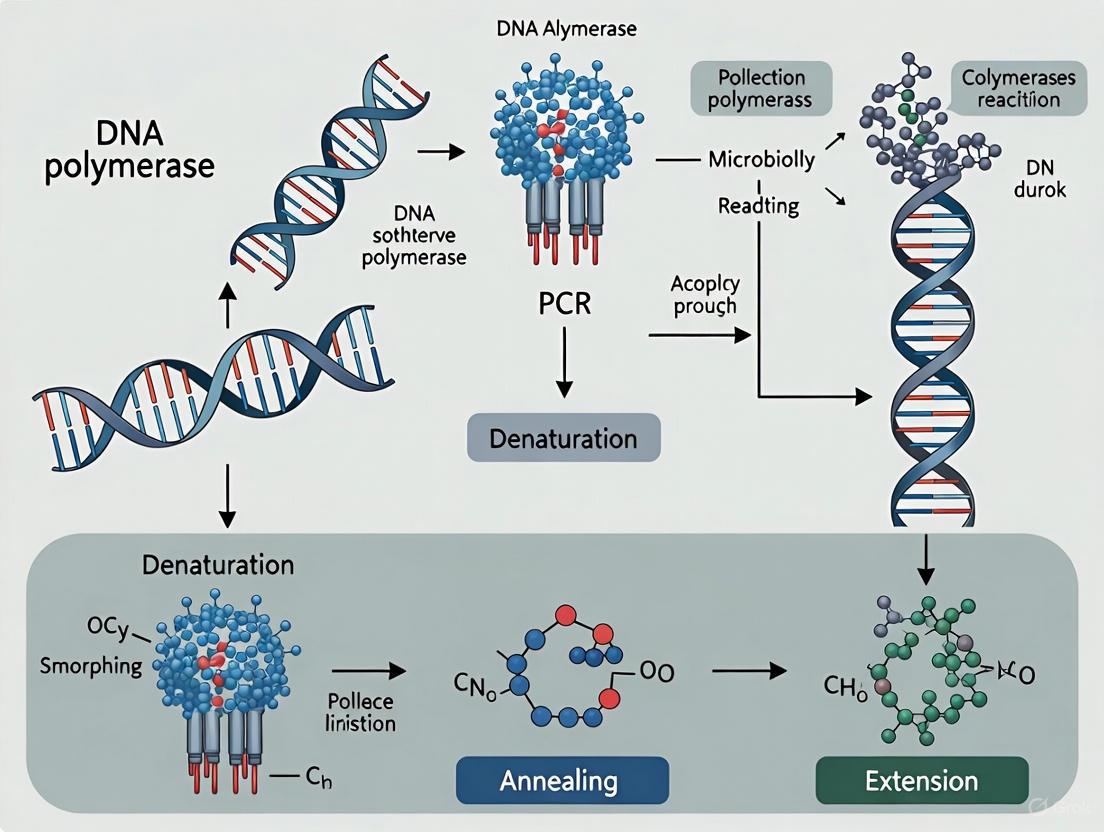
This article provides a comprehensive analysis of the critical role DNA polymerase plays in Polymerase Chain Reaction (PCR), tailored for researchers, scientists, and drug development professionals.
DNA Polymerase in PCR: A Comprehensive Guide for Researchers from Mechanism to Application in Drug Development
Abstract
This article provides a comprehensive analysis of the critical role DNA polymerase plays in Polymerase Chain Reaction (PCR), tailored for researchers, scientists, and drug development professionals. It explores the foundational mechanics of how DNA polymerase synthesizes new DNA strands, compares the properties of different enzymes, and details advanced methodological applications in biomedical research. The content offers practical troubleshooting guidance for reaction optimization and discusses validation strategies for ensuring data accuracy and reliability, with a specific focus on applications in gene therapy, biomarker discovery, and toxicogenomics within the drug development pipeline.
The Engine of Amplification: Understanding DNA Polymerase Mechanics in PCR
Within the framework of polymerase chain reaction (PCR) amplification research, the core function of DNA polymerase—the primer-dependent synthesis of new DNA strands—is the fundamental process that enables the exponential amplification of specific genetic sequences. This enzymatic activity is the cornerstone of countless applications in biomedical research, clinical diagnostics, and drug development [1] [2]. The process is strictly dependent on short, single-stranded DNA primers that provide the essential 3'-hydroxyl group required for DNA polymerase to initiate synthesis [3]. This review provides an in-depth technical examination of the biochemical mechanism, kinetic parameters, and critical optimization strategies governing this core function, equipping researchers with the practical knowledge to maximize efficiency and fidelity in their experimental workflows.
Biochemical Mechanism of Primer-Dependent Synthesis
The synthesis of new DNA strands by DNA polymerase is a complex, multi-step process that ensures the accurate replication of the template sequence. The mechanism can be dissected into several distinct stages, from initial primer-template binding to the final chemical transition state.
Primer-Template Hybridization and Polymerase Binding
The process initiates with the hybridization of a designed oligonucleotide primer to its complementary sequence on a single-stranded DNA template. This hybridization is facilitated by cooling the reaction to a temperature typically between 50°C and 65°C, following the initial denaturation step that separates the double-stranded DNA molecules [1] [2]. The DNA polymerase enzyme then binds to this primer-template hybrid, positioning itself at the 3'-hydroxyl end of the primer, which serves as the launching point for new strand synthesis [2]. The stability of this initial complex is governed by the melting temperature (Tm) of the primer, which is influenced by the primer's length, GC content, and nucleotide sequence [4].
The Role of the Conformational Change
Upon binding of a complementary deoxynucleoside triphosphate (dNTP), the DNA polymerase undergoes a significant substrate-induced conformational change from an "open" to a "closed" state [5]. This structural transition is critical for fidelity. In the closed state, the enzyme's active site residues and the bound nucleotide are repositioned to form a tight catalytic pocket that optimally aligns the substrates for the nucleophilic attack. This induced-fit mechanism plays a key role in discriminating between correct and incorrect nucleotides before the chemical step occurs [5].
The Chemical Step of Nucleotidyl Transfer
The chemical core of the synthesis is a nucleotidyl transferase reaction. The 3'-hydroxyl group of the primer terminus acts as a nucleophile, attacking the α-phosphate of the incoming dNTP. This reaction is catalyzed by two magnesium ions (Mg²⁺) coordinated at the enzyme's active site [3]. One Mg²⁺ ion activates the 3'-OH group of the primer, facilitating its deprotonation, while the other stabilizes the negative charge on the triphosphate leaving group. The result is the formation of a phosphodiester bond, extending the primer strand by one nucleotide and releasing pyrophosphate (PPi) [5]. DNA polymerase synthesizes new strands exclusively in the 5' to 3' direction, reading the template strand in the 3' to 5' direction [1] [2].
Table 1: Key Kinetic Parameters for High-Fidelity Nucleotide Incorporation (e.g., T7 DNA Polymerase)
| Kinetic Parameter | Description | Value for Correct Nucleotide |
|---|---|---|
| K₁ (µM⁻¹) | Rate constant for initial nucleotide binding | 1/28 µM (Defines Kd for collision complex) |
| k₂ (s⁻¹) | Rate of conformational change (open to closed) | 400 s⁻¹ |
| k₋₂ (s⁻¹) | Rate of the reverse conformational change | ~1 s⁻¹ |
| k₃ (s⁻¹) | Rate of the chemical step (phosphodiester bond formation) | ~300 s⁻¹ |
| kcat/Km (µM⁻¹s⁻¹) | Specificity constant | ~24 µM⁻¹s⁻¹ |
Data derived from single-turnover kinetic studies of high-fidelity DNA polymerases [5].
The workflow below illustrates the complete kinetic pathway of primer-dependent DNA synthesis.
Experimental Optimization of Synthesis Conditions
Achieving high yield and fidelity in primer-dependent synthesis requires meticulous optimization of reaction components and physical parameters. The following protocols and considerations are essential for robust experimental results.
Critical Reaction Components and Their Optimization
The core PCR reaction mixture contains several key components, each requiring precise concentration control as Artifact 1 shows [6] [3]. A standard 50 µL reaction includes:
- Template DNA: 5–50 ng genomic DNA or 0.1–1 ng plasmid DNA.
- DNA Polymerase: 1–2 units of a thermostable enzyme (e.g., Taq, Pfu).
- Primers: 0.1–1 µM each of forward and reverse primer.
- dNTPs: 0.2 mM of each dNTP (dATP, dCTP, dGTP, dTTP).
- Buffer with Mg²⁺: 1X reaction buffer with 1.5–2.5 mM MgCl₂.
Table 2: Optimization Guide for Core Reaction Components
| Component | Standard Concentration | Effect of Low Concentration | Effect of High Concentration | Optimization Tip |
|---|---|---|---|---|
| MgCl₂ | 1.5 - 2.5 mM | Reduced or no enzyme activity; low yield [4]. | Non-specific amplification; decreased fidelity [4] [3]. | Titrate in 0.5 mM increments. Essential cofactor for polymerase. |
| dNTPs | 0.2 mM each | Reduced yield; reaction stalls [3]. | Inhibits PCR; increases error rate [3]. | Use balanced equimolar mix. Free [dNTP] must exceed Km (~0.01-0.015 mM). |
| Primers | 0.1 - 1.0 µM | Low or no amplification of target [3]. | Mispriming and primer-dimer formation [4] [3]. | Use online Tm calculators. Design primers with Tm of 55–70°C and 40–60% GC content [4]. |
| DNA Polymerase | 1 - 2 units | Low reaction yield [3]. | Accumulation of non-specific products [3]. | Increase to 2-4 U for difficult templates (e.g., with inhibitors). |
Data synthesized from multiple technical sources [4] [6] [3].
Thermal Cycling Parameters
The three temperature steps of PCR—denaturation, annealing, and extension—must be carefully defined. The annealing temperature (Ta) is the most critical variable for specificity. A typical starting point is 3–5°C below the calculated Tm of the primers [2] [4]. The optimal Ta is best determined empirically using a gradient thermal cycler [4]. The extension temperature is set to the optimal temperature for the DNA polymerase used (e.g., 72°C for Taq polymerase) [7]. The extension time depends on the length of the amplicon and the polymerase's synthesis speed (e.g., 1–2 kb per minute for many enzymes) [2].
Protocol for Evaluating Synthesis Fidelity and Yield
Title: Optimization of Mg²⁺ and Annealing Temperature for Specific Amplification.
Objective: To determine the optimal Mg²⁺ concentration and annealing temperature (Ta) for a specific primer-template system to maximize yield and specificity.
Materials:
- Thermocycler (with gradient function if available)
- PCR reagents: DNA polymerase with supplied buffer, dNTP mix, template DNA, forward and reverse primers.
- MgCl₂ stock solution (e.g., 25 mM)
- Agarose gel electrophoresis equipment
Method:
- Prepare Mg²⁺ Master Mixes: Create multiple master mixes identical in all components except Mg²⁺ concentration. A standard range is 0.5 mM to 4.0 mM in 0.5 mM increments. Keep on ice [6].
- Aliquot and Add Template: Aliquot the master mixes into PCR tubes and add the DNA template.
- Thermal Cycling: Program the thermocycler with an initial denaturation (94–98°C for 3–5 min), followed by 25–35 cycles of:
- Analysis: Analyze the PCR products by agarose gel electrophoresis. A sharp, single band of the expected size indicates high specificity [1] [6].
Expected Outcome: The combination of Mg²⁺ concentration and Ta that produces the strongest amplification signal with the absence of non-specific bands or primer-dimers represents the optimized condition.
The Scientist's Toolkit: Essential Reagents and Materials
The following toolkit summarizes the key reagents required for experimental research into primer-dependent DNA synthesis.
Table 3: Research Reagent Solutions for Primer-Dependent DNA Synthesis
| Item | Function / Role in Synthesis | Key Considerations for Selection |
|---|---|---|
| Thermostable DNA Polymerase | Enzymatically synthesizes new DNA strands by adding dNTPs to the 3' end of the primer. | Choose based on fidelity (proofreading activity), processivity, and target amplicon length (e.g., Standard Taq for routine PCR; Pfu for high-fidelity needs) [4]. |
| Oligonucleotide Primers | Provides the free 3'-OH group required for polymerase initiation and defines the start point and specificity of amplification. | Must be designed for specificity: 18-30 bp, Tm 55-70°C, 40-60% GC content, and no self-complementarity [4] [3]. |
| dNTP Mix | The building blocks (dATP, dCTP, dGTP, dTTP) incorporated into the newly synthesized DNA strand. | Use high-quality, nuclease-free solutions. Standard final concentration is 0.2 mM of each dNTP [3]. Unbalanced concentrations can increase error rate. |
| MgCl₂ Solution | An essential cofactor for DNA polymerase activity; stabilizes the primer-template complex and the structure of the enzyme. | Concentration is critical and often requires optimization (typically 1.5-2.5 mM). It chelates with dNTPs, affecting availability [4] [3]. |
| Reaction Buffer | Provides the optimal chemical environment (pH, ionic strength) for polymerase activity and stability. | Usually supplied with the enzyme. Often contains Tris-HCl, KCl, and sometimes (NH₄)₂SO₄. May or may not include Mg²⁺ [6]. |
| Buffer Additives (e.g., DMSO, Betaine) | Aids in the amplification of difficult templates (e.g., high GC content) by lowering the Tm and disrupting secondary structures. | Use at recommended concentrations (e.g., 2-10% DMSO). Not always necessary but can be crucial for problematic amplicons [4]. |
Advanced Techniques and Kinetic Analysis
Modern research leverages sophisticated kinetic analyses to dissect the individual steps of nucleotide incorporation. Rapid quench-flow and stopped-flow fluorescence methods allow researchers to measure pre-steady-state kinetics on millisecond timescales, providing parameters like kpol (maximum rate of nucleotide incorporation) and Kd (apparent dissociation constant for the nucleotide) [5]. These studies have revealed that for high-fidelity polymerases, the conformational change step (k₂) and the chemical step (k₃) are both fast, but the reverse rate of the conformational change (k₋₂) is slow relative to chemistry. This kinetic partitioning ensures that once a correct nucleotide is bound and the enzyme closes, it is committed to incorporation, which is a fundamental source of nucleotide selection specificity [5].
Furthermore, techniques like High-Resolution Melting (HRM) analysis can be coupled with real-time PCR to validate the fidelity of synthesis. HRM detects sequence variations in PCR amplicons based on their dissociation curves, providing a rapid method to screen for unintended mutations or polymorphisms introduced during amplification [8].
The primer-dependent synthesis of new DNA strands by DNA polymerase is a precisely orchestrated biochemical mechanism governed by enzyme kinetics, substrate specificity, and carefully controlled reaction conditions. A deep understanding of the conformational dynamics that ensure fidelity, the critical role of Mg²⁺ as a cofactor, and the necessity of meticulous optimization of primers and reaction components is paramount for research success. As kinetic analyses become more advanced and high-fidelity enzyme systems continue to evolve, the fundamental principles outlined in this guide will remain the foundation for driving innovation in PCR-based research and its applications in drug development and molecular diagnostics.
The polymerase chain reaction (PCR) is a foundational technique in modern molecular biology, and its development and advancement are inextricably linked to the DNA polymerases that power it. These enzymes catalyze the template-directed synthesis of DNA, making them critical tools for DNA analysis [9]. The discovery of thermostable DNA polymerases, specifically Taq polymerase, revolutionized PCR by enabling automated, high-temperature cycling without the need to add fresh enzyme after each denaturation step [10] [11]. This innovation transformed PCR from a cumbersome process into a robust and efficient method, paving the way for its application across diverse fields from clinical diagnostics to forensic science [10].
However, natural polymerases like Taq possess inherent limitations, including a lack of proofreading activity and susceptibility to inhibition by sample contaminants [10] [12]. These shortcomings have driven three decades of research into enzyme engineering, aimed at creating polymerases with enhanced properties such as greater robustness, higher fidelity, and the ability to copy modified or damaged DNA [9] [13]. This review traces the historical journey from the initial reliance on Taq polymerase to the contemporary development of engineered enzymes, framing it within the broader thesis of fulfilling the evolving demands of PCR amplification research.
The Taq Polymerase Revolution
Origin and Fundamental Properties
Taq polymerase is a thermostable DNA polymerase I named after the thermophilic eubacterium Thermus aquaticus, from which it was originally isolated in 1976 [10]. Its incorporation into PCR by Kary Mullis and colleagues at Cetus Corporation in the 1980s was a pivotal moment. Unlike the E. coli DNA polymerase originally used, Taq polymerase could withstand the protein-denaturing conditions (high temperature) required during PCR, thus eliminating the need to add new enzyme after each cycle [10] [11]. A single closed tube in a relatively simple machine could henceforth carry out the entire process, making PCR vastly more practical and accessible [10].
The enzymatic profile of Taq polymerase makes it uniquely suited for this role. Its optimum temperature for activity is 75–80 °C, and it has a half-life of greater than 2 hours at 92.5 °C, allowing it to remain active through numerous PCR cycles [10]. The enzyme requires magnesium ions (Mg²⁺) as a cofactor, and its activity is influenced by the buffer conditions, particularly the concentrations of KCl and Mg²⁺ [10] [11]. A key drawback is its lack of 3' to 5' exonuclease proofreading activity, which results in a relatively low replication fidelity, with an error rate measured at about 1 in 9,000 nucleotides [10] [11]. Additionally, Taq polymerase tends to add a single deoxyadenosine (A) overhang to the 3' ends of PCR products, a feature exploited in TA cloning [10].
Impact on Molecular Biology and Diagnostics
The use of Taq polymerase was the key idea that made PCR applicable to a vast array of molecular biology problems concerning DNA analysis [10]. Its implementation has been instrumental in disease detection, enabling the early diagnosis of countless conditions, including tuberculosis, streptococcal pharyngitis, atypical pneumonia, AIDS, measles, and hepatitis [10]. The reliance on Taq polymerase was starkly highlighted during the COVID-19 pandemic, where shortages of the enzyme impaired the global production of test kits, underlining its critical role in modern diagnostics [10].
Table 1: Key Characteristics of Native Taq Polymerase
| Property | Description | Impact on PCR |
|---|---|---|
| Optimal Temperature | 75–80 °C | Ideal for the extension step of PCR |
| Thermostability | Half-life >2 hrs at 92.5°C | Survives repeated denaturation cycles |
| 5'→3' Exonuclease | Present | Enables nick translation; used in probe-based assays |
| 3'→5' Proofreading | Absent | Low fidelity; introduces mutations |
| Processivity | ~50-60 nucleotides | Moderately processive |
| Ending Preference | Adds 'A' overhang | Facilitates TA cloning |
The Drive for Improvement: Limitations of Natural Polymerases
The widespread adoption of Taq polymerase quickly revealed its limitations, driving the search for superior enzymes. The primary shortcomings can be categorized as follows:
- Low Fidelity: The absence of a 3' to 5' proofreading exonuclease activity means Taq polymerase cannot correct misincorporated nucleotides. This high error rate is problematic for applications requiring accurate DNA sequence replication, such as cloning and gene expression studies [10] [11].
- Inhibition Susceptibility: PCR analysis is often performed on complex biological samples (e.g., blood, soil, plants) that contain substances which interfere with amplification. Common PCR inhibitors include humic acids from soil, haemoglobin from blood, heparin from blood collection tubes, and indigo dyes from textiles [12] [14]. These inhibitors can act through various mechanisms, such as binding to the DNA polymerase, chelating essential Mg²⁺ ions, or interacting with the DNA template itself, leading to reduced amplification efficiency or complete reaction failure [12] [14].
- Inability to Amplify Damaged or Modified Templates: Taq polymerase is often inefficient at copying DNA templates that contain lesions, adducts, or epigenetic modifications, limiting its use in ancient DNA research and epigenetics [9] [13].
The Engineering Era: Rational Design and Directed Evolution
To overcome the limitations of wild-type polymerases, scientists have employed a suite of protein engineering strategies. These methods range from rational design based on structural knowledge to directed evolution techniques that mimic natural selection in the laboratory.
Polymerase Engineering Methodologies
- Rational Design and Domain Swapping: This approach uses knowledge of the polymerase's structure-function relationships to make specific alterations. A classic example is the creation of chimeras, such as a Taq polymerase with the proofreading domain from E. coli pol I, which successfully conferred exonuclease activity onto the thermostable enzyme [9] [13]. Another example is the generation of the Stoffel fragment, a truncated version of Taq polymerase lacking the 5' to 3' exonuclease domain, which exhibits greater thermostability and different ionic optima [11].
- Compartmentalized Self-Replication (CSR): CSR is a powerful directed evolution technique where single polymerase clones are captured in water-in-oil emulsions [9] [13]. Each emulsion droplet acts as a micro-reactor where the polymerase enzyme amplifies its own encoding gene. Mutants with enhanced activity under the selected conditions (e.g., high temperature, presence of inhibitors) preferentially amplify their own genes, enriching the pool for desired variants over successive rounds [13].
- Droplet-Based Optical Polymerase Sorting (DrOPS): This more recent method involves encapsulating single cells, each carrying a polymerase variant, into droplets along with reagents to assay activity [9] [13]. The droplets are screened optically, and those containing polymerases with the desired functionality are sorted. This method allows for high-throughput screening of very large libraries with minimal reagent use [9].
Key Engineering Outcomes
Engineering efforts have yielded polymerases with tailor-made properties for specific biotechnology applications. The following table summarizes some key achievements.
Table 2: Engineered DNA Polymerases and Their Applications
| Engineering Goal | Polymerase Example | Key Feature/Application | Reference |
|---|---|---|---|
| Increased Fidelity | Pfu DNA polymerase | Natural proofreading activity; often used in combination with Taq | [10] |
| Inhibitor Tolerance | Engineered T. thremophilus (Tth) pol I | Robust activity in CSR and direct PCR from crude samples | [9] [13] |
| Damage Bypass | Engineered Y-family polymerases (e.g., Dpo4) | Amplification of damaged DNA; increased library diversity in directed evolution | [9] [13] |
| Reverse Transcriptase Activity | RT-KlenTaq variants | Can use RNA templates, beneficial for epigenetics and qRT-PCR | [9] [13] |
| Non-Natural Substrate Incorporation | Engineered Tgo polymerase | Incorporates modified nucleotides (XNAs) for synthetic biology | [9] [13] |
| Hot-Start Capability | Antibody-bound or chemically modified Taq | Prevents activity at room temperature, reducing non-specific amplification | [9] [15] |
The Scientist's Toolkit: Essential Reagents and Protocols
Research Reagent Solutions
The following table details key reagents and materials essential for working with DNA polymerases in PCR-based research.
Table 3: Essential Research Reagents for PCR Amplification
| Item | Function | Example Use-Case |
|---|---|---|
| Thermostable DNA Polymerase | Enzyme that catalyzes DNA synthesis. The core component of the reaction. | Taq for routine PCR; high-fidelity blends for cloning. |
| Primers | Short, single-stranded DNA oligonucleotides that define the start and end of the target sequence. | Designed to be complementary to the flanking regions of the DNA target. |
| dNTPs | Deoxynucleotide triphosphates (dATP, dCTP, dGTP, dTTP); the building blocks for new DNA strands. | Added in equimolar concentrations to the reaction mix. |
| Reaction Buffer | Provides optimal pH and salt conditions for polymerase activity. | Typically contains Tris-HCl, KCl, and Mg²⁺. |
| Magnesium Chloride (MgCl₂) | Essential cofactor for DNA polymerase activity. Concentration is critical for specificity and yield. | Often optimized for each primer-template system. |
| PCR Inhibitor Removal Kits | Spin-column based kits to remove contaminants from samples. | Critical for analyzing complex samples (e.g., soil, blood, plants). [14] |
| Hot-Start Polymerases | Engineered polymerases inactive at room temperature. | Prevents mis-priming and primer-dimer formation during reaction setup. [9] [15] |
Experimental Protocol: Compartmentalized Self-Replication (CSR)
CSR is a key method for evolving DNA polymerases with new functions. The following is a generalized protocol based on the search results [9] [13].
Objective: To evolve a DNA polymerase with enhanced activity under specific challenging conditions (e.g., high temperature, presence of an inhibitor).
Materials:
- Library of mutant DNA polymerase genes.
- E. coli extract for in vitro transcription/translation.
- CSR reaction mix: dNTPs, primers specific to the polymerase gene, and other standard PCR components.
- Challenging condition component (e.g., a known PCR inhibitor).
- Oil and surfactant for creating water-in-oil emulsions.
- Thermocycler.
Method:
- Create Mutant Library: Generate a diverse library of mutant DNA polymerase genes via error-prone PCR or other mutagenesis techniques.
- In Vitro Transcription/Translation: Incubate the mutant gene library in an E. coli extract system to express the corresponding mutant polymerase proteins.
- Formulate CSR Reaction: Mix the expressed proteins with the CSR reaction mix, which contains the components needed for PCR, including primers that target the polymerase gene itself.
- Emulsify: Vigorously mix the CSR reaction with oil and surfactant to create a water-in-oil emulsion, resulting in millions of microscopic aqueous compartments. Each compartment ideally contains a single mutant polymerase gene and the protein it encodes.
- Thermal Cycling: Place the emulsion in a thermocycler and run a standard PCR program. In compartments where the mutant polymerase is functional under the selected conditions, it will amplify its own encoding gene.
- Break Emulsion and Recover: After PCR, break the emulsion and recover the amplified DNA.
- Selection and Iteration: Use the recovered DNA as the input for the next round of CSR, often while stringently increasing the challenging condition (e.g., higher inhibitor concentration). Repeat for several rounds to enrich for highly active polymerase variants.
- Clone and Sequence: Clone the final enriched DNA pool, isolate individual clones, and sequence them to identify the beneficial mutations.
CSR Workflow for Polymerase Evolution
Advanced Applications and Future Directions
DNA polymerase engineering continues to evolve, enabling new and powerful applications in biotechnology and medicine.
- Epigenetic Analysis: Engineered polymerases like RT-KlenTaq and variants of Thermococcus sp. 9° N polymerase have been developed to better handle and even report on epigenetically modified bases, such as 5-methylcytosine, without the need for harsh bisulfite treatment [9] [13].
- Synthetic Biology and XNA Synthesis: A major frontier is the synthesis of xeno nucleic acids (XNAs), synthetic genetic polymers with novel properties. Engineered polymerases, such as Tgo variants, have been created to not only copy DNA into XNA but also reverse-transcribe XNA back into DNA, enabling the selection of functional XNA aptamers and catalysts [13].
- Ancient DNA and Forensic Analysis: The ability to amplify highly damaged and fragmented DNA from ancient samples or challenging forensic contexts has been dramatically improved by using engineered polymerases, including chimeras of A-family polymerases (Taq, Tth, Tfl) and specialized variants like KlenTaq [9] [13].
- Deep Learning in PCR Optimization: The field is now incorporating artificial intelligence. Recent studies use one-dimensional convolutional neural networks (1D-CNNs) trained on synthetic DNA pools to predict sequence-specific amplification efficiencies in multi-template PCR directly from sequence information [16]. This deep-learning approach helps design inherently homogeneous amplicon libraries and has been used to identify specific motifs that cause poor amplification, challenging long-standing PCR design assumptions [16].
Deep Learning for PCR Efficiency Prediction
The historical journey from Taq polymerase to engineered enzymes underscores a central thesis: the relentless pursuit of better DNA polymerases has been, and remains, a primary driver of progress in PCR amplification research. The initial discovery of a thermostable polymerase was the catalyst that transformed PCR from a concept into a world-changing technology. The subsequent recognition of its limitations then sparked a new era of protein engineering, yielding a diverse and powerful toolkit of enzymes tailored for fidelity, robustness, and novel functions.
Today, engineered polymerases are indispensable for cutting-edge applications in genomics, diagnostics, and synthetic biology. The continued convergence of enzyme engineering with fields like directed evolution, structural biology, and artificial intelligence promises to further expand the capabilities of these remarkable molecular machines. As the demand for more precise, robust, and versatile nucleic acid analysis grows, the evolution of the DNA polymerase will undoubtedly continue to be a cornerstone of innovation in life science research and drug development.
Within the framework of DNA polymerase research for amplification, thermostability stands as the non-negotiable foundation that enables the very process of the polymerase chain reaction (PCR). This technique, a cornerstone of modern molecular biology, clinical diagnostics, and drug development, relies on the repetitive cycling of reaction mixtures between high temperatures to denature DNA, lower temperatures for primer annealing, and intermediate temperatures for enzymatic DNA synthesis [1]. The core component enabling this process is a DNA polymerase that can withstand the relentless, protein-denaturing heat of the thermal cycler. Without extreme thermostability, the enzyme would rapidly inactivate during the first denaturation step, bringing the entire amplification process to a halt. This whitepaper delves into the critical role of thermostable DNA polymerases, exploring the sources and mechanisms of their heat resistance, quantitative measures of their stability, and the direct implications for experimental design and optimization in research and development.
Fundamental Principles of Thermostability in DNA Polymerases
Thermostable DNA polymerases are primarily derived from thermophilic and hyperthermophilic microorganisms that thrive in high-temperature environments such as hot springs and hydrothermal vents. These organisms have evolved enzymes with inherently stable structures to function in their natural habitats.
- Bacterial Polymerases: Enzymes like Taq (from Thermus aquaticus), Tfl (from Thermus flavus), and Tth (from Thermus thermophilus) are classic examples of thermostable polymerases of bacterial origin. They typically belong to the A-type DNA polymerases and possess 5'→3' polymerase activity and 5'→3' exonuclease activity, but lack proofreading capability (3'→5' exonuclease activity) [17].
- Archaeal Polymerases: Enzymes such as Pfu (from Pyrococcus furiosus), Vent (from Thermococcus litoralis), and 9°Nm (from Pyrococcus species) are isolated from hyperthermophilic archaea. These B-type polymerases often include a 3'→5' exonuclease activity that confers proofreading functionality and generally produce blunt-ended PCR products [18] [17]. Archaeal polymerases are often extremely resistant to heat inactivation, even at 100°C, and display maximal polymerase activity at 75–85°C [18].
Molecular Mechanisms of Heat Resistance
The thermostability of these enzymes is not attributed to a single factor but rather a combination of structural and chemical adaptations that allow them to resist unfolding and degradation at high temperatures. These include:
- Increased Ionic Interactions and Hydrogen Bonding: Thermostable enzymes often feature a higher density of salt bridges and hydrogen bonds within their protein structures, creating a more tightly packed and stable hydrophobic core.
- Reduced Surface Loop Length and Improved Packing Efficiency: Shorter surface loops minimize potential sites for initial thermal denaturation, and more efficient amino acid packing reduces cavities within the protein structure.
- Metal Ion Cofactors: The presence of Mg²⁺ is essential as a cofactor for the polymerase active site, which catalyzes the elongation of DNA: deoxynucleoside triphosphate + DNAₙ ⇌ pyrophosphate + DNAₙ₊₁ [17]. The binding of metal ions can also contribute to overall structural stability.
The structure of DNA polymerases is often described as resembling a hand with "thumb," "palm," and "fingers" domains. The thumb domain binds and moves double-stranded DNA, the palm contains the polymerase active site, and the fingers are involved in binding template DNA and nucleoside triphosphates [17]. This fundamental architecture is conserved but optimized for heat resistance in thermostable variants.
Comparative Analysis of Thermostable DNA Polymerases
The thermostability and functional characteristics of DNA polymerases vary significantly depending on their origin and whether they are wild-type or engineered variants. These differences directly influence their suitability for specific PCR applications.
Table 1: Key Characteristics of Common Thermostable DNA Polymerases
| Polymerase | Origin (Organism) | Optimal Extension Temp. | 3'→5' Exonuclease (Proofreading) | Fidelity (Relative to Taq) | Half-Life at 95°C | PCR Product Ends |
|---|---|---|---|---|---|---|
| Taq | Thermus aquaticus (Bacteria) | 74–80°C [17] [19] | No [17] | 1x [19] | ~1–2 hours [19] | 3'-A Overhang [17] |
| Pfu | Pyrococcus furiosus (Archaea) | 75°C [17] | Yes [17] | ~7x [19] | >2 hours [19] | Blunt [17] |
| Tli (Vent) | Thermococcus litoralis (Archaea) | 74°C [17] | Yes [17] | ~5x [19] | Highly stable [18] | Majority Blunt [17] |
| KOD | Thermococcus kodakarensis (Archaea) | 75°C [17] | Yes [17] | ~10x [19] | Highly stable [19] | Blunt [17] |
| 9°Nm | Pyrococcus sp. (Archaea) | 75–85°C [18] | Yes [18] | High [18] | Extremely stable at 100°C [18] | Blunt [18] |
Engineered and Blended Polymerases
To overcome limitations of individual wild-type enzymes, many commercially available polymerases are engineered or blended:
- Fusion Proteins: DNA polymerases are sometimes fused with other thermostable DNA-binding proteins (like SSo7d) to significantly enhance processivity and affinity for the DNA template, which is particularly beneficial for amplifying long or GC-rich targets [17] [19].
- Engineered Fidelity and Speed: Through methods like directed evolution, polymerases have been developed with error rates >50–300x that of Taq polymerase, enabling highly accurate amplification for cloning and sequencing applications [19].
- Commercial Blends: Many products combine different polymerases (e.g., a non-proofreading, fast polymerase with a proofreading, slower one) to achieve a balance of speed, yield, and fidelity, which is especially useful for long-range PCR [17].
Table 2: Quantitative Comparison of DNA Polymerase Performance Metrics
| Polymerase | Synthesis Rate (bases/sec) | Processivity (bases/binding event) | Error Rate (per base per doubling) |
|---|---|---|---|
| Taq | 21–61 [17] | 10–42 [17] | 1.5 × 10⁻⁴ to 8 × 10⁻⁶ [17] |
| Pfu | 9.3–25 [17] | 6.4–20 [17] | 1.3 × 10⁻⁶ [17] |
| KOD | 106–138 [17] | >300 [17] | 1.2 × 10⁻⁵ [17] |
| Pfu Ultra | N/A | N/A | 4.3 × 10⁻⁷ [17] |
Experimental Protocols and Optimization
Standard PCR Protocol with Thermostable DNA Polymerases
A robust standard PCR protocol provides a starting point for amplifying a typical DNA target (e.g., 0.5–2 kb from a plasmid template).
Materials & Reagents:
- Template DNA: 1 pg–100 ng plasmid DNA, or 1 ng–1 µg genomic DNA.
- Thermostable DNA Polymerase: e.g., Taq, Pfu, or a high-fidelity enzyme.
- PCR Buffer (10X): Typically supplied with the enzyme, often containing MgCl₂.
- Primers (Forward and Reverse): 10 µM each, designed for the specific target.
- dNTP Mix: 10 mM total (2.5 mM each).
- Nuclease-Free Water.
Methodology:
- Reaction Setup: Assemble the following in a thin-walled PCR tube on ice:
- 5.0 µL 10X PCR Buffer (with MgCl₂)
- 1.0 µL 10 mM dNTP Mix
- 2.5 µL 10 µM Forward Primer
- 2.5 µL 10 µM Reverse Primer
- 1.0 µL Template DNA
- 0.2–0.5 µL (1–2.5 U) Thermostable DNA Polymerase
- Nuclease-Free Water to 50 µL
- Thermal Cycling: Place tubes in a thermal cycler and run the following program:
Validation and Analysis:
- Analyze 5–10 µL of the PCR product by agarose gel electrophoresis alongside a DNA ladder to confirm the size and specificity of the amplification.
Optimization Strategies for Challenging Amplicons
Challenges and Solutions:
GC-Rich Templates: DNA with high GC content (>65%) forms stable secondary structures that are difficult to denature.
Long Amplicons: Amplifying DNA fragments >10 kb requires sustained polymerase activity and high processivity.
Problematic Templates (Repetitive DNA): Highly repetitive sequences can cause the polymerase to "slip," resulting in deleted or hybrid products [21].
- Solutions: Try different thermostable polymerases, as some are less prone to slippage. Optimize annealing temperature and extension time. The addition of cosolvents may also help, though a complete solution remains challenging [21].
PCR Optimization Workflow: A logical flowchart for troubleshooting common PCR problems by adjusting key parameters related to polymerase function and reaction conditions [20] [19].
The Scientist's Toolkit: Essential Research Reagents
Selecting the appropriate reagents is critical for successful PCR experiments. The following table details key solutions and their functions in the context of thermostable DNA polymerases.
Table 3: Research Reagent Solutions for PCR
| Reagent / Solution | Core Function | Technical Application & Rationale |
|---|---|---|
| Hot-Start DNA Polymerase | Inhibits polymerase activity at room temperature to prevent nonspecific amplification [19]. | Activated by high initial denaturation step. Crucial for high-throughput room-temperature setup and improving specificity and yield [19]. |
| High-Fidelity Polymerase Blends | Provides high-accuracy DNA synthesis with proofreading (3'→5' exonuclease) activity [17] [19]. | Essential for cloning, sequencing, and mutagenesis where low error rates are critical (e.g., 1.3 x 10⁻⁶ for Pfu) [17]. |
| GC-Rich Enhancement Buffers | Specialized buffers containing isostabilizing agents like betaine [20]. | Disrupts secondary structures in GC-rich templates, enabling polymerase to traverse difficult regions without stalling. |
| Master Mixes (Ready-to-Use) | Pre-mixed solutions containing polymerase, dNTPs, Mg²⁺, and optimized buffer [22]. | Offers convenience, reduces setup time and contamination risk, and ensures reaction consistency for routine amplification [22]. |
| dNTP Mix | Provides the essential nucleotide building blocks (dATP, dCTP, dGTP, dTTP) for DNA synthesis. | Balanced concentrations (typically 2.5 mM each) are critical for efficient polymerization and minimizing misincorporation errors. |
Market Trends and Future Directions
The global DNA polymerase market, valued at approximately USD 395 million in 2024 and projected to grow significantly, reflects the critical and expanding role of these enzymes [22]. Key trends shaping the field include:
- Dominance of PCR Applications: The PCR segment holds the largest revenue share, driven by widespread use in clinical diagnostics, pathogen detection, and genetic testing [22] [23].
- Rise of High-Fidelity and Specialty Enzymes: While Taq polymerase remains dominant due to its cost-effectiveness, the high-fidelity segment is expected to register rapid growth, fueled by demands of next-generation sequencing (NGS) and advanced genetic analysis [22].
- Expansion into Point-of-Care Testing: The integration of DNA polymerases into isothermal amplification technologies (e.g., LAMP) for rapid, on-site diagnostics represents a major growth frontier, particularly in resource-limited settings [23].
- Geographical Shifts: North America currently leads the market, but the Asia-Pacific region is predicted to be the fastest-growing, supported by increasing healthcare investment, rising prevalence of genetic disorders, and a surge in biotechnology infrastructure [22] [23].
Ongoing research continues to focus on engineering next-generation polymerases with enhanced properties, such as greater resistance to PCR inhibitors found in blood or plant tissues, faster synthesis rates for rapid cycling, and tailored specificities for novel applications in synthetic biology and gene editing [19].
In polymerase chain reaction (PCR) amplification research, DNA polymerase is the central enzyme that catalyzes the replication of target DNA sequences. However, its activity, fidelity, and efficiency are profoundly dependent on the precise composition of the reaction environment. The critical yet often underappreciated trio of co-factors, deoxynucleoside triphosphates (dNTPs), and reaction buffers constitutes the fundamental framework that supports enzymatic function. These components work in concert to modulate polymerase kinetics, ensure nucleotide incorporation accuracy, and stabilize the reaction system throughout thermal cycling.
This technical guide provides an in-depth examination of these essential reaction components, focusing on their biochemical roles, optimization parameters, and synergistic relationships with DNA polymerase. For researchers, scientists, and drug development professionals, mastering these elements is crucial for designing robust PCR-based assays, from routine genotyping to advanced diagnostic applications.
Core Biochemical Components
Magnesium Ions: The Essential Cofactor
Magnesium ions (Mg²⁺) serve as an indispensable cofactor for DNA polymerase activity [3]. Their function is twofold: first, they catalyze the nucleotidyl transfer reaction by facilitating the formation of a phosphodiester bond between the 3'-hydroxyl group of the primer and the alpha-phosphate of an incoming dNTP [3]. Second, they stabilize the structure of the primer-template duplex by neutralizing the negative charges on the phosphate backbone of DNA, thereby facilitating proper enzyme binding and processivity [3].
The optimization of Mg²⁺ concentration is critical for PCR success. Insufficient Mg²⁺ results in low polymerase activity and poor yield, while excess Mg²⁺ can promote non-specific amplification and increase error rates [3]. This balance is further complicated by the fact that Mg²⁺ forms complexes with dNTPs, reducing the availability of free Mg²⁺ for the polymerase. Consequently, the optimal Mg²⁺ concentration must be determined empirically for each primer-template system.
Table 1: Optimization of Magnesium Ion Concentration in PCR
| Mg²⁺ Concentration | Impact on PCR Efficiency | Consequence |
|---|---|---|
| Too Low (<0.5 mM) | Reduced DNA polymerase activity | Low or no product yield |
| Optimal (0.5-5.0 mM) | Efficient primer extension and high fidelity | Specific amplification of target |
| Too High (>5.0 mM) | Increased non-specific priming | Accumulation of non-specific products and primer-dimers |
Deoxynucleoside Triphosphates (dNTPs): The Building Blocks
Deoxynucleoside triphosphates (dNTPs)—comprising dATP, dCTP, dGTP, and dTTP—are the fundamental building blocks for new DNA strand synthesis [24] [25]. During the extension phase of PCR, DNA polymerase incorporates these nucleotides in a template-directed manner, elongating the DNA chain in the 5' to 3' direction [24] [26]. The energy required for this polymerization reaction is derived from the hydrolysis of the beta and gamma phosphate groups of the incoming dNTP [26].
A balanced dNTP mixture, typically used at a final concentration of 200 µM for each dNTP, is crucial for maintaining amplification fidelity [3] [27]. Imbalanced dNTP pools can lead to misincorporation events, increasing mutation rates and potentially causing incomplete amplification [3] [26]. Furthermore, the concentration of dNTPs is interrelated with the optimal Mg²⁺ concentration, as Mg²⁺ binds to dNTPs in the reaction mix [3].
Table 2: Standard dNTP Specifications for PCR Applications
| Parameter | Specification | Technical Rationale |
|---|---|---|
| Final Concentration (each dNTP) | 0.2 mM (200 µM) | Balances sufficient supply with minimized misincorporation risk [3] [27] |
| Purity | >99.5% (HPLC-purified) | Reduces PCR inhibitors and ensures efficient chain elongation [24] [26] |
| pH | 7.0 (Neutral) | Prevents nucleotide degradation and maintains optimal polymerase activity |
| Balance | Equimolar mixture of dATP, dCTP, dGTP, dTTP | Prevents replication errors caused by unequal availability of bases [3] [26] |
Specialized applications may require modified dNTPs. For instance, dUTP can be substituted for dTTP in conjunction with Uracil-DNA Glycosylase (UDG) treatment as a carryover contamination prevention strategy [3]. Modified dNTPs are also employed for labeling amplicons, though this requires verification that the DNA polymerase can incorporate them efficiently [3].
Reaction Buffer: The Stabilizing Environment
The reaction buffer provides the chemical environment necessary to maintain pH stability, ionic strength, and enzyme compatibility throughout the thermal cycling process. A standard 10X PCR buffer typically includes:
- Tris-HCl: Provides a stable pH (usually 8.0-8.4) throughout the thermal cycling process.
- Potassium Chloride (KCl): Monovalent potassium ions (K⁺) are often included at final concentrations of 35-100 mM to promote primer annealing by neutralizing negative charges on the DNA backbone [27].
- Stabilizers: Additives like bovine serum albumin (BSA) can be included to stabilize the polymerase, especially when amplifying targets from complex samples that may contain inhibitors [27].
Interaction with DNA Polymerase Properties
The core components described above directly influence four key characteristics of DNA polymerases: specificity, thermostability, fidelity, and processivity [28].
Specificity, or the enzyme's ability to amplify only the intended target, is enhanced by "hot-start" DNA polymerases. These enzymes are inactivated at room temperature by antibodies or chemical modifiers, preventing non-specific priming and primer-dimer formation during reaction setup [28] [29]. This is crucial for room-temperature setup in high-throughput applications.
Fidelity, or replication accuracy, is defined by the enzyme's error rate. Standard Taq polymerase has an average error rate of 1 in 10,000 bases [29]. High-fidelity DNA polymerases possess 3'→5' exonuclease (proofreading) activity, which can reduce error rates to as low as 1 in 1,000,000 bases [28] [29]. The concentration of dNTPs and Mg²⁺ can be strategically lowered to further enhance fidelity by increasing the enzyme's stringency for correct base incorporation [3].
Processivity refers to the number of nucleotides a polymerase adds per single binding event. Highly processive enzymes are essential for amplifying long templates, GC-rich sequences, and targets from impure samples [28]. Mg²⁺ is a critical factor for maintaining high processivity.
Thermostability allows the polymerase to withstand the repeated high temperatures of PCR cycles. While Taq polymerase is stable, enzymes from hyperthermophilic archaea like Pfu are even more heat-resistant [28].
Experimental Protocols for Component Optimization
Standard PCR Master Mix Setup
The following protocol outlines a standard procedure for setting up a 50 µL PCR reaction, providing a baseline from which component optimization can be performed [27].
- Reagent Thawing: Arrange all PCR reagents on ice and allow them to thaw completely before setting up reactions. Keep reagents on ice throughout the experiment.
- Master Mix Preparation: For multiple reactions, prepare a master mix in a sterile 1.8 mL microcentrifuge tube to minimize pipetting errors and ensure consistency. Add reagents in the following order:
- Sterile Nuclease-Free Water (Q.S. to 50 µL)
- 10X PCR Buffer (5 µL)
- 10 mM dNTP Mix (1 µL)
- 25 mM MgCl₂ (Variable, start with 3 µL if not in buffer)
- Forward Primer (20 µM, 1 µL)
- Reverse Primer (20 µM, 1 µL)
- DNA Template (Variable, 1-1000 ng)
- Enzyme Addition: Add 0.5-2.5 units of DNA polymerase per 50 µL reaction. Mix gently by pipetting up and down 20 times to ensure complete dispersal of the enzyme stored in glycerol solution.
- Thermal Cycling: Transfer reactions to a thermal cycler preheated to the initial denaturation temperature (often 94-95°C) if using a hot-start enzyme.
Magnesium Titration Experiment
To empirically determine the optimal Mg²⁺ concentration for a specific primer-template system, perform a titration experiment [3] [27].
- Preparation: Set up a series of 8-10 identical 50 µL PCR reactions as described in section 4.1, omitting MgCl₂ if the 10X buffer contains none.
- Titration Series: Spike each reaction with a different volume of 25 mM MgCl₂ stock solution to create a concentration gradient spanning 0.5 mM to 5.0 mM in 0.5 mM increments.
- Amplification and Analysis: Run the PCR using the standard thermal cycling protocol. Analyze the amplified products by agarose gel electrophoresis. The optimal Mg²⁺ concentration produces the strongest specific band with the least background smearing or non-specific bands.
dNTP Concentration and Balance Optimization
For applications requiring high fidelity or when amplifying difficult templates, optimizing dNTP concentration and balance is advised.
- Concentration Gradient: Prepare reactions with final concentrations of each dNTP ranging from 0.01 mM to 0.4 mM while proportionally adjusting Mg²⁺ concentration.
- Analysis: Assess PCR products by gel electrophoresis for yield and specificity. Use sequencing to evaluate fidelity for critical applications like cloning.
The Scientist's Toolkit: Research Reagent Solutions
Table 3: Essential Reagents for PCR Research and Development
| Reagent / Material | Function / Role | Key Considerations |
|---|---|---|
| Thermostable DNA Polymerase | Enzymatic synthesis of new DNA strands. | Choose based on application: Taq for standard PCR, proofreading enzymes for high-fidelity needs [28] [29]. |
| Ultra-Pure dNTP Mix | Equimolar building blocks (dATP, dCTP, dGTP, dTTP) for DNA synthesis. | HPLC-purified (>99.5%) to remove contaminants; verify concentration by spectrophotometry [24] [26]. |
| Magnesium Chloride (MgCl₂) | Essential cofactor for polymerase activity; stabilizes nucleic acids. | Typically used at 1.5-2.0 mM final concentration, but requires empirical optimization [3] [27]. |
| 10X PCR Reaction Buffer | Provides optimal pH and ionic strength for enzyme activity. | Often supplied with the enzyme; may contain Mg²⁺. |
| Sequence-Specific Primers | Synthetic oligonucleotides that define the start and end of the target amplicon. | Designed with Tm 55-70°C, length 15-30 nt, 40-60% GC content; avoid self-complementarity [3] [27]. |
| Nuclease-Free Water | Solvent for the reaction; ensures no enzymatic degradation of components. | Critical for preventing loss of template, primers, and dNTPs. |
| Nucleic Acid Template | The DNA target to be amplified. | Quality and quantity are vital; 0.1-1 ng plasmid DNA, 5-50 ng genomic DNA per 50 µL reaction [3]. |
| PCR Additives (e.g., DMSO, BSA) | Enhancers to improve amplification of difficult templates (high GC, secondary structure). | DMSO (1-10%) can help denature stable secondary structures [27]. |
The performance of DNA polymerase in PCR amplification is not merely an inherent property of the enzyme itself but is critically dependent on its biochemical environment. The precise optimization of co-factors like Mg²⁺, the quality and balance of dNTPs, and the stabilizing properties of the reaction buffer collectively determine the success, specificity, and accuracy of the amplification reaction. A deep understanding of these components and their interactions enables researchers to systematically troubleshoot failed reactions, push the boundaries of challenging applications, and design robust, reproducible assays. As PCR continues to be a cornerstone technique in molecular biology, genomics, and drug development, mastery of these fundamental components remains an essential skill for every research scientist.
Precision Tools for Modern Labs: Selecting and Applying DNA Polymerases in Research & Drug Development
The selection of an appropriate DNA polymerase is a critical determinant of success in polymerase chain reaction (PCR) amplification research. Its role extends beyond simple DNA synthesis to encompass fidelity, processivity, and specialized functionalities that directly impact experimental outcomes in genomics, diagnostics, and therapeutic development. This guide provides researchers and drug development professionals with a structured framework for aligning core enzyme properties with specific application requirements, supported by comparative data and detailed methodologies to inform experimental design.
DNA polymerases are essential enzymes that catalyze the synthesis of DNA molecules from nucleoside triphosphates, the molecular precursors of DNA [30]. In the context of PCR, a DNA polymerase is responsible for repetitively copying a target DNA sequence through multiple heating and cooling cycles. The enzyme's ability to faithfully and efficiently amplify the target template is fundamental to all downstream applications and analyses [31].
Modern biotechnology has engineered a diverse array of thermostable DNA polymerases, each with unique characteristics tailored to specific research needs. Understanding the properties of these enzymes—from high-fidelity proofreading to reverse transcriptase capability—enables researchers to optimize protocols, reduce costs, and generate more reliable and reproducible data [32] [33].
Core Properties of DNA Polymerases
When selecting a polymerase, researchers must evaluate several key biochemical properties that directly influence PCR performance.
Biochemical Mechanisms and Fidelity
DNA polymerases catalyze the formation of phosphodiester bonds by adding deoxynucleoside triphosphates (dNTPs) onto the growing chain of a new strand in a 5' to 3' direction [31]. They employ a two-metal-ion mechanism for catalysis: Metal ion A positions the 3'OH group of the primer for nucleophilic attack on the incoming dNTP, while metal ion B facilitates the release of pyrophosphate and stabilizes the reaction intermediates [31].
Fidelity, or replication accuracy, varies significantly among polymerases. Enzymes with high fidelity typically feature 3'→5' exonuclease activity (proofreading), which allows them to detect and excise misincorporated nucleotides. Fidelity is often reported relative to Taq polymerase; for example, Q5 High-Fidelity DNA Polymerase demonstrates approximately 280 times higher fidelity than standard Taq polymerase [32].
Structural Considerations
The known DNA polymerases have a highly conserved structure that resembles a right hand with thumb, finger, and palm domains [30]. The palm domain contains the catalytic core, the finger domain binds nucleoside triphosphates, and the thumb domain interacts with the DNA and influences processivity—the average number of nucleotides added per binding event [30]. This structural conservation across species indicates irreplaceable cellular functions maintained through evolution.
Polymerase Selection Criteria by Application
Selecting the appropriate polymerase requires matching enzyme characteristics to specific experimental goals. The table below summarizes key polymerases and their optimal applications.
Table 1: DNA Polymerase Selection Guide for Key Applications
| Application Category | Recommended Polymerase | Key Properties | Resulting Ends | Primary Applications |
|---|---|---|---|---|
| High-Fidelity PCR | Q5 High-Fidelity [32] | 3'→5' Exo (++++), 280x Taq fidelity | Blunt | Cloning, sequencing, site-directed mutagenesis |
| High-Fidelity PCR | Phusion High-Fidelity [32] | 3'→5' Exo (++++), 39-50x Taq fidelity | Blunt | High-fidelity PCR, cloning |
| Routine PCR | OneTaq DNA Polymerase [32] | 3'→5' Exo (++), 5'→3' Exo (Yes) | 3'A/Blunt | Routine PCR, colony PCR, genotyping |
| Routine PCR | Taq DNA Polymerase [32] | 5'→3' Exonuclease (Yes) | 3'A | Routine PCR amplification |
| Long-Range PCR | LongAmp Taq [32] | 3'→5' Exo (++), Strand Displacement | 3'A/Blunt | Long amplicons from complex templates |
| RT-PCR | RevTaq, OmniTaq2, ReverHotTaq [33] | Reverse Transcriptase activity | Varies | SARS-CoV-2 detection, mRNA analysis |
| Isothermal Amplification | Bst DNA Polymerase [32] | Strand Displacement (++++), No 5'→3' Exo | 3'A | LAMP, SDA, field diagnostics |
Specialized Polymerase Formulations
Beyond standard formulations, specialized polymerases address unique research challenges:
- Q5U Hot Start: Tolerates dU in DNA templates, making it suitable for USER cloning and amplification of bisulfite-converted DNA [32].
- Hemo KlenTaq: Optimized for direct amplification from blood samples without prior DNA purification [32].
- Epimark Hot Start Taq: Designed specifically for amplifying bisulfite-converted DNA and AT-rich templates [32].
- phi29 DNA Polymerase: Exhibits high processivity and strand displacement activity, making it ideal for rolling circle amplification (RCA) and whole genome amplification (WGA) [32].
Experimental Protocols for Key Applications
Standard PCR Protocol Using Taq Polymerase
The following protocol provides a foundation for routine PCR applications and can be adapted for other polymerase types with appropriate buffer modifications [34] [35].
Table 2: Standard PCR Reaction Setup
| Component | Final Concentration/Amount | Notes |
|---|---|---|
| Water | To 50 µL | Nuclease-free |
| Buffer | 1X | Supplied with enzyme |
| Taq Polymerase | 0.05 units/µL | ~1.25 units for 25 µL reaction |
| dNTP Mix | 200 µM each | Quality affects yield |
| MgCl₂ | 0.1-0.5 mM | Often requires optimization |
| Forward Primer | 0.1-0.5 µM | Sequence-specific |
| Reverse Primer | 0.1-0.5 µM | Sequence-specific |
| Template DNA | 200 pg/µL | Purity is critical |
| DMSO (Optional) | 1-10% w/v | For GC-rich templates |
Procedure:
- Reaction Assembly: Thaw all reagents on ice. Assemble the reaction mix in thin-walled 0.2 mL PCR tubes in the order listed to prevent premature polymerization [35].
- Thermal Cycling: Program your thermocycler with the following parameters [34] [35]:
- Initial Denaturation: 94°C for 5 minutes (1 cycle)
- Amplification:
- Denaturation: 94°C for 30 seconds
- Annealing: Tm-5°C for 45 seconds (primer-specific)
- Extension: 72°C for 1 minute per kb (30-35 cycles)
- Final Extension: 72°C for 5 minutes (1 cycle)
- Post-Amplification Analysis: Analyze PCR products by agarose gel electrophoresis with appropriate DNA staining [34].
Reverse Transcription PCR (RT-PCR) with Engineered Polymerases
Recent advances have produced thermostable DNA polymerases with built-in reverse transcriptase activity, simplifying RT-PCR workflows. The following protocol is adapted from Smirnova et al. (2025) comparing RevTaq, OmniTaq2, and ReverHotTaq polymerases [33].
Reaction Setup:
- Prepare 25 µL reactions containing 0.25 mM of each dNTP and 0.3 µM of each primer.
- Use 1X concentration of the respective polymerase: RevTaq (0.5 µL), OmniTaq2 (0.25 µL), or ReverHotTaq (as specified).
- Include 10 ng to 10 pg of human total RNA or SARS-CoV-2 RNA as template.
- Run appropriate negative controls without template RNA.
Thermal Cycling Conditions:
- Reverse Transcription: 45-50°C for 10-30 minutes (enzyme-dependent)
- Initial Denaturation: 94°C for 2 minutes
- Amplification: 35-40 cycles of:
- 94°C for 15-30 seconds
- 55-60°C for 20-30 seconds
- 68-72°C for 30-60 seconds per kb
- Final Extension: 68-72°C for 5-10 minutes
Notes: These engineered enzymes are suitable for various RT-PCR applications including SARS-CoV-2 RNA detection but may not be optimal for long-fragment RT-PCR amplification [33].
The Scientist's Toolkit: Essential Research Reagents
Successful PCR experimentation requires high-quality supporting reagents. The following table details essential materials and their functions.
Table 3: Essential Research Reagents for PCR Experiments
| Reagent/Chemical | Function/Application | Technical Notes |
|---|---|---|
| dNTPs (dATP, dCTP, dGTP, dTTP) | Building blocks for DNA synthesis [31] | Use balanced solutions; quality affects fidelity |
| MgCl₂ | Essential cofactor for polymerase activity [34] | Concentration requires optimization (0.1-0.5 mM) |
| Oligonucleotide Primers | Define target sequence for amplification [34] | Design with appropriate Tm; HPLC purification recommended |
| Thermostable DNA Polymerase | Enzymatic DNA synthesis [32] | Select based on fidelity, speed, and specialization |
| Reaction Buffers | Maintain optimal pH and salt conditions [32] | Use manufacturer-specific formulations |
| Agarose | Matrix for electrophoretic separation of DNA [34] | Concentration depends on amplicon size (1-3%) |
| Ethidium Bromide/Safe Dyes | Nucleic acid visualization after electrophoresis [34] | Alternatives include SYBR Safe, GelRed |
| DNase/RNase-free Water | Reaction preparation [35] | Prevents nucleic acid degradation |
| DMSO | Reduces secondary structure in GC-rich templates [35] | Typically 1-10% final concentration |
Decision Framework and Workflow
The process of selecting and implementing the appropriate polymerase follows a logical decision pathway to ensure experimental success.
Strategic selection of DNA polymerases, informed by a thorough understanding of their properties and limitations, is fundamental to advancing PCR-based research. As polymerase engineering continues to evolve—exemplified by the development of multifunctional enzymes with reverse transcriptase activity [33]—researchers must remain informed about emerging options. By applying the systematic selection framework and methodologies presented in this guide, scientists can significantly enhance the efficiency, reliability, and applicability of their PCR experiments across diverse fields from basic research to drug development.
Adeno-associated virus (AAV) has emerged as a leading delivery vector for in vivo gene therapy, offering a promising approach to treating genetic disorders at their root cause [36] [37]. The successful development and safe application of these therapies depend critically on robust analytical methods to track the virus within the body (biodistribution) and to monitor its biological effect (response monitoring). Polymerase Chain Reaction (PCR), a cornerstone technique of molecular biology, fulfills this role. Its functionality is fundamentally dependent on DNA polymerase, the enzyme that drives the targeted amplification of nucleic acid sequences. This whitepaper details how PCR technologies are employed throughout AAV-based gene therapy development, framing the discussion within the broader context of DNA polymerase's indispensable role in amplification research.
AAV vectors are favored in gene therapy due to their favorable safety profile, long-term gene expression, and ability to transduce both dividing and non-dividing cells [38] [37]. They are engineered from naturally occurring viruses into recombinant vectors (rAAV) that deliver therapeutic genes while being stripped of their ability to replicate.
Table 1: Key Characteristics of AAV Vectors
| Attribute | Description | Implication for Gene Therapy |
|---|---|---|
| Genome | Single-stranded DNA (~4.7 kb capacity) [37] | Limits size of therapeutic gene cassette. |
| Pathogenicity | Non-pathogenic; requires helper virus for replication [37] | Enhances patient safety. |
| Genomic Integration | Largely remains as episomal DNA [38] | Reduces risk of insertional mutagenesis. |
| Tropism | Multiple serotypes with different tissue specificities [38] | Enables targeted delivery to specific organs. |
| Long-Term Expression | Can maintain transgene expression for years [39] | Addresses need for durable therapeutic effect. |
Multiple AAV-based therapies have received regulatory approval, targeting conditions from inherited retinal diseases to spinal muscular atrophy and hemophilia [36] [38]. However, a significant challenge in their systemic administration is pre-existing immunity in patients, which can neutralize the vector and limit efficacy [37].
The Role of PCR in AAV Vector Development and Quality Control
Before AAV vectors are administered, rigorous Quality Control (QC) testing is essential to ensure their safety, purity, and potency. A critical quality attribute is the vector genome titer, which defines the concentration of functional virus particles and is used for precise dosing [39].
Traditional quantitative PCR (qPCR) is often used for titer determination but can be susceptible to variability from inhibitors and requires a standard curve for quantification [1] [39]. Digital PCR (dPCR), a newer method, provides absolute quantification of target sequences without a standard curve, offering superior accuracy and precision [39]. Advanced dPCR kits now incorporate technologies that selectively amplify only the DNA packaged within intact AAV capsids, eliminating false signals from free DNA or broken capsids and removing the need for a DNase treatment step [39]. This precision in QC, powered by the specificity of DNA polymerase, directly impacts the accuracy of dosing in clinical trials.
PCR in Preclinical Biodistribution Studies
A mandatory component of preclinical development is biodistribution studies, which assess where the AAV vector travels and localizes within an animal model after administration. This data is critical for determining potential toxicity and understanding the relationship between dose and delivery. PCR is the gold-standard technique for this sensitive detection and quantification of AAV vector genomes (VG) in tissue and fluid samples.
Experimental Protocol: Biodistribution via qPCR/dPCR
1. Sample Collection & Homogenization:
- Tissues of interest (e.g., liver, heart, skeletal muscle, brain, spinal cord) are collected at predetermined time points post-AAV administration.
- Tissues are weighed and homogenized in a lysis buffer to create a uniform suspension.
2. Total Nucleic Acid Extraction:
- DNA is extracted from the homogenates using commercial kits (e.g., DNeasy Blood & Tissue Kit from QIAGEN) to purify DNA from proteins and other contaminants. Consistent extraction efficiency is vital for accurate results.
3. DNase Treatment (Optional but recommended):
- To ensure only encapsulated AAV genomes are quantified, the extracted nucleic acid is treated with DNase to degrade any un-packaged, free-flating DNA. This step is circumvented by some advanced dPCR assays [39].
4. PCR Reaction Setup:
- For qPCR: The DNA sample is combined with a master mix containing a DNA polymerase (e.g., Taq polymerase), dNTPs, primers targeting a specific sequence within the AAV vector (commonly the ITR region), and a fluorescent probe (e.g., TaqMan).
- For dPCR: The reaction mixture is similar, but is partitioned into thousands of nanoliter-sized droplets or wells.
5. Amplification & Detection:
- The plate or chip is run in a thermal cycler. In qPCR, the accumulation of fluorescent signal is monitored in real-time. The quantification cycle (Cq), at which the fluorescence crosses a threshold, is recorded and used for quantification [1]. In dPCR, the endpoint fluorescence in each partition is read to determine if the target sequence was present (positive) or not (negative).
6. Data Analysis:
- qPCR: The Cq values are compared to a standard curve of known concentrations to calculate the vector genome concentration in the original sample. Results are typically reported as vector genomes per microgram of total DNA (VG/μg DNA).
- dPCR: The concentration is calculated directly from the ratio of positive to negative partitions using Poisson statistics, providing an absolute count without a standard curve [39].
Table 2: PCR-Based Analysis in a Representative NHP Biodistribution Study [40]
| Tissue Sample | Approximate Vector Genome (VG/μg DNA) | Interpretation |
|---|---|---|
| Liver | 10^5 - 10^6 | Primary organ for systemic AAV clearance; high uptake expected. |
| Spinal Cord | ~10^6 | Indicates successful targeting of the central nervous system (CNS). |
| Dorsal Root Ganglia (DRG) | ~10^6 | Shows effective transduction of peripheral nervous system tissues. |
| Cortex (Brain) | ~10^5 | Demonstrates some level of brain penetration. |
| Substantia Nigra (Brain) | Minimal | Highlights limited delivery to deep brain structures via certain routes. |
| Heart | 10^4 - 10^5 | Reveals potential for off-target transduction in cardiac tissue. |
The following workflow visualizes the key steps in a biodistribution study, from AAV administration to data analysis:
AAV Biodistribution Study Workflow
PCR in Therapeutic Response Monitoring
Beyond tracking the vector, PCR is instrumental in monitoring the therapeutic outcome. This involves assessing whether the delivered gene is being expressed and producing the intended biological effect.
Monitoring Transgene Expression
Reverse Transcription PCR (RT-PCR) and its quantitative variant (RT-qPCR) are used to measure transgene mRNA levels. This process begins with the extraction of total RNA from the target tissue, followed by its conversion into complementary DNA (cDNA) using the enzyme reverse transcriptase [1]. This cDNA then serves as the template for qPCR with primers specific to the therapeutic transgene, allowing researchers to quantify expression levels and confirm successful gene transfer.
Tracking Biomarkers of Efficacy
For many diseases, the therapeutic goal is to alter the expression of an endogenous gene or to reduce the load of a pathogenic agent. PCR can be used to monitor these surrogate biomarkers. For example, in a study delivering the GBA1 gene for Gaucher's disease/Parkinson's disease, PCR could be used to track changes in the expression of related genes or a reduction in toxic glycolipid accumulation via downstream analyses [40].
The Scientist's Toolkit: Essential Research Reagents
The experimental protocols described rely on a suite of specialized reagents and tools, with DNA polymerase being the central component.
Table 3: Key Research Reagent Solutions for PCR in AAV Therapy
| Research Reagent | Function & Importance |
|---|---|
| DNA Polymerase | Engineered enzymes (e.g., Taq, high-fidelity) are the core of PCR, catalyzing the amplification of specific AAV DNA sequences with speed and accuracy [41]. |
| dPCR/qPCR Master Mixes | Ready-to-use solutions containing DNA polymerase, dNTPs, buffers, and dyes. They streamline workflow, reduce variability, and are optimized for different platforms [42]. |
| Primers & Probes | Short, synthetic oligonucleotides designed to bind specifically to AAV sequences (e.g., ITRs) or the therapeutic transgene. They define the target and enable quantification. |
| Nucleic Acid Extraction Kits | Essential for purifying high-quality, inhibitor-free DNA and RNA from complex biological samples, which is critical for robust and reproducible PCR results. |
| Reference Standards | Quantified AAV vector materials used to calibrate qPCR assays and validate the accuracy and linearity of titer measurements. |
The global DNA polymerase market, valued at over USD 145 million in 2025, is driven by the growing demand for molecular diagnostics and genetic research, underscoring the enzyme's central role in these fields [41].
PCR, powered by the fundamental activity of DNA polymerase, is an indispensable tool in the development and monitoring of AAV-based gene therapies. From ensuring the quality of the vector product itself to mapping its journey through the body in biodistribution studies and confirming its biological activity through response monitoring, PCR provides the critical, sensitive, and quantitative data required for progress. As DNA polymerase technology continues to evolve—with innovations in digital PCR and specialized enzyme blends—so too will our ability to precisely monitor and refine these transformative therapies, ultimately ensuring they are both effective and safe for patients.
The advancement of personalized medicine is intrinsically linked to our ability to detect and quantify specific nucleic acid sequences with high precision. DNA polymerase, the core enzyme driving the Polymerase Chain Reaction (PCR), is fundamental to this process. This whitepaper provides an in-depth technical exploration of how DNA polymerase-enabled PCR amplification serves as the cornerstone for biomarker discovery and therapeutic monitoring. We detail experimental protocols for quantitative analysis, visualize core workflows, and catalog essential research reagents, providing a comprehensive framework for researchers and drug development professionals working at the forefront of precision medicine.
In the context of personalized medicine, DNA polymerase is not merely a reagent but a critical component determining the accuracy, sensitivity, and reliability of molecular assays. The global DNA polymerase market, valued at USD 420 million in 2025 and projected to grow at a CAGR of 6.24% to reach USD 721.42 million by 2034, reflects its escalating importance in life science research and molecular diagnostics [22]. The unique properties of different DNA polymerase types—from the thermostability of Taq polymerase to the superior accuracy of high-fidelity enzymes—make them suitable for varied applications, including the detection of genetic mutations, viral load monitoring, and gene expression profiling in response to therapy [22] [41]. This guide details the technical methodologies leveraging DNA polymerase to translate raw genetic information into actionable clinical insights.
Quantitative Analysis in Biomarker Research
The quantification of nucleic acids is pivotal for identifying biomarker levels and monitoring their change during therapy. Two primary quantitative PCR (qPCR) methodologies are employed, each with distinct advantages and applications.
Absolute vs. Relative Quantification: A Comparative Analysis
The choice between absolute and relative quantification depends on the research question and required output. Absolute quantification provides a precise measure of the target's copy number, while relative quantification expresses changes relative to a control sample.
Table 1: Comparison of Absolute and Relative Quantification Methods for qPCR
| Feature | Absolute Quantification (Digital PCR) | Absolute Quantification (Standard Curve) | Relative Quantification (Comparative CT) |
|---|---|---|---|
| Overview | Quantifies unknowns without reference standards by partitioning a sample into many reactions [43]. | Quantifies unknowns by comparison to a standard curve with known concentrations [43]. | Analyzes gene expression changes relative to a reference sample (e.g., untreated control) [43]. |
| Example Applications | Counting viral copies, rare allele detection, quantifying cell equivalents [43]. | Correlating viral copy number with disease state [43]. | Measuring gene expression in response to drug treatment [43]. |
| Key Advantages | No need for standards; highly tolerant to inhibitors; precise for complex mixtures [43]. | Well-established; easy to prepare standard curves for relative quantification [43]. | High throughput; no standard curve needed; enables same-tube amplification for target and reference [43]. |
| Experimental Validation | Validation with a well-characterized sample of known copy number [43]. | As per advantages. | Validation experiment required to prove equal amplification efficiencies of target and reference gene [43]. |
| Critical Guidelines | Use of low-binding plastics to prevent sample loss; knowledge of optimal digital concentration [43]. | Accurate pipetting for serial dilutions; use of pure, concentrated DNA/RNA standards [43]. | The efficiency of target and reference gene amplification must be approximately equal [43]. |
Advanced Data Analysis for Robust Quantification
The accuracy of qPCR data hinges on appropriate preprocessing and statistical analysis. A study comparing eight analytical models found that the "taking-the-difference" data preprocessing approach—which subtracts the fluorescence of cycle k-1 from that of cycle k—outperformed traditional background fluorescence subtraction by eliminating background estimation error [44]. Furthermore, the study concluded that:
- Weighted models (which account for data variation) provide better accuracy and precision than non-weighted models.
- Mixed models (which account for repeated measurements) offer slightly better precision than linear regression models [44].
The underlying regression model for the fluorescence intensity ( Zk ) in cycle ( k ) is: [ Zk = yB + F \cdot x0 \cdot (1 + E)^k + \epsilonk ] where ( yB ) is background fluorescence, ( F ) is a fluorescence conversion factor, ( x_0 ) is the initial DNA amount, and ( E ) is the amplification efficiency [44].
DNA Polymerase Market and Reagent Solutions
The growing reliance on PCR in diagnostics and research is directly fueling the DNA polymerase market.
Market Insights and Key Growth Segments
The market is characterized by the dominance of specific polymerases and applications, driven by technological needs.
Table 2: DNA Polymerase Market Segments and Projections
| Segment | Dominant Player / Projected Share | Key Drivers and Applications |
|---|---|---|
| Type | Taq Polymerase (>50% share by 2035) [41] | High processivity and thermostability; high demand during COVID-19 pandemic for diagnostics [41]. |
| Type | High-Fidelity Polymerase (Rapid Growth) [22] | Essential for accurate DNA replication in NGS and PCR-based diagnostics for infectious diseases and genetic testing [22]. |
| Application | PCR (Largest Revenue Share) [22] | Clinical diagnostics (pathogen detection, genetic testing, cancer diagnosis) and forensic science [22] [41]. |
| Application | DNA Sequencing (Fastest Growth) [22] | Government-funded genomics projects (e.g., Genome Japan Project) and expanding use in genomics research [22]. |
| End User | Academic & Research Institutes (Dominant) [22] | Publicly funded research programs and growing demand for gene therapy and DNA sequencing [22]. |
| End User | Pharmaceutical & Biotech Companies (Fastest Growth) [22] | Rising global burden of genetic and infectious diseases driving demand for novel, tailored treatments [22]. |
The Scientist's Toolkit: Essential Research Reagents
A successful PCR-based research or diagnostic pipeline relies on a suite of critical reagents, each with a specific function.
Table 3: Key Research Reagent Solutions for PCR-Based Studies
| Reagent / Material | Function & Importance in Biomarker Research |
|---|---|
| DNA Polymerase (Taq) | The workhorse enzyme for standard PCR; essential for amplifying specific DNA sequences from patient samples for analysis [41]. |
| High-Fidelity DNA Polymerase | Critical for applications requiring high accuracy, such as cloning and sequencing, as it possesses proofreading activity to reduce errors [22]. |
| Master Mixes (Ready-to-Use) | Pre-mixed solutions containing DNA polymerase, dNTPs, MgCl₂, and buffers. Offer convenience, reduced setup time, and lower contamination risk [22]. |
| Lyophilized/Stable Formulations | Stable, dry formulations of PCR reagents that are reconstituted with water. Ideal for point-of-care testing and settings with limited cold chain infrastructure [22]. |
| Absolute Quantification Standards | Plasmid DNA or in vitro transcribed RNA of known concentration, used to generate a standard curve for determining the absolute copy number of a target [43]. |
| Endogenous Control Assays | Assays for reference genes (e.g., GAPDH, ß-actin) used in relative quantification to standardize the amount of sample RNA/DNA added to a reaction [43]. |
Experimental Protocols for Biomarker Discovery and Monitoring
This section provides detailed methodologies for key experiments that utilize DNA polymerase in the context of personalized medicine.
Protocol: Relative Quantification of Gene Expression using the Comparative CT Method
This protocol is used to measure changes in gene expression, for example, in response to a drug treatment [43].
- RNA Extraction and Reverse Transcription: Extract total RNA from test and reference (calibrator) samples. Convert RNA to cDNA using reverse transcriptase.
- qPCR Plate Setup: For each cDNA sample, set up qPCR reactions in triplicate for both the target gene (biomarker of interest) and the endogenous control (reference gene, e.g., a housekeeping gene).
- qPCR Run: Run the plate on a real-time PCR instrument using the manufacturer's recommended cycling conditions.
- Validation Experiment: Perform a separate validation experiment to demonstrate that the amplification efficiencies of the target and endogenous control are approximately equal. This is a prerequisite for using the comparative CT method.
- Data Analysis:
- Calculate the average CT value for the target and the endogenous control for each sample.
- Calculate ΔCT for each sample: ΔCT = CT(Target) - CT(Endogenous Control).
- Calculate ΔΔCT: ΔΔCT = ΔCT(Test Sample) - ΔCT(Calibrator Sample).
- Calculate the relative expression (fold change) using the formula: 2^(-ΔΔCT).
Protocol: Absolute Quantification of Viral Load using a Standard Curve
This protocol is critical for monitoring viral infections, such as in patients undergoing antiviral therapy [43].
- Standard Preparation: Serially dilute (e.g., 10-fold dilutions) a standard of known concentration (e.g., plasmid DNA with viral insert). Accurately pipette and divide diluted standards into single-use aliquots stored at -80°C.
- Sample and Standard Plate Setup: Set up a qPCR plate with the standard dilutions (in duplicate) and the patient samples (in triplicate).
- qPCR Run: Run the plate on a real-time PCR instrument.
- Data Analysis:
- The instrument software will generate a standard curve by plotting the CT value of each standard against the logarithm of its known concentration.
- The slope of the standard curve is used to calculate PCR efficiency: Efficiency = [10^(-1/slope)] - 1.
- The software will interpolate the concentration of the unknown samples from the standard curve, providing an absolute copy number for the viral target in each patient sample.
Workflow Visualizations
Biomarker Discovery and Therapeutic Monitoring Workflow
qPCR Quantification Method Selection Logic
The polymerase chain reaction (PCR) is a foundational nucleic acid amplification technique that has become indispensable in modern small molecule drug development. Introduced by Kary Mullis in 1985, PCR enables precise detection and analysis of specific DNA fragments through repeated cycles of denaturation, annealing, and extension using thermostable DNA polymerase isolated from Thermus aquaticus [1]. This technology serves as the gold standard for detecting bacterial and viral infections and screening genetic disorders due to its exceptional sensitivity and specificity [1]. In the context of small molecule therapeutic development, PCR and its advanced derivatives provide critical tools for assessing gene expression changes in response to candidate compounds and evaluating potential toxicological effects, thereby bridging the gap between compound screening and clinical application.
The core innovation of PCR lies in its ability to exponentially amplify target DNA sequences through thermal cycling, enabling researchers to detect and quantify minute amounts of genetic material that would otherwise be undetectable. DNA polymerase drives this amplification process by synthesizing new DNA strands complementary to the target template after primers anneal to specific sequences [1]. This fundamental capability has been extended through various PCR methodologies that now form the backbone of gene expression analysis and toxicity assessment in pharmaceutical development pipelines. As drug discovery evolves toward more targeted approaches, understanding PCR's role in characterizing small molecule effects on cellular systems becomes increasingly critical for developing safer, more effective therapeutics.
PCR Methodologies for Gene Expression Analysis
Reverse Transcription PCR (RT-PCR) and Quantitative Approaches
Reverse Transcription PCR (RT-PCR) serves as a cornerstone methodology for analyzing gene expression in small molecule development. This technique uses messenger RNA as a template for DNA amplification through reverse transcriptase, often derived from retroviruses, to generate complementary DNA (cDNA) [1]. RT-PCR is frequently combined with conventional PCR to qualitatively assess specific gene expression patterns following small molecule treatment. When paired with quantitative approaches, RT-PCR enables researchers to precisely measure transcriptional changes induced by candidate compounds, providing insights into their mechanisms of action and potential therapeutic effects.
The quantification cycle (Cq) represents a critical parameter in quantitative PCR applications, defined as the number of fractional cycles required for fluorescence to reach a measurable threshold [1]. Cq values depend directly on PCR efficiency, which refers to the fold increase in product per cycle and ranges from 1 to 2, with a value of 2 representing 100% efficiency [1]. Accurate quantification of target nucleic acids relies on reliable amplification efficiency, which directly influences data interpretation in drug discovery settings. Serial PCR testing allows researchers to track dynamic gene expression changes over time, providing valuable insights into compound kinetics and duration of effect.
Real-Time PCR Applications
Real-time PCR represents a significant advancement over conventional PCR by enabling immediate detection of amplified products during the reaction rather than after completion. This methodology incorporates fluorescent molecules, either intercalating dyes or sequence-specific probes, that emit signals proportional to DNA accumulation [1]. The primary distinction between real-time and conventional PCR is this capacity for continuous monitoring of amplicon formation, which provides more precise quantification while eliminating the need for post-PCR processing.
In small molecule development, real-time PCR offers particular value for rapid identification of microbial pathogens and analysis of antibiotic-resistant strains [1]. The method has proven effective in detecting specific bacterial species including Mycobacterium species, Leptospira genospecies, Chlamydia species, Legionella pneumophila, Listeria monocytogenes, and Neisseria meningitidis [1]. This capability supports compound safety testing and helps identify potential contaminants in biological production systems. Furthermore, real-time PCR facilitates early detection of fulminant diseases and enables more sensitive assessment of treatment effects in conditions such as meningitis, sepsis, and inflammatory bowel diseases [1].
Table 1: PCR Methodologies in Small Molecule Drug Development
| Methodology | Key Features | Applications in Drug Development | Advantages |
|---|---|---|---|
| Conventional PCR | End-point detection, gel electrophoresis | Target identification, pathogen detection | Gold standard, high sensitivity |
| Reverse Transcription PCR (RT-PCR) | Converts RNA to cDNA, qualitative analysis | Gene expression profiling, mechanism of action studies | Detects RNA viruses, analyzes transcriptional responses |
| Real-Time PCR (qPCR) | Fluorescent detection, real-time monitoring | Quantification of gene expression, compound efficacy assessment | Eliminates post-processing, provides quantitative data |
| Digital PCR | Absolute quantification, partitioning | Low-abundance targets, rare mutation detection | High precision, minimal background interference |
Computational Approaches for Small Molecule Discovery
DECCODE: Transcriptional Profiling for Compound Identification
The DECCODE (Drug Enhanced Cell Conversion using Differential Expression) methodology represents an innovative computational approach for identifying small molecules that modulate gene expression profiles. This unbiased, data-driven method matches transcriptional data from desired cellular states with thousands of drug-induced profiles to prioritize compounds that induce similar effects [45]. The approach begins with RNA-sequencing of cells exhibiting target phenotypes, such as those expressing genetic circuits that enhance operational capacity like incoherent feed-forward loops (iFFLs). Differential expression analysis identifies uniquely upregulated pathways, which are then converted to pathway expression profiles based on Gene Ontology - Biological Process collections [45].
DECCODE compares these pathway signatures against approximately 19,000 drug-induced pathway-based expression profiles from the Library of Integrated Network-Based Cellular Signatures (LINCS) to prioritize molecules that mimic the target transcriptional state [45]. This method successfully identified several FDA-approved drugs including Filgotinib, Ruxolitinib, TWS119, and Tie2 kinase inhibitor that enhance expression of both transiently and stably expressed genetic payloads across various experimental scenarios and cell lines [45]. The application of DECCODE demonstrates how computational matching of transcriptional signatures can bypass traditional high-throughput screening limitations, accelerating the identification of small molecules with desired effects on cellular productivity.
Artificial Intelligence in ADMET Prediction
Computational toxicology has emerged as a transformative approach for predicting absorption, distribution, metabolism, excretion, and toxicity (ADMET) properties of small molecules during early development stages. Approximately 30% of preclinical candidate compounds fail due to toxicity issues, making adverse toxicological reactions the leading cause of drug withdrawal from the market [46]. Artificial intelligence and machine learning platforms now significantly enhance prediction efficiency by processing extensive chemical compound datasets, leveraging large-scale historical ADMET data, and simulating various physiological conditions [46].
The fundamental framework of ADMET prediction platforms constitutes a multilayered system encompassing complete workflows from data input to predictive output. The input component incorporates comprehensive chemical structural data, molecular information, and extensive experimental ADMET data [46]. The tools/methods component includes physicochemical property calculation modules using chemoinformatics software like RDKit and Scopy, plus ML/AI prediction modules employing algorithms such as support vector machines, random forests, neural networks, and gradient boosting trees [46]. These models predict both continuous ADMET parameters (e.g., half-life, clearance) and discrete indicators (e.g., blood-brain barrier permeability), continuously improving performance through feature selection and hyperparameter optimization.
Table 2: Computational Platforms for Small Molecule Development
| Platform Type | Key Methodologies | Toxicity Endpoints | Data Sources |
|---|---|---|---|
| QSAR Models | Quantitative structure-activity relationship | Acute toxicity, organ toxicity | Chemical structure databases |
| Machine Learning Platforms | Support vector machines, random forests | Hepatotoxicity, cardiotoxicity | Tox21, DrugMatrix |
| Graph Neural Networks | Molecular graph analysis | Multitarget toxicity | ChEMBL, PubChem |
| Integrated AI Systems | Transformer architectures, multi-omics | Carcinogenicity, developmental toxicity | LINCS, TG-GATEs |
Experimental Protocols for Gene Expression Analysis
Cell Culture and Transfection Protocol
Gene expression analysis begins with appropriate cell culture systems relevant to the therapeutic target. The H1299 cell line has served as a testbed for many studies, though primary cells or disease-relevant cell lines may be preferable for specific applications [45]. Cells should be maintained in appropriate media supplemented with fetal bovine serum and antibiotics under standard culture conditions (37°C, 5% CO₂). For transfection experiments, plate cells at optimal density (typically 10⁴ cells per well in 96-well plates) and allow to adhere overnight.
For transcriptional resource analysis, co-transfect cells with bidirectional plasmids encoding reporter genes (e.g., EGFP and mKate) using appropriate transfection reagents. Experimental designs should include both open loop circuit architectures that lack regulatory elements and controlled configurations such as miRNA incoherent feed-forward loops (iFFLs) with target sites placed in the 3' or 5' UTR of reporter genes [45]. Multiple plasmid doses (e.g., 60-180 ng/10⁴ cells) should be tested to evaluate dose-dependent effects. Four hours post-transfection, treat cells with candidate small molecules identified through computational methods, maintaining untreated controls for comparison.
RNA Extraction and Quality Assessment
After appropriate incubation periods (typically 24-72 hours), harvest cells for RNA extraction using commercial kits with DNase treatment to eliminate genomic DNA contamination. Assess RNA quality and quantity using spectrophotometric methods (NanoDrop) or microfluidic systems (Bioanalyzer), ensuring RNA integrity numbers (RIN) exceed 8.0 for reliable results. For bulk RNA-sequencing, prioritize samples with 260/280 ratios between 1.8-2.1 and 260/230 ratios greater than 2.0 [45].
For fluorescence-activated cell sorting (FACS), trypsinize cells and resuspend in cold FACS buffer. Sort transfected populations based on fluorescence markers, collecting appropriate cell numbers for subsequent analysis (typically 10⁴ - 10⁵ cells per population). Include non-transfected controls to establish baseline fluorescence levels. Following sorting, proceed immediately with RNA extraction or stabilize RNA using appropriate preservation reagents.
Library Preparation and Sequencing
Convert high-quality RNA (≥100 ng) to cDNA using reverse transcriptase with oligo(dT) and/or random hexamer primers. For RNA-sequencing applications, prepare libraries using validated kits with dual index adapters to enable sample multiplexing. Include ribosomal RNA depletion or poly-A selection steps to enrich for mRNA depending on experimental goals. Quantify final libraries using fluorometric methods and assess size distribution using microfluidic systems.
Sequence libraries on appropriate platforms (Illumina NovaSeq or similar) to achieve sufficient depth (typically 20-40 million reads per sample for gene expression studies). Include control RNAs and technical replicates to monitor technical variability and batch effects. For quantitative PCR validation, design primers with appropriate efficiency (90-110%) and include no-template controls to detect contamination. Analyze data using established pipelines (DESeq2, EdgeR) for differential expression, with pathway analysis using Gene Ontology, KEGG, or Reactome databases [45].
Toxicity Assessment Methodologies
New Approach Methodologies (NAMs) in Toxicology
Traditional toxicity assessment paradigms relying heavily on in vivo animal experiments face significant challenges including cross-species extrapolation uncertainties, protracted testing durations (typically 6-24 months), and extremely high costs often exceeding millions of dollars per compound [46]. New Approach Methodologies (NAMs) are emerging as alternatives that integrate computational toxicology, in vitro human-based systems, and in silico modeling to provide more human-relevant predictions. The FDA Modernization Act 2.0, signed into law in December 2022, removed the long-standing federal mandate for animal testing for new drug applications, broadly permitting pharmaceutical companies to consider alternative testing methods [47].
NAMs encompass two primary categories: in vitro human-based systems and in silico modeling. In vitro systems including organoids and organ-on-a-chip devices provide human-specific biology that animal models cannot replicate, enabling detection of tissue-specific responses [47]. In silico approaches use computational models, AI, and machine learning to predict safety, immunogenicity, and pharmacokinetics [47]. These methods promise faster, more cost-effective, and potentially more accurate predictions of human-relevant outcomes, though significant challenges remain in capturing complex interactions among multiple organs and systemic effects across the whole body.
PCR in Toxicological Assessment
PCR-based methodologies provide critical tools for toxicity assessment at the molecular level. Real-time PCR enables rapid identification of specific bacterial species and analysis of antibiotic-resistant strains including Staphylococcus aureus, Staphylococcus epidermidis, Helicobacter pylori, and Enterococcus [1]. This capability supports compound safety profiling and helps identify potential contaminants in biological production systems. Furthermore, PCR facilitates detection of fungal, parasitic, and protozoan organisms such as Aspergillus fumigatus, Aspergillus flavus, Cryptosporidium parvum, and Toxoplasma gondii that may compromise experimental systems or indicate immunosuppressive effects [1].
In investigative toxicology, PCR enables detailed analysis of gene expression changes associated with toxic responses. This includes assessing stress response pathways, DNA repair mechanisms, and apoptotic signaling in response to compound treatment. PCR-based arrays focused on specific toxicological pathways allow simultaneous evaluation of hundreds of relevant genes, providing comprehensive insights into mechanisms of toxicity. Additionally, digital PCR offers absolute quantification of low-abundance transcripts that may serve as early biomarkers of compound-induced tissue damage, enabling more sensitive detection of adverse effects at subtoxic concentrations.
Research Reagent Solutions
Table 3: Essential Research Reagents for Small Molecule Development Studies
| Reagent Category | Specific Examples | Function in Research | Application Notes |
|---|---|---|---|
| DNA Polymerases | Taq Polymerase, Hot Start variants | Amplification of target sequences | Thermostable enzymes for PCR; selection depends on fidelity requirements |
| Reverse Transcriptases | M-MLV, AMV derivatives | cDNA synthesis from RNA templates | Critical for RT-PCR; vary in temperature optimum and processivity |
| Fluorescent Probes/Dyes | SYBR Green, TaqMan probes | Detection and quantification of amplicons | Intercalating dyes vs. sequence-specific probes offer different specificity |
| Cell Lines | H1299, HEK293, HepG2, primary cells | Model systems for compound testing | Selection depends on target relevance and experimental goals |
| Small Molecule Libraries | FDA-approved collections, diversity sets | Source of candidate compounds | Used for screening and validation studies |
| RNA Extraction Kits | Commercial silica-column systems | Isolation of high-quality RNA | Critical for downstream gene expression analyses |
| Transfection Reagents | Lipofectamine, polyethyleneimine (PEI) | Nucleic acid delivery into cells | Efficiency varies by cell type; optimization required |
| Sequencing Kits | Illumina TruSeq, SMARTer kits | Library preparation for NGS | Determine sequencing depth and coverage requirements |
The integration of PCR methodologies with computational approaches has transformed small molecule drug development by enabling precise measurement of gene expression changes and comprehensive toxicity assessment. DNA polymerase remains the engine driving PCR-based analyses, providing the fundamental capability to amplify and quantify nucleic acid targets relevant to compound efficacy and safety. As detailed in this technical guide, approaches such as RT-PCR, real-time PCR, and computational methods like DECCODE work synergistically to accelerate the identification and characterization of promising therapeutic candidates while mitigating potential safety concerns.
Looking forward, the continued evolution of PCR technologies and their integration with emerging computational platforms promises to further enhance the efficiency and predictive power of small molecule development pipelines. Advances in single-cell PCR, digital PCR, and multiplexed approaches will provide increasingly granular insights into compound effects on cellular systems. Simultaneously, the growing adoption of New Approach Methodologies that incorporate PCR-based biomarkers and computational toxicology models will help reduce reliance on traditional animal testing while improving human relevance. Through the strategic application of these sophisticated tools and methodologies, researchers can more effectively navigate the complex landscape of small molecule development, ultimately delivering safer, more effective therapeutics to patients in need.
Solving PCR Challenges: A Strategic Troubleshooting and Optimization Guide for Reliable Results
In polymerase chain reaction (PCR) amplification research, DNA polymerase is not merely a reagent but the core enzymatic engine driving the entire process. Its properties—including processivity, fidelity, thermostability, and specificity—directly determine the success or failure of an amplification reaction [48] [49]. Common PCR failures such as absent products, non-specific amplification, and primer-dimer formation are frequently rooted in suboptimal interactions between the DNA polymerase and the reaction environment. Advancements in enzyme engineering continue to address these challenges, with the development of novel variants like those capable of performing reverse transcription and DNA amplification in a single tube, thereby simplifying workflows and reducing contamination risks [49]. This guide examines these common failures through the lens of DNA polymerase function, providing researchers with evidence-based troubleshooting methodologies to optimize amplification outcomes for applications ranging from basic research to drug development.
Problem 1: No PCR Product
Causes and Solutions
The complete absence of a desired PCR product can stem from issues related to template DNA integrity, reaction components, or cycling conditions, all of which affect DNA polymerase activity. The table below summarizes the primary causes and evidence-based solutions.
Table 1: Troubleshooting Guide for No PCR Product
| Category | Specific Cause | Recommended Solution |
|---|---|---|
| Template DNA | Poor integrity or degradation [48] [50] | Evaluate integrity via gel electrophoresis; minimize shearing during isolation [48]. |
| Low purity or PCR inhibitors [48] [51] | Re-purify template; use precipitation or purification kits to remove inhibitors like phenol or salts [48]. | |
| Insufficient quantity [48] [50] | Increase template amount; use DNA polymerases with high sensitivity for low-copy templates [48]. | |
| Reaction Components | Incorrect or inactive DNA polymerase [52] | Verify enzyme activity with a control; ensure correct storage and avoid freeze-thaw cycles [50]. |
| Insufficient Mg²⁺ concentration [48] [51] | Optimize Mg²⁺ concentration (typically 0.2-1 mM); note that EDTA or high dNTPs can chelate Mg²⁺ [48] [52]. | |
| Deficient dNTPs or primers [51] [50] | Use fresh, balanced dNTP stocks; ensure correct primer concentration (typically 0.1-1 μM) [48] [50]. | |
| Thermal Cycling | Suboptimal denaturation [48] | Increase denaturation temperature or time, especially for GC-rich templates with secondary structures [48]. |
| Annealing temperature too high [52] [50] | Perform a gradient PCR to determine optimal temperature; start ~5°C below the primer's Tm [52] [50]. | |
| Insufficient cycle number [48] | Increase to 35-40 cycles for very low template copies (<10 copies) [48]. |
Advanced Experimental Protocol: Systematically Identifying the Cause of PCR Failure
When initial troubleshooting fails, a structured experimental approach is required to isolate the variable causing the reaction to fail.
- Positive Control Reaction: Set up a PCR with a known, well-amplifying template and primer set. Failure here indicates a problem with core reagents (polymerase, dNTPs, buffer) or the thermocycler [51] [52].
- Template Quality Assessment:
- Spectrophotometry: Check the A260/A280 ratio; a value of ~1.8 indicates pure DNA. Ratios significantly lower may suggest protein contamination [50].
- Gel Electrophoresis: Run template DNA on an agarose gel. A single, high-molecular-weight band (for genomic DNA) confirms integrity. A smear indicates degradation [48] [51].
- Primer Verification:
- Mg²⁺ Titration: Set up a series of reactions testing Mg²⁺ (as MgCl₂ or MgSO₄) concentrations in 0.2-1.0 mM increments, as the optimal concentration is polymerase- and primer-specific [48] [52].
Problem 2: Non-Specific Amplification
Causes and Solutions
Non-specific amplification results in multiple unwanted bands and occurs when primers bind to non-target sequences, a problem exacerbated by suboptimal DNA polymerase activity. The use of hot-start polymerases is a key strategy to prevent this [48] [51].
Table 2: Troubleshooting Guide for Non-Specific Bands
| Category | Specific Cause | Recommended Solution |
|---|---|---|
| Polymerase & Setup | Premature replication at low temp [48] [52] | Use hot-start DNA polymerase; set up reactions on ice [48] [51] [52]. |
| Primer Design | Problematic primer design [48] | Redesign primers; ensure specificity, avoid self-complementarity and GC-rich 3' ends [48] [52]. |
| Reaction Conditions | Annealing temperature too low [48] [52] [50] | Increase annealing temperature incrementally (1-2°C steps); use gradient PCR [48]. |
| Excess Mg²⁺ concentration [48] [52] | Lower Mg²⁺ concentration, as excess reduces specificity and favors mispriming [48] [52]. | |
| High primer concentration [48] | Optimize primer concentration (typically 0.1-1 μM); high concentrations promote mispriming [48] [50]. | |
| Excessive template [52] | Lower template quantity: 1 pg–10 ng (plasmid) or 1 ng–1 µg (genomic DNA) per 50 µl reaction [52] [50]. |
Advanced Experimental Protocol: Optimizing for Specificity
- Implement Hot-Start PCR:
- Principle: Hot-start polymerases remain inactive until a high-temperature activation step (e.g., 95°C for 5-10 minutes), preventing activity during reaction setup and preventing non-specific primer extension [48] [51].
- Methods: This can be achieved via antibody-based inhibition, chemical modification, or aptamer binding [48] [53].
- Touchdown PCR:
- Program the thermocycler to start with an annealing temperature 5-10°C above the calculated Tm.
- Gradually decrease the annealing temperature by 0.5-1°C per cycle over a series of cycles. This ensures that the most specific primer-template hybrids are amplified first, giving them a competitive advantage [48].
- Gradient PCR for Annealing Optimization:
Problem 3: Primer-Dimer Formation
Causes and Solutions
Primer-dimer (PD) is a common by-product where primers anneal to each other via complementary bases and are extended by the DNA polymerase, competing for reagents and potentially inhibiting target amplification [53] [54].
Table 3: Troubleshooting Guide for Primer-Dimer Formation
| Category | Specific Cause | Recommended Solution |
|---|---|---|
| Primer Design | High 3'-end complementarity [48] [53] | Design primers with minimal complementarity at 3' ends; use primer design software [48] [54]. |
| Reaction Conditions | High primer concentration [48] | Lower primer concentration to reduce chance of primer-primer interactions [48] [54]. |
| Low annealing temperature [54] | Increase annealing temperature to discourage primer-primer hybridization [48] [54]. | |
| Enzyme activity during setup [53] | Use hot-start DNA polymerase to prevent low-temperature activity during setup [48] [53] [54]. | |
| Thermal Cycling | Insufficient denaturation [54] | Increase denaturation time to ensure complete separation of DNA strands and primer dimers [54]. |
Advanced Insights and Protocol
Mechanism of Formation: PD formation is a three-step process [53]:
- Two primers anneal at their 3' ends at low temperatures.
- DNA polymerase binds and extends the primers, creating a short double-stranded product.
- In subsequent cycles, this product is amplified, efficiently competing with the target amplicon.
Detection and Interpretation:
- In gel electrophoresis, PDs appear as a fuzzy band or smear between 30-50 bp, distinct from the target band [53] [54].
- A No-Template Control (NTC) is essential for diagnosis. If amplification occurs in the NTC, it is due to primer-dimer or contamination, not the target template [54].
Structural Modifications to Prevent Primer-Dimer:
- HANDS System: A nucleotide tail complementary to the primer's 3' end is added to its 5' end, forming a stem-loop that prevents dimerization with other primers [53].
- SAMRS (Self-Avoiding Molecular Recognition Systems): Incorporates nucleotide analogues that bind to natural DNA but not to other SAMRS nucleotides, effectively eliminating primer-primer interactions [53].
The Scientist's Toolkit: Research Reagent Solutions
Selecting the appropriate reagents is fundamental to successful PCR. The following table details key solutions for mitigating common failures.
Table 4: Essential Research Reagents for PCR Troubleshooting
| Reagent / Material | Function / Rationale | Specific Application Example |
|---|---|---|
| Hot-Start DNA Polymerase | Remains inactive until high-temperature activation, preventing non-specific amplification and primer-dimer formation during reaction setup [48] [51]. | General best practice for all PCRs; essential for low-template or multiplex reactions [48] [52]. |
| High-Fidelity Polymerase | Engineered DNA polymerases (e.g., Q5, Phusion) with proofreading (3'→5' exonuclease) activity to reduce error rates during amplification [52]. | Critical for cloning, sequencing, and any downstream application requiring perfect sequence accuracy [48] [52]. |
| PCR Additives (e.g., BSA, Betaine, GC Enhancer) | BSA can bind inhibitors; betaine and commercial GC enhancers destabilize secondary structures, aiding in the amplification of GC-rich templates [48] [51]. | Add when amplifying difficult templates (high GC%, complex secondary structures) or when inhibitors are suspected [48]. |
| dNTP Mix | Balanced equimolar solutions of dATP, dCTP, dGTP, and dTTP serve as the building blocks for new DNA strands. Unbalanced concentrations increase error rate [48] [52]. | A core component of every PCR; always use fresh, high-quality, balanced stocks. |
| Magnesium Salts (MgCl₂, MgSO₄) | Essential cofactor for DNA polymerase activity. The optimal concentration is critical for specificity and yield [48] [52]. | Requires optimization via titration for each new primer-template system [48] [51]. |
| Novel Engineered Polymerases | Single-enzyme variants capable of performing both reverse transcription and DNA amplification, simplifying workflows and enabling multiplex detection [49]. | Quantitative multiplex RT-PCR for gene expression analysis or pathogen detection without a separate reverse transcriptase [49]. |
Successful PCR amplification relies on a deep understanding of the interplay between DNA polymerase, reaction components, and thermal cycling conditions. The common failures of no product, non-specific bands, and primer-dimers are not independent issues but often share underlying causes related to enzyme fidelity and reaction stringency. By applying a systematic troubleshooting approach—beginning with rigorous controls, moving through methodical optimization of Mg²⁺ and annealing temperature, and leveraging advanced reagents like hot-start and high-fidelity polymerases—researchers can reliably overcome these challenges. The ongoing engineering of novel DNA polymerase variants promises further simplification and enhancement of PCR, solidifying its indispensable role in molecular biology and drug development research.
The polymerase chain reaction (PCR) is a foundational technique in molecular biology, enabling the amplification of specific DNA fragments from minimal starting material [1]. Its reliability, however, is critically dependent on the quality of the DNA template used. Template-related issues concerning its integrity, purity, and complexity are among the primary factors that can compromise PCR efficiency and specificity, leading to false-negative results, nonspecific amplification, and unreliable quantitative data [1] [55]. Within the context of advancing DNA polymerase research, understanding these template challenges is paramount for developing more robust enzymatic solutions and refining experimental protocols for applications ranging from clinical diagnostics to synthetic biology [56] [55]. This guide provides an in-depth technical examination of these issues, offering detailed methodologies and data analysis for researchers and drug development professionals.
DNA Template Challenges in PCR Amplification
The performance of any DNA polymerase in PCR is intrinsically linked to the state of the DNA template. Three core characteristics of the template—its integrity, purity, and complexity—directly influence amplification success.
DNA Integrity: Intact, high-molecular-weight DNA is ideal for amplifying long targets. Sheared or fragmented DNA, often resulting from improper extraction or storage, can drastically reduce the amplification efficiency of longer amplicons. DNA polymerases require a continuous template strand; fragmentation eliminates primer binding sites or creates physically disjointed templates, preventing the synthesis of a full-length product.
DNA Purity: The presence of PCR inhibitors in nucleic acid preparations is a major cause of PCR failure. These substances can co-purify with DNA from various biological samples and inhibit the polymerase enzyme. Common inhibitors include:
- Hemoglobin and heparin from blood samples [1].
- Humic acids and phenolic compounds from soil and plant tissues [55].
- Ionic detergents (e.g., SDS), EDTA, and proteinase K if not adequately inactivated or removed during sample preparation [1].
- Food-derived inhibitors such as those found in chocolate and black pepper [55]. These inhibitors can interfere with the polymerase by degrading essential proteins, chelating magnesium ions (a critical cofactor), or binding directly to the DNA template, making it inaccessible [1] [55].
Template Complexity: The background composition of the DNA sample can also pose challenges. In multi-template PCR, such as in metagenomic studies, the presence of a complex mixture of DNA sequences can lead to amplification biases [56]. This occurs due to sequence-specific differences in amplification efficiency, where some targets are amplified preferentially over others, skewing the representational accuracy of the results. Furthermore, high concentrations of background DNA can increase the likelihood of nonspecific primer binding and primer-dimer formation, which compete with the target amplification for reagents [1].
Table 1: Common PCR Inhibitors and Their Sources
| Inhibitor Category | Specific Examples | Common Sources | Primary Mechanism of Interference |
|---|---|---|---|
| Blood Components | Hemoglobin, Heparin, Immunoglobulin G | Blood, Tissue Samples | Binds to DNA polymerase; chelates Mg²⁺ ions [1]. |
| Environmental Compounds | Humic Acid, Fulvic Acid, Phenolics | Soil, Plant Extracts | Binds to DNA and polymerase, preventing replication [55]. |
| Food Components | Polyphenols, Lipids, Xylene Cyanol | Chocolate, Black Pepper, Food Dyes | Unknown; likely direct inhibition of Taq polymerase [55] [1]. |
| Laboratory Reagents | Proteinase K, EDTA, Phenol, Ionic Detergents | DNA Extraction Kits | Degrades enzymes; chelates Mg²⁺; denatures proteins [1]. |
Experimental Protocols for Assessing and Mitigating Template Issues
Robust experimental protocols are essential for diagnosing template quality and for the selection of DNA polymerases engineered to overcome these challenges.
Protocol 1: Assessing Inhibitor Resistance of DNA Polymerase Variants
This protocol utilizes Live Culture PCR (LC-PCR) to directly screen bacterial libraries expressing mutant DNA polymerases in the presence of inhibitors, eliminating lengthy protein purification steps [55].
- 1. Library Preparation: Create randomly mutagenized libraries of the Taq DNA polymerase gene using error-prone PCR and clone into an appropriate expression vector (e.g., pUC18) [55].
- 2. Cell Culture & Induction: Transform the library into a bacterial host (e.g., E. coli). Plate cells for single colonies on a 96-well U-bottom plate containing Amp+ media. Induce polymerase expression with 1 mM IPTG for 12-16 hours at 37°C with shaking [55].
- 3. Live Culture PCR Setup:
- Transfer 5 µL of induced culture from each well to a replica 96-well PCR plate.
- To each well, add a PCR master mix containing:
- PCR Buffer (50 mM Tris-HCl pH 9.2, 2.5–3.5 mM MgCl₂, 16 mM (NH₄)₂SO₄, 0.025% Brij-58)
- dNTPs (250 µM each)
- Primers (e.g., universal 16S rDNA primers)
- Fluorescent dye (0.5X SYBR Green)
- PCR enhancer (e.g., 0.5X PEC-1)
- The challenging inhibitor (e.g., 2-3 µL of 10% chocolate or black pepper extract per 35 µL reaction) [55].
- 4. qPCR Amplification: Run the plate on a real-time PCR instrument with the following cycling conditions:
- Initial Denaturation: 94°C for 10 minutes (also lyses cells and inactivates host nucleases)
- 40-45 cycles of:
- Denaturation: 94°C for 30 seconds
- Annealing: 54°C for 40 seconds
- Extension: 70°C for 2 minutes [55].
- 5. Analysis: Identify clones that exhibit a lower quantification cycle (Cq) value compared to controls (e.g., wild-type Taq), indicating superior resistance to the inhibitor. These clones can be selected for further purification and characterization [55].
Protocol 2: Evaluating DNA Template Quality and PCR Inhibitors
This protocol provides methods to assess the integrity and purity of a DNA template before proceeding with critical PCR experiments.
- 1. Spectrophotometric Analysis (A260/A280 & A260/A230):
- Use a nanodrop spectrophotometer to measure absorbance.
- An A260/A280 ratio between ~1.8 and 2.0 suggests pure DNA.
- A ratio significantly lower than 1.8 may indicate protein contamination.
- An A260/A230 ratio should be above 2.0; a lower ratio suggests contamination with salts, EDTA, or carbohydrates [1].
- 2. Agarose Gel Electrophoresis:
- Run ~100 ng of the DNA sample on a 0.8-1.0% agarose gel.
- Intact genomic DNA should appear as a single, high-molecular-weight band with minimal smearing toward the lower sizes.
- A smear of low-molecular-weight fragments indicates degradation.
- The presence of a sharp, low-molecular-weight band may indicate RNA contamination.
- 3. Inhibition Test via Spike-In Experiment:
- Perform a standard PCR with a known, well-characterized DNA template and primer set.
- Include reactions with the test DNA sample alone and reactions where the test sample is spiked with the known template.
- A failure to amplify both the target and the spiked control indicates the presence of PCR inhibitors in the test sample.
The following workflow diagram illustrates the key steps for screening inhibitor-resistant polymerase variants using the LC-PCR method.
Data Presentation and Analysis
Accurate quantification and interpretation of PCR data, especially in quantitative real-time PCR (qPCR), are essential for drawing valid conclusions, particularly when dealing with suboptimal templates.
Amplification Efficiency (E): A critical parameter in qPCR, defined as the fold increase in amplicon per cycle. Perfect doubling every cycle corresponds to an efficiency of 2 (or 100%). Low amplification efficiency requires more cycles to reach the detection threshold, resulting in a higher quantification cycle (Cq) value. Efficiency can be assessed using standard curves, but this method is prone to dilution errors [1]. The widely used 2−ΔΔCT method often overlooks variability in amplification efficiency, which can introduce significant inaccuracies [57].
Quantification Cycle (Cq): The fractional cycle number at which the fluorescence crosses a defined threshold. The Cq value is inversely correlated to the log of the initial target quantity. When comparing samples, a difference of one Cq value represents a two-fold difference in initial target concentration, assuming 100% efficiency [1]. In the context of inhibitors, a higher Cq in a test sample compared to a clean control indicates partial inhibition.
Robust Data Analysis Methods: Instead of relying solely on the 2−ΔΔCT method, researchers are encouraged to use more statistically powerful approaches like Analysis of Covariance (ANCOVA), which can enhance rigor and reproducibility by better accounting for efficiency variability [57]. Adherence to the MIQE (Minimum Information for Publication of Quantitative Real-Time PCR Experiments) guidelines and sharing raw fluorescence data and analysis scripts are critical for transparency [57] [56].
Table 2: Impact of Template Issues on qPCR Parameters and Potential Solutions
| Template Issue | Effect on Cq Value | Effect on Amplification Efficiency | Recommended Polymerase or Solution |
|---|---|---|---|
| Inhibitor Contamination | Increase | Decrease | Use inhibitor-resistant mutants (e.g., Taq C-66, Klentaq1 H101) [55]. |
| DNA Degradation | Increase (for long amplicons) | Minimal effect (for short amplicons) | Redesign primers for shorter amplicons; use polymerases with high processivity. |
| Complex Background (Multi-template) | Variable, can cause inaccurate quantification | Can be variable and target-dependent | Use high-specificity polymerases/conditions; employ multiplex qPCR with probe-based detection [56] [58]. |
| Low Template Integrity | Unchanged if target is intact | Unchanged if target is intact | Use DNA repair enzymes prior to PCR; optimize template input concentration. |
The Scientist's Toolkit: Research Reagent Solutions
Selecting the appropriate reagents is fundamental to overcoming template-related challenges in PCR.
Table 3: Essential Reagents for Managing DNA Template Quality
| Reagent / Material | Function / Description | Application Notes |
|---|---|---|
| Inhibitor-Resistant Taq Variants (e.g., Taq C-66, Klentaq1 H101) | Engineered DNA polymerases with amino acid substitutions (e.g., E818V, K738R) that confer intrinsic resistance to a wide range of PCR inhibitors [55]. | Ideal for direct amplification from crude samples (blood, soil, food). Reduces reliance on extensive DNA purification. |
| PCR Enhancers (e.g., PEC-1, BSA, Betaine) | Additives that can help neutralize the effect of inhibitors, stabilize the polymerase, or reduce secondary structures in the template [55]. | Concentration must be optimized for each sample type and inhibitor. |
| DNA Cleanup Kits (Silica column-based, SPRI beads) | Remove salts, proteins, and other contaminants from DNA samples post-extraction. | Critical for samples with known inhibitor issues (e.g., plant, forensic). |
| dNTP Mix | The building blocks (dATP, dCTP, dGTP, dTTP) for DNA synthesis. | Use high-quality, nuclease-free dNTPs. Imbalances can reduce yield and fidelity. |
| MgCl₂ Solution | A critical cofactor for DNA polymerase activity. | Concentration must be optimized; affects primer annealing, specificity, and enzyme activity [1]. |
The relationships between different template challenges, their impacts on the PCR process, and the resulting data anomalies are summarized in the following diagram.
The integrity, purity, and complexity of DNA templates are non-negotiable factors that underpin the success of PCR-based research and diagnostics. While challenges such as inhibitor susceptibility and amplification bias persist, the field is advancing through the directed evolution of DNA polymerases with enhanced resistance profiles and the development of more robust experimental protocols like LC-PCR [55]. Concurrently, improvements in data analysis, moving beyond the 2−ΔΔCT method towards models like ANCOVA and strict adherence to MIQE guidelines, are crucial for ensuring the rigor and reproducibility of qPCR data [57] [56]. A comprehensive understanding of template-related issues, coupled with the strategic application of specialized reagents and validated protocols, empowers researchers to achieve reliable and meaningful amplification results, thereby accelerating discovery in genomics, drug development, and molecular diagnostics.
The polymerase chain reaction (PCR) is a cornerstone technique in molecular biology, enabling the precise amplification of specific DNA fragments from minimal starting material [1]. The success of this amplification hinges on two critical components: the careful design of oligonucleotide primers and the * enzymatic properties of DNA polymerase*. Primers are short, single-stranded DNA sequences that define the start and end points of the amplification, while DNA polymerase is the enzyme that synthesizes the new DNA strands. The relationship between these components is symbiotic; optimally designed primers are a prerequisite for efficient amplification, but their performance is ultimately governed by the characteristics of the DNA polymerase driving the reaction [28]. This guide focuses on the core principles of primer design—particularly melting temperature (Tm) and specificity—framed within the context of how modern DNA polymerases function, providing researchers and drug development professionals with the knowledge to achieve robust and reliable PCR results.
Core Principles of Primer and Probe Design
The physical and chemical properties of primers directly influence their efficiency and specificity in binding to the target DNA sequence. Adherence to established guidelines for length, Tm, and composition is fundamental to a successful PCR assay [59] [60].
Fundamental Design Parameters
- Length: PCR primers should be between 18 and 30 bases in length [59]. This range provides an optimal balance, offering sufficient sequence for unique targeting while maintaining efficient hybridization and amplification kinetics. Excessively long primers can lead to slower hybridization rates and reduced efficiency [60].
- Melting Temperature (Tm): The Tm is the temperature at which 50% of the DNA duplex dissociates into single strands. For PCR primers, the optimal Tm is between 60–64°C, with 62°C being a common ideal [59]. The two primers in a pair should have Tms within 2°C of each other to ensure both bind to the template simultaneously and with similar efficiency during the annealing step [59] [60].
- GC Content: The proportion of Guanine (G) and Cytosine (C) bases in the primer should be between 35–65%, with an ideal target of 50% [59] [60]. GC bases form three hydrogen bonds, providing greater duplex stability than AT pairs, which form only two. This directly influences the primer's Tm and binding strength. Avoid stretches of four or more consecutive G residues, as they can promote non-specific binding [59].
Table 1: Optimal Design Parameters for PCR Primers and Probes
| Parameter | PCR Primer | qPCR Probe | Rationale |
|---|---|---|---|
| Length | 18–30 nucleotides [59] | 15–30 nucleotides [60] | Ensures specificity and efficient hybridization. |
| Melting Temperature (Tm) | 60–64°C [59] | 5–10°C higher than primers [59] | Probe must be fully bound during primer extension. |
| GC Content | 35–65% (ideal 50%) [59] | 35–65% [59] | Provides optimal sequence complexity and stability. |
| 3' End Consideration | Avoid >3 G/C residues (GC clamp) [60] | Avoid 'G' at 5' end [59] | Prevents non-specific binding and fluorophore quenching. |
Ensuring Specificity and Avoiding Secondary Structures
A primary goal of primer design is to ensure amplification of only the intended target. This requires screening for potential secondary structures that compete with the desired primer-template binding [59] [60].
- Self-Dimers and Cross-Dimers: These occur when primers anneal to themselves or to each other via complementary sequences, forming primer-dimers. These structures are amplified by DNA polymerase, consuming reagents and reducing the yield of the desired product. The ΔG value for any dimer formation should be weaker (more positive) than -9.0 kcal/mol [59].
- Hairpins: Hairpins are intramolecular structures formed when a primer folds back on itself. They can prevent the primer from binding to the template. The parameter "self 3′-complementarity" should be kept as low as possible to minimize this risk [60].
- On-Target Binding Efficiency: Primer sequences should be unique to the desired target. Using tools like NCBI BLAST to check for off-target binding sites is a critical step in the design process [59].
The Role of DNA Polymerase Characteristics in PCR Amplification
The choice of DNA polymerase is not arbitrary; its intrinsic properties determine how it interacts with the primers and template, thereby influencing the efficacy of the entire amplification process. Key enzyme characteristics must be matched to the application and the primer design [28].
Key Enzymatic Properties
- Specificity: This refers to the enzyme's ability to amplify only the intended target. Nonspecific amplification, such as primer-dimer extension, can drastically impact yield and sensitivity. Hot-start DNA polymerases are engineered to remain inactive at room temperature, preventing nonspecific amplification during reaction setup. They are activated only after the first high-temperature denaturation step, thereby ensuring specificity from the first cycle [28].
- Fidelity: Fidelity is the accuracy of DNA sequence replication. It is a critical consideration for applications like cloning, sequencing, and mutagenesis. DNA polymerases with proofreading activity (3'→5' exonuclease activity) can correct misincorporated nucleotides, resulting in significantly lower error rates. High-fidelity enzymes can have a fidelity >50–300x that of non-proofreading enzymes like standard Taq polymerase [28].
- Processivity: Defined as the number of nucleotides incorporated per enzyme binding event, processivity affects the ability to amplify long templates, GC-rich sequences, and targets with complex secondary structures. Highly processive enzymes are also more tolerant of common PCR inhibitors [28].
- Thermostability: Essential for withstanding repeated denaturation temperatures (~95°C), thermostability varies among enzymes. Polymerases from hyperthermophilic organisms (e.g., Pfu) possess greater thermostability than Taq, which is beneficial for denaturing challenging templates but must be balanced against other properties like processivity [28].
Table 2: DNA Polymerase Characteristics and Their Impact on PCR
| Characteristic | Definition | Impact on PCR | Example Enzymes |
|---|---|---|---|
| Specificity | Ability to minimize non-target amplification. | Reduces primer-dimer and spurious products; improved yield. | Hot-start Taq (antibody/inactivated) |
| Fidelity | Accuracy of nucleotide incorporation. | Essential for cloning/sequencing; lower mutation rate. | Pfu, KOD (High-fidelity, proofreading) |
| Processivity | Nucleotides added per binding event. | Amplifies long/GC-rich targets; works with inhibitors. | Engineered polymerases |
| Thermostability | Resistance to heat inactivation. | Maintains activity over many cycles; denatures tough templates. | Pfu (hyperthermophilic) |
Experimental Protocols and Methodologies
Protocol: Calculating and Optimizing Annealing Temperature (Ta)
The annealing temperature is a critical cycling parameter derived directly from the primer Tm.
- Calculate Primer Tm: Use a reliable algorithm that considers nearest-neighbor interactions and your specific reaction conditions (e.g., cation concentration) via tools like the IDT OligoAnalyzer [59]. Simple formulas like
Tm = 4(G + C) + 2(A + T)provide an initial estimate [60]. - Set Initial Ta: A standard starting point is to set the Ta 2–5°C below the calculated Tm of the lower-melting primer [60].
- Run a Gradient PCR: Perform a PCR using a thermal cycler with a temperature gradient across the block, typically spanning from 5°C below to 5°C above the estimated optimal Ta.
- Analyze Results: Visualize PCR products using agarose gel electrophoresis. The optimal Ta yields the highest intensity of the correct amplicon with the absence of non-specific bands or primer-dimers [59] [1].
- Refine Ta: If non-specific amplification is observed, incrementally increase the Ta by 1–2°C in subsequent experiments. Conversely, if product yield is low, consider a slight decrease in Ta [59].
Protocol: Primer Specificity Check and Secondary Structure Analysis
This protocol should be performed in silico before ordering primers.
- Check for Secondary Structures: Analyze potential self-dimers, cross-dimers, and hairpins using design tools like IDT's OligoAnalyzer. Ensure the ΔG values for these structures are weaker than -9.0 kcal/mol [59].
- Validate Specificity with BLAST: Perform a nucleotide BLAST (NCBI) search with the primer sequences against the genome of your source organism to ensure they are unique to the intended target [59].
- Validate Experimentally: After PCR, confirm amplicon identity through Sanger sequencing or probe-based detection in qPCR [1].
Advanced Application: ARMS-PCR for SNP Detection
Amplification Refractory Mutation System PCR (ARMS-PCR) is a powerful method for detecting single nucleotide polymorphisms (SNPs). Its primer design is more complex, requiring not only an allele-specific mismatch at the very 3' end but also additional deliberate mismatches at the -2 or -3 position to further destabilize priming on the non-target allele [61]. This process has been automated by tools like ARMSprimer3, an open-source Python program that designs primers by:
- Retrieving genomic sequences and masking common SNPs to avoid interference.
- Generating sequence templates with the required additional mutations.
- Using the Primer3 core engine to design allele-specific primers, dramatically reducing design time from hours to seconds [61].
Diagram 1: PCR optimization workflow integrating primer design and polymerase selection.
The Scientist's Toolkit: Essential Research Reagents and Materials
Table 3: Key Research Reagent Solutions for PCR Optimization
| Reagent/Material | Function | Considerations for Optimization |
|---|---|---|
| Hot-Start DNA Polymerase | Reduces non-specific amplification by remaining inactive until initial denaturation [28]. | Choose antibody-based or chemical modification for room-temperature setup stability. |
| High-Fidelity Polymerase Blends | Provides accurate DNA replication for cloning and sequencing [28]. | Blends often combine high-processivity polymerase with a proofreading enzyme. |
| dNTP Mix | Building blocks for new DNA strand synthesis [1]. | Use balanced, high-quality dNTPs; concentration typically 0.2-0.8 mM each. |
| MgCl₂ / MgSO₄ | Cofactor essential for DNA polymerase activity [59]. | Concentration (typically 1.5-3.0 mM) is a key optimization variable; affects Tm and specificity. |
| Reaction Buffer | Provides optimal pH and salt conditions for enzyme activity [59]. | Use the manufacturer's recommended buffer; may contain additives like betaine for GC-rich targets. |
| Primer Design Software (e.g., Primer3, ARMSprimer3) | Automates primer design according to customizable parameters [59] [61]. | Critical for complex designs like ARMS-PCR. Allows for Tm calculation and specificity checks. |
Diagram 2: Core relationship between DNA polymerase and primer design in PCR.
Successful PCR amplification is a symphony orchestrated by the interdependent performance of well-designed primers and a carefully selected DNA polymerase. Mastery of core primer design parameters—melting temperature, GC content, and specificity—provides the foundation. However, this foundation must be built upon with a deep understanding of DNA polymerase characteristics, including specificity (hot-start), fidelity, processivity, and thermostability. By integrating robust in silico design with empirical optimization of reaction conditions and leveraging advanced tools for specialized applications like ARMS-PCR, researchers can systematically overcome common amplification challenges. This holistic approach ensures the generation of specific, high-yield amplicons, thereby advancing research and drug development goals that depend on reliable genetic analysis.
Within the broader context of DNA polymerase research in PCR amplification, the enzyme's catalytic efficiency and fidelity are not solely intrinsic properties but are profoundly influenced by the reaction environment. The optimization of magnesium ion concentration, the strategic use of additives, and the precise control of thermal cycling parameters are critical for harnessing the full potential of any DNA polymerase. This guide details the systematic optimization of these extrinsic factors, providing a framework for researchers to maximize specificity, yield, and accuracy in their PCR applications, thereby supporting advanced drug development and molecular research.
Magnesium Ion Concentration Optimization
Magnesium ion (Mg²⁺) is an essential cofactor for DNA polymerase activity. It facilitates the binding of the enzyme to the DNA template and catalyzes the nucleotidyl transfer reaction by stabilizing the transition state during the formation of phosphodiester bonds [3] [62]. An imbalance in Mg²⁺ concentration is a primary source of PCR failure, directly impacting enzyme processivity and reaction specificity.
Mechanism and Optimization Table
Mg²⁺ serves a dual role: it is a necessary component of the DNA polymerase active site and helps stabilize the double-stranded structure of DNA by neutralizing the negative charges on the phosphate backbone [3]. The optimal concentration is a careful balance, as it must be sufficient to support polymerase activity while also accounting for the fact that Mg²⁺ is chelated by dNTPs and primers in the reaction mix [63].
Table 1: Effects and Optimization of Mg²⁺ Concentration in PCR
| Mg²⁺ Status | Final Concentration | Observed Effects | Recommended Action |
|---|---|---|---|
| Too Low | < 1.5 mM | Reduced enzyme activity, weak or no amplification [64]. | Increase Mg²⁺ in 0.1-0.5 mM increments. |
| Optimal | 1.5 - 2.0 mM (for most standard polymerases) [63] | High specificity and yield of the desired product. | This is the typical starting point for optimization. |
| Too High | > 2.0 - 4.5 mM (system-dependent) | Increased nonspecific amplification, primer-dimer formation, and accumulation of PCR artifacts [64]. | Decrease Mg²⁺ concentration. |
For high-fidelity, proofreading enzymes like Q5 or Phusion, the optimal Mg²⁺ concentration is often lower, typically 0.5 - 1.0 mM above the total dNTP concentration [63]. For reactions with challenging templates (e.g., high GC-content), the optimal range may be higher.
Experimental Titration Protocol
Objective: To determine the optimal MgCl₂ concentration for a specific primer-template system.
Materials:
- PCR reagents: template DNA, primers, dNTP mix, DNA polymerase, and corresponding reaction buffer (without MgCl₂).
- MgCl₂ stock solution (e.g., 25 mM or 50 mM).
- Nuclease-free water.
- Thermal cycler.
Method:
- Prepare a master mix containing all PCR components except the MgCl₂ and template DNA.
- Aliquot the master mix into individual PCR tubes.
- Add MgCl₂ stock solution to each tube to create a concentration gradient. A recommended range is 1.0 mM to 4.0 mM in 0.5 mM increments.
- Add template DNA to each tube.
- Run the PCR using standard cycling conditions.
- Analyze the results using agarose gel electrophoresis.
Expected Outcome: A specific amplification band of the expected size should be visible within a certain Mg²⁺ range. The concentration that yields the brightest target band with the least background smear or nonspecific bands should be selected for future experiments [63] [62].
Figure 1: Mg²⁺ Optimization Workflow
Strategic Use of PCR Additives
PCR additives are chemical compounds that alter the physical environment of the reaction. They can significantly enhance amplification efficiency, especially for problematic templates such as those with high GC content, long amplicons, or stable secondary structures [62]. Their mechanism often involves lowering the melting temperature of DNA or stabilizing the DNA polymerase.
Table 2: Common PCR Additives and Their Applications
| Additive | Common Final Concentration | Primary Function | Suitable For |
|---|---|---|---|
| DMSO | 1-10% | Disrupts base pairing, reduces secondary structure [62]. | GC-rich templates, long amplicons. |
| Betaine | 0.5 - 1.5 M | Equalizes the contribution of GC and AT base pairs, homogenizing DNA melting [20]. | GC-rich templates, complex genomic DNA. |
| BSA | 0.1 - 0.8 μg/μL | Binds to inhibitors; stabilizes polymerase [62]. | Inhibitor-prone samples (e.g., blood, plant). |
| Glycerol | 5-10% | Stabilizes DNA polymerase; lowers DNA melting temperature [62]. | Long amplicons, difficult templates. |
| Formamide | 1-5% | Denatures DNA, preventing secondary structure formation. | Extremely GC-rich templates. |
Experimental Protocol for Additive Screening
Objective: To identify the most effective additive for improving the amplification of a challenging DNA target.
Materials:
- Optimized PCR reagents (including the predetermined optimal Mg²⁺ concentration).
- Stock solutions of additives (e.g., 100% DMSO, 5M Betaine, 10 mg/mL BSA).
- Nuclease-free water.
- Thermal cycler.
Method:
- Prepare a master mix containing all PCR components.
- Aliquot the master mix into separate tubes.
- Add a different additive to each tube at the recommended starting concentration (see Table 2). Include a negative control with no additive.
- Run the PCR. If the annealing temperature was previously optimized without additives, consider testing a gradient, as additives like DMSO can lower the effective annealing temperature [20].
- Analyze the results by gel electrophoresis.
Expected Outcome: The optimal additive will produce a strong, specific amplicon with minimal background, whereas the control and other conditions may show poor yield or nonspecific products.
Thermal Cycling Parameter Optimization
Thermal cycling parameters dictate the stringency and efficiency of each step in the amplification process. The DNA polymerase's characteristics—including its thermostability, processivity, and fidelity—directly influence the selection of these parameters [20] [28].
Denaturation
- Initial Denaturation: A single, prolonged step (1-3 minutes at 94–98°C) ensures complete separation of complex double-stranded DNA (e.g., genomic DNA) and activates hot-start polymerases [20].
- Cycle Denaturation: Short steps (15–30 seconds at 94–98°C) are sufficient for most templates. GC-rich DNA may require longer times or higher temperatures (e.g., 98°C) [20].
Annealing
The annealing temperature is the most critical parameter for reaction specificity. It is primarily determined by the primer melting temperature (Tm).
- Tm Calculation: The simplest formula is Tm = 4(G + C) + 2(A + T)°C. For greater accuracy, especially with engineered polymerases, the Nearest Neighbor method is recommended [20] [63].
- Starting Temperature: A common starting point is 3–5°C below the calculated Tm of the lower-melting primer [20].
- Optimization: If nonspecific products are observed, increase the temperature in 2–3°C increments. If yield is low, decrease the temperature similarly [20]. The use of a thermal cycler with a gradient function is highly recommended for this process.
- Universal Annealing: Some specialized buffers allow for a universal annealing temperature (e.g., 60°C), simplifying multiplex PCR and high-throughput workflows [20].
Extension
- Temperature: Typically 68–72°C, which is optimal for Taq and many other thermostable polymerases [20] [63].
- Time: Dependent on the length of the amplicon and the processivity of the DNA polymerase.
Cycle Number and Final Extension
- Cycle Number: Typically 25–35 cycles. Fewer cycles (20-25) are preferred for high-fidelity amplification to reduce errors, while up to 40 cycles may be needed for low-copy-number targets [20]. Exceeding 45 cycles increases background and nonspecific products.
- Final Extension: A 5–15 minute final step ensures all amplicons are fully synthesized. This is critical for applications like TA cloning, where incomplete 3' ends would hinder ligation [20].
Table 3: Summary of Thermal Cycling Parameters for Different DNA Polymerase Types
| Parameter | Standard Polymerase (e.g., Taq) | High-Fidelity Polymerase (e.g., Q5, Phusion) | Long-Range Polymerase |
|---|---|---|---|
| Initial Denaturation | 94–95°C for 1–3 min | 98°C for 30 sec | 94–98°C for 2–4 min |
| Denaturation/Cycle | 94–95°C for 15–30 sec | 98°C for 5–10 sec | 94–98°C for 20–30 sec |
| Annealing Temperature | Tm - 5°C (gradient optimize) | Tm + 1-3°C (Nearest Neighbor Tm) | Tm - 5°C (gradient optimize) |
| Extension Temperature | 68–72°C | 72°C | 68–72°C |
| Extension Time/Cycle | 1 min/kb | 15–30 sec/kb | 1–2 min/kb |
| Final Extension | 72°C for 5–10 min | 72°C for 5–10 min | 72°C for 10–15 min |
| Key Polymerase Trait | Standard processivity | High fidelity & speed | High processivity & thermostability |
Figure 2: PCR Thermal Cycling Process
The Scientist's Toolkit: Research Reagent Solutions
The following table details key reagents essential for setting up optimized and robust PCR assays, particularly within a research and development context.
Table 4: Essential Reagents for PCR Optimization
| Reagent / Solution | Critical Function | Technical Notes |
|---|---|---|
| Hot-Start DNA Polymerase | Reduces nonspecific amplification and primer-dimer formation by inhibiting polymerase activity at room temperature. Antibody-based or chemically modified enzymes offer true hot-start capability [28]. | Crucial for high-throughput setups and for improving specificity and yield. |
| MgCl₂ Stock Solution | Provides the essential Mg²⁺ cofactor for DNA polymerase. Supplied separately from the buffer to allow for concentration optimization [3] [63]. | A key variable for optimization; always use a dedicated stock to avoid contamination. |
| PCR-Grade dNTP Mix | Provides the fundamental nucleotides (dATP, dCTP, dGTP, dTTP) for DNA synthesis. Typically used at 200 µM of each dNTP [3] [63]. | Use a balanced, high-quality mix to prevent incorporation errors. |
| Ultrapure Water | Serves as the reaction solvent. Free of nucleases and contaminants that can inhibit PCR. | Never use laboratory pure water systems without verification of PCR-compatibility. |
| Optimized Buffer Systems | Provides the pH, salt conditions, and sometimes proprietary additives (e.g., isostabilizers) for optimal polymerase activity and primer annealing [20] [62]. | Specialized buffers can enable universal annealing temperatures and enhance specificity. |
| PCR Additives (e.g., DMSO, Betaine) | Modifies nucleic acid melting behavior and polymerase stability to facilitate amplification of difficult templates [20] [62]. | Used judiciously, as they can inhibit some DNA polymerases at high concentrations. |
Benchmarking Performance: A Comparative Analysis of DNA Polymerase Fidelity and Specificity
In polymerase chain reaction (PCR) research, the fidelity of DNA polymerase refers to the accuracy with which the enzyme copies a DNA template sequence during amplification [65]. This precision is quantified as the error rate, representing the frequency of nucleotide misincorporations per base synthesized [65] [28]. For researchers in drug development and biomedical science, understanding and controlling fidelity is paramount because PCR-generated errors can introduce unintended mutations into cloned genes, expression constructs, and sequencing libraries, potentially compromising experimental results and their therapeutic applications [65] [66]. High-fidelity amplification is especially crucial for experiments whose outcomes depend upon the correct DNA sequence, including molecular cloning, single nucleotide polymorphism (SNP) analysis, and next-generation sequencing (NGS) library preparation [65].
The core mechanism ensuring replication accuracy centers on the DNA polymerase's ability to select and incorporate the correct nucleoside triphosphate that maintains proper Watson-Crick base pairing with the template strand [65]. However, even the most accurate enzymatic processes are not perfect. Replicative DNA polymerases do make mistakes, which, if uncorrected, become permanent mutations in the amplified DNA population [65]. This technical guide explores the molecular basis of DNA polymerase fidelity, the proofreading mechanisms that enhance it, the experimental methods for its quantification, and the practical implications for research and drug development.
Molecular Mechanisms of Fidelity and Proofreading
The Basis of Polymerase Accuracy
DNA polymerase fidelity is governed by the enzyme's ability to read the template base, select the appropriate incoming nucleotide, and catalyze its incorporation into the growing DNA strand. The geometry of the polymerase active site is the first and most fundamental determinant of accuracy [65]. This active site is structured to optimally align the catalytic groups only when a correct nucleotide pair forms, ensuring efficient incorporation. When an incorrect (mismatched) nucleotide binds, it creates a sub-optimal architecture within the active site complex. This distortion significantly slows the incorporation rate, increasing the likelihood that the incorrect nucleotide will dissociate before being permanently added to the chain. This built-in delay provides an initial kinetic proofreading step that enhances accuracy before nucleotide incorporation [65].
The Proofreading Exonuclease Activity
Many high-fidelity DNA polymerases possess a second, powerful mechanism to ensure accuracy: a dedicated 3´→5´ proofreading exonuclease domain [65] [67] [28]. This domain confers additional protection against misincorporation by actively removing errors. The proofreading process begins when the incorporation of a mismatched nucleotide causes a structural perturbation and stalls DNA synthesis. This stall signals the polymerase to transiently move the 3´ end of the growing DNA chain from the polymerase active site into the separate proofreading exonuclease domain [65]. Within this domain, the incorrect nucleotide is excised hydrolytically. Once the mistake is removed, the corrected 3´ end is transferred back to the polymerase active site, where synthesis resumes with the correct nucleotide [65] [68]. This proofreading activity can increase overall replication accuracy by orders of magnitude.
The following diagram illustrates the sequential mechanism by which a DNA polymerase with proofreading capability detects and corrects errors during DNA synthesis.
Quantifying Fidelity: Error Rates and Measurement Techniques
Defining Error Rates and Accuracy
The fidelity of a DNA polymerase is quantitatively expressed as its error rate—the number of errors introduced per base synthesized per doubling event [65]. This is often represented scientifically (e.g., 1.0 x 10⁻⁶). A more intuitive metric is accuracy, which is the inverse of the error rate, representing the number of bases synthesized per single error [65] [28]. For example, a polymerase with an error rate of 1 x 10⁻⁶ possesses an accuracy of 1,000,000, meaning it incorporates one error per million nucleotides synthesized [65]. Fidelity is also commonly expressed relative to Taq DNA polymerase (denoted as 1X), providing a standardized benchmark for comparison [65].
Experimental Methods for Measuring Fidelity
Several established experimental approaches exist to determine polymerase error rates, each with varying throughput, resolution, and technical requirements.
Blue/White Colony Screening (lacZα Assay): This classical method, pioneered by Kunkel and later adapted by Barnes, involves amplifying a portion of the lacZα gene, cloning the products into a vector, and transforming bacteria [65] [28]. Functional lacZα gene produces β-galactosidase, which metabolizes a substrate to yield blue colonies. Most errors disrupt the gene's function, resulting in white colonies [65]. The ratio of white to blue colonies provides an indirect measure of the mutation frequency. A key limitation is that it only detects mutations within the critical 349-base region of the lacZ gene that affects the phenotype, obscuring errors elsewhere in the amplicon [65] [66].
Sanger Sequencing of Cloned Products: A more direct method involves amplifying a target gene, cloning the products, and performing Sanger sequencing on individual clones [65] [66]. This approach allows for the detection of all mutations within the sequenced region, providing a clearer picture of the error spectrum (types and locations of errors). While more informative than colorimetric screening, the throughput of traditional Sanger sequencing is limited, making it statistically challenging to quantify the very low error rates of high-fidelity polymerases [65].
Next-Generation Sequencing (NGS): NGS platforms (e.g., Illumina) overcome the throughput limitations of Sanger sequencing by generating millions to billions of reads, providing a vast dataset for statistical analysis of errors [65]. However, these platforms may have lower accuracy thresholds (reported around 1 × 10⁻⁶ errors/base), which is near the intrinsic error rate of some high-fidelity enzymes [65].
Single-Molecule Real-Time (SMRT) Sequencing: PacBio's SMRT sequencing provides an advanced method for fidelity measurement by directly sequencing PCR products without an intermediary cloning or amplification step [65]. Its key advantage is the ability to generate highly accurate consensus sequences for individual DNA molecules by sequencing the same molecule multiple times. This method has a very low background error rate (9.6 × 10⁻⁸ errors/base), making it uniquely suited for quantifying the fidelity of ultra-high-fidelity proofreading polymerases and capturing various types of errors, including substitutions, indels, and template switching events [65].
The following workflow summarizes the key experimental paths used to determine DNA polymerase fidelity.
Comparative Fidelity Data of Common DNA Polymerases
Data generated using the PacBio SMRT sequencing method allows for a direct, statistically robust comparison of error rates across several commercially available DNA polymerases. The table below summarizes the substitution error rates, calculated accuracy, and fidelity relative to Taq polymerase for a range of enzymes [65].
Table 1: Fidelity Measurements of DNA Polymerases by SMRT Sequencing
| DNA Polymerase | Substitution Rate (Error per Base per Doubling) | Accuracy (Bases per Error) | Fidelity Relative to Taq |
|---|---|---|---|
| Taq | 1.5 × 10⁻⁴ | 6,456 | 1X |
| Q5 High-Fidelity | 5.3 × 10⁻⁷ | 1,870,763 | 280X |
| Phusion | 3.9 × 10⁻⁶ | 255,118 | 39X |
| Deep Vent | 4.0 × 10⁻⁶ | 251,129 | 44X |
| Pfu | 5.1 × 10⁻⁶ | 195,275 | 30X |
| PrimeSTAR GXL | 8.4 × 10⁻⁶ | 118,467 | 18X |
| KOD | 1.2 × 10⁻⁵ | 82,303 | 12X |
| Kapa HiFi HotStart | 1.6 × 10⁻⁵ | 63,323 | 9.4X |
| Deep Vent (exo-) | 5.0 × 10⁻⁴ | 2,020 | 0.3X |
The data reveals several key insights. First, proofreading enzymes dramatically enhance fidelity, as seen by the 125-fold higher error rate of the exonuclease-deficient Deep Vent (exo-) compared to the wild-type Deep Vent polymerase [65]. Second, engineered enzymes like Q5 and Phusion exhibit superior fidelity compared to traditional proofreading enzymes like Pfu [65] [28]. Other studies using direct sequencing of cloned products have confirmed that proofreading polymerases like Pfu, Phusion, and Pwo have error rates greater than 10-fold lower than Taq polymerase [66].
The Research Toolkit: Essential Reagents and Solutions
Successful high-fidelity PCR requires not only selecting the appropriate polymerase but also a suite of supporting reagents optimized for accurate amplification.
Table 2: Essential Research Reagents for High-Fidelity PCR
| Reagent / Solution | Critical Function in Fidelity / Proofreading |
|---|---|
| High-Fidelity DNA Polymerase | Engineered or natural polymerase with high intrinsic accuracy and 3'→5' proofreading exonuclease activity to correct misincorporated nucleotides [65] [28]. |
| Optimized Reaction Buffer | Provides optimal pH, ionic strength, and co-factors (e.g., Mg²⁺) for maximum polymerase fidelity and processivity. Specific buffers (e.g., HF vs. GC buffers) can influence error rates [66]. |
| dNTP Mix | Balanced solution of deoxynucleoside triphosphates (dATP, dTTP, dCTP, dGTP) at high purity to prevent misincorporation due to impurities or concentration imbalances. |
| Hot-Start Modifiers | Antibodies, aptamers, or chemical modifiers that inhibit polymerase activity at room temperature, preventing nonspecific priming and primer-dimer formation that can compete with target amplification [28] [69]. |
| Template DNA | High-quality, intact DNA with minimal contaminants (e.g., salts, organics, EDTA) that could inhibit polymerase activity or introduce non-enzymatic DNA damage during thermal cycling [65] [1]. |
| PCR Additives (e.g., DMSO, Betaine) | Cosolvents that help denature GC-rich templates and secondary structures, allowing the polymerase to read through difficult sequences without stalling, which could potentially increase error risk [69]. |
Implications of Fidelity in Research and Drug Development
Impact on Modern Sequencing Technologies
PCR fidelity has profound implications for quantitative sequencing applications that rely on Unique Molecular Identifiers. UMIs are random oligonucleotide sequences used to tag individual RNA or DNA molecules before amplification to correct for PCR biases and enable absolute molecular counting [70]. However, PCR errors within the UMI sequence itself can create artificial, incorrect UMI sequences, leading to overcounting of original molecules and inaccurate quantification [70]. Recent research demonstrates that PCR errors are a significant source of inaccuracy in both bulk and single-cell sequencing data, an effect that is exacerbated with increasing PCR cycle numbers [70]. Innovative solutions, such as synthesizing UMIs using homotrimeric nucleotide blocks that allow for majority-rule error correction, have been developed to mitigate this problem, highlighting the ongoing interplay between polymerase biochemistry and cutting-edge genomic applications [70].
Strategic Selection of DNA Polymerases
The choice of DNA polymerase must align with the specific experimental goal. For applications where sequence integrity is paramount—such as cloning for protein expression, site-directed mutagenesis, or constructing libraries for NGS—a high-fidelity, proofreading enzyme like Q5, Phusion, or Pfu is essential [65] [28] [66]. Conversely, some applications are better served by non-proofreading polymerases. For example, the efficiency of DNA labeling with modified nucleotides (e.g., for fluorescent in situ hybridization) is enhanced by the absence of proofreading, which prevents the excision of the incorporated labeled bases [67]. Similarly, the addition of a single, untemplated adenosine (A) at the 3' ends of PCR products for TA cloning is a feature of non-proofreading polymerases like Taq [67].
Within the broader context of DNA polymerase function in PCR amplification research, fidelity stands as a cornerstone property that directly determines the reliability and reproducibility of experimental outcomes. The mechanisms of proofreading and the quantitative measurement of error rates provide researchers with a framework for making informed decisions about enzyme selection. As research in drug development and biomedical science continues to demand greater precision—from the functional analysis of cloned genes to the absolute quantification of transcripts in single cells—the role of high-fidelity DNA polymerases will only grow in importance. By understanding the principles and practices outlined in this guide, scientists can better design robust experimental workflows, minimize the introduction of PCR-generated errors, and ensure the integrity of their genetic data.
The polymerase chain reaction (PCR) is a foundational technique in molecular biology, enabling the amplification of specific DNA sequences from minimal starting material for applications ranging from basic research to clinical diagnostics [1]. At the heart of every PCR reaction lies the DNA polymerase enzyme, which catalyzes the synthesis of new DNA strands. However, not all DNA polymerases perform this task with equal accuracy. Fidelity—the ability of a DNA polymerase to replicate a DNA template without introducing errors—varies significantly among different enzymes and has profound implications for the reliability of experimental results [71]. In applications such as cloning, next-generation sequencing (NGS) library preparation, and rare variant detection, polymerase-introduced errors can lead to erroneous conclusions, making the selection of an appropriate high-fidelity enzyme a critical consideration in experimental design [66] [72].
This technical guide provides a comprehensive comparison of error rates among commonly used DNA polymerases, with particular focus on Taq, Pfu, Phusion, and other high-fidelity enzymes. We present quantitative fidelity data, detailed experimental methodologies for fidelity assessment, and practical guidance for researchers seeking to optimize PCR accuracy in their scientific investigations. Within the broader context of DNA polymerase research, understanding the sources and magnitudes of enzymatic errors is essential for advancing applications in genomics, personalized medicine, and drug development where sequence accuracy is paramount.
DNA Polymerase Fidelity: Mechanisms and Metrics
Molecular Basis of PCR Fidelity
The fidelity of DNA polymerases primarily stems from two distinct molecular mechanisms: nucleotide selectivity and proofreading activity. Nucleotide selectivity refers to the enzyme's inherent ability to discriminate against incorrect nucleotides during the incorporation step, while proofreading activity (3'→5' exonuclease activity) allows the polymerase to detect and remove misincorporated nucleotides before chain elongation continues [71]. Enzymes lacking this proofreading capability, such as Taq polymerase, rely solely on nucleotide selectivity and consequently exhibit higher error rates.
The error rate of a DNA polymerase is typically expressed as the number of errors (misincorporated nucleotides) per base pair per duplication event. Different polymerases exhibit error rates spanning several orders of magnitude, from approximately 10⁻⁴ for standard fidelity enzymes to 10⁻⁷ for ultra-high-fidelity enzymes [66] [72]. These error rates are influenced by multiple factors including reaction buffer composition, cycling conditions, and DNA sequence context, with certain sequence motifs being more prone to replication errors [66].
Standardized Fidelity Measurement Assays
Several experimental approaches have been developed to quantitatively measure polymerase fidelity:
lacZα-Based Mutation Assay: This classical method utilizes portions of the lacZα gene in M13 bacteriophage. Errors incorporated during DNA synthesis disrupt β-galactosidase activity, leading to a color change in bacterial colonies that enables rapid screening for mutations before sequencing [71].
Direct Sequencing of Cloned PCR Products: Considered a gold standard, this approach involves amplifying a diverse set of DNA targets, cloning the products, and directly sequencing individual clones to identify all mutations. This method interrogates error rates across a broad DNA sequence space rather than a single target [66].
Next-Generation Sequencing with Unique Molecular Identifiers (UMIs): Advanced methods incorporate UMIs (also called barcodes) during early PCR cycles to tag original DNA molecules. Bioinformatic analysis then generates consensus sequences from reads sharing the same UMI, distinguishing true mutations from polymerase errors and enabling highly sensitive error detection [73] [72].
Comparative Error Rate Analysis of DNA Polymerases
Quantitative Error Rate Comparison
Extensive studies have directly compared the fidelity of various DNA polymerases using standardized methodologies. The following table summarizes error rates for commonly used enzymes, with data derived from both direct sequencing experiments and manufacturer specifications:
Table 1: Comparative Error Rates of DNA Polymerases
| Polymerase | Proofreading Activity | Published Error Rate (errors/bp/duplication) | Fidelity Relative to Taq | Primary Applications |
|---|---|---|---|---|
| Taq | No | 1.3-20 × 10⁻⁵ [66] [74] | 1x [74] | Routine PCR, genotyping |
| AccuPrime-Taq High Fidelity | Yes | ~1.0 × 10⁻⁵ [66] | ~9x better than Taq [66] | High-fidelity PCR |
| KOD Hot Start | Yes | Not precisely quantified [66] | ~4x better than Taq [66] | Long-fragment cloning |
| Pfu | Yes | 1-2 × 10⁻⁶ [66] | 6-10x better than Taq [66] | Cloning, mutagenesis |
| Pwo | Yes | Comparable to Pfu [66] | >10x better than Taq [66] | High-fidelity PCR |
| Phusion Hot Start (HF Buffer) | Yes | 4 × 10⁻⁷ [66] [74] | 50x better than Taq [66] | High-fidelity PCR, cloning |
| Phusion Hot Start (GC Buffer) | Yes | 9.5 × 10⁻⁷ [66] | 24x better than Taq [66] | GC-rich templates |
| Q5 High-Fidelity | Yes | Not specified in studies | 280x better than Taq [74] | High-fidelity PCR, NGS |
Practical Impact on Experimental Outcomes
The biochemical error rates presented in Table 1 translate directly into practical consequences for PCR experiments. The probability of obtaining error-free amplicons decreases with both increasing template length and increasing cycle number. The following table illustrates this relationship for several commonly used polymerases:
Table 2: Percentage of Error-Free Product After 30 PCR Cycles (Calculated Data) [75]
| Polymerase | % Error-Free 1 kb Product | % Error-Free 3 kb Product |
|---|---|---|
| Phusion (HF Buffer) | 98.7% | 96.0% |
| Phusion (GC Buffer) | 97.2% | 91.5% |
| Pfu | 91.6% | 74.8% |
| Taq | 31.6% | ~0%* |
*The calculated value exceeds 100%, indicating that most molecules contain multiple errors.
As demonstrated in Table 2, after 30 cycles of PCR amplification of a 3 kb template, Phusion DNA Polymerase with HF Buffer produces error-free products in 96.0% of molecules, compared to only 74.8% for Pfu polymerase, and nearly 0% for Taq polymerase [75]. This has significant implications for downstream applications; when amplifying a 1 kb fragment for cloning with Taq DNA polymerase over 25 cycles, more than half of the clones are expected to contain mutations, necessitating extensive screening to identify correct sequences [71].
Mutation Spectra of Different Polymerases
Beyond the overall error rate, the types of mutations introduced by different polymerases also vary. Research has demonstrated that high-fidelity enzymes like Pfu, Phusion, and Pwo predominantly produce transition mutations (purine-to-purine or pyrimidine-to-pyrimidine changes) with little bias observed for the type of transition [66]. In contrast, lower fidelity enzymes exhibit more diverse mutation profiles. When using unique molecular identifiers (UMIs) to analyze errors, studies have found that the most common errors with high-fidelity polymerases are A→G or T→C transitions, which are efficiently corrected by the highest fidelity enzymes such as Phusion and Platinum SuperFi [72].
Experimental Protocols for Fidelity Assessment
Direct Sequencing Protocol for Fidelity Determination
The most comprehensive method for assessing polymerase fidelity involves direct sequencing of cloned PCR products across a diverse set of DNA targets [66]. The following workflow outlines this approach:
Detailed Experimental Steps:
Template Preparation: Prepare a diverse set of plasmid DNA templates (94 unique targets were used in the referenced study) with insert sizes ranging from 360 bp to 3.1 kb and varying GC content (35% to 52%) [66].
PCR Amplification: Amplify each template using the polymerase being tested under the following conditions:
- Template amount: 25 pg per reaction to maximize the number of doublings
- Cycling parameters: 30 cycles with extension times optimized for product length (2 minutes/cycle for targets ≤2 kb, 4 minutes/cycle for targets >2 kb)
- Buffer conditions: Use vendor-recommended buffers for each enzyme
- Primers: Utilize common primers flanking all targets (e.g., att recombination sequences in Gateway system) to eliminate target-specific optimization [66]
Product Cloning: Purify PCR products and clone using a high-efficiency system such as Gateway recombinational cloning. This ensures representative sampling of the amplified population [66].
Sequence Analysis: Pick individual colonies and prepare plasmid DNA for Sanger sequencing. Align sequences to the reference template and identify all mutations relative to the original sequence.
Error Rate Calculation: Calculate the error rate using the formula: Error rate = (Total mutations observed) / (Total base pairs sequenced × Number of doublings). The number of doublings can be determined from the fold-amplification measured by quantitation of PCR product using a dsDNA-specific dye [66].
UMI-Based Error Correction Protocol
For detecting very low error rates or when working with limited template, UMI-based approaches provide enhanced sensitivity:
Protocol Details:
UID Incorporation: Perform limited PCR cycles (typically 2-3) with primers containing degenerate unique identifiers (UIDs). This tags original template molecules before significant amplification [73] [72].
Adapter PCR: Add sequencing adapters in a second PCR round. Studies have tested different polymerase fidelities in this step and found that barcoding itself has the largest impact on error reduction, with polymerase fidelity providing additional improvement [72].
Bioinformatic Analysis: Process sequencing data to construct cluster identifiers (CIDs) by linking parent and daughter strands through shared UIDs in a peer-to-peer network. Generate consensus sequences for each CID and compare to raw reads to distinguish true mutations from polymerase errors [73].
This method has demonstrated sensitivity to detect mutations at frequencies as low as 0.125% and has proven particularly valuable for identifying polymerase errors introduced in early amplification cycles that cannot be corrected by consensus approaches [73] [72].
The Researcher's Toolkit: Essential Reagents and Materials
Table 3: Essential Research Reagents for PCR Fidelity Studies
| Reagent/Category | Specific Examples | Function and Importance in Fidelity Studies |
|---|---|---|
| High-Fidelity DNA Polymerases | Phusion Hot Start, Q5 High-Fidelity, Pfu, KOD Hot Start | Engineered for low error rates through proofreading activity (3'→5' exonuclease) and enhanced nucleotide selectivity [66] [74] [71]. |
| Standard Fidelity Controls | Taq DNA Polymerase | Provides baseline fidelity comparison (1x) for determining relative improvement of high-fidelity enzymes [66] [74]. |
| Cloning Systems | Gateway Cloning System | Enables efficient recombinational cloning of PCR products for subsequent sequence analysis of individual molecules [66]. |
| Unique Molecular Identifiers | Degenerate nucleotide barcodes in primers | Molecular tags that allow tracking of original template molecules and differentiation of true mutations from amplification errors [73] [72]. |
| Optimized Reaction Buffers | HF Buffer vs. GC Buffer (Phusion) | Buffer composition significantly impacts fidelity; HF Buffer generally provides highest fidelity [66] [74]. |
| High-Quality dNTPs | Fresh, purified deoxynucleotide solutions | Degraded or imbalanced dNTPs can increase error rates; essential for maintaining optimal fidelity [71]. |
The selection of an appropriate DNA polymerase is a critical decision in experimental design, with significant implications for data integrity and experimental efficiency. Through direct comparative studies, we have established clear fidelity hierarchies among commercially available enzymes, with proofreading polymerases such as Phusion, Q5, and Pfu offering substantial improvements over standard Taq polymerase. The documented >10-fold difference in error rates between high-fidelity enzymes and Taq polymerase translates directly to practical consequences, determining whether researchers must sequence dozens of clones to find a correct sequence or can proceed with confidence from a minimal number.
For the scientific community engaged in PCR amplification research, these findings highlight several important considerations. First, enzyme selection should be guided by both the error rate and the specific application requirements, as factors such as processivity, amplification speed, and buffer compatibility may outweigh fidelity in certain contexts. Second, the development of novel methods such as UMI-based error correction continues to push the boundaries of detection sensitivity, enabling research applications such as liquid biopsy for cancer management that require identification of rare variants [73] [72]. Finally, ongoing innovation in enzyme engineering promises further improvements in fidelity, with market analyses forecasting continued growth and development in the high-fidelity DNA polymerase sector [76].
As PCR continues to serve as an indispensable tool across biological disciplines, from basic research to clinical diagnostics, understanding and controlling for polymerase-derived errors remains essential. The comprehensive fidelity data and methodologies presented in this review provide researchers with the framework needed to make informed decisions about polymerase selection and experimental design, ultimately enhancing the reliability and reproducibility of scientific discoveries.
Within the framework of a broader thesis on the role of DNA polymerase in PCR amplification research, the analytical verification of molecular assays is paramount. This guide details the core protocols for establishing two fundamental performance parameters: the Limit of Detection (LoD) and Precision. The selection and characteristics of the DNA polymerase are not merely procedural details but are foundational to the accuracy, sensitivity, and reproducibility of these assays [28]. Properties such as thermostability, fidelity, processivity, and specificity, often engineered into modern enzymes, directly influence the minimum amount of target that can be reliably detected and the consistency of measurements between replicates [28]. This document provides an in-depth technical guide for researchers, scientists, and drug development professionals, offering detailed methodologies and data analysis techniques to rigorously validate their qPCR assays in accordance with international standards and the latest MIQE guidelines [77] [78].
Theoretical Foundations: LoD, LoQ, and Precision
Key Analytical Performance Parameters
Accurate analytical verification requires a clear understanding of the metrics that define an assay's capabilities, particularly at the lower end of the quantification scale.
- Limit of Blank (LoB): The highest apparent analyte concentration expected to be found when replicates of a blank sample containing no analyte are tested. LoB is formally defined as
LoB = mean_blank + 1.645 * SD_blank(assuming 95% confidence and a normal distribution) and is used to estimate the background noise of the assay system [77] [79]. - Limit of Detection (LoD): The lowest amount of analyte in a sample that can be consistently detected with a stated probability. It is not intended to be quantified as an exact value. The LoD is a function of both the LoB and the variability of a low-concentration sample, expressed as
LoD = LoB + 1.645 * SD_low concentration sample[77]. In practice, it is the minimum concentration at which the target can be distinguished from the background with a high degree of confidence, typically 95% [79]. - Limit of Quantification (LoQ): The lowest amount of measurand that can be quantitatively determined with stated acceptable precision and stated acceptable accuracy under stated experimental conditions. The LoQ represents the lower boundary of the assay's quantitative range [77] [80].
- Precision: The random variation of repeated measurements, which can be quantified using metrics like Standard Deviation (SD) and Coefficient of Variation (CV), where
CV = (SD / mean) * 100%[81]. High precision (low CV) is essential for distinguishing small fold changes in target quantity with statistical significance.
Table 1: Key Statistical Metrics for Precision and Detection Limits
| Metric | Definition | Calculation | Interpretation in qPCR |
|---|---|---|---|
| Standard Deviation (SD) | Measures the dispersion of a dataset relative to its mean. | SD = √[Σ(xᵢ - μ)²/(N-1)] | Describes the variation in Cq or quantity values among replicates [81]. |
| Coefficient of Variation (CV) | A normalized measure of dispersion, expressed as a percentage. | CV = (SD / Mean) × 100% | Allows for comparison of precision across different concentration levels; lower CV indicates higher precision [81]. |
| Limit of Blank (LoB) | The highest measurement result likely to be observed for a blank sample. | LoB = μblank + 1.645 * SDblank | Establishes the cutoff for distinguishing a true positive signal from background noise [77] [79]. |
| Limit of Detection (LoD) | The lowest concentration reliably distinguished from the LoB. | LoD = LoB + 1.645 * SD_low concentration sample | Defines the sensitivity of the assay for detecting the presence of a target [77]. |
The Central Role of DNA Polymerase
The DNA polymerase enzyme is the core engine of the PCR reaction, and its properties are intrinsically linked to the assay's performance, impacting both LoD and precision [28].
- Specificity and Hot-Start Technology: Nonspecific amplification (e.g., primer-dimer formation) consumes reagents and generates background noise, which can raise the effective LoB and impair LoD. Hot-start DNA polymerases are chemically modified or bound by antibodies to remain inactive at room temperature. This prevents pre-amplification mis-priming during reaction setup, ensuring that amplification only initiates at high temperatures, thereby significantly improving specificity and yield of the desired product [28].
- Fidelity: Fidelity refers to the accuracy of DNA sequence replication. Polymerases with high fidelity possess strong 3'→5' exonuclease (proofreading) activity, which corrects misincorporated nucleotides. High-fidelity enzymes are critical for applications like cloning and sequencing, as they reduce the error rate, which could otherwise lead to inaccurate quantification or detection of sequence variants [28].
- Processivity: Processivity is the number of nucleotides a polymerase incorporates per single binding event. A highly processive enzyme can more efficiently amplify long templates, sequences with high GC content, or secondary structures, and is more tolerant of common PCR inhibitors found in complex biological samples. This capability directly enhances the robustness and precision of the assay across diverse sample types [28].
- Thermostability: The enzyme must withstand repeated high-temperature denaturation cycles (typically ~95°C). Polymerases derived from hyperthermophilic organisms (e.g., Pfu polymerase) have longer half-lives at these temperatures, maintaining activity over many cycles, which is essential for efficient amplification, especially of low-copy-number targets that approach the LoD [28].
Experimental Protocol for Determining Limit of Detection
The following protocol, based on CLSI guidelines and adapted for qPCR, provides a systematic approach for LoD determination [77] [79].
Experimental Design and Replicate Strategy
A robust LoD study requires testing a large number of replicates at critical concentrations to model the dose-response relationship accurately.
- Sample Preparation: Prepare a dilution series of the target nucleic acid in a matrix that matches the intended sample type (e.g., human genomic DNA in a background of wild-type DNA for mutation detection assays) [79]. The series should encompass concentrations expected to be near the LoD.
- Replicate Scheme:
- Blank Samples: A minimum of N=30 replicates of the blank sample (matrix without target) are analyzed to characterize the LoB with a 95% confidence level [79].
- Low-Level (LL) Samples: At least five different low-concentration samples (LL1 to LL5), with concentrations between one and five times the anticipated LoB, should be tested. Each LL sample should be run in a minimum of six replicates to adequately capture the variability at these low levels [79].
- qPCR Run: All samples (blanks and low-level samples) are run simultaneously under identical, optimized qPCR conditions.
Data Analysis and LoD Calculation
The calculation of LoD involves a two-step process: first determining the LoB, and then using that value to compute the LoD.
- Step 1: Calculate the Limit of Blank (LoB) using a Non-Parametric Approach. This method is recommended as it does not assume a normal distribution of the blank results [79].
- Analyze at least 30 blank sample replicates.
- Export the measured concentrations (in copies/µL) and rank them in ascending order (Rank 1 to Rank N).
- Calculate the rank position
Xfor a 95% confidence level (α=0.05):X = 0.5 + (N * 0.95). - The LoB is the concentration corresponding to rank
X. IfXis not an integer, interpolate between the concentrations at the ranks flankingX[79].
- Step 2: Calculate the Limit of Detection (LoD) using a Parametric Approach. This step requires the data from the low-level samples.
- For each group of low-level sample replicates (LL1-LL5), calculate the standard deviation (SD~i~).
- Calculate a pooled, global standard deviation (SD~L~) across all low-level samples to get a robust estimate of variability.
- Calculate the coefficient
C_p= 1.645 / (1 - (1/(4 * (L - J)) ) ), whereLis the total number of low-level replicates andJis the number of low-level samples. The value 1.645 represents the 95th percentile of the normal distribution [79]. - Compute the LoD: LoD = LoB + (C_p * SD~L~).
This workflow for LoD determination can be visualized as follows:
Example from Literature
A study on qPCR methods for Chagas disease provides a concrete example of LoD verification. The authors estimated the LoD for two different molecular targets. For the satellite DNA qPCR, the LoD was 0.87 par. eq./mL (95% CI: 0.62–1.24), and for the kinetoplastid DNA qPCR, it was 0.43 par. eq./mL (95% CI: 0.32–0.59). This demonstrates how the LoD can vary between assays and highlights the importance of reporting confidence intervals [82].
Experimental Protocol for Determining Precision
Precision validation measures the random variation in repeated measurements and is typically reported as the Coefficient of Variation (CV) [81].
Experimental Design and Replicate Strategy
Precision must be evaluated at multiple levels throughout the assay's dynamic range, with careful consideration of replicate types.
- Concentration Levels: Test at least two different analyte concentrations—one high and one low—within the linear dynamic range of the assay. This assesses whether precision is concentration-dependent [81] [82].
- Replicate Types:
- Technical Replicates: Multiple aliquots of the same sample preparation, amplified in separate wells. These measure the variation inherent to the qPCR system itself (pipetting, instrument noise) [81].
- Biological Replicates: Different samples belonging to the same experimental group. These account for the true biological variation within a population [81].
- Replicate Number: For a precision experiment, a minimum of 20 replicates per concentration level is recommended to obtain a reliable estimate of the CV. In practice, many studies use smaller sets (e.g., 5-10 replicates) for initial verification, but larger numbers provide greater statistical confidence [81].
Data Analysis and Calculation
The analysis involves calculating standard descriptive statistics from the quantification data (either Cq values or efficiency-corrected absolute quantities).
- For each group of replicates (e.g., high concentration technical replicates), calculate the mean and standard deviation (SD).
- Calculate the Coefficient of Variation (CV) using the formula:
CV (%) = (SD / Mean) * 100[81]. - Report precision as the CV for each tested concentration level. The acceptable CV is application-dependent, but values below 5-10% are often desirable for robust qPCR assays.
Table 2: Experimental Design for Assessing Precision
| Factor | Recommendation | Purpose |
|---|---|---|
| Concentration Levels | Minimum of two (high and low) within the dynamic range. | To evaluate if precision is consistent across the assay's usable range [82]. |
| Replicate Type | Both technical and biological replicates. | Technical replicates assess system noise; biological replicates assess group variability [81]. |
| Number of Replicates | ≥20 replicates per level for high confidence; ≥5 for initial verification. | A larger 'n' provides a more reliable estimate of the mean and standard deviation [81]. |
| Statistical Output | Mean, Standard Deviation (SD), and Coefficient of Variation (CV%). | CV% allows for comparison of precision between different concentration levels and different assays [81]. |
The Scientist's Toolkit: Essential Reagents and Materials
The following table catalogs the key reagents and materials required for the experiments described in this guide, with an emphasis on the critical role of DNA polymerase and related components.
Table 3: Key Research Reagent Solutions for LoD and Precision Studies
| Reagent / Material | Function / Description | Key Considerations for Verification |
|---|---|---|
| Hot-Start DNA Polymerase | Engineered enzyme inactive at room temperature to prevent non-specific amplification. | Critical for specificity. Reduces false positives, lowering LoB and improving LoD [28]. |
| High-Fidelity DNA Polymerase | Enzyme with 3'→5' exonuclease (proofreading) activity for accurate DNA replication. | Critical for accuracy. Reduces error rates, ensuring the integrity of amplified sequences in quantitative applications [28]. |
| Primers & Probes | Short oligonucleotides that define the target sequence for amplification and detection. | Sequence specificity is paramount for both inclusivity (detecting all targets) and exclusivity (avoiding cross-reactivity) [80]. Must be designed per MIQE guidelines [83]. |
| Quantified Standard | Sample of known concentration (e.g., NIST-traceable standard) used to create the calibration curve. | Essential for defining the dynamic range and for absolute quantification in LoD/LoQ studies [77] [80]. |
| Background Matrix | The substance in which the target is diluted (e.g., human gDNA, TE buffer). | Should mimic the real sample matrix to accurately assess the impact of inhibitors and background on LoD and precision [79]. |
| dNTPs | Deoxynucleoside triphosphates (dATP, dCTP, dGTP, dTTP); the building blocks for new DNA strands. | Quality and concentration can affect polymerase efficiency, fidelity, and overall yield [2]. |
| Buffer with Mg²⁺ | Provides the optimal chemical environment (pH, salts) for polymerase activity. Mg²⁺ is a essential cofactor. | Mg²⁺ concentration must be optimized, as it profoundly affects primer annealing, enzyme processivity, and assay specificity [2]. |
| Passive Reference Dye | A dye (e.g., ROX) present at a fixed concentration in the reaction mix. | Used to normalize fluorescent signals and correct for well-to-well variations in volume or optical anomalies, thereby improving precision [81]. |
Implementing a Comprehensive Verification Workflow within MIQE Guidelines
Adherence to the Minimum Information for Publication of Quantitative Real-Time PCR Experiments (MIQE) guidelines is crucial for ensuring the transparency, reproducibility, and credibility of qPCR data [78] [83]. The updated MIQE 2.0 guidelines emphasize the export of raw data and the reporting of key performance metrics.
When reporting results, researchers must provide:
- Dynamic Range and Linearity: The range of template concentrations over which the fluorescent signal is directly proportional to the concentration. This is typically established using a dilution series with an R² value of ≥0.980 [80].
- Amplification Efficiency: The efficiency of the PCR reaction, ideally between 90% and 110%, corrected for in the final quantification [78] [80].
- LoD and LoQ with Confidence Intervals: As determined by the protocols above, including confidence intervals where possible [77] [82].
- Precision Data: CV values for repeated measurements at different concentrations [81].
- Assay Specificity: Data demonstrating inclusivity (detection of all intended targets) and exclusivity (no cross-reactivity with non-targets) [80].
The relationship between the DNA polymerase, the experimental parameters, and the final analytical performance metrics is summarized below:
By integrating a rigorously characterized DNA polymerase into a methodical experimental design and adhering to standardized reporting guidelines, researchers can achieve and demonstrate a high level of confidence in their qPCR assays, ensuring that data related to detection limits and precision are reliable and fit for purpose.
In polymerase chain reaction (PCR) research, DNA polymerase is not merely a replicative enzyme but the central determinant of reaction success. Its activity and control directly impact key performance metrics: specificity, sensitivity, and yield. Among these, specificity—the accurate amplification of only the intended target sequence—is often the most challenging to achieve. Non-specific amplification, manifested as mispriming and primer-dimer formation, represents a fundamental obstacle in molecular biology that can drastically compromise experimental outcomes. These unwanted artifacts consume precious reaction reagents, reduce the yield of the desired amplicon, and complicate the interpretation of results, particularly in sensitive downstream applications such as cloning, sequencing, and clinical diagnostics [84] [28].
Conventional DNA polymerases, including the ubiquitous Taq polymerase, possess residual enzymatic activity at room temperature. This characteristic becomes problematic during the critical period of reaction setup, when primers, templates, and enzymes are assembled in the reaction vessel. At these sub-optimal temperatures, primers can anneal to sequences with low homology or to each other, providing a substrate for the polymerase to initiate DNA synthesis [85]. Once extended, these non-specific products are efficiently amplified in subsequent thermal cycles, competing with the target amplicon for enzymes and nucleotides. The scientific community addressed this challenge through the development of hot-start technology, a sophisticated modification that temporally controls DNA polymerase activity, rendering it inactive until the reaction reaches elevated temperatures [86]. This technical guide explores the mechanisms, methodologies, and experimental evidence underlying the specificity advantage conferred by hot-start technology, framing it within the broader context of DNA polymerase research and development.
The Problem: Origins and Consequences of Non-Specific Amplification
Mechanisms of Non-Specific Product Formation
Non-specific amplification in PCR arises primarily through two distinct mechanisms, both enabled by polymerase activity at low temperatures:
- Mispriming: At temperatures below the optimal annealing range, primers can bind transiently to template DNA at sites with partial complementarity. DNA polymerase then extends these incorrectly bound primers, generating spurious amplification products that do not correspond to the intended target. These products often appear as multiple bands or a smeared background in gel electrophoresis analysis [84] [85].
- Primer-Dimer Formation: At low temperatures, the primers themselves can interact through complementary sequences, particularly at their 3' ends. The polymerase extends one primer using another as a template, creating short, artifactual duplex products. These primer-dimers are typically shorter than the target amplicon and consume primers and nucleotides, thereby reducing the reaction efficiency for the desired product [84] [86].
Limitations of Traditional Workarounds
Before the advent of dedicated hot-start enzymes, researchers employed several physical methods to mitigate non-specific amplification:
- Reaction Setup on Ice: Preparing the master mix on ice lowers the thermal energy in the system, reducing but not eliminating the polymerase's catalytic activity [84] [28].
- Manual Hot-Start PCR: This technique involves withholding a critical component (typically the polymerase or magnesium cofactor) until the reaction tube has reached the denaturation temperature within the thermal cycler. While effective, this method is labor-intensive, increases the risk of contamination, and is unsuitable for high-throughput applications [28].
These approaches, though somewhat helpful, lack the robustness and convenience required for standardized experimental protocols and automated workflows.
The Solution: Mechanisms of Hot-Start Technology
Hot-start technology encompasses a suite of methods designed to inhibit DNA polymerase activity during reaction setup. The inhibition is reversible; it is alleviated by the high temperatures of the initial denaturation step in the thermal cycling profile. The table below summarizes the primary hot-start methods, their mechanisms, and key characteristics.
Table 1: Comparative Analysis of Major Hot-Start Technologies
| Technology | Mechanism of Inhibition | Activation Method | Key Benefits | Key Considerations |
|---|---|---|---|---|
| Antibody-Based [84] [28] | An antibody binds the polymerase's active site, sterically blocking substrate access. | Heat denaturation (typically >90°C) degrades the antibody. | Short activation time; full enzyme activity restored; features similar to native enzyme. | Antibodies may be of animal origin; higher protein content in reaction. |
| Chemical Modification [84] | Covalent attachment of chemical groups blocks the active site. | Prolonged heating (often 10+ minutes) removes the inhibitory groups. | Highly stringent inhibition; free of animal-derived components. | Longer activation time required; can affect long amplicon (>3kb) amplification. |
| Aptamer-Based [84] [85] | An oligonucleotide aptamer binds specifically to the polymerase, inhibiting it. | High temperatures denature the aptamer-polymerase complex. | Short activation time; animal-component free. | May be less stringent; potential for reversible inhibition at lower temps. |
| Affibody-Based [84] | A small, engineered protein domain (Affibody) binds and inhibits the polymerase. | Heat denaturation releases the Affibody. | Lower protein load than antibody; animal-component free. | May be less stringent than antibody-based methods. |
| Physical Barrier [85] | A wax barrier physically separates polymerase from other reaction components. | Wax melts at high temperature, allowing components to mix. | Simple and effective; also acts as a vapor barrier. | Less precise control; not suitable for all reaction formats. |
The following diagram illustrates the fundamental operational principle shared by all hot-start methods: the controlled inhibition and subsequent activation of the DNA polymerase.
Diagram 1: The Core Principle of Hot-Start PCR
Experimental Validation: Protocol and Data Analysis
Key Experimental Methodology
A standard protocol for comparing the performance of hot-start versus non-hot-start DNA polymerases involves amplifying a target gene from a complex template, such as genomic DNA, under different setup conditions.
Protocol: Assessing Specificity and Yield
- Reaction Setup: Prepare two identical master mixes containing:
- 1X PCR Buffer
- 200 µM of each dNTP
- Forward and Reverse Primers (0.2-0.5 µM each)
- Template DNA (e.g., 50 ng human genomic DNA)
- Divide the master mix into two aliquots.
- Polymerase Addition:
- Tube A (Non-Hot-Start): Add standard Taq DNA Polymerase.
- Tube B (Hot-Start): Add an equivalent unit of antibody-mediated hot-start Taq DNA Polymerase.
- Incubation Challenge:
- Hold both reaction tubes at room temperature (25°C) or a mildly elevated temperature (37°C) for 30-60 minutes before placing them in the thermal cycler. This challenge period exacerbates non-specific activity.
- Thermal Cycling:
- Initial Denaturation: 95°C for 2-5 minutes (activates hot-start enzyme).
- Cycling (30-35 cycles): Denature at 95°C for 30s, Anneal at 55-60°C for 30s, Extend at 72°C for 1 min/kb.
- Final Extension: 72°C for 5-10 minutes.
- Analysis:
Representative Experimental Data
The efficacy of hot-start technology is quantitatively demonstrated through comparisons of target yield and reduction of nonspecific products. The following table synthesizes typical experimental outcomes.
Table 2: Quantitative Comparison of PCR Performance With and Without Hot-Start Technology
| Performance Metric | Non-Hot-Start DNA Polymerase | Hot-Start DNA Polymerase | Experimental Basis |
|---|---|---|---|
| Target Amplicon Yield | Low to Moderate | High (Up to 10-fold increase reported) | Gel electrophoresis band intensity [84] |
| Non-Specific Background | High (Multiple spurious bands) | Low to None | Visualization on agarose gel [28] |
| Primer-Dimer Formation | Prominent | Significantly Reduced | Intensity of low molecular weight smear on gel [84] |
| Room-Temperature Stability | Poor (Rapid performance decay) | Excellent (Stable for 24-72 hours) | PCR yield after extended pre-incubation [28] |
| Sensitivity | Lower limit of detection | Up to 1000-fold higher detection | Endpoint dilution of template [85] |
The experimental workflow from setup to analysis is outlined below.
Diagram 2: Experimental Workflow for Hot-Start PCR Evaluation
The Scientist's Toolkit: Essential Reagents for High-Specificity PCR
The successful implementation of hot-start PCR relies on a set of specialized reagents and components. The following table details these key items and their functions.
Table 3: Key Research Reagent Solutions for Hot-Start PCR
| Reagent / Component | Function | Key Considerations for Use |
|---|---|---|
| Hot-Start DNA Polymerase | The core enzyme, rendered inactive at low temperatures to prevent non-specific priming and primer-dimer formation. | Choose type (antibody, chemical, etc.) based on application, required activation time, and need for animal-free components. |
| Optimized Reaction Buffer | Provides the optimal ionic environment (MgCl₂, KCl, Tris) and pH for polymerase activity after activation. | Mg²⁺ concentration is critical; some systems provide it separately for fine-tuning. |
| Target-Specific Primers | Short, single-stranded DNA oligonucleotides that define the sequence to be amplified. | Design is critical for specificity; Tm should be optimized for the protocol's annealing temperature. |
| Deoxynucleotide Triphosphates (dNTPs) | The building blocks (dATP, dCTP, dGTP, dTTP) for DNA synthesis. | Use balanced concentrations to prevent misincorporation. Quality is key for high-fidelity applications. |
| Template DNA | The source DNA containing the target sequence to be amplified. | Purity is essential; common inhibitors include phenol, heparin, and hemoglobin [1]. |
| Nuclease-Free Water | The solvent for the reaction, free of contaminants that could degrade reaction components. | Essential for maintaining reagent stability and reaction reproducibility. |
Hot-start technology represents a pivotal advancement in the ongoing evolution of DNA polymerase for PCR. By introducing a layer of temporal control over enzyme activity, it directly addresses a fundamental source of experimental error: non-specific amplification at low temperatures. The various implementation strategies—from antibody and chemical inhibition to aptamer and physical barrier methods—provide researchers with a toolkit to achieve exceptional specificity, sensitivity, and yield. This capability is indispensable across the spectrum of molecular biology, from basic research to the high-throughput diagnostic assays that drive modern drug development and clinical decision-making. As PCR continues to be a cornerstone technique, the refinement of hot-start systems remains a critical area of research, ensuring that the power of DNA amplification can be harnessed with ever-greater precision and reliability.
Conclusion
DNA polymerase is not merely a reagent but the central pillar defining the success, reliability, and applicability of PCR. Its characteristics—fidelity, specificity, thermostability, and processivity—directly influence outcomes across basic research and advanced drug development. The strategic selection of DNA polymerase, informed by a clear understanding of these properties and robust troubleshooting practices, is paramount for generating valid data in applications ranging from gene therapy development to clinical diagnostics. Future directions will involve the continued engineering of novel enzymes with enhanced capabilities, further integrating PCR with high-throughput automated platforms, and expanding its role in validating novel genomic biomarkers, thereby solidifying PCR's indispensable role in advancing biomedical science and precision medicine.
References
- 1. Polymerase Chain Reaction (PCR) - StatPearls - NCBI - NIH [https://www.ncbi.nlm.nih.gov/books/NBK589663/]
- 2. Polymerase chain reaction [https://en.wikipedia.org/wiki/Polymerase_chain_reaction]
- 3. PCR Setup—Six Critical Components to Consider [https://www.thermofisher.com/us/en/home/life-science/cloning/cloning-learning-center/invitrogen-school-of-molecular-biology/pcr-education/pcr-reagents-enzymes/pcr-component-considerations.html]
- 4. Optimizing PCR Reaction Conditions for High Fidelity and ... [https://www.labx.com/resources/optimizing-pcr-reaction-conditions-for-high-fidelity-and-yield/5579]
- 5. The kinetic and chemical mechanism of high-fidelity DNA ... [https://pmc.ncbi.nlm.nih.gov/articles/PMC3047511/]
- 6. PCR Protocols & Primer Design Guide | Boster Bio [https://www.bosterbio.com/protocol-and-troubleshooting/pcr-protocol?srsltid=AfmBOopOB1lMXJC29LebCR09prIKFPEKfzKJsk2AkEGnW8HO7ymyzrrV]
- 7. Quantitative PCR Basics [https://www.sigmaaldrich.com/US/en/technical-documents/technical-article/genomics/qpcr/quantitative-pcr?srsltid=AfmBOoriOaqvLlzVyHvSgUkfGcHDnrKJnK_rVGfFpWDHQVytiwA3HFIq]
- 8. Optimization of the real-time PCR platform method using ... [https://www.nature.com/articles/s41598-025-16972-9]
- 9. Engineering polymerases for new functions - PMC [https://pmc.ncbi.nlm.nih.gov/articles/PMC6745271/]
- 10. Taq polymerase [https://en.wikipedia.org/wiki/Taq_polymerase]
- 11. Taq Polymerase - an overview [https://www.sciencedirect.com/topics/medicine-and-dentistry/taq-polymerase]
- 12. in qPCR, dPCR and MPS—mechanisms and solutions... PCR inhibition [https://pmc.ncbi.nlm.nih.gov/articles/PMC7072044/]
- 13. Review Engineering Polymerases for New Functions [https://www.sciencedirect.com/science/article/abs/pii/S0167779919300708]
- 14. What Are PCR ? - LubioScience Inhibitors [https://www.lubio.ch/blog/what-are-pcr-inhibitors]
- 15. A Guide To PCR Amplification Kits For Modern Research [https://techfundingnews.com/a-guide-to-pcr-amplification-kits-for-modern-research/]
- 16. Predicting sequence-specific amplification efficiency in ... [https://www.nature.com/articles/s41467-025-64221-4]
- 17. Thermostable DNA polymerase [https://en.wikipedia.org/wiki/Thermostable_DNA_polymerase]
- 18. DNA Polymerase Thermostability [https://www.neb.com/en-us/products/pcr-qpcr-and-amplification-technologies/pcr-qpcr-and-amplification-technologies/dna-polymerase-thermostability?srsltid=AfmBOoo9vWm2J2re0vGOgEsNtt7VgGxSeJ7hq3Ls8yBhz7VlHXOlBga2]
- 19. DNA Polymerase—Four Key Characteristics for PCR [https://www.thermofisher.com/cl/en/home/life-science/cloning/cloning-learning-center/invitrogen-school-of-molecular-biology/pcr-education/pcr-reagents-enzymes/dna-polymerase-characteristics.html]
- 20. PCR Cycling Parameters—Six Key Considerations for ... [https://www.thermofisher.com/us/en/home/life-science/cloning/cloning-learning-center/invitrogen-school-of-molecular-biology/pcr-education/pcr-reagents-enzymes/pcr-cycling-considerations.html]
- 21. PCR amplification of repetitive DNA: a limitation to genome ... [https://www.nature.com/articles/srep05052]
- 22. DNA Polymerase Market Size Forecasts USD 420 Million ... [https://www.biospace.com/press-releases/dna-polymerase-market-size-forecasts-usd-420-million-in-2025]
- 23. DNA Polymerase Market Share, Trends, Forecast 2025-2035 [https://www.metatechinsights.com/industry-insights/dna-polymerase-market-2032]
- 24. Using dNTP in Polymerase Chain Reaction (PCR) [https://www.biochain.com/blog/using-dntp-in-polymerase-chain-reaction-pcr/]
- 25. What functions do the dNTPs play in PCR? [https://www.aatbio.com/resources/faq-frequently-asked-questions/What-functions-do-the-dNTPs-play-in-PCR]
- 26. Deoxyribose Nucleotide (dNTP): Definition and Function [https://www.bocsci.com/resources/deoxyribose-nucleotide-dntp-definition-and-function.html?srsltid=AfmBOoodPoYdRRUJE20WbRj_q63gSuBl5LFFCEDkuV-B8i-0S4DUqzkq]
- 27. Polymerase Chain Reaction: Basic Protocol Plus ... [https://pmc.ncbi.nlm.nih.gov/articles/PMC4846334/]
- 28. DNA Polymerase—Four Key Characteristics for PCR [https://www.thermofisher.com/us/en/home/life-science/cloning/cloning-learning-center/invitrogen-school-of-molecular-biology/pcr-education/pcr-reagents-enzymes/dna-polymerase-characteristics.html]
- 29. DNA polymerases used in PCR [https://www.qiagen.com/us/knowledge-and-support/knowledge-hub/bench-guide/pcr/introduction/enzymes-used-in-pcr]
- 30. DNA polymerase [https://en.wikipedia.org/wiki/DNA_polymerase]
- 31. DNA Polymerase: Properties, Structure, Types, Functions [https://microbenotes.com/dna-polymerase-properties-structure-types-functions/]
- 32. DNA Polymerase Selection Chart [https://www.neb.com/en-us/tools-and-resources/selection-charts/dna-polymerase-selection-chart?srsltid=AfmBOoq5kvFxVFXMvkoDx2smOYrEyUxTZ9lewWpThMryQLTDiMMRG3Z1]
- 33. Comparison of Commercially Available Thermostable DNA ... [https://www.mdpi.com/2409-9279/8/1/11]
- 34. Standard PCR Protocol [https://www.sigmaaldrich.com/US/en/technical-documents/protocol/genomics/pcr/standard-pcr?srsltid=AfmBOooXbpqPPBnLJfv0Y-6e2eDzrl-ES38iVYa9FdRzYyoLdfefFNX-]
- 35. PCR Protocol - PCR Steps - PCR Design Tool [https://www.genscript.com/pcr-protocol-pcr-steps.html]
- 36. Current clinical applications of AAV-mediated gene therapy [https://www.sciencedirect.com/science/article/pii/S152500162500365X]
- 37. Adeno-associated virus as a delivery vector for gene ... [https://www.nature.com/articles/s41392-024-01780-w]
- 38. AAV-Based Gene Therapy: Opportunities, Risks, and Scale ... [https://pmc.ncbi.nlm.nih.gov/articles/PMC12428605/]
- 39. AAV Gene Therapy Explained: The Critical Role of Accurate ... [https://news.minerva-biolabs.com/informative-articles/2025/09/]
- 40. Biodistribution of AAV1, AAV5, AAV9, and AAVDJ serotypes ... [https://pmc.ncbi.nlm.nih.gov/articles/PMC12509745/]
- 41. DNA Polymerase Market Size, Share & Growth Report 2035 [https://www.researchnester.com/reports/dna-polymerase-market/6423]
- 42. DNA Polymerase Market Size to Grow USD 420 ... [https://www.towardshealthcare.com/insights/dna-polymerase-market-sizing]
- 43. Absolute vs. Relative Quantification for qPCR [https://www.thermofisher.com/us/en/home/life-science/pcr/real-time-pcr/real-time-pcr-learning-center/real-time-pcr-basics/absolute-vs-relative-quantification-real-time-pcr.html]
- 44. Comparison of Analytic Methods for Quantitative Real-Time ... [https://pmc.ncbi.nlm.nih.gov/articles/PMC4642823/]
- 45. Computational identification of small molecules for ... [https://www.nature.com/articles/s41467-025-62529-9]
- 46. Computational toxicology in drug discovery: applications of ... [https://pmc.ncbi.nlm.nih.gov/articles/PMC12499773/]
- 47. How new approach methodologies are reshaping drug ... [https://www.mckinsey.com/industries/life-sciences/our-insights/the-synthesis/how-new-approach-methodologies-are-reshaping-drug-discovery]
- 48. PCR Troubleshooting Guide | Thermo Fisher Scientific - US [https://www.thermofisher.com/us/en/home/life-science/cloning/cloning-learning-center/invitrogen-school-of-molecular-biology/pcr-education/pcr-reagents-enzymes/pcr-troubleshooting.html]
- 49. Engineering of novel DNA polymerase variants for single ... [https://www.nature.com/articles/s41598-025-10211-x]
- 50. PCR Troubleshooting Guide [https://www.genscript.com/pcr-troubleshooting-guide.html]
- 51. PCR Troubleshooting: Common Problems and Solutions [https://www.mybiosource.com/learn/pcr-troubleshooting-common-problems-and-solutions/]
- 52. PCR Troubleshooting Guide [https://www.neb.com/en-us/tools-and-resources/troubleshooting-guides/pcr-troubleshooting-guide?srsltid=AfmBOooFMOq-LEEfNmBZlA50v5UMnszRUSrLrLLluCEp1M6ESYrquB5a]
- 53. Primer dimer [https://en.wikipedia.org/wiki/Primer_dimer]
- 54. Troubleshooting primer dimer in PCR [https://www.minipcr.com/primer-dimer-pcr/]
- 55. Live culture-based qPCR screening of Taq DNA ... [https://www.frontiersin.org/journals/bioengineering-and-biotechnology/articles/10.3389/fbioe.2025.1624735/full]
- 56. PCR-based techniques - Latest research and news [https://www.nature.com/subjects/pcr-based-techniques]
- 57. Analyzing qPCR data: Better practices to facilitate rigor and ... [https://www.sciencedirect.com/science/article/pii/S2405580825004431]
- 58. Deep Dive into Real-Time Quantitative PCR Analysis [https://www.datainsightsmarket.com/reports/real-time-quantitative-pcr-analysis-1210636]
- 59. Rules and Tips for PCR & qPCR Primer Design | IDT [https://www.idtdna.com/page/support-and-education/decoded-plus/how-to-design-primers-and-probes-for-pcr-and-qpcr/]
- 60. Primer design guide - 5 tips for best PCR results [https://the-dna-universe.com/2022/09/05/primer-design-guide-the-top-5-factors-to-consider-for-optimum-performance/]
- 61. ARMSprimer3: An open-source primer design Python program ... [https://pmc.ncbi.nlm.nih.gov/articles/PMC12104711/]
- 62. PCR conditions | Primer annealing specificity | PCR buffers [https://www.qiagen.com/us/knowledge-and-support/knowledge-hub/bench-guide/pcr/introduction/pcr-conditions]
- 63. Guidelines for PCR Optimization with Thermophilic DNA ... [https://www.neb.com/en-us/tools-and-resources/usage-guidelines/guidelines-for-pcr-optimization-with-thermophilic-dna-polymerases?srsltid=AfmBOoq9Jy9kbv3lD_RganoKjK74wZzs5-bFQZrTVorGM7yqiVzH6r7b]
- 64. How does magnesium concentration affect PCR? [https://www.aatbio.com/resources/faq-frequently-asked-questions/how-does-magnesium-concentration-affect-pcr]
- 65. What does DNA polymerase fidelity mean? [https://www.neb.com/en-us/tools-and-resources/feature-articles/polymerase-fidelity-what-is-it-and-what-does-it-mean-for-your-pcr?srsltid=AfmBOooHpLp9qHH4Xt6SERI6IoF6hzayrLSS5AIlTlqfpEu10aA6bW3h]
- 66. Error Rate Comparison during Polymerase Chain Reaction ... [https://pmc.ncbi.nlm.nih.gov/articles/PMC4150459/]
- 67. DNA Polymerase Proofreading [https://www.neb.com/en-us/products/pcr-qpcr-and-amplification-technologies/pcr-qpcr-and-amplification-technologies/dna-polymerase-proofreading?srsltid=AfmBOopKVJsXBJlrm7yLt8NUKFQ295D0xHd0uenZzkrekG0-p5K3lJGN]
- 68. 9.8: Proofreading DNA [https://bio.libretexts.org/Courses/Lumen_Learning/Biology_for_Non_Majors_I_(Lumen)/09%3A_DNA_Structure_and_Replication/9.08%3A_Proofreading_DNA]
- 69. PCR Methods - Top Ten Strategies [https://www.thermofisher.com/us/en/home/life-science/cloning/cloning-learning-center/invitrogen-school-of-molecular-biology/pcr-education/pcr-reagents-enzymes/pcr-methods.html]
- 70. Correcting PCR amplification errors in unique molecular ... [https://www.nature.com/articles/s41592-024-02168-y]
- 71. High Fidelity PCR - Creative Biogene [https://www.pcrtechbio.com/resource/pcr-introduction/high-fidelity-pcr/]
- 72. Impact of Polymerase Fidelity on Background Error Rates ... [https://www.nature.com/articles/s41598-019-39762-6]
- 73. Correcting errors in PCR-derived libraries for rare allele ... [https://www.nature.com/articles/s42003-025-08537-3]
- 74. DNA Polymerase Selection Chart [https://www.neb.com/en-us/tools-and-resources/selection-charts/dna-polymerase-selection-chart?srsltid=AfmBOooRRPD3ZdzgTY8_GEVgtEM1V2_WlK4kfioo8uaj5-1HquKA6mVq]
- 75. PCR Fidelity Calculator | Thermo Fisher Scientific - US [https://www.thermofisher.com/us/en/home/brands/thermo-scientific/molecular-biology/molecular-biology-learning-center/molecular-biology-resource-library/thermo-scientific-web-tools/pcr-fidelity-calculator.html]
- 76. High Fidelity DNA Polymerase Analysis 2025 and ... [https://www.archivemarketresearch.com/reports/high-fidelity-dna-polymerase-331804]
- 77. Methods to determine limit of detection and ... [https://pmc.ncbi.nlm.nih.gov/articles/PMC5496743/]
- 78. MIQE 2.0: Revision of the Minimum Information for ... [https://pubmed.ncbi.nlm.nih.gov/40272429/]
- 79. How to characterize the Limit of Blank and ... [https://www.stillatechnologies.com/digital-pcr/naica-system-analysis/how-to-characterize-the-limit-of-blank-and-the-limit-of-detection-in-crystal-digital-pcr/]
- 80. Quantitative PCR validation for research scientists: Part 1 of 2 [https://virologyresearchservices.com/2023/01/13/quantitative-pcr-validation-part-1-of-2/]
- 81. Quantitative PCR (qPCR) Data Analysis [https://www.thermofisher.com/us/en/home/life-science/pcr/real-time-pcr/real-time-pcr-learning-center/gene-expression-analysis-real-time-pcr-information/precision-qpcr.html]
- 82. Comparative Study and Analytical Verification of PCR ... [https://www.sciencedirect.com/science/article/pii/S1525157817301083]
- 83. MIQE Guidelines | Thermo Fisher Scientific - US [https://www.thermofisher.com/us/en/home/life-science/pcr/real-time-pcr/real-time-pcr-assays/why-choose-taqman-assays/publish-real-time-pcr-results.html]
- 84. How is Hot-Start Technology Beneficial For Your PCR [https://www.thermofisher.com/us/en/home/brands/thermo-scientific/molecular-biology/molecular-biology-learning-center/molecular-biology-resource-library/spotlight-articles/hot-start-technology-benefits-PCR.html]
- 85. Hot start PCR [https://en.wikipedia.org/wiki/Hot_start_PCR]
- 86. How does HotStart PCR help minimize nonspecific ... [https://www.qiagen.com/us/resources/faq/2676]