Advanced PCR Optimization for Difficult Templates: Strategies for GC-Rich, Low-Abundance, and Complex Samples
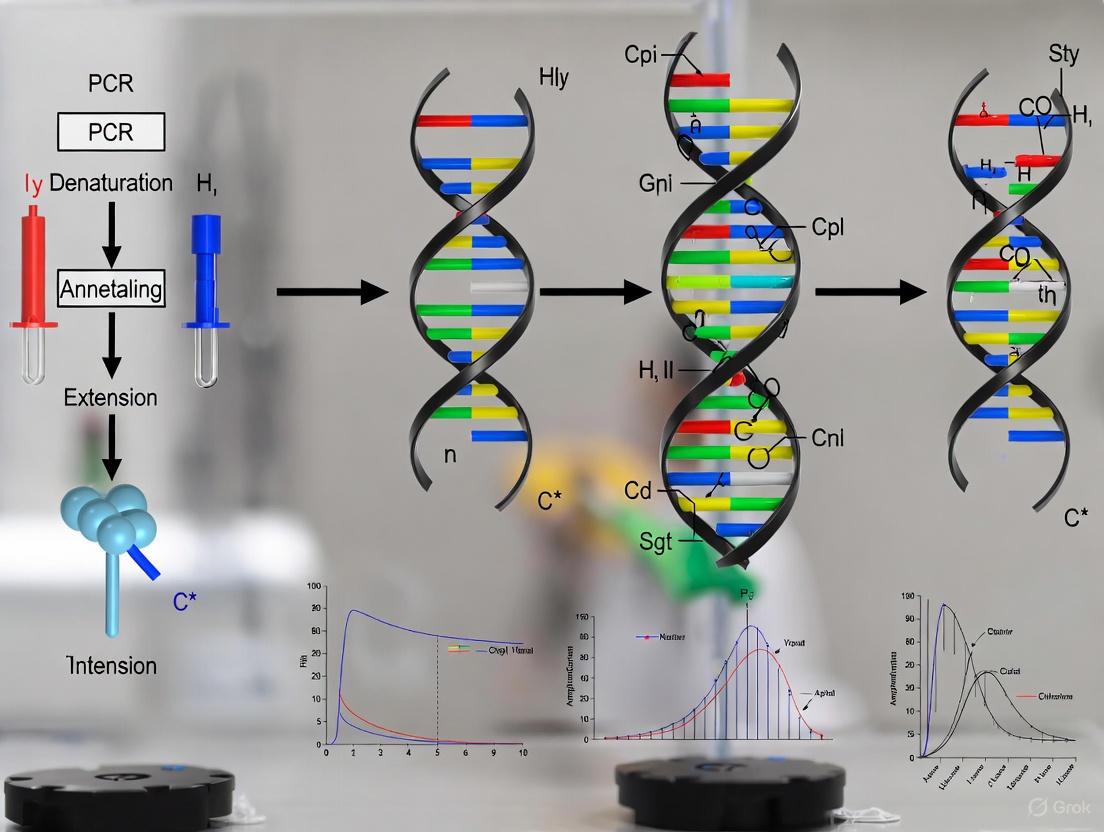
This article provides a comprehensive guide for researchers and drug development professionals tackling the challenges of amplifying difficult PCR templates.
Advanced PCR Optimization for Difficult Templates: Strategies for GC-Rich, Low-Abundance, and Complex Samples
Abstract
This article provides a comprehensive guide for researchers and drug development professionals tackling the challenges of amplifying difficult PCR templates. It covers the foundational principles behind common amplification hurdles—such as high GC content, secondary structures, and sequence-specific inefficiencies—and transitions into practical, advanced methodological solutions. The content details systematic troubleshooting protocols for issues like non-specific amplification and low yield, and concludes with robust validation and comparative analysis techniques using digital PCR, HRM, and sequencing. By integrating the latest research, including insights from deep learning models that predict amplification efficiency, this guide serves as a vital resource for ensuring PCR success in sensitive applications from genomics to molecular diagnostics.
Understanding the Core Challenges of Difficult PCR Templates
Frequently Asked Questions
What defines a "GC-rich" DNA template, and why is it problematic for PCR? A DNA sequence is generally considered GC-rich when its guanine and cytosine content exceeds 60% [1]. The strong hydrogen bonding between G and C bases results in a higher melting temperature and greater stability of the DNA double strand. This can prevent complete denaturation during the PCR cycle and promote the formation of stable secondary structures like hairpins and loops, which hinder the progress of the DNA polymerase, leading to PCR failure or low yield of the desired product [1] [2].
What are the primary symptoms of PCR failure due to secondary structures? The main symptoms are a complete lack of amplification ("PCR failure") or the production of truncated/shortened PCR products. This occurs because the DNA polymerase enzyme cannot read through the stable secondary structures that form within the template [1].
How can I improve PCR amplification from low-complexity samples, such as those with homopolymer runs? Homopolymer runs (e.g., AAAAA or CCCCC) and other low-complexity sequences can cause the DNA polymerase to "slip," resulting in errors [3]. Primer design is critical; avoid primers that contain these repeats. If unavoidable, try to limit homopolymer runs in your primers to a maximum of 4 bases [3]. Furthermore, using DNA polymerases with high processivity can improve the amplification of such challenging templates [4].
My PCR works but introduces errors in sequencing. What is the cause and how can it be fixed? PCR errors are an inherent limitation of the technique, but they are particularly problematic for applications like sequencing, especially in regions like Unique Molecular Identifiers (UMIs). These errors are primarily introduced during the amplification process itself [5]. One innovative solution is to use a "homotrimer" UMI design, which applies a cryptographic "majority voting" strategy to correct errors within building blocks of the identifier before downstream analysis, drastically improving counting accuracy [5].
Does the physical labware, like the color of my PCR plate, matter for the reaction? While the plate color does not affect the biochemistry of the PCR itself, it is critical for downstream detection. For standard, endpoint PCR that will be analyzed by gel electrophoresis, clear plates are sufficient. However, for quantitative PCR (qPCR), white plates are recommended because they reflect the fluorescence signal, enhancing sensitivity and reducing background noise. Black plates are reserved for specialized fluorescence applications like FRET assays, where minimizing background light interference is paramount [6].
Experimental Troubleshooting Guides
Troubleshooting PCR for GC-Rich Templates
Symptom Checklist
- No amplification product observed on gel.
- Faint or smeared bands present.
- Multiple non-specific bands.
- Truncated or shorter-than-expected products.
Optimization Protocol A multipronged approach is often necessary for success [1]. The following protocol combines several effective strategies.
Step 1: Re-agent and Additive Optimization Prepare a master mix according to your standard protocol, then aliquot and supplement with the additives listed in the table below. Using a gradient thermal cycler for the annealing temperature (Step 2) is highly recommended.
Table 1: Additives for Amplifying GC-Rich Templates
Additive Final Concentration Mechanism of Action Key Consideration DMSO (Dimethyl sulfoxide) 1-10% [3] [4] Disrupts base pairing, lowers DNA melting temperature, and helps denature secondary structures [4] [2]. Lower the annealing temperature by 1-2°C per 1% DMSO added [4]. Betaine 0.5 M to 2.5 M [3] Equalizes the contribution of GC and AT base pairs to duplex stability, facilitating strand separation [1] [2]. Can be used in combination with DMSO for a synergistic effect [1]. Formamide 1.25-10% [3] Acts as a denaturant, lowering the melting temperature of DNA [2]. Titrate concentration carefully as it can inhibit the polymerase at higher levels. Mg2+ 1.5 to 5.0 mM (titrate) [3] Cofactor for DNA polymerase; essential for enzyme activity and fidelity [3] [2]. Too high can cause non-specific binding; too low reduces enzyme activity [2]. Step 2: Polymerase and Cycling Conditions
- Enzyme Selection: Use a specialized, highly processive, and hyperthermostable DNA polymerase. These enzymes are designed to "read through" complex secondary structures and can withstand the higher denaturation temperatures sometimes required [4].
- Touchdown PCR: This method promotes specificity. Start with an annealing temperature 5-10°C above the calculated Tm of your primers, then decrease it by 1°C per cycle over the next 10-15 cycles until it reaches your optimal Tm. This ensures that only the most specific primer binding occurs in the early cycles, preferentially amplifying the correct product [4].
- Higher Denaturation Temperature: Increase the denaturation temperature from 95°C to 98°C to ensure complete separation of the tough GC-rich duplexes [4].
The workflow below summarizes this multi-step optimization strategy.
Addressing Amplification Bias in Multi-Template PCR
Symptom Checklist
- Skewed abundance data in quantitative applications (e.g., RNA-Seq, metabarcoding).
- Loss of specific sequences from a library after amplification.
- Poor correlation between initial template concentration and final product yield.
Optimization Protocol Bias in multi-template PCR occurs when different DNA sequences in a complex mixture amplify with different efficiencies, leading to a misrepresentation of their true abundances [7]. This is a sequence-specific issue, not solely governed by GC content.
- Step 1: Acknowledge and Minimize PCR Cycles. The most straightforward approach is to use the minimum number of PCR cycles necessary for your application, as bias increases exponentially with each cycle [7].
- Step 2: Utilize Computational Tools. Recent advances in deep learning have made it possible to predict sequence-specific amplification efficiency directly from DNA sequence data. Tools like 1D-CNNs can identify sequence motifs adjacent to primer binding sites that are associated with poor amplification, allowing for the design of more homogeneous amplicon libraries [7].
- Step 3: Implement Robust Error-Correction. For applications using Unique Molecular Identifiers (UMIs), employ error-correction strategies. The "homotrimer" UMI design, which uses a majority-vote system within trimer blocks, can effectively correct for PCR-introduced errors prior to data analysis, enabling near-absolute counting of RNA molecules [5].
The diagram below illustrates the mechanism of this error correction.
The Scientist's Toolkit: Research Reagent Solutions
Table 2: Essential Reagents for Difficult PCR Templates
| Reagent | Function in PCR Optimization | Example Use Case |
|---|---|---|
| DMSO | Disrupts secondary structures, lowers Tm [4] [2]. | Amplification of GC-rich targets >65% [4]. |
| Betaine | Destabilizes GC bonds, homogenizes Tm, stabilizes polymerase [1] [2]. | Used in combination with DMSO for very stable templates [1]. |
| High-Processivity DNA Polymerase | Binds template more strongly, improving synthesis through complex structures [4]. | Long PCR, GC-rich PCR, and direct PCR from crude samples [4]. |
| Hot-Start DNA Polymerase | Inhibits enzyme activity until initial denaturation, improving specificity [4]. | Multiplex PCR and reactions prone to primer-dimer formation [4]. |
| Proofreading DNA Polymerase | Provides 3'→5' exonuclease activity to correct nucleotide incorporation errors [1]. | PCR for cloning or sequencing where high fidelity is critical [1]. |
| Mg2+ Ions | Essential cofactor for DNA polymerase activity; concentration affects yield and specificity [3] [2]. | Titration is required for every new primer/template combination [2]. |
Frequently Asked Questions (FAQs)
1. What is amplification bias in multi-template PCR? Amplification bias refers to the non-homogeneous amplification of different DNA templates in a single PCR reaction, leading to skewed product-to-template ratios that do not reflect the original composition of the sample. This occurs due to sequence-specific amplification efficiencies, where certain templates amplify more efficiently than others due to their sequence properties, even when their starting concentrations are equal [8] [7].
2. What are the main causes of sequence-specific amplification bias? The primary causes include:
- Primer Binding Energy: Permutations of degenerate primers with different GC/AT contents can have different binding energies, leading to preferential amplification of templates with GC-rich priming sites [8].
- Template Sequence Motifs: Specific sequence motifs adjacent to primer binding sites can cause low amplification efficiency, potentially through mechanisms like adapter-mediated self-priming [7].
- GC-Rich Templates and Secondary Structures: GC-rich regions can form stable secondary structures that block DNA polymerase progression, leading to ineffective amplification [9] [10].
- PCR Drift: Stochastic variations in the early cycles of the reaction can also contribute to bias, though this is generally less reproducible and a minor factor compared to sequence-specific selection [8].
3. How does amplification bias affect my research results? Bias can severely compromise the accuracy and sensitivity of quantitative results. In fields like metabarcoding and microbial ecology, it can distort the perceived abundance of different species in a community [8] [7]. In diagnostics, it could lead to false negatives for targets that amplify poorly. A template with an efficiency just 5% below the average can be underrepresented by a factor of two after only 12 cycles [7].
4. Can I detect amplification bias in my experiments? Yes. For standard curve-based qPCR, compare the amplification plots. Geometric amplification slopes that are not parallel between assays indicate differing, sub-optimal efficiencies [11]. For next-generation sequencing of multi-template amplifications, a progressive broadening of the coverage distribution and an increasing fraction of sequences with low coverage after more PCR cycles is a key indicator of non-homogeneous amplification [7].
5. My template has high GC content. What specific challenges should I expect? GC-rich templates (GC content >60%) are considered difficult targets due to the formation of stable secondary structures. This often results in no amplification product, multiple non-specific products, or smeared bands on a gel. Successful amplification typically requires significant optimization of reaction components and thermal cycling conditions [9] [10].
Troubleshooting Guide
Problem: No Amplification or Low Yield from a Complex Template
| Possible Cause | Recommendations & Solutions |
|---|---|
| Poor Primer Design/Binding | Recalculate primer Tm; use a gradient cycler to test annealing temperatures 5–7°C above the calculated Tm [9]. Verify primers are specific and lack self-complementarity. |
| High GC Content & Secondary Structures | Use a PCR additive like DMSO at 3-5% final concentration [9]. Choose a DNA polymerase with high processivity and affinity for difficult templates [10]. Increase denaturation temperature and/or time. |
| Suboptimal Mg²⁺ Concentration | Test MgCl₂ concentrations in the range of 1.5 mM to 2.5 mM. Optimize in 0.2–0.5 mM increments [9] [12]. |
| Insufficient Template Quality/Quantity | Re-purify template DNA to remove inhibitors. For FFPE-derived DNA, ensure a concentration of at least 2 µg/ml [9]. Increase the amount of input DNA or number of cycles. |
| Incorrect Annealing Temperature | The optimal annealing temperature may be significantly higher (e.g., 7°C) than the calculated Tm for GC-rich targets. Use a thermal cycler with a gradient function [9]. |
Problem: Skewed Amplification in Multi-Template PCR
| Possible Cause | Recommendations & Solutions |
|---|---|
| Sequence-Specific Efficiency Differences | Use high template concentrations and perform fewer PCR cycles to minimize bias [8]. Mix replicate reactions to reduce the impact of PCR drift [8]. |
| Adapter-Mediated Self-Priming | Be aware that specific motifs near primer binding sites can cause poor amplification. For critical applications (e.g., DNA data storage), consider using deep learning tools to predict and avoid poorly amplifying sequences during library design [7]. |
| PCR Reagents Entering Plateau Phase | Ensure reactions do not enter the plateau phase, as this can cause a kinetic bias towards 1:1 product ratios independent of starting concentrations [8]. Adjust cycle number and template input. |
| Degenerate Primer Bias | If using degenerate primers, note that GC-rich permutations can lead to overamplification of specific templates. Consider using high-fidelity, non-degenerate primers if possible [8]. |
Problem: Multiple or Non-Specific Bands
| Possible Cause | Recommendations & Solutions |
|---|---|
| Low Annealing Temperature | Increase the annealing temperature stepwise in 1–2°C increments. The optimal temperature is typically 3–5°C below the primer Tm [12] [10]. |
| Excess Mg²⁺ Concentration | Review and lower the Mg²⁺ concentration, as high levels can reduce specificity [12] [10]. |
| Non-Hot-Start DNA Polymerase | Use a hot-start DNA polymerase to prevent non-specific priming and primer-dimer formation during reaction setup [10]. |
| High Primer Concentration | Optimize primer concentration, usually within 0.1–1 µM. High concentrations promote mispriming [10]. |
Experimental Protocols for Investigating Amplification Bias
Protocol 1: Assessing Bias in Multi-Template Amplification
This protocol is adapted from studies investigating bias in 16S rRNA gene amplification [8].
1. Objective: To quantify the extent and reproducibility of amplification bias when amplifying multiple templates with universal primers.
2. Materials:
- Template Mixture: Genomic DNAs from 2-3 bacterial species (e.g., Vibrio fischeri, V. anguillarum, and E. coli). Mix equal amounts (by spectrophotometry) to create a known starting ratio [8].
- Primers: Universal degenerate primers (e.g., 27F and 1492R for bacterial 16S rDNA) [8].
- PCR Reagents: High-fidelity DNA polymerase, corresponding buffer, dNTPs, MgCl₂.
- Equipment: Thermal cycler, equipment for gel electrophoresis or qPCR.
3. Methodology:
- PCR Setup: Set up multiple replicate PCR reactions using the mixed template. Adjust reaction parameters (e.g., use high template concentration and a cycle number that avoids the plateau phase) to focus on inherent bias [8].
- Quantification: Quantify the product ratios for each species in the final PCR products. This can be done using species-specific fluorescent probes (for real-time PCR) or by cloning and sequencing a sufficient number of clones to get a representative product profile [8].
- Analysis: Compare the final product ratios to the known starting template ratios. Reproducible over-representation of a specific template indicates significant PCR selection bias.
Protocol 2: Optimizing PCR for a GC-Rich Target
This protocol is based on the optimization of the EGFR promoter region, which has a GC content >75% [9].
1. Objective: To establish a robust PCR protocol for the amplification of a specific, GC-rich DNA target.
2. Materials:
- Template DNA: e.g., genomic DNA from formalin-fixed paraffin-embedded (FFPE) tissue.
- Primers: Specific to the target sequence (e.g., EGFR promoter).
- PCR Reagents: Taq DNA polymerase, 10X PCR buffer, dNTPs, MgCl₂, Dimethyl Sulfoxide (DMSO).
- Equipment: Thermal cycler (preferably with a gradient function), agarose gel electrophoresis system.
3. Methodology:
- Initial Reaction: Set up a 25 µL reaction containing 1 µL genomic DNA, 0.2 µM of each primer, 0.25 mM dNTPs, and 0.625 U Taq DNA polymerase in 1X PCR buffer.
- Systematic Optimization:
- DMSO Titration: Test DMSO concentrations of 1%, 3%, and 5% to determine the optimal concentration for reducing secondary structures [9].
- MgCl₂ Titration: Test a range of MgCl₂ concentrations from 0.5 mM to 2.5 mM in 0.5 mM increments [9].
- Annealing Temperature Gradient: Using the optimal DMSO and MgCl₂ conditions, perform a gradient PCR with annealing temperatures from 61°C to 69°C (or a range appropriate for your primers) [9].
- Thermal Cycling Profile:
- Initial Denaturation: 94°C for 3 min.
- 45 Cycles of:
- Denaturation: 94°C for 30 sec
- Annealing: Optimal temperature (e.g., 63°C) for 20 sec
- Extension: 72°C for 60 sec
- Final Extension: 72°C for 7 min [9].
- Analysis: Analyze 5 µL of the PCR product on a 2% agarose gel. The optimal conditions will yield a single, bright band of the expected size with minimal to no non-specific products.
Mechanism of Sequence-Specific Amplification Bias
The following diagram illustrates the core principle of how sequence-specific features lead to biased outcomes in multi-template PCR.
Research Reagent Solutions
The following table details key reagents and their functions for optimizing PCR, especially for difficult templates.
| Reagent / Material | Function & Rationale |
|---|---|
| DMSO (Dimethyl Sulfoxide) | A co-solvent that disrupts DNA secondary structures by reducing hydrogen bonding. Critical for denaturing GC-rich templates that would otherwise block polymerase progression [9]. |
| High-Processivity DNA Polymerase | Enzymes with high affinity for templates and strong strand displacement activity are more suitable for amplifying difficult targets (GC-rich, secondary structures) and long amplicons [10]. |
| GC Enhancer | A proprietary additive, often supplied with specific DNA polymerases, formulated to lower the melting temperature of GC-rich DNA, facilitating denaturation [10]. |
| MgCl₂ / MgSO₄ | Magnesium ions are essential cofactors for DNA polymerase activity. The optimal concentration is template- and enzyme-specific and must be determined empirically for reliable amplification [9] [12]. |
| dNTP Mix | The building blocks for DNA synthesis. Using fresh, high-quality dNTPs at balanced equimolar concentrations is crucial to maintain high fidelity and prevent misincorporation [12]. |
| Hot-Start DNA Polymerase | Engineered to be inactive at room temperature, preventing non-specific priming and primer-dimer formation during reaction setup, thereby enhancing specificity and yield of the desired product [10]. |
Troubleshooting Guide: Template-Related PCR Failure
This guide helps diagnose and resolve common PCR issues stemming from template DNA quality.
| Observation | Possible Cause | Recommended Solution |
|---|---|---|
| No Product | Presence of PCR inhibitors (e.g., phenol, EDTA, salts, humic acids) | Re-purify template via alcohol precipitation, drop dialysis, or silica column [13] [14]. Dilute template 10-fold to reduce inhibitor concentration [15]. |
| Low template quality or degradation | Re-isolate template, minimize shearing, and store in TE buffer or molecular-grade water [13]. Assess integrity via gel electrophoresis [13] [14]. | |
| Insufficient template quantity | Increase input DNA amount. For low copy numbers (<10 copies), increase PCR cycles to up to 40 [13] [16]. | |
| Multiple or Non-Specific Bands | Mispriming due to degraded template | Use high-quality, intact DNA. Verify integrity by gel electrophoresis [13]. |
| Contamination with exogenous DNA | Use dedicated workspace and aerosol-resistant pipette tips. Autoclave tubes before use [14]. | |
| Low Yield or Signal | Co-purified inhibitors partially affecting efficiency | Add PCR enhancers like Bovine Serum Albumin (BSA) at 400 ng/µL or T4 gp32 protein at 0.2 µg/µL [15] [17]. Use inhibitor-tolerant DNA polymerases [18]. |
| Template complexity (e.g., high GC content) | Add co-solvents like DMSO (1-10%), formamide (1.25-10%), or betaine [16] [19] [17]. Increase initial denaturation time [16]. | |
| Inconsistent Replicates | Inconsistent template quality or concentration | Re-quantify DNA before use. Use the same high-quality DNA stock for all experiments [20]. |
| Non-homogeneous reagents | Mix reagent stocks and prepared reactions thoroughly before use [13]. |
Frequently Asked Questions (FAQs)
Q1: How can I quickly check if my PCR failure is due to template quality? A simple diagnostic test is to perform a 10-fold serial dilution of your template. If the amplification improves with dilution, it strongly indicates the presence of PCR inhibitors in your sample. Alternatively, you can spike a known, well-amplifying control template into your reaction. Failure of the control to amplify also confirms the presence of inhibitors [15] [14].
Q2: What are the most common PCR inhibitors I should be aware of? Inhibitors vary by sample source. Common ones include:
- Environmental samples: Humic acids, fulvic acids, metal ions [15].
- Clinical samples: Heparin, hemoglobin, IgG immunoglobulins, urea [18].
- Plant and food samples: Polyphenols, tannins, polysaccharides, secondary metabolites [21].
- Lab contaminants: Phenol, EDTA, SDS, proteinase K from extraction protocols [13].
Q3: My template is of high quality, but I still can't amplify my high-GC target. What can I do? GC-rich templates (>60%) form stable secondary structures that impede polymerase progress. A multi-pronged approach is best:
- Use additives: Incorporate DMSO (1-10%), formamide (1.25-10%), or betaine to lower the melting temperature and destabilize secondary structures [19] [17].
- Adjust cycling parameters: Increase denaturation temperature and/or time [16] [17].
- Choose a specialized polymerase: Use a highly processive DNA polymerase engineered for robust amplification of complex templates [20] [19].
Q4: How does template degradation specifically lead to non-specific amplification? Degraded DNA presents a multitude of short, broken fragments. Primers can bind non-specifically to these truncated ends with partial homology, leading to the synthesis and amplification of non-target sequences. Using intact, high-integrity template DNA is crucial for primer specificity [13].
Experimental Protocol: Systematic Evaluation of PCR Enhancers to Overcome Inhibition
This protocol is adapted from a study evaluating enhancers for wastewater analysis, a matrix with complex inhibitors [15].
1. Objective: To test and identify the most effective PCR enhancer for a specific inhibited sample.
2. Materials:
- Inhibited DNA template sample
- Standard PCR reagents: polymerase, buffer, dNTPs, primers, water
- Tested enhancers:
- T4 gene 32 protein (gp32)
- Bovine Serum Albumin (BSA)
- Dimethyl Sulfoxide (DMSO)
- Formamide
- Glycerol
- TWEEN-20
- Thermocycler
3. Methodology:
- Prepare a master mix containing all standard PCR components except the template.
- Aliquot the master mix into separate tubes for each enhancer and a negative control (no enhancer).
- Add each enhancer to its respective tube at the specified final concentration (see Table below).
- Add the inhibited template to all tubes.
- Run the PCR using standard cycling conditions.
- Analyze the results using gel electrophoresis or qPCR Cq values to compare amplification efficiency.
4. Expected Results: A successful enhancer will lower the Cq value in qPCR or increase band intensity in endpoint PCR compared to the no-enhancer control. The optimal enhancer is one that provides the strongest amplification signal.
Table: Concentrations of Common PCR Enhancers for Evaluation
| Enhancer | Final Concentration | Mechanism of Action |
|---|---|---|
| T4 gp32 Protein | 0.2 µg/µL | Binds to single-stranded DNA, preventing secondary structure and inhibitor binding [15]. |
| Bovine Serum Albumin (BSA) | 400 ng/µL | Binds to and neutralizes a wide range of inhibitors, such as phenolics and humic acids [15] [17]. |
| Dimethyl Sulfoxide (DMSO) | 1-10% | Destabilizes DNA secondary structures, particularly beneficial for GC-rich templates [16] [17]. |
| Formamide | 1.25-10% | Weakens hydrogen bonding, aiding in denaturation of difficult templates [17]. |
| Glycerol | 5-10% | Stabilizes polymerase enzymes and can help lower DNA melting temperature [16]. |
| TWEEN-20 | 0.1-1% | Non-ionic detergent that stabilizes polymerases and counters inhibition [17]. |
Workflow Diagram: Diagnostic Approach to Template Quality Issues
The diagram below outlines a systematic workflow for troubleshooting PCR failures related to template quality.
The Scientist's Toolkit: Key Reagents for PCR Optimization
Table: Essential Reagents for Overcoming Template-Related PCR Challenges
| Reagent / Material | Function / Application | Key Consideration |
|---|---|---|
| Inhibitor-Tolerant Polymerases | Engineered Taq variants (e.g., OmniTaq) with intrinsic resistance to inhibitors in blood, plant, soil extracts [18]. | Ideal for direct PCR from crude samples, reducing purification needs. |
| Hot-Start DNA Polymerases | Enzyme remains inactive until high-temperature activation, preventing non-specific amplification and primer-dimer formation [13] [20]. | Crucial for sensitivity and specificity, especially with low-quality or low-quantity templates. |
| PCR Enhancers (BSA, gp32) | Protein additives that bind a wide spectrum of inhibitory substances, "shielding" the polymerase [15]. | BSA is general-purpose; T4 gp32 was identified as highly effective for wastewater [15]. |
| Co-solvents (DMSO, Betaine) | Reduce DNA melting temperature, preventing secondary structure formation in GC-rich templates [19] [17]. | Requires adjustment of annealing temperature (typically lowered) [16]. |
| Magnetic Bead-Based Kits | Efficient removal of PCR inhibitors (humic acids, polyphenols, tannins) during nucleic acid purification [15] [21]. | More consistent and scalable than traditional organic extraction methods. |
| dNTP Mix | Balanced equimolar concentrations of dATP, dCTP, dGTP, and dTTP are critical for high-fidelity amplification [13] [14]. | Unbalanced concentrations increase polymerase error rate. |
Polymerase Chain Reaction (PCR) is a foundational technique in molecular biology, yet amplification of difficult templates often fails due to subtle molecular mechanisms. This guide details two primary failure modes—adapter-mediated self-priming and polymerase stalling—providing researchers with troubleshooting guides, experimental protocols, and reagent solutions to overcome these challenges.
Frequently Asked Questions (FAQs)
What is adapter-mediated self-priming and how does it cause PCR failure?
Adapter-mediated self-priming occurs when sequences adjacent to primer binding sites complement the adapter regions themselves, enabling the DNA template to form secondary structures that compete with proper primer binding [22]. This self-priming mechanism redirects the polymerase to amplify non-target regions, drastically reducing amplification efficiency of the intended target. Deep learning models have identified specific motifs near adapter priming sites as closely associated with poor amplification, challenging long-standing PCR design assumptions [22].
How does polymerase stalling manifest in complex templates?
Polymerase stalling occurs when DNA polymerase encounters physical barriers during elongation, particularly in GC-rich regions or sequences with stable secondary structures [13] [23]. This results in truncated products, reduced yield, or complete amplification failure. Stalling is exacerbated by insufficient denaturation times, inappropriate polymerase selection, and lack of reaction additives that help melt problematic structures [13].
Why are some sequences consistently poorly amplified across different PCR conditions?
Certain DNA sequences exhibit intrinsically low amplification efficiency due to their specific nucleotide composition and structural properties [22]. Research shows that approximately 2% of sequences in a pool amplify with efficiencies as low as 80% relative to the population mean, causing their relative abundance to halve every 3 cycles [22]. This poor amplification is reproducible and independent of pool diversity, indicating sequence-specific rather than condition-specific failure.
How can I detect self-priming in my PCR experiments?
Self-priming can be detected through bioinformatic analysis of sequences flanking adapter regions, specifically looking for complementarity to adapter sequences [22]. Experimentally, it manifests as smeared banding patterns on gels, multiple peaks in melt curve analysis, or reduced amplification efficiency that persists despite optimization of standard parameters like annealing temperature and magnesium concentration [24] [25].
Troubleshooting Guides
Problem: Adapter-Mediated Self-Priming
Identification: Progressive loss of specific sequences over multiple PCR cycles; smeared amplification products; reproducible failure of specific sequences regardless of optimization.
Solutions:
- Redesign adapter sequences to minimize self-complementarity and complementarity to common sequence motifs [22]
- Implement computational screening of template sequences for adapter complementarity before library preparation [22]
- Incorporate proofreading polymerases that exhibit higher processivity and reduced stalling at secondary structures [13]
- Optimize annealing temperature using gradient PCR to find conditions that favor specific primer binding over self-priming [26]
Problem: Polymerase Stalling on Complex Templates
Identification: Truncated products; preferential amplification of shorter fragments; decreased yield with longer templates; complete absence of product.
Solutions:
- Add PCR enhancers including DMSO (5-10%), formamide (1.25-10%), betaine (0.5M-2.5M), or proprietary commercial additives [13] [23] [27]
- Extend denaturation time and temperature to ensure complete separation of GC-rich templates [13]
- Select high-processivity polymerases specifically designed for difficult templates [13] [26]
- Increase magnesium concentration (up to 5.0 mM) to stabilize the polymerase-template interaction [27]
- Implement two-step PCR without a separate extension step for AT-rich regions [23]
Quantitative Data Analysis
Table 1: Amplification Efficiency Distribution in Multi-Template PCR
| Efficiency Category | Relative Efficiency | Population Percentage | Impact After 12 Cycles |
|---|---|---|---|
| High efficiency | 105-110% of mean | ~15% | 1.7-2.1x over-representation |
| Average efficiency | 95-105% of mean | ~80% | Proportional representation |
| Poor efficiency | 80-95% of mean | ~3% | 0.4-0.7x under-representation |
| Severe failure | <80% of mean | ~2% | Complete dropout by 60 cycles |
Table 2: Effectiveness of PCR Additives for Different Failure Mechanisms
| Additive | Recommended Concentration | Primary Mechanism | Effectiveness for Self-Priming | Effectiveness for Polymerase Stalling |
|---|---|---|---|---|
| DMSO | 5-10% | Lowers DNA Tm | Moderate | High |
| Betaine | 0.5M-2.5M | Homogenizes base stability | Low | High for GC-rich templates |
| Formamide | 1.25-10% | Destabilizes secondary structures | Moderate | High |
| BSA | 10-100 μg/ml | Binds inhibitors | Low | Moderate |
| GC Enhancer | Manufacturer's recommendation | Specifically for GC-rich templates | Very low | Very high for GC-rich regions |
Experimental Protocols
Protocol 1: Diagnosing Adapter-Mediated Self-Priming
Purpose: Identify sequences prone to self-priming in your template library.
Materials:
- Template DNA with adapter sequences
- High-fidelity PCR master mix
- Standard and custom adapter primers
- Agarose gel electrophoresis equipment
- Optional: Sequencing capabilities for amplification products
Procedure:
- Design control sequences with known self-priming potential based on computational prediction [22]
- Set up parallel PCR reactions with identical cycling conditions:
- Reaction A: Standard adapter primers
- Reaction B: Custom primers binding internal sequences
- Use the following cycling parameters:
- Initial denaturation: 95°C for 2 minutes
- 30 cycles: 95°C for 30s, 55-65°C gradient for 30s, 72°C for 1min/kb
- Final extension: 72°C for 5 minutes
- Analyze products by agarose gel electrophoresis:
- Self-priming evident as smeared products in Reaction A but clean bands in Reaction B
- Sequence aberrant products to confirm self-priming origins
Protocol 2: Overcoming Polymerase Stalling
Purpose: Optimize PCR conditions to minimize polymerase stalling on difficult templates.
Materials:
- Difficult template DNA (GC-rich, long, or structured)
- High-processivity DNA polymerase (e.g., Q5 High-Fidelity, OneTaq DNA Polymerases)
- PCR additives (DMSO, betaine, formamide, GC enhancer)
- Magnesium chloride solution
- Gradient thermal cycler
Procedure:
- Prepare master reaction mix containing:
- 1X polymerase buffer
- 200μM dNTPs
- 0.4-0.5μM each primer
- 1-100ng template DNA
- 1.5-4.0mM MgCl₂ (optimize based on template)
- Aliquot equal volumes to separate tubes
- Add different additives to each tube:
- Tube 1: No additive (control)
- Tube 2: 5% DMSO
- Tube 3: 1M betaine
- Tube 4: 5% formamide
- Tube 5: Proprietary GC enhancer
- Run gradient PCR with annealing temperatures spanning 5°C above and below primer Tm
- Use extended extension times (1.5-2x standard) for long templates [13]
- Analyze results by gel electrophoresis for product yield and specificity
Visualization of Molecular Mechanisms
Diagram 1: Molecular Mechanisms of PCR Failure. The diagram illustrates two primary failure mechanisms: adapter-mediated self-priming (top) where template self-complementarity blocks primer access, and polymerase stalling (bottom) where structural features prevent complete elongation.
The Scientist's Toolkit: Research Reagent Solutions
Table 3: Essential Reagents for Addressing PCR Failure Mechanisms
| Reagent Category | Specific Examples | Primary Function | Application Context |
|---|---|---|---|
| High-Processivity Polymerases | Q5 High-Fidelity DNA Polymerase [26], OneTaq DNA Polymerase [26], Platinum DNA Polymerases [13] | Enhanced ability to amplify through difficult sequences | Long templates, GC-rich regions, structured DNA |
| PCR Additives | DMSO (5-10%) [23], Betaine (0.5M-2.5M) [27], Formamide (1.25-10%) [27], Proprietary GC Enhancers [13] | Destabilize secondary structures, homogenize base stability | GC-rich templates, sequences with strong secondary structures |
| Hot-Start Enzymes | Hot-start DNA polymerases [13], Hieff Ultra-Rapid II HotStart PCR Master Mix [20] | Prevent nonspecific amplification during reaction setup | All applications requiring high specificity |
| Computational Tools | Primer-BLAST [27], Custom 1D-CNN models [22] | Predict amplification efficiency and self-priming potential | Primer and adapter design, library preparation |
| Specialized Kits | PreCR Repair Mix [26], Monarch Spin PCR & DNA Cleanup Kit [26] | Repair damaged templates, purify reactions | Ancient DNA, processed samples, inhibitor removal |
The polymerase chain reaction (PCR) is a foundational technology in modern molecular biology, yet its success is critically dependent on the quality and characteristics of the DNA template. While PCR protocols for high-quality DNA from cell lines or fresh frozen tissues are well-established, researchers frequently encounter substantial challenges when working with suboptimal template sources. Formalin-fixed paraffin-embedded (FFPE) tissues, forensic samples, and metagenomic specimens represent three important categories of challenging templates that exhibit unique properties requiring specialized optimization approaches.
FFPE samples, invaluable for clinical research, undergo preservation processes that fragment DNA and introduce chemical modifications. Forensic evidence often provides minimal quantities of degraded DNA contaminated with inhibitors from environmental exposure. Metagenomic samples contain complex mixtures of microbial DNA obscured by abundant host genetic material. Understanding the distinct challenges posed by each template source enables researchers to select appropriate methodological strategies that maximize PCR efficiency, reliability, and data quality.
This technical support center provides targeted troubleshooting guidance and frequently asked questions to assist researchers in overcoming the specific obstacles associated with these challenging template types. By implementing optimized protocols and understanding the underlying mechanisms of PCR failure, scientists can significantly improve experimental outcomes across diverse applications from cancer research to infectious disease diagnostics and forensic analysis.
FFPE DNA: Overcoming Preservation-Induced Artifacts
FAQ: What are the primary challenges when working with FFPE-derived DNA templates?
FFPE samples present multiple interconnected challenges that complicate PCR and downstream sequencing applications. The formalin fixation process causes two major types of damage: DNA-protein crosslinks that make extraction difficult, and chemical modifications to nucleic acids including cytosine deamination (leading to C→T mutations) and oxidative damage (e.g., 8-oxo G leading to G→T mutations) [28]. Additional damage includes nicks, gaps, and abasic sites that can hinder polymerase progression during amplification. The paraffin embedding process further degrades nucleic acids through heat and dehydration, resulting in highly fragmented DNA with low yields. These damaged templates can cause several downstream issues:
- Chimeric reads: Single-stranded overhangs can anneal with other DNA fragments during sequencing
- Sequencing artifacts: Damaged bases can cause erroneous base incorporation during end repair
- Polymerase blockage: Nicks, gaps, and abasic sites can halt polymerase extension [28]
Troubleshooting Guide: FFPE DNA Library Preparation
Table: Common FFPE DNA Issues and Recommended Solutions
| Problem | Root Cause | Solution | Commercial Solutions |
|---|---|---|---|
| Low library yield | Highly fragmented DNA; low input amounts | Use specialized library prep kits designed for low input; implement DNA repair steps before amplification | NEBNext UltraShear FFPE DNA Library Prep Kit [28] |
| Sequencing artifacts & false positives | Cytosine deamination; oxidative damage | Incorporate enzymatic repair steps that specifically target damaged bases; use uracil-DNA glycosylase treatment | NEBNext FFPE DNA Repair V2 [28] |
| Non-uniform coverage | Variable fragment sizes; non-uniform ends | Repair nicks and gaps before fragmentation; use size selection beads to normalize fragment distribution | SPRIselect size selection beads |
| Chimeric reads | Single-stranded DNA overhangs | Fill in single-stranded overhangs using DNA polymerase; implement thermostable polymerase with strong strand displacement activity | - |
Experimental Protocol: FFPE DNA Repair and Library Preparation
The following protocol, adapted from the NEBNext UltraShear FFPE DNA Library Prep workflow, significantly improves sequencing results from FFPE samples [28]:
- DNA Extraction: Use specialized kits designed for FFPE tissues that maximize recovery of cross-linked DNA.
- Damage Repair:
- Prepare repair mix: 1X Repair Buffer, 1X FFPE DNA Repair V2 Mix
- Incubate at 37°C for 30 minutes, followed by 4°C hold
- This step selectively excises damaged bases in single-stranded regions and performs base excision repair on double-strand damage
- End Repair & Fragmentation:
- For already fragmented FFPE DNA, use limited enzymatic fragmentation (time-dependent)
- For less degraded samples, use optimized ultrasonication parameters
- Library Construction:
- Proceed with adapter ligation using low-input optimized ligases
- Use PCR amplification with low cycle number (8-12 cycles) to minimize duplication rates
- Library QC:
- Assess fragment size distribution using BioAnalyzer or TapeStation
- Quantify using qPCR methods specific for sequencing libraries
This workflow is sample-quality-agnostic, allowing consistent application across samples with varying degradation levels, which is particularly valuable in clinical settings with diverse specimen quality [28].
Research Reagent Solutions for FFPE DNA
Table: Essential Reagents for FFPE DNA Analysis
| Reagent/Kit | Function | Application Note |
|---|---|---|
| NEBNext UltraShear FFPE DNA Library Prep Kit | Streamlined workflow for damaged DNA | Integrates repair and fragmentation; suitable for automation [28] |
| NEBNext FFPE DNA Repair V2 Mix | Enzymatic repair of DNA damage | Targets deamination and oxidative damage; preserves true mutations [28] |
| QIAamp DNA FFPE Tissue Kit | Efficient DNA extraction from FFPE | Optimized for cross-linked DNA recovery |
FFPE DNA Analysis Workflow and Challenges
Forensic DNA: Maximizing Information from Minimal Evidence
FAQ: How does template quality affect forensic STR analysis?
Forensic DNA analysis typically employs short tandem repeat (STR) markers that are amplified using PCR, making the process highly sensitive to template quality and quantity. The primary challenges with forensic templates include:
- Low template amounts: Crime scene evidence often provides minimal DNA, requiring high-sensitivity amplification
- Degradation: Environmental exposure can fragment DNA, causing preferential amplification of smaller STR loci
- Inhibitors: Substances like humic acid, hematin, or fabric dyes can co-extract with DNA and inhibit polymerases
- Stutter artifacts: Polymerase slippage during amplification creates secondary peaks that complicate mixture interpretation [29] [30]
Traditional Taq polymerase exhibits significant stutter rates (typically 5-15%), creating analytical challenges for mixed samples where distinguishing true minor contributors from stutter artifacts becomes difficult. Recent advances in enzyme engineering have directly addressed this limitation [30].
Troubleshooting Guide: Forensic DNA Analysis
Table: Forensic DNA Analysis Challenges and Solutions
| Problem | Root Cause | Solution | Impact on Results |
|---|---|---|---|
| Stutter peaks | Polymerase slippage on STR repeats | Use engineered polymerases with reduced stutter | Simplified mixture deconvolution; more accurate profiles [30] |
| Allele dropout | Degradation or inhibitors | Increase PCR cycle number; use inhibitor-resistant polymerases | Reduced false negatives; improved profile completeness |
| Low yield | Minimal template | Implement whole genome amplification; use low-volume PCR | Increased success with touch DNA evidence |
| Inconsistent results | Variable template quality | Implement quantitative QC step before amplification | More reliable inter-laboratory comparisons |
Experimental Protocol: Reduced-Stutter STR Analysis
Promega's Reduced Stutter Polymerase technology demonstrates how enzyme engineering can overcome fundamental limitations in forensic analysis [30]:
Enzyme Design:
- Incorporate thioredoxin-binding domain from T7 bacteriophage polymerase into Taq polymerase
- This modification increases template affinity and processivity
- Use machine learning to optimize amino acid sequence for reduced slippage
PCR Setup:
- Prepare master mix with Reduced Stutter Polymerase
- Use manufacturer-recommended buffer with optimized Mg2+ concentration
- Include appropriate positive and negative controls
Thermal Cycling:
- Initial denaturation: 96°C for 2 minutes
- 28-32 cycles of: 94°C for 30 seconds, 59°C for 30 seconds, 72°C for 90 seconds
- Final extension: 60°C for 30 minutes
Capillary Electrophoresis:
- Inject PCR products according to instrument specifications
- Analyze electropherograms for STR alleles
This innovative enzyme engineering approach achieves approximately 90% reduction in stutter artifacts, dramatically simplifying data interpretation particularly for complex mixture samples [30].
Research Reagent Solutions for Forensic DNA
Table: Essential Reagents for Forensic DNA Analysis
| Reagent/Kit | Function | Application Note |
|---|---|---|
| Reduced Stutter Polymerase | STR amplification with minimal stutter | Engineered enzyme; simplifies mixture interpretation [30] |
| DNA IQ System | DNA extraction and quantification | Optimized for forensic samples; removes common inhibitors |
| GlobalFiler PCR Amplification Kit | Multiplex STR amplification | Compatible with degraded samples; includes internal quality indicators |
Forensic DNA Analysis Workflow Comparison
Metagenomic DNA: Navigating Complex Microbial Communities
FAQ: What are the key considerations for PCR amplification in metagenomic studies?
Metagenomic next-generation sequencing (mNGS) enables comprehensive detection of pathogens without prior knowledge of causative agents, but its effectiveness depends heavily on template quality and handling. Critical challenges include:
- Host DNA domination: Clinical samples can contain >99% human DNA, obscuring microbial signals
- Variable amplification efficiency: Sequence-specific differences in multi-template PCR can skew abundance data
- Inhibitors: Clinical samples contain PCR inhibitors that affect amplification
- Low microbial biomass: Some infections have minimal pathogen DNA, requiring high sensitivity [31] [32]
Recent research demonstrates that sequence-specific amplification efficiency varies significantly even among synthetic DNA pools with controlled GC content, indicating intrinsic template properties beyond traditional optimization parameters affect PCR performance [7].
Troubleshooting Guide: Metagenomic Sequencing
Table: Metagenomic Sequencing Challenges and Solutions
| Problem | Root Cause | Solution | Performance Consideration |
|---|---|---|---|
| Host DNA interference | High human DNA in sample | Implement host DNA depletion methods | Increases microbial reads 10-100 fold; improves sensitivity [31] |
| Skewed abundance data | Variable amplification efficiency | Use unique molecular identifiers; optimize primer design | More accurate quantitative results [7] |
| False negatives | Low pathogen biomass | Increase sequencing depth; use targeted enrichment | Higher sensitivity for rare pathogens |
| Contamination | Laboratory or reagent microbiome | Include negative controls; use clean room techniques | Reduces false positives |
Experimental Protocol: Host DNA Depletion for Enhanced mNGS
Effective host DNA depletion is critical for sensitive pathogen detection in metagenomic studies [31]:
Sample Processing:
- Centrifuge liquid samples to pellet cells
- For tissue samples, use mechanical homogenization with appropriate lysis buffer
Host DNA Depletion:
- Option 1: Enzymatic degradation with Benzonase in the presence of Tween-20
- Option 2: Use commercial kits (e.g., MolYsis series) selectively degrading mammalian DNA
- Option 3: Probe-based capture and removal of human DNA sequences
Nucleic Acid Extraction:
- Use pathogen-specific kits that maximize microbial lysis
- Include internal extraction controls to monitor efficiency
Library Preparation:
- Use PCR-free methods when possible to avoid amplification bias
- If amplification necessary, limit cycles (≤12) and use high-fidelity polymerases
Sequencing and Analysis:
- Sequence with appropriate depth (typically 10-20 million reads per sample)
- Implement rigorous bioinformatic filtering against host genome
This protocol significantly improves the detection of low-abundance pathogens by reducing host DNA background, which is particularly important for clinical specimens with low microbial burden [31].
Comparative Performance of Sequencing Methods
Table: Diagnostic Performance of Different NGS Approaches for Respiratory Infections
| Parameter | Metagenomic NGS | Capture-based tNGS | Amplification-based tNGS |
|---|---|---|---|
| Number of species detected | 80 | 71 | 65 |
| Cost (USD) | $840 | Lower | Lowest |
| Turnaround time | 20 hours | Shorter | Shortest |
| Accuracy | Lower | 93.17% | Intermediate |
| Sensitivity | Intermediate | 99.43% | Lower (40.23% for gram-positive bacteria) |
| Specificity for DNA viruses | Intermediate | 74.78% | 98.25% |
| Best application | Rare/novel pathogen detection | Routine diagnostic testing | Rapid results with limited resources [33] |
Research Reagent Solutions for Metagenomic DNA
Table: Essential Reagents for Metagenomic Studies
| Reagent/Kit | Function | Application Note |
|---|---|---|
| MolYsis kits | Host DNA depletion | Selective degradation of mammalian DNA; preserves microbial DNA [31] |
| NEBNext Microbiome DNA Enrichment Kit | Human DNA depletion | Probe-based capture against human repetitive elements |
| QIAamp DNA Microbiome Kit | Differential lysis and DNA extraction | Selective isolation of microbial DNA from human samples |
Metagenomic Analysis Workflow and Strategy
Advanced Topics: Cross-Cutting Challenges and Solutions
Deep Learning Approaches for PCR Optimization
Recent advances in artificial intelligence offer promising solutions for predicting and optimizing PCR efficiency across diverse template types. A 2025 study published in Nature Communications demonstrates:
Model Architecture:
- One-dimensional convolutional neural networks (1D-CNNs) trained on synthetic DNA pools
- Predictive performance: AUROC 0.88, AUPRC 0.44
- Sequence-based prediction of amplification efficiency
Key Findings:
- Specific sequence motifs adjacent to primer binding sites significantly impact amplification efficiency
- These motifs facilitate adapter-mediated self-priming, a previously underappreciated mechanism of PCR bias
- GC content alone does not fully explain amplification heterogeneity
Application:
- The CluMo (Motif Discovery via Attribution and Clustering) framework identifies problematic sequences
- Enables design of inherently homogeneous amplicon libraries
- Reduces required sequencing depth fourfold to recover 99% of amplicon sequences [7]
This approach represents a significant advancement over traditional trial-and-error optimization, particularly for multi-template PCR applications where uniform amplification is critical for accurate quantitative results.
Universal Quality Control Measures for Challenging Templates
Regardless of template source, implementing rigorous quality control measures is essential for reliable PCR results:
Quantification Methods:
- Use fluorometric methods (Qubit) rather than UV spectrophotometry for accurate DNA quantification
- Implement qPCR-based quality assessment to determine amplifiable template fraction
Inhibition Detection:
- Include internal PCR controls in each reaction
- Monitor amplification efficiency deviations as indicators of inhibition
Fragment Analysis:
- Use BioAnalyzer or TapeStation to assess DNA integrity
- Particularly critical for FFPE and forensic samples where degradation is common
Negative Controls:
These QC measures help researchers identify problematic samples before proceeding to downstream applications, saving time and resources while improving data reliability.
Future Directions: Emerging Technologies
The field of PCR optimization for challenging templates continues to evolve with several promising developments:
- CRISPR-based enrichment: Emerging techniques for targeted enrichment of specific sequences without amplification bias
- Portable sequencing technologies: Oxford Nanopore platforms enabling real-time sequencing in field and point-of-care settings [32]
- Single-cell approaches: Bypassing template heterogeneity by analyzing individual cells
- Integrated automation: Reducing human error and improving reproducibility through automated workflows [35]
These technologies promise to further expand the capabilities of researchers working with the most challenging template sources, ultimately advancing fields from precision medicine to forensic science and environmental microbiology.
Proven Methods and Reagent Optimization for Demanding Amplifications
FAQs: Core Principles of Primer Design
Q1: What are the fundamental rules for designing a effective PCR primer?
The core principles for designing effective primers focus on length, melting temperature (Tm), GC content, and specificity to ensure successful and specific amplification of the target DNA [36] [37].
- Primer Length: Optimal primer length is generally 18–30 nucleotides [36]. Shorter primers (within this range) bind more efficiently, but must be long enough to be specific to the target sequence [36] [37].
- Melting Temperature (Tm): The Tm for both forward and reverse primers should be between 65°C and 75°C and within 5°C of each other to ensure they bind with similar efficiency at the same annealing temperature [36].
- GC Content: Aim for a GC content between 40% and 60% [36] [37]. This provides enough hydrogen bonds for stable binding without promoting non-specific interactions.
- GC Clamp: The 3' end of the primer should end in a G or C base to promote stronger binding due to the three hydrogen bonds these bases form. However, avoid having more than 3 consecutive G or C bases at the 3' end, as this can lead to non-specific binding [36] [37].
- Specificity: Avoid sequences with runs of the same base (e.g., ACCCC) or dinucleotide repeats (e.g., ATATAT), as these can cause mispriming [36]. Also, check for and avoid intra-primer homology (which can form hairpins) and inter-primer homology (which can form primer-dimers) [36].
Q2: How do I calculate the melting temperature (Tm), and why is it critical for Tm matching?
The melting temperature (Tm) is the temperature at which 50% of the primer-DNA duplex dissociates into single strands [37]. It is critical for determining the annealing temperature in a PCR protocol. Mismatched Tm between a primer pair can lead to one primer binding inefficiently while the other binds to unintended targets, drastically reducing yield and specificity [38].
Two common calculation methods are:
- Basic Rule:
Tm = 4(G + C) + 2(A + T)[37] - Salt-Adjusted Formula:
Tm = 81.5 + 16.6(log[Na+]) + 0.41(%GC) – 675/primer length[37]
For experimental success, the Tms of the forward and reverse primers should be within 5°C of each other [36]. The optimal annealing temperature (Ta) is typically 3–5°C below the lowest Tm of the primer pair [13] [37].
Q3: What is a primer-dimer, and what are the primary causes of its formation?
A primer-dimer is a small, unintended DNA fragment that forms when primers anneal to each other instead of to the target DNA template. This nonspecific amplification consumes PCR reagents and can reduce the yield of the desired product [39] [40].
The main causes are:
- Complementary Primers: Regions of homology between the two primers (inter-primer homology) or within a single primer (intra-primer homology) [36] [39].
- Low Annealing Temperature: Allows primers to bind transiently to each other with low specificity [40].
- High Primer Concentration: Increases the chance that primers will encounter each other rather than the template DNA [13] [40].
- Active Polymerase at Low Temperatures: DNA polymerase can extend primers that are partially annealed to each other during reaction setup before thermal cycling begins [40].
Q4: What are the specific challenges when designing primers for GC-rich templates?
Amplifying templates with high GC content (>60%) is challenging due to strong hydrogen bonding and the formation of stable secondary structures, which hinder DNA polymerase activity and prevent efficient primer annealing [19].
- Secondary Structures: GC-rich sequences are prone to forming stable hairpins and other structures that block primer access.
- High Tm: The overall melting temperature of the template is high, making it difficult to denature completely during the PCR cycle.
- Non-specific Binding: Strong GC clamping can lead to primers binding to non-target sites with partial complementarity.
Troubleshooting Guides
Table 1: Troubleshooting Common Primer Design and PCR Issues
| Observation | Possible Cause | Recommended Solution |
|---|---|---|
| No PCR Product | Poor primer design or specificity [13] [41] | Verify primer specificity and check for complementarity to the correct target. Use primer design software. |
| Tm mismatch or incorrect annealing temperature [38] [41] | Recalculate primer Tms and optimize the annealing temperature using a gradient thermal cycler. Start at 5°C below the lowest Tm [13] [41]. | |
| Complex GC-rich template [13] [19] | Use a polymerase designed for GC-rich targets. Incorporate PCR additives like DMSO or betaine [19]. | |
| Multiple or Non-Specific Bands | Primer annealing temperature too low [13] [41] | Increase the annealing temperature stepwise by 1–2°C increments [13]. |
| Poor primer design (e.g., complementary regions) [13] | Redesign primers to avoid self-complementarity and complementarity to each other. Avoid GC-rich 3' ends [13] [41]. | |
| Excess primers or Mg2+ concentration [13] [41] | Optimize primer concentrations (0.1–1 µM) and titrate Mg2+ concentration in 0.2–1 mM increments [13] [41]. | |
| Primer-Dimer Formation | Complementary 3' ends in primers [36] [40] | Redesign primers to have low 3'-end complementarity. Use primer design tools to check parameters [37] [40]. |
| Low annealing temperature [40] | Increase the annealing temperature to improve specificity [40]. | |
| High primer concentration [13] [40] | Lower the primer concentration or increase the template concentration [40]. | |
| Non-hot-start DNA polymerase [40] | Use a hot-start DNA polymerase to prevent activity during reaction setup [13] [40]. |
Table 2: Advanced Strategies for Amplifying GC-Rich Templates
GC-rich targets require a multi-pronged optimization approach involving specialized reagents, adjusted cycling conditions, and primer modifications [19].
| Strategy | Implementation | Rationale |
|---|---|---|
| PCR Additives | DMSO (1-10%): Helps denature DNA strands [19].Betaine (0.5-1.5 M): Disrupts base stacking, equalizing Tm of GC- and AT-rich regions [19]. | Reduces secondary structure formation and lowers the effective melting temperature of the template [19]. |
| Specialized Polymerases | Use polymerases with high processivity and affinity for complex templates (e.g., Platinum SuperFi II, Q5 High-Fidelity) [38] [13]. | These enzymes are more efficient at navigating through difficult DNA structures and often come with optimized buffers. |
| Modified Cycling Conditions | Higher Denaturation Temperature: Increase to 98°C if possible.Longer Denaturation Time: Extend the denaturation step.Touchdown PCR: Starts with an annealing temperature above the expected Tm and gradually decreases it in subsequent cycles. | Ensures complete separation of the stubborn double-stranded GC-rich template in each cycle, improving primer access. |
| Primer Design Adjustments | Design slightly longer primers (e.g., 25-30 nt) [36]. | Increases primer specificity and binding strength to compete more effectively with the template's secondary structures. |
Experimental Protocols
Protocol: Optimized PCR for GC-Rich Targets
This protocol is adapted from research on amplifying GC-rich nicotinic acetylcholine receptor subunits and is designed to be used with a hot-start, high-processivity DNA polymerase [19].
Materials Required:
- Template DNA
- Forward and Reverse Primers (designed per guidelines above)
- Hot-Start High-Fidelity DNA Polymerase (e.g., Platinum SuperFi II, Q5)
- Corresponding 5X or 10X Reaction Buffer
- Betaine (5 M stock solution)
- DMSO
- dNTP Mix
- Nuclease-free Water
Method:
- Prepare Master Mix: Assemble the reaction on ice as follows. The volumes are for a single 50 µL reaction.
- Nuclease-free Water: to 50 µL final volume
- 10X Reaction Buffer: 5 µL
- dNTP Mix (10 mM each): 1 µL
- Forward Primer (10 µM): 1.5 µL
- Reverse Primer (10 µM): 1.5 µL
- Betaine (5 M): 15 µL (Final concentration 1.5 M)
- DMSO: 2.5 µL (Final concentration 5%)
- DNA Polymerase: 0.5 µL (or as per manufacturer's instructions)
- Template DNA: 50–200 ng (variable)
Thermal Cycling: Run the following program in a thermal cycler.
- Initial Denaturation: 98°C for 2 minutes (activates hot-start polymerase).
- 35 Cycles of:
- Denaturation: 98°C for 20 seconds (higher temperature and longer time for GC-rich DNA).
- Annealing: 68–72°C for 20 seconds (optimize using a gradient; can start 5°C above calculated Ta).
- Extension: 72°C for 1 minute per kb of amplicon.
- Final Extension: 72°C for 5–10 minutes.
- Hold: 4°C.
Analysis: Analyze 5–10 µL of the PCR product by agarose gel electrophoresis.
Workflow and Strategy Visualization
Diagram 1: A strategic workflow for troubleshooting and optimizing PCR for difficult templates like GC-rich sequences. The process involves sequential optimization of primer design, reagent selection, and cycling conditions, followed by rigorous validation.
The Scientist's Toolkit: Research Reagent Solutions
Table 3: Essential Reagents for Advanced PCR Optimization
This table lists key reagents that are critical for successful amplification of challenging targets, as cited in optimization research.
| Reagent | Function/Benefit | Example Use Case |
|---|---|---|
| Hot-Start DNA Polymerase | Remains inactive at room temperature, preventing non-specific amplification and primer-dimer formation during reaction setup [13] [40]. | Essential for all PCR assays requiring high specificity, especially with low-copy-number targets [13]. |
| High-Processivity/High-Fidelity Polymerases | Engineered for efficient amplification of long, complex, or GC-rich templates with low error rates (e.g., Platinum SuperFi II, Q5) [38] [13]. | Amplification of GC-rich genes or long amplicons where standard Taq polymerase fails [19]. |
| Betaine | A chemical additive that disrupts base stacking, homogenizes the melting temperature of DNA, and reduces secondary structures [19]. | Used at 1-1.5 M concentration to facilitate the amplification of GC-rich templates (>60% GC) [19]. |
| DMSO (Dimethyl Sulfoxide) | A co-solvent that helps denature DNA by interfering with hydrogen bonding, making GC-rich regions easier to melt [19]. | Typically used at 5-10% concentration to assist in denaturing templates with strong secondary structures [19]. |
| Universal Annealing Buffer | Specialized buffer containing isostabilizing components that allow primers with different Tms to bind specifically at a universal temperature (e.g., 60°C) [38]. | Simplifies multiplex PCR and allows co-cycling of different targets without individual optimization [38]. |
| dNTPs | The building blocks (dATP, dCTP, dGTP, dTTP) for DNA synthesis. Must be of high quality and in equimolar concentrations. | Unbalanced dNTP concentrations increase PCR error rates. Fresh, high-quality dNTPs are crucial for high-fidelity applications [41]. |
The selection of an appropriate DNA polymerase is a foundational decision in polymerase chain reaction (PCR) optimization, directly determining the success of molecular applications ranging from routine genotyping to next-generation sequencing library preparation. For researchers working with difficult templates—including those with high GC-content, complex secondary structures, or low abundance—understanding the balance between key enzyme properties becomes particularly critical. This guide examines the core characteristics of DNA polymerases—fidelity, processivity, and hot-start activation—within the context of advanced PCR optimization research. By integrating quantitative comparisons, experimental protocols, and troubleshooting frameworks, we provide a comprehensive resource for scientists seeking to overcome amplification challenges while maintaining rigorous experimental standards. The principles outlined here are especially relevant for applications requiring high accuracy and yield from suboptimal templates, forming an essential component of the molecular biologist's toolkit.
Core Polymerase Characteristics: A Quantitative Framework
DNA polymerases exhibit distinct biochemical properties that directly impact PCR performance, particularly when amplifying challenging templates. Understanding these characteristics enables informed enzyme selection based on specific experimental requirements.
Fidelity refers to the accuracy of DNA synthesis, quantified as the error rate (number of misincorporated nucleotides per total nucleotides synthesized). High-fidelity polymerases possess 3'→5' exonuclease (proofreading) activity that corrects misincorporated nucleotides, with fidelity expressed relative to Taq polymerase [42]. While standard Taq polymerase has a baseline fidelity of 1x, proofreading enzymes like Pfu and KOD demonstrate approximately 10x higher fidelity, and engineered "next-generation" enzymes can achieve 50–300x the fidelity of Taq [42].
Processivity defines the number of nucleotides incorporated per enzyme-binding event, influencing synthesis rate, affinity for templates, and performance with complex targets or inhibitors [42]. Highly processive enzymes remain bound to DNA templates longer, enabling amplification of long fragments, GC-rich sequences, and targets from suboptimal samples. Early proofreading polymerases often exhibited limited processivity, but engineering with DNA-binding domains has improved this characteristic 2- to 5-fold without compromising accuracy [42].
Hot-Start Activation prevents non-specific amplification by inhibiting polymerase activity during reaction setup until elevated temperatures are reached. True hot-start polymerases (e.g., antibody-bound) show no detectable activity at room temperature, while non-hot-start or "warm-start" versions can initiate amplification at lower temperatures, generating primer-dimers and off-target products [42]. This mechanism ensures specificity by allowing primer binding only under stringent conditions.
Table 1: DNA Polymerase Characteristics and Recommended Applications
| Polymerase Type | Proofreading Activity | Relative Fidelity | Processivity | Primary Applications |
|---|---|---|---|---|
| Standard Taq | No | 1x (Baseline) | High | Routine screening, diagnostic assays [43] |
| High-Fidelity | Yes | ~10x (Pfu, KOD) to >50x (Engineered) | Low to Moderate | Cloning, sequencing, mutagenesis [43] |
| Hot-Start | Varies | Varies | Varies | All applications requiring high specificity [43] |
| Long-Range | Yes/No | Varies | Very High | Amplification of long targets (>10 kb) |
Experimental Insights: Connecting Mechanism to Application
Recent research has significantly advanced our understanding of sequence-specific amplification challenges in complex PCR applications. A 2025 study investigating multi-template PCR efficiency demonstrated that sequence-specific factors independent of GC content cause severe amplification bias, with approximately 2% of sequences exhibiting efficiencies as low as 80% relative to the population mean [7]. This efficiency reduction causes a halving in relative abundance every 3 cycles, effectively eliminating these sequences from the pool after 60 cycles [7].
Deep learning models (1D-CNNs) trained on synthetic DNA pools achieved high predictive performance (AUROC: 0.88) for identifying poorly amplifying sequences based solely on sequence information [7]. The interpretation framework CluMo identified specific motifs adjacent to adapter priming sites associated with poor amplification, challenging conventional PCR design assumptions and highlighting adapter-mediated self-priming as a major mechanism causing low efficiency [7]. This research enables the design of inherently homogeneous amplicon libraries, reducing the required sequencing depth to recover 99% of amplicon sequences fourfold [7].
Table 2: Optimization Strategies for Challenging Templates
| Template Challenge | Recommended Polymerase Properties | Complementary Buffer Additives | Thermal Cycling Adjustments |
|---|---|---|---|
| High GC Content (>65%) | High processivity [13] [42] | DMSO (2-10%) [43] or GC enhancer [13] | Higher denaturation temperature/time [13] |
| Long Targets (>10 kb) | High processivity, robust thermostability [13] [42] | Betaine (1-2 M) [43] | Longer extension time, reduced extension temperature [13] |
| Low Abundance | High sensitivity, hot-start activation [13] | None specific | Increased cycle number (up to 40) [44] |
| High-Fidelity Requirement | Proofreading activity (High-fidelity enzyme) [42] | Balanced dNTPs (200 µM each) [44] | Minimum necessary cycles [44] |
Troubleshooting Guide: Addressing Common Experimental Challenges
Poor or No Amplification
- Possible Cause: Inappropriate polymerase for template type.
- Possible Cause: Insufficient Mg²⁺ concentration.
- Possible Cause: PCR inhibitors present in template.
- Possible Cause: Suboptimal primer design or concentration.
Non-Specific Amplification/Multiple Bands
- Possible Cause: Low annealing stringency.
- Possible Cause: Excessive Mg²⁺ concentration.
- Possible Cause: Too many PCR cycles.
- Solution: Reduce cycle number to minimum necessary for adequate yield [44].
- Possible Cause: High template amount.
- Solution: Reduce template concentration 2-5 fold [44].
Low Fidelity/Sequence Errors
- Possible Cause: Polymerase with low inherent fidelity.
- Possible Cause: Unbalanced dNTP concentrations.
- Solution: Use equimolar dNTP mixtures at recommended concentrations (typically 200 µM each) [44].
- Possible Cause: Excessive Mg²⁺ concentration.
- Solution: Reduce Mg²⁺ concentration, as high levels promote misincorporation [44].
- Possible Cause: Too many amplification cycles.
- Solution: Minimize cycle number and increase input DNA where possible [44].
Experimental Protocols: Methodologies for PCR Optimization
Magnesium Concentration Optimization
Purpose: Systematically determine optimal MgCl₂ concentration for specific template-primer combinations. Background: Mg²⁺ serves as an essential cofactor for polymerase activity, with concentration affecting enzyme efficiency, primer-template stability, and reaction specificity [46]. A meta-analysis of 61 studies established an optimal range of 1.5-3.0 mM, with each 0.5 mM increase raising DNA melting temperature by approximately 1.2°C [46]. Procedure:
- Prepare a master reaction mixture containing all PCR components except MgCl₂.
- Aliquot equal volumes into separate tubes.
- Add MgCl₂ to achieve a concentration gradient spanning 1.0-4.0 mM in 0.5 mM increments.
- Perform thermal cycling using predetermined parameters.
- Analyze results by gel electrophoresis for amplicon specificity and yield. Interpretation: Identify the lowest Mg²⁺ concentration producing strong specific amplification without non-specific products [46] [43].
Annealing Temperature Optimization
Purpose: Establish optimal annealing temperature for specific primer-template pairs. Background: Annealing temperature critically influences PCR specificity, with excessively low temperatures promoting non-specific binding and high temperatures reducing efficiency [43]. Procedure:
- Design primers with calculated Tm values using reliable software.
- Utilize thermal cycler with gradient functionality.
- Set annealing temperature gradient spanning approximately 5°C below to 5°C above the calculated Tm.
- Maintain constant extension and denaturation parameters.
- Analyze products by gel electrophoresis. Interpretation: Select the highest annealing temperature yielding strong specific amplification [43].
Polymerase Performance Assessment for Difficult Templates
Purpose: Evaluate polymerase capability to amplify GC-rich or long targets. Background: High-processivity polymerases with strong strand displacement activity outperform standard enzymes for challenging templates [42]. Procedure:
- Select multiple polymerases with varying processivity ratings.
- Prepare identical reaction mixtures with challenging template.
- Add appropriate enhancers (DMSO for GC-rich templates; betaine for long amplicons).
- Perform amplification with extended denaturation and extension times.
- Compare yield, specificity, and fidelity across enzymes. Interpretation: Select polymerase demonstrating robust amplification with minimal optimization [42].
Visualizing Polymerase Selection Logic
Polymerase Selection Decision Tree
Research Reagent Solutions: Essential Materials for PCR Optimization
Table 3: Key Reagents for PCR Optimization Experiments
| Reagent/Category | Specific Examples | Function/Purpose |
|---|---|---|
| High-Fidelity Polymerases | Q5 High-Fidelity (NEB), Phusion High-Fidelity (Thermo Fisher) | Provides proofreading activity for high-accuracy amplification; essential for cloning and sequencing applications [47] [42] |
| Hot-Start Polymerases | Platinum Taq Hot-Start (Thermo Fisher), Hot Start Taq (NEB) | Prevents non-specific amplification during reaction setup; improves yield and specificity through antibody-based inhibition [42] |
| High-Processivity Polymerases | Platinum II Taq (Thermo Fisher), LongAmp Taq (NEB) | Enables amplification of long targets and difficult templates; maintains activity through complex secondary structures [47] [42] |
| Buffer Additives | DMSO, Betaine, GC Enhancer | Modifies DNA melting behavior; improves amplification of GC-rich templates and reduces secondary structure formation [43] |
| Magnesium Salts | MgCl₂, MgSO₄ | Essential polymerase cofactor; concentration optimization critical for reaction efficiency and specificity [46] [13] |
| Template Preparation Kits | NucleoSpin Gel and PCR Clean-up (Takara), QIAamp UCP Pathogen Mini Kit (Qiagen) | Removes PCR inhibitors; ensures template purity and integrity for reliable amplification [48] [44] |
Frequently Asked Questions: Addressing Common Researcher Concerns
What is the most common reason for non-specific amplification in a standard PCR assay? The most frequent cause is an annealing temperature set too low, reducing primer-binding stringency and permitting off-target binding [43]. Secondary causes include excessive Mg²⁺ concentration, poorly designed primers with complementary regions, or absence of hot-start activation [13] [44].
How does a high-fidelity polymerase differ from standard Taq polymerase? High-fidelity polymerases contain 3'→5' exonuclease (proofreading) activity that corrects misincorporated nucleotides, reducing error rates by 10-300x compared to standard Taq [42] [43]. This comes with potential trade-offs in slower extension rates and typically higher cost [42].
When should a laboratory professional use a buffer additive like DMSO? DMSO (typically 2-10%) should be used when amplifying templates with high GC content (>65%) or strong secondary structures, as it reduces DNA melting temperature and helps resolve stable structures that impede polymerase progression [43]. It may also improve specificity in some challenging amplifications.
Why is Mg²⁺ concentration optimization critical for PCR reaction conditions? As an essential polymerase cofactor, Mg²⁺ concentration directly affects enzyme activity, primer-template binding stability, and reaction fidelity [46] [43]. Insufficient Mg²⁺ causes poor yield, while excess Mg²⁺ promotes non-specific amplification and increases error rates [44]. The optimal concentration depends on specific template-primer-polymerase combinations.
How can I prevent PCR contamination in my laboratory? Establish physically separated pre-PCR and post-PCR work areas with dedicated equipment [44]. Use aerosol-filter pipette tips, aliquot reagents, and include no-template controls in every run. For persistent contamination, decontaminate surfaces with 10% bleach and UV-irradiate equipment [44].
The Foundation of PCR Success
For researchers targeting difficult templates—such as GC-rich sequences, long amplicons, or samples from challenging sources like FFPE tissue—optimizing the master mix is not merely a preliminary step but the core of the experiment. The critical trio of MgCl₂, dNTPs, and buffer components forms the biochemical environment that dictates the specificity, yield, and fidelity of the polymerase chain reaction (PCR) [49] [17]. Failure to precisely balance these components can lead to a cascade of issues, including non-specific amplification, primer-dimer formation, or complete reaction failure, ultimately compromising data reliability in drug development and diagnostic applications [13] [9] [50]. This guide provides targeted troubleshooting and methodologies to systematically overcome these challenges.
Core Component Functions & Optimization Ranges
Understanding the function and optimal concentration of each master mix component is the first step in troubleshooting. The following table summarizes the roles and target ranges for key reagents [51] [49] [17].
Table 1: Key Master Mix Components and Their Optimization Parameters
| Component | Primary Function | Typical Stock Concentration | Final Working Concentration Range | Key Considerations for Difficult Templates |
|---|---|---|---|---|
| MgCl₂ | Essential cofactor for DNA polymerase activity; stabilizes primer-template binding and dNTPs [49]. | 25 mM | 1.5 - 2.5 mM [51] [9] [50] | Its concentration is critical; too little can cause no amplification, while too much promotes non-specific binding [49] [13] [50]. |
| dNTPs | Building blocks (dATP, dCTP, dGTP, dTTP) for new DNA strand synthesis [49]. | 10 mM (each) | 0.2 - 0.25 mM (for each dNTP) [51] [27] [9] | Must be equimolar. Excess dNTPs can chelate Mg²⁺, effectively reducing its availability [49] [13]. |
| Reaction Buffer | Provides the optimal pH and ionic environment (e.g., KCl) for polymerase activity [51] [17]. | 10X | 1X | Often contains a pre-added MgCl₂ concentration. Check the buffer formulation before supplementing with additional MgCl₂ [51] [27]. |
| PCR Additives | Assist in denaturing complex secondary structures in GC-rich templates [9] [17]. | Varies | DMSO: 1-10%Formamide: 1.25-10%Betaine: 0.5-2.5 M [27] [9] [17] | Additives can be crucial for success but may inhibit the polymerase; use the lowest effective concentration [13] [17]. |
Frequently Asked Questions (FAQs) for Troubleshooting
1. How do I correct for non-specific amplification or smeared bands on my gel?
This is a common issue often related to reaction stringency.
- Primary Cause: The most likely causes are an excessive MgCl₂ concentration or an annealing temperature that is too low [13] [50].
- Solutions:
- Optimize Mg²⁺: Titrate MgCl₂ in 0.2 - 1.0 mM increments downward from your starting concentration [50].
- Increase Annealing Temperature: Raise the temperature by 2-5°C. Use a gradient thermal cycler to test a range of temperatures simultaneously [13] [50].
- Use Hot-Start Polymerase: This prevents enzyme activity during reaction setup at low temperatures, thereby preventing non-specific priming and primer-dimer formation [52] [50] [17].
- Reduce Primer Concentration: High primer concentrations can promote mispriming. Test concentrations within the 0.1 - 0.5 µM range [49] [13] [20].
2. I see no amplification product. What should I check first?
A complete lack of product points to a failure in the core amplification machinery.
- Primary Cause: Insufficient Mg²⁺, a missing reaction component, or degraded reagents [13] [50].
- Solutions:
- Check Mg²⁺ Levels: Ensure the concentration is at least 1.5 mM. If your buffer already contains MgCl₂, you may need to supplement it [51] [50].
- Verify Template Quality and Quantity:
- Use Fresh dNTPs: Prepare a new aliquot, as dNTPs can degrade over multiple freeze-thaw cycles [50].
- Check Polymerase Activity: Ensure the enzyme is stored and handled correctly. Include a positive control reaction to verify its functionality [13].
3. Why is optimizing the MgCl₂ concentration so critical?
Mg²⁺ is the central coordinator of the PCR reaction. It is a required cofactor for the DNA polymerase enzyme, and its positively charged ions help stabilize the negative charges on the DNA backbone, facilitating primer binding [49]. However, its relationship with dNTPs is a key balancing act: Mg²⁺ binds to dNTPs in the reaction mix to form the actual substrate for the polymerase. Therefore, any change in dNTP concentration directly affects the concentration of free Mg²⁺ available for the enzyme. This is why the Mg²⁺:dNTP ratio is critical, and why optimization is necessary when changing template type or primer sets [49] [17].
4. What specific strategies can I use for GC-rich templates?
GC-rich sequences form stable secondary structures that prevent efficient denaturation and polymerase progression [9].
- Use Additives: Incorporate DMSO (5-10%), formamide (1.25-10%), or betaine (0.5-2.5 M) to help denature these stable structures [9] [17].
- Adjust Thermal Cycling: Increase the denaturation temperature (e.g., to 98°C) and/or extend the denaturation time [13].
- Employ Specialized Polymerases: Use polymerases engineered for high processivity and affinity, which are more capable of amplifying through difficult templates [13] [50] [20].
Experimental Protocol: Systematic Optimization of MgCl₂ and Additives
The following methodology, adapted from a study on amplifying a high-GC content EGFR promoter region, provides a robust framework for optimization [9].
1. Objective: To determine the optimal MgCl₂ concentration and necessary PCR additives for the specific amplification of a difficult DNA template.
2. Materials:
- Template DNA (e.g., GC-rich genomic DNA)
- 10X PCR Buffer (without MgCl₂)
- MgCl₂ stock solution (25 mM)
- dNTP mix (10 mM each)
- Forward and Reverse Primers (10 µM each)
- Hot-Start DNA Polymerase
- PCR Additives: DMSO, Betaine
- Sterile PCR-grade water
3. Master Mix Preparation (for a 50 µL reaction): Prepare a master mix for multiple reactions to minimize pipetting error. Calculate volumes for n reactions + 1 extra.
| Component | Volume per 1 Reaction | Final Concentration |
|---|---|---|
| 10X PCR Buffer | 5 µL | 1X |
| dNTPs (10 mM) | 1 µL | 0.2 mM (each) |
| Forward Primer (10 µM) | 1.25 µL | 0.25 µM |
| Reverse Primer (10 µM) | 1.25 µL | 0.25 µM |
| Template DNA | Variable (e.g., 0.5 µL) | ~50 ng genomic DNA |
| Hot-Start Polymerase | 0.25 - 0.5 µL | 1.25 - 2.5 Units |
| PCR-grade Water | To 50 µL | - |
4. Experimental Setup:
- Table 1: MgCl₂ Titration. Aliquot the master mix into 5 tubes. Add MgCl₂ to achieve the following final concentrations: 0.5 mM, 1.0 mM, 1.5 mM, 2.0 mM, and 2.5 mM [9] [50].
- Table 2: Additive Screening. Using the MgCl₂ concentration that yielded the best result from Table 1, set up new reactions containing:
- No additive
- 5% DMSO
- 1 M Betaine
5. Thermal Cycling Conditions:
- Initial Denaturation: 95°C for 3 minutes [9].
- 35 Cycles of:
- Denaturation: 95°C for 30 seconds
- Annealing: Test a gradient (e.g., 60-70°C) for 20 seconds [9].
- Extension: 72°C for 60 seconds per 1 kb
- Final Extension: 72°C for 7 minutes [9].
- Hold: 4°C.
6. Analysis: Analyze PCR products by agarose gel electrophoresis. The optimal condition will show a single, sharp band of the expected size with minimal to no background smearing or non-specific products.
Master Mix Optimization Workflow
The following diagram illustrates the logical, step-by-step process for troubleshooting and optimizing your master mix.
The Scientist's Toolkit: Essential Research Reagent Solutions
Table 3: Key Reagents for Master Mix Optimization
| Item | Function & Rationale |
|---|---|
| Hot-Start DNA Polymerase | Engineered to be inactive at room temperature, drastically reducing non-specific amplification and primer-dimer formation during reaction setup. Essential for reproducibility [50] [17]. |
| MgCl₂ Stock Solution | A high-purity, certified nuclease-free stock is necessary for precise titration. Concentration should be verified for accurate optimization [51] [50]. |
| PCR Additives (DMSO, Betaine) | Reagents that disrupt base pairing and lower the template's melting temperature (Tm). They are critical for denaturing stable secondary structures in GC-rich templates [9] [17]. |
| Gradient Thermal Cycler | Instrumentation that allows a single PCR run to test a range of annealing temperatures. This is the most efficient method for empirically determining the optimal Ta [13] [50]. |
| Low Retention Pipette Tips | Consumables designed to minimize liquid adherence to the tip wall, ensuring highly accurate and reproducible pipetting of small, valuable volumes of reagents like enzymes and primers [51]. |
Polymerase Chain Reaction (PCR) is a foundational technique in molecular biology, yet amplification of difficult templates—such as those with high GC-content, stable secondary structures, or complex backgrounds—remains a significant challenge. PCR enhancers are specialized additives that modify the reaction environment to improve efficiency, specificity, and yield. For researchers and drug development professionals working with challenging genomic samples, understanding and employing these enhancers is critical for successful experimental outcomes. This guide provides a detailed examination of four key PCR enhancers—DMSO, Betaine, BSA, and Formamide—focusing on their mechanisms, optimal application, and integration into robust PCR protocols for difficult templates.
Mechanisms of Action: How PCR Enhancers Work
PCR enhancers combat common amplification challenges through distinct biochemical mechanisms. Understanding these mechanisms is essential for their rational application.
Overcoming DNA Secondary Structures
Dimethyl sulfoxide (DMSO) interacts with water molecules surrounding the DNA strand, reducing hydrogen bonding and thereby lowering the melting temperature (Tm) of DNA [53]. This facilitates the denaturation of double-stranded DNA and prevents the reformation of stable secondary structures, which is particularly beneficial for GC-rich templates [53] [54]. However, DMSO also reduces Taq polymerase activity, necessitating a balance between improved template accessibility and maintained enzyme function [53].
Betaine (also known as N,N,N-trimethylglycine) is an osmoprotectant that homogenizes the thermodynamic stability of DNA [53] [55]. It interacts with negatively charged groups on the DNA strand, reducing electrostatic repulsion and destabilizing secondary structures [53]. Betaine is particularly effective for amplifying GC-rich sequences because it eliminates the dependence of DNA melting on base pair composition, allowing for more uniform denaturation [53] [55].
Formamide, an organic solvent, binds to the grooves of DNA, disrupting hydrogen bonds and hydrophobic interactions between DNA strands [53]. This action destabilizes the DNA double helix, lowering its Tm and facilitating primer binding at lower temperatures [53].
Enhancing Specificity and Combating Inhibition
Bovine Serum Albumin (BSA) acts as a "molecular sponge" by binding and neutralizing PCR inhibitors commonly found in complex samples, such as phenolic compounds, humic acids, and other impurities [53] [54]. By sequestering these inhibitors, BSA protects the activity and stability of the DNA polymerase [53]. It can also reduce the adhesion of reactants to tube walls, thereby increasing reaction efficiency and yield [53].
Formamide and Tetramethylammonium chloride (TMAC) can enhance reaction specificity. TMAC, for instance, forms a charge shield that reduces electrostatic repulsion between DNA strands, stabilizing primer-template binding and reducing non-specific amplification, especially when using degenerate primers [53].
The following diagram illustrates how these enhancers overcome two primary PCR challenges: secondary structures and inhibition.
Optimizing Enhancer Usage: Quantitative Guidelines
Successful PCR enhancement requires careful optimization of additive concentration. The following table summarizes recommended concentrations and primary applications for each enhancer.
Table 1: PCR Enhancers - Concentrations and Primary Applications
| Enhancer | Recommended Concentration | Primary Mechanism | Ideal For | Key Considerations |
|---|---|---|---|---|
| DMSO | 2% - 10% (v/v) [53] [27] | Lowers DNA Tm, reduces secondary structures [53] | GC-rich templates (>65% GC) [54] [43] | Reduces Taq polymerase activity; requires concentration titration [53] |
| Betaine | 1.0 M - 1.7 M [53] [55] | Homogenizes DNA Tm, disrupts secondary structures [53] [55] | GC-rich templates, long amplicons [53] [55] [43] | Use betaine or betaine monohydrate; hydrochloride salt can affect pH [53] |
| BSA | 0.8 - 10 µg/µL [53] [54] [27] | Binds and neutralizes PCR inhibitors [53] [54] | Crude lysates, blood, soil, plant extracts [53] [54] [56] | Enhances effects of DMSO/formamide as a co-additive [54] |
| Formamide | 1% - 5% (v/v) [53] [27] | Lowers DNA Tm, reduces non-specific priming [53] | Improving specificity, GC-rich templates up to ~2.5 kb [53] [54] | Effective within a narrow concentration range [54] |
Synergistic Effects and Combination Strategies
Research demonstrates that combining enhancers can have synergistic effects, particularly for exceptionally challenging targets. A 2024 study found that for amplifying GC-rich regions in long DNA fragments, a combination of 1 M betaine + 0.1 M sucrose was highly effective, minimizing negative effects on the amplification of normal fragments [55]. Another study showed that using BSA as a co-additive with DMSO or formamide significantly increased PCR yields of GC-rich DNA targets across a broad size range compared to using organic solvents alone [54]. The enhancing effect of BSA is most pronounced in the initial PCR cycles [54].
Experimental Protocol: Implementing Enhancers in PCR
This section provides a detailed methodology for setting up a PCR reaction with enhancers, specifically designed for difficult templates.
Reagent Preparation and Workflow
The workflow below outlines the key stages for preparing and running a PCR reaction with enhancers, from reagent preparation to data analysis.
Step-by-Step Procedure
Reagent Setup: Assemble all reagents on ice. For a standard 50 µL reaction, you will typically need [27]:
- Sterile distilled water (QS to 50 µL)
- 5 µL of 10X PCR buffer (may contain MgCl₂)
- 1 µL of 10 mM dNTP mix (final 200 µM)
- 1 µL of each primer (20 µM stock, final 0.4 µM)
- MgCl₂ (if not in buffer, final 1.5-4.0 mM)
- 0.5-2.5 units of DNA polymerase
- 1-1000 ng of template DNA
- Enhancer(s): Add volume per calculated concentration from Table 1.
Master Mix Assembly: In a sterile 1.8 mL microcentrifuge tube, combine all reagents except the template DNA to create a Master Mix. This ensures reaction uniformity [27]. Gently mix the Master Mix by pipetting up and down at least 20 times to ensure homogeneity, especially when using viscous additives like DMSO or glycerol [27].
Aliquoting and Template Addition: Dispense the appropriate volume of Master Mix into individual 0.2 mL PCR tubes. Then, add template DNA to each tube. For a negative control, add an equivalent volume of sterile water instead of template [27].
Thermal Cycling: Place tubes in a thermal cycler and run the optimized protocol. Consider using a gradient cycler to optimize the annealing temperature (Ta) simultaneously. A typical program includes [27] [13]:
- Initial Denaturation: 95°C for 2-3 minutes.
- Amplification Cycles (35-40 cycles):
- Denaturation: 95°C for 15-30 seconds.
- Annealing: Temperature gradient (e.g., 50-65°C) for 15-60 seconds. The optimal Ta is typically 3-5°C below the primer Tm [13].
- Extension: 72°C for 30-60 seconds per kilobase of amplicon.
- Final Extension: 72°C for 5-10 minutes.
- Hold: 4°C.
Product Analysis: Analyze PCR products using agarose gel electrophoresis. A successful reaction should show a single, sharp band of the expected size. Smearing or multiple bands indicate non-specific amplification, while no product suggests reaction failure [27].
Troubleshooting and FAQ
This section addresses common problems encountered when using PCR enhancers and provides evidence-based solutions.
Frequently Asked Questions
When should I consider using a PCR enhancer? Use an enhancer when you suspect template-related issues, such as amplifying GC-rich sequences (>60% GC), long amplicons (>5 kb), or templates with stable secondary structures. Enhancers are also crucial when amplifying from complex, inhibitor-containing samples like blood, soil, or plant extracts [53] [54] [57].
Why is my PCR yield still low after adding an enhancer? Low yield can result from an incorrect enhancer concentration. Excess DMSO (>10%) or Betaine (>2 M) can inhibit polymerase activity [53] [55]. Re-titrate the enhancer concentration. Also, verify other reaction components: insufficient DNA polymerase, incorrect Mg²⁺ concentration, or suboptimal cycling conditions can also cause low yield [13].
My reaction has non-specific products (multiple bands) even with an enhancer. What should I do? Non-specific amplification is often due to low annealing stringency [13] [57]. Increase the annealing temperature in 1-2°C increments [13]. Also, ensure you are using a hot-start DNA polymerase to prevent primer-dimer formation and non-specific extension during reaction setup [13] [58]. Reducing the Mg²⁺ concentration can also increase specificity [13].
Can I use multiple enhancers in a single reaction? Yes, and for very difficult templates, combination strategies are often necessary. Research shows that BSA acts synergistically with DMSO or formamide to boost yields of GC-rich amplicons [54]. Similarly, betaine can be effectively combined with sucrose [55]. When combining, start with the lower recommended concentration for each additive and titrate carefully, as combined effects on polymerase activity can be unpredictable.
The protocol mentions "Hot-Start" PCR. What is it and why is it important? Hot-Start PCR is a technique where the DNA polymerase is kept inactive until the first high-temperature denaturation step. This prevents non-specific priming and primer-dimer formation that can occur when reactions are assembled at room temperature [58]. Using a Hot-Start polymerase is one of the most effective ways to improve amplification specificity and yield, and it is highly recommended when working with difficult templates or complex primer sets [13] [58].
The Scientist's Toolkit: Essential Research Reagents
Table 2: Essential Reagents for PCR Enhancement Experiments
| Reagent / Tool | Function / Description | Example Use Case |
|---|---|---|
| High-Fidelity DNA Polymerase | Enzyme with proofreading (3'→5' exonuclease) activity for accurate amplification of long or complex templates [13] [43]. | Amplifying products for cloning or sequencing. |
| Hot-Start Polymerase | Polymerase rendered inactive until a high-temperature activation step, reducing non-specific amplification [13] [58]. | Standard practice for all PCRs, especially with complex primers. |
| Gradient Thermal Cycler | Instrument that allows a range of temperatures for a single step (e.g., annealing) across different wells. | Empirically determining the optimal annealing temperature in a single run [13]. |
| dNTP Mix | Equimolar solution of dATP, dCTP, dGTP, and dTTP; the building blocks for DNA synthesis. | Unbalanced dNTP concentrations increase PCR error rates [13]. |
| MgCl₂ or MgSO₄ Solution | Source of Mg²⁺, an essential cofactor for DNA polymerase activity. Concentration must be optimized [53] [13]. | Titrating Mg²⁺ is a primary optimization step, typically between 1.0-4.0 mM [53] [43]. |
| PCR-Grade Water | Nuclease-free, sterile water to avoid degradation of templates and primers and to prevent contamination. | Critical for preparing all reagent stocks and reaction mixes. |
Polymerase chain reaction (PCR) optimization is fundamental for successful genetic analysis, especially when working with difficult templates. Advanced cycling protocols, including touchdown, gradient, and long-range PCR, have been developed to address common challenges such as non-specific amplification, low yield, and complex template structures. These methods provide powerful solutions for researchers and drug development professionals requiring high-fidelity amplification for downstream applications including sequencing, cloning, and diagnostic assay development. This technical support center provides comprehensive troubleshooting guides and FAQs to help scientists overcome specific experimental challenges encountered during PCR optimization.
Touchdown PCR
Principle and Protocol
Touchdown PCR is a modification designed to enhance amplification specificity by progressively lowering the annealing temperature during initial cycling phases. This technique begins with an annealing temperature approximately 10°C above the calculated primer Tm, then gradually decreases it by 1°C per cycle until the optimal Tm is reached. This approach favors the accumulation of specific amplicons in early cycles while minimizing non-specific products and primer-dimer formation [59].
Standard Touchdown PCR Protocol (based on a primer Tm of 57°C) [59]:
| Step | Temperature (°C) | Time | Stage and Cycles |
|---|---|---|---|
| Initial Denaturation | 95 | 3:00 | - |
| Denaturation | 95 | 0:30 | Stage 1: 10 cycles |
| Annealing | 67 (Tm +10) | 0:45 | - |
| Extension | 72 | 0:45 | - |
| Denaturation | 95 | 0:30 | Stage 2: 15-20 cycles |
| Annealing | Last anneal temp -1 | 0:45 | - |
| Extension | 72 | 0:45 | - |
| Final Extension | 72 | 15:00 | - |
Troubleshooting and FAQs
Q: My touchdown PCR still shows non-specific bands. What should I adjust?
A: Consider these optimization strategies:
- Extend the touchdown phase: Instead of 1°C drops per cycle, try 1°C drops every 2-3 cycles for a more gradual transition [59].
- Use hot-start setup: Employ hot-start DNA polymerases to prevent non-specific amplification during reaction setup [59] [4].
- Add PCR additives: Incorporate DMSO, betaine, or other enhancers for difficult templates [59].
- Reduce total cycles: Keep total amplification cycles below 35 to minimize non-specific product accumulation [59].
Q: I'm getting low yield with touchdown PCR. How can I improve product amount?
A: Several approaches can enhance yield:
- Set final annealing temperature 1-2°C below calculated Tm to improve primer binding efficiency [59].
- Ensure reaction components are kept cold until thermal cycling begins to prevent premature initiation [59].
- Add an extra denaturation cycle at 96-97°C for difficult templates [59].
- Verify primer quality and concentration (typically 0.1-1 μM) [13].
Gradient PCR
Principle and Applications
Gradient PCR utilizes thermal cyclers capable of maintaining different temperatures across the block during the annealing phase, enabling simultaneous testing of multiple annealing temperatures in a single run. This dramatically reduces optimization time and reagent consumption compared to sequential single-temperature experiments [60].
2D-Gradient PCR extends this capability by applying temperature gradients along both x and y axes of the thermoblock, allowing simultaneous optimization of both annealing and denaturation temperatures. This enables screening of 96 different temperature combinations in one run, particularly beneficial for challenging applications like long-range PCR or GC-rich templates [61].
Troubleshooting and FAQs
Q: How wide should my initial temperature gradient be?
A: For initial optimization, a gradient spanning approximately 10°C (typically ±5°C around the theoretical Tm) is recommended. If the optimal temperature is found at the extreme ends, perform a second, narrower gradient run for precise determination [60].
Q: What do different results across the gradient indicate?
A: Specific patterns provide diagnostic information:
- Low yield across all temperatures: Suggests issues independent of annealing temperature (primer quality, template integrity, or inhibitors) [60].
- Smear/multiple bands at low temperatures, no product at high temperatures: Indicates poor specificity due to low annealing stringency; use the highest temperature that still provides good yield [60].
- Specific band only at specific temperatures: Confirms proper primer binding and identifies optimal Ta for future experiments [60].
Long-Range PCR
Principle and Protocol
Long-range PCR enables amplification of DNA targets longer than 5 kb, requiring specialized enzyme blends and cycling conditions. Success depends on polymerases with high processivity and proofreading capability to minimize errors during extended amplification [62] [4].
Key Considerations for Long-Range PCR:
| Parameter | Standard PCR | Long-Range PCR |
|---|---|---|
| Polymerase Type | Standard Taq | Specialized blends with proofreading |
| Extension Time | 1 min/kb | 10-20 min/kb depending on template |
| Annealing Temperature | Primer-specific | Often reduced for better primer binding |
| Template Quality | Important | Critical - must be high molecular weight |
| Additives | Optional | Often essential (DMSO, betaine) |
Troubleshooting and FAQs
Q: I'm not getting full-length products in long-range PCR. What's wrong?
A: Several factors affect long-range amplification success:
- Template integrity: Ensure high molecular weight DNA without nicking or degradation [13].
- Insufficient extension time: Increase extension time proportionally to amplicon length [13].
- Suboptimal enzyme selection: Use specialized long-range polymerase blends with proofreading activity [62] [4].
- Insufficient denaturation: Increase denaturation time and/or temperature for GC-rich regions [13].
Q: How can I improve yield for long amplicons?
A: Optimize these parameters:
- Reduce annealing and extension temperatures by 3-4°C to enhance enzyme thermostability and primer binding [13].
- Incorporate PCR additives like DMSO (2-10%) or betaine (1-2 M) to help denature secondary structures [43].
- Increase template amount within optimal range (1 pg-10 ng for plasmid DNA; 1 ng-1 μg for genomic DNA) [63].
- Optimize Mg2+ concentration in 0.2-1 mM increments, as higher concentrations may be needed for long targets [63] [46].
Comprehensive PCR Troubleshooting Guide
Common PCR Problems and Solutions
No Amplification Product
- Cause: Incorrect annealing temperature, poor primer design, insufficient template, missing components [63].
- Solution: Verify primer design, test annealing temperature gradient, check template quality and concentration, include positive controls [63].
Non-Specific Bands/Smearing
- Cause: Low annealing temperature, excess primers, excess Mg2+, too many cycles [13] [63].
- Solution: Increase annealing temperature, optimize primer concentration (0.1-1 μM), titrate Mg2+ concentration, reduce cycle number [13] [63].
Low Yield
- Cause: Insufficient template, suboptimal denaturation, insufficient cycles, enzyme inhibitors [13].
- Solution: Increase template amount, optimize denaturation time/temperature, increase cycles (25-40), use polymerases with high processivity [13].
Incorrect Product Size
- Cause: Mispriming, incorrect Tm calculation, Mg2+ concentration issues [63].
- Solution: Verify primer specificity, recalculate Tm using appropriate calculator, optimize Mg2+ in 0.2-1 mM increments [63].
Magnesium Concentration Optimization
Magnesium chloride (MgCl2) concentration critically affects PCR efficiency and specificity. A recent meta-analysis established evidence-based guidelines for Mg2+ optimization [46]:
Quantitative Effects of MgCl2 Concentration:
| Parameter | Effect | Optimal Range |
|---|---|---|
| Melting Temperature | Increases ~1.2°C per 0.5 mM MgCl2 | 1.5-3.0 mM |
| Enzyme Activity | Essential cofactor for polymerase | Template-dependent |
| Fidelity | High concentrations reduce specificity | Template-dependent |
| Template Type | Genomic DNA requires higher concentrations | 2.5-4.0 mM |
Research Reagent Solutions
Essential Materials for Advanced PCR Applications:
| Reagent Category | Specific Examples | Function | Application Notes |
|---|---|---|---|
| Polymerases | Q5 High-Fidelity, Phusion, LongAmp Taq | DNA synthesis with varying fidelity and processivity | Match polymerase to application (cloning, screening, long-range) [63] |
| Hot-Start Modifiers | Antibody-based, aptamer, chemical modification | Inhibits polymerase at room temperature | Enhances specificity, enables ambient setup [4] |
| Buffer Additives | DMSO, betaine, GC enhancers | Reduces secondary structure, homogenizes stability | Use 2-10% DMSO for GC-rich templates [43] |
| Magnesium Salts | MgCl2, MgSO4 | Essential polymerase cofactor | Optimize concentration (1.5-3.0 mM typical) [46] |
| Template Preparation Kits | High molecular weight DNA isolation | Provides intact template | Critical for long-range PCR success [13] |
| dNTPs | Balanced dNTP mixes | Nucleotide substrates | Unbalanced concentrations increase error rate [63] |
Systematic Troubleshooting for No Amplification, Smearing, and Primer-Dimers
Diagnosing and Solving No Amplification or Low Yield
FAQ: Why is there no PCR product or a very faint band on my gel?
This guide helps you systematically diagnose and solve the common but frustrating problem of no amplification or low yield in your PCR experiments.
Q: What are the most common causes for PCR failure?
A: PCR failure can often be traced to issues with one or more of the following: template DNA quality or quantity, primer design and annealing efficiency, reaction component concentrations (especially Mg²⁺ and dNTPs), or suboptimal thermal cycling conditions [52] [13] [64]. The following workflow outlines a systematic diagnostic approach.
Q: How do I check and fix problems with my template DNA?
A: The template is often the primary culprit. Use the table below to diagnose and address common template-related issues.
| Problem | Diagnostic Method | Recommended Solution |
|---|---|---|
| Poor Integrity [13] | Gel electrophoresis (smearing indicates degradation) | Minimize shearing during isolation; store DNA in TE buffer (pH 8.0) or nuclease-free water [13]. |
| Low Purity (Inhibitors) [52] [13] | Spectrophotometry (A260/280 ratio) | Re-purify template via ethanol precipitation, spin columns, or drop dialysis to remove salts, phenol, or EDTA [13] [64]. |
| Insufficient Quantity [13] | Spectrophotometry or fluorometry | Increase the amount of input DNA. If the copy number is very low, increase the number of PCR cycles to 40 [13] [27]. |
| Complex Targets (GC-rich) [19] [4] | Sequence analysis | Use a specialized polymerase with high processivity, PCR additives (e.g., DMSO, betaine), and increase denaturation temperature/time [13] [19] [4]. |
Q: My template is good. What should I check next in my reaction setup?
A: After confirming your template, the next step is to scrutinize your reaction components and their concentrations. Small imbalances can drastically reduce yield.
| Reaction Component | Common Issue | Optimization Strategy |
|---|---|---|
| Mg²⁺ Concentration [52] [64] | Concentration is too low or not included. | Mg²⁺ is a essential cofactor for polymerase activity. Optimize concentration in 0.2-1.0 mM increments. If using a buffer with Mg²⁺, note that EDTA or high dNTPs can chelate it, requiring more [13] [27] [64]. |
| Primers [65] [64] | Poor design, low specificity, or incorrect concentration. | Verify primer design (Tm 60-64°C, GC content 40-60%, avoid secondary structures). Check specificity with BLAST. Optimize concentration, typically 0.1-1 µM [65] [66] [64]. |
| DNA Polymerase [13] [4] | Insufficient amount or inappropriate type. | Increase the amount of enzyme. For difficult templates (GC-rich, long), use polymerases with high processivity and affinity. Use hot-start polymerases to prevent non-specific amplification at room temperature [13] [4]. |
| dNTPs [52] | Concentration is too low or degraded. | Use a final concentration of 200 µM (50 µM of each dNTP). Prepare fresh dNTP mixes if unbalanced concentrations are suspected [52] [27] [64]. |
Q: How can I optimize my PCR thermal cycling conditions?
A: Suboptimal cycling conditions are a frequent source of low yield. The parameters below are critical for success.
| Cycling Parameter | Problem | Solution |
|---|---|---|
| Annealing Temperature (Tₐ) [13] [65] [64] | Temperature is too high (no priming) or too low (non-specific binding). | Set Tₐ 3-5°C below the primer Tm. Use a gradient thermal cycler to empirically determine the optimal Tₐ in 1-2°C increments [13] [65]. |
| Extension Time [13] | Too short for the polymerase to complete synthesis. | General guideline is 1 minute per 1 kb of amplicon. Increase time for longer targets [13]. |
| Number of Cycles [13] | Too few cycles for low-copy-number templates. | Increase the number of cycles up to 40 for very limited template [13]. |
| Denaturation [13] [4] | Incomplete denaturation of template, especially for GC-rich sequences. | Increase denaturation temperature (e.g., to 98°C) and/or time for GC-rich templates [13] [4]. |
The Scientist's Toolkit: Research Reagent Solutions
The following table lists key reagents and materials essential for overcoming no amplification and low yield, particularly with difficult templates.
| Item | Function/Benefit |
|---|---|
| Hot-Start DNA Polymerase [4] | Prevents non-specific amplification and primer-dimer formation during reaction setup by remaining inactive until a high-temperature activation step. |
| PCR Additives (DMSO, Betaine) [52] [19] [4] | Help denature GC-rich templates and destabilize secondary structures by interfering with base pairing. Betaine can also equalize the melting temperature of different sequences. |
| Bovine Serum Albumin (BSA) [52] | Binds to PCR inhibitors that may be carried over from the sample preparation (e.g., from blood, plants), reducing their interference with the DNA polymerase. |
| GC Enhancer [13] [4] | A specialized, often proprietary, additive formulated to work with specific polymerases to facilitate the amplification of GC-rich regions. |
| dNTP Mix [27] | The building blocks for new DNA strands. Using a fresh, balanced mixture of all four dNTPs is crucial for efficient extension and to prevent polymerase errors. |
| MgCl₂ or MgSO₄ Solution [27] | An essential cofactor for DNA polymerase activity. Its concentration must be optimized for each primer-template system, as it directly affects reaction efficiency and fidelity. |
Eliminating Non-Specific Products and Smeared Bands
Frequently Asked Questions
What are the primary causes of non-specific PCR bands and smearing?
Non-specific amplification and smeared bands on an agarose gel are typically caused by issues related to reaction stringency, primer design, or template quality. The most common causes include an annealing temperature that is too low, allowing primers to bind to incorrect sites; excessive magnesium ion (Mg²⁺) concentration, which can reduce amplification fidelity; poorly designed primers that form dimers or bind non-specifically; too much template DNA or enzyme in the reaction; and an excessive number of PCR cycles, which can amplify low-quality products formed early in the reaction [67] [13] [68].
How can I quickly adjust my protocol to improve band specificity?
For immediate improvements, try these steps:
- Increase the Annealing Temperature: Raise the temperature in increments of 2°C. The optimal annealing temperature is usually 3–5°C below the lowest primer's calculated Tm [13] [68].
- Use a Hot-Start Polymerase: These enzymes remain inactive until the initial denaturation step, preventing primer degradation and mis-priming at low temperatures [67] [13].
- Perform a Gradient PCR: Use your thermocycler's gradient function to test a range of annealing temperatures simultaneously [67].
- Reduce Cycle Number: Lower the number of amplification cycles to 25-35 to prevent the accumulation of non-specific products [68].
- Check Template Quantity: Reduce the amount of template DNA by 2–5 fold, as excess template can decrease specificity [13] [68].
My negative control is also smeared. What does this mean and how do I fix it?
A smeared negative control indicates contamination, most commonly from PCR products from previous amplifications (carryover contamination) or from exogenous DNA in the environment or reagents [68]. To address this:
- Decontaminate Your Workspace and Equipment: Use dedicated pre- and post-PCR work areas. UV-irradiate pipettes and workstations overnight, and clean surfaces with 10% bleach [68].
- Use Aerosol-Barrier Pipette Tips to prevent cross-contamination [67].
- Prepare Fresh Reagents: Replace all reagents, including water, and use new aliquots [67].
- Always include a negative control (no template) to monitor for contamination [68].
Troubleshooting Guide
The table below summarizes common issues, their causes, and recommended solutions for eliminating non-specific products and smears.
| Observation | Possible Cause | Recommended Solution |
|---|---|---|
| Multiple Bands or Smearing | Low annealing temperature [67] [13] | Increase annealing temperature in 2°C increments; use a temperature gradient [68]. |
| Poor primer design or specificity [67] [13] | Verify primer specificity using BLAST; avoid complementary regions and GC-rich 3' ends; redesign if necessary [67] [68]. | |
| Excess Mg²⁺ concentration [67] [13] | Optimize Mg²⁺ concentration, reducing it in 0.2–1.0 mM increments [67] [69]. | |
| Too much template, enzyme, or primers [13] [68] | Reduce template amount by 2–5 fold [68]; review and optimize polymerase and primer concentrations (typically 0.1–0.5 µM for primers) [13] [69]. | |
| Non-hot-start polymerase activity [67] | Switch to a hot-start polymerase; set up reactions on ice [67] [13]. | |
| Contamination with foreign DNA [67] | Use aerosol-filter tips and dedicated pre-PCR workspace; decontaminate equipment with UV or 10% bleach [67] [68]. | |
| Too many cycles leading to over-amplification [68] | Reduce the number of PCR cycles (e.g., to 25–35) [13] [68]. | |
| No Product | Overly Stringent Conditions (e.g., high annealing temp, low Mg²⁺) [67] [69] | Lower annealing temperature 5°C below primer Tm; supplement Mg²⁺ concentration in 0.5 mM increments up to 4 mM [67] [69]. |
| Poor template quality or inhibitors [67] [13] | Re-purify template via alcohol precipitation or spin column; dilute template to reduce inhibitors; use polymerases tolerant to impurities [67] [68]. | |
| Insufficient number of cycles for low-abundance target [67] [20] | Increase cycle number up to 40 [67] [68]. | |
| Faint Target Band with Smearing | Suboptimal cycling conditions [68] | Optimize annealing temperature; increase extension time if product is large; use touchdown PCR [13] [68]. |
| Complex template (e.g., high GC content) [67] [13] | Use a polymerase designed for complex templates; add GC enhancers or co-solvents like DMSO [67] [13]. | |
| Primer degradation or old primers [13] | Use fresh aliquots of primers [13]. |
Experimental Optimization Protocols
Protocol 1: Systematic Optimization of Annealing Temperature and Mg²⁺
This protocol is a fundamental first step for resolving specificity issues.
Materials:
- Thermocycler with gradient functionality
- Your standard PCR reagents: template, primers, dNTPs, buffer, polymerase
- MgCl₂ or MgSO₄ stock solution (if not in buffer)
Method:
- Annealing Temperature Gradient:
- Prepare a master mix for all PCR components except the template, ensuring Mg²⁺ is at a standard concentration (e.g., 1.5 mM).
- Aliquot the master mix into tubes.
- Add template to each tube.
- Set the thermocycler to test a range of annealing temperatures (e.g., 5°C above and below the calculated Tm).
- Run the PCR and analyze products by gel electrophoresis. The condition with the strongest specific band and least background is optimal.
- Mg²⁺ Concentration Optimization:
- Based on the optimal annealing temperature from step 1, prepare a series of master mixes with Mg²⁺ concentrations ranging from 1.0 mM to 4.0 mM in 0.5 mM increments.
- Run the PCR and analyze by gel. Select the Mg²⁺ concentration that yields the brightest specific product with minimal non-specific amplification [69].
Protocol 2: Touchdown PCR for Enhanced Specificity
Touchdown PCR is highly effective for difficult templates or suboptimal primer pairs by progressively increasing stringency during the initial cycles [13] [68].
Method:
- Set the initial annealing temperature 10°C above the calculated Tm of your primer pair.
- Program the thermocycler to decrease the annealing temperature by 1°C every cycle for the next 10 cycles.
- After these 10 cycles, continue with an additional 20-25 cycles at the final, lower annealing temperature (which is now at the calculated Tm).
- This approach ensures that the first amplifications are highly specific, and these specific products are then preferentially amplified in the later cycles.
Workflow Visualization
The following diagram outlines a systematic decision-making process for troubleshooting non-specific bands and smearing.
The Scientist's Toolkit: Essential Reagents for Specific Amplification
The following table lists key reagents and their roles in optimizing PCR specificity.
| Reagent / Kit | Function / Application | Example Use Case |
|---|---|---|
| Hot-Start DNA Polymerase [67] [13] | Enzyme inactive at room temperature; prevents non-specific priming and primer-dimer formation during reaction setup. | Essential for high-specificity assays and multiplex PCR. Reduces background in all reaction types. |
| High-Fidelity Polymerase (e.g., Q5, Phusion) [67] | Polymerases with proofreading (3'→5' exonuclease) activity; increase replication fidelity and can improve specificity for complex templates. | Cloning, sequencing, and any downstream application requiring minimal sequence errors. |
| GC Enhancer / PCR Additives [67] [13] | Co-solvents (e.g., DMSO, formamide) that help denature templates with strong secondary structure or high GC content. | Amplification of GC-rich regions (>65% GC) or templates with stable secondary structures. |
| PCR Cleanup Kit (e.g., Monarch Kit) [67] | Spin-column or magnetic bead-based purification to remove enzymes, salts, and unincorporated nucleotides from PCR products. | Post-amplification cleanup to remove enzymes, salts, and dNTPs before gel analysis or downstream applications. |
| Template DNA Purification Kit [13] [68] | Kits designed to isolate high-quality, inhibitor-free DNA from various biological samples (blood, tissue, cells). | When template contains known PCR inhibitors (e.g., heparin, hemoglobin, polyphenols). |
Strategies to Prevent and Reduce Primer-Dimer Formation
FAQ: Understanding and Troubleshooting Primer-Dimers
What is a primer-dimer and how does it form?
A primer-dimer is a small, unintended DNA fragment that can form during a polymerase chain reaction (PCR) [40]. It arises when PCR primers anneal to each other instead of binding to the intended target DNA template, leading to nonspecific amplification [39]. This can happen through two main mechanisms:
- Self-dimerization: A single primer contains regions that are complementary to each other [40].
- Cross-dimerization: The forward and reverse primers have complementary regions that allow them to bind to each other [40].
Formation often occurs during the reaction setup phase when reagents are at room temperature, providing an opportunity for primers to anneal with low specificity, especially if they have complementary sequences [70].
Why is minimizing primer-dimer formation important?
Minimizing primer-dimer is crucial for PCR accuracy and efficiency [39]. Excessive primer-dimer formation can:
- Consume reaction resources: Primer-dimers compete for reagents like primers, dNTPs, and DNA polymerase, which can reduce the yield of your desired target amplicon [71].
- Lead to inaccurate results: In quantitative PCR (qPCR), primer-dimers can generate false-positive signals and complicate data interpretation [39].
- Reduce sensitivity: The efficiency of target amplification is compromised, potentially leading to false negatives in low-template reactions [39] [71].
How can I identify primer-dimers in my gel results?
In agarose gel electrophoresis, primer-dimers have distinct characteristics [40]:
- Short length: They are typically very short, often appearing below 100 base pairs (bp), as they are formed from the primers themselves.
- Smeary appearance: They often look like a fuzzy or diffuse smear rather than a sharp, well-defined band.
- Location: They run very far down the gel, close to the dye front.
To confirm a band is a primer-dimer, run a no-template control (NTC). Since primer-dimers do not require a DNA template to form, they will be the only product visible in an NTC lane [40].
Troubleshooting Guide: Proven Strategies to Minimize Primer-Dimer
Optimize Primer Design and Quality
The most effective way to prevent primer-dimers is through careful primer design [39] [27].
- Avoid 3' Complementarity: Ensure the 3' ends of your primer pair are not complementary, as even 2-3 complementary bases can be enough to initiate dimer formation [72] [70].
- Check for Self-Complementarity: Use software to analyze primers for hairpin loops or self-dimerization potential [13] [27].
- Follow General Design Rules:
- Use High-Quality Primers: Purchase HPLC-purified primers to minimize truncated sequences that can promote mispriming [70].
Adjust Reaction Components and Conditions
Optimizing the concentrations of your PCR components can significantly reduce primer-dimer.
- Lower Primer Concentration: High primer concentration is a major cause of dimer formation. Reduce the concentration from the typical 0.1-1 µM range to the lowest level that still allows efficient amplification [40] [13] [72].
- Use Hot-Start DNA Polymerase: This is a highly effective strategy. Hot-start polymerases are inactive until a high-temperature activation step, preventing enzymatic activity during reaction setup and the early stages of PCR when primer-dimer formation is most likely [39] [40] [13].
- Optimize Mg²⁺ Concentration: Excess Mg²⁺ can promote non-specific amplification and primer-dimer formation. Titrate the Mg²⁺ concentration to find the optimal level for your specific reaction [13].
The following table summarizes key reagent optimization strategies:
Table 1: Optimizing Reaction Components to Reduce Primer-Dimer
| Reagent | Common Issue | Optimization Strategy | Target / Recommended Range |
|---|---|---|---|
| Primers | High concentration [40] [13] | Use a lower primer-to-template ratio; run a concentration gradient [40] [72] | 0.1-1 µM; find the minimum effective concentration [13] [17] |
| DNA Polymerase | Activity at room temperature [70] | Use a hot-start enzyme [39] [40] | Polymerases inactive until heated (e.g., to 94-95°C) [40] |
| Mg²⁺ | Excess concentration [13] | Titrate Mg²⁺ concentration; avoid levels beyond what is necessary [13] | Typically 0.5-5.0 mM; optimize for each primer set [13] [17] |
Refine Thermal Cycling Parameters
Thermal cycling conditions can be fine-tuned to favor specific primer binding to the template.
- Increase Annealing Temperature: A low annealing temperature is a common cause of non-specific binding. Increase the temperature in 1-2°C increments. The optimal annealing temperature is typically 3-5°C below the calculated primer Tm [40] [13].
- Employ a Temperature Gradient: If your thermal cycler has the capability, use a gradient PCR to test a range of annealing temperatures simultaneously and identify the one that gives the strongest specific product with the least dimer [70].
- Increase Denaturation Time: Like all base-pairing interactions, primer-dimers can be disrupted by heat. A slightly longer denaturation step can help ensure primers are available to bind the template DNA [40].
Table 2: Optimizing Thermal Cycling Conditions to Reduce Primer-Dimer
| Cycling Step | Common Issue | Optimization Strategy | Goal |
|---|---|---|---|
| Annealing | Temperature too low [40] [70] | Increase temperature stepwise; use a gradient [40] [13] | Promote highly specific primer-template binding [40] |
| Denaturation | Insufficient time [40] | Increase denaturation time [40] | Disrupt primer-dimer interactions from previous cycles [40] |
| Number of Cycles | Too many cycles [13] [70] | Reduce the number of cycles (e.g., 25-35) [13] | Prevent accumulation of primer-dimer in late cycles when reagents are depleted [70] |
Implement Good Laboratory Practices
Simple changes to how you prepare your reactions can make a big difference.
- Prepare Reactions on Ice: Keep all reagents and the reaction tube on ice during setup to minimize enzyme activity and nonspecific primer annealing before cycling begins [13] [70].
- Add Polymerase Last: Add the DNA polymerase to the reaction mix last, preferably after the tube is already on the thermal cycler, or use a hot-start formulation [13] [70].
- Use a Master Mix: Prepare a master mix containing all common components for multiple reactions to minimize pipetting errors and tube-to-tube variation, ensuring consistent conditions that discourage dimer formation [27].
Advanced and Experimental Techniques
For persistent primer-dimer issues, particularly in advanced applications like multiplex PCR or SNP detection, consider these approaches:
- Touchdown PCR: This technique starts with an annealing temperature higher than the estimated Tm and gradually decreases it in subsequent cycles. This ensures that only the most specific primer-template hybrids (your desired product) are amplified in the early cycles, giving them a competitive advantage [71].
- Self-Avoiding Molecular Recognition Systems (SAMRS): SAMRS involves synthesizing primers with modified nucleobases. These SAMRS components pair normally with natural DNA but do not pair with each other. Therefore, SAMRS-modified primers are much less likely to interact and form primer-dimers, which is especially valuable for highly multiplexed reactions [71].
- Cooperative Primers: This is a novel primer technology designed to stop the propagation of primer-dimers once they are formed, offering a dramatic improvement in reducing nonspecific amplification, as documented in clinical diagnostics development [73].
Experimental Protocol: Systematic Optimization of PCR Conditions
This protocol provides a stepwise method to identify the optimal conditions to suppress primer-dimer for a new assay.
Objective: To determine the ideal annealing temperature and primer concentration for a specific primer pair and template.
Materials:
- Template DNA
- Forward and Reverse Primers (resuspended to 100 µM)
- Hot-Start DNA Polymerase Master Mix (with Mg²⁺ and dNTPs)
- Nuclease-free water
- Thermal cycler with gradient functionality
Method:
- Prepare Primer Working Stocks: Dilute primers to 20 µM and 5 µM working concentrations in nuclease-free water.
- Set Up Annealing Temperature Gradient:
- Prepare a master mix for 6 reactions on ice: 30 µL master mix, 3 µL template DNA, 1.5 µL of 20 µM forward primer, 1.5 µL of 20 µM reverse primer, and 24 µL nuclease-free water.
- Aliquot 15 µL of this master mix into each of 6 PCR tubes.
- Place tubes in the thermal cycler and set an annealing temperature gradient that spans from 3°C below to 3°C above the calculated Tm of your primers (e.g., 55°C to 61°C).
- Run the PCR program with an initial denaturation/hot-start activation, followed by 30 cycles of denaturation, gradient annealing, and extension, with a final extension.
- Set Up Primer Concentration Gradient:
- Using the best annealing temperature from Step 2, test primer concentrations. Prepare three separate master mixes, each with a different primer concentration (High: 1 µM, Medium: 0.5 µM, Low: 0.1 µM). Keep the template and other components constant.
- Run the PCR using the optimized annealing temperature.
- Analysis:
- Analyze all PCR products alongside a DNA ladder and a no-template control (NTC) using agarose gel electrophoresis.
- The optimal condition is the one that produces a single, strong band of the expected size with no or minimal primer-dimer smear in the NTC.
Research Reagent Solutions
The following table lists key reagents and their roles in preventing primer-dimer formation.
Table 3: Essential Reagents for Primer-Dimer Prevention
| Reagent | Function in Prevention | Example Products / Notes |
|---|---|---|
| Hot-Start DNA Polymerase | Remains inactive until a high-temperature activation step, preventing primer-dimer formation during reaction setup [39] [40] | Platinum Taq, Hot Start Taq, Q5 Hot Start. Available from suppliers like Thermo Fisher Scientific, NEB, Qiagen. |
| PCR Additives | Can help optimize reaction conditions for specific templates, indirectly reducing primer-dimer by improving specific amplification [13] [17] | DMSO (for GC-rich templates), BSA (to counteract inhibitors). Use at recommended concentrations (e.g., 1-10% DMSO) [17]. |
| HPLC-Purified Primers | High purity reduces the risk of truncated primer fragments that can contribute to non-specific amplification and dimer formation [70] | Order from reputable oligonucleotide synthesis companies. Specify purification level during purchase. |
Workflow for Troubleshooting Primer-Dimer Formation
The diagram below outlines a logical, step-by-step workflow for diagnosing and addressing primer-dimer issues in the lab.
Overcoming PCR Inhibition from Sample Contaminants
FAQs: Understanding and Identifying PCR Inhibition
What are the most common sources of PCR inhibitors in laboratory samples? PCR inhibitors originate from diverse sources, including the sample matrix, the target cells/tissues themselves, or reagents used during sample processing [74]. Common inhibitors include:
- Humic substances from soil, sediment, or plant material [74] [75].
- Blood components such as haemoglobin, immunoglobulin G, lactoferrin, and anticoagulants like EDTA or heparin [74] [76].
- Complex polysaccharides found in feces or certain tissues [75].
- Bile salts, urea, heme, and collagen [76] [75].
- Laboratory reagents like phenol, ionic detergents (e.g., SDS), or excess salts carried over from DNA extraction [76] [13].
How can I detect the presence of PCR inhibitors in my sample? Inhibition can be detected through several methods:
- Internal Controls: Add a known quantity of a control template to the reaction mixture. By comparing its amplification to a clean control reaction, you can infer the extent of inhibition [76].
- qPCR Profiling: Observe abnormalities in quantification cycle (Cq) values, amplification curves, or a failure of internal standards [74] [75].
- DNA Quantitation Discrepancies: Inhibitors like humic acid can absorb UV light, leading to overestimation of DNA concentration by spectrophotometry. Fluorescent assays (e.g., Picogreen) are more reliable but can also be affected [75].
- Electrophoresis: The presence of a "blurred blue fluorescent" substance when illuminated by UV light can indicate humic acid contamination [75].
Why do inhibitors affect qPCR and dPCR differently? qPCR quantification relies on amplification kinetics (Cq values), which are directly skewed by inhibitors that slow down the reaction [74]. Digital PCR (dPCR) uses end-point measurements, making it less susceptible to kinetic distortions [74]. Furthermore, the partitioning of the sample in dPCR may reduce interactions between inhibitor molecules and reaction components, conferring greater tolerance [74].
Troubleshooting Guide: Strategies to Overcome Inhibition
The table below summarizes the primary strategies for overcoming PCR inhibition.
Table 1: Troubleshooting Strategies for PCR Inhibition
| Strategy | Method Description | Key Considerations |
|---|---|---|
| Sample Dilution [52] [75] [43] | Diluting the DNA extract to reduce the concentration of inhibitors below a critical threshold. | A simple first step. Can lead to loss of target DNA if the template is already low abundance [74]. |
| Improved DNA Purification [74] [76] | Using specialized kits or methods (e.g., silica-based filters, magnetic beads, Chelex resin) to remove impurities. | Effective but can result in substantial DNA loss (recovery rates 10-80%) [74]. |
| Use of Inhibitor-Tolerant Polymerases [74] [13] | Selecting DNA polymerases, either single enzymes or proprietary blends, engineered for high resistance to inhibitors. | A powerful and straightforward solution. Polymerase activity and processivity are key [74] [13]. |
| Reaction Additives [52] [76] [13] | Adding substances like Bovine Serum Albumin (BSA) or betaine to the PCR mix. | BSA can bind to inhibitors, reducing their effect [76]. Betaine can help with secondary structures [43]. |
| Direct PCR Methods [74] | Minimizing or omitting the DNA extraction and purification steps. | Avoids DNA loss. Requires an inhibitor-tolerant DNA polymerase and is best for samples with high DNA amounts [74]. |
Experimental Protocols for Inhibitor Detection and Validation
Protocol 1: Using an Internal Control to Quantify Inhibition
This protocol helps determine if a failed PCR is due to inhibition or other factors [76].
- Preparation: Prepare two identical PCR master mixes with your target primers. Split the mix into two sets of tubes.
- Spike-In: To the first set (test reactions), add your sample DNA extract. To the second set (control reactions), add the same volume of nuclease-free water or a known, clean DNA template.
- Add Control Template: To all tubes (both test and control), add a precise, low quantity of a control template. This can be a synthetic oligonucleotide or DNA from a different species, amplified by a separate set of primers.
- Amplification: Run the PCR.
- Analysis: Compare the amplification of the control template between the test and control reactions.
- No inhibition: The control template amplifies with similar efficiency in both sets.
- Inhibition present: The control template shows a significantly delayed Cq (in qPCR) or reduced signal (in endpoint PCR) in the test reactions compared to the controls.
Protocol 2: Optimizing with Bovine Serum Albumin (BSA)
BSA is a common additive that can bind to and neutralize a wide range of inhibitors, particularly those found in blood and plant tissues [76] [13].
- Prepare BSA Stock: Obtain molecular-grade, acetylated BSA.
- Setup Reactions: Set up a series of PCRs with your inhibited sample.
- BSA Titration: Add BSA to the reactions at a range of final concentrations (e.g., 0.1, 0.2, 0.4, 0.6 mg/mL). Include a negative control with no BSA.
- Amplify and Analyze: Run the PCR and analyze the results via gel electrophoresis or qPCR. The optimal BSA concentration will show the strongest specific amplification without increasing background noise.
Research Reagent Solutions
The following table lists key reagents used to overcome PCR inhibition.
Table 2: Key Reagents for Overcoming PCR Inhibition
| Reagent | Function in Overcoming Inhibition |
|---|---|
| Inhibitor-Tolerant DNA Polymerase [74] [13] | Engineered enzymes or blends with high processivity and resistance to common inhibitors found in blood, soil, and plant tissues. |
| Bovine Serum Albumin (BSA) [52] [76] | Binds to inhibitors such as phenols, humic acids, and bile salts, preventing them from interfering with the DNA polymerase. |
| Betaine [43] | A chemical chaperone that can homogenize the melting temperature of DNA, helping to amplify difficult templates and may reduce inhibitor effects. |
| DMSO (Dimethyl Sulfoxide) [13] [43] | A co-solvent that helps denature DNA with strong secondary structures (e.g., high GC-content) which can be problematic in the presence of inhibitors. |
Visual Guide: Systematic Workflow to Overcome PCR Inhibition
The diagram below outlines a logical workflow for diagnosing and addressing PCR inhibition.
Systematic workflow to overcome PCR inhibition
FAQs: Advanced Solutions and Concepts
My sample is precious and dilution is not an option. What are my alternatives? For low-copy number or precious samples, consider these approaches:
- Specialized Polymerases: Directly use a DNA polymerase blend specifically formulated for inhibitor tolerance without dilution [74].
- Enhanced Purification: Employ advanced DNA purification methods that subject the extract to high pressure or focus DNA in a small area on a gel, though these may still involve some DNA loss [74].
- Microfluidic Systems: Utilize integrated microfluidic systems that combine sample preparation and amplification, minimizing handling and loss [74].
What is the mechanism by which humic acid inhibits PCR? Humic acid, a major inhibitor in soil and environmental samples, acts through multiple mechanisms. It can directly inhibit the DNA polymerase, likely by interacting with the enzyme's active center or causing its degradation [52] [75]. It can also interact with the nucleic acid template itself, potentially by binding to single or double-stranded DNA and preventing denaturation or primer annealing [74] [76]. Furthermore, humic substances are known to quench fluorescence, which interferes with detection in qPCR, dPCR, and MPS systems [74] [75].
Are there any novel or emerging strategies to combat inhibition? Research and development continue to provide new solutions. These include:
- Integrated Microfluidic Devices: These systems miniaturize and automate sample preparation and PCR in a single device, reducing contamination and handling losses [74].
- Advanced Polymerase Engineering: Continuous development of DNA polymerases with even greater processivity and resistance to a broader spectrum of inhibitors [74] [13].
- Chemical Flocculation and Repeat Silica Extraction: Methods used in ancient DNA and environmental microbiology to more effectively remove humic acids and other inhibitors from difficult samples [75].
FAQ: Troubleshooting Common PCR Issues
1. I see no PCR product on my gel. What should I check first? The most common causes are an incorrect annealing temperature or poor template quality and quantity [77] [13].
- Annealing Temperature: Recalculate the primer melting temperatures (Tm) and ensure the annealing temperature is typically 3–5°C below the lowest primer Tm. If possible, use a gradient thermal cycler to test a range of temperatures [78] [77] [13].
- Template DNA:
- Quality: Use high-quality, purified DNA. Assess integrity by gel electrophoresis if degradation is suspected [13].
- Quantity: Ensure you are using an appropriate amount. For genomic DNA, this is often 1 ng–1 µg per 50 µL reaction, and for plasmid DNA, 1 pg–10 ng [78] [79]. Increase the amount if too low, or the number of cycles (up to 40) for very low-copy targets [13].
- Inhibitors: Re-purify the template to remove contaminants like phenol, EDTA, or salts [13].
2. My reaction has multiple bands or smears. How do I improve specificity? Nonspecific amplification is often due to low annealing temperatures, excess magnesium, or problematic primers [77] [13].
- Increase Annealing Temperature: Raise the temperature in 1–2°C increments to promote stricter primer binding [13].
- Optimize Mg²⁺ Concentration: Reduce the concentration in 0.2–1.0 mM increments, as excess Mg²⁺ can reduce fidelity and promote mispriming [77] [13].
- Use Hot-Start DNA Polymerases: These enzymes remain inactive until the high-temperature denaturation step, preventing spurious amplification during reaction setup [77] [13].
- Check Primer Design: Verify primers are specific and do not form dimers or have complementary regions within the template [77].
3. How can I improve amplification of a GC-rich template? GC-rich sequences (>65% GC) form stable secondary structures that impede polymerase progression [79] [13].
- Use Specialized Polymerases: Choose enzymes specifically designed for high GC content, such as PrimeSTAR GXL or Advantage GC2 [79].
- Add Co-solvents: Include PCR additives like DMSO at 2.5–5% to help denature stable secondary structures [79] [13].
- Adjust Thermal Cycling: Increase the denaturation temperature (to 98°C) and use a shorter denaturation time to better melt the DNA while preserving enzyme activity [79] [13].
4. My template is of low quality/concentration, how can I still get results? Challenging samples (e.g., from forensic, ancient DNA, or clinical samples) require tailored approaches [80].
- Optimize Extraction: Use specialized kits and mechanical homogenization (e.g., with a Bead Ruptor) designed for tough samples while minimizing DNA shearing [80].
- Increase Input and Cycles: Use the maximum recommended amount of template and increase PCR cycles to 40 [13].
- Choose Robust Polymerases: Select enzymes with high sensitivity and processivity that can tolerate common inhibitors found in complex samples [13].
The Scientist's Toolkit: Essential Reagents for PCR Optimization
The right choice of reagents is fundamental to successful PCR, especially with difficult templates.
| Reagent / Tool | Function & Optimization Tip |
|---|---|
| High-Fidelity DNA Polymerase (e.g., Q5, PrimeSTAR GXL) | Essential for cloning; provides high accuracy through proofreading. Ideal for amplifying long and complex templates [77] [79]. |
| Polymerase for GC-Rich Targets (e.g., Advantage GC2) | Specially formulated buffers and enzymes to overcome strong secondary structures [79]. |
| Hot-Start Polymerase | Prevents non-specific amplification and primer-dimer formation by requiring heat activation, crucial for sensitive applications [77] [13]. |
| Magnesium Chloride (MgCl₂) | A critical cofactor. Optimize concentration between 1.5–3.0 mM in 0.5 mM increments. Too little causes no product; too much increases non-specific binding [78] [77] [46]. |
| PCR Additives (DMSO, GC Enhancers) | Aid in denaturing difficult templates. Use at recommended concentrations (e.g., 2.5–5% DMSO) and remember they may require adjustment of annealing temperatures [79] [13]. |
| Universal Annealing Buffer | An innovative solution containing isostabilizing agents that allows different primer sets to be used at a single annealing temperature (e.g., 60°C), saving optimization time [38]. |
Experimental Protocols for Key Optimization Steps
Protocol 1: Magnesium Titration for Reaction Efficiency and Specificity Magnesium concentration is a cornerstone of PCR optimization, as it directly affects polymerase activity, primer annealing, and product specificity [46].
- Prepare Master Mix: Create a master mix containing all standard PCR components (buffer, dNTPs, primers, template, polymerase) but omit MgCl₂.
- Aliquot and Supplement: Aliquot the master mix into multiple tubes. Supplement each tube with MgCl₂ to create a final concentration series (e.g., 1.0, 1.5, 2.0, 2.5, 3.0, 3.5, and 4.0 mM).
- Run PCR: Perform amplification using your standard cycling protocol.
- Analyze Results: Resolve the PCR products on an agarose gel. Identify the Mg²⁺ concentration that yields the strongest desired band with the least background or nonspecific products [77] [46].
Protocol 2: Annealing Temperature Gradient for Primer-Specific Optimization This protocol is critical when using a new primer set to establish the optimal annealing stringency.
- Calculate Tm: Determine the melting temperature (Tm) for each primer using a reliable calculator.
- Set Gradient: Using a thermal cycler with a gradient function, set an annealing temperature range that spans approximately 10°C, centered 5°C below the lowest calculated Tm.
- Run PCR and Analyze: After amplification, analyze the products by gel electrophoresis. The optimal temperature is the highest one that produces a strong, specific amplicon [13].
Protocol 3: Efficient DNA Template Preparation via PCR for mRNA Synthesis For advanced applications like in vitro transcription (IVT), a bacteria-free PCR method can rapidly produce high-quality linear DNA templates [81].
- Design Template: Design a DNA construct with a T7 promoter, 5'- and 3'-UTRs, the gene of interest, and a poly-A tail sequence, flanked by primer binding sites [81].
- High-Fidelity PCR Amplification: Perform PCR using a high-fidelity DNA polymerase to generate the linear dsDNA template from a plasmid or gBlock.
- Purify Product: Purify the PCR product thoroughly to remove primers, nucleotides, and enzymes.
- Quality Control: Analyze the purified DNA by gel electrophoresis and spectrophotometry to confirm size, integrity, and concentration before using it in IVT reactions [81].
The following table consolidates key quantitative data from meta-analyses and manufacturer guidelines to inform your optimization strategy.
Table 1: Key PCR Parameter Ranges and Their Effects
| Parameter | Optimal / Typical Range | Effect of Low Concentration / Temperature | Effect of High Concentration / Temperature |
|---|---|---|---|
| Mg²⁺ Concentration [78] [46] | 1.5 - 3.0 mM | No PCR product. | Non-specific products; reduced enzyme fidelity. |
| Annealing Temperature [78] [13] | 3 - 5°C below primer Tm. | Non-specific binding and amplification. | Reduced or no yield due to inefficient primer binding. |
| Cycle Number [13] | 25 - 35 cycles (up to 40 for low copy). | Low product yield. | Increased non-specific products and errors. |
| Template Amount (Genomic DNA) [78] [79] | 1 ng - 1 µg per 50 µL rxn. | Low or no yield. | Non-specific amplification; inhibition. |
| Primer Concentration [78] [13] | 0.1 - 0.5 µM each. | Low product yield. | Primer-dimer formation and non-specific products. |
| Extension Time [78] [79] | 1 min/kb (standard polymerases). | Incomplete or truncated products. | Increased non-specific background. |
Table 2: Template-Specific PCR Challenges and Solutions
| Template Characteristic | Primary Challenge | Recommended Solutions |
|---|---|---|
| GC-Rich (>65%) [79] [13] | Strong secondary structures prevent denaturation. | Use specialized polymerases, additives (DMSO), and higher denaturation temps (98°C). |
| Long Amplicons (>4 kb) [79] [13] | Polymerase cannot complete synthesis; depurination. | Use long-range polymerases, reduce denaturation time, and lower extension temperature to 68°C. |
| Low Quality/Degraded [13] [80] | Breaks in template DNA prevent full-length amplification. | Optimize extraction, use polymerases with high processivity, and target shorter amplicons. |
| Low Copy Number [13] | Stochastic failure; signal below detection. | Increase cycle number (up to 40), use high-sensitivity polymerases, and ensure no contaminants. |
Workflow Visualization
The following diagram outlines a logical, step-by-step workflow for troubleshooting a failed or suboptimal PCR experiment.
PCR Troubleshooting Workflow
Mechanism of PCR Bias
Validating Success: Comparative Analysis of PCR Platforms and Assays
Core Concepts in Diagnostic Validation
In the context of PCR optimization for difficult templates, validating your assay's performance is paramount. Three key metrics—sensitivity, specificity, and efficiency—provide a mathematical foundation for determining the accuracy and reliability of your diagnostic test or experimental procedure [82].
Sensitivity is the ability of your test to correctly identify those with the target condition or, in molecular terms, the presence of your target sequence. It is the proportion of true positives that are correctly identified by the test [83]. A highly sensitive test is crucial when the cost of missing a positive (a false negative) is high, for instance, when screening for a pathogen.
Specificity is the ability of your test to correctly identify those without the target condition. It measures the proportion of true negatives correctly identified [83]. A highly specific test is vital to prevent false alarms, which could lead to unnecessary follow-on testing, expense, and anxiety [82].
These metrics are often calculated from a 2x2 table comparing test results against a known "gold standard" [82].
- Sensitivity = True Positives / (True Positives + False Negatives)
- Specificity = True Negatives / (True Negatives + False Positives)
There is typically a trade-off between sensitivity and specificity; increasing one often decreases the other [82] [83]. The optimal balance depends on the clinical or research context.
Troubleshooting Guides
PCR Failure: No Amplification or Low Yield
| Observation | Possible Cause | Solution |
|---|---|---|
| No Product | Incorrect annealing temperature [84] | Recalculate primer Tm values using a dedicated calculator. Test an annealing temperature gradient, starting at 5°C below the lower Tm of the primer pair [84]. |
| Poor primer design [84] | Verify primers are 18-30 bases, have 40-60% GC content, and do not form dimers or hairpins. Ensure Tm values are within 1-2°C of each other [43] [27]. | |
| Suboptimal Mg²⁺ concentration [84] [43] | Titrate Mg²⁺ concentration in 0.2-1 mM increments. Mg²⁺ is an essential cofactor for polymerase activity [43]. | |
| Poor template quality or presence of inhibitors [84] | Analyze DNA via gel electrophoresis and spectrophotometry (check 260/280 ratio). Further purify template by alcohol precipitation or column cleanup [84]. Common inhibitors include heparin, phenols, or EDTA [43]. | |
| Insufficient number of cycles [84] | For low-copy number or difficult templates, increase cycle number from 30 to 40 [17]. | |
| Low Yield / Weak Band | Inefficient extension [17] | Increase extension time. For templates >3kb, use longer extension times (e.g., 1 min/kb) [17]. |
| Low template quality or quantity [17] | Ensure ~104 copies of template are used. Re-quantify template and use 1-1000 ng per 50 µL reaction [27]. | |
| Enzyme processivity issues | For long or complex templates, switch to a high-fidelity polymerase with high processivity [43] [17]. |
Specificity Issues: Non-Specific Amplification
| Observation | Possible Cause | Solution |
|---|---|---|
| Multiple Bands or Smearing | Annealing temperature too low [84] [43] | Increase annealing temperature incrementally. Use a gradient thermal cycler to determine the optimal temperature [43]. |
| Premature replication during reaction setup [84] | Use a hot-start polymerase. Set up reactions on ice and load them into a preheated thermocycler [84] [17]. | |
| Mispriming due to poor primer design [84] | Verify primers have no additional complementary regions within the template. Avoid GC-rich 3' ends and repetitive sequences [84] [27]. | |
| Excessive Mg²⁺ concentration [43] | High Mg²⁺ promotes non-specific amplification and lowers fidelity. Titrate Mg²⁺ downward in 0.2-1 mM increments [43]. | |
| Excess primer [84] | Optimize primer concentration, typically between 0.05–1 µM [84]. |
Frequently Asked Questions (FAQs)
Q1: What is the most common reason for non-specific amplification in a standard PCR? The most frequent cause is an annealing temperature that is set too low, which reduces the stringency of primer-binding and allows primers to anneal to off-target, similar sequences on the template DNA [43].
Q2: How does a high-fidelity polymerase differ from standard Taq, and when should I use one? High-fidelity polymerases (e.g., Pfu, Q5) possess 3'→5' exonuclease (proofreading) activity, which significantly reduces error rates compared to standard Taq polymerase [43] [17]. They are essential for downstream applications like cloning, sequencing, and mutagenesis, where base-pair accuracy is critical.
Q3: When should I use a buffer additive like DMSO or Betaine? Additives are particularly useful for amplifying templates with challenging secondary structures or high GC content (>65%) [43] [17].
- DMSO (1-10%) helps disrupt secondary structures and lowers the effective Tm of the DNA [17] [85].
- Betaine (0.5 M to 2.5 M) homogenizes the thermodynamic stability of GC- and AT-rich regions, aiding in the amplification of GC-rich templates [43] [27].
Q4: My template is of high quality, but I'm still getting no product. What is a systematic approach to troubleshoot? Follow this logical workflow to methodically identify the issue.
Q5: How do I calculate and interpret the sensitivity and specificity of my newly developed PCR assay? These values are determined by comparing your test results against a gold standard method (e.g., sequencing) using a 2x2 contingency table [82].
- Sensitivity = True Positives / (True Positives + False Negatives). A test with 100% sensitivity means it correctly identifies every sample that has the condition.
- Specificity = True Negatives / (True Negatives + False Positives). A test with 100% specificity means it never gives a positive result for a sample that does not have the condition [83].
A highly sensitive test is good for "ruling out" a disease (SnOUT), as a negative result is very reliable. A highly specific test is good for "ruling in" a disease (SpIN), as a positive result is very reliable [82] [83].
Experimental Protocols
Protocol: Optimization of Mg²⁺ Concentration
Background: Magnesium ion (Mg²⁺) concentration is a critical factor, as it acts as an essential cofactor for thermostable DNA polymerases. It affects enzyme activity, primer-template annealing stability, and assay fidelity. The optimal concentration is often template- and primer-specific and must be determined empirically [43].
Materials:
- Template DNA (e.g., 10 ng/µL of your difficult template)
- 20 µM forward and reverse primers
- 10X PCR Buffer (without MgCl₂)
- 25 mM MgCl₂
- 10 mM dNTP mix
- DNA Polymerase (e.g., standard Taq)
- Sterile distilled water
Method:
- Prepare a master mix for all common components for N+1 reactions (where N is the number of Mg²⁺ conditions). Calculate for one 50 µL reaction:
- 5.0 µL of 10X PCR Buffer (without MgCl₂)
- 1.0 µL of 10 mM dNTP mix
- 1.0 µL of 20 µM Forward Primer
- 1.0 µL of 20 µM Reverse Primer
- 0.5 µL DNA Polymerase (e.g., 2.5 U)
- 1.0 µL Template DNA
- X µL Sterile H₂O (volume will vary)
- Aliquot the master mix into 8 different PCR tubes.
- Add the 25 mM MgCl₂ stock solution to each tube to achieve the following final concentrations in the 50 µL reaction: 0.5 mM, 1.0 mM, 1.5 mM, 2.0 mM, 2.5 mM, 3.0 mM, 3.5 mM, and 4.0 mM.
- Adjust the volume of each reaction to 50 µL with sterile distilled water.
- Run the PCR using your standard cycling conditions.
- Analyze the results using agarose gel electrophoresis. The condition with the brightest specific band and the absence of non-specific products indicates the optimal Mg²⁺ concentration [43] [27].
Protocol: Touchdown PCR for Increased Specificity
Background: Touchdown PCR is highly effective for increasing amplification specificity, especially with challenging primers or complex templates. It starts with an annealing temperature above the primers' estimated Tm and gradually decreases it in subsequent cycles. This ensures that the first amplification cycles—which are most critical for specificity—occur under high-stringency conditions, selectively enriching the correct target [85].
Materials: (As in Protocol 4.1) Method:
- Set up your PCR reaction with optimized components.
- Program the thermal cycler as follows:
- Initial Denaturation: 95°C for 5 minutes.
- 10-15 Cycles (Touchdown Phase):
- Denaturation: 95°C for 30 seconds.
- Annealing: Start at 65-70°C (5-10°C above your calculated Tm) for 30 seconds, and decrease by 0.5-1.0°C per cycle.
- Extension: 72°C for 1 minute per kb.
- 20-25 Cycles (Standard Phase):
- Denaturation: 95°C for 30 seconds.
- Annealing: Use the final, lowered temperature from the touchdown phase (e.g., 55-60°C) for 30 seconds.
- Extension: 72°C for 1 minute per kb.
- Final Extension: 72°C for 5 minutes.
- Hold: 4°C.
- Analyze the PCR product by agarose gel electrophoresis [85].
The Scientist's Toolkit: Research Reagent Solutions
The following table details key reagents and their specific functions in optimizing PCR for difficult templates.
| Reagent | Function / Application in Difficult Templates |
|---|---|
| High-Fidelity Polymerase (e.g., Q5, Pfu) | Possesses 3'→5' exonuclease (proofreading) activity for superior accuracy, essential for cloning and sequencing. Often has high processivity for long amplicons [43] [17]. |
| Hot-Start Polymerase | Remains inactive until a high-temperature step is reached, preventing non-specific amplification and primer-dimer formation during reaction setup [84] [17]. |
| DMSO (Dimethyl Sulfoxide) | Additive that disrupts DNA secondary structures by reducing base-pairing stability. Critical for amplifying GC-rich templates (>65% GC) [43] [17]. |
| Betaine | Additive that homogenizes the melting temperature of DNA by destabilizing GC-rich regions while stabilizing AT-rich regions. Useful for GC-rich templates and long amplicons [43] [27]. |
| MgCl₂ Solution | Essential divalent cation cofactor for polymerase activity. Its concentration must be optimized for each assay, as it directly affects yield, specificity, and fidelity [43] [27]. |
| BSA (Bovine Serum Albumin) | Protein additive that can bind and neutralize common inhibitors found in biological samples (e.g., humic acids, polyphenols), stabilizing the polymerase [17]. |
| GC Enhancer / PCR Enhancers | Commercial blends often containing a proprietary mix of agents (like Betaine and other compounds) designed to facilitate amplification through high GC content, secondary structures, and other impediments [17]. |
Core Technology Comparison
Q: What are the fundamental differences in how Real-Time PCR and Digital PCR work?
A: The core difference lies in how the reaction is processed and quantified.
- Real-Time PCR (qPCR) is an "analog" method. The entire reaction is run in a single tube, and the accumulation of PCR product is measured in real-time against a standard curve. The cycle threshold (Ct), the point at which fluorescence crosses a predefined threshold, is used for relative quantification [86] [87].
- Digital PCR (dPCR) is a "digital" method. The sample is partitioned into hundreds to millions of individual micro-reactions. After endpoint PCR amplification, each partition is scored as positive (1, containing the target) or negative (0, not containing the target). The absolute number of target molecules is then calculated using Poisson statistics, without the need for a standard curve [88] [87] [89].
The diagram below illustrates the fundamental workflow difference between the two technologies.
Performance Data and Application Selection
Q: For my specific application, which technology offers better performance?
A: The choice depends heavily on your primary goal. The following table summarizes key performance differences based on recent comparative studies and technical data.
Table 1: Performance Comparison of dPCR and Real-Time PCR
| Parameter | Digital PCR (dPCR) | Real-Time PCR (qPCR) |
|---|---|---|
| Quantification Basis | Absolute, without standard curve [87] [89] | Relative, requires a standard curve [86] [87] |
| Precision & Sensitivity | Superior for low-abundance targets and detecting small fold-changes (<2-fold) [88] [90] | Excellent for detecting >2-fold changes; sensitivity can be reduced by inhibitors [88] [90] |
| Tolerance to Inhibitors | Higher, as partitioning dilutes inhibitors and endpoint detection is less affected [88] [90] | Lower, as inhibitors affect amplification efficiency and Ct values [88] |
| Optimal Use Cases | - Absolute viral load quantification [88] [89]- Rare allele detection [87] [90]- Copy number variation (CNV) analysis [87] [90]- Quantification for NGS library preparation [87] | - High-throughput gene expression analysis (relative) [87] [90]- Pathogen detection (qualitative/relative quantitative) [87]- SNP genotyping [87]- Routine diagnostic screening [88] |
| Throughput & Cost | Historically lower throughput, but improving; higher cost per sample [88] [90] | High-throughput and automated; lower cost per sample; established workflows [88] [87] |
A 2025 study directly comparing dPCR and Real-Time RT-PCR for respiratory viruses during the 2023-2024 "tripledemic" provides concrete data on their performance across different viral load levels [88].
Table 2: Experimental Performance in Viral Load Quantification (2025 Study)
| Virus | Performance Advantage of dPCR | Experimental Context |
|---|---|---|
| Influenza A | Superior accuracy for high viral loads (Ct ≤ 25) [88] | Analysis of 123 clinical samples stratified by Ct value [88] |
| Influenza B | Superior accuracy for high viral loads (Ct ≤ 25) [88] | Analysis of 123 clinical samples stratified by Ct value [88] |
| SARS-CoV-2 | Superior accuracy for high viral loads (Ct ≤ 25) [88] | Analysis of 123 clinical samples stratified by Ct value [88] |
| RSV | Superior accuracy for medium viral loads (Ct 25.1–30) [88] | Analysis of 123 clinical samples stratified by Ct value [88] |
| General Performance | Greater consistency and precision, especially at intermediate viral levels [88] | dPCR demonstrated less variability compared to Real-Time RT-PCR [88] |
Troubleshooting and FAQ for PCR Optimization
Q: My PCR efficiency is low, especially for complex or GC-rich templates. What are the key parameters to optimize?
A: PCR optimization is critical for challenging applications. Below is a list of essential reagents and their functions that require careful consideration.
Table 3: Research Reagent Solutions for PCR Optimization
| Reagent / Parameter | Function & Optimization Goal |
|---|---|
| Magnesium Chloride (MgCl₂) | Essential cofactor for DNA polymerase. Optimal range is typically 1.5–3.0 mM. Fine-tuning within this range is critical for efficiency and specificity [46]. |
| High-Fidelity Polymerase | Enzymes with proofreading activity (e.g., Pfu) for high accuracy in cloning and sequencing. They have a lower error rate than standard Taq polymerase [43]. |
| Hot-Start Taq Polymerase | Prevents non-specific amplification prior to the initial denaturation step by requiring heat activation, improving assay specificity and yield [43] [20]. |
| Buffer Additives (DMSO, Betaine) | Assist in amplifying difficult templates. DMSO helps resolve secondary structures in GC-rich sequences, while Betaine homogenizes DNA stability [43] [46]. |
| Primer Design | Primers of 18-24 bases with a Tm within 55–65°C and closely matched (within 1-2°C). GC content should be 40-60%, with a stable 3' end to ensure specific binding [43] [20]. |
FAQ: My qPCR standard curve is inconsistent, leading to high quantification variability. How can I improve this? A: This is a common limitation of qPCR. The need for a calibrated standard curve introduces inherent variability, with inter-assay coefficients of variation (CV) often reported at 20-30% or higher at low template concentrations [89]. dPCR addresses this fundamental issue by providing absolute quantification without a standard curve, significantly improving precision. Studies have shown dPCR can reduce the CV for viral load testing to ~11.7% compared to ~25.8% for qPCR [89].
FAQ: I need to detect a rare mutation in a high background of wild-type DNA. Can PCR technologies handle this? A: Yes, and dPCR is particularly powerful for this application. In a bulk qPCR reaction, the signal from a rare allele (e.g., a mutant) can be masked by the abundant wild-type sequences. dPCR partitions the sample, effectively isolating the rare target so it is not competing for reagents, thereby enabling its detection and precise quantification [90] [89]. This makes dPCR ideal for liquid biopsy and rare allele detection.
FAQ: How does multi-template PCR, common in NGS library prep, affect my results? A: In multi-template PCR, different DNA sequences can have varying amplification efficiencies due to sequence-specific factors, leading to skewed representation in the final product [7]. This bias is independent of traditional factors like GC content. Recent deep learning models have identified that motifs near priming sites can cause significant inefficiency. Ensuring homogeneous amplification in such setups is critical for accurate quantitative results in applications like metabarcoding and DNA data storage [7].
Utilizing High-Resolution Melting (HRM) Analysis for Species Differentiation and SNP Genotyping
Technical Support Center: FAQs & Troubleshooting Guides
Core Principles and Applications of HRM
What is High-Resolution Melting (HRM) analysis and what are its primary applications? High-Resolution Melting (HRM) is a post-PCR analysis method used to identify genetic variations in nucleic acid sequences based on differences in their melting (dissociation) curves. The technique leverages improved double-stranded DNA (dsDNA)-binding dyes and real-time PCR instruments with precise temperature control [91]. Its primary applications include:
- SNP Genotyping: Identifying single nucleotide polymorphisms by detecting differences in allele melting temperatures [92] [93].
- Species Differentiation: Classifying and distinguishing between different species, such as Shigella or Pseudomonas aeruginosa, based on unique melt profiles of target genes [94] [95].
- Mutation Scanning: Scanning target genes for unknown mutations prior to sequencing [91].
- Methylation Analysis: Detecting DNA methylation differences via methylation-specific HRM (MS-HRM) [91] [96].
What are the main advantages of using HRM? HRM is a simple, fast, and cost-effective closed-tube method. It requires no processing after PCR, minimizing contamination risks and streamlining the workflow [92] [91] [95]. It is a highly sensitive technique capable of detecting even single-base changes [97].
Troubleshooting Common Experimental Issues
Why are my melt curves poorly differentiated or inconsistent? Poor curve resolution can stem from several factors related to sample quality, reaction chemistry, and instrument settings.
- Template Quality and Purity: The presence of contaminants from DNA purification (e.g., salts, ethanol, phenol) can shift melting temperatures and lead to misinterpretation [97] [98]. Consistent use of a standardized DNA purification method for all samples is critical.
- Suboptimal Primer Design: Primers that generate long amplicons or non-specific products reduce resolution. A single base variation has a greater effect on the melting behavior of a shorter amplicon [99] [98].
- Inconsistent Sample Concentration: The DNA fragment concentration directly affects its melting temperature. Ensure all reactions have amplified to the plateau phase and have comparable Cq values (differing by no more than three cycles) to guarantee similar final amplicon concentrations [99] [98].
- Incorrect Instrument Calibration: The instrument must be properly calibrated for the specific HRM dye being used. A defective calibration file or bad calibration plate will lead to erroneous results [100].
My amplification was successful, but the HRM software cannot classify genotypes. What should I check?
- Verify Amplification Specificity: Ensure your reaction produced a single, specific product. Check for a single peak in a standard melt curve analysis and/or run the PCR products on an agarose gel to confirm the absence of primer dimers or other artifacts [97] [98].
- Check Software and Analysis Settings: Use the correct version of HRM software compatible with your instrument's firmware [100] [96]. During data analysis, ensure the pre- and post-melt regions are sufficiently normalized. Capture HRM data over a temperature window of at least 10°C centered on the observed Tm to provide enough baseline data points [99] [98].
- Review Reaction Uniformity: All samples must be of equal volume and contain the same concentrations of dye, buffer, Mg²⁺, and other salts, as these factors influence melting behavior [99] [98].
How can I improve the detection of challenging SNPs (e.g., Class IV A/T mutations)? Class IV SNPs result in very small Tm shifts (<0.2°C) and are difficult to resolve [93] [97]. Solutions include:
- Advanced Chemistry: Use HRM-optimized PCR kits with specialized buffers that maintain stringent amplification conditions [97].
- Superior Instrumentation: Employ a real-time PCR system with exceptional thermal uniformity (<0.1°C) and optical precision [97].
- Advanced Software: Utilize software that uses innovative mathematical algorithms and statistical clustering (e.g., unsupervised analysis) to differentiate subtle curve differences without requiring control samples [97].
- Modified Assay Design: Implement techniques like the modified Competitive Amplification of Differently Melting Amplicons (mCADMA), which uses allele-specific primers with additional mismatches to artificially enhance the Tm difference between alleles, making them easier to distinguish on standard instruments [93].
Detailed Experimental Protocols
Protocol 1: HRM for Bacterial Species Differentiation
This protocol is adapted from a study that successfully differentiated four Shigella species using the rrsA (16S rRNA) gene [94].
Table 1: PCR-HRM Protocol for Shigella Species Differentiation
| Parameter | Specification |
|---|---|
| Target Gene | rrsA (16S rRNA) [94] |
| Amplicon Length | 92 bp [94] |
| Primer Sequences | Forward: rrsA-F, Reverse: rrsA-R [94] |
| Optimal Annealing Temp. | 59 °C [94] |
| DNA Input | 0.01 - 0.1 ng (analytical sensitivity) [94] |
| Reaction Mix | HOT FIREPol EvaGreen HRMA Mix, 1 µM of each primer, DMSO, and DNA template [95] |
| Thermal Cycling | 10 min at 95 °C; 40 cycles of: 15 s at 95 °C, 1 min at 60 °C [95] |
| HRM Data Acquisition | From 60 °C to 95 °C, increasing 1 °C every 3 s [95] |
Protocol 2: HRM for Genotyping Antibiotic Resistance Genes
This protocol is adapted from a study detecting New Delhi metallo-β-lactamase (NDM) genes in Pseudomonas aeruginosa [95].
Table 2: PCR-HRM Protocol for NDM Gene Detection
| Parameter | Specification |
|---|---|
| Target Genes | NDM-1, blaVIM, blaSPM, blaSIM [95] |
| Amplicon Length | 55 bp - 570 bp [95] |
| Primer Tm | 76.92 °C - 89.57 °C [95] |
| Reaction Mix | 4 µL Master Mix HRMA, 1 µM of each primer, 12 µL DMSO, DNA template [95] |
| Thermal Cycling | 2 min at 50 °C; 10 min at 95 °C; 40 cycles of: 15 s at 95 °C, 1 min at 60 °C [95] |
| Data Analysis Software | ABI StepOne-Plus Manager Software & Precision Melt Analysis Software [95] |
The Scientist's Toolkit: Essential Reagents and Materials
Table 3: Key Research Reagent Solutions for HRM
| Item | Function/Description | Example Products / Notes |
|---|---|---|
| Saturating DNA Dyes | Binds dsDNA without inhibiting PCR; enables precise melt curve analysis. | EvaGreen, LCGreen, SYTO 9 [99] [97] |
| HRM-Optimized PCR Kits | Provide specialized buffers and enzymes for highly specific amplification. | Type-it HRM PCR Kit, EpiTect HRM PCR Kit [97] [98] |
| Positive Control DNA | Essential for assay validation and as a reference in genotype classification. | Synthesized plasmids (e.g., GeneArt), controls from biorepositories (e.g., Coriell) [100] |
| DNA Purification Kits | Ensure high-purity, contaminant-free DNA for consistent HRM results. | QIAamp Kits, DNeasy Kits [98] |
| Bisulfite Conversion Kits | Required for methylation-specific HRM (MS-HRM) analysis. | EpiTect Bisulfite Kits [96] [98] |
| HRM Analysis Software | Specialized software for normalizing curves, generating difference plots, and clustering. | Precision Melt Analysis, Rotor-Gene ScreenClust HRM Software [99] [97] |
Critical Factors for Robust HRM Assay Development
Primer and Assay Design Guidelines
- Amplicon Length: For SNP analysis, design products between 70–150 bp. For other applications like species ID, up to 350 bp is acceptable, but shorter fragments provide higher resolution [99] [97] [98].
- Primer Specifications:
- Design Tools: Use tools like Primer-BLAST, Beacon Designer, and MFOLD to ensure specificity and check for secondary structures [99].
Instrumentation and Software Requirements
- Thermal Precision: Temperature uniformity of <0.1°C is required to reliably detect class IV SNPs [97].
- Optical Precision: Requires low detector noise, stable excitation, and high data density [97].
- Compatible Systems: Applied Biosystems 7500/7900/ViiA 7, Bio-Rad CFX96/384, Roche LightCycler 480, QIAGEN Rotor-Gene Q [97].
For further assistance in troubleshooting specific instrument errors or reaction setup, consult your instrument manufacturer's detailed support guides [100]. Always validate new HRM assays with positive controls of known genotype or methylation status.
Establishing Limits of Detection and Quantification for Diagnostic Assays
Core Concepts: LOD and LOQ in Assay Validation
Frequently Asked Questions
What are the Limit of Detection (LOD) and Limit of Quantification (LOQ) and why are they critical for diagnostic assays?
The Limit of Detection (LOD) is the lowest concentration of an analyte that can be reliably detected, but not necessarily quantified, under stated experimental conditions. The Limit of Quantification (LOQ) is the lowest concentration that can be measured with acceptable precision and accuracy. These parameters define the functional sensitivity of your assay and are essential for validating any diagnostic test, ensuring it can detect trace levels of target molecules relevant to clinical or research applications [101] [102].
How do digital PCR (dPCR) and quantitative PCR (qPCR) compare for determining LOD and LOQ?
Digital PCR offers superior sensitivity and precision for absolute quantification without requiring a standard curve. A 2025 study comparing droplet digital PCR (ddPCR) and nanoplate digital PCR (ndPCR) demonstrated their high performance for gene copy number analysis [101]. While qPCR is widely used, dPCR is less susceptible to inhibitors in complex sample matrices and can achieve a lower LOD and LOQ, making it particularly suitable for challenging applications like detecting rare alleles or targets in processed samples [103] [102].
What factors most significantly impact the LOD and LOQ of a PCR-based assay?
Several technical and experimental factors are critical:
- Template Quality and Purity: Inhibitors or degraded DNA/RNA can dramatically reduce sensitivity [13] [104].
- Primer/Probe Design and Specificity: Careful design is paramount, especially for detecting single-nucleotide polymorphisms (SNPs). Using modified primers, such as Locked Nucleic Acid (LNA) primers, can enhance specificity [105].
- Enzyme Fidelity and Processivity: High-fidelity polymerases reduce error rates, while polymerases with high processivity are better for complex targets (e.g., GC-rich sequences) or long amplicons [13] [104].
- Partitioning Efficiency (for dPCR): The number of partitions in dPCR directly impacts dynamic range and precision [101].
Quantitative Data from Platform Comparisons
Table 1: Comparison of LOD and LOQ for different PCR platforms and applications.
| Platform / Method | Application / Target | Limit of Detection (LOD) | Limit of Quantification (LOQ) | Key Findings |
|---|---|---|---|---|
| QIAcuity One (ndPCR) [101] | Gene copy number (synthetic oligo) | 0.39 copies/µL input | 1.35 copies/µL input | Both platforms showed high precision. LOQ was determined via 3rd degree polynomial model fit. |
| QX200 (ddPCR) [101] | Gene copy number (synthetic oligo) | 0.17 copies/µL input | 4.26 copies/µL input | Demonstrated slightly better LOD but a higher LOQ than the ndPCR system in this study. |
| Droplet Digital PCR [102] | Fish DNA (18S rRNA gene) in food | 0.08 pg/µL | 0.31 pg/µL | The method proved highly sensitive and specific for detecting trace allergens in complex food matrices. |
Experimental Protocols for Establishment of LOD and LOQ
Workflow for LOD/LOQ Determination
The following diagram outlines a general workflow for establishing the LOD and LOQ for a PCR-based diagnostic assay.
Detailed Methodology: A dPCR Case Study
The protocol below is adapted from a recent study comparing dPCR platforms [101].
Protocol: Determining LOD and LOQ Using Synthetic Oligonucleotides and dPCR
Material Preparation:
- Template: Synthesized oligonucleotides with known target sequence. Verify concentration using a fluorometer.
- Platforms: QX200 Droplet Digital PCR (Bio-Rad) and QIAcuity One nanoplate dPCR (QIAGEN).
- Reagents: Appropriate master mix, restriction enzymes (e.g., HaeIII, EcoRI), and primers/probes.
Serial Dilution and Dynamic Range Testing:
- Prepare a logarithmic dilution series of the synthetic DNA (e.g., from >3000 copies/µL to <0.5 copies/µL).
- Exclude concentrations that oversaturate the platform or fall below the level of distinction from background noise.
dPCR Run:
- Follow manufacturer's instructions for reaction setup and partition generation.
- For a 20µL ddPCR reaction, use 3.31 copies/reaction as a theoretical LOD.
- For a 40µL ndPCR reaction, use 15.60 copies/reaction as a theoretical LOD [101].
Data Analysis for LOD/LOQ:
- LOD Calculation: Determine the lowest concentration where the target is reliably detected in >95% of replicates.
- LOQ Calculation: Use a model-fitting approach (e.g., a 3rd degree polynomial model) to identify the concentration where the coefficient of variation (CV) meets acceptable criteria for precision (e.g., CV < 25%) [101].
The Scientist's Toolkit: Key Research Reagent Solutions
Table 2: Essential reagents and their functions in optimizing LOD and LOQ.
| Reagent / Material | Function in Assay Development | Application Notes |
|---|---|---|
| High-Fidelity DNA Polymerase (e.g., Q5, Phusion) | Reduces misincorporation errors, improving accuracy for rare variant detection [106] [107]. | Critical for maintaining sequence integrity in low-template and high-cycle-number PCR. |
| Restriction Enzymes (e.g., HaeIII) | Enhances precision by improving accessibility to tandemly repeated genes or complex genomic regions [101]. | Enzyme choice significantly impacts precision; HaeIII showed superior performance over EcoRI in a protist model [101]. |
| Locked Nucleic Acid (LNA) Probes/Primers | Increases hybridization specificity and thermal stability, improving discrimination of single-nucleotide variants [105]. | Essential for qPCR assays targeting SNPs in gene-edited organisms or for rare allele detection. |
| Hot-Start Taq Polymerase | Suppresses non-specific amplification and primer-dimer formation by inhibiting polymerase activity at low temperatures [104] [52]. | Improves assay specificity and signal-to-noise ratio, directly impacting LOD. |
| PCR Additives (e.g., BSA, Betaine, GC Enhancers) | Mitigates the effects of PCR inhibitors and aids in denaturing complex templates (e.g., GC-rich sequences) [13] [52]. | Optimizing additive type and concentration is key for difficult templates from complex matrices (soil, blood, food). |
Troubleshooting Common Scenarios
Frequently Asked Questions
My negative controls are showing amplification. What should I do?
Amplification in negative controls indicates contamination. Immediately cease work and decontaminate your workspace and equipment. Use fresh, aliquoted reagents (especially buffer and polymerase) and sterile, filtered pipette tips. Set up reactions in a dedicated, UV-treated pre-PCR area [104] [108].
I have a high CV (%) between replicates in my quantification. How can I improve precision?
High CV is often linked to pipetting inaccuracies, non-homogeneous reagents, or suboptimal template quality. First, verify your pipette calibration. Thoroughly mix all reagent stocks and master mixes before use. Re-purify the template DNA to remove potential inhibitors. For dPCR, ensure efficient partitioning. Also, consider using a different restriction enzyme during sample prep, as this has been shown to significantly improve precision [101] [104].
My assay lacks specificity, producing non-specific bands or false positives. How can I address this?
Non-specific amplification can be resolved by:
- Increasing Annealing Temperature: Optimize using a gradient thermal cycler, increasing in 1-2°C increments [13] [104].
- Using Hot-Start Polymerases: These enzymes prevent activity until the initial denaturation step, reducing off-target amplification [52].
- Redesigning Primers: Verify primer specificity in silico and avoid self-complementary regions or GC-rich 3' ends [104] [108].
- Optimizing Mg2+ Concentration: Lowering Mg2+ concentration can increase stringency and improve specificity [104].
Advanced Topic: Error Correction for Rare Allele Detection
Detecting mutations at very low frequencies (e.g., in circulating tumor DNA) requires specialized methods to overcome PCR and sequencing errors. The SPIDER-seq method uses a peer-to-peer network-derived identifier to correct errors in amplicon sequencing [103].
How SPIDER-seq Works:
- Overwritten Barcodes: Unlike ligation-based methods, SPIDER-seq uses PCR primers with unique identifiers (UIDs). With each cycle, old UIDs are overwritten by new ones.
- Network Construction: Daughter strands share one UID with their parental strand. By identifying these shared UIDs, a peer-to-peer network linking all descendants of an original molecule is constructed.
- Cluster Formation: This network forms a cluster, which is assigned a Cluster Identifier (CID).
- Consensus and Error Correction: A consensus sequence is generated from all reads within a CID. Sporadic errors (e.g., sequencing errors) are averaged out, while true mutations present in the original molecule are preserved. This allows detection of mutations at frequencies as low as 0.125% [103].
Troubleshooting Guides
Troubleshooting PCR for Sequencing
Issue: No PCR Product
| Possible Cause | Recommendation | Related Reagent Solutions |
|---|---|---|
| Poor Template Quality | Assess DNA integrity via gel electrophoresis. Store DNA in molecular-grade water or TE buffer (pH 8.0) to prevent nuclease degradation [13]. | DNA purification kits (e.g., Monarch Spin PCR & DNA Cleanup Kit) [109]. |
| Suboptimal Annealing Temperature | Recalculate primer Tm and test an annealing temperature gradient, starting at 5°C below the lower primer Tm [109]. | DNA polymerases with robust buffer systems (e.g., Q5 Hot Start High-Fidelity DNA Polymerase) [109]. |
| Insufficient Template | Increase the amount of input DNA. For high-complexity templates (e.g., genomic DNA), use 1 ng–1 µg per 50 µl reaction [109]. | DNA polymerases with high sensitivity [13]. |
| Complex Template (GC-rich) | Use a PCR additive or co-solvent to help denature secondary structures. Increase denaturation time and/or temperature [13]. | GC Enhancer; DNA polymerases with high processivity (e.g., Q5 High-Fidelity) [109]. |
Issue: Multiple or Non-Specific Bands
| Possible Cause | Recommendation | Related Reagent Solutions |
|---|---|---|
| Primer Annealing Temperature Too Low | Increase the annealing temperature. Optimize in 1–2°C increments using a gradient cycler [13]. | - |
| Poor Primer Design | Verify primers are specific to the target and lack complementary regions, especially at 3' ends. Use online primer design tools [13]. | - |
| Excess Mg2+ Concentration | Review and lower Mg2+ concentration in 0.2–1 mM increments to prevent nonspecific products [13]. | Mg2+ salt solutions (e.g., MgCl2, MgSO4) [13]. |
| Premature Replication | Set up reactions on ice using chilled components. Use a hot-start polymerase [109]. | Hot-start DNA polymerases (e.g., OneTaq Hot Start DNA Polymerase) [109]. |
Issue: Sequencing Shows Errors or Low Fidelity
| Possible Cause | Recommendation | Related Reagent Solutions |
|---|---|---|
| Low Fidelity DNA Polymerase | Use a high-fidelity polymerase for applications like cloning and sequencing [109]. | Q5 High-Fidelity DNA Polymerase, Phusion DNA Polymerase [109]. |
| Unbalanced dNTP Concentrations | Ensure equimolar concentrations of dATP, dCTP, dGTP, and dTTP. Prepare fresh dNTP mixes [13] [109]. | - |
| High Number of Cycles | Reduce the number of cycles (e.g., 25-35 cycles) to prevent accumulation of errors [13]. | - |
| UV-damaged DNA | Limit UV exposure when analyzing gels; use long-wavelength (360 nm) light if possible [13]. | PreCR Repair Mix to repair damaged template [109]. |
Experimental Protocols
Protocol 1: Optimizing PCR for Complex Templates
Purpose: To obtain a specific, high-yield PCR product from GC-rich or difficult templates for downstream sequencing.
Methodology:
- Reaction Setup:
- Use a hot-start, high-fidelity DNA polymerase.
- Include a GC enhancer or co-solvent (e.g., DMSO) at the manufacturer's recommended starting concentration.
- For a 50 µL reaction, use 1 ng–1 µg of high-complexity genomic DNA [109].
- Thermal Cycling Conditions:
- Initial Denaturation: 98°C for 30 seconds.
- Cycling (30 cycles):
- Denaturation: 98°C for 10-15 seconds (consider increasing time for highly structured templates) [13].
- Annealing: Use a gradient cycler to test temperatures 3-5°C above and below the calculated Tm.
- Extension: 72°C, with time adjusted per polymerase processivity and amplicon length (e.g., 30 seconds/kb).
- Final Extension: 72°C for 5-10 minutes.
- Analysis: Verify product specificity and yield on an agarose gel.
Protocol 2: Purifying PCR Product for Sanger Sequencing
Purpose: To remove excess primers, dNTPs, and enzymes from the PCR reaction to obtain a clean template for sequencing.
Methodology:
- Transfer: Move the completed PCR reaction to a clean tube.
- Purification: Use a PCR clean-up kit (e.g., Monarch Spin PCR & DNA Cleanup Kit) according to the manufacturer's instructions. This typically involves binding DNA to a silica membrane, washing with ethanol-based buffer, and eluting in molecular-grade water or TE buffer [109].
- Quantification: Measure the DNA concentration using a spectrophotometer or fluorometer.
- Submission: Submit the purified product at the required concentration (typically 5-10 ng/µL) for sequencing with the appropriate primer.
Frequently Asked Questions (FAQs)
Q1: My PCR product is strong and specific on the gel, but the sequencing read is messy or fails. What could be the reason? A1: This is often due to residual contaminants from the PCR reaction, such as salts, primers, or dNTPs, interfering with the sequencing reaction. Re-purify your PCR product using a commercial clean-up kit. Alternatively, unbalanced dNTP concentrations or a high number of PCR cycles can introduce sequence errors that manifest as messy chromatograms [13] [109].
Q2: How do I validate that my PCR product is the correct target for phylogenetic analysis? A2: The most straightforward method is Sanger sequencing followed by a Basic Local Alignment Search Tool (BLAST) analysis against a nucleotide database. This confirms the identity of your amplicon. For a more robust phylogenetic study, sequence multiple clones from a single PCR product or, preferably, sequence the product from multiple, independent PCR amplifications to rule out and identify PCR-induced errors.
Q3: What is the key difference between a standard Taq polymerase and a high-fidelity polymerase for sequencing applications? A3: Standard Taq polymerases lack proofreading (3'→5' exonuclease) activity and have a higher error rate, which can introduce point mutations into your sequence. High-fidelity polymerases possess proofreading activity, resulting in significantly lower error rates. This is crucial for obtaining accurate sequence data for phylogenetic analysis, where single nucleotide polymorphisms are informative [109].
Q4: My template is GC-rich and yields no product. What steps should I take? A4: First, incorporate a PCR additive like GC Enhancer, DMSO, or formamide into your reaction. Second, use a polymerase known to amplify GC-rich templates effectively. Third, optimize your thermal cycling protocol by increasing the denaturation temperature and/or using a slow, controlled ramp rate between annealing and extension steps. A touchdown PCR protocol can also be beneficial [13] [109].
The Scientist's Toolkit: Research Reagent Solutions
| Item | Function / Application |
|---|---|
| High-Fidelity DNA Polymerase (e.g., Q5) | Provides superior accuracy with proofreading activity for generating error-free amplicons essential for reliable sequencing and phylogenetic inference [109]. |
| Hot-Start DNA Polymerase | Reduces non-specific amplification and primer-dimer formation by requiring thermal activation, improving product yield and specificity [13] [109]. |
| PCR Additives (GC Enhancer, DMSO) | Disrupts secondary structures in difficult templates (e.g., GC-rich regions), facilitating polymerase progression and increasing yield [13] [109]. |
| PCR Clean-up Kit | Purifies PCR products by removing enzymes, salts, and unused primers/dNTPs, providing a clean template for downstream sequencing reactions [109]. |
| dNTP Mix | The building blocks for DNA synthesis. Using a fresh, high-quality, equimolar mix is critical for amplification efficiency and minimizing replication errors [13]. |
Workflow Visualization
PCR to Phylogeny Workflow
PCR Troubleshooting Decision Tree
Conclusion
Optimizing PCR for difficult templates is a multifaceted process that requires a deep understanding of biochemical principles, a strategic approach to reagent and protocol selection, and rigorous validation. The key takeaways are that sequence-specific effects, once a black box, can now be understood and predicted using modern deep learning models, and that the careful titration of components like MgCl2 and the use of specific additives are non-negotiable for success. The move towards more robust validation methods, including digital PCR and HRM analysis, provides researchers with the tools to achieve the accuracy required for clinical and diagnostic applications. Future directions will likely see greater integration of in-silico prediction tools into primer design workflows and the continued development of ultra-high-fidelity enzymes, pushing the boundaries of what is possible in amplifying the most challenging templates for biomedical research and next-generation diagnostics.
References
- 1. Optimizing PCR amplification of GC-rich nicotinic ... [https://pmc.ncbi.nlm.nih.gov/articles/PMC12145843/]
- 2. How to optimize PCR conditions for GC-rich regions? [https://synapse.patsnap.com/article/how-to-optimize-pcr-conditions-for-gc-rich-regions]
- 3. : Basic Protocol Plus Polymerase ... Chain Reaction Troubleshooting [https://www.jove.com/t/3998/polymerase-chain-reaction-basic-protocol-plus-troubleshooting]
- 4. PCR Methods - Top Ten Strategies [https://www.thermofisher.com/us/en/home/life-science/cloning/cloning-learning-center/invitrogen-school-of-molecular-biology/pcr-education/pcr-reagents-enzymes/pcr-methods.html]
- 5. Fixing PCR errors in sequencing experiments | Research... [https://communities.springernature.com/posts/fixing-pcr-errors-in-sequencing-experiments]
- 6. Choosing the Right Color PCR Plate [https://gmpplastic.com/blogs/useful-articles-on-lab-supplies-faq-section/choosing-the-right-color-pcr-plate?srsltid=AfmBOoqjc2JZBtPupHce5lwzus4IEtMxNV5rwTHpMveyeHVURV-ERXsW]
- 7. Predicting sequence-specific amplification efficiency in ... [https://www.nature.com/articles/s41467-025-64221-4]
- 8. Bias in Template-to-Product Ratios in Multitemplate PCR [https://pmc.ncbi.nlm.nih.gov/articles/PMC106531/]
- 9. Optimization of PCR Conditions for Amplification of GC‐ ... [https://pmc.ncbi.nlm.nih.gov/articles/PMC6807403/]
- 10. PCR Troubleshooting Guide [https://www.thermofisher.com/jp/en/home/life-science/cloning/cloning-learning-center/invitrogen-school-of-molecular-biology/pcr-education/pcr-reagents-enzymes/pcr-troubleshooting.html]
- 11. Efficiency of Real-Time PCR [https://www.thermofisher.com/us/en/home/life-science/pcr/real-time-pcr/real-time-pcr-learning-center/real-time-pcr-basics/efficiency-real-time-pcr-qpcr.html]
- 12. PCR Troubleshooting Guide [https://www.neb.com/en/tools-and-resources/troubleshooting-guides/pcr-troubleshooting-guide?srsltid=AfmBOopH2WzwiaNbeFUOoWco7lOlyIyi0qpiKI3qrvZ_sgwapI___RsF]
- 13. PCR Troubleshooting Guide | Thermo Fisher Scientific - US [https://www.thermofisher.com/us/en/home/life-science/cloning/cloning-learning-center/invitrogen-school-of-molecular-biology/pcr-education/pcr-reagents-enzymes/pcr-troubleshooting.html]
- 14. PCR Troubleshooting Guide [https://www.neb.com/en-us/tools-and-resources/troubleshooting-guides/pcr-troubleshooting-guide?srsltid=AfmBOoo6-6GiIydP1d8xNvxRtJkeez7Y8ouZO6wlfimOoEIb5F9Dtcd_]
- 15. Evaluation of PCR-enhancing approaches to reduce ... [https://www.sciencedirect.com/science/article/abs/pii/S0048969724069250]
- 16. PCR Cycling Parameters—Six Key Considerations for ... [https://www.thermofisher.com/us/en/home/life-science/cloning/cloning-learning-center/invitrogen-school-of-molecular-biology/pcr-education/pcr-reagents-enzymes/pcr-cycling-considerations.html]
- 17. Optimizing PCR: Proven Tips and Troubleshooting Tricks [https://www.the-scientist.com/optimizing-pcr-proven-tips-and-troubleshooting-tricks-71660]
- 18. Live culture-based qPCR screening of Taq DNA ... [https://www.frontiersin.org/journals/bioengineering-and-biotechnology/articles/10.3389/fbioe.2025.1624735/full]
- 19. Optimizing PCR amplification of GC-rich nicotinic ... [https://www.sciencedirect.com/science/article/pii/S2405580825001396]
- 20. Free Guide: Top 5 PCR Optimization Tips - Yeasen [https://www.yeasenbio.com/blogs/molecular-biology/free-guide-top-5-pcr-optimization-tips]
- 21. Comparative evaluation of various DNA extraction methods ... [https://bmcbiotechnol.biomedcentral.com/articles/10.1186/s12896-024-00933-7]
- 22. Predicting sequence-specific amplification efficiency in ... [https://pmc.ncbi.nlm.nih.gov/articles/PMC12533003/]
- 23. PCR Pitfalls: The Devil is in the Details [https://bitesizebio.com/35976/pcr-pitfalls-details/]
- 24. Real-Time PCR Basics Support—Troubleshooting [https://www.thermofisher.com/us/en/home/technical-resources/technical-reference-library/real-time-digital-PCR-applications-support-center/real-time-pcr-basics-support/real-time-pcr-basics-support-troubleshooting.html]
- 25. Real-Time PCR Troubleshooting [https://www.generi-biotech.com/real-time-pcr-troubleshooting/]
- 26. PCR Troubleshooting Guide [https://www.neb.com/en-us/tools-and-resources/troubleshooting-guides/pcr-troubleshooting-guide?srsltid=AfmBOoqFkYj4IKClWs91RgiTI1FjQI45spQlf6_ZyzdaiAeZUYXnnZmO]
- 27. Polymerase Chain Reaction: Basic Protocol Plus ... [https://pmc.ncbi.nlm.nih.gov/articles/PMC4846334/]
- 28. Overcoming challenges in FFPE DNA library prep [https://www.neb.com/en-us/nebinspired-blog/overcoming-challenges-in-ffpe-dna-library-prep?srsltid=AfmBOorHPClLK-IwRPrsUojCidhW43DiguOOef2ffGObt3utTtaWs_iS]
- 29. The future of forensic DNA analysis - PMC - PubMed Central [https://pmc.ncbi.nlm.nih.gov/articles/PMC4580997/]
- 30. Novel Promega Enzyme Tackles Biggest Challenge in ... [https://www.promegaconnections.com/reduced-stutter-polymerase-2024/]
- 31. Key Insights from ESCMID 2025: Advancing Metagenomic ... [https://www.vhbio.com/escmid-2025-advancing-metagenomic-sequencing-clinical-practice/]
- 32. Metagenomic Next-Generation Sequencing in Infectious ... [https://pmc.ncbi.nlm.nih.gov/articles/PMC12384723/]
- 33. Comparative diagnostic performance of metagenomic and ... [https://www.nature.com/articles/s41598-025-11834-w]
- 34. Troubleshooting your PCR [https://www.takarabio.com/learning-centers/pcr/faq/troubleshooting?srsltid=AfmBOopWtKkweHfGPj7_kX03NJzgFJSKGzQKqGUOSTXvWYka89-GRvzp]
- 35. How to Troubleshoot Sequencing Preparation Errors (NGS ... [https://www.cd-genomics.com/resource-sequencing-preparation-troubleshooting.html]
- 36. PCR Primer Design Tips - Behind the Bench [https://www.thermofisher.com/blog/behindthebench/pcr-primer-design-tips/]
- 37. Primer design guide - 5 tips for best PCR results [https://the-dna-universe.com/2022/09/05/primer-design-guide-the-top-5-factors-to-consider-for-optimum-performance/]
- 38. How to Simplify PCR Optimization Steps for Primer Annealing [https://www.thermofisher.com/us/en/home/brands/thermo-scientific/molecular-biology/molecular-biology-learning-center/molecular-biology-resource-library/spotlight-articles/pcr-annealing-optimization-universal-annealing.html]
- 39. PCR Optimization: Strategies To Minimize Primer Dimer [https://genemod.net/blog/pcr-optimization]
- 40. Troubleshooting primer dimer in PCR [https://www.minipcr.com/primer-dimer-pcr/]
- 41. PCR Troubleshooting Guide [https://www.neb.com/en-us/tools-and-resources/troubleshooting-guides/pcr-troubleshooting-guide?srsltid=AfmBOooRY-JXh6lK0ChzduTU2PlUL_IEgSiX-AWikbzQTBbmOxW0UN1j]
- 42. DNA Polymerase—Four Key Characteristics for PCR [https://www.thermofisher.com/us/en/home/life-science/cloning/cloning-learning-center/invitrogen-school-of-molecular-biology/pcr-education/pcr-reagents-enzymes/dna-polymerase-characteristics.html]
- 43. Optimizing PCR Reaction Conditions for High Fidelity and ... [https://www.labx.com/resources/optimizing-pcr-reaction-conditions-for-high-fidelity-and-yield/5579]
- 44. Troubleshooting your PCR [https://www.takarabio.com/learning-centers/pcr/faq/troubleshooting?srsltid=AfmBOoqLejAbSjcizJXIqYvnUu1AWtnh8NMfkLI0khR_3t5ANrn-Q1US]
- 45. PCR Troubleshooting Guide [https://www.neb.com/en-us/tools-and-resources/troubleshooting-guides/pcr-troubleshooting-guide?srsltid=AfmBOoqwGJ5o24WWBXhfO9KwzBMltavxzFu-r4AJBDTXz5COj6ntuIck]
- 46. Investigating concentration effects on reaction efficiency ... [https://www.sciencedirect.com/science/article/abs/pii/S0003269725001472]
- 47. DNA Polymerase Selection Chart [https://www.neb.com/en-us/tools-and-resources/selection-charts/dna-polymerase-selection-chart?srsltid=AfmBOophng0-5nk3ECcLxLCPY09J32q40NHPagqHZu1IfNgOcV5RsNDg]
- 48. Advancing quantitative PCR with color cycle multiplex ... [https://pmc.ncbi.nlm.nih.gov/articles/PMC11417387/]
- 49. PCR Setup—Six Critical Components to Consider [https://www.thermofisher.com/us/en/home/life-science/cloning/cloning-learning-center/invitrogen-school-of-molecular-biology/pcr-education/pcr-reagents-enzymes/pcr-component-considerations.html]
- 50. PCR Troubleshooting Guide [https://www.neb.com/en-us/tools-and-resources/troubleshooting-guides/pcr-troubleshooting-guide?srsltid=AfmBOooSPvpzafrdNpdDV0z6_2jvt6cRYpvYxJziyhXoaicUxYPFgyaN]
- 51. PCR tips and tricks (incl. master mix calculations) | INTEGRA [https://www.integra-biosciences.com/united-states/en/blog/article/pcr-tips]
- 52. PCR Troubleshooting: Common Problems and Solutions [https://www.mybiosource.com/learn/pcr-troubleshooting-common-problems-and-solutions/]
- 53. Enhancement of DNA amplification efficiency by using ... [https://www.bocsci.com/blog/enhancement-of-dna-amplification-efficiency-by-using-pcr-additives/?srsltid=AfmBOorRuNCHb_2I-vBB5wqptMZ_ErKVSTuvSLAj2AdqjQ9qhQUEZC3O]
- 54. Bovine serum albumin further enhances the effects of organic ... [https://pmc.ncbi.nlm.nih.gov/articles/PMC3466135/]
- 55. Sweet enhancers of polymerase chain reaction | PLOS One [https://journals.plos.org/plosone/article?id=10.1371/journal.pone.0311939]
- 56. A simple and cost-effective real-time PCR method using ... [https://www.nature.com/articles/s41598-024-78802-8]
- 57. PCR Optimization: Factors Affecting Reaction Specificity ... [https://www.mybiosource.com/learn/pcr-optimization-factors-affecting-reaction-specificity-and-efficien/]
- 58. PCR Amplification | An Introduction to PCR Methods [https://www.promega.com/resources/guides/nucleic-acid-analysis/pcr-amplification/]
- 59. Touchdown PCR: Easy Intro Plus 5 Expert Tips [https://bitesizebio.com/2203/touchdown-pcr-a-primer-and-some-tips/]
- 60. Gradient Thermal Cyclers: When and How to Use Them [https://www.labx.com/resources/gradient-thermal-cyclers-when-and-how-to-use-them/5580]
- 61. Improve Yield and Specificity of Your PCR Using the 2D- ... [https://www.eppendorf.com/fj-en/beyond-science/method-applications/molecular-biology/improve-yield-and-specificity-of-your-pcr-using-the-2d-gradient-function/]
- 62. Long Range PCR [https://www.neb.com/en-us/applications/dna-amplification-pcr-and-qpcr/specialty-pcr/long-range-pcr?srsltid=AfmBOorVCyX9L3tUbS-x27PkJo25OCVTPMXczhPkmrCLrTPJHBHJcJWY]
- 63. PCR Troubleshooting Guide [https://www.neb.com/en-us/tools-and-resources/troubleshooting-guides/pcr-troubleshooting-guide?srsltid=AfmBOoqsAlmBa8tVHcFbUiAO6C--3A3RVNuEeXyuHvN-DiXWVHPnE2WD]
- 64. PCR Troubleshooting Guide [https://www.neb.com/en-us/tools-and-resources/troubleshooting-guides/pcr-troubleshooting-guide?srsltid=AfmBOopllkYpynufPz3kojr-m6A1OkBJuk54eFbthfZc8KSnpF8tN_A7]
- 65. Rules and Tips for PCR & qPCR Primer Design | IDT [https://www.idtdna.com/page/support-and-education/decoded-plus/how-to-design-primers-and-probes-for-pcr-and-qpcr/]
- 66. Troubleshooting fine‐tuning procedures for qPCR system ... [https://pmc.ncbi.nlm.nih.gov/articles/PMC6647679/]
- 67. PCR Troubleshooting Guide [https://www.neb.com/en-us/tools-and-resources/troubleshooting-guides/pcr-troubleshooting-guide?srsltid=AfmBOopTrycnGm3TFlYcbye5vvCRD_Rqu6BQQ4820vKqef_KCXE0Dohy]
- 68. Troubleshooting your PCR [https://www.takarabio.com/learning-centers/pcr/faq/troubleshooting?srsltid=AfmBOorriLTqQUpn-W5rPRSksgnWOCz1yiET0UwZwYj6hZpf67BatiPu]
- 69. Guidelines for PCR Optimization with Taq DNA Polymerase [https://www.neb.com/en/tools-and-resources/usage-guidelines/guidelines-for-pcr-optimization-with-taq-dna-polymerase?srsltid=AfmBOorbUdDnQ39tpWha3GpEGDoE-9CrWUOCmE1OdF8yN3ouSyPGylPP]
- 70. PCR Troubleshooting 103: How to Address Primer-Dimers [https://geneticeducation.co.in/pcr-troubleshooting-103-how-to-address-primer-dimers/]
- 71. Eliminating primer dimers and improving SNP detection ... [https://pmc.ncbi.nlm.nih.gov/articles/PMC7200914/]
- 72. How can I avoid primer-dimer formation during PCR ... [https://www.qiagen.com/us/resources/faq/544]
- 73. Cooperative Primers: 2.5 Million–Fold Improvement in the ... [https://www.sciencedirect.com/science/article/pii/S1525157813002493]
- 74. PCR inhibition in qPCR, dPCR and MPS—mechanisms and ... [https://pmc.ncbi.nlm.nih.gov/articles/PMC7072044/]
- 75. Forensic implications of PCR inhibition—A review [https://www.sciencedirect.com/science/article/abs/pii/S1872497311001797]
- 76. Polymerase chain reaction inhibitors [https://en.wikipedia.org/wiki/Polymerase_chain_reaction_inhibitors]
- 77. PCR Troubleshooting Guide [https://www.neb.com/en-us/tools-and-resources/troubleshooting-guides/pcr-troubleshooting-guide?srsltid=AfmBOoq6hqDO3h3HEmuhEfYDaC_R4mia_rsFkwmjqu1d_9Ux7XHBRjxa]
- 78. Guidelines for PCR Optimization with Taq DNA Polymerase [https://www.neb.com/en-us/tools-and-resources/usage-guidelines/guidelines-for-pcr-optimization-with-taq-dna-polymerase?srsltid=AfmBOoqqsJMef1NGLpz25zi7i6iiXGT8tDH5XUiNxWnTzCl_HPGPpMzV]
- 79. Optimizing your PCR [https://www.takarabio.com/learning-centers/pcr/faq/optimization?srsltid=AfmBOop3Y_PE-BwOJ8-OciKQ5knQiOqlAQG0-U8_ZLzieXP-SX716oJw]
- 80. How to Work with Challenging or Limited Genomic ... [https://blog.omni-inc.com/blog/how-to-work-with-challenging-or-limited-genomic-samples-updated-for-2025]
- 81. PCR-generated DNA templates enable efficient, rapid, and ... [https://www.sciencedirect.com/science/article/abs/pii/S1046202325001811]
- 82. Diagnostic Testing Accuracy: Sensitivity, Specificity, Predictive ... [https://www.ncbi.nlm.nih.gov/books/NBK557491/]
- 83. Sensitivity and specificity [https://en.wikipedia.org/wiki/Sensitivity_and_specificity]
- 84. PCR Troubleshooting Guide [https://www.neb.com/en-us/tools-and-resources/troubleshooting-guides/pcr-troubleshooting-guide?srsltid=AfmBOoqQmf326yqAeVJLhO6ruYwpQLlyQOQOgPPVlkUUcxfzkXhjLVWg]
- 85. How to Amplify Difficult PCR Substrates [https://bitesizebio.com/9331/tips-for-amplifying-difficult-pcr-substrates/]
- 86. Real-Time vs Digital vs Traditional PCR [https://www.thermofisher.com/lc/en/home/life-science/pcr/real-time-pcr/qpcr-education/qpcr-vs-digital-pcr-vs-traditional-pcr.html]
- 87. Comparing Real-Time PCR and Digital PCR Technologies [https://www.fishersci.com/us/en/scientific-products/publications/lab-reporter/2023/issue-2/comparing-real-time-pcr-and-digital-pcr-technologies.html]
- 88. Comparative Performance of Digital PCR and Real-Time RT ... [https://pmc.ncbi.nlm.nih.gov/articles/PMC12474457/]
- 89. Viral diagnostics in the era of digital PCR - PMC [https://pmc.ncbi.nlm.nih.gov/articles/PMC3519953/]
- 90. Digital PCR or Quantitative Real-Time PCR: Which Method ... [https://bitesizebio.com/19734/digital-pcr-or-quantitative-real-time-pcr-which-method-is-best-for-your-quantitative-pcr-application/]
- 91. High Resolution Melting (HRM) [https://www.thermofisher.com/us/en/home/life-science/pcr/real-time-pcr/real-time-pcr-applications/genetic-variation-analysis-using-real-time/high-resolution-melting-hrm.html]
- 92. High-Resolution Melting (HRM) Genotyping [https://pubmed.ncbi.nlm.nih.gov/36781654/]
- 93. Genotyping SNPs and Indels: A method to improve the ... [https://www.sciencedirect.com/science/article/abs/pii/S0009898124021508]
- 94. Development of high-resolution melting (HRM) assay to ... [https://www.nature.com/articles/s41598-021-04484-1]
- 95. Optimization and development of high-resolution melting ... [https://pmc.ncbi.nlm.nih.gov/articles/PMC9329879/]
- 96. DNA Methylation Analysis Support—Troubleshooting [https://www.thermofisher.com/sg/en/home/technical-resources/technical-reference-library/epigenetics-support-center/dna-methylation-analysis-support/dna-methylation-analysis-support-troubleshooting.html]
- 97. Critical success factors for HRM performance [https://www.qiagen.com/us/knowledge-and-support/knowledge-hub/technology-and-research/hrm-technology/critical-success-factors-for-hrm-performance]
- 98. Guidelines for successful HRM [https://www.qiagen.com/us/knowledge-and-support/knowledge-hub/technology-and-research/hrm-technology/guidelines-for-successful-hrm]
- 99. Guidelines for Developing Robust and Reproducible High- ... [https://www.bioradiations.com/guidelines-for-developing-high-resolution-melt-analysis/]
- 100. High Resolution Melt (HRM) Support—Troubleshooting [https://www.thermofisher.com/us/en/home/technical-resources/technical-reference-library/real-time-digital-PCR-applications-support-center/high-resolution-melt-support/high-resolution-melt-support-troubleshooting.html]
- 101. Comparing the precision of two digital PCR applications for ... [https://www.nature.com/articles/s41598-025-13143-8]
- 102. Application of droplet digital PCR for the detection of fish ... [https://www.sciencedirect.com/science/article/pii/S0963996925014012]
- 103. Correcting errors in PCR-derived libraries for rare allele ... [https://www.nature.com/articles/s42003-025-08537-3]
- 104. PCR Troubleshooting Guide [https://www.neb.com/en-us/tools-and-resources/troubleshooting-guides/pcr-troubleshooting-guide?srsltid=AfmBOoq0E-7Qt_WfcHSsKKVTO__ecIW9mCXJs_HyCrYZjN6j4lDUxwMa]
- 105. Suitability of Real-Time PCR Methods for New Genomic ... [https://pmc.ncbi.nlm.nih.gov/articles/PMC11989662/]
- 106. Examining sources of error in PCR by single-molecule ... [https://www.pacb.com/publications/examining-sources-of-error-in-pcr-by-single-molecule-sequencing/]
- 107. Behind the paper Examining Sources of Error in PCR ... [https://www.neb.com/en-us/tools-and-resources/video-library/behind-the-paper-examining-sources-of-error-in-pcr-by-single-molecule-sequencing?srsltid=AfmBOoqPY44r0LtjHppZK1beqtm-2o0PljbHDnSFgXXLGdSlzi6nl8ia]
- 108. PCR Troubleshooting Guide & Solutions [https://www.bosterbio.com/protocol-and-troubleshooting/pcr-troubleshooting?srsltid=AfmBOopLjtG0T9yHD05Xf8fEpl8E0S8G30tdA88K0oeEVXo54BMepddY]
- 109. PCR Troubleshooting Guide [https://www.neb.com/en-us/tools-and-resources/troubleshooting-guides/pcr-troubleshooting-guide?srsltid=AfmBOoqZ4wTyX2jQ0v9A7xnTx6tEK4XUVIGqcnqYleEL8g0toA_wDYS1]