Advanced Multiplex PCR Protocol: Design, Optimization, and Validation for Multi-Target Detection
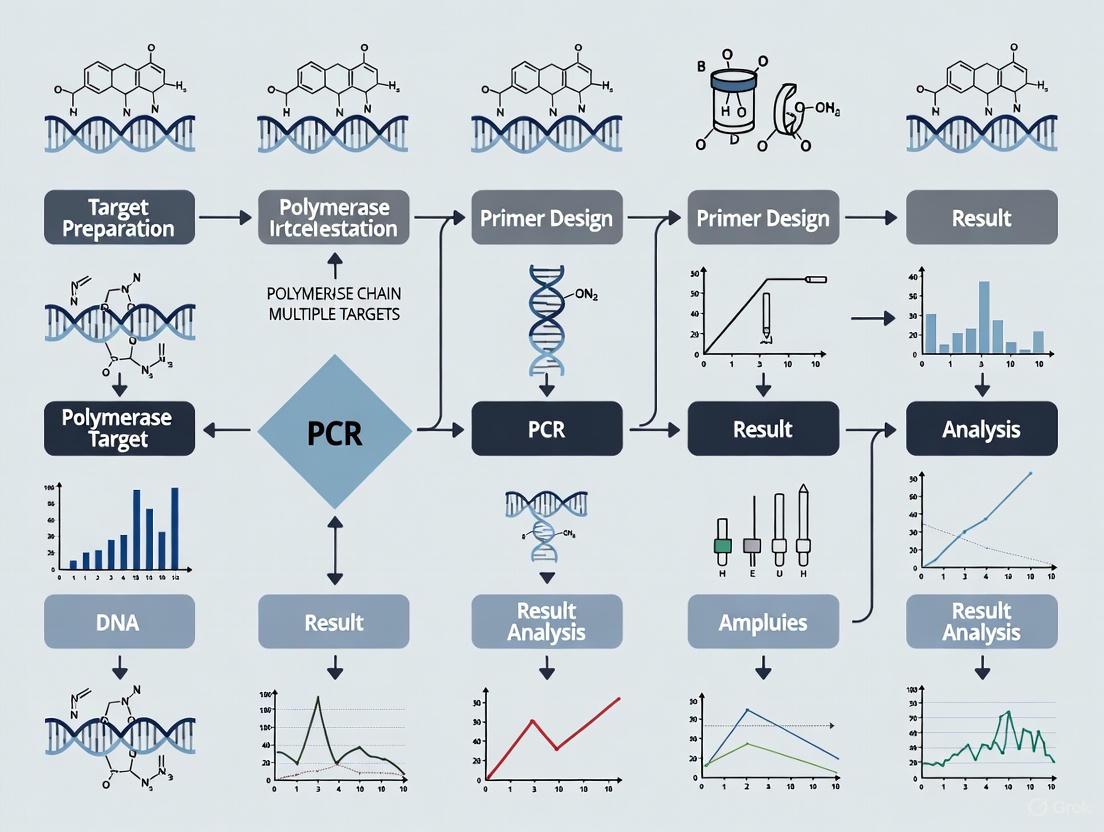
This article provides a comprehensive guide for researchers and drug development professionals on designing, executing, and validating robust multiplex PCR assays.
Advanced Multiplex PCR Protocol: Design, Optimization, and Validation for Multi-Target Detection
Abstract
This article provides a comprehensive guide for researchers and drug development professionals on designing, executing, and validating robust multiplex PCR assays. Covering foundational principles to advanced applications, it details the development of highly sensitive one-step RT-ddPCR assays for up to nine viral targets, effective primer and probe design strategies, systematic troubleshooting for common pitfalls like false negatives and primer-dimers, and rigorous clinical validation. The content synthesizes recent technological advances, including digital PCR and fluorescence melting curve analysis, and offers a framework for implementing these powerful multi-target detection tools in clinical, environmental, and research settings to enhance diagnostic accuracy and efficiency.
Multiplex PCR Fundamentals: Principles, Design, and Clinical Utility
Multiplex Polymerase Chain Reaction (PCR) is a powerful molecular technique that enables the simultaneous amplification of multiple distinct nucleic acid targets in a single reaction tube. By incorporating multiple primer sets specific to different DNA or RNA sequences, this methodology maximizes informational yield from precious or limited samples while significantly enhancing laboratory efficiency [1]. The evolution from standard single-plex PCR to multiplex formats represents a significant advancement in molecular diagnostics, research, and quality control applications across diverse fields including clinical diagnostics, forensic science, and food safety testing [1] [2].
The fundamental principle of multiplex PCR maintains the core DNA amplification process of conventional PCR while strategically addressing the complexity of coordinating multiple primer pairs within a shared reagent environment. Successful implementation requires careful optimization to ensure balanced amplification of all targets, as multiple sequences compete for shared resources including DNA polymerase, dNTPs, buffer components, and magnesium ions [1] [2]. The introduction of fluorescent detection systems, particularly through labeled primers or probes such as TaqMan chemistry, has revolutionized multiplex PCR by allowing real-time, quantitative detection of multiple targets—even those producing same-size amplicons—without requiring post-PCR processing [1] [3].
Key Advantages and Applications
Core Benefits
Multiplex PCR delivers substantial practical advantages that make it indispensable for modern laboratories:
- Sample Preservation: Ideal for scenarios where samples are scarce or irreplaceable, enabling maximal information retrieval from minimal starting material [1].
- Increased Throughput: Significantly accelerates time-to-result by detecting multiple targets in a single reaction, reducing both hands-on time and overall processing requirements [1].
- Cost Efficiency: Once optimized, a single reagent mix supports amplification of multiple targets, substantially reducing per-target costs for reagents and consumables [1] [4].
- Enhanced Data Reliability: Enables incorporation of co-detectable controls such as Sample Processing Controls (SPC) and Internal Positive Controls (IPC), ensuring assay accuracy and correct interpretation of results [1].
- Improved Quantification Precision: When comparing multiple targets amplified in the same well, pipetting variations are minimized as all targets experience identical reaction conditions [3] [4].
Diagnostic and Research Applications
Multiplex PCR has found diverse applications across multiple scientific disciplines:
Table: Key Application Areas of Multiplex PCR
| Application Field | Specific Examples | References |
|---|---|---|
| Infectious Disease Diagnostics | Simultaneous detection of respiratory pathogens (SARS-CoV-2, influenza A/B, RSV); bloodstream pathogens for sepsis diagnostics; gastrointestinal pathogens; sexually transmitted infections | [1] [5] [2] |
| Genetic Analysis | Detection of genetic deletions (e.g., Duchenne muscular dystrophy gene); Short Tandem Repeat (STR) analysis for forensics and paternity testing; copy number variation analysis; single nucleotide variant (SNV) detection | [1] [6] [4] |
| Oncology | Liquid biopsy for circulating tumor DNA; cancer genotyping; copy number variation in tumors; monitoring minimal residual disease | [7] [4] [8] |
| Food Safety & Environmental Monitoring | Detection of foodborne pathogens (Salmonella, Listeria, E. coli); screening for genetically modified organisms (GMOs); monitoring microbial contamination in water and soil | [1] |
| Cell and Gene Therapy | Quality control in manufacturing; vector genome integrity assessment for adeno-associated virus (AAV) | [4] |
Syndromic testing represents one of the most significant advancements in clinical applications, allowing clinicians to test for multiple pathogens producing similar symptoms in a single test. This approach facilitates differential diagnosis by discriminating between pathogens that require different treatment strategies, ultimately improving patient care and operational efficiency [7].
Technical Principles and Methodological Variations
Fundamental Design Considerations
The development of robust multiplex PCR assays requires addressing several technical challenges:
Primer Design Specificity: Primers must be highly specific to their intended targets without significant homology to non-target sequences or to each other, minimizing the risk of primer-dimer formations and spurious amplification products [6] [2]. Software tools like Ultiplex provide automated solutions for designing specific, non-interacting primers while avoiding secondary structures and nonspecific amplification across the whole genome [6].
Reaction Component Balancing: The competitive nature of multiplex PCR necessitates careful optimization of reaction components. primer concentrations, MgCl₂ levels, and DNA polymerase amounts often require adjustment beyond standard single-plex protocols to ensure balanced amplification of all targets [2].
Fluorophore Selection: For fluorescence-based detection, dyes must be selected with minimal spectral overlap and compatibility with the detection instrument. Matching dye intensity with target abundance is crucial—typically pairing brighter dyes with low-abundance targets and dimmer dyes with highly expressed targets [9] [3].
Table: Common Fluorophores and Quenchers for Multiplex qPCR
| Fluorescent Dye | Excitation (nm) | Emission (nm) | Recommended Dark Quencher | Suitable Applications |
|---|---|---|---|---|
| 6-FAM | 495 | 520 | ZEN/Iowa Black FQ | Low-copy targets (high intensity) |
| HEX/VIC | 538 | 555 | ZEN/Iowa Black FQ | Medium-abundance targets |
| ROX | 575 | 608 | Iowa Black RQ | Reference dye (not for targets) |
| Cy5 | 648 | 668 | TAO/Iowa Black RQ | High-abundance targets |
| Texas Red-X | 598 | 617 | Iowa Black RQ | General multiplexing |
Methodological Variations
Several advanced methodological variations have enhanced the capabilities of multiplex PCR:
Multiplex Real-Time qPCR with Hydrolysis Probes: This gold-standard approach uses sequence-specific probes (e.g., TaqMan) labeled with distinct fluorescent reporters, enabling real-time quantification of multiple DNA or RNA targets. For RNA targets, reverse transcription qPCR (RT-qPCR) incorporates an initial cDNA synthesis step [1] [3].
High-Resolution Melting (HRM) Analysis: Combined with non-specific intercalating dyes like SYBR Green, HRM differentiates amplicons based on their unique melting profiles, allowing detection of sequence variations without requiring target-specific probes [1].
Multiplex Ligation-Dependent Probe Amplification (MLPA): This technique uses probe pairs that hybridize to adjacent target sequences, followed by ligation and amplification with universal primers. A notable variant, methylation-specific MLPA (MS-MLPA), can simultaneously detect copy number variations and methylation status, making it invaluable for diagnosing epigenetic disorders like Beckwith-Wiedemann Syndrome [1].
Digital PCR Multiplexing: Digital PCR platforms enable absolute quantification of multiple targets by partitioning samples into thousands of individual reactions. This approach offers higher resistance to PCR inhibitors and improved accuracy for detecting rare targets and large concentration differences [4] [8].
Universal Signal Encoding PCR (USE-PCR): A novel approach that combines universal hydrolysis probes with amplitude modulation and multispectral encoding to dramatically increase multiplexing capabilities while simplifying assay design through standardized reagent systems [8].
Experimental Protocols
Protocol: Development of a Multiplex PCR Assay for Respiratory Pathogen Detection
This protocol outlines the development and validation of a multiplex PCR assay for simultaneous detection of six respiratory pathogens (SARS-CoV-2, influenza A, influenza B, respiratory syncytial virus, human adenovirus, and Mycoplasma pneumoniae) using fluorescence melting curve analysis (FMCA) [5].
Primer and Probe Design
Target Selection: Identify conserved genomic regions for each target pathogen:
- SARS-CoV-2: Envelope protein (E) and nucleocapsid phosphoprotein (N) genes
- Influenza A: Matrix protein (M) gene
- Influenza B: Nonstructural protein 1 (NS1) gene
- RSV: Matrix protein (M) gene
- Human adenovirus: Hexon gene
- M. pneumoniae: CARDS toxin gene
- Include human RNase P gene as an internal control [5]
In Silico Design:
- Use design software (e.g., Primer Premier 5, Primer Express 3.0.1)
- Check specificity using NCBI BLAST against relevant databases
- Design probes with tetrahydrofuran (THF) residues at potentially variable positions to enhance hybridization stability across variants [5]
Fluorophore Selection:
Reaction Setup and Thermal Cycling
Table: Reaction Components for FMCA-Based Multiplex PCR
| Component | Final Concentration | Volume per 20 µL Reaction | Notes |
|---|---|---|---|
| 5× One Step U* Mix | 1× | 4 µL | Includes dNTPs, buffer, Mg²⁺ |
| One Step U* Enzyme Mix | 1× | 0.5 µL | Reverse transcriptase and hot-start DNA polymerase |
| Limiting Primer Mix | Variable | 0.5 µL | Asymmetric PCR for ssDNA production |
| Excess Primer Mix | Variable | 0.5 µL | Asymmetric PCR for ssDNA production |
| Probe Mix | Variable | 0.5 µL | Optimized concentration for each probe |
| Template RNA/DNA | - | 10 µL | Extracted nucleic acids |
| Nuclease-Free Water | - | To 20 µL | - |
Thermal Cycling Conditions:
- Reverse Transcription: 50°C for 5 minutes
- Initial Denaturation: 95°C for 30 seconds
- Amplification (45 cycles):
- Denaturation: 95°C for 5 seconds
- Annealing/Extension: 60°C for 13 seconds
- Melting Curve Analysis:
- Denaturation: 95°C for 60 seconds
- Hybridization: 40°C for 3 minutes
- Ramp from 40°C to 80°C at 0.06°C/s [5]
Analytical Validation
Limit of Detection (LOD) Determination:
- Prepare serial dilutions of quantified target templates
- Test each dilution in 20 replicates
- Calculate LOD using probit analysis as the concentration detectable with ≥95% probability [5]
Specificity Testing:
- Test against a panel of non-target respiratory pathogens (e.g., other viruses, bacteria)
- Confirm absence of cross-reactivity [5]
Precision Assessment:
- Evaluate intra-assay precision using 5 replicates of each control in a single run
- Evaluate inter-assay precision using 5 replicates across different runs, operators, and days
- Calculate coefficient of variation for melting temperature (Tm) values [5]
Protocol: Primer Design and Compatibility Checking with Ultiplex
For researchers designing custom multiplex PCR assays, the web-based tool Ultiplex provides an automated pipeline for primer design and compatibility checking [6].
Input Preparation:
- Prepare a BED file containing genomic coordinates of target regions
- Define primer parameters (Tm values, product length, GC content)
- Specify reference genome and any regions to avoid (SNPs, repetitive elements) [6]
Primer Design and Filtration:
- The software designs primers using modified Primer3 algorithms
- Filters primers with significant secondary structures (hairpins with Tm >45°C, dimers with Tm >40°C)
- Excludes primers with 3' ends located in problematic regions (SNPs, repeats) [6]
Specificity Checking:
- Performs whole-genome BLAST alignment to identify potential off-target binding sites
- Applies stringent criteria: aligned sequence >12 bp, e-value >1000, limited 3' end mismatches [6]
Multiplex Compatibility Assessment:
- Checks mutual compatibility of all primer pairs to avoid cross-hybridization
- Clusters compatible primers into multiplex groups
- Generates comprehensive reports with graphic overviews [6]
Visualization of Workflows
Multiplex PCR Assay Development Workflow
Multiplex PCR Signal Detection Mechanisms
The Scientist's Toolkit: Essential Research Reagent Solutions
Table: Key Reagents and Materials for Multiplex PCR Development
| Reagent/Material | Function/Purpose | Implementation Example | References |
|---|---|---|---|
| Hot-Start DNA Polymerase | Reduces non-specific amplification and primer-dimer formation by activating enzyme only at high temperatures | Use in multiplex master mixes to improve specificity in complex primer mixtures | [2] |
| Multiplex PCR Master Mix | Specially formulated with optimized buffer salts, MgCl₂ concentration, and enhancers to support simultaneous amplification of multiple targets | TaqMan Multiplex Master Mix with Mustang Purple passive reference dye for high-plex reactions | [3] |
| Double-Quenched Probes | Reduce background fluorescence through additional internal quenchers (ZEN/TAO), critical for multiplex applications with multiple fluorophores | Use for low-abundance targets to improve signal-to-noise ratio in multiplex qPCR | [9] |
| PCR Additives | Enhance amplification efficiency of difficult targets by reducing secondary structures or stabilizing enzymes (DMSO, glycerol, BSA, betaine) | Betaine for GC-rich targets; BSA for inhibitors in complex samples | [2] |
| Synthetic Template Controls | Provide standardized positive controls for assay development and validation without requiring biological samples | Use during primer validation and for standard curve generation in quantification assays | [10] [8] |
| Universal Probe Systems | Simplify assay design and enable reagent portability across platforms through standardized detection chemistry | USE-PCR universal probe mix with color-coded tags for high-plex applications | [8] |
| Nucleic Acid Purification Kits | Ensure high-quality template preparation free of inhibitors that disproportionately affect multiplex reactions | Automated extraction systems with integrated DNase/RNase treatment for complex samples | [5] |
Technical Challenges and Optimization Strategies
Despite its significant advantages, multiplex PCR presents several technical challenges that require systematic optimization approaches:
Common Challenges
Assay Competition: Multiple targets compete for shared reagents (dNTPs, polymerase, Mg²⁺), potentially leading to imbalanced amplification and reduced sensitivity for less efficient assays [1] [2]. This competition effect becomes more pronounced as multiplexing complexity increases.
Primer Interactions: The presence of multiple primer pairs increases the risk of primer-dimer formations and other nonspecific interactions that can consume reaction components and impair specific amplification [2] [3].
Spectral Overlap: In fluorescence-based detection, emission spectra of fluorophores may overlap, requiring careful dye selection and instrument calibration to accurately distinguish signals [9] [3].
Preferential Amplification: Certain templates may amplify more efficiently due to sequence characteristics (GC content, secondary structures), leading to biased representation of targets in the final amplification products [2].
Optimization Strategies
Primer Limitation: For highly abundant targets (e.g., internal controls), reduce primer concentrations (typically to 150nM instead of 900nM) to prevent reagent exhaustion and allow balanced amplification of less abundant targets [3].
Staggered Primer Design: Design all primer pairs to have similar annealing temperatures (generally within 2°C) and avoid significant homology between primers targeting different sequences [2] [3].
Thermal Profile Optimization: Implement touchdown PCR or two-step amplification protocols to improve specificity, and systematically evaluate elongation temperatures to find optimal conditions for all targets [10].
Validation Pathway: Always begin with single-plex validation of each assay component before combining into multiplex formats, then compare single-plex and multiplex performance to ensure no loss of sensitivity or efficiency [10] [3].
Future Perspectives
The future of multiplex PCR continues to evolve with several promising technological advancements:
Increased Multiplexing Capacity: Novel approaches like USE-PCR demonstrate potential for detecting 32 or more targets simultaneously through advanced encoding strategies combining amplitude modulation and multispectral detection [8].
Point-of-Care Applications: Integration with isothermal amplification methods (e.g., LAMP) and microfluidic technologies enables development of rapid, portable multiplex systems for field-based testing [1] [7].
Artificial Intelligence Integration: AI-assisted assay design and data analysis platforms are emerging to streamline the development process and enhance interpretation of complex multiplex results [7].
Standardization and Automation: Continued development of universal reagent systems and automated platforms will improve reproducibility and accessibility of multiplex testing across diverse laboratory settings [7] [8].
Multiplex PCR represents a sophisticated molecular tool that significantly expands diagnostic and research capabilities beyond single-plex approaches. Through careful design, systematic optimization, and appropriate technological selection, researchers can leverage its powerful advantages to maximize information yield, conserve valuable resources, and accelerate scientific discovery across diverse applications.
The advent of multiplex molecular assays represents a significant advancement in diagnostic technology, enabling the simultaneous detection and absolute quantification of multiple nucleic acid targets in a single reaction. These techniques are revolutionizing fields from clinical diagnostics to environmental surveillance by providing comprehensive pathogen profiles while conserving valuable samples and reducing reagent costs [11]. The core principles underlying these technologies allow researchers to overcome limitations of traditional single-analyte tests, particularly in situations where multiple pathogens with overlapping clinical presentations cocirculate or when limited sample volume is available [5].
This application note details the methodological frameworks for two prominent approaches: multiplex digital PCR (dPCR) for absolute quantification without standard curves and fluorescence melting curve analysis (FMCA) for efficient target discrimination. We provide detailed protocols and analytical validation data to support researchers in implementing these powerful techniques in their laboratories.
Multiplex assays for simultaneous detection rely on two fundamental principles: physical or optical partitioning of reactions to enable absolute quantification, and probe-based differentiation to identify multiple targets. Digital PCR achieves absolute quantification by partitioning a single PCR reaction into thousands of nanoliter-sized droplets or wells, effectively creating individual reaction chambers. After endpoint amplification, positive and negative partitions are counted and the initial target concentration is calculated using Poisson statistics, eliminating the need for standard curves [11] [12]. This approach provides enhanced sensitivity and resistance to PCR inhibitors compared to traditional quantitative PCR (qPCR).
For target differentiation, modern multiplex assays utilize several strategies. Hydrolysis (TaqMan) probes labeled with different fluorophores (FAM, HEX, ROX, Cy5) allow detection of multiple targets in separate optical channels [11]. More advanced systems employ fluorescence melting curve analysis (FMCA), where probes with distinct melting temperatures (Tm) hybridize to their targets, enabling discrimination based on dissociation characteristics during temperature ramping [5]. The combination of these principles enables researchers to detect up to nine targets in a single reaction, as demonstrated in recent studies [11].
Experimental Protocols
Nine-Plex One-Step RT-ddPCR for Viral Pathogens
This protocol describes a highly multiplexed assay for detecting nine viral targets, including SARS-CoV-2 (N1 and N2 genes), Influenza A and B, Respiratory Syncytial Virus, and Hepatitis A and E, along with endogenous and exogenous controls [11].
Research Reagent Solutions
Table 1: Essential reagents for multiplex ddPCR
| Reagent/Component | Function/Application | Specification |
|---|---|---|
| QX600 Droplet Digital PCR System | Partitioning, amplification, and reading | Bio-Rad |
| One-step RT-ddPCR Advanced Kit for Probes | Master mix for reverse transcription and amplification | Bio-Rad |
| Primers/Probes Sets | Target-specific amplification | Custom designed with ZEN/Iowa Black quenchers |
| Enviro Wastewater TNA Kit | Nucleic acid extraction from complex matrices | Promega |
| Synthetic DNA Oligonucleotides (gBlocks) | Analytical validation and standard preparation | Integrated DNA Technologies |
Primer and Probe Design
- Design primers targeting conserved regions of viral genomes: SARS-CoV-2 N1 and N2 genes, Influenza A M gene, Influenza B NS gene, RSV M gene, HAV 5'UTR gene, and HEV ORF3 gene [11]
- Include two endogenous controls: Beta-2 microglobulin (B2M) as an internal control and a synthetic DNA oligo as an external control
- Label hydrolysis probes with distinct fluorophores (FAM, HEX, ROX, Cy5, ATTO590) with ZEN/Iowa Black quenchers for efficient quenching
- Separate targets into high and low fluorescence groups by varying primer/probe concentrations (900nM/300nM for high targets; 400-450nM/100-150nM for low targets) to create distinct clusters in 2D amplitude plots [11]
Reaction Setup and Thermal Cycling
- Prepare reaction mix containing 5.0 μL of Supermix, 2.0 μL of Reverse Transcriptase, 1.0 μL of 300 mM DTT, optimized primer/probe concentrations, and 5 μL of RNA template in a total volume of 20 μL
- Generate droplets using the QX600 Droplet Generator according to manufacturer's instructions
- Perform amplification with the following protocol:
- Reverse transcription: 50°C for 1 hour
- Enzyme activation: 95°C for 10 minutes
- 40 cycles of:
- Denaturation: 94°C for 30 seconds
- Annealing/Extension: 61°C for 1 minute
- Enzyme deactivation: 98°C for 10 minutes
- Read plate using QX600 Droplet Reader and analyze with QuantaSoft software, excluding wells with <10,000 droplets [11]
Figure 1: Workflow of the nine-plex one-step RT-ddPCR assay
FMCA-Based Multiplex PCR for Respiratory Pathogens
This protocol details a cost-effective FMCA-based method for detecting six respiratory pathogens (SARS-CoV-2, Influenza A and B, RSV, hADV, and M. pneumoniae) using melting curve analysis for target discrimination [5].
Primer and Probe Design with Abasic Sites
- Design primers and probes targeting conserved regions: SARS-CoV-2 E and N genes, IAV M gene, IBV NS1 gene, RSV M gene, hADV hexon gene, and MP CARDS toxin gene
- Incorporate base-free tetrahydrofuran (THF) residues as abasic sites in probes to minimize impact of sequence variations on melting temperature (Tm) and enhance hybridization stability across subtypes [5]
- Label probes with different fluorescent dyes to facilitate multiplex detection
- Employ asymmetric PCR with unequal primer ratios to favor single-stranded DNA production, improving probe accessibility and melting peak resolution
Reaction Setup and Melting Curve Analysis
- Prepare 20 μL reactions containing 5× One Step U* Mix, One Step U* Enzyme Mix, limiting and excess primers, probes, and 10 μL template
- Perform amplification with the following protocol:
- Reverse transcription: 50°C for 5 minutes
- Initial denaturation: 95°C for 30 seconds
- 45 cycles of:
- Denaturation: 95°C for 5 seconds
- Annealing/Extension: 60°C for 13 seconds
- Conduct post-PCR melting curve analysis:
- Denaturation: 95°C for 60 seconds
- Hybridization: 40°C for 3 minutes
- Temperature ramp: 40°C to 80°C at 0.06°C/s
- Identify specific melting peaks corresponding to each pathogen based on their characteristic Tm values [5]
Analytical Performance Data
Sensitivity and Detection Limits
Table 2: Sensitivity metrics for multiplex detection platforms
| Platform/Method | Targets | Linear Range (copies/μL) | Limit of Detection (copies/μL) | Reference |
|---|---|---|---|---|
| 9-plex RT-ddPCR | 9 viral targets | Varies by target | 1.4 - 2.9 | [11] |
| FMCA-based PCR | 6 respiratory pathogens | N/A | 4.94 - 14.03 | [5] |
| Quadruplex ddPCR | 4 bacterial pathogens | 15-27,000 (varies by target) | 7 - 9 copies/20μL | [12] |
| Pentaplex dPCR | 5 reference genes | Wide dynamic range demonstrated | Precise LOD not specified | [13] |
The nine-plex RT-ddPCR assay demonstrated excellent sensitivity with detection limits ranging from 1.4 to 2.9 copies/μL depending on the viral target, determined through probit analysis of serial dilutions [11]. Similarly, the FMCA-based method showed high sensitivity with LODs between 4.94 and 14.03 copies/μL across the six respiratory pathogens [5]. The quadruplex ddPCR assay for foodborne bacteria achieved detection limits of 7-9 copies per 20μL reaction for various bacterial targets [12].
Precision and Reproducibility
Table 3: Precision metrics across multiplex platforms
| Platform/Method | Intra-assay Precision (CV) | Inter-assay Precision (CV) | Sample Type | Reference |
|---|---|---|---|---|
| 9-plex RT-ddPCR | High concordance with singleplex (p>0.1) | Reproducible in wastewater samples | Synthetic DNA, wastewater | [11] |
| FMCA-based PCR | ≤ 0.70% | ≤ 0.50% | Clinical samples | [5] |
| Multiplex qPCR | 0.99% - 3.34% | < 7% | Bacterial isolates, rectal swabs | [14] |
The FMCA-based method demonstrated exceptional precision with intra-assay coefficients of variation (CV) ≤ 0.70% and inter-assay CVs ≤ 0.50% based on Tm value variability [5]. The nine-plex RT-ddPCR showed high concordance with singleplex assays (Mann-Whitney test, p > 0.1), indicating no statistically significant differences between methods [11]. The multiplex real-time PCR for carbapenemase genes showed intra-assay CVs ranging from 0.99% for OXA-48 to 3.34% for KPC, with inter-assay variability remaining below 7% for all targets [14].
Specificity and Cross-Reactivity
All validated multiplex assays demonstrated high specificity without cross-reactivity. The FMCA-based method was validated against 47 reference strains of different subtypes and showed no cross-reactivity with a panel of 10 non-target respiratory viruses and 4 bacteria [5]. The quadruplex ddPCR for foodborne pathogens showed specific amplification only for target pathogens without cross-reacting with 22 non-target bacterial strains including E. coli, Vibrio spp., Shigella spp., and other related species [12].
Applications and Validation Data
Clinical and Environmental Applications
The nine-plex RT-ddPCR was successfully applied to 38 wastewater samples collected from the Attica region of Greece, demonstrating robust performance in complex matrices and highlighting the ability to detect multiple viral targets in environmental surveillance [11]. The FMCA-based method was clinically validated using 1,005 nasopharyngeal swabs from patients with respiratory symptoms, showing 98.81% agreement with RT-qPCR and identifying 51.54% pathogen-positive cases, including 6.07% co-infections [5]. This method also resolved 12 discordant results via Sanger sequencing, confirming superior sensitivity in low viral load scenarios.
Figure 2: Diverse applications of multiplex detection technologies
Cost and Time Efficiency
The FMCA-based method offers significant practical advantages with a turnaround time of 1.5 hours and a cost of $5 per sample, representing an 86.5% reduction compared to commercial kits [5]. This cost-effectiveness makes it particularly valuable for resource-limited settings and high-throughput screening during outbreaks. Similarly, the quadruplex ddPCR method for foodborne bacteria demonstrated superior efficiency compared to traditional plate counting methods, providing results in significantly less time with lower detection limits and robust reproducibility [12].
Troubleshooting and Optimization Guidelines
Successful implementation of multiplex assays requires careful optimization. The following guidelines address common challenges:
Primer and Probe Concentration Optimization: Systematically vary primer and probe concentrations to achieve balanced amplification across targets. The nine-plex assay utilized different concentrations (900nM/300nM for high targets; 400-450nM/100-150nM for low targets) to create distinct clusters in 2D plots [11].
Cross-reactivity Mitigation: Perform comprehensive specificity testing against related non-target organisms. The quadruplex ddPCR assay validated specificity against 22 non-target bacterial strains to ensure no false positives [12].
Inhibition Management: For complex matrices like wastewater, implement appropriate sample processing and inhibitor removal steps. The nine-plex assay successfully detected targets in wastewater using a direct capture-based extraction method optimized for environmental samples [11].
Data Interpretation: Establish clear thresholding criteria and validation rules. For FMCA-based methods, ensure proper Tm validation for each target and establish quality control measures for melting curve analysis [5].
These core principles and detailed protocols provide researchers with a foundation for implementing multiplex detection and quantification assays, enabling comprehensive pathogen profiling and advancing research capabilities across diverse applications.
Multiplex Polymerase Chain Reaction (PCR) has emerged as a transformative technology in molecular diagnostics, enabling the simultaneous detection of multiple pathogens from a single sample. This capability is particularly valuable in infectious disease management, where rapid, comprehensive identification of etiological agents directly influences patient outcomes and antimicrobial stewardship. This application note details the use of multiplex PCR protocols for detecting pathogens across three critical areas: respiratory infections, viral hepatitis, and sexually transmitted infections (STIs). The protocols and data presented herein are framed within a broader thesis on developing optimized multiplex PCR assays for multiple targets, providing researchers and drug development professionals with standardized methodologies for implementation in diagnostic and research settings.
Application Note: Respiratory Pathogen Detection
Epidemiological Profile of Respiratory Pathogens
Table 1: Detection Rates of Common Respiratory Pathogens Across Age Groups (n=27,031 samples) [15]
| Pathogen | Overall Positive Rate (%) | Highest Prevalence Age Group | Peak Seasonal Period |
|---|---|---|---|
| MP | Data not extractable | Children & Adolescents | Summer & Autumn |
| SARS-CoV-2 | Data not extractable | Older Adults (≥65 years) | Spring |
| FluA | Data not extractable | 5-17 & 18-44 years | Spring |
| FluB | 3.4% | 5-17 & 18-44 years | Winter |
| RSV | Data not extractable | <5 years | Winter |
| HRV | Data not extractable | <5 years | Autumn |
| ADV | Data not extractable | <5 years | Winter |
Analysis of 27,031 throat swab samples from outpatient populations revealed an overall pathogen detection rate of 25.6%, with 1.26% showing co-infections [15]. Age-specific distribution patterns were prominent, with patients under 5 years showing the highest infection rate (60.62%) [15]. These epidemiological patterns underscore the importance of multiplex testing for accurate surveillance and clinical management.
Comparative Performance of Multiplex PCR Panels
Table 2: Comparative Performance of Multiplex PCR Panels for Respiratory Pathogen Detection [16]
| Parameter | Pneumonia Panel | Bacterial Culture | Respiratory Panel |
|---|---|---|---|
| Positivity Rate | 60.3% | 52.8% | Comparable to Pneumonia Panel |
| Concordance with Culture | 77.2% | - | - |
| Specimen Type | Sputum (higher yield) | Sputum | Nasal swabs |
| Key Advantage | Detects viral co-infections & resistance genes | Gold standard but slower | Interchangeable viral detection |
A recent comparative study demonstrated the superior detection capability of multiplex PCR panels compared to traditional bacterial culture methods [16]. The pneumonia panel showed significantly higher positivity rates (60.3% vs. 52.8%) while maintaining substantial concordance (77.2%) with culture results [16]. This enhanced detection capability extends to identifying viral co-infections and antimicrobial resistance genes, providing a more comprehensive diagnostic profile.
Figure 1: Experimental workflow for respiratory pathogen detection using multiplex qPCR.
Experimental Protocol: Respiratory Pathogen Detection
Protocol: Multiplex qPCR for Respiratory Pathogens
Sample Preparation:
- Collect throat swabs or sputum samples in virus inactivation sampling tubes [15]
- Extract nucleic acids using commercial extraction kits (e.g., Sansure Biotech Nucleic Acid Extraction Purification kit) [15]
- Use automated extraction systems (e.g., Natch 32A) for consistency [15]
PCR Amplification:
- Utilize commercially available multiplex PCR kits (e.g., Six Respiratory Pathogens Nucleic Acid Diagnostic Kit) [15]
- Prepare reaction mix: 43.5 μL PCR Mix, 1.5 μL enzyme mix, 5 μL extracted nucleic acid [15]
- Perform amplification on real-time PCR systems (e.g., SLAN-96S) with the following parameters [15]:
Thermal Cycling Conditions:
- Reverse Transcription: 50°C for 30 minutes (1 cycle)
- Pre-denaturation: 95°C for 1 minute (1 cycle)
- Amplification: 95°C for 15 seconds, 60°C for 30 seconds (45 cycles) [15]
Data Analysis:
- Determine positivity based on Ct values and internal controls
- Identify specific pathogens using channel-specific fluorescence
- Analyze amplification curves for quantification potential
Application Note: Viral Hepatitis Detection
Multiplex qPCR for Hepatitis Virus Identification
Table 3: Conserved Genomic Regions Used for Hepatitis Virus Detection by Multiplex qPCR [17]
| Virus | Target Genomic Region | Detection Chemistry | Linear Dynamic Range |
|---|---|---|---|
| HAV | 5' Untranslated Region (UTR) | Hydrolysis probes | 10-100 copies/mL |
| HBV | S-gene or X-gene | Hydrolysis probes | 10-100 copies/mL |
| HCV | 5' Untranslated Region (UTR) | Hydrolysis probes | 10-100 copies/mL |
| HDV | Ribozyme-1 gene | Hydrolysis probes | 10-100 copies/mL |
| HEV | ORF2 or ORF3 region | Hydrolysis probes | 10-100 copies/mL |
| HGV | 5' Untranslated Region (UTR) | Hydrolysis probes | 10-100 copies/mL |
Multiplex qPCR assays for hepatitis viruses target conserved regions of each pathogen's genome to ensure specific detection while accommodating sequence variations across strains [17]. The 5' UTR is preferentially targeted for HAV, HCV, and HGV, while structural genes are selected for other hepatitis viruses [17]. Hydrolysis probes (TaqMan) are the predominant chemistry due to their improved detection specificity and capacity for multiplexing [17].
Experimental Protocol: Hepatitis Virus Multiplex Detection
Protocol: Multiplex qPCR for Hepatitis Viruses
Primer and Probe Design:
- Identify conserved regions through multiple sequence alignment
- Design primers with compatible melting temperatures (within 5°C)
- Select hydrolysis probes with distinct fluorophore labels
- Verify specificity through in silico analysis against sequence databases
Reaction Optimization:
- Standardize primer concentrations to minimize competitive inhibition
- Incorporate hot-start DNA polymerase to prevent primer-dimer formation
- Optimize MgCl₂ concentration for efficient multiplex amplification
- Validate with standardized controls and quantification standards
Clinical Implementation:
- The Canadian Association for the Study of the Liver (CASL) now recommends universal reflex testing for HDV in all HBsAg-positive individuals [18]
- Quantitative HBV DNA testing is recommended every 6 months to monitor treatment response in patients on antiviral therapy [18]
- Multiplex assays enable comprehensive hepatitis profiling, including co-infection detection
Figure 2: Hepatitis virus detection and genotyping workflow.
Application Note: STI Pathogen Detection
Qualitative and Quantitative Detection of Multiple STI Pathogens
Table 4: Prevalence and Association of STI Pathogens with Cervicitis and Vaginitis (n=944 participants) [19]
| Pathogen | Overall Prevalence (%) | Association with Cervicitis | Association with Vaginitis |
|---|---|---|---|
| Ureaplasma parvum | 42.6% | Limited | Limited |
| Human Cytomegalovirus | 24.2% | Moderate | Moderate |
| HPV | 15.7% | Strong | Variable |
| Chlamydia trachomatis | 15.4% | aOR: 2.78 | Less pronounced |
| Mycoplasma hominis | 12.7% | Moderate | Moderate |
| HHV-8 | 12.4% | Moderate | Moderate |
| Klebsiella granulomatis | 10.8% | aOR: 2.40 | Less pronounced |
| Treponema pallidum | Data not extractable | aOR: 19.76 | Less pronounced |
A comprehensive study screening for 15 STI pathogens revealed an overall infection rate of 78.4% in the cohort, with significantly higher rates in symptomatic patients (cervicitis: 91.8%; vaginitis: 90.8%) compared to healthy controls (70.2%) [19]. The study demonstrated that quantitative determination was necessary for most pathogens to establish disease association, with cervicitis showing stronger pathogen correlations than vaginitis [19].
Experimental Protocol: STI Pathogen Detection and Quantification
Protocol: Multiplex MeltArray for STI Pathogen Detection
Panel Composition:
- Design primers to detect 15 common STI pathogens: Chlamydia trachomatis, Neisseria gonorrhoeae, Mycoplasma genitalium, Mycoplasma hominis, Ureaplasma urealyticum, Ureaplasma parvum, Treponema pallidum, Haemophilus ducreyi, Klebsiella granulomatis, Trichomonas vaginalis, HCMV, HSV-1, HSV-2, VZV, and HHV-8 [19]
- Include HPV genotyping assay covering 37 genotypes [19]
- Incorporate human RNase P gene as internal control [19]
Screening Phase:
- Use 16-plex MeltArray assay for initial screening
- Perform single reaction per sample with turnaround time of 2.5 hours
- Verify concordance with singleplex qPCR (≥97.8% overall concordance) [19]
Quantification Phase:
- Perform individual singleplex qPCR assays for pathogens detected in screening
- Determine normalized abundance ratio (NAR) relative to human RNase P gene
- Establish quantitative thresholds for clinical significance
Data Integration:
- Apply logistic regression and random forest models for pathogen-disease correlation
- Determine sensitivity and specificity in validation cohorts
- Implement machine learning algorithms for diagnostic prediction
The Scientist's Toolkit
Table 5: Essential Research Reagent Solutions for Multiplex PCR Assay Development
| Reagent/Material | Function | Application Notes |
|---|---|---|
| Hot-Start DNA Polymerase | Inhibits polymerase activity at room temperature to prevent non-specific amplification | Essential for multiplex PCR; use antibody, affibody, or chemically modified enzymes [20] |
| Multiplex PCR Master Mix | Optimized buffer system for simultaneous amplification of multiple targets | Specifically formulated for multiplexing; contains stabilizers and enhancers [20] |
| Hydrolysis Probes (TaqMan) | Sequence-specific detection with different fluorophores | Preferred chemistry for multiplex qPCR; enables target differentiation [17] |
| Nucleic Acid Extraction Kits | Isolation of high-quality DNA/RNA from clinical samples | Automated systems (e.g., Natch 32A) improve consistency [15] |
| Positive Control Panels | Validated controls for each target in the multiplex assay | Essential for assay validation and quality control |
| PCR Plates/Tubes with Optical Seals | Compatible with real-time PCR instruments | Thin-walled plastics improve thermal conductivity [20] |
Discussion
The integration of multiplex PCR technologies into infectious disease diagnostics represents a paradigm shift in laboratory medicine. The protocols and data presented demonstrate the considerable advantages of multiplex assays over traditional single-pathogen testing approaches, particularly in clinical scenarios where multiple pathogens with overlapping symptomatology must be rapidly differentiated.
Multiplex PCR design requires careful consideration of several competing factors, including primer compatibility, amplification efficiency, and detection specificity. Experimental evidence indicates that assay design is subject to computational phase transitions, where achieving high coverage (>95%) becomes dramatically more difficult when the probability of primer pair interaction exceeds a critical threshold [21]. This underscores the importance of sophisticated bioinformatics tools in multiplex assay development.
The WHO has recognized the importance of multiplex testing, convening a Guideline Development Group in 2025 to establish evidence-based recommendations specifically for multiplex testing of HIV, viral hepatitis, and STIs [22]. This initiative highlights the growing global recognition of multiplex technologies as essential tools for integrated, people-centered service delivery models.
From a sustainability perspective, multiplex testing offers significant advantages through consolidation of testing processes, reduced reagent consumption, decreased plastic waste, and lower carbon emissions associated with sample transport [23]. These environmental benefits, coupled with enhanced diagnostic capabilities, position multiplex PCR as a cornerstone technology for modern diagnostic laboratories.
Future developments in multiplex PCR will likely focus on increasing multiplexing capabilities through technologies such as temperature-activated signal generation (TAGS), which can triple the number of detectable targets using standard PCR platforms [23]. Additionally, the integration of digital pathology and artificial intelligence for result interpretation will further enhance the utility and accessibility of multiplex diagnostic solutions.
Multiplex Polymerase Chain Reaction (PCR) represents a significant advancement in molecular biology, enabling the simultaneous amplification of multiple nucleic acid targets in a single reaction. This sophisticated methodology offers profound advantages over traditional single-target (singleplex) assays, fundamentally enhancing the efficiency, scope, and economic viability of genetic analysis. For researchers and drug development professionals, multiplex PCR has become an indispensable tool that optimizes precious sample utilization, reduces reagent costs, and accelerates experimental throughput, thereby facilitating more comprehensive biological profiling [24] [25].
The core principle of multiplex PCR involves the careful optimization of multiple primer sets within a single reaction tube to co-amplify distinct genomic regions without cross-interference. This process demands meticulous primer design and reaction optimization to overcome challenges such as primer-dimer formation, amplification bias, and differential amplification efficiency [26] [27]. When successfully implemented, the technique delivers unparalleled data density from minimal starting material, making it particularly valuable in applications ranging from clinical diagnostics and pathogen surveillance to genetic biomarker discovery and quality control in biopharmaceutical development [5] [28].
Quantitative Advantages of Multiplex Over Single-Target Assays
The implementation of multiplex PCR confers substantial benefits across operational parameters. The following tables quantify these advantages in terms of efficiency and cost.
Table 1: Efficiency Comparison Between Multiplex and Single-Target PCR Assays
| Parameter | Single-Target PCR | Multiplex PCR | Advantage Magnitude |
|---|---|---|---|
| Targets per Reaction | 1 | 5-50+ (varies by panel) | 5x to 50x+ more data per run [24] |
| Time to Result (for 5 targets) | ~5-8 hours (sequential runs) | ~1.5-2 hours | ~60-75% reduction in hands-on/time-to-result [5] |
| Sample Consumption | High (divided for multiple reactions) | Low (single reaction for multiple targets) | Up to 80% reduction in sample required [28] |
| Throughput Potential | Low | High | Enables high-throughput screening [24] |
Table 2: Cost and Operational Benefits of Multiplex PCR
| Aspect | Single-Target PCR | Multiplex PCR | Impact |
|---|---|---|---|
| Reagent Cost (for 5 targets) | 5x reaction cost | ~1.2-1.5x reaction cost | ~70-85% cost saving per data point [29] [28] |
| Labor | High (multiple setups) | Low (single setup) | Reduces manual labor and pipetting errors [5] |
| Data Comprehensiveness | Isolated data points | Integrated, multi-parameter profile | Enables systems biology and pathway analysis [25] |
Application Note: Protocol for Meat Adulteration Detection
The following detailed protocol for detecting meat adulteration exemplifies a robust application of multiplex PCR, showcasing its practical utility in ensuring food authenticity.
Background and Objective
Food fraud, particularly the adulteration of high-value meats like sheep and goat with cheaper substitutes (e.g., pork, chicken, duck), is a significant global economic and safety concern [26]. This protocol establishes a highly specific multiplex PCR system to rapidly identify five common meat species in a single assay, providing a powerful tool for food authenticity verification.
Experimental Protocol
Sample Preparation and DNA Extraction
- Sample Collection: Obtain meat samples (e.g., 100 mg) from validated sources or retail markets.
- Homogenization: Flash-freeze samples in liquid nitrogen and grind to a fine powder using a sterile mortar and pestle.
- DNA Extraction: Purify genomic DNA using a commercial kit (e.g., TIANamp Genomic DNA Kit). Follow manufacturer instructions with additional precautions to avoid cross-contamination (e.g., dedicated consumables, partitioned workspaces).
- DNA Quantification and Quality Control: Measure DNA concentration and purity using a micro-volume UV-Vis spectrophotometer (e.g., NanoDrop). Acceptable samples should have an A260/A280 ratio between 1.7 and 2.0. Dilute DNA to a working concentration of 20 ng/μL and store at -20°C [26].
Primer Design and Validation
- Target Selection: Identify species-specific sequences within mitochondrial DNA genes (e.g., COX-2 for sheep, ND6 for goat, 16S rRNA for pig and chicken, ATP6 for duck) due to their high copy number and inter-species variability.
- Bioinformatic Design:
- Download complete mitochondrial genome sequences from NCBI GenBank.
- Use alignment software (e.g., ClustalW) to screen for gene fragments with high intra-species conservation and high inter-species specificity.
- Design primers with compatible melting temperatures (Tm), minimal self-complementarity (to avoid hairpins and dimers), and product sizes that allow clear resolution on a gel (e.g., 100-400 bp).
- Validate primer specificity in silico using tools like BLASTn and AutoDimer v1.0 [26].
Table 3: Research Reagent Solutions for Meat Adulteration Detection
| Reagent/Material | Function | Specification/Example |
|---|---|---|
| Species-Specific Primers | Amplification of unique genomic regions for each species. | Designed against mitochondrial genes (COX-2, ND6, 16S rRNA, ATP6) [26]. |
| High-Fidelity DNA Polymerase | Catalyzes DNA synthesis with high accuracy and processivity. | Essential for complex multiplex reactions with multiple primers [24]. |
| Optimized Buffer System | Provides optimal ionic and pH conditions for simultaneous amplification of all targets. | Often proprietary; may include enhancers to reduce primer-dimer formation [24]. |
| Agarose Gel | Matrix for electrophoretic separation of amplified DNA fragments by size. | 2% concentration for resolving 100-400 bp products [26]. |
Multiplex PCR Amplification
- Reaction Setup: Prepare a master mix for multiple reactions to minimize variability. A typical 25 μL reaction may contain:
- 1X PCR Buffer (with MgCl₂)
- 200 μM of each dNTP
- 0.2-0.4 μM of each primer (from all five species-specific primer pairs)
- 1.25 U of Thermostable DNA Polymerase
- 2 μL of DNA template (20 ng/μL)
- Nuclease-Free Water to volume.
- Thermocycling Conditions: Perform amplification in a thermal cycler with the following profile:
- Initial Denaturation: 94°C for 3 minutes.
- Amplification Cycles (30 cycles):
- Denaturation: 94°C for 30 seconds.
- Annealing: 56-60°C for 30 seconds (Requires gradient PCR optimization for optimal temperature).
- Extension: 72°C for 1 minute.
- Final Extension: 72°C for 5 minutes.
- Hold: 4°C ∞ [26].
Analysis and Interpretation
- Agarose Gel Electrophoresis: Load 5-10 μL of each PCR product onto a 2% agarose gel containing a safe DNA intercalating dye. Include a DNA molecular weight ladder.
- Visualization: Run electrophoresis at constant voltage (e.g., 100V) until bands are sufficiently resolved. Visualize under UV light.
- Result Interpretation: Identify species based on the presence of amplification bands at expected sizes (Sheep: 306 bp, Goat: 113 bp, Pork: 173 bp, Chicken: 379 bp, Duck: 240 bp) [26].
Key Outcomes and Advantages
This multiplex protocol successfully identifies target species with high specificity, reproducibility, and sensitivity, even in heat-treated samples. The primary advantage is the 5-fold reduction in the number of reactions needed compared to a singleplex approach, leading to significant savings in time, reagents, and labor, while conserving valuable sample material [26].
Application Note: Clinical Validation of a Respiratory Pathogen Panel
The transition of multiplex PCR into clinical diagnostics demonstrates its impact on public health and personalized medicine.
Background and Objective
Respiratory infections present with overlapping symptoms (cough, fever), making accurate, rapid diagnosis critical for treatment and antimicrobial stewardship. This protocol validates a novel Fluorescence Melting Curve Analysis (FMCA)-based multiplex PCR for simultaneous detection of six key pathogens: SARS-CoV-2, Influenza A (IAV), Influenza B (IBV), Respiratory Syncytial Virus (RSV), Adenovirus (hADV), and Mycoplasma pneumoniae (MP) [5].
Experimental Protocol
Sample Collection and Nucleic Acid Extraction
- Sample: Collect nasopharyngeal swabs and place in viral transport medium.
- Extraction: Purify total nucleic acids (RNA/DNA) using an automated system and corresponding extraction kit. Include a pre-centrifugation step for frozen samples to remove debris.
- Storage: Store eluted nucleic acids at -80°C [5].
Assay Design (FMCA)
- Principle: This method uses fluorescently labeled probes that hybridize to specific amplicons. Post-amplification, a melting curve analysis is performed. Each probe has a characteristic melting temperature (Tm), allowing differentiation of multiple targets in a single channel.
- Probe Design: Design primers and probes against conserved regions of pathogen genomes (e.g., SARS-CoV-2 E/N genes, IAV M gene). Probes are labeled with different fluorophores. Incorporating base-free tetrahydrofuran (THF) residues into probes can enhance robustness against genetic variants by minimizing the impact of base mismatches on Tm [5].
- Asymmetric PCR: Use an unequal primer ratio to generate single-stranded DNA, which facilitates more efficient probe hybridization during melting analysis [5].
Reverse Transcription-Asymmetric PCR and Melting Curve Analysis
- Reaction Setup: Use a one-step RT-PCR master mix. A 20 μL reaction contains:
- 1X One Step U* Mix and Enzyme Mix.
- Limiting and excess primers at optimized concentrations.
- Fluorescently labeled probes.
- 10 μL of nucleic acid template.
- Thermocycling and FMCA: Perform on a real-time PCR system.
- Reverse Transcription: 50°C for 5 min.
- Initial Denaturation: 95°C for 30 s.
- Amplification (45 cycles): 95°C for 5 s, 60°C for 13 s.
- Melting Curve Analysis: Denature at 95°C for 60 s, hybridize at 40°C for 3 min, then continuously heat from 40°C to 80°C at 0.06°C/s while collecting fluorescence data [5].
Analytical and Clinical Validation
- Analytical Sensitivity (LOD): Determine via probit analysis using serial dilutions of reference plasmids. The reported LODs ranged from 4.94 to 14.03 copies/μL [5].
- Precision: Assess intra-assay and inter-assay precision by testing replicates at different concentrations (e.g., 5x LOD and 2x LOD). Reported coefficients of variation (CV) for Tm were ≤0.70% and ≤0.50%, respectively [5].
- Specificity: Verify no cross-reactivity with a panel of non-target respiratory pathogens.
- Clinical Performance: Validate against commercial RT-qPCR kits using clinical samples (e.g., 1005 samples). The study demonstrated 98.81% agreement and identified 51.54% positive cases, including 6.07% co-infections, which are easily missed by single-plex tests [5].
Key Outcomes and Advantages
This FMCA-based multiplex assay provides a rapid (1.5 hours) and cost-effective ($5 per sample) solution for comprehensive respiratory testing. Its high sensitivity and ability to detect co-infections directly inform clinical management, improve antimicrobial stewardship, and enhance surveillance capabilities, showcasing a clear advantage over sequential single-pathogen tests [5].
Visualizing the Multiplex PCR Workflow and Advantage
The following diagrams illustrate the core concepts and procedural workflow of a typical multiplex PCR experiment.
Multiplex PCR Workflow from Sample to Result
Conceptual Advantage: Multiplex vs. Single-Target PCR
Successful implementation of multiplex PCR relies on a suite of specialized reagents, instruments, and software tools.
Table 4: Essential Research Reagent Solutions and Tools for Multiplex PCR
| Category | Item | Critical Function & Rationale |
|---|---|---|
| Core Reagents | Multiplex PCR Master Mix | A pre-optimized mix containing a high-fidelity, hot-start polymerase and a specialized buffer. The buffer often includes additives to promote stable primer binding for all targets and minimize non-specific amplification, which is crucial for complex reactions [24]. |
| Species/Target-Specific Primers | The foundation of the assay. Primers must be highly specific, have minimal cross-complementarity, and possess similar melting temperatures to function harmoniously in a single annealing step [26]. | |
| Instrumentation | Thermal Cycler with Gradient Function | Essential for empirical optimization of the annealing temperature, a critical step in balancing the amplification efficiency of all targets in the panel. |
| Real-Time PCR System or Capillary Electrophoresis | For detection and analysis. Real-time systems (e.g., for FMCA) allow for multiplexed detection and quantification. Gel or capillary electrophoresis separates amplicons by size for identification [26] [5]. | |
| Software & Design | Primer Design Software (e.g., PanelPlex) | Automated bioinformatics tools are critical for designing multiplex panels. They screen for primer-dimer potential, off-target hybridization, and ensure all primers are compatible, saving months of manual optimization [27] [30]. |
| Analysis Software (e.g., Crystal Miner) | Specialized software for analyzing complex data outputs, such as droplet digital PCR or melting curve data. It automates the identification of positive signals and generates quantitative results with intuitive visualization [31]. |
The Role of Multiplexing in Public Health Surveillance and Outbreak Management
Multiplex Polymerase Chain Reaction (PCR) represents a significant advancement in molecular diagnostics, enabling the simultaneous amplification and detection of multiple nucleic acid targets in a single reaction [2]. In public health, this technology has revolutionized surveillance and outbreak management by allowing for the comprehensive testing of a broad spectrum of pathogens from a single patient sample. The capacity to detect numerous potential etiological agents simultaneously is particularly valuable when investigating diseases with overlapping clinical symptoms, as it facilitates rapid identification of the causative organism and informs appropriate public health interventions [32] [5].
The application of multiplex PCR in public health settings has expanded considerably with the development of syndromic testing panels that target common pathogens associated with specific clinical presentations [32]. During the SARS-CoV-2 pandemic, the utility of multiplex testing became increasingly evident as health systems needed to differentiate between COVID-19, influenza, and other respiratory infections with similar symptom profiles [33] [34]. The technology has proven essential for efficient resource utilization, allowing laboratories to conserve testing materials and process more samples in a given time period while providing public health officials with the critical information needed to control disease spread [34].
Key Applications in Surveillance and Outbreak Management
Respiratory Pathogen Surveillance
Respiratory infections represent a substantial burden on public health systems globally, with multiplex PCR playing an increasingly vital role in their surveillance and management. Traditional testing methods such as viral culture and immunoassays have limitations in sensitivity, specificity, and turnaround time, making them inadequate for comprehensive surveillance during outbreaks [35] [5]. Multiplex PCR panels have overcome these limitations by enabling simultaneous detection of numerous viral and bacterial pathogens from a single specimen.
The Centers for Disease Control and Prevention (CDC) developed the Influenza SARS-CoV-2 (Flu SC2) Multiplex Assay to address the diagnostic challenges posed by the coexistence of COVID-19 and influenza seasons [34]. This real-time reverse transcription PCR (rRT-PCR) test simultaneously detects and differentiates between influenza A, influenza B, and SARS-CoV-2 in respiratory specimens, providing crucial information for both clinical management and public health surveillance. The assay allows for ongoing influenza surveillance while testing for SARS-CoV-2, ensuring that seasonal influenza monitoring continues uninterrupted during the COVID-19 pandemic [34].
A novel fluorescence melting curve analysis-based (FMCA) multiplex PCR assay was developed for simultaneous detection of six respiratory pathogens: SARS-CoV-2, influenza A virus (IAV), influenza B virus (IBV), Mycoplasma pneumoniae, respiratory syncytial virus (RSV), and human adenovirus (hADV) [5]. In a clinical validation study using 1,005 samples, this assay demonstrated 98.81% agreement with RT-qPCR, identifying 51.54% pathogen-positive cases including 6.07% co-infections. The assay showed high sensitivity with limits of detection between 4.94 and 14.03 copies/μL and exceptional precision with intra- and inter-assay coefficients of variation ≤0.70% and ≤0.50%, respectively [5].
Gastrointestinal Infection Outbreak Management
Acute gastroenteritis remains one of the most frequent reasons for urgent care and outpatient clinic visits in the United States, with an estimated 179 million cases annually and healthcare costs exceeding $300 million in adults alone [32]. Multiplex PCR panels have revolutionized the diagnosis of gastrointestinal infections by allowing rapid and simultaneous detection of multiple pathogens, including bacteria, viruses, and parasites that cause community-acquired gastroenteritis.
Syndromic multiplex PCR panels for gastrointestinal infections have been widely adopted since the first panel became available in the United States in 2015 and are now considered the cornerstone of laboratory diagnostics for infectious diarrhea [32]. These panels provide superior analytic sensitivity compared to conventional methods and can detect rare or difficult-to-identify organisms that might be missed by traditional testing approaches. Various commercial platforms are available, including the BioFire FilmArray system, xTAG GI pathogen panel, Verigene enteric pathogens panel, QIAstat-Dx GIP, BioCode GPP, and panels for the BD MAX system, each with different target menus tailored to clinical needs [32].
Nosocomial Outbreak Control
Multiplex PCR has proven invaluable in controlling nosocomial outbreaks, particularly in high-risk settings such as Neonatal Intensive Care Units (NICUs). A 2023 study demonstrated the successful implementation of a qPCR-based strategy to control a Serratia marcescens outbreak in a NICU [36]. Following the outbreak declaration, a specific qPCR was designed to detect S. marcescens in rectal swabs of patients, significantly improving detection capabilities and outbreak control.
The implementation of this molecular surveillance strategy resulted in the identification of 16 colonized patients after PCR implementation and enabled rapid isolation measures [36]. Molecular typing through Pulse Field Gel Electrophoresis (PFGE) revealed 24 different pulsotypes grouped in 7 clonal groups, providing crucial epidemiological information about outbreak dynamics. The clinical impact was substantial: in the 33 months before the PCR implementation, 11 cases of S. marcescens bloodstream infections occurred, while only one case was recorded in the 14 months following implementation of the new strategy [36].
Performance Data of Multiplex Assays in Public Health
Table 1: Analytical Performance of Representative Multiplex PCR Assays
| Assay Name | Target Pathogens | Sensitivity | Specificity | Limit of Detection | Sample Size |
|---|---|---|---|---|---|
| PLx Respiratory Virus Panel [35] | 17 respiratory viruses | 99% | 87% | Not specified | 687 samples |
| FMCA-based Multiplex PCR [5] | 6 respiratory pathogens | 98.81% agreement with RT-qPCR | No cross-reactivity | 4.94-14.03 copies/μL | 1,005 samples |
| CDC Flu SC2 Multiplex Assay [34] | Influenza A, B, SARS-CoV-2 | High accuracy for all targets | High specificity for all targets | Not specified | Not specified |
Table 2: Impact of Multiplex Testing on Outbreak Management
| Setting | Intervention | Key Outcomes | Reference |
|---|---|---|---|
| NICU outbreak | qPCR for S. marcescens | Reduction from 11 to 1 bloodstream infections post-implementation | [36] |
| Respiratory virus surveillance | PLx-RVP assay | Detection of 40 additional viral infections, including 11 mixed infections | [35] |
| Multiplex LFD/PCR testing model | Combination testing strategy | High detection rates, rapid outbreak detection, lowest testing burden | [33] |
Detailed Experimental Protocol for Multiplex PCR in Respiratory Pathogen Detection
Sample Collection and Nucleic Acid Extraction
Sample Collection
- Collect nasopharyngeal swabs from patients presenting with symptoms of respiratory infection.
- Place swabs immediately into viral transport medium (VTM) such as M4 or M5 medium (volume: 3.0 mL).
- Transport samples on wet ice and maintain at 4°C prior to processing.
- Process samples within 24 hours of collection [35].
Nucleic Acid Extraction
- Vortex specimens in VTM for 1 minute to ensure homogeneous suspension.
- Centrifuge 1.0 mL of the specimen at 15,000 × g for 10 minutes at room temperature.
- Resuspend the cell pellet in approximately 200 μL of supernatant.
- Perform nucleic acid extraction using an automated system (e.g., MagNaPure LC, Roche Diagnostics) with a total nucleic acid kit.
- Use sample and elution volumes of 200 μL and 50 μL, respectively.
- Store sample extracts at -20°C prior to batch testing [35].
Primer and Probe Design
Design Principles
- Design primers and probes to target conserved regions of pathogen genomes.
- Select target genes with high specificity:
- SARS-CoV-2: Envelope protein (E) and nucleocapsid phosphoprotein (N) gene
- Influenza A: Matrix protein (M) gene
- Influenza B: Nonstructural protein 1 (NS1) gene
- RSV: Matrix protein (M) gene
- Adenovirus: Hexon gene
- M. pneumoniae: CARDS toxin gene
- Human internal control: tRNA-processing ribonuclease P (RNase P) gene [5] [34]
- Check all sequences for specificity using the BLAST tool against the NCBI database.
- Utilize primer design software (e.g., Primer Premier 5, Primer Express 3.0.1) to ensure primers have:
Probe Modifications
- Label probes with different fluorescent dyes to facilitate multiplex detection.
- Consider incorporating base-free tetrahydrofuran (THF) residues as abasic sites in probes to minimize the impact of known or potential base mismatches among different subtypes.
- This modification enhances probe-target hybridization stability across subtype variants and improves the robustness of melt curve analysis [5].
Reverse Transcription and Amplification
Reverse Transcription
- Add 6 μL of extracted nucleic acid to 6 μL of reverse transcription solution containing:
- 15 μM random hexamers
- 0.9 U of avian myeloblastosis virus reverse transcriptase
- Incubate reaction mixtures under the following conditions:
- 25°C for 5 minutes
- 42°C for 10 minutes
- 50°C for 20 minutes
- 85°C for 5 minutes
- Hold at 4°C until amplification [35]
PCR Amplification and Melting Curve Analysis
- Perform reverse transcription-asymmetric PCR amplification in 20 μL reaction volumes containing:
- 5 × One Step U* Mix
- One Step U* Enzyme Mix
- Limiting and excess primers
- Fluorescently labeled probes
- 10 μL template
- Use thermocycling conditions as follows:
- 50°C for 5 minutes
- 95°C for 30 seconds
- 45 cycles of:
- 95°C for 5 seconds (denaturation)
- 60°C for 13 seconds (annealing/extension)
- Perform post-PCR melting curve analysis:
- Denaturation at 95°C for 60 seconds
- Hybridization at 40°C for 3 minutes
- Temperature increase from 40°C to 80°C at a rate of 0.06°C/s
- Include double-distilled water as a negative template control [5]
Analytical Validation
Sensitivity and Limit of Detection
- Assess analytical sensitivity using serial dilutions of target pathogens.
- Perform each dilution in 20 replicates.
- Determine Limit of Detection (LOD) through probit analysis, defined as the concentration at the lowest dilution detectable with ≥95% probability [5].
Specificity Testing
- Test assay specificity against a panel of non-target respiratory pathogens.
- Include closely related species and common co-circulating pathogens to confirm no cross-reactivity.
- Use reference strains from recognized collections (e.g., National Institutes for Food and Drug Control, BeNa Culture Collection) [5].
Precision Assessment
- Evaluate both intra-assay precision (repeatability) and inter-assay precision (reproducibility).
- Assess intra-assay variability by analyzing each concentration 5 times in a single reaction.
- Assess inter-assay variability by analyzing each concentration 5 times in separate reactions conducted by different users on different days.
- Analyze Tm value variability using appropriate statistical methods [5].
Workflow Visualization
Diagram 1: Multiplex PCR Workflow for Public Health Surveillance. This diagram illustrates the comprehensive process from sample collection to public health action, highlighting the key steps in multiplex PCR testing for outbreak management.
The Scientist's Toolkit: Essential Research Reagent Solutions
Table 3: Essential Reagents and Materials for Multiplex PCR Implementation
| Reagent/Material | Function | Example Products/Specifications |
|---|---|---|
| Nucleic Acid Extraction Kit | Isolation of RNA/DNA from clinical samples | MagNaPure LC total nucleic acid kit (Roche), MPN-16C RNA/DNA extraction kit (Yaneng Bioscience) |
| Reverse Transcriptase Enzyme | cDNA synthesis from RNA templates | Avian myeloblastosis virus reverse transcriptase with random hexamers |
| Multiplex PCR Master Mix | Provides optimal buffer conditions for simultaneous amplification of multiple targets | One Step U* Mix (Vazyme), MultiCode-PLx Respiratory Virus Panel Core Reagents |
| Pathogen-Specific Primers/Probes | Target-specific amplification and detection | Fluorescently labeled probes (FAM, YakYel, TexRd-XN, CY5) with quenchers |
| Positive Control Templates | Verification of assay performance | Plasmid controls with target sequences, reference strains from NIFDC/BNCC |
| Internal Positive Control | Monitoring extraction and amplification efficiency | DNA control added to amplification mix (e.g., 1,200 copies/reaction) |
| Real-time PCR Instrument | Amplification and detection platform | SLAN-96S real-time PCR system, ABI 7500 Fast system |
Technical Considerations and Optimization Strategies
Multiplex PCR Design Challenges
The development of robust multiplex PCR assays presents several technical challenges that require careful consideration. Primer design represents one of the most significant hurdles, as multiple primer pairs must function efficiently under identical reaction conditions without interfering with one another [2] [37]. The formation of primer dimers is a particular concern in multiplex reactions, as these nonspecific products can consume reaction components and compete with target amplification, reducing overall assay sensitivity [2]. Preferential amplification of certain targets (PCR bias) can also occur due to differences in primer efficiency, template accessibility, or GC content, potentially leading to false-negative results for less efficiently amplified targets [2].
To address these challenges, researchers must employ systematic optimization approaches. Hot start PCR methodology can help reduce nonspecific amplification and primer dimer formation by preventing polymerase activity until high temperatures are reached [2]. The use of PCR additives such as dimethyl sulfoxide, glycerol, bovine serum albumin, or betaine may improve amplification efficiency by destabilizing secondary structures or protecting enzyme activity [2]. Additionally, asymmetric PCR with unequal primer ratios can enhance probe accessibility and improve the resolution of melting peaks in assays utilizing melting curve analysis [5].
Computational Tools for Assay Design
Advanced computational tools have become essential for designing effective multiplex PCR assays. Software solutions such as PanelPlex provide automated design of multiplex PCR panels with optimized coverage, sensitivity, and specificity while minimizing cross-hybridization and background interference [27] [30]. These tools can significantly reduce development time, potentially saving 6-9 months of iterative experimental optimization that would otherwise be required through trial-and-error approaches [27].
These software platforms incorporate sophisticated algorithms to address common multiplexing challenges. ThermoSleuth technology scans for off-target hybridizations that could cause false-positive results, while consensus design capabilities enable the creation of assays that can detect multiple variants of DNA or RNA targets [27] [30]. The availability of such computational resources has accelerated the development of multiplex assays for various applications, including cancer panels, antimicrobial resistance detection, and infectious disease diagnostics [27].
Multiplex PCR technology has transformed public health surveillance and outbreak management by enabling comprehensive pathogen detection from single specimens. The applications across respiratory, gastrointestinal, and nosocomial outbreak settings demonstrate its versatility and critical role in modern public health practice. As evidenced by the protocols and performance data presented, these assays offer high sensitivity, specificity, and efficiency while conserving resources and providing actionable results for public health decision-making. The continued refinement of multiplex PCR methodologies and their integration into public health systems will undoubtedly enhance our capacity to detect and respond to infectious disease threats in the future.
Protocol Development: From Primer Design to Assay Execution
Strategic Primer and Probe Design for Conserved Genomic Regions
Within the framework of developing a robust multiplex PCR protocol for multiple targets, the strategic selection and design of primers and probes is a critical determinant of success. This foundational step ensures the assay's long-term reliability, especially when detecting evolving targets such as viral pathogens. The core challenge in multiplex PCR protocol for multiple targets research is achieving balanced amplification of all targets while maintaining high sensitivity and specificity across diverse and changing genetic backgrounds. This application note details a structured methodology for designing stable, effective primers and probes by targeting conserved genomic regions, thereby enhancing the resilience and accuracy of molecular diagnostics.
Rationale and Core Principles
The Critical Role of Conserved Regions
Targeting conserved genomic regions is not merely a recommendation but a necessity for creating PCR assays that remain effective over time and across genetic variants. The rapid evolution of viruses like SARS-CoV-2, with the emergence of Variants of Concern (VOCs), has demonstrated that assays targeting mutable regions can suffer from dropout or reduced sensitivity [38]. Rational primer and probe construction is specifically governed by the selection of target genes with comparatively lower mutability. Optimal amplicon selection within these regions is prioritized to ensure reliable and consistent diagnosis across various global regions for extended durations [38].
Thermodynamic Principles in Design
Moving beyond simple sequence similarity, advanced design must consider thermodynamic principles. The hybridization efficiency of two DNA strands is governed by thermodynamics rather than just the number of base mismatches [39]. A design based solely on mismatch count can be misleading; for instance, an oligonucleotide with two mismatches can have a significantly higher binding affinity (with a 15 °C difference in Tm) than one with three mismatches [39]. Therefore, the design process must incorporate thermodynamic analysis of binding affinities to accurately predict primer and probe behavior in the laboratory setting.
Design Parameters and Workflow
The following workflow outlines a systematic approach for the strategic design of primers and probes.
Key In Silico Design Parameters
Adherence to specific design parameters is crucial for the initial selection of effective oligonucleotides. The table below summarizes the core criteria for standard primer and probe design.
Table 1: Key Primer and Probe Design Parameters
| Parameter | Optimal Range/Guideline | Rationale |
|---|---|---|
| Primer Length | 18–30 nucleotides [2] | Balances specificity and binding energy. |
| GC Content | 40–60% [2] [40] | Ensures stable yet not overly strong binding; avoids secondary structures. |
| Melting Temperature (Tm) | 52–58°C; difference between primer pairs ≤ 5°C [40] | Enables simultaneous annealing of all primers in a multiplex reaction. |
| Amplicon Length | 100–150 bp (especially for complex samples) [38] | Improves amplification efficiency and is suitable for degraded samples. |
| 3'-End Stability | Avoid strong GC-rich ends; last 5 bases should have ≤ 2 G/C residues [41] | Reduces formation of primer-dimers and non-specific extension. |
| Specificity | No significant homology to non-targets or within the set [2] | Prevents spurious amplification and primer-dimer artifacts. |
Mutation Analysis for Conserved Region Selection
A quantitative analysis of mutation rates across the genome can directly inform the selection of stable target regions. Targeting genes with lower relative mutability is key to designing assays with longer diagnostic relevance.
Table 2: Relative Mutability of SARS-CoV-2 Genes (Example Analysis)
| Gene/Genomic Region | Relative Number of SNPs per Nucleotide | Implication for Primer Design |
|---|---|---|
| E gene | Lower mutability [38] | High-value target for conserved assays. |
| N gene | Lower mutability [38] | Reliable target; often used in diagnostics. |
| S gene (Spike) | Higher mutability [38] | Prone to target failure; requires careful SNP-specific design for variant discrimination. |
| Genomic regions with highly conserved sequences | Low mutability [38] | Ideal for long-term, broad-spectrum assays. |
Experimental Protocol: Design and Optimization
Conserved Region Identification and Primer Design
This protocol provides a step-by-step guide for the in silico phase of primer and probe design.
Step 1: Sequence Acquisition and Alignment
- Collect a comprehensive set of whole-genome sequences for the target organism from databases such as NCBI GenBank and GISAID [38]. The set should be representative of the genetic diversity, including known variants.
- Perform a Multiple Sequence Alignment (MSA) using tools like MUSCLE in MEGA11 software to identify blocks of high sequence conservation [38].
Step 2: Conserved Region and Amplicon Selection
- From the MSA, select conserved regions for targeting. Prefer regions with lower relative mutability, as determined by analysis similar to that shown in Table 2 [38].
- Define the amplicon. For maximal efficiency, especially with complex samples like formalin-fixed, paraffin-embedded (FFPE) tissues, shorter amplicons of 100–150 bp are recommended [38].
Step 3: Oligonucleotide Design and In Silico Validation
- Design primer and probe candidates according to the parameters in Table 1.
- Analyze all oligonucleotides for self-complementarity and cross-dimer formation. The strongest 3'-end dimer should be unstable (ΔG ≥ -2.0 kcal/mol) to prevent primer-dimer artifacts [41].
- Use specialized tools like CoVrimer to align candidate sequences against large-scale genome variation data. This allows for the visualization of mutation frequencies and the selection of conserved or degenerate primers [42].
- Blast all candidates against relevant genomes to ensure specificity and avoid cross-reactivity with background flora or the host genome.
Optimization of Multiplex PCR Conditions
After initial design, the primer and probe sets must be optimized for simultaneous use in a single reaction.
Step 1: Primer and Probe Concentration Optimization
- Prepare a primer matrix, testing a range of concentrations (e.g., 50–600 nM for primers, 50–250 nM for probes) [41].
- Run the multiplex PCR with the matrix and select the concentration combination that yields the lowest Cq (Quantification Cycle) value, highest reproducibility, and a negative no-template control (NTC) [41].
- To balance amplification efficiency across targets, reduce the concentration of primers for highly abundant targets that yield very low Cq values, and/or increase the concentration for low-abundance targets, while staying within the 50–500 nM range [41].
Step 2: Annealing Temperature (Ta) Optimization
- Using a thermal cycler with a gradient function, run the multiplex PCR across a range of annealing temperatures (e.g., 55–65°C) [41].
- The optimal Ta is the highest temperature that produces the lowest Cq value and a specific amplification signal [41]. High specificity can be confirmed via post-PCR melt curve analysis (for SYBR Green assays) or gel electrophoresis.
Step 3: Balancing Primer Efficiencies with Standardized Templates
- A major challenge in multiplexing is the preferential amplification of one target over another due to differing primer efficiencies [2] [43].
- Generate standardized DNA templates for each target by cloning the specific amplicon into a plasmid or by using synthesized gBlocks [43].
- Use these templates, which provide a known copy number for each target, to adjust primer concentrations meticulously until all targets in the multiplex reaction are amplified with similar efficiency and sensitivity [43].
The Scientist's Toolkit: Research Reagent Solutions
Successful implementation of the above protocols relies on a suite of essential reagents and tools.
Table 3: Essential Reagents and Tools for Strategic Primer and Probe Design
| Item | Function/Description | Considerations for Use |
|---|---|---|
| Hot-Start DNA Polymerase | A modified enzyme inactive at room temperature. | Critical for multiplex PCR; prevents non-specific amplification and primer-dimer formation during reaction setup [2] [40]. |
| PCR Additives (DMSO, BSA, Betaine) | Cosolvents that destabilize secondary structures, optimize Tm, and neutralize inhibitors. | Use for GC-rich templates or complex samples (e.g., fecal DNA). Concentrations: DMSO 1-10%, BSA ~400 ng/μL [2] [40]. |
| Magnesium Chloride (MgCl₂) | Essential cofactor for DNA polymerase. | Typical final concentration 1.5-2.0 mM; requires optimization as it significantly impacts specificity and yield [40]. |
| dNTP Mix | Building blocks for new DNA strands. | Use balanced solutions at 20-200 μM of each dNTP; unequal concentrations can promote misincorporation [40]. |
| Bioinformatic Tools (e.g., CoVrimer) | Web servers for aligning primers against updated genomic variation databases. | Essential for modern assay design; helps select conserved regions and visualize mutation loads in primer/probe binding sites [42]. |
Strategic primer and probe design, centered on the selection of conserved genomic regions and meticulous optimization for multiplexing, is a cornerstone of reliable molecular diagnostics. By integrating comprehensive in silico analysis, including mutation profiling and thermodynamic evaluation, with wet-lab optimization of reagent concentrations and cycling conditions, researchers can develop robust multiplex PCR assays. This approach ensures high sensitivity, specificity, and longevity, enabling accurate detection of multiple targets even in the face of pathogen evolution.
Fluorophore Selection and Multiplexing in Multi-Channel Systems
Multiplex PCR enables the simultaneous amplification of multiple nucleic acid targets within a single reaction, providing significant advantages for research and diagnostic applications. This technique relies on the precise selection and combination of fluorophore-labeled probes to distinguish between different targets during amplification. When designing multiplex quantitative PCR (qPCR) experiments, the choice of reporter dyes with distinct emission spectra is fundamental to experimental success [9]. The complexity of multiplex experimental design exceeds that of single reactions, requiring careful consideration of instrument compatibility, spectral characteristics, and reaction optimization to minimize background fluorescence and signal overlap [9] [44]. This application note provides a comprehensive framework for fluorophore selection and implementation in multi-channel detection systems, structured within the broader context of developing robust multiplex PCR protocols for multiple target detection.
Core Principles of Fluorophore Selection
Spectral Characteristics and Instrument Compatibility
The foundation of successful multiplexing lies in selecting fluorophores with minimal emission spectrum overlap while ensuring compatibility with your specific detection instrument. Each probe in a multiplexed assay set must incorporate a unique reporter dye with distinct spectral properties to enable independent detection of each amplification target [45]. The emission spectra of these dyes should be sufficiently separated to minimize "crosstalk" or "bleed-through" between detection channels [45].
Table 1: Spectral Properties and Recommended Quenchers for Common qPCR Fluorophores
| Fluorescent Dye | Excitation Wavelength (nm) | Emission Wavelength (nm) | Recommended Dark Quencher |
|---|---|---|---|
| 6-FAM | 495 | 520 | ZEN/Iowa Black FQ |
| SUN | 538 | 554 | ZEN/Iowa Black FQ |
| HEX | 538 | 555 | ZEN/Iowa Black FQ |
| JOE | 529 | 555 | ZEN/Iowa Black FQ |
| MAX | 550 | 557 | ZEN/Iowa Black FQ |
| Cy 3 | 550 | 564 | Iowa Black RQ |
| ATTO 550 | 554 | 575 | Iowa Black RQ |
| ROX | 575 | 608 | Iowa Black RQ |
| Texas Red-X | 598 | 617 | Iowa Black RQ |
| ATTO 590 | 592 | 622 | Iowa Black RQ |
| Cy 5 | 648 | 668 | TAO/Iowa Black RQ |
| ATTO 647N | 646 | 662 | Iowa Black RQ |
| ATTO 700 | 681 | 714 | Iowa Black RQ |
| Cy 5.5 | 683 | 706 | Black Hole Quencher-3 |
Adapted from IDT's recommended quencher combinations [9]
Real-time PCR instruments vary significantly in their excitation sources and detection capabilities [45]. When selecting dyes, researchers must verify that their instrument can detect the emission spectrum of each chosen fluorophore [9] [44]. Manufacturers provide dye selection tools that identify compatible fluorophores for specific instrument models [9]. Additionally, instruments typically require calibration for specific dye sets, which may involve using pre-calibrated settings or performing custom calibrations [9] [44].
Signal-to-Noise Optimization
Background fluorescence directly impacts assay sensitivity in multiplex qPCR. Probes with low background fluorescence, achieved through efficient quenching mechanisms, are essential for minimizing noise [9]. Dark quenchers such as Iowa Black FQ, Iowa Black RQ, Black Hole Quencher, and ZEN or TAO internal quenchers do not fluoresce themselves and therefore reduce background signal compared to fluorescent quenchers [9] [45].
For multiplex assays, consistency in quencher selection across all probes is recommended. Using the same quencher type (all dark quenchers or all fluorescent quenchers) promotes uniform quenching efficiency and simplifies probe design [9]. Double-quenched probes, which incorporate both a standard 3' quencher and an internal secondary quencher, further reduce background fluorescence and are particularly beneficial in multiplex reactions where multiple fluorophores contribute to higher overall background [9].
Experimental Protocol for Multiplex qPCR Assay Development
Pre-Assay Planning and Design
Step 1: Target and Primer Design
- Design primer pairs with similar melting temperatures (Tm), ideally between 55-60°C, with no more than 3-5°C variation within the set [46] [47].
- Optimal primer length ranges from 18-22 bases for standard applications, though extended primers (up to 28 nucleotides) may improve specificity in complex multiplex reactions [46] [47].
- Verify primer specificity using tools such as PrimerPlex or RealTimeDesign software to minimize cross-reactivity and primer-dimer formation [46] [45].
Step 2: Fluorophore Selection and Probe Design
- Select fluorophores compatible with your instrument's optical system using manufacturer selection tools [9] [48].
- Choose dyes with minimal emission spectrum overlap, prioritizing combinations with the greatest spectral separation [9] [44].
- Consider fluorescence intensity when assigning dyes to targets; for example, select high-intensity fluorophores like FAM for low-copy targets and lower-intensity dyes for abundant targets [9].
- Avoid dyes with spectra overlapping with reference dyes such as ROX if your instrument uses them for normalization [9] [44].
Step 3: Reaction Optimization
- Optimize primer concentrations individually before combining in multiplex reactions [49] [50].
- Balance magnesium chloride and deoxynucleotide concentrations, as their ratio critically affects multiplex PCR efficiency [49].
- Use a PCR buffer at an appropriate concentration, as this significantly impacts the success of multiplex amplification [49].
Reaction Setup and Cycling Conditions
Equipment and Supplies
- Quantitative PCR instrument with appropriate detection channels
- LuminoCt ReadyMix or similar master mix formulated for multiplex PCR
- Forward and reverse primers (100 µM working stocks)
- Specific target detection probes (100 µM working stocks)
- DNA/cDNA template (10-100 ng gDNA or diluted cDNA)
- PCR-grade water
- Sterile filter pipette tips and microcentrifuge tubes
- Appropriate PCR plates or tubes and sealing films [50]
Protocol
- Prepare Reaction Mix:
- Defrost all reaction components on ice, protecting probes from light exposure.
- Prepare primer and probe blends according to Tables 1A and 1B.
- Create a master mix according to Table 2, adding 10% extra volume to account for pipetting error.
Table 2: Multiplex qPCR Master Mix Composition
| Component | Final Concentration | Volume per Reaction (µL) |
|---|---|---|
| 2× ReadyMix | 1× | 10 |
| Primer Blend | 200 nM each primer | 2 |
| Probe Blend | 200 nM each probe | 2 |
| PCR-grade Water | - | 1 |
| Total Volume | - | 15 |
Add Template:
- Add 5 µL of cDNA/gDNA solution to appropriate reaction wells.
- Add 5 µL of water to No Template Control (NTC) wells.
Run Amplification:
- Cap tubes or seal plates, ensuring labels don't interfere with light paths.
- Centrifuge briefly to collect all material at tube bottoms.
- Run using a two-step protocol (Table 3) or three-step protocol for probes requiring separate annealing steps [50].
Table 3: Two-Step qPCR Cycling Conditions
Step Temperature Time Cycles Initial Denaturation 95°C 2 minutes 1 Denaturation 95°C 15 seconds 40 Annealing/Extension 60°C 1 minute 40
Validation and Troubleshooting
Performance Validation
- Validate each assay individually before combining in multiplex format [45].
- Compare cycle threshold (Cq) values between individual and multiplexed reactions; they should be similar for the same template quantity [45].
- Test assay performance with disproportionate target copy numbers to simulate actual experimental conditions [45].
Crosstalk Assessment and Correction
- Calibrate your instrument for the specific dye set being used [9] [45].
- Screen for crosstalk by running each assay separately in wells designated for multiplex detection [45].
- If crosstalk is detected, apply software correction methods or reconsider dye combinations [45].
Troubleshooting Common Issues
- Poor amplification efficiency: Optimize primer and probe concentrations; adjust magnesium concentration.
- High background fluorescence: Switch to dark quenchers; implement double-quenched probes.
- Spectral overlap: Reassign dyes to different targets; select alternative fluorophores with greater spectral separation.
- Primer-dimer formation: Redesign primers with improved specificity; adjust primer concentrations.
Visualization of Experimental Workflows
Multiplex qPCR Experimental Setup
Figure 1: Workflow for developing and validating a multiplex qPCR assay, highlighting the critical steps from initial design to final implementation [9] [46] [45].
Spectral Separation Principles
Figure 2: Process for achieving optimal spectral separation in multiplex qPCR, emphasizing the importance of instrument calibration and crosstalk management [9] [44] [45].
Advanced Multiplexing Applications
Digital PCR Multiplexing
Digital PCR (dPCR) represents an advanced approach to multiplexing that offers unique advantages over qPCR. dPCR enables absolute quantification without standard curves and provides higher tolerance to PCR inhibitors [51]. Modern dPCR systems like the QIAcuity Digital PCR System facilitate high-order multiplexing through multiple detection channels (up to 8 channels on some platforms) and advanced techniques such as amplitude multiplexing [51].
Amplitude multiplexing allows simultaneous quantification of multiple targets within the same color channel by distinguishing fluorescence intensity thresholds, effectively doubling the multiplexing capacity of available channels [51]. This approach enables detection of up to 12 targets in a single reaction, significantly expanding the application potential for complex genetic analyses [51].
Research Applications
Multiplex PCR with multi-channel detection supports diverse research applications:
- Pathogen Identification: Simultaneous detection of multiple microorganisms causing similar clinical syndromes [47].
- Copy Number Variation (CNV) Analysis: Duplex approaches pairing target and reference genes to determine ratios [51].
- Mutation Analysis and Genotyping: Detection of single nucleotide polymorphisms (SNPs) and biallelic variations using hydrolysis probes [51] [47].
- Gene Expression Profiling: Quantification of multiple transcripts in limited sample material [46] [45].
- Food Safety and Authentication: Species identification in meat products and detection of genetically modified organisms (GMOs) [51].
Research Reagent Solutions
Table 4: Essential Reagents for Multiplex qPCR Experiments
| Reagent Category | Specific Examples | Function and Application Notes |
|---|---|---|
| Polymerase Master Mix | LuminoCt ReadyMix [50] | Provides optimized buffer conditions, enzymes, and dNTPs for efficient multiplex amplification |
| Fluorogenic Probes | TaqMan probes, Molecular Beacons, Scorpions probes [50] [52] | Sequence-specific detection with fluorescent reporter and quencher; format selection depends on application requirements |
| Dark Quenchers | Iowa Black FQ, Iowa Black RQ, Black Hole Quencher, ZEN, TAO [9] | Non-fluorescent quenchers that reduce background signal; essential for multiplex applications with multiple fluorophores |
| Fluorophores | FAM, HEX, ROX, Cy dyes, ATTO dyes [9] | Reporter dyes with distinct excitation/emission spectra; selection depends on instrument capabilities and multiplexing level |
| Design Software | RealTimeDesign, PrimerPlex [46] [45] | Bioinformatics tools for designing specific primers and probes with minimal cross-reactivity for multiplex assays |
| Calibration Standards | Dye-specific calibration standards [45] | Reference materials for instrument calibration to ensure accurate fluorescence detection and minimal crosstalk |
Effective fluorophore selection and optimization are critical components of successful multiplex PCR experiments in multi-channel detection systems. The process requires careful consideration of spectral properties, instrument capabilities, and biochemical reaction parameters. By following the systematic approach outlined in this application note - including appropriate fluorophore and quencher selection, rigorous assay validation, and implementation of advanced multiplexing techniques - researchers can develop robust, high-performance multiplex assays. These protocols provide a solid foundation for detecting multiple targets in a single reaction, enabling more efficient experimental designs while conserving precious samples and reducing reagent costs across various research applications.
Within the broader scope of developing robust multiplex PCR protocols for multiple targets, the precise optimization of reaction components is a critical determinant of success. This process involves a delicate balance of primer and probe concentrations, magnesium ion (Mg2+) levels, and the selection of appropriate enzyme formulations. These factors collectively influence the assay's sensitivity, specificity, and dynamic range, enabling the accurate simultaneous detection of several targets in a single reaction—a capability increasingly vital in diagnostics, pathogen surveillance, and drug development [11] [53]. This application note provides detailed, data-driven methodologies for optimizing these key reaction parameters to achieve reliable and reproducible multiplex assays.
Core Principles and Key Components
The Multiplexing Balance
Multiplex PCR amplifies multiple distinct nucleic acid sequences in a single reaction, offering substantial benefits in reagent savings, time efficiency, and sample conservation [53]. However, this approach introduces complexity because all primer sets and probes compete for limited reaction components, including dNTPs, enzymes, and magnesium. Without careful optimization, this can lead to reaction competition, where highly efficient amplicons deplete reagents from less efficient ones, resulting in biased amplification and reduced sensitivity for certain targets [53]. The goal of optimization is to balance the amplification efficiency of all targets, ensuring that each is detected with high specificity and sensitivity.
Essential Research Reagent Solutions
The following table details key reagents and their optimized roles in a multiplex PCR setup:
Table 1: Key Reagents for Multiplex PCR Optimization
| Reagent Category | Specific Examples | Function & Optimization Consideration |
|---|---|---|
| Polymerase Formulation | Platinum Taq Hot-Start DNA Polymerase [54], One-step RT-ddPCR Advanced Kit for Probes [11] | Hot-start enzymes prevent non-specific amplification prior to thermal cycling. Master mixes are often pre-optimized for multiplexing. |
| Magnesium Solution | MgSO₄, MgCl₂ [54] | Serves as a critical cofactor for DNA polymerase. The type and concentration can significantly impact specificity and yield. |
| Buffer/Enhancer System | GC Enhancer, PCRx Enhancer System [54], 5X Platinum II PCR Buffer [54] | Buffers maintain optimal pH. Enhancers improve amplification of difficult templates (e.g., GC-rich sequences) and enhance primer specificity. |
| Hydrolysis Probes | TaqMan Probes with FAM, HEX, ROX, Cy5, ATTO590 fluorophores [11] | Fluorophore-labeled probes allow for specific detection and differentiation of multiple targets in a single tube. |
| Primers/Probes | In silico designed primers in conserved genomic regions [11] | Target-specific oligonucleotides require careful concentration balancing to achieve uniform amplification efficiency. |
Optimization of Specific Reaction Components
Primer and Probe Concentration Balancing
The strategic adjustment of primer and probe concentrations is the most direct method for balancing amplification efficiency in a multiplex assay. The objective is to assign concentrations that yield clear, distinct clusters in the analysis output (e.g., on a 2D scatter plot for ddPCR) without one target overpowering others.
Table 2: Experimentally Optimized Primer/Probe Concentrations from Published Protocols
| Assay Target (Viral) | Gene Target | Final Primer Concentration (nM) | Final Probe Concentration (nM) | Application Note |
|---|---|---|---|---|
| SARS-CoV-2 (N1), IAV, IBV, HAV | N1, M, NS, 5'UTR | 900 | 300 | "High target" group with stronger fluorescence signal [11]. |
| SARS-CoV-2 (N2), B2M (IC) | N2, B2M | 450 | 150 | "Low target" group with lower fluorescence signal [11]. |
| RSV, HEV, EC | M, ORF3 | 400 | 100 | "Low target" group with lower fluorescence signal [11]. |
| CRISPR-Cas I-F1 | Cas1, Cas2-3, Csy1, Csy2, Csy3, Cas6 | Mixed in a 1:1:1:1.5:1:1 ratio | N/A | Optimized primer ratio for balanced multiplex amplification [55]. |
| CRISPR-Cas I-F2 | Cas1, Cas2-3, Cas7f2, Cas5f2, Cas6f2 | Mixed in a 1:1:1:1:1.5 ratio | N/A | Optimized primer ratio for balanced multiplex amplification [55]. |
A proven strategy is to separate targets into "high" and "low" concentration groups based on their fluorescence signal strength, forming upper and lower clusters in the same fluorescence channel [11]. Furthermore, for targets known to amplify with high efficiency and potentially outcompete others, primer-limiting is an effective technique. Deliberately reducing the primer concentration for the dominant target causes it to plateau earlier, preserving reagents for other targets in the reaction [53].
Magnesium Ion and Enzyme Formulation
Magnesium Concentration (Mg2+): As a essential cofactor for DNA polymerase, Mg2+ concentration directly affects enzyme activity, primer annealing, and amplicon specificity. While MgCl2 is commonly used, some specialized polymerase formulations, such as those for high-fidelity PCR, are optimized for use with MgSO₄, which can produce more robust and reproducible results [54]. The optimal concentration typically falls between 1.5 mM and 5.0 mM and should be determined empirically for each multiplex assay.
Enzyme Selection: The choice of DNA polymerase is critical. Hot-start enzymes (e.g., antibody-mediated like Platinum Taq or chemically modified like AmpliTaq Gold) are indispensable for multiplexing as they minimize non-specific amplification and primer-dimer formation during reaction setup [54]. For complex multiplexing, master mixes specifically designed for multiplex applications are recommended. These often contain polymerase blends, enhancers, and isostabilizing molecules that increase primer-template duplex stability, which can enhance specificity and, in some systems, allow for a standardized annealing temperature of 60°C, reducing the need for extensive optimization [54].
Experimental Protocols for Optimization
Protocol: Primer and Probe Concentration Titration
This protocol is designed to empirically determine the optimal primer and probe concentrations for a duplex or higher-order multiplex assay.
- Reaction Setup: Prepare a master mix containing the enzyme, buffer, Mg2+ (at a standard concentration, e.g., 3 mM), dNTPs, and the nucleic acid template.
- Concentration Gradient: Aliquot the master mix and spike in primers and probes for each target at varying concentration ratios. Test at least three different concentration levels (e.g., High: 900/300 nM, Medium: 450/150 nM, Low: 200/100 nM for primer/probe).
- Thermal Cycling: Run the reactions using a standardized thermal cycling protocol appropriate for your enzyme and targets.
- Analysis: Compare the quantification cycle (Cq) values, endpoint fluorescence, and signal separation (in ddPCR). The optimal condition is where all targets are detected with similar efficiency and high signal-to-noise ratios. Validate by comparing the results of the multiplex configuration against singleplex reactions for the same samples [53].
Protocol: Analytical Validation of an Optimized Multiplex Assay
Once concentrations are optimized, the assay's performance must be rigorously validated.
- Limit of Detection (LOD): Serially dilute the target templates and run the assay in at least 20 replicates. The LOD is defined as the lowest concentration at which ≥95% of the replicates are positive, as determined by probit analysis [11] [5].
- Specificity: Test the assay against a panel of non-target pathogens or DNA/cDNA to ensure no cross-reactivity occurs [5].
- Precision: Assess both intra-assay (repeatability) and inter-assay (reproducibility) precision by running controls at concentrations like 2x LOD and 5x LOD in multiple replicates within a single run and across different runs on different days [5].
- Linearity and Dynamic Range: Test the assay over a wide range of template concentrations to ensure a linear quantitative relationship between the input template and the output signal.
Workflow Visualization
The following diagram summarizes the logical workflow for optimizing a multiplex PCR assay, from initial design to final validation.
Multiplex quantitative analysis of nucleic acids is crucial in molecular diagnostics and pathogen detection, yet it often faces limitations due to fluorescent channel constraints and the high costs of complex probe design [56]. The integration of one-step reverse transcription droplet digital PCR (RT-ddPCR) with fluorescence melting curve analysis (FMCA) presents a transformative solution, enabling highly multiplexed, absolute quantification of multiple targets in a single, cost-effective reaction [56] [57]. This advanced workflow is particularly valuable for applications requiring precise quantification of RNA targets, such as viral load monitoring, gene expression analysis, and comprehensive pathogen screening [57]. Within the broader context of multiplex PCR development, this combination effectively overcomes the traditional trade-off between multiplexing capacity and quantitative accuracy, providing researchers with a powerful tool for complex diagnostic panels and multi-target research applications [56] [58].
Principles and Applications
Fundamental Concepts
One-Step RT-ddPCR seamlessly integrates reverse transcription and digital PCR amplification within a single tube and reaction mixture. This consolidated workflow utilizes sequence-specific primers and combines a reverse transcriptase with a DNA polymerase, enabling direct amplification from RNA templates without the need for separate cDNA synthesis steps [59]. The core principle of ddPCR involves partitioning a sample into tens of thousands of nanoliter-sized droplets, effectively creating individual reaction chambers where nucleic acid templates are randomly distributed. Following endpoint PCR amplification, each droplet is analyzed fluorescence to determine the fraction of positive reactions, allowing for absolute quantification of target nucleic acids without the need for standard curves [57] [60].
Fluorescence Melting Curve Analysis (FMCA) is a powerful technique that monitors the denaturation of DNA duplexes during a controlled temperature increase. As the temperature rises, double-stranded DNA dissociates into single strands, causing a decrease in fluorescence intensity when using intercalating dyes like EvaGreen [56]. The melting temperature (Tm), at which 50% of the DNA duplexes are denatured, serves as a unique identifier for specific amplicons based on their length, GC content, and nucleotide sequence [61]. This characteristic Tm enables discrimination of multiple targets within a single fluorescence channel, dramatically expanding multiplexing capabilities beyond the physical limitations of detection channels [56] [62].
Synergistic Advantages in Multiplexing
The combination of one-step RT-ddPCR with FMCA creates a synergistic workflow that leverages the strengths of both technologies. While one-step RT-ddPCR provides absolute quantification of RNA targets with high sensitivity and precision, especially at low concentrations [57], FMCA enables discrimination of multiple amplicons through their distinct melting profiles [56]. This combination effectively decouples multiplexing capacity from fluorescence channel limitations, as demonstrated in a study that achieved accurate six-plex quantification of respiratory pathogen genes using just a single fluorescence channel [56]. This approach eliminates the need for complex fluorescent probe systems for each target, significantly reducing assay costs and design complexity while maintaining high quantitative accuracy averaging 85% across multiple targets [56].
The integration is particularly valuable for comprehensive pathogen screening, where co-infections involving multiple pathogens are common. Simultaneous detection of multiple targets in a single reaction conserves sample volume, reduces reagent costs, minimizes handling errors, and streamlines workflow—critical advantages in both resource-limited settings and high-throughput diagnostic environments [56] [58].
Table 1: Comparison of Multiplex Detection Strategies
| Method | Multiplexing Capacity | Quantification | Probe Complexity | Key Applications |
|---|---|---|---|---|
| Traditional Multiplex qPCR | Limited by fluorescence channels (typically 1-6) [56] | Relative quantification requiring standard curves | Requires specific probe for each target; complex design [56] | Gene expression analysis, pathogen detection [58] |
| Digital MCA with ddPCR | High (6-plex demonstrated with single channel) [56] | Absolute quantification via Poisson statistics [56] | Simple intercalating dye; no target-specific probes needed [56] | Multi-target pathogen detection, mutation screening [56] [61] |
| Color-Tm Multiplexing | Very High (16-plex to 96-plex demonstrated) [63] | Relative quantification | Requires library of Tm tags and fluorogenic probes [63] | High-risk HPV genotyping, SNP analysis [63] |
Experimental Protocols
One-Step RT-ddPCR Workflow Optimization
The establishment of a robust one-step RT-ddPCR protocol requires careful optimization of several critical parameters. Begin by preparing a reaction mixture containing ddPCR supermix, reverse transcriptase, RNase inhibitor, sequence-specific primers, fluorescent DNA intercalating dye (e.g., EvaGreen), and RNA template [57] [64]. The inclusion of an RNase inhibitor is particularly important as it significantly improves the separation between positive and negative droplets by preventing target RNA degradation and reducing "rain" droplets [64].
Partition the reaction mixture into 20,000-30,000 nanoliter-sized droplets using an automated droplet generator [56] [60]. Transfer the emulsified sample to a thermal cycler and run the following optimized thermal profile: reverse transcription at 45-50°C for 60 minutes; enzyme activation at 95°C for 5-10 minutes; amplification for 45 cycles of denaturation at 95°C for 30 seconds and annealing/extension at 55-60°C for 60 seconds; followed by enzyme deactivation at 98°C for 10 minutes [57] [64]. The increased cycle number (45 cycles versus conventional 40) enhances droplet separation and assay sensitivity in digital PCR formats [64].
Following amplification, analyze droplets using a droplet reader that counts positive and negative droplets for absolute quantification based on Poisson statistics [57] [60]. This one-step approach demonstrates enhanced sensitivity compared to RT-qPCR, with limits of detection as low as 10.3 copies per sample for viral targets [57].
Digital Melting Curve Analysis Protocol
After ddPCR amplification, proceed directly to digital melting curve analysis without opening the reaction tube. Using the same droplet array, initiate a temperature ramp from 40°C to 85°C with incremental increases of 0.2-1°C per step, maintaining each temperature for 5-30 seconds while continuously monitoring fluorescence [56] [63]. Capture fluorescence images at each temperature interval to track the denaturation process across all droplets.
A significant technical challenge in droplet-based FMCA is micro-displacement of droplets during heating, which can compromise accurate tracking of individual droplets. This can be addressed through computational approaches such as a convolutional neighborhood search algorithm that corrects droplet positions by tracking displacement patterns between successive images, ensuring precise extraction of melting curves from each positive droplet [56].
Generate melting curves by plotting fluorescence intensity against temperature for each positive droplet, then convert to melting peaks by plotting the negative derivative of fluorescence relative to temperature (-dF/dT) [61]. Identify specific targets by their characteristic Tm values, which can be predicted using bioinformatics tools like uMELT Quartz [56] [62]. Count positive droplets within specific Tm ranges corresponding to each target's melting peak to enable absolute quantification of multiple targets [56].
Table 2: Key Reagents and Equipment for RT-ddPCR-FMCA Workflow
| Category | Specific Item | Function/Application | Examples/Specifications |
|---|---|---|---|
| Enzymes & Master Mixes | One-Step RT-ddPCR Advanced Kit | Combined reverse transcription and PCR amplification in single tube [57] | Includes reverse transcriptase, DNA polymerase, dNTPs, buffer |
| RNase Inhibitor | Prevents RNA degradation during RT step; improves droplet separation [64] | 20-40 U/μL final concentration | |
| Fluorescent Dyes | EvaGreen | DNA intercalating dye for melting curve analysis [56] | Saturated dye with high specificity, low background [56] |
| Primers & Probes | Sequence-Specific Primers | Target amplification with high specificity | Designed for unique melting temperatures; 900 nM working concentration [57] |
| Specialized Equipment | Automated Droplet Generator | Partitions samples into nanoliter droplets [60] | Generates 20,000+ droplets of uniform size |
| Thermal Cycler with Imaging | Precise temperature control and fluorescence imaging during MCA [56] | Must have temperature ramp control and fluorescence detection capabilities | |
| Droplet Reader | Analyzes individual droplets for fluorescence endpoint reading [60] | Flow cytometer-based detection of positive/negative droplets |
Workflow Integration and Validation
The following diagram illustrates the complete integrated workflow for one-step RT-ddPCR combined with digital melting curve analysis:
Integrated RT-ddPCR-FMCA Workflow
Validate the integrated assay using reference materials and control samples to establish key performance characteristics. Determine analytical sensitivity through limit of detection (LoD) studies using serial dilutions of target RNA; well-optimized assays typically achieve detection limits of 1.25-2.5 copies per reaction [58] [57]. Assess specificity by testing against non-target microorganisms and closely related species to ensure no cross-reactivity [58]. Evaluate precision through repeatability (intra-assay) and reproducibility (inter-assay) studies, calculating coefficients of variation for copy number concentrations [57]. For multiplex applications, verify distinct separation of melting temperatures between different targets, with recommended minimum Tm differences of 1-2°C to ensure clear discrimination [62].
Applications in Multiplex Detection
Pathogen Detection and Characterization
The one-step RT-ddPCR-FMCA workflow demonstrates exceptional utility in comprehensive pathogen detection systems. Researchers have successfully applied this approach for simultaneous quantification of six respiratory bacterial pathogen genes—Staphylococcus aureus (cap5F), Escherichia coli (uidA), Klebsiella pneumoniae (yfkN), Acinetobacter baumannii (iucD), Haemophilus influenzae (atoE), and Streptococcus pneumoniae (lytA)—using a single fluorescence channel [56]. The discrimination capability relies on careful primer design to generate amplicons with distinct Tm values, predicted using bioinformatics tools like uMELT Quartz and empirically verified through high-resolution melting curve analysis [56] [62].
In viral detection, one-step RT-ddPCR has shown superior performance for SARS-CoV-2 detection, particularly for samples with low viral loads where it demonstrated higher accuracy and precision compared to RT-qPCR [57]. The FMCA component further enhances such assays by enabling variant discrimination through melting temperature differences, providing a comprehensive solution for both detection and characterization of viral pathogens.
Fungal Speciation and Mutation Detection
The multiplexing capacity of FMCA extends beyond bacterial and viral detection to fungal speciation and mutation analysis. Researchers have developed multiplex PCR melting curve assays for discrimination of five clinically relevant Aspergillus species—A. fumigatus, A. flavus, A. niger, A. terreus, and A. nidulans—exploiting species-specific polymorphisms within ITS genomic regions [62]. This approach utilizes a single set of unlabeled primers and intercalating dye, significantly reducing costs compared to probe-based detection methods while maintaining high specificity and sensitivity [62].
For mutation detection, dual-labeled self-quenched probes (TaqMan probes and shared-stem molecular beacons) enable FMCA for mutation scanning, identification, and genotyping [61]. These probe-based FMCA approaches provide enhanced multiplexing flexibility, improved probe design options, and expanded cross-platform compatibility, making them suitable for various applications including SNP genotyping and mutation detection in clinical diagnostics [61].
Technical Considerations and Troubleshooting
Optimization Strategies
Successful implementation of the integrated RT-ddPCR-FMCA workflow requires careful attention to several technical aspects. Primer design should focus on generating amplicons with distinct melting temperatures (minimum 1°C difference, preferably 2-5°C) [62]. Utilize bioinformatics tools like uMELT Quartz for Tm prediction and verify empirically [56]. Thermal cycling conditions must balance reverse transcription efficiency (optimized at 45-48°C) [64] with PCR amplification stringency, potentially requiring increased cycle numbers (45 versus 40) for optimal droplet separation in digital formats [64].
Address droplet quality by ensuring proper generation and stability throughout thermal cycling. The appearance of "rain" droplets (droplets with intermediate fluorescence) can result from RNA degradation, suboptimal amplification, or droplet instability during heating [64] [60]. Incorporation of RNase inhibitors and optimization of temperature ramp rates during MCA can significantly improve droplet clustering and data quality [64].
Comparison of Digital PCR Platforms
The choice of digital PCR platform can significantly impact workflow efficiency and data quality. The following diagram compares the decision process for selecting appropriate dPCR methodologies:
dPCR Platform Selection Guide
Droplet-based systems typically generate 20,000-80,000 partitions per reaction but may exhibit variability in droplet size and shape, potentially affecting reproducibility [60]. These systems often require multiple instruments (droplet generator, thermocycler, droplet reader), extending workflow time and requiring more technical expertise [60]. Nanoplate-based systems offer a more streamlined workflow similar to qPCR, with all reactions occurring in a single plate and integrated partitioning, thermocycling, and imaging in one instrument [60]. While partition counts may be lower (8,500-26,000 per well), partition uniformity is typically higher, potentially improving data consistency [60].
The integration of one-step RT-ddPCR with fluorescence melting curve analysis represents a significant advancement in multiplex nucleic acid quantification technologies. This combined approach delivers absolute quantification of RNA targets while dramatically expanding multiplexing capacity beyond traditional fluorescence channel limitations. The workflow's cost-effectiveness—achieved through simplified probe requirements and reduced reagent consumption—makes it particularly valuable for diagnostic laboratories and research settings requiring comprehensive pathogen detection, mutation screening, or multi-target gene expression analysis. As molecular diagnostics continues to evolve toward more complex multiplex assays, the synergy between digital PCR partitioning and melting curve discrimination provides a robust platform for advancing quantitative multiplex detection capabilities across diverse applications.
Wastewater-based epidemiology (WBE) has emerged as a crucial public health tool, providing a non-intrusive method for monitoring community-level transmission of infectious diseases. The development of highly multiplexed molecular assays is pivotal for enhancing the efficiency and scope of such surveillance systems. This application note details the implementation and validation of a novel one-step 9-plex RT-ddPCR assay for the simultaneous detection of nine high-priority viral targets in wastewater, a complex and heterogeneous matrix. This protocol is presented within the broader research context of advancing multiplex PCR methodologies for multiple pathogen detection, offering researchers a framework for high-throughput viral surveillance [11].
The 9-plex assay represents a significant technical advancement by enabling the simultaneous absolute quantification of seven viral targets—SARS-CoV-2 (N1 and N2 genes), Influenza A and B, Respiratory Syncytial Virus (RSV), and Hepatitis A and E—alongside endogenous and exogenous controls in a single reaction. This multiplexing capacity is achieved through optimized primer and probe concentrations and the utilization of a 6-color droplet digital PCR system, providing a template for efficient, cost-effective pathogen surveillance that surpasses the capabilities of traditional uniplex or low-plex assays [11].
Experimental Design and Workflow
The successful implementation of a multiplex assay for wastewater surveillance requires careful consideration of the entire process, from sample collection to data analysis. The following workflow diagram (Figure 1) outlines the key procedural stages, which are detailed in the subsequent sections.
Figure 1. Comprehensive workflow for the 9-plex viral detection assay in wastewater, encompassing sample collection, processing, and analysis.
Materials and Reagents
Research Reagent Solutions
The successful implementation of the 9-plex assay requires specific reagents and equipment optimized for multiplex digital PCR applications. The table below details the essential materials and their functions within the protocol.
Table 1. Essential Research Reagents and Materials for the 9-Plex Viral Assay
| Item | Function/Application | Specifications/Notes |
|---|---|---|
| QX600 Droplet Digital PCR System | Partitioning, amplification, and droplet reading | 6-color capability enables high-level multiplexing [11] |
| One-Step RT-ddPCR Advanced Kit for Probes | Master mix for reverse transcription and amplification | Includes Supermix, Reverse Transcriptase, DTT [11] |
| Custom Primer/Probe Sets | Target-specific amplification | Designed for conserved regions; different fluorophores (FAM, HEX, ROX, Cy5, ATTO590) [11] |
| Synthetic DNA Oligonucleotides (gBlocks) | Assay validation and controls | Contains target sequences for IAV, IBV, RSV, HAV, HEV [11] |
| Enviro Wastewater TNA Kit | Nucleic acid extraction from complex matrices | Optimized for wastewater; capture-based method [11] |
| Nuclease-Free Water | Reaction preparation and dilution | Quality critical for avoiding contamination |
| Wastewater Samples | Surveillance matrix | 24-h composite, flow-proportional raw wastewater [11] |
Assay Targets and Design
The 9-plex assay was strategically designed to detect high-priority respiratory and enteric viruses with public health significance. The selection of two distinct regions of the SARS-CoV-2 genome (N1 and N2) reduces the probability of false-negative results due to accumulating genetic variations in the viral genome [11]. The inclusion of both an endogenous control (human B2M gene) assesses sampling accuracy and nucleic acid extraction efficiency, while an exogenous control (synthetic DNA oligo) monitors RT-ddPCR performance, collectively helping to limit false-negative results [11].
Table 2. Viral Targets and Control Elements in the 9-Plex Assay
| Target Category | Specific Target | Gene/Region | Rationale for Inclusion |
|---|---|---|---|
| Respiratory Viruses | SARS-CoV-2 | N1 and N2 genes | Primary pandemic pathogen; dual targets enhance detection reliability [11] |
| Influenza A | M gene (matrix protein) | Important seasonal respiratory pathogen with pandemic potential [11] | |
| Influenza B | NS gene (nonstructural protein) | Seasonal respiratory pathogen [11] | |
| RSV | M gene (matrix protein) | Common respiratory virus affecting children and elderly [11] | |
| Enteric Viruses | Hepatitis A | 5' UTR gene | Food-borne virus causing acute hepatitis; global distribution [11] |
| Hepatitis E | ORF3 gene | Emerging agent of acute hepatitis worldwide [11] | |
| Assay Controls | Endogenous Control | B2M (Beta-2 microglobulin) | Assesses human waste concentration and nucleic acid extraction efficiency [11] |
| Exogenous Control | Synthetic DNA oligo | Monitors RT-ddPCR performance and inhibition [11] |
Detailed Methodologies
Wastewater Sample Collection and Processing
- Sample Collection: Collect 24-hour composite flow-proportional raw wastewater samples from the inlet of wastewater treatment plants. Use precleaned 1 L high-density polyethylene bottles for collection. Transport samples to the laboratory at 4°C and process immediately upon arrival. Adhere to appropriate biosafety guidelines during collection, transport, and analysis [11].
- Virus Concentration: Concentrate viruses from 40 mL of wastewater using a capture-based method (e.g., Promega Enviro Wastewater TNA Kit), concentrating the sample to a final volume of 1 mL. This method has been validated against various concentration techniques and demonstrated effectiveness in terms of viral recovery, processing time, and cost [11]. Alternative methods such as polyethylene glycol (PEG) precipitation (8% PEG, 4°C incubation for 2-24 hours, centrifugation at 4000-14000 ×g) or ultrafiltration can also be employed, with the choice depending on the need for cost-effectiveness versus operational efficiency and scalability [65].
- Nucleic Acid Extraction: Extract total nucleic acids from the concentrated sample using the Enviro Wastewater TNA Kit or similar column-based method according to the manufacturer's instructions. Elute nucleic acids in a final volume of 100 µL of nuclease-free water [11].
Multiplex One-Step RT-ddPCR Assay
Primer and Probe Optimization
A critical aspect of successful multiplex PCR is the optimization of primer and probe concentrations to ensure balanced amplification of all targets. The 9-plex assay utilizes a strategy involving two primer/probe mixtures (ppmix A and ppmix B) with different concentrations to create clearly separated clusters in the 2D amplitude plot [11].
Table 3. Primer and Probe Concentrations for the 9-Plex Assay
| Target | Primer Concentration (nM) | Probe Concentration (nM) | Fluorophore | Mix Group |
|---|---|---|---|---|
| SARS-CoV-2 N1 | 900 | 300 | FAM | High Target (ppmix A) |
| Influenza A (IAV) | 900 | 300 | HEX | High Target (ppmix A) |
| Influenza B (IBV) | 900 | 300 | ROX | High Target (ppmix A) |
| Hepatitis A (HAV) | 900 | 300 | Cy5 | High Target (ppmix A) |
| SARS-CoV-2 N2 | 450 | 150 | FAM | Low Target (ppmix B) |
| Endogenous Control (B2M) | 450 | 150 | HEX | Low Target (ppmix B) |
| RSV | 400 | 100 | ROX | Low Target (ppmix B) |
| Hepatitis E (HEV) | 400 | 100 | Cy5 | Low Target (ppmix B) |
| Exogenous Control (EC) | 400 | 100 | ATTO590 | Low Target (ppmix B) |
Reaction Setup and Thermal Cycling
Prepare the reaction mix on ice with the following components for a final volume of 20 µL:
- 5.0 µL of One-Step RT-ddPCR Supermix
- 2.0 µL of Reverse Transcriptase
- 1.0 µL of 300 mM DTT
- Primers and probes at their optimized final concentrations (as specified in Table 3)
- 5.0 µL of RNA template
- Nuclease-free water to 20 µL
After thorough mixing, carefully transfer the reaction mixture to a DG8 cartridge for droplet generation. Follow manufacturer's instructions for droplet generation using the QX600 Droplet Generator. Transfer the generated droplets to a 96-well PCR plate and seal the plate firmly with a pierceable foil heat seal [11].
Perform PCR amplification in a thermal cycler with the following profile:
- Reverse Transcription: 50°C for 60 minutes
- Enzyme Activation: 95°C for 10 minutes
- 40 cycles of:
- Denaturation: 94°C for 30 seconds
- Annealing/Extension: 61°C for 60 seconds
- Enzyme Deactivation: 98°C for 10 minutes
- Hold: 4°C ∞
Set a temperature ramp rate of 2°C/s on all PCR steps. After amplification, transfer the plate to the QX600 Droplet Reader for droplet reading. Analyze the data using QuantaSoft analysis software to obtain absolute copy numbers of the nine targets based on Poisson statistics. Exclude wells with fewer than 10,000 droplets from the analysis. Include positive and negative controls in each RT-ddPCR run to evaluate assay performance [11].
Data Analysis and Performance
Analytical Validation
The 9-plex assay demonstrated excellent analytical performance across multiple parameters. The following table summarizes the key validation metrics for each viral target.
Table 4. Analytical Performance of the 9-Plex Viral Assay
| Viral Target | Limit of Detection (copies/µL) | Linearity (R²) | Reproducibility (%CV) | Specificity |
|---|---|---|---|---|
| SARS-CoV-2 N1 | 1.4 - 2.9* | >0.99 | <5% | High, no cross-reactivity |
| SARS-CoV-2 N2 | 1.4 - 2.9* | >0.99 | <5% | High, no cross-reactivity |
| Influenza A | 1.4 - 2.9* | >0.99 | <5% | High, no cross-reactivity |
| Influenza B | 1.4 - 2.9* | >0.99 | <5% | High, no cross-reactivity |
| RSV | 1.4 - 2.9* | >0.99 | <5% | High, no cross-reactivity |
| Hepatitis A | 1.4 - 2.9* | >0.99 | <5% | High, no cross-reactivity |
| Hepatitis E | 1.4 - 2.9* | >0.99 | <5% | High, no cross-reactivity |
| Endogenous Control (B2M) | Consistent detection | >0.99 | <5% | High |
| Exogenous Control (EC) | Consistent detection | >0.99 | <5% | High |
*Detection limits ranged from 1.4 to 2.9 copies/µL depending on the specific viral target [11]
A direct comparison with singleplex ddPCR assays revealed high concordance (Mann-Whitney test, p > 0.1), indicating no statistically significant differences between the multiplex and singleplex formats and highlighting the efficiency of the multiplex approach without compromising performance [11].
Data Interpretation and Quality Control
The data analysis workflow for the 9-plex assay involves multiple steps to ensure accurate interpretation of results. The following diagram (Figure 2) illustrates this process, incorporating key quality control measures.
Figure 2. Data analysis workflow for the 9-plex assay, showing key steps from raw data processing to epidemiological interpretation with integrated quality control checks.
Application to Wastewater Surveillance
The validated 9-plex assay was applied to 38 wastewater samples collected from the Attica region (Greece) from December 2023 to February 2025. The assay successfully detected multiple viral targets simultaneously in these complex environmental samples, demonstrating its practical utility for real-world wastewater-based surveillance [11]. The ability to monitor nine targets in a single reaction provides significant advantages for comprehensive public health surveillance, including:
- Comprehensive Pathogen Surveillance: Simultaneous monitoring of multiple respiratory and enteric viruses in wastewater provides a more complete picture of community disease transmission.
- Early Outbreak Detection: The high sensitivity of the assay (detection limits of 1.4-2.9 copies/μL) enables early detection of emerging outbreaks before clinical cases are reported.
- Resource Efficiency: The multiplex format reduces reagent costs, laboratory time, and required sample volume compared to running multiple singleplex reactions.
- Seasonal Pattern Analysis: Concurrent detection of multiple respiratory viruses (SARS-CoV-2, Influenza A/B, RSV) allows for the study of changing seasonal patterns and viral cocirculation in the post-pandemic era [11].
This case study demonstrates that the 9-plex one-step RT-ddPCR assay represents a significant advancement in viral surveillance methodology, offering a robust, sensitive, and efficient tool for wastewater-based epidemiology that can be adapted for various public health monitoring applications.
Solving Common Challenges: A Guide to Robust Multiplex Assays
Within multiplex PCR protocols for multiple targets research, false negatives present a significant obstacle to data reliability, often stemming from primer dimer formation and stable target secondary structures. These artifacts competitively consume reaction components, impairing the amplification of intended targets and leading to erroneous conclusions in diagnostic and research applications. This application note details the mechanistic origins of these phenomena and provides validated, detailed protocols to mitigate their impact. We present optimized experimental procedures, key reagent solutions, and strategic workflows designed to empower researchers and drug development professionals to achieve robust, specific amplification, thereby enhancing the fidelity of their molecular assays.
Multiplex Polymerase Chain Reaction (PCR) is an indispensable tool in molecular biology, enabling the simultaneous amplification of multiple nucleic acid targets in a single reaction. This capacity for high-throughput analysis saves time, reagents, and precious sample material, making it particularly valuable in diagnostic virology, pathogen detection, and complex genetic screening [2]. However, the complexity of multiplex assays introduces specific challenges that can compromise results. Among the most prevalent are false negatives, which occur when a target sequence fails to amplify, despite being present in the sample.
Two major culprits behind false negatives in multiplex PCR are:
- Primer Dimers: These are small, spurious amplification artifacts that form when primers anneal to each other via complementary regions instead of to the target template. Once formed, they are amplified very efficiently, competitively consuming dNTPs, primers, and polymerase activity, thereby starving the desired amplification reaction [2] [66].
- Target Secondary Structure: Single-stranded DNA templates, particularly those rich in guanine and cytosine (GC), can form stable intramolecular structures, such as hairpins and loops, during or after the denaturation step. If these structures are too stable, they can physically block primer access to the binding site, preventing annealing and extension [67].
This application note, framed within a broader thesis on multiplex PCR protocol development, provides a comprehensive guide to understanding and overcoming these obstacles through meticulous primer design, reaction optimization, and the use of advanced reagent systems.
Understanding the Challenges
Primer Dimers: Formation and Impact
Primer dimers form through two primary mechanisms: self-dimerization (a single primer folds on itself or binds to another identical primer) and cross-dimerization (forward and reverse primers bind to each other) [66]. The greatest risk of dimer formation occurs during reaction setup at room temperature, where the DNA polymerase can extend these misfired primers.
In gel electrophoresis, primer dimers are identifiable as a fuzzy smear or a diffuse band typically below 100 base pairs [66]. Their primary detrimental effect is the reduction of amplification efficiency for the intended target due to competition for finite reaction resources. In severe cases, this can lead to complete amplification failure (false negatives). A no-template control (NTC) is essential for diagnosing primer dimers, as their formation is template-independent [66].
Target Secondary Structure: A Thermodynamic Barrier
The stability of template secondary structures is governed by their Gibbs free energy (ΔG); structures with a more negative ΔG are more stable and form spontaneously [67]. These structures are a significant concern in qPCR and when amplifying GC-rich regions (>65% GC), where stronger hydrogen bonding between G and C bases makes the double-stranded DNA harder to denature and more prone to re-folding into stable secondary conformations [20]. When a secondary structure forms over the primer annealing site, it renders the target inaccessible, directly leading to a false negative.
Table 1: Key Characteristics of Major Amplification Challenges
| Challenge | Primary Cause | Key Identifying Feature | Impact on PCR |
|---|---|---|---|
| Primer Dimer | Inter- or intra-primer complementarity, especially at the 3' ends [66] | Fuzzy band/smear below 100 bp on a gel [66] | Competes for reagents, reduces yield and specificity, can cause false negatives/positives |
| Target Secondary Structure | Stable intramolecular base-pairing in the ssDNA template, often in GC-rich regions [67] [20] | Failure to amplify a specific target despite optimized primers; issues with GC-rich targets | Blocks primer annealing and polymerase progression, causes false negatives and reduced yield |
Material and Reagent Solutions
The following reagents are critical for implementing the protocols described in this note.
Table 2: Essential Research Reagents and Their Functions
| Reagent / Material | Function / Application | Key Considerations |
|---|---|---|
| Hot-Start DNA Polymerase | Reduces non-specific amplification and primer dimer formation by remaining inactive until a high-temperature activation step [20]. | Essential for multiplex PCR. Available in antibody-based, affibody, or chemically modified forms. |
| PCR Additives (e.g., DMSO, Betaine) | Destabilizes DNA secondary structures, aiding in the denaturation of GC-rich templates and improving amplification efficiency [2] [20]. | Concentration must be optimized; can lower primer Tm. |
| dNTP Mix | Building blocks for DNA synthesis. | Use balanced solutions to prevent misincorporation. |
| MgCl₂ Solution | Cofactor for DNA polymerase activity; concentration critically affects specificity and yield [68]. | Requires precise optimization, often titrated between 1.5-4.0 mM. |
| Standardized DNA Templates | Synthetic or cloned fragments used to balance primer efficiencies in multiplex PCR without the variability of genomic DNA copy numbers [43]. | Crucial for equitably comparing and optimizing multiplex assay sensitivity. |
Experimental Protocols
Protocol 1: Primer Design for Preventing Dimers and Managing Structure
Objective: To design target-specific primers with minimal propensity for dimer formation and optimal characteristics for multiplexing.
Procedure:
- Sequence Retrieval and Analysis: Obtain the complete target sequence. Use in silico tools to identify and annotate regions with high potential for secondary structure.
- Define Primer Parameters:
- Length: 18-25 nucleotides [67].
- Melting Temperature (Tm): 50-60°C for all primers in the set, with Tm values within 5°C of each other [67] [2].
- GC Content: 40-60% [67].
- GC Clamp: Include 2 G or C bases within the last 5 nucleotides at the 3' end to enhance binding specificity but avoid a 3' terminal G or C if dimerization is a persistent issue [67].
- Design and Screening:
- Design primers targeting regions free of stable secondary structure.
- Use primer analysis software (e.g., Benchling, Primer Premier) to check for self-complementarity and cross-homology. Avoid repeats of 4 or more of a single base or dinucleotide repeats [67].
- Specifically, analyze the ΔG of the 3' end. A stable 3' end (highly negative ΔG) can promote false priming [67].
- Validate primer specificity using NCBI BLAST or similar tools against the relevant genome database to avoid cross-homology [67].
- Final Selection: Select primer pairs that satisfy all the above criteria and produce amplicons of distinct sizes for easy resolution in multiplex assays [2].
The following workflow summarizes the strategic approach to preventing amplification issues, from primer design to experimental validation:
Protocol 2: Optimized Multiplex PCR Setup with Hot-Start
Objective: To perform a multiplex PCR reaction that minimizes nonspecific amplification from the outset.
Reagents:
- Hot-Start DNA Polymerase (e.g., Platinum series)
- 10X PCR Buffer (often supplied with the enzyme)
- dNTP Mix (e.g., 10 mM each)
- Primer Mix (forward and reverse primers for all targets)
- Template DNA
- Nuclease-free water
- MgCl₂ solution (if not in buffer)
Procedure:
- Prepare Master Mix: On ice, combine the following components in a sterile tube for a single 50 µL reaction. Scale up according to the number of reactions, including an excess for pipetting error.
- Nuclease-free water: to 50 µL final volume
- 10X PCR Buffer: 5 µL
- MgCl₂ (25 mM): 3 µL (1.5 mM final; requires optimization)
- dNTP Mix (10 mM each): 1 µL (0.2 mM each final)
- Primer Mix (each primer at 10 µM): Variable, 0.5-1 µL each primer (0.1-0.2 µM final; requires balancing) [43]
- Hot-Start DNA Polymerase (5 U/µL): 0.2 µL (1 unit)
- Template DNA: 1-100 ng (variable)
- Mix and Aliquot: Gently mix the master mix and aliquot it into individual PCR tubes. Add template DNA to each tube, reserving one tube for a No-Template Control (NTC) with water.
- Thermal Cycling: Place tubes in a thermal cycler and run the following program:
- Initial Activation/Denaturation: 95°C for 2-5 minutes (activates hot-start polymerase and denatures template) [20].
- Amplification (30-35 cycles):
- Denaturation: 95°C for 30 seconds.
- Annealing: 55-65°C for 30 seconds. Use a gradient to determine optimal temperature.
- Extension: 72°C for 1 minute per kb of the longest amplicon.
- Final Extension: 72°C for 5-10 minutes.
- Hold: 4°C ∞.
- Analysis: Analyze 5-10 µL of the PCR product by agarose gel electrophoresis alongside a DNA ladder and the NTC [68].
Protocol 3: Balancing Primer Efficiencies Using Standardized Templates
Objective: To equalize the amplification efficiency of all primer pairs in a multiplex reaction, preventing bias where one target outcompetes others [43].
Procedure:
- Generate Standardized Templates: For each target, amplify a DNA fragment that contains the specific primer-binding sites. This can be done from a sample of the target organism using the specific primers or general primers flanking the region. Purify these PCR products [43].
- Quantify and Dilute: Precisely quantify the purified DNA fragments using a spectrophotometer or fluorometer. Create a stock solution where the concentration (copies/µL) is known and equal for all targets. This removes the variable of gene copy number present in genomic DNA extracts [43].
- Singleplex Optimization: Perform singleplex PCR reactions for each primer pair using the standardized template. Adjust primer concentrations (typically between 0.05-0.5 µM) until all targets yield a similar band intensity on a gel [43].
- Multiplex Assembly: Using the optimized primer concentrations determined in Step 3, prepare a new primer mix and use it in Protocol 2. The standardized templates can also be used as a positive control to verify the balanced sensitivity of the final multiplex assay [43].
Advanced Strategies and Troubleshooting
Advanced Techniques
- Touchdown PCR: Begin with an annealing temperature 5-10°C above the calculated Tm of the primers, then decrease it by 1°C per cycle until the optimal temperature is reached. This promotes the amplification of only the specific targets in the early cycles, which are then preferentially amplified throughout the remaining cycles [20].
- Cooperative Primers: A novel technology where primers are designed to be only functional when bound adjacently to the correct target sequence, dramatically reducing primer-dimer propagation by more than 2.5 million-fold compared to conventional primers [69].
Troubleshooting Guide
Table 3: Troubleshooting Common Issues in Multiplex PCR
| Observation | Potential Cause | Recommended Solution |
|---|---|---|
| Primer dimers in NTC and sample reactions | - Primer complementarity- Annealing temperature too low- Polymerase active during setup | - Redesign primers [67]- Increase annealing temperature [66]- Use a robust hot-start polymerase [20] |
| Specific target fails to amplify | - Stable secondary structure at target site- Primer/target mismatch- Low primer efficiency relative to others | - Add co-solvents (DMSO, betaine) [20]- Check primer specificity (BLAST)- Balance primer efficiency using standardized templates [43] |
| Preferential amplification of smaller targets | - PCR selection bias; smaller amplicons amplify more efficiently | - Balance primer concentrations [43]- Use a hot-start master mix formulated for multiplexing [20] |
| No amplification for any target | - Enzyme inactivation- Incorrect Mg²⁺ concentration- Inhibitors in template | - Check reagent viability and concentrations- Titrate MgCl₂ (e.g., 1.5-4.0 mM) [68]- Purify template or use a polymerase resistant to inhibitors [20] |
False negatives resulting from primer dimers and target secondary structure are significant, yet surmountable, challenges in the development of robust multiplex PCR protocols. A successful strategy is multifaceted, beginning with rigorous in silico primer design focused on minimizing intermolecular interactions, followed by careful wet-lab optimization employing hot-start enzymes, balanced primer concentrations, and specialized additives for difficult templates. The use of standardized DNA templates provides a powerful method to objectively compare and balance primer sensitivities, ensuring equitable amplification of all targets. By systematically applying the protocols and solutions outlined in this application note, researchers can significantly enhance the reliability and reproducibility of their multiplex PCR assays, thereby strengthening the foundation of their research and diagnostic endeavors.
Eliminating False Positives and Cross-Reactivity through In Silico Specificity Checks
In the evolving landscape of molecular diagnostics, multiplex polymerase chain reaction (PCR) has emerged as a powerful technique for the simultaneous amplification of multiple nucleic acid targets in a single reaction. This methodology offers substantial benefits for pathogen detection, cancer genotyping, and genetic disorder screening by conserving valuable samples, reducing reagent costs, and decreasing processing time compared to singleplex reactions [2] [3]. However, the increased complexity of multiplex assays introduces significant challenges, particularly the risk of false-positive results and cross-reactivity that can compromise diagnostic accuracy [70].
The presence of multiple primer pairs in a single reaction tube creates opportunities for unintended interactions, including primer-dimer formation, mispriming to non-target sequences, and preferential amplification of certain targets [2]. These phenomena can generate spurious amplification products that may be misinterpreted as genuine signals, potentially leading to erroneous clinical conclusions and inappropriate therapeutic interventions [70]. A critical finding from next-generation sequencing (NGS) studies reveals that approximately 9% of amplicons in multiplex PCR panels may exhibit mispriming events, with these false-positive mutations appearing predominantly in short reads and within 10 bases of either end of the read [70].
In silico specificity checks represent a crucial frontline defense against these analytical errors, enabling researchers to identify and eliminate potential cross-reactivity during the assay design phase rather than through laborious empirical optimization. This application note details comprehensive bioinformatic protocols and experimental validation strategies to ensure multiplex PCR assay specificity, with particular emphasis on their application within a broader thesis context focused on developing robust multiplex PCR protocols for multiple targets.
Principles of Multiplex PCR Failure Modes
Understanding the mechanisms underlying false-positive results is fundamental to designing effective preventive strategies. In multiplex PCR systems, several interrelated factors contribute to spurious amplification:
Primer Mispriming: Off-target amplification occurs when primers bind to nearly complementary sequences of non-targeted amplicons. Research on the Ion AmpliSeq Cancer Hotspot Panel demonstrated that specific mispriming events could manifest as consistent false mutation calls, such as the G873R substitution in EGFR that was present in >5% of reads in 50 of 291 clinical samples [70]. These artifacts typically share distinct characteristics: they are present only in short reads and located within 10 bases of read ends, providing recognizable signatures for bioinformatic filtering [70].
PCR Selection and Drift: The competitive nature of multiplex amplification can lead to preferential amplification of certain targets, a phenomenon known as PCR selection, which is influenced by template properties including GC content, secondary structures, and primer binding efficiency [2]. Stochastic fluctuations in reagent interactions during early amplification cycles, particularly at low template concentrations, contribute to PCR drift, further exacerbating amplification bias between targets [2].
Primer-Dimer Formation: The presence of multiple primer pairs increases the probability of intermolecular interactions that yield primer-dimers, which consume reaction components and can amplify efficiently, thereby reducing the sensitivity of target amplification [2]. These nonspecific products become particularly problematic in detection methods that rely on intercalating dyes or probe-based systems with insufficient specificity.
Impact on Diagnostic Accuracy
The consequences of false positives extend beyond mere analytical inaccuracy to significant clinical implications. In oncology testing, false mutation calls could lead to inappropriate targeted therapy selection, while in infectious disease diagnostics, misidentified pathogens could result in incorrect antimicrobial prescriptions [70] [71]. The economic burden of false positives includes confirmatory testing costs and delayed time-to-result, undermining the efficiency advantages fundamental to multiplex PCR approaches.
In Silico Specificity Check Protocol
Primer and Probe Design Considerations
Robust multiplex PCR begins with meticulous primer design incorporating both thermodynamic principles and genomic context awareness. The following parameters should be optimized:
Primary Design Parameters:
- Primer length: 18-30 nucleotides to ensure specificity while maintaining reasonable annealing temperatures
- GC content: 35-60% to provide stable hybridization without promoting secondary structures
- Melting temperature (Tm): All primers within a multiplex reaction should have similar Tm (variation <5°C)
- 3'-end stability: Avoid GC-rich 3' termini that promote mispriming
- Self-complementarity: Minimize hairpin formation and primer-dimer potential [2] [3]
Multiplex-Specific Considerations:
- Inter-primer homology: Ensure all primer pairs lack significant complementarity to each other
- Amplicon size: Design amplicons of similar length (ideally 60-150 bp for clinical applications) to minimize amplification bias
- Genomic context: Avoid repetitive regions, known polymorphisms, and secondary structures [5]
Computational Tools for Specificity Verification
A layered bioinformatic approach maximizes the detection of potential specificity issues before laboratory validation:
Sequence Alignment Tools:
- NCBI BLAST: Perform individual primer searches against relevant genomic databases (e.g., nr/nt, RefSeq) using discontinuous megablast for high-specificity requirements
- In Silico PCR Tools: UCSC Genome Browser's in silico PCR utility predicts amplification products across the entire genome, identifying off-target binding sites that might be missed by simple alignment [3]
Specialized Multiplex Analysis Software:
- Multiple Primer Analyzer: Commercial tools (e.g., Thermo Fisher's Multiple Primer Analyzer) evaluate potential interactions between all primer pairs in a multiplex set, flagging complementarity regions that could form primer-dimers [3]
- MPprimer: A specific algorithm for multiplex PCR primer design that evaluates group compatibility and predicts potential cross-hybridization [72]
Custom Scripts for Advanced Analysis:
- For complex panels, develop custom algorithms to check for:
- Homopolymeric regions within binding sites
- Stable 3'-end complementarity to non-targets (>4 consecutive base matches)
- Thermodynamic predictions of off-target binding stability
Implementation Workflow
The following diagram illustrates the comprehensive in silico specificity checking workflow:
Experimental Validation Protocols
Analytical Specificity Testing
While in silico predictions provide a crucial foundation, empirical validation remains essential for verifying multiplex assay performance.
Cross-Reactivity Panel Testing:
- Assemble a comprehensive panel of non-target organisms potentially present in sample types
- For respiratory panels, include common commensals and pathogens with sequence similarity
- Test at clinically relevant concentrations (typically 10^4-10^6 copies/reaction)
- Include near-neighbor species to evaluate assay discrimination capability [5]
A study developing a multiplex PCR for septicemia pathogens demonstrated the importance of this approach by testing against 5 off-target bacterial strains to confirm absence of cross-reactivity, achieving 100% specificity in clinical validation [72].
Limit of Detection (LOD) Determination:
- Prepare serial dilutions of target templates (typically 10-fold dilutions)
- Run 20 replicates at each concentration near the expected LOD
- Calculate LOD as the concentration detectable in ≥95% of replicates [5]
- Compare singleplex vs. multiplex LOD to evaluate multiplexing efficiency impact
Recent research on FMCA-based multiplex PCR demonstrated LODs between 4.94 and 14.03 copies/μL across six respiratory targets, highlighting the maintained sensitivity despite multiplex complexity [5].
Precision Analysis
Evaluate both intra-assay and inter-assay precision to ensure consistent performance:
Intra-Assay Precision:
- Test 5 replicates of each target at two concentrations (2×LOD and 5×LOD) in a single run
- Calculate coefficient of variation (CV) for quantification cycle (Cq) values
- Acceptable CV is typically <5% for Cq values [5]
Inter-Assay Precision:
- Test 5 replicates of each target at two concentrations across different runs, days, and operators
- Monitor Tm variability with CV ≤0.70% for melting temperature assays [5]
The following table summarizes key performance metrics from recently developed multiplex PCR assays:
Table 1: Performance Metrics of Recently Developed Multiplex PCR Assays
| Assay Target | Pathogens Detected | LOD (copies/μL) | Specificity | Clinical Sensitivity | Reference |
|---|---|---|---|---|---|
| Respiratory Infections | SARS-CoV-2, IAV, IBV, RSV, hADV, M. pneumoniae | 4.94-14.03 | 100% (no cross-reactivity) | 98.81% agreement with RT-qPCR | [5] |
| Gram-Negative Bacteria in Septicemia | 11 Gram-negative bacteria | 100 pg DNA | 98.0% | 100% | [72] |
| Seasonal Pneumonia Panel | Influenza A/B, Parainfluenza, Rhino/Enterovirus, etc. | Not specified | Increased diagnostic yield from 61.6% to 80.6% | 80.6% detection in spring | [71] |
Case Study: Respiratory Pathogen Panel Development
A recent study developing a novel fluorescence melting curve analysis (FMCA)-based multiplex PCR for six respiratory pathogens provides an instructive case study in comprehensive specificity management [5].
Design Phase Specificity Measures
The assay targeted SARS-CoV-2, influenza A (IAV), influenza B (IBV), respiratory syncytial virus (RSV), human adenovirus (hADV), and Mycoplasma pneumoniae (MP) with the following specificity enhancements:
Conserved Region Selection: Primers and probes were designed against highly conserved genomic regions: SARS-CoV-2 E and N genes, IAV matrix protein (M) gene, IBV nonstructural protein 1 (NS1) gene, RSV matrix protein (M) gene, hADV hexon gene, and MP CARDS toxin gene [5].
Abasic Site Incorporation: Probes incorporated tetrahydrofuran (THF) residues as base-free abasic sites at positions corresponding to known or potential sequence variations. This innovative approach minimized the impact of subtype polymorphisms on melting temperature (Tm) while maintaining hybridization stability across variants [5].
Asymmetric PCR Implementation: The protocol employed unequal primer ratios to favor production of single-stranded DNA, reducing complementary strand competition and enhancing probe hybridization efficiency during melting curve analysis [5].
Experimental Validation Results
The rigorous design process yielded exceptional performance metrics:
Analytical Specificity: No cross-reactivity was observed against a panel of 10 non-target respiratory viruses and 4 bacterial species, confirming the in silico predictions [5].
Clinical Performance: Testing of 1005 clinical samples demonstrated 98.81% agreement with reference RT-qPCR methods, with the assay correctly identifying 51.54% pathogen-positive cases including 6.07% co-infections that might be missed by singleplex testing [5].
Discordant Resolution: The assay correctly identified 12 samples that were initially negative by reference methods but confirmed positive by Sanger sequencing, demonstrating superior sensitivity in low viral load scenarios where false negatives typically occur [5].
Advanced Multiplexing Strategies
Color Cycle Multiplex Amplification
For applications requiring ultrahigh multiplexing, color cycle multiplex amplification (CCMA) represents a novel approach that significantly expands detection capabilities. CCMA uses fluorescence permutations rather than combinations to distinguish targets [73].
Principle: Each DNA target elicits a pre-programmed pattern of fluorescence increases across multiple cycles, distinguished by rationally designed delays in amplification using oligonucleotide blockers [73].
Multiplexing Capacity: With 4 fluorescence channels, CCMA theoretically enables detection of 136 distinct DNA targets, dramatically expanding conventional qPCR limitations [73].
Implementation: Blocker sequences compete with reverse primers through overlapping binding sites, programmably attenuating specific amplicon amplification to create distinct Ct delay patterns [73].
Primer Limitation Strategy
In reactions with targets of substantially different abundances, primer limitation prevents dominant targets from consuming reaction components:
Application: When an endogenous control or highly abundant target might outcompete less abundant targets, limiting primer concentrations (typically reduced from 900nM to 150nM) causes the abundant target to reach plateau phase due to primer exhaustion rather than reagent depletion, preserving nucleotides and polymerase for amplification of less abundant targets [3].
Validation: Primer-limited reactions must be rigorously validated against singleplex reactions to ensure equivalent Ct values and amplification efficiency [3].
Research Reagent Solutions
Table 2: Essential Research Reagents for Multiplex PCR Specificity Assurance
| Reagent Category | Specific Products | Function in Specificity Assurance | Application Notes |
|---|---|---|---|
| Polymerase Systems | TaqPath ProAmp Master Mix, TaqMan Multiplex Master Mix | Optimized enzyme/blend ratios for multiplex efficiency | Formulated with increased processivity and reduced primer-dimer formation [3] [73] |
| Probe Chemistries | MGB-NFQ probes, QSY quenchers, ABY/JUN dyes | Enhanced mismatch discrimination, reduced spectral overlap | MGB probes increase Tm allowing shorter, more specific sequences; QSY quenchers enable higher multiplexing [3] |
| Specificity Enhancers | DMSO, betaine, glycerol, BSA | Reduce secondary structure, destabilize GC-rich regions | Betaine acts as osmoprotectant and destabilizing agent for GC-rich templates [2] |
| Hot Start Mechanisms | Antibody-mediated, chemical modification | Prevent pre-amplification mispriming | Critical for multiplex specificity by preventing primer-dimer formation during reaction setup [2] |
| Nucleic Acid Controls | Synthetic gBlocks, reference strains | Specificity verification and cross-reactivity testing | ATCC quantitative gDNA provides standardized specificity validation [73] [72] |
In silico specificity checks represent an indispensable component of robust multiplex PCR development, effectively identifying and eliminating potential cross-reactivity before costly wet-lab validation. The integration of comprehensive bioinformatic analysis with empirical testing creates a synergistic framework for assay optimization, enabling researchers to achieve the delicate balance between multiplexing capacity and analytical specificity.
The protocols outlined in this application note provide a systematic approach to specificity assurance, from initial primer design through advanced computational verification and experimental validation. As multiplex PCR continues to evolve toward higher plex levels and broader applications, these foundational specificity principles will remain essential for generating reliable, clinically actionable results across diagnostic and research settings.
Future developments in algorithm-assisted primer design, machine learning-based interaction prediction, and novel probe chemistries will further enhance our ability to preemptively address specificity challenges, ultimately expanding the utility of multiplex PCR in personalized medicine, public health surveillance, and basic research.
Optimizing Assay Coverage for Genetic Variants and Diverse Pathogen Strains
Multiplex Polymerase Chain Reaction (PCR) has become an indispensable tool in modern molecular diagnostics and research, enabling the simultaneous amplification of multiple nucleic acid targets in a single reaction. The optimization of assay coverage for diverse genetic variants and pathogen strains presents significant challenges, including primer dimer formation, assay sensitivity, and specificity in complex matrices. This application note details a structured framework for developing and validating a highly multiplexed one-step reverse transcription droplet digital PCR (RT-ddPCR) assay for the detection of high-risk viruses and genetic variants, providing comprehensive protocols and analytical validation data to guide researchers and drug development professionals. The strategies outlined here are particularly crucial for surveillance programs, diagnostic test development, and precision medicine initiatives where comprehensive pathogen coverage and variant detection are paramount [11] [74].
Experimental Design and Workflow
The successful development of a multiplex PCR assay requires systematic planning and optimization. The following workflow outlines the critical stages from initial design to clinical validation, incorporating strategies to address the key challenges in multiplexing.
Figure 1. Comprehensive workflow for developing and optimizing multiplex PCR assays. The process begins with in silico design, proceeds through wet-lab optimization, and concludes with rigorous performance validation. Based on experimental approaches from [11] [75] [76].
Key Design Considerations
The design phase requires careful consideration of several factors that fundamentally impact assay performance:
- Target Selection: For pathogen detection, include multiple conserved genomic regions (e.g., SARS-CoV-2 N1 and N2 genes) to reduce false negatives from genetic variations [11]. For genetic variant detection, prioritize pathogenic variants classified by ACMG guidelines or recurrent gene fusions with clinical actionability [74] [76].
- Conserved Region Identification: Target stable genomic elements such as structural protein genes (matrix proteins for respiratory viruses) or housekeeping genes for optimal conservation across strains [11] [5].
- Multiplexing Strategy: Plan fluorophore combinations and concentration adjustments to create distinct clusters in 2D amplitude plots, enabling clear differentiation of multiple targets [11] [4].
- Sample Type Considerations: Account for matrix effects in complex samples like wastewater, stool, or cerebrospinal fluid, which may require specialized extraction methods or inhibitor-resistant chemistry [11] [77].
Research Reagent Solutions
Selecting appropriate reagents and materials is fundamental to successful multiplex PCR assay development. The following table summarizes essential components and their functions based on validated protocols from recent studies.
Table 1. Essential research reagents for multiplex PCR assay development
| Reagent Category | Specific Examples | Function & Application Notes |
|---|---|---|
| PCR Enzymes & Master Mixes | One-step RT-ddPCR Advanced Kit for Probes [11], naica Multiplex PCR MIX [75] | Specially formulated for multiplex reactions; provides enhanced specificity and reduced primer-dimer formation |
| Fluorophores & Quenchers | FAM, HEX, ROX, Cy5, ATTO590 [11] [4] with ZEN/Iowa Black quenchers [11] | Enable target differentiation; proper quenching reduces background fluorescence and improves signal clarity |
| Nucleic Acid Templates | Synthetic DNA oligonucleotides (gBlocks) [11], control plasmids [5], clinical isolates [55] | Serve as positive controls and for assay validation; synthetic templates are ideal for initial optimization |
| Primer/Probe Design Tools | SADDLE Algorithm [76], IDT OligoAnalyzer [75], Primer Express [75] | Computational tools to minimize primer dimer formation and optimize binding characteristics |
| Specialized Additives | Locked Nucleic Acids (LNA) [75], Minor Groove Binder (MGB) [75] | Increase probe Tm while keeping sequences short; particularly valuable for AT-rich targets |
Detailed Experimental Protocols
Protocol 1: Nine-Plex RT-ddPCR Assay for Viral Pathogens
This protocol outlines the procedure for simultaneous detection of nine viral targets, including SARS-CoV-2 (N1 and N2), Influenza A and B, RSV, Hepatitis A and E, with internal and external controls [11].
Reaction Setup
Table 2. Reaction components for the nine-plex RT-ddPCR assay
| Component | Final Concentration | Volume (20 µL Reaction) |
|---|---|---|
| One-step RT-ddPCR Supermix | 1X | 5.0 µL |
| Reverse Transcriptase | - | 2.0 µL |
| DTT (300 mM) | - | 1.0 µL |
| Primer/Probe Mix A (SARS-CoV-2 N1, IAV, IBV, HAV) | 900 nM/300 nM | Variable |
| Primer/Probe Mix B (RSV, HEV, EC, SARS-CoV-2 N2, B2M) | 400-450 nM/100-150 nM | Variable |
| RNA Template | - | 5.0 µL |
| Nuclease-Free Water | To volume | Variable |
Thermal Cycling Conditions
- Reverse Transcription: 50°C for 60 minutes
- Enzyme Activation: 95°C for 10 minutes
- Amplification Cycles (40 cycles):
- Denaturation: 94°C for 30 seconds
- Annealing/Extension: 61°C for 60 seconds
- Enzyme Deactivation: 98°C for 10 minutes
- Signal Stabilization: 4°C hold
Note: Use a ramp rate of 2°C/s for all steps. The QX600 Droplet Reader and QuantaSoft software are used for droplet reading and absolute copy number calculation based on Poisson statistics [11].
Protocol 2: Fluorescence Melting Curve Analysis (FMCA) for Respiratory Pathogens
This protocol describes a multiplex assay for six respiratory pathogens using FMCA technology, which offers a cost-effective alternative for resource-limited settings [5].
Reaction Setup
Table 3. Reaction components for the FMCA-based multiplex assay
| Component | Final Concentration | Volume (20 µL Reaction) |
|---|---|---|
| 5× One Step U* Mix | 1X | 4 µL |
| One Step U* Enzyme Mix | - | 2 µL |
| Limiting and Excess Primers | Optimized | Variable |
| Probes (Various Fluorophores) | Optimized | Variable |
| Template | - | 10 µL |
Thermal Cycling and Melting Curve Analysis
- Reverse Transcription: 50°C for 5 minutes
- Initial Denaturation: 95°C for 30 seconds
- Amplification Cycles (45 cycles):
- Denaturation: 95°C for 5 seconds
- Annealing/Extension: 60°C for 13 seconds
- Melting Curve Analysis:
- Denaturation: 95°C for 60 seconds
- Hybridization: 40°C for 3 minutes
- Temperature Ramp: 40°C to 80°C at 0.06°C/s
Note: Asymmetric PCR with unequal primer ratios generates single-stranded DNA for improved probe hybridization during melting analysis. Specific melting temperatures (Tm) differentiate each pathogen [5].
Performance Metrics and Validation Data
Rigorous validation is essential to establish assay reliability. The following data summarizes performance characteristics from published multiplex assays.
Table 4. Analytical performance metrics of multiplex PCR assays
| Assay Type | Targets | Limit of Detection (Copies/μL) | Precision (CV) | Clinical Agreement |
|---|---|---|---|---|
| Nine-plex RT-ddPCR [11] | 9 viral targets | 1.4 - 2.9 (depending on target) | High reproducibility | High concordance with singleplex (p > 0.1) |
| FMCA Multiplex [5] | 6 respiratory pathogens | 4.94 - 14.03 | Intra-assay: ≤0.70%\nInter-assay: ≤0.50% | 98.81% vs. RT-qPCR |
| ActCRISPR-TB [77] | M. tuberculosis IS6110 | 5 | Not specified | 93% sensitivity (respiratory)\n83% sensitivity (pediatric stool) |
| 96-plex SADDLE [76] | 96 gene targets | N/A | Significantly reduced primer dimers (4.9% vs 90.7%) | Successful NGS library preparation |
Sensitivity and Specificity Validation
The nine-plex RT-ddPCR assay demonstrated excellent sensitivity with detection limits between 1.4 and 2.9 copies/μL across different viral targets. No statistically significant differences were observed when compared to singleplex ddPCR assays (Mann-Whitney test, p > 0.1), validating the multiplex approach without performance compromise [11]. The FMCA-based multiplex assay showed 98.81% agreement with reference RT-qPCR methods in a clinical validation study of 1005 samples, correctly identifying 51.54% pathogen-positive cases including 6.07% co-infections [5].
Specificity validation for the FMCA assay included testing against 47 reference strains of different subtypes and 14 non-target respiratory pathogens, with no cross-reactivity observed [5]. Similarly, the ActCRISPR-TB assay demonstrated complete specificity for Mycobacterium tuberculosis complex species without cross-reactivity to non-target organisms [77].
Advanced Optimization Strategies
Computational Primer Design with SADDLE
The Simulated Annealing Design using Dimer Likelihood Estimation (SADDLE) algorithm addresses the primary challenge in highly multiplexed PCR: the quadratic growth of potential primer dimer species with increasing primer numbers. For a 96-plex PCR primer set (192 primers), SADDLE reduced primer dimer formation from 90.7% in a naive design to 4.9% in the optimized set [76].
The algorithm operates through six key steps: (1) generation of primer candidates for each target; (2) selection of an initial primer set; (3) evaluation of a loss function estimating primer dimer severity; (4) generation of a modified primer set; (5) probabilistic acceptance of the modified set based on improved loss function; and (6) iteration until an optimal primer set is obtained [76].
Fluorescence Spillover Compensation
In multiplex assays using multiple fluorophores, compensation for fluorescence spillover is essential for accurate quantification. The Crystal Miner software provides tools to create a compensation matrix specific to each multiplex panel using monocolor controls [75]. This process corrects for spectral overlap between channels, ensuring pure fluorescence signals for each target and preventing misclassification of droplets or wells during analysis.
Asymmetric PCR for Enhanced Melting Curve Analysis
The FMCA-based multiplex assay employs asymmetric PCR with unequal primer ratios to favor production of single-stranded DNA. This approach reduces competition from the complementary strand during probe hybridization in melting curve analysis, resulting in sharper melting peaks and improved resolution between different targets [5]. The method also incorporates base-free tetrahydrofuran (THF) residues in probes to minimize the impact of sequence variations on melting temperature, enhancing robustness across pathogen subtypes.
Troubleshooting Common Issues
- Rain in ddPCR Data: Suboptimal template quality, presence of inhibitors, or non-specific assays can cause intermediate fluorescence populations. Ensure careful nucleic acid purification and optimize assay conditions to reduce this effect [4].
- Poor Cluster Separation: Adjust primer and probe concentrations to create clearly separated clusters in 2D plots. Using different fluorophore concentrations (high and low targets) can improve separation in the same channel [11].
- Reduced Sensitivity in Multiplex vs Singleplex: Systematically optimize each single-plex reaction before combining into multiplex format. Verify individual component performance at different elongation temperatures using separability scores as metrics [75].
- Primer Dimer Formation: Implement computational design tools like SADDLE during primer selection. Experiment with lower primer concentrations (0.125-1 μM) and consider modified bases like LNA or MGB to increase probe specificity [75] [76].
The application of polymerase chain reaction (PCR) in complex biological matrices is a cornerstone of modern molecular diagnostics and environmental surveillance. However, the presence of PCR inhibitors in these samples poses a significant challenge to assay reliability and accuracy. Inhibitory substances can lead to false-negative results, reduced sensitivity, and inaccurate quantification, ultimately compromising data integrity in research and diagnostic contexts [78]. This application note provides detailed protocols and experimental data for managing PCR inhibition across two critical application areas: wastewater-based epidemiology and clinical pathogen detection. The content is framed within the broader thesis of developing robust multiplex PCR protocols for multiple targets, addressing a pressing need in both environmental monitoring and clinical diagnostics where simultaneous detection of several targets from limited sample material is often required [79].
The fundamental challenge stems from the diverse nature of inhibitory substances present in different sample matrices. Wastewater contains humic acids, fulvic acids, polysaccharides, phenols, urea, metals, and various industrial chemicals that can inhibit molecular enzymes [80] [81]. Similarly, clinical samples such as feces, blood, and sputum contain bile salts, hemoglobin, immunoglobulins, urea, and polysaccharides that interfere with PCR amplification [78]. These compounds can inhibit DNA polymerase activity, interfere with cell lysis during nucleic acid extraction, chelate magnesium ions essential for polymerase function, or degrade nucleic acids [81]. The development of inhibitor-tolerant protocols is therefore essential for accurate molecular analysis in these complex matrices.
Experimental Protocols for Inhibition Management
Assessment of Inhibition in Complex Samples
Before implementing any inhibition management strategy, it is crucial to first assess the presence and degree of inhibition in samples. The following protocol outlines a standardized approach for inhibition assessment:
Materials:
- QuantiNova IC Probe Assay (or similar internal control system)
- RT-qPCR or dPCR instrumentation
- Appropriate nucleic acid extraction kits
Procedure:
- Extract total nucleic acids from the complex matrix (wastewater or clinical sample) using your standard protocol.
- Prepare a dilution series of the extracted nucleic acids (undiluted, 1:2, 1:5, and 1:10) using nuclease-free water.
- Spike each dilution with a known constant amount of internal control RNA (e.g., QuantiNova IC RNA).
- Perform RT-qPCR or dPCR analysis on all dilutions with primers/probes specific to the internal control.
- Compare the quantification cycle (Cq) values or copy numbers across dilutions.
Interpretation: Significant improvements in Cq values or copy numbers with increasing dilution indicate the presence of PCR inhibitors in the original sample. The dilution factor that provides optimal amplification without substantially reducing target concentration represents the appropriate dilution for that sample type [80].
Protocol 1: Inhibitor Removal from Wastewater Samples for Viral Detection
This protocol is adapted from studies on SARS-CoV-2 detection in wastewater and has demonstrated effectiveness in reducing inhibition and enhancing viral load measurements [78] [80].
Sample Preparation and Nucleic Acid Extraction:
- Collect 24-hour composite flow-proportional raw wastewater samples.
- Concentrate viruses from 40 mL of wastewater using direct capture methods such as the Wizard Enviro TNA Kit according to manufacturer's instructions, eluting in 50-100 μL of elution buffer.
- Divide the extracted nucleic acids into two aliquots: one for direct analysis and one for inhibitor removal treatment.
Inhibitor Removal Using Commercial Kits:
- Use the OneStep PCR Inhibitor Removal Kit (Zymo Research) or similar product.
- Prepare the column by centrifugation at 16,000 × g for 1 minute.
- Apply 100 μL of the extracted nucleic acids to the prepared column.
- Centrifuge at 16,000 × g for 3 minutes.
- Collect the flow-through, which contains the inhibitor-free nucleic acids.
- Proceed with downstream PCR analysis.
Alternative Chemical Enhancement Approach:
- Instead of physical inhibitor removal, add PCR enhancers directly to the reaction mix:
- Proceed with standard PCR amplification conditions.
Downstream Analysis:
- Perform RT-dPCR or RT-qPCR analysis using appropriate targets (e.g., SARS-CoV-2 N1 and N2 genes).
- Include appropriate controls: positive controls, negative controls, and inhibition controls.
Table 1: Comparison of Inhibitor Removal Methods for Wastewater Samples
| Method | Procedure | Effectiveness | Limitations | Cost |
|---|---|---|---|---|
| 10-fold Dilution | Diluting extracted nucleic acids 1:10 with nuclease-free water | Eliminates false negatives in most cases [78] | Reduces target concentration, may affect sensitivity for low-abundance targets [78] | Low |
| T4 gp32 Protein | Add to PCR reaction at 0.2 μg/μL final concentration | Most significant reduction of inhibition; improves viral load measurements [78] | Requires optimization for different sample types; additional cost for reagent | Medium |
| BSA | Add to PCR reaction at 0.5 μg/μL final concentration | Effective for reducing inhibition; improves detection [78] | May require concentration optimization | Low |
| PCR Inhibitor Removal Kit | Column-based removal of inhibitors from nucleic acid extract | Effective for humic acids, polyphenols, tannins [78] | May not remove all inhibitors; additional processing time | Medium to High |
| DAX-8 Treatment | Add 5% (w/v) DAX-8 resin to sample concentrate, mix 15 min, centrifuge [81] | Permanently eliminates humic acids; significantly improves quantification accuracy [81] | Potential adsorption of target viruses to resin needs evaluation [81] | Low |
Protocol 2: Multiplex PCR Optimization for Clinical Isolates
This protocol is adapted from the development of a multiplex PCR assay for detecting CRISPR-Cas subtypes I-F1 and I-F2 in clinical Acinetobacter baumannii isolates [55], demonstrating principles applicable to various clinical targets.
Sample Preparation:
- Culture clinical isolates under appropriate conditions.
- Extract genomic DNA using a boiling prep method or commercial DNA extraction kits.
- Quantify DNA concentration and quality using spectrophotometry or fluorometry.
Multiplex PCR Primer Design and Balancing:
- Design primers for multiple targets with similar melting temperatures (Tm ± 2°C).
- Balance primer concentrations through empirical testing:
- Utilize computational tools like SADDLE (Simulated Annealing Design using Dimer Likelihood Estimation) for highly multiplexed assays to minimize primer-dimer formation [76].
PCR Amplification:
- Prepare multiplex PCR reaction mix:
- 1× PCR buffer
- 2.5 mM MgCl₂
- 250 μM of each dNTP
- Optimized primer concentrations (typically 5-10 pmol each)
- 2.5 units of thermostable DNA polymerase
- 2-5 ng of template DNA
- Nuclease-free water to final volume
- Perform PCR amplification with the following conditions:
- Initial denaturation: 94°C for 2 minutes
- 30 cycles of:
- Denaturation: 94°C for 30 seconds
- Annealing: 55°C for 45 seconds
- Extension: 72°C for 1 minute
- Final extension: 72°C for 5 minutes
- Analyze PCR products by agarose gel electrophoresis or capillary electrophoresis.
Troubleshooting:
- If some targets amplify poorly, adjust primer concentrations iteratively.
- If non-specific amplification occurs, increase annealing temperature by 1-2°C.
- If primer-dimer formation is observed, further optimize primer ratios or redesign problematic primers.
Computational Approaches for Multiplex PCR Design
The design of highly multiplexed PCR assays requires sophisticated computational approaches to manage the exponential increase in potential primer-dimer interactions as the number of targets increases. The SADDLE algorithm provides a framework for designing multiplex primer sets that minimize primer dimer formation [76].
Key Steps in SADDLE:
- Generate forward and reverse primer candidates for each gene target with ΔG° between -10.5 kcal/mol and -12.5 kcal/mol for optimal binding.
- Select an initial primer set S₀ from the primer candidates.
- Evaluate the Loss function L(S) on the initial primer set to estimate primer dimer formation.
- Generate a temporary primer set T based on set Sg by randomly changing one or more primers.
- Evaluate L(T), and set Sg+1 to either Sg or T based on probabilistic acceptance.
- Repeat steps 4-5 until an optimal primer set Sfinal is obtained.
This algorithm has been successfully used to design primer sets containing up to 384-plex (768 primers) while maintaining low dimer formation, enabling highly multiplexed detection of targets such as gene fusions in non-small cell lung cancer [76].
Data Presentation and Analysis
Quantitative Comparison of Inhibitor Removal Methods
Table 2: Performance Metrics of Inhibition Management Methods in Wastewater Samples
| Method | Detection Improvement | Inhibition Reduction | Practical Implementation | Suitable for Multiplex PCR |
|---|---|---|---|---|
| Sample Dilution | 10-fold dilution enabled detection in all inhibited samples [78] | Moderate to high depending on dilution factor | Simple, no additional reagents | Yes, but may reduce sensitivity for low-abundance targets |
| T4 gp32 Protein | Highest improvement in viral load measurements; increased SARS-CoV-2 detection [78] | High: most significant reduction of inhibition | Easy addition to PCR mix; requires concentration optimization | Yes, compatible with multiplex reactions |
| BSA | Eliminated false negative results [78] | High: effective for various inhibitors | Simple addition to PCR reaction | Yes, widely used in multiplex assays |
| Inhibitor Removal Kit | Enabled detection in previously inhibited samples [78] | Moderate to high depending on inhibitors present | Additional processing step; increased cost | Yes, applied before PCR setup |
| DAX-8 Treatment | Increased MNV qPCR concentrations; improved accuracy [81] | High: specifically effective for humic acids | Additional sample processing step; low cost | Yes, applied to sample before extraction |
Impact on Molecular Analysis Techniques
The effective management of PCR inhibitors has significant implications for various molecular analysis techniques:
Digital PCR (dPCR): Inhibitor removal combined with sample dilution (PIR+D approach) increased SARS-CoV-2 concentration measurements by 26-fold in wastewater samples and reduced the mean absolute error in time series data from 0.219 to 0.097, greatly improving trend analysis accuracy [80].
Next-Generation Sequencing (NGS): Inhibitor removal improved SARS-CoV-2 genome alignment and coverage in amplicon-based NGS, particularly for samples with low to medium viral concentrations [80].
Multiplex PCR Applications: Effective inhibitor management enables more reliable multiplex PCR for clinical diagnostics, such as detecting CRISPR-Cas systems in Acinetobacter baumannii [55] and monitoring trophic interactions in ecological studies [43].
The Scientist's Toolkit: Essential Research Reagents
Table 3: Key Research Reagent Solutions for Managing PCR Inhibition
| Reagent/Kit | Function | Application Context |
|---|---|---|
| T4 gene 32 protein (gp32) | Binds to humic acids and other inhibitors; protects nucleic acids [78] | Wastewater analysis; complex environmental samples |
| Bovine Serum Albumin (BSA) | Binds inhibitory substances; stabilizes enzymatic reactions [78] | Clinical samples (blood, feces); environmental samples |
| OneStep PCR Inhibitor Removal Kit | Column-based removal of polyphenolic compounds, humic acids, tannins [80] | Wastewater samples; plant extracts; soil samples |
| Supelite DAX-8 | Polymeric adsorbent that permanently eliminates humic acids [81] | Environmental water samples; wastewater extracts |
| Polyvinylpyrrolidone (PVP) | Binds polyphenols and other inhibitors [81] | Plant extracts; clinical samples; environmental samples |
| RNase Inhibitor | Protects RNA from degradation during processing [81] | RNA analysis from all sample types |
| Dithiothreitol (DTT) | Reduces disulfide bonds; helps disrupt inhibitor structures [81] | Clinical samples (sputum, feces); environmental samples |
| QuantiNova IC Probe Assay | Internal control system for inhibition assessment [80] | Quality control for all PCR-based analyses |
Workflow Visualization
Effective management of PCR inhibitors in complex matrices is essential for reliable molecular analysis in both wastewater surveillance and clinical diagnostics. The protocols and data presented herein demonstrate that a combination of approaches—including physical inhibitor removal, chemical enhancement, and sample dilution—can significantly improve detection sensitivity and quantification accuracy. The integration of these inhibitor management strategies with advanced multiplex PCR design algorithms enables robust detection of multiple targets from challenging sample matrices, supporting advancements in environmental monitoring, clinical diagnostics, and public health surveillance. As molecular techniques continue to evolve, the systematic approach to inhibition management outlined in this application note will remain fundamental to generating accurate, reproducible data from complex samples.
Within the framework of developing a robust multiplex PCR protocol for the simultaneous detection of multiple targets, the integration of advanced enzymatic and biochemical strategies is paramount. The challenges of multiplexing, including primer-dimer formation, nonspecific amplification, and biased amplification efficiency, necessitate a refined approach to reaction composition and cycling conditions. This application note details the synergistic use of hot-start enzymes, asymmetric PCR, and PCR additives—specifically dimethyl sulfoxide (DMSO) and bovine serum albumin (BSA)—to enhance the specificity, sensitivity, and yield of complex multiplex assays. These techniques are particularly valuable for applications in diagnostic virology, antimicrobial resistance genotyping, and genetically modified organism (GMO) screening, where accuracy and throughput are critical [82] [2] [83].
The Scientist's Toolkit: Research Reagent Solutions
The following table details key reagents essential for implementing the advanced PCR protocols discussed in this note.
Table 1: Essential Research Reagents for Advanced Multiplex PCR
| Reagent | Function & Mechanism | Application Context |
|---|---|---|
| Hot-Start DNA Polymerase | Inhibits polymerase activity at room temperature via antibody, affibody, or chemical modification, preventing mispriming and primer-dimer formation [84]. | Crucial for all multiplex PCR setups to maintain specificity when multiple primer pairs are present [2]. |
| DMSO (Dimethyl Sulfoxide) | Disrupts DNA secondary structure by reducing hydrogen bonding, effectively lowering the melting temperature (Tm) of DNA [85]. | Amplification of GC-rich templates (>65% GC); enhances specificity in complex assays [84] [85]. |
| BSA (Bovine Serum Albumin) | Binds to inhibitors and impurities (e.g., phenolic compounds) in the reaction, stabilizing the DNA polymerase and protecting the DNA template [86] [87]. | Essential for direct PCR from complex samples (e.g., blood, tissue lysates) and when amplifying large DNA fragments [86]. |
| Betaine | Reduces formation of DNA secondary structures, eliminates base pair composition dependence during denaturation, and enhances specificity [85]. | Alternative to DMSO for GC-rich targets; can be used in combination with other additives [85]. |
| Formamide | Destabilizes the DNA double helix by binding to grooves, reducing Tm, and promoting specific primer binding [86] [85]. | Used to improve specificity and efficiency, often in conjunction with other solvents [86]. |
| Sequence-Tagged Primers | Primers with unrelated universal sequences at their 5' ends, facilitating multiplex asymmetric amplification and downstream hybridization [82]. | Key for multiplex asymmetric PCR-based microarray detection systems [82]. |
Core Techniques and Experimental Protocols
Hot-Start PCR for Enhanced Specificity
Hot-start PCR is a fundamental technique for minimizing nonspecific amplification in multiplex reactions. By keeping the DNA polymerase inactive during reaction setup until the first high-temperature denaturation step, it prevents primers from binding nonspecifically to template DNA or to each other at lower, non-stringent temperatures [84].
Detailed Protocol:
- Reaction Assembly: On ice, combine the following components:
- Template DNA (10-100 ng genomic DNA or equivalent).
- PCR Buffer (1X final concentration, provided with enzyme).
- dNTPs (200 µM of each dNTP).
- Forward and Reverse Primers (0.1-1.0 µM each, optimized for multiplexing).
- MgCl₂ (1.5-3.0 mM final concentration, optimized).
- Hot-Start DNA Polymerase (0.5-2.5 units per reaction, e.g., Platinum II Taq).
- Nuclease-free water to the final volume.
- Initial Denaturation & Activation: Place the reaction tube in a preheated thermal cycler at 95°C for 2 minutes. This step simultaneously activates the hot-start enzyme and denatures the template DNA.
- Thermal Cycling:
- Denaturation: 95°C for 15-30 seconds.
- Annealing: 58-65°C for 15-30 seconds (temperature must be optimized for the primer set).
- Extension: 72°C for 15-60 seconds per kb of amplicon.
- Repeat for 35-45 cycles.
- Final Extension: 72°C for 2-5 minutes.
Asymmetric PCR for Single-Stranded Amplicon Generation
Asymmetric PCR, which uses an unequal ratio of primers, is highly beneficial for downstream applications like microarray hybridization, where single-stranded (ss) DNA amplicons are required for efficient binding to capture probes [82] [88]. The conventional method uses a limiting primer that is depleted during early cycles, leading to a linear amplification phase that generates ss-DNA.
Detailed Protocol (Conventional Asymmetric PCR) [82] [88]:
- Reaction Assembly: Prepare a standard PCR master mix containing:
- Template DNA (as above).
- 1X PCR Buffer.
- dNTPs (200 µM each).
- Asymmetric Primer Pair: The excess primer at 0.5-2.0 µM and the limiting primer at a 1:5 to 1:100 ratio (e.g., 0.02-0.04 µM) [88].
- MgCl₂ (may require optimization, often slightly elevated).
- Hot-Start DNA Polymerase.
- Nuclease-free water.
- Thermal Cycling:
- Use a standard thermal profile with 35-50 cycles.
- The reaction will transition from an exponential (double-stranded) phase to a linear (single-stranded) phase as the limiting primer is exhausted.
An advanced variant, Asymmetric Exponential and Linear Amplification (AELA-PCR), uses a primer with a self-complementary tail and a modified thermal profile to more predictably generate large amounts of ss-DNA [88]. The workflow for this method is illustrated below.
Optimization of PCR Additives: DMSO and BSA
The use of additives can dramatically improve the efficiency of challenging PCRs. DMSO and BSA often function synergistically to overcome inhibition and facilitate the amplification of complex templates [86].
Detailed Protocol: Additive Optimization [89] [86] [85]:
- Base Reaction Mix: Prepare a master mix as described for Hot-Start PCR, but omit the polymerase and MgCl₂ until after additive optimization.
- Additive Titration: Prepare a set of reactions with varying concentrations of DMSO and BSA. A suggested matrix is below.
- Completion of Reaction: Add MgCl₂ and Hot-Start DNA polymerase to each tube.
- Thermal Cycling: Run the reactions using the optimized thermal cycling protocol.
- Analysis: Analyze the PCR products using gel electrophoresis. The condition with the strongest specific product intensity and the cleanest background (least nonspecific amplification) indicates the optimal additive concentration.
Table 2: Example Titration Matrix for DMSO and BSA in a 50 µL Reaction [89] [86]
| Reaction Tube | DMSO Final Concentration (%) | BSA Final Concentration (µg/µL) | Expected Impact |
|---|---|---|---|
| 1 | 0 | 0 | Baseline / Control |
| 2 | 2 | 0 | Mild destablization of secondary structure |
| 3 | 5 | 0 | Significant improvement for GC-rich targets [89] |
| 4 | 0 | 0.8 | Stabilization against inhibitors [86] |
| 5 | 3 | 0.4 | Synergistic effect for difficult templates |
| 6 | 5 | 0.8 | Powerful co-enhancement for GC-rich and long amplicons [86] |
Key Considerations:
- DMSO typically works best in a 2-10% range. High concentrations can inhibit Taq polymerase activity [85].
- BSA is effective from 0.1-0.8 mg/ml (equivalent to 0.1-0.8 µg/µL). Its enhancing effect is most pronounced in the early PCR cycles and it can be denatured over many cycles, suggesting that supplemental addition in long assays may be beneficial [86].
Integrated Workflow for Multiplex PCR
The techniques described above converge into a comprehensive workflow for developing a multiplex PCR assay. This integrated approach is critical for applications such as detecting multiple antibiotic resistance genes or viral pathogens in a single tube [82] [2].
The strategic combination of hot-start enzymes, asymmetric PCR principles, and the synergistic use of additives like DMSO and BSA provides a powerful foundation for overcoming the inherent challenges of multiplex PCR. By carefully optimizing these components as detailed in the provided protocols, researchers can develop highly specific, sensitive, and robust assays for the simultaneous detection of multiple nucleic acid targets. This approach is indispensable for advancing research and diagnostic applications in fields ranging from clinical microbiology to agricultural biotechnology.
Assay Validation and Technology Comparison: Ensuring Diagnostic Reliability
The adoption of multiplex PCR in diagnostic and research settings necessitates rigorous validation to ensure results are reliable, accurate, and reproducible. Establishing key analytical performance characteristics—sensitivity, linearity, and reproducibility—forms the cornerstone of this process, providing confidence in the assay's ability to detect multiple targets simultaneously without compromise [2]. These parameters are critical for assays used in diverse fields, from infectious disease diagnosis to antimicrobial resistance detection and veterinary pathogen identification [90] [91]. This application note provides detailed protocols and data analysis methods for establishing these essential performance criteria within the broader context of multiplex PCR development for multiple targets.
Experimental Protocols
Determination of Analytical Sensitivity and Limit of Detection (LOD)
Principle: The Limit of Detection (LOD) is the lowest concentration of the target that can be consistently detected by the assay. This protocol uses a serial dilution of a known standard to determine this threshold [90] [92].
Materials:
- Quantified target DNA (e.g., from ATCC strains or cloned plasmids)
- Master mix for multiplex PCR
- Real-time PCR instrument
- Nuclease-free water
Procedure:
- Prepare Standard Stock: Obtain a standard with a known concentration, expressed as genome copies/μL or Colony Forming Units (CFU)/mL.
- Serial Dilution: Perform a logarithmic serial dilution (e.g., 1:10 dilutions) of the standard stock in nuclease-free water or a background of negative matrix (e.g., negative clinical sample extract) to assess the impact of the sample matrix on the LOD.
- Amplification: Run the multiplex PCR assay using each dilution in a minimum of five replicates to establish a statistical confidence level.
- Data Analysis: The LOD is defined as the lowest concentration at which ≥95% of the replicates return a positive result [90] [92]. For example, at this concentration, all five out of five, or at least 19 out of 20 replicates, should be positive.
Establishment of Linearity and Dynamic Range
Principle: Linearity assesses the ability of the assay to generate results that are directly proportional to the concentration of the target across a specified range. The dynamic range is the interval over which this linear relationship holds [93].
Materials:
- Same serial dilution series from the LOD experiment.
- Software for linear regression analysis (e.g., Microsoft Excel).
Procedure:
- Amplification: Amplify the serial dilution series (ideally spanning 5-6 orders of magnitude) in triplicate.
- Plot Standard Curve: For each target, plot the average Quantification Cycle (Cq) value obtained from the replicates against the logarithm of the starting concentration.
- Calculate Parameters: Perform a linear regression analysis on the data points within the dynamic range. The key outputs are:
Assessment of Reproducibility
Principle: Reproducibility, encompassing both repeatability (intra-assay precision) and intermediate precision (inter-assay, inter-operator, inter-instrument), measures the precision of the assay under varying conditions.
Materials:
- Samples with known concentrations representing high, medium, and low levels of the target.
- Multiple operators and instruments (for intermediate precision).
Procedure:
- Repeatability: A single operator runs the multiplex assay with the three control samples in at least three replicates within the same run. The standard deviation (SD) and Coefficient of Variation (CV%) of the Cq values are calculated for each sample.
- Intermediate Precision: The experiment is repeated over three different days, ideally by different operators or using different instruments.
- Data Analysis: Calculate the CV for each sample level across all runs. For a well-optimized multiplex qPCR, CV values for Cq are typically < 5% for repeatability and < 6% for intermediate precision [91].
Data Presentation and Analysis
Table 1: Compiled analytical performance data from recent multiplex PCR validation studies.
| Study / Assay Target | Analytical Sensitivity (LOD) | Linearity (R² Value) | Reproducibility (CV%) | Citation |
|---|---|---|---|---|
| Feline Respiratory Pathogens (qPCR/RT-qPCR) | ≤ 15 genome copies/μL | > 0.998 | Intra-assay: < 5%; Inter-assay: < 6% | [91] |
| Human Lower Respiratory Bacteria (qPCR) | 1600 CFU/mL | Not specified | Not specified | [90] |
| M. pneumoniae & C. pneumoniae (PCR-dipstick) | 10 CFU/mL | Not specified | Not specified | [92] |
| Arboviruses (RT-qPCR) | 2,064 - 73,000 copies/mL (target-dependent) | Standard curve with high linearity | 100% Specificity | [94] |
Example Data Output for a Single Target in a Multiplex Assay
Table 2: Example of linearity and efficiency data for a single target within a multiplex assay, derived from a standard curve.
| Target | Slope | PCR Efficiency (%) | R² Value | Dynamic Range |
|---|---|---|---|---|
| Pathogen A | -3.52 | 92.3% | 0.999 | 10^1 - 10^6 copies/μL |
| Pathogen B | -3.40 | 96.8% | 0.998 | 10^1 - 10^6 copies/μL |
| Internal Control | -3.60 | 89.7% | 0.997 | 10^1 - 10^6 copies/μL |
Interpretation: The data in Table 2 demonstrates a well-optimized assay. The PCR efficiencies for all targets fall within the acceptable range of approximately 90-110%, and the R² values are all >0.990, indicating a strong linear relationship between the Cq value and the log of the concentration [93] [91]. The internal control validates the reaction performance.
The Scientist's Toolkit
Table 3: Essential research reagents and materials for establishing multiplex PCR performance.
| Reagent / Material | Function in Validation | Example & Key Considerations |
|---|---|---|
| Reference Standards | To create a standard curve for determining LOD, linearity, and efficiency. | Quantified genomic DNA or synthetic oligonucleotides (e.g., ATCC strains, gBlocks). Must be highly pure and accurately quantified. |
| Hot-Start DNA Polymerase | To increase specificity and sensitivity by reducing primer-dimer formation and non-specific amplification at room temperature. | Critical for multiplex assays [2]. |
| PCR Additives | To improve amplification efficiency, especially for GC-rich targets or complex multiplex reactions. | Agents like betaine, DMSO, or bovine serum albumin (BSA) can help destabilize secondary structures and stabilize enzymes [2]. |
| Fluorescent Detection Chemistry | To enable real-time monitoring of amplification. | EvaGreen dye is a saturating dye preferred for multiplexing due to its low inhibition and uniform binding affinity compared to SYBR Green [90]. |
| Internal Control | To distinguish true negatives from PCR inhibition, monitoring nucleic acid extraction and amplification efficiency. | A non-competitive synthetic sequence or a housekeeping gene [92]. |
Workflow Diagram
The following diagram summarizes the logical workflow for establishing the key analytical performance parameters of a multiplex PCR assay, from initial preparation to final acceptance criteria.
Establishing robust analytical performance data for sensitivity, linearity, and reproducibility is a non-negotiable prerequisite for the deployment of any reliable multiplex PCR protocol. By adhering to the detailed experimental protocols and acceptance criteria outlined in this document—such as a detection limit of ≤15-1600 CFU/mL depending on the target, PCR efficiency between 85-110%, and reproducibility with a CV of <6%—researchers and drug development professionals can ensure their assays are fit for purpose [90] [91] [92]. This rigorous validation forms the foundation for accurate, reproducible, and meaningful results in both research and clinical diagnostics.
Determining Limits of Detection (LOD) and Quantification via Probit Analysis
This application note provides a detailed protocol for determining the Limit of Detection (LoD) using probit analysis, specifically framed within multiplex PCR research for multiple targets. Probit analysis offers a robust statistical approach for characterizing the imprecision interval and establishing reliable detection limits for qualitative and quantitative molecular assays. We present comprehensive methodologies, data analysis techniques, and practical implementation strategies tailored for researchers, scientists, and drug development professionals working with complex amplification-based detection systems.
In molecular diagnostics and multiplex PCR research, accurate determination of the Limit of Detection (LoD) is critical for assay validation and reliability. The LoD represents the lowest analyte concentration that can be reliably distinguished from zero and is typically defined as the concentration at which 95% of positive samples are detected (C95) [95]. Probit analysis provides a well-established statistical framework for determining this critical parameter by transforming binary response data (positive/negative) into a linear model that characterizes the relationship between analyte concentration and detection probability.
For multiplex PCR applications, where multiple targets are amplified simultaneously in a single reaction vessel, precise LoD determination becomes particularly challenging yet essential [79]. The presence of multiple primer sets creates competitive reaction dynamics that can affect amplification efficiency across different targets. This protocol addresses these challenges by integrating probit methodology with multiplex PCR optimization parameters, enabling researchers to establish reliable detection limits for each target within a multiplex panel.
Theoretical Framework
Probit Analysis Fundamentals
Probit analysis linearizes the sigmoidal relationship between analyte concentration and detection probability by converting proportions to probability units ("probits") based on the inverse of the cumulative normal distribution [95]. The probit transformation follows the formula: Probit = 5 + NORMSINV(P), where P is the proportion of positive responses (hit rate). This transformation enables linear regression analysis between probit values and log-transformed concentrations.
The resulting linear model allows prediction of key concentrations along the imprecision curve:
- C5: Concentration yielding 5% positive rate (approx. probit 3.36)
- C50: Concentration yielding 50% positive rate (probit 5.0)
- C95: Concentration yielding 95% positive rate (approx. probit 6.64), typically defined as the LoD [95]
Special Considerations for Multiplex PCR
Multiplex PCR introduces additional complexity to LoD determination due to:
- Competitive amplification: Multiple targets compete for polymerase, dNTPs, and cofactors
- Primer compatibility: Balanced primer concentrations are essential to prevent dominance of certain amplicons [49]
- Sequence heterogeneity: Genetic variation across targets affects amplification efficiency
- Buffer optimization: Magnesium chloride and deoxynucleotide concentrations require careful balancing [49]
These factors necessitate careful experimental design and validation for each target within the multiplex panel.
Experimental Design and Workflow
The following diagram illustrates the complete workflow for determining LoD via probit analysis in multiplex PCR applications:
Sample Preparation Protocol
Matrix Selection: Prepare samples in appropriate clinical matrix that matches intended use (e.g., negative nasopharyngeal swab material for respiratory pathogen detection) [96].
Dilution Series Preparation:
- Create 5-8 serial dilutions spanning the expected imprecision interval (typically from C1 to C99)
- Include concentrations that bracket the expected LoD (C95)
- Use logarithmic dilution scheme (e.g., 1:3 or 1:4 dilutions) for optimal probit analysis
- Prepare sufficient volume for minimum 20 replicates per concentration level [95]
Negative Controls: Include matrix-only negative controls to confirm absence of contamination.
Multiplex PCR Optimization
Successful probit analysis for multiplex PCR requires careful optimization of reaction parameters:
Critical Reaction Components:
- Primer Concentration: Balance primer concentrations to ensure equivalent amplification efficiency across targets [49]
- Magnesium Concentration: Optimize MgCl₂ concentration (typically 1.5-4.0 mM) to accommodate multiple primer sets
- dNTP Balance: Maintain sufficient dNTP concentrations (200-400 μM each) to prevent depletion during simultaneous amplification
- Polymerase Selection: Use high-fidelity, hot-start polymerases robust enough for complex multiplex reactions
Thermal Cycling Parameters:
- Annealing Temperature Optimization: Conduct gradient PCR to establish optimal annealing temperature accommodating all primer sets
- Extension Time: Calculate extension time based on cumulative amplicon length (typically 1 minute per 1 kb total amplicon size)
- Cycle Number: Limit cycles to 35-40 to maintain quantitative linearity while ensuring detection sensitivity
Data Collection and Analysis
Experimental Data Table
Record positive and negative results for each concentration level in a structured format:
Table 1: Example Data Collection for Probit Analysis
| Concentration | Log₁₀(Conc) | Total Replicates | Positive Results | Hit Rate (%) |
|---|---|---|---|---|
| 10.0 | 1.00 | 20 | 20 | 100 |
| 5.0 | 0.70 | 20 | 19 | 95 |
| 2.5 | 0.40 | 20 | 17 | 85 |
| 1.25 | 0.10 | 20 | 12 | 60 |
| 0.63 | -0.20 | 20 | 8 | 40 |
| 0.31 | -0.51 | 20 | 4 | 20 |
| 0.16 | -0.80 | 20 | 1 | 5 |
| 0.0 | -∞ | 20 | 0 | 0 |
Probit Transformation and Regression
Calculate Probit Values: Convert hit rates to probits using the formula 5 + NORMSINV(P), where P is the proportion of positive responses [95]. For hit rates of 0% or 100%, apply appropriate statistical correction.
Linear Regression: Perform linear regression with log-transformed concentration as independent variable and probit value as dependent variable:
Probit = a + b × log₁₀(concentration)
LoD Calculation: Calculate C95 (LoD) by solving the regression equation for probit = 6.64:
log₁₀(C95) = (6.64 - a) / b
C95 = 10^[(6.64 - a) / b]
Confidence Interval Estimation
For complete LoD characterization, calculate fiducial confidence intervals using statistical software (e.g., Minitab, MedCalc, or R). The diagram below illustrates the relationship between the probit regression line and confidence intervals:
Table 2: Example Probit Analysis Results with Confidence Intervals
| Parameter | Estimate | 95% Confidence Interval | % Variability |
|---|---|---|---|
| C5 | 0.15 | 0.08 - 0.24 | ±53% |
| C50 | 1.10 | 0.85 - 1.35 | ±23% |
| C95 (LoD) | 4.50 | 3.70 - 5.80 | ±23% |
Verification and Validation
LoD Verification Protocol
After establishing the preliminary LoD through probit analysis, perform experimental verification:
Prepare Verification Samples: Create samples at the calculated C95 concentration in the same matrix used for initial testing.
Replicate Testing: Test a minimum of 20 replicates at the claimed LoD concentration [97].
Acceptance Criteria: For LoD verification, ≥18/20 replicates (≥90%) should test positive when testing at the claimed C95 concentration [97].
Multiplex Panel Validation
For multiplex applications, validate LoD for each target individually and in combination:
Individual Target Validation: Establish LoD for each target independently using singleplex reactions.
Combined Panel Assessment: Verify LoDs for all targets simultaneously in the multiplex format.
Cross-reactivity Testing: Confirm absence of interference between different targets in the multiplex panel [96].
The Scientist's Toolkit
Table 3: Essential Research Reagent Solutions for Probit Analysis in Multiplex PCR
| Reagent Category | Specific Examples | Function in LoD Determination |
|---|---|---|
| Nucleic Acid Polymerases | Hot-start DNA polymerase, Reverse transcriptase for RT-PCR | Catalyzes target amplification; critical for detection sensitivity and specificity |
| Primer Sets | Target-specific forward and reverse primers | Binds complementary sequences to initiate amplification; requires careful balancing in multiplex |
| dNTP Mix | dATP, dCTP, dGTP, dTTP | Building blocks for DNA synthesis; must be balanced to prevent depletion |
| Buffer Components | MgCl₂, KCl, Tris-HCl, additives | Optimizes reaction conditions; Mg²⁺ concentration critically affects efficiency |
| Sample Matrix | Negative clinical matrix, calibration standards | Provides appropriate background for dilution series; maintains ecological validity |
| Probe Systems | Hydrolysis probes, molecular beacons, intercalating dyes | Enables detection and quantification; must have minimal spectral overlap in multiplex |
| Quantitative Standards | Synthetic DNA/RNA, cultured pathogen material | Establishes calibration curve; used for dilution series in probit experiments |
Troubleshooting and Optimization
Common Challenges in Probit Analysis
Limited Data Points: Ensure sufficient concentrations (≥5) within the imprecision interval (C5-C95) for reliable regression [95].
Poor Model Fit: Assess goodness-of-fit statistics; consider alternative models (logit, extreme value) if probit fit is inadequate.
Extreme Responses: Apply statistical corrections for 0% and 100% response rates rather than excluding these data points.
Multiplex-Specific Optimization
Primer Dimers: Redesign primers with software tools (e.g., PrimerPlex, Beacon Designer) to minimize cross-hybridization [98].
Amplification Bias: Adjust primer concentrations iteratively to balance amplification efficiency across targets [49].
Inhibition Effects: Include internal amplification controls to detect reaction inhibition that may affect LoD determination.
Probit analysis provides a statistically rigorous framework for determining Limits of Detection in multiplex PCR applications. By implementing the protocols outlined in this document, researchers can establish reliable detection limits for multiple targets within a single reaction, optimizing resource utilization while maintaining analytical sensitivity. The integration of probit methodology with multiplex PCR optimization principles enables comprehensive characterization of assay performance, supporting robust assay validation for clinical diagnostics and research applications.
Regular verification of LoD, particularly when changing reagent lots or instrument platforms, ensures ongoing assay reliability. The fiducial confidence intervals generated through probit analysis provide valuable information about the precision of LoD estimates, enabling appropriate interpretation of results near the detection limit.
Clinical Performance and Concordance Data
The clinical validation of a novel fluorescence melting curve analysis (FMCA)-based multiplex PCR assay was evaluated using 1,005 nasopharyngeal swab samples collected from patients with symptoms of acute respiratory infection [5]. The assay was designed to detect six respiratory pathogens: SARS-CoV-2, Influenza A (IAV), Influenza B (IBV), Respiratory Syncytial Virus (RSV), human Adenovirus (hADV), and Mycoplasma pneumoniae (MP) [5]. The results were compared against those obtained from established, commercially available RT-qPCR kits approved by the National Medical Products Administration (NMPA) of China, which served as the reference standard [5].
Table 1: Summary of Clinical Validation Results Against Reference RT-qPCR
| Performance Metric | Result |
|---|---|
| Total Clinical Samples | 1,005 |
| Overall Agreement with Reference Method | 98.81% |
| Pathogen-Positive Cases Identified | 51.54% |
| Co-infections Detected | 6.07% |
| Discordant Results | 12 samples |
The high overall agreement demonstrates the assay's reliability. The identification of a significant number of co-infections highlights one of the key advantages of a multiplex approach in a clinical setting.
Protocol for Concordance Assessment and Discordant Resolution
Sample Collection and Processing
- Sample Type: Nasopharyngeal swabs collected in viral transport medium [5].
- Processing: For frozen or archived samples, centrifuge 1 mL of sample at 13,000 × g for 10 minutes to remove debris. Wash the pellet in sterile normal saline (13,000 × g for 5 minutes) and resuspend in 200 µL saline prior to nucleic acid extraction. Freshly collected specimens can be processed directly without centrifugation [5].
- Nucleic Acid Extraction: Perform extraction using an automated system with a compatible RNA/DNA extraction kit, following the manufacturer's instructions. Eluted nucleic acids should be stored at -80 °C if not used immediately [5].
Multiplex FMCA Assay Execution
- Reaction Setup: Prepare a 20 µL reaction volume containing [5]:
- 5 × One Step U* Mix
- One Step U* Enzyme Mix
- Limiting and excess primers at optimized concentrations (for asymmetric PCR)
- Fluorescently labeled probes
- 10 µL of extracted nucleic acid template
- Thermocycling and Analysis: Run the assay on a real-time PCR system with the following conditions [5]:
- Reverse Transcription: 50°C for 5 minutes
- Initial Denaturation: 95°C for 30 seconds
- Amplification (45 cycles): 95°C for 5 seconds (denaturation), 60°C for 13 seconds (annealing/extension)
- Melting Curve Analysis: Denature at 95°C for 60 s, hybridize at 40°C for 3 min, then increase temperature from 40°C to 80°C at a rate of 0.06 °C/s while continuously collecting fluorescence data.
Resolution of Discordant Results
In the referenced study, all 12 samples with results that did not match the reference method were subjected to Sanger sequencing for definitive confirmation [5].
- Procedure: Re-amplify the target gene region from the original nucleic acid extract using a standard PCR protocol. Purify the amplicon and sequence it using the Sanger method.
- Analysis: Align the obtained sequences with the known target sequences for the pathogens. This confirms the true presence or absence of the pathogen, resolving whether the initial discrepancy was a false positive from the FMCA assay or a false negative from the reference RT-qPCR method. The study confirmed that the FMCA assay was correct in these discordant cases, demonstrating superior sensitivity, particularly in samples with low viral loads [5].
Research Reagent Solutions
Table 2: Essential Reagents and Materials for FMCA Multiplex PCR
| Reagent/Material | Function/Description | Example/Specification |
|---|---|---|
| Primers & Probes | Designed for conserved regions of target pathogen genomes; probes are labeled with fluorescent dyes for multiplex detection [5]. | Custom-designed; may include base-free tetrahydrofuran (THF) residues in probes to enhance robustness against subtype variants [5]. |
| One-Step RT-PCR Mix | Integrated master mix for reverse transcription and PCR amplification in a single tube [5]. | Includes enzymes (reverse transcriptase, DNA polymerase), dNTPs, and optimized buffer [5]. |
| Automated Nucleic Acid Extraction Kit | For simultaneous purification of high-quality RNA and DNA from clinical samples [5]. | Compatible with the automated extraction system being used (e.g., MPN-16C extraction kit) [5]. |
| Positive Control Templates | Plasmid constructs containing target sequences for each pathogen to validate assay performance and determine LOD [5]. | Used for precision testing (e.g., at 5x LOD and 2x LOD concentrations) [5]. |
| Negative Control | Nuclease-free water to monitor for contamination during reagent preparation and assay setup [5]. | Should be included in every run [5]. |
The accurate detection and quantification of nucleic acids are fundamental to advancements in medical research, clinical diagnostics, and drug development. For decades, Real-Time Quantitative PCR (qPCR) has been the gold standard, providing sensitive and specific detection with a relatively rapid turnaround time [99] [100]. However, its reliance on standard curves for quantification can introduce variability and limit precision. The emergence of Digital PCR (dPCR), considered the third generation of PCR technology, offers a paradigm shift by enabling absolute quantification of target molecules without the need for external standards [99]. This Application Note provides a comparative analysis of the precision and quantification capabilities of dPCR and Real-Time RT-PCR, with a specific focus on their application in multiplex PCR protocols for multiple targets, a critical requirement in modern pathogen detection and gene expression analysis.
Technological Principles at a Glance
The fundamental difference between these two methods lies in their approach to sample analysis and data collection.
- Real-Time RT-PCR operates by monitoring the accumulation of fluorescent PCR products in a single, bulk reaction during each cycle. The cycle threshold (Ct), the point at which fluorescence crosses a predetermined threshold, is used for relative quantification by comparison to a standard curve [100].
- Digital PCR (dPCR) employs a "divide and conquer" strategy. The sample reaction mixture is partitioned into thousands to millions of individual nanoreactions. Following endpoint PCR amplification, each partition is analyzed as either positive (containing the target) or negative (lacking the target). The absolute concentration of the target nucleic acid is then calculated directly using Poisson statistics based on the ratio of positive to negative partitions [101] [99] [100].
The workflow diagram below illustrates the core procedural differences between these two methods.
Comparative Performance Data
Recent studies directly comparing these technologies highlight distinct performance advantages. A 2025 study on respiratory virus diagnostics during the 2023-2024 "tripledemic" found that dPCR demonstrated superior accuracy and precision, particularly for samples with high viral loads (Ct ≤ 25) of influenza A, influenza B, and SARS-CoV-2, as well as medium loads of RSV [101]. The following table summarizes key quantitative findings from recent literature.
Table 1: Comparative Analytical Performance of dPCR and Real-Time RT-PCR
| Performance Metric | Digital PCR (dPCR) | Real-Time RT-PCR (qPCR) | Experimental Context |
|---|---|---|---|
| Quantification Basis | Absolute quantification via Poisson statistics [99] [100] | Relative quantification via standard curve [100] | Fundamental principle |
| Precision | Superior consistency and precision, especially at intermediate viral loads [101] | Higher variability dependent on standard curve quality [101] | Detection of influenza A/B, RSV, SARS-CoV-2 [101] |
| Sensitivity (LOD) | High sensitivity; LOD for 9-plex assay: 1.4 to 2.9 copies/μL [11] | High sensitivity; LOD for FMCA assay: 4.94 to 14.03 copies/μL [5] | Multiplex detection of viral targets [11] [5] |
| Tolerance to Inhibitors | More tolerant to PCR inhibitors present in complex matrices [11] | Susceptible to inhibition, affecting amplification efficiency [101] | Analysis of wastewater and clinical samples [101] [11] |
| Multiplexing Capacity | High-level multiplexing demonstrated (e.g., 9-plex in one reaction) [11] | Limited by fluorescent channels; typically 4-6 targets [5] [102] | Viral surveillance and pathogen identification [11] [5] |
Application in Multiplex PCR: Protocols and Workflows
Multiplexing, or the simultaneous detection of multiple targets in a single reaction, is a key application where the differences between these platforms become critically important for researchers.
Real-Time RT-PCR with Melting Curve Analysis
A 2024 study developed a cost-effective, fluorescence melting curve analysis (FMCA)-based multiplex real-time PCR for six respiratory pathogens [5].
- Workflow Overview: The protocol uses asymmetric PCR with unequal primer ratios to generate single-stranded DNA, facilitating probe hybridization. Pathogens are differentiated by their unique melting temperatures ((T_m)) during post-amplification analysis [5].
- Detailed Protocol:
- Nucleic Acid Extraction: Use an automated system with an RNA/DNA extraction kit. Pre-centrifuge nasopharyngeal swab samples to remove debris [5].
- Primer/Probe Design: Design primers and probes against conserved genomic regions. Probes can be modified with base-free tetrahydrofuran (THF) residues to minimize (T_m) variance from sequence mismatches, enhancing robustness [5].
- PCR Reaction Setup: Prepare a 20 μL reaction volume containing:
- 5× One Step U* Mix
- One Step U* Enzyme Mix
- Limiting and excess primers
- Fluorescently-labeled probes
- 10 μL of template RNA/DNA
- Thermocycling and Analysis: Run on a real-time PCR system with cycling: 50°C for 5 min (reverse transcription), 95°C for 30 s, 45 cycles of 95°C for 5 s and 60°C for 13 s. Follow with a melting curve analysis from 40°C to 80°C [5].
Digital PCR for High-Plex Target Detection
A 2025 study showcased the extreme multiplexing capability of dPCR by developing a one-step RT-droplet digital PCR (RT-ddPCR) assay that simultaneously quantifies nine targets [11].
- Workflow Overview: This protocol cleverly uses differential primer and probe concentrations to create "high" and "low" fluorescence amplitude clusters for different targets within the same fluorescence channel, thereby expanding multiplexing capacity [11].
- Detailed Protocol:
- Assay Design: Design primer-probe sets for all targets. In this 9-plex assay, two pre-mixes are prepared:
- ppmix A (High targets): Primer/Probe sets for SARS-CoV-2 N1, IAV, IBV, HAV at 900 nM/300 nM.
- ppmix B (Low targets): Primer/Probe sets for RSV, HEV, External Control, SARS-CoV-2 N2, and endogenous control (B2M) at 400-450 nM/100-150 nM [11].
- Reaction Setup: Use a One-step RT-ddPCR Advanced kit. A 20 μL reaction contains:
- 5.0 μL of Supermix
- 2.0 μL of Reverse Transcriptase
- 1.0 μL of 300 mM DTT
- Primers and probes from both pre-mixes at optimized concentrations
- 5 μL of RNA template
- Droplet Generation and PCR: Generate droplets using a droplet generator. Perform PCR amplification with cycling conditions: 50°C for 1 h (RT), 95°C for 10 min, 40 cycles of 94°C for 30 s and 61°C for 1 min, and 98°C for 10 min [11].
- Data Acquisition and Analysis: Read the 96-well plate in a droplet reader. Use manufacturer's software to calculate the absolute copy number (copies/μL) of each target based on Poisson statistics. Wells with fewer than 10,000 droplets should be excluded from analysis [11].
- Assay Design: Design primer-probe sets for all targets. In this 9-plex assay, two pre-mixes are prepared:
The logical relationship between assay design and result interpretation in such a high-plex dPCR assay is summarized below.
The Scientist's Toolkit: Essential Research Reagent Solutions
The successful implementation of the protocols above relies on a suite of essential reagents and instruments. The following table details key solutions for setting up advanced dPCR and qPCR experiments.
Table 2: Key Research Reagent Solutions for Multiplex PCR
| Item | Function/Description | Example Use-Case |
|---|---|---|
| One-Step RT-ddPCR Advanced Kit | Integrated master mix for reverse transcription and digital PCR amplification in a single tube. | Enables one-step workflow in the 9-plex viral detection assay [11]. |
| Primer/Probe Sets with Distinct Fluorophores | Hydrolysis probes (e.g., FAM, HEX, ROX, Cy5) labeled with different dyes for target discrimination. | Core component for multiplexing in both dPCR and qPCR; ZEN/Iowa Black quenchers improve efficiency [11]. |
| Automated Nucleic Acid Extraction System | Standardizes the extraction of high-quality RNA/DNA from complex clinical or environmental samples. | Critical for pre-processing respiratory samples and wastewater to ensure consistent PCR results [101] [11]. |
| Microfluidic Partitioning Chip/Plate | Generates thousands of nanoliter-sized partitions for dPCR analysis. | Found in platforms like QIAcuity (nanowells) or Bio-Rad QX600 (droplets) to create the digital array [101] [11]. |
| Synthetic DNA/RNA Standards (gBlocks) | Defined nucleic acid fragments serving as positive controls and for assay validation. | Used for analytical validation of the 9-plex assay and determining the limit of detection (LOD) [11]. |
| Fluorescent Dye (EvaGreen) | A saturating DNA-binding dye used in real-time PCR with melting curve analysis. | Provides a cost-effective alternative to probes for multiplex qPCR; used in pathogen/AMR gene detection [90]. |
The choice between Digital PCR and Real-Time RT-PCR is not a matter of simple replacement but of selecting the right tool for the specific research question. Real-Time RT-PCR remains a powerful, cost-effective, and highly automated workhorse for a wide array of diagnostic and research applications, especially when extreme precision and multiplexing are not the primary requirements. However, for applications demanding absolute quantification without a standard curve, superior precision at intermediate target concentrations, enhanced resilience to inhibitors, and high-level multiplexing, Digital PCR presents a compelling and technologically advanced alternative [101] [11]. The continued evolution of both platforms, particularly in the realm of multiplexing protocols, will undoubtedly expand their capabilities, further empowering researchers and drug development professionals in their pursuit of precise molecular measurements.
Multicenter Performance Evaluations and Concordance with Conventional Culture Methods
Multiplex PCR has emerged as a transformative diagnostic technology, enabling the simultaneous detection of multiple pathogens in a single reaction. This capability is particularly valuable in clinical settings where rapid, accurate identification of infectious agents directly impacts patient management and treatment outcomes. Within the broader thesis research on multiplex PCR protocol development for multiple targets, this application note presents a comprehensive multicenter evaluation of a fast multiplex PCR assay compared against conventional culture methods. The performance data summarized herein demonstrate the substantial advantages of molecular approaches for pathogen detection in complex clinical matrices, specifically focusing on lower respiratory tract infections where accurate diagnosis remains challenging yet critically important.
A large-scale retrospective observational study conducted across six comprehensive hospitals in Hunan Province, China, evaluated the diagnostic performance of a Respiratory Pathogens Multiplex Nucleic Acid Diagnostic Kit against conventional culture methods [103]. The study analyzed 728 bronchoalveolar lavage (BAL) specimens collected from May to October 2023, with patient demographics showing an average age of 65.2 years and 63.9% male participants [103].
Table 1: Multicenter Detection Rates Comparison
| Center | BALF Specimens | Culture-Positive (RCM) | mPCR-Positive | P-value |
|---|---|---|---|---|
| Center 1 | 137 (18.8%) | 24 | 39 | 0.01* |
| Center 2 | 100 (13.7%) | 13 | 42 | 0.007* |
| Center 3 | 145 (19.9%) | 28 | 86 | 0.01* |
| Center 4 | 123 (16.9%) | 8 | 79 | 0.001* |
| Center 5 | 125 (17.2%) | 21 | 95 | 0.004* |
| Center 6 | 100 (13.7%) | 9 | 64 | 0.002* |
| Total | 728 | 103 (14.15%) | 405 (55.63%) | 0.005* |
Table 2: Overall Performance Metrics
| Parameter | Result |
|---|---|
| Positive Percentage Agreement (PPA) | 84.6% (95% CI: 76.6-92.6%) |
| Negative Percentage Agreement (NPA) | 96.5% (95% CI: 96.0-97.1%) |
| Semi-quantitative Concordance | 79.3% (283/357) |
| Multiple Pathogen Detection by mPCR | 144 samples (19.8%) |
| Multiple Pathogen Detection by Culture | 4 samples (0.5%) |
| Contamination Rate | 33% of growing microorganisms |
The multiplex PCR assay detected one or more pathogens in 628 specimens, yielding a positivity rate of 86.3%, substantially higher than conventional culture methods [103]. Notably, the assay demonstrated a strong correlation between low Ct values (≤30) and culture positivity, providing a reliable indicator of true infections versus colonization [103]. The overall contamination rate for growing microorganisms was 33%, with coagulase-negative staphylococci identified as the most frequent contaminant [104].
Detailed Experimental Protocols
Sample Collection and Processing
The multicenter evaluation utilized 728 BALF specimens collected according to standardized protocols across all participating institutions [103]. Samples were transported in sterile containers and stored at -80°C following testing using routine microbiological methods to preserve nucleic acid integrity [103]. For nucleic acid extraction, specimens were processed using an automated extraction system with an RNA/DNA extraction kit according to manufacturer's instructions [5]. Specifically, 1 mL of each nasopharyngeal swab sample was centrifuged at 13,000 × g for 10 minutes to remove debris, followed by a wash step in sterile normal saline (13,000 × g, 5 minutes) and resuspension in 200 μL saline prior to nucleic acid extraction [5].
Conventional Culture Methodology
Bacterial culture was performed using standardized microbiological techniques [103]. BALF samples were inoculated onto three selective and differential media:
- Blood agar: A nutrient-rich medium for broad-spectrum bacterial cultivation, particularly optimal for Gram-positive cocci and streptococci
- Chocolate agar: Enriched with NAD and hemin to support fastidious organisms, specifically targeting Haemophilus influenzae
- HE agar (Hektoen Enteric Agar): A selective medium for Gram-negative bacilli isolation, critical for detecting Pseudomonas aeruginosa and Klebsiella pneumoniae
Inoculated media were incubated at 35°C in a 5% CO₂ atmosphere and examined daily for bacterial growth [103]. Bacterial identification was confirmed using MALDI-TOF MS analysis after obtaining pure cultures [103].
Multiplex PCR Assay Protocol
The Respiratory Pathogens Multiplex Nucleic Acid Diagnostic Kit simultaneously detected six bacterial targets (Pseudomonas aeruginosa, Klebsiella pneumoniae, Staphylococcus aureus, Streptococcus pneumoniae, Haemophilus influenzae, Legionella pneumophila) and six viral targets (Influenza A virus, Influenza B virus, Respiratory syncytial virus, Adenoviruses, Human rhinovirus, Mycoplasma pneumoniae) [103].
The assay was performed using the Hongshi SLAN-96P fully automated medical PCR analysis system and Life Technologies QuantStudio 5 Fluorescence PCR machine [103]. The reaction process required approximately 75 minutes from sample to result, with a positive Ct value threshold set at 39 [103].
Critical Reaction Parameters:
- Reaction Volume: 20 μL
- Primers: Specific ratios optimized for each target
- Template: 5 μL of extracted nucleic acids
- Thermal Cycling: 45 cycles with annealing at 60°C for 13 seconds
- Detection: Fluorescence measurement at each cycle
Research Reagent Solutions
Table 3: Essential Research Reagents and Components
| Reagent/Component | Function | Specifications & Optimization Notes |
|---|---|---|
| Primers | Target-specific amplification | 20-50 pmol per reaction; optimal length 15-30 bases; GC content 40-60% [105] |
| Probes | Specific detection | Labeled with different fluorescent dyes (FAM, HEX, ROX, Cy5); designed with ZEN/Iowa Black quenchers [11] |
| DNA Polymerase | Enzymatic amplification | 0.5-2.5 units per 50 μL reaction; recombinant Taq polymerase often used [105] |
| dNTPs | Nucleotide substrates | 200 μM (50 μM of each dATP, dCTP, dTTP, dGTP) [105] |
| PCR Buffer | Reaction environment | Typically 1X concentration; may contain 15 mM MgCl₂ [105] |
| MgCl₂ | Cofactor for polymerase | 1.5 mM final concentration; may require optimization from 0.5-5.0 mM [105] |
| Template DNA | Target nucleic acid | 10⁴-10⁷ molecules (approximately 1-1000 ng) [105] |
| Additives (DMSO, BSA) | Reaction enhancement | DMSO (1-10%), BSA (10-100 μg/mL) to improve specificity and yield [105] |
Workflow Diagram
Multiplex PCR vs. Culture Workflow
Discussion and Clinical Implications
The comprehensive multicenter evaluation demonstrates the significant advantages of multiplex PCR over conventional culture methods for pathogen detection in lower respiratory tract infections. The substantially higher detection rate (55.63% vs. 14.15%) highlights the enhanced sensitivity of molecular methods, particularly for fastidious organisms and in patients with prior antibiotic exposure [103]. The ability to detect multiple pathogens in nearly 20% of positive cases represents a crucial clinical benefit, as co-infections can significantly impact disease severity and management strategies [103].
The operational efficiency of multiplex PCR—with a turnaround time of approximately 75 minutes compared to 24-48 hours for culture methods—provides clinicians with actionable results during critical decision-making windows [103]. This technical advance, combined with the high negative percentage agreement (96.5%), enables more confident exclusion of infection and potentially reduces unnecessary antibiotic usage [103]. Furthermore, the semi-quantitative capability of the multiplex PCR assay, evidenced by the 79.3% concordance with culture-positive specimens and the correlation between low Ct values (≤30) and culture positivity, offers valuable insight into microbial burden and clinical significance [103].
These findings firmly establish multiplex PCR as an essential diagnostic tool within modern clinical microbiology laboratories, particularly for respiratory infections where timely, comprehensive pathogen detection directly influences patient outcomes and antimicrobial stewardship efforts.
Conclusion
Multiplex PCR represents a paradigm shift in molecular diagnostics, offering unparalleled efficiency for the simultaneous detection of multiple pathogens. The successful implementation of these assays hinges on meticulous primer design, strategic optimization to overcome challenges like false negatives and primer-dimers, and rigorous clinical validation. Emerging technologies, particularly digital PCR, demonstrate superior quantification and sensitivity, especially for complex sample matrices. Future directions will focus on increasing multiplexing capacity, integrating these assays into point-of-care formats, and adapting panels for novel and re-emerging pathogens. Adherence to structured design and validation frameworks, as outlined by global health bodies, will be crucial for maximizing the public health impact of multiplex testing in biomedical research and clinical practice.
References
- 1. Evolution of Multiplex PCR: Benefits, Challenges & Key Applications [https://www.eurogentec.com/en/news/111_evolution-of-multiplex-pcr-benefits-challenges-key-applications]
- 2. Multiplex PCR: Optimization and Application in Diagnostic ... [https://pmc.ncbi.nlm.nih.gov/articles/PMC88949/]
- 3. What is multiplex qPCR? [https://www.thermofisher.com/us/en/home/life-science/pcr/real-time-pcr/real-time-pcr-learning-center/real-time-pcr-basics/what-is-multiplex-qpcr.html]
- 4. Five tips on how to design your first or 15th dPCR multiplex ... [https://www.qiagen.com/us/knowledge-and-support/knowledge-hub/science-matters/pcr-solutions/five-tips-on-how-to-design-your-first-or-15th-dpcr-multiplex-assay]
- 5. Development and clinical validation of a novel multiplex PCR test for detection of respiratory pathogens via fluorescence melting curve analysis | Scientific Reports [https://www.nature.com/articles/s41598-025-16434-2]
- 6. The web-based multiplex PCR primer design software Ultiplex ... [https://pmc.ncbi.nlm.nih.gov/articles/PMC8600765/]
- 7. A brighter future with advances in PCR [https://www.nature.com/articles/d42473-024-00261-6]
- 8. Multiplexed, universal probe-based rare variant detection ... [https://www.nature.com/articles/s41598-025-08814-5]
- 9. Selecting dyes for multiplex qPCR | IDT [https://www.idtdna.com/page/support-and-education/decoded-plus/recommended-dye-combinations-for-multiplex-qpcr/]
- 10. Guidelines for 3-color multiplex assay design for optimized ... [https://www.stillatechnologies.com/digital-pcr/naica-system-analysis/guidelines-for-3-color-multiplex-assay-design-for-optimized-performance-with-crystal-digital-pcr/]
- 11. One Assay, Nine Targets: Advancing Viral Surveillance ... [https://pmc.ncbi.nlm.nih.gov/articles/PMC12529474/]
- 12. A ddPCR method for simultaneous detection and ... [https://www.nature.com/articles/s41598-025-17272-y]
- 13. Multiplexed Digital PCR Reference Gene Measurement for ... [https://pmc.ncbi.nlm.nih.gov/articles/PMC12523864/]
- 14. Development and Validation of a Multiplex Real-Time PCR ... [https://pmc.ncbi.nlm.nih.gov/articles/PMC12024442/]
- 15. Application of quantitative real-time PCR for identifying ... [https://pmc.ncbi.nlm.nih.gov/articles/PMC12069401/]
- 16. Pathogen detection by multiplex PCR: A comparative study ... [https://www.sciencedirect.com/science/article/pii/S2212534525001212]
- 17. Multiplex qPCR for serodetection and serotyping of ... [https://pmc.ncbi.nlm.nih.gov/articles/PMC4873875/]
- 18. The Management of Chronic Hepatitis B: 2025 Guidelines ... [https://pmc.ncbi.nlm.nih.gov/articles/PMC12269321/]
- 19. Qualitative and Quantitative Detection of Multiple Sexually ... [https://pmc.ncbi.nlm.nih.gov/articles/PMC9769840/]
- 20. PCR Methods - Top Ten Strategies [https://www.thermofisher.com/us/en/home/life-science/cloning/cloning-learning-center/invitrogen-school-of-molecular-biology/pcr-education/pcr-reagents-enzymes/pcr-methods.html]
- 21. Computational tradeoffs in multiplex PCR assay design for ... [https://pmc.ncbi.nlm.nih.gov/articles/PMC1190169/]
- 22. WHO announces the development of guidelines on ... [https://www.who.int/news/item/10-09-2025-who-announces-development-of-guidelines-on-multiplex-testing]
- 23. Multiplexing technology for efficiency [https://diagnostics.roche.com/global/en/article-listing/diagnostics-insights/multiplex-testing-efficiency-efficacy.html]
- 24. Multiplex PCR Amplification Kit 2025-2033 Trends [https://www.archivemarketresearch.com/reports/multiplex-pcr-amplification-kit-313290]
- 25. A comprehensive review of methodological and ... [https://www.sciencedirect.com/science/article/abs/pii/S0734975025002058]
- 26. Establishing a Detection Method Based on Multiplex PCR ... [https://pmc.ncbi.nlm.nih.gov/articles/PMC12651884/]
- 27. PanelPlex™- Multiplex PCR design software [https://www.dnasoftware.com/products/panelplex/]
- 28. Multiplex PCR Assay Market CAGR, Segments and ... [https://www.towardshealthcare.com/insights/multiplex-pcr-assay-market-sizing]
- 29. The Potential Impact of Primary Care-Based Multiplex ... [https://pmc.ncbi.nlm.nih.gov/articles/PMC12477359/]
- 30. DNA Software | Multiplex PCR Primer Design Software [https://www.dnasoftware.com/]
- 31. Crystal Miner Software for Intuitive Visuals in PCR Analysis [https://www.stillatechnologies.com/multiplex-pcr/pcr-analysis/]
- 32. Multiplex Polymerase Chain Reaction Panels for ... [https://pmc.ncbi.nlm.nih.gov/articles/PMC12541719/]
- 33. Modelling multiplex testing for outbreak control [https://www.sciencedirect.com/science/article/pii/S0163445324002378]
- 34. CDC's Influenza SARS-CoV-2 Multiplex Assay [https://www.cdc.gov/flu/php/laboratories/influenza-sars-cov-2-multiplex-assay.html]
- 35. Evaluation of a Multiplexed PCR Assay for Detection ... [https://pmc.ncbi.nlm.nih.gov/articles/PMC2168541/]
- 36. Implementation of a PCR-based strategy to control an ... [https://pmc.ncbi.nlm.nih.gov/articles/PMC10714559/]
- 37. What is multiplex PCR? [https://frontlinegenomics.com/what-is-multiplex-pcr/]
- 38. Rational Primer and Probe Construction in PCR-Based ... [https://pmc.ncbi.nlm.nih.gov/articles/PMC9122727/]
- 39. Effective primer design for genotype and subtype detection of ... [https://bmcbioinformatics.biomedcentral.com/articles/10.1186/s12859-025-06251-9]
- 40. Optimizing PCR: Proven Tips and Troubleshooting Tricks [https://www.the-scientist.com/optimizing-pcr-proven-tips-and-troubleshooting-tricks-71660]
- 41. PCR Assay Optimization and Validation [https://www.sigmaaldrich.com/US/en/technical-documents/technical-article/genomics/pcr/assay-optimization-and-validation?srsltid=AfmBOorw4gDnJhrtOJ-gGKgz6cXQlvWq3aAGmH22Z-slgKYQ_NgBdqLP]
- 42. CoVrimer: A tool for aligning SARS-CoV-2 primer ... [https://www.sciencedirect.com/science/article/pii/S0888754321002986]
- 43. Advances in multiplex PCR: balancing primer efficiencies ... [https://pmc.ncbi.nlm.nih.gov/articles/PMC3573865/]
- 44. What factors should I consider when I choose fluorophore ... [https://www.aatbio.com/resources/faq-frequently-asked-questions/what-factors-should-i-consider-when-i-choose-fluorophore-quencher-combinations-for-my-multiplex-qpcr-reactions]
- 45. Multiplexing qPCR [https://oligos.biosearchtech.com/support/education/multiplex-qpcr]
- 46. : An overview of Multiplex assay, primer design... PCR multiplex PCR [https://premierbiosoft.com/tech_notes/multiplex-pcr.html]
- 47. | News-Medical Multiplex PCR [https://www.news-medical.net/life-sciences/Multiplex-PCR.aspx]
- 48. Spectral Overlay Tool for Multiplexed qPCR [https://oligos.biosearchtech.com/qpcr-multiplex-spectral-overlay-tool]
- 49. : critical parameters and step-by-step Multiplex PCR protocol [https://pubmed.ncbi.nlm.nih.gov/9298224/]
- 50. qPCR Multiplex Protocol [https://www.sigmaaldrich.com/US/en/technical-documents/protocol/genomics/qpcr/multiplex-qpcr]
- 51. Guide to multiplexing dPCR assays [https://www.qiagen.com/us/applications/digital-pcr/beginners/dpcr-multiplexing]
- 52. Multiplex PCR by multicolor fluorimetry and fluorescence ... [https://www.nature.com/articles/nm0201_249]
- 53. Multiplex vs. Singleplex qPCR: What Do I Need To Know? [https://www.thermofisher.com/blog/behindthebench/multiplex-vs-singleplex-qpcr-what-do-i-need-to-know/]
- 54. End-Point PCR and PCR Primers Support - Getting Started [https://www.thermofisher.com/us/en/home/technical-resources/technical-reference-library/pcr-cdna-synthesis-support-center/end-point-pcr-primers-support/end-point-pcr-primers-support-getting-started.html]
- 55. Development and optimization of multiplex PCR for rapid ... [https://www.sciencedirect.com/science/article/abs/pii/S1045105625000156]
- 56. Digital Melting Curve Analysis for Multiplex Quantification ... [https://pmc.ncbi.nlm.nih.gov/articles/PMC11764372/]
- 57. Validation of a One-Step Reverse Transcription-Droplet ... [https://pmc.ncbi.nlm.nih.gov/articles/PMC7934789/]
- 58. Development of a diagnostic assay by three-tube multiplex ... [https://www.nature.com/articles/s41598-022-15543-6]
- 59. One-Step vs Two-Step RT-PCR [https://www.thermofisher.com/us/en/home/brands/thermo-scientific/molecular-biology/molecular-biology-learning-center/molecular-biology-resource-library/spotlight-articles/onestep-vs-twostep-rtpcr.html]
- 60. Comparison of digital PCR methods [https://www.qiagen.com/us/knowledge-and-support/knowledge-hub/bench-guide/pcr/digital-pcr/comparison-of-digital-pcr-methods]
- 61. Multiplex Fluorescence Melting Curve Analysis for Mutation ... [https://journals.plos.org/plosone/article?id=10.1371/journal.pone.0019206]
- 62. A Multiplex PCR Melting-Curve-Analysis-Based Detection ... [https://www.mdpi.com/2309-608X/9/8/842]
- 63. Combination of fluorescence color and melting ... [https://pmc.ncbi.nlm.nih.gov/articles/PMC3627564/]
- 64. Development and Validation of One-Step Reverse ... [https://www.mdpi.com/2223-7747/13/23/3276]
- 65. Development of an efficient wastewater testing protocol for ... [https://www.sciencedirect.com/science/article/pii/S0048969722011160]
- 66. Troubleshooting primer dimer in PCR [https://www.minipcr.com/primer-dimer-pcr/]
- 67. Guide to Primer Design for PCR [https://www.benchling.com/primer-design-for-pcr]
- 68. Standard PCR Protocol [https://www.sigmaaldrich.com/US/en/technical-documents/protocol/genomics/pcr/standard-pcr?srsltid=AfmBOoqh6NKcwj98lfWaejM0PdYEJpnrTvrrlY-Yt1ggNK4YYwpvgsOE]
- 69. Cooperative Primers: 2.5 Million–Fold Improvement in the ... [https://www.sciencedirect.com/science/article/pii/S1525157813002493]
- 70. False Positives in Multiplex PCR-Based Next-Generation ... [https://pmc.ncbi.nlm.nih.gov/articles/PMC4188281/]
- 71. Rapid, season-specific PCR testing versus traditional ... [https://pmc.ncbi.nlm.nih.gov/articles/PMC12318422/]
- 72. Development of two multiplex PCR assays for rapid detection ... [https://tropmedhealth.biomedcentral.com/articles/10.1186/s41182-024-00606-3]
- 73. Advancing quantitative PCR with color cycle multiplex ... [https://pmc.ncbi.nlm.nih.gov/articles/PMC11417387/]
- 74. Increasing pathogenic germline variant diagnosis rates in ... [https://pmc.ncbi.nlm.nih.gov/articles/PMC12374290/]
- 75. Guidelines for 6-color multiplex assay design for optimized ... [https://www.stillatechnologies.com/digital-pcr/naica-system-analysis/guidelines-for-6-color-multiplex-assay-design-for-optimized-performance-with-crystal-digital-pcr/]
- 76. Designing highly multiplex PCR primer sets with Simulated ... [https://www.nature.com/articles/s41467-022-29500-4]
- 77. Sensitive pathogen DNA detection by a multi-guide RNA ... [https://www.nature.com/articles/s41467-025-63094-x]
- 78. Evaluation of PCR-enhancing approaches to reduce ... [https://www.sciencedirect.com/science/article/abs/pii/S0048969724069250]
- 79. Multiple targets, one run: multiplex your PCR! [https://www.eppendorf.com/us-en/lab-academy/life-science/microbiology/multiple-targets-one-run-multiplex-your-pcr/]
- 80. Effective Inhibitor Removal from Wastewater Samples ... [https://www.mdpi.com/2076-2607/12/12/2475]
- 81. Assessment of PCR Inhibitor Removal Methods to Monitor ... [https://link.springer.com/article/10.1007/s11270-023-06821-8]
- 82. Multiplex Asymmetric PCR-Based Oligonucleotide ... [https://pmc.ncbi.nlm.nih.gov/articles/PMC2043267/]
- 83. Set-up and in-house validation of two multiplex event- ... [https://www.sciencedirect.com/science/article/pii/S0889157523005963]
- 84. PCR Methods - Top Ten Strategies [https://www.thermofisher.com/sg/en/home/life-science/cloning/cloning-learning-center/invitrogen-school-of-molecular-biology/pcr-education/pcr-reagents-enzymes/pcr-methods.html]
- 85. Enhancement of DNA amplification efficiency by using ... [https://www.bocsci.com/blog/enhancement-of-dna-amplification-efficiency-by-using-pcr-additives/?srsltid=AfmBOoqmylK0DlHz8ChbxznEuP3S17X9uADYI5nn9AfGapSAgo1VU3sk]
- 86. Bovine serum albumin further enhances the effects of organic ... [https://pmc.ncbi.nlm.nih.gov/articles/PMC3466135/]
- 87. Why Add BSA to PCR Mixes? The Science Behind ... [https://synapse.patsnap.com/article/why-add-bsa-to-pcr-mixes-the-science-behind-stabilization]
- 88. An advanced and efficient asymmetric PCR method for ... [https://www.frontiersin.org/journals/bioengineering-and-biotechnology/articles/10.3389/fbioe.2022.1045154/full]
- 89. DMSO increases mutation-scanning detection sensitivity in ... [https://pmc.ncbi.nlm.nih.gov/articles/PMC5156568/]
- 90. Development and validation of multiplex real-time PCR for ... [https://pmc.ncbi.nlm.nih.gov/articles/PMC10848345/]
- 91. Development and validation of multiplex one-step qPCR/RT ... [https://journals.plos.org/plosone/article?id=10.1371/journal.pone.0297796]
- 92. Establishment and Performance Evaluation of Multiplex ... [https://pmc.ncbi.nlm.nih.gov/articles/PMC10555492/]
- 93. How To Interpret RT-qPCR Results [https://www.goldbio.com/blogs/articles/how-to-interpret-rt-qpcr-results?srsltid=AfmBOoreRInypw3pGfmbnRQ_nXV14GsFqAcP9fQyn49aZReKKVF7CGRh]
- 94. Technical validation of a multiplex real-time PCR for ... [https://www.sciencedirect.com/science/article/pii/S0166093425000679]
- 95. Probit Analysis, Part One - Basic Method Validation [https://www.westgard.com/lessons/basic-method-validation/probit-part-one.html]
- 96. Multiplexed, Real-Time PCR for Quantitative Detection of ... [https://pmc.ncbi.nlm.nih.gov/articles/PMC254346/]
- 97. Probit Analysis, Part Two [https://www.westgard.com/lessons/basic-method-validation/probit-part-two.html]
- 98. Multiplex pcr | PPTX [https://www.slideshare.net/slideshow/multiplex-pcr/256992574]
- 99. Digital PCR: from early developments to its future application ... [https://pubs.rsc.org/en/content/articlehtml/2025/lc/d5lc00055f]
- 100. Real-Time vs Digital vs Traditional PCR [https://www.thermofisher.com/lc/en/home/life-science/pcr/real-time-pcr/qpcr-education/qpcr-vs-digital-pcr-vs-traditional-pcr.html]
- 101. Comparative Performance of Digital PCR and Real-Time RT ... [https://pmc.ncbi.nlm.nih.gov/articles/PMC12474457/]
- 102. FlexPCR: A streamlined multiplexed digital mRNA ... [https://www.sciencedirect.com/science/article/abs/pii/S0956566325001514]
- 103. Multicenter evaluation of fast multiplex PCR for detection of ... [https://pmc.ncbi.nlm.nih.gov/articles/PMC12528164/]
- 104. A Multicenter Evaluation of Blood Culture Practices ... [https://pmc.ncbi.nlm.nih.gov/articles/PMC4834024/]
- 105. Polymerase Chain Reaction: Basic Protocol Plus ... [https://pmc.ncbi.nlm.nih.gov/articles/PMC4846334/]