A Comprehensive qPCR Protocol for Accurate DNA Quantification: From Foundational Principles to Advanced Applications in Biomedical Research
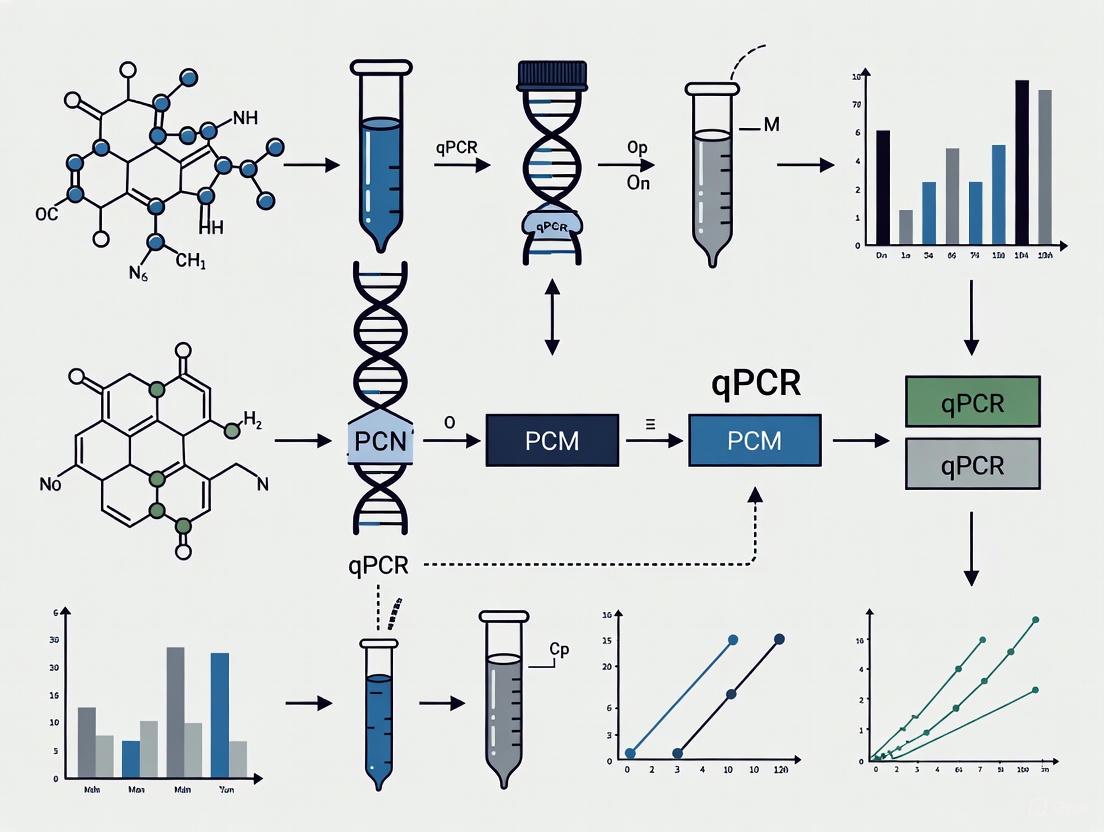
This article provides a complete guide to quantitative PCR (qPCR) for DNA quantification, tailored for researchers, scientists, and drug development professionals.
A Comprehensive qPCR Protocol for Accurate DNA Quantification: From Foundational Principles to Advanced Applications in Biomedical Research
Abstract
This article provides a complete guide to quantitative PCR (qPCR) for DNA quantification, tailored for researchers, scientists, and drug development professionals. It covers foundational principles, detailed methodological protocols for both absolute and relative quantification, advanced troubleshooting and optimization strategies to enhance assay performance, and rigorous validation frameworks to ensure data reliability and regulatory compliance. By integrating current best practices and real-world applications, this resource supports the development of robust, sensitive, and reproducible qPCR assays for diverse research and quality control objectives.
Understanding qPCR Fundamentals: Principles, Chemistries, and Core Components for DNA Quantification
Core Principles of Real-Time PCR and the Quantification Cycle (Cq)
Real-time PCR, also known as quantitative PCR (qPCR), is a powerful analytical technique that enables the detection and quantification of nucleic acids in real-time as amplification occurs. Unlike conventional PCR that provides end-point detection, qPCR allows researchers to monitor the accumulation of PCR products during each cycle of the reaction through fluorescent reporter molecules [1]. The quantification cycle (Cq), also referred to as the threshold cycle (Ct), crossing point (Cp), or take-off point (TOP), represents the fundamental metric in qPCR analysis [2]. The Cq value is defined as the number of amplification cycles required for the fluorescent signal to cross a predetermined threshold, which is significantly above the background fluorescence level [2] [3]. This value is inversely proportional to the initial amount of target nucleic acid in the sample; lower Cq values indicate higher starting quantities of the target sequence, while higher Cq values correspond to lower initial target concentrations [2].
The mathematical relationship between Cq and the starting target concentration is defined by the equation: Nq = N₀ × E^(Cq), where Nq represents the number of amplicons at the quantification threshold, N₀ is the initial number of target molecules, and E is the PCR efficiency (fold increase per cycle) [3]. This relationship forms the basis for quantification in qPCR experiments, whether using absolute quantification with standard curves or relative quantification to compare gene expression levels between samples.
Fundamental Principles of Cq Measurement
Relationship Between Cq and Target Concentration
The core principle of qPCR quantification rests on the inverse logarithmic relationship between the Cq value and the starting quantity of the target nucleic acid. Each amplification cycle theoretically doubles the amount of PCR product when efficiency is 100%, meaning that a sample with twice the starting material will require one fewer cycle to reach the detection threshold [3]. This relationship can be expressed as: Cq = log(Nq) - log(N₀) / log(E) [3].
This mathematical foundation enables the determination of initial target concentration through the observation of Cq values. The practical implication is that a difference of one Cq value represents an approximately two-fold difference in starting quantity when PCR efficiency is ideal. For example, a sample with a Cq value of 25 contains twice as much target sequence as a sample with a Cq value of 26, assuming perfect amplification efficiency [3].
Interpretation Guidelines for Cq Values
Cq values provide semiquantitative information about target abundance in the original sample, with general interpretation guidelines established through extensive laboratory validation:
- Cq < 30: Strong signal indicating abundant target nucleic acid
- Cq 30-37: Moderate signal suggesting moderate amounts of target
- Cq > 37: Weak signal representing minimal amounts of target [2]
These interpretive ranges serve as useful benchmarks, particularly in diagnostic applications, though the precise boundaries may vary depending on the specific assay, target, and experimental conditions.
Critical Factors Affecting Cq Values
Pre-Analytical Variables
Multiple factors prior to the qPCR reaction itself can significantly impact Cq values and must be carefully controlled for reliable quantification:
- Sample Collection and Type: The source and collection method of biological samples affects nucleic acid quality and quantity [2]
- Storage Conditions and Duration: Time and conditions between sample collection and processing can lead to nucleic acid degradation [2]
- Nucleic Acid Extraction Method: The choice of DNA/RNA extraction kit and protocol efficiency dramatically influences template quality and purity [4]
Analytical Variables
Technical aspects of the qPCR process itself introduce additional variables that affect Cq values:
- PCR Inhibition: Substances such as humic acids, polysaccharides, urea, phenolic compounds, cations, and heavy metals can inhibit polymerase activity [4]
- Master Mix Quality: Poor-quality master mixes with incorrect pH, salt concentrations, or suboptimal reaction efficiency affect fluorescence emission and amplification [2]
- Fluorophore Selection: Reporter dye ratios and spectral characteristics impact signal detection; for example, HEX (hexachlorofluorescein) with excitation at 533 nm and emission at 549 nm is commonly used in multiplex qPCR [5]
- Primer and Probe Design: Efficiency of hybridization and amplification depends on appropriate primer and probe sequences and concentrations [6]
Table 1: Factors Affecting Cq Values and Recommended Controls
| Factor Category | Specific Variables | Impact on Cq | Control Recommendations |
|---|---|---|---|
| Sample Quality | Degradation, inhibitors | Increased Cq | Assess RNA Integrity Number (RIN) or DNA quality; use inhibition controls |
| Extraction Method | Kit type, purification level | Variable Cq shifts | Standardize extraction protocols; compare multiple kits [4] |
| Reaction Efficiency | Primer design, master mix | Altered amplification | Validate efficiency with dilution series; use high-quality reagents |
| Instrumentation | Thermal cycling, detection | Inter-instrument variation | Calibrate instruments; use same platform for comparative studies |
Experimental Protocols for Reliable Cq Determination
TaqMan qPCR Assay Development
The development of a robust TaqMan qPCR assay requires systematic optimization for precise detection and quantification [6]:
Primer and Probe Design: Retrieve target gene sequences from databases such as NCBI. Identify conserved regions through sequence alignment tools. Design primers and TaqMan probes with the following characteristics:
- Primer length: 18-22 nucleotides
- Melting temperature (Tm): 58-60°C
- Amplicon size: 70-150 bp
- Probe labeling: 5' fluorophore (e.g., FAM, HEX) and 3' quencher (e.g., BHQ1) [6]
Reaction Optimization: Optimize primer and probe concentrations using matrix approaches:
- Test primer concentrations ranging from 2-4 pmol/μL
- Evaluate probe concentrations between 2-4 pmol/μL
- Optimize annealing temperatures from 54-61°C using gradient PCR [6]
Validation Parameters: Establish assay performance characteristics:
- Specificity: Test against non-target organisms
- Sensitivity: Determine limit of detection (LOD) and limit of quantification (LOQ)
- Efficiency: Generate standard curves with serial dilutions (R² > 0.990, efficiency 90-110%)
- Repeatability: Assess within-run and between-run variation (CV < 2%) [6]
DNA Extraction Method Comparison for Complex Samples
When working with complex samples such as soil, comparative evaluation of DNA extraction methods is essential [4]:
Kit Selection: Choose commercially available DNA extraction kits with different purification technologies:
- Kit A: Basic protocol with two washing steps using one spin filter
- Kit B: Rapid protocol with one washing step and high-temperature elution
- Kit C: Extensive purification with inhibitor removal column and four washing steps [4]
Extraction Procedure:
- Seed 500 mg soil samples with pure bacterial culture (e.g., Pseudomonas putida at OD ~0.1)
- Follow manufacturer protocols for cell lysis, DNA binding, washing, and elution
- Include negative controls throughout the process
- Quantify DNA yield and purity using spectrophotometry (A260/A280 ratio) [4]
qPCR Analysis:
- Perform qPCR on extracted DNA templates using target-specific assays
- Compare Cq values across extraction methods
- Assess DNA quality through inhibition tests (e.g., Mg²⁺ spiking experiments) [4]
Table 2: Comparison of DNA Extraction Kit Performance for qPCR
| Kit Feature | Kit A | Kit B | Kit C |
|---|---|---|---|
| Cell Lysis | Chemical/mechanical with beads | Chemical/mechanical with beads | Chemical/mechanical with beads |
| Inhibitor Removal | Chemical precipitation | Not specified | Dedicated column filter |
| Washing Steps | Two with ethanol-based reagents | One with ethanol-based reagents | Four with ethanol-based reagents |
| Elution Conditions | Room temperature | High temperature (55°C) | Room temperature |
| Typical Cq Results | Moderate | Variable | Most consistent [4] |
Advanced Applications and Multiplex Strategies
Multicolor Combinatorial Probe Coding (MCPC)
The MCPC strategy significantly expands multiplexing capabilities by using a limited number of fluorophores in various combinations to label probes, enabling detection of numerous targets in a single reaction [7]:
Probe Labeling Principle: With n different fluorophores, MCPC can theoretically label 2^n - 1 different probes. For example:
- 2 fluorophores → 3 uniquely labeled probes
- 3 fluorophores → 7 uniquely labeled probes
- 4 fluorophores → 15 uniquely labeled probes [7]
Experimental Implementation:
- Design probe sets with combinatorial fluorophore labeling
- Include Homo-Tag Assisted Non-Dimer (HAND) system to alleviate primer dimer formation in multiple-primer-pair formats
- Validate with known targets before clinical application [7]
Performance Characteristics: Properly optimized MCPC assays demonstrate:
- Equivalent limits of detection to uniplex PCR
- Specific identification of multiple targets in complex samples
- Reliable typing across a range of template concentrations (10² to 10⁹ copies/reaction) [7]
Data Analysis and Statistical Considerations
Proper Interpretation of Cq Values
Accurate interpretation of Cq values requires understanding their limitations and dependencies [3]:
- PCR Efficiency Considerations: Cq values are highly dependent on PCR efficiency. Assuming 100% efficiency when actual efficiency is lower leads to substantial miscalculations. A 5% difference in efficiency can result in 100-fold errors in calculated expression ratios [3]
- Threshold Setting: Cq values vary with quantification threshold placement, making direct comparison between different experiments or laboratories problematic without normalization [3]
- Poisson Variation: At low template concentrations (<100 copies), stochastic sampling variation significantly affects Cq values and must be accounted for in statistical analysis [3]
Calculation Methods for Gene Expression
Two primary mathematical approaches are commonly used for relative quantification in qPCR data analysis:
Livak Method (2^(-ΔΔCq)): FC = 2^[-((Cqtarget - Cqref)Tr - (Cqtarget - Cqref)Co)] This method assumes 100% PCR efficiency for both target and reference genes [8]
Pfaffl Method: FC = (Etarget)^(-(CqTr - CqCo)) / (Eref)^(-(CqTr - CqCo)) This efficiency-corrected approach accounts for differences in amplification efficiency between targets [8]
Statistical analysis can be implemented using specialized packages such as the rtpcr package in R, which accommodates efficiency correction and provides tools for calculating fold change with confidence intervals [8].
The Scientist's Toolkit: Essential Research Reagents and Materials
Table 3: Key Research Reagent Solutions for qPCR Experiments
| Reagent/Material | Function | Application Notes |
|---|---|---|
| TaqMan Probes | Sequence-specific detection with 5' fluorophore and 3' quencher | Provides high specificity; ideal for multiplexing with different fluorophores [6] |
| SYBR Green | Double-stranded DNA intercalating dye | Cost-effective for single-target assays; requires melt curve analysis for specificity verification |
| HEX Fluorophore | Fluorescent reporter with Ex/Em 533/549 nm | Useful for multiplex qPCR; compatible with FAM, TET, ROX in different channels [5] |
| DNA Extraction Kits | Nucleic acid purification from various sample types | Critical for removing PCR inhibitors; choice depends on sample matrix [4] |
| qPCR Master Mix | Optimized enzyme, buffers, dNTPs in ready-to-use format | Ensures consistent reaction conditions; select based on compatibility with detection chemistry |
| Inhibition Resistance Additives | Enhances polymerase tolerance to inhibitors | Essential for challenging samples (e.g., soil, feces, blood) [4] |
Workflow and Conceptual Diagrams
qPCR Amplification Curve Analysis
Factors Influencing Cq Values
Multiplex qPCR Probe Strategy
Quantitative PCR (qPCR) is a powerful technique for quantifying specific DNA sequences, relying on fluorescent chemistries to monitor amplification in real-time [9]. The choice of detection chemistry is a critical experimental design decision, influencing the specificity, cost, and workflow of your research. Within the context of DNA quantification, the two most prevalent chemistries are the DNA-binding dye SYBR Green and the sequence-specific Hydrolysis Probes (commonly known as TaqMan probes) [10] [11]. This application note provides a detailed comparison of these two systems, supported by experimental protocols and data analysis guidelines, to empower researchers in making an informed choice for their DNA quantification research.
Mechanism of Action
SYBR Green Chemistry
SYBR Green is a fluorescent dye that binds to the minor groove of double-stranded DNA (dsDNA) [10]. The fundamental principle is a massive increase in fluorescence emission—approximately 1,000-fold—when the dye is bound to dsDNA compared to when it is free in solution [10]. During the qPCR reaction, as the DNA polymerase amplifies the target, SYBR Green intercalates into the newly formed dsDNA amplicons. The fluorescence measured at the end of each extension phase is directly proportional to the total amount of dsDNA generated in the reaction [9] [11]. A key characteristic of this mechanism is that the dye binds to any dsDNA present, including non-specific amplification products and primer-dimers [12] [13].
Hydrolysis Probe (TaqMan) Chemistry
Hydrolysis Probes, in contrast, are sequence-specific oligonucleotides that introduce a higher level of specificity [14] [11]. A TaqMan probe is typically a short DNA sequence, complementary to the target region, that is labeled with a fluorescent reporter dye at its 5' end and a quencher molecule at its 3' end. When the probe is intact, the proximity of the quencher suppresses the reporter's fluorescence through Fluorescence Resonance Energy Transfer (FRET) [15] [11]. During the annealing step, the probe hybridizes to its specific target sequence. During the subsequent extension phase, the 5'→3' exonuclease activity of the DNA polymerase cleaves the bound probe. This hydrolysis separates the reporter from the quencher, leading to a permanent increase in fluorescent signal that is proportional to the number of probe cleavage events, and thus, the amount of target amplicon [14] [9] [11].
The following diagram illustrates the core mechanistic differences between the two chemistries:
Performance Comparison and Selection Guide
The choice between SYBR Green and Hydrolysis Probes hinges on the specific requirements of the experiment. The table below summarizes the key characteristics to guide this decision.
Table 1: Comparative Analysis of SYBR Green and Hydrolysis Probe Chemistries
| Parameter | SYBR Green | Hydrolysis Probes (TaqMan) |
|---|---|---|
| Specificity | Lower (binds any dsDNA) [13]. Requires post-amplification melt curve analysis to verify specificity [12] [9]. | Higher (requires specific probe hybridization) [10] [11]. |
| Sensitivity | Variable; can be compromised by primer-dimers [11]. | High; capable of detecting 1-10 target copies [11]. |
| Multiplexing | Not possible [12] [11]. | Yes, using probes with different reporter dyes [14] [9] [11]. |
| Cost & Design | Low cost; requires only primer design [10] [13]. | Higher cost; requires design and synthesis of a specific probe for each target [13] [11]. |
| Experimental Workflow | Requires rigorous optimization and melt curve analysis [12]. | More straightforward; pre-designed assays often available [11] [16]. |
| Ideal Applications | • Mycoplasma testing• NGS library quantification• Assay development & optimization [11] | • Gene expression analysis (qRT-PCR)• Pathogen detection/quantification• SNP genotyping• Copy number variation [11] |
A peer-reviewed study directly comparing the performance of both chemistries in measuring adenosine receptor gene expression found that with high-performance primers and proper optimization, SYBR Green can produce data comparable to TaqMan. The study reported amplification efficiencies above 97% for both methods and showed a significant positive correlation (p < 0.05) between the normalized expression data generated by each chemistry [10].
Experimental Protocols
Protocol A: qPCR using SYBR Green Chemistry
Summary: This protocol outlines the steps for performing a SYBR Green-based qPCR assay, from reaction setup to data validation [10] [12] [9].
Reagent Setup (25 µL Reaction):
- SYBR Green Master Mix (2X): 12.5 µL
- Forward Primer (10 µM): 1.5 µL
- Reverse Primer (10 µM): 1.5 µL
- Template DNA (or cDNA): 2 µL
- Nuclease-free Water: to 25 µL
Thermal Cycling Conditions:
- Initial Denaturation: 95°C for 10 minutes.
- Amplification (40 cycles):
- Denaturation: 95°C for 10 seconds.
- Annealing: 60°C for 20 seconds.
- Extension/Fluorescence Acquisition: 72°C for 20 seconds. Acquire fluorescence signal at the end of this step.
Post-Amplification Melt Curve Analysis:
- Denaturation: 95°C for 15 seconds.
- Annealing: 60°C for 20 seconds.
- Melt Curve: Gradually increase temperature from 60°C to 95°C (e.g., 0.5°C increments with a 5-second hold per step) while continuously monitoring fluorescence.
Protocol B: qPCR using Hydrolysis Probe (TaqMan) Chemistry
Summary: This protocol details the procedure for a probe-based qPCR assay, which offers inherent target specificity [10] [9] [11].
Reagent Setup (25 µL Reaction):
- TaqMan Universal PCR Master Mix (2X): 12.5 µL
- Forward Primer (10 µM): 0.75 µL
- Reverse Primer (10 µM): 0.75 µL
- TaqMan Probe (10 µM): 0.75 µL
- Template DNA: 2 µL
- Nuclease-free Water: to 25 µL
Thermal Cycling Conditions:
- Initial Denaturation/Activation: 95°C for 10 minutes.
- Amplification (40 cycles):
- Denaturation: 95°C for 10 seconds.
- Annealing & Extension/Fluorescence Acquisition: 60°C for 60 seconds. Acquire fluorescence signal at the end of this combined step.
Data Analysis and Validation
Determining Reaction Efficiency and Specificity
Before quantifying experimental samples, validate any new qPCR assay.
Reaction Efficiency: Perform a 10-fold serial dilution of a template with known concentration. Plot the log of the starting quantity against the Ct value to generate a standard curve. The reaction efficiency (E) is calculated from the slope of the curve: Efficiency = (10^(-1/slope) - 1) x 100. Efficiencies between 90% and 110% are generally considered acceptable [9].
Specificity (for SYBR Green): Analyze the melt curve data by plotting the negative derivative of fluorescence over temperature (-dF/dT). A single, sharp peak indicates amplification of a single, specific product. Multiple peaks suggest non-specific amplification or primer-dimer formation, necessitating primer redesign [12] [9].
Quantification Methods
- Absolute Quantification: Used to determine the exact copy number or concentration of the target in unknown samples by comparing their Ct values to a standard curve of known concentrations [9].
- Relative Quantification: Used to measure changes in target levels relative to a control sample (e.g., calibrator or untreated control). The ΔΔCt method (Livak method) is commonly used when the amplification efficiencies of the target and reference genes are approximately equal and close to 100% [9].
The Scientist's Toolkit: Essential Research Reagents
Successful implementation of qPCR requires a set of core reagents and tools. The following table details the essential components for setting up your experiments.
Table 2: Key Research Reagent Solutions for qPCR
| Reagent / Solution | Function | Example & Notes |
|---|---|---|
| SYBR Green Master Mix | Optimized buffer containing DNA polymerase, dNTPs, and the SYBR Green I dye [9]. | Quantitect SYBR Green master mix (Qiagen). Newer dye formulations offer brighter fluorescence and less PCR inhibition [10] [11]. |
| TaqMan Master Mix | Optimized buffer for probe-based assays, containing DNA polymerase with 5' nuclease activity and dNTPs [9]. | TaqMan Universal PCR master mix (ABI). Formulations are probe-specific [10] [11]. |
| Sequence-Specific Primers | Amplify the target DNA region. | Designed to be highly specific; span an exon-exon junction for cDNA to avoid genomic DNA amplification [10]. |
| Hydrolysis Probe | Sequence-specific oligonucleotide for target detection. | Can be a simple probe, or modified with a Minor Groove Binder (MGB) or Locked Nucleic Acids (LNA) to increase Tm and specificity, especially for SNP assays [14] [11] [17]. |
| Nuclease-Free Water | Solvent for reactions and dilutions. | Essential to prevent degradation of primers, probes, and templates. |
| qPCR Plates & Seals | Reaction vessel. | Optically clear plates and seals are mandatory for accurate fluorescence detection by the instrument. |
Workflow and Decision Pathway
The following flowchart provides a strategic overview of the qPCR experimental workflow and highlights the key decision points for choosing between SYBR Green and TaqMan chemistries.
The accuracy and reliability of quantitative PCR (qPCR) for DNA quantification are fundamentally dependent on the core reagents that drive the amplification reaction. These components—master mixes, DNA polymerases, and deoxynucleotide triphosphates (dNTPs)—collectively determine the efficiency, specificity, and sensitivity of the entire assay. Master mixes provide a convenient, pre-formulated solution that ensures reaction consistency by combining the essential components in optimized ratios [18]. The selection of an appropriate DNA polymerase is critical, as different enzymes offer varying fidelity levels, amplification efficiencies, and specialized functions such as hot-start activation for reducing non-specific amplification [18] [19]. Similarly, dNTPs serve as the fundamental building blocks for DNA synthesis, with their quality and concentration directly impacting amplification efficiency and quantitative accuracy. Within the context of DNA quantification research, a thorough understanding of these reagents' properties, interactions, and optimization requirements is prerequisite for developing robust, reproducible qPCR protocols that generate scientifically valid data for drug development and clinical research applications.
The Scientist's Toolkit: Research Reagent Solutions
The table below details the essential reagents required for reliable qPCR-based DNA quantification, along with their specific functions and selection considerations.
| Reagent Category | Specific Examples | Core Function | Key Selection Criteria |
|---|---|---|---|
| Master Mixes | OneTaq Quick-Load Taq, Q5 High-Fidelity Master Mix, PrimeTime Gene Expression Master Mix [18] [20] | Pre-mixed solution containing polymerase, dNTPs, buffers; ensures reaction consistency and convenience [18]. | Fidelity requirements, compatibility with instrumentation, compatibility with crude samples, shipping/storage conditions [18] [20]. |
| DNA Polymerases | Taq, Hot Start Taq, Phusion, Q5 [18] | Enzymatic engine that synthesizes new DNA strands; critical for reaction efficiency and specificity. | Fidelity (error rate), processivity (amplicon length), thermostability, presence/type of hot-start mechanism [18] [19]. |
| dNTPs | dATP, dCTP, dGTP, dTTP [18] | Essential building blocks (nucleotides) for DNA synthesis during PCR amplification. | Purity, concentration, balanced molar ratios, stability; typically supplied pre-mixed in master mixes [18]. |
| Reverse Transcriptase | Components in One-Step RT-qPCR Master Mixes [20] | Converts RNA into complementary DNA (cDNA) in one-step RT-qPCR protocols. | Required for RNA quantification; efficiency, thermal stability, sensitivity to inhibitors [20]. |
| Fluorescent Detection Reagents | SYBR Green, EVAgreen, Hydrolysis (TaqMan) Probes [21] | Generates the fluorescent signal that is quantified in real-time to monitor amplification. | Specificity (dye vs. probe), cost, multiplexing capability, signal strength, and compatibility with detection channels [21]. |
| Reaction Buffers | Proprietary formulations within master mixes [18] [19] | Provides optimal chemical environment (pH, salts, co-factors) for polymerase activity. | Concentration (e.g., 2X, 4X), presence of enhancers, compatibility with additives like DMSO, magnesium concentration [19]. |
Polymerase Selection and Fidelity Comparison
The choice of DNA polymerase is arguably the most critical decision in qPCR assay design, as it directly influences amplification yield, specificity, and the accuracy of quantification. Different polymerases possess distinct biochemical properties suited for specific applications. Taq DNA polymerase remains a popular choice for standard quantitative applications due to its robust activity and cost-effectiveness. However, for applications where precise sequence representation is paramount—such as in the quantification of genetically diverse samples or rare targets—high-fidelity polymerases such as Q5 or Phusion are essential [18]. These enzymes exhibit significantly lower error rates due to their inherent 3'→5' exonuclease proofreading activity, which excises misincorporated nucleotides during amplification.
The following table provides a quantitative comparison of key polymerase properties relevant to DNA quantification research:
| Polymerase Type | Fidelity (Relative to Taq) | Speed | Recommended Amplicon Size | Primary Applications in DNA Quantification |
|---|---|---|---|---|
| Standard Taq | 1X | Standard | Up to 5 kb | Routine gene expression analysis, viral titer determination where ultimate fidelity is not critical. |
| Hot Start Taq | 1X | Standard | Up to 5 kb | All standard qPCR applications; reduces primer-dimer formation and improves specificity [19]. |
| High-Fidelity (e.g., Q5, Phusion) | 5-100X higher than Taq [18] | Fast | Up to 20 kb | Absolute quantification where sequence accuracy is vital, NGS library amplification, detecting rare variants. |
| Multiplex Master Mix | ~1X | Standard | Varies | Simultaneous quantification of multiple DNA targets in a single reaction [18]. |
Beyond fidelity, researchers must consider the hot-start mechanism. Antibody-mediated or chemical-modified hot-start polymerases remain inactive until a high-temperature activation step, dramatically reducing non-specific amplification and primer-dimer formation at lower temperatures [21] [19]. This is crucial for achieving a low baseline and high signal-to-noise ratio in qPCR amplification plots. Furthermore, the processivity of an enzyme—its ability to incorporate nucleotides continuously before dissociating—determines its efficiency in amplifying longer targets. While many qPCR amplicons are short (50-200 bp), a polymerase with high processivity is beneficial for detecting larger genomic fragments or in multiplex assays with varying amplicon sizes [18].
Master Mix Composition and Formulation
Master mixes represent the operational core of a qPCR reaction, integrating the individual components into a single, optimized formulation that enhances workflow efficiency and experimental reproducibility. A standard 2X master mix typically contains a thermostable DNA polymerase at its optimal activity concentration, a balanced mixture of dNTPs (usually 200-400 µM of each), magnesium chloride (MgCl₂) at a precisely tuned concentration (e.g., 3-5 mM), and a proprietary reaction buffer that maintains optimal pH and ionic strength [18] [19]. The primary advantage of using a master mix lies in the consistency it provides; by minimizing pipetting steps and volumetric errors, it reduces well-to-well and run-to-run variability, which is a fundamental requirement for precise DNA quantification [18].
Modern master mixes are formulated to address specific research challenges. For instance, inhibitor-resistant master mixes are engineered to allow direct amplification from complex biological samples (e.g., blood, soil, plant tissues) without the need for extensive DNA purification, thereby streamlining the workflow and increasing throughput [20]. Furthermore, specialized formulations like 4X master mixes are available for applications requiring high sensitivity or when dealing with limited sample volumes, as they allow for a greater proportion of the sample to be included in the reaction without diluting critical components [20]. The choice between a SYBR Green-based master mix and a probe-based master mix is another critical consideration. While SYBR Green offers flexibility and lower cost, probe-based systems (e.g., TaqMan) provide superior specificity through an additional level of sequence verification, which is essential for multiplexing or for quantifying targets in complex genomic backgrounds [21]. The formulation of the buffer system, including potential enhancers and stabilizers, is often proprietary and can significantly impact the robustness of the assay, particularly when amplifying difficult templates with high GC content or secondary structures [19].
Comprehensive qPCR Optimization Protocol
Primer and Probe Design Validation
Initiate the optimization process with in silico validation of primer and probe sequences. Utilize tools like OligoArchitect or Primer-BLAST to analyze potential for secondary structures and self-complementarity [19]. Crucially, ensure that the strongest 3'-end dimer has a ΔG ≥ -2.0 kcal/mol to minimize primer-dimer formation, a common source of false-positive signal in SYBR Green assays [19]. For sequence-specific amplification, especially in genomes with homologous sequences, design primers based on single-nucleotide polymorphisms (SNPs) unique to the target, ensuring the 3'-end differentiates between homologs [22]. The optimal primer length is 28 bp or larger to reduce primer-dimer formation, with a GC content between 40-60% and a melting temperature (Tm) of 58-65°C [21]. For probe-based assays, design the probe with a Tm approximately 10°C higher than the primers to ensure it binds before primer extension [21].
Primer and Probe Concentration Optimization
Determine the optimal primer and probe concentrations empirically to maximize fluorescence amplitude and efficiency while minimizing non-specific amplification.
- Prepare a primer concentration matrix: Test a range of forward and reverse primer concentrations (e.g., 50 nM, 100 nM, 200 nM, 400 nM, 600 nM) in a combinatorial manner across a qPCR plate [19].
- For probe-based assays: Include a constant probe concentration (e.g., 100-250 nM) during initial primer testing.
- Run qPCR amplification: Use a fixed annealing temperature (typically 60°C) and a standardized thermal cycling protocol.
- Analyze results: Select the primer concentration combination that yields the lowest Cq (quantification cycle) value, the highest endpoint fluorescence (ΔRn), and a clear NTC (no-template control) [19]. The ideal combination is the lowest concentration that provides reproducible, early Cq values with a sigmoidal amplification curve.
Annealing Temperature Optimization
The annealing temperature (Ta) critically influences reaction specificity and efficiency.
- Utilize a gradient thermal cycler: Perform a single run where the annealing temperature varies across the plate, typically spanning 55°C to 65°C [21] [19].
- Analyze amplification curves and melting curves: For each temperature, assess the Cq value, the shape of the amplification curve, and the melting curve profile for SYBR Green assays.
- Select the optimal Ta: The best annealing temperature produces the lowest Cq value, the highest amplification efficiency, and a single, sharp peak in the melting curve, indicating a single, specific amplicon [19]. A temperature that is too low causes non-specific amplification, while one that is too high reduces efficiency and yield.
Reaction Efficiency and Validation
The final step is to validate the optimized assay's performance using a standard curve.
- Prepare a serial dilution: Create a 5-10 fold serial dilution series of the target DNA template, covering the expected concentration range in experimental samples.
- Amplify the dilution series: Run the dilutions in triplicate using the optimized primer concentrations and annealing temperature.
- Generate and analyze the standard curve: Plot the Cq values against the log of the template concentration. A robust assay should have a linear standard curve with an R² value ≥ 0.99 and a PCR efficiency between 95-105% (corresponding to a slope between -3.1 and -3.3) [22]. This level of performance is a prerequisite for reliable relative quantification using the 2−ΔΔCt method.
Troubleshooting Common qPCR Issues
Even with a meticulously optimized protocol, researchers may encounter issues that compromise DNA quantification data. A systematic approach to troubleshooting is essential for identifying and rectifying these problems. The table below outlines common symptoms, their potential causes, and recommended solutions.
| Observed Problem | Potential Causes | Recommended Solutions |
|---|---|---|
| Low Amplification Efficiency (<90% or >110%) | Suboptimal primer design, incorrect primer concentration, inadequate Mg²⁺ concentration, inappropriate annealing temperature. | Redesign primers to avoid secondary structures. Re-optimize primer and Mg²⁺ concentrations. Perform a finer annealing temperature gradient [19]. |
| Non-Specific Amplification or Multiple Peaks in Melting Curve | Annealing temperature too low, primer-dimer formation, primer binding to non-target sequences. | Increase annealing temperature in 0.5°C increments. Use a hot-start polymerase. Verify primer specificity using BLAST; redesign if necessary [21] [19]. |
| High Cq Variation Between Replicates | Pipetting inaccuracies, poor sample quality, inconsistent reaction mixing, master mix thawing/refreezing. | Always prepare a master mix for multiple reactions. Vortex and centrifuge all reagents. Check DNA quality and integrity. Avoid repeated freeze-thaw cycles of reagents [21]. |
| No Amplification (Cq undetermined) | Enzyme inactivation, incorrect primer/target specificity, reaction inhibitors, dNTP degradation. | Verify reagent integrity and storage conditions. Check primer sequences and ensure target is present. Dilute template or use an inhibitor-resistant master mix [20]. Include a positive control. |
| Low Signal Intensity (ΔRn) | Low probe concentration (for probe-based assays), degraded probe, instrument optical calibration issue. | Optimize probe concentration. Protect probe from light. Verify instrument channel settings and perform maintenance calibration [21]. |
Implementation in Drug Development Workflows
In the highly regulated context of drug development, the implementation of qPCR reagents and protocols demands an additional layer of scrutiny focused on reproducibility, standardization, and data integrity. Regulatory compliance requires the use of reagents from suppliers that operate under strict Quality Management Systems (QMS), such as ISO 13485, particularly for assays used in safety testing or clinical trial analysis [20]. Furthermore, software-driven data analysis is no longer a convenience but a necessity for maintaining data integrity. Modern qPCR software platforms provide features such as full audit trails, user authentication, and electronic signatures, which are essential for complying with regulations like CFR Part 11 [23] [24]. These systems also employ advanced algorithms for precise Cq determination and melting curve analysis, minimizing subjective interpretation and enhancing the robustness of the DNA quantification data submitted to regulatory agencies [23] [24].
The transition from research-use-only (RUO) reagents to those fit for in vitro diagnostic (IVD) use or laboratory-developed tests (LDTs) necessitates rigorous assay validation under conditions that mirror the final clinical application [19]. This includes using the intended sample types (e.g., blood, biopsy tissue), the specific instruments, and the finalized reagent lots to generate validation data on the assay's precision, accuracy, sensitivity, and linearity. Master mixes formulated for direct amplification from crude samples can be particularly valuable here, as they simplify the workflow and reduce variability introduced by DNA extraction [20]. By integrating optimized, high-quality reagents with compliant instrumentation and data analysis software, drug development professionals can establish a seamless and auditable qPCR workflow from sample to result, ensuring that DNA quantification data supporting pharmacokinetic studies, biomarker discovery, or pharmacogenomics is both scientifically sound and regulatorily defensible.
The Critical Role of Template DNA Quality and Purity
In quantitative PCR (qPCR), the quality and purity of template DNA are not merely preliminary considerations but are fundamental determinants of experimental success. Accurate DNA quantification relies on the efficient amplification of target sequences, a process directly compromised by factors such as PCR inhibitors, DNA degradation, and co-extracted contaminants [25] [26]. This application note details the critical parameters of DNA quality, provides validated protocols for its assessment, and presents a framework for integrating robust quality control into qPCR workflows for reliable DNA quantification research.
The Impact of DNA Quality on qPCR Performance
The integrity and purity of template DNA directly influence key qPCR output parameters, including amplification efficiency, sensitivity, and precision.
DNA Degradation
DNA degradation refers to the fragmentation of nucleic acids, which severely reduces the availability of intact template molecules for primer binding and amplification. In formalin-fixed, paraffin-embedded (FFPE) samples, a cornerstone of clinical research, this degradation is quantifiable. Studies demonstrate a quantifiable inverse correlation between the degree of DNA fragmentation and amplification efficiency in FFPE samples [27]. The Degradation Index (DI), often calculated as the ratio of concentration between a long and a short autosomal amplicon, provides a measure of this fragmentation; a higher ratio indicates more severe degradation [26]. This preferentially affects the amplification of longer fragments, leading to allele drop-out and substantial biases in sequencing uniformity and variant allele frequencies [27].
PCR Inhibitors
PCR inhibitors are substances that co-purify with DNA and impair the polymerase reaction. Common inhibitors include:
- Polysaccharides and polyphenols from plant tissues [28].
- Hemoglobin from blood samples.
- Urea and other components in forensic samples.
- Organic solvents and detergents from extraction procedures.
These inhibitors can cause delayed quantification cycles (Cq), reduced amplification efficiency, or even false negative results [29] [30]. The impact of 14 endogenous and exogenous interfering substances on Cq values can be significant, though one optimized protocol reported the effect was less than 5% compared to controls [29].
Consequences for Data Reliability
The table below summarizes the primary effects of poor DNA quality on qPCR data:
Table 1: Effects of Compromised DNA Quality on qPCR Results
| Quality Issue | Primary Effect on qPCR | Manifestation in Data |
|---|---|---|
| Degradation | Reduced amplifiable template; preferential amplification of shorter fragments | Increased Cq; high Degradation Index; allelic dropout; skewed gene expression ratios [26] [27] |
| Inhibitors | Impaired polymerase activity; reduced reaction efficiency | Increased Cq values; flattened amplification curves; reduced amplification efficiency; potential false negatives [28] [29] |
| Low Purity (e.g., protein/phenol contamination) | Absorbance anomalies; indirect inhibition | Inaccurate spectrophotometric quantification (A260/A280 and A260/A230 ratios outside ideal ranges) [31] |
Protocols for DNA Quality Assessment
A multi-faceted approach is recommended to comprehensively evaluate DNA quality prior to qPCR.
Spectrophotometric Analysis (Nucleic Acid Absorbance)
This classic method provides a rapid assessment of sample purity.
- Procedure: Dilute the DNA sample appropriately and measure absorbance from 230 nm to 320 nm using a spectrophotometer.
- Key Ratios:
- A260/A280: Ratio of ~1.8 is generally accepted for pure DNA. Significant deviation indicates protein or phenol contamination.
- A260/A230: Ratio of 2.0-2.2 is desirable. Lower values suggest contamination by salts, EDTA, or carbohydrates [31].
- Limitations: This method cannot distinguish between DNA and RNA, and does not provide information about integrity.
Fluorometric Quantification
Fluorometric methods use DNA-binding dyes to specifically quantify double-stranded DNA, offering superior accuracy over spectrophotometry for determining concentration, especially in impure samples.
- Common Tools: Qubit Fluorometer with assays such as the Qubit dsDNA HS Assay [27].
- Application: Provides a highly accurate concentration measurement that is largely unaffected by common contaminants, salts, or RNA. This is the preferred method for determining the input DNA volume for sensitive qPCR reactions.
Gel Electrophoresis for Integrity Check
Agarose gel electrophoresis visually assesses the extent of DNA fragmentation.
- Protocol:
- Prepare a 1% agarose gel in 1x TAE buffer.
- Mix 10 μL of DNA sample with loading dye and load alongside a molecular weight ladder (e.g., 50-10,000 bp).
- Run electrophoresis at 100 V for 60 minutes.
- Visualize under UV light [27].
- Interpretation: High-quality, high-molecular-weight DNA appears as a tight, high-mass band near the well. Degraded DNA appears as a smear of lower molecular weight fragments. The absence of a distinct band suggests severe degradation.
qPCR-Based Integrity Assessment
The most functional integrity test is a qPCR assay itself, as it directly measures the amplifiability of the DNA.
- Method: Use a multiplexed qPCR system that simultaneously targets a short amplicon (e.g., 100 bp) and a long amplicon (e.g., 300 bp). The Degradation Index (DI) is calculated as the ratio of the concentrations derived from the long and short amplicons
[Auto]/[Deg][26]. - Interpretation: A high DI value indicates that the long amplicon is failing to amplify efficiently relative to the short one, which is a clear sign of DNA fragmentation. This is a critical metric for downstream applications like sequencing [26].
Diagram 1: DNA quality control workflow. A multi-method assessment pathway guides the decision on sample suitability for qPCR.
Optimized DNA Extraction and Cleanup Protocols
The choice of DNA extraction method is critical for securing high-quality template. The optimal protocol varies by sample type.
Silica Column-Based Kits
- Principle: DNA binds to a silica membrane in the presence of high chaotropic salt, is washed to remove impurities, and is eluted in a low-salt buffer.
- Best For: Most sample types, including tissues, cells, and plants; provides a good balance of yield and purity with minimal inhibitors [25] [31].
- Example Protocol (from Cosmetic Products) [25]:
- Mix 250 μL of bacterial enrichment culture with 800 μL of CD1 solution.
- Transfer to a bead tube and vortex for 10 min at maximum speed.
- Centrifuge at 15,000 × g for 1 min.
- Transfer 650 μL of supernatant to a silica column and process on an automated extractor (e.g., QIAcube Connect).
- Elute DNA in a defined volume.
CTAB (Cetyltrimethylammonium Bromide) Method
- Principle: The CTAB buffer, often containing PVP, complexes with polysaccharides and polyphenols, allowing their separation from nucleic acids during chloroform extraction.
- Best For: Plant tissues and other samples rich in complex carbohydrates and polyphenolic compounds [28].
- Limitations: The protocol is labor-intensive and time-consuming, typically taking over 2 hours [28].
HotSHOT Method (Rapid Alkaline Extraction)
- Principle: A rapid, inexpensive method using an alkaline lysis buffer followed by neutralization.
- Best For: High-throughput screening applications where speed is prioritized.
- Optimized Protocol "HotShot Vitis" for Grapevine [28]:
- Homogenize 500 mg tissue in 3 mL of alkaline buffer (60 mM NaOH, 0.2 mM EDTA, 1% PVP-40, 0.1% SDS, 0.5% Na₂S₂O₅, pH 12).
- Transfer 500 μL homogenate to a tube and incubate at 95°C for 10 min with shaking.
- Cool on ice for 3 min.
- Add 500 μL of neutralization buffer (40 mM Tris-HCl, pH 5) and centrifuge.
- Collect supernatant containing DNA.
- Performance: This protocol reduces extraction time to about 30 minutes and is effective for PCR-based diagnostics, though it may have limitations for spectrophotometric quantification due to buffer components [28].
Experimental Data and Case Studies
Impact of Sample Matrix and Inhibitors
Different matrices present unique challenges. In one study, a cosmetic soap matrix required a 36-hour enrichment and a 1:100 sample dilution to detect all target pathogens via qPCR, highlighting the impact of matrix-derived inhibitors [25]. In forensic genetics, qPCR results for low-concentration DNA templates (≤0.05 ng/μL) showed significant stochastic variation, which was strongly correlated with variability in subsequent Short Tandem Repeat (STR) profiling, underscoring the critical nature of accurate input quantification [26].
DNA Repair for Degraded Samples
For historically valuable degraded samples, such as FFPE tissues, enzymatic repair can be a powerful tool. Treatment of FFPE DNA with a commercial repair kit like PreCR can reduce base substitution artifacts and notably improve amplification efficiency, rescuing genomic sites that were previously unamplifiable [27].
Table 2: DNA Extraction Method Comparison for Different Sample Types
| Extraction Method | Sample Type | Yield | Purity/Quality | Time | Key Advantage |
|---|---|---|---|---|---|
| Silica Column Kit [25] [31] | Milk somatic cells, bacterial cultures, tissues | Moderate | High (low inhibitor level) | ~40 min | Reliability and purity; ideal for routine use |
| CTAB [28] | Plant tissues (e.g., grapevine) | High | Good (effective inhibitor removal) | >2 hours | Effective removal of plant-based inhibitors |
| HotShot Vitis (Alkaline) [28] | Plant tissues (e.g., grapevine) | Sufficient for PCR | Suitable for direct PCR | ~30 min | Extreme speed and cost-effectiveness for diagnostics |
| PowerSoil Pro Kit [25] | Complex matrices (cosmetics) | Consistent | High | ~60 min (incl. automation) | Optimized for difficult samples and automation |
The Scientist's Toolkit: Research Reagent Solutions
Table 3: Essential Reagents and Kits for DNA Quality Control and qPCR
| Item | Function/Description | Example Use Case |
|---|---|---|
| QIAamp DNA FFPE Tissue Kit (Qiagen) | Optimized DNA extraction from challenging FFPE samples, minimizing crosslinks and recovering fragmented DNA. | Extraction of amplifiable DNA from archival clinical cancer samples [27]. |
| PowerSoil Pro Kit (Qiagen) | DNA extraction specifically designed to remove humic acids, pigments, and other potent PCR inhibitors from complex matrices. | Isolation of microbial DNA from cosmetics, soil, and environmental samples for pathogen detection [25]. |
| PreCR Repair Mix (NEB) | Enzyme mix that repairs damaged bases and nicks in DNA, restoring amplifiability. | Repair of formalin-induced damage in FFPE-DNA before library preparation or qPCR [27]. |
| PowerQuant System (Promega) | qPCR assay for human DNA quantification that provides concentration, degradation index (DI), and PCR inhibition data. | Pre-assessment of DNA sample quality in forensic genetics prior to STR typing [26]. |
| PrimeTime Gene Expression Master Mix (IDT) | Optimized master mix for probe-based qPCR, offering high efficiency and robustness. | Reliable gene expression quantification with pre-validated performance [30]. |
| SYBR Green / EvaGreen | Intercalating dyes for qPCR that fluoresce when bound to double-stranded DNA. | Melt curve analysis and cost-effective qPCR when designing probe-based assays is not feasible [30]. |
Troubleshooting Guide: From Symptom to Solution
qPCR failure often stems from template quality issues. The following diagram provides a systematic troubleshooting guide.
Diagram 2: qPCR troubleshooting guide for DNA quality issues. Common qPCR symptoms are linked to their root causes in DNA quality and corresponding corrective actions.
The reliability of any qPCR-based DNA quantification assay is inextricably linked to the quality of the starting template. Ignoring this foundational element jeopardizes the entire experimental enterprise. By adopting a rigorous, multi-parameter quality control framework—encompassing spectrophotometric, fluorometric, and integrity-specific qPCR assessments—researchers can confidently select and prepare samples. Furthermore, the strategic application of specialized extraction and repair protocols, tailored to the specific sample matrix, ensures that the template DNA is of sufficient purity and integrity. This disciplined approach to DNA quality control is not an optional preliminary step but a core component of robust, reproducible, and accurate qPCR research in drug development and molecular diagnostics.
Quantitative PCR (qPCR) is a powerful technique for DNA quantification, whose reliability hinges on the precise measurement of fluorescence during the amplification process. However, non-PCR-related fluctuations in fluorescence, caused by issues such as uneven illumination across a qPCR plate, slight variations in optics, or differences in reaction volume due to evaporation, can introduce significant well-to-well variability [32]. To correct for these instrumental artifacts, passive reference dyes like ROX are employed. ROX is a fluorescent dye that is inert to the PCR process, meaning its fluorescence intensity remains constant throughout the amplification cycles [32] [33]. It serves as an internal standard to which the signal from the reporter dye (e.g., SYBR Green or FAM) is normalized. This normalization process yields a normalized reporter signal (Rn), calculated as the reporter dye signal divided by the ROX signal, thereby reducing technical noise and improving the precision of quantitative data [34] [33]. For researchers in drug development, this translates to more reliable and reproducible gene expression or DNA quantification data, enabling better decision-making with fewer required technical replicates [32].
Optical Fundamentals and Dye Compatibility
The effectiveness of ROX is rooted in its spectral properties and its integration into the qPCR instrument's optical configuration. ROX dye has an excitation maximum around 570-580 nm and an emission maximum of approximately 591-623 nm [32] [35]. In modern qPCR instruments, these properties are harnessed through specific optical filters. ROX is typically detected in Dye Channel 4, which commonly uses an excitation filter of 580 ± 10 nm and an emission filter of 623 ± 14 nm [32]. This dedicated channel ensures that the ROX signal can be distinguished from other dyes used in multiplexed reactions.
The following table summarizes the filter configurations for a QuantStudio system, illustrating how ROX fits into a broader multi-channel detection setup:
Table 1: Optical Filter Configuration for a Six-Channel QuantStudio System [32]
| Channel | Excitation Filter (nm) | Emission Filter (nm) | Examples of Compatible Dyes |
|---|---|---|---|
| 1 | 470 ± 15 | 520 ± 15 | FAM, SYBR Green I |
| 2 | 520 ± 10 | 558 ± 12 | VIC, HEX |
| 3 | 550 ± 10 | 586 ± 10 | TAMRA, Cy3 |
| 4 | 580 ± 10 | 623 ± 14 | ROX, Texas Red |
| 5 | 640 ± 10 | 682 ± 14 | Cy5 |
| 6 | 662 ± 10 | 711 ± 12 | Cy5.5 |
This configuration is critical for multiplex qPCR, where detecting multiple targets in a single well is required. Because the emission spectrum of ROX does not significantly overlap with common reporter dyes like FAM or VIC, it provides a stable baseline against which the dynamics of the PCR amplification can be accurately measured [32] [36]. It is important to note that master mixes from different manufacturers may contain different coloring agents or passive reference dyes. Therefore, when using a standalone ROX kit, it is essential to confirm that the master mix is compatible and to perform any necessary optimization [32].
Experimental Protocol for Using ROX Dye
Reagent Preparation and Formulation
ROX dye is commercially available as a standalone kit or pre-formulated in many commercial qPCR master mixes [32] [35]. A typical standalone ROX dye is supplied as a 25 µM solution of Rhodamine 101 in a buffer such as 10 mM Tris-HCl (pH 8.6) with 0.1 mM EDTA and 0.01% Tween-20 [35]. The required final concentration in the qPCR reaction varies by instrument model. Most instruments require a final concentration of either 50 nM or 500 nM [35]. It is imperative to consult the instrument manufacturer's guidelines to determine the correct concentration.
Table 2: Research Reagent Solutions for ROX-based qPCR
| Reagent / Material | Function / Description | Example Formulation / Notes |
|---|---|---|
| ROX Passive Reference Dye | Normalizes fluorescence to correct for well-to-well variability. | 25 µM solution of Rhodamine 101 in storage buffer [35]. |
| qPCR Master Mix with ROX | Pre-formulated reaction mix containing polymerase, dNTPs, buffer, and ROX. | Simplifies setup; ensure compatibility with target and reporter dyes [32]. |
| Nuclease-Free Water | Solvent for diluting primers, template, and reagents. | Must be nuclease-free to prevent degradation of reaction components. |
| Sequence-Specific Primers | Amplifies the target DNA sequence. | Designed with tools like Primer-BLAST; optimized for efficiency [22]. |
| Template DNA/cDNA | The nucleic acid target to be quantified. | Quality and concentration are critical for PCR efficiency [22]. |
qPCR Workflow with ROX Normalization
The diagram below outlines the key steps in a qPCR experiment utilizing ROX for data normalization:
Step-by-Step Procedure
Reaction Setup:
- Prepare the qPCR master mix on ice, containing all necessary components (polymerase, dNTPs, buffer, MgCl₂) except for the template and ROX dye if not pre-included [32].
- If the master mix does not contain a passive reference dye, add the standalone ROX solution to achieve the instrument-specific final concentration (e.g., 50 nM or 500 nM) [35].
- Add sequence-specific primers and the template DNA (or cDNA for RT-qPCR) to the mix.
- Pipette the complete reaction mixture into the qPCR plate or tubes. Take care to avoid introducing air bubbles, which can interfere with fluorescence reading [32] [33].
qPCR Run:
- Seal the plate with an optical adhesive cover.
- Place the plate in the real-time PCR instrument and start the run using the predefined cycling protocol.
- The instrument's software should be configured to collect fluorescence data for both the reporter dye channel (e.g., FAM) and the passive reference dye channel (ROX) during each cycle [32].
Data Acquisition and Normalization:
- For every cycle and every well, the instrument software automatically calculates the normalized reporter signal (Rn) using the formula: Rn = (Reporter Dye Fluorescence) / (ROX Dye Fluorescence) [34].
- This normalized Rn value is then used to generate the amplification plot, which forms the basis for Ct (threshold cycle) determination [34] [37].
Data Analysis and Troubleshooting with ROX
Interpreting the Multicomponent Plot for Quality Control
The multicomponent plot, which displays the raw fluorescence signals from all dyes over the course of the reaction, is a powerful tool for troubleshooting. Since ROX fluorescence should remain constant throughout the run, any deviation from a flat line can indicate specific issues [32] [33].
Table 3: Troubleshooting qPCR Using ROX Signal in the Multicomponent Plot
| ROX Signal Behavior | Possible Technical Issue | Corrective Action |
|---|---|---|
| Remains flat throughout the run | Expected result, no issue. | Proceed with data analysis. |
| Increases steadily during the run | Reaction evaporation. | Ensure the plate is properly sealed. Check the seal for integrity. |
| Momentarily spikes or drops | Sudden disturbances like air bubbles in the well or an electrical surge. | Centrifuge the plate before the run to remove bubbles. Check instrument power supply. |
| No ROX signal detected | ROX dye was omitted from the reaction, or a component was missing. | Verify that all reaction components were added correctly [33]. |
Calculating PCR Efficiency and Gene Expression
For DNA quantification research, ensuring that the qPCR assay itself is optimized is paramount. A critical parameter is PCR efficiency (E), which should be between 90-105% (or 85-110% as a broader acceptable range) for reliable results [34]. Efficiency is calculated from a standard curve using serial dilutions of a template.
- Procedure: Prepare a minimum of 5 serial dilutions (e.g., 1:10, 1:100, 1:1000, etc.) of the DNA template. Run the qPCR assay for these dilutions in triplicate [34] [37].
- Calculation: Plot the average Ct value for each dilution against the logarithm (base 10) of its dilution factor. The slope of the resulting linear regression line is used in the efficiency formula [34]:
- Efficiency (%) = (10^(-1/slope) - 1) x 100
For relative gene expression analysis (e.g., comparing treated vs. control samples), the stable normalizing function of ROX ensures that Ct values are more accurate. The widely used 2^–ΔΔCt method for calculating fold-change in expression relies on the assumption that PCR efficiencies are close to 100% [34] [37]. The use of ROX contributes to meeting this assumption by reducing well-to-well variability that could otherwise distort Ct values and efficiency calculations.
Within the framework of a robust qPCR protocol for DNA quantification, the integration of ROX passive reference dye is a critical step for ensuring data integrity. By normalizing out non-PCR-related fluorescence fluctuations, ROX enhances the precision of technical replicates, thereby increasing the statistical power of experiments and reducing the number of replicates needed [32]. Furthermore, its role in troubleshooting via the multicomponent plot makes it an indispensable tool for identifying common experimental errors. For scientists and drug development professionals, a thorough understanding of ROX's function within the instrument's optical configuration is fundamental to generating reliable, publication-quality quantitative data.
Executing Your qPCR Assay: Step-by-Step Protocols for Absolute and Relative Quantification
Quantitative PCR (qPCR) is a cornerstone technique in molecular biology for nucleic acid quantification, playing a critical role in gene expression analysis, pathogen detection, genotyping, and quality control in biopharmaceutical development [38] [39]. The accuracy and reliability of any qPCR assay are fundamentally dependent on the optimal design of its core components: the primers and probe. Proper design ensures high amplification efficiency, exceptional specificity, and precise quantification, which are non-negotiable requirements for generating publication-quality data and making confident decisions in drug development research [40] [41]. This application note provides detailed protocols and guidelines for designing primers and probes that deliver optimal specificity and efficiency, framed within the context of DNA quantification research.
Core Design Principles for Primers and Probes
Adherence to established design parameters is the first and most crucial step in developing a robust qPCR assay. The following guidelines synthesize best practices for these key components.
Primer Design Guidelines
Primers are short, single-stranded DNA sequences that initiate the amplification of the target DNA. Their design directly influences the yield, specificity, and reliability of the qPCR reaction.
Table 1: Optimal Design Parameters for qPCR Primers
| Parameter | Ideal Value or Range | Rationale and Additional Considerations |
|---|---|---|
| Length | 18–30 nucleotides [40] [42] | Balances specificity with efficient annealing. The most common range is 18–25 bp [41]. |
| Melting Temperature (Tm) | 60–65°C [40] [41] | Ideal Tm is ~62°C. Both primers in a pair should have Tm values within 2°C of each other [40] [43]. |
| GC Content | 40–60% [41] [43] | Ideal is 50% [40]. Provides sequence complexity without promoting non-specific binding. |
| 3' End Sequence | Avoid runs of 3 or more G/C residues (GC clamp) [40] [42]. Prefer a C or G residue at the 3'-end [43]. | Prevents non-specific binding and primer-dimer formation. A G or C at the 3' end provides stronger binding due to stronger hydrogen bonding. |
| Specificity & Secondary Structures | Check for absence of self-dimers, cross-dimers, and hairpins (ΔG > -9.0 kcal/mol) [40]. | Secondary structures interfere with primer binding to the template, reducing efficiency and yield. Use tools like OligoAnalyzer for checks. |
Probe Design Guidelines
For hydrolysis probe (e.g., TaqMan) assays, the probe is a labeled oligonucleotide that provides the fluorescence signal for quantification. Its design is equally critical for assay performance.
Table 2: Optimal Design Parameters for qPCR Hydrolysis Probes
| Parameter | Ideal Value or Range | Rationale and Additional Considerations |
|---|---|---|
| Length | 15–30 nucleotides [40] [42] | Target-specific; longer probes may be needed for complex sequences. |
| Melting Temperature (Tm) | 5–10°C higher than primer Tm [40] | Ensures the probe is bound before primer extension begins. |
| GC Content | 35–60% [40] [42] | Avoid a G at the 5' end, as it can quench the fluorophore signal [40] [42]. |
| Placement | Place close to a primer but without overlapping [40]. | For SNP detection, the polymorphic base should be in the middle of the probe sequence [44]. |
| Quenching | Use double-quenched probes (e.g., with ZEN/TAO internal quencher) [40]. | Double-quenched probes provide lower background and higher signal-to-noise ratios, especially for longer probes. |
Amplicon and Assay Considerations
The characteristics of the final amplified product and overall assay setup are key to success.
- Amplicon Length: Keep between 70–150 base pairs for highly efficient amplification [40] [43]. Amplicons up to 500 bp can be used but may require longer extension times [40].
- Amplicon Location: To avoid false-positive signals from genomic DNA contamination when working with RNA, design primers to span an exon-exon junction [40] [43]. Treating RNA samples with DNase I is also recommended best practice [40].
- Assay Specificity: Always perform an in silico specificity check using tools like NCBI BLAST to ensure primers and probes are unique to the intended target sequence [40] [41].
Figure 1: A logical workflow for the design and validation of a qPCR assay, highlighting the critical parameters that must be checked at each stage to ensure optimal performance.
Experimental Protocol: qPCR Assay Design and Validation
This section provides a detailed, step-by-step protocol for designing, testing, and validating a hydrolysis probe-based qPCR assay.
Step-by-Step Primer and Probe Design
- Acquire Target Sequence: Retrieve the nucleotide sequence of your gene of interest from a curated database like NCBI RefSeq. Ensure you select the correct isoform if multiple exist [43].
- Select Target Region: Identify a unique region within the gene for amplification. Prefer regions with balanced AT/GC composition and avoid known polymorphic sites or sequences with strong secondary structures.
- Design Primers In Silico: Use a reliable online design tool (e.g., IDT PrimerQuest, Primer3, or NCBI Primer-BLAST [40] [43]).
- Input the sequence and set the product size range to 70-150 bp.
- Set the primer Tm parameters to 60-63°C.
- For RNA work, select the option "primer must span an exon-exon junction" in Primer-BLAST [43].
- The tool will return several candidate pairs. Select 2-3 pairs for empirical testing.
- Design Hydrolysis Probe: Using the same design tool, specify parameters for a dual-labeled probe (often a TaqMan MGB probe) with a Tm 5-10°C higher than the primers [40].
- Analyze Oligonucleotides: Use analysis tools (e.g., IDT OligoAnalyzer) to check all selected primers and probes for secondary structures (hairpins, self-dimers, cross-dimers). Reject any designs with a ΔG value stronger (more negative) than -9.0 kcal/mol [40].
- Verify Specificity: Perform a BLAST search to confirm that both primers and the probe are 100% specific to the intended target and do not bind to other sequences in the relevant genome [40].
Protocol for qPCR Efficiency Validation
A critical step after design is to experimentally determine the amplification efficiency of the assay using a standard curve [38].
- Prepare Standard Curve: Create a serial dilution (typically 5-6 points of 10-fold dilutions) of the target DNA template. The template can be a synthetic gBlock gene fragment [45] [46], purified PCR product, or genomic DNA of known concentration.
- Run qPCR Reaction:
- Prepare a master mix for a 10-30 µL reaction volume. A typical 30 µL reaction can be composed as follows [47]:
- 17 µL of qPCR buffer (containing enzymes, dNTPs)
- 1 µL of forward primer (final conc. 0.2-0.9 µM)
- 1 µL of reverse primer (final conc. 0.2-0.9 µM)
- 1 µL of probe (final conc. 0.1-0.25 µM)
- 10 µL of DNA standard or sample
- Thermal cycling conditions (run on a calibrated instrument, e.g., Roche LightCycler):
- Prepare a master mix for a 10-30 µL reaction volume. A typical 30 µL reaction can be composed as follows [47]:
- Analyze Data and Calculate Efficiency:
- Record the quantification cycle (Cq) value for each standard dilution.
- Plot the Cq values (y-axis) against the logarithm of the initial template concentration (x-axis).
- Perform linear regression analysis on the data points. A robust assay should have a correlation coefficient (R2) of >0.99 [47].
- Calculate the amplification efficiency (E) using the formula derived from the slope of the standard curve:
- Efficiency E = (10-1/slope - 1) × 100% [38]
- An efficiency of 90-110% is typically acceptable, with 100% representing ideal doubling of amplicons every cycle [38] [45].
Troubleshooting Common Issues
- Low Efficiency (<90%): Often caused by poor primer design, non-optimal reagent concentrations (especially Mg2+), or the presence of PCR inhibitors in the sample [38] [41]. Redesign primers or further optimize reaction conditions.
- Efficiency >110%: Can indicate PCR inhibition in concentrated samples, which is diluted out in the standard curve, leading to an artificially flatter slope [38]. Check sample purity via spectrophotometry (A260/A280 ratio >1.8 for DNA) and purify if necessary. Pipetting errors during serial dilution can also cause this [38].
- No Amplification: Verify primer and probe sequences, check for template quality and integrity, and ensure all reaction components are active and correctly added.
- Non-Specific Amplification: Increase the annealing temperature in 1-2°C increments [41]. Re-check primer specificity and ensure primers do not form dimers.
The Scientist's Toolkit: Research Reagent Solutions
Table 3: Essential Reagents and Materials for qPCR Assay Development
| Item | Function and Description | Example Use Case |
|---|---|---|
| qPCR Master Mix | Optimized buffer containing DNA polymerase, dNTPs, MgCl2, and stabilizers. Saves time, reduces pipetting error, and increases reproducibility [41] [39]. | Ready-to-use mixes (e.g., PerfeCTa, ToughMix) are ideal for high-throughput screening and standardized assays [45]. |
| Double-Quenched Probes | Hydrolysis probes with an internal quencher (e.g., ZEN, TAO) in addition to the 3' quencher. Provide lower background and higher signal-to-noise ratio [40]. | Essential for multiplex assays and for detecting low-abundance targets where maximum signal clarity is needed. |
| Synthetic gBlock Fragments | Linear, double-stranded DNA fragments containing the target amplicon sequence. Serve as absolute quantitation standards independent of sample background [45] [46]. | Creating standard curves for absolute quantification of target DNA, as used in residual host cell DNA testing [47]. |
| DNA Purification Kits (Magnetic Beads) | Kits for the efficient purification and concentration of DNA from complex matrices, removing PCR inhibitors. | Preparation of clean template from samples like wastewater or vaccine drug substances for reliable qPCR results [47] [46]. |
| No-Template Control (NTC) | A reaction mix aliquot where the sample template is replaced with nuclease-free water. Critical for detecting contamination [41]. | Included in every qPCR run to confirm the absence of contaminating DNA or primer-dimer formation. |
Meticulous design of primers and probes is a non-negotiable prerequisite for developing a specific, efficient, and reproducible qPCR assay. By adhering to the detailed guidelines and protocols outlined in this document—including optimal length, Tm, GC content, and thorough in silico and empirical validation—researchers and drug development professionals can ensure the generation of reliable and accurate quantitative data. This rigorous approach to assay design forms the foundation for robust DNA quantification in both basic research and critical applications like vaccine safety testing and antimicrobial resistance surveillance.
Within the framework of DNA quantification research using quantitative PCR (qPCR), the accuracy and reproducibility of results are fundamentally dependent on the initial setup of the reaction. Proper master mix preparation and precise plate loading are critical steps that minimize experimental variability, reduce contamination risks, and ensure that the generated quantitative cycle (Cq) values accurately reflect the initial DNA template concentration [48] [49]. This protocol details established best practices to enhance the reliability of your qPCR data.
Principles of Master Mix Preparation
A master mix is a homogeneous solution containing all common reagents for multiple qPCR reactions. Its use is paramount for minimizing sample-to-sample and well-to-well variation, thereby improving reproducibility [50]. By preparing a single mix for all reactions, pipetting errors are reduced, and the consistency of reagent concentrations—including primers, dNTPs, Mg²⁺, buffer, and polymerase—is ensured across the entire plate [49].
Key Reagent Solutions
The following table catalogues the essential components of a typical qPCR master mix and their functions.
Table 1: Key Research Reagent Solutions for qPCR Master Mix
| Reagent | Function | Considerations |
|---|---|---|
| Polymerase | Enzyme that synthesizes new DNA strands. | Use a hot-start polymerase to prevent non-specific amplification at lower temperatures [51]. |
| Buffer | Provides optimal chemical environment for polymerase activity. | Often contains MgCl₂; final concentration is typically 1X [49]. |
| MgCl₂ | Cofactor essential for polymerase activity. | Final concentration must be optimized; typically 1.5-3.5 mM [51]. |
| dNTPs | Building blocks (nucleotides) for DNA synthesis. | Provide dATP, dCTP, dGTP, and dTTP [51]. |
| Primers | Short sequences that define the target region to be amplified. | Optimal concentration is typically 100-900 nM; must be specific and have appropriate Tm [52]. |
| Probe or Dye | Fluorescent reporter for real-time detection. | Use hydrolysis probes (e.g., TaqMan) or intercalating dyes (e.g., SYBR Green) [53]. |
| Reference Dye | Passive dye for signal normalization. | Included in some master mixes (e.g., ROX) to correct for well-to-well optical variations [50] [52]. |
| Template DNA | The target nucleic acid to be quantified. | Must be high-quality and free of inhibitors; use the minimal volume required for accurate quantification [51]. |
Experimental Protocol: Master Mix Preparation and Plate Loading
Step 1: Master Mix Calculation and Formulation
Accurate mathematical calculation is the first critical step. The following example outlines the process for a single 50 µL reaction.
Table 2: Example Calculation for a 50 µL qPCR Reaction
| Reagent | Stock Concentration | Final Concentration (C_F) | Dilution Factor (Stock / C_F) | Volume per Reaction (50 µL / Dilution Factor) |
|---|---|---|---|---|
| Buffer | 10X | 1X | 10 | 5.0 µL |
| MgCl₂ | 25 mM | 1.5 mM | 16.66 | 3.0 µL |
| dNTPs | 10 mM | 0.2 mM | 50 | 1.0 µL |
| Forward Primer | 10 µM | 250 nM | 40 | 1.25 µL |
| Reverse Primer | 10 µM | 250 nM | 40 | 1.25 µL |
| Polymerase | 5 U/µL | 1.25 U | - | 0.25 µL |
| Template DNA | 1 µg/µL | - | - | 0.5 µL |
| PCR-grade Water | - | - | - | 37.75 µL |
| Total Volume | 50.0 µL |
Procedure:
- Calculate Total Volumes: Determine the total volume of master mix needed by multiplying the "Volume per Reaction" by the number of experimental reactions, including positive and negative (No Template Control, NTC) controls. Add one extra reaction's volume to account for potential pipetting loss [49].
- Prepare Master Mix: In a single tube, combine all common reagents—water, buffer, MgCl₂, dNTPs, primers, and polymerase—to create the master mix. To conserve expensive reagents, add components in order of increasing cost. Mix thoroughly by pipetting up and down or gentle vortexing, followed by a brief centrifugation to collect the contents at the bottom of the tube [49].
- Aliquot Master Mix: Dispense the appropriate volume of master mix into each well of the qPCR plate or tube.
Step 2: Template Addition and Plate Loading
- Add Template DNA: Add the calculated volume of template DNA to each respective well. For highly viscous DNA samples, dispense the liquid onto the wall of the well to ensure full dispensation. Use low-retention pipette tips to maximize accuracy [49].
- Seal the Plate: Apply an optical adhesive seal to the plate. Ensure the seal is firm and uniform to prevent well-to-well contamination and evaporation during thermal cycling.
- Centrifuge: Briefly centrifuge the sealed plate to mix the components and eliminate any air bubbles, ensuring the entire reaction volume is at the bottom of the well [49].
The complete workflow for reaction setup is summarized in the following diagram.
Troubleshooting and Quality Control
Implementing robust quality control measures is non-negotiable for reliable DNA quantification.
- Prevent Contamination: Physically separate the areas for master mix preparation, template addition, and amplification. Use dedicated equipment and filtered pipette tips for each zone. Wear gloves and change them when moving between work areas. Treat reactions with Uracil-DNA glycosylase (UDG) to prevent carryover contamination from previous PCR amplicons [49] [52].
- Include Essential Controls:
- No Template Control (NTC): Contains all reagents except template DNA (substituted with nuclease-free water). It is used to rule out reagent contamination [50].
- No Reverse Transcription Control (No-RT): For RT-qPCR, this control lacks the reverse transcriptase enzyme. It is crucial for detecting amplification from contaminating genomic DNA [50] [52].
- Pipetting Best Practices: Use well-maintained and regularly calibrated pipettes. For highest accuracy, especially with low volumes, electronic pipettes are recommended. For high-throughput setups, electronic multichannel pipettes with a repeat dispense mode can significantly improve efficiency and consistency [49].
Meticulous master mix preparation and precise plate loading are foundational to the integrity of qPCR-based DNA quantification research. Adherence to the protocols outlined herein—from accurate calculations and controlled pipetting to stringent contamination control—will significantly enhance the precision, accuracy, and reproducibility of experimental results, thereby strengthening the conclusions of any downstream analysis.
Within quantitative PCR (qPCR) protocols for DNA quantification research, the precision of thermal cycling conditions directly determines the assay's efficiency, specificity, and accuracy. The denaturation, annealing, and extension steps are not merely sequential temperature changes but are interdependent parameters that must be meticulously optimized to ensure reliable gene quantification [54] [55]. This process is fundamental for applications ranging from gene expression analysis in drug development to pathogen detection in clinical diagnostics [6]. The following application notes provide detailed methodologies and structured data to guide researchers in establishing robust and reproducible qPCR protocols.
Fundamental Principles of PCR Thermal Cycling
The polymerase chain reaction amplifies a specific DNA region through repeated thermal cycles, each comprising three core steps: denaturation, annealing, and extension. During denaturation, high temperature (typically 94–98°C) separates double-stranded DNA into single strands. The reaction is then cooled to an annealing temperature (typically 50–65°C), allowing primers to bind complementary target sequences. Finally, at the extension temperature (usually 70–75°C for thermostable polymerases), DNA synthesis occurs [54] [55]. The primer extension step is critical for synthesizing the new DNA strand, with the time dependent on both the polymerase's synthesis rate and the amplicon length [54]. In two-step PCR, the annealing and extension steps are combined into a single temperature incubation, shortening the process when the optimal annealing temperature is within 3°C of the extension temperature [54].
Optimizing Denaturation Conditions
Parameters and Mechanisms
The initial denaturation step, performed at the beginning of PCR, is crucial for completely separating double-stranded template DNA into single strands, thereby ensuring efficient target amplification during the first cycle. This step also serves to activate hot-start DNA polymerases and inactivate any heat-labile contaminants [54]. Subsequent denaturation steps in each cycle prevent rehybridization of the template.
Both temperature and duration must be optimized according to template complexity. Genomic DNA, with its large size and high complexity, often requires longer denaturation (e.g., 1–3 minutes) compared to plasmids or PCR products [54]. Furthermore, GC-rich templates (>65% GC content) possess stronger hydrogen bonding and are more challenging to denature, often benefiting from prolonged incubation or higher temperatures [54]. The composition of the PCR buffer also influences denaturation; buffers with high salt concentrations generally require higher denaturation temperatures (e.g., 98°C) to effectively separate DNA strands [54].
Experimental Optimization Protocol
- Assessing Initial Denaturation: To optimize the initial denaturation for a GC-rich genomic target, set up a series of reactions with denaturation times of 0, 0.5, 1, 3, and 5 minutes at 95°C. Analyze the results by gel electrophoresis or qPCR amplification efficiency. Expect to observe improved yield with increased denaturation time up to an optimum point [54].
- Evaluating Cyclic Denaturation Temperature: For a long amplicon (>5 kb), test denaturation temperatures of 90°C, 92°C, 95°C, and 98°C for 15–30 seconds during cycling. Lower temperatures often result in poor amplification of long fragments due to incomplete denaturation [54].
- Employing Additives: If denaturation remains inefficient, include additives such as 1–5% DMSO, formamide, or betaine. These reagents can enhance strand separation and promote specificity, potentially overcoming the need for extreme temperature conditions [54].
Table 1: Denaturation Optimization Guidelines
| Template Type | Recommended Temperature | Initial Denaturation Duration | Cycle Denaturation Duration | Special Considerations |
|---|---|---|---|---|
| Standard Plasmid/ cDNA | 94–95°C | 1–2 minutes | 15–30 seconds | – |
| Genomic DNA | 94–98°C | 1–3 minutes | 30 seconds – 2 minutes | Based on complexity and size. |
| GC-Rich Target | 95–98°C | 3–5 minutes | 30 seconds – 2 minutes | Use additives like DMSO or betaine. |
| With High-Salt Buffer | 98°C | 1–3 minutes | 30 seconds – 1 minute | Higher temperature is critical. |
Optimizing Annealing Conditions
Determining Annealing Temperature
The annealing temperature is the most critical variable for assay specificity. It is primarily determined by the melting temperature (Tm) of the primers, defined as the temperature at which 50% of the primer-DNA duplexes are dissociated [54]. A general rule is to start with an annealing temperature 3–5°C below the calculated Tm of the primers [54].
Tm can be calculated using several methods. The simplest formula is: Tm = 4(G + C) + 2(A + T) This method only considers nucleotide composition. A more accurate formula accounts for salt concentration: Tm = 81.5 + 16.6(log[Na+]) + 0.41(%GC) – 675/primer length [54]. The Nearest Neighbor method is considered the most accurate as it uses thermodynamic stability of dinucleotide pairs and is the basis for many online calculation tools [54].
Experimental Optimization Protocol
- Temperature Gradient PCR: The most effective method for optimization is using a thermal cycler with a gradient function. Set a temperature gradient across the block that spans at least 10°C (e.g., from 5°C below to 5°C above the calculated Tm). Analyze the results for the highest yield and absence of non-specific products [54].
- Systematic Troubleshooting: If non-specific amplification is observed, increase the annealing temperature in increments of 2–3°C. Conversely, if no product is formed, decrease the temperature similarly [54].
- Accounting for Additives: Remember that PCR additives like DMSO lower the effective Tm. For instance, 10% DMSO can decrease the annealing temperature by 5.5–6.0°C, and the temperature should be adjusted accordingly [54].
- Leveraging Advanced Buffers: Some specialized reaction buffers contain isostabilizing components that allow for a universal annealing temperature (e.g., 60°C), even with primers of different Tm values, thereby circumventing extensive optimization [54].
Table 2: Annealing Condition Optimization
| Scenario | Recommended Action | Expected Outcome |
|---|---|---|
| Initial Setup | Start at 3–5°C below the lowest primer Tm. | Baseline for further optimization. |
| No Amplification | Lower temperature in 2–3°C increments. | Enables primer binding. |
| Non-Specific Bands/ Peaks | Raise temperature in 2–3°C increments (up to extension temperature). | Enhances primer specificity. |
| Presence of DMSO/ Betaine | Set annealing temperature 5–6°C lower than calculated Tm. | Compensates for Tm reduction. |
| Using Universal Annealing Buffer | Set annealing temperature to 60°C. | Simplified, single-temperature protocol. |
Optimizing Extension Conditions
Parameters and Mechanisms
The extension step, performed at 70–75°C, allows the DNA polymerase to synthesize the new DNA strand. The extension time is a function of the polymerase's synthesis rate and the amplicon length [54]. For example, Taq DNA Polymerase is often allocated 1 minute per kilobase (kb), while "slower" enzymes like Pfu may require 2 minutes per kb [56]. For products less than 1 kb, 45–60 seconds is often sufficient [56].
A final extension step (5–15 minutes at the extension temperature) is commonly added after the last cycle to ensure all amplicons are fully double-stranded. This is particularly important for downstream applications like cloning, where a 30-minute final extension can ensure proper 3′-dA tailing for TA cloning [54].
Experimental Optimization Protocol
- Determining Base Extension Time: Consult the manufacturer's recommendations for the polymerase's synthesis rate. As a starting point, use 1 minute/kb for Taq-based enzymes and 2 minutes/kb for high-fidelity enzymes [54] [56].
- Testing for Long Amplicons: When amplifying targets >3 kb, test longer extension times (e.g., 1.5x to 2x the standard time per kb) and consider reducing the temperature of the cycling steps to maintain enzyme stability over prolonged periods [54].
- Verifying Complete Extension: To check for incomplete products, perform a final extension of 5–15 minutes. Compare the yield and product integrity (via gel electrophoresis) with and without this step. A smear or lower yield without the final extension suggests incomplete synthesis [54].
Table 3: Extension Time Guidelines for Different DNA Polymerases
| DNA Polymerase Type | Typical Extension Rate | Extension Time for 1 kb Amplicon | Extension Time for 5 kb Amplicon |
|---|---|---|---|
| Standard Taq | Fast | ~1 minute | ~5 minutes |
| High-Fidelity (e.g., Pfu) | Slow | ~2 minutes | ~10 minutes |
| Fast-Formulation Enzymes | Very Fast | ~30 seconds | ~2.5 minutes |
The Scientist's Toolkit: Research Reagent Solutions
Table 4: Essential Reagents for qPCR Optimization
| Reagent / Material | Function / Application | Key Considerations |
|---|---|---|
| Hot-Start DNA Polymerase | Reduces non-specific amplification and primer-dimer formation by requiring heat activation. | Essential for high-sensitivity applications. Choice affects extension time and fidelity. |
| dNTP Mix | Building blocks for DNA synthesis. | Typical concentration is 200 µM of each dNTP. Higher concentrations can reduce fidelity [56]. |
| Magnesium Chloride (MgCl₂) | Cofactor for DNA polymerase; critical for enzyme activity and fidelity. | Optimal concentration is typically 1.5–2.0 mM but must be optimized (0.5–4 mM) as it is chelated by dNTPs and template [56]. |
| PCR Additives (DMSO, Betaine) | Reduce secondary structure in GC-rich templates and lower effective Tm for annealing. | Often used at 3–10% (v/v) for difficult templates. Requires adjustment of annealing temperature [54]. |
| qPCR Probes (e.g., TaqMan) | Provide sequence-specific detection and quantification in real-time PCR. | Must be designed for conserved regions of the target gene; fluorophore and quencher must be compatible with the instrument [6]. |
| Optimized Buffer Systems | Provide optimal pH, salt conditions, and sometimes proprietary additives for enhanced specificity. | Some buffers enable universal annealing temperatures, simplifying protocol development [54]. |
Workflow Visualization and Standard Cycling Parameters
The following diagram illustrates the logical decision process for optimizing the thermal cycling conditions in a qPCR protocol:
A typical qPCR protocol for a 500 bp amplicon can serve as a starting point [56]:
- Initial Denaturation: 95°C for 2 minutes (1 cycle)
- Amplification:
- Denaturation: 95°C for 15 seconds
- Annealing/Extension: 60°C for 45 seconds (40 cycles)
- Final Extension: 68°C for 5 minutes (1 cycle)
The systematic optimization of denaturation, annealing, and extension steps is a non-negotiable prerequisite for generating precise and reproducible qPCR data in DNA quantification research. By adhering to the detailed protocols and guidelines outlined in this document—including the careful determination of annealing temperatures, adjustment of times based on template and enzyme properties, and thorough experimental validation—researchers can achieve highly specific and efficient amplification. This rigorous approach to protocol establishment aligns with the MIQE guidelines' emphasis on methodological rigor, which is critical for ensuring the reliability of results that underpin scientific discovery and drug development [57] [58].
Within the broader framework of quantitative PCR (qPCR) protocols for DNA quantification research, absolute quantification stands as a critical method for determining the exact number of specific DNA molecules in a sample. Unlike relative quantification, which expresses target quantity relative to a calibrator sample, absolute quantification provides concrete numerical values, such as copy number per microgram of DNA or viral load per milliliter of blood [59]. This application note details the creation and implementation of standard curves, a cornerstone technique for absolute quantification in qPCR. This methodology is indispensable in research and drug development for applications requiring precise DNA measurement, including viral titer determination, validation of copy number variations, and quality control of engineered cell lines [59] [60].
The principle of absolute quantification via standard curve relies on comparing the cycle quantification (Cq) values of unknown samples to a standard curve generated from samples with known concentrations [59]. The linear relationship between the logarithm of the initial template amount and the Cq value allows for the extrapolation of the starting quantity of the target DNA in unknown samples, making it a reliable and widely adopted technique [60].
Key Principles and Workflow
The qPCR Amplification Curve and Efficiency
A qPCR amplification curve is characterized by four distinct phases: the baseline phase, the exponential phase, the linear phase, and the plateau phase [61]. Quantitative data is primarily derived from the exponential phase, where the amplification efficiency is constant [62]. The Cq value is the cycle number at which the fluorescence signal crosses a predetermined threshold, indicating a significant increase in amplification product [62] [61].
PCR Efficiency is a fundamental parameter, defined as the fraction of target molecules that is duplicated in each cycle. An efficiency of 100% (or a value of 2) signifies a perfect doubling of amplicons every cycle [62] [63]. In practice, efficiency between 90% and 110% is generally considered acceptable [63]. Efficiencies outside this range can lead to significant inaccuracies in quantification; for instance, a difference between 100% and 80% efficiency can lead to an 8.2-fold error in calculated quantity for a Cq of 20 [62]. Efficiencies exceeding 100% are often indicative of issues such as polymerase inhibition in concentrated samples or pipetting errors [38].
The following diagram illustrates the comprehensive workflow for performing absolute quantification using a standard curve, from initial preparation to final data analysis.
Materials and Methods
The Scientist's Toolkit: Research Reagent Solutions
Successful absolute quantification depends on the quality and appropriateness of the reagents and materials used. The table below details essential components for the featured experiment.
Table 1: Essential Reagents and Materials for Absolute Quantification qPCR
| Item | Function & Description |
|---|---|
| gBlocks Gene Fragments | Custom-synthesized, double-stranded DNA fragments used as a high-fidelity alternative to plasmids for generating standard curves. Multiple target sequences can be combined on a single construct [64]. |
| Purified Plasmid DNA | A traditional standard template. Must be pure, accurately quantified, and linearized if used for PCR product quantification [59]. |
| TaqMan Assays | Hydrolysis probe-based chemistry providing sequence-specific detection. Designed for 100% amplification efficiency, reducing optimization needs [62] [65]. |
| SYBR Green Dye | An intercalating dye that fluoresces upon binding double-stranded DNA. A cost-effective option that requires melt curve analysis to verify amplicon specificity [65]. |
| qPCR Master Mix | An optimized ready-to-use solution containing DNA polymerase, dNTPs, buffers, and salts. Often includes dye or is compatible with probe-based detection [65]. |
Protocol: Creating and Using a Standard Curve
Preparation of Standard Curve Dilutions
- Select Standard Template: Choose a suitable DNA template (e.g., gBlock Gene Fragment, purified plasmid, or PCR product) containing the target sequence [64].
- Determine Initial Concentration: Accurately quantify the stock standard using spectrophotometry (A260). Calculate the copy number/μL using its molecular weight [59].
- Perform Serial Dilutions: Create a series of at least five 10-fold dilutions in a suitable buffer. The dilution range should encompass the expected concentration of the unknown samples.
qPCR Setup and Data Collection
- Plate Setup: Load the serial dilutions of the standard and the unknown samples onto a qPCR plate, including a no-template control (NTC). Run all standards and unknowns in triplicate to ensure statistical reliability [63].
- qPCR Run: Perform the amplification run according to the cycling parameters optimized for your primer pair and chemistry.
- Data Export: After the run, export the raw fluorescence data or the Cq values for each well for external analysis [66].
Data Analysis and Calculation
- Generate Standard Curve: Plot the data with the logarithm of the known initial standard quantities on the x-axis and the average Cq value for each standard dilution on the y-axis [59] [60].
- Calculate Regression Parameters: Perform a linear regression analysis on the data points. The analysis will provide the line's equation (y = mx + b), the slope, the y-intercept, and the coefficient of determination (R²) [67].
- Determine PCR Efficiency: Calculate the amplification efficiency (E) of the assay using the slope of the standard curve with the formula: E = 10^(-1/slope) [38] [63]. Express percentage efficiency as (E-1) × 100%.
- Interpolate Unknowns: For each unknown sample, use its average Cq value (y) in the standard curve equation to solve for x (log starting quantity). The absolute quantity is calculated as 10^x [59].
Results and Data Interpretation
Evaluating Standard Curve Quality
A high-quality standard curve is the foundation for reliable quantification. The following table summarizes the key parameters to assess.
Table 2: Key Parameters for Standard Curve Validation
| Parameter | Ideal Value | Acceptable Range | Interpretation |
|---|---|---|---|
| Amplification Efficiency (E) | 100% | 90% - 110% | Efficiency outside this range suggests issues with assay design, reaction inhibitors, or pipetting errors [62] [63]. |
| Slope | -3.32 | -3.1 to -3.6 | The slope is directly related to efficiency. A slope of -3.32 corresponds to 100% efficiency [62]. |
| Coefficient of Determination (R²) | 1.000 | > 0.990 | Measures linearity. A high R² indicates a strong, reliable linear relationship across the dilution series [63]. |
| Standard Deviation of Cq Replicates | < 0.2 | < 0.5 | Indicates technical precision. High variation between replicates undermines confidence in the data [63]. |
Troubleshooting Common Issues
- Low Efficiency (<90%): Often caused by poor primer design, suboptimal reaction conditions, or the presence of inhibitors. Redesigning primers or purifying the sample is recommended [38] [63].
- Efficiency >110%: Frequently results from polymerase inhibition in the most concentrated standard samples. Diluting the standard stock further or excluding the highest concentration point from the curve can resolve this [38] [63].
- Low R² Value: Typically indicates poor linearity, often due to inaccurate serial dilutions or degradation of standards. Ensure precise pipetting and proper storage of dilutions [63].
Absolute quantification via standard curve is a powerful and precise method for determining the exact copy number of a DNA target in a sample. Its successful implementation hinges on meticulous experimental execution: the preparation of an accurate, well-characterized standard dilution series and the validation of a high-quality standard curve with appropriate efficiency and linearity. By adhering to the detailed protocols and quality control measures outlined in this application note, researchers and drug development professionals can generate robust, reproducible, and biologically meaningful quantitative data essential for advancing their research.
Relative quantification using the comparative Cq (ΔΔCq) method is a cornerstone technique in gene expression analysis via quantitative PCR (qPCR). This approach allows researchers to determine the relative changes in gene expression between different sample groups, such as treated versus untreated, by comparing the quantification cycle (Cq) values of target genes to those of stably expressed reference genes [53] [59]. The method's popularity stems from its straightforward calculation workflow that does not require a standard curve, enabling higher throughput while maintaining accuracy when validated appropriately [59]. Proper normalization is the critical foundation for obtaining biologically meaningful results, as it minimizes technical variability introduced during sample processing, RNA isolation, and cDNA synthesis [68]. When implemented with rigorous attention to experimental design and validation, the ΔΔCq method provides a powerful tool for researchers and drug development professionals investigating transcriptional responses in various biological systems.
Theoretical Foundation of the ΔΔCq Method
Fundamental Principles and Calculation
The ΔΔCq method operates on the principle that the difference in Cq values between a target gene and a reference gene is proportional to the relative expression level of the target [69]. The Cq (quantification cycle) represents the PCR cycle at which the amplification curve crosses the fluorescence threshold, indicating a significant increase in signal above background [70] [53]. This value is inversely correlated with the starting quantity of the target nucleic acid—samples with higher initial template concentrations will display lower Cq values [3].
The mathematical derivation of the ΔΔCq method begins with the basic equation of PCR amplification:
Nc = N0 × E^Cq
Where:
- Nc is the number of amplicons at the Cq cycle
- N0 is the initial number of target molecules
- E is the amplification efficiency (ranging from 1 to 2)
- Cq is the quantification cycle [3]
From this foundation, the calculation proceeds through three key steps:
ΔCq Calculation: Normalize the target gene Cq to the reference gene for each sample ΔCqsample = Cqtarget - Cq_reference
ΔΔCq Calculation: Normalize each experimental sample to the calibrator sample (usually untreated control) ΔΔCq = ΔCqtreated - ΔCqcalibrator
Final Expression Ratio: Calculate the fold-change in gene expression Fold Change = 2^(-ΔΔCq) [69]
This calculation method assumes that the amplification efficiencies of both target and reference genes are approximately equal and close to 100% (E = 2) [70] [3]. When this condition is met, the 2^(-ΔΔCq) formula provides an accurate estimation of the fold-difference in gene expression between experimental groups.
Key Assumptions and Validation Requirements
The validity of ΔΔCq calculations depends on several critical assumptions that must be experimentally verified:
- Equivalent Amplification Efficiencies: The PCR efficiency for both target and reference genes must be approximately equal, ideally between 90-110% [70] [3]. Efficiency differences greater than 10% can lead to significant miscalculations in fold-change values.
- Stable Reference Gene Expression: The reference gene(s) must exhibit consistent expression across all experimental conditions and sample types [68]. Changes in reference gene expression due to experimental treatments will distort normalized results.
- Accurate Cq Determination: The threshold setting for Cq determination must be consistent across all reactions, typically set within the exponential phase of amplification where reaction efficiency is optimal [53] [3].
Experimental Design and Workflow
The following workflow diagram illustrates the complete ΔΔCq method from experimental setup to data analysis:
Sample Preparation and Quality Control
Proper sample preparation is fundamental to generating reliable qPCR data. The process begins with high-quality RNA isolation using methods appropriate for the sample type (cells, tissues, or biofluids). RNA integrity and purity must be assessed using spectrophotometric measurements (A260/A280 ratio ~2.0) and electrophoretic methods (RIN > 7 for animal RNA) [53]. Reverse transcription to cDNA should be performed using consistent amounts of input RNA (typically 100 ng to 1 μg) across all samples, with careful selection of priming method:
- Oligo(dT) Priming: Preferred for mRNA quantification as it selectively primes polyadenylated transcripts
- Random Hexamer Priming: Provides broader coverage including non-polyadenylated RNAs
- Gene-Specific Priming: Offers highest sensitivity for specific targets but limits multiplexing [53]
The resulting cDNA should be aliquoted and stored at -20°C to -80°C to prevent degradation, with freeze-thaw cycles minimized as they can impact PCR efficiency [3].
Reference Gene Selection and Normalization Strategies
Traditional Reference Gene Approach
The use of reference genes (also called endogenous controls or housekeeping genes) remains the most common normalization method for qPCR experiments. Ideal reference genes maintain stable expression across all experimental conditions, tissue types, and treatment groups. Traditional housekeeping genes include GAPDH, ACTB (β-actin), 18S rRNA, and TBP, though their stability must be empirically validated for each experimental system [68] [71].
Table 1: Common Reference Genes and Their Considerations
| Gene Symbol | Full Name | Common Applications | Potential Limitations |
|---|---|---|---|
| GAPDH | Glyceraldehyde-3-phosphate dehydrogenase | Widely used in mammalian systems | Regulation by metabolic conditions & hypoxia |
| ACTB | Beta-actin | Cytoskeletal reference standard | Variable expression in proliferating cells & some pathologies |
| 18S rRNA | 18S ribosomal RNA | High abundance, sensitive detection | Potential imbalance with mRNA expression |
| TBP | TATA-box binding protein | Transcription machinery reference | Moderate abundance may limit sensitivity |
| RPS18 | Ribosomal protein S18 | Protein synthesis reference | Co-regulation in ribosome biogenesis pathways |
| HPRT1 | Hypoxanthine phosphoribosyltransferase 1 | Metabolic pathway reference | Lower abundance may require more sample |
Multiple algorithms are available to assess reference gene stability:
- geNorm: Ranks reference genes based on pairwise variation, providing an M-value where lower values indicate greater stability (M < 0.5 is generally acceptable) [68]
- NormFinder: Employs a model-based approach to evaluate intra- and inter-group variation, identifying the most stable reference genes [68]
- BestKeeper: Uses pairwise correlation analysis to determine the optimal combination of reference genes [71]
When possible, using multiple reference genes (typically 2-3) provides more robust normalization than reliance on a single gene [68].
Alternative Normalization Methods
For high-throughput qPCR applications profiling dozens to hundreds of genes, alternative normalization strategies may be preferable:
- Global Mean (GM) Normalization: Uses the average expression of all profiled genes as a normalization factor, particularly effective when >55 genes are assayed [68]
- Quantile Normalization: Forces the distribution of expression values to be identical across all samples, effectively removing technical variability [71]
- Rank-Invariant Set Normalization: Identifies genes with stable rank order across samples and uses them to calculate normalization factors [71]
A recent study comparing normalization strategies in canine gastrointestinal tissues found that global mean normalization outperformed multiple reference gene approaches in reducing technical variability, particularly when profiling larger gene sets [68].
qPCR Assay Optimization and Validation
Efficiency Determination and Validation
PCR efficiency represents the fold-amplification per cycle during the exponential phase of PCR, with ideal efficiency being 100% (doubling each cycle, E = 2.0) [70]. Acceptable efficiency ranges from 90-110% (E = 1.9-2.1) [70] [3]. Efficiency can be calculated using a standard curve with serial dilutions (typically 5-10 fold) of a template with known concentration:
Table 2: PCR Efficiency Calculation from Serial Dilutions
| Dilution Factor | Log10(Dilution) | Mean Cq Value | Cq Standard Deviation |
|---|---|---|---|
| Undiluted | 0 | 20.5 | 0.15 |
| 1:10 | -1 | 23.8 | 0.21 |
| 1:100 | -2 | 27.3 | 0.18 |
| 1:1000 | -3 | 30.6 | 0.23 |
| 1:10000 | -4 | 34.1 | 0.26 |
Slope = -3.32; Efficiency = (10^(-1/slope) - 1) × 100 = 100% [70]
The validation experiment for the ΔΔCq method involves demonstrating that the target and reference genes amplify with similar efficiencies. This is achieved by comparing the absolute value of the slope of the log input amount versus ΔCq plot to less than 0.1 [59]. When this condition is met, the comparative ΔΔCq method can be applied with confidence.
Detection Chemistry and Assay Design
Two primary detection chemistries are available for qPCR experiments:
- SYBR Green Chemistry: Binds nonspecifically to double-stranded DNA, requiring careful optimization to ensure specificity through melt curve analysis [53]
- TaqMan Probe Chemistry: Uses sequence-specific fluorescent probes, providing greater specificity and enabling multiplexing but at higher cost [53] [72]
Proper assay design is critical for successful qPCR experiments. Amplicons should be 75-150 bp in length with optimal primer characteristics (Tm = 58-60°C, 40-60% GC content, absence of secondary structure) [53]. Specificity should be verified in silico against genome databases and empirically through melt curve analysis or gel electrophoresis.
Data Analysis and Interpretation
The ΔΔCq Calculation Workflow
The following diagram illustrates the stepwise calculation process for the ΔΔCq method:
Troubleshooting Common Issues
Several technical challenges can compromise ΔΔCq results:
- Low PCR Efficiency: Can result from poor primer design, template degradation, or PCR inhibitors. Solutions include re-designing assays, re-purifying RNA, or adding efficiency correction to calculations [3]
- Reference Gene Instability: Manifested as high variability in control samples. Resolution requires testing additional reference genes or implementing global normalization approaches [68] [71]
- High Replicate Variability: Often caused by pipetting errors, template degradation, or insufficient mixing. Improved technical precision and sample quality control are necessary [3]
- Inhibition Effects: indicated by abnormal amplification curve shapes or elevated Cq values in spike-in controls. Sample dilution or additional purification may be required [3]
When efficiency differs significantly between target and reference genes, alternative calculation methods such as the Pfaffl method should be employed, which incorporates efficiency corrections into the relative quantification calculation [70].
Essential Reagents and Research Solutions
Table 3: Key Research Reagent Solutions for ΔΔCq Experiments
| Reagent Category | Specific Examples | Function & Importance | Selection Considerations |
|---|---|---|---|
| Reverse Transcriptase | M-MLV, AMV | Converts RNA to cDNA for PCR amplification | Processivity, temperature optimum, RNase H activity |
| DNA Polymerase | Taq, OneTaq, Q5 | Amplifies cDNA with specific fidelity & processivity | Fidelity, speed, tolerance to inhibitors, hot-start capability |
| Fluorescence Detection | SYBR Green, TaqMan Probes | Enables real-time monitoring of amplification | Specificity, cost, multiplexing capability, background fluorescence |
| Reference Gene Assays | Pre-validated panels | Provides standardized normalizers | Species-specific validation, tissue expression stability |
| qPCR Plates & Seals | Clear/white plates, optical seals | Reaction vessels with optimal thermal conductivity | Optical clarity, seal integrity, sample evaporation prevention |
| RNA Stabilization | RNAlater, TRIzol | Preserves RNA integrity during sample collection | Compatibility with downstream applications, storage conditions |
Applications in Drug Development and Research
The ΔΔCq method has extensive applications in pharmaceutical research and development:
- Biomarker Validation: Confirming gene expression signatures identified through omics approaches as potential diagnostic or prognostic indicators [68]
- Mechanism of Action Studies: Elucidating transcriptional responses to drug treatments to understand therapeutic pathways and off-target effects [59]
- Toxicogenomics: Assessing drug-induced changes in gene expression related to toxicity pathways for safety evaluation [3]
- Pharmacodynamic Biomarkers: Monitoring target engagement and downstream effects through gene expression changes in clinical trials [59]
In all applications, adherence to the MIQE (Minimum Information for Publication of Quantitative Real-Time PCR Experiments) guidelines ensures experimental rigor and reproducibility through comprehensive reporting of experimental details, including RNA quality metrics, amplification efficiencies, and normalization strategies [3].
The comparative Cq (ΔΔCq) method provides a robust framework for relative gene expression analysis when implemented with appropriate normalization strategies and validation controls. The critical success factors include rigorous reference gene validation, demonstration of equivalent amplification efficiencies between target and reference assays, and consistent RNA quality across all samples. For drug development professionals and researchers, understanding both the theoretical foundations and practical implementation details of this method is essential for generating reliable, interpretable gene expression data that can inform research conclusions and development decisions.
Advanced qPCR Troubleshooting: Identifying and Resolving Common Pitfalls for Robust Assays
Troubleshooting No Amplification, High Cq Values, and Failed Standard Curves
Quantitative PCR (qPCR) is a cornerstone technique for DNA quantification in molecular research and drug development. However, experiments are frequently compromised by several critical failure modes: a complete lack of amplification signal, excessively high quantification cycle (Cq) values indicating poor sensitivity, and failed standard curves that undermine accurate quantification. These issues often stem from interconnected problems in template quality, reaction components, or cycling conditions. This application note provides a systematic troubleshooting framework and optimized protocols to resolve these challenges, ensuring reliable gene expression analysis, pathogen detection, and genetic quantification for research and diagnostic applications.
Problem Diagnosis and Systematic Analysis
Key Failure Modes and Initial Assessment
The first critical step in troubleshooting is accurately identifying the specific nature of the failure, as each has distinct underlying causes. No amplification is characterized by a complete absence of signal above the baseline throughout all PCR cycles. High Cq values are defined by signals that cross the threshold significantly later than expected for the target concentration, typically indicating reduced amplification efficiency. A failed standard curve manifests as poor linearity (low R² value) or incorrect efficiency (outside 85-110%) when plotting Cq values against the logarithm of template concentration [73].
Before investigating specific components, perform these essential initial checks: verify instrument calibration and optical setup for the fluorophores used; ensure reaction volumes were accurately pipetted and the plate was properly sealed to prevent evaporation; confirm that the correct passive reference dye (e.g., ROX) was included if required by the instrument [74] [75]. A systematic approach to problem identification dramatically reduces diagnostic time and leads to more effective solutions.
Decision Workflow for Problem Diagnosis
The following diagram provides a logical pathway to diagnose the root cause of qPCR failures:
Root Cause Investigation and Solutions
Template Quality and Quantity Issues
Nucleic acid template problems represent the most frequent source of qPCR failures. Degraded DNA, especially in samples from complex matrices like soil, plant material, or formalin-fixed paraffin-embedded (FFPE) tissues, yields poor amplification [75]. The presence of co-purified inhibitors such as heparin, hematin, or organic solvents can dramatically reduce amplification efficiency or completely inhibit the polymerase [76].
Solutions:
- Quality Assessment: Quantify template using both spectrophotometric (A260/280 ratio ~1.8-2.0) and fluorometric methods, as the latter is more accurate for qPCR [76]. For difficult samples, use inhibitor-resistant master mixes like GoTaq Endure [75].
- Inhibitor Removal: Employ dilution series (1:10, 1:100) to detect inhibition; if Cq values decrease with dilution, inhibitors are likely present. Use purification methods specifically designed for challenging sample types [75].
- Input Optimization: Establish the optimal template input range for each assay; excessive template can cause inhibition, while insufficient template yields high Cq values [22].
Primer and Probe Design Failures
Suboptimal primer design is a predominant cause of high Cq values and failed standard curves. Primers with secondary structures, dimers, or inappropriate melting temperatures (Tm) significantly reduce amplification efficiency [22] [75]. For sequence-specific detection, ensure primers target single-nucleotide polymorphisms (SNPs) when differentiating homologous genes [22].
Solutions:
- Design Verification: Use tools like Primer-BLAST to verify specificity and check for secondary structures [75]. Ensure primers span exon-exon junctions when working with cDNA to avoid genomic DNA amplification.
- Experimental Validation: Test new primer sets using SYBR Green chemistry with melt curve analysis to confirm single, specific products before proceeding with probe-based assays [76].
- Concentration Optimization: Systematically optimize primer and probe concentrations (typically 50-900 nM) to maximize signal-to-noise ratio and reaction efficiency [76].
Reaction Component and Condition Optimization
Master mix composition and thermal cycling parameters directly impact amplification efficiency. The polymerase, buffer components, Mg²⁺ concentration, and dNTPs must be balanced for optimal performance [77] [78]. Suboptimal annealing temperature is a common cause of poor efficiency and non-specific amplification.
Solutions:
- Master Mix Selection: Choose inhibitor-resistant formulations for complex samples. Verify that a new master mix batch performs equivalently before major experiments [75].
- Thermal Cycling Optimization: Perform temperature gradient PCR (typically ±5°C from calculated Tm) to determine optimal annealing temperature [78].
- Mg²⁺ Concentration: Adjust MgCl₂ concentration in 0.2-1 mM increments if efficiency remains suboptimal after other adjustments [78].
Table 1: Troubleshooting Common qPCR Problems
| Observation | Possible Causes | Recommended Solutions |
|---|---|---|
| No Amplification | Template degradation, severe inhibition, incorrect primer design, missing reaction components | Assess template quality (A260/280), dilute template to overcome inhibition, verify primer sequences, include positive control [75] [78] |
| High Cq Values | Low template quantity, mild inhibition, suboptimal primer design, low reaction efficiency | Normalize template input, use inhibitor-resistant master mix, optimize primer concentrations and annealing temperature [75] [73] |
| Poor Replicate Consistency | Pipetting errors, template degradation, insufficient reaction mixing, plate sealing issues | Use quality pipettes with calibrated tips, mix reactions thoroughly, aliquot reagents to avoid freeze-thaw cycles, ensure proper plate sealing [75] |
| Multiple Peaks in Melt Curve | Non-specific amplification, primer-dimer formation, contaminated template | Increase annealing temperature, redesign primers, optimize Mg²⁺ concentration, use hot-start polymerase [78] [73] |
| Failed Standard Curve (Low R²) | Inaccurate serial dilutions, degraded standard material, pipetting errors | Prepare fresh standard dilutions using proper technique, aliquot and freeze standards to avoid degradation, verify pipette calibration [73] |
Experimental Protocols for Optimization
Stepwise qPCR Optimization Protocol
This comprehensive protocol, adapted from nature methodologies, ensures robust qPCR performance through systematic optimization [22].
Materials:
- High-quality DNA template (A260/280 ≥1.8)
- PowerUp SYBR Green Master Mix or equivalent
- Optimized primers at 100 μM stock concentration
- Nuclease-free water
- Optical reaction plates and seals
- Calibrated pipettes and barrier tips
Procedure:
- Primer Sequence Optimization: Design primers based on SNPs to differentiate homologous genes. Verify specificity using BLAST analysis against the relevant genome.
- Annealing Temperature Optimization:
- Prepare master mix containing 1X SYBR Green Master Mix, 200 nM primers, and template.
- Run gradient PCR with annealing temperatures from 55-65°C.
- Select temperature yielding lowest Cq with single peak in melt curve.
- Primer Concentration Optimization:
- Test primer concentrations from 50-900 nM in 50 nM increments.
- Use matrix approach if optimizing forward and reverse primers separately.
- Select concentration combination yielding lowest Cq with highest fluorescence.
- cDNA Concentration Range Testing:
- Prepare serial dilutions (1:10 to 1:100,000) of cDNA template.
- Run qPCR with optimized primer concentrations and annealing temperature.
- Determine linear range where R² ≥ 0.99 and efficiency = 100 ± 5%.
- Validation:
- Run triplicate reactions at optimal conditions.
- Confirm efficiency = 100 ± 5% and R² ≥ 0.99.
- Verify single amplification product by melt curve analysis.
Table 2: qPCR Reaction Setup for Optimization
| Component | Final Concentration | Volume per 10 μl Reaction |
|---|---|---|
| 2X SYBR Green Master Mix | 1X | 5.0 μl |
| Forward Primer (10 μM) | 600 nM | 0.6 μl |
| Reverse Primer (10 μM) | 600 nM | 0.6 μl |
| Nuclease-Free Water | - | 1.3 μl |
| DNA Template | - | 2.5 μl |
| Total Volume | - | 10.0 μl |
Standard Curve Generation and Validation
A properly constructed standard curve is essential for accurate quantification, especially in antimicrobial resistance gene detection and pathogen quantification [76] [79].
Protocol:
- Standard Preparation:
- Use purified PCR product of known concentration or genomic DNA with known copy number.
- Quantify using fluorometric method for accuracy.
- Prepare 5-10-fold serial dilutions in nuclease-free water to span the expected target concentration range.
- Include at least five data points for adequate curve construction.
qPCR Setup:
- Run triplicate reactions for each standard dilution.
- Include no-template controls (NTC) to detect contamination.
- Use consistent reaction composition across all dilutions.
Data Analysis:
- Plot Cq values against log10 of starting quantity.
- Calculate regression line: Cq = slope × log10(quantity) + intercept.
- Determine efficiency using: Efficiency (%) = (10^(-1/slope) - 1) × 100 [73].
- Acceptable parameters: Efficiency = 90-110%, R² ≥ 0.99.
Troubleshooting Failed Curves:
- Poor linearity: Verify dilution accuracy, template integrity, and pipette calibration.
- Low efficiency: Optimize primer design, check for inhibitors, adjust Mg²⁺ concentration.
- Inconsistent replicates: Ensure thorough mixing, use fresh reagents, check pipetting technique.
The Scientist's Toolkit: Essential Reagents and Materials
Table 3: Research Reagent Solutions for qPCR Troubleshooting
| Reagent/Material | Function | Application Notes |
|---|---|---|
| Inhibitor-Resistant Master Mix (e.g., GoTaq Endure) | Polymerase formulation resistant to common PCR inhibitors | Essential for blood, plant, soil, and FFPE samples; enables direct amplification from crude lysates [75] |
| High-Fidelity DNA Polymerase (e.g., Q5) | Reduced error rate for amplification of standards | Critical for generating standard curve templates; use for GC-rich or complex templates [78] |
| DNase/RNase-Free Water | Solvent for reactions and dilutions | Prevents enzymatic degradation of templates and primers; essential for reproducible results |
| SYBR Green Master Mix | Intercalating dye for real-time detection | Cost-effective for optimization; always pair with melt curve analysis to verify specificity [76] |
| TaqMan Probes | Sequence-specific detection | Provides higher specificity than intercalating dyes; requires separate optimization of primer and probe concentrations |
| Positive Control Template | Reaction validation | Verifies reaction functionality; helps distinguish sample problems from reaction problems |
| Standard Reference Dyes (ROX) | Normalization of fluorescence signals | Corrects for well-to-well variations; required for some instruments [74] |
Data Analysis and Quality Control
Efficiency Calculation and Validation
PCR efficiency dramatically impacts quantification accuracy. Calculate efficiency using the formula: Efficiency (%) = (10^(-1/slope) - 1) × 100, where the slope is derived from the standard curve of Cq versus log10 template concentration [73]. The ideal efficiency of 100% corresponds to a slope of -3.32, with acceptable ranges between 90-110% (slope -3.58 to -3.10) [73].
For relative quantification using the 2^(-ΔΔCt) method, ensure that both target and reference genes have similar efficiencies (difference <5%). If efficiencies differ significantly, apply the efficiency-corrected ΔΔCt calculation: Ratio = (Etarget)^ΔCttarget / (Ereference)^ΔCtreference [37].
Statistical Considerations for Robust Data
Implement proper statistical analysis to ensure reliable conclusions from qPCR data. Use multiple regression analysis or ANCOVA models to account for experimental variables when calculating ΔΔCt values [37]. Always include:
- Technical replicates (minimum n=3) to assess assay precision
- Biological replicates to account for natural variation
- No-template controls to detect contamination
- Positive controls to verify reaction functionality
Data quality control should include testing for outliers using Grubbs' test or similar methods, and ensuring confidence intervals for efficiency and expression ratios are reported [37].
Effective troubleshooting of qPCR requires a systematic approach addressing template quality, primer design, reaction components, and data analysis. By implementing these optimized protocols and maintaining rigorous quality control, researchers can overcome common challenges of no amplification, high Cq values, and failed standard curves. This ensures reliable, reproducible DNA quantification essential for gene expression studies, pathogen detection, and drug development research.
Optimizing Primer and Probe Concentrations to Minimize Dimers and Non-Specific Binding
In the realm of quantitative PCR (qPCR) for DNA quantification research, the accuracy and sensitivity of results are paramount. A significant challenge faced by researchers is the formation of primer dimers and non-specific amplification products, which can compete for reaction components and lead to overestimation of target DNA concentration or false-positive results [80] [81]. These artifacts arise primarily from suboptimal reaction conditions, including excessive primer concentrations, inappropriate annealing temperatures, and problematic primer design that allows for self- or cross-dimerization [82] [83]. This application note provides detailed methodologies and optimized parameters for establishing robust qPCR assays, with a particular focus on primer and probe concentration optimization to suppress non-specific amplification while maintaining high assay efficiency and sensitivity—a critical consideration for drug development professionals working with precious samples where reliability and reproducibility are non-negotiable.
Systematic Optimization Strategies
Primer and Probe Design Considerations
Effective optimization begins with prudent primer and probe design. Bioinformatic analysis should be employed to screen for potential dimerization events before experimental validation [82]. Software tools such as OligoAnalyzer (IDT) or NetPrimer can calculate thermodynamic parameters, notably Gibbs free energy (ΔG), to quantify the stability of potential dimer formations [81] [83]. The core principle is to select primers with minimal complementarity, especially at the 3'-ends, as this region is critical for polymerase extension.
Specific design criteria to minimize dimers include:
- Avoiding strong 3'-end complementarity: Any dimer with a ΔG value greater than -2.0 kcal/mol at the 3'-end poses a significant risk of being extended by the polymerase and should be avoided [82].
- Ensuring overall dimer instability: The total dimer stability for any primer-self or primer-partner interaction should be weak, with a ΔG ≥ -6.0 kcal/mol [82].
- Strategic base selection: To maintain specificity while avoiding dimers, primers should ideally contain 2 G or C residues in the last 5 bases, only 1 G or C in the final 3 bases, and an A or T at the ultimate 3'-terminus [82].
Experimental Optimization of Reaction Components
Even well-designed primers require empirical optimization of concentration to achieve maximal specificity and efficiency. The following protocol outlines a standard checkerboard titration method for this purpose.
Protocol 1: Checkerboard Titration for Primer and Probe Concentration Optimization
Principle: Systematically varying the concentrations of forward and reverse primers, and optionally the probe, to identify the combination that yields the lowest quantification cycle (Cq), highest amplification efficiency, and no signal in no-template controls (NTCs) [82] [84].
Materials:
- Optimized qPCR master mix (e.g., Hot Start DNA polymerase)
- Forward and reverse primers (stock solutions, e.g., 100 µM)
- Hydrolysis probe (if used, stock solution e.g., 100 µM)
- Template DNA (at a concentration within the linear dynamic range)
- Nuclease-free water
- qPCR instrument-compatible multi-well plate or tubes
Method:
- Prepare Primer and Probe Dilutions: Create working stocks of primers and probe at a concentration of 10 µM in nuclease-free water.
- Design the Plate Layout: Plan a matrix (e.g., a 96-well plate) to test a range of forward and reverse primer concentrations independently. A typical test range is 50 nM to 600 nM for each primer [82]. An example layout for a probe-based assay is shown below, where the probe concentration is also titrated (e.g., 50 nM to 200 nM).
- Assemble Reactions: For each well, prepare a qPCR reaction mix. Keep all components constant except for the primers and probe.
- Master Mix: 1X final concentration
- Template DNA: e.g., 104 copies
- Vary forward primer, reverse primer, and probe concentrations according to the plate layout.
- Adjust the total volume to the desired level (e.g., 20 µL) with nuclease-free water.
- Include Controls: Include NTCs for each primer/probe combination tested to identify conditions that promote primer-dimer formation.
- Run qPCR Program: Use the following cycling conditions or a pre-optimized three-step protocol:
- Initial Denaturation: 95°C for 2 minutes
- 40 Cycles:
- Denaturation: 95°C for 15 seconds
- Annealing/Extension: 60°C for 1 minute
Data Analysis:
- Cq and Efficiency: Identify the combination of primer and probe concentrations that produces the lowest Cq value with a high amplification efficiency (ideally 90-105%) [82].
- Specificity: Check the melting curve for SYBR Green I assays or the amplification plot for probe-based assays to ensure a single, specific product. The selected condition must yield a negative NTC (no amplification or a Cq value several cycles later than the sample with template) [82] [83].
- Reproducibility: The optimal condition should show low variability between replicates (low standard deviation of Cq values).
Table 1: Example of a checkerboard titration results for a SYBR Green I assay. The highlighted cell indicates the optimal concentration pair (400 nM each) based on low Cq and a negative NTC.
| [F] / [R] | 50 nM | 200 nM | 400 nM | 600 nM |
|---|---|---|---|---|
| 50 nM | Cq: 28.5, NTC: Neg | Cq: 26.8, NTC: Neg | Cq: 26.0, NTC: Neg | Cq: 25.9, NTC: 38.5 |
| 200 nM | Cq: 26.9, NTC: Neg | Cq: 25.2, NTC: Neg | Cq: 24.5, NTC: Neg | Cq: 24.3, NTC: 37.2 |
| 400 nM | Cq: 26.1, NTC: Neg | Cq: 24.6, NTC: Neg | Cq: 24.1, NTC: Neg | Cq: 24.0, NTC: 35.8 |
| 600 nM | Cq: 25.9, NTC: 40.1 | Cq: 24.4, NTC: 38.5 | Cq: 24.0, NTC: 36.9 | Cq: 23.9, NTC: 35.0 |
For probe-based assays, once primer concentrations are optimized, a similar titration for the probe (e.g., from 50 to 200 nM) should be performed. A common starting point is 900 nM for primers and 250 nM for the probe [85], but the optimal concentration must be determined empirically.
Complementary Reaction Modifications
Several other parameters can be fine-tuned in conjunction with concentration optimization to further suppress non-specific amplification.
- Annealing Temperature (Ta): The annealing temperature is a critical parameter. It can be optimized using a gradient PCR instrument. The optimal Ta is typically the highest temperature that still results in a low Cq and high efficiency for the specific product, as this maximizes stringency and reduces off-target binding [82]. A step-wise increase of 1-2°C can often eliminate dimer formation without significantly impacting target amplification [80].
- Hot-Start DNA Polymerase: Always use a hot-start polymerase. These enzymes remain inactive until a high-temperature activation step, preventing primer dimerization and non-specific extension during reaction setup and the initial thermal ramp [80] [81].
- Magnesium Concentration: Mg2+ is a cofactor for DNA polymerase, and its concentration can influence specificity. The standard concentration in most buffers is 1.5-2.0 mM [86]. If non-specific products persist, titrating Mg2+ in 0.5 mM increments down to 1 mM or up to 4 mM can sometimes help, though this is often less impactful than optimizing primer concentration and Ta [86].
- Template and Non-Template DNA: The ratio of template to non-template DNA can influence artifact formation [81]. Furthermore, long "on-bench" times during plate setup can increase artifacts, underscoring the need for efficient pipetting workflows and the use of cold blocks [81].
The following workflow diagram summarizes the sequential process for comprehensive qPCR optimization.
Troubleshooting and Validation
Identifying and Confirming Artifacts
Even with optimization, it is crucial to be able to identify non-specific products. In SYBR Green I assays, melting curve analysis post-amplification is essential. A single sharp peak indicates a specific product, whereas a lower temperature peak often indicates primer dimers [81]. For probe-based assays, unexpected amplification in NTCs, typically with very late Cq values (>35-40), suggests dimer formation [83]. Gel electrophoresis can provide definitive confirmation, with primer dimers appearing as a fuzzy smear or band below 100 bp [80].
Case Study: Optimizing a Diagnostic Assay
A relevant case study involved the CDC N2 primer-probe set for SARS-CoV-2 detection, which exhibited late unspecific amplification in 56.4% of negative samples due to dimerization [83]. Through systematic optimization, the researchers reduced this to 11.5% by adjusting the following parameters from the original protocol:
- Primer concentration: Reduced from 400 nM to 213 nM
- Probe concentration: Reduced from 100 nM to 54 nM
- MgSO4 concentration: Increased from 3 mM to 6 mM
- Annealing/Extension temperature: Increased from 60°C to 63°C [83]
This case highlights the dramatic improvement achievable through meticulous optimization of reaction components, which is directly applicable to research qPCR assays for DNA quantification.
Table 2: Summary of Key Optimization Parameters and Their Typical Ranges
| Parameter | Typical Starting Range | Optimization Goal | Impact on Specificity |
|---|---|---|---|
| Primer Concentration | 50 - 600 nM [82] | Lowest conc. giving lowest Cq & neg. NTC | High - Reduces primer-primer interactions |
| Probe Concentration | 50 - 250 nM [85] | Lowest conc. giving robust ΔRn | Medium - Can probe-primer interactions |
| Annealing Temperature | Tm -5°C to Tm +5°C [86] | Highest temp. with high efficiency | High - Increases binding stringency |
| [Mg2+] | 1.5 - 2.0 mM (standard buffer) [86] | Titrate if needed (0.5 - 4 mM) | Medium - Affects enzyme fidelity & primer binding |
| Polymerase Type | Hot-Start | Mandatory | High - Prevents pre-cycling activity |
Table 3: Research Reagent Solutions for qPCR Optimization
| Reagent / Tool | Function in Optimization | Key Considerations |
|---|---|---|
| Hot-Start DNA Polymerase | Prevents enzymatic activity during reaction setup, drastically reducing primer-dimer formation [80] [81]. | Choose based on master mix formulation, robustness, and compatibility with your qPCR instrument. |
| qPCR Plates & Seals | Ensure efficient heat transfer during rapid cycling and prevent well-to-well contamination and evaporation. | Use optically clear plates and seals recommended for your real-time PCR instrument. |
| Nuclease-Free Water | Serves as the solvent for all reaction components; ensures no RNase/DNase contamination degrades reagents. | Essential for preparing primer/probe stocks and diluting master mixes. |
| Primer Design Software | Identifies sequence-specific primers and probes while predicting potential secondary structures and dimer formation in silico [82] [22]. | Tools like Primer-BLAST, OligoAnalyzer, and commercial software help avoid problematic designs from the start. |
| Synthetic Template / Control | Provides a consistent, high-purity positive control for running standard curves and determining amplification efficiency [87]. | Critical for validating assay performance and for absolute quantification. |
The formation of primer dimers and non-specific products presents a significant challenge in the development of robust qPCR assays for DNA quantification research. A systematic approach to optimization, beginning with careful in-silico design and culminating in empirical validation of primer and probe concentrations, is fundamental to success. As demonstrated, the iterative process of checkerboard titration and annealing temperature refinement can suppress artifactual amplification while maintaining high analytical sensitivity. For researchers in drug development, where data integrity is critical, adhering to these detailed protocols ensures the generation of reliable, reproducible, and accurate quantification data, thereby strengthening the foundation of subsequent research and development decisions.
Fine-Tuning Magnesium Concentration and Annealing Temperature
Within the framework of developing a robust quantitative PCR (qPCR) protocol for DNA quantification, the precise optimization of reaction components is a fundamental prerequisite for achieving reliable and reproducible data. Two of the most critical parameters governing the specificity, efficiency, and sensitivity of qPCR assays are the magnesium ion (Mg²⁺) concentration and the annealing temperature (Ta). Magnesium serves as an essential cofactor for DNA polymerase activity, while the annealing temperature controls the stringency of primer-binding to the template DNA. This application note provides detailed methodologies for the systematic optimization of these parameters to enhance the rigor of qPCR-based research in drug development and molecular diagnostics.
The Role of Magnesium and Annealing Temperature in qPCR
Magnesium Concentration
Magnesium ions (Mg²⁺) are an essential cofactor for all thermostable DNA polymerases. The Mg²⁺ concentration in a reaction directly affects three vital aspects:
- Enzyme Activity: Mg²⁺ is necessary for the polymerase to incorporate dNTPs effectively [88].
- Primer-Template Annealing: Mg²⁺ stabilizes the double-stranded primer-template hybrid [88].
- Reaction Fidelity: The Mg²⁺ concentration dictates the fidelity of the polymerase; suboptimal levels can lead to misincorporation of nucleotides [88]. The typical optimal Mg²⁺ concentration ranges from 1.5 mM to 5.0 mM [88]. However, pre-mixed commercial master mixes often contain a pre-optimized concentration. For instance, the Platinum qPCR SuperMix for SNP Genotyping includes magnesium chloride at a final concentration of 3.0 mM, which is reported as optimal for those specific applications [89].
Annealing Temperature
The annealing temperature (Ta) is perhaps the most critical thermal parameter, as it directly controls the stringency of the primer-template binding [88].
- Effect of High Ta: If the Ta is set too high, primers cannot anneal efficiently to the template, leading to reduced or failed amplification and a low reaction yield.
- Effect of Low Ta: A Ta that is too low permits primers to bind imperfectly to similar, off-target sequences throughout the template DNA, resulting in non-specific amplification and reduced specificity [88]. The most efficient method for determining the optimal Ta is gradient PCR [88]. The ideal Ta for standard PCR should fall between 55°C and 65°C, and the melting temperatures (Tm) of the forward and reverse primers should be closely matched (within 1-2°C) [88].
Optimization Protocols
Protocol for Magnesium Concentration Optimization
Principle: To empirically determine the Mg²⁺ concentration that yields the highest amplification efficiency and specificity for a specific primer-template system.
Step 1: Preparation of Mg²⁺ Stock Solutions Prepare a set of MgCl₂ or MgSO₄ stock solutions (e.g., 10 mM, 25 mM, 50 mM) in nuclease-free water to enable accurate pipetting for creating a concentration gradient.
Step 2: Reaction Setup Set up a series of 20 µL qPCR reactions using your master mix. If the master mix contains no Mg²⁺, add it from the stock solutions. If it contains a baseline concentration, supplement it to achieve the desired final concentrations. Master Mix Components (Single Reaction):
- Platinum qPCR SuperMix for SNP Genotyping (2X): 10 µL [89]
- Forward Primer (10 µM): 0.4 µL [89]
- Reverse Primer (10 µM): 0.4 µL [89]
- Probe (10 µM): 0.2 µL per allele (for probe-based assays) [89]
- Template DNA (100 pg to 1 µg): 1 µL [89]
- Nuclease-free water: to 20 µL Mg²⁺ Titration: Create reactions with final Mg²⁺ concentrations spanning 1.5 mM, 2.0 mM, 2.5 mM, 3.0 mM, 3.5 mM, 4.0 mM, and 5.0 mM [88] [90]. Include a no-template control (NTC) for each concentration to check for contamination.
Step 3: Thermal Cycling Run the reactions on a real-time PCR instrument using a standardized cycling protocol, such as:
- UDG incubation: 50°C for 2 minutes (if using a mix containing UDG) [89]
- Initial Denaturation: 95°C for 2 minutes
- 40 cycles of:
- Denaturation: 95°C for 15 seconds
- Annealing/Extension: 60°C for 30-60 seconds (Use a preliminary, fixed Ta)
Step 4: Data Analysis Analyze the results to identify the optimal Mg²⁺ concentration based on the following criteria:
- Lowest Cq value: Indicates highest reaction efficiency.
- Highest endpoint fluorescence: Suggests maximal product yield.
- Specificity: Assessed via melt-curve analysis (for SYBR Green assays) or by checking for a single cluster in allelic discrimination plots (for probe-based SNP genotyping). The optimal concentration should minimize non-specific amplification [88].
Table 1: Troubleshooting Mg²⁺ Optimization
| Observation | Possible Cause | Recommended Action |
|---|---|---|
| High Cq, low yield across all concentrations | Mg²⁺ concentration too low; enzyme inactive | Test higher concentrations in the range (e.g., up to 5.0 mM) |
| Multiple peaks in melt curve or high background | Mg²⁺ concentration too high; non-specific amplification | Test lower concentrations in the range (e.g., down to 1.0 mM) |
| No amplification | Severe Mg²⁺ mismatch, primer design issues, or template degradation | Verify primer design and template quality; titrate Mg²⁺ from 1.0-5.0 mM |
Protocol for Annealing Temperature Optimization
Principle: To identify the Ta that provides the optimal balance between specificity and yield for a given primer set.
Step 1: Reaction Setup Prepare a qPCR master mix for multiple reactions, incorporating the optimal Mg²⁺ concentration determined in Section 3.1. Master Mix Components (Single Reaction):
- Master Mix (2X): 10 µL
- Forward Primer (10 µM): 0.4 µL
- Reverse Primer (10 µM): 0.4 µL
- Probe (10 µM): 0.2 µL (if applicable)
- Template DNA: 1 µL
- Nuclease-free water: to 20 µL
Step 2: Gradient PCR Aliquot the master mix into individual tubes or wells. Use the gradient function on your thermal cycler to test a range of annealing temperatures simultaneously. A recommended starting range is from 55°C to 65°C in 1-2°C increments [88] [91].
Step 3: Thermal Cycling Run the reactions with a cycling protocol that incorporates the gradient annealing step. For a three-step protocol:
Step 4: Data Analysis Identify the optimal annealing temperature by evaluating:
- Lowest Cq value: Signifies the most efficient amplification.
- Highest fluorescence intensity: Correlates with maximum product yield.
- Reaction Specificity: For SYBR Green assays, perform a melt-curve analysis. A single, sharp peak indicates a specific product. The optimal Ta should eliminate primer-dimer and other non-specific products [91].
- Reproducibility: The selected Ta should show minimal variation between technical replicates.
Table 2: Troubleshooting Ta Optimization
| Observation | Possible Cause | Recommended Action |
|---|---|---|
| Smearing/multiple peaks in melt curve | Ta too low; non-specific binding | Increase the annealing temperature in 1°C increments |
| No or very late amplification | Ta too high; primers cannot bind | Decrease the annealing temperature in 1°C increments |
| Good Cq but poor yield | Possible secondary structure; suboptimal for polymerase | Consider a two-step PCR or buffer additives like DMSO for high-GC templates [88] |
Workflow and Data Analysis
The following diagram illustrates the sequential, iterative process for optimizing a qPCR assay, integrating the protocols for both Mg²⁺ and Ta optimization.
Figure 1. Sequential qPCR Assay Optimization Workflow. This flowchart outlines the stepwise process for fine-tuning magnesium concentration and annealing temperature to achieve a robust qPCR assay.
Key Performance Metrics
After optimization, the assay should be validated using a standard curve dilution series. A well-optimized assay should demonstrate [22]:
- Amplification Efficiency (E): Between 90% and 105% (equivalent to a standard curve slope between -3.6 and -3.1).
- Coefficient of Determination (R²): ≥ 0.990 for the standard curve.
- Intra- and Inter-assay CV: < 5% for Cq values, indicating good repeatability and reproducibility [90].
The Scientist's Toolkit: Essential Reagents and Materials
Table 3: Key Research Reagent Solutions for qPCR Optimization
| Reagent/Material | Function/Description | Example Use Case |
|---|---|---|
| High-Fidelity Master Mix | Pre-mixed solution containing buffer, dNTPs, polymerase, and often Mg²⁺. Hot-start enzymes are recommended to minimize non-specific amplification [88]. | Provides a consistent baseline for optimization; hot-start enzymes prevent primer-dimer formation during reaction setup [89]. |
| Magnesium Chloride (MgCl₂) | A source of divalent Mg²⁺ ions, an essential cofactor for DNA polymerase activity. Sold as a separate solution for titration [88]. | Used to titrate the final Mg²⁺ concentration from 1.5 mM to 5.0 mM to find the optimum for a specific assay [88]. |
| Optimized Primers & Probes | Sequence-specific oligonucleotides. For SNP genotyping, TaqMan MGB probes (e.g., labeled with FAM and VIC) are commonly used [89]. | Primers should be designed to have matched Tm and avoid secondary structures. Probes enable specific allele discrimination in real-time [89]. |
| ROX Reference Dye | A passive dye used to normalize fluorescent signals for well-to-well variations on specific real-time PCR instruments [89]. | Added to the reaction at a defined concentration (e.g., 50 nM or 500 nM) depending on the instrument platform [89]. |
| DMSO/Betaine | Buffer additives that can help denature secondary structures in complex templates, such as those with high GC content [88]. | Typically used at 2-10% (DMSO) or 1-2 M (Betaine) to improve the amplification efficiency of difficult templates [88]. |
| Gradient Thermal Cycler | A real-time PCR instrument capable of generating a temperature gradient across the block during the annealing step. | Essential for efficiently testing a range of annealing temperatures in a single run, drastically reducing optimization time [88] [91]. |
The systematic optimization of magnesium concentration and annealing temperature is not a mere preliminary step but a core component of developing a rigorous and reproducible qPCR protocol. By following the detailed application notes and protocols outlined above, researchers and drug development professionals can significantly enhance the specificity, efficiency, and reliability of their DNA quantification assays. This meticulous approach to protocol fine-tuning is fundamental to generating high-quality, publishable data that adheres to the principles of scientific rigor and reproducibility.
Utilizing Melt Curve Analysis for SYBR Green Assay Specificity
Quantitative PCR (qPCR) using intercalating dyes like SYBR Green I is a fundamental, cost-effective, and robust technique for DNA quantification in research and diagnostic development [12] [65]. The dye fluoresces brightly when bound to double-stranded DNA (dsDNA), enabling real-time monitoring of product accumulation [12]. However, this non-specific binding nature is a double-edged sword; the dye will bind to any dsDNA in the reaction, including non-specific amplification products and primer-dimers, which can lead to overestimation of the target concentration and compromised data integrity [12] [92]. Therefore, confirming that the fluorescence signal originates solely from the intended amplicon is critical for accurate DNA quantification. Melt curve analysis, performed after the amplification cycles, serves as an essential quality control step to verify amplicon specificity and homogeneity, ensuring the reliability of your qPCR data [12] [93].
Principles of Melt Curve Analysis
Fundamental Theory
Melt curve analysis characterizes the dissociation of dsDNA as it is heated. The process relies on the property of intercalating dyes, such as SYBR Green I, which fluoresce only when bound to dsDNA [94]. As the temperature in the qPCR instrument is steadily increased from approximately 60°C to 95°C, the dsDNA amplicons denature, or "melt," into single strands [12]. This causes the dye to dissociate into solution, resulting in a rapid decrease in fluorescence at the melting temperature (Tm) [93]. The Tm is the temperature at which 50% of the dsDNA is denatured and is a characteristic property of the DNA sequence, influenced by its length, GC content, and base sequence [65].
Data Interpretation
The raw data of fluorescence versus temperature produces a melt curve. However, for easier interpretation, the data is typically converted and viewed as the negative derivative of the fluorescence (F) over temperature (T), or -d(F)/dT, which plots the rate of fluorescence change against temperature [12]. This transformation converts the sharp drop in fluorescence into a distinct peak, with the peak's maximum corresponding to the Tm of the amplicon [12] [93].
- A single, sharp peak in the derivative melt curve typically indicates that a single, specific PCR product has been amplified, suggesting a successful and specific reaction [93].
- Multiple peaks, shoulders on a primary peak, or broad/asymmetrical peaks suggest the presence of multiple products, such as non-specific amplicons or primer-dimers, or a single amplicon with complex melting behavior [12] [94].
The following diagram illustrates the logical workflow for interpreting melt curve analysis results and the corresponding troubleshooting actions.
Experimental Protocol for Melt Curve Analysis
This protocol provides a detailed methodology for performing melt curve analysis following a SYBR Green qPCR run.
Materials and Equipment
- qPCR Instrument: Any real-time PCR cycler capable of fluorescence detection and programmable temperature ramping (e.g., Bio-Rad CFX96, Applied Biosystems QuantStudio, Corbett RotorGene).
- qPCR Reaction Plate or Tubes: Compatible with the instrument.
- SYBR Green Master Mix: Commercially available or prepared in-house. Contains DNA polymerase, dNTPs, buffer, and SYBR Green dye [12].
- Primers: Sequence-specific forward and reverse primers, designed according to best practices (amplicon length 80-200 bp) [93].
- Template DNA: Purified DNA or cDNA sample.
- Nuclease-Free Water.
Step-by-Step Procedure
qPCR Setup:
- Prepare the qPCR reaction mix on ice. A typical 20 µL reaction may contain:
- 10 µL of 2X SYBR Green Master Mix
- 0.5 µL each of 10 µM forward and reverse primers
- 2 µL of template DNA
- 7 µL of nuclease-free water
- Mix the reactions thoroughly by pipetting and briefly centrifuge to collect the contents at the bottom of the tube.
- Transfer the reactions to the qPCR plate, seal the plate properly, and load it into the instrument.
- Prepare the qPCR reaction mix on ice. A typical 20 µL reaction may contain:
Amplification Cycling Program:
- Initial Denaturation: 95°C for 2-10 minutes.
- Amplification Cycles (40 cycles):
- Denature: 95°C for 15 seconds.
- Anneal/Extend: 60°C for 1 minute. Note: The annealing temperature should be optimized for each primer pair.
- Data Acquisition: Fluorescence data is collected at the end of each annealing/extension step.
Melt Curve Data Acquisition:
- After the final amplification cycle, the instrument automatically initiates the melt curve program.
- Set Temperature Range: The temperature is increased from a low temperature (e.g., 60°C or 65°C) to a high temperature (e.g., 95°C) [12] [92].
- Set Increment and Hold Time: The temperature is increased incrementally. A common setting is 0.5°C per increment with a hold of 2-10 seconds at each temperature step before measuring fluorescence [92]. The instrument software records the fluorescence continuously or at each step.
Post-Run Analysis
- In the instrument's analysis software, select the option to view the melt curve as a derivative plot (-d(F)/dT) [12].
- Visually inspect the curves for all samples, including no-template controls (NTCs). The NTC is critical for identifying peaks resulting from primer-dimer formation [92].
- Identify the Tm of the primary peak(s). A difference in Tm of up to 2°C between samples for the same amplicon can be expected [92].
Troubleshooting and Validation of Melt Curve Data
Interpreting melt curves requires caution, as multiple peaks are not always indicative of non-specific amplification [94]. The table below summarizes common melt curve profiles, their potential causes, and recommended solutions.
Table 1: Troubleshooting Guide for SYBR Green Melt Curve Analysis
| Observed Curve Profile | Potential Cause | Validation Methods | Corrective Actions |
|---|---|---|---|
| Single, sharp peak [93] | Specific amplification of a single, homogeneous product. | Consider the result a strong indicator of specificity. | None required. Data is reliable for quantification. |
| Double peak (main peak at 80-90°C, secondary peak below 80°C) [93] | Primer-dimer formation, which melts at a lower temperature due to shorter length. | Check the No-Template Control (NTC); primer-dimer peaks will be prominent in the NTC [92]. | Increase annealing temperature, reduce primer concentration, or redesign primers [12] [92]. |
| Double peak (main peak at 80-90°C, secondary peak above 90°C) [93] | Non-specific amplification or genomic DNA contamination. | Agarose gel electrophoresis to check for multiple bands. | Increase primer specificity, use hot-start polymerase, treat samples with DNase, or design primers spanning an intron-exon junction [12] [93]. |
| Multiple peaks or shoulders for a known single amplicon [94] | Complex melting behavior of a single amplicon due to domains with different GC content or secondary structure. | Agarose gel electrophoresis (should show a single band) [12] [94]. uMelt software prediction to see if the profile matches the expected sequence [94] [92]. | If uMelt prediction matches the experimental curve, the data can be trusted. If not, proceed with primer and condition optimization. |
| Unexpectedly wide or asymmetrical peak [12] | Multiple non-specific products, poor reaction efficiency, or instrument issue. | Agarose gel electrophoresis, check standard curve efficiency and positive controls. | Redesign primers, check reagent integrity, optimize Mg²⁺ concentration, or run instrument diagnostics [12]. |
Important Considerations for Accurate Interpretation
- Preferential Dye Binding: Be aware that SYBR Green can exhibit preferential binding to amplicons with higher GC content or larger size, especially when dye concentration is limiting. In a multiplex reaction, this could lead to the signal from one amplicon dominating and masking the melt peak of another [95].
- The Gold Standard for Validation: Agarose gel electrophoresis remains the definitive method to confirm the presence of a single amplicon of the expected size. A single, sharp peak on a melt curve with a single band on a gel provides the highest confidence in assay specificity [12] [94].
- Software Prediction: The free uMelt software (University of Utah) uses thermodynamic models to predict the melt curve profile of an input amplicon sequence. This is a powerful tool for determining if multiple peaks are an inherent property of your amplicon or a result of non-specific amplification [94] [92].
Research Reagent Solutions and Materials
The following table details key reagents and materials essential for performing reliable SYBR Green qPCR and melt curve analysis.
Table 2: Essential Reagents and Materials for SYBR Green qPCR with Melt Curve Analysis
| Item | Function/Description | Key Considerations |
|---|---|---|
| SYBR Green Master Mix | A pre-mixed solution containing buffer, dNTPs, DNA polymerase, and SYBR Green dye [12]. | Simplifies setup, ensures consistency. Use hot-start polymerase to minimize non-specific amplification. |
| Sequence-Specific Primers | Oligonucleotides designed to flank the target DNA region for amplification. | Amplicon length should be 80-200 bp [93]. Design to avoid secondary structures and self-complementarity to prevent primer-dimers. |
| No-Template Control (NTC) | A reaction containing all components except the template DNA, replaced with nuclease-free water. | Critical for detecting DNA contamination or primer-dimer formation [92]. |
| Agarose Gel Electrophoresis System | Used to separate DNA fragments by size to visually confirm amplicon purity and size [12]. | The gold-standard validation method. A single band confirms a single product [94]. |
| uMelt Software | A free online tool that predicts the melt curve of a DNA sequence based on its thermodynamics [94]. | Helps distinguish between complex melting of a single product and non-specific amplification. |
Melt curve analysis is a simple yet powerful, indispensable component of any SYBR Green qPCR protocol. Its proper implementation and cautious interpretation are fundamental for ensuring the specificity of DNA quantification assays. By systematically incorporating this quality control step—supported by validation tools like agarose gel electrophoresis and uMelt prediction—researchers and drug development professionals can generate robust, reliable, and trustworthy quantitative data, thereby upholding the highest standards of research integrity.
Within the framework of a comprehensive thesis on quantitative PCR (qPCR) protocol for DNA quantification research, the design of the amplicon—the DNA sequence amplified during the PCR process—is a critical foundational step. The exquisite sensitivity and specificity of qPCR are profoundly influenced by the physicochemical properties of the amplicon, namely its length, secondary structure, and GC content. Proper optimization of these parameters is non-negotiable for achieving assays that are efficient, specific, and reproducible, which in turn ensures the generation of biologically relevant data in drug development and basic research [96] [97]. This application note provides a detailed protocol for designing and validating optimal qPCR amplicons, consolidating key design rules with empirical validation strategies.
Core Principles of Amplicon Design
Amplicon Length
Amplicon length directly impacts amplification efficiency, specificity, and the success of specialized applications like viability qPCR. Short amplicons are generally amplified with higher efficiency and are less susceptible to enzymatic errors during polymerization [98].
Table 1: Recommended Amplicon Lengths for Different PCR Applications
| Application | Recommended Length | Rationale |
|---|---|---|
| Standard Quantitative PCR (qPCR) | 70 - 150 bp [99] | Maximizes amplification efficiency and sensitivity; easily amplified with standard cycling conditions. |
| Viability qPCR (v-qPCR) | 200 - 400 bp [98] | Balances the trade-off between qPCR efficiency and sufficient dye-binding to exclude DNA from dead cells. |
| Standard PCR (Gel Analysis) | 200 - 1000 bp [99] | Larger products are easily visualized on agarose gels; extension time may need increasing (∼1 min/kb). |
For viability qPCR, a specific trade-off exists: longer amplicons improve the distinction between live and dead cells but reduce qPCR efficiency. Experimental data suggests a working range between approximately 200 bp and 400 bp is optimal for this technique [98].
GC Content and Secondary Structure
The nucleotide composition of the amplicon and primers dictates the stability of nucleic acid hybridization and the propensity for forming secondary structures, both of which can derail a qPCR reaction.
- Optimal GC Content: The ideal GC content for primers and the amplicon region is between 35% and 65%, with 50% being a robust target [40]. This provides sufficient sequence complexity while minimizing issues related to extreme GC values.
- Impact of High GC Content: While sequences with ~60% GC content can exhibit higher polymerase extension rates, very high GC content can promote the formation of stable secondary structures (e.g., hairpins) that impede polymerase progression [100]. The addition of 5-7.5% DMSO can help mitigate this by reducing secondary structure formation [100].
- Sequence-Specific Considerations: Avoid runs of identical nucleotides, particularly four or more consecutive guanine (G) residues, as this can promote non-specific hybridization [40].
Experimental Protocol for Amplicon Design and Validation
The following workflow provides a step-by-step methodology for designing and empirically validating a qPCR amplicon.
Figure 1: A systematic workflow for the design and validation of qPCR amplicons and oligonucleotides.
Target Identification and In Silico Design
- Target Sequence Retrieval: Identify the specific DNA or RNA target sequence using a curated database (e.g., NCBI). Always use a unique accession number (e.g., NM_ for curated mRNA) to ensure precision and reproducibility [96].
- Amplicon Location:
- Specificity Check: Use alignment tools like NCBI BLAST to verify that the chosen target sequence is unique and does not align unintentionally to related genes or pseudogenes [40].
Oligonucleotide Design and Analysis
Design primers and probes according to the parameters in Table 2. Utilize free online tools (e.g., IDT SciTools, PrimerQuest) for design and analysis [40].
Table 2: Design Criteria for qPCR Oligonucleotides
| Parameter | Primers | Hydrolysis (TaqMan) Probes |
|---|---|---|
| Length | 18 - 30 bases [40] | 20 - 30 bases (for single-quenched probes) [40] |
| Melting Temperature (Tm) | 60 - 64°C; ideal is 62°C [40] | 5 - 10°C higher than primers [40] |
| Annealing Temperature (Ta) | Set 5°C below the lowest primer Tm [40] | N/A |
| GC Content | 35 - 65%; ideal is 50% [40] | 35 - 65%; avoid 'G' at 5' end [40] |
| Specificity & Complementarity | Check for off-target binding via BLAST; ensure ΔG of any self-dimers or hairpins is > -9.0 kcal/mol [40] | Check for off-target binding; ensure ΔG of secondary structures is > -9.0 kcal/mol [40] |
Assay Optimization and Validation
- Empirical Annealing Temperature Optimization: The calculated Tm is a theoretical starting point. Perform a temperature gradient experiment (e.g., from 55°C to 65°C) to determine the optimal Ta for your specific reaction conditions [96]. A robust assay will perform well over a range of several degrees.
- Determination of Amplification Efficiency:
- Run a dilution series (at least 5 points) of your template cDNA or DNA.
- Generate a standard curve by plotting the log of the template concentration against the Cq value.
- Calculate the efficiency (E) using the formula: ( E = (10^{-1/slope} - 1) \times 100 ).
- An efficiency between 90% and 110% is considered optimal [53].
- Specificity Validation:
- For SYBR Green assays: Perform melt curve analysis post-amplification. A single, sharp peak indicates specific amplification of a single product. The presence of multiple peaks suggests primer-dimer formation or non-specific amplification [101].
- For all assays: Verify amplicon size and purity by agarose gel electrophoresis, which should show a single band of the expected size.
The Scientist's Toolkit: Essential Reagents and Materials
Table 3: Key Research Reagent Solutions for qPCR Assay Development
| Reagent / Material | Function / Description | Considerations for Optimal Use |
|---|---|---|
| Thermostable DNA Polymerase (Hot Start) | Enzyme for DNA amplification; "Hot Start" reduces non-specific amplification prior to thermal cycling. | Reduces primer-dimer formation and improves assay specificity [101]. |
| dNTP Mix | Nucleotides (dATP, dCTP, dGTP, dTTP/dUTP) serving as the building blocks for new DNA strands. | Using dUTP in place of dTTP allows for enzymatic degradation of carryover contaminants with Uracil-N-Glycosylase (UNG) [101]. |
| MgCl₂ Solution | Cofactor essential for DNA polymerase activity. | Optimal concentration is typically 3-6 mM. High concentrations can increase extension rates but may also promote non-specific binding [100]. |
| SYBR Green I Dye | Fluorescent dsDNA-binding dye for detection of amplification products. | Simpler and cheaper than probe-based methods; requires melt curve analysis to confirm specificity [102]. |
| TaqMan Hydrolysis Probe | Sequence-specific oligonucleotide with a 5' fluorophore and a 3' quencher; increases specificity. | More specific than dye-based methods; ideal for multiplexing. Double-quenched probes (e.g., with ZEN/TAO) lower background fluorescence [40]. |
| Master Mix | A pre-mixed, optimized solution containing buffer, dNTPs, polymerase, and Mg²⁺. | Provides convenience and superior batch-to-batch consistency compared to self-prepared reagents [101]. |
Meticulous design of the qPCR amplicon is not merely a preliminary step but a decisive factor in the success of DNA quantification research. By adhering to the detailed protocols outlined herein—selecting an amplicon length appropriate for the application, optimizing GC content, rigorously designing oligonucleotides, and performing thorough empirical validation—researchers can develop qPCR assays that are highly efficient, specific, and robust. Following these best practices, in conjunction with the comprehensive reporting of assay characteristics as stipulated by the MIQE guidelines, ensures the generation of reliable, reproducible, and publication-quality data that will stand up to rigorous scientific scrutiny [96] [103].
Ensuring Data Integrity: qPCR Method Validation, Comparative Analysis, and Regulatory Applications
Within the framework of DNA quantification research using quantitative PCR (qPCR), the validation of analytical methods is paramount for generating reliable and reproducible data. These parameters,—linearity, range, Limit of Detection (LOD), and Limit of Quantification (LOQ)—form the foundation of a robust qPCR assay [104]. They determine the assay's ability to produce results that are directly proportional to the analyte concentration, define the interval over which the assay performs as expected, and establish its ultimate sensitivity [105]. For researchers and drug development professionals, a meticulously validated qPCR protocol is not just a technical prerequisite; it is critical for informed decision-making in areas such as biomarker discovery, drug target validation, and clinical diagnostics [104] [106]. This document outlines detailed application notes and experimental protocols for establishing these key parameters.
Theoretical Foundations
Definitions and Relationships
In qPCR, the relationship between the input nucleic acid quantity and the output cycle threshold (Cq) is log-linear within a specific operating range. The validation parameters define the boundaries and performance characteristics of this relationship [107].
- Linearity refers to the ability of the method to obtain test results that are directly proportional to the concentration of the analyte within a given range [105]. In practice, it is evaluated by the coefficient of determination (R²), which indicates how well the regression line fits the data points from a serial dilution [107]. An R² value above 0.99 is generally considered ideal [107].
- Range is the interval between the upper and lower concentration of analyte for which it has been demonstrated that the method has a suitable level of precision, accuracy, and linearity [105]. It is synonymous with the Linear Dynamic Range [106].
- Limit of Detection (LOD) is the lowest concentration of an analyte that can be detected, but not necessarily quantified, under the stated experimental conditions [107] [104]. It represents the point at which a sample is deemed positive with a high degree of confidence (e.g., 95% confidence) [106].
- Limit of Quantification (LOQ) is the lowest concentration of an analyte that can be quantitatively determined with acceptable precision and accuracy [107] [104]. The LOQ is always at a higher concentration than the LOD.
The following workflow illustrates the logical process for establishing these parameters during assay validation:
Key Calculations
The slope of the standard curve is critical for calculating the amplification efficiency (E) of the qPCR assay, a key indicator of performance [107]. The relationship is described by the formula:
E = [(10⁻¹/ˢˡᵒᵖᵉ) - 1] × 100
An efficiency of 100%, corresponding to a perfect doubling of product every cycle, is represented by a slope of -3.32 [107]. Efficiencies between 90% and 110% (slopes between -3.6 and -3.1) are generally considered acceptable [107] [53].
Experimental Protocols
Determining Linearity and Range
This protocol provides a detailed methodology for establishing the linearity and dynamic range of a qPCR assay.
Principle: A standard of known concentration is serially diluted across the expected working range. These dilutions are amplified by qPCR, and their Cq values are plotted against the logarithm of their concentrations to generate a standard curve. The linearity (R²) and slope of this curve define the assay's linear range and efficiency [107] [106].
Materials:
- DNA standard of known concentration (e.g., plasmid, synthetic oligonucleotide, or calibrated genomic DNA).
- Nuclease-free water or buffer for dilutions.
- qPCR master mix (including polymerase, dNTPs, buffer, Mg²⁺).
- Primers and probe (if used) for the target of interest.
- Real-time PCR instrument and appropriate reaction plates/tubes.
Procedure:
- Prepare a serial dilution of the DNA standard. A minimum of five, but preferably six or more, 10-fold or 3-fold dilutions are recommended to adequately define the curve [107] [106].
- Run each dilution in at least triplicate on the qPCR platform to account for technical variability.
- Include a no-template control (NTC) to confirm the absence of contamination.
- Perform the qPCR run using the optimized cycling conditions for your assay.
- Record the Cq value for each well.
Data Analysis:
- Calculate the mean Cq for each dilution.
- Plot the mean Cq (y-axis) against the logarithm of the starting concentration (x-axis).
- Perform a linear regression analysis on the data points that form a straight line.
- Record the slope (m), y-intercept (b), and coefficient of determination (R²).
- Calculate the amplification efficiency using the formula in Section 2.2.
Acceptance Criteria:
Determining LOD and LOQ
This protocol establishes the lowest levels of detection and reliable quantification for the assay.
Principle: The LOD and LOQ are determined empirically by testing multiple replicates of samples with low analyte concentrations. The LOD is based on a defined detection rate (e.g., 95%), while the LOQ is based on achieving acceptable levels of precision and accuracy at the lower limit [104] [105].
Materials:
- Diluted DNA standard at concentrations near the expected detection limit.
- All materials listed in Section 3.1.
Procedure:
Data Analysis for LOD:
- For each low concentration tested, calculate the percentage of positive replicates (a replicate with a detectable Cq value).
- The LOD is the lowest concentration at which ≥95% of the replicates are positive [105].
Data Analysis for LOQ:
- At the candidate LOQ concentration, assess both precision (repeatability) and trueness (closeness to the true value) [104].
- Precision: Calculate the coefficient of variation (CV%) of the Cq values or the calculated concentrations from the replicates. A CV of < 25-35% is often used as a benchmark for the LOQ.
- Trueness: Compare the mean calculated concentration from the replicates to the expected (theoretical) concentration. The deviation should be within pre-defined limits (e.g., ± 50% at the LOQ).
The following table summarizes the experimental requirements and acceptance criteria for all four key parameters:
Table 1: Summary of Validation Parameters, Experimental Protocols, and Acceptance Criteria
| Parameter | Experimental Approach | Key Metric | Typical Acceptance Criterion |
|---|---|---|---|
| Linearity | Serial dilution standard curve (min. 5 points) [107] | Coefficient of determination (R²) | R² ≥ 0.990 [107] |
| Range | Derived from linearity experiment | Upper and Lower Limit of Quantification | Defined by linearity and precision |
| Amplification Efficiency | Calculated from standard curve slope | Efficiency (E) | E = 90–110% [53] |
| Limit of Detection (LOD) | High-replicate testing at low concentrations [106] | Detection Rate / Probability | ≥95% positive replicates [105] |
| Limit of Quantification (LOQ) | High-replicate testing at low concentrations | Precision (CV%) & Trueness | CV < 25-35% and measured concentration within defined limits of the theoretical value |
The Scientist's Toolkit: Essential Reagents and Materials
Successful validation requires high-quality reagents. The following table lists key solutions and their critical functions in the qPCR validation process.
Table 2: Key Research Reagent Solutions for qPCR Validation
| Reagent / Material | Function / Description | Critical Considerations for Validation |
|---|---|---|
| Quantified DNA Standard | A material with a known, accurate concentration used to generate the standard curve [107]. | High purity and stability are essential. The unit of concentration (e.g., copies/µL, ng/µL) must be clearly defined. |
| Hot-Start DNA Polymerase | A modified polymerase inactive at room temperature, reducing non-specific amplification and primer-dimer formation [108]. | Improves assay specificity and consistency, which is crucial for obtaining clean data at low concentrations (LOD/LOQ). |
| Optimal Primers & Probes | Oligonucleotides designed for specific amplification and detection of the target sequence. | Specificity, efficiency, and lack of dimerization must be confirmed. Predesigned, validated assays can save time [53]. |
| qPCR Master Mix | A optimized buffered solution containing polymerase, dNTPs, Mg²⁺, and stabilizers [109]. | The concentration of Mg²⁺ (typically 1.5-2.0 mM) is a critical cofactor that must be optimized for each assay [109]. |
| Nuclease-Free Water | A solvent free of contaminants and nucleases. | Used for preparing dilutions and reconstituting reagents to prevent degradation of nucleic acids and reagents. |
The rigorous validation of linearity, range, LOD, and LOQ is a non-negotiable step in developing a reliable qPCR assay for DNA quantification. By following the standardized protocols and acceptance criteria outlined in this document, researchers can ensure their data is accurate, precise, and fit for its intended purpose, whether in basic research or critical drug development applications. A well-validated assay provides the confidence needed to draw meaningful biological conclusions and make informed decisions.
Within the framework of a thesis on deoxyribonucleic acid (DNA) quantification research, the reliability of any quantitative polymerase chain reaction (qPCR) protocol is paramount. Accurate data hinges on a rigorous evaluation of the assay's key performance parameters: specificity, precision, and accuracy [110]. These parameters ensure that the measured signal originates from the intended target (specificity), is reproducible (precision), and reflects the true quantity of the target molecule (accuracy) [6] [47]. This document provides detailed application notes and protocols for assessing these critical performance metrics, enabling researchers and drug development professionals to validate their qPCR assays to a high standard, essential for both research credibility and regulatory compliance [47].
Core Principles of qPCR Performance
A well-developed qPCR assay is characterized by its ability to consistently detect and accurately measure the target nucleic acid sequence. The interplay between specificity, precision, and accuracy forms the foundation of a robust method.
- Specificity refers to the assurance that the amplification signal is derived exclusively from the target gene of interest. This is influenced by primer and probe design, the detection chemistry (e.g., SYBR Green vs. TaqMan), and the absence of co-amplified products like primer-dimers or non-target sequences [110] [111] [112].
- Precision describes the reproducibility of the measurements, indicating the degree of scatter between repeated analyses of the same sample. It is typically reported as the relative standard deviation (RSD) or coefficient of variation (CV%) of the quantification cycle (Cq) values or calculated concentrations [6] [113].
- Accuracy reflects the closeness of the measured value to the true value. In qPCR, this is evaluated by analyzing the recovery rate of a known quantity of target or by comparing results against a certified reference material [47].
The following workflow outlines the key experimental and analytical stages for a comprehensive qPCR assay assessment.
Figure 1: A comprehensive workflow for the assessment of qPCR assay performance, covering key parameters of specificity, precision, and accuracy.
Experimental Protocols for Performance Assessment
Protocol 1: Determining Assay Specificity
Principle: Confirm that the amplification signal is generated solely from the intended target sequence. This is a critical first step to avoid false positives and erroneous quantification [111].
Procedure:
- In silico Analysis: Before any wet-lab work, analyze the specificity of primer and probe sequences using bioinformatics tools like NCBI Primer BLAST and UCSC in silico PCR. This checks for potential cross-matches to related gene sequences, pseudogenes, or other non-targets in the genome [111].
- Melting Curve Analysis (for SYBR Green assays):
- After the final amplification cycle, slowly heat the PCR products from 60°C to 95°C (e.g., 0.1°C/sec increment) while continuously monitoring fluorescence.
- Analyze the resulting melting curve. A single, sharp peak indicates a specific, homogeneous PCR product. Multiple peaks suggest non-specific amplification or primer-dimer formation [110] [112].
- Gel Electrophoresis:
- Cross-Reactivity Testing:
- Test the assay against genomic DNA from related but non-target organisms or cell lines that might be present in the sample type.
- The assay should yield negative results (Cq value exceeding the limit of detection or no amplification) for all non-target samples, demonstrating high specificity [47].
Protocol 2: Evaluating Precision
Principle: Quantify the variation in results when the same sample is measured repeatedly under defined conditions [6] [113].
Procedure:
- Sample Preparation: Prepare a single sample at a concentration within the dynamic range of the assay, typically at a medium concentration (e.g., near the middle of the standard curve).
- Repeatability (Intra-assay Precision):
- Aliquot the same sample into at least six (n=6) replicates within the same qPCR run.
- Perform the qPCR analysis.
- Calculate the mean Cq and standard deviation (SD). Then compute the relative standard deviation (RSD%) as (SD / Mean Cq) * 100.
- Intermediate Precision (Inter-assay Precision):
- Repeat the assay with the same sample on three different days (n=3 per day) or by two different analysts.
- Perform the qPCR analysis across these different runs.
- Calculate the overall mean Cq and SD across all runs, and compute the RSD%.
Acceptance Criteria: While criteria can vary, a well-performing assay often has an RSD% for Cq values of less than 1-2% for intra-assay precision and less than 2-3% for inter-assay precision [6]. For calculated concentrations, RSD% may be higher, particularly near the limits of quantification.
Protocol 3: Establishing Accuracy
Principle: Verify that the assay correctly measures the true quantity of the target DNA [47].
Procedure (Using a Standard Curve and Spike-In Recovery):
- Standard Curve Analysis:
- Prepare a serial dilution (e.g., 5-6 points of a 10-fold dilution series) of a standard with a known concentration or copy number.
- Run the dilution series in the qPCR assay.
- Generate a standard curve by plotting the log of the known concentration against the measured Cq value for each dilution.
- The accuracy of the assay is reflected in the amplification efficiency (E) and correlation coefficient (R²) derived from this curve. The efficiency is calculated as E = 10^(-1/slope). An ideal reaction with 100% efficiency has a slope of -3.32 and E=2 [115].
- Spike-In Recovery:
- Spike a known amount of the target DNA (the "analyte") into a sample matrix that does not contain the target (e.g., a negative control matrix or a complex background like soil or serum).
- Extract (if applicable) and analyze the spiked sample using the qPCR assay.
- Calculate the percentage recovery as: (Measured Concentration / Spiked Concentration) * 100%.
Acceptance Criteria:
- Amplification Efficiency: Ideally between 90% and 110% (E = 1.9 to 2.1) [115].
- Correlation Coefficient (R²): > 0.990 for the standard curve [6].
- Recovery Rate: Typically acceptable within a range of 80-120%, depending on the sample complexity and application [47].
Data Presentation and Analysis
The quantitative data generated from the above protocols should be systematically summarized for clear interpretation and reporting. The following tables provide templates for data presentation.
Table 1: Example dataset from a precision evaluation study. RSD: Relative Standard Deviation.
| Sample Type | Theoretical Concentration (copies/μL) | Mean Measured Concentration (copies/μL) | Standard Deviation (SD) | RSD (%) | Analysis Type |
|---|---|---|---|---|---|
| Medium Control | 1.60 x 10³ | 1.58 x 10³ | 1.39 x 10¹ | 0.88 | Intra-assay [6] |
| Low Control | 1.60 x 10¹ | 1.55 x 10¹ | 1.21 x 10⁻¹ | 0.78 | Intra-assay [6] |
| Vero Cell DNA | 30 pg/μL | 28.1 pg/μL | 3.5 pg/μL | 12.4 | Inter-assay [47] |
| Vero Cell DNA | 0.3 pg/μL | 0.27 pg/μL | 0.05 pg/μL | 18.3 | Inter-assay [47] |
Table 2: Example dataset from accuracy and linearity assessment using a standard curve and recovery tests. ND: Not Detected.
| Target / Sample | Theoretical Value | Measured Value | Amplification Efficiency (%) | R² Value | Recovery Rate (%) |
|---|---|---|---|---|---|
| stx1 Gene [6] | N/A (Standard Curve) | N/A | 100.0 | 1.000 | N/A |
| invE Gene [6] | N/A (Standard Curve) | N/A | 98.4 | 0.999 | N/A |
| Vero DNA (High Spike) [47] | 30 pg | 29.6 pg | N/A | N/A | 98.5 |
| Vero DNA (Low Spike) [47] | 0.3 pg | 0.26 pg | N/A | N/A | 87.7 |
| Non-Target DNA [47] | 0 pg | ND | N/A | N/A | N/A |
The Scientist's Toolkit: Essential Reagents and Materials
Successful implementation of the protocols depends on the use of appropriate, high-quality materials. The following table lists key research reagent solutions.
Table 3: Essential research reagents and materials for qPCR assay development and validation.
| Item | Function / Role | Examples / Key Considerations |
|---|---|---|
| DNA Extraction Kits | Purifies and concentrates genomic DNA from complex samples; quality directly impacts qPCR results [4]. | PowerSoil Pro Kit (QIAGEN), FastDNA SPIN Kit (MP Biomedicals), Nusoil Kit (MACHEREY-NAGEL). Vary in inhibitor removal efficacy [4]. |
| TaqMan Probes | Fluorescently-labeled hydrolysis probes provide high specificity by only fluorescing upon binding to the target sequence [6] [110]. | Typically labeled with a 5' fluorophore (e.g., FAM) and a 3' quencher (e.g., BHQ1). Design for conserved regions [6]. |
| SYBR Green Dye | A non-specific intercalating dye that fluoresces when bound to double-stranded DNA. A cost-effective alternative to probes [110] [112]. | Requires meticulous optimization and melting curve analysis to ensure specificity. |
| Primers | Short, single-stranded DNA sequences that define the start and end of the amplicon. Critical for specificity [111]. | Designed for conserved regions; checked for dimers and secondary structures; optimal concentration determined empirically [6] [112]. |
| qPCR Master Mix | A pre-mixed solution containing DNA polymerase, dNTPs, buffers, and Mg²⁺ ions, optimized for efficient amplification [6]. | Available for both probe-based and dye-based detection. Choice affects sensitivity, robustness, and tolerance to inhibitors. |
| Standard Reference Materials | Used to generate standard curves for absolute quantification and to assess assay accuracy [47]. | Can be linearized plasmids containing the target sequence or genomic DNA from a known cell count. |
Critical Factors and Troubleshooting
Several factors can profoundly impact the performance of a qPCR assay and must be carefully considered.
- Inhibitors in Complex Samples: Soils, biological fluids, and processed samples can contain substances that inhibit the PCR reaction (e.g., humic acids, polysaccharides, cations like Mg²⁺) [4]. The choice of DNA extraction kit is critical, as different kits have varying abilities to remove these inhibitors. Furthermore, digital PCR (dPCR) has been shown to be more tolerant of inhibitors compared to qPCR, offering an alternative for challenging samples [113].
- Primer and Probe Design: This is the most critical determinant of specificity. Primers should be designed to avoid cross-homology with non-target sequences and to span exon-exon junctions when working with RNA-derived cDNA to avoid genomic DNA amplification [114] [111]. A bioinformatics workflow is recommended for in silico validation [111].
- Amplification Efficiency: Deviations from 100% efficiency directly affect accuracy, particularly in relative quantification using the 2^(-ΔΔCq) method, which assumes perfect efficiency. If efficiencies of the target and reference genes are not equal and near 100%, the Pfaffl method should be used for more accurate relative quantification [8] [115].
The following diagram illustrates the critical path for ensuring primer and probe specificity.
Figure 2: A logical workflow for the design and validation of specific primers and probes, incorporating both in silico and experimental checks.
Residual host cell DNA (hcDNA) in biological products, such as vaccines and therapeutic proteins, poses potential risks of tumorigenicity, infectivity, and immunomodulation [116] [117]. Regulatory authorities, including the WHO, US FDA, and European Pharmacopoeia, have established strict limits for residual DNA, typically not exceeding 10 ng per dose for most products and 100 pg per dose for certain products [116] [117]. Ensuring compliance with these stringent standards requires highly sensitive, accurate, and robust quantification methods. Among the available techniques, quantitative PCR (qPCR) has emerged as the most practical solution due to its exceptional sensitivity, specificity, and precision, and it is the only technique specified in Chapter 509 of the United States Pharmacopoeia [116]. This case study details the development and validation of a qPCR assay for the quantification of residual Vero cell DNA in a rabies vaccine, providing a framework for similar applications in biopharmaceutical quality control.
Materials and Methods
Research Reagent Solutions
The following table lists the essential reagents and materials required for establishing the qPCR assay for host cell DNA quantification.
Table 1: Key Research Reagent Solutions for hcDNA qPCR Assay
| Reagent/Material | Function/Description | Source/Example |
|---|---|---|
| Cell Line | Source of host cell DNA for standard curve generation; Vero cells are used for vaccines. | Vero cell line (e.g., from Cell Bank of Chinese Academy of Sciences) [116] |
| Genomic DNA Standard | Purified host cell DNA used for constructing the standard curve for quantification. | Vero DNA National Standard [116] |
| Primers & Probe | Sequence-specific oligonucleotides that define the assay's target and specificity. | Target highly repetitive sequences (e.g., "172 bp" repeat or Alu family) [116] |
| qPCR Master Mix | Contains enzymes, dNTPs, and buffers essential for the PCR reaction. | In-house prepared or commercial kits (e.g., HZSKBio detection reagents) [116] |
| DNA Extraction Kit | For isolating residual DNA from the complex biologic product matrix. | Magnetic beads-based kit (e.g., HZSKBio DNA preparation kit) [116] |
| Co-precipitant | Aids in DNA precipitation during sample pretreatment to improve recovery. | Pellet Paint Co-Precipitant [117] |
| Proteinase K | Digests sample proteins to release entrapped residual DNA molecules. | Used in sample pretreatment optimization [117] |
Assay Design and Target Selection
A critical first step in developing a sensitive qPCR assay is the careful selection of a target sequence within the host cell genome. The ideal target should be:
- Unique to the host cell genome to ensure specificity.
- Highly repetitive to achieve a low limit of detection, as each cell contains multiple copies of the target.
- Resistant to the effects of product inactivation agents (e.g., β-propiolactone) [116].
For the Vero cell (African green monkey) line, two highly repetitive sequences were targeted:
- The "172 bp" tandem repeat, with approximately 6.8 x 10⁶ copies per haploid genome [116].
- The Alu repetitive sequence, with approximately 3 x 10⁵ copies per haploid genome [116].
Primers and probes were designed for shorter amplicons (e.g., 99 bp and 154 bp for the "172 bp" sequence) to facilitate efficient amplification [116]. The probe was typically labeled with a fluorophore (e.g., FAM) and a quencher.
Sample Pretreatment and DNA Extraction
Accurate quantification of picogram levels of residual DNA in milligram quantities of biologic product requires effective sample pretreatment to remove interfering substances like proteins. A protocol based on a co-precipitant was optimized as follows [117]:
- Protein Digestion: The product sample is digested with Proteinase K (e.g., 2 mg/mL) at an optimized temperature and duration to release bound DNA.
- DNA Co-precipitation: Pellet Paint Co-Precipitant is added to the digest. The DNA is co-precipitated, and the pellet is collected by centrifugation.
- Wash and Resuspension: The pellet is washed with 70% ethanol to remove salts and other impurities and is finally resuspended in TE buffer or nuclease-free water for qPCR analysis.
This method has been demonstrated to be a cost-effective and efficient universal sample pretreatment approach [117].
qPCR Reaction Setup and Conditions
The qPCR reaction is set up as a probe-based assay. A typical reaction volume and cycling conditions are outlined below [116].
Table 2: Typical qPCR Reaction Setup and Cycling Conditions
| Component | Volume per Reaction (µL) | Cycling Step | Temperature | Time | Cycles |
|---|---|---|---|---|---|
| qPCR Buffer (enzymes, dNTPs) | 17 | Initial Denaturation | 95°C | 10 min | 1 |
| Forward Primer | 1 | Denaturation | 95°C | 15 s | 40 |
| Reverse Primer | 1 | Annealing/Extension | 60°C | 1 min | 40 |
| Probe | 1 | ||||
| DNA Template | 10 | ||||
| Total Volume | 30 |
Experimental Workflow
The following diagram illustrates the complete end-to-end workflow for the validation and application of the hcDNA qPCR assay.
Results and Validation Data
A comprehensive validation of the qPCR assay is mandatory to demonstrate its suitability for intended use. The following parameters were assessed based on ICH guidelines.
Assay Performance Characteristics
Table 3: Summary of Validation Parameters for the Vero hcDNA qPCR Assay
| Validation Parameter | Target/Result | Experimental Details |
|---|---|---|
| Linearity & Range | R² ≥ 0.99 [117] | A 6-point standard curve from 0.3 fg/μL to 30 pg/μL for the "172 bp" target showed excellent linearity [116]. |
| Limit of Detection (LOD) | 0.003 pg/reaction [116] | The LOD was determined as the lowest DNA concentration detectable in 95% of replicates. |
| Limit of Quantification (LOQ) | 0.03 pg/reaction [116] | The LOQ was the lowest concentration measurable with defined accuracy (e.g., 70-150% recovery) and precision (CV < 25%) [117]. |
| Specificity | No cross-reactivity [116] [117] | The assay did not amplify DNA from unrelated species (e.g., E. coli, yeast, HEK293T, CHO), confirming high specificity [116]. |
| Accuracy (Spike Recovery) | 82.3% - 105.7% [117] | Known amounts of host cell DNA were spiked into the product matrix and recovered after the sample pretreatment process. |
| Precision (Repeatability) | CV: 0.065% - 0.452% [117] | Intra-assay precision was determined from multiple replicates within a single run. |
| Precision (Intermediate Precision) | CV: 0.471% - 1.312% [117] | Inter-assay precision was determined from runs performed on different days. |
Data Analysis Workflow
Proper data analysis is critical for rigor and reproducibility. The workflow below outlines the key steps from raw data to final quantification, highlighting the importance of efficiency correction over the traditional 2^−ΔΔCq method.
The traditional 2^−ΔΔCq method assumes perfect and equal amplification efficiency (100%) for all targets, which is often not the case in practice. The efficiency-calibrated method or the use of Analysis of Covariance (ANCOVA) is recommended for greater statistical power and robustness, as it accounts for actual reaction efficiencies [118]. Sharing raw fluorescence data and analysis code further enhances reproducibility and transparency [118].
Discussion
The validated qPCR assay for residual Vero cell DNA, targeting the highly repetitive "172 bp" sequence, demonstrates performance characteristics that fully meet regulatory requirements for biologics. The exceptional sensitivity, with an LOQ of 0.03 pg per reaction, allows for reliable quantification of trace DNA levels, far below the 10 ng/dose threshold [116]. The high specificity, accuracy, and precision of the assay make it a powerful tool not only for final product release testing but also for guiding the downstream purification process during product development [116] [117].
The sample pretreatment protocol using a co-precipitant offers a universal, cost-effective, and efficient alternative to more cumbersome solid-phase or magnetic beads-based extraction methods, without compromising recovery rates [117]. Furthermore, the principles outlined in this case study—from target selection based on repetitive elements to comprehensive validation—are directly applicable to developing similar assays for other host cell lines, such as CHO cells used in monoclonal antibody production [117].
In conclusion, this case study provides a detailed application note and protocol for a robust, sensitive, and regulatory-compliant qPCR assay for host cell DNA quantification. By adhering to this framework, researchers and drug development professionals can ensure the safety and quality of their biological products.
Antimicrobial resistance (AMR) represents one of the most pressing global health challenges of our time, responsible for approximately 1.27 million deaths annually and contributing to nearly 5 million additional fatalities worldwide [119]. The rapid and accurate identification of pathogenic microorganisms and their resistance profiles is crucial for effective patient treatment and antibiotic stewardship. Traditional microbiological methods, while standardized and cost-effective, are often labor-intensive and time-consuming, leading to critical delays in appropriate therapeutic intervention [120] [119].
Quantitative PCR (qPCR) has emerged as a powerful molecular technique that addresses these limitations by enabling rapid, sensitive, and specific detection of pathogen DNA and antibiotic resistance genes (ARGs). This case study examines the application of qPCR for pathogen detection and AMR screening within a clinical context, drawing on recent research that demonstrates its superior performance compared to conventional culture methods. The protocol and data presented herein are framed within broader thesis research on qPCR protocols for DNA quantification, providing researchers and drug development professionals with validated methodologies for implementing these techniques in both clinical and research settings.
Experimental Design and Workflow
This case study is based on a prospective clinical investigation conducted at The University of Jordan hospital, which evaluated qPCR performance in detecting causative microorganisms and antibiotic-resistance genes from respiratory specimens of patients with hospital-acquired pneumonia (HAP) and ventilator-associated pneumonia (VAP) [120]. The study employed a comparative design, analyzing results from both qPCR and traditional culture methods from 83 HAP patients (median age 63 years, 61.45% male) between May 2024 and October 2024 [120].
The experimental workflow encompasses sample collection, nucleic acid extraction, qPCR assay design and validation, amplification, and comparative data analysis, providing a comprehensive framework for pathogen detection and AMR screening.
The diagram below illustrates the complete experimental workflow from sample collection to data interpretation:
qPCR Setup and Amplification Process
The core qPCR amplification process follows a standardized procedure with critical quality control checkpoints:
Results and Comparative Analysis
Pathogen Detection Rates: qPCR vs. Culture Methods
The superior sensitivity of qPCR compared to traditional culture methods is demonstrated in the detection rates of common HAP pathogens:
Table 1: Pathogen Detection Rates by qPCR and Culture Methods
| Pathogen | Culture Detection Rate (%) | qPCR Detection Rate (%) | p-value |
|---|---|---|---|
| Acinetobacter baumannii | 22.34 | 62.20 | 0.02 |
| Klebsiella pneumoniae | 25.53 | 45.12 | <0.001 |
| Candida species | 24.47 | Not reported | - |
The significantly higher detection rates for A. baumannii (62.20% vs. 22.34%, p=0.02) and K. pneumoniae (45.12% vs. 25.53%, p<0.001) highlight qPCR's enhanced sensitivity for identifying common HAP pathogens that might be missed by conventional culture methods [120].
Antibiotic Resistance Gene Profiling
qPCR enabled comprehensive profiling of clinically relevant carbapenem resistance genes, providing critical information for treatment decisions:
Table 2: Carbapenem Resistance Gene Detection in HAP Patients
| Resistance Gene | Detection Frequency (%) | Association with Phenotypic Resistance |
|---|---|---|
| ndm | 60.00 | Significant (p<0.001) |
| oxa-48 | 58.46 | Significant (p<0.001) |
The study demonstrated that qPCR identified resistance genes in all carbapenem-resistant cases, with ndm (60%) and oxa-48 (58.46%) being the most frequently detected genes, both showing significant association with phenotypic resistance (p<0.001) [120]. This correlation between genotypic and phenotypic resistance underscores the clinical utility of qPCR for rapid AMR screening.
qPCR Quality Assessment Parameters
Proper quality control is essential for generating reliable qPCR data. The following parameters should be monitored:
Table 3: qPCR Quality Assessment Criteria
| Parameter | Optimal Range | Importance |
|---|---|---|
| Amplification Efficiency | 90–110% | Ensures accurate quantification |
| Standard Curve R² Value | ≥0.98 | Indicates pipetting precision and fresh reagent preparation |
| ΔCq (NTC vs. Last Standard) | ≥3.0 | Confirms assay sensitivity and specificity |
| Replicate Tightness | Cq variation <0.5 cycles | Demonstrates technical precision |
Incomplete blocking or poor reaction efficiency often indicates PCR inhibitors, which can be addressed by template dilution or improved pipetting technique to maintain an R² value ≥0.98 [121]. The "dots in boxes" visualization method plots calculated efficiency against ΔCq values, providing a scalable way to assess data quality across large datasets [122].
Detailed qPCR Protocol for Pathogen Detection and AMR Screening
Sample Collection and Nucleic Acid Extraction
- Sample Collection: Collect lower respiratory tract specimens (sputum or bronchoalveolar lavage fluid) in sterile containers. In the referenced study, 96.39% of samples were sputum and 3.61% were BALF [120].
- Storage: Process samples immediately or store at -80°C until nucleic acid extraction to prevent degradation.
- Nucleic Acid Extraction: Use commercial silica spin column-based kits for DNA extraction. Prior to extraction, pre-treat samples with proteinase K for 30 minutes at 56°C to ensure efficient lysis of hardy pathogens.
- Quality Assessment: Measure DNA concentration using spectrophotometry (aim for 260/280 ratio of 1.8-2.0). Verify integrity by gel electrophoresis if necessary.
qPCR Assay Design and Validation
- Target Selection: Design assays to detect specific pathogen DNA sequences (e.g., gyrB for A. baumannii, rpoB for K. pneumoniae) and common antibiotic resistance genes (e.g., ndm, oxa-48, vim, kpc).
- Primer/Probe Design: Follow standard design principles—amplicon size of 70-150 bp, primer Tm of 58-60°C, and avoid secondary structures. Validate specificity using BLAST analysis.
- Control Elements: Include positive controls (plasmids containing target sequences), negative controls (no-template controls), and internal amplification controls to detect inhibition.
- Validation: Test assay efficiency using a 5-log dilution series of target DNA. Efficiency should be 90-110% with R² ≥0.98 [123] [121].
qPCR Reaction Setup and Amplification
Table 4: qPCR Reaction Setup Components
| Component | Final Concentration | Volume (25μL reaction) |
|---|---|---|
| 2× qPCR Master Mix | 1× | 12.5 μL |
| Forward Primer | 400 nM | 1.0 μL |
| Reverse Primer | 400 nM | 1.0 μL |
| Probe (if using probe-based chemistry) | 200 nM | 0.5 μL |
| DNA Template | 1-100 ng | 5.0 μL |
| Nuclease-Free Water | - | To 25 μL |
- Plate Setup: Prepare reactions in triplicate on a 96-well plate. Include standard curves for absolute quantification and no-template controls for contamination monitoring.
- Amplification Conditions: Program the thermocycler as follows: initial denaturation at 95°C for 3 minutes; 40 cycles of 95°C for 15 seconds and 60°C for 1 minute (with fluorescence acquisition).
- Data Collection: Set fluorescence acquisition during the annealing/extension step of each cycle.
Data Analysis and Interpretation
- Baseline Correction: Set baseline cycles to 5-15 to correct for background fluorescence variations [123].
- Threshold Setting: Place the threshold in the log-linear phase of amplification where all curves are parallel. This ensures consistent ΔCq values between samples [123].
- Cq Determination: Use the cycle threshold (Cq) where fluorescence intersects the threshold.
- Quantification: Use the standard curve method for absolute quantification or the ΔΔCq method for relative quantification [123].
- Quality Assessment: Verify that no-template controls show no amplification and that replicate Cq values have minimal variation (<0.5 cycles).
For researchers without computational expertise, web-based tools like Click-qPCR provide user-friendly interfaces for ΔCq and ΔΔCq calculations, statistical testing, and visualization [124].
The Scientist's Toolkit: Essential Research Reagents and Materials
Table 5: Essential Research Reagents and Materials for qPCR-Based Pathogen Detection
| Item | Function | Examples/Specifications |
|---|---|---|
| qPCR Instrument | Amplification and fluorescence detection | Azure Cielo System, Applied Biosystems QuantStudio |
| qPCR Master Mix | Provides enzymes, dNTPs, buffers | Luna Universal qPCR Master Mix, includes hot-start DNA polymerase |
| Nucleic Acid Extraction Kit | DNA purification from clinical samples | Silica spin column-based kits with proteinase K pretreatment |
| Pathogen-Specific Primers/Probes | Target sequence detection | Designed against species-specific genes (e.g., gyrB, rpoB) |
| Resistance Gene Assays | Detection of AMR markers | ndm, oxa-48, vim, kpc-specific primers/probes |
| Positive Control Templates | Assay validation | Plasmids containing target sequences |
| Microcentrifuge Tubes/Pipette Tips | Liquid handling | Nuclease-free to prevent degradation |
| 96-Well Reaction Plates | Reaction vessels | Optically clear for fluorescence detection |
Troubleshooting Common qPCR Issues
Even with optimized protocols, researchers may encounter technical challenges. The table below addresses common qPCR issues and their solutions:
Table 6: Common qPCR Issues and Troubleshooting Strategies
| Problem | Potential Causes | Solutions |
|---|---|---|
| Poor Amplification Efficiency | PCR inhibitors, pipetting errors | Dilute template, improve pipetting technique, prepare fresh standard curves [121] |
| Amplification in No Template Control | Contamination, primer-dimer formation | Clean workspace with 70% ethanol/10% bleach, prepare fresh reagents, add melt curve analysis [121] |
| High Variation Between Replicates | RNA degradation, minimal starting material | Check RNA quality (260/280 ratio ~1.9-2.0), repeat isolation with appropriate method [121] |
| Early Ct Values | High template concentration, primer issues | Dilute template, verify primers span exon-exon junctions, check for single product formation [121] |
| Non-Parallel Amplification Curves | Reaction inhibition, probe degradation | Check threshold setting in log-linear phase, prepare fresh probes [123] |
This case study demonstrates that qPCR represents a rapid and effective tool for improving the management of hospital-acquired pneumonia through simultaneous pathogen detection and antimicrobial resistance screening. The methodology outlined provides researchers and clinical laboratory professionals with a comprehensive framework for implementing qPCR-based pathogen detection in both research and clinical settings.
The significantly higher detection rates of major pathogens like A. baumannii and K. pneumoniae, coupled with the accurate identification of carbapenem resistance genes, position qPCR as a valuable diagnostic tool that can inform targeted antimicrobial therapy. When properly validated with appropriate quality controls and troubleshooting protocols, qPCR offers a robust platform for advancing microbial diagnostics and supporting antibiotic stewardship programs in healthcare settings.
Future developments in qPCR technology, including increased automation, multiplexing capabilities, and integration with emerging diagnostic platforms, will further enhance its utility in clinical diagnostics and antimicrobial resistance surveillance.
Quantitative PCR (qPCR) is a cornerstone molecular technique in pharmaceutical and diagnostic development due to its sensitivity, specificity, and ability to provide precise quantitative data [125]. The technique enables real-time monitoring of DNA amplification, enabling quantification of genetic material over a wide dynamic range, from a single copy to approximately 10¹¹ copies in a single run [125]. Its applications span critical areas such as gene expression profiling, pathogen detection, genetic variation studies, drug target validation, and quality control of biopharmaceutical products [126] [53]. The recent COVID-19 pandemic further highlighted qPCR's central role in clinical diagnostics on a global scale [4] [127].
The reliability of qPCR data underpins decisions in biomedical research, diagnostics, pharmacology, and public health [127]. However, the technique is not without challenges, including susceptibility to inhibitors, variability in sample preparation, and assay design considerations that can compromise data integrity if not properly addressed [4] [55]. The emergence of revised MIQE 2.0 guidelines in 2025 reinforces the critical need for methodological rigor throughout the qPCR workflow to ensure results are robust, reproducible, and reliable [127]. Simultaneously, evolving regulatory landscapes, including the U.S. Food and Drug Administration's (FDA) final rule on laboratory-developed tests (LDTs), are phasing out enforcement discretion and subjecting these tests to the same stringent oversight applied to other medical devices [128]. This evolving regulatory environment necessitates comprehensive understanding and implementation of standardized qPCR protocols aligned with both scientific best practices and regulatory requirements.
Regulatory Framework and Quality Standards
MIQE Guidelines and International Standards
The Minimum Information for Publication of Quantitative Real-Time PCR Experiments (MIQE) guidelines, first published in 2009 and recently updated as MIQE 2.0 in 2025, provide an authoritative framework for ensuring qPCR experimental transparency, reproducibility, and data reliability [127]. These guidelines have helped shape best practices in qPCR and reverse transcription-qPCR (RT-qPCR), informed journal editorial policies, and contributed to the development of ISO standards for molecular diagnostics [127]. MIQE 2.0 emphasizes that without methodological rigor throughout the entire qPCR workflow—from sample handling and assay design to data analysis and reporting—results cannot be trusted, regardless of the technique's power [127].
Adherence to MIQE principles is particularly crucial in pharmaceutical and diagnostic contexts where qPCR is used to infer pathogen load, expression status, or treatment response [127]. Failures in proper assay validation, normalization, and efficiency calculations can lead to exaggerated sensitivity claims in diagnostic assays and overinterpreted fold-changes in gene expression studies [127]. The guidelines provide coherent, detailed guidance for sample handling, assay design and validation, and qPCR data analysis, with simplified and updated reporting requirements essential for regulatory submissions [127].
FDA Regulations for Diagnostic Applications
The regulatory landscape for qPCR-based diagnostics is evolving rapidly. In April 2024, the FDA issued a transformative final rule impacting laboratory-developed tests (LDTs), categorizing in vitro diagnostics (IVDs) used as LDTs under the same stringent oversight applied to other medical devices [128]. This change phases out the agency's long-standing policy of enforcement discretion, significantly increasing compliance demands for laboratories developing qPCR-based diagnostic tests [128].
The new regulation requires laboratories to demonstrate analytical and clinical validity for their LDTs through premarket review processes similar to those required for commercially distributed IVDs. This includes requirements for 510(k) submissions or Premarket Approval (PMA), depending on the device classification, as well as compliance with Quality System Regulation (QSR) requirements [128]. The phased implementation over four years aims to provide laboratories with adequate time to align their operations with these enhanced regulatory standards, which impact safety, efficacy, and innovation in diagnostic development [128].
Globally, regulatory harmonization continues through initiatives like Project Orbis, which facilitates simultaneous reviews of cancer treatments by multiple regulatory authorities worldwide [129]. China's National Medical Products Administration (NMPA) has progressively modernized its regulatory system, streamlining drug approval pathways and adopting International Council for Harmonisation (ICH) guidelines, further emphasizing the global trend toward standardized regulatory expectations [129].
Experimental Design and qPCR Protocol
Sample Preparation and Nucleic Acid Extraction
The foundation of any reliable qPCR assay begins with proper sample preparation and nucleic acid extraction. The quality of the genomic DNA (gDNA) template significantly impacts quantification results, with discrepancies exacerbated by the presence of PCR inhibitors in complex samples [4]. Soils and biological samples often contain substances that inhibit qPCR, including humic acids, polysaccharides, urea, phenolic compounds, cations, and heavy metals, which can remain in genomic DNA via co-precipitation during extraction and inhibit enzymatic reactions [4].
Protocol: DNA Extraction from Complex Matrices
- Sample Lysis: Use chemical and physical lysis using beads appropriate for your sample type [4].
- Inhibitor Removal: Employ specialized columns or chemical precipitation to remove inhibition factors. Kit-based approaches vary—some include dedicated inhibitor removal columns, while others rely on chemical precipitation [4].
- DNA Binding: Bind DNA to silica membranes or magnetic beads in the presence of appropriate chaotropic salts [4].
- Washing: Perform 2-4 washing steps with ethanol-based buffers to remove contaminants and salts [4].
- Elution: Elute DNA in low-EDTA TE buffer or nuclease-free water at room temperature or 55°C, depending on the kit specifications [4].
The choice of DNA extraction method should be validated for each sample type. Recent research demonstrates that purified gDNA quality varies considerably depending on the DNA extraction kits used, leading to significant discrepancies in gene quantification using qPCR [4]. This issue is amplified when analyzing complicated or contaminated matrices, even with extensive DNA extraction protocols [4].
qPCR Assay Design and Optimization
Proper assay design is critical for specificity, sensitivity, and efficiency in qPCR applications. The following parameters should be considered during assay design:
Primer Design Considerations [126]:
- Length: 15-30 base pairs (optimal for short amplicons of 70-200 bp)
- Melting Temperature (Tm): Forward and reverse primers should have similar Tm, ideally around 60-65°C
- GC Content: 40-60% to enable primer specificity and stability
- 3' End: Avoid complementary sequences at the 3' ends to prevent primer-dimer formation
- Specificity: Verify specificity using BLAST or similar tools against relevant genomes
Probe Design for Hydrolysis Probes (TaqMan) [6]:
- Position: Design probes to bind to the template between forward and reverse primers
- Tm: 5-10°C higher than primer Tm
- Length: 15-30 nucleotides
- Fluorophore/Quencher: Use appropriate reporter (e.g., FAM, VIC) and quencher (e.g., BHQ) combinations
- Avoid G: Avoid guanine (G) at the 5' end as it can quench fluorescence
Experimental Optimization:
- Annealing Temperature Optimization: Test a range of temperatures (typically 54-61°C) to determine optimal conditions [6]
- Primer/Probe Concentration: Optimize concentrations through matrix approaches (e.g., probe concentrations of 2-4 pmol/μL and primer concentrations of 2-4 pmol/μL) [6]
- Efficiency Validation: Ensure amplification efficiency between 90-110% (ideal) with R² values >0.99 for standard curves [6] [53]
qPCR Reaction Setup and Thermal Cycling
A standardized qPCR protocol ensures consistency and reproducibility across experiments. The following protocol outlines a robust approach for probe-based qPCR assays:
Reaction Components [6]:
- Master Mix: 1X fluorescent quantitative PCR probe master mix
- Primers: Optimized concentration (typically 200-400 nM each)
- Probe: Optimized concentration (typically 100-200 nM)
- Template DNA: 1-100 ng of gDNA or cDNA per reaction
- Nuclease-free Water: To volume
Thermal Cycling Conditions for Probe-Based Assays [125] [6]:
- Initial Denaturation: 95°C for 2-10 minutes (depending on polymerase activation requirements)
- Amplification Cycles (40-45 cycles):
- Denaturation: 95°C for 10 seconds
- Annealing/Extension: 60°C for 30-60 seconds (acquire fluorescence)
- Hold: 4°C for storage
Critical Controls [126]:
- No Template Control (NTC): Contains all reaction components except template DNA to detect contamination
- Positive Control: Known positive template to verify assay performance
- Negative Control: Sample lacking the target gene to assess specificity
- Endogenous Control: Housekeeping gene for normalization in relative quantification
Quality Control and Validation Parameters
Rigorous validation is essential for qPCR assays used in regulated environments. The following parameters must be established and documented for each assay.
Analytical Validation Parameters
Table 1: Essential qPCR Validation Parameters and Acceptance Criteria
| Validation Parameter | Experimental Procedure | Acceptance Criteria | Regulatory Reference |
|---|---|---|---|
| Amplification Efficiency | Standard curve with serial dilutions (5+ points) | 90-110% (ideal: 95-105%) | [6] [53] |
| Linear Dynamic Range | Serial dilutions spanning expected target concentrations | R² > 0.99, CV < 25% across range | [6] |
| Limit of Detection (LOD) | Probit analysis of low concentration samples | ≥95% detection rate at LOD | [6] |
| Specificity | Testing against related non-target sequences | No amplification in non-target samples | [6] [53] |
| Precision (Repeatability) | Intra-assay replication (≥3 replicates) | CV < 5% for Cq values | [6] |
| Reproducibility | Inter-assay, inter-operator, inter-instrument | CV < 10% for Cq values | [6] |
| Robustness | Deliberate minor changes to protocol | Maintains performance with minor changes | [127] |
Table 2: Troubleshooting Common qPCR Issues in Regulated Environments
| Problem | Potential Causes | Corrective Actions | Preventive Measures |
|---|---|---|---|
| High Cq Values | Inhibitors, inefficient extraction, poor reaction efficiency | Purify template, optimize Mg²⁺ concentration, check primer design | Implement inhibitor removal steps, validate extraction efficiency |
| Non-specific Amplification | Primers annealing non-specifically, low annealing temperature | Increase annealing temperature, redesign primers, use hot-start polymerase | Perform in silico specificity check, optimize thermal profile |
| Poor Replicate Consistency | Pipetting errors, template quality, inhibitor distribution | Use quality-controlled pipettes, mix reagents thoroughly, purify template | Implement liquid handler validation, standardize mixing procedures |
| Abnormal Standard Curve | Improper dilution series, degraded standards, inhibitor carryover | Freshly prepare standards, use appropriate diluent, include controls | Document standard preparation SOP, verify diluent composition |
| Inhibition | Co-purified contaminants (humic substances, heparin, hemoglobin) | Dilute template, use inhibitor removal kits, add BSA or enhancers | Validate extraction method for sample type, include internal controls |
Data Analysis and Interpretation
Proper data analysis is crucial for accurate quantification in qPCR experiments. The two primary quantification methods are:
Absolute Quantification [53]:
- Uses a standard curve of known concentrations
- Determines exact target copy number or concentration
- Essential for pathogen load determination and copy number variation
- Requires well-characterized, stable standards
Relative Quantification (Comparative Cq Method) [126] [53]:
- Normalizes target expression to reference gene(s)
- Calculates fold-change relative to calibrator sample
- Uses the 2^(-ΔΔCq) method
- Requires validation of reference gene stability across experimental conditions
The quantification cycle (Cq) is the primary metric in qPCR analysis, representing the PCR cycle at which the sample's fluorescent signal exceeds the background threshold [53]. Accurate Cq determination depends on proper threshold setting during the exponential phase of amplification, where reaction efficiency is highest and most consistent [53].
Essential Research Reagent Solutions
Table 3: Key Reagent Solutions for qPCR Assays in Regulated Environments
| Reagent Category | Specific Examples | Function & Importance | Quality Control Requirements |
|---|---|---|---|
| DNA Polymerases | Hot-start Taq polymerases, OneTaq, Q5 High-Fidelity | Enzyme fidelity, specificity, and inhibitor tolerance; hot-start prevents non-specific amplification | Certificate of Analysis (CoA) for activity, fidelity, contamination testing |
| qPCR Master Mixes | Probe-based mixes, SYBR Green mixes, inhibitor-resistant formulations | Provides optimized buffer conditions, dNTPs, polymerase, and reference dye for consistent performance | Validation for efficiency, sensitivity, and lot-to-lot consistency |
| Fluorescent Probes | Hydrolysis probes (TaqMan), Molecular Beacons, Scorpion probes | Target-specific detection with fluorophore-quencher pairs for specific signal generation | Verification of labeling efficiency, purity, and functional performance |
| Primers & Probes | Target-specific oligonucleotides | Specific amplification and detection of target sequences; critical for assay performance | QC for concentration, purity (A260/A280), sequence verification, and functionality |
| Nucleic Acid Standards | GDNA standards, synthetic oligonucleotides, cloned plasmids | Quantification reference materials for standard curves and assay calibration | Characterization of concentration, purity, stability, and commutability |
| Inhibitor Removal Kits | Silica-column kits, magnetic bead-based kits, chemical precipitation | Remove PCR inhibitors from complex samples (soil, blood, tissue) | Validation of recovery efficiency and inhibitor removal for specific sample types |
| Internal Controls | Exogenous internal positive controls, RNA/DNA spike-ins | Monitor extraction efficiency, detect inhibition, and normalize process variability | Qualification for non-interference with target amplification and representative behavior |
Implementation in Regulated Environments
Documentation and Reporting Standards
Comprehensive documentation is essential for regulatory compliance and assay reproducibility. The following elements should be included in qPCR assay documentation:
Assay Design Documentation:
- Target sequence information with accession numbers and primer/probe sequences
- In silico validation data including specificity analysis
- Optimization experiments and parameter selection rationale
Validation Report:
- Complete validation data for all parameters in Table 1
- Statistical analysis of precision, accuracy, and reproducibility
- Determination of acceptance criteria for ongoing quality control
Standard Operating Procedures (SOPs):
- Detailed sample processing and nucleic acid extraction protocols
- qPCR setup and thermal cycling conditions
- Data analysis methods and acceptance criteria
- Equipment maintenance and calibration procedures
Quality Control Records:
- Reagent qualification and lot-to-lot validation data
- Operator training and proficiency documentation
- Environmental monitoring records (if applicable)
- Corrective and preventive action (CAPA) records
Ongoing Quality Assurance
Maintaining assay performance throughout its lifecycle requires robust quality assurance practices:
Regular Performance Monitoring:
- Include control materials in each run to monitor assay drift
- Participate in proficiency testing programs when available
- Perform periodic re-validation according to risk assessment
Reagent Quality Control:
- Qualify new reagent lots against established acceptance criteria
- Maintain proper storage conditions and monitor stability
- Implement inventory management to prevent use of expired reagents
Equipment Maintenance:
- Regular calibration and performance verification of thermal cyclers
- Pipette calibration at appropriate intervals
- Environmental monitoring for critical equipment
The implementation of these rigorous standards ensures that qPCR assays developed for pharmaceutical and diagnostic applications generate reliable, reproducible data that meets regulatory expectations and maintains the integrity of decision-making processes based on qPCR results [127] [128]. As the regulatory landscape continues to evolve, adherence to these principles provides a foundation for compliance and scientific excellence in molecular diagnostic development.
Conclusion
A robust qPCR protocol for DNA quantification is built on a solid understanding of foundational principles, meticulous execution of methodological steps, proactive troubleshooting, and rigorous validation. The choice between absolute and relative quantification, along with the appropriate detection chemistry, must align with the specific research question. By adhering to optimization and validation best practices, researchers can generate highly sensitive, specific, and reproducible data. The continued advancement of qPCR, including its integration with digital PCR and automation, promises to further enhance its critical role in gene expression analysis, quality control for biologics, clinical diagnostics, and drug development, ultimately accelerating discoveries in biomedical science.
References
- 1. Quantitative real time polymerase chain reaction in drug ... [https://pmc.ncbi.nlm.nih.gov/articles/PMC7163540/]
- 2. Understanding Cq values in PCR [https://sg.idtdna.com/page/support-and-education/decoded-plus/understanding-cq-values-in-pcr/]
- 3. Use and Misuse of Cq in qPCR Data Analysis and Reporting [https://pmc.ncbi.nlm.nih.gov/articles/PMC8229287/]
- 4. Discrepancies in qPCR-based gene quantification and their ... [https://pubs.rsc.org/en/content/articlehtml/2025/ra/d5ra02689j]
- 5. HEX (Hexachlorofluorescein) in Fluorophores [https://www.lumiprobe.com/t/fluorophores/hex]
- 6. A TaqMan qPCR for precise detection and quantification of ... [https://www.nature.com/articles/s41598-025-96960-1]
- 7. Multicolor Combinatorial Probe Coding for Real-Time PCR [https://pmc.ncbi.nlm.nih.gov/articles/PMC3021529/]
- 8. rtpcr: a package for statistical analysis and graphical ... [https://pmc.ncbi.nlm.nih.gov/articles/PMC12530193/]
- 9. How qPCR works: SYBR Green vs TaqMan | INTEGRA [https://www.integra-biosciences.com/united-states/en/blog/article/how-qpcr-works-sybrr-green-vs-taqmanr]
- 10. Comparison of SYBR Green and TaqMan methods in ... [https://pmc.ncbi.nlm.nih.gov/articles/PMC3988599/]
- 11. TaqMan vs. SYBR Chemistry for Real-Time PCR [https://www.thermofisher.com/us/en/home/life-science/pcr/real-time-pcr/real-time-pcr-learning-center/real-time-pcr-basics/taqman-vs-sybr-chemistry-real-time-pcr.html]
- 12. Trust your SYBR Green qPCR Data [https://www.thermofisher.com/blog/behindthebench/trust-your-sybr-green-qpcr-data/]
- 13. SYBR Green vs. TaqMan Probes in qPCR [https://synapse.patsnap.com/article/sybr-green-vs-taqman-probes-in-qpcr-whatE28099s-the-difference]
- 14. Overview: Types of PCR Probes [https://www.goldbio.com/blogs/articles/overview-types-pcr-probes?srsltid=AfmBOop3uzKsQjGx1AZcTlQY7U1AhvIE1PjrKeoHjhLuwEUXd1cxkj_G]
- 15. Evaluation of TaqMan qPCR System Integrating Two ... [https://www.nature.com/articles/srep41392]
- 16. SYBR ® Green dye and PrimeTime™ qPCR Probe Assays [https://www.idtdna.com/pages/technology/qpcr-and-pcr/sybr-green-dye-assay-or-primetime-probe-assays]
- 17. Quantitative PCR and Digital PCR Detection Methods [https://www.sigmaaldrich.com/US/en/technical-documents/technical-article/genomics/qpcr/quantitative-pcr-and-digital-pcr-detection-methods?srsltid=AfmBOoo_lVNS1LVL9jXGfc7QoJ4umXZKHhwhvKEJwLMEjXkJqJ_Ty8Zy]
- 18. Master Mixes [https://www.neb.com/en-us/products/pcr-qpcr-and-amplification-technologies/master-mixes?srsltid=AfmBOorN2xOaMp96wN59gE1hnWbs1eTkwprLSw37CwcnHKi_1W3rGrob]
- 19. PCR Assay Optimization and Validation [https://www.sigmaaldrich.com/US/en/technical-documents/technical-article/genomics/pcr/assay-optimization-and-validation?srsltid=AfmBOorwgYDdYmvV-xBJw_cOUu_90XQT8FM47Gwi-pPwPUDttmmpD0J1]
- 20. PCR & qPCR Master Mixes | IDT [https://www.idtdna.com/page/products/qpcr-and-pcr/master-mixes-reagents]
- 21. How to optimize qPCR in 9 steps? [https://westburg.eu/knowledge/pcr_qpcr/hate_optimizing_qpcr]
- 22. An optimized protocol for stepwise optimization of real-time ... [https://www.nature.com/articles/s41438-021-00616-w]
- 23. Next-generation qPCR data analysis [https://biosistemika.com/qpcr-data-analysis/]
- 24. Software as an Essential Driver for qPCR Performance [https://www.labx.com/resources/software-as-an-essential-driver-for-qpcr-performance/5627]
- 25. Development of real-time PCR methods for quality control ... [https://pmc.ncbi.nlm.nih.gov/articles/PMC12058689/]
- 26. The Usefulness of qPCR Data for Sample Pre-Assessment ... [https://pmc.ncbi.nlm.nih.gov/articles/PMC11203103/]
- 27. A nanoscale quality control framework for assessing FFPE ... [https://pubs.rsc.org/en/content/articlehtml/2025/nh/d5nh00176e]
- 28. An optimized DNA extraction protocol for reliable PCR-based ... [https://pmc.ncbi.nlm.nih.gov/articles/PMC12532460/]
- 29. Establishment and validation of a simple and accurate ... [https://www.nature.com/articles/s41598-025-92803-1]
- 30. qPCR Terms Explained: Methods, Controls and Types | IDT [https://www.idtdna.com/page/support-and-education/decoded-plus/qpcr-terminology-what-does-it-mean/]
- 31. DNA extraction procedures and validation parameters of a ... [https://www.sciencedirect.com/science/article/pii/S0956713522004522]
- 32. ROX Passive Reference Dye [https://www.thermofisher.com/us/en/home/life-science/pcr/real-time-pcr/reagents-kits/other/rox-passive-reference-dye.html]
- 33. The Purpose of ROX Reference Dye in Real-Time PCR (qPCR) - Behind the Bench [https://www.thermofisher.com/blog/behindthebench/the-purpose-of-rox-reference-dye-in-real-time-pcr-qpcr/]
- 34. How To Interpret RT-qPCR Results [https://www.goldbio.com/blogs/articles/how-to-interpret-rt-qpcr-results?srsltid=AfmBOor-amWQ_I8HpWWNzSopO5LeVDmsjPPKQTT8knHSrRMYdHqcxdBT]
- 35. ROX reference dye for qPCR [https://www.lumiprobe.com/p/rox-reference-dye]
- 36. ROX Reference Dye for Real-Time PCR | AAT Bioquest [https://www.aatbio.com/catalog/rox-reference-dye-for-real-time-pcr]
- 37. Statistical analysis of real-time PCR data - PMC [https://pmc.ncbi.nlm.nih.gov/articles/PMC1395339/]
- 38. Understanding qPCR Efficiency and Why It Exceeds 100% [https://biosistemika.com/blog/qpcr-efficiency-over-100/]
- 39. Optimizing PCR/qPCR Experiments for Improved Precision ... [https://www.labmanager.com/optimizing-pcr-qpcr-experiments-for-improved-precision-efficiency-and-reproducibility-33019]
- 40. Rules and Tips for PCR & qPCR Primer Design | IDT [https://www.idtdna.com/page/support-and-education/decoded-plus/how-to-design-primers-and-probes-for-pcr-and-qpcr/]
- 41. Improving qPCR Efficiency: Primer Design and Reaction ... [https://synapse.patsnap.com/article/improving-qpcr-efficiency-primer-design-and-reaction-optimization]
- 42. Primer design guide - 5 tips for best PCR results [https://the-dna-universe.com/2022/09/05/primer-design-guide-the-top-5-factors-to-consider-for-optimum-performance/]
- 43. qPCR Primer Design: A Handy Step-by-Step Guide [https://bitesizebio.com/10041/designing-qpcr-primers/]
- 44. How to Choose the Best qPCR Probe for Your Experiment [https://bitesizebio.com/37033/how-to-choose-the-best-qpcr-probe-for-your-experiment/]
- 45. Real-time PCR assay design and validation for Prevotella ... [https://www.nature.com/articles/s41598-025-21406-7]
- 46. Optimization and validation of a consolidated Set ... [https://www.sciencedirect.com/science/article/pii/S2215016125004443]
- 47. Development and validation of a qPCR assay for the ... [https://www.frontiersin.org/journals/bioengineering-and-biotechnology/articles/10.3389/fbioe.2025.1611428/full]
- 48. PCR/qPCR Data Analysis [https://www.sigmaaldrich.com/US/en/technical-documents/technical-article/genomics/qpcr/data-analysis?srsltid=AfmBOooOczUAZI79bQamwv7BBc_OKzm0tL0X2NoN1R_z5DVu4KQWW4kL]
- 49. PCR tips and tricks (incl. master mix calculations) | INTEGRA [https://www.integra-biosciences.com/united-states/en/blog/article/pcr-tips]
- 50. Ten Tips for Successful qPCR - Behind the Bench [https://www.thermofisher.com/blog/behindthebench/ten-tips-for-successful-qpcr/]
- 51. Universal SYBR Green qPCR Protocol [https://www.sigmaaldrich.com/US/en/technical-documents/protocol/genomics/qpcr/sybr-green-qpcr?srsltid=AfmBOooIurmb5oVUy5k-kCXIAJy_EJx89niSLKFyMuiQ8ZXNSlIKZ8R_]
- 52. Optimization Tips for Luna® One-Step RT-qPCR [https://www.neb.com/en-us/tools-and-resources/usage-guidelines/optimization-tips-for-luna-one-step-rt-qpcr?srsltid=AfmBOop1JbJHaceRIfM77z9Uz_ukdJsPbymvVmiAcoMkNsjLdNJdON19]
- 53. Introduction to Quantitative PCR (qPCR) Gene Expression ... [https://www.thermofisher.com/us/en/home/life-science/pcr/real-time-pcr/real-time-pcr-learning-center/gene-expression-analysis-real-time-pcr-information/introduction-gene-expression.html]
- 54. PCR Cycling Parameters—Six Key Considerations for ... [https://www.thermofisher.com/us/en/home/life-science/cloning/cloning-learning-center/invitrogen-school-of-molecular-biology/pcr-education/pcr-reagents-enzymes/pcr-cycling-considerations.html]
- 55. Polymerase Chain Reaction (PCR) - StatPearls - NCBI - NIH [https://www.ncbi.nlm.nih.gov/books/NBK589663/]
- 56. Guidelines for PCR Optimization with Taq DNA Polymerase [https://www.neb.com/en-us/tools-and-resources/usage-guidelines/guidelines-for-pcr-optimization-with-taq-dna-polymerase?srsltid=AfmBOoq5uxIT_vt4FnW-i_H1sJ4wLGUhCZLiYP0-LN5UuZuwiCCa8NBb]
- 57. MIQE 2.0 and the Urgent Need to Rethink qPCR Standards [https://www.mdpi.com/1422-0067/26/11/4975]
- 58. MIQE 2.0: Revision of the Minimum Information for ... [https://pubmed.ncbi.nlm.nih.gov/40272429/]
- 59. Absolute vs. Relative Quantification for qPCR [https://www.thermofisher.com/us/en/home/life-science/pcr/real-time-pcr/real-time-pcr-learning-center/real-time-pcr-basics/absolute-vs-relative-quantification-real-time-pcr.html]
- 60. A survey of tools for the analysis of quantitative PCR ... [https://pmc.ncbi.nlm.nih.gov/articles/PMC5129434/]
- 61. Evaluation validation of a qPCR curve analysis method and ... [https://pmc.ncbi.nlm.nih.gov/articles/PMC8596907/]
- 62. Efficiency of Real-Time PCR [https://www.thermofisher.com/us/en/home/life-science/pcr/real-time-pcr/real-time-pcr-learning-center/real-time-pcr-basics/efficiency-real-time-pcr-qpcr.html]
- 63. Learn about the importance of the qPCR standard curve [https://bitesizebio.com/31470/obligate-qpcr-standard-curve/]
- 64. Designing standard curves for qPCR | IDT [https://www.idtdna.com/page/support-and-education/decoded-plus/easily-designed-standard-curves-for-qpcr/]
- 65. qPCR and RT-qPCR [https://www.promega.com/resources/guides/nucleic-acid-analysis/qpcr-and-rt-qpcr-amplification/]
- 66. Auto-qPCR; a python-based web app for automated and ... [https://www.nature.com/articles/s41598-021-99727-6]
- 67. A standard curve based method for relative real time PCR ... [https://bmcbioinformatics.biomedcentral.com/articles/10.1186/1471-2105-6-62]
- 68. Evaluation of normalisation strategies for qPCR data ... [https://www.nature.com/articles/s41598-025-06657-8]
- 69. Analysis of relative gene expression data using real-time ... [https://pubmed.ncbi.nlm.nih.gov/11846609/]
- 70. How To Interpret RT-qPCR Results [https://www.goldbio.com/blogs/articles/how-to-interpret-rt-qpcr-results?srsltid=AfmBOopitlhgVV1VqZrqOcW0sB9eYZwSIcgkRdDFYDbtbMFbxfkVYCr6]
- 71. Data-driven normalization strategies for high-throughput ... [https://pmc.ncbi.nlm.nih.gov/articles/PMC2680405/]
- 72. DNA Amplification, PCR & qPCR [https://www.neb.com/en-us/applications/dna-amplification-pcr-and-qpcr?srsltid=AfmBOopf8YEKi57G-balD9W9h_sjpnUr2QYeokwrFSG2EccSChsarFQJ]
- 73. How To Interpret RT-qPCR Results [https://www.goldbio.com/blogs/articles/how-to-interpret-rt-qpcr-results?srsltid=AfmBOopjDaiAphrqbv9XrwMAy0QfmXpGYxqIBMVrNrngCbiPh5aSIMd0]
- 74. Troubleshooting Your qPCR Data and Amplification Curves [https://eu.idtdna.com/page/support-and-education/decoded-plus/a-quick-guide-for-troubleshooting-qpcr-data/]
- 75. 5 Questions to Ask When Your RT-qPCR Isn't Working [https://www.promegaconnections.com/5-questions-to-ask-when-your-rt-qpcr-isnt-working/]
- 76. Optimization of five qPCR protocols toward the detection ... [https://pmc.ncbi.nlm.nih.gov/articles/PMC8563462/]
- 77. PCR Troubleshooting Tips [https://www.sigmaaldrich.com/US/en/technical-documents/technical-article/genomics/pcr/pcr-troubleshooting-tips?srsltid=AfmBOoqLUw-vpGxGNPcBd9yCEctDK56AiCdMBSpzguq0C_MYyACSe1jm]
- 78. PCR Troubleshooting Guide [https://www.neb.com/en-us/tools-and-resources/troubleshooting-guides/pcr-troubleshooting-guide?srsltid=AfmBOorQUCu7fvaiDeaNNyZ_kr2ZiWZcDclOQMm64GD45u9HzWUlq0rZ]
- 79. Accuracy of the qPCR method in intradermal scraping ... [https://www.nature.com/articles/s41598-025-97714-9]
- 80. Troubleshooting primer dimer in PCR [https://www.minipcr.com/primer-dimer-pcr/]
- 81. Amplification of nonspecific products in quantitative ... [https://pmc.ncbi.nlm.nih.gov/articles/PMC5727009/]
- 82. PCR Assay Optimization and Validation [https://www.sigmaaldrich.com/US/en/technical-documents/technical-article/genomics/pcr/assay-optimization-and-validation?srsltid=AfmBOooqJqZxpmKZrof3Fg7DEjkqFtqksO1kxpa63MqK9kLrOWYiFlut]
- 83. Adjusting RT-qPCR conditions to avoid unspecific ... [https://pmc.ncbi.nlm.nih.gov/articles/PMC7598553/]
- 84. Optimizing Primer and Probe Concentrations for Use in ... [https://pubmed.ncbi.nlm.nih.gov/30275074/]
- 85. Top 10 Tips to Improve Your qPCR or RT-qPCR Assays [https://www.promegaconnections.com/top-10-things-that-might-improve-your-qpcr-or-rt-qpcr-assays/]
- 86. Guidelines for PCR Optimization with Taq DNA Polymerase [https://www.neb.com/en-us/tools-and-resources/usage-guidelines/guidelines-for-pcr-optimization-with-taq-dna-polymerase?srsltid=AfmBOopaUgx3PU4mjgWKT64h6zlYhO-CNuI-VDPMvmKXhg6dU2IwA4Xc]
- 87. Development and Validation of Quantitative Real-Time ... [https://pmc.ncbi.nlm.nih.gov/articles/PMC6717637/]
- 88. Optimizing PCR Reaction Conditions for High Fidelity and ... [https://www.labx.com/resources/optimizing-pcr-reaction-conditions-for-high-fidelity-and-yield/5579]
- 89. qPCR Protocol for SNP Genotyping [https://www.thermofisher.com/us/en/home/references/protocols/nucleic-acid-amplification-and-expression-profiling/pcr-protocol/qpcr-for-snp-genotyping.html]
- 90. Development of PCR, qPCR and LAMP methods for the ... [https://pmc.ncbi.nlm.nih.gov/articles/PMC12508883/]
- 91. PCR Assay Optimization and Validation [https://www.sigmaaldrich.com/US/en/technical-documents/technical-article/genomics/pcr/assay-optimization-and-validation?srsltid=AfmBOopoT6rHXFhCJiHoiGPrlOdkDnL5aem2Iwgp4V77xt7GYmJZIi4F]
- 92. How to Optimize qPCR Analysis Using a Melt Curve [https://www.mrdnalab.com/how-to-optimize-qpcr-analysis-using-a-melt-curve.html]
- 93. Understanding Fluorescent Quantitative PCR (qPCR) Curves [https://www.cd-genomics.com/resource-understanding-fluorescent-quantitative-pcr-curves.html]
- 94. Explaining multiple peaks in qPCR melt curve analysis | IDT [https://www.idtdna.com/page/support-and-education/decoded-plus/interpreting-melt-curves-an-indicator-not-a-diagnosis/]
- 95. Demonstration of preferential binding of SYBR Green I to ... [https://pmc.ncbi.nlm.nih.gov/articles/PMC275573/]
- 96. qPCR primer design revisited - PMC - PubMed Central - NIH [https://pmc.ncbi.nlm.nih.gov/articles/PMC5702850/]
- 97. Explanatory chapter: quantitative PCR [https://pubmed.ncbi.nlm.nih.gov/24011054/]
- 98. A Viability Quantitative PCR Dilemma: Are Longer ... [https://pmc.ncbi.nlm.nih.gov/articles/PMC8090887/]
- 99. What are the criteria for choosing a PCR amplicon length? [https://eu.idtdna.com/pages/support/faqs/what-are-the-criteria-for-choosing-pcr-amplicon-length-]
- 100. High-Speed qPCR – 5 Ways to Get Your qPCR Done Faster [https://the-dna-universe.com/2022/06/02/5-ways-to-get-your-qpcr-done-faster/]
- 101. Universal SYBR Green qPCR Protocol [https://www.sigmaaldrich.com/US/en/technical-documents/protocol/genomics/qpcr/sybr-green-qpcr?srsltid=AfmBOoqjfvsqEfrW0t_2njo1AxLt2CBspnouupkCrmREcJQHHOlloJ9D]
- 102. Quantitative PCR Basics [https://www.sigmaaldrich.com/US/en/technical-documents/technical-article/genomics/qpcr/quantitative-pcr?srsltid=AfmBOop10n6t6ivoL4JPL9cS7GztMFbxkgn_Od1sW_bKc5wesmBDDaod]
- 103. MIQE Guidelines | Thermo Fisher Scientific - US [https://www.thermofisher.com/us/en/home/life-science/pcr/real-time-pcr/real-time-pcr-assays/why-choose-taqman-assays/publish-real-time-pcr-results.html]
- 104. Consensus guidelines for the validation of qRT-PCR ... [https://pmc.ncbi.nlm.nih.gov/articles/PMC8792405/]
- 105. An integrated methodological framework for the validation ... [https://pmc.ncbi.nlm.nih.gov/articles/PMC11721250/]
- 106. Quantitative PCR validation for research scientists: Part 1 of 2 [https://virologyresearchservices.com/2023/01/13/quantitative-pcr-validation-part-1-of-2/]
- 107. The mathematics of qRT-PCR in virology [https://virologyresearchservices.com/2025/01/13/the-mathematics-of-qrt-pcr-in-virology/]
- 108. Optimizing PCR: Proven Tips and Troubleshooting Tricks [https://www.the-scientist.com/optimizing-pcr-proven-tips-and-troubleshooting-tricks-71660]
- 109. Guidelines for PCR Optimization with Taq DNA Polymerase [https://www.neb.com/en-us/tools-and-resources/usage-guidelines/guidelines-for-pcr-optimization-with-taq-dna-polymerase?srsltid=AfmBOorrJrXK_fNhP9wR4WXOmTtqer1m-VxeWjdehp-YkM0Jk7r_NQ4s]
- 110. Real-time polymerase chain reaction [https://en.wikipedia.org/wiki/Real-time_polymerase_chain_reaction]
- 111. A bioinformatics workflow for the evaluation of RT-qPCR ... [https://www.sciencedirect.com/science/article/pii/S0273230020300015]
- 112. Real-time PCR based on SYBR-Green I fluorescence [https://bmcbiotechnol.biomedcentral.com/articles/10.1186/1472-6750-3-18]
- 113. Digital PCR outperforms quantitative real-time PCR for the ... [https://pmc.ncbi.nlm.nih.gov/articles/PMC12288185/]
- 114. Identification of new reference genes with stable ... [https://www.nature.com/articles/s41598-021-98869-x]
- 115. Relative Quantification of Gene Expression Using qPCR [https://bitesizebio.com/29322/methods-relative-quantification-qpcr-data/]
- 116. Development and validation of a qPCR assay for the ... [https://pmc.ncbi.nlm.nih.gov/articles/PMC12536431/]
- 117. Development and Validation of Quantitative Real-Time PCR ... [https://biologicalproceduresonline.biomedcentral.com/articles/10.1186/s12575-019-0105-1]
- 118. Analyzing qPCR data: Better practices to facilitate rigor and ... [https://www.sciencedirect.com/science/article/pii/S2405580825004431]
- 119. Detection of antimicrobial resistance via state-of-the-art ... [https://www.frontiersin.org/journals/microbiology/articles/10.3389/fmicb.2025.1549044/full]
- 120. Beyond Culture: Real-Time PCR Performance in Detecting ... [https://pmc.ncbi.nlm.nih.gov/articles/PMC12466738/]
- 121. qPCR Troubleshooting Guide [https://azurebiosystems.com/qpcr-resources/troubleshooting/]
- 122. Dots in Boxes: Visualization of qPCR Data [https://www.neb.com/en-us/tools-and-resources/video-library/dots-in-boxes-visualization-of-qpcr-data?srsltid=AfmBOorcSh76PLOWagbhl3x56IrxZarAYPdCY0b7q2cWxFtBn-44wjHe]
- 123. PCR/qPCR Data Analysis [https://www.sigmaaldrich.com/US/en/technical-documents/technical-article/genomics/qpcr/data-analysis?srsltid=AfmBOooR1U9yOQO98uZJB1k-eShgSPWrWYkDRCpUN73pl0rpT35DL7SI]
- 124. A Simple Tool for Interactive qPCR Data Analysis [https://pubmed.ncbi.nlm.nih.gov/41306576/]
- 125. Quantitative PCR Basics [https://www.sigmaaldrich.com/US/en/technical-documents/technical-article/genomics/qpcr/quantitative-pcr?srsltid=AfmBOopBdJChYPgoVaxVkreZlBBiTPYHUZV08EULuJvZDBDolYxKLTFO]
- 126. Insights into qPCR: Protocol, Detection Methods, and Analysis [https://www.the-scientist.com/insights-into-qpcr-protocol-detection-methods-and-analysis-71478]
- 127. MIQE 2.0 and the Urgent Need to Rethink qPCR Standards [https://pmc.ncbi.nlm.nih.gov/articles/PMC12154065/]
- 128. The FDA's final rule on laboratory developed tests (LDTs ... [https://www.sciencedirect.com/science/article/pii/S0196439924000308]
- 129. Current landscape of innovative drug development and ... [https://www.nature.com/articles/s41392-025-02267-y]