A Comprehensive Guide to RT-qPCR Primer Design: Principles, Protocols, and Pitfalls for Reliable Gene Expression Analysis
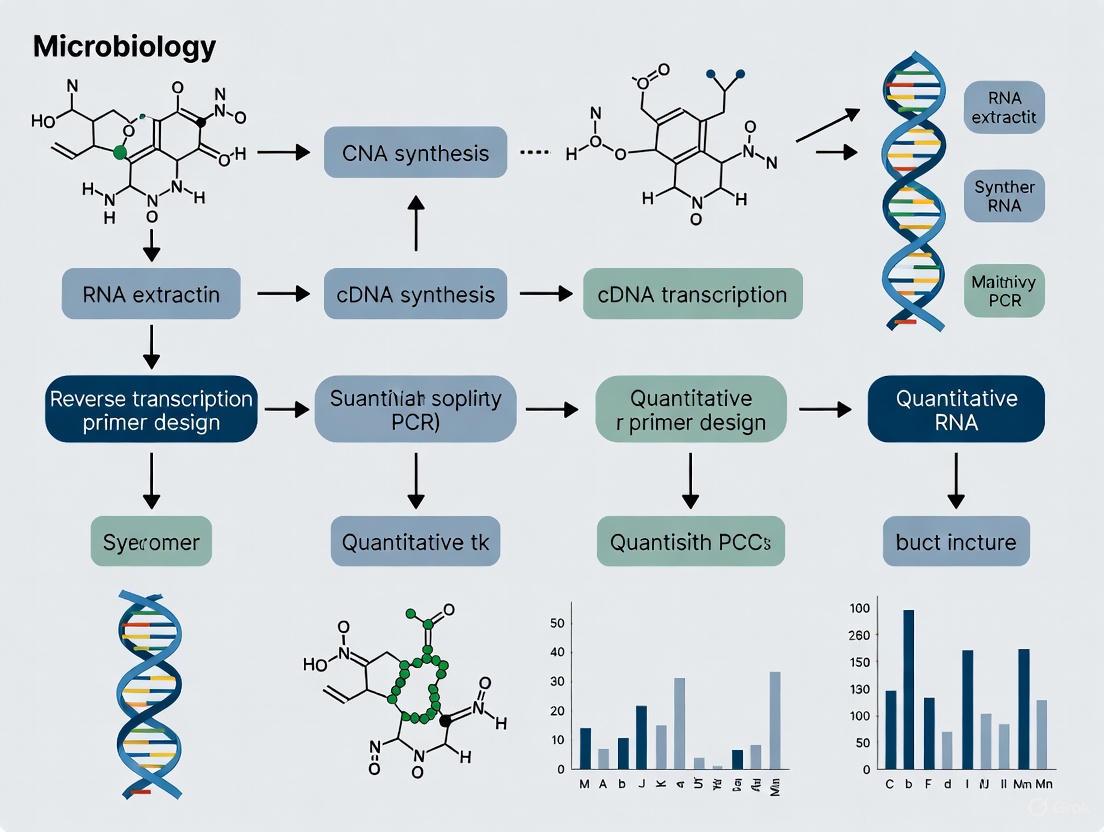
This article provides researchers, scientists, and drug development professionals with a complete framework for designing robust and reliable primers for reverse transcription quantitative PCR (RT-qPCR).
A Comprehensive Guide to RT-qPCR Primer Design: Principles, Protocols, and Pitfalls for Reliable Gene Expression Analysis
Abstract
This article provides researchers, scientists, and drug development professionals with a complete framework for designing robust and reliable primers for reverse transcription quantitative PCR (RT-qPCR). Covering foundational principles to advanced validation techniques, it details the critical steps for in silico design and experimental optimization. The guide emphasizes troubleshooting common pitfalls, selecting stable reference genes, and applying rigorous validation methods as per MIQE guidelines to ensure accurate, reproducible gene expression data crucial for biomedical and clinical research.
Understanding RT-qPCR: Core Principles and Critical First Steps
Reverse Transcription Quantitative Polymerase Chain Reaction (RT-qPCR) is a powerful molecular biology technique that allows for the sensitive detection and precise quantification of RNA molecules. By first converting RNA into its complementary DNA (cDNA) through reverse transcription, then amplifying and quantifying specific DNA targets in real-time, this method provides researchers with a reliable tool for gene expression analysis, pathogen detection, genetic testing, and disease research [1] [2]. The technique's precision and quantitative nature have made it the gold standard for mRNA quantification, critical for unraveling cellular processes and deciphering the complexities of disease mechanisms in both research and diagnostic applications [3].
The fundamental principle underlying RT-qPCR involves monitoring the amplification of a targeted DNA molecule during the PCR process in real-time, unlike conventional PCR which only measures the end product [2]. This is achieved through the use of fluorescent reporters that increase as the target sequence amplifies, allowing for quantification based on the cycle at which the fluorescence crosses a predetermined threshold [4]. The integration of reverse transcription with quantitative PCR enables researchers to directly quantify RNA transcripts, providing invaluable insights into gene regulation and expression patterns under various physiological and pathological conditions.
Fundamental Principles and Workflow
Core Principles of RT-qPCR
The RT-qPCR process consists of two main sequential phases: reverse transcription followed by quantitative PCR. During reverse transcription, single-stranded RNA molecules are converted into complementary DNA (cDNA) using a reverse transcriptase enzyme. This step is crucial as RNA cannot be directly amplified by PCR. The resulting cDNA then serves as the template for the qPCR reaction, where it is amplified exponentially and monitored in real-time using fluorescence detection systems [1] [2].
In qPCR, the accumulation of PCR products is tracked using either non-specific fluorescent dyes that intercalate with any double-stranded DNA or sequence-specific DNA probes labeled with fluorescent reporters [2]. The cycle at which the fluorescence signal crosses a predetermined threshold (known as Cq, Ct, or Cp value) is proportional to the starting quantity of the target sequence in the sample. A lower Cq value indicates a higher starting concentration of the target RNA, while a higher Cq corresponds to a lower initial amount [4] [2].
One-Step vs. Two-Step RT-qPCR
Researchers can implement RT-qPCR using either a one-step or two-step approach, each with distinct advantages and limitations [1].
Table 1: Comparison of One-Step and Two-Step RT-qPCR Approaches
| Parameter | One-Step RT-qPCR | Two-Step RT-qPCR |
|---|---|---|
| Procedure | Reverse transcription and PCR performed in a single tube and buffer | Reverse transcription and PCR performed in separate tubes with different optimized buffers |
| Priming Strategy | Uses only sequence-specific primers | Flexible priming: oligo(dT), random, sequence-specific primers, or mixtures |
| Advantages | Less experimental variation; fewer pipetting steps reduces contamination risk; suitable for high-throughput screening; fast and highly reproducible | Stable cDNA pool can be stored and used for multiple reactions; optimized conditions for each step; flexible priming options; can amplify multiple targets from same cDNA |
| Disadvantages | Impossible to optimize reactions separately; potentially less sensitive due to compromised reaction conditions; detection of fewer targets per sample | Greater risk of contamination due to multiple handling steps; more time-consuming; requires more optimization |
| Best Applications | High-throughput applications, clinical diagnostics, rapid screening | Research requiring cDNA archiving, multiple targets from same sample, applications requiring reaction optimization |
The one-step method combines reverse transcription and PCR amplification in a single reaction tube, using a reverse transcriptase along with a DNA polymerase. This integrated approach minimizes handling steps and reduces the risk of contamination. In contrast, the two-step approach physically separates the reverse transcription and PCR amplification into different reaction vessels, allowing for optimized conditions for each enzymatic reaction and generating a stable cDNA archive that can be used for multiple subsequent PCR reactions [1].
Experimental Design and Workflow
Sample Preparation and Reverse Transcription
The reliability of RT-qPCR data fundamentally depends on sample quality and appropriate experimental design. The process begins with RNA isolation, where researchers must choose between total RNA or mRNA as starting material. While mRNA may offer slightly higher sensitivity, total RNA is often preferred because it requires fewer purification steps, enables more quantitative recovery, and avoids skewed results due to differential recovery yields of various mRNAs [1].
Table 2: Priming Strategies for cDNA Synthesis in Two-Step RT-qPCR
| Primer Type | Structure and Function | Advantages | Disadvantages |
|---|---|---|---|
| Oligo(dT) Primers | Stretch of thymine residues that anneal to poly(A) tail of mRNA; anchored versions contain one G, C, or A residue at 3' end | Generates full-length cDNA from poly(A)-tailed mRNA; efficient with limited starting material; anchor ensures binding at 5' end of poly(A) tail | Only amplifies genes with poly(A) tails; can produce truncated cDNA from internal poly(A) sites; bias toward 3' end |
| Random Primers | Short oligonucleotides (6-9 bases) that anneal at multiple points along RNA transcripts | Anneals to all RNA types (tRNA, rRNA, mRNA); effective for transcripts with secondary structure; high cDNA yield | cDNA synthesized from all RNAs, potentially diluting mRNA signal; produces truncated cDNA fragments |
| Sequence-Specific Primers | Custom primers targeting specific mRNA sequences | Specific cDNA pool; increased sensitivity for target gene; uses reverse qPCR primer | Limited to one gene of interest per reaction |
During reverse transcription, the choice of priming strategy significantly impacts cDNA synthesis efficiency and downstream results. For two-step RT-qPCR, researchers can employ oligo(dT) primers, random primers, sequence-specific primers, or often a mixture of oligo(dT) and random primers to balance specificity and coverage [1]. The reverse transcriptase enzyme selection is also critical, with thermal stability being particularly important for efficient transcription of RNA with extensive secondary structures [1].
qPCR Amplification and Detection Chemistry
The qPCR step employs two primary detection chemistries: DNA-binding dyes and sequence-specific probes. SYBR Green is the most commonly used DNA-binding dye, exhibiting fluorescence when bound to double-stranded DNA. While cost-effective and flexible, SYBR Green will bind to any dsDNA product, including nonspecific amplification products and primer dimers, potentially compromising specificity [2].
Sequence-specific probe methods, such as TaqMan assays, utilize oligonucleotide probes with a fluorescent reporter at one end and a quencher at the opposite end. When the probe is intact, the quencher suppresses reporter fluorescence. During amplification, the 5'→3' exonuclease activity of DNA polymerase cleaves the probe, separating reporter from quencher and generating fluorescence signal. This approach provides enhanced specificity and enables multiplexing with different fluorescent labels, but at higher cost and with requirement for more extensive assay design [5] [2].
Figure 1: RT-qPCR Workflow from RNA to Quantitative Data
Data Analysis and Quantification Methods
Baseline Correction and Threshold Setting
Accurate quantification in RT-qPCR requires proper data preprocessing, including baseline correction and threshold setting. The baseline represents the background fluorescence signal during the initial PCR cycles before detectable product accumulation. Proper baseline correction is essential, as errors can significantly impact Cq values—incorrect baseline settings have been shown to alter Cq values by more than 2 cycles, substantially affecting quantification results [4].
The threshold should be set sufficiently above background fluorescence but within the exponential phase of amplification where all amplification curves are parallel. When amplification plots are parallel, the ΔCq between samples remains constant regardless of threshold position, ensuring reliable relative quantification [4]. When dealing with data from higher cycle numbers where amplification plots may not be parallel due to efficiency differences, threshold positioning becomes more critical as it can influence ΔCq values and consequently fold-change calculations [4].
Quantitative Strategies
RT-qPCR data can be analyzed using either absolute or relative quantification approaches. Absolute quantification determines the exact copy number of target molecules in a sample using a standard curve with known concentrations, while relative quantification expresses changes in target abundance relative to a control sample or reference gene [4] [6].
Table 3: Comparison of Quantitative Analysis Methods for RT-qPCR
| Method | Principle | Requirements | Advantages | Limitations |
|---|---|---|---|---|
| Absolute Quantification | Uses standard curve to determine exact copy number | Serial dilutions of standards with known concentration | Provides exact transcript copy numbers; direct measurement | Requires pure, quantitated standards; more laborious |
| Comparative Cq (ΔΔCq) | Relative comparison based on Cq differences between target and reference genes | Assumes optimal and equal amplification efficiencies (E=2) for all reactions | Simple calculation; widely used; no standard curves needed | Requires validation of efficiency; sensitive to reaction optimization |
| Efficiency-Calibrated Model | Incorporates actual reaction efficiencies into calculations | Determination of individual amplification efficiencies for each assay | Accounts for efficiency variations; more accurate than ΔΔCq | Requires efficiency determination for each assay |
| Standard Curve Method | Relative quantification using dilution series of reference sample | Serial dilutions of a reference sample for each target | High accuracy; accounts for efficiency differences; reliable | Labor-intensive; requires more reactions |
The comparative Cq method (ΔΔCq) is the most commonly used approach for relative quantification, calculating expression ratios using the formula 2^(-ΔΔCq), which assumes optimal amplification efficiency where the amount of product doubles each cycle (efficiency = 2) [7]. When amplification efficiencies are suboptimal or differ between targets, efficiency-corrected models provide more accurate quantification by incorporating actual efficiency values [8].
Statistical analysis is essential for robust interpretation of RT-qPCR data. Multiple regression analysis, ANCOVA models, and randomization tests have been developed to provide confidence intervals and statistical significance for ΔΔCq values, preventing false positive conclusions that could arise from technical variability [7].
Quality Control and Normalization
Controls and Quality Assessment
Appropriate controls are essential for validating RT-qPCR results. A minus reverse transcriptase control ("no RT" control) should be included to test for genomic DNA contamination. This control contains all reaction components except reverse transcriptase; amplification in this control indicates contaminating DNA rather than true RNA-derived signals [1]. Additional controls include no-template controls (NTC) to detect reagent contamination and positive controls to verify reaction efficiency.
RNA quality significantly impacts quantification accuracy. Studies demonstrate that RNA degradation can introduce up to 100% error in gene expression measurements when data are normalized solely to total RNA quantity [6]. The RNA Integrity Number (RIN) provides a standardized measure of RNA quality, with higher values (8-10) indicating better preservation. When working with compromised samples (RIN < 6), normalization strategies that account for RNA degradation are essential for reliable results [6].
Normalization Strategies
Proper normalization is critical for accurate gene expression measurements. The Minimum Information for Publication of Quantitative Real-Time PCR Experiments (MIQE) guidelines provide a standardized framework for experimental design and reporting to ensure reproducibility and credibility [5].
Reference gene normalization uses constitutively expressed housekeeping genes (e.g., GAPDH, ACTB, HPRT, ribosomal RNAs) as internal controls [2]. However, reference gene expression can vary between tissues and experimental conditions, necessitating validation of stability before use. Normalization to total RNA represents an alternative approach, particularly useful for biopsy samples where traditional reference genes may show variability [6]. For the most precise results, especially with degraded samples, corrective algorithms that compensate for RNA integrity loss can significantly improve accuracy, reducing average quantification error from >100% to approximately 8% [6].
Figure 2: RT-qPCR Data Analysis and Quality Control Workflow
Advanced Applications and Methodological Innovations
Genomic DNA Elimination Strategies
DNA contamination presents a significant challenge in RT-qPCR, particularly when analyzing low-abundance transcripts or multigene families. Conventional approaches include DNase I treatment during RNA purification and designing primers to span exon-exon junctions, with one primer potentially crossing an exon-intron boundary to prevent amplification of genomic DNA [1].
A novel method eliminates the need for prior DNA removal by using specifically modified primers during reverse transcription containing mismatched bases. These primers produce cDNA molecules that differ from genomic DNA sequences, enabling specific amplification of cDNA templates even in the presence of contaminating DNA. This approach preserves RNA integrity by avoiding physical or enzymatic DNA elimination treatments that can degrade RNA, and is particularly suitable for quantifying highly repetitive DNA transcripts such as satellite DNA [9].
The Scientist's Toolkit: Essential Research Reagents
Table 4: Essential Research Reagents for RT-qPCR Experiments
| Reagent Category | Specific Examples | Function and Application Notes |
|---|---|---|
| Reverse Transcriptases | Moloney Murine Leukemia Virus (M-MLV) RT, Avian Myeloblastosis Virus (AMV) RT | Converts RNA to cDNA; selection depends on thermal stability and RNase H activity requirements |
| DNA Polymerases | Taq polymerase, hot-start variants | Amplifies cDNA templates; hot-start enzymes reduce non-specific amplification |
| Fluorescent Detection Systems | SYBR Green, TaqMan probes, Molecular Beacons | Enables real-time quantification; SYBR Green is cost-effective while probe-based methods offer higher specificity |
| Priming Systems | Oligo(dT) primers, random hexamers, sequence-specific primers, anchored oligo(dT) | Initiates cDNA synthesis; choice affects cDNA representation and specificity |
| RNA Stabilization Reagents | RNAlater, various commercial RNA stabilization solutions | Preserves RNA integrity during sample collection and storage |
| Nucleic Acid Purification Kits | Silica-membrane columns, magnetic beads, organic extraction methods | Isolves high-quality RNA free from inhibitors; choice affects yield and purity |
| Quality Assessment Tools | Bioanalyzer, spectrophotometer, fluorometer | Assesses RNA quantity, purity, and integrity (RIN) before reverse transcription |
RT-qPCR remains an indispensable technique for precise RNA quantification across diverse research and diagnostic applications. Successful implementation requires careful consideration of multiple factors, including appropriate choice between one-step and two-step protocols, selection of optimal priming strategies, validation of amplification efficiencies, and implementation of proper normalization methods. Adherence to MIQE guidelines ensures experimental rigor and reproducibility, while methodological innovations such as modified primer approaches for DNA contamination control continue to enhance the technique's reliability and application scope. By understanding both the fundamental principles and advanced methodological considerations presented in this guide, researchers can design robust RT-qPCR experiments that generate quantitatively accurate and biologically meaningful data.
Within the framework of advanced thesis research on reverse transcription quantitative primer design protocols, the selection between one-step and two-step quantitative reverse transcription polymerase chain reaction (RT-qPCR) is a fundamental decision that significantly impacts experimental outcomes. RT-qPCR serves as a cornerstone technique in molecular biology, enabling the sensitive detection and quantification of RNA targets across diverse fields including gene expression analysis, pathogen detection, and drug development research [10]. This methodological approach combines reverse transcription (RT) of RNA into complementary DNA (cDNA) with subsequent quantitative PCR amplification, providing researchers with powerful tools to investigate genomic responses and validate transcriptional profiles [1].
The critical distinction between one-step and two-step methodologies lies in their architectural workflow: one-step RT-qPCR integrates cDNA synthesis and PCR amplification in a single reaction vessel, while two-step RT-qPCR physically separates these processes into discrete, sequential reactions [11]. This fundamental procedural difference dictates numerous experimental parameters including primer design strategies, reaction efficiency, throughput capacity, and data reproducibility. For research scientists and drug development professionals, understanding these nuances is essential for designing robust experimental protocols that align with specific project goals, whether conducting high-throughput screening of potential drug targets or performing meticulous validation of candidate gene expression patterns.
Fundamental Principles of RT-qPCR
RT-qPCR functions through a series of meticulously coordinated molecular processes that convert RNA templates into quantifiable DNA amplification products. The technique's quantitative power derives from monitoring PCR amplification in real-time using fluorescent detection systems, allowing researchers to determine initial template concentrations with remarkable precision [10]. The core process begins with reverse transcription, where RNA templates are converted into single-stranded cDNA using reverse transcriptase enzymes [12]. This cDNA then serves as the template for the qPCR amplification, where target sequences are exponentially amplified through thermal cycling while fluorescent signals accumulate in proportion to the synthesized DNA product [10].
The quantitative capability of RT-qPCR relies on the relationship between the initial amount of target RNA and the cycle threshold (Ct) value, which represents the PCR cycle number at which the fluorescent signal exceeds a predetermined threshold [10]. Samples with higher starting concentrations of the target RNA will display lower Ct values, enabling both relative quantification between samples and absolute quantification when compared to standard curves of known concentration [12]. This precise quantification framework makes RT-qPCR indispensable for applications requiring accurate measurement of RNA molecules, from viral load determination to gene expression profiling in drug response studies [13].
Comparative Workflow Analysis
One-Step RT-qPCR Workflow
The one-step RT-qPCR approach consolidates both reverse transcription and PCR amplification into a single reaction tube using a unified buffer system [11]. This integrated methodology employs sequence-specific primers for both enzymatic processes and utilizes a reverse transcriptase alongside a DNA polymerase, both active within the same reaction environment [11] [1]. The streamlined nature of this workflow significantly reduces manual intervention and facilitates more consistent processing across multiple samples.
Protocol: One-Step RT-qPCR
Reaction Setup: Prepare a master mix containing all required components: reverse transcriptase, DNA polymerase, dNTPs, reaction buffer, MgCl₂, RNase inhibitors, fluorescent detection chemistry (SYBR Green or TaqMan probes), and sequence-specific primers [1] [12].
Template Addition: Add RNA template directly to the reaction mixture. The RNA template can be total RNA or mRNA, though total RNA is frequently preferred due to simpler purification and more reliable normalization to starting material [1].
Reverse Transcription: Incubate the reaction tube at 45-50°C for 10-30 minutes to facilitate cDNA synthesis. This temperature represents a compromise optimal for both reverse transcriptase activity and primer annealing specificity [14] [12].
Enzyme Activation/Initial Denaturation: Heat the reaction to 95°C for 2-5 minutes to inactivate the reverse transcriptase and activate the DNA polymerase while simultaneously denaturing the RNA-cDNA hybrids [12].
Amplification Cycling: Perform 40-45 cycles of:
Data Analysis: Calculate Ct values and quantify results against standard curves or reference genes using appropriate quantification algorithms [12].
Two-Step RT-qPCR Workflow
The two-step RT-qPCR approach physically separates the reverse transcription and PCR amplification processes into discrete reactions performed in separate tubes with individually optimized conditions [11]. This methodological separation provides enhanced flexibility in experimental design while allowing independent optimization of each enzymatic reaction.
Protocol: Two-Step RT-qPCR
Step 1: cDNA Synthesis
RNA Denaturation: Incubate RNA template (total RNA or mRNA) at 65-70°C for 5-10 minutes to eliminate secondary structures, then immediately place on ice [12].
Reverse Transcription Master Mix: Prepare a mixture containing reverse transcriptase, reaction buffer, dNTPs, MgCl₂, RNase inhibitors, and priming oligonucleotides [12].
Primer Selection: Choose appropriate priming strategy based on experimental needs:
- Oligo(dT) primers (12-18 nucleotides): Target polyadenylated mRNA for 3'-end biased representation [1]
- Random primers (6-9 nucleotides): Prime all RNA species for comprehensive transcript coverage [1]
- Gene-specific primers (18-25 nucleotides): Provide targeted detection of specific transcripts [1]
- Mixed priming: Combine oligo(dT) and random primers for enhanced coverage [1]
cDNA Synthesis Reaction: Incubate at 37-50°C for 30-60 minutes (temperature dependent on reverse transcriptase characteristics and priming method) [12].
Enzyme Inactivation: Heat to 70-85°C for 5-15 minutes to terminate the reaction [12].
Step 2: Quantitative PCR
Reaction Setup: Prepare qPCR master mix containing DNA polymerase, reaction buffer, dNTPs, MgCl₂, fluorescent detection chemistry, and gene-specific primers [12].
Template Addition: Transfer a portion of the synthesized cDNA (typically 1-5 μL) to the qPCR reaction mixture.
Amplification Cycling:
Data Analysis: Quantify results using absolute quantification with standard curves or relative quantification using reference genes normalized to the cDNA input [12].
Critical Comparative Parameters
Performance Characteristics and Applications
Table 1: Comprehensive Comparison of One-Step vs. Two-Step RT-qPCR Methodologies
| Parameter | One-Step RT-qPCR | Two-Step RT-qPCR |
|---|---|---|
| Workflow Complexity | Simplified, integrated process | Separated, multi-step process |
| Handling Time | Reduced hands-on time | Extended manual processing |
| Throughput Capacity | Excellent for high-throughput applications [11] | Limited by multiple handling steps |
| Primer Flexibility | Restricted to gene-specific primers only [11] | Multiple options: oligo(dT), random hexamers, or gene-specific primers [11] |
| Reaction Optimization | Compromised conditions for both reactions [11] | Individually optimized conditions for each step [11] |
| Sensitivity | Potentially reduced due to reaction compromise [11] | Enhanced through independent optimization [11] |
| Target Multiplexing | Limited to few targets per sample [11] | Multiple targets from single cDNA pool [11] |
| cDNA Archive | Not possible—all cDNA consumed in reaction | Stable cDNA bank available for future analyses [11] |
| Contamination Risk | Minimal due to closed-tube format [11] | Increased through multiple open-tube steps [11] |
| Experimental Consistency | High reproducibility between samples [11] | Potential variation between RT reactions |
| Sample Input Requirements | Requires higher quality RNA template | Suitable for limited or suboptimal RNA samples |
| Cost Per Reaction | Generally lower | Higher due to separate reagent requirements |
Application-Specific Selection Guidelines
The decision between one-step and two-step RT-qPCR methodologies should be guided by specific experimental requirements and practical constraints:
Select One-Step RT-qPCR when:
- Processing large sample sets with limited targets (high-throughput screening) [11] [15]
- Rapid turnaround time is essential (diagnostic applications) [16]
- Minimizing contamination risk is paramount (clinical diagnostics) [11]
- Laboratory workflow benefits from simplified protocols (automated platforms) [15]
- Template quality is high and target abundance is sufficient [1]
Select Two-Step RT-qPCR when:
- Analyzing multiple targets from a single RNA sample [11] [15]
- RNA template is limited or of suboptimal quality [15]
- Creating stable cDNA archives for longitudinal studies [11]
- Experimental conditions require rigorous optimization [11]
- Flexible priming strategies are necessary [1]
- Establishing standardized cDNA resources for multiple experiments [15]
Technical Considerations for Protocol Implementation
Primer Design Strategy
Effective primer design is critical for robust RT-qPCR performance, particularly within thesis research focused on primer design protocols. Several strategic considerations ensure optimal assay performance:
Reverse Transcription Priming Options:
- Oligo(dT) Primers: These 12-18 nucleotide primers target the poly(A) tail of eukaryotic mRNA, generating cDNA biased toward the 3'-end of transcripts. This approach is ideal for amplifying the coding region of mRNAs but may underrepresent the 5'-ends of long transcripts [1].
- Random Primers: These 6-9 nucleotide oligonucleotides prime at multiple positions along all RNA species, providing comprehensive coverage of the transcriptome. This method is particularly valuable for RNAs without poly(A) tails or those with significant secondary structure [1].
- Gene-Specific Primers: These target-specific primers (18-25 nucleotides) provide the highest sensitivity for particular targets but limit analysis to predetermined genes of interest [1].
- Mixed Priming Approaches: Combining oligo(dT) and random primers can enhance coverage while maintaining representation of specific mRNA regions [1].
qPCR Primer Design Specifications:
- Amplicon Length: Optimal products range from 70-200 base pairs for maximal amplification efficiency [12].
- Exon-Intron Spanning: Primers should ideally span exon-exon junctions to preclude amplification of contaminating genomic DNA [1].
- Sequence Considerations: Primers of 18-25 nucleotides with 40-60% GC content promote stable hybridization [12].
- Secondary Structure: Avoid self-complementarity and hairpin formation that impede primer annealing [12].
- Validation: Utilize tools like NCBI BLAST, OligoAnalyzer, and Primer3Plus for specificity verification and secondary structure prediction [12].
The Scientist's Toolkit: Essential Research Reagents
Table 2: Critical Reagents for RT-qPCR Experiments
| Reagent Category | Specific Examples | Functional Role | Selection Considerations |
|---|---|---|---|
| Reverse Transcriptase | Moloney Murine Leukemia Virus (MMLV) RT, Avian Myeloblastosis Virus (AMV) RT | Catalyzes RNA-directed DNA synthesis (cDNA generation) | Thermal stability, RNase H activity, processivity [1] |
| DNA Polymerase | Hot-start Taq polymerases | Amplifies cDNA template with thermal stability | Fidelity, amplification efficiency, inhibitor resistance [12] |
| Fluorescent Detection | SYBR Green, TaqMan probes, Molecular beacons | Enables real-time product quantification | Specificity requirements, multiplexing needs, cost constraints [10] |
| Priming Oligonucleotides | Oligo(dT), random hexamers, gene-specific primers | Initiates cDNA synthesis and PCR amplification | RNA characteristics, target specificity, coverage requirements [1] |
| Buffer Components | MgCl₂, dNTPs, KCl, stabilizers | Provides optimal enzymatic environment | Concentration optimization, compatibility with both RT and PCR (one-step) [14] |
| RNase Inhibitors | Protein-based inhibitors | Protects RNA templates from degradation | Essential for RNA integrity, particularly in two-step protocols [12] |
Reverse Transcriptase Enzyme Selection
The choice of reverse transcriptase significantly influences cDNA yield and quality, with several enzyme characteristics requiring careful consideration:
RNase H Activity: Wild-type reverse transcriptases typically possess RNase H activity that degrades the RNA strand in RNA-DNA hybrids, which can prematurely terminate cDNA synthesis for long transcripts. However, this activity can enhance qPCR efficiency by facilitating RNA template removal during early PCR cycles [1]. Engineered RNase H- mutants improve full-length cDNA production but may require additional optimization for maximal qPCR sensitivity [14].
Thermal Stability: Reverse transcriptases with elevated temperature optima (50-60°C) improve primer specificity and enhance transcription through RNA regions with stable secondary structures [1]. This characteristic is particularly valuable for one-step RT-qPCR where reaction conditions must accommodate both reverse transcription and PCR amplification.
Enzyme Kinetics: Recent kinetic studies demonstrate that optimizing reverse transcriptase concentration can significantly improve reaction speed and efficiency. Notably, reduced RT concentrations (10- to 10,000-fold lower than manufacturer recommendations) have shown improved cDNA synthesis predictions and enabled extremely rapid one-step RT-PCR protocols completing in approximately 2 minutes [14].
Advanced Applications in Research and Diagnostics
RT-qPCR methodologies have become indispensable across diverse scientific disciplines, with particular significance in pharmaceutical research and clinical diagnostics. In drug development, RT-qPCR facilitates quantitative assessment of gene expression changes in response to compound treatment, enabling mechanism of action studies and toxicity evaluation [13]. The technology has proven invaluable for cytochrome P450 gene expression profiling, cytokine and chemokine genomic expression monitoring, and identification of genomic biomarkers for nephrotoxicity [13].
The recent COVID-19 pandemic highlighted the critical importance of robust RT-qPCR methodologies in public health responses. SARS-CoV-2 detection leveraged both one-step and two-step approaches, with one-step protocols dominating high-throughput diagnostic applications due to their streamlined workflow and reduced contamination risk [16] [10]. This mass diagnostic deployment demonstrated how methodological choices directly impact testing capacity, turnaround time, and ultimately public health outcomes.
Emerging innovations continue to expand RT-qPCR applications, including direct detection methods that bypass RNA extraction, extreme PCR protocols that dramatically reduce amplification time, and sample pooling strategies that enhance testing capacity without proportional reagent consumption [14] [16]. These advancements underscore the dynamic evolution of RT-qPCR methodologies and their enduring relevance in both basic research and applied diagnostic settings.
The strategic selection between one-step and two-step RT-qPCR methodologies represents a critical decision point in experimental design for gene expression analysis and RNA detection applications. One-step protocols offer streamlined workflows, reduced contamination risk, and enhanced throughput characteristics ideal for diagnostic applications and high-throughput screening environments. Conversely, two-step methods provide superior flexibility, sensitivity, and the ability to create stable cDNA resources valuable for research applications requiring multiple analyses from limited samples.
Within the context of advanced thesis research on reverse transcription quantitative primer design protocols, understanding these methodological distinctions enables researchers to align technique selection with specific experimental requirements. This strategic alignment ensures optimal data quality while maximizing resource efficiency—a crucial consideration in both academic research and drug development environments. As RT-qPCR technologies continue to evolve with enhancements in speed, sensitivity, and multiplexing capabilities, this foundational understanding of core methodologies will support appropriate implementation of emerging innovations across diverse scientific applications.
Within the framework of a comprehensive thesis on reverse transcription quantitative PCR (RT-qPCR) protocol research, the reverse transcription (RT) step itself is a critical determinant of success. This step, which converts RNA into complementary DNA (cDNA), is a major source of variability in the final quantitative results [17]. The efficiency of cDNA synthesis can vary up to 90-fold depending on the choice of reverse transcriptase, priming strategy, and assay volume [17]. This application note provides detailed methodologies and decision frameworks for selecting and optimizing the reverse transcription step, focusing on the two core components: priming strategies and enzyme selection. The protocols herein are designed to enable researchers to make informed choices that enhance the sensitivity, specificity, and reliability of their RT-qPCR assays, particularly for challenging applications such as the analysis of weakly expressed genes [18] or the detection of low viral loads [19].
Priming Strategies for cDNA Synthesis
The choice of priming method for the reverse transcription reaction defines the subset of RNA molecules that will be converted to cDNA and can significantly impact cDNA yield, the representation of different transcript regions, and the overall sensitivity of the assay.
Table 1: Comparison of Priming Strategies for Reverse Transcription
| Priming Method | Structure and Mechanism | Advantages | Disadvantages | Ideal Use Cases |
|---|---|---|---|---|
| Oligo(dT) | Stretch of thymine residues that anneal to the poly(A) tail of mRNA [1]. | - Generates cDNA from the 3' end of poly(A)+ mRNA, ideal for amplifying coding sequences [1].- Good for limited starting material [1]. | - Bias towards the 3' end of transcripts [1].- Cannot be used for RNA without a poly(A) tail (e.g., bacterial RNA) [1].- Inefficient for degraded RNA samples [1]. | - Gene expression analysis with high-quality, eukaryotic RNA [1]. |
| Random Primers | Short (6-9 base) primers that anneal at multiple points along all RNA transcripts [1]. | - Anneals to all RNA species (rRNA, tRNA, mRNA) [1].- Effective for transcripts with secondary structure or degraded RNA [1].- High cDNA yield [1]. | - cDNA is made from all RNAs, which can dilute mRNA signal [1].- May produce truncated cDNA sequences [1]. | - Analysis of degraded RNA samples (e.g., FFPE tissues) [18].- Studying non-poly(A)ylated RNAs. |
| Gene-Specific | Custom-made primers that target a specific mRNA sequence [1]. | - Highest specificity and sensitivity for the target of interest [1] [20].- Creates a specific cDNA pool [1]. | - Synthesis is limited to one gene of interest per reaction [1].- Not suitable for profiling multiple genes from a single cDNA synthesis [20]. | - One-step RT-qPCR assays [20].- Quantification of a single, specific target. |
| Mixed Primers | A combination of Oligo(dT) and Random Primers [1]. | - Can diminish the generation of truncated cDNAs and improve reverse transcription efficiency [1].- Comprehensive coverage of transcriptome. | - Optimization may be required for the ratio of primers. | - Creating stable cDNA libraries for the analysis of multiple targets from a single sample [20]. |
The following workflow outlines the decision process for selecting a priming strategy based on experimental goals and sample quality:
Reverse Transcriptase Enzyme Selection
The reverse transcriptase enzyme is the workhorse of the cDNA synthesis reaction. Its properties determine the efficiency of cDNA synthesis, especially for complex or structured RNA templates.
Key Enzyme Properties
The two most commonly used reverse transcriptases are Moloney Murine Leukemia Virus (M-MLV) and Avian Myeloblastosis Virus (AMV) reverse transcriptases [1] [21]. Engineered versions of these enzymes are also widely available, offering enhanced performance characteristics such as higher thermostability and reduced RNase H activity [1].
- Thermal Stability: Enzymes with higher thermal stability (e.g., engineered M-MLV RTs) are crucial for transcribing through RNA templates with high secondary structure, as they can be used at higher reaction temperatures (e.g., 50–60°C) that help melt these structures [1].
- RNase H Activity: RNase H degrades the RNA strand in an RNA-DNA hybrid. While this can be beneficial for melting duplexes in the first PCR cycles, it can also lead to truncated cDNA if it acts prematurely during reverse transcription [1]. For long transcripts, enzymes with reduced or inactivated RNase H activity are preferred to generate full-length cDNA. Conversely, some protocols favor RTs with intrinsic RNase H activity to enhance qPCR efficiency [1].
Table 2: Comparison of Reverse Transcriptase Enzyme Properties
| Enzyme Type | Thermal Stability | RNase H Activity | Advantages | Considerations |
|---|---|---|---|---|
| M-MLV Reverse Transcriptase | Moderate (~37-42°C) [1]. | Native enzyme has RNase H activity; often engineered to lack it [1]. | - Engineered versions offer high fidelity and processivity.- Common in commercial kits for robust performance [21]. | - Standard M-MLV may be insufficient for templates with high GC content or secondary structure. |
| AMV Reverse Transcriptase | High (up to 60°C) [1]. | Has inherent RNase H activity [1]. | - Higher optimal temperature helps denature secondary structures in RNA [1]. | - The RNase H activity can truncate cDNA synthesis, limiting full-length product yield [1]. |
| Engineered M-MLV Variants | High (up to 60°C or higher) [1]. | Often reduced or eliminated [1]. | - Ideal for complex templates: combines high temperature capability with full-length cDNA yield [1].- Suitable for one-step RT-qPCR [20]. | - Typically more expensive than native enzymes. |
Integrated Experimental Protocols
Protocol: Two-Step RT-qPCR with Optimized cDNA Synthesis
This protocol is designed for flexibility and is ideal when the resulting cDNA will be used to analyze multiple genes [20]. It is particularly suited for challenging samples, such as those from rapeseed or other polypoloid plants, where sensitivity for weakly expressed genes is critical [18].
I. Sample Homogenization and RNA Isolation
- Homogenization: For fibrous or tough plant tissues, flash-freeze samples in liquid nitrogen. Homogenize using a cryogenic mill (e.g., Retsch MM400 CryoMill) with stainless steel beads. For increased yield, adding a small volume (e.g., 100 µL) of TRIzol reagent to the frozen tissue before grinding can improve efficiency [18].
- RNA Extraction: Isolate total RNA using a phenol-based method (e.g., TRIzol) or a silica-membrane column kit. The TRIzol method is often more effective for plant tissues rich in secondary metabolites [18].
- RNA Concentration and Purification (if needed): Precipitate RNA by adding 0.1 volumes of 3 M sodium acetate and 2.5 volumes of 96% ethanol to concentrate low-yield samples. Purify using a DNase digestion step (e.g., with a Turbo DNA-free Kit) to remove genomic DNA contamination [18].
- Quality Control: Accurately measure RNA concentration using a spectrophotometer (e.g., NanoDrop). Assess RNA integrity (RIN) using an instrument such as an Agilent 2100 bioanalyzer, as degradation can introduce significant errors in quantification [6].
II. First-Strand cDNA Synthesis
- Reaction Setup: In a nuclease-free tube, combine:
- Denaturation and Annealing: Heat the mixture to 65°C for 5 minutes to denature secondary structures, then immediately place on ice.
- Master Mix Preparation: Prepare the following master mix on ice:
- 5X Reaction Buffer: 4 µL
- RNase Inhibitor (20-40 U/µL): 0.5-1 µL
- dNTP Mix (10 mM each): 2 µL
- Reverse Transcriptase (200 U/µL): 1 µL
- Nuclease-free water: to a final reaction volume of 20-25 µL.
- Incubation: Add the master mix to the RNA-primer mix. Incubate as follows:
- For Oligo(dT) or Gene-Specific primers: 50-55°C for 30-60 minutes.
- For Random Hexamers: 25°C for 10 minutes (for annealing), followed by 37-55°C for 30-60 minutes (for elongation).
- Enzyme Inactivation: Heat-inactivate the reaction at 70-85°C for 10 minutes. The synthesized cDNA can be stored at -20°C or used directly in the subsequent qPCR step.
Protocol: One-Step RT-qPCR
This protocol is ideal for high-throughput applications or when quantifying a single, specific target, as it combines reverse transcription and qPCR in a single, closed-tube reaction, minimizing pipetting errors and cross-contamination [1] [20].
- Reaction Setup: In a single qPCR tube or well, combine:
- One-Step RT-qPCR Master Mix (containing reverse transcriptase, Taq polymerase, dNTPs, and buffer).
- Forward and Reverse Gene-Specific Primers (5-20 µM each).
- Fluorescent detection chemistry (e.g., SYBR Green or TaqMan probe).
- RNA template (1 pg - 1 µg total RNA).
- Nuclease-free water to the final volume.
- Thermal Cycling: Run the following program in a real-time PCR instrument:
- Reverse Transcription: 50-55°C for 10-30 minutes.
- Initial Denaturation/RT Inactivation: 95°C for 2-10 minutes.
- Amplification (40-45 cycles):
- Denature: 95°C for 15 seconds.
- Anneal/Extend: 60°C for 30-60 minutes (acquire fluorescence at this step).
- No-RT Control: Always include a control that contains all reaction components except the reverse transcriptase to check for genomic DNA contamination [1].
The following graph illustrates the workflow differences between the one-step and two-step approaches:
The Scientist's Toolkit: Essential Research Reagents
Table 3: Key Reagents for the Reverse Transcription Step
| Reagent Category | Specific Examples | Function and Rationale |
|---|---|---|
| Reverse Transcriptase Enzymes | M-MLV RT, AMV RT, engineered variants (e.g., LunaScript RT) [20] [21]. | Catalyzes the synthesis of cDNA from an RNA template. Engineered variants offer higher thermal stability and efficiency. |
| Primers for cDNA Synthesis | Oligo(dT)~18~, Random Hexamers (6-9 bases), Gene-Specific primers [1] [18]. | Initiates the reverse transcription reaction from specific (mRNA 3' end) or random sites on the RNA template. |
| RNA Extraction Reagents | TRIzol, RNeasy Plant Mini Kit [18]. | For the isolation of high-quality, intact total RNA from various sample types, which is the foundational starting material. |
| DNase Treatment Kits | Turbo DNA-free Kit [18]. | Digests and removes contaminating genomic DNA from RNA samples to prevent false-positive amplification in qPCR. |
| dNTPs | dNTP Mix (10 mM each of dATP, dCTP, dGTP, dTTP) [18]. | The building blocks for the synthesis of cDNA. |
| RNase Inhibitor | Recombinant RNase Inhibitor (e.g., 40 U/µL) [21]. | Protects the RNA template and synthesized cDNA from degradation by RNases. |
| One-Step RT-qPCR Kits | Luna Universal One-Step RT-qPCR Kit [20], KAPA PROBE FAST One-Step Kit [21]. | Integrated solutions containing RT enzyme, hot-start Taq polymerase, buffer, and dNTPs for streamlined one-step protocols. |
| Two-Step qPCR Master Mixes | Luna Universal qPCR Master Mix [20], SYBR Green Premix Ex Taq [18]. | Optimized mixes containing DNA polymerase, dNTPs, buffer, and fluorescent dye for the quantitative PCR step in two-step protocols. |
Troubleshooting and Data Normalization
A critical, often overlooked, aspect of the RT step is its interaction with RNA quality. Normalizing input RNA quantity alone is insufficient if RNA integrity varies between samples. RNA degradation can introduce errors of over 100% in gene expression measurements [6]. It is therefore essential to assess RNA integrity using a metric like the RNA Integrity Number (RIN) [6]. For the most accurate results, especially in clinical biopsies where degradation is common, researchers should consider implementing a corrective algorithm that factors in RNA integrity for data normalization [6]. Furthermore, the inclusion of appropriate controls is non-negotiable. A "no-RT" control (where the reverse transcriptase is omitted) is mandatory to detect amplification from contaminating genomic DNA [1]. For absolute quantification, as required in viral persistence studies, reverse transcription droplet digital PCR (RT-ddPCR) can be a superior alternative to RT-qPCR due to its higher sensitivity at low viral loads and its ability to provide absolute quantification without a standard curve [19].
Reverse transcription quantitative PCR (RT-qPCR) is a cornerstone technique in molecular biology for sensitive RNA detection and quantification. Its reliability in gene expression analysis, pathogen detection, and genetic testing hinges on the meticulous optimization of its core components. This application note details the essential roles of primers, probes, polymerases, and buffer conditions, providing a structured framework for researchers and drug development professionals to develop robust and reproducible RT-qPCR protocols. The guidelines presented herein are critical for the integrity of data generated within a broader thesis on reverse transcription quantitative primer design.
Essential Reagents and Their Functions
A successful RT-qPCR assay relies on a suite of carefully selected reagents, each fulfilling a specific role in the reverse transcription and amplification processes. The table below summarizes the key research reagent solutions and their primary functions.
Table 1: Research Reagent Solutions for RT-qPCR
| Reagent Category | Specific Examples | Function |
|---|---|---|
| Reverse Transcriptase | Moloney Murine Leukemia Virus (MMLV) Reverse Transcriptase, Avian Myeloblastosis Virus (AMV) Reverse Transcriptase [1] | Catalyzes the synthesis of complementary DNA (cDNA) from an RNA template [1]. |
| DNA Polymerase | Hot-start DNA Polymerase (e.g., ZymoTaq) [22] | Amplifies the cDNA template during the qPCR step; hot-start enzymes reduce nonspecific amplification and primer-dimer formation [22]. |
| Primers | Oligo(dT) Primers, Random Primers, Sequence-Specific Primers [1] | Short DNA oligonucleotides that provide a starting point for DNA synthesis by polymerases during reverse transcription and/or PCR [1]. |
| Hydrolysis Probes | TaqMan Probes (single- or double-quenched) [23] | Sequence-specific probes labeled with a fluorophore and quencher; cleavage during amplification releases a fluorescent signal, enabling quantification [23]. |
| Buffer Components | Mg2+, K+, dNTPs [23] | Cofactors and substrates essential for enzyme activity, fidelity, and efficiency. Concentration optimization is critical [23]. |
Primer and Probe Design Guidelines
The design of primers and probes is a critical determinant of assay specificity and efficiency. Adherence to the following quantitative parameters ensures optimal performance.
Design Parameters for Primers
Primers should be designed to be unique to the target sequence and to work efficiently under a unified annealing temperature. The following table consolidates key design criteria.
Table 2: Quantitative Design Parameters for PCR Primers
| Parameter | Ideal Value or Range | Rationale |
|---|---|---|
| Length | 18–30 bases [23]; 18–22 bp for qPCR [22] | Balances specificity with practical melting temperature (Tm) [23] [22]. |
| Melting Temperature (Tm) | 60–64°C [23]; ideal is 60°C [24] | Ensures efficient annealing; Tm of primer pair should differ by ≤ 2°C [23] [24]. |
| Annealing Temperature (Ta) | 3–5°C below the primer Tm [23] [22] | Promotes specific and efficient primer binding [23] [22]. |
| GC Content | 35–65% [23] [22]; ideal is 50% [23] | Provides sufficient sequence complexity while avoiding extreme stability [23]. |
| Amplicon Length | 70–150 bp [23]; 70–200 bp [24] | Short amplicons are efficiently amplified with standard cycling conditions [23] [24]. |
| 3' End Sequence | Avoid stretches of 4 or more G/C residues [23] [22]; prefer a C or G residue [24] | Prevents nonspecific, high-affinity binding and mis-priming [23] [24]. |
Design Parameters for Probes
Hydrolysis probes (e.g., TaqMan) must be designed with specific considerations that differ from PCR primers.
Table 3: Quantitative Design Parameters for qPCR Probes
| Parameter | Ideal Value or Range | Rationale |
|---|---|---|
| Length | 20–30 bases [23]; 20–25 bp [22] | Achieves a suitable Tm without compromising fluorescence quenching [23] [22]. |
| Melting Temperature (Tm) | 5–10°C higher than primers [23] [25] | Ensures the probe is bound to the target before primer extension begins [23] [25]. |
| GC Content | 35–65% [23] | Similar to primers, ensures sequence complexity [23]. |
| 5' End Sequence | Avoid a Guanine (G) base [23] [22] | Prevents quenching of the 5' fluorophore, which can dampen signal [23] [22]. |
| Quenching | Use double-quenched probes (e.g., with ZEN/TAO) [23] | Provides lower background and higher signal-to-noise ratio compared to single-quenched probes [23]. |
Specificity and Structural Checks
- Exon-Exon Junctions: Primers should be designed to span an exon-exon junction, with one primer potentially spanning the actual exon-intron boundary. This design prevents amplification of contaminating genomic DNA (gDNA), as the intron-containing gDNA sequence will not be amplified [23] [1] [22].
- Secondary Structures: Assays should be screened for self-dimers, heterodimers, and hairpins. The free energy (ΔG) for any such structures should be weaker (more positive) than –9.0 kcal/mol to prevent formation [23].
- Specificity Checking: Tools like NCBI BLAST should be used to ensure primers are unique to the desired target sequence, minimizing off-target amplification [23] [22].
Figure 1: A high-level workflow for designing and optimizing an RT-qPCR assay, from sequence selection to final analysis.
Detailed Experimental Protocols
One-Step vs. Two-Step RT-qPCR
The first major protocol decision is choosing between a one-step or two-step approach, each with distinct advantages.
Table 4: Comparison of One-Step and Two-Step RT-qPCR Protocols
| Parameter | One-Step RT-qPCR | Two-Step RT-qPCR |
|---|---|---|
| Workflow | Reverse transcription and qPCR are combined in a single tube [1]. | Reverse transcription and qPCR are performed in separate tubes [1]. |
| Advantages | - Less experimental variation [1].- Fewer pipetting steps, reducing contamination risk [1].- Fast and highly reproducible [1].- Suitable for high-throughput [1]. | - A stable cDNA pool is generated for multiple qPCR reactions [1].- Reaction conditions can be optimized separately [1].- Flexible priming options for reverse transcription [1]. |
| Disadvantages | - Impossible to optimize the two reactions separately [1].- Less sensitive due to compromised reaction conditions [1]. | - Greater risk of contamination due to more handling steps [1].- More time-consuming [1].- Requires more RNA input for multiple assays [1]. |
Reverse Transcription Primer Selection for Two-Step Assays
In two-step assays, the priming strategy for cDNA synthesis is a critical variable.
Table 5: Priming Strategies for cDNA Synthesis in Two-Step RT-qPCR
| Primer Type | Structure and Function | Advantages | Disadvantages |
|---|---|---|---|
| Oligo(dT) | Stretch of thymine residues that anneal to the poly(A) tail of mRNA [1]. | - Generates full-length cDNA from poly(A)+ mRNA [1].- Ideal for limited starting material [1]. | - Only primes mRNAs with a poly(A) tail [1].- Can exhibit 3' bias [1]. |
| Random Primers | Short (6-9 bp) primers that anneal at multiple points along any RNA transcript [1]. | - Anneals to all RNA (rRNA, tRNA, mRNA) [1].- Good for transcripts with secondary structure or fragmented RNA [1].- High cDNA yield [1]. | - cDNA is made from all RNAs, which can dilute mRNA signal [1].- Generates truncated cDNA sequences [1]. |
| Sequence-Specific | Custom primers that target a specific mRNA sequence [1]. | - Highly specific cDNA pool [1].- Increased sensitivity for the target of interest [1]. | - Synthesis is limited to one gene of interest per reaction [1]. |
Step-by-Step qPCR Primer and Probe Design Protocol
This protocol utilizes the NCBI Primer-BLAST tool for integrated design and specificity checking [24] [26].
- Obtain Sequence: Retrieve the nucleotide sequence of your gene of interest from the PubMed gene database, selecting the appropriate NCBI Reference Sequence (RefSeq) [24].
- Launch Primer-BLAST: From the RefSeq page, click "Pick primers" under the "Analyze this sequence" link [24].
- Set Primer Parameters:
- Set Exon/Intron Parameters: Select "Primer must span an exon-exon junction" to reduce gDNA amplification [24] [26].
- Set Specificity Parameters: Select the appropriate organism and use the RefSeq mRNA database to ensure primer specificity [24] [26].
- Analyze Output: Select candidate primer pairs from the results. Prefer primers with a near-random mix of nucleotides, a C or G at the 3' end, and GC content of 40–60% [24].
- In Silico Validation: Use tools like the IDT OligoAnalyzer Tool to check for secondary structures (hairpins, self-dimers) with a ΔG > -9.0 kcal/mol and to calculate precise Tm under your specific reaction conditions [23] [27].
Figure 2: Strategy for designing primers across exon-exon junctions to ensure amplification from cDNA (mRNA) while preventing amplification from genomic DNA contaminants.
Buffer Conditions and Enzyme Selection
The biochemical environment is a fundamental, yet often overlooked, component of a robust RT-qPCR assay.
Critical Buffer Components
- Divalent Cations (Mg2+): Mg2+ is a crucial cofactor for both reverse transcriptase and DNA polymerase enzymes. Its concentration significantly impacts enzyme activity, fidelity, and primer annealing. Typical concentrations are around 3 mM, but optimization is required [23].
- Monovalent Cations (K+): Potassium ions (K+) stabilize the reaction environment and influence the melting temperature of oligonucleotides. Standard concentrations are often 50 mM [23].
- Deoxynucleotide Triphosphates (dNTPs): These are the building blocks for cDNA and DNA synthesis. Balanced dNTP concentrations (e.g., 0.8 mM each) are critical for efficient and accurate amplification [23].
Enzyme Considerations
- Reverse Transcriptase: Select an enzyme with high thermal stability to enable cDNA synthesis at higher temperatures, which helps denature RNA secondary structures. The RNase H activity of the enzyme should also be considered; while it can help melt RNA-DNA duplexes in early PCR cycles, it can also lead to truncated cDNA if overactive [1].
- DNA Polymerase: Hot-start polymerases are highly recommended. They remain inactive until a high-temperature activation step, thereby preventing non-specific priming and primer-dimer formation at lower temperatures during reaction setup [22].
Essential Controls and Troubleshooting
- Minus Reverse Transcriptase Control (-RT): A critical control that contains all reaction components except the reverse transcriptase. This control identifies amplification arising from contaminating genomic DNA rather than the target RNA [1].
- Data Analysis and Normalization: For gene expression studies, accurate quantification requires normalization to stable reference genes (housekeeping genes) to account for variations in RNA input and cDNA synthesis efficiency.
In the realm of molecular biology, particularly within gene expression analysis and clinical diagnostics, reverse transcription quantitative PCR (RT-qPCR) stands as a cornerstone technique due to its exceptional sensitivity, specificity, and reproducibility [28] [29]. However, these attributes are wholly dependent on a foundational element: proper primer design. The exquisite specificity of RT-qPCR is governed primarily by the oligonucleotide primers used to initiate DNA amplification; consequently, poorly designed primers can compromise data integrity, leading to both false positive and false negative results [30]. Within the context of a comprehensive reverse transcription quantitative primer design protocol, establishing rigorously optimized primers is not merely a preliminary step but a non-negotiable prerequisite for generating scientifically valid and reliable data [28]. This application note delineates the critical principles of qPCR primer design, provides a detailed protocol for their optimization and validation, and underscores why this process is fundamental to data integrity in research and drug development.
Foundational Principles of qPCR Primer Design
Core Design Parameters
The design of highly specific and efficient primers requires adherence to a set of well-established biochemical principles and parameters. The following specifications are widely recommended by leading institutions and reagent suppliers to ensure optimal performance [23] [31] [32].
- Primer Length: Primers should be 18-30 nucleotides long. This range provides a good balance of specificity and binding efficiency [23] [32].
- Melting Temperature (Tm): The Tm for both forward and reverse primers should be between 60°C and 65°C, and the Tm of the primer pair should not differ by more than 2°C [23] [24]. This ensures both primers bind to their target sequences simultaneously during the annealing step.
- GC Content: The GC content of primers should be ideally between 40-60%, which provides sufficient sequence complexity for specific binding without promoting secondary structure formation [23] [32].
- GC Clamp: The 3' end of a primer should terminate in one or more G or C bases (a GC clamp), as the stronger hydrogen bonding of these bases stabilizes the primer-template interaction and enhances priming efficiency [32].
- Amplicon Length: For qPCR assays, the ideal amplicon length is 70-150 base pairs [23] [24]. Shorter amplicons are amplified with higher efficiency and are preferable when working with fragmented RNA or DNA.
- Specificity Checks: Primer sequences must be checked for off-target binding using tools like NCBI BLAST to ensure they are unique to the gene of interest [23] [31]. This is especially critical in plant and animal genomes containing families of highly homologous genes, where primers must be designed to exploit single-nucleotide polymorphisms (SNPs) to differentiate between homologs [28].
Table 1: Summary of Key Primer Design Parameters
| Parameter | Ideal Specification | Rationale |
|---|---|---|
| Primer Length | 18-30 nucleotides | Balances specificity and binding efficiency. |
| Melting Temp (Tm) | 60-65°C (< 2°C difference between primers) | Ensures simultaneous primer binding. |
| GC Content | 40-60% | Provides optimal sequence stability and specificity. |
| GC Clamp | G or C at the 3' end | Stabilizes primer-template binding. |
| Amplicon Length | 70-150 bp | Maximizes amplification efficiency and is ideal for fragmented samples. |
Avoiding Common Pitfalls
Equally important to adhering to the positive design parameters is the avoidance of common structural pitfalls that can severely compromise assay performance.
- Secondary Structures: Primers should be screened for self-dimers, hairpins, and cross-dimers (heterodimers). The free energy (ΔG) for any such structures should be weaker (more positive) than –9.0 kcal/mol to prevent their formation under reaction conditions [23].
- Runs of Single Bases: Designs should avoid runs of four or more identical nucleotides (e.g., AAAA or CCCC), as these can promote mispriming [32].
- 3'-End Complementarity: The 3' ends of the forward and reverse primers must not be complementary to each other, as this promotes the formation of primer-dimers, a common source of non-specific amplification that consumes reagents and generates false positive signals [32].
A Detailed Protocol for Primer Design and Optimization
The following step-by-step protocol, incorporating both in silico design and empirical optimization, ensures the generation of robust and reliable qPCR assays.
In Silico Design Workflow
This workflow can be implemented using tools such as NCBI Primer-BLAST, which combines the design capabilities of Primer3 with the specificity validation of BLAST [24].
Step 1: Obtain Target Sequence. Search the PubMed Gene database for your gene of interest and filter by species. Identify the correct NCBI Reference Sequence (RefSeq), typically denoted with an "NM_" prefix, and note the specific isoform if applicable [24].
Step 2: Utilize Primer-BLAST. Access the Primer-BLAST tool directly from the RefSeq page by clicking "Pick Primers." This automatically loads the correct sequence and organism context [24].
Step 3: Configure Parameters. In the Primer-BLAST interface, set the following critical parameters [24]:
- PCR product size: 70-200 bp.
- Primer melting temperature (Tm): Minimum 60°C, Maximum 63°C.
- Exon/intron selection: Select the option "Primer must span an exon-exon junction." This is a crucial step for RT-qPCR as it helps prevent amplification of contaminating genomic DNA by ensuring at least one primer binds across a junction that is absent in gDNA [31] [24].
Step 4: Select and Analyze Primer Pairs. Upon retrieving the results, select the top 2-3 candidate pairs. Manually inspect each candidate to ensure they possess a GC content of 40-60%, avoid strong secondary structures, and have a C or G residue at the 3' end [24].
Experimental Optimization and Validation
Theoretical design must be followed by rigorous experimental validation. Skipping optimization steps is a primary source of unreliable qPCR data [28] [30].
Step 1: Annealing Temperature Optimization. Perform a temperature gradient PCR (e.g., from 55°C to 65°C) using a standardized cDNA sample. Analyze the results by melt curve analysis (for SYBR Green assays) to identify the temperature that yields the highest amplification efficiency and a single, specific product without primer-dimers [23].
Step 2: Generate a Standard Curve. Prepare a serial dilution of cDNA (e.g., 1:10, 1:100, 1:1000) and run qPCR with each dilution in triplicate. The resulting data is used to calculate two key quality metrics [28] [29]:
- Amplification Efficiency (E): Calculated from the slope of the standard curve (E = 10(-1/slope) - 1). Ideal efficiency is 100% ± 5% (corresponding to a slope of -3.32) [28].
- Correlation Coefficient (R²): A measure of the linearity of the standard curve. An R² value of ≥ 0.99 is required for reliable quantification [28].
Table 2: Key Quality Metrics for qPCR Assay Validation
| Metric | Ideal Value | Interpretation |
|---|---|---|
| Amplification Efficiency | 95-105% | Indicates a near-perfect doubling of amplicons per cycle. Lower or higher values suggest suboptimal reaction conditions or primer issues. |
| Correlation Coefficient (R²) | ≥ 0.99 | Indicates a highly linear relationship between cDNA input and Ct value, essential for accurate relative quantification. |
| Slope of Standard Curve | -3.1 to -3.6 | The direct mathematical counterpart to efficiency. A slope of -3.32 equals 100% efficiency. |
Step 3: Validate Specificity. For SYBR Green assays, the melte curve must show a single, sharp peak, confirming the amplification of a single, specific product. For probe-based assays, this is inherent in the probe design [29].
The Scientist's Toolkit: Essential Reagents and Controls
A successful RT-qPCR experiment relies on more than just primers. The table below outlines critical reagents and controls necessary for maintaining data integrity.
Table 3: Essential Research Reagent Solutions for RT-qPCR
| Reagent / Control | Function and Importance |
|---|---|
| Hot-Start DNA Polymerase | Reduces non-specific amplification and primer-dimer formation by remaining inactive until the initial denaturation step [31]. |
| SYBR Green dye / Hydrolysis Probes | Detection chemistries. SYBR Green is cost-effective and versatile, while hydrolysis probes (e.g., TaqMan) offer superior specificity [29]. |
| No Template Control (NTC) | Contains all reaction components except the template. Any amplification here indicates contamination [29]. |
| Reverse Transcription Control | A control reaction without reverse transcriptase to assess the level of genomic DNA contamination in the RNA sample. |
| Positive Control | A sample with a known, high-expression level of the target gene. A lack of amplification suggests an error in the assay [29]. |
| Reference Genes | Validated, stably expressed genes (e.g., ACTB, GAPDH, EF1α) used for normalization in relative quantification. Their stability under experimental conditions must be confirmed [28] [33]. |
Proper primer design is the unequivocal foundation of any rigorous RT-qPCR experiment. It is a multi-step process that extends from meticulous in silico planning to thorough empirical optimization, culminating in validated assays with defined efficiency and specificity. Adherence to the principles and protocols outlined herein, in alignment with the MIQE guidelines, is non-negotiable for ensuring the generation of quantitatively accurate and scientifically defensible data [34] [30]. In fields from basic research to drug development, where decisions are guided by transcriptional insights, compromising on this foundational step irrevocably compromises data integrity.
A Step-by-Step Protocol for Optimal Primer and Probe Design
Within the framework of a comprehensive thesis on reverse transcription quantitative polymerase chain reaction (RT-qPCR) design, the selection of primer parameters is a critical determinant of experimental success. RT-qPCR has become the gold standard for gene expression analysis, pathogen detection, and validation of transcriptomic data due to its practical sensitivity, specificity, and quantitative capability [35] [12]. The accuracy of this powerful technique, however, is profoundly dependent on the meticulous design of oligonucleotide primers. This protocol provides detailed application notes for the three foundational parameters of primer design: primer length, melting temperature (Tm), and GC content. Adherence to these guidelines ensures the synthesis of primers with high specificity and robust amplification efficiency, forming a reliable cornerstone for any drug development or basic research pipeline utilizing RT-qPCR.
Core Parameter Specifications and Rationale
The following table summarizes the optimal ranges for the three core primer parameters and outlines the experimental rationale for each.
Table 1: Optimal Parameters for RT-qPCR Primer Design
| Parameter | Optimal Range | Experimental Rationale and Impact |
|---|---|---|
| Primer Length | 18–30 nucleotides (nt) [32] [12]; 18–24 nt is most common [36] [37] | Shorter primers (<18 nt) risk non-specific binding and inaccurate amplification, while longer primers (>30 nt) can exhibit slower hybridization rates and form secondary structures, reducing amplification efficiency [38] [36]. |
| Melting Temperature (Tₘ) | 60–64 °C [24]; Forward and reverse primers should be within 2–5 °C of each other [32] [37] | Tₘ is the temperature at which 50% of the primer-DNA duplex dissociates. Synchronous binding of both primers is essential for efficient amplification. A Tₘ above 65 °C increases the risk of secondary annealing [38] [39]. |
| GC Content | 40–60% [32] [12]; Some protocols allow 35–65% [37] | G and C bases form three hydrogen bonds, providing greater duplex stability than A and T bases (two bonds). Content below 40% can result in unstable binding, while content above 60% promotes non-specific, high-affinity binding and can lead to primer-dimer formation [38] [36]. |
Advanced Considerations for Parameter Optimization
- GC Clamp: The 3' end of the primer should end in a G or C residue, or feature a "GC clamp" (1-2 G/C bases in the last five nucleotides) to promote stable binding by the DNA polymerase [32] [36]. However, avoid placing more than three G/C bases consecutively at the 3' end, as this can cause non-specific binding [38] [37].
- Annealing Temperature (Tₐ): The experimental annealing temperature is typically set 2–5 °C below the lower Tₘ of the primer pair [38] [37]. Optimal Tₐ is often determined empirically using a thermal gradient PCR [36].
- Amplicon Length: For the qPCR step, the amplification product (amplicon) should be between 70–200 base pairs [35] [24]. This short length ensures efficient amplification during the brief extension cycles of qPCR.
Experimental Protocol for Primer Design and Validation
This section provides a detailed, step-by-step methodology for designing, validating, and implementing primers for RT-qPCR, incorporating the critical parameters outlined above.
In SilicoPrimer Design Workflow
- Step 1: Obtain Target Sequence. Retrieve the mRNA or cDNA reference sequence of your gene of interest from a curated database like NCBI RefSeq. Ensure you have the correct isoform [24].
- Step 2: Utilize Primer Design Tools. Use the NCBI Primer-BLAST tool, which integrates the design capabilities of Primer3 with a specificity check via BLAST [35] [24]. Input your sequence and set the following parameters in the tool:
- Step 3: Select and Analyze Candidates. From the generated list, select primer pairs where the 3' end contains a G or C residue and avoid those with runs of identical bases (e.g., AAAA) or dinucleotide repeats (e.g., ATATAT) [32] [36]. Screen candidate primers for secondary structures (hairpins) and self-/cross-dimers using tools like OligoAnalyzer, favoring designs with minimal complementarity [38] [37].
The following workflow diagram illustrates the key experimental and analytical stages in the RT-qPCR process, from sample preparation to final validation.
Wet-Lab Validation Protocol
- Step 1: Control Reactions. Always include a no-reverse-transcriptase control ("no-RT" control) to check for genomic DNA contamination and a non-template control (NTC) to check for primer-dimer formation or reagent contamination [1] [35].
- Step 2: Amplification Efficiency Curve. Prepare a standard curve using a logarithmic dilution series (e.g., 1:10, 1:100) of your cDNA sample. Amplify your target and reference genes using the candidate primers. The slope of the standard curve is used to calculate PCR efficiency (E) using the formula E = 10^(-1/slope) - 1 [35] [28]. An ideal primer pair will have an efficiency between 90–105% (E = 0.9–1.05) with a correlation coefficient (R²) of ≥0.99 [35] [28].
- Step 3: Specificity Analysis.
- Melt Curve Analysis: Perform a dissociation curve analysis after the qPCR cycles. A single sharp peak indicates specific amplification of a single product, whereas multiple peaks suggest non-specific amplification or primer-dimer formation [35].
- Gel Electrophoresis: Analyze the qPCR product on a 1.5–2% agarose gel. A single band of the expected size confirms specific amplification [35].
- Sequencing: For ultimate confirmation, the PCR product can be purified and sequenced to verify it matches the intended target [35].
The Scientist's Toolkit: Research Reagent Solutions
The following table details essential materials and their functions for establishing a robust RT-qPCR assay.
Table 2: Essential Reagents for RT-qPCR
| Reagent / Material | Function / Application |
|---|---|
| Reverse Transcriptase | Enzyme that catalyzes the synthesis of complementary DNA (cDNA) from an RNA template [1] [12]. |
| Thermostable DNA Polymerase | Enzyme that amplifies the cDNA template during the qPCR step; must be heat-stable (e.g., Taq polymerase) [12]. |
| Sequence-Specific Primers | Short, custom-designed oligonucleotides that define the target region for amplification; the core subject of this protocol [1] [12]. |
| dNTPs | Deoxynucleoside triphosphates (dATP, dCTP, dGTP, dTTP); the building blocks for DNA synthesis during both reverse transcription and PCR [12]. |
| Fluorescent Detection System | SYBR Green: A dye that fluoresces upon binding to double-stranded DNA, used for monitoring amplification [35] [12]. TaqMan Probes: Sequence-specific, labeled oligonucleotides that provide higher specificity through a fluorescence reporter/quencher system [12]. |
| RNase Inhibitors | Added to the reverse transcription reaction to protect fragile RNA templates from degradation by RNases [12]. |
| MgCl₂ | Provides Mg²⁺ ions, an essential cofactor for both reverse transcriptase and DNA polymerase activity [12]. |
Within the framework of a comprehensive thesis on reverse transcription quantitative PCR (RT-qPCR) primer design, the development of hydrolysis probes, commonly known as TaqMan probes, represents a critical step for achieving specific and sensitive detection. This Application Note details the essential design parameters—melting temperature (Tm), length, and quencher selection—that underpin a robust probe design protocol. Adherence to these parameters ensures optimal probe hydrolysis and fluorescence generation during qPCR, thereby guaranteeing the accuracy and reproducibility of gene expression data, pathogen detection, and other quantitative applications critical to research and drug development [40] [41].
Core Design Parameters for Hydrolysis Probes
The performance of a TaqMan assay is heavily dependent on the meticulous design of its three core oligonucleotides: the forward primer, the reverse primer, and the hydrolysis probe. The relationships between these components must be precisely controlled.
Melting Temperature (Tm) Relationships
The Tm is the temperature at which half of the oligonucleotide duplexes are dissociated. For a functional TaqMan assay, the Tms of the primers and probe are not independent; they must exist in a specific hierarchical relationship.
- Probe Tm vs. Primer Tm: The probe must bind to the template before the primers to be positioned for cleavage. Therefore, the Tm of the probe should be 8–10°C higher than the Tm of the primers [40]. This ensures the probe is stably bound to its target when the Taq polymerase begins extension from the primers.
- Primer Tm: The primers themselves should have Tms within a specific optimal range, typically 58–60°C, and should be within 1°C of each other to promote efficient co-amplification [40] [41]. This allows for the use of universal thermal cycling conditions.
Probe Length and GC Content
- Length: TaqMan probes are typically designed to be shorter than the primers, often in the range of 15–30 nucleotides [40] [42]. The use of a Minor Groove Binder (MGB) moiety at the 3' end allows for the design of even shorter probes while maintaining a high Tm, which can enhance specificity [40].
- GC Content and Secondary Structure: The GC content of both primers and probes should be maintained between 30–80% [41]. Sequences should be checked to avoid runs of identical nucleotides, particularly four or more consecutive guanine (G) bases, which can lead to secondary structures and reduce amplification efficiency [41]. The last five nucleotides at the 3' end of primers should contain no more than two G or C bases to minimize non-specific initiation [41].
Quencher Selection
The quencher molecule suppresses the fluorescence of the reporter dye via Fluorescence Resonance Energy Transfer (FRET) when the probe is intact. The choice of quencher impacts the probe's background signal and its suitability for multiplexing.
- Non-Fluorescent Quenchers (NFQs): Modern TaqMan assays predominantly use NFQs, which do not emit fluorescence themselves, thereby maximizing signal-to-noise ratio [42].
- MGB Quenchers: Probes conjugated with an MGB group form more stable duplexes with DNA, allowing for shorter probe sequences. This is ideal for multiplexing up to five targets using distinct dye combinations (e.g., FAM, VIC, ABY, JUN, Cy5) [40] [42].
- QSY Quenchers: These are non-fluorescent quenchers without an MGB moiety. Probes using QSY quenchers tend to be longer to achieve the same Tm as MGB probes. QSY chemistry is suitable for higher-order multiplexing, up to four targets with QSY and up to six with QSY2 [40] [42].
- TAMRA: While historically used, TAMRA is a fluorescent quencher and is less commonly used in new designs due to its inherent background fluorescence. It is typically used for multiplexing up to two targets [42].
Table 1: Summary of Key TaqMan Probe Design Parameters
| Parameter | Optimal Guideline | Rationale |
|---|---|---|
| Probe Tm | 68–70°C | Must be 8–10°C higher than primer Tm to ensure prior binding [40]. |
| Primer Tm | 58–60°C | Enables efficient amplification under universal cycling conditions [40] [41]. |
| Probe Length | 15–30 nucleotides | Balances specificity and efficient hybridization/cleavage. MGB allows for shorter probes [40] [42]. |
| Amplicon Length | 50–150 base pairs | Promotes efficient PCR amplification and high sensitivity [41]. |
| GC Content | 30–80% | Prevents overly stable or unstable hybridization [41]. |
| Quencher Type | NFQ-MGB or QSY | Minimizes background fluorescence; MGB enables shorter, more specific probes [40] [42]. |
Recommended Protocol for Probe and Assay Design
This protocol provides a stepwise methodology for designing and validating a hydrolysis probe-based RT-qPCR assay.
Step 1: Target Sequence Evaluation and Specificity Check
- Identify a unique target sequence within your gene of interest. For gene expression assays targeting cDNA, the probe (or primer pair) should be designed to span an exon-exon junction. This prevents amplification of contaminating genomic DNA (gDNA) [41].
- Use tools like NCBI's BLAST to confirm the uniqueness of the selected sequence against the relevant genome or transcriptome to avoid amplification of homologous genes or pseudogenes [41] [12].
- Check the sequence for known single nucleotide polymorphisms (SNPs) or repetitive elements that could interfere with probe binding [41].
Step 2: Oligonucleotide Design
- Primer Design: Design forward and reverse primers that are close to the probe binding site without overlapping. Follow standard primer design rules: length of 18–25 bases, and avoid self-complementarity [41] [12].
- Probe Design:
- Select a sequence between the forward and reverse primers.
- Apply the Tm, length, and GC content rules outlined in Section 2.
- Choose an appropriate reporter dye and quencher pair based on your instrument's channels and multiplexing needs.
- Ensure the probe does not have a free 3' hydroxyl group to prevent extension by Taq polymerase [40].
Step 3: In-silico Quality Control
- Utilize proprietary algorithms, such as those in Thermo Fisher's Custom Assay Design Tool or other open-source software, to perform a final bioinformatic check for specificity, secondary structure, and optimal Tm requirements [41].
Step 4: Experimental Validation
- Optimize Concentrations: Begin with recommended concentrations (e.g., 900 nM for primers and 250 nM for the probe) and perform a matrix optimization if necessary to achieve the highest signal-to-noise ratio [41].
- Generate a Standard Curve: Use a serial dilution of the target template to assess amplification efficiency. A slope of -3.1 to -3.3 (corresponding to an efficiency of 100% ± 5%) and a correlation coefficient (R²) of ≥ 0.99 are targets for an optimal assay [43] [28].
- Specificity Test: Run the assay against non-target DNA (e.g., other species, related genes) to confirm no false-positive signal is generated [43].
Workflow Visualization
The following diagram illustrates the logical workflow and critical decision points in the TaqMan probe design process.
Diagram 1: TaqMan probe design workflow.
The Scientist's Toolkit: Research Reagent Solutions
The following table lists essential reagents and tools required for the development and execution of a hydrolysis probe-based RT-qPCR assay.
Table 2: Key Research Reagents and Tools for TaqMan Assays
| Reagent / Tool | Function / Description | Examples / Considerations |
|---|---|---|
| Custom TaqMan Probes | Sequence-specific, dual-labeled oligonucleotides for target detection. | Available with MGB, QSY, or TAMRA quenchers. HPLC purification is recommended to remove truncated probes [42]. |
| qPCR Primers | Unlabeled primers for specific target amplification. | Should be designed with software tools and desalted. Guaranteed yield ensures consistency [42]. |
| Reverse Transcriptase | Enzyme that synthesizes cDNA from an RNA template. | Critical for RT-qPCR. M-MLV RT is commonly used for its ability to handle difficult secondary structures [44]. |
| Hot-Start Taq Polymerase | DNA polymerase with 5' nuclease activity for probe cleavage. | Reduces non-specific amplification prior to thermal cycling. Often part of a ready-to-use master mix [40] [44]. |
| dNTPs | Deoxynucleoside triphosphates; building blocks for DNA synthesis. | Included in master mixes for efficient cDNA synthesis and PCR amplification [12]. |
| One-Step or Two-Step RT-qPCR Master Mix | Optimized buffer system containing necessary components for the reaction. | One-step: combines RT and qPCR in one tube. Two-step: offers flexibility to store cDNA and test multiple targets [44]. |
| Assay Design Software | Bioinformatics tools for designing and checking oligonucleotides. | Primer3Plus, Primer-BLAST, OligoAnalyzer, and commercial pipelines (e.g., Thermo Fisher's Assay Design Hub) [41] [12] [28]. |
Troubleshooting Common Issues
- Low Fluorescence Signal: Check probe integrity and concentration. Verify that the probe Tm is sufficiently higher than the primer Tm. Ensure the Taq polymerase has robust 5' nuclease activity.
- Poor Amplification Efficiency: Redesign primers and/or probe if secondary structures are predicted. Optimize primer and probe concentrations. Check the quality of the template cDNA.
- Non-Specific Amplification or High Background: Verify primer and probe specificity using BLAST. Increase the annealing temperature. Use a hot-start polymerase. Ensure the quencher is effectively suppressing the reporter signal.
Within the broader context of developing a robust reverse transcription quantitative PCR (RT-qPCR) protocol, the in silico design and validation of primers is a critical foundational step. This application note details a comprehensive bioinformatics workflow utilizing publicly accessible tools—primarily NCBI Primer-BLAST and IDT OligoAnalyzer—to design and validate target-specific primers for RT-qPCR. This protocol ensures that primers meet the stringent requirements for sensitivity, specificity, and efficiency demanded in gene expression analysis, RNAi validation, and pathogen detection [1]. By integrating these tools, researchers and drug development professionals can standardize their primer design process, thereby enhancing the reliability and reproducibility of their RT-qPCR data.
Theoretical Foundation and Key Concepts
The Critical Role of Primer Design in RT-qPCR
In RT-qPCR, RNA is first transcribed into complementary DNA (cDNA), which is then amplified and quantified using fluorescence [1]. The primers used in the qPCR step are paramount to the assay's success. Poorly designed primers can lead to inefficient amplification, non-specific products, and primer-dimer formation, ultimately compromising data accuracy. The in silico workflow described herein proactively addresses these challenges by leveraging computational tools to predict primer behavior before synthesis and experimental testing.
Essential Primer Properties
Primers suitable for RT-qPCR must be optimized for several key properties, which are calculated and assessed by tools like OligoAnalyzer [45] [46] [47]:
- Melting Temperature (Tm): The temperature at which half of the DNA duplex dissociates into single strands. For qPCR, primers should have a Tm between 60°C and 63°C, with a maximum difference of 3°C between the forward and reverse primers [24].
- GC Content: The percentage of nitrogenous bases in the primer that are either Guanine or Cytosine. Ideal GC content is between 40% and 60% to ensure sufficient product stability without promoting non-specific binding [24].
- Secondary Structures: Primers should be analyzed for self-dimers or hairpins, which can drastically reduce the primer's availability for targeting the intended sequence [45] [46].
- Specificity: The primer pair must uniquely amplify the intended target sequence and not other genomic regions. This is a core function of Primer-BLAST, which checks primer specificity against entire nucleotide databases [26] [48].
Strategic Placement for Genomic DNA Exclusion
A crucial design strategy for RT-qPCR is to ensure amplification is derived from cDNA and not contaminating genomic DNA (gDNA). This is achieved by designing primers to span an exon-exon junction, with one primer ideally spanning the actual exon-intron boundary [1]. Because cDNA lacks introns, this design ensures that any contaminating gDNA, with its much longer intron-containing sequence, will not be efficiently amplified under standard qPCR conditions [1] [24]. Primer-BLAST includes an explicit option to enforce this design rule.
The following diagram illustrates the logical sequence of the integrated in silico primer design and validation workflow.
Experimental Protocol
Step 1: Retrieve Target mRNA Sequence
- Navigate to the NCBI Gene database (www.ncbi.nlm.nih.gov/gene).
- Search for your gene of interest and filter by the relevant species.
- Locate the NCBI Reference Sequence (RefSeq) mRNA entry (e.g., beginning with "NM_"). Using a RefSeq accession as your template input allows Primer-BLAST to automatically design primers specific to that splice variant [48] [24].
- Click on the "Pick Primers" link, which is typically found under the "Analyze this sequence" section. This action automatically redirects you to the Primer-BLAST tool with your template sequence loaded [24].
Step 2: Design Primer Pairs with NCBI Primer-BLAST
Upon accessing Primer-BLAST with your template, configure the parameters as follows [26] [24]:
Table 1: Critical Primer-BLAST Parameters for RT-qPCR Primer Design
| Parameter Section | Parameter | Recommended Setting | Rationale |
|---|---|---|---|
| Primer Parameters | PCR Product Size | 70 - 200 bp | Ensures efficient amplification in qPCR [24]. |
| Melting Temperature (Tm) | Min: 60°C, Opt: 60°C, Max: 63°C | Promotes specific binding; ensures primers have similar Tm [24]. | |
| Number of Primers to Return | 5 - 10 | Provides a manageable number of options for further analysis. | |
| Exon/Intron Selection | Exon Junction Span | "Primer must span an exon-exon junction" | Prevents amplification of contaminating genomic DNA [26] [1]. |
| Junction Range | Use default settings | Adequate for most applications. | |
| Primer Pair Specificity | Organism | Specify your target species | Ensures primers are specific to the intended organism, speeding up the search and increasing relevance [26] [48]. |
| Database | Refseq mRNA |
A high-quality, non-redundant database suitable for transcript-specific primer design [26]. |
After configuring these settings, click "Get Primers" to submit the job. Primer-BLAST will generate a list of candidate primer pairs that meet your specified criteria.
Step 3: Analyze Primer Properties with OligoAnalyzer
For the most promising candidate primers from Step 2, perform a detailed physicochemical analysis using the OligoAnalyzer tool [45].
- Access the IDT OligoAnalyzer Tool.
- Paste the sequence of a single primer (forward or reverse) into the input field.
- Select the
ANALYZEfunction to obtain a default report containing Tm, GC content, molecular weight, and extinction coefficient. - Check for Secondary Structures: Use the
HAIRPINandSELF-DIMERfunctions to ensure the primer does not form stable secondary structures or self-dimers that could interfere with the reaction [45] [46]. - Check for Hetero-Dimers: Use the
HETERO-DIMERfunction, pasting in the sequence of the paired primer, to check for potential cross-dimer formation between the forward and reverse primers [46] [47].
Table 2: Key Output Metrics from OligoAnalyzer and Their Optimal Ranges
| Property | Optimal Range | Tool Function | Importance |
|---|---|---|---|
| Melting Temp (Tm) | 60-63°C (<3°C difference between pairs) [24] | ANALYZE |
Ensures simultaneous and efficient primer binding. |
| GC Content | 40-60% [24] | ANALYZE |
Balances primer stability and specificity. |
| Self-Dimer (ΔG) | ≥ -5 kcal/mol (higher is better) | SELF-DIMER |
Minimizes primer self-pairing. |
| Hairpin (ΔG) | ≥ -3 kcal/mol (higher is better) | HAIRPIN |
Prevents internal folding. |
| Hetero-Dimer (ΔG) | ≥ -5 kcal/mol (higher is better) | HETERO-DIMER |
Prevents primer-primer interactions. |
Step 4: Final Specificity Validation
Before finalizing your selection, conduct a final specificity check for your chosen primer pair.
- Return to the main Primer-BLAST submission page.
- In the "Primer Parameters" section, enter both the finalized forward and reverse primer sequences.
- Ensure the target organism and database are correctly specified.
- Click "Get Primers". This run will perform a specificity check only for your provided pair, confirming that the primers are predicted to amplify only the desired target [48] [49].
The Scientist's Toolkit: Research Reagent Solutions
Table 3: Essential In Silico Tools and Resources for RT-qPCR Primer Design
| Tool or Resource | Function | Key Features | Access |
|---|---|---|---|
| NCBI Gene | Reference sequence retrieval | Provides curated RefSeq mRNA sequences for specific gene isoforms. | https://www.ncbi.nlm.nih.gov/gene/ |
| NCBI Primer-BLAST | Integrated primer design & specificity checking | Combines Primer3 with BLAST to ensure target-specific primers across exon junctions. | https://www.ncbi.nlm.nih.gov/tools/primer-blast/ |
| IDT OligoAnalyzer | Primer physicochemical analysis | Calculates Tm, GC%, and analyzes secondary structures (hairpins, dimers). | https://www.idtdna.com/pages/tools/oligoanalyzer |
| Eurofins Oligo Analysis Tool | Alternative oligo analysis | Provides similar analysis capabilities, including self-dimer and hetero-dimer checks. | https://eurofinsgenomics.eu/en/ecom/tools/oligo-analysis/ |
| Control Primers | Experimental validation | Pre-validated primers for reference genes to act as positive controls in the RT-qPCR assay. | Commercial suppliers (e.g., IDT, Thermo Fisher) |
Troubleshooting and Optimization
- Low Primer Specificity: If Primer-BLAST returns warnings about non-specific binding, increase the stringency by adjusting the "Primer Specificity Stringency" parameters, such as requiring a higher number of mismatches to unintended targets [26].
- High ΔG Values for Dimers: If OligoAnalyzer predicts significant dimer formation (ΔG < -5 kcal/mol), try manually adjusting the primer sequence, particularly at the 3' end, to reduce complementarity [45].
- No Primers Found with Exon-Junction Constraint: If enforcing an exon-exon junction prevents Primer-BLAST from finding primers, verify that your template is a spliced mRNA RefSeq record. For single-exon genes or as an alternative, treat RNA samples with DNase I to remove genomic DNA and omit this constraint [1].
- "No RT" Control Shows Amplification: If your negative control (lacking reverse transcriptase) shows amplification in wet-lab validation, it confirms genomic DNA contamination. Re-design primers to span an exon-exon junction or rigorously treat your RNA samples with DNase [1].
The integrated use of NCBI Primer-BLAST and OligoAnalyzer provides a robust, publicly accessible framework for the in silico design of high-quality RT-qPCR primers. This protocol emphasizes critical design principles—including specificity checking, exon-junction spanning, and secondary structure analysis—that are essential for generating reliable gene expression data. By adhering to this detailed workflow, researchers can systematically overcome common pitfalls in primer design, thereby laying a solid foundation for their broader RT-qPCR research objectives in both academic and drug development settings.
In reverse transcription quantitative PCR (RT-qPCR), a cornerstone technique for gene expression analysis, ensuring that amplification originates specifically from cDNA and not contaminating genomic DNA (gDNA) is a fundamental challenge [50] [1]. The co-isolation of gDNA with RNA can lead to false positive signals and inaccurate quantification, potentially compromising experimental conclusions [1]. A primary and robust strategy to circumvent this issue is the design of PCR primers that span exon-exon junctions [50] [51] [1]. This design principle leverages the intrinsic architecture of genes: intronic sequences are removed during RNA splicing to form mature mRNA. By designing a primer so that its sequence is derived from two adjacent exons, it becomes incapable of binding to, and initiating amplification from, the continuous gDNA sequence that contains an intron [1]. This application note details the rationale, design parameters, and validation protocols for implementing this critical method within a comprehensive RT-qPCR primer design framework.
Key Principles and Rationale
The Problem of Genomic DNA Contamination
In a typical RT-qPCR workflow, RNA is first reverse transcribed into complementary DNA (cDNA). This cDNA pool, however, can be contaminated with gDNA if not thoroughly removed by DNase treatment. Amplification from this gDNA template produces signals indistinguishable from those derived from the target transcript, leading to overestimation of gene expression levels [1]. The "no-reverse-transcriptase" control (-RT control) is essential for diagnosing this contamination but does not prevent it; the most effective approach is to design assays that are inherently blind to gDNA [1] [52].
The Exon-Exon Junction Solution
Mature mRNA is formed through the splicing of exons and the precise excision of introns. A primer designed to span an exon-exon junction has a portion of its sequence at the 3' end located on one exon and the remaining portion on the adjacent upstream or downstream exon [51] [53]. When this primer encounters gDNA, the intronic sequence disrupts the perfect complementarity, especially at the critical 3' end of the primer. This prevents the DNA polymerase from efficiently extending the primer, thereby negating amplification [1]. In contrast, the cDNA template, which lacks the intron, provides a continuous sequence for perfect primer binding and efficient amplification [50]. This design ensures transcript-specific amplification and is a key feature of advanced primer design tools like ExonSurfer [50].
Primer Design Parameters and Criteria
Designing effective primers for RT-qPCR requires optimizing multiple interdependent parameters to ensure specificity, sensitivity, and efficiency.
Core Design Specifications
The following table summarizes the critical quantitative parameters for designing qPCR primers, synthesized from current best practices [51] [24] [52].
Table 1: Key Quantitative Parameters for qPCR Primer Design
| Parameter | Optimal Range | Rationale |
|---|---|---|
| Primer Length | 18 - 24 nucleotides [51] [24] | Balances specificity with efficient hybridization and extension. |
| Amplicon Length | 70 - 200 base pairs [51] [24] [54] | Short lengths maximize PCR efficiency and are ideal for fragmented RNA. |
| Melting Temperature (Tm) | 60 - 65°C [24] [54] | Ensures specific annealing; forward and reverse primers should be within 2-3°C of each other [51] [54]. |
| GC Content | 40 - 60% [51] [53] [54] | Provides sufficient sequence complexity for stable binding without promoting non-specific interactions. |
| 3' End Stability | Avoid 3+ G/C repeats; end with a G or C residue [51] [24] | A stable 3' end (GC clamp) enhances initiation efficiency, but repeats can cause mis-priming. |
Specificity and Junction Design
To ensure specificity, at least one primer (either forward or reverse) should be designed to span an exon-exon junction [50] [1] [53]. A common and effective strategy is to place the junction near the middle of the primer, or at least to ensure that the 3' end of the primer spans the junction, with 3-4 bases located in the adjacent exon [53]. Furthermore, primers must be checked for off-target binding using tools like BLAST to ensure they are unique to the target transcript [50] [53]. Tools like ExonSurfer automate this process by performing sequential BLAST alignments against cDNA and genomic databases to filter out primers with potential off-target hits [50].
Avoiding Common Pitfalls
Primer sequences must be analyzed to avoid self-complementarity (hairpins) and primer-dimer formations, both of which can drastically reduce amplification efficiency [50] [53] [54]. Furthermore, for human studies, primers should be designed to avoid known single nucleotide polymorphisms (SNPs), as a mismatch within the primer binding site can impede amplification [50] [53]. Some software tools, like ExonSurfer, incorporate dbSNP database information to mask these polymorphic regions during the design process [50].
The following workflow diagram illustrates the key decision points and checks in the primer design process.
Experimental Protocol and Validation
In Silico Primer Design Workflow
- Sequence Retrieval: Identify the target gene and its transcript(s) of interest using a database like NCBI Gene. Obtain the mRNA reference sequence (RefSeq) identifier (e.g., NM_203483) [24].
- Tool Selection: Utilize a dedicated primer design tool. Options include:
- ExonSurfer: A web-tool specifically designed for designing primers at exon-exon junctions, which automates specificity checking and avoids polymorphisms [50].
- Primer-BLAST: A widely used NCBI tool that combines Primer3 design with BLAST specificity validation [24].
- PrimerQuest (IDT): A commercial tool that facilitates the design of exon-exon spanning primers [51].
- Parameter Input: Input the required parameters as defined in Table 1. Crucially, select the option to "span an exon-exon junction" [24].
- Specificity Check: The tool will return a list of candidate primer pairs. Ensure the results indicate that the primers are specific to your target transcript and do not have significant off-target matches [50] [24].
In Vitro Validation of Primer Pairs
Before use in critical experiments, newly designed primer pairs must be validated experimentally.
- Efficiency and Standard Curve: Perform a qPCR reaction using a serial dilution (e.g., 1:10, 1:100, 1:1000) of a cDNA pool. Plot the quantification cycle (Cq) values against the logarithm of the relative concentration. The slope of the line is used to calculate PCR efficiency: Efficiency % = (10^(-1/slope) - 1) x 100%. An ideal efficiency of 90-110% (slope of -3.6 to -3.1) is acceptable for accurate relative quantification [52] [54].
- Specificity Analysis:
- SYBR Green Melt Curve: After amplification, run a melt curve analysis. A single, sharp peak indicates the amplification of a single, specific product. Multiple peaks suggest primer-dimer formation or non-specific amplification [52].
- Gel Electrophoresis: Run the qPCR product on an agarose gel. A single, discrete band of the expected amplicon size confirms specificity.
- Control Reactions:
- No-Template Control (NTC): Contains all reaction components except cDNA. It checks for contaminating DNA in the reagents.
- No-Reverse Transcriptase Control (-RT): Contains RNA that has not been reverse transcribed but is otherwise treated the same. This control is essential for confirming that the amplification signal originates from cDNA and not gDNA contamination [1] [52].
The following diagram summarizes the key experimental steps for validating a primer pair.
Research Reagent Solutions
The following table lists essential reagents and tools for implementing this protocol.
Table 2: Key Research Reagents and Tools for RT-qPCR Primer Design and Validation
| Reagent / Tool | Function / Description | Example Products / Software |
|---|---|---|
| RNA Isolation Kit | Purifies high-quality, intact total RNA from biological samples, free of gDNA and RNases. | RNeasy Mini Kit (Qiagen) [50], Direct-zol RNA Kits (Zymo Research) [53] |
| Reverse Transcription Kit | Converts RNA template into stable cDNA for qPCR amplification. | LunaScript RT SuperMix Kit (NEB) [54], ZymoScript RT PreMix Kit [53] |
| qPCR Master Mix | Provides optimized buffer, enzymes, dNTPs, and fluorescence dye for quantitative PCR. | Luna Universal qPCR Master Mix (NEB) [54], SYBR Green-based mixes |
| Primer Design Software | In silico tool for designing and validating primer sequences based on multiple parameters. | ExonSurfer [50], Primer-BLAST [24], PrimerQuest (IDT) [51] |
| Specificity Analysis Tool | Checks primer sequences for off-target binding across the genome. | NCBI BLAST [53], integrated into ExonSurfer [50] and Primer-BLAST |
Designing PCR primers across exon-exon junctions is a critical, non-negotiable step for ensuring the specificity and accuracy of RT-qPCR assays in gene expression studies. By following the detailed parameters and protocols outlined in this application note—including the use of specialized design tools, rigorous in silico checks, and thorough experimental validation—researchers and drug development professionals can confidently generate reliable data, free from the confounding effects of genomic DNA amplification. Integrating this strategy into a broader RT-qPCR primer design protocol establishes a robust foundation for trustworthy molecular analysis.
Key Design Principles for High-Efficiency Amplicons
The design of the amplicon—the DNA fragment amplified during PCR—is a critical determinant of the success and accuracy of any reverse transcription quantitative PCR (RT-qPCR) experiment. Optimal amplicon design ensures high amplification efficiency, specificity, and reliable quantification. The core principles revolve around the strategic selection of length and genomic location.
For standard qPCR, the ideal amplicon length is typically between 70 and 150 base pairs (bp) [23] [24]. This range promotes highly efficient amplification because shorter fragments are copied more reliably and completely by DNA polymerase during the brief extension cycles of qPCR [55]. While amplicons up to 500 bp can be amplified, this requires altered cycling conditions and is generally less efficient for quantification [23].
The location of the amplicon within the transcript is equally crucial for gene expression analysis. To prevent the amplification of contaminating genomic DNA (gDNA), the primer pair should be designed to span an exon-exon junction [23] [24]. This ensures that amplification is specific to the spliced mRNA template and not to the intron-containing gDNA.
Application Notes: A Protocol for Optimal Amplicon Design
The following protocol provides a step-by-step guide for designing and validating high-efficiency amplicons for RT-qPCR, framed within a broader primer design research project.
Protocol Title: Stepwise Design and Experimental Validation of RT-qPCR Amplicons
Objective: To design and validate sequence-specific amplicons that yield high amplification efficiency (90–105%) and specificity for accurate gene expression quantification.
Step 1: In Silico Primer and Amplicon Design
- Retrieve Sequence: Obtain the full mRNA reference sequence (RefSeq) for your gene of interest from a database like NCBI Gene. Be mindful of different splice variants [24].
- Design Primers: Use a reliable primer design tool (e.g., IDT PrimerQuest, NCBI Primer-BLAST) with the following parameters [23] [24]:
- Amplicon Length: Set to 70–150 bp.
- Primer Length: 18–30 nucleotides.
- Primer Melting Temperature (Tm): 60–64°C, with a maximum difference of 2°C between the forward and reverse primers.
- GC Content: 35–65% (ideal is 50%). Avoid stretches of four or more consecutive G residues.
- Exon-Junction Spanning: Select the option "primer must span an exon-exon junction" to avoid gDNA amplification [24].
- 3'-End Sequence: Ensure the 3' end of the primer ends with a C or G residue to enhance binding specificity [24].
- Check for Specificity and Secondary Structures: Use analysis tools (e.g., IDT OligoAnalyzer) to screen selected primer pairs for self-dimers, heterodimers, and hairpin formation. The ΔG for any secondary structure should be weaker (more positive) than –9.0 kcal/mol [23]. Perform a BLAST analysis to confirm the primers are unique to the intended target [23] [28].
Step 2: Experimental Validation of Amplification Efficiency
- Generate a Standard Curve: Prepare a series of at least 5-log dilutions of a cDNA sample with a known concentration.
- Run qPCR: Amplify each dilution in duplicate or triplicate using the designed primers and your standard qPCR master mix.
- Calculate Efficiency: Plot the log of the starting template quantity against the quantification cycle (Cq) value obtained from the qPCR instrument. The slope of the resulting standard curve is used to calculate the amplification efficiency (E) using the formula: ( E = (10^{-1/slope} - 1) \times 100\% ) [28].
- Acceptance Criteria: A robust and efficient assay should achieve an efficiency (E) of 100 ± 5% and a correlation coefficient (R²) of ≥ 0.9999 [28]. Amplicons that fall outside this efficiency range should be re-designed.
Supporting Experimental Data and Trade-offs
The recommended 70–150 bp amplicon length represents a balance between high qPCR efficiency and other application-specific requirements. The table below summarizes experimental findings on how amplicon length impacts key PCR performance metrics.
Table 1: Impact of Amplicon Length on PCR Performance Parameters
| Amplicon Length (bp) | Amplification Efficiency | Live/Dead Distinction (ΔCq) in v-qPCR | Recommended Application |
|---|---|---|---|
| 70 - 150 | High [55] | Low to Moderate (ΔCq < 5 to ~12) [55] | Standard gene expression qPCR [23] [56] |
| ~200 | Good [55] | Good (e.g., ΔCq ~14-18) [55] | Optimal balance for viability qPCR (v-qPCR) [55] |
| ~400 | Lower [55] | High (e.g., ΔCq ~18-23) [55] | Maximum signal suppression in v-qPCR [55] |
| >500 | Requires protocol optimization [23] | No valuable increase observed [55] | Standard PCR, not standard qPCR [56] |
A critical trade-off exists in viability qPCR (v-qPCR), where dyes like propidium monoazide (PMA) are used to distinguish DNA from live and dead cells. Longer amplicons improve the dye's ability to block amplification from dead cells (increasing the ΔCq between live and dead samples) but do so at the cost of overall qPCR efficiency. Research has defined a "working range" for v-qPCR, with a minimum around 200 bp for a good balance and a maximum around 400 bp for maximal dead-cell signal suppression [55].
The Scientist's Toolkit: Essential Research Reagents
The following table details key reagents and tools essential for executing the amplicon design and validation protocol described above.
Table 2: Essential Reagents and Tools for RT-qPCR Amplicon Workflow
| Reagent / Tool | Function / Explanation |
|---|---|
| Reverse Transcriptase | Enzyme that synthesizes complementary DNA (cDNA) from an RNA template, the starting material for RT-qPCR. |
| Hot-Start DNA Polymerase | A high-fidelity PCR enzyme activated only at high temperatures, reducing non-specific amplification and primer-dimer formation. |
| Double-Quenched Probes | Hydrolysis probes (e.g., TaqMan) that incorporate an internal quencher for lower background and higher signal-to-noise ratios compared to single-quenched probes [23]. |
| dNTPs | Deoxynucleotide triphosphates (dATP, dCTP, dGTP, dTTP), the building blocks for DNA synthesis during PCR. |
| Primer Design Tool (e.g., Primer-BLAST) | Computational tool that designs sequence-specific primers based on input parameters and checks their specificity against genomic databases [28] [24]. |
| Oligo Analysis Tool (e.g., OligoAnalyzer) | Tool used to analyze primer properties, including melting temperature (Tm), secondary structures (hairpins, dimers), and potential for off-target binding [23]. |
Experimental Workflow and Logical Relationships
The diagram below outlines the logical workflow for the stepwise design, validation, and application of an optimized RT-qPCR assay.
Diagram 1: RT-qPCR Amplicon Design and Validation Workflow
Key Takeaways for Robust Assay Design
For a reliable RT-qPCR assay, target an amplicon length of 70–150 bp and design primers to span an exon-exon junction. This approach maximizes amplification efficiency and minimizes the risk of genomic DNA amplification. The protocol must be followed by rigorous experimental validation using a standard curve to ensure that primer efficiency falls within the 95–105% range. Adhering to these principles ensures that the subsequent gene expression data, analyzed by methods like the 2^–ΔΔCt method, are accurate and reproducible.
Identifying and Solving Common RT-qPCR Primer Design Problems
The formation of unintended secondary structures and intermolecular interactions is a critical failure point in reverse transcription quantitative PCR (RT-qPCR) assay development. Hairpins, self-dimers, and hetero-dimers can drastically reduce the availability of free primers, compromise amplification efficiency, and ultimately lead to inaccurate quantification of gene expression [57]. These structures form through intramolecular and intermolecular base pairing, governed by thermodynamic stability that can be predicted and quantified during the design phase [58]. For researchers in drug development and molecular biology, systematic screening of these artifacts is not merely optional but fundamental to generating publication-quality, reproducible qPCR data. This application note provides detailed protocols and analytical frameworks for identifying and eliminating these common pitfalls in qPCR primer design, with particular emphasis on their impact within the context of a comprehensive reverse transcription quantitative primer design protocol.
Defining and Characterizing Secondary Structures
Thermodynamic Principles and Stability Metrics
The stability of secondary structures is quantifiably expressed as Gibbs Free Energy (ΔG), which represents the amount of energy required to break the structure. More negative ΔG values indicate more stable, and therefore more problematic, structures [57]. The screening process aims to identify primers with ΔG values weaker (more positive) than established thresholds to ensure they remain available for hybridization to the target template during the reaction.
Classification and Impact of Secondary Structures
| Structure Type | Formation Mechanism | Primary Sequence Feature | Stability Threshold (ΔG) | Experimental Consequence |
|---|---|---|---|---|
| Hairpin | Intramolecular folding, creating a stem-loop structure [57] | Inverted repeats within a single primer | > -3 kcal/mol (internal); > -2 kcal/mol (3' end) [57] | Reduced primer availability for target binding; false negatives or reduced amplification efficiency |
| Self-Dimer | Intermolecular binding between two identical primers [57] | Complementary regions between identical molecules | > -5 kcal/mol (3' end); > -6 kcal/mol (internal) [57] | Depletion of primer pool; formation of primer-dimer artifacts that compete for reagents |
| Hetero-Dimer | Intermolecular binding between forward and reverse primers [57] | Complementary regions between different primers | > -5 kcal/mol (3' end); > -6 kcal/mol (internal) [57] | Inefficient amplification due to primer-primer annealing; spurious non-target amplification |
| General Guideline | N/A | N/A | Weaker (more positive) than -9.0 kcal/mol for all structures [23] [59] | Comprehensive assay failure risk |
Computational Screening and Analysis Protocols
In Silico Analysis Using OligoAnalyzer Tool
Purpose: To computationally predict and evaluate the formation potential of secondary structures in proposed primer sequences before synthesis.
Methodology:
- Sequence Input: Access the IDT OligoAnalyzer Tool and enter the candidate primer sequence in the 5' to 3' direction [23] [59].
- Parameter Configuration: Set the appropriate reaction conditions for accurate prediction:
- Secondary Structure Analysis:
- Select the "Hairpin" analysis function to identify self-complementary regions. Visually inspect the proposed structure and record the ΔG value [57].
- Select the "Self-Dimer" analysis function to evaluate interactions between identical primers.
- Select the "Hetero-Dimer" or "Duplex" formation function, inputting both the forward and reverse primer sequences to check for cross-complementarity [59].
- Interpretation and Acceptance Criteria: Compare the calculated ΔG values for each structure against the thresholds outlined in Table 1. Primers with any ΔG value weaker (more positive) than -9.0 kcal/mol generally pass this screening stage [23] [59].
Workflow for Comprehensive Primer Screening
The following diagram illustrates the integrated computational and experimental workflow for validating qPCR primers, from initial design to final experimental verification.
Experimental Validation Protocols
Melt Curve Analysis for SYBR Green Assays
Purpose: To experimentally confirm that a single, specific amplicon is generated without primer-dimer artifacts or off-target products [60].
Methodology:
- qPCR Run: Perform the qPCR reaction using SYBR Green chemistry with your validated primer pair and template cDNA.
- Melt Program: After amplification, run a melt curve analysis according to the following standard protocol:
- Denaturation: 95°C for 15 seconds
- Annealing/Data Acquisition: 60°C for 1 minute (or your primer annealing temperature)
- Melt Ramp: Gradually increase the temperature to 95°C (e.g., 0.5°C increments with a 5-second hold per increment) while continuously monitoring fluorescence [60].
- Data Interpretation: Analyze the resulting melt curve plot (-d(Fluorescence)/dT vs. Temperature). A single, sharp peak indicates a single, specific PCR product. Multiple peaks or a broad peak suggests non-specific amplification, primer-dimer formation, or multiple amplicons, necessitating primer redesign.
Gel Electrophoresis for Product Verification
Purpose: To visually assess the size, purity, and specificity of the qPCR amplicon.
Methodology:
- Post-qPCR Analysis: Upon completion of the qPCR run, combine the technical replicate reactions for each primer pair.
- Gel Preparation: Prepare a 2-3% agarose gel in 1X TAE buffer with an intercalating DNA dye.
- Electrophoresis: Load 5-10 µL of the qPCR product mixed with loading dye alongside an appropriate DNA ladder. Run the gel at 5-8 V/cm until sufficient separation is achieved.
- Visualization and Interpretation: Image the gel under UV light. A single, discrete band at the expected amplicon size (e.g., 70-200 bp for qPCR) confirms a specific reaction. A smear indicates non-specific amplification, while a lower molecular weight band may indicate primer-dimer.
Standard Curve Analysis for Amplification Efficiency
Purpose: To precisely quantify the performance of the primer pair by calculating its amplification efficiency, a key metric for reliable relative quantification [60].
Methodology:
- Sample Preparation: Prepare a series of 5-10 fold serial dilutions of your cDNA template. A minimum of five data points is recommended.
- qPCR Run: Amplify each dilution in duplicate or triplicate using the candidate primer pair.
- Data Analysis:
- Plot the mean Cycle Threshold (Ct) value for each dilution against the logarithm of its relative concentration.
- Perform linear regression analysis to obtain the slope of the standard curve.
- Calculate the amplification efficiency (E) using the formula: ( E = (10^{-1/slope} - 1) \times 100\% ) [60].
- Acceptance Criterion: Primer pairs with an efficiency between 90% and 110% (corresponding to a slope between -3.1 and -3.6) are considered optimal for accurate relative quantification [60].
The Scientist's Toolkit: Research Reagent Solutions
| Item | Function/Benefit | Application Note |
|---|---|---|
| IDT OligoAnalyzer Tool | Free online tool for analyzing Tm, hairpins, dimers, and mismatches; includes BLAST analysis for specificity checking [23]. | Essential for pre-synthesis screening; uses nearest-neighbor thermodynamics for high accuracy. |
| Double-Quenched Probes (e.g., ZEN/TAO) | qPCR probes with internal quenchers that provide lower background and higher signal-to-noise compared to single-quenched probes [23]. | Recommended for probe-based qPCR assays to improve sensitivity, especially for long probes or low-abundance targets. |
| DNase I (RNase-free) | Enzyme that degrades DNA to remove contaminating genomic DNA from RNA samples prior to reverse transcription [60] [61]. | Critical for preventing false positives in gene expression studies; use in conjunction with no-RT controls. |
| SYBR Green Master Mix | A fluorescent dye that intercalates into double-stranded DNA, enabling real-time detection of PCR products in dye-based qPCR [60] [61]. | Cost-effective choice for screening multiple primer pairs; requires subsequent melt curve analysis to confirm specificity. |
| No-Reverse Transcriptase (-RT) Control | A control reaction that contains all components except the reverse transcriptase enzyme during the cDNA synthesis step [60]. | Fundamental for detecting gDNA contamination; amplification in the -RT control indicates significant gDNA presence. |
Meticulous screening for secondary structures represents a non-negotiable step in the development of robust RT-qPCR assays. By integrating the computational protocols for predicting thermodynamic stability with the experimental methods for empirical validation, researchers can systematically eliminate primers prone to hairpin, self-dimer, and hetero-dimer formation. This rigorous approach ensures high amplification efficiency, specificity, and reproducibility—cornerstones of reliable gene expression data that are particularly crucial in drug development and diagnostic applications. Adherence to the ΔG thresholds and validation workflows detailed in this document will significantly enhance the success rate of qPCR experiments within any comprehensive primer design protocol.
Preventing Nonspecific Amplification and Primer-Dimer Artifacts
Nonspecific amplification and primer-dimer formation represent two of the most prevalent challenges in reverse transcription quantitative PCR (RT-qPCR), significantly compromising data accuracy and reproducibility in gene expression analysis. These artifacts compete with target amplification for reaction components, reduce amplification efficiency, and can lead to false positive signals or inaccurate quantification [62] [63]. Within the broader context of establishing a robust reverse transcription quantitative primer design protocol, controlling these artifacts is not merely a troubleshooting exercise but a fundamental prerequisite for obtaining biologically meaningful results. This protocol details evidence-based strategies to identify, prevent, and troubleshoot these issues, enabling researchers to achieve the stringent performance standards (R² ≥ 0.99 and amplification efficiency = 100 ± 5%) required for reliable 2−ΔΔCt analysis [28].
Understanding the Artifacts
Definitions and Impact
- Nonspecific Amplification: The amplification of non-target DNA sequences during PCR. This occurs when primers anneal to partially complementary regions in the template DNA, leading to unwanted products of unexpected sizes [62]. These products can appear as multiple bands or smears on agarose gels and generate multiple peaks in melting curve analysis.
- Primer-Dimer Artifacts: Short, unintended DNA fragments formed when PCR primers anneal to each other rather than to the template DNA. This can occur through self-dimerization (a single primer with complementary regions) or cross-dimerization (two primers with complementary sequences) [64]. Primer-dimers are typically 20-100 bp in length and appear as a fuzzy smear or a discrete band at the bottom of an agarose gel.
The primary impact of these artifacts is reduced amplification efficiency and sensitivity for the desired target. They consume precious reaction components—primers, nucleotides, and polymerase—thereout competing with the target amplicon. This can lead to delayed quantification cycle (Cq) values, underestimation of target quantity, and ultimately, unreliable gene expression data [65] [63].
Visual Identification and Diagnostic Assays
Proper identification is the first step in troubleshooting. The table below summarizes the characteristic features of these artifacts in different analysis methods.
Table 1: Identifying Amplification Artifacts in Various Assay Formats
| Assay Format | Nonspecific Amplification | Primer-Dimer |
|---|---|---|
| Agarose Gel Electrophoresis | Multiple bands of unexpected sizes; smearing from high molecular weight to low molecular weight [62]. | A fuzzy smear or tight band at the very bottom of the gel (typically <100 bp) [64]. |
| qPCR Melt Curve Analysis | Multiple peaks distinct from the target peak [63]. | A peak with a low melting temperature (Tm), often well below the target Tm. |
| qPCR Amplification Plot | Abnormal curve shape; decreased amplification efficiency reflected in standard curve slope outside -3.1 to -3.6 [65]. | An amplification curve in the No-Template Control (NTC), often with a late Cq [64]. |
The No-Template Control (NTC) is a critical diagnostic assay. A positive signal in the NTC unequivocally indicates the formation of primer-dimers or the amplification of contaminating DNA, as no genuine template is present [64].
A Proactive Strategy: Primer Design and In Silico Analysis
The most effective approach to managing artifacts is to prevent them during the primer design phase.
Foundational Principles for qPCR Primer Design
- Amplicon Length: Design primers to generate amplicons between 70–200 bp. Shorter amplicons are amplified more efficiently, which is critical for qPCR [24].
- Melting Temperature (Tm): Aim for a primer Tm of 60–63°C, with a maximum difference of 3°C between the forward and reverse primers [24].
- 3' End Specificity: Ensure the 3' end of the primer, especially the final one or two nucleotides, is rich in G or C bases (a "GC clamp"). This increases priming specificity because the stronger hydrogen bonding of G and C bases requires a more perfect match for successful extension [24].
- GC Content: Maintain a GC content of 40–60% for optimal primer stability and specificity [24].
- Avoid Self-Complementarity: Screen primers to avoid regions of self-complementarity or cross-complementarity between primer pairs that can lead to hairpins or primer-dimer formation [24].
Advanced Design for Complex Genomes
For organisms with complex genomes containing homologous genes, standard primer design tools are insufficient. It is critical to retrieve all homologous sequences for your gene of interest, perform a multiple sequence alignment, and design primers based on single-nucleotide polymorphisms (SNPs) unique to your target sequence. The specificity of SYBR Green-based qPCR can discriminate SNPs at the 3'-end of primers under optimized conditions [28].
To span an exon-exon junction, which prevents amplification of contaminating genomic DNA [24]. This is a key feature of tools like NCBI's Primer-BLAST.
Systematic Optimization of Reaction Conditions
Even well-designed primers require optimized reaction conditions. The following protocol outlines a stepwise optimization process.
Stepwise Optimization Protocol
This protocol is adapted from a comprehensive approach for optimizing real-time RT-PCR analysis [28].
Step 1: Annealing Temperature Optimization
- Objective: To determine the annealing temperature that maximizes specific product yield while minimizing artifacts.
- Methodology:
- Perform a temperature gradient qPCR assay testing a range from 55°C to 65°C.
- Analyze results using both amplification plots and post-amplification melt curve analysis.
- Identify the temperature that yields the lowest Cq value, the highest fluorescence (ΔRn), and a single, sharp peak in the melt curve.
- Expected Outcome: A clear identification of the optimal annealing temperature for the primer pair.
Step 2: Primer Concentration Optimization
- Objective: To find the primer concentration that supports robust amplification without promoting primer-dimer formation.
- Methodology:
- Using the optimal annealing temperature from Step 1, test a series of primer concentrations (e.g., 50 nM, 100 nM, 200 nM, 500 nM).
- Include an NTC for each concentration tested.
- The ideal concentration provides a low Cq and high ΔRn without generating signal in the NTC.
- Expected Outcome: Reduced primer-dimer formation and lower background fluorescence [64].
Step 3: cDNA Input Optimization
- Objective: To establish the dynamic range of cDNA input that provides linear amplification without inhibition or artifact formation.
- Methodology:
- Prepare a 5-point serial dilution of cDNA (e.g., 1:10, 1:20, 1:40, 1:80, 1:160).
- Amplify each dilution in duplicate or triplicate using the optimized conditions from Steps 1 and 2.
- Generate a standard curve by plotting Cq values against the log of the dilution factor.
- Validation Criteria: An optimal reaction achieves an amplification efficiency (E) of 100 ± 5% and a standard curve correlation coefficient (R²) of ≥ 0.99 [28]. Input that deviates from linearity should be avoided.
Additional Reaction Enhancements
- Use Hot-Start Polymerases: These enzymes remain inactive until the initial denaturation step, preventing nonspecific priming and primer-dimer formation that can occur during reaction setup at lower temperatures [66].
- Incorporate Additives: Bovine Serum Albumin (BSA) or trehalose can stabilize the polymerase and help counteract the effects of residual PCR inhibitors present in the sample [65].
- Minimize Bench Time: Long pipetting times can increase artifacts. Work quickly and use pre-plated reagents or master mixes to ensure consistency [63].
Experimental Workflow and Reagent Solutions
The following diagram and table provide a consolidated overview of the optimization workflow and key reagents.
Figure 1: A sequential workflow for optimizing RT-qPCR assays to prevent artifacts.
Table 2: Research Reagent Solutions for Artifact Prevention
| Reagent / Tool | Function / Rationale | Example / Specification |
|---|---|---|
| Hot-Start DNA Polymerase | Prevents enzymatic activity during reaction setup, reducing non-specific priming and primer-dimer formation [66]. | Antibody-mediated or chemically modified hot-start enzymes. |
| In Silico Design Tools | Automates primer design with checks for specificity, secondary structures, and off-target binding. | NCBI Primer-BLAST, Primer3Plus [28] [24]. |
| Inhibitor-Resistant Master Mix | Contains additives to stabilize the reaction and maintain efficiency in the presence of sample impurities. | Mixes formulated with BSA or trehalose for complex samples (e.g., blood, plant tissue) [65]. |
| No-Template Control (NTC) | Critical diagnostic to detect primer-dimer formation or contamination [64]. | A reaction well containing all components except the template cDNA. |
Preventing nonspecific amplification and primer-dimer artifacts is not an isolated task but an integral component of a rigorous RT-qPCR primer design protocol. By combining meticulous in silico primer design with a systematic, stepwise experimental optimization of key reaction parameters—annealing temperature, primer concentration, and cDNA input—researchers can reliably achieve robust, efficient, and specific amplification. The protocols and strategies outlined here provide a clear roadmap for overcoming these common challenges, thereby ensuring the generation of high-quality, reproducible data essential for confident interpretation in gene expression studies and drug development research.
Within the framework of reverse transcription quantitative polymerase chain reaction (RT-qPCR) primer design protocol research, the precise determination of the optimal annealing temperature (Ta) stands as a critical determinant for assay success. The annealing temperature governs the specificity and efficiency of primer binding to the complementary DNA template, directly impacting the reliability of gene expression quantification [67] [68]. While in silico calculations of primer melting temperature (Tm) provide a theoretical starting point, empirical determination is essential to account for the complexities of actual reaction conditions and primer behavior [23]. This application note details the use of gradient PCR as an efficient and robust experimental method for determining the optimal annealing temperature, thereby establishing the foundation for highly specific and efficient RT-qPCR assays.
Theoretical Principles of Annealing Temperature
Primer Melting Temperature (Tm) vs. Optimal Annealing Temperature (Ta)
The melting temperature (Tm) of a primer is defined as the temperature at which 50% of the primer-DNA duplexes dissociate [67]. It is a theoretical value that can be calculated using several formulas, which vary in complexity. The simplest method estimates Tm based on primer length and nucleotide composition: Tm = 4(G + C) + 2(A + T). More accurate calculations, such as the Nearest Neighbor method, factor in salt concentrations (e.g., K+ and Mg2+) and are employed by online design tools [67] [23].
The optimal annealing temperature (Ta) is the practical, experimentally derived temperature that yields the highest specificity and yield for a given PCR. It is not identical to the Tm. A general rule of thumb is to set the initial Ta at 3–5°C below the calculated Tm of the primers [67]. The relationship between Tm and Ta, and the consequences of suboptimal temperatures, are critical to understand. Table 1 summarizes the primary Tm calculation methods and their applications.
Table 1: Common Methods for Calculating Primer Melting Temperature (Tm)
| Method | Formula / Principle | Key Considerations | Best Used For |
|---|---|---|---|
| Basic Rule of Thumb | Tm = 4(G + C) + 2(A + T) | Simple but less accurate; ignores salt concentration and sequence context. | Quick, initial estimation. |
| Salt-Adjusted Method | Tm = 81.5 + 16.6(log[Na+]) + 0.41(%GC) – 675/primer length | Accounts for monovalent cation concentration. | Standard primer design without complex additives. |
| Nearest Neighbor | Uses thermodynamic stability of every adjacent dinucleotide pair. | Most accurate; considers exact sequence, salt, and primer concentration. | Critical applications and precise optimization; basis for online tools [67]. |
Impact of Suboptimal Annealing Temperature
The choice of annealing temperature has a direct and observable impact on PCR results:
- Too Low a Temperature (<3–5°C below Tm): Leads to non-specific primer binding, resulting in the amplification of off-target products. This manifests as multiple bands or a smear on an agarose gel [67] [69] [68].
- Too High a Temperature (>Tm): Results in insufficient primer binding to the target sequence, leading to dramatically reduced or absent PCR product yield [69].
The goal of gradient PCR is to empirically find the "sweet spot" where specificity and yield are maximized simultaneously [68].
Gradient PCR Protocol
The following diagram illustrates the complete gradient PCR optimization workflow.
Step-by-Step Experimental Methodology
Step 1: Pre-Optimization Calculations and Preparation
- Calculate Primer Tm: Use an online tool, such as the IDT OligoAnalyzer, to determine the Tm for both forward and reverse primers using the Nearest Neighbor method. Ensure the Tms of the two primers do not differ by more than 2°C [23].
- Define the Gradient Range: Set the gradient thermal cycler to span a range of approximately 10°C, centered on the calculated average Tm. A typical initial range is 5°C below to 5°C above the Tm [70] [68].
Step 2: Reaction Setup
- Prepare a Master Mix: This ensures consistency across all reactions. A sample reaction for a 20 µL volume is outlined below. The components should be mixed thoroughly and aliquoted equally into each well of a PCR plate.
- Include Controls: Always include a non-template control (NTC) with nuclease-free water instead of template DNA to check for contamination or primer-dimer formation [69].
Table 2: PCR Master Mix Components
| Component | Final Concentration/Amount | Function |
|---|---|---|
| PCR Buffer (10X) | 1X | Provides optimal pH and salt conditions. |
| MgCl₂ (25 mM) | 1.5–2.5 mM | Essential cofactor for DNA polymerase. |
| dNTP Mix (10 mM each) | 200 µM each | Building blocks for new DNA strands. |
| Forward Primer (10 µM) | 0.2 µM | Binds to the reverse-complement strand. |
| Reverse Primer (10 µM) | 0.2 µM | Binds to the forward-complement strand. |
| DNA Polymerase | 0.5–1.25 U | Enzyme that synthesizes new DNA. |
| Template DNA | 1–100 ng | The target DNA to be amplified. |
| Nuclease-Free Water | To volume | - |
Step 3: Thermal Cycling
- Program the thermal cycler with a gradient during the annealing step. Other steps remain uniform across the block.
- Initial Denaturation: 94–98°C for 1–3 minutes [67].
- Amplification Cycles (25–35 cycles):
- Denaturation: 94–98°C for 15–30 seconds.
- Annealing: Gradient (e.g., 55–65°C) for 30–60 seconds.
- Extension: 72°C (or enzyme-specific temperature) for 1 minute per kb of amplicon length.
- Final Extension: 72°C for 5–10 minutes [67].
Step 4: Post-Amplification Analysis
- Analyze the PCR products using agarose gel electrophoresis. Load an equal volume from each temperature well alongside a DNA ladder.
- Visualize the gel under UV light. The optimal annealing temperature is identified as the well that produces the brightest, single band of the expected amplicon size, with minimal or no non-specific bands [69] [68].
Data Interpretation and Troubleshooting
Analyzing Results and Refining Conditions
The following diagram guides the interpretation of gel electrophoresis results from a gradient PCR run.
Figure 2 illustrates common outcomes. If the optimal temperature is at the extreme end of your initial gradient, perform a second, narrower gradient run to pinpoint the Ta more precisely [68].
Troubleshooting Common Scenarios
Low Yield Across All Temperatures: This suggests an issue unrelated to Ta, such as poor template quality/quantity, inactive polymerase, or PCR inhibitors [68]. Smear at Low Temperatures, Clean but Weak Band at High Temperatures: This confirms the need for a high Ta for specificity. The optimal Ta is likely just a few degrees below the temperature where the product disappears [68].
Integration with RT-qPCR Workflow
Optimizing annealing temperature via gradient PCR is a pivotal step in a comprehensive RT-qPCR workflow, which begins with RNA handling and ends with data analysis. The following diagram situates this protocol within the broader context.
As shown in Figure 3, successful Ta optimization hinges on upstream steps. RNA integrity is paramount; degraded RNA will compromise even a perfectly optimized assay [71]. Furthermore, primer design must be specific, ideally spanning an exon-exon junction to prevent amplification of genomic DNA [12] [23]. Once the Ta is optimized, the qPCR assay itself must be validated by generating a standard curve to ensure an amplification efficiency (E) of 100 ± 10% (90–110%) and an R² value > 0.990 [28]. This level of efficiency and linearity is a prerequisite for reliable relative quantification using the 2^–ΔΔCt method [28].
The Scientist's Toolkit
Table 3: Essential Reagents and Equipment for Gradient PCR Optimization
| Item | Function / Role in Optimization | Key Considerations |
|---|---|---|
| Gradient Thermal Cycler | Applies a precise temperature gradient across the block during the annealing step. | Look for instruments with "better-than-gradient" technology for precise well-specific temperature control [67]. |
| Thermostable DNA Polymerase | Enzyme that synthesizes new DNA strands. | Choice impacts extension time and tolerance to high denaturation temperatures. "Hot-start" enzymes enhance specificity [67]. |
| Sequence-Specific Primers | Bind complementarily to the target DNA sequence for amplification. | Should be 18–30 nt, 40–60% GC content, and free of secondary structures [23]. |
| Template (cDNA/gDNA) | The target nucleic acid to be amplified. | For RT-qPCR, use high-quality cDNA synthesized from RNA with a high RNA Integrity Number (RIN) [71] [28]. |
| dNTPs | Nucleotides (dATP, dCTP, dGTP, dTTP) used as building blocks for DNA synthesis. | Standard working concentration is 200 µM of each dNTP. |
| MgCl₂ | Essential cofactor for DNA polymerase activity. | Concentration (typically 1.5–3.5 mM) can be optimized alongside Ta for difficult assays [70]. |
| Agarose Gel Electrophoresis System | Used to separate and visualize PCR products by size to assess specificity and yield. | Required for post-amplification analysis of gradient results. |
Reverse transcription quantitative polymerase chain reaction (RT-qPCR) is a cornerstone technique in molecular biology, renowned for its sensitivity, specificity, and quantitative capability in gene expression analysis [12]. However, the accuracy and efficiency of RT-qPCR are critically dependent on the nature of the RNA template. Templates characterized by high GC content, repetitive sequences, or single nucleotide polymorphisms (SNPs) present formidable challenges that can compromise data integrity. These problematic structures can impede reverse transcription, reduce primer-binding efficiency, and promote nonspecific amplification, leading to inaccurate quantification. Within the broader context of developing a robust RT-qPCR primer design protocol, this application note provides detailed strategies and validated experimental methods to overcome these specific obstacles, ensuring reliable and reproducible results for researchers and drug development professionals.
Understanding the Challenges and Strategic Solutions
Difficult templates interfere with various stages of the RT-qPCR workflow. The table below summarizes the core problems and the primary strategic approaches to address them.
Table 1: Challenges Posed by Difficult Templates and Corresponding Strategic Solutions
| Template Challenge | Impact on RT-qPCR | Key Strategic Solutions |
|---|---|---|
| High GC Content | Forms stable secondary structures that block reverse transcriptase and DNA polymerase; causes incomplete cDNA synthesis and poor amplification [72]. | Use high-temperature reverse transcription [73]; employ specialized PCR buffers; optimize thermal cycling conditions. |
| Repeat Sequences | Promotes mispriming and nonspecific amplification; makes accurate quantification difficult due to multiple identical binding sites [74]. | Design primers spanning unique flanking regions; use expressed repetitive elements (EREs) as a novel normalization strategy [74]. |
| Single Nucleotide Polymorphisms (SNPs) | Causes allelic dropout in standard assays if the polymorphism resides at the primer-binding site; leads to inaccurate genotyping or expression quantification [75]. | Design allele-specific primers or probes (e.g., TaqMan MGB probes); position the 3' end of a primer directly on the SNP [76] [75]. |
The following workflow diagram integrates these strategic solutions into a coherent experimental plan for handling difficult templates.
Research Reagent Solutions
Successfully navigating the challenges of difficult templates requires a toolkit of specialized reagents. The selection of reverse transcriptase, DNA polymerase, and probes is particularly critical.
Table 2: Essential Reagents for Challenging RT-qPCR Templates
| Reagent | Key Function | Recommended Properties for Difficult Templates |
|---|---|---|
| Reverse Transcriptase | Synthesizes cDNA from an RNA template [12]. | High thermostability (up to 55°C or higher) to denature secondary structures [73]; reduced RNase H activity for full-length cDNA synthesis [73]; high processivity for long or inhibitor-containing samples [73]. |
| DNA Polymerase | Amplifies the cDNA target during qPCR [12]. | Automatic hot-start capability to prevent nonspecific amplification [76]; compatibility with buffer additives like DMSO or betaine; supplied with optimized MgCl₂ concentration (e.g., 3-6 mM) [76]. |
| Fluorescent Probes | Enables real-time detection and quantification of the amplicon [12]. | Minor Groove Binder (MGB) probes for enhanced specificity and SNP discrimination [75]; double-quenched probes (e.g., with ZEN/TAO) for lower background and higher signal [23]. |
| Primers & Probes | Binds specifically to the target sequence to initiate amplification and detection. | Designed with stringent criteria: Tm of 60-64°C for primers, 5-10°C higher for probes; GC content of 40-60%; avoidance of self-complementarity [12] [23]. |
| Reaction Buffers | Provides optimal chemical environment for enzyme activity. | May include PCR enhancers and proprietary stabilizers to overcome inhibition [76]; compatible with additives for GC-rich templates. |
Detailed Experimental Protocols
Protocol 1: High-Temperature Reverse Transcription for GC-Rich Templates
This protocol is designed to denature stubborn secondary structures in GC-rich RNA, ensuring efficient full-length cDNA synthesis [73].
- RNA Denaturation: Combine 1-500 ng of total RNA and 1 µl of gene-specific primer (or random hexamers/oligo(dT)) in a nuclease-free tube. Add DEPC-treated water to a final volume of 8 µl. Incubate the mixture at 70°C for 5 minutes, then immediately place on ice for at least 1 minute.
- Prepare RT Master Mix: On ice, combine the following reagents for a single reaction:
- 4 µl of 5x RT reaction buffer
- 1 µl of dNTP mix (10 mM each)
- 1 µl of RNase inhibitor (20-40 U/µl)
- 1 µl of a thermostable reverse transcriptase (e.g., engineered MMLV RT, 200 U/µl)
- 5 µl of nuclease-free water
- cDNA Synthesis: Add the 12 µl master mix to the denatured RNA-primer mixture. Mix gently and centrifuge briefly. Incubate the reaction at 55°C for 30-60 minutes.
- Reaction Termination: Inactivate the reverse transcriptase by heating at 70°C for 15 minutes. The synthesized cDNA can be used immediately in qPCR or stored at -20°C.
Protocol 2: Two-Step RT-qPCR with ERE Normalization for Repeat-Rich Transcripts
This protocol uses a two-step approach to generate a stable cDNA pool, which is then used in a qPCR assay normalized against expressed repetitive elements (EREs) to control for variation when measuring genes with repeat sequences [74].
- Part A: cDNA Synthesis
- Follow the high-temperature RT protocol (Protocol 1, steps 1-4) using a mixture of random hexamers and oligo(dT) primers to ensure comprehensive coverage of the transcriptome.
- Part B: qPCR with ERE Reference Targets
- Assay Design: Design the gene-of-interest assay to target a unique region flanking the repeat sequence. For normalization, select a pre-validated set of ERE reference targets (e.g., for mouse: Orr1a0, Rltr2aiap, and Rltr13a3) [74].
- Prepare qPCR Reactions: For each sample and reference target, prepare a reaction mix on ice. A 20 µl reaction should contain:
- 10 µl of 2x qPCR Master Mix (e.g., containing DNA polymerase, dNTPs, MgCl₂)
- 1 µl of forward primer (10 µM)
- 1 µl of reverse primer (10 µM)
- 0.5-1 µl of cDNA template (from Part A)
- Nuclease-free water to 20 µl
- For probe-based detection, include 0.2 µl of each probe (10 µM) and adjust water volume.
- Thermal Cycling: Run the qPCR with the following standard cycling conditions:
- Initial Denaturation: 95°C for 2 minutes
- 40 Cycles of:
- Denaturation: 95°C for 15 seconds
- Annealing/Extension: 60°C for 30-60 seconds (acquire fluorescence at this step)
- Data Analysis: Perform relative quantification (RQ) using the geometric mean of the Ct values from the ERE reference targets for normalization [74].
Protocol 3: TaqMan SNP Genotyping Assay
This protocol uses allele-specific TaqMan probes to accurately distinguish between single nucleotide polymorphisms, applicable both to genotyping genomic DNA and to analyzing allele-specific expression from cDNA [76] [75].
- Assay Design: Design two TaqMan MGB probes that are specific to each allele of the SNP. The probes should be identical in sequence except for the polymorphic base and should be labeled with different fluorescent dyes (e.g., FAM and VIC) [75]. Design PCR primers that flank the SNP and produce an amplicon of 70-150 bp [23].
- Prepare Genotyping Reactions: Use a commercial SNP genotyping supermix. For a 20 µl reaction, combine:
- 10 µl of 2x Platinum qPCR SuperMix for SNP Genotyping [76]
- 0.4 µl of forward primer (10 µM)
- 0.4 µl of reverse primer (10 µM)
- 0.2 µl of allele-specific probe 1 (10 µM, e.g., FAM-labeled)
- 0.2 µl of allele-specific probe 2 (10 µM, e.g., VIC-labeled)
- 1 µl of cDNA or genomic DNA (10-100 ng)
- ROX Reference Dye (as per instrument requirements, e.g., 0.04 µl for ABI 7500) [76]
- Nuclease-free water to 20 µl
- Thermal Cycling: Program the real-time instrument with the following profile:
- UDG Incubation: 50°C for 2 minutes (optional, for carryover prevention)
- Initial Denaturation: 95°C for 2 minutes
- 40 Cycles of:
- Denaturation: 95°C for 15 seconds
- Annealing/Extension: 60°C for 30-60 seconds (acquire fluorescence)
- Endpoint Analysis: After cycling, perform an allelic discrimination analysis using the instrument's software. The cluster plot will clearly separate samples that are homozygous for allele 1, homozygous for allele 2, and heterozygous [76].
The challenges presented by high GC content, repeat sequences, and SNPs in RT-qPCR are significant but surmountable. As detailed in this application note, a strategic approach that combines rigorous in-silico primer and probe design with optimized wet-lab protocols is essential for success. Employing thermostable enzymes, specialized buffer systems, and innovative normalization strategies like EREs allows researchers to generate robust and quantifiable data from even the most difficult templates. Integrating these specific protocols into a broader, well-validated RT-qPCR primer design framework empowers scientists in both academic research and drug development to advance their studies with greater confidence and accuracy.
Solutions for Multiplex Assay Design and Managing PCR Inhibitors
Multiplex polymerase chain reaction (PCR) and reverse transcription quantitative PCR (RT-qPCR) are powerful techniques that enable the simultaneous amplification and quantification of multiple nucleic acid targets in a single reaction. These methods are indispensable in diagnostics, gene expression analysis, and pathogen detection, as they conserve precious samples, reduce reagent costs, and increase throughput [77] [78]. However, researchers often face two significant challenges: the complexity of designing specific and efficient multiplex assays and mitigating the effects of PCR inhibitors commonly found in biological samples [79]. This application note provides detailed protocols and solutions to overcome these hurdles, framed within the broader context of robust reverse transcription quantitative primer design.
Multiplex Assay Design Solutions
Core Principles and Strategic Considerations
Successful multiplex PCR requires careful optimization to prevent interactions between the numerous primers and probes present in a single tube. The primary challenge is mitigating primer interactions that lead to secondary structures like primer dimers and the more complex "primer clusters" identified in recent research [77]. A crucial first step is to decide on the multiplexing approach. While singleplex reactions are simpler, multiplex dPCR offers significant advantages, including better resistance to PCR inhibitors common in complex samples and improved accuracy in quantifying targets with large concentration differences [78].
Table 1: Key Considerations for Multiplex PCR Design
| Design Factor | Optimal Specification | Rationale and Impact |
|---|---|---|
| Primer Length | 18–30 base pairs [80] [81] | Balances specificity and stable annealing. Longer primers (26–30 bp) are recommended for bisulfite PCR. |
| Melting Temperature (Tm) | 55–65°C; primers within 1–2°C of each other [80] [81] | Ensures synchronous annealing of all primer pairs for efficient co-amplification. |
| GC Content | 40–60% [80] [24] | Provides stable primer-template binding while minimizing secondary structure formation. |
| Amplicon Length | 70–200 bp for qPCR/dPCR [24] [81] | Shorter fragments amplify efficiently and are less susceptible to interference from inhibitors. |
| 3' End Stability | Avoid G/C repeats >4; end with a G or C residue [80] [24] | Prevents mispriming and increases binding stability for specific initiation of polymerization. |
Experimental Protocol for Mitigating Primer Interaction
The following stepwise protocol, adapted from research on strawberry virus detection, provides a robust methodology for developing a multiplex assay [77].
Step 1: In Silico Primer Design and Specificity Check
- Design all primer pairs to the specifications in Table 1 using tools like Primer-BLAST or BatchPrimer3 [28] [24].
- Critically, check all primer sequences against the host genome and all homologous gene sequences to ensure target specificity. For plant genomes, this step is vital to discern differences between highly similar genes [28].
- Use software to check for and minimize self-complementarity, cross-dimers, and hairpin structures, particularly at the 3' ends [80] [81].
Step 2: Preliminary Singleplex Validation
- Validate each primer pair individually in a singleplex reaction before multiplexing. This critical step confirms that each pair works efficiently and provides a baseline for comparison [78].
- Use an annealing temperature (Ta) of 3–5°C below the primer Tm and run reactions for 30–40 cycles [81] [82].
Step 3: Systematic Multiplex Assembly and Optimization
- Combine Primers: Begin by combining all validated primer pairs into a single multiplex master mix. Reduce the concentration of primers that show preferential amplification to balance yields [77].
- Optimize Thermal Cycling:
- Perform a gradient PCR to empirically determine the optimal annealing temperature that maximizes specificity for all targets [80].
- Lower the extension temperature (e.g., to 65–68°C) to help mitigate primer cluster formation [77].
- Increase extension time to account for multiple amplicons being synthesized simultaneously.
- Adjust Reaction Components:
Step 4: Include Appropriate Controls
- Always include an internal amplification control (IAC) to distinguish true target failure from reaction failure due to inhibitors [77] [83]. This can be a synthetic template or a conserved host gene.
The following workflow diagram summarizes the key logical steps and decision points in the multiplex optimization process.
Managing PCR Inhibitors
Mechanisms of Common PCR Inhibitors
PCR inhibitors are substances that co-purify with nucleic acids and interfere with amplification through various mechanisms. Understanding these mechanisms is key to selecting the appropriate countermeasure.
Inhibition of DNA Polymerase: Many inhibitors directly affect the DNA polymerase enzyme. Humic acids from soil and plant matter, hemoglobin from blood, and heparin from blood collection tubes can bind to the polymerase, reducing its activity [79]. IgG and lactoferrin are other known polymerase inhibitors found in biological samples [79].
Interaction with Nucleic Acids: Some inhibitors, like humic acid, can bind directly to the DNA template, making it unavailable for the polymerase [79] [83].
Chelation of Essential Cofactors: Potent chelators like EDTA (often present in DNA storage buffers) can sequester magnesium ions (Mg2+), which are essential cofactors for all DNA polymerases [80] [79].
Fluorescence Quenching: An often-overlooked mechanism is the quenching of fluorescence by molecules like hematin. This directly interferes with detection in qPCR, dPCR, and MPS by reducing the signal from fluorophore-labeled probes or dyes [79] [83].
Experimental Protocol for Overcoming PCR Inhibition
This protocol outlines a systematic approach to identify and overcome inhibition in nucleic acid amplification tests.
Step 1: Identify Inhibition
- Symptom: In qPCR, inhibition typically manifests as a delay in quantification cycle (Cq), a reduction in amplification efficiency, or complete amplification failure. In dPCR, it may cause a reduction in the positive count and an increase in "rain" [79].
- Test: Spike a known amount of control DNA (e.g., from a plasmid or synthetic oligo) into the sample extract. A significant shift in its Cq compared to a clean buffer control confirms the presence of inhibitors [83].
Step 2: Pre-Amplification Strategies
- Improve Nucleic Acid Purification: Use purification kits that are specifically validated for your sample type (e.g., soil, blood, plant tissue). Silica-based membrane columns or magnetic beads are effective at removing many inhibitors [79].
- Dilute the Template: A simple and often effective method. Diluting the DNA extract reduces the concentration of inhibitors to a sub-critical level. The drawback is that it also dilutes the target DNA, which is not feasible for low-copy-number samples [80] [79].
- Use Inhibitor-Resistant Polymerase Blends: Modern, specialized DNA polymerases (e.g., Phusion Flash) are engineered for high tolerance to a wide range of inhibitors. This can be the most straightforward solution, enabling direct PCR from crude samples in some cases [79].
Step 3: In-Reaction Additives
- If inhibition is suspected or known to be present, include the following in the PCR master mix:
Step 4: Leverage dPCR for Inhibited Samples
- For quantification applications, consider using dPCR. Because dPCR relies on endpoint measurement and not amplification kinetics, it is generally more resistant to PCR inhibitors than qPCR. Partitioning the sample can reduce the local concentration of inhibitor molecules in positive partitions [78] [79].
The diagram below illustrates the mechanisms of common inhibitors and the corresponding solutions.
The Scientist's Toolkit: Essential Reagents and Materials
Table 2: Key Research Reagent Solutions for Multiplexing and Inhibition Management
| Reagent / Material | Function in Multiplexing & Inhibition Management |
|---|---|
| High-Fidelity Hot-Start Polymerase [80] [82] | Reduces non-specific amplification and primer-dimer formation at startup; essential for complex multiplex assays. |
| Proofreading Polymerases (e.g., Pfu, KOD) [80] | Provides high-fidelity amplification for applications like cloning and sequencing; lower error rate than standard Taq. |
| Bovine Serum Albumin (BSA) [77] | Binds to and neutralizes a wide range of PCR inhibitors (e.g., humic acid, polyphenols) in the reaction mix. |
| DMSO (Dimethyl Sulfoxide) [80] | Additive that disrupts DNA secondary structures, improves amplification efficiency of GC-rich templates and long amplicons. |
| Betaine [80] | Additive that equalizes the melting stability of GC- and AT-rich regions, enhancing specificity and yield in multiplex PCR. |
| dNTP Mix | Balanced solution of deoxynucleotides; a fundamental building block for DNA synthesis. |
| MgCl2 Solution [80] | Essential cofactor for DNA polymerase; its concentration must be optimized for each multiplex assay to maximize fidelity and yield. |
| Silica-Based/Magnetic Bead DNA Kits [79] | Efficiently purifies nucleic acids while removing common PCR inhibitors from complex samples (blood, soil, plants). |
| Internal Amplification Controls [77] [83] | Synthetic or endogenous control template to distinguish true negative results from PCR failure due to inhibition. |
| Multiplexed dPCR Plates/Cartridges [78] | Enable partitioning for digital PCR, which offers superior quantification and higher resistance to inhibitors compared to qPCR. |
Validating Your Assay and Selecting Reference Genes for Accurate Normalization
In the realm of reverse transcription quantitative PCR (RT-qPCR), the accuracy of gene expression quantification hinges on a critical parameter: amplification efficiency. This Application Note delineates robust methodologies for calculating amplification efficiency, a cornerstone of reliable qPCR data within primer design protocol research. Amplification efficiency (E) defines the rate at which a target DNA sequence is amplified during each PCR cycle, profoundly influencing the accuracy of calculated expression fold-changes. Ideally, a reaction with 100% efficiency precisely doubles the amplicon each cycle (E=2). Deviations from this ideal can introduce substantial bias; for instance, a 10% difference in efficiency (90% vs. 100%) can lead to greater than 10-fold errors in estimated starting quantity by cycle 40, fundamentally compromising experimental conclusions in drug development and diagnostic assays [84] [85].
This note provides detailed protocols for the two predominant methodological approaches: the established standard curve method and kinetic methods utilizing linear regression of amplification data. We also present a framework for integrating these assessments into a comprehensive primer design and validation workflow.
Key Concepts and the Necessity of Efficiency Determination
The Three Phases of qPCR Amplification
A typical qPCR amplification plot reveals three distinct phases, each characterized by different efficiency profiles [84]:
- Geometric/Exponential Phase: Reagents are in excess, yielding consistent, maximal amplification efficiency. This is the only phase from which reliable quantitative data should be derived.
- Linear Phase: One or more reagents become limiting, causing efficiency to decline cycle-by-cycle. Data becomes less quantitative.
- Plateau Phase: Amplification ceases. Data from this phase is not quantitative.
The Impact of Efficiency on Quantification
The cycle threshold (Ct) is the primary data point from qPCR, representing the cycle number at which amplification fluorescence crosses a defined threshold. The relationship between Ct and the initial starting quantity (N0) is governed by the equation: N0 = Nt / (E)^Ct, where Nt is the number of amplicons at the threshold [84]. Consequently, an inaccurate efficiency value (E) is propagated exponentially in the calculation of N0, leading to significant errors in both absolute and relative quantification [84] [85]. This is particularly critical when using the popular 2^–ΔΔCt method, which explicitly assumes a perfect efficiency of 100% for both target and reference genes [84] [29].
Method 1: The Standard Curve Approach
The standard curve method is the most widely established and recommended technique for determining amplification efficiency [84] [86] [87]. It involves creating a dilution series of a template with known concentration or relative quantity.
Experimental Protocol
- Template Preparation: Prepare a serial dilution (e.g., 5-fold, 10-fold) of a template known to express the target gene. A minimum of five dilution points spanning several orders of magnitude (e.g., 3-4 logs) is recommended for a robust curve [28] [87]. The template can be purified PCR product, plasmid DNA, or, for RT-qPCR, cDNA synthesized from a high-abundance RNA sample.
- qPCR Run: Amplify each dilution in the series, ideally in replicate (e.g., triplicate), to assess repeatability [87]. Include a no-template control (NTC) to detect contamination.
- Data Collection: Record the Ct value for each reaction.
Data Analysis and Efficiency Calculation
- Plotting: Generate a standard curve by plotting the mean Ct value (y-axis) against the logarithm of the initial template quantity for each dilution (x-axis). The quantity can be absolute (e.g., copy number) or relative (e.g., dilution factor) [84] [87].
- Linear Regression: Perform a linear regression analysis on the data points. The quality of the curve is assessed by the coefficient of determination (R²), which should be ≥ 0.99 [87].
- Efficiency Calculation: Calculate the PCR efficiency (E) using the slope of the regression line with the following formula [84] [86] [87]:
E = [10^(–1/slope)] – 1The resulting efficiency is often expressed as a percentage:%Efficiency = E * 100.
Table 1: Interpretation of Standard Curve Results
| Parameter | Ideal Value | Acceptable Range | Interpretation of Deviations |
|---|---|---|---|
| Slope | -3.32 | ~ -3.1 to -3.6 | Slope steeper than -3.32 suggests efficiency <100%; shallower suggests >100% [84]. |
| Efficiency | 100% (E=2.0) | 90–110% [87] | Low efficiency: poor primer design, inhibitors. High efficiency: assay artifacts, inhibitor dilution [84] [87]. |
| R² | 1.000 | ≥ 0.990 [87] | Low R² indicates poor linearity, often from inaccurate dilutions or pipetting errors [87]. |
Advantages and Disadvantages
- Advantages: Considered the gold standard; directly assesses the quantitative relationship between template amount and Ct; provides dynamic range and sensitivity information [84] [88].
- Disadvantages: Resource-intensive (time, template, reagents); potential for introducing error during dilution series preparation; assumes that the standard amplifies with the same efficiency as the unknown samples [84] [88].
Method 2: Linear Regression of Kinetic Data
Kinetic, or "curve-based," methods determine efficiency from the fluorescence data of individual amplification curves, eliminating the need for standard curves. These methods are founded on the observation that during the exponential phase, amplification efficiency is constant.
Theoretical Foundation
These methods analyze the log-linear portion of the amplification plot. The most common algorithms include LinRegPCR and DART-PCR [85] [86]. They operate on the principle of performing linear regression on the fluorescence readings within the exponential phase for each sample individually, with the slope of this line being proportional to the efficiency [85]. An alternative sigmoidal model, Linear Regression of Efficiency (LRE), posits that efficiency is not constant but declines linearly with the accumulation of amplicon, defining maximal efficiency (Emax) at the reaction start [88].
Experimental Protocol and Analysis
- qPCR Run: Run your qPCR reactions as usual. No dilution series is required.
- Baseline Correction: Accurate baseline fluorescence subtraction is critical, as errors here are exponentially reflected in calculated efficiency values [85]. Use algorithms that reconstruct the baseline from the log-linear phase rather than relying on early cycle fluorescence.
- Window-of-Linearity (W-o-L) Identification: The software algorithm automatically identifies the set of data points in the log-linear phase that provides the strongest linear fit for each sample [85].
- Efficiency Calculation: The software performs linear regression on the fluorescence data within the W-o-L for each sample. The slope is used to calculate a PCR efficiency value for every reaction, which can then be averaged for an amplicon-specific efficiency [85].
Table 2: Comparison of Efficiency Determination Methods
| Feature | Standard Curve Method | Kinetic Linear Regression (e.g., LinRegPCR) |
|---|---|---|
| Principle | Positional analysis of Ct vs. log(quantity) [84] | Kinetic analysis of fluorescence in exponential phase [85] |
| Requirement | Serial dilution of template | Single sample per target |
| Output | Single efficiency value per amplicon/run | Efficiency value per individual sample |
| Handles Inhibition | No (assumes equal efficiency) [88] | Yes (can detect sample-specific efficiency loss) [85] |
| Key Challenge | Accurate dilution series preparation [84] | Correct baseline estimation and W-o-L setting [85] |
Integrated Protocol for Primer Validation
The following workflow integrates efficiency testing into a comprehensive primer validation protocol, essential for any robust RT-qPCR research program.
Diagram 1: Primer validation workflow.
Primer Design Considerations
Prior to efficiency testing, primers must be designed to maximize the probability of high efficiency and specificity.
- Amplicon Length: Keep between 70–200 base pairs for efficient amplification [24].
- Melting Temperature (Tm): Aim for 60–65°C for both forward and reverse primers, with a maximum difference of 3°C between them [29] [24].
- GC Content: Maintain 40–60% to ensure stability and specificity [24].
- Exon Spanning: Design primers to span an exon-exon junction where possible to prevent amplification of genomic DNA contamination [24].
- 3' End Stability: Ensure the 3' nucleotide is a G or C to promote specific binding [24].
Step-by-Step Validation Procedure
- Initial Run: Perform a qPCR run using a dilution series of cDNA (as in Section 3.1) with the candidate primer set.
- Specificity Check: For dye-based assays, perform melt curve analysis immediately after amplification to confirm a single, specific product is generated [89] [29].
- Efficiency Calculation: Determine primer efficiency using either the standard curve method (Section 3) or a kinetic method like LinRegPCR (Section 4).
- Acceptance Criteria: Validate the primer set only if it meets the following criteria [28] [87]:
- Amplification Efficiency: Between 90% and 110%.
- Linearity (R²): ≥ 0.990.
- Melt Curve: A single, sharp peak.
- Troubleshooting: If efficiency falls outside the acceptable range, first verify template quality and pipetting accuracy. If problems persist, re-design the primers, as optimization of reaction conditions often yields limited improvement [87].
The Scientist's Toolkit: Essential Reagents and Materials
Table 3: Key Research Reagent Solutions for qPCR Efficiency Analysis
| Item | Function/Description | Example Products / Notes |
|---|---|---|
| qPCR Master Mix | Provides DNA polymerase, dNTPs, buffer, and salts. May include dye or probe. | GoTaq qPCR Systems (Dye- or Probe-based) [89]; SYBR Green or TaqMan Master Mix [84] [89]. |
| Sequence-Specific Primers | Oligonucleotides that define the target amplicon. | Designed via Primer-BLAST [24]; TaqMan Assays (pre-optimized) [84]. |
| Nuclease-Free Water | Solvent for dilutions; must be free of RNases and DNases. | Critical for preventing degradation of templates and primers. |
| High-Quality Template | The DNA or cDNA being quantified. | Purified plasmid, PCR product, or cDNA from high-quality RNA (260/280 ratio ~1.8-2.0) [87]. |
| qPCR Plates & Seals | Reaction vessels compatible with the thermal cycler. | 96-well or 384-well plates; ensure a tight seal to prevent evaporation. |
| Data Analysis Software | For Ct determination, standard curve generation, and efficiency calculation. | Instrument manufacturer software; LinRegPCR [85]. |
Accurate determination of amplification efficiency is non-negotiable for rigorous RT-qPCR analysis. This note provides two validated methodological pathways: the traditional standard curve, which is resource-intensive but provides a direct assessment of quantitative performance, and kinetic linear regression methods, which offer a powerful, sample-specific alternative without the need for dilutions. Integrating efficiency testing into a comprehensive primer validation workflow, as outlined herein, ensures the generation of reliable, reproducible data, thereby strengthening the foundation of gene expression research in scientific and drug development contexts.
In the rigorous landscape of reverse transcription quantitative PCR (RT-qPCR) research, robust experimental design is paramount for generating reliable and reproducible data. The accuracy of gene expression analysis, pathogen detection, and biomarker validation hinges on the implementation of appropriate controls that detect artifacts, validate reaction efficiency, and confirm target specificity. Within the broader context of reverse transcription quantitative primer design protocol research, this application note details the essential role of three critical controls: the No-Reverse Transcription control (No-RT), the No-Template control (NTC), and Positive controls. These controls form the defensive backbone of any qPCR experiment, safeguarding against the numerous technical pitfalls that can compromise data integrity and lead to erroneous biological conclusions [90] [1]. This document provides detailed protocols and analytical frameworks for their use, specifically tailored for researchers, scientists, and drug development professionals engaged in assay validation and translational research.
The Role of Essential Controls in RT-qPCR
Controls in RT-qPCR are not merely procedural formalities; they are fundamental diagnostic tools that verify every component of the complex reaction cascade. Their systematic inclusion allows researchers to distinguish true signal from experimental artifact, a distinction critical for the accurate interpretation of results, especially in contexts like clinical research assay validation where findings may influence patient management strategies [90]. The three controls discussed herein address distinct vulnerabilities in the RT-qPCR workflow.
The No-Template Control (NTC) is pivotal for assessing the purity of the PCR reagents. It consists of all reaction components except the nucleic acid template, which is replaced by nuclease-free water. Amplification in the NTC indicates contamination of master mixes, primers, or water with extraneous nucleic acid [91] [92]. Such contamination can lead to false positive results and significantly alter quantitative measurements.
The No-Reverse Transcription Control (No-RT or NRT) is specific to RT-qPCR workflows. This control contains all components for the cDNA synthesis step, including the RNA sample, but omits the reverse transcriptase enzyme. Its primary function is to detect the presence of contaminating genomic DNA (gDNA) in the RNA preparation [1] [91]. Since DNA can serve as an efficient template for the PCR reaction, its presence can lead to overestimation of transcript abundance. The No-RT control is a vital check for the necessity and efficacy of DNase treatment protocols.
Positive Controls verify that the entire experimental process, from reverse transcription to amplification, is functioning correctly. They fall into two main categories: exogenous and endogenous. Exogenous controls are external nucleic acids (DNA or RNA) spiked into the reaction to confirm the efficiency of the enzymatic steps. Endogenous controls, often called reference or housekeeping genes, are native transcripts present in the sample that are used to normalize for variations in sample quantity and quality [93] [92]. The use of an Internal Positive Control (IPC), particularly an exogenous heterologous IPC, is considered best practice for detecting the presence of PCR inhibitors in individual samples, thereby controlling for false negative results [92].
Table 1: Essential Negative and Positive Controls in RT-qPCR
| Control Type | Purpose | Key Components | Interpretation of a Positive Signal |
|---|---|---|---|
| No-Template Control (NTC) | Detect nucleic acid contamination in reagents [91]. | Master mix, primers/probe, water (no template) [94]. | Contamination of one or more reaction components. |
| No-Reverse Transcription Control (No-RT/NRT) | Detect genomic DNA contamination in RNA samples [1]. | RNA sample, master mix, primers/probe, but no reverse transcriptase [91]. | Presence of amplifiable DNA in the RNA sample. |
| Exogenous Positive Control | Verify efficiency of RT and/or PCR steps [93]. | External DNA/RNA template with a known target, assayed in separate well. | The RT and PCR reactions are functioning. |
| Endogenous Positive Control (Normalizer) | Correct for sample-to-sample variation [93]. | A constitutively expressed native transcript (e.g., GAPDH, β-actin). | Not applicable; used for normalization. |
| Internal Positive Control (IPC) | Detect PCR inhibition in individual samples [92]. | A control sequence (exogenous) amplified with a different primer/probe set in the same tube as the target. | The amplification reaction was successful; a negative target result is a true negative. |
Experimental Protocols
Protocol 1: Implementing and Interpreting the No-Template Control (NTC)
Objective: To ensure the absence of exogenous nucleic acid contamination in the qPCR reagents.
Materials:
- Prepared qPCR master mix (e.g., containing buffer, dNTPs, DNA polymerase, Mg2+)
- Sequence-specific primers and probe (if using probe-based chemistry)
- Nuclease-free water
- Sample cDNA or DNA
Method:
- Preparation: During the plate setup, designate at least one well per primer pair for the NTC.
- Formulation: In the NTC well, combine the exact same volumes of qPCR master mix, primers, and probe as used in the sample reactions.
- Template Substitution: Instead of adding template cDNA or DNA, add an equivalent volume of nuclease-free water.
- Amplification: Run the qPCR plate using the same thermal cycling conditions as the test samples.
- Analysis: After the run, examine the amplification plots for the NTC wells.
Troubleshooting NTC Amplification:
- Observation: A consistent amplification curve with similar Ct values across NTC replicates.
- Diagnosis: This pattern suggests systemic reagent contamination [94].
- Solution: Replace all suspect reagents (water, master mix, primers/probe) systematically. Use new, aliquoted reagents if possible.
- Observation: A late Ct signal (>35 cycles) when using SYBR Green chemistry, identified as primer dimer by a low-temperature melt peak.
- Diagnosis: Nonspecific primer-dimer formation [94].
- Solution: Re-optimize primer concentrations using a matrix of forward and reverse primer concentrations (e.g., 100nM, 200nM, 400nM) to find a combination that eliminates dimerization while maintaining efficient target amplification [94].
Protocol 2: Implementing and Interpreting the No-RT Control
Objective: To assess and control for contamination of RNA samples with genomic DNA.
Materials:
- Purified RNA sample
- qPCR master mix
- Sequence-specific primers and probe
- Nuclease-free water
Method:
- Sample Division: For each RNA sample, allocate a small aliquot (e.g., corresponding to 10-50 ng total RNA) for the No-RT control.
- Reaction Setup: Prepare the No-RT control reaction containing the RNA sample, qPCR master mix, primers, probe, and nuclease-free water.
- Critical Omission: Deliberately omit the reverse transcriptase enzyme from this reaction. If using a one-step RT-qPCR kit, prepare a reaction without the RT enzyme.
- Amplification: Run the qPCR simultaneously with the experimental samples (which include RT).
- Analysis: Compare the Ct value of the No-RT control to the Ct value of the corresponding +RT sample.
Interpretation and Follow-up:
- Acceptable Result: No amplification signal in the No-RT control, or a Ct value that is significantly later (e.g., ≥5 cycles) than the +RT sample.
- Unacceptable Result: A robust amplification curve in the No-RT control with a Ct value within a few cycles of the +RT sample.
- Corrective Action: If gDNA contamination is detected, treat RNA samples with DNase I following the manufacturer's protocol, and then re-run the No-RT control to confirm the removal of DNA [95]. As a primer design strategy, future assays should be designed to span an exon-exon junction, making the amplification specific to spliced cDNA and not genomic DNA [1] [96].
Workflow Diagram: Control Integration in RT-qPCR
The following diagram illustrates the logical sequence of implementing and interpreting these critical controls within a standard RT-qPCR workflow, providing a visual guide for diagnosing experimental issues.
The Scientist's Toolkit: Research Reagent Solutions
The successful implementation of control strategies depends on high-quality reagents and materials. The following table details key solutions used in robust RT-qPCR experiments.
Table 2: Essential Research Reagents and Materials for RT-qPCR Controls
| Reagent/Material | Function | Application in Controls |
|---|---|---|
| Hot-Start DNA Polymerase | Reduces non-specific amplification and primer-dimer formation by requiring heat activation [96]. | Critical for improving NTC performance, especially in SYBR Green assays. |
| UDG/UNG Enzyme System | Prevents carryover contamination from previous PCR products by degrading uracil-containing DNA prior to PCR [94]. | Incorporated into master mix to protect NTCs from amplicon contamination. |
| DNase I, RNase-free | Enzymatically degrades contaminating DNA in RNA preparations [95]. | Used to pre-treat RNA samples when No-RT controls indicate gDNA contamination. |
| Exogenous Heterologous Internal Positive Control (IPC) | A non-interfering control template with unique primer/probe set spiked into each reaction [92]. | Distinguishes true target negatives from false negatives caused by PCR inhibition. |
| Silica-Based RNA Purification Columns | Isolate high-quality total RNA; some include genomic DNA elimination filters [9]. | Provides high-integrity RNA input, reducing the burden on No-RT controls. |
| Robust Reverse Transcriptase | Enzyme for efficient cDNA synthesis, ideally with minimal RNase H activity for full-length transcripts [95]. | Ensures the reverse transcription step in positive controls is efficient and representative. |
Troubleshooting Guide and Data Interpretation
A systematic approach to troubleshooting is essential when controls yield unexpected results. The following table consolidates common issues, their underlying causes, and recommended solutions.
Table 3: Troubleshooting Guide for RT-qPCR Controls
| Observed Problem | Potential Cause | Recommended Solution |
|---|---|---|
| Amplification in NTC | Contaminated reagents (water, master mix, primers) [94]. | Prepare fresh aliquots of all reagents; use ultrapure nuclease-free water. |
| Amplification in NTC (SYBR Green) | Primer-dimer formation [94]. | Optimize primer concentrations; use a hot-start polymerase; check reaction specificity with melt curve. |
| Amplification in No-RT Control | Genomic DNA contamination in RNA sample [91]. | Treat RNA with DNase I; design primers to span an exon-exon junction [1] [95]. |
| Late Ct or No Signal in Positive Control | PCR inhibition from sample carryover; reagent degradation; incorrect thermal cycling [92]. | Include an IPC to check for inhibition; prepare fresh master mix; verify thermal cycler calibration. |
| High Variation in Endogenous Control | Unstable reference gene for the experimental conditions [95]. | Validate reference gene stability using algorithms like geNorm or BestKeeper; use multiple reference genes. |
Advanced Considerations for Clinical Research Assays
For researchers developing assays for clinical research, the transition from a Research Use Only (RUO) assay to a validated Clinical Research (CR) assay requires rigorous validation of controls and the entire workflow. This process must adhere to the "fit-for-purpose" (FFP) concept, where the level of validation is sufficient to support the specific context of use (COU) [90]. Key analytical performance characteristics that must be established for controls and the assay itself include:
- Analytical Specificity: The ability of the assay, including its controls, to distinguish the target from non-target analytes.
- Analytical Sensitivity (Limit of Detection, LOD): The minimum concentration of the target that can be reliably detected by the assay, which is validated using dilution series of positive controls.
- Precision: The closeness of agreement between repeated measurements, which is assessed by running controls and samples over multiple runs and by multiple operators [90].
The consistent and correct implementation of No-RT, NTC, and Positive controls is a foundational element in demonstrating these performance characteristics, ultimately ensuring that qPCR-based tests are reproducible, reliable, and suitable for their intended role in clinical research and drug development.
Reverse transcription quantitative PCR (RT-qPCR) is the gold standard for gene expression analysis due to its sensitivity and reproducibility [97]. However, the accuracy of this technique is highly dependent on appropriate normalization using stable reference genes (RGs). According to MIQE guidelines, normalization against a single reference gene is no longer acceptable unless clear evidence of invariant expression under specific experimental conditions is provided [98] [99]. Traditional housekeeping genes like GAPDH and Actin, once assumed to maintain constant expression, actually demonstrate significant variability across different experimental conditions, tissues, and species [97] [98]. This application note outlines empirical strategies for identifying and validating stable reference genes, moving beyond conventional assumptions to ensure reliable gene expression data.
The Critical Importance of Reference Gene Validation
Why Traditional Housekeeping Genes Fail
Housekeeping genes are involved in basic cellular maintenance and were historically assumed to exhibit constant expression. However, numerous studies have demonstrated that this assumption is flawed. The expression of traditional reference genes can vary considerably due to:
- Experimental treatments: Interventions can alter cellular metabolism and gene expression
- Tissue type: Gene expression profiles differ across tissues
- Developmental stage: Expression levels fluctuate throughout development
- Species specificity: Stability profiles differ even among closely related species [97]
The consequences of using unstable reference genes can be severe, leading to inaccurate normalization and misinterpretation of target gene expression data [97] [98]. One study revealed clear differences in reference gene stability rankings between tissues and across four closely related grasshopper species, emphasizing that reference genes suitable for one species may not be appropriate for even closely related congeners [97].
Comprehensive Experimental Design for Reference Gene Validation
Selection of Candidate Reference Genes
A robust validation experiment begins with selecting 6-8 candidate reference genes representing various functional classes to minimize the chance of co-regulation. The selection should include:
- Structural genes: Actin (act), α-tubulin (atub), β-tubulin (btub)
- Transcriptional/translational machinery: Elongation factor 1-α (ef1), elongation factor 2 (ef2), 40S ribosomal protein S3A (ws21)
- Protein degradation pathway: Ubiquitin-conjugating enzyme (ubc) [100]
Sample Collection Across Experimental Conditions
Comprehensive validation requires sampling under all relevant experimental conditions. For example, in a study of Phytophthora capsici, researchers analyzed samples across six infection time points (1.5, 3, 6, 12, 24, and 48 hours post-inoculation) and two developmental stages (mycelia and zoospores) [100]. This approach captures potential expression variability introduced by the experimental factors being studied.
Table 1: Candidate Reference Genes for Stability Validation
| Gene Symbol | Gene Name | Functional Class | Considerations |
|---|---|---|---|
| act | Actin | Cytoskeletal structural protein | Often shows variability; validate rigorously |
| atub | α-tubulin | Cytoskeletal structural protein | Expression may vary with cell division |
| btub | β-tubulin | Cytoskeletal structural protein | Expression may vary with cell division |
| ef1 | Elongation factor 1-α | Protein synthesis | Often stable across conditions |
| ef2 | Elongation factor 2 | Protein synthesis | May vary with metabolic activity |
| ubc | Ubiquitin-conjugating enzyme | Protein degradation | Generally stable in many systems |
| ws21 | 40S ribosomal protein S3A | Protein synthesis | Often shows stable expression |
Laboratory Protocols for Reference Gene Validation
RNA Quality Assessment Protocol
Proper RNA quality control is essential for reliable RT-qPCR results:
- Extraction: Use standardized RNA extraction protocols appropriate for your sample type
- Purity measurement: Assess RNA purity using spectrophotometry (NanoVue or equivalent). Acceptable 260/280 ratios range from 1.9-2.1 [100]
- Integrity verification: Evaluate RNA integrity via denaturing gel electrophoresis. Sharp, distinct bands for 18S and 28S rRNA indicate intact RNA [100]
- Quantification: Precisely quantify RNA concentrations to ensure equal loading in subsequent reactions
cDNA Synthesis Considerations
The reverse transcription step introduces potential variability that must be controlled:
- Priming strategy: Use a mixture of oligo(dT) and random primers to ensure comprehensive cDNA representation and diminish generation of truncated cDNAs [1]
- Reverse transcriptase selection: Choose enzymes with high thermal stability to efficiently transcribe RNA with secondary structures [1]
- Consistent reaction conditions: Maintain consistent reaction conditions across all samples to minimize technical variation
qPCR Amplification Efficiency Determination
Accurate quantification requires determining primer amplification efficiency:
- Standard curve preparation: Prepare a 5-10 point serial dilution series of a pooled cDNA sample
- Amplification: Run qPCR reactions for all candidate reference genes using the dilution series
- Efficiency calculation: Calculate amplification efficiency (E) using the slope of the standard curve: E = 10^(-1/slope) - 1 [100]
- Acceptance criteria: Primers with efficiency between 90-110% (corresponding to a slope of -3.6 to -3.1) are generally acceptable [100]
Table 2: Example Amplification Efficiency Data from Phytophthora capsici Study
| Gene | Amplicon Length (bp) | Efficiency (%) | Correlation Coefficient (R²) |
|---|---|---|---|
| act | 149 | 109.33 | 0.999 |
| atub | 150 | 100.34 | 0.997 |
| btub | 150 | 104.18 | 0.991 |
| ef1 | 150 | 96.85 | 0.998 |
| ef2 | 150 | 107.24 | 0.991 |
| ubc | 150 | 106.38 | 0.995 |
| ws21 | 150 | 104.99 | 0.998 |
Computational Analysis of Gene Expression Stability
Stability Measurement Algorithms
Four algorithms are commonly used to assess reference gene stability, each with distinct approaches:
geNorm
- Calculates pairwise variation between all genes in a sample set
- Iteratively excludes the least stable gene until the two most stable genes remain
- Provides a stability measure (M-value) for each gene
- Genes with M < 1.5 are generally considered stable [100] [99]
NormFinder
- Uses a model-based approach that considers both intra-group and inter-group variation
- Particularly effective at identifying the single most stable gene
- Less sensitive to co-regulation of reference genes than geNorm [100] [99]
BestKeeper
- Relies on raw Cq values and their standard deviations
- Calculates geometric mean, standard deviation, and coefficient of variation
- Genes with standard deviation < 1.0 are considered stable [100]
ΔCt Method
- Compares relative expression of pairs of genes within each sample
- Ranks genes based on average standard deviation of ΔCt values
- Lower standard deviation indicates greater stability [100]
Comprehensive Ranking with RefFinder
RefFinder integrates results from all four algorithms to generate a comprehensive stability ranking:
- Input stability values from each algorithm
- Assign weights based on ranking position in each method
- Calculate geometric mean of weights for overall ranking
- Generate final consensus ranking of reference gene stability [100]
Figure 1: Comprehensive workflow for reference gene stability validation incorporating multiple analytical algorithms.
Case Study: Reference Gene Validation in Phytophthora capsici
A 2024 study on Phytophthora capsica interacting with Piper nigrum provides an exemplary model of rigorous reference gene validation [100]. Researchers evaluated seven candidate reference genes across multiple experimental conditions:
Experimental Conditions
- Infection time course: 1.5, 3, 6, 12, 24, and 48 hours post-inoculation
- Developmental stages: Mycelia and zoospores
- Combined dataset: All conditions combined for overall assessment
Stability Ranking Results
The comprehensive RefFinder analysis revealed distinct stability patterns:
Table 3: Stability Rankings Across Different Experimental Conditions in Phytophthora capsici
| Experimental Condition | Most Stable Genes (in order) | Least Stable Genes |
|---|---|---|
| Combined dataset | ef1, ws21, ubc | atub, ef2 |
| Infection stages | ef1, ws21, act | atub, ef2 |
| Developmental stages | ef1, btub, ubc | ef2, atub |
Validation with Pathogenesis Gene
The practical implication of proper reference gene selection was demonstrated by quantifying the expression of the P. capsici pathogenesis gene NPP1. Expression patterns differed significantly when normalized with the most stable versus least stable reference genes, potentially leading to opposite biological interpretations [100].
Research Reagent Solutions for Reference Gene Validation
Table 4: Essential Reagents and Tools for Reference Gene Validation Studies
| Reagent/Tool Category | Specific Examples | Function/Application |
|---|---|---|
| RNA Extraction Kits | QIAamp Viral RNA Mini Kit [101] | High-quality RNA extraction from various sample types |
| Reverse Transcriptase Enzymes | Moloney murine leukemia virus RT, Avian myeloblastosis virus RT [1] | cDNA synthesis from RNA templates |
| qPCR Master Mixes | SYBR Green I-based chemistry [100] [101] | Fluorescence-based detection of amplified DNA |
| Primer Design Tools | Primer-BLAST, PrimerQuest, OligoAnalyzer [24] [23] | Design and validation of sequence-specific primers |
| Stability Analysis Software | geNorm, NormFinder, BestKeeper, RefFinder [100] [99] | Computational assessment of reference gene stability |
Implementation Guidelines for Different Experimental Scenarios
Tissue-Specific Studies
- Validate reference genes for each tissue type independently
- Consider including both high- and low-expression genes to cover dynamic range
- Account for potential tissue-specific regulatory differences
Comparative Studies Across Species
When conducting gene expression studies across multiple species:
- Validate reference genes separately for each species [97]
- Do not assume stability conservation even among closely related species
- Identify optimal reference genes for each species independently
- Use cross-species normalization strategies only after rigorous validation
Time-Course Experiments
For studies involving multiple time points:
- Include samples from all time points in validation experiments
- Account for potential cyclic expression patterns
- Consider whether the same reference genes remain stable throughout the entire time course
Figure 2: Four primary computational algorithms used for reference gene stability analysis, each with distinct methodological approaches.
Empirical testing of reference gene stability is not merely an optional refinement but an essential component of rigorous RT-qPCR experimental design. The assumption that traditional housekeeping genes like GAPDH and Actin maintain constant expression across all experimental conditions has been repeatedly disproven. The comprehensive approach outlined here—incorporating careful candidate gene selection, systematic sampling across experimental conditions, rigorous laboratory protocols, and multi-algorithm computational analysis—provides a robust framework for identifying optimal reference genes. Implementation of these practices will significantly enhance the reliability and interpretability of gene expression studies, ultimately strengthening biological conclusions drawn from RT-qPCR data.
Reverse transcription quantitative PCR (RT-qPCR) is a cornerstone of gene expression analysis in molecular biology, possessing high sensitivity, specificity, and reproducibility [102]. However, its accuracy is highly dependent on proper data normalization to account for technical variations arising from differences in sample amount, RNA integrity, and enzymatic efficiencies [103]. Normalization typically involves using internal control genes, often called housekeeping genes or reference genes, which should exhibit stable expression across all experimental conditions under study [102] [104].
The traditional use of a single housekeeping gene for normalization is a well-documented source of error, as no single gene is universally stable across all cell types, tissues, or experimental treatments [105] [103]. To address this, several algorithms have been developed to systematically identify the most stably expressed reference genes from a panel of candidates. Among the most widely cited are geNorm, NormFinder, and BestKeeper [104] [106]. These tools provide a robust, data-driven strategy for selecting optimal reference genes, thereby ensuring the reliability of RT-qPCR results, a critical concern in both basic research and drug development.
This article provides a comprehensive overview of these three key algorithms, detailing their underlying principles, methodologies, and practical application protocols. The information is framed within the context of establishing a rigorous RT-qPCR design protocol, emphasizing how these tools validate experimental normalization strategies.
The core function of geNorm, NormFinder, and BestKeeper is to rank a set of candidate reference genes based on their expression stability. Despite this shared goal, their underlying statistical approaches and outputs differ, leading to complementary strengths.
- geNorm: This algorithm employs a pairwise comparison model. It calculates the geometric mean of all candidate genes to determine a stability measure (M) for each gene. Genes with the lowest M values have the most stable expression. A key feature of geNorm is its ability to determine the optimal number of reference genes required for accurate normalization by performing a pairwise variation (V) analysis between sequential normalization factors [107] [103].
- NormFinder: Unlike geNorm, NormFinder uses a model-based approach that estimates both intra-group and inter-group variation. It provides a stability value for each gene, which is a direct measure of the estimated expression variation, and also identifies the best pair of genes. NormFinder is particularly adept at identifying a single, superior reference gene and is less influenced by co-regulated genes within the candidate set [108].
- BestKeeper: This algorithm utilizes the geometric mean of Cycle threshold (Ct) values for all candidate genes to create the "BestKeeper index." It then calculates the Pearson correlation coefficient between each candidate gene and this index. The genes with the highest correlation coefficients and lowest standard deviations are considered the most stable [104] [106].
The table below summarizes the core characteristics of these three algorithms for direct comparison.
Table 1: Fundamental Characteristics of geNorm, NormFinder, and BestKeeper
| Algorithm | Underlying Principle | Primary Output | Key Strength | Software/Implementation |
|---|---|---|---|---|
| geNorm | Pairwise comparison & stepwise exclusion | Stability measure (M); Pairwise variation (V) | Determines the optimal number of reference genes | Integrated in qbase+ software; Standalone Excel app (older) [107] |
| NormFinder | Model-based variance estimation | Stability value (direct measure of variation) | Identifies the best single gene; robust to co-regulation | Excel add-in [108] |
| BestKeeper | Correlation with index from geo-mean of Cts | Correlation coefficient (r) to BestKeeper Index; Standard Deviation (SD) | Works directly with raw Ct values; simple output metrics | Excel-based application [104] |
Experimental Protocol for Algorithm Application
The following protocol outlines a standard workflow for utilizing geNorm, NormFinder, and BestKeeper to validate reference genes in an RT-qPCR experiment. The example of identifying stable genes in a panel of tissues under different stress conditions is used for context [105].
Stage 1: Experimental Design and Candidate Gene Selection
- Define Experimental Conditions: Clearly delineate all sample groups, including different tissues, developmental stages, drug treatments (e.g., Lip-1-treated K562 cells [106]), or stress conditions (e.g., drought, salt, cold [105]).
- Select Candidate Reference Genes: Choose a panel of 8-14 candidate genes from the literature. To minimize the risk of co-regulation, select genes from different functional classes (e.g., cytoskeletal, metabolic, ribosomal) [105] [103]. Common candidates include ACTB (beta-actin), GAPDH (glyceraldehyde-3-phosphate dehydrogenase), HPRT1 (hypoxanthine phosphoribosyltransferase 1), RPL13A (ribosomal protein L13a), SDHA (succinate dehydrogenase complex subunit A), TBP (TATA box binding protein), and UBC (ubiquitin C) [102] [103].
- Biological and Technical Replication: For each experimental condition, include a minimum of three biological replicates. Each RNA sample should be run in technical triplicates during the qPCR step to account for technical variability [105].
Stage 2: RNA Isolation, cDNA Synthesis, and qPCR
- Total RNA Extraction: Isolate high-quality RNA using a commercial kit (e.g., RNeasy Plant Mini Kit, Qiagen). Verify RNA integrity via agarose gel electrophoresis and determine concentration and purity using a spectrophotometer (e.g., NanoDrop) [105].
- cDNA Synthesis: Treat RNA samples with DNase to remove genomic DNA contamination. Synthesize cDNA from a fixed amount of total RNA (e.g., 1 µg) using a reverse transcription kit with random hexamers and/or oligo-dT primers (e.g., Maxima H Minus Double-Stranded cDNA Synthesis Kit) [105].
- qPCR Amplification: Perform qPCR reactions using a suitable detection chemistry (e.g., SYBR Green). The following table lists essential reagents.
Table 2: Key Research Reagent Solutions for RT-qPCR
Reagent/Solution Function Example Product/Catalog Number RNA Extraction Kit Isolates intact, high-purity total RNA RNeasy Plant Mini Kit (Qiagen, #74904) [105] DNase I Enzyme Degrades contaminating genomic DNA Included in RNeasy kit or sold separately [105] Reverse Transcriptase Synthesizes cDNA from RNA template Maxima H Minus Reverse Transcriptase [105] qPCR Master Mix Contains polymerase, dNTPs, buffer, and fluorescent dye SYBR Green Master Mix Primer Pairs Gene-specific oligonucleotides for amplification Designed via PrimerQuest Tool (IDT) [105] - Data Collection: Record the quantification cycle (Cq) for each reaction. Ensure the amplification efficiencies for all primer pairs are similar and close to 100% (typically 90-110%) [102].
Stage 3: Data Input and Analysis with Algorithms
- Data Preparation: Organize Cq values into a spreadsheet. For BestKeeper, input raw Cq values. For geNorm and NormFinder, input relative quantities, which can be calculated from Cq values using the PCR efficiency (e.g., via the formula: Relative Quantity = Efficiency ^ (Min Cq - Sample Cq)) [104].
- Analysis with geNorm:
- Input the relative quantity data.
- The algorithm will rank genes by increasing stability measure (M). A lower M value indicates greater stability.
- geNorm will also calculate pairwise variation (V) values (e.g., V2/3, V3/4). The default cutoff is V < 0.15, below which the inclusion of an additional reference gene is not required [103].
- Analysis with NormFinder:
- Input relative quantity data and assign samples to their respective groups.
- The algorithm will output a stability value for each gene. The gene with the lowest stability value is the most stable.
- NormFinder will also suggest the best pair of genes for normalization [108].
- Analysis with BestKeeper:
- Input the raw Cq values.
- The algorithm calculates the geometric mean of all Cqs (the BestKeeper Index) and then correlates each gene with this index.
- The most stable genes are those with the highest Pearson correlation coefficient (r) and a low standard deviation [104].
Stage 4: Data Synthesis and Final Gene Selection
- Comprehensive Ranking: Since the three algorithms may yield slightly different rankings, use a comprehensive tool like RefFinder (which integrates geNorm, NormFinder, BestKeeper, and the comparative ΔCt method) to generate a consensus ranking of gene stability [105].
- Select Optimal Genes: Based on the comprehensive ranking, select the top two or three most stable genes for use in normalizing your target gene expression data. For instance, in a study on Vigna mungo, RPS34 and RHA were selected for developmental stages, while ACT2 and RPS34 were chosen for abiotic stress conditions [105].
The following workflow diagram visualizes this multi-stage experimental protocol.
Critical Considerations and Best Practices
- Algorithm Limitations and Complementarity: Be aware that algorithms can sometimes produce conflicting results. For example, one study in Lip-1-treated leukemia cells found that geNorm and BestKeeper identified RPL13 and RPLP0 as the most stable genes, whereas NormFinder yielded a different top ranking, leading the authors to question its suitability for that specific context [106]. Therefore, using multiple algorithms and a comprehensive tool like RefFinder is considered best practice [105].
- No Universal Reference Genes: It is unequivocally established that the stability of a reference gene is context-dependent. A gene that is stable in one tissue (e.g., Ppib and Rpl13a in mouse striatum during ageing) may be highly variable in another (e.g., Ppib in mouse cortex) [102]. Validation for each specific experimental setup is mandatory.
- The MIQE Guidelines: Adherence to the Minimum Information for Publication of Quantitative Real-Time PCR Experiments (MIQE) guidelines is crucial. The MIQE guidelines strongly recommend the use of multiple, validated reference genes for normalization, a practice directly supported by these algorithms [102] [109].
The algorithms geNorm, NormFinder, and BestKeeper are indispensable tools in the molecular biologist's toolkit. They provide a rigorous, statistical framework for overcoming one of the most significant challenges in RT-qPCR: accurate data normalization. By following a standardized protocol that incorporates these tools—from careful experimental design and candidate gene selection to multi-algorithm analysis and consensus ranking—researchers and drug development professionals can ensure the generation of robust, reliable, and reproducible gene expression data. Integrating this validation workflow into a broader RT-qPCR and primer design protocol is fundamental to the integrity of molecular research and its subsequent applications in diagnostics and therapeutic development.
The Minimum Information for Publication of Quantitative Real-Time PCR Experiments (MIQE) guidelines, recently updated to version 2.0, establish a standardized framework for designing, executing, and reporting qPCR experiments to ensure reproducibility and credibility of results [110] [5]. These guidelines were developed by an international consortium of multidisciplinary experts in molecular biology, clinical diagnostics, statistics, regulatory science, and bioinformatics to address the expanding applications of qPCR technology and the development of new reagents, methods, and instruments [111]. The core principle of MIQE is that transparent, clear, and comprehensive description of all experimental details is necessary to ensure the repeatability and reproducibility of qPCR results, which is particularly crucial in molecular diagnostics and drug development where unreliable data can have real-world consequences [110] [111].
The original MIQE guidelines published in 2009 have become one of the most widely cited methodological publications in molecular biology, with over 17,000 citations to date, and have helped shape best practices in qPCR and RT-qPCR [111]. However, despite widespread awareness of MIQE, compliance remains patchy, and methodological failures continue to undermine research validity [111]. The revised MIQE 2.0 guidelines address these shortcomings by providing updated recommendations for sample handling, assay design and validation, and qPCR data analysis, with simplified and clarified reporting requirements [110] [111]. These updates are designed to maintain the guidelines' relevance and applicability in the context of emerging technologies and evolving qPCR applications while encouraging researchers to provide all necessary information without undue burden [110].
Core Principles of MIQE 2.0 Compliance
Fundamental Requirements for Transparent Reporting
MIQE 2.0 emphasizes several fundamental principles that researchers must address to ensure data integrity and reproducibility. First, complete transparency in reporting all experimental details is paramount, enabling other researchers to understand, evaluate, and replicate the experiments [5]. Second, proper assay validation is required, including determination of amplification efficiency, linear dynamic range, and limit of detection for each assay [110]. Third, appropriate normalization strategies must be implemented and validated to correct for variations in input material and reaction efficiency [110] [28]. Fourth, thorough data analysis must convert quantification cycle (Cq) values into efficiency-corrected target quantities reported with prediction intervals, along with detection limits and dynamic ranges for each target [110].
A critical aspect of MIQE compliance is the standardization of nomenclature. The guidelines specify that RT-PCR should be reserved for reverse transcription-PCR, while RT-qPCR should be used for quantitative experiments involving RNA quantification [112]. The term Cq (quantification cycle) is recommended as the universal term for the cycle where fluorescence is measured, replacing various manufacturer-specific terms like Ct (threshold cycle) or Cp (crossing point) [112]. Additionally, researchers should use the term reference genes rather than "housekeeping genes" for normalization purposes, as the latter implies biological function that may not be stable across experimental conditions [112].
Experimental Design and Sample Quality Assessment
Proper experimental design begins with appropriate sample size determination and biological replication to ensure statistical power [111]. Sample quality assessment is crucial, as poor RNA quality significantly impacts RT-qPCR results [113]. The guidelines recommend evaluating RNA purity using spectrophotometric measurements (A260/A280 ratio ~2.0 and A260/A230 ratio >1.8) and assessing integrity through methods such as gel electrophoresis or automated electrophoresis systems [113]. The RNA integrity number (RIN) or similar metrics should be reported when possible [111].
For the reverse transcription step, MIQE guidelines recommend documenting the input RNA quantity, priming strategy (gene-specific, oligo(dT), or random hexamers), reverse transcriptase type, and reaction conditions [12]. Controls must include no-reverse transcriptase controls (-RT or no-RT) to monitor genomic DNA contamination and no-template controls (NTC) to detect reagent contamination [113]. For one-step RT-qPCR, where reverse transcription and PCR amplification occur in a single tube, gene-specific primers are recommended rather than oligo(dT) or random primers to minimize non-specific products [114].
Implementing MIQE 2.0 in RT-qPCR Workflows
Primer and Assay Design Specifications
Proper primer design is fundamental to achieving specific and efficient amplification in RT-qPCR experiments. The MIQE guidelines provide specific recommendations for primer characteristics and validation procedures, as detailed in Table 1 below.
Table 1: MIQE-Compliant Primer Design Specifications and Validation Criteria
| Parameter | Optimal Range | Validation Method | Acceptance Criteria |
|---|---|---|---|
| Primer Length | 18-25 nucleotides [12] [113] | Sequence analysis | Within specified range |
| GC Content | 40-60% [12] [113] | Sequence calculation | Within specified range |
| Melting Temperature (Tm) | 60-65°C [113] | Tm calculator or empirical testing | Forward and reverse primers within 5°C |
| Amplicon Length | 70-200 bp [12] [113] | Sequence design | Optimal for qPCR efficiency |
| Secondary Structures | Avoid self-complementarity | OligoAnalyzer, Primer3Plus [12] | No significant structures |
| Specificity | Span exon-exon junctions [113] [114] | BLAST analysis [12] | Unique target binding |
| Amplification Efficiency | 90-110% [113] | Standard curve with serial dilutions | R² ≥ 0.99, Efficiency = 100 ± 10% [28] |
For researchers working with plant genomes or organisms with homologous genes, additional considerations are necessary. Primers should be designed based on single-nucleotide polymorphisms (SNPs) present in all homologous sequences to ensure specificity for the target gene [28]. This approach is critical because highly similar homologous genes can lead to false confidence in primer specificity if not properly addressed during design [28].
The guidelines also emphasize proper documentation of assay sequences. While publication of a unique identifier such as a commercial Assay ID is typically sufficient for predesigned assays, to fully comply with MIQE guidelines, researchers should provide either the probe context sequence or amplicon context sequence in addition to the Assay ID [5]. For laboratory-designed assays, complete primer and probe sequences must be provided [110] [5].
Step-by-Step RT-qPCR Protocol with MIQE Compliance
The following protocol outlines a MIQE-compliant two-step RT-qPCR workflow, which offers flexibility for analyzing multiple genes from the same sample [113] [114]. The two-step approach separates reverse transcription and PCR amplification into distinct reactions, allowing for better optimization of each step and enabling the created cDNA library to be used for multiple qPCR reactions [113].
MIQE-Compliant RT-qPCR Workflow: This diagram illustrates the key steps in a two-step RT-qPCR protocol, highlighting critical quality control checkpoints and procedures necessary for generating reproducible, publication-quality data.
Step 1: RNA Isolation and Quality Control
Materials:
- RNA isolation kit (e.g., column-based kits like RNeasy from Qiagen) [113]
- RNase decontamination solution (e.g., RNaseZap) [113]
- Spectrophotometer (e.g., NanoDrop) or fluorometer for RNA quantification [113]
- Equipment for RNA integrity assessment (gel electrophoresis system or Bioanalyzer) [113]
Procedure:
- Extract RNA using a validated method that inhibits RNases and removes contaminants. Column-based methods are preferred for purifying RNA from complex samples [113] [114].
- Quantify RNA using spectrophotometry. Record A260/A280 ratio (should be ~2.0) and A260/A230 ratio (should be >1.8) to assess purity [113].
- Assess RNA integrity by running approximately 200 ng of RNA on a 1% denaturing agarose gel. Look for sharp, clear 28S and 18S ribosomal RNA bands, with the 28S band approximately twice as intense as the 18S band. Smeared bands indicate degradation [113].
- Store RNA at -80°C with minimal freeze-thaw cycles to maintain integrity [114].
Step 2: Genomic DNA Removal and cDNA Synthesis
Materials:
- DNase treatment reagent (e.g., Invitrogen ezDNase Enzyme for efficient genomic DNA removal) [114]
- Reverse transcription kit (e.g., NEB LunaScript RT SuperMix or Thermo Fisher SuperScript VILO) [113]
- Nuclease-free water and microcentrifuge tubes [113]
- Thermocycler [113]
Procedure:
- Remove genomic DNA by treating with a DNase enzyme. The ezDNase Enzyme is recommended for its fast removal of contaminating genomic DNA without damaging RNA [114].
- Standardize input RNA by diluting all samples to the same concentration (e.g., 100 ng/μL) with nuclease-free water [113].
- Prepare master mix for all reactions (including no-RT controls) on ice to minimize pipetting errors. For a 20 μL reaction: 4 μL of 5X RT SuperMix, 5 μL of template RNA (500 ng total), and nuclease-free water to 20 μL [113].
- Incubate in a thermocycler using the following typical program: 25°C for 2 minutes (primer annealing), 55°C for 10 minutes (cDNA synthesis), 95°C for 1 minute (enzyme inactivation), and 4°C hold [113].
- Store cDNA at -20°C for long-term use or proceed directly to qPCR.
Step 3: Quantitative PCR Setup
Materials:
- qPCR Master Mix (containing DNA polymerase, dNTPs, MgCl₂, and fluorescent dye like SYBR Green or probe-based system) [12] [113]
- Sequence-specific primers [12]
- qPCR plates or tubes and optical seals [113]
- Real-time PCR instrument [113]
Procedure:
- Dilute cDNA 1:10 or 1:20 with nuclease-free water, as synthesized cDNA is often too concentrated for qPCR [113].
- Prepare qPCR master mix on ice for each gene being tested. For a 20 μL reaction: 10 μL of 2X qPCR Master Mix, 0.5 μL of each forward and reverse primer (10 μM stock, final concentration 250 nM), 4 μL of nuclease-free water, and 5 μL of diluted cDNA template [113].
- Include controls for each gene: no-template control (NTC) with water instead of cDNA, and no-reverse transcriptase control (-RT) to monitor genomic DNA contamination [113].
- Plate the reaction by pipetting master mix into each well first, then adding corresponding templates. Seal the plate firmly with optical seals, ensuring no bubbles are present [113].
- Centrifuge the plate briefly to collect all liquid at the bottom of wells [113].
Step 4: qPCR Run and Data Acquisition
Procedure:
- Load plate into the real-time PCR instrument [113].
- Program thermocycler with appropriate conditions:
- Perform melt curve analysis (if using SYBR Green) after amplification cycles to verify specific amplification [113].
Data Analysis and Reporting Requirements
Quantification Methods and Normalization Strategies
MIQE 2.0 guidelines provide specific recommendations for data analysis and reporting to ensure quantitative rigor. The guidelines emphasize that Cq values should be converted into efficiency-corrected target quantities and reported with prediction intervals, along with detection limits and dynamic ranges for each target [110]. Two primary quantification methods are used in RT-qPCR:
Absolute quantification determines the exact amount of target RNA in the sample using a standard curve with known concentrations of the target RNA [12]. This method is essential for diagnostic applications where copy number determination is critical.
Relative quantification (RQ) provides a ratio of expression levels between samples by comparing the expression of a target gene relative to that of reference genes [12]. This approach is commonly used in gene expression studies where fold-change differences between experimental conditions are of interest.
For relative quantification, proper normalization is crucial. MIQE guidelines recommend using multiple validated reference genes rather than a single gene [113] [28]. Reference genes must be experimentally validated for expression stability under specific experimental conditions, as commonly used housekeeping genes can vary significantly across different tissues or treatments [28]. Statistical algorithms such as geNorm, NormFinder, or BestKeeper can help identify the most stable reference genes for a given experimental system [28].
The 2^(-ΔΔCq) method is widely used for relative quantification but requires that the amplification efficiencies of the target and reference genes are approximately equal and close to 100% [28]. When this condition is met with R² ≥ 0.99 and efficiency = 100 ± 5%, the 2^(-ΔΔCq) method provides reliable results [28]. For cases where amplification efficiencies differ, alternative calculation methods such as the efficiency calibrated method or standard curve method should be employed [28].
Essential MIQE Reporting Elements
To ensure reproducibility, researchers must include specific information in their publications. The following table summarizes key reporting requirements based on MIQE 2.0 guidelines:
Table 2: Essential MIQE Reporting Requirements for Publication
| Category | Required Information | Examples/Specifications |
|---|---|---|
| Sample Information | Biological source, processing method, storage conditions | Tissue type, cell number, storage duration and temperature [110] |
| Nucleic Acid Quality | Extraction method, quantification, quality assessment | Column-based method, spectrophotometric values, RNA integrity data [113] |
| Reverse Transcription | Kit details, priming strategy, input RNA, reaction conditions | SuperScript IV, gene-specific primers, 500 ng RNA, 55°C for 10 min [12] [113] |
| qPCR Assay | Primer sequences or assay IDs, amplicon context sequences | Full primer sequences or Assay ID with context sequence [5] |
| qPCR Protocol | Reaction composition, thermal cycling conditions, instrument | Master mix composition, 40 cycles of 95°C/15s, 60°C/30s [113] |
| Validation Data | Amplification efficiency, linear dynamic range, R² | Efficiency = 98%, R² = 0.999, dynamic range: 10^2-10^7 copies [110] [28] |
| Data Analysis | Cq determination method, normalization strategy, statistical tests | Linear regression derivative method, 2^(-ΔΔCq) with 3 reference genes [110] |
| Controls | No-template controls, no-RT controls, positive controls | NTC, -RT, and positive control for each run [113] |
Additionally, MIQE 2.0 encourages instrument manufacturers to enable the export of raw data to facilitate thorough analyses and re-evaluation by manuscript reviewers and interested researchers [110]. Researchers should archive their raw qPCR data (including amplification curves and Cq values) in publicly accessible repositories or provide them upon request.
Troubleshooting Common MIQE Compliance Challenges
Addressing Frequent Methodological Failures
Despite the clear framework provided by MIQE guidelines, several common compliance challenges persist in qPCR experiments. One significant issue is inadequate RNA quality assessment, where researchers fail to properly document RNA integrity and purity [111]. This omission is problematic because RNA quality directly impacts RT-qPCR results, with degraded RNA leading to biased gene expression measurements [111]. Solution: Implement standardized RNA quality control using appropriate metrics (RIN, DV200, or clear gel electrophoresis images) and exclude samples that do not meet quality thresholds [113] [111].
Another common failure is reporting biologically meaningful fold-changes of 1.2- or 1.5-fold without assessment of measurement uncertainty or technical variance [111]. Such small fold-changes may fall within the technical variability of the assay and require rigorous statistical validation. Solution: Report confidence intervals for fold-change measurements and perform power analysis to determine the minimum detectable fold-change for your experimental setup [111].
Using unvalidated reference genes remains a pervasive problem, with researchers assuming expression stability without experimental validation [111] [28]. This practice can introduce significant bias in normalization. Solution: Test multiple candidate reference genes (e.g., EF1α, ACTB, GAPDH, HPRT1, RPL13A) using stability assessment algorithms and select the most stable ones for your specific experimental conditions [113] [28].
Research Reagent Solutions for MIQE Compliance
Table 3: Essential Research Reagents and Resources for MIQE-Compliant RT-qPCR
| Reagent/Resource | Function | MIQE Compliance Consideration |
|---|---|---|
| Column-based RNA Isolation Kits | Purify intact RNA while removing inhibitors | Ensure RNA integrity (RIN >7) and purity (A260/280 ~2.0) [113] |
| DNase Treatment Reagents | Remove contaminating genomic DNA | Use specific DNases (e.g., ezDNase) that don't compromise RNA quality [114] |
| Reverse Transcriptase Enzymes | Convert RNA to cDNA | Document enzyme type, priming strategy, and reaction conditions [12] [113] |
| qPCR Master Mixes | Provide components for amplification | Specify composition, dye type (SYBR Green vs. probe), and polymerase [12] |
| Validated Primer Assays | Ensure specific target amplification | Provide full sequences or assay IDs with context sequences [5] |
| Reference Gene Panels | Enable reliable normalization | Validate stability for specific experimental conditions [28] |
| Digital Tools | Facilitate primer design and validation | Use BLAST, OligoAnalyzer, Primer3Plus for design and validation [12] |
Adherence to MIQE 2.0 guidelines is not merely a bureaucratic exercise but a fundamental requirement for producing rigorous, reproducible qPCR data that can withstand scientific scrutiny. The updated guidelines provide a comprehensive framework for addressing common methodological failures in qPCR experiments, particularly in the context of sample handling, assay validation, and data analysis [110] [111]. By implementing the protocols and reporting standards outlined in this application note, researchers can enhance the credibility of their gene expression studies and contribute to more reliable scientific literature.
The cultural shift toward full MIQE compliance requires commitment from researchers, reviewers, and journal editors alike [111]. As qPCR continues to be a cornerstone technology in molecular biology, diagnostics, and drug development, maintaining the highest standards of experimental transparency and analytical validity is essential. The MIQE 2.0 guidelines provide the necessary tools to achieve this goal, ensuring that qPCR results are not just published, but are robust, reproducible, and reliable [111].
Conclusion
Successful RT-qPCR primer design is a multifaceted process that integrates meticulous in silico planning with rigorous experimental validation. By mastering the foundational principles, adhering to a structured methodological protocol, proactively troubleshooting common issues, and employing robust validation strategies, researchers can generate gene expression data of the highest reliability. As RT-qPCR continues to be a cornerstone of molecular diagnostics, drug discovery, and basic research, a thorough understanding of these elements is paramount. Future directions will likely see increased integration of automated design algorithms, standardized workflows for complex multiplex assays, and a stronger emphasis on the implementation of MIQE guidelines to enhance reproducibility and translational impact across the biomedical field.
References
- 1. Basic Principles of RT-qPCR [https://www.thermofisher.com/us/en/home/brands/thermo-scientific/molecular-biology/molecular-biology-learning-center/molecular-biology-resource-library/spotlight-articles/basic-principles-rt-qpcr.html]
- 2. Real-time polymerase chain reaction [https://en.wikipedia.org/wiki/Real-time_polymerase_chain_reaction]
- 3. Guidelines for RNA Analysis by Reverse Transcription ... [https://pubmed.ncbi.nlm.nih.gov/40699418/]
- 4. PCR/qPCR Data Analysis [https://www.sigmaaldrich.com/US/en/technical-documents/technical-article/genomics/qpcr/data-analysis?srsltid=AfmBOorc-YLkIA2LO0ZKIVTFHzYhHpEP5j5sG9LApG9X49_QUfZ-wEAP]
- 5. MIQE Guidelines | Thermo Fisher Scientific - US [https://www.thermofisher.com/us/en/home/life-science/pcr/real-time-pcr/real-time-pcr-assays/why-choose-taqman-assays/publish-real-time-pcr-results.html]
- 6. Reverse transcription-quantitative polymerase chain reaction [https://pmc.ncbi.nlm.nih.gov/articles/PMC2679744/]
- 7. Statistical analysis of real-time PCR data - PMC [https://pmc.ncbi.nlm.nih.gov/articles/PMC1395339/]
- 8. Relative quantification of mRNA: comparison of methods ... [https://bmcmolbiol.biomedcentral.com/articles/10.1186/1471-2199-8-113]
- 9. Reverse transcription-quantitative PCR (RT-qPCR) without ... [https://www.nature.com/articles/s41598-023-38383-4]
- 10. Real-Time Polymerase Chain Reaction: Current Techniques ... [https://pmc.ncbi.nlm.nih.gov/articles/PMC9778061/]
- 11. One-Step vs Two-Step RT-PCR [https://www.thermofisher.com/us/en/home/brands/thermo-scientific/molecular-biology/molecular-biology-learning-center/molecular-biology-resource-library/spotlight-articles/onestep-vs-twostep-rtpcr.html]
- 12. Brief guide to RT-qPCR - PMC [https://pmc.ncbi.nlm.nih.gov/articles/PMC11612376/]
- 13. Quantitative real time polymerase chain reaction in drug ... [https://pmc.ncbi.nlm.nih.gov/articles/PMC7163540/]
- 14. Reverse transcriptase kinetics for one-step RT-PCR [https://www.sciencedirect.com/science/article/abs/pii/S0003269720303006]
- 15. One-step vs. two-step RT-qPCR—tips for choosing the right ... [https://www.takarabio.com/about/bioview-blog/tips-and-troubleshooting/one-step-vs-two-step-rt-qpcr?srsltid=AfmBOooNaBGy7USYMMASwu2wOZEw8lY38jonJmUt9nM7fkpefbr1rY4J]
- 16. Improved RT-qPCR could transform diagnostics [https://www.nature.com/articles/d42473-020-00424-1]
- 17. A systematic comparative investigator-driven approach [https://www.sciencedirect.com/science/article/abs/pii/S0003269710001594]
- 18. Optimization of quantitative reverse transcription PCR ... [https://www.frontiersin.org/journals/plant-science/articles/10.3389/fpls.2022.954976/full]
- 19. Comparison of Reverse Transcription (RT)-Quantitative PCR ... [https://pmc.ncbi.nlm.nih.gov/articles/PMC10100669/]
- 20. Choice Of One Step RT-qPCR Or Two Step RT-qPCR [https://www.neb.com/en-us/applications/dna-amplification-pcr-and-qpcr/choice-of-one-step-rt-qpcr-or-two-step-rt-qpcr?srsltid=AfmBOoqR44S9ale6ptNL_Y6piRzxHMZQbBSOYACRlIjUOLpfKg2bO5C1]
- 21. RT-qPCR – Quantitative Reverse Transcription PCR [https://www.sigmaaldrich.com/US/en/technical-documents/technical-article/genomics/qpcr/rt-qpcr?srsltid=AfmBOopDX4MMpmWup0Yc4IiL_BLXJlJQxnUoNU3KbOrGlXIxCmkFoUeq]
- 22. How to Design Primers for PCR Experiments [https://www.zymoresearch.com/blogs/blog/how-to-design-primers-for-pcr-experiments?srsltid=AfmBOorITmqqRuM25bPmEMgAy3OYPC7Eu92Rmj1TRSZaO4cAzXdeFPmu]
- 23. Rules and Tips for PCR & qPCR Primer Design | IDT [https://www.idtdna.com/page/support-and-education/decoded-plus/how-to-design-primers-and-probes-for-pcr-and-qpcr/]
- 24. qPCR Primer Design: A Handy Step-by-Step Guide [https://bitesizebio.com/10041/designing-qpcr-primers/]
- 25. qPCR Primer & Probe Design Tool [https://eurofinsgenomics.eu/en/ecom/tools/qpcr-assay-design/]
- 26. Primer designing tool - NCBI - NIH [https://www.ncbi.nlm.nih.gov/tools/primer-blast/]
- 27. A Definitive, Practical Guide to Designing Primers for PCR ... [https://medium.com/@zweyehtut/a-definitive-practical-guide-to-designing-primers-for-pcr-qpcr-88d7bf6e2d93]
- 28. An optimized protocol for stepwise optimization of real-time ... [https://www.nature.com/articles/s41438-021-00616-w]
- 29. Insights into qPCR: Protocol, Detection Methods, and Analysis [https://www.the-scientist.com/insights-into-qpcr-protocol-detection-methods-and-analysis-71478]
- 30. qPCR primer design revisited [https://www.sciencedirect.com/science/article/pii/S221475351730181X]
- 31. How to Design Primers for PCR Experiments [https://www.zymoresearch.com/blogs/blog/how-to-design-primers-for-pcr-experiments?srsltid=AfmBOor4VvjKb61UzNY8mubsingXuzvQ4MoekhDO6p3nkPb5PwjRqVLb]
- 32. PCR Primer Design Tips - Behind the Bench [https://www.thermofisher.com/blog/behindthebench/pcr-primer-design-tips/]
- 33. Evaluation and validation of reference genes for RT-qPCR ... [https://www.nature.com/articles/s41598-025-22650-7]
- 34. MIQE Guidelines [https://www.primerdesign.co.uk/us/learn/miqe-guidelines/?srsltid=AfmBOoopABsIZbCP4mkzstgeeYPa7GuEheMjsHG2y1iciToa0hBtieNO]
- 35. Real-Time Quantitative PCR: Primer Design, Reference ... [https://pmc.ncbi.nlm.nih.gov/articles/PMC10384377/]
- 36. Guide to Primer Design for PCR [https://www.benchling.com/primer-design-for-pcr]
- 37. How to Design Primers for DNA Sequencing | Practical Lab ... [https://www.cd-genomics.com/resource-how-to-design-primers-for-dna-sequencing.html]
- 38. Primer design guide - 5 tips for best PCR results [https://the-dna-universe.com/2022/09/05/primer-design-guide-the-top-5-factors-to-consider-for-optimum-performance/]
- 39. 8 Basic Concepts for Designing Primers for a Standard PCR [https://bitesizebio.com/24608/designing-luck-8-basic-concepts-for-designing-primers-for-a-standard-pcr/]
- 40. Why TaqMan Assay Design is Important [https://www.thermofisher.com/us/en/home/life-science/pcr/real-time-pcr/real-time-pcr-learning-center/real-time-pcr-basics/why-taqman-assay-design-important.html]
- 41. Designing a TaqMan Gene Expression Assay [https://www.thermofisher.com/us/en/home/life-science/pcr/real-time-pcr/real-time-pcr-learning-center/gene-expression-analysis-real-time-pcr-information/designing-taqman-gene-expression-assay.html]
- 42. TaqMan Probes and qPCR Primers [https://www.thermofisher.com/us/en/home/life-science/oligonucleotides-primers-probes-genes/applied-biosystems-custom-primers-probes.html]
- 43. Development a hydrolysis probe-based quantitative PCR ... [https://pmc.ncbi.nlm.nih.gov/articles/PMC8018816/]
- 44. RT-qPCR – Quantitative Reverse Transcription PCR [https://www.sigmaaldrich.com/US/en/technical-documents/technical-article/genomics/qpcr/rt-qpcr?srsltid=AfmBOoo6Ka2iO3sW-rDbZdxy7QWkYxxiBkdqaKGBmMXkwpTVrylWFy7A]
- 45. Primer Analysis Tool and Tm Calculator [https://eu.idtdna.com/pages/tools/oligoanalyzer]
- 46. Oligo Analysis Tool [https://eurofinsgenomics.com/en/resources/tools/oligo-analysis/]
- 47. Oligo Analysis Tool [https://eurofinsgenomics.eu/en/ecom/tools/oligo-analysis/]
- 48. Design PCR primers and check them for specificity - NCBI - NIH [https://www.ncbi.nlm.nih.gov/guide/howto/design-pcr-primers]
- 49. Using Primer-BLAST to find PCR primers-tips from IDT [https://www.idtdna.com/page/support-and-education/decoded-plus/tips-for-using-blast-to-locate-pcr-primers/]
- 50. ExonSurfer: a web-tool to design primers at exon–exon junctions [https://bmcgenomics.biomedcentral.com/articles/10.1186/s12864-024-10456-2]
- 51. How to design qPCR primers that span an exon junction |IDT [https://www.idtdna.com/page/support-and-education/decoded-plus/how-to-design-qpcr-primers-that-span-an-exon-junction/]
- 52. A Detailed Guide to Quantitative RT-PCR (qRT-PCR) Protocols [https://www.clyte.tech/post/a-detailed-guide-to-quantitative-rt-pcr-qrt-pcr-protocols?srsltid=AfmBOoov5gBqmvdhUpr-h7q1ymjvO2_WOY46jCkmueFfauWntRpMRGWL]
- 53. How to Design Primers for PCR Experiments [https://www.zymoresearch.com/blogs/blog/how-to-design-primers-for-pcr-experiments?srsltid=AfmBOooZvH4fg3tPYLKNZdKmMm-3soVxHSXX-vhW-llAAsWMvZwxItpq]
- 54. Optimization Tips for Luna® qPCR [https://www.neb.com/en/tools-and-resources/usage-guidelines/optimization-tips-for-luna-qpcr?srsltid=AfmBOooTYDYQID7PdQ24lnfet7C8hX0d2_htRQZbISA_NutMOedW5jR6]
- 55. A Viability Quantitative PCR Dilemma: Are Longer ... [https://pmc.ncbi.nlm.nih.gov/articles/PMC8090887/]
- 56. What are the criteria for choosing a PCR amplicon length? [https://eu.idtdna.com/pages/support/faqs/what-are-the-criteria-for-choosing-pcr-amplicon-length-]
- 57. PCR Primer Design Guidelines [http://www.premierbiosoft.com/tech_notes/PCR_Primer_Design.html]
- 58. 2025 Oligonucleotide Design Guide: Complete User Manual [https://oligopool.com/resources/user-guide]
- 59. How to check PCR primers for primer design issues [https://eu.idtdna.com/pages/support/faqs/how-can-i-check-my-pcr-primers-using-the-oligoanalyzer-program-to-ensure-there-are-no-significant-primer-design-issues-]
- 60. A Detailed Guide to Quantitative RT-PCR (qRT-PCR) Protocols [https://www.clyte.tech/post/a-detailed-guide-to-quantitative-rt-pcr-qrt-pcr-protocols?srsltid=AfmBOorF6LrdMhFgIcf17MPVzeNYb9MwopzMjt_OeNsE3McvxrQ1-llE]
- 61. From RNA to results: the essential guide to RT-PCR [https://www.integra-biosciences.com/united-states/en/blog/article/rna-results-essential-guide-rt-pcr]
- 62. Troubleshooting Non-Specific Amplification [https://bento.bio/resources/bento-lab-advice/troubleshooting-non-specific-amplification-with-bento-lab/]
- 63. Amplification of nonspecific products in quantitative ... [https://www.sciencedirect.com/science/article/pii/S2214753517302073]
- 64. Troubleshooting primer dimer in PCR [https://www.minipcr.com/primer-dimer-pcr/]
- 65. Overcoming qPCR Inhibitors: Strategies for Reliable ... [https://www.promegaconnections.com/overcoming-qpcr-inhibitors-strategies-for-reliable-quantification/]
- 66. PCR Amplification | An Introduction to PCR Methods [https://www.promega.com/resources/guides/nucleic-acid-analysis/pcr-amplification/]
- 67. PCR Cycling Parameters—Six Key Considerations for ... [https://www.thermofisher.com/us/en/home/life-science/cloning/cloning-learning-center/invitrogen-school-of-molecular-biology/pcr-education/pcr-reagents-enzymes/pcr-cycling-considerations.html]
- 68. Gradient Thermal Cyclers: When and How to Use Them [https://www.labx.com/resources/gradient-thermal-cyclers-when-and-how-to-use-them/5580]
- 69. Video: Gradient Polymerase Chain Reaction to Determine ... [https://www.jove.com/v/30488/gradient-polymerase-chain-reaction-to-determine-optimum-annealing]
- 70. 5 Essential Tips for Successful Gradient PCR [https://www.4esci.com/5-essential-tips-for-successful-gradient-pcr.html?srsltid=AfmBOorm8XSYo2S4KGt2lp1jSu8gvft7nOHQwDvAExbRSYJAwiChBHgN]
- 71. Reverse Transcription Reaction Setup [https://www.thermofisher.com/us/en/home/life-science/cloning/cloning-learning-center/invitrogen-school-of-molecular-biology/rt-education/reverse-transcription-setup.html]
- 72. RT-PCR | Reverse transcription PCR [https://www.qiagen.com/us/knowledge-and-support/knowledge-hub/bench-guide/pcr/real-time-rt-pcr/guidelines-for-rt-pcr]
- 73. Reverse Transcriptase Properties [https://www.thermofisher.com/us/en/home/life-science/cloning/cloning-learning-center/invitrogen-school-of-molecular-biology/rt-education/reverse-transcriptase-attributes.html]
- 74. Expressed repetitive elements are broadly applicable ... [https://www.nature.com/articles/s41598-018-25389-6]
- 75. Development of primer-probe sets to rapidly distinguish ... [https://www.frontiersin.org/journals/cellular-and-infection-microbiology/articles/10.3389/fcimb.2023.1283328/full]
- 76. qPCR Protocol for SNP Genotyping [https://www.thermofisher.com/us/en/home/references/protocols/nucleic-acid-amplification-and-expression-profiling/pcr-protocol/qpcr-for-snp-genotyping.html]
- 77. Novel approaches to mitigate primer interaction and eliminate... [https://pubmed.ncbi.nlm.nih.gov/18453003/]
- 78. Five tips on how to design your first or 15th dPCR multiplex assay [https://www.qiagen.com/us/knowledge-and-support/knowledge-hub/science-matters/pcr-solutions/five-tips-on-how-to-design-your-first-or-15th-dpcr-multiplex-assay]
- 79. in qPCR, dPCR and MPS—mechanisms and PCR inhibition solutions [https://link.springer.com/article/10.1007/s00216-020-02490-2]
- 80. Optimizing PCR Reaction Conditions for High Fidelity and ... [https://www.labx.com/resources/optimizing-pcr-reaction-conditions-for-high-fidelity-and-yield/5579]
- 81. How to Design Primers for PCR Experiments [https://www.zymoresearch.com/blogs/blog/how-to-design-primers-for-pcr-experiments?srsltid=AfmBOopj27JvMT6YaBA0Lo4SGWINpDzDIgyqLcegiPCMuvnJ6i9KYJvy]
- 82. Free Guide: Top 5 PCR Optimization Tips - Yeasen [https://www.yeasenbio.com/blogs/molecular-biology/free-guide-top-5-pcr-optimization-tips]
- 83. US20140243225A1 - Multiplex Compositions And... - Google Patents [https://patents.google.com/patent/US20140243225A1/en]
- 84. Efficiency of Real-Time PCR [https://www.thermofisher.com/us/en/home/life-science/pcr/real-time-pcr/real-time-pcr-learning-center/real-time-pcr-basics/efficiency-real-time-pcr-qpcr.html]
- 85. Amplification efficiency: linking baseline and bias in the ... [https://pmc.ncbi.nlm.nih.gov/articles/PMC2665230/]
- 86. How do I determine the amplification efficiency of my qPCR ... [https://www.qiagen.com/us/resources/faq/2694]
- 87. Learn about the importance of the qPCR standard curve [https://bitesizebio.com/31470/obligate-qpcr-standard-curve/]
- 88. Critical evaluation of methods used to determine amplification ... [https://bmcmolbiol.biomedcentral.com/articles/10.1186/1471-2199-9-96]
- 89. qPCR and RT-qPCR [https://www.promega.com/resources/guides/nucleic-acid-analysis/qpcr-and-rt-qpcr-amplification/]
- 90. Consensus guidelines for the validation of qRT-PCR ... [https://pmc.ncbi.nlm.nih.gov/articles/PMC8792405/]
- 91. What negative controls are typically included in qPCR and/ ... [https://www.qiagen.com/us/resources/faq/2672]
- 92. PCR controls [https://www.qiagen.com/us/knowledge-and-support/knowledge-hub/bench-guide/pcr/reference-genes-and-controls/pcr-controls]
- 93. What positive controls are typically included in qPCR and/ ... [https://www.qiagen.com/us/resources/faq/2673]
- 94. Amplification of the No Template Control (NTC) [https://www.thermofisher.com/us/en/home/life-science/pcr/real-time-pcr/real-time-pcr-learning-center/real-time-pcr-basics/real-time-pcr-troubleshooting-tool/gene-expression-quantitation-troubleshooting/amplification-no-template-control.html]
- 95. Eleven Golden Rules of Quantitative RT-PCR - PMC [https://pmc.ncbi.nlm.nih.gov/articles/PMC2518243/]
- 96. How to Design Primers for PCR Experiments [https://www.zymoresearch.com/blogs/blog/how-to-design-primers-for-pcr-experiments?srsltid=AfmBOoqSpxYqGFNawSDfNDFVBTkePjNkQ4kNGprGheEtls6__AJ37emV]
- 97. the importance of testing reference gene stability in RT-qPCR ... [https://pmc.ncbi.nlm.nih.gov/articles/PMC7409783/]
- 98. Reference genes in real-time PCR - PMC [https://pmc.ncbi.nlm.nih.gov/articles/PMC3825189/]
- 99. Analysis of qPCR reference gene stability determination ... [https://bmcgenomics.biomedcentral.com/articles/10.1186/1471-2164-15-648]
- 100. Validation of reference gene stability for normalization ... [https://www.nature.com/articles/s41598-024-58139-y]
- 101. Establishment of a reverse transcription real-time ... [https://www.frontiersin.org/journals/microbiology/articles/10.3389/fmicb.2022.1009610/full]
- 102. Normalization of Reverse Transcription Quantitative PCR ... [https://pmc.ncbi.nlm.nih.gov/articles/PMC5639144/]
- 103. Accurate normalization of real-time quantitative RT-PCR data ... [https://pmc.ncbi.nlm.nih.gov/articles/PMC126239/]
- 104. Identification of stable normalization genes for quantitative ... [https://pmc.ncbi.nlm.nih.gov/articles/PMC3503854/]
- 105. Identification of best housekeeping gene for normalization ... [https://www.nature.com/articles/s41598-025-10295-5]
- 106. Selection of reference genes in liproxstatin-1-treated K562 Leukemia... [https://pubmed.ncbi.nlm.nih.gov/38165476/]
- 107. geNorm normalization of real-time PCR expression data [https://genorm.cmgg.be/]
- 108. NormFinder -- tool for identifying normalization genes | HSLS [https://www.hsls.pitt.edu/obrc/index.php?page=URL1131645625]
- 109. Selecting reference genes in RT-qPCR based on ... [https://www.nature.com/articles/s41598-019-52217-2]
- 110. MIQE 2.0: Revision of the Minimum Information for ... [https://pubmed.ncbi.nlm.nih.gov/40272429/]
- 111. MIQE 2.0 and the Urgent Need to Rethink qPCR Standards [https://www.mdpi.com/1422-0067/26/11/4975]
- 112. MIQE Guidelines: Do Your RT-qPCRs Make The Grade? [https://bitesizebio.com/1809/miqe-guidelines-rt-qpcrs-grade/]
- 113. A Detailed Guide to Quantitative RT-PCR (qRT-PCR) Protocols [https://www.clyte.tech/post/a-detailed-guide-to-quantitative-rt-pcr-qrt-pcr-protocols?srsltid=AfmBOor9KR7UAKFBaLL6FjYH_Ev9cewl0gqeq-5Y_Lf5ClkHnmcmEp1l]
- 114. Five Steps to Fast RT-PCR [https://www.thermofisher.com/us/en/home/life-science/pcr/reverse-transcription/superscript-iv-one-step-rt-pcr-system/5-steps-rtpcr.html]