A Comprehensive Guide to Overcoming PCR Bias in 16S rRNA Sequencing for Robust Microbiome Research
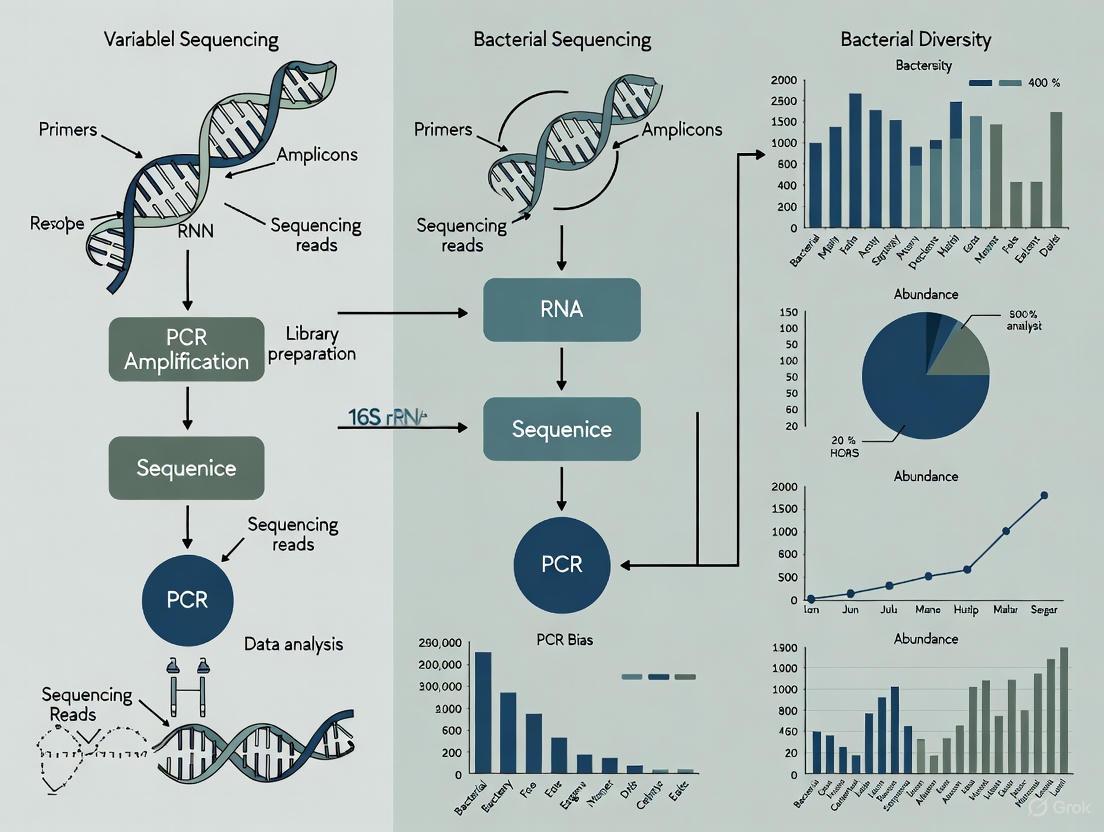
16S rRNA gene sequencing is a cornerstone of microbiome research, yet its accuracy is fundamentally challenged by PCR amplification bias, which distorts microbial community representation and threatens the validity of...
A Comprehensive Guide to Overcoming PCR Bias in 16S rRNA Sequencing for Robust Microbiome Research
Abstract
16S rRNA gene sequencing is a cornerstone of microbiome research, yet its accuracy is fundamentally challenged by PCR amplification bias, which distorts microbial community representation and threatens the validity of downstream analyses. This article provides a systematic framework for researchers and drug development professionals to understand, quantify, and mitigate these biases. Drawing on the latest methodological advances and benchmarking studies, we explore the foundational sources of bias from DNA extraction to primer design, detail wet-lab and bioinformatic correction strategies, and offer a comparative evaluation of sequencing technologies and analysis pipelines. Our guide delivers actionable protocols and troubleshooting insights to enhance data fidelity, ensuring that ecological metrics and biomarker discovery in biomedical studies are both reliable and reproducible.
Understanding the Enemy: Deconstructing the Sources and Impact of PCR Bias
FAQ: Understanding and Troubleshooting PCR Bias
What is PCR bias and why is it a problem in 16S rRNA sequencing?
PCR bias refers to the distortion of microbial community composition that occurs during the polymerase chain reaction (PCR) amplification of 16S rRNA genes. This happens because DNA templates from different bacterial species amplify with varying efficiencies, causing their relative abundances in the final sequencing data to misrepresent the actual abundances in the original sample. This is a critical problem because it can lead to incorrect biological conclusions about community structure and diversity [1] [2]. The bias primarily manifests in two ways: 1) the formation of spurious sequences (artifacts) that inflate diversity estimates, and 2) the skewing of template distribution, where some taxa are overrepresented while others are suppressed [1] [3].
What are the main types of PCR artifacts and how do they affect my data?
PCR artifacts are erroneous sequences generated during amplification that do not correspond to any real organism in the sample. The primary types are:
- Taq Polymerase Errors: Incorrect base incorporations by the DNA polymerase, which create single-nucleotide variants that can be mistaken for novel, rare taxa [1] [4].
- Chimeras: Hybrid sequences formed when an incomplete PCR product from one template acts as a primer on a different, but related, template during a subsequent cycle. One study found that 13% of raw sequence reads can be chimeric [1] [4].
- Heteroduplex Molecules: Mismatched double-stranded DNA molecules formed by annealing similar, but not identical, sequences from different templates. These can lead to incorrect base calls or failure to sequence [1].
These artifacts artificially inflate the observed microbial diversity, making the community appear more complex than it truly is [1] [4].
My mock community results don't match the expected composition. What could be causing this?
Discrepancies between expected and observed mock community compositions are a direct measure of bias in your pipeline. The following table summarizes key quantitative biases reported in the literature:
Table 1: Documented Biases in Microbial Community Profiling
| Source of Bias | Observed Effect | Reference |
|---|---|---|
| GC Content | Negative correlation between genomic GC-content and observed relative abundance. | [5] |
| DNA Extraction | Using different DNA extraction kits produced "dramatically different results"; error rates from bias exceeded 85% in some samples. | [6] |
| PCR Amplification | Preferential amplification of specific templates by over 3.5-fold has been observed reproducibly. | [2] |
| Primer Mismatch | A single nucleotide mismatch between primer and template can lead to up to 10-fold preferential amplification. | [2] |
| PCR Artifacts | A standard 35-cycle PCR led to 76% unique sequences in a library, versus 48% when using a modified, lower-cycle protocol. | [1] |
The bias is often systematic. For example, one study found that species belonging to Proteobacteria were consistently underestimated, while many from Firmicutes were overestimated [5].
How can I modify my wet-lab protocol to minimize PCR bias?
Several experimental strategies can significantly reduce the introduction of bias:
- Limit PCR Cycles: Reduce the number of amplification cycles as much as possible. Bias accumulates with each cycle [1] [2]. One effective protocol is to run a limited number of cycles (e.g., 15), followed by a reconditioning PCR step (a few additional cycles in a fresh reaction mixture), which was shown to drastically reduce heteroduplex molecules and chimeras [1].
- Optimize Polymerase and PCR Conditions: The choice of polymerase and reaction setup matters. Using a high-fidelity polymerase can reduce errors [4]. Furthermore, increasing the initial denaturation time from 30 to 120 seconds has been shown to improve the amplification of templates with high GC content [5].
- Use Degenerate Primers: Primers with degenerate bases can help mitigate bias caused by sequence variation in the primer binding sites across different taxa, allowing for more uniform amplification [7].
- Standardize DNA Extraction: Be aware that the DNA extraction method itself is a major source of bias. Choose and consistently use a kit that has been validated for your sample type [6].
Are there computational methods to correct for PCR bias after sequencing?
Yes, computational correction is an active area of research and can be applied post-sequencing.
- Log-Ratio Linear Models: These models, which build on classical work by Suzuki and Giovannoni, can correct for non-primer-mismatch bias (NPM-bias). The core idea is that the ratio of any two taxa changes predictably with each PCR cycle. By using a calibration experiment with different cycle numbers, you can model and correct this bias [2].
- Reference-Based Bias Correction: This involves creating a "mock community" with known starting ratios or using a pre-defined reference set. By sequencing this reference alongside your samples, you can calculate taxon-specific correction factors and apply them to your environmental data [8].
- Quality Filtering and Denoising: Rigorous quality control pipelines are essential. Using tools like PyroNoise can correct base-call errors in raw sequencing data, reducing the overall error rate from ~0.0060 to ~0.0002 [4]. Chimera detection software like Uchime is also critical, reducing chimeras from ~8% to ~1% in one study [4].
- Cluster Sequences at 99% Similarity: To account for the majority of Taq polymerase errors, cluster your sequences into Operational Taxonomic Units (OTUs) at a 99% sequence similarity cutoff instead of the traditional 97%. This was shown to group most artificial variants with their true parent sequence [1].
Experimental Protocols
Protocol 1: Modified PCR Amplification to Reduce Artifacts
This protocol, adapted from a 2005 study, is designed to constrain the accumulation of PCR artifacts including chimeras, heteroduplexes, and polymerase errors [1].
- First-Stage PCR: Set up your initial PCR reaction as normal. Amplify for only 15 cycles.
- Reconditioning PCR: Transfer a small aliquot of the first-stage PCR product (e.g., 1-2 µl) into a fresh PCR mix. Perform an additional 3 cycles of amplification.
- Clone and Sequence: Proceed with library construction, cloning, and sequencing of the final product.
This method resulted in a greater than two-fold decrease in spurious sequence diversity and an increase in library coverage from 24% to 64% compared to a standard 35-cycle protocol [1].
Protocol 2: Calibration Experiment for Computational Bias Correction
This protocol, based on a 2021 methodology, provides the data needed to fit a log-ratio linear model and correct for PCR NPM-bias [2].
- Create a Calibration Sample: Prior to PCR, pool aliquots of extracted DNA from every study sample into a single, representative pooled sample.
- Split and Amplify: Split the calibration sample into multiple aliquots. Amplify each aliquot for a predetermined range of PCR cycles (e.g., 15, 20, 25, 30 cycles).
- Sequence: Sequence all aliquots of the calibration sample alongside your actual study samples.
- Model and Correct: Use a computational tool like the
Rpackagefidoto fit a log-ratio linear model. The model uses the calibration data to infer the original sample composition (intercept) and the taxon-specific amplification efficiencies (slope), which are then used to correct the bias in the study samples [2].
Workflow Visualization
The following diagram illustrates the integrated experimental and computational workflow for mitigating PCR bias, as described in the protocols and FAQs.
Research Reagent Solutions
Table 2: Key Reagents for Managing PCR Bias
| Reagent / Tool | Function in Bias Mitigation | Key Consideration |
|---|---|---|
| High-Fidelity DNA Polymerase | Reduces sequence errors caused by incorrect nucleotide incorporation during amplification. | Lower error rate compared to standard Taq polymerase. |
| Mock Community Standards | Provides a ground-truth standard with known composition to quantify bias in your entire workflow. | Essential for validating both wet-lab and computational protocols. |
| Degenerate Primers | Contains mixed bases at variable positions to bind more efficiently to a wider range of template sequences. | Helps overcome bias from primer-template mismatches. |
| Bead-Based Cleanup Kits | Purifies PCR products to remove primers, enzymes, and salts before the next step (e.g., reconditioning PCR). | Critical for protocol steps that involve transferring amplicons between reactions. |
| Droplet Digital PCR (ddPCR) | Provides absolute quantification of target genes without relying on amplification cycles, used for creating calibrated mock communities. | Can be used to establish true starting ratios for a reference-based correction model [8]. |
Frequently Asked Questions (FAQs)
1. How does my choice of DNA extraction kit affect my microbiome results? The DNA extraction method is a major source of bias in microbiome studies. Different kits can produce dramatically different results because they vary in their efficiency at lysing the cell walls of different bacterial types. For instance, mechanical disruption (bead-beating) is crucial for breaking open tough Gram-positive bacterial cells, while chemical lysis alone may preferentially release DNA from Gram-negative bacteria. One study found that compared to the Powersoil kit, using a Qiagen kit increased the observed proportion of Enterococcus by about 50% while suppressing the observed proportions of Neisseria, Bacillus, Pseudomonas, and Porphyromonas [6].
2. Why do primer mismatches cause bias, and how can I minimize their effect? Primer mismatches occur when the "universal" primers used in PCR do not perfectly complement the 16S rRNA gene of all bacteria in your sample. Even a single nucleotide mismatch, especially near the 3' end of the primer, can significantly reduce amplification efficiency. This bias is introduced primarily in the first few PCR cycles. To minimize it, you can:
- Use optimized, non-degenerate primer sets designed with computational tools that maximize coverage and matching efficiency across the bacterial domain [9].
- Target different variable regions with separate primer sets, as bias is dependent on primer position [3].
3. My sample has bacteria with a wide range of genomic GC-content. How will this impact my data? Genomic GC-content correlates negatively with observed relative abundances in 16S rRNA sequencing [10]. This means that species with high GC-content in their genome are often underestimated, while those with low GC-content are overestimated. This bias is largely attributed to the lower efficiency of PCR amplification for GC-rich templates. You can mitigate this by optimizing your PCR conditions, such as increasing the initial denaturation time, which has been shown to improve the detection of high-GC% species [10].
4. What is the best way to monitor and correct for bias in my workflow? The most robust method is to use a mock community—a defined mix of known bacterial strains—alongside your experimental samples. By sequencing this mock community with your chosen protocol, you can quantify the bias introduced at every step and identify which taxa are being over- or under-represented [6] [11]. For advanced users, computational models built from mock community data or calibration experiments can then be applied to correct the bias in your actual samples [2].
Troubleshooting Guide
Use the following table to diagnose and address common problems related to the major sources of bias.
| Problem Symptom | Potential Cause | Corrective Action & Experimental Optimization |
|---|---|---|
| Under-representation of Gram-positive bacteria (e.g., Firmicutes, Actinobacteria) | Inefficient cell lysis during DNA extraction, often due to inadequate mechanical disruption of tough cell walls. | Implement rigorous mechanical lysis: Use a repeated bead-beating protocol with a mixture of different bead sizes (e.g., 0.1 mm zirconia/silica beads with larger glass beads) to ensure comprehensive cell breakage [11]. |
| Spurious or unexpected absence of specific taxa | Primer mismatch, where the "universal" primers have poor binding efficiency to the 16S rRNA gene of certain bacteria. | Re-evaluate primer choice: Use in-silico tools (e.g., mopo16S, DegePrime) to select primer pairs with maximal coverage and minimal matching-bias for your target environment [9]. Validate with a mock community containing the missing taxa [12]. |
| Over-estimation of low GC% species and under-estimation of high GC% species | PCR amplification bias against templates with high genomic GC-content. | Optimize PCR conditions: Increase the initial denaturation time (e.g., from 30s to 120s) and/or use PCR additives like DMSO or betaine to facilitate denaturation of GC-rich templates [10]. Limit PCR cycles to the minimum necessary [2]. |
| High variation between technical replicates or different sample batches | Inconsistent DNA extraction efficiency or PCR amplification, often a result of manual protocol deviations or reagent degradation. | Standardize and automate: Use master mixes for PCR to reduce pipetting error. Introduce detailed SOPs with highlighted critical steps and use checklists. Include a positive control (e.g., a mock community) in every batch to monitor consistency [13] [11]. |
| Inaccurate community structure compared to a known standard | Cumulative bias from multiple sources (extraction, primers, PCR). | Employ a bias quantification and correction protocol: Use a multi-step calibration experiment involving a pooled sample amplified for different cycle numbers to model and computationally correct for PCR bias using log-ratio linear models [2]. |
Experimental Protocols for Bias Assessment and Mitigation
Protocol 1: Using Mock Communities to Quantify Total Workflow Bias
This protocol helps you characterize the total bias introduced by your entire workflow, from DNA extraction to sequencing.
- Acquire or Create a Mock Community: Obtain a commercially available, well-defined mock community (e.g., from BEI Resources or Zymo Research) comprising genomic DNA from 20 or more bacterial species with known, even composition [10] [6].
- Process the Mock Community: Subject the mock community to your standard DNA extraction, library preparation, and sequencing protocol. Include it as a control in every sequencing run.
- Data Analysis:
- Process the sequencing data through your standard bioinformatics pipeline.
- Compare the observed relative abundances of each species to the expected abundances.
- Calculate the coefficient of variance across replicates to assess reproducibility [10].
- The deviation from the expected composition is a direct measure of the bias introduced by your protocol for those specific taxa.
Protocol 2: A Calibration Experiment to Isolate and Correct PCR NPM-Bias
This advanced protocol, adapted from Silverman et al. (2021), helps measure and correct for PCR bias from non-primer-mismatch sources (NPM-bias) [2].
- Create a Calibration Sample: Pool aliquots of extracted DNA from all study samples into a single, representative pool.
- Set Up Cycle Gradient PCR: Split this pooled sample into multiple aliquots. Amplify each aliquot for a different number of PCR cycles (e.g., 15, 20, 25, 30 cycles), keeping all other conditions identical.
- Sequence and Model: Sequence all aliquots and build a log-ratio linear model where the microbial composition is the dependent variable and the PCR cycle number is the independent variable.
- Apply the Model: The intercept of this model estimates the true composition before PCR bias, and the slope represents the taxon-specific amplification efficiencies. This model can then be applied to correct the data from your actual experimental samples.
The diagram below illustrates the key sources of bias in the 16S rRNA amplicon sequencing workflow and the corresponding strategies to mitigate them.
Research Reagent Solutions
The following table lists key reagents and materials essential for mitigating bias in 16S rRNA sequencing studies.
| Item | Function in Bias Mitigation |
|---|---|
| Mock Communities (e.g., from BEI Resources, ZymoBIOMICS) | Defined mixes of bacterial strains or DNA used as positive controls to quantify bias and validate protocols [10] [11]. |
| Mechanical Lysis Beads (Zirconia/Silica, 0.1mm) | Essential for the efficient and unbiased lysis of tough bacterial cell walls (e.g., Gram-positive) during DNA extraction [11]. |
| Optimized Primer Pairs (e.g., 515F-806R, 341F-785R) | Primer sets selected for high coverage and low matching-bias against target populations, often identified via computational tools [12] [9]. |
| High-Fidelity DNA Polymerase | Reduces PCR-introduced errors and can improve amplification efficiency across diverse templates [10]. |
| PCR Additives (e.g., DMSO, Betaine) | Assist in denaturing difficult templates, helping to mitigate amplification bias against high GC-content sequences [10]. |
| Stabilization Buffers (e.g., OMNIgene·GUT, DNA/RNA Shield) | Preserve microbial community composition at room temperature, preventing shifts due to bacterial growth post-collection [11]. |
Troubleshooting Guides and FAQs
FAQ: Understanding and Overcoming Bias in 16S rRNA Sequencing
1. What are the most significant sources of bias that affect diversity metrics in 16S rRNA sequencing?
The most significant biases originate from the experimental workflow itself. Key sources include:
- PCR Amplification Bias: The PCR step can skew the true biological representation due to varying amplification efficiency of different templates. This is influenced by primer selection, number of PCR cycles, and polymerase error rates, which can create spurious sequences [14] [1] [15].
- Variable 16S rRNA Gene Copy Number: The number of 16S rRNA genes varies per bacterial genome (from one to ~10), meaning a bacterium with more copies will be overrepresented in the final data compared to its true biological abundance [16].
- Sequencing Errors and Cross-Talk: Sequencing errors and index hopping (cross-talk) can introduce spurious Operational Taxonomic Units (OTUs) or Amplicon Sequence Variants (ASVs), artificially inflating richness metrics [14] [16].
- Sample DNA Concentration: Samples with lower DNA concentration have been demonstrated to have significantly increased technical variation across sequencing runs, which reduces reproducibility [17].
2. How does PCR bias specifically impact alpha diversity metrics?
PCR bias distorts the underlying abundance distribution of species in a sample, which directly impacts alpha diversity metrics [16].
- Richness (e.g., Observed Features, Chao1): PCR errors and chimeras create spurious sequences, artificially inflating richness estimates. Conversely, primer mismatches can prevent some species from amplifying at all, leading to an underestimation of true richness [14] [16].
- Evenness/Dominance (e.g., Simpson, Berger-Parker): The preferential amplification of certain templates over others during PCR disrupts the actual abundance ratios. This can make a community appear more or less even than it truly is [18].
- Information Metrics (e.g., Shannon Index): Since these metrics incorporate both richness and evenness, they are affected by both the inflation of spurious taxa and the distortion of abundance profiles [18] [16].
3. Can we quantify the technical variation introduced by sequencing runs compared to biological variation?
Yes, studies have directly compared this. Research sequencing nearly 1000 samples across 18 runs found that while technical variation exists, biological variation was significantly higher than technical variation due to sequencing runs [17]. This underscores that while technical bias is a critical confounder, it does not typically eclipse the strong biological signals present in well-designed studies.
4. What is a "mock community" and why is it important for troubleshooting?
A mock community is a synthetic mixture of genomic DNA from known microorganisms. It serves as a positive control to benchmark your entire wet-lab and bioinformatics pipeline.
- By comparing your sequencing results to the known composition of the mock community, you can assess the accuracy (how close the measured abundances are to the true abundances) and precision (technical variation across replicates) of your workflow [17]. A simplified mock community may show limitations in accuracy but can still demonstrate robust precision [17].
Troubleshooting Guide: Diagnosing Diversity Metric Anomalies
Problem: Inflated Richness Estimates
| Observation | Potential Cause | Solution |
|---|---|---|
| High number of rare OTUs/ASVs, particularly singletons (sequences appearing only once). | PCR errors and sequencing errors creating spurious sequences [14]. | Implement strict quality filtering and denoising algorithms (e.g., DADA2, Deblur) [17] [14]. Use positive controls to estimate error rates. |
| Index hopping (cross-talk) between samples on a sequencing run [16]. | Use dual-indexed primers and bioinformatic tools to filter reads with non-matching index pairs. | |
| Chimeric sequences formed during PCR [14] [1]. | Use chimera detection software (e.g., Uchime) as part of your bioinformatics pipeline. Reduce PCR cycle numbers to minimize chimera formation [14] [1]. |
Problem: Unreliable or Skewed Beta Diversity Results
| Observation | Potential Cause | Solution |
|---|---|---|
| Samples cluster based on sequencing run or DNA extraction batch rather than biological groups. | Batch effects from technical processing. High technical variation in low-DNA-concentration samples [17]. | Include positive controls in every batch to correct for run-to-run variation. Standardize DNA input concentrations across samples where possible. |
| PCR bias differentially affecting samples with different community compositions. | Use a modified PCR protocol with fewer cycles (e.g., 15-18 instead of 35) and include a "reconditioning PCR" step to reduce heteroduplex molecules [1]. | |
| Poor separation between groups in UniFrac analysis. | Sparse data with many zeroes, often due to incomplete sampling or amplification dropouts. | Ensure adequate sequencing depth per sample. Be aware that primer choice can affect which taxa are amplified [15]. |
Table 1: Impact of Modified PCR Protocols on PCR Artifacts (as demonstrated in [1])
| PCR Protocol | Number of Cycles | % Chimeric Sequences | % Unique 16S rRNA Sequences | Estimated Total Sequences (Chao-1) |
|---|---|---|---|---|
| Standard | 35 | 13% | 76% | 3,881 |
| Modified (with reconditioning step) | 15 + 3 | 3% | 48% | 1,633 |
Table 2: Impact of Sample Type and DNA Concentration on Technical Variation (as demonstrated in [17])
| Sample Type | Relative DNA Concentration | Technical Variation (Precision) Across Runs |
|---|---|---|
| Stabilized Fecal Samples | Highest | Lowest |
| Fecal Swab Samples | Medium | Medium |
| Oral Swab Samples | Lowest | Highest |
Experimental Protocols for Bias Mitigation
Protocol 1: Modified PCR Amplification to Reduce Artifacts
This protocol is adapted from research that significantly reduced chimeras and spurious sequences [1].
- First PCR Stage: Perform a limited-cycle PCR amplification. Use 15 cycles with your standard 16S rRNA gene primers.
- Reconditioning PCR: Transfer a small aliquot (e.g., 1 µL) of the first PCR product to a fresh PCR mixture. Perform an additional 3 amplification cycles.
- Rationale: The limited cycles reduce the accumulation of polymerase errors and chimeras. The reconditioning step helps to "correct" heteroduplex molecules (a source of chimeras) by allowing them to denature and reanneal to a more abundant, correct template [1].
Protocol 2: Using Positive and Negative Controls
Including controls is non-negotiable for quantifying and correcting bias [17] [19].
- Mock Community (Positive Control): Include a commercially available or custom-built mock community of known composition in every DNA extraction and sequencing batch. This allows you to measure accuracy and precision.
- Negative Control: Include a blank (e.g., water) that undergoes the entire process from DNA extraction onward. This allows you to identify and bioinformatically subtract contaminating sequences.
- Analysis: Use the data from the mock community to understand the error profile of your run. The negative control reveals contaminating taxa that should be removed from all samples.
Workflow and Relationship Diagrams
Diagram 1: This workflow maps critical points where bias is introduced during 16S rRNA sequencing and identifies specific mitigation strategies to employ at each step.
Diagram 2: This diagram illustrates the logical cascade of how a single source of bias, PCR amplification bias, propagates through the data to impact various alpha and beta diversity metrics.
The Scientist's Toolkit: Key Research Reagent Solutions
Table 3: Essential Materials for Robust 16S rRNA Sequencing
| Item | Function | Key Consideration |
|---|---|---|
| DNA Stabilization Buffer (e.g., OmniGene Gut Kit) | Preserves microbial DNA at ambient temperature post-collection, minimizing changes before extraction [17]. | Critical for field studies or clinical settings where immediate freezing is not possible. |
| PowerSoil DNA Isolation Kit | DNA extraction kit optimized for difficult environmental and stool samples; effective at removing PCR inhibitors [17]. | Consistency in DNA extraction method is vital to minimize batch effects. |
| Mock Community Standard (e.g., ZymoBIOMICS) | Defined mix of microbial genomes used as a positive control to quantify accuracy and precision of the entire workflow [17]. | Should be included in every processing batch to track and correct for technical variation. |
| High-Fidelity DNA Polymerase | PCR enzyme with proofreading activity to reduce polymerase errors during amplification [14]. | Lower error rates help prevent the creation of spurious sequences that inflate richness. |
| Dual-Indexed PCR Primers | Primers with unique barcodes on both ends to allow multiplexing and robust demultiplexing, reducing index hopping [14]. | Essential for accurately assigning sequences to the correct sample in multiplexed runs. |
| Magnetic Bead Cleanup Kits | For post-PCR cleanup and size selection to remove primer dimers and other unwanted fragments [13] [19]. | Prevents adapter-dimer contamination from overwhelming the sequencing run. |
In 16S rRNA sequencing research, accurately interpreting microbial community data requires a clear understanding of the technical errors introduced during experimental workflows. Both PCR amplification and sequencing processes generate artifacts that can significantly distort microbial diversity estimates and taxonomic composition. This guide provides a structured approach to identifying, troubleshooting, and mitigating these distinct error types within the context of overcoming PCR bias in 16S rRNA studies.
FAQ: Fundamental Distinctions
What is the primary difference between a PCR artifact and a sequencing error? PCR artifacts are generated during the amplification process and include chimeras, heteroduplex molecules, and polymerase errors. These artifacts alter the molecular composition of your amplicon pool before sequencing even begins. In contrast, sequencing errors occur during the nucleotide detection process on the sequencing platform itself, resulting in incorrect base calls in your read data [4].
Why can't bioinformatics fix all these problems later? While bioinformatic tools are essential for error reduction, they cannot completely compensate for biases introduced during wet lab procedures. PCR bias, such as the preferential amplification of certain templates, alters the actual relative abundance of sequences in your sample. Once this distortion occurs, it becomes embedded in your data and cannot be fully computationally corrected, leading to potentially skewed biological interpretations [2] [6].
How do I know if my observed "rare biosphere" is real or technical error? The "rare biosphere" is particularly vulnerable to inflation by technical errors. High rates of unique sequences (e.g., >60% singletons) strongly suggest significant contamination by PCR errors or sequencing noise. Clustering sequences into 99% similarity groups has been shown to effectively collapse most Taq polymerase errors while retaining biological variants, providing a more realistic estimate of true diversity [1].
Troubleshooting Guide: Identifying and Resolving Common Issues
Problem 1: Overestimated Diversity and High Singleton Count
- Symptoms: An unexpectedly high number of unique sequences (singletons) that inflate alpha-diversity metrics; low library coverage.
- Primary Causes:
- Solutions:
- Wet Lab: Reduce PCR cycle number. Use high-fidelity polymerases. Include a "reconditioning PCR" step (3 additional cycles in a fresh mix) to reduce heteroduplex molecules [1].
- Bioinformatics: Employ denoising algorithms (DADA2, Deblur) to generate Amplicon Sequence Variants (ASVs) or cluster sequences into 99% Operational Taxonomic Units (OTUs) to collapse technical variants [1] [20].
Problem 2: Chimeric Sequences Creating False Taxa
- Symptoms: Detection of novel, low-abundance taxa that are phylogenetically unexpected; sequences that align well to two different parent taxa.
- Primary Cause: Chimeras, formed when an incomplete PCR product from one template acts as a primer on another template, creating a hybrid molecule [4] [21].
- Solutions:
- Wet Lab: Limit PCR cycles. Use robust polymerase with high processivity. The reconditioning PCR step can significantly reduce chimeras [1].
- Bioinformatics: Apply chimera detection tools like UCHIME against a reference database. One study showed this reduced chimeras from 8% in raw reads to just 1% post-filtering [4] [21].
Problem 3: Skewed Microbial Community Composition (PCR Bias)
- Symptoms: Consistent over- or under-representation of specific taxonomic groups compared to known expectations (e.g., from mock communities); poor reproducibility between labs.
- Primary Causes:
- Primer-Template Mismatches: Especially critical in the first few PCR cycles [2].
- Variable Amplification Efficiency (PCR NPM-Bias): Differences in amplification efficiency between templates persisting beyond initial cycles, leading to a log-ratio linear distortion of true abundances [2].
- DNA Extraction Bias: The DNA extraction kit and protocol can dramatically alter observed community structure [6].
- Solutions:
- Wet Lab: Use well-validated, universal primers. Standardize DNA extraction protocols across a study. For precise quantification, employ a calibration experiment with pooled samples amplified for different cycle numbers to model and correct for bias [2] [12].
- Bioinformatics: Apply computational corrections using log-ratio linear models derived from calibration experiments to mitigate PCR NPM-bias [2].
Problem 4: Low Library Yield or High Adapter-Dimer Contamination
- Symptoms: Insufficient library concentration for sequencing; a prominent peak at ~70-90 bp on an electropherogram (adapter dimers).
- Primary Causes:
- Poor Input Quality: Degraded DNA or contaminants (phenol, salts) inhibiting enzymes.
- Inefficient Ligation/Amplification: Suboptimal adapter-to-insert ratios, inefficient ligase, or too few PCR cycles.
- Inadequate Cleanup: Failure to remove adapter dimers during size selection [13].
- Solutions:
- Wet Lab: Re-purify input DNA, check quality metrics (260/280 ~1.8). Titrate adapter concentrations. Optimize bead-based cleanup ratios to retain fragments and remove dimers [13].
- QC: Use fluorometric quantification (Qubit) over UV absorbance (NanoDrop). Always inspect library profile with a BioAnalyzer or TapeStation [13].
The table below summarizes key quantitative findings on error rates and the efficacy of mitigation strategies from the literature.
Table 1: Quantifying Errors and Mitigation Efficacy in 16S rRNA Sequencing
| Error Type | Reported Frequency | Effective Mitigation Strategy | Impact After Mitigation |
|---|---|---|---|
| Taq Polymerase Errors | Error rate ~3.3 × 10⁻⁵ per nt/duplication [1] | Clustering at 99% similarity | ~80% of lineages shared between libraries, vs. significant differences at 100% [1] |
| Chimeras | 13% in standard (35-cycle) library [1] | Modified protocol (15 cycles + reconditioning) & UCHIME | Reduced to 3% [1]; from 8% down to 1% in another study [4] [21] |
| Sequencing Errors (Pyrosequencing) | Average error rate 0.0060 per base [4] | PyroNoise flowgram denoising | Overall error rate reduced to 0.0002 [4] |
| PCR Bias (NPM-Bias) | Can skew abundance estimates by a factor of 4 or more [2] | Log-ratio linear model correction | Allows for estimation and mitigation of bias without mock communities [2] |
Experimental Protocols for Error Characterization
Protocol 1: Using Mock Communities to Quantify Total Workflow Bias
Mock communities with known composition are the gold standard for quantifying total bias in your workflow [6].
- Acquire or Create a Mock Community: Use a defined mix of genomic DNA from 20-30 bacterial strains. Complexity should reflect your study system [20] [6].
- Process in Parallel: Subject the mock community to your standard 16S rRNA gene sequencing pipeline—DNA extraction, PCR, sequencing—alongside your experimental samples.
- Sequence and Analyze: Sequence the mock community and process the data identically to your samples.
- Compare to Ground Truth: Compare the observed composition (taxonomic relative abundances) to the known expected composition. The discrepancy is your total procedural bias, allowing you to identify which taxa are over/under-represented in your data [6].
Protocol 2: A Calibration Experiment to Measure PCR NPM-Bias
This protocol measures and corrects for bias specifically introduced during mid-to-late PCR cycles [2].
- Create a Calibration Sample: Pool aliquots of extracted DNA from all study samples. This ensures representation of all relevant taxa.
- Aliquot and Amplify: Split the pooled sample into multiple aliquots. Amplify each aliquot for a different number of PCR cycles (e.g., 15, 20, 25, 30).
- Sequence and Model: Sequence all aliquots. Use a log-ratio linear model (e.g., with the
fidoR package) to relate the observed composition to the cycle number. The model's intercept estimates the true composition prior to PCR bias, and the slope estimates the taxon-specific amplification efficiencies [2]. - Apply Correction: Use this model to correct for PCR bias in your actual study samples.
Workflow and Decision Diagrams
The following diagram illustrates the logical pathway for diagnosing the source of technical errors in 16S rRNA sequencing data.
The Scientist's Toolkit: Essential Research Reagents & Materials
Table 2: Key Reagents and Tools for Error Mitigation
| Item | Function & Importance | Considerations |
|---|---|---|
| High-Fidelity DNA Polymerase | Reduces nucleotide misincorporation during PCR, lowering erroneous sequence variants. | Essential for limiting polymerase errors, a major source of inflated diversity [1]. |
| Validated Primer Panels | Ensure broad, unbiased amplification of the target taxonomic group. | Primer choice is a major source of bias; different variable regions (V4, V3-V4, etc.) yield different taxonomic profiles [12]. |
| Mock Community Standards | Provides ground-truth for quantifying total bias (extraction, PCR, sequencing) in the workflow. | Should be of sufficient and relevant complexity for the study system [20] [6]. |
| Magnetic Bead Cleanup Kits | For efficient size selection and removal of adapter dimers and primer artifacts. | Critical for clean library prep; the bead-to-sample ratio must be optimized to prevent loss of desired fragments [13]. |
| Fluorometric Quantification Kits (Qubit) | Accurately measures concentration of double-stranded DNA. | More reliable for NGS library quantification than UV absorbance, which can overestimate due to contaminants [13]. |
| Bioinformatic Tools: DADA2, Deblur, UNOISE3 | Denoising algorithms that correct sequencing errors and output Amplicon Sequence Variants (ASVs). | ASV methods offer high resolution but can over-split; evaluate against mock data [20]. |
| Bioinformatic Tools: UCHIME | Reference-based algorithm for detecting and removing chimeric sequences. | Highly effective at removing a major source of spurious OTUs/ASVs [4] [21]. |
In clinical microbiome research, the 16S rRNA gene sequencing technique is a cornerstone for identifying bacterial populations and understanding their role in health and disease. However, the accuracy of this method is fundamentally compromised by multiple, cascading sources of bias. These biases, introduced at every stage from sample collection to computational analysis, can severely distort the microbial profile, leading to incorrect biological interpretations and flawed clinical conclusions. This case study delves into the primary sources of these biases, presents data on their quantitative impact, and provides a troubleshooting guide to help researchers identify, mitigate, and correct for these errors in their own studies.
The journey from a biological sample to microbial community data is fraught with potential distortions. The major sources of bias can be categorized into wet-lab (experimental) and dry-lab (computational) processes.
Wet-Lab Experimental Biases
- DNA Extraction Bias: The method used to break open bacterial cells and extract DNA is a major confounder. Protocols differ in their lysis efficiency, meaning some tough-to-lyse bacteria (e.g., Gram-positive with thick peptidoglycan layers) may be systematically underrepresented compared to easy-to-lyse (e.g., Gram-negative) bacteria [22] [11]. This is one of the most significant sources of bias in microbiome analysis.
- PCR Amplification Biases: The polymerase chain reaction, used to amplify the target 16S gene region, introduces several errors:
- Stochasticity: In early PCR cycles, the random amplification of individual molecules can cause dramatic skews in final sequence representation, especially when starting template concentrations are low [23].
- Polymerase Errors: DNA polymerase enzymes can incorporate incorrect nucleotides, creating erroneous sequences that are often confined to low copy numbers [23].
- GC Bias: Sequences with very high or low GC content may amplify with different efficiencies, though one study found this to have a minor effect compared to stochasticity [23].
- Template Switching: This rare event can create chimeric sequences—artifactual hybrids from two different parent sequences—which inflate diversity estimates [23] [22].
- Index Misassignment (Index Hopping): In high-throughput multiplexed sequencing, a small percentage of reads can be misassigned to the wrong sample due to errors during cluster generation on the flow cell. This creates false positive rare taxa and can significantly inflate alpha diversity in simple communities [24].
Dry-Lab Computational Biases
- Reference Database Errors: The accuracy of taxonomic classification is entirely dependent on the quality of the reference database. Common issues include:
- Incorrect Taxonomic Labelling: Sequences may be misidentified due to submitter error [25].
- Database Contamination: Reference sequences can be contaminated with host, vector, or other non-target DNA, leading to false taxonomic assignments [25].
- Taxonomic Underrepresentation: The database may lack sequences for the true microbes in your sample, preventing their accurate identification [25].
Table 1: Quantitative Impact of Different PCR Biases in a Low-Input Amplicon Pool
| Source of Bias | Relative Impact on Sequence Representation | Key Characteristics |
|---|---|---|
| PCR Stochasticity | Major | The dominant force skewing representation; effect is most pronounced with low starting quantities of DNA [23]. |
| Polymerase Errors | Moderate | Very common in later PCR cycles, but these erroneous sequences typically remain at low copy numbers [23]. |
| GC Bias | Minor | Variable amplification efficiency based on GC content; found to have a minor effect in one experimental system [23]. |
| Template Switching | Minor (Rare) | Creates chimeric sequences; rate increases with higher input cell numbers but remains a rare event [23] [22]. |
How can experimental design and controls correct for technical bias?
A carefully designed experiment with appropriate controls is the first and most crucial line of defense against technical biases.
Essential Experimental Controls
- Mock Community Controls: These are commercially available standards comprising a defined mix of bacterial cells or DNA from known species. They should be included in every batch of sample processing, from DNA extraction to sequencing. By comparing your results from the mock community to its known composition, you can directly measure the bias introduced by your entire workflow and correct for it computationally [22] [26].
- Negative Controls: These include "no-template" controls (NTC) for PCR and blanks for DNA extraction. They are critical for identifying contaminants from reagents, kits, or the laboratory environment, which is especially important for low-biomass samples [22] [11].
- Positive Controls: A well-characterized sample (e.g., from a previous run or a different study) processed alongside new samples helps monitor technical variation and batch effects across different processing rounds [11].
Optimized Wet-Lab Protocols
- Standardized Storage: For fecal samples, immediate freezing at -80°C is considered the gold standard. When logistics are challenging, stabilization buffers (e.g., OMNIgene·GUT, Zymo DNA/RNA Shield) can limit microbial composition changes at room temperature, though they do not perfectly replicate frozen samples [11].
- Mechanical Lysis: Use a rigorous bead-beating step with a mix of different bead sizes during DNA extraction to ensure the efficient lysis of a wide range of bacteria, particularly tough-to-break Gram-positive species [11].
- Minimize PCR Cycles: Using the minimum number of PCR cycles necessary during library preparation reduces the accumulation of errors, chimeras, and the skewing effects of stochasticity and primer bias [23] [11]. One study suggests 25 cycles as an optimal parameter [11].
Table 2: Troubleshooting Guide for Common Sequencing Preparation Issues
| Problem Category | Typical Failure Signals | Common Root Causes | Corrective Actions |
|---|---|---|---|
| Sample Input / Quality | Low library complexity, degraded DNA | Sample contaminants (salts, phenol), inaccurate quantification, degraded nucleic acids [13]. | Re-purify input sample; use fluorometric quantification (Qubit) over UV absorbance; check 260/280 and 260/230 ratios [13]. |
| Amplification / PCR | High duplicate rate, overamplification artifacts, bias | Too many PCR cycles; polymerase inhibitors; primer exhaustion or mispriming [13]. | Minimize PCR cycles; use high-fidelity polymerase; titrate primers; avoid overcycling weak products [23] [13] [11]. |
| Post-Sequencing Data | Inflated diversity, false positive rare taxa | Index misassignment; chimeric sequences; database errors [25] [24]. | Use dual-indexed primers; employ bioinformatic chimera removal (e.g., DADA2); use curated databases [24] [26]. |
What computational tools can debias microbiome data?
Once data is generated, bioinformatic preprocessing is vital to remove technical artifacts before biological interpretation.
Preprocessing and Denoising
- Denoising Algorithms: Tools like DADA2 and Deblur are used to correct sequencing errors and infer exact amplicon sequence variants (ASVs), providing a higher resolution and more reproducible output than older clustering methods (OTUs) [26].
- Chimera Removal: Denoising pipelines like DADA2 include steps to identify and remove chimeric sequences, which are artifacts of the PCR process and not real biological sequences [22] [26].
Innovative Computational Correction Methods
- Morphology-Based Bias Correction: A 2025 study demonstrated that extraction bias per bacterial species is predictable by bacterial cell morphology (e.g., cell wall structure, shape). Using mock communities, researchers can create a model that corrects for observed biases in environmental samples based on these morphological properties, significantly improving the accuracy of the resulting microbial compositions [22].
The following diagram illustrates the core workflow of this novel computational correction method.
A practical example: How to implement an alternative, less biased method
The CAPRA (Gene Capture and Random Amplification) protocol offers an alternative to traditional PCR that mitigates primer bias. It separates the enrichment of target genes from their amplification.
Principle: Instead of using two primers for exponential amplification, a single biotinylated capture probe enriches the target gene (e.g., rpoC). The enriched genes are then amplified using random hexamers in a non-exponential manner, which preserves quantitative ratios more faithfully.
Step-by-Step Methodology:
Gene Capture:
- Use a biotinylated oligonucleotide capture probe designed for a conserved region of a universal, single-copy gene (e.g., the FDGDQMA amino acid motif in the rpoC gene).
- Hybridize the probe to sheared, denatured genomic DNA from the sample.
- Bind the probe-DNA hybrid to streptavidin-coated magnetic beads and wash away non-target DNA.
Random Amplification:
- Amplify the captured, single-stranded DNA using a fully degenerate hexanucleotide primer and a DNA polymerase.
- This linear (non-exponential) amplification step generates sufficient quantity of the enriched target for downstream analysis (e.g., cloning, microarray hybridization) without the skewing effects of exponential PCR.
The workflow below outlines the key steps of this method and its advantage over conventional PCR.
The Scientist's Toolkit: Key Research Reagent Solutions
Table 3: Essential Materials and Reagents for Bias-Aware Microbiome Research
| Item | Function | Example Use-Case |
|---|---|---|
| ZymoBIOMICS Microbial Community Standards | Defined mock communities of known composition (even or staggered) used as positive controls to measure and correct for technical bias across the entire workflow [22] [11] [24]. | Quantifying the combined bias of DNA extraction and PCR amplification in a batch of samples. |
| OMNIgene·GUT / Zymo DNA/RNA Shield | Sample stabilization buffers that preserve microbial composition at room temperature for several days, facilitating sample transport when immediate freezing is not feasible [11]. | Large-scale, multi-center clinical studies where maintaining a cold chain is logistically challenging. |
| Bead Beating Tubes with Zirconia/Silica Beads | For mechanical cell disruption during DNA extraction, ensuring efficient lysis of a broad range of bacteria, including tough Gram-positive species [11]. | Standardizing DNA extraction from diverse sample types (e.g., soil, stool, water) to improve comparability. |
| High-Fidelity DNA Polymerase | Enzyme with proofreading activity to minimize the introduction of errors during PCR amplification [23]. | Reducing polymerase errors in amplicon sequences, especially when a higher number of cycles is unavoidable. |
| Dual-Indexed PCR Primers | Primers with unique barcodes on both ends to minimize the effect of index misassignment (index hopping) during sequencing [24]. | Preventing cross-talk between samples in a multiplexed sequencing run, thereby protecting the integrity of rare biosphere data. |
FAQs
Q1: My sequencing results show a high number of rare taxa. How can I tell if they are real or artifacts? A1: This is a critical challenge. A high prevalence of rare taxa can be a red flag for index misassignment or contamination. To verify, check your negative controls—if the same rare taxa appear there, they are likely artifacts. Using a mock community can help you benchmark the expected rate of false positives. Furthermore, employing a sequencing platform with a lower published index-hopping rate (e.g., DNBSEQ-G400) can reduce this issue [24].
Q2: I am seeing batch effects in my data. What are the most likely causes? A2: Batch effects are often introduced by changes in reagent lots, different personnel performing the extractions, or running PCR on different days. The most robust solution is to process cases and controls randomly across all batches. Using a positive control (like a mock community or a well-characterized sample) in every batch allows you to detect and statistically correct for these effects during analysis [11].
Q3: Why can't I just use more PCR cycles to get more DNA from my low-biomass sample? A3: While increasing PCR cycles boosts yield, it comes at a high cost. Overcycling exponentially amplifies minor contaminants in reagents, increases the formation of chimeras, and exacerbates the stochastic skewing of sequence abundances. This can completely distort the true biological signal. It is better to optimize DNA extraction for higher yield and use the minimum number of PCR cycles necessary for library preparation [23] [13] [11].
Q4: My bioinformatician says my data has a lot of "chimeras." What does this mean and how did they form? A4: Chimeras are artificial DNA sequences created when an incompletely extended PCR fragment acts as a primer on a different template in a subsequent cycle. They are common in multi-template PCR reactions like 16S sequencing and falsely inflate diversity estimates. They form during PCR, and their rate can increase with higher cycle numbers. The solution is to use bioinformatic tools like DADA2 or UCHIME that are designed to detect and remove these artifactual sequences from your dataset [23] [22] [26].
Bench-Tested Strategies: Wet-Lab and Bioinformatic Methods to Counteract Bias
Polymerase chain reaction (PCR) amplification is an integral yet problematic step in 16S rRNA gene sequencing, with bias introduced by differing amplification efficiencies between templates representing a substantial source of error [2]. Degenerate primers—oligonucleotide pools containing mixed nucleotide sequences at specific positions—have been widely adopted to improve the amplification of templates containing sequence variations in their primer-binding sites [27]. While these primers aim to increase coverage across diverse taxonomic groups, they simultaneously introduce multiple forms of bias that can distort microbial community representation [27] [2]. This technical support center provides troubleshooting guidance for researchers navigating the complexities of degenerate primer usage within 16S rRNA sequencing workflows, framed within the broader context of overcoming PCR bias.
Frequently Asked Questions (FAQs)
What are degenerate primers and how do they work?
Degenerate primers are pools of oligonucleotide sequences that contain mixed bases (such as R for A/G, Y for C/T, or N for A/C/T/G) at specific positions within their sequence. This design strategy accounts for natural genetic variation in conserved genomic regions across different microorganisms. The primary intent is to create a primer mixture where at least one variant will perfectly match the primer-binding site of a wider range of target organisms, thereby increasing the taxonomic coverage during PCR amplification [27] [28].
What specific problems do degenerate primers cause?
While designed to improve coverage, degenerate primers introduce several significant issues:
- Reduced Amplification Efficiency: Computational modeling and experimental measurements reveal that degenerate primers reduce PCR efficiency well before generating a substantial product pool, performing worse than non-degenerate primers even when amplifying non-consensus targets [27].
- Distorted Community Representation: Mismatched primers may anneal at low temperatures but not be extended efficiently, acting as reaction inhibitors. Furthermore, as best-matching oligonucleotides are incorporated in early PCR cycles, functional primers become progressively depleted, unpredictably biasing subsequent amplification [27].
- Off-target Amplification: High degeneracy can increase the risk of amplifying non-target DNA, including host DNA in clinical samples. One study showed that commonly used degenerate primers targeting the V4 region aligned to the human genome in up to 70% of amplicon sequence variants in gastrointestinal biopsy samples [29].
Are there alternatives to using fully degenerate primers?
Yes, several alternative approaches can mitigate the biases associated with fully degenerate primers:
- Thermal-Bias PCR: A novel single-reaction protocol uses only two non-degenerate primers with a large difference in annealing temperatures to isolate targeting and amplification stages, allowing proportional amplification of mismatched targets [27].
- Reduced Cycle Two-Step PCR: Alternative protocols separate a degenerate template-targeting stage from a non-degenerate library amplification stage, though these require cleaning intermediate samples and add labor and reagent costs [27].
- Computational Correction: Log-ratio linear models can be applied to estimate and correct for PCR amplification bias in microbiota datasets by modeling the relationship between starting template ratios and amplification efficiencies [2].
- Primer Optimization Tools: Bioinformatics tools like "Degenerate primer 111" systematically add degenerate bases to existing primers to maximize coverage for specific target microorganisms without unnecessarily increasing overall degeneracy [28].
How does primer choice impact the detection of specific taxa?
Primer selection dramatically influences which taxa are detected and their apparent abundance. Different variable regions (V-regions) of the 16S rRNA gene exhibit varying taxonomic resolutions for different bacterial groups [12]. For instance:
- Some primer pairs may completely miss specific phyla (e.g., Bacteroidetes was missed using primers 515F-944R) [12].
- Primers targeting the V1-V2 region were found to miss Fusobacteriota due to a two-base mismatch, requiring primer modification for detection [29].
- The estimated microbial composition varies significantly across primer pairs targeting different variable regions, making cross-study comparisons problematic [12].
Troubleshooting Guides
Problem: Low Taxonomic Coverage Despite Using Degenerate Primers
Issue: Your sequencing results show missing taxonomic groups that you know should be present in your samples.
Solutions:
- In Silico Validation: Before wet-lab work, use tools like TestPrime in the SILVA database to evaluate your primer set's coverage against your target microorganisms. This helps identify mismatches before experimental work [28].
- Strategic Degeneracy: Use tools like "Degenerate primer 111" to add degenerate bases strategically. This tool iteratively generates new primers that maximize coverage for specific uncovered target microorganisms without unnecessarily increasing overall degeneracy that would impact efficiency [28].
- Variable Region Selection: Consider switching the variable region you are amplifying. Studies show that no single variable region perfectly captures all diversity, and the optimal region depends on your sample type and target organisms [12] [29]. For example, V1-V2 primers demonstrated superior performance for human biopsy samples with minimal human DNA off-target amplification compared to V4 primers [29].
Problem: High Off-Target Amplification
Issue: A significant portion of your sequencing reads aligns to non-target DNA (e.g., host DNA in clinical samples).
Solutions:
- Primer Specificity Evaluation: Check your primer sequences for similarity to non-target genomes. One study found that the widespread off-target amplification of human DNA with V4 primers was due to significant alignment with the Homo sapiens mitochondrion haplogroup [29].
- Alternative Primer Sets: Implement primer sets with lower off-target potential. For human biopsy samples, a modified V1-V2 primer set (V1-V2M) reduced human DNA alignment to practically zero while providing higher taxonomic richness [29].
- Reduced PCR Cycles: Limit PCR cycle numbers to the minimum necessary, as late amplification cycles can exacerbate minor off-target products. However, note that one study found that simply reducing cycles did not strongly affect amplification bias and actually made the association between taxon abundance and read count less predictable [7].
Problem: Distorted Community Representation
Issue: Your microbial composition data does not match expected profiles from mock communities or other quantification methods.
Solutions:
Thermal-Bias PCR Protocol: Implement this alternative to degenerate primers which uses two non-degenerate primers with different annealing temperatures in a single reaction [27].
- Procedure: The protocol exploits a large difference in annealing temperatures to isolate targeting and amplification stages. Early cycles use a lower annealing temperature to allow priming even to mismatched templates, while later cycles use a higher annealing temperature for efficient amplification of products that now have perfectly matching primer-binding sites [27].
- Advantage: Allows stable amplification of targets containing substantial mismatches while maintaining proportional representation of community members without intermediate processing steps [27].
Bias Correction Models: Apply computational correction using log-ratio linear models as proposed in [2].
- Procedure: Pool aliquots of extracted DNA from each study sample. Split this pooled sample into aliquots and amplify each for a predetermined number of PCR cycles (covering a wide range). Sequence these samples and use log-ratio linear models to estimate and correct for taxon-specific amplification efficiencies in your data [2].
- Advantage: Can mitigate PCR bias from non-primer-mismatch sources (NPM-bias) which can skew estimates of microbial relative abundances by a factor of 4 or more [2].
Problem: Inconsistent Results Between Studies
Issue: Your results cannot be directly compared with other studies using different primer sets or protocols.
Solutions:
- Standardized Mock Communities: Always include sufficiently complex mock communities in your sequencing runs. These serve as internal standards to detect aberrancies and normalize data across studies [12] [20].
- Cross-Validation: Independently validate performance for your specific sample type. Microbial profiles generated using different primer pairs need independent validation as performance varies by environment [12].
- Consistent Bioinformatics: Use consistent clustering methods (OTUs vs. ASVs) and reference databases, as these significantly impact taxonomic assignment and comparability [12] [20]. ASV methods (like DADA2) provide consistent outputs but may over-split, while OTU methods (like UPARSE) achieve clusters with lower errors but with more over-merging [20].
Performance Comparison of Common 16S rRNA Primer Sets
Table 1: Taxonomic coverage and performance metrics of commonly used primer sets
| Primer Set | Target Region | Key Features | Coverage | Reported Limitations |
|---|---|---|---|---|
| 515F-806R (Parada-Apprill) [28] [29] | V4 | Earth Microbiome Project recommended | 83.6% Bacteria, 83.5% Archaea [28] | High off-target human DNA amplification (avg. 70% ASVs in biopsies) [29] |
| 341F-785R (Klindworth et al.) [27] [28] | V3-V4 | Commonly used for bacterial communities | Varies by sample type | Degenerate primer issues: reduced efficiency, distorted representation [27] |
| 27F-338R [12] [29] | V1-V2 | Lower off-target amplification | Varies by sample type | Requires modification (V1-V2M) to capture Fusobacteriota [29] |
| BA-515F-806R-M1 [28] | V4 | Improved version with strategic degeneracy | Increased coverage of target microorganisms | Customized for specific target microorganisms |
Impact of PCR Cycle Number on Amplification Bias
Table 2: Effects of PCR protocol modifications on amplification bias
| Protocol Modification | Effect on Bias | Implementation Considerations |
|---|---|---|
| Reduced PCR Cycles (from 32 to 16) [7] | Less effect than expected; association between abundance and read count became less predictable | Requires optimization for each sample type; may reduce sensitivity |
| Increased Template Concentration (from 15ng to 60ng) [7] | Moderate improvement in abundance recovery | Requires higher DNA input; not feasible for low-biomass samples |
| Degenerate vs. Non-degenerate Primers [27] | Non-degenerate primers outperformed degenerate ones even for non-consensus targets | Challenges conventional wisdom; thermal-bias PCR offers alternative |
| Two-Step Amplification Protocols [27] | Can separate targeting from amplification stages | Adds substantial labor and reagent costs; requires clean-up steps |
Experimental Protocols
Protocol 1: Thermal-Bias PCR for Proportional Amplification
Background: This protocol addresses the fundamental flaw in degenerate primer usage by employing a temperature-based approach to handle sequence mismatches rather than sequence degeneracy [27].
Procedure:
- Reaction Setup: Prepare PCR reactions using only two non-degenerate primers. The primers should be designed with a large inherent difference in their optimal annealing temperatures.
- Thermal Cycling:
- Initial Denaturation: 95°C for 2-5 minutes
- 25-35 Cycles of:
- Denaturation: 95°C for 30 seconds
- Low-Temperature Annealing: Use a lower annealing temperature (e.g., 45-50°C) for the first 5-10 cycles to permit initial priming even to templates with mismatches
- Extension: 72°C for 30-60 seconds per kb
- Final Extension: 72°C for 5-10 minutes
- Mechanism: The low initial annealing temperature allows priming to mismatched templates. Once amplified, these products now contain perfectly matching primer-binding sites for efficient amplification in subsequent cycles.
Advantages: Single-reaction protocol, no intermediate processing, maintains proportional representation of rare community members, avoids inefficiencies of degenerate primers [27].
Protocol 2: Computational Correction for Amplification Bias
Background: This method uses a calibration experiment and log-ratio linear models to estimate and correct for PCR bias in existing datasets [2].
Procedure:
- Calibration Sample Preparation: Prior to PCR, pool aliquots of extracted DNA from each study sample into a single pooled calibration sample.
- Cycle Gradient PCR: Split the calibration sample into multiple aliquots and amplify each for a predetermined number of PCR cycles (e.g., 15, 20, 25, 30 cycles).
- Sequencing and Analysis: Sequence all cycle-gradient samples alongside your main samples.
- Model Fitting: Apply log-ratio linear models to the cycle-gradient data to infer:
- The relative abundance of each transcript prior to PCR bias (intercept)
- The relative efficiencies with which each taxon is amplified (slope)
- Bias Correction: Use these calculated efficiencies to correct the relative abundances in your main experimental samples.
Advantages: Does not require mock communities or isolate libraries, corrects for both primer-mismatch and non-primer-mismatch bias sources [2].
Research Reagent Solutions
Table 3: Essential materials and tools for degenerate primer optimization
| Reagent/Tool | Function | Application Notes |
|---|---|---|
| SILVA Database [12] [28] | Curated database of aligned ribosomal RNA sequences | Use TestPrime function for in silico primer coverage evaluation |
| "Degenerate primer 111" Tool [28] | Script for strategically adding degenerate bases to existing primers | Improves coverage of specific target microorganisms without excessive degeneracy |
| Mock Communities (e.g., ABRF-MGRG, HC227) [27] [20] | Genomic DNA mixtures with known composition | Essential for validating protocol performance and quantifying bias |
| High-Fidelity Polymerases | PCR amplification with lower error rates | Reduces introduction of sequence errors during amplification |
| DADA2 [20] | Denoising algorithm for Amplicon Sequence Variants (ASVs) | Provides higher resolution than OTU-based methods; corrects sequencing errors |
Workflow Visualization
Primer Selection Impact on Community Representation
Computational Bias Correction Workflow
DNA extraction is a critical first step in 16S rRNA gene sequencing that directly determines the accuracy and reliability of microbiome research outcomes. The extraction process influences DNA yield, integrity, and most importantly, the representative inclusion of all microbial taxa present in a sample. Variations in extraction efficiency, particularly between Gram-positive and Gram-negative bacteria due to differences in cell wall structure, can introduce significant PCR bias in downstream analyses, ultimately skewing the perceived microbial community structure. This technical guide provides a comprehensive comparison of DNA extraction kits and protocols, offering troubleshooting advice to help researchers overcome these challenges and obtain more accurate, reproducible results in their microbiome studies.
FAQ: DNA Extraction and 16S rRNA Sequencing
Q1: Why does DNA extraction method impact 16S rRNA sequencing results?
Different DNA extraction methods vary in their efficiency at lysing diverse bacterial cell types. Gram-positive bacteria, with their thick peptidoglycan cell walls, are more difficult to lyse compared to Gram-negative bacteria with thinner walls. Protocols without robust mechanical lysis or specialized chemical treatments can under-represent Firmicutes and other Gram-positive taxa, introducing significant bias into your microbial community profiles [30] [31]. The DNA extraction method has been demonstrated to strongly affect the detection of bacterial communities and subsequent 16S rRNA amplicon sequencing results.
Q2: How can I minimize host DNA contamination in samples with high human-to-bacterial DNA ratios?
For human biopsy samples, blood, or other low-biomass samples, use primer sets that minimize off-target amplification of human DNA. Primers targeting the V1-V2 region have demonstrated significantly less off-target amplification compared to V4 primers, which can generate up to 70% human DNA amplicons in some biopsy samples [29]. Additionally, consider extraction protocols that incorporate steps to reduce host DNA, such as selective lysis of human cells or enzymatic degradation of human DNA prior to microbial lysis.
Q3: What is the optimal sample storage and handling procedure prior to DNA extraction?
Maintain sample sterility, freeze samples immediately at -20°C or -80°C, and avoid freeze-thaw cycles. For temporary storage, 4°C is suitable, or use preservation buffers to prolong sample integrity for hours to days before freezing [19]. Consistent handling procedures across all samples in a study is crucial to prevent technical variations from obscuring biological signals.
Q4: How important are controls in DNA extraction for microbiome studies?
Essential. Always include:
- Negative controls (extraction blanks) to identify contamination from reagents or the environment
- Positive controls (mock communities with known composition) to verify extraction efficiency and detect biases [12] [30] Mock communities should be of sufficient complexity and include both Gram-positive and Gram-negative bacteria to properly validate your extraction protocol.
Q5: Should I use bead beating in my DNA extraction protocol?
Bead beating is generally recommended for more comprehensive lysis of diverse bacteria, particularly Gram-positive species. However, the intensity and duration must be optimized - excessive bead beating can shear DNA from easily-lysed bacteria and reduce DNA quality [30] [31]. Standardize bead beating parameters across all samples in a study for reproducible results. Alternative lysis methods like alkaline/heat/detergent combinations can also provide consistent lysis across bacterial populations without mechanical shearing [31].
Troubleshooting Common DNA Extraction Issues
Problem: Low DNA Yield
Potential Causes and Solutions:
- Insufficient lysis: Increase bead-beating intensity/duration or incorporate enzymatic pre-treatment (lysozyme, mutanolysin) for Gram-positive bacteria
- Sample quantity too low: Optimize sample input; some protocols work efficiently with as little as 10mg [31]
- Inhibitors present: Add additional purification steps or use inhibitor removal kits
- DNA loss during purification: Include carrier molecules during precipitation steps
Problem: Under-Representation of Gram-Positive Bacteria
Potential Causes and Solutions:
- Insufficient cell disruption: Implement harsher lysis conditions; bead beating generally improves Gram-positive recovery [30]
- Protocol too gentle: Try the novel 'Rapid' alkaline/heat/detergent protocol which provides more uniform lysis across bacterial types [31]
- Validation needed: Always test your protocol with mock communities containing both Gram-positive and Gram-negative bacteria
Problem: Inconsistent Results Between Samples
Potential Causes and Solutions:
- Variable bead beating: Ensure consistent tube positioning and filling in bead beaters
- Inconsistent sample handling: Standardize sample weighing, homogenization, and processing times
- Operator variation: Implement detailed SOPs and training for all personnel
- Reagent lot variation: Where possible, use the same reagent lots for entire studies
Problem: Poor DNA Quality Affecting PCR Amplification
Potential Causes and Solutions:
- DNA shearing: Reduce mechanical lysis intensity or duration
- Inhibitors co-purified: Add additional wash steps or use clean-up kits
- Degraded samples: Ensure proper storage conditions and avoid repeated freeze-thaw cycles
- Low purity: Check A260/280 ratios; optimize purification methods
Comparative Analysis of DNA Extraction Methods
Performance Metrics Across Extraction Methods
The following table summarizes key performance characteristics of different DNA extraction approaches based on comparative studies:
Table 1: Comparison of DNA Extraction Method Characteristics
| Method Type | Gram-Positive Efficiency | DNA Yield | DNA Quality | Reproducibility | Throughput |
|---|---|---|---|---|---|
| Bead Beating Protocols | High [30] | Variable | Moderate (shearing) | Moderate | Moderate |
| Enzymatic Lysis | Low to Moderate [31] | Low to Moderate | High | High | High |
| Alkaline/Heat/Detergent | High [31] | High | High | High | High |
| Spin Column Kits | Variable by kit | Variable | High | High | High |
Kit Performance Comparison
Table 2: Commercial DNA Extraction Kit Performance Comparison
| Kit/Protocol | DNA Yield | Gram-Positive Efficiency | Alpha Diversity | Best Application |
|---|---|---|---|---|
| DNeasy PowerLyzer PowerSoil (QIAGEN) | High [30] | High [30] | High [30] [32] | Complex samples (stool) |
| NucleoSpin Soil (Macherey-Nagel) | Moderate [30] | Moderate | Moderate | Environmental samples |
| ZymoBIOMICS DNA Mini | Moderate [30] | Moderate | Moderate | Standard microbiome samples |
| Novel 'Rapid' Protocol | High [31] | High [31] | High [31] | High-throughput studies |
Experimental Protocols for Method Validation
Protocol 1: Standardized DNA Extraction with Bead Beating
This protocol is adapted from the HMP protocol and has been widely used in microbiome studies [30]:
- Sample Preparation: Weigh 180-220mg of frozen stool sample into a sterile tube
- Lysis: Add lysis buffer and perform bead beating with 0.1mm glass beads for 2-5 minutes
- Incubation: Incubate at 70°C for 10-15 minutes
- Precipitation: Add inhibitor removal solution and centrifuge
- DNA Binding: Transfer supernatant to spin column and centrifuge
- Washing: Perform two wash steps with wash buffers
- Elution: Elute DNA in 50-100μL elution buffer
- Quality Control: Measure DNA concentration, purity (A260/280), and fragment size
Protocol 2: Novel 'Rapid' Alkaline/Heat/Detergent Protocol
This non-bead-beating protocol provides uniform lysis across bacterial populations [31]:
- Sample Input: Transfer 10mg or less of sample to a 96-well plate format
- Lysis: Add alkaline lysis buffer (KOH-based) with detergents
- Heat Treatment: Incubate at 65-95°C for 5-15 minutes
- Neutralization: Add neutralization buffer
- Direct PCR: Use lysate directly for 16S rRNA gene amplification or proceed to purification
- Optional Purification: Clean up with standard silica-based columns if needed
This protocol enables rapid transfer and simultaneous lysis of 96 samples, reducing sample handling time 20-fold compared to manual methods [31].
Protocol 3: Validation Using Mock Communities
Always validate your chosen extraction protocol with mock communities:
- Select Appropriate Mock: Choose a mock community with both Gram-positive and Gram-negative bacteria (e.g., ZymoBIOMICS Microbial Community Standard)
- Parallel Processing: Extract mock community alongside your samples using the same protocol
- Sequencing and Analysis: Sequence the mock community and compare observed composition to expected composition
- Bias Assessment: Calculate extraction efficiency for different bacterial types and adjust protocol if significant biases are detected
Research Reagent Solutions
Table 3: Essential Reagents for Optimized DNA Extraction
| Reagent/Category | Function | Examples/Alternatives |
|---|---|---|
| Lysis Matrix | Mechanical cell disruption | 0.1mm glass beads, ceramic beads, zirconia/silica beads |
| Enzymatic Additives | Enhanced lysis of tough cells | Lysozyme, mutanolysin, proteinase K |
| Inhibitor Removal | Remove PCR inhibitors | PTB, silica columns, size exclusion chromatography |
| Binding Matrices | DNA purification | Silica membranes, magnetic beads, cellulose matrices |
| Alkaline Lysis Solutions | Chemical lysis | KOH/NaOH with detergent combinations [31] |
| Stool Preprocessing | Standardization | Stool preprocessing devices (SPD) for consistent homogenization [30] |
Workflow Diagrams
Optimizing DNA extraction is fundamental to reducing PCR bias in 16S rRNA sequencing studies. The selection of an appropriate extraction method must balance efficiency across diverse bacterial types, DNA quality, and practical considerations like throughput and cost. Based on current evidence, protocols incorporating either rigorous bead beating or the novel alkaline/heat/detergent approach provide the most comprehensive lysis of both Gram-positive and Gram-negative bacteria. Most importantly, researchers should validate their chosen method with mock communities and maintain strict consistency throughout their study to ensure reproducible, reliable microbiome profiling results.
FAQs: Understanding and Minimizing PCR Chimeras
Q1: What are PCR chimeras and why are they a critical problem in 16S rRNA sequencing? PCR chimeras are hybrid DNA molecules formed when an incomplete DNA extension product from one template acts as a primer on a different, related template during subsequent PCR cycles [33]. In 16S rRNA sequencing, they are a major source of artifact, as they can be falsely interpreted as novel bacterial species, thereby inflating apparent microbial diversity. One study found that chimeras can constitute over 45% of sequences in some libraries, significantly skewing diversity estimates [33] [4].
Q2: How does the number of PCR cycles specifically influence chimera formation? The number of PCR cycles is directly proportional to the accumulation of chimeras. As the cycle number increases, so does the concentration of incomplete amplification products that can serve as primers for chimera formation. A key study demonstrated that reducing the total amplification from 35 cycles to a "15 + 3" cycle protocol (15 main cycles plus a 3-cycle reconditioning step) slashed the proportion of chimeric sequences from 13% down to just 3% [1].
Q3: Besides cycle number, what other PCR parameters can I adjust to reduce chimeras? Several thermal cycling parameters can be optimized to minimize chimera formation:
- Template Amount: Using a very low initial template amount can drastically reduce chimeras. One optimized protocol used as little as 2 x 10^6 plasmid molecules in a 50 μL reaction [34].
- Extension Time: Elongating the extension time allows DNA polymerase to complete DNA synthesis fully, reducing the number of incomplete products that lead to chimeras. Optimized protocols often use extended extension steps [34].
- Denaturation Efficiency: Ensure complete denaturation, especially for complex or GC-rich templates, by optimizing denaturation time and temperature. Incomplete denaturation can promote mispriming [35].
Q4: Are there specialized PCR methods that inherently reduce chimera formation? Yes, compartmentalization methods like emulsion PCR (ePCR) or micelle PCR (micPCR) are highly effective. These techniques physically separate individual template molecules into millions of microscopic reaction chambers (water-in-oil emulsion droplets). This separation prevents cross-talk between different templates, which is the primary mechanism for chimera formation. Research shows micPCR can reduce chimera formation by a factor of 38, from 56.9% with traditional PCR down to 1.5% [36].
Q5: What is a "reconditioning PCR" step and how does it help? Reconditioning PCR is a technique where a small aliquot of a first-round PCR product is used as a template for a second, low-cycle (often just 3 cycles) PCR with fresh reagents. This step helps reduce heteroduplex molecules (another type of artifact) and can further dilute out potential chimeric templates, leading to a cleaner final product [1].
Troubleshooting Guides
Guide 1: Addressing High Chimera Rates in 16S rRNA Amplicon Libraries
| Symptom | Possible Cause | Recommended Solution |
|---|---|---|
| High proportion of singletons and inflated richness estimates in sequencing data. | Excessive PCR cycles leading to accumulation of chimeras and polymerase errors. | Reduce total PCR cycles. Start with 25-30 cycles and avoid exceeding 35 cycles. For very low biomass samples, do not exceed 40 cycles [35] [1]. |
| Chimeras persist even after moderate cycle reduction. | Standard PCR conditions promote incomplete amplification and heteroduplex formation. | Implement a reconditioning PCR step: Perform a first-round PCR (e.g., 15 cycles), then use 1:100 dilution of the product as a template for a second, short PCR (e.g., 3 cycles) with fresh reagents [1]. |
| High chimera rates with complex, diverse templates (e.g., soil, gut microbiota). | Cross-talk between highly diverse but related template sequences in a single reaction. | Switch to emulsion PCR (ePCR). By compartmentalizing reactions, ePCR can reduce chimeras to below 0.5% in complex mixtures [36] [34]. |
| Non-specific amplification and smearing on gels alongside chimera issues. | Suboptimal annealing temperature leading to mispriming, a precursor to chimera formation. | Optimize the annealing temperature. Use a gradient thermal cycler to determine the highest possible annealing temperature that still yields robust specific amplification [35] [37]. |
Guide 2: Optimizing PCR Protocol for Specific Challenges
| Challenge | Goal | Optimized Protocol & Key Parameters |
|---|---|---|
| Amplifying 16S rRNA genes from complex microbial communities. | Maximize yield while minimizing chimera formation and PCR bias. | Two-Round PCR with Emulsion [34]: 1. Round 1 (ePCR): Use a very low template amount (e.g., 10 pg-1 ng). Run for 15 cycles with an elongated extension time.2. Round 2 (ePCR): Use 1/100th of the Round 1 product. Run for 20 cycles.Result: ~0.3% chimeric products. |
| When access to emulsion PCR is not available. | Achieve lowest possible chimera rates with conventional PCR. | Optimized Two-Round Conventional PCR [34]: Follow the same template amounts and cycle numbers as the ePCR protocol above, but in a standard tube. Surprisingly, this can achieve chimera rates nearly identical to ePCR (~0.32%). |
| General amplification of difficult templates (GC-rich, long amplicons). | Improve efficiency and specificity to reduce byproducts that contribute to chimeras. | Parameter Adjustments [35] [37]: • Denaturation: Increase time/temperature for GC-rich DNA.• Annealing: Optimize temperature; use additives like betaine or DMSO to lower melting temperature.• Extension: Increase extension time (e.g., 2 min/kb for proofreading enzymes). |
The following table summarizes key experimental findings on the effectiveness of various strategies for reducing PCR chimeras, as reported in the search results.
Table 1: Impact of PCR Optimization Strategies on Chimera Formation
| Optimization Strategy | Baseline Chimera Rate | Optimized Chimera Rate | Key Experimental Parameters | Source |
|---|---|---|---|---|
| Reducing Cycle Number | 13% (35 cycles) | 3% (15 + 3 reconditioning cycles) | Amplification of bacterioplankton 16S rRNA genes; chimeras detected via bioinformatics. | [1] |
| Emulsion/Micelle PCR | 56.9% (Traditional PCR) | 1.5% (micPCR) | Synthetic microbial community (20 species); V3-V5 16S region amplified; chimeras detected with Mothur. | [36] |
| Optimized Two-Round PCR (Conventional) | Not Quantified | 0.32% (average) | MPRA plasmid libraries; very low template (2x10^6 molecules), 15 + 20 cycles, elongated extension. | [34] |
| Optimized Two-Round PCR (Emulsion) | Not Quantified | 0.30% (average) | Same MPRA libraries and parameters as optimized conventional PCR above. | [34] |
| Quality Filtering & Chimera Check (UCHIME) | 8% (Raw reads) | 1% (Post-filtering) | Mock community (21 species); 2.7x10^6 pyrosequencing reads; bioinformatics pipeline. | [4] [21] |
Experimental Protocols
This protocol is designed for amplifying variable regions (like BC-ROI or 16S fragments) from complex plasmid libraries with minimal formation of chimeric sequences.
Key Research Reagent Solutions:
- Emulsion Kit: Micellula DNA Emulsion & Purification Kit (or equivalent).
- DNA Polymerase: High-fidelity enzyme (e.g., Phusion DNA Polymerase).
- Template DNA: Highly diverse plasmid library (e.g., MPRA or 16S amplicon library).
- Purification Reagents: Standard DNA clean-up kits or reagents.
Methodology:
- Round #1 ePCR:
- Prepare a 50 μL emulsion PCR reaction containing approximately 10^9–10^10 micelles.
- Use a very low amount of template DNA, on the order of 2 x 10^6 to 2 x 10^7 molecules (e.g., 10-100 pg of a 4 kb plasmid).
- Amplify for 15 cycles.
- Break the emulsion and purify the PCR products. Note: the product may not be visible on a gel at this stage.
- Round #2 ePCR:
- Prepare a fresh 50 μL emulsion PCR reaction.
- Use 1/100th of the purified Round #1 product (e.g., 0.5 μL) as the template.
- Amplify for 20 cycles.
- Break the emulsion and purify the final PCR product. The specific band should now be visible.
This protocol, adapted from microbial ecology studies, reduces artifacts in 16S rRNA gene amplification.
Key Research Reagent Solutions:
- DNA Polymerase: Standard Taq or a high-fidelity polymerase.
- PCR Buffers: As recommended for the polymerase.
- Fresh PCR Reagents: For the second, reconditioning step.
Methodology:
- First Amplification:
- Set up the PCR with your template DNA and primers.
- Amplify for a limited number of cycles, typically 15 cycles.
- Reconditioning PCR:
- Prepare a fresh PCR master mix.
- Use a small aliquot of the first PCR product (e.g., a 1:100 dilution) as the template for this second reaction.
- Amplify for only 3 additional cycles.
- Purify the final product for downstream sequencing.
Workflow and Strategy Visualization
The following diagram illustrates the logical decision process for selecting an optimization strategy to balance amplification yield with chimera formation, based on the troubleshooting guides and experimental protocols.
Diagram 1: A strategic workflow for minimizing PCR chimeras. The process begins with simple cycle reduction and progresses to more specialized techniques like reconditioning PCR and emulsion PCR, depending on the severity of the problem and the requirements of the study.
FAQs: Core Concepts and Method Selection
What is the fundamental difference between OTUs and ASVs?
- Operational Taxonomic Units (OTUs) are clusters of sequencing reads grouped based on a predefined sequence similarity threshold, traditionally 97%. This approach assumes that sequencing errors and minor biological variations can be collapsed into a single unit representing a broader taxonomic group [38] [39].
- Amplicon Sequence Variants (ASVs) are generated by denoising algorithms that use error models to distinguish and remove sequencing errors, resulting in biological sequences that can differ by as little as a single nucleotide. ASVs provide higher resolution and are reproducible across studies [38] [39].
Should I choose an OTU or ASV approach for my 16S rRNA study?
The choice depends on your research goals, as benchmarking studies reveal a trade-off:
- Choose ASVs (e.g., DADA2) when your priority is high taxonomic resolution, reproducibility of sequence variants, and avoiding the arbitrary 97% similarity cutoff. ASV methods excel at detecting subtle biological differences but can sometimes over-split sequences from the same organism into multiple variants [38] [39].
- Choose OTUs (e.g., UPARSE) when your priority is minimizing errors and consolidating sequences that may originate from the same strain. OTU methods achieve clusters with lower error rates but are prone to over-merging biologically distinct sequences [38].
Why does my microbial composition look different when I target different 16S variable regions?
The hypervariable region (V-region) you select for amplification significantly impacts your results because:
- Primer Bias: Universal primers have unequal amplification efficiencies for different bacterial taxa [12].
- Differential Resolution: Certain variable regions lack the taxonomic resolution to distinguish specific genera or species. For example, the V4 region is notably poor at providing species-level classification compared to longer regions or the full-length gene [12] [40] [41].
- Compositional Bias: Studies show that samples from the same donor cluster by primer pair rather than biological origin, and specific taxa (e.g., Verrucomicrobia) may be detected by some primers but missed by others [12] [40].
Troubleshooting Guides
Problem: Inconsistent or Unexpected Microbial Community Profiles
Potential Causes and Solutions:
| Problem Cause | Diagnostic Signals | Corrective Actions |
|---|---|---|
| Primer/V-region Selection [12] [40] | Specific taxa are missing or underrepresented; profiles cluster by primer pair instead of biological origin. | Select the variable region best suited for your target taxa and environment; validate findings with a different primer set or qPCR. |
| Bioinformatic Pipeline Choice [38] [39] | Large discrepancies in alpha diversity (richness) estimates; different taxonomic compositions from the same raw data. | Benchmark pipeline choices (OTU vs. ASV) using a mock community relevant to your sample type; acknowledge the pipeline as a factor in data interpretation. |
| Database Selection for Taxonomy [12] | High number of unclassified sequences; inconsistent nomenclature (e.g., a genus identified under different names). | Use a curated, up-to-date database; be aware that database nomenclature and completeness can vary. |
Problem: Low Sequencing Yield or Poor Data Quality
Potential Causes and Solutions:
| Problem Cause | Diagnostic Signals | Corrective Actions |
|---|---|---|
| Library Preparation Issues [13] | Flat coverage, high duplication rates, sharp electropherogram peaks ~70-90 bp (adapter dimers). | Optimize adapter-to-insert molar ratios; include purification and size selection steps; use fluorometric quantification instead of absorbance only. |
| Input DNA Quality/Quantity [13] [42] | Failed reactions ("N's" in sequence), noisy chromatograms, early sequence termination. | Re-purify DNA to remove contaminants (salts, phenol); accurately quantify DNA using fluorometric methods; ensure 260/280 ratio is ~1.8. |
| PCR Amplification Bias [13] | Overamplification artifacts, high duplicate read rates, skewed community representation. | Reduce the number of PCR cycles; use a high-fidelity polymerase; optimize template concentration. |
Experimental Protocols for Benchmarking
Protocol 1: Benchmarking OTU vs. ASV Pipelines with a Mock Community
This protocol helps you objectively evaluate which bioinformatic method is best for your specific data [38] [43].
- Obtain a Mock Community: Use a commercially available staggered mock community (e.g., BEI Resources HM-783D) or a complex custom mock (e.g., 227 strains) with a known composition [38] [43].
- Sequence the Mock: Process the mock community alongside your actual samples using the same 16S rRNA library preparation and sequencing protocol.
- Bioinformatic Processing:
- Process Raw Reads: Use a unified preprocessing step (quality filtering, primer trimming, merging pairs) for all subsequent analyses.
- Parallel Analysis: Run the same processed reads through your chosen OTU (e.g., UPARSE, MOTHUR, VSEARCH) and ASV (e.g., DADA2, Deblur, UNOISE3) algorithms.
- Unified Taxonomy Assignment: Use the same reference database and classifier for all outputs to ensure comparisons are based on the clustering/denoising step alone [38].
- Performance Metrics: Compare the outputs against the known mock composition for:
- Error Rate: Number of spurious sequences not in the mock.
- Sensitivity: Ability to detect all strains present.
- Over-splitting/Over-merging: Whether biological sequences are incorrectly split (ASV issue) or merged (OTU issue) [38].
- Diversity Measures: Compare alpha and beta diversity to the expected values.
Protocol 2: Evaluating Primer Performance for Your Sample Type
This protocol determines if your chosen primer set adequately captures the microbial community you are studying [12] [40].
- Subset Selection: Select a representative subset of your biological samples (e.g., n=5-10).
- Multiple Amplifications: Amplify the DNA from each sample using two or three different primer sets targeting different variable regions (e.g., V1-V2, V3-V4, V4).
- Sequencing and Analysis: Sequence all amplicons and process them through the same bioinformatic pipeline.
- Cross-Validation:
- Taxonomic Composition: Compare the relative abundances of key taxa (phylum to genus level) across the primer sets.
- Diversity Analysis: Compare alpha and beta diversity results.
- Quantitative Validation: For critical taxa, use qPCR to measure absolute abundance and compare it to the relative abundance reported by each primer set [40].
Workflow Visualization
Research Reagent Solutions
| Reagent / Material | Function in Experiment | Key Considerations |
|---|---|---|
| Staggered Mock Community (e.g., BEI HM-783D) [43] | Serves as a ground truth with known composition and abundance to benchmark bioinformatic pipelines. | Choose a mock of sufficient complexity that reflects the diversity of your study samples. |
| High-Fidelity DNA Polymerase (e.g., KAPA HiFi) [40] | Reduces PCR errors during library amplification, minimizing introduction of artificial diversity. | Essential for maintaining sequence accuracy before denoising. |
| Magnetic Beads (for cleanup & size selection) [13] | Purifies PCR products and removes primer dimers and other small artifacts that can interfere with sequencing. | Optimize bead-to-sample ratio to prevent loss of desired fragments. |
| Standardized DNA Extraction Kit (e.g., DNeasy PowerSoil) [40] | Ensures consistent lysis of different cell wall types, minimizing bias in community representation. | Using the same kit across all samples is critical for reproducibility. |
In 16S rRNA sequencing, the Polymerase Chain Reaction (PCR) step, while essential for amplifying the genetic material of microbial communities, is a significant source of bias that can distort your results. PCR bias can skew the estimated relative abundances of microbial taxa by a factor of four or more, leading to inaccurate biological conclusions [2]. This bias originates from multiple factors, including differential amplification efficiencies between templates due to variations in genomic GC-content, primer binding affinity, and interference from DNA flanking the template region [5] [3].
The choice of bioinformatic tool is your primary defense against these distortions. This guide benchmarks four prominent tools—DADA2, Deblur, UNOISE3, and UPARSE—to help you select the right one for your research. These tools employ different strategies: DADA2, Deblur, and UNOISE3 resolve Amplicon Sequence Variants (ASVs), which are single-nucleotide differences, while UPARSE clusters reads into Operational Taxonomic Units (OTUs) based on a percent similarity threshold (typically 97%) [38] [44]. Proper use of these tools is crucial for overcoming PCR bias and achieving a true representation of the microbial community under study.
Tool Comparison & Selection Guide
The table below summarizes the core characteristics and performance metrics of DADA2, Deblur, UNOISE3, and UPARSE, based on independent benchmarking studies using mock microbial communities [38] [44].
Table 1: Benchmarking Summary of DADA2, Deblur, UNOISE3, and UPARSE
| Tool | Output Type | Key Strengths | Key Limitations | Recommended Use Case |
|---|---|---|---|---|
| DADA2 | ASV | High sensitivity; Consistent output across runs [44]. | Prone to over-splitting (generating multiple ASVs from a single biological sequence) [38] [44]. | Studies requiring the finest possible resolution, where identifying single-nucleotide variants is critical. |
| Deblur | ASV | Good balance between resolution and runtime. | Slightly lower specificity than UNOISE3; Requires a fixed trim length for all sequences [44]. | Large-scale studies where a standardized and efficient ASV pipeline is needed. |
| UNOISE3 | ASV | Excellent balance between sensitivity and specificity; Effectively controls for spurious sequences [44]. | May miss some rare, low-abundance sequences present in the community [44]. | General-purpose ASV studies where a balance of resolution and accuracy is the priority. |
| UPARSE | OTU (97%) | Lower rate of generating spurious OTUs compared to older methods; Good overall performance [44]. | Lower specificity than ASV-level pipelines; Inherent lower resolution due to clustering [38] [44]. | Projects aligned with traditional OTU-based methodologies or when comparing with older datasets. |
Table 2: Quantitative Performance on a 20-Species Mock Community [44]
| Tool | Sensitivity (Ability to Detect Expected Variants) | Specificity (Ability to Avoid Spurious OTUs/ASVs) | Accuracy vs. Expected Community Composition |
|---|---|---|---|
| DADA2 | Best | Lower than UNOISE3 and Deblur | Closest resemblance to intended community (with UPARSE) |
| Deblur | Good | Good | Good |
| UNOISE3 | Good | Best | Good |
| UPARSE | Lower than ASV tools | Good (for OTU methods) | Closest resemblance to intended community (with DADA2) |
Frequently Asked Questions (FAQs)
Q1: I am new to 16S analysis. Which tool should I start with? For most new users, UNOISE3 is an excellent starting point. It provides a robust balance between finding real biological sequences (sensitivity) and avoiding false positives from PCR and sequencing errors (specificity) [44]. If your project requires the highest possible resolution and you are prepared to manually inspect results for potential over-splitting, DADA2 is a powerful alternative.
Q2: My merged reads have a low overlap (e.g., below 20 base pairs). Should I still use a paired-end approach? A low overlap region makes merging unreliable and can lead to high rates of merge failures and spurious ASVs/OTUs. In this scenario, it is often better to use only the high-quality forward reads for your analysis. While you lose some phylogenetic information, the data quality and accuracy of your final feature table will be significantly higher [45]. For the V4 region, which is common in 16S studies, analysis using forward reads only has been shown to be effective.
Q3: Despite my best efforts, my positive control (mock community) results show an over-representation of Firmicutes and an under-representation of Proteobacteria. What is the cause? This is a classic sign of GC-content bias during PCR. Templates with high GC-content (often certain Proteobacteria) amplify less efficiently than those with lower GC-content (many Firmicutes) [5]. To mitigate this, you can optimize your wet-lab protocol by increasing the initial denaturation time during PCR [5]. Bioinformatically, you can apply correction factors post-analysis if you have sequenced a mock community to characterize the bias specific to your protocol [2].
Q4: What is the single most important parameter to check for a successful DADA2 run?
The most critical output to check is the percentage of input reads that are non-chimeric. A very low percentage (e.g., below 40-50%) indicates problems with read merging or quality. To improve this, you can relax the --p-max-ee parameter (maximum expected error) and adjust the --p-trunc-len values to ensure a sufficient overlap (e.g., at least 20 bp) between your forward and reverse reads after trimming [45].
Troubleshooting Common Problems
Problem: Low Merge Rates in Paired-End Analysis
Symptoms: In DADA2 or during pre-processing for Deblur, the percentage of successfully merged read pairs is low (e.g., <50%). Solutions:
- Check Read Overlap: Ensure the region where your forward and reverse reads overlap is long enough (ideally >20 nucleotides) and of sufficient quality. You may need to adjust the truncation lengths (
--p-trunc-len-fand--p-trunc-len-rin DADA2) to preserve the overlap [45]. - Relax Quality Filters: Slightly increase the maximum expected error threshold (e.g.,
--p-max-eefrom 2 to 3) in DADA2 or the maximum expected error in the merging step for other pipelines. - Use Forward Reads Only: If a sufficient and high-quality overlap cannot be achieved, consider analyzing only the forward reads. This often yields a more reliable feature table than a paired-end analysis with a poor merge rate [45].
Problem: Over-splitting of Biological Sequences
Symptoms: A single bacterial strain in a mock community is represented by multiple ASVs, artificially inflating diversity metrics. Solutions:
- Tool Selection: If over-splitting is a major concern, choose UNOISE3 or Deblur, which are less prone to this issue compared to DADA2 [38] [44].
- Post-processing: After generating ASVs, you can cluster them at a 99% or 100% identity to collapse technical variants that likely belong to the same strain.
Problem: High Proportion of Spurious OTUs/ASVs
Symptoms: The final feature table contains many low-abundance features not present in your mock community, indicating a high level of noise from PCR errors or sequencing. Solutions:
- Apply Abundance Filtering: Tools like UNOISE3 include built-in abundance filters to discard low-count sequences that are likely errors. For OTU-based methods like UPARSE, you can increase the minimum cluster size.
- Optimize Denoising: For DADA2, ensure you are providing a sufficient amount of data for its error rate learning model. For Deblur, using a positive-filtering database (e.g., containing only 16S sequences) can improve accuracy.
- Choose a High-Specificity Tool: UNOISE3 has been demonstrated to offer the best specificity, producing fewer spurious sequences [44].
Experimental Protocols for Benchmarking and Validation
Protocol 1: Using a Mock Community to Validate Your Wet-lab and Bioinformatics Pipeline
A mock community, which is a mixture of genomic DNA from known bacteria in defined proportions, is the gold standard for evaluating the accuracy of your entire workflow [46] [5]. Materials:
- Commercial mock community (e.g., BEI Resources HM-276D or HM-782D) [5] [44].
- Your standard DNA extraction kit.
- PCR reagents and 16S primers.
- Sequencing platform.
- Bioinformatics pipeline (DADA2, Deblur, etc.).
Method:
- Sample Processing: Include the mock community in your next sequencing run. Subject it to the exact same conditions—DNA extraction, PCR cycles, and sequencing—as your experimental samples.
- Bioinformatic Analysis: Process the mock community data through your chosen bioinformatic pipeline (DADA2, Deblur, UNOISE3, or UPARSE).
- Data Analysis:
- Calculate the sensitivity: (Number of expected species detected / Total number of expected species).
- Calculate the specificity: (Number of true expected ASVs/OTUs / Total number of ASVs/OTUs generated). Spurious features are those not in the mock community.
- Compare the measured relative abundances to the known proportions. This will reveal systematic biases, such as the over- or under-representation of taxa with certain GC-content [5].
Protocol 2: A Standard DADA2 Workflow for Paired-End Reads
This protocol provides a detailed methodology for running DADA2 in the QIIME 2 environment [44]. Materials:
- Raw paired-end FASTQ files.
- QIIME 2 software environment with DADA2 plugin installed.
- A computer with sufficient memory (>= 8 GB RAM recommended).
Method:
- Import Data: Import your demultiplexed FASTQ files into a QIIME 2 artifact (
.qza). - Denoise with DADA2: Run the core denoising command. Critical parameters to adjust based on your data's quality profiles:
- Output:
table.qza: The feature table of counts per ASV in each sample.rep-seqs.qza: The representative DNA sequences for each ASV.stats.qza: Statistics on how many reads passed each step.
Workflow Diagram: From Raw Data to Bias-Corrected Insights
The following diagram visualizes the recommended bioinformatic workflow for overcoming PCR bias, from raw sequencing data to ecological insight, highlighting the role of mock communities and tool selection.
The Scientist's Toolkit: Essential Research Reagents & Materials
Table 3: Key Reagents and Materials for Robust 16S rRNA Sequencing Analysis
| Item | Function / Purpose | Example / Note |
|---|---|---|
| Mock Community | Positive control for evaluating PCR bias, sequencing error, and bioinformatic accuracy. | BEI Resources HM-276D; a defined mix of 20 bacterial genomes [5] [44]. |
| High-Fidelity DNA Polymerase | Reduces PCR errors during library amplification, leading to fewer spurious sequences. | Phusion High-Fidelity DNA Polymerase [5]. |
| No-Template Control (NTC) | Detects contamination in reagents during library preparation. | A blank water sample carried through extraction and PCR [46]. |
| Standardized 16S Primers | Amplify the target hypervariable region of the 16S rRNA gene. | 515F/806R for the V4 region [44]. |
| Bioinformatic Pipelines | Process raw sequences into actionable data (ASVs/OTUs). | QIIME 2, mothur, USEARCH [46] [44]. |
From Theory to Practice: An Actionable Checklist for Bias Reduction
FAQs on 16S rRNA Sequencing and PCR Bias
1. What are the most significant sources of bias in 16S rRNA sequencing?
The most significant sources of bias occur during sample processing, primarily from DNA extraction and PCR amplification, rather than sequencing itself. Different DNA extraction kits can produce dramatically different community profiles, and the effects of DNA extraction and PCR amplification are much larger than those due to sequencing and classification. One study found that these steps introduced error rates of over 85% in some mock community samples [47].
2. How can I reduce the impact of PCR amplification errors and chimeras?
Several specialized algorithms can significantly reduce errors. Implementing the PyroNoise algorithm, for example, can reduce the overall error rate from 0.0060 to 0.0002. For chimeras, which can be present in 8% or more of raw sequence reads, using chimera detection programs like Uchime after quality filtering can decrease the chimera rate to about 1% [4].
3. Is it necessary to perform multiple PCR reactions per sample and pool the products?
Recent evidence suggests that for 16S rRNA gene sequencing, pooling multiple PCR amplifications per sample may not be necessary. Studies comparing single, duplicate, and triplicate PCR reactions found no significant difference in high-quality read counts, alpha diversity, or beta diversity. Skipping this pooling step can save significant time and resources without impacting results [48].
4. How does primer choice and targeted region affect my results?
The choice of which variable region (e.g., V4, V1-V3) of the 16S rRNA gene to sequence has a major impact on taxonomic resolution. In-silico experiments demonstrate that some short regions, like V4, fail to confidently classify over half of sequences to the correct species. Sequencing the full-length (~1500 bp) 16S gene provides superior taxonomic resolution compared to any single sub-region [41].
5. What controls should I include to monitor contamination and bias?
It is crucial to include both positive and negative controls. A serially diluted mock microbial community with known composition is an excellent positive control for quantifying bias and technical variation. Negative controls, such as sample extraction controls and PCR water controls, are essential for identifying reagent-derived contamination, which is a major concern, especially in low-biomass studies [48] [47].
Troubleshooting Common Experimental Issues
Problem Categories and Corrective Actions
| Category | Typical Failure Signals | Common Root Causes | Corrective Actions |
|---|---|---|---|
| Sample Input / Quality | Low yield; smear in electropherogram; low complexity [13]. | Degraded DNA; sample contaminants (phenol, salts); inaccurate quantification [13]. | Re-purify input; use fluorometric quantification (Qubit); check purity ratios (260/230 > 1.8) [13]. |
| PCR Amplification | Over-amplification artifacts; high duplicate rate; bias [13]. | Too many cycles; inefficient polymerase; primer exhaustion [13]. | Reduce PCR cycles; use high-fidelity polymerase; optimize primer design and annealing [13] [4]. |
| Post-Sequencing Data | High error rate; spurious OTUs; chimeric sequences [4]. | Sequencing errors; chimeras generated during PCR [4]. | Apply denoising algorithms (e.g., PyroNoise); use chimera detection (e.g., Uchime) [4]. |
| Contamination | Presence of taxa in negative controls; batch effects [48]. | Contaminated reagents (including primers); cross-contamination during manual handling [48]. | Use UV-treated primers; include negative controls; employ master mixes; automate liquid handling [48]. |
Quantitative Impact of Bias and Its Correction
The following table summarizes data on specific errors and the efficacy of correction methods from experimental studies using mock communities [4] [47].
| Error Type | Observation in Mock Communities | After Correction | Method of Correction |
|---|---|---|---|
| Sequencing Error Rate | 0.0060 (average) | 0.0002 | Application of PyroNoise algorithm [4]. |
| Chimera Rate | 8% of raw reads | ~1% | Quality filtering + Uchime detection [4]. |
| Bias from DNA Extraction | Error rates over 85% for some bacteria | N/A | Different kits introduce different, severe biases that require modeling [47]. |
| Technical Variation | N/A | < 5% for most bacteria | Use of standardized protocols and controls [47]. |
Optimized Experimental Protocols
Detailed Methodology: Quantifying and Counteracting Bias with Mock Communities
This protocol, adapted from a 2015 study, uses mock communities to quantify bias and create predictive models [47].
1. Principle: By processing mock communities with known compositions through your entire pipeline, you can measure the bias introduced at each step and develop models to predict the true composition of your environmental samples.
2. Experimental Design:
- Strain Selection: Select a small subset of relevant bacteria (e.g., 7 species).
- Mixture Experiment: Create 80 mock communities according to a D-optimal mixture design, which specifies different prescribed proportions of each bacterial strain.
3. Three-Tiered Experiment:
- Experiment 1 (Total Bias): Create mock communities by mixing prescribed quantities of cells from each organism. Subject these to DNA extraction, PCR, sequencing, and classification. Comparing results with the known input quantifies total bias.
- Experiment 2 (Post-Extraction Bias): Create mock communities by mixing prescribed quantities of purified gDNA from each strain. Process through PCR, sequencing, and classification. Bias here is attributable to PCR, sequencing, and classification.
- Experiment 3 (Sequencing Bias): Create mock communities by mixing equal proportions of PCR product from each strain. Sequence and classify. This measures bias primarily from sequencing and classification.
4. Data Analysis:
- Use mixture effect models to analyze the data from the three experiments.
- The model from Experiment 1 can predict the true composition of environmental samples based on their observed proportions, effectively counteracting the bias introduced by your specific lab protocol.
Workflow: From Sample to Bias-Corrected Data
The following diagram illustrates the integrated workflow for sample processing and bias correction, incorporating the use of mock communities.
Troubleshooting Logic for Failed Library Prep
Use this decision tree to systematically diagnose and address common library preparation failures.
The Scientist's Toolkit: Research Reagent Solutions
| Item | Function | Consideration for Bias Reduction |
|---|---|---|
| Mock Microbial Community | A defined mix of microbial strains with known genome sequences. Serves as a positive control to quantify bias and technical variation across the entire workflow [48] [47]. | Essential for quality control. Allows for the creation of lab-specific bias correction models. |
| High-Fidelity DNA Polymerase | Enzyme for PCR amplification with low error rates. | Reduces polymerase-introduced errors during amplification. Kits like Q5 High-Fidelity are commonly used [48]. |
| Premixed Mastermix | A commercially prepared, pre-mixed solution of PCR reagents. | Reduces pipetting steps, manual handling errors, and cross-contamination. Studies show no significant difference in outcomes vs. manual preparation [48]. |
| DNA Extraction Kits | Kits for isolating microbial genomic DNA from complex samples. | A major source of bias. Different kits can produce dramatically different results. The choice of kit (e.g., Powersoil vs. Qiagen) must be consistent and validated with mock communities [47]. |
| Ultra-Pure Primers | PCR primers designed to target conserved regions of the 16S gene, treated to remove contaminants. | A source of batch-specific contamination if impure. UV treatment can help. Using premixed primer stocks can reduce variability [48]. |
| Size-Selection Beads | Magnetic beads used to purify and select for DNA fragments of the desired size. | Critical for removing adapter dimers and other PCR artifacts. The bead-to-sample ratio must be optimized and consistently applied to avoid sample loss or incomplete cleanup [48] [13]. |
Troubleshooting Guides and FAQs
Common Problems and Solutions When Using Mock Communities
| Problem Symptom | Potential Cause | Diagnostic Steps | Corrective Action |
|---|---|---|---|
| High measured error rates in mock data | High frequency of artifactual sequences from PCR or sequencing errors [20]. | Calculate the discrepancy between observed sequences and expected reference sequences [20]. | Employ denoising algorithms (e.g., DADA2, Deblur) to discriminate real biological sequences from errors [20]. |
| Over-splitting of expected taxa | Denoising algorithms generating multiple Amplicon Sequence Variants (ASVs) for a single strain due to intragenomic 16S copy variation [20] [41]. | Check if multiple high-quality ASVs map to the same reference genome in the mock community. | For full-length 16S sequencing, account for and group known intragenomic copy variants during analysis [41]. |
| Over-merging of distinct taxa | Clustering algorithms (e.g., OTU-based) grouping genetically distinct strains into a single unit [20]. | Check if the number of observed OTUs is significantly lower than the number of expected strains. | Use a more stringent clustering identity threshold or switch to a denoising-based ASV approach for higher resolution [20]. |
| Systematic under/over-representation of specific taxa | PCR amplification bias, where sequences amplify at different efficiencies due to GC content or primer mismatches [49]. | Compare observed relative abundances to known true abundances in the mock community. | Use the mock data to fit a bias model and correct abundances in experimental samples [49]. |
| Poor taxonomic resolution | Using a short hypervariable region (e.g., V4) that lacks sufficient discriminatory power [41]. | Assess if the sequenced region is known to poorly resolve your taxa of interest. | Sequence the full-length 16S rRNA gene if possible, or choose a more informative variable region [41]. |
Frequently Asked Questions (FAQs)
Q1: What is the fundamental value of a mock community in 16S rRNA sequencing? A mock community, composed of known quantities of specific microbial strains, provides "ground truth" for your experiment [20]. It allows you to:
- Quantify technical errors: Measure rates of sequencing errors, chimeric sequence formation, and index hopping.
- Calibrate amplification bias: Model how PCR systematically distorts true relative abundances [49].
- Benchmark bioinformatics tools: Objectively compare the performance of different data processing pipelines (e.g., OTU clustering vs. ASV denoising) [20].
Q2: My mock community results show significant bias. Should I be concerned about my experimental samples? Yes. Bias quantified from your mock community is not just a quality control metric for that specific sample; it represents a technical distortion affecting your entire sequencing run [49]. If you observe, for instance, that a particular taxon is consistently over-amplified by 5-fold in your mocks, it is highly likely the same bias is occurring in your experimental samples. This data should be used to inform the interpretation of your results or to apply statistical corrections.
Q3: What is the difference between OTU and ASV approaches, and which should I use? Benchmarking analyses using mock communities have clarified the pros and cons of each:
- OTUs (Operational Taxonomic Units): Clustered at a fixed identity (e.g., 97%). They achieve lower error rates but can suffer from over-merging (lumping distinct strains together) [20].
- ASVs (Amplicon Sequence Variants): Denoised to infer biological sequences. They provide consistent, high-resolution data but can suffer from over-splitting (splitting a single strain into multiple variants due to intragenomic variation) [20] [41]. The choice depends on your research question. For high-resolution analysis, ASVs are often preferred, but your analysis should account for potential over-splitting.
Q4: Can I use a mock community to correct for PCR bias in my experimental data?
Yes, this is a powerful application. By sequencing your mock community alongside your experimental samples across multiple PCR cycles, you can fit a model to estimate taxon-specific amplification efficiencies [49]. The simplified model is:
(Observed Ratio after n cycles) = (True Ratio) × (Efficiency Ratio)^n
This model can then be applied to your experimental data to infer the true, pre-amplification ratios of taxa, thereby correcting for PCR bias [49].
Q5: How does sequencing the full-length 16S gene compare to a single variable region? In-silico and sequencing experiments demonstrate that full-length 16S sequencing provides superior taxonomic resolution compared to any single variable region [41]. For example, the V4 region alone may fail to classify over 50% of sequences to the correct species, whereas the full-length gene can accurately classify nearly all sequences [41]. Some variable regions also exhibit taxonomic biases, performing poorly for specific phyla like Proteobacteria or Actinobacteria [41].
Experimental Protocols
Protocol 1: Using Mock Communities to Quantify and Model PCR Amplification Bias
This protocol outlines how to use a mock community in a calibration experiment to measure and model PCR bias.
1. Principle PCR amplification efficiency varies between templates due to factors like GC content and secondary structure, leading to distorted relative abundances in sequencing data. By sequencing a mock community with a known true composition at different PCR cycle numbers, one can fit an exponential model to infer the per-cycle amplification efficiencies for each taxon [49].
2. Reagents and Equipment
- Well-characterized genomic DNA mock community (e.g., HC227 [20])
- High-fidelity DNA polymerase and associated PCR reagents
- Primers targeting the desired 16S rRNA region
- Library preparation kit and sequencing platform
3. Experimental Procedure
- Step 1: Sample Aliquoting. Create multiple identical aliquots of your mock community DNA.
- Step 2: Differential PCR Cycling. Subject the aliquots to different numbers of PCR cycles (e.g., 15, 20, 25, 30 cycles) while keeping all other reaction conditions identical [49].
- Step 3: Library Preparation and Sequencing. Prepare sequencing libraries from all samples and sequence them on the same run to minimize batch effects.
4. Data Analysis and Modeling
- Step 1: Bioinformatic Processing. Process the raw sequencing data through your standard pipeline (e.g., DADA2 or UPARSE) to obtain abundance tables for each cycle number.
- Step 2: Model Fitting. Use a statistical model to relate the observed abundances to the known true abundances and the number of PCR cycles. The core model can be expressed as a linear log-contrast after a transformation [49]:
Ψ log(w_n) = Ψ log(a) + x_n Ψ log(b)where:w_nis the observed abundance vector afterncycles.ais the true abundance vector.bis the vector of per-cycle amplification efficiencies.Ψis a contrast matrix.x_nis the number of cycles.
- Step 3: Parameter Inference. Estimate the parameters
aandb(the efficiencies) using a Bayesian hierarchical model or similar framework, which accounts for the noisy nature of sequencing data [49].
Protocol 2: Benchmarking Bioinformatics Pipelines with a Mock Community
This protocol describes how to use a mock community to objectively evaluate the performance of different bioinformatics tools.
1. Principle Different algorithms for clustering and denoising 16S data have specific error profiles. By processing sequencing data from a complex mock community with a known composition, you can calculate objective performance metrics like error rate, over-splitting, and over-merging for each pipeline [20].
2. Data Processing Procedure
- Step 1: Unified Preprocessing. To ensure a fair comparison, preprocess all raw sequencing data (e.g., quality filtering, merging paired-end reads) using the same unified steps before applying the different algorithms [20].
- Step 2: Parallel Processing. Process the preprocessed data through the algorithms you wish to benchmark (e.g., DADA2, Deblur, UNOISE3 for ASVs; UPARSE, DGC, Opticlust for OTUs) [20].
- Step 3: Performance Evaluation. For each algorithm's output, calculate the following by comparing to the expected reference sequences:
- Error Rate: The proportion of erroneous reads in the final dataset.
- Over-splitting: The number of ASVs generated per expected reference sequence.
- Over-merging: The number of expected reference sequences that are incorrectly grouped into a single OTU/ASV.
- Compositional Similarity: How closely the final observed microbial composition matches the true composition (e.g., using Bray-Curtis dissimilarity).
Workflow Diagrams
Using Mock Communities to Quantify Bias and Benchmark Pipelines
Mathematical Model of PCR Amplification Bias [49]
The Scientist's Toolkit: Essential Research Reagents and Materials
| Item | Function | Example / Key Feature |
|---|---|---|
| Complex Mock Community | Provides a known "ground truth" for benchmarking and bias quantification. Should contain many strains from diverse taxa. | HC227 community (227 bacterial strains from 197 species) [20]. |
| DNA Preservation Buffer | Stabilizes microbial DNA at room temperature for transport when immediate freezing is not possible. | AssayAssure, OMNIgene•GUT [50]. |
| High-Fidelity Polymerase | Reduces PCR errors during amplification, minimizing one source of spurious sequences. | Kits designed to minimize bias and handle difficult templates (e.g., high GC%). |
| Standardized DNA Extraction Kit | Ensures consistent and efficient lysis of diverse bacterial cell walls, minimizing bias in DNA recovery. | Kits that have been benchmarked for consistent alpha/beta diversity results [50]. |
| Bioinformatics Pipelines | Software to process raw sequences, remove errors, and assign taxonomy. Choice affects error rate and resolution. | DADA2, UPARSE, Deblur, QIIME 2, mothur [20] [19]. |
| Full-Length 16S Sequencing Platform | Provides superior taxonomic resolution compared to short-read sequencing of single variable regions. | PacBio CCS sequencing, Oxford Nanopore [41]. |
Selecting the appropriate hypervariable region of the 16S rRNA gene is a critical initial step in designing any amplicon sequencing study. This decision directly influences the taxonomic resolution, the extent of PCR and sequencing biases, and the overall accuracy of your microbial community profile. Within the broader goal of overcoming PCR bias in 16S rRNA sequencing research, choosing a sub-optimal region can introduce systematic errors that no downstream bioinformatics pipeline can fully correct. This guide provides troubleshooting advice and FAQs to help you navigate the trade-offs and select the best 16S region for your specific research context.
FAQs: Resolving Common Experimental Issues
1. My 16S data lacks species-level resolution for key pathogens. How can I improve this in future studies?
The inability to resolve closely related species is a common limitation. This occurs because different bacterial species can share nearly identical 16S rRNA sequences, a consequence of the gene's evolutionary rigidity and potential horizontal gene transfer within genera [51]. To improve resolution:
- Target Longer Amplicons: Consider moving from a single variable region (e.g., V4) to a multi-region amplicon like V1-V3 or V3-V4. Research on skin and rumen microbiomes has shown that the V1-V3 region provides a resolution comparable to full-length 16S sequencing [52] [53].
- Validate with Mock Communities: Use a mock community with known composition to benchmark the species-level resolution of your chosen region and primers before running precious samples [38].
- Consider Alternative Methods: If your research question demands high species- or strain-level discrimination, shotgun metagenomics may be a more appropriate, though more costly, solution [54].
2. My negative controls show high background contamination. Is this due to my primer selection?
While primer selection can influence contamination detection, the presence of background DNA is more often related to sample processing and reagent purity. To address this:
- Review Wet-Lab Protocols: Ensure strict sterile technique during DNA extraction and library preparation. Use dedicated pre-PCR workspace.
- Include Controls: Always include negative controls (e.g., blank extraction controls, no-template PCR controls) to identify the source of contaminants.
- Choose Specific Primers: While all primers can amplify contaminants, selecting a region with well-established primers (e.g., those used by the Earth Microbiome Project for V4) can improve consistency and help distinguish signal from noise [55] [54].
3. I am getting different community profiles from collaborators who used a different 16S region. How can we reconcile the data?
Differences in targeted regions are a major source of variability that hinders cross-study comparisons [54]. The bioinformatics processing pipeline (OTU vs. ASV) can further complicate this [38]. To harmonize data:
- Re-analyze Raw Data Uniformly: If possible, re-process both sets of raw sequencing data through the same bioinformatics pipeline (e.g., the same ASV algorithm like DADA2 or UNOISE3) using a consistent reference database.
- Focus on Higher Taxa: Acknowledge that reconciliation at the species level may not be possible. Focus your comparative analysis on trends at the genus or family level, where profiles are more likely to be consistent across regions.
- Plan for Future Studies: For ongoing collaborations, standardize the 16S region, primer set, and sequencing platform across all labs to ensure data uniformity [55].
Troubleshooting Guide: From Problem to Solution
| Problem Observed | Potential Cause | Recommended Solution |
|---|---|---|
| Low species-level resolution | Evolutionarily conserved 16S rRNA sequence between species; region with insufficient variability [51]. | Switch to a more informative region (e.g., V1-V3); employ a mock community to validate resolution [52]. |
| Inefficient read merging & high error rates | Amplicon length exceeds sequencing read length; high rates of indel errors [55]. | Re-design experiment with a shorter amplicon (e.g., V4 for 2x150bp reads) or use a platform supporting longer reads [55]. |
| Skewed or biased community profile | Primer mismatch for specific taxa; over-splitting or over-merging by bioinformatics pipeline [38] [54]. | Use a mock community to evaluate primer bias; test different denoising (ASV) or clustering (OTU) algorithms [38]. |
| Poor classification of specific microbial groups | Region lacks discriminatory power for those taxa; incomplete reference database. | Research literature on the target taxa to select the most appropriate region; use a niche-specific reference database if available [53]. |
| Inconsistent results when comparing studies | Different hypervariable regions or analysis pipelines were used [38] [54]. | Re-analyze data with a uniform pipeline; focus comparisons on higher taxonomic levels (e.g., genus). |
Experimental Protocols & Best Practices
Protocol 1: Validating Region Selection and Primer Performance Using a Mock Community
This protocol is essential for benchmarking your wet-lab and computational workflow, helping to quantify bias and error.
- Acquire a Mock Community: Obtain a commercially available or custom-created mock community comprising genomic DNA from known bacterial strains. Complex mocks (e.g., >200 strains) are ideal for a rigorous test [38].
- Library Preparation: Subject the mock community DNA to your standard 16S amplification protocol, using the primers for your region of interest (e.g., V1-V3, V3-V4, V4).
- Sequencing: Sequence the library alongside your experimental samples on the same sequencing run.
- Bioinformatic Analysis: Process the mock community data through your standard bioinformatics pipeline (quality filtering, denoising/clustering, taxonomy assignment).
- Performance Evaluation:
- Error Rate: Calculate the rate of erroneous sequences (substitutions, indels) introduced.
- Compositional Accuracy: Compare the inferred microbial composition to the known composition of the mock. Identify taxa that are over- or under-represented, indicating primer bias.
- Splitting/Merging: Assess if the algorithm incorrectly splits a true biological sequence into multiple ASVs (over-splitting) or merges distinct sequences into one OTU (over-merging) [38].
Protocol 2: In Silico Comparison of 16S Regions
If you have access to full-length 16S sequencing data, you can computationally evaluate the performance of different sub-regions.
- Obtain Full-Length Data: Generate or acquire PacBio or Oxford Nanopore full-length 16S rRNA sequencing data from your sample type of interest [52] [53].
- In Silico Extraction: Use a bioinformatic script to extract the sequences of various sub-regions (e.g., V1-V3, V3-V4, V4) from the full-length reads based on their primer binding sites [52].
- Comparative Analysis: Analyze each derived sub-region dataset independently.
- Evaluate Resolution: Compare the taxonomic profiles and alpha/beta diversity metrics generated from each sub-region against the "ground truth" provided by the full-length data. This identifies which sub-region best recaptures the full-length profile for your specific microbial niche [52].
Table 1: Performance Comparison of Common 16S rRNA Gene Regions
This table summarizes the key characteristics of the most frequently sequenced 16S regions to guide your selection.
| Region | Typical Amplicon Length | Recommended Read Length | Key Strengths | Key Limitations & Biases |
|---|---|---|---|---|
| V1-V3 | ~500 bp [55] | 2x300 bp [55] | High species-level resolution for skin, oral, and nasal microbiomes [55] [52]. | Longer amplicon can be problematic for degraded DNA; may miss certain gut taxa [55]. |
| V3-V4 | ~460 bp [55] | 2x250 bp [55] | Broad taxonomic coverage; good genus-level reliability; widely used in standardized protocols [55]. | May require optimization for 2x150 bp sequencing; species-level resolution can be inconsistent [55]. |
| V4 | ~250 bp [55] | 2x150 bp or 2x250 bp [55] | High throughput, cost-effective; excellent for genus-level gut microbiome studies; high cross-study comparability [55]. | Limited species-level resolution; may not resolve certain closely related taxa [55] [52]. |
Table 2: Benchmarking of Bioinformatics Algorithms for 16S Data
A simplified summary of findings from a comprehensive benchmarking study using complex mock communities [38].
| Algorithm | Type | Key Strengths | Key Limitations |
|---|---|---|---|
| DADA2 | ASV (Denoising) | Consistent output; closest resemblance to intended community structure [38]. | Prone to over-splitting (generating multiple ASVs from one biological sequence) [38]. |
| UPARSE | OTU (Clustering) | Clusters with lower errors; close resemblance to intended community [38]. | Prone to over-merging (grouping distinct biological sequences into one OTU) [38]. |
| Deblur | ASV (Denoising) | Consistent output; uses a pre-calculated error profile for correction [38]. | Similar to DADA2, may suffer from over-splitting [38]. |
| Opticlust | OTU (Clustering) | Iterative clustering evaluating quality with Matthews correlation coefficient [38]. | More computationally intensive than greedy clustering algorithms [38]. |
Workflow Visualization
The following diagram illustrates the core experimental and computational workflow for a 16S amplicon sequencing study, highlighting key decision points for minimizing bias.
The Scientist's Toolkit: Essential Research Reagents & Materials
| Item | Function & Importance in Overcoming Bias |
|---|---|
| Mock Microbial Community | A defined mix of known microbial strains. Serves as a critical positive control to benchmark the accuracy, resolution, and bias of your entire workflow, from DNA extraction to bioinformatic analysis [38] [54]. |
| Standardized DNA Extraction Kit | Ensures consistent and efficient lysis of different microbial cell types. The choice of kit can significantly impact the observed community structure, so consistency within a study is vital [54]. |
| Region-Specific Primer Kits | Validated primer sets (e.g., NEXTFLEX 16S kits) for specific hypervariable regions. Using commercially available, standardized kits can improve reproducibility and reduce primer-related bias compared to in-house designed primers [55]. |
| Negative Control Reagents | Sterile water or buffer used in place of a sample during DNA extraction and PCR. Essential for detecting and correcting for background contamination from reagents or the laboratory environment [54]. |
| High-Fidelity PCR Enzyme Mix | DNA polymerase with proofreading capability. Reduces PCR-induced errors and the formation of chimeric sequences, leading to a more accurate representation of the true microbial community [54]. |
Frequently Asked Questions (FAQs)
Q1: What is the primary difference between Kraken 2 and KrakenUniq in terms of classification accuracy?
Kraken 2 and KrakenUniq are both high-throughput metagenomic classification tools, but they differ significantly in how they handle precision. A 2025 study found that while both tools are fast and accurate, Kraken 2 can present false-positive results, whereas KrakenUniq does not present false results relative to Kraken 2, making it more suitable for clinical or hospital settings where high accuracy is critical [56] [57].
The core algorithmic difference is that KrakenUniq enhances the original Kraken method by adding counts of unique k-mers for each classification, which provides a more accurate estimate of species abundance and helps reduce false positives [56].
Q2: My Kraken 2 analysis returned a high percentage of unclassified reads. What could be causing this?
A high unclassified rate is often related to database issues. Based on user reports, this can occur if:
- The pre-built database you are using is incomplete or was not built correctly [58].
- The database does not contain the
taxo.k2dfile, which is necessary for Kraken 2 to run [59]. - Solution: Ensure you are using a properly formatted and complete database. If using a pre-built database, verify that all required files are present. If building your own database, carefully follow the build process and check for any error messages during construction [58] [59].
Q3: I encountered a "std::bad_alloc" or memory error while building a KrakenUniq database. How can I resolve this?
The "std::bad_alloc" error typically indicates that the system ran out of memory during the database building process, which is particularly common when building large databases [58].
- Solution: The KrakenUniq build script offers a
--work-on-diskoption to minimize RAM usage. Ensure this flag is used for large databases. Furthermore, consider building the database on a machine with a larger amount of available RAM [58].
Q4: Kraken 2 fails with an "unable to allocate hash table memory" error during classification. What should I do?
This error means Kraken 2 could not load the database into your computer's RAM [60].
- Solution: You have two options:
Troubleshooting Guides
Issue 1: Handling PCR Bias in 16S rRNA Sequencing for Metagenomic Classification
Problem: PCR amplification, a critical step in 16S rRNA library preparation, is known to introduce significant biases and artifacts that can distort the true microbial community composition. This in turn affects the accuracy of downstream classification by tools like Kraken 2 and KrakenUniq [1] [3] [5].
Background: PCR bias can manifest in several ways:
- Taq Polymerase Errors: Nucleotide misincorporations can artificially inflate diversity estimates [1].
- Chimeras and Heteroduplex Molecules: These hybrid sequences can be misinterpreted as novel organisms [1].
- GC-Content Bias: Genomic DNA with high GC-content can be inefficiently amplified, leading to the under-representation of those species in the final sequencing data. Studies have shown a negative correlation between genomic GC-content and observed relative abundances [5].
- Inhibition from Flanking DNA: DNA sequences outside the targeted 16S rRNA template region can inhibit primer binding and the initial phases of PCR, leading to preferential amplification of some species over others [3].
Step-by-Step Resolution:
Optimize PCR Cycle Numbers:
- Action: Limit the number of amplification cycles as much as possible.
- Rationale: Artifacts like Taq errors and chimeras accumulate with increasing PCR cycles. One study found that reducing cycles from 35 to 15 (with a reconditioning step) decreased unique sequence artifacts from 76% to 48% and chimeras from 13% to 3% [1].
Incorporate a Reconditioning PCR Step:
- Action: Perform a limited number of PCR cycles (e.g., 15 cycles), then do a final 3 additional cycles in a fresh reaction mixture.
- Rationale: This step significantly minimizes the formation of heteroduplex molecules and helps reduce chimera formation [1].
Adjust Denaturation Conditions:
- Action: Increase the initial denaturation time during PCR from 30 seconds to 120 seconds.
- Rationale: This has been shown to improve the amplification efficiency of species with high genomic GC-content, making their representation more accurate [5].
Use Multiple Primer Sets:
- Action: If bias is suspected, profile the same sample using at least two different 16S rRNA PCR primer sets that target different hypervariable regions.
- Rationale: PCR bias is dependent on primer binding sites. Inhibition from flanking DNA can vary with primer location, so using different primers can provide a more comprehensive and accurate community profile [3].
Cluster Sequences at 99% Similarity:
- Action: When analyzing results, cluster 16S rRNA sequences into 99% consensus groups.
- Rationale: This helps to counteract the artificial inflation of diversity caused by Taq polymerase errors [1].
The following workflow integrates these steps into a cohesive strategy to minimize PCR bias prior to classification with Kraken 2 or KrakenUniq.
Issue 2: Resolving Kraken 2 and KrakenUniq Database and Runtime Errors
Problem: Users frequently encounter errors related to database building, loading, and memory allocation during classification.
Background: These tools require specialized, memory-mapped databases. Errors occur if the database is corrupt, incomplete, or too large for the system's memory [58] [60].
Step-by-Step Resolution:
Database Building Failure ("std::bad_alloc"):
Classification Failure ("unable to allocate hash table memory"):
All Results are Unclassified:
- Action 1: Verify the database path is correct and that all necessary files (e.g.,
hash.k2d,opts.k2d,taxo.k2d) are present and intact [58] [59]. - Action 2: Ensure the database was built correctly and is compatible with the tool version you are using. A database built for Kraken 2 may not be compatible with KrakenUniq and vice versa.
- Action 1: Verify the database path is correct and that all necessary files (e.g.,
Performance Comparison and Experimental Data
The following table summarizes key findings from recent studies comparing Kraken 2 and KrakenUniq:
Table 1: Comparative Performance of Kraken 2 and KrakenUniq
| Metric | Kraken 2 | KrakenUniq | Source/Context |
|---|---|---|---|
| False Positive Rate | 25% false-positive results in a controlled test | 0% false positives; results identical to commercial Smartgene platform | Analysis of QCMD reference samples [56] [57] |
| Key Differentiator | Can have a low false-positive rate, limiting clinical use | Adds unique k-mer counts for better abundance estimation and fewer false positives | Algorithmic design description [56] |
| Speed & Efficiency | Up to 300x faster and uses 100x less RAM than QIIME2 for 16S rRNA profiling | Similar high-speed performance as Kraken 2 | Benchmarking against other tools [62] |
Research Reagent Solutions
The table below lists key materials and reagents used in the optimized 16S rRNA sequencing and classification protocols cited in this guide.
Table 2: Essential Research Reagents and Materials for 16S rRNA Sequencing and Analysis
| Item | Function / Application | Example/Citation |
|---|---|---|
| QCMD Reference Samples | Validated bacterial DNA samples used for quality control and benchmarking of sequencing and classification methods. | Microbial strains from Quality Control for Molecular Diagnostics (QCMD) [56] |
| BEI Resources Mock Community | A well-defined, even mix of genomic DNA from 20 bacterial species used to evaluate sequencing accuracy and PCR bias. | Microbial Mock Community B (HM-276D) from BEI Resources [5] |
| 16S rRNA Databases | Curated collections of 16S rRNA gene sequences used as a reference for taxonomic classification. | Silva138, RDP11.5, and Greengenes 13.5 [56] [62] |
| Phusion High-Fidelity DNA Polymerase | A high-fidelity PCR enzyme used in library preparation to minimize amplification errors. | Used in PCR amplification of the V3-region to reduce bias [5] |
| EZ1 Virus Mini Kit | A commercial kit for automated nucleic acid extraction, used here for bacterial DNA extraction. | Used with proteinase K pretreatment for DNA extraction [56] |
FAQ: Addressing Frequent 16S rRNA Sequencing Challenges
My sequencing run yielded low-diversity data, making analysis difficult. What causes this and how can I fix it?
Low diversity in sequencing data primarily occurs during the initial cluster generation on the flow cell. The Illumina platform's template generation uses the first four cycles to distinguish clusters. If the initial bases are identical across many sequences, the software cannot resolve individual clusters, leading to massive data loss [63].
Table 1: Troubleshooting Low-Diversity Samples
| Cause | Failure Signals | Corrective Action |
|---|---|---|
| Low-Plexity Pooling | Poor demultiplexing; high cluster loss; low final read yield. | Sequence 12 or more uniquely indexed libraries together in a "super-pool" to increase initial nucleotide diversity [63]. |
| Inadequate PhiX Spike-in | Low cluster pass-filter rates; poor data output. | Spike in a high percentage (10-50%) of PhiX control library to diversify the nucleotide pool during initial cycles [63]. |
| Suboptimal Library Quantification | Imbalance in final barcode representation; some libraries over- or under-represented. | Use qPCR-based quantification (e.g., Kapa Library Quantification Kit) instead of fluorometric or spectrophotometric methods for accurate molarity [63]. |
My sample contains multiple bacterial species, but Sanger sequencing produced an uninterpretable chromatogram. How can I identify all pathogens present?
This is a classic limitation of Sanger sequencing. When a sample is polymicrobial, the overlapping chromatogram signals become unreadable. Next-Generation Sequencing (NGS) overcomes this by generating thousands of individual sequence reads, which can be bioinformatically sorted and identified [64] [65].
Table 2: Comparing Sequencing Methods for Polymicrobial Infections
| Method | Key Principle | Positivity Rate in Culture-Negative Samples | Ability to Resolve Polymicrobial Samples |
|---|---|---|---|
| Sanger Sequencing | Capillary electrophoresis of a pooled PCR product. | ~59% [64] | Limited. Produces uninterpretable chromatograms for mixed infections [64]. |
| NGS (e.g., Oxford Nanopore, Illumina) | High-throughput sequencing of individual DNA molecules. | ~72% (ONT) [64] | Excellent. Can identify multiple pathogens in a single sample [64] [65]. For example, one study detected 13 polymicrobial samples with ONT vs. only 5 with Sanger [64]. |
Experimental Protocols for Improved Diagnosis
Protocol: Nanopore-Based 16S rRNA Metagenomics for Culture-Negative Samples
This protocol, adapted from clinical evaluations, is suitable for diagnosing polymicrobial infections from culture-negative samples [65].
- DNA Extraction: Use the remaining DNA extract from the clinical sample.
- 16S rRNA Gene Amplification:
- Option 1 (Partial Gene): Perform in-house PCR targeting the V6-V8 hypervariable regions (e.g., with primers 91E and 13BS) for 40 cycles [65].
- Option 2 (Full-Length Gene): Use a dedicated full-length 16S barcoding kit (e.g., SQK-RAB204) with an increased number of PCR cycles (e.g., 45 cycles) to enhance sensitivity [65].
- Library Preparation: Purify amplicons with SPRI beads. Ligate sequencing adapters and barcodes using a dedicated kit (e.g., PCR Barcoding Kit SQK-PBK004 for partial amplicons). Perform a final SPRI bead clean-up.
- Sequencing: Load the library onto a MinION flow cell (regular Flo-Min106D or miniaturized Flongle for cost-saving) and sequence for up to 48 hours, though results are often available within 1 day [65].
- Data Analysis: Use real-time basecalling and analysis pipelines (e.g., EPI2ME Fastq 16S). Set a threshold (e.g., 1% of total reads) to distinguish true pathogens from background noise [65].
The Scientist's Toolkit: Research Reagent Solutions
Table 3: Essential Reagents for 16S rRNA Sequencing Troubleshooting
| Reagent / Tool | Function | Considerations for Use |
|---|---|---|
| PhiX Control Library | Increases nucleotide diversity during the initial sequencing cycles on Illumina platforms. | Critical for sequencing low-diversity libraries like 16S amplicons. A spike-in of 10-50% is recommended [63]. |
| qPCR Quantification Kit (e.g., Kapa Biosystems) | Accurately quantifies "amplifiable" library molecules for pooling. | Provides superior accuracy over fluorometry/spectrophotometry, ensuring balanced multiplexed sequencing [63]. |
| Oxford Nanopore 16S Barcoding Kits (e.g., SQK-RAB204) | Allows full-length 16S rRNA gene amplification and barcoding in a single step. | Enables long-read sequencing to resolve polymicrobial samples. Increasing PCR cycles may be needed for sensitivity in low-biomass samples [65]. |
| SPRI Beads | Solid-phase reversible immobilization for size selection and clean-up of amplicons. | Used to remove primers, enzymes, and small fragments. Optimizing the bead-to-sample ratio is critical to minimize loss of target fragments [65]. |
| Bioinformatic Pipelines (e.g., DADA2, DEBLUR, UPARSE) | Clustering and denoising raw sequences into ASVs or OTUs. | Algorithm choice impacts error rates and taxonomic resolution. ASV methods (DADA2) excel in consistency, while OTU methods (UPARSE) may have lower errors but risk over-merging [20]. |
Workflow Visualization
The following diagram illustrates the decision-making process for troubleshooting the common scenarios discussed.
Measuring Success: Validating Methods and Comparing Technological Solutions
Frequently Asked Questions
FAQ 1: What is the core difference between OTU and ASV approaches, and which should I choose? The core difference lies in how they handle sequencing errors and biological variation. Operational Taxonomic Units (OTUs) cluster sequences based on a fixed similarity cutoff (typically 97%), assuming variants within this radius originate from one genuine biological sequence affected by sequencing errors. In contrast, Amplicon Sequence Variants (ASVs) use statistical models to discriminate real biological sequences from spurious ones, aiming for single-nucleotide resolution [20].
Your choice depends on your research goals:
- Choose OTU methods (e.g., UPARSE, Opticlust) for well-established, genus-level analyses where minimizing errors is a priority, as they tend to have lower error rates but may over-merge distinct biological sequences [20].
- Choose ASV methods (e.g., DADA2, Deblur) for high-resolution studies requiring fine-scale discrimination between microbial variants, as they provide consistent outputs across studies but can over-split sequences from the same strain due to multiple 16S rRNA gene copies [20].
FAQ 2: My microbial community profiles seem biased against GC-rich species. How can I mitigate this PCR bias? GC-content bias is a common issue where species with high genomic GC-content are underestimated in abundance. This can be mitigated by optimizing your PCR protocol [5].
- Experimental Mitigation: Increase the initial denaturation time during PCR amplification. One study showed that increasing this from 30 seconds to 120 seconds improved the detection of GC-rich community members [5].
- Computational Mitigation: For advanced users, employing log-ratio linear models can help correct for this and other forms of PCR bias. This requires running a calibration experiment where a pooled sample is amplified for different cycle numbers to model and correct for the bias [2].
FAQ 3: How does the choice of mock community affect my benchmarking results? Mock communities serve as the "ground truth" for benchmarking. Their composition directly impacts your assessment of an algorithm's accuracy and bias.
- Complexity: Use a mock community that reflects the complexity of your natural samples. Studies have utilized communities ranging from 18 to 227 bacterial strains to challenge algorithms thoroughly [20] [66].
- Composition: Ensure the mock includes species with a wide range of genomic GC-content and different cell wall types (Gram-positive/negative), as these factors are known to introduce bias during DNA extraction and PCR [5] [66]. A comprehensive mock community allows you to evaluate how an algorithm performs across different taxonomic groups and technical challenges.
Troubleshooting Guides
Problem: Inconsistent Microbiome Profiles Between Replicate Samples Inconsistencies in replicate samples can stem from various technical biases introduced during library preparation.
Solution:
- Optimize Template DNA Concentration: Low template concentrations significantly increase profile variability. Use high template concentrations (5-10 ng) instead of low concentrations (0.1 ng) for greater consistency [67].
- Standardize PCR Cycle Number: Limit the number of PCR cycles to reduce the accumulation of errors and chimera formation. A "reconditioning PCR" step (a few additional cycles in a fresh reaction mixture) can also minimize heteroduplex molecules [1].
- Verify Primer Specificity: Ensure your primers perfectly match the target sequences. Mock community validation revealed that strains with even a single mismatch to the primer were underestimated by three to eightfold [68].
Problem: Algorithm Produces Too Many Rare Sequence Variants An overabundance of rare variants can indicate a high rate of spurious sequences or errors being classified as biological findings.
Solution:
- Benchmark with Mock Communities: Process a mock community sample with your chosen pipeline. If the algorithm generates many sequences not corresponding to the expected composition, adjust its parameters or consider an alternative algorithm [20].
- Apply Abundance Filtering: For taxonomic classifiers, especially with long-read data, apply abundance filters (e.g., removing low-abundance taxa) to improve precision without excessively penalizing recall [69].
- Cluster Sequences at 99% Similarity: To mitigate the effect of polymerase errors (a major source of rare variants), cluster high-quality sequences into 99% identity groups before analysis [1].
Problem: Significant Discrepancy Between 16S and Shotgun Metagenomics Results No single method provides a perfect picture. Discrepancies between 16S rRNA gene sequencing and shotgun metagenomics are common due to their different underlying principles.
Solution:
- Understand Methodological Limits: 16S rRNA sequencing is susceptible to PCR amplification biases related to primer choice and GC-content, while shotgun metagenomics can be affected by database completeness and classification algorithms [69] [5].
- Use Harmonized Reference Databases: When benchmarking, use the same reference database for classifiers to ensure differences are due to the algorithm and not the database [69].
- Validate with a Defined Mock: Run the same defined mock community through both your 16S and shotgun workflows. This will help you characterize the specific biases and limitations of each method in your lab, allowing for more informed interpretation of your biological samples [66].
Benchmarking Data & Algorithm Performance
The following table summarizes the key findings from a comprehensive benchmarking analysis of eight algorithms tested on a complex mock community of 227 bacterial strains.
Table 1: Performance Overview of Clustering and Denoising Algorithms on a 227-Strain Mock Community
| Algorithm | Type | Key Strength | Key Limitation | Best Resemblance to Expected Community |
|---|---|---|---|---|
| DADA2 | ASV | Consistent output, high resolution | Prone to over-splitting | Yes (especially for diversity measures) |
| UPARSE | OTU | Low error rate in clusters | Prone to over-merging | Yes (especially for diversity measures) |
| Deblur | ASV | Applies a statistical error profile for correction | Suffers from over-splitting | Moderate |
| UNOISE3 | ASV | Uses a probabilistic model for denoising | Suffers from over-splitting | Moderate |
| Opticlust | OTU | Iterative clustering with quality evaluation | More over-merging than ASV methods | Moderate |
| MED | ASV | Detects sequence-position entropies | Suffers from over-splitting | Moderate |
Experimental Protocols for Benchmarking
Protocol 1: Standardized Workflow for 16S rRNA Benchmarking
This protocol outlines the key steps for processing 16S rRNA amplicon sequences from a mock community to objectively compare bioinformatics algorithms [20].
Data Preprocessing (Unified Steps)
- Quality Control: Check sequence quality using FastQC.
- Primer Trimming: Strip primer sequences using a tool like
cutPrimers. - Read Merging: Merge paired-end reads using
USEARCH fastq_mergepairs. - Quality Filtering: Discard reads with ambiguous characters and enforce a maximum expected error (e.g.,
fastq_maxee_rate = 0.01). - Subsampling: Subsample all mock datasets to an even depth (e.g., 30,000 reads per sample) to standardize the level of errors/artifacts.
Algorithm Application
- Process the preprocessed data through each algorithm (DADA2, Deblur, UNOISE3, UPARSE, Opticlust, etc.) using their recommended default parameters unless testing specific settings.
Performance Evaluation
- Error Rate: Calculate the number of erroneous reads per algorithm.
- Compositional Accuracy: Compare the observed microbial composition to the known composition of the mock community.
- Splitting/Merging: Quantify over-splitting (one strain reported as multiple ASVs) and over-merging (multiple strains clustered into one OTU).
- Diversity Analysis: Compare observed vs. expected alpha and beta diversity.
Protocol 2: Evaluating and Correcting for PCR NPM-Bias
This protocol describes a paired experimental and computational approach to measure and mitigate PCR bias from non-primer-mismatch sources (NPM-bias) in microbiota datasets [2].
Calibration Experiment
- Pooling: Prior to PCR, pool aliquots of extracted DNA from each study sample into a single calibration sample.
- Aliquot Amplification: Split the pooled sample into multiple aliquots. Amplify each aliquot for a different, predetermined number of PCR cycles (e.g., 15, 20, 25, 30 cycles).
- Sequencing: Sequence all aliquots in the same sequencing run.
Computational Bias Correction
- Model Fitting: Use a log-ratio linear model (e.g., implemented in the R package
fido) to fit the sequencing data from the calibration experiment. The model infers the original composition (intercept) and the taxon-specific amplification efficiencies (slope). - Bias Mitigation: Apply the fitted model to correct the PCR NPM-bias in your actual study samples.
- Model Fitting: Use a log-ratio linear model (e.g., implemented in the R package
The Scientist's Toolkit: Essential Research Reagents
Table 2: Key Research Reagents for Method Validation and Benchmarking
| Reagent / Material | Function in Experimentation |
|---|---|
| Complex Mock Communities (e.g., HC227) | A defined mix of 227 bacterial genomic DNAs from 197 species. Serves as a challenging ground truth for benchmarking algorithm performance on complex communities [20]. |
| Even, High-Concentration Mock Communities (e.g., HM-276D) | A well-defined, even mixture of 20 bacterial genomes. Ideal for assessing reproducibility, accuracy, and bias in relative abundance estimates [5]. |
| DNA-to-Protein Taxonomic Classifiers (e.g., KMA) | Tools that compare sequencing reads to a database of protein sequences. They are more sensitive for classifying novel or highly variable sequences [69]. |
| DNA-to-Marker Profilers (e.g., MetaPhlAn3) | Tools that generate taxonomic profiles by comparing reads to a database of clade-specific marker genes. They are computationally efficient but may classify a smaller fraction of reads [69]. |
| Standardized DNA Extraction Kits | Consistent reagents and protocols for lysing cells and purifying genomic DNA, minimizing a major source of pre-analytical bias [66]. |
| High-Fidelity DNA Polymerase | A PCR enzyme with low error rates, reducing the introduction of point mutations during amplification that can be misinterpreted as biological diversity [1]. |
Workflow Diagram for Algorithm Benchmarking
The following diagram illustrates the logical workflow for designing and executing a robust benchmarking analysis of microbiome bioinformatics tools.
The choice between short-read (e.g., Illumina) and long-read (e.g., Oxford Nanopore Technologies, ONT) sequencing platforms is pivotal for 16S rRNA gene amplicon sequencing. This decision directly impacts the resolution of your microbial community profiles and your ability to overcome pervasive PCR biases. While Illumina sequencing provides high-throughput, cost-effective data suitable for genus-level surveys, Nanopore sequencing generates long reads that span the entire ~1,500 bp 16S rRNA gene, enabling precise species-level and sometimes even strain-level identification [70] [71].
The core challenge in 16S rRNA gene sequencing is that all methods are susceptible to biases introduced during sample processing, from DNA extraction to PCR amplification. Understanding the strengths and limitations of each platform allows you to design robust experiments that accurately capture the true microbial diversity of your samples.
Frequently Asked Questions (FAQs)
1. What is the primary advantage of using Nanopore sequencing for full-length 16S analysis? The key advantage is superior taxonomic resolution. Full-length 16S rRNA gene sequencing (~1,500 bp) with Nanopore allows for highly accurate classification down to the species level. In contrast, short-read methods that target only one or two hypervariable regions (e.g., V3-V4, ~300-600 bp) often struggle to resolve closely related bacterial species due to insufficient informative sites [70] [72]. One study found that while Illumina and Nanopore produced similar profiles at the genus level, the full-length approach classified 1,041 amplicon sequence variants (ASVs) compared to only 616 with the V3-V4 method [72].
2. How do error rates compare between Illumina and Nanopore, and how does this affect data quality? Illumina platforms are known for their very low error rates (<0.1%), contributing to high base-level accuracy [70] [73]. Historically, Nanopore technology had higher error rates (5-15%), but recent advancements in base-calling algorithms (e.g., Dorado with High Accuracy mode), flow cell chemistry (R10.4.1), and error-correction tools have significantly improved accuracy, making it a reliable tool for microbial profiling [70]. It's important to note that while Nanopore's error rate is higher, the long-read context often allows bioinformatic tools to correct these random errors effectively.
3. Can PCR bias be avoided in 16S rRNA gene sequencing? PCR bias cannot be entirely eliminated but can be significantly minimized through optimized laboratory and bioinformatic protocols [1] [5]. Bias arises from several factors, including the choice of primer pairs [12], the number of PCR cycles [1], and the genomic GC-content of community members [5]. Mitigation strategies include:
- Using validated, well-established primer pairs.
- Reducing the number of amplification cycles (e.g., from 35 to 15-18 cycles) [1].
- Incorporating a "reconditioning PCR" step to reduce heteroduplex molecules [1].
- Testing and optimizing PCR conditions, such as increasing denaturation time for GC-rich templates [5].
4. My Nanopore data shows low abundance of Corynebacterium compared to Illumina. What could be the cause? This is a documented issue likely caused by primer binding inefficiency. Specific primer sequences used in Nanopore library preparation (e.g., in the ONT 16S Barcoding Kit) may not efficiently bind to the 16S rRNA gene of certain genera like Corynebacterium, leading to their underrepresentation [71]. If your study focuses on such taxa, it is crucial to validate your primer set beforehand or use complementary methods.
5. For a first-time user, which platform is more accessible? This depends on your resources and goals. Illumina has a more established and automated workflow, from library prep to data analysis, with extensive community support. It is ideal for high-throughput, well-defined projects where genus-level analysis is sufficient. Nanopore offers portability (e.g., MinION device) and real-time sequencing, which is advantageous for rapid, in-field diagnostics. However, its bioinformatic pipelines are still evolving and may require more customization [70] [71].
Troubleshooting Guides
Issue 1: Overestimation of Microbial Diversity Due to PCR and Sequencing Errors
Problem: Your data shows an unexpectedly high number of unique sequences (singletons), inflating diversity metrics like alpha-diversity. This is often caused by PCR errors and chimera formation [1].
Solutions:
- Wet-Lab Protocol:
- Reduce PCR Cycles: Lower the amplification cycle number from a typical 35 to 15-18 cycles to minimize the accumulation of polymerase errors and chimeras [1].
- Add a Reconditioning PCR Step: Perform a few final PCR cycles (e.g., 3 cycles) in a fresh reaction mixture. This significantly reduces heteroduplex molecules, which are a major source of chimera formation [1].
- Use High-Fidelity Polymerase: Always select a DNA polymerase with high processivity and proofreading activity to reduce error rates [5].
- Bioinformatic Correction:
- Cluster at 99% Similarity: To account for Taq DNA polymerase errors, cluster sequences into 99% similarity groups instead of 97% before diversity analysis. One study showed this simple step shared ~80% of phylogenetic lineages between libraries that were otherwise significantly different [1].
- Employ Robust Denoising: Use amplicon sequence variant (ASV) algorithms like DADA2 or Deblur, which model and correct sequencing errors, instead of older OTU-clustering methods [70] [12].
Issue 2: Inaccurate Representation of Community Composition (PCR Bias)
Problem: The relative abundances of taxa in your sequencing data do not reflect the true composition of your sample (e.g., mock community). This can be caused by primer bias, GC-content bias, and differential amplification efficiency [5] [3].
Solutions:
- Wet-Lab Protocol:
- Primer Selection: Choose primer pairs validated for your sample type (e.g., human gut, respiratory). Be aware that no primer pair is entirely universal, and some may miss specific taxa [12].
- Manage GC-Rich Templates: For communities with bacteria of varying genomic GC-content, increase the initial denaturation time during PCR from 30s to 120s. This has been shown to improve the amplification of GC-rich species [5].
- Use a Mock Community: Always include a mock community with a known, even composition in your sequencing run. This allows you to directly quantify the technical bias in your specific protocol [5].
- Bioinformatic Correction:
- Cross-Validate with Multiple Primers: If a critical taxon is missed by one primer set, amplify the sample with a different primer set targeting another variable region [3].
- Apply Bias-Correction Tools: Use bioinformatic tools like ANCOM-BC2, which can model and adjust for sample- and taxon-specific biases identified through mock community data [70].
Issue 3: Low Taxonomic Resolution with Short-Read Data
Problem: Your Illumina data (e.g., V3-V4 region) cannot distinguish between closely related bacterial species, limiting the biological insights of your study.
Solutions:
- Wet-Lab Protocol:
- Switch to Long-Read Sequencing: Use Nanopore or PacBio sequencing to generate full-length 16S rRNA gene reads. This provides the maximum phylogenetic information for species-level discrimination [70] [72].
- Consider Synthetic Long-Reads: If you are limited to an Illumina sequencer, use a technology like Loop Genomics' sFL16S. This method uses molecular barcoding to assemble short reads into synthetic full-length 16S sequences, offering a compromise between cost and resolution [72].
- Bioinformatic Correction:
Technical Comparisons
Table 1: Key Technical Specifications of Illumina and Oxford Nanopore Sequencing Platforms for 16S rRNA Gene Sequencing.
| Feature | Illumina (Short-Read) | Oxford Nanopore (Long-Read) |
|---|---|---|
| Typical Read Length | 50-600 bp [74] | Several thousand bp, full-length 16S (~1,500 bp) [74] [70] |
| Typical 16S Target | Single hypervariable region (e.g., V4) or a pair (e.g., V3-V4) [70] [12] | Full-length 16S rRNA gene (V1-V9) [70] |
| Error Rate | Low (<0.1%) [70] [73] | Historically higher (5-15%), but much improved with latest chemistry & base-callers [70] |
| Throughput | Very high | High (increasing with new flow cells) |
| Time to Data | Hours to days | Real-time data streaming; minutes to hours [71] |
| Primary Advantage | High accuracy, low cost per sample, high throughput | Long read length, portability, real-time analysis |
| Primary Limitation | Limited species-level resolution | Higher per-base cost, requires careful bias validation [71] |
Table 2: Comparative Performance in Microbial Community Analysis from Recent Studies.
| Performance Metric | Illumina (V3-V4) | Nanopore (Full-Length) | Notes |
|---|---|---|---|
| Species-Level Resolution | Limited [70] [72] | High [70] [72] | Full-length sequences are essential for discriminating between closely related species. |
| Alpha-Diversity (Richness) | Captured greater richness in one respiratory study [70] | Slightly lower observed richness in the same study [70] | Differences may be due to platform-specific biases and error profiles. |
| Community Evenness | Comparable to Nanopore [70] | Comparable to Illumina [70] | Both platforms can reliably assess community structure (beta-diversity). |
| Taxonomic Bias | Detected a broader range of taxa in respiratory samples [70] | Overrepresented some taxa (e.g., Enterococcus, Klebsiella); underrepresented others (e.g., Corynebacterium) [70] [71] | Bias is platform and primer-specific. Validation is key. |
| Accuracy in Mock Communities | High but affected by GC-bias [5] | High; can identify all species in a mock community [71] | Both benefit from optimized protocols to mitigate PCR bias. |
Experimental Protocols
Protocol 1: Modified 16S rRNA Gene Amplification for Minimizing PCR Artifacts
This protocol is designed to reduce chimeras, heteroduplex molecules, and polymerase errors, which are critical for obtaining accurate diversity estimates [1].
Key Reagent Solutions:
- High-Fidelity DNA Polymerase: e.g., Phusion High-Fidelity DNA Polymerase, for lower error rates [5].
- Validated Primer Set: Choose a well-established primer pair for your target region (e.g., 341F-785R for V3-V4).
- Ion Xpress Barcode Adapters: For multiplexing samples.
Methodology:
- First PCR Amplification:
- Cycles: 15 cycles.
- Reaction Setup: Set up reactions with genomic DNA, high-fidelity polymerase, dNTPs, and barcoded primers.
- Thermocycling Conditions: Initial denaturation at 98°C for 30-120s; followed by 15 cycles of: 98°C for 15s (denaturation), [Primer Tm] for 30s (annealing), 72°C for 30s (extension); final extension at 72°C for 5 min [1] [5]. Note: A longer initial denaturation can help with GC-rich templates [5].
- Reconditioning PCR:
- Setup: Dilute the first PCR product and use a small aliquot (e.g., 1-2 µL) as a template in a fresh PCR mixture.
- Cycles: 3 cycles.
- Purpose: This step dramatically reduces heteroduplex molecules without significantly altering the product distribution [1].
- Clean-Up: Purify the final PCR product using magnetic beads (e.g., HighPrep PCR Magnetic Beads) before quantification and library pooling [5].
Protocol 2: Full-Length 16S rRNA Gene Sequencing with Oxford Nanopore Technology
This protocol outlines the standard workflow for preparing a full-length 16S library for the MinION device [70].
Key Reagent Solutions:
- ONT 16S Barcoding Kit (SQK-16S114.24): Contains all necessary primers and enzymes for library preparation.
- Flow Cell (R10.4.1): The latest chemistry provides improved accuracy.
- DNA/RNA Shield: For sample preservation.
Methodology:
- DNA Extraction: Extract high-quality genomic DNA using a bead-beating protocol (e.g., with the DREX protocol or commercial kits like Norgen Biotek's Sputum DNA Isolation Kit) to ensure lysis of tough bacterial cells [70].
- PCR Amplification:
- Use the barcoded primers from the ONT kit to amplify the full-length 16S rRNA gene. The number of cycles should be kept as low as possible to maintain representation (e.g., 20-25 cycles).
- Library Preparation:
- Follow the manufacturer's protocol for the SQK-16S114.24 kit. This involves pooling barcoded PCR products, cleaning them up, and ligating the sequencing adapters.
- Sequencing:
- Load the library onto a MinION flow cell (R10.4.1).
- Perform sequencing on a MinION Mk1C device using MinKNOW software for up to 72 hours or until the flow cell is exhausted [70].
- Basecalling and Demultiplexing:
- Perform basecalling and demultiplexing in real-time or after the run using the Dorado basecaller (e.g., with the High Accuracy model) integrated into MinKNOW [70].
Workflow Diagrams
Diagram 1: Experimental design workflow for bias-aware 16S rRNA gene sequencing.
Research Reagent Solutions
Table 3: Essential Reagents and Kits for 16S rRNA Gene Sequencing.
| Reagent / Kit | Function | Example Use Case |
|---|---|---|
| High-Fidelity DNA Polymerase | PCR amplification with low error rate. | Critical for both Illumina and Nanopore libraries to minimize sequence artifacts [5]. |
| Magnetic Bead Clean-Up Kits | Size selection and purification of PCR products. | Post-amplification clean-up before library quantification and pooling [5]. |
| Oxford Nanopore 16S Barcoding Kit | All-in-one kit for full-length 16S library prep. | Standardized protocol for preparing multiplexed Nanopore 16S libraries [70]. |
| QIAseq 16S/ITS Region Panel (Qiagen) | Targeted library prep for Illumina. | A standardized, ISO-certified kit for generating V3-V4 amplicon libraries [70]. |
| Validated Mock Community DNA | Control for quantifying technical bias. | Should be included in every run to assess accuracy and reproducibility of the entire workflow [5]. |
For decades, 16S rRNA gene sequencing has been a cornerstone of microbial ecology, yet achieving true species-level resolution has remained challenging. Historical compromises, driven by technological limitations, often involved sequencing short hypervariable regions (e.g., V4) on platforms that could not capture the full ~1500 bp gene. This approach, combined with PCR amplification biases, frequently obscured the fine-scale taxonomic differences necessary to distinguish closely related species and strains [41]. The emergence of Oxford Nanopore Technologies' R10.4.1 flow cells and associated Kit 14 chemistry marks a significant shift, enabling high-accuracy, full-length 16S sequencing that minimizes these traditional bottlenecks and brings species-level microbial profiling within reach [75] [76].
Frequently Asked Questions (FAQs)
Q: How does the accuracy of R10.4.1 chemistry compare to previous Nanopore flow cells?
A: The R10.4.1 chemistry represents a substantial improvement in read accuracy over the previous generation (R9.4.1). It generates sequence data with a modal accuracy above 99%, which is critical for resolving single-nucleotide differences between species [75]. Independent benchmarking demonstrates that R10.4 outperforms R9.4.1, achieving a higher modal read accuracy of over 99.1% and a lower false-discovery rate in applications like methylation calling [76].
Q: Can full-length 16S sequencing with R10.4.1 truly achieve species-level resolution?
A: Yes. In-silico experiments have shown that sequencing the entire ~1500 bp 16S gene provides significantly better taxonomic resolution than targeting shorter sub-regions like V4. While the V4 region failed to confidently classify 56% of sequences at the species level, the full-length sequence successfully classified nearly all sequences to the correct species [41]. The high accuracy of R10.4.1 makes this theoretical advantage practically achievable.
A: Bias is introduced at multiple stages, with DNA extraction and PCR amplification having the most significant effects—far greater than those from sequencing and classification [6] [67]. Mitigation strategies include:
- DNA Extraction: Different kits can produce dramatically different results. Using a single, validated kit consistently is crucial [6].
- PCR Amplification: Reducing the number of PCR cycles helps limit chimera formation and drift. Using high template concentrations (5-10 ng over 0.1 ng) significantly reduces profile variability [67].
- Library Preparation: Nanopore's PCR-free sequencing kits (e.g., Ligation Sequencing Kits) avoid amplification bias altogether, enabling the sequencing of native DNA [77].
Q: My Nanopore sequencing yield is low. What is the most likely cause?
A: Low DNA input is a common cause of low yield. To ensure optimal pore occupancy and output, use high-quality DNA quantified with a fluorometric method like Qubit, which is more accurate than spectrophotometry [78] [77]. For long fragments (>10 kb), the recommended input is 1 µg for MinION and PromethION flow cells. Inputs below 100 ng can lead to significantly reduced pore occupancy and yield [77].
Troubleshooting Guides
Issue: Low Sequencing Yield or Poor Pore Occupancy
| Potential Cause | Diagnostic Steps | Solution |
|---|---|---|
| Insufficient DNA input | Check DNA concentration with Qubit fluorometer. | Increase input mass to recommended levels (e.g., 1 µg for HMW DNA). For low-input samples, consider PCR amplification [77]. |
| Inaccurate DNA quantification | Compare Qubit (fluorometric) and Nanodrop (photometric) results. | Use Qubit or other fluorometric methods for reliable quantification. Nanodrop can overestimate concentration [78]. |
| Sub-optimal library quality | Check fragment size distribution with a Bioanalyzer or FemtoPulse. | Ensure library preparation protocols are followed precisely, using the recommended kits for your application [77]. |
Issue: Inadequate Species-Level Resolution in Data
| Potential Cause | Diagnostic Steps | Solution |
|---|---|---|
| Sequencing short sub-regions | Review the primers and protocol used. Are you sequencing the full-length 16S gene? | Use a full-length 16S amplicon protocol, such as the Microbial Amplicon Barcoding Kit 24 V14 (SQK-MAB114.24) [79]. |
| High sequencing error rate | Check the mean read quality (Q-score) in the sequencing summary file. | Ensure you are using an R10.4.1 flow cell with the compatible Kit 14 chemistry for >99% modal accuracy [75]. |
| Ignoring intragenomic variation | Check for multiple, distinct 16S sequence variants from a single sample. | Use analysis pipelines that account for and leverage intragenomic 16S copy number variants to improve strain-level discrimination [41]. |
Experimental Protocols for Reliable Results
Protocol 1: Full-Length 16S Amplicon Sequencing with SQK-MAB114.24
This protocol is designed for targeted bacterial and fungal profiling directly from extracted gDNA [79].
Workflow Overview: The following diagram outlines the key steps in the full-length 16S amplicon sequencing workflow.
Key Reagents and Materials:
- Microbial Amplicon Barcoding Kit 24 V14 (SQK-MAB114.24): Contains inclusive 16S primers, 24 unique barcodes, and rapid sequencing adapters [79].
- R10.4.1 Flow Cell (FLO-MIN114): Essential for high-accuracy, full-length read generation [75] [79].
- High Molecular Weight gDNA: Input of 10 ng per sample is required [79].
- Third-party reagents: LongAmp Hot Start Taq 2X Master Mix (NEB, M0533) and Thermolabile Proteinase K (NEB, P8111) are validated for this protocol [79].
Critical Steps for Minimizing Bias:
- PCR Amplification: Use the validated 16S primers supplied in the kit. Keep 16S and ITS samples separate and sequence them on different flow cells for optimal results [79].
- Barcoding: Attach a unique barcode to each sample's amplicons. This allows for multiplexing up to 24 samples in a single sequencing run [79].
- Quality Control: Perform a flow cell check before library preparation to ensure it has a sufficient number of active pores (e.g., >800) for a successful run [79].
Protocol 2: Ligation-Based Sequencing for Maximal Accuracy (SQK-LSK114)
This kit is optimized for highest consensus accuracy and output, suitable for various sample types, including gDNA and amplicons [77].
Sample Input Recommendations: The table below summarizes the critical input requirements for the Ligation Sequencing Kit V14 to achieve optimal pore occupancy and yield.
| Sample Type | Recommended Input (MinION/PromethION) | Recommended Input (Flongle) | Quantification Method |
|---|---|---|---|
| Short fragments (<10 kb) | 100-200 fmol | 50-100 fmol | Fluorometry (Qubit) & Fragment Analyzer |
| Long fragments (>10 kb) | 1 µg | 500 ng | Fluorometry (Qubit) & Fragment Analyzer (FemtoPulse) |
| Purity Check | 260/280 ratio ~1.8, 260/230 ratio >2.0 | Spectrophotometry (NanoDrop) |
Key Steps to Reduce Bias:
- Quantification: Always use a fluorometric method (e.g., Qubit) for mass quantification and a size-based analyzer (e.g., Bioanalyzer, FemtoPulse) to assess fragment length. Do not rely on Nanodrop alone [77].
- Input Mass: Using less than the recommended input (e.g., <100 ng of HMW DNA) will result in fewer DNA strands with sequencing adapters, leading to reduced pore occupancy and lower overall sequencing yield [77].
- PCR-Free Option: This kit allows for PCR-free library preparation, directly sequencing native DNA to completely avoid amplification biases [77].
The Scientist's Toolkit: Essential Research Reagent Solutions
The following table details key materials required for implementing high-resolution, full-length 16S sequencing with Nanopore's R10.4.1 platform.
| Item | Function | Key Specifications |
|---|---|---|
| Flow Cell (R10.4.1) [75] | The consumable containing the nanopore array for sequencing. | Chemistry: R10.4.1; Requires Kit 14 chemistry; Modal accuracy >99%. |
| Microbial Amplicon Barcoding Kit 24 V14 (SQK-MAB114.24) [79] | For targeted full-length 16S/ITS amplicon sequencing and multiplexing. | Contains 16S/ITS primers & 24 barcodes; Enables pooling of 24 samples. |
| Ligation Sequencing Kit V14 (SQK-LSK114) [77] | For high-accuracy, PCR-free sequencing of native DNA (e.g., gDNA). | Optimized for output and accuracy on R10.4.1; Supports duplex sequencing. |
| Qubit Fluorometer & dsDNA HS Assay Kit [78] [77] | Accurate quantification of DNA mass, distinct from contaminants. | Essential for verifying input DNA concentration; superior to photometry. |
| Flow Cell Wash Kit (EXP-WSH004) [75] | Allows sequential runs of multiple libraries on the same flow cell. | Maximizes flow cell utility; enables washing and re-loading with a new sample. |
| Native Barcoding Kits (SQK-NBD114.24/96) [75] [77] | For multiplexing genomic DNA samples in ligation-based sequencing. | Allows pooling of 24 or 96 gDNA samples; requires auxiliary kit for full use. |
Key Concepts and Hypervariable Region Selection
Why is the choice of 16S rRNA hypervariable region critical for accurate pathogen identification in clinical samples?
The 16S rRNA gene contains nine hypervariable regions (V1-V9) flanked by conserved sequences. Different hypervariable regions exhibit varying degrees of sequence diversity and conservation, leading to significant differences in taxonomic resolution across bacterial genera. Selecting the appropriate region is fundamental for clinical accuracy.
Research has demonstrated that the resolving power of hypervariable regions varies substantially. A 2023 study systematically comparing regions in respiratory samples found that V1-V2 showed the highest sensitivity and specificity for respiratory microbiota, with a significant area under the curve (AUC) of 0.736, while V3-V4, V5-V7, and V7-V9 did not show significant AUC values [80].
The table below summarizes the performance characteristics of different hypervariable region combinations based on comparative studies:
Table 1: Performance Comparison of 16S rRNA Hypervariable Regions
| Hypervariable Region | Key Strengths | Limitations | Recommended Clinical Applications |
|---|---|---|---|
| V1-V2 | Highest resolving power for respiratory taxa [80]; Effective for discriminating Streptococcus sp. and Staphylococcus species [81] | Lower diversity measurements in some sample types [12] | Respiratory infections; Staphylococcal and Streptococcal infections |
| V3-V4 | Most commonly used combination; Good for general diversity assessment [12] | May miss specific pathogens; Limited species-level resolution [81] [82] | General microbial community analysis when species-level resolution is not critical |
| V4 | Widely used; Extensive reference data available [12] | Highly conserved, limiting discriminatory power [80] | High-level taxonomic profiling |
| V5-V7 | Similar to V3-V4 in composition analysis [80] | Variable performance across sample types | Gut microbiome studies |
| V7-V9 | Lower alpha diversity measurements [80] | Limited discriminatory power; Few reference sequences | Not recommended for primary clinical diagnosis |
The optimal region depends heavily on the clinical sample type and target pathogens. For example, V1-V2 demonstrates superior performance for respiratory samples, while other regions may be more suitable for different anatomical sites [80] [12].
Experimental Protocols & Methodologies
Micelle PCR for Reduced Amplification Bias
How can I implement a micelle-based PCR (micPCR) protocol to minimize amplification biases in clinical samples?
Traditional bulk PCR amplification often introduces significant biases due to chimera formation and preferential amplification of certain templates. Micelle PCR (micPCR) addresses these issues through compartmentalized amplification.
Protocol: Full-Length 16S rRNA Gene micPCR for Nanopore Sequencing
Primer Design: Use primers targeting the full-length 16S rRNA gene (V1-V9):
- 16SV1-V9F: 5'-TTT CTG TTG GTG CTG ATA TTG CAG RGT TYG ATY MTG GCT CAG-3'
- 16SV1-V9R: 5'-ACT TGC CTG TCG CTC TAT CTT CCG GYT ACC TTG TTA CGA CTT-3'
- These primers incorporate universal sequence tails for a two-step amplification strategy [82].
First Round micPCR:
- Reaction Setup: Use LongAmp Taq 2x MasterMix for efficient long amplicon generation. Include 1,000 copies of an internal calibrator (e.g., Synechococcus 16S rRNA gene) for absolute quantification [82].
- Cycling Conditions:
- 95°C for 2 minutes (initial denaturation)
- 25 cycles of:
- 95°C for 15 seconds (denaturation)
- 55°C for 30 seconds (annealing)
- 65°C for 75 seconds (extension)
- Final extension: 65°C for 10 minutes [82].
Purification: Purify amplicons using AMPure XP beads at a 1:0.6 sample-to-bead ratio [82].
Second Round micPCR (Barcoding):
- Reaction Setup: Use nanopore barcodes, LongAmp Taq 2x MasterMix, and purified template DNA from the first PCR round [82].
- Cycling Conditions:
- 95°C for 2 minutes (initial denaturation)
- 25 cycles with a touchdown annealing:
- 95°C for 15 seconds (denaturation)
- Annealing starting at 50°C, increasing by 0.5°C per cycle for the first 10 cycles to 55°C
- 65°C for 75 seconds (extension)
- Final extension: 65°C for 10 minutes [82].
This protocol reduces chimera formation by compartmentalizing template DNA and enables absolute quantification through the internal calibrator, allowing for subtraction of background contaminating DNA [82].
Full-Length 16S rRNA Gene Sequencing for Improved Resolution
What methodological changes are required to implement full-length 16S rRNA gene sequencing for better species-level identification?
Short-read sequencing of partial 16S rRNA genes (e.g., V3-V4) often lacks discriminatory power at the species level. Transitioning to full-length 16S rRNA gene sequencing significantly improves taxonomic resolution.
Implementation Strategy:
Platform Selection: Utilize long-read sequencing technologies such as Oxford Nanopore MinION with Flongle Flow Cells for cost-effective, rapid turnaround [82].
Wet-Lab Adaptations:
- Modify primers to target nearly complete 16S rRNA genes (approximately 1,500 bp)
- Optimize PCR conditions for longer amplicons using polymerases optimized for long fragments
- Implement rigorous quality controls to ensure DNA integrity for full-length amplification [82]
Bioinformatic Processing:
- Apply appropriate error-correction algorithms for long-read data
- Use specialized databases containing full-length 16S rRNA gene references
- Implement chimera detection tailored to long amplicons [82]
This approach reduces time to results to approximately 24 hours while significantly improving species-level resolution compared to short-read methods [82].
Troubleshooting Common Experimental Issues
Low Library Yield and Quality
What are the primary causes of low library yield in 16S rRNA sequencing, and how can they be addressed?
Table 2: Troubleshooting Low Library Yield in 16S rRNA Sequencing
| Problem Category | Root Causes | Corrective Actions |
|---|---|---|
| Sample Input & Quality | Degraded DNA/RNA; contaminants (phenol, salts, EDTA); inaccurate quantification [13] | Re-purify input samples; use fluorometric quantification (Qubit) instead of UV absorbance; check purity ratios (260/280 ~1.8, 260/230 >1.8) [13] |
| Fragmentation & Ligation | Over- or under-fragmentation; inefficient ligation; improper adapter-to-insert ratio [13] | Optimize fragmentation parameters; titrate adapter concentrations; ensure fresh ligase and optimal reaction conditions [13] |
| Amplification Bias | PCR inhibition from sample contaminants; preferential amplification; chimera formation [3] [81] | Use micelle PCR [82]; add cosolvents (with limited efficacy [3]); optimize cycle numbers; include inhibition-resistant polymerases |
| Purification & Size Selection | Incorrect bead ratios; over-drying beads; inadequate washing [13] | Precisely follow bead cleanup protocols; implement double-size selection to remove primer dimers; avoid complete drying of magnetic beads [13] |
Addressing Taxonomic Misclassification
Why does my 16S rRNA sequencing data fail to provide species-level identification for key pathogens, and how can I improve resolution?
Species-level identification remains challenging with short-read 16S rRNA sequencing due to:
Genetic Similarity: Many clinically relevant species share high 16S rRNA sequence similarity. For example, some Mycobacterium species exhibit >98.65% sequence identity, exceeding the recommended threshold for species demarcation [83].
Database Incompleteness: Reference databases contain unidentified/poorly annotated sequences and are inevitably incomplete [81].
Region Selection: As highlighted in Table 1, certain hypervariable regions lack resolution for specific taxa [80] [12].
Solutions:
- Implement Full-Length Sequencing: Transition to full-length 16S rRNA gene sequencing as described in Section 2.2 [82].
- Multi-Region Approach: Utilize at least two different primer sets targeting different hypervariable regions to overcome biases inherent to any single primer set [3].
- Complement with Alternative Markers: For specific pathogens, consider incorporating additional phylogenetic markers (e.g., rpoB gene for Staphylococcus, Bacillus, and Enterobacteriaceae) that may offer better discriminative power [81].
- Database Curation: Use curated, updated databases and ensure appropriate truncation parameters during bioinformatic processing [12].
The Scientist's Toolkit: Essential Research Reagents
Table 3: Key Research Reagent Solutions for Bias-Corrected 16S Sequencing
| Reagent / Material | Function | Implementation Considerations |
|---|---|---|
| LongAmp Taq 2x MasterMix | Efficient amplification of full-length 16S rRNA genes (~1,500 bp) | Essential for long-amplicon generation in micPCR protocols; provides processivity for GC-rich regions [82] |
| Internal Calibrator (Synechococcus) | Absolute quantification of 16S rRNA gene copies; background subtraction | Enables correction for reagent contamination and precise quantification in low-biomass samples [82] |
| AMPure XP Beads | Size-selective purification and cleanup of amplicons | Critical for removing primer dimers and short fragments; optimal ratios (e.g., 1:0.6) must be determined [13] [82] |
| Nanopore Flongle Flow Cells | Cost-effective long-read sequencing for individual samples | Reduces time-to-results to 24 hours; enables full-length 16S sequencing without batching [82] |
| Mock Communities (ZymoBIOMICS) | Process control for evaluating bias and accuracy | Validates entire workflow performance; essential for clinical method validation [80] [12] |
| Universal Primer Tails | Enables two-step PCR with nanopore barcodes | Facilitates library preparation for nanopore sequencing without additional fragmentation [82] |
Frequently Asked Questions (FAQs)
Q1: Can I combine results from studies using different hypervariable regions for meta-analysis?
A: This is generally not recommended. Different hypervariable regions produce significantly different microbial profiles, and primer choice significantly influences the resulting composition [12]. Comparing datasets across different V-regions requires independent cross-validation and should be approached with caution. For meta-analyses, seek studies using identical primer sets and sequencing regions.
Q2: Why do I detect different microbial compositions when using the same sample with different primer sets?
A: This is expected due to multiple bias sources: (1) Primers have varying annealing efficiencies to different taxonomic groups [12]; (2) Genomic DNA may contain segments outside the template region that inhibit amplification [3]; (3) Different variable regions have inherently different phylogenetic resolutions for various taxa [80]. This underscores the importance of selecting the optimal region for your specific clinical question.
Q3: What is the most effective way to handle PCR contaminants in low-biomass clinical samples?
A: Implement a rigorous contamination control strategy: (1) Process negative extraction controls (NECs) alongside patient samples; (2) Use an internal calibrator for absolute quantification to subtract background contaminant DNA [82]; (3) Employ ultraclean reagents and dedicated pre-PCR workspace; (4) Establish minimum biomass thresholds based on NEC levels to avoid reporting false positives.
Q4: How reliable are the 95% and 98.65% 16S rRNA similarity thresholds for genus and species assignment in clinical isolates?
A: These thresholds are guidelines but have significant exceptions. Systematic studies of Mycobacterium species show that 99.24% of species pairs exhibited at least one abnormal value (>98.65% or <95%) [83]. Classification should not rely solely on these thresholds but incorporate additional phylogenetic, phenotypic, or genotypic data for reliable species assignment in clinical diagnostics.
Frequently Asked Questions (FAQs)
FAQ 1: Why can't I use my standard 16S rRNA sequencing data for absolute quantification?
Standard 16S rRNA sequencing data is compositional, meaning it only provides relative abundances. When the relative abundance of one taxon appears to increase, it forces the relative abundances of all other taxa to decrease, even if their actual cell counts remain the same [84]. This makes it impossible to determine from relative data alone whether a taxon's actual abundance has increased, decreased, or stayed the same [84]. Furthermore, the PCR amplification step, which is essential for sequencing, introduces substantial bias because DNA from different bacteria is amplified with different efficiencies, significantly skewing the final results [2] [6].
FAQ 2: What are the main sources of bias that prevent 16S data from being quantitative?
The main sources of bias occur throughout the sample processing pipeline. The table below summarizes the key sources and their impacts:
| Bias Source | Impact on Quantification | Supporting Evidence |
|---|---|---|
| PCR Amplification | Preferential amplification of some templates over others; can skew estimates of microbial relative abundances by a factor of 4 or more [2]. | Non-primer-mismatch sources (NPM-bias) can cause over-amplification of specific templates by over 3.5-fold [2]. |
| DNA Extraction | Different kits can produce dramatically different results; error rates from bias can exceed 85% in some samples [6]. | One study found that changing the extraction kit altered the observed proportion of Enterococcus by about 50% [6]. |
| Primer Selection (Targeting Sub-regions) | Limits taxonomic resolution and introduces taxonomic bias; some regions (e.g., V4) fail to classify the correct species in over 50% of cases [41]. | The V1-V2 region performs poorly for Proteobacteria, while V3-V5 performs poorly for Actinobacteria [41]. |
| 16S Gene Copy Number | Bacteria have varying copies of the 16S gene (5-10 or more), so read count does not directly correlate with cell count [85] [6]. | The observed community composition can be a severe distortion of the actual quantities of bacteria present [6]. |
FAQ 3: Are there experimental methods to make 16S data quantitative?
Yes, several experimental methods can anchor relative data to an absolute scale. The following table compares the primary approaches:
| Method | Principle | Key Considerations |
|---|---|---|
| Spike-in Internal Standards | A known quantity of DNA from an organism not found in the sample is added prior to DNA extraction or PCR [86] [84]. | Requires a suitable foreign DNA; spike-in after extraction controls for sequencing bias only, while spike-in before extraction also controls for extraction efficiency [86]. |
| Digital PCR (dPCR) Anchoring | dPCR is used to absolutely quantify the total 16S rRNA gene copies in a sample. This number is then used to convert relative sequencing abundances to absolute counts [84]. | dPCR is highly sensitive and provides absolute quantification without a standard curve. It is part of the sequencing workflow and has been validated for complex samples like gut mucosa [84]. |
| Cell Counting / Flow Cytometry | The total number of microbial cells in a sample is counted, providing a number to which relative abundances can be scaled [84]. | Requires dissociating the sample into single bacterial cells, which can be challenging for complex matrices like gut mucosa [84]. |
| qPCR for 16S rRNA Genes | Similar to dPCR, standard qPCR can estimate total 16S gene copies, though it requires a standard curve and is less precise than dPCR [86]. | A widely accessible technology, but potential amplification biases need to be considered [86] [84]. |
FAQ 4: My lab cannot implement wet-lab quantitative methods. Are there computational corrections?
Yes, computational models can help mitigate certain biases. For PCR amplification bias, a log-ratio linear model can be used. This model builds on the principle that the ratio between two taxa after a certain number of PCR cycles depends on their starting ratio and their difference in amplification efficiency [2]. By running a calibration experiment where a pooled sample is amplified for different cycle numbers, the bias parameters can be estimated and used to correct the data from all study samples [2]. Furthermore, analysis pipelines like DADA2 can improve accuracy by resolving amplicon sequence variants (ASVs) that differ by only a single nucleotide, providing higher resolution than traditional OTU clustering [87].
Troubleshooting Guides
Issue: Inconsistent Results Across Different Sample Types
Problem: The quantitative method works well for stool samples but fails for mucosal biopsies or other samples with low microbial biomass or high host DNA contamination.
Solution:
- Validate Extraction Efficiency: Spike a defined microbial community into samples taken from germ-free animals or a mock matrix. Perform a dilution series to test recovery over the expected microbial load range. Studies show that extraction efficiency can remain consistent over 5 orders of magnitude, but accuracy drops below a certain input threshold [84].
- Adjust Sample Input Mass: High host DNA can saturate extraction columns. Determine the maximum sample mass that does not exceed the column's binding capacity. For mucosal samples, the lower limit of quantification (LLOQ) will be higher than for stool [84].
- Monitor Contamination: In low-biomass samples, contaminants from reagents or the environment can constitute a significant portion of your sequencing data. Always include negative control (no-template) extractions to identify and subtract contaminating signals [84] [19].
Issue: High Variability in Quantitative Measurements
Problem: Technical replicates show high variation, making it difficult to trust the absolute counts.
Solution:
- Use a Sufficient Number of PCR Cycles in dPCR: Ensure your dPCR reactions generate a high number of positive and negative droplets for precise quantification [84].
- Sequence with Adequate Depth: The precision of relative abundance measurements is dependent on sequencing depth. For low-abundance taxa, shallow sequencing will lead to high coefficients of variation and potential "dropouts" (failure to detect a taxon that is present) [84].
- Include More Replicates: For the calibration curves used in computational bias correction (e.g., the PCR cycle number experiment), using multiple replicates at each cycle point will improve the robustness of the bias parameter estimates [2] [6].
Issue: My Quantitative 16S Data Still Doesn't Match Other Methods
Problem: Absolute abundances derived from 16S data with spike-ins or dPCR do not align with counts from qPCR or metagenomics.
Solution:
- Check for Primer Bias: The primers used in 16S amplification may not efficiently target all taxa in your community. A single nucleotide mismatch can lead to a 10-fold preferential amplification [2]. Consider using multiple primer sets or validated, improved primers [84].
- Account for 16S Copy Number: Even with perfect absolute quantification of 16S gene copies, you are measuring genes, not cells. To convert to cell counts, you must divide the absolute gene count for a taxon by its specific 16S rRNA gene copy number, which can be obtained from genomic databases [6].
- Validate with Mock Communities: Always include a mock community with a known composition and cell count as a positive control. This is the most direct way to diagnose and quantify the total bias in your entire workflow, from DNA extraction to sequencing and analysis [26] [87] [6].
Key Experimental Protocols
Protocol 1: Computational Correction for PCR Amplification Bias
This protocol uses a calibration experiment and log-ratio linear models to mitigate PCR bias from non-primer-mismatch sources (NPM-bias) [2].
Methodology:
- Create a Calibration Sample: Prior to PCR, pool aliquots of extracted DNA from every study sample into a single, representative pooled sample.
- Generate Calibration Curve: Split the pooled sample into multiple aliquots. Amplify each aliquot for a different number of PCR cycles (e.g., 15, 20, 25, 30 cycles).
- Sequence and Model: Sequence all calibration aliquots and your actual study samples (amplified with your standard cycle number) together. Use a log-ratio linear model (e.g., implemented in the
fidoR package) to relate the observed composition in the calibration samples to the PCR cycle number. - Correct Data: The model estimates the composition prior to PCR bias (the intercept) and the taxon-specific amplification efficiencies (the slope). Use these parameters to correct the data from your actual study samples [2].
PCR Bias Correction Workflow
Protocol 2: Absolute Quantification with Spike-in Internal Standards
This protocol uses genomic DNA from an external organism spiked into the sample to convert relative metagenomic read counts to absolute gene copy concentrations [86].
Methodology:
- Select a Spike-in: Choose a genetically distant organism not found in your samples (e.g., Marinobacter hydrocarbonoclasticus for environmental samples). Obtain its genomic DNA of high purity and known concentration.
- Spike the Sample: Add a precise, known quantity of spike-in DNA to your extracted sample DNA. (Note: To control for extraction bias, the spike-in can be added before the DNA extraction step).
- Sequencing and Bioinformatic Analysis: Sequence the sample as usual. During analysis, map the reads to both your target genes (e.g., 16S, ARGs) and the spike-in genome.
- Calculate Normalization Factor: Calculate the spike-in normalization factor (η) as the average ratio of the known spike-in gene copy concentration to its length-normalized read count across all spike-in genes.
- Compute Absolute Abundance: For each target gene in your sample, multiply its length-normalized read count by the normalization factor (η) to obtain its absolute concentration in gene copies per volume. Finally, convert this to gene copies per sample mass or volume using the sample's extracted mass and DNA elution volume [86].
Protocol 3: Absolute Quantification with dPCR Anchoring
This protocol uses dPCR to measure the total bacterial load, which is then used to convert relative abundances from 16S sequencing into absolute abundances [84].
Methodology:
- Extract DNA: Extract DNA from your sample, ensuring high efficiency and evaluating the impact of inhibitors and host DNA, especially for complex matrices like mucosa.
- Quantify Total 16S Genes with dPCR: Use digital PCR with universal 16S rRNA gene primers to absolutely quantify the total number of 16S gene copies in a small aliquot of your extracted DNA. dPCR partitions the reaction into thousands of nanoliter droplets, allowing for absolute counting of target molecules without a standard curve.
- Perform 16S Amplicon Sequencing: Use the remaining DNA to perform standard 16S rRNA gene amplicon sequencing.
- Integrate Data: For each sample, multiply the relative abundance of each taxon (from sequencing) by the total absolute number of 16S gene copies (from dPCR). This gives the absolute abundance of each taxon's 16S genes. To estimate cell counts, this value can be divided by the taxon's average 16S gene copy number [84].
The Scientist's Toolkit: Research Reagent Solutions
| Item | Function in Quantitative 16S | Key Notes |
|---|---|---|
| Mock Microbial Communities | Ground-truthing and quantifying total bias in the workflow. Comprised of known quantities of specific bacterial strains [26] [6]. | Essential for validating any quantitative protocol. Zymo Biomics is a commonly used commercial standard [26]. |
| Spike-in Genomic DNA | Serves as an internal standard for normalizing read counts to absolute concentrations. Must be from an organism absent from the study samples [86]. | Marinobacter hydrocarbonoclasticus is used for environmental samples. Can be added pre- or post-extraction to control for different biases [86]. |
| Digital PCR (dPCR) System | Provides an absolute count of the total 16S rRNA gene copies (or specific taxa) in a DNA sample without a standard curve [84]. | More precise and sensitive than qPCR for absolute quantification, especially for low-abundance targets [84]. |
| High-Fidelity DNA Polymerase | Reduces PCR errors during library amplification, improving the accuracy of Amplicon Sequence Variants (ASVs) [87]. | Critical for minimizing nucleotide substitutions and chimera formation that confound quantitative analysis. |
| Validated Universal 16S Primers | Amplify the target variable region of the 16S gene across a broad range of bacteria with minimal bias [84] [41]. | Different variable regions (V4, V1-V3, etc.) have different taxonomic resolutions and biases. Full-length primers (V1-V9) provide the best resolution [41]. |
| Standardized DNA Extraction Kit | Lyse cells and purify microbial DNA with consistent and high efficiency across different sample types (stool, mucosa, soil) [6] [19]. | Different kits introduce different biases. A single kit should be used for an entire study. Efficiency should be tested with spike-ins [6]. |
Conclusion
Overcoming PCR bias is not a single solution but a rigorous, end-to-end commitment to methodological integrity. By understanding its sources, implementing strategic corrections in wet-lab and computational workflows, and continuously validating results against mock communities and clinical outcomes, researchers can transform 16S rRNA sequencing from a qualitative tool into a quantitatively robust method. The future of microbiome-based biomarker discovery and clinical diagnostics hinges on this increased fidelity. Emerging long-read sequencing technologies and sophisticated, database-aware bioinformatic tools like KrakenUniq and Emu are paving the way for species-level resolution that was previously unattainable, promising more precise insights into human health and disease. The path forward requires a community-wide adoption of standardized, bias-aware practices to ensure that our view of the microbial world is both clear and accurate.
References
- 1. PCR-Induced Sequence Artifacts and Bias [https://pmc.ncbi.nlm.nih.gov/articles/PMC1317340/]
- 2. Measuring and mitigating PCR bias in microbiota datasets [https://pmc.ncbi.nlm.nih.gov/articles/PMC8284789/]
- 3. Biased 16S rDNA PCR amplification caused by ... [https://www.sciencedirect.com/science/article/abs/pii/S0168649698000312]
- 4. Reducing the Effects of PCR Amplification and Sequencing ... [https://journals.plos.org/plosone/article?id=10.1371/journal.pone.0027310]
- 5. Genomic GC-Content Affects the Accuracy of 16S rRNA ... [https://www.frontiersin.org/journals/microbiology/articles/10.3389/fmicb.2017.01934/full]
- 6. quantifying and counteracting bias in 16S rRNA studies | BMC ... [https://bmcmicrobiol.biomedcentral.com/articles/10.1186/s12866-015-0351-6]
- 7. Estimating and mitigating amplification bias in qualitative ... [https://www.nature.com/articles/s41598-017-17333-x]
- 8. Development of reference-based model for improved ... [https://www.sciencedirect.com/science/article/pii/S0963996925007185]
- 9. Optimizing PCR primers targeting the bacterial 16S ribosomal ... [https://bmcbioinformatics.biomedcentral.com/articles/10.1186/s12859-018-2360-6]
- 10. Genomic GC-Content Affects the Accuracy of 16S rRNA ... [https://pmc.ncbi.nlm.nih.gov/articles/PMC5633598/]
- 11. Reducing bias in microbiome research: Comparing ... [https://www.frontiersin.org/journals/microbiology/articles/10.3389/fmicb.2023.1094800/full]
- 12. Primer, Pipelines, Parameters: Issues in 16S rRNA Gene ... [https://pmc.ncbi.nlm.nih.gov/articles/PMC8544895/]
- 13. How to Troubleshoot Sequencing Preparation Errors (NGS ... [https://www.cd-genomics.com/resource-sequencing-preparation-troubleshooting.html]
- 14. Reducing the Effects of PCR Amplification and Sequencing ... [https://pmc.ncbi.nlm.nih.gov/articles/PMC3237409/]
- 15. Understanding and overcoming the pitfalls and biases of ... [https://link.springer.com/article/10.1007/s10096-019-03520-3]
- 16. Interpreting alpha and beta diversity metric values - USEARCH [https://www.drive5.com/usearch/manual/diversity_metrics_meaning.html]
- 17. Quantifying variation across 16S rRNA gene sequencing ... [https://pmc.ncbi.nlm.nih.gov/articles/PMC11162379/]
- 18. Key features and guidelines for the application of microbial ... [https://www.nature.com/articles/s41598-024-77864-y]
- 19. 16S rRNA Sequencing Guide [https://blog.microbiomeinsights.com/16s-rrna-sequencing-guide]
- 20. The unresolved struggle of 16S rRNA amplicon sequencing [https://environmentalmicrobiome.biomedcentral.com/articles/10.1186/s40793-025-00705-6]
- 21. Reducing the effects of PCR amplification and sequencing ... [https://www.broadinstitute.org/publications/broad3935]
- 22. De-biasing microbiome sequencing data - PubMed Central [https://pmc.ncbi.nlm.nih.gov/articles/PMC11792448/]
- 23. Sources of PCR-induced distortions in high-throughput ... [https://pmc.ncbi.nlm.nih.gov/articles/PMC4666380/]
- 24. Sequencing introduced false positive rare taxa lead to biased ... [https://environmentalmicrobiome.biomedcentral.com/articles/10.1186/s40793-022-00436-y]
- 25. Ten common issues with reference sequence databases ... [https://pmc.ncbi.nlm.nih.gov/articles/PMC10978663/]
- 26. 16S rRNA Methodology and Analysis Guide [https://cores.emory.edu/eicc/_includes/documents/sections/resources/16s_methodology_2024-01-24.html]
- 27. Thermal-bias PCR: generation of amplicon libraries without ... [https://pmc.ncbi.nlm.nih.gov/articles/PMC12558157/]
- 28. Developing the script “degenerate primer 111” to enhance ... [https://pmc.ncbi.nlm.nih.gov/articles/PMC11409422/]
- 29. 16S rRNA gene primer choice impacts off-target ... [https://www.nature.com/articles/s41598-023-39575-8]
- 30. Comparison of DNA extraction methods for 16S rRNA gene ... [https://www.nature.com/articles/s41598-023-33959-6]
- 31. Improved DNA Extraction and Amplification Strategy for ... [https://www.mdpi.com/1422-0067/25/5/2966]
- 32. Efficiency comparison of DNA extraction kits for analysing ... [https://www.sciencedirect.com/science/article/pii/S2405844024148773]
- 33. Chimeric 16S rRNA sequence formation and detection in ... [https://pmc.ncbi.nlm.nih.gov/articles/PMC3044863/]
- 34. Optimized PCR conditions minimizing the formation of ... [https://bmcgenomics.biomedcentral.com/articles/10.1186/s12864-019-5847-2]
- 35. PCR Cycling Parameters—Six Key Considerations for ... [https://www.thermofisher.com/us/en/home/life-science/cloning/cloning-learning-center/invitrogen-school-of-molecular-biology/pcr-education/pcr-reagents-enzymes/pcr-cycling-considerations.html]
- 36. Micelle PCR reduces chimera formation in 16S rRNA ... [https://www.nature.com/articles/srep14181]
- 37. PCR Troubleshooting Guide | Thermo Fisher Scientific - US [https://www.thermofisher.com/us/en/home/life-science/cloning/cloning-learning-center/invitrogen-school-of-molecular-biology/pcr-education/pcr-reagents-enzymes/pcr-troubleshooting.html]
- 38. The unresolved struggle of 16S rRNA amplicon sequencing [https://pmc.ncbi.nlm.nih.gov/articles/PMC12076876/]
- 39. The choice of OTUs vs. ASVs in 16S rRNA amplicon data ... [https://journals.plos.org/plosone/article?id=10.1371/journal.pone.0264443]
- 40. Benchmark of 16S rRNA gene amplicon sequencing using ... [https://bmcgenomics.biomedcentral.com/articles/10.1186/s12864-021-07746-4]
- 41. Evaluation of 16S rRNA gene sequencing for species and ... [https://www.nature.com/articles/s41467-019-13036-1]
- 42. Sanger DNA Sequencing: Troubleshooting [https://dnacore.mgh.harvard.edu/new-cgi-bin/site/pages/sequencing_pages/seq_troubleshooting.jsp]
- 43. Bioinformatic strategies to address limitations of 16rRNA ... [https://www.sciencedirect.com/science/article/abs/pii/S0167701219307845]
- 44. Comparing bioinformatic pipelines for microbial 16S rRNA ... [https://journals.plos.org/plosone/article?id=10.1371/journal.pone.0227434]
- 45. Issues with Denoising Using DADA2 and Deblur [https://forum.qiime2.org/t/issues-with-denoising-using-dada2-and-deblur-parameter-tuning-and-merging-sequences/31991]
- 46. Considerations and best practices in animal science 16S ... [https://pmc.ncbi.nlm.nih.gov/articles/PMC8807179/]
- 47. The truth about metagenomics: quantifying and counteracting bias in 16S rRNA studies | BMC Microbiology [https://link.springer.com/article/10.1186/s12866-015-0351-6]
- 48. Optimization of high-throughput 16S rRNA gene amplicon ... [https://pmc.ncbi.nlm.nih.gov/articles/PMC10634443/]
- 49. PCR Bias Impacts Microbiome Ecological Analyses - PMC [https://pmc.ncbi.nlm.nih.gov/articles/PMC12324424/]
- 50. Best Practice Guidelines for Collecting Microbiome ... [https://www.sciencedirect.com/science/article/abs/pii/S2405456924002657]
- 51. The overlooked evolutionary dynamics of 16S rRNA ... [https://www.nature.com/articles/s41598-024-59667-3]
- 52. Comparison of the full-length sequence and sub-regions ... [https://pmc.ncbi.nlm.nih.gov/articles/PMC11264597/]
- 53. Evaluation of 16S rRNA amplicon sequencing using two ... [https://www.sciencedirect.com/science/article/abs/pii/S0167701216301336]
- 54. Current challenges and best-practice protocols for ... [https://pmc.ncbi.nlm.nih.gov/articles/PMC7820839/]
- 55. Introduction to 16S amplicon profiling [https://www.revvity.com/blog/introduction-16s-amplicon-profiling]
- 56. Optimization of 16S RNA Sequencing and Evaluation ... [https://pmc.ncbi.nlm.nih.gov/articles/PMC12428380/]
- 57. Optimization of 16S RNA Sequencing and Evaluation ... [https://pubmed.ncbi.nlm.nih.gov/40941662/]
- 58. Issue #164 · fbreitwieser/krakenuniq [https://github.com/fbreitwieser/krakenuniq/issues/164]
- 59. Kraken2 tool error - reference-index [https://help.galaxyproject.org/t/kraken2-tool-error/1180]
- 60. error 71 kraken2 - Technical Support [https://forum.qiime2.org/t/error-71-kraken2/30171]
- 61. FAQ · DerrickWood/kraken2 Wiki [https://github.com/DerrickWood/kraken2/wiki/FAQ]
- 62. Ultrafast and accurate 16S rRNA microbial ... - Microbiome [https://microbiomejournal.biomedcentral.com/articles/10.1186/s40168-020-00900-2]
- 63. Fixing Illumina's low diversity problem [http://enseqlopedia.com/2013/02/fixing-illuminas-low-diversity-problem/]
- 64. Next Generation Sequencing Improves Diagnostic 16S ... [https://pmc.ncbi.nlm.nih.gov/articles/PMC12418051/]
- 65. Improving the Diagnosis of Bacterial Infections: Evaluation ... [https://www.frontiersin.org/journals/microbiology/articles/10.3389/fmicb.2022.943441/full]
- 66. Characterization and Demonstration of Mock Communities as ... [https://pmc.ncbi.nlm.nih.gov/articles/PMC8941912/]
- 67. Evaluating Bias of Illumina-Based Bacterial 16S rRNA ... [https://pmc.ncbi.nlm.nih.gov/articles/PMC4178620/]
- 68. Comprehensive single- PCR and 18 16 community S ... S rRNA analysis [https://pubmed.ncbi.nlm.nih.gov/33938123/]
- 69. Benchmarking bacterial taxonomic classification using ... [https://www.nature.com/articles/s41597-024-03672-8]
- 70. Comparative analysis of illumina and oxford nanopore ... [https://www.nature.com/articles/s41598-025-18768-3]
- 71. Comparison of Illumina versus Nanopore 16S rRNA Gene ... [https://pmc.ncbi.nlm.nih.gov/articles/PMC7565314/]
- 72. The effect of taxonomic classification by full-length 16S ... [https://www.nature.com/articles/s41598-020-80826-9]
- 73. Advantages and Limitations of 16S rRNA Next-Generation ... [https://pmc.ncbi.nlm.nih.gov/articles/PMC7602188/]
- 74. Short read vs long read sequencing - INTEGRA Biosciences [https://www.integra-biosciences.com/united-states/en/blog/article/short-read-vs-long-read-sequencing]
- 75. Flow Cell (R10.4.1) - Nanopore store [https://store.nanoporetech.com/flow-cell-r10-4-1-2025.html]
- 76. Benchmarking of Nanopore R10.4 and R9.4.1 flow cells in ... [https://pmc.ncbi.nlm.nih.gov/articles/PMC10070092/]
- 77. Chemistry Technical Document [https://nanoporetech.com/document/chemistry-technical-document]
- 78. Nanopore Troubleshooting [https://sourcebioscience.com/genomics/plasmid-sequencing/nanopore-troubleshooting/]
- 79. Microbial Amplicon Barcoding Sequencing for 16S and ITS ... [https://nanoporetech.com/document/microbial-amplicon-barcoding-sequencing-for-16s-and-its-sqk-mab114-24]
- 80. Determining the most accurate 16S rRNA hypervariable ... [https://www.nature.com/articles/s41598-023-30764-z]
- 81. Understanding and overcoming the pitfalls and biases of ... [https://pmc.ncbi.nlm.nih.gov/articles/PMC6520317/]
- 82. Rapid and reliable species-level identification from clinical ... [https://www.nature.com/articles/s41598-025-14071-3]
- 83. Careful use of 16S rRNA gene sequence similarity values ... [https://pmc.ncbi.nlm.nih.gov/articles/PMC5857167/]
- 84. A quantitative sequencing framework for absolute ... [https://www.nature.com/articles/s41467-020-16224-6]
- 85. Introduce to 16S rRNA and 16S rRNA Sequencing [https://www.cd-genomics.com/blog/introduce-to-16s-rrna-and-16s-rrna-sequencing/]
- 86. Metagenomic Quantification of Genes with Internal Standards [https://pmc.ncbi.nlm.nih.gov/articles/PMC7858063/]
- 87. Impact of DNA Sequencing and Analysis Methods on 16S ... [https://pmc.ncbi.nlm.nih.gov/articles/PMC6193606/]