A Comprehensive Guide to Chimera Detection and Removal in Sequencing Data: From Fundamentals to Clinical Applications
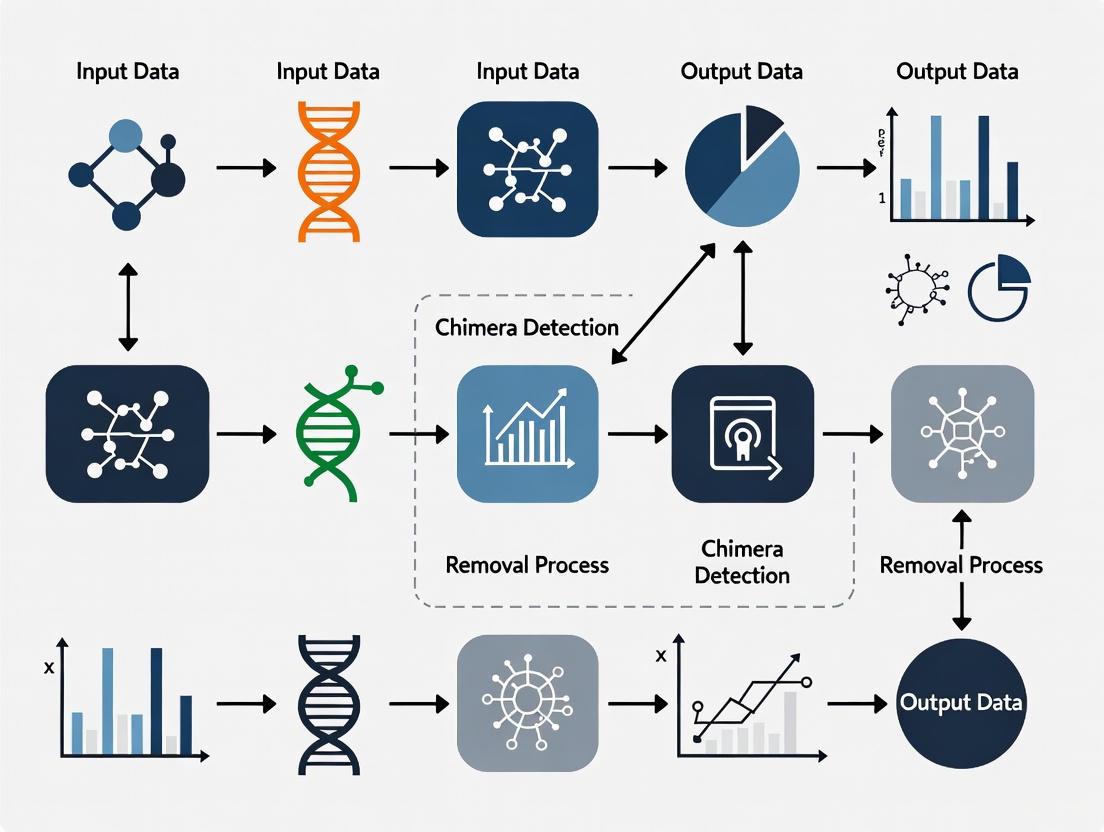
This article provides a comprehensive overview of chimera detection and removal in sequencing data, tailored for researchers, scientists, and drug development professionals.
A Comprehensive Guide to Chimera Detection and Removal in Sequencing Data: From Fundamentals to Clinical Applications
Abstract
This article provides a comprehensive overview of chimera detection and removal in sequencing data, tailored for researchers, scientists, and drug development professionals. It covers the foundational biology of chimeric RNAs and their significance in diseases like cancer, explores the latest computational methods and sequencing technologies enhancing detection capabilities, addresses common troubleshooting and optimization strategies in data processing pipelines, and offers a comparative analysis of validation techniques and tool performance. By synthesizing current methodologies and challenges, this guide aims to support the development of robust, accurate, and clinically relevant genomic analyses.
Understanding Chimeras: Biological Origins and Significance in Genomic Research
Chimeric RNAs, hybrid transcripts composed of exons from two or more different genes, represent a fascinating and complex area of modern molecular biology [1]. Once considered primarily products of chromosomal rearrangements in cancer cells, these molecules are now recognized to occur in normal physiology and can arise through multiple biogenesis mechanisms [2] [3]. This expanding understanding has complicated their detection and analysis, requiring researchers to distinguish biologically relevant chimeric RNAs from technical artifacts that can arise during experimental procedures. The field faces the dual challenge of recognizing legitimate chimeric RNAs with potential functional significance while identifying and eliminating false positives generated through various technical processes.
For researchers working with sequencing data, this distinction is particularly crucial. Technical artifacts can originate from multiple sources including reverse transcription errors, PCR amplification biases, cross-contamination between samples, and bioinformatic misclassification [4] [5]. Meanwhile, authentic chimeric RNAs continue to be discovered in diverse biological contexts, with some playing roles in normal development and others contributing to disease processes [1] [2]. This technical support center provides troubleshooting guides and FAQs to help researchers navigate these challenges, offering practical methodologies for accurate chimera detection and validation within the broader context of sequencing data research.
FAQs: Addressing Common Research Challenges
FAQ 1: What are the primary mechanisms that generate authentic chimeric RNAs?
Authentic chimeric RNAs arise through several distinct biological mechanisms:
DNA-Level Rearrangements: Traditional fusion genes result from chromosomal abnormalities including translocations, inversions, deletions, or tandem duplications [2] [3]. These events bring previously separate genes into proximity, enabling transcription of chimeric RNAs. The well-known BCR-ABL fusion in chronic myelogenous leukemia exemplifies this category [1] [2].
Trans-Splicing: This RNA-level mechanism joins exons from two separate pre-mRNA molecules [2] [3]. The JAZF1-JJAZ1 chimera, found in both normal endometrial cells and endometrial stromal sarcomas, represents a validated trans-splicing product that occurs without chromosomal rearrangement [2].
Cis-Splicing of Adjacent Genes (cis-SAGe): This process involves transcriptional readthrough where RNA polymerase continues past the normal termination signal of one gene into a neighboring gene, followed by splicing of the resulting transcript into a mature chimeric RNA [2] [3]. These chimeras typically occur between same-strand neighboring genes located within 30 kilobases of each other and often follow the "2-2 rule" (joining the second-to-last exon of the 5′ gene to the second exon of the 3′ gene) [3].
Cross-Strand Chimeric RNAs (cscRNAs): Recent research has identified chimeric RNAs formed from transcripts originating from opposite DNA strands [6]. These appear to be particularly prevalent in regions of convergent transcription and demonstrate tissue-specific expression patterns.
FAQ 2: How can I distinguish true biological chimeras from technical artifacts?
Distinguishing authentic chimeric RNAs from artifacts requires a multi-faceted approach:
Experimental Validation: Use independent methods such as RT-PCR with primers spanning the junction site followed by Sanger sequencing [2]. Northern blotting provides additional confirmation through size verification.
Genetic Evidence: For suspected contamination artifacts, examine SNP patterns. Authentic transcripts should match the host genotype, while contaminants may show discrepant SNPs [5]. This approach successfully identified cross-sample contamination in GTEx data through variant analysis.
Replication Across Platforms: Verify chimeric RNAs using different library preparation methods and sequencing platforms. Artifacts specific to certain protocols are less likely to replicate across methodologies.
Statistical Support: Implement rigorous bioinformatic filters requiring multiple supporting reads, proper pair alignment, and junction sequences consistent with known splicing patterns [7].
Biological Plausibility: Consider whether the chimera formation aligns with known biological mechanisms. Artifacts often lack conservation across samples or show expression patterns inconsistent with parental genes.
Technical artifacts in chimeric RNA detection arise from several sources:
Reverse Transcription Artifacts: The reverse transcriptase enzyme can template-switch between different RNA molecules, creating spurious chimeric sequences [4]. This frequently occurs at regions of short sequence homology (SHS) where the enzyme can dissociate from one template and continue synthesis on another.
PCR Recombination: During amplification, incomplete PCR products can act as primers on different templates, generating chimeric molecules [4] [7]. This is particularly problematic in high-cycle amplification and with fragmented templates.
Cross-Contamination: Sample-to-sample contamination can occur during library preparation or sequencing [5]. Highly expressed genes from one sample can appear as low-level signals in other samples processed simultaneously. The GTEx project documented this phenomenon, where pancreas-enriched genes (PRSS1, PNLIP) appeared in non-pancreas tissues sequenced on the same day [5].
Bioinformatic Misalignment: Computational pipelines may misalign reads across paralogous genes or to regions with repetitive elements, creating apparent chimeras [7].
Index Hopping: In multiplexed sequencing, index swapping between samples can assign reads to the wrong sample, creating apparent chimeric expression [5].
FAQ 4: Which computational tools are most effective for chimeric RNA detection?
Various computational tools have been developed for chimeric RNA detection, each with different strengths:
Table: Computational Tools for Chimeric RNA Detection
| Tool Name | Methodology | Key Features | Best Applications |
|---|---|---|---|
| TopHat-Fusion [1] | Alignment-based | Discovers fusions from known and unknown genes | Comprehensive discovery |
| FusionHunter [1] | Paired-end analysis | Identifies fusion transcripts from RNA-seq reads | Cancer fusion detection |
| ChimeraScan [1] | High-throughput sequencing | Processes long paired-end reads; detects junction-spanning reads | Sensitive chimera detection |
| FusionSeq [1] | Paired-end RNA-seq | Includes filters to remove spurious candidates | High-specificity applications |
| cscMap [6] | Specialized pipeline | Specifically designed for cross-strand chimeric RNAs | Cross-strand fusion detection |
| CRAC [1] | Integrated analysis | Predicts splice junctions or fusion RNAs directly from RNA-seq | Direct RNA analysis |
FAQ 5: What experimental strategies can validate putative chimeric RNAs?
A robust validation pipeline incorporates multiple experimental approaches:
Junction-Specific RT-PCR: Design primers that span the unique junction sequence of the putative chimera. Follow with Sanger sequencing to confirm the exact fusion point [2].
Quantitative PCR: Develop qPCR assays targeting the chimera junction to quantify expression levels across different samples and conditions.
Northern Blot Analysis: Use junction-spanning probes to verify the size and integrity of the chimeric transcript, helping distinguish from PCR artifacts [2].
Mass Spectrometry: For chimeric RNAs with protein-coding potential, mass spectrometry can detect the predicted fusion protein, providing functional validation [1].
Single-Molecule Sequencing: Long-read technologies like PacBio or Nanopore can capture full-length transcripts, confirming the chimera structure without assembly.
Genetic SNP Validation: Compare SNPs in the chimeric RNA with the genomic DNA of the same sample to confirm they originate from the same individual [5].
Troubleshooting Guides
Guide 1: Addressing Cross-Contamination in Sequencing Data
Cross-contamination between samples represents a significant challenge in chimeric RNA detection, as demonstrated by the systematic contamination found in GTEx datasets [5].
Table: Identifying and Resolving Sample Contamination
| Contamination Indicator | Detection Method | Resolution Strategy |
|---|---|---|
| Unexpected tissue-specific genes | Co-expression clustering of highly expressed, tissue-enriched genes | Analyze sequencing batch effects; compare samples sequenced on same day |
| Genotype mismatches | SNP analysis comparing DNA and RNA variants | Verify sample identity; check for index hopping |
| Correlation with processing date | Metadata analysis of isolation/sequencing dates | Implement strict sample separation; use unique dual indices |
| Low-level expression of high-abundance genes | Expression outlier detection | Include negative controls; filter genes with inconsistent expression |
Workflow Implementation:
- Screen for highly expressed, tissue-enriched genes (e.g., pancreas: PRSS1, PNLIP, CLPS, CELA3A; esophagus: KRT4, KRT13) in unexpected tissues.
- Correlate findings with processing dates - contamination is strongly associated with samples sequenced on the same day as the source tissue.
- Perform SNP analysis on suspicious chimeric reads to confirm genotype mismatches.
- Implement batch correction in analysis or re-process affected samples with appropriate controls.
Guide 2: Optimizing Bioinformatics Pipelines for Accurate Detection
Proper bioinformatic processing is essential for distinguishing true chimeric RNAs from artifacts:
Critical Filtering Steps:
- Homology Filtering: Remove chimeras with short homologous sequences (SHS) at junction points, which often represent reverse transcription artifacts [4].
- Mapping Quality: Require unique alignment and proper pairing for supporting reads.
- Multiple Evidence: Set minimum thresholds for supporting reads (typically ≥3) and spanning multiple samples or replicates.
- Database Comparison: Check against databases of known artifacts and validated chimeras (ChiTaRS, ChimerDB) [1].
- Reading Frame Analysis: For coding chimeras, check if the junction maintains an open reading frame.
Guide 3: Validating Chimeric RNAs Through Experimental Approaches
Robust experimental validation is essential for confirming putative chimeric RNAs:
Step-by-Step Protocol:
Initial RT-PCR Screening
- Design primers spanning the predicted junction sequence
- Include controls: parental gene expression, no-template, and genomic DNA contamination check
- Use reverse transcriptases with lower template-switching activity
- Perform triplicate technical replicates
Sequence Verification
- Clone PCR products and sequence multiple clones
- Alternatively, use Sanger sequencing directly from PCR products
- Confirm the exact junction sequence matches bioinformatic predictions
Expression Pattern Analysis
- Perform quantitative RT-PCR across multiple tissue types or conditions
- Compare expression levels with parental genes
- Look for correlation with biological factors
Functional Validation
- For protein-coding chimeras: perform Western blot with junction-specific antibodies
- Implement knockdown using junction-targeting siRNAs or Cas13 systems [3]
- Assess phenotypic effects of overexpression and knockdown
Table: Research Reagent Solutions for Chimeric RNA Validation
| Reagent/Category | Specific Examples | Function in Validation |
|---|---|---|
| Junction-Specific Primers | Custom DNA oligos spanning fusion points | RT-PCR amplification of unique chimera sequence |
| Reverse Transcriptase | Superscript IV, LunaScript | High-fidelity reverse transcription with reduced template switching |
| CRISPR-Cas13 System [3] | Cas13a, Cas13b | Targeted degradation of chimeric RNA without affecting parental genes |
| RNA-Seq Library Prep Kits | Illumina TruSeq, NEBNext Ultra II | High-quality library preparation with minimal artifacts |
| Positive Control Plasmids | Synthetic chimera constructs with known sequence | Pipeline validation and positive control for detection methods |
| Chimera Databases | ChiTaRS [1], ChimerDB [1], FusionGDB [2] | Reference for known chimeras and filtering of common artifacts |
Advanced Detection Methodologies
Next-Generation Sequencing Analysis Protocols
Comprehensive RNA-Seq Analysis for Chimera Detection:
Library Preparation Considerations
- Use paired-end sequencing (minimum 2x75bp, preferably 2x150bp)
- Employ strand-specific protocols to determine origin
- Include technical replicates and control samples
- Use unique molecular identifiers (UMIs) to distinguish PCR duplicates
Bioinformatic Processing Pipeline
- Quality control: FastQC, MultiQC
- Adapter trimming: Trimmomatic, Cutadapt
- Alignment: STAR, HISAT2 (with chimeric alignment options)
- Chimera detection: Run multiple tools (see Table above) and take consensus
- Filtering: Remove low-complexity regions, simple repeats, and paralogous genes
Validation Integration
- Prioritize chimeras with junction reads in multiple samples
- Check for supporting evidence in public databases
- Correlate with potential biological functions
Specialized Techniques for Challenging Cases
Cross-Strand Chimeric RNA Detection: The cscMap pipeline specializes in identifying cross-strand chimeric RNAs (cscRNAs), which form between transcripts from opposite DNA strands [6]. Key considerations:
- Use strand-specific RNA-seq data
- Require both ends of paired-end reads to support the cross-strand junction
- Filter out potential reverse transcription artifacts through sequence analysis
- Validate recurrent cscRNAs across multiple samples
Single-Cell RNA-Seq Considerations: Chimeric RNA detection in single-cell data presents additional challenges:
- Higher amplification cycles increase PCR artifacts
- Multiplet events can create hybrid expression profiles
- Lower sequencing depth reduces detection sensitivity
- Implement specialized tools (e.g., scFusion) designed for single-cell data
Accurate detection of chimeric RNAs requires an integrated approach combining computational stringency with experimental validation. By understanding the multiple mechanisms that generate authentic chimeric RNAs and the technical artifacts that mimic them, researchers can develop more robust detection pipelines. The methodologies outlined in this technical support center provide a framework for distinguishing biological signals from technical noise, enabling more reliable discoveries in this rapidly evolving field.
As sequencing technologies continue to advance and our knowledge of transcriptome complexity expands, these troubleshooting approaches will help researchers navigate the challenges of chimera detection, ultimately leading to more accurate characterization of these fascinating hybrid molecules and their roles in health and disease.
FAQs: Understanding Biological Chimeras in Sequencing Data
1. What is the fundamental difference between a biological chimera and a sequencing artifact?
A biological chimera, such as a trans-spliced RNA or a gene fusion from a chromosomal rearrangement, is a true biological molecule present in the cell. In contrast, a sequencing artifact (like a PCR chimera) is an artificial molecule created during the laboratory preparation of sequencing libraries, primarily due to incomplete amplification or polymerase errors [8] [9]. Distinguishing between the two is critical, as a biological chimera may have functional significance in disease or development, while an artifact does not.
2. My RNA-Seq analysis detected a chimeric transcript. How can I determine if it resulted from trans-splicing?
Spliceosome-Mediated RNA Trans-Splicing (SMaRT) is a natural, though rare, process that joins exons from two separate pre-mRNA molecules [10] [11]. To investigate a putative trans-splicing event:
- Validate with PCR: Design primers that span the novel exon-exon junction and perform RT-PCR followed by Sanger sequencing.
- Examine genomic DNA: The definitive test is to check the corresponding genomic locus. If the chimeric exon structure is not present in the genome, it supports a post-transcriptional origin like trans-splicing [12].
- Consult databases: Check if the chimeric transcript is a known, annotated read-through fusion of adjacent genes [12].
3. What is a "read-through" fusion and how does it differ from a fusion caused by a chromosomal rearrangement?
A read-through fusion (or tandem chimerism) occurs when two consecutive genes on the same chromosome are transcribed into a single continuous RNA molecule without a DNA rearrangement [12]. In contrast, a fusion from a chromosomal rearrangement is caused by a physical breakage and rejoining of DNA, such as a translocation or inversion, that brings two previously separate genes into proximity [12]. While read-through fusions are common, their biological relevance is often limited compared to the well-documented driver role of many rearrangement-driven fusions like BCR::ABL1 [12].
4. Why does my 16S rRNA amplicon data have such a high proportion of chimeric reads?
High chimera rates in 16S sequencing are predominantly technical artifacts introduced during PCR amplification. This occurs when an incomplete DNA fragment from one organism acts as a primer on a template from another organism, leading to a hybrid amplicon [8] [9]. Common exacerbating factors include:
- High PCR cycle counts: More cycles increase the chance of incomplete extension.
- Poor template quality: Degraded DNA provides more incomplete fragments.
- Insufficient primer removal: Leaving primer sequences on reads can interfere with downstream denoising and increase false chimera detection [13].
- Complex microbial communities: Higher sample diversity provides more opportunities for cross-template priming.
Troubleshooting Guide: Resolving High Chimera Rates
Problem: High Chimera Percentage in 16S Amplicon Sequencing
This is a common issue that can drastically inflate microbial diversity estimates by creating spurious "species" [8] [9].
Diagnosis Flowchart:
Recommended Actions:
- Action 1: Optimize Primer Removal. Primer sequences can interfere with the denoising algorithms used for chimera detection. Remove primers using a dedicated tool like
cutadaptbefore running denoising pipelines like DADA2. One study showed this can increase non-chimeric reads from 10-15% to 40-45% [13]. - Action 2: Reduce PCR Cycle Count. The number of PCR cycles is a major factor in chimera formation. Titrate your cycle number to use the minimum required for sufficient library yield [9].
- Action 3: Use a Robust Chimera Detection Tool. Employ specialized tools designed to identify and remove chimeric sequences. The table below benchmarks several common methods.
Table 1: Benchmarking of Chimera Detection and Denoising Algorithms for 16S Data [8] [9]
| Tool/Method | Type | Key Principle | Reported Performance |
|---|---|---|---|
| UCHIME | Chimera Detection | Uses a reference database or abundance-based de novo discovery. | >1000x faster than ChimeraSlayer; high sensitivity, especially with short, noisy sequences [8]. |
| DADA2 | Denoising (ASV) | Implements an iterative process of error estimation to infer true biological sequences. | Produces consistent output but can over-split 16S rRNA gene copies from the same strain [9]. |
| Deblur | Denoising (ASV) | Uses a pre-calculated statistical error profile to correct sequences. | Reduces errors by applying a position-specific error model [9]. |
| UNOISE3 | Denoising (ASV) | Compares read abundance to similar sequences using a probabilistic model. | Effectively clusters reads by assessing substitution and insertion probabilities [9]. |
| UPARSE | Clustering (OTU) | Greedy clustering algorithm to group reads into OTUs. | Achieves clusters with lower errors but may over-merge distinct biological sequences [9]. |
Problem: Distinguishing Biological vs. Technical Chimeras in RNA-Seq
Diagnosis Strategy: Confirming a biological chimera requires multiple lines of evidence to rule out technical artifacts.
- Step 1: Independent Validation. Use a non-sequencing based method such as RT-PCR with primers spanning the fusion junction and Sanger sequencing. This confirms the physical existence of the transcript independent of NGS library construction [14].
- Step 2: Genomic DNA Correlation. For suspected gene fusions from rearrangements, perform PCR on genomic DNA. The presence of the junction in genomic DNA confirms a DNA-level rearrangement [12].
- Step 3: Re-analysis with Specialized Tools. Re-process raw sequencing data using fusion-finding algorithms that are designed to account for sequencing errors and mapping artifacts.
Experimental Protocols
Protocol 1: Validating a Putative Trans-Splicing Event
Objective: To confirm a putative trans-spliced RNA molecule identified from RNA-Seq data.
Materials:
- RNA Sample: Total RNA from the original tissue or cell line.
- Reverse Transcriptase: For cDNA synthesis.
- Junction-Specific Primers: Forward primer in the 5' gene partner, reverse primer spanning the novel exon-exon junction of the 3' partner.
- PCR Reagents: High-fidelity DNA polymerase.
- Sanger Sequencing Services.
Methodology:
- cDNA Synthesis: Convert total RNA to cDNA using a reverse transcriptase kit with random hexamers and/or oligo-dT primers.
- Junction PCR: Perform PCR amplification using the junction-specific primers and the synthesized cDNA as template.
- Positive Control: Primers for a constitutively expressed housekeeping gene.
- Negative Control: No-template control (NTC) for the junction-specific primers.
- Gel Electrophoresis: Analyze the PCR products on an agarose gel. A single, discrete band of the expected size is a positive indicator.
- Sequencing and Analysis: Purify the PCR product and submit it for Sanger sequencing. Analyze the returned chromatogram to visually confirm the precise nucleotide sequence at the junction [14]. The text file must match the predicted exon-exon junction from the RNA-Seq data.
Protocol 2: Differentiating a Read-Through from a Rearrangement Fusion
Objective: To determine the genomic basis of a chimeric RNA.
Materials:
- Genomic DNA (gDNA): Isolated from the same sample as the RNA.
- Junction-Specific Primers: The same primers used for RNA validation in Protocol 1.
- PCR Reagents: High-fidelity DNA polymerase.
- Sanger Sequencing Services.
Methodology:
- gDNA PCR: Use the junction-specific primers from the RNA validation to perform PCR on the gDNA sample.
- Interpretation of Results:
- No PCR Product from gDNA: This suggests the chimera is a result of a post-transcriptional event, such as trans-splicing [12].
- PCR Product from gDNA: This confirms a DNA-level event. Sequence the product.
- If the sequenced gDNA product shows the genes are fused in their natural genomic order with no intervening sequence, it is consistent with a read-through transcription event [12].
- If the sequenced gDNA product shows a junction that is not present in the reference genome, it confirms a genomic rearrangement (e.g., translocation, inversion) [12].
Table 2: Interpretation Guide for Fusion Validation Experiments
| Observation | RNA PCR | gDNA PCR | Likely Mechanism |
|---|---|---|---|
| 1 | Positive | Negative | Post-transcriptional (e.g., Trans-splicing) |
| 2 | Positive | Positive (genes in order) | Read-Through Transcription |
| 3 | Positive | Positive (genes rearranged) | Chromosomal Rearrangement |
Research Reagent Solutions
Table 3: Essential Tools for Chimera Analysis
| Reagent / Tool | Function / Application | Example / Note |
|---|---|---|
| High-Fidelity Polymerase | Reduces PCR errors and artifact formation during library amplification and validation. | Kits from suppliers like QIAGEN, NEB, or Thermo Fisher. |
| cutadapt | Software for removing primer/adapter sequences from NGS reads. | Critical pre-processing step to improve denoising and reduce false chimera calls [13]. |
| DADA2 | R package for modeling and correcting Illumina-sequenced amplicon errors. | Denoises sequences to resolve Amplicon Sequence Variants (ASVs) [9]. |
| UCHIME | Algorithm for detecting chimeric sequences in amplicon data. | Can be run in de novo mode or with a reference database [8]. |
| Sanger Sequencing | The gold standard for validating novel nucleic acid sequences. | Used to confirm the sequence of fusion junctions discovered by NGS [14]. |
In biomedical research, a "chimera" refers to a single biological entity containing cells or genetic material from at least two different origins. In the context of sequencing data, chimeric sequences are artificial constructs formed during laboratory processes, primarily polymerase chain reaction (PCR), where incomplete amplification products from different templates join together to create a single, misleading sequence. These artifacts are particularly problematic in amplicon sequencing studies, such as 16S rRNA gene sequencing for microbiome analysis, where they can significantly inflate diversity estimates and lead to the false detection of non-existent species [15].
Beyond these technical artifacts, naturally occurring microchimerism (MC) represents a clinically relevant form where individuals harbor a small population of cells from another genetically distinct individual. This phenomenon is most commonly acquired through pregnancy, with fetal cells persisting in the maternal body or maternal cells in the offspring, though it can also occur through blood transfusions or organ transplants [16]. Research has linked microchimerism to a diverse range of health effects, functioning both as a biomarker and potential driver in conditions including cancer, autoimmune diseases, and tissue repair processes [16].
This technical support guide addresses the critical challenges of chimera detection and removal in sequencing data research, providing troubleshooting guidance and methodological frameworks to ensure data accuracy in studies investigating the role of chimeras in human disease.
Frequently Asked Questions (FAQs)
Q1: What are the primary sources of chimeric sequences in amplicon sequencing data?
Chimeric sequences predominantly form during the PCR amplification process. Template switching occurs when an incomplete DNA extension product from one round of amplification acts as a primer in a subsequent cycle, annealing to and extending from a different template sequence. This issue is exacerbated with longer amplicons, as the probability of incomplete synthesis increases with amplicon length. Additionally, chimeras can form post-amplification during library preparation steps, such as adapter ligation in Oxford Nanopore Technology (ONT) workflows [15].
Q2: Why is primer removal often recommended before chimera detection in workflows like DADA2?
Primer removal prior to denoising can significantly improve chimera detection efficacy. Empirical evidence shows that removing primers using tools like cutadapt before running qiime dada2 denoise-paired can increase the percentage of reads identified as non-chimeric from 10-15% to 40-45% in gut microbiome datasets [13]. This improvement likely occurs because residual primer sequences interfere with the accurate alignment and comparison of reads during the denoising process, which is fundamental to identifying and removing chimeric artifacts.
Q3: How can I analyze chimeric sequences in specialized applications like AAV capsid engineering?
For analyzing chimeric adeno-associated virus (AAV) libraries created through directed evolution, specialized tools like hafoe have been developed. This command-line tool performs "neighbor-aware serotype identification" by chopping variant sequences into overlapping fragments (default: 100 bp with 10 bp overlap), aligning them to parental serotype genomes, and using neighborhood context to assign the most probable parental origin to each fragment. This approach accurately identifies parental serotype compositions with 96.3% to 97.5% accuracy and can process hundreds of thousands of variants simultaneously [17].
Q4: What are the consequences of failing to remove chimeric sequences from my dataset?
Failure to adequately remove chimeric sequences leads to several critical data quality issues:
- Inflated Diversity Estimates: Chimeras appear as novel sequences, artificially increasing observed alpha diversity metrics.
- Skewed Community Structure: The false taxa detected can distort the true biological composition of samples.
- Reduced Statistical Power: The introduction of artifactual sequences adds noise to datasets, potentially obscuring true biological signals.
- Compromised Downstream Analyses: All subsequent analyses, including differential abundance testing and biomarker discovery, will be based on contaminated data [15].
Troubleshooting Guides
Issue: High Chimera Rates in Full-Length 16S rRNA Nanopore Sequencing
Problem: After performing full-length 16S rRNA gene sequencing with Oxford Nanopore Technology, an unexpectedly high proportion of reads are identified as chimeric, compromising data integrity.
Solution: Implement a consensus-based approach with robust chimera detection:
Sequence Preprocessing:
- Filter reads by length to remove fragments outside the expected amplicon size distribution.
- Identify and trim primer sequences using tools like
primer-chop. - Retain only the highest quality reads (top 80% with fewest expected errors) using
Filtlong[15].
Consensus Generation & Chimera Detection:
- Cluster quality-filtered reads based on k-mer composition (e.g., 3mer) using UMAP-OPTICS.
- Generate a consensus sequence for each cluster using
lamassemble. - Perform initial chimera detection on consensus sequences using
vsearch uchime_denovo, flagging "local chimeric sequences" [15].
Cross-Sample Validation:
- Deduplicate consensus sequences across all samples.
- Map original reads back to the consensus sequences with
minimap2. - Identify "global chimeric sequences" based on mapping patterns across samples and remove them from the final dataset [15].
Tool Recommendation: The CONCOMPRA workflow is specifically designed for this purpose and has demonstrated superior performance for profiling bacterial communities using full-length 16S rRNA gene sequencing [15].
Issue: Persistent Chimeras After Standard DADA2 Processing
Problem: Standard DADA2 denoising pipelines yield low percentages of non-chimeric reads, even after adjusting standard truncation parameters.
Investigation and Resolution Steps:
Verify Primer Removal:
- Confirm complete primer removal using
cutadaptwith appropriate parameters before DADA2 denoising. - Use
qiime demux summarizeon both input and output ofcutadaptto visually verify primer trimming [13].
- Confirm complete primer removal using
Adjust DADA2 Parameters:
- Use
trim-left-fandtrim-left-rparameters instead of, or in combination with, truncation parameters to remove primer residues from the 5' end. - Avoid overly aggressive truncation lengths (
trunc-len) that may discard excessive sequence data while attempting to resolve chimera issues [13].
- Use
Evaluate Alternative Trimming Strategies:
- Test the impact of using default DADA2 denoising parameters after primer removal, as this has been observed to increase non-chimeric read retention in some cases [13].
Issue: Analyzing Complex Chimeric AAV Libraries
Problem: Standard alignment tools are inadequate for deciphering the parental composition and enrichment patterns of chimeric AAV variants from DNA shuffling experiments.
Recommended Workflow with hafoe:
Input Preparation:
- Prepare a FASTA file containing the
capgene sequences of all parental AAV serotypes used in library construction. - Provide sequencing reads (FASTQ/CSV) of the chimeric library, plus additional files for any enriched libraries from selection cycles [17].
- Prepare a FASTA file containing the
Preprocessing and Clustering:
- Filter sequences by length and identify open reading frames (ORFs), retaining only variants with ORF size >1.8 kb and total length <3 kb.
- Reduce sequence redundancy using CD-HIT-EST clustering at 90% similarity threshold, selecting the most abundant sequence as cluster representative [17].
Parental Deconvolution:
- Allow
hafoeto automatically fragment sequences and perform neighbor-aware serotype identification. - Review interactive graphical reports to analyze recombination patterns and parental segment contributions to enriched variants [17].
- Allow
Experimental Protocols
Protocol: Validation of Chimera Detection Methods Using Synthetic Communities
Purpose: To empirically evaluate the performance (sensitivity and specificity) of any chimera detection tool using a mock microbial community with known composition.
Reagents and Materials:
- Commercially available synthetic bacterial community DNA (e.g., ATCC MSA-1002)
- Appropriate primers for target amplicon (e.g., full-length 16S rRNA gene primers 27F/1492R)
- PCR master mix (e.g., Phire Tissue Direct PCR Master Mix)
- Oxford Nanopore PCR Barcoding Expansion Pack (EXP-PBC096)
- ONT ligation sequencing kit (SQK-LSK109 or SQK-LSK114)
- ONT flow cells (R9.4.1 or R10.4.1) [15]
Procedure:
- Amplification: Amplify the target gene from the synthetic community DNA using standardized PCR conditions.
- Library Preparation: Perform barcoding and library preparation according to ONT's "Amplicon by Ligation" protocol. Include multiple independent amplification replicates (n=4) to assess technical variability.
- Sequencing: Sequence the pooled library on appropriate ONT flow cells, basecalling with a super-accurate model (e.g., Guppy).
- Bioinformatic Analysis: Process the resulting FASTQ files through the chimera detection tool being validated (e.g., CONCOMPRA, DADA2, etc.).
- Validation: Compare the tool's output to the known composition of the synthetic community. Calculate performance metrics including:
- Recall: Proportion of actual true sequences correctly identified as non-chimeric.
- Precision: Proportion of sequences identified as non-chimeric that are true sequences.
- False Discovery Rate: Proportion of sequences identified as non-chimeric that are actually chimeric.
Protocol: Chimera Analysis in AAV Directed Evolution
Purpose: To identify and characterize enriched chimeric AAV capsid variants with improved tropism for specific target tissues.
Reagents and Materials:
- DNA-shuffled AAV capsid library
- Target cells (e.g., human dermal fibroblasts, dendritic cells) or tissues (e.g., canine muscle, liver)
- PacBio or Oxford Nanopore sequencing platform
hafoecomputational tool [17]
Procedure:
- Library Selection: Apply the chimeric AAV library to target cells or tissues in vitro or in vivo. Allow binding and internalization.
- Variant Recovery: Isclude genomic DNA from target cells/tissues and recover enriched AAV variants by PCR amplification of capsid regions.
- Sequencing: Prepare sequencing libraries from both the initial unselected library and the enriched pools. Sequence using long-read technology (PacBio CCS or ONT).
- Bioinformatic Analysis with
hafoe:- Run
hafoewith the parental serotype FASTA file and sequencing data from both unselected and enriched libraries. - Use the tool's clustering and neighbor-aware identification to determine parental recombination patterns in enriched variants.
- Generate interactive reports to visualize segment contributions from different parental serotypes.
- Run
- Variant Characterization: Select highly enriched chimeric variants for downstream functional validation in secondary assays to confirm improved tropism properties.
Data Presentation
Performance Comparison of Chimera Detection Tools
Table 1: Evaluation of chimera detection tools using a synthetic bacterial community (16S MOCK) with known composition.
| Tool Name | Principle/Method | Reference Database Dependent? | Reported Non-Chimeric Reads | Advantages | Limitations |
|---|---|---|---|---|---|
| CONCOMPRA | Consensus sequencing & mapping | No | ~40-45% [15] | Works without reference databases; suitable for novel organisms | Requires careful parameter optimization |
| DADA2 | Error model-based denoising | Implicitly, during training | 10-45% [13] (highly dependent on primer removal) | Integrated into QIIME2; high sensitivity | Performance drops without proper primer trimming |
| hafoe | Neighbor-aware serotype identification | Yes (parental sequences) | N/A (for AAV-specific use) | Accurate parental deconvolution (96.3-97.5%); processes large datasets [17] | Specific to engineered chimeric libraries |
Essential Research Reagent Solutions
Table 2: Key reagents and computational tools for chimera-related research.
| Item Name | Type | Primary Function | Example Use Case |
|---|---|---|---|
| Synthetic Bacterial Community (ATCC MSA-1002) | Biological Standard | Validation control for chimera detection methods | Benchmarking performance of bioinformatic tools against known ground truth [15] |
| Oxford Nanopore PCR Barcoding Kit | Laboratory Reagent | Barcoding amplicons for multiplexed sequencing | Preparing full-length 16S rRNA libraries for microbiome analysis [15] |
| CONCOMPRA | Computational Tool | Detects chimeras by drafting and mapping to consensus sequences | Profiling bacterial communities with long-read amplicon sequencing [15] |
| hafoe | Computational Tool | Exploratory analysis of chimeric AAV libraries | Identifying parental serotype composition in directed evolution experiments [17] |
| DADA2 | Computational Tool | Sequence denoising and chimera removal | 16S rRNA amplicon analysis in QIIME2 workflows [13] |
| Cutadapt | Computational Tool | Primer and adapter removal from sequencing reads | Preprocessing step to improve downstream chimera detection in DADA2 [13] |
Experimental Workflows and Signaling Pathways
Workflow for Comprehensive Chimera Detection in Amplicon Sequencing
Chimera Detection Workflow in Amplicon Sequencing
Workflow for Analyzing Chimeric AAV Variants
Chimeric AAV Variant Analysis Workflow
In molecular biology, a chimera is a single DNA sequence originating from two or more parent sequences that have joined together during experimental processes such as PCR amplification [18]. These artifacts form when an incompletely extended DNA strand dissociates from its template and anneals to a different, but similar, template in a subsequent PCR cycle, acting as a primer to create a hybrid sequence [19] [18] [20].
Undetected chimeras pose a significant threat to data integrity. In adaptive immune receptor repertoire sequencing (AIRR-seq), they can be misinterpreted as sequences with high somatic hypermutation, potentially leading to the wasteful prioritization of artifactual sequences for further phenotypic characterization [19]. In metabarcoding studies, they inflate perceived microbial diversity by appearing as novel sequences that do not match any known organism, thus confounding ecological interpretations [18] [21].
FAQs on Chimera Fundamentals
1. What is the fundamental difference between a PCR chimera and a chimeric read? A PCR chimera is an artificial sequence formed during the amplification process and is generally considered an artifact that should be filtered out [18]. A chimeric read, however, is a sequencing read where subsections align to different genomic locations. These are not always artifacts and are often used by structural variant callers to detect real biological rearrangements [18] [21].
2. In which research areas are chimeras considered problematic artifacts? Chimeras are primarily problematic in amplicon sequencing studies, including:
- 16S rRNA metabarcoding for microbial community analysis [18] [21].
- Adaptive Immune Receptor Repertoire sequencing (AIRR-seq) for studying B and T cell receptors [19].
- Any PCR-based assay where mixed templates are amplified, as they can generate false-positive variants or overestimate diversity [20].
3. Can chimeras ever be biologically relevant? Yes, in a different context. The deliberate creation of artificial chimeras is a useful tool in protein engineering and drug discovery. For example, proteolysis-targeting chimeras (PROTACs) are engineered molecules designed to degrade specific disease-causing proteins [22]. This article, however, focuses on chimeras as sequencing artifacts.
Troubleshooting Guides
Guide 1: Addressing High Chimera Rates in Amplicon Sequencing Data
Problem: Your amplicon sequencing data (e.g., 16S rRNA, AIRR-seq) shows an unexpectedly high number of chimeric sequences upon analysis with tools like DADA2 or VSEARCH.
| Possible Cause | Diagnostic Steps | Solution |
|---|---|---|
| Excessive PCR Cycles | Review your library preparation protocol. Higher cycle numbers correlate with increased chimera formation [19]. | Minimize the number of PCR cycles. Use only the cycles necessary to generate sufficient material for sequencing [19] [23]. |
| Poor DNA Template Quality | Check the quality of your input DNA/RNA using electrophoregrams (e.g., RIN) or spectrophotometers (e.g., A260/A280) [24]. | Use high-quality, intact starting material. Degraded DNA can generate more partial fragments that act as primers for chimera formation [24]. |
| Overly Complex Template Mixture | Consider the natural complexity of your sample. Mixed-template amplifications are notoriously prone to chimera generation [20]. | Optimize template concentration. There is no direct fix, but be aware that environmental samples with vast diversity have higher inherent chimera rates (up to 30%) and require rigorous bioinformatic filtering [20]. |
Guide 2: Resolving Discrepancies in Chimera Detection Across Tools
Problem: Different chimera detection tools (e.g., UCHIME, DADA2, DECIPHER) report different numbers of chimeras for the same dataset.
| Possible Cause | Diagnostic Steps | Solution |
|---|---|---|
| Different Algorithmic Approaches | Identify whether the tools used are de novo (compare sequences within your dataset) or reference-based (compare to a curated database) [25]. | Understand the tool's methodology. De novo methods assume more abundant sequences are correct, while reference-based methods are more accurate if a comprehensive database is available. Use the method best suited for your amplicon and reference database completeness [25] [20]. |
| Varying Default Stringency Parameters | Check the default parameters for each tool, such as minimum parent abundance and minimum fold-parent over-abundance [26]. | Use consistent and justified parameters. When comparing tools, adjust key parameters to be as similar as possible. For final analysis, select a threshold that balances false positives and false negatives for your specific research goal [19] [26]. |
Experimental Protocols for Chimera Detection and Validation
Protocol 1: De Novo Chimera Detection with VSEARCH
This protocol is ideal for metabarcoding studies where a comprehensive reference database is not available [25].
Methodology:
- Input Data: Prepare a FASTA file containing unique sequences (Amplicon Sequence Variants - ASVs) from your dataset. This file is typically generated after denoising and quality filtering steps.
- Command Execution: Run the
uchime3_denovoalgorithm in VSEARCH. - Output: The algorithm compares all ASVs against one another, looking for subregions that match different, more abundant "parent" sequences. Sequences identified as chimeras are excluded from the output file
output_nonchimeras.fasta[25].
Protocol 2: Reference-Based Chimera Detection
This method is more accurate when a high-quality, curated reference database exists for your target gene (e.g., the 16S rRNA database) [20].
Methodology:
- Inputs: You will need your ASV FASTA file and a reference database FASTA file (e.g., SILVA, Greengenes for 16S rRNA).
- Command Execution: Run a reference-based algorithm like
uchime2_ref(as used by NCBI) or the reference mode in VSEARCH/USEARCH. - Output: The tool checks if each query sequence can be reconstructed as a chimera of two or more closer-matching reference sequences. Sequences flagged as chimeric are removed [20].
Protocol 3: Sample-Specific Chimera Detection with DADA2
The DADA2 pipeline incorporates a consensus de novo method that performs chimera detection sample-by-sample for increased accuracy [26].
Methodology (R code):
- Input Data: A sequence table (ASV table) where rows are samples and columns are amino acid sequences, generated after the DADA2 denoising step.
- Command Execution: Use the
removeBimeraDenovofunction with the "consensus" method. - Output: The function identifies sequences that are flagged as chimeric in a large fraction of samples. This consensus approach provides a robust final ASV table for downstream ecological analysis [26].
Quantitative Data on Chimera Formation
Table 1: Chimera and Error Rates Across Experimental Conditions
The following table summarizes quantitative findings on chimera formation from controlled studies, highlighting the impact of different protocols and sequencing platforms.
| Experimental Condition | Metric | Value | Context & Citation |
|---|---|---|---|
| PCR Cycle Number | Chimera Formation Rate | Positive Correlation | Increasing PCR cycles leads to a higher rate of chimera formation [19]. |
| Sequencing Platform (Mock Community) | Index Misassignment / False Positive Reads | 5.68% (NovaSeq 6000) vs. 0.08% (DNBSEQ-G400) | Comparison using a commercial mock microbial community [21]. |
| Library Preparation Method (RAD-seq) | Misassigned Reads | 1.15% (Type B: Pooled PCR) vs. 0.65% (Type A: Individual PCR) | Type B libraries (pooled before PCR) showed a higher percentage of misassigned reads [23]. |
| Mixed-Template Amplification (16S rRNA) | Estimated Chimera Rate | Up to 30% | Environmental samples with mixed templates are highly susceptible to chimera formation [20]. |
Workflow Visualization
Chimera Detection and Removal Workflow
PCR Chimera Formation Mechanism
Research Reagent Solutions
Table 2: Essential Tools for Chimera Management
This table lists key software tools and their primary function in detecting and removing chimeric sequences from sequencing data.
| Tool Name | Function | Brief Description |
|---|---|---|
| UCHIME / VSEARCH | De Novo & Reference-Based Detection | Widely used algorithm available in both USEARCH and VSEARCH for identifying chimeras by comparing sequences within a dataset or against a reference database [18] [25]. |
DADA2 (removeBimeraDenovo) |
De Novo Detection | An R package that uses a de novo method to identify chimeras by comparing ASVs to more abundant "parent" sequences, often used as part of its broader amplicon analysis pipeline [26]. |
| DECIPHER | Reference-Based Detection | A tool that uses a search-based approach for chimera identification for 16S rRNA sequences [18]. |
| CHMMAIRRa | Domain-Specific Detection | A hidden Markov model (HMM) designed specifically for detecting chimeras in Adaptive Immune Receptor Repertoire (AIRR-seq) data, incorporating models for somatic hypermutation [19]. |
| CATCh | Ensemble Classification | An ensemble classifier for chimera detection in 16S rRNA sequencing studies, designed to improve detection accuracy [18]. |
Detection Methodologies: Computational Tools and Advanced Sequencing Technologies
Chimeras are artifact sequences formed by two or more biological sequences incorrectly joined together. This occurs predominantly during Polymerase Chain Reaction (PCR) amplification of mixed templates, such as those from uncultured environmental samples. During PCR, incomplete extensions allow partially extended strands from one template to bind to a different, but similar, sequence in a subsequent cycle. This strand then acts as a primer, extending to form a new, chimeric sequence that is amplified in later cycles. This end result is a PCR artifact that does not represent a biologically existing sequence [20].
The presence of chimeras poses a significant problem for sequence analysis. Studies estimate that in mixed-template environmental samples, as many as 30% of sequences may be chimeric [20]. While most common in mixed templates, chimeras also occur at a lower frequency in amplifications from supposedly pure cultures. These artifacts corrupt data integrity, leading to the inference of false taxa, spurious Operational Taxonomic Units (OTUs), and degraded diversity estimates, ultimately resulting in inaccurate representations of biological diversity [20].
Algorithm Classifications and Methodologies
Chimera detection tools can be broadly categorized into two methodological approaches: reference-based and de novo detection. The choice of algorithm is critical and depends on the availability of a high-quality reference database, the sequencing technology used, and the specific research context.
Reference-Based Detection
Reference-based methods require a curated, high-quality database of non-chimeric sequences to identify chimeras by comparing query sequences against known parents.
- UCHIME: A widely used algorithm available in both reference and de novo modes. In its reference-based mode, it identifies a query sequence as chimeric if it can be divided into segments, each matching a different reference sequence (the "parents") more closely than any single reference sequence matches the entire query. The Uchime2_ref implementation is used by the National Center for Biotechnology Information (NCBI) to scan 16S rRNA sequences. NCBI has optimized its parameters to find chimeras that are >3% diverged from the closest parent, as these tend to produce spurious OTUs [20].
- ChimeraSlayer: Another reference-based tool designed for detecting chimeras in 16S and ITS amplicon data. It uses a broad database and is designed to be sensitive to chimeras even when evolutionary distances between parents are close [27].
De Novo Detection
De novo methods do not require a reference database. Instead, they leverage the properties of the dataset itself, such as relative sequence abundance or read-to-read alignments, to identify chimeric sequences.
- UCHIME (de novo mode): This mode uses the abundance of sequences in the sample to infer chimeras. The underlying principle is that a chimeric sequence, being an artifact, is likely to be less abundant than its true biological parents. It identifies potential chimeras by looking for sequences that can be reconstructed from more abundant "parent" sequences within the same sample [27].
- YACRD (Yet Another Chimeric Read Detector): A standalone tool designed specifically for long-read technologies like nanopore sequencing. YACRD uses a de novo approach by requiring an overlap alignment file between reads. It does not need a reference genome but, in practice, requires high sequencing coverage to be effective, making it less suitable for low-coverage applications such as metagenomics [27].
- MiniScrub: This tool performs "read scrubbing" for nanopore reads, a process that removes low-quality segments which often include chimeric regions. The goal is to improve the accuracy of downstream analyses like genome assembly [27].
Comparison of Key Algorithms
Table 1: Overview of Common Chimera Detection Tools
| Tool Name | Detection Method | Primary Application | Key Requirement | Notable Feature |
|---|---|---|---|---|
| UCHIME [20] [27] | Reference-based & De novo | 16S rRNA, ITS amplicons | Reference database (ref-mode) or abundance data (de novo) | NCBI uses optimized version for 16S screening |
| ChimeraSlayer [27] | Reference-based | 16S rRNA, ITS amplicons | Curated reference database | Sensitive to chimeras from closely related parents |
| YACRD [27] | De novo | Nanopore reads | Overlap file from read mapping (high coverage) | Designed for long-read technologies |
| MiniScrub [27] | De novo | Nanopore reads | Overlap file from read mapping | Removes (scrubs) chimeric and low-quality segments |
| Alvis [27] | Alignment-based visual detection | Long reads, assemblies | Read-to-reference alignment file (e.g., PAF, SAM) | Generates visual diagrams to identify chimeric breaks |
Experimental Protocols for Chimera Detection
Standard Operating Protocol: Reference-Based Detection with UCHIME
This protocol outlines the steps for using a reference-based algorithm like UCHIME to detect chimeras in a set of amplicon sequences.
1. Input Data Preparation:
- Query Sequences: The file containing the demultiplexed amplicon sequences to be checked (e.g., in FASTA or FASTQ format).
- Reference Database: A high-quality, curated database of non-chimeric sequences relevant to the study (e.g., SILVA, Greengenes for 16S rRNA). Ensure the database is formatted for use with the specific tool.
2. Algorithm Execution:
- Run the UCHIME algorithm in reference database mode (
uchime2_ref). - Specify the input query file and the reference database file.
- Set key parameters. For example, following NCBI's optimization:
min_div: 3.0 (to flag chimeras >3% diverged from parents) [20].- Other parameters can be left as default or adjusted based on the specific tool's documentation and the user's requirements for sensitivity.
3. Output Interpretation:
- The tool will generate an output file listing the sequences flagged as chimeric.
- The output typically includes the identified "parent" sequences and the estimated breakpoint where the chimera is formed.
- The standard practice is to remove all sequences identified as chimeric from downstream analyses to prevent data pollution [20].
Workflow: Integrated Chimera Detection and Validation
The following diagram illustrates a generalized workflow for processing sequencing data, incorporating both reference-based and de novo chimera detection checkpoints.
Troubleshooting Guides and FAQs
Frequently Asked Questions
Q1: Why are a very high percentage (e.g., >90%) of my reads being reported as chimeric? This is a common issue, particularly with complex samples or specific sequencing technologies. Potential causes and solutions include:
- Low Sequence Quality: Noisy data with a high error rate can be misinterpreted as chimeric. Inspect your read quality profiles (e.g., average Phred scores). For PacBio data, samples with an average quality of Q25 showed much higher chimera flagging rates than those with Q36 [28].
- Suboptimal Filtering: Overly stringent or lenient filtering before denoising can exacerbate the problem. Adjust trimming and filtering parameters to remove truly low-quality sequences before they reach the chimera detection step [28].
- Incomplete Reference Sequences: If using a reference-based method, an incomplete or poorly curated database can lead to false positives. One user observed that having incomplete 16S sequences in the reference caused the algorithm to consistently report normal reads as chimeras, with breakpoints near the end of the short references. Removing these incomplete sequences significantly reduced false positives [29].
Q2: In a tool like QIIME2, I set the chimera method to 'none', but many reads are still not output. Are chimeras still being removed? Not necessarily. In this context, the "non-chimeric" output count often simply represents the final number of reads that passed all previous stages of the pipeline (filtering, denoising). A low output count is typically due to heavy read loss at the filtering or denoising steps, not chimera removal. This indicates underlying issues with read quality or suboptimal parameter settings for the specific dataset [28].
Q3: Are chimeras only a problem for short-read amplicon studies? No. While prevalent in 16S and ITS amplicon studies, chimeras are also a significant concern in long-read sequencing. For nanopore reads, chimeras can be formed by the ligation of two distinct molecules during library preparation or formed in silico by base-calling software when two molecules are sequenced in the same pore in quick succession. A recent study found that at least 1.7% of nanopore reads contain post-amplification chimeric elements, necessitating the use of specialized tools like YACRD or MiniScrub [27].
Troubleshooting Common Problems
Table 2: Troubleshooting Guide for Chimera Detection
| Problem | Potential Cause | Recommended Solution |
|---|---|---|
| High False Positive Rate | Reference database contains incomplete or poor-quality sequences. | Curate or switch to a high-quality, complete reference database. Remove partial sequences [29]. |
| High False Positive Rate | Algorithm parameters are too sensitive for the dataset. | Adjust sensitivity parameters (e.g., increase the minimum divergence threshold) [20]. |
| High False Negative Rate | Algorithm parameters are not sensitive enough. | Use more stringent parameters or a different algorithm. Consider the de novo approach if a reference is lacking. |
| Poor Performance on Long Reads | Using a tool designed for short-read amplicons. | Switch to a tool specifically designed for long reads, such as YACRD or MiniScrub [27]. |
| Low Number of Output Reads | Underlying sequence quality is poor, leading to loss before chimera check. | Inspect raw read quality (e.g., Phred scores). Optimize trimming and filtering parameters prior to denoising and chimera detection [28]. |
The Scientist's Toolkit: Essential Research Reagents and Materials
Table 3: Key Resources for Chimera Detection Experiments
| Item / Resource | Function / Description | Example Use Case |
|---|---|---|
| Curated Reference Database | A collection of verified, high-quality non-chimeric sequences used as a ground truth for reference-based detection. | SILVA, Greengenes, or UNITE databases for 16S/ITS rRNA gene amplicon analysis [20] [29]. |
| Negative Control (Mock Community) | A synthetic sample containing known, predefined sequences. Used to empirically assess error rates and chimera formation in the wet-lab workflow. | Sequencing a mock community allows benchmarking of the chimera detection pipeline's accuracy under controlled conditions [29]. |
| Alignment Visualization Tool | Software that generates visual diagrams of read-to-reference alignments to manually inspect potential chimeric breaks. | Alvis software can load alignment files (e.g., from minimap2) and highlight chimeric queries, providing a visual confirmation of automated results [27]. |
| High-Fidelity Polymerase | A PCR enzyme with high processivity and proofreading activity, reducing the rate of incomplete extensions that lead to chimera formation. | Using a high-fidelity polymerase during the amplification step is a preventative measure to minimize the creation of chimeras [20]. |
Frequently Asked Questions (FAQs)
Q1: Our lab is new to fusion gene detection. We tried multiple tools on the same RNA-seq dataset, but the results have very little overlap. Why does this happen, and how should we interpret these findings?
Different tools report different fusions due to variations in algorithms, alignment methods, and annotation databases [30]. To improve reliability, run multiple tools and consider fusions detected by more than one as higher confidence [30]. FusionCatcher uses a multi-aligner strategy (BOWTIE, BLAT, STAR) to overcome limitations of single-algorithm approaches [31].
Q2: When using ChiTaH for identifying known chimeras, what constitutes a "known" chimera, and what are the key advantages of this reference-based approach?
ChiTaH uses a reference database of 43,466 non-redundant known human chimeras to map sequencing reads [32]. This strategy offers superior speed and accuracy for identifying these specific sequences compared to de novo prediction tools, making it ideal for clinical diagnostics of known cancer fusions like BCR-ABL1 [32].
Q3: We are using DADA2 for amplicon sequencing analysis. Does it correct for PCR errors, or only sequencing errors? We are observing more ASVs than expected.
DADA2's core algorithm corrects sequencing errors using a parametric error model learned from your data [33]. It does not specifically correct for PCR errors. The observed high number of ASVs could be due to biological sequence variation or the presence of true sequence variants. It is recommended to rely on the max-ee parameter (maximum expected errors) for quality filtering rather than truncating based on quality scores alone, as this allows DADA2 to more effectively distinguish between true biological variation and errors [34].
Q4: For FusionCatcher, should we pre-trim adapters and quality-trim our raw FASTQ files before running the analysis?
No. Do not pre-trim your FASTQ files before running FusionCatcher [31]. The tool performs its own intelligent quality filtering and adapter removal, which is optimized for fusion detection. Pre-trimming can reduce sensitivity by shortening RNA fragment lengths, which are crucial for accurately identifying fusion junctions [31].
Troubleshooting Guides
Issue 1: Low Sensitivity in Chimera Detection with ChimPipe
Problem: ChimPipe is reporting very few or no chimeric transcripts, even in samples where fusions are suspected.
Solution:
- Verify Input Data: Ensure you are using paired-end Illumina RNA-seq data. ChimPipe relies on both discordant paired-end reads and split-reads for optimal detection [35].
- Check Mapping Strategy: ChimPipe uses the GEMtools RNA-seq pipeline and GEM RNA mapper for an exhaustive mapping search. Confirm that these components are correctly installed and configured [35].
- Inspect Independent Evidence: ChimPipe finds split-reads and discordant paired-end reads independently. Check the intermediate output files for both types of evidence to see if one is lacking [35].
Issue 2: FusionCatcher Fails to Detect Expected Known Fusions
Problem: FusionCatcher analysis completes but does not report a known fusion gene that is clinically validated in the sample.
Solution:
- Confirm Database Content: Ensure the reference database you are using includes the gene symbols for your expected fusion. The database should be built for the correct species (e.g.,
homo_sapiens) [31]. - Avoid Non-Default Parameters: FusionCatcher's performance decreases dramatically with non-default parameters. Re-run the analysis using the default settings, which are optimized for the best balance of sensitivity and specificity [31].
- Provide a Matched Normal: If available, use the
-Ioption to provide a directory containing a matched normal sample from the same patient. This creates a personalized background filter to improve specificity for somatic fusions [31].
Issue 3: DADA2 Produces an Unexpectedly High Number of ASVs
Problem: The DADA2 output contains a much larger number of Amplicon Sequence Variants (ASVs) than anticipated based on biological knowledge.
Solution:
- Review Truncation Parameters: Re-inspect the quality profiles of your forward and reverse reads using
plotQualityProfile()to ensure yourtruncLenparameter is set appropriately. Poor truncation can leave low-quality bases that interfere with denoising [36]. - Tighten Filtering Criteria: The standard filtering parameter
maxEE(maximum expected errors) can be tightened. This is a more effective filter than averaging quality scores and can reduce the number of spurious sequences entering the DADA2 algorithm [36]. - Investigate Biological Reality: Consider if the observed diversity could reflect genuine biological variation. You can use the
isBimeraDenovo()function in DADA2 to check if the excess ASVs are technical chimeras.
Tool Comparison and Performance Metrics
Table 1: Key Features and Applications of Chimera Detection Tools
| Tool | Primary Purpose | Methodology | Key Feature | Ideal Use Case |
|---|---|---|---|---|
| ChiTaH [32] | Identify known human chimeras | Reference-based mapping | Fastest and most accurate for known chimeras | Clinical detection of known driver fusions (e.g., BCR-ABL1) |
| ChimPipe [35] | Detect fusion genes & transcriptional chimeras | Discordant PE reads + split-reads | Best trade-off between sensitivity and precision | Research discovery of novel chimeras in any eukaryotic species |
| FusionCatcher [31] | Detect somatic fusion genes in cancer | Multi-aligner (BOWTIE, BLAT, STAR) | Integrated biological knowledge for filtering | Oncology research; gold standard for validation rate |
| DADA2 [36] | Identify amplicon sequence variants (ASVs) | Divisive partitioning & error model | High-resolution output of exact sequences | Microbiome and metabarcoding studies |
Table 2: Benchmarking Performance on Real and Simulated Datasets (Based on Published Studies)
| Tool | Sensitivity | Precision | Junction Coordinate Accuracy | Remarks |
|---|---|---|---|---|
| ChiTaH | High [32] | High [32] | High [32] | Top performer for identifying known human chimeras |
| ChimPipe | High [35] | High [35] | Best [35] | Top program for identifying exact junction coordinates |
| FusionCatcher | High for its niche [30] | High (Excellent RT-PCR validation rate) [31] | Varies | Excels at detecting difficult fusions (e.g., IGH, DUX4) |
Experimental Protocols
Protocol 1: Detecting Known Chimeras with ChiTaH
Methodology:
- Input: High-throughput sequencing data (DNA-Seq or RNA-Seq) [32].
- Mapping: Sequencing reads are mapped to a custom reference database of 43,466 non-redundant known human chimeras [32].
- Identification: Chimeric reads are identified and accurately quantified based on this mapping [32].
- Output: A list of known chimeras present in the sample, with supporting read counts.
Workflow Visualization:
Protocol 2: Comprehensive Chimera Discovery with ChimPipe
Methodology:
- Input: Paired-end Illumina RNA-seq data [35].
- Independent Read Extraction:
- Split-reads: Identified directly from reads that do not map contiguously to the genome.
- Discordant PE reads: Identified independently from read pairs mapping inconsistently with annotated gene structure [35].
- Junction Detection: Chimeric junctions are defined primarily using the more sensitive split-reads [35].
- Filtering: Discordant PE reads are used as supporting evidence to reduce the false positive rate (though not strictly compulsory) [35].
- Output: A list of high-confidence chimeras with base-pair resolution of junction points.
Workflow Visualization:
Protocol 3: Optimized Fusion Detection in Cancer with FusionCatcher
Methodology:
- Input: Raw FASTQ files from tumor RNA-seq (do not pre-trim) [31].
- Multi-Aligner Execution: The tool sequentially uses three aligners:
- BOWTIE: For fusions at known exon borders.
- BLAT: For fusions within exons/introns, even with incomplete annotation.
- STAR: For splice-aware detection of complex events [31].
- Biological Filtering: Results are filtered against extensive databases of known false positives (e.g., from healthy samples), pseudogenes, and read-throughs [31].
- Output: A final list of high-confidence somatic fusion genes, prioritized for clinical relevance.
Workflow Visualization:
The Scientist's Toolkit: Essential Research Reagent Solutions
Table 3: Essential Materials and Databases for Chimera Detection Experiments
| Item | Function | Example/Tool Association |
|---|---|---|
| Known Chimera Database | Reference for mapping and identifying known fusion sequences | ChiTaH database (43,466 human chimeras) [32] |
| Genome Annotation (GTF) | Provides gene model coordinates for alignment and junction annotation | GENCODE annotation (used by FusionCatcher/Arriba) [37] |
| Reference Genome Sequence | Primary sequence for read alignment and mapping | GRCh38 primary assembly [37] |
| Blacklist File | Filters out recurrent technical artifacts and common false positives | Blacklist for hg38 (used by Arriba) [37] |
| False Positive Filter Database | Database of fusions found in healthy samples to remove non-somatic events | Internal database used by FusionCatcher [31] |
| Validated Oncogene Database | Highlights fusions with known clinical or driver significance | Used for prioritization in FusionCatcher output [31] |
FAQs: Long-Read Sequencing for Complex Rearrangements
Q1: What are the key advantages of long-read sequencing over short-read for detecting complex chimeras and structural variants?
Long-read sequencing technologies fundamentally overcome critical limitations of short-read sequencing for complex genomic analyses. They generate reads consistently longer than 10 kb, enabling them to span large, repetitive regions and resolve complex structural rearrangements in a single read [38]. Key advantages include the ability to perform direct phasing (determining which variants are inherited from each parent) without needing parental samples, detect epigenetic modifications like methylation simultaneously, and provide a more exhaustive view of the genome, uncovering approximately 5.8% more of the "telomere-to-telomere" genome that short reads cannot access [39]. This comprehensive data often allows for a diagnosis in a single, cost-efficient test, transforming years-long diagnostic journeys into a matter of days [39].
Q2: Our clinical microarray identified copy number variants (CNVs) suggestive of an underlying complex rearrangement. Short-read genome sequencing could not resolve the structure. What is the recommended long-read approach?
This scenario is a primary application for long-read sequencing. As demonstrated in the resolution of rare genetic syndromes, platforms like Pacific Biosciences (PacBio) circular consensus sequencing (HiFi) are highly effective for this task [38]. The process involves:
- Library Preparation & Sequencing: Prepare a whole-genome library and sequence it on a long-read platform to generate high-fidelity (HiFi) reads.
- Bioinformatic Analysis: Map the long reads to a reference genome (preferably a complete "telomere-to-telomere" assembly) and use specialized structural variant (SV) callers.
- Validation: The long reads often provide inherent validation through multiple spanning reads. This approach has successfully resolved novel recombinant chromosomes (e.g., Rec8) and complex rearrangements involving multiple interstitial deletions, precisely defining breakpoints and genomic structures that other technologies could only hint at [38].
Q3: We are using long-range PCR with Nanopore sequencing for targeted phasing. Our pipeline detects a proportion of "chimeric reads." How do we distinguish PCR artifacts from real biological rearrangements?
Chimeric reads are a known challenge in long-range PCR and require careful bioinformatic filtering [40]. To minimize and identify them:
- Optimize PCR: Use high-fidelity PCR kits and limit PCR cycles (e.g., 26 cycles) to reduce artifact formation [40].
- Bioinformatic Filtering: Implement a pipeline specifically designed to detect and flag chimeric reads. Under optimized conditions, the median proportion of chimeric reads can be maintained at a low level (e.g., 2.80%) [40].
- Validation: Correlate findings with orthogonal data. A real biological chimera, such as a gene fusion in cancer, may be supported by independent evidence from RNA sequencing or may affect a gene with known clinical relevance, whereas artifacts typically are not [41].
Q4: In single-cell long-read genome sequencing, we encounter significant technical noise. How can we confidently identify real somatic transposon activity?
Single-cell long-read sequencing is susceptible to amplification biases and errors. To validate somatic variants like transposon activity [42]:
- Benchmarking: Use a validated benchmark, such as the Genome in a Bottle (GIAB) sample, to establish baseline error rates for your specific wet-lab and computational workflow.
- Multi-modal Confirmation: Compare single-cell calls with high-coverage bulk long-read and short-read sequencing data from the same sample. True somatic events may be present at low variant allele frequencies (VAF) in bulk data.
- Error Profile Analysis: Distinguish true variants from amplification artifacts by analyzing substitution patterns. True somatic variants show balanced patterns (e.g., C>T and T>C occur with roughly equal frequency), while a predominant C>T pattern often indicates a common amplification error [42].
Troubleshooting Guides
Table 1: Troubleshooting Common Long-Read Sequencing Issues
| Problem | Possible Causes | Recommended Solutions |
|---|---|---|
| Inability to resolve complex SVs | Short read lengths; repetitive regions | Implement PacBio HiFi or ultra-long ONT reads; use a T2T reference genome [38] [39] |
| High chimeric read rate in amplicons | PCR artifacts; excessive cycles | Optimize LR-PCR with a high-fidelity kit (e.g., UltraRun LongRange); reduce PCR cycles to ~26 [40] |
| Low diagnostic yield in rare disease | Incomplete reference; missed phasing | Employ long-read sequencing for comprehensive variant detection, phasing, and methylation in one test [39] |
| Poor MAG recovery from complex soils | High microbial diversity; low yield | Use deep long-read sequencing (~100 Gbp/sample) & advanced binning (e.g., mmlong2 workflow) [43] |
| False positives in single-cell SV calling | Whole-genome amplification bias | Benchmark with GIAB; filter using coverage/identity thresholds; validate against bulk data [42] |
Table 2: Optimized Long-Range PCR and Nanopore Sequencing Protocol
This protocol, adapted from Jamshidi et al. 2025, provides a robust workflow for phasing distantly separated variants or analyzing regions with high homology [40].
| Step | Key Parameters | Details & Specifications |
|---|---|---|
| Primer Design | Target Size: 1-20 kb | Use NCBI Primer-BLAST; design primers in unique sequence regions flanking the target. |
| PCR Optimization | Kit: UltraRun LongRange PCR Kit | Success rate of 90% for amplification up to 22 kb [40]. |
| Cycles: 26 | Minimizes chimeric read formation. | |
| Library Prep | Method: Native Barcoding (SQK-NBD114.24) | Enables multiplexing of up to 8 amplicons on a single Flongle flow cell. |
| Sequencing | Flow Cell: Flongle (R10.4.1) | A cost-effective solution for targeted sequencing. |
| Basecalling: Super Accuracy (SUP) | Uses dna_r10.4.1_e8.2_400bps_sup@v4.3.0 for high accuracy. |
|
| Bioinformatic Analysis | Read Filtering: MAPQ ≥ 20; Read Identity ≥ 80% | Removes poorly mapped and low-quality reads. |
| Variant Caller: Clair3 v1.0.4 | Optimized for accurate variant calling from long reads. | |
| Phasing Tool: WhatsHap v2.3 | Determines the phase of variants on haplotypes. |
Experimental Protocols
Protocol 1: Resolving Complex Genomic Rearrangements with Long-Read Sequencing
Methodology: This protocol describes using PacBio Circular Consensus Sequencing (CCS) to resolve complex chromosomal rearrangements in patients with rare genetic syndromes, where microarrays and short-read sequencing were inconclusive [38].
Step-by-Step Workflow:
- DNA Extraction: Use high-molecular-weight (HMW) DNA extraction kits to ensure DNA integrity and length.
- Library Preparation & Sequencing: Prepare a SMRTbell library for the patient sample. Sequence the library on a PacBio Sequel II system to generate HiFi reads. Target a minimum mean depth of coverage of 30x for confident SV calling.
- Data Processing and Alignment: Process raw subreads to generate HiFi reads (QV > 30) using the SMRT Link software. Align the HiFi reads to the human reference genome (GRCh38) using a long-read aware aligner like
pbmm2. - Variant and SV Calling: Call structural variants using a long-read specific SV caller. Simultaneously, call small variants (SNVs, indels).
- Integration and Visualization: Integrate SV and CNV calls to reconstruct the architecture of the complex rearrangement. Manually inspect supporting reads at breakpoints in a genome browser to confirm the final model.
The following diagram illustrates the core bioinformatic workflow for processing sequencing data to identify and validate complex chimeras.
Protocol 2: Targeted Phasing and Variant Localization using Long-Range PCR and Nanopore Sequencing
Methodology: This end-to-end clinical workflow is designed for phasing compound heterozygous variants and localizing variants in genomic regions with low mappability, such as those with high homology or paralogous sequences [40].
Step-by-Step Workflow:
- Primer Design and Long-Range PCR:
- Design primers in unique sequences flanking the target region (up to 20 kb).
- Perform LR-PCR using a high-fidelity kit like the UltraRun LongRange PCR Kit. Use a standardized thermocycler program with 26 cycles.
- Library Preparation and Multiplexed Sequencing:
- Pool and barcode up to eight amplicons equimolarly using the Native Barcoding Kit (SQK-NBD114.24).
- Prepare the library with the Ligation Sequencing Kit (SQK-LSK114) and load it onto a Flongle flow cell (R10.4.1) for sequencing on a GridION device.
- Basecalling and Read Filtering:
- Perform super-accuracy basecalling in real-time using MinKNOW/dorado.
- Align reads to the reference genome (hg38) with
minimap2. Filter aligned BAM files: for phasing, exclude reads shorter than the inter-variant distance and with MAPQ < 20.
- Variant Calling, Phasing, and Chimera Detection:
- Call variants from the amplicon data using
Clair3. - Phase the variants using
WhatsHaporHapCUT2. - Run the in-house bioinformatic pipeline to detect and report the proportion of chimeric reads.
- Call variants from the amplicon data using
Research Reagent Solutions
Table 3: Essential Reagents and Kits for Long-Read Studies
| Item | Function | Example Use Case |
|---|---|---|
| UltraRun LongRange PCR Kit | Amplifies long DNA targets (1-22 kb) with high fidelity and low chimera formation. | Targeted phasing and variant localization in clinical diagnostics [40]. |
| PacBio SMRTbell Prep Kit | Prepares libraries for PacBio HiFi sequencing, enabling detection of base modifications. | Whole-genome sequencing for resolving complex rearrangements and SVs [38]. |
| ONT Native Barcoding Kit | Allows multiplexing of multiple samples or amplicons for cost-effective sequencing. | Sequencing up to 8 long-range PCR amplicons on a single Flongle flow cell [40]. |
| dMDA Reagents | Isothermal multiple displacement amplification compartmentalized in droplets for single-cell WGA. | Reducing coverage bias in single-cell long-read whole-genome sequencing [42]. |
| mmlong2 Bioinformatics Pipeline | Recovers high-quality metagenome-assembled genomes (MAGs) from complex samples. | Binning prokaryotic MAGs from highly complex terrestrial metagenomes [43]. |
Wastewater-based epidemiology (WBE) has emerged as a powerful public health tool for monitoring pathogen prevalence in communities. This approach involves the analysis of wastewater to detect pathogen levels and track infectious disease dynamics at a population level [44]. The COVID-19 pandemic catalyzed widespread adoption of wastewater surveillance, demonstrating its value for providing early warnings of disease outbreaks and monitoring pathogen evolution without the biases inherent in clinical testing [45] [46].
Within this context, chimera formation represents a critical technical challenge in sequencing-based wastewater surveillance. Chimeras are artifactual sequences created when incomplete DNA fragments from different biological parents join during PCR amplification. These hybrid sequences can be misidentified as novel pathogens or variants, compromising data accuracy and public health interpretations. Effective chimera detection and removal is therefore essential for deriving reliable public health insights from wastewater sequencing data.
Frequently Asked Questions (FAQs) and Troubleshooting Guides
FAQ Category: Chimera Detection and Analysis
Q1: What are chimeras and why do they pose a particular problem in wastewater surveillance?
Chimeras are hybrid DNA sequences formed during PCR amplification when incomplete fragments from different template sequences combine. In wastewater samples, which typically contain complex mixtures of pathogens from multiple infected individuals, the risk of chimera formation increases substantially due to the high genetic diversity present. These artifactual sequences can be misclassified as novel pathogens or variants, leading to false positives and inaccurate community prevalence estimates [45].
Q2: What methods are available for chimera detection in wastewater sequencing data?
Several computational methods exist for chimera detection, each with different strengths:
- VSEARCH: A versatile tool that performs both de novo and reference-based chimera detection. Key parameters include
minh(minimum score to report chimera, default 0.3) andmindiv(minimum divergence ratio, default 0.5) [47]. - DADA2: Implements a consensus-based chimera removal method that is integrated into its Amplicon Sequence Variant (ASV) inference process [48].
- UCHIME/USEARCH61: Available through QIIME, this method performs both de novo (abundance-based) and reference-based detection with configurable parameters including
abundance_skew(default 2.0) [7]. - ChimeraSlayer: Uses BLAST to identify potential chimera parents and computes optimal branching alignments [7].
- BLAST_fragments: A taxonomy-assignment-based approach that splits sequences into fragments and compares their taxonomic assignments for contradictions [7].
Q3: How does the Freyja tool help with variant detection in mixed wastewater samples?
Freyja is a specialized tool designed to address the challenge of analyzing mixed SARS-CoV-2 lineages in wastewater samples. It uses a "barcode" library of lineage-defining mutations and solves a depth-weighted least absolute deviation regression problem to estimate relative lineage abundance. This approach has been validated using synthetic mixtures of known SARS-CoV-2 lineages, demonstrating robust recovery of variant proportions even in complex mixtures [45].
Q4: What are typical chimera rates in 16S rRNA wastewater sequencing studies?
Reported chimera rates vary depending on the sample complexity and protocols used. One 16S rRNA sequencing study utilizing the VSEARCH algorithm reported that approximately 15.1% of unique sequences were identified as chimeric [49]. Monitoring this metric is crucial for quality control.
Troubleshooting Guide: Common Chimera-Related Issues
Problem: Unusually high chimera rates in wastewater samples.
- Potential Cause: Over-amplification during PCR due to too many cycles.
- Solution: Reduce the number of PCR cycles and optimize template concentration. Consider using a high-fidelity polymerase.
- Potential Cause: Heterogeneous template mixture with high genetic diversity.
- Solution: This is inherent to wastewater samples. Ensure you're using appropriate chimera detection tools (like VSEARCH or DADA2) that are designed for complex samples and validate with positive controls [48] [49].
Problem: Inconsistent chimera detection between replicate samples.
- Potential Cause: Variable sequencing depth affecting chimera detection sensitivity.
- Solution: Standardize sequencing depth across samples. For tools like VSEARCH, adjust parameters such as
minh(increasing reduces false positives) andxn(weight of 'no' vote, decreasing may improve performance on denoised data) [47]. - Potential Cause: Improper parameter settings in chimera detection algorithm.
- Solution: Use standardized parameters validated for wastewater samples and document all parameter choices for reproducibility.
Problem: Loss of valid sequences after aggressive chimera filtering.
- Potential Cause: Overly stringent chimera detection parameters.
- Solution: Adjust parameters like
minhin VSEARCH (default 0.3) to less stringent values, but validate with known controls to maintain specificity. Consider using a consensus approach from multiple detection methods [7].
Problem: Difficulty distinguishing low-abundance variants from chimeric artifacts.
- Potential Cause: Insufficient sequencing depth for rare variants.
- Solution: Increase sequencing depth and use specialized tools like Freyja that are designed for variant deconvolution in mixed samples. Freyja's approach of using lineage-defining mutations and weighted regression helps maintain sensitivity for true low-abundance variants while filtering artifacts [45].
Quantitative Data Comparison of Chimera Detection Tools
Table 1: Comparison of Key Chimera Detection Tools Used in Wastewater Surveillance
| Tool | Detection Method | Key Parameters | Strengths | Reported Performance |
|---|---|---|---|---|
| VSEARCH | De novo & reference-based | minh=0.3, mindiv=0.5, xn=8.0 [47] |
Open-source, fast, integrates with multiple pipelines | ~15.1% chimeras identified in 16S data [49] |
| DADA2 | Consensus-based | Integrated into ASV inference [48] | Part of comprehensive amplicon pipeline, fewer false positives | High sensitivity in amplicon data [48] |
| USEARCH61 | De novo & reference-based | minh=0.28, abundance_skew=2.0 [7] |
Uses abundance information | Configurable strictness via parameters [7] |
| ChimeraSlayer | Reference-based | Requires aligned sequences [7] | BLAST-based parent identification | Effective with proper reference database [7] |
| BLAST_fragments | Taxonomy-based | num_fragments=3, taxonomy_depth=4 [7] |
Uses taxonomic inconsistency | Good for curated reference databases [7] |
Table 2: Impact of Key VSEARCH Parameters on Chimera Detection [47]
| Parameter | Default Value | Effect of Increasing | Effect of Decreasing |
|---|---|---|---|
| minh | 0.3 | Reduces false positives, decreases sensitivity | Increases sensitivity, may increase false positives |
| mindiv | 0.5 | Ignores very close chimeras | Increases detection of low-divergence chimeras |
| xn | 8.0 | Increases false positives and sensitivity | Reduces false positives and sensitivity |
| abskew | 1.9 | Increases abundance skew requirement | Allows chimeras with less abundance skew |
Experimental Protocols for Chimera Detection
Protocol 1: VSEARCH Chimera Detection for Wastewater Samples
This protocol details chimera detection using VSEARCH, which is commonly implemented in pipelines like nf-core/ampliseq and QIIME-based workflows [48] [49].
- Input Preparation: Begin with a FASTA file of dereplicated sequences and an associated count file that represents the number of duplicate sequences for each representative sequence.
- Command Execution:
- The
dereplicate=tparameter ensures that if a sequence is found chimeric in one sample, it's removed only from that sample, not the entire dataset [47].
- The
- Output Interpretation: The command generates a new FASTA file with chimeras removed and an updated count table with adjusted counts by sample.
- Parameter Optimization: For wastewater samples with high diversity:
- Consider adjusting
minhto 0.1-0.2 for increased sensitivity to low-divergence chimeras. - Adjust
xnto 3-4 for better performance on denoised data [47].
- Consider adjusting
Protocol 2: DADA2 Chimera Removal in Ampliseq Workflow
The nf-core/ampliseq pipeline incorporates DADA2 for automated chimera removal as part of its ASV inference process [48].
- Workflow Integration: DADA2 performs chimera removal automatically after error model learning, dereplication, and sample inference.
- Process Steps:
- Error model computation on sequencing reads
- Dereplication of identical sequences
- Sample inference to identify true sequences
- Chimera removal using a consensus method
- Output Files:
ASV_seqs.fasta: Fasta file with chimera-free ASV sequencesASV_table.tsv: Counts for each ASV sequenceDADA2_stats.tsv: Tracking read numbers through processing steps, including chimera removal [48]
- Quality Control: Monitor the
DADA2_stats.tsvfile to track the percentage of reads retained after chimera removal, which typically shows significant read loss at this step in complex wastewater samples.
Protocol 3: Multi-Method Validation for Critical Findings
For public health applications where accuracy is paramount, implement a multi-method validation approach:
- Primary Detection: Run VSEARCH or DADA2 as the primary chimera detection tool.
- Secondary Confirmation: Use a different algorithm (e.g., BLAST_fragments if primary was de novo) to validate questionable sequences.
- Taxonomic Verification: Check if putative chimeras show contradictory taxonomic assignments across their length using the BLAST_fragments method, which splits sequences into fragments and compares their taxonomic assignments [7].
- Lineage Deconvolution: For variant tracking, apply specialized tools like Freyja that use mutation barcodes to estimate lineage abundance in mixed samples, providing an additional layer of validation against chimera misclassification [45].
Workflow Diagrams for Chimera Detection in Wastewater Surveillance
Diagram 1: Comprehensive workflow for wastewater pathogen detection with integrated chimera detection steps. The chimera detection module incorporates multiple complementary methods to ensure comprehensive artifact removal before public health reporting.
Diagram 2: Comparison of chimera detection methodologies showing inputs, mechanisms, and relative strengths and weaknesses of different approaches used in wastewater surveillance.
Research Reagent Solutions and Essential Materials
Table 3: Essential Research Reagents and Computational Tools for Wastewater Pathogen Detection
| Category | Item/Reagent | Specification/Function | Application in Wastewater Surveillance |
|---|---|---|---|
| Wet Lab Reagents | Virus concentration reagents | PEG precipitation, filtration membranes | Concentrate viral particles from large volume wastewater samples [45] |
| Nucleic acid extraction kits | Automated systems with inhibitor removal | Extract RNA/DNA while removing PCR inhibitors common in wastewater [50] | |
| Reverse transcription kits | High-efficiency with RNA degradation resistance | Convert fragmented RNA from wastewater to cDNA [45] | |
| PCR amplification kits | High-fidelity polymerases | Amplify target sequences while minimizing chimera formation [51] | |
| Reference Databases | Curated pathogen genomes | Non-redundant, quality-filtered reference sequences | Essential for reference-based chimera detection and taxonomic classification [50] |
| Taxonomic classification DB | Greengenes, SILVA, UNITE | Classify 16S/18S/ITS sequences and identify taxonomic inconsistencies [7] [49] | |
| Lineage mutation library | Mutation barcodes for specific pathogens | Enable variant deconvolution in mixed samples using tools like Freyja [45] | |
| Bioinformatics Tools | VSEARCH | Open-source tool for chimera detection | Perform de novo and reference-based chimera checking [47] [49] |
| DADA2 | R package for ASV inference | Includes integrated consensus chimera removal [48] | |
| Freyja | Python tool for variant deconvolution | Estimate lineage abundance in mixed wastewater samples [45] | |
| QIIME2 | Microbiome analysis platform | Provides multiple chimera detection methods and workflows [7] | |
| Quality Control | Synthetic spike-in controls | Known sequences in defined proportions | Validate chimera detection sensitivity and specificity [45] |
| Negative extraction controls | Nuclease-free water through extraction | Identify contamination introduced during wet lab procedures |
Chimeras—spurious sequences formed from two or more biological sequences during PCR—represent a significant challenge in amplicon sequencing research. Their presence introduces false positives that can compromise the integrity of variant calling in microbiome and immune repertoire studies. This technical support center provides troubleshooting guides and FAQs for two domain-specific chimera detection tools: DADA2, widely used in microbiome research for 16S rRNA and other taxonomic marker genes, and CHMMAIRRa, designed for immune repertoire analysis. The guidance is framed within a broader thesis on computational chimera removal, emphasizing parameter optimization, diagnostic workflows, and interpretation of results to ensure data fidelity.
Core Algorithms and Applications
The following table summarizes the primary tools discussed in this guide and their respective domains.
| Tool Name | Primary Application Domain | Core Detection Method | Input Data |
|---|---|---|---|
| DADA2 [52] | Microbiome Research (e.g., 16S, ITS) | Divisive Amplicon Denoising Algorithm; reference-free, model-based inference | Illumina paired-end or single-end amplicon sequences |
| CHMMAIRRa | Immune Repertoire Studies (Adaptive Immunity) | (Information not available in search results) | (Information not available in search results) |
Key Chimera Detection Methods in DADA2
DADA2 offers multiple methods for chimera detection, which can be selected based on the experimental design and sample type [53].
| Method | Description | Use Case |
|---|---|---|
consensus |
Chimeras are detected in samples individually. Sequences flagged as chimeric in a sufficient fraction of samples are removed. | Default, general-purpose method. |
pooled |
All samples are pooled together for chimera detection. | Increases sensitivity for detecting chimeras that are rare in individual samples but present across the dataset [54]. |
per-sample |
Chimeras are identified strictly on a per-sample basis. | For analyses where cross-sample contamination is not a concern. |
Troubleshooting Guide: Resolving High Chimera Rates in DADA2
A common issue encountered by researchers is an unexpectedly high percentage of reads being flagged as chimeric. The following workflow diagram and table outline a systematic approach to diagnose and resolve this problem.
Diagnostic and Remedial Actions for High Chimera Rates
| Step | Key Actions | Rationale & Technical Details |
|---|---|---|
| 1. Verify Primer Removal | Use cutadapt to remove primers and adapters from both ends of reads [55] [56]. Check for reverse-complemented primers, especially with short amplicons. |
Even small amounts of non-biological sequence can interfere with DADA2's algorithm. The 3' end of a read may contain the reverse complement of the opposite primer if the amplicon is shorter than the read length [57]. |
| 2. Inspect Read Quality | Use plotQualityProfile() on your fastq files. Ensure truncLen parameters are set where quality crashes. |
Truncating reads at appropriate positions based on quality scores improves the sensitivity of the denoising algorithm and reduces false chimeras [36]. |
| 3. Adjust Parameters | For removeBimeraDenovo, try less stringent settings (e.g., minParentAbundance=2) or, for pooled samples, a higher minFoldParentOverAbundance (e.g., 4-8) [54]. |
The default parameters may be too strict for some datasets. Increasing the minimum fold-parent-over-abundance requires a larger abundance difference between a potential chimera and its "parents," reducing false positives in complex samples [54]. |
| 4. Review Wet-Lab Protocol | Reduce the number of PCR cycles if possible (e.g., below 25) and avoid nested PCR approaches [56]. | Chimeras are formed during PCR, and their frequency increases with cycle number. A high number of PCR cycles is a major contributor to chimera formation. |
Frequently Asked Questions (FAQs)
Q1: In a standard DADA2 workflow within QIIME 2, are chimeras automatically removed?
Yes. If you run the dada2 denoise-paired or denoise-single commands without specifying the -p-chimera-method parameter, the default method consensus will be applied, and chimeras identified by this method are automatically removed from the output feature table and sequences [53].
Q2: What is considered a "normal" percentage of reads lost to chimera filtering?
The DADA2 tutorial suggests that typically less than 5-10% of reads are lost to chimera removal in a well-controlled experiment [58]. However, for certain sample types, such as environmental microbiomes (e.g., soil), losses of around 20-30% might be more common due to higher microbial complexity and DNA contamination [58]. Losses exceeding 50%, as seen in some forum posts, are a strong indicator of underlying issues with the data or analysis parameters [56].
Q3: What is the conceptual difference between the pooled and consensus chimera detection methods?
The consensus method identifies chimeras in each sample independently and then removes a sequence only if it is flagged as chimeric in a sufficient fraction of individual samples. In contrast, the pooled method combines all samples into a single dataset for chimera detection. The pooled method can be more sensitive at detecting chimeras that are present at very low abundances in multiple samples, as it increases the statistical power to identify their "parent" sequences [54].
Q4: I've used PEAR to merge my paired-end reads before importing into QIIME 2. Is this acceptable for DADA2?
No, this is not recommended. DADA2 requires the original quality scores from the sequencer to accurately model and correct errors. Mergers like PEAR create a new quality score for the overlapping region that does not reflect the original sequencing data, which can invalidate DADA2's core denoising algorithm [55]. You should provide DADA2 with the trimmed (but unmerged) forward and reverse reads and allow it to perform the merging step internally.
Experimental Protocols
Standard DADA2 Workflow for 16S rRNA Data
This protocol is adapted from the official DADA2 tutorial [36] [57] and is critical for generating reproducible results.
Prerequisite: Primer Removal with cutadapt.
- Use the
cutadapttool (available as a standalone tool or via the QIIME 2 plugin) to remove primer sequences. - Example command for paired-end reads in QIIME 2:
- This step ensures all non-biological sequences are removed from the starts of the reads.
- Use the
Filter and Trim.
- Based on quality profiles from
plotQualityProfile(), choose truncation lengths (truncLen) for forward and reverse reads. The reads must still overlap after truncation. - Example R code:
- Based on quality profiles from
Learn Error Rates.
- DADA2 learns a specific error model for your dataset.
- ```r errF <- learnErrors(filtFs, multithread=TRUE) errR <- learnErrors(filtRs, multithread=TRUE) plotErrors(errF, nominalQ=TRUE) # Visualize the error model
- Merge Paired-end Reads.
- ```r mergers <- mergePairs(dadaFs, filtFs, dadaRs, filtRs, verbose=TRUE)
The Scientist's Toolkit: Research Reagent Solutions
The following table details key reagents, tools, and software essential for conducting a robust amplicon sequencing analysis with DADA2.
| Item Name | Function / Description | Usage in Workflow |
|---|---|---|
| DADA2 R Package [52] | An open-source R package for modeling and correcting Illumina amplicon errors. It infers sample sequences exactly via divisive partitioning. | Core platform for the entire analysis workflow: filtering, dereplication, chimera identification, and merging. |
| cutadapt [57] | A tool to find and remove adapter sequences, primers, poly-A tails and other types of unwanted sequence from high-throughput sequencing data. | Critical pre-processing step performed before the main DADA2 workflow to ensure primer sequences are removed from reads. |
| QIIME 2 [55] | A powerful, extensible, and decentralized microbiome analysis platform with a focus on data and analysis transparency. | Provides a user-friendly interface and standardized environment for running DADA2 and other microbiome analysis tools. |
| Illumina MiSeq [52] | A desktop sequencer capable of automated, high-throughput 2x250bp paired-end sequencing, ideal for 16S rRNA amplicon studies. | Generates the raw sequencing data. The 2x250bp configuration is commonly used for highly overlapping 16S rRNA gene amplicons (e.g., V4 region). |
| 16S rRNA Gene Primers (e.g., 515F/806R for V4) [55] | Specific oligonucleotide primers designed to amplify a hypervariable region of the bacterial 16S rRNA gene for taxonomic profiling. | Used in the initial PCR amplification to target the gene of interest. The exact sequences must be provided to cutadapt for trimming. |
Optimizing Your Pipeline: Strategies for Reducing False Positives and Improving Sensitivity
In the context of sequencing data research, the accurate detection and removal of chimeric sequences is paramount for data integrity. Chimeric molecules—artifactual PCR products composed of two or more biologically unrelated sequences—are a significant source of error in next-generation sequencing (NGS) applications [59]. These chimeras can lead to misidentification of species in microbiome studies, incorrect validation of gene fusions, and false positives in variant phasing [40] [60]. Their formation is not a random process but is directly influenced by specific sample preparation and PCR protocol choices. This guide details how experimental parameters govern chimera formation and provides actionable troubleshooting frameworks to minimize their impact, thereby enhancing the reliability of downstream sequencing data and analysis.
Understanding Chimera Formation: Mechanisms and Impact
The Mechanism of Chimera Formation
Chimeras arise primarily during the PCR amplification process when an incompletely extended DNA strand dissociates from its original template and acts as a primer on a different, heterologous template molecule in a subsequent cycle [59]. This results in a single DNA molecule that artificially joins sequences from two separate origins.
This process is graphically summarized in the following workflow:
Impact on Downstream Sequencing Applications
The presence of chimeric reads can severely compromise data interpretation across various applications:
- Microbiome Studies: Chimeras can be misinterpreted as novel microbial species, distorting community profiles and diversity metrics [60]. Studies show that results from PCR-based 16S rRNA sequencing and metagenomic shotgun sequencing can show poor agreement due to such artifacts.
- Targeted Sequencing and Phasing: In long-range PCR protocols used for phasing distantly separated variants, chimeric reads are a known PCR artefact that can hamper the accurate determination of whether variants are on the same (in cis) or different (in trans) chromosomes, which is critical for diagnosing compound heterozygosity [40].
- Massively Parallel Reporter Assays (MPRAs): Chimeric molecules formed during the amplification of plasmid libraries can mislead the association of a barcode with its region of interest (ROI), lowering the performance and reliability of the assay [59].
Quantitative Impact of PCR Parameters on Chimera Formation
Experimental data reveals how specific PCR parameters quantitatively influence the rate of chimera formation. The following table summarizes key findings from controlled studies.
Table 1: Effect of PCR Parameters on Chimera Formation Rates
| PCR Parameter | Condition Tested | Reported Chimera Rate | Experimental Context |
|---|---|---|---|
| Amplification Type | Two-round Emulsion PCR (optimized) | 0.30% | MPRA plasmid library [59] |
| Two-round Conventional PCR (optimized) | 0.32% | MPRA plasmid library [59] | |
| Non-optimized One-round Conventional PCR | 5.4% - 30% | MPRA plasmid library [59] | |
| Number of Cycles | 25 cycles (One-round ePCR) | Detected, not quantified | Two-plasmid system [59] |
| Two-round (15 + 20 cycles) with low template | 0.22% | Two-plasmid system [59] | |
| Template Amount | High (10 ng) in one-round PCR | High chimera detection | Two-plasmid system [59] |
| Very Low (10 pg) in two-round PCR | 0.22% | Two-plasmid system [59] | |
| Sample Complexity | Higher diversity/complexity | Increased chimera formation | 16S rRNA microbiome analysis [60] |
Optimized Experimental Protocols for Chimera Minimization
Optimized Two-Round PCR Protocol
Based on research aimed at amplifying MPRA libraries, the following protocol has been shown to reduce chimeric products to approximately 0.3% [59].
Table 2: Research Reagent Solutions for Chimera Minimization
| Item | Function/Description | Example/Catalog |
|---|---|---|
| High-Fidelity DNA Polymerase | Reduces misincorporation and incomplete extension. Essential for long or complex templates. | Platinum SuperFi II, Q5 Hot Start High-Fidelity [40] |
| Ultra-Low DNA Template | Limits the co-amplification of multiple templates in a single reaction volume, reducing crossover events. | - |
| Emulsion PCR Kit | Physically separates template molecules in water-in-oil micelles to prevent cross-talk. | Micellula DNA Emulsion & Purification Kit [59] |
| Magnetic Beads | For post-amplification clean-up to remove primers, enzymes, and salts that could interfere with sequencing. | AMPure XP Beads [40] |
| Native Barcoding Kit | Allows multiplexing of samples for sequencing, improving cost-efficiency. | SQK-NBD114.24 [40] |
Detailed Methodology:
Round #1 PCR:
- Reaction Setup: Prepare a 50 µL reaction mixture containing approximately 10^9–10^10 micelles for ePCR (or a standard tube for conventional PCR).
- Template Input: Use a very low amount of initial template (e.g., 2 x 10^6 plasmid molecules, or ~10 pg for a 4.3 kb plasmid).
- Cycling Conditions: Perform 15 cycles using an elongation time that is 1.5-2x longer than the standard calculation (e.g., 30-60 seconds/kb).
- Product Purification: Break the emulsion (if using ePCR) and purify the product using magnetic beads. Note: the product may not be visible on a gel at this stage.
Round #2 PCR:
- Reaction Setup: Prepare a fresh 50 µL reaction.
- Template Input: Use 1/100th (e.g., 0.5 µL) of the purified Round #1 product as the template.
- Cycling Conditions: Perform 20 cycles with an elongated extension step.
- Analysis: Purify the final product. A clear band should now be visible via agarose gel electrophoresis, ready for library preparation and sequencing [59].
The logic of this optimized workflow is outlined below:
Additional Best Practices for Chimera Prevention
- Cycle Number Minimization: The number of PCR cycles should be kept to the minimum necessary to generate sufficient product for sequencing. Higher cycle numbers exponentially increase the chance of incomplete products and chimera formation [61] [59]. A study on long-range PCR for Nanopore sequencing successfully used 26 cycles to minimize chimeras [40].
- Extension Time Optimization: Ensure the extension time is sufficient for the polymerase to fully synthesize the target amplicon. An elongated extension time can reduce polymerase pausing and the generation of incomplete intermediates that contribute to chimera formation [59].
- Enzyme Selection: Use DNA polymerases with high processivity and fidelity. Hot-start polymerases are recommended to prevent non-specific amplification and primer degradation at lower temperatures, which can generate unwanted artifacts [61] [62].
Troubleshooting Guides and FAQs
FAQ: My NGS data shows a high proportion of chimeric reads. What are the first parameters I should investigate?
The most critical parameters to check are template concentration, number of PCR cycles, and extension time. A high amount of template DNA and an excessive number of cycles are two of the most common drivers of chimera formation. Begin by titrating your template DNA to the lowest usable amount and reducing your PCR cycles in 2-3 cycle increments while checking for adequate yield [61] [59].
Troubleshooting Guide: Addressing High Chimera Rates
| Observed Problem | Potential Cause | Recommended Solution |
|---|---|---|
| High chimera rate in complex samples | High diversity of co-amplified templates increases chance of crossover. | Switch to a two-round PCR protocol with ultra-low template input in the first round [59] [60]. |
| Persistent chimeras in long-range PCR | Polymerase pausing on long or complex templates generates incomplete strands. | Increase the extension time. Use a polymerase with high processivity and consider adding PCR enhancers for GC-rich targets [61] [40]. |
| Chimeras formed in amplicon pooling | Contamination from previous PCR products (carryover). | Use a dedicated pre-PCR workspace, UV-irradiate equipment, and use uracil-N-glycosylase (UNG) treatment in qPCR to degrade carryover contaminants [63]. |
| Low yield after reducing cycles | Insufficient product for sequencing library preparation. | Optimize primer concentrations and annealing temperature to improve efficiency. Consider using a more sensitive polymerase before increasing cycles [61] [62]. |
FAQ: Is emulsion PCR the ultimate solution to prevent chimeras?
While emulsion PCR (ePCR) is highly effective because it physically separates template molecules, it is not a panacea. When optimized with very low template and cycle numbers, ePCR can achieve chimera rates as low as 0.30%. However, one study found that an optimized conventional PCR protocol performed nearly identically, yielding a 0.32% chimera rate. This indicates that careful optimization of standard PCR parameters can be just as effective and is often more cost-effective and simpler than ePCR [59].
FAQ: How do I detect and remove chimeras bioinformatically after sequencing?
Many bioinformatic pipelines incorporate chimera detection and removal steps. For 16S rRNA sequencing, tools like UCHIME and DADA2 are commonly used. In targeted long-read sequencing for phasing, specialized in-house pipelines can be developed to filter out chimeric reads based on their mapping characteristics [40]. For custom applications, tools like BlastBin can be employed to recover microbial profile information hidden in chimeric reads by counting and accounting for them during taxonomic assignment [60]. Always report the tools and parameters used for chimera removal as part of your methods section.
The Critical Step of Primer Removal and Read Trimming for Accurate Detection
Core Concepts: Primer Removal and Quality Trimming
Why is primer removal non-negotiable for accurate chimera detection?
Primer sequences are artificial sequences added during PCR amplification and are not part of the biological sample. Leaving primers attached to your reads introduces several critical issues that directly impact chimera detection:
- Interference with Denoising: The ambiguous nucleotides (e.g., N, V, W) often present in primer sequences interfere with the error-correction algorithms in denoising tools like DADA2, leading to incorrect sequence inference [64].
- Increased False Chimeras: The non-biological sequence can cause the algorithm to misinterpret reads, dramatically increasing the proportion of sequences falsely flagged as chimeric. One researcher reported chimera rates as high as 80% with primers attached, which dropped to over 90% recovery after complete primer removal [64] [13].
- Inaccurate Abundance Estimates: Primer sequences alter the uniqueness of reads, which can skew the estimation of sequence variants and their abundances, thereby affecting downstream diversity analyses [64].
Key Distinction: Trimming low-quality bases improves read accuracy, while primer removal eliminates non-biological sequence. Both are essential, but they are not interchangeable.
How does quality trimming influence read retention and chimera formation?
Quality trimming addresses the progressive decrease in sequencing quality towards the ends of reads. This technical issue, if not corrected, has direct consequences:
- Increased Read Join Failure: Low-quality bases, particularly in the overlapping region of paired-end reads, prevent successful merging, leading to massive read loss [65].
- Optimized Trimming Thresholds: Research shows that applying a pre-analysis quality trimming step significantly increases the number of reads that successfully pass quality control and chimera removal (termed "good reads") [65]. The optimal threshold is data-specific, but studies on the V3-V4 region found that a Phred score trimming threshold of around 18-22 maximized the yield of good reads [65].
The table below summarizes the combined impact of these two steps on data analysis outcomes.
Table 1: Impact of Primer Removal and Quality Trimming on Analysis Outcomes
| Step | Primary Goal | Consequence if Omitted | Typical Improvement |
|---|---|---|---|
| Primer Removal | Remove non-biological PCR sequences | Artificially inflated chimera detection; inaccurate ASVs/OTUs | Chimera-induced read loss reduced from ~80% to <10% [64] [13] |
| Quality Trimming | Remove low-accuracy base calls | High rate of read join failure; propagation of errors | Increases the number of "good reads" after QC and chimera removal [65] |
Troubleshooting Common Experimental Issues
Why am I still losing a high percentage of my reads to chimera detection even after trimming?
If you are experiencing excessive read loss during the chimera removal step, consider the following troubleshooting actions:
- Verify Complete Primer Removal: This is the most common culprit. Do not assume trimming the first few bases removes primers. Use a dedicated tool like
cutadaptwith the exact primer sequences, including degenerate bases (e.g.,CCTACGGGNGGCWGCAGandGACTACHVGGGTATCTAATCCfor common V3-V4 primers) [64] [13]. Manually inspect a subset of your raw reads to confirm the primers are gone post-trimming. - Inspect Truncation Parameters: Overly aggressive truncation can make reads too short for reliable overlapping or denoising. Use quality plots (e.g., from
demux summarizein QIIME2) to set truncation lengths where median quality scores drop significantly, rather than using an arbitrary length [66]. - Check for Adapter Contamination: If your data had substantial adapter content, ensure it was thoroughly removed before denoising, as residual adapters can interfere with analysis [67].
My analysis yields a very high number of low-count ASVs. Is this related to trimming?
Yes, this is a known issue that can be influenced by preprocessing. An overabundance of low-count Amplicon Sequence Variants (ASVs) can result from:
- Incomplete Error Correction: If low-quality bases are not adequately trimmed, denoising algorithms may fail to correct sequencing errors, interpreting them as unique, low-abundance biological variants [67].
- Residual Primers or Adapters: Leftover artificial sequences create novel, but false, sequence variants, inflating the ASV table with artifacts [64].
To resolve this, ensure rigorous quality and primer trimming. Additionally, it is a common practice to filter out ASVs with a total read count below a certain threshold (e.g., 10 or less) before chimera removal to reduce noise [67].
Experimental Protocols & Best Practices
Detailed Protocol: Primer Removal with Cutadapt and Denoising with DADA2
This protocol is designed for paired-end Illumina sequences of the 16S rRNA gene.
I. Primer Removal using QIIME2's cutadapt trim-paired
- Command Example:
- Parameters Explained:
--p-front-fand--p-front-r: The forward and reverse primer sequences. The--match-read-wildcardsflag allows the tool to match degenerate codes (N, V, W) in the primer to any base in the read.
- Verification: Always run
qiime demux summarizeon the output (demux-trimmed.qza) to visualize the read length distributions and confirm primer removal.
II. Denoising with DADA2 including Quality Trimming
- Command Example:
- Parameters Explained:
--p-trim-left-f/--p-trim-left-r: The number of bases to remove from the 5' start. Since primers are already removed, this is often set to 0, but can be used to trim initial low-quality bases if the quality plot warrants it.--p-trunc-len-f/--p-trunc-len-r: The position to truncate forward and reverse reads based on quality profiles. Choose lengths where the median quality score drops below a desired threshold (e.g., Q20-30).
The following workflow diagram visualizes this two-step process and its critical role in ensuring data quality for accurate chimera detection.
The Researcher's Toolkit: Essential Software for Preprocessing
Table 2: Key Tools for Primer Removal and Read Trimming
| Tool Name | Primary Function | Key Feature / Application Note |
|---|---|---|
| Cutadapt [13] [68] | Primer/Adapter Removal | Precisely identifies and removes primer sequences, handling degenerate bases. Essential before denoising. |
| Trimmomatic [67] [69] | Quality Trimming & Adapter Removal | A flexible tool for removing Illumina adapters and trimming low-quality bases from the ends of reads. |
| DADA2 (in QIIME2) [64] [65] | Denoising & Chimera Removal | Incorporates quality filtering within its denoising pipeline. Requires primer-free input for optimal performance. |
| BBDuk (from BBMap suite) [65] | Quality Trimming | Used in studies to systematically evaluate the effect of different quality trimming thresholds on read retention. |
Frequently Asked Questions (FAQs)
Should I remove primers with Cutadapt or rely on DADA2's truncation parameters?
You must use cutadapt (or an equivalent dedicated tool) for primer removal. DADA2's --p-trim-left and --p-trunc-len parameters are designed for removing low-quality biological sequence, not for identifying and precisely removing non-biological primer sequences. Using cutadapt ensures the complete and exact removal of primer sequences, which is a prerequisite for accurate DADA2 denoising [64] [13].
Can adjusting chimera detection parameters solve the problem of high chimera rates?
While parameters like min-fold-parent-over-abundance in DADA2 can be adjusted to make chimera detection more or less sensitive, this is not the correct first step if the underlying issue is incomplete primer removal. Adjusting these parameters on data that still contains primers will only trade one problem (false positives) for another (false negatives), potentially allowing true chimeras to pass through. The primary solution is to ensure the input data is correctly preprocessed [64] [66].
How do I determine the optimal truncation length for my reads?
The optimal truncation length is determined empirically from your specific sequencing run.
- Use the
demux summarizetool in QIIME2 on your primer-trimmed data to generate an interactive quality plot. - Examine the plot for both forward and reverse reads and identify the position at which the median quality score (e.g., the solid orange line) plummets or becomes highly variable.
- Set your
--p-trunc-len-fand--p-trunc-len-rparameters at these positions. It is recommended to run a few test denoising jobs with slightly different truncation lengths to see which yields the best read retention after merging without sacrificing quality [66].
FAQ: Chimera Detection and Removal in Sequencing Data
1. What are chimeras and how do they form in NGS data?
Chimeras are artificial sequences created when two or more different biological DNA templates become joined together during a PCR amplification process. They arise primarily from incomplete extension during PCR cycles; a partially extended DNA fragment can dissociate and then act as a primer in a subsequent cycle, annealing to a different template and creating a composite sequence [23]. In highly multiplexed sequencing approaches, such as RAD-seq, chimeras can also form between samples that share some barcode combinations, leading to misassigned reads [23].
2. Why is it critical to remove chimeric sequences?
Chimeric sequences are not representative of any true biological source. If left in the dataset, they can lead to the false discovery of novel organisms or genetic variants, inflate measures of diversity, and significantly bias downstream population genetic and ecological analyses [23] [60]. Their removal is a crucial step to ensure the accuracy and reliability of your research results.
3. What is the difference between a chimera and index hopping?
While both are technical artifacts that cause read misassignment, their origins differ. PCR chimeras are generated during the library amplification process via the mechanism described above [23]. Index hopping (or index swapping) occurs during sequencing on the flow cell, where a fragment is assigned the wrong sample barcode, often due to free-floating primers cross-hybridizing to other templates [23]. Index hopping is a known issue on Illumina's patterned flow cell platforms like the HiSeq 3000/4000 and NovaSeq.
4. Which tools can I use to remove chimeras, and how do they work?
A widely used and effective method is the UCHIME algorithm, available in both USEARCH and VSEARCH software. It operates in two modes:
- De novo mode (
--uchime_denovo): The algorithm compares all sequences in your dataset against each other, looking for ASVs (Amplicon Sequence Variants) that are composites of two more abundant "parent" sequences. It assumes that more frequent sequences are more likely to be correct [25]. - Reference database mode: Sequences are compared against a comprehensive reference database of known biological sequences. Chimeras are identified as sequences that match two or more divergent parental sequences in the reference. While potentially more accurate, this method requires a high-quality, comprehensive reference set, which is not always available [25].
5. I am losing a large number of reads to chimera removal. How can I fine-tune this step?
If you suspect you are losing too many valid sequences, you can adjust the parameters of your chimera checking tool. For example, in q2-dada2, you can raise the default chimera threshold. It has been suggested that increasing this parameter from the default of 3 to 5 or 8 can reduce false positives, though it is generally recommended that fine-tuning the truncation parameters during denoising has a greater impact on read retention [66]. Always validate any parameter changes by checking the retained sequences.
6. What are the best practices in library preparation to minimize chimera formation?
Your wet-lab protocol is the first line of defense. The following strategies, derived from controlled experiments, can significantly reduce chimera rates [23]:
- Perform PCR on individual samples before pooling, rather than pooling samples before amplification. Libraries prepared with individual PCRs (Type A) showed a lower percentage of misassigned reads (0.65%) compared to those with pooled PCRs (Type B, 1.15%) [23].
- Use unique dual-indexed (UDI) adapters. Fixed pairs of inner barcodes, as in the quaddRAD protocol, allow for the identification and quantification of chimeras that would otherwise be undetectable [23].
- Avoid excessive PCR cycles. More cycles increase the opportunity for incomplete extension and chimera formation. Optimize your protocol to use the minimum number of PCR cycles necessary [23].
Quantitative Data on Chimera Formation
The following table summarizes key findings from a study that systematically quantified chimeric sequences in highly multiplexed RAD-seq libraries [23].
Table 1: Quantification of Misassigned Reads in Different Library Types
| Library Preparation Method | Description | Average Percentage of Misassigned Reads | Key Finding |
|---|---|---|---|
| Type A Libraries | PCR performed on individual samples before pooling | 0.65% | Lower misassignment rate, primarily from sequencing/index hopping [23]. |
| Type B Libraries | Samples pooled before PCR amplification | 1.15% | Higher misassignment rate due to contributions from both PCR and sequencing [23]. |
| Undetectable Chimeras | Chimeras formed between independently processed sample groups | 1.56% (Type A), 1.29% (Type B) | Highlights need for careful barcode design to identify these hidden artifacts [23]. |
Table 2: Recommended Barcode Design Parameters to Reduce Misassignment [23]
| Parameter | Recommended Value | Purpose |
|---|---|---|
| Minimum Levenshtein Distance | 4 nucleotides | Ensures barcodes are sufficiently different to withstand a few sequencing errors without being misidentified [23]. |
| GC Content | 40–60% | Promotes stable and uniform hybridization during sequencing [23]. |
| Additional Checks | Avoid self-complementary sequences and homopolymers (runs of >2 identical bases) | Prevents secondary structures and sequencing errors that facilitate misassignment [23]. |
Experimental Protocol: Identifying and Quantifying Chimeras with a Modified quaddRAD-seq Approach
This protocol is adapted from a study that used a modified quaddRAD design to systematically track chimera formation [23].
1. Adapter Design:
- Design inner and outer barcodes using a tool like EDITTAG to generate a set of oligonucleotides with a minimum Levenshtein distance of 4.
- Manually remove any barcode sequences that could reconstruct the restriction enzyme recognition sites (e.g., SbfI and MseI).
- Incorporate four random nucleotides into the inner adapters (5'-VBBN-3') to allow for in-silico identification of PCR duplicates.
- Use inner adapters in fixed pairs and outer adapters combinatorially to create a large number of unique combinations [23].
2. Library Preparation (Type A vs. Type B):
- Type A Libraries (To quantify sequencing/index hopping artifacts):
- Digest and ligate inner barcoded adapters to each sample's genomic DNA in individual reactions.
- Perform PCR amplification for each sample individually.
- Purify the amplified products and then pool the samples for sequencing.
- Type B Libraries (To quantify total chimeras from PCR and sequencing):
- Digest and ligate inner barcoded adapters to each sample's genomic DNA.
- Pool all samples together before performing the PCR amplification step.
- Purify the final pooled library for sequencing [23].
3. Data Analysis and Chimera Identification:
- Demultiplex the sequencing data based on the fixed combinations of inner and outer barcodes.
- The use of fixed inner barcode pairs allows for the identification of chimeric reads, which will contain combinations of barcodes that were not used together in the original library preparation.
- Quantify the percentage of reads that display these invalid barcode combinations to determine the misassignment rate [23].
Workflow for Chimera Detection and Data Curation
The following diagram illustrates the logical workflow for processing NGS data to identify and remove chimeric sequences, incorporating both library design and bioinformatic filtering.
Table 3: Key Research Reagent Solutions for Chimera-Prone Experiments
| Item | Function in Context of Chimera Prevention |
|---|---|
| Unique Dual Indexed (UDI) Adapters | Allows for precise sample identification and detection of cross-sample chimeras that single or non-unique indexes would miss [23]. |
| High-Fidelity DNA Polymerase | Enzymes with high processivity reduce the rate of incomplete extension, a primary cause of PCR chimera formation. |
| Size Selection Beads | Accurate size selection (e.g., using Sera-Mag SpeedBeads) helps remove adapter dimers and misconfigured fragments that contribute to noise and artifacts [23]. |
| Quality Control Software (FastQC) | Provides an initial overview of raw read quality, including adapter contamination and sequence quality plots, flagging potential issues before deeper analysis [24] [70]. |
| Chimera Detection Tool (VSEARCH/USEARCH) | Implements the UCHIME algorithm to systematically scan for and remove chimeric sequences from your ASV table in a de novo or reference-based manner [25]. |
| Comprehensive Reference Database | For reference-based chimera checking, a well-curated database (e.g., SILVA for rRNA, UNITE for ITS) is essential for accurately identifying artificial sequences [25]. |
FAQs on Chimera Rates and Interpretation
What is a chimera and how does it occur in sequencing data?
A chimera is an artifactual sequence formed when two or more different biological sequences are incorrectly joined together during a PCR amplification process [20]. This occurs when a partially extended DNA strand from one template dissociates and then acts as a primer in a subsequent PCR cycle, binding to and extending from a different, but similar, template sequence [25] [20]. Once formed, the chimeric sequence is further amplified, becoming a PCR artifact that does not represent any sequence existing in nature [20]. In metabarcoding studies, these artifacts create Amplicon Sequence Variants (ASVs) where different parts of the sequence originate from different true biological sources [25].
What proportion of my reads should I expect to be chimeric?
Reported chimera rates can vary dramatically based on the experiment, but some studies provide benchmarks. In highly multiplexed RAD-seq libraries, one study found misassignment rates (which include chimeras and index hopping) of 0.65% to 1.56% depending on the library preparation method [23]. However, in 16S rRNA amplicon studies from environmental samples, estimates suggest that as many as 30% of sequences from mixed-template environmental samples may be chimeric [20]. In practical troubleshooting forums, users frequently report chimera rates of 50% or even as high as 80-90% in specific problematic datasets [71] [56]. The wide range underscores the importance of experimental conditions.
Why do I have a very high chimera percentage in my data (e.g., >50%)?
A high chimera percentage is often a red flag indicating issues with the wet-lab protocol or bioinformatic preprocessing. The most common causes are:
- Excessive PCR Cycles: A high number of PCR cycles is a major contributor. One forum user reported a protocol involving 35 cycles of initial PCR followed by a second amplification, which was suspected as the cause for over 80% of reads being flagged as chimeric [56]. More PCR cycles provide more opportunities for incomplete extensions and chimera formation.
- Untrimmed Primer/Adapter Sequences: If primer or adapter sequences are still present in your raw sequencing data, they can severely interfere with chimera detection algorithms [72]. The algorithm may misinterpret the primer as one "parent" sequence and the biological insert as another, thus classifying the entire read as a chimera [72]. As one expert noted, "a primer technically is a PCR chimera, just a purpose-built intentional one" [72].
- High Sample Diversity and Similar Templates: Samples with high microbial diversity containing many highly similar 16S genes are more prone to chimera formation [71]. As one respondent stated, "More similar 16S genes clearly form chimeras more readily" [71]. This can explain differences in chimera rates between sample types (e.g., high in feces, low in insect guts) even with identical library prep [71].
- Pooling Before Amplification: Library preparation methods where samples are pooled before the final PCR amplification (compared to performing individual PCRs before pooling) have been shown to yield a higher percentage of misassigned reads [23].
How can I troubleshoot and reduce an extremely high chimera rate?
You can address this both bioinformatically and by re-evaluating your wet-lab protocol.
Bioinformatic Troubleshooting:
- Trim Primers with
cutadapt: Use a specialized tool likecutadaptto rigorously remove primer and adapter sequences before running denoising or chimera detection [72] [56]. This is more reliable than simple truncation. - Adjust Chimera Detection Parameters: In DADA2, you can relax the stringency of the chimera detection using the
--p-min-fold-parent-over-abundanceparameter. Lowering this value (e.g., to 4 or 8) can significantly reduce the number of sequences flagged as chimeric, though this requires careful validation to ensure real chimeras are not being missed [71]. - Filter ASVs by Prevalence and Abundance: After chimera removal, filter your feature table to remove ASVs that are found in only a few samples or have very low total counts, as these are more likely to be artifacts [71].
- Trim Primers with
Wet-Lab Protocol Adjustments:
- Minimize PCR Cycles: Reduce the number of PCR cycles as much as possible during library preparation [71] [56].
- Use Sufficient Input DNA: Start with adequate template DNA to reduce the amplification burden [56].
- Consider PCR-Free Protocols: If DNA quantity and quality allow, PCR-free library preparation methods can eliminate this source of chimeras, though they have their own limitations and are not immune to other types of read misassignment [23].
How do I validate if a putative chimera is a true artifact?
Most chimera detection tools are highly accurate, but manual validation is sometimes needed, especially for novel taxa. The recommended method is to use BLAST:
- BLAST the Putative Chimera: Run the sequence against a reference database (like SILVA or Greengenes) and, importantly, against your own raw dataset [73].
- Look for a Breakpoint: Inspect the BLAST results, particularly the graphical output, for a clear vertical discontinuity or breakpoint [73]. A true chimera will show one part of the sequence aligning best with one parental taxon and another part aligning best with a different taxon [73].
- Contrast with a True Sequence: A genuine biological sequence will typically show a uniform alignment over its entire length to a single related taxon [73].
Quantitative Data on Chimera Rates and Detection
Table 1: Reported Chimera Rates Across Different Experimental Setups
| Experimental Context | Reported Chimera/Misassignment Rate | Key Contributing Factor |
|---|---|---|
| 16S rRNA from mixed-template environmental samples [20] | Up to ~30% | High sample diversity and mixed templates during PCR. |
| RAD-seq (Type A Libraries: individual PCRs) [23] | 0.65% - 1.56% | Includes sequencing chimeras/index hopping. |
| RAD-seq (Type B Libraries: pooled PCRs) [23] | 1.15% - 1.29% | Pooling samples before amplification. |
| 16S Amplicon (User-reported issue) [71] | ~50% of reads | High sample diversity with many similar sequences. |
| 16S Amplicon (User-reported issue) [56] | >80% of reads | High PCR cycles (35) followed by a second amplification. |
Table 2: Comparison of Common Chimera Detection Tools
| Tool / Algorithm | Commonly Used Mode | Underlying Principle |
|---|---|---|
| UCHIME / VSEARCH [25] | De novo | Compares sequences within the dataset itself, assuming more abundant ASVs are correct and looking for sequences that are combinations of these parents. |
| UCHIME / VSEARCH [25] | Reference | Compares sequences against a known reference database of correct sequences. More accurate but requires a comprehensive reference set. |
| DADA2 [71] | De novo | Uses a consensus method that aligns sequences to the two most abundant potential "parents" to flag chimeras. |
| DECIPHER / Perseus [74] | Various | Alternative algorithms that can be used in combination with UCHIME for more stringent checking. |
Experimental Protocols for Benchmarking
Protocol: De Novo Chimera Filtering with VSEARCH
This is a standard method for chimera removal when a comprehensive reference database is not available.
- Input: A FASTA file comprising unique sequences (ASVs) from the denoising step [25].
- Software: Ensure VSEARCH is installed and accessible from your command line [25].
- Command: Execute the following command: This command works by searching all ASVs against one another, looking for subregions that match to different, more abundant ASVs, which indicates a likely chimera [25].
- Output: A FASTA file (
output.fasta) containing only the non-chimeric sequences, which are your final best estimates of the true biological sequences [25].
Protocol: Quantifying Chimeras in Highly Multiplexed Libraries
This protocol, adapted from a published rad-seq study, allows for precise quantification of chimeras that occur during library preparation [23].
- Adapter Design: Use a protocol with split adapters containing fixed pairs of inner barcodes (e.g., quaddRAD) [23]. This design allows for the in-silico identification of chimeric reads formed between samples.
- Library Preparation (Type A - Control): Perform adapter ligation and PCR amplification on each sample individually before pooling. This allows quantification of chimeras formed primarily during sequencing (e.g., index hopping) [23].
- Library Preparation (Type B - Test): Pool samples before the PCR amplification step. This allows for the quantification of the total number of chimeras originating from both PCR amplification and sequencing [23].
- Data Analysis: In silico, identify reads that contain combinations of inner barcodes from different samples, which indicates a chimeric read. The difference in chimera rates between Type B and Type A libraries reveals the contribution of the PCR step to chimera formation [23].
Visualizing Chimera Formation and Detection
Chimera Formation Pathway
Chimera Detection Workflow
The Scientist's Toolkit
Table 3: Essential Research Reagents and Software for Chimera Management
| Item | Function / Explanation |
|---|---|
| VSEARCH / USEARCH | Software packages that implement the UCHIME algorithm for de novo and reference-based chimera detection [25]. |
| DADA2 (QIIME 2 Plugin) | A denoising package that includes a built-in consensus chimera detection method, often used in 16S analysis pipelines [71] [56]. |
| cutadapt | A tool to find and remove primer and adapter sequences. Essential for clean data and to prevent spurious chimera flags [72] [56]. |
| BLAST+ Suite | Used for manual validation of putative chimeras by identifying parental sequences and breakpoints in the alignment [73]. |
| Quadruple-Barcoded Adapters | Adapters with multiple barcode regions (e.g., quaddRAD) that enable precise tracking and identification of chimeras that arise between samples in a multiplexed library [23]. |
Benchmarking and Validation: Ensuring Accuracy and Reliability in Chimera Calling
In sequencing research, a chimera is an artifactual sequence formed from two or more biological parent sequences. These artifacts primarily arise during Polymerase Chain Reaction (PCR) amplification due to incomplete extension, where a partial amplicon can act as a primer in a subsequent cycle and anneal to a different, but similar, template [75] [76]. The presence of chimeras in your dataset can lead to inflated diversity metrics in 16S rRNA studies, the false discovery of novel gene fusions in cancer research, and incorrect conclusions in adaptive immune receptor repertoire sequencing [77] [75].
This guide provides a technical support framework for researchers navigating the critical task of chimera detection and removal, directly addressing performance considerations of leading tools and their impact on data integrity.
FAQ: Chimera Detection and Tool Selection
What are the key performance metrics for evaluating chimera detection tools?
When benchmarking chimera detection software, researchers primarily assess sensitivity and specificity.
- Sensitivity (Recall): The proportion of true chimeras correctly identified by the tool. A high sensitivity minimizes false negatives.
- Specificity: The proportion of true non-chimeras correctly identified. A high specificity minimizes false positives.
- F-measure: The harmonic mean of precision and recall, providing a single metric for overall accuracy [78].
- Computational Efficiency: The time and memory (RAM) required to process a dataset, which is crucial for large-scale sequencing studies [79] [78].
Which tools are recommended for detecting gene fusions or chimeric RNAs from RNA-Seq data?
Tools designed for chimeric RNA detection often use discordant or split reads to identify exon-exon junctions from two different genes. Benchmarking studies are essential for tool selection, as performance varies.
Table 1: Performance of Selected Chimeric RNA Detection Tools on Simulated Data
| Tool | Sensitivity (%) | Positive Predictive Value (PPV) / Specificity | F-measure | Key Characteristics |
|---|---|---|---|---|
| ChiTaH | ~98% (on known chimeras) | High (Most accurate) | N/A | Reference-based; fast and accurate for known chimeras [79] |
| STAR-Fusion | Varies by dataset | Varies by dataset | Varies by dataset | Commonly used; integrated into many pipelines [79] [78] |
| EricScript | Varies by dataset | Varies by dataset | Varies by dataset | A frequent top-performer in earlier benchmarks [79] [78] |
| JAFFA | Varies by dataset | Varies by dataset | Varies by dataset | Directly assembles fusion transcripts [79] [78] |
| FusionCatcher | Varies by dataset | Varies by dataset | Varies by dataset | Another established method in comparisons [79] [78] |
Note: A broader benchmark of 16 tools concluded that no single tool is universally inclusive, and performance is highly dependent on the dataset and objectives. Using a combination of tools can increase the detection of true positive events [78].
Which tools are effective for removing PCR chimeras in 16S rRNA amplicon sequencing?
For 16S rRNA data, the standard practice involves pipelines that include dedicated chimera filtering steps.
Table 2: Common Tools for 16S rRNA Amplicon Chimera Removal
| Tool | Mode(s) of Operation | Description | Typical Use Case |
|---|---|---|---|
| UCHIME | De novo & Reference | Uses abundance information; can use the sample itself as a reference or a curated database. Fast and easily integrated into pipelines [77] [76]. | General-purpose 16S rRNA analysis; high-throughput processing. |
| DECIPHER | Reference-based | Classifies a sequence and then determines if segments are uncommon for that group but common in others. Requires a chimera-free reference database [76]. | When a high-quality, curated reference database is available. |
| UNOISE | De novo (Denoising) | An algorithm within the USEARCH suite that corrects sequencing errors and removes chimeras by denoising [77]. | Pipelines prioritizing amplicon sequence variant (ASV) generation over OTU clustering. |
| yacrd | De novo | An upstream tool for long-read assembly that performs chimera removal and read scrubbing; reported to be very fast [80]. | Long-read genome assembly projects (e.g., Nanopore). |
How do I choose between de novo and reference-based chimera detection methods?
The choice depends on your data and resources.
- Use Reference-based methods when a high-quality, curated database exists for your target gene (e.g., 16S rRNA). They are generally more accurate as they leverage known phylogenetic relationships [76].
- Use De novo methods when a suitable reference database is unavailable, such as for functional genes. These methods use the abundance information within your own sample, under the assumption that chimeras are rarer than their parent sequences [76].
A novel chimera artifact was detected in my nanopore direct RNA-seq data. What tool should I use?
Recent research has identified a specific issue with chimeric read artifacts in Oxford Nanopore Technologies (ONT) direct RNA sequencing (dRNA-seq). These artifacts often contain internal adapter sequences that basecallers struggle to identify. DeepChopper is a specialized genomic language model designed to precisely detect and remove these adapter sequences at single-base resolution, significantly reducing chimeric alignments [81].
Diagram 1: Workflow for detecting chimeric artifacts in nanopore dRNA-seq data using DeepChopper.
Troubleshooting Guides
Issue: Inflated diversity metrics in 16S rRNA analysis
Potential Cause: High levels of undetected PCR chimeras being interpreted as novel species.
Solution:
- Prevention: Optimize your wet-lab protocol. Reduce the number of PCR cycles and slow the thermocycler ramp speed to minimize chimera formation [76].
- Detection and Removal:
- Integrate a robust chimera removal step into your bioinformatics pipeline (e.g., using QIIME2, mothur, or OCToPUS).
- For standard Illumina data, using UCHIME in de novo mode within the USEARCH suite is a common and effective strategy [77] [76].
- Execute a command like:
usearch -uchime_ref input.fasta -db rdp_trainset_16.udb -nonchimeras output_nonchimeric.fasta -strand plus[76].
Issue: Low sensitivity of fusion transcript detection in cancer RNA-Seq
Potential Cause: Your chosen computational tool may be missing true positive chimeric RNAs due to low sensitivity or inappropriate filtering.
Solution:
- Benchmark Your Tools: Run multiple tools on a dataset with known positive controls, such as a simulated dataset or a well-characterized cell line (e.g., K-562 for BCR-ABL1) [79] [78].
- Use a Combination of Tools: Since no single tool detects all true positives, use an ensemble approach. Run 2-3 top-performing tools (e.g., ChiTaH, STAR-Fusion, and EricScript) and consider events detected by at least two tools as high-confidence candidates [78].
- Inspect Read Support: Manually visualize supporting reads for candidate fusions using a genome browser to confirm the junction.
Detailed Experimental Protocol: Benchmarking Chimera Detection Tools
This protocol outlines how to quantitatively compare the sensitivity and specificity of different chimera detection tools, as performed in several comprehensive studies [79] [78].
Table 3: Research Reagent Solutions for Benchmarking
| Item | Function in Experiment | Example / Source |
|---|---|---|
| Simulated Dataset | Provides a ground truth with known positive and negative chimeras to calculate sensitivity/specificity. | InFusion simulated dataset (80 known fusions) [78]. |
| Real Dataset with Validated Fusions | Tests performance on biologically complex data. | RNA-Seq from K-562 cell line (known BCR-ABL1 fusion) [79]. |
| High-Performance Computing (HPC) Cluster | Provides the computational power and memory to run multiple tools in parallel. | Local or cloud-based HPC environment. |
| Toolsuite: ChiTaH, STAR-Fusion, etc. | The software packages being evaluated. | Downloaded from official repositories and installed per developer instructions [79] [78]. |
Step-by-Step Procedure
Diagram 2: Experimental workflow for benchmarking chimera detection tools.
Dataset Acquisition and Preparation:
- Obtain a simulated dataset where all true positive and true negative chimeras are known.
- Obtain one or more real sequencing datasets (e.g., from a cancer cell line) where a subset of chimeras has been experimentally validated.
- Ensure all datasets are in the correct format (e.g., FASTQ) and are associated with the appropriate reference genome (e.g., hg19 or hg38).
Tool Installation and Configuration:
- Install all tools to be benchmarked (e.g., ChiTaH, STAR-Fusion, EricScript, JAFFA, FusionCatcher) according to their official documentation.
- Critical Step: Prepare all required reference files (genome, transcriptome, annotation) for each tool. Use the same version of the reference genome across all tools to ensure a fair comparison [78].
Execution of Tools:
- Run each tool on all benchmark datasets using their default parameters unless a specific deviation is part of the experimental design.
- Record the wall-clock time and peak RAM usage for each run using system monitoring tools (e.g.,
/usr/bin/time).
Output Parsing and Standardization:
- Collect the final list of predicted chimeras from each tool's output file.
- Standardize the format of the predictions (e.g., gene1--gene2) to facilitate comparison.
Performance Calculation:
- For the simulated dataset, compare the tool's predictions against the known ground truth.
- Calculate performance metrics:
- Sensitivity = True Positives / (True Positives + False Negatives)
- Positive Predictive Value (PPV) = True Positives / (True Positives + False Positives)
- F-measure = 2 * ((Precision * Recall) / (Precision + Recall))
- For the real dataset, compare the overlap between tools and with the list of validated fusions.
Analysis and Reporting:
- Compile all metrics into a summary table.
- Create plots to visualize the trade-off between sensitivity and specificity, as well as computational efficiency.
Frequently Asked Questions (FAQs) on Gold Standard Datasets for Chimera Detection
1. What are the main types of gold-standard datasets used to validate chimera detection tools? Researchers primarily use two types of datasets to benchmark chimera detection tools: simulated datasets and validated real datasets.
- Simulated Datasets: These are computationally generated and provide a ground truth for testing a tool's sensitivity and precision. For example, one study created realistic simulated datasets for three different RNA-seq read lengths to benchmark tools like ChimPipe, allowing for precise measurement of their ability to identify exact chimeric junction coordinates [35].
- Validated Real Datasets: These are generated from physical samples where chimeras have been confirmed through independent experimental methods like RT-PCR and cloning. Gold-standard cancer datasets, for instance, can be enhanced by associating exact junction points with previously validated gene fusions [35].
2. Why do different chimera detection tools often produce inconsistent results on the same dataset? Inconsistencies arise due to fundamental differences in algorithmic approaches, the types of sequencing reads analyzed, and the filtering strategies employed.
- Algorithmic Approach: Some tools rely only on discordant paired-end reads, others only on split-reads, and the most sensitive, like ChimPipe, use a combined approach for complementary evidence [35].
- Differing Filters: Each tool applies its own set of stringent filters to reduce false positives, which can lead to a poor overlap in their final outputs [35]. Benchmarking studies have shown a high false positive rate and a low intersection between the outputs of different programs on the same dataset [35].
3. How can I troubleshoot my chimera detection pipeline if I suspect a high rate of false positives? A robust troubleshooting strategy involves verifying your pipeline against a known gold-standard dataset.
- Benchmark with Mocks: Use a complex mock community dataset with a known composition. For example, one benchmarking study used a mock community of 227 bacterial strains to objectively evaluate the error rates and performance of various bioinformatics algorithms [82].
- Review Filtering Parameters: Adjust key parameters. In the DADA2 tool for amplicon sequencing, parameters like
minFoldParentOverAbundanceandminParentAbundanceare critical for controlling the stringency of de novo chimera removal [54]. - Inspect for Artefacts: Be aware of technical artefacts. In adaptive immune receptor repertoire sequencing (AIRR-seq), undetected PCR chimeras can be misinterpreted as highly mutated sequences of biological interest, wasting experimental resources [19].
4. Are there domain-specific considerations for chimera detection? Yes, the optimal chimera detection method can depend heavily on the specific application and data type.
- 16S rRNA Amplicon Sequencing: Tools like DADA2 and UPARSE have been benchmarked extensively on microbial mock communities. Note that denoising methods like DADA2 can sometimes over-split sequences into amplicon sequence variants (ASVs), while clustering methods like UPARSE may over-merge sequences into OTUs [82].
- AIRR-Seq: This domain requires tools that can account for somatic hypermutation (SHM) and utilize germline reference sequences. Domain-specific tools like CHMMAIRRa, a hidden Markov model, have been developed to address these unique challenges [19].
- RNA-seq for Fusion Genes: Tools like ChimPipe are designed to detect a wider variety of chimeras, including those from polymerase read-through events, not just genomic rearrangements common in cancer [35].
Troubleshooting Guide: Validating Your Chimera Detection Workflow
Problem: High False Positive Rate in Chimera Detection
Symptoms:
- An unusually high number of predicted chimeras with low supporting read counts.
- Poor validation rate when predictions are tested experimentally (e.g., via RT-PCR).
- Low concordance between the outputs of different chimera detection tools run on the same dataset.
Diagnosis and Solutions:
| Step | Diagnosis Method | Corrective Action |
|---|---|---|
| 1. Benchmark Pipeline | Run your pipeline on a gold-standard simulated or mock dataset. | Calculate sensitivity and precision. If performance is poor, consider switching or re-configuring your tool [35] [82]. |
| 2. Optimize Parameters | Check if default parameters are suited for your data type (e.g., read length, organism). | For de novo chimera detection in amplicon data, adjust parameters like minFoldParentOverAbundance to be more stringent (e.g., a value of 8 for pooled samples) [54]. |
| 3. Review Sample Prep | Check library preparation metrics for signs of over-amplification. | Reduce PCR cycle numbers during library preparation, as chimeras are PCR artefacts whose formation rates correlate positively with cycle count [19]. |
| 4. Use Independent Evidence | Look for orthogonal support for predicted chimeras. | Require that chimeric junctions are supported by both split-reads (for exact coordinates) and discordant paired-end reads (for additional confidence), as used by tools like ChimPipe [35]. |
Experimental Protocol: Creating a Validated Dataset for Chimera Detection
This protocol outlines how to establish a gold-standard dataset through in vitro validation, suitable for benchmarking new computational tools.
I. Materials and Equipment
- High-quality RNA or DNA sample (e.g., from a well-characterized cell line or mock community).
- Reverse transcription and PCR reagents.
- Next-generation sequencing platform (e.g., Illumina).
- Cloning vector and competent cells (for Sanger validation).
- RT-PCR and gel electrophoresis equipment.
II. Procedure
- Sample Preparation and Sequencing:
- Extract total RNA from your chosen sample.
- Prepare a paired-end RNA-seq library according to your platform's standard protocol. Avoid excessive PCR cycles to minimize artefactual chimera formation [19].
- Sequence the library on an Illumina platform to a sufficient depth (e.g., >50 million read pairs).
Computational Prediction:
- Process the raw sequencing data with one or more chimera detection tools (e.g., ChimPipe).
- Apply appropriate filters to generate a list of high-confidence chimeric transcript predictions.
Experimental Validation:
- Design Primers: For a subset of predicted chimeras, design primer pairs that span the predicted fusion junction.
- RT-PCR: Perform reverse transcription followed by PCR using the designed primers.
- Gel Electrophoresis: Run the PCR products on an agarose gel. A single, discrete band of the expected size is an initial positive indicator.
- Cloning and Sanger Sequencing: Gel-purify the PCR product, clone it into a plasmid vector, and transform competent cells. Pick several colonies and Sanger sequence the inserted DNA. The Sanger chromatogram should show a clean sequence across the fusion junction, confirming the chimera [83] [84].
Curation of Gold-Standard Set:
- Compile the list of chimeras confirmed by Sanger sequencing. These, along with the original RNA-seq data, constitute your validated gold-standard dataset.
- Annotate the dataset with the exact junction coordinates, which is crucial for assessing the precision of computational tools [35].
Research Reagent Solutions for Chimera Research
The following table details key reagents and materials essential for generating and validating datasets for chimera detection.
| Item | Function in Chimera Research |
|---|---|
| Complex Mock Communities | A defined mix of genomic DNA from hundreds of bacterial strains (e.g., HC227 with 227 strains). Provides a ground-truth community with known composition to benchmark the false discovery rates of chimera and denoising algorithms [82]. |
| Streck Tubes | Blood collection tubes that preserve cell-free DNA. Critical for pre-analytical standardization in liquid biopsy studies, ensuring that tumour-derived chimeric DNA (e.g., from fusion genes) is accurately represented without degradation [85]. |
| NovaSeq X Sequencer | High-throughput sequencing platform. Enables large-scale wastewater or environmental sequencing projects, generating the massive datasets required to detect rare chimeric events, such as novel viral recombinants, in complex samples [86]. |
| IchornCNA Pipeline | Computational tool for estimating tumor fraction from shallow whole-genome sequencing of cell-free DNA. Helps determine sample quality in liquid biopsy studies, which is a prerequisite for confident detection of cancer-related fusion genes [85]. |
| Germline Reference Databases (e.g., IMGT) | Curated databases of V, D, and J gene sequences for immune receptors. Essential reference for domain-specific chimera detection tools like CHMMAIRRa to model recombination and identify PCR-induced chimeras in AIRR-seq data [19]. |
Workflow: Establishing a Gold Standard for Chimera Detection
The diagram below outlines the logical workflow for creating and applying a gold-standard dataset to benchmark chimera detection tools.
FAQ: Why do different chimera detection tools produce different results?
The disparity in results between chimera detection software arises from fundamental differences in their underlying algorithms, the type of reference data they utilize, and their specific sensitivity thresholds.
Algorithmic Differences: Some tools, like DADA2, use a parent-child abundance model that identifies chimeras as less abundant sequences that can be formed from more abundant "parent" sequences [87]. Others, like Bellerophon, leverage patterns of read coverage and contig expression (TPM) within transcriptome assemblies to find chimeras, which are indicated by uneven expression across a contig [88]. The seq.error() function in mothur can construct a database of all possible chimeras from a reference set to check against, making its results highly sensitive to the completeness of the reference sequences provided [29].
Reference Dependence: The performance of reference-based methods is heavily influenced by the quality and comprehensiveness of the reference database. Incomplete sequences in the reference can lead to a dramatic increase in false-positive chimera reports, as the algorithm may incorrectly flag reads that are similar to the end of a truncated reference as chimeric [29].
Sensitivity and Thresholds: Each tool allows for the adjustment of key parameters that control sensitivity. For instance, in DADA2, the
minFoldParentOverAbundanceparameter dictates how much more abundant a parent sequence must be than the potential chimera. Altering this parameter changes the stringency of filtering [89]. Similarly, the Bellerophon pipeline uses user-definable thresholds for transcripts per million (TPM) and sequence identity for clustering with CD-HIT-EST [88].
Table 1: Key Parameters Influencing Chimera Detection in Different Software
| Software/Tool | Primary Detection Method | Key Influencing Parameters | Reference Dependency |
|---|---|---|---|
| DADA2 | Parent-child abundance model | minFoldParentOverAbundance |
Low (denoising-based) |
| Bellerophon | Read coverage & TPM values | TPM cut-off, CD-HIT-EST identity | Low (uses own assembly) |
| mothur (seq.error) | In-silico chimera database | Reference sequence completeness | High |
| vsearch | De novo or reference-based | Abundance skew, parent identity | Optional |
FAQ: How can I design my experiment to minimize chimera formation and improve detection consistency?
Proactive experimental design in the wet-lab phase is one of the most effective strategies to minimize chimeras, thereby reducing the burden and variability of in-silico removal.
Library Preparation Protocol: The choice of library preparation protocol significantly impacts chimera rates. Studies comparing library types have found that Type A libraries (where PCR is performed on individual samples before pooling) show a lower percentage of misassigned reads (0.65%) compared to Type B libraries (where samples are pooled before PCR), which showed 1.15% misassignment [23]. Minimizing the number of PCR cycles is also critical, as more cycles provide more opportunities for chimera formation [23].
Adapter and Barcode Design: Using unique combinatorial barcodes (e.g., quadruple barcoding as in the quaddRAD protocol) allows for the precise identification of the sample of origin for each read. This design makes it possible to identify and quantify chimeras that form between samples, which would otherwise be undetectable if they shared barcodes [23]. Ensuring barcodes have a sufficient Levenshtein distance (e.g., a minimum of 4 nucleotides) helps with accurate demultiplexing and reduces misassignment [23].
Bench-Side Controls: The use of a mock community—a sample containing known, predefined sequences—is a powerful control. By running this community through your entire workflow and analyzing it with your chosen chimera detection tools, you can empirically measure the false positive and false negative rates of your entire pipeline, providing a benchmark for your data [29].
Diagram 1: Experimental design to minimize chimeras
FAQ: A large proportion of my reads are being flagged as chimeric. What should I do?
A high chimera-flagging rate is a common problem that can often be traced to specific issues. A systematic troubleshooting approach is required.
Verify Against a Mock Community: If you included a mock community, analyze its data first. If the chimera rate in the mock community is anomalously high, it strongly indicates a technical issue in your wet-lab process or an overly aggressive software setting, rather than a biological reality of your main samples [29].
Inspect Parameter Settings: Re-examine the parameters of your chimera detection tool. For example, in DADA2, the default
minFoldParentOverAbundanceparameter might be too stringent for your data. Trying values like 4, 6, or 8 can make the algorithm less sensitive, potentially preserving valid, low-abundance sequences that are not true chimeras [89].Check Sequence Quality: High chimera rates can be a symptom of poor initial sequence quality. Low-quality bases can lead to mis-assemblies or mis-identification of sequences. Ensure you have performed rigorous quality control and trimming of your reads before running chimera detection [90]. Tools like KneadData integrate trimming (via Trimmomatic) and contaminant removal (via Bowtie2) to improve overall data quality before downstream analysis [90].
Evaluate Consensus: If you have the computational resources, a robust strategy is to process your data with multiple chimera detection tools (e.g., both DADA2 and vsearch). You can then be more confident in sequences that are consistently identified as chimeric by multiple, algorithmically independent methods. Conversely, sequences flagged by only one tool may require manual inspection or a more conservative approach.
Table 2: Troubleshooting High Chimera Flagging Rates
| Symptom | Potential Cause | Diagnostic Action | Potential Solution |
|---|---|---|---|
| High loss in all samples | Overly sensitive algorithm | Check chimera rate in mock community; review tool parameters | Loosen parameters (e.g., minFoldParentOverAbundance in DADA2) |
| High loss in specific samples | Poor sample quality or low biomass | Check quality metrics (e.g., FastQC) for affected samples | More aggressive quality filtering; exclude poor-quality samples |
| High chimeras in mock community | Wet-lab protocol issue | Review library prep steps and PCR cycle numbers | Optimize PCR conditions; switch to a lower-chimera library prep (Type A) |
| Inconsistent results between tools | Algorithmic differences | Run a second, algorithmically distinct chimera checker | Use a consensus approach; manually inspect disputed sequences |
FAQ: At what stage in my bioinformatics pipeline should I perform chimera removal?
The timing of chimera removal within a pipeline is not universally fixed and depends on the data type and the denoising method being used.
For Amplicon Data with Denoising (e.g., DADA2): The community best practice is to perform chimera removal after the denoising step and after merging paired-end reads from all samples in a single run. This is because the denoising algorithm infers exact amplicon sequence variants (ASVs), and the chimera check relies on comparing the abundance of these ASVs across the entire dataset. Performing it on a per-sample basis would not provide the full ecological context needed to reliably distinguish rare-but-real sequences from low-abundance chimeras [87].
For De Novo Transcriptome Assemblies (e.g., Bellerophon): Chimera removal is a post-assembly quality control step. The pipeline involves first assembling the transcriptome (e.g., with Trinity) and then applying a series of filters. The Bellerophon pipeline, for instance, uses TransRate for initial quality assessment, filters out lowly expressed contigs based on a TPM threshold, and then uses CD-HIT-EST to cluster and remove highly similar contigs, which helps eliminate assembly artifacts including chimeras [88].
Diagram 2: Chimera removal in different pipelines
The Scientist's Toolkit: Research Reagent Solutions
Table 3: Essential Reagents and Tools for Chimera Management
| Item | Function/Description | Relevance to Chimera Challenge |
|---|---|---|
| High-Fidelity DNA Polymerase | PCR enzyme with proofreading capability to reduce replication errors. | Minimizes nucleotide misincorporation, a potential source of sequence artifacts mistaken for chimeras [91]. |
| Combinatorial Barcoded Adapters | Adapters containing unique nucleotide sequences to tag individual samples. | Enables precise identification of sample origin, allowing detection and quantification of cross-sample chimeras [23]. |
| Mock Community | A defined mix of DNA from known organisms. | Serves as a critical positive control to benchmark the accuracy and false positive rate of chimera detection software [29]. |
| Size Selection Beads | Magnetic beads (e.g., Sera-Mag SpeedBeads) for DNA fragment clean-up and size selection. | Proper size selection removes adapter dimers and very short fragments that can contribute to noisy data and mis-assembly [23]. |
| Trimmomatic | A software tool for read trimming and adapter removal. | Performing rigorous quality control before chimera detection improves accuracy by removing low-quality bases that cause errors [90]. |
| Bowtie2 | A tool for aligning sequencing reads to a reference genome. | Used in pipelines like KneadData to remove contaminant reads (e.g., host DNA), simplifying the dataset and reducing complexity before chimera checking [90]. |
In sequencing data research, the presence of chimeric sequences—artifacts formed from two or more biological parent sequences during PCR—poses a significant threat to data integrity. These artifacts can lead to the misidentification of novel taxa or pathways, compromising downstream analyses and conclusions. This technical support center provides a structured framework for troubleshooting chimera-related issues, offering validated protocols to bridge the gap between bioinformatics predictions and essential laboratory confirmation.
Troubleshooting Guides
Q1: My bioinformatics pipeline reports a high chimera rate in my 16S rRNA amplicon data. What are the first steps I should take?
A high chimera rate typically indicates issues during the earlier wet-lab stages. Follow this systematic approach to identify the source:
- Verify Sample Quality: Degraded or low-input DNA is more susceptible to chimera formation during amplification. Check DNA quality using fluorometric methods and ensure the DNA is intact. [92] [93]
- Review Amplification Protocols: Excessive PCR cycle numbers exponentially increase chimera formation. Optimize your protocol to use the minimum number of cycles necessary for adequate library yield. Consider using high-fidelity polymerases that minimize errors. [92]
- Re-run Chimera Detection with a Different Tool: Different algorithms have varying sensitivities. Confirm your results with a second tool. For instance, if you used DADA2, validate with Deblur or VSEARCH. [82]
- Inspect Negative Controls: Sequence your negative controls (no-template water used in PCR). The presence of sequences in these controls indicates contamination, which can be a source of chimeras and other artifacts. [92] [93]
Q2: After using a denoising algorithm like DADA2, I still suspect chimeras are affecting my diversity metrics. How can I be sure?
Denoising algorithms are effective but not perfect. Experimental validation is key to confirming your results.
- In Silico Cross-Checking: Compare the suspected chimeric sequences against databases of known 16S sequences from isolated strains. Tools like BLAST can help identify if a sequence is a clear hybrid of two known parents. [82]
- Wet-Lab Validation with Cloning and Sanger Sequencing: This is the gold standard for confirmation. [82]
- Protocol: Isolate the specific amplicon of interest (e.g., by gel extraction). Clone it into a plasmid vector and transform into bacteria. Pick multiple bacterial colonies and Sanger sequence the plasmid inserts.
- Expected Outcome: If the original sequence was a true biological variant, most cloned sequences will match it. If it was a chimera, you will observe a mix of the parent sequences in your clones, confirming the in silico prediction.
Q3: I am getting inconsistent results between OTU (UPARSE) and ASV (DADA2) pipelines regarding chimeras. Which should I trust?
The choice between OTU-clustering and ASV-denosing methods involves a trade-off between over-merging and over-splitting, and understanding this is crucial for chimera management. [82]
- ASV (DADA2) Approach: Denoising algorithms like DADA2 are highly sensitive and can identify and remove chimeras by comparing sequences to an error model. They are powerful but can sometimes over-split biological sequences into multiple variants, potentially misidentifying true variation as error. [82]
- OTU (UPARSE) Approach: Clustering-based methods like UPARSE achieve lower error rates by grouping sequences at a set identity threshold (e.g., 97%). However, they can over-merge distinct biological sequences into a single cluster, which could include a chimera and its parent sequences. [82]
For critical validation, it is recommended to use a combination of both:
- Process your data with both a denoising pipeline (DADA2) and a clustering pipeline (UPARSE).
- Focus investigative efforts on sequences where the two methods disagree.
- Subject these discordant sequences to the wet-lab validation protocol described in Q2.
The table below summarizes the quantitative performance of common algorithms from a benchmarking study using a complex mock community of 227 bacterial strains. [82]
Table 1: Benchmarking of OTU/ASV Algorithms on a Complex Mock Community
| Algorithm | Type | Key Characteristic | Error Rate | Tendency |
|---|---|---|---|---|
| DADA2 | ASV | Iterative error estimation and partitioning | Lower | Over-splitting of sequences |
| UPARSE | OTU | Greedy clustering algorithm with a fixed similarity cutoff (e.g., 97%) | Lowest | Over-merging of sequences |
| Deblur | ASV | Uses a pre-calculated statistical error profile for correction | Lower | Over-splitting |
| Opticlust | OTU | Iterative clustering evaluated with Matthews correlation coefficient | Lower | Over-merging |
FAQs
Q: What are the most common sources of chimeras in my sequencing data? A: The primary source is the PCR amplification process. When DNA polymerase prematurely terminates an extension and the fragment re-anneals to a different template in a subsequent cycle, it can create a hybrid molecule. Factors like too many PCR cycles, low-quality DNA template, and complex microbial communities increase this risk. [82] [92]
Q: Which is better for chimera removal, DADA2 or Deblur? A: Both are leading ASV methods. A comprehensive benchmarking study showed that DADA2 led to outputs that most closely resembled the intended microbial community structure. However, the "best" tool can be project-dependent. DADA2 may be preferable for maximizing resolution, while UPARSE might be chosen for achieving the lowest error rates, acknowledging its potential for over-merging. [82]
Q: My pipeline includes a chimera check step. Is that sufficient? A: While essential, in silico chimera checking is not foolproof. These algorithms have false positive and false negative rates. Relying solely on computational removal is risky for definitive conclusions, especially when discovering novel organisms or variants. Computational prediction should be viewed as a hypothesis that requires experimental confirmation. [82] [93]
Q: How can I prevent chimeras from forming in the first place? A: Prevention is more effective than removal. Key strategies include:
- Minimize PCR Cycles: Use just enough cycles to generate sufficient product for sequencing. [92]
- Use High-Fidelity Polymerases: These enzymes have lower error rates and processivity, reducing chimera formation. [92]
- Optimize Template Quality: Start with high-quality, high-molecular-weight DNA to provide complete templates for polymerase. [92] [93]
- Employ Modified PCR Protocols: Techniques like tandem amplification, where two independent PCRs are performed and only concordant results are accepted, can help control for stochastic artifacts. [82]
Experimental Workflows and Visualizations
The following diagram illustrates the integrated bioinformatics and experimental workflow for robust chimera detection and validation.
Diagram 1: Integrated chimera detection and validation workflow.
The Scientist's Toolkit
Table 2: Essential Research Reagent Solutions for Chimera Analysis
| Item | Function |
|---|---|
| High-Fidelity DNA Polymerase | Reduces errors and chimera formation during PCR amplification due to its superior proofreading ability. [92] |
| Gel Extraction Kit | Purifies the specific amplicon of interest from an agarose gel, removing primer dimers and non-specific products before cloning. [92] |
| Cloning Vector & Competent Cells | Allows for the insertion of the purified amplicon into a plasmid for propagation in bacteria, enabling the separation of individual sequences for validation. [82] |
| Sanger Sequencing Service | Provides the gold-standard, high-accuracy method for determining the nucleotide sequence of individual cloned fragments to confirm or refute the presence of chimeras. [82] |
| Negative Control (Nuclease-Free Water) | Used in the PCR reaction to detect contamination from reagents or the environment, which is a potential source of artifacts. [92] [93] |
Conclusion
Chimera detection remains a dynamic and critical component of modern genomic analysis, with significant implications for understanding disease mechanisms and developing new diagnostics. The field is advancing rapidly, driven by improvements in long-read sequencing technologies and more sophisticated computational algorithms that enhance sensitivity and specificity. However, challenges such as tool selection, pipeline optimization, and experimental validation persist. Future directions will likely focus on the integration of multi-omics data, the development of standardized benchmarking practices, and the translation of chimera research into clinically actionable insights, particularly in oncology and personalized medicine. As sequencing technologies continue to evolve, so too will our ability to unravel the complex and functionally important world of chimeric transcripts.
References
- 1. Chimeric RNA [https://en.wikipedia.org/wiki/Chimeric_RNA]
- 2. Gene fusions and chimeric RNAs, and their implications in ... [https://pmc.ncbi.nlm.nih.gov/articles/PMC6889028/]
- 3. Chimeric RNA - an overview [https://www.sciencedirect.com/topics/neuroscience/chimeric-rna]
- 4. Hypothesis: Artifacts, Including Spurious Chimeric RNAs ... [https://pmc.ncbi.nlm.nih.gov/articles/PMC4439942/]
- 5. Consistent RNA sequencing contamination in GTEx and ... [https://www.nature.com/articles/s41467-020-15821-9]
- 6. Identification of the cross-strand chimeric RNAs generated ... [https://www.nature.com/articles/s41467-021-24910-2]
- 7. Identify chimeric sequences in input FASTA file — Homepage [http://qiime.org/scripts/identify_chimeric_seqs.html?highlight=chimera]
- 8. UCHIME improves sensitivity and speed of chimera detection [https://pubmed.ncbi.nlm.nih.gov/21700674/]
- 9. The unresolved struggle of 16S rRNA amplicon sequencing ... [https://environmentalmicrobiome.biomedcentral.com/articles/10.1186/s40793-025-00705-6]
- 10. Trans Splicing - an overview [https://www.sciencedirect.com/topics/biochemistry-genetics-and-molecular-biology/trans-splicing]
- 11. mRNA trans‐splicing in gene therapy for genetic diseases [https://pmc.ncbi.nlm.nih.gov/articles/PMC5071737/]
- 12. Terminology — Gene Fusion Specification HEAD documentation [https://fusions.cancervariants.org/en/latest/terminology.html]
- 13. Effect of primer removal on chimera in... - QIIME 2 Forum detection [https://forum.qiime2.org/t/effect-of-primer-removal-on-chimera-detection-in-dada2/33605]
- 14. Sanger Sequencing Services | Troubleshooting Guide [https://mugenomicscore.missouri.edu/troubleshootingguide.html]
- 15. Breaking free from references: a consensus-based ... [https://pmc.ncbi.nlm.nih.gov/articles/PMC11647271/]
- 16. The Microchimerism Literature Atlas - PMC - PubMed Central [https://pmc.ncbi.nlm.nih.gov/articles/PMC11967202/]
- 17. hafoe: an interactive tool for the analysis of chimeric AAV ... [https://www.nature.com/articles/s41434-025-00548-3]
- 18. Chimera (molecular biology) [https://en.wikipedia.org/wiki/Chimera_(molecular_biology)]
- 19. Detection of PCR chimeras in adaptive immune receptor repertoire sequencing using hidden Markov models - PMC [https://pmc.ncbi.nlm.nih.gov/articles/PMC11888211/]
- 20. Chimera Detection in 16S rRNA Sequences at NCBI - NIH [https://www.ncbi.nlm.nih.gov/genbank/rrnachimera]
- 21. Sequencing introduced false positive rare taxa lead to ... [https://pmc.ncbi.nlm.nih.gov/articles/PMC9387074/]
- 22. Designing Chimeric Molecules for Drug Discovery by ... [https://pmc.ncbi.nlm.nih.gov/articles/PMC7997565/]
- 23. Identification and quantification of chimeric sequencing ... [https://pmc.ncbi.nlm.nih.gov/articles/PMC9796921/]
- 24. How-to: NGS Quality Control [https://frontlinegenomics.com/how-to-ngs-quality-control/]
- 25. 6. Chimera filtering [https://learnmetabarcoding.github.io/LearnMetabarcoding/filtering/chimera_filtering.html]
- 26. Chimera Detection and Removal | benjjneb/dada2 | DeepWiki [https://deepwiki.com/benjjneb/dada2/2.7-chimera-detection-and-removal]
- 27. Alvis: a tool for contig and read ALignment VISualisation and ... [https://bmcbioinformatics.biomedcentral.com/articles/10.1186/s12859-021-04056-0]
- 28. '--p-chimera-method none' Still removing almost all reads ... [https://forum.qiime2.org/t/p-chimera-method-none-still-removing-almost-all-reads-due-to-being-chimeric-16s-pacbio-full-length/29323]
- 29. seq.error and chimera detection [https://forum.mothur.org/t/seq-error-and-chimera-detection/3183]
- 30. Very different results using differents tools for fusion ... [https://www.biostars.org/p/383098/]
- 31. How to Analyze RNA-seq Data for Absolute Beginners Part 16-2 [https://ngs101.com/https-ngs101-com-how-to-analyze-rnaseq-data-for-absolute-beginners-part-16-2-fusion-genes-detection-with-fusioncatcher/]
- 32. ChiTaH: a fast and accurate tool for identifying known ... [https://pubmed.ncbi.nlm.nih.gov/34859212/]
- 33. Correction of sequencing versus PCR errors · Issue #878 [https://github.com/benjjneb/dada2/issues/878]
- 34. How does DADA2 handle the sequence with different ... [https://forum.qiime2.org/t/how-does-dada2-handle-the-sequence-with-different-truncation-lengths/16930]
- 35. ChimPipe: accurate detection of fusion genes and ... [https://pmc.ncbi.nlm.nih.gov/articles/PMC5209911/]
- 36. DADA2 Pipeline Tutorial (1.16) [https://benjjneb.github.io/dada2/tutorial.html]
- 37. FusionCatcher Dataset · Issue #47 · suhrig/arriba [https://github.com/suhrig/arriba/issues/47]
- 38. Long-read genome sequencing resolves complex ... [https://www.nature.com/articles/s41525-024-00454-4]
- 39. Long read sequencing reveals more genetic information ... [https://news.ucsc.edu/2025/01/paten-ajhg-25/]
- 40. Long-range PCR and Nanopore sequencing for localisation ... [https://pmc.ncbi.nlm.nih.gov/articles/PMC12628991/]
- 41. Genome Research publishes a special issue on long-read ... [https://www.eurekalert.org/news-releases/1079854]
- 42. Single cell long read whole genome sequencing reveals ... [https://www.nature.com/articles/s42003-025-08805-2]
- 43. Genome-resolved long-read sequencing expands known ... [https://www.nature.com/articles/s41564-025-02062-z]
- 44. A Guide to Wastewater Pathogen Monitoring [https://pubmed.ncbi.nlm.nih.gov/41270290/]
- 45. Wastewater sequencing uncovers early, cryptic SARS-CoV ... [https://pmc.ncbi.nlm.nih.gov/articles/PMC8996633/]
- 46. The National Wastewater Surveillance System (NWSS) [https://www.sciencedirect.com/science/article/pii/S0048969724017078]
- 47. chimera.vsearch [https://mothur.org/wiki/chimera.vsearch/]
- 48. ampliseq: Output [https://nf-co.re/ampliseq/2.4.0/docs/output]
- 49. Qiime Nexflow Pipeline | 16S_Accreditation - MBBU [https://mbbu.github.io/16S_Accreditation/Qiime2_report.html]
- 50. HPD-Kit: a comprehensive toolkit for pathogen detection and ... [https://pmc.ncbi.nlm.nih.gov/articles/PMC12081367/]
- 51. Optimisation and clinical validation of a metagenomic third ... [https://www.sciencedirect.com/science/article/pii/S2352396425001963]
- 52. DADA2: High resolution sample inference from Illumina ... [https://pmc.ncbi.nlm.nih.gov/articles/PMC4927377/]
- 53. Chimeras detection in DADA2 - User Support [https://forum.qiime2.org/t/chimeras-detection-in-dada2/26378]
- 54. benjjneb/dada2 - Questions about chimera filtering [https://github.com/benjjneb/dada2/issues/2030]
- 55. Question about DADA2 filtering and chimera detection [https://forum.qiime2.org/t/question-about-dada2-filtering-and-chimera-detection/32844]
- 56. Dada2 filtering out >80% of reads as chimeras! [https://forum.qiime2.org/t/dada2-filtering-out-80-of-reads-as-chimeras/7866]
- 57. DADA2 Workflow [https://www.nemabiome.ca/dada2_workflow]
- 58. High % of reads lost to chimera filtering in DADA2 [https://www.biostars.org/p/9491636/]
- 59. Optimized PCR conditions minimizing the formation of ... [https://bmcgenomics.biomedcentral.com/articles/10.1186/s12864-019-5847-2]
- 60. Recovery of microbial community profile information ... [https://www.sciencedirect.com/science/article/pii/S2001037021003810]
- 61. PCR Troubleshooting Guide | Thermo Fisher Scientific - US [https://www.thermofisher.com/us/en/home/life-science/cloning/cloning-learning-center/invitrogen-school-of-molecular-biology/pcr-education/pcr-reagents-enzymes/pcr-troubleshooting.html]
- 62. Troubleshooting your PCR [https://www.takarabio.com/learning-centers/pcr/faq/troubleshooting?srsltid=AfmBOoo9fMVsBtgz_AwYaUEAN-ALmwj3Tcwfj0_HiskJWlS2zdPXdJLn]
- 63. Tips for successful PCR and Troubleshooting PCR-qPCR [https://info.abmgood.com/polymerase-chain-reaction-pcr-qpcr-troubleshooting]
- 64. Trimming the first 5 low(er) quality bases from forward and ... [https://forum.qiime2.org/t/trimming-the-first-5-low-er-quality-bases-from-forward-and-reverse-reads-results-in-25-more-sequences-removed-as-chimeras/13768]
- 65. Impact of quality trimming on the efficiency of reads joining ... [https://pmc.ncbi.nlm.nih.gov/articles/PMC6858638/]
- 66. How to denoise samples so less is lost with chimera ... [https://forum.qiime2.org/t/how-to-denoise-samples-so-less-is-lost-with-chimera-removal/12095]
- 67. Large ammount of ASVs and large amount of read loss ... [https://github.com/benjjneb/dada2/issues/1865]
- 68. unable to do trimming and taking out the primers [https://help.galaxyproject.org/t/unable-to-do-trimming-and-taking-out-the-primers/15231]
- 69. Next generation DNA Sequencing data analysis and its ... [https://www.sciencedirect.com/science/article/abs/pii/S034403382500473X]
- 70. FastQC A Quality Control tool for High Throughput ... [https://www.bioinformatics.babraham.ac.uk/projects/fastqc/]
- 71. High chimera percentage on certain samples - User Support [https://forum.qiime2.org/t/high-chimera-percentage-on-certain-samples/32335]
- 72. How primer sequences in raw files influence chimera ... [https://forum.qiime2.org/t/how-primer-sequences-in-raw-files-influence-chimera-detection-in-asv-estimation/26656]
- 73. How To Manually Check Your Putative Chimeric Sequences [https://www.biostars.org/p/57905/]
- 74. Dealing with chimeras - Theory behind mothur [https://forum.mothur.org/t/dealing-with-chimeras/811]
- 75. Detection of PCR chimeras in adaptive immune receptor ... [https://pmc.ncbi.nlm.nih.gov/articles/PMC12619642/]
- 76. Chimera Filtering [https://john-quensen.com/workshops/chimera-filtering/]
- 77. an ensemble processing pipeline for MiSeq amplicon ... [https://pmc.ncbi.nlm.nih.gov/articles/PMC5466709/]
- 78. Comparative study of bioinformatic tools for the ... [https://pmc.ncbi.nlm.nih.gov/articles/PMC8677020/]
- 79. a fast and accurate tool for identifying known human chimeric ... [https://pmc.ncbi.nlm.nih.gov/articles/PMC8633610/]
- 80. yacrd and fpa: upstream tools for long-read genome ... [https://nanoporetech.com/resource-centre/yacrd-and-fpa-upstream-tools-long-read-genome-assembly]
- 81. A Genomic Language Model for Chimera Artifact Detection ... [https://pmc.ncbi.nlm.nih.gov/articles/PMC11526916/]
- 82. The unresolved struggle of 16S rRNA amplicon sequencing [https://pmc.ncbi.nlm.nih.gov/articles/PMC12076876/]
- 83. Sanger sequencing troubleshooting guide - Research at Yale [https://research.yale.edu/sanger-sequencing-troubleshooting-guide]
- 84. Troubleshooting DNA Templates with Sanger Sequencing [https://blog.genewiz.com/troubleshooting-dna-templates-with-sanger-sequencing]
- 85. Assay Validation of Cell-Free DNA Shallow Whole ... [https://www.sciencedirect.com/science/article/pii/S1525157824000527]
- 86. NAO Updates, April 2025 [https://naobservatory.org/blog/updates-apr-2025/]
- 87. Dada2: merging plates and chimera removal - User Support [https://forum.qiime2.org/t/dada2-merging-plates-and-chimera-removal/21030]
- 88. The Bellerophon pipeline, improving de novo ... [https://pmc.ncbi.nlm.nih.gov/articles/PMC6787812/]
- 89. High loss of reads in certain samples following chimera ... [https://github.com/benjjneb/dada2/issues/1715]
- 90. Quality Control - NGS Analysis - NYU [https://learn.gencore.bio.nyu.edu/metgenomics/quality-control/]
- 91. Mastering DNA chromatogram analysis in Sanger ... [https://pmc.ncbi.nlm.nih.gov/articles/PMC10643650/]
- 92. Sample Preparation for NGS – A Comprehensive Guide [https://frontlinegenomics.com/sample-preparation-for-ngs-a-comprehensive-guide/]
- 93. Garbage In, Garbage Out: Dealing with Data Errors ... [https://blog.omni-inc.com/blog/garbage-in-garbage-out-dealing-with-data-errors-bioinformatics]