Soil Microbial Community Structure and Function: Unveiling the Hidden Ecosystem for Drug Discovery and Environmental Resilience
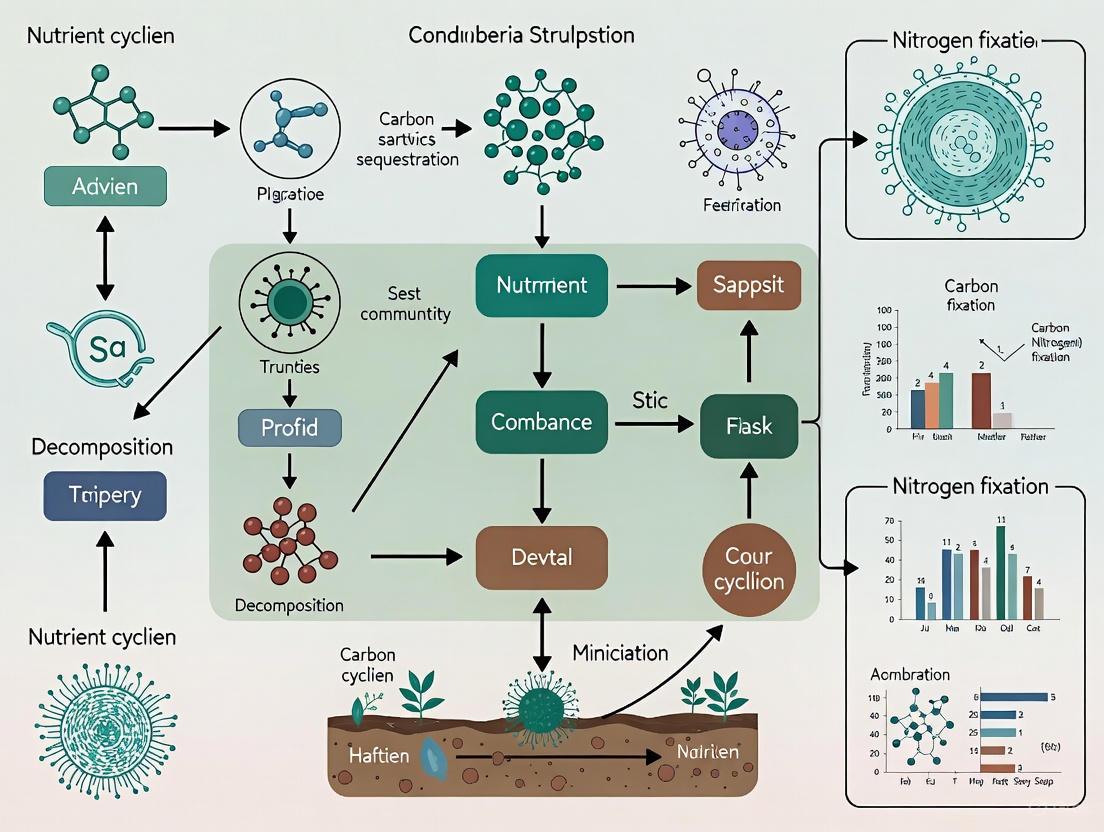
This article synthesizes the latest research on soil microbial communities, addressing a multidisciplinary audience of researchers, scientists, and drug development professionals.
Soil Microbial Community Structure and Function: Unveiling the Hidden Ecosystem for Drug Discovery and Environmental Resilience
Abstract
This article synthesizes the latest research on soil microbial communities, addressing a multidisciplinary audience of researchers, scientists, and drug development professionals. It explores the foundational principles of soil microbiome structure and its intricate link to ecosystem functions, from nutrient cycling to soil formation. The piece delves into cutting-edge methodological advances, including metagenomics and deep learning, that are unlocking the biotechnological potential of unculturable soil bacteria for novel antibiotic discovery. Furthermore, it provides a critical analysis of how microbial communities respond to and can be optimized for environmental challenges, supported by comparative studies of different restoration and management strategies. The goal is to bridge the gap between microbial ecology, environmental science, and clinical drug development, highlighting the soil microbiome as a vital resource for sustainable agriculture and a new frontier for lifesaving therapeutics.
The Unseen World: Exploring the Composition and Core Functions of Soil Microbiomes
The soil microbiome, a dynamic and complex community of microorganisms residing in soil, represents one of Earth's most critical reservoirs of biodiversity [1]. This community, comprising bacteria, fungi, archaea, protists, and viruses, is fundamental to the functioning of terrestrial ecosystems, driving essential processes from nutrient cycling to the maintenance of plant health [2] [3]. The sheer abundance of soil microbes is staggering, with an estimated 50 billion microbial organisms inhabiting a single teaspoon of healthy topsoil [4]. Momentum is building in the scientific community to fully characterize this biodiversity and understand its functions, as the soil microbiome is increasingly recognized as a key player in addressing global challenges such as food security, environmental degradation, and climate change [5] [3]. This whitepaper serves as a technical introduction to the soil microbiome, framing its core components and functions within the context of contemporary research on microbial community structure and function, and providing methodologies relevant to researchers and scientists investigating this complex habitat.
Core Concepts and Definitions
The term "soil microbiome" refers specifically to the complete habitat, including the microorganisms, their genomes, and the surrounding environmental conditions [6]. It is crucial to distinguish this from the "soil microbiota," which denotes the assemblage of living microorganisms themselves [3]. These microbial communities are not randomly distributed but exhibit a specific architecture, meaning they are structurally and functionally organized within the soil matrix [1]. This architecture is shaped by spatial distribution, interaction networks, and the creation of specific ecological niches, such as the rhizosphere—the narrow region of soil directly influenced by plant roots and root exudates [1] [4].
The functional traits of the constituent microorganisms define the microbiome's role in the ecosystem. Key functional traits include the capacity for nutrient cycling (e.g., nitrogen fixation, phosphorus solubilization), organic matter decomposition, and disease suppression [1] [3]. The immense biodiversity within the soil microbiome is a cornerstone of ecosystem resilience, with high microbial diversity generally being positively associated with overall ecosystem health [6].
Quantitative Characterization of the Soil Microbiome
The following tables summarize key quantitative data on soil microbiome composition and the impact of agricultural practices, providing a structured overview for easy comparison.
Table 1: Key Microbial Phyla in Soil and Their Relative Abundances
| Domain | Dominant Phyla | Common Relative Abundance | Key Functional Roles |
|---|---|---|---|
| Bacteria | Actinobacteriota, Proteobacteria, Chloroflexi, Acidobacteriota, Firmicutes [7] [8] [9] | Varies significantly with soil type and management [7] [10] | Organic matter decomposition, nutrient cycling, pathogen suppression [5] [3] |
| Fungi | Ascomycota, Basidiomycota [7] [9] | Ascomycota often >70% in studied soils [7] | Decomposition of complex organic compounds (e.g., cellulose, lignin), forming mycorrhizal associations [7] |
| Archaea | Thaumarchaeota, Euryarchaeota [2] | Not quantified in results | Nitrification, methanogenesis |
Table 2: Impact of Agricultural Management on Soil Microbiome and Properties
| Agricultural System | Impact on Microbial Diversity | Impact on Soil Physicochemical Properties |
|---|---|---|
| Conventional (Intensive) | Reduced microbial biomass and altered composition compared to extensive systems [5] [10] | Higher nutrient inputs but potential for soil degradation and organic matter loss [5] [3] |
| Regenerative/Extensive | Increased microbial biomass and fungal-to-bacterial ratio; distinct community structure [5] [10] | Higher soil organic matter content; improved soil structure and water retention [5] [4] |
| Remediated Post-Mining Soil | Bacterial dominance; community diversity and composition diverged along pH/metal gradients [7] [8] | Improved physicochemical properties after restoration; pH and organic matter are main drivers of microbial community [7] |
Research Methodologies and Experimental Protocols
Studying the soil microbiome requires sophisticated molecular techniques to unravel its composition and functional potential. The standard workflow involves soil sampling, DNA extraction, targeted gene amplification or shotgun sequencing, and subsequent bioinformatic analysis.
Standard High-Throughput Sequencing Workflow
The following diagram illustrates the core experimental pathway for amplicon-based soil microbiome analysis.
Title: Amplicon Sequencing Workflow
Detailed Protocol:
Soil Sampling and Pre-processing: Soil samples are collected using a sterile tool (e.g., stainless steel ring knife). A common strategy is to delineate a core area and collect multiple sub-samples from a 0-15 cm depth profile, which are then homogenized and sieved (<2 mm) to remove gravel and roots [8] [10]. Samples are immediately stored at -80°C to preserve DNA integrity [8].
DNA Extraction: Total community genomic DNA is extracted from soil samples using commercial kits, such as the E.Z.N.A. Mag-Bind Soil DNA Kit, following the manufacturer's instructions [8] [9]. The concentration and quality of the extracted DNA are verified using spectrophotometry (e.g., NanoDrop) or fluorometry (e.g., Qubit 4.0) [8].
16S/ITS rRNA Gene Amplification: For amplicon sequencing, the hypervariable regions of phylogenetic marker genes are amplified by PCR. For bacteria, the 16S rRNA gene (e.g., V3-V4 region) is targeted using universal primers such as 341F (5'-CCTACGGGNGGCWGCAG-3') and 805R (5'-GACTACHVGGGTATCTAATCC-3') [8]. For fungi, the Internal Transcribed Spacer (ITS) region is typically targeted. The PCR reaction uses a robust master mix and is performed in a thermal cycler [8].
Library Preparation and Sequencing: The amplified PCR products are purified to remove primers and dimers using magnetic beads [8]. Libraries are constructed with the addition of Illumina adapters and indices, quantified, and quality-checked using a bioanalyzer before being pooled in equimolar ratios for sequencing on platforms such as the Illumina MiSeq or HiSeq [8].
Advanced Functional and Metagenomic Analyses
For insights beyond community composition, more advanced techniques are employed.
Shotgun Metagenomics: This technique involves sequencing all the DNA in a sample without prior amplification, allowing for the reconstruction of metabolic pathways and the identification of genes involved in specific functions, such as heavy metal resistance or nutrient cycling [9].
Stable Isotope Probing (SIP): SIP is used to track nutrient transformations in the soil and link them to specific microbial processes by incorporating stable isotopes (e.g., ^13^C) into biomolecules and identifying the microorganisms that have assimilated them [1].
Functional Predictions: Bioinformatics tools like PICRUSt (Phylogenetic Investigation of Communities by Reconstruction of Unobserved States) can be used to predict the functional potential of a bacterial community based on 16S rRNA marker gene data [8] [9]. For more direct assessment, tools like FAPROTAX map microbial taxa to established metabolic functions [8].
The Scientist's Toolkit: Research Reagent Solutions
Table 3: Essential Research Reagents and Kits for Soil Microbiome Analysis
| Item | Function/Application | Example Product |
|---|---|---|
| Soil DNA Extraction Kit | Extracts total genomic DNA from diverse soil types, overcoming challenges of humic acids and inhibitors. | E.Z.N.A. Mag-Bind Soil DNA Kit [8] |
| PCR Master Mix | Enzyme mix for robust amplification of target genes from complex community DNA. | Hieff Robust PCR Master Mix [8] |
| 16S rRNA Amplification Primers | Universal primers for amplifying specific hypervariable regions of the bacterial 16S rRNA gene. | 341F / 805R [8] |
| Library Prep Kit | Prepares amplicon or metagenomic libraries for high-throughput sequencing on Illumina platforms. | Illumina-compatible library prep kits [8] |
| qPCR Reagents | Quantifies the abundance of specific taxonomic groups or functional genes (e.g., merA for mercury resistance). | SYBR Green or TaqMan probes [9] |
| Juncusol 7-O-glucoside | Juncusol 7-O-glucoside, MF:C24H28O7, MW:428.5 g/mol | Chemical Reagent |
| Abiesadine Q | Abiesadine Q | Abiesadine Q is a high-purity diterpene for laboratory research. This product is for Research Use Only (RUO), not for human or veterinary use. |
Soil Microbiome Functions and Applications
The functional profile of the soil microbiome is the nexus of its value to ecosystem health and human enterprise.
Key Ecosystem Functions
Nutrient Cycling and Soil Fertility: Microorganisms are the primary drivers of biogeochemical cycles. They decompose organic matter, releasing nutrients like nitrogen and phosphorus into plant-available forms [1] [3]. Specific bacteria (diazotrophs) perform biological nitrogen fixation, converting atmospheric N~2~ into ammonia [1]. Mycorrhizal fungi extend the root system of plants, dramatically increasing the uptake of water and nutrients like phosphorus [1].
Carbon Cycling and Sequestration: Soil microbes regulate global carbon cycles by decomposing soil organic matter, releasing CO~2~, and by stabilizing carbon into more persistent forms, thereby facilitating carbon sequestration in soil [5] [4]. This function is critical for mitigating atmospheric CO~2~ levels.
Soil Structure and Health: Microbial activity, particularly through the production of fungal hyphae and extracellular polymeric substances, helps bind soil particles into stable aggregates [5] [3]. This improves soil porosity, water retention, and resistance to erosion [4].
Plant Growth Promotion and Disease Suppression: Beneficial soil microbes can promote plant growth directly by producing phytohormones (e.g., auxins) [3] and indirectly by acting as biocontrol agents against soil-borne pathogens through competition, antibiosis, or inducing systemic resistance in plants [3].
Applications in Bioremediation and Sustainable Agriculture
Understanding microbial community structure and function is pivotal for applied environmental management.
Bioremediation of Contaminated Sites: Soil microbiomes can be harnessed to detoxify polluted environments. Studies of metalliferous soils have identified microbial taxa (e.g., Hg-resistant bacteria like Arthrobacter and Serratia) and functional genes (e.g., merA, merB) that are enriched in contaminated soils and are involved in the detoxification of heavy metals like mercury [9]. This knowledge guides the development of bioremediation strategies that augment these native, tolerant microbes.
Regenerative Agriculture: Regenerative practices such as no-till farming, cover cropping, and crop rotation are known to shift the soil microbiome toward a more beneficial state, increasing microbial biomass and activity [5]. These practices support microbial networks that enhance soil fertility and carbon sequestration, reducing the reliance on synthetic inputs [5] [3].
The soil microbiome is an immensely complex and biodiverse habitat whose structure and function are critical to life on Earth. Research has firmly established that microbial communities are shaped by their environment—be it agricultural management, pollution, or ecological restoration efforts—and that they, in turn, shape the health and productivity of that environment [5] [10] [9]. The advanced molecular and bioinformatic methodologies detailed in this whitepaper provide the tools necessary to move from simple cataloging of microbial inhabitants to a deeper, mechanistic understanding of their interactions and processes. Future research will continue to integrate multi-omics data to unravel the intricate network of interactions within the soil microbiome, paving the way for its rational management to enhance agricultural sustainability, restore degraded environments, and mitigate climate change.
Soil aggregates are fundamental units of soil structure, and their formation and stability are primarily governed by complex biological processes mediated by soil microorganisms. This in-depth technical review examines the mechanistic roles of bacteria, fungi, and archaea as key architects of soil aggregation through multiple pathways including physical enmeshment, production of binding agents, and modulation of soil chemistry. Within the broader context of soil microbial community structure and function research, we synthesize recent advances in analytical techniques such as synchrotron-based nano-scale imaging and molecular microbial ecology that have revolutionized our understanding of micrometer-scale interactions in soil ecosystems. The intricate relationships between microbial community composition, metabolic function, and soil structural development presented here offer researchers a comprehensive framework for developing targeted strategies to enhance soil carbon sequestration, improve agricultural sustainability, and mitigate soil degradation.
Soil aggregates—clusters of soil particles that bind together more strongly than adjacent aggregates—represent the fundamental structural units of terrestrial ecosystems [11]. These formations, typically classified as microaggregates (<250 μm) or macroaggregates (0.25-2 mm), constitute the primary habitat for soil microorganisms while simultaneously governing critical ecosystem processes including water infiltration, gas exchange, nutrient cycling, and carbon sequestration [12] [11]. The stability of these aggregates, defined as their resistance to disintegration when subjected to disruptive forces, is widely recognized as a robust indicator of overall soil health [13].
The emerging paradigm in soil microbial ecology positions soil aggregates as "microbial villages"—discrete microhabitats that harbor specialized microbial communities which are periodically interconnected through wetting events, allowing for the transfer of genetic material, metabolites, and viruses [11]. This conceptual framework highlights the importance of micrometer-scale interactions that occur between soil particles and their microbial inhabitants, which cannot be reliably predicted by studying bulk soils alone [11]. Understanding these dynamics requires a multidisciplinary approach spanning soil physics, microbial ecology, and biogeochemistry.
Within this context, this review examines the specific mechanisms through which soil microbial communities drive aggregate formation and stabilization, with particular emphasis on the distinct functional roles of various microbial taxa. We further explore advanced methodological approaches for investigating these processes and discuss how mechanistic understanding of microbially-mediated aggregation can inform land management strategies aimed at enhancing soil health and ecosystem resilience.
Microbial Mechanisms of Aggregate Formation and Stabilization
Soil microorganisms influence aggregation through multiple interconnected mechanisms that can be broadly categorized into physical, biochemical, and symbiotic processes. These mechanisms operate across different spatial and temporal scales, resulting in the hierarchical organization of soil structure that characterizes healthy terrestrial ecosystems.
Physical Mechanisms: Enmeshment and Spatial Organization
Fungal hyphae, particularly those of arbuscular mycorrhizal fungi (AMF), act as primary agents of physical enmeshment by binding soil particles together into stable macroaggregates [14] [15]. The filamentous architecture of fungal networks creates a scaffolding system that stabilizes soil particles against disruptive forces, with hyphal density directly correlating with enhanced soil mechanical stability [15]. This physical binding mechanism is particularly effective in the formation of macroaggregates (>0.25 mm), where hyphae entrap and wrap around soil particles, creating stable structures that can persist for months to years [11] [15].
Beyond hyphal enmeshment, soil microorganisms alter their physical microhabitat through gaseous release during respiration, which can deform the soil matrix and create connected pore networks [16]. Controlled experiments using X-ray Computed Tomography have demonstrated that microbial populations rapidly create highly connected soil pore networks due to carbon dioxide evolution, significantly deforming the soil matrix and reorganizing soil architecture within weeks [16]. This process enhances porosity and surface connectivity, particularly under carbon-enhanced conditions, with important consequences for water flow and root aeration [16].
Biochemical Mechanisms: Binding Agents and Metabolic Products
Microorganisms produce a diverse array of extracellular polymeric substances (EPS) that function as effective binding agents for soil particles. These include polysaccharides, proteins, lipids, and other sticky organic compounds that cement primary particles together [15]. Specific bacterial taxa including Bacillus spp., Streptomyces spp., and Pseudomonas spp. are particularly notable for their EPS production capabilities [15]. These biochemical binding agents are especially crucial for the formation of stable microaggregates (<250 μm), where they coat mineral surfaces and bridge between particles [11].
Fungi contribute additional biochemical agents such as glomalin-related soil protein (GRSP) produced by arbuscular mycorrhizal fungi, which demonstrates remarkable persistence in soil environments and significantly enhances aggregate stability [15]. Additionally, fungal-produced hydrophobins—amphiphilic proteins capable of modulating surface polarity—create water-repellent conditions that protect aggregates from disruptive slaking forces during wetting events [15]. The combined action of these diverse biochemical binding agents results in the hierarchical organization of soil structure, where smaller microaggregates are bound together to form larger macroaggregates [13].
Microbial Community Interactions and Symbiotic Relationships
The formation and stabilization of soil aggregates involves complex interactions between diverse microbial taxa, including bacteria, fungi, and archaea, which often exhibit functional complementarity. Actinobacteria, particularly Actinobacteriota, have been identified as crucial contributors to aggregate stability in restoration contexts, explaining up to 82.6% of the total variance in soil aggregate stability in degraded granitic red soil systems [14]. These filamentous bacteria function as particularly effective binding agents through both physical structure and metabolic products.
Archaeal communities, including members of the phylum Thermoplasmatota, also contribute significantly to aggregate stability, particularly during vegetation recovery in degraded systems [14]. Though less studied than bacterial and fungal components, archaea influence soil structure through production of extracellular polymers, release of intracellular components, and regulation of metabolic activities that cement soil particles [14].
Mycorrhizal symbioses represent particularly important mutualistic relationships that enhance aggregation through multiple mechanisms. These fungal-plant associations not only physically enmesh soil particles but also receive photosynthetic carbon from host plants that supports sustained production of binding agents [17] [15]. The extended hyphal networks effectively create a "sticky string bag" that binds soil particles while simultaneously improving plant nutrient and water uptake—a positive feedback loop that enhances overall ecosystem functioning [17].
Table 1: Microbial Functional Groups and Their Roles in Soil Aggregation
| Microbial Group | Specific Taxa | Primary Mechanism | Aggregate Size Affected |
|---|---|---|---|
| Fungi | Arbuscular mycorrhizal fungi (Glomeromycota) | Hyphal enmeshment, glomalin production | Macroaggregates (>0.25 mm) |
| Fungi | Trichoderma (Deuteromycotina) | Hyphal entanglement, antibiotic production | Macroaggregates (>0.25 mm) |
| Bacteria | Bacillus, Pseudomonas (Proteobacteria) | EPS production, polysaccharide secretion | Microaggregates (<0.25 mm) |
| Bacteria | Rhizobium (Proteobacteria) | Polysaccharide production, nitrogen fixation | Microaggregates (<0.25 mm) |
| Bacteria | Actinobacteria | Filamentous structure, EPS production | Both micro and macroaggregates |
| Archaea | Thermoplasmatota, ammonia-oxidizing archaea | Extracellular polymer production, nitrification | Microaggregates (<0.25 mm) |
Methodological Approaches: Investigating Microbial Aggregation Mechanisms
Advances in analytical techniques have dramatically improved our ability to investigate microbial aggregation mechanisms at appropriate spatial and temporal scales, moving beyond bulk soil analyses to micrometer-scale investigations within individual aggregates.
Synchrotron-Based Imaging and Nano-Scale Visualization
Synchrotron radiation-based nano X-ray fluorescence (nano-XRF) imaging represents a cutting-edge approach for tracking the integration of organic matter into developing soil aggregates. Recent experiments at the Diamond Light Source I14 beamline have enabled researchers to visualize how particulate organic matter becomes physically embedded in soil microstructure by labeling plant litter with rare earth elements and tracing their distribution with high spatial resolution [12]. This technique has revealed that soil aggregates often form around organic matter particles, with straw being particularly effective at becoming embedded into larger aggregates (>250 μm) [12].
This methodology has challenged conventional assumptions about microbial contributions to aggregation by demonstrating that microbial community composition had limited influence on aggregate formation over short durations (seven weeks), suggesting that physical incorporation processes may initially dominate over biological binding in some scenarios [12]. The ability to directly visualize these processes at micron scales provides unprecedented insight into the temporal sequence of aggregation events.
Molecular Microbial Ecology Techniques
High-throughput 16S rRNA gene sequencing enables comprehensive characterization of microbial community structure within different aggregate size fractions. This approach has revealed that bacterial and archaeal alpha diversity promotes the stability of larger (>1 mm) soil aggregates, while specific phyla including Ascomycota primarily contribute to macroaggregate formation in subsurface layers [14]. Molecular techniques allow researchers to establish correlations between the abundance of specific microbial taxa and aggregate stability metrics, identifying key biological contributors to soil structural development.
Partial least squares path modeling has further elucidated how microbial co-occurrence networks within specific aggregate size fractions (particularly 2-0.25 mm aggregates) influence soil organic carbon storage by alleviating microbial carbon and phosphorus limitations [18]. These analytical approaches demonstrate how microbial interactions within aggregate microhabitats ultimately influence broader ecosystem processes including carbon sequestration.
Experimental Incubation Studies
Controlled incubation studies with defined microbial treatments allow researchers to quantify the specific contribution of different microbial groups to soil structural development. Experiments comparing field soil, sterilized soil, and glucose-enhanced treatments across different soil textures have demonstrated that microbial populations significantly alter pore geometry and connectivity through respiratory activity [16]. These studies typically employ X-ray Computed Tomography to non-invasively visualize structural changes over time, quantifying alterations in porosity, pore connectivity, and pore shape in response to microbial activity [16].
Table 2: Quantitative Relationships Between Microbial Parameters and Aggregate Stability Indicators
| Microbial Parameter | Aggregate Metric | Relationship | Experimental Context | Citation |
|---|---|---|---|---|
| Actinobacteriota abundance | Aggregate stability | Explains 82.6% of variance in stability | Vegetation recovery in degraded granitic red soils | [14] |
| Bacterial & archaeal α-diversity | >1 mm aggregate stability | Positive correlation | Vegetation restoration gradient | [14] |
| Fungal abundance | Macroaggregate formation | Positive correlation, especially in subsurface layers | Five vegetation recovery stages | [14] |
| Microbial co-occurrence network complexity | SOC storage in 2-0.25 mm aggregates | Positive relationship | Straw incorporation experiment | [18] |
| Microbial biomass | Porosity and pore connectivity | 25-50% increase in connected porosity | Glucose-enhanced incubation study | [16] |
Integrated Workflows for Investigating Microbial Aggregation
Research in microbial-mediated aggregation requires integrated experimental approaches that combine physical, chemical, and biological analyses. The following workflow diagrams illustrate two key methodological frameworks used in this field.
Nano-XRF Analysis of Organic Matter Incorporation
Microbial Village Concept in Aggregate Communities
The Scientist's Toolkit: Essential Research Reagents and Methodologies
Investigating microbial roles in soil aggregation requires specialized reagents and methodologies across disciplinary boundaries. The following table summarizes key research solutions essential for experimental work in this field.
Table 3: Essential Research Reagents and Methodologies for Investigating Microbial Aggregation
| Research Reagent/Methodology | Primary Function | Application Context | Technical Considerations |
|---|---|---|---|
| Rare Earth Element Labels (e.g., Nd, Sm) | Tracing organic matter integration | Nano-XRF imaging of aggregate formation | Requires synchrotron radiation sources for detection |
| Extracellular Polymeric Substance (EPS) extraction kits | Quantification of microbial binding agents | Correlation with aggregate stability | Method-dependent yield variations |
| 16S/ITS rRNA sequencing primers | Microbial community characterization | Identification of key aggregating taxa | Primers selection affects taxonomic resolution |
| Fluorescent in situ hybridization (FISH) probes | Spatial localization of microorganisms | Visualization within aggregate architecture | Limited penetration in opaque soil samples |
| Aggregate stability indices (MWD, GMD, WR0.25) | Quantitative metrics of soil structure | Evaluation of treatment effects | Wet-sieving methodology affects results |
| X-ray Computed Microtomography (μCT) | Non-destructive 3D visualization | Pore network analysis and structural dynamics | Resolution limits (~1 μm) for microbial visualization |
| Src Optimal Peptide Substrate | Src Optimal Peptide Substrate, MF:C81H127N19O27, MW:1799.0 g/mol | Chemical Reagent | Bench Chemicals |
| (E)-(-)-Aspongopusamide B | (E)-(-)-Aspongopusamide B, MF:C20H20N2O6, MW:384.4 g/mol | Chemical Reagent | Bench Chemicals |
Soil microorganisms function as indispensable architects of soil structure through multiple complementary mechanisms that operate across spatial and temporal scales. The integrated physical, biochemical, and symbiotic processes mediated by diverse microbial communities highlight the complexity of soil aggregation as an emergent ecosystem property. Advanced analytical techniques, particularly synchrotron-based imaging and molecular microbial ecology tools, have dramatically enhanced our ability to investigate these processes at biologically relevant scales.
Future research directions should focus on several critical areas: (1) developing a more comprehensive understanding of viral influences on aggregate microbial communities and their functional activities; (2) elucidating the specific metabolic pathways and genetic regulation of binding agent production in key microbial taxa; (3) exploring the dynamics of microbial resource limitations within different aggregate size fractions and their consequences for carbon sequestration; and (4) integrating mechanistic knowledge of microbial aggregation into land management frameworks that enhance ecosystem resilience under changing climatic conditions.
The conceptual framework of soil aggregates as "microbial villages" provides a powerful paradigm for understanding soil as a complex, self-organizing system. By deepening our knowledge of how these microscopic architects engineer their habitat, we can develop more targeted strategies for managing soil ecosystems to enhance agricultural sustainability, support ecosystem restoration, and mitigate global climate change through enhanced carbon sequestration.
Soil pH stands as a master variable governing microbial community structure and function, yet emerging research reveals that this relationship is reciprocal. Microorganisms are not merely passive responders to environmental pH but active engineers of their chemical milieu. This whitepaper synthesizes cutting-edge research on microbial mechanisms of pH regulation, highlighting how bacteria and fungi modulate soil chemistry through metabolic activities, community assembly processes, and feedback mechanisms. We examine how microbial communities adjust pH through the secretion of acidic and alkaline metabolites, regulate nutrient cycling under anthropogenic pressures, and influence ecosystem stability. By integrating global soil datasets, controlled laboratory experiments, and molecular techniques, this review provides researchers with advanced methodologies and conceptual frameworks for investigating microbial regulation of soil chemistry, with significant implications for agricultural management, environmental conservation, and pharmaceutical development targeting microbial communities.
The traditional paradigm in soil microbiology has positioned pH as a primary filter determining which microorganisms can survive in a given environment. However, contemporary research demonstrates that soil microorganisms actively modulate pH through diverse biochemical mechanisms, creating a dynamic feedback loop between microbial communities and their chemical environment [19] [20]. This active regulation positions microbial processes as central drivers rather than secondary responses in soil chemical dynamics.
The significance of understanding these mechanisms extends beyond academic interest. With approximately 50% of agricultural soil carbon lost due to extractive practices and widespread soil degradation threatening global food security, harnessing microbial pH regulation offers promising pathways for soil restoration [21]. Similarly, the development of pharmaceuticals derived from soil microbes requires deep understanding of how chemical environments influence microbial function and metabolite production.
Core Mechanisms of Microbial pH Regulation
Metabolic Modulation Through Exudate Secretion
Microorganisms employ sophisticated metabolic strategies to modify their environmental pH. Research on Bacillus species demonstrates they actively shift soil pH toward neutrality through the targeted secretion of metabolites [19]. Under acidic conditions (pH 5), Bacillus enriches alkaline metabolites such as laurylamine (1529-fold increase), while in alkaline environments (pH 8), it increases acidic organic acids (1.5-fold) [19]. This pH-dependent metabolic profiling indicates a deliberate adaptive response rather than random byproducts of metabolism.
The table below summarizes key metabolite classes involved in microbial pH regulation:
Table 1: Microbial Metabolites Involved in pH Regulation
| Metabolite Class | Specific Examples | pH Condition | Proposed Function | Magnitude of Effect |
|---|---|---|---|---|
| Alkaline metabolites | Laurylamine | Acidic (pH 5) | pH elevation | 1529-fold enrichment |
| Acidic metabolites | Organic acids | Alkaline (pH 8) | pH reduction | 1.5-fold increase |
| Small molecule acids | Succinic acid | Variable | Soil conditioning | Alters multiple chemical properties |
| Extracellular enzymes | Urease | Alkaline | Nitrogen cycling | Compensatory intracellular increase |
Community Assembly and pH Homeostasis
Microbial communities demonstrate remarkable capacity for pH homeostasis through shifts in community composition. In lemon farmland studies, abundant bacterial taxa (primarily Proteobacteria, Actinobacteriota, Acidobacteriota, and Chloroflexi) showed greater sensitivity to pH changes compared to rare taxa [22]. This differential response creates a stabilizing mechanism where shifts in abundant species provide immediate response to pH fluctuations, while rare taxa serve as a functional reservoir for long-term stability.
The assembly processes governing these communities follow distinct patterns based on pH status. Deterministic processes dominate abundant taxa assembly at neutral pH, while stochastic processes govern rare taxa assembly [22]. This balance ensures both responsiveness to environmental change and functional redundancy.
Experimental Approaches and Methodologies
Controlled pH Amendment Studies
To disentangle direct pH effects from correlated environmental factors, researchers have developed controlled laboratory incubation systems. A comprehensive investigation using two contrasting Chinese agricultural soils (Dezhou pH 8.43; Wuxi pH 6.17) implemented a six-level pH amendment protocol (±1-2 pH units) [20].
Table 2: Experimental Protocol for Soil pH Amendment Studies
| Experimental Component | Detailed Methodology | Analytical Measurements |
|---|---|---|
| Soil collection | Systematic random sampling (10 points within 100m² grid), 0-20cm depth, composite sampling | Initial pH, texture, organic matter, nutrient content |
| pH amendment | Incremental additions of Hâ‚‚SOâ‚„ (0, 4, 24, 34 mL of 2mM) or NaOH (1.8, 4 mL of 1mM) to 50g soil | pH measurement in 1:2.5 soil:water ratio after 24h equilibrium |
| Incubation conditions | 25°C, 60% water holding capacity, 60-day duration | Regular monitoring of pH, available nutrients |
| Microbial community analysis | DNA extraction, 16S rRNA and ITS sequencing, functional gene quantification | Alpha/beta diversity, taxonomic composition, phylogenetic analysis |
| Statistical analysis | Quadratic regression, RDA, variation partitioning | Relationship between pH and microbial parameters |
This approach revealed that bacterial community alpha diversity peaks near in situ pH levels in both soils, following a quadratic pattern [20]. Furthermore, the research demonstrated that pH affects bacterial communities through both direct physiological constraints and indirect nutrient availability changes.
Metabolic Profiling and Exometabolomics
Advanced metabolomic techniques enable researchers to characterize the full suite of microbial metabolites involved in pH regulation. The exometabolomics workflow involves culturing isolates on environmentally relevant media, followed by mass spectrometry analysis to determine substrate utilization and metabolite production patterns [21]. This approach has revealed that soil carbon is largely composed of small molecular weight microbial metabolites with varying affinity to soil minerals, fundamentally shifting our understanding of soil organic matter [21].
Mass spectrometry imaging (MSI) represents a cutting-edge extension of these techniques, enabling direct measurement of spatial distribution of metabolites within the soil matrix [21]. When combined with stable isotope labeling, MSI can identify hotspots of microbial activity for detailed investigation.
Environmental Context and Applications
Ecosystem Restoration and Remediation
Microbial pH regulation demonstrates particular importance in restoration of degraded ecosystems. In alpine mining areas on the Tibetan Plateau (4800-5000m elevation), restoration efforts using frame beams with external soil covers significantly altered bacterial community composition, with pH and total phosphorus identified as key factors shaping bacterial diversity and assembly mechanisms [23]. The bacterial co-occurrence network stability increased in restoration areas, with pH and total phosphorus contributing significantly to network strength, closeness, and betweenness [23].
In agricultural contexts, succinic acid application (0.1-0.4%) improved soil chemical properties by increasing available potassium, total nitrogen, total phosphorus, and total potassium [24]. This treatment significantly altered microbial communities, with fungi showing greater sensitivity than bacteria, and enhanced amino acid metabolism and carbohydrate metabolism pathways [24].
Response to Anthropogenic Stressors
Microbial pH regulation mechanisms become crucial under anthropogenic pressures such as nitrogen deposition. Long-term nitrogen addition experiments in temperate forests revealed that ammonia-form nitrogen increased abundances of P-solubilizing bacteria but decreased overall diversity due to soil acidification [25]. This acidification inhibited phosphatase enzymes and phosphorus functional genes, ultimately decreasing soil available phosphorus through microbial mechanisms [25].
Multiple stressor studies examining warming, eutrophication, and glyphosate herbicide exposure found that eutrophication significantly enhanced microbial community congruence at water-sediment interfaces, while combined stressors predominantly exhibited antagonistic rather than synergistic effects on microbial diversity [26].
Research Reagents and Experimental Tools
Table 3: Essential Research Reagents for Investigating Microbial pH Regulation
| Reagent/Category | Specific Examples | Function/Application | Experimental Context |
|---|---|---|---|
| pH amendment agents | Hâ‚‚SOâ‚„, NaOH | Creating pH gradients in soil | Controlled incubation experiments [20] |
| Small molecule metabolites | Succinic acid, laurylamine, organic acids | Investigating microbial pH modulation | Metabolic profiling [24] [19] |
| Urease inhibitors | NBPT, PPD | Disrupting nitrogen cycle to study microbial compensation | Functional gene studies [27] |
| DNA extraction kits | Commercial soil DNA kits | Community profiling via 16S/ITS sequencing | Microbial diversity studies [23] [22] [20] |
| Metabolomic standards | Stable isotope-labeled compounds | Tracing metabolite fate and production | Exometabolomics [21] |
| Enzyme assay kits | Phosphatase, urease activity assays | Measuring functional responses | Nutrient cycling studies [25] |
Conceptual Framework and Visualization
The diagram below illustrates the core feedback mechanisms between soil microbes and pH, integrating the key processes discussed throughout this review:
Microbial Regulation of Soil pH: Core Feedback Mechanisms
The experimental workflow for investigating these relationships typically follows a systematic approach, as visualized below:
Experimental Workflow for Microbial pH Studies
Microbial processes regulating soil pH represent a fundamental mechanism through which biological systems influence their chemical environment. The evidence reviewed demonstrates that microorganisms actively modulate pH through metabolic secretions, community assembly processes, and functional gene regulation, creating adaptive feedback loops that optimize their growth conditions. From the pH-dependent metabolic switching in Bacillus to the community-level responses in agricultural and restoration contexts, these mechanisms highlight the agency of microorganisms in shaping their environments rather than merely responding to them.
Future research directions should prioritize several key areas: (1) developing more sophisticated laboratory ecosystem models that enable precise manipulation of plant-microbe-chemical interactions; (2) advancing spatial metabolomics techniques to resolve metabolite distributions at micro-scales; (3) exploring pharmaceutical applications of pH-regulatory metabolites; and (4) translating mechanistic understanding into practical management strategies for addressing soil degradation, climate change, and agricultural sustainability. As we deepen our understanding of these master variables, we move closer to harnessing microbial capabilities for addressing pressing environmental and health challenges.
Soil microbial communities represent the most complex and diverse ecosystems on Earth, playing indispensable roles in regulating global biogeochemical cycles [2]. These microorganisms act as a critical biological engine, driving the sequestration of atmospheric carbon dioxide (CO2) and controlling the flux of greenhouse gases (GHGs) including CO2, methane (CH4), and nitrous oxide (N2O) [28] [29]. Understanding the mechanisms through which microbial communities influence carbon dynamics is paramount for predicting climate feedbacks and developing sustainable ecosystem management strategies.
Recent research has revealed that microbial carbon use efficiency (CUE)—the proportion of assimilated carbon allocated to growth rather than respiration—serves as a master integrator of these processes, demonstrating at least four times greater importance than other factors in determining global soil organic carbon (SOC) storage [30]. Simultaneously, anthropogenic activities have significantly increased atmospheric CO2 levels, exacerbating global warming and highlighting the urgent need for effective carbon mitigation strategies [28]. While conventional physical and chemical CO2 fixation methods often cause secondary environmental pollution, biological approaches utilizing microorganisms offer promising alternatives with high selectivity and adaptability [29].
This technical review synthesizes current understanding of microbial pathways for carbon sequestration, community dynamics regulating greenhouse gas fluxes, and experimental approaches for investigating these critical ecosystem functions. By integrating recent advances in microbial ecology, molecular biology, and ecosystem modeling, we provide researchers with a comprehensive framework for investigating and manipulating the microbial engine that underpins global carbon cycling.
Microbial Carbon Sequestration Pathways
Natural Carbon Fixation Pathways
Microorganisms have evolved several natural pathways for CO2 fixation that contribute significantly to global carbon sequestration. The most prominent natural pathways include:
Table 1: Natural Microbial Carbon Fixation Pathways
| Pathway | Key Enzymes | Microorganisms | Energy Source | Efficiency |
|---|---|---|---|---|
| Calvin-Benson-Bassham (CBB) | RuBisCO, PRK | Cyanobacteria, purple bacteria | Light, chemical | Moderate |
| Reductive TCA (rTCA) | ATP citrate lyase, fumarate reductase | Green sulfur bacteria, some archaea | Chemical | High |
| Wood-Ljungdahl (WL) | CO dehydrogenase, formate dehydrogenase | Acetogens, methanogens | Chemical | Very high |
| 3-Hydroxypropionate/4-Hydroxybutyrate (3-HP/4-HB) | Acetyl-CoA carboxylase, propionyl-CoA synthase | Sulfolobales archaea | Chemical | Moderate |
| Dicarboxylate/4-Hydroxybutyrate (DC/HB) | Pyruvate synthase, phosphoenolpyruvate carboxylase | Thermoproteales archaea | Chemical | High |
| Reductive Glycine Pathway (rGlyP) | Glycine cleavage system | Aerobic hydrogen bacteria | Chemical | Emerging |
The Calvin-Benson-Bassham (CBB) cycle represents the most prevalent carbon fixation pathway, utilizing the enzyme ribulose-1,5-bisphosphate carboxylase/oxygenase (RuBisCO) to catalyze the primary carboxylation reaction [28]. Despite its widespread occurrence, RuBisCO exhibits relatively low catalytic efficiency and suffers from oxygenase activity that leads to photorespiration losses. The Wood-Ljungdahl (WL) pathway operates under anaerobic conditions and represents the most energy-efficient carbon fixation mechanism, requiring only 1 ATP per mole of fixed CO2 compared to 7 ATP for the CBB cycle [28]. This pathway is particularly significant in anaerobic environments such as wetlands and sediments where it contributes to both carbon sequestration and methane cycling.
The 3-hydroxypropionate/4-hydroxybutyrate (3-HP/4-HB) and dicarboxylate/4-hydroxybutyrate (DC/HB) pathways are predominantly found in extreme archaea, exhibiting adaptations to high temperatures and anaerobic conditions [28]. These pathways demonstrate remarkable metabolic flexibility, enabling carbon fixation under environmental conditions that would inhibit most enzymatic processes. Recently, the reductive glycine pathway (rGlyP) has emerged as a minimal and efficient carbon fixation route in certain aerobic bacteria, highlighting the ongoing discovery of novel microbial carbon sequestration mechanisms [28].
Engineered Carbon Sequestration Approaches
Advances in synthetic biology and metabolic engineering have enabled the development of enhanced microbial systems for carbon sequestration:
Table 2: Engineered Microbial Approaches for Carbon Sequestration
| Engineering Strategy | Target Microorganism | Genetic Modifications | Resulting Enhancement |
|---|---|---|---|
| Heterologous pathway expression | E. coli | Introduction of CBB cycle genes from Synechococcus | Enabled autotrophic growth with CO2 as sole carbon source |
| RuBisCO engineering | Cupriavidus necator | Mutagenesis for improved specificity factor | 20% increase in carbon fixation rate |
| Carbon concentrating mechanisms | Synechocystis sp. | Overexpression of bicarbonate transporters | Two-fold enhancement in CO2 fixation under limiting conditions |
| Artificial carbon fixation pathways | In vitro systems | Design of synthetic enzymatic cascades | Theoretical efficiency surpassing natural pathways |
| Cofactor regeneration systems | Multiple hosts | Engineering NADPH/ATP regeneration | Improved energy efficiency for carbon fixation |
Engineering efforts have focused on improving the catalytic properties of key enzymes such as RuBisCO, implementing carbon concentrating mechanisms to overcome substrate limitations, and designing synthetic carbon fixation pathways with theoretically superior kinetics [29]. These approaches have demonstrated the potential to convert CO2 into diverse value-added products including biofuels, bioplastics, and pharmaceutical precursors, creating opportunities for integrated carbon capture and utilization systems [28] [29].
Microbial Community Structure and Carbon Dynamics
Community Resistance and Functional Resilience
Soil microbial communities exhibit complex structural and functional responses to environmental disturbances such as climate warming, with significant implications for carbon cycling:
Microbial Community Resistance to Warming Figure 1: Conceptual framework showing how microbial community attributes mediate resistance to warming and influence soil organic carbon preservation. Based on findings from dryland agroecosystems [31].
Large-scale microcosm experiments across latitudinal gradients in China have revealed that microbial community resistance—the ability to maintain structure and function under disturbance—plays a crucial role in regulating soil organic carbon degradation under warming conditions [31]. In dryland maize soils, microbial communities exhibiting higher resistance demonstrated reduced organic carbon degradation, with community resistance negatively correlated with variations in organic carbon degradation-related functions [31]. Importantly, original organic carbon content was positively correlated with microbial community resistance, suggesting a positive feedback mechanism wherein carbon-rich systems develop more stable microbial communities that further protect carbon stocks [31].
The response patterns differ significantly between agricultural systems, with dryland maize soils showing higher community resistance, network stability, and phylogenetic conservation at lower latitudes, while these patterns were absent in flooded rice soils [31]. This highlights the critical role of habitat type and land management in shaping microbial responses to climate change and their consequent impact on carbon cycling.
Ecosystem Development and Functional Specialization
Land abandonment and subsequent ecosystem development drive profound changes in microbial community structure and function:
Microbial Responses to Land Abandonment Figure 2: Threshold dynamics in microbial communities during ecosystem development following land abandonment, showing divergent responses in taxonomic versus functional diversity [32].
Nationwide studies of successional gradients following land abandonment have revealed that microbial communities undergo threshold dynamics during ecosystem development, leading to increasing functional diversity despite decreasing taxonomic diversity [32]. This paradox reflects a fundamental reorganization of microbial genetic potential, with afforestation driving specialization of microbial nutrient cycling genetic repertoires while decreasing genetic redundancy [32].
Notably, fungal functional diversity emerges as a critical regulator of microbial carbon-cycling capacity, creating a trade-off between two desirable ecosystem properties: functional diversity and functional redundancy [32]. The decoupling of taxonomic and functional diversity during succession highlights that microbial identity and genetic capacity—rather than simple diversity metrics—determine ecosystem functioning. Changing litter quality provides a mechanistic link between plant and microbial communities despite otherwise largely decoupled successional developments above- and belowground [32].
Microbial Regulation of Greenhouse Gas Fluxes
Carbon and Nitrogen Interactions in Gas Emissions
Microbial communities regulate greenhouse gas emissions through complex interactions between carbon and nitrogen cycling processes:
Table 3: Microbial Responses to Carbon and Nitrogen Additions and Impacts on Greenhouse Gas Emissions
| Treatment | CH4 Emissions | CO2 Emissions | N2O Emissions | Key Microbial Shifts | Functional Gene Responses |
|---|---|---|---|---|---|
| Glucose addition | Significant increase | Significant increase | Significant decrease | Increased methanogenic bacteria; Altered denitrifier communities | mcrA1 increased; nirS and nirK decreased |
| NO3--N addition | Significant decrease | No significant change | Significant increase | Flavobacteria enrichment; Pseudomonas changes | Denitrification genes upregulated |
| Combined C+N | Interactive effects | Interactive effects | Interactive effects | Complex community restructuring | Multiple functional gene responses |
| Control (None) | Baseline | Baseline | Baseline | Stable community composition | Stable functional gene expression |
Short-term anaerobic incubation experiments with labile carbon (glucose) and nitrogen (NO3--N) additions have demonstrated rapid and divergent effects on greenhouse gas emissions [33]. Glucose addition significantly increased CH4 and CO2 emissions while decreasing N2O emissions, whereas NO3--N addition significantly promoted N2O emissions but reduced CH4 accumulation [33]. These gas flux patterns corresponded with predictable shifts in microbial community structure, including increased abundance of methanogenic bacteria (mcrA1) with glucose addition and changes in denitrifying communities with nitrogen addition.
Structural equation modeling has revealed that glucose and NO3--N addition directly affect microbial biomass carbon (MBC) content and greenhouse gas emissions, with MBC content showing significant negative correlations with denitrification genes (nirS and nirK) and positive correlations with methanogenic genes (mcrA1) [33]. These findings highlight that labile carbon input serves as the primary factor driving greenhouse gas emissions from eutrophic shallow lakes, with profound implications for management of aquatic ecosystems receiving anthropogenic nutrient inputs.
Agricultural Management Practices
The introduction of cover crops (CCs) represents a key management strategy for manipulating microbial communities to enhance carbon sequestration while mitigating greenhouse gas emissions:
Legume cover crops (e.g., clover, vetch) primarily function as green manures, fixing atmospheric nitrogen (up to 115 kg N ha–1 year–1) and providing rapidly mineralizable residues with low C:N ratios that enhance short-term nutrient availability [34]. However, these qualities also lead to higher N2O emissions upon incorporation compared to non-legume cover crops [34].
Non-legume cover crops (e.g., cereal rye, barley) typically feature higher C:N ratios, promote soil organic carbon accumulation, and contribute more effectively to long-term carbon sequestration [34]. These crops also demonstrate superior weed suppression through allelochemical production and physical inhibition of weed establishment [34].
The decomposition dynamics of cover crop residues critically regulate their impact on microbial communities and greenhouse gas fluxes, with residue quality (C:N ratio), environmental conditions, and management practices (e.g., incorporation timing) interacting to determine net ecosystem outcomes [34]. Optimized cover crop selection and management can therefore enhance soil carbon storage while minimizing greenhouse gas emissions, representing a key strategy for climate-smart agriculture.
Methodologies for Investigating Microbial Carbon Cycling
Experimental Approaches and Workflows
Research on microbial roles in carbon sequestration employs standardized experimental approaches to ensure comparability across studies:
Carbon Cycling Experimental Workflow Figure 3: Generalized experimental workflow for investigating microbial community structure and function in carbon cycling studies, integrating field sampling with laboratory manipulations and multi-omics analyses [31] [33].
Large-scale soil microcosm experiments utilizing paired ecosystems distributed along environmental gradients have proven particularly powerful for understanding how microbial communities respond to perturbations such as climate warming [31]. These approaches typically involve collecting soil cores from multiple sites (e.g., 0-15 cm depth), removing debris through sieving, and establishing controlled incubation systems that simulate environmental conditions of interest [31]. For investigating specific process rates, litter decomposition experiments using sterilized plant material inoculated with different microbial assemblages have demonstrated that microbial community composition exerts effects on decay rates rivaling the magnitude of litter chemistry effects [35].
Advanced analytical approaches include amplicon sequencing (16S rRNA for bacteria, ITS for fungi) for taxonomic profiling, shotgun metagenomics for assessing functional gene potential, metatranscriptomics for quantifying gene expression, and stable isotope probing (SIP) for linking specific taxa to carbon assimilation processes [31] [32]. The integration of these methods with measurements of process rates (e.g., greenhouse gas fluxes, extracellular enzyme activities, carbon mineralization) enables researchers to establish mechanistic links between microbial community structure and ecosystem function.
The Scientist's Toolkit: Essential Research Reagents
Table 4: Essential Research Reagents for Microbial Carbon Cycling Studies
| Reagent Category | Specific Examples | Applications/Functions | Technical Considerations |
|---|---|---|---|
| Nucleic Acid Extraction Kits | DNeasy PowerSoil Pro Kit, FastDNA SPIN Kit | DNA extraction from diverse soil types | Critical for overcoming humic acid inhibition; affects yield and purity |
| PCR Reagents | 16S/ITS primers (515F/806R, ITS1F/ITS2), high-fidelity polymerases | Amplification of target genes for sequencing | Primer selection introduces bias in community representation |
| Sequencing Reagents | Illumina MiSeq/NovaSeq kits, Oxford Nanopore kits | High-throughput sequencing of amplicons and metagenomes | Choice affects read length, depth, and error rates |
| Stable Isotopes | 13C-labeled substrates (glucose, acetate, plant litter) | Tracing carbon flow through microbial communities | Enables SIP and quantification of process rates |
| Enzyme Assays | MUB-labeled substrates (cellobiosidase, NAG, phosphatase) | Quantifying extracellular enzyme activities | Indicators of microbial functional potential |
| Gas Chromatography | GHG standards (CO2, CH4, N2O at known concentrations) | Quantifying greenhouse gas fluxes | Requires regular calibration for accurate measurements |
| Microbial Growth Media | Artificial soil solutions, minimal salts media | Cultivation of representative isolates | Most soil microbes remain uncultured using standard media |
| Erinacine P | Erinacine P, CAS:291532-17-7, MF:C27H40O8, MW:492.6 g/mol | Chemical Reagent | Bench Chemicals |
| Erinacine U | Erinacine U, MF:C26H40O7, MW:464.6 g/mol | Chemical Reagent | Bench Chemicals |
The selection of appropriate research reagents critically influences the outcomes of microbial ecology studies. For example, DNA extraction kits specifically designed for soil samples are essential for obtaining sufficient quality and quantity of genetic material while removing PCR inhibitors such as humic substances [36]. Primer selection for amplicon sequencing introduces substantial bias in community representation, making careful consideration of target regions and primer specificity essential for comparative studies [36]. Stable isotope probing with 13C-labeled substrates enables researchers to trace the flow of carbon through specific microbial taxa and metabolic pathways, providing unprecedented resolution of microbial contributions to carbon cycling [35] [30].
Soil microbial communities constitute a biological engine of staggering complexity that drives global carbon sequestration and greenhouse gas fluxes. The integration of research across ecosystems and scales has revealed that microbial carbon use efficiency, community functional composition, and functional redundancy represent key determinants of ecosystem-scale carbon dynamics. Rather than responding simplistically to environmental changes, microbial communities exhibit threshold dynamics, functional specialization, and context-dependent relationships with carbon cycling processes.
Future research priorities should include developing more comprehensive integration of microbial processes into ecosystem and Earth system models, improving cultivation techniques for currently uncultured microbial taxa, and exploring synthetic microbial communities for enhanced carbon sequestration applications. Additionally, understanding how global change factors—including warming, altered precipitation patterns, and land-use change—interact to affect microbial carbon cycling will be essential for predicting and managing future climate feedbacks. As methodological advances continue to enhance our ability to probe the black box of soil microbial communities, opportunities will emerge to harness these biological engines for climate change mitigation while preserving essential ecosystem functions.
Soil microbial communities represent the foundation of terrestrial ecosystem functionality, acting as the primary engineers of biogeochemical cycles and gatekeepers of plant health. The complex interkingdom interactions between bacteria, fungi, archaea, and protists within the soil matrix drive essential processes including organic matter decomposition, nutrient mineralization, and soil structure formation [2]. Understanding the structure and function of these communities is critical for advancing sustainable agricultural practices and ecosystem conservation strategies. This review synthesizes current research on soil microbial community dynamics, with particular emphasis on their indispensable roles in nutrient cycling and plant health maintenance, framing this understanding within the broader context of microbial ecology research.
The theoretical framework underpinning this field integrates the Biodiversity-Ecosystem Function Theory, which posits that microbial diversity is fundamental to maintaining soil functionality and resilience [37]. Simultaneously, the Soil Health Paradigm emphasizes the role of microbial communities as biological indicators of soil status and ecosystem services [37]. These frameworks establish the foundational principle that microbial community structure directly influences ecosystem functioning, with significant implications for agricultural productivity and environmental sustainability.
Microbial Community Structure and Ecosystem Function
Soil microbial community structure encompasses the taxonomic composition, phylogenetic diversity, and functional potential of microbial populations inhabiting specific soil environments. Recent research has demonstrated that this structure is highly responsive to management practices and environmental perturbations, with significant consequences for ecosystem function.
Response to Agricultural Management Practices
Comparative studies of agricultural management systems reveal distinct effects on microbial community structure. Organic farming systems, characterized by tillage, on-farm crop residue management, and organic amendments, demonstrate significantly higher microbial diversity compared to conventional systems reliant on chemical fertilizers [37]. Metagenomic analyses of 16S and ITS rRNA gene regions have identified 40 unique microbial elements in organically managed soils versus only 19 in chemically managed soils, indicating a more diverse microbial reservoir under organic management [37]. Furthermore, organic systems exhibit increased relative abundance of key bacterial phyla including Proteobacteria and Acidobacteria, as well as fungal phyla Ascomycota and Basidiomycota, which contribute substantially to decomposition processes and soil organic matter formation [37].
The timing and method of agricultural practices further influence microbial dynamics. Studies of double-cropping systems (wheat and maize) demonstrate that balanced NPK fertilization increases microbial abundance and functional diversity compared to nutrient-deficient treatments [38]. Specifically, NPK treatment significantly increased the abundance and functional diversity of soil bacterial and fungal communities (p<0.05) relative to nitrogen-, phosphorus-, or potassium-deficient conditions [38]. This suggests that comprehensive nutritional support fosters more robust microbial communities capable of sustaining multiple ecosystem functions.
Impact of Nutrient Enrichment
Nitrogen enrichment, a common feature of agricultural intensification, generates complex shifts in microbial community structure and function. Long-term nitrogen fertilization (10 g N mâ»Â² yâ»Â¹) in tallgrass prairie systems alters the ratio of Gram-positive to Gram-negative bacteria in bulk soils, indicating increased microbial stress under conditions of low carbon and altered nitrogen availability [39]. These changes reflect fundamental shifts in labile carbon availability from root exudates, with significant implications for microbial metabolism and nutrient cycling capacity.
Plant-specific responses further modulate these effects, as demonstrated by interspecies differences between the forb Ratibida pinnata and the C4 grass Schizachyrium scoparium. The unfertilized rhizosphere of R. pinnata exhibits a reduced PLFA Metabolic Stress Index, indicating greater influx of labile carbon to associated microbes [39]. This species maintained its relative cover with fertilization, suggesting flexibility in resource reallocation, while S. scoparium decreased in relative abundance [39]. These findings highlight the plant-mediated modulation of microbial responses to nutrient enrichment.
Table 1: Microbial Community Responses to Management Practices
| Management Practice | Effect on Microbial Diversity | Key Taxonomic Shifts | Functional Consequences |
|---|---|---|---|
| Organic fertilization | Increased diversity and richness | ↑ Proteobacteria, Acidobacteria, Ascomycota, Basidiomycota | Enhanced decomposition capacity, nutrient mineralization |
| Chemical fertilization | Reduced diversity | ↓ Microbial evenness, ↑ Copiotrophic groups | Simplified metabolic functions, reduced resilience |
| Nitrogen enrichment | Context-dependent shifts | ↑ Gram-positive:Gram-negative ratio in bulk soil | Altered C availability, increased microbial stress |
| Balanced NPK fertilization | Increased abundance and functional diversity | ↑ Key bacterial and fungal functional groups | Comprehensive nutrient cycling support |
Microbial Mediation of Nutrient Cycling
Soil microorganisms drive biogeochemical cycling through a complex network of metabolic processes that transform organic and inorganic compounds into bioavailable nutrients. The functional capacity of microbial communities directly determines nutrient use efficiency in agricultural systems and regulates ecosystem-level nutrient fluxes.
Carbon Cycling
Microbial carbon transformation encompasses the decomposition of plant residues, root exudates, and soil organic matter, with profound implications for carbon sequestration and atmospheric COâ‚‚ regulation. The microbial loop concept describes how plants exude labile carbon into the rhizosphere, feeding copiotrophic bacteria that subsequently fuel enzyme production and nutrient mineralization [39]. This process creates a positive feedback loop wherein carbon allocation belowground enhances nutrient availability for plant uptake.
Nitrogen enrichment alters carbon cycling dynamics by shifting microbial communities from fungi-dominated to bacteria-dominated structures [39]. This transition reflects a fundamental reorganization of decomposition pathways, with consequences for soil carbon storage. Additionally, nitrogen fertilization increases β-1,4-N acetylglucosaminidase activity in plant-influenced soils, indicating reduced availability of labile carbon from root exudates [39]. These changes in enzyme expression represent functional responses to altered resource availability, with significant implications for soil carbon dynamics.
Nitrogen Transformations
Soil microorganisms mediate all major nitrogen transformations, including fixation, nitrification, denitrification, and mineralization. Functional microorganisms involved in these processes include nitrogen-fixing bacteria, ammonia-oxidizing archaea and bacteria, and denitrifying microorganisms [38]. These functional groups respond differentially to nutrient management practices, creating complex dynamics in nitrogen cycling.
Nutrient deficiency significantly influences nitrogen-cycling communities. Nitrogen deficiency treatments reduce the abundance of nitrogen-fixing microorganisms in the rhizosphere, impairing this crucial pathway for nitrogen acquisition [38]. Conversely, balanced NPK fertilization supports robust nitrogen-cycling communities, enhancing nitrogen availability for plant growth [38]. These relationships demonstrate how management practices shape functional microbial communities to regulate nutrient supply.
Phosphorus and Potassium Mobilization
Microbial communities enhance phosphorus and potassium availability through mineralization of organic forms and solubilization of insoluble mineral compounds. Phosphorus-solubilizing bacteria and mycorrhizal fungi increase phosphorus availability through acidification, chelation, and enzymatic processes, while potassium-mobilizing microorganisms release bound potassium from mineral surfaces.
Nutrient deficiency alters these functional communities, with phosphorus deficiency (NK treatment) reducing the abundance of phosphorus-solubilizing microorganisms [38]. Similarly, potassium deficiency (NP treatment) impairs potassium mobilization capacity, creating negative feedbacks on plant nutrition [38]. These functional responses highlight the sensitivity of microbial nutrient cycling to management-induced changes in soil chemistry.
Table 2: Microbial Functional Groups in Nutrient Cycling
| Nutrient Cycle | Key Functional Groups | Transformations Mediated | Response to Deficiency |
|---|---|---|---|
| Carbon | Copiotrophic bacteria, Saprotrophic fungi | Decomposition, mineralization, humification | Altered community structure, reduced enzyme production |
| Nitrogen | Nitrogen-fixing bacteria, Ammonia-oxidizers, Denitrifiers | Biological N fixation, nitrification, denitrification | Reduced abundance of N-fixing microorganisms |
| Phosphorus | P-solubilizing bacteria, Mycorrhizal fungi | Mineralization, solubilization | Decreased P-solubilizing capacity |
| Potassium | K-mobilizing microorganisms | Mineral weathering, release from fixed pools | Impaired K mobilization |
Methodologies for Assessing Microbial Community Structure and Function
Advancing understanding of soil microbial communities requires sophisticated methodological approaches that characterize both taxonomic composition and functional attributes. Integrated methodological frameworks provide comprehensive insights into microbial dynamics.
Molecular Approaches
Molecular techniques enable precise characterization of microbial community composition and functional potential. Amplicon sequencing of the 16S rRNA gene for bacteria and archaea and the ITS region for fungi provides high-resolution taxonomic profiling [37]. This approach has revealed distinct microbial community compositions between organically and conventionally managed soils, with organic systems supporting greater phylogenetic diversity [37].
Quantitative approaches, including quantitative real-time PCR (qPCR) and flow cytometry (FCM), provide absolute abundance data that complement relative abundance measures from sequencing [40]. Comparing relative abundance with estimated absolute abundances (EAA) reveals divergent trends for dominant phyla including Actinobacteria, Bacteroidetes, and Verrucomicrobia, demonstrating that EAA provides more accurate characterization of population dynamics [40]. Methodological comparisons show significant positive correlations between cell abundances determined by ATP, FCM, qPCR, and PLFA methods, supporting their combined use for comprehensive microbial quantification [40].
Biochemical Indicators
Biochemical approaches provide insights into microbial biomass, metabolic activity, and community composition. Phospholipid fatty acid (PLFA) analysis serves as a biomarker for numerically dominant microbial groups, offering sensitive, reproducible measurements without cultivation requirements [40]. The PLFA Metabolic Stress Index provides insights into microbial physiological status, with lower values indicating reduced stress, as observed in the unfertilized rhizosphere of R. pinnata [39].
Microbial biomass carbon (MBC) determination through chloroform fumigation remains a widely used approach for estimating total microbial biomass [40]. However, methodological comparisons reveal that MBC shows inconsistent correlation with direct counting methods, suggesting complementary use with other techniques [40]. Enzyme activity assays, including β-1,4-N acetylglucosaminidase measurement, provide functional indicators of microbial nutrient acquisition efforts, responding sensitively to nitrogen enrichment and carbon availability [39].
Table 3: Methodological Approaches for Microbial Community Analysis
| Method Category | Specific Techniques | Applications | Considerations |
|---|---|---|---|
| Molecular profiling | 16S/ITS amplicon sequencing | Taxonomic composition, community structure | Provides relative abundance only |
| Absolute quantification | qPCR, FCM, ATP, PLFA | Cellular abundance, biomass estimates | Requires method-specific calibration |
| Biochemical assays | Enzyme activity, MBC | Functional potential, metabolic processes | Indirect measures of microbial activity |
| Community physiology | PLFA stress indices, Metabolic quotients | Physiological status, community condition | Interpreted in environmental context |
The Scientist's Toolkit: Research Reagent Solutions
Cutting-edge soil microbial research relies on specialized reagents and methodologies designed to characterize community structure and function. The following toolkit outlines essential materials and their applications.
Table 4: Essential Research Reagents and Materials for Soil Microbial Studies
| Reagent/Material | Application | Specific Function | Research Context |
|---|---|---|---|
| DNA extraction kits (e.g., MoBio PowerSoil) | Nucleic acid isolation | Extracts PCR-amplifiable DNA from soil matrices | Essential for amplicon sequencing and qPCR [37] |
| 16S rRNA & ITS primers | Target amplification | Amplifies conserved regions for bacterial/ fungal sequencing | Enables taxonomic profiling via Illumina MiSeq/HiSeq [37] |
| SYBR Green I fluorescent dye | Nucleic acid staining | Binds DNA for FCM and qPCR detection | Provides high fluorescence quantum yield with low background [40] |
| Phospholipid fatty acid (PLFA) standards | Microbial community profiling | Acts as biomarkers for specific microbial groups | Characterizes numerically dominant community members [40] |
| Chloroform for fumigation | Microbial biomass carbon | Lyses cells to release cytoplasmic content | Measures microbial biomass through carbon extraction [40] |
| p-Nitrophenyl-labeled substrates | Enzyme activity assays | Hydrolyzed by enzymes to yield colored product | Quantifies extracellular enzyme activities (e.g., glucosaminidase) [39] |
| Adenosine tri-phosphate (ATP) reagents | Viable microbial biomass | Luciferase reaction with cellular ATP | Estimates viable microbial quantities through bioluminescence [40] |
| Dide-O-methylgrandisin | Dide-O-methylgrandisin | Dide-O-methylgrandisin (CAS 50393-98-1) is a research chemical for biochemical studies. This product is For Research Use Only. Not for human or veterinary use. | Bench Chemicals |
| Kuguacin R | Kuguacin R, MF:C30H48O4, MW:472.7 g/mol | Chemical Reagent | Bench Chemicals |
Experimental Workflows and Signaling Pathways
Research on soil microbial communities follows standardized workflows that integrate field sampling, laboratory processing, and bioinformatic analysis. Additionally, microbial interactions with plants involve sophisticated signaling pathways that mediate nutrient cycling and stress responses.
Experimental Workflow for Microbial Community Analysis
The following diagram illustrates a standardized research approach for characterizing soil microbial communities and their functions, integrating methods from recent studies:
Plant-Microbe Signaling in the Rhizosphere
Plant-microbe interactions in the rhizosphere are governed by sophisticated signaling pathways that regulate microbial recruitment, nutrient exchange, and stress adaptation. The following diagram illustrates key signaling and metabolic exchange pathways:
Soil microbial communities represent indispensable components of terrestrial ecosystems, driving essential nutrient transformations and supporting plant health through complex interactive networks. Research advances have illuminated how microbial community structure responds to management practices, with significant consequences for ecosystem function. Molecular and biochemical methodologies provide powerful tools for characterizing these communities, revealing the intricate relationships between taxonomic composition, functional potential, and environmental parameters.
Future research directions should focus on elucidating the specific mechanisms through which microbial communities mediate ecosystem resilience, particularly under conditions of environmental stress. Integrating multi-omics approaches with advanced physiological measurements will further illuminate the functional basis of microbial contributions to nutrient cycling and plant health. These insights will prove essential for developing management strategies that optimize microbial functions to support sustainable agricultural production and ecosystem conservation.
From Genes to Drugs: Advanced Methodologies and Biomedical Applications
The vast majority of microorganisms in natural environments, particularly soils, resist cultivation under laboratory conditions, creating a significant gap in our understanding of microbial life. This technical guide explores how genome-resolved metagenomics has emerged as a revolutionary, culture-independent approach for accessing this "microbial dark matter." By reconstructing metagenome-assembled genomes (MAGs) directly from environmental DNA, researchers can now probe the taxonomic and functional diversity of soil microbial communities with unprecedented resolution. Framed within the context of soil microbial community structure and function, this whitepaper details the computational methodologies for MAG generation, from sequencing and assembly to binning and annotation. It further provides a comparative analysis of sequencing technologies and a curated toolkit of essential bioinformatics resources, serving as a comprehensive reference for researchers and scientists aiming to leverage metagenomics for discovering novel organisms and biochemical pathways critical to soil health and ecosystem services.
Soil harbors the most complex and diverse microbiome on Earth, with microorganisms acting as primary drivers of nutrient cycling, carbon sequestration, and overall soil health [2]. These processes form the basis of vital ecosystem services, including the provision of food, clean water, and climate regulation. For decades, the inability to culture an estimated 99% of prokaryotic life in the lab has obscured a comprehensive understanding of these microbial communities [41]. This "great plate count anomaly" has left a vast realm of microbial dark matter unexplored, limiting our ability to identify novel species and understand their specific functional roles in soil ecosystems.
Genome-resolved metagenomics bypasses this cultivation bottleneck by enabling the reconstruction of microbial genomes directly from environmental samples [42] [43]. This approach involves sequencing all the genetic material in a sample (whole-metagenome sequencing) and then computationally assembling and binning these sequences into draft genomes known as Metagenome-Assembled Genomes (MAGs). The advent of MAGs has dramatically accelerated the pace of biodiversity discovery, allowing researchers to compile genomic catalogues from diverse environments, including soil, and providing first genomic representatives of previously uncultivable microbes [43]. This transition is akin to the shift in human genetics from sparse landmarks to a full reference genome, ushering in a new era of microbiome medicine and environmental microbiology [42].
Whole-Metagenome Sequencing: A New Paradigm Over 16S rRNA Sequencing
While 16S rRNA gene sequencing has been a popular and cost-effective method for profiling microbial communities, it suffers from several inherent limitations that restrict its utility for functional insights.
- Limited Taxonomic Resolution: The variation in 16S rRNA sequences generally does not permit reliable classification at the species level, and differences at the subspecies level are often entirely overlooked [42].
- Lack of Functional Insights: 16S rRNA sequences do not directly provide information about the functional capabilities of microbes. Predictive tools are merely inferences based on a limited number of representative genomes [42].
- Exclusion of Non-Bacterial Life: The method is specific to prokaryotes, rendering the detection of other key soil constituents like fungi, viruses, and protists impossible [42].
Whole-metagenome sequencing (WMS) overcomes these hurdles by sequencing all the genetic material in a sample, enabling simultaneous access to the genomic content of bacteria, archaea, viruses, and fungi. This provides a more comprehensive foundation for understanding the taxonomic and functional organization of the entire soil microbiome [42].
Genome-Resolved Metagenomics: A Conceptual Workflow
Genome-resolved metagenomics is a transformative approach that delves into the DNA of mixed microbial communities to directly assemble and analyze individual genomes from metagenomic data [42]. The process of generating MAGs from a soil sample can be conceptualized as a series of key steps, as illustrated below.
Core Capabilities of Genome-Resolved Metagenomics
This powerful methodology enables a versatile range of analyses that are crucial for understanding soil microbial communities:
- Expansion of the Phylogenetic Tree: Assembly of novel genomes from previously uncharacterized species brings "microbial dark matter" into focus [42].
- Analysis of Within-Species Variation: It facilitates in-depth investigation of genetic variations, such as single nucleotide variants (SNVs) and structural variants (SVs), within a species, which can reflect the microbiome's adaptive journey in the soil environment [42].
- Construction of Pangenomes: The increasing availability of genomic data allows for the development of comprehensive pangenomes, offering a detailed view of the genetic diversity within microbial species [42].
- Discovery of Novel Protein Families: Researchers can uncover numerous novel coding sequences, leading to the identification of new metagenome protein families with potential biotechnological applications [42].
- Metabolic Modeling: MAGs enable genome-scale metabolic modeling for uncultured bacterial species, ultimately allowing for the metabolic modeling of individual microbiomes and predictions of their contributions to soil nutrient cycles [42].
A Technical Guide to Metagenome-Assembled Genome (MAG) Generation
The construction of MAGs is a computationally intensive process that involves multiple steps, each with specific methodological considerations and tool choices.
Preprocessing of Sequencing Reads
Raw sequencing reads are typically accompanied by base call errors, adapter sequences, and other artifacts that can lead to suboptimal assembly results. Quality control (QC) is therefore a critical first step.
- Purpose: QC involves the removal of low-quality bases, adapter sequences, and contaminated reads. This improves downstream assembly and binning, reduces computational time, and prevents incorrect metabolic inferences caused by sequencing errors [43].
- Visualization: Tools like FastQC [43] and PRINSEQ [43] provide a visual overview of sequence quality, nucleotide distribution, and adapter contamination.
- Trimming and Cleaning: Commonly used tools include Trimmomatic [43], Cutadapt [43], and Fastp [43]. These tools trim low-quality bases, remove adapters, and filter out short reads, delivering a cleaned set of high-quality reads for assembly.
De Novo Metagenome Assembly
During assembly, short sequencing reads are pieced together into longer contiguous sequences (contigs).
- Assembly Models: Two primary models are used:
- De Bruijn Graph: This is the most common strategy for short-read assemblers. It breaks reads into k-mer fragments and uses graph theory to assemble them into contigs. Assemblers like metaSPAdes [42] and MEGAHIT [42] employ this model.
- Overlap-Layout-Consensus (OLC): This model represents each read as a node in a graph, with overlaps between reads depicted as edges. It is more common for long-read assemblies [42].
- Assembly Strategies:
- Single-Assembly: Performed independently for each sample.
- Co-assembly: Conducted on merged reads from multiple samples. This can recover more genomes from low-abundance organisms but may complicate the preservation of strain-specific variants [42].
Genome Binning
Genome binning is the process of grouping contigs that originate from the same organism into discrete "bins," which represent draft genomes.
- Purpose: This is a critical and challenging step due to high sequence similarities between species and strain-level variations within a metagenome [43]. Binning aims to reconstruct individual genomes from a mixed assembly.
- Methods: Binning algorithms typically use two primary types of information:
- Sequence Composition: Genomic signatures such as GC content, k-mer frequencies, and codon usage are often specific to a genome.
- Abundance Profiles: The coverage or abundance of contigs across multiple related samples can help distinguish contigs from different genomes.
- Tools: Numerous binning tools are available, including those that leverage both composition and abundance to cluster contigs into MAGs automatically.
Taxonomic and Functional Annotation
The final step involves determining the taxonomic identity and functional potential of the recovered MAGs.
- Taxonomic Classification: This involves comparing the MAG against databases of known microbial genomes to assign a taxonomic lineage (e.g., phylum, class, order, family, genus, species).
- Functional Annotation: Genes are predicted from the MAG sequences and then functionally characterized by comparing them against protein databases (e.g., COG, KEGG, Pfam) to identify their putative roles in metabolic pathways, stress response, and other cellular processes.
Table 1: Key Bioinformatics Tools for MAG Generation
| Analysis Step | Tool Name | Primary Function | Reference |
|---|---|---|---|
| Quality Control | FastQC | Quality visualization of raw reads | [43] |
| Trimmomatic | Trimming of adapters and low-quality bases | [43] | |
| Metagenome Assembly | metaSPAdes | De novo assembly using De Bruijn graphs | [42] |
| MEGAHIT | Efficient de novo assembly for large datasets | [42] | |
| Genome Binning | Multiple Tools Available | Clustering of contigs into draft genomes | [43] |
| Gene Prediction & Annotation | Multiple Tools Available | Gene calling and functional characterization | [43] |
Quantitative Comparison of Sequencing Technologies for MAGs
The choice of sequencing technology profoundly impacts the quality and completeness of the resulting MAGs. The table below summarizes a key comparison between the dominant technologies.
Table 2: Sequencing Technology Comparison for MAG Generation
| Feature | Short-Read (Illumina) | Long-Read (Nanopore) | HiFi Long-Read (PacBio) |
|---|---|---|---|
| Read Length | Short (75-300 bp) | Long (can exceed 10 kb) | Long (up to 25 kb) |
| Typical Contig Size | Fragmented, short contigs | Longer contigs, but may contain errors | Long, highly accurate contigs |
| Single-Contig, Complete MAGs | Rare, relies heavily on binning | Possible | Possible and achievable |
| Error Rate | Low (<1%) | High (5-15%), requires polishing | Very Low (<0.1%) |
| Ideal for Strain Resolution | Challenging due to short reads | Possible | Excellent for strain-level resolution |
Recent studies have consistently demonstrated that HiFi long-read sequencing produces more total MAGs and higher-quality MAGs than short-read sequencing [41]. While short-read contigs rarely produce whole genomes and rely heavily on error-prone binning methods, HiFi reads make single-contig, complete MAGs possible due to their length and high accuracy [41]. Compared to other long-read technologies, HiFi sequencing has been shown to be superior for metagenome assembly, resulting in highly complete and contiguous MAGs that are essential for confident downstream analysis [41].
The Scientist's Toolkit: Essential Research Reagents and Materials
The following table details key reagents, materials, and software solutions essential for conducting genome-resolved metagenomic studies on soil samples.
Table 3: Research Reagent and Material Solutions for Genome-Resolved Metagenomics
| Item | Function/Description | |
|---|---|---|
| DNA Extraction Kit (Soil) | For lysing resilient microbial cells (e.g., Gram-positive bacteria, spores) and purifying high-molecular-weight, inhibitor-free DNA from complex soil matrices. | |
| PacBio HiFi Sequel II/Revio System | Sequencing platform that generates Highly Fidelity (HiFi) long reads, enabling the reconstruction of high-quality, single-contig MAGs. | [41] |
| Illumina NovaSeq System | Sequencing platform for generating high-throughput short reads; can be used for hybrid assembly approaches or for high-depth population studies. | |
| HiFi-MAG-Pipeline | A specialized bioinformatics workflow for processing HiFi reads to generate high-quality MAGs, including assembly, binning, and consolidation steps. | [41] |
| metaSPAdes | A widely used metagenomic assembler based on the De Bruijn graph model, effective for assembling complex microbial communities. | [42] |
| CheckM / BUSCO | Software tools for assessing the quality, completeness, and contamination of recovered MAGs. | |
| GTDB-Tk | Toolkit for assigning standardized taxonomic classification to MAGs based on the Genome Taxonomy Database (GTDB). | |
| KEGG / eggNOG | Databases for the functional annotation of predicted genes from MAGs, mapping them to metabolic pathways and orthologous groups. | |
| (+) N-Methylcorydine | (+) N-Methylcorydine, CAS:7224-60-4, MF:C24H31NO3S, MW:413.6 g/mol | |
| Hypogeic acid | Hypogeic Acid (16:1n-9) |
Genome-resolved metagenomics has fundamentally changed our approach to studying soil microbial communities, transforming the "unculturable" into an accessible and rich source of genomic information. By moving beyond 16S rRNA profiling to the reconstruction of Metagenome-Assembled Genomes, researchers can now discover novel species, elucidate their functional roles in nutrient cycling, and understand their adaptations to environmental stresses. As sequencing technologies like HiFi continue to evolve and bioinformatics pipelines become more sophisticated, the generation of near-complete MAGs will become increasingly routine. This will profoundly accelerate our journey toward a comprehensive genomic catalogue of the soil microbiome, unlocking a deeper understanding of soil health and enabling innovative strategies in ecosystem conservation and sustainable agriculture.
The escalating crisis of antimicrobial resistance has necessitated a urgent search for novel antibiotics, yet traditional discovery pipelines have struggled to keep pace. For decades, soil has been a prolific source of bioactive compounds, with many frontline antibiotics originating from soil microbes [44]. However, a critical bottleneck has persisted: the vast majority of soil bacteria—estimated at over 99% in some environments—cannot be cultured in the laboratory [44]. This "microbial dark matter" represents an immense reservoir of untapped genetic potential for novel antibiotic discovery. The synthetic-bioinformatic natural product (syn-BNP) pipeline has emerged as a revolutionary approach to access this reservoir, bypassing the need for microbial cultivation by directly mining environmental DNA and converting genetic blueprints into synthetic antibiotic candidates [44] [45] [46]. This methodology is not only revitalizing antibiotic discovery but also providing profound new insights into the hidden biosynthetic capabilities of soil microbial communities, whose structure and function are critical to ecosystem health.
The synBNP Workflow: A Technical Breakdown
The synBNP pipeline is a multidisciplinary process that integrates environmental microbiology, bioinformatics, and synthetic chemistry. It can be conceptualized as a sequential, five-stage workflow, from soil collection to functional validation.
Stage 1: Soil Sampling and Metagenomic DNA Extraction
The process begins with the collection of a soil sample. A single forest soil sample, for instance, can contain thousands of different bacterial species [44]. The key technical advancement here is the optimized method for isolating very large, high-quality DNA fragments directly from soil. This is a critical improvement over previous technologies, as large DNA fragments are essential for assembling complete genomes from complex microbial communities [44].
Table 1: Key Soil DNA Extraction Parameters for synBNP
| Parameter | Traditional Approach | synBNP-Optimized Approach | Impact on Downstream Analysis |
|---|---|---|---|
| DNA Fragment Size | Short snippets (hundreds of base pairs) | Continuous stretches of tens of thousands of base pairs [44] | 200-fold increase facilitates accurate genome assembly. |
| Sequencing Technology | Short-read sequencing (e.g., Illumina) | Long-read nanopore sequencing [44] | Produces longer continuous DNA sequences for resolving complex genetic data. |
| Data Output | Limited by fragment assembly | 2.5 terabase-pairs from a single sample [44] | Enables deep exploration of microbial diversity. |
Stage 2: Genome Sequencing and Biosynthetic Gene Cluster (BGC) Identification
The extracted large-fragment DNA is subjected to deep sequencing. The resulting data is then computationally analyzed to piece together genomes and identify biosynthetic gene clusters (BGCs)—groups of genes that code for the production of natural products like antibiotics [45] [46]. From a single soil sample, this approach has yielded hundreds of complete bacterial genomes previously unknown to science [44]. Bioinformatics tools like antiSMASH are used to scan these genomes and predict the peptide products of nonribosomal peptide synthetase (NRPS) gene clusters, which are a primary source of bioactive cyclic peptides [45] [46].
Figure 1: Workflow from soil sampling to bioinformatic prediction of natural product structures.
Stage 3: Bioinformatic Prediction of Peptide Structures
This stage involves decoding the identified NRPS BGCs to predict the chemical structures of the peptides they encode. NRPSs are modular enzyme complexes where each module is responsible for incorporating one building block into the growing peptide chain [46]. The core domains involved are:
- Adenylation (A) domain: Selects and activates a specific amino acid.
- Thiolation (T) domain: Carries the activated amino acid.
- Condensation (C) domain: Forms the peptide bond between amino acids [46].
Bioinformatic algorithms analyze the sequence of A domains, particularly key residues in the substrate-binding pocket, to predict which amino acids are incorporated into the final nonribosomal peptide (NRP) [46]. The goal of the syn-BNP approach is not necessarily to synthesize the exact natural product, but to generate a biomimetic core scaffold that retains the evolutionary-selected biological activity [46].
Figure 2: Simplified NRPS domain organization and peptide synthesis.
Stage 4: Chemical Synthesis of synBNP Libraries
Predicted peptide structures are chemically synthesized using solid-phase peptide synthesis (SPPS) [45]. This is a cornerstone of the synBNP approach, as it bypasses the need to express the BGC in a host organism. The process typically involves:
- Fmoc-based synthesis on 2-chlorotrityl resins [45].
- Use of standard N-Fmoc amino acid building blocks.
- For cyclic peptides, strategic use of residues like 2,3-diaminopropionic acid to facilitate side-chain cyclization reactions [45].
- For N-acylated peptides, incorporation of lipids like 3-aminomyristic acid [45]. Following linear synthesis, peptides are cleaved from the resin and cyclized in solution. The crude products are then purified, often using C18 solid-phase extraction (SPE) cartridges or preparatory HPLC, before being screened for bioactivity [45].
Stage 5: Biological Screening and Functional Validation
The final synthesized synBNP libraries are screened for antimicrobial activity against target pathogens, including ESKAPE pathogens and Myobacterium tuberculosis [45]. Promising hits are characterized to determine their minimum inhibitory concentration (MIC) and, crucially, their mode of action. Characterized modes of action for synBNP-derived antibiotics include:
- Bacterial cell membrane disruption and depolarization.
- Inhibition of cell wall biosynthesis.
- Dysregulation of essential enzymes like the ClpP protease [45]. A significant advantage of synBNP-derived antibiotics is that laboratory experiments have shown pathogenic bacteria struggle to develop resistance to some of these new compounds, making them particularly valuable candidates for further development [45].
Table 2: Exemplar Antibiotic Candidates Discovered via the synBNP Pipeline
| Antibiotic Candidate | Reported Target/Activity | Significance |
|---|---|---|
| Erutacidin | Disrupts bacterial membranes via interaction with cardiolipin [44] | Effective against challenging drug-resistant bacteria. |
| Trigintamicin | Acts on the protein-unfolding motor ClpX [44] | Targets a rare antibacterial target, reducing cross-resistance risk. |
| SyCPAs (Multiple) | Multiple, including cell lysis, membrane depolarization, and ClpP dysregulation [45] | Demonstrates the pipeline's ability to discover antibiotics with diverse mechanisms. |
The Scientist's Toolkit: Essential Reagents and Materials
The synBNP pipeline relies on a specific set of chemical, biological, and computational tools. The following table details key research reagent solutions essential for implementing this methodology.
Table 3: Key Research Reagent Solutions for the synBNP Pipeline
| Reagent/Material | Function/Application | Specific Examples |
|---|---|---|
| Solid-Phase Peptide Synthesis Resins | Provides a solid support for the sequential addition of amino acids. | 2-chlorotrityl resin [45]. |
| Protected Amino Acid Building Blocks | Activated amino acids for chain elongation; side-chain protection prevents unwanted reactions. | Standard N-Fmoc amino acids; building blocks with allyloxycarbonyl (Alloc) protected side-chains [45]. |
| Peptide Coupling Reagents | Activates the carboxylic acid of incoming amino acids for efficient peptide bond formation. | PyAOP, PyBOP, HATU [45]. |
| Specialized Lipid Building Blocks | Used to incorporate N-acylation, a common feature in many bioactive lipopeptides. | (D/L)-N-Fmoc-3-aminotetradecanoic acid [45]. |
| Deprotection & Cyclization Catalysts | Selectively removes protecting groups to enable specific cyclization reactions. | Pd(PPh3)4 for Alloc deprotection [45]. |
| Purification Media | Purifies crude synthetic peptides after cleavage from the resin and cyclization. | C18 solid-phase extraction (SPE) cartridges; preparatory C18 HPLC columns [45]. |
| Bioinformatic Software | Identifies BGCs in genomic data and predicts the structures of encoded natural products. | antiSMASH [45]. |
| Leeaoside | Leeaoside|For Research Use | Leeaoside is a natural sesquiterpenoid for research. This product is For Research Use Only and is not intended for diagnostic or therapeutic use. |
| Lagunamine | Lagunamine, MF:C20H24N2O3, MW:340.4 g/mol | Chemical Reagent |
The synBNP pipeline represents a paradigm shift in natural product-based drug discovery. By directly accessing the genetic potential of uncultured soil microbiota, it overcomes one of the most significant limitations in the field. This scalable strategy—"isolate big DNA, sequence it, and computationally convert it into something useful"—has already proven its value by yielding novel antibiotic candidates with potent activity against resistant pathogens and elusive mechanisms of action [44] [45]. As bioinformatic prediction algorithms and synthetic methodologies continue to advance, the synBNP approach is poised to unlock a new generation of evolutionarily inspired therapeutics, turning the vast, hidden microbial frontier beneath our feet into a engine for lifesaving discovery.
The escalating crisis of antibiotic resistance necessitates a paradigm shift in drug discovery, compelling researchers to explore untapped biological reservoirs. Soil constitutes the planet's largest and most biodiverse reservoir of bacteria, with a single teaspoon containing thousands of different species [44] [47]. Historically, most frontline antibiotics originated from the tiny fraction of soil bacteria that could be cultured in laboratory settings [44] [48]. The overwhelming majority of soil bacteria—approximately 99%—remain recalcitrant to laboratory culture, creating a vast realm of "microbial dark matter" that has been largely inaccessible to traditional discovery approaches [44] [49]. This case study examines a groundbreaking methodological pipeline that bypasses cultural limitations through terabase-scale long-read sequencing of soil metagenomes, leading to the discovery of hundreds of novel bacterial genomes and two potent antibiotics—erutacidin and trigintamicin [44] [49]. These findings are framed within the broader context of soil microbial community structure and function research, demonstrating how accessing uncultured bacterial diversity can revolutionize both therapeutic development and environmental microbiology.
Methodological Pipeline
Soil Metagenomic DNA Extraction and Sequencing
The research team developed an optimized pipeline for liberating large, high-quality DNA fragments from complex soil matrices, addressing a critical barrier in metagenomic exploration [49]. Conventional DNA extraction methods yield fragmented DNA unsuitable for assembling complete microbial genomes from soil's immensely diverse communities.
Table: Metagenomic DNA Extraction Protocol
| Step | Method | Purpose | Outcome |
|---|---|---|---|
| Bacterial Separation | Nycodenz gradient centrifugation | Separate bacteria from soil matrix | Clean microbial suspension resembling lab culture |
| Cell Wash | Skim-milk wash | Remove impurities from isolated cells | Reduced contaminants inhibiting downstream processes |
| DNA Extraction | Commercial high-molecular-weight (HMW) DNA extraction kit | Isolate large, intact DNA fragments | High-quality metagenomic DNA with minimal fragmentation |
| Size Selection | Oxford Nanopore's small fragment eliminator kit | Enrich for large DNA fragments | DNA optimized for long-read sequencing |
This optimized extraction protocol, when paired with emerging nanopore long-read sequencing (R10.4 flow cells with V14 chemistry), generated continuous DNA stretches tens of thousands of base pairs long—approximately 200 times longer than previous technologies could manage [44] [49]. From a single forest soil sample, this approach yielded 2.5 terabase-pairs of sequence data with a read N50 > 30 kbp, representing the deepest long-read exploration of a single soil sample to date [49] [48].
Genome Assembly and Analysis
The massive dataset generated through long-read sequencing required innovative bioinformatic approaches for genome reconstruction. The team utilized MetaFlye, a state-of-the-art algorithm for metagenomic assembly, though the unprecedented sequencing depth exceeded its input limit [49]. They employed two complementary strategies:
- Global Assembly: A 528.5-gigabase subset of the highest-quality and longest reads was assembled, yielding nearly 32 Gbp of sequence with an N50 of 262 kbp, including over 3,200 contigs >1 Mbp [49].
- Targeted Approach: Specific reads containing sequences of interest were extracted and subjected to subassembly [49].
To identify complete or near-complete bacterial genomes from the assemblies, researchers applied stringent criteria: contigs >1 Mbp containing 5S, 16S, and 23S ribosomal RNA genes with at least 18 transfer RNAs [49]. These criteria represent field benchmarks for high-quality metagenome-assembled genomes (MAGs) [49].
Diagram: Experimental workflow from soil sample to antibiotic discovery.
Synthetic Bioinformatic Natural Products (synBNP) Approach
The research team employed a synthetic bioinformatic natural products (synBNP) approach to convert genetic information into testable therapeutic candidates [44] [48]. This methodology involves:
- Bioinformatic Prediction: Computational identification of biosynthetic gene clusters (BGCs) within the assembled genomes and prediction of their encoded natural product structures [44] [49].
- Chemical Synthesis: Direct laboratory synthesis of the predicted molecules without requiring bacterial cultivation or heterologous expression [44] [48].
This approach effectively decouples compound discovery from the constraints of microbial cultivation, enabling direct access to the functional potential of soil microbial dark matter [44] [49].
Genomic Discoveries and Soil Microbial Diversity
The application of this pipeline to a single forest soil sample dramatically expanded our understanding of soil microbial community structure and genetic diversity. The analysis revealed:
Table: Genomic Discoveries from Soil Metagenome
| Metric | Result | Significance |
|---|---|---|
| Total sequence data generated | 2.5 terabase-pairs | Deepest long-read exploration of a single soil sample to date |
| Assembly size from global assembly | ~32 Gbp with N50 of 262 kbp | Vastly improved over previous methods (200x longer than short-read assemblies) |
| Contigs >1 Mbp | >3,200 | Enables complete genome reconstruction |
| Complete circular bacterial genomes | 206 | Represents previously inaccessible microbial diversity |
| Total complete/near-complete genomes | 563 | 99% previously unknown to science |
| Bacterial phyla represented | 16 | Expansion of enigmatic bacterial taxa |
| Unique species detected (16S profiling) | >4,500 | Demonstrates immense soil biodiversity |
The 563 complete or near-complete genomes represented 16 major bacterial phyla, with over 99% constituting previously unknown species [44] [49]. This genomic treasure trove provides unprecedented insights into the functional potential and phylogenetic diversity of soil microbial communities. The findings substantially expand underrepresented and largely uncultured taxa within the Genome Taxonomy Database, offering new perspectives on the microbial networks that sustain terrestrial ecosystems [49].
Antibiotic Discovery and Characterization
The synBNP approach applied to the newly uncovered biosynthetic gene clusters yielded two promising antibiotic candidates with rare mechanisms of action.
Erutacidin
Erutacidin is a membrane-targeting antibiotic that disrupts bacterial membranes through an uncommon interaction with the lipid cardiolipin [44] [48]. This mechanism is effective against even the most challenging drug-resistant bacteria, including multidrug-resistant pathogens [44] [50]. The cardiolipin targeting represents a distinctive approach to membrane disruption, potentially circumventing existing resistance mechanisms.
Trigintamicin
Trigintamicin operates through a fundamentally different mechanism, acting on a protein-unfolding motor known as ClpX [44] [48]. ClpX is part of the ATP-dependent Clp protease system and represents a rare antibacterial target [44] [51]. This novel mechanism of action provides a valuable addition to the antibiotic arsenal, particularly against pathogens that have developed resistance to conventional antibiotics.
Table: Characteristics of Discovered Antibiotics
| Antibiotic | Molecular Target | Mechanism of Action | Efficacy Profile |
|---|---|---|---|
| Erutacidin | Bacterial membrane lipid cardiolipin | Disrupts membrane integrity through lipid interaction | Broad-spectrum activity against drug-resistant pathogens |
| Trigintamicin | Protein-unfolding motor ClpX | Interferes with protein homeostasis and degradation | Targets multidrug-resistant bacteria through rare mechanism |
Research Reagent Solutions
The experimental pipeline relied on several key reagents and methodologies that enabled this breakthrough research.
Table: Essential Research Reagents and Methodologies
| Reagent/Methodology | Function | Application in Study |
|---|---|---|
| Nycodenz gradient centrifugation | Separates bacteria from soil matrix | Initial bacterial isolation while maintaining cell integrity |
| Skim-milk wash | Removes PCR inhibitors and contaminants | Purification of bacterial cells before DNA extraction |
| Monarch HMW DNA extraction kit | Isoles high-molecular-weight DNA | Obtains large, intact DNA fragments essential for long-read assembly |
| Oxford Nanopore small fragment eliminator kit | Size selection for large DNA fragments | Enriches for fragments >20 kbp, optimizing sequencing results |
| Nanopore R10.4 flow cells with V14 chemistry | Long-read DNA sequencing | Generates reads with N50 >30 kbp (200x longer than previous methods) |
| MetaFlye algorithm | Metagenome assembly | Assembles long reads into contiguous genomes from complex mixtures |
| synBNP (synthetic bioinformatic natural products) | Converts genetic information to compounds | Bioinformatic prediction and chemical synthesis of natural products |
Implications for Soil Microbial Ecology and Drug Discovery
This case study demonstrates a transformative approach to accessing soil microbial dark matter, with profound implications for both environmental science and therapeutic development. The methodology reveals previously hidden dimensions of soil microbial community structure, providing hundreds of complete bacterial genomes that expand our understanding of microbial taxonomy, metabolic potential, and ecological function [49]. From a pharmaceutical perspective, the pipeline offers a scalable, culture-independent path to novel bioactive molecules at a time when antibiotic discovery pipelines have dwindled [44] [48].
The discovery of erutacidin and trigintamicin validates this approach and highlights soil as a continuing source of structural and mechanistic novelty in antibiotics [44] [50]. Both compounds represent rare mechanisms of action—cardiolipin binding and ClpX targeting—that could circumvent existing resistance mechanisms [44] [51]. Furthermore, the synBNP approach enables direct conversion of genetic information into testable therapeutic candidates without the constraints of microbial cultivation [44] [49].
Beyond immediate therapeutic applications, this research provides a framework for exploring microbial communities in diverse environments, from marine ecosystems to host-associated microbiomes [44]. The ability to resolve complete genomes from complex metagenomes opens new frontiers for understanding how microbial communities function and contribute to ecosystem processes, including carbon cycling, nutrient transformation, and interspecies interactions [44] [49]. As noted by researcher Jan Burian, "Studying culturable bacteria led to advances that helped shape the modern world and finally seeing and accessing the uncultured majority will drive a new generation of discovery" [44] [47].
Soil microbial communities are fundamental catalysts of terrestrial ecosystem processes, serving as primary agents of biogeochemical cycling of nutrients, organic matter decomposition, and soil organic carbon stabilization [52]. These communities, comprising bacteria, fungi, archaea, and other microorganisms, represent a complex biological infrastructure that determines soil health and fertility [53]. The structure and function of soil microbiomes are shaped by a hierarchy of environmental and edaphic attributes, with energy sources (organic carbon and electron acceptors) representing the primary drivers, followed by environmental effectors (pH, salt, drought), macro-organism associations (plants, animals), and nutrients [53]. Understanding these relationships provides the foundational context for developing microbial-based strategies for soil enhancement.
Contemporary research reveals that significant portions of soil microbial community structure remain stable due to soil's protective environment and long-term microbial adaptation to varied soil conditions [53]. However, managed interventions through conservation agricultural practices and targeted microbial inoculation can redirect community composition and metabolic functions toward specific soil health outcomes. This technical guide examines current scientific understanding of how microbial communities can be harnessed through biofertilizer applications and bioremediation strategies, with particular emphasis on the mechanistic basis for these interventions within the broader framework of soil microbial ecology research.
Drivers of Soil Microbial Community Structure
Soil microbial community assembly results from the interplay between inoculum dispersal, selective advantages under habitat-specific conditions, and the ability of colonizers to persist over time [53]. The table below ranks the primary drivers based on their importance to fundamental microbial physiological requirements.
Table 1: Ranking of Environmental and Edaphic Attributes Driving Soil Microbial Community Structure
| Rank | Driver Category | Specific Attributes | Impact on Microbial Communities |
|---|---|---|---|
| 1 | Energy Sources | Organic carbon quantity/quality, electron acceptors (Oâ‚‚, Fe³âº, SO₄²â», NO₃â») | Determines fundamental energy metabolism; shapes dominant metabolic pathways and functional guilds [53] |
| 2 | Environmental Effectors | pH, salt content, drought/moisture, temperature, toxic chemicals | Regulates habitat suitability and imposes physiological constraints on community composition [53] |
| 3 | Macro-organism Associations | Plant type/seasonality, animals/manures, soil fauna | Provides specific nutrient niches through root exudates, fecal matter, and predator-prey relationships [53] |
| 4 | Nutrients | Nitrogen, phosphorus, micronutrients | Influences competitive interactions and metabolic strategies; generally secondary to energy availability [53] |
The relevance of these drivers varies across spatial and temporal scales. At micro-scales (micrometers to centimeters), heterogeneity in organic matter distribution, pore geometry, and aggregate structure creates distinct microbial habitats [53]. At larger field to regional scales, factors such as soil type, topography, climate, and vegetation become predominant community filters. This hierarchical understanding of microbial community drivers provides the theoretical foundation for designing targeted microbial management strategies.
Microbial Management Strategies: Experimental Evidence
Conservation Agriculture Effects on Soil Microbiome
Long-term experimental data demonstrates that management practices significantly reshape soil microbial communities and their metabolic functions. A decade-long study in semi-arid rainfed production systems comparing conventional tillage (CT) with conservation agriculture (CA) practices revealed profound treatment effects on bacterial community composition, enzyme activities, and nutrient availability [52].
Table 2: Conservation Agriculture Effects on Soil Microbial Properties and Nutrient Availability After 10 Years
| Parameter | Conventional Tillage (CT) | No Tillage + Residue (CA) | Change (%) |
|---|---|---|---|
| Actinobacteria Relative Abundance | Baseline | Increased | +34% [52] |
| Dehydrogenase Activity | Baseline | Increased | Significant [52] |
| Urease Activity | Baseline | Increased | Significant [52] |
| Acid Phosphatase Activity | Baseline | Increased | Significant [52] |
| Soil Organic Carbon | Baseline | Increased | +34% over CT [52] |
| Available Nitrogen | Baseline | Increased | +10% over CT [52] |
| Available Phosphorus | Baseline | Increased | +34% over CT [52] |
| Nâ‚‚O Emissions | Baseline | Decreased | 25-38% reduction [52] |
The enhancement of enzyme activities under CA indicates intensified microbial metabolic processing, which correlates with improved nutrient availability. The reduction in Nâ‚‚O emissions is particularly significant, demonstrating the potential for microbial management to contribute to climate change mitigation while maintaining soil fertility [52].
Plant-Microbe Interactions Under Nutrient Enrichment
Plant influences on soil microbial communities create specific rhizosphere environments that respond differentially to external perturbations. Research on nitrogen fertilization in tallgrass prairie systems demonstrates that plant species identity mediates microbial community responses to nutrient enrichment [54]. Following chronic nitrogen addition (10 g N mâ»Â² yâ»Â¹ for six years), the rhizosphere microbiome of the forb species Ratibida pinnata exhibited greater stability and reduced metabolic stress compared to the C4 grass Schizachyrium scoparium, indicating plant-specific modulation of microbial responses to environmental change [54].
Specifically, β-1,4-N-acetylglucosaminidase activity increased in plant-influenced soils under N fertilization, suggesting that rhizosphere microbes experienced reduced availability of labile carbon plant exudates compared with unfertilized plant rhizospheres [54]. Furthermore, the ratio of Gram-positive to Gram-positive bacteria was higher in unfertilized non-target (bulk) soils, indicating that the combination of low nitrogen and carbon resources created uniquely stressful conditions compared to rhizosphere environments [54]. These findings highlight the importance of plant-specific strategies in microbial management.
Advanced Bioremediation Strategies Using Engineered Microbes
Cutting-Edge Approaches for Contaminant Degradation
Emerging bioremediation strategies employ advanced immobilization techniques and genetic engineering to enhance microbial degradation capacity for soil contaminants. Key innovations include enzyme immobilization on novel carrier systems, nanobiochar for biocatalyst stabilization, and CRISPR-engineered microorganisms for targeted degradation pathways [55].
Table 3: Advanced Bioremediation Technologies for Soil Contaminant Removal
| Technology | Mechanism | Target Contaminants | Efficacy Advantages |
|---|---|---|---|
| Enzyme Immobilization on Nanobiochar | Stabilization of degradative enzymes on high-surface-area biochar | Emerging organic contaminants (EOCs), endocrine-disrupting chemicals [55] | Enhanced enzyme stability, reusability, and resistance to environmental inactivation [55] |
| CRISPR-engineered GEMs | Precision engineering of degradative pathways in microbial hosts | Persistent organic pollutants, EOCs, halogenated compounds [55] | Targeted pathway optimization, enhanced degradation specificity, and elimination of pathogenic traits [55] |
| Molecular Dynamics Simulations (MDS) | Computational prediction of enzyme-substrate interactions | Diverse organic contaminants [55] | Prediction of optimal degradation pathways and enzyme engineering targets [55] |
These integrated approaches offer eco-friendly solutions that eliminate pathogenic compounds more efficiently than conventional methods, with demonstrated cost-effectiveness and faster contaminant degradation rates [55]. The combination of immobilization techniques with engineered microorganisms, supported by computational modeling, represents a frontier in bioremediation biotechnology.
Microbial Community-Based Remediation Principles
Microbial bioremediation operates on the principle of biodegradation, wherein microorganisms utilize contaminants as nutrient or energy sources, converting them to carbon dioxide, biomass, water, or other non-toxic materials [56]. Effective implementation depends on selecting appropriate microorganisms for specific contaminants and ensuring optimal environmental conditions for microbial development and degradation activity [56]. Both native microorganisms and introduced specialist strains can be deployed, with the microbial population dynamics determining the sustainable remediation of contaminated sites [56].
Methodological Approaches for Soil Microbial Research
Experimental Protocols for Community Analysis
Standardized methodologies for soil microbial community analysis enable reproducible research across different soil ecosystems. The following protocol details the approach for comprehensive soil microbiome characterization:
Soil Sampling and DNA Extraction:
- Collect composite soil samples (0-15 cm depth) using sterile corers
- Homogenize and sieve soils through 2 mm mesh to remove debris
- Subsample for molecular analysis (store at -80°C) and physicochemical characterization
- Extract genomic DNA using commercial soil DNA extraction kits with bead-beating lysis
- Quantity DNA quality and concentration using spectrophotometry and fluorometry [52]
16S rRNA Gene Amplicon Sequencing:
- Amplify V3-V4 hypervariable region of bacterial 16S rRNA gene using primer pairs 341F/806R
- Prepare sequencing libraries following Illumina protocol
- Sequence on Illumina HiSeq or MiSeq platform (paired-end 250 bp or 300 bp)
- Process raw sequences through quality filtering, chimera removal, and OTU clustering at 97% similarity
- Assign taxonomy using reference databases (Silva, Greengenes) [52]
Bioinformatic and Statistical Analysis:
- Calculate alpha diversity indices (Chao1, Shannon, Phylogenetic Diversity)
- Perform beta diversity analysis (PCoA, NMDS) using distance matrices (Bray-Curtis, Weighted Unifrac)
- Conduct differential abundance testing (DESeq2, LEfSe)
- Perform correlation analysis between microbial taxa and environmental variables [52]
Enzyme Activity and Functional Measurements
Soil microbial functional assessments complement community structure data:
Dehydrogenase Activity:
- Incubate 1 g soil with 0.2 mL 3% TTC (triphenyl tetrazolium chloride) for 24h at 37°C
- Extract formed TPF (triphenyl formazan) with methanol
- Quantify spectrophotometrically at 485 nm [52]
Phosphatase Activities:
- Incubate 1 g soil with 4 mL modified universal buffer (pH 6.5 for acid phosphatase, pH 11 for alkaline phosphatase) and 1 mL p-nitrophenyl phosphate solution (0.115 M)
- Shake for 1h at 37°C, then add 4 mL 0.5 M NaOH and 1 mL 0.5 M CaCl₂
- Measure released p-nitrophenol at 400 nm [52]
Urease Activity:
- Incubate 5 g soil with 2.5 mL urea solution (0.48 M) and 10 mL borate buffer (pH 10) for 2h at 37°C
- Add 25 mL KCl-Agâ‚‚SOâ‚„ solution and shake for 30 minutes
- Determine released ammonium through distillation-titration or colorimetric methods [52]
The Scientist's Toolkit: Research Reagent Solutions
Table 4: Essential Research Reagents for Soil Microbial Community Analysis
| Reagent/Kit | Application | Function | Example Product |
|---|---|---|---|
| Soil DNA Extraction Kit | Genomic DNA isolation | Efficient lysis of diverse microbial cells and purification of inhibitor-free DNA | DNeasy PowerSoil Pro Kit [52] |
| 16S rRNA Amplification Primers | Target gene amplification | Specific binding to conserved regions of bacterial 16S rRNA gene for library preparation | 341F/806R primers [52] |
| Illumina Sequencing Reagents | High-throughput sequencing | Template amplification and fluorescent nucleotide incorporation for sequence determination | MiSeq Reagent Kit v3 [52] |
| Fluorometric DNA Quantitation Kit | Nucleic acid quantification | Specific fluorescent dye binding for accurate DNA concentration measurement | Qubit dsDNA HS Assay Kit |
| Enzyme Substrates | Microbial function assays | Chromogenic/fluorogenic compounds that release detectable products upon enzymatic cleavage | p-Nitrophenyl phosphate (phosphatase assay) [52] |
| QIIME2 Platform | Bioinformatic analysis | Integrated pipeline for processing amplicon sequencing data from raw reads to statistical analysis | QIIME2 (Quantitative Insights Into Microbial Ecology) |
| Volvalerenal E | Volvalerenal E, MF:C17H24O3, MW:276.4 g/mol | Chemical Reagent | Bench Chemicals |
| UDP-glucosamine disodium | UDP-glucosamine disodium, MF:C15H23N3Na2O16P2, MW:609.28 g/mol | Chemical Reagent | Bench Chemicals |
Conceptual Workflows in Soil Microbial Management
Microbial Community Response to Agricultural Management
Advanced Bioremediation Engineering Workflow
Plant-Microbe Interactions in Rhizosphere
Soil health, the foundation of agricultural productivity and ecosystem stability, is fundamentally governed by the structure and function of its microbial inhabitants. The intricate relationships between soil microbiota, organic matter, and the physical soil matrix have long presented a complex challenge for accurate assessment and predictive modeling. Traditional soil diagnostic methods are often labor-intensive, time-consuming, and limited in scalability, creating bottlenecks for both research and practical application [57] [58]. The integration of artificial intelligence (AI), particularly deep learning (DL), is poised to revolutionize this field by enabling high-dimensional pattern recognition in complex soil data. This transformation is occurring within a broader research context focused on elucidating soil microbial community structure and function, which is critical for developing targeted interventions for soil restoration and sustainable management [59] [15]. This technical guide synthesizes current advancements where deep learning converges with soil microbial ecology, detailing methodological frameworks, experimental protocols, and future directions for predicting soil health and engineering microbial consortia.
Deep Learning Architectures for Soil Health Diagnostics
Deep learning models are being tailored to interpret diverse soil data modalities, from spectral signatures to genomic sequences, for predicting physicochemical and biological soil properties.
Spectral Data Analysis with Convolutional Neural Networks (CNNs)
Inductively Coupled Plasma (ICP) spectroscopy generates complex spectral data that can be processed using deep learning to predict a wide array of soil properties. A recent study demonstrated that a deep learning model trained on ICP wavelength spectral data of soil extracts (1 M NH₄OAc) accurately predicted 17 soil parameters, including exchangeable bases (Ca, Mg, K, Na), pH, available phosphorus, cation exchange capacity, total nitrogen, carbon, and texture (clay and sand content) [58]. The model achieved determination coefficients (R²) exceeding 0.9 for most parameters, outperforming traditional analytical methods in speed and cost-efficiency [58].
Table 1: Performance of Deep Learning Models in Predicting Soil Properties from Spectral Data
| Soil Property Category | Specific Parameters | Reported R² Value | AI Model Used |
|---|---|---|---|
| Exchangeable Bases | Calcium (Ca), Magnesium (Mg) | > 0.9 | Deep Learning with ICP spectra |
| Soil Acidity | pH (Hâ‚‚O, KCl) | > 0.9 | Deep Learning with ICP spectra |
| Nutrient Content | Available Phosphorus (Bray1-P) | > 0.9 | Deep Learning with ICP spectra |
| Soil Physics | Cation Exchange Capacity (CEC) | > 0.9 | Deep Learning with ICP spectra |
| Soil Carbon & Nitrogen | Total Nitrogen, Total Carbon | > 0.9 | Deep Learning with ICP spectra |
| Soil Texture | Clay Content, Sand Content | > 0.9 | Deep Learning with ICP spectra |
Hyperspectral and Image Analysis with 1D-CNNs
Hyperspectral sensing provides a unique "fingerprint" of soil composition. Research into human remains-impacted soil successfully employed a 1D Convolutional Neural Network (1D-CNN) to analyze spectral reflectance patterns, achieving 98% accuracy in distinguishing impacted from control soil [60]. This demonstrates the potential of 1D-CNNs for non-destructive, rapid soil health assessment based on spectral properties.
Multi-Model Data Integration and Cloud-Based Systems
For a holistic assessment, integrated systems combine IoT sensors, satellite imagery, and lab analyses. A cloud-enabled framework utilizing Convolutional Neural Networks (CNNs) and Recurrent Neural Networks (RNNs) demonstrated high accuracy and reliability in predicting soil health parameters like pH, moisture, and nutrient levels, enabling real-time monitoring and scalability for precision agriculture [61]. Ensemble models, particularly Random Forest, have also shown exceptional performance, achieving up to 92% accuracy in soil fertility prediction and crop recommendation by integrating real-time sensor data with meteorological and climatic conditions [57].
Microbial Community Structure as a Biomarker for Soil Health
Soil microbial communities are pivotal indicators of ecosystem status, and their response to environmental changes provides a critical biomarker for soil health assessment.
Functional and Taxonomic Diversity in Ecosystem Development
Analysis of nationwide successional gradients reveals that microbial communities undergo significant restructuring during ecosystem development following land abandonment. A key finding is the decoupling of functional and taxonomic diversity; while taxonomic diversity often decreases during the transition from grassland to forest, the functional diversity of genes involved in biogeochemical cycling, particularly fungal C-cycling genes, increases [32]. This indicates a shift toward microbial specialization and a reduction in genetic redundancy, creating a potential trade-off between two desirable ecosystem properties: diverse functional capabilities and functional stability [32].
Table 2: Microbial Community Shifts During Ecosystem Succession (Grassland to Forest)
| Microbial Metric | Trend in Grassland vs. Forest | Implied Ecological Process | Key Environmental Drivers |
|---|---|---|---|
| Bacterial Taxonomic Diversity | Decreases in forest | Threshold-like community turnover | Decline in soil pH |
| Fungal Taxonomic Diversity | Declines gradually | Resource-driven succession | Soil organic carbon, C:N ratio |
| Fungal C-cycling Gene Diversity | Increases in forest | Functional specialization | Increasing litter complexity (LDMC*) |
| Bacterial N-cycling Gene Diversity | Decreases in forest | Niche differentiation | Soil C:N ratio |
| Genetic Redundancy | Decreases in forest | Loss of functional overlap | Homogenization of resources |
| LDMC: Leaf Dry Matter Content, a measure of litter quality. |
Microbial Community Assembly in Restoration Ecology
The assembly of soil microbial communities is a deterministic process critical to restoration outcomes. Research in cold temperate forest ecosystems compared natural restoration (NR) with artificial restoration (AR). Findings indicated that natural restoration led to significantly higher concentrations of total nitrogen (TN), alkaline hydrolysable nitrogen (AN), dissolved organic carbon (DOC), and soil organic carbon (SOC) compared to artificial restoration [62]. Furthermore, different restoration modes significantly altered the β-diversity of both bacterial and fungal communities, with deterministic processes primarily governing community assembly in both models [62]. This underscores the importance of restoration strategy in shaping the microbial architects of soil health.
Experimental Protocols for AI-Driven Soil Microbial Analysis
Protocol: Hyperspectral Analysis of Soil with 1D-CNN
Aim: To classify soil types or conditions based on their spectral signature.
- Sample Collection & Preparation: Collect soil cores using a sterile corer. Sieve soil through a 2 mm mesh to remove debris and homogenize.
- Spectral Data Acquisition: Use a field spectroradiometer to measure soil reflectance across a defined wavelength range (e.g., 350-2500 nm). Ensure consistent lighting and sensor distance.
- Data Preprocessing: Perform spectral smoothing, normalization, and extraction of mean reflectance values for each wavelength to create a 1D spectral vector for each sample.
- Model Training: Implement a 1D-CNN architecture with:
- Input Layer: Sized to the number of wavelength bands.
- Convolutional Layers: Multiple layers with 1D kernels to extract hierarchical spectral features.
- Pooling Layers: For dimensionality reduction.
- Fully Connected Layers: For final classification.
- Model Validation: Validate the model using a hold-out test set or k-fold cross-validation, reporting metrics such as accuracy, precision, recall, and F1-score [60].
Protocol: Metagenomic Sequencing for Microbial Functional Diversity
Aim: To characterize the functional genetic potential of soil microbial communities and link it to ecosystem processes.
- Soil Sampling & DNA Extraction: Collect soil samples with a sterile corer from multiple random points within a plot to form a composite sample. Extract total genomic DNA from 0.5 g of soil using a commercial kit (e.g., E.Z.N.A. Soil DNA Kit).
- Sequencing Library Preparation:
- For taxonomic profiling: Amplify the bacterial 16S rRNA gene (e.g., V3-V4 region with primers 338F/806R) and the fungal ITS region (e.g., with primers ITS1/ITS2) [62].
- For functional profiling: Conduct shotgun metagenomic sequencing on the extracted DNA to capture all genetic material.
- Bioinformatic Analysis:
- Process raw sequences (quality filtering, denoising, chimera removal) using pipelines like QIIME 2 or DADA2 for amplicon data.
- Assemble metagenomic reads and annotate genes against functional databases (e.g., KEGG, eggNOG) to identify genes involved in C, N, and P cycling.
- Data Integration & AI Modeling: Use the annotated gene counts (functional gene diversity) and soil property measurements (e.g., SOC, TN, pH) as features to train machine learning models (e.g., Random Forest, Multi-Layer Perceptron) to predict soil health status or ecosystem process rates [32].
Diagram 1: AI-driven soil metagenomic analysis workflow.
Engineering Microbial Consortia for Soil Restoration
The ultimate application of insights into soil microbiome structure and function is the design and deployment of synthetic microbial consortia to improve soil health. Deep learning guides this process by predicting which microbial combinations will yield desired outcomes.
Rational Design of Consortia
The proposed deep learning-based approach involves using large datasets of microbial traits, environmental conditions, and soil health outcomes to identify optimal microbial combinations. The model can predict synergistic interactions and metabolic cross-feeding that lead to stable consortia capable of performing complex functions such as enhancing soil aggregation, improving nutrient cycling, and mitigating soil-borne diseases [15]. The focus is on selecting taxa with complementary traits, such as EPS production from bacteria like Bacillus and Pseudomonas for soil aggregation, combined with nutrient solubilization traits from other bacteria or fungi [15].
From Prediction to Field Application
A critical step is translating model predictions into viable field solutions. This involves:
- In-vitro Validation: Testing the predicted consortia in microcosm experiments to assess survival, interaction stability, and functional efficacy.
- Formulation: Developing carrier materials to protect microbes during storage and application, ensuring their viability and activity in the soil.
- Monitoring: Using the same deep learning-driven diagnostic tools (e.g., spectral analysis, metagenomics) to track the establishment and impact of the applied consortium in the field, creating a closed-loop system for continuous improvement [59] [15].
Diagram 2: AI-facilitated microbial consortium engineering cycle.
The Scientist's Toolkit: Research Reagent Solutions
Table 3: Essential Reagents and Kits for Soil Microbial AI Research
| Item Name | Function/Application | Example Use Case |
|---|---|---|
| E.Z.N.A. Soil DNA Kit | Extraction of high-quality total genomic DNA from diverse soil types. | Protocol 4.2: DNA extraction for metagenomic sequencing [62]. |
| Primers 338F/806R | Amplification of the bacterial 16S rRNA V3-V4 hypervariable region for taxonomic profiling. | Amplicon sequencing to determine bacterial community structure [62]. |
| Primers ITS1/ITS2 | Amplification of the fungal ITS1 region for taxonomic profiling. | Amplicon sequencing to determine fungal community structure [62]. |
| NHâ‚„OAc (1M Ammonium Acetate) | Soil extractant for exchangeable cations; used to prepare samples for ICP spectroscopy. | Protocol 4.1: Sample preparation for deep learning-based prediction of soil properties [58]. |
| NaHCO₃ (0.5M) | Soil extractant for assessing plant-available phosphorus via colorimetric analysis. | Determination of available phosphorus as a soil health variable [62]. |
| KOD FX Neo Buffer | High-fidelity PCR enzyme system for accurate amplification of target genes. | Library preparation for sequencing in Protocol 4.2 [62]. |
| Neosartoricin B | Neosartoricin B|Immunosuppressive Polyketide|RUO | Neosartoricin B is a cryptic fungal polyketide for immunology research. Inhibits T-cell proliferation (IC50 ~3 µM). For Research Use Only. Not for human consumption. |
Challenges and Future Directions
Despite significant progress, several challenges remain. A major issue is regional data bias in existing soil datasets, with underrepresentation of climates like tropical, arid, and tundra regions, limiting model generalizability [59]. Furthermore, advanced AI techniques such as Graph Neural Networks (GNNs), Physics-Informed Neural Networks (PINNs), and explainable AI (SHAP/LIME) are currently underutilized in soil research but hold great promise for capturing spatial relationships and providing mechanistic insights [59]. Future work must focus on creating large, standardized, and globally representative datasets, developing more interpretable models, and closing the loop between microbial community prediction, consortium engineering, and field-scale validation to realize the full potential of AI for building healthier soils.
Resilience and Response: Managing Microbial Communities Under Stress
Soil degradation is a pervasive threat to global food security and ecosystem stability. Within this context, soil microbial communities—comprising bacteria, fungi, archaea, and other microorganisms—function as sensitive, integrative bio-sentinels that respond rapidly to environmental disturbances. These microscopic architects mediate virtually all critical biogeochemical processes, including nutrient cycling, organic matter transformation, and soil structure formation [15]. When soils face degradation from intensive agricultural practices, pollution, or continuous monocropping, microbial communities undergo predictable structural and functional shifts that precede detectable changes in soil physicochemical properties [63]. This technical guide examines the key microbial indicators of soil distress, the methodologies for their assessment, and their integration into a comprehensive framework for soil health evaluation within the broader context of soil microbial community structure and function research.
The fundamental premise is that microbial communities provide early warning signals of soil degradation through multiple mechanisms: changes in their biomass, composition, metabolic potential, and network interactions. Understanding these signals requires a multidisciplinary approach that combines traditional soil science with molecular biology, bioinformatics, and statistical modeling. This whitepaper synthesizes current research to provide researchers and soil health professionals with a rigorous technical foundation for using microbial communities as diagnostic tools in soil assessment and rehabilitation programs.
Key Microbial Indicators of Soil Distress
Biomass and Abundance Shifts
Microbial biomass serves as a fundamental indicator of soil organic matter dynamics and nutrient cycling capacity. Soil microbial biomass carbon (MBC) represents the biologically active fraction of soil organic carbon (typically 1-5% of total SOC) and responds rapidly to management changes compared to more stable SOC pools [63]. Degraded soils typically exhibit reduced MBC, with conventional tillage systems showing 20-40% lower MBC than undisturbed ecosystems [63]. The fungal to bacterial ratio (F:B) provides additional diagnostic information, with higher ratios generally associated with more stable, less degraded soils. Under disturbance, this ratio typically decreases as bacterial-dominated communities replace fungal-dominated ones [64].
Table 1: Microbial Biomass and Abundance Indicators of Soil Distress
| Indicator | Healthy Soil Signature | Degraded Soil Signature | Primary Drivers | Measurement Approaches |
|---|---|---|---|---|
| Microbial Biomass Carbon (MBC) | High (≥ 300 μg C/g soil) | Low (≤ 150 μg C/g soil) | Organic inputs, tillage regime | Fumigation-extraction, SIR |
| Fungal:Bacterial Ratio | High (≥ 0.5) | Low (≤ 0.2) | Disturbance frequency, organic quality | PLFA, qPCR, sequencing |
| Gram-positive:Gram-negative Bacteria | Variable | Increased in bulk soil with low C | Carbon availability, stress | PLFA, sequencing |
| Metabolic Stress Index | Low | High | Resource limitation, osmotic stress | PLFA ratios |
Structural and Compositional Changes
Molecular analyses reveal that soil degradation triggers profound restructuring of microbial communities. Continuous monoculture systems demonstrate a systematic shift from bacterial to fungal dominance, often accompanied by increased abundance of pathogenic fungi like Fusarium and Ascomycota [64]. Research on tomato greenhouse systems showed fungal abundance significantly increased after >10 years of continuous cropping, while bacterial richness declined substantially [64]. Co-occurrence network analysis further reveals that degraded soils exhibit less complex, more fragmented microbial networks with reduced connectivity, indicating impaired functional resilience [64].
Beyond taxonomic shifts, functional gene abundance related to key biogeochemical processes provides critical diagnostic information. Prolonged monoculture systems show decreased abundance of genes involved in carbon (e.g., tktA/tktB, acsB) and nitrogen (e.g., pmoA-amoA, nxrA, nirK) transformation, indicating impaired nutrient cycling capacity [64]. These genetic signatures often manifest before visible signs of soil deterioration, making them valuable early warning indicators.
Metabolic and Functional Responses
Microbial metabolic profiles reflect the functional consequences of soil degradation. Extracellular enzyme activities associated with key nutrient acquisitions show distinctive patterns in distressed soils. β-1,4-N-acetylglucosaminidase activity increases in fertilized rhizospheres, indicating reduced availability of labile carbon plant exudates [39]. The Microbial Stress Index, derived from PLFA analyses, increases under resource limitation, as observed in unfertilized bulk soils with limited carbon resources [39].
Carbon use efficiency patterns also change markedly in degraded soils. Microbes in distressed soils typically shift toward more wasteful metabolic strategies, allocating more carbon to maintenance and stress response rather than growth and ecosystem-serving functions. This metabolic reprogramming represents both an indicator of stress and a mechanism driving further degradation through reduced carbon sequestration.
Methodological Approaches for Assessing Microbial Distress Signals
Molecular Profiling Techniques
High-throughput sequencing technologies provide comprehensive insights into microbial community structural changes under degradation pressures. The standard workflow involves DNA extraction from soil samples, PCR amplification of marker genes (16S rRNA for bacteria, ITS for fungi), and sequencing on platforms such as Illumina NovaSeq6000, followed by bioinformatic processing using tools like QIIME2 [64] [7].
Phylogenetic investigation of communities by reconstruction of unobserved states (PICRUSt2) enables prediction of metagenome functional capacity from 16S rRNA gene sequencing data, offering a cost-effective alternative to whole-genome sequencing for large-scale surveys [65]. This approach has successfully identified functional gene patterns associated with soil degradation, including decreased abundance of genes involved in carbon and nitrogen cycling [64] [65].
Table 2: Essential Research Reagents and Solutions for Microbial Community Analysis
| Reagent/Solution | Function | Application Example | Technical Considerations |
|---|---|---|---|
| OMEGA Soil DNA Kit (D5625-01) | Nucleic acid extraction | DNA isolation for PCR amplification | Efficient lysis for diverse soil types |
| PowerSoil DNA Extraction Kit | Cell lysis and DNA purification | High-throughput DNA extraction | Standardized for difficult soils |
| 338F/806R primers | Amplification of 16S V3-V4 region | Bacterial community profiling | Coverage of most bacterial taxa |
| 1737F/2043R primers | Amplification of ITS1 region | Fungal community profiling | Broad fungal taxonomic coverage |
| Illumina MiSeq Reagent Kit v3 | Sequencing library preparation | High-throughput sequencing | 2×300 bp for V3-V4 region |
| Chloroform | Lipid dissolution | PLFA extraction | Requires specialized handling |
| PICRUSt2 algorithm | Metagenome prediction | Functional profiling from 16S data | Accuracy varies by habitat |
Biochemical and Physiological Assessments
Phospholipid fatty acid (PLFA) analysis provides a cultivation-independent method to quantify microbial biomass and community structure based on cell membrane lipids. Specific PLFAs serve as biomarkers for different microbial groups (e.g., Gram-positive bacteria, Gram-negative bacteria, fungi), and stress indicators like the Gram-positive to Gram-negative ratio and Metabolic Stress Index can be derived from PLFA patterns [39] [66].
Soil enzyme assays targeting key nutrient-cycling processes offer functional insights into microbial metabolic priorities. Common targets include β-glucosidase (C cycling), β-1,4-N-acetylglucosaminidase (C and N cycling), acid/alkaline phosphatase (P cycling), and arylsulfatase (S cycling). These assays typically involve incubating soil with substrate analogs and measuring colorimetric or fluorescent products of enzymatic cleavage [39] [63].
Microbial biomass carbon determination via fumigation-extraction or substrate-induced respiration (SIR) provides a robust measure of total living microbial biomass, with degraded soils typically showing significantly reduced values compared to healthy counterparts [63].
Emerging Technologies and Integrated Approaches
AI-enhanced microscopy represents a promising advancement for rapid, scalable soil biodiversity assessment, making soil life visible and measurable to bridge the gap between expert knowledge and public understanding [67]. These technologies support the implementation of monitoring frameworks like the European Soil Monitoring and Resilience Directive by enabling high-throughput analysis of microbial communities.
Machine learning applications are revolutionizing the interpretation of complex microbial data. The Molecular Index of Soil Health (MISH) uses XGBoost algorithms to predict soil health status from functional gene abundance data derived from 16S sequencing and PICRUSt2 prediction [65]. This approach has demonstrated strong correlation with conventional soil health indicators and sensitivity to management practices across diverse climatic conditions [65].
Hot-water extractable carbon (HWC) serves as a sensitive indicator of labile soil organic matter fractions that correlate well with microbial biomass and show rapid response to soil management changes [66] [63].
Experimental Protocols for Key Analyses
High-Throughput Sequencing of Soil Microbial Communities
Sample Collection and Preparation: Collect soil cores (0-15 cm depth) using a sterile corer, with multiple random samples composited to account for spatial heterogeneity. Sieve through 2 mm mesh to remove stones and debris, then subdivide for molecular (store at -80°C), chemical (air-dry), and biological (store at 4°C) analyses [64] [7].
DNA Extraction and Quality Control:
- Extract genomic DNA from 0.25-0.5 g soil using the OMEGA Soil DNA Kit or PowerSoil DNA Extraction Kit.
- Assess DNA quality and quantity using Nanodrop spectrophotometry (A260/A280 ratio ~1.8-2.0) and fluorometric quantification (e.g., Qubit dsDNA HS Assay) [65].
- Verify DNA integrity through gel electrophoresis before amplification.
PCR Amplification and Library Preparation:
- Amplify the V3-V4 hypervariable region of the 16S rRNA gene using primers 338F (5'-ACTCCTACGGGAGGCAGCAG-3') and 806R (5'-GGACTACHVGGGTWTCTAAT-3') [64].
- For fungal communities, target the ITS1 region using primers ITS1F (5'-CTTGGTCATTTAGAGGAAGTAA-3') and ITS2 (5'-GCTGCGTTCTTCATCGATGC-3') [7].
- Use a reaction mixture containing: 2 μL template DNA, 10 μL 2X Maxima SYBR Green, 2 μL each primer (10 μM), and 4 μL nuclease-free water for a 20 μL total reaction volume [65].
- Thermal cycling conditions: initial denaturation at 95°C for 5 min; 30 cycles of 95°C for 40 s, 55°C for 120 s, 72°C for 60 s; final extension at 72°C for 7 min [65].
- Purify amplicons using solid phase reversible immobilization (SPRI) magnetic beads, then add Illumina adapter sequences in a second limited-cycle PCR.
Sequencing and Bioinformatic Analysis:
- Pool normalized libraries and sequence on Illumina MiSeq or NovaSeq platforms with 2×250 or 2×300 bp paired-end reads.
- Process raw sequences through quality filtering, chimera removal, and OTU clustering at 97% similarity using QIIME2 or similar pipelines [64] [7].
- Assign taxonomy using reference databases (Silva for bacteria, UNITE for fungi).
- Perform downstream analyses including alpha diversity (Shannon, Chao1), beta diversity (PCoA, NMDS), and differential abundance testing (DESeq2, LEfSe).
Phospholipid Fatty Acid (PLFA) Analysis
Lipid Extraction:
- Extract lipids from 8 g freeze-dried soil using a single-phase mixture of chloroform, methanol, and citrate buffer (1:2:0.8 ratio).
- Separate into neutral, glyco-, and phospholipid fractions using solid-phase extraction columns (silica gel).
- Subject phospholipids to mild alkaline methanolysis to form fatty acid methyl esters (FAMEs).
GC Analysis and Quantification:
- Analyze FAMEs by gas chromatography with flame ionization detection (GC-FID) or mass spectrometry (GC-MS).
- Identify specific PLFA biomarkers using retention times and mass spectra compared to standards.
- Quantify individual PLFAs relative to internal standards added prior to extraction.
- Calculate group abundances: Gram-positive bacteria (iso- and anteiso-15:0, i-16:0), Gram-negative bacteria (16:1ω7c, 18:1ω7c, cy17:0, cy19:0), fungi (18:2ω6,9c), and actinomycetes (10Me-16:0, 10Me-17:0, 10Me-18:0) [66].
Soil Enzyme Activity Assays
Fluorometric Microplate Methods:
- Prepare 4-methylumbelliferyl (MUF)-linked substrate solutions for various enzymes: MUF-β-D-glucoside (β-glucosidase), MUF-N-acetyl-β-D-glucosaminide (β-1,4-N-acetylglucosaminidase), MUF-phosphate (phosphatase) [63].
- Homogenize soil samples in appropriate buffer (typically 50 mM acetate, Tris, or universal buffer at optimal pH).
- Add 200 μL soil suspension and 50 μL substrate solution to black microplates, incubate at 25°C for 1-4 hours.
- Measure fluorescence (excitation 365 nm, emission 450 nm) at regular intervals using a microplate reader.
- Calculate enzyme activities from standard curves of MUF and express as nmol product gâ»Â¹ soil hâ»Â¹.
Colorimetric Methods:
- For enzymes like urease, use 0.2 M urea solution in phosphate buffer, incubate with soil for 2 hours at 37°C.
- Quantify released ammonium using colorimetric reagents (e.g., indophenol blue method at 630 nm).
Data Interpretation and Integration Frameworks
Statistical Analysis and Modeling
Interpreting microbial distress signals requires sophisticated statistical approaches that account for the high dimensionality and inherent variability of microbial data. Redundancy analysis (RDA) and Mantel tests help identify significant relationships between microbial community structure and environmental drivers like pH, organic matter, and nutrient concentrations [64] [7]. For example, RDA has demonstrated that soil pH and organic matter content are primary factors shaping microbial community composition across degradation gradients [7].
Machine learning algorithms, particularly XGBoost, enable the development of predictive models that integrate multiple microbial indicators into comprehensive assessment tools. The Molecular Index of Soil Health (MISH) exemplifies this approach, using functional gene abundance data to generate soil health scores that correlate strongly with traditional measures and respond sensitively to management practices [65].
Co-occurrence network analysis reveals the architectural stability of microbial communities under stress. Degraded soils typically exhibit less complex, more modular networks with weaker connections, reflecting disrupted microbial interactions and reduced functional resilience [64].
Integrated Assessment Strategies
A robust framework for detecting soil degradation through microbial indicators incorporates multiple complementary approaches:
Multi-parameter indexing: Combine microbial biomass, community structure, and functional capacity data into integrated indices like MISH that provide comprehensive soil health assessment [65].
Temporal monitoring: Implement time-series sampling to capture microbial community dynamics in response to management interventions or degradation processes.
Reference benchmarking: Compare microbial indicators against pedogenically appropriate reference sites or historical data to establish context-specific degradation thresholds.
Resilience testing: Assess microbial community response to controlled disturbances (e.g., drying-rewetting cycles) as a measure of functional stability, with healthier soils typically showing lower magnitude responses to perturbation [66].
Figure 1: Experimental workflow for comprehensive assessment of microbial indicators of soil distress, integrating molecular, biochemical, and computational approaches.
Microbial communities provide sensitive, early warning signals of soil degradation through multiple interconnected indicators: shifts in biomass and community structure, changes in metabolic function, and altered network properties. The integration of these signals into robust assessment frameworks like the Molecular Index of Soil Health represents a paradigm shift in how we monitor and manage soil ecosystems. As molecular technologies continue to advance and become more accessible, microbial-based diagnostics will play an increasingly central role in global soil conservation efforts, providing the scientific basis for targeted interventions to restore degraded soils and maintain the functioning of this critical resource.
Future research directions should focus on establishing standardized protocols for microbial indicator assessment, developing region-specific reference databases, and validating the predictive relationships between microbial signals and long-term soil functioning across diverse pedoclimatic contexts. By embracing the power of microbial indicators, the scientific community can transform how we detect, monitor, and ultimately prevent soil degradation worldwide.
Soil health, defined as the continued capacity of soil to function as a vital living ecosystem, is fundamentally governed by the structure and function of its microbial communities [68]. These organisms, including bacteria, fungi, and archaea, are the cornerstone of agroecosystem processes, responsible for nutrient cycling, organic matter decomposition, soil structure formation, and pathogen suppression [69] [10]. The intensification of agriculture during the 20th century, characterized by mechanization, synthetic agrochemical inputs, and simplified cropping systems, has profoundly altered these soil biological communities [70]. Such alterations threaten the sustainability of agricultural systems by disrupting the very processes that support plant growth and environmental resilience. This technical review examines the impacts of conventional agricultural practices on soil microbial community structure and function, synthesizes advanced methodological approaches for their study, and delineates evidence-based mitigation pathways to support a thesis investigating soil microbial dynamics. The content is framed for researchers and scientists, with a focus on providing detailed methodologies and quantitative data relevant to ongoing research in soil microbial ecology.
Impacts of Intensive Agricultural Practices on Soil Microbiomes
Intensive agricultural practices exert significant pressure on soil microbiomes, affecting their abundance, diversity, community structure, and ecological functions. The primary drivers of these changes include tillage, inorganic fertilization, and pesticide use.
Tillage-Induced Disturbance
Tillage operations physically disrupt soil habitat, with cascading effects on microbial community assembly and interactions. Reduced tillage and no-till systems increase soil microbial biomass by 32% to 41% compared to conventional tillage [70]. This increase is linked to the preservation of soil organic matter and habitat structure for microbial organisms.
Machine learning analysis has revealed that tillage enhances stochastic processes in microbial community assembly, particularly in the top 0-20 cm of soil, by increasing dispersal rates [71]. While this might increase microbial abundance, it can potentially jeopardize microbial interactions by disrupting established co-occurrence networks. Furthermore, tillage practices specifically influence the relative abundance of key microbial taxa; for instance, cultivator tillage favors organic matter-decomposing taxa like Actinobacteria and Bacteroidetes, whereas conventional moldboard plowing leads to higher abundance of acidobacterial taxa [72].
Fertilization and Chemical Inputs
The source and intensity of fertilization significantly shape microbial communities. Organic fertilization (e.g., compost, manure) dramatically increases soil microbial biomass by 64% to 76%, while mineral fertilization has more modest effects (7% to 35%) [70]. This differential impact aligns with the "carrying capacity" concept, where organic inputs provide broader resource availability for microbial growth.
The fertility source is the most pronounced factor for fungal community assembly, with its effect decreasing with soil depth [71]. Intensive nitrogen fertilization and pesticide application reduces the abundance of beneficial microbes such as arbuscular mycorrhizal fungi (AMF), which play crucial roles in plant nutrient acquisition and stress resistance [72]. Additionally, these inputs can disrupt the delicate rhizosphere relationships between plants and soil organisms [68].
Landscape Simplification
The simplification of agricultural landscapes through monocropping and reduced crop diversity diminishes soil biodiversity. Increased crop diversity through rotations and intercropping enhances soil microbial biomass by 10% to 47% [70]. Diverse cropping systems support more complex microbial communities by providing varied organic matter inputs and root exudates, which sustain a wider range of microbial functional groups.
Monoculture systems are associated with nutrient depletion and increased pest and disease pressure, creating negative feedback loops that further degrade soil health [73]. The loss of biodiversity above ground directly reduces biodiversity below ground, limiting the potential of the soil food web to perform essential ecosystem functions [68].
Table 1: Quantitative Impacts of Agricultural Practices on Soil Microbial Biomass
| Agricultural Practice | Impact on Microbial Biomass | Key Mechanisms |
|---|---|---|
| Organic Fertilization | +64% to +76% | Increased resource availability (carrying capacity); enhanced habitat properties |
| Reduced/No-Till | +32% to +41% | Reduced physical disturbance; preserved soil structure and organic matter |
| Crop Diversity | +10% to +47% | Varied root exudates and organic inputs; diversified microbial niches |
| Mineral Fertilization | +7% to +35% | Limited nutrient sources; potential negative pH effects |
Table 2: Microbial Taxa Responses to Agricultural Management
| Taxonomic Group | Response to Conservation Practices | Response to Intensive Practices | Functional Role |
|---|---|---|---|
| Actinobacteria | Increased under cultivator tillage [72] | Reduced under intensive management | Organic matter decomposition |
| Acidobacteria | Variable response | Increased under moldboard plow [72] | Nutrient cycling |
| AM Fungi | Increased in organic systems [69] | Suppressed by high N-fertilization [72] | Plant nutrient/water uptake |
| Putative Pathogens | Reduced (e.g., Gibellulopsis) [72] | Enhanced under monoculture | Plant disease |
| Beneficial Bacteria | Increased (e.g., Chitinophagaceae) [72] | Reduced by pesticide use | Biocontrol, nutrient cycling |
Methodological Approaches for Studying Soil Microbiomes
Advancements in molecular techniques and data analytics have revolutionized our understanding of soil microbial communities, enabling researchers to move beyond simple correlations to mechanistic understandings.
Traditional and Molecular Biomass Quantification
Several established methods exist for quantifying soil microbial biomass, each with distinct advantages and limitations:
- Chloroform fumigation-extraction (CFE): Measures microbial biomass carbon through extraction and analysis of cellular components released after chloroform fumigation [70].
- Phospholipid fatty acid analysis (PLFA): Profiles membrane lipids as signature biomarkers for different microbial groups, providing information on community structure [70].
- Molecular microbial biomass (MMB): Based on direct quantification of crude DNA extracted from soil, offering a contemporary approach to biomass estimation [70].
These methods can be complemented with high-throughput sequencing of 16S rRNA gene (for bacteria and archaea) and ITS region (for fungi) to characterize microbial community composition with high taxonomic resolution [10] [72].
Machine Learning and Neutral Models
Traditional multivariate statistics like Principal Coordinates Analysis (PCoA) often assume linear species-environment relationships, which may not capture the complexity of soil ecosystems [71]. Machine learning approaches, particularly Random Forest algorithms, can model complex nonlinear relationships between environmental factors and microbial distributions.
When integrated with SHapley Additive exPlanations (SHAP), these models identify key biomarker taxa associated with specific management practices [71]. Complementarily, Neutral Community Models (NCM) quantify the role of stochastic processes in community assembly, revealing that microbial dispersal is more pronounced in shallow soils (0-20 cm) and diminishes with depth [71].
Temporal Considerations in Sampling Design
Soil sampling time significantly influences the interpretation of management effects on microbial communities. Studies have demonstrated that agricultural system has a much greater influence on fungal and bacterial community structure than temporal progression [10]. However, the detectability of management effects can vary seasonally.
Research shows that microbial communities in soils sampled in winter differed primarily based on tillage practice, while in summer, a strong additional effect of fertilization intensity was observed [72]. This suggests that sampling during the growing season may be necessary to capture the full impact of management practices, particularly those involving plant-microbe interactions in the rhizosphere.
Diagram 1: Soil microbiome analysis workflow showing integrated molecular and computational approaches.
Mitigation Pathways and Sustainable Soil Health Management
Building on the understanding of how practices affect soil microbiomes, several evidence-based mitigation pathways can be implemented to restore and sustain soil health.
Conservation Tillage Systems
Reduced and no-till farming systems preserve soil structure and enhance microbial habitat by minimizing physical disturbance. These practices reduce soil erosion by 50-90%, conserve organic matter, and maintain habitats for beneficial microbes, fungi, and earthworms [73]. The enhanced microbial activity under conservation tillage improves nutrient cycling and natural pest suppression while optimizing soil moisture retention—a crucial adaptation in regions with erratic rainfall [73].
Organic Amendments and Integrated Nutrient Management
Organic amendments such as compost, decomposed manure, and biochar increase soil organic matter content, stimulate microbial populations, and enhance soil aggregation [73]. The application of these materials provides diverse carbon sources that support a wider range of microbial functional groups compared to mineral fertilizers alone.
Integrated Nutrient Management (INM) combines organic and inorganic fertilizer sources based on regular soil testing and field-specific needs [73]. This approach ensures adequate nutrient application while reducing over-application and runoff, protecting both soil health and water quality. INM encourages the use of organic amendments to support microbial activity while leveraging precision agriculture technologies for targeted nutrient delivery.
Diversified Cropping Systems
Cover cropping increases soil organic matter by up to 20% within five years of implementation [73]. Cover crops protect soil from erosion, suppress weeds, enhance microbial activity, and improve water retention and infiltration [68]. Legume cover crops fix atmospheric nitrogen, while grasses scavenge nutrients that would otherwise be lost from the system.
Crop rotation and diversification break pest and disease cycles by disrupting habitat requirements for specific organisms [73]. Diverse rotations promote biodiversity within the soil, leading to improved nutrient cycling and microbial activity. Integrating agroforestry and buffer strips further enhances on-farm biodiversity, stabilizes soils, reduces erosion, and promotes carbon sequestration [73].
Table 3: Comparative Analysis of Soil Health Management Strategies
| Management Practice | Mechanisms of Action on Microbiome | Expected Timeline for Detectable Change | Complementary Practices |
|---|---|---|---|
| Conservation Tillage | Redphysical disturbance; enhances fungal hyphal networks; increases AMF colonization | 2-3 growing seasons | Cover cropping; diverse rotations |
| Organic Amendments | Provides diverse C sources; increases carrying capacity for heterotrophic microbes | Immediate (single application) | Integrated nutrient management; compost teas |
| Cover Cropping | Maintains living roots year-round; continuous rhizosphere carbon inputs | 1-2 years for microbial biomass increase | No-till; crop-livestock integration |
| Crop Diversification | Creates varied niche space through diverse root architecture and exudates | 3-5 years for full community shift | Intercropping; habitat management |
The Scientist's Toolkit: Research Reagent Solutions
Table 4: Essential Research Reagents and Kits for Soil Microbial Community Analysis
| Reagent/Kits | Application in Research | Key Functionalities | Considerations for Use |
|---|---|---|---|
| DNA Extraction Kits (e.g., MoBio PowerSoil) | Total community DNA extraction from soil samples | Cell lysis; humic acid removal; DNA purification and concentration | Critical for removing PCR inhibitors; efficiency varies by soil type |
| PCR Primers (e.g., 515F/806R for 16S, ITS1F/ITS2 for fungi) | Amplification of target genes for sequencing | Taxon-specific binding regions for prokaryotes or fungi | Choice affects taxonomic resolution and bias; dual-indexing recommended for multiplexing |
| Sequencing Reagents (Illumina MiSeq, NovaSeq) | High-throughput amplicon sequencing | Cluster generation; fluorescent nucleotide incorporation | Read length and depth requirements depend on research questions |
| Chloroform | Microbial biomass estimation (CFE) | Cell membrane disruption; release of cellular components | Requires fume hood; proper hazardous waste disposal |
| Lipid Extraction Solvents (chloroform, methanol, phosphate buffer) | Phospholipid fatty acid analysis (PLFA) | Extraction of membrane lipids from soil microbiota | Specialized GC-MS analysis needed after extraction |
| Enzyme Assay Substrates (e.g., MUB-labeled compounds) | Soil enzyme activity measurements | Fluorogenic substrates for hydrolytic enzymes | Requires microplate reader; time-sensitive measurements |
Conceptual Framework for Agricultural Soil Microbiome Management
Diagram 2: Conceptual framework showing how agricultural practices affect soil microbiomes and ecosystem outcomes.
The research synthesized in this review demonstrates that intensive agricultural practices significantly alter soil microbial community structure and function, with profound implications for agroecosystem sustainability. Tillage disturbance, mineral fertilization, and landscape simplification reduce microbial biomass and diversity, disrupt ecological interactions, and diminish soil health. Conversely, conservation approaches including reduced tillage, organic amendments, and diversified cropping systems enhance microbial abundance and diversity, strengthen ecological networks, and support ecosystem functioning.
From a research perspective, advanced methodological approaches—particularly machine learning and integrated molecular analyses—provide powerful tools for unraveling the complex relationships between management practices and microbial communities. Future research should focus on longitudinal studies that track microbial community dynamics across seasons and years, further elucidate the connections between specific microbial taxa and ecosystem functions, and refine management practices for contextual optimization. Such mechanistic understanding of soil microbial communities is essential for developing evidence-based strategies that support both agricultural productivity and environmental sustainability within the framework of a circular bioeconomy.
Soil microbial communities are fundamental drivers of ecosystem function, playing critical roles in biogeochemical cycling, organic matter decomposition, and soil organic carbon stabilization [52]. In the context of mine reclamation, these communities are not merely passengers but are active engineers of ecological recovery. Their composition and functionality determine the success of restoring degraded landscapes [74]. This whitepaper synthesizes recent scientific advances that elucidate the pathways and mechanisms through which soil microbial communities recover in mining-impacted environments, framing these findings within the broader thesis that microbial community structure and function are inextricably linked and are pivotal targets for effective restoration.
Documented Success Stories and Key Findings
The recovery of microbial communities in mining environments is a dynamic process, evidenced by several compelling case studies. The table below summarizes quantitative findings from key research that demonstrates microbial resilience and adaptive restructuring.
Table 1: Documented Microbial Community Responses in Mining-Affected Soils
| Location / Study System | Key Disturbance or Reclamation Context | Documented Microbial Community Response | Functional Implications for Reclamation |
|---|---|---|---|
| Hezhang County, China (Long-Abandoned Mine) [75] | Long-term heavy metal contamination in a karst region. | • Reduced bacterial diversity with increasing heavy metal concentration.• Heightened mutualistic relationships in bacterial co-occurrence networks.• Shift in community assembly to more deterministic processes. | • Suppressed potential for microbial carbon fixation and denitrification.• Enhanced capacity for sulfide removal. |
| British Columbia, Canada (Topsoil Stockpiles) [74] | Long-term storage of topsoil for mine reclamation. | • Depleted soil quality and significant changes compared to reference soils.• Declines in microbial diversity with increasing stockpile depth.• Significant shifts in community structure along the depth gradient. | • Reduced soil health, influencing the success of post-mining revegetation.• Provides insights for optimizing stockpile management. |
| Hyderabad, India (Conservation Agriculture) [52] | No-tillage and crop residue retention in a semi-arid, rainfed system. | • Higher relative abundance of Actinobacteria under no-tillage with residue.• Increased soil enzyme activities (dehydrogenase, urease, phosphatases). | • Improved nutrient availability (N, P, K).• Reduction in greenhouse gas emissions (N₂O). |
These studies collectively demonstrate that microbial communities can reorganize and adapt to severe environmental stress. A critical finding from long-abandoned mines is that bacterial communities develop more interconnected and mutualistic co-occurrence networks as an adaptive strategy to resist heavy metal stress [75]. Furthermore, successful management practices, such as conservation agriculture, show that reducing soil disturbance and maintaining organic inputs can positively shape microbial community structure and enhance its beneficial functions, even in challenging semi-arid environments [52].
Experimental Protocols for Microbial Analysis
A critical component of researching microbial recovery is the use of standardized, high-throughput methods to characterize community structure and function. The following workflow details a typical protocol used in the cited studies.
Figure 1: Experimental workflow for microbial community analysis in soil studies.
Step-by-Step Protocol:
- Study Area and Sample Collection: The study is conducted in a target area with defined gradients, such as heavy metal contamination or different management practices [75] [52]. Soil samples are collected from multiple locations and depths (e.g., 0-20 cm) using tools like a soil auger. A stratified random sampling design is often employed to capture spatial heterogeneity.
- Soil Physicochemical Analysis: A portion of each soil sample is air-dried and sieved (e.g., through a 2-mm mesh) for analysis of key properties including soil organic carbon (SOC) [52], total nitrogen (TN), total phosphorus (TP), pH, cation exchange capacity (CEC), and heavy metal content (e.g., Cd, Pb, Zn) via ICP-MS or XRF [75].
- DNA Extraction and Sequencing: Total genomic DNA is extracted from a fresh, homogenized sub-sample of soil (typically 0.25-0.5 g) using a commercial kit, such as the MoBio PowerSoil DNA Isolation Kit [74] [52]. The quality and concentration of the extracted DNA are checked. For bacterial community analysis, the 16S rRNA gene (e.g., V3-V4 hypervariable region) is amplified with barcoded primers and sequenced on a high-throughput platform like the Illumina HiSeq or MiSeq [74] [52]. For fungal communities, the Internal Transcribed Spacer (ITS) region is targeted.
- Bioinformatic Processing: Raw sequencing reads are processed using bioinformatics pipelines such as QIIME2 or MOTHUR. This involves quality filtering, denoising, merging of paired-end reads, and clustering of sequences into Operational Taxonomic Units (OTUs) or Amplicon Sequence Variants (ASVs). Taxonomic classification is performed against reference databases (e.g., SILVA for 16S, UNITE for ITS) [74].
- Statistical and Ecological Analysis: The final step involves a suite of analyses to interpret the data. This includes calculating alpha-diversity (within-sample diversity) and beta-diversity (between-sample diversity) indices. Community patterns are visualized using ordination techniques like Principal Coordinates Analysis (PCoA). Furthermore, co-occurrence network analysis is used to infer microbial interactions, and statistical models (e.g., structural equation modeling) are employed to link community changes to environmental drivers [75].
Mechanisms of Microbial Adaptation and Recovery
Microbial communities employ a suite of interconnected strategies to survive, adapt, and drive recovery in contaminated and disturbed sites. The following diagram synthesizes the primary mechanisms revealed by recent research.
Figure 2: Key mechanisms of microbial adaptation in disturbed mining environments.
The mechanisms illustrated above are supported by specific findings:
- Community Reorganization: Under heavy metal stress, bacterial communities do not simply decline but actively reorganize. Research shows they form heightened mutualistic relationships and more interconnected co-occurrence networks, which enhances the community's overall resilience and ability to resist stress [75].
- Functional Shift: Microbial communities adapt their functional potential to the environment. In highly polluted areas, this can mean a suppression of energy-intensive processes like carbon fixation, while pathways relevant to detoxification, such as sulfide removal, are enhanced [75].
- Assembly Process Shift: The fundamental processes that assemble microbial communities change under stress. Environmental filtering (a deterministic process) becomes more dominant, significantly weakening the role of stochastic processes like random dispersal. This leads to the enrichment of specific, stress-adapted microbial taxa [75].
- Enrichment of Tolerant Taxa: Practical success stories, such as the implementation of conservation agriculture, show that practices like no-tillage with residue retention can enrich beneficial taxa like Actinobacteria, which are known for their role in decomposing complex organic matter and improving soil structure [52].
The Scientist's Toolkit: Research Reagent Solutions
The following table details key reagents, kits, and tools essential for conducting research into soil microbial community recovery.
Table 2: Essential Research Reagents and Tools for Soil Microbial Ecology
| Item / Solution | Function / Application in Research |
|---|---|
| PowerSoil DNA Isolation Kit (QIAGEN) | Standardized and efficient extraction of high-quality microbial genomic DNA from diverse, complex soil matrices, critical for downstream sequencing. |
| Illumina HiSeq/MiSeq Sequencing Systems | High-throughput DNA sequencing platforms for 16S rRNA and ITS amplicon sequencing, enabling comprehensive characterization of bacterial and fungal communities. |
| Silva and UNITE Databases | Curated reference databases of ribosomal RNA sequences for taxonomic classification of bacterial/archaeal (SILVA) and fungal (UNITE) sequences. |
| QIIME2 (Bioinformatics Pipeline) | An open-source, comprehensive software package for performing bioinformatic analysis of microbial sequencing data, from raw sequences to diversity statistics. |
| PICRU2 / Tax4Fun2 | Bioinformatics tools that use marker gene sequencing data (e.g., 16S) to infer the functional potential (metagenome) of the microbial communities studied. |
The documented success stories from diverse mining environments reveal a consistent narrative: soil microbial communities possess a remarkable capacity for recovery and adaptation through distinct structural and functional reorganization. The integration of high-throughput molecular techniques with advanced statistical modeling has been pivotal in uncovering these mechanisms, which include the formation of resilient mutualistic networks, strategic functional shifts, and changes in assembly rules. Moving forward, leveraging these insights to actively manage microbial communities—through informed topsoil handling, the introduction of beneficial practices like conservation agriculture, and potentially targeted bioaugmentation—represents the next frontier in enhancing the speed, efficacy, and long-term sustainability of mine reclamation and the restoration of contaminated sites worldwide.
Within the framework of soil microbial community structure and function research, intervention strategies are designed to manipulate soil ecosystems to enhance agricultural productivity and sustainability. Integrated Soil Fertility Management (ISFM) and the use of microbial inoculants represent advanced approaches that directly target the soil microbiome to improve soil health and function [76]. These strategies operate on the principle that soil microbial communities play essential roles in maintaining ecosystem functions, including litter decomposition, mineralization, nitrification, and denitrification, thereby controlling primary production, soil fertility, and gas emissions [77]. The efficacy of these interventions is mediated through their impacts on the assembly rules of soil microbial communities—shifting the balance between stochastic (unlimited dispersal, ecological drift) and deterministic (niche-based) regulatory mechanisms [77]. This technical guide examines these intervention strategies within the context of contemporary soil microbial research, providing methodologies and analytical frameworks for researchers investigating microbiome-based soil management.
Soil Microbial Community Dynamics: Theoretical Framework
Assembly Rules and Ecosystem Function
Soil microbial community assemblage is governed by a complex interplay of stochastic and deterministic processes [77]. Deterministic processes relate to the niche traits of microbial taxa, where environmental factors filter community composition. In contrast, stochastic processes refer to unpredictable events such as unlimited dispersal and ecological drift [77]. Human interventions can alter this balance; for instance, tillage homogenizes the soil environment, increasing bacterial migration rates and shifting community regulation toward stochasticity [77]. Understanding these mechanisms is crucial for designing effective interventions that positively influence soil functionality.
The relationship between microbial community structure and ecosystem function is modulated by various factors, including functional diversity, species richness, composition, and co-occurrence patterns [77]. Research indicates that the ratio of bacterial to fungal biomass serves as a key indicator of soil ecosystem health, with higher ratios typically associated with more stable bacterial communities and stronger disease resistance [78]. Long-term continuous monocropping demonstrates how interventions can disrupt this balance, often reducing bacterial richness and diversity while increasing fungal dominance, particularly of pathogenic species [78].
Drivers of Microbial Community Changes
Changes in Soil Physicochemical Properties: Continuous cropping and improper fertilizer use lead to declined soil pH, nutrient imbalance, salinization, and hardening [78]. These changes rebuild the microbial living environment, selecting for taxa adapted to the new conditions while suppressing others.
Autotoxins and Root Exudates: Continuous cropping results in accumulation of plant-specific autotoxins through root exudation and plant residue decomposition [78]. These compounds decrease beneficial microorganisms and further shift community structure toward pathogenic dominance.
Carbon Source Availability: Microbial survival and function depends substantially on carbon source availability [78]. Interventions that modify soil organic carbon directly affect microbial composition and metabolic functioning.
Table 1: Key Drivers of Soil Microbial Community Structure Changes Under Agricultural Interventions
| Driver Category | Specific Factors | Impact on Microbial Community |
|---|---|---|
| Soil Physical & Chemical Properties | pH decline, Nutrient imbalance, Salinization | Rebuilds microbial living environment; selects for stress-tolerant taxa |
| Biological Factors | Autotoxin accumulation, Root exudate changes | Decreases probiotics; promotes pathogenic microorganisms |
| Resource Availability | Soil organic matter, Carbon sources | Determines microbial survival, proliferation, and metabolic function |
| Intervention-associated Factors | Tillage intensity, Fertilizer type, Crop rotation | Alters habitat heterogeneity and dispersal rates |
Intervention Strategies: Mechanisms and Applications
Integrated Soil Fertility Management (ISFM)
ISFM employs a holistic approach that combines organic amendments, mineral fertilizers, biological inputs, and improved agronomic practices to enhance crop yields while preserving soil health [76]. This integrated approach recognizes the complementary nature of different fertility management strategies and their combined benefits for soil microbial communities.
Research demonstrates that combining organic and inorganic amendments produces superior outcomes compared to sole reliance on chemical inputs. Yield increases of 10-50% are commonly reported in integrated systems, along with long-term improvements in soil carbon and resilience [76]. Specifically, the combination of 50% organic fertilizer with 50% chemical fertilizer, supplemented with microbial inoculants (T50M), significantly increased maize yield by 20.09% compared to chemical fertilizer alone (FC) in newly cultivated land [79].
The mechanisms through which ISFM benefits soil microbial communities include:
- Providing Diverse Carbon Sources: Organic amendments supply varied carbon substrates that support diverse microbial taxa [79].
- Improving Soil Structure: Enhanced soil aggregation creates heterogeneous microhabitats that support diverse microbial niches [77].
- Balancing Nutrient Availability: Combined nutrient sources prevent the extremes of deficiency and toxicity that can suppress microbial diversity [78].
Microbial Inoculants: Applications and Considerations
Microbial inoculants include beneficial microorganisms applied to support plant nutrition and protection from abiotic and biotic stress [80]. These products typically contain plant growth-promoting rhizobacteria (PGPR), mycorrhizal fungi, or other functional microorganisms that enhance nutrient cycling, pathogen suppression, and plant growth.
The application of microbial inoculants must address two critical aspects: (i) detection and persistence of the introduced strain in soil, and (ii) assessment of impact on native soil microbial communities [80]. Current research indicates that inoculants can significantly alter microbial community structure and soil enzyme activity [79]. For instance, biochar application exhibited a legacy effect on the composition and diversity of arbuscular mycorrhizal fungal communities, with soil available N, P, and total P serving as the most important predictors for AM fungal Shannon diversity [77].
However, the introduction of non-native microorganisms carries potential risks that parallel concerns about biological invasions in macroecology. Hundreds of microbial invasive taxa are documented globally, and inoculations risk creating microbial invasions similar to catastrophic plant and animal invasions precipitated by intentional introductions [81]. A mechanistic understanding and predictive framework for microbial invasion risks is needed to balance benefits against potential harmful effects [81].
Table 2: Effects of Different Agricultural Interventions on Soil Microbial Communities
| Intervention Type | Effects on Microbial Communities | Impact on Soil Functions |
|---|---|---|
| Tillage | Changes composition but not diversity of bacterial communities; increases network connectivity and complexity but decreases compactness [77] | Homogenizes soil environment; increases stochastic regulation through enhanced dispersal [77] |
| Organic Amendments (Biochar) | Exhibits legacy effect on AMF composition and diversity; simplifies AMF co-occurrence network and decreases network size [77] | Enhances AMF Shannon diversity; increases positive interactions suggesting cooperation [77] |
| Continuous Monocropping | Reduces OTU richness and diversity indices of rhizosphere bacteria and fungi; shifts community composition [77] | Reduces abundance of functional strains (e.g., aerobic bacteria, nitrogen-fixing bacteria); decreases antibiotic secretion [78] |
| Fire | Increases co-occurring taxa in networks; strengthens local organization; enhances stochasticity in rhizosphere communities [77] | Alters bacterial community structure with stronger stochastic assembly in burnt rhizospheres [77] |
Experimental Methodologies and Assessment Protocols
Tracking and Monitoring Microbial Inoculants
A polyphasic approach combining multiple methodologies is recommended for tracking inoculants and assessing their impacts [80]. This integrates culture-dependent and culture-independent methods to comprehensively evaluate the dynamics of introduced microorganisms and their interactions with autochthonous communities.
Culture-Dependent Methods include traditional plating techniques using selective media to isolate and quantify specific microbial taxa. These methods allow for functional characterization of cultivable isolates but capture only a fraction (typically <1%) of total soil microbial diversity [80].
Molecular Methods provide more comprehensive assessment of microbial community structure and dynamics:
- qPCR: Enables quantitative tracking of specific taxonomic or functional gene markers [80]
- High-Throughput Sequencing (16S rRNA for bacteria, ITS for fungi): Assesses community composition and diversity changes [79]
- Fingerprinting Methods (TRFLP, DGGE): Provides rapid community profiling for comparative analyses [80]
Advanced detection methods incorporate marker genes (e.g., gfp, lux) for specific tracking of inoculated strains, and isotopic labeling (e.g., 13C, 15N) to monitor nutrient flow through microbial communities [80].
Field Experimental Design
Robust experimental design is essential for distinguishing treatment effects from natural field variability. Three primary designs are utilized in soil microbial research [82]:
- Paired Comparison: For comparing two treatments; analyzed with t-test
- Randomized Complete Block: For comparing three or more treatments; analyzed with ANOVA
- Split-Plot: For examining treatment interactions; analyzed with ANOVA
Key design considerations include:
- Replication: Minimum of 4-6 blocks to account for field variability [82]
- Randomization: Random arrangement of treatments within blocks to reduce bias [82]
- Scale Considerations: Appropriate plot sizes that balance practical constraints with statistical requirements [82]
A multifactorial climate manipulation experiment demonstrated the importance of accounting for spatial effects when detecting subtle microbial responses to interventions. Advanced response surface modeling that incorporated spatial variability was necessary to identify significant changes in microbial community composition and function [83].
Diagram 1: Experimental workflow for evaluating soil interventions
Analytical Approaches for Soil Microbial Community Data
Community Structure and Diversity Analysis
High-throughput sequencing data (16S rRNA for bacteria, ITS for fungi) requires specialized analytical approaches to characterize microbial community responses to interventions:
- α-Diversity: Chao1 index (richness), Shannon index (diversity) [79]
- β-Diversity: PCoA, NMDS based on Bray-Curtis dissimilarity
- Differential Abundance: LEfSe, DESeq2 to identify responsive taxa
- Network Analysis: Co-occurrence patterns to infer microbial interactions [77]
In a study of newly cultivated land, T50M treatment (50% organic fertilizer + 50% chemical fertilizer + microbial inoculant) resulted in 1,218 unique bacterial OTUs, compared to 853 in the chemical-fertilizer only (FC) treatment [79]. The Chao1 index for T50M was 7,531.84, representing increases of 8.06% and 3.66% compared to control and FC treatments, respectively [79].
Linking Microbial Communities to Environmental Drivers
Redundancy Analysis (RDA) and Mantel tests are used to identify relationships between microbial community structure and soil properties. In newly cultivated land, RDA at the class level explained 55.71% of total variance, with soil organic matter (SOM) and available potassium (AK) correlating positively with Alphaproteobacteria and Bacteroidia [79].
Path analysis further elucidates direct and indirect effects of soil properties on crop yield. Research demonstrates that SOM and total nitrogen are the strongest positive drivers of yield, while specific microbial taxa (e.g., Actinobacteria, Acidobacteriae) show direct positive effects, and others (e.g., Verrucomicrobiae) exhibit negative effects [79].
Diagram 2: Conceptual framework of intervention effects on soil microbiome and crop yield
Research Reagent Solutions and Technical Tools
Table 3: Essential Research Reagents and Tools for Soil Microbial Community Analysis
| Category | Specific Tools/Reagents | Application/Function |
|---|---|---|
| Molecular Analysis | 16S rRNA primers (e.g., 515F/806R), ITS primers (e.g., ITS1F/ITS2) | Amplification of bacterial and fungal marker genes for community analysis [80] |
| Quantification | qPCR reagents, SYBR Green, TaqMan probes | Quantitative tracking of specific taxonomic or functional gene markers [80] |
| Sequencing | Illumina MiSeq reagents, Nanopore flow cells | High-throughput sequencing of amplified markers or metagenomes [79] |
| Bioinformatics | QIIME2, MOTHUR, DADA2, phyloseq | Processing and analysis of sequencing data; diversity calculations and statistical analysis [79] |
| Culture Media | Selective media for specific functional groups (e.g., N-fixers, P-solubilizers) | Isolation and functional characterization of cultivable microorganisms [80] |
| Isotopic Tracers | 13C-labeled substrates, 15N fertilizers | Tracking nutrient flow through microbial communities and specific metabolic pathways [80] |
Intervention strategies through ISFM and microbial inoculants represent promising approaches for enhancing soil fertility and crop productivity by manipulating soil microbial communities. The effectiveness of these interventions depends on their ability to favorably shift the balance between stochastic and deterministic assembly processes while promoting beneficial microbial interactions. Research indicates that combined organic-microbial amendments can enhance soil fertility and alter microbial diversity toward taxa that improve crop productivity [79].
Future research directions should focus on: (i) developing coherent mechanistic understandings of how microbial inoculants effect changes in resident communities, (ii) creating predictive models forecasting microbial invasion risks, and (iii) formulating effective management strategies that accurately weigh risks against benefits [81]. Additionally, greater attention to standardized methodologies, polyphasic approaches, and FAIR (findable, accessible, interoperable, reusable) data guidelines will enhance reproducibility and meta-analysis capabilities in soil microbiome research [77] [80]. As climate change continues to affect agricultural systems, understanding the indirect effects of environmental factors on soil microbial communities will be crucial for developing resilient production systems [83].
Soil microbial communities are fundamental architects of terrestrial ecosystem stability, governing key biogeochemical processes that underpin soil health and plant productivity. This technical review synthesizes cutting-edge research on microbial community responses to climate disturbances, focusing on mechanistic insights and predictive frameworks for building climate-resilient soils. We analyze unified microbial responses to extreme climatic events, phylogenetic conservation of stability traits, and functional gene shifts under perturbation. Our synthesis integrates multi-omics approaches with ecosystem-scale modeling to advance predictive understanding of soil microbiome functioning in a changing climate, providing researchers with methodologies and conceptual frameworks for manipulating microbial communities to enhance ecosystem resilience.
Soil microbiomes represent one of Earth's most complex biological systems, harboring immense diversity that drives carbon sequestration, nutrient cycling, and plant health. These microbial communities function as sophisticated biological buffers against climate perturbation, yet their responses to rapid environmental change introduce significant uncertainties in climate projection models [84] [85]. Within the context of soil microbial community structure and function research, understanding the mechanisms underlying microbial stability—defined as the capacity to resist and recover from disturbances—has emerged as a critical frontier in ecosystem science [86].
Climate change amplifies the frequency and intensity of extreme weather events, including drought, heatwaves, flooding, and freeze-thaw cycles, creating novel selective pressures on soil ecosystems [87]. These disturbances trigger cascading effects through microbial networks, potentially disrupting essential ecosystem services. Contemporary research has revealed that soil microbiomes from diverse biogeographic regions exhibit consistent, phylogenetically conserved response patterns to climatic extremes, enabling predictive understanding of community assembly and functioning under future climate scenarios [87] [88]. This whitepaper examines the traits, mechanisms, and management strategies that enhance microbial-mediated soil resilience, providing researchers with experimental frameworks and methodological tools for advancing this critical field.
Unified Microbial Responses to Climate Extremes
Consistent Response Patterns Across Biogeographic Regions
Groundbreaking research analyzing 30 European grasslands subjected to four contrasting extreme events (drought, flood, freezing, and heat) revealed that soil microbiomes exhibit highly consistent and predictable responses to disturbance, despite originating from diverse climatic regions and soil types [87]. While site-specific factors explained most baseline community variation (PERMANOVA R² = 0.68-0.74), the imposed extreme events consistently shifted community structures in specific, phylogenetically conserved directions [87]. The heat treatment produced the most pronounced effects, significantly enhancing dormancy and sporulation genes while reducing metabolic versatility—a response pattern predictable through local climatic conditions and soil properties [87].
Notably, drought and freezing disturbances shifted microbial communities in similar directions, likely because both conditions decrease soil water availability and impose osmotic stress [87]. In contrast, flooding shifted communities in the opposite direction along the compositional axis, while heat disturbance operated through a distinct axis of variation, suggesting partially overlapping versus unique physiological constraints under different extreme events [87]. At the local scale, extreme events explained 10-29% of variance in prokaryotic communities, 12-29% in fungal communities, and 19-64% in metagenomic composition, demonstrating that while response effects are consistent, their magnitude depends on regional context [87].
Ecological Strategies and Phylogenetic Conservation
Analysis of amplicon sequence variants (ASVs) revealed ten distinct ecological response strategies to extreme events, with the most common being stable increases or decreases in relative abundance without recovery ("positive impact, stable" and "negative impact, stable") [87]. Resistance and resilience traits showed significant phylogenetic conservation, with heat and flood resistance being more deeply conserved than drought and freeze resistance, particularly among prokaryotes [87]. This phylogenetic signal suggests that resistance mechanisms to heat and flooding may rely on more complex genetic systems than those for other climate extremes [87].
Table 1: Microbial Ecological Response Strategies to Extreme Climatic Events
| Strategy Type | Resistance (S1) | Resilience (S2-S4) | Prevalence |
|---|---|---|---|
| Fully Resistant | No change | No change | Most common group |
| Positive Impact, Stable | Significant increase | No recovery | Common |
| Negative Impact, Stable | Significant decrease | No recovery | Common |
| Positive Impact, Resilient | Significant increase | Full recovery | Less common |
| Negative Impact, Resilient | Significant decrease | Full recovery | Less common |
Functional Gene Reconfiguration Under Stress
Metagenomic analyses indicate that extreme climatic events trigger substantial reconfiguration of microbial functional potential, with 46% of annotated genes (4,036 of 8,772) showing significant abundance shifts immediately following disturbance [87]. The proportion of responsive genes varied substantially across functional categories (8-61%), with dormancy and sporulation genes consistently increasing under flood, freeze, and heat treatments [87]. This functional response reflects a fundamental transition toward stress-tolerant life history strategies under perturbation.
Long-term warming experiments reveal that climate change not only alters microbial community composition but also restructures functional capacities, with suppressed ammonia-oxidizing bacteria (AOB) and enhanced denitrifier abundances potentially exacerbating nitrogen cycle imbalances [88]. These functional shifts correlate with changes in soil carbon storage and greenhouse gas fluxes, creating critical feedback loops that may accelerate or dampen climate change trajectories [88] [85].
Quantifying Microbial Responses to Climate Drivers
Table 2: Climate Impact Magnitude on Soil Microbial Communities
| Climate Driver | Experimental Design | Richness Response | Functional Gene Shifts | Key Methodologies |
|---|---|---|---|---|
| Heat Treatment | 35°C for 2 weeks, 4-week recovery [87] | Largest community composition changes | ↑ Dormancy/sporulation genes, ↓ Metabolic versatility | Shotgun metagenomics, Phylogenetic analysis |
| Long-Term Warming | Global meta-analysis (2,786 observations) [88] | 7-9% reduction projected under SSP1-2.6 | ↓ Ammonia-oxidizing bacteria, ↑ Denitrifiers | Meta-analysis, Linear mixed-effects models |
| Drought Stress | 10% WHC for 2 weeks, 4-week recovery [87] | Moderate composition changes | Osmolyte production genes, Transport systems | Amplicon sequencing (16S/ITS), Physiological assays |
| Organic Fertilization | 10-year field experiment [89] | Increased functional diversity | ↑ C/N/P cycling genes (GH31, cbbL, B-amoA, phoD) | qPCR of functional genes, Enzyme assays |
Experimental Framework for Assessing Microbial Climate Resilience
Standardized Disturbance-Recovery Protocol
Experimental Design: The standardized microcosm approach enables systematic comparison of microbial community stability across soil types and climatic backgrounds [87]. This protocol involves subjecting soil samples to defined pulse disturbances followed by monitoring during a recovery phase.
Methodology:
- Soil Collection & Microcosm Setup: Collect intact soil cores (0-15 cm depth) from multiple field locations, preserving field-moist conditions. Sieve (2 mm) and homogenize soils under controlled temperature [87].
- Pre-incubation: Adjust all samples to 60% water-holding capacity (WHC) and pre-incubate for 7 days at standard temperature (e.g., 18°C) to stabilize microbial activity after disturbance [87].
- Disturbance Application:
- Drought: Adjust to 10% WHC, maintain for 14 days at 18°C
- Flooding: Adjust to 100% WHC, maintain for 14 days at 18°C
- Freezing: Maintain at 60% WHC, transfer to -20°C for 14 days
- Heat wave: Maintain at 60% WHC, transfer to 35°C for 14 days
- Control: Maintain at 60% WHC and 18°C for 14 days [87]
- Recovery Phase: Return all treatments to control conditions (60% WHC, 18°C) and monitor for 28 days with destructive sampling at days 1, 7, and 28 post-disturbance [87].
- Molecular Analysis: Sequence prokaryotic (16S rRNA) and fungal (ITS) marker genes, plus shotgun metagenomes at each time point. Quantify functional genes via qPCR [87] [89].
Resistance and Resilience Quantification
Calculation Framework: Resistance and resilience metrics provide quantitative measures of microbial community stability [86]. These calculations can be applied to community composition data (e.g., Bray-Curtis dissimilarity), taxonomic abundances, or functional gene counts.
Resistance Index (R):
Where Dâ‚€ represents the value of a parameter (e.g., gene abundance, taxonomic richness) immediately after disturbance, and Câ‚€ represents the control value at the same time point. Values approaching 1 indicate high resistance, while values approaching 0 indicate low resistance [86].
Resilience Index (Rl):
Where Dâ‚“ represents the value of the parameter at time x during recovery, Dâ‚€ is the value immediately after disturbance, and Câ‚€ is the control value. Values approaching 1 indicate rapid recovery, while values <0 indicate incomplete recovery [86].
The Scientist's Toolkit: Essential Research Reagents and Methodologies
Table 3: Key Research Reagents and Analytical Tools for Soil Microbiome Resilience Research
| Reagent/Tool Category | Specific Examples | Function/Application | Technical Considerations |
|---|---|---|---|
| DNA Extraction Kits | DNeasy PowerSoil Pro Kit, MoBio PowerLyzer | High-quality metagenomic DNA extraction from diverse soil types | Optimize for humic substance removal; ensure reproducibility across samples |
| qPCR Assays | Functional gene primers (nifH, amoA, nosZ, cbbL, phoD) | Quantification of key biogeochemical cycling genes | Validate primer specificity; include standard curves for absolute quantification [89] |
| Sequencing Approaches | 16S rRNA (V4-V5), ITS2, shotgun metagenomics | Community profiling and functional potential assessment | Minimum 20,000 reads/sample for amplicon; 10-20M reads/sample for shotgun [87] |
| Stable Isotope Probes | ¹³C-glucose, ¹âµN-ammonium | Tracing microbial nutrient uptake and metabolic activity | Determine optimal incubation duration based on soil respiration rates |
| Microcosm Systems | Controlled environment chambers with humidity/temperature control | Standardized disturbance experiments under controlled conditions | Pre-incubate soils to stabilize post-collection; monitor COâ‚‚ to verify activity [87] |
Microbial Traits and Mechanisms Conferring Climate Resilience
r/K Selection Framework for Predicting Stability
The r/K selection theory provides a conceptual framework for predicting microbial community responses to disturbance [86]. r-strategists (copiotrophs) exhibit rapid growth under high resource availability but low disturbance resistance, while K-strategists (oligotrophs) grow slowly but withstand resource limitation and environmental stress [86]. The relative abundance of these strategists in a community informs its resistance-resilience capacity, with K-dominated communities typically showing higher resistance but slower recovery, while r-dominated communities display lower resistance but faster recovery [86].
Key Functional Traits and Genetic Determinants
Specific microbial traits and their genetic underpinnings determine community stability under climate stress:
Drought Resistance Mechanisms:
- Osmolyte Production: Trehalose synthesis via otsA/otsBA genes protects cellular integrity during desiccation [86]
- Exopolysaccharide (EPS) Production: EPS creates protective microenvironments and enhances soil water retention [84]
- Sporulation Pathways: More than 500 genes involved in endospore formation enable survival during extended dry periods [86]
Thermal Adaptation Traits:
- Heat Shock Proteins: Molecular chaperones stabilize protein structure under thermal stress
- Membrane Lipid Reshuffling: Adjustment of lipid saturation maintains membrane fluidity at elevated temperatures
- Sporulation Gene Activation: Enhanced expression of dormancy genes under heat stress [87]
Flooding Tolerance Adaptations:
- Fermentative Metabolism: Shift to anaerobic pathways when oxygen becomes limited
- Denitrification Capacity: nirK, nirS, norB, and nosZ genes enable energy production under low oxygen [86]
- Antioxidant Systems: Protection against reactive oxygen species during reoxygenation stress
Management Interventions for Enhancing Microbial Resilience
Agricultural Management Practices
Regenerative agricultural practices enhance microbial diversity and functional redundancy, creating more stable soil ecosystems under climate stress [90]. Organic management systems significantly increase microbial functional gene abundance related to carbon, nitrogen, and phosphorus cycling compared to conventional systems [89]. Specific practices include:
Organic Amendment Applications:
- Compost and Manure: Increase microbial functional gene abundance (e.g., GH31, cbbL, B-amoA, phoD) and enhance drought resilience through improved soil structure and water retention [89] [90]
- Cover Cropping: Diversifies root exudate profiles, supporting more diverse microbial communities with greater functional redundancy [90]
- Reduced Tillage: Preserves fungal hyphal networks and soil aggregate structure, enhancing water infiltration and storage during drought periods [90]
Microbial Inoculation Strategies
Targeted microbial inoculants offer promising approaches for enhancing specific stress tolerance:
Drought Resilience Inoculants:
- Mycorrhizal Fungi: Extend hyphal networks beyond root zones to access deeper water reservoirs [85]
- EPS-Producing Bacteria: Enhance soil aggregation and water holding capacity through polysaccharide secretion [84]
Thermal Adaptation Consortia:
- Thermotolerant Plant Growth-Promoting Rhizobacteria (PGPR): Maintain phytohormone production and nutrient solubilization under elevated temperatures [85]
- Native Climate-Adapted Microbes: Selection of indigenous strains from warming gradient studies provides pre-adapted inoculants [88]
Knowledge Gaps and Future Research Directions
Despite significant advances, critical knowledge gaps remain in predicting and managing soil microbial responses to climate change. Priority research areas include:
- Trait-Based Modeling Frameworks: Developing predictive models that integrate microbial functional traits with ecosystem-scale processes under multiple climate scenarios [86]
- Multi-omics Integration: Linking metagenomic, metatranscriptomic, and metabolomic data to connect genetic potential with actual function under field conditions [87]
- Cross-Scale Interactions: Understanding how microbial community dynamics manifest across spatial scales from soil aggregates to landscapes [84]
- Plant-Microbe Feedback Loops: Elucidating how climate-induced shifts in plant communities alter microbial assembly and functioning [85] [90]
- Evolutionary Adaptation Rates: Quantifying the pace of microbial evolutionary adaptation to rapid climate change [88]
Future research should prioritize long-term, cross-site experiments that manipulate multiple climate factors simultaneously, bridging the gap between controlled microcosm studies and field observations. Such integrated approaches will advance our ability to forecast and manage soil microbial communities for enhanced climate resilience.
Comparative Analysis and Validation of Microbial Community Dynamics
Soil microbial communities are fundamental to the functioning of forest ecosystems, driving biogeochemical cycling, influencing plant health, and contributing to overall ecosystem resilience [2] [91]. The restoration of degraded forests is a critical global endeavor, primarily pursued through two divergent strategies: natural succession (natural restoration, NR) and active human intervention involving planting (artificial restoration, AR). Understanding how these different restoration pathways shape soil microbial communities—their structure, assembly processes, and ecological functions—is a central focus in microbial ecology and restoration science. This review synthesizes current research to compare the effects of natural and artificial forest restoration on soil microbiome assembly, framing these findings within the broader context of microbial community structure and function research. The insights gained are vital for informing sustainable land management practices and advancing our theoretical understanding of microbial ecology.
Comparative Analysis of Microbial Community Structure and Diversity
The choice of restoration strategy imposes distinct selective pressures on soil microbial communities, leading to divergent outcomes in community structure, diversity, and complexity.
2.1 Microbial Alpha and Beta Diversity
A study on cold temperate forest ecosystems in China revealed that restoration mode significantly alters the β-diversity of both bacterial and fungal communities, indicating distinct compositional shifts between NR and AR sites. Interestingly, bacterial α-diversity remained relatively unchanged between restoration modes, whereas fungal α-diversity showed significant variation, suggesting that fungi may be more sensitive to the restoration approach [62]. This finding aligns with other research indicating that bacteria and fungi often respond differently to land-use change due to their distinct life-history strategies and ecological niches [92].
2.2 Community Composition and Co-occurrence Networks
Natural restoration tends to foster more complex and interconnected microbial networks. In wetland systems, the conversion from farmland to wetland increased microbial α-diversity and co-occurrence network complexity [92]. Similarly, a study in the Songnen Meadow found that reseeded grassland (a form of AR) had a higher soil microbial diversity than natural grassland and exhibited a molecular ecological network with a longer average path distance and higher modularity, characteristics often associated with greater stability and resilience to environmental changes [93].
Table 1: Comparative Effects of Natural and Artificial Restoration on Soil Microbial Properties
| Property | Natural Restoration (NR) | Artificial Restoration (AR) | Key References |
|---|---|---|---|
| Bacterial α-diversity | Generally unchanged or slightly increased | Generally unchanged | [62] |
| Fungal α-diversity | Changes significantly | Changes significantly, patterns vary | [62] |
| Microbial β-diversity | Distinct community composition | Distinct community composition | [62] |
| Network Complexity | Higher complexity and modularity | Lower complexity | [92] [93] |
| Soil Multifunctionality | Higher | Lower (decreases reported: 181.72%) | [92] |
| Key Bacterial Phyla | Proteobacteria, Acidobacteria, Actinobacteria, Bacteroidetes | Actinobacteriota, Proteobacteria, Chloroflexi, Firmicutes | [93] [7] |
| Key Fungal Phyla | Ascomycota, Basidiomycota | Ascomycota (often >70%) | [7] |
Microbial Community Assembly Processes
A critical advancement in microbial ecology has been the shift from purely descriptive studies to mechanistic investigations of the processes governing community assembly. These processes are broadly categorized as deterministic (selection imposed by biotic and abiotic factors) and stochastic (random events like birth, death, and dispersal) [91].
Research in cold temperate forests indicates that soil microbial communities in both NR and AR are primarily driven by deterministic processes [62]. However, the specific selective pressures differ. In NR, environmental filtering is shaped by the emerging plant community and associated soil organic matter, while in AR, the selection is strongly influenced by the choice of planted tree species and management practices.
Conversely, a study on wetland succession following land-use change found that the relative importance of stochastic processes decreased in the early stages of wetland formation but increased with further succession [92]. This suggests that the balance between deterministic and stochastic assembly is not fixed and can shift over the course of ecosystem development, with implications for restoration trajectories.
The following diagram illustrates the conceptual framework of microbial community assembly under different restoration modes:
Impact on Soil Ecosystem Functioning
The structure and assembly of microbial communities are intrinsically linked to the ecosystem functions they perform. A key finding from wetland studies is that artificial management significantly decreased soil multifunctionality by 181.72% compared to natural succession [92]. This profound functional decline underscores the potential functional limitations of highly managed restoration approaches.
Furthermore, research across European grasslands has demonstrated that extreme climatic events, such as heatwaves, trigger consistent and predictable responses in soil microbiomes, including increased dormancy and sporulation genes and decreased metabolic versatility [87]. The vulnerability to such disturbances was found to be higher in soils unaccustomed to the extreme condition being imposed. This highlights the importance of the legacy effects of historical climate and management on microbial functional potential and resilience.
Table 2: Key Soil Physicochemical Properties Shaping Microbial Communities
| Soil Property | Impact on Microbial Community | Restoration Context |
|---|---|---|
| Soil pH | Main factor affecting community structure; significantly correlated with microbial composition. | Strong alkalinity in degraded sites (CK); reduced pH in vegetated sites. [93] [7] |
| Soil Organic Matter (SOM) | Key driver of microbial community composition; supports saprophytic fungi (Ascomycota, Basidiomycota). | SOM significantly higher in restored plots than in degraded control (CK). [7] |
| Total Nitrogen (TN) | Significantly higher in naturally restored soils, influencing nutrient cycling microbes. | Concentrations of TN and Alkaline Hydrolysable Nitrogen (AN) were significantly higher in NR soils. [62] |
| Soil Organic Carbon (SOC) | Strongly correlated with microbial activity and diversity. | SOC and Dissolved Organic Carbon (DOC) were significantly higher in NR soils. [62] |
Methodologies for Assessing Microbial Communities
5.1 Experimental Workflow for Microbial Analysis A standardized workflow is essential for robust comparative studies of soil microbial communities across different restoration contexts.
5.2 Detailed Experimental Protocols
Sample Collection: Studies typically employ a composite sampling strategy. For instance, in cold temperate forests, three independent 10m x 10m plots were established per restoration type. Within each plot, a five-point composite sampling technique is used, collecting three sterile soil cores (e.g., 5 cm diameter, 0-20 cm depth) per point. After removing litter, samples are homogenized, sieved (2 mm), and subdivided for molecular analysis (stored at -80°C) and soil property determination (stored at 4°C) [62] [93].
Soil Chemical Property Determination:
- pH: Measured potentiometrically in a soil-water suspension (e.g., 1:2.5 w/v) using a calibrated pH meter [62] [93].
- Total Nitrogen (TN) & Soil Organic Carbon (SOC): Quantified using an elemental analyzer (e.g., Elementar Vario EL III) via high-temperature combustion, which eliminates the need for hazardous chemicals used in traditional methods [62].
- Soil Organic Matter (SOM): Can be determined via chemical oxidation with potassium dichromate-sulfuric acid, followed by titration or turbidimetry [62].
DNA Extraction and Amplification: Total genomic DNA is extracted from soil samples (typically 0.5 g) using commercial kits (e.g., E.Z.N.A. Soil DNA Kit). For bacterial community analysis, the V3-V4 hypervariable region of the 16S rRNA gene is amplified using primers such as 338F (5′-ACTCCTACGGGAGGCAGAG-3′) and 806R (5′-GGACTACHVGGGTWTCTAAT-3′). For fungal communities, the ITS1 region is frequently targeted with primers like ITS1 (5′-CTTGGTCATTTAGAGGAAGTAA-3′) and ITS2 (5′-GCTGCGTTCTTCATCGATGC-3′) [62] [7].
Bioinformatic and Statistical Analysis:
- Sequence Processing: Raw sequences are quality-filtered, denoised, and clustered into Operational Taxonomic Units (OTUs) at a 97% similarity threshold or into Amplicon Sequence Variants (ASVs).
- Diversity Analysis: α-diversity (within-sample diversity) is calculated using indices like Chao1, Ace, and Shannon. β-diversity (between-sample diversity) is analyzed using distance-based methods like PCoA or NMDS coupled with PERMANOVA.
- Network Analysis: Molecular ecological networks are constructed to infer microbial interactions and topology, revealing differences in stability and complexity between restoration regimes [93].
- Community Assembly: The relative contribution of deterministic vs. stochastic processes is often inferred using null modeling approaches, such as the β-Nearest Taxon Index (βNTI) [92] [62].
The Scientist's Toolkit: Essential Research Reagents and Materials
Table 3: Key Research Reagents and Kits for Soil Microbiome Studies
| Item | Function/Application | Example Product/Citation |
|---|---|---|
| DNA Extraction Kit | Isolation of high-quality metagenomic DNA from diverse soil types. | E.Z.N.A. Soil DNA Kit (Omega Bio-tek) [62] |
| PCR Enzymes & Master Mix | Amplification of target marker genes (16S rRNA, ITS) for sequencing. | KOD FX Neo Buffer [62] |
| Standardized Primers | Target-specific amplification of bacterial 16S (e.g., V3-V4) and fungal ITS regions. | 338F/806R (16S); ITS1/ITS2 (ITS) [62] |
| Elemental Analyzer | Quantitative measurement of Total Nitrogen (TN) and Soil Organic Carbon (SOC). | Elementar Vario EL III [62] |
| Calibrated pH Meter | Determination of soil pH, a critical factor shaping microbial communities. | Thermo Scientific Orion [62] |
The synthesis of current research clearly demonstrates that the pathway of forest restoration—natural succession or human intervention—profoundly influences the assembly, structure, and function of soil microbial communities. Natural restoration generally promotes more complex microbial networks and enhances soil multifunctionality, with community assembly often becoming more stochastic over time. In contrast, artificial restoration imposes strong deterministic filters, which can lead to functionally simplified microbiomes, even if diversity metrics are similar. These findings underscore the importance of incorporating microbial ecology into restoration planning. For sustainable forest management, strategies that mimic natural succession or selectively introduce key plant species to steer microbial communities towards a desired functional state may yield the most resilient and functionally robust ecosystems. Future research should focus on long-term temporal studies that track microbial assembly dynamics and leverage synthetic community (SynCom) approaches to test specific hypotheses about plant-microbe feedbacks in a restoration context.
The Shengli Coalfield in China represents a critical case study for examining the long-term efficacy of phytoremediation in restoring ecosystems degraded by coal mining. Coal mining activities generate substantial waste, leading to soil destruction, alteration of landscape, and the release of toxic compounds including heavy metals and polycyclic aromatic hydrocarbons (PAHs) [94]. These changes devastate the native soil microbial community, which is a key indicator of soil health and a driver of ecosystem functioning. This case study analyzes a 15-year phytoremediation project on a coal mine spoil slope in the Shengli Coalfield, framing the success within the critical context of soil microbial community structure and functional restoration. The findings provide a scientific basis for environmental management and ecological restoration strategies in post-mining landscapes.
Site Description and Experimental Methodology
Site History and Selection
The study was conducted on a coal mine spoil heap in the Shengli Coalfield that had undergone 15 years of in-situ restoration. After initial topographic restoration and soil covering, the site was planted with various vegetation types to catalyze ecological succession [7]. The specific focus was on the rhizosphere soil of five dominant plant species that had established themselves as effective remediators.
Dominant Plant Species for Remediation
The following five dominant plant species were selected for analysis based on their established presence and remediation potential:
- Erect Milkvetch (Astragalus adsurgens)
- Lemongrass (Caragana korshinskii)
- Alfalfa (Medicago sativa)
- Phyllanthus pinnatifida (Elymus dahuricus)
- Brassica Rapa (Brassica campestris)
An unrestored area was used as a control (CK) for comparative analysis [7].
Core Experimental Protocol: Soil Sampling and High-Throughput Sequencing
The primary methodology for assessing microbial community changes relied on advanced molecular techniques.
1. Rhizosphere Soil Collection:
- Rhizosphere soil samples were meticulously collected from each of the five dominant plant species.
- Soil from the unrestored area (CK) was also collected as a control baseline [7].
2. DNA Extraction and Amplification:
- Total genomic DNA was extracted from the soil samples using a commercial genomic DNA extraction kit.
- The V4 hypervariable region of the 16S rRNA gene was targeted for bacterial community analysis.
- For fungal communities, the ITS region was typically targeted.
- Universal primers 515F (5′-GTGCCAGCMGCCGCGGTAA-3′) and 806R (5′-GGACTACHVGGGTWTCTAAT-3′) were used for amplification, with unique barcodes attached to each sample for multiplexing [7] [95].
3. High-Throughput Sequencing and Bioinformatics:
- Amplified products were sequenced on an Illumina MiSeq platform.
- Raw sequences were processed (assembled, filtered, and optimized) to generate clean data.
- Sequences were clustered into Operational Taxonomic Units (OTUs) at a 97% similarity threshold.
- Taxonomic annotation was performed against reference databases (e.g., Greengenes, SILVA) to identify microbial phyla and genera [7].
Table 1: Summary of High-Throughput Sequencing Output
| Parameter | Bacterial Communities | Fungal Communities |
|---|---|---|
| Total Optimized Sequences | 252,565 | 256,303 |
| Average Sequence Length | 414 bp | 239 bp |
| Total OTUs Clustered | 18,534 | 5,652 |
| Plant with Highest OTUs | Lemongrass (NT) - 3,551 OTUs | Lemongrass (NT) - 1,138 OTUs |
Supporting Analytical Methods
- Soil Physicochemical Analysis: Key properties, including soil pH, organic matter (SOM), available potassium (AK), Olsen phosphorus (OP), and alkali-hydrolyzable nitrogen (AN), were measured using standard agrochemical methods [7].
- Alpha Diversity Analysis: Indices such as Ace, Chao1, and Shannon were calculated to estimate microbial species richness and diversity within samples [7].
- Statistical Analysis: Redundancy Analysis (RDA) was employed to correlate microbial community structures with environmental variables like soil pH and organic matter [7].
The following diagram illustrates the core experimental workflow.
Key Findings and Results
Improvement of Soil Physicochemical Properties
Phytoremediation significantly enhanced the soil's physical and chemical environment. The control site (CK) exhibited significantly lower soil organic matter and available potassium, along with a strongly alkaline pH [7].
Table 2: Analysis of Soil Physicochemical Properties under Different Dominant Plants
| Plant Species / Group | Soil pH | Soil Organic Matter (SOM) | Olsen-P (OP) | Other Key Observations |
|---|---|---|---|---|
| Control (CK) | Highest (Strong Alkalinity) | Significantly Lower | - | Poor overall soil condition |
| Phyllanthus pinnatifida (PJC) | Lowest | Higher | Lower than NT | Best overall improvement of soil physicochemical environment |
| Lemongrass (NT) | - | Higher | Significantly Higher | - |
| Erect Milkvetch (ZHMX) | - | - | - | High bacterial diversity (Ace Index) |
| Alfalfa (YT) | - | - | - | - |
| Brassica Rapa (SDW) | - | - | - | - |
The analysis concluded that the Phyllanthus pinnatifida (PJC) group demonstrated the most comprehensive improvement in the mine soil's physicochemical environment [7].
Transformation of Soil Microbial Community Structure
The restoration effort prompted a substantial shift in the soil microbial ecosystem from the degraded control state.
3.2.1 Bacterial Community Shifts
- The control (CK) soil was dominated by Firmicutes (26.62%), a phylum containing many spore-forming bacteria tolerant to harsh conditions.
- In contrast, the remediated rhizosphere soils saw a marked increase in Actinobacteria (e.g., 48.56% in PJC), which play vital roles in the decomposition of complex organic compounds and carbon cycling. Proteobacteria and Chloroflexi were also key phyla [7] [96].
3.2.2 Fungal Community Shifts
- Ascomycota was the dominant fungal phylum across all sites, accounting for over 70% of the community in remediated soils.
- Abundant saprophytic fungal communities were found in all dominant plant groups, crucial for organic matter decomposition and leading to significantly higher organic matter content compared to the CK group [7].
3.2.3 Microbial Diversity and Unique OTUs
- Alpha diversity analysis revealed that the overall bacterial community was richer and more diverse than the fungal community.
- Legume plants (e.g., ZHMX, NT) generally fostered better microbial community diversity than grass inter-rhizosphere soil.
- Venn diagram analysis showed 1,258 shared bacterial OTUs across all dominant plants, with the highest unique OTUs found in the Lemongrass (NT) group [7].
Key Drivers of Microbial Community Restoration
Redundancy Analysis (RDA) identified soil pH and organic matter content as the two most significant environmental factors shaping the microbial community structure. The reduction in soil alkalinity and the increase in organic matter from plant growth and microbial activity were the primary drivers of microbial community succession [7].
The Scientist's Toolkit: Research Reagent Solutions
Table 3: Essential Research Reagents and Kits for Microbial Community Analysis
| Reagent / Kit / Material | Function in Research |
|---|---|
| Genomic DNA Extraction Kit (e.g., Ezup from Sangon Biotech) | Extracts high-quality, PCR-amplifiable total genomic DNA from complex soil matrices. |
| Universal Primers 515F/806R | Amplifies the V4 hypervariable region of the 16S rRNA gene for bacterial community profiling. |
| Ex Taq Polymerase (TaKaRa) | High-fidelity DNA polymerase for accurate amplification of target genes prior to sequencing. |
| Illumina MiSeq Platform | Performs high-throughput sequencing of amplified gene products, generating millions of sequences. |
| PCR Buffer & MgClâ‚‚ | Provides optimal chemical conditions (pH, ion concentration) for efficient DNA amplification. |
| dNTPs | The fundamental building blocks (A, T, C, G) for synthesizing new DNA strands during PCR. |
| NanoDrop Spectrophotometer | Accurately measures the concentration and purity of extracted DNA and RNA. |
Discussion: Implications for Soil Microbial Ecology
The 15-year remediation project in the Shengli Coalfield demonstrates that phytoremediation does not merely introduce plants but catalyzes a fundamental ecological recovery process driven by plant-microbe interactions. The shift from a Firmicute-dominated community in barren soil to an Actinobacteria- and Proteobacteria-dominated community in vegetated soil indicates a successful transition from a stressed, oligotrophic state to a more fertile and functionally diverse ecosystem [7] [97]. Actinobacteria are vital for humus formation and complex carbon cycling, while Proteobacteria include many members capable of metabolizing pollutants and tolerating heavy metals [96].
The enrichment of saprophytic Ascomycota and Basidiomycota directly links to the increased soil organic matter, highlighting the critical role of fungi in stabilizing remediated ecosystems. Furthermore, the finding that soil pH and organic matter are the main drivers of microbial composition provides a actionable metric for assessing restoration progress elsewhere. The success at Shengli is consistent with other long-term studies; for instance, a 10-year phytoremediation project using Artemisia sacrorum and Populus spp. also reported a significant increase in microbial diversity and abundance, alongside a marked reduction in heavy metals like As, Co, Pb, and U [96].
This 15-year analysis of the Shengli Coalfield confirms that phytoremediation is a powerful, sustainable strategy for restoring coal mining-degraded lands. The case study provides robust evidence that the strategic selection of dominant plants, particularly Phyllanthus pinnatifida, can initiate a positive feedback loop of improved soil chemistry, which in restructures and enriches the soil microbial community, leading to a more resilient and self-sustaining ecosystem. The research underscores the importance of long-term monitoring and a deep understanding of soil microbial ecology in evaluating the true success of environmental remediation projects. The methodologies and findings presented offer a valuable framework for researchers and environmental professionals working on the rehabilitation of polluted industrial sites worldwide.
Understanding the dynamics of soil microbial communities along environmental gradients is fundamental to predicting ecosystem responses to global change. Altitude and soil pH are two dominant gradients that impose strong selective pressures on microbial populations, acting as powerful proxies for variations in temperature, moisture, nutrient availability, and other ecological conditions. These shifts in microbial community structure have direct implications for soil functioning, including carbon sequestration, nutrient cycling, and ecosystem resilience. This whitepaper synthesizes current research on these microbial responses, providing a technical guide for researchers and scientists focused on soil microbial ecology and its applications.
Quantitative Data on Microbial Responses to Gradients
The response of soil microbial communities to altitudinal and pH gradients can be quantified through changes in diversity, abundance, and composition. The tables below summarize key findings from recent studies.
Table 1: Soil Physicochemical Properties Across an Altitudinal Gradient in an Arid Valley Ecosystem [98]
| Soil Property | Low Altitude (1600 m) | Medium Altitude (1800 m) | High Altitude (2000 m) |
|---|---|---|---|
| pH | 5.45 ± 0.42a | 5.40 ± 0.26a | 5.17 ± 0.13b |
| Soil Organic Carbon (SOC) (g·kgâ»Â¹) | 10.20 ± 1.02b | 6.30 ± 0.67c | 16.38 ± 1.34a |
| Total Nitrogen (TN) (g·kgâ»Â¹) | 2.48 ± 0.49b | 1.87 ± 0.15c | 3.12 ± 0.19a |
| Total Phosphorus (TP) (g·kgâ»Â¹) | 1.07 ± 0.49c | 1.16 ± 0.10b | 1.33 ± 0.06a |
| Soil Temperature (°C) | 25.07 ± 0.54a | 24.32 ± 1.59a | 20.91 ± 0.99b |
| Soil Microbial Biomass C (SMBC) (mg·kgâ»Â¹) | 90.67 ± 13.05b | 62.08 ± 9.68c | 156.80 ± 4.92a |
Table 2: Microbial Community Diversity and Composition Along Gradients [99] [98]
| Parameter | Findings | Primary Associated Gradient Factors |
|---|---|---|
| Alpha Diversity | Lowest at medium altitude (1800 m); highest at low and high altitudes [98]. | SOC, TN, TP, AN, AP, and SMBC contents [98]. |
| Beta Diversity | Community composition distinctly separated by altitude [98]. Strong shifts under heavy metal, salinity, and multi-factor treatments [99]. | pH, temperature, SOC, moisture, TN, TP, AN, AP, SMBC [98]. Specific factors (e.g., salinity) and the number of concurrent factors [99]. |
| Key Taxa Shifts | Proteobacteria, Gemmatimonadetes, Actinobacteria had high relative abundances at all altitudes [98]. Actinomycetia class increased under multiple concurrent global change factors [99]. Firmicutes increased significantly under salinity stress [99]. | Multiple concurrent global change factors [99]. Salinity treatment [99]. |
| Community Response to Multiple Stresses | The application of multiple concurrent global change factors selected for prokaryotic and viral communities distinct from any individual factor [99]. | The number of concurrent factors was more important than the identity of most individual treatments in explaining diversity patterns [99]. |
Experimental Protocols for Profiling Microbial Communities
To ensure reproducible and high-quality research on microbial shifts, standardized experimental protocols are essential. The following methodologies are recommended for comprehensive community profiling.
Metagenomic Sequencing and Genome-Resolved Analysis
This protocol is adapted from large-scale multifactor experiments assessing microbial responses to global change [99].
- Sample Collection and DNA Extraction: Collect soil samples using sterile corers. For studies involving multiple factors, apply treatments individually and in combination to soil samples in a controlled setting [99]. Extract genomic DNA from soil samples using standardized commercial kits designed for environmental samples, such as the innuPREP AniPath DNA/RNA Kit [100].
- Library Preparation and Sequencing: Prepare sequencing libraries following established protocols, such as the 16S Metagenomic Sequencing Library Preparation protocol (Illumina) for 16S rRNA gene amplicon sequencing [100]. For shotgun metagenomics, use library prep kits compatible with your sequencing platform. Primers such as Bakt341F and Bakt805R target the V3-V4 region for bacterial communities [100]. Sequence libraries on platforms like Illumina MiSeq or NovaSeq.
- Bioinformatic Processing and Binning:
- Quality Control & Assembly: Trim sequencing reads to remove adapters and low-quality bases. Assemble the quality-filtered reads into contigs using metagenomic assemblers like MEGAHIT or metaSPAdes.
- Metagenome-Assembled Genomes (MAGs): Bin contigs into MAGs using multi-sample binning strategies with tools such as SemiBin2 [99]. Assess the quality of the genomic bins using standards where medium quality is ≥50% completeness and <10% contamination, and high quality is ≥90% completeness and <5% contamination [99].
- Taxonomic Profiling: Classify MAGs taxonomically using GTDB-Tk [99]. Complement MAG analysis with reference-based taxonomic profiling tools that use different approaches, such as marker gene detection (e.g., mOTUs, SingleM) and k-mer frequencies (e.g., Kraken2), to capture a broader picture of biodiversity that MAGs might miss [99].
Quantitative Microbiome Profiling (QMP) vs. Relative Microbiome Profiling (RMP)
This protocol highlights the critical distinction between absolute and relative abundance measurements, which can reveal opposing ecological trends [101].
- Absolute Quantification: Quantify the absolute abundance of microbial groups in a given soil mass. This is achieved by quantifying target genes (e.g., 16S rRNA for bacteria, ITS for fungi) using quantitative PCR (qPCR) alongside sequencing [101]. The gene copies per gram of soil provide the absolute abundance.
- Relative Abundance Profiling: Perform standard high-throughput amplicon sequencing on the same samples to determine the proportional abundance of each taxon within the community.
- Data Integration: Create a quantitative microbiome profile by combining the absolute abundance data from qPCR with the taxonomic relative abundance data from sequencing. This generates absolute abundances for individual taxa [101].
- Comparative Analysis: Compare the successional trends and co-occurrence networks derived from the QMP data with those derived from the RMP data to identify potential misinterpretations caused by relying solely on relative data [101].
Visualizing Microbial Community Dynamics
The following diagrams, generated using Graphviz, illustrate the core concepts and experimental workflows for studying microbial shifts along environmental gradients.
Microbial Response to Environmental Gradients
Metagenomic Analysis Workflow
The Scientist's Toolkit: Essential Research Reagents and Materials
Table 3: Essential Reagents and Materials for Microbial Community Analysis
| Item Name | Function/Application | Technical Notes |
|---|---|---|
| innuPREP AniPath DNA/RNA Kit | Simultaneous extraction of DNA and RNA from complex environmental samples like soil [100]. | Used with an InnuPure C16 touch device for automated nucleic acid extraction from wastewater filters; applicable to soil samples [100]. |
| Illumina 16S Metagenomic Sequencing Library Prep Kit | Preparation of sequencing libraries for targeted 16S rRNA gene amplicon sequencing [100]. | Follow the manufacturer's protocol with primers such as Bakt341F and Bakt805R targeting the V3-V4 region [100]. |
| Electronegative Filters (0.45 µm) | Filtration of water samples to concentrate microbial biomass for subsequent DNA extraction [100]. | Critical for processing wastewater; analogous filtration techniques can be applied to soil suspensions. |
| SemiBin2 Software | For binning contigs from metagenomic assemblies into Metagenome-Assembled Genomes (MAGs) using a multi-sample strategy [99]. | Outperforms many binning tools for recovering medium and high-quality MAGs from complex environments like soil [99]. |
| GTDB-Tk (Genome Taxonomy Database Toolkit) | Standardized taxonomic classification of prokaryotic genomes derived from MAGs [99]. | Provides a consistent and updated taxonomic framework, revealing a large fraction of unknown soil taxa [99]. |
| Quantitative PCR (qPCR) Reagents | Absolute quantification of bacterial 16S rRNA or fungal ITS gene copies per mass of soil [101]. | Essential for transitioning from Relative Microbiome Profiling (RMP) to Quantitative Microbiome Profiling (QMP) [101]. |
The assembly of microbial communities represents a central paradigm in microbial ecology, framing a long-standing scientific inquiry into the relative forces that shape the diversity, composition, and function of soil microbiomes. This process is governed by the dynamic interplay between two fundamental classes of ecological processes: deterministic processes (niche-based theory) and stochastic processes (neutral theory) [102]. Understanding their balance is critical for predicting microbial community responses to environmental changes and for harnessing microbial functions in ecosystem restoration and sustainable agriculture.
Within the context of soil microbial community structure and function research, this balance dictates how microbes drive essential ecosystem services, including nutrient cycling, organic matter decomposition, climate regulation, and soil health maintenance [2]. This article provides a technical guide to the core concepts, quantitative frameworks, and experimental methodologies used to disentangle these complex assembly rules, offering soil scientists and microbiologists a toolkit for probing the mechanisms underlying microbial biogeography.
Core Ecological Theories and Definitions
Niche Theory and Deterministic Processes
Niche-based theory posits that community assembly is governed by non-random, deterministic factors related to species traits, environmental conditions, and biological interactions [102]. The deterministic concept is built on the premise that species possess distinct niches—sets of biotic and abiotic conditions under which they can persist and thrive [102].
- Homogeneous Selection: A type of deterministic process where consistent environmental conditions (e.g., stable pH, temperature) across habitats lead to low compositional turnover and more similar community structures [103] [104].
- Heterogeneous Selection (or Variable Selection): This process occurs when differing environmental factors across habitats lead to high compositional turnover and more dissimilar community structures [103] [104].
Neutral Theory and Stochastic Processes
In contrast, neutral theory assumes that all species are ecologically equivalent and that community dynamics are governed by random chance rather than trait-based competition [102]. Stochastic processes emphasize randomness in ecological dynamics.
- Homogenizing Dispersal: A high rate of dispersal between communities that homogenizes their composition, making them more similar [103] [104].
- Dispersal Limitation: Restricted movement or successful colonization of individuals, leading to more dissimilar communities over distance [103] [104].
- Ecological Drift: Random changes in species' relative abundances within a community over time due to stochastic birth, death, and reproduction events [102].
Table 1: Core Ecological Processes in Microbial Community Assembly
| Process Type | Specific Process | Definition | Ecological Driver |
|---|---|---|---|
| Deterministic | Homogeneous Selection | Consistent environmental filters cause low compositional turnover. | Abiotic factors (e.g., pH, temperature), biotic interactions |
| Heterogeneous Selection | Divergent environmental filters cause high compositional turnover. | Spatial or temporal environmental heterogeneity | |
| Stochastic | Homogenizing Dispersal | High dispersal rates homogenize communities. | Unlimited microbial migration |
| Dispersal Limitation | Low dispersal rates increase community dissimilarity. | Geographical or physical barriers | |
| Ecological Drift | Random changes in relative abundances due to chance birth/death events. | Population size and stochastic demographic events |
Quantitative Frameworks for Disentangling Assembly Processes
A significant advancement in microbial ecology has been the development of quantitative models to measure the relative contributions of deterministic and stochastic processes. The following frameworks and metrics are foundational to this analysis.
Null Model Analysis and Key Metrics
Null model analysis provides a statistical baseline against which observed community patterns are compared, allowing for inference of underlying assembly processes [105] [104]. Two primary metrics are used in tandem:
- βNTI (Beta Nearest Taxon Index): A phylogenetic-based metric that measures the deviation between the observed phylogenetic turnover between communities and the turnover expected under a null model [105] [104]. |βNTI| > 1.96 indicates a significant role of selection, with values < -1.96 suggesting homogeneous selection and values > +1.96 suggesting heterogeneous selection.
- RCbray (Raup-Crick based on Bray-Curtis): A taxon-based metric that assesses whether the compositional dissimilarity between communities is significantly different from that expected by chance [105] [104]. RCbray < -0.95 suggests homogenizing dispersal is dominant, while RCbray > +0.95 indicates dispersal limitation. When |βNTI| ≤ 1.96 and |RCbray| ≤ 0.95, the assembly is primarily governed by "drift" [105].
The iCAMP Framework
The iCAMP (Infer Community Assembly Mechanisms by Phylogenetic-bin-based null model analysis) framework represents a major methodological innovation [105]. Unlike earlier approaches that applied null models to entire communities, iCAMP operates by first binning phylogenetic groups and then quantifying the assembly processes governing each bin [105]. This bin-based approach provides greater power and precision, as different microbial lineages within the same community can be subject to different assembly processes [105]. Simulation tests have demonstrated its high accuracy (0.93–0.99) and precision (0.80–0.94) [105].
The following diagram illustrates the core workflow of the iCAMP framework for quantifying community assembly processes:
Global and Ecosystem-Specific Patterns in Soil
Quantitative application of these frameworks across diverse habitats has revealed that deterministic and stochastic processes contribute approximately equally to global microbial community assembly [104]. However, this balance shifts markedly across different ecosystems and contexts.
Table 2: Relative Influence of Assembly Processes Across Environments
| Ecosystem / Context | Dominant Process(es) | Key Driving Factor(s) | Study Scale / Citation |
|---|---|---|---|
| Global Soils (EMP) | ~50% Deterministic, ~50% Stochastic | Varies by environment type | Earth Microbiome Project [104] |
| Shrubland Soils | Deterministic (Homogeneous Selection) | Soil pH, aluminum, land use | U.S. Nationwide [106] |
| Agricultural Aggregates | Deterministic (Homogeneous Selection) | Aggregate size, fertilization | Long-term field experiment [107] |
| Post-Mining Soils | Deterministic (Selection) | pH, metal concentration | Central China mine sites [8] |
| Rare Taxa | Stochastic (Drift, Dispersal Limitation) | Small population sizes | U.S. Nationwide [106] |
| Abundant Taxa | Deterministic (Selection) | Environmental filtering | U.S. Nationwide [106] |
The table above demonstrates clear patterns: abundant microbial taxa and generalists are often structured by deterministic selection, as their success is tightly linked to specific environmental conditions. In contrast, rare taxa and specialists are more influenced by stochastic processes like drift, as their small population sizes make them more susceptible to random demographic events [106]. Furthermore, environmental perturbations, such as nitrogen enrichment in tallgrass prairies or experimental warming in grasslands, can alter the balance by strengthening homogeneous selection over time [39] [105].
Detailed Experimental Protocols
To empirically determine the relative role of these processes, researchers must follow a structured pipeline from sampling to computational analysis. Below is a generalized protocol for a soil microbial study.
Sample Collection and DNA Sequencing
- Site Selection and Sampling: Establish a sampling design that addresses your ecological question (e.g., spatial transect, temporal series, experimental manipulation). For soil, collect a defined volume (e.g., using a sterile corer) from multiple points within a plot and composite. Store samples immediately on dry ice or at -80°C to preserve nucleic acids [103] [106] [8].
- DNA Extraction and Amplicon Sequencing: Extract total community genomic DNA using a standardized kit (e.g., E.Z.N.A. Soil DNA Kit) [8]. Amplify a taxonomic marker gene, typically the 16S rRNA gene for bacteria and archaea (e.g., V3-V4 region with primers 341F/805R) and the ITS region for fungi [7] [8]. Perform sequencing on an Illumina MiSeq or HiSeq platform to generate high-throughput, paired-end reads [7].
Bioinformatic Analysis and Process Quantification
- Sequence Processing and OTU/ASV Picking: Process raw sequences using a pipeline like QIIME 2 or DADA2. This includes quality filtering, denoising, merging of paired-end reads, and chimera removal. Cluster sequences into Operational Taxonomic Units (OTUs) at a 97% similarity threshold or resolve them into higher-resolution Amplicon Sequence Variants (ASVs) [103] [7].
- Phylogenetic Tree Construction: Generate a robust phylogenetic tree from the aligned sequence data using tools like FASTTREE or RAxML. This tree is essential for calculating phylogenetic metrics like βNTI [105] [104].
- Quantifying Assembly Processes:
- Generate a sample-by-OTU/ASV abundance table and the phylogenetic tree.
- Use the
picantepackage in R to calculate the abundance-weighted βMNTD (beta Mean Nearest Taxon Distance) between all sample pairs. - Compute the βNTI by comparing the observed βMNTD to a null distribution (typically 999 randomizations) [105] [104].
- Calculate the RCbray metric by comparing the observed Bray-Curtis dissimilarity to a null model expectation [105] [104].
- Classify each pairwise comparison into an assembly process based on the βNTI and RCbray thresholds outlined in Section 3.1 and visualized in the iCAMP workflow diagram.
- For a bin-based analysis, implement the iCAMP framework to partition taxa and weight the results by their relative abundance [105].
The Scientist's Toolkit: Essential Reagents and Materials
Table 3: Key Research Reagent Solutions for Assembly Studies
| Item | Function / Application | Example Product / Specification |
|---|---|---|
| Soil DNA Extraction Kit | Isolation of high-quality metagenomic DNA from complex soil matrices. | E.Z.N.A. Mag-Bind Soil DNA Kit [8] |
| 16S rRNA Gene Primers | Amplification of specific bacterial/archaeal gene regions for community profiling. | 341F (5’-CCTACGGGNGGCWGCAG-3’) / 805R (5’-GACTACHVGGGTATCTAATCC-3’) [8] |
| High-Fidelity PCR Master Mix | Accurate amplification of target genes with low error rates for sequencing. | Hieff Robust PCR Master Mix (2X) [8] |
| Illumina Sequencing Platform | High-throughput sequencing of amplicon libraries. | Illumina MiSeq or NovaSeq systems [7] [8] |
| Quantification Instrument | Precise measurement of DNA concentration and quality control. | Qubit 4.0 Fluorometer [8] |
| Bioanalyzer / TapeStation | Assessing fragment size distribution and quality of sequencing libraries. | Agilent 2100 Bioanalyzer [8] |
| Computational Resources | Processing sequencing data, running statistical analyses, and null modeling. | R software with picante, phyloseq, iCAMP packages [105] [104] |
The paradigm of microbial community assembly has evolved from a dichotomous debate into a nuanced understanding that both deterministic and stochastic processes operate simultaneously to shape the soil microbiome. The advent of robust quantitative frameworks like null model analysis and iCAMP has enabled researchers to move from qualitative descriptions to quantitative estimations of these forces. The prevailing evidence indicates that the balance is not fixed but is a dynamic property, sensitive to environmental gradients, ecosystem type, taxonomic abundance, and anthropogenic influence.
For soil research, this means that predicting microbial community structure and function requires a dual consideration of both the selective pressures of the soil environment (determinism) and the inherent randomness of ecological dynamics (stochasticity). Future research directions will likely focus on integrating multi-omics data to link assembly processes to ecosystem functions, scaling findings from micro-habitats like soil aggregates to landscapes, and manipulating assembly processes to achieve desired microbial outcomes in restored and agricultural ecosystems. A deep understanding of these rules is paramount for steering soil microbial communities to support ecosystem resilience and productivity.
Within the broader context of soil microbial community structure and function research, the identification and validation of microbial biomarkers represents a paradigm shift from simply cataloging biodiversity to understanding and predicting ecosystem functionality. Ecosystem multifunctionality (EMF)—the simultaneous performance of multiple ecosystem processes—is increasingly recognized as dependent on specific microbial taxa rather than merely overall diversity [108] [109]. This technical guide synthesizes current methodologies and findings for researchers seeking to identify, validate, and apply microbial biomarkers as sensitive indicators of ecosystem health, particularly in disturbed and restored environments.
Advanced sequencing technologies and machine learning approaches now enable the discovery of microbial taxa that serve as reliable biomarkers for environmental conditions, including pollution [110], restoration status [108], and body site identification in forensic and medical applications [111]. A critical insight emerging from recent research is that specific microbial groups, including often-overlooked components like protozoa and algae, can disproportionately influence multifunctionality, sometimes independent of overall diversity metrics [108]. Furthermore, methodologies such as Generalized Local Learning (GLL) allow researchers to distinguish between directly associated biomarkers and those with indirect, ecologically dependent associations, leading to more parsimonious and predictive biomarker sets [111].
Methodological Framework for Biomarker Discovery and Validation
Experimental Design and Sample Collection
Robust biomarker discovery begins with strategic experimental design that accounts for environmental heterogeneity and temporal dynamics. Research on solar facilities in alpine desert grasslands demonstrates the importance of collecting samples across different disturbance periods (e.g., initial installation versus constant running periods) to capture temporal shifts in microbial regulatory mechanisms [109]. Similarly, studies on contaminated agricultural soils emphasize collecting paired contaminated and non-contaminated samples from the same geographic area to control for site-specific variables [110].
Sample Size and Replication: Large-scale meta-analyses, such as one encompassing 15,082 samples from 57 studies, have demonstrated that cross-study classifiers significantly outperform single-study models by overcoming study-specific biases [111]. Aim for sufficient replication within and across sites to power multivariate statistical analyses.
Standardized Metadata Collection: Document key environmental parameters including:
- Soil physicochemical properties: pH, water content, temperature, texture, organic carbon content, nitrogen availability, and electrical conductivity [108] [109] [110]
- Vegetation characteristics: Plant species diversity, aboveground and belowground biomass [109]
- Disturbance history: Contamination levels, restoration chronosequence, land management practices [108] [110]
DNA Sequencing and Bioinformatics Processing
The cornerstone of modern microbial biomarker research is high-throughput amplicon or shotgun sequencing of marker genes, particularly the 16S rRNA gene for prokaryotes and the ITS region for fungi [109] [110].
Table 1: Standard Protocols for DNA Sequencing and Analysis
| Step | Recommendation | Purpose |
|---|---|---|
| DNA Extraction | Use standardized kits (e.g., FastDNA SPIN Kit for Soil) with consistent soil mass (0.5 g) | Ensure comparable yield and quality across samples [109] |
| Primer Selection | 515F/806R for prokaryotic 16S rRNA gene; ITS-specific primers for fungi | Enable cross-study comparisons while recognizing potential amplification biases [111] [109] |
| Sequence Processing | QIIME2 with DADA2 plugin for quality filtering, chimera removal, and Amplicon Sequence Variant (ASV) generation | Higher resolution than traditional OTU clustering at 97% identity [109] |
| Taxonomic Classification | Naive Bayes classifier trained on SILVA database (prokaryotes) and UNITE database (fungi) | Standardized taxonomic assignment with minimal classification errors [109] |
| Data Filtering | Retain ASVs present in ≥20% of samples with ≥4 counts per sample | Enhance analytical robustness by removing rare, potentially spurious taxa [109] |
Statistical Analysis and Machine Learning Approaches
Alpha and Beta Diversity Analysis: Calculate Shannon diversity and Chao1 richness indices to assess within-sample and between-sample microbial diversity patterns [110]. Principal Coordinates Analysis (PCoA) of weighted UniFrac distances effectively visualizes community separation between conditions (e.g., contaminated vs. non-contaminated) [110].
Machine Learning Classification: Random Forest Classifiers (RFC) consistently rank among top-performing models for microbiome-based classification tasks [111]. Implement cross-validation frameworks (e.g., fivefold) and use F1 scores rather than simple accuracy to account for imbalanced sample numbers across categories [111].
Biomarker Selection: Employ methods like Generalized Local Learning (GLL) to exclude indirectly associated biomarkers driven by microbe-microbe associations, focusing instead on taxa with direct environmental associations [111]. This approach identifies a more parsimonious and ecologically relevant set of biomarkers.
Key Experimental Findings in Biomarker Research
Microbial Biomarkers in Ecosystem Restoration
Research on naturally restoring subalpine meadows demonstrates that soil multifunctionality follows a nonlinear trajectory, decreasing initially before increasing along the restoration chronosequence [108]. Crucially, this multifunctionality was more strongly associated with community composition and functional taxa than with overall microbial diversity [108].
Table 2: Microbial Biomarkers Across Environmental Conditions
| Ecosystem/Context | Key Microbial Biomarkers | Functional Significance |
|---|---|---|
| Restoring Subalpine Meadows | Higher trophic level predators (e.g., protozoa) and producers (e.g., algae) | Play important roles in soil multifunctionality; more predictive than diversity metrics alone [108] |
| Alpine Desert Grassland with Solar Facilities | Fungal indicator taxa and microbial activity | Primary drivers of enhanced nutrient cycling and ecosystem multifunctionality, especially during initial installation period [109] |
| Polluted Agricultural Soils ("Terra dei Fuochi") | Overabundant taxa and Actinobacteria | Sensitive biomarkers for assessing soil pollution; microbial diversity and richness significantly lower in contaminated plots [110] |
| Human Body Sites (Forensic Application) | Microbial dark matter (unclassified biomarkers) and negatively associated taxa | High impact on classification performance; core set provides generalizable biomarkers across experimental protocols [111] |
Biomarker Responses to Environmental Stressors
In contaminated environments, microbial communities undergo significant shifts that establish new balances between prokaryotic and eukaryotic populations [110]. Studies of polluted agricultural soils reveal that contamination history exerts stronger selective pressure on microbial community structure than geographic origin, with contaminated sites showing significantly reduced diversity and richness compared to non-contaminated controls [110]. Notably, Actinobacteria have emerged as particularly sensitive biomarkers for soil pollution assessment [110].
Research on utility-scale solar facilities reveals temporal dynamics in biomarker importance, with regulatory control of ecosystem multifunctionality transitioning from microbial indicator taxa during initial installation to overall microbial activity during constant operation [109]. This highlights the importance of considering successional dynamics in biomarker validation.
Essential Research Reagents and Computational Tools
Table 3: Research Reagent Solutions for Microbial Biomarker Studies
| Item | Function/Application |
|---|---|
| FastDNA SPIN Kit for Soil (MP Biomedicals) | Standardized DNA extraction from diverse soil types [109] |
| SILVA rRNA Database (v132) | Taxonomic classification of prokaryotic 16S rRNA sequences [109] |
| UNITE Database | Taxonomic classification of fungal ITS sequences [109] |
| QIIME2 (version 2018.6+) | Integrated pipeline for microbiome analysis from raw sequences to diversity metrics [109] |
| DADA2 Plugin (within QIIME2) | Quality filtering, denoising, and Amplicon Sequence Variant (ASV) generation [109] |
| Random Forest Classifier | Machine learning model for sample classification and biomarker identification [111] |
| Generalized Local Learning (GLL) | Algorithm for identifying directly associated biomarkers while excluding indirect associations [111] |
Workflow Visualization
Figure 1: Microbial Biomarker Discovery Workflow. This diagram outlines the key stages in identifying and validating microbial biomarkers, from initial experimental design to functional application.
Technical Protocols
Protocol: Cross-Study Classifier Training for Generalized Biomarkers
Purpose: Train a Random Forest Classifier on aggregated datasets from multiple studies to identify robust biomarkers that overcome study-specific biases [111].
Procedure:
- Data Aggregation: Retrieve and harmonize sequencing data from public repositories (e.g., NCBI Sequence Read Archive). Filter samples to maintain consistent body sites or environmental conditions across studies.
- Taxonomic Profiling: Process all sequences through a unified pipeline (e.g., MAPseq with 96% sequence similarity pre-clustering) to generate operational taxonomic units (OTUs) across all studies [111].
- Classifier Training: Implement Random Forest Classifier with fivefold cross-validation. Use stratified sampling to account for imbalanced sample numbers across categories.
- Performance Evaluation: Calculate F1 scores for each category (e.g., body site, contamination status) rather than relying solely on accuracy, as F1 scores better handle class imbalance.
- Biomarker Identification: Apply feature importance metrics (e.g., mean decrease in accuracy) to identify predictive taxa. Supplement with Generalized Local Learning (GLL) to exclude indirectly associated taxa [111].
Technical Notes: This approach has been shown to increase prediction performance by up to 35% compared to single-study classifiers and improves detection of microbial contributions in mixtures starting at 1% of the total community [111].
Protocol: Assessing Ecosystem Multifunctionality (EMF)
Purpose: Quantify the simultaneous performance of multiple ecosystem functions and link them to microbial biomarkers [109].
Procedure:
- Function Selection: Measure a comprehensive set of ecosystem function indicators (23+) covering:
- Primary production (aboveground and belowground biomass)
- Soil nutrient pools (total and available nutrients)
- Biogeochemical cycling (C, N, P cycling)
- Oxidation-reduction processes [109]
- Multifunctionality Calculation: Standardize all function measurements (z-score transformation) and calculate EMF using averaging approaches or multiple threshold methods.
- Linking to Microbial Metrics: Correlate EMF with:
- Microbial diversity indices (taxonomic, phylogenetic, functional)
- Specific microbial taxa (indicator taxa, keystone taxa)
- Microbial metabolic activity (not just relative abundance) [109]
- Path Analysis: Implement structural equation modeling to identify direct and indirect pathways through which microbial communities influence EMF.
Technical Notes: Microbial metabolic activity often provides more realistic predictions of EMF than relative abundance data alone, as it captures community-level biological activity [109].
The validation of microbial taxa as indicators of ecosystem function represents a transformative approach in microbial ecology with applications spanning environmental monitoring, ecosystem restoration, and forensic science. By implementing the rigorous methodologies outlined in this guide—including cross-study experimental designs, advanced sequencing protocols, appropriate statistical and machine learning analyses, and multifunctionality assessments—researchers can identify robust, ecologically informed biomarkers that move beyond simple diversity metrics to provide mechanistic insights into ecosystem functioning. Future research directions should focus on linking specific microbial functions to ecosystem processes, understanding the temporal dynamics of biomarker communities, and developing standardized biomarker panels for specific environmental applications.
Conclusion
The study of soil microbial community structure and function has evolved from a niche ecological field to a critical discipline with profound implications for environmental sustainability and human health. The foundational knowledge of microbial roles in soil formation and nutrient cycling, combined with revolutionary metagenomic methodologies, has unlocked a previously inaccessible reservoir of genetic diversity. This is directly validated by the discovery of new antibiotic candidates like erutacidin and trigintamicin, offering a powerful new pathway for drug development at a time of critical antibiotic resistance. Comparative studies clearly demonstrate that management practices which foster diverse microbial communities, such as natural restoration and integrated soil management, lead to more resilient and functional ecosystems. For the future, the convergence of microbial ecology with deep learning and synthetic biology presents an unprecedented opportunity. The key implications for biomedical and clinical research are clear: soil microbiomes represent a vast, untapped library for novel therapeutic discovery. Future research must focus on scaling metagenomic mining, functionally validating the roles of specific microbial taxa, and harnessing AI to design synthetic microbial consortia not only for restoring degraded lands but also for creating sustainable pipelines for the next generation of medicines.
References
- 1. : Soil & Techniques | StudySmarter Microbiomes Definition [https://www.studysmarter.co.uk/explanations/architecture/landscape-design/soil-microbiomes/]
- 2. Microbial Community Structure and Function in Soils [https://www.mdpi.com/journal/soilsystems/special_issues/12U6946X29]
- 3. Frontiers | Microbiome as a Key Player in Sustainable Agriculture and... [https://www.frontiersin.org/journals/soil-science/articles/10.3389/fsoil.2022.821589/full]
- 4. : Importance & Benefits for Healthy Soil | Gaia Herbs Microbiome Soil [https://www.gaiaherbs.com/blogs/seeds-of-knowledge/the-soil-microbiome-what-it-is-why-it-matters-how-healthy-soil-can-help-save-the-world]
- 5. The soil : An essential, but neglected, component of... microbiome [https://pmc.ncbi.nlm.nih.gov/articles/PMC9947323/]
- 6. and one health | Nature Reviews Microbiology Soil microbiomes [https://www.nature.com/articles/s41579-022-00779-w?error=cookies_not_supported&code=10df8673-6657-4edb-ba94-33850a84db35]
- 7. Analysis of soil microbial community structure changes in the ... [https://bmcmicrobiol.biomedcentral.com/articles/10.1186/s12866-025-03761-7]
- 8. Microbial community structure and potential functional ... [https://www.frontiersin.org/journals/environmental-science/articles/10.3389/fenvs.2025.1590925/full]
- 9. A survey of bacterial and fungal community structure ... [https://www.nature.com/articles/s41598-025-25944-y]
- 10. Soil microbial community structures are shaped by agricultural ... [https://pmc.ncbi.nlm.nih.gov/articles/PMC9492858/]
- 11. Soil Aggregate Microbial Communities - PubMed Central - NIH [https://pmc.ncbi.nlm.nih.gov/articles/PMC6606860/]
- 12. Visualising soil aggregates: shedding light on soil structure [https://lightsources.org/2025/07/01/visualising-soil-aggregates-shedding-light-on-soil-structure/]
- 13. Soil Aggregation: Building Blocks for Healthy Soil [https://www.ecoworm.ie/blogs/articles/the-hidden-architecture-of-healthy-soil-understanding-and-enhancing-aggregation]
- 14. Effects of soil microorganisms on aggregate stability during ... [https://www.sciencedirect.com/science/article/abs/pii/S0929139324004657]
- 15. The invisible architects: microbial communities and their ... [https://environmentalmicrobiome.biomedcentral.com/articles/10.1186/s40793-025-00694-6]
- 16. Quantifying the impact of microbes on soil structural ... [https://www.sciencedirect.com/science/article/abs/pii/S0038071714000984]
- 17. Important soil microbiota's effects on plants and soils [https://pmc.ncbi.nlm.nih.gov/articles/PMC10999704/]
- 18. Microbial resource limitation in soil aggregates effects ... [https://www.sciencedirect.com/science/article/abs/pii/S0167198725004283]
- 19. Microbial modulation of soil pH: A self-benefiting ... [https://www.sciencedirect.com/science/article/abs/pii/S0038071725002433]
- 20. Soil pH amendment alters the abundance, diversity, and ... [https://pmc.ncbi.nlm.nih.gov/articles/PMC11302230/]
- 21. Advancing Our Understanding of the Chemistry of Soil ... - NCBI [https://www.ncbi.nlm.nih.gov/books/NBK447357/]
- 22. Soil pH Determining the Assembly Processes of Abundant ... [https://www.mdpi.com/2223-7747/14/12/1852]
- 23. Soil pH and total phosphorus regulate bacterial ... [https://www.sciencedirect.com/science/article/pii/S0013935125006838]
- 24. Succinic acid improves crop chemical components by ... [https://pmc.ncbi.nlm.nih.gov/articles/PMC12583033/]
- 25. Mechanisms underlying soil microbial regulation of ... [https://www.sciencedirect.com/science/article/abs/pii/S0048969723050283]
- 26. Microbial community structure and congruence responses ... [https://www.sciencedirect.com/science/article/pii/S2772735125000708]
- 27. Urease Inhibitors Enhance Soil Microbial Enzyme ... [http://english.iae.cas.cn/Research2017/RP2017/202503/t20250324_908589.html]
- 28. Carbon sequestration pathways in microorganisms [https://www.sciencedirect.com/science/article/pii/S2667370325000104]
- 29. A review of recent advances in engineering bacteria for ... [https://pmc.ncbi.nlm.nih.gov/articles/PMC9207427/]
- 30. Microbial carbon use efficiency promotes global soil ... [https://www.nature.com/articles/s41586-023-06042-3]
- 31. Microbial community resistance is associated with soil ... [https://www.sciencedirect.com/science/article/abs/pii/S0929139325003063]
- 32. Functional diversity of soil microbial ... [https://www.nature.com/articles/s41467-025-66544-8]
- 33. Rapid Responses of Greenhouse Gas Emissions and ... [https://www.mdpi.com/2076-2607/12/10/1940]
- 34. Regulation of Soil Microbial Community Structure and ... [https://pmc.ncbi.nlm.nih.gov/articles/PMC9083002/]
- 35. A quantitative analysis of microbial community structure ... [https://www.sciencedirect.com/science/article/pii/S2589004222007945]
- 36. Exploring the Microbiome Analysis and Visualization Landscape [https://pmc.ncbi.nlm.nih.gov/articles/PMC9580862/]
- 37. Comparison of microbial diversity and community structure in ... [https://pmc.ncbi.nlm.nih.gov/articles/PMC11865238/]
- 38. The impact of nutrient deficiency on the structure of soil ... [https://www.frontiersin.org/journals/plant-science/articles/10.3389/fpls.2025.1487687/full]
- 39. Soil microbial community structure and function in non- ... [https://www.sciencedirect.com/science/article/abs/pii/S0038071725001233]
- 40. Soil bacterial quantification approaches coupling with ... [https://www.nature.com/articles/s41598-017-05260-w]
- 41. Sequencing 101: Metagenome-assembled genomes [https://www.pacb.com/blog/sequencing-101-metagenome-assembled-genomes/]
- 42. Genome-resolved metagenomics: a game changer for ... [https://www.nature.com/articles/s12276-024-01262-7]
- 43. Genome-resolved metagenomics using environmental and ... [https://pmc.ncbi.nlm.nih.gov/articles/PMC8425419/]
- 44. Hundreds of new bacteria, and two potential antibiotics ... [https://www.rockefeller.edu/news/38239-hundreds-of-new-bacteria-and-two-potential-antibiotics-found-in-soil/]
- 45. Synthetic-bioinformatic natural product antibiotics with ... [https://pmc.ncbi.nlm.nih.gov/articles/PMC8011376/]
- 46. Synthetic-bioinformatic natural product-inspired peptides [https://pubs.rsc.org/en/content/articlehtml/2025/np/d4np00043a]
- 47. Soil's hidden bacteria could hold future antibiotic ... [https://www.drugtargetreview.com/news/187701/soils-hidden-bacteria-could-hold-future-antibiotic-breakthroughs/]
- 48. Novel Antibiotics Unearthed by Long-Read Sequencing of ... [https://www.genengnews.com/topics/drug-discovery/novel-antibiotics-unearthed-by-long-read-sequencing-of-soil-metagenome/]
- 49. Bioactive molecules unearthed by terabase-scale long- ... [https://www.nature.com/articles/s41587-025-02810-w]
- 50. Researchers Uncover New Antibiotics and Hundreds of ... [https://news.ssbcrack.com/researchers-uncover-new-antibiotics-and-hundreds-of-unknown-bacterial-genomes-from-soil-dna-extraction/]
- 51. New bacteria, and two potential antibiotics, discovered in soil [https://news.ycombinator.com/item?id=45362254]
- 52. Soil bacterial community structure and functioning in a long ... [https://www.frontiersin.org/journals/microbiology/articles/10.3389/fmicb.2023.1102682/full]
- 53. Ranking environmental and edaphic attributes driving soil ... [https://pmc.ncbi.nlm.nih.gov/articles/PMC11139212/]
- 54. Soil microbial community structure and function in non- ... [https://www.sciencedirect.com/science/article/pii/S0038071725001233]
- 55. Bioremediation of soils with emerging organic ... [https://www.sciencedirect.com/science/article/pii/S2352186425003311]
- 56. Microbial Bioremediation Strategies for Sustainable ... [https://scifiniti.com/3079-1421/1/2025.0005]
- 57. Real-time soil fertility analysis, crop prediction, and insights ... [https://www.frontiersin.org/journals/soil-science/articles/10.3389/fsoil.2025.1652058/full]
- 58. Deep-Learning Approaches for Soil Diagnostics in ... [https://www.spectroscopyonline.com/view/deep-learning-approaches-for-soil-diagnostics-in-precision-agriculture]
- 59. What can artificial intelligence do for soil health in ... [https://www.sciencedirect.com/science/article/pii/S157401372500108X]
- 60. Using AI to Advance Soil Science and Student Learning [https://herbert.utk.edu/2025/11/13/using-ai-to-advance-soil-science-and-student-learning/]
- 61. A Study Of Cloud-Enabled Deep Learning For Monitoring And ... [https://journals.stmjournals.com/jorsg/article=2025/view=209785/]
- 62. Changes in Soil Microbial Community Structure and Assembly ... [https://pmc.ncbi.nlm.nih.gov/articles/PMC12195559/]
- 63. Microbiological Indicators for Assessing the Effects of ... [https://www.mdpi.com/2073-4395/15/2/335]
- 64. Mechanism of soil microbial community degradation under ... [https://pmc.ncbi.nlm.nih.gov/articles/PMC12339526/]
- 65. A novel molecular index of soil health (MISH) using ... [https://pmc.ncbi.nlm.nih.gov/articles/PMC11611206/]
- 66. Exploring the microbial response as a potential bio ... [https://www.sciencedirect.com/science/article/abs/pii/S0167880923002931]
- 67. The role of AI-enhanced microscopy in soil biodiversity ... [https://www.sciencedirect.com/science/article/pii/S2667006225000280]
- 68. Soil Health - Natural Resources Conservation Service - USDA [https://www.nrcs.usda.gov/conservation-basics/natural-resource-concerns/soil/soil-health]
- 69. Soil Health and Sustainable Agriculture [https://www.mdpi.com/2071-1050/12/12/4859]
- 70. Impact of farming practices on soil microbial biomass [https://www.sciencedirect.com/science/article/abs/pii/S0167880925000453]
- 71. Agricultural practices influence soil microbiome assembly ... [https://www.nature.com/articles/s42003-024-07059-8]
- 72. Effect of Long-Term Agricultural Management on the Soil ... [https://www.frontiersin.org/journals/soil-science/articles/10.3389/fsoil.2022.837508/full]
- 73. Top 7 Ways To Improve Soil Health In Agriculture For 2025 [https://farmonaut.com/blogs/top-7-ways-to-improve-soil-health-in-agriculture-for-2025]
- 74. Investigating impacts from topsoil stockpile height on soil ... [https://www.frontiersin.org/journals/microbiomes/articles/10.3389/frmbi.2025.1607677/full]
- 75. Long-abandoned mining environments reshape soil ... [https://www.sciencedirect.com/science/article/abs/pii/S0929139325003920]
- 76. Integrated soil fertility strategies for improved yield [https://www.agronomyjournals.com/special-issue/2025.v8.i8S.3509]
- 77. Interventions Change Soil Functions and the Mechanisms ... [https://pmc.ncbi.nlm.nih.gov/articles/PMC10303350/]
- 78. Evolutions and Managements of Soil Microbial Community ... [https://www.frontiersin.org/journals/microbiology/articles/10.3389/fmicb.2022.839494/full]
- 79. Optimizing Resource Management with Organic Fertilizer ... [https://pmc.ncbi.nlm.nih.gov/articles/PMC12525567/]
- 80. Current Methods, Common Practices, and Perspectives in ... [https://pmc.ncbi.nlm.nih.gov/articles/PMC8438429/]
- 81. Microbial inoculants and invasions: a call to action [https://www.sciencedirect.com/science/article/pii/S0966842X25001477]
- 82. Basics of Experimental Design - SARE [https://www.sare.org/publications/how-to-conduct-research-on-your-farm-or-ranch/basics-of-experimental-design/]
- 83. Soil microbial community structure and function mainly ... [https://www.sciencedirect.com/science/article/pii/S0038071720300018]
- 84. The invisible architects: microbial and their... communities [https://pmc.ncbi.nlm.nih.gov/articles/PMC11938724/]
- 85. Unearthing the Soil Microbiome, Climate Change, Carbon ... [https://asm.org/articles/2021/may/unearthing-the-soil-microbiome,-climate-change,-ca]
- 86. Controls on soil microbial community stability under climate ... [https://pmc.ncbi.nlm.nih.gov/articles/PMC3768296/]
- 87. Soil microbiomes show consistent and predictable ... [https://www.nature.com/articles/s41586-024-08185-3]
- 88. Long-term climate warming substantially reduces global ... [https://www.sciencedirect.com/science/article/abs/pii/S2590332225003379]
- 89. Unlocking soil health: Are microbial functional genes ... [https://www.sciencedirect.com/science/article/pii/S0038071725000616]
- 90. Organic Farmers Withstand Climate Change with Living ... [https://ofrf.org/news/organic-farmers-withstand-climate-change-with-living-soils/]
- 91. Connecting microbial community assembly and function [https://www.sciencedirect.com/science/article/abs/pii/S1369527424000882]
- 92. Natural succession and artificial management have ... [https://www.sciencedirect.com/science/article/abs/pii/S0929139324005146]
- 93. Comparison of soil microbial community between ... [https://www.nature.com/articles/s41598-020-74023-x]
- 94. An Overview of Soil Pollution and Remediation Strategies ... [https://www.mdpi.com/2075-163X/13/8/1064]
- 95. Effects of Phytoremediation Treatment on Bacterial ... [https://www.mdpi.com/1660-4601/15/10/2168]
- 96. Changes in soil microecology of gangue reclamation areas ... [https://www.sciencedirect.com/science/article/abs/pii/S092585742200180X]
- 97. Biotechnology of Microorganisms from Coal Environments [https://pmc.ncbi.nlm.nih.gov/articles/PMC9495453/]
- 98. Response of soil microbial community structure and ... [https://pmc.ncbi.nlm.nih.gov/articles/PMC8976301/]
- 99. Soil microbial responses to multiple global change factors ... [https://www.nature.com/articles/s41467-025-60390-4]
- 100. Distinguishing critical microbial community shifts from ... [https://pmc.ncbi.nlm.nih.gov/articles/PMC12081599/]
- 101. Quantifying the relative contributions of bacterial and ... [https://www.nature.com/articles/s41522-025-00842-3]
- 102. Stochastic Community Assembly: Does It Matter in Microbial ... [https://pmc.ncbi.nlm.nih.gov/articles/PMC5706748/]
- 103. The balance between deterministic and stochastic ... [https://pmc.ncbi.nlm.nih.gov/articles/PMC7540538/]
- 104. Global assembly of microbial communities - PMC [https://pmc.ncbi.nlm.nih.gov/articles/PMC10308889/]
- 105. A quantitative framework reveals ecological drivers of ... [https://www.nature.com/articles/s41467-020-18560-z]
- 106. Differential roles of deterministic and stochastic processes ... [https://www.nature.com/articles/s41467-025-57526-x]
- 107. A dynamic interplay of stochastic and deterministic processes [https://www.sciencedirect.com/science/article/pii/S0929139321000329]
- 108. Microbial functional taxa promote soil multifunctionality in ... [https://www.sciencedirect.com/science/article/pii/S2351989424005171]
- 109. Ecosystem Multifunctionality Regulated by Soil Microbial ... [https://pmc.ncbi.nlm.nih.gov/articles/PMC12298980/]
- 110. Comparative assessment of autochthonous bacterial and ... [https://www.nature.com/articles/s41598-018-32688-5]
- 111. Ecologically informed microbial biomarkers and accurate ... [https://pmc.ncbi.nlm.nih.gov/articles/PMC6201589/]