Optimizing DNA Extraction from Soil Samples: A Comprehensive Guide for Biomedical Researchers
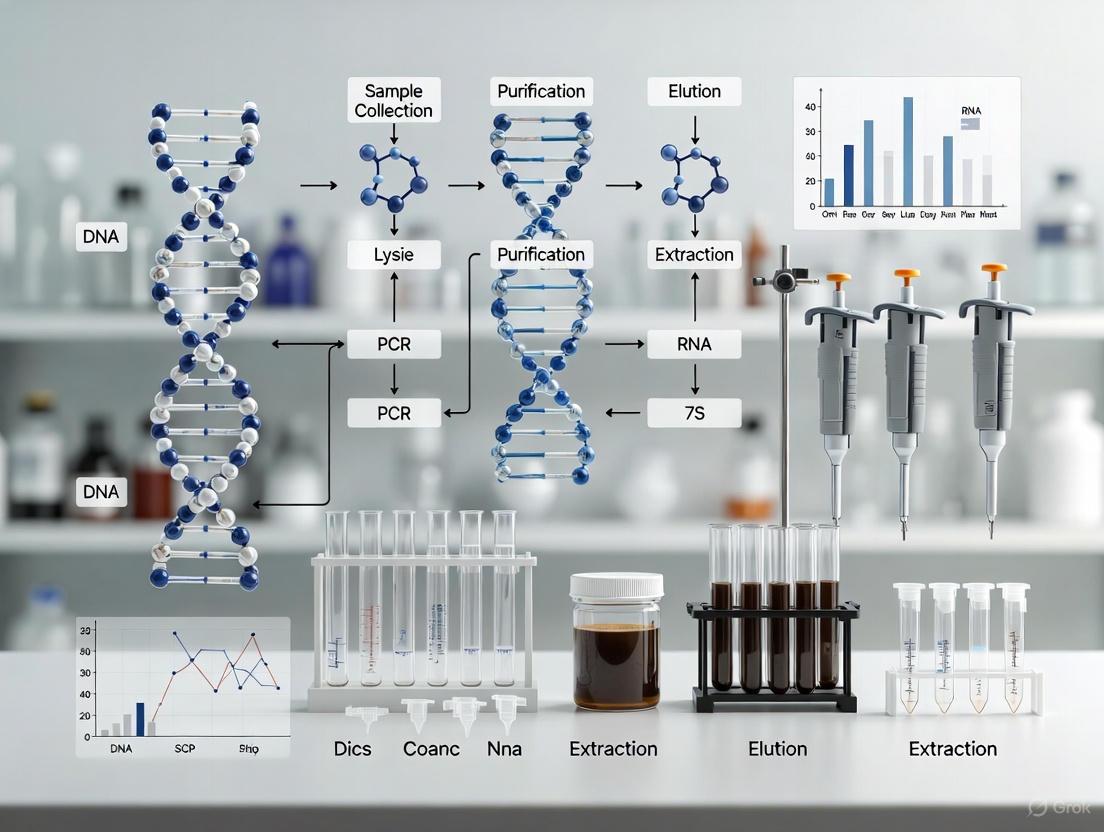
This article provides a systematic framework for researchers and drug development professionals to optimize DNA extraction from complex soil matrices.
Optimizing DNA Extraction from Soil Samples: A Comprehensive Guide for Biomedical Researchers
Abstract
This article provides a systematic framework for researchers and drug development professionals to optimize DNA extraction from complex soil matrices. It covers foundational principles, evaluates current methodological approaches, and offers advanced troubleshooting strategies. A strong emphasis is placed on validation and comparative analysis to ensure reliable, reproducible results for downstream applications like metagenomics and pathogen surveillance, which are critical for drug discovery and clinical research.
The Critical Foundation: Why Soil DNA Extraction Demands Specialized Strategies
Troubleshooting Guides
Humic Acid Interference and Inhibition of Molecular Procedures
Problem: Humic substances (HS) are complex organic polymers in soil with physicochemical properties similar to nucleic acids, leading to their co-extraction with DNA. This results in brown-colored DNA extracts and inhibition of downstream enzymatic reactions like PCR [1] [2]. Humic acids can inhibit PCR even at very low concentrations (e.g., as little as 10 ng) [3].
Solutions:
- During Nucleic Acid Extraction:
- Commercial Kits with Inhibitor Removal: Use kits specifically designed for soil, such as those from Qiagen, which incorporate Inhibitor Removal Technology (IRT) to eliminate humic acids [4].
- Chemical Additives: Incorporate additives into the lysis buffer:
- Cetyl Trimethylammonium Bromide (CTAB): Helps to separate DNA from polysaccharides and humic acids [1] [5] [3].
- Polyvinyl Polypyrrolidone (PVPP): Binds to and precipitates phenolic compounds like humic acids [5].
- Vitamins: Innovative use of pyridoxal hydrochloride and thiamine hydrochloride (Vitamin B6 and B1) has been shown to selectively precipitate humic acids, yielding PCR-ready DNA [3].
- Skim Milk: Added during extraction to prevent DNA adsorption and degradation by humic substances [6].
- Post-Extraction Cleanup:
- Dilution: A simple tenfold dilution of the DNA extract can reduce inhibitor concentration below the inhibition threshold, though it may reduce sensitivity [4].
- DNA Cleanup Kits: Use standard silica-column or magnetic bead-based cleanup kits (e.g., AMPure XP beads) [4].
- Two-Stage Purification: A protocol using a silicon dioxide suspension (glass milk) followed by paramagnetic particles has been successful in concentrating DNA and removing inhibitors [4].
- During PCR Setup:
- Robust Master Mixes: Use specialized master mixes like Environmental Master Mix 2.0 (ThermoFisher) or Perfecta qPCR ToughMix, which are formulated to be tolerant of common inhibitors [4].
- PCR Enhancers: Add Bovine Serum Albumin (BSA) or skim milk powder to the PCR reaction to bind to and neutralize residual inhibitors [4].
Suboptimal DNA Yield and Quality Due to Sample Size
Problem: The amount of soil used for DNA extraction significantly impacts the assessment of microbial diversity and community structure, but not necessarily the determination of microbial abundance [7]. Inadequate soil sample sizes can lead to an underestimation of microbial richness and alter the observed co-occurrence patterns.
Solutions:
- Follow Recommended Sample Sizes: For most ecosystems, using at least 0.25 grams of soil is recommended to reflect the overall microbial diversity accurately [7] [8]. For soils with low microbial density, such as deserts, use 0.50 grams or more [7].
- Maintain Proper Soil-to-Container Volume Ratio: Ensure the sample size is appropriate for the extraction tube volume. For instance, using 0.2 g or 1 g of soil in a standard 2 mL tube for horizontal shaking is more effective and consistent than using 5 g in a larger tube with vertical shaking, which can lead to fluctuating DNA extraction efficiency and diversity metrics [6].
- Use Composite Sampling: For a representative profile of a larger area, collect and homogenize soil from multiple spots before subsampling for DNA extraction [9] [10].
Inconsistent Microbial Community Profiles from Different Sequencing Methods
Problem: The choice between amplicon sequencing (e.g., 16S rRNA gene) and shotgun metagenomics can lead to variations in the observed microbial community structure due to technical biases like primer specificity, gene copy number variation, and differences in reference databases [8].
Solutions:
- Select the Appropriate Method for Your Goal:
- Use Optimized Bioinformatics: For shotgun data from complex soils, use classifiers like Kraken2 with curated databases (e.g., GTDB) and apply abundance thresholds to minimize false positives [8].
- Maintain Consistency: Use the same DNA extraction method, sequencing platform, and bioinformatic pipeline for all samples within a study to ensure comparability [8].
Frequently Asked Questions (FAQs)
Q1: My soil DNA extract is brown and my PCR fails. What is the fastest solution? The quickest fix is to perform a tenfold dilution of your DNA template in the PCR reaction. This dilutes the humic acid inhibitors below their effective concentration. If sensitivity is critical, use a DNA cleanup kit or add BSA (0.1-0.5 μg/μL) to your PCR master mix [4].
Q2: How can I confirm that my PCR failure is due to inhibitors? Perform a PCR inhibition test. Spike a known amount of a control DNA (exogenous to your sample) into your reaction with and without your soil DNA extract. An increase in the Ct value for the control in the presence of your sample DNA indicates the presence of inhibitors [4].
Q3: What is the single most important factor in obtaining high-quality DNA from humus-rich soil? Using a robust, inhibitor-focused extraction method. While yield is important, purity is paramount for downstream applications. A method combining CTAB-based extraction with an additional purification step, such as a vitamin-based precipitation or a commercial inhibitor removal column, is most effective for humus-rich soils [1] [3].
Q4: My microbial diversity seems low compared to other studies. Could my soil sample size be too small? Yes. Studies show that DNA extraction from very small soil samples (e.g., 0.01 g or 0.025 g) can result in lower observed microbial richness and co-occurrence frequency compared to using 0.25 g or more. Ensure you are using a sufficient amount of soil, especially from low-biomass environments [7].
Q5: Should I use amplicon sequencing or shotgun metagenomics for my soil microbiome study? Your choice depends on your research question and resources. Amplicon sequencing is a cost-effective choice for comparing microbial community structure across many samples. Shotgun metagenomics is more expensive but provides deeper taxonomic resolution and direct access to functional genetic potential. Both methods can produce consistent patterns for major microbial phyla when analyzed with appropriate tools [8].
Table 1: Impact of Soil Sample Size on Microbial Diversity Analysis
This table summarizes findings on how the amount of soil used for DNA extraction influences the analysis of microbial communities [7].
| Soil Sample Size (g) | Microbial Abundance Determination | Microbial Richness | Microbial Community Composition | Co-occurrence Patterns | Recommended Use |
|---|---|---|---|---|---|
| 0.01 - 0.025 | Little to no effect | Lower than 0.25-1.00 g | Dramatic variations; not representative | Lower frequency; less robust | Study of microbial heterogeneity among microhabitats |
| 0.25 | Little to no effect | Representative and stable | Stable and representative | Robust patterns | Recommended minimum for overall diversity in most ecosystems |
| 0.50 - 1.00 | Little to no effect | Representative and stable | Stable and representative | Robust patterns | Soils with low microbial density; standard for some kits |
Table 2: Soil Properties and DNA Yield/Purity from Different Soil Types
This table illustrates how soil type and humic substance content affect DNA isolation success, based on a study of various Soil Reference Groups [1].
| Soil Reference Group | Land Use | Total Organic Carbon (g/kg) | Humic Substances Carbon (g/kg) | DNA Concentration (ng/μL) | A260/A280 (Purity) | A260/A230 (Purity) |
|---|---|---|---|---|---|---|
| Regosol | Plough field | 11.2 | 3.71 | 61.3 | 1.92 | 1.20 |
| Cambisol | Forest | 20.1 | 16.89 | 46.8 | 1.91 (2.07*) | 1.13 (1.40*) |
| Arenosol | Forest | 29.2 | 29.81 | 32.5 | 1.89 (1.95*) | 1.31 (1.90*) |
| Histosol | Meadow | 40.3 | 37.36 | 200.8 | 1.92 (1.95*) | 1.49 (1.53*) |
| Values in parentheses indicate purity ratios after an additional purification step, highlighting the need for extra cleaning in organic-rich soils. |
Experimental Protocols
Detailed Protocol: Optimized High-Yield DNA Extraction from Soil
This is a modified CTAB-based protocol for manual DNA extraction from soil, incorporating steps to mitigate humic acid interference [5].
Key Research Reagent Solutions:
- CTAB Buffer: Cetyl Trimethylammonium Bromide; complexes with polysaccharides and humic acids, allowing their separation from nucleic acids.
- Proteinase K: A broad-spectrum serine protease; degrades proteins and helps in cell lysis.
- SDS: Sodium Dodecyl Sulfate; an ionic detergent that disrupts cell membranes and lyses cells.
- PEG: Polyethylene Glycol; promotes the precipitation of large DNA molecules.
- PCI: Phenol:Chloroform:Isoamyl Alcohol (25:24:1); denatures and removes proteins from the lysate.
- Skim Milk: Binds to and neutralizes humic acids, preventing their co-purification with DNA.
Methodology:
- Lysis: Add 3 g of finely sieved soil to a tube containing 6 mL of extraction buffer (100 mM Tris-Cl pH 8.0, 100 mM sodium, 1 mM EDTA pH 8.0, 1.5 M NaCl). Mix thoroughly.
- Enzymatic Digestion: Add 13 μL of proteinase K (10 mg/mL) and incubate horizontally at 37°C for 30 min on a platform shaker.
- Detergent Lysis: Add 750 μL of 20% SDS and incubate at 65°C for 90 min.
- Physical Lysis (Freeze-Thaw): To enhance lysis efficiency, freeze the tube in liquid nitrogen for 1 minute and immediately thaw it at 65°C for 90 minutes. Repeat this freeze-thaw cycle three times.
- Centrifugation: Centrifuge at 6000 rpm for 10 min. Transfer the supernatant to a fresh tube. (Optional: Repeat lysis on the pellet to maximize yield).
- Precipitation: To the supernatant, add an equal volume of 30% PEG with 1.6 M NaCl. Incubate for 2 hours at room temperature.
- Centrifugation: Centrifuge at 10,000 rpm for 20 min. Collect the aqueous layer.
- Organic Purification:
- Add an equal volume of PCI. Centrifuge at 12,000 rpm for 5 min. Transfer the upper aqueous phase to a new tube.
- Add an equal volume of Chloroform:Isoamyl Alcohol (24:1). Mix by gentle inversion and centrifuge at 12,000 rpm for 5 min.
- DNA Recovery: Carefully collect the aqueous layer (using a pipette tip with a cut end to avoid shearing). Add 0.6 volumes of chilled isopropanol, mix, and incubate at room temperature for 2 hours.
- Pellet Washing: Centrifuge at 14,000 rpm for 15 min. Discard the supernatant. Wash the pellet with 70% ethanol, air-dry, and resuspend in 50 μL of TE buffer.
- RNAse Treatment: Add heat-treated RNase A (0.2 μg/μL) and incubate at 37°C for 2 hours to remove RNA contamination.
Detailed Protocol: Rapid Vitamin-Based Purification for Inhibitor-Rich Soils
This protocol uses vitamins to precipitate humic acids, yielding high-purity DNA suitable for PCR without additional steps [3].
Methodology:
- Soil Lysis: Perform initial cell lysis on your soil sample using a bead-beating method with a suitable lysis buffer (e.g., TENNS buffer pH 9.5).
- Vitamin Purification: After lysis and initial centrifugation, add a mixture of pyridoxal hydrochloride and thiamine hydrochloride directly to the crude DNA extract.
- Precipitation of Humics: The vitamins will selectively interact with and precipitate humic acids.
- Separation: Centrifuge the sample to pellet the humic acid-vitamin complexes.
- Recovery: The supernatant now contains purified, PCR-ready genomic DNA and can be used directly or after standard ethanol precipitation.
Workflow and Relationship Diagrams
Diagram 1: Soil DNA Extraction Challenges and Solution Pathways. This workflow maps the primary challenges (red) encountered during DNA extraction from soil to their corresponding solutions (green), leading to successful outcomes for research.
Diagram 2: Selecting a Sequencing Method for Soil Microbiome Analysis. This decision guide compares the two primary sequencing approaches, highlighting their targets, advantages, and disadvantages to inform experimental design.
For researchers working with complex environmental samples like soil, the cell lysis step presents a significant challenge: how to break open robust cell walls efficiently without shearing the precious genetic material within. This guide addresses the core principles of cell lysis, framed within the context of optimizing DNA extraction from soil samples for downstream applications such as metagenomics and pathogen detection.
Frequently Asked Questions (FAQs)
1. What is the fundamental trade-off in cell lysis for DNA extraction? The primary trade-off lies between DNA yield and DNA integrity. More intensive lysis methods (e.g., higher speed or longer duration of bead-beating) typically release more DNA from a higher proportion of cells, including those with tough walls. However, this increased physical force also shears the DNA into smaller fragments. Conversely, gentler lysis may preserve long, intact DNA strands but result in lower overall yield by failing to lyse more resistant cells [11] [12].
2. For soil samples, should I use mechanical or enzymatic lysis? Mechanical lysis (e.g., bead-beating) is generally more effective and reproducible for soil and environmental samples. While enzymatic lysis can yield higher quantities of DNA, the quality is often suboptimal and can lead to inconsistent microbial community profiles due to varying susceptibility of cell types. Mechanical lysis provides a more uniform and reliable disruption, which is crucial for representative community analysis [12].
3. My extracted DNA is fragmented. How can I get longer fragments for long-read sequencing? To obtain longer DNA fragments, you should optimize your mechanical lysis parameters by reducing the homogenization intensity. A study optimizing lysis for soil metagenomics found that using lower homogenization speed and shorter duration significantly increased DNA fragment length. For instance, a setting of 4 m sâ»Â¹ for 10 s produced fragments over 70% longer than more intensive protocols. Ensure your DNA purification steps afterward are gentle to avoid further shearing [11].
4. My downstream PCR is inhibited. How can I reduce carryover of contaminants? Soil contains substances like humic acids that can co-purify with DNA and inhibit enzymes. To mitigate this:
- Employ thorough washing steps with appropriate buffers during purification.
- Consider chemical treatments. For example, adding polyvinylpyrrolidone (PVP) can help adsorb phenolic compounds, and aluminum sulfate has been shown to be effective in removing persistent PCR inhibitors from clayed and sandy soils [13].
- Using phase-lock gel tubes during phenol-chloroform extraction can provide a cleaner separation of the aqueous DNA layer from organic solvents and contaminants [14].
Troubleshooting Guides
Problem: Low DNA Yield
Possible Causes and Solutions:
Inadequate Lysis: The lysis conditions may not be sufficient to break open all cells, particularly hardy microorganisms like Gram-positive bacteria or spores.
- Solution: Optimize your mechanical lysis protocol. Increase bead-beating intensity or duration systematically, but be aware of the trade-off with DNA integrity [15] [11].
- Solution: For highly resistant organisms, a combination of chemical (e.g., detergents) and mechanical lysis may be necessary. A universal protocol for mycobacteria, for example, combines chloroform treatment with bead-beating to overcome a tough, mycolic acid-rich cell wall [14].
Inefficient DNA Binding: The released DNA is not effectively binding to the purification column or magnetic beads.
- Solution: Ensure the binding buffer has the correct composition and pH. Optimize the incubation time and mixing steps to maximize contact between the DNA and the solid phase [15].
Problem: Degraded or Sheared DNA
Possible Causes and Solutions:
Overly Intensive Mechanical Lysis: Excessive mechanical force is physically breaking the DNA strands.
- Solution: Reduce the homogenization speed and time. Refer to the table below for data-driven optimization. Using a lower homogenization intensity has been proven to dramatically improve DNA integrity for long-read sequencing [11].
Nuclease Activity: Nucleases present in the sample are degrading the DNA after lysis.
Problem: Carryover of PCR Inhibitors
Possible Causes and Solutions:
- Incomplete Removal of Contaminants: Washing steps were insufficient to remove humic substances, pigments, or other inhibitors common in soil.
- Solution: Incorporate additional wash steps with optimized buffers. For pigmented paddy soils, adding a Polyethylene Glycol (PEG) precipitation step (e.g., 20% PEG) was highly effective in removing carry-over pigments and yielding pure RNA/DNA [16] [13].
- Solution: Reduce the initial soil input mass, as overloading the purification system can saturate its capacity to remove inhibitors [13].
Experimental Data and Protocols
Quantitative Impact of Lysis Parameters on DNA
The following table summarizes key findings from a statistical design of experiments approach to optimize mechanical lysis for soil DNA, showing the clear trade-off between yield and integrity [11].
Table 1: Effect of Homogenization Parameters on DNA Yield and Fragment Length from Soil
| Homogenization Speed | Total Homogenization Time | Approx. Distance Travelled | DNA Yield (Total µg) | Mean DNA Fragment Length (bp) |
|---|---|---|---|---|
| 4 m sâ»Â¹ | 5 s | 20 m | ~2.5 µg | 9,324 bp |
| 4 m sâ»Â¹ | 10 s | 40 m | Data not specified | 7,487 bp |
| 4 m sâ»Â¹ | 15 s | 80 m | Data not specified | 6,375 bp |
| 6 m sâ»Â¹ | 30 s | 180 m | Data not specified | 4,406 bp |
| 8 m sâ»Â¹ | 40 s | 960 m | ~15 µg | 3,418 bp |
Optimized Mechanical Lysis Protocol for Soil DNA
This protocol is adapted from research aimed at maximizing DNA length for long-read sequencing from diverse soil types [11].
- Sample Preparation: Weigh 0.3 - 0.5 g of soil.
- Initial Lysis: Add the soil to a tube containing lysis buffer and garnet beads (0.2 mm diameter).
- Mechanical Homogenization: Process the sample using a benchtop homogenizer (e.g., FastPrep-24) at 4 m sâ»Â¹ for 10 seconds.
- Incubation: Incubate the lysate on ice for 5 minutes to allow heat dissipation.
- Purification: Proceed with standard phenol-chloroform extraction or a commercial soil DNA kit purification, ensuring gentle pipetting to avoid shearing.
- Precipitation: Precipitate DNA with isopropanol and resuspend in elution buffer or nuclease-free water.
Workflow and Decision Diagrams
The Scientist's Toolkit: Research Reagent Solutions
Table 2: Essential Reagents for Cell Lysis and Inhibitor Removal in Soil DNA Extraction
| Reagent/Solution | Function in Lysis and Purification |
|---|---|
| Glass Beads (0.1-0.2 mm) | Provides mechanical disruption of cell walls through bead-beating. Critical for breaking open hardy microbial cells in soil [14] [11]. |
| Chloroform | A chemical lysis agent that disrupts lipid membranes. In a universal mycobacterial protocol, it sterilizes samples and efficiently removes cell wall lipids [14]. |
| Polyvinylpyrrolidone (PVP) | Adsorbs phenolic compounds and humic acids, which are common PCR inhibitors in plant and soil samples [13]. |
| Polyethylene Glycol (PEG) | Used in precipitation steps to help remove pigments and other contaminants, thereby improving nucleic acid purity from complex samples like paddy soil [16]. |
| Aluminum Sulfate | Effectively flocculates and removes persistent PCR inhibitors from challenging, clay-rich soil matrices [13]. |
| Phase-Lock Gel Tubes | Facilitates easy and clean separation of the aqueous phase (containing DNA) from the organic phase (phenol-chloroform) during purification, minimizing carryover of inhibitors [14]. |
| β-Mercaptoethanol (β-ME) | A reducing agent that inhibits nucleases, helping to prevent the degradation of DNA and RNA during the extraction process [13]. |
| Ald-CH2-PEG5-Azide | Ald-CH2-PEG5-Azide, CAS:1446282-38-7, MF:C12H23N3O6, MW:305.33 g/mol |
| Ald-Ph-PEG6-acid | Ald-Ph-PEG6-acid, MF:C23H35NO10, MW:485.5 g/mol |
Impact of Soil Physicochemical Properties on Extraction Efficiency
The efficiency of DNA extraction from soil is a critical first step in molecular analysis, influencing all downstream results in microbial ecology, forensic science, and environmental monitoring. Soil is a complex and heterogeneous matrix where DNA molecules interact with various soil components, leading to significant challenges in obtaining high-quality, representative genetic material. The physicochemical properties of soil—including its texture, organic matter content, pH, and mineral composition—directly impact the yield, purity, and overall quality of extracted DNA. Understanding these interactions is essential for optimizing extraction protocols, ensuring reproducible results, and accurately interpreting molecular data. This technical support guide addresses the most common challenges researchers face when extracting DNA from diverse soil types, providing evidence-based troubleshooting strategies to enhance experimental outcomes.
Troubleshooting Guides
FAQ 1: How do soil texture and composition affect DNA extraction efficiency, and how can I adapt my protocol accordingly?
Soil texture, particularly clay and organic matter content, significantly impacts DNA extraction efficiency through multiple mechanisms that can inhibit downstream applications.
Clay Interactions: Clay minerals (e.g., montmorillonite, kaolinite) possess charged surfaces that strongly adsorb DNA molecules through cation bridging and hydrogen bonding, effectively sequestering them and reducing available yield [17]. Soils with high clay content (≥30%) present particular challenges for DNA recovery due to this binding capacity and increased soil particle surface area [18].
Organic Matter Interference: Soil organic matter (SOM), especially humic and fulvic acids, co-extracts with DNA and functions as a potent inhibitor in downstream molecular applications like PCR and quantitative PCR (qPCR) [17] [19]. These substances inhibit enzymatic reactions by interacting with DNA templates and polymerase enzymes [19]. Soils with high organic content (≥3%) typically require enhanced purification steps to remove these contaminants effectively [18].
Mitigation Strategies:
- Increased Washing: Implement additional wash steps during extraction to dissociate DNA from soil particles. The use of phosphate buffered saline (PBS) as a preliminary wash can help remove contaminants before cell lysis [20].
- Chemical Additives: Incorporate additives that compete for binding sites. Mannitol in the lysis buffer can help protect DNA integrity and improve yield [20]. The chemical reagents in commercial kits are specifically designed to disrupt DNA-soil particle interactions [17].
- Sample Mass Adjustment: For kits designed for small soil masses (e.g., 0.25 g), consider that this may not be representative of heterogeneous soil communities. For high-clay soils, using a kit designed for larger sample masses (e.g., 10 g) can improve representativity and capture higher species richness, though it may require additional purification [21].
FAQ 2: Which commercial DNA extraction kit should I choose for my specific soil type?
No single extraction kit performs optimally across all soil types. Kit selection should be based on your specific soil properties and research objectives, as different kits employ varied mechanisms for cell lysis and inhibitor removal.
Table: Comparison of Commercial DNA Extraction Kits for Different Soil Types
| Kit Name | Key Features | Optimal Soil Types | Inhibitor Removal | Considerations |
|---|---|---|---|---|
| QIAGEN DNeasy PowerLyzer (PowerSoil) [21] [19] | - Based on 0.25 g soil mass- Two washing steps- Bead beating for lysis | - Low to moderate clay and OM- Standard microbial diversity | Chemical precipitation | Captures diversity comparable to indirect extraction methods; may be less representative for heterogeneous soils [21]. |
| QIAGEN DNeasy PowerMax [21] | - Based on 10 g soil mass- Designed for larger, more representative samples | - High clay or OM content- High microbial diversity studies | Chemical precipitation | Captures higher taxonomic richness from complex soils; may require additional purification due to higher inhibitor load [21]. |
| MP Biomedicals FastDNA SPIN [19] | - Fast protocol- Single washing step- High-temperature elution (55°C) | - Routine soils with low inhibitor content- Rapid processing needs | No dedicated column | Faster but may be less effective for soils with high inhibitor content [19]. |
| MACHEREY-NAGEL Nusoil Kit [19] | - Dedicated inhibitor removal column- Four washing steps | - Soils with very high humics/contaminants- Forensic or demanding applications | Silica column filtration | Most extensive purification; effective for recalcitrant soils but more time-consuming [19]. |
The performance of these kits varies significantly. A recent study found that despite extensive purification, kit selection introduced quantifiable discrepancies in qPCR-based gene quantification, especially in soils with high organic content or clay, underscoring that DNA template quality is kit-dependent [19]. For comprehensive biodiversity assessments, a combined approach using both direct DNA extraction from soil and DNA from previously extracted invertebrates (comDNA) has shown complementarity, capturing overlapping but distinct taxonomic profiles [21].
FAQ 3: What are the most effective methods to remove PCR inhibitors from soil DNA extracts?
PCR inhibitors commonly found in soil extracts include humic substances, polysaccharides, phenolic compounds, and metal ions, which can lead to false negatives or quantification errors in molecular assays [19].
Multiple Purification Strategies:
- Silica-Based Columns: Most commercial kits use selective DNA binding to silica membranes in the presence of chaotropic salts, followed by ethanol-based washes to remove contaminants. Kits with multiple wash steps (e.g., Nusoil with four washes) generally provide purer DNA than those with fewer washes [19].
- Chemical Precipitation: Some kits employ chemical reagents that precipitate inhibitors, leaving DNA in solution for further purification [17].
- Additive-Based Inhibition Management: Adding compounds like bovine serum albumin (BSA) to PCR reactions can bind to and neutralize residual inhibitors, improving amplification success [17].
- Dilution of DNA Extract: Simple dilution of the DNA template can reduce inhibitor concentration to sub-critical levels, though this also dilutes the target DNA and may not be suitable for low-abundance targets [17].
Addressing Specific Inhibitors:
- Cations (e.g., Mg²âº): While Mg²⺠is a necessary cofactor for PCR, excess concentrations can inhibit the reaction. Spiking experiments show that residual Mg²⺠ions in soil extracts, even after purification, can significantly interfere with qPCR accuracy [19].
- Humic Acids: These are particularly challenging due to structural similarity to DNA. The use of dedicated inhibitor removal columns (as in the Nusoil kit) or the inclusion of mannitol and PVPP in extraction buffers has been shown to improve humic acid removal [20].
FAQ 4: How should I handle and store soil samples before DNA extraction to preserve integrity?
Pre-extraction handling significantly impacts DNA recovery and the representativeness of the microbial community.
Best Practices for Sample Storage:
- Immediate Freezing: Store samples at -20°C or -80°C as soon as possible after collection to halt microbial activity and preserve the in situ microbial community structure [17] [22].
- Avoid Repeated Freeze-Thaw: Process samples into aliquots to avoid repeated freeze-thaw cycles, which can degrade DNA and lyse cells [17].
- Field Preservation: If immediate freezing is not possible, consider using commercial preservation solutions that stabilize DNA at room temperature.
Pre-processing Steps:
- Homogenization: Gently homogenize the soil sample (after removing stones and large debris) to create a representative subsample. Sieving through a 2 mm mesh is a common practice [22] [23].
- Contamination Control: Use sterile equipment during sampling and processing to prevent cross-contamination between samples, which is especially critical in forensic applications [17].
Diagram: Logical workflow for addressing common soil-related DNA extraction challenges. The diagram outlines the primary soil properties that create analytical problems and directs users toward appropriate solutions.
The Scientist's Toolkit: Research Reagent Solutions
Table: Essential Reagents for Optimizing Soil DNA Extraction
| Reagent / Solution | Function | Application Notes |
|---|---|---|
| Phosphate Buffered Saline (PBS) [20] | Initial wash to remove soluble contaminants and loosely bound ions. | A 120 mM PBS wash prior to lysis effectively removes soil contaminants like polysaccharides and urea without lysing cells [20]. |
| Mannitol [20] | Osmotic stabilizer and inhibitor mitigant. | Inclusion in the lysis buffer helps protect DNA integrity and reduces co-extraction of humic substances. |
| CTAB (Cetyltrimethylammonium bromide) [20] | Detergent for cell lysis and precipitation of humic acids. | Effective in removing polysaccharides and humic contaminants, especially when combined with chloroform extraction. |
| Polyvinylpolypyrrolidone (PVPP) [20] | Binds and removes phenolic compounds. | Added to the extraction buffer to specifically target phenolic inhibitors, which are common in soils with high organic matter. |
| Sodium Chloride (NaCl) [20] | Neutralizes negative charges on DNA backbone and soil particles. | Reduces DNA adsorption to soil particles (e.g., clay); used in precipitation steps. |
| Ethanol / Isopropanol | DNA precipitation and washing. | Standard for precipitating nucleic acids from aqueous solution and removing salts in wash steps. |
| Silica Membranes / Beads [19] | Selective DNA binding in the presence of chaotropic salts. | Foundation of most commercial kits; allows for separation of DNA from other contaminants through binding and washing. |
| Allantoin Ascorbate | Allantoin Ascorbate, CAS:57448-83-6, MF:C6H8O6.C4H6N4O3, MW:334.24 g/mol | Chemical Reagent |
| Alprostadil sodium | Alprostadil sodium, CAS:27930-45-6, MF:C20H33NaO5, MW:376.5 g/mol | Chemical Reagent |
Advanced Optimization & Method Validation
Experimental Protocol: Comparative Evaluation of DNA Extraction Kits
To validate the optimal DNA extraction method for a specific soil type, a comparative evaluation is recommended.
- Soil Characterization: Analyze key physicochemical parameters of the soil, including pH, texture (sand, silt, clay %), total organic carbon (TOC), and moisture content [17] [22].
- Kit Selection: Select 2-3 commercial kits with different purification mechanisms (e.g., PowerSoil vs. Nusoil) [19].
- Spike-In Control: For quantitative studies, seed the soil with a known quantity of a model bacterium (e.g., Pseudomonas putida) prior to extraction. This allows for calculation of extraction efficiency and identification of inhibition [19].
- Extraction: Perform extractions in triplicate for each kit, strictly following manufacturer protocols.
- DNA Quality & Quantity Assessment:
- Spectrophotometry: Measure A260/A280 and A260/A230 ratios. Ideal values are ~1.8 and >2.0, respectively. Low A260/A230 indicates residual humics or salts [20].
- Gel Electrophoresis: Check for high molecular weight DNA and RNA contamination.
- qPCR Analysis: Amplify a target gene (e.g., 16S rRNA) to assess inhibition. Compare cycle threshold (Ct) values between soil DNA extracts and a pure standard. A higher Ct indicates the presence of inhibitors [19].
Workflow Diagram: Soil DNA Extraction and Quality Control
Diagram: A comprehensive experimental workflow for soil DNA extraction, highlighting the critical steps from sample collection to quality control, with feedback loops for troubleshooting.
In conclusion, successful DNA extraction from soil requires a tailored approach that accounts for specific physicochemical properties. By understanding the interactions between soil components and DNA, selecting appropriate extraction methodologies, and implementing rigorous quality control, researchers can significantly improve the reliability and interpretability of their molecular data.
In the context of optimizing DNA extraction from soil samples, defining and measuring success is paramount. For downstream applications like metabarcoding, qPCR, or next-generation sequencing, the quality of the initial DNA extract is a critical determinant. Success is multi-faceted, hinging on four interdependent metrics: DNA Yield (quantity), Purity (freedom from contaminants), Fragment Size (molecular integrity), and Representativity (accurate reflection of the original community). This guide provides troubleshooting support to help you diagnose and resolve issues related to these key metrics in your soil DNA research.
FAQ: Understanding the Core Metrics
Q1: What are the target values for DNA purity, and how are they measured?
DNA purity is commonly assessed using spectrophotometric absorbance ratios [24] [25]. The table below outlines the ideal values and the implications of deviations.
| Purity Ratio | Ideal Value | Indication of Value Below Ideal | Indication of Value Above Ideal |
|---|---|---|---|
| A260/A280 | 1.7 - 2.0 [24] | Protein contamination (e.g., phenol) [24] | Not typically a concern for soil DNA. |
| A260/A230 | >1.5 [24] | Contamination with chaotropic salts, EDTA, or carbohydrates [24] [26] | Not typically a concern for soil DNA. |
Q2: How can I accurately determine the concentration of low-yield soil DNA extracts?
For low-yield samples, fluorescence methods are superior to spectrophotometry [25]. Fluorescence assays use dyes that selectively bind to double-stranded DNA, making them less susceptible to interference from common contaminants like salts, proteins, or free nucleotides [24] [27]. This results in a more accurate concentration measurement, which is crucial for normalizing downstream PCR reactions.
Q3: My downstream PCR is inhibited. What is the likely cause and how can I fix it?
Inhibition is a common challenge in soil DNA workflows due to co-extraction of substances like humic acids [28]. Purity ratios, particularly a low A260/A230, can signal this issue [24]. To resolve this:
- Re-purity the DNA: Use silica-column based purification or reagent kits specifically designed to remove soil-derived inhibitors [28] [21].
- Dilute the Template: A simple dilution of the DNA extract can reduce the concentration of inhibitors to a level that no longer affects the polymerase. The optimal dilution factor should be determined empirically.
- Use Inhibitor-Resistant Master Mixes: Specialized PCR buffers are available that can tolerate certain levels of common inhibitors.
Q4: How does my DNA extraction method affect representativity in metabarcoding studies?
The extraction method directly influences which organisms' DNA is recovered from the soil matrix. A study comparing two commercial kits from the same manufacturer found that the kit using a larger soil starting weight (10 g vs. 0.25 g) captured a higher taxonomic richness, whereas the smaller-scale kit captured diversity comparable to DNA from heat-extracted invertebrates [21]. This highlights that the choice of extraction kit and protocol can bias the apparent community structure. For the most comprehensive view, some studies suggest a complementary approach using multiple methods [21].
Troubleshooting Common Problems
| Problem | Possible Causes | Recommended Solutions |
|---|---|---|
| Low DNA Yield | Incomplete cell lysis [26]; Inefficient binding to purification matrix [29]; Inhibitors in soil [28]. | Optimize lysis: combine mechanical (e.g., bead beating [30] [21]) with chemical/enzymatic methods [29]; Use larger soil sample mass (e.g., 10 g) [21]; Add an extra wash step to remove inhibitors pre-binding [29]. |
| Poor DNA Purity (Low A260/A230) | Co-purification of humic acids, chaotropic salts, or other soil contaminants [28] [24]. | Use inhibitor-removal buffers [28]; Ensure wash buffers contain correct ethanol concentration [26]; Repeat silica-column purification [28]; Avoid over-vortexing or harsh mechanical disruption that shears DNA [30]. |
| Highly Fragmented DNA | Overly aggressive mechanical lysis [30]; Natural degradation in environmental sample [30]. | For ancient/degraded samples, use protocols optimized for short fragments [28]; For intact cells, homogenize at lower speeds or for shorter durations [30]; Use a homogenizer with temperature control to minimize heat damage [30]. |
| Non-Representative Community Profile | Lysis method fails to break tough spores or cysts [30]; Extraction kit bias [21]. | Employ a harsher mechanical lysis step (e.g., bead beating with ceramic beads) [30] [21]; Compare multiple extraction methods to validate findings [21]. |
The Scientist's Toolkit: Essential Reagents and Materials
| Research Reagent / Material | Function in DNA Extraction from Soil |
|---|---|
| Power Bead Solution / Silica Beads | Mechanical lysis via bead beating to break open tough microbial and microarthropod cells [30] [28] [21]. |
| CTAB (Cetyltrimethylammonium bromide) | Precipitates polysaccharides and other contaminants common in plant and soil samples [28]. |
| SDS (Sodium Dodecyl Sulfate) | A strong anionic detergent used in chemical lysis to disrupt lipid membranes [28]. |
| Proteinase K | An enzyme that digests and removes proteins, including nucleases that could degrade DNA [28] [29]. |
| EDTA (Ethylenediaminetetraacetic acid) | A chelating agent that binds metal ions, inactivating DNase enzymes and inhibiting PCR [30] [28]. |
| Silica-based Columns | Selective binding of DNA in the presence of high-salt buffers, allowing for purification from contaminants [28] [26]. |
| Humic Acid Removal Buffers | Specialized reagents designed to bind or neutralize humic substances, common PCR inhibitors in soil [28]. |
| AMG-222 tosylate | AMG-222 tosylate, CAS:1163719-08-1, MF:C39H47N9O6S, MW:769.9 g/mol |
| AMG-3969 | AMG-3969, MF:C21H20F6N4O3S, MW:522.5 g/mol |
Experimental Workflow: From Soil to Quality-Checked DNA
The diagram below outlines a generalized workflow for soil DNA extraction and quality control, incorporating key decision points based on the success metrics.
Key Experimental Protocols for Validation
1. Assessing DNA Concentration and Purity via Spectrophotometry [24] [25]
- Blank Measurement: Use the DNA elution buffer to zero the spectrophotometer.
- Sample Measurement: Measure absorbance at 230nm, 260nm, 280nm, and 320nm (for turbidity correction).
- Calculations:
- Concentration (µg/ml) = (A260 - A320) × Dilution Factor × 50 µg/ml
- Purity (A260/A280) = (A260 - A320) / (A280 - A320)
- Purity (A260/A230) = (A260 - A320) / (A230 - A320)
2. Verifying DNA Integrity and Fragment Size via Agarose Gel Electrophoresis [24] [25]
- Gel Preparation: Prepare a 0.8% - 1.2% agarose gel in 1X TAE or TBE buffer, stained with a safe DNA dye.
- Sample Loading: Mix a small aliquot of DNA with loading dye and load alongside a DNA molecular weight marker.
- Electrophoresis: Run the gel at 5-10 V/cm until bands are sufficiently separated.
- Visualization: Image the gel under UV light. High-quality genomic DNA should appear as a tight, high-molecular-weight band. Smearing indicates degradation.
3. Optimizing for Challenging or Inhibitor-Rich Soils [28] [21]
- Protocol Selection: Consider a sediment-optimized protocol (e.g., using a reagent like Power Beads Solution) coupled with a silica-binding step to maximize recovery of fragmented aDNA and remove humic acid inhibitors [28].
- Scale: For low-biomass samples, using a larger starting mass of soil (e.g., 10 g with a PowerMax kit) can significantly improve the recovery of rare taxa and increase representativity [21].
Methodology in Action: Comparing Commercial Kits and Custom Protocols for Specific Goals
Comparative Analysis of Leading Commercial Soil DNA Kits (e.g., QIAGEN PowerSoil, Macherey-Nagel NucleoSpin)
The efficacy of soil microbiome studies is fundamentally dependent on the quality and quantity of DNA extracted from environmental samples. Soil, as a complex and heterogeneous matrix, contains numerous substances—such as humic acids, polysaccharides, phenolic compounds, and cations—that can co-purify with nucleic acids and inhibit downstream molecular analyses like quantitative PCR (qPCR) and next-generation sequencing [19]. The choice of DNA extraction method can introduce significant biases, influencing the observed microbial community structure and potentially leading to erroneous conclusions [31] [32]. This technical guide provides a comparative analysis of leading commercial soil DNA kits, offering detailed protocols, troubleshooting advice, and data-driven recommendations to help researchers optimize their DNA extraction processes for more accurate and reproducible results in soil research.
Kit Performance and Selection Guide
The performance of a DNA extraction kit can vary significantly depending on the specific soil properties and the objectives of the downstream analysis. The table below summarizes key performance characteristics of several leading kits as reported in recent scientific literature.
Table 1: Comparative Performance of Commercial Soil DNA Extraction Kits
| Kit Name | Recommended Sample Type | Key Strengths | Reported Performance |
|---|---|---|---|
| QIAGEN DNeasy PowerSoil Pro (Kit A) [19] | General soil, complex environmental samples | Effective inhibitor removal; high reproducibility | "Best suitability for reproducible long-read WGS metagenomic sequencing" [32]. |
| Macherey-Nagel NucleoSpin Soil (MNS) [31] | Diverse terrestrial ecosystem samples | High alpha diversity recovery; good DNA purity | "Associated with the highest alpha diversity estimates" and provided the best 260/230 purity ratios in most sample types [31]. |
| QIAGEN DNeasy PowerLyzer PowerSoil [21] | Standard soil eDNA metabarcoding (0.25g samples) | Captures diversity comparable to invertebrate-derived DNA | Effective for soil fauna assessment via eDNA, showing results comparable to other methods [21]. |
| QIAGEN DNeasy PowerMax Soil [21] | Low-biomass or large-volume soil samples (10g samples) | Captures higher species richness from larger volumes | "PowerMax captured higher richness" in environmental DNA studies [21]. |
| MP Biomedicals FastDNA SPIN Kit (Kit B) [19] | Fast processing | Rapid protocol with a single washing step | Performance varies with soil type; may be less effective with high-inhibitor soils [19]. |
| Macherey-Nagel Nusoil Kit (Kit C) [19] | Soils with high inhibitor content | Extensive purification with four washing steps and a specific inhibitor removal column | Designed to remove challenging contaminants; multiple wash steps enhance purity [19]. |
Key Selection Criteria
- Soil Type and Inhibitor Content: Soils with high organic matter or clay content often require kits with robust inhibitor removal steps, such as the Macherey-Nagel Nusoil Kit [19].
- Downstream Application: For long-read metagenomic sequencing (e.g., Oxford Nanopore), the QIAGEN PowerSoil Pro Kit has demonstrated superior performance [33] [32]. For 16S rRNA amplicon sequencing aiming to maximize observed diversity, the Macherey-Nagel NucleoSpin Soil kit is a strong candidate [31].
- Biomass Availability: For low-biomass samples, kits designed for larger soil volumes, like the QIAGEN PowerMax Soil Kit, can improve recovery [21].
Experimental Protocols and Workflows
Standardized Evaluation Protocol for Soil DNA Kits
To objectively compare the performance of different DNA extraction kits on your specific soil samples, follow this standardized evaluation protocol.
Table 2: Key Reagents for Soil DNA Extraction Evaluation
| Reagent / Material | Function in the Protocol |
|---|---|
| Soil Samples | The test matrix. Include samples with varying properties (e.g., texture, organic matter). |
| Mock Community | A defined mix of known microorganisms (e.g., gram-positive and gram-negative strains) to evaluate extraction bias and efficiency [33] [31]. |
| Lysis Tubes with Beads | For mechanical disruption of tough microbial cell walls (e.g., gram-positive bacteria) and soil aggregates [33] [34]. |
| Proteinase K | Enzyme that digests proteins and degrades nucleases, aiding in cell lysis and protecting released DNA [34]. |
| Inhibitor Removal Solution/Buffer | Chemical solutions that precipitate or bind to common soil inhibitors like humic acids [19]. |
| Silica Membrane Columns / Magnetic Beads | Solid-phase matrices that bind DNA specifically, allowing for washing away of impurities [34] [19]. |
| Ethanol-Based Wash Buffers | Solutions used to remove salts, metabolites, and other contaminants from the bound DNA without eluting it. |
| Elution Buffer (TE or nuclease-free water) | A low-salt buffer or water used to release purified DNA from the silica membrane or magnetic beads. |
Procedure:
- Sample Preparation: Homogenize your soil samples. For a more controlled assessment, split a single soil sample and spike it with a commercial mock community [33].
- Parallel DNA Extraction: Extract DNA from identical aliquots of the prepared sample(s) using the kits you wish to compare. Adhere strictly to each manufacturer's protocol. Include multiple technical replicates for statistical robustness.
- DNA Quality and Quantity Assessment:
- Quantity: Measure DNA concentration using a fluorescence-based method (e.g., Qubit), as it is more accurate for complex mixtures than spectrophotometry [34].
- Purity: Use spectrophotometry (NanoDrop) to determine the 260/280 and 260/230 ratios. Ideal values are ~1.8 and >2.0, respectively. Low ratios indicate contamination with proteins/phenol or humic acids/carbohydrates [34] [31].
- Integrity: Check DNA fragment size using gel electrophoresis or a TapeStation system [34].
- Downstream Analysis:
- qPCR Inhibition Test: Perform qPCR on a conserved gene (e.g., 16S rRNA) using standardized DNA quantities from each kit. Higher Ct values indicate the presence of PCR inhibitors [19].
- Sequencing and Bioinformatics: Subject the DNA extracts to 16S rRNA gene amplicon or shotgun metagenomic sequencing. Analyze the data to compare alpha diversity (richness and evenness), beta diversity (community composition differences), and the recovery of the spiked mock community organisms [33] [31].
This standardized workflow for evaluating DNA extraction kits helps researchers identify the optimal method for their specific soil samples and research goals.
Optimized Protocol for Piggery Wastewater (Adapted from PMC)
The following optimized protocol for a challenging matrix like piggery wastewater, based on the QIAGEN PowerFecal Pro kit, highlights how manufacturer protocols can be modified for enhanced performance [33].
Method: Optimized QIAGEN PowerFecal Pro Protocol Sample Type: Piggery Wastewater (or other complex, inhibitor-rich environmental samples) Workflow:
Key Modifications from Standard Protocol [33]:
- Lysis Buffer Volume: Use 500 µL of CD1 lysis buffer instead of the recommended 800 µL.
- Mechanical Lysis: Extend bead-beating to 10 minutes at maximum speed on a Vortex-Genie 2.
- Wash Step: Perform the wash with solution C5 in two steps of 250 µL each, followed by incubation on ice for 5 minutes and centrifugation.
- Ethanol Removal: After the final wash, leave the spin column lids open for 10 minutes to ensure complete evaporation of residual ethanol before adding elution buffer.
- Elution Volume: Elute DNA in a small volume of 50 µL to increase final concentration.
Troubleshooting Guides and FAQs
Frequently Asked Questions
Q1: My DNA yields are consistently low. What could be the cause and how can I improve this? A1: Low yields can result from incomplete cell lysis or DNA loss during purification. Ensure efficient mechanical lysis by using bead-beating, which is crucial for disrupting tough gram-positive bacterial cells [34] [31]. If your sample has low microbial biomass, consider using a kit designed for larger sample masses, such as the QIAGEN PowerMax Soil Kit, which processes up to 10 g of soil [21]. Also, confirm that you are not over-drying the silica membrane after washing, as this can reduce DNA elution efficiency.
Q2: My downstream PCR or qPCR reactions are inhibited. How can I better remove inhibitors? A2: The presence of co-extracted contaminants like humic acids is a common issue. Choose a kit with dedicated inhibitor removal steps, such as the Macherey-Nagel Nusoil Kit, which includes a specific inhibitor removal column [19]. You can also incorporate additional purification steps, such as using a kit with more extensive wash buffers (e.g., four washes in Kit C vs. one in Kit B) [19]. Furthermore, evaluate the 260/230 ratio; a low ratio indicates the presence of organic contaminants, and diluting the DNA template in the PCR reaction can sometimes help overcome mild inhibition.
Q3: How does the DNA extraction method affect my perceived microbial community composition? A3: The extraction method is a major source of bias. Different lysis methods (mechanical vs. enzymatic) can favor the recovery of certain taxa over others. For instance, kits without rigorous mechanical lysis may under-represent gram-positive bacteria [34] [31]. This bias can significantly impact alpha and beta diversity estimates. To account for this, it is critical to use the same DNA extraction kit throughout a study when comparing samples. For methodological development, using a mock community can help quantify these biases [33].
Q4: My DNA is sheared and not suitable for long-read sequencing. What should I check? A4: Excessive or harsh mechanical lysis can fragment genomic DNA. While bead-beating is necessary for cell disruption, optimizing the duration and intensity is key. The QIAGEN PowerSoil Pro Kit has been specifically noted for producing DNA with good integrity for long-read metagenomic sequencing [32]. Also, avoid excessive vortexing or pipetting of the lysate after the initial lysis step. Checking the DNA fragment size distribution using a TapeStation or similar instrument before proceeding with library preparation is highly recommended.
Q5: We process diverse sample types (soil, feces, water). Should we use a different kit for each? A5: While some kits are optimized for specific matrices, using a single kit for multiple sample types can reduce technical variation, making results more comparable. The Macherey-Nagel NucleoSpin Soil kit, for example, has been shown to perform well across a range of terrestrial ecosystem samples, including bulk soil, rhizosphere soil, invertebrate taxa, and mammalian feces, and is associated with high alpha diversity recovery [31]. Standardizing on one well-performing, versatile kit is often preferable for cross-environmental studies.
Within the broader scope of research aimed at optimizing DNA extraction from soil samples, the bead beating process is a critical step for accessing the genetic material of a representative microbial community. Soil represents one of the most complex and challenging matrices from which to extract high-quality, high-molecular-weight DNA. The efficacy of DNA extraction directly influences downstream analyses, including metabarcoding, metagenomic sequencing, and the construction of metagenome-assembled genomes (MAGs) [11] [35]. Mechanical lysis via bead beating is widely recognized for enhancing DNA yield and improving the representation of tough-to-lyse microorganisms, such as Gram-positive bacteria, which have rigid, multi-layered peptidoglycan cell walls [36] [37]. However, this method presents a fundamental trade-off: while insufficient lysis leads to low DNA yield and under-representation of resistant taxa, excessive lysis force or duration can cause severe DNA shearing, compromising its integrity and suitability for long-read sequencing technologies [11]. This guide provides targeted troubleshooting and FAQs to help researchers navigate the optimization of bead beating parameters—time, speed, and bead matrix selection—to achieve balanced and high-performance DNA extraction from diverse soil types.
Troubleshooting Common Bead Beating Issues
Q1: My soil DNA extraction is yielding sufficient quantity but the DNA is heavily sheared, making it unsuitable for long-read sequencing. What should I adjust?
- Problem: Excessive DNA fragmentation due to overly aggressive mechanical lysis.
- Investigation: Check the mean fragment length of your DNA using a bioanalyzer, TapeStation, or agarose gel electrophoresis. Compare your results with the input requirements of your intended long-read sequencing platform.
- Solution: Systematically reduce the homogenization intensity. A statistical Design of Experiments (DoE) approach has demonstrated that lower energy input into mechanical lysis significantly improves DNA integrity.
- Speed & Time: For a benchtop homogenizer, reducing the speed to 4 m sâ»Â¹ for 10 seconds has been shown to increase the mean DNA fragment length by approximately 70% compared to manufacturer's standard recommendations (e.g., 6 m sâ»Â¹ for 30 s) [11].
- Result: This optimized setting produced longer sequenced reads (N50) and longer contiguous sequences after assembly without introducing significant bias in microbial community composition [11].
Q2: I am consistently missing tough-to-lyse Gram-positive bacteria in my soil microbiome profiles. How can I improve their recovery?
- Problem: Incomplete lysis of microorganisms with robust cell walls, leading to biased community representation.
- Investigation: Review your current lysis method. If you are using only chemical lysis or a single bead type, your protocol may be insufficient for resistant cells.
- Solution: Optimize your bead beating strategy to enhance cell disruption.
- Bead Material and Size: A combination of grinding beads of different sizes has proven superior for recovering a wider diversity of taxa. One study on organic-rich sub-seafloor sediments found that a mixture of 0.5-mm and 0.1-mm glass beads yielded higher DNA quantities and recovered more unique taxa, including certain Gammaproteobacteria and Fusobacteria, compared to other combinations [36]. The study also cautioned that using only small beads may lead to an underestimation of some Gram-positive strains [36].
- Bead Beating Cycles: For pure cultures of Gram-positive bacteria, an optimized protocol using three bead beating cycles with glass beads significantly improved RNA yields (over 6- to 15-fold) while maintaining integrity [37]. This principle can be adapted for DNA extraction from soil to increase the lysis efficiency of resistant cells.
Q3: My DNA yield is unacceptably low, even though I am using a powerful bead beater. What are the potential causes?
- Problem: Inefficient cell lysis or DNA binding, resulting in low yield.
- Investigation: Confirm that your sample is being properly homogenized. Visually inspect the sample tubes after bead beating for incomplete mixing or intact material.
- Solution:
- Verify Bead and Sample Consistency: Ensure the sample is a fine slurry and that the beads are moving freely during beating. Overly thick or dry samples will not lyse efficiently.
- Review Bead Matrix: As above, using an optimized mix of bead sizes (e.g., 0.5-mm and 0.1-mm) can dramatically improve lysis efficiency and DNA yield from complex samples [36].
- Check for Over-drying: If your protocol includes an air-drying step for a pellet, over-drying can make DNA very difficult to resuspend, leading to low measured yields. Air-dry pellets briefly (≤5 minutes) and avoid vacuum drying with heat [38] [39].
Optimized Experimental Protocols
Protocol: Optimizing Bead Beating for Long-Read Sequencing from Soil
This protocol is adapted from a statistical design of experiments (DoE) approach aimed at maximizing DNA fragment length for long-read sequencing while maintaining adequate yield and community representation [11].
- Objective: To obtain high-molecular-weight DNA from soil for long-read sequencing platforms (e.g., Oxford Nanopore Technologies, PacBio).
- Materials:
- Soil sample (0.25 g is often sufficient for temperate agricultural soils) [40].
- Commercial soil DNA extraction kit (e.g., Qiagen PowerSoil Pro Kit).
- Benchtop homogenizer (e.g., FastPrep-24).
- 2 ml lysing matrix tubes.
- Method:
- Sample Preparation: Transfer 0.25 g of soil to a 2 ml lysing matrix tube.
- Add Lysis Buffer: Add the appropriate lysis buffer from your kit to the tube.
- Mechanical Lysis: Homogenize the sample at 4 m sâ»Â¹ for 10 seconds.
- Complete Extraction: Continue with the remainder of the manufacturer's DNA extraction protocol (incubation, centrifugation, binding, washing, and elution).
- Key Findings: This low-intensity lysis setting was found to be the optimal balance, increasing DNA fragment length by 70% compared to standard protocols without significantly altering the observed microbial community structure [11].
Protocol: Enhanced Lysis for Diverse Microbial Communities
This protocol is designed to maximize the recovery of a broad range of microorganisms, including tough-to-lyse Gram-positive bacteria, from complex, organic-rich soil and sediment samples [36].
- Objective: To improve DNA yield and taxonomic diversity from challenging environmental samples.
- Materials:
- Soil or sediment sample.
- Commercial DNA extraction kit (e.g., FastDNA SPIN Kit for Soil).
- Bead beater.
- Custom grinding bead mixture.
- Method:
- Prepare Bead Matrix: Instead of relying solely on the beads provided in a kit, prepare a tube containing a mixture of 0.6 g of 0.1-mm glass beads and 0.6 g of 0.5-mm glass beads (total 1.2 g) [36].
- Add Sample and Buffer: Combine your soil sample and lysis buffer with this custom bead matrix.
- Mechanical Lysis: Process the samples in a bead beater according to your established parameters (e.g., 6 m sâ»Â¹ for 30-45 s).
- Complete Extraction: Proceed with the standard kit protocol for the remaining steps.
- Key Findings: This bead combination provided higher DNA yields and recovered more unique microbial taxa than other bead combinations, including the proprietary ceramic/silica/glass mix of a commercial kit [36].
Data Presentation: Optimized Parameters
The following tables consolidate quantitative data from key studies to guide parameter selection.
Table 1: Optimized Bead Beating Parameters for Different Soil Research Goals
| Research Goal | Recommended Speed & Time | Recommended Bead Matrix | Key Outcome | Source |
|---|---|---|---|---|
| Long-Read Sequencing (Maximize DNA length) | 4 m sâ»Â¹ for 10 s | Kit-standard beads | 70% increase in mean fragment length; sufficient yield for library prep. | [11] |
| Max Community Diversity (Organic-rich soils) | Standard speed (e.g., 6 m sâ»Â¹) | Mix of 0.5-mm & 0.1-mm glass beads | Higher DNA yield and recovery of more unique taxa vs. single-size beads. | [36] |
| Lysis of Gram-Positive Bacteria | Multiple cycles (e.g., 3 cycles) | Glass beads | Significantly improved nucleic acid yields (6- to 15-fold) from resistant cells. | [37] |
Table 2: Effect of Homogenization Intensity on DNA Yield and Fragment Length [11]
| Homogenization Speed (m sâ»Â¹) | Homogenization Time (s) | Approx. Distance Travelled (m) | DNA Yield (Total µg) | Mean Fragment Length (bp) |
|---|---|---|---|---|
| 4 | 5 | 20 | ~2.5 | ~9,324 |
| 4 | 10 | 40 | ~4.0 | ~7,487 |
| 6 | 30 | 180 | ~7.5 | ~4,406 |
| 8 | 40 | 960 | ~10.0 | ~3,418 |
Workflow and Decision Diagrams
The Scientist's Toolkit: Essential Research Reagent Solutions
Table 3: Key Materials and Reagents for Bead Beating Optimization
| Item | Function / Application | Considerations for Optimization |
|---|---|---|
| Glass Beads (0.1-mm) | Efficiently disrupts small and tough-to-lyse microbial cells. | Best used in combination with larger beads. Using alone may underestimate some taxa. [36] |
| Glass Beads (0.5-mm) | Provides larger impact energy for breaking cell clumps and tougher walls. | A mixture of 0.5-mm and 0.1-mm beads is recommended for maximal diversity. [36] |
| Ceramic/Silica Beads | Often included in commercial kits; dense material for effective grinding. | Compare performance against optimized glass bead mixtures for your specific soil type. |
| Bead Beater / Homogenizer | Provides consistent mechanical lysis. | Must allow control of speed (m sâ»Â¹) and time (s). Low energy input (4 m sâ»Â¹) favors long DNA fragments. [11] |
| Commercial Soil DNA Kit | Standardizes chemical lysis, binding, washing, and elution. | Kits like Qiagen PowerSoil are widely used. The starting soil weight (e.g., 0.25 g) may be sufficient, ensuring methodological consistency. [40] |
| Proteinase K | Enzymatic digestion of proteins, aiding cell lysis and removing contaminants. | Particularly important for samples with high organic content or humic acids. |
| AMG8380 | AMG8380, CAS:1642112-31-9, MF:C25H16ClF2N3O5S, MW:543.92 | Chemical Reagent |
| Aminooxy-PEG2-azide | Aminooxy-PEG2-azide, MF:C6H14N4O3, MW:190.20 g/mol | Chemical Reagent |
Within the context of optimizing DNA extraction from soil samples, obtaining high-quality data from long-read sequencing technologies is paramount. Soil samples present unique challenges, including the presence of inhibitors and difficult-to-lyse microorganisms, which can compromise the integrity and length of the extracted DNA. This technical support guide provides targeted troubleshooting advice and detailed protocols to help researchers overcome these obstacles, maximize read lengths, and achieve superior genome assemblies using platforms from Pacific Biosciences (PacBio) and Oxford Nanopore Technologies (ONT).
Frequently Asked Questions (FAQs)
1. What is the most critical factor for successful long-read sequencing from soil samples? The most critical factor is the quality and integrity of the input DNA. For long-read sequencing, the DNA must be High Molecular Weight (HMW) and minimally degraded. It is recommended that at least 50% of the DNA is above 15 kb in length for optimal results. The DNA must also be free of common contaminants from the soil matrix, such as humic acids, which can inhibit downstream library preparation [41].
2. Which DNA extraction method is best for soil samples intended for long-read sequencing? Optimized commercial kits designed for environmental samples are generally most effective. One comparative study on complex environmental wastewater found that an optimized QIAGEN PowerFecal Pro protocol was the most suitable and reliable, providing high-quality bacterial DNA suitable for Oxford Nanopore Technology (ONT) sequencing [33]. Another resource recommends kits like the MP Biomedicals SPINeasy DNA Kit for Soil, which uses a unique lysing matrix and proprietary buffers to remove inhibitors and protect DNA integrity [42].
3. How should I preserve soil samples in the field if immediate freezing is not possible? If access to a -20°C or -80°C freezer is logistically challenging, drying with silica gel packs has been demonstrated as a cost-effective and easily applied method for short-term storage at room temperature. Research shows that this method leads to no significant differences in DNA concentration and microbial community structure compared to immediate extraction or freezing [43].
4. How much sequencing coverage do I need for a de novo genome assembly? For robust de novo genome assembly using long-read technologies, a coverage of 100x is recommended. For germline or frequent variant analysis, 20-50x coverage may be sufficient, while somatic or rare variant detection requires higher coverage, around 100x [41].
5. What are the current accuracy levels of modern long-read sequencing? This is a common area of misconception. Modern PacBio HiFi sequencing achieves a typical accuracy of >99.9% (Q20). According to Oxford Nanopore's specifications for current chemistry and flow cells, raw read accuracy is also >Q20 (>99%), with consensus accuracy typically greater than 99.99% [41] [44].
Troubleshooting Guides
Problem: Low DNA Yield and Purity from Soil Samples
Potential Causes and Solutions:
- Cause: Inefficient lysis of tough microbial cells.
- Solution: Implement a robust mechanical homogenization step. Using an instrument like the Bead Ruptor Elite with a specialized lysing matrix (e.g., containing ceramic or stainless-steel beads) can efficiently disrupt difficult-to-lyse bacteria [33] [42]. Ensure homogenization parameters are optimized to balance effective lysis with minimizing DNA shearing.
- Cause: Co-extraction of inhibitors like humic acids.
- Solution: Use DNA extraction kits specifically designed for soil that include proprietary inhibitor removal systems [42]. After extraction, assess purity with spectrophotometry; the 260/280 ratio should be above 1.8, and the 260/230 ratio should fall between 2.0 and 2.2. If contaminated, clean up the sample using a Qiagen cleanup kit or AMPure XP beads [41].
- Cause: Suboptimal sample preservation before DNA extraction.
Problem: Short Read Lengths and Poor Assembly Quality
Potential Causes and Solutions:
- Cause: DNA fragmentation during extraction or handling.
- Cause: Presence of short DNA fragments in the final library.
- Solution: Perform a size-selection clean-up post-extraction. One effective protocol involves using a 4X diluted SPRISelect beads (35% volume by volume) to remove fragments smaller than 3-4 kb. This will enrich for longer fragments, improving assembly continuity, though it will reduce total DNA quantity [41].
- Cause: Insufficient sequencing coverage or data quality.
- Solution: Ensure you are generating enough data (e.g., 100x coverage for de novo assembly). For ONT, use the latest basecalling software (e.g., Dorado) to improve read accuracy. For all data, perform rigorous quality control (QC) using tools like LongQC or NanoPack to assess read length distribution and base quality before proceeding with assembly [45].
Experimental Protocols & Data
Comparative Analysis of DNA Extraction Methods for Complex Samples
The following table summarizes a methodology for evaluating DNA extraction kits, adapted from a study on piggery wastewater [33].
Objective: To identify the most effective DNA extraction method for obtaining high-quality, long-read sequencing data from a complex environmental matrix.
Methodology Summary:
- Samples: Pig farm wastewater (can be substituted with other complex environmental samples).
- Tested Kits: Six DNA extraction protocols, including QIAGEN QIAamp PowerFecal Pro (PF), QIAGEN DNeasy PowerLyzer PowerSoil, and Macherey-Nagel NucleoSpin Soil.
- Evaluation Criteria: Initial assessment based on DNA yield and quality.
- Spike-in Community: The top-performing methods are further tested on samples spiked with a known mock community of pathogens.
- Sequencing & Analysis: Sequenced on ONT MinION platform; effectiveness evaluated using the kraken2 taxonomic classifier and an in-house database.
Results Summary: The optimized QIAGEN PowerFecal Pro protocol was identified as the most suitable and reliable, demonstrating the importance of kit selection for effective pathogen surveillance in a complex matrix [33].
Long-Read Sequencing Platform Comparison
The table below summarizes key specifications of the two dominant long-read sequencing technologies to aid in platform selection [45] [46].
| Feature | Pacific Biosciences (PacBio) HiFi | Oxford Nanopore Technologies (ONT) |
|---|---|---|
| Read Length | 10-20 kb [46] | 10-60 kb (long); up to 100-200 kb (ultra-long) [46] |
| Read Accuracy | >99.9% (Q20) [44] | >99% (Q20) for current chemistries [41] |
| Primary Data Type | Circular Consensus Sequencing (HiFi reads) | Raw electrical signal (squiggles) basecalled to sequences |
| DNA Input | Higher input requirements [45] | Lower input requirements [45] |
| Methylation Detection | Yes, from native DNA | Yes, directly from native DNA |
| Strengths | Very high single-read accuracy, uniform coverage | Extremely long reads, real-time analysis, portability |
Workflow for Soil DNA Extraction and Long-Read Sequencing
The following diagram illustrates the complete optimized workflow, from sample collection to data analysis, integrating the protocols and recommendations discussed above.
Key Steps Explained:
- Field Preservation: Preserve sample integrity using silica gel drying (for room temperature) or flash-freezing at -80°C [43] [30].
- DNA Extraction & Purification: Use inhibitor-removal kits (e.g., QIAGEN PowerFecal Pro or MP Bio SPINeasy) with mechanical homogenization [33] [42].
- Quality Control (QC) 1: Quantify DNA concentration using fluorescence-based methods (e.g., Qubit). Assess purity via spectrophotometry (260/280 and 260/230 ratios). Check DNA size distribution using capillary electrophoresis (e.g., Fragment Analyzer) [41].
- Size Selection & Cleanup: Use magnetic bead-based clean-up (e.g., diluted SPRISelect beads) to remove short fragments and enrich for HMW DNA [41].
- Quality Control (QC) 2: Re-quantify the size-selected DNA to ensure sufficient material for library preparation.
- Library Preparation & Sequencing: Follow manufacturer protocols for PacBio or ONT, using the recommended DNA input for the chosen platform [45].
- Data Analysis & Assembly: Perform basecalling/demultiplexing, followed by quality control (LongQC, NanoPack), and proceed with genome assembly or variant calling using specialized long-read tools [45].
The Scientist's Toolkit: Key Research Reagents & Equipment
The following table lists essential materials and their functions for successful long-read sequencing from challenging samples like soil.
| Item | Function & Rationale |
|---|---|
| QIAGEN PowerFecal Pro DNA Kit | DNA extraction kit optimized for complex environmental samples; effective for removing PCR inhibitors like humic acids [33]. |
| MP Biomedicals SPINeasy DNA Kit | Soil DNA extraction kit featuring a unique Lysing Matrix E for thorough cell lysis and a proprietary inhibitor removal system [42]. |
| FastPrep Homogenizer | Instrument for rapid mechanical lysis (≤40 seconds) of tough samples, including soil and difficult-to-lyse bacteria [42]. |
| Bead Ruptor Elite Homogenizer | Provides precise control over homogenization parameters (speed, cycle duration) to maximize DNA recovery while minimizing shearing [30]. |
| SPRISelect / AMPure XP Beads | Magnetic beads used for post-extraction DNA clean-up and size selection to remove short fragments and salts [41]. |
| Dry & Dry Silica Gel Packs | Cost-effective desiccant for room-temperature preservation of soil samples, shown to maintain microbial DNA integrity [43]. |
| Qubit Fluorometer | Fluorescence-based instrument for accurate DNA quantification, preferred over spectrophotometry for HMW DNA [41] [43]. |
| Fragment Analyzer / Bioanalyzer | Capillary electrophoresis systems for qualitative assessment of DNA size distribution and integrity [41]. |
| Aminooxy-PEG3-azide | Aminooxy-PEG3-azide, MF:C8H18N4O4, MW:234.25 g/mol |
| Aminooxy-PEG4-azide | Aminooxy-PEG4-azide, CAS:2100306-61-2, MF:C10H22N4O5, MW:278.31 g/mol |
Troubleshooting Guides
Common Issue 1: Low DNA Yield
Low DNA yield can halt downstream experiments and is a frequent challenge, particularly with complex samples like soil.
| Potential Cause | Explanation | Solution |
|---|---|---|
| Incomplete Cell Lysis | Tough cell walls (e.g., in Gram-positive bacteria or plant tissues) prevent DNA from being released. [47] [48] | For soil and plants, combine physical and chemical methods: use bead beating with a robust lysis matrix and extend incubation time with lysis buffer. [49] [48] |
| DNA Pelt Over-drying | Over-dried DNA pellets, especially when using vacuum suction, become difficult or impossible to resuspend, leading to low yield. [38] | Air-dry pellets for less than 5 minutes. If the pellet is overdried, try rehydrating it with buffer and incubating at 37-55°C with periodic pipetting. [38] |
| Inhibitor Carry-over | Soil samples often contain humic acids, which can co-purity with DNA and inhibit downstream PCR. [47] | Use extraction methods designed for complex samples, such as the CTAB (Cetyltrimethylammonium bromide) method, which effectively separates polysaccharides and polyphenols from DNA. [47] [48] |
| Sample Age and Degradation | Using old or improperly stored samples leads to DNA degradation by nucleases. [49] | Process samples immediately or freeze them at -80°C. For blood, use fresh samples within a week or add DNA stabilizing reagents. [49] |
Common Issue 2: Poor DNA Purity
Impure DNA with contaminants can severely inhibit sensitive applications like qPCR and sequencing.
| Potential Cause | Explanation | Solution |
|---|---|---|
| Protein Contamination | Incomplete digestion or precipitation of proteins results in a low A260/A280 ratio. [38] [48] | Ensure sufficient Proteinase K digestion time and temperature. For salting-out methods, ensure adequate saturation. A second precipitation or phenol extraction may be needed. [38] [48] |
| Phenol or Reagent Carry-over | Residual phenol from extraction can absorb at A280, lowering the A260/A280 ratio and inhibiting enzymes. [38] | Perform additional ethanol precipitation steps to remove leftover phenol and salts. Ensure the final wash with 70% ethanol is complete. [38] |
| Polysaccharide Contamination | Plant and soil samples are rich in polysaccharides that co-precipitate with DNA, creating a viscous, impure solution. [47] | Optimize protocols with high-salt buffers (e.g., CTAB) to differentially precipitate polysaccharides. Adding PVP (polyvinylpyrrolidone) can help adsorb polyphenols. [47] |
| Hemoglobin Contamination | In blood samples, incomplete lysis of red blood cells can lead to hemoglobin contamination, clogging spin filters and reducing purity. [49] | Extend the lysis incubation time by 3–5 minutes. If precipitates form, remove them by centrifugation before applying the lysate to a purification column. [49] |
Frequently Asked Questions (FAQs)
What is the most important factor for successful DNA extraction from soil samples for pathogen detection?
The single most critical factor is effective and tailored cell lysis. Soil is a complex matrix containing diverse microorganisms with tough cell walls (e.g., Gram-positive bacteria, spores) and potent PCR inhibitors (e.g., humic acids). A generic lysis protocol will fail to release DNA from all microbial targets. Success requires a combination of physical disruption (e.g., bead beating) to break open resilient cells and chemical lysis with inhibitor-removing reagents (e.g., CTAB) to ensure the resulting DNA is pure and amplifiable in downstream qPCR. [47] [48]
How can I tell if my DNA extraction failed due to degradation versus the presence of inhibitors?
You can distinguish between these two issues through a combination of analysis techniques:
- Agarose Gel Electrophoresis: Degraded DNA will appear as a low molecular weight smear with no distinct high molecular weight band. DNA with inhibitors may look intact but will fail in enzymatic assays. [49] [48]
- Spectrophotometry (A260/A280 and A260/A230): While A260/A280 indicates protein contamination, the A260/A230 ratio is more sensitive to contaminants like salts, carbohydrates, and phenol. A low A260/A230 ratio (<2.0) often signals the presence of inhibitors. [38]
- Downstream PCR/qPCR Failure: Inhibited DNA typically causes reactions to fail completely (no amplification), or show abnormally high Ct values. Degraded DNA may amplify for small targets but fail for larger amplicons. [50]
My qPCR for pathogen detection shows inconsistent results. Could my DNA extraction method be the cause?
Yes, inconsistency in qPCR is frequently traced back to DNA extraction. The primary culprits are:
- Variable Lysis Efficiency: Inconsistent bead beating or homogenization across samples leads to different yields from the same starting material. [49]
- Inhibitor Carry-over: Fluctuating levels of co-extracted inhibitors (e.g., from soil) can cause variable PCR suppression, leading to inconsistent Ct values. [50] [47]
- Human Error: Manual protocols are prone to slight variations in timing, pipetting, and handling, which impact yield and purity. [49]
Solution: Automate your DNA extraction where possible. Automated systems using magnetic bead-based purification provide superior consistency, eliminate human error, and are highly scalable for processing many samples. [49] [48]
How do I choose the best DNA extraction method for my specific sample and application?
The choice depends on your sample type, required throughput, and downstream application. The following table compares common methods:
| Method | Principle | Best For | Throughput & Cost |
|---|---|---|---|
| Silica-Based Column | DNA binds to silica membrane in high-salt conditions and is eluted in low-salt buffer. [51] [48] | Routine applications (PCR, sequencing); balanced yield and purity. [48] | Throughput: Manual or 96-well plates. Cost: Moderate. [48] |
| Magnetic Beads | Magnetic silica beads bind DNA; separated using a magnet. [51] [48] | High-throughput pathogen detection; automation. [48] | Throughput: High, automatable. Cost: Higher upfront. [48] |
| Phenol-Chloroform | Phase separation: DNA in aqueous phase, proteins in organic phase. [47] [48] | Complex samples (e.g., soil, plants); high yield. [48] | Throughput: Low, manual. Cost: Low (but hazardous). [48] |
| CTAB Method | Cationic detergent precipitates polysaccharides and proteins. [47] [48] | Plant and soil samples rich in polyphenols and polysaccharides. [47] | Throughput: Manual. Cost: Low. [47] |
DNA Extraction Workflow and Troubleshooting
The following diagram outlines the core DNA extraction workflow and key decision points for troubleshooting specific issues.
The Scientist's Toolkit: Research Reagent Solutions
This table details essential reagents and materials used in DNA extraction, explaining their critical functions in the protocol.
| Reagent / Material | Function in DNA Extraction |
|---|---|
| Chaotropic Salts (e.g., Guanidine HCl) | Disrupt cell structure, inactivate nucleases, and enable DNA to bind to silica matrices in high-salt conditions. [51] [48] |
| CTAB (Cetyltrimethylammonium bromide) | A cationic detergent particularly effective for lysing plant and soil samples; it precipitates polysaccharides and polyphenols, separating them from DNA. [47] [48] |
| Proteinase K | A broad-spectrum protease that digests and denatures proteins, helping to lyse cells and remove contaminating nucleases. [47] [48] |
| Silica Membranes/Magnetic Beads | The solid-phase matrix that selectively binds DNA in the presence of chaotropic salts. Magnetic beads allow for easier automation and high-throughput processing. [51] [48] |
| Phenol-Chloroform | An organic mixture used in liquid-liquid extraction to denature and partition proteins into the organic phase, leaving DNA in the aqueous phase. [47] [48] |
| PVP (Polyvinylpyrrolidone) | Added to lysis buffers to bind and remove polyphenols from plant and soil extracts, preventing them from co-purifying with and inhibiting DNA. [47] |
| Aminooxy-PEG5-azide | Aminooxy-PEG5-azide, MF:C12H26N4O6, MW:322.36 g/mol |
Experimental Protocol: CTAB-Based DNA Extraction for Complex Soil/Plant Samples
The following diagram visualizes the CTAB method, a benchmark protocol for extracting DNA from challenging samples like soil and plants.
Detailed CTAB Protocol:
- Sample Homogenization: Rapidly freeze 100 mg of tissue or soil sample in liquid nitrogen. Using a pre-chilled mortar and pestle, grind the material into a fine powder. [47] [48]
- CTAB Lysis: Transfer the powder to a microfuge tube containing pre-warmed (65°C) CTAB extraction buffer (2% CTAB, 1.4 M NaCl, 100 mM Tris-Cl pH 8.0, 20 mM EDTA pH 8.0). For polyphenol-rich samples, add 2% PVP and 0.2% β-mercaptoethanol to the buffer. Incubate the tube at 65°C for 30-60 minutes with occasional gentle mixing. [47]
- Chloroform Extraction: Add an equal volume of chloroform-isoamyl alcohol (24:1). Mix thoroughly by inversion for 5-10 minutes to form an emulsion. Centrifuge at 12,000 × g for 15 minutes at room temperature. Carefully transfer the upper aqueous phase (which contains the DNA) to a new tube. [47]
- DNA Precipitation: To the aqueous phase, add 1/10 volume of 5M NaCl and an equal volume of room-temperature isopropanol. Mix gently by inversion until the DNA is visible as a stringy precipitate. Centrifuge at 12,000 × g for 10 minutes to pellet the DNA. [47]
- DNA Wash: Carefully decant the supernatant. Wash the DNA pellet by adding 1 mL of 70% ethanol. Centrifuge at 12,000 × g for 5 minutes and carefully discard the ethanol. Air-dry the pellet for 5-10 minutes until no ethanol remains, but do not over-dry. [38] [47]
- DNA Resuspension: Resuspend the purified DNA pellet in an appropriate volume of TE buffer or nuclease-free water. If the DNA is difficult to resuspend, incubate the tube at 55°C for 5-10 minutes with occasional gentle pipetting. [38] [47]
Advanced Troubleshooting: Overcoming Inhibitors, Bias, and Low-Yield Scenarios
FAQs: Addressing Common Challenges in Soil DNA Extraction
Why is my DNA yield from soil samples so low? Low yield can result from several factors: inefficient cell lysis due to robust bacterial cell walls (e.g., Gram-positive), DNA adsorption to soil organic matter and clay particles, or DNA loss during extensive purification steps. The choice of DNA extraction kit significantly influences yield, as protocols vary in lysis efficiency and DNA binding capacity [19]. Furthermore, using an insufficient amount of starting soil material (e.g., less than 0.25 g for most soils) can lead to an underestimation of microbial diversity and reduce total DNA yield [7].
How can I tell if my DNA extract is degraded, and what causes it? Degraded DNA appears as a smeared band instead of a tight, high-molecular-weight band on an agarose gel. Primary causes are physical shearing from overly aggressive mechanical homogenization and enzymatic breakdown by DNases that remain active if not properly inactivated during extraction. Temperature control during lysis is critical, as excessive heat can accelerate DNA hydrolysis [30].
What are the signs of PCR inhibition in my qPCR assay? Signs include a complete amplification failure (no Ct value), elevated quantification cycle (Ct) values compared to a clean control, reduced amplification efficiency visible in standard curve analysis, and inconsistent replicate reactions. In digital PCR, inhibition can manifest as a lower than expected copy number concentration [52]. Inhibition can be confirmed by spiking a known amount of exogenous DNA into your sample extract; a higher Ct for the spike in the sample versus a clean buffer indicates inhibition [4].
My qPCR results are inconsistent across different soil samples. Why? Inconsistencies often stem from the variable presence of PCR inhibitors across different soil types. Soils differ in their content of humic substances, salts, heavy metals, and organic matter, all of which can co-purify with DNA [19]. The quality of the gDNA template, which is directly attributed to the DNA extraction method used, is another major factor. This problem is exacerbated when analyzing more complicated or contaminated soils [19].
What is the best way to store soil samples to preserve DNA integrity? For long-term storage, flash-freezing soil samples in liquid nitrogen and storing them at -80°C is considered the gold standard, as it halts enzymatic activity [30]. If freezing is not immediately possible, preserving samples in reagents that stabilize nucleic acids and inhibit nucleases is an effective alternative. The choice of method depends on the sample type, intended storage duration, and downstream applications [30].
Troubleshooting Guide: Identifying and Solving Key Problems
The following table outlines common problems, their potential causes, and evidence-based solutions.
Table 1: Troubleshooting Guide for Soil DNA Extraction and Downstream Analysis
| Problem | Potential Causes | Recommended Solutions |
|---|---|---|
| Low DNA Yield | Inefficient cell lysis; DNA loss during purification; insufficient starting soil. | - Combine chemical lysis with optimized mechanical bead-beating [30].- Use at least 0.25 g of soil for most ecosystems; use 0.5 g or more for soils with low microbial density [7].- Avoid over-dilution and excessive purification steps that lead to DNA loss [52]. |
| Degraded DNA | Physical shearing from harsh homogenization; enzymatic degradation by DNases. | - Control homogenization parameters (speed, time) to be effective but not overly aggressive [30].- Include chelating agents (e.g., EDTA) and other nuclease inhibitors in the lysis buffer [30] [13].- Process samples quickly or use preservatives to halt nuclease activity post-collection. |
| PCR Inhibition | Co-purification of humic acids, polyphenols, polysaccharides, or metal ions [19] [52]. | - Use DNA extraction kits with dedicated inhibitor removal technology (IRT) or columns [19] [4].- Perform a post-extraction cleanup using magnetic beads or silica columns [4].- Dilute the DNA template (e.g., 1:10) to reduce inhibitor concentration [4] [53].- Add amplification facilitators like BSA (0.1-0.5 µg/µL) or PVP to the PCR mix [4] [13] [53].- Select inhibitor-tolerant DNA polymerase blends [52] [53]. |
| Inconsistent Results Between Soils | Variable inhibitor load and soil physicochemical properties (e.g., clay, organic matter) [19]. | - Standardize the DNA extraction kit and protocol across all samples for a given study [19].- For qPCR, consider switching to digital PCR (dPCR), which is less affected by inhibitors due to endpoint measurement and sample partitioning [52].- Incorporate an internal control (exogenous DNA spike) to monitor inhibition in each sample [4]. |
Experimental Protocols for Key Procedures
Protocol 1: Evaluating PCR Inhibition via Exogenous Spike-In Assay
This protocol allows you to diagnostically test for the presence of PCR inhibitors in your DNA extracts.
- Preparation: Obtain a control DNA template (e.g., a plasmid, gBlock, or genomic DNA from an organism absent from your samples) and a corresponding qPCR assay to detect it.
- qPCR Setup: Prepare two sets of qPCR reactions.
- Set A (Control): Contains a known, low copy number of the control DNA in a clean, inhibitor-free buffer.
- Set B (Test): Contains the same known copy number of the control DNA plus a small volume (e.g., 2 µL) of your soil DNA extract.
- Analysis: Compare the Ct values between Set A and Set B. A statistically significant delay (higher Ct) in Set B indicates that the soil DNA extract contains PCR inhibitors. The magnitude of the Ct shift correlates with the inhibition strength [4].
Protocol 2: Post-Extraction Cleanup Using Magnetic Beads
This protocol summarizes a common method for purifying DNA extracts to remove inhibitors.
- Mix: Combine the soil DNA extract with a specific volume of paramagnetic bead solution (e.g., AMPure XP beads) and mix thoroughly.
- Bind: Incubate the mixture to allow DNA to bind to the beads in the presence of a binding enhancer like polyethylene glycol (PEG).
- Wash: Place the tube on a magnet to capture the beads. Once the solution is clear, remove it and wash the beads with freshly prepared 80% ethanol while the tube is still on the magnet. This step removes salts, solvents, and other impurities.
- Elute: Air-dry the beads briefly to evaporate residual ethanol, then elute the purified DNA in a low-EDTA TE buffer or nuclease-free water [4].
Workflow Diagram: A Systematic Approach to Problem-Solving
The following diagram illustrates a logical troubleshooting workflow to systematically address the core issues of low yield, degradation, and inhibition.
The Scientist's Toolkit: Essential Reagents and Materials
Table 2: Key Research Reagent Solutions for Soil DNA Work
| Item | Function & Explanation |
|---|---|
| Inhibitor-Tolerant DNA Polymerase | Engineered enzyme blends (e.g., Phusion Flash, Environmental Master Mix) are more resistant to common soil inhibitors like humic acid, improving amplification reliability from complex samples [52] [4]. |
| Mechanical Bead Homogenizer | Instruments like the Bead Ruptor Elite use beads (ceramic, steel) to physically disrupt tough bacterial cell walls and soil aggregates, significantly improving lysis efficiency and DNA yield [30]. |
| Inhibitor Removal Columns | Specialized silica columns (found in kits like QIAGEN PowerSoil with IRT) are designed to selectively bind DNA while allowing humic acids and other pigments to pass through, yielding purer DNA [19] [4]. |
| Bovine Serum Albumin (BSA) | A PCR facilitator that binds to inhibitors like humic and tannic acids, preventing them from interacting with the DNA polymerase. This can restore amplification efficiency [4] [53]. |
| Polyvinylpyrrolidone (PVP) | Acts as an adsorbent that binds polyphenols during extraction, preventing them from co-purifying with DNA and inhibiting downstream reactions [13]. |
| Paramagnetic Beads | Beads (e.g., AMPure XP) used for post-extraction cleanups. They selectively bind DNA in high-salt conditions, allowing for efficient washing to remove salts, organics, and other inhibitors [4]. |
| β-Mercaptoethanol (β-ME) | A reducing agent added to lysis buffers to inhibit oxidants and nucleases, thereby helping to protect DNA from degradation during the extraction process [13]. |
Advanced Purification Techniques to Remove Humic Substances and Other Inhibitors
Troubleshooting Guides & FAQs
FAQ: Understanding Humic Substances and PCR Inhibition
What are humic substances and why do they interfere with DNA analysis?
Humic substances (HS) are complex, heterogeneous organic molecules formed from the decomposition of plant and animal matter in soil [54]. They include humic acids (HA), fulvic acids (FA), and humin [1]. Their chemical structure, rich in phenolic and carboxyl functional groups, makes them polyanionic, giving them size and charge characteristics very similar to DNA [1]. This similarity leads to their co-extraction with nucleic acids [1]. During PCR, even small amounts (as little as 10 ng) of these substances can inhibit enzyme activity, reducing sensitivity, preventing amplification, or causing complete reaction failure [3] [4].
How can I quickly check if my DNA extract contains PCR inhibitors?
A simple approach is to perform a PCR inhibition test [4]. This involves setting up a PCR reaction that contains your sample DNA extract spiked with a known amount of exogenous DNA (e.g., a plasmid or synthetic DNA fragment) that is detected by a separate, specific PCR assay. If the cycle threshold (Ct) value for this control is significantly higher in the presence of your sample DNA compared to the exogenous DNA alone, it indicates the presence of PCR inhibitors in your extract [4].
Are some DNA extraction kits better for soils rich in humic substances?
Yes, certain commercially available kits are specifically designed to handle inhibitory soils. Kits often described in research for this purpose include the QIAGEN DNeasy PowerSoil Kit and the QIAGEN DNeasy PowerMax Soil Kit [33] [21]. These kits incorporate Inhibitor Removal Technology (IRT) and have been successfully used in studies on piggery wastewater and soil invertebrate diversity [33] [21]. Furthermore, a study comparing two kits found that the PowerMax kit, processing 10 g of soil, captured higher taxonomic richness, while the PowerSoil kit, based on 0.25 g of soil, captured diversity comparable to other methods [21].
Troubleshooting Guide: Overcoming Inhibition
Problem: No PCR amplification, but DNA concentration appears sufficient.
This is a classic symptom of PCR inhibition by co-extracted contaminants like humic acids.
Solutions:
- Dilute the DNA Template: A simple tenfold dilution of your DNA extract can often reduce inhibitor concentration below the inhibitory threshold while retaining enough target DNA for amplification [4].
- Use a Robust Master Mix: Employ specialized PCR master mixes formulated to tolerate inhibitors. Examples from literature include Environmental Master Mix 2.0 and TaqMan Fast Virus 1-Step Master Mix from ThermoFisher, or Perfecta qPCR Tough Mix [4]. TaqMan-based assays are generally more tolerant of inhibitors than SYBR Green methods [4].
- Add PCR Enhancers: Supplement your PCR reaction with compounds like bovine serum albumin (BSA) or skim milk powder, which can bind to inhibitors and mitigate their effects [4].
- Post-Extraction Cleanup: Use a DNA cleanup kit or paramagnetic beads (e.g., AMPure XP) for an additional purification step after the initial DNA extraction to remove residual contaminants [4].
Problem: Consistently low DNA yield and purity from organic-rich soils.
Soils with high organic matter content pose a significant challenge for obtaining high-yield, high-purity DNA.
Solutions:
- Employ Chemical Flocculation: Pretreat the soil or the crude lysate with chemicals that precipitate humic substances.
- Calcium-based Flocculation: Pretreating soil with a CaCO3 suspension or adding CaCl2 to the extraction buffer can significantly improve PCR performance, especially in acidic forest soils [55]. One study reported PCR success rates of 93% with CaCO3 pretreatment and 95% with CaCl2 purification [55].
- Aluminium Ammonium Sulfate: Using an inhibitor removal solution containing aluminium ammonium sulfate dodecahydrate can cause contaminant precipitation, clearing up the lysate and improving downstream applications [56].
- Optimize Lysis Buffer Chemistry: The use of cetyl trimethylammonium bromide (CTAB) in the lysis buffer helps prevent DNA losses during extraction and improves quality, though the lysis buffer pH may need adjustment (e.g., to pH 7.5) depending on the soil [3].
- Utilize Innovative Vitamin Purification: An innovative method involves using a mixture of pyridoxal hydrochloride and thiamine hydrochloride (forms of vitamin B6 and B1) to precipitate humic acids [3]. This can be combined with a "salting-out" step using potassium chloride (KCl) or with CTAB to recover PCR-ready DNA from highly humic soils, even those artificially supplemented with 10% (w/w) pure humic acids [3].
Comparative Data on Purification Techniques
Table 1: Comparison of Advanced Purification Methods for Humic Substance Removal
| Method | Mechanism of Action | Key Advantages | Reported Efficacy / Performance |
|---|---|---|---|
| Calcium Flocculation (CaCO3/CaCl2) [55] | Precipitates humic acids via cation bridging | Simple, cost-effective, significant improvement in acidic soils | PCR success: 93-95% across a range of soils [55] |
| Vitamin-based Purification [3] | Selective precipitation of humics using pyridoxal & thiamine | Rapid, no additional purification steps required, compatible with polluted soils | Successful PCR from soils with 100 mg/g pure humic acid spike [3] |
| CTAB Buffer Optimization [3] | Binds to contaminants, separating them from DNA | Reduces DNA losses during extraction, yields high molecular weight DNA | Effective for bacterial diversity analysis (PCR-TGGE) from various soils [3] |
| Aluminium Ammonium Sulfate [56] | Flocculation and precipitation of inhibitors | Clears colored lysates, part of a cost-effective, inhibitor-free protocol | Enables extraction of inhibitor-free DNA from up to 10g sediment/soil [56] |
Experimental Workflow for Optimal DNA Purification
The following diagram outlines a decision-making workflow for selecting the appropriate purification strategy based on soil characteristics and experimental goals.
The Scientist's Toolkit: Key Research Reagent Solutions
Table 2: Essential Reagents for Inhibitor Removal in Soil DNA Extraction
| Reagent / Kit | Function in Inhibitor Removal | Specific Application Context |
|---|---|---|
| QIAGEN DNeasy PowerSoil Kit [33] [21] | Commercial kit with Inhibitor Removal Technology (IRT) | Standardized DNA extraction from diverse soil types; uses 0.25 g soil input. |
| QIAGEN DNeasy PowerMax Soil Kit [56] [21] | Commercial kit for large sample input (10 g) to improve detection likelihood. | Processing large soil/sediment volumes (up to 10g) for low-biomass targets or to dilute inhibitors. |
| Cetyl Trimethylammonium Bromide (CTAB) [3] | Detergent that binds to polysaccharides and humics, separating them from DNA. | Critical for humic-rich and polluted soils; used in lysis buffer, often with pH optimization. |
| Calcium Chloride (CaCl2) / Calcium Carbonate (CaCO3) [55] | Cations (Ca²âº) bridge and precipitate humic acid molecules. | Effective pre-treatment or in-process addition, particularly for acidic soils with high humic content. |
| Pyridoxal & Thiamine Hydrochloride [3] | Vitamin-based compounds that selectively precipitate humic substances. | Innovative purification for heavily contaminated soils; can be combined with KCl or CTAB. |
| Aluminium Ammonium Sulfate [56] [55] | Flocculating agent that precipitates inhibitors from the soil lysate. | Used in inhibitor removal solutions to clear lysates after initial cell lysis. |
| Bovine Serum Albumin (BSA) [4] | PCR enhancer that binds to inhibitors, preventing them from interfering with polymerase. | Added directly to PCR reactions to mitigate effects of trace contaminants in the DNA template. |
Minimizing Bias in Microbial Community Representation
Accurate characterization of microbial communities in soil samples is crucial for meaningful research conclusions in drug development and environmental science. However, DNA extraction methods can significantly distort the representation of true microbial diversity through various technical biases. This technical support guide addresses key challenges and provides evidence-based solutions for optimizing DNA extraction protocols to minimize bias and ensure reproducible results in your microbiome studies.
Frequently Asked Questions
What is the optimal soil sample size for DNA extraction to ensure community representation?
The optimal soil sample size represents a balance between practical laboratory constraints and representative community profiling. Multiple studies have investigated this question with somewhat varying conclusions, though consensus points toward smaller samples being generally sufficient.
Table: Comparison of Soil Sample Size Effects on Microbial Community Analysis
| Sample Size | DNA Yield & Diversity | Technical Considerations | Recommended Use |
|---|---|---|---|
| 0.25g | Stable α-diversity, good representation | Lower consumable costs, compatible with standard 2mL tubes | Routine analyses, high-throughput studies [6] [40] |
| 0.2g | Possible enhanced shearing force, may detect more taxa | Potential for higher shear stress tolerance | Budget-conscious projects with limited sample [6] |
| 1g | Similar diversity metrics to 0.25g in some studies | Requires more reagents, potentially higher DNA yield | When maximizing total DNA yield is priority [6] |
| 5g | Fluctuating extraction efficiency and α-diversity | Requires vertical shaking, larger tubes, more challenging processing | Special cases requiring larger sample volume [6] |
| 4g (pooled extractions) | No significant difference from 0.25g for community metrics | Requires pooling multiple 0.25g extractions, more resource-intensive | When concerns about heterogeneity exist [40] |
A 2021 study found that 0.2g and 1g samples showed stable diversity indices and Bray-Curtis dissimilarity, though non-metric multidimensional scaling revealed different microbial compositions between these sizes. The researchers noted that 0.2g samples might provide better shearing force for cell disruption while reducing experimental costs [6]. A 2025 study further confirmed that 0.25g of soil sufficiently characterizes microbial communities in temperate agricultural soils, with no significant improvements in community representation when using up to 4g of soil [40].
How does DNA extraction method affect gram-positive versus gram-negative bacterial representation?
Different DNA extraction methods vary significantly in their efficiency for lysing gram-positive bacteria, which have more robust cell walls compared to gram-negative bacteria. This can lead to substantial bias in observed microbial community composition.
Table: DNA Extraction Kit Performance Comparison for Gram-Positive Bacteria
| Extraction Kit | Mean Ratio (Gram+:Gram-) | Lysis Method | Performance Notes |
|---|---|---|---|
| QIAGEN DNeasy Blood & Tissue | 0.71 ± 0.08 | Chemical/enzymatic | Most efficient for gram-positive [31] |
| QIAGEN DNeasy PowerSoil Pro | 1.31 ± 0.25 | Bead beating + chemical | Good for diverse communities [31] |
| NucleoSpin Soil | 1.35 ± 0.19 | Bead beating + chemical | Highest α-diversity estimates [31] |
| QIAGEN QIAamp DNA Stool Mini | 1.39 ± 0.19 | Chemical/enzymatic | Optimized for stool but applicable to soil [31] |
| QIAGEN QIAamp DNA Micro | 1.40 ± 0.15 | Gentle lysis | Suitable for low biomass [31] |
A comprehensive 2024 study compared five commercial DNA extraction kits and found that the inclusion of mechanical lysis through bead beating was critical for proper representation of gram-positive bacteria. The QIAGEN DNeasy Blood & Tissue kit, which utilizes chemical/enzymatic lysis without mechanical disruption, showed the lowest recovery ratio of gram-positive to gram-negative bacteria from a mock community, indicating poor lysis efficiency for tough bacterial cells [31]. Kits incorporating bead beating, such as the NucleoSpin Soil kit and DNeasy PowerSoil Pro kit, showed significantly better gram-positive bacterial representation [31].
What are the best soil storage conditions to preserve authentic microbial community structure?
Proper sample storage is essential to prevent microbial community shifts between sample collection and DNA extraction. The ideal method depends on field conditions and laboratory capabilities.
Table: Comparison of Soil Storage Methods for DNA-Based Microbial Analyses
| Storage Method | DNA Quality/Preservation | Community Structure Preservation | Practical Considerations |
|---|---|---|---|
| Freezing at -80°C | High DNA quality and yield | Minimal changes to community structure | Gold standard when available [57] |
| Freezing at -20°C | Good DNA quality | Minor changes to specific genera | Widely accessible [43] |
| Silica Gel Desiccation | No significant difference from immediate extraction | Comparable to freezing | Cost-effective, field-friendly [43] |
| RNAlater Solution | Lower DNA concentrations | Comparable to freezing | Expensive, requires supernatant removal [43] |
| LifeGuard Solution | DNA quality degradation | Immediate significant shifts | Not recommended for room temperature [43] |
| 95% Ethanol | Variable DNA quality | Immediate significant shifts | Better for macroorganisms than microbes [43] |
| CD1 Solution | Poor DNA quality | Substantial changes | Not recommended [43] |
A 2024 study systematically compared preservation methods and found that silica gel desiccation performed equivalently to freezing for maintaining microbial community structure. This method is particularly valuable for remote fieldwork where freezing is impractical. RNAlater also preserved community structure effectively despite yielding lower DNA concentrations. In contrast, CD1 solution, LifeGuard, and ethanol caused immediate significant shifts in community structure [43].
How can I minimize contamination during soil sample collection and processing?
Contamination control requires careful attention throughout the entire workflow:
- Collection Consistency: Use the same collection devices and manufacturers to prevent introducing different contaminant DNA profiles [57]
- Aseptic Technique: Process samples in a biological safety cabinet using sterile equipment [57]
- Extraction Blanks: Include extraction blank controls to identify kit or laboratory contaminants, especially critical for low-biomass samples [57]
- Stabilization: Consider RNAprotect Tissue Reagent or similar stabilizers when immediate processing isn't possible [58]
- Inhibitor Removal: Utilize kits with inhibitor removal technology (IRT) to address humic acids, fulvic acids, and other PCR inhibitors common in soil [58]
What methods help reduce biases during PCR amplification?
PCR amplification introduces significant biases in microbial community studies:
- Cycle Limitation: Minimize PCR cycles (preferably 20-25 maximum) to reduce amplification biases [57]
- High-Fidelity Polymerases: Use polymerases with proofreading capability to minimize amplification errors [57]
- Uniform Amplification: Optimize conditions to obtain as uniform amplification as possible across all samples [57]
- Primer Selection: Choose primers based on microbes of interest and compatibility with comparison studies [57]
Experimental Protocols
Protocol for Evaluating DNA Extraction Kit Performance
Purpose: To systematically compare DNA extraction kits for their efficiency in recovering diverse microbial communities from soil samples.
Materials:
- Soil samples (0.25g aliquots)
- Selected DNA extraction kits
- Bead beater or vortex adapter
- Microcentrifuge
- Qubit fluorometer and NanoDrop spectrophotometer
- Mock community control (e.g., containing both gram-positive and gram-negative bacteria)
Procedure:
- Prepare multiple 0.25g aliquots of homogenized soil sample
- Include a mock community control with each extraction batch
- Extract DNA following manufacturer protocols for each kit
- Quantify DNA concentration using fluorometric methods (Qubit)
- Assess DNA purity via spectrophotometry (NanoDrop 260/280 and 260/230 ratios)
- Proceed with 16S rRNA gene amplification and sequencing
- Analyze α-diversity (Shannon-Wiener, richness) and β-diversity (Bray-Curtis) metrics
- Compare ratio of gram-positive to gram-negative bacteria in mock community
Expected Outcomes: The NucleoSpin Soil kit typically shows the highest α-diversity estimates, while kits with vigorous bead beating better represent gram-positive bacteria [31].
Protocol for Optimal Soil Storage Using Desiccation
Purpose: To preserve soil microbial communities at room temperature for DNA-based analyses.
Materials:
- Fresh soil samples
- Airtight plastic bags or containers
- Silica gel packs (e.g., Dry & Dry)
- Scale (for field method without scale, use consistent spoon measures)
Procedure:
- Place ~8g organic soil or ~15g mineral soil into airtight bag
- Add two 10g silica gel packs to the bag
- Remove excess air and seal completely
- Store at room temperature (tested up to 3 weeks)
- For DNA extraction, remove required soil amount (100mg organic, 250mg mineral)
- Proceed with standard DNA extraction protocol
Validation: This method shows no significant differences in DNA concentration, quality, or community structure compared to immediate extraction or freezing [43].
Workflow Visualization
Research Reagent Solutions
Table: Essential Reagents for Minimizing Bias in Soil DNA Studies
| Reagent/Kit | Primary Function | Key Applications | Performance Notes |
|---|---|---|---|
| NucleoSpin Soil Kit | DNA extraction with inhibitor removal | Broad-spectrum microbial community analysis | Highest α-diversity estimates in comparative studies [31] |
| DNeasy PowerSoil Pro Kit | DNA extraction with inhibitor removal | Standardized soil microbial studies | Reliable performance across soil types [58] |
| RNAprotect Tissue Reagent | Sample stabilization | Field stabilization of microbial communities | Prevents community shifts before extraction [58] |
| Silica Gel Packs | Sample desiccation | Room temperature storage | Cost-effective alternative to freezing [43] |
| Inhibitor Removal Technology (IRT) | Removal of PCR inhibitors | Samples high in humic substances | Critical for PCR amplification success [58] |
| Lysozyme | Cell wall disruption | Enhanced lysis of gram-positive bacteria | Improves representation of tough-to-lyse taxa [31] |
| Ceramic/Silica Beads | Mechanical cell lysis | Bead beating step in DNA extraction | Essential for comprehensive cell disruption [57] |
Minimizing bias in microbial community representation requires integrated strategies across the entire workflow from sample collection to data analysis. Key recommendations include: using consistent sample collection methods, selecting appropriate sample sizes (typically 0.25g), implementing proper storage conditions (freezing or silica gel desiccation), choosing DNA extraction kits with bead beating and inhibitor removal, and optimizing PCR conditions. By addressing these critical points, researchers can significantly improve the accuracy and reproducibility of their soil microbiome studies, leading to more reliable conclusions in drug development and environmental health research.
Within the broader scope of thesis research aimed at optimizing DNA extraction from soil samples, this guide addresses a critical bottleneck: the transition from sample collection to analysis. Soil, being a complex and heterogeneous matrix, presents unique challenges for molecular biology, primarily due to the presence of potent PCR inhibitors like humic acids and the vast diversity of difficult-to-lyse microorganisms [5] [59]. The reliability of downstream applications, including PCR, quantitative PCR, and next-generation sequencing, is fundamentally contingent on the quality and quantity of DNA obtained [47]. This technical support center provides a targeted FAQ and troubleshooting guide to help researchers navigate the key hurdles in optimizing their soil DNA extraction protocols, ensuring that the genetic data generated is both robust and representative of the in-situ microbial community.
Frequently Asked Questions (FAQs) & Troubleshooting
Sample Collection and Storage
Q1: What is the best method for storing soil samples prior to DNA extraction if I don't have immediate access to a -80°C freezer?
The optimal storage method depends on your equipment and the intended downstream analysis. The following table summarizes the effectiveness of various short-term storage methods based on recent comparative studies:
Table 1: Comparison of Soil Sample Storage Methods for DNA-Based Analyses
| Storage Method | Recommended Duration | Impact on DNA Yield & Quality | Impact on Microbial Community Structure | Practical Considerations |
|---|---|---|---|---|
| Freezing (-20°C to -30°C) | Long-term | Preserves high DNA yield and quality [43] | Minimal change to overall community structure [43] | Considered the standard; requires reliable freezer access and transport on dry ice, which can be costly [60]. |
| Drying with Silica Gel | At least 3 weeks | No significant difference in DNA concentration from immediate extraction; high DNA quality [43] | Maintains community structures comparable to freezing [43] | Highly cost-effective; simple for field use; no special shipping requirements [60] [43]. |
| RNAlater Solution | Short to medium term | Can lead to lower DNA concentrations [43] | Effects on community structures are comparable to freezing [43] | Requires centrifugation and supernatant removal before extraction; more expensive than drying [43]. |
| Ethanol (95%) | Short to medium term | Can cause degradation of DNA quality [43] | May cause immediate, significant shifts in community structure [43] | Classified as flammable liquid; requires special packaging for shipping in large quantities [60]. |
âž Troubleshooting Tip: If your extracted DNA has a brownish tint, it indicates contamination with humic acids, often exacerbated by suboptimal storage or extraction. Re-purify the DNA using a silica-based column designed to remove these inhibitors, or optimize your initial lysis buffer by including additives like polyvinylpyrrolidone (PVPP) to bind humic substances [5] [61].
Cell Lysis and DNA Extraction
Q2: I am getting low DNA yields from my soil samples. How can I optimize the cell lysis step?
Low DNA yield is frequently due to inefficient cell disruption. Bead beating is a highly effective physical lysis method, but its parameters require precise optimization [59]. The key is to maximize yield while minimizing DNA shearing.
Table 2: Optimization Parameters for Bead Beating Lysis
| Parameter | Effect on DNA Yield & Quality | Recommended Optimization Range |
|---|---|---|
| Bead Beating Time | Yield increases with longer times, but excessive time causes DNA shearing [59]. | 45 seconds to 2 minutes [59]. Start with 45-60 seconds. |
| Bead Beating Speed | Higher speed increases yield but also increases shearing [59]. | 4 to 6 m/s [59]. A speed of 5 m/s is a common starting point. |
| Bead Type and Size | A mixture of different sizes and materials (e.g., glass, ceramic) provides more effective lysis across different cell types [61]. | Use a heterogeneous lysing matrix with beads of varying diameters [61]. |
| Buffer Volume | Lower buffer volumes can result in higher DNA yields [59]. | Optimize the soil-to-buffer ratio; a lower volume (e.g., 1.25 ml) can improve yield [59]. |
| Freeze-Thaw Cycles | Repeated freezing in liquid nitrogen and thawing can improve lysis efficiency for tough cells [5]. | Three cycles of freezing in LN₂ and thawing at 65°C can significantly improve yield [5]. |
➠Troubleshooting Tip: If your DNA is highly fragmented, reducing the bead beating time and/or speed is crucial. You can also incorporate a gentle enzymatic lysis step with lysozyme and proteinase K incubation (e.g., 37°C for 30-60 minutes) prior to bead beating to weaken cell walls [5].
DNA Purity and Downstream Applications
Q3: My DNA extract is pure according to the spectrophotometer (A260/280 ~1.8), but my PCR reactions still fail. What could be the cause?
This is a classic symptom of persistent co-extracted inhibitors, such as humic acids, fulvic acids, and metal ions. The A260/280 ratio primarily indicates protein contamination, while the A260/230 ratio is a more sensitive indicator for these organic contaminants. A ratio below 1.8-2.0 suggests significant inhibitor presence [5] [61].
âž Troubleshooting Guide:
- Problem: Low A260/230 ratio.
- Solution 1: Use a commercial DNA extraction kit specifically validated for soil, as they contain proprietary buffers and inhibitor removal technology [61].
- Solution 2: Add a pre-purification step. This can include using a polyvinyl polypyrrolidone (PVPP) spin column or adding PVPP directly to the lysis buffer to bind humic acids [5].
- Solution 3: Perform a post-extraction purification. Gel filtration or ion-exchange chromatography can effectively remove these contaminants, though they may lead to some DNA loss [5].
Q4: For cost-sensitive projects, is there an effective alternative to commercial column-based kits?
Yes, Chelex-based boiling methods offer a rapid and cost-effective alternative. A 2025 study on dried blood spots found that a Chelex-100 resin method yielded significantly higher DNA concentrations compared to several column-based kits [27]. While optimized for blood, the principle is applicable to other samples. The protocol involves incubating the sample with a Chelex-100 solution at 95°C for 15 minutes, which chelates metal ions that degrade DNA and facilitates cell lysis [27]. The main trade-off is that the DNA is less pure and may not be suitable for all downstream applications, but it is often sufficient for PCR [27].
Experimental Protocols for Optimization
Detailed Optimized Protocol for Soil DNA Extraction
This protocol synthesizes optimized steps from recent research for a high-yield, high-quality extraction from soil [5].
- Sample Preparation: Sieve soil through a 2 mm mesh. Use 0.5 g of homogenized soil for extraction.
- Initial Lysis: Add soil to a tube containing a lysing matrix (e.g., a mixture of glass beads of different sizes) and 800 µL of extraction buffer (e.g., 100 mM Tris-Cl, 100 mM Sodium EDTA, 1.5 M NaCl). Add 20 µL of Proteinase K (20 mg/mL) and incubate horizontally at 37°C for 30 minutes on a platform shaker.
- Chemical Lysis: Add 100 µL of 20% SDS and mix thoroughly. Incubate at 65°C for 60 minutes.
- Physical Lysis (Bead Beating): Subject the tubes to bead beating on a homogenizer. Use optimized parameters, such as 5.5 m/s for 60 seconds.
- Enhanced Lysis (Optional for tough cells): Perform three freeze-thaw cycles by immersing the tube in liquid nitrogen for 1 minute, then immediately thawing in a 65°C water bath for 2 minutes [5].
- Centrifugation: Centrifuge at 10,000 × g for 10 minutes at room temperature. Transfer the supernatant to a new tube.
- Precipitation and Purification:
- Add an equal volume of 30% PEG solution (with 1.6 M NaCl) to the supernatant. Incubate at room temperature for 2 hours [5].
- Centrifuge at 10,000 × g for 20 minutes. Discard the supernatant.
- Re-dissolve the pellet and purify using a phenol:chloroform:isoamyl alcohol (25:24:1) extraction, followed by a chloroform:isoamyl alcohol (24:1) extraction [5].
- Precipitate the DNA from the final aqueous layer with 0.6 volumes of isopropanol.
- Wash and Elution: Wash the DNA pellet with 70% ethanol, air-dry, and dissolve in 50 µL of TE buffer or nuclease-free water. Treat with RNase A if necessary.
Workflow Visualization
The following diagram illustrates the critical decision points and optimization pathways in the soil DNA extraction workflow.
Soil DNA Extraction Optimization Workflow
The Scientist's Toolkit: Key Research Reagent Solutions
Table 3: Essential Reagents and Kits for Soil DNA Extraction
| Reagent / Kit | Function / Principle | Application Note |
|---|---|---|
| CTAB Buffer | Cetyltrimethylammonium bromide (CTAB) binds to polysaccharides and other acidic polymers, allowing their separation from nucleic acids during precipitation. Particularly useful for plant and organic-rich soils [47]. | A key component of the classic "gold standard" CTAB protocol for removing polysaccharides and polyphenols [47]. |
| PVPP | Polyvinylpolypyrrolidone (PVPP) is an insoluble polymer that binds polyphenols and humic substances via hydrogen bonding, preventing them from co-precipitating with DNA [5]. | Add directly to the lysis buffer to reduce humic acid contamination. Often used in a spin column format for post-lysis cleanup [5]. |
| Silica Gel Membrane Columns | DNA binds to the silica membrane under high-salt, low-pH conditions, while impurities are washed away. DNA is eluted under low-salt conditions [61] [47]. | The core of most commercial kits. Provides a good balance of purity, yield, and convenience. Look for kits specifically designed for soil [61]. |
| Lysing Matrix Tubes | Tubes pre-filled with a mixture of ceramic and silica beads of different sizes. The shear force from beating with these beads mechanically disrupts a wide range of cell types [61]. | Critical for lysing difficult-to-break microbial cells, such as Gram-positive bacteria and spores. Using a heterogeneous bead mixture increases lysis efficiency [61] [59]. |
| Proteinase K | A broad-spectrum serine protease that degrades proteins and inactivates nucleases. Essential for breaking down tissues and cellular proteins during lysis [5] [47]. | Used in the initial lysis step to digest cellular proteins and enhance the efficiency of subsequent detergent-based lysis. |
| Chelex 100 Resin | A chelating resin that binds metal ions which act as catalysts in DNA degradation. The boiling step simultaneously lyses cells and inactivates nucleases [27]. | Ideal for a fast, low-cost method when high purity is not the primary concern, such as for diagnostic PCR [27]. |
Validation and Benchmarking: Ensuring Data Reliability for Downstream Applications
Utilizing Mock Communities to Quantify Extraction Bias and Efficiency
Frequently Asked Questions (FAQs)
FAQ 1: What is extraction bias, and why is it a problem in soil microbiome studies? Extraction bias refers to the distortion of the true microbial community composition due to differences in how efficiently DNA is released from various types of microbial cells during the extraction process. In soil research, this is a significant problem because different bacterial groups have different cell wall structures (e.g., Gram-positive vs. Gram-negative), making them more or less susceptible to different lysis methods [62] [63]. Consequently, the DNA you extract and sequence may not accurately represent the actual microbial community in your soil sample, leading to incorrect ecological conclusions [64].
FAQ 2: How can mock communities help quantify this bias? A mock community is a synthetic mixture of known microorganisms with defined abundances. By processing a mock community through your DNA extraction and sequencing pipeline, you obtain a known "ground truth" to compare your results against [33] [64]. The differences between the expected composition (what you put in) and the observed composition (your sequencing results) directly measure the bias introduced by your methods. This allows you to evaluate the performance of different extraction kits or protocols and select the one that most accurately recovers the community [33].
FAQ 3: My extracted soil DNA is of low quality. What steps can I take to improve it? Soil is a complex matrix rich in humic acids and other substances that can co-extract with DNA and inhibit downstream analyses [59]. To improve quality:
- Optimize Lysis Parameters: Adjust bead-beating time and speed. Harsher conditions may increase yield but can fragment DNA [59].
- Use Commercial Kits Designed for Soil: Several kits are specifically formulated to remove common soil inhibitors. Studies have found kits like the QIAGEN DNeasy PowerSoil to be effective for complex environmental samples [33].
- Incorporate Additional Purification Steps: Some in-house protocols include further wash steps or use of reagents to precipitate inhibitors [33].
FAQ 4: How do I calculate the efficiency of my DNA extraction method? Extraction efficiency can be broken down into two main components:
- Overall Recovery: This is the calculated concentration (from your results) divided by the actual concentration of a target in your mock community [65].
- Specific Recovery: In microbiome contexts, efficiency can be reported as the number of target gene copies (e.g., 16S rRNA genes) recovered per microgram of total DNA, which indicates how well you recovered microbial DNA versus non-microbial background DNA [63]. A general formula used in analytical chemistry, which can be adapted for DNA, is: Overall Recovery = Extraction Recovery × Instrumental Recovery You can rearrange this to find the extraction-specific recovery if you can quantify the other factors, such as instrumental matrix effects [65].
Troubleshooting Guides
Problem: Low DNA Yield from Soil Sample
Potential Causes and Solutions:
| Potential Cause | Diagnostic Steps | Solution |
|---|---|---|
| Inefficient Cell Lysis | Check protocol for physical lysis steps. Compare yield with/without bead beating. | Increase bead-beating intensity or duration [59]. Incorporate enzymatic lysis (e.g., lysozyme) to target tough Gram-positive bacteria [63]. |
| Suboptimal Sample Amount | Review starting soil mass and buffer volumes. | Reduce the buffer volume to soil mass ratio to concentrate the DNA [59]. |
| Inhibitor Interference | Measure DNA purity via A260/A280 ratio. Perform a pre-extraction wash on the soil pellet. | Use a soil-specific DNA extraction kit that includes inhibitor removal steps [33] [59]. |
Problem: Inaccurate Microbial Community Profile
Potential Causes and Solutions:
| Potential Cause | Diagnostic Steps | Solution |
|---|---|---|
| Protocol-Dependent Bias | Extract DNA from a mock community using your method and sequence it. | Test and compare multiple extraction methods (e.g., enzymatic vs. mechanical lysis) to identify the one with the least bias for your soil type [63]. The optimized QIAGEN PowerFecal Pro protocol has been shown effective for complex wastewater [33]. |
| Differential Lysis Efficiency | Analyze mock community data for under-representation of specific taxa (e.g., Gram-positives). | Optimize the lysis step by combining mechanical disruption with chemical or enzymatic treatments to ensure a wider range of cells are broken open [62] [64]. |
| Presence of Extracellular DNA | This is a known issue in soil that can inflate diversity estimates [62]. | While difficult to eliminate entirely, using a method that includes a gentle pre-wash step may help remove some extracellular DNA before cell lysis. |
Experimental Protocols for Quantifying Bias
Protocol: Evaluating DNA Extraction Methods Using a Mock Community
This protocol outlines how to use a mock community to assess the performance and bias of different DNA extraction kits for soil research.
1. Principle By spiking a known community of microorganisms into a soil matrix or extracting directly from it, you can benchmark DNA extraction methods based on DNA yield, quality, and the accuracy with which the original community is reconstructed after sequencing [33] [64].
2. Materials
- ZymoBIOMICS Microbial Community Standard (or similar defined mock community)
- Soil sample (pre-characterized if possible)
- Selected DNA extraction kits (e.g., QIAGEN DNeasy PowerSoil, Macherey-Nagel NucleoSpin Soil)
- Equipment for DNA quantification (Qubit, Nanodrop) and sequencing (e.g., Oxford Nanopore, Illumina platforms)
3. Procedure
- Step 1: Sample Preparation. Spike the mock community into your soil sample. Include a negative control (soil without spike) and a positive control (mock community without soil).
- Step 2: DNA Extraction. Perform extractions on the spiked soil samples in replicates using the different kits/protocols you are evaluating. Follow manufacturer instructions, but note any modifications.
- Step 3: Quality Control. Quantify and qualify the extracted DNA.
- Step 4: Sequencing. Prepare libraries and sequence the 16S rRNA gene or whole genome on your chosen platform.
- Step 5: Bioinformatic Analysis. Process sequencing reads and perform taxonomic classification using a tool like
kraken2against a curated database [33]. - Step 6: Bias Quantification. Compare the observed taxonomic abundances from sequencing to the expected abundances in the mock community.
Key Experimental Workflow Diagram
The following diagram illustrates the core workflow for using a mock community to assess DNA extraction bias:
Comparison of DNA Extraction Method Efficiencies
The table below summarizes key performance metrics for different DNA extraction principles, as reported in studies on complex environmental samples.
| Extraction Principle / Kit | Average DNA Yield | Key Strengths | Key Biases / Limitations |
|---|---|---|---|
| Bead Beating (Mechanical) | Variable; can be high but soil-dependent [59] | Effective for tough cells (Gram-positives, spores) [59] [63] | Can fragment DNA; may co-extract more background non-microbial DNA [63] |
| Enzymatic Lysis | Generally high [63] | Good for Gram-positive bacteria; less DNA shearing [63] | May under-represent certain communities compared to other methods [63] |
| Chemical Lysis | Variable | Simpler protocol | Often less effective for Gram-positive bacteria [63] |
| QIAGEN PowerFecal Pro | High quality and quantity [33] | Reliable for complex samples; optimized to remove inhibitors [33] | Commercial cost |
| Macherey-Nagel NucleoSpin Soil | Good performance [33] | Effective for soil; used in comparative studies [33] | Commercial cost |
Mock Community Recovery Data
This table illustrates the type of data generated when different extraction methods are applied to a mock community. The values are illustrative, based on concepts from the literature.
| Taxon in Mock Community | Expected Abundance (%) | Observed Abundance: Method A (%) | Observed Abundance: Method B (%) |
|---|---|---|---|
| Bacillus subtilis (Gram+) | 20 | 10 | 25 |
| Escherichia coli (Gram-) | 20 | 30 | 18 |
| Lactobacillus fermentum (Gram+) | 20 | 12 | 22 |
| Pseudomonas aeruginosa (Gram-) | 20 | 32 | 17 |
| Correlation to Expected | R² = 0.65 | R² = 0.95 |
The Scientist's Toolkit: Key Research Reagent Solutions
| Item | Function in Experiment |
|---|---|
| ZymoBIOMICS Microbial Community Standard | A defined mock community of bacteria and yeast with known genome sequences and abundances, used as a positive control to quantify bias [64]. |
| QIAGEN DNeasy PowerSoil Kit | A widely used commercial kit optimized for difficult-to-lyse microorganisms and efficient removal of humic acids and other PCR inhibitors from soil [33]. |
| QIAGEN DNeasy PowerLyzer PowerSoil Kit | Similar to the PowerSoil kit but designed for use with powerful bead-beating instruments for more rigorous mechanical lysis [33]. |
| Macherey-Nagel NucleoSpin Soil Kit | Another commercial kit effective for DNA extraction from soil and sediment, often used in comparative performance studies [33]. |
| Lysozyme | An enzyme that degrades the peptidoglycan layer of Gram-positive bacterial cell walls, used to enhance lysis efficiency [63]. |
| Zirconia/Silica Beads | Inert, durable beads used in mechanical lysis (bead beating) to physically break open a wide range of microbial cell walls [64]. |
The initial step of DNA extraction is a critical determinant of success in soil metagenomic studies. Different extraction methods and commercial kits can introduce significant bias, impacting downstream analyses of microbial community structure and function. This guide synthesizes recent research to help you troubleshoot common issues, understand the trade-offs between different kits and methods, and optimize your protocols for more accurate and reproducible results.
Quantitative Kit Performance Comparison
The following table summarizes key performance metrics from independent studies comparing popular DNA extraction kits for soil samples.
Table 1: Comparative performance of soil DNA extraction kits and methods
| Kit/Method | Average DNA Yield | Average Purity (A260/A280) | PCR Success Rate | Key Findings and Limitations |
|---|---|---|---|---|
| MO BIO PowerSoil (as used in [66]) | 13.6 - 66.8 ng/µl (varies by user/site) [66] | 1.78 - 1.88 [66] | 79% across 14 diverse soils [55] | Significantly lower DNA yield compared to NucleoSpin Soil in a direct comparison; performance correlated with soil pH and clay content [55] [66]. |
| NucleoSpin Soil (as used in [66]) | 32.4 - 170.2 ng/µl (varies by user/site) [66] | 1.50 - 1.87 [66] | Not explicitly stated | Yields were "significantly higher" than PowerSoil at all sites in a multi-soil study. Some samples showed lower purity (A260/280 as low as 1.40) [66]. |
| Phenol-Chloroform (Miller et al. method) (as used in [55]) | Varies by soil type | Varies by soil type | 93-95% with innovative modifications [55] | Baseline method. Performance was significantly improved with CaCO3 pretreatment or CaCl2 purification, especially in acidic forest soils [55]. |
| QIAGEN DNeasy PowerMax Soil (as used in [67]) | 30-45 ng/µl (total yield 60-90 µg from 8g soil) [67] | 2.10 (before SPRI size selection) [67] | Not explicitly stated | Designed for large starting material (8-10g). SPRI size selection improves purity (A260/230 from 1.73 to 1.99) and fragment size profile for long-read sequencing [67]. |
Troubleshooting Common DNA Extraction Problems
Problem: Low DNA Yield
- Cause: Inefficient Cell Lysis. Harsh soils with high clay content or spore-forming microbes require effective disruption [55].
- Cause: Inhibitor Carryover. Humic acids co-precipitate with DNA, inhibiting downstream reactions and reducing effective yield [55].
- Solution: Employ purification steps such as CaCl2 precipitation (as in the "SK" method) or use commercial purification kits post-extraction to separate humic acids from DNA [55].
- Cause: Overloaded Column or Clogged Membrane. Excessive soil input or indigestible fibers can block spin columns.
Problem: Poor DNA Purity (Low A260/A280 or A260/A230)
- Cause: Humic Acid Contamination. This is the most common issue in soil DNA extraction and a major PCR inhibitor [55].
- Solution: Pretreatment: Use CaCO3 to pretreat soil before DNA extraction. Purification: Use CaCl2 to purify extracted DNA. Both methods significantly improved PCR performance in acidic forest soils [55].
- Cause: Protein or Salt Contamination.
Problem: Bias in Microbial Community Structure
- Cause: Lysis Efficiency Variability. Different kits and lysis intensities lyse certain cell types (e.g., Gram-positive bacteria) more efficiently than others, skewing community representation [55] [66].
- Cause: Technician Handling Bias. The person performing the extraction can be a source of variation.
- Solution: At least two technicians should perform replicated DNA extractions to control for this bias and obtain accurate diversity estimates [66].
Optimized Experimental Protocols
Modified Phenol-Chloroform Extraction with CaCl2 Purification (SK Method)
This innovative method from [55] achieved a 95% PCR success rate across diverse soils.
- Lysis: Homogenize 0.5 g soil in a bead beater for 90 s with 600 µl extraction buffer (e.g., 500 mM Tris-HCl, 5% SDS) and 300 µl phenol-chloroform-isoamyl alcohol [55].
- Separation: Centrifuge and collect the supernatant.
- Purification: Perform additional phenol-chloroform and chloroform-isoamyl alcohol extractions [55].
- Precipitation: Add NaCl to 1.5 M and CTAB to 1%, incubate at 65°C for 30 min. Precipitate DNA with isopropanol [55].
- Innovative CaCl2 Purification: Dissolve the DNA pellet in water. Add an equal volume of 1 M CaCl2 in 1 M HEPES-NaOH (pH 7). Incubate for 30 min at room temperature [55].
- Final Clean-up: Purify the mixture using a commercial kit like the GeneClean Turbo DNA kit [55].
Optimizing Mechanical Lysis for Long-Read Sequencing
To obtain high-molecular-weight DNA for long-read sequencing, mechanical lysis must be carefully controlled [11].
- Recommendation: Use a lower homogenization intensity. One optimized protocol uses 4 m s−1 for 10 seconds, which increased DNA fragment length by 70% compared to the manufacturer's harsher recommendations, with minimal impact on community composition analysis [11].
- Principle: DNA yield increases with lysis intensity, but DNA fragment length decreases. The goal is to find the lowest intensity that provides sufficient yield for library preparation while maximizing read length [11].
Diagram 1: DNA Extraction Workflow
Frequently Asked Questions (FAQs)
Q1: How do I accurately determine the concentration and purity of my extracted soil DNA? The most common method is spectrophotometry (A260/A280 and A260/230 ratios). Good-quality DNA typically has an A260/A280 ratio of 1.7–2.0. A low A260/A230 ratio (below 1.5) often indicates carryover of organic compounds or salts. For a more DNA-specific quantification, especially for low-concentration samples, fluorescence methods using dyes like PicoGreen are recommended [24].
Q2: My PCR is failing. Is diluting my DNA template a good workaround? Dilution can reduce the concentration of co-eluted PCR inhibitors (like humic acids) and sometimes works. However, it also dilutes the target DNA and can lead to a loss of microbial diversity detection in community analyses. Further purification of the DNA (e.g., with CaCl2 or a cleanup kit) is generally preferred over simple dilution [55].
Q3: Why do I get different microbial community results when my colleague extracts DNA from the same soil? This is a documented phenomenon known as technician handling bias. Studies show that even with the same kit and protocol, different experienced technicians can obtain DNA with varying concentrations and can inadvertently bias the observed microbial community. It is crucial to have at least two technicians perform replicated extractions for robust and accurate microbial diversity estimates [66].
Q4: For long-read metagenomic sequencing, what is more important: DNA yield or DNA fragment length? Fragment length is critically important for long-read sequencing. While yield must be sufficient for library preparation, prioritizing longer fragments leads to longer sequenced reads, which dramatically improves genome assembly and downstream analysis. Optimize your lysis protocol for length, as standard kit protocols often over-fragment DNA [11].
The Scientist's Toolkit: Essential Reagents & Kits
Table 2: Key research reagents and kits for soil DNA extraction
| Item | Function | Example Use-Case |
|---|---|---|
| MO BIO PowerSoil DNA Kit | Standardized DNA isolation using bead beating and spin-column purification. | Benchmark kit for many soil microbial studies; ideal for PCR-based amplicon sequencing [55] [66]. |
| NucleoSpin Soil Kit | Commercial DNA isolation kit with specialized buffers for inhibitor removal. | An alternative that may provide higher yields than PowerSoil in some soil types [66]. |
| QIAGEN DNeasy PowerMax Soil Kit | Designed for large soil inputs (up to 10 g). | Optimal for obtaining high total DNA yield from low-biomass soils or for long-read sequencing applications [67]. |
| CaCO3 (Calcium Carbonate) | Soil pretreatment agent. | Neutralizes acidic soils and improves DNA yield and PCR performance in acidic forest soils [55]. |
| CaCl2 (Calcium Chloride) | DNA purification agent. | Used post-extraction to precipitate humic acids, separating them from DNA, greatly improving purity [55]. |
| GeneClean Turbo DNA Kit | Commercial silica-based DNA purification kit. | Used for final clean-up of DNA after initial extraction and CaCl2 treatment to remove residual contaminants [55]. |
Diagram 2: Troubleshooting Guide
Correlating Extraction Metrics with Sequencing Success Rates
Soil metagenomic sequencing is a powerful tool for unlocking microbial diversity, but its success is fundamentally dependent on the quality and quantity of DNA obtained during extraction. This technical support center provides a comprehensive troubleshooting guide to help researchers optimize DNA extraction from complex soil matrices. By understanding how specific extraction metrics directly influence downstream sequencing outcomes, scientists can implement standardized protocols that ensure reliable, reproducible, and high-quality genomic data for drug discovery and environmental research.
Troubleshooting Guides
Soil Sample Size Selection
Problem: Inconsistent microbial community representation in sequencing data.
Explanation: The amount of soil used for DNA extraction significantly influences the assessment of microbial diversity. Too small a sample may miss low-abundance taxa, while too large a sample can introduce inhibitors that affect downstream applications [70] [7].
Solution: Select an appropriate soil mass based on your research goals and soil characteristics.
Table: Recommended Soil Sample Sizes for DNA Extraction
| Soil Type | Recommended Mass | Rationale | Key Supporting Evidence |
|---|---|---|---|
| General Purpose | 0.25 g | Optimal balance for detecting overall microbial diversity while minimizing co-extracted inhibitors [7]. | Stable α-diversity indices and lower experimental costs [70]. |
| Low Microbial Biomass (e.g., Desert Soils) | ≥ 0.50 g | Increases probability of capturing sufficient microbial DNA for sequencing [7]. | Prevents underestimation of microbial richness in low-biomass environments [7]. |
| Microbial Co-occurrence Network Studies | 0.25 g | Effectively captures microbial interactions without excessive aggregation of distinct microhabitats [7]. | Small sample sizes (≤ 0.025 g) showed dramatic variations in community profiles among microhabitats [7]. |
Low DNA Yield and Quality
Problem: Insufficient DNA concentration or purity for library preparation.
Explanation: Low yields can result from incomplete cell lysis or DNA loss during purification. Poor purity, often indicated by low A260/A280 ratios, is frequently due to co-extraction of humic substances that inhibit enzymatic reactions [20].
Solution:
- Enhance Cell Lysis: Incorporate a bead-beating step with glass beads (0.1-0.5 mm diameter) and a vigorous shaking mechanism (horizontal shaking preferred over vertical for consistency) [70] [71].
- Improve Purity: Add a phosphate buffered saline (PBS) wash step (120 mM, pH 7.4) to the soil pellet before lysis to remove soluble contaminants [20]. Including skim milk or polyvinylpolypyrrolidone (PVPP) in the lysis buffer can also help adsorb and remove humic acids [70].
- Successive Extractions: Perform two or three successive DNA extractions on the same soil sample. This has been shown to increase total DNA yield by 1-374% and improve the recovery of microbial groups that are resistant to initial lysis [72].
Sequencing Reaction Failures
Problem: Sequencing results in "no analyzed data," poor-quality reads, or truncated sequences.
Explanation: This is often caused by poor quality template DNA, insufficient template amount, or residual contaminants from the extraction process [73] [74].
Solution:
- Verify DNA Purity and Integrity: Use a fluorometer for accurate DNA quantification. Assess DNA integrity via gel electrophoresis or qPCR (e.g., by calculating ΔCt from long and short amplicons). For FFPE samples, a ΔCt < 4.4 is associated with a >90% NGS success rate [75].
- Clean Up DNA: If purity is low (A260/A280 ≠~1.8), perform an additional ethanol precipitation or use a commercial clean-up kit to remove inhibitors like phenol, salts, or EDTA [38] [76].
- Optimize Template Amount: For plasmid templates, use 1,000-1,500 ng per reaction. Avoid relying solely on spectrophotometry; verify concentration and integrity on an agarose gel [74].
Frequently Asked Questions (FAQs)
Q1: How does DNA integrity affect next-generation sequencing (NGS) success? DNA integrity is the most critical factor influencing NGS success rates. In a large-scale study using FFPE samples, those with high DNA integrity (ΔCt < 4.4) achieved a 97.4% success rate for producing validated NGS results. In contrast, samples with low integrity (ΔCt > 6.3 or PCR-failed) had a success rate of only 24.7% [75].
Q2: Can the choice of DNA extraction kit bias my microbial community analysis? Yes, different extraction kits have varying efficiencies in lysing microbial cells and recovering DNA. Commercial kits like the MoBio PowerSoil DNA Isolation Kit often favor DNA quality and are more effective at recovering PCR-amplifiable 18S rDNA from soil, which is crucial for assessing eukaryotic microbial communities like protists [71]. The bias often manifests as differential recovery of certain microbial life stages; for example, some methods may better recover DNA from protist trophozoites than from resilient cysts [71].
Q3: My DNA concentration is high, but my sequencing failed. Why? A high concentration does not guarantee suitability for sequencing. The DNA could be:
- Sheared or Degraded: Check integrity on a gel. Overly vigorous homogenization can cause shearing [38].
- Contaminated with Inhibitors: Residual humic acids, detergents (like SDS), or EDTA from the extraction process can inhibit polymerase enzymes. Re-purify the DNA [38] [74].
- Contaminated with RNA: A spectrophotometer will include RNA in the concentration reading. Treat samples with RNase and re-precipitate [74].
Experimental Protocols
Optimized Protocol for Soil DNA Extraction and QC
This protocol integrates best practices from recent research to maximize yield, purity, and sequencing success.
Workflow Overview:
Materials:
- Soil Sample: Fresh or properly stored at -80°C.
- Lysis Buffer: 1 M Tris-HCl (pH 8.0), 5 M NaCl, 0.5 M EDTA (pH 8.0), 10% CTAB, 10% SDS, and 0.2 M mannitol [20].
- Wash Buffer: 120 mM Phosphate Buffered Saline (PBS), pH 7.4 [20].
- Glass Beads: 0.1-0.5 mm diameter.
- Phenol/Chloroform/Isoamyl Alcohol (PCI) 25:24:1.
- Skim Milk or PVPP: To adsorb humic acids [70].
Procedure:
- Sample Preparation: Weigh 0.25 g of sieved (2 mm) soil. For soils with very low microbial biomass (e.g., desert), use 0.5 g [7].
- PBS Wash: Resuspend the soil pellet in 5 mL of 120 mM PBS. Shake at 150 rpm for 10 min at 4°C. Centrifuge at 7,000 rpm for 10 min and discard the supernatant. This step removes soluble contaminants [20].
- Cell Lysis: Resuspend the washed pellet in 10 mL of lysis buffer. Add 0.1 g of glass beads and 10 mg of skim milk. Perform bead-beating with horizontal shaking at high speed for 5 min [70]. Incubate the suspension at 65°C for 1 h with occasional stirring.
- DNA Purification:
- Centrifuge at 8,000 rpm for 10 min at 4°C.
- Transfer the supernatant to a new tube and extract with an equal volume of PCI. Centrifuge at 12,000 rpm for 10 min at 4°C [20].
- Recover the aqueous phase and precipitate the DNA by adding 1/10 volume of 3 M sodium acetate (pH 5.2) and 2 volumes of ice-cold 100% ethanol. Incubate at -20°C for 1 hour or overnight.
- DNA Recovery: Pellet the DNA by centrifugation at 12,000 rpm for 10 min at 4°C. Wash the pellet with 70% ethanol, air-dry briefly (do not over-dry), and resuspend in 25-50 µL of TE buffer or nuclease-free water [20].
Quality Control Metrics:
- Yield & Purity: Use a fluorometer for accurate quantification. Assess purity spectrophotometrically (A260/A280 ≈ 1.8; A260/A230 ≈ 2.0) [20].
- Integrity: Run DNA on a 0.8% agarose gel to check for a high-molecular-weight band. For highest sensitivity, use a qPCR-based assay to determine ΔCt, which strongly correlates with NGS success [75].
Research Reagent Solutions
Table: Essential Reagents for Soil DNA Extraction
| Reagent / Kit | Function | Key Consideration |
|---|---|---|
| PowerSoil DNA Isolation Kit (QIAGEN) | Standardized purification of inhibitor-free DNA from soil. | Consistently provides high DNA quality suitable for PCR and NGS, though may have lower yield than some non-commercial methods [71]. |
| Bead-Beating Matrix (Glass/Silica Beads) | Mechanical cell lysis for robust microbial walls. | Essential for breaking Gram-positive bacteria and fungal spores. Horizontal shaking provides more consistent lysis than vertical shaking [70] [71]. |
| Phosphate Buffered Saline (PBS) | Pre-lysis wash to remove soluble contaminants. | 120 mM PBS (pH 7.4) effectively removes salts and humic substances without lysing cells, improving final DNA purity [20]. |
| Mannitol | Osmotic stabilizer in lysis buffer. | Helps stabilize microbial cells during initial lysis steps, potentially improving the recovery of DNA from sensitive organisms [20]. |
| Skim Milk / PVPP | Adsorbent of humic acids and polyphenols. | Added during lysis to bind and co-precipitate common PCR inhibitors found in soil, preventing their carry-over into the final DNA extract [70]. |
Establishing Standardized QC Pipelines for Reproducible Metagenomic Studies
This technical support center provides targeted troubleshooting guides and FAQs to help researchers establish robust, standardized quality control (QC) pipelines for metagenomic studies, with a specific focus on overcoming the challenges of DNA extraction from complex soil samples.
Troubleshooting Guide: Common Issues in Metagenomic Workflows
Problem 1: Low DNA Yield and Purity from Soil Samples
Soil is a complex environment that poses significant challenges for DNA extraction, often resulting in low yield or purity due to inhibitors like humic acids [77] [20].
| Problem Cause | Recommended Solution |
|---|---|
| Inhibitors (e.g., Humic Acids) | - Add a washing step with 120 mM phosphate-buffered saline (PBS) [20].- Use kits with a proprietary inhibitor removal system [77].- Include PVP (Polyvinylpyrrolidone) or CTAB in the lysis buffer to bind polyphenols and polysaccharides [20] [47]. |
| Inefficient Cell Lysis | - Use a lysating matrix composed of beads of different sizes and materials for thorough mechanical disruption [77].- Grind soil samples with liquid nitrogen before lysis [20] [47].- Optimize lysis time and temperature (e.g., incubate at 65°C with SDS) [20]. |
| DNA Degradation | - Process samples quickly and flash-freeze in liquid nitrogen for storage at -80°C [78].- Ensure samples are not stored for long periods at 4°C or -20°C [78]. |
- Experimental Protocol: Optimized Soil DNA Extraction [20]:
- Pre-wash: Add 5 mL of 120 mM phosphate buffered saline (PBS, pH 7.4) to 1 g of soil. Shake at 150 rpm for 10 minutes at 4°C. Centrifuge at 7,000 rpm for 10 minutes and discard the supernatant.
- Cell Lysis: Resuspend the pellet in 10 mL of DNA extraction buffer (e.g., containing 1 M Tris-HCl, 5 M NaCl, 0.5 M EDTA, 10% CTAB, 10% SDS, and 0.2 M mannitol). Incubate at 65°C for 1 hour with occasional stirring.
- Purification: Centrifuge the lysate and transfer the supernatant. Purify the DNA using phenol:chloroform extraction or a silica gel column.
- Precipitation & Elution: Precipitate DNA with isopropanol or ethanol. Wash the pellet with 70% ethanol and dissolve the final DNA in TE buffer or nuclease-free water.
Problem 2: Sequencing Library Preparation Failures
Issues during library prep can lead to failed sequencing runs, characterized by flat coverage, high duplication rates, or adapter dimer contamination [79].
- Causes & Solutions [79]:
| Problem Cause | Recommended Solution |
|---|---|
| Adapter Dimer Contamination | - Titrate the adapter-to-insert molar ratio to find the optimal balance [79].- Use two-step PCR for indexing instead of one-step to reduce artifacts [79].- Perform rigorous size selection and cleanup using optimized bead ratios [79]. |
| Over-amplification | - Reduce the number of PCR cycles during library amplification. It is better to repeat the amplification from leftover ligation product than to over-amplify a weak product [79]. |
| Inadequate Purification | - Use the correct bead-to-sample ratio during clean-up steps. Avoid over-drying the bead pellet, which makes resuspension inefficient [79]. |
Problem 3: Bioinformatics Pipeline Errors and Inefficiencies
Bioinformatics pipelines are prone to errors at various stages, which can compromise data integrity and reproducibility [80].
| Problem Cause | Recommended Solution |
|---|---|
| Data Quality Issues | - Perform initial QC with tools like FastQC and MultiQC to check for base quality, adapter contamination, and overrepresented sequences [80] [81].- Trim low-quality bases and adapters using Trimmomatic or Cutadapt based on QC reports [81]. |
| Tool Compatibility | - Use version control systems (e.g., Git) and containerization (e.g., Docker, Singularity) to ensure consistent software environments and dependencies [80].- Regularly update tools while documenting versions for reproducibility [80]. |
| Computational Bottlenecks | - Use workflow management systems (e.g., Nextflow, Snakemake) to automate and parallelize tasks [80] [81].- Leverage cloud computing platforms (e.g., AWS, Google Cloud) for scalable resources when processing large datasets [80]. |
Frequently Asked Questions (FAQs)
What are the critical QC checkpoints for DNA extracted from soil?
The quality of input DNA directly impacts all downstream steps. The critical checkpoints are [20] [47]:
- Yield: Quantify DNA concentration using a fluorometric method (e.g., Qubit) rather than UV absorbance, which can be skewed by contaminants [79].
- Purity: Assess using spectrophotometric ratios. Aim for A260/A280 ≈ 1.8 and A260/A230 > 2.0. Low A260/A230 ratios often indicate persistent humic acid contamination [20].
- Integrity: Run the DNA on an agarose gel to confirm high molecular weight and the absence of smearing, which indicates degradation [77].
How can I reduce host DNA contamination in metagenomic samples from low-biomass environments?
For samples with high host DNA background (e.g., blood, tissues), host depletion is crucial [82]:
- Pre-extraction Filtration: Use specialized filters, such as a Zwitterionic Interface Ultra-Self-assemble Coating (ZISC)-based device, which can achieve >99% removal of white blood cells while allowing microbes to pass through [82].
- Bioinformatic Removal: After sequencing, align reads to the host genome (e.g., GRCh38 for human) using tools like Bowtie2 and discard matching reads [83].
What is the recommended workflow for reproducible metagenomic analysis?
A standardized workflow ensures consistency and reproducibility [83] [80]:
- Quality Control & Host Depletion: Trim adapters, filter low-quality reads, and remove host-derived reads.
- Assembly & Binning: Assemble quality-filtered reads into contigs and bin them into Metagenome-Assembled Genomes (MAGs) using tools like MEGAHIT and MetaBAT2.
- Taxonomic & Functional Profiling: Assign taxonomy using Kraken2 against databases like GTDB and predict functions with eggNOG-mapper or HUMAnN2.
- Statistical Analysis & Visualization: Calculate alpha and beta diversity, perform differential abundance testing, and visualize results.
How do I choose between 16S Amplicon and Shotgun Metagenomic Sequencing?
The choice depends on your research goals and resources [84]:
| Factor | 16S Amplicon Sequencing | Shotgun Metagenomics |
|---|---|---|
| Target | Specific marker genes (e.g., 16S rRNA) | All genomic DNA in a sample |
| Taxonomic Resolution | Usually genus-level | Species- or strain-level |
| Functional Insight | Limited inference | Direct profiling of functional genes & pathways |
| Cost & Data Size | Lower cost, smaller data size | Higher cost, larger data size |
| Best For | Large-scale biodiversity studies | In-depth analysis of taxonomic and functional potential |
Research Reagent Solutions
Essential materials and kits for optimizing DNA extraction from soil samples:
| Reagent / Kit | Function |
|---|---|
| SPINeasy DNA Kit for Soil (MP Biomedicals) | High-performance kit featuring a unique lysing matrix for efficient cell lysis and a proprietary system to remove humic acid inhibitors [77]. |
| Lysing Matrix E | A blend of grinding beads with different diameters and materials to ensure thorough mechanical lysis of difficult-to-lyse microbial cells in soil [77]. |
| CTAB (Cetyltrimethylammonium bromide) | A detergent used in lysis buffers to effectively break down plant and soil matrices and co-precipitate polysaccharides during DNA purification [20] [47]. |
| PVP (Polyvinylpyrrolidone) | Added to lysis buffers to bind and remove polyphenols, which are common inhibitors in plant and soil samples, thereby improving DNA purity [47]. |
| FastPrep Instrument (MP Biomedicals) | A rapid sample preparation instrument that delivers high yields of DNA from even the most resistant soil samples in 40 seconds or less [77]. |
Workflow Diagrams
Soil Metagenomic QC and Analysis Pipeline
Soil DNA Extraction and Purification Workflow
Conclusion
Optimizing DNA extraction from soil is not a one-size-fits-all endeavor but a critical, sample-specific investment that directly impacts the validity of downstream biomedical and clinical research. A rigorous approach—combining foundational knowledge, methodical kit selection, proactive troubleshooting, and robust validation using mock communities—is essential for generating reliable data. Future directions point toward increased automation, standardized protocols for long-read sequencing, and the integration of these optimized methods into large-scale pathogen surveillance and drug discovery pipelines, ultimately strengthening the bridge between environmental microbiology and human health outcomes.
References
- 1. The effects of humic substances on DNA isolation from soils [https://pmc.ncbi.nlm.nih.gov/articles/PMC7384437/]
- 2. Soil Microbiome Study Based on DNA Extraction: A Review [https://www.mdpi.com/2073-4441/14/24/3999]
- 3. Novel perspectives to purify genomic DNA from high humic ... [https://www.sciencedirect.com/science/article/abs/pii/S1383586610002947]
- 4. Tips for coping with PCR inhibitors [https://www.npdn.org/newsletter/2020/12/article/3]
- 5. Optimization of high-yielding protocol for DNA extraction ... [https://pmc.ncbi.nlm.nih.gov/articles/PMC5447523/]
- 6. The effect of soil sample size, for practical DNA extraction, on ... [https://journals.plos.org/plosone/article?id=10.1371/journal.pone.0260121]
- 7. Soil sample sizes for DNA extraction substantially affect the ... [https://www.sciencedirect.com/science/article/abs/pii/S0038071722003595]
- 8. Consistent microbial insights across sequencing methods ... [https://pmc.ncbi.nlm.nih.gov/articles/PMC12282176/]
- 9. Frequently Asked Questions - Soil Testing Services - UF/IFAS [https://soilslab.ifas.ufl.edu/frequently-asked-questions/]
- 10. Soil Testing FAQs [https://alluvialsoillab.com/blogs/news/soil-testing-faqs?srsltid=AfmBOor7jqPSwe33k-JZXC6nxMivLWa6zeqyjCPFgE5Njvog2Nqho-ky]
- 11. Statistical design approach enables optimised mechanical ... [https://www.nature.com/articles/s41598-024-80584-y]
- 12. Evaluation and optimization of lysis method for microbial ... [https://www.sciencedirect.com/science/article/abs/pii/S0167701223000118]
- 13. Overcoming soil matrix interference for reliable ... [https://www.sciencedirect.com/science/article/pii/S2352186425003694]
- 14. A universal, high-quality, and high-yield DNA purification ... [https://pmc.ncbi.nlm.nih.gov/articles/PMC12584714/]
- 15. 10 Common Mistakes in Nucleic Acid Extraction and How ... [https://www.4esci.com/10-common-mistakes-in-nucleic-acid-extraction-and-how-to-avoid-them.html?srsltid=AfmBOopcs39h08MwDJNOFKDdvyb81LxK-_ssmFvADSsIdiNcLJzGfVWX]
- 16. Optimising RNA extraction for paddy bulk soil samples ... [https://pmc.ncbi.nlm.nih.gov/articles/PMC12228178/]
- 17. Limitations and recommendations for successful DNA ... [https://www.sciencedirect.com/science/article/abs/pii/S1355030614000082]
- 18. Optimization of soil-based QuEChERS extraction and ... [https://www.sciencedirect.com/science/article/pii/S0147651325016252]
- 19. Discrepancies in qPCR-based gene quantification and their ... [https://pubs.rsc.org/en/content/articlehtml/2025/ra/d5ra02689j]
- 20. An Improved Method for Soil DNA Extraction to Study ... [https://pmc.ncbi.nlm.nih.gov/articles/PMC4181777/]
- 21. Evaluating DNA extraction methods for eDNA ... [https://www.sciencedirect.com/science/article/pii/S1164556325000433]
- 22. Integrating Soil Physicochemical Properties and Microbial ... [https://pmc.ncbi.nlm.nih.gov/articles/PMC12194709/]
- 23. Effects of planting patterns on physicochemical properties ... [https://www.nature.com/articles/s41598-025-94366-7]
- 24. How do I determine the concentration, yield and purity of ... [https://www.promega.com/resources/pubhub/enotes/how-do-i-determine-the-concentration-yield-and-purity-of-a-dna-sample/]
- 25. DNA quantification methods - INTEGRA Biosciences [https://www.integra-biosciences.com/united-states/en/blog/article/dna-quantification]
- 26. Troubleshooting Guide for DNA Cleanup and Plasmid ... [https://www.neb.com/en-us/tools-and-resources/troubleshooting-guides/troubleshooting-guide-for-dna-cleanup-and-plasmid-purification?srsltid=AfmBOopFhb_3nsDMWpVVXGzErlj_TOfG57do2FTV85lqbGTMEvfcioN-]
- 27. Comparison and Optimization of DNA Extraction Methods ... [https://pmc.ncbi.nlm.nih.gov/articles/PMC11932244/]
- 28. Optimizing ancient DNA recovery from archaeological plant ... [https://www.nature.com/articles/s41598-025-21743-7]
- 29. Optimizing Sample Preparation for DNA Extraction [https://dpxtechnologies.com/optimizing-sample-preparation-for-dna-extraction/]
- 30. How to Work with Challenging or Limited Genomic ... [https://blog.omni-inc.com/blog/how-to-work-with-challenging-or-limited-genomic-samples-updated-for-2025]
- 31. Comparison of DNA extraction methods on different ... [https://www.nature.com/articles/s41598-024-59086-4]
- 32. Comparative evaluation of soil DNA extraction kits for long ... [https://www.semanticscholar.org/paper/bf35521ac13f89851fec8704a10d3c7aea2453a0]
- 33. Optimization of DNA extraction methods from pig farm ... [https://pmc.ncbi.nlm.nih.gov/articles/PMC12551764/]
- 34. Comparison of four DNA extraction kits efficiency for ... [https://pmc.ncbi.nlm.nih.gov/articles/PMC10051199/]
- 35. A novel two-step metabarcoding approach improves soil ... [https://www.nature.com/articles/s41598-025-18936-5]
- 36. Grinding Beads Influence Microbial DNA Extraction from ... [https://pmc.ncbi.nlm.nih.gov/articles/PMC9784657/]
- 37. An optimised bead beating RNA extraction method for ... [https://www.sciencedirect.com/science/article/pii/S2950194625000731]
- 38. Genomic DNA Purification Support—Troubleshooting [https://www.thermofisher.com/us/en/home/technical-resources/technical-reference-library/nucleic-acid-purification-analysis-support-center/genomic-dna-purification-support/genomic-dna-purification-support-troubleshooting.html]
- 39. Troubleshooting DNA Extraction from Blood [https://www.mpbio.com/troubleshooting-dna-extraction-from-blood?srsltid=AfmBOoqNweWtkBc_8BuSwyExpw8qbKkpWO9yM3gt7WXDWcdOX7wd7KLh]
- 40. The amount of soil used for DNA extractions has a minimal ... [https://www.sciencedirect.com/science/article/abs/pii/S0031405625000320]
- 41. FAQs Next Generation Sequencing [https://eurofinsgenomics.eu/en/eurofins-genomics/product-faqs/next-generation-sequencing/whole-genome-sequencing-long-read/]
- 42. Overcome the problems of DNA extraction from soil samples. [https://www.mpbio.com/kr/4-tips-in-optimizing-spineasy-column-membrane-method-soil-genomic-dna-extraction-kit-by-mp-biomedica?srsltid=AfmBOorFTNdGEtHXc2oQ-7Z1p2Q4EyohgDJInBUCDdR0cCwD7q8NhQ2H]
- 43. Drying as an effective method to store soil samples for DNA ... [https://www.nature.com/articles/s41598-023-50541-2]
- 44. Long-read sequencing myths: debunked. Part 1- HiFi ... [https://www.pacb.com/blog/long-read-sequencing-myths-debunked-part-1-hifi-sequencing/]
- 45. A Hitchhiker's Guide to long-read genomic analysis - PMC [https://pmc.ncbi.nlm.nih.gov/articles/PMC12047252/]
- 46. Long-read human genome sequencing and its applications - PMC [https://pmc.ncbi.nlm.nih.gov/articles/PMC7877196/]
- 47. Advances in DNA Extraction: Methods, Improvement and ... [https://www.cd-genomics.com/blog/dna-extraction-methods-optimization-troubleshooting/]
- 48. DNA extraction and purification - an overview [https://www.abcam.com/en-us/knowledge-center/dna-and-rna/dna-extraction]
- 49. Troubleshooting DNA Extraction from Blood [https://www.mpbio.com/troubleshooting-dna-extraction-from-blood?srsltid=AfmBOoq2fisPM2hWl_K5NTp5QgeGZFCB0vfdzGNvx7-5MKhzQHuF5EOK]
- 50. Troubleshooting qPCR: Common Issues and Solutions for ... [https://www.visiblegenetics.com/troubleshooting-qpcr-common-issues-and-solutions-for-accurate-pathogen-detection/]
- 51. DNA Purification | DNA Extraction Methods [https://www.promega.com/resources/guides/nucleic-acid-analysis/dna-purification/]
- 52. PCR inhibition in qPCR, dPCR and MPS—mechanisms and ... [https://pmc.ncbi.nlm.nih.gov/articles/PMC7072044/]
- 53. Inhibit inhibition: PCR inhibition and how to prevent it [https://www.bioecho.com/blog/inhibit-inhibition-pcr-inhibition-and-how-to-prevent-it]
- 54. Biomedical Applications of Humic Substances - PubMed Central [https://pmc.ncbi.nlm.nih.gov/articles/PMC12466450/]
- 55. Innovative Methods for Soil DNA Purification Tested in ... [https://pmc.ncbi.nlm.nih.gov/articles/PMC2394906/]
- 56. Inhibitor-free DNA extraction from soil and sediment samples [https://www.protocols.io/view/inhibitor-free-dna-extraction-from-soil-and-sedime-dszt6f6n.html]
- 57. Identifying biases and their potential solutions in human ... [https://pmc.ncbi.nlm.nih.gov/articles/PMC8132403/]
- 58. Microbiome Sample Preparation - Tips and Tricks [https://www.qiagen.com/us/knowledge-and-support/knowledge-hub/science-matters/microbiome/microbiome-sample-preparation-tips-and-tricks]
- 59. A strategy for optimizing quality and quantity of DNA ... [https://www.sciencedirect.com/science/article/abs/pii/S0167701201002135]
- 60. Storage and shipping of tissue samples for DNA analyses [https://pmc.ncbi.nlm.nih.gov/articles/PMC4461180/]
- 61. Overcome the problems of DNA extraction from soil samples. [https://www.mpbio.com/kr/4-tips-in-optimizing-spineasy-column-membrane-method-soil-genomic-dna-extraction-kit-by-mp-biomedica?srsltid=AfmBOopTZzyuQT2UsHgSeX2sOdRYmz3qUe9R-4q0VGMhCHfX-3rORkjk]
- 62. Quantification of Bias Related to the Extraction of DNA ... [https://pmc.ncbi.nlm.nih.gov/articles/PMC91737/]
- 63. Quantifying the biases in metagenome mining for realistic ... [https://www.nature.com/articles/srep34155]
- 64. De-biasing microbiome sequencing data: bacterial ... [https://microbiomejournal.biomedcentral.com/articles/10.1186/s40168-024-01998-4]
- 65. How can I quantify efficiency of my extraction method in ... [https://sciex.com/support/knowledge-base-articles/extraction-efficiency-is-the-amount-of-analyte-recovered-through-extraction-process-this-is-from-the-start-of-extraction-to-the-final-step-of-sample-preparation-prior-to-injection-analysis_en_us]
- 66. Profiling soil microbial communities with next-generation ... [https://pmc.ncbi.nlm.nih.gov/articles/PMC5740954/]
- 67. Soil DNA [https://nanoporetech.com/document/extraction-method/soil-dna]
- 68. Troubleshooting Guide for Genomic DNA Extraction & ... [https://www.neb.com/en-us/tools-and-resources/troubleshooting-guides/troubleshooting-guide-for-t3010?srsltid=AfmBOoqJotqPlLHcPmW9RO9tqb63TbZAIwtu7g09NOHK5xKTq2wo_Eth]
- 69. 10 Common Mistakes in Nucleic Acid Extraction and How ... [https://www.4esci.com/10-common-mistakes-in-nucleic-acid-extraction-and-how-to-avoid-them.html?srsltid=AfmBOor9o8PIof1oOFv8Bzz6x30zSNvN9kHTg-CHYl9mts2bmyUp2J20]
- 70. The effect of soil sample size, for practical DNA extraction, on ... [https://pmc.ncbi.nlm.nih.gov/articles/PMC8601499/]
- 71. Comparison of three DNA extraction methods for recovery ... [https://www.sciencedirect.com/science/article/abs/pii/S0167701215001505]
- 72. Successive DNA extractions improve characterization of soil ... [https://pmc.ncbi.nlm.nih.gov/articles/PMC5291099/]
- 73. Why did my sequence fail? - Yale Research [https://research.yale.edu/why-did-my-sequence-fail]
- 74. Failed DNA Sequencing Reactions [https://www.nucleics.com/DNA_sequencing_support/DNA-sequencing-failed-reaction.html]
- 75. Impact of DNA integrity on the success rate of tissueâ€based ... [https://pmc.ncbi.nlm.nih.gov/articles/PMC7820973/]
- 76. Impact of DNA extraction on whole genome sequencing ... [https://www.nature.com/articles/s41598-020-71207-3]
- 77. Overcome the problems of DNA extraction from soil samples. [https://www.mpbio.com/kr/4-tips-in-optimizing-spineasy-column-membrane-method-soil-genomic-dna-extraction-kit-by-mp-biomedica?srsltid=AfmBOooow3Fcq-oByYjZXYvmuwou0DJbluHQh8Dbf790eOJM__K0Wnka]
- 78. Troubleshooting Guide for Genomic DNA Extraction & ... [https://www.neb.com/en-us/tools-and-resources/troubleshooting-guides/troubleshooting-guide-for-t3010?srsltid=AfmBOoq9F-nHyHMd_n6qCnkijFhUT3MgxodQPSCav24Y6jSEv5gqXU2B]
- 79. How to Troubleshoot Sequencing Preparation Errors (NGS ... [https://www.cd-genomics.com/resource-sequencing-preparation-troubleshooting.html]
- 80. Bioinformatics Pipeline Troubleshooting [https://www.meegle.com/en_us/topics/bioinformatics-pipeline/bioinformatics-pipeline-troubleshooting]
- 81. Troubleshooting Your First NGS Dataset [https://genomebeans.com/blog/troubleshooting-your-first-ngs-dataset-how-genomebeans-simplifies-it]
- 82. Optimization of Metagenomic Next-Generation Sequencing ... [https://pmc.ncbi.nlm.nih.gov/articles/PMC12436562/]
- 83. Introduction to Metagenomics: Tools, Workflows & Insights [https://www.rna-seqblog.com/introduction-to-metagenomics-tools-workflows-insights/]
- 84. A practical guide to amplicon and metagenomic analysis of ... [https://pmc.ncbi.nlm.nih.gov/articles/PMC8106563/]