Controlling Spatial Variation in Microbial Sampling: A Comprehensive Guide for Robust Research and Drug Development
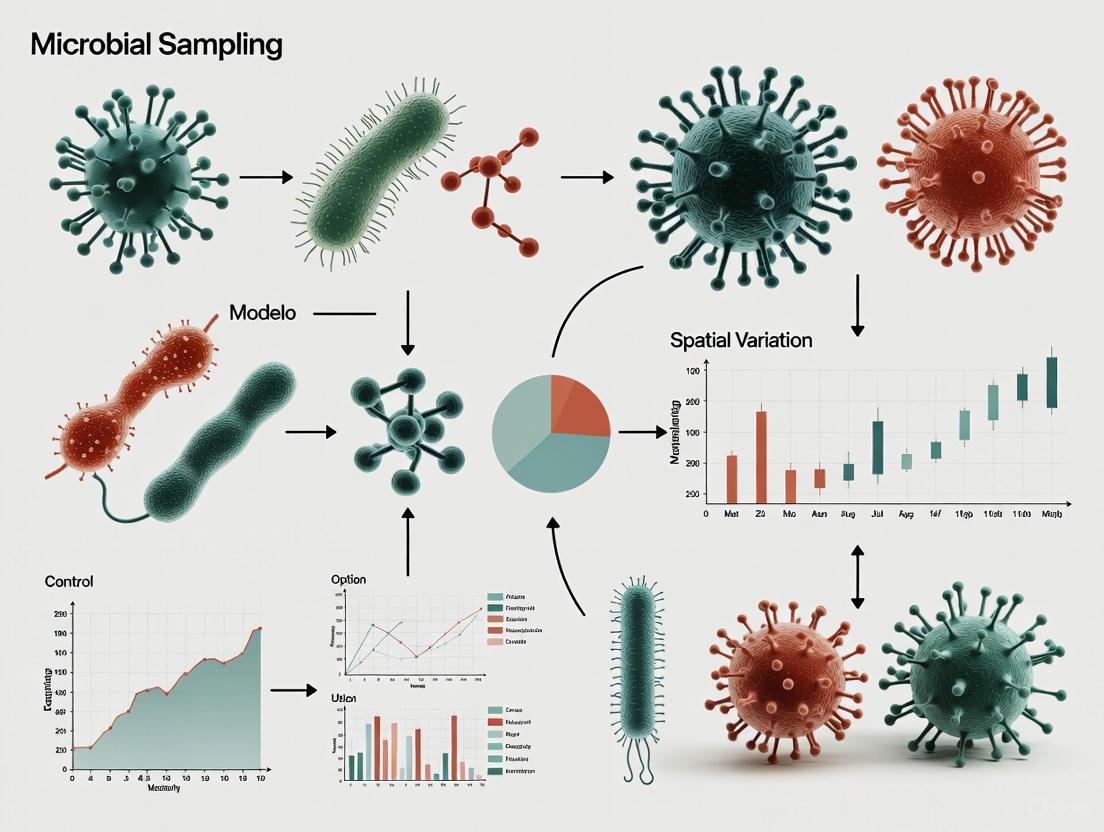
Spatial variation is a fundamental, yet often overlooked, factor that can significantly impact the reproducibility and interpretation of microbial studies.
Controlling Spatial Variation in Microbial Sampling: A Comprehensive Guide for Robust Research and Drug Development
Abstract
Spatial variation is a fundamental, yet often overlooked, factor that can significantly impact the reproducibility and interpretation of microbial studies. This article provides a systematic framework for researchers, scientists, and drug development professionals to understand, control, and account for spatial heterogeneity in microbial communities. We explore the ecological drivers of spatial patterns across diverse environments—from the human gut to deep-sea trenches—and detail advanced methodologies for robust sampling design. The guide further addresses troubleshooting for technical noise and validation techniques to distinguish true biological signals from spatial artifacts. By synthesizing foundational knowledge with practical applications, this resource aims to enhance the accuracy and reliability of microbiome research, thereby strengthening downstream analyses in drug discovery and clinical diagnostics.
Why Space Matters: Unraveling the Drivers of Microbial Spatial Heterogeneity
Spatial variation refers to the differences in microbial community structure, function, and abundance across different physical scales and locations. Understanding these patterns is crucial for research reproducibility, accurate ecological interpretation, and pharmaceutical quality control. Spatial heterogeneity exists across a continuum, from macro-scale variations across kilometers in marine environments to micro-scale gradients within millimeters in host-associated or soil habitats.
The following troubleshooting guides and FAQs address the specific methodological challenges researchers face when controlling for spatial variation in their experimental designs, providing practical solutions to enhance data quality and reliability.
Troubleshooting Guides & FAQs
FAQ 1: How does spatial scale impact microbial community analysis?
Answer: The impact of spatial scale is profound and varies significantly across ecosystems:
- Marine Environments: In the Bohai Sea, distinct temporal-spatial zones emerged in sediments between June and August, characterized by significant differences in dissolved oxygen, bottom water acidification, and nutrient concentrations (TN, NO₃â», PO₄³â», DOC). These spatial and temporal variations strongly influenced microbial community composition, with August conditions triggering a significant decline in aerobic bacteria and an increase in anaerobes [1].
- Freshwater Reservoirs: Research on Zhangjiayan Reservoir sediments demonstrated that bacterial communities exhibited significantly distinct clustering patterns between spring/summer and autumn/winter seasons (P < 0.05). Both diversity indices and taxonomic abundance were markedly higher during spring and summer compared to autumn and winter periods [2].
- Human Skin: The cutaneous microbiome varies not only between individuals but also between different body sites on the same individual according to local skin properties (e.g., oily, moist, dry) [3].
- Rhizosphere: In the maize rhizosphere, enzymatic activity and microbial growth kinetics show dramatic gradients at sub-millimeter scales. Active microbial biomass was up to 29 times greater at <2 mm from the root compared to >2 mm, and the lag-time before microbial growth was 0.5 hours shorter in this near-root zone [4].
Table 1: Spatial Variation Across Ecosystems
| Ecosystem | Spatial Scale | Key Observed Variations | Dominant Influencing Factors |
|---|---|---|---|
| Marine (Bohai Sea) | Kilometers to meters | Distinct temporal-spatial zones in sediments; shifts in aerobic/anaerobic ratios | Dissolved oxygen, temperature, TN, PO₄³â», DOC [1] |
| Freshwater Reservoir | Basin scale | Significant seasonal clustering; higher spring/summer diversity | DO, SRP, sediment pH, phosphorus, ALP, TOC [2] |
| Rhizosphere | Sub-millimeter | 29x greater active biomass at <2mm vs >2mm; different enzyme activities | Root exudate gradients, microbial growth kinetics [4] |
| Human Skin | Body regions to centimeters | Distinct microbial communities by skin characteristics | Temperature, pH, humidity, sebum production [3] |
FAQ 2: What sampling strategies best capture spatial variation at micro-scales?
Answer: Capturing micro-scale variation requires specialized approaches:
High-Resolution Sampling: For rhizosphere studies, traditional destructive sampling often lacks the sensitivity to accurately reflect spatial gradients. Research demonstrates that 1 mm resolution sampling reveals significant rhizosphere gradients in microplate assays, particularly for β-glucosidase, with a gradual decrease in Vmax at 1–2 mm (up to 1.7 times) and >2 mm (up to 4.5 times) compared to <1 mm [4]. This highlights the critical need for short-distance sampling techniques to accurately capture spatial distribution.
Standardized Swab Selection: For cutaneous microbiome sampling:
- Swab Type Matters: Flocked nylon swabs (eSwabs) yield significantly higher biomass (average 22.48 ng) compared to cotton swabs (average 5 ng) [3].
- Minimal Effect Factors: Moistening solution (saline vs. PBS), swabbing duration (30 sec vs. 1 min), and immediate storage conditions (room temperature vs. -80°C) did not significantly affect total DNA yield or microbiome profiling [3].
- Individual Variability: Data clustering is affected more by individual subject than by sampling conditions, highlighting the importance of accounting for inter-individual variability in study design [3].
Table 2: Optimized Sampling Methods for Different Habitats
| Habitat | Recommended Method | Spatial Resolution | Key Technical Considerations |
|---|---|---|---|
| Rhizosphere | High-resolution destructive sampling | <1 mm intervals | β-glucosidase activity shows 1.7x decrease at 1-2mm, 4.5x at >2mm [4] |
| Cutaneous Microbiome | Flocked nylon swabs (eSwabs) | Single body site | Higher biomass yield (avg 22.48 ng vs 5 ng for cotton); moistening solution has minimal effect [3] |
| Aquatic Sediments | Box corer with stratified sampling | Centimeter layers | Seasonal variations significant; collect across multiple seasons [1] [2] |
| Water Column | Depth-stratified hydrophore | Meter intervals | Consider thermal and oxygen stratification, especially in sub-deep reservoirs [2] |
FAQ 3: How can I neutralize antimicrobial properties in samples for accurate microbial testing?
Answer: Pharmaceutical products with inherent antimicrobial activity require careful neutralization for accurate microbial testing:
- Dilution Approach: For 18 of 40 challenging finished products, neutralization was achieved through 1:10 dilution with diluent warming. Another 8 products with no inherent antimicrobial activity from their API were neutralized through dilution and the addition of 1-5% Tween 80 [5].
- Filtration Methods: For 13 products (mostly antimicrobial drugs), neutralization required variations of different dilution factors and filtration with different membrane filter types with multiple rinsing steps [5].
- Validation Essential: Method suitability must be verified using standard strains (Staphylococcus aureus, Escherichia coli, Pseudomonas aeruginosa, Aspergillus brasiliensis, Burkholderia cepacia complex, Candida albicans) with acceptable microbial recovery of at least 84% for all strains with proper neutralization methods [5].
FAQ 4: What advanced technologies can enhance spatial analysis in microbial studies?
Answer: Several emerging technologies offer significant advantages:
- Spectral Flow Cytometry: Enables high-dimensional analysis with unprecedented deep phenotyping and more precise cell characterization. This technology uses multiple detectors to capture the entire fluorescence emission spectrum for each fluorochrome, allowing more precise signal unmixing and simultaneous analysis of a greater number of parameters (up to 50 markers) within a single tube [6].
- High-Dimensional Cytometry Data Analysis: Tools like cyCONDOR provide comprehensive computational frameworks covering essential steps of cytometry data analysis, including guided pre-processing, clustering, dimensionality reduction, and machine learning algorithms. This facilitates integration into clinically relevant settings where scalability is paramount [7].
- Integrated Multi-Omics Approaches: Combining high-dimensional cytometry with other data types through advanced analytical platforms allows for more comprehensive understanding of microbial systems in their spatial context [7].
Research Reagent Solutions
Table 3: Essential Research Reagents for Spatial Variation Studies
| Reagent/Kit | Primary Function | Application Context | Key Considerations |
|---|---|---|---|
| Tween 80 (Polysorbate 80) | Neutralizing agent for antimicrobial products | Microbial quality control of pharmaceuticals | Used at 1-5% concentration; effective for products without inherent API antimicrobial activity [5] |
| Lecithin | Neutralizing agent | Microbial quality control | Used at 0.7% concentration in combination with other neutralizers [5] |
| eSwabs (flocked nylon) | Sample collection | Cutaneous microbiome studies | Yield higher biomass (avg 22.48 ng) vs cotton swabs (avg 5 ng) [3] |
| Phosphate Buffered Saline (PBS) | Moistening solution for swabs | Cutaneous microbiome sampling | No significant difference vs saline in DNA yield or community profiling [3] |
| Soybean-Casein Digest Agar (SCDA) | Total aerobic microbial count | Pharmaceutical quality control | For TAMC; bacterial colonies on fungal media counted as part of TAMC [5] |
| Sabouraud Dextrose Agar (SDA) | Total yeast and mold count | Pharmaceutical quality control | For TYMC; fungal colonies on this medium specifically counted [5] |
Experimental Workflow Diagrams
Diagram 1: Microbial Sampling Strategy Selection Workflow
Diagram 2: Pharmaceutical Microbial QC Neutralization Strategy
Frequently Asked Questions: Troubleshooting Microbial Sampling
Q1: My microbial community analysis shows unexpected spatial variation. What are the primary environmental factors I should investigate? Your findings are likely driven by key environmental drivers. Research consistently shows that temperature and nutrients (particularly total phosphorus and nitrogen forms) are dominant factors [8] [1] [9]. In a tropical reservoir, temperature and total phosphorus were the most significant variables affecting the community composition of both archaea and bacteria [8]. Similarly, in mountain stream sediments, temperature was found to influence bacterial community structure through both direct and indirect pathways by altering sediment parameters [9]. You should also analyze a suite of physicochemical factors like dissolved oxygen (DO), pH, and oxidation-reduction potential (ORP), as these create gradients that shape microbial niches [8] [1].
Q2: How can I design a sampling plan to accurately capture spatial variation in a heterogeneous environment? A robust sampling design is critical. A recent study on avocado orchards demonstrated that the chosen sampling design (grid-based, longitudinal transect, or zigzag transect) can directly influence the observed bacterial community composition and the identified key edaphic drivers [10]. For the most reliable characterization of microbial communities, the study recommends a random, grid-based sampling design as a simple and effective method [10]. This approach helps ensure that your data is representative and not skewed by the sampling methodology itself.
Q3: I've detected temporal changes in my microbial data. Is this normal, and what causes it? Yes, this is expected and often significant. Microbial communities exhibit strong temporal dynamics in response to environmental changes [8] [1]. For example, in the Bohai Sea, the microbial community in August was distinctly different from that in June, characterized by lower dissolved oxygen and higher concentrations of nutrients like TN, NO₃â», and PO₄³⻠[1]. In the Songtao Reservoir, microbial diversity indices (Chao1, Shannon, Simpson) were significantly higher in winter than in summer, and the overall structural composition showed clear seasonal differences [8]. Always record key parameters like temperature and nutrient levels at the time of sampling to contextualize temporal shifts.
Q4: My sample recovery for Gram-negative bacteria is low. What could be going wrong? This is a common methodological challenge. During aerosolization or when a culture medium surface loses moisture, Gram-negative bacteria are particularly susceptible to desiccation damage [11]. This can cause irreversible damage to the cell structure and lead to loss of viability. To mitigate this, ensure your sampling protocols minimize desiccation, for instance, by using appropriate neutralizers in your dilution reagents and by ensuring that agar plates do not dry out during incubation [11].
The following table synthesizes quantitative findings on key environmental drivers from recent studies.
| Environmental Driver | Measured Parameters | Observed Impact on Microbial Community | Study Context |
|---|---|---|---|
| Temperature [8] [9] | Water temperature (°C) | Directly and indirectly (via sediment parameters) alters bacterial community structure; a key driver of spatiotemporal variation [8] [9]. | Tropical Reservoir & Mountain Stream |
| Nutrients: Phosphorus [8] [1] | Total Phosphorus (TP), Phosphate (PO₄³â») | Significantly correlates with microbial species abundance; major contributor to community composition shifts and temporal zonation [8] [1]. | Tropical Reservoir & Coastal Sea |
| Nutrients: Nitrogen [1] | Total Nitrogen (TN), Nitrate (NO₃â»), Ammonia (NHâ‚„âº) | Increased concentrations linked to a decline in aerobic bacteria, an increase in anaerobes, and accumulation of ammonia-/nitrite-oxidizing bacteria [1]. | Coastal Sea |
| Physicochemical: DO & pH [1] | Dissolved Oxygen (DO), pH | Low DO and pH in bottom sediment created a distinct temporal zone, favoring anaerobic metabolic pathways [1]. | Coastal Sea |
| Metals [8] | Selenium (Se), Nickel (Ni) | Abundance of microbial species showed significant correlation with concentrations of Se and Ni [8]. | Tropical Reservoir |
Detailed Experimental Protocols
Protocol 1: Water Column and Sediment Sampling for Microbial Community Analysis
This protocol is adapted from methodologies used in reservoir and marine studies [8] [1].
- Site Selection: Establish sampling sites strategically to cover gradients (e.g., upstream, midstream, downstream) or areas of interest. A grid-based design is recommended for heterogeneous environments [8] [10].
- In-Situ Physicochemical Measurement: At each site, use a multi-parameter sonde (e.g., YSI Pro Plus) to measure temperature, pH, dissolved oxygen (DO), electrical conductivity (EC), and turbidity directly in the field [8] [1].
- Water Sample Collection:
- Collect water samples using a hydrophore or sterile glass bottles [1].
- For microbial analysis, filter a known volume of water (e.g., 1-2 L) through a 0.22 μm membrane filter. Store filters at -80°C until DNA extraction [8] [1].
- For nutrient/metal analysis, collect additional water samples, transport them to the lab at 4°C, and filter through 0.45 μm membranes. Analyze for Total Nitrogen (TN), Total Phosphorus (TP), COD, and metals (e.g., Cr, Mn, Ni, Cu, Se, Cd, Ba) using standard spectrophotometric and ICP-MS methods [8].
- Sediment Sample Collection:
- Collect sediment using a Peterson dredger or box corer [1] [9].
- For microbial DNA, place subsamples in sterile bags and flash-freeze on dry ice for transport [9].
- For sediment physicochemical analysis, collect separate subsamples. Air-dry, grind, and analyze for Total Carbon (TC), Total Nitrogen (TN), Total Phosphorus (TP), and Organic Matter (OM) [9].
Protocol 2: Microbial DNA Extraction, Sequencing, and Bioinformatics
- DNA Extraction: Extract total genomic DNA from filters or sediment (e.g., 0.5 g) using the CTAB or SDS method [8] [9].
- 16S rRNA Gene Amplification: Amplify the V3-V4 hypervariable region of the 16S rRNA gene using primers 341F and 806R [8] [9].
- Library Preparation and Sequencing: Prepare libraries using a kit like the Illumina TruSeq DNA PCR-Free Sample Preparation Kit and sequence on an Illumina platform (e.g., NovaSeq) [8] [1].
- Bioinformatic Processing:
- Statistical Analysis:
- Calculate alpha-diversity indices (Chao1, Shannon, Simpson).
- Perform Principal Coordinates Analysis (PCoA) for beta-diversity.
- Use Redundancy Analysis (RDA) and Mantel's test to link community variation to environmental factors [8].
Experimental Workflow and Factor Relationships
Diagram 1: Microbial sampling and analysis workflow.
Diagram 2: Environmental factor relationships.
The Scientist's Toolkit: Research Reagent Solutions
| Item | Function / Application |
|---|---|
| Membrane Filters (0.22 μm & 0.45 μm) | For concentrating microbial cells from water samples (0.22 μm) and filtering water for physicochemical analysis (0.45 μm) [8] [1]. |
| DNA Extraction Kits (CTAB/SDS method) | For extracting high-quality metagenomic DNA from complex environmental samples like water filters and sediment [8] [9]. |
| Primers 341F & 806R | Universal prokaryotic primers for amplifying the V3-V4 region of the 16S rRNA gene for Illumina sequencing [8] [9]. |
| TruSeq DNA PCR-Free Library Prep Kit | Used for preparing high-quality sequencing libraries without PCR bias, suitable for metagenomic studies [8] [1]. |
| Multi-Parameter Sonde (e.g., YSI Pro Plus) | For in-situ measurement of critical physicochemical parameters: temperature, pH, dissolved oxygen (DO), salinity, etc. [8] [1]. |
| Culture Media (TSA, MEA, SDA) | For viable air monitoring and cultivation; TSA for bacteria, MEA/SDA for yeast and mold [12]. |
| ICP-MS Calibration Standards | For accurate quantification of metal concentrations (e.g., Se, Ni) in water samples, which can be key drivers of microbial composition [8]. |
| Palmitoleyl linolenate | Palmitoleyl linolenate, MF:C34H60O2, MW:500.8 g/mol |
| 5-Methyl-3-oxo-4-hexenoyl-CoA | 5-Methyl-3-oxo-4-hexenoyl-CoA, MF:C28H44N7O18P3S, MW:891.7 g/mol |
Troubleshooting Guide: Controlling for Spatial Variation
Problem: High variability and inconsistent results between samples. Spatial variation is a major confounder in gut microbiome and host biology studies. The table below outlines common issues and evidence-based solutions to control for this variability.
| Problem & Symptom | Root Cause | Solution & Recommended Action | Key Citations |
|---|---|---|---|
| High variance in bacterial abundance measurements; inability to distinguish true temporal shifts from spatial heterogeneity. | Single samples per time point conflating spatial sampling noise with genuine temporal dynamics. | Implement the DIVERS (Decomposition of Variance Using Replicate Sampling) protocol: collect two spatial replicates per time point; use spike-in controls for absolute abundance quantification [13]. | [13] |
| Inconsistent transcriptional profiles; failure to replicate defined metabolic domains along the gut axis. | Sampling from undefined or inconsistent intestinal regions (e.g., treating "colon" as a single unit). | Define sampling strategy by the five discrete metabolic domains of the small intestine or the distinct immune-stromal neighborhoods of the colon. Use machine learning models to verify domain identity where possible [14] [15]. | [14] [15] |
| Inability to detect genuine biological gradients; data is dominated by technical noise. | Technical noise from library preparation and sequencing obscuring true biological signal, especially for low-abundance taxa/transcripts. | Use spike-in controls (for metagenomics) or UMI-based single-cell/nuclei protocols (for transcriptomics). Filter out taxa/genes where technical noise contributes >50% to total variance [13]. | [13] |
| Confounding spatial organization with cell type composition; unclear if a signal is from a new cell type or spatial reorganization. | Analytical methods that do not preserve spatial context, relying solely on dissociated cells. | Employ spatial transcriptomics (ST) or multiplexed imaging (CODEX). These technologies allow for the mapping of gene expression and cell types directly within the tissue architecture [16] [15]. | [16] [15] |
Frequently Asked Questions (FAQs)
1. Why is it critical to move beyond the traditional three-segment model of the small intestine in my sampling design? Recent high-resolution studies have revealed that the mouse and human small intestine is organized into five discrete metabolic domains with distinct transcriptional profiles and nutrient absorption functions [14]. Sampling based only on the duodenum, jejunum, and ileum can miss critical biological variation, as these domains have indefinite borders and may not reflect the underlying metabolic zonation. Defining your sampling strategy by these domains provides a more precise and biologically relevant framework.
2. How can I quantitatively determine what portion of my data variance is due to spatial sampling noise versus true temporal changes? The DIVERS variance decomposition model is designed specifically for this purpose. It uses replicate sampling and spike-in sequences to provide a principled mathematical breakdown of variance. The model separates the contributions of temporal dynamics, spatial sampling variability, and technical noise to the total variance of each bacterial taxon or host gene [13].
3. What are the key spatial differences in the large intestine (colon) that I should account for? The colon exhibits significant spatial organization in its cellular composition and immune niches. Key differences include [15]:
- A decrease in CD8+ T cells and an increase in dendritic cells from the ascending to the sigmoid colon.
- An increase in smooth muscle cells and a decrease in endothelial cells compared to the small intestine.
- The presence of distinct stromal and immune multicellular neighborhoods, such as a Plasma-Cell-Enriched neighborhood.
4. Which experimental techniques are best for preserving spatial information in gut studies?
- For transcriptomics: Spatial Transcriptomics (ST) allows for genome-wide expression profiling directly on tissue sections, preserving the spatial context of the liver lobule or intestinal crypt-villus axis [16].
- For cell typing and mapping: Multiplexed imaging (e.g., CODEX) uses antibody panels to visualize and quantify dozens of cell types simultaneously within their native tissue architecture, revealing cellular neighborhoods and communities [15].
Experimental Protocols & Data
Protocol 1: DIVERS for Quantifying Spatiotemporal Variation in Microbial Communities
This protocol quantifies the sources of variability in longitudinal microbiome studies [13].
- Sample Collection: At each time point in a longitudinal study, collect two replicate samples from randomly chosen spatial locations within the same stool specimen or gut region.
- Spike-in and Technical Replication: Take one of the two spatial replicates and split it in half to create two technical replicates.
- Spike-in Addition: Add a known quantity of a spike-in strain (not native to the gut community) to all samples during DNA extraction. This allows for the calculation of absolute abundances, correcting for compositional artifacts.
- Sequencing and Analysis: Perform 16S rRNA gene sequencing or whole-metagenome shotgun sequencing. Use the DIVERS statistical model to decompose the variance and covariance of absolute abundances into temporal, spatial, and technical components.
Protocol 2: Spatial Mapping of Intestinal Cell Communities via Multiplexed Imaging
This protocol details the steps for mapping cellular organization in intestinal tissues [15].
- Tissue Preparation: Collect intestinal samples from defined regions (e.g., duodenum, ileum, ascending colon). Embed and cryosection fresh-frozen tissue sections.
- Antibody Staining: Stain the tissue sections with a validated panel of ~50 antibodies using the CODEX multiplexed imaging platform. The panel should include markers for epithelial, stromal, and immune cell lineages.
- Image Acquisition and Processing: Image the stained tissue sections. Process the images to perform single-cell segmentation and assign cell types based on antibody staining patterns.
- Neighborhood Analysis: Use graph-based clustering algorithms on the single-cell data to identify significant multicellular neighborhoods—groups of cells that consistently co-localize across tissue samples.
Summarized Quantitative Data
Table 1: Variance Decomposition of Abundant Gut Microbiota (DIVERS Analysis) Data from a high-resolution human fecal time series shows the average percentage contribution of different factors to total abundance variance for operational taxonomic units (OTUs) with mean absolute abundance > 10â»â´ [13].
| Variability Source | Average Contribution to Variance |
|---|---|
| Temporal Dynamics | ~55% |
| Spatial Sampling | ~20% |
| Technical Noise | ~25% |
Table 2: Shift in Key Cell Type Percentages from Small Intestine to Colon Data derived from multiplexed imaging (CODEX) of human intestinal sections, showing changes in the relative abundance of major cell types [15].
| Cell Type | Trend from Small Intestine to Colon |
|---|---|
| CD8+ T cells | Decrease |
| Dendritic cells | Increase |
| Smooth muscle cells | Increase |
| Endothelial cells | Decrease |
| Enterocytes | Decrease |
| Goblet cells | Increase |
The Scientist's Toolkit: Research Reagent Solutions
| Item | Function & Application |
|---|---|
| Spike-in Control (e.g., non-gut bacterium) | Added in known quantities before DNA extraction to convert relative sequencing abundances to absolute abundances, critical for accurate variance decomposition [13]. |
| Validated Antibody Panel for CODEX | A panel of ~50 antibodies against epithelial, stromal, and immune markers for multiplexed tissue imaging to identify cell types and spatial neighborhoods without dissociation [15]. |
| Spatial Transcriptomics (ST) Array | A glass slide with arrayed barcoded oligo spots for performing spatial transcriptomics, capturing genome-wide gene expression data from intact tissue sections [16]. |
| Machine Learning Classifier | A computational model trained on domain-specific gene expression data to systematically identify and verify intestinal domain identity in new samples [14]. |
| Methyl 3-hydroxyheptadecanoate | Methyl 3-hydroxyheptadecanoate, MF:C18H36O3, MW:300.5 g/mol |
| 2,4-dimethylhexanedioyl-CoA | 2,4-dimethylhexanedioyl-CoA, MF:C29H48N7O19P3S, MW:923.7 g/mol |
Experimental Workflow Visualization
Spatial Analysis Workflow
Troubleshooting Guide: Common Experimental Challenges
FAQ 1: My sediment profile data shows unexpected heterogeneity. How can I distinguish true spatial variation from technical noise?
- Problem: Fluctuations in measured parameters (e.g., bacterial abundances, carbon content) across depth can be caused by genuine spatial heterogeneity, temporal changes, or technical artifacts from sample processing and sequencing.
- Solution: Implement a replicate sampling design and use statistical decomposition methods.
- Recommended Protocol: The DIVERS (Decomposition of Variance Using Replicate Sampling) method quantifies these sources of variation [13].
- Collect two spatial replicate samples from randomly chosen locations at each sampling point (e.g., different cores from the same depth horizon).
- Split one of the spatial replicates to create two technical replicates.
- Use a spike-in procedure during sample processing to enable absolute abundance measurements.
- Apply the DIVERS variance decomposition model to mathematically separate the contributions of time, spatial sampling location, and technical noise to your total measured variance [13].
- Application: In a study of human gut microbiome spatial variation, this method revealed that nearly half of the detected taxa were dominated by technical noise, while for abundant taxa, spatial sampling heterogeneity contributed about 20% to the total variance [13].
FAQ 2: Traditional sediment stratification is slow and laborious. Are there rapid, high-resolution alternatives?
- Problem: Manually identifying and characterizing physical and chemical layers in sediment cores is inefficient and can miss subtle transitions [17].
- Solution: Utilize Visible and Near-Infrared Spectroscopy (VNIR) combined with machine learning.
- Recommended Protocol: As demonstrated in a study of a South China Sea sediment core [17]:
- Sample Preparation: Segment the core at fine intervals (e.g., 1 cm). Freeze-dry, grind, and sieve the samples.
- Spectral Data Collection: Use a spectrophotometer (e.g., Agilent Cary 5000) with a diffuse reflectance module to collect VNIR spectra for each sample.
- Data Processing & Modeling: Preprocess spectra (e.g., Savitzky–Golay filtering). Use algorithms like Competitive Adaptive Reweighted Sampling (CARS) to identify characteristic wavelengths. Train a classification model, such as a Support Vector Machine (SVM), to predict sediment layers. Combining unsupervised clustering (e.g., K-means, Density Peak Clustering) with SVM can achieve correct classification rates over 94% [17].
- Recommended Protocol: As demonstrated in a study of a South China Sea sediment core [17]:
FAQ 3: How can I map sedimentary carbon distribution over a large area without exhaustive sampling?
- Problem: Point measurements from sediment grabs provide limited spatial representation, making it difficult to identify carbon hotspots and estimate total stocks accurately [18].
- Solution: Employ an integrated approach using seafloor acoustics, imagery, and ground-truthing.
- Recommended Protocol: A study in Loch Creran, Scotland, successfully used this methodology [18]:
- Acoustic Survey: Conduct a high-resolution multibeam echosounder (MBES) survey to collect backscatter data, which correlates with seabed sediment composition.
- Ground-Truthing: Collect physical sediment samples (e.g., grab samples) and/or video imagery across the survey area to validate the acoustic data.
- Laboratory Analysis: Measure the grain size and Organic Carbon (OC) content of the ground-truthing samples.
- Spatial Modeling: Establish a strong relationship between acoustic backscatter, sediment type, and OC content. Use this model to predict and map OC distribution across the entire survey area, creating a high-resolution carbon stock map [18].
- Recommended Protocol: A study in Loch Creran, Scotland, successfully used this methodology [18]:
Table 1: Key Methodologies for Addressing Spatial Variation in Marine Sediments
| Method | Primary Application | Key Outputs | Considerations |
|---|---|---|---|
| DIVERS Variance Decomposition [13] | Quantifying sources of variation in microbial community data. | - Proportion of variance from temporal, spatial, and technical sources.- Identification of noise-dominated taxa. | Requires specific replicate sampling design and spike-in sequences for absolute abundance. |
| VNIR Spectroscopy with Machine Learning [17] | Rapid, high-resolution vertical stratification of sediment profiles. | - Sediment layer classification.- Prediction of chemical parameters (e.g., TC, TN). | Model performance depends on calibration data quality and quantity. |
| Acoustic Seabed Mapping (MBES) [18] | Spatial mapping of sedimentary carbon stocks over large areas. | - High-resolution map of seabed sediment types.- Predictive map of organic carbon distribution. | Requires ground-truthing with physical samples for model calibration. Acoustic signal can be influenced by factors other than sediment type. |
| Community-Level Physiological Profiling (Biolog EcoPlates) [19] | Assessing metabolic potential and carbon source utilization of sediment microbial communities. | - Average Well Color Development (AWCD).- Shannon diversity of carbon source use. | Incubation times can be long (e.g., over 100 days for deep-sea communities). Provides potential function, not in situ activity. |
Table 2: Example Metabolic Diversity Data from Mariana Trench Surface Sediments
This data, obtained using Biolog EcoPlates, shows how microbial metabolic capabilities can vary with depth and location [19].
| Sampling Station | Approx. Depth | Preferential Carbon Source Utilization Order | Shannon Index (H') (Metabolic Diversity) |
|---|---|---|---|
| Shallow Stations | < 10,000 m | Polymers > Carbohydrates > Amino Acids > Carboxylic Acids | Significantly lower |
| Deep Stations | > 10,000 m | Polymers > Carbohydrates > Amino Acids > Carboxylic Acids | Significantly higher |
The Scientist's Toolkit: Research Reagent Solutions
Table 3: Essential Materials for Stratification and Spatial Variation Studies
| Item | Function / Application |
|---|---|
| Gravity Corer | Collects undisturbed, vertically stratified sediment columns for core analysis [17]. |
| Multibeam Echosounder (MBES) | Provides high-resolution bathymetry and backscatter data for spatial seabed characterization and predicting sediment properties [18]. |
| Visible and Near-Infrared Spectrophotometer | Rapidly collects spectral data from sediment samples, which can be correlated with physical and chemical properties for fast stratification [17]. |
| Biolog EcoPlate | Microplate containing 31 different carbon sources to profile the metabolic capabilities and functional diversity of microbial communities from environmental samples [19]. |
| Spike-in Sequences | Known quantities of foreign DNA or cells added to a sample to allow for the calculation of absolute microbial abundances in sequencing studies, critical for variance decomposition [13]. |
| Support Vector Machine (SVM) | A machine learning algorithm used to build classification models, for example, to classify sediment layers based on spectral data [17]. |
| 3,4-Dihydroxydodecanoyl-CoA | 3,4-Dihydroxydodecanoyl-CoA, MF:C33H58N7O19P3S, MW:981.8 g/mol |
| Alexa Fluor 680 NHS ester | Alexa Fluor 680 NHS ester, MF:C39H47BrN4O13S3, MW:955.9 g/mol |
Workflow Diagrams
Diagram 1: DIVERS Variance Decomposition Workflow
Diagram 2: VNIR-ML Sediment Stratification
Linking Spatial Patterns to Microbial Metabolism and Function
This technical support center provides troubleshooting guides and FAQs to help researchers address common challenges in experiments that investigate the link between spatial patterns and microbial metabolism.
Frequently Asked Questions
Q1: My microbial metabolite imaging results lack sufficient spatial detail. What are the key technical factors to improve resolution?
The spatial resolution of your imaging is primarily determined by your sampling protocol and technology choice. For microbial communities, where interactions occur at the micron scale, you require techniques with pixel sizes that match individual cells [20].
- Primary Issue: Using imaging with pixel sizes larger than 10µm will obscure critical details of microbial heterogeneity and metabolic gradients [20].
- Recommended Solution: Employ Matrix-Assisted Laser Desorption/Ionization Mass Spectrometry Imaging (MALDI-MSI), which currently offers the best combination of spatial and molecular resolution for metabolites. While standard systems achieve 5-10µm resolution, prototype systems can reach 1µm, which is necessary for single-cell level detail [20].
- Troubleshooting Tip: If using MALDI-MSI, focus on optimizing matrix chemistry and sample preparation, as these significantly impact detection capability for poorly ionizing metabolites like carbohydrates [20].
Q2: When is environmental sampling for microorganisms scientifically justified, and how can I avoid unnecessary culturing?
According to established guidelines, microbiologic environmental sampling is an expensive and time-consuming process that is only indicated for four specific situations [21]. You should only proceed if your study meets one of these criteria:
| Indication | Protocol Requirements | Expected Outcomes |
|---|---|---|
| Outbreak Investigation | Sampling supported by epidemiological data; molecular epidemiology to link environmental and clinical isolates [21]. | Confirmation of environmental reservoirs or fomites in disease transmission. |
| Research | Use of well-designed and controlled experimental methods [21]. | New information on the spread of healthcare-associated diseases. |
| Hazard Monitoring | Protocol to confirm presence and validate successful abatement of a hazardous chemical/biological agent [21]. | Documentation of hazardous condition and its resolution. |
| Quality Assurance | Protocol to evaluate a change in infection-control practice or equipment performance; use of controls [21]. | Evidence that a change in practice or system performs to specification. |
Q3: How can I directly link microbial identity to metabolic function in a complex host tissue sample?
A powerful approach is the combination of Mass Spectrometry Imaging (MSI) with 16S rRNA fluorescence in situ hybridization (FISH) on the same tissue section [20].
- The Challenge: It is difficult to determine which microbes are producing which metabolites in a complex, multi-species environment [20].
- The Solution: FISH uses fluorescently labeled, taxon-specific oligonucleotide probes to identify and localize bacterial cells within tissue sections. When combined with MALDI-MSI on the same section, it directly links microbial identity to the spatial distribution of metabolic activity [20].
- Advanced Application: This integrated protocol can be further complemented with H&E staining to assess host histological phenotypes linked to the presence of specific bacteria or metabolites [20].
Essential Experimental Protocols
Protocol 1: Designing a Spatial Sampling Strategy for Microbial Community Dynamics
This protocol is designed to capture the spatial and temporal variations in microbial communities, as exemplified in studies of aquatic systems like the Bohai Sea [1].
1. Experimental Design:
- Site Selection: Choose sampling sites that represent the ecological gradient of interest (e.g., along a pollution or salinity gradient). For example, a study may use 6 coastal stations near a port and tourist city [1].
- Sample Types: Collect paired samples of surface water (e.g., 3L) and bottom sediment (e.g., 1kg) using a hydrophore and a box corer, respectively [1].
- Temporal Replication: Plan sampling campaigns across different seasons or time points (e.g., June and August) to account for temporal dynamics [1].
2. Field Sampling & Physicochemical Analysis:
- In-situ Measurements: Immediately upon collection, measure temperature, pH, dissolved oxygen (DO), and salinity using a calibrated multiparameter instrument [1].
- Lab-based Analysis: Analyze samples for nutrients (PO₄³â», TN, NHâ‚„âº, NOâ‚‚â», NO₃â») and carbon content (DOC, DIC) following standardized oceanographic survey methods [1].
3. Microbiome Analysis Workflow:
- DNA Extraction: Extract metagenomic DNA from water filters (0.22µm) and sediment samples using a validated method like the CTAB protocol [1].
- Library Preparation & Sequencing: Amplify the 16S rRNA V4 region with specific primers (515F/806R). Construct libraries using a kit like Illumina's TruSeq DNA PCR-Free and sequence on a platform such as Illumina HiSeq2500 [1].
- Bioinformatic Processing: Process sequences to remove chimeras, cluster into Operational Taxonomic Units (OTUs) at ≥97% similarity, and annotate taxonomy using a database like GreenGene [1].
The diagram below illustrates the core workflow for this spatial sampling study.
Spatial Microbial Ecology Workflow
Protocol 2: Integrating Spatial Metabolomics with Microbial Identification
This protocol uses MSI and FISH to connect chemistry with biology in host-associated microbial communities [20].
1. Sample Preparation:
- Tissue Sectioning: Prepare thin, cryopreserved sections of the native host tissue containing the microbial community.
- Metabolite Preservation: Ensure sample processing avoids metabolite degradation or relocation.
2. Sequential Staining and Imaging:
- 16S rRNA FISH: First, apply fluorescently labeled, taxon-specific oligonucleotide probes to the tissue section to identify and localize bacterial cells.
- MALDI-MSI: On the same tissue section, perform MALDI-MSI to visualize the spatial distribution of metabolites, including lipids, peptides, amino acids, and secondary metabolites [20].
3. Data Integration and Analysis:
- Image Co-registration: Overlay the FISH and MSI images to align microbial cell locations with metabolite distributions.
- Correlation Analysis: Statistically identify metabolites that are spatially correlated with specific microbial taxa.
- Functional Inference: Infer metabolic interactions, such as the production of antibiotics or siderophores at inter-colony interfaces [20].
The logical relationship of this integrated approach is shown below.
Spatial Metabolomics Integration Logic
The Scientist's Toolkit: Key Research Reagent Solutions
The following table details essential materials and their functions for the protocols described above.
| Item Name | Function / Application | Technical Notes |
|---|---|---|
| Taxon-Specific FISH Probes [20] | Targets 16S rRNA to visually identify and localize specific microbial taxa within a tissue sample. | Probes can range from phylum to species specificity. Design depends on study objectives. |
| MALDI Matrix [20] | Enables soft ionization of metabolites for detection by Mass Spectrometry Imaging. | Matrix choice is critical; optimization is required for different metabolite classes (e.g., lipids vs. carbs). |
| TruSeq DNA PCR-Free Kit [1] | Prepares high-quality sequencing libraries for metagenomic analysis without amplification bias. | Ideal for 16S rRNA amplicon sequencing to characterize microbial community composition. |
| Illumina HiSeq2500 Platform [1] | Performs high-throughput sequencing of prepared DNA libraries. | Generates 250 bp paired-end reads, suitable for robust OTU clustering and taxonomy assignment. |
| GreenGene Database [1] | A reference database for annotating the taxonomy of 16S rRNA sequences. | Used with an RDP classifier to assign identity to OTUs derived from sequencing. |
| 8-Amino-7-oxononanoic acid hydrochloride | 8-Amino-7-oxononanoic acid hydrochloride, MF:C9H18ClNO3, MW:223.70 g/mol | Chemical Reagent |
| 3-Methyl-2-quinoxalinecarboxylic acid-d4 | 3-Methyl-2-quinoxalinecarboxylic acid-d4, MF:C10H8N2O2, MW:192.21 g/mol | Chemical Reagent |
The table below consolidates critical quantitative specifications from the search results to aid in experimental planning and troubleshooting.
| Parameter | Relevant Technique / Context | Quantitative Specification / Finding | Functional Implication |
|---|---|---|---|
| Spatial Resolution [20] | Mass Spectrometry Imaging (MSI) | Standard: 5-10 µm. Advanced/Prototype: 1 µm. | Resolution below 10µm is required to resolve metabolite distributions in microbial colonies. |
| Biomass & Diversity [22] | Slow Sand Filter (SSF) Microbial Communities | Schmutzdecke (top layer) has higher biomass and diversity than deeper sand layers. | Different microbial processes (e.g., organic matter degradation, nitrification) occur at different depths. |
| Archaea Abundance [22] | Slow Sand Filter (SSF) Microbial Communities | Relative abundance of archaea increases with sand depth. | Archaea are adapted to lower-nutrient conditions in deeper filter layers. |
| Community Resilience [22] | Slow Sand Filter (SSF) Scraping Disturbance | Prokaryotic community shows minimal biomass increase for first ~3.6 years post-scraping before maturing. | Biology in engineered systems is resilient; a core community ensures reliable performance after disturbance. |
| Particle Size & Health Risk [21] | Air Sampling for Bioaerosols | Particles ≤5 µm reach the lung; greatest alveolar retention is for 1–2 µm particles. | In outbreak investigations, particle size determination is crucial for linking aerosols to respiratory infections. |
Bridging Theory and Practice: Sampling Designs and Protocols to Control for Spatial Bias
Principles of 3D Spatial Sampling (X, Y, Z-Axes)
Frequently Asked Questions
What is the most critical factor for successful 3D spatial sampling? Tissue quality is paramount. The preservation method, RNA integrity, and proper embedding directly determine the quantity and quality of the data you can recover. Even the best sampling design will fail with degraded samples [23].
How do I choose the right spatial resolution for my experiment? The choice involves a trade-off. High resolution (smaller spot size) is essential for studying single-cell or subcellular structures but requires more sections and deeper sequencing to cover the same tissue volume. Lower resolution can be sufficient for understanding tissue-level architecture and is more efficient for larger areas [23].
My sample has low RNA quality (RIN <7). Can I still proceed? Yes, but with managed expectations. While an RNA Integrity Number (RIN) >7 is ideal, biologically meaningful data can still be obtained from samples with lower RIN values (e.g., 6.3), as demonstrated in studies of human metastatic lymph nodes [24].
How can I avoid shadows or missing data in my 3D reconstruction? For 3D surface mapping in profilometry, coaxial measurement systems (where projection and imaging axes are aligned) can overcome the occlusion issues common in traditional triangulation-based systems, enabling the complete reconstruction of complex geometries like deep holes [25].
What is the biggest mistake in designing a 3D spatial experiment? Underpowering the study. A robust experiment requires multiple biological replicates and multiple regions of interest (ROIs) per sample to account for both biological variability and technical noise introduced by tissue heterogeneity and sectioning [23].
Troubleshooting Guide
Table 1: Common 3D Spatial Sampling Issues and Solutions
| Issue | Possible Cause | Best Practice Solution |
|---|---|---|
| Long data generation times & high latency [26] | Generating collision/data for complex meshes consumes excessive CPU. | Use the minimum data resolution your application requires. Prioritize data requests and process them one at a time to minimize system slowdown [26]. |
| Excessive geometry/data slowing performance [26] | Too many triangles or data points per unit volume (over-sampling). | Use the minimum resolution of spatial mapping data required. Test your application to find the optimal balance between accuracy and performance [26]. |
| Failed 3D surface reconstruction | Traditional triangulation methods fail on surfaces with steep variations, causing occlusions [25]. | Implement a coaxial measurement system where the projection and imaging axes are aligned. This "what you see is what you measure" principle prevents shadows in deep holes or grooves [25]. |
| High variation between technical replicates | Inconsistent sample handling, permeabilization, or sectioning. | Standardize pre-analytical steps. Perform a pilot experiment to optimize permeabilization conditions (e.g., pepsin concentration and time) for your specific tissue type [24]. |
| Insufficient gene detection | Sequencing depth is too low, especially for FFPE samples or complex tissues. | Sequence deeper than manufacturer minimums. For FFPE tissues, aim for 100,000–120,000 reads per spot instead of the standard 25,000–50,000 to recover sufficient transcripts [23]. |
Table 2: Permeabilization Conditions for Different Tissue Types
The following table, derived from the Open-ST protocol, provides a starting point for optimizing permeabilization, a critical step for efficient mRNA capture [24].
| Species | Tissue Type | Pepsin Timing (min) | Additional Notes |
|---|---|---|---|
| Mouse | Brain (E13) | 30 | -- |
| Mouse | Brain (Adult) | 30 | -- |
| Human | Metastatic lymph node | 45 | 1.4 U/μL pepsin |
| Human | Healthy lymph node | 45 | 1.4 U/μL pepsin |
| Human | Head & neck squamous cell carcinoma | 45 | 1.4 U/μL pepsin |
Experimental Protocol: A Workflow for Robust 3D Spatial Sampling
The diagram below outlines a generalized experimental workflow for 3D spatial transcriptomics, integrating best practices for controlling spatial variation.
Workflow for 3D Spatial Transcriptomics
Computational Data Processing Workflow
After data generation, a robust computational pipeline is essential for transforming raw data into a 3D molecular map.
Computational Pipeline for 3D Data
The Scientist's Toolkit
Table 3: Research Reagent Solutions for 3D Spatial Transcriptomics
| Item | Function | Protocol Note |
|---|---|---|
| OCT Compound | Optimal Cutting Temperature medium; a water-soluble embedding matrix for freezing and cryosectioning tissues. | Ensures tissue integrity during freezing and provides support for thin sectioning [24]. |
| Isopentane | A coolant used for rapid freezing of tissue samples. | Cooled by liquid nitrogen or dry ice for flash-freezing, which preserves RNA quality and tissue morphology [24]. |
| Pepsin | An enzyme used for tissue permeabilization in formalin-fixed paraffin-embedded (FFPE) samples. | Digests proteins and unlocks crosslinks, allowing mRNA to be captured. Concentration and timing must be optimized per tissue type [24]. |
| HDMI-32-DraI Library | A spatially barcoded oligonucleotide library. | Pre-coated on repurposed Illumina flow cells to create high-resolution capture areas for mRNA binding [24]. |
| Poly-dT Primers | Primers that bind to the poly-adenylated (poly-A) tail of messenger RNA (mRNA). | The foundation for cDNA synthesis in most spatial transcriptomics protocols; efficiency depends on RNA integrity [24]. |
| Curcumin-diglucoside tetraacetate-d6 | Curcumin-diglucoside tetraacetate-d6, MF:C49H56O24, MW:1035.0 g/mol | Chemical Reagent |
| 2-(Dimethylamino)acetanilide-d6 | 2-(Dimethylamino)acetanilide-d6, MF:C10H14N2O, MW:184.27 g/mol | Chemical Reagent |
High-Resolution Sampling Strategies for Complex Gradients
Frequently Asked Questions (FAQs)
Q1: What are the primary causes of invalid spatial references in geospatial data for microbial ecology? Invalid spatial references often occur when data is imported from non-ArcGIS systems, or due to the misuse of geoprocessing environments for XY Resolution and XY Tolerance. Manually adjusting these values away from their defaults to save disk space or generalize data can lead to incorrect analytical results, performance issues, or software crashes [27].
Q2: How can I correct an invalid spatial reference in my sampling location data? To correct an invalid spatial reference, you must create a new feature class. Import the original feature class's schema and coordinate system, but use the wizard's "Reset To Default" button on the Tolerance tab and accept the default resolution. After loading your original data into this new feature class, run the Check Geometry and Repair Geometry tools to fix any underlying issues revealed by the correct spatial properties [27].
Q3: Why is the metabolic diversity of microbial communities significantly different between shallow and deep stations in the Mariana Trench? Spatial variation in microbial community structure, driven by environmental factors like sampling depth and total organic carbon (TOC) content, leads to differentiated ecological niches. Furthermore, incubation experiments show that microbial communities at most shallow stations have significantly lower metabolic diversity than those at deep stations, reflecting an initial preference for different carbon sources like polymers and carbohydrates [19].
Q4: What methodology is used to directly link microbial community structure to carbon source utilization potential? A polyphasic approach combining high-throughput 16S rRNA amplicon sequencing with community-level physiological profiling using Biolog EcoPlate microplates is effective. Sequencing reveals taxonomic diversity, while the microplates, incubated for an extended period (e.g., 109 days), measure the utilization of 31 different carbon substrates, thus linking structure to function [19].
Troubleshooting Guides
Problem: Inconsistent Microbial Community Analysis Due to Spatial Variation
Description Spatial variation in environmental factors like depth and nutrient content can lead to significantly different microbial community structures and metabolic functions, potentially skewing research conclusions if not controlled [19] [1].
Investigation & Resolution
- Root Cause Analysis: Spatial variation is a fundamental driver of microbial community composition. In the Mariana Trench, sampling depth and total organic carbon (TOC) content were key environmental drivers, leading to distinct communities above and below 10,000 meters [19].
- Resolution Strategy: A controlled sampling design that accounts for major environmental gradients is essential.
- Stratified Sampling: Design your sampling strategy to explicitly test the impact of specific gradients (e.g., depth, TOC, distance from shore). Group sampling stations into strata (e.g., shallow vs. deep) for robust comparison [19] [1].
- Environmental Data Collection: Consistently measure and record key physicochemical parameters (e.g., depth, TOC, TN, TP, DO, pH, temperature) at each sampling site to use as co-variables in your analysis [19] [1].
- Standardized DNA Extraction: Use standardized kits, such as the PowerSoil DNA Isolation Kit, and consistent procedures across all samples to avoid introducing technical bias [19].
Problem: Sampling Fails to Capture Temporal-Spatial Microbial Dynamics
Description Microbial communities in environments like the Bohai Sea show significant temporal variation (e.g., between June and August), which can interact with spatial variation. Ignoring this can lead to an incomplete or inaccurate understanding of microbial dynamics [1].
Investigation & Resolution
- Root Cause Analysis: Temporal changes (e.g., in temperature, dissolved oxygen, nutrient concentrations) can cause profound shifts in microbial community structure and function, sometimes having a stronger influence than spatial variation [1].
- Resolution Strategy: Integrate temporal scale into sampling design.
- Time-Series Sampling: Conduct sampling at the same locations across multiple time points (e.g., different seasons) to disentangle temporal and spatial effects [1].
- Monitor Environmental Fluctuations: Track parameters like dissolved oxygen, nutrient concentrations (TN, NO₃â», PO₄³â»), and temperature over time, as these are key factors driving temporal changes [1].
- Bioinformatic Adjustment: Use statistical models like Principal Coordinates Analysis (PCoA) and Least Discriminant Analysis (LDA) effect size (LEfSe) to identify which taxa are significantly associated with specific temporal or spatial zones [1].
Experimental Protocols for Microbial Community Analysis
Protocol 1: Assessing Community-Level Metabolic Diversity using Biolog EcoPlates
This protocol measures the functional metabolic diversity of environmental microbial communities based on their carbon source utilization patterns [19].
Methodology:
- Sample Preparation: Suspend 10 g of sediment in 20 mL of 50 mM phosphate buffer (pH 7.0). Mix and centrifuge to collect microbial cells, washing twice with buffer to remove soluble carbon. Adjust the final suspension to an optical density between 0.25–0.35 at 420 nm [19].
- Inoculation and Incubation: Add 150 µL of the adjusted suspension to each well of a Biolog EcoPlate. Incubate the plates in the dark at a temperature relevant to the study environment (e.g., 4°C for deep-sea studies) [19].
- Data Acquisition: Measure the absorbance of each well at 590 nm and 750 nm every 24 hours. The 750 nm measurement corrects for turbidity. Incubation may need to be extended for slow-growing communities (e.g., 109 days for deep-sea sediments) [19].
- Data Analysis:
- Calculate the Average Well Color Development (AWCD) for the plate or substrate categories:
AWCD = Σ(R - C)/n, whereRis the absorbance of a sample well,Cis the absorbance of the control well, andnis the number of substrates [19]. - Calculate the Shannon diversity index (H') for carbon source utilization:
H' = -Σpi ln(pi), wherepiis the ratio of the relative absorbance of a single well to the sum of all wells [19].
- Calculate the Average Well Color Development (AWCD) for the plate or substrate categories:
Table 1: Carbon Source Categories in a Biolog EcoPlate
| Category | Number of Substrates | Example Substrates |
|---|---|---|
| Carbohydrates | Multiple | Glycogen, D-Cellobiose |
| Polymers | Multiple | Tween 40, Tween 80 |
| Carboxylic & Acetic Acids | Multiple | D-Glucosaminic Acid, α-Ketobutyric Acid |
| Amino Acids | Multiple | L-Arginine, L-Serine |
| Amines & Amides | Multiple | Phenylethyl-amine |
Protocol 2: High-Throughput Sequencing of Microbial Community Structure
This protocol details the steps for using 16S rRNA gene sequencing to profile the taxonomic composition of microbial communities from sediment samples [19] [1].
Methodology:
- DNA Extraction: Extract metagenomic DNA from sediment samples (e.g., 0.5 g) using a standardized kit like the PowerSoil DNA Isolation Kit. Assess DNA concentration and quality via gel electrophoresis and a spectrophotometer [19].
- PCR Amplification: Amplify the hypervariable V4 region of the 16S rRNA gene using universal prokaryotic primers (e.g., 515F:
5′-GTGCCAGCMGCCGCGGTAA-3′and 806R:5′-GGACTACHVGGGTWTCTAAT-3′). Use barcoded primers for multiplexing samples [19] [1]. - Library Preparation and Sequencing: Prepare sequencing libraries using a kit such as the TruSeq DNA PCR-Free Sample Preparation Kit. Sequence the libraries on an Illumina platform (e.g., HiSeq2500) to generate paired-end reads [19] [1].
- Bioinformatic Analysis:
- Process sequences to remove chimeras and low-quality reads.
- Cluster high-quality sequences into Operational Taxonomic Units (OTUs) at a 97% similarity threshold.
- Annotate taxonomic information using a reference database like the GreenGene Database [1].
Table 2: Key Physicochemical Parameters to Measure in Sediment Samples
| Parameter | Standard Measurement Method |
|---|---|
| Total Organic Carbon (TOC) | Elemental analyzer after acid treatment to remove inorganic carbon [19]. |
| Total Nitrogen (TN) | Elemental analyzer [19]. |
| Total Phosphate (TP) | Molybdate colorimetric method after nitric-perchloric acid digestion [19]. |
| Nitrate (NO₃â») | Colorimetric auto-analyzer [19]. |
| Ammonium (NHâ‚„âº) | Colorimetric auto-analyzer [19]. |
| pH | Portable multiparameter instrument (e.g., YSI Pro Plus) or electrode in slurry [1]. |
| Dissolved Oxygen (DO) | Portable multiparameter instrument [1]. |
The Scientist's Toolkit: Research Reagent Solutions
Table 3: Essential Materials for Microbial Community and Metabolic Analysis
| Item | Function/Brief Explanation |
|---|---|
| PowerSoil DNA Isolation Kit | Standardized kit for efficient extraction of high-quality metagenomic DNA from complex environmental samples like soil and sediment, critical for downstream sequencing [19]. |
| Biolog EcoPlate | Microplate containing 31 different carbon substrates to profile the metabolic capabilities and functional diversity of an environmental microbial community at the culture-independent level [19]. |
| Primers 515F/806R | Universal prokaryotic primers targeting the V4 hypervariable region of the 16S rRNA gene, used for amplicon sequencing to determine taxonomic identity and diversity [1]. |
| TruSeq DNA PCR-Free Kit | Library preparation kit for Illumina sequencing that avoids PCR amplification bias, leading to more accurate representation of community structure in sequencing results [19]. |
| 50 mM Phosphate Buffer (pH 7.0) | An isotonic solution used to create homogenous microbial suspensions from sediment samples for inoculation into Biolog EcoPlates without lysing cells [19]. |
| N-Acetyl-4-aminosalicylic Acid-d3 | N-Acetyl-4-aminosalicylic Acid-d3, MF:C9H9NO4, MW:198.19 g/mol |
Experimental Workflow Diagram
Workflow for Spatial Microbial Ecology
Frequently Asked Questions
1. What is the difference between a technical replicate and a biological replicate?
- Biological replicates are independent biological samples (e.g., different mice, separate field plots, or distinct microbial communities) that account for the natural biological variation in a system [28] [29].
- Technical replicates are repeated measurements of the same biological sample. They are used to assess the variation inherent to the measurement technology itself [28].
2. How do I determine the optimal number of replicates for my experiment? The optimal number depends on your experimental goals and the sources of variation. Key factors include the variance components (biological and technical) and the desired heritability or accuracy level. The general principle for measurement evaluation studies (Type B experiments) is to use two technical replicates per biological replicate when the total number of measurements is fixed [28]. For more complex experiments, such as multi-location trials, the optimal number of replicates (r) can be calculated using quantitative functions that consider genotypic variance, error variance, and the number of locations [30].
3. My microbial community experiment shows divergent results. What could be wrong? In microbial ecology, even under standardized conditions, small initial differences in community composition can lead to divergent outcomes due to tipping points and alternative compositional states [29]. To troubleshoot:
- Ensure that your sample collection and preservation methods (e.g., cryopreservation) are consistent across all replicates [29].
- Verify that the resource environment (growth medium, temperature) is truly uniform.
- Increase the number of biological replicates to better understand the range of possible community trajectories [29].
4. Why is my experiment failing to replicate published findings? Replication failure is frequently the result of underpowered experiments [31]. This can be due to:
- Inadequate sample size: The experiment is too small to detect a true effect reliably.
- Publication bias: A tendency to only publish studies with significant results.
- Laboratory practices: A lack of randomization and blinding during data collection can introduce bias [31]. Improve replication by using hypothesis-driven experimental design with adequate sample sizes, randomization, and blind data collection techniques [31].
5. What are the key factors to control for spatial variation in environmental sampling? For studies like microbial sampling in reservoirs or sediments, key factors include:
- Depth: Prokaryotic composition can vary significantly with depth [22].
- Temporal variation: Community structure and diversity can show distinct seasonal clustering patterns (e.g., spring/summer vs. autumn/winter) [2].
- Environmental parameters: Dissolved oxygen (DO), sediment pH, phosphorus content, and temperature stratification are often key drivers of microbial community structure and must be measured and accounted for [2].
Troubleshooting Guides
Problem: Inconsistent or Unreliable Measurement Data
Issue: High variability in data makes it difficult to distinguish true biological signals from noise.
Solution:
- Diagnose the Source of Variance: Implement a variance component analysis to distinguish biological variance ((\sigma{Bio}^2)) from technical variance ((\sigma{Tech}^2)) [28]. The total variance is: (s{Tot}^2 = s{Bio}^2 + s_{Tech}^2) [28].
- Optimize Replicate Allocation: For experiments designed to evaluate measurement reliability (Type B studies), the optimal design is to use two technical replicates for each biological replicate [28].
- Check Experimental Conditions: Ensure that technical replicates are truly identical (same sample, same protocol, same operator, same batch of reagents) to properly assess measurement error.
Problem: Low Heritability in Multi-Location Field Trials
Issue: The ability to accurately select the best-performing varieties (e.g., crops) across different locations is low.
Solution:
- Calculate Required Replicates: Use the formula for heritability on a single-year, multi-location basis ((H{ML})) to determine the number of replicates (*r*) needed to achieve your target accuracy [30]. The formula is:
(H{ML} = \frac{\sigma{G, ML}^2}{\sigma{G, ML}^2 + \frac{\sigma{GL}^2}{l} + \frac{\sigma{\epsilon, ML}^2}{l r}})
Where:
- (\sigma{G, ML}^2) = genotypic variance
- (\sigma{GL}^2) = genotype-by-location interaction variance
- (\sigma_{\epsilon, ML}^2) = error variance
- l = number of locations
- r = number of replicates
- Re-Allocate Resources: If the maximum achievable heritability ((H{MML})) is low, increasing the number of locations (*l*) is more effective than adding more replicates per location [30]. The required number of locations can be estimated as: (l = max(1, 3(\frac{\sigma{GL}^2}{\sigma{G, ML}^2}))) to achieve (H{MML} = 0.75) [30].
Problem: Divergent Outcomes in Microbial Community Studies
Issue: Replicate microbial communities, started from similar inoculums under the same conditions, develop into different compositional states.
Solution:
- Standardize the Archive: Use a cryopreserved archive of the starting natural communities to ensure all replicates are revived from an identical baseline, minimizing initial variation [29].
- Verify Resource Environment: Confirm that the growth medium (e.g., leaf litter-based medium) is sterile and identical in all replicates to standardize the selection pressure [29].
- Analyze Community Classes: Perform unsupervised clustering (e.g., based on Jensen-Shannon distance) on the initial community compositions. Recognize that communities from different initial "classes" may follow different, yet self-consistent, trajectories [29]. This divergence may be a inherent property of the system and not a technical error.
Quantitative Data for Experimental Planning
The tables below summarize key formulas and variance data to help determine the optimal number of replicates for your experiments.
Table 1: Formulas for Calculating Optimal Replication in Different Experimental Frameworks
| Experimental Framework | Heritability Formula | Formula for Optimal Number of Replicates (r) |
|---|---|---|
| Single Trial [30] | (H{ST} = \frac{\sigmaG^2}{\sigmaG^2 + \frac{\sigma\epsilon^2}{r}}) | (r{H=0.75} = max(1, 3(\frac{\sigma\epsilon^2}{\sigma_G^2}))) |
| Multi-Location Trial (Single Year) [30] | (H{ML} = \frac{\sigma{G, ML}^2}{\sigma{G, ML}^2 + \frac{\sigma{GL}^2}{l} + \frac{\sigma_{\epsilon, ML}^2}{l r}}) | (r{H=0.75H{MML}} = max(1, 3(\frac{\sigma{\epsilon, ML}^2}{l \sigma{G, ML}^2}) H_{MML})) |
Table 2: Example Variance Components from a Multi-Location Oat Trial [30] This data illustrates how variance components are used in the formulas above. Values are representative and actual numbers will vary by experiment.
| Variance Component | Symbol | Value (Example) |
|---|---|---|
| Genotypic Variance | (\sigma_{G, ML}^2) | 0.10 |
| Genotype-by-Location Interaction Variance | (\sigma_{GL}^2) | 0.05 |
| Error Variance | (\sigma_{\epsilon, ML}^2) | 0.30 |
Experimental Protocols
Protocol 1: Variance Component Analysis for Replicate Optimization
This protocol is used to partition total variance into biological and technical components, informing optimal replicate allocation [28].
Experimental Design:
- Collect a set of biological samples (e.g., 10 independent microbial communities).
- For each biological sample, perform multiple technical replicates (e.g., 3 repeated measurements of each community). The recommended starting point is 2 technical replicates [28].
- Randomize the order of all measurements to avoid confounding technical effects with time.
Data Collection:
- Apply the measurement technology (e.g., gene expression microarrays, proteomics, 16S rRNA sequencing) to all samples and replicates according to a standardized protocol.
Statistical Analysis:
- Use a linear mixed model to analyze the data. The model for an observed value (X{ij}) is: (X{ij} = \mu + Bioi + Tech{ij}) where:
- (\mu) is the overall mean.
- (Bioi) is the random effect of the (i)-th biological sample, assumed to be normally distributed: (Bioi \sim N(0, \sigma{Bio}^2)).
- (Tech{ij}) is the random error term for the (j)-th technical replicate of the (i)-th biological sample, assumed to be normally distributed: (Tech{ij} \sim N(0, \sigma{Tech}^2)).
- The model assumes biological and technical error terms are independent [28].
- Extract the estimates of the variance components: (\sigma{Bio}^2) and (\sigma{Tech}^2).
- Use a linear mixed model to analyze the data. The model for an observed value (X{ij}) is: (X{ij} = \mu + Bioi + Tech{ij}) where:
Interpretation and Design:
- The reliability (reproducibility) of the measurement can be defined as the ratio of biological variance to total variance [28].
- If the technical variance constitutes a large proportion of the total variance, increasing the number of technical replicates may improve measurement precision. The optimal allocation for a fixed total number of measurements is two technical replicates per biological sample [28].
Protocol 2: Assessing Reproducibility of Microbial Community Dynamics
This protocol is for evaluating the reproducibility and predictability of complex bacterial community assembly [29].
Community Archive Creation:
- Collect a large number of naturally-occurring bacterial communities from your habitat of interest (e.g., 275 rainwater pools from beech trees).
- Separate the bacterial community from co-occurring biota and the environmental matrix.
- Cryopreserve the entire bacterial community to create a frozen, stable archive for future revival.
Replicate Revival and Growth:
- Independently revive multiple replicates (e.g., 4x) of each cryopreserved community.
- Inoculate each revived community into a standardized, complex resource environment (e.g., sterile beech leaf-based growth medium).
- Grow the communities under identical conditions.
Tracking and Analysis:
- Quantify the taxonomic composition of the starting (cryopreserved) communities and the final communities after growth using high-throughput sequencing (e.g., 16S rRNA gene amplicon sequencing).
- Analyze Reproducibility: Use analysis of similarity (ANOSIM) to test if the replicate communities are more similar to each other than to communities from different starting points [29].
- Identify Community Classes: Perform unsupervised clustering (e.g., using a Jensen-Shannon distance matrix) on the starting communities to identify distinct composition classes [29]. Track the trajectory of these classes to see if they converge or diverge.
Experimental Workflow and Decision Diagram
The diagram below outlines the logical workflow for designing a replicate sampling strategy, from defining goals to implementation.
The Scientist's Toolkit: Research Reagent Solutions
Table 3: Essential Materials for Replicate Sampling in Microbial Ecology
| Item | Function/Benefit |
|---|---|
| Cryopreservation Archive | Maintains a stable, reproducible source of complex starting communities for repeated revival and experimentation, ensuring consistency across replicates and over time [29]. |
| Standardized Complex Medium | Provides a uniform, sterile resource environment (e.g., based on natural substrates like leaf litter) to study community dynamics under controlled but ecologically relevant conditions [29]. |
| High-Throughput Sequencer | Enables detailed taxonomic and functional profiling of a large number of community replicates, which is essential for robust statistical analysis of reproducibility and divergence [29]. |
| Variance Component Analysis | A statistical method (often using linear mixed models) that partitions total observed variation into its biological and technical sources, providing the quantitative basis for optimal replicate allocation [28] [30]. |
| Heritability Functions | Quantitative formulas that relate the number of replicates, locations, and variance components to the expected accuracy of the experiment, allowing for cost-effective design [30]. |
Frequently Asked Questions (FAQs)
Q1: What is the core function of the DIVERS protocol? DIVERS (Decomposition of Variance Using Replicate Sampling) is a mathematical and experimental approach that uses replicate sampling and spike-in sequencing to quantify the contributions of temporal dynamics, spatial sampling variability, and technical noise to the variances and covariances of absolute bacterial abundances in microbial communities [13].
Q2: What are the typical input files required to run the DIVERS analysis?
The core analysis script (DIVERS.R) requires two main inputs [32]:
abundance_matrix: A matrix of absolute abundances for each OTU/species and sample.configure: A configuration file that defines the sample hierarchy, detailing the temporal, spatial, and technical replicate relationships for each sample ID.
Q3: My analysis failed because of a "delimiter error" in the input files. How can I fix this?
The DIVERS documentation explicitly warns users to avoid any delimiter (tab or blackspace) in OTU IDs and sample IDs [32]. Ensure that all identifiers in your abundance_matrix and configure files do not contain tabs or spaces.
Q4: What does the abundance threshold parameter (-t) do, and what value should I use?
The abundance threshold (-t) sets a minimum average abundance for an OTU to be included in the covariance/correlation decomposition analysis. This helps focus on biologically relevant signals and avoid noise from low-abundance taxa. The default is 1e-4 [32]. The original study noted that OTUs below a similar cutoff (~10â»â´ in absolute abundance) were primarily dominated by technical noise [13].
Q5: How do I choose between a 3-level and 2-level variance decomposition?
Use -v 3 when your experimental design allows you to distinguish between temporal, spatial, and technical sources of variance. Use -v 2 when you can only separate biological (a combination of temporal and spatial) and technical variances [32].
Troubleshooting Guides
Issue 1: Errors in Configuring the Sample Hierarchy File
Problem: The DIVERS.R script fails to run or produces illogical results due to an incorrectly formatted configuration file.
Solution:
Follow the required format for the configure file exactly. The structure depends on the chosen variance depth (-v).
Table: Configuration File Specifications
| Variance Depth | Purpose | Required Columns & Format | Sample Label Requirements |
|---|---|---|---|
-v 3 |
Decompose into Temporal, Spatial, and Technical variance. | Columns: sample, temporal, spatial, technical, variable [32].Format: Tab-delimited, with a header row. |
Exactly one sample labelled X, one Y, and one Z for each temporal index [32]. |
-v 2 |
Decompose into Biological and Technical variance. | Columns: sample, biological, technical, variable [32].Format: Tab-delimited, with a header row. |
Exactly one sample labelled X and one Y for each biological index [32]. |
Example of a valid -v 3 configure file content:
Issue 2: Interpreting Variance Decomposition Results
Problem: A user is unsure how to interpret the output file [output_prefix].variance_decomposition.tsv.
Solution: This file contains the key results for each OTU. The columns and their interpretation are as follows:
Table: Guide to Key Output Columns in variance_decomposition.tsv
| Output Column | Description |
|---|---|
Average_abundance |
The mean absolute abundance of the OTU across all samples. |
Total_variance |
The total observed variance in the OTU's absolute abundance. |
Temporal_variances (or Biological_variances) |
The portion of variance explained by genuine temporal fluctuations (or biological factors in a 2-level model) [32]. |
Spatial_variances |
The portion of variance explained by differences between spatial sampling locations [32]. |
Technical_variances |
The portion of variance attributed to measurement noise from library prep, sequencing, etc. [32]. |
Interpretation Guidance:
- An OTU with high
Temporal_variancesis likely responding to genuine time-dependent factors (e.g., host diet, environmental shifts). - An OTU with high
Spatial_variancesindicates significant spatial heterogeneity within the sampled environment (e.g., patchy distribution in a stool or soil sample) [13]. - If
Technical_variancesis the dominant component, the observed fluctuations for that OTU are likely not biologically driven. The original study found that nearly half of all detected taxa in human gut samples exhibited such noise-driven behavior [13].
Issue 3: Designing a DIVERS-Compliant Experiment
Problem: A researcher wants to apply the DIVERS protocol to a new longitudinal study but is unsure of the minimal sampling design.
Solution: The DIVERS framework is designed to work with a minimal and efficient sampling scheme [13]. The following workflow diagram outlines the required steps for each time point.
The Scientist's Toolkit: Research Reagent Solutions
Table: Essential Materials and Reagents for a DIVERS Experiment
| Item | Function in the DIVERS Protocol |
|---|---|
| Spike-in Strain | A known quantity of non-native cells (e.g., not found in the host or environment) added to each sample before DNA extraction. Used to estimate total bacterial load and convert relative sequencing abundances to absolute abundances [13]. |
| Standard 16S rRNA or WMGS | Reagents for either 16S rRNA amplicon or whole-metagenome shotgun sequencing (WMGS). Both have been validated for use with DIVERS [13]. |
| DIVERS Software Suite | The core analysis toolset, including the calculate_absolute_abundance.R script for absolute abundance estimation and the DIVERS.R script for variance decomposition [32]. |
| R Environment | The software environment required to run the provided R scripts [32]. |
| High-Throughput Sequencer | Platform (e.g., Illumina) to generate the sequencing data for all samples and replicates. |
Experimental Protocols
Detailed Methodology: Absolute Abundance Estimation
The first computational step is to calculate absolute abundances from raw sequencing counts using the spike-in data.
Script: calculate_absolute_abundance.R [32]
Purpose: Converts relative OTU counts into absolute abundances based on the known quantity of the spike-in strain.
Key Arguments:
-i otu_count: Input file for the OTU count matrix (with spike-in OTU removed).-p spikein_count: Input file listing the number of reads mapped to the spike-in OTU for each sample.-w weight_table: Table of sample weights (in mg).-o output_prefix: Prefix for the output files.-r(optional): A flag to renormalize total bacterial densities to a mean of 1.
Detailed Methodology: Variance and Covariance Decomposition
This is the core analytical step of the protocol.
Script: DIVERS.R [32]
Purpose: Decomposes the variance of individual OTUs and the covariance/correlation between OTU pairs.
Key Arguments:
-i abundance_matrix: The absolute abundance matrix generated in the previous step.-c configure: The sample hierarchy configuration file.-o output_prefix: Prefix for the output files.-v number_variance: Depth of variance hierarchy (2 or 3).-n number_iteration: Number of iterations for the analysis (default: 500).-t abundance_threshold: Abundance threshold for covariance analysis (default: 1e-4).-cv: A flag to output covariance matrices in addition to correlation matrices.
The mathematical foundation of this decomposition is given by these equations [13]:
- Variance Decomposition:
Var(Xi) = Temporal_Variance + Spatial_Sampling_Variance + Technical_Variance - Covariance Decomposition:
Cov(Xi, Xj) = Temporal_Covariance + Spatial_Sampling_Covariance + Technical_Covariance
The following diagram illustrates the logical relationship of how different variance components contribute to the total observed variance for a given taxon.
Sample Processing and Storage to Preserve Spatial Integrity
Troubleshooting Guide: Common Spatial Integrity Issues
Problem: Loss of microbial community structure between field sampling and lab analysis. Spatial integrity in microbial sampling refers to maintaining the physical arrangement and distribution of microbial communities from their original environment through to laboratory analysis. Compromising this integrity can lead to data that misrepresents the true ecological conditions, undermining scientific conclusions [33].
| Problem | Possible Cause | Solution | Prevention Tip |
|---|---|---|---|
| Mixed microbial signals from different depths/locations. | Cross-contamination during collection or transfer between samples. | Sterilize tools (e.g., with ethanol) between each sample collection [34]. | Use a systematic sampling framework with pre-sterilized equipment for each unique spatial coordinate. |
| Sample degradation during transport. | Inadequate temperature control, leading to microbial activity changes. | Immediately place samples on wet ice in an insulated cooler [35]. | Use wet ice instead of ice packs for more reliable cooling [35]. |
| Altered chemical parameters (e.g., dissolved oxygen). | Delay between collection and preservation. | Measure sensitive parameters in situ at the time of collection [33]. | Plan for immediate field processing or stabilization for parameters with short holding times. |
| Non-representative sample data. | Sampling strategy does not capture true spatial heterogeneity. | Employ a fine-scale 3D sampling grid to map horizontal and vertical dimensions [34]. | Conduct preliminary reconnaissance to understand the spatial scale of heterogeneity in your system. |
| Breach in Chain of Custody. | Poor documentation, making data legally indefensible. | Initiate a Chain of Custody form at the moment of collection, detailing all handlers [33]. | Use standardized documentation protocols and training for all field personnel. |
Frequently Asked Questions (FAQs)
1. What is the most critical step in preserving spatial integrity during sample collection? The most critical step is the initial planning and design of a spatially-explicit sampling framework. Without a strategy that accurately captures the variation in your environment (e.g., across horizontal distances, soil depths, or plant compartments), subsequent preservation efforts may be futile. A robust design prevents the oversight of important microbial patterns [34] [36].
2. How does sampling time of day impact results and spatial interpretation? Temporal variation can significantly confound spatial interpretation. For example, studies on beach microbes have shown that enterococci levels can vary dramatically with solar radiation and tides [37]. A sample taken from the same spatial coordinate in the morning might show a completely different microbial load than one taken in the evening. This means that inconsistent sampling times can be misinterpreted as spatial variation. To control for this, standardize sampling times across your study or design experiments to explicitly measure temporal effects.
3. What are the best practices for storing samples to maintain integrity for later spatial analysis? Best practices involve strict temperature control and adherence to holding times.
- Temperature: Most environmental samples require immediate cooling to ≤ 6°C [35]. Store samples in a dedicated refrigerator and transport them in coolers with wet ice, not less effective ice packs [35].
- Holding Times: Every analytical method has a maximum holding time—the period between collection and analysis within which the sample is considered stable. Exceeding this time can invalidate your results. These times vary by analyte; for instance, bacteria like coliforms may need analysis within 6-8 hours, while volatile organics can have a 14-day window [33].
4. We are sampling a plant-root system. How can we improve spatial resolution? Adopt a multidimensional sampling approach. One effective method is to use a fine-scale 3D grid. For example:
- Define a plot (e.g., 30cm x 30cm) and subdivide it into small cubic units (e.g., 5cm x 5cm).
- Sample systematically across vertical layers: the phyllosphere (leaves), topsoil (upper 1 cm), subsoil (e.g., 1-6 cm depth), and the root/rhizosphere [34]. This method has been shown to increase the detection of microbial diversity more than ten-fold compared to single-point sampling, revealing hidden plant-microbe associations [34].
Experimental Workflow: A 3D Spatial Sampling Protocol
The following workflow is adapted from a published study on mapping microbial spatial heterogeneity in a natural ecosystem [34].
1. Site Delineation and Grid Setup:
- Mark a study plot in the field (e.g., 30 x 30 cm).
- Precisely delineate the area using sterile steel plates inserted into the soil to prevent cross-contamination between the plot and the surrounding area.
- Subdivide the plot into a grid of smaller cubic units (e.g., 36 units with a 5 cm side length) to capture fine-scale spatial relationships.
2. Systematic 3D Sample Collection:
- Phyllosphere: Harvest and finely chop all plant material from above each grid unit. Mix thoroughly and take a representative subsample.
- Topsoil Layer: Using a sterile blade, carefully slice and remove the uppermost 1 cm of soil from each grid unit. Sieve (e.g., 5 mm mesh) to remove debris and homogenize.
- Subsoil Layer: After topsoil removal, collect soil from 1-6 cm below the surface within each unit. Sieve and homogenize as above.
- Root/Rhizosphere: Collect root material, including soil attached to root surfaces.
3. Sample Preservation and Storage:
- Sterilization: Sterilize all tools (blades, sieves) with ethanol and flame between each sample to prevent cross-contamination [34].
- Immediate Preservation: Transfer all subsamples immediately to dry ice.
- Long-term Storage: Upon arrival at the laboratory, store samples at -80°C until DNA extraction can be performed [34].
Workflow: 3D Spatial Sampling
The Scientist's Toolkit: Essential Research Reagents & Materials
| Item | Function in Protocol |
|---|---|
| Sterile Steel Plates | Used to physically delineate the sampling plot in the field, preventing contamination from adjacent areas and maintaining spatial boundaries [34]. |
| FastDNA SPIN Kit for Soil | A standardized kit for efficient DNA extraction from complex environmental matrices like soil and rhizosphere, crucial for downstream microbial community analysis [34]. |
| Peptide Nucleic Acids (PNAs) | Added during PCR to block the amplification of host organelle DNA (mitochondrial and plastid) when sequencing bacteria from phyllosphere or root samples, ensuring clearer microbial signals [34]. |
| Wet Ice & Insulated Cooler | The recommended combination for thermal preservation of samples in the field and during transport to maintain microbial community structure and prevent degradation [35]. |
| DADA2 Pipeline & SILVA/UNITE Databases | Bioinformatic tools and reference databases used to process raw DNA sequencing data, resolve exact sequence variants (ASVs), and assign taxonomic classifications to microbes [34]. |
| Chain of Custody (COC) Forms | Legal documentation that tracks sample handling from collection to analysis, critical for maintaining sample integrity and data defensibility in regulatory or forensic contexts [36] [33]. |
Process: Sample Integrity Preservation
Overcoming Pitfalls: Identifying and Minimizing Spatial Noise and Contamination
Distinguishing Technical Noise from True Spatial Variation
Frequently Asked Questions (FAQs)
What is the difference between technical noise and true spatial variation in microbial sampling? Technical noise refers to variability introduced during experimental procedures, including sample processing, sequencing depth, amplification biases, and measurement errors. True spatial variation represents genuine biological differences in microbial community composition across different physical locations or habitats. distinguishing between these sources is crucial for accurate ecological interpretation [13] [38].
Why is distinguishing between technical noise and spatial variation particularly important in microbial ecology? Failure to separate these sources can lead to incorrect ecological conclusions. Technical noise may obscure genuine spatial patterns or create artificial patterns where none exist. Proper distinction ensures that observed variability accurately reflects biological phenomena rather than experimental artifacts, which is essential for understanding microbial distribution drivers and ecosystem functioning [13] [38].
What experimental designs best facilitate separating technical from spatial variability? Incorporating replicate sampling at multiple levels is most effective. The DIVERS protocol recommends collecting two spatial replicates from randomly chosen locations at each time point, with one split for technical replication. This design enables mathematical decomposition of variance components through the laws of total variance and covariance [13].
How can I determine if my sampling frequency is adequate to detect true biological variation? In artificial gut studies, hourly sampling revealed that 76% of observed variation at high frequencies could be attributed to technical sources rather than biological variation. The ratio of biological to technical variation decreases with increasing sampling frequency, suggesting that very frequent sampling may capture more technical noise unless appropriately accounted for in the experimental design [38].
Troubleshooting Guides
Symptoms:
- inconsistent results between technical replicates
- poor reproducibility of spatial patterns across sampling events
- unclear whether observed differences reflect genuine habitat variation or sampling artifacts
Solutions:
- Implement replicate sampling designs: Collect multiple spatial replicates at each time point and process technical replicates for a subset of samples [13].
- Utilize spike-in procedures: Incorporate external standards to quantify and correct for technical variation in sequencing studies [13].
- Apply appropriate statistical models: Implement variance decomposition frameworks like DIVERS or MALLARD that explicitly model different sources of variation [13] [38].
Problem: High Variability in Low-Abundance Taxa
Symptoms:
- excessive fluctuation in low-abundance microbial taxa
- uncertainty whether patterns reflect genuine dynamics or sampling artifacts
Solutions:
- Establish abundance thresholds: The DIVERS method identified a transition at approximately 10^-4 absolute abundance, below which variability is predominantly technical [13].
- Filter low-abundance taxa: Remove taxa below established thresholds from analysis to avoid interpreting technical noise as biological signal [13].
- Increase sequencing depth: For focal low-abundance taxa of particular interest, increase sampling effort to improve signal detection.
Quantitative Frameworks for Variance Decomposition
DIVERS Variance Partitioning
The DIVERS methodology decomposes total variance into temporal, spatial, and technical components using the following mathematical framework [13]:
For individual taxon variance: Var(Xi) = VarT(ES|T(Xi|S,T)) + ET(VarS|T(Xi|S,T)) + ET(ES|T(Var(Xi|S,T)))       Temporal + Spatial + Technical
For covariance between taxa: Cov(Xi,Xj) = CovT(E(Xi|T),E(Xj|T)) + ET(CovS|T(E(Xi|S,T),E(Xj|S,T))) + ET(E_S|T(Cov(Xi,Xj|S,T)))       Temporal + Spatial + Technical
Table 1: Experimental Sampling Design for Variance Decomposition
| Sample Type | Collection Frequency | Purpose | Recommended Replicates |
|---|---|---|---|
| Spatial Replicates | Each time point | Capture spatial heterogeneity | 2 from random locations |
| Technical Replicates | Subset of spatial samples | Quantify technical noise | 2 from split samples |
| Temporal Samples | Throughout study period | Monitor dynamics | According to biological timescale |
MALLARD Modeling Approach
The MALLARD framework uses multinomial logistic-normal dynamic linear models to separate biological variation (W) from technical variation (V) in time-series data [38]. The model treats the true microbial composition (θt) as a hidden state that evolves through time with biological variations (wt), while technical variations (vt) are added during measurement.
Table 2: Comparison of Variance Decomposition Methods
| Method | Approach | Data Requirements | Primary Applications |
|---|---|---|---|
| DIVERS | Laws of total variance/covariance | Replicate sampling with spike-ins | Microbial community spatial surveys |
| MALLARD | Bayesian dynamic linear models | Intensive time-series data | Artificial gut systems, longitudinal studies |
| Traditional Gaussian Processes | Variance decomposition modeling | Large cohort data | Human microbiome studies |
Experimental Protocols
DIVERS Protocol for Spatial Microbial Surveys
Sample Collection:
- At each time point, collect samples from two randomly selected spatial locations
- Split one spatial sample into two technical replicates
- Process all samples with spike-in standards for absolute abundance quantification
- Randomize sample processing order to avoid batch effects
Sequencing and Analysis:
- Perform 16S rRNA or whole-metagenome shotgun sequencing
- Calculate absolute abundances using spike-in data
- Apply DIVERS estimators to decompose variance components
- Filter taxa dominated by technical noise (typically >43% of detected OTUs) from subsequent analyses [13]
MALLARD Protocol for Artificial Gut Systems
Experimental Design:
- Establish replicate artificial gut systems (n=4 recommended)
- Sample daily over extended periods (e.g., 1 month) for baseline variation
- Include intensive sampling periods (e.g., hourly for 5 days) to capture sub-daily dynamics
- Collect technical replicates from final time points to estimate technical variation
Model Implementation:
- Format data as time-series with technical replicates
- Specify prior distributions for biological (W) and technical (V) covariance matrices
- Use Markov Chain Monte Carlo sampling for posterior inference
- Calculate Tr(W)/Tr(V) as ratio of biological to technical variation
Research Reagent Solutions
Table 3: Essential Research Reagents and Materials
| Reagent/Material | Function | Application Examples |
|---|---|---|
| Spike-in Standards | Absolute abundance quantification | DIVERS protocol for bacterial load estimation [13] |
| PowerSoil DNA Isolation Kit | Environmental DNA extraction | Microbial community profiling from sediments [19] |
| Biolog EcoPlate | Community-level physiological profiling | Carbon source utilization assays [19] |
| Illumina Sequencing Kits | High-throughput sequencing | 16S rRNA and metagenomic library preparation [1] [19] |
| CTAB Extraction Buffer | High-molecular-weight DNA extraction | Metagenomic DNA from water and sediment samples [1] |
Workflow Visualization
Variance Decomposition Workflow
Variance Components and Interpretation
Troubleshooting Guide & FAQs
Why is my sampling not capturing the true microbial diversity of the environment?
Spatial sampling bias, where some areas are sampled more than others, is a pervasive issue that can prevent you from capturing the true underlying microbial community. This often occurs due to uneven sampling effort or accessibility issues.
- Accessibility Bias: In environmental studies, samples are often collected near roads or research centers, leaving remote areas under-sampled. In one study, less than 1% of the Atlantic Forest was well-sampled for small rodents, with most sites clustered near roads and urban centers [39].
- Habitat Bias: In clinical settings, different sampling methods (e.g., biopsies vs. stool samples) can yield different microbial profiles because they capture microbes from different physical niches. For instance, colon biopsies can be biased toward mucosa-adhering microbes compared to stool samples [40].
Solution: When possible, employ a random or regular grid-based sampling design. If studying a specific habitat, ensure your sampling method is consistent across all subjects and appropriately targets the niche of interest.
My model predictions are inaccurate. Could spatially biased training data be the cause?
Yes, spatial bias in your species distribution model (SDM) training data can impair prediction performance. However, the effect may be smaller than other factors.
- Sample Size vs. Spatial Bias: Research using simulated virtual species found that while spatial bias in training data does decrease model prediction performance, sample size and the choice of modeling method were more important in determining final model performance [41].
- Data-Driven Biases: Open-access biodiversity databases often contain pervasive geographical biases (the "Wallacean shortfall"). Projecting models onto new regions or non-analogous conditions with such data is risky and increases uncertainty [42].
Solution: Increase your sample size where feasible. When collecting new data, prioritize maximizing the overall quantity of records, even if they are somewhat spatially biased, over collecting a small, perfectly even sample. Always test different modeling algorithms to find the most robust one for your data.
How does spatial variation compare to temporal variation in microbial studies?
In many systems, spatial variation is the dominant factor structuring microbial communities.
- Soil Viral Communities: A seven-year study on soil viral communities affected by an underground fire found that the differences between sampling sites (spatial variation) were greater than the changes observed at a single site across multiple years (temporal variation) [43].
- Reservoir Sediments: Research on the Zhangjiayan Reservoir sediments showed that bacterial communities exhibited distinct clustering patterns between seasons, but also had significant spatial distribution patterns related to environmental factors like dissolved oxygen and sediment pH [2].
Solution: For a comprehensive understanding, your study design should account for both spatial and temporal dynamics. Do not assume that temporal sampling alone will capture the full extent of microbial diversity, as a single location may not be representative of the entire habitat.
How can I identify and account for spatial bias in my existing dataset?
Acknowledging and visualizing spatial bias is a critical first step before attempting to model species distributions or diversity.
- Visualize Sampling Effort: Map your sampling locations in relation to known drivers of bias, such as distance to roads, cities, or research institutions [42] [39].
- Use Null Models: Simulate the distributions of "virtual species" (where the true distribution is known) within your study area. By sampling these virtual species using your own biased sampling scheme, you can test how your biases affect model outcomes [41] [42].
- Leverage Sampling Effort: Instead of trying to remove spatial bias, use it. You can incorporate sampling effort as a covariate in your models to account for its effect [42].
Solution: Never ignore spatial bias. Use mapping and simulation techniques to understand its nature and extent in your data, and statistically account for it where possible in your analyses.
Quantitative Data on Spatial Bias
Table 1: Documented Impacts of Spatial Sampling Bias
| Study System | Impact of Spatial Bias | Key Finding | Citation |
|---|---|---|---|
| Species Distribution Models (SDMs) | Model Prediction Performance | Sample size and modelling method were more important than spatial bias in determining performance. | [41] |
| Atlantic Forest Small Rodents | Spatial Coverage of Sampling | Less than 1% of the spatial surface was well-sampled; sites were biased toward areas with higher forest cover and larger fragments. | [39] |
| Soil Viral Communities | Spatial vs. Temporal Variation | Dissimilarity in viral communities was greater across sites (space) than within a site across years (time). | [43] |
Table 2: Comparison of Clinical Sampling Methods and Biases
| Body Site | Sampling Method | Potential Biases and Considerations | [40] |
|---|---|---|---|
| Gut | Colon Biopsy | Biased toward mucosa-adhering microbes; invasive procedure. | |
| Gut | Stool Sample | Represents luminal and shed microbes; non-invasive; common standard. | |
| Gut | Rectal Swab | Microbial profile is closer to stool than biopsy; may have elevated proportions of aerobic bacteria. | |
| Oral | Mouthwash vs. Saliva | No significant differences in community composition at the genus level found between methods. | |
| Skin | Swab vs. Tape-Strip | Similar family-level abundances, though one study showed differences in alpha diversity. |
Experimental Protocols for Bias Assessment
Protocol 1: Quantifying and Mapping Spatial Sampling Bias
This protocol helps you visualize and assess the spatial bias in your own or a public dataset (e.g., from GBIF).
- Data Compilation: Gather all species occurrence records for your taxon and study region. Include coordinates and, if available, the date of collection.
- Map Sampling Effort: Using a GIS platform (e.g., QGIS, R), create a grid over your study area. Count the number of records in each grid cell.
- Overlay Bias Drivers: Create layers for potential bias drivers:
- Distance to roads (using road network data)
- Distance to cities or research institutions
- Land cover (e.g., percentage of forest cover) [39]
- Statistical Analysis: Perform a statistical test (e.g., regression) to determine if sampling effort (records per grid cell) is significantly correlated with any of the bias drivers mapped in step 3.
- Interpretation: The results will show you which factors have significantly shaped your sampling pattern, allowing you to acknowledge these limitations or account for them in models [42].
Protocol 2: Using Virtual Species to Test Model Sensitivity to Bias
This simulation-based approach allows you to test how spatial bias affects your specific modeling workflow [41] [42].
- Define a "Virtual Species": Use your environmental layers (e.g., temperature, pH) to define a plausible ecological niche and geographic distribution for a simulated species within your study area.
- Simulate "True" Presences/Absences: Generate a complete, unbiased map of the virtual species' presence and absence across the entire study area.
- Apply Biased Sampling: Sample the "true" distribution using a biased sampling scheme that mimics real-world bias (e.g., sample only near roads) or the bias identified in your own dataset.
- Model and Validate:
- Build an SDM using the "biased" sample data and your environmental variables.
- Validate the model predictions against the "true" distribution of the virtual species you defined in step 2.
- Quantify Performance Loss: Compare the performance of the model trained with biased data to a model trained with a perfectly random sample. This quantifies the impact of bias on your predictive accuracy.
Workflow Diagram
The following diagram illustrates a logical workflow for identifying, analyzing, and accounting for spatial bias in sampling studies.
The Scientist's Toolkit: Key Reagents & Materials
Table 3: Essential Materials for Spatial Sampling Studies
| Item | Function / Application | Technical Considerations | Citation |
|---|---|---|---|
| Sterile Swabs | Collection of microbial samples from surfaces (skin, mucosa). | Use the same type and manufacturer across a study to avoid introducing batch effects from the collection device itself. | [40] |
| DNA/RNA Shield or RNAlater | Preserves nucleic acids in samples immediately upon collection, especially critical when storage at -80°C is not immediately possible. | Prevents shifts in microbial community composition due to room temperature storage, avoiding blooms of specific taxa like Gammaproteobacteria. | [40] |
| Portable GPS Device | Precise geotagging of every sample collection point. | Essential for accurately mapping sampling effort and relating sample data to spatial variables like distance to infrastructure. | [39] |
| Standardized DNA Extraction Kit | Isolates microbial DNA from diverse sample types (soil, water, stool). | Use the same kit lot for all samples when possible. If not, record lot numbers and include them as confounding variables in statistical models. | [40] |
| Cryogenic Vials & Liquid Nitrogen Dry Shippers | Long-term storage of samples at -80°C and transport from remote field sites. | Immediate freezing is the standard for preserving authentic microbial profiles. Dry shippers enable this standard to be met in field conditions. | [40] |
Strategies for Homogenization vs. Preservation of Spatial Structure
This technical support guide addresses the critical challenge of controlling for spatial variation in microbial sampling research. In studies of complex environments like the gut or deep-sea sediments, researchers must choose between strategies that homogenize samples to obtain a general overview or preserve spatial structure to understand local ecological interactions. The choice directly impacts experimental results, data interpretation, and biological conclusions. The following guides and FAQs provide targeted support for navigating these methodological decisions.
Troubleshooting Guides
Guide 1: No Detectable Spatial Patterning in Community Analysis
- Problem Identified: Your sequencing data shows uniform microbial community composition across sampling locations that you expect to be different.
- List Possible Explanations:
- Sampling Method Error: The sampling technique itself is destroying or mixing the natural spatial structure.
- Insufficient Spatial Resolution: The distance between your sampling points is too large to capture existing variation.
- DNA Extraction Bias: The DNA extraction method is homogenizing material from different microniches within a single sample.
- Incorrect Sample Handling: Transport or storage conditions are degrading sample integrity before processing.
- Collect Data & Eliminate Explanations:
- Review Sampling Protocol: Compare your procedure against established methods for your sample type (e.g., colonoscopic biopsies, protected specimen brushes, or laser capture microdissection for intestinal layers) [44]. If using a method designed for bulk analysis on a homogenized sample, this is the likely cause.
- Check Sampling Design: Verify the spatial scale of your sampling. In spatial ecology, variation occurs across x-, y-, and z-axes [44]. For instance, in the gut, the x-axis spans different intestinal regions (ileum, colon), while the z-axis spans luminal, mucosal, and mucous communities. Ensure your design captures this.
- Experiment to Identify Cause:
- Positive Control: Process a sample with a known, heterogeneous spatial structure (e.g., a synthetic microbial community in a defined gel matrix) using your entire pipeline. If the control shows no variation, the issue is likely in your DNA extraction or sequencing steps.
- Method Comparison: Re-sample the environment using a technique designed for spatial preservation (e.g., a finer-scale sampling grid or a method that physically separates layers) and compare the results.
Guide 2: Inconsistent Replication in Metabolic Function Assays
- Problem Identified: High variability in results from functional assays (e.g., Biolog EcoPlates) between technical replicates of what should be a homogeneous sample.
- List Possible Explanations:
- Inadequate Sample Homogenization: The original sample was not sufficiently mixed before aliquoting, leading to replicates with different microbial compositions.
- Assay Plate Handling: Inconsistent incubation conditions (temperature, humidity) across the plate.
- Contamination: External contamination of some wells.
- Incorrect Inoculum Density: The cell density in the suspension used to inoculate the plate was not standardized or was outside the optimal range.
- Collect Data & Eliminate Explanations:
- Review Homogenization Protocol: Check if a homogenization step (e.g., using a stomacher or vortexing with beads) was included and performed consistently. For strategies aiming to understand bulk function, homogenization is key [19].
- Check Equipment and Controls: Verify incubator temperature uniformity. Examine the negative control wells on the EcoPlate for signs of contamination or discoloration.
- Experiment to Identify Cause:
- Standardize Inoculum: Measure the optical density of your cell suspension at a specific wavelength (e.g., 420 nm) and adjust it to a standardized value before plating, as done in deep-sea sediment metabolic studies [19].
- Repeat with Controls: Repeat the assay with strict homogenization and inoculation controls. If variability decreases, inadequate homogenization was the primary issue.
Frequently Asked Questions (FAQs)
Q1: When should I choose a homogenization strategy over a spatial preservation strategy?
- A: The choice depends on your research question.
- Use homogenization when your goal is to obtain a general profile of the total microbial diversity or bulk metabolic potential of an environment (e.g., total gut microbiome composition from a fecal sample or total carbon degradation potential from sediment) [44] [19]. This approach is useful for case-control studies seeking overall community differences.
- Use spatial preservation when your goal is to understand the fine-scale ecology of a habitat, such as host-microbe interactions at specific mucosal sites, the variation in microbial communities along an environmental gradient (oxygen, pH), or the functional differences between aggregate-associated and free-living microbes [44]. This is critical for studying biogeography and spatial ecology.
Q2: What are the core methods for preserving spatial structure in microbial sampling?
- A: Methods must be tailored to the ecosystem. A common framework involves planning sampling across three spatial dimensions [44]:
- X-Axis: Sampling across different geographical or anatomical regions (e.g., along the length of the intestine or a sediment core).
- Y-Axis: Sampling between different, disconnected sites (e.g., oral cavity vs. fecal sample).
- Z-Axis: Sampling at different depths or layers within a single point (e.g., luminal content, mucosal biopsy, and the mucus gel layer in the gut). Techniques include laser capture microdissection (LCM) for precise isolation of specific tissues or micro-habitats, and protected specimen brushes (PSBs) to sample specific layers without cross-contamination [44].
Q3: How can I quantitatively assess if my sampling strategy has captured spatial variation?
- A: You can use biodiversity metrics derived from your sequencing data.
- Alpha Diversity: Measures species richness within a single sample. If spatial structure is preserved, you expect significant variation in alpha diversity across different sampling locations [45].
- Beta Diversity: Measures the difference in species composition between samples. A successful spatial sampling design will yield high beta diversity, which can be partitioned into:
- Turnover: The replacement of species between locations, indicating genuine spatial partitioning.
- Nestedness: Where species-poor communities are subsets of species-rich ones, often reflecting a gradient [45].
- Zeta Diversity: Measures the number of species shared across multiple sites. A steep decline in shared species as the number of sites increases indicates strong spatial heterogeneity [45].
Q4: Are there statistical tools to model the impact of spatial homogenization?
- A: Yes, techniques like homogenization theory from mathematical ecology can be applied. These methods are used to derive large-scale, average models from systems with highly variable small-scale structures. For example, they can predict disease spread across a patchy landscape by aggregating the effects of fine-scale transmission thresholds, providing insights that would be computationally prohibitive to simulate directly [46]. This is useful for modeling how localized microbial processes scale up to ecosystem-level functions.
Data Presentation
Table 1: Comparison of Spatial Sampling Strategies for Different Ecosystems
| Ecosystem | Spatial Scale | Homogenization Strategy | Preservation Strategy | Key Metrics for Analysis |
|---|---|---|---|---|
| Human Gut [44] | X-axis: Ileum to ColonZ-axis: Lumen to Mucosa | Collecting and mixing fecal samples. | Colonoscopic biopsies from specific locations; PSBs; LCM of mucosal layers. | Alpha & Beta Diversity; Differential Abundance Analysis. |
| Freshwater Lake Sediments [45] | Lake margin to center; Sediment depth. | Coring and mixing entire sediment core. | Slicing sediment core at fine intervals (e.g., 0-1cm, 1-2cm, etc.). | Taxonomic & Functional Alpha/Beta Diversity; Zeta Diversity. |
| Marine Trench Sediments [19] | Depth gradient (e.g., <10,000m vs. >10,000m). | Homogenizing surface sediments from a large area. | Collecting pushcores from discrete stations and depths; analyzing surface sediments separately. | Community Structure (16S rRNA); Average Well-Color Development (AWCD) in EcoPlates. |
Table 2: Essential Reagent Solutions for Spatial Metabolism Studies
| Research Reagent | Function/Brief Explanation |
|---|---|
| Biolog EcoPlate [19] | Contains 31 different carbon sources to assess the community-level metabolic profile (physiological profiling) of an environmental sample. |
| PowerSoil DNA Isolation Kit [19] | Used for efficient lysis of microbial cells and purification of genomic DNA from complex, difficult-to-lyse environmental samples like soil and sediment. |
| Protected Specimen Brushes (PSBs) [44] | Allow for sampling of specific micro-layers (e.g., intestinal mucus layer) with minimal cross-contamination from adjacent areas, preserving z-axis spatial structure. |
| PCR Reagents for 16S rRNA Gene Amplification [19] | Universal prokaryotic primers (e.g., 341F/805R) and master mix for amplifying the V3-V4 region, enabling taxonomic characterization of microbial communities via sequencing. |
Experimental Protocols
Protocol 1: Assessing Community-Level Metabolic Diversity Using Biolog EcoPlates
This protocol is used to understand the functional potential of a microbial community, typically after a homogenization step to assess bulk activity [19].
- Sample Preparation: Suspend 10g of sediment or homogenized tissue in 20ml of sterile 50mM phosphate buffer (pH 7.0).
- Homogenization: Mix the suspension at 170 rpm for 30 minutes.
- Concentration & Washing: Centrifuge the supernatant first at 1,500 rpm for 5 min, then at 10,000 rpm for 20 min. Resuspend the pellet in phosphate buffer to remove soluble carbon. Repeat washing twice.
- Standardize Inoculum: Adjust the final suspension to an optical density of 0.25–0.35 at 420 nm using the phosphate buffer.
- Inoculate Plate: Add 150µl of the standardized inoculum to each well of the Biolog EcoPlate.
- Incubation & Measurement: Incubate the plates in the dark at a relevant temperature (e.g., 4°C for deep-sea samples). Measure the absorbance at 590 nm and 750 nm every 24 hours for an extended period (e.g., 109 days).
- Data Analysis: Calculate the Average Well-Color Development (AWCD) for the plate and the Shannon diversity index based on carbon source utilization [19].
Protocol 2: High-Throughput Sequencing of 16S rRNA Genes from Environmental Samples
This protocol is fundamental for characterizing microbial community structure from either homogenized or spatially preserved samples [19].
- DNA Extraction: Use a dedicated kit (e.g., PowerSoil DNA Isolation Kit) to extract genomic DNA from the sample. For spatially preserved samples, this should be done on each individual sample separately.
- PCR Amplification: Amplify the V3-V4 hypervariable region of the 16S rRNA gene using universal prokaryotic primers (e.g., Uni341F and Uni805R) in a triplicate PCR reaction.
- Library Preparation & Sequencing: Pool the amplified products, construct a sequencing library, and perform high-throughput sequencing on an Illumina platform.
- Bioinformatic Analysis: Process sequences using tools like QIIME 2 or mothur to cluster sequences into Operational Taxonomic Units (OTUs) or Amplicon Sequence Variants (ASVs), assign taxonomy, and calculate diversity metrics.
Workflow and Strategy Diagrams
Diagram 1: Experimental Strategy Selection Workflow
Experimental Strategy Selection
Diagram 2: Multi-Dimensional Spatial Sampling Framework
Multi-Dimensional Spatial Sampling
Troubleshooting Guide & FAQs
General Experimental Design & Sampling
Q1: Our microbial community data from replicate soil cores shows high variability, making it difficult to draw statistically significant conclusions. How can we better control for spatial heterogeneity?
A: Spatial heterogeneity is a major challenge in soil microbiomes. Implement a nested sampling design.
Protocol: Nested Sampling for Soil Spatial Heterogeneity
- Define the Macro-plot: Select a representative area (e.g., 10m x 10m).
- Subdivide: Divide the macro-plot into a grid of 1m x 1m quadrats.
- Random Sampling: Within each quadrat, randomly select 3-5 locations for coring. Use a sterile corer to a consistent depth (e.g., 0-15cm).
- Composite or Keep Separate: For general community analysis, composite the 3-5 cores from a single quadrat into one sample. To analyze micro-scale variation, keep them separate.
- Metadata is Critical: Record GPS coordinates, soil temperature, moisture, and pH at each sampling point.
Data Presentation: The coefficient of variation (CV) for alpha diversity metrics (like Shannon Index) should decrease with a proper nested design.
| Sampling Strategy | Number of Samples | Average Shannon Index (CV) | Statistical Power (β-diversity) |
|---|---|---|---|
| Simple Random (5 cores) | 5 | 3.2 (45%) | Low (PERMANOVA R² < 0.2) |
| Nested Design (5 quadrats) | 5 composites | 3.1 (15%) | High (PERMANOVA R² > 0.6) |
Q2: When sampling airborne microbes, our blank controls consistently show contamination. What are the best practices to minimize this during air sampling?
A: Contamination in air sampling often comes from the sampler itself or the operator.
- Protocol: Low-Biomass Air Sampling with Contamination Control
- Pre-Sterilize Equipment: Use sterile sampling cassettes for impingers or filter holders. Autoclave or ethanol-sterilize all components.
- Field Blanks: For every sampling session, transport a "dummy" sampler to the field. Load it with sterile collection media/filter but do not run it. Process it alongside your samples.
- Negative Control Blanks: In the lab, open a sterile collection media/filter and process it identically to samples.
- Personal Hygiene: Wear gloves, a mask, and a lab coat. Stand upwind of the sampler during deployment.
- Sampling Duration: Avoid overly long sampling times which can desiccate cells and reduce DNA yield. For high-volume samplers, 2-4 hours is often sufficient.
Sample Processing & Nucleic Acid Extraction
Q3: We get inconsistent DNA yields and quality from water samples with low microbial biomass (e.g., oligotrophic lakes). How can we improve extraction efficiency?
A: Low biomass water samples are prone to inhibition and DNA loss.
Protocol: Optimized DNA Extraction from Low-Biomass Water
- Concentration: Filter a larger volume of water (2-5 liters) through a sterile 0.22µm polycarbonate filter. Do not let the filter dry out.
- Inhibition Removal: Prior to lysis, perform a wash step with a sterile, DNA-free solution of 5% dimethyl sulfoxide (DMSO) in TE buffer to remove humic acids and other PCR inhibitors commonly found in water.
- Enhanced Lysis: Use a bead-beating step with a mixture of 0.1mm and 0.5mm zirconia/silica beads in combination with a enzymatic lysis (lysozyme and proteinase K incubation) to maximize cell disruption across diverse taxa.
- Carrier RNA: Add carrier RNA during the binding step in silica-column-based kits. This significantly improves the recovery of low-concentration nucleic acids.
- Elution: Elute in a low-ionic-strength buffer (e.g., 10 mM Tris-HCl, pH 8.5) rather than water, as this stabilizes the DNA.
Data Presentation: Comparison of yield with and without optimization steps.
| Method | Average DNA Yield (ng/L of water) | 260/280 Purity Ratio | PCR Success Rate (16S rRNA gene) |
|---|---|---|---|
| Standard Kit Protocol | 1.5 ± 0.8 | 1.6 ± 0.2 | 40% |
| Optimized Protocol (with DMSO wash & carrier RNA) | 4.2 ± 1.1 | 1.8 ± 0.1 | 95% |
Q4: Our extractions from host-associated biopsies (e.g., gut, skin) are dominated by host DNA. How can we enrich for microbial DNA?
A: Host DNA depletion is crucial for accurate sequencing of host-associated microbiomes.
- Protocol: Microbial DNA Enrichment from Host Tissue
- Physical Separation: Gently homogenize the tissue sample in a mild buffer. Use differential centrifugation (e.g., 500 x g for 5 min to pellet host cells/debris, then 16,000 x g for 10 min to pellet microbial cells).
- Enzymatic Depletion: Use a host DNA depletion kit. These typically involve a cocktail of enzymes that selectively digest mammalian DNA (e.g., by recognizing methylated CpG sites) while leaving bacterial DNA intact.
- Propidium Monoazide (PMA) Treatment: If analyzing only viable cells, treat the sample with PMA dye before lysis. PMA crosses compromised membranes of dead cells, intercalates into DNA, and photo-activates to form a covalent bond, preventing its PCR amplification. This enriches for DNA from live, membrane-intact microbes.
Sequencing & Bioinformatics
Q5: Our bioinformatics pipeline struggles with chimeric sequences from complex soil samples, leading to inflated OTU/ASV counts. What is the most effective chimera removal strategy?
A: Chimeras are a major artifact of PCR amplification from complex communities.
Protocol: Robust Chimera Detection and Removal
- In-Pipeline Tools: Use the
removeBimeraDenovofunction in DADA2 (for ASVs) or the VSEARCH--uchime_denovoalgorithm. These are reference-based and de novo methods, respectively. - Gold-Standard Approach: Use a reference-based chimera check against a high-quality database like SILVA or Greengenes using UCHIME.
- Best Practice Workflow:
- Perform de novo chimera removal within your sample set.
- Follow this with a reference-based check against a curated database.
- Aggressively filter any sequence flagged as chimeric by either method.
- In-Pipeline Tools: Use the
Data Presentation: Impact of a two-step chimera removal process on feature count.
| Chimera Removal Step | Number of ASVs Retained | Percentage of Total Reads Removed as Chimeric |
|---|---|---|
| DADA2 de novo only | 15,842 | 8.5% |
| DADA2 de novo + UCHIME ref-based | 12,115 | 12.1% |
The Scientist's Toolkit: Research Reagent Solutions
| Item | Function |
|---|---|
| 0.22µm Polycarbonate Filter | For concentrating microbial cells from large volumes of water or air; provides a smooth surface for easy cell resuspension. |
| Zirconia/Silica Beads (0.1mm & 0.5mm mix) | Used in bead-beating homogenizers for mechanical lysis of tough microbial cell walls (e.g., Gram-positive bacteria, spores). |
| Propidium Monoazide (PMA) | A photo-activatable DNA-intercalating dye that selectively penetrates dead cells with compromised membranes, inhibiting their DNA amplification. |
| Carrier RNA | Co-precipitates with and improves the binding efficiency of minute amounts of nucleic acids to silica membranes during extraction, critical for low-biomass samples. |
| Host Depletion Enzyme Cocktail | Selectively degrades mammalian (host) DNA based on epigenetic signatures, enriching the relative proportion of microbial DNA in a sample. |
| DNase/RNase-Free Water | Used for preparing reagents and eluting nucleic acids to prevent nuclease degradation of samples. |
Visualizations
Spatially-Aware Microbial Sampling Workflow
Host DNA Depletion Protocol
Using Spike-Ins and Internal Standards for Absolute Abundance Quantification
Microbiome studies commonly report data as relative abundances, where an increase in one taxon artificially causes a decrease in others, limiting biological interpretation [47] [48]. This is particularly problematic in spatial microbial sampling research, where the total microbial load can vary significantly between different gastrointestinal (GI) sites or environmental niches. Absolute abundance quantification overcomes this limitation, enabling accurate measurement of microbial loads and true taxon-specific changes. Spike-in controls provide a robust method for achieving this by adding known quantities of synthetic reference material to samples, serving as an internal standard for calibration throughout the DNA extraction and sequencing workflow [47] [49] [48].
Foundational Concepts & Key Reagents
Table 1: Key Research Reagent Solutions for Absolute Quantification
| Reagent Type | Key Features | Primary Function | Example Constructs |
|---|---|---|---|
| synDNA Spike-ins [47] | 2,000-bp length, variable GC content (26-66%), negligible similarity to NCBI sequences. | Absolute quantification in shotgun metagenomic sequencing. | 10 synthetic DNA sequences cloned into pUC57 plasmid. |
| rDNA-mimics [49] | Synthetic rRNA operons with natural conserved regions and artificial variable regions. | Cross-domain (bacterial & fungal) absolute quantification in amplicon sequencing. | 12 unique constructs (e.g., Sc4001, Cn4001) covering SSU-V9, ITS1, ITS2, LSU-D1D2. |
| Molecular Spikes [50] | Synthetic RNA with built-in Unique Molecular Identifiers (UMIs). | Assessing RNA counting accuracy in single-cell RNA-sequencing (scRNA-seq). | 5' and 3' molecular spikes with 18-nt random spUMI. |
Detailed Experimental Protocols
Protocol 1: Utilizing synDNA Spike-ins for Shotgun Metagenomics
This protocol enables absolute quantification of bacterial cells and genomic features in complex microbial communities [47].
- Spike-in Design and Preparation: The 10 synDNAs are designed to be 2,000 bp in length with GC contents of 26%, 36%, 46%, 56%, and 66% to minimize PCR amplification bias. They are cloned into a pUC57 plasmid, which can be propagated in E. coli and purified.
- Standard Curve Generation: Create a dilution pool by mixing the 10 synDNAs at different, known concentrations. Validate the serial dilution accuracy using qPCR with specifically designed primers [47].
- Sample Processing: Add a known volume and concentration of the synDNA pool to your microbial sample prior to DNA extraction. This is a critical step to control for losses during extraction.
- Library Prep and Sequencing: Proceed with standard shotgun metagenomic library preparation and sequencing.
- Bioinformatic and Quantitative Analysis:
- Map sequencing reads to a combined reference containing both the natural microbial genomes and the synDNA sequences.
- Count the number of reads mapping to each synDNA.
- Using the known concentration of each synDNA added, generate a linear model that relates read counts to absolute abundance.
- Apply this model to the read counts of natural bacterial taxa to calculate their absolute abundance in the sample.
Protocol 2: Using rDNA-mimics for Cross-Domain Amplicon Sequencing
This protocol is designed for absolute quantification of fungal and bacterial communities using amplicon sequencing [49].
- Spike-in Preparation: The 12 rDNA-mimics are supplied as linearized plasmid DNA. The concentration of each plasmid is accurately determined using a high-sensitivity dsDNA assay kit.
- Creating a Spike-in Mix: Combine the rDNA-mimics into a single pool at defined ratios. The pool should be diluted to a working concentration in Tris-EDTA buffer and stored in single-use aliquots at -80°C.
- Spike-in Addition and DNA Extraction: Add a precise volume of the rDNA-mimic pool directly to the sample before DNA extraction. This ensures the spike-ins act as competitive controls through the entire workflow. Proceed with total DNA extraction.
- Library Preparation: Amplify the target region (e.g., ITS1 for fungi, V4 for bacteria) using universal primers. The conserved regions in the rDNA-mimics ensure they are co-amplified with the natural microbial DNA.
- Sequencing and Data Analysis:
- After sequencing, demultiplex reads and identify the rDNA-mimics by their unique artificial variable regions.
- The ratio of rDNA-mimic reads to their known input amount reflects the total microbial load in the sample.
- Calculate the absolute abundance of each natural taxon by normalizing its read count to the total microbial load derived from the rDNA-mimics.
Workflow Visualization
Spike-in Implementation Workflow
Troubleshooting FAQs
FAQ 1: My spike-in recovery is inconsistent across samples. What could be the cause? Inconsistent recovery often points to issues during the initial sample handling. Ensure that the spike-in is added before the start of DNA extraction to control for variable extraction efficiency [47] [49]. For low-biomass samples (e.g., mucosal or small intestine), the high concentration of host DNA can saturate extraction columns, leading to lower and more variable yields; use the recommended Lower Limit of Quantification (LLOQ) as a guide (e.g., 1×10ⷠ16S rRNA gene copies per gram for mucosa) [48]. Always include extraction-negative controls to identify potential contaminants that can interfere with quantification in low-biomass samples [51] [48].
FAQ 2: How do I choose between whole-cell spike-ins, synthetic DNA (synDNA), and rDNA-mimics? The choice depends on your experimental question and sequencing method.
- Whole-cell spike-ins (e.g., cultured microbes) control for the entire process from sample storage to analysis but can interfere with analysis if their genome is similar to native community members and require a priori knowledge of the community [47].
- synDNA spike-ins are ideal for shotgun metagenomics. Their sequences are designed to have negligible identity to natural sequences in databases, avoiding misclassification. Their variable GC content helps minimize amplification bias [47].
- rDNA-mimics are designed for amplicon sequencing. They contain conserved primer binding sites to ensure co-amplification and unique variable regions for robust identification, making them perfect for cross-domain (bacterial/fungal) quantification [49].
FAQ 3: How does spatial sampling design impact absolute quantification? Spatial variation is a critical factor. Microbial loads and community structures can differ dramatically between locations, such as along the GI tract (stomach vs. jejunum vs. stool) [51] [48] or across fine-scale environmental gradients (coastal vs. inland territories) [52]. Without absolute quantification, a change in a taxon's relative abundance in one site could be misinterpreted as a real increase when it is actually due to a decrease in total biomass or a change in a different, dominant taxon [48]. Using spike-ins allows you to accurately map these spatial differences in both composition and total microbial load, which is essential for understanding true host-microbe or environment-microbe interactions.
FAQ 4: I am seeing high false-positive alignments to my spike-in sequences. How can I resolve this? This is a risk with spike-ins that are based on natural sequences (e.g., synthetic 16S genes). The solution is to use spike-ins with bioinformatically designed sequences that are absent from public databases. For example, the synDNA spike-ins showed 0% alignment to sequences from diverse ocean, soil, gut, saliva, and skin metagenomes, confirming their specificity [47]. Always BLAST your proposed spike-in sequences against the NCBI database before use.
Performance and Validation Data
Table 2: Quantitative Performance of Spike-in Standards
| Spike-in Method | Sequencing Type | Reported Correlation/Accuracy | Key Validation Metric |
|---|---|---|---|
| synDNA Spike-ins [47] | Shotgun Metagenomics | r = 0.96; R² ≥ 0.94 (P < 0.01) | Linear relationship between dilution and read count. |
| rDNA-mimics [49] | Amplicon Sequencing | Close agreement with defined mock communities. | Accurate estimation of microbial loads in environmental samples. |
| dPCR Anchoring [48] | 16S rRNA Amplicon | ~2x accuracy over 5 orders of magnitude. | Precise quantification down to 8.3×10ⴠ16S rRNA gene copies. |
Conclusion
Controlling for spatial variation is not merely a technical detail but a foundational requirement for rigorous and reproducible microbiome science. A comprehensive approach that integrates a priori understanding of environmental drivers, robust and replicated sampling designs, careful troubleshooting of noise, and rigorous statistical validation is essential. For biomedical and clinical research, failing to account for spatial heterogeneity can lead to misinterpretation of host-microbe interactions, obscure true biomarkers, and hinder drug development. Future efforts should focus on standardizing spatial sampling protocols across different body sites and environments, developing more accessible tools for absolute abundance quantification, and further integrating spatial metagenomics with other omics technologies to build a holistic, spatially-resolved understanding of microbial function in health and disease.
References
- 1. Temporal–Spatial Variations in Microbial Diversity and ... [https://pmc.ncbi.nlm.nih.gov/articles/PMC12472415/]
- 2. The temporal and spatial variation characteristics of ... [https://www.frontiersin.org/journals/environmental-science/articles/10.3389/fenvs.2025.1640325/full]
- 3. Optimisation of cutaneous microbiota sampling methodology [https://www.frontiersin.org/journals/microbiomes/articles/10.3389/frmbi.2025.1559981/full]
- 4. High-resolution sampling for enhanced spatial analysis of ... [https://www.sciencedirect.com/science/article/pii/S2452219825000473]
- 5. Optimizing neutralization strategies for microbial testing of non ... [https://pmc.ncbi.nlm.nih.gov/articles/PMC12619157/]
- 6. Beyond the Limits: How Is Spectral Flow Cytometry ... [https://pmc.ncbi.nlm.nih.gov/articles/PMC12248732/]
- 7. Unveiling the power of high-dimensional cytometry data ... [https://www.nature.com/articles/s41467-024-55179-w]
- 8. The spatiotemporal variations of microbial community in ... [https://pmc.ncbi.nlm.nih.gov/articles/PMC11102952/]
- 9. Temperature alters bacterial community structure in ... [https://www.nature.com/articles/s41598-024-82497-2]
- 10. Different soil sampling designs influence the diversity and ... [https://www.sciencedirect.com/science/article/pii/S0929139325005293]
- 11. Best Practices For Designing Microbiology Experiments [https://www.outsourcedpharma.com/doc/best-practices-for-designing-microbiology-experiments-0001]
- 12. Active Microbial Air Sampling: Best Practices and ... [https://biosci-intl.com/best_practices_faq.htm]
- 13. Quantifying spatiotemporal variability and noise in absolute ... [https://pmc.ncbi.nlm.nih.gov/articles/PMC7219825/]
- 14. Epithelial zonation along the mouse and human small intestine defines five discrete metabolic domains | Nature Cell Biology [https://www.nature.com/articles/s41556-023-01337-z]
- 15. Organization of the human intestine at single-cell resolution | Nature [https://www.nature.com/articles/s41586-023-05915-x]
- 16. Spatial Transcriptomics to define transcriptional patterns of ... [https://pmc.ncbi.nlm.nih.gov/articles/PMC8640072/]
- 17. Identifying the Vertical Stratification of Sediment Samples by ... [https://pmc.ncbi.nlm.nih.gov/articles/PMC11511207/]
- 18. Quantifying Marine Sedimentary Carbon: A New Spatial ... [https://www.frontiersin.org/journals/marine-science/articles/10.3389/fmars.2020.00588/full]
- 19. Spatial variation and metabolic diversity of microbial ... [https://www.frontiersin.org/journals/microbiology/articles/10.3389/fmicb.2022.1051999/full]
- 20. unveiling host-microbe interactions with spatial metabolomics [https://pmc.ncbi.nlm.nih.gov/articles/PMC12322014/]
- 21. F. Environmental Sampling | Infection Control [https://www.cdc.gov/infection-control/hcp/environmental-control/environmental-sampling.html]
- 22. Investigating spatial and temporal dynamics in microbial ... [https://www.sciencedirect.com/science/article/pii/S0043135425006608]
- 23. A practical guide to spatial transcriptomics: lessons from ... [https://www.sciencedirect.com/science/article/abs/pii/S0167779925003579]
- 24. Protocol for high-resolution 3D spatial transcriptomics ... [https://pmc.ncbi.nlm.nih.gov/articles/PMC11731217/]
- 25. Triangulation-based calibration for coaxial optical 3D ... [https://www.sciencedirect.com/science/article/abs/pii/S0143816625006244]
- 26. Spatial Mapping common troubleshooting issues [https://docs.unity3d.com/2018.3/Documentation/Manual/SpatialMappingTroubleshooting.html]
- 27. Detect and repair invalid spatial references—ArcGIS Pro [https://pro.arcgis.com/en/pro-app/3.3/tool-reference/data-management/detect-and-repair-invalid-spatial-references.htm]
- 28. Optimal Allocation of Replicates for Measurement ... [https://pmc.ncbi.nlm.nih.gov/articles/PMC5054083/]
- 29. Replicating community dynamics reveals how initial ... [https://pmc.ncbi.nlm.nih.gov/articles/PMC11958796/]
- 30. Estimation of the Optimal Number of Replicates in Crop ... [https://www.frontiersin.org/journals/plant-science/articles/10.3389/fpls.2020.590762/full]
- 31. Issues of statistics, experimental design, and replication [https://www.sciencedirect.com/science/article/abs/pii/S0161813X16302364]
- 32. DIVERS: Decomposition of Variance Using Replicate ... [https://github.com/hym0405/DIVERS]
- 33. Sample Integrity Preservation → Term [https://pollution.sustainability-directory.com/term/sample-integrity-preservation/]
- 34. Multidimensional sampling framework reveals plant-driven effects on... [https://environmentalmicrobiome.biomedcentral.com/articles/10.1186/s40793-025-00793-4]
- 35. Tips to Maximize Sample Integrity for Quality Results [https://easternanalytical.com/tips-to-maximize-sample-integrity-for-quality-results/]
- 36. Sampling and Preservation Methods - NCBI - NIH [https://www.ncbi.nlm.nih.gov/books/NBK234869/]
- 37. and Temporal Spatial in Indicator Variation is... Microbe Sampling [https://pmc.ncbi.nlm.nih.gov/articles/PMC3304019/]
- 38. Dynamic linear models guide design and analysis of ... [https://microbiomejournal.biomedcentral.com/articles/10.1186/s40168-018-0584-3]
- 39. Spatial bias in sampling small rodents in the Atlantic Forest [https://www.sciencedirect.com/science/article/pii/S2530064424000385]
- 40. Identifying biases and their potential solutions in human ... [https://microbiomejournal.biomedcentral.com/articles/10.1186/s40168-021-01059-0]
- 41. Data quantity is more important than its spatial bias for ... [https://pmc.ncbi.nlm.nih.gov/articles/PMC7703440/]
- 42. A quixotic view of spatial bias in modelling the distribution ... [https://www.nature.com/articles/s44185-023-00014-6]
- 43. Spatial variation exceeds temporal in annually sampled soils [https://www.sciencedirect.com/science/article/abs/pii/S0038071725000331]
- 44. Sampling Strategies for Three-Dimensional Spatial ... [https://pmc.ncbi.nlm.nih.gov/articles/PMC5323387/]
- 45. Spatiotemporal diversity patterns and homogenization signs [https://www.sciencedirect.com/science/article/abs/pii/S0006320725002812]
- 46. Homogenization Reveals Large-Scale Dynamics in the ... [https://pmc.ncbi.nlm.nih.gov/articles/PMC12092501/]
- 47. synDNA—a Synthetic DNA Spike-in Method for Absolute ... [https://pmc.ncbi.nlm.nih.gov/articles/PMC9765022/]
- 48. A quantitative sequencing framework for absolute ... [https://www.nature.com/articles/s41467-020-16224-6]
- 49. Synthetic DNA spike-in standards for cross-domain absolute ... [https://pmc.ncbi.nlm.nih.gov/articles/PMC11912825/]
- 50. Molecular spikes: a gold standard for single-cell RNA ... [https://www.nature.com/articles/s41592-022-01446-x]
- 51. Examining spatial microbiome variations across ... [https://www.nature.com/articles/s41598-025-10931-0]
- 52. Gut microbiome communities demonstrate fine-scale spatial ... [https://pmc.ncbi.nlm.nih.gov/articles/PMC12400925/]