Benchmarking Bioinformatics Pipelines for Microbiome Data: A Comprehensive Guide for Robust and Reproducible Analysis
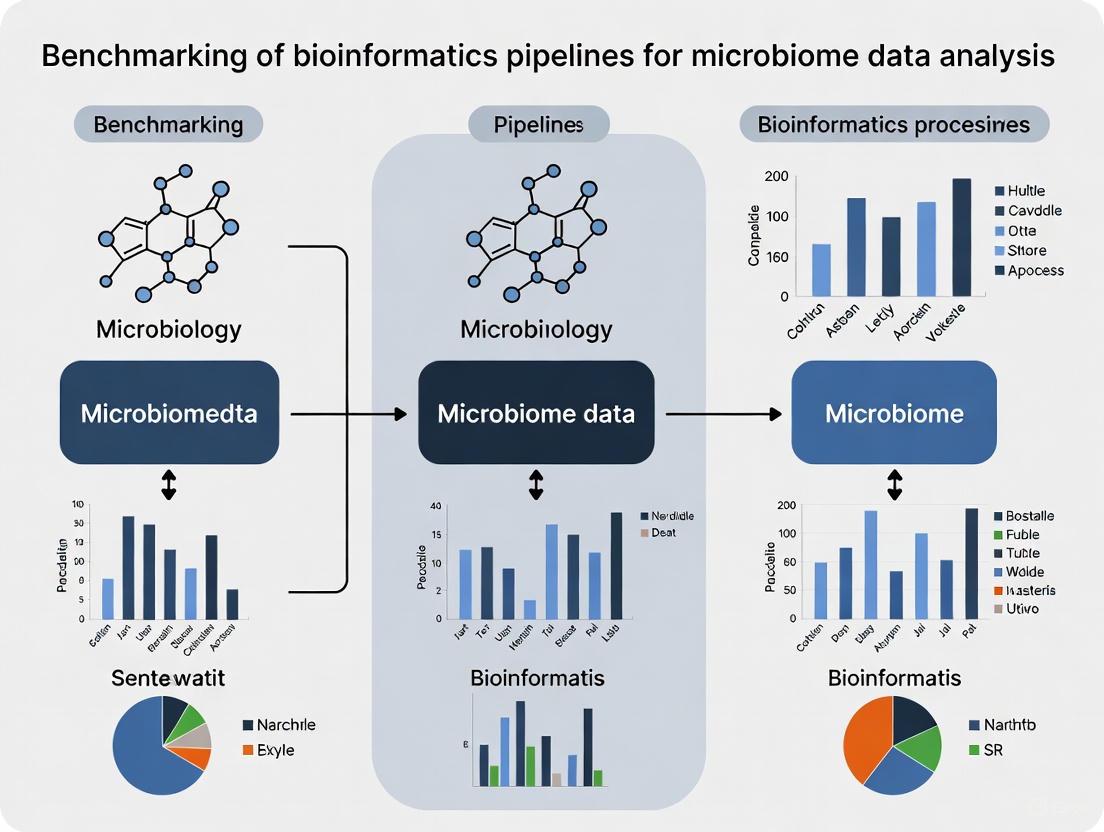
This article provides a systematic benchmark and practical guide for researchers and drug development professionals navigating the complex landscape of microbiome bioinformatics pipelines.
Benchmarking Bioinformatics Pipelines for Microbiome Data: A Comprehensive Guide for Robust and Reproducible Analysis
Abstract
This article provides a systematic benchmark and practical guide for researchers and drug development professionals navigating the complex landscape of microbiome bioinformatics pipelines. Covering foundational principles to advanced applications, we synthesize the latest 2024-2025 research on pipeline performance, integration strategies, and validation frameworks. Drawing from recent large-scale benchmarking studies, we detail optimal methods for differential abundance testing, multi-omic integration, and clinical translation. The content addresses critical challenges including data standardization, confounder adjustment, and computational reproducibility, while offering evidence-based recommendations for selecting and optimizing pipelines based on specific research goals and data types. This resource aims to establish best practices that enhance reliability and translational potential in microbiome research.
The Critical Need for Benchmarking in Microbiome Bioinformatics
Microbiome data, derived from high-throughput sequencing technologies, are foundational to modern biological and clinical research. However, their unique characteristics pose significant challenges for statistical analysis and biological interpretation. Effective research requires navigating three core challenges: compositionality, sparsity, and technical variability [1] [2] [3]. This guide objectively compares the performance of analytical methods designed to address these issues, providing a framework for selecting optimal bioinformatics pipelines in benchmarking studies.
The Core Triad of Microbiome Data Challenges
The analytical challenges of microbiome data stem from its fundamental properties:
- Compositionality: Sequencing data represent relative, not absolute, abundances. The total number of reads per sample (library size) is a technical constraint, meaning an increase in one taxon's count inevitably causes a decrease in the observed counts of others [1] [3]. Analyzing such data with standard statistical methods can produce spurious correlations [4].
- Sparsity (Zero-Inflation): Microbiome datasets contain a high proportion of zero counts, often between 80% and 95% [5] [3]. These zeros can represent either true biological absence or technical artifacts (e.g., low abundance below detection limit), making distinguishing between them a major challenge [5].
- Technical Variability: Sources like variable sequencing depth, DNA extraction efficiency, and batch effects introduce non-biological noise that can obscure true biological signals and lead to false conclusions if not corrected [1] [3].
The following diagram illustrates the interrelationships between these challenges and the primary strategies for mitigating them.
Comparative Performance of Analytical Methods
Normalization and Transformation Techniques
Normalization is a critical first step to account for variable sequencing depths and compositionality. The table below summarizes common techniques and their performance characteristics.
| Method | Primary Approach | Handling of Zeros | Key Advantage | Key Limitation |
|---|---|---|---|---|
| Total Sum Scaling (TSS) | Converts counts to proportions | Problematic; alters proportions | Simple and intuitive | Reinforces compositionality [3] |
| Centered Log-Ratio (CLR) | Log-transforms relative to geometric mean | Requires pseudo-counts | Compositionally aware [4] | Interpretation is relative [1] [4] |
| Isometric Log-Ratio (ILR) | Log-ratio between orthonormal balances | Requires imputation | Full compositionality control [4] | Complex interpretation [4] |
| Cumulative Sum Scaling (CSS) | Scales by cumulative sum up to a percentile | Robust to low counts | Robust to high sparsity [3] | Less common in newer tools |
| Trimmed Mean of M-values (TMM) | Scales by weighted mean of log-ratios | Uses only non-zero counts | Robust to compositionally and outliers [5] [3] | Designed for RNA-seq; borrowed for microbiome |
Differential Abundance Analysis Tools
Detecting taxa that differ between conditions is a common goal. Benchmarks reveal that no single method excels in all scenarios; performance depends on data characteristics like zero inflation and effect size [5] [3].
| Tool | Underlying Model | Handles Compositionality | Handles Sparsity | Reported Performance |
|---|---|---|---|---|
| DESeq2 | Negative Binomial with regularization | Via normalization (e.g., RLE) | Good; penalized likelihood for group-wise zeros [5] | High accuracy with controlled FDR; struggles with very high zero-inflation [5] [3] |
| edgeR | Negative Binomial | Via normalization (e.g., TMM) | Moderate | Good power; can be prone to false positives with complex sparsity [5] [3] |
| ALDEx2 | Dirichlet-Multinomial & CLR | Yes (inherently via CLR) | Moderate via pseudo-counts | Robust to compositionality; good FDR control [5] [3] |
| ANCOM | Log-ratio based null hypothesis | Yes (inherently) | Uses a prevalence filter | Very low false positive rate; can be conservative [3] |
| DESeq2-ZINBWaVE | Negative Binomial with ZINBWaVE weights | Via normalization | Excellent; uses observation weights for zero-inflation [5] | Effectively controls false discoveries in zero-inflated data [5] |
A combined approach using DESeq2-ZINBWaVE for general zero-inflation followed by standard DESeq2 for taxa with group-wise structured zeros (all zeros in one group) has been demonstrated to outperform either method used alone [5].
Integrative Analysis for Microbiome-Metabolome Data
Integrating microbiome data with other omics layers, like metabolomics, requires methods that can handle the complexities of both data types. A 2025 benchmark study evaluated 19 integrative strategies [4].
| Research Goal | Top-Performing Methods | Key Findings from Benchmark |
|---|---|---|
| Global Association (Testing overall link between datasets) | MMiRKAT, Mantel test | Methods maintained correct Type-I error control and were powerful for detecting global associations [4]. |
| Data Summarization (Identifying major joint patterns) | sPLS (sparse PLS), MOFA+ | sPLS effectively recovered known correlations between specific microbes and metabolites in real data [4]. |
| Individual Associations (Finding specific microbe-metabolite pairs) | Sparse CCA (sCCA), Generalized Linear Models (GLMs) | GLMs with proper CLR transformation performed well for identifying individual links [4]. |
| Feature Selection (Selecting the most important features) | LASSO, sPLS | These methods successfully identified stable, non-redundant sets of associated microbes and metabolites [4]. |
The benchmark concluded that transforming microbiome data with CLR or ILR before analysis was crucial for obtaining reliable results with most methods [4].
Experimental Protocols for Benchmarking
To ensure fair and reproducible comparisons, benchmarking studies must use robust simulation frameworks and standardized evaluation metrics.
Simulation and Validation Workflow
The following diagram outlines a comprehensive benchmarking workflow, synthesizing protocols from several key studies.
Protocol 1: Realistic Data Simulation using NORtA
This protocol is adapted from a 2025 benchmark of microbiome-metabolome integrative methods [4].
- Template Selection: Use a real microbiome-metabolome dataset (e.g., from a public repository) as a template to estimate realistic parameters, including:
- Marginal distributions (e.g., Negative Binomial for microbiome, Poisson or log-normal for metabolome).
- Correlation structures within and between omics layers, estimated using tools like
SpiecEasi[4].
- Data Generation: Employ the NORtA (NORmal To Anything) algorithm to generate synthetic datasets that preserve the estimated correlation structures and marginal distributions of the real template data [4].
- Scenario Design:
- Null Scenario: Simulate datasets with no pre-defined associations to assess Type-I error control (false positive rate).
- Alternative Scenarios: Introduce known associations between a specific set of microorganisms and metabolites. Vary parameters like sample size, strength of association, and feature dimensionality to test method robustness [4].
- Replication: Generate a large number of replicate datasets (e.g., N=1000) for each scenario to ensure statistical reliability of performance metrics [4].
Protocol 2: Mock Community Experiments for Validation
For wet-lab validation, benchmark using constructed mock communities, as demonstrated in a 2025 metatranscriptomics study [6].
- Community Formulation:
- Select a panel of microbial strains relevant to the study environment (e.g., marine, soil, human gut).
- Create two types of mock samples:
- Cell-mixed: Combine cells from different strains before RNA/DNA extraction. This captures biases from nucleic acid extraction efficiency.
- RNA/DNA-mixed: Extract nucleic acids from each strain individually and then combine them in predefined ratios. This provides a more precise ground truth for abundance [6].
- Define Ground Truth: Mix strains with varying "evenness"—equal abundance for some, highly skewed abundances for others—to test performance across diverse community structures [6].
- Sequencing and Analysis: Process mock communities using standard sequencing protocols (e.g., Illumina HiSeq). Analyze the resulting data with the tools being benchmarked.
- Metric Calculation: Compare the tool's output (e.g., estimated species abundance, detected differentially abundant features) to the known ground truth to calculate accuracy, sensitivity, and specificity [6].
| Category | Item | Function in Microbiome Research |
|---|---|---|
| Bioinformatics Software | QIIME2, Mothur, DADA2 | Processing raw sequencing reads into amplicon sequence variants (ASVs) or OTUs [1] [7]. |
| Analysis Platforms | MicrobiomeAnalyst | User-friendly web-based platform for comprehensive statistical, visual, and functional analysis of microbiome data [1] [7]. |
| Statistical Environments | R/Bioconductor | Provides access to a vast ecosystem of packages for differential abundance (DESeq2, edgeR), integration (mixOmics), and more [1] [3]. |
| Reference Materials | Mock Microbial Communities | Assembled mixtures of known microorganisms with defined abundances, used as positive controls and for benchmarking pipeline accuracy [6]. |
| Specialized Kits | rRNA Depletion Kits | Critical for metatranscriptomic studies to remove abundant ribosomal RNA and enrich for messenger RNA, enabling gene expression profiling [6]. |
A significant challenge in microbiome research is the lack of standardized bioinformatics protocols, leading to a fragmented landscape where analytical choices can directly impact biological interpretations. This guide objectively compares the performance of prevalent bioinformatics pipelines and differential abundance methods, synthesizing findings from recent, large-scale benchmarking studies to provide clarity for researchers.
Experimental Comparison of Core Bioinformatics Pipelines
A 2025 study directly compared three widely used bioinformatics packages—DADA2, MOTHUR, and QIIME2—to assess the reproducibility of microbiome composition analysis [8].
- Experimental Protocol: Five independent research groups analyzed the same dataset of 16S rRNA gene raw sequencing data (V1-V2 region) from gastric biopsy samples. The cohort included 40 gastric cancer patients (with and without Helicobacter pylori infection) and 39 controls. Each group processed the identical subset of fastQ files using one of the three distinct bioinformatic packages [8].
- Key Findings: The study concluded that core findings, such as H. pylori status, microbial diversity, and relative bacterial abundance, were reproducible across all three platforms despite differences in their underlying algorithms [8]. This suggests that for fundamental taxonomic profiling, these robust pipelines can yield comparable results.
The table below summarizes the experimental design and primary conclusion:
| Aspect | Description |
|---|---|
| Compared Pipelines | DADA2, MOTHUR, QIIME2 [8] |
| Source Data | 16S rRNA gene sequencing (V1-V2) from 79 gastric biopsy samples [8] |
| Experimental Design | Analysis of the same fastQ files by five independent research groups using different packages [8] |
| Core Finding | H. pylori status, microbial diversity, and relative abundance were reproducible across platforms [8] |
Benchmarking Differential Abundance Methods
The fragmentation issue is more pronounced in differential abundance (DA) testing. A 2022 benchmark of 14 DA methods across 38 real-world 16S rRNA datasets revealed substantial inconsistencies in their outputs [9].
- Experimental Protocol: The study applied 14 different DA testing approaches to 38 datasets from environments including the human gut, soil, and marine ecosystems (total of 9,405 samples). Methods tested included ALDEx2, ANCOM-II, DESeq2, edgeR, LEfSe, limma voom, metagenomeSeq, and Wilcoxon test on CLR-transformed data, among others. Performance was evaluated based on the number and set of significant Amplicon Sequence Variants identified, with and without prevalence filtering of rare taxa [9].
- Key Findings: The study found that different methods identified "drastically different numbers and sets of significant" features. The percentage of significant ASVs varied widely across methods, and the number of features identified by a given tool often correlated with dataset characteristics like sample size and sequencing depth [9].
The following workflow diagrams the experimental process and core findings of these critical benchmarking studies:
The table below summarizes the performance of selected differential abundance methods based on the benchmark:
| Method | Reported Performance & Characteristics |
|---|---|
| ALDEx2 | Produced consistent results across studies; agreed well with the intersect of different methods [9]. |
| ANCOM-II | Produced consistent results across studies; agreed well with the intersect of different methods [9]. |
| limma voom (TMMwsp) | Identified a high number of significant ASVs in some datasets, but results were highly variable [9]. |
| edgeR | Tended to find a high number of significant ASVs; has been shown to have high false positive rates in some evaluations [9]. |
| LEfSe | A popular method that often requires rarefied count tables, which can affect statistical power [9]. |
The Scientist's Toolkit: Essential Research Reagents & Software
This table details key software and analytical solutions central to conducting and benchmarking microbiome analyses.
| Item Name | Function in Analysis |
|---|---|
| DADA2, QIIME2, MOTHUR | Core bioinformatics packages for processing raw sequencing data into Amplicon Sequence Variants (ASVs) or Operational Taxonomic Units (OTUs) [8]. |
| ALDEx2 | A differential abundance tool that uses a compositional data analysis approach (Centered Log-Ratio transformation) to account for the compositional nature of sequencing data [9]. |
| ANCOM-II | A differential abundance method designed to handle compositionality by using additive log-ratio transformations [9]. |
| LEfSe | A tool for identifying differentially abundant features that also incorporates biological class comparisons and effect size estimation [10]. |
| DESeq2 & edgeR | Statistical frameworks originally designed for RNA-seq data, adapted for microbiome differential abundance testing by modeling read counts with a negative binomial distribution [9]. |
| Centered Log-Ratio (CLR) Transformation | A compositional data transformation used to address the compositional nature of microbiome data before applying standard statistical models [4] [9]. |
| NHS ester-PEG3-S-methyl ethanethioate | NHS ester-PEG3-S-methyl ethanethioate, MF:C15H23NO8S, MW:377.4 g/mol |
| Trimetazidine-N-oxide | Trimetazidine-N-oxide, MF:C14H22N2O4, MW:282.34 g/mol |
Recommendations for Robust Analysis
Based on the empirical evidence, researchers can adopt several strategies to enhance the reliability of their findings:
- Adopt a Consensus Approach: For differential abundance analysis, using multiple methods and focusing on the intersecting results can lead to more robust and reliable biological interpretations [9].
- Select Robust Pipelines: For standard taxonomic profiling, established pipelines like DADA2, QIIME2, and MOTHUR can produce reproducible core results, provided the analysis is thoroughly documented [8].
- Acknowledge Methodological Influence: The choice of bioinformatic methods and pre-processing steps should be clearly documented and reported, as they are a significant source of variation that can influence scientific conclusions and the translational potential of results [8] [9].
Key Research Questions Driving Pipeline Development and Evaluation
The exponential growth of microbiome research has been fueled by advancements in high-throughput sequencing technologies, generating vast amounts of complex biological data. This deluge of information has necessitated the development of sophisticated bioinformatics pipelines to transform raw sequencing data into interpretable biological insights. However, the multiplicity of available analytical frameworks presents a significant challenge for researchers seeking to identify optimal strategies for their specific research objectives. The critical importance of pipeline selection stems from its profound impact on result interpretation, reproducibility, and the validity of biological conclusions. This comparison guide examines the key research questions driving pipeline development and evaluation, providing an evidence-based framework for selecting appropriate analytical strategies in microbiome research.
Key Research Questions in Pipeline Evaluation
The development and refinement of bioinformatics pipelines are guided by fundamental research questions that address different aspects of analytical performance and biological relevance. Through systematic benchmarking studies, four primary categories of research questions have emerged as critical for pipeline evaluation.
Data Fidelity and Taxonomic Accuracy
How accurately does a pipeline recover true microbial composition and diversity from complex samples? This foundational question addresses the core function of taxonomic classification and abundance estimation.
Experimental Approach: Researchers typically employ simulated microbial communities with known composition or standardized mock communities to establish ground truth. For example, one benchmarking study simulated metagenomes containing foodborne pathogens at defined relative abundance levels (0.01%, 0.1%, 1%, and 30%) within various food matrices to evaluate classification accuracy [11]. This controlled approach allows for precise measurement of a pipeline's ability to detect target organisms across abundance gradients.
Evaluation Metrics: Performance is quantified using standard classification metrics including sensitivity (recall), precision, F1-score (harmonic mean of precision and recall), and false discovery rates. These metrics provide comprehensive assessment of taxonomic assignment accuracy across different abundance thresholds.
Cross-Platform Reproducibility
To what extent do different pipelines applied to the same dataset yield consistent biological conclusions? This question addresses the critical issue of reproducibility and comparability across studies.
Experimental Approach: Studies directly compare multiple bioinformatics pipelines applied to identical datasets. One comprehensive investigation analyzed 40 human fecal samples using four popular pipelines (QIIME2, Bioconductor, UPARSE, and mothur) run on two different operating systems [12]. The researchers then compared taxonomic classifications at both phylum and genus levels to assess consistency across platforms.
Key Findings: The study revealed that while different pipelines showed consistent patterns in taxa identification, they produced statistically significant differences in relative abundance estimates. For instance, the genus Bacteroides showed abundance variations ranging from 20.6% to 24.6% depending on the pipeline used [12]. Such discrepancies highlight the challenges in cross-study comparisons and meta-analyses when different analytical workflows are employed.
Computational Efficiency and Scalability
How do pipelines perform in terms of computational resource requirements, processing speed, and scalability to large datasets? This practical consideration becomes increasingly important as study sizes grow.
Experimental Approach: Benchmarking studies measure wall-clock time, memory usage, and CPU utilization across pipelines while processing datasets of varying sizes. For example, CompareM2 was evaluated against Tormes and Bactopia by measuring processing times with increasing input genomes [13]. Performance was assessed on a 64-core workstation with 32 cores allocated for the analysis to ensure consistent benchmarking conditions.
Performance Considerations: The architectural design significantly impacts computational efficiency. CompareM2 demonstrated approximately linear scaling with increasing input size, outperforming alternatives that process samples sequentially rather than in parallel [13]. Pipeline design choices, such as the need to generate artificial reads for certain analyses, also substantially affect processing time.
Functional and Ecological Inference
How effectively can pipelines move beyond taxonomic classification to infer functional potential and ecological interactions? This question addresses the growing interest in moving from descriptive to mechanistic understanding of microbial communities.
Experimental Approach: Advanced pipelines incorporate functional annotation tools that predict metabolic capabilities, antimicrobial resistance genes, virulence factors, and biosynthetic gene clusters. CompareM2, for instance, integrates multiple functional annotation tools including InterProScan (protein signature databases), dbCAN (carbohydrate-active enzymes), Eggnog-mapper (orthology-based annotations), gapseq (metabolic modeling), and antiSMASH (biosynthetic gene clusters) [13].
Integration Capabilities: The ability to integrate multi-omics data represents a cutting-edge capability in pipeline development. Methodologies for integrating microbiome data with metabolomic profiles are particularly valuable for elucidating microbe-metabolite relationships [4]. Such integration enables researchers to address complex questions about how microbial community composition influences metabolic processes relevant to health and disease.
Comparative Performance of Bioinformatics Pipelines
Table 1: Performance Comparison of Taxonomic Classification Tools for Pathogen Detection
| Tool | Detection Limit | Overall Accuracy (F1-Score) | Strengths | Limitations |
|---|---|---|---|---|
| Kraken2/Bracken | 0.01% abundance | Highest across all food matrices | Broadest detection range, consistent performance | - |
| Kraken2 | 0.01% abundance | High | Excellent sensitivity for low-abundance taxa | Slightly lower accuracy than Kraken2/Bracken |
| MetaPhlAn4 | >0.01% abundance | Variable across abundance levels | Strong performance for specific pathogens (e.g., C. sakazakii) | Limited detection at lowest abundances (0.01%) |
| Centrifuge | >0.01% abundance | Lowest among tested tools | - | High limit of detection, suboptimal performance |
Data derived from benchmarking study on pathogen detection in food metagenomes [11].
Table 2: Comparison of 16S rRNA Amplicon Analysis Pipelines
| Pipeline | Methodology | OS Consistency | Relative Abundance Variation | Computational Requirements |
|---|---|---|---|---|
| QIIME2 | ASV (DADA2, Deblur) | Identical output (Linux vs. Mac) | Bacteroides: 24.5% | Moderate to high |
| Bioconductor | ASV (DADA2) | Identical output (Linux vs. Mac) | Bacteroides: 24.6% | Moderate |
| UPARSE | OTU (97% similarity) | Minimal differences between OS | Bacteroides: 20.6-23.6% | Lower |
| mothur | OTU (97% similarity) | Minimal differences between OS | Bacteroides: 21.6-22.2% | Lower |
Data from comparison of 40 human fecal samples analyzed across four pipelines and two operating systems [12].
Experimental Protocols for Pipeline Benchmarking
Standardized experimental approaches are essential for rigorous pipeline evaluation. The following methodologies represent current best practices in the field.
Simulated Community Design
Benchmarking studies frequently employ simulated microbial communities with known composition to establish ground truth. The simulation process involves:
Template Selection: Real microbiome datasets inform simulation parameters. One comprehensive benchmarking study used three real datasets as templates: Konzo dataset (171 samples, 1,098 taxa, 1,340 metabolites), Adenomas dataset (240 samples, 500 taxa, 463 metabolites), and Autism spectrum disorder dataset (44 samples, 322 taxa, 61 metabolites) [4].
Data Generation: The Normal to Anything (NORtA) algorithm generates data with arbitrary marginal distributions and correlation structures, preserving the statistical properties of real microbiome data [4]. This approach maintains characteristic features such as over-dispersion, zero-inflation, and high collinearity between taxa.
Abundance Spike-ins: Pathogens or target taxa are introduced at defined relative abundance levels (e.g., 0%, 0.01%, 0.1%, 1%, 30%) to establish detection limits and accuracy across abundance gradients [11].
Cross-Pipeline Validation
When comparing multiple pipelines, consistent processing parameters are essential:
Reference Database Standardization: All pipelines should utilize the same reference database (e.g., SILVA 132) to isolate pipeline effects from database biases [12].
Operating System Controls: Running pipelines on multiple operating systems (Linux and Mac OS) controls for potential OS-specific effects on computational results [12].
Statistical Analysis: Non-parametric tests (e.g., Friedman rank sum test) compare relative abundance estimates across pipelines, identifying statistically significant differences in taxonomic assignments [12].
Performance Metrics and Evaluation
Comprehensive benchmarking employs multiple evaluation metrics:
Classification Accuracy: Standard metrics including sensitivity, precision, F1-scores, and false discovery rates provide quantitative assessment of taxonomic assignment performance [11].
Biological Consistency: The ability to discriminate samples by treatment group or clinical status, despite differences in absolute abundance values, assesses whether pipelines yield consistent biological conclusions [14].
Computational Efficiency: Processing time, memory usage, and scalability measurements provide practical guidance for researchers with limited computational resources [13].
Workflow Diagram: Pipeline Benchmarking Process
Multi-Omics Integration Framework
Essential Research Reagent Solutions
Table 3: Key Research Reagents and Computational Tools for Pipeline Benchmarking
| Category | Specific Tool/Reagent | Function/Purpose | Application Context |
|---|---|---|---|
| DNA Extraction | E.Z.N.A. Stool DNA Kit | Efficient DNA isolation from complex samples | Standardized DNA extraction for cross-study comparisons [14] |
| Quality Control | CheckM2 | Computes completeness and contamination parameters | Genome quality assessment in comparative analyses [13] |
| Taxonomic Classification | GTDB-Tk | Taxonomic assignment using alignment of ubiquitous proteins | Standardized taxonomy across diverse microbial genomes [13] |
| Functional Annotation | Bakta/Prokka | Rapid genome annotation | Functional potential assessment of microbial communities [13] |
| Pathogen Detection | AMRFinder | Scans for antimicrobial resistance genes and virulence factors | Clinical and food safety applications [13] |
| Metabolic Modeling | gapseq | Builds gapfilled genome scale metabolic models | Prediction of metabolic capabilities from genomic data [13] |
| Biosynthetic Gene Clusters | antiSMASH | Identifies biosynthetic gene clusters | Natural product discovery and functional potential [13] |
| Database Resources | SILVA database | Curated ribosomal RNA database | Taxonomic classification standard for 16S rRNA studies [12] |
The evaluation of bioinformatics pipelines for microbiome research is guided by fundamental questions addressing accuracy, reproducibility, efficiency, and biological relevance. Evidence from systematic benchmarking studies reveals that pipeline selection significantly impacts research outcomes, with different tools exhibiting distinct strengths and limitations. Kraken2/Bracken demonstrates superior performance for sensitive pathogen detection, while pipelines like QIIME2 and Bioconductor provide robust solutions for amplicon sequencing analysis despite producing variations in relative abundance estimates. The growing emphasis on multi-omics integration further expands the evaluation framework to include methods that elucidate relationships between microorganisms and metabolites. As the field advances, standardized benchmarking approaches and comprehensive performance assessments will continue to drive pipeline development, ultimately enhancing the reliability and biological relevance of microbiome research.
Impact of Analytical Variability on Scientific Reproducibility and Clinical Translation
The clinical translation of microbiome research represents a paradigm shift in understanding disease etiology and therapeutic design [15]. However, this promising field faces a significant hurdle: analytical variability. The complexity of bioinformatics pipelines, encompassing multiple stages with numerous parameters, provides researchers with considerable flexibility but also introduces substantial challenges for reproducibility and reliable clinical translation [16]. This variability is not unique to microbiome research; a 2025 study demonstrated that when more than 300 scientists independently analyzed the same dataset, their methodological choices led to highly variable conclusions, raising fundamental questions about the reliability of scientific results [17]. Such variability directly impacts the identification of microbial biomarkers, the assessment of therapeutic efficacy, and the development of robust clinical diagnostics [15] [18] [19].
The inherent characteristics of microbiome data—including compositionality, high dimensionality, and significant batch effects—further complicate analysis and necessitate careful methodological considerations [18] [19]. As the field moves toward clinical applications, understanding and mitigating the impact of analytical variability becomes paramount. This guide objectively compares the performance of leading bioinformatics pipelines, evaluates experimental data on their reproducibility, and provides a structured framework for benchmarking these tools in microbiome research.
Comparative Performance of Metagenomic Classification Tools
Benchmarking Foodborne Pathogen Detection
The performance of bioinformatics tools varies significantly across different applications and scenarios. A comprehensive benchmarking study evaluated four metagenomic classification tools for detecting foodborne pathogens in simulated microbial communities representing three food products [11]. Researchers simulated metagenomes containing Campylobacter jejuni, Cronobacter sakazakii, and Listeria monocytogenes at defined relative abundance levels (0%, 0.01%, 0.1%, 1%, and 30%) within respective food microbiomes [11].
Table 1: Performance Comparison of Metagenomic Classification Tools for Pathogen Detection
| Tool | Overall Accuracy | Detection Limit | Best Use Case | Key Limitations |
|---|---|---|---|---|
| Kraken2/Bracken | Highest classification accuracy, consistently high F1-scores across all food metagenomes [11] | 0.01% abundance [11] | Broad-spectrum pathogen detection in complex matrices [11] | - |
| Kraken2 | High accuracy, broad detection range [11] | 0.01% abundance [11] | Scenarios requiring sensitive detection without abundance estimation [11] | - |
| MetaPhlAn4 | Performed well, particularly for C. sakazakii in dried food [11] | Limited detection at 0.01% abundance [11] | Targeted analysis of specific pathogens with moderate abundance [11] | Higher limit of detection compared to Kraken2/Bracken [11] |
| Centrifuge | Exhibited the weakest performance across food matrices and abundance levels [11] | Higher limit of detection [11] | - | Underperformed across various conditions [11] |
The study demonstrated that tool selection significantly impacts detection capabilities, particularly at low pathogen abundances relevant to clinical and public health applications [11]. The Kraken2/Bracken combination emerged as the most effective tool for sensitive pathogen detection, while MetaPhlAn4 served as a valuable alternative depending on pathogen prevalence and abundance [11].
Reproducibility Across 16S rRNA Gene Analysis Pipelines
Beyond metagenomic tools, the reproducibility of 16S rRNA gene analysis pipelines is equally crucial for clinical translation. A 2025 comparative study investigated how different microbiome analysis platforms impact results from gastric mucosal microbiome samples [8]. Five independent research groups applied three commonly used bioinformatics packages (DADA2, MOTHUR, and QIIME2) to the same dataset of 16S rRNA gene sequences from gastric biopsy samples [8].
Table 2: Reproducibility of Microbiome Analysis Platforms for Gastric Mucosal Samples
| Analysis Aspect | DADA2 | MOTHUR | QIIME2 | Overall Agreement |
|---|---|---|---|---|
| H. pylori status | Reproducible across platforms [8] | Reproducible across platforms [8] | Reproducible across platforms [8] | High [8] |
| Microbial diversity | Reproducible across platforms [8] | Reproducible across platforms [8] | Reproducible across platforms [8] | High [8] |
| Relative bacterial abundance | Reproducible across platforms [8] | Reproducible across platforms [8] | Reproducible across platforms [8] | High [8] |
| Taxonomic assignment (different databases) | Limited impact on outcomes [8] | Limited impact on outcomes [8] | Limited impact on outcomes [8] | High [8] |
Despite differences in performance metrics, the core biological conclusions remained consistent across platforms and research groups [8]. This reproducibility underscores the broader applicability of microbiome analysis in clinical research, provided that robust, well-documented pipelines are utilized [8].
Experimental Protocols for Benchmarking Bioinformatics Pipelines
Standardized Benchmarking Methodology
Rigorous benchmarking requires standardized methodologies to ensure fair and informative comparisons between computational tools. Best practices for developing and benchmarking computational methods for microbiome analysis include [19]:
Test Data Selection: Benchmarking datasets should reflect the intended use cases and include simulated communities with known composition, mock communities, and well-characterized clinical samples [19]. The data must represent the diversity of sample types or species a method is intended to address [19].
Performance Metrics: Multiple evaluation metrics should be incorporated, including sensitivity, specificity, precision, recall, F1-score, computational efficiency (runtime and memory requirements), and scalability [19].
Benchmarking Approaches:
- Internal benchmarking: Performed by method developers to optimize and validate new tools [19]
- Neutral benchmarks: Conducted by researchers not involved in tool development to provide unbiased evaluation [19]
- Community challenges: Large-scale collaborations ensuring proper implementation of multiple methods [19]
Data Characteristics Consideration: Benchmarks must account for unique properties of microbiome data, including compositionality, high sparsity, variable sequencing depth, and batch effects [19].
Experimental Design for Pipeline Comparison
The experimental protocol used in the gastric microbiome study provides a robust template for pipeline comparisons [8]:
Sample Collection and Processing: Gastric biopsy samples were collected from clinically well-defined gastric cancer patients (n=40; with and without Helicobacter pylori infection) and controls (n=39, with and without H. pylori infection) [8].
Sequencing: 16S rRNA gene sequencing of the V1-V2 regions was performed on all samples, generating raw FASTQ files for analysis [8].
Independent Analysis: Five research groups independently analyzed the same subset of FASTQ files using DADA2, MOTHUR, and QIIME2 with their preferred parameters [8].
Taxonomic Classification: Filtered sequences were aligned against both old and new taxonomic databases (Ribosomal Database Project, Greengenes, and SILVA) to evaluate database impact [8].
Output Comparison: Results for H. pylori status, microbial diversity, and relative bacterial abundance were compared across platforms to assess reproducibility [8].
This experimental design highlights that consistent results can be achieved across platforms when analyzing the same underlying data, supporting the validity of microbiome analysis for clinical research [8].
Visualizing Analytical Variability and Its Impact
The relationship between analytical choices and research outcomes can be visualized through the following workflow:
The decision pathway for selecting appropriate analytical approaches based on research goals can be summarized as:
Essential Research Reagent Solutions for Microbiome Analysis
Successful microbiome research requires careful selection of reagents and computational resources. The table below outlines key components essential for robust microbiome analysis:
Table 3: Essential Research Reagents and Resources for Reproducible Microbiome Analysis
| Category | Specific Tools/Reagents | Function/Purpose | Considerations for Reproducibility |
|---|---|---|---|
| Wet Lab Reagents | DNA extraction kits | Isolation of high-quality microbial DNA from samples | Standardized protocols minimize batch effects and technical variation [20] |
| Library preparation kits | Preparation of sequencing libraries | Validated SOPs reduce technical variability between batches [20] | |
| Mock communities | Controls for benchmarking and validation | Essential for assessing accuracy and reproducibility across runs [19] | |
| Bioinformatics Tools | Kraken2/Bracken | Taxonomic classification of metagenomic data | Highest accuracy for pathogen detection in complex matrices [11] |
| QIIME2, MOTHUR, DADA2 | 16S rRNA gene analysis | Provide reproducible results when properly documented [8] | |
| MetaPhlAn4 | Taxonomic profiling | Useful alternative with moderate abundance requirements [11] | |
| Reference Databases | SILVA, Greengenes, RDP | Taxonomic classification reference | Database choice has limited impact on overall conclusions [8] |
| Custom databases | Specialized applications | Can be developed for proprietary strains [20] | |
| Computational Infrastructure | Version-controlled pipelines | Analysis reproducibility | Strict versioning guarantees consistent results [20] |
| High-performance computing | Processing large datasets | Essential for metagenomic analysis [19] |
The clinical translation of microbiome research depends critically on addressing analytical variability through standardized benchmarking and transparent reporting [15] [19]. While different bioinformatics pipelines can produce varying results, consistent biological conclusions are achievable when using robust, well-documented methods [8]. The selection of analytical tools should be guided by the specific research question, with Kraken2/Bracken demonstrating superior sensitivity for low-abundance pathogen detection [11] and platforms like QIIME2, MOTHUR, and DADA2 showing strong reproducibility for 16S rRNA-based community analyses [8].
As the field advances, embracing best practices in benchmarking—including appropriate test data selection, multiple performance metrics, and consideration of microbiome-specific data characteristics—will enhance reliability across studies [19]. The implementation of version-controlled pipelines and standardized protocols further supports reproducibility from research to clinical application [20]. Through rigorous methodology and transparent reporting, microbiome research can overcome the challenge of analytical variability and realize its full potential in clinical translation.
Benchmarked Methods and Tools: Performance Across Microbiome Analysis Tasks
Differential abundance (DA) analysis is a foundational statistical procedure in microbiome research, aiming to identify microorganisms whose abundance differs significantly between conditions, such as health versus disease. Despite its fundamental role, the field lacks consensus on optimal methodological approaches, with numerous studies reporting that different DA tools yield discordant results when applied to the same datasets [9] [21]. This inconsistency poses a significant challenge for biomarker discovery and biological interpretation, potentially undermining the reproducibility of microbiome research.
The absence of standardized benchmarking practices compounds this challenge. Earlier evaluations often relied on parametric simulations that generated data dissimilar to real experimental datasets, potentially leading to circular arguments and biased recommendations [22] [9]. Consequently, method selection often appears arbitrary, creating the possibility for cherry-picking tools that support pre-existing hypotheses. This comprehensive review synthesizes evidence from recent large-scale benchmarking studies to objectively evaluate 22 statistical methods for differential abundance testing, providing researchers with evidence-based recommendations for selecting robust DA tools across various experimental conditions.
Performance Comparison of Differential Abundance Methods
Evaluation of differential abundance methods reveals significant variation in their false discovery rate (FDR) control, sensitivity, and replicability. The table below summarizes key performance metrics for the most comprehensively evaluated methods across multiple independent benchmarks.
Table 1: Performance Overview of Differential Abundance Testing Methods
| Method Category | Method Name | FDR Control | Sensitivity | Replicability | Key Characteristics |
|---|---|---|---|---|---|
| Classical Statistical | Wilcoxon test | Generally robust [22] | Moderate [22] | High [23] [24] | Non-parametric; analyzes relative abundances |
| T-test | Generally robust [22] | Moderate [22] | High [23] [24] | Parametric; assumes normality | |
| Linear models | Good with covariate adjustment [22] | Moderate [22] | High [23] [24] | Flexible for complex designs | |
| RNA-Seq Adapted | DESeq2 | Variable [21] | Moderate to high [21] | Moderate [24] | Negative binomial model; robust normalization |
| edgeR | Can be inflated [9] [21] | High [9] | Moderate [24] | Negative binomial model | |
| limma-voom | Generally robust [22] | High [22] [9] | Moderate [24] | Linear models with precision weights | |
| Compositionally Aware | ANCOM/ANCOM-BC | Generally robust [22] [21] | Low to moderate [9] [21] | Moderate [9] | Addresses compositional effects specifically |
| ALDEx2 | Generally robust [9] [21] | Low to moderate [9] [21] | High [9] | Compositional data analysis (CLR transformation) | |
| ZicoSeq | Generally robust [21] | High [21] | Not fully evaluated | Designed specifically for microbiome data | |
| Other Microbiome-Specific | metagenomeSeq | Can be inflated [9] [21] | Variable [21] | Moderate [24] | Zero-inflated Gaussian model |
| MaAsLin2 | Variable [21] | Moderate [21] | Moderate [24] | Generalized linear models |
Performance Metrics and Interpretation
- False Discovery Rate Control: The ability of a method to correctly control false positives when no true differences exist. Methods with poor FDR control may identify spurious associations [22] [21].
- Sensitivity: The ability to detect true positives when abundance differences truly exist. Methods with low sensitivity may miss biologically relevant findings [22] [21].
- Replicability: The consistency of results across different datasets or study populations. Highly replicable methods produce more reliable biomarkers [23] [24].
Experimental Protocols for Benchmarking Studies
Real Data-Based Simulation with Signal Implantation
Recent benchmarks have adopted innovative simulation approaches that implant calibrated signals into real taxonomic profiles, creating a known ground truth while preserving the complex characteristics of real microbiome data [22].
Table 2: Experimental Protocol for Real Data-Based Benchmarking
| Protocol Step | Description | Purpose |
|---|---|---|
| Baseline Data Selection | Use real microbiome datasets from healthy populations as baseline | Preserves natural microbial community structure and covariation |
| Signal Implantation | Multiply counts in one group with a constant factor (abundance scaling) and/or shuffle non-zero entries across groups (prevalence shift) | Creates known differentially abundant features with controlled effect sizes |
| Effect Size Calibration | Align implanted effect sizes with those observed in real disease studies (e.g., colorectal cancer, Crohn's disease) | Ensures biological relevance of simulations |
| Method Application | Apply multiple DA methods to identical simulated datasets | Enables direct comparison of performance metrics |
| Performance Evaluation | Calculate false discovery rates, sensitivity, and replicability metrics | Quantifies method performance under controlled conditions |
The key advantage of this signal implantation approach is that it "generates a clearly defined ground truth of DA features (like parametric methods) while retaining key characteristics of real data" [22]. This addresses a critical limitation of purely parametric simulations, which often produce data distinguishable from real experimental data by machine learning classifiers [22].
Large-Scale Consistency Assessment
An alternative benchmarking approach evaluates methods based on their consistency and replicability across multiple real datasets, avoiding simulation assumptions entirely [23] [24]. This protocol involves:
- Dataset Collection: Compiling numerous datasets from independent studies comparing similar conditions (e.g., healthy vs. colorectal cancer)
- Split-Half Analysis: Randomly dividing datasets into exploratory and validation halves to assess internal consistency
- Cross-Study Validation: Testing whether findings from one study replicate in independent datasets
- Conflict Measurement: Quantifying the percentage of results that show significant effects in opposite directions between validation attempts
This approach identifies methods that "produce a substantial number of conflicting findings" [23] and emphasizes result stability as a key performance metric.
Diagram 1: Differential Abundance Method Benchmarking Workflow. The flowchart illustrates the two complementary approaches for evaluating DA methods: simulation-based evaluation with known ground truth and consistency-based evaluation using real datasets.
Table 3: Research Reagent Solutions for Differential Abundance Analysis
| Tool/Category | Specific Examples | Function/Purpose |
|---|---|---|
| Simulation Frameworks | sparseDOSSA2, metaSPARSim, MIDASim | Generate synthetic microbiome data with known ground truth for method validation [25] |
| 16S rRNA Analysis Pipelines | DADA2, QIIME2, mothur | Process raw 16S sequencing data into abundance tables [21] |
| Shotgun Metagenomic Profilers | MetaPhlAn2, MetaPhlAn4, Kraken2/Bracken | Taxonomic profiling from whole metagenome sequencing data [21] [11] |
| Normalization Methods | Cumulative Sum Scaling (CSS), Trimmed Mean of M-values (TMM), Centered Log-Ratio (CLR) | Address compositionality and varying sequencing depth [21] |
| Benchmarking Platforms | Custom R/Python scripts using real data-based simulations | Standardized performance evaluation across multiple methods [22] |
Discussion and Recommendations
Key Findings Across Benchmarking Studies
Synthesizing evidence across multiple large-scale evaluations reveals several consistent patterns. First, classical statistical methods, including the Wilcoxon test, t-test, and linear models, demonstrate robust false discovery rate control and high replicability, though with sometimes moderate sensitivity [22] [23] [24]. Their straightforward implementation and interpretability make them suitable for initial exploratory analyses.
Second, compositionally aware methods (e.g., ANCOM-BC, ALDEx2) specifically address the compositional nature of microbiome data and generally provide good FDR control, though sometimes at the cost of reduced sensitivity [22] [21]. These methods are particularly valuable when investigating taxa that are highly abundant or suspected to be drivers of compositional variation.
Third, the performance of many methods deteriorates under confounding conditions, but this can be mitigated through appropriate experimental design and statistical adjustment. As demonstrated in a large cardiometabolic disease dataset, "failure to account for covariates such as medication causes spurious association in real-world applications" [22]. Methods that support covariate adjustment (e.g., linear models, limma, fastANCOM) maintain better performance in the presence of confounding factors.
Recommendations for Practitioners
Based on comprehensive benchmarking evidence, we recommend the following practices for differential abundance analysis:
Employ a Consensus Approach: Given that "no single method is simultaneously robust, powerful, and flexible across all settings" [21], researchers should consider applying multiple complementary methods and focusing on consistently identified taxa.
Validate with Independent Data: Whenever possible, validate findings across independent datasets or through split-half validation to assess result stability [23] [24].
Address Confounding Systematically: Include relevant covariates (medication, diet, demographics) in analytical models to reduce spurious associations [22].
Prioritize Replicability Over Novelty: Methods producing highly replicable results (e.g., Wilcoxon test, linear models, logistic regression for presence/absence data) [23] [24] generally provide more reliable biological insights than methods with unstable findings, regardless of statistical significance.
Consider Data Characteristics: Method performance depends on data properties such as sample size, effect size, sparsity, and sequencing depth. Tailor method selection to specific data characteristics and experimental questions [25].
As the field continues to evolve, ongoing methodology development and benchmarking will be essential for improving the reproducibility of microbiome association studies. The benchmarking frameworks and software tools developed in recent studies provide a foundation for continued method evaluation and refinement [22].
The rapid advancement of high-throughput sequencing technologies has enabled the generation of microbiome and metabolome data at an exponential scale, creating unprecedented opportunities for investigating complex biological systems and their roles in human health and disease [4]. The integration of these high-dimensional biological data holds great potential for elucidating the complex mechanisms underlying diverse biological systems, particularly the interactions between microorganisms and metabolites which have been linked to conditions such as cardio-metabolic diseases, autism spectrum disorders, and inflammatory bowel disease [4] [26]. However, a significant challenge persists: no standard currently exists for jointly integrating microbiome and metabolome datasets within statistical models, leaving researchers with a daunting array of analytical choices without clear guidance on their appropriate application [4].
This comprehensive review addresses this critical gap by synthesizing findings from a systematic benchmark of nineteen integrative methods for disentangling the relationships between microorganisms and metabolites [4]. Through realistic simulations and validation on real gut microbiome datasets, this benchmark identified best-performing methods across key research goals, including global associations, data summarization, individual associations, and feature selection [4]. By providing practical guidelines tailored to specific scientific questions and data types, this work establishes a foundation for research standards in metagenomics-metabolomics integration and supports the design of optimal analytical strategies for diverse research objectives.
Methodological Framework: Categories of Integrative Analysis
Integrative methods for microbiome-metabolome data can be classified into distinct categories based on the scale of associations they examine and the specific research questions they address. Consistent with recent reports, traditional workflows include four complementary types of analysis, each with distinct methodological approaches and interpretation frameworks [4].
Analytical Approaches by Research Goal
Table 1: Categories of Integrative Methods for Microbiome-Metabolome Data
| Analysis Type | Research Question | Example Methods | Key Applications |
|---|---|---|---|
| Global Associations | Determine presence of overall association between two omic datasets | Procrustes analysis, Mantel test, MMiRKAT [4] | Initial screening to establish dataset relationships |
| Data Summarization | Identify latent structures that explain shared variance | CCA, PLS, RDA, MOFA2 [4] | Dimensionality reduction and visualization |
| Individual Associations | Detect specific microorganism-metabolite relationships | Pairwise correlation/regression, LASSO [4] | Hypothesis generation for mechanistic studies |
| Feature Selection | Identify most relevant associated features across datasets | Sparse CCA (sCCA), sparse PLS (sPLS) [4] | Biomarker discovery and validation |
Special Considerations for Microbiome and Metabolome Data
The integration of microbiome and metabolome data requires particular attention to their inherent data structures and properties. Microbiome data presents unique analytical challenges due to properties such as over-dispersion, zero inflation, high collinearity between taxa, and its compositional nature [4]. Proper handling of this compositionality is crucial for avoiding spurious results, often through transformations like centered log-ratio (CLR) or isometric log-ratio (ILR) [4]. Metabolomics, on the other hand, offers a comprehensive snapshot of the small molecules within a biological system, but similarly often exhibits over-dispersion and complex correlation structures [4].
Experimental Benchmark: Design and Evaluation Framework
Simulation Setup and Data Generation
To provide an unbiased comparison of methodological performance, the benchmark study employed sophisticated simulation approaches using the Normal to Anything (NORtA) algorithm, which allows for generating data with arbitrary marginal distributions and correlation structures [4]. This approach enabled the creation of realistic datasets with known ground truth associations, essential for proper method evaluation.
Microbiome and metabolome data were simulated based on three real microbiome-metabolome datasets with different characteristics [4]:
- Konzo dataset: High-dimensional data comprising 171 samples, 1,098 taxa, and 1,340 metabolites, with microbiome data following a negative binomial distribution and metabolome data following a Poisson distribution
- Adenomas dataset: Intermediate-size data including 240 samples, 500 taxa, and 463 metabolites, with zero-inflated negative binomial distributions for microbiome and log-normal for metabolome
- Autism spectrum disorder dataset: Small dataset consisting of 44 samples, 322 microbial taxa, and 61 metabolites, with zero-inflated negative binomial structures for microbiome and Poisson for metabolome
To estimate the marginal distributions and correlation structures used in the simulations, researchers pooled all samples from each dataset regardless of study group, without explicitly modeling group-specific effects [4]. Correlation networks for species and metabolites were estimated using SpiecEasi, and normal distributions were converted into correlated distributions matching the original data structures [4].
Method Evaluation Metrics
The benchmark evaluated methods based on multiple performance criteria tailored to each analytical category [4]:
- Global associations: Ability to detect significant overall correlations while controlling false positives
- Data summarization: Capacity to capture and explain shared variance between datasets
- Individual associations: Sensitivity and specificity for detecting meaningful pairwise specie-metabolite relationships
- Feature selection: Stability and non-redundancy in identifying the most relevant associated features across datasets
Methods were tested under three realistic scenarios with varying sample sizes, feature numbers, and data structures, with 1000 replicates per scenario to ensure statistical robustness [4]. Additional scenarios were generated for methods requiring specific assumptions, with detailed documentation provided in supplementary materials.
Benchmark Results: Performance Across Method Categories
Comparative Performance of Integrative Methods
Table 2: Performance Characteristics of Method Categories
| Method Category | Strengths | Limitations | Best Performing Methods |
|---|---|---|---|
| Global Association Methods | Aggregate small effects; avoid multiple testing burden | May miss associations if only small feature subset associated; technical artifacts from data properties | MMiRKAT, Procrustes analysis with appropriate distance measures |
| Data Summarization Methods | Identify strongest covariation signals; facilitate visualization | Latent structures may lack biological interpretability; require careful normalization | MOFA2, PLS with compositional transformations |
| Individual Association Methods | Simple implementation; appropriate for hypothesis generation | Severe multiple testing burden; correlation structure must be accounted for | Appropriate transformations (CLR/ILR) followed by robust correlation measures |
| Feature Selection Methods | Address multicollinearity; identify stable, non-redundant features | Biological interpretability may remain challenging | Sparse PLS, sparse CCA with proper regularization |
The benchmark revealed that method performance significantly depended on proper data handling, particularly appropriate transformations for compositional data [4]. For microbiome data, transformations like CLR and ILR were crucial for avoiding spurious results, while for metabolomics data, log transformations often improved performance [4]. The inherent complexities of microbiome and metabolome data were found to limit the biological interpretability of results obtained from standard methods, highlighting the importance of method selection based on specific research questions [4].
Impact of Data Properties on Method Performance
The simulation studies provided valuable insights into how data characteristics influence methodological performance [4]:
- Sample size: Methods varied in their sensitivity to sample size, with some maintaining performance in smaller datasets (n=44) while others required larger sample sizes for stable results
- Data dimensionality: High-dimensional datasets (1,000+ features) posed challenges for methods without built-in regularization
- Effect size: The strength and number of true associations between microorganisms and metabolites significantly impacted detection power
- Data distribution: Methods responded differently to over-dispersed, zero-inflated, and compositional data structures
These findings underscore the importance of selecting methods aligned with dataset characteristics and research objectives rather than relying on one-size-fits-all approaches.
Experimental Protocols for Method Implementation
Standardized Workflow for Integrative Analysis
The benchmarking study revealed that a systematic approach to microbiome-metabolome integration yields more reproducible and biologically meaningful results. Based on these findings, the following experimental protocol is recommended:
Step 1: Data Preprocessing and Transformation
- Apply appropriate transformations to address compositionality of microbiome data (CLR or ILR)
- Transform metabolomics data (typically log transformation) to address over-dispersion
- Account for zero inflation through careful consideration of pseudocounts or model-based approaches
Step 2: Method Selection Based on Research Question
- For global association assessment: Implement MMiRKAT or Procrustes analysis
- For data summarization and visualization: Apply MOFA2 or PLS variants
- For individual association detection: Use appropriate transformations followed by correlation analysis with multiple testing correction
- For feature selection: Employ sparse CCA or sparse PLS with proper regularization
Step 3: Validation and Biological Interpretation
- Validate findings on independent datasets where possible
- Interpret results in context of known biological pathways and mechanisms
- Use complementary methods to triangulate evidence for key findings
Table 3: Essential Computational Tools for Microbiome-Metabolome Integration
| Tool/Resource | Function | Application Context |
|---|---|---|
| SpiecEasi | Correlation network estimation | Inferring microbial associations and creating realistic simulation structures [4] |
| NORtA algorithm | Data simulation with arbitrary distributions | Generating realistic benchmark datasets with known ground truth [4] |
| mixOmics R package | Multivariate data integration | Implementing sCCA, sPLS, and related methods [27] |
| MOFA2 | Multi-omics factor analysis | Data summarization and identifying latent factors across omics [4] |
| MetaboAnalyst | Metabolomics data analysis | Pathway analysis and visualization of metabolomics data [4] |
| QIIME 2 | Microbiome data analysis | Processing and analyzing 16S rRNA and metagenomic data [28] |
| Kraken | Taxonomic classification | Rapid classification of metagenomic sequences [28] |
Applications to Real Biological Questions
Insights from Application to Konzo Disease Dataset
When applied to real gut microbiome and metabolome data from Konzo disease, the top-performing methods revealed a complex multi-scale architecture between the two omic layers [4]. The benchmark demonstrated that different methods uncovered complementary biological processes, highlighting the value of employing multiple analytical strategies to obtain a comprehensive understanding of microbiome-metabolome interactions [4].
Similar integrative approaches have shown utility across diverse research contexts, including:
- Parkinson's disease diagnostics: Integrated analysis of tongue coating samples revealed significant alterations in microbial taxa and decreased levels of specific metabolites like palmitoylethanolamide (PEA), suggesting potential non-invasive diagnostic approaches [29]
- Cervical cancer biomarkers: Identification of key microbiota (Porphyromonas, Pseudofulvibacter) and metabolites (Cellopentaose, PGE2) as diagnostic biomarkers with high predictive value [30]
- Myocardial infarction: Discovery of three bacterial taxa (Proteobacteria, Gammaproteobacteria, Bacilli) and twenty metabolites as potential biomarkers, achieving exceptional diagnostic accuracy (AUC 0.99-1) [31]
- Nutritional science: Investigation of fermented soybean meal revealed its regulatory effects on gut microbiota of late gestation sows through glutathione metabolism, tyrosine metabolism, and pantothenate and CoA biosynthesis pathways [32]
Clinical Translation and Precision Medicine Applications
The integration of metabolomics and metagenomics plays an increasingly important role in clinical translation, particularly in biomarker screening, precision medicine, microbiome medicine, and drug discovery [33]. As these methods become more standardized and validated, they offer promising avenues for developing novel diagnostic approaches and therapeutic interventions based on comprehensive characterization of host-microbiome metabolic interactions [33].
This systematic benchmark of nineteen integrative strategies for microbiome-metabolome data provides much-needed guidance for researchers navigating the complex landscape of multi-omic integration. The findings demonstrate that method performance varies substantially across different research goals and data types, underscoring the importance of selective method application based on specific scientific questions rather than seeking universal solutions.
Future methodological development should focus on several key areas [4] [26]:
- Improved handling of microbiome-specific data properties in integration frameworks
- Development of more interpretable models that facilitate biological insight
- Extension of methods for longitudinal study designs and causal inference
- Creation of standardized reporting frameworks for enhanced reproducibility
- Integration of additional omic layers for more comprehensive systems biology approaches
As the field continues to evolve, the establishment of research standards based on empirical benchmarking studies will be crucial for advancing our understanding of microbiome-metabolome interactions and their roles in health and disease. The practical guidelines provided by this benchmark represent a significant step toward this goal, enabling researchers to design optimal analytical strategies tailored to their specific integration questions.
For researchers implementing these methods, a comprehensive user guide with all associated code has been provided to facilitate application in diverse contexts and promote scientific replicability and reproducibility [4]. By adopting these validated approaches and reporting standards, the research community can accelerate discoveries in microbiome-metabolome research and its translation to clinical applications.
Taxonomic profiling from metagenomic data is a fundamental step in microbiome research, with applications ranging from human health diagnostics to environmental monitoring. The selection of an appropriate bioinformatics tool is critical, as it directly impacts the accuracy and reliability of results. This guide provides an objective comparison of three widely used tools—Kraken2/Bracken, MetaPhlAn4, and Centrifuge—synthesizing evidence from recent benchmarking studies to inform researchers and drug development professionals. Performance varies significantly across different experimental scenarios, and no single tool excels in all conditions, making context-aware selection essential [34].
The following tables summarize the key performance metrics of Kraken2/Bracken, MetaPhlAn4, and Centrifuge across different testing scenarios and computational resource requirements.
Table 1: Performance metrics across different testing scenarios
| Metric / Scenario | Kraken2/Bracken | MetaPhlAn4 | Centrifuge |
|---|---|---|---|
| Overall Accuracy (F1-Score) | Highest (0.94-0.99 in food matrices) [11] | High, but variable [11] | Lowest in food pathogen detection [11] |
| Detection Sensitivity | Best; detects down to 0.01% abundance [11] [35] | Limited at very low abundances (0.01%) [11] [35] | Higher limit of detection [11] |
| Precision | High [36] | Very high in simulated datasets [36] | Lower; generates more false positives [37] |
| Abundance Estimation | Accurate estimation [36] | Less accurate (higher L2 distance) [36] | Accurate estimation [36] |
| Speed | Fast execution [36] | Fast execution [36] | Not top performer |
| Performance with Host DNA | Affected by high host background [38] | Performance decreases with high host content [37] | Prone to false positives [37] |
| Best Use Cases | Pathogen detection, low-abundance taxa, general purpose [11] [37] | Community profiling where high precision is needed [36] [39] | Specific research needs requiring confirmation |
Table 2: Computational resource and methodological profile
| Characteristic | Kraken2/Bracken | MetaPhlAn4 | Centrifuge |
|---|---|---|---|
| Classification Method | k-mer based (DNA-to-DNA) [39] | Marker-gene based (DNA-to-Marker) [39] | k-mer based (DNA-to-DNA) [39] |
| Database Comprehensiveness | Comprehensive genomic sequences [40] | Clade-specific marker genes [34] | Comprehensive genomic sequences [39] |
| Computational Efficiency | Fast, low memory footprint [40] | Fast execution [36] [40] | Not the most efficient [11] |
| Relative Abundance Tool | Bracken (re-estimates abundances) [40] | Built-in profiling [34] | Integrated abundance estimation [36] |
Detailed Experimental Protocols from Benchmarking Studies
Protocol 1: Benchmarking for Foodborne Pathogen Detection
This protocol evaluates tool performance in detecting specific pathogens within complex food matrices, a scenario critical for food safety and outbreak surveillance [11] [35].
- Sample Preparation: Simulated metagenomes were constructed to represent three distinct food products: chicken meat, dried food, and milk. Defined pathogenic strains (Campylobacter jejuni, Cronobacter sakazakii, and Listeria monocytogenes) were introduced into these backgrounds at varying relative abundance levels: 0% (control), 0.01%, 0.1%, 1%, and 30% [11] [35].
- Data Analysis: Raw sequencing reads from the simulated metagenomes were processed using the default parameters for each classifier: Kraken2, Kraken2/Bracken, MetaPhlAn4, and Centrifuge [11].
- Performance Evaluation: The outputs were compared against the known ("ground truth") compositions. Key metrics included:
- F1-score: The harmonic mean of precision and recall, providing a single metric for overall accuracy [11].
- Limit of Detection: The lowest abundance level at which a tool could consistently identify the target pathogen [11] [35].
- Abundance Estimation Accuracy: The correlation between the measured and expected abundances of the spiked pathogens [11].
Protocol 2: Benchmarking on Inflammatory Bowel Disease (IBD) Metagenomes
This protocol assesses tools on real human clinical samples, where accurate species-level identification and abundance estimation are crucial for discovering microbial biomarkers of disease [36].
- Sample Preparation: Real metagenomic samples from an IBD study, including patients with ulcerative colitis (UC), Crohn's disease (CD), and control non-IBD (CN) individuals, were used. This provides a complex, real-world dataset with genuine biological variation [36].
- Data Analysis: The tools (MetaPhlAn4, Centrifuge, Kraken2, and Bracken) were run on these samples. The analysis focused on taxonomic classification at the family and species levels. For example, the abundance of Escherichia coli in the CD and UC groups compared to the CN group was examined [36].
- Performance Evaluation:
- Precision and Recall: Assessed using a simulated dataset where the true composition was known. MetaPhlAn4 showed high precision, while Kraken2 achieved the best Area Under the Precision-Recall Curve (AUPR) [36].
- Abundance Estimation Fidelity: Measured using the L2 norm (Euclidean distance) between the estimated and true abundance vectors. MetaPhlAn4 showed a higher L2 distance, while Centrifuge, Kraken2, and Bracken showed more accurate estimation [36].
- Interpretation Caution: The study highlighted that Bracken could overestimate the abundance of specific species like E. coli, indicating that results require careful interpretation [36].
Protocol 3: Benchmarking on Low Microbial Biomass Metatranscriptomic Samples
This protocol tests tools in challenging conditions where microbial signal is low and host genetic material dominates, such as in human tissue biopsies [37].
- Sample Preparation: Synthetic host-microbiome samples were created by spiking a mock bacterial community into human cell line RNA. Samples with varying host cell proportions (10%, 70%, 90%, and 97%) were prepared to mimic different levels of microbial biomass [37].
- Data Analysis: Total RNA was sequenced, and reads were pre-processed to remove adapter sequences, low-quality reads, and host-derived sequences. The filtered reads were then analyzed by the classifiers, with Kraken2/Bracken tested under multiple parameter settings to optimize for low biomass [37].
- Performance Evaluation:
- Recall and Precision: The number of correctly identified mock species (true positives) and the number of incorrectly identified species not in the mock (false positives) were calculated for each tool and setting [37].
- Tool Optimization: The "confidence" threshold in Kraken2 was adjusted to lower false-positive classifications, which was a critical step for improving precision in low-biomass scenarios [37].
Tool Selection Workflow and Technical Architecture
The following diagram illustrates the logical decision process for selecting the most appropriate tool based on research objectives and sample characteristics, integrating findings from multiple benchmarking studies.
The technical approaches of these tools underpin their performance characteristics, as illustrated in the following architecture diagram of their classification methods.
Table 3: Key reagents and resources for metagenomic benchmarking studies
| Item Name | Function / Description | Example Use in Benchmarking |
|---|---|---|
| Defined Mock Communities (DMCs) | Precisely defined mixtures of known microorganisms providing "ground truth" for validation. | Zymo Biomics Gut Microbiome Standard and ATCC mock communities used for tool validation [34] [38]. |
| Synthetic Metagenomes | In silico simulated sequencing reads generated from a defined list of genomes and abundances. | Used to test pathogen detection in food matrices at specific abundance levels (e.g., 0.01% to 30%) [11] [39]. |
| Reference Databases | Curated collections of genomic sequences essential for taxonomic classification. | Kraken2, Centrifuge, and MetaPhlAn4 each require specific, often non-interchangeable, database formats [34] [40]. |
| Host Genomic Material | DNA or RNA from a host organism (e.g., human cell lines). | Used to spike synthetic samples for testing performance in low microbial biomass scenarios [37]. |
| Bioinformatics Pipelines | Integrated workflows for read pre-processing, classification, and abundance estimation. | The Kraken suite protocol encompasses classification, Bracken for abundance estimation, and KrakenTools/Pavian for analysis [40]. |
The benchmarking data consistently shows that Kraken2/Bracken offers the most robust performance for sensitive pathogen detection and accurate abundance estimation across diverse sample types, making it particularly suitable for clinical diagnostics and food safety applications. MetaPhlAn4 excels in providing high-precision community profiles but is less effective for detecting low-abundance organisms or in samples with high host contamination. Centrifuge generally underperforms relative to the other two tools in the cited studies. The optimal choice depends heavily on the specific research question, sample type, and required balance between sensitivity and precision. Researchers are encouraged to validate their chosen pipeline with mock communities relevant to their sample type to ensure reliable results.
This guide provides an objective comparison of three widely used bioinformatics pipelines—DADA2, MOTHUR, and QIIME2—for 16S rRNA microbiome data analysis. The assessment is framed within a broader thesis on benchmarking bioinformatics tools, focusing on their reproducibility, accuracy, and performance in generating microbial community compositions. Evaluation based on a recent multi-group comparative study reveals that while all three pipelines produce broadly comparable and reproducible results for core microbial findings, they exhibit differences in sensitivity for low-abundance taxa and sequence retention rates during quality control. The choice of taxonomic database also influences outcomes, though to a lesser extent than pipeline selection. This guide provides researchers, scientists, and drug development professionals with critical data to inform pipeline selection for robust and reproducible microbiome research.
Microbiome analysis has become a crucial tool for basic and translational research, holding significant potential for clinical application [8]. However, the field has been characterized by an ongoing controversy regarding the comparability of different bioinformatic analysis platforms and a lack of recognized standards, which potentially impacts the translational potential of research findings [8]. Within this context, reproducibility—the ability of different pipelines to yield consistent results from the same dataset—becomes a fundamental requirement for advancing the field.
This comparison guide focuses on three of the most frequently used bioinformatic packages for 16S rRNA amplicon sequencing analysis: DADA2 (often accessed through QIIME2), MOTHUR, and QIIME2. These tools employ different algorithmic approaches for the critical tasks of quality filtering, denoising, chimera removal, and taxonomic assignment. While earlier benchmarking studies often presented conflicting conclusions, a recent coordinated investigation across five independent research groups provides the most comprehensive comparative assessment to date, offering unprecedented insights into the reproducibility of these platforms [8].
Experimental Protocols for Pipeline Comparison
Benchmarking Study Design
The primary data supporting this assessment comes from a landmark 2025 comparative study designed specifically to evaluate how different microbiome analysis platforms impact final results of mucosal microbiome signatures [8]. The experimental protocol was structured as follows:
Sample Source: The analysis utilized 16S rRNA gene raw sequencing data (V1-V2 hypervariable regions) from gastric biopsy samples of clinically well-defined gastric cancer (GC) patients (n = 40; with and without Helicobacter pylori infection) and controls (n = 39, with and without H. pylori infection).
Pipeline Implementation: Five independent research groups applied three distinct bioinformatic packages (DADA2, MOTHUR, and QIIME2) to the same subset of fastQ files using their standardized protocols.
Database Evaluation: The filtered sequences were aligned against both older and newer taxonomic databases (Ribosomal Database Project, Greengenes, and SILVA) to assess the impact of reference databases on taxonomic assignment.
Output Comparison: The groups compared results for key parameters including Helicobacter pylori detection status, microbial diversity (alpha and beta diversity), and relative bacterial abundance across different taxonomic levels.
Additional Validation Studies
Supplementary insights were drawn from other benchmarking efforts:
A rumen microbiota study compared MOTHUR and QIIME using both GreenGenes and SILVA databases on 16S amplicon sequences from dairy cows, evaluating taxonomic classification consistency and diversity measures [41].
A mock community analysis evaluated multiple algorithms including DADA2 using the most complex mock community available (227 bacterial strains), assessing error rates and taxonomic accuracy against a known ground truth [42].
An independent comparison evaluated processing differences between MOTHUR and QIIME2 on the same dataset, noting variations in sequence retention rates and chimera removal stringency [43].
Comparative Performance Results
The central finding from the multi-group comparison was that independent of the applied protocol, H. pylori status, microbial diversity, and relative bacterial abundance were reproducible across all platforms, although differences in performance were detected [8]. This demonstrates that different microbiome analysis approaches from independent expert groups generate comparable results when applied to the same dataset, underscoring the broader applicability of microbiome analysis in clinical research.
Table 1: Overall Reproducibility Assessment
| Performance Metric | DADA2 | MOTHUR | QIIME2 | Concordance Level |
|---|---|---|---|---|
| H. pylori Detection | Consistent | Consistent | Consistent | High |
| Microbial Diversity (Alpha/Beta) | Reproducible | Reproducible | Reproducible | High |
| Major Taxon Abundance (RA >1%) | Reproducible | Reproducible | Reproducible | High |
| Minor Taxon Abundance (RA <1%) | Variable | Variable | Variable | Moderate |
| Database Sensitivity | Limited | Limited | Limited | High for SILVA/GG |
Taxonomic Classification and Sensitivity
While high-level findings were consistent across pipelines, important differences emerged in taxonomic classification sensitivity, particularly for low-abundance organisms:
MOTHUR typically clustered sequences into a larger number of OTUs and assigned OTUs to a larger number of genera, especially for less abundant microorganisms (RA < 10%) [41].
QIIME2 with GreenGenes database maintained the lowest number of OTUs for classification, potentially missing some rare taxa [41].
The SILVA database produced more comparable results between MOTHUR and QIIME2, attenuating differences in rare taxa identification [41].
DADA2 implements a denoising algorithm that produces Amplicon Sequence Variants (ASVs) rather than traditional OTUs, providing single-nucleotide resolution but potentially suffering from over-splitting of biological sequences in some cases [42].
Table 2: Taxonomic Classification Performance
| Classification Aspect | DADA2 | MOTHUR | QIIME2 | Notes |
|---|---|---|---|---|
| Clustering Approach | ASV (Denoising) | OTU (97% similarity) | OTU/ASV options | Fundamental algorithmic difference |
| Sensitivity for Rare Taxa | Moderate | Higher | Moderate | MOTHUR detects more low-abundance genera |
| Genus-Level Resolution | High | High | High | Comparable for abundant taxa |
| Technical Replicability | High | High | High | All show commendable technical reproducibility |
| Database Dependence | Moderate | Moderate | Moderate | SILVA reduces inter-pipeline differences |
Computational Performance and Practical Implementation
From a practical standpoint, researchers should consider computational requirements and usability factors:
LotuS2, an alternative pipeline that can integrate multiple algorithms including DADA2 and UNOISE3, demonstrated 29 times faster processing compared to other pipelines while maintaining or improving accuracy in benchmark studies [44].
QIIME2 offers a more user-friendly interface and extensive documentation, making it more accessible for researchers with limited bioinformatics experience.
MOTHUR maintains a steeper learning curve but provides granular control over analysis parameters, preferred by bioinformatics specialists.
DADA2 (often run through R or QIIME2) provides superior resolution through its ASV approach but may require additional validation for novel taxa.
Visualization of Analysis Workflows
Diagram 1: Comparative Workflow Architecture of DADA2, MOTHUR, and QIIME2. The visualization highlights fundamental algorithmic differences, particularly the OTU-based clustering approach of MOTHUR versus the ASV-based denoising approach of DADA2, while showing shared dependence on reference databases.
Table 3: Key Research Reagent Solutions for Microbiome Pipeline Analysis
| Resource Category | Specific Examples | Function in Analysis | Performance Considerations |
|---|---|---|---|
| Reference Databases | SILVA, GreenGenes, RDP, GTDB | Taxonomic classification of sequences | SILVA regularly updated; GreenGenes stagnant but widely used [41] [45] |
| Mock Communities | BEI Mock Communities, HC227 (227 strains) | Validation and benchmarking of pipelines | Complex mocks (e.g., HC227) better challenge pipeline accuracy [42] |
| Quality Control Tools | FastQC, PRINSEQ, USEARCH | Initial assessment of read quality | Critical for identifying protocol-specific issues |
| Taxonomic Classifiers | RDP Classifier, SPINGO, IDTAXA, SINTAX | Assign taxonomy to sequences/OTUs/ASVs | Performance varies by classifier and reference database [46] |
| Analysis Pipelines | LotuS2, PipeCraft 2 | Alternative integrated pipelines | LotuS2 shows 29x speed improvement in benchmarks [44] |
Implications for Research and Drug Development
The reproducibility assessment of DADA2, MOTHUR, and QIIME2 yields several critical implications for researchers and drug development professionals:
Pipeline Selection Depends on Research Goals: For studies focusing on dominant taxa and overall community structure, any of the three pipelines will yield comparable, reproducible results. For investigations of rare biosphere or subtle taxonomic differences, pipeline choice matters more significantly.
Database Consistency is Critical: The SILVA database produces more consistent results across pipelines compared to GreenGenes [41]. Consistency in database selection across a study is paramount for reproducibility.
Reporting Standards are Essential: Studies should explicitly document the specific pipeline (including version), parameters, and reference database used to enable proper interpretation and reproducibility [8].
Validation with Mock Communities: For novel or critical applications, pipeline performance should be validated using mock communities with known composition to establish accuracy limits [42] [45].
For drug development applications where reproducibility and reliability are paramount, the demonstrated concordance between pipelines for major taxonomic findings is reassuring. However, researchers should implement standardized protocols across multi-site studies and consider using multiple pipelines for validation of critical biomarkers.
The reproducibility assessment of DADA2, MOTHUR, and QIIME2 reveals a nuanced landscape. While fundamental microbiome findings (dominant taxa, community structure, condition-associated biomarkers) are highly reproducible across these bioinformatics pipelines, important technical differences exist in their handling of low-abundance taxa and sequence processing. The emergence of coordinated multi-group comparisons provides an evidence base for pipeline selection that was previously lacking in the field.
For most research and drug development applications, pipeline selection can reasonably be based on familiarity, computational resources, and specific research questions, with confidence that core results will be reproducible across platforms. However, thorough documentation of methods and parameters remains essential, and for studies focusing on rare taxa or subtle compositional differences, pipeline choice warrants more careful consideration. The field continues to benefit from ongoing benchmarking efforts and the development of improved algorithms and reference databases that enhance the accuracy and reproducibility of microbiome science.
The integration of bioinformatics pipelines into clinical research has marked a transformative era for diagnostics and therapeutic development. In microbiome research, these pipelines are indispensable for converting raw sequencing data into actionable biological insights, influencing areas from disease biomarker discovery to personalized treatment strategies. However, the variable performance of these tools poses a significant challenge for researchers and clinicians who require consistent, accurate, and interpretable results for clinical decision-making. This comparison guide provides an objective benchmarking analysis of prominent bioinformatics pipelines, evaluating their performance across key metrics including sensitivity, accuracy, and computational efficiency. By synthesizing experimental data from controlled benchmarking studies, this guide aims to equip researchers, scientists, and drug development professionals with the evidence needed to select the most appropriate tools for their specific clinical contexts, thereby enhancing the reliability and translation of microbiome-based findings.
Performance Benchmarking of Taxonomy Classification Pipelines
The accurate taxonomic classification of microbial sequences is a foundational step in microbiome analysis. Performance varies significantly between tools depending on the sequencing data and target application.
Performance in Metagenomic and Transcriptomic Analysis
Benchmarking studies using synthetic datasets with known composition are essential for objectively evaluating tool performance. One such study compared five tools for microbe detection in transcriptomics data, assessing their sensitivity and Positive Predictive Value (PPV) [47].
Table 1: Benchmarking of Microbiome Detection Tools on RNA-Seq Data
| Tool | Type | Algorithm Basis | Average Sensitivity | Positive Predictive Value (PPV) | Computational Speed |
|---|---|---|---|---|---|
| GATK PathSeq | Binner | Three subtractive filters | Highest | Competitive | Slowest |
| Kraken2 | Binner | K-mer exact match | Second Best | Variable (species-dependent) | Fastest |
| MetaPhlAn2 | Classifier | Marker genes | Affected by sequence number | Competitive | Moderate |
| DRAC | Binner | Coverage score | Affected by sequence quality/length | Competitive | Moderate |
| Pandora | Classifier | Assembly | Affected by sequence number | Competitive | Moderate |
The study concluded that Kraken2 offers an optimal balance, providing competitive sensitivity with the fastest runtime, making it suitable for routine microbial profiling [47]. For in-depth studies, the complementary use of Kraken2 and MetaPhlAn2 is recommended due to species-specific performance variations [47].
Performance in Foodborne Pathogen Detection
The detection of pathogens in complex food matrices is critical for public health. A benchmarking study evaluated four metagenomic workflows on simulated food metagenomes spiked with pathogens like Listeria monocytogenes at varying abundances (0% to 30%) [11].
Table 2: Benchmarking of Metagenomic Pipelines for Pathogen Detection in Food Matrices
| Tool | Performance at High Abundance (1-30%) | Limit of Detection | Performance at Very Low Abundance (0.01%) | Overall F1-Score |
|---|---|---|---|---|
| Kraken2/Bracken | Accurate and consistent | 0.01% | Correctly identified pathogens | Highest |
| Kraken2 | Accurate and consistent | 0.01% | Correctly identified pathogens | High |
| MetaPhlAn4 | Accurate for some pathogens | ~0.1% | Limited detection | Valuable alternative |
| Centrifuge | Underperformed across matrices | >0.01% | Poor detection | Weakest |
The study identified Kraken2/Bracken as the most effective tool for pathogen detection, demonstrating high accuracy and the broadest detection range down to the 0.01% abundance level [11]. MetaPhlAn4 served as a valuable alternative, though it was limited at the lowest abundances [11].
Benchmarking of 16S rRNA Amplicon Processing Pipelines
For 16S rRNA amplicon sequencing, the choice between clustering reads into Operational Taxonomic Units (OTUs) or denoising them into Amplicon Sequence Variants (ASVs) significantly impacts results.
Algorithm Performance with Complex Mock Communities
A comprehensive, unbiased benchmarking analysis compared eight OTU and ASV algorithms using the most complex mock community available, comprising 227 bacterial strains [42]. The study utilized unified preprocessing steps to isolate the performance of the clustering and denoising algorithms themselves.
Table 3: Benchmarking of 16S rRNA Amplicon Processing Algorithms
| Algorithm | Type | Error Rate | Tendency | Resemblance to Expected Community |
|---|---|---|---|---|
| DADA2 | ASV | Low | Over-splitting | Closest |
| UPARSE | OTU | Lowest | Over-merging | Closest |
| Deblur | ASV | Low | Over-splitting | Good |
| Opticlust | OTU | Low | Over-merging | Good |
The analysis revealed a fundamental trade-off: ASV algorithms like DADA2 produced a consistent output but suffered from over-splitting (generating multiple variants from a single biological sequence), while OTU algorithms like UPARSE achieved clusters with the lowest errors but with more over-merging (lumping distinct sequences together) [42]. Despite these tendencies, both DADA2 and UPARSE showed the closest resemblance to the intended microbial community in terms of alpha and beta diversity [42].
Experimental Protocol for 16S rRNA Algorithm Benchmarking
The benchmarking study employed a rigorous methodology to ensure a fair comparison [42]:
- Mock Community Data: The primary dataset was generated from the HC227 mock community (227 bacterial strains) sequenced for the V3-V4 region on an Illumina MiSeq platform. Publicly available mock datasets from the Mockrobiota database were also incorporated.
- Data Preprocessing: Sequence quality was checked with FastQC. Primer sequences were stripped, and paired-end reads were merged using USEARCH. Length trimming and quality filtration were performed to discard reads with ambiguous characters and to optimize the maximum expected error rate.
- Subsampling: All mock community samples were subsampled to 30,000 reads per sample to standardize the analysis and ensure a reasonable level of errors/artifacts for comparison.
- Algorithm Execution: Eight algorithms (DADA2, Deblur, MED, UNOISE3, UPARSE, DGC, AN, and Opticlust) were run on the preprocessed data. The analysis was performed in two scenarios: using only forward reads and using merged paired-end reads, to detangle the effects of merging from the core denoising/clustering performance.
- Performance Evaluation: The output of each algorithm was evaluated based on:
- Error Rate: The number of erroneous reads in the final output.
- Over-splitting/Merging: The tendency to split a single biological sequence into multiple units or merge distinct sequences into one.
- Diversity Measures: How closely the alpha and beta diversity of the processed data matched the known composition of the mock community.
Diagram 1: Workflow for Benchmarking 16S rRNA Amplicon Processing Algorithms. The process begins with raw sequencing data from a mock community of known composition, undergoes standardized preprocessing and subsampling, is processed by multiple algorithms, and is evaluated against ground truth metrics [42].
Specialized Pipelines for Decontamination and Experimental Design
Beyond core taxonomic profiling, specialized pipelines address critical challenges like contamination and complex experimental designs.
The micRoclean Pipeline for Low-Biomass Decontamination
Contamination from environmental sources or cross-contamination between samples is a major concern, especially in low-biomass studies (e.g., blood, plasma) where contaminant DNA can obscure the true biological signal [48]. The micRoclean R package addresses this by offering two distinct decontamination pipelines [48]:
- Original Composition Estimation Pipeline: This pipeline is ideal for studies aiming to characterize the sample's original microbiome composition as closely as possible. It implements the SCRuB method, which can account for well-to-well leakage contamination and performs partial removal of contaminant reads [48].
- Biomarker Identification Pipeline: This pipeline is designed to strictly remove all likely contaminant features to ensure that downstream biomarker identification analyses are not impacted. It is particularly suited for multi-batch study designs [48].
A key feature of micRoclean is the Filtering Loss (FL) statistic, which quantifies the impact of decontamination on the overall covariance structure of the data. An FL value closer to 0 indicates low contribution of the removed features to overall covariance, while a value closer to 1 could be a warning sign of over-filtering [48].
GLM-ASCA for Complex Experimental Designs
Analyzing microbiome data from complex experiments with multiple factors (e.g., treatment, time, interactions) requires specialized methods. GLM-ASCA (Generalized Linear Models–ANOVA Simultaneous Component Analysis) is a novel approach that integrates experimental design into a multivariate framework [49]. It combines GLMs, which handle the unique characteristics of microbiome count data (e.g., compositionality, zero-inflation), with ASCA, which separates the effects of different experimental factors on microbial abundance [49]. This allows researchers to not only identify differentially abundant features but also to understand how multiple factors and their interactions jointly shape the entire microbial community.
Diagram 2: The GLM-ASCA Workflow for Complex Experimental Designs. The method first fits a Generalized Linear Model to each microbial feature to handle count data properties, generating a working response matrix. This matrix is then analyzed using ANOVA Simultaneous Component Analysis to separate and visualize the effects of different experimental factors [49].
Successful implementation of the pipelines described in this guide relies on a foundation of key reagents, databases, and computational platforms.
Table 4: Essential Resources for Microbiome Pipeline Research and Analysis
| Category | Item | Function and Application |
|---|---|---|
| Reference Standards | Mock Microbial Communities (e.g., HC227) | Ground truth samples containing known compositions of microbial strains for benchmarking pipeline accuracy and error rates [42]. |
| Reference Databases | SILVA, Greengenes, Ribosomal Database Project (RDP) | Curated databases of ribosomal RNA sequences used for taxonomic assignment of sequenced reads [50]. |
| Analysis Platforms & Tools | Nephele 3.0 (NIH Cloud Platform) | User-friendly cloud platform that provides robust, standardized pipelines for amplicon and metagenomic data processing, streamlining analysis and ensuring reproducibility [51]. |
| Preclinical Models | Patient-Derived Organoids (PDOs), Patient-Derived Xenografts (PDXs) | Physiologically relevant models used in biomarker discovery and therapeutic development to study host-microbiome interactions and drug responses in a controlled environment [52]. |
| Specialized Kits & Plugins | Ion 16S Metagenomics Kit with CutPrimers Plugin | Multi-amplicon sequencing kit with a specialized bioinformatics plugin for deconvoluting mixed-orientation reads from Ion Torrent platforms into variable region-specific datasets [50]. |
The benchmarking data presented in this guide underscores a key principle: there is no single "best" bioinformatics pipeline for all clinical applications. The optimal choice is context-dependent. For high-sensitivity pathogen detection in safety-critical applications, Kraken2/Bracken demonstrates superior performance. For 16S rRNA amplicon studies where ecological fidelity is paramount, DADA2 or UPARSE are leading choices, despite their different error profiles. Furthermore, specialized pipelines like micRoclean for decontamination and GLM-ASCA for complex designs address specific analytical challenges that are crucial for generating robust, clinically actionable evidence. As the field advances, the continued use of standardized mock communities and rigorous, independent benchmarking will be essential for validating new algorithms and ensuring that microbiome-based diagnostics and therapies are built upon a foundation of reliable data analysis.
Addressing Critical Challenges: Confounders, Standardization, and Data Integration
In microbiome research, differential abundance analysis (DAA) aims to identify microorganisms whose abundance differs significantly between conditions, such as disease states versus health. However, the taxonomic composition of microbial communities is influenced by numerous factors beyond the primary variable of interest, including medication usage, dietary patterns, geographic location, and technical variations in experimental protocols. When these factors are unevenly distributed between comparison groups, they act as confounding variables that can generate spurious associations or mask true biological signals [53] [22]. Disturbingly, lifestyle and clinical covariates collectively account for approximately 20% of the variance in gut taxonomic composition, creating substantial potential for confounding bias in observational studies [53] [22].
The challenge of confounding is exemplified by early studies of type 2 diabetes (T2D), which reported associations between certain gut taxa and T2D that were later attributed to metformin treatment in a subset of patients rather than the disease itself [22]. Similarly, in a large cardiometabolic disease dataset, failure to adjust for medication usage resulted in statistically significant but biologically spurious associations [53]. Such examples underscore the critical importance of properly accounting for confounding variables to ensure the validity and reproducibility of microbiome association studies.
This guide systematically compares statistical approaches for managing confounding factors in differential abundance analysis, providing researchers with evidence-based recommendations for robust microbiome biomarker discovery.
Benchmarking Frameworks for Realistic Evaluation
The Challenge of Biological Realism in Simulation Studies
Traditional benchmarks of DAA methods have relied on parametric simulations that often fail to capture the complex characteristics of real microbiome data. Recent evaluations have quantitatively demonstrated that previously used simulation models produce data distinguishable from actual experimental datasets by machine learning classifiers with near-perfect accuracy [53] [22]. These simulators generate feature variances, sparsity patterns, and mean-variance relationships that fall outside the range observed in real microbiome studies, compromising their utility for methodological evaluations [53].
Advanced Simulation Approaches
Table 1: Comparison of Microbiome Data Simulation Frameworks
| Simulation Framework | Approach | Biological Realism | Handling of Confounders | Key Limitations |
|---|---|---|---|---|
| Signal Implantation [53] [22] | Implants calibrated signals into real taxonomic profiles | High - preserves feature variance and sparsity | Allows incorporation of covariates with realistic effect sizes | Limited to effects that can be introduced via abundance scaling/prevalence shifts |
| sparseDOSSA [53] [54] | Parametric model with sparse distributions | Moderate - most realistic among parametric approaches | Can simulate correlated covariate effects | Still distinguishable from real data by machine learning classifiers |
| metaSPARSim [54] | Parametric count data simulator | Low to moderate - underestimates zero inflation | Limited covariate integration | Requires manual zero-inflation adjustment |
| NORtA [4] | Normal to Anything algorithm for multi-omics | Moderate - captures correlation structures | Can simulate inter-omics relationships | Primarily designed for multi-omics integration |
The signal implantation approach has emerged as a particularly robust framework for benchmarking confounder adjustment methods. This technique implants known signals with predefined effect sizes into real baseline data by either multiplying counts in one group (abundance scaling) or shuffling non-zero entries across groups (prevalence shift) [53] [22]. The key advantage of this method is that it preserves the inherent characteristics of real microbiome data while providing a known ground truth for evaluating method performance.
Figure 1: Signal implantation workflow for realistic simulation of microbiome data with confounding effects.
Performance Comparison of Statistical Methods
Method Categories and Their Approaches to Confounding
Differential abundance methods employ different statistical frameworks to address confounding, each with distinct strengths and limitations:
Classical Statistical Methods including linear models, t-tests, and Wilcoxon rank-sum tests can incorporate covariates through adjustment terms in their model specification. These methods provide straightforward implementation and interpretation but may struggle with microbiome-specific data characteristics like compositionality [53] [22].
Composition-Aware Methods such as ANCOM-BC, LinDA, and fastANCOM explicitly model the compositional nature of microbiome data while allowing for covariate adjustment through linear modeling frameworks [53] [55]. These methods attempt to distinguish true differential abundance from apparent changes caused by the compositional structure.
Mixed-Effects Models implemented in methods like GLM-ASCA are particularly suited for complex experimental designs with repeated measures or hierarchical sampling structures [49]. These models can account for both fixed effects (e.g., treatment groups) and random effects (e.g., subject-specific variability) simultaneously.
Quantitative Performance Assessment
Table 2: Performance of Differential Abundance Methods with Confounding Adjustment
| Method Category | Representative Methods | False Discovery Control | Sensitivity | Confounder Adjustment | Compositionality Awareness |
|---|---|---|---|---|---|
| Classical Methods | LM, t-test, Wilcoxon | Good [53] | High [53] | Direct covariate inclusion | No |
| RNA-Seq Adapted | limma, DESeq2, edgeR | Variable [53] [21] | Moderate to High [21] | Model-based adjustment | Partial (through normalization) |
| Microbiome-Specific | ANCOM-BC, fastANCOM, LinDA | Good [53] [55] | Moderate [53] | Explicit correction | Yes |
| Meta-Analysis | Melody | Good [55] | High [55] | Study-specific adjustment | Yes |
Recent benchmarking studies using realistic simulations have revealed that only a subset of methods effectively controls false discoveries while maintaining adequate sensitivity in the presence of confounding. Classical methods (linear models, t-test, Wilcoxon), limma, and fastANCOM demonstrated proper false discovery rate (FDR) control at a 5% threshold with relatively high sensitivity [53]. Methods specifically developed for microbiome data, such as ANCOM-BC and LinDA, showed improved handling of compositional effects but sometimes exhibited reduced sensitivity compared to classical approaches [53] [21].
The performance issues are exacerbated under confounded conditions. When confounding factors are present but unaccounted for, many methods exhibit substantial inflation of false positive rates, potentially identifying spurious associations [53] [22]. However, methods that directly incorporate covariate adjustment through their statistical models can effectively mitigate these issues.
Experimental Protocols for Confounder Adjustment
Protocol 1: Covariate Adjustment in Linear Models
For methods based on linear models (including LinDA, MaAsLin2, and ANCOM-BC), confounding variables can be incorporated directly into the model matrix:
Specify the Model Formula: Include both the primary variable of interest and confounding covariates in the model specification (e.g.,
abundance ~ treatment + age + medication + batch).Validate Model Assumptions: Check for linearity, homogeneity of variances, and normality of residuals through diagnostic plots.
Address Multicollinearity: Assess variance inflation factors (VIF) to ensure covariates are not excessively correlated, which can destabilize coefficient estimates.
Implement Appropriate Normalization: Apply compositionally aware normalization methods such as centered log-ratio (CLR) transformation or robust scaling factors (e.g., TMM, RLE, CSS) to address sampling heterogeneity [21] [56].
This approach is particularly effective when confounders are known, measured without substantial error, and have linear relationships with microbial abundances.
Protocol 2: Blocked and Paired Designs
For studies with naturally occurring groupings or matched samples:
Implement Blocking Factors: In methods like the blocked Wilcoxon test, specify the blocking variable (e.g., study center, batch) to compare samples only within the same block [55].
Use Mixed-Effects Models: For longitudinal studies or hierarchical sampling designs, employ methods like GLM-ASCA or negative binomial mixed models that include random effects to account for within-subject correlation [49].
Leverage Paired Tests: When possible, design studies with paired samples (e.g., before and after treatment within the same individual) and use statistical tests that exploit this pairing.
This approach is particularly valuable when confounding factors are categorical or when the study design naturally creates groupings that could introduce bias.
Protocol 3: Reference-Based Approaches
Compositional methods like ANCOM and DACOMP utilize reference features to address confounding:
Identify Stable Reference Taxa: Select microbial features that are invariant across conditions and not associated with confounders.
Perform Ratio-Based Analysis: Compare target taxa against reference taxa to eliminate compositionality effects.
Validate Reference Stability: Use statistical procedures to ensure reference features are truly invariant across conditions.
This approach intrinsically adjusts for global confounding factors that affect most taxa similarly but requires careful selection of appropriate reference features.
Figure 2: Strategic framework for managing confounders in microbiome differential abundance analysis.
Table 3: Essential Computational Tools for Confounder-Adjusted Differential Abundance Analysis
| Tool/Resource | Primary Function | Implementation | Key Features for Confounding |
|---|---|---|---|
| LinDA [55] | Differential abundance testing | R package | Explicit bias correction for compositionality; allows covariate adjustment |
| ANCOM-BC [55] [21] | Differential abundance testing | R package | Bias correction for compositionality; supports fixed effects in linear model |
| MaAsLin2 [55] | Multivariable association testing | R package | Flexible model specification for multiple covariates; multiple normalization options |
| Melody [55] | Meta-analysis | R package | Study-specific confounder adjustment; compositionally aware |
| GLM-ASCA [49] | Experimental design analysis | R/MATLAB | Handles complex designs with multiple factors; multivariate perspective |
| ALDEx2 [21] [56] | Differential abundance testing | R package | Uses Dirichlet distribution for technical variation; CLR transformation with statistical tests |
| benchdamic [56] | Method benchmarking | R package | Comparative evaluation of DA methods performance under different confounding scenarios |
| ZicoSeq [21] | Differential abundance testing | R package | Reference-based approach; handles complex designs with mixed models |
Integrated Analysis Strategy and Future Directions
Effective management of confounding factors requires a systematic approach that begins during experimental design and continues through data analysis. Researchers should:
Document Potential Confounders: Systematically record metadata on clinical, demographic, technical, and lifestyle factors that could influence microbial composition.
Implement Prospective Adjustments: During study design, use randomization, matching, or blocking to minimize confounding.
Select Appropriate Statistical Methods: Choose methods based on their demonstrated performance in realistic benchmarks and their ability to handle specific confounding structures present in the data.
Validate Findings Across Methods: Apply multiple complementary approaches to verify that results are robust to different statistical assumptions.
Utilize Sensitivity Analyses: Quantify how unmeasured confounding might affect results using sensitivity analysis techniques.
The field continues to evolve with several promising directions. Meta-analysis frameworks like Melody show potential for discovering generalizable microbial signatures by harmonizing study-specific summary statistics while accounting for compositional effects and confounders [55]. Multi-omics integration approaches are being developed to leverage complementary data types that may help distinguish true biological signals from technical artifacts or confounding influences [4]. Additionally, causal inference methods adapted for compositional data may provide more robust mechanistic insights in the presence of complex confounding structures.
As benchmarking studies become more sophisticated through realistic simulation frameworks and comprehensive method comparisons, researchers are better equipped to select and implement appropriate adjustment strategies. This progress supports the development of more reproducible and biologically valid microbiome biomarkers for clinical and environmental applications.
High-throughput sequencing technologies generate fundamentally compositional data, where individual measurements represent parts of a constrained whole rather than independent absolute abundances. In microbiome research, 16S rRNA and metagenomic sequencing data exhibit this compositional nature, as an increase in the relative abundance of one microbe necessitates a decrease in others due to the fixed total read count per sample [57] [58]. This property creates significant analytical challenges, including spurious correlations and false positives in differential abundance testing, which can reach unacceptable rates exceeding 30% if not properly addressed [58]. Normalization methods designed specifically for compositional data therefore serve as essential preprocessing steps to mitigate these artifacts and enable valid biological inferences.
The statistical foundation of compositional data analysis (CoDA) was established by John Aitchison in the 1980s and has since been adapted for various biological data types [59]. Core CoDA principles include scale invariance (results are unaffected by multiplying all values by a constant), sub-compositional coherence (results remain consistent when analyzing subsets of components), and permutation invariance (results do not depend on the order of components) [59]. These properties make CoDA particularly suitable for analyzing microbiome data, where total sequencing depth varies between samples and only relative abundance information is biologically meaningful.
This guide provides a comprehensive comparison of normalization methods for compositional data, with a specific focus on their performance across different analytical tasks in microbiome research. We synthesize evidence from recent benchmarking studies to help researchers select optimal transformation strategies based on their specific research goals, whether for differential abundance analysis, machine learning classification, or multi-omics integration.
Comparative Performance of Normalization Methods
Method Performance Across Analytical Tasks
Systematic evaluations of normalization methods reveal that their effectiveness varies considerably depending on the specific analytical task. The table below summarizes performance findings from multiple benchmarking studies conducted on real and simulated microbiome datasets.
Table 1: Performance of normalization methods across different analytical tasks
| Method Category | Specific Methods | Differential Abundance Analysis | Machine Learning Classification | Multi-omics Integration |
|---|---|---|---|---|
| Compositional Transformations | CLR, ALR, ILR | Improved FDR control and power in DAA [57] | Mixed performance; sometimes outperformed by simpler methods [60] | Essential for proper integration [4] |
| Proportion-Based | Relative abundance, Hellinger, lognorm | Limited effectiveness for DAA [57] | Strong performance for random forest and other classifiers [61] [60] | Not specifically evaluated |
| Scaling Methods | TMM, RLE, CSS | Variable performance depending on effect size [62] | Consistent performance across datasets [62] | Not the primary focus of studies |
| Batch Correction | BMC, Limma, ComBat | Not the primary focus | Superior for cross-study prediction [62] | Critical for integrating diverse datasets [4] |
| Advanced Transformations | Blom, NPN, VST | Not specifically evaluated | Effective for capturing complex associations [62] | Not specifically evaluated |
Experimental Evidence and Performance Metrics
Recent benchmarking studies provide quantitative assessments of normalization method performance. In differential abundance analysis, novel group-wise normalization methods like Group-wise Relative Log Expression (G-RLE) and Fold Truncated Sum Scaling (FTSS) demonstrated higher statistical power while maintaining false discovery rate control in challenging scenarios where traditional methods failed [57]. When used with the MetagenomeSeq differential abundance framework, FTSS normalization achieved the best results in both model-based and synthetic data simulations [57].
For disease classification tasks using machine learning, a systematic evaluation of 65 metadata variables across four datasets revealed that centered log-ratio (CLR) normalization improved the performance of logistic regression and support vector machine models, whereas random forest models yielded strong results using relative abundances without compositional transformations [61]. Surprisingly, presence-absence normalization achieved performance comparable to abundance-based transformations across classifiers, suggesting that microbial presence alone can be highly informative for classification tasks [61].
In cross-study prediction scenarios addressing dataset heterogeneity, batch correction methods like BMC and Limma consistently outperformed other normalization approaches, while transformation methods such as Blom and NPN demonstrated promise in capturing complex associations [62]. The influence of normalization methods was constrained by population effects, disease effects, and batch effects, highlighting the context-dependent nature of normalization performance [62].
Experimental Protocols for Method Evaluation
Benchmarking Framework for Normalization Methods
Comprehensive benchmarking of normalization methods requires standardized protocols to ensure fair comparisons across diverse datasets and analytical tasks. The following workflow outlines the key components of a robust evaluation framework for normalization methods in compositional data analysis.
Detailed Methodologies from Cited Studies
The experimental protocols employed in recent benchmarking studies provide templates for rigorous evaluation of normalization methods:
Simulation Framework for Microbiome-Metabolite Integration [4]:
- Data Generation: Utilized the Normal to Anything (NORtA) algorithm to simulate data with arbitrary marginal distributions and correlation structures, using three real microbiome-metabolome datasets as templates (Konzo, Adenomas, and Autism Spectrum Disorder datasets).
- Scenario Design: Included null datasets with no associations for Type-I error control and alternative scenarios with varying numbers and strengths of associations between microorganisms and metabolites.
- Evaluation Scale: Conducted 1000 replicates per scenario with varying sample sizes, feature numbers, and data structures to ensure statistical robustness.
- Transformations Tested: Compared CLR, ILR, and alpha transformations for microbiome data to evaluate their impact on method performance.
Evaluation of Normalization for Phenotype Prediction [62]:
- Dataset Selection: Incorporated eight publicly accessible colorectal cancer datasets totaling 1260 samples (625 controls, 635 cases) from multiple countries with diverse participant demographics.
- Heterogeneity Assessment: Quantified population differences using PCoA plots based on Bray-Curtis distance, confirming significant heterogeneity in microbial communities across datasets via PERMANOVA testing (p=0.001).
- Performance Metrics: Evaluated methods using AUC, accuracy, sensitivity, and specificity across 100 iterations to ensure statistical reliability.
- Scenario Variation: Tested methods under different population effects (ep) and disease effects (ed) to assess robustness to heterogeneity.
Machine Learning Classification Benchmark [61]:
- Dataset Curation: Selected 15 case-control gut datasets from MicrobiomeHD and MLrepo with at least 75 samples and minimum 1:6 imbalance ratio, totaling 3,320 gut samples.
- Classifier Selection: Implemented five diverse machine learning models (random forest, XGBoost, logistic regression, support vector machine, and k-nearest neighbor) to assess normalization performance across different algorithmic approaches.
- Validation Protocol: Employed nested cross-validation with hyperparameter tuning in the inner loop, using validation AUC as the primary performance metric.
- Normalization Comparison: Tested relative abundance, CLR, log-transformed relative abundance, and presence-absence transformations, with and without prior rarefaction.
Decision Framework for Method Selection
Based on the consolidated evidence from benchmarking studies, the following decision framework provides practical guidance for selecting normalization methods based on research objectives and data characteristics.
Key Considerations for Method Implementation
When implementing the recommended normalization strategies, several practical considerations emerge from the experimental evidence:
Handling Zero Values: Compositional transformations like CLR and ALR require special handling of zeros, which are abundant in microbiome data. Solutions include count addition schemes (e.g., the SGM method) that enable CoDA application to high-dimensional sparse data, or imputation methods like MAGIC and ALRA [59]. Novel approaches such as Centered Arcsine Contrast (CAC) and Additive Arcsine Contrast (AAC) show enhanced performance in high zero-inflation scenarios [63].
Sequencing Depth Considerations: While compositional methods theoretically address sequencing depth through their scale-invariance property, practical applications may benefit from combining transformations with library size adjustments. Studies have found that proportion-based transformations that explicitly account for read depth often outperform pure compositional transformations in machine learning applications [60].
Dataset-Specific Optimization: The optimal normalization strategy can vary based on specific dataset characteristics, including sample size, feature dimensionality, effect size, and technical variability. Researchers should consider conducting pilot analyses with multiple normalization approaches to identify the optimal strategy for their specific dataset [61] [62].
Research Reagent Solutions
Table 2: Essential tools and packages for implementing compositional data normalization
| Tool/Package Name | Application Context | Key Functions | Implementation |
|---|---|---|---|
| CoDAhd [59] | High-dimensional single-cell RNA-seq | CLR transformation for sparse matrices | R package |
| PhILR [60] | Phylogenetic microbiome analysis | Isometric log-ratio transformations | R package |
| MetagenomeSeq [57] | Differential abundance analysis | FTSS normalization framework | R package |
| mixOmics [4] | Multi-omics integration | sPLS, DIABLO, CCA methods | R package |
| glycowork [58] | Glycomics data analysis | CLR/ALR transformations for compositional data | Python package |
| SpiecEasi [4] | Network analysis | Compositional correlation estimation | R package |
| scikit-learn [61] | Machine learning classification | Implementation of ML algorithms | Python library |
The optimal normalization strategy for compositional data depends critically on the specific analytical task and data characteristics. For differential abundance analysis, compositionally-aware methods like FTSS with MetagenomeSeq provide the best combination of statistical power and false discovery rate control. For machine learning classification, simpler proportion-based transformations often outperform sophisticated compositional methods, particularly for tree-based algorithms. In cross-study predictions and multi-omics integration, batch correction methods and CLR transformations respectively emerge as preferred approaches. Researchers should prioritize method selection based on their specific research questions and validate findings through robust benchmarking tailored to their dataset characteristics.
The integration of microbiome and metabolome data is a cornerstone of modern multi-omics research, offering unparalleled insights into the metabolic functions of microbial communities in health and disease. However, this integration presents significant analytical challenges due to the unique statistical properties of both data types. Microbiome data, derived from metagenomic sequencing, is inherently compositional, meaning that the data represents relative proportions rather than absolute abundances, and it often exhibits characteristics such as over-dispersion, zero-inflation, and high collinearity between microbial taxa [4]. Metabolomics data, which provides a snapshot of small molecules within a biological system, also presents complexities with over-dispersion and intricate correlation structures [4].
Despite the proliferation of statistical methods for integrating these omics layers, the absence of a research standard has led to inconsistencies and reproducibility issues across studies. The field lacks consensus on the optimal analytical strategies for different research questions, making method selection a daunting task for researchers [4]. This guide addresses this critical gap by synthesizing evidence from a recent, comprehensive benchmark of nineteen integrative methods, providing data-driven recommendations for selecting the most appropriate analytical approaches based on specific research objectives and data characteristics [4].
Comparative Performance of Integrative Methods
Method Categories and Research Goals
Integrative methods for microbiome-metabolome data can be categorized based on the primary research question they address. Understanding these categories is the first step in selecting an appropriate analytical strategy.
- Global Association Methods: These are multivariate methods that test whether an overall, dataset-wide association exists between the microbiome and metabolome profiles. They answer the question: "Are samples that are similar in their microbial composition also similar in their metabolic profile?" [4] [26].
- Data Summarization Methods: These techniques aim to reduce the dimensionality of the data and identify the dominant axes of covariation between the two omics layers. They are useful for visualization and for identifying latent structures that explain the shared variance [4] [26].
- Individual Association Methods: This category includes tests that identify specific pairwise relationships between a single microbe and a single metabolite. They are ideal for pinpointing precise biological interactions but require careful control for multiple hypothesis testing [4].
- Feature Selection Methods: These approaches go beyond individual associations to identify a stable, minimal set of microbial and metabolic features that are most relevant to the association, often incorporating regularization to handle high dimensionality and multicollinearity [4].
Table 1: Categories of Microbiome-Metabolome Integrative Methods
| Method Category | Primary Research Question | Example Methods |
|---|---|---|
| Global Associations | Is there an overall association between the entire microbiome and metabolome? | Procrustes analysis, Mantel test, MMiRKAT [4] [26] |
| Data Summarization | What are the main, shared patterns of variation between the two omics datasets? | CCA, PLS, RDA, MOFA2 [4] |
| Individual Associations | Which specific microbe is associated with which specific metabolite? | Pairwise correlation/regression, MiRKAT, HAllA [4] [26] |
| Feature Selection | What is the smallest set of microbial and metabolic features that best explains the association? | LASSO, sparse CCA (sCCA), sparse PLS (sPLS) [4] |
Performance Benchmarking Results
A systematic benchmark study evaluated nineteen methods across the four categories using realistic simulations based on three real gut microbiome-metabolome datasets (Konzo, Adenomas, and Autism Spectrum Disorder) [4]. These simulations provided a known ground truth, allowing for unbiased assessment of method performance based on power, robustness, and interpretability.
Table 2: Performance Summary of Top-Tier Methods from Benchmark Studies
| Research Goal | Best-Performing Methods | Key Performance Characteristics | Considerations |
|---|---|---|---|
| Global Association | MMiRKAT [4] | High power to detect overall associations, good control of false positives. | Accounts for phylogenetic and complex correlation structures. |
| Data Summarization | Sparse PLS (sPLS) [4] | Effectively captures shared variance while performing feature selection. | Improves interpretability over standard PLS by identifying key drivers. |
| MOFA2 [4] | Identifies latent factors representing shared and unique sources of variation. | Flexible Bayesian framework, good for multi-omics integration beyond two layers. | |
| Individual Associations | Quasi-multinomial Regression (as in Melody) [64] | Statistically accurate, computationally efficient, handles overdispersion. | Framed at the log-ratio scale to address compositionality. |
| LinDA [64] | Explicitly estimates and corrects compositional bias. | Designed for robust association testing in compositional data. | |
| Feature Selection | Sparse CCA (sCCA) [4] | Identifies stable, non-redundant associated features from both datasets. | Addresses multicollinearity; selection stability is a key metric. |
| Melody [64] | Superior in meta-analyses; identifies stable "driver" signatures. | Prioritizes generalizable microbial signatures across studies. |
The benchmark revealed that no single method outperforms all others in every scenario. The optimal choice is highly dependent on the research aim, sample size, data dimensionality, and underlying data distributions [4]. For instance, while methods like sparse PLS and sparse CCA excelled in both data summarization and feature selection by providing interpretable models, methods explicitly designed to handle compositionality, such as LinDA and the framework underlying Melody, showed superior robustness in association testing [4] [64].
Experimental Protocols for Method Evaluation
Simulation Framework for Benchmarking
The rigorous evaluation of integrative methods relies on a robust simulation framework that mimics the properties of real-world data. The leading benchmark study employed the following protocol [4]:
- Template Datasets: Three real microbiome-metabolome datasets (Konzo, Adenomas, Autism Spectrum Disorder) were used as templates to estimate realistic marginal distributions and correlation structures. Microbiome data was simulated to follow negative binomial or zero-inflated negative binomial distributions, while metabolome data followed Poisson or log-normal distributions [4].
- Data Generation: The Normal to Anything (NORtA) algorithm was used to generate synthetic data with arbitrary marginal distributions and pre-specified correlation structures. Correlation networks for species and metabolites were estimated using SpiecEasi [4].
- Scenario Design:
- Null Scenarios: Datasets with no pre-defined associations were generated to evaluate Type-I error control (false positive rate).
- Alternative Scenarios: Datasets with a varying number and strength of microbe-metabolite associations were generated to evaluate statistical power (true positive rate).
- Transformations: The impact of different microbiome data transformations, including centered log-ratio (CLR) and isometric log-ratio (ILR), was assessed on method performance.
- Evaluation Metrics: Methods were run on 1000 simulated replicates per scenario. Performance was assessed based on:
- Power: The ability to detect true associations.
- False Discovery Rate (FDR): Control of spurious findings.
- Robustness: Consistent performance across different simulation scenarios (e.g., varying sample sizes, sparsity).
- Stability: For feature selection methods, the consistency of selected features across similar datasets.
Workflow for Applied Integrative Analysis
For researchers applying these methods to their own data, the following workflow, synthesized from benchmark findings, is recommended.
Figure 1: A workflow for conducting microbiome-metabolome integration analysis, from data preprocessing to biological interpretation.
The Scientist's Toolkit: Essential Research Reagents
Successful integration relies on a suite of statistical tools and computational packages. The following table details key "research reagents" – software and algorithms – that are essential for implementing the best practices outlined in this guide.
Table 3: Key Research Reagent Solutions for Microbiome-Metabolome Integration
| Reagent / Tool | Category | Function / Application | Implementation |
|---|---|---|---|
| CLR/ILR Transform | Data Preprocessing | Adjusts for compositionality in microbiome data, enabling valid correlation analysis [4]. | R: compositions package |
| SpiecEasi | Network Inference | Estimates microbial interaction networks used in simulation studies to generate realistic correlation structures [4]. | R: SpiecEasi package |
| mixOmics | Data Summarization / Feature Selection | Implements a suite of methods including sPLS and sCCA for multi-omics data integration [4]. | R: mixOmics package |
| MOFA2 | Data Summarization | Discovers latent factors driving variation across multiple omics data types in an unsupervised manner [4]. | R: MOFA2 package |
| Melody | Meta-analysis / Feature Selection | Robustly identifies stable microbial drivers in meta-analysis by addressing compositionality [64]. | R: Available separately |
| LinDA | Individual Associations | Provides robust linear model-based differential analysis for compositional data [64]. | R: LinDA package |
| tidyMicro | Analysis Pipeline | Provides a comprehensive, user-friendly R pipeline for microbiome analysis and visualization [65]. | R: tidyMicro package |
| (S,R,S)-AHPC-O-Ph-PEG1-NH-Boc | (S,R,S)-AHPC-O-Ph-PEG1-NH-Boc, MF:C37H49N5O8S, MW:723.9 g/mol | Chemical Reagent | Bench Chemicals |
| Substance P, Free Acid | Substance P, Free Acid, MF:C63H97N17O14S, MW:1348.6 g/mol | Chemical Reagent | Bench Chemicals |
Decision Framework for Method Selection
Choosing the right method is contingent on the specific scientific question. The following decision diagram synthesizes benchmark findings into a practical guide for researchers.
Figure 2: A decision framework for selecting the most appropriate integrative method based on the primary research goal.
The integration of microbiome and metabolome data is a powerful but methodologically complex endeavor. This guide, grounded in a recent comprehensive benchmark, demonstrates that method performance is not one-size-fits-all. Researchers can achieve more robust, interpretable, and biologically relevant results by aligning their choice with the specific research goal—whether it involves detecting global associations, summarizing data structures, pinpointing individual interactions, or selecting stable feature sets.
The consistent theme across all findings is the critical importance of acknowledging and properly handling the compositional nature of microbiome data through appropriate transformations or the use of compositionally-aware methods. As the field progresses, future methodological developments will likely focus on improving causal inference, standardizing analytical protocols across studies, and enhancing the ability to integrate more than two omic layers simultaneously. By adhering to these data-driven best practices, researchers can effectively navigate the current integration hurdles and unlock the full potential of microbiome-metabolome studies.
In microbiome research, the selection of a bioinformatic pipeline is a critical decision that directly influences the reliability of biological conclusions. This choice almost always involves navigating a fundamental trade-off: achieving high sensitivity to detect true microbial signals, ensuring high specificity to avoid false positives, and managing computational costs. As the field moves toward more complex, high-resolution analyses, these computational limitations become increasingly significant. This guide provides an objective comparison of current pipeline performance, grounded in experimental benchmarking data, to help researchers make informed decisions that balance these competing demands for their specific research contexts.
The following table summarizes the core performance characteristics of profilers and decontamination tools as identified in benchmark studies.
Table 1: High-Level Performance Summary of Microbiome Analysis Tools
| Tool Category | Tool Name | Reported Strength (Sensitivity) | Reported Strength (Specificity) | Key Computational or Performance Note |
|---|---|---|---|---|
| Metagenomic Profiler | CHAMP | 16% greater recall vs. MetaPhlAn4 [66] | 400x lower false signals in mock community [66] | Proprietary algorithm; uses extensive custom database [66] |
| Metagenomic Profiler | MetaPhlAn4 | Common benchmark for sensitivity [66] | Lower specificity vs. CHAMP in benchmarks [66] | Widely used reference standard [66] |
| Metagenomic Profiler | Kraken | High sensitivity | Detected ~100 species in a 20-species mock community [66] | High rate of false positives in low-biomass scenarios [66] |
| Decontamination Tool | MicrobIEM (Ratio Filter) | Effective retention of true signals in staggered mocks [67] | Effectively reduced contaminants while keeping skin-associated genera [67] | User-friendly GUI; performance depends on parameters [67] |
| Decontamination Tool | Decontam (Prevalence) | N/A | Effectively reduced common contaminants [67] | Control-based approach; requires negative controls [67] |
Detailed Performance Benchmarking Data
Benchmarking studies utilize mock microbial communities with known compositions to quantitatively evaluate pipeline performance. The data below illustrates how different tools and strategies perform under controlled conditions.
Table 2: Benchmarking Results from Experimental Comparisons
| Benchmark Focus | Tool / Method Compared | Key Performance Metric | Result | Context & Implications |
|---|---|---|---|---|
| Profiler Specificity [66] | Kraken | False Species Detection | ~100 species reported in a 20-species mock | High false positives can misdirect research and clinical development. |
| Profiler Specificity [66] | CHAMP | False Species Detection | 400x lower false signals vs. state-of-the-art profilers | High specificity is crucial for confident detection in low-biomass samples. |
| Profiler Sensitivity [66] | CHAMP vs. MetaPhlAn4 | Recall (Sensitivity) | 16% greater sensitivity across body sites | Improved detection of low-abundant and rare species. |
| Decontamination [67] | MicrobIEM (Ratio) | Youden's Index (Balanced Accuracy) | Better or equal to established tools in staggered mocks | Staggered mock communities more realistically simulate natural samples. |
| Data Transformation [68] | Quantitative vs. Computational | Precision in Low-Load Dysbiosis | Quantitative methods showed higher precision | Experimental quantification of microbial load improves data quality. |
Experimental Protocols for Key Benchmarking Studies
To ensure the reproducibility and proper interpretation of the data presented, this section outlines the core methodologies used in the cited benchmarks.
Benchmarking Bioinformatic Decontamination Tools
This protocol is based on the study benchmarking MicrobIEM and other decontamination algorithms [67].
- Mock Communities: Three types of mock communities were used:
- Even Mock: Comprised of eight bacterial and two fungal species in approximately even proportions.
- Staggered Mocks: Comprised of 15 bacterial strains with relative abundances varying by two orders of magnitude (0.18% to 18%), more accurately reflecting the uneven composition of natural microbiomes.
- Sample Preparation: Serial dilutions of the mock communities were prepared, ranging from high (10^8 cells) to low (10^3 cells) bacterial input, to mimic different microbial biomass environments.
- Negative Controls: Pipeline negative controls and PCR controls were processed alongside samples to capture contaminating DNA.
- Sequencing and Pre-processing: The V4 region of the 16S rRNA gene was amplified and sequenced on an Illumina MiSeq platform. Reads were denoised into Amplicon Sequence Variants (ASVs) using DADA2.
- Ground Truth Definition: In the mock samples, ASVs present in the undiluted sample that matched expected reference sequences were classified as "true" signals. All other ASVs were classified as "contaminants."
- Algorithm Application: Multiple decontamination algorithms (MicrobIEM's ratio and span filters, Decontam's prevalence and frequency filters, etc.) were applied to the datasets. Each algorithm was run with a range of its tool-specific parameters.
- Performance Evaluation: Success was evaluated using Youden's index, which balances true positive rate (sensitivity) and true negative rate (specificity), providing a more unbiased assessment than accuracy alone.
Benchmarking Metagenomic Profilers
This protocol summarizes the approach used to evaluate profiling tools like CHAMP, MetaPhlAn4, and Kraken [66].
- Reference Standard: The NIBSC mock community, a well-characterized sample containing 20 known microbial species, was used as the ground truth.
- Profiling Execution: Different profiler pipelines (CHAMP, MetaPhlAn4, Kraken, Bracken, Centrifuge) were run on the same shotgun metagenomic sequencing data derived from the mock community.
- Result Comparison: The list of species identified by each profiler was compared against the known composition of the mock community.
- Metric Calculation:
- Sensitivity (Recall): Calculated as the proportion of the 20 known species that were correctly detected by the profiler.
- Specificity (False Signals): Calculated based on the number of species reported by the profiler that were not actually present in the mock community. CHAMP reported 400 times fewer of these false positives compared to other state-of-the-art profilers.
Benchmarking Data Transformation Strategies
This protocol is derived from the study comparing methods to handle compositional and sparse data [68].
- Data Simulation: Synthetic microbial community matrices were generated for 200 samples and 300 taxa using multivariate negative binomial distributions, incorporating realistic taxon-taxon correlations.
- Scenario Definition: Three distinct ecological scenarios were simulated:
- Healthy Succession: Microbial richness and load increase together.
- Taxon Blooming: One "bloomer" taxon highly correlated with total microbial load.
- Low-Load Dysbiosis: 50% of samples have randomly reduced microbial loads (20% of healthy density) with introduced pathogen.
- Transformation Application: Four classes of data transformation were applied:
- Untransformed: Use of raw sequencing count data.
- Relative: Simple normalization to proportional abundances.
- Compositional: Strategies like Aitchison's log-ratio transforms designed to offset compositionality.
- Quantitative: Multiplication of relative abundances by experimentally determined microbial loads to recover absolute counts.
- Performance Evaluation: The performance of each transformation was assessed based on its ability to accurately recover true sample richness, taxon-taxon associations, and taxon-metadata correlations in the simulated datasets.
Workflow Visualization of Pipeline Benchmarking
The following diagram illustrates the generalized workflow for conducting a robust benchmark of bioinformatics pipelines, integrating the experimental protocols described above.
Benchmarking Workflow
The Scientist's Toolkit: Essential Research Reagents and Materials
Successful benchmarking and analysis require specific, high-quality reagents and computational resources.
Table 3: Essential Materials for Microbiome Pipeline Benchmarking
| Item Name | Function / Application | Critical Consideration |
|---|---|---|
| ZymoBIOMICS Microbial Community Standard | Even-composition mock community for initial pipeline validation and calibration [67]. | Provides a known ground truth for a limited number of species in a controlled ratio. |
| Staggered Mock Community | A mock community with uneven taxon abundances to realistically benchmark performance on complex samples [67]. | Essential for evaluating tool performance in conditions that mirror natural, uneven ecosystems. |
| Negative Controls (Pipeline & PCR) | Samples processed without biological material to identify contaminating DNA introduced during wet-lab steps [67]. | Mandatory for effective bioinformatic decontamination; enables control-based algorithms. |
| NIBSC Mock Community | A standardized reference material used for benchmarking the specificity of shotgun metagenomic profilers [66]. | Serves as a gold standard for quantifying false positive rates in profiling tools. |
| High-Performance Computing (HPC) Cluster | Infrastructure for executing computationally intensive pipelines and managing large datasets [69]. | Frameworks like Nextflow and Slurm are commonly used for scalable and reproducible analysis [69]. |
In biomedical science, particularly in the rapidly evolving field of microbiome research, concerns regarding the limited success in reproducing research data and translating them into applications have reached critical levels. This reproducibility crisis represents a major problem not only for academic science but also for the economy and society at large, which stand to benefit from research findings [70]. Excluding fraud, the underlying reasons for this crisis can be traced to the lack of identification and application of standards, poor description and sharing of data, protocols and procedures, and underdevelopment of quality control activities [70]. In microbiome research specifically, where interest in low-biomass samples like blood, plasma, and skin has grown significantly, contamination issues can obscure true biological signals, further complicating reproducibility efforts [48].
The emergence of large language models (LLMs) as data science tools introduces additional challenges to reproducibility. While LLMs demonstrate remarkable capabilities in code automation and generating natural language reports, their stochastic outputs and model-specific variations can lead to inconsistencies in analysis results [71]. This creates uncertainty about whether analyses generated by one LLM can be reliably reproduced by another LLM or a human analyst, highlighting the urgent need for standardized frameworks that can ensure transparency and reliability in AI-driven bioinformatics research [71].
Conceptual Framework for Reproducible Research
A robust framework for reliable, transparent, and reproducible research must address multiple interconnected elements. For population-adjusted indirect comparisons in health technology assessment, a systematic framework has been proposed that describes considerations on six key elements: (1) definition of the comparison of interest, (2) selection of the adjustment method, (3) selection of adjustment variables, (4) application of adjustment method, (5) risk-of-bias assessment, and (6) comprehensive reporting [72] [73]. This approach aims to address notable variability in implementation and lack of transparency in decision-making processes that hinder interpretation and reproducibility of analyses [72].
For LLM-generated data science workflows, a novel analyst-inspector framework has been developed to automatically evaluate and enforce reproducibility. This approach defines reproducibility as the sufficiency and completeness of workflows for reproducing functionally equivalent code, enforcing computational reproducibility principles while ensuring transparent, well-documented LLM workflows and minimizing reliance on implicit model assumptions [71]. The framework establishes that higher reproducibility strongly correlates with improved accuracy, demonstrating that structured approaches can enhance automated data science workflows and enable transparent, robust AI-driven analysis [71].
Table 1: Core Elements of Reproducibility Frameworks
| Framework Component | Implementation Considerations | Expected Outcome |
|---|---|---|
| Comparison Definition | Clear specification of estimands and target populations | Focused analysis addressing precise research questions |
| Method Selection | Choosing appropriate adjustment methods based on data structure | Minimized bias in treatment effect estimates |
| Variable Selection | Identifying effect modifiers and prognostic factors | Adjusted imbalances between compared populations |
| Method Application | Transparent implementation of chosen statistical methods | Reproducible analytical procedures |
| Risk-of-Bias Assessment | Systematic evaluation of potential biases | Identification of limitations and confidence in results |
| Comprehensive Reporting | Complete documentation of methods and decisions | Transparent research enabling independent verification |
Experimental Comparison of Standardization Tools in Microbiome Research
Benchmarking Microbiome Decontamination Tools
In microbiome studies, particularly those investigating low-biomass samples, contaminant bacteria can obscure true biological signals to a greater degree compared to high-biomass studies. This problem arises due to the inherent lower amount of microbial DNA initially present in low-biomass samples, where contaminant bacteria often represent a greater proportion of the overall signal [48]. To address this challenge, multiple tools and packages have been developed for decontaminating microbiome data, though no consensus exists on the most appropriate tool based on individual research study designs [48].
The micRoclean package represents an open-source R solution that houses two distinct pipelines for decontaminating 16S-rRNA sequencing data: the Original Composition Estimation pipeline and the Biomarker Identification pipeline [48]. The package implements a filtering loss (FL) statistic to quantify the impact of suspected contaminant feature removal on the overall covariance structure of the samples, providing researchers with a metric to avoid over-filtering [48]. This statistic is defined as:
[ FLJ = 1 - \frac{\|Y^TY\|F^2}{\|X^TX\|_F^2} ]
where (X) is the (n \times p) pre-filtering full count matrix and (Y) is the (n \times q) post-filtering count matrix resulting from partial removal of reads or whole removal of features after applying the decontamination method [48].
Table 2: Performance Comparison of Microbiome Decontamination Methods
| Method/Package | Decontamination Approach | Strengths | Limitations |
|---|---|---|---|
| micRoclean (Original Composition) | Control-based, implements SCRuB with multi-batch support | Estimates original composition, accounts for well-to-well leakage | Requires well location information for optimal performance |
| micRoclean (Biomarker Identification) | Sample-based, removes contaminant features | Strict removal minimizes impact on biomarker identification | Requires multiple batches for decontamination |
| decontam | Control- and sample-based contaminant identification | Well-established, combines multiple identification methods | Removes entire features tagged as contaminants |
| MicrobIEM | Control-based decontamination | User-friendly interface, removes only contaminant proportions | Limited to control-based method only |
| SCRuB | Control-based with spatial functionality | Accounts for well-to-well contamination, estimates original composition | No native support for multiple batches |
Experimental Protocol for Method Validation
To validate the performance of standardization tools in microbiome research, a systematic experimental approach is essential. For decontamination packages like micRoclean, implementation on a multi-batch simulated microbiome sample has demonstrated that the tool matches or outperforms similar objectives [48]. The validation protocol involves:
Input Data Preparation: A sample ((n)) by features ((p)) count matrix generated from 16S-rRNA sequencing and a corresponding metadata matrix with samples ((n)) rows. The metadata must define the samples in the count matrix and contain columns specifying if the sample is a control and the group name. Optionally, users can include batch and sample well location columns [48].
Well-to-Well Contamination Assessment: For batches without well location information, the well2well function automatically assigns pseudo-locations in a 96-well plate by assuming a common order of samples vertically or horizontally. This function estimates the proportion of each control that originates from a biological sample to estimate well-to-well leakage by leveraging the SCRuB package's spatial functionality [48].
Pipeline Application: Based on the research goal, researchers can select either the Original Composition Estimation pipeline (researchgoal = "orig.composition") for characterizing samples' original compositions or the Biomarker Identification pipeline (researchgoal = "biomarker") for strictly removing all likely contaminant features to minimize impact on downstream biomarker identification analyses [48].
Performance Quantification: The filtering loss (FL) value is calculated to quantify the impact of suspected contaminant feature removal on the overall covariance structure of the samples. Values closer to 0 indicate low contribution to the overall covariance, while values closer to 1 indicate high contribution and could signal over-filtering [48].
Implementation Workflow for Reproducible Microbiome Analysis
The following diagram illustrates a comprehensive workflow for implementing reproducible analysis in microbiome research, integrating standardization strategies and quality control checkpoints:
Diagram 1: Reproducible microbiome analysis workflow.
Table 3: Key Research Reagent Solutions for Reproducible Microbiome Analysis
| Tool/Resource | Function | Implementation Considerations |
|---|---|---|
| micRoclean R Package | Decontaminates low-biomass 16S-rRNA microbiome data | Choose between two pipelines based on research goal: Original Composition Estimation or Biomarker Identification |
| Filtering Loss (FL) Statistic | Quantifies impact of contaminant removal on data covariance | Values closer to 1 may indicate over-filtering; ideal range depends on specific dataset |
| SCRuB Method | Estimates original microbiome composition prior to contamination | Requires well location information; effective for well-to-well contamination correction |
| Blocklist Methods | Removes features identified as common contaminants | Based on previously published lists of known contaminants; may remove true signals |
| Control-based Methods | Identifies contaminants based on abundance in negative controls | Requires inclusion of negative controls in experimental design |
| Sample-based Methods | Identifies contaminant features based on relative abundance | Effective for detecting contaminants that differ between batches |
| Well Location Metadata | Enables spatial decontamination for well-to-well leakage | Essential for accurate contamination correction in plate-based experiments |
Institutional Strategies for Promoting Reproducible Research
Beyond technical implementations, creating a culture of reproducible research requires institutional commitment and strategic initiatives. Based on a collaborative brainstorming event organized with the German Reproducibility Network, eleven key strategies have been identified to make reproducible research and open science training the norm at research institutions [74]. These strategies are concentrated in three areas: (1) adapting research assessment criteria and program requirements; (2) training; and (3) building communities [74].
For curriculum adaptation, required courses reach more students than elective courses, making the integration of reproducibility and open science topics into mandatory curricula an important step toward normalization. This could include adding or expanding research methods courses to cover topics such as protocol depositing, open data and code, and rigorous experimental design [74]. Additionally, degree programs may require reproducible research and open science practices in undergraduate or graduate theses, with specific requirements tailored to the field and program [74].
Perhaps most critically, traditional assessment criteria for hiring and evaluation of individual researchers must evolve beyond focusing primarily on third-party funding and publication numbers. These conventional metrics do not incentivize or reward reproducible research and open science practices and can encourage researchers to publish more at the expense of research quality [74]. A growing number of coalitions and initiatives are underway to reform how we assess researchers, with some institutions and departments beginning to incorporate reproducible and open science practices in their hiring and evaluation processes [74].
The implementation of robust standardization strategies for reproducible analysis in microbiome research requires a multi-faceted approach that addresses technical, methodological, and cultural dimensions. As the field continues to evolve with emerging technologies like LLMs and increasingly complex analytical challenges, the commitment to reproducibility must remain foundational. By adopting systematic frameworks, validating tools through rigorous benchmarking, and fostering institutional cultures that prioritize transparency, the bioinformatics community can overcome the reproducibility crisis and generate findings that are both trustworthy and transformative for scientific understanding and human health.
The strategic implementation of quality management systems and standardized protocols in academic research institutions, though challenging due to limited resources and established practices, represents a necessary evolution toward more reliable and impactful science [70]. As research continues to demonstrate that higher reproducibility strongly correlates with improved accuracy [71], the investment in these standardization strategies becomes not merely an administrative exercise but a fundamental requirement for scientific progress.
Validation Frameworks and Performance Metrics: Establishing Best Practices
The rapid expansion of microbiome research has revealed profound connections between microbial communities and human health, driving the development of sophisticated statistical methods for analysis [75]. This methodological evolution creates an urgent need for robust validation frameworks capable of generating biologically faithful simulated data. Traditional parametric simulation approaches often rely on strong distributional assumptions that fail to capture the complex characteristics of real microbiome data, including sparsity, compositionality, overdispersion, and intricate correlation structures between taxa [75] [76]. This limitation has propelled the development of advanced simulation frameworks that move beyond conventional parametric models toward more flexible, data-driven approaches that better preserve the ecological and statistical properties of microbial communities.
Benchmarking bioinformatics pipelines requires simulated data where ground truth is known, enabling rigorous evaluation of method performance, power, and Type I error control [76] [4]. The emergence of frameworks like MIDASim and MB-DDPM represents a paradigm shift from assumption-heavy parametric models toward methods that more faithfully implant the complex signal structures found in real microbiome datasets. These advanced simulators enable more trustworthy validation of analytical methods, ultimately supporting more reliable biological conclusions in microbiome research.
Comparative Analysis of Microbiome Simulation Frameworks
Multiple computational frameworks have been developed to address the challenges of realistic microbiome data simulation, each employing distinct strategies to capture complex data characteristics.
MIDASim (MIcrobiome DAta Simulator) implements a two-step approach that separates presence-absence modeling from abundance generation [75]. The first step generates correlated binary indicators representing taxa presence-absence status using a probit model calibrated to match empirical correlations in template data. The second step generates relative abundances and counts for present taxa using a Gaussian copula to preserve taxon-taxon correlations. MIDASim offers both nonparametric and parametric modes: the nonparametric mode uses empirical distributions of relative abundances, while the parametric mode employs a generalized gamma distribution fitted via method-of-moments estimation [75].
MB-DDPM (Microbiome Denoising Diffusion Probabilistic Model) represents a cutting-edge deep learning approach that leverages diffusion processes to generate realistic microbiome data [76]. This method trains a model to gradually transform random Gaussian noise into synthetic microbiome samples through an iterative denoising process. MB-DDPM uses a U-Net-based architecture to capture complex microbial community structures, including species abundance distributions, microbial interaction relationships, and community dynamics without requiring explicit distributional assumptions [76].
Statistical model-based approaches include established methods like the Dirichlet-Multinomial (D-M) model, which generates counts from a multinomial distribution with Dirichlet priors, and MetaSPARSim, which uses a gamma-multivariate hypergeometric model to account for biological and technical variability [75]. SparseDOSSA implements a hierarchical model with zero-inflated log-normal marginals for relative abundances, though it suffers from computational inefficiency, requiring approximately 27.8 hours to fit a modest-sized dataset with 79 samples and 109 taxa [75].
Table 1: Comparison of Microbiome Simulation Framework Methodologies
| Framework | Core Approach | Key Features | Distributional Assumptions | Correlation Handling |
|---|---|---|---|---|
| MIDASim | Two-step presence-absence + Gaussian copula | Empirical or generalized gamma marginals; Fast computation | Flexible (empirical or parametric) | Gaussian copula with empirical correlation structure |
| MB-DDPM | Denoising diffusion probabilistic model | U-Net architecture; Iterative denoising; No explicit distributions | None (data-driven) | Learned implicitly from training data |
| Dirichlet-Multinomial | Multinomial with Dirichlet prior | Simple implementation; Handles overdispersion | Strong parametric assumptions | Limited correlation structure |
| SparseDOSSA | Zero-inflated log-normal hierarchical model | Handles sparsity; Compositional constraint | Zero-inflated log-normal | Limited by parametric form |
| MetaSPARSim | Gamma-multivariate hypergeometric | Models biological and technical variability | Gamma and hypergeometric | Limited correlation structure |
Performance Comparison and Benchmarking Results
Comprehensive evaluations demonstrate significant performance differences between simulation frameworks in preserving characteristics of real microbiome data.
MIDASim shows superior performance in reproducing distributional features of template data at both presence-absence and relative abundance levels [75]. Benchmarking studies using gut and vaginal microbiome data from the Integrative Human Microbiome Project revealed that MIDASim-generated data more closely matched template data compared to competing methods when evaluated using PERMANOVA, alpha diversity, and beta dispersion metrics [75]. The framework efficiently handles large datasets and can simulate diverse experimental designs by incorporating covariate-dependent effects on library sizes, relative abundances, or presence-absence patterns.
MB-DDPM demonstrates advanced capability in retaining core microbiome characteristics including diversity measures and correlation structures [76]. Experimental results show MB-DDPM outperforms existing methods across multiple critical indicators, including Shannon diversity index, Simpson diversity index, Spearman correlation, and proportional analysis [76]. As a deep learning approach, MB-DDPM effectively captures complex, multi-modal distributions and subtle dependencies between microbial features without requiring explicit parametric specifications.
Traditional methods like the Dirichlet-Multinomial model and MetaSPARSim show limitations in preserving complex correlation structures present in real microbial communities [75]. SparseDOSSA attempts to model between-taxa correlations but suffers from computational inefficiency and removes rare taxa by default, potentially limiting its utility for studying low-abundance community members [75].
Table 2: Performance Comparison Across Simulation Frameworks
| Framework | Computational Efficiency | Sparsity Handling | Diversity Preservation | Correlation Structure | Rare Taxa Representation |
|---|---|---|---|---|---|
| MIDASim | High (fast computation) | Excellent (dedicated presence-absence step) | High fidelity to template | Strong (Gaussian copula) | Comprehensive |
| MB-DDPM | Moderate (training required) | Excellent (learned from data) | High (α- and β-diversity) | Strong (implicit learning) | Comprehensive |
| Dirichlet-Multinomial | High | Moderate | Limited | Poor | Limited |
| SparseDOSSA | Low (hours to days) | Good (zero-inflation) | Moderate | Moderate | Poor (filters rare taxa) |
| MetaSPARSim | Moderate | Good | Moderate | Limited | Moderate |
Experimental Protocols for Framework Validation
Benchmarking Methodology and Evaluation Metrics
Rigorous benchmarking of simulation frameworks requires standardized evaluation protocols applied to datasets with known properties. The following methodology outlines a comprehensive validation approach:
Template Dataset Selection: Validation should utilize well-characterized microbiome datasets from relevant biological niches. The Integrative Human Microbiome Project provides suitable template data, including vaginal microbiome samples from the MOMS-PI project and gut microbiome data from the IBDMDB project [75]. These datasets represent distinct microbial ecosystems with different characteristics—vaginal communities typically show high Lactobacillus dominance and lower diversity, while gut communities exhibit higher phylogenetic diversity and complex community structures [75].
Simulation Procedure: Each framework generates synthetic datasets with the same dimensions as template data. For methods requiring parameter estimation (e.g., MIDASim, SparseDOSSA), models are fitted to the template data before simulation. Deep learning approaches (e.g., MB-DDPM) are trained on template data before generating synthetic samples [76]. The process should be repeated with multiple random seeds to assess variability.
Evaluation Metrics: Comprehensive assessment includes multiple complementary approaches:
- PERMANOVA: Quantifies how well simulated data reproduces overall community structure of template data [75]
- Alpha Diversity: Measures within-sample diversity using indices like Shannon, Simpson, and observed richness [76]
- Beta Dispersion: Evaluates between-sample heterogeneity and group separation [75]
- Correlation Structure: Assesses preservation of taxon-taxon relationships using Spearman correlation [76]
- Differential Abundance Analysis: For frameworks supporting spike-in signals, evaluates power and false positive rates in detecting known associations [75]
Signal Implantation for Power Calculations
A critical application of simulation frameworks is evaluating the performance of differential abundance and association testing methods. This requires implanting known signals into synthetic data:
Effect Size Specification: Researchers specify effect sizes for target taxa, typically as log-fold changes in abundance between experimental conditions [75]. The MIDASim parametric mode enables direct modification of log-mean relative abundances, while other frameworks may use different parameterization approaches.
Compositional Constraint Maintenance: When modifying taxon abundances, frameworks must adjust other taxa to maintain the compositional nature of microbiome data [4]. This ensures realistic data structure while introducing controlled differences between experimental groups.
Confounding Factors: Advanced benchmarking may incorporate confounding variables (e.g., age, BMI, batch effects) to evaluate method robustness under more realistic experimental conditions [4].
Power Calculation: Repeated simulations with implanted signals at varying effect sizes enable estimation of statistical power for different analytical methods. Type I error rates are assessed by analyzing data simulated without implanted signals [4].
Visualization of Simulation Framework Workflows
MIDASim Two-Step Simulation Process
MB-DDPM Diffusion-Based Generation
The Scientist's Toolkit: Essential Research Reagents
Table 3: Research Reagent Solutions for Microbiome Simulation Studies
| Resource Category | Specific Tool/Dataset | Function in Simulation Research | Access Information |
|---|---|---|---|
| Template Datasets | HMP2 MOMS-PI Vaginal Microbiome | Provides reference data for simulating vaginal microbial communities | Integrative Human Microbiome Project |
| Template Datasets | HMP2 IBDMDB Gut Microbiome | Provides reference data for simulating gut microbial communities | Integrative Human Microbiome Project |
| Template Datasets | Konzo Gut Microbiome-Metabolome | Enables simulation of multi-omics datasets with known associations | Publicly available [4] |
| Simulation Software | MIDASim R Package | Implements two-step presence-absence and abundance simulation | https://github.com/mengyu-he/MIDASim [75] |
| Simulation Software | MB-DDPM Python Implementation | Provides diffusion-based microbiome data generation | https://github.com/WVRAINS/MB-DDPM [76] |
| Benchmarking Tools | NORtA Algorithm | Generates data with arbitrary marginal distributions and correlation structures | Normal-to-Anything implementation [4] |
| Evaluation Metrics | PERMANOVA | Quantifies similarity in community structure between real and simulated data | Vegan R package |
| Evaluation Metrics | SpiecEasi | Estimates microbial association networks for correlation structure evaluation | https://github.com/zdk123/SpiecEasi [4] |
The evolution of microbiome simulation frameworks from traditional parametric models to advanced signal implantation approaches represents significant progress in bioinformatics methodology. Frameworks like MIDASim and MB-DDPM demonstrate superior capability in preserving the complex characteristics of real microbiome data, including sparsity, compositionality, and correlation structures, while offering flexibility for implanting controlled signals for method benchmarking.
These advanced simulation tools enable more rigorous validation of analytical methods, supporting more reliable biological conclusions in microbiome research. As the field continues to evolve, integration of multi-omics data and incorporation of longitudinal dynamics will further enhance the biological fidelity of simulated datasets. The continued development and refinement of realistic simulation frameworks remains essential for advancing microbiome science and translating discoveries into clinical applications.
This guide provides an objective comparison of performance metrics for leading differential abundance (DA) analysis tools in microbiome research. Based on recent benchmarking studies, we evaluate methods on sensitivity, specificity, False Discovery Rate (FDR) control, and biological realism to help researchers select optimal pipelines.
Table 1: Performance Comparison of Differential Abundance Tools
| Tool Name | Sensitivity (Power) | Specificity | FDR Control | Recommended Study Design | Key Strengths | Noted Limitations |
|---|---|---|---|---|---|---|
| metaGEENOME (GEE-CLR-CTF) [77] [78] | High | ≥ 99.7% [78] | Effective (FDR <15% longitudinal, ~0.5% cross-sectional) [78] | Cross-sectional & Longitudinal [77] | Robust FDR control, handles within-subject correlation [77] | - |
| DESeq2, edgeR, MetagenomeSeq [77] [78] | High [77] | - | Often fails to adequately control FDR [77] [78] | Cross-sectional | High statistical power for detection [77] | High false positive rate; compromised reproducibility [78] |
| ALDEx2, limma-voom, ANCOM-BC2 [77] [78] | Lower than high-sensitivity tools [77] | - | Successful [77] | Cross-sectional | Conservative; reliable FDR control [77] | May miss true positive signals (lower sensitivity) [78] |
| Standard FDR methods (e.g., Benjamini-Hochberg) [79] | - | - | Can be invalid with correlated features [79] | General | - | Can produce counter-intuitively high false positives in omics data [79] |
Experimental Protocols for Benchmarking
Benchmarking studies evaluate tools using realistic simulated data and real datasets, assessing their ability to recover known signals while controlling false positives.
Simulation-Based Validation
Simulated data provides a known ground truth for calculating sensitivity and FDR.
- Data Generation: Microbiome and metabolome data are often simulated using algorithms like the Normal to Anything (NORtA) method. This approach generates data with arbitrary marginal distributions and complex correlation structures mimicing real biological data [4]. Real microbiome-metabolome datasets (e.g., Konzo, Adenomas) serve as templates to define these parameters [4].
- Performance Assessment: Tools are run on multiple simulated datasets. Performance is quantified by comparing the findings against the known, simulated truth [4]:
- Sensitivity/Power: The proportion of true differentially abundant features correctly identified by the tool.
- FDR Control: The extent to which the tool's reported FDR matches the actual false discovery proportion (FDP) in the results [77].
Real Dataset Validation with Orthogonal Evidence
Performance on real data is validated by replicating biologically plausible findings or using orthogonal experimental techniques.
- Biological Replication: A robust tool should identify microbial biomarkers that are consistent across different partitions of the same real-world dataset [78].
- Orthogonal Technical Confirmation: Findings from one omics layer can be validated with another. For example, host protein changes identified via ultra-sensitive metaproteomics (uMetaP workflow) were confirmed using independent transcriptomic data from patients [80].
Key Methodological Insights for Robust Benchmarking
Addressing Data Compositionality and Sparsity
Microbiome data is compositional, meaning the abundance of one taxon influences the perceived abundance of others. This can lead to spurious results if not handled properly [77] [4].
- Recommended Transformations: The Centered Log-Ratio (CLR) transformation is a statistically sound method to handle compositionality, allowing for meaningful statistical comparisons [77] [4]. The Isometric Log-Ratio (ILR) is another compositional data approach [4].
- Normalization: Techniques like Counts adjusted with Trimmed Mean of M-values (CTF) normalization account for differences in sequencing depth and library size, mitigating the impact of zero-inflation and extreme values [77] [78].
Modeling Complex Data Structures
Many microbiome studies involve longitudinal sampling or repeated measures, creating correlated data points.
- Correlated Measurements: Methods like Generalized Estimating Equations (GEE) explicitly model within-subject correlations, preventing inflated false positive rates in longitudinal or clustered study designs [77] [78]. Using models that assume independence for such data is a common pitfall.
The Critical Role of FDR Control in Feature-Rich Data
In high-dimensional omics data, FDR control is essential but can be challenging. Standard methods like Benjamini-Hochberg (BH) can fail in the presence of strong dependencies between features [79].
- The Dependency Problem: When testing thousands of correlated features (e.g., microbial taxa, metabolites), standard FDR procedures can sometimes produce a "counter-intuitively high" number of false positives, even when all null hypotheses are true [79]. In metabolite data, this can lead to as many as ~85% of features being falsely reported as significant [79].
- Robust Validation: Using synthetic null data (negative controls) or entrapment experiments helps identify and minimize caveats related to false discoveries [81] [79].
Workflow Visualization
Benchmarking Workflow for DA Tools
The GEE-CLR-CTF Pipeline
| Item | Function in Analysis |
|---|---|
| R package 'metaGEENOME' [77] [78] | Implements the GEE-CLR-CTF pipeline for differential abundance analysis in cross-sectional and longitudinal studies. |
| Custom Mouse Fecal Metaproteomic DB [80] | A curated database of 208,254 microbial protein sequences for enhancing taxonomic and functional coverage in metaproteomic searches. |
| uMetaP (ultra-sensitive workflow) [80] | An integrated LC-MS and de novo sequencing platform for dramatically expanding functional coverage and detecting low-abundance host and microbial proteins. |
| NORtA (Normal to Anything) Algorithm [4] | Simulates realistic microbiome and metabolome data with defined correlation structures for method benchmarking and power calculations. |
| Entrapment Procedure [81] | A validation technique using "decoy" entries in search databases to empirically evaluate the true false discovery rate of an analysis pipeline. |
Multi-cohort validation has emerged as a critical methodology in bioinformatics for assessing the robustness and generalizability of computational models, particularly in microbiome research. This approach involves developing analytical models or biomarkers using one or more initial cohorts (training sets) and subsequently validating their performance on completely independent datasets (validation sets) from different studies or populations [82]. The primary strength of this design lies in its ability to test whether findings transcend study-specific biases, technical variations, and population characteristics, thereby providing a more realistic estimation of performance in real-world settings [83].
In microbiome research, this validation paradigm is especially crucial due to the numerous confounding factors that can significantly impact results. The gut microbiome is known to be easily and substantially affected by external factors including diet, medications, regional differences, sample processing procedures, and data analysis methods [83]. These confounding factors often vary among cohorts and can sometimes dominate the gut microbiome alterations observed in disease studies. For instance, prescription drugs such as metformin for type 2 diabetes and proton pump inhibitors for gastrointestinal disorders can create microbiome alterations that potentially overshadow disease-specific signatures [83]. Multi-cohort validation helps determine whether identified microbiome signatures or models genuinely reflect the biological phenomenon of interest rather than these technical or demographic artifacts.
The implementation of multi-cohort frameworks follows established methodological standards across biological research. As demonstrated in frailty assessment research, a well-designed multi-cohort study might leverage data from diverse sources such as the National Health and Nutrition Examination Survey (NHANES), China Health and Retirement Longitudinal Study (CHARLS), China Health and Nutrition Survey (CHNS), and specialized disease cohorts to ensure comprehensive validation across populations and healthcare systems [84]. Similarly, in cancer genomics, multi-cohort validation frequently integrates data from The Cancer Genome Atlas (TCGA) with multiple Gene Expression Omnibus (GEO) cohorts and clinical samples to establish prognostic reliability [85] [86]. This strategic approach enhances model generalizability and follows established validation practices for clinical prediction models.
Experimental Protocols for Multi-Cohort Validation
Cohort Selection and Dataset Preparation
The foundation of robust multi-cohort validation lies in careful cohort selection and dataset preparation. Research indicates that prospective cohort designs are generally preferred as they enable optimal measurement standardization, though retrospective cohorts from public databases offer valuable resources for validation when prospective collection isn't feasible [82]. When assembling cohorts for validation studies, researchers should prioritize datasets with (1) clearly defined case-control criteria, (2) sufficient sample sizes (typically at least 15-20 samples per group as a minimum), (3) comprehensive documentation of clinical and demographic variables, and (4) detailed protocols for sample processing and data generation [83].
In microbiome research, specific considerations must be addressed during data preparation. Crucially, cross-cohort batch effects must be controlled using established computational methods. The adjust_batch function implemented in the 'MMUPHin' R package has been effectively used for this purpose, using project identification as the controlling factor [83]. Additionally, within individual cohorts, confounding factors such as age, gender, body mass index (BMI), disease stage, and geography should be tested for significant distributions between case and control groups (typically using p-value < 0.05 as a threshold), with subsequent adjustment of microbial compositions using methods such as the removeBatchEffect function in the 'limma' R package [83].
For sequencing-based microbiome data, different profiling approaches require specific processing pipelines. 16S rRNA amplicon sequencing data typically undergoes processing through standardized pipelines like QIIME2 or LotuS2, which cluster sequences into operational taxonomic units (OTUs) that are then compared to public databases for taxonomic assignment [87]. In contrast, whole-metagenomic shotgun (mNGS) data provides greater taxonomic resolution and direct functional insights, often analyzed through platforms like Cosmos-Hub that integrate quality control, taxonomic profiling, and statistical analysis in a unified environment [10]. When integrating multiple cohorts, it's essential to account for these different analytical approaches, as classifiers using metagenomic data have demonstrated higher validation performance for intestinal diseases compared to 16S amplicon data [83].
Validation Frameworks and Benchmarking Strategies
Several rigorous validation frameworks have been developed specifically for assessing methodological robustness across cohorts. The most comprehensive approach involves Leave-One-Dataset-Out (LODO) cross-validation, where models are iteratively trained on all but one dataset and then tested on the left-out dataset [87]. This method directly assesses cross-batch generalizability and provides a more realistic performance estimate compared to standard cross-validation within a single cohort. Research has demonstrated that LODO validation reveals significant performance drops for many disease classifiers that show high accuracy in intra-cohort validation, highlighting the importance of this rigorous approach [87] [83].
For benchmarking different analytical methods across multiple cohorts, studies typically evaluate combinations of data processing approaches and machine learning algorithms. A comprehensive benchmark for microbiome-metabolome integration, for example, evaluated nineteen different integrative methods across simulated and real datasets, assessing them based on (i) global associations-detecting significant overall correlations while controlling false positives; (ii) data summarization-capturing and explaining shared variance; (iii) individual associations-detecting meaningful pairwise specie-metabolite relationships with high sensitivity and specificity; and (iv) feature selection-identifying stable and non-redundant features across datasets [4]. Such systematic comparisons help establish best practices for specific research questions and data types.
Performance metrics should be selected based on the specific analytical task. For classification problems, the area under the receiver operating characteristic curve (AUC) is widely used, supplemented by precision, recall, and F1-score for imbalanced datasets [83]. For survival analysis, time-dependent ROC curves and Kaplan-Meier analysis with log-rank tests provide insights into prognostic stratification ability [84] [85]. Additionally, calibration curves and decision curve analysis offer valuable perspectives on clinical utility [85].
Table 1: Key Performance Metrics for Multi-Cohort Validation
| Metric | Application Context | Interpretation |
|---|---|---|
| Area Under ROC Curve (AUC) | Binary classification tasks (e.g., disease vs. healthy) | Measures overall discriminative ability (0.5 = random, 1.0 = perfect) |
| Time-dependent AUC | Survival analysis and time-to-event data | Assesses predictive accuracy at specific time points (e.g., 1, 3, 5 years) |
| C-index | Prognostic model validation | Quantifies concordance between predicted and observed survival times |
| Calibration Slope | Model calibration assessment | Evaluates agreement between predicted probabilities and observed outcomes |
| Marker Similarity Index | Cross-cohort biomarker consistency | Quantifies reproducibility of biomarkers across independent cohorts |
Comparative Performance Across Methodologies
Machine Learning Algorithms in Microbiome Research
Multiple machine learning algorithms have been applied to microbiome data, with varying performance characteristics in cross-cohort validation. Systematic benchmarking of four popular algorithms—Elastic Net (Enet), Lasso, Random Forest (RF), and Ridge Regression—across 83 cohorts spanning 20 diseases revealed important patterns [83]. In intra-cohort validation using five-fold cross-validation repeated three times, these algorithms generally achieved high predictive accuracies (~0.77 AUC on average). However, performance dropped substantially in cross-cohort validation, with the exception of intestinal diseases which maintained relatively strong performance (~0.73 AUC) [83].
The comparative performance of these algorithms depends on data characteristics and the specific disease context. Random Forest and Lasso regression have emerged as particularly popular choices in microbiome studies due to their advantages with high-dimensional compositional data, including robust performance on smaller sample sizes, explicit feature importance ranking, and reduced overfitting risks through built-in feature selection [83]. For microbiome-metabolome integration, methods that identify non-linear decision boundaries between labels have demonstrated better generalizability than linearly constrained approaches [87].
Beyond standard machine learning approaches, more specialized analytical strategies have shown promise in multi-cohort validation. In frailty research, the extreme gradient boosting (XGBoost) algorithm exhibited superior performance across training (AUC 0.963), internal validation (AUC 0.940), and external validation (AUC 0.850) datasets, significantly outperforming traditional frailty indices [84]. Similarly, in cancer genomics, integrative approaches combining multiple algorithm types—such as network-based (PPI–MCODE) with machine learning methods (LASSO, Random Forest)—have produced more robust biomarkers that validate successfully across independent cohorts [86].
Table 2: Machine Learning Algorithm Performance in Cross-Cohort Microbiome Studies
| Algorithm | Strengths | Limitations | Best-Suited Applications |
|---|---|---|---|
| Random Forest | Handles high-dimensional data well, provides feature importance, robust to outliers | Can overfit with noisy data, less interpretable than linear models | General microbiome classification, feature selection |
| Lasso Regression | Built-in feature selection, reduces overfitting, more interpretable | Assumes linear relationships, sensitive to correlated features | Biomarker identification, high-dimensional feature spaces |
| XGBoost | High predictive accuracy, handles complex nonlinear relationships | Computational intensity, more hyperparameters to tune | When maximum accuracy is priority, large sample sizes |
| Elastic Net | Balances feature selection with handling correlated features | Requires careful parameter tuning | When predictors are highly correlated |
Cross-Cohort Performance Across Disease Categories
The performance of microbiome-based classifiers varies substantially across disease categories in cross-cohort validation. A comprehensive evaluation across 20 diseases revealed that intestinal diseases generally show the most consistent cross-cohort performance, with classifiers for conditions like colorectal cancer (CRC) and inflammatory bowel disease (IBD) maintaining good predictive accuracy [83]. In contrast, classifiers for metabolic, autoimmune, and mental/nervous system diseases typically exhibit more variable performance across cohorts, likely reflecting the stronger influence of confounding factors or more subtle microbiome alterations in these conditions [83].
To address these limitations, researchers have developed strategies to improve cross-cohort validation. Building combined-cohort classifiers trained on samples pooled from multiple cohorts has shown promise for improving validation performance for non-intestinal diseases [83]. This approach effectively increases training sample size and diversity, making models more robust to cohort-specific biases. Additionally, researchers have estimated the required sample sizes to achieve validation accuracies of >0.7 AUC for various diseases, providing valuable guidance for future study design [83].
The consistency of microbiome biomarkers across cohorts can be quantified using a Marker Similarity Index, which measures the reproducibility of disease-associated microbial features across independent studies [83]. This metric has revealed similar patterns to classifier performance, with intestinal diseases generally showing higher biomarker consistency than other disease categories. These findings highlight the importance of evaluating both predictive performance and biomarker stability when assessing methodological robustness across cohorts.
Essential Research Reagents and Computational Tools
Successful multi-cohort validation relies on a suite of well-established research reagents and computational tools that ensure analytical consistency and reproducibility. The following table summarizes key resources referenced in benchmark studies.
Table 3: Essential Research Reagent Solutions for Multi-Cohort Microbiome Studies
| Resource Category | Specific Tools/Databases | Primary Function | Application Context |
|---|---|---|---|
| Bioinformatics Pipelines | QIIME2, LotuS2, DADA2, Cosmos-Hub | Processing raw sequencing data, taxonomic profiling, quality control | 16S rRNA amplicon sequencing analysis, metagenomic data processing |
| Data Integration Platforms | MMUPHin, ComBat-seq | Batch effect correction, cross-cohort normalization | Integrating multiple cohorts, removing technical variability |
| Public Data Repositories | TCGA, GEO, GMrepo v2 | Source of validation cohorts, reference datasets | Accessing multi-cohort data, independent validation sets |
| Machine Learning Environments | Scikit-learn, GLMnet, Random Forest R packages | Implementing classification algorithms, feature selection | Building predictive models, biomarker identification |
| Statistical Analysis Frameworks | R/Bioconductor, Python SciPy | Statistical testing, visualization, result interpretation | Comprehensive data analysis, generating publication-quality figures |
Among these resources, bioinformatics pipelines form the foundation of reproducible microbiome analysis. Platforms like Cosmos-Hub provide integrated, no-code solutions that encompass quality control, taxonomic profiling, statistical analysis, and visualization in a unified environment [10]. These platforms enhance accuracy by automating quality control to eliminate poor-quality sequencing reads, reduce manual errors, and deliver more reliable analyses for next-generation sequencing data [10]. For researchers developing custom pipelines, tools like DADA2 provide accurate sample inference from amplicon sequencing data, generating fewer spurious sequences while maintaining high resolution [10].
For data integration and batch effect correction, methods like MMUPHin have been specifically designed for microbiome data and support cross-cohort meta-analysis [87] [83]. These tools are essential for addressing the technical variability introduced by different sequencing centers, DNA extraction methods, and sequencing platforms. When combining multiple retrospective cohorts, such methods help minimize inter-cohort technical variation while preserving biological signals of interest [83].
Public data repositories play a crucial role in multi-cohort validation by providing independent datasets for validation. The Cancer Genome Atlas (TCGA) and Gene Expression Omnibus (GEO) are widely used in cancer genomics [85] [86], while GMrepo v2 offers a curated collection of human gut microbiome datasets from case-control studies [83]. These resources enable researchers to access well-characterized cohorts with consistent formatting and metadata, facilitating robust validation across diverse populations.
Workflow Visualization
The following diagram illustrates the comprehensive workflow for multi-cohort validation of bioinformatics methods, integrating key steps from cohort selection through final validation:
Multi-Cohort Validation Workflow
Multi-cohort validation represents an essential methodology for establishing the robustness and generalizability of bioinformatics approaches in microbiome research. The experimental protocols and benchmarking strategies discussed in this guide provide a framework for rigorous assessment of analytical methods across diverse datasets. Current evidence indicates that while microbiome-based classifiers show promise for intestinal diseases, significant challenges remain for other disease categories where confounding factors and cohort-specific biases substantially impact cross-cohort performance.
The consistent demonstration that models performing well in intra-cohort validation often show degraded performance in cross-cohort settings underscores the critical importance of this validation approach [87] [83]. By implementing the leave-one-dataset-out framework, combining multiple cohorts for training, carefully addressing batch effects, and systematically evaluating both predictive performance and biomarker consistency, researchers can develop more reliable analytical methods that translate effectively to clinical applications. As the field advances, continued refinement of these multi-cohort validation standards will be essential for advancing microbiome research toward reproducible clinical implementation.
The translation of computational findings from microbiome research into validated clinical applications represents a critical frontier in precision medicine. While high-throughput sequencing has uncovered numerous microbial signatures linked to human disease, the path to clinical implementation is hindered by methodological variability and a lack of standardization [88]. Bioinformatics pipelines serve as the foundational engine driving microbiome analysis, transforming raw sequencing data into interpretable biological insights [10]. The clinical validation of these computational outputs requires rigorous benchmarking to establish performance standards for diagnostic accuracy and therapeutic efficacy.
The complexity of microbiome data, characterized by its compositional nature, high dimensionality, and technical artifacts, necessitates comprehensive evaluation of analytical workflows before clinical adoption. This guide provides an objective comparison of bioinformatics pipelines and integrative strategies, supported by experimental benchmarking data, to inform their application in clinical validation studies for diagnostic and therapeutic development.
Benchmarking Metagenomic Pipelines for Pathogen Detection
Experimental Protocol: Simulated Metagenomes for Pathogen Detection
A 2025 benchmarking study evaluated four metagenomic classification tools for detecting foodborne pathogens in complex matrices, providing a model for clinical pathogen detection validation [11]. Researchers simulated metagenomes representing three food products (chicken meat, dried food, and milk products) spiked with defined pathogens (Campylobacter jejuni, Cronobacter sakazakii, and Listeria monocytogenes) at precise relative abundance levels (0%, 0.01%, 0.1%, 1%, and 30%). This approach created a controlled ground truth for evaluating pipeline performance across different microbial backgrounds and pathogen concentrations.
The evaluation methodology involved simulating metagenomic communities with known composition and abundance, then processing these datasets through each taxonomic classification tool. Performance was measured using standard classification metrics including F1-scores (balancing precision and recall), sensitivity, and specificity across multiple replicates. The standardized approach allowed direct comparison of computational tools under conditions mimicking clinical specimens with low-abundance pathogens.
Performance Comparison: Taxonomic Classification Tools
Table 1: Performance Metrics of Metagenomic Classification Tools for Pathogen Detection
| Tool | Overall F1-Score | Detection Sensitivity at 0.01% | Detection Limit | Best Application Context |
|---|---|---|---|---|
| Kraken2/Bracken | 0.94 | High (Correct identification down to 0.01%) | 0.01% | Comprehensive pathogen screening in complex samples |
| Kraken2 | 0.89 | High | 0.01% | Broad detection sensitivity requirements |
| MetaPhlAn4 | 0.82 | Limited | 0.1% | Targeted analysis of well-characterized pathogens |
| Centrifuge | 0.76 | Poor | 1% | General community profiling where high sensitivity not required |
The benchmarking results demonstrated that Kraken2/Bracken achieved the highest classification accuracy across all simulated food matrices, with consistently superior F1-scores [11]. This pipeline correctly identified pathogen sequences at the lowest abundance level tested (0.01%), indicating robust sensitivity for detecting rare pathogens in complex microbial communities. Kraken2 alone also performed well with broad detection range, though with slightly lower overall accuracy compared to the combined Kraken2/Bracken approach.
MetaPhlAn4 showed satisfactory performance for specific applications, particularly in detecting C. sakazakii in dried food metagenomes, but demonstrated limitations at the lowest abundance level (0.01%) [11]. This suggests its utility might be limited in clinical scenarios where high sensitivity for low-abundance pathogens is critical. Centrifuge exhibited the weakest performance across evaluation metrics, with higher limits of detection and reduced accuracy, making it less suitable for clinical diagnostic applications where false negatives carry significant consequences.
Evaluating Sequencing Platforms for Microbiome Profiling
Experimental Protocol: Multi-Platform Sequencing Comparison
A comprehensive 2025 study directly compared three sequencing platforms—Illumina, Pacific Biosciences (PacBio), and Oxford Nanopore Technologies (ONT)—for 16S rRNA-based bacterial diversity analysis in soil microbiomes [89]. While focused on environmental samples, the experimental design provides valuable insights for clinical microbiome profiling validation. Researchers analyzed three distinct soil types with multiple biological replicates, applying standardized bioinformatics pipelines tailored to each platform while normalizing sequencing depth across conditions (10,000, 20,000, 25,000, and 35,000 reads per sample).
The methodological approach included DNA extraction from standardized samples, amplification of target regions (V4 and V3-V4 for Illumina, full-length for PacBio and ONT), library preparation following manufacturer protocols, and sequencing on respective platforms. Bioinformatic processing utilized platform-optimized workflows, with comparative analysis focusing on alpha-diversity (richness within samples), beta-diversity (differences between samples), and taxonomic classification accuracy. This rigorous design enabled direct comparison of platform performance while controlling for variability.
Performance Comparison: Sequencing Technologies
Table 2: Comparison of Sequencing Platform Performance for Microbiome Profiling
| Platform | Read Type | Target Region | Taxonomic Resolution | Key Strengths | Key Limitations |
|---|---|---|---|---|---|
| Illumina | Short-read (100-400bp) | V4, V3-V4 | Genus level | High accuracy (>99.9%), low cost, established protocols | Limited to hypervariable regions, ambiguous species-level assignment |
| PacBio | Long-read (full-length) | Full-length 16S | Species level | High resolution species-level identification, exceptional accuracy (>99.9%) | Higher cost, complex data processing |
| Oxford Nanopore | Long-read (full-length) | Full-length 16S | Species level | Real-time sequencing, portable options, improving accuracy (>99%) | Higher error rates requiring computational correction |
The comparative evaluation revealed that ONT and PacBio provided comparable assessments of bacterial diversity, with PacBio showing slightly higher efficiency in detecting low-abundance taxa [89]. Despite inherent differences in sequencing accuracy, ONT produced results closely matching PacBio, suggesting that sequencing errors do not significantly affect the interpretation of well-represented taxa. Both long-read platforms enabled species-level identification, addressing a key limitation of Illumina's short-read approach that typically restricts resolution to genus level.
A critical finding was that all platforms successfully clustered samples by soil type in beta-diversity analysis, except for Illumina sequencing of the V4 region alone, where no significant soil-type clustering was observed (p = 0.79) [89]. This has important implications for clinical study design, suggesting that region selection and sequencing approach must be carefully considered for disease cohort stratification. The full-length 16S rRNA sequencing provided by both PacBio and ONT offered finer taxonomic resolution, potentially enabling more precise microbial signature identification for diagnostic applications.
Integrative Methods for Microbiome-Metabolome Data
Experimental Protocol: Benchmarking Integration Strategies
A systematic benchmark study published in 2025 evaluated nineteen integrative methods for disentangling relationships between microorganisms and metabolites, addressing a critical need in functional microbiome analysis [4]. Researchers employed realistic simulations based on three real microbiome-metabolome datasets with different characteristics: a high-dimensional Konzo dataset (171 samples, 1,098 taxa, 1,340 metabolites), an intermediate-size adenomas dataset (240 samples, 500 taxa, 463 metabolites), and a small autism spectrum disorder dataset (44 samples, 322 taxa, 61 metabolites).
The simulation approach used the Normal to Anything (NORtA) algorithm to generate data with arbitrary marginal distributions and correlation structures matching real dataset characteristics [4]. Performance was evaluated across four key analytical questions: (1) global associations between datasets; (2) data summarization; (3) individual associations; and (4) feature selection. Methods were tested under realistic scenarios with varying sample sizes, feature numbers, and data structures, with 1,000 replicates per scenario to ensure statistical robustness.
Performance Comparison: Integrative Analysis Methods
Table 3: Performance of Integrative Methods for Microbiome-Metabolome Data
| Method Category | Representative Methods | Primary Research Question | Best Performing Methods | Considerations for Clinical Translation |
|---|---|---|---|---|
| Global Association | Procrustes analysis, Mantel test, MMiRKAT | Overall association between microbiome and metabolome datasets | MMiRKAT | Controls false positives, provides overall association significance |
| Data Summarization | CCA, PLS, RDA, MOFA2 | Identify major patterns of variation across omic layers | MOFA2 | Captures shared variance, facilitates visualization of multi-omic data |
| Individual Associations | Correlation measures, Regression models | Detect specific microbe-metabolite relationships | SparCC, CCLasso | Handles compositionality, controls for false discoveries |
| Feature Selection | LASSO, sCCA, sPLS | Identify most relevant features across datasets | sCCA | Selects stable, non-redundant features for biomarker development |
The benchmark revealed that method performance varied significantly depending on the research question, data characteristics, and proper handling of microbiome compositionality [4]. No single method performed optimally across all scenarios, highlighting the need for selective application based on specific analytical goals. Methods explicitly addressing the compositional nature of microbiome data, such as SparCC and CCLasso for individual associations, generally outperformed standard correlation measures that ignore this fundamental data property.
For clinical translation, the study emphasized that method selection must align with the specific validation goal. Global association methods like MMiRKAT are valuable for initial hypothesis generation, while feature selection approaches such as sparse Canonical Correlation Analysis (sCCA) help identify stable biomarker candidates [4]. The benchmark also provided practical guidance for handling data complexities specific to clinical samples, including zero-inflation, over-dispersion, and high collinearity between microbial taxa.
Experimental Workflows and Research Reagents
Essential Research Reagent Solutions
Table 4: Key Research Reagents and Materials for Microbiome Clinical Validation Studies
| Reagent/Material | Function | Example Application | Considerations for Clinical Studies |
|---|---|---|---|
| Quick-DNA Fecal/Soil Microbe Microprep Kit | DNA extraction from complex samples | Standardized nucleic acid isolation from stool, tissue, or environmental samples | Ensures reproducibility across batches; critical for biomarker validation |
| ZymoBIOMICS Gut Microbiome Standard | Reference material for pipeline validation | Benchmarking analytical performance across laboratories | Provides ground truth for evaluating sensitivity and specificity |
| ALFA-SEQ rRNA Depletion Kit | Removal of ribosomal RNA from samples | Enhancing mRNA sequencing in metatranscriptomic studies | Improves detection of functional gene expression in complex communities |
| NEBNext Ultra II Directional RNA Library Prep Kit | Library preparation for sequencing | Constructing sequencing libraries from extracted RNA | Maintains strand specificity for transcript orientation |
| TRIzol Reagent | RNA extraction preserving integrity | High-quality RNA isolation for gene expression studies | Effective for difficult-to-lyse microorganisms in clinical samples |
| SMRTbell Prep Kit 3.0 | Library preparation for PacBio sequencing | Full-length 16S rRNA gene or metagenomic sequencing | Enables long-read sequencing for improved taxonomic resolution |
Workflow Diagram for Clinical Validation of Computational Findings
Clinical Validation Workflow for Microbiome Findings
Method Selection Framework for Different Clinical Questions
Method Selection Framework for Clinical Questions
The clinical validation of computational findings in microbiome research requires rigorous benchmarking across multiple dimensions, including sequencing technologies, bioinformatic pipelines, and integrative analytical methods. Current evidence indicates that pipeline selection should be guided by specific clinical questions, with Kraken2/Bracken demonstrating superior performance for pathogen detection [11], long-read sequencing platforms enabling species-level resolution [89], and method-specific approaches outperforming for different integrative analysis goals [4].
Successful translation necessitates iterative validation across study designs, beginning with robust benchmarking using standardized reagents and reference materials, proceeding through multi-omic integration, and culminating in experimental and clinical confirmation. As the field advances toward routine clinical implementation, ongoing method evaluation and standardization will be essential for realizing the promise of microbiome-based diagnostics and therapeutics in precision medicine.
Benchmarking studies are fundamental for establishing robust analytical standards in microbiome research, a field characterized by complex, high-dimensional data. The absence of consensus on optimal statistical methods for tasks like differential abundance (DA) testing and multi-omics integration has historically challenged the reproducibility and translational potential of microbiome studies [22] [8]. This guide synthesizes evidence from recent, rigorous benchmarks to provide data-driven recommendations. We focus on performance evaluations conducted with a known ground truth and an emphasis on biological realism, enabling researchers and drug development professionals to select the most appropriate methods for their specific use cases, thereby enhancing the reliability of their findings.
Benchmarking Differential Abundance Methods
Differential abundance analysis is a cornerstone of microbiome studies, aiming to identify microbes whose abundance changes significantly between conditions (e.g., disease vs. health). The unique characteristics of microbiome data—including compositionality, sparsity, and heteroscedasticity—require specialized statistical approaches.
Experimental Protocols for Realistic Benchmarking
A 2024 benchmark established a novel simulation framework to address a critical flaw in previous evaluations: a lack of biological realism [22]. Traditional parametric simulations often produced data easily distinguishable from real taxonomic profiles by machine learning classifiers, undermining their utility.
The advanced protocol employs a signal implantation approach, which operates as follows:
- Baseline Data Selection: A real microbiome dataset from healthy individuals (e.g., the Zeevi WGS dataset) serves as a baseline [22].
- Signal Implantation: A known differential abundance signal is implanted into a subset of microbial features:
- Abundance Scaling: Counts for a specific taxon in one group are multiplied by a constant factor (e.g., 2-fold increase).
- Prevalence Shift: A defined percentage of non-zero entries for a taxon are shuffled across case and control groups.
- Group Assignment: Samples are randomly assigned to "case" or "control" groups before signal implantation, creating a known ground truth.
- Validation: The simulated data is validated to ensure it retains the variance distribution, sparsity, and mean-variance relationships of the original real data, making it indistinguishable from real data by ordination and machine learning [22].
This method contrasts with older benchmarks that used fully parametric models (e.g., multinomial or negative binomial), which failed to recreate key characteristics of real sequencing data [22] [25].
Performance Findings and Recommendations
Using this realistic simulation framework, nineteen DA methods were rigorously evaluated based on their sensitivity to detect true positives and their ability to control false discoveries [22].
Table 1: Performance Summary of Differential Abundance Testing Methods
| Method Category | Method Examples | False Discovery Control | Sensitivity | Overall Recommendation |
|---|---|---|---|---|
| Classical Statistics | Linear Models, t-test, Wilcoxon test | Proper control | Relatively high | Recommended |
| RNA-Seq Adapted | limma |
Proper control | Relatively high | Recommended |
| Microbiome-Specific | fastANCOM |
Proper control | Relatively high | Recommended |
| Other Microbiome-Specific | Various methods (e.g., ALDEx2, LEfSe) |
Often inflated | Variable | Use with caution |
The study concluded that only classic statistical methods, limma, and fastANCOM successfully controlled false discoveries while maintaining relatively high sensitivity [22]. The performance issues of many other methods, particularly those designed specifically for microbiome data, were exacerbated in the presence of confounders like medication or diet. However, the study also showed that adjusting for covariates using the recommended methods could effectively mitigate these confounding effects [22].
Benchmarking Multi-Omics Integration Methods
Integrating microbiome data with metabolomic profiles is increasingly vital for elucidating the functional relationships between microbial communities and host physiology. A 2025 systematic benchmark addressed this area by evaluating nineteen integrative strategies [4].
Experimental Protocols for Multi-Omics Benchmarking
This benchmark utilized a simulation approach designed to capture the complex structures of both microbiome and metabolome data [4]:
- Template Datasets: Three real microbiome-metabolome datasets (Konzo, Adenomas, Autism spectrum disorder) were used as templates to estimate realistic marginal distributions and correlation structures [4].
- Data Simulation: The Normal to Anything (NORtA) algorithm was employed to generate synthetic datasets with arbitrary correlation structures, mimicking the over-dispersion, zero-inflation, and compositional nature of the original data [4].
- Scenario Design: Simulations accounted for various sample sizes, feature numbers, and data structures, including null scenarios (no associations) to assess Type-I error control [4].
- Method Evaluation: Strategies were tested against four key research goals: detecting global associations, data summarization, identifying individual associations, and feature selection [4].
Performance Findings and Recommendations
The benchmark identified best-performing methods for distinct scientific questions, summarized in the table below.
Table 2: Best-Performing Methods for Microbiome-Metabolome Integration Tasks
| Research Goal | Description | Best-Performing Methods | Key Considerations |
|---|---|---|---|
| Global Associations | Test overall link between two omic datasets. | Procrustes analysis, Mantel test, MMiRKAT [4] | Appropriate as a first step before detailed analysis. |
| Data Summarization | Reduce dimensionality; visualize inter-omic correlations. | Canonical Correlation Analysis (CCA), Partial Least Squares (PLS), MOFA2 [4] | Useful for exploration; may lack resolution for specific relationships. |
| Individual Associations | Detect specific microbe-metabolite pairs. | Sparse PLS (sPLS), Sparse CCA (sCCA) [4] | Address multiple testing burden; feature selection is integral. |
| Feature Selection | Identify smallest set of relevant associated features. | LASSO, sCCA, sPLS [4] | Handles multicollinearity; promotes model sparsity and interpretability. |
The study emphasized that the choice of method must be guided by the specific biological question. Furthermore, proper handling of microbiome compositionality via transformations like centered log-ratio (CLR) was crucial for avoiding spurious results across all method types [4].
Comparative Analysis of Bioinformatics Pipelines
Reproducibility is a critical concern in microbiome analysis, given the multitude of available bioinformatics pipelines. A 2025 study directly compared the reproducibility of three widely used platforms [8].
Experimental Protocol for Pipeline Comparison
The investigation was conducted across five independent research groups to minimize bias [8]:
- Common Dataset: All groups analyzed the same set of 16S rRNA gene sequencing files (V1-V2 region) from gastric biopsy samples of gastric cancer patients and controls [8].
- Pipelines Tested: Each group processed the raw data using three different bioinformatic packages: DADA2, MOTHUR, and QIIME2 [8].
- Outcome Assessment: The resulting taxonomic assignments, microbial diversity metrics (alpha and beta diversity), and relative abundances were compared across pipelines and research groups [8].
Performance Findings and Recommendations
The study found that core biological conclusions were highly reproducible across all three pipelines [8]. Key findings included:
- The H. pylori status, a major determinant of the gastric microbiome, was consistently identified regardless of the analytical platform [8].
- Metrics of microbial diversity and relative abundance of major bacterial groups showed strong concordance across DADA2, MOTHUR, and QIIME2 [8].
- The choice of taxonomic database (e.g., SILVA vs. Greengenes) had only a limited impact on the overall analytical outcomes [8].
This demonstrates that robust and reproducible microbiome analysis is achievable with different established pipelines, provided they are thoroughly documented and applied correctly [8]. For beginners, user-friendly platforms like Galaxy and QIIME 2 are often recommended due to their web-based interfaces and extensive documentation [90].
Successful microbiome research relies on a combination of computational tools, reference databases, and analytical resources. The following table details key components of the modern microbiome scientist's toolkit.
Table 3: Essential Resources for Microbiome Bioinformatics
| Resource Name | Type | Function | Reference |
|---|---|---|---|
| DADA2, QIIME 2, MOTHUR | Bioinformatics Pipeline | Processing raw sequencing reads into amplicon sequence variants (ASVs) or OTUs for taxonomic analysis. | [90] [8] [91] |
| SILVA, Greengenes | Taxonomic Database | Curated collections of reference sequences for taxonomic classification of 16S rRNA genes. | [8] [91] |
| Nephele 3.0 | Cloud Analysis Platform | NIH-run platform providing standardized, reproducible pipelines for amplicon and metagenomic data. | [51] |
| Bioconductor | R Package Repository | Open-source suite for statistical analysis and visualization of high-throughput biological data. | [90] |
| MetaCyc, PICRUSt2 | Functional Prediction Tool | Inferring the functional potential of a microbial community from 16S rRNA data. | [91] |
| MaAsLin 2 | Statistical Tool | Multivariate statistical framework for discovering associations between metadata and microbial features. | [91] |
Workflow Diagrams
Benchmarking Methodology for Realistic Simulation
Multi-Omics Integration Strategy Selection
This comparative guide underscores a critical evolution in microbiome bioinformatics: the shift towards benchmarks that prioritize biological realism and robust experimental design. The consensus from recent high-quality studies indicates that well-established classical methods and carefully designed microbiome-specific tools like fastANCOM excel in differential abundance testing by properly controlling false discoveries [22]. For multi-omics integration, the optimal method is dictated by the research question, with specific recommendations for global, summarization, individual association, and feature selection tasks [4]. Finally, reproducibility across major analysis pipelines like DADA2, MOTHUR, and QIIME2 is achievable, reinforcing the validity of microbiome science when best practices are followed [8]. By adopting these evidence-based recommendations, researchers can enhance the reliability, interpretability, and translational potential of their microbiome studies.
Conclusion
The benchmarking landscape for microbiome bioinformatics pipelines reveals that methodological choices profoundly impact research outcomes and clinical applicability. Evidence consistently shows that classical statistical methods, properly adjusted for confounders, often outperform more complex alternatives in differential abundance testing, while integrated multi-omic approaches provide unprecedented biological insights. The field is converging toward standardized, biologically realistic validation frameworks that prioritize reproducibility and translational potential. Future directions must focus on developing globally harmonized standards, enhancing AI-driven analytical platforms, improving population diversity in reference databases, and establishing clear regulatory pathways for clinical implementation. By adopting these evidence-based benchmarking practices, researchers can significantly advance the rigor, reliability, and clinical impact of microbiome studies, ultimately accelerating the translation of microbial insights into personalized diagnostic and therapeutic applications.
References
- 1. Compositionality, sparsity, spurious heterogeneity, and ... [https://pmc.ncbi.nlm.nih.gov/articles/PMC9925409/]
- 2. Methodology for microbiome data analysis: An overview [https://www.sciencedirect.com/science/article/abs/pii/S0010482525005086]
- 3. A Survey of Statistical Methods for Microbiome Data Analysis [https://www.frontiersin.org/journals/applied-mathematics-and-statistics/articles/10.3389/fams.2022.884810/full]
- 4. A systematic benchmark of integrative strategies for ... [https://www.nature.com/articles/s42003-025-08515-9]
- 5. A strategy for differential abundance analysis of sparse ... [https://www.nature.com/articles/s41598-024-62437-w]
- 6. Benchmarking and optimizing qualitative and quantitative ... [https://pmc.ncbi.nlm.nih.gov/articles/PMC12202999/]
- 7. MicrobiomeAnalyst [https://www.microbiomeanalyst.ca/]
- 8. Comparison of different microbiome analysis pipelines to ... [https://pubmed.ncbi.nlm.nih.gov/39873520/]
- 9. Microbiome differential abundance methods produce ... [https://www.nature.com/articles/s41467-022-28034-z]
- 10. Bioinformatics Pipelines in Microbiome Analysis - Cosmos-Hub [https://cosmos-hub.com/hub-blog/bioinformatics-pipelines-in-microbiome-analysis-a-comprehensive-guide]
- 11. Benchmarking Metagenomic Pipelines for the Detection of ... [https://www.sciencedirect.com/science/article/pii/S0362028X25001358]
- 12. Comparison of Bioinformatics Pipelines and Operating ... [https://www.frontiersin.org/journals/microbiology/articles/10.3389/fmicb.2020.01262/full]
- 13. CompareM2 is a genomes-to-report pipeline for comparing ... [https://pmc.ncbi.nlm.nih.gov/articles/PMC12466929/]
- 14. A comparison of sequencing platforms and bioinformatics ... [https://pmc.ncbi.nlm.nih.gov/articles/PMC5598039/]
- 15. The human microbiome in clinical translation: from bench to ... [https://pmc.ncbi.nlm.nih.gov/articles/PMC12479421/]
- 16. fNIRS reproducibility varies with data quality, analysis ... [https://pmc.ncbi.nlm.nih.gov/articles/PMC12322209/]
- 17. Why scientific results vary [https://www.sciencedaily.com/releases/2025/02/250227125508.htm]
- 18. Mathematical-based microbiome analytics for clinical ... [https://www.sciencedirect.com/science/article/pii/S2001037021004943]
- 19. Measuring the microbiome: Best practices for developing and ... [https://pmc.ncbi.nlm.nih.gov/articles/PMC7744638/]
- 20. A data platform for microbiome discovery and ... [https://www.onecodex.com/microbiome/]
- 21. A comprehensive evaluation of microbial differential ... [https://microbiomejournal.biomedcentral.com/articles/10.1186/s40168-022-01320-0]
- 22. A realistic benchmark for differential abundance testing and ... [https://genomebiology.biomedcentral.com/articles/10.1186/s13059-024-03390-9]
- 23. Elementary methods provide more replicable results in ... [https://pubmed.ncbi.nlm.nih.gov/40135504/]
- 24. Elementary methods provide more replicable results in ... [https://pmc.ncbi.nlm.nih.gov/articles/PMC11937625/]
- 25. Benchmarking Differential Abundance Tests for 16S ... [https://journals.plos.org/plosone/article?id=10.1371/journal.pone.0321452]
- 26. Statistical and computational methods for integrating ... [https://pmc.ncbi.nlm.nih.gov/articles/PMC11149933/]
- 27. A systematic benchmark of integrative strategies for ... [https://pubmed.ncbi.nlm.nih.gov/40707722/]
- 28. Advances in multi-omics integrated analysis methods ... [https://www.frontiersin.org/journals/microbiology/articles/10.3389/fmicb.2024.1509117/full]
- 29. Microbiome and metabolome integrated analysis [https://www.frontiersin.org/journals/microbiology/articles/10.3389/fmicb.2025.1621468/full]
- 30. Integrated analysis of microbiome and metabolome reveals ... [https://pubmed.ncbi.nlm.nih.gov/40406520/]
- 31. Integrated analysis of blood microbiome and metabolites ... [https://translational-medicine.biomedcentral.com/articles/10.1186/s12967-025-06165-3]
- 32. Integrated Metabolome and Microbiome Analysis Reveals ... [https://www.mdpi.com/2311-5637/11/6/315]
- 33. Advances in the integration of metabolomics and ... [https://www.sciencedirect.com/science/article/pii/S0165993623003357]
- 34. Benchmarking bacterial taxonomic classification using ... [https://www.nature.com/articles/s41597-024-03672-8]
- 35. Benchmarking Metagenomic Pipelines for the Detection of ... [https://pubmed.ncbi.nlm.nih.gov/40683452/]
- 36. Analyzing the performance of short-read classification tools ... [https://pubmed.ncbi.nlm.nih.gov/39287058/]
- 37. A metatranscriptomics strategy for efficient characterization ... [https://pmc.ncbi.nlm.nih.gov/articles/PMC10913719/]
- 38. Comparative analysis of metagenomic classifiers for long-read ... [https://bmcbioinformatics.biomedcentral.com/articles/10.1186/s12859-024-05634-8]
- 39. Benchmarking Metagenomic Classifiers on Simulated ... [https://www.mdpi.com/2076-2607/11/10/2478]
- 40. Metagenome analysis using the Kraken software suite - PMC [https://pmc.ncbi.nlm.nih.gov/articles/PMC9725748/]
- 41. Comparison of Mothur and QIIME for the Analysis ... [https://www.frontiersin.org/journals/microbiology/articles/10.3389/fmicb.2018.03010/full]
- 42. The unresolved struggle of 16S rRNA amplicon sequencing [https://environmentalmicrobiome.biomedcentral.com/articles/10.1186/s40793-025-00705-6]
- 43. Comparing QIIME2 and Mothur 16S QC and Filtering [https://ahuffmyer.github.io/ASH_Putnam_Lab_Notebook/Comparing-QIIME2-and-Mothur-16S-QC-and-Filtering/]
- 44. LotuS2: an ultrafast and highly accurate tool for amplicon ... [https://microbiomejournal.biomedcentral.com/articles/10.1186/s40168-022-01365-1]
- 45. Metagenomic profiling pipelines improve taxonomic ... [https://www.nature.com/articles/s41598-023-40799-x]
- 46. To compare the performance of prokaryotic taxonomy ... [https://www.sciencedirect.com/science/article/pii/S0010482522002086]
- 47. Benchmarking of microbiome detection tools on RNA-seq ... [https://pmc.ncbi.nlm.nih.gov/articles/PMC9976984/]
- 48. Frontiers | micRoclean: an R package for decontaminating low-biomass... [https://www.frontiersin.org/journals/bioinformatics/articles/10.3389/fbinf.2025.1556361/full]
- 49. Analysis of microbiome high-dimensional experimental ... [https://www.frontiersin.org/journals/microbiomes/articles/10.3389/frmbi.2025.1584516/full]
- 50. Multi-amplicon microbiome analysis data for mixed... pipelines [https://pmc.ncbi.nlm.nih.gov/articles/PMC9838852/]
- 51. NIH Upgrades Nephele, Revolutionizes Microbiome Data ... [https://nihrecord.nih.gov/2025/08/15/nih-upgrades-nephele-revolutionizes-microbiome-data-analysis]
- 52. Preclinical vs. Clinical Biomarkers: Understanding Their ... [https://blog.crownbio.com/preclinical-vs-clinical-biomarkers-understanding-their-distinct-roles-in-drug-development]
- 53. A realistic benchmark for differential abundance testing ... [https://pmc.ncbi.nlm.nih.gov/articles/PMC11423519/]
- 54. Benchmarking Differential Abundance Tests for 16S ... [https://pmc.ncbi.nlm.nih.gov/articles/PMC12088514/]
- 55. Melody: meta-analysis of microbiome association studies for ... [https://genomebiology.biomedcentral.com/articles/10.1186/s13059-025-03721-4]
- 56. 17 Differential abundance – Orchestrating Microbiome Analysis [https://microbiome.github.io/OMA/docs/devel/pages/differential_abundance.html]
- 57. Group-wise normalization in differential abundance analysis ... [https://bmcbioinformatics.biomedcentral.com/articles/10.1186/s12859-025-06235-9]
- 58. Compositional data analysis enables statistical rigor in ... [https://www.nature.com/articles/s41467-025-56249-3]
- 59. Compositional data modeling of high-dimensional single ... [https://pmc.ncbi.nlm.nih.gov/articles/PMC12539173/]
- 60. Proportion-based normalizations outperform compositional ... [https://microbiomejournal.biomedcentral.com/articles/10.1186/s40168-023-01747-z]
- 61. Exploring the role of normalization and feature selection in ... [https://pmc.ncbi.nlm.nih.gov/articles/PMC12402773/]
- 62. Comparison of the effectiveness of different normalization ... [https://www.nature.com/articles/s41598-024-57670-2]
- 63. Review and revamp of compositional data transformation [http://www.sciencedirect.com/science/article/pii/S200103702400374X]
- 64. Melody: meta-analysis of microbiome association studies ... [https://pmc.ncbi.nlm.nih.gov/articles/PMC12359909/]
- 65. tidyMicro: a pipeline for microbiome data analysis and ... [https://bmcbioinformatics.biomedcentral.com/articles/10.1186/s12859-021-03967-2]
- 66. New standards in sensitivity and accuracy for microbiome ... [https://www.microbiometimes.com/new-standards-in-sensitivity-and-accuracy-for-microbiome-research/]
- 67. MicrobIEM – a user-friendly tool for decontamination of... Benchmarking [https://pmc.ncbi.nlm.nih.gov/articles/PMC10666409/]
- 68. transformations... | Nature Communications Benchmarking microbiome [https://www.nature.com/articles/s41467-021-23821-6?error=cookies_not_supported]
- 69. A Comparative Review of Bioinformatics Pipeline Frameworks ... [https://www.tracer.cloud/resources/bioinformatics-pipeline-frameworks-2025]
- 70. Toward the definition of common strategies for improving ... [https://www.sciencedirect.com/science/article/pii/S2451963422000012]
- 71. An Analyst-Inspector Framework for Evaluating ... [https://arxiv.org/html/2502.16395v1]
- 72. A Framework for Reliable, Transparent, and Reproducible ... [https://pubmed.ncbi.nlm.nih.gov/40325254/]
- 73. A Framework for Reliable, Transparent, and Reproducible ... [https://link.springer.com/article/10.1007/s40273-025-01503-1]
- 74. Eleven strategies for making reproducible research and open ... [https://pmc.ncbi.nlm.nih.gov/articles/PMC10666927/]
- 75. MIDASim: a fast and simple simulator for realistic microbiome ... [https://microbiomejournal.biomedcentral.com/articles/10.1186/s40168-024-01822-z]
- 76. MB-DDPM: microbiome simulation based on the denoising ... [https://www.sciencedirect.com/science/article/abs/pii/S156625352500942X]
- 77. an integrated framework for differential abundance analysis of ... [https://bmcbioinformatics.biomedcentral.com/articles/10.1186/s12859-025-06217-x]
- 78. FDR-Controlled Framework for Microbial Biomarker Detection [https://communities.springernature.com/posts/fixing-the-broken-promise-fdr-controlled-framework-for-microbial-biomarker-detection]
- 79. Beware of counter-intuitive levels of false discoveries in ... [https://pmc.ncbi.nlm.nih.gov/articles/PMC12359981/]
- 80. Ultra-sensitive metaproteomics redefines the dark ... [https://www.nature.com/articles/s41467-025-61977-7]
- 81. Assessment of false discovery rate control in tandem mass ... [https://www.nature.com/articles/s41592-025-02719-x]
- 82. Methods for Stratification and Validation Cohorts [https://pmc.ncbi.nlm.nih.gov/articles/PMC9144352/]
- 83. Performance of Gut Microbiome as an Independent Diagnostic ... [https://pmc.ncbi.nlm.nih.gov/articles/PMC10161951/]
- 84. Development and multi-cohort validation of a machine ... [https://pmc.ncbi.nlm.nih.gov/articles/PMC12357463/]
- 85. Multi-cohort validation of Ascore: an anoikis-based prognostic ... [https://molecular-cancer.biomedcentral.com/articles/10.1186/s12943-024-01945-9]
- 86. Development and Multi-cohort Validation of a Prognostic ... [https://www.sciencedirect.com/science/article/abs/pii/S2210776225001152]
- 87. Benchmark of Data Processing Methods and Machine ... [https://pmc.ncbi.nlm.nih.gov/articles/PMC8895431/]
- 88. Gut microbiome metagenomics in clinical practice [https://pmc.ncbi.nlm.nih.gov/articles/PMC12562794/]
- 89. Comparative evaluation of sequencing platforms: Pacific ... [https://www.frontiersin.org/journals/microbiology/articles/10.3389/fmicb.2025.1633360/full]
- 90. Top 10 Bioinformatics Tools in 2025: Features, Pros, Cons ... [https://www.scmgalaxy.com/tutorials/top-10-bioinformatics-tools-in-2025-features-pros-cons-comparison/]
- 91. Microbiome Analysis Tools: Features, Function & Methods [https://cosmos-hub.com/hub-blog/microbiome-analysis-tools-features-function-methods]