A Researcher's Guide to Comparative Genomics Tools for Prokaryotic Analysis
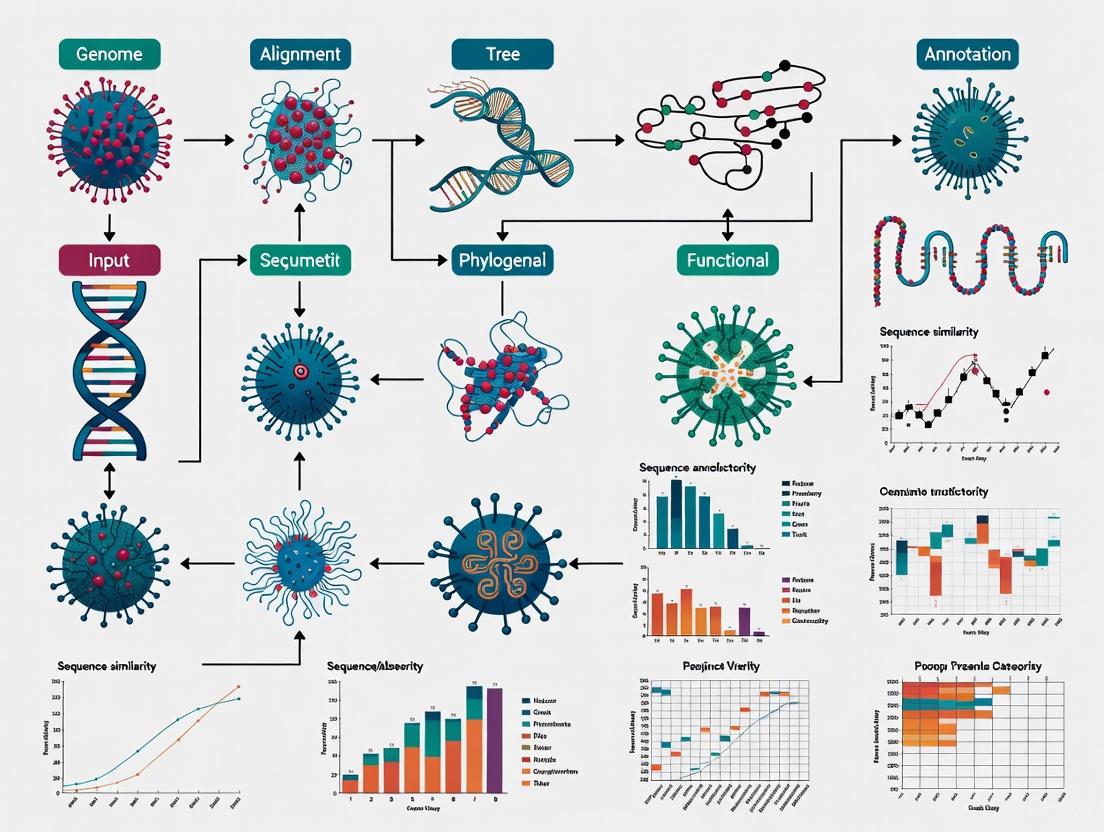
This article provides a comprehensive guide to the current landscape of computational tools for prokaryotic comparative genomics, tailored for researchers and drug development professionals.
A Researcher's Guide to Comparative Genomics Tools for Prokaryotic Analysis
Abstract
This article provides a comprehensive guide to the current landscape of computational tools for prokaryotic comparative genomics, tailored for researchers and drug development professionals. It covers foundational concepts, details methodologies for pan-genome analysis and visualization, offers protocols for troubleshooting and optimizing analyses, and outlines best practices for validating results and comparing tool performance. The guide integrates the latest software advancements to empower robust, reproducible genomic research with clinical and biomedical applications.
Core Concepts and the Prokaryotic Genomic Landscape
Defining Comparative Genomics in Prokaryotic Research
Comparative genomics is a foundational method in prokaryotic research that involves the systematic comparison of genomic sequences from different bacteria and archaea. This field leverages the fact that prokaryotes generally possess smaller, less complex genomes lacking the intron-exon structure typical of eukaryotes, making them particularly amenable to comparative analyses [1]. The primary goals of these comparisons are to identify genes responsible for specific traits, understand evolutionary relationships, uncover mechanisms of pathogenicity and antibiotic resistance, and elucidate the genetic basis of ecological adaptation.
The extraordinary adaptability of prokaryotes across diverse ecosystems is largely driven by key evolutionary mechanisms such as horizontal gene transfer (HGT), mutations, and genetic drift [2]. These processes continuously introduce novel genetic variations into microbial gene pools, promoting diversity at both population and species levels. Comparative genomics provides the methodological framework to study these dynamics, offering insights into evolutionary trajectories and adaptive strategies from a population perspective.
Key Analytical Methodologies
Pangenome Analysis
Pangenome analysis represents a crucial method for studying genomic dynamics in prokaryotic populations. The pangenome is conceptualized as the entire repertoire of genes found within a specific prokaryotic species or group, comprising the core genome (genes shared by all individuals), shell genes (found in some but not all individuals), and cloud genes (rare genes present in very few individuals) [2].
Three principal computational approaches have been developed for pangenome analysis:
Reference-based methods utilize established orthologous gene databases (e.g., eggNOG, COG) to identify orthologs by aligning genomic sequences with pre-annotated homologous genes [2]. These methods are highly efficient for analyzing genomes with well-annotated reference data but are less effective for studying new species with substantial novel genetic content.
Phylogeny-based methods classify orthologous gene clusters using sequence similarity and phylogenetic information, often employing techniques such as bidirectional best hits (BBH) or phylogeny-based scoring methods [2]. By constructing phylogenetic trees, these methods aim to reconstruct evolutionary trajectories of genes, though they can be computationally intensive for large datasets.
Graph-based methods focus on gene collinearity and the conservation of gene neighborhoods (CGN), creating graph structures to represent relationships across different genomes [2]. These methods enable rapid identification of orthologous gene clusters but may struggle with accuracy when clustering non-core gene groups, such as mobile genetic elements.
Table 1: Comparison of Pangenome Analysis Methodologies
| Method Type | Key Features | Advantages | Limitations |
|---|---|---|---|
| Reference-based | Uses pre-annotated orthologous databases | High efficiency for annotated species | Limited effectiveness for novel species |
| Phylogeny-based | Uses sequence similarity and phylogenetic trees | Reconstructs evolutionary trajectories | Computationally intensive for large datasets |
| Graph-based | Focuses on gene collinearity and neighborhood conservation | Rapid processing of multiple genomes | Lower accuracy with non-core gene groups |
Advanced Pangenome Tools: PGAP2
PGAP2 represents an integrated software package that simplifies various processes including data quality control, pangenome analysis, and result visualization [2]. This toolkit facilitates rapid and accurate identification of orthologous and paralogous genes by employing fine-grained feature analysis within constrained regions, addressing key limitations of earlier tools.
The PGAP2 workflow encompasses four successive steps:
- Data Reading: Compatible with various input formats (GFF3, genome FASTA, GBFF, and annotated GFF3 with sequences) [2].
- Quality Control: Includes outlier detection based on average nucleotide identity (ANI) and unique gene counts, plus generation of visualization reports for features like codon usage and genome composition [2].
- Homologous Gene Partitioning: Employs a dual-level regional restriction strategy to infer orthologs through analysis of gene identity and synteny networks [2].
- Postprocessing Analysis: Generates interactive visualizations displaying rarefaction curves, statistics of homologous gene clusters, and quantitative results of orthologous gene clusters [2].
Systematic evaluation with simulated and gold-standard datasets demonstrates that PGAP2 outperforms previous state-of-the-art tools (Roary, Panaroo, PanTa, PPanGGOLiN, and PEPPAN) in precision, robustness, and scalability for large-scale pangenome data [2].
Functional Genomics Approaches
While comparative genomics identifies genetic variation, functional genomics aims to determine the biological functions of genes and their relationship to phenotypes. Two transformative techniques powered by next-generation sequencing (NGS) have revolutionized this field:
Genome-Wide Association Studies (GWAS) involve sampling and genome sequencing of hundreds of isolates from different environments or conditions to identify genetic elements (single nucleotide polymorphisms, k-mers, or accessory genetic elements) significantly associated with specific phenotypes [3]. Bacterial GWAS successfully identified candidate genes involved in host specificity, virulence, pathogen carriage duration, and antibiotic resistance [3].
Transposon Insertion Sequencing Methods (Tn-seq), including TraDIS, HITS, and INSeq, use large transposon insertion libraries where most non-essential genes contain transposon insertions [3]. After applying selection pressure by growing libraries in defined conditions, sequencing of transposon-genome junctions creates "fitness profiles" indicating the contribution of each gene to survival under those conditions.
Table 2: Key Functional Genomics Methods for Prokaryotic Research
| Method | Principle | Applications | Key Outcomes |
|---|---|---|---|
| GWAS | Identifies statistical associations between genetic variants and phenotypes across populations | Host specificity, virulence, antibiotic resistance | Identification of candidate genes underlying complex traits |
| Tn-seq | Profiles fitness effects of gene disruptions through transposon mutagenesis and sequencing | Essential gene discovery, virulence factors, metabolic pathways | Genome-wide fitness contributions of genes under specific conditions |
Experimental Protocols
Protocol 1: Pangenome Analysis Using PGAP2
Objective: To identify core and accessory genomic elements across multiple prokaryotic strains and visualize pangenome profiles.
Materials:
- Genomic data in FASTA, GFF3, or GBFF format
- High-performance computing cluster with ≥16 GB RAM
- PGAP2 software (available at https://github.com/bucongfan/PGAP2)
Procedure:
Data Preparation
- Collect genome assemblies for all strains of interest
- Ensure consistent annotation format across datasets
- Organize files in a dedicated project directory
Quality Control
- Execute PGAP2 quality control module
- Review generated HTML reports for genome composition and codon usage
- Identify and potentially exclude outlier strains based on ANI (<95%) or excessive unique gene count
Ortholog Identification
- Run PGAP2 core analysis module with default parameters
- Monitor convergence of orthologous clustering algorithm
- Export preliminary clusters for validation
Postprocessing and Visualization
- Generate rarefaction curves to assess pangenome openness
- Visualize homologous gene cluster statistics
- Extract sequences of core and accessory genes for downstream analysis
Troubleshooting Tip: For large datasets (>500 genomes), utilize checkpointing functionality to resume interrupted analyses.
Protocol 2: Bacterial GWAS for Phenotype-Genotype Association
Objective: To identify genetic variants associated with specific phenotypic traits across bacterial populations.
Materials:
- Cultured bacterial isolates (200-1000 strains)
- Phenotyping assays (antibiotic susceptibility, virulence measures)
- DNA extraction and sequencing kits
- Bioinformatics pipelines (e.g., PySEER, Scoary)
Procedure:
Strain Selection and Sequencing
- Select diverse strains representing population structure
- Extract high-quality genomic DNA
- Perform whole-genome sequencing (≥30× coverage)
Variant Calling
- Map reads to reference genome or perform de novo assembly
- Identify single nucleotide polymorphisms (SNPs) and indels
- Call presence/absence of accessory genes
Population Structure Correction
- Construct phylogenetic tree from core genome SNPs
- Perform principal component analysis (PCA) on genetic variation
- Incorporate phylogenetic or PCA components as covariates in association model
Association Testing
- Apply linear mixed models accounting for population structure
- Perform k-mer-based association testing for comprehensive variant discovery
- Apply multiple testing correction (Bonferroni or false discovery rate)
Validation
- Select top associated variants for experimental validation
- Perform gene deletion/complementation studies
- Confirm phenotypic effects in isogenic backgrounds
Note: Always consider that associated variants may be in linkage disequilibrium with causal mutations rather than being functionally causative themselves.
Visualization and Data Interpretation
Effective visualization is critical for interpreting comparative genomics data. The following diagram illustrates the integrated workflow combining pangenome analysis with functional validation:
Diagram 1: Integrated workflow for prokaryotic comparative genomics
For visualizing genome comparisons, tools like the Comparative Genome Viewer (CGV) from NCBI enable exploration of whole-genome assembly-alignments [4]. CGV displays two assemblies horizontally with colored connector lines representing alignments, where forward alignments appear green and reverse alignments purple [4]. This facilitates identification of structural variants and conservation patterns across strains or related species.
Research Reagent Solutions
Table 3: Essential Research Reagents and Resources for Comparative Genomics
| Reagent/Resource | Function | Example Sources/Platforms |
|---|---|---|
| DNA Sequencing Kits | High-quality genome sequencing | Illumina, Oxford Nanopore, PacBio |
| Genome Annotation Tools | Structural and functional gene annotation | Prokka, NCBI Prokaryotic Annotation Pipeline |
| Orthology Databases | Reference-based ortholog identification | eggNOG, COG, OrthoDB |
| Pangenome Analysis Software | Identification of core and accessory genomes | PGAP2, Roary, Panaroo |
| Variant Callers | SNP and indel detection | Snippy, GATK, FreeBayes |
| Association Study Tools | Phenotype-genotype association mapping | PySEER, Scoary, PLINK |
| Transposon Mutagenesis Systems | Genome-wide functional screening | mariner-based systems, EZ-Tn5 |
| Visualization Platforms | Comparative genomics data exploration | CGV, Phandango, BRIG |
Comparative genomics continues to evolve as a cornerstone of prokaryotic research, with advancing methodologies enabling increasingly sophisticated analyses. The integration of pangenome analysis with functional genomics approaches like GWAS and Tn-seq creates a powerful framework for connecting genomic variation to biological function. As sequencing technologies become more accessible and analytical tools more refined, comparative genomics will continue to drive discoveries in microbial evolution, pathogenesis, and adaptation, ultimately informing drug development and therapeutic strategies against pathogenic prokaryotes.
Comparative genomics serves as a cornerstone of modern prokaryotic research, enabling scientists to decipher the evolutionary dynamics, functional adaptations, and genetic diversity of bacterial species. The dramatic reduction in sequencing costs has fueled an exponential growth in available genomic data, making advanced comparative analysis more accessible than ever [5]. Central to these analyses are three key genomic features: orthologs, paralogs, and synteny. Orthologs are genes in different species that evolved from a common ancestral gene by speciation, typically retaining the same function over evolutionary time. Paralogs are genes related by duplication within a genome that often evolve new functions. Synteny refers to the conserved order of genomic elements across different species, providing critical evidence for inferring orthology and understanding genome evolution [6] [7]. These concepts have moved from theoretical frameworks to practical tools that drive discovery in antimicrobial resistance research, virulence mechanism studies, and evolutionary biology. This protocol details the methodologies for identifying and analyzing these features, with particular emphasis on their application in prokaryotic genome analysis through contemporary bioinformatics tools.
Key Concepts and Quantitative Parameters
The accurate identification of orthologs and paralogs relies on quantifying specific genomic features and relationships. The following parameters are essential for characterizing homology clusters and interpreting pan-genome profiles.
Table 1: Quantitative Parameters for Characterizing Homologous Gene Clusters
| Parameter | Description | Application in Analysis |
|---|---|---|
| Average Nucleotide Identity (ANI) | Measures the average nucleotide sequence similarity between orthologous genes or genomic regions [2] [5]. | Used for quality control to identify outlier strains and define species boundaries; a common threshold is 95% [2]. |
| Bidirectional Best Hit (BBH) | Two genes from two different genomes that are each other's best match in pairwise sequence comparison [2]. | A primary criterion for inferring orthology before applying synteny-based refinement [2]. |
| Contrast Ratio | Numerical expression of the difference in light between foreground (text) and background colors [8]. | Critical for creating accessible data visualizations; minimum 4.5:1 for standard text and 3:1 for large text [8]. |
| Gene Diversity Score | Evaluates the conservation level and variation within an orthologous gene cluster [2]. | Helps assess the reliability of orthologous clusters and their evolutionary conservation [2]. |
| Gene Connectivity | Within a gene identity network, this measures the degree of similarity and connectedness between genes [2]. | Used to evaluate the coherence and quality of inferred orthologous gene clusters [2]. |
Protocols for Identification of Orthologs and Paralogs
Protocol 1: Ortholog Inference via Fine-Grained Feature Analysis with PGAP2
PGAP2 employs a multi-step process that integrates sequence identity with genomic context to accurately partition homologous genes. The following workflow is adapted for the analysis of thousands of prokaryotic genomes [2].
I. Input Data Preparation and Quality Control
- Input Formats: Accepts GFF3, genome FASTA, GBFF, or annotated GFF3 with genomic sequences. The tool can handle a mixture of these formats simultaneously [2].
- Representative Genome Selection: If no specific reference strain is designated, PGAP2 automatically selects a representative genome based on gene similarity across all input strains [2].
- Outlier Detection: Identifies anomalous strains using two complementary methods:
- Feature Visualization: Generates interactive HTML and vector plots for assessing data quality, displaying features such as codon usage, genome composition, and gene completeness [2].
II. Data Abstraction and Network Construction
- Gene Identity Network: Constructs a network where nodes represent genes and edges represent the degree of sequence similarity between them [2].
- Gene Synteny Network: Constructs a parallel network where edges represent adjacent genes—specifically, those that are one position apart in the genome, capturing gene order conservation [2].
III. Ortholog Inference via Dual-Level Regional Restriction
- Regional Refinement: The inference process traverses subgraphs in the identity network but evaluates gene clusters only within a predefined identity and synteny range. This strategy confines the search radius, drastically reducing computational complexity [2].
- Feature Analysis: Within this restricted region, the reliability of potential orthologous clusters is evaluated against three criteria:
- Cluster Merging: Gene clusters meeting the reliability criteria are merged. The synteny network is updated, and the process iterates until no more clusters meet the merging criteria [2].
IV. Post-Processing and Result Visualization
- High-Identity Merge: Nodes with exceptionally high sequence identity (often from recent duplications via Horizontal Gene Transfer) are merged [2].
- Profile Generation: The post-processing module generates interactive visualizations of the pan-genome profile, including rarefaction curves and statistics of homologous gene clusters [2].
- Downstream Analysis: PGAP2 integrates workflows for sequence extraction, single-copy phylogenetic tree construction, and bacterial population clustering [2].
Protocol 2: Functional Analysis of Specificity-Determining Residues
This methodology leverages the functional divergence between orthologs and paralogs to identify key amino acid residues that determine functional specificity, such as in bacterial transcription factors [7].
I. Sequence Dataset Curation
- Identify Orthologs: For a gene family of interest, compile a comprehensive set of orthologous sequences from multiple bacterial genomes. These sequences are assumed to share conserved functional specificity [7].
- Identify Paralogs: Within the same genomes, identify paralogous sequences that belong to the same protein family but are predicted to have divergent functions [7].
II. Multiple Sequence Alignment and Grouping
- Perform a multiple sequence alignment for all collected orthologous and paralogous sequences.
- Partition the aligned sequences into two groups based on their established functional specificity (e.g., orthologs with conserved function in Group A, paralogs with divergent function in Group B) [7].
III. Statistical Correlation Analysis
- Apply a statistical method to identify residues where the amino acid variation strongly correlates with the predefined grouping (orthologs vs. paralogs).
- The underlying assumption is that residues responsible for functional specificity will be conserved within orthologs but will differ in the paralogs [7].
IV. Structural Validation and Experimental Design
- Map the predicted specificity-determining residues onto a available three-dimensional protein structure.
- Analyze their spatial location to determine if they cluster in functional domains, such as DNA-binding or ligand-binding sites [7].
- Use these predictions to design targeted experiments (e.g., site-directed mutagenesis) to rationally re-design protein specificity [7].
Workflow Visualization
The following diagram illustrates the core computational workflow for ortholog identification as implemented in modern tools like PGAP2, integrating both sequence identity and syntenic information.
The Scientist's Toolkit: Research Reagent Solutions
Successful comparative genomics research relies on a suite of computational tools and curated biological data. The following table details essential "research reagents" for prokaryotic ortholog and synteny analysis.
Table 2: Essential Research Reagents and Resources for Prokaryotic Comparative Genomics
| Tool/Resource | Type | Primary Function in Analysis |
|---|---|---|
| PGAP2 | Software Pipeline | An integrated package for pan-genome analysis that performs quality control, infers orthologs via fine-grained feature networks, and provides visualization [2]. |
| Orthologous Gene Databases (eggNOG, COG) | Reference Database | Pre-computed databases of orthologous groups used by reference-based methods to annotate and identify orthologs in newly sequenced genomes [2]. |
| Bidirectional Best Hit (BBH) Algorithm | Computational Method | A core algorithm for initial ortholog prediction by identifying gene pairs that are each other's best match in pairwise genome comparisons [2]. |
| Conserved Gene Neighbors (CGN) | Genomic Feature | Preserved gene order across different genomes; used as supporting evidence for orthology and to refine gene clusters in graph-based methods [6] [2]. |
| Simulated Datasets | Benchmarking Resource | Datasets with known evolutionary relationships used for the systematic evaluation and validation of ortholog identification methods [2]. |
| Specialized Functional Databases | Annotation Database | Databases focused on specific gene types (e.g., antimicrobial resistance, virulence factors) for functional annotation of identified orthologs and paralogs [5]. |
| Rebamipide Mofetil | Rebamipide Mofetil, CAS:1527495-76-6, MF:C25H26ClN3O5, MW:483.9 g/mol | Chemical Reagent |
| Reltecimod | Reltecimod | Reltecimod is a synthetic peptide CD28 antagonist for research on necrotizing soft tissue infections (NSTI) and immune response. For Research Use Only. |
Analysis and Interpretation of Results
Interpreting the output of ortholog and synteny analyses is critical for drawing meaningful biological conclusions. The gene diversity score and connectivity metrics generated by tools like PGAP2 help characterize the evolutionary conservation of gene clusters [2]. Synteny provides crucial supporting evidence for orthology assignments; for instance, if two genes a in different species are putative orthologs, the additional conserved synteny of flanking genes c and d strengthens this inference [6]. Furthermore, the functional annotation of orthologous clusters against specialized databases can reveal genomic islands of virulence or antibiotic resistance, linking evolutionary relationships to phenotypic outcomes [5]. The quantitative parameters, such as average identity and uniqueness to other clusters, provide insights into the dynamics of genome evolution, helping to distinguish between stable core genes and rapidly accessory genes [2].
Comparative genomics provides a powerful framework for understanding the genetic basis of microbial diversity, adaptation, and function. For prokaryotic genome analysis, three methodological pillars have emerged as fundamental: pan-genome analysis, which catalogs the complete gene repertoire across strains; phylogenetic analysis, which reconstructs evolutionary relationships; and variant detection, which identifies genomic differences ranging from single nucleotides to large structural changes. These approaches have been revolutionized by next-generation sequencing technologies and the development of sophisticated bioinformatics tools that can handle the vast datasets now being generated [2] [9].
In prokaryotic research, these analyses are crucial for uncovering the mechanisms behind pathogenicity, antibiotic resistance, ecological adaptation, and metabolic specialization. The integration of AI and machine learning into bioinformatics tools has further enhanced their precision, with some platforms reporting accuracy improvements of up to 30% while significantly reducing processing time [9]. This protocol outlines the key methodologies, tools, and applications for each analysis type, providing researchers with practical guidance for implementing these approaches in prokaryotic genomics studies.
Pan-Genome Analysis
Conceptual Framework and Definitions
The pan-genome represents the total complement of genes found within a species or phylogenetic clade, comprising the core genome (genes shared by all individuals), shell genome (genes present in multiple but not all individuals), and cloud genome (genes unique to few individuals) [10]. This concept, first described in bacterial studies, has transformed our understanding of prokaryotic diversity by revealing how accessory genes contribute to functional versatility and ecological adaptation [2] [10].
In prokaryotes, pan-genome analysis has illuminated the extraordinary genetic diversity within species, driven primarily by horizontal gene transfer, mutations, and genetic drift [2]. The analysis shifts focus from a single reference genome to a population perspective, enabling researchers to identify strain-specific adaptations, understand evolutionary trajectories, and discover genes associated with specific phenotypes like virulence or substrate utilization.
Table 1: Pan-Genome Components and Characteristics
| Component | Definition | Typical Characteristics | Functional Implications |
|---|---|---|---|
| Core Genome | Genes present in all strains | Housekeeping genes, essential cellular functions | High conservation, structural and metabolic functions |
| Shell Genome | Genes present in multiple but not all strains | Niche-specific adaptations, regulatory elements | Variable distribution, functional specialization |
| Cloud Genome | Genes present in few or single strains | Recently acquired genes, mobile genetic elements | Strain-specific adaptations, horizontal transfer |
Methodological Approaches and Tools
Pan-genome analysis methodologies have evolved to address the challenges of processing thousands of prokaryotic genomes. Current methods can be broadly categorized into three approaches: reference-based (using established orthologous gene databases), phylogeny-based (using sequence similarity and phylogenetic information), and graph-based (focusing on gene collinearity and conservation of gene neighborhoods) [2].
PGAP2 represents a state-of-the-art toolkit that employs fine-grained feature analysis within constrained regions to rapidly identify orthologous and paralogous genes [2]. Its workflow encompasses four successive steps: (1) data reading compatible with various input formats (GFF3, genome FASTA, GBFF); (2) quality control with outlier detection based on average nucleotide identity (ANI) and unique gene counts; (3) homologous gene partitioning through dual-level regional restriction strategy; and (4) post-processing analysis with visualization outputs [2]. For larger eukaryotic genomes or highly heterozygous species, transcript-focused approaches like GET_HOMOLOGUES-EST offer a cost-effective alternative by analyzing coding sequences rather than complete genomes [10].
Figure 1: Generalized Pan-genome Analysis Workflow. The process begins with multiple input genomes, proceeds through quality control and gene clustering, and results in a comprehensive pan-genome profile with visualization outputs.
Application Protocol: Prokaryotic Pan-Genome Analysis with PGAP2
Objective: Construct a pan-genome profile from multiple prokaryotic genomes to identify core and accessory genes and their functional associations.
Materials:
- Genomic sequences in FASTA format or annotations in GFF3/GBFF format
- High-performance computing cluster with minimum 16GB RAM
- PGAP2 software (available at https://github.com/bucongfan/PGAP2)
Procedure:
- Data Preparation and Input
- Collect genome assemblies for all strains to be analyzed
- Ensure consistent annotation formats where possible
- Prepare a directory containing all input files
Quality Control and Representative Selection
- Run PGAP2 with quality control parameters:
pgap.py -i input_dir --qc - Review generated HTML reports on codon usage, genome composition, and gene completeness
- Identify potential outlier strains based on ANI (<95% similarity to representative) or elevated unique gene counts
- Run PGAP2 with quality control parameters:
Orthologous Gene Cluster Identification
- Execute core analysis:
pgap.py -i input_dir --cluster - PGAP2 employs a dual-level regional restriction strategy to identify orthologs through fine-grained feature analysis
- The algorithm evaluates gene diversity, connectivity, and bidirectional best hit criteria
- Execute core analysis:
Pan-genome Profile Construction
- Generate quantitative outputs using distance-guided construction algorithm
- Classify genes into core, shell, and cloud compartments based on distribution patterns
- Extract sequences for each gene cluster for downstream functional annotation
Visualization and Interpretation
- Examine rarefaction curves to assess pan-genome openness
- Analyze functional enrichment in different genomic compartments
- Correlate accessory gene content with phenotypic traits
Troubleshooting Tips:
- For large datasets (>100 genomes), use checkpointing to resume interrupted analyses
- If computational resources are limited, consider a two-step approach analyzing subsets of genomes
- Validate unexpected gene distributions by checking alignment quality and genomic context
Phylogenetic Analysis
Foundations of Microbial Phylogenetics
Phylogenetic analysis reconstructs evolutionary relationships among microorganisms, providing a framework for studying microbial diversity, evolution, and population structure. Unlike simple taxonomic classifications, phylogenetic trees represent genetic similarities and evolutionary history through branch lengths and topological relationships [11]. For prokaryotes, phylogenetic analysis has been transformed by whole-genome sequencing, which provides substantially more information than traditional single-gene approaches like 16S rRNA sequencing.
Phylogenetic trees serve as crucial connectors between upstream bioinformatics processes (sequence processing, alignment) and downstream analyses (diversity measures, association studies) [11]. Methods like UniFrac dissimilarity leverage phylogenetic information to quantify community differences in microbial ecology studies, highlighting the practical importance of accurate tree construction [11].
Tools and Methods for Phylogenetic Reconstruction
Modern phylogenetic tools for prokaryotes must accommodate diverse data sources, including isolate genomes, metagenome-assembled genomes (MAGs), and single-cell genomes. PhyloPhlAn 3.0 provides a comprehensive solution that automatically selects appropriate phylogenetic markers based on the relatedness of input genomes, using species-specific core genes for strain-level analyses and universal markers for deeper phylogenetic relationships [12].
The software integrates over 230,000 publicly available microbial sequences and can construct phylogenies at multiple resolutions—from strain-level trees to large phylogenies comprising >17,000 microbial species [12]. For example, when analyzing 135 Staphylococcus aureus isolates, PhyloPhlAn 3.0 used 1,658 core genes (from 2,127 precomputed S. aureus core genes) present in ≥99% of genomes to reconstruct a high-resolution phylogeny that showed strong correlation (Pearson's r=0.992) with manually curated reference trees [12].
Table 2: Phylogenetic Analysis Tools for Prokaryotic Genomes
| Tool | Methodology | Optimal Use Case | Key Features |
|---|---|---|---|
| PhyloPhlAn 3.0 | Multi-resolution marker genes | Isolate genomes and MAGs from species to phylum level | Automatic database integration, scalable to >17,000 species |
| GToTree | Concatenated core gene alignment | Single species or closely related groups | Automated reference genome retrieval |
| Roary | Pangenome-based profiling | Strain-level phylogenies within species | High accuracy for closely related genomes |
| MLST | Multi-locus sequence typing | Rapid typing and initial classification | Fast but with reduced phylogenetic accuracy |
Application Protocol: Microbial Phylogenetics with PhyloPhlAn 3.0
Objective: Reconstruct a phylogenetic tree for prokaryotic genomes to understand evolutionary relationships and population structure.
Materials:
- Assembled genomes (complete or draft) in FASTA format
- Computational resources with 8GB RAM per core
- PhyloPhlAn 3.0 software and database
Procedure:
- Data Preparation
- Ensure genome assemblies meet minimum quality standards (completeness, contamination)
- For metagenome-assembled genomes, check completeness with tools like CheckM
- Organize input genomes in a dedicated directory
Database Selection and Marker Gene Identification
- Run PhyloPhlAn 3.0 in automatic mode:
phylophlan -i input_genomes -o output_dir --database phylophlan - The software automatically determines optimal phylogenetic resolution and selects appropriate marker genes
- For known species, use species-specific mode:
--diversity highfor strain-level resolution
- Run PhyloPhlAn 3.0 in automatic mode:
Multiple Sequence Alignment and Trimming
- PhyloPhlAn 3.0 performs alignment using MAFFT or MUSCLE
- Alignment trimming removes poorly aligned regions using trimAl or similar tools
- For large datasets, the UPP alignment method provides improved scalability
Phylogenetic Tree Construction
- The software concatenates marker gene alignments into a supermatrix
- Tree inference uses maximum likelihood methods (RAxML, IQ-TREE, or FastTree)
- Support values are calculated via bootstrapping (100 replicates recommended)
Tree Visualization and Interpretation
- Generate publication-quality figures with ggtree or iTOL
- Animate trees with taxonomic and functional annotations
- Correlate phylogenetic clustering with phenotypic data
Figure 2: Phylogenetic Analysis Workflow. The process begins with input genomes, identifies appropriate marker genes, performs sequence alignment and trimming, and concludes with phylogenetic tree construction.
Validation and Quality Assessment:
- Compare topological consistency between different inference methods
- Check for concordance between single-gene trees and the species tree
- Assess branch support values; consider collapsing poorly supported nodes (<70% bootstrap)
- Verify that taxonomic outliers have biological justification rather than representing artifacts
Variant Detection
Variant Types and Biological Significance
Variant detection encompasses the identification of genetic differences ranging from single nucleotide polymorphisms (SNPs) to large structural variants (SVs). In prokaryotes, these variations underlie phenotypic diversity, antimicrobial resistance, virulence, and environmental adaptation. Structural variants—defined as variations ≥50 base pairs—include deletions, insertions, duplications, inversions, translocations, and complex rearrangements that significantly impact gene structure and regulatory regions [13] [14].
The functional impact of SVs is often more profound than small variants because they can simultaneously affect multiple genes, alter gene dosage through copy-number variations (CNVs), or disrupt regulatory landscapes. In bacterial genomes, SVs frequently result from mobile genetic elements, phage integration, or homologous recombination between repetitive elements [13]. Recent studies have demonstrated that SVs are unevenly distributed across bacterial genomes and may exhibit subgenome asymmetry in polyploid species, reflecting differential selection pressures [13].
Detection Methods and Tools
Variant detection methodologies have evolved with sequencing technologies. While short-read sequencing enabled comprehensive SNP discovery, the accurate detection of SVs required the development of long-read sequencing technologies (PacBio Oxford Nanopore) and specialized analytical tools [13] [14].
NanoVar represents a specialized workflow for SV detection in long-read sequencing data, optimized for efficiency and reliability across various study designs, including genetic disorders, population genomics, and non-model organisms [14]. The protocol enables researchers to identify and analyze SVs in a typical human dataset within 2-5 hours after read mapping, demonstrating its practical efficiency [14].
For prokaryotic genomes, SV detection must account for unique genomic features including high gene density, operon structures, and the presence of plasmid sequences. Pangenome approaches have proven particularly valuable, as they enable the detection of presence-absence variations (PAVs) that define accessory genomic components and contribute to functional diversification [13].
Table 3: Variant Types and Detection Approaches
| Variant Type | Size Range | Detection Methods | Biological Impact |
|---|---|---|---|
| SNPs | Single nucleotide | Short-read alignment, Bayesian calling | Amino acid changes, regulatory effects |
| Indels | 1-50 bp | Local realignment, split-read mapping | Frameshifts, protein truncations |
| Structural Variants | ≥50 bp | Long-read alignment, assembly-based | Gene dosage changes, rearrangements |
| Presence-Absence Variants | Gene-level | Pangenome graphs, read depth analysis | Accessory gene content, niche adaptation |
Application Protocol: Structural Variant Detection with Long-Read Data
Objective: Identify and characterize structural variants in prokaryotic genomes using long-read sequencing data.
Materials:
- Long-read sequencing data (Oxford Nanopore or PacBio)
- Reference genome in FASTA format
- NanoVar software package
- Computing resources with 32GB RAM recommended
Procedure:
- Data Preparation and Quality Control
- Base-call raw sequencing data (if necessary) using Guppy or similar tools
- Assess read quality (Q-score >7 for Nanopore, >20 for PacBio) and read length distribution
- Filter out low-quality reads and artifacts
Read Mapping and Alignment
- Map reads to reference genome using minimap2 or NGMLR:
minimap2 -ax map-ont reference.fasta reads.fastq > aligned.sam - Convert SAM to BAM format and sort:
samtools view -Sb aligned.sam | samtools sort -o sorted.bam - Generate read coverage statistics to identify potential regions of interest
- Map reads to reference genome using minimap2 or NGMLR:
Structural Variant Calling
- Run NanoVar SV detection:
nanovar -r reference.fasta -b sorted.bam -o output_dir - Adjust sensitivity parameters based on project goals: higher sensitivity for discovery studies, higher specificity for validation
- For population studies, use cohort analysis mode to identify shared and private SVs
- Run NanoVar SV detection:
Variant Filtering and Annotation
- Apply quality filters: minimum supporting reads (≥3), mapping quality, and variant size
- Annotate SVs with genomic features (genes, regulatory elements) using bedtools
- Classify SVs by type (deletion, insertion, inversion, etc.) and genomic context
Validation and Visualization
- Validate high-impact SVs by PCR and Sanger sequencing
- Visualize SVs in genomic context using IGV or similar browsers
- Generate circos plots or linear genome diagrams showing SV distribution
Figure 3: Structural Variant Detection Workflow. The process begins with long-read sequencing data, proceeds through quality control, read mapping, variant calling, and annotation, resulting in a set of validated variants.
Interpretation Guidelines:
- Prioritize SVs affecting coding sequences, regulatory regions, or antibiotic resistance genes
- Consider SV recurrence across multiple strains as evidence of positive selection
- Correlate SV presence with phenotypic data where available
- Be cautious of potential false positives in repetitive regions or areas with poor coverage
Integrated Applications in Prokaryotic Research
Successful implementation of comparative genomics analyses requires both computational tools and curated biological resources. The following table outlines key reagents and datasets essential for prokaryotic genome analysis.
Table 4: Essential Research Reagents and Resources for Prokaryotic Comparative Genomics
| Resource Type | Specific Examples | Function/Purpose | Access Information |
|---|---|---|---|
| Reference Databases | NCBI RefSeq, UniProt, EggNOG | Orthology assignments, functional annotation | Publicly available online |
| Quality Control Tools | CheckM, FastQC, QUAST | Assembly and sequence quality assessment | Open source |
| Analysis Toolkits | PGAP2, PhyloPhlAn 3.0, NanoVar | Specialized analytical workflows | GitHub repositories |
| Visualization Platforms | IGV, ggtree, BRIG | Data exploration and result presentation | Open source |
| Curated Genome Collections | Gold-standard datasets, Type strain genomes | Method validation and benchmarking | Public repositories |
Case Study: Integrated Analysis ofStreptococcus suisZoonotic Strains
A comprehensive analysis of 2,794 zoonotic Streptococcus suis strains demonstrates the power of integrating multiple comparative genomics approaches [2]. The study employed PGAP2 to construct a pan-genomic profile that revealed extensive genetic diversity driven by accessory gene content. Phylogenetic analysis using PhyloPhlAn 3.0 placed these strains in the context of global diversity, identifying distinct clades associated with zoonotic potential. Variant detection uncovered specific structural variations in virulence factors and antimicrobial resistance genes that differentiated pathogenic from commensal lineages.
This integrated approach provided insights into the evolutionary mechanisms driving the emergence of zoonotic strains, identifying genomic islands and phage-related elements as key contributors to pathogenicity. The study exemplifies how combining pan-genome, phylogenetic, and variant analyses can uncover biologically meaningful patterns in large bacterial datasets.
Emerging Trends and Future Directions
The field of prokaryotic comparative genomics is rapidly evolving, with several trends shaping future methodologies. AI integration is transforming variant calling and functional prediction, with tools like DeepVariant achieving superior accuracy compared to traditional methods [9]. The application of large language models to "translate" nucleic acid sequences represents a particularly promising frontier, potentially unlocking new approaches to analyze DNA, RNA, and amino acid sequences [9].
Cloud-based platforms are democratizing access to advanced genomics by connecting over 800 institutions globally and making powerful computational resources available to smaller labs [9]. Simultaneously, increased focus on data security implements advanced encryption protocols and access controls to protect sensitive genetic information [9]. These technological advances, combined with growing datasets spanning diverse microbial populations, promise to further enhance our understanding of prokaryotic genomics and its applications in medicine, biotechnology, and fundamental biology.
Comparative genomics of prokaryotes relies fundamentally on the public availability of genomic data stored in three primary repositories that form the International Nucleotide Sequence Database Collaboration (INSDC): the National Center for Biotechnology Information (NCBI) in the United States, the European Nucleotide Archive (ENA) in Europe, and the DNA Database of Japan (DDBJ). These organizations synchronize their data daily, ensuring researchers can access identical datasets regardless of which repository they use [15]. This triad represents the most comprehensive collection of publicly available nucleotide sequences globally, serving as an indispensable resource for genomic discoveries, comparative analyses, and drug development research.
For prokaryotic genome analysis, these repositories provide diverse data types - from raw sequencing reads to fully assembled and annotated genomes - that enable researchers to investigate genomic variation, evolutionary relationships, horizontal gene transfer, and pathogenicity islands across bacterial and archaeal lineages. The structured organization and standardized submission processes ensure data reproducibility and interoperability, which are critical for robust comparative genomic studies.
Each INSDC partner maintains specialized resources and analytical tools tailored to different aspects of prokaryotic genome analysis, as summarized in Table 1.
Table 1: Core Data Resources and Analytical Tools for Prokaryotic Genomics
| Repository/Resource | Primary Function | Key Features for Prokaryotic Research | Accession Prefix Examples |
|---|---|---|---|
| NCBI Sequence Read Archive (SRA) | Raw sequencing data storage [15] | Stores raw reads from various platforms; facilitates reproducibility and reanalysis | SRR, ERR, DRR |
| NCBI RefSeq | Curated reference sequences | Manually reviewed genomes with consistent annotation | NC, NZ |
| NCBI GenBank | Primary sequence database [16] | Comprehensive collection of all submitted sequences; includes WGS and complete genomes | CP, CHR |
| European Nucleotide Archive (ENA) | Comprehensive nucleotide data | Alternative submission portal to NCBI; synchronized data | ERS, ERX, ERR |
| Prokaryotic Genome Annotation Pipeline (PGAP) | Automated genome annotation [17] [16] | Annotates bacterial/archaeal genomes using protein family models and ab initio prediction | - |
The Prokaryotic Genome Annotation Pipeline (PGAP) warrants particular attention for prokaryotic researchers. This NCBI service automatically annotates bacterial and archaeal genomes by combining alignment-based methods with ab initio gene prediction algorithms. PGAP identifies protein-coding genes using a multi-step process that compares open reading frames to libraries of protein hidden Markov models (HMMs), RefSeq proteins, and proteins from well-characterized reference genomes [17]. For non-coding elements, it identifies structural RNAs (5S, 16S, and 23S rRNAs) using RFAM models via Infernal's cmsearch, and tRNA genes using tRNAscan-SE with specialized parameter sets for Archaea and Bacteria [17]. The pipeline also detects mobile genetic elements, including phage-related proteins and CRISPR arrays, providing comprehensive annotation critical for comparative genomic analyses.
Data Submission Protocols
NCBI SRA Submission Workflow
Submitting sequencing data to public repositories ensures scientific reproducibility and maximizes research impact. The following protocol outlines the submission process to NCBI SRA, which mirrors similar workflows for ENA submission.
Table 2: Essential Metadata Requirements for SRA Submission
| Metadata Category | Specific Requirements | Examples |
|---|---|---|
| BioProject | Project-level information | Principal investigator, project objectives, scope |
| BioSample | Sample-specific attributes [18] | Organism, collection date/location, tissue type, environmental conditions |
| Library Preparation | Experimental methodology [18] | Library source (genomic DNA, RNA), selection method (PCR, enrichment), strategy (WGS, amplicon) |
| Sequencing Platform | Instrument information [18] | Illumina MiSeq, NovaSeq; PacBio; Oxford Nanopore |
| Sequencing Type | Technical parameters [18] | Single-end vs. paired-end, read length |
Step-by-Step Submission Protocol:
BioSample Creation: Before submitting sequences, create BioSample entries describing the biological source materials. Log in to the NCBI Submission Portal, select "BioSample," and download the appropriate batch submission template (e.g., "Invertebrate" for environmental prokaryote samples) [18]. Required fields include
sample_name,organism, and at least one ofisolate,host, orisolation_source. Include as many attributes as possible (e.g.,collection_date,geo_loc_name,lat_lon,temperature) to enhance data reproducibility [18]. Upload the completed spreadsheet to receive SAMN accessions numbers for each sample.BioProject Registration: Create a BioProject to organize all data related to your research initiative. In the Submission Portal, select "BioProject," choose applicable data types (e.g., "Raw sequence reads"), specify project scope ("Single organism" or "Multi-species"), and provide target organisms and descriptive project title and description [18]. Link previously created BioSamples to this project by entering their SAMN accessions. Upon processing, you will receive a PRJNA accession number.
SRA Metadata and File Preparation: Prepare sequencing data and metadata. For each sequencing experiment, gather information on: library source (e.g., "genomic DNA"), selection method (e.g., "PCR" for amplicon studies), strategy (e.g., "AMPLICON" or "WGS"), layout (e.g., "PAIRED"), and instrument model [19] [18]. Compress FASTQ files using gzip and calculate MD5 checksums for file verification [19].
File Upload and Submission: Upload compressed sequence files to the SRA secure upload area via an FTP client like
lftp[19]. Then, in the Submission Portal, start a new "Sequence Read" submission, link to your BioProject, and provide the prepared experiment metadata and file information, including MD5 checksums [18]. NCBI will validate the submission and provide SRA accessions (beginning with SRR) upon successful processing.
For ENA submissions, the process is similar but utilizes the Webin portal, where users upload files to a designated dropbox and submit metadata via spreadsheet templates that closely mirror NCBI's requirements [20] [19].
Genome Annotation Submission
For complete prokaryotic genomes, researchers can request annotation through PGAP during GenBank submission via the Genome Submission Portal [16]. The pipeline automatically identifies protein-coding genes, structural RNAs, tRNAs, and mobile genetic elements, producing comprehensive annotation ready for public release [17]. PGAP can process both complete genomes and draft whole-genome shotgun (WGS) assemblies consisting of multiple contigs, classifying them as WGS or non-WGS based on assembly completeness [16].
Data Access and Analytical Workflows
Accessing Public Data
Researchers can access publicly available data through multiple interfaces:
- Direct SRA Access: The SRA website provides search and download capabilities for raw sequencing data, with options for controlled access for human data or immediate public access for non-human data [15].
- Programmatic Access: Tools like
prefetchfrom the SRA Toolkit enable command-line downloads of SRA data, which can be converted to FASTQ format usingfastq-dumpfor downstream analysis [21]. - Automated Pipelines: Workflow managers like Nextflow can automate large-scale data retrieval and processing. The
biopy_sra.nfpipeline demonstrates how to process hundreds of SRA datasets in parallel, handling downloading, format conversion, and quality control with built-in reproducibility and error-handling capabilities [21].
Analytical Tools for Comparative Genomics
NCBI provides specialized tools for comparing prokaryotic genomes:
- BLAST Suite: Find regions of sequence similarity between bacterial genomes using specialized BLAST databases like ClusteredNR, which groups proteins at 90% identity and length to improve search efficiency [22].
- Comparative Genome Viewer (CGV): Visually compare two assembled genomes at whole-genome, chromosome, or regional levels to identify structural variations [22].
- Multiple Sequence Alignment Viewer: Analyze alignments of homologous genes from multiple prokaryotic strains to identify conserved residues and potential functional domains [22].
The following workflow diagram illustrates a complete comparative genomics study utilizing INSDC resources:
Essential Research Reagent Solutions
Successful prokaryotic genomics research relies on both computational tools and experimental reagents. Table 3 catalogs key solutions referenced in the search results.
Table 3: Essential Research Reagent Solutions for Prokaryotic Genomics
| Reagent/Tool Name | Primary Function | Application in Prokaryotic Genomics |
|---|---|---|
| PGAP (Prokaryotic Genome Annotation Pipeline) | Automated genome annotation [17] [16] | Structural and functional annotation of bacterial and archaeal genomes |
| tRNAscan-SE | tRNA gene detection [17] | Identification of 99-100% of tRNA genes with minimal false positives |
| Infernal/cmsearch | Non-coding RNA alignment [17] | Detection of structural RNAs using covariance models |
| PILER-CR/CRT | CRISPR array identification [17] | Finds clustered regularly interspaced short palindromic repeats |
| GeneMarkS-2+ | Ab initio gene prediction [17] | Predicts protein-coding genes in regions lacking homology evidence |
| Nextflow | Workflow management [21] | Orchestrates scalable, reproducible genomic analysis pipelines |
| BLAST | Sequence similarity search [22] | Finds homologous regions between prokaryotic genomes |
The INSDC repositories - NCBI, ENA, and DDBJ - provide the essential foundation for prokaryotic comparative genomics research through their comprehensive, interoperable data resources. Effective utilization of these resources requires understanding their specialized components: SRA for raw sequencing data, RefSeq for curated references, and PGAP for standardized annotation. The structured submission protocols ensure data quality and reproducibility, while the diverse analytical tools enable sophisticated comparative analyses across microbial taxa. As sequencing technologies advance and datasets expand, these repositories will continue to be indispensable for investigations into prokaryotic evolution, pathogenesis, and metabolic diversity, ultimately accelerating drug discovery and microbial biotechnology innovation.
In the field of prokaryotic genomics, the ability to efficiently process, annotate, and compare genomic data across thousands of strains is fundamental to understanding genetic diversity, evolutionary dynamics, and functional adaptation. The foundation of any comparative genomics workflow relies on the use of standardized file formats that enable the seamless exchange and interpretation of data between bioinformatics tools and databases [2]. This article provides a detailed examination of three cornerstone formats—GFF3, GBFF, and FASTA—framed within the context of modern prokaryotic genome analysis. We explore their technical specifications, roles in analytical pipelines like pan-genome analysis, and provide structured protocols for their effective application in research settings.
Format Specifications and Comparative Analysis
FASTA Format
The FASTA format is a foundational, text-based format for representing nucleotide or amino acid sequences using single-letter codes [23]. Its simplicity and wide adoption make it a near-universal standard for storing raw sequence data.
- Structure: A FASTA file begins with a single description line, starting with a ">" character, followed by lines of sequence data. The description line contains a unique sequence identifier (SeqID) and optional descriptive information [24] [23].
- SeqID Requirements: The SeqID should be unique for each sequence, contain no spaces, and be limited to 25 characters or less. Permissible characters include letters, digits, hyphens, underscores, periods, colons, asterisks, and number signs [24].
- Usage in Genomics: FASTA files typically store raw genomic sequences, such as entire chromosomes or contigs, which serve as the reference for subsequent annotation and analysis [25]. They do not contain any annotation information themselves.
GFF3 Format
The General Feature Format version 3 (GFF3) is specifically designed for storing genome annotations in a structured, machine-readable tabular format [25]. It details the locations and properties of genomic features—such as genes, exons, CDS, and regulatory elements—relative to a reference sequence.
- File Structure: A GFF3 file consists of nine tab-separated columns. The key columns are:
seqid(sequence identifier),source(annotation source),type(feature type),startandend(coordinates),strand, andattributes(semicolon-separated list of feature properties) [26] [27]. - Critical Attributes: The
IDattribute provides a unique identifier for a feature, while theParentattribute establishes hierarchical relationships (e.g., grouping exons under a transcript) [28]. For GenBank submissions, thelocus_tagattribute is required for gene features, andproductnames are required for CDS and RNA features [26]. - Prokaryotic Considerations: For prokaryotic annotation, gene features should use the type "gene," while more specific Sequence Ontology (SO) types like "rRNAgene" or "tRNAgene" should be converted to "gene." Pseudogenes are flagged with a
pseudogene=<TYPE>attribute on the gene feature [26].
GBFF Format
The GenBank Flat File (GBFF) format represents a comprehensive record for a nucleotide sequence, integrating metadata, annotation, and the sequence itself into a single file [29]. It is based on the Feature Table Definition published by the International Nucleotide Sequence Database Collaboration (INSDC) [29].
- Comprehensive Nature: Unlike GFF3, which typically stores annotations separate from sequence data, GBFF files are self-contained, including the annotated features and the complete nucleotide sequence [29] [30].
- Data Structure: The format includes a header section with metadata (such as organism, taxonomy, and reference information), followed by a feature table listing all annotated genomic elements with their qualifiers, and concluding with the raw nucleotide sequence [29].
Table 1: Core Characteristics of Genomic File Formats
| Characteristic | FASTA | GFF3 | GBFF |
|---|---|---|---|
| Primary Purpose | Store raw nucleotide/protein sequences | Store genomic feature annotations | Comprehensive record with sequence, annotation, and metadata |
| Sequence Data | Included (as single-letter codes) | Not included; references an external sequence | Included (in a dedicated section) |
| Annotation Data | None | Structured feature locations and hierarchies | Structured feature table with qualifiers |
| Key Identifiers | SeqID (from description line) | ID and Parent attributes in column 9 |
Locus tag, gene symbol, accession numbers |
| Standardization | De facto standard | Sequence Ontology (SO) terms | INSDC Feature Table Definition |
Integrated Workflow for Prokaryotic Pan-Genome Analysis
Modern prokaryotic genomics often involves pan-genome analysis to characterize the full complement of genes within a species, encompassing core genes present in all strains and accessory genes found in subsets [2]. Tools like PGAP2 (Pan-Genome Analysis Pipeline 2) are designed to handle thousands of genomes and accept GFF3, GBFF, and FASTA files as input, demonstrating how these formats function within an integrated analytical workflow [2].
The following diagram illustrates a typical prokaryotic pan-genome analysis workflow integrating the three file formats.
Workflow Diagram Title: Prokaryotic Pan-Genome Analysis with PGAP2
Workflow Description
- Data Input and Validation: The process begins with heterogeneous input data. PGAP2 accepts GFF3 files (with companion FASTA sequences), GBFF files, or a combination of formats [2]. The tool validates the data and organizes it into a structured binary file for efficient processing.
- Quality Control and Feature Visualization: PGAP2 performs automated quality control, which may include selecting a representative genome and identifying outlier strains based on Average Nucleotide Identity (ANI) or the number of unique genes [2]. Interactive reports are generated to visualize features like codon usage and genome composition.
- Homologous Gene Partitioning via Fine-Grained Feature Analysis: This is the core analytical step. PGAP2 employs a dual-level regional restriction strategy to infer orthologous genes efficiently. It constructs two networks: a gene identity network (edges represent sequence similarity) and a gene synteny network (edges represent gene adjacency) [2]. By analyzing features within constrained identity and synteny ranges, the tool clusters orthologous genes while resolving paralogs.
- Pan-Genome Profile Construction and Visualization: The final steps involve constructing the pan-genome profile, often using algorithms like the distance-guided (DG) construction method [2]. The pipeline generates comprehensive visualizations, such as rarefaction curves and statistics on homologous gene clusters, providing insights into genome dynamics and diversity.
Experimental Protocol: Utilizing File Formats in a Pan-Genome Study
This protocol outlines the steps for a pan-genome analysis of a set of prokaryotic strains using integrated GFF3, GBFF, and FASTA files, based on the PGAP2 methodology [2].
Data Acquisition and Preparation
- Gather Genomic Data: Collect the genomic data for all strains in the study. This may involve downloading GBFF files from NCBI or generating GFF3 and corresponding FASTA files through de novo assembly and annotation of sequencing reads.
- Ensure Format Consistency: If using GFF3, verify that the
seqidin the first column of the GFF3 file exactly matches the sequence identifier in the corresponding FASTA file [26]. - Validate GFF3 Files: Use standalone GFF3 validators to check for syntactic correctness. Ensure critical attributes like
locus_tagfor gene features andproductfor CDS/RNA features are present for GenBank-compliant submissions [26].
Input Data Organization for PGAP2
- Specify Input Directory: Place all input files (a mix of
.gff,.gbff,.fna, etc.) in a single directory. - Run PGAP2: Execute the PGAP2 pipeline, specifying the input directory and output location. PGAP2 will automatically detect the file format based on the suffix and process the data accordingly [2].
- Review QC Reports: Examine the generated quality control reports (in HTML or vector format) to identify any outlier strains or data quality issues before proceeding with full analysis [2].
Execution and Result Interpretation
- Monitor Analysis: The pipeline will automatically execute the steps of homologous gene partitioning and pan-genome profile construction.
- Analyze Outputs: The primary output includes a set of orthologous gene clusters. Key quantitative parameters to examine are:
- Average Identity: Mean sequence identity within a cluster.
- Gene Diversity Score: Assesses the conservation level of orthologous genes.
- Cluster Uniqueness: Helps distinguish core (shared) and accessory (strain-specific) genes [2].
- Visualize Results: Use the generated visualizations (rarefaction curves, cluster statistics) to interpret the pan-genome's openness (core vs. accessory gene distribution) and infer evolutionary dynamics.
Table 2: Essential Research Reagents and Computational Tools
| Item / Resource | Function / Purpose | Example / Note |
|---|---|---|
| PGAP2 Software | Integrated pipeline for prokaryotic pan-genome analysis | Accepts GFF3, GBFF, and FASTA inputs; performs QC, ortholog clustering, and visualization [2] |
| GFF3 Validator | Verifies syntactic correctness of GFF3 files before submission or analysis | Useful for initial troubleshooting of GFF3 formatting issues [26] |
| Sequence Ontology (SO) | Controlled vocabulary for feature types in GFF3 files | Ensures consistent interpretation of terms like "CDS," "mRNA," "pseudogene" [26] |
| locus_tag | A unique identifier for a gene feature in a GFF3/GBFF file | Required for gene features in GenBank submissions; can be assigned via attribute or command-line prefix [26] |
| ANI (Average Nucleotide Identity) | Metric for genomic similarity used in QC to identify outlier strains | A strain with ANI <95% to a representative genome may be flagged as an outlier [2] |
The interoperability of GFF3, GBFF, and FASTA formats provides the foundational framework for robust and scalable prokaryotic genome analysis. GFF3 offers a flexible and rich environment for detailed annotation, GBFF serves as a comprehensive, self-contained record, and FASTA provides the essential raw sequence data. As genomic datasets continue to expand in scale and complexity, the precise use of these formats, as demonstrated in advanced pipelines like PGAP2, will remain critical for extracting meaningful biological insights from the vast landscape of prokaryotic diversity.
Workflows and Tools for Pan-genome and Locus Analysis
Within the framework of comparative genomics tools for prokaryotic genome analysis research, pan-genome analysis has emerged as a fundamental methodology. It aims to characterize the entire gene repertoire of a species, encompassing genes shared by all strains (the core genome) and those present in only a subset (the accessory genome) [31]. The drive to analyze thousands of genomes, coupled with the need to manage annotation errors and genomic diversity, has fueled the development of sophisticated computational pipelines. Among these, PGAP2 and Panaroo represent two advanced, integrated tools designed to address the limitations of earlier methods. PGAP2 emphasizes high-speed processing and quantitative feature analysis [2], while Panaroo employs a graph-based approach to correct common annotation errors, leading to a more accurate representation of the pan-genome [32]. This application note provides a detailed comparison of these pipelines, along with structured protocols for their application in prokaryotic genomics research.
Tool Comparison: PGAP2 vs. Panaroo
The selection of an appropriate pan-genome analysis pipeline is a critical decision that directly influences biological interpretations. The table below provides a systematic comparison of PGAP2 and Panaroo based on their core attributes.
Table 1: Comparative Overview of PGAP2 and Panaroo
| Feature | PGAP2 | Panaroo |
|---|---|---|
| Core Methodology | Fine-grained feature networks with a dual-level regional restriction strategy [2] | Graph-based algorithm that corrects annotation errors using genomic context [32] |
| Primary Input Formats | GFF3, GBFF, Genome FASTA (with --reannotate) [33] |
Annotated assemblies in GFF3/GTF format with corresponding FASTA files [32] [34] |
| Key Innovation | Quantitative characterization of homology clusters using diversity scores and high-speed processing [2] | Identifies and merges fragmented genes, collapses diverse families, and filters potential contamination [32] |
| Error Handling | Quality control via outlier detection (ANI, unique gene count) and visualization reports [2] | Proactive correction of errors from fragmented assemblies, mis-annotation, and contamination [32] |
| Scalability & Speed | Ultra-fast; constructs a pan-genome from 1,000 genomes in ~20 minutes [2] [33] | More computationally intensive than Roary, but robust for large cohorts [34] |
| Typical Use Case | Large-scale analyses requiring speed and quantitative output on well-annotated data [2] | Cohorts with variable annotation quality or projects where clean gene presence/absence calls are paramount [34] |
| Strengths | High accuracy, comprehensive workflows, superior scalability, and extensive visualization [2] | Robustness to annotation noise, reduction of spurious gene families, and superior ortholog clustering [32] [35] |
Workflow and Functional Logic
Understanding the logical flow of each pipeline is essential for effective utilization. The following diagrams, created using the DOT language, illustrate the core workflows of PGAP2 and Panaroo.
PGAP2 Workflow
Panaroo Workflow
Experimental Protocols
Protocol for PGAP2 Analysis
Application: Constructing a high-resolution pan-genome from thousands of prokaryotic genomes.
1. Input Preparation and Tool Installation
- Installation: The recommended method is to use Conda for managing dependencies. Alternatively, use the Mamba solver for faster performance [33].
- Input Data: Place all genome files in a single directory (
inputdir/). PGAP2 supports mixed input formats, including:
2. Execution of the Main Analysis
- Run the complete PGAP2 pipeline with a single command:
- This command executes the four core steps of the PGAP2 workflow [2]:
- Data Reading: Validates and processes all input files into a structured binary file.
- Quality Control: Performs automatic outlier detection based on Average Nucleotide Identity (ANI) and unique gene counts. Generates interactive HTML reports for features like codon usage and genome composition.
- Homologous Gene Partitioning: The core analytical step. It builds gene identity and synteny networks, then applies a fine-grained feature analysis under a dual-level regional restriction strategy to identify orthologs accurately and rapidly.
- Postprocessing: Generates the final pan-genome profile, statistical summaries, and visualization reports.
3. Advanced and Modular Execution
- The pipeline can be run in modular steps for finer control or restarting from checkpoints.
- Preprocessing only:
- Postprocessing (e.g., for statistical analysis or tree building):
Protocol for Panaroo Analysis
Application: Generating a polished pangenome, especially from datasets with variable annotation quality or assembly fragmentation.
1. Input Preparation and Tool Installation
- Installation: Panaroo is available via its GitHub repository and can be installed with Conda.
- Input Data Standardization: Consistent annotation is crucial. Panaroo requires GFF3 files and their corresponding genome FASTA files. A provided script can convert NCBI RefSeq annotations to a compatible Prokka-like GFF format [35].
2. Execution and Mode Selection
- Run Panaroo with the required input and output directories.
- Critical Parameter: Clean Mode. Panaroo offers modes that dictate its handling of potential errors [32]:
--clean-mode strict: Aggressively removes potential contamination and erroneous annotations. Recommended for phylogenetic studies or when rare plasmids are not a focus.--clean-mode sensitive: Does not remove any gene clusters, preserving rare genetic elements like plasmids. Use with caution as it may include more erroneous clusters.--clean-mode moderate: A balanced approach between the two.
3. Downstream Analysis Integration
- Panaroo produces a gene presence-absence matrix and a fully annotated graph in GML format for visualization in tools like Cytoscape [32].
- The package includes scripts for downstream analyses, such as determining gene gain and loss rates and identifying coincident genes.
- It interfaces easily with association study tools like
pyseerto investigate links between gene presence/absence and phenotypes [32].
The Scientist's Toolkit: Essential Research Reagents and Materials
Successful pan-genome analysis relies on a set of key "research reagents," which in this context are primarily datasets, software, and parameters.
Table 2: Essential Materials and Reagents for Pan-genome Analysis
| Item Name | Function/Description | Usage Notes |
|---|---|---|
| Annotated Genomic Assemblies | The primary input data, consisting of genome sequences and their corresponding gene annotations. | Standardization using a single annotation tool (e.g., Prokka) across the cohort is highly recommended to minimize bias [34]. |
| GFF3/GBFF Format Files | Standardized file formats that encapsulate both gene feature locations and, in the case of GBFF, the nucleotide sequence. | Ensures compatibility with PGAP2, Panaroo, and other major pipelines. Conversion scripts are often available [33] [35]. |
| Conda/Mamba Environment | A package and environment management system that simplifies the installation of complex bioinformatics software and their dependencies. | Crucial for reproducing the exact software environment used in an analysis, ensuring consistency and stability [33]. |
| Average Nucleotide Identity (ANI) | A metric used for quality control to identify genomic outliers that may not belong to the target species group. | Used by PGAP2 in its preprocessing stage to filter data [2]. |
| Gene Clustering Algorithm (e.g., CD-HIT) | The underlying engine that performs the initial rough grouping of genes based on sequence similarity. | Panaroo uses CD-HIT for its initial clustering. PGAP2 employs its own fine-grained feature network [2] [32]. |
| Presence-Absence Matrix (PAV) | The fundamental output of pan-genome analysis, representing the distribution of each gene cluster across all analyzed genomes. | Serves as the input for numerous downstream analyses, including association studies and population genetics [34] [35]. |
| Remibrutinib | Remibrutinib, CAS:1787294-07-8, MF:C27H27F2N5O3, MW:507.5 g/mol | Chemical Reagent |
| (R)-GNE-140 | (R)-GNE-140, CAS:2003234-63-5, MF:C25H23ClN2O3S2, MW:499.04 | Chemical Reagent |
The choice between PGAP2 and Panaroo is not a matter of which tool is universally superior, but which is best suited to a specific research context and dataset.
PGAP2 stands out in scenarios demanding high speed and scalability for analyzing thousands of genomes without sacrificing accuracy. Its strength lies in its quantitative output and efficient algorithms, making it ideal for large-scale population genomics studies where consistent, high-quality annotation can be assumed [2].
Conversely, Panaroo excels in its ability to manage and correct the inherent noise found in genomic datasets, particularly those with fragmented assemblies or annotations from diverse sources. Its graph-based approach provides a more biologically realistic and accurate pan-genome, which is critical for studies focused on accessory genome dynamics, structural variation, or when working with data from multiple sequencing centers [32] [35].
Recommendation: For a rapid, large-scale analysis of a consistently annotated dataset, PGAP2 is an excellent choice. For a more conservative analysis that prioritizes accuracy by correcting for annotation artifacts and fragmentation—especially in mixed-quality datasets—Panaroo is the recommended tool. In practice, running a pilot analysis on a subset of data with both pipelines can provide the clearest guidance for the final, full-scale study.
Comparative genomic analysis is a fundamental methodology in prokaryotic research, enabling scientists to investigate evolutionary relationships, understand pathogenicity, and identify horizontal gene transfer events. The ability to visualize these comparisons is crucial for interpreting complex genomic data and communicating findings effectively. This article provides Application Notes and Protocols for three prominent tools—LoVis4u, ACT, and Easyfig—each offering distinct approaches to genomic visualization for different research scenarios. Framed within the broader context of a thesis on comparative genomics tools, this guide aims to equip researchers with practical methodologies for selecting and implementing appropriate visualization strategies based on their specific analytical needs, whether investigating bacteriophage genomes, conducting detailed pairwise comparisons, or creating publication-ready linear figures.
The table below summarizes the core characteristics of LoVis4u, ACT, and Easyfig to facilitate appropriate tool selection.
Table 1: Key Characteristics of Genomic Visualization Tools
| Tool Name | Primary Interface | Core Functionality | Output Formats | Ideal Use Case |
|---|---|---|---|---|
| LoVis4u [36] [37] | Command-line, Python API | Fast, customizable visualization of multiple loci; identifies core/accessory genes | Publication-ready PDF | High-throughput generation of vector images for many genomic regions |
| ACT (Artemis Comparison Tool) [38] [39] | Graphical User Interface (GUI) | Interactive, detailed pairwise comparison of whole genomes | Screen output, image files | In-depth, base-level analysis of genome rearrangements and differences |
| Easyfig [40] [41] | GUI, Command-line | Linear comparison of multiple genomic loci with BLAST integration | BMP, SVG | Creating clear, linear comparison figures for publications |
LoVis4u: Protocol for High-Throughput Locus Visualization
Application Notes
LoVis4u is a recently developed tool designed to address the need for rapid, automated production of publication-ready vector images in comparative genomic analysis [36]. It is particularly well-suited for studies involving multiple bacteriophage genomes, plasmids, and user-defined regions of prokaryotic genomes [37]. A distinguishing feature is its integrated data processing capability, which uses the MMseqs2 algorithm to cluster protein sequences and automatically identify and highlight core (conserved) and accessory (variable) genes within the visualizations [37]. This functionality provides immediate insights into gene conservation across the analyzed genomes.
Experimental Protocol
This protocol details the generation of a comparative visualization for multiple phage genomes.
Table 2: Research Reagent Solutions for LoVis4u
| Item | Function/Description | Source/Format |
|---|---|---|
| Genome Annotations | Input data containing genomic feature coordinates and sequences. | GenBank files or GFF3 files (e.g., from Prokka or Bakta) [37] [42]. |
| MMseqs2 | Protein clustering algorithm used to group homologous genes. | Embedded dependency within LoVis4u [37]. |
| Configuration File | YAML file for specifying detailed visual parameters (colors, labels, figure size). | User-defined; optional for basic use [37]. |
Step-by-Step Workflow:
- Input Preparation: Gather genome annotation files for all loci to be visualized in GenBank or GFF3 format. Ensure the GFF files include the corresponding nucleotide sequences [37].
- Installation: Install LoVis4u from PyPI using the command:
pip install lovis4u[43]. - Basic Command-Line Execution: The simplest use case involves running the tool from the command line. A typical command may look like:
lovis4u --input my_genomes.gbk --output comparative_figure.pdf[36] [37]. - Advanced Customization (Optional): For greater control, use a configuration file to adjust visual parameters such as the order of sequences, colors for specific gene groups, and figure dimensions [37].
- Output and Analysis: The tool generates a PDF file containing the comparative visualization. Conserved genes are typically shown in gray, while variable genes are color-coded. Homologous genes across different genomes are connected by lines [37].
The following workflow diagram illustrates the typical process for using LoVis4u, from data preparation to final visualization.
ACT: Protocol for Detailed Pairwise Genome Comparison
Application Notes
The Artemis Comparison Tool (ACT) is an interactive viewer that allows for sophisticated, base-level exploration of comparisons between two or more genomes [38] [39]. It is part of the Artemis suite of tools and is invaluable for identifying genomic variations such as insertions, deletions, inversions, and regions of homology. Unlike tools that produce static images, ACT enables researchers to zoom in from a whole-genome view down to the nucleotide sequence level, making it ideal for hypothesis generation and deep-dive analysis [38].
Experimental Protocol
This protocol outlines the process for comparing a newly assembled genome (e.g., E. coli O104:H4 contigs) against two reference genomes.
Table 3: Research Reagent Solutions for ACT
| Item | Function/Description | Source/Format |
|---|---|---|
| Assembled Contigs | The novel genome sequence to be investigated. | Multi-FASTA format [38]. |
| Reference Genomes | Finished genome sequences for comparison. | FASTA format [39]. |
| BLAST+ | Generates comparison files by finding regions of homology. | Must be installed locally or accessed via WebACT [38] [39]. |
Step-by-Step Workflow:
- Input Preparation: Obtain the assembled contigs in multi-FASTA format and the reference genome sequences in FASTA format.
- Data Concatenation: Open the contig file in Artemis and export it as a single, concatenated FASTA sequence. This can be done using File -> Write -> All Bases -> FASTA Format in Artemis [38].
- Generate Comparison Files: Create files detailing the regions of similarity between your concatenated sequence and each reference genome. This can be achieved using:
- Launch ACT and Load Data: Open ACT and load the reference sequences, the concatenated contig sequence, and the BLAST comparison files. ACT will display a multi-panel view with each genome on a separate row and similarity hits drawn as colored blocks between them [38].
- Visualization and Analysis: Navigate the comparison by zooming and scrolling. Examine areas of rearrangement, loss, or acquisition of genetic material. The level of detail can be increased to view individual genes and their annotations [38] [39].
The workflow for preparing data and conducting an analysis with ACT is summarized below.
Easyfig: Protocol for Linear Comparison Figures
Application Notes
Easyfig is a Python-based application designed for creating linear comparison figures of multiple genomic loci, ranging from single genes to whole prokaryotic chromosomes [41] [44]. Its user-friendly graphical interface makes it highly accessible to biologists, enabling a rapid transition from analysis to the preparation of publication-quality images [41]. A key strength is its direct integration with BLAST (BLAST+ or legacy BLAST), allowing users to generate similarity comparisons directly within the application or load pre-computed BLAST results [41].
Experimental Protocol
This protocol describes the creation of a linear genomic comparison figure using Easyfig's GUI.
Table 4: Research Reagent Solutions for Easyfig
| Item | Function/Description | Source/Format |
|---|---|---|
| Annotated Sequences | Genomic loci to be visualized and compared. | GenBank or EMBL format [41]. |
| BLAST | Used to find and visualize regions of similarity. | Must be installed and available in the system path for full functionality [41]. |
Step-by-Step Workflow:
- Input Preparation: Annotate the genomic regions of interest and save them in GenBank or EMBL format.
- Launch Easyfig: Start the Easyfig application. The GUI will present a canvas for building the figure.
- Add Sequences: Use the interface to add your sequence files. The relative orientation of each sequence can be specified (e.g., "flipped" if necessary) [41].
- Generate BLAST Comparisons: Within Easyfig, configure the BLAST parameters (e.g., minimum E-value, length, and percent identity) and execute the comparison between the loaded sequences. Alternatively, load a pre-generated tabular BLAST file [41].
- Customize the Figure: Adjust the visual representation:
- Export Figure: Save the final image in a vector (SVG) or bitmap (BMP) format. The SVG format is recommended for publications as it can be further edited in programs like Adobe Illustrator or Inkscape [41] [37].
The process of creating a linear genomic comparison with Easyfig is outlined in the following diagram.
Comparative genomics, the analysis of DNA sequence patterns across different species, is a foundational method for identifying functional elements in genomes, from protein-coding genes to regulatory sequences [45]. For researchers investigating prokaryotic genomes, whole-genome alignment provides a powerful strategy to pinpoint genetic determinants of phenotype, such as virulence, antibiotic resistance, or metabolic capacity [46] [47]. The VISTA suite of tools and the UCSC Genome Browser are two integrated platforms that transform raw sequence data into visually intuitive and analytically robust comparisons. The VISTA system is fundamentally based on global alignment strategies and a curve-based visualization technique for the rapid identification of conserved sequences in long alignments [45]. In parallel, the UCSC Genome Browser provides a rapid and reliable display of any requested portion of genomes at any scale, together with dozens of aligned annotation tracks (known genes, predicted genes, ESTs, mRNAs, CpG islands, assembly gaps and coverage, chromosomal bands, mouse homologies, and more) [48]. When used in concert, these platforms enable a workflow that progresses from initial sequence alignment and conservation analysis to deep visualization and data mining, which is directly applicable to studies aiming to link genomic diversity to function in bacterial populations and strains [46] [49].
The VISTA Suite for Comparative Genomics
The VISTA family of tools is a comprehensive resource for comparative genomic analysis, accessible through a central portal [50]. Its capabilities are broadly divided into two categories: submitting your own sequences for analysis and examining pre-computed whole-genome alignments. For prokaryotic researchers, this is crucial for comparing newly sequenced strains or contigs against established reference genomes. Key servers within the VISTA suite include:
- mVISTA: Designed for the alignment and comparison of multiple orthologous sequences from different species [50] [45]. This is particularly useful for comparing a genomic region of interest across multiple bacterial strains.
- GenomeVISTA: Allows users to submit a single sequence (draft or finished) which is compared with publicly available completed whole-genome assemblies [45]. This is ideal for identifying conserved regions in a newly sequenced prokaryotic contig by aligning it against a database of complete genomes.
- rVISTA: Combines a search of the TRANSFAC database for transcription factor binding sites (TFBS) with comparative sequence analysis [51] [45]. It predicts which TFBS are located in evolutionarily conserved non-coding regions, suggesting potential functional regulatory elements. Notably, rVISTA has a 20 kb limit on the length of aligned sequences [51].
- VISTA Browser: A Java applet for interactively visualizing pre-computed pairwise and multiple alignments of whole-genome assemblies [51] [45]. It displays conservation as a curve, where peaks represent regions of high sequence similarity, with conserved exons and non-coding sequences highlighted in different colors.
A core strength of VISTA is its alignment methodology. The platform often uses a two-step process for whole-genome comparisons: first, the BLAT local alignment program finds anchors to identify regions of possible homology, and then, these regions are globally aligned using programs like AVID or LAGAN [45]. For multiple species, the MLAGAN algorithm is employed [45]. The resulting alignments exhibit high sensitivity, covering more than 90% of known coding exons in reference genomes [45].
The UCSC Genome Browser for Visualization and Data Mining
The UCSC Genome Browser is a graphical viewer that "stacks" annotation tracks beneath genome coordinate positions, allowing for rapid visual correlation of different types of information [48]. The browser itself does not draw conclusions but collates all relevant information in one location, leaving the exploration and interpretation to the user. While its pre-computed genomes are heavily weighted toward vertebrates, its powerful capability to display custom annotation tracks makes it invaluable for any organism, including prokaryotes [48].
The Browser's interface consists of a navigation bar, a chromosome ideogram, the annotation tracks image, and display configuration buttons. Key features for researchers include:
- Custom Tracks: Users can upload their own data, such as results from a VISTA analysis, BLAST alignments, or variant calls, for visualization in the context of other annotations [48].
- BLAT Tool: A fast sequence-alignment tool similar to BLAST, integrated directly into the browser [48] [52]. It is used to rapidly locate the genomic position of a sequence of interest, which is essential for positioning a prokaryotic contig within a reference genome.
- Table Browser: A portal to the underlying relational database that provides text-based access to the data driving the Genome Browser [48] [52]. This is a critical tool for downloading sequence data, filter annotation tracks, and performing batch queries.
- Visualization of Alignment Gaps: The browser offers specific display options for insertions and deletions in alignments, which are critical for analyzing structural variations in prokaryotic genomes. It color-codes unalignable query sequence (orange or purple) and can show double-sided insertions, which may indicate assembly errors, sequencing errors, or polymorphisms [53].
Integrated Protocol for Prokaryotic Genome Analysis
This protocol outlines a workflow for using VISTA and the UCSC Genome Browser to identify conserved coding and non-coding elements in a genomic region of interest, with a focus on applications for prokaryotic research.
Stage 1: Data Acquisition and Preparation
Step 1: Define the Genomic Locus and Obtain Sequences
- Identify the reference genome and the specific coordinate range or gene of interest for your analysis. For prokaryotes, this could be a virulence locus, a metabolic operon, or a region of genomic island.
- Obtain the genomic sequences for the reference and the query organisms (e.g., different strains or related species). Input sequences can be in FASTA format. For draft assemblies, it is recommended to remove contigs or scaffolds shorter than 500 bp to improve analysis quality [46].
Step 2: Select the Appropriate VISTA Tool
- For comparing multiple sequences you possess: Use mVISTA.
- For aligning a single query sequence against a pre-computed genome: Use GenomeVISTA.
- For analyzing pre-computed whole-genome alignments of public data: Use VISTA Browser.
Stage 2: Whole-Genome Alignment with VISTA
Step 3: Submit Sequences to mVISTA/GenomeVISTA
- Access the VISTA portal at https://genome.lbl.gov/vista/ [50].
- Click the "mVISTA" or "gVISTA" link to submit your sequences.
- Upload the reference sequence and the query sequence(s) in FASTA format.
- Select the appropriate alignment program and parameters. The default parameters are typically suitable for an initial analysis.
Step 4: Interpret VISTA Output and Identify Conserved Regions
- The VISTA output plot will display the percent identity of the alignment over the genomic coordinates of the reference sequence.
- Conserved regions are typically highlighted with specific colors: red for conserved exons and pink for conserved non-coding sequences [51] [45].
- Interact with the plot to determine the minimum percent identity at which specific features (e.g., all genes in an operon) are conserved. For example, an exercise on the LDL Receptor gene found all exons were conserved at a minimum of 57% identity between Human, Mouse, and Dog [51].
- Use the VISTA Text Browser to obtain the precise genomic coordinates of conserved elements. For instance, in a human-chicken HOXA3 alignment, the coordinates of several conserved non-coding regions were precisely listed [51].
Table 1: Key Outputs from a VISTA Alignment Analysis
| Output Component | Description | Biological Significance |
|---|---|---|
| Conserved Exons | Coding sequences with high percent identity across species/strains. | Indicates strong purifying selection; essential gene function. |
| Conserved Non-Coding Sequences (CNS) | Non-genic sequences with high percent identity. | Candidate regulatory elements (e.g., promoters, enhancers). |
| Alignment Coordinates | Genomic locations of aligned regions in both reference and query. | Essential for downstream validation experiments (e.g., PCR). |
| Percent Identity Curve | Graphical plot of sequence similarity across the locus. | Reveals patterns of evolutionary constraint and variable regions. |
Stage 3: Advanced Regulatory Analysis with rVISTA
Step 5: Predict Conserved Transcription Factor Binding Sites
- From a VISTA Browser alignment or a mVISTA result, you can submit a region of interest to rVISTA.
- Ensure your aligned sequence interval is less than the 20 kb limit [51].
- rVISTA will combine the conservation data with a search of the TRANSFAC database to predict TFBS that fall within evolutionarily conserved non-coding regions.
- In the output, look for clusters of conserved TFBS. For example, an analysis of the HOXA3 gene identified two clusters of at least 3 conserved HOXA4 binding sites within a 100 bp window [51].
Stage 4: Visualization and Data Extraction with UCSC Genome Browser
Step 6: Visualize Results in UCSC Genome Browser Using Custom Tracks
- Convert your VISTA results (e.g., coordinates of conserved elements) into a custom track format for the UCSC Genome Browser.
- Navigate to the UCSC Genome Browser gateway and select the relevant genome assembly.
- Paste your custom track data into the "Add Custom Tracks" field or upload a file, then click "submit" [48].
- Your conserved elements will now be displayed as a new track beneath the genome coordinates, allowing you to visually correlate them with other annotation tracks like known genes, CpG islands, or RNA-seq data.
Step 7: Mine Underlying Data with the Table Browser
- To extract quantitative data for all conserved elements in your region of interest, use the UCSC Table Browser [48] [52].
- Select the appropriate genome, assembly, and track (e.g., your uploaded custom track).
- Specify the output format (e.g., BED, GTF, plain text) and request the data for your genomic region.
- This will generate a table listing the coordinates and other attributes of each conserved element, which can be used for further statistical analysis or as input for other tools.
The following workflow diagram summarizes the key stages of the integrated protocol.
The Scientist's Toolkit: Essential Research Reagents and Materials
Successful comparative genomics analysis relies on both computational tools and high-quality data inputs. The following table catalogues the key "research reagents" and resources required for the experiments described in this protocol.
Table 2: Essential Materials and Computational Tools for Comparative Genomics
| Item Name | Specifications/Functions | Usage Notes & Critical Parameters |
|---|---|---|
| Reference Genome | A high-quality, well-annotated genome sequence in GENBANK or FASTA format. | For intra-specific comparisons, select a genome from the same species. For inter-specific analyses, use the most taxonomically related species available [46]. |
| Query Genomes | Assembled genomes (FASTA format) for comparison. | Assemblies should be at least at contig level. Filter out contigs/scaffolds shorter than 500 bp to reduce noise [46]. |
| VISTA Portal | Web-based suite for comparative genomics (http://genome.lbl.gov/vista/) [50]. | The starting point for alignment and conservation analysis. Choose the correct tool (mVISTA, GenomeVISTA) for your data type. |
| UCSC Genome Browser | Web-based genomic data visualization platform (https://genome.ucsc.edu/) [52]. | Used for visualizing custom tracks in a rich annotation context. The BLAT tool is essential for positioning sequences. |
| BLAT Tool | A fast sequence-alignment tool integrated into UCSC [48] [52]. | Rapidly locates the genomic position of mRNA, DNA, or protein sequences. Use to find where a prokaryotic contig aligns to a reference. |
| rVISTA | Tool combining TFBS prediction (TRANSFAC) with comparative analysis [51]. | Subject aligned sequences <20 kb in length. Identifies phylogenetically conserved transcription factor binding sites. |
| Table Browser | Text-based interface to the UCSC database [48] [52]. | Extracts bulk data (coordinates, sequences) for downstream analysis. Critical for converting visual results into quantifiable data. |
| Rhosin hydrochloride | Rhosin hydrochloride, MF:C20H19ClN6O, MW:394.9 g/mol | Chemical Reagent |
| Ribociclib hydrochloride | Ribociclib Hydrochloride|CAS 1211443-80-9 | Ribociclib hydrochloride is a selective CDK4/6 inhibitor for cancer research. This product is For Research Use Only (RUO). Not for human consumption. |
Analysis of a Exemplar Case: Bacterial Genomic Island
To illustrate the practical application of this protocol, consider a hypothetical study investigating a Genomic Island (GI) implicated in antibiotic resistance across several Escherichia coli strains.
Step 1: Data Preparation. The GI sequence from a reference E. coli strain (e.g., K-12) is defined as the reference. Genomic sequences for several clinical isolate strains (both resistant and susceptible) are obtained as query sequences.
Step 2: VISTA Alignment. The reference GI sequence and query strain sequences are submitted to mVISTA for a multiple alignment. The resulting VISTA plot reveals:
- Highly conserved exons (red peaks) corresponding to core resistance genes.
- Several conserved non-coding sequences (pink peaks) upstream of resistance genes.
- Regions of low conservation, indicating potentially strain-specific insertions or deletions.
Step 3: Regulatory Prediction. A ~15 kb region containing a conserved non-coding sequence and its downstream gene is submitted to rVISTA. The analysis predicts a cluster of conserved binding sites for a global transcriptional regulator known to be involved in stress response.
Step 4: Visualization and Validation. The coordinates of the predicted regulatory cluster are uploaded as a custom track to the UCSC Genome Browser (using an E. coli K-12 session). This visualization confirms its position in an intergenic region. Using the Table Browser, the precise sequence of this CNS is extracted for use in subsequent gel-shift assays (EMSA) to experimentally validate protein binding.
The logical flow of this case study analysis is depicted below.
Troubleshooting and Technical Notes
- rVISTA Sequence Limit: A common technical hurdle is the 20 kb sequence length limit in rVISTA. If your region of interest is larger, you must zoom in on a specific sub-interval, such as the area surrounding a single gene's promoter, before submission [51].
- Alignment Gap Interpretation: When visualizing alignments in the UCSC Browser, understanding gap annotations is critical. A single horizontal line usually indicates an insertion in the genome (e.g., an intron) or a deletion in the query. A double horizontal line (double-sided insertion) is unusual and may signal an assembly error, sequencing error, or a real polymorphism [53].
- Choosing a Reference Genome: The selection of the reference genome is a critical biological decision. For intraspecific comparisons (e.g., strain analysis), it should belong to the same species. For interspecific analyses, the most taxonomically related species with a high-quality genome is recommended. Repeating the analysis with different reference genomes is a good practice to ensure robust findings [46].
The integrated use of VISTA and the UCSC Genome Browser provides a powerful, end-to-end framework for comparative genomic analysis. This workflow transforms raw sequence data from prokaryotic genomes into testable biological hypotheses about gene function and regulation. By following the detailed protocol outlined here—from initial data preparation and alignment through to advanced regulatory prediction and visual data mining—researchers can systematically identify and prioritize conserved functional elements that may underlie phenotypic diversity, such as virulence, host adaptation, and antibiotic resistance in bacteria. The continuous development of these platforms ensures they remain indispensable tools in the microbial genomicist's toolkit.
Building Phylogenetic Trees and Assessing Population Structure
Within the field of prokaryotic genomics, accurately reconstructing evolutionary history and delineating population boundaries are fundamental tasks. Comparative genomics provides the tools to explore the genetic diversity and evolutionary relationships of bacteria and archaea [1]. For prokaryotes, whose genomes are generally smaller and lack the complex intron-exon structure of eukaryotes, whole-genome comparisons offer a powerful path to understanding phylogeny and population structure [1]. These analyses are critical for applications ranging from tracking pathogenic outbreaks to understanding the functional capabilities of microbial communities. This application note details standardized protocols for constructing phylogenetic trees and assessing population structure, framed within a comparative genomics workflow.
Phylogenetic Tree Construction: Principles and Protocols
Phylogenetic trees depict the evolutionary relationships among genes, genomes, or organisms. For prokaryotes, genome-wide approaches that leverage multiple genes or structural information provide greater resolution than single-gene analyses.
Sequence-Based Phylogeny Using Core Genes
A robust method for inferring evolutionary history relies on the alignment of core, single-copy genes found across the genomes of interest.
Experimental Protocol: Core-Gene Phylogeny with GTDB-Tk
This protocol uses the Genome Taxonomy Database Toolkit (GTDB-Tk), a standardized method for classifying prokaryotic genomes based on a set of 120–140 single-copy marker genes [54] [55].
- Input Data Preparation: Collect assembled prokaryotic genomes (complete or draft) in FASTA format. Ensure contigs or scaffolds are not overly short; filtering out sequences shorter than 500 bp is recommended [46].
- Taxonomic Classification: Run GTDB-Tk (v2.1.1 or higher) with the following command to classify input genomes and identify the single-copy marker genes:
- Multiple Sequence Alignment (MSA): Generate a multiple sequence alignment of the concatenated marker genes:
- Masking and Filtering: Mask sites in the alignment that are prone to homoplasy or are poorly aligned using provided masks.
- Tree Inference: Infer a phylogenetic tree from the masked alignment using a tool like IQ-TREE or RAxML. GTDB-Tk can automate this:
-m MFP: Selects the best-fit substitution model.-bb 1000and-alrt 1000: Specify bootstrap and SH-aLRT support values.
Workflow Diagram: Core-Gene Phylogeny
Structural Phylogenetics for Deep Evolutionary Relationships
When sequence divergence is high, protein structural information, which evolves more slowly than sequence, can resolve deeper evolutionary relationships [56]. The FoldTree pipeline leverages artificial intelligence-based protein structure predictions.
Experimental Protocol: Structural Phylogenetics with FoldTree
- Input Data: Provide a set of homologous protein sequences for the family of interest.
- Structure Prediction: Generate 3D protein structure models using AlphaFold2 or a similar tool for all input sequences.
- Structural Comparison: Use Foldseek to compare structures in an all-versus-all manner. The recommended method is to align sequences using a local structural alphabet (3Di) and then calculate a statistically corrected sequence similarity (Fident) [56].
- Distance Matrix Calculation: Convert the Fident scores into a pairwise evolutionary distance matrix.
- Tree Building: Construct a phylogenetic tree from the distance matrix using neighbor-joining or another distance-based method.
Quantitative Benchmarks: Sequence vs. Structure
Table 1: Performance comparison of phylogenetic methods based on empirical benchmarks.
| Method | Input Data | Best For | Taxonomic Congruence Score (TCS) on Divergent Families | Key Tool(s) |
|---|---|---|---|---|
| Core-Gene Phylogeny | Genome sequences / Core gene alignments | Closely related species; standard taxonomy | Lower | GTDB-Tk, IQ-TREE [54] [55] |
| Structural Phylogenetics | Protein structures / 3Di alignments | Deep evolutionary relationships; fast-evolving proteins | Higher | Foldseek, AlphaFold2 [56] |
Assessing Population Structure: Methods and Applications
Understanding the genetic diversity and gene flow within a species is essential for defining populations, which can have distinct ecological and phenotypic properties.
Average Nucleotide Identity (ANI) for Species Demarcation
Average Nucleotide Identity is a standard genomic metric for defining species boundaries in prokaryotes. An ANI of ≥95% typically indicates that two genomes belong to the same species [54] [55].
Experimental Protocol: ANI Calculation with PyANI
- Input Data: Prepare assembled genomes in FASTA format.
- Compute ANI: Use PyANI with the ANIm method (which uses MUMmer for alignment) to calculate pairwise ANI values.
- Visualization and Interpretation: Generate a heatmap from the resulting matrix to cluster genomes. Genomes forming a cluster with ≥95% ANI constitute a single species [54].
Gene Flow Analysis for Population Boundaries
Ecologically meaningful populations can be defined by recent horizontal gene transfer. The PopCOGenT tool identifies species boundaries based on the distribution of identical DNA regions between genomes, a signature of recent gene flow [54].
Experimental Protocol: Population Analysis with PopCOGenT
- Input Data: A set of genomes from closely related strains.
- Run PopCOGenT: Execute the tool to compute the "length bias" metric, which compares the observed length distribution of identical regions between genome pairs against a null model without recombination.
- Network Visualization: PopCOGenT generates a gene flow network where nodes are strains and edges are weighted by the length bias. Densely connected clusters within this network represent distinct populations with significant internal gene flow [54].
Workflow Diagram: Population Structure Analysis
Pangenome Analysis for Accessory Gene Content
Pangenome analysis categorizes the total gene repertoire of a taxonomic group into core (shared), shell, and cloud (accessory) genes. The accessory genome can reveal adaptations specific to sub-populations.
Experimental Protocol: Pangenome with PPanGGOLiN
- Input Data: A collection of genomes from the same species or genus.
- Pangenome Construction: Run PPanGGOLiN to partition gene families into persistent, shell, and cloud components.
- Analysis: Genes in the "cloud" category (e.g., shared by <15% of strains) are considered accessory and can be analyzed for associations with specific populations or phenotypes [54].
Integrated Visualization and Interpretation
Effective visualization is key to interpreting complex phylogenetic and population data.
- Context-Aware Phylogenetic Trees (CAPT): This tool links an interactive phylogenetic tree view with a taxonomic icicle plot, allowing researchers to validate taxonomic classifications against evolutionary relationships [55].
- PhyloScape: A web-based platform for interactive tree visualization that supports metadata annotation and includes plug-ins for viewing features like Average Amino Acid Identity (AAI) heatmaps alongside the tree [57]. This is particularly useful for correlating evolutionary divergence with functional genomic data.
The Scientist's Toolkit: Research Reagent Solutions
Table 2: Essential software tools for prokaryotic phylogenetics and population analysis.
| Tool Name | Function | Key Feature | Reference |
|---|---|---|---|
| GTDB-Tk | Genome taxonomy & core-gene phylogeny | Standardized set of 120-140 single-copy marker genes | [54] [55] |
| Foldseek / FoldTree | Structural alignment & phylogenetics | Uses 3Di structural alphabet for deep phylogeny | [56] |
| PyANI | Average Nucleotide Identity | MUMmer-based alignment for accurate species demarcation | [54] |
| PopCOGenT | Gene flow & population boundary inference | Uses length distribution of identical DNA regions | [54] |
| PPanGGOLiN | Pangenome partitioning | Partitions genes into persistent, shell, and cloud | [54] |
| Compà reGenome | Genomic diversity estimation | Identifies conserved/divergent genes and functional annotations | [46] |
| CAPT / PhyloScape | Interactive tree visualization | Links phylogeny with taxonomy and metadata | [55] [57] |
| Ribociclib Succinate | Ribociclib Succinate, CAS:1374639-75-4, MF:C27H36N8O5, MW:552.6 g/mol | Chemical Reagent | Bench Chemicals |
| Ribocil | Ribocil, MF:C19H22N6OS, MW:382.5 g/mol | Chemical Reagent | Bench Chemicals |
Identifying Horizontal Gene Transfer and Antimicrobial Resistance Genes
Within the framework of comparative genomics for prokaryotic genome analysis, the identification of horizontal gene transfer (HGT) events and antimicrobial resistance (AMR) genes is fundamental for understanding bacterial evolution and addressing public health threats. HGT enables the direct exchange of genetic material between bacteria, driving adaptive evolution and the dissemination of advantageous traits, including antibiotic resistance [58]. The resistome, defined as the full collection of AMR genes in a microbial ecosystem, can be characterized using various bioinformatic tools and experimental protocols, providing insights crucial for drug development and clinical intervention [59].
This Application Note details the mechanisms of HGT, outlines modern computational tools for detecting resistance genes and mobile genetic elements, and provides validated experimental protocols for confirming AMR gene presence, offering a complete pipeline for researchers in microbial genomics.
Mechanisms and Detection of Horizontal Gene Transfer
HGT plays a critical role in the functional evolution of prokaryotes, facilitating the rapid acquisition of adaptive traits such as pathogenicity and antibiotic resistance [58]. The primary mechanisms mediating these transfers are:
- Conjugation: Direct cell-to-cell contact via a pilus for transferring plasmids or transposons.
- Transformation: Uptake and incorporation of free environmental DNA.
- Transduction: Bacteriophage-mediated transfer of bacterial DNA.
Mobile Genetic Elements (MGEs), including plasmids, transposons, and integrons, are key vehicles in these processes. A particular powerful driver of HGT is the activity of bacteriophages (phages). Temperate phages can integrate into the host bacterial chromosome as prophages, creating lysogens that can later be induced to enter the lytic cycle [60]. These integrated prophages, which can constitute up to 20% of a host genome (e.g., Escherichia coli O157:H7 strain Sakai harbors 18 prophages), are major reservoirs of genetic diversity and can carry virulence or resistance genes [60].
Table 1: Key Mechanisms of Horizontal Gene Transfer
| Mechanism | Vector | Key Elements | Impact on AMR Spread |
|---|---|---|---|
| Conjugation | Plasmids, Transposons | Conjugative pilus, Origin of transfer (oriT) | High; enables transfer of large resistance cassettes |
| Transduction | Bacteriophages | Prophages, Virulent phages | Medium-High; can transfer any bacterial gene |
| Transformation | Free Environmental DNA | Competence systems | Low-Medium; limited by DNA stability and host competence |
Computational Tools for HGT and AMR Analysis
A robust bioinformatics workflow is essential for in-silico detection of HGT events and comprehensive resistome analysis. The following tools represent state-of-the-art solutions for researchers.
Prophage and Mobile Genetic Element Detection
PHASTER (PHAge Search Tool Enhanced Release) is a widely used web server for the rapid identification and annotation of prophage sequences within bacterial genomes and plasmids [61]. It combines sequence similarity-based methods with homology-independent features to achieve high accuracy and speed, processing a typical bacterial genome in approximately 3 minutes [61] [60].
sraX is a fully automated, standalone pipeline for resistome analysis that extends beyond simple gene identification. Its unique features include genomic context analysis, validation of known resistance-conferring mutations, and integration of all results into a single, navigable HTML report [62]. sraX uses a compiled database from CARD, ARGminer, and BacMet, allowing for a massive and thorough search for resistance determinants across hundreds of bacterial genomes in parallel [62].
Comparative Genomic Analysis
Compà reGenome is a command-line tool designed for genomic diversity estimation in both prokaryotes and eukaryotes, making it particularly valuable in the early stages of analysis [46]. It performs gene-to-gene comparisons based on a user-selected reference genome, identifying homologous genes and grouping them into similarity classes. It subsequently performs functional annotation via Gene Ontology (GO) enrichment analysis and quantifies genetic distances using Principal Component Analysis (PCA) and Euclidean distance metrics [46].
Table 2: Computational Tools for HGT and Resistome Analysis
| Tool Name | Primary Function | Input | Unique Features | Source |
|---|---|---|---|---|
| PHASTER | Prophage Identification | Genome/Plasmid Sequence (FASTA/GenBank) | User-friendly web interface; graphical genome browser; >14,000 pre-annotated genomes | [61] |
| sraX | Comprehensive Resistome Profiling | Assembled Genomes | Genomic context analysis; SNP validation; integrated HTML report | [62] |
| Compà reGenome | Genomic Diversity Estimation | Reference (GenBank) & Query (FASTA) Genomes | GO-based enrichment; genetic distance quantification (PCA, Euclidean) | [46] |
| VirSorter | Virus Detection (Metagenomic) | Metagenomic Assemblies | Broad detection of viral sequences from diverse datasets | [60] |
| PhiSpy | Prophage Identification | Genome Sequence (FASTA) | Hybrid approach combining similarity-based and composition-based features | [60] |
The following workflow outlines a standard bioinformatics pipeline for identifying HGT and AMR genes, integrating the tools described above:
Experimental Protocol: qPCR Detection of Antimicrobial Resistance Genes
While whole-genome sequencing provides a broad view of the resistome, targeted molecular methods like quantitative PCR (qPCR) offer rapid, sensitive, and specific detection of priority resistance genes. This protocol describes a duplex qPCR panel for detecting key AMR genes in complex samples like stool or wastewater [63].
Materials and Reagents
Table 3: Research Reagent Solutions for qPCR AMR Detection
| Reagent/Material | Function in Protocol | Example Product/Catalog Number |
|---|---|---|
| TaqPath qPCR Master Mix, CG | Provides DNA polymerase, dNTPs, and optimized buffer for probe-based qPCR | Applied Biosystems, A15297 |
| Custom Primers & Probes (IDT) | Gene-specific oligonucleotides for amplification and detection | See sequences in Table 4 |
| Custom gBlocks (IDT) | Double-stranded DNA fragments used as positive template controls | See sequences in Table 4 |
| Molecular Biology Grade Water | Nuclease-free water for reaction preparation | Fisher, BP2819-1 |
| Optical Reaction Plates/Strips | Vessels for qPCR reaction compatible with real-time PCR instruments | Bio-Rad, HSP3805 |
Primer and Probe Sequences
Table 4: qPCR Assay Configurations for AMR Gene Detection
| Duplex Assay | Gene Target | Primer and Probe Sequences (5' to 3') | Fluorophore |
|---|---|---|---|
| Duplex A | ermB | F: GGATTCTACAAGCGTACCTTGGAR: GCTGGCAGCTTAAGCAATTGCTPb: FAM-CACTAGGGTTGCTCTTGCACACTCAAGTC-BHQ-1 | FAM |
| tetB | F: ACACTCAGTATTCCAAGCCTTTGR: GATAGACATCACTCCCTGTAATGCPb: HEX-AAAGCGATCCCACCACCAGCCAAT-BHQ-1 | HEX | |
| Duplex B | blaKPC | F: GGCCGCCGTGCAATACR: GCCGCCCAACTCCTTCAPb: FAM-TGATAACGCCGCCGCCAATTTGT-BHQ-1 | FAM |
| blaSHV | F: AACAGCTGGAGCGAAAGATCCAR: TGTTTTTCGCTGACCGGCGAGPb: HEX-TCCACCAGATCCTGCTGGCGATAG-BHQ-1 | HEX | |
| Duplex C | blaCTX-M-1 | F: ATGTGCAGCACCAGTAAAGTGATGGCR: ATCACGCGGATCGCCCGGAATPb: HEX-CCCGACAGCTGGGAGACGAAACGT-BHQ-1 | HEX |
| QnrS | F: CGACGTGCTAACTTGCGTGAR: GGCATTGTTGGAAACTTGCAPb: FAM-AGTTCATTGAACAGGGTGA-BHQ-1 | FAM |
Step-by-Step Procedure
- Sample Preparation: Purify total nucleic acid from the sample matrix (e.g., bacterial culture, stool, wastewater) using a standardized extraction method. Elute in nuclease-free water.
Reaction Setup:
- For each duplex assay, prepare a master mix on ice according to the table below for a single 10 µL reaction.
- Pipette 9 µL of the master mix into each well of a 384-well optical reaction plate.
- Add 1 µL of purified nucleic acid sample to the respective well. For non-template controls (NTC), add 1 µL of nuclease-free water. For positive template controls, prepare a separate master mix and add 0.5 µL of each gBlock template (see Table 4 for sequences).
- Pipette mix thoroughly (10 times) and centrifuge briefly to collect the reaction at the bottom of the tube.
Table 5: qPCR Master Mix Preparation (per 10 µL reaction)
Component Volume per Reaction (µL) - Sample Volume per Reaction (µL) - NTC Final Concentration Nuclease-free Water 5.9 6.9 - Forward Primer 1 (20 µM) 0.1 0.1 0.2 µM Reverse Primer 1 (20 µM) 0.1 0.1 0.2 µM Probe 1 (10 µM) 0.1 0.1 0.1 µM Forward Primer 2 (20 µM) 0.1 0.1 0.2 µM Reverse Primer 2 (20 µM) 0.1 0.1 0.2 µM Probe 2 (10 µM) 0.1 0.1 0.1 µM TaqPath Master Mix (4x) 2.5 2.5 1x Nucleic Acid Sample 1.0 - - Total Volume 10.0 10.0 - qPCR Amplification:
- Seal the plate with an optical clear seal.
- Run the plate on a real-time PCR detection system (e.g., Bio-Rad CFX384) using the following cycling conditions:
- Initial Denaturation: 95°C for 10 minutes (1 cycle)
- Amplification: 95°C for 15 seconds → 60°C for 1 minute (40 cycles)
- Data collection should occur during the 60°C annealing/extension step.
Data Analysis:
- Analyze the amplification curves and determine the Cq (Quantification Cycle) values for each target.
- A sample is considered positive for a specific AMR gene if the Cq value is below a predetermined threshold (e.g., 35-40 cycles) and the amplification curve exhibits a characteristic sigmoidal shape. No amplification should occur in the non-template controls.
Integrated Analysis and Interpretation
The power of modern resistome analysis lies in integrating computational predictions with phenotypic validation. Computational tools can identify a vast array of putative ARGs and MGEs, but their functional relevance must be interpreted carefully. The following diagram illustrates the integrated analysis workflow that connects HGT mechanisms with AMR gene dissemination:
Studies on wild rodent gut microbiomes have demonstrated a strong correlation between the presence of MGEs, ARGs, and virulence factor genes (VFGs), highlighting the potential for co-selection and mobilization of resistance and virulence traits [64]. For instance, Enterobacteriaceae, particularly Escherichia coli, were found to be dominant carriers of ARGs, often harboring them on MGEs [64]. This underlines the importance of genomic context analysis, a feature provided by tools like sraX, to assess the mobility potential and associated risks of detected resistance genes [62].
Table 6: Key Databases and Reagents for Resistome Analysis
| Resource Name | Type | Primary Function | Application Context |
|---|---|---|---|
| CARD(Comprehensive Antibiotic Resistance Database) | Database | Curated repository of ARGs, their products, and associated phenotypes | Primary reference for homology-based ARG detection [64] [62] |
| ARGminer | Database | Aggregates AMR data from multiple repositories (ResFinder, CARD, MEGARes, etc.) | Extensive homology searches by combining data sources [62] |
| BacMet | Database | Database of biocide and metal resistance genes | Screening for resistance to non-antibiotic antimicrobials [62] |
| TaqPath qPCR Master Mix, CG | Reagent | Ready-to-use mix for probe-based qPCR | Detection and quantification of specific AMR genes [63] |
| Custom gBlocks Gene Fragments | Reagent | Synthetic double-stranded DNA sequences | Positive controls for qPCR assays to ensure primer/probe functionality [63] |
Overcoming Computational Challenges and Biases
Best Practices in Experimental Design and Sample Size
In empirical research, particularly in the field of prokaryotic comparative genomics, the validity and reliability of findings are fundamentally dependent on two interrelated methodological choices: the selection of an appropriate sampling technique and the exact determination of sample size. These decisions directly impact a study's internal and external validity, thereby controlling the degree to which its findings can be generalized [65]. A well-designed experiment ensures that observed effects are genuine and that resources are used efficiently, avoiding the wasted effort of underpowered studies or the unnecessary expense of an excessively large sample [66] [67]. This document outlines structured protocols and best practices for making these critical design choices within the context of comparative genomics research.
Sampling Techniques: Choosing Your Strategy
The first step in experimental design is selecting a method for selecting specimens from a population. These methods are broadly categorized into probability and non-probability sampling, each with distinct strengths and applications.
Probability Sampling Methods
Probability sampling methods ensure that every individual in the population has a known, non-zero chance of being selected. This is the only approach that can statistically ensure the generalizability of results to the broader population [65]. The choice between them depends on the population's structure and the research objectives.
- Simple Random Sampling: This is the most basic form, where every possible subset of individuals has an equal chance of being selected. It is straightforward to implement but requires a complete list of the entire population (a sampling frame), which can be difficult or impossible to obtain for microbial communities.
- Stratified Sampling: The population is first divided into homogeneous subgroups (strata) based on a key characteristic (e.g., geographical location, phenotypic trait, phylogenetic clade). Samples are then randomly drawn from each stratum. This method improves representation and ensures that important subgroups are not overlooked.
- Cluster Sampling: Used when the population is naturally divided into clusters (e.g., microbial populations from different environmental samples). Instead of sampling all individuals, researchers randomly select a subset of clusters and include all individuals within those clusters. This is more practical for geographically dispersed populations but can introduce higher sampling error.
Non-Probability Sampling Methods
Non-probability sampling does not involve random selection. While these methods cannot ensure generalizability, they are highly valuable in specific, exploratory research situations common in early-stage genomic discovery [65].
- Convenience Sampling: Specimens are selected based on their easy availability to the researcher (e.g., using lab stock cultures). This approach is prone to significant bias but is useful for pilot studies and preliminary assay development.
- Purposive Sampling: Researchers use their judgment to select specimens that are most informative for the research question, such as choosing extremophilic archaea for a study on thermal adaptation.
- Snowball Sampling: Existing study subjects help recruit future subjects from their contacts. This is less common in microbiology but can be applied when seeking rare environmental isolates through professional networks.
Table 1: Comparison of Common Sampling Techniques in Genomic Research
| Sampling Method | Key Principle | Best Use Cases | Advantages | Disadvantages |
|---|---|---|---|---|
| Simple Random | Equal chance for all individuals | Homogeneous populations; simple study designs | Unbiased; easy to analyze | Requires complete sampling frame; can be inefficient |
| Stratified | Random sampling within pre-defined subgroups | Populations with known strata (e.g., different serotypes) | Ensures subgroup representation; improves precision | Requires prior knowledge of strata |
| Cluster | Random selection of groups, then sample all within groups | Large, geographically dispersed populations (e.g., environmental samples) | Logistically efficient; reduces costs | Higher sampling error; complex analysis |
| Convenience | Selection based on ease of access | Pilot studies; method development | Fast, easy, inexpensive | High selection bias; low generalizability |
| Purposive | Selection based on researcher's knowledge | Studying unique traits; extreme cases | Targets information-rich cases | Subjective; results not generalizable |
Determining Sample Size: A Quantitative Framework
Determining an optimal sample size is a critical process known as power analysis. The goal is to find the smallest sample size that can reliably detect a "true" effect, should it exist [66]. This process requires careful consideration of several statistical and genetic parameters.
Core Statistical Parameters
These parameters form the universal foundation of sample size calculation for any quantitative study.
- Alpha (α) - Type I Error Rate: The probability of incorrectly rejecting the null hypothesis (i.e., finding a false positive). It is conventionally set at 0.05, meaning there is a 5% risk of concluding an association exists when it does not [66].
- Beta (β) - Type II Error Rate: The probability of incorrectly retaining the null hypothesis (i.e., missing a true effect and getting a false negative). It is often set at 0.20 [66].
- Power (1-β): The probability of correctly detecting a significant effect when it truly exists. With β=0.20, power is 0.80, meaning the study has an 80% chance of detecting a predefined effect [66].
- Effect Size: The magnitude of the difference or association that the study aims to detect. In genomics, this could be the odds ratio of a variant associated with a trait or the fold-change in gene expression. A smaller, more subtle effect size requires a larger sample to detect [66] [65].
- Margin of Error (Precision): The range within which the true population value is expected to lie. A smaller margin of error requires a larger sample size [65].
Genetic-Specific Parameters
Genetic association studies require additional, field-specific parameters for accurate sample size calculation [66].
- Minor Allele Frequency (MAF): The frequency of the second most common allele for a polymorphism. Detecting associations with rare variants (MAF < 1%) requires much larger sample sizes than for common variants (MAF > 5%) [66].
- Linkage Disequilibrium (LD): The non-random association of alleles at different loci. If a genotyped marker is in strong LD with the true causal variant, the power to detect an association is increased, potentially reducing the required sample size [66].
- Genetic Model: The assumed model of inheritance (e.g., dominant, recessive, additive). Misspecification of this model can reduce a study's power, effectively requiring a larger sample to compensate [66].
- Population Structure and Admixture: Unequal relatedness within a sample can lead to spurious associations. Accounting for structure in the analysis or sample design is crucial [68].
Table 2: Key Parameters for Sample Size Calculation in Genetic Studies
| Parameter | Description | Impact on Sample Size |
|---|---|---|
| Alpha (α) | False positive rate (Type I error) | Lower α (e.g., 0.01) requires a larger sample size. |
| Power (1-β) | Probability of detecting a true effect | Higher power (e.g., 0.90) requires a larger sample size. |
| Effect Size | Magnitude of the biological effect | A smaller effect size requires a larger sample size. |
| Minor Allele Frequency (MAF) | Frequency of the less common allele | A lower MAF requires a larger sample size. |
| Linkage Disequilibrium (LD) | Correlation between nearby variants | Stronger LD with a causal variant can reduce the required sample size. |
| Phenotype Prevalence | Proportion of affected individuals in a population | For case-control studies, a lower prevalence requires a larger sample size. |
Practical Protocols and Workflows
Protocol 1: Sample Size Calculation for a Prokaryotic Pan-Genome Association Study
This protocol outlines the steps to determine the sample size needed to identify genes associated with a specific phenotype (e.g., antibiotic resistance, virulence) within a bacterial species.
1. Define Hypothesis and Parameters: * Formulate a clear null and alternative hypothesis (e.g., "Gene cluster X is not associated vs. is associated with resistance to antibiotic Y"). * Set the statistical thresholds: α = 0.05 and Power (1-β) = 0.80. * Determine the expected effect size. This can be informed by prior literature or pilot data. For a new study, a conservative (smaller) estimate should be used. The effect can be expressed as an odds ratio (e.g., OR ≥ 2.0). * Estimate the MAF of the genomic variant (e.g., presence/absence of a gene cluster) in the population. Use data from preliminary sequencing or public databases.
2. Choose and Use a Calculation Tool:
* Use specialized genetic power calculators like CaTS or QUANTO, or general statistical software (e.g., R, G*Power).
* Input the parameters defined in Step 1 into the software. For a case-control design, you will also need the ratio of cases to controls and the phenotype prevalence.
3. Iterate and Refine: * Run the calculation with different plausible values for effect size and MAF to create a range of possible sample sizes. This sensitivity analysis shows how robust your design is to uncertainties. * If the calculated sample size is logistically infeasible, consider adjusting the parameters (e.g., a less stringent alpha for a hypothesis-generating study, or focusing on a larger effect size).
4. Account for Quality Control: * Inflate the calculated sample size by 10-20% to account for potential data loss during quality control steps, such as the removal of low-quality genomes or outliers identified by tools like PGAP2 [69].
The following workflow summarizes the key steps in designing a prokaryotic genomics study, from initial sampling to final analysis.
Protocol 2: Estimating Sample Size via Subsampling and Rarefaction Curves
When prior parameters are unknown, an empirical approach using subsampling and rarefaction curves can determine the sample size required to capture the majority of genetic diversity.
1. Gather a Large Preliminary Dataset: * Start with a large, well-genotyped dataset (N) that is assumed to represent the full population's diversity. This could be a public repository or your own sequencing data.
2. Generate Random Subsets: * Use a script or tool (e.g., the SaSii R script [70]) to randomly subsample without replacement from the full dataset at various smaller sample sizes (e.g., n = 5, 10, 15, ... up to N). * Repeat this process multiple times (e.g., 10-100 iterations) for each sample size to account for stochastic variation.
3. Calculate Genetic Diversity Metrics: * For each subset at each sample size, calculate key population genetics parameters, such as the number of observed SNPs, pan-genome size, or expected heterozygosity.
4. Plot and Analyze Rarefaction Curves: * Plot the average value of each diversity metric against the sample size. * The point where the curve begins to plateau (the "elbow") indicates the sample size beyond which further sampling yields diminishing returns in new information. This point is considered a robust minimum sample size for similar future studies [70].
Table 3: Research Reagent Solutions for Genomic Sample Design
| Tool / Resource Name | Type | Primary Function in Sample Design |
|---|---|---|
| PGAP2 [69] | Software Pipeline | Performs quality control and pan-genome analysis; helps identify and remove outlier strains that could bias results. |
| Compà reGenome [46] | Command-Line Tool | Estimates genomic diversity among organisms; useful for preliminary analysis to understand population structure before main study. |
| SaSii (Sample Size Impact) [70] | R Script | Empirically estimates optimal sample size by generating rarefaction curves from existing SSR or SNP data. |
| NeEstimator [68] | Software | Estimates effective population size (Ne) using linkage disequilibrium, informing the scale of sampling needed. |
| Genetic Power Calculators (e.g., QUANTO, CaTS) | Web/Software Tool | Calculates required sample size for genetic association studies based on statistical parameters (alpha, power, effect size, MAF). |
The following diagram illustrates the empirical subsampling process used to determine a sufficient sample size.
Adherence to rigorous experimental design principles is non-negotiable for producing credible and actionable findings in comparative genomics. The choice of a probabilistic sampling strategy ensures the generalizability of results, while a meticulously calculated sample size—informed by statistical power, genetic parameters, and empirical tools—guarantees that the study is capable of detecting meaningful biological effects. By integrating these protocols into their research workflow, scientists can significantly enhance the reliability, validity, and impact of their work in prokaryotic genome analysis.
Quality Control and Outlier Detection in Genomic Datasets
In the field of prokaryotic genomics, the reliability of comparative genomic studies is fundamentally dependent on the quality of input data and the rigorous identification of outliers. The exponential growth of publicly available genomic sequences has heightened the risk of analyses being compromised by mislabeled taxa, contamination, assembly artifacts, or technical sequencing errors [71] [72]. These issues can lead to scientifically inaccurate conclusions, hindering research reproducibility and the development of reliable biomarkers for drug discovery [71] [73].
Quality control (QC) and outlier detection are therefore not merely preliminary steps but are integral to the entire research workflow. They ensure that downstream analyses—such as pan-genome profiling, phylogenetic inference, and association studies—are based on trustworthy data. This document provides detailed application notes and protocols for effective QC and outlier detection, framed within the context of a comprehensive toolkit for prokaryotic genomic analysis.
The Essential Toolkit for Genomic QC and Outlier Detection
A range of specialized tools has been developed to address various aspects of quality control and outlier detection in prokaryotic genomes. The table below summarizes key software tools, their primary functions, and the types of outliers they are designed to detect.
Table 1: Key Tools for Genomic Quality Control and Outlier Detection
| Tool Name | Primary Function | QC Metrics | Outlier Detection Focus | Applicable Scope |
|---|---|---|---|---|
| DFAST_QC [71] | Quality assessment & taxonomic identification | Genome completeness, contamination, ANI to reference | Mislabeled species, contaminated genomes, genomes with abnormal size/quality | Prokaryotes |
| PGAP2 [2] | Pan-genome analysis with integrated QC | Codon usage, genome composition, gene count, ANI similarity | Genomes with atypical gene content, high numbers of unique genes, or low ANI | Prokaryotes |
| Compà reGenome [46] | Genomic diversity estimation | Gene similarity (RSS/PSS), functional annotation | Strains with highly divergent gene sets or unusual functional profiles | Prokaryotes & Eukaryotes |
| Panaroo [34] | Pan-genome graph construction | Gene fragmentation, annotation artifacts | Genomes causing network "hairballs" or with aberrant gene adjacency | Prokaryotes |
| PPanGGOLiN [34] | Partitioned pan-genome analysis | Gene family presence/absence frequency | Genomes with anomalous core/accessory gene distribution | Prokaryotes |
| CheckM [71] | Genome completeness & contamination | Single-copy marker genes | Genomes with low completeness or high contamination | Prokaryotes |
| Rifametane | Rifametane, CAS:94168-98-6, MF:C44H60N4O12, MW:837.0 g/mol | Chemical Reagent | Bench Chemicals | |
| Ripretinib | Ripretinib | Ripretinib is a switch-control kinase inhibitor for cancer research. This product is for Research Use Only (RUO) and is not intended for personal use. | Bench Chemicals |
These tools can be integrated into a cohesive QC pipeline. DFAST_QC is particularly valuable for initial taxonomic verification and basic quality screening, as it efficiently identifies species mislabeling and potential contamination by combining genome-distance calculations with Average Nucleotide Identity (ANI) analysis [71]. For projects involving multiple genomes, Panaroo and PGAP2 provide robust, graph-based approaches to detect outliers at the gene content level, flagging genomes that may be contaminated, misassembled, or taxonomically misplaced [2] [34].
Quantitative Metrics and Interpretation Guidelines
Effective QC requires setting clear, quantitative thresholds to distinguish high-quality data from outliers. The following table outlines standard metrics and their commonly accepted thresholds for prokaryotic genome analysis.
Table 2: Quantitative Quality Control Metrics and Thresholds for Prokaryotic Genomes
| Metric Category | Specific Metric | Target Value/Range (High Quality) | Threshold for Outlier Flag | Tool/Method for Calculation |
|---|---|---|---|---|
| Taxonomic Identity | Average Nucleotide Identity (ANI) | ≥95% for conspecifics [71] | <95% to type/reference genome | DFAST_QC (Skani), PGAP2 |
| Sequence Contiguity | N50 length | Higher is better, project-dependent | Drastic deviation from cohort median | Assembly statistics |
| Gene Content | Number of unique genes | Within IQR of population distribution [2] | Q3 + 1.5-5 × IQR [74] | PGAP2, Panaroo, PPanGGOLiN |
| Completeness & Purity | CheckM Completeness | ≥95% (varies by project goals) | <90% (or project-defined cutoff) | DFAST_QC, CheckM |
| Completeness & Purity | CheckM Contamination | ≤5% (varies by project goals) | >5-10% (or project-defined cutoff) | DFAST_QC, CheckM |
| Genome Similarity | Pearson Correlation (Gene Sim.) | ~1 for identical strains [46] | <0.8-0.9 in comparative analysis | Compà reGenome |
| Sequence Similarity | Reference Similarity Score (RSS) | 95-100% (highly conserved) [46] | <70% (highly variable gene) [46] | Compà reGenome |
Interpreting these metrics requires a holistic view. A genome might be an outlier for several reasons. For instance, a genome with low ANI (<95%) and a high number of unique genes likely represents a different species and should be excluded from intraspecific analyses [71] [2]. A genome with high CheckM completeness but also high contamination may be a mixed culture and requires re-evaluation [71]. Furthermore, in gene-based analyses like those performed by Compà reGenome, a concentration of genes in the low Reference Similarity Class (<70%) can highlight highly divergent genomic regions that may be of biological interest or indicate problematic assembly [46].
Experimental Protocols for Quality Control
Protocol 1: Taxonomic Verification and Basic Quality Screening with DFAST_QC
This protocol is designed for the initial quality assessment of a set of prokaryotic genome assemblies.
Research Reagent Solutions
- Input Genomes: Prokaryotic genome assemblies in FASTA format.
- Reference Database: NCBI Type Strain Genome Assembly Database or GTDB.
- Software: DFAST_QC tool (can be run via web server or command line).
Methodology
- Input Preparation: Collect genome assemblies in FASTA format. Ensure the files are not corrupted and have meaningful identifiers that can be linked to your sample metadata.
- Tool Execution:
- Web Service: Submit the FASTA files through the DFASTQC web interface.
- Command Line: Run DFASTQC with default parameters, specifying the input directory containing your FASTA files.
- Result Interpretation:
- Examine the taxonomic identification report. Verify that the species assigned by DFAST_QC (based on ANI) matches the expected species label for each sample. Flag any discrepancies for further investigation.
- Review the quality metrics. Identify genomes that fail the following thresholds:
- Completeness < 90%
- Contamination > 5%
- Genome size outside the expected range for the species.
- Analyze the ANI values. Genomes with ANI < 95% against the type strain should be considered potential misidentifications or highly divergent strains and may warrant exclusion from a species-level analysis.
Protocol 2: Identifying Genomic Outliers in a Pan-Genome Cohort using PGAP2
This protocol uses pan-genome context to identify strains with anomalous gene content.
Research Reagent Solutions
- Input Annotations: Annotated genomes in GFF3 or GBFF format.
- Software: PGAP2 software package.
- Computing Environment: Unix-like system with sufficient memory for large datasets.
Methodology
- Input Preparation: Provide PGAP2 with annotated genomes. Using a consistent annotation tool (e.g., Prokka) across all genomes is highly recommended to minimize technical noise [34].
- Tool Execution: Run the PGAP2 pipeline with quality control enabled. The tool will automatically select a representative genome and perform outlier analysis.
- Outlier Detection Analysis:
- PGAP2 employs a two-pronged approach [2]:
- ANI-based Outliers: It flags strains whose ANI similarity to the representative genome falls below a set threshold (e.g., 95%).
- Gene Content-based Outliers: It identifies strains with an abnormally high number of unique genes compared to the rest of the cohort.
- PGAP2 employs a two-pronged approach [2]:
- Visualization and Decision:
- Generate the interactive HTML reports from PGAP2, which visualize features like gene count and genome composition.
- Cross-reference the automated outlier calls with these visualizations. Decide whether to remove outliers or treat them as a distinct subgroup for downstream analysis.
Protocol 3: Detecting Extreme Expression in Transcriptomic Data
While focused on genomics, awareness of transcriptomic outliers is valuable for integrative studies. This protocol adapts a conservative method for identifying extreme gene expression outliers.
Research Reagent Solutions
- Input Data: Normalized transcript count data (e.g., TPM, CPM).
- Software: R or Python with statistical libraries.
Methodology
- Data Preparation: Use normalized count data (e.g., TPM) without log-transformation to preserve the original distribution [74].
- Outlier Identification per Gene:
- For each gene, calculate the first quartile (Q1), third quartile (Q3), and interquartile range (IQR).
- Apply Tukey's fences with a stringent multiplier (e.g., k=5) to minimize false positives [74]. Define:
- Over Outliers (OO): Expression value > Q3 + 5 × IQR
- Under Outliers (UO): Expression value < Q1 - 5 × IQR
- Analysis and Interpretation:
- Aggregate genes that show at least one OO or UO across the sample set.
- Investigate samples with a high number of outlier genes, as they may indicate underlying technical issues or unique biological states.
Workflow Visualization
The following diagram illustrates the integrated workflow for genomic quality control and outlier detection, synthesizing the protocols described above.
Diagram Title: Genomic QC and Outlier Detection Workflow
The Scientist's Toolkit: Essential Research Reagents and Materials
Successful implementation of the protocols requires a set of key resources, from software to reference data.
Table 3: Essential Research Reagents and Materials for Genomic QC
| Category | Item/Reagent | Specifications/Version | Critical Function in Protocol |
|---|---|---|---|
| Software Tool | DFAST_QC | v1.0.0+ [71] | Performs initial taxonomic ID & basic QC. |
| Software Tool | PGAP2 | Latest release [2] | Conducts pan-genome construction & outlier detection. |
| Software Tool | Panaroo | v1.2.0+ [34] | Constructs pan-genome graph, corrects annotations. |
| Reference Database | NCBI RefSeq/GenBank | Latest available [71] | Provides curated reference genomes for taxonomic comparison. |
| Reference Database | GTDB (Genome Taxonomy Database) | Release R220+ [71] | Provides standardized taxonomic framework. |
| Quality Metric Tool | CheckM | v1.0.0+ [71] | Calculates genome completeness & contamination. |
| Computing Environment | Unix-like OS (Linux/macOS) | Bash shell, Conda | Provides consistent environment for tool execution. |
| Containerization | Docker/Singularity | Latest stable | Ensures reproducibility and simplifies dependency management. |
Robust quality control and outlier detection form the foundation of any credible prokaryotic genomic study. By integrating tools like DFAST_QC for taxonomic screening and PGAP2 or Panaroo for gene-centric analysis, researchers can systematically identify and address data quality issues. Adhering to quantitative thresholds for metrics such as ANI, completeness, contamination, and unique gene count is critical for making objective decisions about dataset inclusion.
The provided protocols and workflows offer a concrete starting point for establishing a standardized QC pipeline. This rigorous approach ensures that subsequent comparative genomic analyses and the biological inferences drawn from them—whether for understanding bacterial pathogenesis, ecology, or for drug development—are built upon a reliable and accurate genomic dataset.
Addressing Errors from Genomic Repeats and Sequencing Technologies
In prokaryotic comparative genomics, the accuracy of genomic analysis is fundamentally limited by two primary sources of error: biases inherent in next-generation sequencing technologies and complexities arising from genomic repeats [75] [76]. These errors confound downstream analyses, including variant calling, pan-genome construction, and phylogenetic inference, potentially leading to erroneous biological conclusions. The challenge is particularly acute in prokaryotic research, where horizontal gene transfer and repetitive elements contribute significantly to genomic plasticity and adaptation [2] [1].
This application note provides a comprehensive framework for addressing these errors through integrated experimental and computational approaches. We focus specifically on solutions optimized for prokaryotic systems, where gene architecture typically lacks the intron-exon structure of eukaryotes, presenting unique analytical opportunities and challenges [1]. The protocols detailed herein enable researchers to achieve higher confidence in their genomic analyses, which is crucial for applications in drug development, virulence factor identification, and understanding evolutionary mechanisms in bacterial pathogens.
Next-generation sequencing technologies have revolutionized prokaryotic genomics but introduce errors at approximately 0.1-1% of bases sequenced [76]. These errors arise from multiple sources including signal misinterpretation by sequencers, nucleotide misincorporation during amplification, and biases introduced during library preparation. The impact of these errors is particularly significant when studying heterogeneous populations, such as bacterial communities with closely related strains, where distinguishing true low-frequency variants from sequencing artifacts becomes challenging.
The limitations of sequencing technologies directly affect key applications in prokaryotic research, including the identification of antibiotic resistance markers, analysis of phase variation through tandem repeats, and detection of single nucleotide polymorphisms for phylogenetic reconstruction. Error rates vary across platforms, with Illumina-based protocols producing approximately one error per thousand nucleotides, while emerging technologies present different error profiles that require specialized correction approaches [76].
Computational Error Correction Strategies
Computational error correction methods have been developed to address sequencing errors, each employing distinct algorithmic approaches (Table 1). These methods generally fall into three categories: k-mer spectrum-based methods, multiple sequence alignment-based methods, and hybrid approaches. Benchmarking studies reveal that method performance varies substantially across different types of datasets, with no single method performing optimally across all data types [75] [76].
Table 1: Computational Error-Correction Methods for Next-Generation Sequencing Data
| Method | Algorithm Type | Key Features | Optimal Use Cases |
|---|---|---|---|
| Coral | Multiple sequence alignment | Corrects errors using multiple alignments | Whole-genome sequencing data |
| Bless | k-mer spectrum | Uses bloom filters for memory efficiency | Large genome assemblies |
| Fiona | k-mer spectrum | Designed specifically for Illumina data | Bacterial genome assembly |
| BFC | k-mer spectrum | Uses Bloom filter for counting k-mers | Metagenomic datasets |
| Lighter | k-mer spectrum | Memory-efficient algorithm | High-coverage sequencing |
| Musket | k-mer spectrum | Parallelized for fast processing | Large-scale prokaryotic studies |
| Racer | Multiple sequence alignment | Focuses on read alignment correction | Variant calling applications |
| RECKONER | k-mer spectrum | User-friendly parameter optimization | General-purpose correction |
The efficacy of error correction tools is highly dependent on proper parameterization, with k-mer size representing a critical factor. Studies demonstrate that increased k-mer size typically offers improved accuracy of error correction, though this relationship varies across tools and datasets [76]. For prokaryotic genomes, which are generally smaller and less complex than eukaryotic genomes, intermediate k-mer sizes often provide the optimal balance between sensitivity and specificity.
Molecular Error-Correction Techniques
Molecular error-correction strategies employing unique molecular identifiers (UMIs) have emerged as powerful alternatives to computational approaches. These techniques attach specific barcodes to individual DNA fragments prior to amplification, enabling the identification and elimination of errors that arise during sequencing [76]. Recent advances in error-corrected sequencing have achieved remarkably low error rates of 7.7 × 10â»â·, enabling the detection of ultra-rare variants in complex mixtures [77].
The workflow for UMI-based error correction involves several key steps (Fig. 1): First, UMIs are attached to DNA fragments during library preparation. After sequencing, bioinformatic processing groups reads originating from the same molecular source based on their UMI tags. A consensus sequence is then generated for each group, effectively eliminating random errors that occurred during amplification and sequencing.
Fig. 1: Workflow for UMI-based error correction in sequencing.
For prokaryotic genomics, molecular error-correction techniques are particularly valuable for detecting rare subpopulations in bacterial communities, such as antibiotic-resistant mutants present at low frequencies. This capability has important implications for clinical microbiology and drug development, where early detection of resistant variants can inform treatment strategies.
Genomic Repeats: Annotation and Masking Strategies
Classification and Challenges of Repetitive Elements
Prokaryotic genomes contain diverse repetitive elements that complicate assembly and annotation (Table 2). These include transposable elements, tandem repeats (microsatellites and minisatellites), and segmental duplications. Accurate identification and characterization of these elements is crucial for understanding genome evolution, regulation, and structure [78].
Table 2: Classification of Repetitive Elements in Genomic Sequences
| Repeat Category | Subtypes | Key Features | Biological Significance |
|---|---|---|---|
| Transposable Elements | Class I (Retrotransposons),Class II (DNA Transposons) | Move via copy-paste orcut-paste mechanisms | Genome evolution,antibiotic resistance dissemination |
| Tandem Repeats | Microsatellites (1-6 bp),Minisatellites (10-60 bp),Satellites | Short repeating units intandem arrays | Phase variation,antigenic variation,gene regulation |
| Segmental Duplications | Low-copy repeats | Large duplicated regions(thousands to millions of bp) | Genome plasticity,strain-specific adaptations |
| Simple Sequence Repeats | Mono- to hexanucleotide repeats | 1-6 nucleotide repeating units | Molecular markers,strain typing |
Mirror DNA repeats represent a particularly challenging class of repetitive elements. Recent analyses of complete telomere-to-telomere human genome sequences suggest that long mirror repeats originate predominantly from the expansion of simple tandem repeats (STRs) [79]. While this research focused on human genomes, similar mechanisms likely operate in prokaryotes, where tandem repeat expansions contribute to genomic diversity and adaptive evolution.
Repeat Annotation and Masking Protocols
Protocol 1: Comprehensive Repeat Annotation Using RepeatMasker and RepeatModeler
Principle: This protocol combines homology-based and de novo approaches to identify and classify repetitive elements in prokaryotic genomes. The integrated approach maximizes sensitivity for known repeats while enabling discovery of novel repetitive elements.
Materials:
- Input Data: Genome sequence in FASTA format
- Software: RepeatMasker, RepeatModeler, BEDTools, Tandem Repeats Finder (TRF)
- Database: Repbase or Dfam for known repeats
Procedure:
- Data Preparation
- Assemble genomic sequences into FASTA format
- Ensure data quality through standard quality control metrics
de Novo Repeat Library Construction
- Run RepeatModeler on the input genome
- Parameters: Use default settings for initial run
- Output: Consensus sequences of predicted repeats
Repeat Masking
- Execute RepeatMasker using combined libraries (custom + Repbase)
- Set masking parameter to "soft-masking"
- Generate annotation files in GFF3 format
Downstream Analysis
- Use BEDTools to extract repeat coordinates
- Calculate genome-wide repeat statistics
- Integrate repeat annotations with gene predictions
Troubleshooting:
- If repeat coverage seems low, consider running multiple de novo prediction tools and combining results
- For large genomes, adjust RepeatMasker parameters to optimize run time
- Validate novel repeats through cross-referencing with protein domain databases
Protocol 2: Ab Initio Repeat Detection Using Red
Principle: The Red tool predicts repeat elements using only genomic sequence without prior knowledge, making it ideal for non-model prokaryotic organisms with poorly characterized repeatomes.
Materials:
- Input Data: Genome assembly in FASTA format
- Software: Red, bedtools
Procedure:
- Run Red
- Input: genome_raw.fasta
- Parameters: Use default settings
- Output: Soft-masked genome and BED file of repeat coordinates
Optional Hard Masking
- Use bedtools MaskFastaBed with Red output
- Input: BED file from Red and original FASTA
- Output: Hard-masked genome (repeats replaced with Ns)
Result Interpretation
- Calculate proportion of masked sequence
- Compare with known repeat databases if available
Applications: Red is particularly effective for initial assessment of repeat content in newly sequenced prokaryotic genomes before proceeding to more resource-intensive homology-based methods.
Impact on Comparative Genomic Analyses
Repetitive elements significantly impact prokaryotic comparative genomics by confounding gene orthology assignment and pan-genome analyses. Inaccurate repeat masking can lead to false conclusions about gene presence-absence patterns, potentially misrepresenting the core and accessory genome of bacterial species. Advanced pan-genome analysis tools like PGAP2 employ fine-grained feature analysis within constrained regions to more accurately identify orthologous genes in repeat-rich genomes [2].
The complete workflow for addressing both sequencing errors and genomic repeats involves multiple integrated steps (Fig. 2), beginning with raw sequencing data and proceeding through error correction, repeat masking, and ultimately to high-confidence genomic comparisons.
Fig. 2: Integrated workflow for addressing sequencing errors and genomic repeats in prokaryotic comparative genomics.
Table 3: Key Research Reagent Solutions for Genomic Error Analysis
| Category | Specific Tool/Resource | Function | Application Context |
|---|---|---|---|
| Error Correction | Unique Molecular Identifiers (UMIs) | Molecular barcoding for error correction | Ultrasensitive variant detection |
| Coral, Bless, Fiona | Computational error correction | Standard whole-genome sequencing | |
| Repeat Annotation | RepeatMasker | Homology-based repeat identification | Genomes with well-characterized repeats |
| RepeatModeler | de Novo repeat library construction | Novel or non-model prokaryotes | |
| Red | Ab initio repeat detection | Initial repeat assessment | |
| Tandem Repeats Finder (TRF) | Tandem repeat identification | Microsatellite and minisatellite analysis | |
| Comparative Genomics | PGAP2 | Prokaryotic pan-genome analysis | Large-scale genomic comparisons |
| Roary | Rapid pan-genome analysis | Small to medium datasets | |
| Visualization & Analysis | BEDTools | Genome arithmetic and interval analysis | Repeat coordinate manipulation |
| GffCompare | GFF file comparison | Annotation quality assessment |
Addressing errors derived from genomic repeats and sequencing technologies is a critical prerequisite for robust prokaryotic comparative genomics. The integrated strategies presented in this application note—spanning computational error correction, molecular barcoding techniques, and comprehensive repeat annotation—provide researchers with a systematic framework for enhancing genomic data quality. As sequencing technologies continue to evolve and applications in drug development become increasingly sophisticated, these error mitigation approaches will remain essential for extracting biologically meaningful signals from genomic data. The protocols and analyses detailed here offer practical solutions for researchers working across diverse prokaryotic systems, from pathogenic bacteria to industrial microorganisms.
In the field of prokaryotic genomics, the exponential growth in sequenced bacterial and archaeal genomes has necessitated a paradigm shift in computational strategies. Modern comparative genomics studies frequently involve thousands of microbial genomes, demanding sophisticated approaches to resource management and pipeline scalability [2]. The integration of cloud-native architectures, efficient workflow management systems, and specialized bioinformatics tools has become fundamental to conducting large-scale genomic analyses that can yield biologically meaningful insights within feasible timeframes and computational constraints. This application note provides a detailed framework for managing computational resources and ensuring pipeline scalability, specifically contextualized within prokaryotic genome analysis research for drug development and scientific discovery.
Performance Benchmarking of Scalable Genomics Tools
Selecting appropriate software tools is critical for efficient resource utilization. Performance characteristics vary significantly between platforms, directly impacting project timelines and computational costs.
Table 1: Performance Comparison of Prokaryotic Genome Analysis Pipelines
| Tool Name | Primary Function | Scaling Efficiency | Key Strengths | Optimal Use Case |
|---|---|---|---|---|
| PGAP2 [2] | Pan-genome analysis | Highly scalable to thousands of genomes | Precision in ortholog identification; quantitative cluster characterization | Large-scale evolutionary studies of prokaryotic populations |
| CompareM2 [80] | Genomes-to-report comparative analysis | Approximately linear scaling with genome number | All-in-one containerized workflow; automated reporting | Rapid comparative analysis of isolate genomes or MAGs |
| Bactopia [80] | General genome analysis | Slower scaling due to read-based approach | Handles raw sequencing reads directly | Projects starting from raw read data |
| Tormes [80] | Microbial genome analysis | Poor scaling, runs samples sequentially | User-friendly for small datasets | Small-scale studies with limited sample numbers |
Recent benchmarking data demonstrates that CompareM2 significantly outperforms other pipelines in scaling efficiency. When analyzing an increasing number of input genomes on a 64-core workstation (using 32 allocated cores), its runtime increased only marginally, while tools like Tormes, which process samples sequentially, became impractical for large datasets [80]. This scaling efficiency is paramount for drug development researchers analyzing hundreds of bacterial genomes to identify potential therapeutic targets across diverse strains.
Experimental Protocols for Scalable Genomic Analysis
Protocol: Large-Scale Pan-Genome Analysis with PGAP2
Application: Identifying core and accessory genomic elements across thousands of prokaryotic strains for target discovery.
Workflow Overview:
Step-by-Step Methodology:
- Input Preparation: Collect genome data in accepted formats (GFF3, FASTA, GBK, or annotated GFF3 with sequences). PGAP2 accepts mixed formats and automatically validates input [2].
- Automated Quality Control: Execute quality control without manual intervention. The tool automatically selects a representative genome and identifies outliers based on:
- Average Nucleotide Identity (ANI): Strains with <95% similarity to the representative are flagged.
- Unique Gene Count: Strains with abnormally high numbers of unique genes are classified as outliers [2].
- Ortholog Inference via Fine-Grained Feature Analysis:
- PGAP2 constructs two networks: a gene identity network (edges represent similarity) and a gene synteny network (edges represent gene adjacency).
- The algorithm applies a dual-level regional restriction strategy, confining cluster analysis to predefined identity and synteny ranges to reduce computational complexity [2].
- Orthologous clusters are evaluated using three criteria: gene diversity, gene connectivity, and the bidirectional best hit (BBH) criterion for duplicate genes.
- Pan-genome Profile Construction: Utilize the Distance-Guided (DG) construction algorithm to build the final pan-genome profile from the refined orthologous clusters [2].
- Visualization and Result Interpretation: Generate interactive HTML and vector plots for rarefaction curves, homologous cluster statistics, and quantitative orthologous cluster characteristics.
Protocol: Cloud-Based Scalable Genomics on AWS
Application: Deploying event-driven, highly scalable genomic pipelines for large-scale or collaborative drug discovery projects.
Workflow Overview:
Step-by-Step Methodology:
- Architectural Foundation: Implement an event-driven architecture using AWS services for autonomous, scalable processing.
- Data Ingestion and Triggering:
- Upload raw genomic files (FASTQ) to designated Amazon S3 buckets.
- Configure S3 Event Notifications to publish events upon file uploads, which automatically trigger downstream analysis pipelines [81].
- Workflow Orchestration:
- Use AWS Step Functions to coordinate multi-step workflows (e.g., alignment → variant calling → annotation).
- Employ Amazon EventBridge as a serverless event bus to route messages between different services and manage event chaining for complex dependencies [81].
- Compute Execution:
- For specialized genomic workflows, leverage AWS HealthOmics, a managed service for omics data. It can execute custom pipelines written in Nextflow, WDL, or CWL, and also provides pre-configured, optimized workflows like the Broad Institute's GATK Best Practices [81].
- For other tasks, use a combination of AWS Lambda (for serverless functions), AWS Fargate/EKS (for containerized tasks), and AWS Batch (for traditional HPC workloads) [81].
- Data Management and Analysis:
- Store all intermediate and final results in a centralized Amazon S3 data lake.
- Use S3 Lifecycle Policies to automatically transition older data to cheaper storage tiers (e.g., S3 Glacier) for cost optimization [81].
- Execute analytical queries directly on the S3 data lake using services like Amazon Athena.
The Scientist's Toolkit: Essential Research Reagents & Computational Solutions
Table 2: Key Resources for Scalable Prokaryotic Genomics
| Category | Resource Name | Function in Analysis |
|---|---|---|
| Analysis Pipelines | PGAP2 [2] | High-resolution pan-genome analysis for thousands of prokaryotic genomes. |
| CompareM2 [80] | All-in-one containerized pipeline for comparative analysis of bacterial/archaeal genomes with automated reporting. | |
| Cloud & HPC Services | AWS HealthOmics [81] | Managed service specifically for executing and storing genomic workflows, eliminating infrastructure management. |
| Amazon S3 & Glacier [81] | Scalable, durable storage for genomic data with cost-effective archiving options for long-term data retention. | |
| AWS Step Functions & EventBridge [81] | Orchestration services for building robust, event-driven, and multi-step bioinformatics pipelines. | |
| Workflow Management | Snakemake [80] | Workflow engine used internally by pipelines like CompareM2 for efficient job scheduling and parallel execution on HPC clusters. |
| Container Technology | Apptainer [80] | Containerization platform used to bundle software and dependencies, ensuring reproducibility and simplifying installation. |
Effective management of computational resources and pipeline scalability is no longer a secondary concern but a primary determinant of success in prokaryotic genomics research. The protocols and tools outlined herein provide a concrete framework for researchers to design robust, efficient, and scalable genomic analyses. By leveraging specialized software like PGAP2 and CompareM2, alongside modern cloud architectures and resource management strategies, scientists can overcome computational bottlenecks. This enables the comprehensive analysis of thousands of bacterial and archaeal genomes, thereby accelerating the discovery of genetic determinants of pathogenicity, antibiotic resistance, and other phenomena critical to therapeutic development.
Standardizing Protocols for Reproducibility and Robust Results
In the field of prokaryotic genome analysis, the exponential growth of sequence data presents an unprecedented opportunity for discovery. However, this potential is hampered by significant challenges in data reproducibility and reusability. Genomic sequencing should, in theory, enable unprecedented reproducibility, allowing scientists worldwide to run the same pipelines and achieve identical results. In practice, this framework often fails due to inconsistencies in sample processing, data collection methods, and metadata reporting that are vital for accurate interpretation of genomic data [82] [83]. The consequences of non-reproducible data are far-reaching, potentially leading to faulty conclusions about taxonomy prevalence or genetic inferences, ultimately undermining research validity and impeding scientific progress.
Effective and ethical reuse of genomics data faces numerous technical and social barriers, including diverse data formats, inconsistent metadata, variable data quality, substantial computational demands, and researcher attitudes toward data sharing [82]. Addressing these challenges requires a multifaceted approach incorporating common metadata reporting, standardized protocols, improved data management infrastructure, and collaborative policies prioritizing transparency [82]. This application note provides a comprehensive framework of standardized protocols and tools designed to enhance reproducibility and robustness in prokaryotic genome analysis, with specific applications for drug development research.
Standardized Metadata and Data Sharing Frameworks
Minimum Information Standards
The Genomic Standards Consortium (GSC) has developed the MIxS (Minimal Information about Any (x) Sequence) standards as a unifying resource for reporting information associated with genomics studies [82]. These standards provide critical contextual metadata descriptions for environmental and genomic-specific data, facilitating proper interpretation and reuse. Implementation of MIxS checklists ensures that essential information about sampling environment, experimental design, and sequencing methodology is consistently captured and shared alongside sequence data [82].
Community initiatives like the International Microbiome and Multi'Omics Standards Alliance (IMMSA) and GSC have identified fundamental questions researchers must address to enable responsible data reuse according to FAIR (Findable, Accessible, Interoperable, and Reusable) principles [82] [83]:
Table: Essential Data Reusability Checklist Based on FAIR Principles
| Checkpoint Category | Specific Questions for Researchers |
|---|---|
| Data Attribution | Can the sequence and associated metadata be attributed to a specific sample? [82] [83] |
| Data Location | Where is the data and metadata found? (Supplementary files, public or private archives) [82] [83] |
| Access Information | Have the data access details been shared in the publication? [82] [83] |
| Reuse Restrictions | What are the reuse restrictions associated with the data? [82] [83] |
| Policy Framework | Have data sharing protocols and policies been defined with consistent, enforced rules? [82] [83] |
Data Sharing Standards and Policies
The Global Alliance for Genomics and Health (GA4GH) develops technical standards and policy frameworks to enable responsible international sharing of genomic and clinical data [84]. These standards are particularly crucial for drug development research, where access to diverse datasets can accelerate therapeutic discovery while maintaining ethical compliance.
Key GA4GH standards include:
- Beacon API: An open standard for genomics data discovery that allows researchers to query genomic data collections while protecting individual privacy through boolean responses about variant observation [84]
- Data Use Ontology (DUO): A machine-readable vocabulary of terms describing data use permissions and modifiers, enabling consistent annotation of datasets across repositories [84]
- GA4GH Passports: A standardized method for communicating a researcher's data access authorizations based on role, affiliation, or access status [84]
These frameworks ensure that data sharing occurs within appropriate ethical and legal boundaries while maximizing the research utility of genomic information, particularly for multi-institutional drug development collaborations.
Experimental Protocols for Reproducible Prokaryotic Analysis
Standardized Genome Sequencing and Methylation Analysis
Nanopore sequencing technologies have revolutionized prokaryotic genome analysis by enabling direct detection of DNA modifications, providing insights into bacterial virulence, antibiotic resistance, and immune evasion mechanisms [85]. The following protocol outlines a reproducible approach for bacterial methylome analysis:
Diagram: Bacterial Methylome Analysis Workflow
Materials Required:
- Bacterial isolates of interest (e.g., Staphylococcus aureus, Listeria monocytogenes)
- R10.4.1 flow cells (Oxford Nanopore Technologies)
- Dorado basecaller (v0.8.1 or higher) with SUP (super accuracy) mode
- Modification detection models (6mA and 4mC_5mC)
- ModKit or MicrobeMod toolkit for methylation analysis
- REBASE database for restriction-modification system annotation
Protocol Steps:
Sample Preparation and DNA Extraction
- Culture bacterial strains under standardized conditions
- Extract high-molecular-weight DNA using validated kits
- Perform quality control assessment (nanodrop, Qubit, pulse-field gel electrophoresis)
Library Preparation and Sequencing
- Prepare libraries using the latest kit chemistry (e.g., LSK114)
- Load onto R10.4.1 flow cells
- Sequence on GridION or PromethION platforms at 400bp/s default translocation speed
- Generate sufficient coverage (>50x) for confident modification detection
Basecalling and Modification Detection
- Process raw signal data with Dorado basecaller using dnar10.4.1e8.2_400bps@v5.0.0 model
- Apply modification models for 6mA and 4mC_5mC detection
- Use SUP mode for maximum accuracy in basecalling and modification detection
Genome Assembly and Methylation Analysis
- Assemble genomes using standardized assemblers (Flye, Canu)
- Annotate assemblies using Prokka or similar annotation pipelines
- Identify methylated motifs using ModKit or MicrobeMod toolkit
- Compare results with REBASE database for known methylation motifs
- Perform de novo motif discovery for novel methylation patterns
This protocol has demonstrated reproducible identification of species-specific methylation profiles across multiple bacterial species, including known methylation motifs and novel de novo motifs [85]. The modular pipeline using Nextflow ensures consistency across different computing environments, with the complete workflow publicly available for community use.
Metagenome-Assembled Genome (MAG) Recovery and Nomenclature
For uncultivable prokaryotes, metagenomic approaches enable genome recovery directly from environmental samples. Standardization in this area is particularly important for drug discovery, where novel microbial taxa may represent sources of therapeutic compounds:
Materials Required:
- Environmental samples (soil, water, human microbiome, etc.)
- Shotgun sequencing library preparation kits
- High-throughput sequencing platform (Illumina, NovaSeq)
- Computational resources for assembly and binning
- CheckM or similar tools for genome quality assessment
- SeqCode registration system for nomenclature
Protocol Steps:
Sample Collection and Metadata Recording
- Collect samples using standardized protocols to minimize bias
- Record comprehensive metadata using MIxS standards
- Preserve samples appropriately for DNA extraction
DNA Extraction, Library Preparation and Sequencing
- Extract DNA using methods appropriate for sample type
- Prepare shotgun sequencing libraries with unique dual indices
- Sequence with sufficient depth for MAG recovery (minimum 10-20 Gb per sample)
Read Processing, Assembly, and Binning
- Quality filter reads using Trimmomatic or FastP
- Perform adapter removal and host sequence depletion if needed
- Assemble using metaSPAdes or similar metagenomic assemblers
- Bin contigs into MAGs using MetaBAT2, MaxBin2, or CONCOCT
- Dereplicate MAGs using dRep
Quality Assessment and Nomenclature
- Assess MAG quality using CheckM2 or similar tools
- Apply standardized quality thresholds (completeness >50%, contamination <10%)
- Assign taxonomy using GTDB-Tk
- Register high-quality MAGs with SeqCode for valid nomenclature
The recent introduction of the SeqCode (Code of Nomenclature of Prokaryotes Described from Sequence Data) provides a standardized framework for naming uncultivated prokaryotes based on DNA sequence, including genome quality criteria and nomenclature standards [86]. This is particularly valuable for drug development research, as it enables consistent communication about newly discovered microbial taxa with potential therapeutic applications.
Standardized Visualization and Data Interpretation
Visualization Frameworks for Enhanced Reproducibility
Standardized visualization approaches are essential for consistent data interpretation across research teams. The FigureYa framework addresses this need through a modular R-based visualization system that eliminates technical barriers to scientific visualization [87]. This resource includes 317 highly specialized visualization scripts covering major data types and analytical scenarios in biomedical research, with specific applications for prokaryotic genomics.
Table: FigureYa Visualization Categories for Prokaryotic Genome Analysis
| Category | Specific Applications | Example Scripts |
|---|---|---|
| Basic Statistical Visualization | Differential analysis, correlation studies | FigureYa12box, FigureYa59volcano, FigureYa126CorrelationHeatmap |
| Omics Data Visualization | Genomic and transcriptomic data | FigureYa3genomeView, FigureYa60GSEA_clusterProfiler, FigureYa122mut2expr |
| Advanced Technique Visualization | Single-cell analysis, spatial transcriptomics | FigureYa224scMarker, FigureYa239ST_PDAC, FigureYa293machineLearning |
| Integrated Analysis Visualization | Multi-omics integration, subtype identification | FigureYa258SNF, FigureYa69cancerSubtype |
The FigureYa workflow streamlines visualization into four reproducible steps: (1) selecting an appropriate code template, (2) substituting user-specific data, (3) executing standardized scripts, and (4) generating publication-quality outputs [87]. This approach ensures consistency in visual data representation while maintaining flexibility for specific research needs.
Color Standardization for Accessible Data Visualization
Color choice significantly impacts data interpretation, particularly in complex visualizations such as heatmaps, phylogenetic trees, and metabolic pathway diagrams. Based on comprehensive research into color discriminability in node-link diagrams and accessibility requirements:
- Use complementary-colored links to enhance discriminability of node colors, regardless of underlying topology [88]
- Avoid similar hues for nodes and links, which reduces discriminability [88]
- Prefer shades of blue over yellow for quantitative node encoding [88]
- Ensure minimum 3:1 contrast ratio between adjacent colors for accessibility [89]
- Implement color-agnostic features like textures, shapes, and patterns to convey meaning without relying solely on color [89]
The Carbon Design System's data visualization palette provides a standardized color approach that meets WCAG 2.1 accessibility standards while maintaining scientific accuracy [89]. This is particularly important for drug development research, where visual data representation must be accurately interpretable by all stakeholders, including those with color vision deficiencies.
Implementation Toolkit for Research Laboratories
Essential Research Reagents and Computational Tools
Table: Essential Research Reagent Solutions for Reproducible Prokaryotic Genomics
| Category | Specific Product/Platform | Function and Application |
|---|---|---|
| Sequencing Technologies | Oxford Nanopore GridION (R10.4.1 flow cells) | Long-read sequencing for complete genome assembly and direct methylation detection [85] |
| Basecalling Software | Dorado basecaller (v0.8.1+) with SUP models | High-accuracy basecalling with integrated modification detection for 6mA and 4mC_5mC [85] |
| Methylation Analysis | ModKit, MicrobeMod | Specialized tools for prokaryotic methylation motif identification and analysis [85] |
| Genome Annotation | Prokka, Bakta | Rapid prokaryotic genome annotation with standardized output formats |
| Taxonomic Classification | GTDB-Tk | Genome-based taxonomic classification using the Genome Taxonomy Database |
| Data Visualization | FigureYa R scripts | Standardized visualization for genomic data, including heatmaps, volcano plots, and genome views [87] |
| Metadata Standards | MIxS checklists | Standardized metadata reporting for environmental, host-associated, and engineered context samples [82] |
Organizational Strategies for Reproducible Research
Implementation of standardized protocols requires both technical and organizational approaches:
Diagram: Integrated Framework for Research Reproducibility
Adopt Community Standards
Establish Comprehensive Documentation Practices
- Maintain detailed laboratory protocols with version control
- Document all computational parameters and software versions
- Implement electronic lab notebooks with standardized templates
Implement Robust Technical Infrastructure
- Use containerization (Docker, Singularity) for computational tools
- Establish version-controlled workflow systems (Nextflow, Snakemake)
- Create centralized data management with backup systems
Provide Ongoing Researcher Training
- Conduct regular workshops on standardized protocols
- Establish mentorship programs for early-career researchers
- Create easily accessible documentation and tutorial resources
Implement Quality Validation Processes
- Establish regular proficiency testing for laboratory methods
- Conduct periodic reproducibility audits of computational analyses
- Implement peer-review of protocols before study initiation
Standardization of protocols for prokaryotic genome analysis is no longer optional but essential for generating reproducible, robust, and clinically relevant results. The frameworks, tools, and approaches outlined in this application note provide a comprehensive roadmap for researchers seeking to enhance the reliability of their genomic analyses, particularly in the context of drug development where results must withstand rigorous regulatory scrutiny.
By adopting community standards for metadata reporting, implementing standardized experimental and computational protocols, utilizing reproducible visualization frameworks, and establishing organizational structures that support reproducibility, research teams can significantly enhance the validity and impact of their findings. The protocols described here for bacterial methylome analysis, MAG recovery, and data visualization provide specific, actionable approaches that can be immediately implemented in research settings.
As genomic technologies continue to evolve and play increasingly important roles in therapeutic development, commitment to standardization ensures that research investments yield maximum return through reproducible, verifiable, and translatable scientific discoveries.
Benchmarking Tools and Ensuring Biological Relevance
Evaluating Tool Performance with Simated and Gold-Standard Datasets
The reliable evaluation of bioinformatics software is a critical, yet often underestimated, component of robust genomic research. For tools designed for prokaryotic genome analysis, rigorous performance assessment using simulated datasets and carefully curated gold-standard benchmarks is essential before their application in scientific discovery or drug development pipelines. These evaluation strategies allow researchers to quantify key metrics such as computational accuracy, runtime efficiency, and scalability under controlled conditions, providing insights into the strengths and limitations of different analytical approaches. This protocol outlines the methodologies for conducting such evaluations, framing them within the essential practice of ensuring that genomic conclusions are built upon a foundation of reliable and validated software performance.
The Critical Role of Evaluation in Genomic Tool Development
Advanced bioinformatics tools are fundamental to modern comparative genomics. However, their outputs are only as trustworthy as the algorithms that produce them. Evaluation using controlled datasets addresses this need for verification in two primary ways [2] [90]. Firstly, simulated datasets provide a ground truth, where the correct outcome is known in advance. This allows for the precise measurement of an algorithm's accuracy and its behavior in the face of controlled variations, such as different levels of genetic diversity or sequencing error. Secondly, gold-standard datasets, which are often painstakingly curated from experimental data, offer a benchmark for evaluating performance under more realistic, biologically complex conditions [91]. A tool's performance on a gold-standard dataset provides a strong indicator of its practical utility in real-world research scenarios. Systematic benchmarking, as seen with frameworks like segmeter for genomic interval queries, moves tool assessment beyond anecdotal evidence to a quantitative and reproducible practice, enabling direct comparison of runtime, memory usage, and precision across multiple tools [90].
Current Landscape and Performance of Prokaryotic Genomics Tools
The field of prokaryotic genomics boasts a diverse array of tools tailored for various tasks, from pangenome analysis to genome annotation and quality control. Recent independent evaluations have started to provide clear performance data for these tools, guiding researchers in selecting the most appropriate software for their needs.
Table 1: Performance Overview of Selected Prokaryotic Genomics Tools
| Tool Name | Primary Function | Reported Performance | Key Strengths |
|---|---|---|---|
| PGAP2 [2] | Pangenome Analysis | "More precise, robust, and scalable than state-of-the-art tools" in systematic evaluation [2]. | Integrates workflow from QC to visualization; handles thousands of genomes; employs fine-grained feature analysis [2]. |
| CompareM2 [80] | Genomes-to-Report Pipeline | "Significantly faster than comparable software," with running time scaling "approximately linearly" [80]. | Easy installation and use; containerized software; produces a portable dynamic report [80]. |
| BEDTools [90] | Genomic Interval Queries | Versatile suite for manipulating genomic intervals, benchmarked for overlap query performance [90]. | Supports multiple file formats; does not require pre-sorted data; widely adopted and feature-rich [90]. |
| Freyja [91] | Lineage Abundance (Deconvolution) | "Outperformed the other... tools in correct identification of lineages" in a gold-standard wastewater dataset [91]. | Effective at avoiding false negatives and suppressing false positives in complex mixtures [91]. |
The performance of a tool can vary significantly depending on the specific task and data type. For instance, in the deconvolution of SARS-CoV-2 lineages from wastewater sequencing data—a task analogous to analyzing complex microbial communities—Freyja and VaQuERo demonstrated superior accuracy in identifying known lineages present in a gold-standard mixture [91]. Meanwhile, for large-scale pangenome analysis, PGAP2 has been shown to outperform other state-of-the-art tools in both accuracy and scalability when evaluated on simulated and gold-standard datasets [2]. These findings underscore the importance of task-specific benchmarking.
Experimental Protocols for Benchmarking Genomic Tools
Protocol 1: Benchmarking with a Simulated Dataset
This protocol uses the segmeter benchmarking framework to evaluate the performance of genomic interval query tools, as described in the preprint by Ylabhi et al. (2025) [90]. The approach can be adapted for other types of genomic tools.
- Tool Selection and Installation: Identify the command-line tools to be benchmarked (e.g.,
BEDTools,BEDOPS,tabix,gia). Install them using a container system like Docker or Apptainer to ensure version consistency and reproducibility [90] [80]. - Data Simulation with
segmeter: Use thesegmeterframework in simulation mode (mode sim) to generate artificial genomic intervals.- Specify parameters such as the number of intervals (
--intvlnums), interval size range (--intvlsize, default 100-10,000 bp), and gap size between intervals (--gapsize, default 100-5,000 bp) [90]. - The framework will output a set of reference intervals and corresponding query intervals (designed to overlap in specific ways) and gap queries (designed to fall between intervals).
- Specify parameters such as the number of intervals (
- Execute Benchmarking Run: Run
segmeterin benchmarking mode (mode bench).- Specify the tool to be evaluated using the
--tooloption. segmeterwill execute the tool, performing both indexing (if required) and querying steps. The framework automatically records the runtime and memory usage [90].
- Specify the tool to be evaluated using the
- Data Collection and Analysis: For each tool, collect the output statistics file generated by
segmeter.- Key Metrics: Calculate the average runtime and memory consumption across multiple runs. Assess precision by verifying that the overlaps returned by the tool match the known, simulated reference intervals [90].
Protocol 2: Validation with a Gold-Standard Dataset
This protocol outlines the process used by Ferdous et al. (2024) to evaluate deconvolution tools for wastewater surveillance, providing a template for validation with a biologically relevant ground truth [91].
- Gold-Standard Dataset Construction:
- Create synthetic mixtures of known composition. In the referenced study, this involved mixing viral controls from known SARS-CoV-2 lineages in specific proportions.
- Spike the synthetic mixture into a complex, biologically relevant matrix, such as wastewater RNA extract, to mimic the actual sample conditions.
- Sequence the resulting sample on the desired platform (e.g., Oxford Nanopore Technologies) [91].
- Tool Execution and Analysis:
- Run the software tools to be evaluated (e.g.,
Freyja,kallisto,Kraken 2/Bracken) on the sequenced gold-standard dataset using their standard workflows and default parameters unless otherwise specified [91]. - For lineage abundance tools, the primary output is the estimated proportion of each lineage in the mixture.
- Run the software tools to be evaluated (e.g.,
- Performance Evaluation:
- Accuracy Assessment: Compare the lineage proportions reported by each tool against the known proportions in the original mixture.
- Error Analysis: Quantify false positives (lineages reported that were not present) and false negatives (known lineages that were missed). In the cited study,
Freyjawas noted for its ability to minimize both [91].
Workflow and Relationships of Benchmarking Processes
The following diagram illustrates the logical flow and key decision points in the two primary benchmarking methodologies described in the protocols.
Diagram Title: Benchmarking Methodology Selection Workflow
Essential Research Reagent Solutions
The following table details key software, datasets, and frameworks that function as essential "research reagents" for conducting rigorous evaluations of genomic tools.
Table 2: Key Reagents for Tool Evaluation
| Reagent Name | Type | Function in Evaluation |
|---|---|---|
| segmeter [90] | Benchmarking Framework | An integrative framework for generating simulated genomic interval data and systematically benchmarking the performance of query tools on that data. |
| Gold-Standard Wastewater Dataset [91] | Gold-Standard Dataset | A synthetic mixture of known SARS-CoV-2 lineages spiked into a wastewater matrix, used as a validated ground truth for benchmarking deconvolution tools. |
| PGAP2 [2] | Analysis Tool & Benchmark | An integrated pangenome analysis software package whose performance and evaluation methodology can serve as a benchmark for comparing new tools. |
| Containerized Software (e.g., Apptainer) [80] | Computational Environment | Technology used to package software and its dependencies, ensuring a consistent, reproducible, and easy-to-install environment for fair tool comparisons. |
| CompareM2 [80] | Analysis Pipeline & Benchmark | A genomes-to-report pipeline whose linear scaling and runtime performance provide a benchmark for evaluating the efficiency of other comparative genomics workflows. |
The systematic evaluation of bioinformatics tools is a non-negotiable pillar of credible genomic science. As the field progresses, with tools like PGAP2 and CompareM2 pushing the boundaries of pangenome analysis and integrative genomics, the parallel development of robust benchmarking frameworks and gold-standard datasets becomes increasingly critical [2] [80]. The protocols outlined here provide a concrete starting point for researchers to validate existing tools and vet new algorithms. By adopting these rigorous evaluation practices, the scientific community can ensure that the computational foundations of prokaryotic genomics research—and by extension, downstream applications in drug development and public health—are both solid and reliable.
Quantitative Metrics for Orthologous Cluster Quality and Conservation
Ortholog identification serves as a crucial foundation for comparative genomics, functional annotation, and evolutionary studies, particularly in prokaryotic genome analysis. As high-throughput sequencing technologies produce an ever-expanding volume of genomic data, the development and application of robust quantitative metrics for assessing orthologous cluster quality and conservation have become increasingly important. These metrics enable researchers to distinguish reliable orthology predictions from spurious assignments, thereby improving the accuracy of downstream analyses such as functional inference, phylogenetic profiling, and pangenome characterization. This article outlines key quantitative metrics, detailed protocols for their implementation, and practical guidance for their application in prokaryotic genomics research.
Key Quantitative Metrics for Orthology Assessment
Table 1: Core Metrics for Orthologous Cluster Quality Evaluation
| Metric Category | Specific Metric | Calculation Method | Interpretation | Applicable Context |
|---|---|---|---|---|
| Genome Context-Based | Gene Order Conservation (GOC) Score | Percentage of conserved gene neighbors (typically 4 closest neighbors) in pairwise comparisons | Higher scores (e.g., >75%) indicate stronger syntenic support for orthology; scores <50% suggest potential false positives [92] | Pairwise ortholog assessment, particularly in closely related prokaryotes |
| Genome Alignment-Based | Whole Genome Alignment (WGA) Score | Weighted coverage of exonic and intronic regions in whole genome alignments | High exonic coverage with conserved intronic structure supports orthology; thresholds vary by evolutionary distance [92] | Vertebrate and eukaryotic orthology; less applicable for prokaryotes without introns |
| Sequence Similarity-Based | Domain-specific Sum-of-Pairs (DSP) Score | Sum of alignment scores for domains in multiple sequence alignments | Maximizing DSP score improves domain boundary identification in orthologous clusters; optimizes sub-gene orthology [93] | Domain-level ortholog clustering, especially for proteins with fusion/fission events |
| Network-Based | Signal Jaccard Index (SJI) | Jaccard similarity coefficient based on shared orthology signals from unsupervised genome context clustering | Higher values indicate greater similarity; proteins with low SJI often contribute to database inconsistencies [94] | Cross-family evaluation of protein sequence and functional conservation |
| Network-Based | Degree Centrality (DC) in SJI Network | Sum of all edge weights (SJI values) connected to a protein in the similarity network | High DC indicates reliable orthology assignments; low DC identifies error-prone proteins [94] | Identifying reliable orthologs for consensus sets and benchmarking |
| Phylogenetic-Based | Duplication Consistency Score | Measures consistency with species tree in phylogenetic analyses | Higher scores indicate better phylogenetic support for orthology hypothesis | Tree-based orthology inference methods |
| Sequence Identity-Based | Percentage Identity | Percentage of identical residues in pairwise alignments | Thresholds depend on evolutionary distance (25-80%); complementary to other metrics [92] | Initial orthology screening and filtering |
Experimental Protocols
Protocol: Gene Order Conservation (GOC) Score Calculation
Purpose: To assess orthology quality based on syntenic conservation of gene neighborhoods.
Materials:
- Annotated genome assemblies for target species pair
- Pre-computed pairwise ortholog predictions
- Computational environment with comparative genomics toolkit
Procedure:
- Load Ortholog Predictions: Import all predicted orthologs for the species pair of interest [92].
- Chromosomal Segregation: Separate orthologs by their respective chromosomes. Discard orthologs located in isolated scaffolds or contigs without neighboring genes [92].
- Gene Ordering: For each chromosome, order orthologs by their genomic start positions using one species as the reference [92].
- Neighbor Identification: For each orthologous pair, identify the two immediate upstream and two immediate downstream genes from both genomes [92].
- Conservation Assessment: Check whether neighboring genes are also orthologous and maintain the same relative orientation.
- Score Calculation: Assign 25% for each conserved neighbor, resulting in a GOC score from 0% (no conserved neighbors) to 100% (all four neighbors conserved) [92].
- Reciprocal Analysis: Repeat steps 3-6 using the alternative species as the reference genome.
- Final Score Assignment: Report the maximum of the two scores obtained from reciprocal analyses [92].
Quality Control: Ortholog pairs with GOC scores below 50% should be flagged for manual verification, particularly in distantly related species [92].
Protocol: Domain-Level Ortholog Refinement with DSP Score
Purpose: To improve domain-level ortholog clustering by optimizing domain boundary identification.
Materials:
- Initial domain-level ortholog clusters (e.g., from DomClust algorithm)
- Multiple sequence alignment tools
- Computational pipeline for DSP score calculation
Procedure:
- Input Preparation: Start with domain-level ortholog clusters from an initial clustering method (e.g., DomClust) [93].
- Multiple Alignment: For each pair of adjacent clusters, create a multiple alignment of all protein sequences contained in either cluster [93].
- DSP Score Calculation: Compute the Domain-specific Sum-of-Pairs score for each domain in the alignment. The DSP score extends the traditional sum-of-pairs score but evaluates domain organization specifically, treating inconsistent domain boundaries as gaps [93].
- Boundary Optimization: Apply a series of refinement operations to maximize the overall DSP score:
- Merge Operation: Determine whether adjacent clusters should be merged into a single cluster.
- Merge-Divide Operation: Temporarily merge clusters then divide them into optimal groups based on phylogenetic relationships.
- Boundary Movement: Adjust existing domain boundaries to improve alignment quality.
- Boundary Creation: Introduce new boundaries when justified by alignment patterns [93].
- Iterative Refinement: Apply operations sequentially, recalculating DSP scores after each modification until no further improvements are achieved.
- Validation: Compare refined clusters against reference databases (e.g., COG, TIGRFAMs) to assess improvement [93].
Implementation Considerations: The DomRefine pipeline implementing this protocol has demonstrated improved agreement with reference databases compared to initial DomClust results [93].
Figure 1: Workflow for domain-level ortholog refinement using DSP score optimization. The iterative process applies four operations to maximize the Domain-specific Sum-of-Pairs score, leading to improved domain boundary identification.
Protocol: Signal Jaccard Index (SJI) Network Construction
Purpose: To create a protein similarity network for identifying reliable orthologs and detecting database inconsistencies.
Materials:
- Proteomes from multiple diverse species
- Unsupervised spectral clustering algorithm
- Network analysis toolkit (e.g., NetworkX, Igraph)
Procedure:
- Species Selection: Curate a diverse set of proteomes representing the phylogenetic range of interest. For prokaryotic analysis, ensure representation across major bacterial clades [94].
- Signal Identification: Apply unsupervised spectral clustering to identify orthology candidates ("signals") across proteomes, accommodating varying evolutionary pressures [94].
- SJI Calculation: For each protein pair, calculate the Signal Jaccard Index as SJI = |SignalsA ∩ SignalsB| / |SignalsA ∪ SignalsB|, where Signals_X represents the set of orthology signals for protein X [94].
- Network Construction: Build a protein similarity network where nodes represent proteins and edge weights correspond to SJI values [94].
- Centrality Analysis: Calculate degree centrality (DC) for each node as the sum of all connected edge weights (SJI values) [94].
- Reliability Assessment: Identify high-DC proteins as reliable orthology candidates and flag low-DC proteins as potential sources of database inconsistencies [94].
- Consensus Optimization: Use DC values to refine consensus ortholog sets without arbitrary thresholding [94].
Application Notes: This method is particularly valuable for identifying proteins that consistently contribute to ortholog database inconsistencies, which often appear as peripheral nodes in the SJI network [94].
The Scientist's Toolkit
Table 2: Essential Research Reagents and Computational Tools for Orthology Quality Assessment
| Tool/Resource | Type | Primary Function | Application Context | Key Features |
|---|---|---|---|---|
| DomClust/DomRefine | Algorithm | Domain-level ortholog clustering and refinement | Identifying orthology at sub-gene level, handling gene fusion/fission events | DSP score optimization, multiple alignment integration [93] |
| SJI Network | Analytical Framework | Protein similarity assessment and orthology reliability scoring | Evaluating database inconsistencies, identifying error-prone orthologs | Unsupervised spectral clustering, degree centrality calculation [94] |
| Ensembl Compara | Pipeline | Orthology prediction with quality metrics | Vertebrate and eukaryotic orthology assessment | GOC and WGA score implementation, high-confidence filters [92] |
| InParanoid | Algorithm | Ortholog cluster construction with confidence values | Species-pair orthology identification, inparalog detection | Confidence scoring for inparalogs and seed orthologs [95] [94] |
| OrthoFinder | Algorithm | Scalable orthogroup inference | Large-scale phylogenetic orthology analysis | Phylogenetic orthology inference, species tree reconciliation [96] |
| COG Database | Reference Database | Curated ortholog groups for functional annotation | Prokaryotic orthology benchmarking, functional inference | Manual curation, domain architecture consideration [97] [93] |
| Pfam Database | Resource | Protein domain families and architectures | Domain-based orthology validation, architecture conservation | HMM-based domain identification, clan structure [95] |
Implementation Guidelines for Prokaryotic Genomics
Metric Selection Framework
Choosing appropriate orthology quality metrics depends on research goals, data characteristics, and computational resources:
- For high-precision orthology sets: Combine GOC-like synteny metrics with phylogenetic validation [96] [92].
- For domain-sensitive analyses: Implement DSP-based refinement to address gene fusion/fission events [93].
- For large-scale comparative genomics: Utilize network-based approaches (SJI/DC) for efficient identification of reliable orthologs [94].
- For functional inference: Prioritize metrics that account for domain architecture conservation, as orthologs exhibit greater domain architecture conservation than paralogs [95].
Threshold Considerations for Prokaryotic Applications
While specific thresholds should be adjusted based on evolutionary distance and data quality, general guidelines include:
- GOC Score: >50% for distantly related species, >75% for closely related prokaryotes [92].
- Sequence Identity: >25-30% for distant relationships, >80% for very close strains [92].
- DSP Score: Application-specific thresholds; focus on relative improvement during iterative refinement [93].
- Degree Centrality: Species-specific thresholds; use percentile-based approaches (e.g., top 70% of DC values) [94].
Figure 2: Decision framework for selecting orthology quality metrics based on research objectives. The flowchart guides researchers to appropriate metric combinations for specific applications in prokaryotic genome analysis.
Concluding Remarks
Quantitative metrics for orthologous cluster quality and conservation provide essential tools for robust prokaryotic genome analysis. The integration of multiple complementary approaches—synteny-based, domain-aware, network-driven, and phylogenetically-informed—offers the most reliable foundation for orthology assessment. As comparative genomics continues to evolve with increasing sequence data, these metrics will play a crucial role in ensuring the accuracy and biological relevance of orthology inferences, ultimately strengthening downstream analyses in functional genomics, evolutionary studies, and drug development research.
Researchers should select and implement these metrics with consideration of their specific biological questions, acknowledging that different metrics may be optimal for different applications. The protocols and frameworks presented here provide a starting point for integrating rigorous orthology quality assessment into prokaryotic genomics workflows.
The field of prokaryotic genomics has been revolutionized by the concept of the pan-genome, which encapsulates the complete repertoire of genes found within a species, comprising core genes present in all strains and accessory genes that confer adaptive advantages [98]. For pathogens like Streptococcus suis, a Gram-positive bacterium that poses significant threats to swine health and human health through zoonotic transmission, pan-genome analysis provides unparalleled insights into its genetic diversity, evolutionary trajectory, and pathogenic potential [99] [100]. Current analytical methods, however, often face challenges in balancing accuracy with computational efficiency when handling thousands of genomes, and frequently provide only qualitative assessments of gene clusters [2] [101].
PGAP2 (Pan-genome Analysis Pipeline 2) represents a significant methodological advancement, addressing these limitations through its fine-grained feature network approach [2] [101]. This integrated software package streamlines the entire analytical process from data quality control to orthologous gene clustering and result visualization. In this application note, we demonstrate how PGAP2 was applied to construct a comprehensive pan-genomic profile of 2,794 zoonotic S. suis strains, revealing new insights into the genetic architecture of this medically significant pathogen. The protocols and findings presented herein serve as a framework for researchers investigating bacterial pan-genomes, particularly those focused on virulence mechanisms, antimicrobial resistance, and host adaptation in pathogenic streptococci.
PGAP2 Workflow and Technical Specifications
PGAP2 implements a structured four-stage workflow that transforms raw genomic data into biologically interpretable pan-genome profiles [2]. The pipeline begins with data reading where it accepts multiple input formats (GFF3, genome FASTA, GBFF, or annotated GFF3 with genomic sequences), offering flexibility for datasets from diverse sources. This is followed by a quality control phase where PGAP2 performs critical assessments including Average Nucleotide Identity (ANI) analysis and identification of outlier strains based on unique gene content, generating interactive visualization reports for features such as codon usage, genome composition, and gene completeness.
The core analytical stage involves homologous gene partitioning through a sophisticated dual-level regional restriction strategy. This approach organizes genomic data into two complementary networks: a gene identity network (where edges represent sequence similarity) and a gene synteny network (where edges represent gene adjacency). By constraining analyses to predefined identity and synteny ranges, PGAP2 significantly reduces computational complexity while enabling fine-grained feature analysis of gene clusters. The pipeline employs three reliability criteria for orthologous cluster assessment: gene diversity, gene connectivity, and the bidirectional best hit (BBH) criterion for duplicate genes within strains [2].
The final postprocessing stage generates comprehensive visualization outputs including rarefaction curves, homologous gene cluster statistics, and quantitative characterizations of orthologous clusters. PGAP2 incorporates the distance-guided construction algorithm initially proposed in PanGP to construct pan-genome profiles and provides integrated workflows for sequence extraction, single-copy phylogenetic tree construction, and bacterial population clustering [2].
Key Technical Innovations
PGAP2 introduces several computational advances that distinguish it from earlier pan-genome analysis tools. The implementation of fine-grained feature analysis within constrained genomic regions enables more accurate identification of orthologs and paralogs, particularly for recently duplicated genes originating from horizontal gene transfer events [2] [101]. The development of four quantitative parameters derived from inter- and intra-cluster distances provides unprecedented capabilities for characterizing homology relationships beyond traditional qualitative descriptions.
The tool's scalability represents another significant advancement, building upon the original PGAP pipeline which was designed for dozens of strains to now accommodate thousands of genomes without compromising analytical precision [2]. This enhanced capacity is particularly valuable for studying widely distributed pathogens like S. suis with substantial genomic diversity across geographic regions and host species.
Table 1: PGAP2 Input Formats and Specifications
| Input Format | Description | Compatibility |
|---|---|---|
| GFF3 | Standard general feature format file | Primary annotation format |
| Genome FASTA | Raw sequence data in FASTA format | Requires separate annotation |
| GBFF | GenBank flat file format | Contains both sequence and annotation |
| GFF3 + FASTA | Combined annotation and sequence | Output from Prokka and similar tools |
Application toStreptococcus suisPan-genome Analysis
Dataset Composition and Preprocessing
For the comprehensive analysis of S. suis, genomic data from 2,794 strains were compiled, focusing on zoonotic isolates with clinical significance [2]. This dataset represented diverse geographical origins, including isolates from the United States, Southeast Asia, and other regions where S. suis infections pose significant public health concerns [99] [102]. Prior to analysis with PGAP2, all genomes underwent rigorous quality assessment based on completeness, contamination levels, and assembly statistics, with particular attention to strains obtained from historical collections and metagenome-assembled genomes (MAGs) [80].
The preprocessing phase in PGAP2 identified and characterized outlier strains using a dual approach: ANI similarity thresholds (with a 95% cutoff) and unique gene content analysis [2]. This quality control step ensured that the final dataset for pan-genome construction consisted of high-quality genomes with consistent taxonomic assignment, reducing artifacts that could arise from misclassified strains or poor-quality assemblies.
Pan-genome Characteristics ofS. suis
Application of PGAP2 to the S. suis dataset revealed an extensive and open pan-genome structure, consistent with previous reports of significant genomic diversity within this species [103]. The analysis identified 29,738 orthologous gene clusters across the 2,794 strains, with distribution across different frequency categories [103]:
Table 2: Pan-genome Composition of Streptococcus suis
| Gene Category | Number of Gene Clusters | Percentage of Pan-genome | Definition |
|---|---|---|---|
| Core Genes | 622 | 2.09% | Present in ≥95% of strains |
| Soft Core Genes | 212 | 0.71% | Present in 95% > strains ≥15% |
| Shell Genes | 1,642 | 5.52% | Present in 15% > strains ≥1% |
| Cloud Genes | 27,262 | 91.68% | Present in <1% of strains |
The rarefaction analysis demonstrated that the S. suis pan-genome continues to expand with the addition of new genomes, indicating an open pan-genome structure that has significant implications for vaccine development and diagnostic assay design [103]. The substantial cloud genome component highlights the extensive accessory gene pool that likely facilitates rapid adaptation to environmental stresses, host immune responses, and antimicrobial pressures.
Genetic Diversity and Population Structure
PGAP2's quantitative output parameters enabled detailed characterization of the genetic diversity present within the S. suis population. The analysis revealed extensive genomic variation among isolates, with Average Nucleotide Identity (ANI) values approaching the recommended species demarcation threshold in some strains, suggesting potential subspecies differentiation [99]. Phylogenetic reconstruction based on core genome multilocus sequence typing (cgMLST) demonstrated that S. suis isolates from different geographic regions were frequently interspersed throughout the phylogeny, indicating limited phylogeographic structure and suggesting extensive global dissemination of certain lineages [99].
Notably, isolates with similar serotypes generally clustered together in the phylogeny, regardless of their geographic origin [99]. Serotype 2 strains, which are most frequently associated with human infections, formed a distinct cluster within the population structure, though significant diversity was observed even within this clinically important serotype.
Comparative Performance Analysis
Benchmarking Against Alternative Tools
The performance of PGAP2 was systematically evaluated against five state-of-the-art pan-genome analysis tools (Roary, Panaroo, PanTa, PPanGGOLiN, and PEPPAN) using simulated datasets with varying thresholds for orthologs and paralogs to represent different levels of species diversity [2]. Across these evaluations, PGAP2 demonstrated superior precision in ortholog identification, particularly for paralogous genes resulting from recent duplication events, while maintaining computational efficiency necessary for large-scale datasets.
PGAP2's fine-grained feature network approach proved especially advantageous for characterizing the S. suis accessory genome, which contains numerous mobile genetic elements and genes associated with virulence and antimicrobial resistance [2] [103]. The tool's ability to provide quantitative parameters for homology clusters enabled more nuanced interpretations of gene relationships compared to the primarily qualitative outputs generated by alternative methods.
Integration with Complementary Platforms
While PGAP2 operates as a comprehensive standalone pipeline, its output can be integrated with specialized analytical platforms for more focused investigations. For example, CompareM2 provides a genomes-to-report pipeline that incorporates tools for functional annotation, phylogenetic analysis, and comparative genomics [80]. This platform can utilize PGAP2's gene clusters as input for downstream analyses including antimicrobial resistance gene detection (via AMRFinder), virulence factor identification, and metabolic pathway reconstruction (using tools like Eggnog-mapper and Gapseq) [80].
Table 3: Essential Research Reagent Solutions for S. suis Pan-genome Analysis
| Reagent/Resource | Function/Application | Implementation in PGAP2 |
|---|---|---|
| Bakta/Prokka | Genome annotation | Input file generation for PGAP2 |
| CheckM2 | Genome quality assessment | Quality control preprocessing |
| GTDB-Tk | Taxonomic classification | Strain validation and filtering |
| AMRFinder | Antimicrobial resistance detection | Post-pan-genome functional analysis |
| NCBI Prokaryotic Genome Annotation Pipeline | Standardized genome annotation | Annotation consistency across datasets |
| Eggnog-mapper | Orthology-based functional annotation | Functional characterization of gene clusters |
Experimental Protocols
Protocol 1: PGAP2 Installation and Data Preparation
Materials:
- Computing environment: Linux-compatible OS with Conda-compatible package manager
- Minimum hardware: 64-core workstation recommended for large datasets
- Software dependencies: Python, R, and required packages as specified in documentation
Method:
- Install PGAP2 from the GitHub repository (https://github.com/bucongfan/PGAP2) using the provided installation script
- Validate installation using the test dataset included with the distribution
- Organize input genomes in supported formats (GFF3, GBFF, FASTA, or combined GFF3+FASTA)
- Create a sample manifest file specifying paths and metadata for all input genomes
- Execute the quality control module to identify potential outlier strains
- Review quality control reports and remove or flag problematic genomes as needed
Troubleshooting Tips:
- For large datasets (>1,000 genomes), utilize cluster computing resources with job scheduling systems
- Ensure consistent gene calling approaches across all genomes to improve ortholog clustering accuracy
- For mixed dataset sources (e.g., combining public genomes with newly sequenced isolates), verify uniform annotation standards
Protocol 2: Pan-genome Construction and Ortholog Identification
Materials:
- Quality-controlled genome set in PGAP2-compatible format
- Computational resources appropriate for dataset size (≥32 GB RAM for >1,000 genomes)
Method:
- Execute PGAP2 core analysis pipeline with optimized parameters for streptococcal genomes
- Monitor execution through checkpoint files for large datasets
- Generate standard output files including:
- Orthologous gene clusters with strain presence/absence patterns
- Quantitative parameters for each gene cluster (average identity, variance, uniqueness)
- Pan-genome matrix for downstream population genomic analyses
- Visualize results using built-in plotting functions for:
- Rarefaction curves showing pan-genome openness
- Distribution of genes across core, soft core, shell, and cloud categories
- Phylogenetic relationships based on core genome SNPs
Validation Steps:
- Compare ortholog clustering results with known marker genes for S. suis
- Verify expected core gene content against previously published studies
- Assess paralog identification by examining known duplication events in S. suis
Protocol 3: Functional Analysis and Visualization
Materials:
- PGAP2 output files containing orthologous gene clusters
- Functional annotation databases (e.g., EggNOG, KEGG, PFAM)
Method:
- Extract sequence representatives for each gene cluster
- Perform functional annotation using integrated tools or external platforms
- Integrate pan-genome data with virulence factor databases specific to S. suis
- Generate specialized visualizations for:
- Distribution of virulence-associated genes across strains
- Association between accessory gene content and clinically relevant phenotypes
- Genomic location of mobile genetic elements and their distribution patterns
Downstream Analysis Applications:
- Identify genes associated with zoonotic potential through comparative analysis of human and swine isolates
- Detect recombination hotspots using programs like mcorr to quantify recombination frequencies [103]
- Correlate accessory gene content with geographical origin or clinical presentation
Results and Discussion
Insights intoS. suisGenomic Dynamics
The application of PGAP2 to 2,794 S. suis genomes provided unprecedented insights into the genomic dynamics of this pathogen. Analysis revealed that S. suis exhibits a moderate rate of recombination relative to mutation (ϕ/θ = 0.57), with a mean recombination fragment size of 3,147 base pairs [103]. This recombination frequency facilitates the dissemination of virulence factors and antimicrobial resistance genes across strain boundaries, contributing to the emergence of successful clonal complexes.
A significant finding was the identification of 20.50% of the pan-genome that shows evidence of historical recombination, with 18.75% of these recombining genes associated with prophages [103]. These mobile genetic elements serve as key vectors for genetic exchange in S. suis, frequently transferring genes implicated in adhesion, colonization, oxidative stress response, and biofilm formation. The composition of recombining genes varied substantially among different S. suis lineages, suggesting lineage-specific evolutionary strategies.
Clinical and Epidemiological Implications
From a clinical perspective, PGAP2 analysis enabled more precise characterization of genetic factors contributing to the zoonotic potential of S. suis. The tool's quantitative parameters revealed that human-associated isolates often shared specific combinations of accessory genes, particularly those encoding surface proteins involved in host-cell adhesion and immune evasion. These gene combinations were distributed across multiple clonal complexes, indicating convergent evolution toward human adaptation.
The extensive pan-genome size (29,738 gene clusters) and open nature explain the challenges in developing universal vaccines or diagnostic assays for S. suis [103]. The substantial cloud genome, representing strain-specific genes, underscores the need for tailored interventions that account for regional variations in strain prevalence and gene content. Furthermore, the identification of numerous antimicrobial resistance elements, with ble, tetO, and ermB genes being most prevalent, highlights the necessity for ongoing surveillance of resistance gene dissemination [99].
Visualizations
PGAP2 Analytical Workflow
2S. suisPan-genome Analysis Process
This application note demonstrates the successful implementation of PGAP2 for comprehensive pan-genome analysis of zoonotic Streptococcus suis. The tool's fine-grained feature network approach, coupled with its quantitative output parameters, provides researchers with an powerful framework for investigating genomic dynamics in prokaryotic populations. The protocols outlined herein offer a standardized methodology for applying PGAP2 to bacterial pathogen systems, with particular relevance to streptococcal species exhibiting significant genomic diversity.
The insights gained from PGAP2 analysis of S. suis have profound implications for public health surveillance, vaccine development, and antimicrobial resistance management. The continued application of this tool to larger and more diverse bacterial datasets will undoubtedly yield new discoveries regarding the evolution and adaptation of pathogenic microorganisms, ultimately supporting the development of more effective control strategies for infectious diseases.
Functional Annotation and Enrichment Analysis using KEGG and Pfam
In the realm of prokaryotic genomics, the exponential growth of sequenced genomes has shifted the research bottleneck from data generation to functional interpretation. Comparative genomics relies heavily on robust tools to annotate gene functions and decipher the metabolic capabilities and adaptive features of bacterial organisms. Within this framework, functional annotation provides the foundational layer by assigning biological meaning to gene sequences, while enrichment analysis offers statistical power to identify biologically relevant patterns within large datasets. The Kyoto Encyclopedia of Genes and Genomes (KEGG) and the Pfam database represent two cornerstone resources that enable researchers to move from gene lists to mechanistic insights. KEGG provides a comprehensive reference knowledge base for pathway mapping, and Pfam offers a curated collection of protein families and domains based on hidden Markov models [104] [105] [106]. When integrated within comparative genomics workflows for prokaryotic research, these tools facilitate the identification of metabolic pathways, virulence factors, and antibiotic resistance mechanisms that distinguish bacterial lineages and underlie their ecological success [107]. This article presents detailed application notes and protocols for employing KEGG and Pfam within a prokaryotic comparative genomics context, providing structured methodologies for researchers and drug development professionals.
The KEGG Database Architecture
The Kyoto Encyclopedia of Genes and Genomes (KEGG) is a sophisticated database resource that elucidates high-level functions and utilities of biological systems from molecular-level information [104]. Developed by the Kanehisa Laboratory starting in 1995, KEGG has evolved into a comprehensive knowledge base roughly divided into four categories—system information, genome information, chemical information, and health information—which are further subdivided into 15 major databases [105]. For prokaryotic genome analysis, the most critical components include:
- KEGG PATHWAY: Manually drawn pathway maps representing molecular interaction and reaction networks. These pathways are categorized into seven modules: Metabolism, Genetic Information Processing, Environmental Information Processing, Cellular Processes, Organismal Systems, Human Diseases, and Drug Development [105].
- KEGG ORTHOLOGY (KO): A classification system of orthologous and paralogous gene groups that serves as a functional hierarchy, linking gene products to pathways and other molecular networks.
- KEGG MODULE: Functional units within pathways, often corresponding to metabolic pathways or complexes.
- KEGG GENES: A collection of gene catalogs for all completely sequenced genomes, including numerous prokaryotic species.
Each pathway in KEGG is encoded with 2-4 letter prefixes followed by 5 numbers (e.g., map01100 for metabolic pathways) [105]. The PATHWAY database is particularly valuable for prokaryotic research as it enables researchers to reconstruct metabolic networks and identify species-specific capabilities.
The Pfam Protein Families Database
Pfam is a large collection of protein families, each represented by multiple sequence alignments and hidden Markov models (HMMs) [106]. As proteins are generally composed of one or more functional regions (domains), and different combinations of these domains give rise to functional diversity, Pfam provides critical insights into protein function through domain architecture. The database is now hosted by InterPro, which integrates multiple protein signature databases [106] [108].
Key features of Pfam include:
- Protein Domains: Functional units that can be found across different proteins and organisms.
- Clans: Groups of related Pfam entries connected by sequence, structure, or profile-HMM similarity.
- Hidden Markov Models: Statistical models used for sensitive detection of distant homologs in sequence searches.
Pfam's utility in prokaryotic genomics stems from its ability to provide functional predictions for hypothetical proteins and reveal protein domain combinations that may underlie functional specializations [109] [108]. Recent advances have extended Pfam analysis to structural dimensions through integration with AlphaFold2-predicted structures, enabling investigation of structural variability within protein families [108].
KEGG vs. Pfam: Complementary Approaches
While both KEGG and Pfam serve functional annotation purposes, they operate at different biological levels and offer complementary insights:
Table 1: Comparison of KEGG and Pfam Resources
| Feature | KEGG | Pfam |
|---|---|---|
| Primary Focus | Pathways and networks | Protein domains and families |
| Annotation Level | Systemic/Pathway | Molecular/Domain |
| Key Output | Metabolic reconstruction | Domain architecture |
| Statistical Enrichment | Pathway enrichment | Domain enrichment |
| Visualization | Pathway maps with gene coloring | Domain architecture diagrams |
| Prokaryotic Applications | Metabolic capability comparison, niche adaptation | Horizontal gene transfer detection, functional domain discovery |
Experimental Protocols and Workflows
Functional Annotation of Prokaryotic Genomes
KEGG Annotation Protocol
Principle: Assign KEGG Orthology (KO) identifiers to protein-coding genes in prokaryotic genomes to enable pathway reconstruction and metabolic capability assessment.
Materials:
- Assembled and annotated prokaryotic genomes in GenBank or FASTA format
- Computing infrastructure (high-performance computing recommended for large datasets)
- KEGG database access (via API or local installation)
- Annotation tools: BlastKOALA, GhostKOALA, or KEGG API-based custom scripts [104]
Procedure:
- Data Preparation: Ensure protein sequences are in FASTA format. For high-quality results, use complete genomes or high-quality drafts.
- KO Assignment:
- Option A (BlastKOALA):
- Upload protein sequences to the BlastKOALA server (https://www.kegg.jp/blastkoala/)
- Select appropriate prokaryotic genus/species set for more specific assignment
- Retrieve results with KO identifiers and pathway mappings [104]
- Option B (Local Execution):
- Perform BLAST search against KEGG GENES database
- Parse results to assign KO identifiers based on best hits with alignment coverage >70% and identity thresholds appropriate for prokaryotic sequences [110]
- Option A (BlastKOALA):
- Pathway Mapping: Map KO identifiers to KEGG pathways using the KEGG Mapper tool (https://www.kegg.jp/kegg/mapper.html)
- Result Interpretation: Identify complete and incomplete pathways, focusing on those relevant to prokaryotic metabolism, stress response, and virulence.
Troubleshooting:
- For genomes from less-studied taxa, use broader taxonomic groups in BlastKOALA
- Low annotation rates may indicate poor assembly quality or novel genes
- Manually verify key pathways of interest through individual gene inspection
Pfam Domain Annotation Protocol
Principle: Identify protein domains in prokaryotic gene products using Pfam hidden Markov models to infer molecular functions and evolutionary relationships.
Materials:
- Protein sequences in FASTA format
- HMMER software suite (v3.1b2 or later)
- Pfam database (current version, available from InterPro)
- InterProScan (optional, for integrated domain annotation) [109]
Procedure:
- Database Setup: Download and prepare the Pfam database using
hmmpresscommand from HMMER suite - Domain Scanning:
- Run
hmmscanwith trusted cutoffs:hmmscan --cut_tc --domtblout output.domtblout Pfam-A.hmm input_proteins.fasta - Use
--cpuoption for parallel processing of large datasets
- Run
- Result Processing:
- Integration with Gene Ontology: Map Pfam domains to GO terms using provided mappings to add functional information [109]
Troubleshooting:
- Fragmented domains may indicate assembly errors or genuine split domains
- For multidomain proteins, consider domain co-occurrence patterns
- Novel domains without Pfam hits may require specialized detection methods
Enrichment Analysis Methodologies
KEGG Pathway Enrichment Analysis
Principle: Identify KEGG pathways that are statistically overrepresented in a set of genes of interest (e.g., differentially expressed genes, horizontally acquired genes) compared to a background set, typically the whole genome.
Materials:
- List of genes of interest with identifiers (KO, locus tags, or gene names)
- Background gene set (complete genome annotation)
- Statistical software (R with clusterProfiler package or similar)
- Organism-specific KEGG annotation package (if available) [111] [112]
Procedure:
- Data Preparation:
- Convert gene identifiers to KEGG-compatible format (KO identifiers)
- Prepare background set representing the entire genome
- Enrichment Analysis:
- Use clusterProfiler in R:
enrichKEGG(gene = interest_genes, organism = 'ko', pvalueCutoff = 0.05, pAdjustMethod = "BH", universe = background_genes) - For prokaryotic organisms, use the three-letter KEGG organism code (e.g., 'eco' for Escherichia coli) [111]
- Use clusterProfiler in R:
- Result Visualization:
- Generate dot plots showing enriched pathways with gene counts and p-values
- Create pathway maps with highlighted genes using KEGG Mapper or Pathview [111]
- Interpretation: Focus on pathways with statistical significance (FDR < 0.05) and biological relevance to the research question.
Statistical Foundation: The enrichment analysis uses the hypergeometric distribution to calculate the probability of observing at least 'm' genes from a pathway in the gene set of interest by chance, given:
- N: number of all genes in background set with KEGG annotation
- n: number of genes in interest set with KEGG annotation
- M: number of genes annotated to a specific pathway in background set
- m: number of genes annotated to the same pathway in interest set [105]
Pfam Domain Enrichment Analysis
Principle: Identify protein domains that are statistically overrepresented in a set of proteins of interest compared to a background proteome.
Materials:
- Protein sequences of interest and background proteome
- Pfam domain annotations for both sets
- Statistical environment (R or Python with appropriate libraries)
Procedure:
- Domain Annotation: Annotate both interest and background protein sets with Pfam domains using the protocol in section 3.1.2
- Contingency Table Construction: Create a count table of domains present in interest set versus background
- Statistical Testing:
- Perform Fisher's exact test or hypergeometric test for each domain
- Apply multiple testing correction (Benjamini-Hochberg FDR control)
- Result Interpretation: Identify enriched domains with FDR < 0.05 and assess their biological implications, such as expansion of specific domain families in pathogenic strains.
Integrated Workflow for Comparative Genomics
Principle: Combine KEGG and Pfam annotations within a unified comparative genomics framework to gain comprehensive functional insights across multiple prokaryotic genomes.
Materials:
- Multiple prokaryotic genomes (annotated)
- Comparative genomics platform (zDB, anvi'o, or custom pipeline) [107]
Procedure:
- Genome Annotation: Annotate all genomes with KEGG and Pfam using protocols 3.1.1 and 3.1.2
- Ortholog Grouping: Identify orthologous groups across genomes using tools like OrthoFinder or Panaroo
- Functional Integration: Map KEGG and Pfam annotations to ortholog groups
- Comparative Analysis:
- Identify core and accessory metabolic capabilities using KEGG modules
- Detect lineage-specific domain expansions using Pfam enrichment
- Correlate functional features with phenotypic data (e.g., habitat, pathogenicity)
- Visualization: Use platforms like zDB to create interactive visualizations of metabolic networks and domain distributions [107]
Essential Research Reagents and Computational Tools
Table 2: Essential Research Reagents and Computational Tools for KEGG and Pfam Analysis
| Tool/Resource | Type | Function | Application Context |
|---|---|---|---|
| KEGG Database | Database | Pathway reference | Metabolic reconstruction, enrichment analysis [104] [105] |
| Pfam Database | Database | Protein domain reference | Domain annotation, functional prediction [106] [108] |
| BlastKOALA | Web Service | KO assignment | Rapid KEGG annotation without local database maintenance [104] |
| InterProScan | Software | Integrated domain search | Pfam and other domain annotations in one tool [106] [109] |
| clusterProfiler | R Package | Enrichment analysis | Statistical testing for KEGG pathway enrichment [111] [112] |
| zDB | Platform | Comparative genomics | Integration of KEGG and Pfam in multi-genome analysis [107] |
| HMMER | Software | Sequence homology | Pfam domain detection using hidden Markov models [110] [109] |
| KEGG Mapper | Web Tool | Pathway visualization | Mapping genes to KEGG pathway diagrams [104] [105] |
Visualization and Data Interpretation
KEGG Pathway Mapping and Interpretation
In KEGG pathway maps, rectangular boxes typically represent enzymes, while circles represent metabolites [105]. When visualizing differential expression or gene presence/absence data:
- Red coloring indicates up-regulation or presence in a gene of interest
- Green coloring indicates down-regulation or absence in comparative analysis
- Blue coloring may indicate mixed regulation patterns [105]
For prokaryotic research, particular attention should be paid to:
- Metabolic pathways central to the organism's energy metabolism and biosynthesis
- Environmental information processing pathways including membrane transport and signal transduction
- Genetic information processing pathways that may reveal evolutionary adaptations
Pfam Domain Architecture Visualization
Protein domain architectures provide insights into:
- Domain combinations that define protein families
- Domain losses/gains in evolutionary lineages
- Correlations between domain architecture and phenotypic traits
In prokaryotes, analysis of domain expansions in specific lineages can reveal adaptations to particular environments or lifestyles, such as pathogenicity or symbiosis.
Applications in Prokaryotic Genomics and Drug Discovery
The integration of KEGG and Pfam analyses within comparative genomics workflows enables several critical applications in prokaryotic research:
- Metabolic Pathway Analysis: Identification of complete metabolic pathways and auxotrophies that define nutritional requirements [105] [107]
- Virulence Factor Discovery: Detection of pathogenicity islands and virulence-associated domains through Pfam enrichment in pathogenic versus non-pathogenic strains
- Antibiotic Target Identification: Essential pathways in pathogens that are absent in hosts can be prioritized as drug targets
- Horizontal Gene Transfer Detection: Anomalous distribution patterns of KEGG modules or Pfam domains across phylogenies can reveal recent acquisitions
- Biotechnological Potential Assessment: Identification of novel enzymes and metabolic capabilities for industrial applications
For drug development professionals, KEGG pathway analysis can reveal potential off-target effects by identifying homologous pathways in host organisms, while Pfam analysis can guide the design of inhibitors targeting conserved domains in essential proteins.
Workflow Diagrams
KEGG and Pfam Integrated Analysis Workflow
KEGG Enrichment Analysis Methodology
Functional annotation and enrichment analysis using KEGG and Pfam provide a powerful framework for extracting biological insights from prokaryotic genomic data. The integrated protocols presented here enable researchers to move from raw sequence data to testable hypotheses about metabolic capabilities, evolutionary adaptations, and potential drug targets. As comparative genomics continues to evolve with increasing numbers of sequenced genomes, these foundational approaches will remain essential for deciphering the functional landscape of prokaryotic life and harnessing this knowledge for basic research and applied biotechnology.
Correlating Genomic Findings with Phenotypic and Clinical Data
Integrating genomic data with phenotypic and clinical information is a cornerstone of modern biological research, enabling scientists to move from mere sequence annotation to a functional understanding of how genetic makeup influences observable traits and clinical outcomes. In prokaryotic research, this correlation is vital for elucidating mechanisms of pathogenicity, antimicrobial resistance, and environmental adaptation. The challenge lies in effectively managing and analyzing these diverse datasets to extract biologically meaningful patterns. This application note outlines standardized protocols and analytical frameworks for robust correlation of genomic findings with phenotypic and clinical data, with a specific focus on applications in prokaryotic genome analysis.
Integrated Analytical Toolkit for Genomic-Phenotypic Correlation
A comprehensive analysis requires tools that can handle both genomic and phenotypic data. The table below summarizes key software solutions that facilitate this integration.
Table 1: Software Tools for Correlating Genomic and Phenotypic Data
| Tool Name | Primary Function | Key Features | Supported Data Types | Scalability |
|---|---|---|---|---|
| PGAP2 [2] | Prokaryotic Pan-genome Analysis | Ortholog identification, gene cluster quantification, pan-genome profiling | Genomic sequences (FASTA, GFF3, GBFF), gene annotations | Thousands of genomes |
| CompareM2 [80] | Genomes-to-Report Pipeline | Quality control, functional annotation, phylogenetic analysis, pan-genome analysis | Isolate genomes, Metagenome-Assembled Genomes (MAGs) | Hundreds of genomes; linear scalability |
| PhenoQC [113] | Phenotypic Data Quality Control | Schema validation, ontology alignment, missing-data imputation | Phenotypic data (numeric, categorical), ontologies | Up to 100,000 records |
PGAP2 excels in dissecting genomic diversity by rapidly identifying orthologous and paralogous genes using fine-grained feature analysis within constrained regions, providing quantitative parameters that characterize homology clusters [2]. For a more all-encompassing workflow, CompareM2 integrates multiple community-standard tools for quality control, functional annotation (e.g., via Bakta or Prokka), and phylogenetic analysis, subsequently compiling the results into a single, portable dynamic report [80]. To ensure the phenotypic data is of comparable quality, PhenoQC provides a high-throughput toolkit for validating data structure, harmonizing terminology through ontology mapping, and intelligently imputing missing values using methods like KNN or MICE, thereby creating analysis-ready phenotypic datasets [113].
Application Protocol: From Raw Genomes to Correlated Insights
This protocol provides a detailed methodology for a multi-strain prokaryotic study, from initial data collection to integrated analysis.
Stage 1: Standardized Data Collection and Quality Control
Objective: To gather and ensure the quality of genomic and corresponding phenotypic data.
- Genomic Data Collection:
- Input: Collect genomic data in FASTA, GFF3, or GBFF formats. For new sequences, use tools like Prokka for consistent annotation [2] [80].
- Quality Control (QC): Perform QC using tools like CheckM2 (via CompareM2) to assess genome completeness and contamination. PGAP2 can automatically select a representative genome and identify outliers based on Average Nucleotide Identity (ANI) or unique gene counts [2] [80].
- Phenotypic & Clinical Data Collection:
- Strain Information: Record relevant phenotypic data, such as antibiotic resistance profiles, biofilm formation capability, virulence in model systems, and environmental source of isolation.
- Structured Recording: Use a standardized case record form. Employ ontologies like the Human Phenotype Ontology (HPO) for clinical terms or adapt similar frameworks for prokaryotic traits to ensure consistency [114].
- Phenotypic QC: Process the phenotypic data with PhenoQC. This involves schema validation to enforce data structure, ontology-based semantic alignment to harmonize terminology, and imputation of missing data using configured methods [113].
Stage 2: Genomic Feature Identification and Pan-Genome Analysis
Objective: To identify core and accessory genomic elements that may explain phenotypic variation.
- Ortholog Clustering: Run PGAP2 to partition the pan-genome into orthologous gene clusters. PGAP2 uses a dual-level regional restriction strategy, evaluating gene clusters within predefined identity and synteny ranges for efficiency and accuracy [2].
- Functional Annotation: Annotate the gene clusters using integrated tools within CompareM2. This can include:
- EggNOG-mapper for orthology-based functional annotations.
- dbCAN for identifying carbohydrate-active enzymes (CAZymes).
- AMRFinderPlus for screening antimicrobial resistance genes and virulence factors [80].
- Phylogenetic Context: Construct a core-genome phylogeny using tools like IQ-TREE 2 or FastTree 2, as integrated in CompareM2, to understand the evolutionary relationships between strains [80].
Stage 3: Data Integration and Correlation Analysis
Objective: To statistically link genomic features with phenotypic outcomes.
- Data Merging: Create a unified data matrix where rows represent bacterial strains, and columns include both genomic features (e.g., presence/absence of genes, SNPs) and quantitative phenotypic measurements.
- Statistical Correlation:
- Univariate Analysis: For targeted hypothesis testing, use statistical tests like Fisher's exact test (for binary traits) or Spearman's rank correlation (for continuous traits) to associate the presence/absence of specific genes or gene clusters with phenotypic outcomes.
- Multivariate Analysis: For hypothesis-free discovery, employ machine learning models (e.g., random forests) or genome-wide association studies (GWAS) to identify genetic variants associated with phenotypes while accounting for population structure.
Protocol Workflow Visualization
The following diagram illustrates the integrated workflow from data preparation to insight generation.
Successful execution of the protocol requires the following key resources.
Table 2: Essential Research Reagents and Resources
| Category | Item/Reagent | Function/Application | Example/Notes |
|---|---|---|---|
| Computational Tools | PGAP2 [2] | Pan-genome analysis and ortholog identification | Quantifies homology clusters; uses fine-grained feature networks. |
| CompareM2 [80] | Integrated genome analysis pipeline | Containerized for easy installation; produces a dynamic report. | |
| PhenoQC [113] | Phenotypic data curation and quality control | Performs ontology alignment and multiple imputation methods. | |
| Databases & Ontologies | Human Phenotype Ontology (HPO) [114] | Standardizes clinical and phenotypic terminology | Critical for harmonizing diverse phenotypic descriptors. |
| Functional Databases (e.g., PFAM, TIGRFAM, KEGG) [80] | Annotates gene function | Used by tools like Interproscan within CompareM2. | |
| Laboratory & Sequencing | High-Throughput Sequencer | Generates raw genomic data | Platforms like Illumina NovaSeq6000 for WGS [114]. |
| DNA Extraction & Library Prep Kits | Prepares samples for sequencing | e.g., TruSeq Nano DNA Kit [114]. | |
| Biological Sample Collection Materials | Secures human/biological resources | e.g., EDTA-treated blood tubes, urine sample containers [114]. |
Concluding Remarks
The integration of genomic findings with phenotypic and clinical data is a multi-stage process that demands rigorous data management, sophisticated analytical tools, and standardized protocols. The frameworks and tools outlined here, including PGAP2 for detailed pan-genome analysis, CompareM2 for comprehensive genomic comparison, and PhenoQC for phenotypic data assurance, provide a robust foundation for such integrative studies. By adopting these standardized approaches, researchers in prokaryotic genomics can more reliably uncover the genetic determinants of critical phenotypes, accelerating discovery in fields like antimicrobial resistance and pathogen evolution.
Conclusion
The powerful suite of available comparative genomics tools, from established platforms to recent innovations like PGAP2 and LoVis4u, is transforming our ability to decipher prokaryotic evolution and adaptation. By adhering to rigorous methodological and validation standards, researchers can reliably uncover genetic determinants of pathogenicity, drug resistance, and niche specialization. Future directions will be shaped by the integration of long-read sequencing technologies, the development of more scalable algorithms for thousands of genomes, and the application of these tools to accelerate therapeutic discovery and personalized medicine, ultimately bridging the gap between genomic variation and clinical outcomes.
References
- 1. Comparative Genomics for Prokaryotes - PubMed - NIH [https://pubmed.ncbi.nlm.nih.gov/29277863/]
- 2. PGAP2: A comprehensive toolkit for prokaryotic pan ... [https://www.nature.com/articles/s41467-025-64846-5]
- 3. Next-generation microbiology: from comparative genomics to ... [https://genomebiology.biomedcentral.com/articles/10.1186/s13059-021-02344-9]
- 4. Comparative Genome Viewer - Help - NCBI - NIH [https://www.ncbi.nlm.nih.gov/cgv/cm/cgv/more_info]
- 5. Comparative genomics: a key tool in bacterial research [https://efor-group.com/en/comparative-genomics-bacterial-research/]
- 6. Orthologs & Synteny [https://www.integratedbreeding.net/courses/genomics-and-comparative-genomics/www.generationcp.org/genomics/indexd42b.html?page=1152]
- 7. Using orthologous and paralogous proteins to identify ... [https://pubmed.ncbi.nlm.nih.gov/12139929/]
- 8. Understanding Success Criterion 1.4.3: Contrast (Minimum) [https://www.w3.org/WAI/WCAG21/Understanding/contrast-minimum.html]
- 9. The 2025 Bioinformatics Toolkit: From Sample Prep to AI- ... [https://blog.omni-inc.com/blog/the-2025-bioinformatics-toolkit-from-sample-prep-to-ai-driven-analysis]
- 10. Pangenome analysis of plant transcripts and coding sequences [http://eead-csic-compbio.github.io/get_homologues/plant_pangenome/protocol.html]
- 11. Constructing phylogenetic trees for microbiome data analysis [https://pmc.ncbi.nlm.nih.gov/articles/PMC11564040/]
- 12. Precise phylogenetic analysis of microbial isolates and ... [https://www.nature.com/articles/s41467-020-16366-7]
- 13. Pangenomic structural variant patterns reflect evolutionary ... [https://genomebiology.biomedcentral.com/articles/10.1186/s13059-025-03833-x]
- 14. a comprehensive workflow for structural variant detection to ... [https://pubmed.ncbi.nlm.nih.gov/41034474/]
- 15. The Sequence Read Archive (SRA) - NCBI - NIH [https://www.ncbi.nlm.nih.gov/sra/docs/]
- 16. NCBI Prokaryotic Genome Annotation Pipeline - NIH [https://www.ncbi.nlm.nih.gov/refseq/annotation_prok/]
- 17. NCBI Prokaryotic Genome Annotation Process - NIH [https://www.ncbi.nlm.nih.gov/genome/annotation_prok/process/]
- 18. Workflow for Uploading Raw Sequences to NCBI SRA [https://meschedl.github.io/MESPutnam_Open_Lab_Notebook/SRA-Upload_Protocol/]
- 19. Guide to ENA submission (webin) [https://biodiversitydata-se.github.io/mol-data/ena-metabar.html]
- 20. How to Submit Raw Reads - ENA Documentation [https://ena-docs.readthedocs.io/en/latest/submit/reads.html]
- 21. Automating SRA data access and processing with Nextflow [https://seqera.io/blog/automating-sra-data-access-nextflow/]
- 22. Analysis tools - NCBI - NLM - NIH [https://www.ncbi.nlm.nih.gov/comparative-genomics-resource/analysis-tools/]
- 23. FASTA format [https://en.wikipedia.org/wiki/FASTA_format]
- 24. FASTA Format for Nucleotide Sequences - NCBI - NIH [https://www.ncbi.nlm.nih.gov/genbank/fastaformat]
- 25. Genome Annotation File Formats: GFF, FASTA, FAST5, and ... [https://www.letstalkacademy.com/genome-annotation-file-formats-gff-fasta-fast5-and-bam/]
- 26. Annotating Genomes with GFF3 or GTF files - NCBI - NIH [https://www.ncbi.nlm.nih.gov/genbank/genomes_gff]
- 27. GFF3 format - NCBI - NIH [https://www.ncbi.nlm.nih.gov/datasets/docs/v2/reference-docs/file-formats/annotation-files/about-ncbi-gff3/]
- 28. GFF3 format [https://resources.qiagenbioinformatics.com/manuals/biomedicalgenomicsworkbench/350/index.php?manual=GFF3_format.html]
- 29. GBFF format - NCBI - NIH [https://www.ncbi.nlm.nih.gov/datasets/docs/v2/reference-docs/file-formats/annotation-files/about-ncbi-gbff/]
- 30. Structured RDF Dataset for Genomic Feature Extraction ... [https://www.sciencedirect.com/science/article/pii/S2352340925008583]
- 31. BPGA- an ultra-fast pan-genome analysis pipeline [https://www.nature.com/articles/srep24373]
- 32. Producing polished prokaryotic pangenomes with the ... [https://genomebiology.biomedcentral.com/articles/10.1186/s13059-020-02090-4]
- 33. bucongfan/PGAP2: Pan-Genome Analysis Pipeline [https://github.com/bucongfan/PGAP2]
- 34. Top Pangenome Analysis Tools Compared [https://www.cd-genomics.com/pop-genomics/resources/pangenome-analysis-tools-comparison.html]
- 35. A comparative study of pan-genome methods for microbial ... [https://pmc.ncbi.nlm.nih.gov/articles/PMC8743560/]
- 36. : a locus LoVis for 4 and... u visualization tool comparative genomics [https://pubmed.ncbi.nlm.nih.gov/40007724/]
- 37. Introducing LoVis : A New 4 for u Tool Genomic Visualisation [https://scisimple.com/en/articles/2025-07-30-introducing-lovis4u-a-new-tool-for-genomic-visualisation--ak46l68]
- 38. Bacterial genomics tutorial [https://holtlab.net/2014/12/27/bacterial-genomics-tutorial-2/]
- 39. Beginner's guide to comparative bacterial genome analysis ... [https://microbialinformaticsj.biomedcentral.com/articles/10.1186/2042-5783-3-2]
- 40. Easyfig - home - of mjsull [https://mjsull.github.io/Easyfig/]
- 41. Easyfig: a genome comparison visualizer - PMC [https://pmc.ncbi.nlm.nih.gov/articles/PMC3065679/]
- 42. Hands-on: Bacterial Genome Annotation ... [https://training.galaxyproject.org/training-material/topics/genome-annotation/tutorials/bacterial-genome-annotation/tutorial.html]
- 43. GitHub - art-egorov/ lovis : Bioinformatics 4 for Locus u tool Visualisation [https://github.com/art-egorov/lovis4u]
- 44. [PDF] Easyfig: a genome comparison visualizer [https://www.semanticscholar.org/paper/Easyfig%3A-a-genome-comparison-visualizer-Sullivan-Petty/8bc9eb233cf3ea6cec6f13ca77fca8c1efc9450c]
- 45. VISTA: computational tools for comparative genomics - PMC [https://pmc.ncbi.nlm.nih.gov/articles/PMC441596/]
- 46. Compà reGenome: a command-line tool for genomic diversity ... [https://bmcbioinformatics.biomedcentral.com/articles/10.1186/s12859-025-06036-0]
- 47. Web-based visualization tools for bacterial genome ... [https://pmc.ncbi.nlm.nih.gov/articles/PMC110741/]
- 48. Genome Browser User's Guide [https://genome.ucsc.edu/goldenpath/help/hgTracksHelp.html]
- 49. A review of bioinformatics platforms for comparative ... [https://www.sciencedirect.com/science/article/pii/S0168165617315225]
- 50. VISTA tools [https://genome.lbl.gov/vista/index.shtml]
- 51. Vista Exercises [https://genome.lbl.gov/vista/vistaexercises.shtml]
- 52. UCSC Genome Browser Home [https://genome.ucsc.edu/]
- 53. Alignment Insertion/Deletion Display Options [https://genome.ucsc.edu/goldenPath/help/hgIndelDisplay.html]
- 54. The genus Akkermansia is populated by a multitude of ... [https://pmc.ncbi.nlm.nih.gov/articles/PMC12288247/]
- 55. Context-Aware Phylogenetic Trees for Phylogeny-Based ... [https://pmc.ncbi.nlm.nih.gov/articles/PMC9158481/]
- 56. Structural phylogenetics unravels the evolutionary ... [https://www.nature.com/articles/s41594-025-01649-8]
- 57. PhyloScape: interactive and scalable visualization platform for ... [https://bmcbioinformatics.biomedcentral.com/articles/10.1186/s12859-025-06203-3]
- 58. Mechanisms, detection, and impact of horizontal gene ... [https://pubmed.ncbi.nlm.nih.gov/40834228/]
- 59. Systematic review of human gut resistome studies revealed ... [https://pmc.ncbi.nlm.nih.gov/articles/PMC7524153/]
- 60. Phage quest: a beginner's guide to explore viral diversity in ... [https://pmc.ncbi.nlm.nih.gov/articles/PMC12406692/]
- 61. PHASTER [https://phaster.ca/]
- 62. sraX: A Novel Comprehensive Resistome Analysis Tool [https://www.frontiersin.org/journals/microbiology/articles/10.3389/fmicb.2020.00052/full]
- 63. qPCR Duplex Panel for Detection of Antimicrobial ... [https://www.protocols.io/view/qpcr-duplex-panel-for-detection-of-antimicrobial-g4xnbyxmf.html]
- 64. Comprehensive genome catalog analysis of the resistome ... [https://www.nature.com/articles/s41522-025-00746-2]
- 65. How to choose a sampling technique and determine ... [https://www.sciencedirect.com/science/article/pii/S2772906024005089]
- 66. Sample Size Calculation in Genetic Association Studies [https://pmc.ncbi.nlm.nih.gov/articles/PMC9863799/]
- 67. Choosing the right sample size for your experiment: A guide [https://www.statsig.com/perspectives/choosing-right-sample-size-guide]
- 68. Estimating the optimal number of samples to determine ... [https://www.frontiersin.org/journals/genetics/articles/10.3389/fgene.2025.1588986/full]
- 69. PGAP2: A comprehensive toolkit for prokaryotic pan-genome ... [https://pmc.ncbi.nlm.nih.gov/articles/PMC12603064/]
- 70. Sample Size Impact (SaSii): An R script for estimating optimal ... [https://journals.plos.org/plosone/article?id=10.1371/journal.pone.0316634]
- 71. DFAST_QC: quality assessment and taxonomic identification ... [https://bmcbioinformatics.biomedcentral.com/articles/10.1186/s12859-024-06030-y]
- 72. Benchmark study for evaluating the quality of reference ... [https://pmc.ncbi.nlm.nih.gov/articles/PMC9988948/]
- 73. Deep learning approaches for resolving genomic ... [https://pmc.ncbi.nlm.nih.gov/articles/PMC12579925/]
- 74. Patterns of extreme outlier gene expression suggest an edge ... [https://genomebiology.biomedcentral.com/articles/10.1186/s13059-025-03709-0]
- 75. 下一代测åºæ•°æ®è®¡ç®—çº é”™æ–¹æ³•çš„åŸºå‡†æµ‹è¯•ã€‚ [https://suppr.wilddata.cn/browses/detail/pubmed/32183840]
- 76. Benchmarking of computational error-correction methods for ... [https://genomebiology.biomedcentral.com/articles/10.1186/s13059-020-01988-3]
- 77. Error-corrected flow-based sequencing at whole-genome ... [https://www.nature.com/articles/s41592-025-02648-9]
- 78. Service - CD Repeat Annotation Genomics [https://bioinfo.cd-genomics.com/repeat-annotation-service.html]
- 79. The origin of mirror repeats in the human genome - PMC [https://pmc.ncbi.nlm.nih.gov/articles/PMC12214015/]
- 80. CompareM2 is a genomes-to-report pipeline for comparing ... [https://pmc.ncbi.nlm.nih.gov/articles/PMC12466929/]
- 81. AWS Genomics Data Storage & Cloud Processing ... [https://hypersense-software.com/blog/2025/04/01/genomics-data-storage-processing-aws/]
- 82. A standards perspective on genomic data reusability and ... [https://www.frontiersin.org/journals/bioinformatics/articles/10.3389/fbinf.2025.1572937/full]
- 83. A standards perspective on genomic data reusability and ... [https://pmc.ncbi.nlm.nih.gov/articles/PMC11931119/]
- 84. GA4GH: International policies and standards for data sharing ... [https://pmc.ncbi.nlm.nih.gov/articles/PMC8774288/]
- 85. nanopore sequencing enables reproducible analysis of DNA ... [https://bmcgenomics.biomedcentral.com/articles/10.1186/s12864-025-11592-z]
- 86. A practical guide on environmental genomics for ... [https://www.sciencedirect.com/science/article/pii/S0723202025000657]
- 87. FigureYa: A standardized visualization framework for ... [https://www.eurekalert.org/news-releases/1098598]
- 88. Discriminability of node colors in node-link diagrams and ... [https://www.sciencedirect.com/science/article/pii/S2468502X25000713]
- 89. Color palettes and accessibility features for data visualization [https://medium.com/carbondesign/color-palettes-and-accessibility-features-for-data-visualization-7869f4874fca]
- 90. A Comprehensive Benchmark of Tools for Efficient Genomic Interval... [https://pmc.ncbi.nlm.nih.gov/articles/PMC11888206/]
- 91. A gold standard dataset and evaluation of methods for ... [https://pubmed.ncbi.nlm.nih.gov/38971244/]
- 92. Orthology quality-controls [http://www.ensembl.org/info/genome/compara/Ortholog_qc_manual.html]
- 93. Improvement of domain-level ortholog clustering by optimizing ... [https://pmc.ncbi.nlm.nih.gov/articles/PMC4035852/]
- 94. A metric and its derived protein network for evaluation of ... [https://bmcbioinformatics.biomedcentral.com/articles/10.1186/s12859-024-06023-x]
- 95. Domain architecture conservation in orthologs - PubMed Central [https://pmc.ncbi.nlm.nih.gov/articles/PMC3215765/]
- 96. Comparison of gene clustering criteria reveals intrinsic ... [https://genomebiology.biomedcentral.com/articles/10.1186/s13059-023-03089-3]
- 97. Hierarchical clustering algorithm for comprehensive ... [https://pmc.ncbi.nlm.nih.gov/articles/PMC1351371/]
- 98. Pangenome [http://www.esp.org/recommended/literature/aa-bd-pangenome/]
- 99. Population structure and genetic diversity of Streptococcus ... [https://www.frontiersin.org/journals/microbiology/articles/10.3389/fmicb.2023.1250265/full]
- 100. Whole genome sequence and characterisation of ... [https://pmc.ncbi.nlm.nih.gov/articles/PMC11351508/]
- 101. PGAP2: A comprehensive toolkit for prokaryotic pan ... [https://pubmed.ncbi.nlm.nih.gov/41213900/]
- 102. Comparative genomic analysis of Streptococcus suis ... [https://pmc.ncbi.nlm.nih.gov/articles/PMC12091807/]
- 103. Frequencies and characteristics of genome-wide ... [https://www.nature.com/articles/s41598-022-04995-5]
- 104. KEGG: Kyoto Encyclopedia of Genes and Genomes [https://www.genome.jp/kegg/]
- 105. Beginner for KEGG Pathway Analysis: The Complete Guide [https://www.metwarebio.com/kegg-pathway-analysis-complete-guide/]
- 106. Pfam is now hosted by InterPro [http://pfam.xfam.org/]
- 107. zDB: bacterial comparative genomics made easy - PMC [https://pmc.ncbi.nlm.nih.gov/articles/PMC11264898/]
- 108. Structural Variability of Pfam Domains Based on ... [https://pmc.ncbi.nlm.nih.gov/articles/PMC12594177/]
- 109. Annotate CDS with Pfam Domains [https://resources.qiagenbioinformatics.com/manuals/clcmgm/2510/index.php?manual=Annotate_CDS_with_Pfam_Domains.html]
- 110. Functional annotation. [https://bio-protocol.org/exchange/minidetail?id=10322569&type=30]
- 111. Gene Set Enrichment Analysis with ClusterProfiler [https://learn.gencore.bio.nyu.edu/rna-seq-analysis/gene-set-enrichment-analysis/]
- 112. Functional Insights Through Gene Ontology, Disease ... [https://pubmed.ncbi.nlm.nih.gov/40455152/]
- 113. An integrated toolkit for quality control of phenotypic data in ... [https://www.sciencedirect.com/science/article/pii/S2352914825000826]
- 114. Optimal Protocols and Management of Clinical and Genomic ... [https://pmc.ncbi.nlm.nih.gov/articles/PMC10605914/]