16S rRNA Gene Sequencing in Microbial Ecology: A Comprehensive Protocol Guide from Basics to Advanced Applications
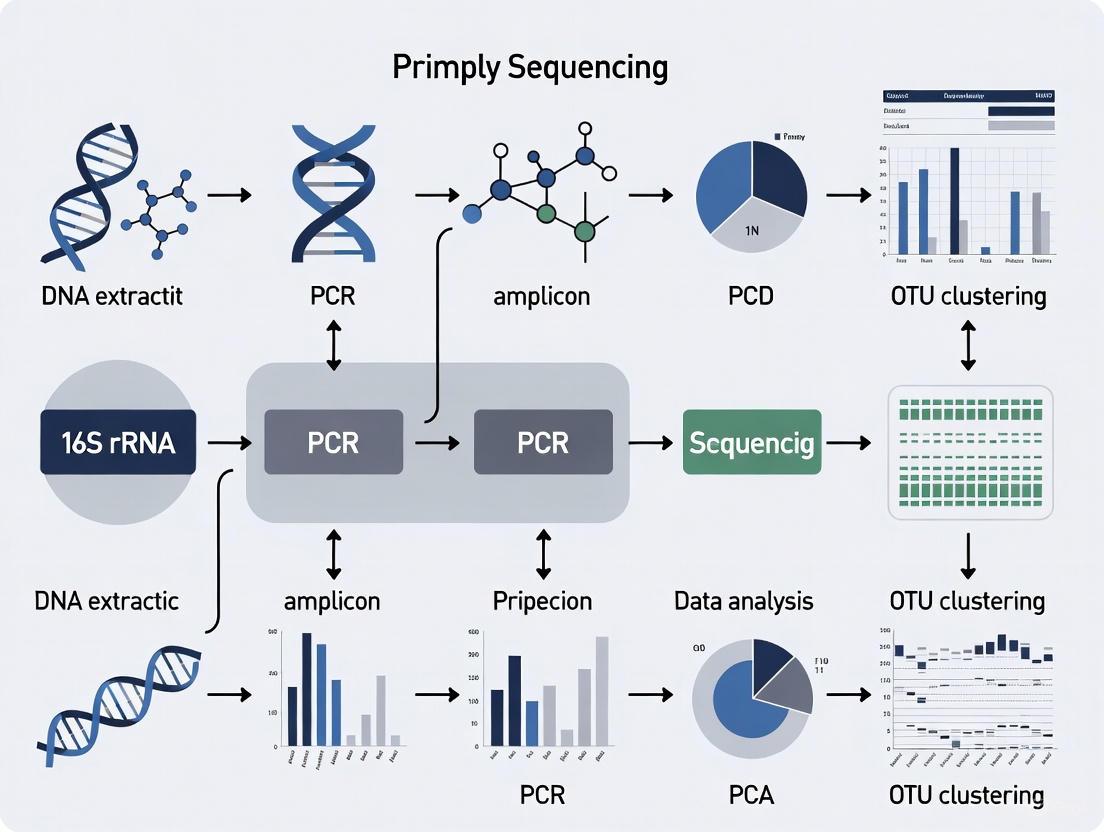
This article provides a comprehensive guide to 16S rRNA gene sequencing for microbial ecology studies, tailored for researchers and drug development professionals.
16S rRNA Gene Sequencing in Microbial Ecology: A Comprehensive Protocol Guide from Basics to Advanced Applications
Abstract
This article provides a comprehensive guide to 16S rRNA gene sequencing for microbial ecology studies, tailored for researchers and drug development professionals. It covers foundational principles of 16S rRNA as a phylogenetic marker, detailed methodological protocols from sample collection to data analysis, troubleshooting for common technical challenges, and comparative evaluation of sequencing platforms and bioinformatics tools. The content synthesizes current best practices and emerging trends, including full-length sequencing and advanced denoising algorithms, to enable robust experimental design and accurate interpretation of microbial community data in both environmental and clinical contexts.
Understanding 16S rRNA: The Essential Biomarker for Microbial Phylogeny and Ecology
The 16S ribosomal RNA (rRNA) gene is a fundamental genetic marker in microbiology and microbial ecology, serving as a molecular chronometer for deciphering evolutionary relationships among bacteria and archaea [1]. This gene, approximately 1,550 base pairs in length, is universally present in all prokaryotes and contains a unique combination of highly conserved regions and hypervariable regions that provide the necessary signals for phylogenetic classification and taxonomic identification [1] [2]. The conserved regions enable the design of universal PCR primers that can amplify the gene from virtually any bacterial species, while the variable regions accumulate mutations at different rates, creating a signature that can distinguish taxa at various phylogenetic levels, from domain to species [1].
The adoption of 16S rRNA gene sequencing has revolutionized microbial ecology by providing a culture-independent method for profiling complex microbial communities. This approach has revealed that over 99% of microorganisms in many environments cannot be easily cultured using standard laboratory techniques [3]. The gene's structure, with nine hypervariable regions (V1-V9) interspersed between conserved segments, makes it ideally suited for high-throughput sequencing technologies that power modern microbiome research [4] [2]. As a result, 16S rRNA gene sequencing has become the gold standard for exploring microbial diversity in diverse habitats, from the human body to environmental ecosystems [3] [5].
Structural Organization of the 16S rRNA Gene
Conserved and Variable Regions
The 16S rRNA gene exhibits a sophisticated architectural pattern of sequence conservation and variation that directly enables its utility in microbial identification and phylogenetic analysis. The conserved regions maintain critical functional elements necessary for the ribosome's protein synthesis machinery, preserving the gene's fundamental biological role across evolutionary time [1] [2]. These conserved stretches, particularly at the beginning of the gene and around position 540 bp or at the end (approximately 1,550 bp), serve as reliable binding sites for universal PCR primers used in amplification for sequencing studies [1].
Interspersed between these conserved areas are nine hypervariable regions (V1 through V9) that demonstrate substantial sequence divergence across different bacterial taxa [4]. These variable regions evolve at different rates, with some showing higher discriminatory power for certain taxonomic groups. For instance, the V1 and V2 regions have demonstrated the highest resolving power for accurately identifying respiratory bacterial taxa from sputum samples, while the V4 region is highly conserved and functionally important in the ribosome [2]. The variable regions range in length and sequence diversity, with the initial 500 bp of the gene (encompassing several variable regions) often containing slightly more diversity per kilobase sequenced compared to the full-length gene [1].
Table 1: Key Characteristics of 16S rRNA Gene Hypervariable Regions
| Region | Approximate Position | Key Characteristics and Applications |
|---|---|---|
| V1-V2 | 69-99 (V1) | Highest resolving power for respiratory microbiota; discriminates Streptococcus species and Staphylococcus aureus from coagulase-negative staphylococci [2]. |
| V3-V4 | ~341-806 | Most commonly targeted region in Illumina-based studies; provides genus-level identification for human gut microbiome dominated by Firmicutes and Bacteroidetes [4] [6]. |
| V4 | - | Highly conserved with functional importance in ribosome; frequently used alone in microbiome studies [2] [5]. |
| V5-V7 | - | Shows compositional similarity to V3-V4 region in respiratory samples [2]. |
| V7-V9 | - | Significantly lower alpha diversity measurements; less commonly used [2]. |
| Full-length (V1-V9) | ~1,550 bp | Enables species-level resolution; requires long-read sequencing technologies (Nanopore, PacBio) [3] [5]. |
Comparative Analysis of Hypervariable Regions
The discriminatory power of different hypervariable regions varies considerably across microbial habitats and taxonomic groups. A comparative study of respiratory samples found that the V1-V2 combination exhibited the highest sensitivity and specificity (AUC 0.736) for identifying respiratory bacterial taxa compared to other region combinations [2]. Alpha diversity metrics also differed significantly between regions, with V1-V2, V3-V4, and V5-V7 showing significantly higher diversity compared to V7-V9 [2].
In gut microbiome studies, the V3-V4 regions have been recognized as the optimal target for amplification because this ecosystem is predominantly characterized by Firmicutes and Bacteroidetes [6]. However, the pursuit of species-level identification has driven increased interest in full-length 16S rRNA gene sequencing (spanning V1-V9), as shorter regions generally only permit reliable genus-level classification [3] [6]. While full-length sequencing provides superior resolution, the V3-V4 regions offer practical advantages including reduced costs, higher throughput, and smaller sample size requirements, making them particularly suitable for analyzing low-abundance or contaminated clinical specimens [6].
Applications in Microbial Ecology and Clinical Research
Taxonomic Identification and Biomarker Discovery
The primary application of 16S rRNA gene sequencing in microbial ecology is taxonomic classification of microbial community members. The level of taxonomic resolution achievable depends on several factors, including the specific variable regions targeted and the sequencing technology employed. While full-length 16S rRNA gene sequencing facilitates species-level identification, sequencing of the V3-V4 variable regions is generally confined to genus-level identification [6]. However, novel bioinformatics approaches are challenging this limitation by establishing flexible classification thresholds for common gut bacteria, with species-specific thresholds ranging from 80% to 100% similarity, thereby improving species-level classification from V3-V4 data [6].
In clinical research, 16S rRNA gene sequencing has proven particularly valuable for biomarker discovery in disease states. For example, in colorectal cancer (CRC) research, full-length 16S rRNA sequencing using Nanopore technology identified more specific bacterial biomarkers than shorter V3-V4 regions sequenced with Illumina technology [3]. Key CRC biomarkers identified through this approach included Parvimonas micra, Fusobacterium nucleatum, Peptostreptococcus stomatis, Peptostreptococcus anaerobius, Gemella morbillorum, Clostridium perfringens, Bacteroides fragilis, and Sutterella wadsworthensis [3]. The ability to achieve species-level resolution was critical here, as different species within the same genus can display substantial variations in pathogenic potential [6].
Diagnostic Applications in Clinical Microbiology
In clinical diagnostics, 16S rRNA gene PCR and sequencing serves as an important tool for identifying pathogens in challenging infections, particularly when conventional culture methods fail. A retrospective study at Mayo Clinic found that 20% of tests on normally sterile specimens from pediatric patients were positive, with 58% of positive samples coming from culture-negative specimens [7]. Fluid specimens were more than three times as likely to test positive as tissue specimens, with pleural fluid demonstrating the highest positivity rate (50%) [7].
This method has shown particular value in identifying pathogens in patients who have received prior antibacterial therapy, which was associated with a higher likelihood of positive results (p = 0.001) [7]. Among positive tests, 36% revealed polymicrobial infections that might have been missed with conventional methods, highlighting the technique's value in complex clinical cases [7]. The most common bacteria identified as single pathogens were Staphylococcus aureus complex (12%) and Kingella kingae (9%, all from synovial fluid) [7].
Experimental Protocols and Methodologies
16S rRNA Gene PCR and Sequencing for Clinical Diagnosis
The Mayo Clinic protocol for 16S rRNA gene testing in clinical diagnostics involves a comprehensive workflow from sample processing to final reporting [7]:
Specimen Processing and DNA Extraction:
- Specimens are processed and bacterial cultures are performed in Clinical Bacteriology Laboratories.
- Isolated bacteria are identified using conventional biochemical methods or matrix-assisted laser desorption/ionization time-of-flight mass spectrometry.
PCR Amplification and Sequencing Selection:
- The assay involves an up-front real-time PCR assay, reported as negative or submitted for sequencing based on cycle threshold (Ct) value.
- Specimens with Ct values <32 cycles undergo bidirectional Sanger sequencing using an Applied Biosystems 3500xL Genetic Analyzer.
- Specimens with Ct values of 32-34, or <32 with Sanger sequencing that yielded an uninterpretable result, are sent for next-generation sequencing using an Illumina MiSeq System with a 500-cycle v2 nano kit.
- Specimens with Ct values >34 are reported as negative, except if a well-defined melting temperature peak (>0.4) is observed, in which case they are sent for NGS.
Sequence Analysis:
- Pathogenomix software is used for quality control processes and the Pathogenomix PRIME database for sequence analysis.
- The database contains 48,139 curated 16S rRNA gene sequences.
- The processor filters low-quality reads (Q<30) and clusters sequences based on >210-bp length, >100 copies, and 0% variation.
The mean turnaround time for positive tests was 8 days (range 3.2-12.8 days), while negative tests were finalized in approximately 3 days (range 0-6.7 days) [7].
Full-Length 16S rRNA Gene Sequencing with Oxford Nanopore
For full-length 16S rRNA gene sequencing using Oxford Nanopore Technologies (ONT), the following protocol has been demonstrated effective for biomarker discovery in colorectal cancer research [3]:
PCR Amplification:
- The full-length 16S rRNA gene is amplified using primers 27F (AGAGTTTGATYMTGGCTCAG) and 1492R (GGTTACCTTGTTAYGACTT).
- These primers target the beginning and end of the approximately 1,500 bp gene, covering all nine variable regions (V1-V9).
Library Preparation and Sequencing:
- Amplicons are purified with KAPA HyperPure Beads (Roche).
- Libraries are prepared using the Native Barcoding Kit 96 (SQK-NBD109.96).
- Sequencing is performed on MinION platforms using R10.4.1 flow cells, which provide improved basecalling accuracy.
Basecalling and Taxonomic Analysis:
- Basecalling is performed using Dorado models (fast, hac, and sup).
- Taxonomic classification uses the Emu algorithm, which is specifically designed for analyzing full-length 16S rRNA sequences from ONT data.
- Comparisons can be made against reference databases including SILVA and Emu's Default database.
This approach leverages the long-read capability of Nanopore sequencing to generate complete 16S rRNA gene sequences, enabling more accurate species-level identification compared to short-read technologies that target only partial gene regions [3].
Diagram Title: 16S rRNA Gene Analysis Workflow
Short-Read Multi-Region Sequencing with Illumina
For researchers requiring species-level resolution while maintaining the cost-effectiveness of Illumina sequencing, a protocol using multiple variable regions with the xGen 16S Amplicon Panel v2 kits has been developed [4]:
Library Preparation:
- The xGen 16S Amplicon Panel v2 kits are used to amplify all nine variable regions of the 16S rRNA gene.
- Sequencing is performed on an Illumina MiSeq platform.
- Mock cells and mock DNA for known bacterial species are included as extraction and sequencing controls.
Bioinformatic Analysis:
- The Swift Normalase Amplicon Panels APP for Python 3 (SNAPP-py3) pipeline is used for analysis.
- Within-run and between-run replicate samples are incorporated to assess reproducibility.
- Technical replicate samples sequenced on the same plate (within-run) or across different sequencing plates and runs (between-run) are compared.
This approach demonstrates that accurate species-level resolution can be achieved with short-read sequencing by simultaneously targeting multiple variable regions, provided that appropriate bioinformatic processing is applied [4].
Comparative Performance of Sequencing Technologies and Regions
Sequencing Platform Comparison
The choice of sequencing platform significantly impacts the resolution and accuracy of 16S rRNA gene analysis. Third-generation sequencing platforms (PacBio and Oxford Nanopore) offer advantages in taxonomic resolution due to their ability to sequence the full-length 16S rRNA gene, while second-generation platforms (Illumina) provide higher throughput and lower cost but are limited to partial gene regions [5].
Table 2: Comparison of Sequencing Platforms for 16S rRNA Gene Analysis
| Platform | Read Length | Target Regions | Typical Taxonomic Resolution | Key Advantages | Limitations |
|---|---|---|---|---|---|
| Illumina | Short-read (100-400 bp) | Single or multiple variable regions (e.g., V3-V4, V4) | Genus-level [6] | High throughput, low cost per sample, well-established protocols [4] | Limited to partial gene regions, ambiguous taxonomic assignments [5] |
| PacBio | Long-read (full-length) | Full-length 16S (V1-V9) | Species-level [5] | High accuracy (>99.9%) with circular consensus sequencing [5] | Higher cost, lower throughput [5] |
| Oxford Nanopore | Long-read (full-length) | Full-length 16S (V1-V9) | Species-level [3] | Real-time sequencing, low initial equipment cost, portable [3] | Higher error rates, though improved with R10.4.1 chemistry [3] [5] |
Recent evaluations of Nanopore's R10.4.1 chemistry and improved basecalling models have demonstrated significantly improved accuracy, with Q-scores approaching Q28 (~99.84% base accuracy) in some reports [5]. In soil microbiome studies, ONT and PacBio provided comparable bacterial diversity assessments, with PacBio showing slightly higher efficiency in detecting low-abundance taxa [5]. Despite differences in sequencing accuracy, ONT produced results that closely matched those of PacBio, suggesting that its inherent sequencing errors do not significantly affect the interpretation of well-represented taxa [5].
Bioinformatics Processing Approaches
The bioinformatic processing of 16S rRNA gene sequencing data typically employs one of two approaches: clustering-based Operational Taxonomic Units (OTUs) or denoising-based Amplicon Sequence Variants (ASVs). A comprehensive benchmarking analysis using complex mock communities revealed that ASV algorithms (led by DADA2) produced consistent output but suffered from over-splitting, while OTU algorithms (led by UPARSE) achieved clusters with lower errors but with more over-merging [8].
The traditional OTU approach clusters sequences based on a fixed similarity threshold (typically 97%), assuming that sequence variants within this threshold represent sequencing errors of a single biological sequence [8]. In contrast, ASV methods employ different statistical models to discriminate real biological sequences from spurious ones, providing single-nucleotide resolution [8]. The denoising approach offers greater consistency across studies but can generate multiple ASVs for non-identical 16S rRNA gene copies within the same strain [8].
The optimal similarity threshold for taxonomic classification varies across the tree of life. Under the Genome Taxonomy Database (GTDB) framework, achieving species-level resolution requires clustering 16S sequences at a divergence threshold of around 0.01 (99% identity), while genus-level resolution requires thresholds of 0.04-0.08 (92-96% identity) [9]. However, these optimal thresholds vary significantly across different bacterial branches, highlighting the limitations of using a fixed divergence threshold for all taxa [9].
The Scientist's Toolkit: Essential Research Reagents and Materials
Table 3: Essential Research Reagents and Materials for 16S rRNA Gene Studies
| Reagent/Material | Function | Examples and Specifications |
|---|---|---|
| Universal Primers | Amplify 16S rRNA gene from diverse taxa | 27F/1492R for full-length [5]; 341F/806R for V3-V4 [6]; region-specific primers for targeted amplification |
| DNA Extraction Kits | Isolation of high-quality microbial DNA | Quick-DNA Fecal/Soil Microbe Microprep kit for environmental samples [5]; host DNA depletion methods for host-associated microbiomes |
| PCR Amplification Kits | Robust amplification of target regions | Kits with high fidelity polymerase to reduce amplification errors; mock community controls for quantification [4] |
| Sequencing Kits | Platform-specific library preparation | xGen 16S Amplicon Panel v2 for Illumina [4]; SMRTbell Prep Kit 3.0 for PacBio [5]; Native Barcoding Kit for Nanopore [5] |
| Reference Databases | Taxonomic classification of sequences | SILVA [3] [9], GTDB [9], Emu's Default database [3], specialized databases (e.g., 16SGOSeq for oral microbiome [10]) |
| Bioinformatic Tools | Processing and analyzing sequence data | DADA2 [8], Deblur [2] [8], UNOISE3 [8] for denoising; UPARSE [8] for clustering; Emu for Nanopore data [3]; QIIME2 [3] |
| Enrofloxacin | Enrofloxacin, CAS:93106-60-6, MF:C19H22FN3O3, MW:359.4 g/mol | Chemical Reagent |
| Gilvocarcin V | Gilvocarcin V | Gilvocarcin V is a potent antitumor antibiotic for research use only (RUO). It inhibits DNA synthesis and causes DNA cleavage. Not for human or veterinary use. |
Specialized niche-specific databases have been shown to improve taxonomic classification accuracy compared to general databases. For example, the 16SGOSeq database provides curated 16S rRNA gene sequences specifically for oral bacteria and archaea, addressing the limitation that genomes and 16S rRNA gene sequences in a given species may vary among environments [10]. Similarly, the expanded Human Oral Microbiome Database (eHOMD) serves as an oral-specific reference [10]. The use of such environment-specific databases improves classification accuracy by aligning reference sequences more closely with the microbial communities under investigation [10].
Diagram Title: 16S rRNA Gene Structure and Analysis
The 16S rRNA gene remains an indispensable tool in microbial ecology and clinical microbiology, with its unique structure of conserved and variable regions providing the foundation for taxonomic classification and phylogenetic analysis. While traditional short-read sequencing of partial gene regions continues to offer a cost-effective approach for genus-level community profiling, technological advances in long-read sequencing are increasingly enabling species-level resolution through full-length 16S rRNA gene analysis [3] [5]. The choice of specific variable regions, sequencing platforms, and bioinformatic processing methods should be guided by the specific research question, target environment, and required taxonomic resolution [2]. As sequencing technologies continue to evolve and reference databases expand, 16S rRNA gene sequencing will maintain its central role in exploring the microbial world and understanding its profound implications for human health and ecosystem functioning.
Why 16S rRNA is a Universal Bacterial and Archaeal Marker
The 16S ribosomal RNA (rRNA) gene has served as the foundational molecular marker for microbial ecology and identification for decades, providing a universal framework for classifying and understanding the diversity of Bacteria and Archaea [11] [12]. Its role is crucial for researchers, scientists, and drug development professionals who require accurate taxonomic characterization of microbial communities from diverse environments, ranging from human guts to extreme ecosystems. The gene's enduring utility stems from a unique combination of evolutionary and practical properties: it is present in all prokaryotes, contains a mosaic of evolutionarily conserved and variable regions, and its function—essential for protein synthesis—has remained unchanged over time, making it a reliable molecular chronometer [11] [13]. This application note details the theoretical underpinnings, practical protocols, and key applications of 16S rRNA gene sequencing, providing a comprehensive resource for its use in modern microbial research.
Fundamental Properties of the 16S rRNA Gene
The 16S rRNA gene possesses a set of unique characteristics that solidify its role as a universal marker.
Universal Distribution and Functional Constancy
The 16S rRNA gene is a subunit of the prokaryotic ribosome and is found in all bacterial and archaeal cells, often as part of a multigene family or operon [11] [14]. Its function in protein synthesis is fundamental and has not changed over evolutionary time, meaning that random sequence changes provide a more accurate measure of evolutionary divergence [11]. This functional constancy ensures it is a valid molecular chronometer for assessing phylogenetic relationships.
Ideal Gene Structure for Phylogenetics
The gene is approximately 1,500 base pairs long, providing sufficient sequence length for robust informatics analysis [11] [14]. Its structure comprises nine variable regions (V1-V9), which are interspersed between conserved regions [14]. The variable regions provide the signature for genus- or species-level classification, while the conserved regions enable the design of universal PCR primers that can amplify the gene from virtually any bacterium or archaeon [13].
Expansive and Curated Reference Databases
Decades of research have resulted in extensive, curated databases of 16S rRNA gene sequences, such as Greengenes, SILVA, and RDP [13]. These repositories allow for the comparison of newly generated sequences from unknown isolates or complex communities against a vast backbone of taxonomically classified sequences, enabling rapid identification and ecological interpretation.
Table 1: Key Characteristics of the 16S rRNA Gene as a Phylogenetic Marker
| Characteristic | Description | Implication for Microbial Ecology |
|---|---|---|
| Universal Distribution | Found in all Bacteria and Archaea [14] | Allows for comprehensive profiling of entire prokaryotic communities. |
| Functional Constancy | Role in protein synthesis is unchanged over time [11] | Sequence changes act as a molecular clock for measuring evolutionary distance. |
| Mosaic Structure | Nine hypervariable regions flanked by conserved regions [14] | Conserved regions enable universal amplification; variable regions enable taxonomic discrimination. |
| Adequate Length | ~1,500 base pairs [11] | Provides sufficient information for robust phylogenetic analysis. |
| Large Reference Databases | Greengenes, SILVA, RDP | Enables classification of sequences from unknown organisms and environments. |
Experimental Protocols for 16S rRNA Gene Analysis
Standard Laboratory Workflow for Full-Length 16S Amplicon Sequencing
This protocol is adapted for full-length 16S rRNA gene amplification and sequencing, suitable for high-resolution taxonomic profiling [15].
1. DNA Extraction:
- Use a standardized kit (e.g., DNeasy PowerLyzer PowerSoil Kit for environmental samples) to ensure lysis of a broad range of microbial cells.
- Incorporate a bead-beating step (e.g., two rounds of 45 seconds at high speed) to effectively lyse Gram-positive bacteria [15].
- Quantify extracted DNA using a fluorometric assay (e.g., Qubit).
2. PCR Amplification of the 16S rRNA Gene:
- Use primers targeting conserved regions to amplify the full-length gene. A common primer pair is 27F (5'-AGRGTTTGATYMTGGCTCAG-3') and 1492R (5'-RGYTACCTTGTTACGACTT-3') [15].
- Employ a high-fidelity hot-start polymerase master mix (e.g., KAPA HiFi HotStart) to minimize PCR errors.
- PCR Cycling Conditions:
- Initial Denaturation: 95°C for 3 minutes.
- 25-35 Cycles of:
- Denaturation: 98°C for 30 seconds.
- Annealing: 55°C for 45 seconds.
- Extension: 72°C for 90 seconds.
- Final Extension: 72°C for 5 minutes.
3. Library Preparation and Sequencing:
- Clean up PCR products using solid-phase reversible immobilization (SPRI) beads (e.g., AMPure XP).
- For Nanopore sequencing (e.g., with the 16S Barcoding Kit), normalize and pool barcoded libraries. Sequence on a MinION or GridION platform with a Flongle or MinION flow cell [15].
- For Illumina sequencing, a similar approach can be used, typically targeting shorter, specific variable regions (e.g., V3-V4).
The SituSeq Protocol for Remote and Rapid Analysis
The SituSeq protocol enables offline, portable sequencing and analysis, ideal for fieldwork or point-of-care diagnostics [15].
- Portable DNA Extraction & PCR: Perform steps 1 and 2 above using portable equipment.
- Sequencing on a MinION: Use a laptop-powered MinION sequencer for sequencing.
- Offline Bioinformatic Analysis: Utilize the SituSeq pipeline on a standard laptop with a pre-loaded database. The entire process—from DNA extraction to data visualization—can be completed in less than 8 hours, with initial results available in less than 2 hours after sequencing begins [15].
Performance and Quantitative Analysis
The performance of 16S rRNA gene sequencing is well-established through systematic evaluations.
Identification Accuracy
A large-scale study comparing 16S rRNA gene sequencing to clinical identification methods for 617 isolates across 30 pathogenic species demonstrated high concordance. The study utilized a Naïve Bayes classifier for species-level identification, revealing a genus-level concordance of 96% and a species-level concordance of 87.5% [13]. This confirms the method's high reliability for broad bacterial identification.
Resolution and Limitations
While powerful, 16S rRNA gene sequencing has limitations in resolution. A similarity threshold of 97% is often used as a rule-of-thumb for demarcating species, but this is not universal [11]. Some species share identical or nearly identical 16S rRNA sequences despite clear genomic distinction. For example, the type strains of Bacillus globisporus and B. psychrophilus share >99.5% 16S sequence similarity but exhibit only 23-50% relatedness by DNA-DNA hybridization, the historical gold standard for species definition [11]. Table 2 outlines the typical identification success rates and Table 3 lists genera where 16S resolution is problematic.
Table 2: Performance of 16S rRNA Gene Sequencing for Bacterial Identification
| Study Focus | Number of Strains | Genus-Level ID Rate | Species-Level ID Rate | Primary Limitation |
|---|---|---|---|---|
| Unidentified/Ambiguous Isolates [11] | Various Studies | >90% | 65% to 83% | Novel taxa; shared sequences between species. |
| Clinically Relevant Pathogens [13] | 617 | 96% | 87.5% | Probable misidentification with culture-based methods. |
| Routine Clinical Isolates [11] | Various Studies | N/A | 62% to 91% | Incomplete databases; non-distinguishable groups. |
Table 3: Bacterial Genera with Known 16S rRNA Gene Resolution Challenges [11]
| Genus | Example Species with Poor Resolution |
|---|---|
| Bacillus | B. anthracis, B. cereus, B. globisporus, B. psychrophilus |
| Streptococcus | S. mitis, S. oralis, S. pneumoniae |
| Neisseria | N. cinerea, N. meningitidis |
| Burkholderia | B. pseudomallei, B. thailandensis |
| Enterobacter | E. cloacae (complex of multiple genomovars) |
The Scientist's Toolkit: Essential Research Reagent Solutions
Table 4: Key Reagents and Kits for 16S rRNA Gene Sequencing
| Item | Function | Example Product / Sequence |
|---|---|---|
| DNA Extraction Kit | Lyses microbial cells and purifies genomic DNA from complex samples. | DNeasy PowerLyzer PowerSoil Kit (Qiagen) [15] |
| High-Fidelity DNA Polymerase | Amplifies the 16S rRNA gene with low error rate during PCR. | KAPA HiFi HotStart Master Mix (Roche) [15] |
| Universal 16S Primers | Binds conserved regions to amplify the 16S gene from diverse taxa. | 27F (AGRGTTTGATYMTGGCTCAG) / 1492R (RGYTACCTTGTTACGACTT) [15] |
| Library Prep Kit | Prepares amplicons for sequencing by adding adapters and barcodes. | 16S Barcoding Kit (SQK-RAB204, Oxford Nanopore Technologies) [15] |
| Sequence Clean-up Beads | Purifies and size-selects PCR products and final sequencing libraries. | AMPure XP Beads (Beckman Coulter) [15] |
| Bioinformatics Database | Provides a curated reference for taxonomic classification of sequences. | GreenGenes, SILVA [14] [16] |
| Ginkgoneolic acid | Ginkgoneolic Acid (C13:0) - CAS 20261-38-5 - For Research Use | Ginkgoneolic acid, a Ginkgo biloba phenol, is for research into anticancer, antimicrobial, and antidiabetic mechanisms. RUO. Not for human consumption. |
| Ginsenoside Rg3 | Ginsenoside Rg3 | Explore Ginsenoside Rg3 for RUO. This ginsenoside is a key reagent for studying anti-cancer, anti-inflammatory, and antioxidant mechanisms. For Research Use Only. |
Workflow and Conceptual Diagrams
The following diagram illustrates the logical relationship between the properties of the 16S rRNA gene and its resulting applications in research and diagnostics.
Diagram 1: From 16S rRNA properties to research applications.
The experimental workflow for obtaining and analyzing 16S rRNA data, from sample collection to biological insight, is outlined below.
Diagram 2: The 16S rRNA gene sequencing and analysis workflow.
Key Applications in Microbial Ecology and Drug Development
Application Notes: The Versatility of 16S rRNA Gene Sequencing
16S ribosomal RNA (rRNA) gene sequencing has become a cornerstone technique in molecular microbiology, enabling culture-free analysis of complex microbial communities. The method exploits the genetic characteristics of the 16S rRNA gene, which contains nine hypervariable regions (V1-V9) interspersed between conserved sequences. This structure provides species-specific signatures that allow for phylogenetic classification and identification [14].
The applications of this technology span diverse fields, from foundational ecology to clinical drug development, by providing a rapid, cost-effective, and high-precision method for bacterial identification and classification [17].
Applications in Microbial Ecology
In environmental sciences, 16S rRNA sequencing is vital for characterizing microbial diversity and understanding ecosystem function.
- Soil Health and Bioremediation: Sequencing is used to monitor changes in soil microbial communities, providing critical data for soil management and rehabilitation strategies. Analysis of ex situ microbial changes can associate soil samples with their correct habitat with 99% accuracy, even with samples as small as 1 mg, highlighting its forensic utility in environmental assessment [18]. Furthermore, 16S rRNA sequencing can screen for microbial strains capable of degrading industrial waste, facilitating resource recycling and environmental protection [17] [19].
- Ecological Monitoring and Diversity Studies: The technique allows ecologists to compare microbial structures across different ecosystems (e.g., soil, water, air) and identify the roles of specific microbial communities. By monitoring temporal changes, scientists can assess the impact of disruptive factors like environmental pollution on ecosystem health and stability [17].
Applications in Drug Development
The role of 16S rRNA sequencing in pharmaceutical research is increasingly prominent, particularly in understanding microbiome-drug interactions.
- Drug Safety and Metabolism: 16S rRNA sequencing provides insights into a patient's microbial community, which can help predict drug metabolism and side effects. For instance, integrated 16S rRNA sequencing and metabolomics analyses have identified specific microbial genera (e.g., Blautia, Ralstonia, and Veillonella) correlated with biomarkers for drug-induced liver injury, offering potential avenues for therapeutic advancement and safety evaluation [17].
- Biomarker Discovery for Diagnostics: Sequencing facilitates the discovery of microbial markers associated with diseases, providing targets for new drug development. For example, comparing the blood microbiome of Parkinson's disease patients and healthy individuals via 16S rRNA sequencing revealed significant associations between certain genera (Paludibacter and Saccharofermentans) and the disease [17]. Full-length 16S sequencing (V1-V9) with Oxford Nanopore Technologies has been shown to increase species-level resolution, enabling the identification of more precise bacterial biomarkers for conditions like colorectal cancer than shorter-read methods [3].
- Impact of Pharmaceuticals on Microbiomes: 16S rRNA sequencing is employed to assess the impact of pharmaceutical contamination on environmental and host-associated microbiomes. Studies confirm that pharmaceuticals, including antibiotics and antidepressants, induce significant shifts in microbial community structure, reducing alpha diversity and enriching for antimicrobial resistance (AMR) genes [19].
Table 1: Key Applications of 16S rRNA Gene Sequencing
| Field | Specific Application | Utility and Impact |
|---|---|---|
| Microbial Ecology | Soil health assessment & bioremediation | Serves as reference for soil management; screens strains for waste degradation [17] [19]. |
| Ecological monitoring & diversity studies | Compares microbial structures across ecosystems; assesses impact of environmental disruptors [17]. | |
| Drug Development | Drug safety & metabolism | Predicts drug metabolism and side effects by profiling patient microbiomes [17]. |
| Biomarker discovery | Identifies microbial markers linked to diseases (e.g., Parkinson's, colorectal cancer) for diagnostic and therapeutic development [17] [3]. | |
| Toxicological impact assessment | Evaluates how pharmaceuticals alter microbial communities and enrich for antimicrobial resistance (AMR) genes [19]. | |
| Forensic Science | Individual identification | Uses unique microbial "fingerprints" from skin, oral, or soil microbiomes for identification when human DNA is unavailable [18] [17]. |
| Industrial Microbiology | Fermentation optimization & strain screening | Monitors microbial dynamics during fermentation to improve product yield and quality [17]. |
Experimental Protocols
This section provides a detailed methodology for full-length 16S rRNA gene sequencing using Oxford Nanopore Technologies (ONT), which provides superior species-level resolution compared to short-read sequencing of partial gene regions [3].
Full-Length 16S rRNA Gene Sequencing with Oxford Nanopore Technology
Principle: This protocol uses long-read nanopore sequencing to generate ~1,500 bp amplicons spanning the V1-V9 regions of the 16S rRNA gene. This full-length sequence information allows for more accurate taxonomic classification down to the species level [20] [21] [3].
Diagram 1: Full-length 16S rRNA sequencing workflow
Materials and Reagents
Table 2: Research Reagent Solutions for ONT 16S rRNA Sequencing
| Item | Function / Purpose | Example Product / Specification |
|---|---|---|
| DNA Extraction Kit | Isolation of high-quality genomic DNA from samples. | QIAamp PowerFecal Pro DNA Kit (for fecal samples) [20]. |
| 16S Primers | Amplification of the full-length ~1500 bp 16S rRNA gene. | 27F (5'-AGAGTTTGATCCTGGCTCAG-3') and 1492R (5'-CGGTTACCTTGTTACGACTT-3') [21]. |
| PCR Master Mix | Amplification of target gene with high fidelity. | LongAmp Hot Start Taq 2X Master Mix [20] [21]. |
| ONT Barcoding Kit | Preparation of sequencing libraries with sample barcodes for multiplexing. | 16S Barcoding Kit (e.g., SQK-16S114.24) [20]. |
| Flow Cell | Platform for nanopore-based sequencing. | MinION Flow Cell (R10.4.1) [20] [3]. |
| Basecaller Software | Translates raw electrical signals into nucleotide sequences. | Dorado (using 'hac' or 'sup' models for high accuracy) [3]. |
Step-by-Step Protocol
DNA Extraction:
- Collect sample (e.g., 250 mg of fecal material) in a sterile tube. Samples may be stored at -80°C until processing.
- Extract genomic DNA using a dedicated kit, such as the QIAamp PowerFecal Pro DNA Kit, following the manufacturer's instructions. Homogenize samples using a bead-beater (e.g., FastPrep-24 at 6.5 m/s for 1 minute, repeated twice with cooling intervals) [20].
- Elute DNA in 100 µL of elution buffer and measure concentration using a microvolume spectrophotometer.
Full-Length 16S rRNA Gene Amplification:
- Prepare PCR reactions with:
- 2 µL primer mix (400 nM final concentration of forward and reverse primers).
- 1 ng of extracted DNA.
- 12.5 µL LongAmp Hot Start Taq 2X Master Mix.
- Nuclease-free water to a final volume of 25 µL.
- Perform amplification in a thermal cycler with the following settings [21]:
- 1 cycle: 1 min at 94°C (polymerase activation).
- 15-25 cycles*: 20 s at 94°C (denaturation), 30 s at 50-52°C (annealing), 90 s at 65°C (extension).
- 1 cycle: 3 min at 65°C (final extension).
- Note: The number of PCR cycles is critical. Elevated cycles (e.g., >25) can introduce significant PCR bias. Optimize to use the minimum number of cycles required for sufficient yield [21].
- Prepare PCR reactions with:
Library Preparation and Sequencing:
- Purify the PCR amplicons using SPRIselect magnetic beads [21].
- Prepare the sequencing library using the ONT 16S Barcoding Kit according to the manufacturer's instructions [20].
- Load the prepared library onto a MinION R10.4.1 flow cell.
- Start sequencing run using the MinKNOW software, selecting the appropriate sequencing kit (SQK-16S114.24) and basecalling options [20].
Bioinformatic Analysis Protocol for Species-Level Classification
Principle: This protocol uses the Emu taxonomy assignment tool to leverage the full-length 16S rRNA sequences, overcoming sequencing errors and providing species-level community profiles [20] [3].
Diagram 2: Bioinformatic analysis workflow with Emu
- Computer: A standard computer is required; 16 GB of RAM is recommended, though more complex datasets may require increased memory [20].
- Command Line Interface: A Unix or Linux system is assumed for the following steps.
- Software:
Step-by-Step Analysis Protocol
Environment Setup:
- Download the default Emu database and set the environment variable
EMU_DATABASE_DIRto its location [20]. - Install Emu using bioconda.
- Download the default Emu database and set the environment variable
Taxonomic Profiling:
- Run Emu on a FASTQ file from a single barcode using the command:
- Repeat this command for all samples in the study [20].
Output Interpretation:
- Emu generates a
_rel-abundance.tsvfile containing the estimated species relative abundance for the sample [20]. - Critical Parameter Note: The choice of reference database is crucial. The Emu default database may identify more species but can sometimes overconfidently classify an unknown species as the closest known match. The SILVA database is another common option, though it may report lower diversity [3].
- Emu generates a
Technical Validation and Optimization
Robust application of this protocol requires attention to critical parameters that influence data quality and taxonomic resolution.
Table 3: Optimization Parameters for 16S rRNA Sequencing
| Parameter | Impact on Results | Recommendation |
|---|---|---|
| Sequencing Region | Taxonomic resolution. Short reads (e.g., V4) cannot achieve the resolution of the full-length (V1-V9) gene [22]. | Use full-length 16S rRNA gene sequencing (e.g., ONT, PacBio) for species- and strain-level analysis [22] [3]. |
| PCR Cycle Number | Introduces PCR bias and alters community composition representation [21]. | Use the minimum number of PCR cycles necessary for library preparation (e.g., 15-25 cycles) [21]. |
| Bioinformatics Pipeline | Affects taxonomic assignment accuracy and diversity metrics. Different tools can yield dramatically different community compositions [23]. | For full-length ONT reads, use tools like Emu designed for its error profile [20] [3]. QIIME2 (with DADA2) is a strong performer for short-read Illumina data [23]. |
| Reference Database | Directly determines which taxa can be identified. Different databases have varying coverage and curation [3]. | Select based on study goals. Emu's default database may offer greater specificity, but SILVA is a well-curated alternative. Validate findings with mock communities [3]. |
Advantages and Limitations of Culture-Free Microbial Analysis
Culture-free microbial analysis represents a paradigm shift in microbial ecology, moving beyond traditional culture-based techniques to directly examine genetic material from complex samples. These methods, particularly those leveraging 16S ribosomal RNA (rRNA) gene sequencing, have revolutionized our ability to characterize microbial communities, including the vast majority of bacteria that are difficult or impossible to cultivate in the laboratory [24]. This application note examines the technical advantages and limitations of these powerful tools, providing structured protocols and resources to guide researchers and drug development professionals in implementing these approaches within microbial ecology research.
Advantages of Culture-Free Analysis
Expanded Detection Capabilities
Culture-independent methods fundamentally overcome the most significant limitation of traditional culturing: the inability to grow most environmental and clinical bacteria in the laboratory. It is estimated that over 99% of microbial species remain undiscovered, largely due to cultivation challenges [3]. By bypassing cultivation, these techniques provide a more comprehensive view of microbial diversity.
- Detection of Unculturable Organisms: 16S rRNA gene sequencing identified bacteria in 95.7% (44/46) of bronchoalveolar lavage specimens from a respiratory study, significantly outperforming culture which detected bacteria in only 80.4% (37/46) of the same specimens [25].
- Revealing Hidden Diversity: In freshwater lake studies, metagenomic sequencing identified 1.5 times as many phyla and approximately 10 times as many genera compared to 16S rRNA amplicon sequencing, which itself far exceeds culture capabilities [26].
Speed and Workflow Efficiency
Culture-free methods dramatically reduce the time required for microbial analysis, from weeks to days or even hours.
- Rapid Turnaround: The Molecular Bacterial Load (MBL) assay for Mycobacterium tuberculosis provides results in real-time without the 3-5 week incubation required for culture on solid agar [27].
- High-Throughput Capacity: Next-generation sequencing platforms enable simultaneous multiplexing of several hundred samples in a single run, vastly increasing processing capacity [24].
Comprehensive Community Analysis
These methods enable detailed study of complete microbial community structures and dynamics, rather than focusing on individual, culturable species.
- Biomarker Discovery: Full-length 16S rRNA sequencing with Nanopore technology has identified specific bacterial biomarkers for colorectal cancer, including Parvimonas micra, Fusobacterium nucleatum, and Bacteroides fragilis, with machine learning prediction achieving an AUC of 0.87 [3].
- Treatment Monitoring: The MBL assay accurately tracks bacterial load decline during tuberculosis treatment, correlating well with colony-forming unit counts while additionally detecting differentially culturable sub-populations missed by solid culture [27].
Table 1: Key Advantages of Culture-Free Microbial Analysis
| Advantage | Technical Benefit | Research Impact |
|---|---|---|
| Expanded Detection | Identifies viable but non-culturable (VBNC) and fastidious organisms | More complete community diversity assessment |
| Speed | Reduction from weeks to days/hours for results | Faster clinical decision-making and research outcomes |
| Sensitivity | Detection of low-abundance community members | Identification of rare taxa and subtle population shifts |
| Quantification | Real-time tracking of bacterial load (e.g., MBL assay) | Accurate monitoring of treatment efficacy and community dynamics |
| Standardization | Reduced variability from cultivation steps | Improved reproducibility across laboratories and studies |
Limitations and Technical Challenges
Resolution and Identification Constraints
While powerful, culture-free methods face inherent limitations in taxonomic resolution and identification accuracy.
- Species-Level Identification: Short-read sequencing of partial 16S rRNA gene regions (e.g., V3-V4) typically provides genus-level identification, with full-length sequencing required for consistent species-level resolution [3] [6].
- Database Dependencies: Taxonomic assignment accuracy is limited by reference database quality and completeness. Traditional databases suffer from inconsistent nomenclature, non-uniform sequence lengths, and insufficient coverage of non-cultivable strains [6].
Technical and Analytical Complexities
Implementation of culture-free methods requires sophisticated instrumentation, bioinformatics expertise, and careful experimental design.
- Error Rates and Biases: Nanopore sequencing, while enabling full-length 16S analysis, has higher error rates compared to Illumina platforms, affecting taxonomic classification accuracy [3].
- PCR and Selection Biases: Amplification of 16S rRNA gene regions introduces primer-specific biases, while different variable region selections can yield different community representations [26].
Resource and Infrastructure Requirements
The transition from traditional methods requires significant investment in equipment, infrastructure, and technical training.
- Cost Considerations: Middle-income countries face challenges in procuring costly equipment, maintaining platforms, developing laboratory infrastructure, and training technical expertise [24].
- Bioinformatics Burden: Data analysis requires specialized computational skills and resources, creating bottlenecks for laboratories without dedicated bioinformatics support [24].
Table 2: Key Limitations and Mitigation Strategies
| Limitation | Technical Challenge | Mitigation Approaches |
|---|---|---|
| Taxonomic Resolution | Variable regions offer different classification power; species-level ID challenging | Use full-length 16S sequencing; implement flexible classification thresholds [6] |
| Database Limitations | Incomplete references; inconsistent nomenclature | Custom database construction; integration of multiple reference sources [6] |
| Technical Variability | PCR/sequencing biases affect reproducibility | Standardized protocols; multiple replicates; spike-in controls [26] |
| Cost and Infrastructure | High initial investment; specialized expertise required | Leverage core facilities; collaborative partnerships; gradual implementation |
| Data Complexity | Bioinformatics expertise required for analysis | User-friendly pipelines (e.g., asvtax); training programs; computational collaborations |
Experimental Protocols and Methodologies
Water Sample Processing for Bacterial DNA Extraction
This protocol adapts methods from systematic reviews of water filtration and DNA extraction for culture-free analysis [28].
Sampling and Filtration
- Sample Collection: Collect water in sterile containers (polypropylene or glass). Common volumes range from 100-1000 mL for drinking water to >10,000 mL for ultrapure waters with low bacterial load [28].
- Filtration Apparatus: Use sterile filtration units with membrane filters. Polyethersulfone (PES) membranes with 0.22 µm pore size are most commonly reported for bacterial capture [28].
- Processing Conditions: Process samples immediately or preserve on ice for transport. For DNA preservation, filters can be stored at -80°C in preservation buffers.
DNA Extraction and Purification
- Cell Lysis: Employ enzymatic pretreatment using proteinase K (1 mg/mL), lysozyme (1 mg/mL), or lysostaphin for difficult-to-lyse bacteria. Combine with physical methods including bead-beating, freeze-thaw cycles, or sonication [28].
- DNA Extraction: Use commercial kits (e.g., Qiagen DNeasy PowerWater) or in-house protocols (e.g., phenol-chloroform extraction). Include negative controls to monitor contamination.
- DNA Quantification: Assess DNA quality and quantity using fluorometric methods (e.g., Qubit High-Sensitivity Fluorometer). The expected yield varies significantly with sample type and bacterial load [29].
16S rRNA Gene Sequencing Workflow
This protocol outlines the standard workflow for bacterial community analysis using 16S rRNA gene sequencing [24].
Library Preparation
- Target Amplification: Amplify hypervariable regions of the 16S rRNA gene using region-specific primers. The V3-V4 regions (341F-806R) offer a balance between length and discriminatory power, while full-length V1-V9 regions provide superior species resolution [3] [6].
- PCR Conditions: Use 25-30 amplification cycles with touchdown protocols to reduce spurious amplification: Denaturation at 95°C for 20s, annealing from 60°C to 50°C (decreasing 1°C every 2 cycles), and extension at 72°C for 45s [25].
- Library Normalization: Quantify and normalize amplicons using fluorometric methods before pooling libraries in equimolar ratios.
Sequencing and Analysis
- Platform Selection: Choose based on resolution needs: Illumina MiSeq for short-read (V3-V4) with high accuracy; Oxford Nanopore (R10.4.1 chemistry) or PacBio for full-length 16S with species-level resolution [3].
- Bioinformatic Processing: Use specialized pipelines: DADA2 or QIIME2 for Illumina data; Emu or NanoClust for Nanopore data [3].
- Taxonomic Assignment: Classify sequences against curated databases (SILVA, RDP, or custom databases) using tools like SINTAX or the asvtax pipeline with flexible thresholds [6].
Diagram 1: Culture-Free Analysis Workflow. This diagram illustrates the standard workflow for culture-free microbial analysis, from sample collection to community analysis.
The Scientist's Toolkit: Research Reagent Solutions
Table 3: Essential Research Reagents and Materials for Culture-Free Analysis
| Reagent/Material | Function | Application Notes |
|---|---|---|
| Membrane Filters (0.22µm PES) | Bacterial capture from liquid samples | Polyethersulfone (PES) most common; 0.22µm pore size optimal for bacterial retention [28] |
| DNA Extraction Kits (e.g., DNeasy PowerWater) | Nucleic acid purification from environmental samples | Optimized for difficult-to-lyse environmental bacteria; includes inhibitors removal [28] |
| 16S rRNA Primers (341F-806R) | Amplification of V3-V4 hypervariable regions | Balance between amplicon length and taxonomic resolution; widely used for Illumina [6] |
| PCR Reagents (including high-fidelity polymerase) | Target amplification with minimal bias | Reduced error rate essential for accurate sequence variant calling [24] |
| Quantification Kits (e.g., Qubit HS DNA) | Accurate DNA quantification | Fluorometric methods preferred over spectrophotometry for sensitivity with low biomass [29] |
| Library Prep Kits (platform-specific) | Sequencing library preparation | Tailored to sequencing platform (Illumina, Nanopore, PacBio) [24] |
| Positive Controls (mock communities) | Process validation and quality control | Defined mixtures of bacterial DNA assess technical variability and sensitivity [26] |
| Preservation Buffers (e.g., RNA/DNA stabilizers) | Sample stabilization before processing | Critical for field sampling; prevents nucleic acid degradation [29] |
| Gitogenin | Gitogenin, CAS:511-96-6, MF:C27H44O4, MW:432.6 g/mol | Chemical Reagent |
| Glaucarubin | Glaucarubin, CAS:1448-23-3, MF:C25H36O10, MW:496.5 g/mol | Chemical Reagent |
Culture-free microbial analysis represents a transformative approach in microbial ecology, offering unprecedented capabilities for comprehensive community characterization while presenting significant technical and analytical challenges. The advantages of expanded detection, reduced turnaround time, and community-level insights must be balanced against limitations in taxonomic resolution, technical complexity, and infrastructure requirements. As methodologies continue to advance—particularly through full-length 16S sequencing, improved bioinformatics pipelines, and customized databases—these approaches will increasingly enable researchers and drug development professionals to decipher complex microbial communities with greater accuracy and biological relevance. Successful implementation requires careful consideration of methodological choices throughout the workflow, from sample collection to computational analysis, to ensure robust and interpretable results.
16S rRNA Sequencing Workflow: From Sample Collection to Data Generation
In microbial ecology research, the accuracy of 16S rRNA gene sequencing is fundamentally dependent on the initial steps of sample collection and preservation. The integrity of microbial community structure can be compromised by improper handling, rendering even the most sophisticated downstream analyses unreliable. This protocol outlines evidence-based best practices for collecting and preserving diverse sample types to minimize technical bias and preserve true biological signatures for robust microbial ecology studies [30] [31].
General Principles for Sample Integrity
Effective microbiome research requires maintaining microbial community composition from the moment of collection until nucleic acid extraction. Key principles apply across all sample types:
- Minimize Contamination: For low-biomass samples, use single-use DNA-free collection materials, decontaminate surfaces with sodium hypochlorite (bleach) or UV-C light, and wear appropriate personal protective equipment (PPE) including gloves, masks, and clean suits to reduce contamination from human operators and the environment [31].
- Control Temperature and Time: Limit sample exposure to ambient temperature. For many sample types, freeze at -80°C immediately or within 24 hours is considered the "gold standard." When immediate freezing is impossible, use appropriate preservation buffers to stabilize microbial communities [30] [32].
- Standardize Procedures: Consistent methodology across samples is crucial for comparative analyses. Standardize sample quantity, collection technique, and handling procedures to minimize batch effects [30] [33].
- Implement Controls: Include field blanks (e.g., empty collection vessels, exposed swabs) and extraction negatives to identify contamination sources. These controls are essential for distinguishing environmental contaminants from true signals, particularly in low-biomass studies [31].
Sample Type-Specific Protocols
Human Stool Samples
Collection Protocol:
- Collect fresh stool in sterile, DNA-free containers.
- For self-collection, provide subjects with pre-filled containers containing preservation buffer when cold chain transport is not feasible [30].
- Aliquot samples to avoid repeated freeze-thaw cycles.
- Ideally, immediately freeze at -80°C. Alternative preservation methods include:
- Preservation Buffers: Use commercial preservatives like Norgen Biotek Stool Nucleic Acid Preservative or OMNIgene.GUT for room temperature storage for up to 7 days [30].
- Ethanol: 95% ethanol can preserve bacterial DNA but may yield lower DNA quantities and require special shipping considerations [30].
Experimental Evidence: A 2019 evaluation of six preservation solutions found that samples preserved with Norgen and OMNIgene.GUT showed the least shift in community composition after 7 days at room temperature compared to -80°C standards. RNAlater was less effective at preventing bacterial activity and showed larger community shifts [30].
Oral Cavity Samples
Collection Protocol:
- Saliva: Collect in sterile tubes, preferably on ice.
- Tongue/Mucosal Swabs: Use sterile synthetic-tipped swabs with consistent pressure and duration.
- Dental Plaque: Use curettes or paper points for subgingival plaque collection.
Preservation Options:
- Immediate freezing at -80°C is optimal.
- DNA/RNA Shield buffer (Zymo Research) provides a reliable room-temperature alternative, preserving microbial diversity comparably to freezing for at least 7 days [34].
Experimental Evidence: A 2025 study demonstrated that saliva, tongue swabs, and dental pocket samples stored in DNA/RNA Shield buffer at room temperature for 7 days yielded highly comparable microbial composition to frozen controls, with even increased DNA yield in some sample types [34].
Respiratory Samples
Collection Protocol:
- Use flocked swabs for oropharyngeal sampling.
- Collect sputum in sterile containers.
Preservation and Stability:
- Store swabs dry at 4°C or lower for transport.
- Long-term storage at -80°C is recommended.
- Studies show microbial community profiles in oropharyngeal swabs remain stable at 4°C, -20°C, and -80°C for at least 4 weeks, but degrade at 37°C [35].
Low-Biomass and Air Samples
Special Considerations: Low-biomass samples (air, certain tissues, drinking water) present unique challenges due to their heightened susceptibility to contamination [31].
Air Sampling Protocol:
- Impactor Samplers: Use solid or adhesive media for particle collection.
- Liquid Impingers: Collect microorganisms into specific chemical liquids like phosphate-buffered distilled water (pH 7.2).
- Filtration Samplers: Use gelatin or cellulose membrane filters.
- Wet Cyclone Samplers: Operate at high flow rates (450 L/min) with PBS buffer containing antibiotics (tetracycline, gentamycin, chloramphenicol) [36].
Preservation:
- Process air samples within 4 hours of collection when possible.
- Add glycerol to samples for -80°C storage if analysis is delayed [36].
Comparative Analysis of Preservation Methods
Table 1: Performance of stool preservation solutions after 7 days at room temperature
| Preservation Solution | Community Composition Shift | Inhibition of Bacterial Activity | DNA Yield | Suitability for Shipping |
|---|---|---|---|---|
| Norgen Biotek | Minimal shift | Efficient inhibition | High | Yes |
| OMNIgene.GUT | Minimal shift | Efficient inhibition | High | Yes |
| RNAlater | Relatively larger shift | Less effective | Moderate | With caution |
| 95% Ethanol | Moderate shift | Variable | Sometimes low | Regulatory restrictions |
| DNA/RNA Shield | Moderate shift | Effective | High | Yes |
Table 2: DNA extraction method performance for human gut microbiome studies
| Extraction Method | DNA Yield | Gram-positive Bacteria Recovery | Alpha-Diversity | DNA Fragment Size |
|---|---|---|---|---|
| S-DQ (SPD + DNeasy PowerLyzer) | High | High | High | ~18,000 bp |
| S-Z (SPD + ZymoBIOMICS) | High | Moderate | Moderate | ~18,000 bp |
| DQ (DNeasy PowerLyzer) | Moderate | Moderate | Moderate | ~18,000 bp |
| MN (NucleoSpin Soil) | Low | Low | Low | ~12,000 bp |
Table 3: Temperature stability of microbial communities across sample types
| Sample Type | -80°C (Gold Standard) | -20°C | 4°C | Room Temperature | 37°C |
|---|---|---|---|---|---|
| Human Stool | Stable long-term | Stable up to 2 weeks | Stable up to 2 weeks | Use preservatives (<7 days) | Not recommended |
| Oropharyngeal Swabs | Stable >4 weeks | Stable >4 weeks | Stable >4 weeks | Limited stability | Profiles alter >4 weeks |
| Mock Communities | Stable long-term | Stable >4 weeks | Moderate stability | Variable with preservatives | Significant changes |
DNA Extraction Methodologies
Optimal Protocol for Stool Samples (S-DQ Method):
- Stool Preprocessing: Use a stool preprocessing device (SPD) to homogenize 100-250 mg of fecal material in buffer [33].
- Bead-Beating Lysis: Transfer to PowerBead tubes and lyse using a bead-beater with 0.1mm glass beads for 10 minutes [33] [37].
- DNA Purification: Follow manufacturer's protocol for DNeasy PowerLyzer PowerSoil Kit, including inhibitor removal steps [33].
- DNA Elution: Elute in 100 μL of Solution C6 [33].
- Quality Control: Verify DNA concentration (>5 ng/μL), fragment size (~18,000 bp), and purity (A260/280 ratio ~1.8) [33].
Experimental Evidence: A 2023 comparison of four DNA extraction methods found that SPD combined with DNeasy PowerLyzer PowerSoil protocol (S-DQ) showed superior performance in DNA yield, alpha-diversity preservation, and recovery of Gram-positive bacteria compared to other methods [33].
The Scientist's Toolkit
Table 4: Essential research reagents and kits for sample collection and preservation
| Product Name | Manufacturer | Application | Key Features |
|---|---|---|---|
| OMNIgene.GUT | DNA Genotek | Stool preservation | Room temperature stability, inhibits bacterial growth |
| DNA/RNA Shield | Zymo Research | Multi-sample preservation | Room temperature nucleic acid stabilization |
| RNAlater | Qiagen | Tissue and cell preservation | RNA stabilization, less effective for microbiota |
| DNeasy PowerLyzer PowerSoil Kit | QIAGEN | DNA extraction from tough samples | Bead-beating for Gram-positive bacteria |
| NucleoSpin Soil Kit | Macherey-Nagel | DNA from soil and stool | Effective for diverse environmental samples |
| ZymoBIOMICS DNA Mini Kit | Zymo Research | DNA from various samples | Includes inhibitor removal technology |
| QIAamp Fast DNA Stool Mini Kit | QIAGEN | Rapid stool DNA extraction | Quick protocol for clinical samples |
| Iloperidone | Iloperidone for Research|High-Quality Chemical Reagent | Iloperidone for research applications. This product is for Research Use Only (RUO) and is not intended for diagnostic or personal use. | Bench Chemicals |
| Etravirine | Etravirine|HIV Research Compound|RUO | Etravirine is a second-generation NNRTI for HIV research. This product is For Research Use Only and is not intended for diagnostic or therapeutic applications. | Bench Chemicals |
Workflow Visualization
Proper sample collection and preservation are critical foundational steps in 16S rRNA gene sequencing workflows. The optimal approach varies significantly by sample type, with stool samples benefiting from specialized preservatives like Norgen or OMNIgene.GUT, oral samples performing well with DNA/RNA Shield buffer, and respiratory samples maintaining stability at refrigerated or frozen temperatures. For all sample types, particularly low-biomass specimens, incorporating appropriate controls and standardized DNA extraction methods with bead-beating lysis significantly enhances data reliability and comparability across studies. By implementing these evidence-based practices, researchers can minimize technical artifacts and maximize detection of true biological signals in microbial ecology research.
In microbial ecology research, particularly studies utilizing 16S rRNA gene sequencing, the DNA extraction step is a critical foundation that directly determines the accuracy and reliability of downstream results. The core challenge lies in simultaneously maximizing DNA yield while minimizing the introduction of protocol-dependent biases that distort the true representation of microbial community composition. Extraction efficiency varies significantly across different bacterial taxa due to differences in cell wall structure, making some species more resistant to lysis than others [38]. This bias is particularly problematic in low-biomass samples where contaminant DNA and stochastic effects become magnified [39]. The selection of an appropriate DNA extraction method must therefore be guided by sample type, target microorganisms, and intended downstream applications to ensure data quality and cross-study comparability.
Understanding Extraction Methodologies
Core DNA Extraction Technologies
Multiple DNA extraction approaches have been developed, each with distinct mechanisms, advantages, and limitations affecting their performance in yield and bias reduction.
Table 1: Comparison of Major DNA Extraction Methodologies
| Method | Mechanism | Best For | Yield & Quality | Bias Concerns |
|---|---|---|---|---|
| Precipitation Chemistry ("Salting Out") | Sequential cell lysis, protein precipitation, alcohol DNA recovery [40] | Whole blood; high-quality DNA needs [40] | High yield, minimal contamination [40] | Low bias; consistently recovers diverse taxa [40] |
| Magnetic Bead-Based | Nucleic acid binding to paramagnetic beads in PEG/salt buffer [41] | High-throughput processing; museum specimens [41] | High-quality; suitable for degraded samples [41] | Bead carryover potential; requires optimization [40] [41] |
| Column-Based (Silica Membrane) | Selective DNA binding to silica in chaotropic salts [42] [43] | Routine processing; food pathogen detection [43] | Pure DNA; effective inhibitor removal [43] | Potential bias against difficult-to-lyse species [38] |
| Phenol-Chloroform | Organic separation of DNA from proteins and lipids [40] | Historical applications; specific challenging samples | Good yield but safety concerns [40] | High bias; carrier effects, toxic residue issues [40] |
Method Selection Guidelines
The optimal DNA extraction method depends heavily on sample characteristics. For whole blood samples, precipitation chemistry methods generally provide the highest yields with minimal contamination [40]. For low-biomass samples such as nasal lining fluid or skin swabs, precipitation-based methods or specialized column-based kits with mechanical lysis have demonstrated superior performance in recovering sufficient DNA for analysis [42] [38]. In food microbiology applications like detecting Listeria monocytogenes in dairy products, column-based methods such as the Exgene Cell SV mini kit have shown excellent detection limits of 100 CFU/mL [43]. For large-scale museum specimen processing, magnetic bead-based approaches offer an optimal balance of cost-effectiveness (6-11 cents per sample) and quality for high-throughput projects [41].
Critical Experimental Protocols
Protocol 1: Precipitation-Based DNA Extraction from Whole Blood
Principle: This method utilizes sequential cell lysis and protein precipitation to recover high-molecular-weight genomic DNA with minimal contamination [40].
Reagents:
- EDTA-treated whole blood (EDTA is superior to heparin as an anticoagulant for DNA preservation) [40]
- Red blood cell lysis buffer
- White blood cell lysis buffer
- Proteinase K solution
- RNase A solution
- Protein precipitation solution
- Isopropanol
- 70% ethanol
- DNA hydration buffer
Procedure:
- Sample Preservation: Collect blood in EDTA tubes and refrigerate at 4°C within 2 hours if processing within 3 days, or freeze at -80°C for longer storage [40].
- Red Blood Cell Lysis: Mix 300 µL of whole blood with 900 µL of red blood cell lysis buffer by gentle inversion. Incubate for 10 minutes at room temperature. Centrifuge at 2000 × g for 10 minutes and discard supernatant completely.
- White Blood Cell Lysis: Resuspend pellet in 300 µL of white blood cell lysis buffer with gentle pipetting. Add 1.5 µL of RNase A solution, mix by inversion, and incubate for 2-5 minutes at room temperature.
- Protein Digestion: Add 100 µL of Proteinase K solution, mix thoroughly, and incubate at 56°C for 1 hour until complete lysis occurs.
- Protein Precipitation: Cool sample to room temperature. Add 300 µL of protein precipitation solution and vortex vigorously at high speed for 20 seconds. Centrifuge at 2000 × g for 10 minutes.
- DNA Precipitation: Transfer supernatant to a clean tube containing 600 µL of room-temperature isopropanol. Mix by gentle inversion until DNA threads become visible. Centrifuge at 2000 × g for 5 minutes.
- DNA Washing: Carefully discard supernatant without disturbing pellet. Add 600 µL of 70% ethanol and invert tube several times. Centrifuge at 2000 × g for 5 minutes.
- DNA Hydration: Carefully discard ethanol and air-dry pellet for 10-15 minutes. Resuspend DNA in 50-100 µL of DNA hydration buffer by incubating at 55°C for 1-2 hours with occasional gentle mixing.
Troubleshooting: If DNA yield is low, ensure minimal delay between blood collection and refrigeration. Avoid hemolysis by gentle sample handling. If DNA is difficult to resuspend, increase hydration buffer volume and extend incubation time at 55°C [40].
Protocol 2: SPRI Bead-Based DNA Extraction for Low-Biomass Specimens
Principle: This cost-effective method uses single-phase reverse immobilization (SPRI) with magnetic beads to bind nucleic acids, particularly suitable for high-throughput processing of challenging samples [41].
Reagents:
- SPRI bead solution (20% PEG-8000, 2.5 M NaCl)
- Paramagnetic beads
- Lysis buffer (40 mM EDTA, 50 mM Tris-HCl, 1.4 M NaCl, 2% Sarkosyl, pH 8.0)
- Proteinase K (20 mg/mL)
- 80% ethanol
- TE buffer
Procedure:
- Cell Lysis: Transfer up to 100 µL of sample to a 1.5 mL tube. Add 400 µL of lysis buffer and 25 µL of Proteinase K. Mix thoroughly and incubate at 56°C for 2 hours with occasional mixing.
- Bead Binding: Add 150 µL of well-mixed SPRI bead solution to the lysate. Mix thoroughly by pipetting and incubate at room temperature for 10 minutes.
- Magnetic Separation: Place tube on a magnetic stand for 5 minutes until supernatant clears. Carefully remove and discard supernatant.
- Bead Washing: With tube on magnetic stand, add 500 µL of freshly prepared 80% ethanol without disturbing beads. Incubate for 30 seconds, then remove ethanol. Repeat wash step once.
- DNA Elution: Air-dry beads for 10-15 minutes until no ethanol remains. Remove from magnetic stand and resuspend beads in 50 µL of TE buffer. Incubate at 55°C for 5 minutes with occasional mixing.
- Final Separation: Return tube to magnetic stand for 5 minutes. Transfer supernatant containing DNA to a clean tube.
Optimization Notes: For specimens with tough cell walls, incorporate a mechanical lysis step using zirconia beads before Proteinase K digestion. PEG concentration can be adjusted to optimize binding of smaller DNA fragments—higher PEG concentrations increase retention of shorter fragments [41].
Quantifying and Managing Extraction Bias
DNA extraction introduces multiple technical biases that significantly impact downstream microbial community analyses. Differential lysis efficiency across bacterial taxa represents a major source of bias, with Gram-positive bacteria typically requiring more rigorous lysis conditions than Gram-negative species due to their thicker peptidoglycan layers [38]. Contaminant DNA from reagents and kits becomes increasingly problematic in low-biomass samples, with studies showing contaminant reads ranging from 0.12% in 100 µL samples to over 54% in 1 µL seawater samples [44]. Chimera formation during PCR amplification increases with higher input DNA concentrations and can inflate diversity estimates if not properly addressed [38].
Table 2: DNA Extraction Performance Across Sample Types
| Sample Type | Optimal Method | Yield Range | Critical Parameters | Reference |
|---|---|---|---|---|
| Whole Blood | Precipitation chemistry | 50-500 ng/µL | Anticoagulant choice (EDTA preferred), processing time <2 hours to refrigeration [40] | [40] |
| Nasal Lining Fluid | Precipitation-based with mechanical lysis | Varies (low biomass) | Mechanical lysis essential for Gram-positive bacteria [42] | [42] |
| Dairy Products | Column-based (Exgene Cell SV) | LOD: 100 CFU/mL | Efficient inhibitor removal critical for food matrices [43] | [43] |
| Museum Specimens | SPRI bead-based | Variable (degraded) | Cost: 6-11 cents/sample; suitable for high-throughput [41] | [41] |
| Seawater (1 µL) | Chemical lysis + bead purification | 0.1-1 ng | Chemical lysis outperforms physical lysis for smallest volumes [44] | [44] |
Bias Correction Strategies
Computational correction of extraction bias using mock communities and bacterial morphological properties represents a promising approach. Recent research demonstrates that extraction bias per species is predictable by bacterial cell morphology, enabling morphology-based computational correction that significantly improves resulting microbial compositions [38]. Mock community controls containing known quantities of defined bacterial species allow researchers to quantify protocol-specific biases and adjust accordingly. Studies using ZymoBIOMICS mock communities have revealed that different extraction protocols yield significantly different microbial profiles from the same starting material, with the bias being systematic and predictable [38]. Incorporation of spike-in controls such as the strictly aerobic halophile Halomonas elongata in studies of anaerobic gut commensals enables estimation of absolute microbial abundances, moving beyond relative abundance measurements that can mask important biological changes [45].
Workflow Optimization and Visualization
DNA Extraction Method Decision Workflow
The following workflow diagram outlines a systematic approach for selecting appropriate DNA extraction methods based on sample characteristics and research objectives:
Comprehensive Bias Management Strategy
Effective management of technical biases throughout the DNA extraction process requires multiple complementary approaches:
The Scientist's Toolkit: Essential Research Reagents
Table 3: Key Reagent Solutions for DNA Extraction Optimization
| Reagent/Kit | Primary Function | Application Context | Performance Notes |
|---|---|---|---|
| EDTA Anticoagulant | Chelates calcium to prevent coagulation; protects DNA during storage [40] | Blood collection and preservation | Superior to heparin or citrate for DNA yield and stability [40] |
| ZymoBIOMICS Mock Communities | Defined microbial communities for quantifying extraction bias [38] | Protocol validation and bias assessment | Even and staggered compositions available; essential for low-biomass studies [38] |
| SPRI Magnetic Beads | Nucleic acid binding in PEG/salt buffer; size-selective purification [41] | High-throughput extraction; degraded samples | Cost-effective when prepared in-house (6-11 cents/sample) [41] |
| Q5 Hot Start High-Fidelity Mastermix | PCR amplification with high fidelity and reduced contaminants [39] | 16S rRNA gene amplification | Premixed format reduces handling; minimizes reagent contamination [39] |
| Lysing Matrix E | Mechanical cell disruption via bead beating [39] | Difficult-to-lyse specimens (e.g., Gram-positive bacteria) | Essential for unbiased lysis of diverse bacterial morphologies [39] |
| Proteinase K | Broad-spectrum serine protease for digesting contaminating proteins | Sample lysis and protein removal | Critical for efficient lysis; aliquot to avoid freeze-thaw degradation [40] |
| DNA/RNA Shield | Stabilizes nucleic acids by inhibiting nucleases [38] | Sample storage and preservation | Particularly valuable for field collections and clinical samples [38] |
| Imperialine | Imperialine, CAS:61825-98-7, MF:C27H43NO3, MW:429.6 g/mol | Chemical Reagent | Bench Chemicals |
| Triolein | Triolein, CAS:122-32-7, MF:C57H104O6, MW:885.4 g/mol | Chemical Reagent | Bench Chemicals |
Maximizing DNA yield while minimizing technical bias requires a comprehensive strategy addressing the entire workflow from sample collection to data analysis. Key principles include: (1) matching extraction methodology to sample characteristics and research objectives, with precipitation methods ideal for high-quality DNA needs and magnetic bead-based approaches offering cost-effective solutions for large-scale studies; (2) implementing rigorous bias control measures including mock communities, negative controls, and mechanical lysis for difficult-to-lyse taxa; and (3) applying computational corrections where possible, particularly for morphology-based extraction biases. As microbial ecology continues to advance toward more quantitative applications, standardization and transparency in DNA extraction methodologies will be essential for generating comparable, reproducible data across studies and laboratories.
In microbial ecology research, the 16S ribosomal RNA (rRNA) gene has long been the gold standard for phylogenetic studies and taxonomic identification of prokaryotes. This approximately 1,500 bp gene contains nine hypervariable regions (V1-V9) that are interspersed with conserved regions, providing a genetic barcode for bacterial classification and identification [46]. The selection of which hypervariable region(s) to sequence presents a critical methodological decision that directly impacts taxonomic resolution, community composition results, and downstream biological interpretations [47] [22].
While full-length 16S rRNA gene sequencing provides the highest taxonomic resolution, most studies using second-generation sequencing platforms must target specific variable regions due to read length limitations [22] [48]. This application note systematically compares the taxonomic coverage of different 16S rRNA variable regions and provides evidence-based protocols for selecting optimal regions for specific research applications in microbial ecology and drug development.
Comparative Analysis of Variable Regions
Performance Characteristics Across Hypervariable Regions
Table 1: Comparative performance of 16S rRNA hypervariable regions for taxonomic classification
| Target Region | Recommended Applications | Taxonomic Strengths | Taxonomic Limitations | Key Considerations |
|---|---|---|---|---|
| V1-V2 | Respiratory samples [2], Gut microbiome (with modified primers) [49] | High resolution for Pseudomonas, Streptococcus, Staphylococcus [2] | Lower performance for Proteobacteria in some studies [22] | Highest AUC (0.736) for respiratory microbiota identification [2] |
| V1-V3 | Skin microbiome [50], Oral microbiome [50] | Comparable resolution to full-length 16S for skin microbiota [50] | Not optimal for all environments | Good balance between length and discriminatory power |
| V3-V4 | Illumina standard protocol, General microbiome studies | Detects Bifidobacterium effectively [49] | May miss Verrucomicrobia with some primers [47] | Most commonly used combination in Illumina platforms |
| V4 | Cost-effective broad surveys | High functionality in ribosome [2] | Lowest species-level discrimination [22] | Highly conserved region with limited variability |
| V5-V7 | Respiratory samples [2] | Similar composition to V3-V4 in respiratory samples [2] | Less studied compared to other regions | Often combined with V3-V4 in analyses |
| V6-V8 | Specific bacterial groups | Best for Clostridium and Staphylococcus [22] | Limited comparative data available | Specialized application |
| V7-V9 | Limited applications | Lower alpha diversity in respiratory samples [2] | Significantly lower Chao1 index [2] | Generally not recommended as primary choice |
Quantitative Comparison of Classification Accuracy
Table 2: Taxonomic classification accuracy across different variable regions based on in silico experiments
| Target Region | Species-Level Classification Accuracy | Genus-Level Classification Accuracy | Remarks |
|---|---|---|---|
| Full-length (V1-V9) | ~100% [22] | ~100% [22] | Gold standard; requires third-generation sequencing |
| V1-V2 | Moderate-High [2] | High (94.79% with Illumina) [48] | Best for respiratory samples [2] |
| V3-V4 | Moderate [22] | High (94.79% with Illumina) [48] | Standard Illumina protocol; good for gut microbiome |
| V4 | Low (44% failure rate) [22] | Moderate | Cost-effective but limited resolution |
| V6-V9 | Variable | High for specific taxa (Clostridium, Staphylococcus) [22] | Specialized application |
Region-Specific Bias in Taxonomic Identification
Different hypervariable regions exhibit significant biases in their ability to detect and accurately classify specific bacterial taxa:
- V1-V2 regions demonstrate high sensitivity and specificity for respiratory pathogens, with the highest area under the curve (AUC: 0.736) for accurately identifying respiratory bacterial taxa from sputum samples [2]
- V3-V4 regions show enhanced detection of Bifidobacterium and Akkermansia in gut microbiome studies, though this may represent overamplification rather than true abundance [49]
- V4 region performs poorly for species-level classification, failing to confidently classify 56% of in-silico amplicons at the species level [22]
- Full-length 16S rRNA sequencing achieves near-perfect species-level classification and enables identification of intragenomic 16S copy variants that may represent strain-level variation [22]
Experimental Protocols
Protocol 1: Standardized 16S Amplicon Sequencing for Hypervariable Region Comparison
Principle: This protocol enables systematic comparison of multiple hypervariable regions using the same sample set, facilitating optimal region selection for specific research applications.
Materials:
- DNA extraction kit (e.g., DNeasy PowerSoil Kit for fecal samples [49])
- PCR reagents (e.g., KAPA HiFi HotStart ReadyMix [49])
- Region-specific primers (see Table 3)
- Library preparation kit (e.g., Nextera XT Index Kit [49])
- Sequencing platform (Illumina for short-read, PacBio Sequel II or Oxford Nanopore for full-length)
Procedure:
- DNA Extraction:
PCR Amplification:
- Amplify target regions using region-specific primers (see Table 3)
- Use the following thermal cycling conditions [50]:
- Initial denaturation: 95°C for 2-3 minutes
- 25-30 cycles of: 95°C for 30s, appropriate annealing temperature (50-60°C) for 30s, 72°C for 30-90s (depending on amplicon length)
- Final extension: 72°C for 5-7 minutes
- Purify PCR products using magnetic beads (e.g., AMPure XP beads [51])
Library Preparation and Sequencing:
- Prepare sequencing libraries according to platform-specific protocols
- For Illumina: Use dual index adapters (e.g., Nextera XT Index Kit) [49]
- Quantify libraries using qPCR with platform-specific primers [49]
- Pool libraries at equimolar concentrations
- Sequence on appropriate platform (250bp paired-end for V1-V2, 300bp paired-end for V3-V4 on MiSeq [49])
Bioinformatic Analysis:
- Process sequences using QIIME2 [49] or DADA2 [48] pipeline
- Cluster sequences into ASVs (Amplicon Sequence Variants) or OTUs (Operational Taxonomic Units)
- Assign taxonomy using reference databases (Greengenes, SILVA, or RDP)
- Perform diversity analyses (alpha and beta diversity) and statistical comparisons
Table 3: Primer sequences for targeting different hypervariable regions
| Target Region | Forward Primer (5'-3') | Reverse Primer (5'-3') | Amplicon Size |
|---|---|---|---|
| V1-V2 | AGRGTTTGATYNTGGCTCAG [50] or 16S_27Fmod [49] | TGCTGCCTCCCGTAGGAGT [49] | ~350 bp |
| V1-V3 | AGRGTTTGATYNTGGCTCAG [50] | TACCGTCATCCMTACCTTG [50] | ~500 bp |
| V3-V4 | CCTACGGGNGGCWGCAG [49] | GACTACHVGGGTATCTAATCC [49] | ~460 bp |
| V4 | GTGCCAGCMGCCGCGGTAA [47] | GGACTACHVGGGTWTCTAAT [47] | ~250 bp |
| Full-length | AGRGTTTGATYNTGGCTCAG [50] | TASGGHTACCTTGTTASGACTT [50] | ~1500 bp |
Protocol 2: Full-Length 16S rRNA Sequencing Using Third-Generation Platforms
Principle: This protocol leverages long-read sequencing technologies to sequence the entire 16S rRNA gene, providing maximum taxonomic resolution to species and strain level.
Materials:
- 16S Barcoding Kit (e.g., Oxford Nanopore 16S Barcoding Kit 24) [52]
- SMRTbell Template Prep Kit (for PacBio) [50]
- PacBio Sequel II system or Oxford Nanopore MinION/GridION [52]
Procedure:
- DNA Extraction and Quality Control:
Full-Length 16S Amplification:
Library Preparation:
Sequencing and Analysis:
- Sequence on PacBio Sequel II system or Oxford Nanopore device [50] [52]
- For PacBio: Use Circular Consensus Sequencing (CCS) mode with minimum 5 passes and ≥0.99 predicted accuracy [50]
- Base calling and demultiplexing using SMRT Link Analysis software (PacBio) or EPI2ME wf-16s workflow (Nanopore) [50] [52]
- Taxonomic assignment using specialized full-length 16S databases
Decision Framework for Primer Selection
The following workflow outlines a systematic approach for selecting the optimal 16S rRNA hypervariable region based on research objectives, sample type, and available resources:
Figure 1: Decision workflow for selecting 16S rRNA hypervariable regions. This framework integrates empirical evidence from comparative studies to guide researchers in selecting optimal variable regions for specific research scenarios.
Table 4: Essential reagents and resources for 16S rRNA gene sequencing studies
| Category | Specific Product/Resource | Application | Key Considerations |
|---|---|---|---|
| DNA Extraction Kits | DNeasy PowerSoil Kit (QIAGEN) [49] | Environmental and stool samples | Effective for difficult-to-lyse bacteria |
| ZymoBIOMICS DNA Miniprep Kit [52] | Environmental water samples | Recommended for water samples | |
| PCR Enzymes | KAPA HiFi HotStart ReadyMix [49] | 16S amplification | High fidelity for accurate amplification |
| Library Prep Kits | Nextera XT Index Kit (Illumina) [49] | Indexed libraries for Illumina | Compatible with dual-indexing strategies |
| 16S Barcoding Kit 24 (Oxford Nanopore) [52] | Full-length 16S with barcoding | Enables multiplexing of 24 samples | |
| Reference Databases | Greengenes [49] | Taxonomic assignment | Curated 16S database |
| SILVA [47] | Taxonomic assignment | Comprehensive rRNA database | |
| RDP (Ribosomal Database Project) [47] | Taxonomic assignment | Specialized ribosomal sequence database | |
| Analysis Pipelines | QIIME2 [49] | Bioinformatic analysis | Current standard with ASV approach |
| DADA2 [48] | Sequence processing | Denoising algorithm for accurate ASVs | |
| Quality Standards | ZymoBIOMICS Microbial Community Standard [2] | Method validation | Mock community for quality control |
The selection of 16S rRNA hypervariable regions represents a critical methodological decision that significantly influences taxonomic resolution and accuracy in microbial community analyses. Based on current evidence:
- For respiratory samples, the V1-V2 region demonstrates superior performance with the highest accuracy for taxonomic identification [2]
- For skin and oral microbiomes, V1-V3 provides resolution comparable to full-length 16S sequencing [50]
- For gut microbiome studies, both V3-V4 and modified V1-V2 primer sets are effective, with each showing specific strengths for different bacterial taxa [49]
- For maximum taxonomic resolution, full-length 16S sequencing using third-generation platforms enables species-level identification and detection of strain-level variation [22] [48]
Researchers should validate their selected approach using mock communities and consider multi-region sequencing when investigating complex microbial communities where specific taxa of interest may be preferentially amplified by different primer sets. As sequencing technologies continue to evolve, full-length 16S rRNA gene sequencing is poised to become the new gold standard for high-resolution microbial community analysis in drug development and ecological research.
In microbial ecology research, 16S rRNA gene sequencing has become a foundational method for profiling the composition and diversity of bacterial communities across diverse environments, from the human gut to deep-sea sediments [53] [15]. The reliability and resolution of these studies fundamentally depend on the initial steps of library preparation, a process encompassing amplicon PCR, barcoding, and clean-up. This protocol details robust methods for preparing sequencing libraries, enabling researchers to generate high-quality data for downstream ecological analysis. Adherence to standardized protocols is critical for minimizing batch effects and ensuring the comparability of results across studies, which is a cornerstone of the scientific method in microbial ecology.
Amplicon PCR: Amplifying the 16S rRNA Gene
The first experimental step involves using the polymerase chain reaction (PCR) to amplify the target 16S rRNA gene from complex genomic DNA extracts. The 16S rRNA gene contains nine hypervariable regions (V1-V9) that provide taxonomic signatures for bacterial identification [14] [53]. Primer selection is a key consideration; commonly used primers for the Illumina platform target the V4 region (e.g., 515F/806R, producing a ~390 bp amplicon), whereas Nanopore protocols often amplify the near-full-length gene (~1500 bp) using primers 27F/1492R for superior taxonomic resolution [15] [54].
PCR Reaction Setup
The following table summarizes a standard PCR setup for Illumina-based 16S libraries, which can be adapted for other platforms [54].
Table 1: Standard PCR Reaction Mixture for 16S V4 Amplification
| Reagent | Volume per Reaction (µL) | Final Concentration |
|---|---|---|
| PCR-grade water | 13.0 | - |
| PCR Master Mix (2X) | 10.0 | 1X |
| Forward Primer (10 µM) | 0.5 | 0.2 µM |
| Reverse Primer (10 µM) | 0.5 | 0.2 µM |
| Template DNA | 1.0 | ~1-10 ng |
| Total Volume | 25.0 |
Thermocycling Conditions
Consistent thermocycling is vital for specific amplification and minimizing PCR bias [54].
Table 2: Standard Thermocycling Conditions for 16S Amplicon PCR
| Step | Temperature | Time (96-well) | Cycles |
|---|---|---|---|
| Initial Denaturation | 94 °C | 3 minutes | 1 |
| Denaturation | 94 °C | 45 seconds | 35 |
| Annealing | 50 °C* | 60 seconds | 35 |
| Extension | 72 °C | 90 seconds | 35 |
| Final Extension | 72 °C | 10 minutes | 1 |
| Hold | 4 °C | ∞ | 1 |
*Annealing temperature may require optimization for specific primer sets and polymerases. For full-length 16S amplification with high-fidelity polymerases, extension times should be increased (e.g., 5-10 seconds/kb) [55].
Barcoding and Multiplexing
To sequence multiple samples in a single run, unique molecular barcodes are attached to the amplicons from each sample. This process, known as multiplexing, allows for the computational demultiplexing of sequences after a pooled run, dramatically reducing per-sample costs [56] [32]. Barcodes can be incorporated during the initial amplification step using barcoded primers or in a subsequent, shorter PCR round where barcoded primers bind to the universal adapter sequences added in the first PCR [55] [54].
Clean-up and Size Selection
Post-amplification, PCR clean-up is essential to remove enzymes, primers, primer-dimers, and non-specific products that can interfere with downstream library preparation and reduce sequencing performance. This is typically achieved using size-selective magnetic beads, such as AMPure XP or ProNex beads [56] [55]. These beads bind DNA fragments of a desired size range in the presence of a binding buffer and polyethylene glycol (PEG). The bead-to-sample ratio can be adjusted to selectively retain larger fragments and exclude short, unwanted products.
A generalized clean-up protocol is as follows [55]:
- Bind: Combine pooled amplicons with magnetic beads at a predetermined ratio (e.g., 1:1 volume ratio for standard clean-up) and mix thoroughly. Incubate at room temperature for 5 minutes.
- Separate: Place the tube on a magnetic separation rack for 2 minutes or until the supernatant is clear.
- Wash: With the tube on the magnet, remove and discard the supernatant. Wash the bead pellet twice with 200 µL of freshly prepared 80% ethanol, discarding the supernatant each time.
- Elute: Air-dry the bead pellet for ~2 minutes to evaporate residual ethanol. Remove the tube from the magnet and resuspend the beads in nuclease-free water or a provided elution buffer. Incubate at room temperature for 5 minutes to elute the DNA.
- Recover: Place the tube back on the magnet. After the solution clears, transfer the eluate (containing the purified DNA) to a new tube.
The Scientist's Toolkit: Research Reagent Solutions
The following table lists essential reagents and their critical functions in the library preparation workflow.
Table 3: Essential Reagents for 16S rRNA Library Preparation
| Reagent / Kit | Function | Example Product |
|---|---|---|
| DNA Extraction Kit | Lyses microbial cells and purifies genomic DNA from complex samples. | DNeasy Blood & Tissue Kit, QIAamp DNA Microbiome Kit [57] |
| High-Fidelity PCR Master Mix | Amplifies the target 16S region with low error rate and high specificity. | Platinum Hot Start Master Mix, LongAmp Hot Start Taq, KAPA HiFi HotStart [54] [15] |
| Barcoded Primers | Contains unique oligonucleotide sequences to tag each sample for multiplexing. | PCR Barcoding Expansion (ONT), 16S Barcoding Kit (ONT) [55] [56] |
| Magnetic Beads | Purifies and size-selects PCR amplicons by binding DNA in a size-dependent manner. | AMPure XP Beads, ProNex Size-Selective Purification System [56] [55] |
| Library Prep Kit | Prepares the barcoded and purified amplicons for sequencing on a specific platform. | Ligation Sequencing Kit (ONT), Illumina DNA Prep [55] [14] |
| GS-389 | GS-389, CAS:41498-37-7, MF:C19H23NO3, MW:313.4 g/mol | Chemical Reagent |
Protocol Comparison: Illumina vs. Nanopore
The choice of sequencing platform dictates the specific library preparation workflow. The following diagram illustrates the two primary pathways for Illumina and Nanopore sequencing.
Diagram 1: Library preparation workflows for Illumina and Nanopore platforms.
Quantitative Data and Protocol Timings
Understanding the time investment and quantitative outcomes of each step is crucial for experimental planning. The table below consolidates key metrics from published protocols.
Table 4: Quantitative Data and Timings for Key Library Preparation Steps
| Protocol Step | Key Metric | Typical Value / Range | Notes |
|---|---|---|---|
| PCR Amplification | Input DNA | 1–10 ng [56] [54] | Higher input may reduce amplification bias. |
| Cycle Number | 25–35 cycles [54] [55] | Avoid excessive cycles to reduce chimera formation. | |
| Barcoding (Nanopore) | Number of Barcodes | Up to 24 or 96 [56] [55] | Enables high-level multiplexing. |
| Magnetic Bead Clean-up | Bead-to-Sample Ratio | 0.8X - 1.8X [55] | Ratio determines size selection stringency. |
| Full Workflow | Total Hands-on Time | ~3-4 hours [56] | Varies with sample number and experience. |
| Total Elapsed Time | ~4-6 hours [56] | Includes PCR and incubation times. |
Mastering the protocols for amplicon PCR, barcoding, and clean-up is a prerequisite for generating reliable and reproducible 16S rRNA sequencing data in microbial ecology. The choice between short-read (e.g., Illumina) and long-read (e.g., Nanopore) platforms involves a trade-off between sequencing volume, cost, and taxonomic resolution, which in turn dictates the specific library preparation strategy [15] [53]. By meticulously following optimized protocols and utilizing the appropriate reagents, researchers can ensure that their library preparation forms a solid foundation for meaningful ecological insights into the microbial world.
The 16S ribosomal RNA (rRNA) gene sequencing stands as a cornerstone technique in microbial ecology, enabling culture-independent profiling of complex microbial communities across diverse environments [17]. The selection of an appropriate sequencing platform represents a critical decision point that directly influences the resolution, accuracy, and scope of microbial ecological studies. While Illumina has dominated the field with its high-throughput short-read sequencing, Pacific Biosciences (PacBio) and Oxford Nanopore Technologies (ONT) have emerged as compelling alternatives offering long-read capabilities [58] [5]. This application note provides a structured comparison of these three major sequencing platforms, framing their technical specifications, performance characteristics, and optimal applications within the context of 16S rRNA gene sequencing for microbial ecology research. We present standardized protocols, quantitative performance data, and decision-making frameworks to guide researchers in selecting the most appropriate technology for their specific investigative needs.
The three sequencing platforms employ fundamentally different approaches to DNA sequencing, each with distinct implications for 16S rRNA gene-based studies. Illumina utilizes sequencing-by-synthesis with reversible dye-terminators, generating high volumes of accurate short reads ideally suited for targeting hypervariable regions (e.g., V3-V4, V4) of the 16S rRNA gene [59] [60]. In contrast, PacBio employs Single Molecule, Real-Time (SMRT) sequencing, which uses a polymerase attached to the bottom of a zero-mode waveguide to detect fluorescently tagged nucleotides as they are incorporated into the DNA template. This technology, particularly with its Circular Consensus Sequencing (CCS) mode, generates high-fidelity (HiFi) long reads capable of spanning the entire ~1,500 bp 16S rRNA gene [58]. Oxford Nanopore Technologies utilizes a fundamentally different approach where single DNA strands are passed through protein nanopores, with nucleotide identification based on disruptions in electrical current. Recent chemistry improvements (R10.4.1+ flow cells) have significantly enhanced raw read accuracy, making full-length 16S rRNA sequencing more reliable [61] [56].
Table 1: Technical Specifications of Major Sequencing Platforms for 16S rRNA Gene Sequencing
| Parameter | Illumina | PacBio | Oxford Nanopore |
|---|---|---|---|
| Sequencing Principle | Sequencing-by-synthesis | Single Molecule, Real-Time (SMRT) | Nanopore electrophoresis |
| Typical 16S Read Length | 250-300 bp (paired-end) | ~1,453 bp (full-length) [58] | ~1,412 bp (full-length) [58] |
| Target Region | Hypervariable regions (e.g., V3-V4, V4) [60] | Full-length 16S rRNA gene | Full-length 16S rRNA gene |
| Key Library Prep Kits | 16S Metagenomic Sequencing Library Prep [58] | SMRTbell Express Template Prep Kit 2.0 [58] | 16S Barcoding Kit (SQK-MAB114.24) [56] |
| Raw Read Accuracy | >99.9% (Q30) [59] | ~99.9% (Q27) with HiFi reads [58] | ~99.6% with R10.4.1 chemistry [5] |
| Primary Advantage | High throughput, low per-sample cost | High accuracy long reads | Ultra-long reads, portability, real-time analysis |
| Primary Limitation | Limited to sub-regions, lower taxonomic resolution | Higher DNA input requirements, lower throughput | Historically higher error rates, though improving |
Performance Comparison in Microbial Ecology Studies
Taxonomic Resolution Across Platforms
Comparative studies reveal significant differences in the taxonomic resolution achievable with each platform. A study comparing rabbit gut microbiota sequencing demonstrated that while all platforms performed similarly at higher taxonomic ranks (phylum to family), substantial differences emerged at the genus and species levels [58]. ONT exhibited the highest species-level resolution, classifying 76% of sequences to species level, followed by PacBio at 63%, and Illumina at 47% [58]. It is crucial to note, however, that a significant portion of these species-level classifications were labeled as "uncultured_bacterium," highlighting limitations in current reference databases rather than platform capabilities [58].
Long-read technologies (PacBio and ONT) provide a marked advantage for species-level discrimination because they capture the complete 16S rRNA gene sequence, which contains all nine hypervariable regions that provide taxonomic specificity [61] [5]. Illumina's shorter reads, typically covering only one or two hypervariable regions, lack sufficient discriminatory power for reliable species-level identification, particularly for closely related taxa [62]. A respiratory microbiome study confirmed that ONT's full-length 16S sequencing enabled superior species-level resolution compared to Illumina's V3-V4 approach, although Illumina detected a broader range of taxa overall [62].
Throughput, Cost, and Operational Considerations
Throughput and cost structures differ substantially among platforms, influencing their suitability for different project scales. Illumina platforms (e.g., MiSeq, NextSeq) offer the highest throughput and lowest per-sample cost for large-scale studies requiring hundreds to thousands of samples [63]. The MiniSeq, as a benchtop option, provides a cost-effective solution for smaller laboratories, generating up to 25 million reads—sufficient for many microbial ecology studies [63]. PacBio systems have historically offered lower throughput at higher costs, though the Sequel IIe system has improved this substantially. ONT platforms (MinION, GridION) provide unique flexibility, enabling scalable sequencing from a few to 96 samples per flow cell with real-time data analysis capabilities [56]. The minimal hardware investment for ONT (particularly MinION) makes it accessible for laboratories with limited funding or those requiring field deployment [61].
Table 2: Quantitative Performance Comparison in Recent Microbial Studies
| Performance Metric | Illumina | PacBio | Oxford Nanopore |
|---|---|---|---|
| Species-Level Classification Rate | 47% [58] | 63% [58] | 76% [58] |
| Genus-Level Classification Rate | 80% [58] | 85% [58] | 91% [58] |
| Average Read Length (16S) | 442 bp [58] | 1,453 bp [58] | 1,412 bp [58] |
| Error Rate (Raw Reads) | <0.1% [59] | ~0.1% (HiFi reads) [58] | ~3.5% (R10.4.1) [61] |
| Error Rate (After Correction) | Not applicable | Not applicable | <0.01% (with UMI) [61] |
| Community Diversity (Alpha) | Higher observed richness [62] | Comparable to ONT [5] | Slightly lower richness [62] |
Error Profiles and Data Quality Considerations
Each platform exhibits distinct error profiles that must be considered in experimental design and data analysis. Illumina errors are predominantly substitution errors, often occurring in specific sequence contexts (e.g., motifs ending in "GG") and showing increased frequency toward read ends [59]. PacBio HiFi reads achieve high accuracy through multiple passes of the same DNA molecule, generating consensus sequences with average quality scores of Q27 (~99.8% accuracy) [58]. ONT has historically been characterized by higher error rates (5-15%), primarily indels in homopolymer regions, but recent chemistry improvements (R10.4.1 flow cells) have substantially reduced these errors to approximately 96.5% raw read accuracy, which can be improved to >99.99% through unique molecular identifier (UMI)-based error correction methods [61]. The ssUMI workflow, which combines UMI-based error correction with R10.4+ chemistry, has demonstrated the ability to generate consensus sequences with accuracy surpassing Illumina short reads [61].
Application-Optimized Protocols
Illumina 16S rRNA Gene Amplicon Sequencing
The Illumina protocol typically targets hypervariable regions (V3-V4 or V4) of the 16S rRNA gene, balancing read length with sequencing quality [60]. For the V3-V4 region, amplification uses primers from Klindworth et al. (2013): forward (5′-CCTACGGGNGGCWGCAG-3′) and reverse (5′-GACTACHVGGGTATCTAATCC-3′) [58] [60]. The library preparation involves a two-step PCR process: first to amplify the target region, then to attach dual indices and Illumina sequencing adapters [60]. Post-sequencing, data processing typically involves the DADA2 pipeline for quality filtering, denoising, and Amplicon Sequence Variant (ASV) generation [58] [60]. For the V3-V4 region with 2×300 bp sequencing, recommended DADA2 parameters include truncLen=c(250, 250) to maintain sufficient overlap for read merging while removing low-quality bases [60].
PacBio Full-Length 16S rRNA Gene Sequencing
The PacBio protocol enables full-length 16S rRNA gene sequencing using universal primers 27F (5′-AGRGTTYGATYMTGGCTCAG-3′) and 1492R (5′-RGYTACCTTGTTACGACTT-3′), both tailed with PacBio barcode sequences for multiplexing [58] [5]. PCR amplification typically employs KAPA HiFi Hot Start DNA Polymerase over 27-30 cycles to maintain accuracy with high-fidelity amplification [58]. Library preparation utilizes the SMRTbell Express Template Prep Kit, creating circularized templates for sequencing [58]. The key advantage is Circular Consensus Sequencing (CCS), where multiple passes of the same molecule generate highly accurate HiFi reads with average quality scores of Q27 [58]. Bioinformatic processing can utilize the DADA2 pipeline similar to Illumina, leveraging the high-fidelity reads for error correction and ASV generation [58].
Oxford Nanopore Full-Length 16S rRNA Gene Sequencing
The ONT protocol for full-length 16S rRNA gene sequencing has been standardized with kits such as the Microbial Amplicon Barcoding Kit 24 V14 (SQK-MAB114.24) [56]. This protocol uses inclusive 16S primers designed for improved taxa representation, amplifying the full-length gene with primers 27F and 1492R over 40 PCR cycles [58] [56]. The workflow incorporates rapid barcoding (15 minutes) and adapter attachment (5 minutes), enabling library preparation in approximately 90 minutes [56]. Sequencing is performed on R10.4.1 flow cells, which provide improved raw read accuracy [61] [56]. For highest accuracy, the ssUMI workflow incorporating unique molecular identifiers (UMIs) and newer chemistry (R10.4+) enables consensus sequences with 99.99% mean accuracy using a minimum subread coverage of 3× [61]. Data analysis can utilize EPI2ME 16S workflow for taxonomic classification or custom pipelines like Spaghetti designed for Nanopore 16S rRNA data [58].
Platform Selection Decision Workflow
The Scientist's Toolkit: Essential Research Reagents
Table 3: Essential Research Reagents for 16S rRNA Gene Sequencing
| Reagent/Kit | Function | Platform Compatibility |
|---|---|---|
| DNeasy PowerSoil Kit | DNA extraction from complex samples; removes PCR inhibitors | All platforms [58] |
| 16S Metagenomic Sequencing Library Prep Kit | Illumina library preparation for 16S studies | Illumina [58] |
| SMRTbell Express Template Prep Kit 3.0 | Library prep for full-length 16S amplification | PacBio [5] |
| Microbial Amplicon Barcoding Kit 24 V14 | Full-length 16S amplification and barcoding | Oxford Nanopore [56] |
| LongAmp Hot Start Taq 2X Master Mix | High-fidelity PCR amplification of full-length 16S | PacBio, Oxford Nanopore [56] |
| Qubit dsDNA HS Assay Kit | Accurate quantification of DNA libraries | All platforms [56] |
| AMPure XP Beads | Size selection and purification of DNA libraries | All platforms [56] |
The selection of an appropriate sequencing platform for 16S rRNA gene-based studies requires careful consideration of research objectives, budget constraints, and required taxonomic resolution. Illumina remains the optimal choice for large-scale microbial ecology studies where high throughput and low per-sample cost are priorities, and where genus-level classification is sufficient. PacBio HiFi sequencing provides an exceptional balance of read length and accuracy, making it ideal for studies demanding high-confidence species-level classification without compromising data quality. Oxford Nanopore technologies offer unique advantages in applications requiring rapid turnaround time, portability, or real-time analysis, with recent improvements in chemistry and error-correction methods substantially enhancing its reliability for full-length 16S sequencing. Emerging methodologies, such as UMI-based error correction for Nanopore [61] and improved bioinformatics pipelines for all platforms, continue to advance the field. Future developments will likely focus on hybrid approaches that leverage the complementary strengths of multiple sequencing technologies to provide unprecedented insights into microbial community dynamics, functions, and ecological interactions.
Optimizing 16S rRNA Sequencing: Overcoming Technical Challenges and Biases
In microbial ecology research, 16S ribosomal RNA (rRNA) gene sequencing has become the cornerstone method for profiling complex bacterial communities across diverse environments, from the human gut to soil ecosystems [14] [11]. This culture-free approach enables researchers to identify and compare bacteria present within a given sample by targeting the prokaryotic 16S rRNA gene, which contains nine hypervariable regions (V1-V9) interspersed between conserved regions [14] [53]. The 16S rRNA gene is approximately 1,500 base pairs (bp) long and serves as an ideal genetic marker due to its universal distribution across bacteria and archaea, functional conservation, and sufficient length for phylogenetic classification [11] [53].
A critical limitation of amplicon-based metabarcoding approaches lies in amplification bias, which disproportionately affects the representation of microbial taxa in sequencing results [64]. This bias primarily arises from sequence divergence in primer binding sites, which directly affects priming efficiency during Polymerase Chain Reaction (PCR) amplification [64]. Even minor mismatches between primer sequences and target templates can lead to significant underrepresentation or complete omission of certain taxa in the final dataset [65] [64]. Additional factors contributing to amplification bias include amplicon length variation, GC content extremes, and copy number variation of the target loci across different taxa [64]. The cumulative effect of these biases can distort perceived microbial abundances, potentially leading to flawed ecological interpretations and compromising the utility of metabarcoding for accurate diversity assessments [64].
The Role of Degenerate Primers in Mitigating Amplification Bias
Theoretical Foundation of Primer Degeneracy
Degenerate primers represent a strategic solution to address primer-template mismatches by incorporating degenerate bases at variable positions within primer sequences [65]. These degenerate bases are synthetic nucleotides that can bind to multiple different standard nucleotides during PCR amplification [65]. For example, the degenerate base Y (C/T) can pair with either cytosine or thymine, while N (A/C/T/G) can pair with any of the four standard nucleotides [65]. This flexibility allows a single degenerate primer to effectively amplify multiple variant sequences that might otherwise be missed by a specific primer.
The strategic placement of degenerate bases in universal primers represents a powerful approach to increasing primer coverage—the percentage of matches for a given taxonomic group—without significantly increasing the coverage of non-target microorganisms [65]. This technique is particularly valuable for researchers focusing on specific microbial groups that are poorly detected by conventional universal primers. For instance, one study found that commonly used primers missed 62,406 bacterial species and 3,306 archaeal species, creating significant gaps in microbiome analyses [65].
Empirical Evidence Supporting Degenerate Primers
Multiple studies have demonstrated the efficacy of degenerate primers in reducing amplification bias. Hugerth et al. (2014) increased archaeal coverage from 53% to 93% by changing the 4th position of a forward primer from C to Y (C/T) using the Degeprime software [65]. Similarly, Apprill et al. (2015) improved detection of SAR11 bacteria by changing the 8th base of the Caporaso-806R primer from H (A/C/T) to N (A/C/T/G), increasing coverage from 2.6% to 96.7% [65].
A compelling 2023 comparative analysis of full-length 16S rRNA sequencing in human fecal samples revealed striking differences between conventional and degenerate primer sets [66]. The conventional 27F primer (27F-I) included in the Oxford Nanopore Technologies 16S Barcoding kit demonstrated significantly lower biodiversity and an unusually high Firmicutes/Bacteroidetes ratio compared to the more degenerate primer set (27F-II) [66]. When benchmarked against expected compositions from the American Gut Project, the more degenerate primer set (27F-II) more accurately reflected the established composition and diversity of the fecal microbiome [66].
Table 1: Comparative Performance of Conventional vs. Degenerate Primers in Human Fecal Microbiome Study
| Parameter | Conventional Primer (27F-I) | Degenerate Primer (27F-II) |
|---|---|---|
| Biodiversity | Significantly lower | Significantly higher |
| Firmicutes/Bacteroidetes Ratio | Unusually high | Consistent with expected values |
| Composition Accuracy | Deviated from expected composition | Aligned with American Gut Project data |
| Firmicutes Dominance | Pronounced | Balanced representation |
| Proteobacteria Detection | Overrepresented | Proportionally accurate |
Computational Tools for Degenerate Primer Design
The "Degenerate Primer 111" Tool
To simplify the process of designing degenerate primers, researchers have developed specialized computational tools. The "Degenerate Primer 111" tool provides a user-friendly approach for adding degenerate bases to existing universal primers [65]. This tool operates by aligning a universal primer with the SSU rRNA gene of an uncovered target microorganism and iteratively generating a new primer that maximizes coverage for the target microorganisms [65].
The tool's algorithm follows a systematic process: first, the target gene is converted into its reverse complementary sequence (for reverse primer improvement); next, corresponding sequences are located by searching for bases that match the primer, identifying any mismatched bases; finally, mismatched bases are replaced with appropriate degenerate bases [65]. The tool considers matches as either exact matches (bases with the same name), degenerate matches (degenerate bases matching included bases), or mismatches [65]. The current implementation considers cases with more than five mismatched bases as invalid [65].
Application and Validation
Using this tool, researchers modified eight pairs of universal primers (including 515F Parada-806R Apprill, 341F-806R, and 27F-1492R) and generated 29 new universal primers with increased coverage of specific target microorganisms [65]. Experimental validation confirmed that improved primers (BA-515F-806R-M1) detected more microbial species compared to original primers when amplifying DNA from the same sample, as verified through high-throughput sequencing of amplicons [65].
Table 2: Common Universal Primer Pairs and Their Coverage Limitations
| Primer Pair | Target Region | Primary Application | Coverage Limitations |
|---|---|---|---|
| 515F Parada-806R Apprill | 16S V4 | Bacteria & Archaea | Misses 62,406 bacterial & 3,306 archaeal species |
| 341F-806R | 16S V3-V4 | Bacteria | Recommended by Illumina; coverage gaps exist |
| 27F-1492R | Full-length 16S | Bacteria | Limited coverage for certain taxa |
| S-D-Bact-0341-b-S-17/S-D-Bact-0785-a-A-21 | 16S V3-V4 | Bacteria | Coverage incompleteness in Silva database |
| 515F Parada-926R Quince | 16S/18S V4-V5 | Bacteria, Archaea & Eukaryotes | Earth Microbiome Project recommended; gaps remain |
Experimental Protocols for Degenerate Primer Implementation
Protocol 1: In Silico Primer Evaluation and Design
Objective: To evaluate existing primer coverage and design improved degenerate primers using computational approaches.
Materials and Software:
- SILVA database (SSU 138.1 or newer) for coverage assessment [65]
- "Degenerate Primer 111" tool or similar software [65]
- Target microorganism SSU rRNA gene sequences
Procedure:
- Access TestPrime on the SILVA database (https://www.arb-silva.de/search/testprime/) [65]
- Enter primer sequence and select the SSU database (e.g., R138.1) [65]
- Set parameters: maximum number of mismatches = 0, run TestPrime to calculate primer coverage [65]
- Identify target microorganisms with poor coverage for primer improvement focus
- Align universal primer with uncovered target microorganism's SSU rRNA gene [65]
- Run iterative generation of new primer with degenerate bases using the tool [65]
- Validate new primer coverage against target and non-target microorganisms [65]
Protocol 2: Wet-Lab Validation of Degenerate Primers
Objective: To experimentally validate the performance of degenerate primers compared to conventional primers.
Materials:
- DNA extracted from standardized mock microbial community (e.g., Zymo Research) [53]
- Both conventional and degenerate primer sets [66]
- PCR reagents: LongAMP Taq 2x Master Mix or equivalent [66]
- Oxford Nanopore Technologies 16S Barcoding Kit (for full-length 16S) or Illumina MiSeq (for V3-V4) [66]
- Library preparation reagents appropriate for sequencing platform
Procedure:
- Extract DNA from the same sample(s) using standardized protocol [66]
- Prepare separate PCR reactions for conventional and degenerate primer sets:
- Perform PCR amplification:
- Clean PCR products and proceed with library preparation per manufacturer's instructions
- Sequence amplicons using appropriate platform (e.g., Nanopore for full-length, Illumina for V3-V4)
- Process sequences through standardized bioinformatics pipeline (e.g., QIIME2) [53]
Protocol 3: Assessing and Reducing Amplification Bias
Objective: To evaluate and mitigate amplification bias through optimized PCR conditions.
Materials:
- DNA from mock community with known composition [64] [53]
- Degenerate primers with proven coverage [65] [66]
- PCR reagents and thermal cycler
- Qubit Fluorometer for DNA quantification [66]
Procedure:
- Test effect of PCR cycle numbers:
- Evaluate template concentration effect:
- Compare standard (1 μL, ~15 ng) versus increased (4 μL, ~60 ng) template DNA [64]
- Perform amplification with optimal degenerate primers
- Sequence amplicons and analyze against expected mock community composition
- Calculate bias metrics: compare observed versus expected relative abundances [64]
- Apply correction factors based on taxon-specific biases observed in mock communities [64]
Workflow Visualization for Degenerate Primer Implementation
Diagram 1: Comprehensive workflow for implementing degenerate primers in 16S rRNA sequencing studies
Table 3: Essential Research Reagents and Computational Tools for Degenerate Primer Applications
| Category | Specific Product/Resource | Application Purpose | Key Features |
|---|---|---|---|
| Reference Databases | SILVA SSU 138.1 | In silico primer evaluation | 9,469,124 SSU sequences; TestPrime function [65] |
| Computational Tools | Degenerate Primer 111 | Adding degenerate bases to primers | User-friendly; iterative primer generation [65] |
| Mock Communities | Zymo Research Microbial Standards | Positive controls & bias assessment | Defined composition for validation [53] |
| Sequencing Platforms | Oxford Nanopore Technologies (ONT) | Full-length 16S sequencing | Long reads covering entire 16S gene [66] |
| Sequencing Platforms | Illumina MiSeq | Short-read 16S sequencing | V3-V4 targeting; high accuracy [14] |
| Analysis Software | QIIME2 | Bioinformatic processing | DADA2 for ASVs; diversity analysis [53] |
| PCR Enzymes | LongAMP Taq 2x Master Mix | Amplification of long targets | Suitable for full-length 16S amplification [66] |
| Primer Design Tools | Degeprime | Degenerate primer design | Increases coverage of target groups [65] |
Analysis and Data Interpretation Guidelines
Bioinformatics Processing
Process demultiplexed raw amplicon sequences using QIIME2 with the DADA2 plugin to generate amplicon sequence variants (ASVs) rather than operational taxonomic units (OTUs) [53]. ASVs differentiate sequences that vary by even a single base pair, providing higher resolution than traditional OTU clustering methods [53]. For taxonomic assignment, compare sequences against curated databases such as GreenGenes2, SILVA, or the Human Oral Microbiome Database (HOMD) using a naive Bayesian classifier with default parameters [53].
Statistical Approaches for Bias Assessment
Implement both alpha diversity (within-sample diversity) and beta diversity (between-sample diversity) metrics to assess community differences [53]. For global significance testing between sample groups, apply the Linear Decomposition Model (LDM), which controls for multiple testing and can incorporate covariates [53]. LDM provides both a global p-value testing overall differences between groups and ASV-specific p-values with False Discovery Rate (FDR) correction [53].
Interpretation of Results
When comparing degenerate versus conventional primers, focus on both taxonomic diversity and relative abundance of key taxa [66]. Consider the ecological context—for example, in human gut microbiome studies, compare your results to established datasets like the American Gut Project to assess biological plausibility [66]. Be aware that some bacterial taxa may remain challenging to resolve due to identical 16S rRNA genes between distinct species or nomenclature complexities [11].
Degenerate primers represent a powerful strategy for addressing amplification bias in 16S rRNA gene sequencing studies. By incorporating degenerate bases at variable positions, researchers can significantly improve coverage of target microorganisms that would otherwise be missed by conventional universal primers. Through computational design tools like "Degenerate Primer 111" and rigorous experimental validation using mock communities and controlled PCR conditions, researchers can enhance the accuracy and comprehensiveness of microbial community analyses in ecological and clinical contexts. Proper implementation of these approaches requires attention to both in silico design parameters and wet-lab optimization, but yields substantial improvements in representing true microbial diversity.
In microbial ecology research, accurate characterization of microbial communities via 16S rRNA gene sequencing is fundamental to advancing our understanding of host-microbe interactions and ecosystem dynamics. However, the analysis of low-biomass samples—those containing minimal microbial DNA—presents a formidable challenge, as the inevitable introduction of exogenous contaminant DNA can severely distort results and lead to spurious biological conclusions [67] [31]. The relative nature of sequence-based data means that even minute amounts of contaminant DNA can comprise the majority of sequences in a low-biomass sample, inflating diversity metrics and misrepresenting community composition [67] [68]. This application note outlines a comprehensive, evidence-based framework for managing contamination through robust experimental design, stringent laboratory practices, and sophisticated bioinformatic curation, ensuring the integrity of 16S rRNA gene sequencing data within low-biomass study contexts.
The Critical Role of Negative Controls and Other Experimental Controls
The use of controls is non-negotiable for identifying contaminant sources and validating sequencing data in low-biomass studies.
- Negative Controls: These are samples that contain no expected microbial DNA, such as sterile water, saline, or unused storage buffer processed alongside experimental samples through every stage, from DNA extraction to sequencing [67] [68]. They serve to capture the "background contaminant profile" inherent to laboratory reagents and environments.
- Mock Community Controls: These are commercially available or internally generated mixtures of known microorganisms [67] [69]. They act as positive controls, enabling researchers to assess DNA extraction efficiency, PCR amplification bias, sequencing accuracy, and the performance of bioinformatic decontamination pipelines [67] [68].
- Sampling Controls: These include swabs of the air in the sampling environment, empty collection vessels, or swabs of decontaminated surfaces [31]. They help identify contaminants introduced during the sample collection process itself.
Table 1: Summary of Essential Experimental Controls
| Control Type | Purpose | Example Composition |
|---|---|---|
| Negative Control | Identify contaminant DNA from reagents and lab environment [67] [68] | Sterile water, elution buffer, unused preservation solution |
| Mock Community | Assess technical accuracy and pipeline performance [67] [69] | Standardized mixture of known bacterial strains (e.g., ZymoBIOMICS) |
| Sampling Control | Identify contaminants introduced during collection [31] | Swabs of air, sterile equipment, or sampling surfaces |
A Proactive Experimental Workflow for Contamination Prevention
A contamination-aware workflow integrates preventative measures at every stage, from initial planning to final data analysis. The following diagram outlines the critical steps for managing contamination in low-biomass studies.
Sample Collection and Handling
The sampling process is a primary point for contaminant introduction. Rigorous protocols are required to preserve sample integrity.
- Personal Protective Equipment (PPE): Researchers should wear gloves, masks, and cleanroom suits where appropriate to limit contamination from skin, hair, and aerosolized droplets [31].
- Equipment Decontamination: Sampling tools and collection vessels should be single-use and DNA-free when possible. Reusable equipment requires thorough decontamination, ideally with 80% ethanol followed by a DNA-degrading solution (e.g., bleach, UV-C light) to remove both viable cells and free DNA [31].
- Sample Preservation: Immediate freezing at -20°C or -80°C is critical. For field collection, use DNA stabilization buffers (e.g., PrimeStore) that inhibit nuclease activity and reduce background contamination compared to other media [68].
DNA Extraction and Library Preparation
The low-biomass nature of samples makes this stage particularly vulnerable to reagent-derived contaminants.
- DNA Extraction Kits: Select kits designed for low-biomass samples or those that yield high DNA purity. Silica-column-based methods often provide a better balance of yield and purity compared to magnetic bead or chemical precipitation methods [69]. Including multiple technical replicates for low-concentration samples can help distinguish signal from noise [70].
- Reagent Pretreatment: Consider pretreating enzymes and PCR reagents with DNAse or using double-baked, UV-irradiated reagents to degrade contaminating DNA, though their efficacy can vary [67].
- PCR Protocol Optimization: For very low biomass templates, a semi-nested PCR protocol can improve the representation of the true microbial composition compared to standard PCR, providing a tenfold improvement in sensitivity [69].
Computational Decontamination Strategies
Even with meticulous laboratory practices, in silico decontamination is a critical final step. Several tools have been developed to identify and remove contaminant sequences from feature tables.
Table 2: Comparison of Computational Decontamination Methods
| Method | Underlying Principle | Performance & Considerations | Recommended Use |
|---|---|---|---|
| Frequency (Decontam) | Identifies contaminants as sequences more prevalent in negative controls than in true samples [67]. | Effectively removes common reagent contaminants; performance depends on the number and quality of negative controls [67]. | Standard approach for most studies with well-characterized negative controls. |
| Prevalence (Decontam) | Identifies contaminants as sequences with an inverse correlation between frequency and sample DNA concentration [67]. | Successfully removed 70-90% of contaminants without removing expected sequences in validation studies; does not require negative controls [67]. | Ideal when negative controls are unavailable or unreliable. |
| SourceTracker | Bayesian approach to estimate the proportion of sequences in a sample that originate from contaminant sources [67]. | Can remove >98% of contaminants when sources are well-defined; performs poorly when the experimental environment is unknown [67]. | Best for studies with well-characterized contaminant source environments. |
| Simple Subtraction | Removes all sequences found in negative controls from all samples [67]. | Overly strict; can erroneously remove >20% of true biological sequences due to index-hopping or low-level cross-contamination [67]. | Not recommended. |
Essential Reagents and Research Solutions
The following toolkit is critical for implementing the protocols described in this document.
Table 3: Research Reagent Solutions for Low-Biomass Studies
| Item | Function/Description | Example Products & Notes |
|---|---|---|
| DNA Extraction Kit | Isolates microbial genomic DNA from complex samples. | ZymoBIOMICS DNA Miniprep Kit, DSP Virus/Pathogen Mini Kit. Silica columns often provide superior yield for low biomass [69] [68]. |
| Sample Storage Buffer | Preserves nucleic acid integrity from collection to extraction. | PrimeStore Molecular Transport Medium (reduces background OTUs), STGG buffer. Selection impacts contaminant background [68]. |
| Mock Community | Positive control for extraction, amplification, and sequencing. | ZymoBIOMICS Microbial Community Standard, BEI Resources Mock Bacterial Community. Must be selected to match expected biomass [67] [69]. |
| DNA Degrading Solution | Decontaminates surfaces and equipment by destroying residual DNA. | Freshly diluted sodium hypochlorite (bleach), commercial DNA-away solutions. Essential for cleaning lab surfaces and equipment [31]. |
| High-Fidelity Polymerase | Amplifies target genes with low error rates for accurate sequencing. | Q5 Hot Start High-Fidelity, Phusion Plus DNA Polymerase. Reduces PCR-derived errors in amplicon sequences. |
The reliable analysis of low-biomass samples using 16S rRNA gene sequencing demands a holistic and vigilant approach to contamination. There is no single solution; rather, robustness is achieved by integrating rigorous experimental design—featuring comprehensive controls, sterile techniques, and optimized protocols—with sophisticated computational decontamination methods like those implemented in the Decontam package. By adhering to these best practices, researchers can mitigate the risks of contamination, validate their findings with high confidence, and ensure that their conclusions about microbial ecology are grounded in true biological signal rather than technical artefact.
In microbial ecology research, the analysis of 16S rRNA gene amplicon sequencing data is an indispensable method for deciphering the composition and dynamics of microbial communities across diverse environments, from host-associated microbiomes to free-living communities in water, soil, and air [71] [24]. The development and increased accessibility of high-throughput sequencing technologies have supported the advancement of large-scale assessments of microbial diversity over the past decade [71]. The bioinformatic processing of this sequencing data is a critical step that significantly influences the biological conclusions drawn from a study. Historically, this processing has relied on clustering sequences into Operational Taxonomic Units (OTUs). However, a methodological shift has occurred with the increased use of denoising methods that produce Amplicon Sequence Variants (ASVs) [71] [8]. This application note provides a detailed comparison of these two predominant approaches, offering structured data, experimental protocols, and practical guidance to inform pipeline selection within the context of a broader 16S rRNA gene sequencing protocol for microbial ecology research.
Core Concepts: OTUs and ASVs
Operational Taxonomic Units (OTUs)
Operational Taxonomic Units (OTUs) are clusters of similar sequences, traditionally defined by a sequence identity threshold, most commonly set at 97% [71] [72]. This approach operates on the premise that sequences with a similarity above this threshold can be grouped together to approximate a bacterial species, thereby reducing the dataset's complexity and mitigating the impact of sequencing errors [71] [73]. The clustering process can be performed de novo (without a reference database), closed-reference (clustering only to a predefined database), or open-reference (a hybrid approach) [73].
Amplicon Sequence Variants (ASVs)
Amplicon Sequence Variants (ASVs), also known as Exact Sequence Variants (ESVs) or zero-radius OTUs (zOTUs), represent a fundamental shift from clustering. ASVs are unique, error-corrected sequences generated by algorithms that employ statistical models to distinguish true biological variation from sequencing noise [71] [8]. These methods can differentiate sequences with as little as a single-nucleotide difference, providing single-nucleotide resolution [72]. The resulting ASVs are exact sequences, which makes them consistent and reproducible labels that can be directly compared across different studies without the need for re-clustering [8] [73].
Table 1: Fundamental Characteristics of OTUs and ASVs
| Feature | OTU (Operational Taxonomic Unit) | ASV (Amplicon Sequence Variant) |
|---|---|---|
| Definition | Cluster of sequences based on a similarity threshold (e.g., 97%) [72] | Exact, error-corrected sequence variant [72] |
| Primary Goal | Group sequences to approximate species and reduce noise [71] | Identify true biological sequences at single-nucleotide resolution [8] |
| Error Handling | Errors can be absorbed into clusters during the grouping process [72] | Uses a statistical error model to denoise and correct sequences [71] [73] |
| Resolution | Lower resolution; fine-scale diversity is lost by clustering [72] | Higher resolution; can distinguish closely related species or strains [72] |
| Reproducibility | May vary between studies depending on clustering method and parameters [72] | Highly reproducible as they represent exact sequences [72] [73] |
| Computational Demand | Generally less computationally intensive [72] | More computationally demanding due to complex denoising [72] |
Comparative Analysis of OTU and ASV Approaches
Performance Benchmarking and Ecological Signal Detection
Independent benchmarking studies, often using complex mock microbial communities of known composition, have shed light on the performance characteristics of various OTU and ASV algorithms. A comprehensive benchmarking analysis published in 2025, which utilized a mock community of 227 bacterial strains, found that ASV algorithms like DADA2 produced a very consistent output but sometimes suffered from over-splitting of reference sequences. In contrast, OTU algorithms such as UPARSE achieved clusters with lower error rates but were more prone to over-merging biologically distinct sequences. The study noted that both UPARSE (OTU) and DADA2 (ASV) showed the closest resemblance to the intended mock community in terms of alpha and beta diversity measures [8].
The choice of pipeline has a measurable and significant impact on downstream ecological conclusions. A 2022 study comparing the ASV-based DADA2 and the OTU-based Mothur pipeline found that the choice of method significantly influenced both alpha and beta diversity metrics and altered the ecological signals detected. This effect was particularly pronounced for presence/absence indices such as richness and unweighted UniFrac. The study also reported that the identification of major taxonomic classes and genera revealed significant discrepancies across pipelines. Interestingly, the discrepancy between OTU and ASV-based diversity metrics could be partially attenuated by the use of rarefaction when standardizing sample sequencing depth. Notably, the effect of the bioinformatics pipeline (OTU vs. ASV) was found to have a stronger influence on diversity measurements than other common methodological choices, such as the OTU identity threshold (97% vs. 99%) or the specific rarefaction level applied [71] [74].
Table 2: Comparative Performance of OTU and ASV Approaches from Benchmarking Studies
| Aspect | OTU-based Approaches (e.g., Mothur, UPARSE) | ASV-based Approaches (e.g., DADA2, Deblur) |
|---|---|---|
| Error Rate | Can achieve lower error rates in some benchmarks, but errors are absorbed into clusters [8] | Effective error correction through statistical modeling; erroneous sequences are removed [72] [73] |
| Sensitivity vs. Specificity | May over-merge distinct biological sequences (lower specificity), reducing observed diversity [8] | May over-split sequences from the same strain (lower sensitivity), potentially inflating diversity [8] |
| Impact on Alpha Diversity | Often overestimates bacterial richness compared to ASVs when errors inflate cluster numbers [71] | Generally provides more accurate richness estimates in mock communities; sensitive to pipeline choice [71] [8] |
| Impact on Beta Diversity | Estimates are often congruent with ASV-based methods, but pipeline choice can change signal [71] | Pipeline choice significantly affects results, especially for unweighted (presence/absence) metrics [71] |
| Taxonomic Assignment | Significant discrepancies in major classes and genera compared to ASV pipelines [71] | Significant discrepancies in major classes and genera compared to OTU pipelines [71] |
| Handling of Rare Taxa | Generally more likely to retain rare sequences, but with a higher risk of detecting spurious OTUs [73] | DADA2 is highly sensitive to low-abundance sequences; ASVs allow better distinction of contaminants [73] |
Advantages, Limitations, and Ideal Use Cases
Each approach carries a set of trade-offs that must be considered in the context of a research project's goals.
OTU-based approaches are sometimes preferred for specific scenarios. Their computational simplicity makes them practical for studies with very large datasets or limited access to high-performance computing. When a research aim involves direct comparison with a large body of historical data generated using OTUs, maintaining methodological continuity is necessary. Furthermore, in studies focused on broad taxonomic trends at the family or genus level, rather than precise strain-level differences, OTUs can still provide useful and interpretable high-level insights [72].
ASV-based approaches are increasingly becoming the standard in microbial ecology due to several key advantages. They provide greater accuracy through single-nucleotide resolution, which helps differentiate closely related microbial species or strains, offering a more detailed picture of community structure [72]. A significant advantage is their cross-study reproducibility; since ASVs represent exact sequences without arbitrary clustering thresholds, they are consistent and can be directly compared across different studies, facilitating meta-analyses [8] [72] [73]. Furthermore, ASV methods generally provide superior error correction through their underlying statistical models, leading to more reliable and accurate results [72]. They also handle chimera detection more effectively, as chimeric sequences can be identified as exact combinations of more prevalent parent ASVs within the same sample [73].
Detailed Experimental Protocols
Protocol for OTU-based Analysis Using Mothur
The following protocol is adapted from the widely used Mothur standard operating procedure (SOP) for Illumina MiSeq data, as referenced in benchmarking studies [71] [74].
1. Sequence Pre-processing: - Merge paired-end reads: Assemble forward and reverse reads into contiguous sequences. - Quality filtering: Screen sequences for ambiguous bases and sequences of unusual length. Remove poorly aligned reads after alignment to a reference database (e.g., SILVA v138) [71]. - Remove non-target sequences: Classify sequences using a method like the Wang classifier against a reference database to remove eukaryotic, chloroplast, and mitochondrial sequences [71].
2. Chimera Removal:
- Identify and remove chimeric sequences using a tool like chimera.vsearch integrated within Mothur with default parameters [71].
3. OTU Clustering: - Cluster the high-quality, non-chimeric sequences into OTUs based on a specified identity threshold (typically 97% or 99%). Mothur can employ several algorithms for this, including the Opticlust algorithm, which iteratively assembles and evaluates cluster quality [71] [8]. - Output: Generate an OTU table (or shared file) that records the abundance of each OTU in every sample.
4. Taxonomic Classification: - Assign taxonomy to the representative sequence of each OTU (e.g., the most abundant sequence) using a reference database to obtain consensus classification [71].
Protocol for ASV-based Analysis Using DADA2
This protocol outlines the core steps for the DADA2 pipeline, which is implemented in R [71] [73].
1. Sequence Quality Profiling and Filtering:
- Inspect read quality profiles: Visualize quality scores across all sequencing cycles to inform trimming parameters.
- Filter and trim: Based on quality profiles, trim reads to the position where quality drops significantly. Also, filter out reads with expected errors exceeding a threshold (e.g., maxEE=2) and truncate to a consistent length [8].
2. Learn Error Rates and Denoise: - Learn error rates: DADA2 uses a machine-learning algorithm to build an error model specific to the dataset. This model distinguishes between true biological variation and technical sequencing errors [71] [73]. - Dereplication: Combine identical reads to reduce computational load. - Core denoising algorithm: Apply the DADA2 inference algorithm to the dereplicated data. This corrects errors and identifies all unique sequence variants present in the data above a level of statistical confidence, producing the ASVs [73].
3. Merge Paired-end Reads and Construct Sequence Table: - Merge the denoised forward and reverse reads to create the full-length ASV sequences. - Construct an ASV table, an analog of the OTU table, which records the abundance of each exact ASV in every sample [71].
4. Remove Chimeras: - Identify and remove chimeric sequences by comparing ASVs to more abundant "parent" ASVs from which they could have been formed [71] [73].
5. Taxonomic Assignment: - Assign taxonomy to each ASV by comparing it to a reference database. The exact nature of ASVs allows for higher-resolution classification, potentially down to the species level [72] [73].
Diagram 1: Bioinformatics Pipeline Workflow for OTU and ASV Analysis. This flowchart outlines the key steps for processing 16S rRNA gene sequencing data, highlighting the divergent methodologies between the OTU-clustering and ASV-denoising approaches.
The Scientist's Toolkit: Key Research Reagents and Materials
Table 3: Essential Research Reagents and Computational Tools for 16S rRNA Analysis
| Item Name | Function/Application | Specific Examples / Notes |
|---|---|---|
| DNA Extraction Kit | To obtain high-quality microbial DNA from complex samples. | Kits are often sample-specific (e.g., Qiagen DNeasy PowerSoil for soil, QIAamp PowerFecal for stool) [52] [32]. |
| 16S rRNA PCR Primers | To amplify the target hypervariable region of the 16S rRNA gene. | Choice of region (e.g., V4, V3-V4) influences results. Commonly used primers include 515F/806R for V4 [71] [32]. |
| Sequencing Platform | To generate the raw amplicon sequence data. | Illumina MiSeq is a popular platform for 16S sequencing [71] [24]. Oxford Nanopore enables full-length 16S sequencing [52]. |
| Reference Database | For taxonomic classification of OTUs or ASVs. | SILVA, Greengenes, and RDP are commonly used databases. The EzBiocloud database is also used for species identification [71] [17]. |
| Bioinformatics Software | To execute the OTU or ASV pipeline. | OTU: Mothur [71], UPARSE [8]. ASV: DADA2 (R package) [71] [73], Deblur [8]. QIIME2 is a platform that supports both. |
| Mock Community | To validate the entire wet-lab and bioinformatic workflow. | A defined mix of genomic DNA from known microorganisms (e.g., ZymoBIOMICS Microbial Community Standard) [8] [73]. |
The choice between OTU and ASV bioinformatic pipelines is a critical decision point in 16S rRNA gene sequencing studies. While OTU clustering has a long history of service to the field and remains valid for specific applications like analyzing legacy datasets or studies focused on broad ecological trends, the prevailing momentum in microbial ecology is firmly behind ASV-based methods [72] [73].
The higher resolution, superior error correction, and exceptional reproducibility of ASVs make them the more reliable and recommended choice for modern microbial ecology research [72]. The ability to track exact sequence variants across studies facilitates a more cumulative and collaborative science. Researchers are encouraged to select the pipeline that best aligns with their specific research questions, computational resources, and the required level of taxonomic detail, with a strong consideration for adopting an ASV-based approach to ensure their findings are precise, accurate, and comparable in the future landscape of microbiome research.
Error Correction and Chimera Removal Strategies
In microbial ecology research, 16S rRNA gene sequencing has become an indispensable method for profiling microbial communities. However, the accurate reconstruction of community composition is fundamentally challenged by technical artifacts introduced during experimental workflows, with sequencing errors and chimeric sequences representing two of the most significant sources of inaccuracy [75] [8]. These artifacts can lead to false interpretations of microbial diversity, including the inflation of rare species estimates and incorrect assessment of community structure [76]. Within the context of a broader thesis on 16S rRNA gene sequencing protocol, this application note details the critical strategies for identifying and removing these artifacts, providing researchers with validated methodologies to enhance data reliability. The persistence of these challenges across sequencing platforms and analysis pipelines underscores the necessity for robust, systematic approaches to error correction and chimera removal, which are essential for generating biologically meaningful results in both exploratory studies and drug development research.
Understanding Artifacts in 16S rRNA Sequencing
Sequencing errors are platform-dependent miscalls that occur during the nucleotide detection process. In Illumina platforms, the dominant error type is nucleotide substitution, primarily resulting from signal crosstalk between fluorophores or phasing issues during sequence synthesis [75] [8]. These errors typically manifest as low-abundance operational taxonomic units (OTUs) that can falsely suggest the presence of a "rare biosphere" [75]. The frequency of these errors is influenced by several factors, including sequence GC content and the presence of specific sequence motifs such as inverted repeats or GGG sequences [75]. Without proper correction, these errors accumulate and substantially impact downstream diversity analyses, leading to overestimation of microbial richness and distortion of beta-diversity metrics [8].
Chimera Formation and Detection Challenges
Chimeric sequences are hybrid amplicons formed during PCR amplification when an incomplete extension product from one template acts as a primer on another template in a subsequent cycle [76]. These artifacts are particularly problematic because they can be misinterpreted as novel organisms, thereby artificially inflating apparent microbial diversity [76]. The rate of chimera formation is influenced by multiple factors, including:
- Number of PCR cycles: Higher cycle numbers increase chimera formation potential
- Template abundance: Less abundant species exhibit higher relative chimera rates
- Sequence similarity between templates: More similar sequences chimeraize more readily
- GC content: Sequences with higher GC content demonstrate increased chimera formation [75]
Chimeras are notoriously challenging to detect bioinformatically, especially those formed between closely related parent sequences (intra-genus chimeras), which may evade detection by less sensitive algorithms [76].
Quantitative Assessment of Artifacts
Error and Chimera Rates Across Experimental Conditions
Systematic analysis using mock communities reveals significant variation in artifact rates depending on experimental methods and sample composition. The following table summarizes key quantitative findings from controlled studies:
Table 1: Quantitative Assessment of Sequencing Artifacts Using Mock Communities
| Experimental Condition | Artifact Type | Rate/Percentage | Impact Factors |
|---|---|---|---|
| Standard one-step PCR [75] | Chimeric Sequences | ~11% of raw joined sequences | GC content, PCR cycle number |
| Two-step phasing PCR [75] | Chimeric Sequences | Reduced to ~6.5% (~40% reduction) | Improved library preparation |
| Mock community with low GC strains [75] | Chimeric Sequences | ~3% (substantially lower) | GC content significantly affects formation |
| Non-phasing method, raw reverse reads [75] | Sequencing Error Rate | 1.63% | Read direction, quality filtering |
| Two-step phasing with quality trimming (Q25-W5) [75] | Sequencing Error Rate | Reduced to 0.27-0.33% | PCR strategy, stringency of quality filtering |
| Illumina MiSeq platform [8] | Error Type Profile | Primarily substitutions rather than indels | Platform-specific chemistry |
| Less abundant species in community [76] | Chimera Rate | Can exceed 70% of sequences from rare members | Template abundance, community composition |
Performance Comparison of Bioinformatics Tools
Independent benchmarking studies using complex mock communities have objectively evaluated the performance of various bioinformatics pipelines for artifact removal and community reconstruction:
Table 2: Performance Comparison of Bioinformatics Pipelines on Mock Communities
| Algorithm | Algorithm Type | Strengths | Limitations | Reference Community |
|---|---|---|---|---|
| DADA2 [8] | ASV (Denoising) | Consistent output, closest to intended community composition | Suffers from over-splitting | HC227 (227 strains) |
| UPARSE [8] | OTU (Clustering) | Clusters with lower errors, resembles expected composition | Exhibits more over-merging | Mockrobiota databases |
| Deblur [8] | ASV (Denoising) | High resolution with single-nucleotide differences | May generate multiple ASVs for same strain | Multiple mock datasets |
| UNOISE3 [8] | ASV (Denoising) | Probabilistic model for error correction | Performance varies by sequencing platform | V4 region datasets |
| VSEARCH [77] | OTU (Clustering) | Open-source alternative to USEARCH | Less accurate for some taxa | Staggered mock community |
| MED [8] | ASV (Denoising) | Position-specific entropy detection | Less comprehensively benchmarked | Complex mock communities |
| Opticlust [8] | OTU (Clustering) | Iterative cluster quality evaluation | Higher computational demand | Multiple mock datasets |
Experimental Protocols for Artifact Reduction
Two-Step PCR with Phasing Primers
The two-step PCR protocol represents a significant improvement over standard single-step amplification for reducing chimeric sequences while maintaining representative community profiles [75].
Materials Required:
- Template DNA (10-20 ng/μL for microbial communities)
- Template-specific primers targeting appropriate hypervariable region (e.g., V3-V4)
- Phasing primers with varying spacer lengths (0-7 bases)
- High-fidelity DNA polymerase with proofreading capability
- Purification beads (e.g., AMPure XP)
- Qubit dsDNA HS Assay Kit for quantification
Protocol Steps:
First-Stage Amplification (10 cycles):
- Prepare reaction mix with template DNA and template-specific primers
- Cycling conditions: Initial denaturation at 95°C for 3 min; 10 cycles of 95°C for 30 sec, appropriate annealing temperature (e.g., 55°C) for 30 sec, 72°C for 45 sec; final extension at 72°C for 5 min
- Purpose: Limited amplification to reduce chimera formation opportunities
Purification:
- Clean amplified products using bead-based purification (0.8-1.0X ratio)
- Elute in nuclease-free water and quantify using Qubit assay
Second-Stage Amplification (20 cycles) with Phasing Primers:
- Use first-stage product as template with phasing primers containing sample barcodes and adapters
- Cycling conditions: Initial denaturation at 95°C for 3 min; 20 cycles of 95°C for 30 sec, appropriate annealing temperature for 30 sec, 72°C for 45 sec; final extension at 72°C for 5 min
- Purpose: Adds sequencing adapters while enhancing sequence diversity to improve base calling
Final Purification and Pooling:
- Purify final libraries and quantify
- Pool equimolar amounts of each library for sequencing
Validation: When implemented with a 33-strain mock community, this protocol reduced chimeric sequences by approximately half compared to standard one-step PCR (from ~11% to ~6.5%) [75].
UMI-Based Error Correction for Long-Read Sequencing
The ssUMI (small subunit Unique Molecular Identifier) workflow enables highly accurate full-length 16S rRNA gene sequencing on Oxford Nanopore Technologies (ONT) platforms by implementing molecular barcoding for consensus sequencing [61].
Materials Required:
- Near full-length 16S rRNA gene amplicons
- Dual-UMI primers (forward and reverse primers containing unique molecular identifiers)
- Oxford Nanopore R10.4+ flow cells and sequencing kit
- Droplet digital PCR (ddPCR) system for absolute quantification
- AMPure XP beads for cleanup
Protocol Steps:
Template Quantification (Critical Step):
- Precisely quantify near full-length 16S rRNA gene copies using ddPCR
- Ensures optimal input for UMI-tagging efficiency
- Target input: 1 × 10^5 copies for optimal detection of rare community members
UMI-Tagging PCR:
- Amplify full-length 16S genes with dual-UMI primers
- UMI sequences uniquely tag each original DNA molecule before amplification
Library Preparation and Sequencing:
- Prepare libraries using ONT kit protocols
- Sequence on R10.4+ flow cells for improved raw read accuracy
Bioinformatic Processing:
- ssUMI_rapid mode: Implements length filtering, expected error (EE) filtering (<1%), primer trimming, UMI detection, and consensus generation
- ssUMI_std mode: More stringent consensus polishing
- Minimum 3× subread coverage required for 99.99% consensus accuracy
Performance: This UMI-based approach generates consensus sequences with 99.99% mean accuracy, surpassing Illumina short-read accuracy and producing error-free de novo sequence features from microbial community standards [61].
Two-Step PCR Workflow for Chimera Reduction
Bioinformatics Workflows for Artifact Removal
Integrated Chimera Detection and Removal
Effective chimera removal requires a multi-layered bioinformatics approach combining reference-based and de novo detection methods:
Recommended Workflow:
Initial Quality Filtering:
- Merge paired-end reads (when applicable)
- Remove reads with ambiguous bases or exceeding maximum expected error rate (e.g., 1%)
- Trim reads to consistent length
Reference-Based Chimera Detection:
- Compare sequences against curated 16S databases (GreenGenes, SILVA, RDP)
- Apply UCHIME2 or Chimera Slayer with reference database
- Removes ~70% of chimeric sequences on average [75]
De Novo Chimera Detection:
- Apply algorithm such as UCHIME2 de novo mode or CATCh ensemble classifier
- Identifies chimeras without complete reference dependence
- Particularly valuable for detecting novel chimeras
Validation and Manual Inspection:
- For putative novel taxa, manual verification recommended
- Compare with shotgun metagenomic data when available [76]
Algorithm Performance Notes: Chimera Slayer (CS) demonstrates superior sensitivity for detecting chimeras from closely related parents, recognizing >87% of chimeras with minimal (4%) chimera-pair divergence while maintaining low false positive rates (1.6%) [76]. The CATCh ensemble classifier, which integrates multiple detection tools through machine learning, provides more robust performance across diverse chimeric sequence types [78].
Denoising and Clustering Approaches
Bioinformatic strategies for distinguishing true biological sequences from technical artifacts have evolved into two main paradigms: Operational Taxonomic Units (OTUs) and Amplicon Sequence Variants (ASVs).
ASV (Denoising) Approaches:
- DADA2: Implements an iterative process of error estimation and partitioning sequences based on a parametric error model [8] [53]
- Deblur: Uses a pre-calculated statistical error profile to correct likely erroneous positions [8]
- UNOISE3: Compares abundance of reads to similar sequences, collapsing them using a probabilistic model [8]
- Advantages: Higher resolution, reproducible across studies, no arbitrary clustering threshold
OTU (Clustering) Approaches:
- UPARSE/VSEARCH: Implements greedy clustering algorithm at 97% identity threshold [8]
- Opticlust: Iteratively assembles clusters while evaluating quality through Matthews correlation coefficient [8]
- Advantages: More tolerant to sequencing errors, computationally efficient for large datasets
Implementation Protocol with QIIME2:
- Import demultiplexed sequences into QIIME2 environment
- Denoise with DADA2 plugin (for ASVs) or cluster with VSEARCH (for OTUs)
- Remove chimeras during denoising/clustering step
- Assign taxonomy using naive Bayesian classifier against reference database
- Generate feature table for downstream analysis [53]
Bioinformatics Workflow for Artifact Removal
The Researcher's Toolkit
Essential Research Reagents and Computational Tools
Table 3: Key Research Reagents and Computational Tools for Artifact Management
| Item Name | Type/Category | Function in Protocol | Implementation Notes |
|---|---|---|---|
| Phasing Primers [75] | Wet Lab Reagent | Enhance sequence diversity; reduce chimera formation | Include varying spacer lengths (0-7 bases) |
| High-Fidelity DNA Polymerase | Wet Lab Reagent | Reduces PCR errors with proofreading capability | Essential for accurate amplification |
| UMI-Adopted Primers [61] | Wet Lab Reagent | Molecular barcoding for consensus error correction | Critical for ssUMI Nanopore workflow |
| AMPure XP Beads | Wet Lab Reagent | Size-selective purification of amplicons | 0.8-1.0X ratio for optimal cleanup |
| Mock Community Controls [75] [77] | Quality Control | Benchmarking artifact rates and tool performance | ZymoBIOMICS or BEI Resources |
| DADA2 [8] [53] | Bioinformatics Tool | Denoising for ASV generation; error modeling | QIIME2 implementation recommended |
| Chimera Slayer [76] | Bioinformatics Tool | Reference-based chimera detection | Superior for closely-related parents |
| CATCh [78] | Bioinformatics Tool | Ensemble classifier for chimera detection | Combines multiple algorithms |
| UCHIME2 [75] | Bioinformatics Tool | Reference and de novo chimera detection | Widely implemented in pipelines |
| QIIME2 [53] | Bioinformatics Platform | Integrated pipeline for end-to-end analysis | Supports both DADA2 and VSEARCH |
| GreenGenes/SILVA [53] | Reference Database | Taxonomic assignment; reference chimera checking | Database version consistency critical |
Effective management of sequencing errors and chimeric artifacts requires an integrated approach spanning experimental design, laboratory techniques, and bioinformatic processing. The strategies outlined herein—particularly the implementation of two-step PCR protocols, UMI-based error correction for long-read technologies, and layered bioinformatic detection—provide researchers with a comprehensive framework for enhancing data fidelity in 16S rRNA gene sequencing studies. As microbial ecology continues to inform drug development and clinical applications, maintaining rigorous standards for sequence validation remains paramount for generating biologically meaningful and reproducible results.
Multi-copy Gene Correction and Intragenomic Heterogeneity
In microbial ecology research, 16S rRNA gene sequencing remains the cornerstone for profiling prokaryotic communities across diverse environments, from the human gut to global ecosystems [79] [53]. Despite its prevalence, obtaining an accurate estimation of microbial diversity presents significant challenges due to two inherent properties of the 16S rRNA gene: its variable copy number within genomes and the presence of intragenomic heterogeneity between different copies [79] [10]. These factors can substantially bias diversity metrics, leading to either overestimation or underestimation of true microbial diversity [79] [80].
Quantitative analysis of 24,248 complete prokaryotic genomes reveals that the 16S rRNA gene copy number ranges from 1 to 37 in bacteria and 1 to 5 in archaea [79]. Furthermore, intragenomic heterogeneity was observed in approximately 60% of prokaryotic genomes, though most variations were below 1% [79]. When using full-length 16S rRNA genes at a 100% identity threshold, microbial diversity could be overestimated by as much as 156.5% due to this variation [79]. This protocol details methodologies to identify, quantify, and correct for these biases in microbial community studies.
Gene Copy Number Variation Across Taxa
The number of 16S rRNA gene copies within a genome varies significantly across different phylogenetic groups, which can lead to quantitative biases in abundance estimates when using amplicon sequencing approaches [10].
Table 1: Average 16S rRNA Gene Copy Numbers Across Major Prokaryotic Phyla
| Phylum | Number of Species | Number of Genomes | Average 16S rRNA Copy Number (Mean ± SD) |
|---|---|---|---|
| Archaea | |||
| Euryarchaeota | 217 | 263 | 2.0 ± 0.9 |
| Thaumarchaeota | 25 | 25 | 1.2 ± 0.5 |
| Crenarchaeota | 56 | 92 | 1 |
| Bacteria | |||
| Actinobacteria | 1,172 | 2,372 | 3.2 ± 1.9 |
| Bacteroidetes | 518 | 879 | 4.1 ± 2.3 |
| Firmicutes | 1,039 | Not Specified | Not Specified |
| Proteobacteria | 3,198 | Not Specified | Not Specified |
Intragenomic Heterogeneity and Diversity Estimation
Intragenomic variation introduces systematic errors in diversity estimation, with the degree of bias dependent on the specific variable region targeted and the clustering threshold applied [79].
Table 2: Bias in Diversity Estimation Using Different 16S rRNA Gene Regions
| 16S Region | Overestimation Rate at 100% Threshold | Recommended Clustering Threshold | Species Resolution Capacity |
|---|---|---|---|
| Full-length | 156.5% | 98.7-99.0% | High |
| V4-V5 | 4.4% | Region-specific | Moderate to High |
| V3-V4 | Not Specified | Region-specific | Variable |
| V1-V3 | Not Specified | Region-specific | Variable |
Experimental Protocols for Bias Correction
Workflow for Assessing and Correcting Multi-copy Gene Bias
The following diagram illustrates the comprehensive workflow for processing 16S rRNA gene sequencing data while accounting for copy number variation and intragenomic heterogeneity:
Protocol 1: Full-length 16S rRNA Gene Assembly and Analysis
Purpose: To reconstruct full-length 16S rRNA genes from short-read sequencing data, enabling comprehensive assessment of intragenomic variation [81].
Materials:
- Raw Illumina sequencing reads from linked-tag and read-tag libraries
- 16S-FASAS software suite (https://github.com/capitalbio-bioinfo/FASAS)
- Computational resources with minimum 10 GB RAM
Procedure:
- Quality Control of Linked-tag Reads
- Calculate Hamming distance between flanking adapters and true adapter sequences
- Correct reads if Hamming distance is less than 3 using Trimmomatic v0.36
- Concatenate two linked-tag sequences with XORRO
Extracting Unique Tags and Associated Read Bins
- Identify conserved flanking adapters to extract unique tags
- Count related reads and sort tag pairs by abundance
- Recruit read-tag reads to obtain read bins for each tag pair
Quality Control of Read-tag Reads and De Novo Assembly
- Quality-trim and adaptor-trim all read-tag reads using Cutadapt
- Perform de novo assembly on each extracted read bin using CAP3 (OLC assembler) or IDBA-UD (DBG assembler)
- Retain contigs >1.2 kb (full-length 16S rRNA gene threshold)
- Perform chimera filtering using USEARCH 11
Taxonomy Assignment of Contigs
- Annotate contigs with taxonomy using MegaBLAST tool
- Apply alignment length threshold for confident taxonomic assignment [81]
Protocol 2: Customized Primer Selection and Evaluation
Purpose: To select and validate 16S rRNA gene primers that minimize amplification biases arising from intergenomic variation in target regions [80].
Materials:
- SILVA SSU Ref NR 16S rRNA gene database (release 138.1)
- TestPrime 1.0 software
- Representative genomes from target environment
Procedure:
- Primer Compilation
- Systematically review literature for commonly used primers
- Include commercially available primer sets
- Remove redundant primer pairs with identical forward and reverse sequences
In Silico Validation
- Assess primer pair performance against reference database using TestPrime 1.0
- Apply criterion of perfect alignment within primer degeneracy
- Calculate primer coverage as percentage of eligible sequences successfully amplified
- Select primers achieving ≥70% coverage across dominant phyla
Mock Community Validation
- Validate candidate primers using ZymoBIOMICS Gut Microbiome Standard
- Perform alignments with MAFFT version 7
- Generate sequence logos using WebLogo 3.4
- Assess variability in representative core gut genera
Protocol 3: Environment-Specific Copy Number Database Construction
Purpose: To create a curated, environment-specific database of 16S rRNA gene copy numbers and variants for accurate abundance correction [10].
Materials:
- Complete genomes from target environment (e.g., eHOMD for oral microbiome)
- BioPython package with Entrez module
- search16Spy module implementing Edgar's algorithm
Procedure:
- Genome Acquisition and Curation
- Limit taxa to those identified in specific environment
- Include only genomes with complete sequencing status
- Require complete taxonomy up to species level
- Exclude genomes with >10 consecutive ambiguous IUPAC nucleotides
16S rRNA Gene Detection and Extraction
- Implement Edgar's algorithm using search16Spy module
- Identify genome segments with high frequency of 13-mers characteristic of 16S rRNA genes
- Search for conserved motifs near beginning and end of gene
- Extract genes based on presence of motif pairs within expected length range
Variant Identification and Database Population
- Identify sequence variants differing by at least one nucleotide per genome
- Record number of genes and variants per genome for all taxonomic levels
- Enable filtering by taxonomic level/taxon and calculation of data averages
Table 3: Key Research Reagents and Computational Tools for Multi-copy Gene Correction
| Resource | Type | Function | Application Context |
|---|---|---|---|
| 16S-FASAS | Software Pipeline | Full-length 16S assembly from short reads | Synthetic long-read data analysis [81] |
| QIIME2 | Software Platform | End-to-end microbiome analysis | Demultiplexing, denoising, and diversity analysis [53] |
| SILVA Database | Reference Database | Curated 16S rRNA gene sequences | Taxonomic classification and primer evaluation [80] |
| Greengenes2 | Reference Database | 16S rRNA gene database | Taxonomy assignment with QIIME2 [53] |
| CopyRighter | Computational Tool | Gene copy number correction | Abundance estimation bias correction [10] |
| PICRUSt | Computational Tool | Metagenomic inference | Functional prediction from 16S data [10] |
| ZymoBIOMICS Standards | Mock Community | Method validation | Protocol optimization and benchmarking [80] |
| TestPrime 1.0 | Analysis Tool | In silico primer validation | Primer coverage assessment [80] |
Implementation and Best Practices
Optimized Clustering Threshold Selection
The diagram below illustrates the decision process for selecting appropriate clustering thresholds to minimize splitting and lumping errors:
Data Analysis Considerations
When analyzing corrected 16S rRNA gene data, several statistical approaches ensure robust ecological interpretation:
- Alpha Diversity Analysis: Calculate Shannon diversity index on corrected abundance data, accounting for copy number variation [53]
- Beta Diversity Analysis: Perform canonical correspondence analysis (CCA) ordination with Bray-Curtis dissimilarities on bias-corrected OTU tables [53]
- Differential Abundance Testing: Apply Linear Decomposition Model (LDM) with False Discovery Rate (FDR) correction for multiple testing [53]
- Coverage Calculations: Implement homologous and heterologous coverage curves (CX(D) and CXY(D)) to determine significance of differences between libraries [82]
For studies requiring phylogenetic resolution beyond 16S rRNA gene capabilities, consider supplementing with tailored marker gene sets selected using tools like TMarSel, which systematically evaluates phylogenetic signals from entire gene family pools beyond universal orthologs [83].
Validating 16S rRNA Data: Benchmarking Methods and Comparative Analyses
Mock Community Analysis for Protocol Validation
In microbial ecology research utilizing 16S rRNA gene sequencing, the validation of experimental protocols is paramount to generating accurate and reproducible data. Mock microbial communities, which are synthetic assemblages of known bacterial strains combined in defined proportions, serve as critical controls for this purpose [53]. They provide a ground-truth standard against which bioinformatic pipelines and wet-lab procedures can be benchmarked, allowing researchers to quantify technical artifacts such as sequencing errors, PCR amplification biases, and DNA extraction inefficiencies [22]. Within the broader context of 16S rRNA gene sequencing methodology, mock community analysis is an indispensable practice for ensuring data integrity, especially as studies strive for higher taxonomic resolution and seek to detect biologically meaningful variations within complex samples.
The 16S rRNA gene is a approximately 1,500 base-pair sequence containing nine hypervariable regions (V1-V9) that provide species-specific signatures, flanked by conserved regions that enable the design of universal PCR primers [32] [84] [46]. Its established role as a molecular chronometer and its universal distribution across bacteria and archaea make it the most widely used genetic marker for phylogenetic studies and microbial community profiling [1] [11]. The use of mock communities directly addresses specific limitations of 16S rRNA sequencing, including the assessment of taxonomic resolution at the species and strain level, the evaluation of chimera formation during amplification, and the measurement of the fidelity of community structure representation in the final data [22].
The Role and Importance of Mock Communities
Mock communities are uniquely powerful tools because their expected composition is known a priori. This allows for the direct quantification of biases and errors introduced at every stage of the sequencing workflow, from DNA extraction to bioinformatic processing.
Primary Applications in Protocol Validation
- Benchmarking Bioinformatics Pipelines: Mock communities enable researchers to evaluate the performance of different denoising algorithms (e.g., DADA2, Deblur), clustering methods (e.g., OTU picking vs. ASVs), and taxonomic classifiers [53]. By comparing the output data to the known input, one can calculate accuracy, precision, recall, and false discovery rates for taxonomic assignment.
- Quantifying Technical Bias: The defined ratios of organisms in a mock community allow for the measurement of amplification bias introduced by the choice of PCR primers targeting different 16S hypervariable regions [22] [84]. Furthermore, they can reveal biases in DNA extraction efficiency across diverse bacterial taxa with different cell wall structures.
- Assessing Sequencing Performance: Mock communities are used to determine error rates, read quality, and the potential for cross-contamination in a sequencing run. They are critical for validating new sequencing platforms and library preparation kits [22].
- Evaluating Taxonomic Resolution: As demonstrated in a 2019 Nature Communications study, mock communities can be used to test the hypothesis that full-length 16S rRNA gene sequencing provides superior taxonomic resolution compared to sequencing shorter hypervariable regions [22]. This is crucial for determining the appropriate level of taxonomic classification (e.g., genus vs. species) that can be reliably reported.
Types of Mock Communities
Table 1: Types of Mock Communities and Their Applications
| Community Type | Composition | Primary Application | Key Considerations |
|---|---|---|---|
| Even Community | All member strains are present in equal abundance. | Assessing bias in amplification and detection; identifying taxa that are systematically over- or under-represented. | Simplifies analysis of bias but does not reflect the uneven nature of most real-world samples. |
| Staggered Community | Member strains are present in defined, varying abundances (e.g., log-scale dilutions). | Evaluating dynamic range and limit of detection; testing the accuracy of abundance estimates. | More closely mimics natural communities and challenges the quantitative capabilities of the protocol. |
| Low-Complexity | Comprises a small number of strains (e.g., 10-20). | Method optimization, troubleshooting, and precise quantification of error rates for specific taxa. | Easier to deconvolute but may not capture the full complexity of interactions in a high-diversity sample. |
| High-Complexity | Comprises many strains (e.g., 50+), potentially from diverse phyla. | Stress-testing bioinformatic pipelines and evaluating classification accuracy in a more realistic context. | More computationally intensive to analyze and requires a comprehensive reference database. |
Experimental Protocol for Mock Community Analysis
This section provides a detailed, step-by-step methodology for employing mock communities to validate a 16S rRNA gene sequencing protocol.
Materials and Equipment
- Mock Community Standard: Commercially available (e.g., ZymoBIOMICS Microbial Community Standard) or custom-generated from cultured strains [53].
- DNA Extraction Kit: A kit appropriate for the cell types in the mock community (e.g., Gram-positive and Gram-negative bacteria).
- PCR Reagents: High-fidelity DNA polymerase, dNTPs, and PCR-grade water.
- 16S rRNA Gene Primers: A set targeting the desired hypervariable region(s) (e.g., V3-V4 for Illumina MiSeq) or the full-length gene for long-read platforms [14].
- Library Preparation Kit: Illumina DNA Prep or equivalent.
- Sequencing Platform: Illumina MiSeq (for short-read), PacBio Sequel IIe, or Oxford Nanopore Technologies (ONT) MinION (for long-read).
- Bioinformatics Software: QIIME 2, mothur, or a custom pipeline incorporating tools like DADA2 and the SILVA or GreenGenes database [32] [53].
Step-by-Step Procedure
Step 1: Experimental Design and Community Selection Select a mock community that matches the intended application. For general protocol validation, a staggered community of 10-20 strains from diverse phyla is recommended. Always include a negative control (e.g., nuclease-free water) to monitor for contamination.
Step 2: DNA Extraction Extract genomic DNA from the mock community according to the manufacturer's instructions for your chosen kit. It is critical to use the same extraction protocol that will be applied to experimental samples. The DNA should be quantified using a fluorometric method (e.g., Qubit) to ensure accuracy.
Step 3: PCR Amplification and Library Preparation Amplify the target region of the 16S rRNA gene using your standard laboratory primers and conditions.
Diagram 1: Library Prep Workflow
For Illumina platforms, this typically involves a two-step PCR process: the first PCR amplifies the target 16S region, and the second PCR adds dual indices and sequencing adapters. Use a minimal number of PCR cycles to reduce amplification bias.
Step 4: Sequencing Sequence the prepared library on the appropriate platform. For short-read applications, an Illumina MiSeq with V2 or V3 chemistry (2x250 bp or 2x300 bp) is standard. For full-length 16S sequencing, use a PacBio or ONT platform.
Step 5: Bioinformatic Analysis Process the raw sequencing data through your standard bioinformatics pipeline.
Diagram 2: Bioinformatics Pipeline
Key steps include:
- Demultiplexing: Assigning reads to samples based on their unique barcodes.
- Quality Filtering and Denoising: Using tools like DADA2 or Deblur to correct sequencing errors and infer amplicon sequence variants (ASVs). Alternatively, sequences can be clustered into operational taxonomic units (OTUs) at a defined identity threshold (e.g., 97%) [53].
- Chimera Removal: Identifying and removing chimeric sequences generated during PCR.
- Taxonomic Assignment: Classifying ASVs or OTUs against a reference database (e.g., SILVA, GreenGenes) [84].
Step 6: Data Validation and Metrics Calculation Compare the analyzed data to the known composition of the mock community. Calculate the following key performance metrics:
- Taxonomic Accuracy: The percentage of ASVs/OTUs that are correctly classified at the genus and species level.
- Abundance Correlation: The Pearson or Spearman correlation coefficient between the expected and observed relative abundances of each strain.
- Alpha Diversity Bias: The difference between the observed and expected number of species (richness) and their distribution (evenness).
- Error Rate: The rate of substitution, insertion, and deletion errors, often calculated by comparing ASV sequences to the reference sequences for the known strains [22].
Essential Reagents and Tools
Table 2: Research Reagent Solutions for Mock Community Analysis
| Item Category | Specific Examples | Function & Importance |
|---|---|---|
| Mock Community Standards | ZymoBIOMICS Microbial Community Standard, ATCC Mock Microbiome Standards | Provides a known, stable control material for benchmarking entire workflow from DNA extraction to bioinformatics. |
| DNA Extraction Kits | DNeasy PowerSoil Pro Kit (QIAGEN), ZymoBIOMICS DNA Miniprep Kit | Efficiently lyses diverse bacterial cells (Gram-positive/negative) and purifies inhibitor-free DNA for reliable PCR. |
| 16S PCR Primers | 341F/806R (V3-V4), 27F/1492R (full-length) [84] | Specifically amplifies the target 16S rRNA gene region; choice of region impacts taxonomic resolution [22]. |
| High-Fidelity Polymerase | Q5 Hot Start (NEB), KAPA HiFi HotStart ReadyMix | Reduces PCR errors and minimizes the introduction of spurious mutations during amplification. |
| Sequencing Platforms | Illumina MiSeq (short-read), PacBio Sequel IIe (long-read) | Generates the raw sequence data; platform choice dictates read length and accuracy, affecting resolution [22] [14]. |
| Bioinformatics Tools | QIIME 2 [53], mothur, DADA2 [53] | Provides a reproducible pipeline for processing raw sequences into analyzed data, including denoising and taxonomy assignment. |
| Reference Databases | SILVA [84], GreenGenes [53] [84], EzBioCloud [84] | Curated collections of 16S sequences used to assign taxonomy to unknown reads; database choice and version impact results. |
Analysis, Interpretation, and Troubleshooting
Interpreting Results and Refining Protocols
The comparison between the expected and observed composition of the mock community provides a diagnostic report for your entire sequencing pipeline. A well-validated protocol should show a strong correlation between expected and observed abundances and high taxonomic accuracy.
Systematic over- or under-representation of specific taxa often points to primer bias [22]. For instance, primers targeting the V4 region are known to under-represent certain taxa like Bifidobacterium [22]. If such a bias is detected, one may consider switching to a different primer set (e.g., V1-V2 or V3-V5) that provides better coverage for the taxa of interest. A high number of chimeras indicates that the PCR conditions may need optimization, potentially by reducing the number of cycles or using a more processive polymerase. A higher-than-expected number of ASVs/OTUs for a single strain can reveal issues with sequencing error or, critically, the presence of intragenomic 16S copy number variation. As demonstrated in recent studies, full-length sequencing allows for the resolution of these subtle intragenomic variants, which can be misinterpreted as distinct strains in short-read data [22].
Common Pitfalls and Troubleshooting Guide
Table 3: Troubleshooting Common Issues in Mock Community Analysis
| Observed Problem | Potential Causes | Corrective Actions |
|---|---|---|
| Low Correlation in Abundance | 1. PCR primer bias.2. DNA extraction bias against certain cell types.3. Too many PCR cycles. | 1. Test alternative primer sets targeting different variable regions [22].2. Incorporate bead-beating or use a different extraction kit.3. Reduce the number of amplification cycles. |
| High Rate of Chimeras | 1. Excessive PCR cycles.2. Poor quality DNA template.3. Inefficient polymerase. | 1. Optimize PCR cycle number.2. Check DNA integrity and purity.3. Use a high-fidelity, chimera-resistant polymerase. |
| Inability to Resolve Species | 1. Short-read sequencing of non-discriminatory region.2. Poor database coverage for certain taxa.3. High sequencing error rate. | 1. Switch to full-length 16S sequencing [22].2. Use a more comprehensive or custom reference database.3. Re-evaluate sequencing library quality and bioinformatic denoising parameters. |
| Detection of Contaminant Taxa | 1. Contamination during DNA extraction or PCR setup.2. Index hopping during sequencing (Illumina).3. Reagent contamination. | 1. Include negative controls and use UV-sterilized workspaces.2. Use unique dual indexing (UDI) adapters.3. Sequence negative controls and subtract contaminants bioinformatically. |
Mock community analysis is a non-negotiable component of a rigorous 16S rRNA gene sequencing study. It transforms the validation process from a qualitative check into a quantitative measurement of protocol performance. By systematically employing mock communities, researchers can identify sources of bias and error, optimize their workflows, and ultimately generate more reliable and interpretable data from complex environmental and clinical samples. As the field moves towards higher standards of reproducibility and demands finer taxonomic resolution, the use of well-characterized mock standards will remain a cornerstone of robust microbial ecology research.
Comparing Full-Length vs. Partial Gene Sequencing Approaches
In microbial ecology research, the 16S ribosomal RNA (rRNA) gene serves as a cornerstone for phylogenetic studies and microbial community profiling due to its presence in all prokaryotes and its combination of highly conserved and variable regions [17] [14]. The choice between sequencing the full-length 16S rRNA gene (~1500 bp) or targeting specific hypervariable sub-regions represents a critical methodological decision that directly impacts taxonomic resolution, cost-efficiency, and experimental feasibility [50] [22]. While short-read, partial gene sequencing has been the predominant method for decades, technological advances in third-generation sequencing (TGS) platforms like Pacific Biosciences (PacBio) and Oxford Nanopore Technologies (ONT) now enable routine full-length sequencing, promising enhanced discriminatory power [85] [22]. This application note delineates the comparative advantages and limitations of both approaches, providing structured experimental protocols and data-driven recommendations to guide researchers in selecting the optimal strategy for their specific microbial ecology objectives.
Technical Comparison of Sequencing Approaches
Fundamental Differences and Taxonomic Resolution
The 16S rRNA gene comprises nine variable regions (V1-V9) interspersed with conserved sequences [85] [14]. Full-length sequencing captures the entire genetic target, whereas partial approaches typically amplify one to three variable regions, such as V3-V4 or V4, which are compatible with short-read Illumina platforms [50] [47].
Full-length sequencing leverages the complete set of variable regions, providing maximum sequence information for taxonomic classification. Evidence demonstrates that this approach achieves superior species-level resolution and can even distinguish between closely related bacterial strains by capturing intragenomic sequence variation among multiple 16S gene copies within a single genome [22] [86]. An in silico experiment utilizing non-redundant, full-length 16S sequences from public databases revealed that while the V4 region failed to provide confident species-level classification for 56% of sequences, full-length sequences successfully classified nearly all sequences to the correct species [22]. Furthermore, full-length sequencing minimizes taxonomic biases inherent to specific variable regions; for instance, the V1-V2 region performs poorly in classifying Proteobacteria, whereas the V3-V5 region struggles with Actinobacteria [22].
Partial gene sequencing, while historically dominant, offers limited discriminatory power. The resolution is constrained by the information content of the targeted region(s), often restricting reliable classification to the genus level [85] [53] [22]. However, some sub-regions, such as V1-V3, have been shown to provide a reasonable approximation of microbial diversity and, for high-abundance bacteria, can deliver genus-level resolution comparable to full-length sequencing [50]. This makes targeted sequencing a practical option for specific research questions where genus-level analysis is sufficient or when sequencing resources are constrained [50].
Table 1: Comparative Analysis of Full-Length vs. Partial 16S rRNA Gene Sequencing
| Parameter | Full-Length 16S Sequencing | Partial 16S Sequencing |
|---|---|---|
| Sequenced Target | Entire ~1500 bp gene (V1-V9) | Specific hypervariable region(s) (e.g., V4, V3-V4) |
| Typical Technology | PacBio SMRT, Oxford Nanopore | Illumina MiSeq (2x300 bp) |
| Species-Level Resolution | High (enabled by complete variant analysis) [22] [86] | Limited; varies by targeted region [85] [22] |
| Genus-Level Resolution | High | Generally consistent for high-abundance taxa [50] |
| Ability to Detect Intragenomic Variation | Yes, can resolve strain-level differences [22] [86] | No |
| Regional Bias | Minimal (across all variable regions) [22] | Pronounced (dependent on primers) [47] [22] |
| Cost & Throughput | Higher cost per sample; increasing throughput | Lower cost per sample; high-throughput |
| Best Suited For | Studies requiring species/strain resolution, discovery, and reference databases | Large-scale cohort studies, genus-level profiling, low-biomass/damaged DNA |
Performance Evaluation in Skin and Gut Microbiomes
Comparative studies across different human body sites underscore the context-dependent performance of these methods. Research on the skin microbiome, which features distinct ecological niches, found that while full-length sequencing provides superior resolution, even it cannot achieve 100% taxonomic resolution at the species level due to the inherent limitations of the 16S gene [50]. This study also highlighted the V1-V3 region as a robust sub-region for skin microbiota analysis, offering a resolution comparable to the full-length approach and presenting a viable alternative when facing sequencing resource constraints [50].
In the complex gut microbiome environment, the limitations of short-read sequencing become more apparent. One study demonstrated that full-length sequencing allowed for the correct classification of Escherichia coli strains to sub-species clades (O157:H7 and K12), a level of discrimination unattainable with partial gene sequencing [86]. The analysis of intragenomic 16S copy variants, feasible only with full-length data, provides an additional layer of resolution for distinguishing closely related strains [22].
Experimental Protocols
Protocol A: Full-Length 16S rRNA Gene Sequencing
This protocol is optimized for PacBio Circular Consensus Sequencing (CCS) to achieve high accuracy through repeated sequencing of a single DNA molecule [85] [86].
Sample Collection and DNA Extraction
- Sample Collection: Collect samples using sterile swabs saturated in a solution of 0.15 M NaCl and 0.1% Tween 20. For consistency, use a standardized sampling technique (e.g., an "S" pattern for at least 20 seconds with rotation) [50]. Immediately post-collection, store samples at -20°C or in DNA/RNA shielding buffer until processing [87].
- DNA Extraction: Extract genomic DNA using commercial kits designed for complex samples, such as the PowerSoil DNA Isolation Kit or Quick-DNA HMW MagBead Kit, following the manufacturer's instructions [50] [87]. Automated extraction on platforms like QiaCube is recommended for throughput and reproducibility [86]. Quantify DNA concentration using fluorometric methods (e.g., Qubit).
Library Preparation and Sequencing
- Primer Design: Use universal primers targeting conserved regions flanking the entire gene. A common primer pair is 27F (AGRGTTYGATYMTGGCTCAG) and 1492R (RGYTACCTTGTTACGACTT) [86] [87]. Incorporating degenerate bases (as shown in these sequences) can reduce amplification bias and improve coverage of diverse taxa [87].
- PCR Amplification:
- Reaction Mix: 15 µL of a high-fidelity PCR Master Mix (e.g., KAPA HiFi), 3 µL of mixed primers, 1.5 µL of genomic DNA, and 10.5 µL of nuclease-free water [50] [86].
- Cycling Conditions: Initial denaturation at 95°C for 2 minutes; 25 cycles of denaturation at 98°C for 10 seconds, annealing at 55-57°C for 30 seconds, and extension at 72°C for 90 seconds; final extension at 72°C for 2 minutes [50] [86].
- Library Construction and Sequencing: Purify PCR amplicons using magnetic beads (e.g., AMPure PB). Prepare SMRTbell libraries using a dedicated kit (e.g., SMRTbell Template Prep Kit) by performing blunt-end ligation of sequencing adapters [50] [86]. Sequence the qualified library on a PacBio Sequel II system.
Data Processing and Analysis
Process raw sequencing data (BAM files) through the following steps:
- Generate Circular Consensus Sequences (CCS): Use SMRT Link Analysis software with minimum parameters (e.g., ≥5 passes, minimum predicted accuracy ≥0.99) [50] [86].
- Demultiplexing and Primer Trimming: Use tools like
limafor demultiplexing andcutadaptto remove primer sequences [50]. - Denoising and Chimera Removal: Use the DADA2 algorithm within the QIIME2 framework to infer exact Amplicon Sequence Variants (ASVs) and remove chimeras, achieving a near-zero error rate [85] [86].
- Taxonomic Assignment: Classify ASVs using a naive Bayesian classifier against reference databases (e.g., Silva, GreenGenes) [53] [86].
The following workflow summarizes the full-length sequencing protocol:
Protocol B: Partial (V3-V4) 16S rRNA Gene Sequencing
This protocol is standardized for the Illumina MiSeq platform, targeting the V3-V4 hypervariable region as a widely adopted and cost-effective solution for large-scale studies [47] [14].
Sample Collection and DNA Extraction
- The procedures for sample collection and DNA extraction are identical to Protocol A, as the initial handling of biological material is technology-agnostic. Consistent methodology here is vital for cross-study comparisons.
Library Preparation and Sequencing
- Primer Design: Use region-specific primers. For V3-V4, common primers are 341F (CCTACGGGNGGCWGCAG) and 785R (GACTACHVGGGTATCTAATCC) [47]. These primers should be tailed with Illumina sequencing adapter sequences.
- PCR Amplification:
- Reaction Mix: Similar composition to Protocol A but with primers targeting the V3-V4 region.
- Cycling Conditions: Optimized for the specific V3-V4 amplicon (~460 bp). Standard thermocycling conditions with 25-30 cycles are typically used.
- Library Construction and Sequencing: After amplification and cleanup, libraries are pooled in equimolar concentrations. Sequencing is performed on an Illumina MiSeq system using a 2x300 bp cycle kit to ensure sufficient overlap of paired-end reads [14].
Data Processing and Analysis
Process raw FastQ files through the following steps:
- Primer Trimming and Quality Filtering: Use
cutadaptto remove primer sequences and apply quality thresholds. - Denoising and ASV Inference: Process reads using DADA2 in QIIME2 to correct errors and infer exact ASVs [53]. Alternatively, cluster sequences into Operational Taxonomic Units (OTUs) at a 97% similarity threshold using VSEARCH, though ASVs are preferred for higher resolution [53].
- Taxonomic Assignment: Assign taxonomy to ASVs or OTUs using a classifier (e.g., RDP classifier) and a dedicated 16S database like Silva or GreenGenes [47] [53].
- Downstream Analysis: Calculate alpha and beta diversity metrics (e.g., Shannon Index, Bray-Curtis dissimilarity) using packages like
phyloseqin R. Perform differential abundance testing with tools like Linear Decomposition Model (LDM) [53].
The Scientist's Toolkit: Research Reagent Solutions
Table 2: Essential Research Reagents and Kits for 16S rRNA Gene Sequencing
| Reagent / Kit | Function | Example Use Case |
|---|---|---|
| PowerSoil DNA Isolation Kit (Qiagen) | Efficient DNA extraction from complex, hard-to-lyse samples. | Standardized DNA preparation from soil, gut, or skin samples [50] [86]. |
| KAPA HiFi HotStart ReadyMix (Roche) | High-fidelity PCR amplification with low error rate. | Critical for generating accurate amplicons for both full-length and partial sequencing [86]. |
| SMRTbell Prep Kit 3.0 (PacBio) | Preparation of sequencing libraries for PacBio SMRT sequencing. | Construction of sequencing-ready libraries from full-length 16S amplicons [50] [86]. |
| Illumina DNA Prep Kit (Illumina) | Preparation of sequencing libraries for Illumina platforms. | Construction of sequencing-ready libraries for V3-V4 amplicons [14]. |
| AMPure PB Beads (PacBio) | Size selection and purification of DNA fragments. | Cleanup of PCR products and final libraries for PacBio sequencing [50]. |
| ZymoBIOMICS Microbial Community Standard (Zymo Research) | Defined mock community for validating sequencing accuracy and bioinformatic pipelines. | Essential positive control for benchmarking performance and identifying technical biases [86]. |
The choice between full-length and partial 16S rRNA gene sequencing is contingent upon the specific research goals, resources, and required level of taxonomic discrimination.
Adopt Full-Length Sequencing when the research objective demands the highest possible taxonomic resolution, including species- and strain-level discrimination. This is paramount for studies investigating micro-diversity within communities, building high-quality reference databases, establishing forensic biomarkers, or linking specific strains to functional or pathogenic traits [50] [22] [86]. The higher cost per sample is justified by the substantial gain in informational content.
Employ Partial Gene Sequencing for large-scale epidemiological studies, long-term monitoring, or routine profiling where genus-level analysis is sufficient. This approach remains a powerful, cost-effective tool for understanding broad shifts in microbial community structure (alpha and beta diversity) across hundreds or thousands of samples [50] [47] [14]. When using this method, primer selection is critical; the V1-V3 or V3-V4 regions are often recommended for their balanced performance across diverse sample types [50] [47].
A well-designed study should incorporate appropriate controls, including mock communities (e.g., ZymoBIOMICS Standard) to validate accuracy and negative controls to monitor contamination [53] [86]. Furthermore, the selection of primers, especially those with degeneracy to broaden taxonomic coverage, and the use of standardized, curated reference databases are fundamental to generating robust, reproducible, and comparable data in microbial ecology [47] [87].
Within the framework of microbial ecology research, the analysis of 16S rRNA gene sequences remains a cornerstone technique for profiling complex bacterial communities. The transition from clustering reads into Operational Taxonomic Units (OTUs) to denoising them into Amplicon Sequence Variants (ASVs) represents a significant methodological shift, offering increased resolution [8]. This application note provides a contemporary benchmarking analysis and detailed protocols for prominent bioinformatic tools, including DADA2, UPARSE, and Deblur. The objective is to offer researchers in microbial ecology and drug development a evidence-based guide for selecting and implementing the most appropriate algorithms for their specific research contexts, thereby enhancing the accuracy and reliability of their taxonomic assessments.
Benchmarking Performance and Key Characteristics
An unbiased comparative evaluation of eight algorithms dedicated to 16S rRNA amplicon sequence analysis was conducted using a complex mock community of 227 bacterial strains and datasets from the Mockrobiota database [8]. The performance was assessed based on error rates, faithfulness in reconstructing the expected microbial composition, and tendencies for over-splitting or over-merging biological sequences.
Table 1: Comparative Performance of OTU and ASV Algorithms on a Complex Mock Community (HC227_V3V4)
| Algorithm | Type | Error Rate | Resemblance to Expected Community | Key Observed Behavior |
|---|---|---|---|---|
| DADA2 | ASV | Low | Closest (with UPARSE) | Consistent output, suffers from over-splitting |
| UPARSE | OTU | Lowest | Closest (with DADA2) | Lower errors, suffers from over-merging |
| Deblur | ASV | Low | High | Consistent output, suffers from over-splitting |
| UNOISE3 | ASV | Low | High | Consistent output, suffers from over-splitting |
| Opticlust | OTU | Low | Moderate | Lower errors, suffers from over-merging |
The benchmarking results indicate a fundamental trade-off. ASV algorithms, led by DADA2, produce a highly consistent output but are prone to over-splitting, where a single genuine biological sequence is incorrectly divided into multiple ASVs [8]. Conversely, OTU algorithms, with UPARSE as a leading example, achieve clusters with very low error rates but at the cost of over-merging, where distinct biological sequences are consolidated into a single OTU [8]. Notably, both DADA2 and UPARSE showed the closest resemblance to the intended microbial community composition, especially in measures of alpha and beta diversity [8].
Independent studies using smaller mock communities have corroborated that the analysis pipeline significantly impacts results. One study found that using DADA2 with the Greengenes database provided the most accurate representation of a known mock community phylogeny and taxonomy [88]. Furthermore, the choice between ASV and OTU methods can lead to substantially different absolute numbers of features, even if downstream biological conclusions remain similar [89].
Experimental Protocols
Standardized Preprocessing for Benchmarking
To ensure a fair comparison between tools, a unified preprocessing workflow was applied to the raw sequencing data [8].
- Initial Quality Control: Sequence quality was checked using FastQC (v.0.11.9).
- Primer Removal: Primer sequences were stripped using the cutPrimers (v.2.0) tool.
- Read Merging: Paired-end reads were merged using the
fastq_mergepairscommand in USEARCH (v.11.0.667). - Length Trimming: Read length trimming was performed using PRINSEQ (v.0.2.4) and FIGARO.
- Orientation Check: Reads were aligned to the SILVA database (Release 132) using
screen.seqsin mothur (v.1.43.0), and misoriented reads were filtered out. - Quality Filtering: Further filtration was done with the
fastq_filtercommand in USEARCH, discarding reads with ambiguous characters and enforcing a maximum expected error rate (fastq_maxee_rate) of 0.01. - Subsampling: Mock community samples were subsampled to 30,000 reads per sample to standardize the level of errors and artifacts across analyses.
Protocol: DADA2 Workflow for Paired-End Illumina Data
The following protocol is adapted from the official DADA2 tutorial [90] and is designed for Illumina paired-end data where reads are demultiplexed and primers have been removed.
Research Reagent Solutions:
| Item | Function |
|---|---|
| SILVA or Greengenes Database | Provides reference sequences for taxonomic assignment. |
| KAPA HiFi HotStart DNA Polymerase | Used for high-fidelity amplification of the 16S rRNA gene in full-length protocols [86]. |
| ZymoBIOMICS Microbial Community Standard | Mock community used for validation and benchmarking [86]. |
| MO Bio PowerFecal Kit (Qiagen) | Used for standardized DNA extraction from complex samples like feces [86]. |
Load Package and Inspect Quality:
Filter and Trim: Based on quality profiles, truncate reads where quality drops. Ensure reads will still overlap after truncation.
Learn Error Rates and Denoise:
Merge Paired Reads:
Construct Sequence Table:
Remove Chimeras:
Assign Taxonomy:
Protocol: Full-Length 16S Sequencing with PacBio and DADA2
For the highest taxonomic resolution, full-length 16S rRNA gene sequencing can be performed [86].
- PCR Amplification: Amplify the full-length 16S rRNA gene using universal primers (27F:
AGRGTTYGATYMTGGCTCAGand 1492R:RGYTACCTTGTTACGACTT). Use KAPA HiFi HotStart DNA Polymerase with the following thermocycling conditions: 20 cycles of denaturation at 95°C for 30 s, annealing at 57°C for 30 s, and extension at 72°C for 60 s [86]. - Library Preparation and Sequencing: Prepare SMRTbell libraries from the amplified DNA via blunt-ligation and sequence on a PacBio Sequel IIe system to generate Circular Consensus Sequencing (CCS) reads.
- Bioinformatic Processing: Process the CCS reads using the DADA2 algorithm with parameters optimized for full-length 16S data to infer exact amplicon sequence variants with a near-zero error rate [86].
Tool Selection and Experimental Design
The choice of bioinformatics tool and sequencing platform should be guided by the specific research question.
Table 2: Guidance for Tool and Method Selection Based on Research Goals
| Research Goal | Recommended Approach | Rationale |
|---|---|---|
| Highest Resolution & Accuracy | DADA2 with Illumina V3-V4 or V4 region | Excellent error correction and single-nucleotide resolution [8] [88]. |
| Species-Level Identification | Full-length 16S with PacBio & DADA2 | Full gene length allows for definitive classification to species level [86]. |
| Cost-Effective Long-Reads | Oxford Nanopore (ONT) V1-V9 with Emu | ONT provides accessibility; Emu is designed for its error profile [3]. |
| Maximum Sequence Yield | Deblur | Can be faster than DADA2 on large datasets, but requires uniform sequence length [89]. |
Tool Selection Workflow
The benchmarking data clearly demonstrates that no single algorithm is universally superior; each represents a different point on the spectrum of balancing error reduction against taxonomic resolution. The "best" tool is therefore contingent on the specific aims of the research study. For investigations where detecting fine-scale genetic variation is critical, such as in strain-level tracking or discerning closely related species, DADA2 and its ASV output are recommended despite a noted tendency for over-splitting [8]. For broader ecological surveys where community-level patterns are the primary interest, UPARSE and its OTU approach offer robust performance with lower error rates, albeit with the acknowledged limitation of over-merging [8].
The field continues to evolve with the advent of long-read sequencing technologies. While Illumina remains the gold standard for short-read sequencing, PacBio circular consensus sequencing combined with DADA2 enables highly accurate full-length 16S rRNA gene analysis, unlocking true species-level identification [86]. Oxford Nanopore Technologies is also emerging as a viable platform for full-length sequencing, especially with improved chemistries and specialized analysis tools like Emu, though it currently has higher inherent error rates than PacBio [3].
In conclusion, this application note provides a structured framework for selecting and implementing 16S rRNA gene analysis tools. By understanding the strengths and limitations of each algorithm and adhering to standardized protocols, researchers can make informed decisions that enhance the validity and impact of their findings in microbial ecology and drug development.
Linking Microbial Composition to Environmental Variables and Clinical Outcomes
Understanding the intricate relationships between microbial communities, their environment, and host health is a cornerstone of modern microbial ecology. The composition of a microbiome is not static; it is dynamically shaped by a multitude of environmental factors, which in turn can have profound implications for clinical outcomes in health and disease [91]. Techniques like 16S rRNA gene sequencing have revolutionized our ability to characterize these microbial communities, providing a powerful lens through which to examine these complex interactions [32].
This Application Note provides a structured framework for designing and executing studies that link microbial composition data to environmental variables and clinical endpoints. It outlines detailed protocols for sample processing, sequencing, and data analysis, and provides guidance on interpreting results within an ecological and clinical context, ultimately aiming to bridge the gap between microbial ecology and translational medicine.
Background and Principles
The 16S rRNA Gene in Microbial Ecology
The 16S rRNA gene is a highly conserved genetic marker found in all bacteria and archaea, making it an ideal target for identifying and characterizing these microorganisms [32]. Its structure contains both conserved regions, which allow for universal primer binding, and nine hypervariable regions (V1-V9), which provide the sequence diversity necessary to differentiate between species and strains [32]. 16S rRNA sequencing is a form of amplicon sequencing that involves amplifying and sequencing these hypervariable regions to create a profile of the microbial community present in a sample.
While 16S rRNA sequencing is a powerful tool for taxonomic identification, it has limitations. It generally provides lower taxonomic resolution than whole metagenome shotgun sequencing and cannot directly identify the functional capabilities of the microbes present [32]. Despite this, its cost-effectiveness and well-curated databases make it an excellent choice for large-scale studies aiming to characterize microbial community composition [32].
Microbial Ecology and Evolution in Health and Disease
From an ecological perspective, human activities can dramatically alter microbial ecosystems, leading to evolution through mutation and recombination, and potentially facilitating the emergence of pathogens [91]. Zoonotic transmission, driven by increased human-animal interaction through farming, hunting, and wet markets, is a key mechanism for the emergence of new human infections [91]. Furthermore, environmental changes, such as those in nutrient levels, have been demonstrated to shift bacterial community structures in ecosystems, a principle that can be extrapolated to host-associated microbiomes [92]. For instance, artificial neural network (ANN) analysis of a freshwater lake ecosystem revealed that environmental physicochemical properties collectively, rather than in isolation, contributed to shifts in bacterial community composition [92].
Experimental Protocols
Sample Collection and Preservation
Proper sample collection and preservation are critical to obtaining accurate and reliable 16S rRNA sequencing results. The integrity of the microbial community must be preserved from the moment of collection [32].
- Sample Types: The protocol varies depending on the sample origin (e.g., human stool, skin swabs, soil, water).
- Sterility: All sample containers and collection equipment must be sterile to prevent contamination from environmental microbes [32].
- Temperature Control: To preserve the native microbes, samples should be frozen immediately. Storage at -20°C or -80°C is standard. Snap-freezing in liquid nitrogen is also effective. Freeze-thaw cycles should be avoided, as they can degrade sample quality [32].
- Timing: Samples should be frozen as quickly as possible after collection. If immediate freezing is not feasible, temporary storage at 4°C or the use of preservation buffers is acceptable for a limited time [32].
DNA Extraction
The goal of this step is to isolate high-quality genomic DNA from the entire microbial community within a sample.
- Lysis: Break open the microbial cells using a combination of chemical methods (e.g., enzymatic digestion) and mechanical disruption (e.g., bead beating) to release cellular contents, including DNA [32].
- Precipitation: Separate the DNA from other cellular components by adding a salt solution and alcohol, which causes the DNA to aggregate and fall out of solution [32].
- Purification: Wash the isolated DNA to remove impurities and residual contaminants, then resuspend the purified DNA in a water-based buffer [32].
It is crucial to use a DNA extraction kit appropriate for the sample type, as the extraction method can significantly impact the final sequencing results [32].
16S rRNA Gene Amplification and Library Preparation
This stage prepares the extracted DNA for sequencing by targeting the specific region of interest.
- PCR Amplification: Amplify the 16S rRNA gene using polymerase chain reaction (PCR) with primers that target specific hypervariable regions (e.g., V3-V4). The choice of region can influence results and should be selected based on the sample type and desired taxonomic resolution [32].
- Indexing (Barcoding): If multiplexing samples (running multiple samples in a single sequencing run), add unique molecular barcodes to each sample's amplified DNA during a second PCR step. This allows for the computational demultiplexing of sequences after a pooled sequencing run [93].
- Library Clean-up: Purify the amplified DNA to remove primers, enzymes, and other impurities. This often involves using magnetic beads to selectively bind DNA fragments of the desired size, improving sequencing quality [32].
Sequencing and Data Analysis
The prepared library is now ready for high-throughput sequencing.
- Sequencing Platforms: Common platforms include Illumina, Ion Torrent, Oxford Nanopore, and PacBio. The choice depends on read length, throughput, cost, and project goals [32].
- Bioinformatic Analysis: The raw sequencing data (reads) are processed using specialized pipelines. Key steps include:
- Demultiplexing: Assigning reads to their original samples based on barcodes [93].
- Quality Filtering & Clustering: Removing low-quality reads and sequencing errors, then clustering high-quality sequences into Operational Taxonomic Units (OTUs) or amplicon sequence variants (ASVs) based on sequence similarity (e.g., 97% for OTUs) [93].
- Taxonomic Assignment: Comparing the representative sequences from each cluster to reference databases (e.g., NCBI, SILVA, Greengenes) to assign taxonomic identities [32].
- Statistical Analysis: Using various statistical methods to identify trends and associations between microbial communities, environmental variables, and clinical outcomes [32].
Correlative Analysis with Environmental and Clinical Variables
To move beyond mere description and establish links, microbial data must be integrated with metadata.
- Environmental Variables: For each sample, collect relevant metadata such as pH, temperature, nutrient levels (e.g., total nitrogen, total phosphorus), and other physicochemical properties [92].
- Clinical Variables: In human studies, this includes patient demographics, disease status, treatment regimens, and clinical outcome measures.
- Statistical Modeling: Use statistical and machine learning approaches to model the relationships. For example, Artificial Neural Networks (ANN) are powerful tools for extracting non-linear patterns from complex datasets and can predict how different combinations of environmental variables affect microbial community structures [92].
Data Presentation and Interpretation
Summarizing Quantitative Data
Presenting data in a clear, structured format is essential for comparison and interpretation. The following table provides an example of how environmental and microbial diversity data can be synthesized.
Table 1: Example dataset showing environmental variables and corresponding microbial diversity metrics from an aquatic ecosystem study [92].
| Sample ID | Location Type | Total Nitrogen (mg/L) | Total Phosphorus (mg/L) | pH | Observed Species (Richness) | Shannon Diversity Index |
|---|---|---|---|---|---|---|
| 1 | Tributary Inflow | 0.85 | 0.12 | 8.2 | 450 | 5.8 |
| 2 | Lake Center | 0.45 | 0.08 | 8.5 | 320 | 4.9 |
| 3 | Wetland Edge | 1.20 | 0.25 | 7.9 | 580 | 6.5 |
| 4 | Industrial Adjacent | 1.50 | 0.40 | 7.5 | 510 | 5.9 |
Key Research Reagents and Materials
A successful 16S rRNA sequencing study relies on a range of specific reagents and tools.
Table 2: Essential Research Reagent Solutions for 16S rRNA Sequencing Workflow.
| Item | Function/Description | Example/Note |
|---|---|---|
| DNA Extraction Kit | Isolates genomic DNA from complex samples. | Choose kits with mechanical lysis (bead beating) for robust bacterial cell wall disruption [32]. |
| PCR Primers | Amplifies the target hypervariable region of the 16S rRNA gene. | e.g., 27F/1492R for full-length; 341F/805R for V3-V4 region [93]. |
| Sequencing Platform | Performs high-throughput sequencing of amplified libraries. | Illumina MiSeq is common for 16S amplicon sequencing due to read length and output [93]. |
| Bioinformatics Pipeline | Processes raw sequence data for taxonomic assignment and analysis. | QIIME 2, MOTHUR, USEARCH-UPARSE are widely used [32]. |
| Positive/Negative Controls | Monitors for contamination and validates the protocol. | Use a mock microbial community (positive) and a no-template control (negative) [32]. |
Workflow and Data Analysis Visualization
The entire process, from sample to insight, can be visualized as a sequential workflow. The following diagram outlines the key stages in a 16S rRNA sequencing study designed to link microbial composition to external variables.
Discussion
Interpreting the results of a 16S rRNA sequencing study requires integrating findings from the sequencing data, correlative analyses, and the broader ecological and clinical context. A key finding might be that a specific environmental variable, such as a high nutrient load, is associated with an increase in microbial diversity and a shift in community composition towards taxa known to thrive in such conditions [92]. In a clinical setting, this could parallel the discovery that a particular disease state or drug treatment is associated with a decrease in microbial diversity and the depletion of beneficial taxa.
When discussing results, it is critical to remember that correlation does not imply causation. Observed associations between microbial features and environmental or clinical variables may be direct, indirect, or confounded by unmeasured factors. Follow-up experiments, such as culturomics to isolate key bacteria for functional validation [93] or mechanistic studies in model systems, are often necessary to establish causal relationships. By framing discussions within the principles of microbial ecology and evolution, researchers can generate more meaningful hypotheses about the dynamics of microbiomes and their role in health and disease [91].
Integrating 16S Data with Metagenomic and Metatranscriptomic Findings
In microbial ecology, 16S rRNA gene sequencing has been a cornerstone for profiling microbial community composition. However, to transition from cataloging "who is there" to understanding "what they are doing and how," integration with metagenomic and metatranscriptomic data is essential. This multi-omic approach provides a powerful framework for linking microbial community structure with genetic potential and biochemical activity, offering a more complete understanding of microbial community dynamics, functional adaptations, and host-microbe interactions in diverse environments from the human gut to soil ecosystems [94] [95] [96].
The limitations of single-method approaches are increasingly apparent. While 16S sequencing efficiently characterizes community composition, it provides limited functional information. Metagenomics reveals functional potential but not activity, and metatranscriptomics captures gene expression but requires complementary data for full ecological interpretation [95] [96]. This protocol details methodologies for the effective integration of these approaches, enabling researchers to address complex ecological questions about microbial community function, stability, and responses to environmental perturbations.
Advancements in 16S rRNA Gene Sequencing for Enhanced Resolution
Recent technological improvements have significantly enhanced the taxonomic resolution achievable through 16S rRNA gene sequencing, providing a more robust foundation for integration with functional omics data. The emergence of long-read sequencing platforms, particularly Oxford Nanopore Technologies (ONT) and Pacific Biosciences (PacBio), enables full-length 16S rRNA gene sequencing (~1,500 bp), overcoming the taxonomic limitations of short-read sequencing of hypervariable regions [97] [5] [3].
Comparative Performance of Sequencing Platforms
Table 1: Comparison of 16S rRNA Gene Sequencing Platforms for Microbial Community Profiling
| Platform | Read Length | Target Region | Taxonomic Resolution | Key Advantages | Key Limitations |
|---|---|---|---|---|---|
| Illumina | 300-600 bp | V3-V4 or V4 | Genus-level | High accuracy (Q30+), low cost per sample | Limited species-level resolution |
| Oxford Nanopore | Full-length (~1,500 bp) | V1-V9 | Species-level [3] | Real-time sequencing, low initial cost, in-house operation [97] | Higher error rate (Q20-Q25) [3] |
| PacBio | Full-length (~1,500 bp) | V1-V9 | Species-level [5] | High accuracy (>99.9%) with circular consensus sequencing [5] | Higher equipment cost, longer processing time |
Studies demonstrate that ONT with updated R10.4.1 flow cells and improved basecalling algorithms now achieves over 99% base accuracy, making it highly suitable for species-level identification [5] [3]. For synthetic microbial communities, ONT full-length 16S sequencing demonstrated significantly higher accuracy compared to Illumina MiSeq, while maintaining reproducibility across replicates [97]. In environmental samples, both ONT and PacBio platforms effectively clustered microbial communities by soil type, confirming that despite different error profiles, both technologies reliably capture beta-diversity patterns [5].
Bioinformatic Considerations for Species-Level Identification
Effective species-level identification requires specialized bioinformatic tools tailored to different sequencing technologies. For Illumina V3-V4 data, the ASVtax pipeline applies flexible, species-specific identity thresholds (ranging from 80-100%) rather than fixed thresholds, significantly improving classification accuracy for common gut species [6]. For ONT full-length 16S data, the Emu tool is specifically designed to handle its unique error profile, generating fewer false positives and negatives compared to methods designed for high-accuracy sequences [5] [3]. Database selection also critically influences taxonomic assignment, with customized databases outperforming generic ones for specific environments like the human gut [3] [6].
Experimental Protocols for Multi-Omic Integration
Optimized Protocol for Full-Length 16S rRNA Gene Sequencing
Principle: Full-length 16S rRNA gene sequencing using long-read technologies provides superior taxonomic resolution to genus-level limited short-read approaches, creating a more reliable foundation for correlation with functional omics data [97] [3].
Materials:
- Quick-DNA Fecal/Soil Microbe Microprep Kit (Zymo Research) or DNeasy PowerLyzer PowerSoil Kit (QIAGEN) [5] [33]
- Universal primers 27F (AGAGTTTGATYMTGGCTCAG) and 1492R (GGTTACCTTGTTAYGACTT) [5]
- Oxford Nanopore Native Barcoding Kit 96 (SQK-NBD114.10)
- MinION flow cell (R10.4.1 for optimal performance) [3]
- Nanopore sequencing device (MinION, GridION, or PromethION)
Procedure:
- DNA Extraction: Extract genomic DNA from samples (e.g., 180-200 mg stool, 0.5 g soil) using bead-beating step for mechanical lysis to ensure efficient recovery of Gram-positive bacteria [33].
- PCR Amplification: Amplify full-length 16S rRNA gene using universal primers 27F and 1492R with 30-35 PCR cycles: denaturation at 95°C for 30s, annealing at 57°C for 30s, and extension at 72°C for 60s [5].
- Library Preparation: Purify amplicons using KAPA HyperPure Beads (Roche). Prepare sequencing library using Oxford Nanopore Native Barcoding Kit according to manufacturer's protocol [5].
- Sequencing: Load library onto MinION R10.4.1 flow cell. Sequence for 12-72 hours with real-time basecalling enabled using Dorado basecaller (super-accurate model recommended) [3].
- Bioinformatic Analysis: Process raw data through quality filtering. For ONT data, use Emu for taxonomic assignment with SILVA database or customized databases optimized for specific environments [5] [3] [6].
Technical Notes: For low-biomass samples, the protocol can be scaled down while maintaining efficiency [97]. Including a stool preprocessing device (SPD) before DNA extraction improves standardization and DNA yield, particularly for Gram-positive bacteria [33].
Integrated DNA/RNA Co-Extraction Protocol
Principle: Concurrent extraction of DNA and RNA from the same sample aliquot ensures maximal comparability between community structure (16S), functional potential (metagenomics), and functional activity (metatranscriptomics) [95] [96].
Materials:
- ZymoBIOMICS DNA/RNA Miniprep Kit (Zymo Research)
- DNase/RNase-free reagents and consumables
- Beta-mercaptoethanol
- Phenol:chloroform:isoamyl alcohol (25:24:1)
- Isopropanol and ethanol (molecular grade)
Procedure:
- Homogenization: Suspend 180-200 mg sample in DNA/RNA Shield buffer. Homogenize using bead-beating with 0.1mm zirconia/silica beads for 5 minutes.
- Phase Separation: Add phenol:chloroform:isoamyl alcohol, vortex, and centrifuge at 13,000 × g for 5 minutes. Transfer aqueous phase to new tube.
- Nucleic Acid Precipitation: Add 1 volume isopropanol and 0.1 volume sodium acetate (3M, pH 5.2). Precipitate at -20°C for 1 hour. Centrifuge at 13,000 × g for 15 minutes.
- DNA/RNA Separation: Resuspend pellet and process through ZymoBIOMICS column system according to manufacturer's instructions with on-column DNase digestion for RNA fraction.
- Quality Control: Assess DNA and RNA quality using Fragment Analyzer or Bioanalyzer. DNA should show high molecular weight (>10,000 bp); RNA should have clear ribosomal bands.
Technical Notes: For metatranscriptomic applications, include a step to remove microbial rRNA using probe-based depletion kits. Process RNA samples immediately or store at -80°C to prevent degradation. For low-biomass samples, consider adding carrier RNA to improve yields [98] [96].
Viability Assessment with PMA Treatment
Principle: Propidium monoazide (PMA) selectively penetrates membrane-compromised cells and binds DNA upon light exposure, preventing its amplification. This allows differentiation between intact, potentially viable cells and extracellular DNA or debris, particularly valuable in environmental samples or treatment response studies [98].
Materials:
- PMAxx dye (Biotium)
- Phosphate buffered saline (PBS)
- LED light source (464 nm)
- Horizontal roller apparatus
Procedure:
- Sample Preparation: Dilute or suspend sample in PBS to optimal density (OD600 ~0.1-0.5).
- PMA Addition: Add PMA to final concentration of 2.5-15 µM (optimize for sample type). For seawater samples, 2.5 µM is typically sufficient [98].
- Incubation: Incubate in dark for 10 minutes with occasional mixing.
- Photoactivation: Expose to 464 nm LED light for 30 minutes on horizontal roller at 25 rpm for even exposure.
- DNA Extraction: Proceed with standard DNA extraction protocol as described in 3.1.
Technical Notes: Include controls without PMA treatment and with heat-killed cells to validate PMA efficiency. Optimal PMA concentration should be determined empirically for each sample type [98].
Data Integration and Analytical Approaches
Quantitative Microbiome Profiling (QMP)
Principle: Conventional relative abundance data from 16S sequencing obscures true population changes due to its compositional nature. QMP converts relative abundances to absolute counts by normalizing to microbial load measurements, enabling accurate assessment of population dynamics [98].
Implementation:
- Microbial Load Quantification:
- Normalization: Multiply relative abundances from 16S data by absolute microbial loads to obtain absolute abundances per unit mass or volume.
- Validation: Compare cell counts from flow cytometry with 16S gene copies from ddPCR; strong correlation (R² > 0.9) indicates accurate quantification [98].
Table 2: Comparison of Microbial Load Quantification Methods for QMP
| Method | Principle | Information Provided | Throughput | Key Applications |
|---|---|---|---|---|
| Flow Cytometry | Cell staining with DNA dyes | Total and intact cell counts | High | Environmental samples, low biomass samples [98] |
| Droplet Digital PCR | Quantification of 16S gene copies | Absolute gene copy number | Medium | All sample types, requires DNA extraction [98] |
| Spike-in Standards | Addition of known quantity of foreign cells/DNA | Internal reference for normalization | Low to Medium | Any sample type, complex implementation |
Correlation Frameworks for Multi-Omic Data Integration
Statistical Integration: Pairwise correlations between 16S-derived taxa abundances and metagenomic/metatranscriptomic functional features identify key taxa contributing to community functions. Sparse Canonical Correlation Analysis (sCCA) and Procrustes analysis are particularly effective for identifying relationships between community composition and functional profiles [94] [95].
Metabolic Modeling Integration: Genome-scale metabolic models (GEMs) constrained by metatranscriptomic data provide a mechanistic framework for interpreting 16S data in functional context [96].
Procedure for Metabolic Modeling Integration:
- Community Model Reconstruction: Select representative genomes corresponding to abundant taxa identified by 16S sequencing. Use resources like AGORA2 for gap-filled metabolic models [96].
- Transcriptomic Constraints: Map metatranscriptomic reads to metabolic genes in models, creating expression constraints for flux balance analysis.
- Simulation: Simulate community metabolism in relevant environmental conditions (e.g., virtual urine medium for UTI microbiomes) [96].
- Validation: Compare predicted metabolic exchanges with measured metabolites or functional assays.
Case Example: In urinary tract infection microbiomes, this approach revealed patient-specific metabolic adaptations in uropathogenic E. coli, including variable activity in arginine, proline metabolism, and nucleotide interconversion pathways despite similar taxonomic composition [96].
The Scientist's Toolkit: Essential Research Reagents and Materials
Table 3: Essential Research Reagents and Materials for Multi-Omic Microbial Ecology Studies
| Category | Specific Product/Kit | Key Application | Performance Notes |
|---|---|---|---|
| DNA Extraction | DNeasy PowerLyzer PowerSoil Kit (QIAGEN) with SPD [33] | Standardized DNA extraction from diverse sample types | Highest DNA yield and alpha-diversity recovery; improved Gram-positive detection [33] |
| RNA Extraction | ZymoBIOMICS DNA/RNA Miniprep Kit | Co-extraction of DNA and RNA from same sample | Maintains compatibility between omics datasets; includes DNase treatment |
| Viability Assessment | PMAxx Dye (Biotium) [98] | Selective detection of membrane-intact cells | 2.5-15 µM effective for seawater; requires optimization for other matrices [98] |
| 16S Sequencing | Oxford Nanopore Native Barcoding Kit 96 with R10.4.1 flow cells [3] | Full-length 16S rRNA gene sequencing | Species-level resolution; ~99.8% accuracy with sup basecalling [3] |
| Microbial Quantification | SYBR Green I stain + flow cytometry [98] | Absolute cell counting for QMP | Correlates strongly with ddPCR (R² > 0.9); enables absolute abundance quantification [98] |
| Bioinformatic Tools | Emu [5] [3] | Taxonomic classification of ONT 16S data | Error-profile aware; fewer false positives compared to alternatives |
| Reference Databases | Customized V3-V4 database [6] or SILVA [3] | Taxonomic assignment | Custom databases improve species-level identification for specific environments [6] |
Applications and Case Studies
Biomarker Discovery in Colorectal Cancer
The multi-omic approach has demonstrated particular value in disease biomarker discovery. In a colorectal cancer (CRC) study comparing Illumina (V3-V4) and ONT (full-length V1-V9) 16S sequencing, the long-read approach identified more specific bacterial biomarkers including Parvimonas micra, Fusobacterium nucleatum, Peptostreptococcus stomatis, and Bacteroides fragilis [3]. Machine learning classification using these species-level biomarkers achieved an AUC of 0.87 with 14 species and 0.82 with just 4 species, demonstrating the diagnostic potential of precise taxonomic identification enabled by full-length 16S sequencing [3].
Microbial Community Response to Environmental Stress
In microbial ecotoxicology, integrating 16S data with metatranscriptomic profiles has revealed how microbial communities respond to environmental stressors. The PMA-QMP workflow enabled differentiation of abundance changes in intact versus compromised cells, capturing true population declines that were masked in relative abundance data [98]. This approach is particularly valuable for determining no-effect concentrations and low-effect concentrations in regulatory ecotoxicology, moving beyond compositional assessments to functional response characterization.
Host-Microbe Interactions in Disease
In urinary tract infections, metatranscriptomic profiling combined with 16S-based community composition analysis revealed extensive interpatient variability in virulence gene expression by uropathogenic E. coli, despite similar taxonomic profiles [96]. Context-specific metabolic modeling constrained by gene expression data showed differential activity in arginine and proline metabolism, drug metabolism, and nucleotide interconversion pathways across patients, suggesting personalized metabolic adaptations during infection [96].
The integration of 16S rRNA gene sequencing with metagenomic and metatranscriptomic data represents a powerful paradigm for advancing microbial ecology research. The protocols and applications detailed herein provide a roadmap for researchers to implement this multi-omic approach in diverse experimental contexts. As sequencing technologies continue to evolve, particularly with improvements in long-read accuracy and accessibility, and as analytical methods become more sophisticated, this integrated framework will undoubtedly yield deeper insights into the structure, function, and dynamics of microbial communities in health, disease, and environmental ecosystems.
Conclusion
16S rRNA gene sequencing remains an indispensable tool in microbial ecology, providing critical insights into microbial community structure and dynamics. The methodology continues to evolve with advancements in full-length sequencing, improved primer designs, and more sophisticated bioinformatics pipelines that enhance taxonomic resolution. Future directions include standardization across studies, integration with multi-omics approaches for functional insights, and application in clinical diagnostics and therapeutic development. As sequencing technologies become more accessible and analytical methods more refined, 16S rRNA sequencing will continue to drive discoveries in both environmental microbiology and biomedical research, particularly in understanding host-microbe interactions and developing microbiome-based therapeutics.
References
- 1. Impact of 16S rRNA Gene Sequence Analysis for ... [https://pmc.ncbi.nlm.nih.gov/articles/PMC523561/]
- 2. Determining the most accurate 16S rRNA hypervariable ... [https://www.nature.com/articles/s41598-023-30764-z]
- 3. Nanopore full length 16S rRNA gene sequencing ... [https://www.nature.com/articles/s41598-025-10999-8]
- 4. Using short-read 16S rRNA sequencing of multiple ... [https://www.frontiersin.org/journals/bioinformatics/articles/10.3389/fbinf.2025.1484113/full]
- 5. Comparative evaluation of sequencing platforms [https://pmc.ncbi.nlm.nih.gov/articles/PMC12365774/]
- 6. A species-level identification pipeline for human gut ... [https://www.frontiersin.org/journals/microbiology/articles/10.3389/fmicb.2025.1553124/full]
- 7. 16S Ribosomal RNA Gene PCR and Sequencing ... [https://wwwnc.cdc.gov/eid/article/31/13/24-1101_article]
- 8. The unresolved struggle of 16S rRNA amplicon sequencing [https://environmentalmicrobiome.biomedcentral.com/articles/10.1186/s40793-025-00705-6]
- 9. Creating unity: linking 16S rRNA gene sequence ... [https://pmc.ncbi.nlm.nih.gov/articles/PMC12570451/]
- 10. A curated bacterial and archaeal 16S rRNA Gene Oral ... [https://www.nature.com/articles/s41597-025-05050-4]
- 11. 16S rRNA Gene Sequencing for Bacterial Identification in ... [https://pmc.ncbi.nlm.nih.gov/articles/PMC2045242/]
- 12. The overlooked evolutionary dynamics of 16S rRNA ... [https://www.nature.com/articles/s41598-024-59667-3]
- 13. Use of 16S rRNA Gene for Identification of a Broad Range of ... [https://journals.plos.org/plosone/article?id=10.1371/journal.pone.0117617]
- 14. 16S and ITS rRNA Sequencing | Identify bacteria & fungi ... [https://www.illumina.com/areas-of-interest/microbiology/microbial-sequencing-methods/16s-rrna-sequencing.html]
- 15. SituSeq: an offline protocol for rapid and remote Nanopore ... [https://www.nature.com/articles/s43705-023-00239-3]
- 16. A framework for assessing 16S rRNA marker-gene survey ... [https://microbiomejournal.biomedcentral.com/articles/10.1186/s40168-020-00812-1]
- 17. Applications of 16S rRNA Sequencing [https://www.cd-genomics.com/applications-of-16s-rrna-sequencing.html]
- 18. Research progress on the application of 16S rRNA gene ... [https://pmc.ncbi.nlm.nih.gov/articles/PMC10869621/]
- 19. Application of 16S rRNA Gene Sequencing in Assessing ... [https://ejeba.com/index.php/journal/article/view/139]
- 20. Microbial community profiling protocol with full-length 16S ... [https://pmc.ncbi.nlm.nih.gov/articles/PMC10963033/]
- 21. Optimized bacterial community characterization through full ... [https://bmcmicrobiol.biomedcentral.com/articles/10.1186/s12866-024-03208-5]
- 22. Evaluation of 16S rRNA gene sequencing for species and ... [https://www.nature.com/articles/s41467-019-13036-1]
- 23. Interpretations of Environmental Microbial Community ... [https://www.frontiersin.org/journals/microbiology/articles/10.3389/fmicb.2020.550420/full]
- 24. Advantages and Limitations of 16S rRNA Next-Generation ... [https://pmc.ncbi.nlm.nih.gov/articles/PMC7602188/]
- 25. Analysis of Culture-Dependent versus ... [https://pmc.ncbi.nlm.nih.gov/articles/PMC4187760/]
- 26. Strengths and Limitations of 16S rRNA Gene Amplicon ... [https://journals.plos.org/plosone/article?id=10.1371/journal.pone.0093827]
- 27. Culture-Free Enumeration of Mycobacterium tuberculosis ... [https://pmc.ncbi.nlm.nih.gov/articles/PMC8876813/]
- 28. The Latest Practices in Cultureâ€Free Detection of Bacteria in ... [https://pmc.ncbi.nlm.nih.gov/articles/PMC12586351/]
- 29. A Comparison of the Microbial Populations in a Culture ... [https://www.mdpi.com/2673-8007/4/3/73]
- 30. Impact of Preservation Method and 16S rRNA ... [https://pmc.ncbi.nlm.nih.gov/articles/PMC6392095/]
- 31. Guidelines for preventing and reporting contamination in ... [https://www.nature.com/articles/s41564-025-02035-2]
- 32. 16S rRNA Sequencing Guide [https://blog.microbiomeinsights.com/16s-rrna-sequencing-guide]
- 33. Comparison of DNA extraction methods for 16S rRNA gene ... [https://www.nature.com/articles/s41598-023-33959-6]
- 34. Evaluation of a nucleic acid preservation protocol for ... [https://www.sciencedirect.com/science/article/abs/pii/S0167701225001642]
- 35. 16S rRNA gene pyrosequencing of reference and clinical ... [https://microbiomejournal.biomedcentral.com/articles/10.1186/2049-2618-2-31]
- 36. Sample Preparation Protocols for Air Microbiome ... [https://www.cd-genomics.com/microbioseq/sample-preparation-protocols-for-air-microbiome-sequencing.html]
- 37. Microbiota DNA isolation, 16S rRNA amplicon sequencing ... [https://www.sciencedirect.com/science/article/pii/S2666166722006529]
- 38. De-biasing microbiome sequencing data: bacterial ... [https://microbiomejournal.biomedcentral.com/articles/10.1186/s40168-024-01998-4]
- 39. Optimization of high-throughput 16S rRNA gene amplicon ... [https://pmc.ncbi.nlm.nih.gov/articles/PMC10634443/]
- 40. Genomic DNA From Whole Blood. Tips to Maximize Extraction Yield [https://bitesizebio.com/30243/genomic-whole-blood-dna-isolation/]
- 41. Optimizing DNA from Museum Insect Specimens Extraction [https://scisimple.com/en/articles/2025-07-29-optimizing-dna-extraction-from-museum-insect-specimens--akx2xyz]
- 42. Optimisation of DNA Extraction from Nasal Lining Fluid to ... [https://pubmed.ncbi.nlm.nih.gov/40466051/]
- 43. Comparison of DNA Extraction Methods for the ... [https://www.sciencedirect.com/science/article/pii/S0362028X22110252]
- 44. Microvolume DNA extraction methods for microscale ... [https://www.nature.com/articles/s43705-021-00079-z]
- 45. Optimization of the 16S rRNA sequencing analysis pipeline ... [https://www.sciencedirect.com/science/article/pii/S2589004222001778]
- 46. Introduce to 16S rRNA and 16S rRNA Sequencing [https://www.cd-genomics.com/blog/introduce-to-16s-rrna-and-16s-rrna-sequencing/]
- 47. Primer, Pipelines, Parameters: Issues in 16S rRNA Gene ... [https://pmc.ncbi.nlm.nih.gov/articles/PMC8544895/]
- 48. Full-length 16S rRNA gene sequencing by PacBio improves ... [https://bmcgenomics.biomedcentral.com/articles/10.1186/s12864-024-10213-5]
- 49. Benchmark of 16S rRNA gene amplicon sequencing using ... [https://bmcgenomics.biomedcentral.com/articles/10.1186/s12864-021-07746-4]
- 50. Comparison of the full-length sequence and sub-regions ... [https://pmc.ncbi.nlm.nih.gov/articles/PMC11264597/]
- 51. Incorporation of Data From Multiple Hypervariable Regions ... [https://www.frontiersin.org/journals/genetics/articles/10.3389/fgene.2022.799615/full]
- 52. Workflow overview: 16S sequencing [https://nanoporetech.com/resource-centre/workflow-16s-sequencing]
- 53. 16S rRNA Methodology and Analysis Guide [https://cores.emory.edu/eicc/_includes/documents/sections/resources/16s_methodology_2024-01-24.html]
- 54. 16S Illumina Amplicon Protocol [https://earthmicrobiome.ucsd.edu/protocols-and-standards/16s/]
- 55. Nanopore amplicon sequencing V.5 [https://www.protocols.io/view/nanopore-amplicon-sequencing-dywi7xce.html]
- 56. Microbial Amplicon Barcoding Sequencing for 16S and ITS ... [https://nanoporetech.com/document/microbial-amplicon-barcoding-sequencing-for-16s-and-its-sqk-mab114-24]
- 57. Comparative analysis of DNA extraction and PCR product ... [https://pmc.ncbi.nlm.nih.gov/articles/PMC8758110/]
- 58. Comparative analysis of Illumina, PacBio, and nanopore ... [https://www.frontiersin.org/journals/microbiomes/articles/10.3389/frmbi.2025.1587712/full]
- 59. Illumina error profiles: resolving fine-scale variation in ... [https://bmcbioinformatics.biomedcentral.com/articles/10.1186/s12859-016-0976-y]
- 60. 16S sequencing protocol [https://docs.hpc.oregonstate.edu/cqls/tips/16s-sequencing/]
- 61. High accuracy meets high throughput for near full-length ... [https://pmc.ncbi.nlm.nih.gov/articles/PMC11462149/]
- 62. Comparative analysis of illumina and oxford nanopore ... [https://www.nature.com/articles/s41598-025-18768-3]
- 63. A 16S rRNA gene sequencing and analysis protocol for the ... [https://pmc.ncbi.nlm.nih.gov/articles/PMC6291791/]
- 64. Estimating and mitigating amplification bias in qualitative ... [https://www.nature.com/articles/s41598-017-17333-x]
- 65. Developing the script “degenerate primer 111†to enhance ... [https://pmc.ncbi.nlm.nih.gov/articles/PMC11409422/]
- 66. Comparative analysis of full-length 16s ribosomal RNA ... [https://www.frontiersin.org/journals/genetics/articles/10.3389/fgene.2023.1213829/full]
- 67. Controlling for Contaminants in Low-Biomass 16S rRNA ... [https://pmc.ncbi.nlm.nih.gov/articles/PMC6550369/]
- 68. Optimizing 16S rRNA gene profile analysis from low biomass ... [https://bmcmicrobiol.biomedcentral.com/articles/10.1186/s12866-020-01795-7]
- 69. Refinement of 16S rRNA gene analysis for low biomass ... [https://www.nature.com/articles/s41598-021-90226-2]
- 70. Optimization of Low-Biomass Sample Collection and ... [https://pubmed.ncbi.nlm.nih.gov/36377933/]
- 71. Ranking the biases: The choice of OTUs vs. ASVs in 16S ... [https://pmc.ncbi.nlm.nih.gov/articles/PMC8870492/]
- 72. OTU vs. ASV in Metagenomic Analysis [https://www.seqme.eu/en/blog/article/otu-vs-asv-in-metagenomic-analysis]
- 73. Microbiome Informatics: OTU vs. ASV [https://www.zymoresearch.com/blogs/blog/microbiome-informatics-otu-vs-asv?srsltid=AfmBOoqruJXYSUXgsGgsLJYTtmbVttRLi1Ns6YED7GmnH0O23WRtVkDZ]
- 74. The choice of OTUs vs. ASVs in 16S rRNA amplicon data ... [https://journals.plos.org/plosone/article?id=10.1371/journal.pone.0264443]
- 75. Effects of error, chimera, bias, and GC content on the ... [https://pmc.ncbi.nlm.nih.gov/articles/PMC10734440/]
- 76. Chimeric 16S rRNA sequence formation and detection in ... [https://pmc.ncbi.nlm.nih.gov/articles/PMC3044863/]
- 77. Bioinformatic strategies to address limitations of 16rRNA ... [https://www.sciencedirect.com/science/article/abs/pii/S0167701219307845]
- 78. CATCh – an ensemble classifier for chimera detection in ... [https://www.rna-seqblog.com/catch-an-ensemble-classifier-for-chimera-detection-in-16s-rrna-sequencing-studies/]
- 79. Microbial Diversity Biased Estimation Caused by ... [https://pmc.ncbi.nlm.nih.gov/articles/PMC10231250/]
- 80. Unveiling the impact of 16S rRNA gene intergenomic ... [https://www.frontiersin.org/journals/microbiology/articles/10.3389/fmicb.2025.1573920/full]
- 81. an integrated pipeline for synthetic full-length 16S rRNA ... [https://peerj.com/articles/14043/]
- 82. Quantitative Comparisons of 16S rRNA Gene Sequence ... [https://pmc.ncbi.nlm.nih.gov/articles/PMC93175/]
- 83. Augmenting microbial phylogenomic signal with tailored ... [https://www.nature.com/articles/s41467-025-64881-2]
- 84. 16S ribosomal RNA [https://en.wikipedia.org/wiki/16S_ribosomal_RNA]
- 85. Full-Length 16S Sequencing [https://www.cd-genomics.com/longseq/resource-full-length-16s-sequencing.html]
- 86. High-throughput amplicon sequencing of the full-length ... [https://pmc.ncbi.nlm.nih.gov/articles/PMC6765137/]
- 87. Comparative analysis of full-length 16s ribosomal RNA ... [https://www.frontiersin.org/journals/cellular-and-infection-microbiology/articles/10.3389/fcimb.2025.1658615/full]
- 88. Impact of DNA Sequencing and Analysis Methods on 16S ... [https://pmc.ncbi.nlm.nih.gov/articles/PMC6193606/]
- 89. of Comparison with DADA - User Support - QIIME 2 Forum 2 Deblur [https://forum.qiime2.org/t/comparison-of-dada2-with-deblur/3503]
- 90. DADA2 Pipeline Tutorial (1.16) [https://benjjneb.github.io/dada2/tutorial.html]
- 91. Microbial ecology and evolution is key to pandemics [https://pmc.ncbi.nlm.nih.gov/articles/PMC9113781/]
- 92. The correlation analyses of bacterial community composition ... [https://pmc.ncbi.nlm.nih.gov/articles/PMC7455635/]
- 93. A streamlined culturomics case study for the human gut ... [https://www.nature.com/articles/s41598-024-71370-x]
- 94. Integrated 16S rRNA Sequencing, Metagenomics, and ... [https://pmc.ncbi.nlm.nih.gov/articles/PMC6984327/]
- 95. Integrated metagenomic and metatranscriptomic profiling ... [https://www.sciencedirect.com/science/article/pii/S0160412019349918]
- 96. Metatranscriptomics-based metabolic modeling of patient ... [https://www.nature.com/articles/s41522-025-00823-6]
- 97. A high-throughput and time-efficient Nanopore full-length ... [https://www.sciencedirect.com/science/article/abs/pii/S1046202325000908]
- 98. Development of a quantitative PMA-16S rRNA gene ... [https://pmc.ncbi.nlm.nih.gov/articles/PMC12220233/]